
Emergency Audit: Is Modal Path Ethics Still Apolitical?
There has been an incident.
- In April, Modal Path Ethics published Modal Path Ethics Is Not Partisan Politics.
- Five months later, Modal Path Ethics has produced a book called:
The Inner Apocalypse: A Post-Sovereign Constitution.
 Aidan Lawson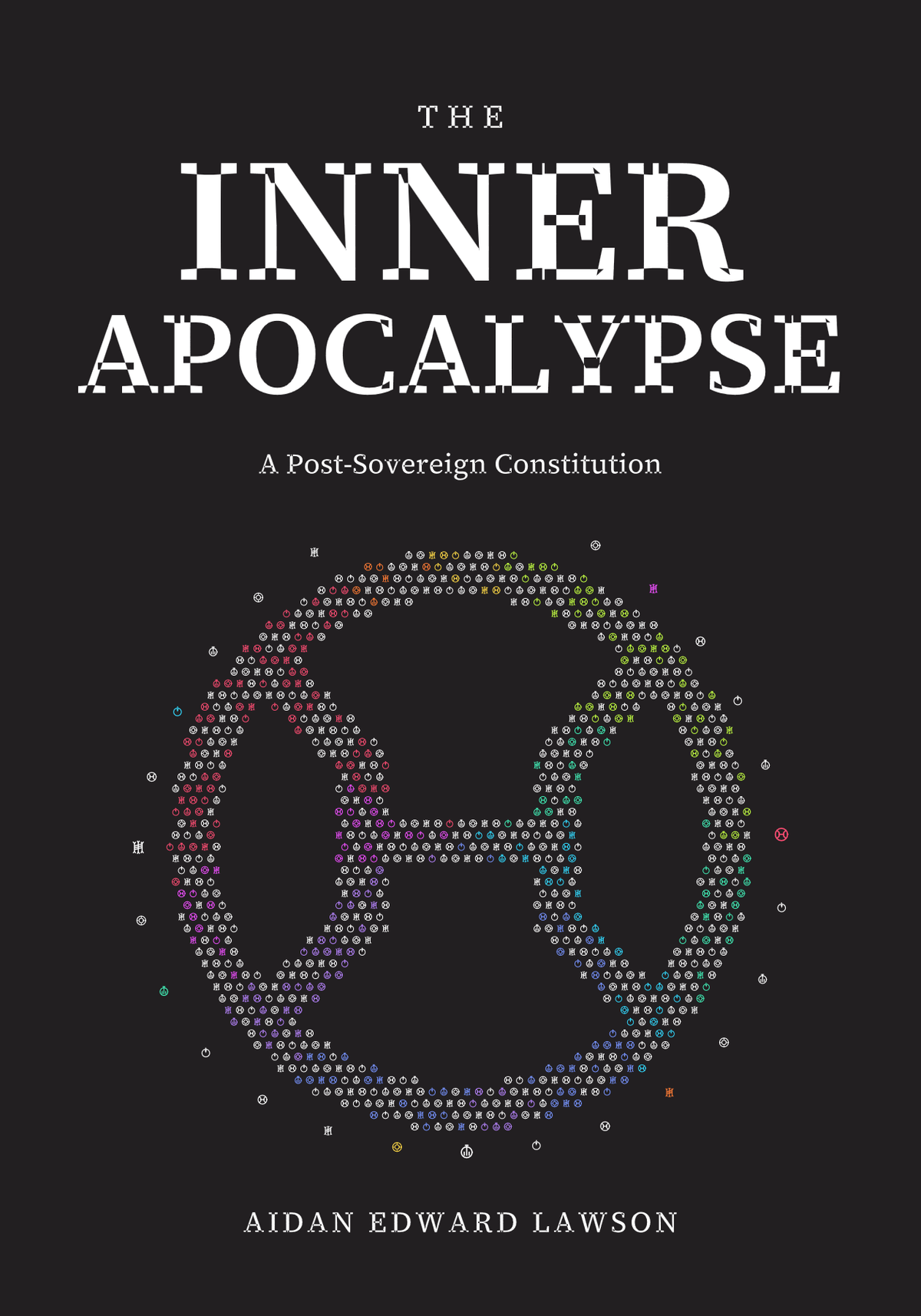
This appears, at first inspection, fairly political.
I am therefore initiating an Emergency Audit before someone notices.
Bad News.
Modal Path Ethics is not apolitical.
It has now spent months wandering through states, markets, law, democracy, war, deterrence, institutional power, borders, public administration, corporations, sovereignty, revolution, constitutional design, and artificial intelligence.
At some point during this process it wrote an entire replacement theory for sovereignty.
This exceeds the normal operating range of “I don't really do politics.”
The professional philosophers remain welcome to take the next shift.
Good News.
Modal Path Ethics never actually claimed to be apolitical.
The old article said:
- Structure itself has no politics.
That is a different claim.
That article explicitly said politics matters enormously. Politics changes law, incentives, institutions, punishment, resource distribution, public narratives, and therefore the actual field people live inside.
It also said Modal Path Ethics was perfectly willing to judge political arrangements by what they actually did.
What it refused was something narrower:
Partisan allegiance does not get to become the moral primitive.
- A party is an instrument.
- A coalition is an instrument.
- An ideology is an instrument.
- A constitution is, awkwardly enough, also an instrument.
None gets promoted into reality itself just because Modal Path Ethics has become very fond of it.
Including my own.
Oh no.
The Actual Audit.
The question is therefore not whether Modal Path Ethics has become political.
Obviously it has.
The question is whether politics has moved upstream.
- Can Modal Path Ethics state the rule before knowing which coalition benefits from it?
- Can the same sovereignty test survive when an institution we like controls the instrument?
- Can the same burden-transfer test survive when the burden funds something we desperately want?
- Can a constitutional arrangement proposed in The Inner Apocalypse be corrected, replaced, narrowed, or abolished if the field later answers against it?
If the answer to any of these becomes no, we have a much bigger problem than partisanship on our hands.
Modal Path Ethics has become one of its own Failed Field Analysts.
The field has been converted into evidence for the instrument.
I would have built the world's most elaborate machine for explaining why Modal Path Ethics was right.
There are already several thousand of those out.
They are usually called philosophies.
Worse: Post-Sovereignty Can Become Sovereign.
This is the dangerous one.
The Inner Apocalypse argues against institutions acquiring durable control over the conditions of their own correction.
Great.
Then post-sovereignty does not get an exemption.
- If “post-sovereign” becomes the answer before the field is inspected,
- the entire project has eaten itself.
- If every objection becomes evidence that the objector remains trapped in sovereign thinking, congratulations:
- We have invented sovereignty with a really annoying vocabulary.
The constitutional project therefore has to survive exactly the test it applies elsewhere.
Its institutions must remain corrigible.
Its distinctions must remain revisable.
Its proposed machinery must be allowed to fail.
Its constitution cannot own the future simply because it contains a chapter explaining why nobody should own the future.
That would be extremely embarrassing.
Ruling.
So:
Is Modal Path Ethics still apolitical?
No.
Apparently I wrote a constitution.
Is Modal Path Ethics still nonpartisan?
That remains the requirement.
The founding rule survives because it was never a rule against entering politics.
It was a rule against letting politics become the field.
Modal Path Ethics can make political arguments.
It can propose institutions.
It can attack its own institutions.
It can discover that an arrangement it previously defended is causing contraction.
It can discover that somebody it dislikes is carrying a useful instrument.
It can discover that somebody it likes is carrying a destructive one.
And when that happens, the politics have to move.
The field does not.
Five months later, then, the original line survives intact:
Structure itself has no politics.
Modal Path Ethics increasingly does.
Politics still have to answer to the structure.


Comments ()