
Five Maps of One River
Plurality is not a color scheme.
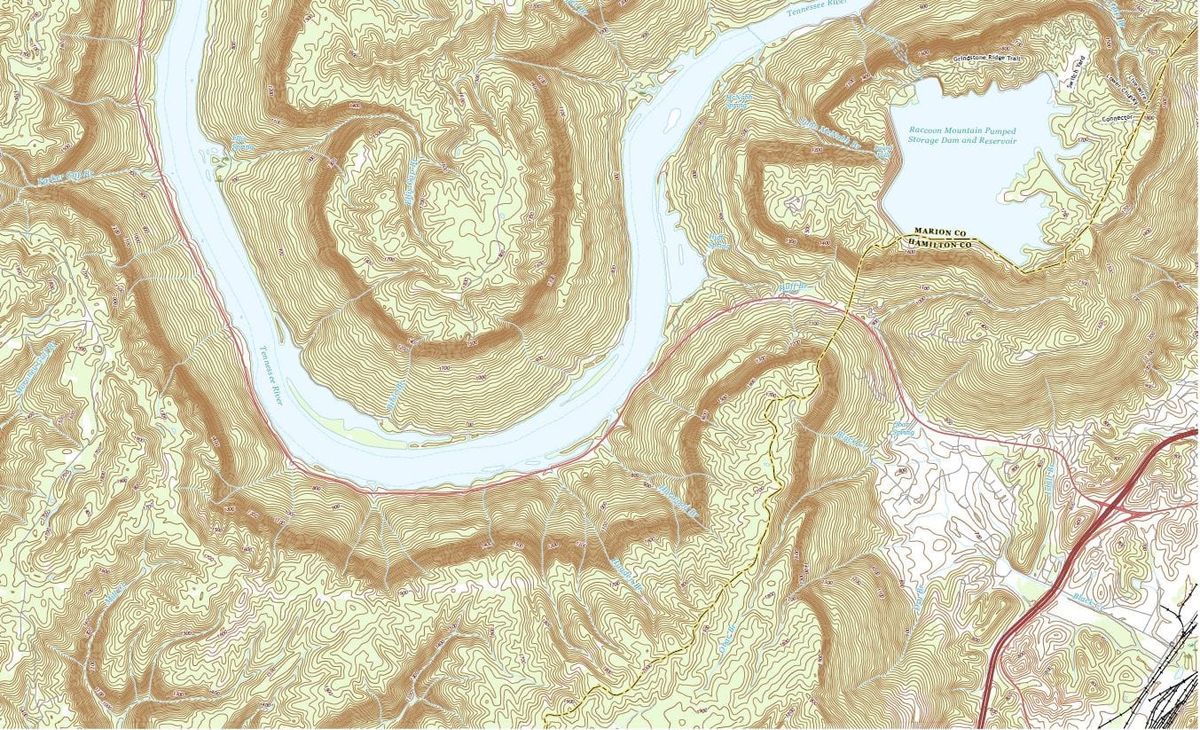
Five maps cover one river.
- The public laboratory has printed concentrations, sample sites, collection times, and confidence ranges.
- The downstream community has marked wells, gardens, fishing places, footpaths, and the ordinary routes through which water enters daily life.
- Workers from the water and industrial systems bring maintenance diagrams crowded with pumps, valves, gates, access points, and handwritten corrections where the infrastructure exists differently from the official drawing.
- A religious community has marked a bend where a ritual begins, a bank where generations have gathered, and a reach of water whose significance does not arrive through price, property, or recreation.
- The facility operator adds another layer: pipes, storage, process changes, inspection records, and the boundary within which it says its responsibility can actually be demonstrated.
They are all looking at the same water. They are not looking through the same instrument. And somebody still has to decide whether to close the gate.
Delay may carry danger downstream. Closure will interrupt work, wages, production, supply, and public revenue.
The workers need one instruction. The laboratory needs comparable evidence.
The communities need to know where replacement water will come from.
Five maps cannot protect anybody by politely remaining five maps.
So artificial intelligence joins them.
- It aligns locations and times.
- Links samples to maintenance events.
- Finds missing intervals.
- Flags contradictory records.
- Translates specialist language.
- Shows how closing one gate changes several connected paths.
Anyone at the table can ask for another layer in ordinary language.
The dashboard can carry more relations than one exhausted clerk, engineer, analyst, worker, elder, or public official could keep active at once.
Then, one site disappears.
Five Colors.
The religious community's original map still hangs on the wall.
The bend is still marked. Nobody erased it.
On the shared dashboard, though, the site has become noncommercial recreation.
The translation is understandable.
The system needs common categories. The place is used by people.
It is not industrial. It is not residential. It is not a measured contaminant.
So it has entered the nearest available box.
The interface still shows five sources in five colors.
Underneath, all five have passed through one classification system.
That system has no category for the religious relation the original map was carrying.
- Nothing has been declared unreal.
- Something has become unavailable to common action.
This is the problem with treating plurality as visible variety.
Five colors do not prove five independent ways for the field to answer.
- Five agencies can use one database.
- Five models can share one training corpus.
- Five reviewers can depend on one employer.
- Five dashboards can inherit one ontology.
- Five institutions can disagree after the decisive selecting cut has already happened upstream.
An ensemble of one error is still one error wearing several badges.
Plurality needs something harder than representation.
It needs instruments capable of keeping contact the shared system cannot absorb.
Can one map preserve a claim the dashboard rejects?
Can it retain its source records?
Can it make a different mistake?
Does disagreement threaten its funding or access?
Can its evidence reach the decision without first receiving permission from the instrument it is challenging?
That is structural independence.
Plurality is not a color scheme.
No Map Becomes the River.
This does not mean every map gets equal authority over every question.
The laboratory can be right. The community can be wrong. Workers can misremember. The operator can have better technical evidence than its critics. A sacred relation does not establish a contaminant concentration. A local vocabulary can preserve knowledge. It can also preserve exclusion, abuse, conspiracy, monopoly, or inherited error.
Plurality does not decide truth. It prevents one instrument from deciding truth alone.
Now, the operator places a countermodel on the table.
On its account, the anomaly follows a different path. Closing the facility gate will interrupt production and wages while failing to protect the downstream intake.
The operator has an obvious interest in that conclusion.
It also possesses technical contact nobody else fully has.
- Interest does not make the model false.
- Expertise does not make it true.
So the argument has to leave the dashboard and reach something several opposed instruments can inspect.
Workers open the maintenance history.
The laboratory tests another sampling path.
The downstream community shows where the operator's predicted route fails to meet actual household water use.
The public body asks for the source process record rather than the integrated system's summary.
They still do not agree about the whole river.
They have begun touching the same evidence.
That is a common-evidence path: a way for opposed instruments to inspect, contest, reproduce, or answer the same relevant object without first agreeing about what the entire object means.
Artificial intelligence can help enormously here. It can compare the records, find contradictions, propose alternate explanations, and generate six countermodels before anyone finishes their coffee.
Six outputs from the same model are not six independent contacts.
Cheap disagreement is not plurality.
The operator's countermodel matters for a different reason. It comes from different records, different access, different incentives, and different ways of failing.
The field has acquired another place from which the shared account can be wrong.
The Losing Map.
The evidence converges enough for a decision.
Not perfectly. Enough.
Independent inspection supports part of the operator's process account and weakens its conclusion about downstream reach. Workers correct the assumed closure sequence. The laboratory revises one part of its map. The downstream community identifies a missing dependency in the replacement-water plan.
Two members of the public body preserve a narrower objection.
They predict that the replacement plan will fail for several houses served through an access route missing from the common map.
They lose.
Plurality cannot mean every dissent becomes a veto.
The gate still has to move.
The minority report remains attached to the decision with its evidence, uncertainty, predicted consequence, and a named receiver if the prediction occurs.
That is the important part. A losing position should survive long enough to meet the future event that could prove it mattered.
It does not receive eternal authority because it once dissented. It receives a route back into the field if reality answers in its favor.
Then, the public body closes the gate.
One instruction reaches the workers.
Not five. Not a collage of mutually qualified perspectives.
Close the gate.
- Replacement water is ordered.
- Temporary wage support is funded.
- Additional sampling begins.
- Protected access to the disputed site remains available.
- Source records are preserved within the relevant privacy and safety limits.
- One office is named to receive the failure predicted in the minority report.
- Plural inquiry has produced singular action.
- That is allowed.
- Plural inquiry has produced singular action.
Operational clarity belongs at the point of execution.
Constitutional plurality belongs in the field that determines what execution is for, what it may touch, and which failures remain capable of answering afterward.
The Cost of More Than One Map.
The decision still hurts.
- Workers lose wages.
- Contracts are interrupted.
- Public revenue falls.
- The religious community loses access to part of the river.
- Replacement water costs money.
Continued operation would have preserved those paths and transferred another risk downstream.
No number of maps makes the choice innocent.
Plurality also costs money before anyone closes anything.
- Independent sampling requires equipment and trained people.
- Communities need time, transport, technical assistance, counsel, and sometimes their own analytical capacity.
- Records need storage.
- Protected access needs rules and staff.
Redundancy can look wasteful right up until the supposedly redundant instrument finds the error. This creates a real allocation problem.
- Not every imaginable objection can receive a publicly funded laboratory.
- No consequential field should be left with one funded reader.
Artificial intelligence can lower that cost. It can help smaller institutions search evidence, translate technical language, compare models, and preserve provenance.
It can also become the single shared reader through which all those institutions understand one another. Then the colors remain while the correction disappears.
A coordinator that joins the field receives no title over the field because it can see more of it. The original records have to survive. Independent instruments have to remain usable. The common layer has to be inspectable.
And a disagreement capable of changing the material decision needs some route other than asking the common system to reconsider itself.
By morning, the replacement-water trucks reach the distribution point listed on the shared map.
The gate remains closed. The sampling continues.
The operator disputes part of the ruling and complies with the order.
The minority report remains attached. Its prediction has a receiver.
The record looks unusually good.
The houses beyond the unrecorded pump route receive nothing.
The report reached the record.
The water still did not reach the houses.

Comments ()