
Two Screens
"Too important to fail" means "required to resolve."
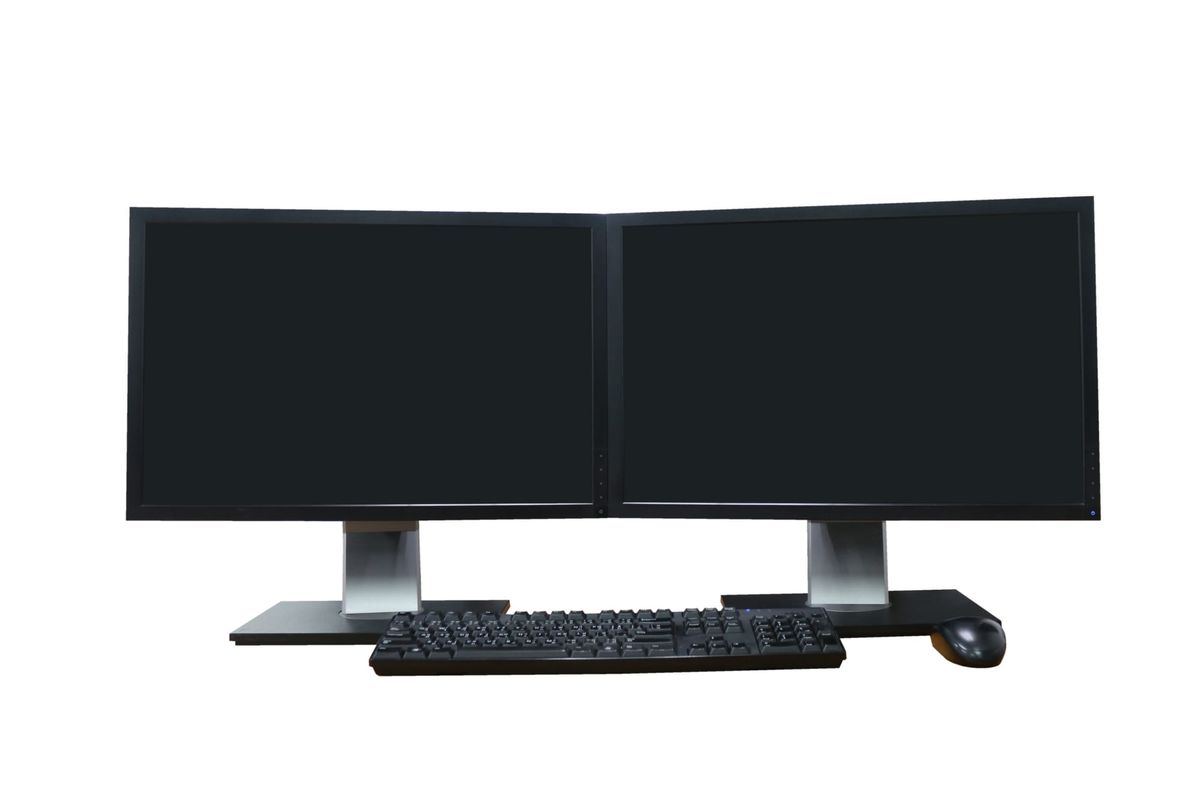
At 4:18, every operator in the control room has two screens.
 Aidan Lawson
- The old one belongs to the proprietary platform that has coordinated the regional grid for years.
- The new one belongs to the public system built to replace it.
Yesterday, independent review found that the old platform had filtered residents’ heat reports out of the operational picture. The vendor could no longer be allowed to decide which reality reached the control room. The replacement system has been running beside it while records, interfaces, and operating functions move across.
The transfer looks good. Device histories are present. Maintenance records are present. Protected-load notices are present. Timestamps match. The schemas validate.
Thirty seconds before the next cutover test, a yellow square appears on the old screen.
The new screen remains clear.
No individual sensor has crossed its alarm threshold.
A senior operator recognizes the square because she has seen it once before. Two oscillations, harmless when read separately, become dangerous when they begin moving together. Years ago, the old system learned to watch that relation after an incident almost became a failure.
- Both measurements transferred.
- The relation between them did not.
The migration moved the data and lost part of the knowledge.
The Incumbent.
The vendor stops the cutover. Its engineers can explain exactly why.
The platform contains years of practiced knowledge that never became a clean field in a database.
Its workers know which sensor drifts in wet weather, which alarm chatters harmlessly, which legacy machine rejects an otherwise valid instruction, which update cannot be installed during peak demand, and which technician will answer the phone after midnight.
Hospitals depend on the grid. Water pumps depend on it. Elevators, refrigeration, transit, workshops, homes, and medical equipment depend on it.
A public order can revoke a contract in an afternoon. It cannot reproduce years of operating knowledge by declaring that knowledge public.
The yellow square proves the point.
The vendor therefore asks for another year.
Its platform should remain the primary operational translator while the public system matures. Future interfaces should require its approval. Senior staff need retention agreements. Sensitive mappings cannot simply be released because some contain security information and trade secrets. The public should indemnify some migration failures because an accelerated transition is being imposed on a system everyone depends upon.
Every claim contains some truth.
Together they create a trap.
The institution has become difficult to replace because so much of the field has been built around it.
That difficulty now becomes the strongest argument for continuing to build the field around it.
Another extension preserves the undocumented knowledge. It also gives the platform another year to absorb interfaces, relationships, workflows, and skills that will make the next departure harder.
If dependency itself creates permanent title, the institution that closes the exits eventually acquires the best possible defense against removal.
There is an obvious answer.
- End the contract tonight.
- Take the records.
- Hire the operators.
- Publish what can be published.
- Let the vendor sue afterward.
A captured institution should be capable of losing something real.
That argument also has a limit.
The people in the hospital did not capture the grid platform. The resident whose oxygen concentrator expects stable power did not write the proprietary interface. The night crew did not decide the procurement strategy that allowed one vendor to become indispensable.
A dramatic break can transfer the cost of political courage directly into their bodies.
- The old institution has no right to stay forever.
- The transition authority has no right to prove that point by dropping the function.
Those two failures have organized a great deal of politics: permanence because exit is dangerous, or rupture regardless of who has to survive the gap.
A post-sovereign constitution needs another capacity.
Too Important to Fail.
Functional resolvability is the maintained ability to divide, replace, remove, or survive the failure of a load-bearing institution while keeping its legitimate functions, claims, records, practiced knowledge, correction routes, and unfinished obligations alive.
The object being preserved is the function.
The company does not have to survive because dispatch must survive. Management does not become critical infrastructure because it hired the engineers. A proprietary interface does not acquire constitutional protection because hospitals eventually depended on services passing through it.
Some things bundled inside an institution should continue. Some should transfer. Some should end.
That is the reversal.
Too important to fail is a planning duty, not a title.
A system important enough to endanger everyone through its collapse should already have a practiced route through which its legitimate work can outlive it.
That route cannot be an asset inventory.
The transition team already had the files. The files passed their checks. What disappeared was a relation between two signals and the history explaining why the relation mattered.
So the operators rebuild the transition around work rather than products. They identify which observations must reach a person, which combinations become dangerous before any component looks dangerous alone, which decisions can wait, what can continue automatically, and what degraded operation remains possible after losing a network, vendor, forecast, facility, or shift.
Workers supply the parts no export button can find.
One written procedure describes a manual action as a one-person job. The night crew says it has always required two people: one at the cabinet and another watching the coupled signal from the control room.
A maintenance task appears automated until somebody points out that a contractor has been checking it by hand for six years.
An emergency credential looks redundant until the team discovers it is the only route that still works when the ordinary identity service fails.
This is why a load-bearing institution needs a transition living will while departure is still something people can rehearse rather than improvise under a shutdown clock. The living will identifies the functions that cannot stop, the people and institutions depending on them, the knowledge that has not yet become portable, the safe degraded modes, the obligations that survive closure, and the tests a receiving institution must actually pass before anyone calls the handoff complete.
Artificial intelligence can make that map dramatically better. It can search dependencies, compare procedures with logs, find credentials that never expire, identify functions with no successor, trace supplier concentration, and show where one organization has become the only reader of a critical relation.
It cannot prove the map complete.
The yellow square just taught us that.
The Bridge.
The grid still has to operate tonight.
So a temporary bridge receives enough authority to carry the transition.
It can run dispatch, pay transferred operators, hold emergency credentials, require cooperation from the vendor, fund receiving institutions, and keep the old platform available as a read-only diagnostic system while the missing relations are reconstructed.
That is substantial power.
Its job is also self-destruction.
The bridge exists to make permanent receivers capable. It does not exist to become the permanent receiver.
That distinction is tested when the public model eventually says one municipal operator can carry a particular manual function alone.
The night crew refuses the rehearsal.
Under the model’s schedule, one worker stands at the cabinet. In actual practice, a second operator has always watched the coupled signal from the control room. The second position never made it into the procedure used to train the model.
The refusal stops the test.
It is not treated as resistance to progress.
The bridge changes the budget, adds the second position, documents the relation, trains the receiving institution, and runs the rehearsal again.
This time the old forecast is disconnected. A senior veteran leaves the room. One supplier response is deliberately delayed. The coupled oscillation is introduced under evening load.
- The new screen catches it.
- Two operators confirm it.
- The grid remains inside its safe margin.
- The old platform supplies no decision.
- The grid remains inside its safe margin.
- Two operators confirm it.
That proves one bounded function can move.
It proves nothing about the next one.
Functional resolvability is a practiced capacity, never a certificate against surprise.
The same rule applies outside the control room.
The operations center supports a town. Its payroll supports rent and shops. Its health plan helps sustain a clinic. Contractors employ technicians, cleaners, drivers, and food-service workers. Apprenticeships provide one of the region’s few routes into skilled work.
A technically perfect platform migration could therefore succeed while the surrounding place collapses.
So the transition carries more than software. Wages and health coverage cross the immediate gap. The clinic and two bus routes remain funded. Workers are paid to teach inside the institutions receiving their old functions. Suppliers that can convert receive time to do so. Cleanup and long-term obligations receive funded custodians instead of remaining attached to an emergency bridge forever.
Owners still have claims. So do creditors, workers, users, suppliers, injured people, and the place left around the institution.
Those claims do not have to be settled in one instant or converted into one score.
The immediate question is narrower: what must continue so that the people inside the transition remain capable of reaching whatever comes next?
Then the bridge starts losing powers.
Dispatch moves when the new operators prove they can carry it. Record custody moves when ordinary institutions can use the records. Emergency claim authority ends when permanent routes can receive the disputes. Cleanup can last for years under a separate funded institution without keeping extraordinary transition powers alive.
Eventually the bridge has almost nothing left to do.
That is success.
One Key Left.
On the final shift, the paired screens are gone.
Operators can work through tested tools from more than one supplier. The once-hidden signal relation is documented, rehearsed, and held in more than one institutional memory.
The old platform is no longer the price of understanding the grid.
The transition was not painless. Owners lost value. Some suppliers closed. Some workers left. Some obligations could not be carried whole. The town lost routines and status built around the old institution.
It also kept wages through the gap, a functioning clinic, buses, schools, trained operators, and several forms of replacement capacity.
One operator goes home after the bridge dissolves.
Inside, her brother holds their mother’s phone. He also holds the medication lockbox key, the household account, the landlord messages, and the recognized route through which several institutions speak to her.
He has cared for her through the night for six years.
Their mother asks him for the phone.
He says she is confused and should rest.
The platform has surrendered its keys.
Inside the home, one person still holds all of them.



Comments ()