
The Water Does Not Move
Listening is not correction.
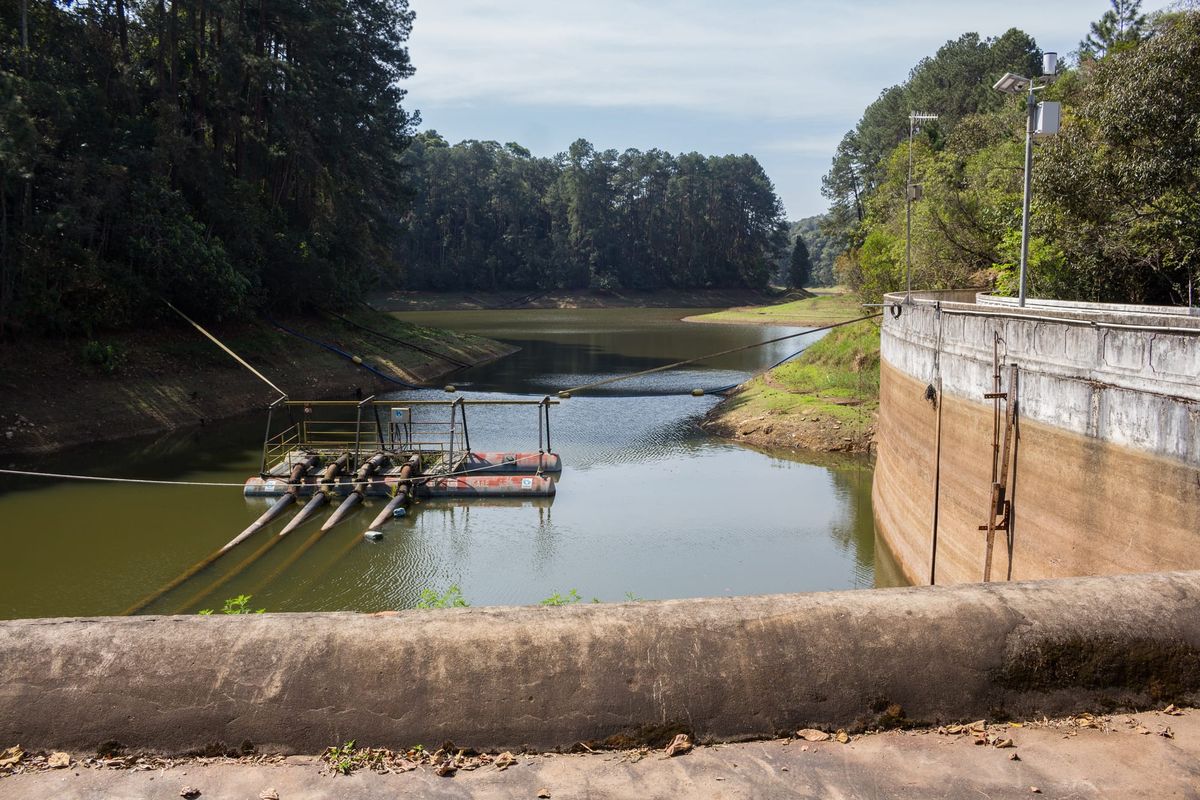
At 9:14, the complaint gets a number.
The gate is closed. The replacement-water trucks reached the distribution point on the shared map. The minority report remained attached to the order, including its prediction that several houses beyond an unrecorded pump route might receive nothing.
And those houses received nothing.
Now, the public intake system answers.
- It timestamps the call.
- Transcribes the resident.
- Links the closure order and distribution point.
- Transcribes the resident.
A language model extracts the request: drinking water, water for medicine and animals, an answer before the day gets hotter.
The case reaches a supervisor with a deadline.
A green mark confirms receipt.
The water does not move.
Completion Has a Defense.
The delivery office has a clean record.
- Trucks reached the authorized point.
- Drivers followed the route.
- The contractor performed the specification.
- The gate closure itself came after evidence, countermodels, community testimony, a preserved minority report, and a binding public decision.
Government needs to be able to finish things.
Workers need one instruction. Dispatchers need a route they can execute. Budgets need cutoffs. Contractors need to know what counts as performance.
A public institution incapable of saying this decision is closed can be governed by whoever possesses the money and stamina to object forever.
Imagine the facility operator from yesterday returning with a thousand artificial-intelligence-assisted filings. Permanent reconsideration can become a weapon. Finality protects the households waiting for action too.
So the intake system classifies the new complaint as an individual failure under a completed order. Someone can send bottled water or request a status update.
Nobody receiving the complaint can change the route model, the pump schedule, the definition of completed delivery, the budget, the contract, or the decision that has already been recorded as successful.
The institution listened. Its answer cannot reach the thing that failed.
At 9:31, the Old Warning Returns.
Chris sends a maintenance record.
He is a route technician employed by the delivery contractor.
Before the gate closed, Chris had identified the missing dependency. The distribution point could not serve several houses under the existing pump schedule.
His warning entered the minority report. Now the prediction has occurred.
Chris still has the original diagram, the inspection date, the valve sequence, and his supervisor's acknowledgment.
He also has a shift at noon.
His training records, certifications, benefits, schedule, incident history, and years of work all live inside the systems of the contractor whose completion account he is challenging.
His complaint moves through the public network in seconds.
The truck waits inside a rule saying it has already arrived.
This is where corrigibility actually begins.
Before a decision, everybody likes correction.
Nobody has yet paid the contractor, certified completion, and defended the public process. Nobody's reputation depends on the decision remaining sensible.
The harder test comes after legitimate authority has spoken and the world answers:
That did not work.
A constitution is corrigible when post-decision evidence, harm, dissent, or changed conditions can reach somebody with enough power to change what the institution does.
A phone line can help. An appeal can help. An explanation can help.
None proves corrigibility on its own.
- Receipt proves that the institution listened.
- Correction begins when the institution can lose.
Move the Water First.
The route office gets the first chance. Its dispatchers know where the trucks are. Its workers can move water much faster than a court, council, audit team, or constitutional philosopher.
Urgent protection should not wait for the institution to understand its own failure completely.
A supervisor authorizes emergency delivery. A driver gets a new instruction.
Water begins moving toward the omitted houses.
Then the office refuses to reopen the completion record.
Its reasoning is coherent.
- The contractor did what the contract required.
- The truck reached the authorized point.
- Changing the completion status would affect payment.
- The truck reached the authorized point.
Correcting the larger route requires money the office cannot appropriate.
- The immediate exception can move water.
- The account of why the water failed to move stays unchanged.
A compassionate exception can rescue this household today and preserve the machinery that will strand the next one tomorrow.
The Failure Gets Another Receiver.
The audit starts with a smaller question:
How did arrival at a distribution point become delivery to the households?
Chris's diagram is compared with the shared map. The pump schedule is obtained. Other houses with the same dependency are identified.
Residents describe the failure in hours, medicine, animals, food, sanitation, missed work, and heat rather than status codes. The religious community describes an interrupted relation to water and care. That claim establishes no hydraulics at all. It identifies something the category delivery completed failed to carry.
Chris explains the route. His source record remains attached. His time is paid. His testimony receives protection against retaliation.
The minority report activates the receiver named yesterday. The losing position has survived long enough to meet the event that could prove it mattered. It receives no automatic victory. It receives another hearing.
Now, the delivery office has to explain its own success.
- Why did arrival count as delivery?
- What evidence supported that rule?
- What would have defeated it?
The answer is straightforward. The same answer reveals the failure.
The map assumed physical reach that the maintenance record disproves.
The hearing leaves the gate closed. It orders interim water, source access, route correction, and bounded reconsideration. The council funds verification and emergency delivery. The contract acquires duties to preserve the relevant evidence. Workers change the pump and delivery sequence. Systems search for related omissions and watch the new deadlines.
This is a correction ecology.
- One path receives the complaint.
- Another moves immediate protection.
- Another traces the record.
- Another preserves testimony.
- A losing political position carries a prediction through time.
- A hearing issues reasons and remedy.
- A public body moves money.
- Workers alter the physical system.
No single institution owns the complaint, evidence, judgment, enforcement, and determination that its own correction was adequate.
Some Things Stay Closed.
Corrigibility cannot mean that yesterday's entire decision disappears every time one part fails.
The gate remains closed.
The hazard determination is not reopened simply because replacement water failed. The route model can change without pretending the original contamination evidence vanished. The completion rule can change without cancelling every valid act performed under the order. The contractor can lose its role without returning the facility to operation.
Different questions can close at different times.
Then the facility operator tests the arrangement.
It files another challenge to the closure.
Then another.
The evidence is the same. No new predicted harm has occurred. No conflicting rule has appeared. No new defect has been shown.
The operator loses. This proceeding ends.
A corrigible constitution must be capable of changing for a reason and refusing to change without one.
Finality can be indexed.
- This issue is closed for this interval.
- That issue remains open because a specified trigger occurred.
A later recurrence may reopen another path.
Correction does not require the whole constitution to become liquid.
The Ruler Has to Lose Something.
By afternoon, the failure has produced more than an apology.
- The route office loses its definition of completion.
- The contractor loses exclusive control over the source record.
- Later, it loses the renewed contract.
- The artificial-intelligence system loses its exclusive position in classifying complaints and certifying successful delivery.
- The council majority loses the factual premise supporting part of its earlier allocation and moves money elsewhere.
- Chris's supervisor can lose a role if the record supports suppression of the warning.
Call this ruler-loss.
Ruler-loss is the realized capacity of a governing person, office, majority, model, owner, or institutional arrangement to lose something real through a correction path it does not control.
A decision. A budget. A contract. Jurisdiction. A role. The authority to define success. Losing an argument is not enough.
The field has to change. That does not mean finding one person to fire and depositing the whole failure inside them.
Replace Chris's supervisor while preserving the same completion metric, incentives, dashboard, and contract, and the next supervisor has simply received better training in what not to put in writing.
Structural reform can fail in the opposite direction.
A magnificent new reporting rule gives no water to anyone this afternoon.
Correction needs both:
- enough immediate remedy to reach the present wound;
- enough institutional loss to change the conditions that produced it.
The Field Answered.
By afternoon, water reaches the omitted houses.
The public record changes from completed route to failed reach, interim remedy, corrected dependency.
Drivers receive a new sequence.
Technicians alter the pump schedule.
The budget pays for emergency delivery, verification, audit work, and the transition to another contractor.
Future closure plans require an independent reach test and a named receiver when a preserved minority prediction comes true.
The correction worked.
That sentence has a remainder.
- Hours without water cannot be returned.
- Lost work remains lost.
- Food spoiled.
- Care was interrupted.
- Residents carried a complaint across institutional gaps they should never have been required to bridge themselves.
- Chris risked his income and standing to restore a record his employer already possessed.
- The new system costs more.
- Workers have to learn it while the emergency continues.
Successful correction cannot rewrite the original injury as evidence that everything worked in the end.
Then the contract changes hands.
The successor contractor receives the corrected route, the pump dependency, the audit, and the new public obligations.
- Chris applies to continue doing the work.
- The successor can see that his evidence helped change the map.
It cannot see his complete training history, his certification evidence, accrued benefits, schedule record, or the context attached to the incident that now appears in his old employer's system.
The correction protected Chris's testimony inside the proceeding.
It did not carry his accumulated life through the institutional transition his testimony helped produce.
The contract moves.
Chris's work history does not.



Comments ()