Revelation in Office
Return to Münster
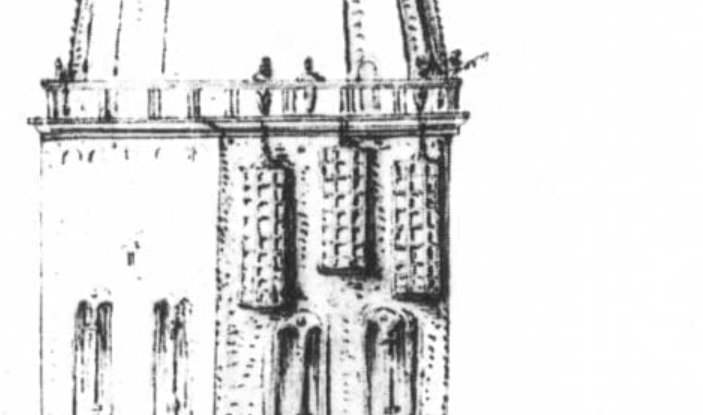
The cages are still there.
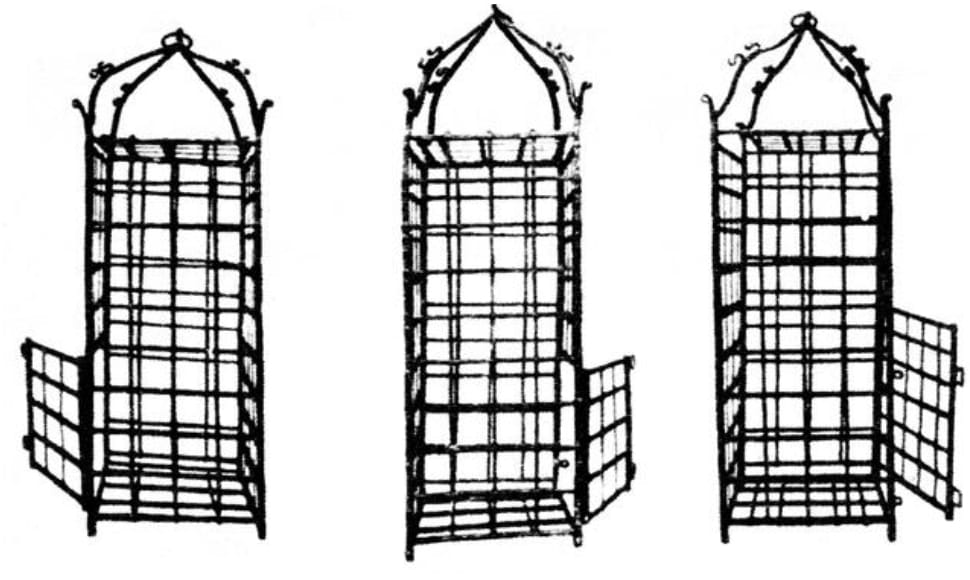
Three iron baskets hang from the tower of St. Lamberti above Münster’s market. We have been to them before.
 Aidan Lawson
In Münster’s New Jerusalem, I followed the larger field: persecution, apocalyptic hope, municipal capture, siege, hunger, kingship, execution, and the restored authority that left the cages hanging after the bodies were gone.
Today, I want one moment from inside it.
- An answer failed.
- An office grew.
When the World Answered Back.
Münster’s apocalyptic promise had already become more than private belief.
It had walls. Gates. Stores. Council seats. Weapons.

Rules about who could remain in the city.
People who interpreted events.
People who carried orders.
People who had to keep food moving while everybody waited for history to arrive.
A superior answer does not become government through charisma alone.
Charisma cannot inventory bread.
Contact becomes institutional when somebody builds the ordinary machinery through which the answer can act.
Then the expected event did not occur.
Jan Matthijs had expected Christ’s return. After the expectation failed, he left the city with a small group, confronted the besieging force, and was killed.
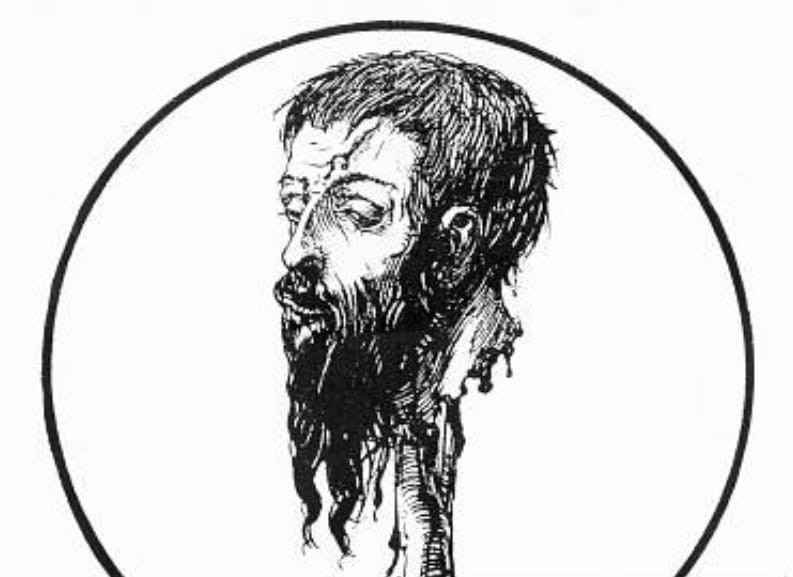
Jan van Leiden inherited the interpretive problem.
The world had just contradicted the expectation.
His answer was that preparation had been insufficient.
Waiting was no longer enough. The kingdom had to be organized on earth.
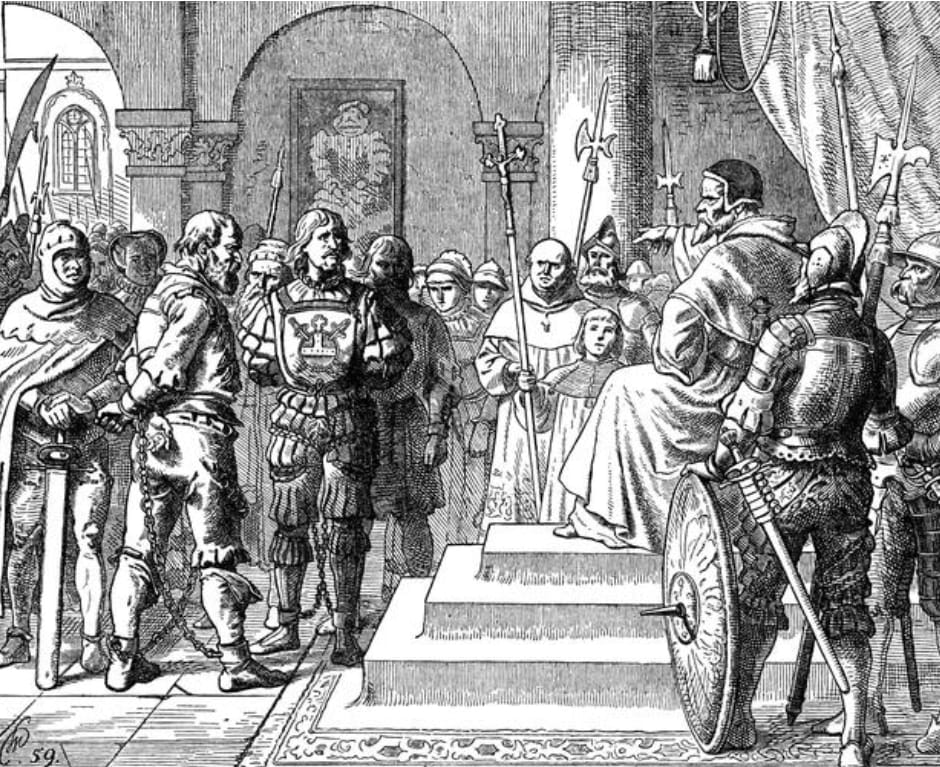
The existing council was abolished. Twelve elders replaced it. Van Leiden was eventually proclaimed king.

That is the moment worth carrying forward.
- The contradiction did not reduce the authority of the interpretation.
- It created another office.
Failure became a staffing event.
The interpreter stood between event and meaning.
Then the office stood between meaning and action.
The Better Answer.
It would be easy to protect ourselves from Münster by making revelation mean irrational religious certainty.
That would miss the problem entirely.

Human institutions regularly encounter answers that deserve unusual weight.
- A scientist can discover a causal relation nobody else has seen.
- An intelligence analyst can identify a threat hidden across several sources.
- A physician can recognize a dangerous pattern before the patient understands what is happening.
- A technical system can detect a cascade across infrastructure that no human office could keep active in working memory.
Artificial intelligence may become extremely good at exactly this.
Suppose a high-capability system identifies a failure moving across essential infrastructure.
Qualified outside experts test the evidence. They agree.
Delay would expose people to serious harm.
A technical office receives protected access, staff, infrastructure, and money.
It acts. The intervention works.
Keep every favorable assumption.
- The model was right.
- The experts were competent.
- The office acted responsibly.
- People are alive because somebody listened.
A political order that responds to superior contact by refusing to hear it has learned the wrong lesson from prophets.

The harder question begins after the success.
Four Questions.
One answer can generate four different questions.
- Is the answer true?
- What obligation does that truth raise?
- Who is competent to interpret it?
- What authorizes the action taken in response?
These questions touch.
They do not collapse into one another.
- A true warning may require investigation.
- A verified danger may require evacuation.
- A medical fact may require treatment.
- A demonstrated technical failure may justify shutting down a system.
- Urgency can shorten a deadline.
- Sensitive evidence can justify protected access.
None of those conclusions comes from truth alone.
The danger begins when success at the first question silently answers all four.
Accuracy becomes jurisdiction.
Expertise becomes office.
Urgency becomes duration.
The institution that successfully interpreted one danger begins deciding which later dangers count as continuations of the same problem.
Call that promotion revelation sovereignty: privileged contact with a claimed superior source becoming final authority over the field the contact was supposed to serve.
The source can be religious. It can also be scientific. Strategic. Medical. Administrative. Computational.
The term revelation says nothing here about whether the source is supernatural or false.
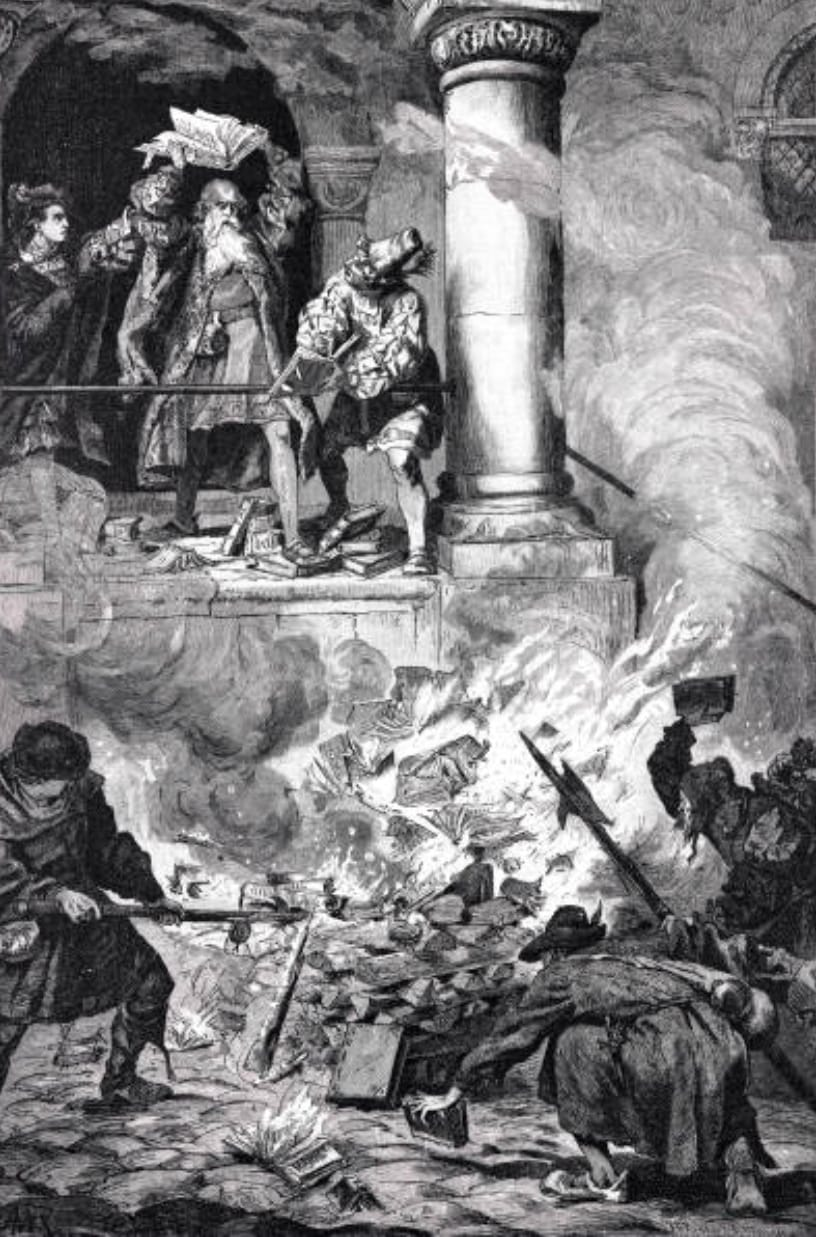
It names the political temptation produced by superior contact.
The Successful Office.
Return to the modern case.
- The intervention worked.
- The next institutional plan now passes through the system’s assessment because the first plan that passed survived.
- The office develops procedures around the model.
- Budgets follow.
- Staff train on the interface.
- A credential marks who may interpret the protected evidence.
- A vendor update changes how the system classifies risk.
- The workflow keeps the same name.
- A new domain looks similar enough to the old one that routing it through the existing office seems prudent.
Every extension has a reason. Nobody has to be corrupt.
The vendor may improve the model.
The experts may remain careful.
Officials may sincerely fear losing the capacity that prevented the first disaster.
Successful service creates dependency.
Then dependency begins speaking as authority.
The office authenticates the source.
It decides which evidence is relevant.
It controls protected access.
It interprets model changes.
It allocates scarce technical capacity.
It sets the conditions under which an alternative is considered safe.
A person can still disagree.
The funded route for disagreeing leads back to the same office.
This is how an advisory system becomes the only practical road without issuing a decree.
Münster had a crown.
Modern revelation often gets procurement.
Revelation Raises Obligation.
The line has to hold even in the best case:
Revelation raises obligation; it never confers the crown.
A true answer can demand action.
It cannot generate its own jurisdiction.
The office interpreting superior contact needs authority from somewhere outside the contact it interprets.
- Law.
- A bounded mandate.
- Delegation from the institution whose function is at stake.
- An emergency power with an end.
- A public budget.
- Review able to examine both the interpretation and the office’s claimed reach.
- The contact supplies evidence.
- The field supplies jurisdiction.
That separation has to survive ordinary administration.
- A model version changes.
Who authorized the policy consequence?
- A vendor changes a threshold.
Does the maintenance contract now change public law?
- A new domain gets added to the workflow.
Who decided it belonged there?
A procurement renewal can keep a service alive.
It cannot quietly enlarge the jurisdiction of the office using it.
Success cannot be the only result the institution knows how to process.
- Success can justify more authority.
- Failure can be redescribed as evidence that the office needed more data, access, compliance, or authority.
Both roads lead outward.
A corrigible office needs another possible result:
The evidence narrowed our mandate.
Another institution should carry this function.
The rival interpretation was better.
The intervention can end.
Contraction has to count as institutional competence too.
The Office Still Has a Defense.
There are real costs to all of this.
Multiple interpreters can leak protected evidence.
Review can arrive too slowly.
Redundant systems cost money, energy, and scarce technical labor.
An outside body can misunderstand a danger that specialized staff have spent years learning to see.
Ending an office too early can expose the people who depended on its competence.
One accountable command line can save lives.
That justifies an office. It can justify secrecy. It can justify speed. It can justify temporary command.
Privileged sight still cannot authorize itself.

A later domain needs fresh evidence and fresh authority.
Refusal needs somewhere else to go, with enough expertise, money, time, and operating capacity to matter.
The office has to remain capable of narrowing, dividing, handing off, and eventually disappearing while the useful capacity survives.
Now grant our modern office its victory.
- The cascade was stopped.
- Infrastructure remained intact.
- Essential services continued.
- The report can count incidents avoided, systems stabilized, people protected.
- It can certify survival.
- It cannot tell us whether people can still form plans the system never anticipated.
- It cannot tell us whether another institution can reject its preferred path without losing the means to continue.
- It cannot tell us whether new values, relationships, authorities, and forms of life remain materially possible outside the preserving system.
The office can certify survival.
It cannot answer what kind of future has survived.