Tales of Distortion: Münster’s New Jerusalem
Question every Jan. [L]
There are many ways for a religious movement to leave a trace in a city.
A hymn. A graveyard. A school. A hospital. A saint’s bone with a suspicious travel history. Maybe a stained-glass window showing one medieval bishop looking extremely concerned about a dragon.
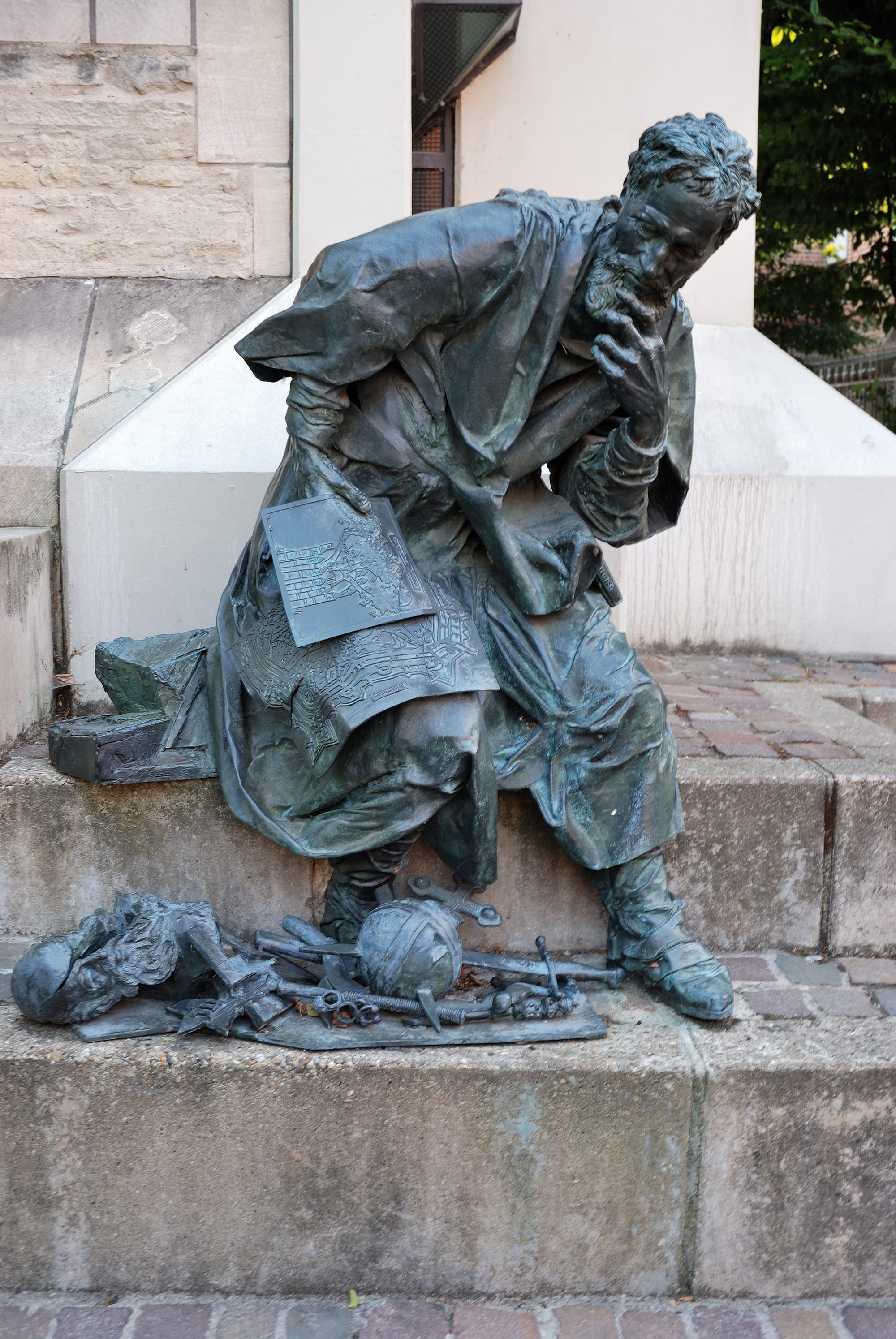
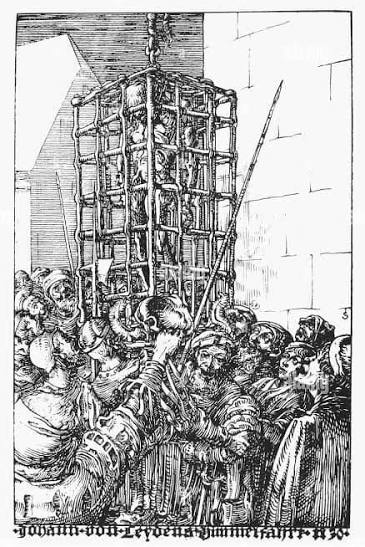
Münster, in Westphalia, has three iron cages hanging from the tower of St. Lambert’s Church.
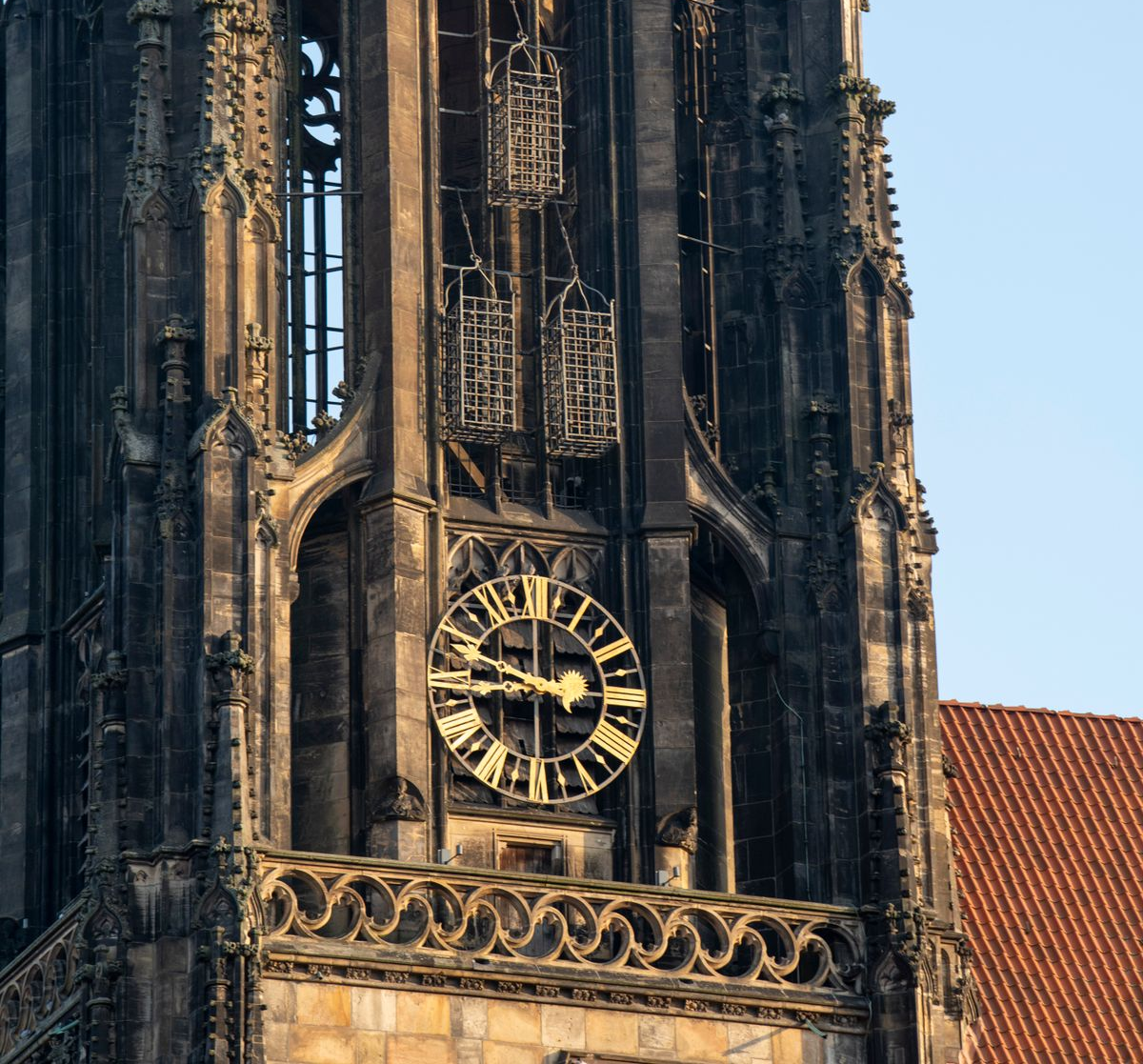
They hang there still, up on the church tower, above the market square, like history got tired of subtlety and decided to install an outdoor exhibit titled PLEASE DO NOT LET APOCALYPTIC CITY GOVERNMENT HAPPEN AGAIN, OH GOD, OH GOD, OH GOD.
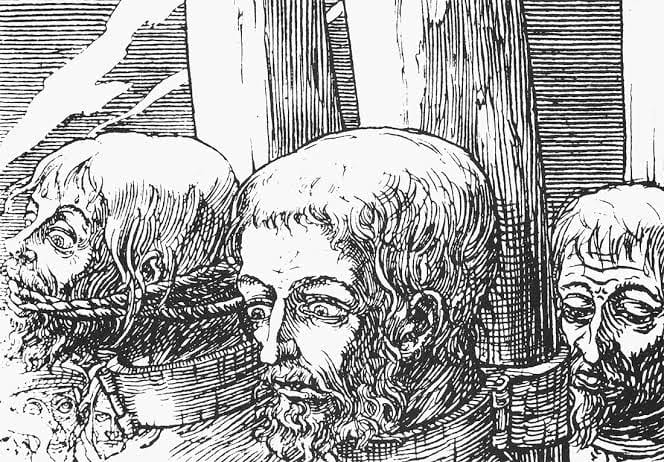
In January 1536, after the Anabaptist kingdom of Münster had collapsed, the captured leaders Jan van Leiden, Bernhard Knipperdolling, and Bernhard Krechting were tortured and executed. Their bodies were placed in iron cages and hoisted onto the tower of St. Lambert’s as a warning.
Today, the bodies are gone. The warning hardware remains.

This Tale is about a sacred instrument that became a whole city.
Sacred instruments can keep contact alive when ordinary perception is too small, too frightened, too hungry, too flattering, or too administratively busy to carry the wound.
They can also become sovereign. That is the danger of these things.
Münster is what happens when sacred contact enters a municipal body and begins issuing orders from city hall.
The calendar from the Great Disappointment has become a place.
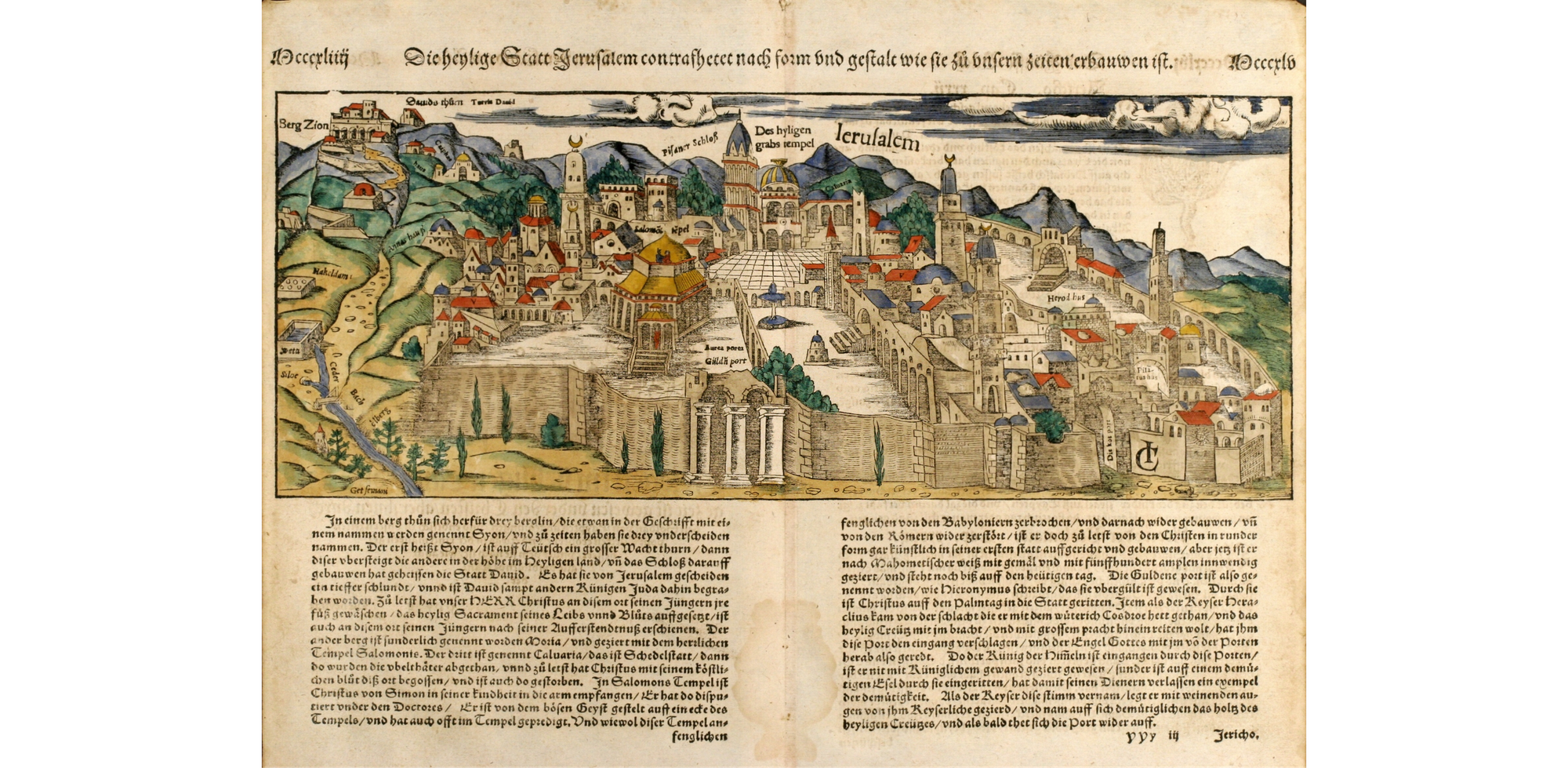
This is how a city becomes a theological weapon with tax implications.
The Cages.
If you stand in Münster today and look up at St. Lambert’s, the cages still hang outside the tower.
This is astonishing because most cities try very hard to remove the visual evidence of their absolute worst ideas. Cities prefer plaques.
Plaques are history after it has had a shower. A plaque can say, with excellent diction, that "serious events occurred here during a troubled period," and then everybody gets to continue on toward lunch.
Cages are worse.

A cage does not say "troubled period."
A cage says the authorities had a point to make and wanted the weather to help out.
The cages first held the bodies of three men who had tried to make Münster into the New Jerusalem. This already sounds like a man with a beard yelling beside a river, so we need to slow down and put the field back under it.
It is very easy to tell this story as:
- some Anabaptists took a city,
- abolished normal life,
- crowned a tailor,
- practiced polygamy,
- starved under siege,
- got fucking crushed,
- and then the survivors became a church-tower reminder that everyone should maybe calm down about Revelation.
- At least for a while.
- and then the survivors became a church-tower reminder that everyone should maybe calm down about Revelation.
- got fucking crushed,
- starved under siege,
- practiced polygamy,
- crowned a tailor,
- abolished normal life,
That version is not false in the simple sense. It is also exactly the kind of version that lets every other instrument moving in this field walk away innocent.
The cages do not only warn against religious extremity. These things warn against an entire field that made a sacred city feel reachable, necessary, defensible, and then finally punishable by iron exhibition.
They warn against persecution.
They warn against apocalyptic compression.
They warn against state religion.
They warn against revenge theology.
They warn against prophetic inflation.
They warn against municipal workflow receiving commands from heaven without a correction mechanism.
Also, they warn against tailors becoming kings.
That is an under-discussed institutional design principle, but has held up very well.
The Reformation.
The year was, and I weep, 1534.
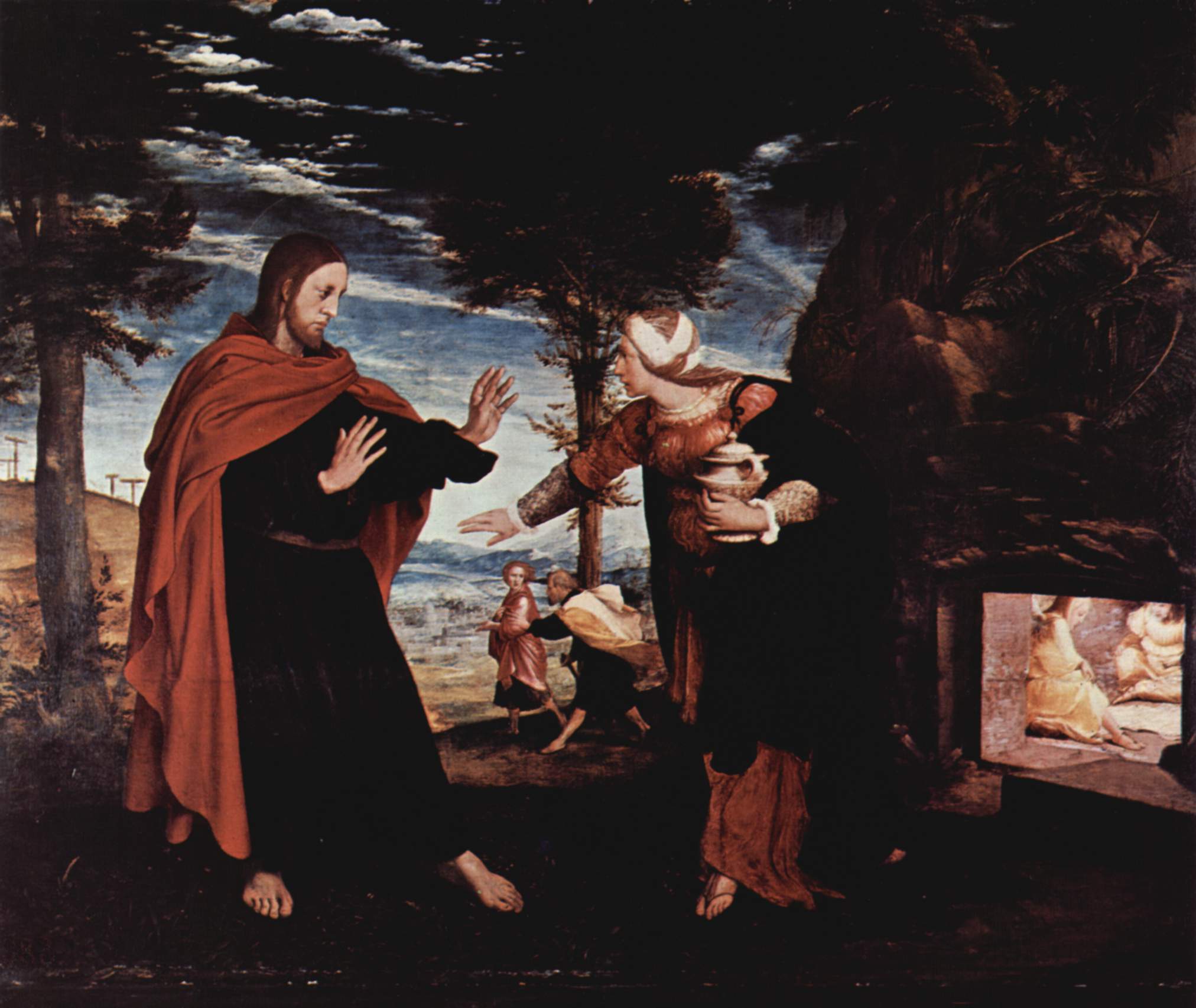
Europe was not calm. Of course. Europe is almost never calm. Europe had not been calm for a while. The Reformation had turned questions of baptism, authority, scripture, salvation, law, conscience, obedience, church office, property, and political legitimacy into a set of open wires sparking violently across the Holy Roman Empire.
This is one reason every historical actor in this story is so fucking intense.
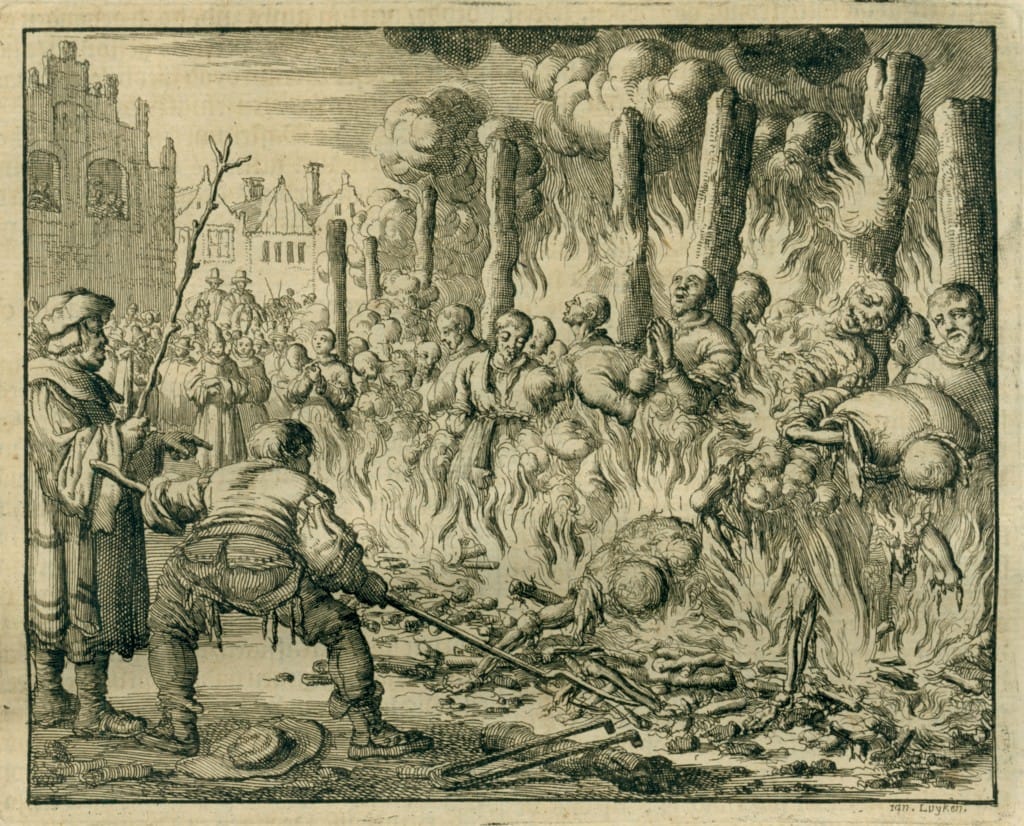
These people are not sitting inside a stable liberal order deciding whether to diversify their spiritual practices. They are living in a world where theology and governance are locked together like two drunk men in armor rolling down a staircase to hell.
- The established church had deep power.
- Local rulers had deep power.
- Cities had their own fragile political bodies.
- Preachers were printing and
- speaking and
- being exiled and
- imprisoned and
- killed.
- imprisoned and
- being exiled and
- speaking and
Peasants had already revolted across German lands in the 1520s and been crushed with the normal mercy shown by early modern elites (which is to say almost none).
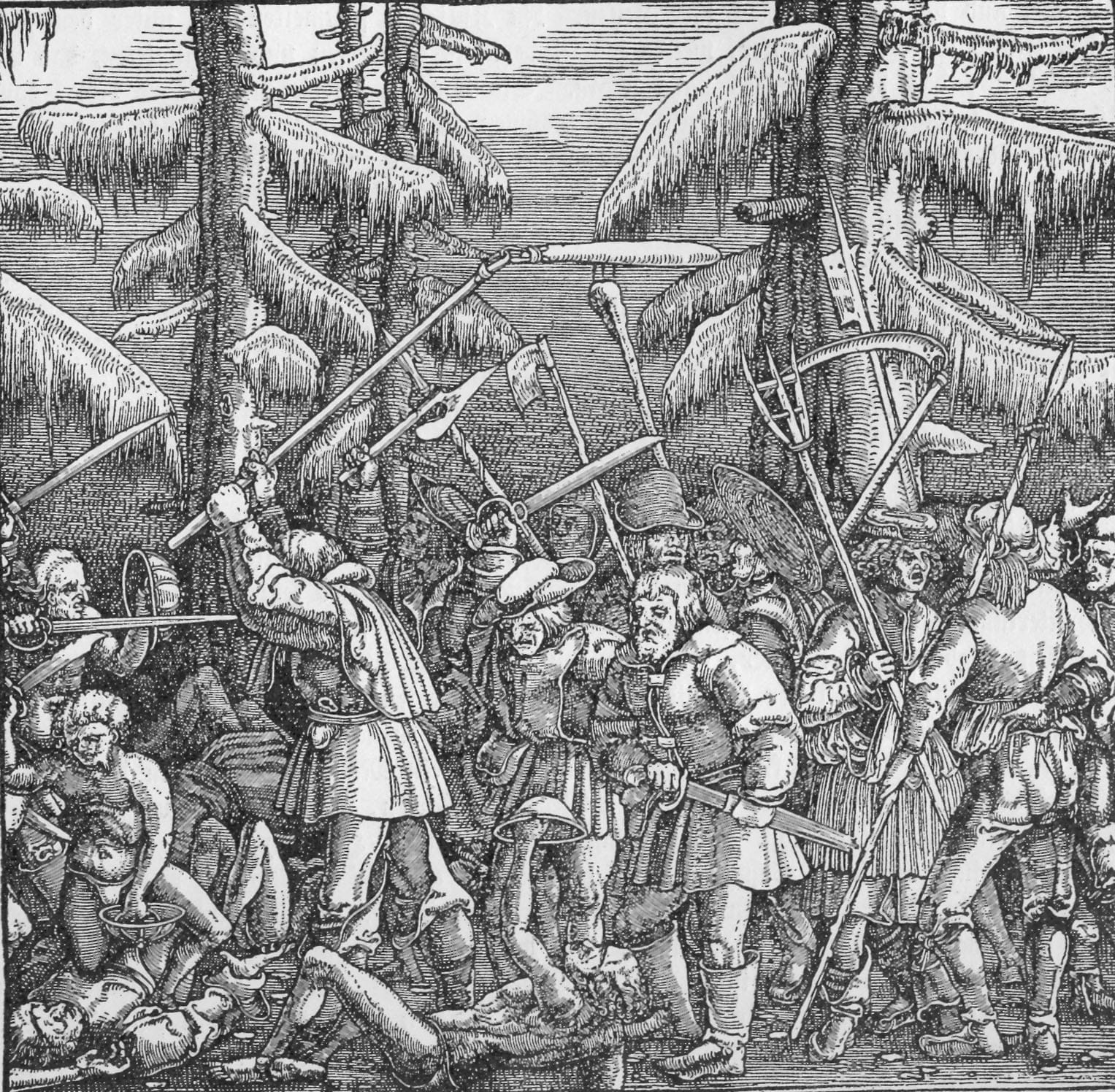
People had watched social order claim God, and then watched God claimed back by people who had begun asking why exactly a prince-bishop should own their conscience, their coin, their tithe, their body, their work, and half the village’s available roof tiles.
Into that field came Anabaptism.
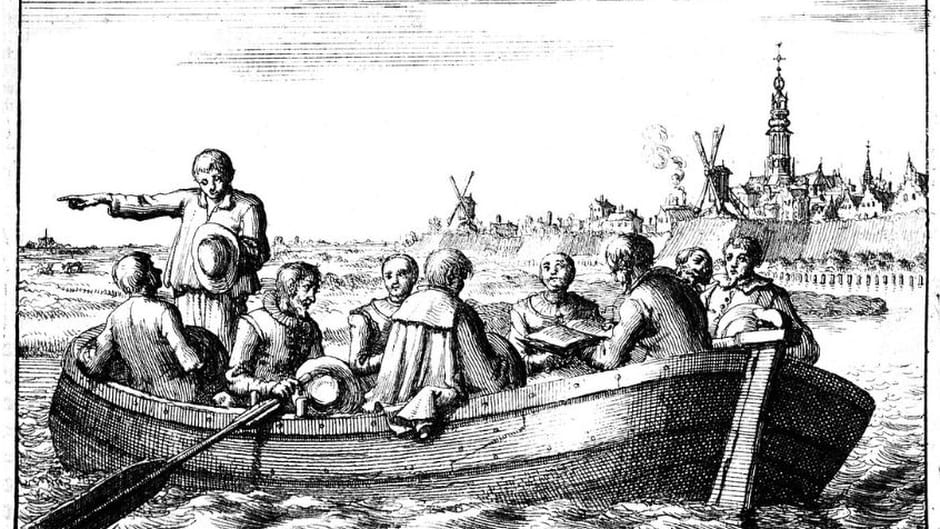
This word itself was already hostile. Just look at it. Anabaptist meant re-baptizer. The people so labeled believed that baptism should belong to consenting believers rather than greedy infants.
That may sound like a church argument now, something to be handled by committees and casseroles and one very patient person named Carol.
Except in the sixteenth century, that could make you a threat to the whole structure of Christian society.
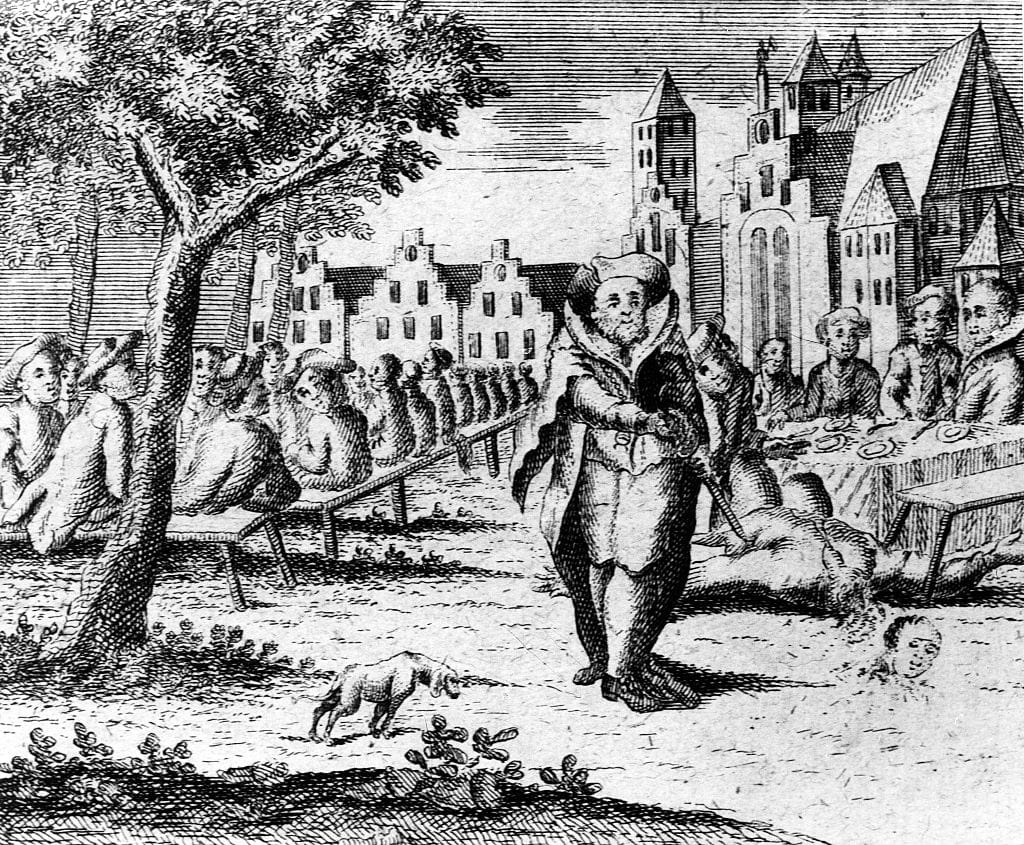
Infant baptism was not a tiny liturgical preference. This was one of the ways bodies entered church, state, family, inheritance, oath, and civic belonging. If baptism became voluntary, the whole relation between person, church, and polity started wobbling like a chair built by a philosopher.
This is why Anabaptists were not treated as harmless enthusiasts. They were hunted down, imprisoned, drowned, burned, beaten, banished, and demonized by Catholic and Protestant authorities alike. Anabaptist functioned as a slur imposed by enemies who viewed them as dangerous to political, social, and spiritual order.
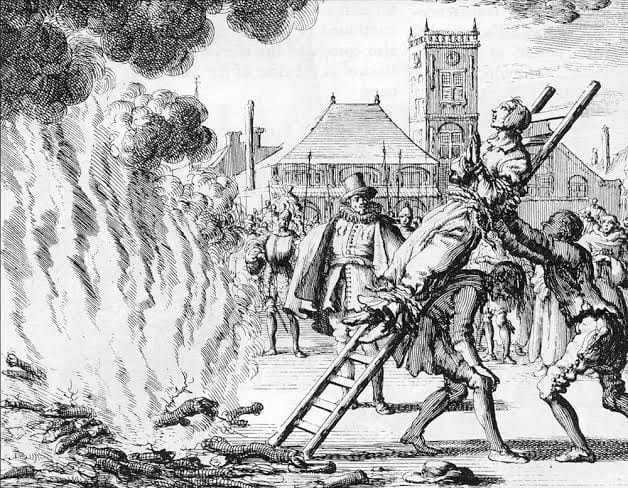
A hunted faith can become distorted in special ways. That wound does not make it automatically right, nor automatically harmless. It does, however, change the field.
- If every ordinary path of recognition is dangerous,
- if every open gathering risks arrest,
- if every dissenting conscience is treated as contagious rebellion,
- then a protected place begins to look like salvation with walls.
- if every dissenting conscience is treated as contagious rebellion,
- if every open gathering risks arrest,
And if salvation with walls appears, someone will eventually ask whether the walls can be used to keep out correction.
Strasbourg Was Supposed to Handle This Shit, Actually.
Before Münster became the city with the cages, another city had already been assigned the end of history.
Strasbourg.
This is one of the things that makes apocalyptic geography so hard to manage. A normal city can be wrong about parking. An apocalyptic city can be wrong about being the delivery address for the fucking millennium.
Melchior Hoffman, whose eschatological Anabaptism helped feed the Münster field, had preached that Christ would return at Strasbourg in 1533.
So the authorities locked him up.

Christ did not appear.
This sequence deserves respect as a historical machine.
- First, the sacred future is assigned an urban coordinate.
- Second, the authorities imprison the prophet.
- Third, time just continues, which is very inconsiderate of it.
- Fourth, the prophecy does not die anyway.
- It migrates.
This is one of the most important moves to note in the Münster story.
The New Jerusalem was not born from total randomness. It emerged from a field where apocalyptic expectation had already been disappointed, displaced, and intensified.
- Strasbourg had been named.
- Strasbourg had not become the answer.
- Hoffman was in prison.
- The need for an answer remained alive.
- Hoffman was in prison.
- Strasbourg had not become the answer.
A sacred instrument under correction has several possible paths.
- It can admit the field answered against it.
- It can soften.
- It can become more careful.
- It can separate hope from date,
- doctrine from geography,
- warning from possession.
- doctrine from geography,
- Or, it can just search for a new place with more receptive walls.
That last option is very bad, but history keeps making it very available.
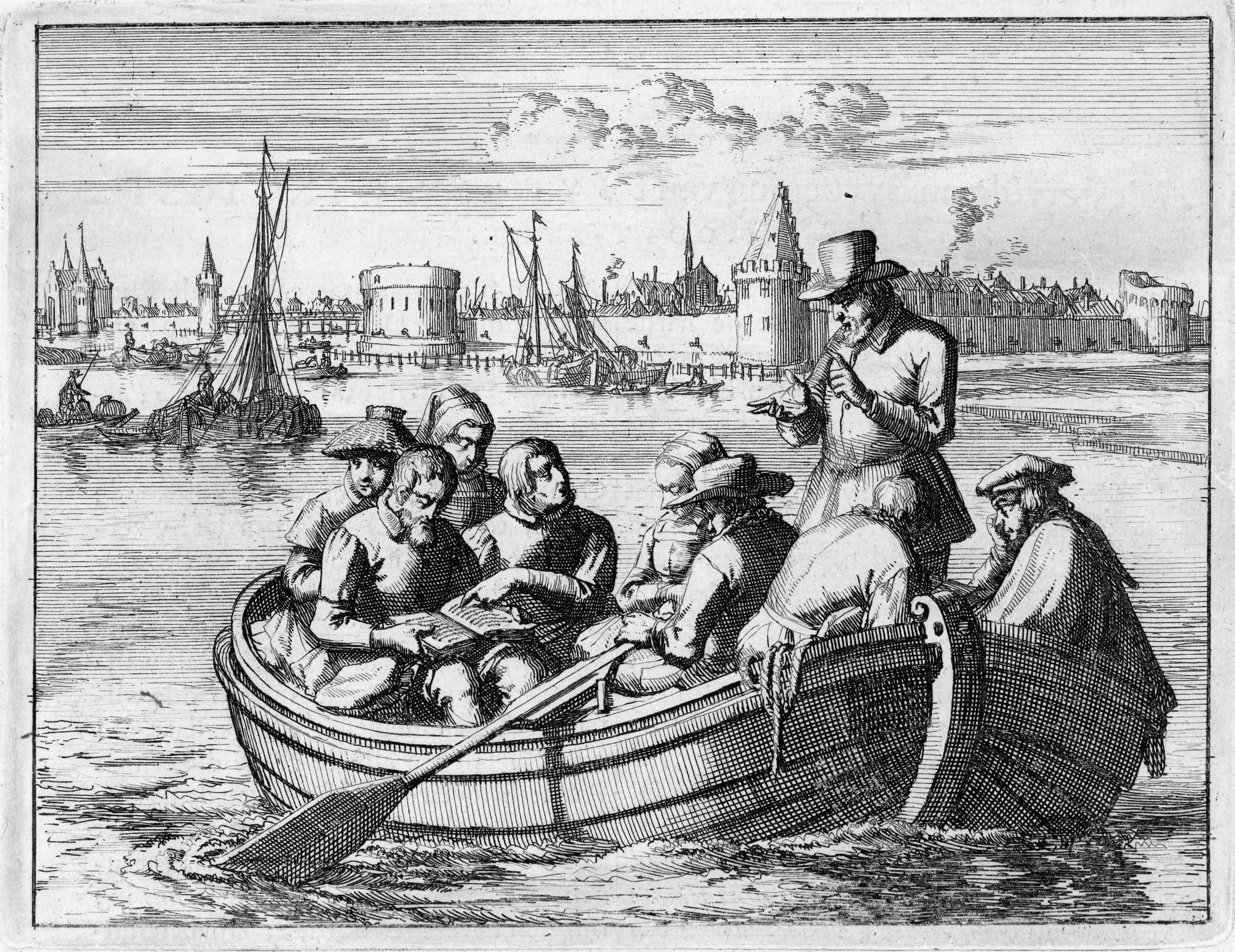
So Münster became the new landing site for expectation.
This gives the story a nasty kinship with the Great Disappointment. There, a sacred calendar carried too much expectation. When the date failed, some of the instrument’s successors moved fulfillment into a heavenly sanctuary. Here, a sacred geography shifted from one city to another. The answer did not disappear when the field contradicted it. It found a new address.
That is the distortion pattern:
- the prophecy misses;
- the prophet is contained;
- the expectation survives containment;
- another city becomes available;
- the same instrument returns with masonry.
- another city becomes available;
- the expectation survives containment;
- the prophet is contained;
This is why damaged sacred fields are so hard to correct from the outside.
Imprisonment is not correction. Persecution is not correction. A prison cell can silence a speaker, but it cannot teach a movement how to tell the difference between hope and field contact.
Sometimes it teaches the opposite lesson. The world looks more hostile, the elect more isolated, the expected intervention more necessary.
Münster.
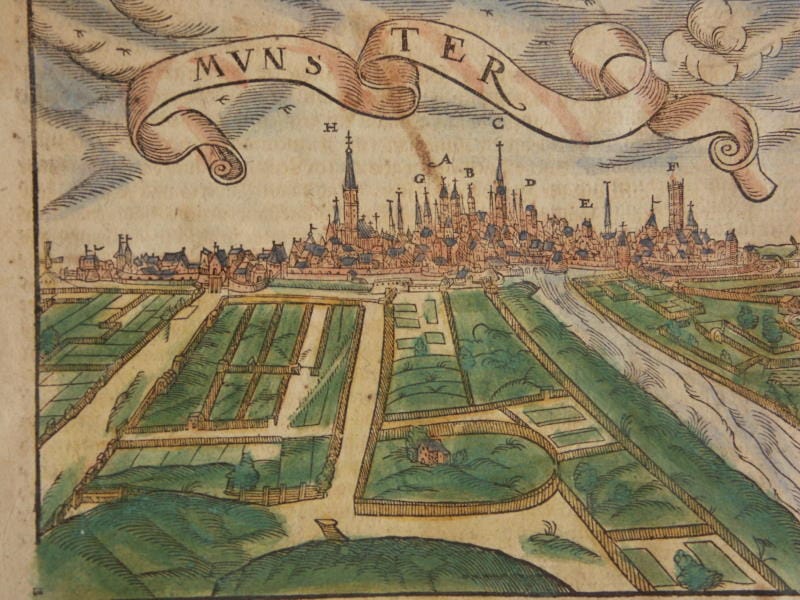
Münster was a city in the Prince-Bishopric of Münster.
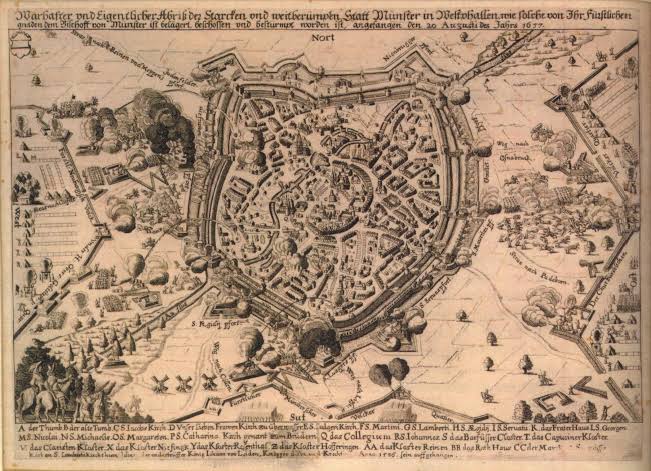
This means it had one of those early modern arrangements where the spiritual and political furniture are in the same room and may actually be the exact same chair with the same fucking name.
A prince-bishop is exactly what it sounds like, which is one of the many reasons the Reformation could not simply be solved by telling everyone to take a deep breath.
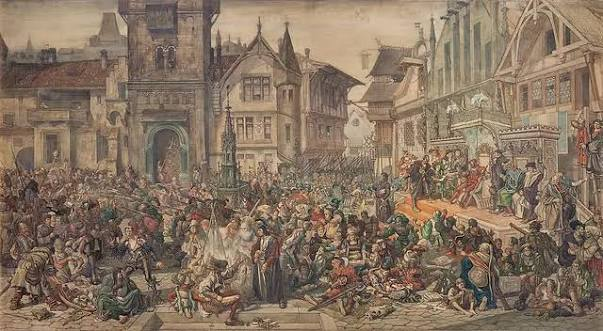
This bishop was not only preaching. This bishop was governing. But the city was not only praying. The city was bargaining, taxing, defending itself, feeding itself, absorbing refugees, negotiating factions, and trying to remain a body while half of Europe argued about what bodies were for, anyway.
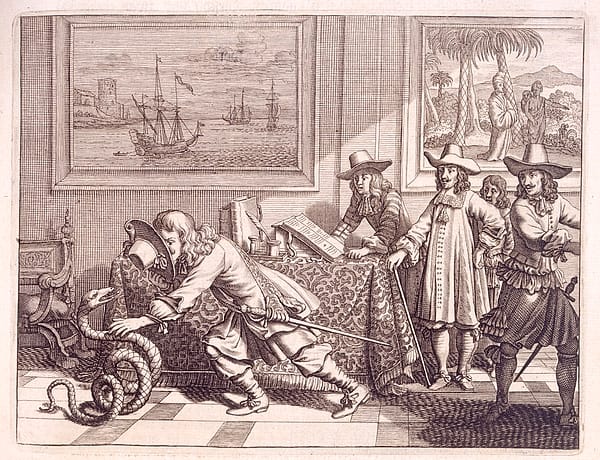
Münster already had reformist currents before the Anabaptist takeover. It had preachers. It had artisans. It had merchants. It had a civic class. It had poor people to whom communal language did not sound like a thought experiment. It had enough political instability for a radical movement to become more than a room of people nodding too hard at a sermon.
The city was the instrument waiting on the table.
- A sermon can gather people.
- A book can persuade people.
- A calendar can make people wait.
- A city can make people move.
- A city can open and close gates.
- It can expel opponents.
- It can confiscate property.
- It can pool goods.
- It can organize defense.
- It can punish.
- It can store grain until the grain stops cooperating.
- It can turn a doctrine into a queue outside a bakery.
- It can make eschatology stand in line for water.
- A city can open and close gates.
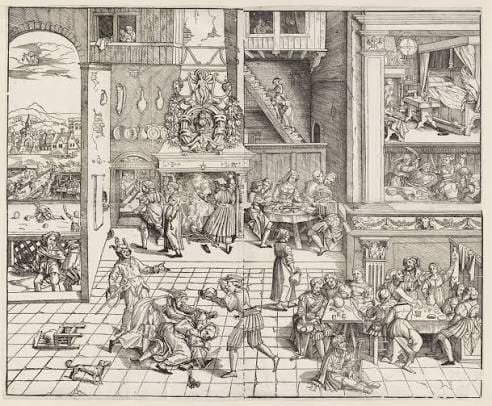
By February 1534, Münster had become a formal center of radical Anabaptist power. The old bishop was driven out. People who refused rebaptism were forced out. History Today gives the number of expelled Catholics and Lutherans as about two thousand.
The sacred instrument had begun to claim the civic field. A person who refused the sacred act lost city membership. They lost home, safety. They were not corrected by argument. They were moved physically out of reach.
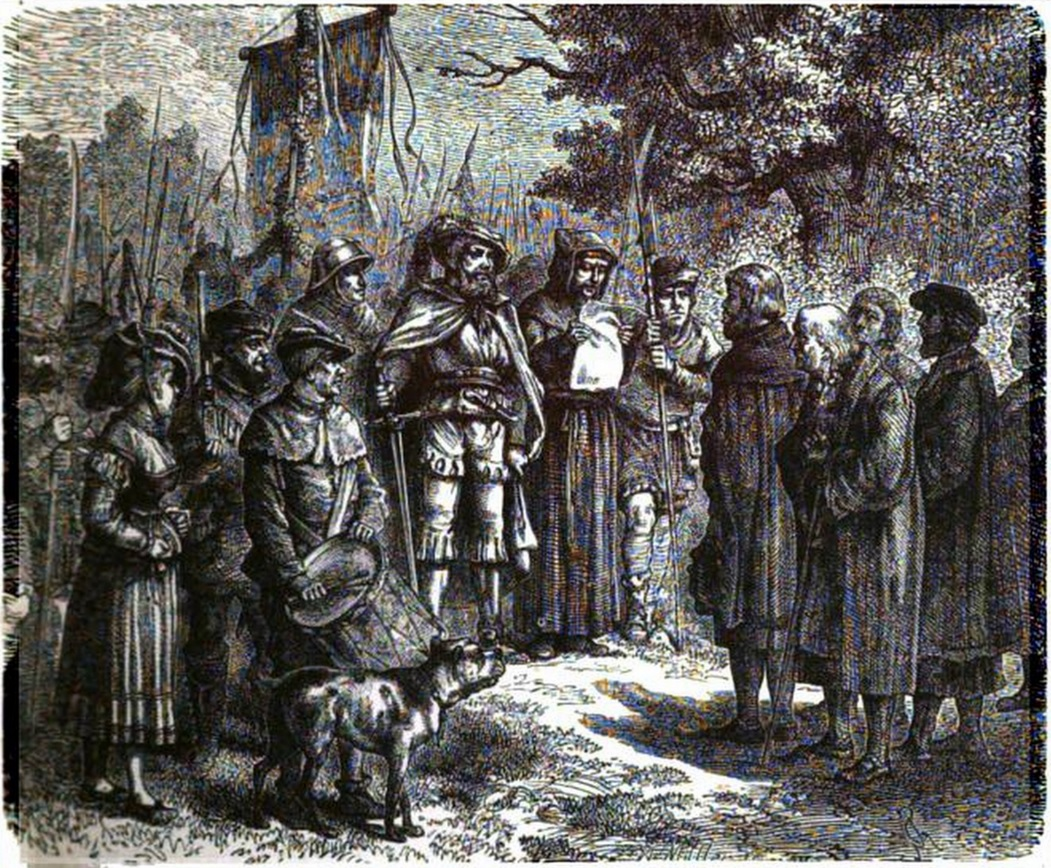
The gate became a sacrament.
This is a very bad promotion for a gate to receive.
A gate is already morally risky. It always says some people may enter and others may not. That can protect. That can also possess. The moment a gate becomes proof of holiness, the people outside it begin to look less like neighbors and more like discarded material from the future.
Nothing good comes from this without adult supervision, and adult supervision was, historically, busy being exiled, besieged, prophetic, or the prince-bishop.
All Books Except that One.
Once Münster becomes available, the next question is what kind of city the sacred instrument thinks it needs.
A city contains too many voices.
This is one of the great annoying features of cities. Those contain laws, memories, guild rules, gossip, sermons, jokes, property records, grudges, ledgers, recipes, songs, market habits, family obligations, old church furniture, bad murals, worse neighbors, and written documents that can sit there being incredibly inconvenient long after the person who wrote them has died.
A sovereign sacred instrument does not enjoy this. Not at all.
The field has too much memory.
The answer wants fewer competing archives.
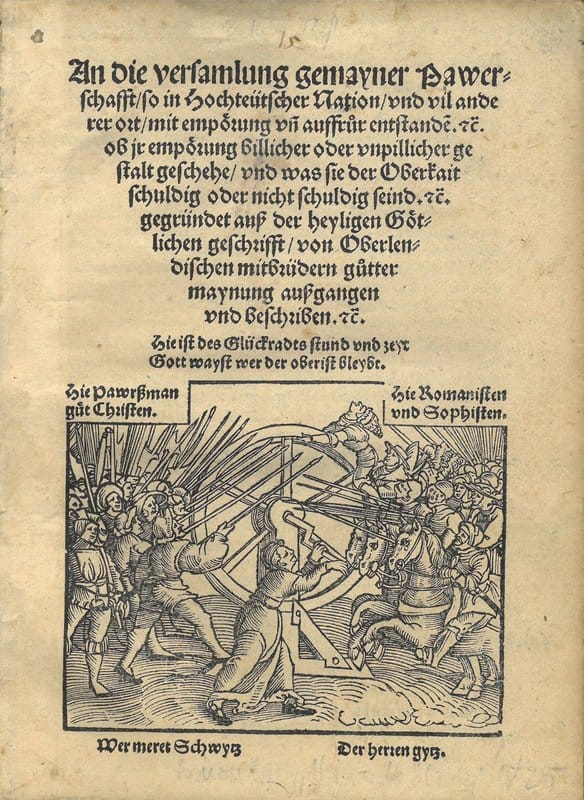
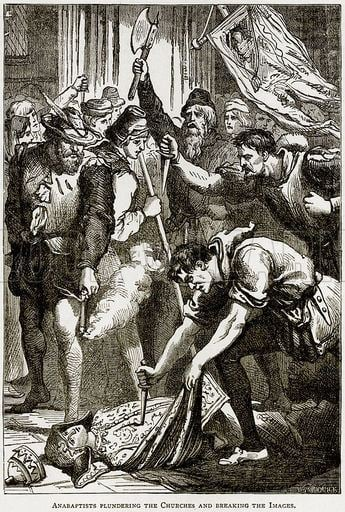
The Deutschlandmuseum summarizes one early phase of Matthys’s rule in very clean nightmare language: he launched iconoclasm, destroying images and statues as idols, and ordered the destruction of every book except the Bible.
The image is absurd.
Somewhere in Münster, in the middle of a Reformation firestorm, the sacred city has apparently decided that its real problem is insufficiently curated shelves.
"The future is arriving, so please bring your unauthorized codices to the designated destruction zone."
But the field analysis is serious.
Books are not innocent because they are books. Many books are fucking terrible. Some books are just dead things with shitty opinions written in them. Others are authority pretending to be paper. Any icon can become an idol. A record can become a chain. An old legal document can preserve injustice indefinitely.
Still, the destruction of every book except the authorized sacred text shows a field severely narrowing its correction channels.
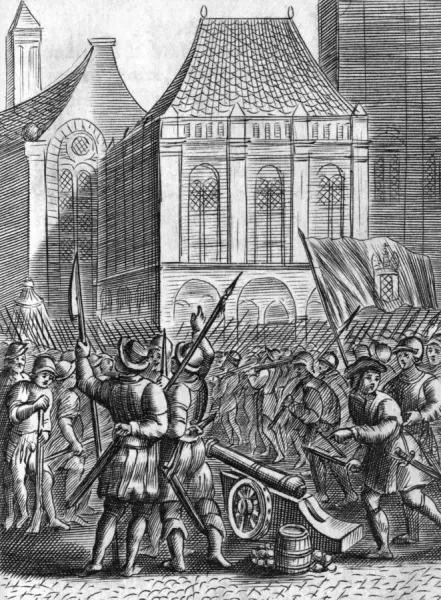
This instrument is no longer saying:
Scripture will orient our contact with the field.
It has moved on to the much more intense:
The field must pass through this text, and other textual memories are now rivals to burn.
That is pretty different.
A good sacred instrument can intensify attention. It can say: look here, return here, remember here, listen here, let this word interrupt your appetite and your self-protective lies.
A sovereign sacred instrument begins removing other contacts.
- No images.
- No books.
- No rival archives.
- No old records with enough stubbornness to remind the city that it used to be other than this.
The New Jerusalem was not content to gather believers. It began shrinking the evidence available to the gathered.
This is one of the surest signs that an instrument is losing all humility. It stops asking whether it can help the field speak. It starts deciding which parts of the field are allowed to have a mouth.
The People Who Did Not Get to Be.
The expelled people are easy to lose because the story wants its wildest figures.
The tailor king is loud.
The cages are impossible to ignore.
The Easter ride barges into the room with the confidence of a man about to be converted into a warning label.
Polygamy shows up waving both hands.
The city itself starts glowing with the horrible light of an event that knows it will be taught badly for five hundred years.
Meanwhile, about two thousand Catholics and Lutherans were forced out of Münster in early 1534.
This was not a theological metaphor.
People left.
Households were broken open by history.
Property changed hands.
- Beds,
- pots,
- tools,
- debts,
- animals,
- rooms,
- cellars,
- and all the little continuities
- that make a person more than a confession
- were cut away from the people who had failed the city’s sacred sorting mechanism.
- that make a person more than a confession
The gate did not ask whether they were kind.
The gate did not ask whether they had cared for a sick neighbor.
The gate did not ask whether their children understood Anabaptist theology.
The gate asked whether they belonged to the future as the city had now defined it.
They did not.
So they were moved out of the story.
This is one of the first concrete contractions in the Münster field. It is also one of the easiest to excuse if one gets seduced by the revolutionary shape.
Of course the city had to become pure. Of course the old order had to leave. Of course a new world cannot be built while the old world keeps its pantry, its pews, its keys, and its annoying cousins.
That is exactly how sovereign instruments talk.
They take a real problem and turn it into an expulsion category.
The old civic-religious order had been coercive. The expelled Catholics and Lutherans were not all innocent embodiments of pastoral gentleness wearing tiny halos.
Some surely defended the structures that had endangered Anabaptists. Some probably wanted the bishop’s order back. Some would have denounced the movement with real enthusiasm if they had held power.
Still, the ethical fact remains:
A city that claims repair by sorting out whole categories of living people has begun making its future out of dispossession.
This is where sacred title starts to glimmer before its formal article.
The New Jerusalem is not only a hope. That is a claim over space. Once that claim becomes sovereign, those who do not fit the sacred title become removable matter.
Münster did not need to invent empire to do this.
It just needed a gate.
The First Jan.
Now we need to deal with the Jans.
There are two main Dutch Jans in this story, which is already one Jan too many.
This is not anti-Dutch prejudice, formally.
Modal Path Ethics has no formal position on the Dutch as a people.
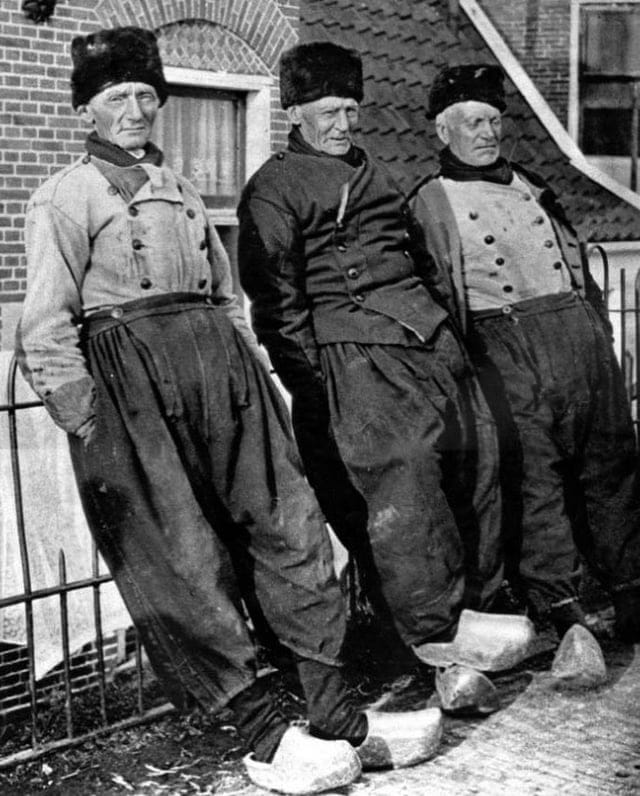
It does reserve the right to become nervous when multiple Dutch prophets named Jan enter a besieged city and begin discussing the end of history with administrative confidence.
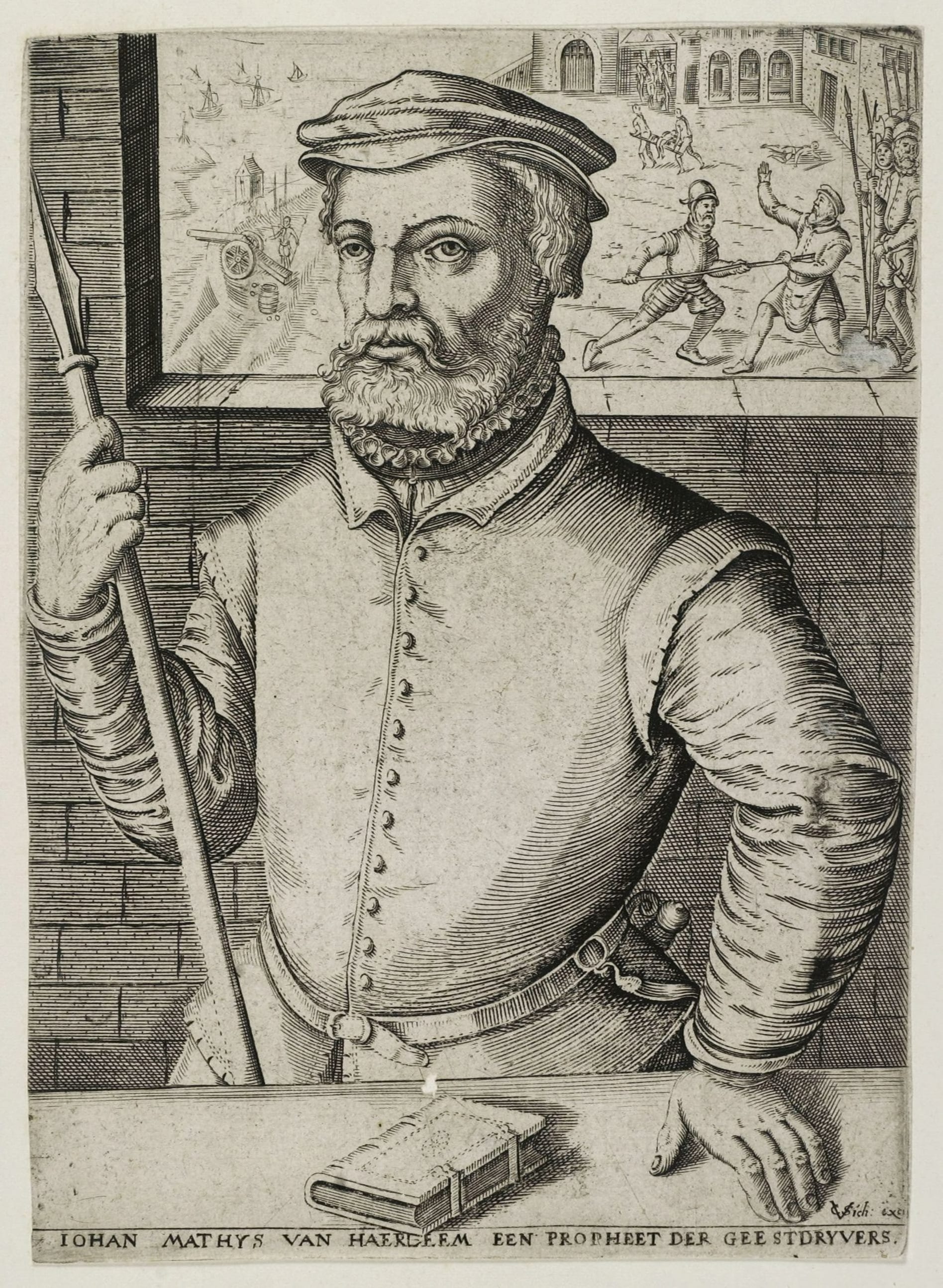
The first Jan is Jan Matthys, or Matthijs, a baker from Haarlem and an apocalyptic Anabaptist prophet.
So, a baker is normally a stabilizing figure in a city.
The baker understands time, heat, yeast, kneading, and the fact that a loaf cannot be argued into readiness by declaring it spiritually mature.
This makes the events that follow all the more upsetting.
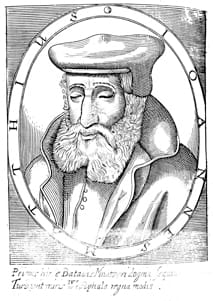
Somehow, the man from the profession that most obviously teaches humility before process became the prophet most eager to make history rise on command.
Matthys helped drive the movement into a harder apocalyptic form. He was not only saying that the world was morally broken. Many people could see that part.
He was saying that the decisive divine transition was imminent, that Münster was central to it, and that the faithful had to occupy the role history had assigned them.
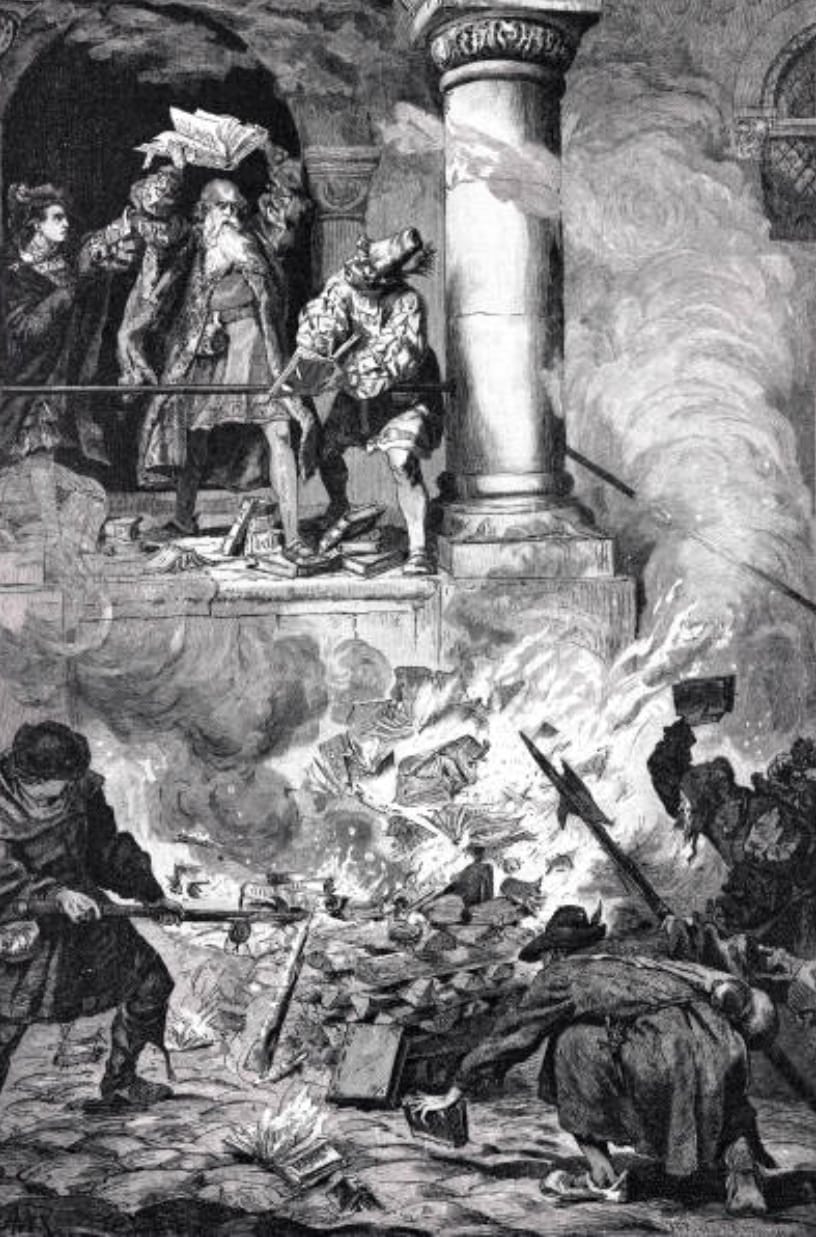
In ordinary religious life, expectation can discipline desire. It can tell a person that current power is not final, that suffering is not sovereign, that ordinary injustice is not the deepest law of the world. That can be a real expansion of the field.
In Münster, expectation became territorial.
The New Jerusalem needed addresses.
The faithful were to gather. The ungodly were to leave. The city would become the site where sacred history finally stopped being patient with everyone else’s bullshit.
This was a powerful claim inside a persecuted field.
Persecution had told Anabaptists:
You do not belong.
Münster answered:
Actually, the whole world belongs to us soon.
That is a wildly dangerous repair shape.
- It begins by refusing humiliation.
- Good.
- It then converts refusal into final ownership.
- Bad.
It takes a wounded group’s need for survival and gives it cosmic title over a city containing other living people who have, inconveniently, not all agreed to become supporting characters in Revelation.
This is where sacred contact starts becoming a sovereign instrument. The harmed field is no longer allowed to answer back except by joining the prophecy.
A sacred city was being assembled, and the first Jan had matches.
Easter.
Jan Matthys then did one of the most diagnostically perfect things a distorted figure can do.
He rode out of the city.
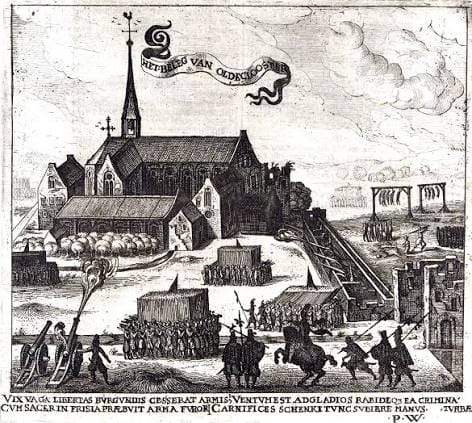
On Easter Sunday 1534, while Münster was under siege by the forces of Prince-Bishop Franz von Waldeck, Matthys led a small group out of the city to confront the besiegers. Different summaries vary in detail and emphasis, but the core event is steady:
He expected divine intervention and was killed almost immediately.
The Deutschlandmuseum states that Matthys walked out of Münster on Easter Sunday expecting to meet the returned Christ and was immediately killed by mercenaries in the bishop’s pay.
Other accounts describe him riding out with twelve followers, believing himself in the pattern of Gideon.
This is the moment where prophecy meets a military perimeter.
Prophecy lost.
Matthys did not fail because sacred expectation is always delusion. He failed because his sacred instrument had removed ordinary correction from the relation between claim and field.
The besieging army was not required to become spiritually legible in the way his expectation demanded.
The bishop’s soldiers did not pause to ask whether this might be an interesting typological development.
They just killed him.
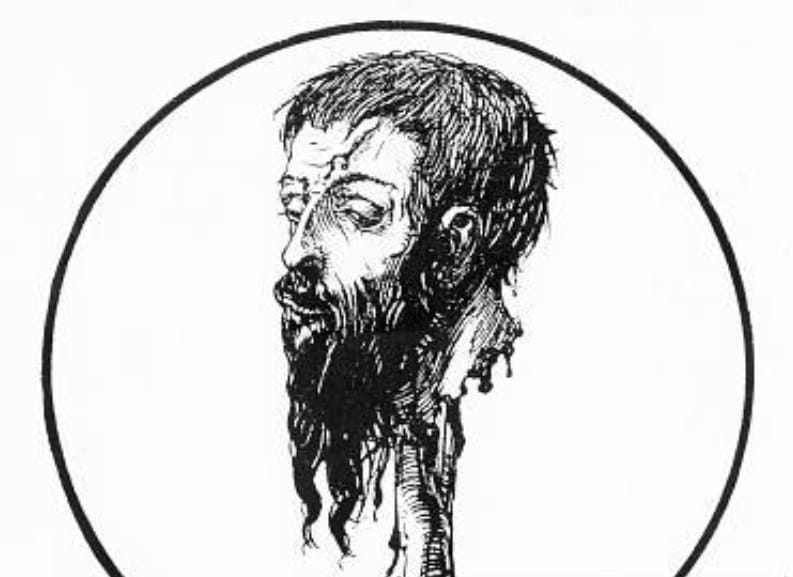
His head was displayed to the city.
There is a version of history where this becomes the correction event.
- The prophet went out.
- The field answered.
The sacred instrument was definitely wrong about the protection it claimed.
A community could pause, grieve, revise, negotiate, escape, split, admit uncertainty, protect children, preserve remaining continuance, or at least stop letting apocalypse handle scheduling.
Münster did not take that path.
Reality killed the prophet, and the instrument interpreted this as a staffing transition.
And so it was the second Jan entered his true vocation.
The Second Jan.
Jan van Leiden was born Jan Beukelszoon or Bockelson. He was from Leiden.
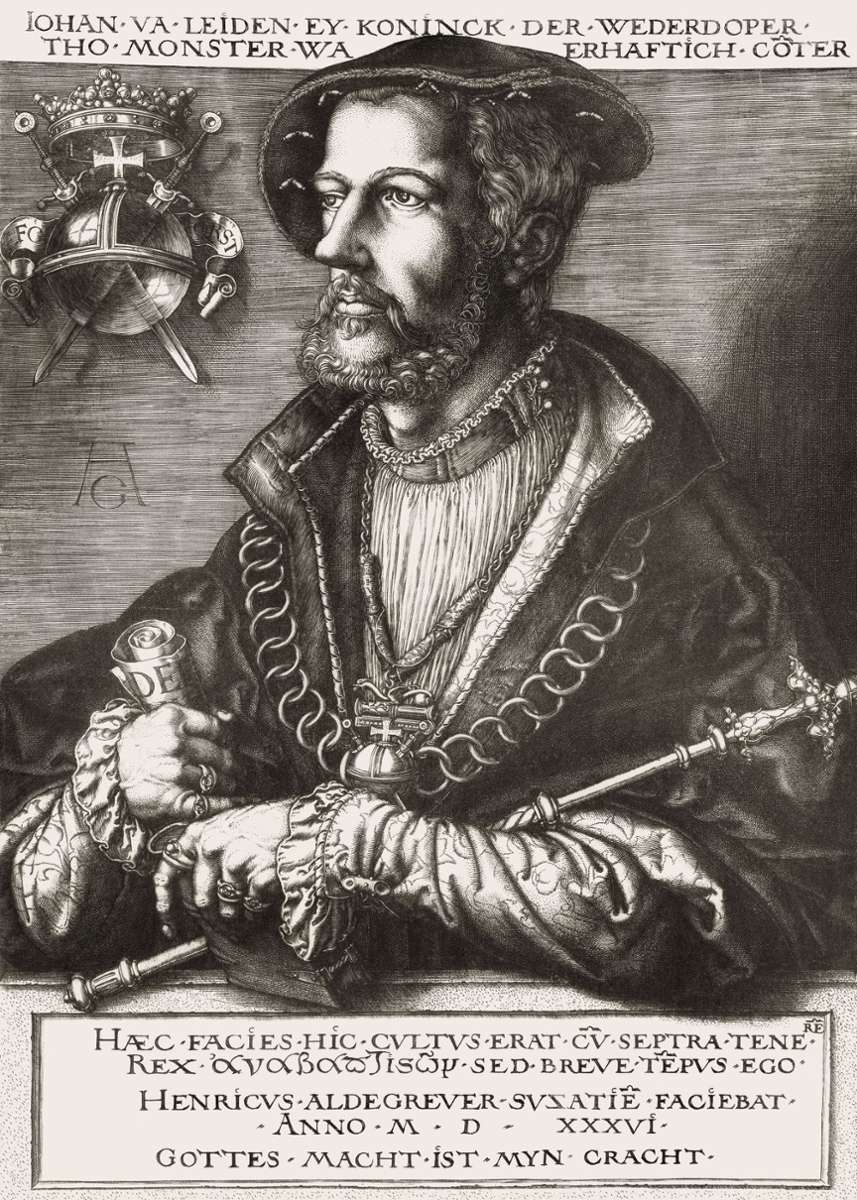
He had been, depending on the account and the stage of life under discussion,
- a tailor,
- merchant,
- innkeeper,
- actor,
- or some weird, hard to categorize combination of early modern side hustles that together make a man exactly dangerous enough to become very interesting during a siege.
The tailor part is the one history refuses to let go.
- A tailor makes garments fit bodies.
- Jan van Leiden made a kingdom fit himself.
This is the sort of object-level correspondence that makes Modal Path Ethics put down its cup very slowly and tilt its head.
To be extremely clear, being a tailor does not make someone a future theocratic king.
Most tailors do not crown themselves in besieged cities, and our society would be worse if we treated every person working near fabric as a latent apocalyptic sovereign.
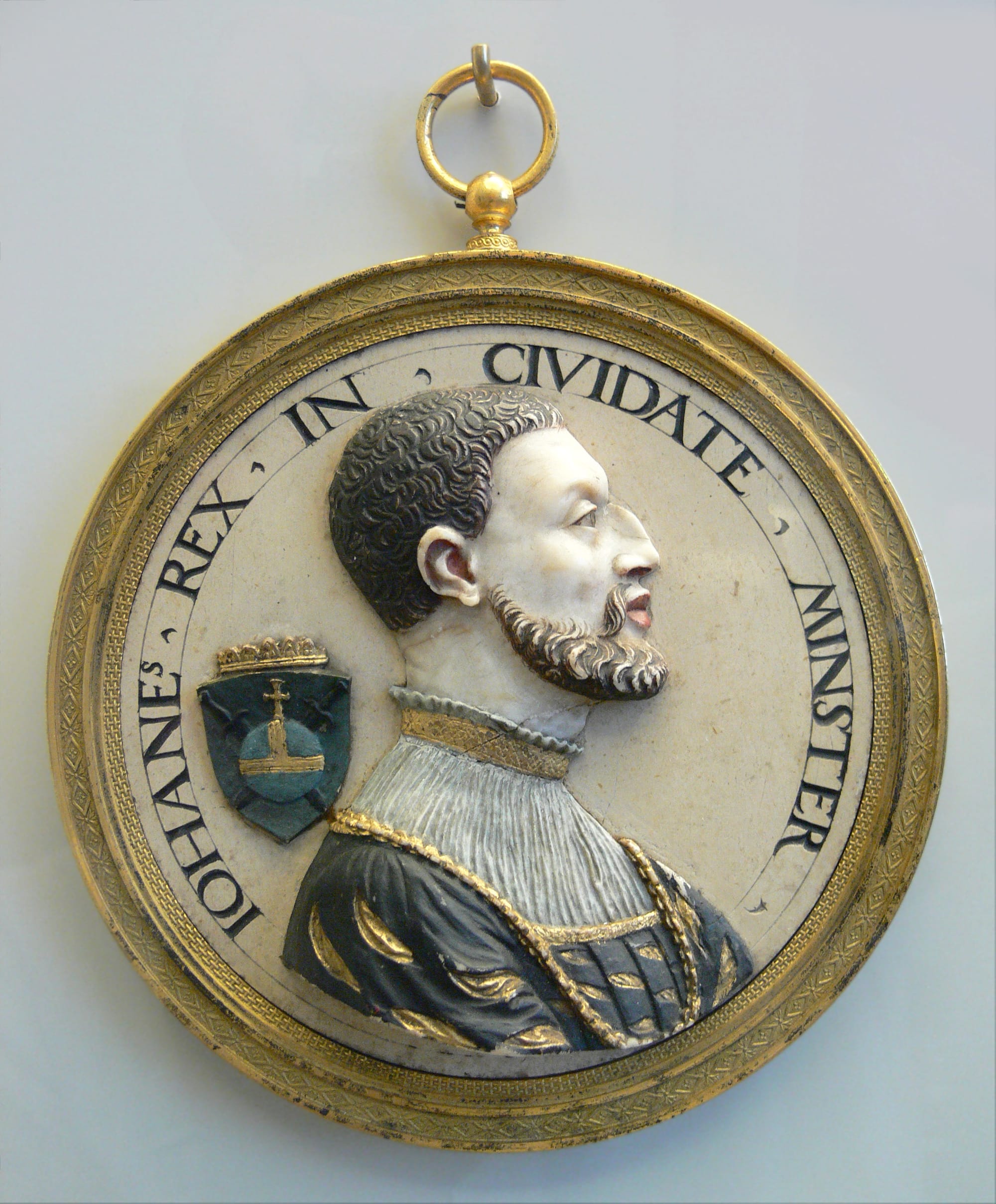
Still, the image is perfect. He had worked with cloth, costume, fit, performance, and the visible surface by which a body enters social recognition.
Then he took a city and dressed it as Zion.
Van Leiden was not stupid. Like William Paterson in the Darien Scheme, he was dangerous partly because he had real gifts. Sources describe him as energetic, charismatic, theatrical, and capable of exercising influence. The man could act inside a field.
He was not the guy standing in a burning house explaining that the fire was a metaphor. Dude could organize. He could lead. He could perform authority. He could keep a besieged city under his command for a remarkable period. These are real capacities.
Then, these capacities became sovereign over correction.
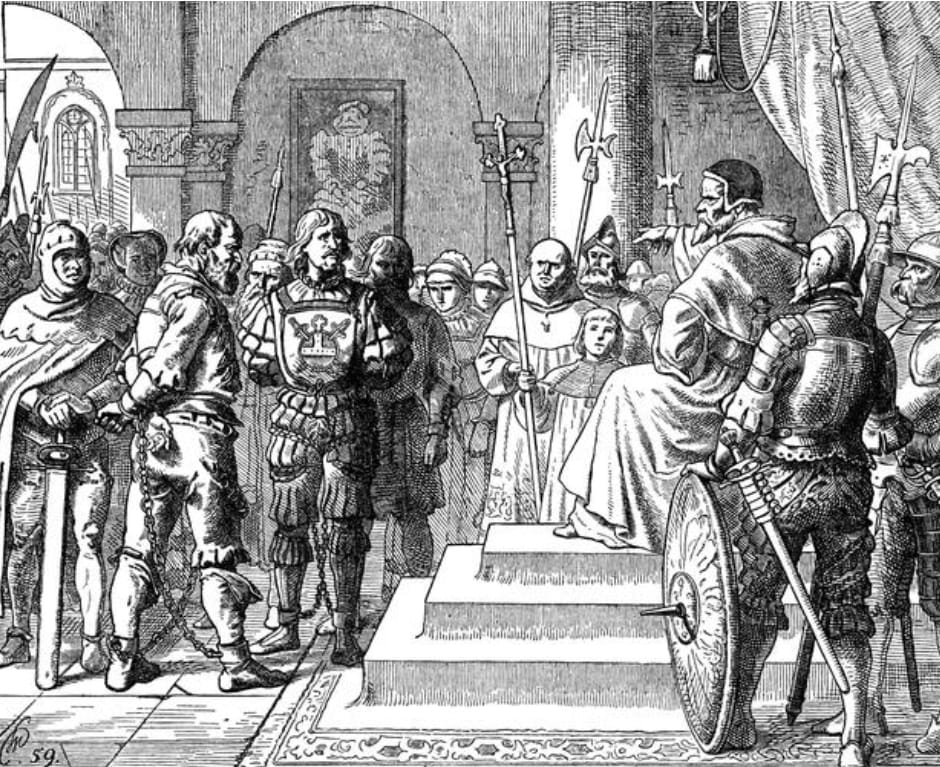
Van Leiden did not invent the damaged field. He inherited it from persecution, reform conflict, civic instability, apocalyptic expectation, economic pressure, prophetic escalation, and a siege.
But he gave that field a costume. Then a crown. Then laws. Then a court.
Then enough spectacle for the field to begin mistaking theater for providence.
City Hall Becomes an Altar.
A sacred instrument does not become sovereign only because someone yells something intense.
That is an amateur mistake. Anyone can yell.
Cities contain yelling as one of their regular weather patterns.
Sovereignty begins when the yelled thing gets an office.
This is where Münster becomes much more interesting and much worse.
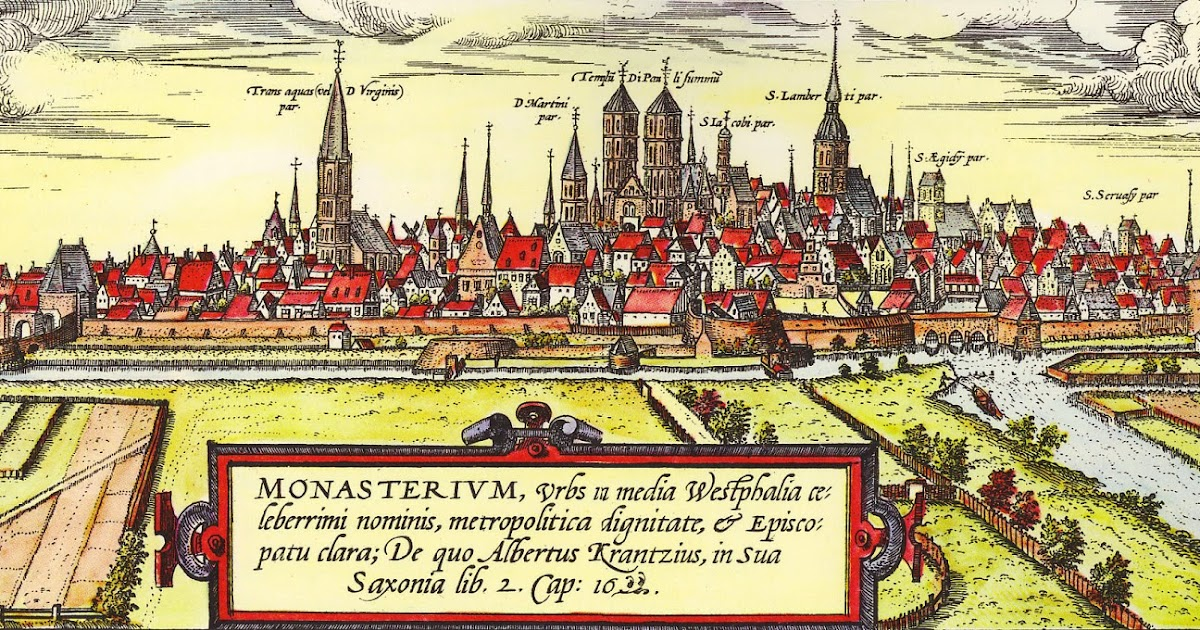
Prophecy needed municipal workflow.
Somebody had to decide who exactly counted as a believer. Somebody had to manage all the expelled property. Somebody had to organize the stores. Somebody had to govern the gates. Somebody had to defend the walls. Somebody had to issue commands. Somebody had to decide whether money, property, marriage, punishment, worship, and ordinary speech now answered to the New Jerusalem.
This is how a sacred instrument becomes a field regime.
It does not simply say:
God is coming.
It says:
God is coming, so please proceed to the appropriate administrative window.
Münster had local civic figures who made this possible. Bernhard Knipperdolling, a prominent local figure, became part of the ruling structure. Bernhard Rothmann, the preacher and reformer and second Bernhard in this paragraph, gave theological force to communal transformation. New Histories identifies Rothmann as a communal reformer and quotes the communal language attributed to him: Christian brothers and sisters shared what they had; no one would lack; everything would be common.
That language is not silly.
If you are poor, persecuted, hungry, or watching ecclesiastical and civic elites defend themselves with God-talk, communal property can sound like repair rather than madness.
The abolition of private property, redistribution of goods, and dismantling of the old fiscal economy were not random decorative weirdness. They were attempts to make a different social field. A better world was part of the claim.
This is why lazy anti-religion accounts fail. Münster was not only a warning about belief. This was also a proof that religious belief can reorganize social reality with astonishing force. The problem is not that the city tried to draw better lines of care, equality, and obligation. The problem is that the instrument used to draw those lines protected itself from correction by making the city identical with God’s imminent future.
Once that happens, dissent stops being a normal part of communal repair.
Dissent becomes refusal of Zion.
A hungry person becomes a theological inconvenience. A doubter becomes rot. A woman becomes ordinance material. A locked door becomes suspicious.
City hall becomes an altar, and that altar starts checking cupboards.
The Tailor King.
Jan van Leiden eventually had himself proclaimed king.

This is one of those historical facts that feels as though it should have triggered some sort of automatic civic fire alarm.
There really should have been a rope somewhere in Münster labeled PULL IF A TAILOR BECOMES THE FUCKING KING OF ZION.
Apparently there was not.
In September 1534, van Leiden became king of the New Jerusalem. Accounts describe him adopting royal regalia, a court, honors, and Davidic imagery. He paraded around in regal costumes and promised miraculous defeat of the besieging army.
The tailor king performed governance.
He already had the outfit for it.
A crown is not just jewelry. A crown is a field instrument. It changes how people move around a specific head. It announces that one body now carries the center.
That can be useful in a stable monarchy, depending on one’s tolerance for hereditary metaphysical furniture. In Münster, the crown meant the city had given sacred expectation a human focal point inside a siege.
The crown made the fantasy legible.
- Here is the place.
- Here is the man.
- Here is the center.
- Here is the line through which providence will become policy.
- Here is the center.
- Here is the man.
A city under pressure wants that. A wounded field wants a visible answer. It wants to stop interpreting and start obeying the line. It wants the panic to have a face and a cool wardrobe.
Van Leiden had both.
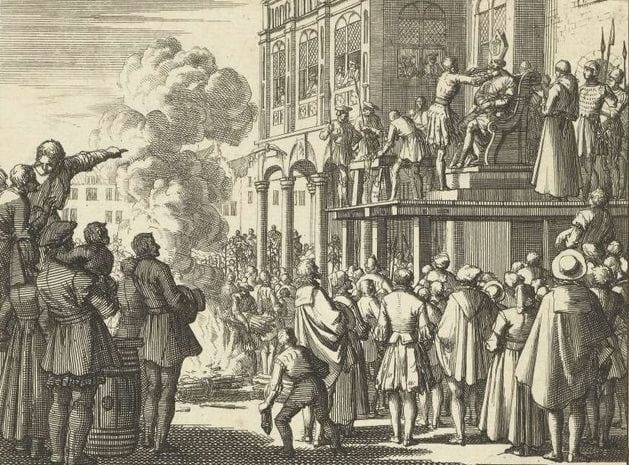
The crown is ridiculous and diagnostic. It shows exactly how sacred contact became sovereignty. The tailor put royal form on a distorted field, and the distorted field, already starving for certainty, accepted the fit.
The city had become a stage.
Unfortunately, the audience was not allowed to leave.
Gates Close Both Ways.
Münster had walls.
Walls do wonderful and terrible things to moral imagination.
A wall can protect a city from attack. It can keep a child from being cut down by cavalry. It can slow the soldier, the raider, the prince-bishop’s army, the hungry opportunist, the punitive expedition, the neighbor with a grudge and too much hardware.
A wall can also teach everyone inside it that the world has become morally simple.
- Inside:
- faithful.
- Outside:
- enemy.
- Inside:
- New Jerusalem.
- Outside:
- Babylon,
- bishop,
- compromiser,
- persecutor,
- ungodly,
- future debris.
- ungodly,
- persecutor,
- compromiser,
- bishop,
- Babylon,
Münster’s walls did both.
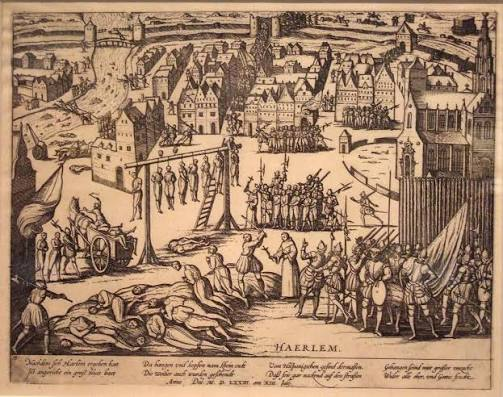
Prince-Bishop Franz von Waldeck laid siege to the city.
The sacred regime inside the walls did not become dangerous in a field where everyone else was offering respectful interfaith dialogue and sandwiches. The outside authority actually wanted the city back. It had military force. It represented an older fusion of church and rule that had its own sovereignty problem.
So the wall began doing theology from both sides.
- From outside, the city became
- rebellion,
- heresy,
- contagion,
- disorder,
- and an example that had to be crushed.
- From inside, the siege became
- proof.
- Of course the ungodly hated Zion.
- Of course Babylon was gathering armies.
- Of course hunger mattered less than fidelity.
- Of course dissent was dangerous.
- Of course the king had to be severe.
- Of course the gates had to hold.
- proof.
The wall made both stories easier to tell.
This is one of the oldest bad bargains in political religion. Persecution confirms the prophecy, and the prophecy justifies harsher internal control, and the harsher control confirms the persecutor, and the persecutor’s violence confirms the prophecy again.
The field becomes a locked machine making both sovereign instruments stronger.
Every correction now has a costume available.
- Question the king?
- You are weakening the city during siege.
- Question the siege?
- You are tolerating heresy.
- Question the expulsion?
- You are defending the ungodly.
- Question the hunger?
- You lack faith in the kingdom.
- Question the bishop’s violence?
- You are soft on rebellion.
- Question the cages later?
- You are forgetting the danger.
By this stage, the living field has very few authorized sentences left.
Polygamy, Property, and the Bed as Public Infrastructure.
We now arrive at the part of the story where everyone wants to talk about polygamy.
Understandable.
If a tailor declares himself king of the New Jerusalem under siege and then collects a reported sixteen wives, readers tend to develop questions.

Some of these questions are fair.
Some of these questions are just the internet inside a doublet.
We need to handle this carefully, because the surviving record is hostile, sensational, and deeply interested in making Münster into a warning poster.
Many claims about the city’s sexual order come to us through enemies or later polemics. At the same time, the broad fact that polygamy was introduced is widely attested.
The exact number of wives Leiden had matters less than the instrument failure.
Marriage became part of city governance.
The intimate field was routed through the sacred city. That is the diagnostic point.
A sovereign sacred instrument does not stop at public ritual. It keeps going.
It finds more and more private rooms that look insufficiently holy.
It enters property. It enters food. It enters speech. It enters sex. It enters the bed and announces that the bed has been reassigned to task of eschatological administration.
This is why the locked-door detail in some accounts matters, even if we treat it cautiously. Accounts say that in Jan’s kingdom doors could not be locked at night, not even closed. Whether every detail should be taken as exact administrative policy or hostile memory, that image is too precise to ignore as a distortion object.
A door is the small gate of the person.
The city gate had already become a sacred sorting device.
Now the household door begins to tremble.
That is the movement of sovereignty.
- A sacred city first claims public belonging.
- Then it claims property.
- Then it claims the household.
- Then it claims the body.
- Then it claims reproduction.
- Then it claims the right to name resistance as betrayal of God’s future.
- Then it claims reproduction.
- Then it claims the body.
- Then it claims the household.
- Then it claims property.
This failure mode is not unique to religion.
Secular revolutions, war states, cults of security, nationalist emergencies, party machines, and corporate instruments all learn the exact same terrible route if nothing stops them. They always begin with a real claim and then keep converting rooms into offices of the claim.
Not Starving.
Sieges are theological editors. They remove a lot of the extra language.
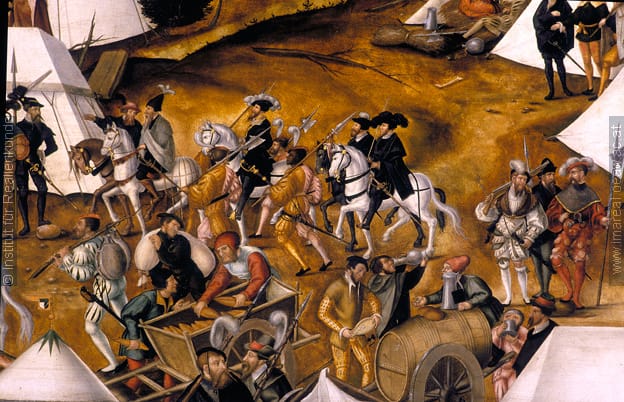
A besieged city may begin with doctrine, courage, song, speech, proclamation, denunciation, uniforms, banners, and all the emotional furniture of collective destiny.
Then the siege edits the city down to water, grain, salt, firewood, disease, latrines, guards, sleep, and the exact number of mouths that are still asking tomorrow to exist.
This is where the New Jerusalem had to become logistics.
A sacred city cannot eat its own title.
This is a recurring problem with sacred title generally. A claim may be ancient, beautiful, wounded, binding, poetic, covenantal, and wrapped in every memory the people have left.
Still, no one can bake it directly into bread.
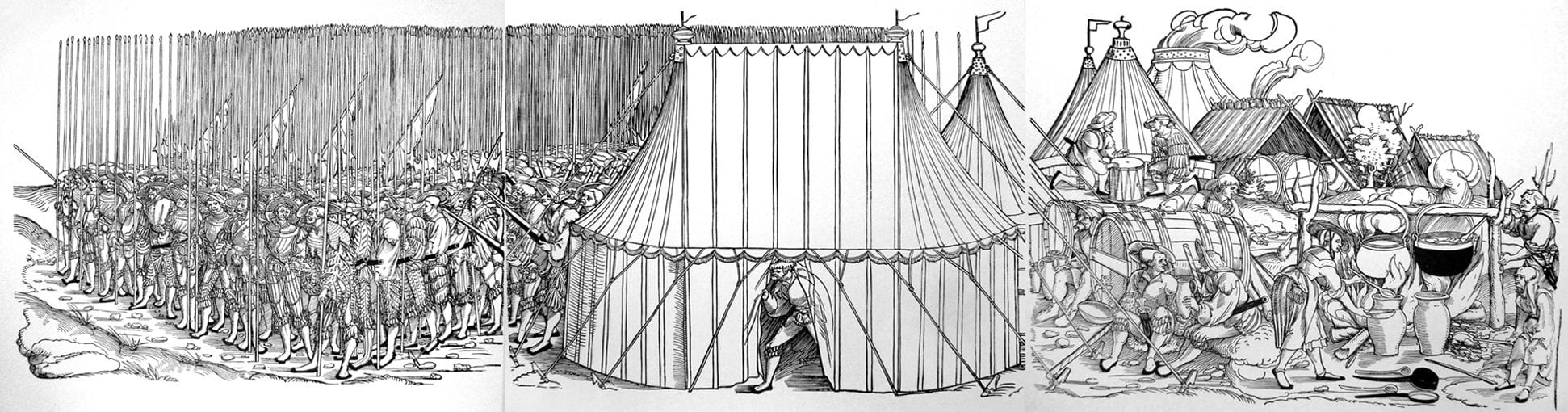
Münster had to feed people while under siege. It had to distribute goods. It had to maintain discipline. It had to defend walls. It had to keep morale from collapsing. It had to decide whose hunger counted as weakness and whose hunger counted as testimony.
Under these conditions, the communal economy becomes ethically double.
- On one side, shared goods can preserve people.
- In a desperate field, private hoarding can kill.
- Redistribution can be Better.
- A hungry child does not need a treatise on market coordination if the house next door has enough grain and the household refuses to share because God has allegedly taken a firm position in favor of inventory rights.
- In a desperate field, private hoarding can kill.
- On the other side, the same instrument can become seizure.
- It can punish dissent by calling property ungodly.
- It can convert need into control.
- It can make every loaf belong first to the sovereign religious story and only second to the living bodies whose continued existence was supposed to be the point.
- It can punish dissent by calling property ungodly.
This is why Modal Path Ethics keeps asking whether the field can answer back.
- A field answers through hunger.
- It answers through fear.
- It answers through people trying to leave.
- It answers through women refusing to become ordinance material.
- It answers through families hiding food.
- It answers through guards becoming suspicious.
- It answers through jokes that no one is allowed to tell.
If the instrument can hear those answers, it may still repair.
If the instrument converts each answer into proof that more control is needed, it has become sovereign.
Münster’s holy city was under siege from outside.
It was also under occupation by its own answer.
This is a difficult sentence because it does not release the outside army from blame. Franz von Waldeck did not somehow become an instrument of repair just because Jan van Leiden was dangerous. The bishop’s siege was a coercive closure field too. A city full of people was being compressed by external force.
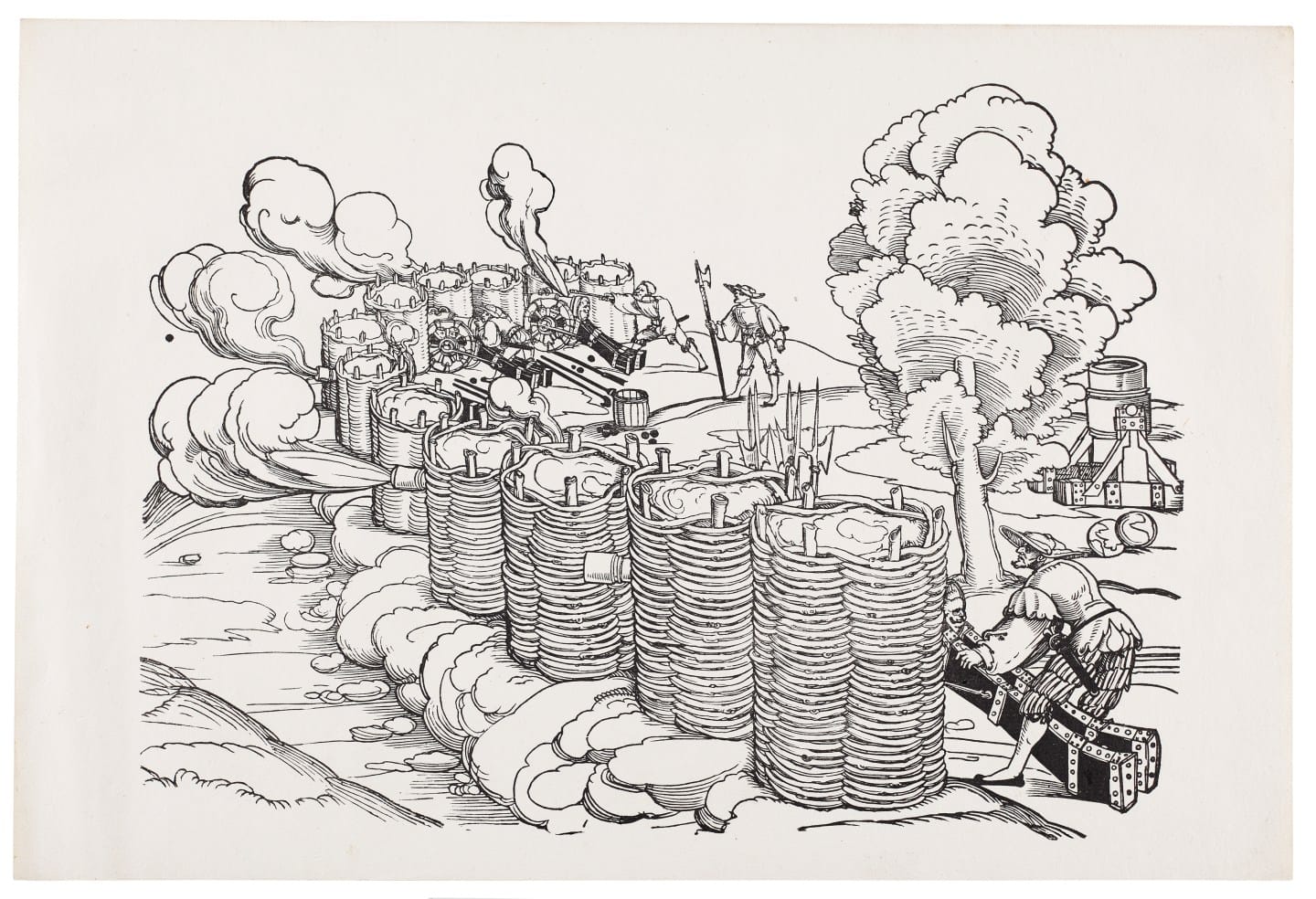
The field was trapped between two instruments claiming preservation.
- One instrument said:
- submit to the old order.
- The other said:
- submit to the approaching kingdom.
- The people needed bread.
The Bishop.
Franz von Waldeck is easy to turn into the counterweight, the ordinary authority restoring sanity after the city becomes a fever dream.
This would be a terrible mistake.

This man was the prince-bishop whose authority had been driven out. He laid siege. He wanted the city back. His forces eventually took it.
Then the leaders were tortured and executed, and their bodies were displayed for years as a public warning.
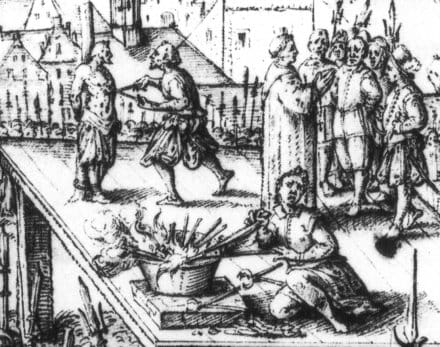
That is not exactly a clean correction mechanism.
If Münster is a sacred instrument gone sovereign from inside the walls, Waldeck’s siege is an older sacred-political instrument imposing sovereignty from outside. He is not the neutral field. He is part of the same field.
Jan van Leiden is one of the main distorted figures, and also the field that made him possible included persecution, state church power, civic instability, apocalyptic preaching, siege, military coercion, class pressure, and the terrifying availability of a city as an instrument.
Waldeck’s forces eventually won because outer sovereignty had more durable material power than inner apocalypse. This is not any kind of moral proof.
Armies often beat cities. This does not mean the army had the better account of the field. It means the army had siege capacity, allies, time, and eventually access.
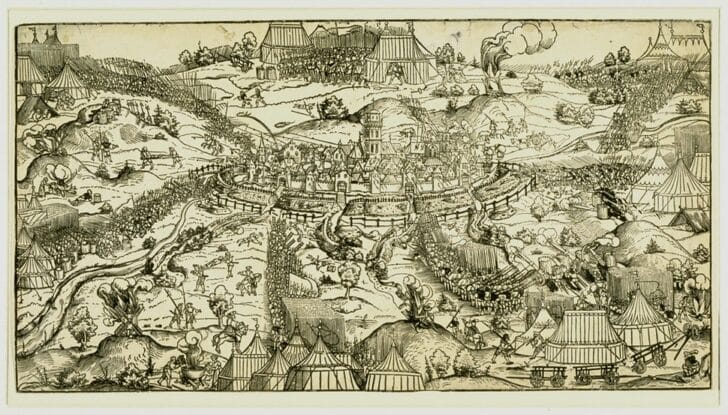
The gates fell in June 1535.
The New Jerusalem became Münster again, because reality is very rude to brand strategy.
Then the authorities made their own object.
The cages.
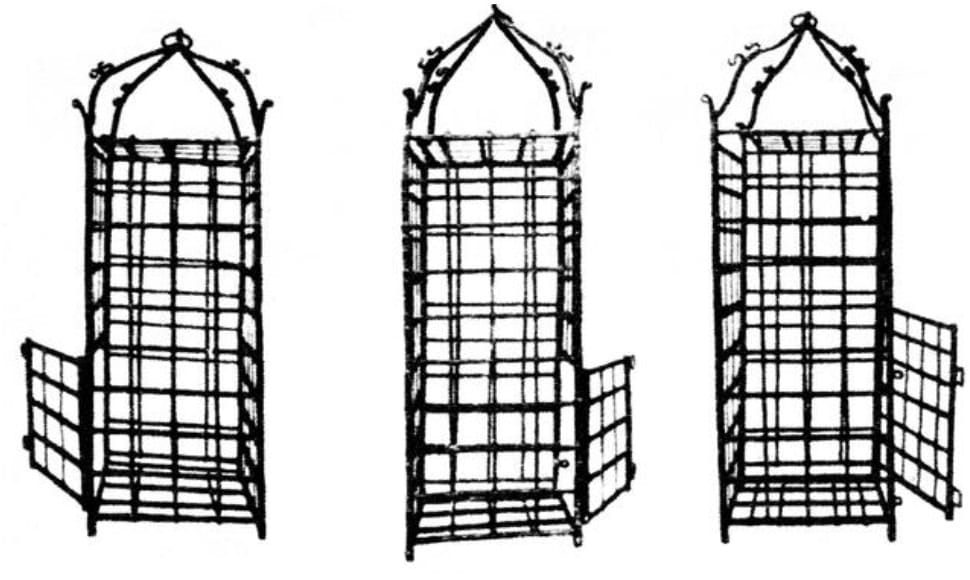
- A sovereign sacred instrument had used the city to warn the world that the kingdom was coming.
- The restored order used the tower to warn the world that rebellion was punished.
The cages are evidence against everyone who thought the living field should be taught by suspended bodies.
Knipperdolling Has a Bad Day for Several Centuries.
Bernhard Knipperdolling deserves more than a passing glance because he is one of those figures who shows how distortions become institutional.
- A prophet can ignite a field.
- A king can center it.
- A civic figure can make it operational.
Knipperdolling was not a random man who wandered into an apocalypse with a clipboard and had an unfortunate afternoon. This was an important Münster citizen, associated with the radical reform movement and later one of the executed leaders whose body was put in a cage. He occupies the civic hinge of the story: the point where local power, reform energy, municipal authority, and prophetic takeover begin sharing their tools.
Movements do not become city regimes through charisma alone.
- Someone knows the streets.
- Someone knows the guilds.
- Someone knows which gate matters.
- Someone knows who has grain.
- Someone knows who can preach,
- who can print,
- who can gather,
- who can be pressured,
- who can be exiled,
- who can be used.
- who can be exiled,
- who can be pressured,
- who can gather,
- who can print,
This is the less theatrical part of Münster and therefore one of the most dangerous. The tailor king gets the whole costume. Jan Matthys gets his Easter ride. The cages get the skyline.
Knipperdolling gets the ugly fact that every sacred distortion needs local traction.
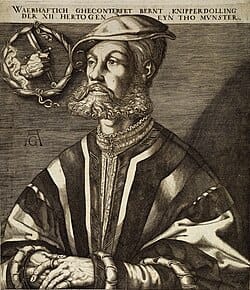
In Darien, the Company of Scotland did the boring institutional work of making Paterson’s pirate fantasy material: capital, charters, supplies, ships, councils, political pressure, procurement of combs, procurement of wig powder, procurement of horse carriages that remain spiritually illegal to this day.
In Münster, civic traction did the parallel work.
The holy city needed municipal hands.
This should make every institution nervous.
It is tempting to imagine that distortion belongs to the charismatic figure alone.
- Get rid of the prophet.
- Remove the king.
- Change the CEO.
- Fire the founder.
- Arrest the obvious lunatic innkeeper in the crown.
Sometimes, you do have to do those things.
Still, the field persists through the systems that made the person effective. Charisma without office is just weather. Charisma with city hall is governance.
Knipperdolling is the hinge where the weather learned procedure.
Rothmann.
Bernhard Rothmann is harder.
If Jan Matthys is the prophetic acceleration and Jan van Leiden is the crowned distortion, Rothmann is one of the serious moral pressures that made the movement attractive.
The communal sentence attributed to him is powerful:
“Everything Christian brothers and sister have belongs to one as well as the other. You will lack nothing… God won’t allow you to go wanting. Everything will be common. It belongs to all of us.”
That sentence has a real repair claim inside it.
A person can be cynical about religious communalism from a full pantry.
History becomes much less funny when your children are hungry, your landlords speak theology, your bishop owns the field, your baptism is political paperwork, and your labor keeps getting turned into someone else’s divine order.
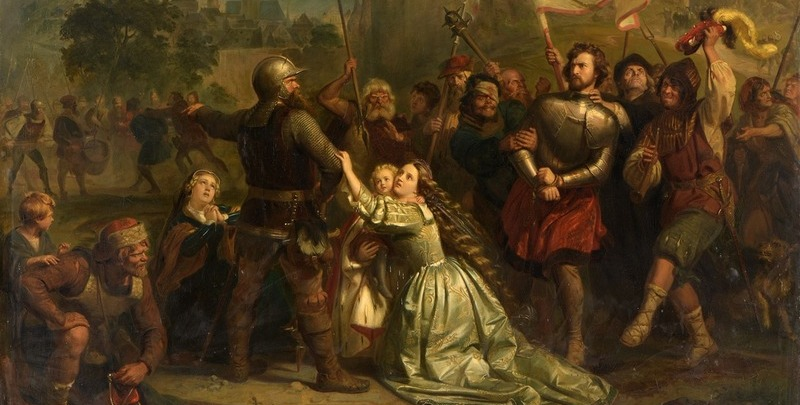
Rothmann’s communal language names a real wound:
The field is not arranged so that Christian brothers and sisters actually keep one another from want.
The sentence is an accusation against a social world where sacred language coexists with material abandonment.
That accusation should not be thrown away.
This is why the Münster Tale must not become a simple dunk on radical religion.
There was a true signal here.
The old order was corrupt. Established religious authority was coercive.
The poor were not hallucinating their vulnerability.
Adult baptism really did challenge a field where belonging had been assigned before consent.
Communal life really can preserve continuance under pressure.
The distortion is that repair desire was drafted into a sovereign sacred city that could not release the field back to correction.
A good sentence became part of a bad machine.
This happens constantly.
- A true sentence enters a damaged field.
- The field enlarges it.
- The true sentence becomes slogan,
- then policy,
- then loyalty test,
- then punishment key,
- then historical costume for whatever the sovereign instrument wanted to do already anyway.
- then punishment key,
- then loyalty test,
- then policy,
- The true sentence becomes slogan,
- The field enlarges it.
“Everything will be common” can mean no one starves.
It can also mean the king has authorization to search your house.
The difference is corrigibility, not grammar.
- Can the hungry answer back?
- Can the dissenting poor answer back?
- Can women answer back?
- Can expelled neighbors answer back?
- Can the sick answer back?
- Can a person say this communal order is preserving your authority more than our lives without becoming an enemy of God’s kingdom?
In Münster, the answering channels narrowed.
The good sentence got drafted.
The Cages, Again.
At this point, the cages are still hanging above the article like exactly what they are.

A good historical object like this does not let you leave it behind.
The horse carriages in Darien keep rolling back into consciousness because they solve the analysis in one. Those carriages tell you the planners had mistaken a fantasy of trade for contact with a real-world place.
These cages tell us the same thing about Münster from the other end.

They tell us that the city did not end when the city fell.
The restored order needed the bodies to remain pedagogically active.
This is the thing about sovereign instruments: they keep teaching after the event.
- Jan van Leiden’s court taught through spectacle.
- The bishop’s order taught through mutilated display.
Later generations learned through the cages. Every polemic against Anabaptists had a convenient object to point at. Every ruler who feared religious dissent had a ready warning. Every peaceful Anabaptist and later Mennonite community had to live under a shadow cast by those cages.

So the cages did double work.
- They punished the dead.
- They disciplined the living.
They helped convert one catastrophic radical kingdom into a long instrument of suspicion against all other Anabaptists who had not crowned a tailor, seized a city, enforced polygamy, or tried to become Zion with a municipal border.
A cage can be empty and still occupied.
No Outside.
Modal Path Ethics cannot let anyone exit too cleanly from this story.
- The Anabaptist kingdom contracted the field from inside.
- The prince-bishop’s siege contracted it from outside.
- The apocalyptic prophets turned sacred expectation into civic sovereignty.
- The restored authorities turned punishment into public architecture.
- Later polemicists turned Münster into a warning against whole religious families.
- Modern readers turn the whole thing into a content-snack called "Cults Are Crazy" and eat it in four minutes with no structural nutrition whatsoever.
That last failure is ours to worry about.
Münster did not fail because religion touched politics. Religion and politics were already sitting in the same cart, and the horse had opinions too.
Münster failed because sacred contact became sovereign cityhood, and then both the inner regime and outer restoration treated living continuance as material to be governed by their claims.
Beneath New Jerusalem.
There is always a field beneath the sacred name.
Under New Jerusalem was Münster.
Under Münster were
- households,
- guilds,
- kitchens,
- wells,
- locked and
- unlocked doors,
- sick bodies,
- pregnant bodies,
- frightened children,
- expelled neighbors,
- armed men on walls,
- servants,
- preachers,
- artisans,
- former Catholics,
- former Lutherans,
- newly baptized believers,
- opportunists,
- sincere converts,
- doubters,
- widows,
- administrators,
- messengers,
- food stores,
- gallows,
- beds,
- debts, and
- all the other rude continuities that make a city less cooperative than a vision.
A sacred name can gather that field. It cannot replace it.
This is exactly what Sacred Instruments was trying to mark out. The sacred instrument becomes dangerous when it no longer returns the person or community to extance with more care. It becomes dangerous when the harmed field is no longer allowed to answer back.
Münster stopped letting the field answer except in the language of the instrument.
That is what made it a distortion.
The sacred city could read siege as proof. It could read hunger as trial. It could read dissent as treason. It could read expulsion as purification. It could read monarchy as Davidic restoration. It could read polygamy as patriarchal precedent. It could read coercion as discipline. It could read the walls as election.
At some point, a field interpreted this thoroughly has no remaining exit.
That is the moment when a sacred instrument stops being a door and becomes a room with no outside.
Münster had gates. It had no exit.
Better?
The Darien Scheme had Fonab.

For one brief shining moment inside that damp colonial nightmare, Colonel Alexander Campbell of Fonab arrived, listened to the Kuna, understood the Spanish threat, organized a combined Scottish-Kuna attack, and cleared a Spanish stockade in about fifteen minutes because apparently the entire colony could have tried reality earlier and simply chose their combs instead.
Münster does not have a Fonab in the same way.
This is grim, but useful.
There are fragments of Better here.
- There is the original Anabaptist insistence that faith cannot be assigned to an infant as civic paperwork.
- That preserves a path toward conscience.
- There is communal care language that refuses to let sacred life coexist comfortably with abandonment.
- There are Anabaptist and later Mennonite streams that reject Münster’s violence and continue through peace, mutual aid, discipline, and memory.
- There may have been moderating voices inside the city at different points,
- though the surviving hostile record makes the internal texture difficult to recover cleanly.
- There were probably many ordinary people whose main ethical achievement was surviving one more day under instruments larger than themselves.
But there is no obvious single European figure who steps into the center of this Tale and says:
Alright, enough, the field is here, not in the crown; let the hungry speak, let dissent remain possible, let the walls protect without owning, let the wounded community release itself from the answer before the answer consumes it.
That person simply does not appear.
Instead, correction comes through catastrophe.
This is bad.
Bodies are not really supposed to be the first successful auditors of sacred politics.
Starvation is not a deliberative institution.
Execution is not repair.
Cages are not memory done well.
The fact that the field eventually overpowered the distortion does not mean the field was repaired at all. It means the distortion lost the material capacity to continue in its current form, and the successor field carried the same wound forward.
Better arrived later, if at all, through those who had to distinguish peaceful Anabaptist continuance from Münster’s shadow.
That repair work took fucking generations.
Ruling.
Münster wanted to become the New Jerusalem.
That desire did not come from nowhere. It came from a broken religious and political field, from persecution, from sincere apocalyptic hope, from outrage at corrupt authority, from communal longing, from people who wanted a Christian life that was not simply obedience to the structures already crushing them.
Then the sacred instrument became sovereign.
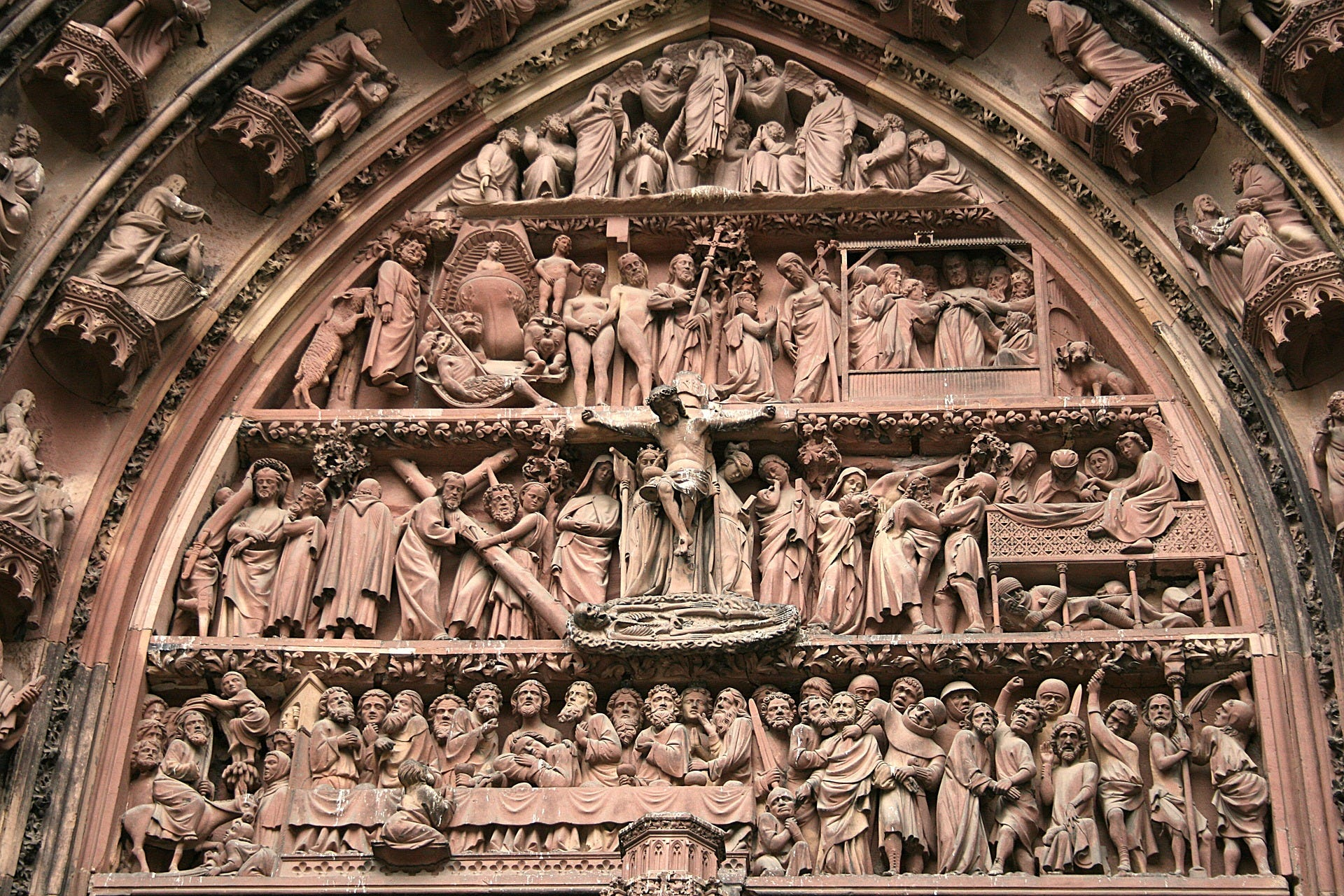
The city became the answer. The gate became a theological filter. The first Jan rode out under prophetic certainty and died. The second Jan dressed the field in royal costume and became the tailor king. Rothmann’s communal repair language was drafted into a closed regime. Knipperdolling and the civic machinery gave the vision municipal traction. The walls let inside and outside radicalize one another. Waldeck’s siege crushed the city from without while the sacred regime consumed correction from within. Hunger spoke. Fear spoke. Dissent spoke. The instrument translated too much of that speech into disloyalty.
The city fell.
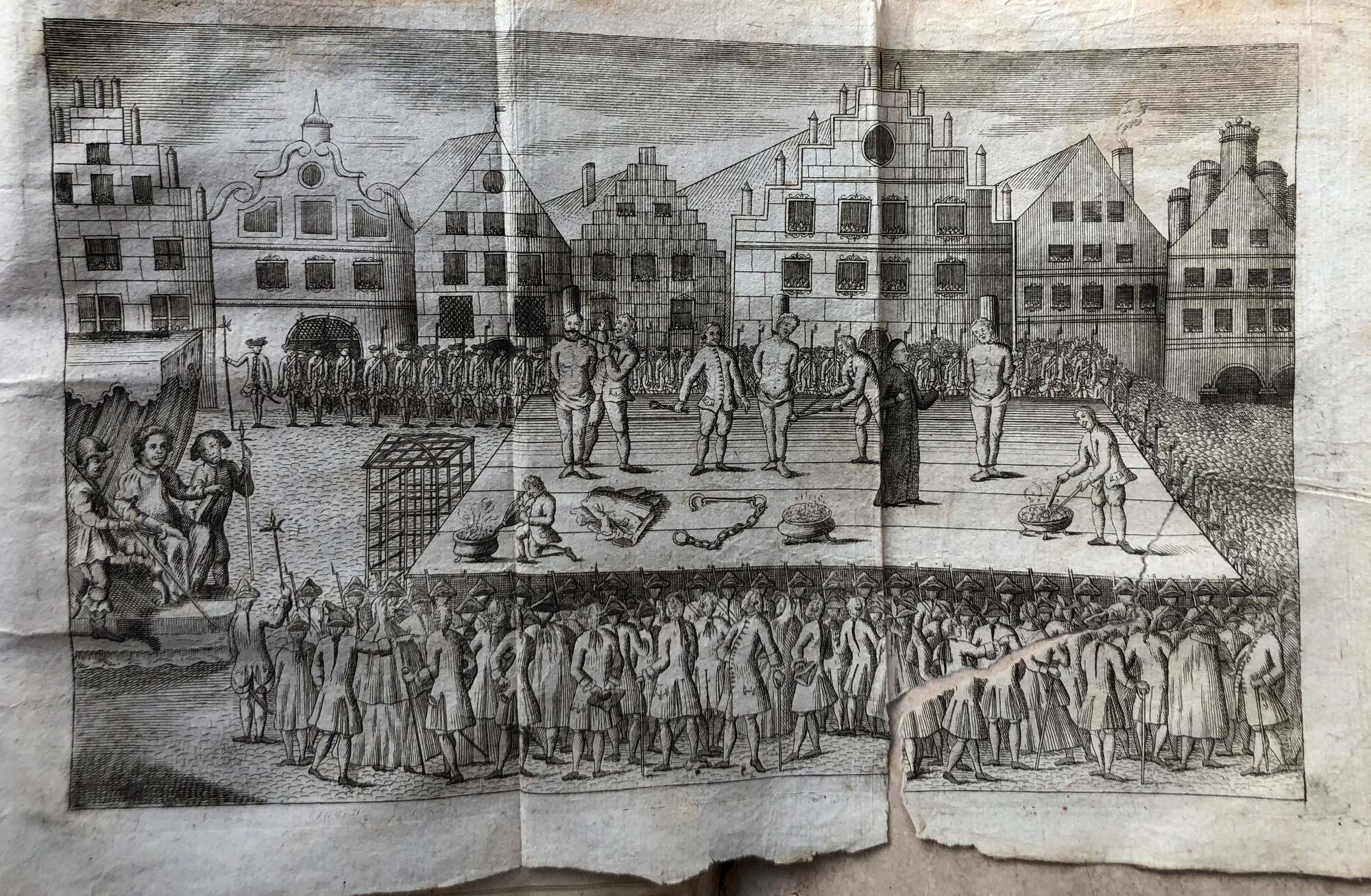
The authorities tortured and executed the leaders.
Then they put the bodies in cages and lifted the cages into the sky.
That final act was another instrument.
The cages taught. They warned. They threatened. They helped later generations turn Münster into a simple story about religious madness, and helped authorities throw the shadow of one apocalyptic city across wider Anabaptist life.
So the ruling is not:
Religion became politics, therefore disaster followed.
Politics was already religious. Religion was already political. Europe was already a disaster.
The ruling is sharper:
A sacred instrument may gather a people. It may not own the field it gathers them into.
Münster’s sacred instrument became a city, then a crown, then a siege machine, then a memory weapon.
The kingdom promised a New Jerusalem.
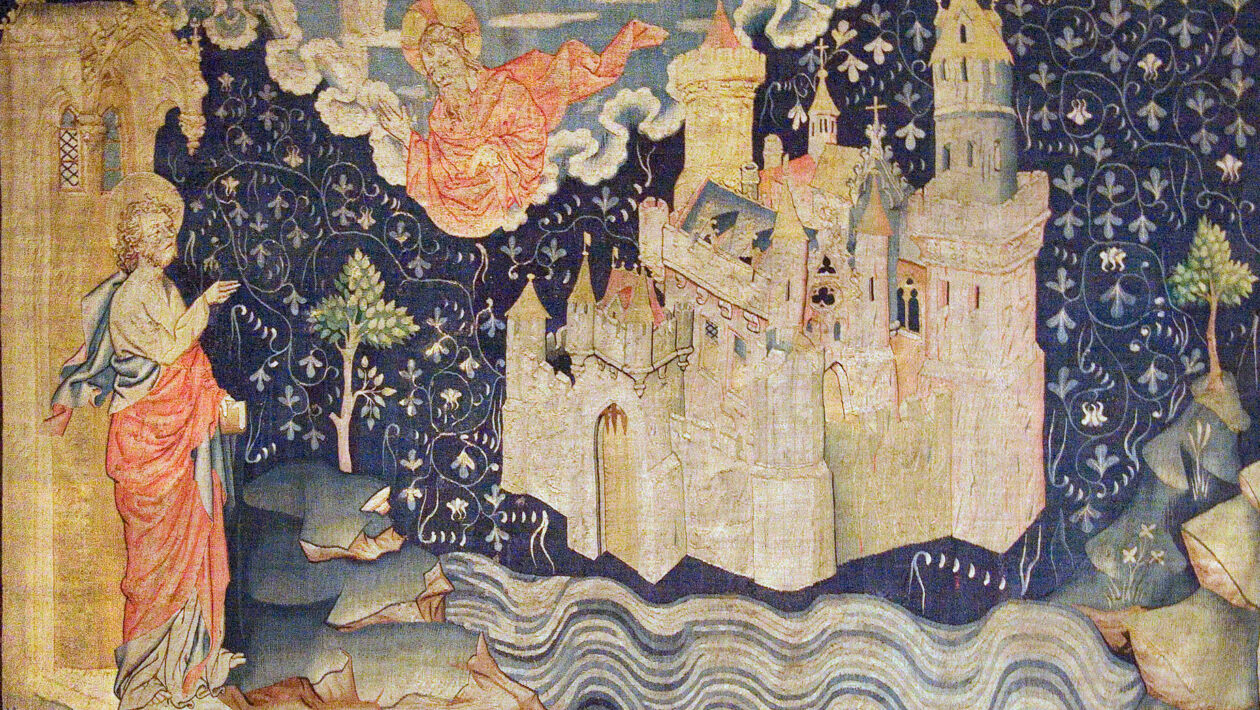
The city got cages.