Chirality, the Chiral Strategy Game
Public Playtest Rules
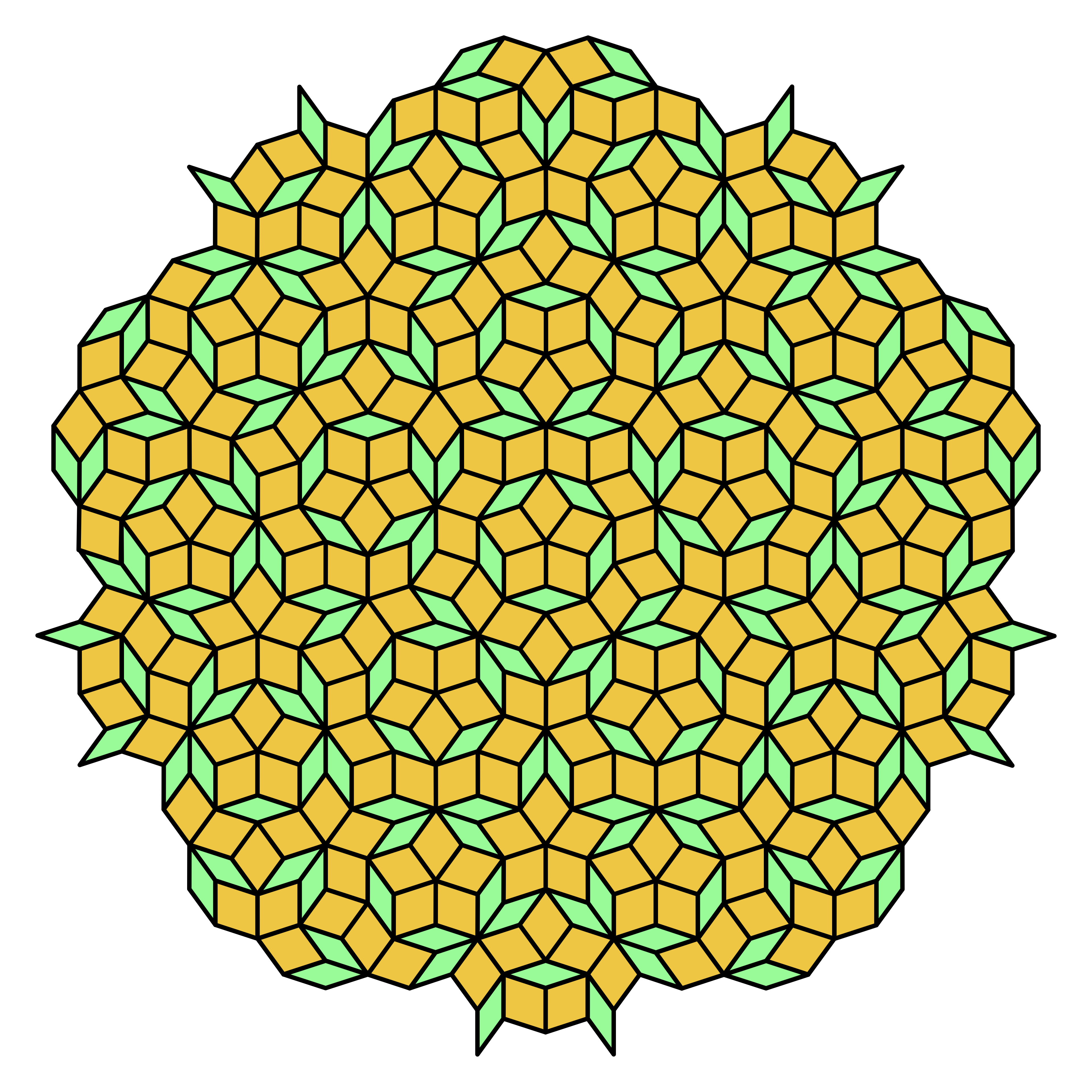
Chirality is an abstract combat strategy game played on a rosette-shaped board of uncut P3 Penrose rhombus tiles.
It is not an allegory of Modal Path Ethics. It is a playable structure for thinking about asymmetric possibility, positional constraint, local action, and reachable paths.
These rules are presented in abbreviated publication form for testing, discussion, and refinement. Feedback may be left in the comments below, or sent to [email protected].
Publication here is for public playtest only and does not grant reproduction or commercial rights in the game itself or its underlying intellectual property.
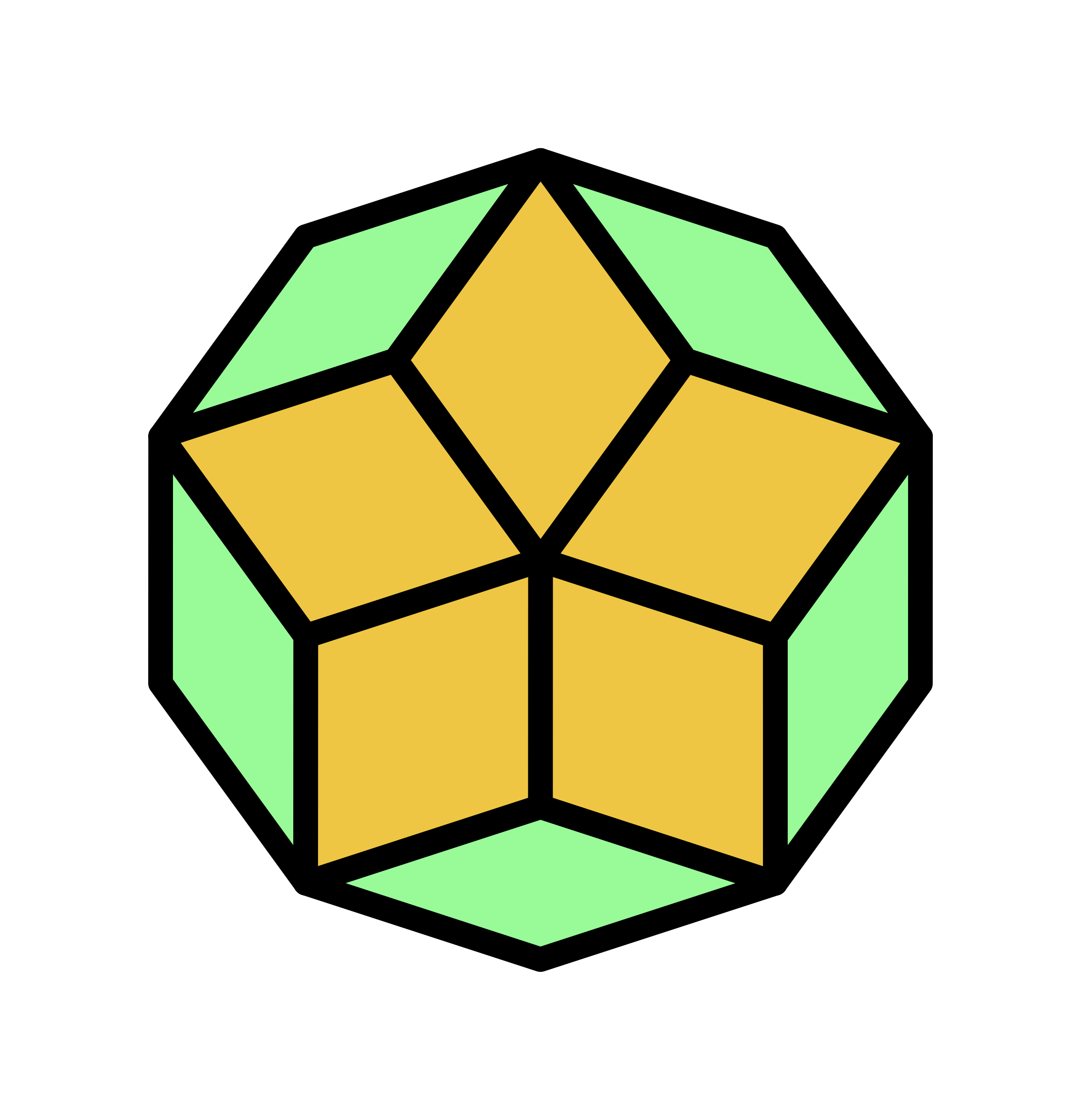
Figure C.1 above shows the default R2 rosette board used for standard play.
1. The Board
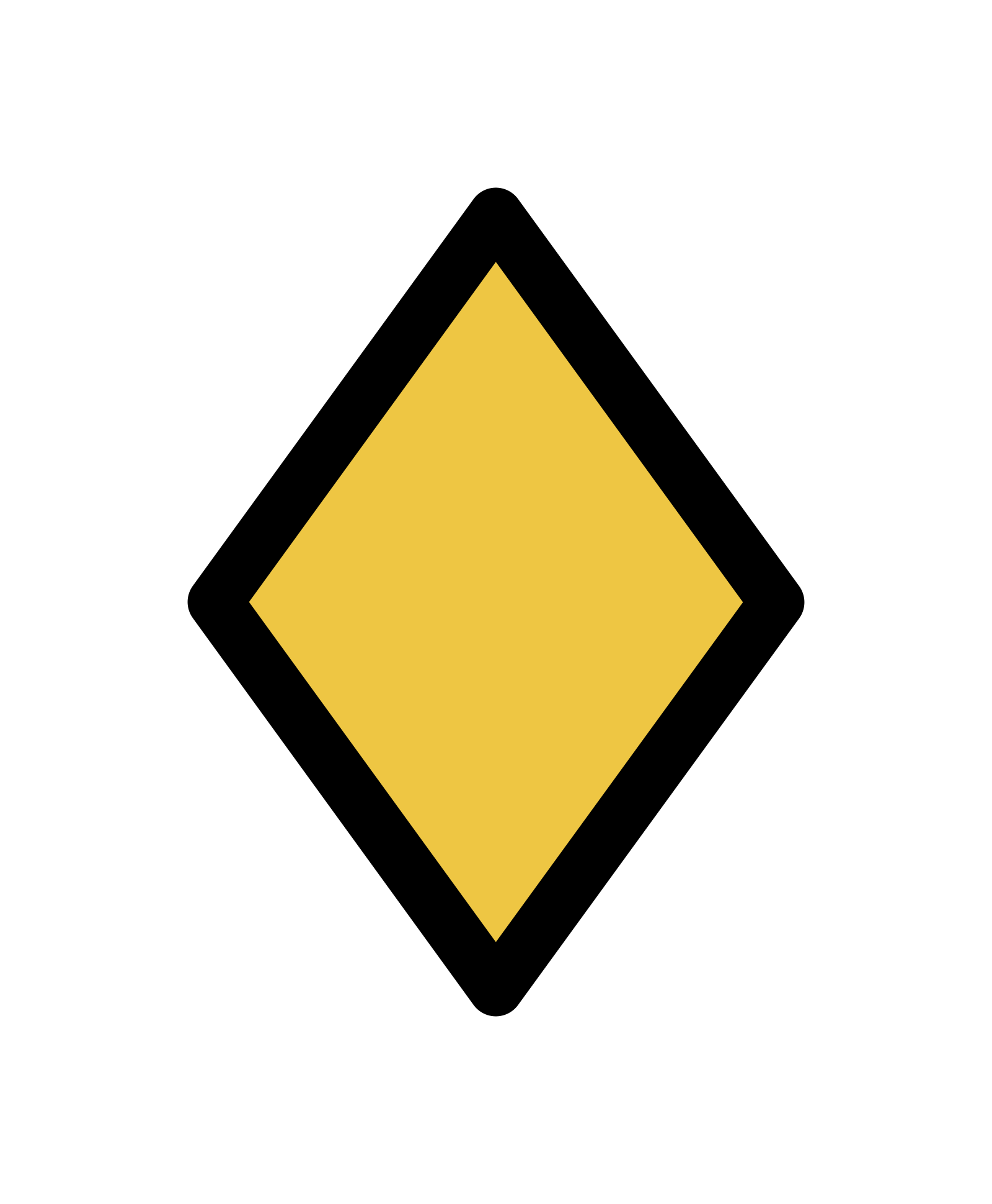
Chirality is played on a legal rosette-shaped board made of uncut P3 Penrose rhombus tiles, using the standard Thick and Thin rhombs.
A legal Chirality board must satisfy all of the following:
- It has a central five-pointed Star made from five Thick rhombs. This central Star is the Throne.
- It is an uncut R2 rosette, meaning that exactly two full concentric rings of complete Stars can form around the Throne.
- Its outer fringe includes at least two opposing Gates.
- It is connected and playable without cutting, merging, or redrawing tiles.
The default board shown in Figure C.1 is the recommended public playtest board.
Rotations of the same board pattern count as the same board. Mirror-image boards count as different boards.
2. Key Board Features
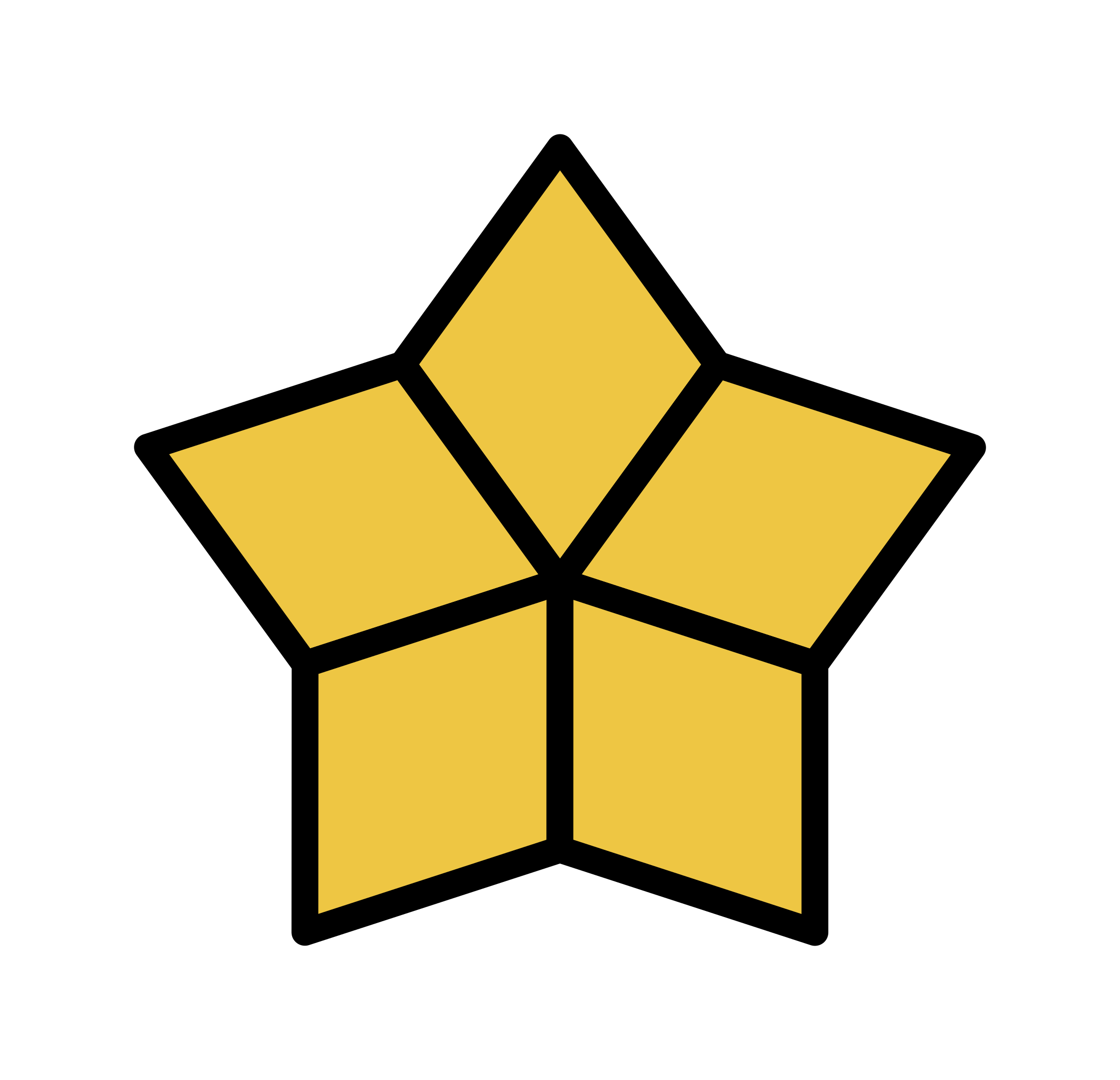
Star
A Star is a five-Thick-tile formation making a five-pointed star shape.
Moat
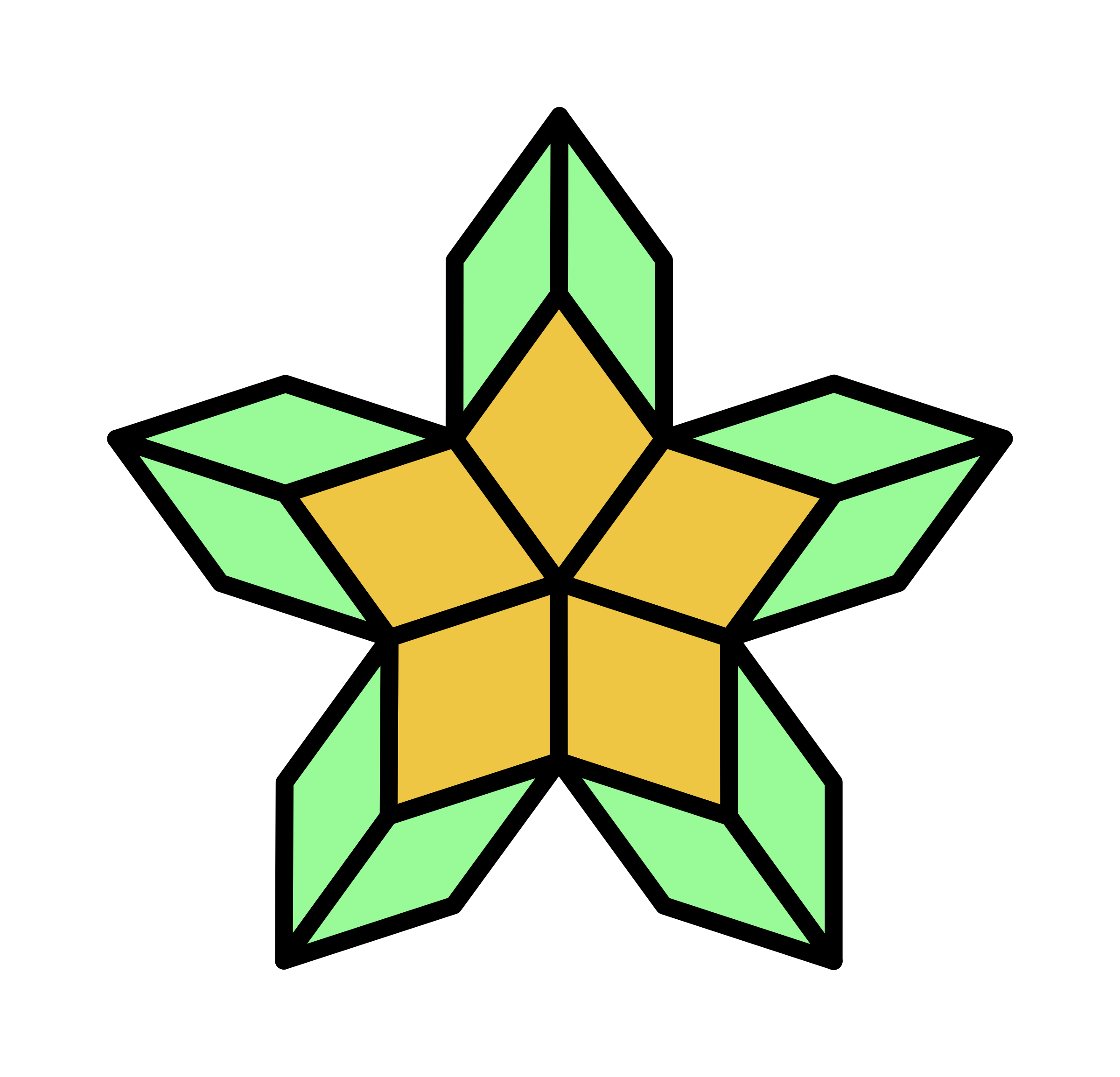
A Moat is the contiguous band of Thin tiles surrounding a Star. A legal Moat may be circular, petaled, or irregular, but every outer edge of the Star must be vertex-adjacent to a contiguous Moat tile.
Throne
The central Star is the Throne. Occupying all five of its Thick tiles with your pieces wins the game immediately.
Gate
A Gate is a fringe formation made of two outward-jutting Thin tiles around one to three Thick tiles. All outer tiles of that formation count as part of the Gate.
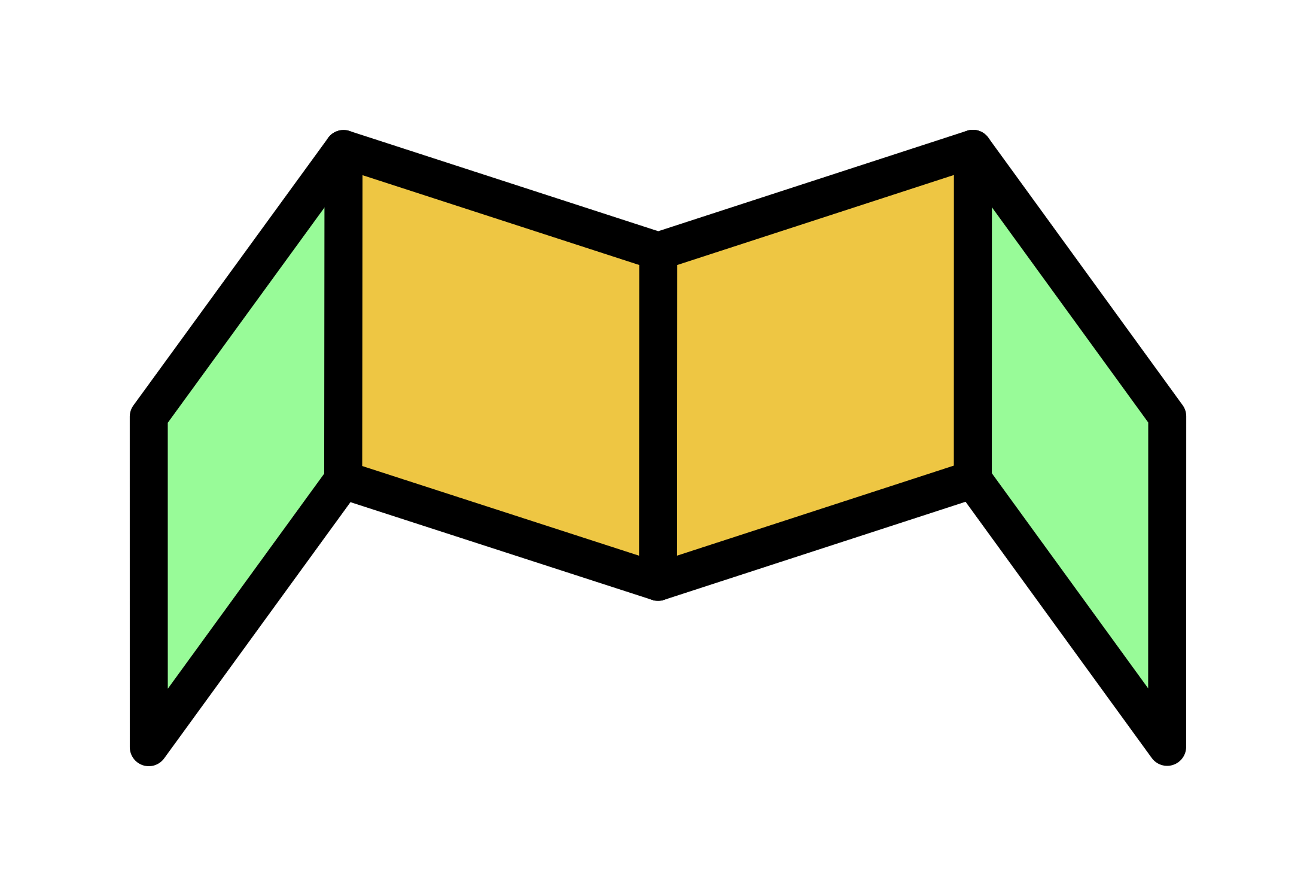
Gates are used for Mustering new pieces onto the board.
3. Pieces and Objective
All pieces are identical. A piece’s current type is determined only by the tile it occupies:
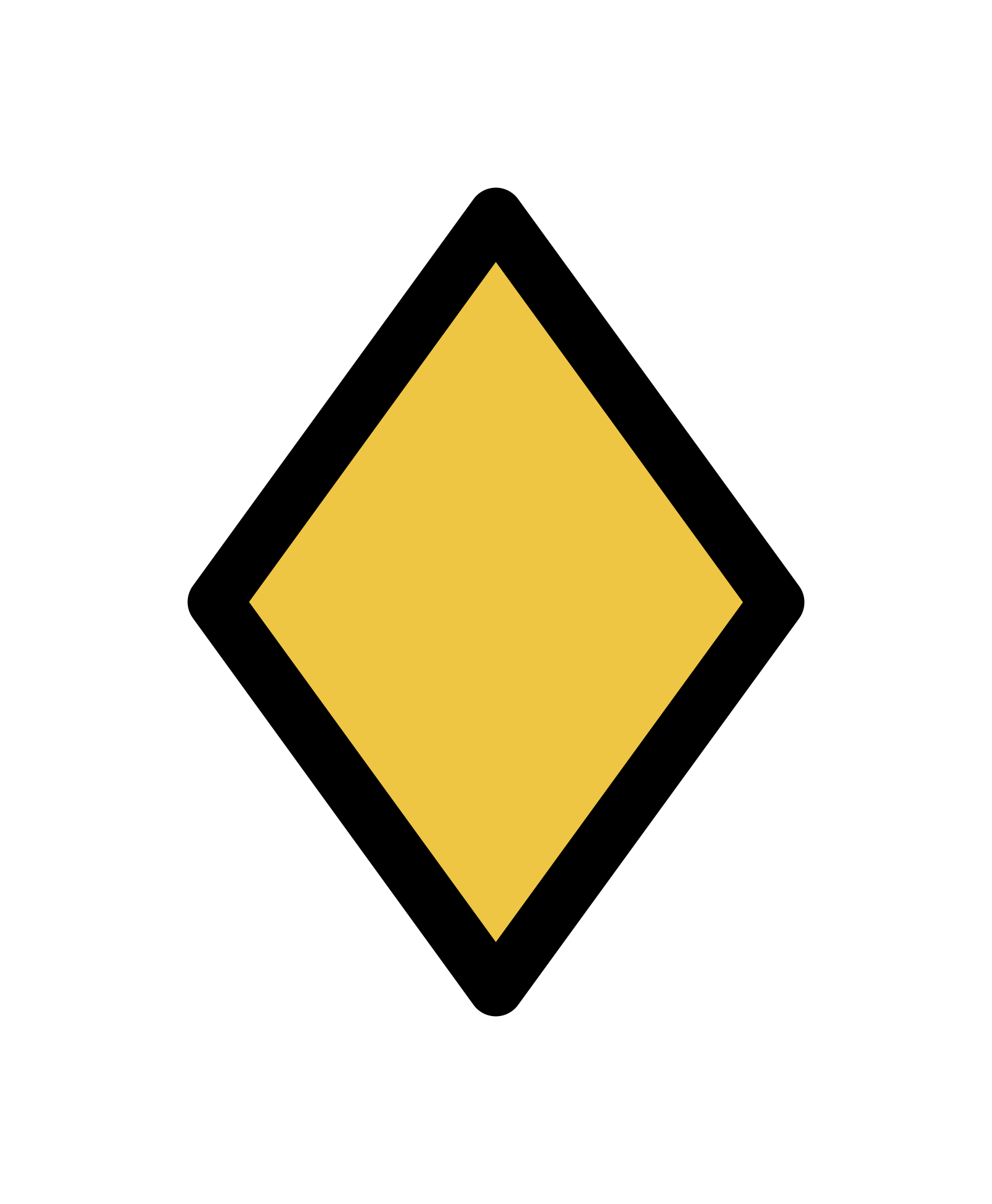
- a piece on a Thick tile is a Thick piece
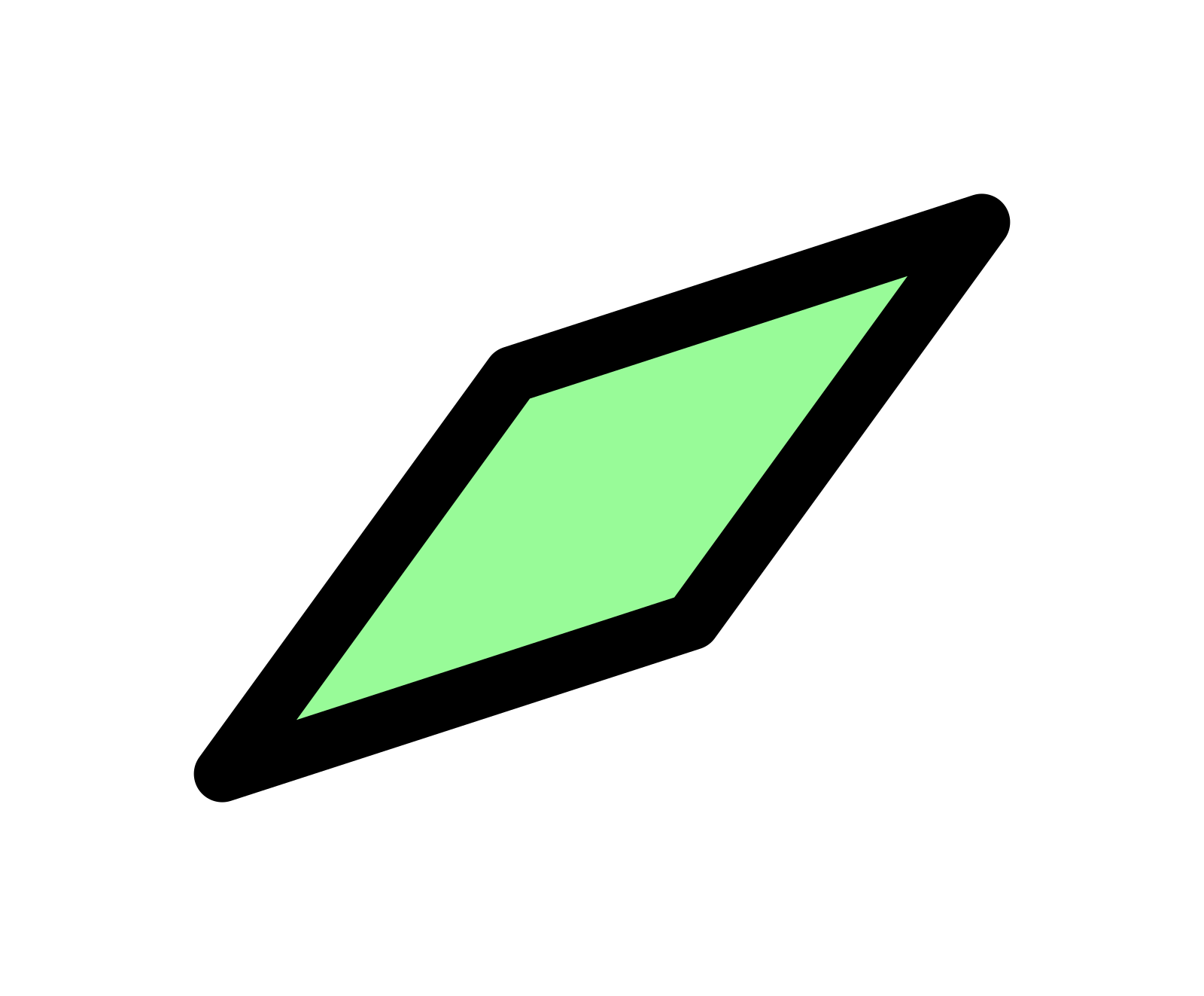
- a piece on a Thin tile is a Thin piece
Each player has 16 pieces total.
The objective is to do one of the following:
- Occupy the Throne by ending your turn with pieces on all five tiles of the central Star, or
- Eliminate the opponent’s army, including reserves, so they cannot continue play.
4. Core Concepts
Garrisons
If a player occupies all five Thick tiles of any Star, that Star becomes a Garrison.
While a Garrison is active:
- its five occupying pieces cannot be captured
- it attacks every tile of its Moat simultaneously
- it remains active until one of its five pieces moves away
A Garrison in the first ring around the Throne is an Inner Garrison.
Inner Garrisons
An Inner Garrison allows Remote Mustering from certain Gates on the same half of the board.
5. Standard Setup Formats
A. Standard Game (Recommended 2-Player Public Playtest Setup)
Use the default R2 board shown in Figure C.1.
Each player begins with:
- 8 active pieces on the board
- 8 reserve pieces off the board
For the standard default setup:
- Use the default board’s marked legal starting Gates.
- Each player takes two starting Gates on opposite sides of the board.
- Each player places 4 pieces on each of their two starting Gates, for 8 total starting pieces.
- Any unused Gate on the default board remains neutral and unoccupied at setup.
This 8/8 setup is the recommended default for two-player public playtest because it produces immediate tactical interaction without requiring a long opening build phase.
B. Quick Game Setup (Inner Garrison Start)
For a shorter two-player game:
- Use two opposing legal Inner Garrison Stars.
- Each player places 5 starting pieces to fully occupy one Inner Garrison.
- Remaining pieces stay in reserve.
This creates immediate access to Remote Mustering and accelerates central play.
C. Long Game / Multiplayer Setup
For longer games, and for most games with 3 or more players:
- Each player begins with 1 piece on the board and 15 in reserve.
- Each player is assigned one starting Gate.
- Each player places their starting piece on any tile of that Gate.
This setup is slower, clearer, and scales better to multiplayer than the 8/8 start.
6. Choosing a Board for Multiplayer
If you are not using the default two-player board, use the following procedure.
A board is P-player legal if:
- it is a legal Chirality board, and
- it has at least P Gates, and
- those Gates can be assigned so that starting positions are spaced around the board as evenly as possible.
Multiplayer Gate Assignment Algorithm
- Count all legal Gates on the board. Let that number be G.
- Number the Gates clockwise around the fringe.
- Choose a random first-turn Gate.
- For P players, assign starting Gates by moving clockwise in approximately equal intervals around the gate ring.
A simple public-playtest method is:
- compute the interval as G ÷ P
- starting from the first-turn Gate, assign the next player the nearest unassigned Gate approximately one interval clockwise
- continue until all players have one Gate
If two candidate Gates are equally close, choose the one that keeps spacing more even across the full ring.
Recommended multiplayer rule
If a board has more Gates than players, unassigned Gates remain neutral unless the players agree before the game to exclude them from starting eligibility only.
Practical test
A board is good for multiplayer public playtest if no player begins with both neighboring players immediately adjacent unless the player count makes that unavoidable.
Default recommendation
Unless a group is intentionally testing alternate boards, use the default board for two players and use only boards with clearly spaced Gates for multiplayer tests.
7. Turn Structure
On your turn, perform one of the following actions:
- Move one of your on-board pieces, or
- Muster one reserve piece onto a legal Gate
You may not skip your turn.
8. Movement
A move must satisfy all of the following:
- the piece belongs to the active player
- the destination tile is empty
- the destination tile is legal for that piece’s current type
Thick movement
A Thick piece moves from a Thick tile to any empty Thin tile that shares a full edge with it.
Thin movement
A Thin piece moves from a Thin tile to any empty Thick tile that shares either:
- a full edge, or
- a vertex
After moving, the piece changes type to match the tile it now occupies.
Players may move into threatened tiles if they wish.
9. Mustering
If you occupy at least one tile of a Gate, you may Muster one reserve piece onto any empty tile of that Gate.
- Enemy occupation does not block a Gate from being used this way.
- Opponents may share the same Gate.
- A Mustered piece enters as the type of the tile it is placed on.
- A newly Mustered piece is immediately active for all purposes.
If no legal empty tile exists on that Gate, you may not Muster there.
10. Remote Mustering
If you control an Inner Garrison, you may Remote Muster from a Gate if both conditions are met:
- the Gate is not occupied by an enemy piece, and
- the Gate lies on the same half of the board as the Inner Garrison
You do not need to occupy the Gate yourself to Remote Muster from it.
A remotely Mustered piece must be placed on a Thick tile of the Gate.
11. Attack
Attack is automatic and based entirely on geometry.
Thick attack
A Thick piece attacks all Thin tiles sharing a full edge with it.
Thin attack
A Thin piece attacks all Thick tiles sharing either an edge or a vertex with it.
Garrison attack
A Garrison attacks all tiles of its Moat, and only its Moat.
Attack is always cross-terrain:
- Thick attacks Thin
- Thin attacks Thick
12. Capture
Capture is resolved automatically after every Move or Muster, using active-player initiative.
Thin capture
A Thin piece is captured if it is attacked by at least one enemy attack source.
Enemy attack sources for Thin pieces include:
- edge-adjacent Thick pieces
- enemy Garrisons whose Moat the Thin piece occupies
Thick capture
A Thick piece is captured if it is attacked by at least two enemy Thin attack sources.
A Thick piece may therefore survive a single Thin attack source but not two.
Captured pieces are removed from play. The attacking piece does not move.
Initiative
The active player resolves their captures first.
After the active player Moves or Musters, generate the active player's attacks from the resulting board state. Determine every legal capture caused by those attacks and remove those captured pieces immediately.
Then recalculate the surviving board state and generate attacks for the opponent.
Pieces captured by the active player are removed before the opponent resolves their captures and therefore cannot attack in response.
This means a piece may move into a threatened tile and survive if the move removes every enemy attack source that would otherwise capture it.
If enough enemy attack sources survive the active player's captures to satisfy that piece's capture condition, the piece is captured during the opponent's response.
Initiative does not grant immunity. It gives the active player the first opportunity to remove opposing attack sources.
In games with more than two players, the active player resolves their captures first. All surviving non-active players then resolve their captures simultaneously from the surviving board state.
Throne Exposure
Throne tiles are special Thick tiles.
Any piece occupying a Throne tile is exposed and requires only one enemy attack source to be captured, regardless of the normal two-source requirement for Thick pieces.
Throne Exposure follows normal initiative.
An active player's exposed Throne piece survives if the active player's captures remove every enemy attack source that could capture it before the response phase.
If at least one qualifying enemy attack source survives, the exposed piece is captured during the response phase.
Fully occupying all five Throne tiles still wins the game immediately before any capture resolution occurs.
13. Garrison Rules
A Garrison forms immediately when you occupy all five Thick tiles of a Star.
A Garrison breaks immediately if any one of its five pieces moves away.
While active:
- the five Garrison pieces cannot be captured
- they still occupy their tiles normally
- any of them may move, but doing so breaks the Garrison
- enemy pieces on the Garrison’s Moat are captured when that Garrison’s owner resolves their captures
- friendly pieces may occupy a friendly Moat safely
If a Moat tile belongs to more than one Garrison, all such Garrisons attack that tile.
An Inner Garrison is any active Garrison in the first ring around the Throne.
Occupying the Throne fully forms a Garrison in the technical sense, but the game ends immediately once the Throne is fully occupied.
Playtest Variant Rule: Deep Moats
Players may agree before setup to use Deep Moats.
Under this variant, a Star’s Moat includes:
- the standard Moat tiles surrounding that Star, and
- any Thin tile that shares a full edge with one of those standard Moat tiles.
Vertex contact does not expand a Moat. A Thin tile is added to the Deep Moat only if it shares a full edge with a standard Moat tile.
Deep Moats affect all rules that refer to a Garrison’s Moat. A Garrison attacks every tile of its Deep Moat, enemy pieces on those tiles are captured when that Garrison’s owner resolves their captures, and friendly pieces may occupy a friendly Deep Moat safely.
An active player’s Garrison therefore resolves its Deep Moat captures during the active-player capture phase. Surviving non-active Garrisons resolve their Deep Moat captures during the response phase.
14. Turn Resolution Order
Resolve each turn in this order:
- The active player Moves or Musters
- If the active player now occupies the full Throne, they win immediately
- Identify any Garrisons newly formed or broken
- Generate the active player’s attacks from the resulting board state.
- Resolve all legal captures caused by the active player and remove those captured pieces immediately.
- Recalculate the surviving board state and any affected Garrisons.
- Generate attacks for the surviving non-active player or players.
- Resolve all legal response captures.
- Remove all response-captured pieces simultaneously.
- Check whether the next player has any legal action available.
- A piece captured during the active player’s capture phase does not survive long enough to attack during the response phase.
- A Garrison formed by the active player’s Move or Muster is active before the active player’s captures are resolved. Its pieces are protected immediately and its Moat attacks immediately.
- If the active player fully occupies the Throne, the game ends at Step 2. No pending attack or capture can undo a Throne victory.
15. Winning and Losing
You win immediately if, after your legal action, you occupy all five tiles of the Throne.
You lose immediately if, after capture resolution, you have:
- no pieces on the board, and
- no reserve pieces remaining
You also lose if, at the start of your turn, you have no legal Move or Muster available.