Kant and the Corrigible Field
Reason can audit the instrument. It cannot become the field.
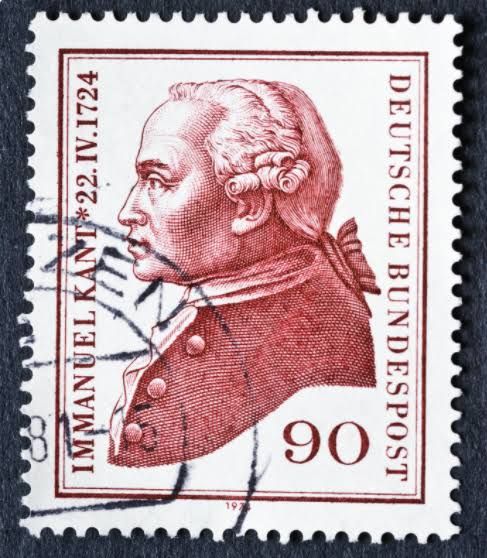
Modal Path Ethics has just finished accusing academic philosophy of keeping every philosopher professionally alive forever.
This was admittedly a little rude.
Kant has responded with spectacular timing by remaining useful.
This is inconvenient.
The whole point of the Immortal Corpus audit was that an inherited thinker should remain available as an instrument without retaining permanent jurisdiction over every new question. Memory can keep the old map.
The dead cartographer does not get to own the terrain.
Then, Nicholas Stang published a new version of a very old Kantian charge against contemporary metaphysics.
Metaphysics has returned. It has grounding, structure, fundamentality, possible worlds, properties, relations, dependence, composition, and enough technical precision to make the old queen of the sciences feel as though the palace has been renovated.
The confidence is impressive. The bridge is missing.
A metaphysician uses a term such as property, grounding, or structure and claims that the term reaches something real in the deep architecture of the world. Fine.
What explains the contact?
Why should this piece of philosophical language attach to that feature of reality rather than to some convenient artifact of the theory using it?
A contemporary realist may answer that the successful term follows the real joints of the world.
This creates a very elegant little circle.
- The term refers because it follows objective structure.
- We know which structure is objective because the correct term refers to it.
- The metaphysician has crossed the bridge by painting a bridge on the road.
Incredible. But Kant asked for the missing relation long before anyone had a grounding conference to attend.
His question was never only whether metaphysical claims were certain, scientific, empirical, synthetic, a priori, ambitious, modest, supersensible, or professionally fashionable.
Beneath all of those disputes lies the harder demand:
What gives a concept objective validity?
How does a category used by the mind legitimately apply to an object?
How does reason distinguish contact with reality from the projection of its own preferred architecture?
That question reaches down and glares at Modal Path Ethics immediately.
- What makes extance refer?
- What makes reachability more than a useful diagram?
- What makes resistance a feature of the field rather than a mood of the analyst?
- What makes a locus discovered rather than manufactured by classification?
- What makes burden transfer real when the institution moving the burden does not recognize the destination?
- What makes a field anything more than a very ambitious word for whatever the hell the writer currently wants to discuss?
Modal Path Ethics cannot drag Kant into the immortal corpus, ask him to certify the framework, and walk away under ancestral protection.
It must now enter the court.
¤
Metaphysics Returns With Better Stationery.
Contemporary metaphysics often presents itself as chastened.
The old lines cannot hold. The grand rationalist systems have been broken apart. The metaphysician no longer needs to derive the whole universe from one self-evident principle before lunch.
Claims can be provisional. The work can remain continuous with physics, logic, linguistics, mathematics, or ordinary judgment. Competing theories can be compared by explanatory reach, simplicity, coherence, and fit with what else we know.
This looks less arrogant than the old palace.
It may also be the same palace after a very tasteful renovation. Modal Path Ethics remains paranoid.
The central ambition remains substantial. The metaphysician still wants to say how reality is in itself: which entities are fundamental, which relations ground others, which distinctions carve more deeply, which possibilities are genuine, which objects really compose another object, which truths depend on which structures.
Precision does not secure contact by itself.

A perfectly defined term can still define an instrument that never touches the structure it claims to measure.
An internally coherent system can close around its own vocabulary. A theory can rank its own explanations by standards selected from inside the theory and then announce that reality has been unusually cooperative.
Modal Path Ethics recognizes this failure pattern from every other field.
- The military model predicts the enemy produced by the military model.
- The psychiatric category finds the patient created by the category.
- The market metric discovers the value the metric trained everyone to produce.
- The sacred instrument receives the answer that protects the sacred instrument.
- The canon finds that every new question was always waiting for the canon.
Metaphysics does not receive immunity from this in any way because its capture occurs at a higher altitude.
Stang's Kantian challenge is therefore healthy.
The metaphysician cannot establish reference by pointing toward structure while the capacity to refer to structure is the point under examination.
A theory of joint-carving can help rank candidate descriptions only after some contact with the joints has already been secured.
The language needs an account of its traction.
Kant's critical project begins there.
He does not let reason move directly from having a concept to possessing an object. He asks what conditions make experience, judgment, and objective cognition possible. Space and time belong to the form through which human sensibility receives objects. The categories belong to the understanding through which a manifold becomes available as an ordered experience of objects. Causation, substance, unity, plurality, necessity, and the rest do not arrive as little labels copied from things after the mind receives them raw.
The mind participates in the form of the world it can know.
This is the critical turn.
Human cognition does not stand outside reality with a transparent window.
It encounters through equipment.
Kant's equipment is transcendental: forms of intuition, categories, synthesis, judgment, reason.
Modal Path Ethics uses a much wider and more material instrument rack: bodies, languages, maps, scientific methods, institutions, archives, sensors, games, laws, rituals, models, testimonies, histories, tools, and other loci capable of carrying contact.
The shared warning is sharp.
Every known field is a field encountered through conditions of contact.
The known field should never be confused with a view from nowhere.
That does not make the field unreal.
It makes the instrument morally and epistemically present.
¤
The Court of Reason.
Kant's famous court is easy to misunderstand.
Reason is placed on trial before reason. It must establish which claims belong within its competence, which uses are legitimate, and where it has converted a demand for unity into an object it has no right to possess.
This is not timid philosophy.
A border can be an act of intellectual aggression against false authority. Kant does not destroy metaphysics by refusing every question. He attacks the unearned promotion from concept to world. He asks reason to identify the conditions under which its concepts can validly reach objects and to stop using its own appetite for completion as evidence that reality has completed itself on command.
Reason wants totality.

It wants the unconditioned condition behind every condition. It wants the whole series, the first ground, the complete explanation, the final subject, the full inventory, the system in which no remainder remains unfiled.
This appetite is understandable.
It is also one of the great engines of philosophical hallucination.
Kant's antinomies show reason generating opposed conclusions when it treats the world as a completed totality available to the same forms of judgment used within experience. The instrument runs past its valid operating envelope and starts producing conflict with equal confidence on both sides.
Modal Path Ethics has seen this machine.
A field instrument discovers a local regularity, then keeps expanding its jurisdiction until every object has become a case of this instrument.
- Economics finds incentives everywhere.
- Psychiatry finds pathology everywhere.
- Strategy finds opponents everywhere.
- Theology finds providence everywhere.
- Computation finds programs everywhere.
- Narrative finds characters everywhere.
- Modal Path Ethics can find its paths everywhere.
The last entry belongs in the list on purpose. That is one of the main points.
This framework has no right to assume that its own vocabulary reaches further than its contact conditions permit.
A path description may clarify one field and flatten another. A locus model may preserve an ecology from human-centered analysis and still misdescribe the internal life of an animal.
Resistance may track the work required for repair and still become a vague container for every difficulty the analyst dislikes.
The critical question cannot be reserved for rival instruments.
Under what conditions does this concept deserve to act here?
Kant places this question before metaphysics.
Modal Path Ethics places it before every field instrument, including itself.
¤
Modal Path Ethics Is Called to the Stand.
This framework makes a realist claim.

- Harm does not wait for recognition.
A future can be closed before a community knows how to describe the loss. An ecology can be damaged while every official instrument reports normal operation. A person can be burdened through a system whose procedures remain internally valid. A pre-life field can lose the conditions for life before any observer appears. A path can become unreachable while remaining imaginable to people insulated from the resistance.
The moral field therefore exceeds discourse.
This is the realist foundation of Modal Path Ethics.
Kant's challenge does not disappear because the framework has a good reason for wanting realism. Wanting the wound to remain real does not explain how the vocabulary reaches it.
- Extance could become a metaphysical honorific attached to whatever happens to exist.
- Reachability could become possibility wearing work boots.
- Resistance could become a moralized difficulty score.
- Locus could become a membership category issued by the analyst.
- The field could become the philosophical equivalent of saying that everything is connected and waiting for the room to nod.
This article will not answer that pressure by claiming that all five terms have been transcendentally deduced from the necessary conditions of any possible experience.
That would be an extremely Kantian way to become insufferable.
Modal Path Ethics makes a much thinner claim:
- Reality contains active structures capable of continuation.
- Actual histories constrain later transitions.
- Interventions can preserve, burden, redirect, or foreclose continuance.
- The effects of those interventions are not exhausted by the descriptions used to authorize them.
- Contact with those effects can improve through evidence, comparison, participation, intervention, correction, and the resistance encountered by failed models.
This is already enough for the framework's work.
It does not provide an inventory of ultimate reality.
It does not identify the final substrate.
It does not require one metaphysical representation of the field to defeat every rival representation before harm can be named.
The framework claims a real difference between a path remaining reachable and a path being closed. It claims that this difference can be tracked imperfectly through contact instruments whose legitimacy depends on remaining answerable to what they encounter.
This is corrigible realism.
- Reality exceeds the instrument.
- The instrument can still touch reality.
- The touch can be wrong.
- The wrongness can become evidence.
¤
Extance != the Thing-in-Itself.
Extance must not be turned into Kant's noumenal world under a new label.
Extance is not a hidden cosmic inventory waiting behind appearances. It is not the final furniture of reality. It is not a secret layer whose true description Modal Path Ethics alone has somehow acquired through unusual excellence, Ip Man, and a glossary.
Extance names active, realized structure insofar as it bears lawful continuation.
That definition is deliberately thin.
A biological account may describe the extance of an organism through metabolism, regulation, development, tissue, environment, and evolutionary history. A legal account may describe the organism through personhood, standing, injury, custody, responsibility, and rights. A caregiver may know the organism through fatigue, trust, appetite, fear, humor, routine, and the exact silence that means something is wrong. A sensor may register temperature, oxygen, pressure, or movement.
The organism may encounter itself through pain, intention, memory, body schema, and capacities no external instrument can fully recover.
These contacts do not collapse into one interchangeable representation.
They can conflict.
They can expose each other's blind spots.
They can carry different selecting cuts across the same extant relation.
The extance is not whichever account wins the meeting. It is the causally operative structure continuing through and beyond all of them.
Kant helps by breaking the fantasy of unconditioned access.
He also creates a danger if the lesson is interpreted as a sealed divide between appearance and unknowable reality.
Modal Path Ethics cannot work from a world that never answers. An ethical instrument needs traction. It needs evidence that a path was closed, that a burden moved, that an intervention failed, that a person remained unheard, that the map omitted the mine below the lake.
The framework therefore refuses two exits.
- It refuses naive possession, where the concept is treated as a transparent copy of reality.
- It refuses total enclosure, where mediated contact is treated as no contact at all.
Contact is structured, partial, situated, and real enough to fail.
Failure is crucial.
A representation sealed inside the mind cannot be contradicted by the field.
The bridge from concept to reality is never secured by confidence. It is secured provisionally through the disciplined possibility of correction.
¤
The Corrigible Contact Instrument.
A contact instrument is any structure that makes some feature of the field available for orientation, judgment, or action.
A concept can be a contact instrument.
So can a microscope, witness statement, diagnostic category, legal hearing, religious ritual, simulation, ecological survey, poem, pressure gauge, public meeting, strategy game, archive, machine-learning model, family memory, or human body.
These instruments do not all work in the same way. They do not produce one kind of evidence.
They should not be forced through one verification ritual.
They share a structural obligation.
A contact instrument must remain corrigible by the field it claims to contact.
Corrigibility is stronger than the abstract admission that “anyone can be wrong.”
Most sovereign instruments are perfectly willing to admit human fallibility in general. They simply refuse every actual correction when it arrives.
- The evidence is incomplete.
- The witness is biased.
- The patient lacks insight.
- The dissenter misunderstands the doctrine.
- The failed prediction was directionally correct.
- The intervention needs more time.
- The metric is imperfect but still the best available.
- The framework was misapplied.
A corrigible instrument requires architecture.
1. It declares its domain.
An instrument should state what kind of contact it is built to carry.
A thermometer measures temperature. It does not settle whether a room is safe, humane, legally compliant, emotionally tolerable, or morally repaired. A utilitarian calculation may illuminate aggregate consequence. It does not automatically resolve distribution, consent, dignity, or irreversible path loss. A reachability map can show available transitions. It may remain silent about the lived quality of those transitions.
A domain is not a prison.
It is the first defense against jurisdictional expansion.
2. It exposes its selecting cut.
Every instrument makes some distinctions vivid and pushes others into background.
The cut may be spatial, temporal, institutional, linguistic, biological, economic, legal, or moral. It may select individuals, populations, events, capacities, symptoms, costs, branches, or causal relations.
The instrument should reveal what it had to ignore in order to become usable.
A map that hides its projection teaches the viewer to mistake distortion for geography.
3. It leaves an evidence path.
A claim needs a route back toward the contact that produced it.
The route may involve records, measurements, observations, testimony, replication, causal trace, material change, or public reasoning. The evidence can remain uncertain. The path still has to exist.
A backend report is not substrate change.
A declared repair is not field repair.
A concept that can explain everything after the fact has preserved no path by which reality can refuse it.
4. It permits counter-instruments.
A single instrument should not own the conditions under which it is evaluated.
The diagnostic category must encounter the patient's account, the body's response, longitudinal history, social conditions, rival explanations, and evidence from outside the profession that issued the category. The strategic model must encounter local knowledge, dissenting factions, civilian consequence, and the opponent's changing incentives. The philosophical concept must survive translation into other vocabularies without demanding that every alternative first become its own dialect.
Counter-instruments do not guarantee truth.
They prevent one instrument from becoming the sole author of reality.
5. It lets affected loci answer.
Where participation is possible, the people and systems carrying the consequence need channels to correct the description.
This answer may arrive through speech. It may also arrive through refusal, breakdown, migration, symptom, protest, ecological change, mechanical failure, lost trust, or other forms of resistance.
The field answers in more languages than institutions recognize.
6. It preserves the trace of error.
Correction without memory becomes reputation management.
A failed instrument should leave enough evidence for later users to see where the contact broke. The old model, bad forecast, suppressed testimony, damaged body, lost path, and repair attempt belong to the record.
The instrument learns by keeping the scar legible.
7. It contains an exit condition.
The instrument must be able to shrink, hand off, change form, lose authority, or disappear.
A concept may become ordinary perception. A temporary office may complete its task. A diagnostic category may be retired. A movement may succeed. A philosophical framework may transfer its capacities into better instruments.
An instrument that cannot describe the conditions under which it should stop mediating the field has already begun serving itself.
These seven conditions do not solve metasemantics in general.
They do something more useful for Modal Path Ethics.
They distinguish a claim to contact from a claim to sovereignty.
¤
Plurality Is the Redundant Sensor Array.
Kant is often read as the architect of one universal human cognitive frame.
Human sensibility receives through space and time. Human understanding organizes through categories. Human reason seeks unity. Human morality answers to one rational law.
There is enormous strength in that architecture.
There is also a pressure toward singularity.

Modal Path Ethics places plurality closer to the center.
Plurality here does not mean that every opinion is equally true, every description is incommensurable, or reality changes its structure whenever a group chat becomes confident.
Plurality means that extance contains multiple loci, scales, histories, relations, capacities, and contact positions that no single instrument can exhaust.
- A river is water flow, habitat, geological process, ancestral relation, legal object, infrastructure, sacred presence, flood risk, drinking source, border, memory, and more.
- A hospital is clinical practice, building, labor system, billing architecture, infection environment, training institution, family threshold, data machine, public promise, and place where a person is trying not to die.
- A war is military sequence, political project, domestic institution, ecological event, supply field, information system, family rupture, economy, trauma inheritance, and a thousand local worlds that do not experience the same front.
These are not decorative perspectives orbiting one authorized description.
They are contact surfaces within the thing's extant plurality.
Some descriptions will be false. Some will be partial. Some will be manipulative. Some will refer to different structures under the same name. The existence of plurality does not remove adjudication.
It changes the method.
- Plurality does not decide truth.
- It prevents one instrument from deciding it alone.
A redundant sensor array can detect failures a single sensor would convert into reality. Two sensors can share a defect. Ten can be captured by the same calibration regime. Redundancy still creates more correction paths than a sovereign gauge.
Human plurality works similarly.

Different bodies register different burdens. Different disciplines preserve different causal traces. Different languages keep distinctions that others compress. Different communities retain memory of how the official instrument behaved last time. Different scales reveal local benefit and distant cost.
The field remains larger than the assembly.
A plural community can still destroy an absent locus. Every present human can agree to spend the future child, the wetland, the unknown mind, or the pre-life path. Consensus is not extance.
So Modal Path Ethics needs both halves:
- Plural contact, because no single instrument sees enough.
- Field realism, because agreement among instruments does not create the object they claim to contact.
This avoids two sovereign fantasies.
- The first says one correct vocabulary should rule.
- The second says plurality itself rules.
Neither gets the throne.
¤
Kant's Unity Becomes an Instrument.
Kant understands that reason seeks systematic unity.
Inquiry cannot proceed as an unconnected heap of observations. It searches for laws, kinds, relations, explanations, and more comprehensive order. Science needs the expectation that nature will remain intelligible enough for inquiry to continue. Judgment needs some hope that particulars can be brought into relation without becoming pure accident.
The search for unity is a magnificent instrument.
It becomes dangerous when regulative hope is promoted into constitutive possession.
Kant's distinction between regulative and constitutive use belongs directly inside Modal Path Ethics.
A regulative idea guides inquiry. It helps the mind search for order, connection, systematicity, or completion. It does not automatically establish that the imagined totality exists as an object in the form reason desires.
Modal Path Ethics should treat several of its own largest images this way.
- The field guides attention toward relation, consequence, burden, and continuation across the selecting cuts of local instruments.
- Reachable future-space guides analysis toward the paths that remain available under actual constraints.
- The resistance profile guides attention toward the distributed work required for later repair.
- The locus guides the search for a continuant whose future can be preserved or closed.
These instruments may refer to real structure. Their largest representations should remain revisable.
The field is not a giant metaphysical container shaped exactly like the site's diagrams.
Reachable future-space is not known to exist as a literal geometric object with every branch awaiting inspection.
Resistance is not one cosmic substance poured between a locus and the good.
The regulative use preserves orientation without converting the image into a sovereign ontology.
Kant therefore gives Modal Path Ethics a correction it needs:
Search for unity. Do not force plurality to pay for it.
A good synthesis preserves the distinctions required for contact. A bad synthesis resolves every contradiction by deleting the loci that made the contradiction informative.
The hospital administrator wants one performance measure. The military wants one threat picture. The government wants one public. The metaphysician wants one fundamental structure. The moral framework wants one ruling.
Sometimes the field contains a real answer.
Sometimes the demand for one answer is the event being audited.
¤
The Universal Law Is a Contact Instrument.
Kant's moral philosophy enters through the will.
A rational agent does not receive morality from appetite, authority, custom, predicted reward, or the local consequences desired by power. The agent asks whether the maxim of action can hold as a universal law. The law must survive the removal of personal exemption. Moral agency is autonomous where reason gives itself a principle capable of binding every rational will.
This is a formidable anti-corruption instrument.
It catches one of the oldest human tricks.
- My violence is defense.
- Your violence is aggression.
- My secrecy is necessary.
- Your secrecy proves guilt.
- My sacred title preserves memory.
- Your sacred title is fanaticism.
- My exception protects the system.
- Your exception destroys the rule.
Universalization drags the private permission into shared logical space.
The Golden Rule article reached a neighboring result through reciprocal application: a logical move remains logical when the roles reverse. Kant gives that intuition a harder formal spine. The maxim cannot depend on the actor being secretly entitled to a world that would collapse if everyone acted under the same permission.
Modal Path Ethics keeps this instrument.
It refuses to let the instrument become the entire ethics.
Universalizability can detect contradiction, parasitism, and special pleading. It does not automatically reveal every burden carried by a universal rule.
A policy may apply the same procedure to everyone while acting upon radically unequal starting fields. A universal documentation requirement can exclude people whose lives do not generate the authorized document. A universal deadline can burden the person carrying care, disability, poverty, language barriers, or institutional delay. A universal rule can preserve the same formal path while making that path reachable for some and fictional for others.
The maxim survives logical generalization.
The loci do not survive the implementation.
This is where plurality enters the moral law.
The same rule meets different bodies, histories, institutions, and resistance profiles. Equal wording does not guarantee equal contact. Universal form needs field intelligence.
Modal Path Ethics therefore treats the categorical imperative as a reciprocal correction instrument.
It asks:
- Does the permission remain coherent when generalized?
- Does the agent claim an exception unavailable to others?
- Could the rule be willed by those who must inhabit it?
- What happens when the universal rule enters unequal extant conditions?
- Which loci become formally included and practically unreachable?
- What burdens remain invisible because the maxim was purified before use?
Kant helps stop the actor from declaring private sovereignty.
The field stops the universal law from declaring public innocence.
¤
The Kingdom Has More Residents Than Kant Admitted.
Kant's formula of humanity remains one of the great moral instruments.
A person cannot be reduced to equipment for another person's project. Rational nature carries an unconditional status. The other has ends, can form purposes, can answer reasons, can give law, and cannot be assigned a price equivalent to an ordinary object of exchange.
Modal Path Ethics stands very close to this refusal of instrumentalization.
Burden transfer often begins by converting a locus into infrastructure.
- The worker becomes labor input.
- The civilian becomes leverage.
- The patient becomes compliance risk.
- The child becomes the family's tension sink.
- The river becomes water supply.
- The future generation becomes discount rate.
- The animal becomes actuator.
- The philosopher becomes corpus organ.
Kant protects the rational person from this reduction.
Modal Path Ethics widens the protection.
Rational agency is a powerful moral capacity. It supports autonomy, responsibility, consent, deliberation, self-authorship, and participation in shared correction.
It does not create the first moral standing in the universe.

An infant can be harmed before autonomy develops.
A person with severe cognitive disability does not become equipment when a particular model of rational lawgiving becomes unavailable.
An animal can lose its continuance without formulating a maxim.
An ecology can be contracted without entering the kingdom as a legislator.
A future locus can be burdened before it can answer.
A pre-life path can be destroyed before rational nature appears anywhere inside it.
Kant's kingdom of ends is therefore morally narrower than the field.
- The kingdom contains lawgivers.
- The field contains everyone and everything whose continuance can be acted upon, including those unable to issue credentials at the gate.
This expansion does not flatten persons into ecosystems or ecosystems into persons. Plurality protects difference here too.
Rational agency creates distinctive claims. Consent is not replaceable by ecological value. Human dignity is not one scalar quantity interchangeable with habitat area. Different loci carry different continuations and different forms of vulnerability.
The field is wider without becoming one moral soup.
Kant's own failures sharpen the warning.

His universal rational architecture coexisted with racial hierarchy, gendered assumptions, and a political account that excluded women, children, and economically dependent people from full active citizenship.
His later anti-colonial and anti-slavery commitments complicate the record.
They do not erase the instrument failure.
The universal subject had arrived through a socially narrow contact surface.
This is exactly how abstract universality becomes dangerous.
- The law says every rational being.
- The empirical classifier quietly decides who will be encountered as a mature, independent, authoritative instance of reason.
The universal is clean.
The guest list carries the dirt.

Plural correction is therefore part of universality rather than an optional supplement after the principle has been discovered. A universal instrument that cannot be corrected by the people it misclassifies will preserve its formal purity by exporting the contradiction into their lives.
Kant gave philosophy an extraordinary language of dignity.
Kant also demonstrates why dignity needs more than one authorized interpreter.
¤
The Good Will Enters Resistant Matter.
Kant begins the Groundwork with the good will.
The moral worth of an action does not depend on luck delivering the desired outcome. A person can act from duty under conditions where the world refuses success. This protects ethics from becoming a victory ceremony. It distinguishes the integrity of the agent from the accident of favorable consequence.
Modal Path Ethics accepts the need for that distinction.
It cannot place moral reality inside it.
A good will can close a future.
A conscientious official can enforce a destructive policy. A loving parent can make a child unreachable through protection. A sincere reformer can destroy the institution's capacity for correction. A scientist can follow an honorable method inside a deployment field that transfers the risk.
A philosopher can formulate a universally intended principle that becomes a blade when applied to people the theory has compressed.
Intention changes trust, prediction, culpability, and the proper response to the agent.
It does not change what the transition did.
This is the point where the will encounters resistant matter.
- The command ran.
- Did the world change as intended?
- The procedure was followed.
- Did the locus remain reachable?
- The maxim was honorable.
- What did its implementation train the field to become?
Kant protects moral agency from luck.
Modal Path Ethics protects moral reality from the agent's self-description.
Both protections are needed.
Without Kant, outcome language can erase the difference between bad luck and corrupt willing. It can blame the conscientious agent for every consequence no finite mind could anticipate. It can make ethics impossible under uncertainty.
Without field contact, good-will language can protect the agent's purity while the cost leaves through another door.
The correct relation is chiral.
- The will belongs to the assessment of the agent.
- The transition belongs to the assessment of the field.
Neither can substitute for the other.
A mature moral account carries both without forcing them into alignment.
¤
Reflective Judgment Finds the Door.
Kant's third Critique gives Modal Path Ethics a different kind of instrument.
Determining judgment begins with a universal and places the particular beneath it.
Reflective judgment encounters a particular for which the adequate universal is not already available and must search for a way to think it.
This is much closer to the actual work of applied ethics.
A damaged field rarely arrives with the correct category printed above it.
The analyst encounters a person who does not fit the diagnostic room, a conflict that defeats the inherited strategy, an ecological relation that crosses administrative borders, a technology that changes the meaning of the old rule, a historical event whose participants were acting under descriptions that no longer organize the evidence.
The particular is not an annoying example waiting to be subsumed.
The particular may be where the old universal fails.

Modal Path Ethics applied cases operate through reflective judgment when they work.
They enter the field, identify the live loci, trace the transitions, compare descriptions, and allow the case to revise the instrument.
The article is not there to demonstrate that the framework was right before contact.
The contact the article produces is part of the theory's formation.
This requires patience with plurality.
Different particulars may generate different local rules without collapsing ethics into whim. A battlefield, hospital, family, forest, and software system all contain reachability, burden, and resistance. The relevant evidence and correction paths differ enormously.
Reflective judgment searches without pretending the universal has disappeared.
It also refuses the bureaucratic fantasy that the right universal is always already in the binder.
Kant's aesthetic language of enlarged thinking becomes useful here. Judgment improves by moving beyond the private standpoint and attempting to think from positions other than one's own. This is not a license to impersonate everyone else with confidence. It is a discipline against treating one's local conditions as the world.
Modal Path Ethics makes the requirement more material.
- Ask other loci where they can answer.
- Build channels through which disagreement can alter the decision.
- Compare instruments formed under different histories.
- Preserve minority reports.
- Represent absent futures without claiming they have personally endorsed the representative.
- Let the failed prediction remain visible.
- Treat the untranslatable remainder as evidence that the contact is incomplete.
Reflective judgment is the door through which plurality enters reason without turning reason off.
¤
Public Reason Needs More Than One Mouth.
Kant's Enlightenment project places enormous weight on the public use of reason.
Authority should not end inquiry by command. Claims must enter a space where reasons can be offered, criticized, revised, and shared. Political right should preserve the external freedom of persons under laws capable of common justification. Peace should be built through institutions rather than left to the private virtue of rulers.
These are correction technologies.
Modal Path Ethics values them for the same reason it values democracy: they create multiple routes by which power can be answered after action.
A public is not automatically a plurality.
A public can be manufactured around one language, one property threshold, one credential, one platform, one citizenship status, one professional tone, or one definition of rational participation. The room can remain open while the entrance architecture selects the speakers.
The public use of reason therefore needs material conditions.
- Time to learn.
- Safety to disagree.
- Access to evidence.
- Freedom from retaliation.
- Translation across vocabularies.
- Institutions that can actually change after criticism.
- Channels for the people carrying consequences to become more than data points in someone else's deliberation.
Plurality is not produced by placing many mouths in a room after one instrument has defined every acceptable sentence.
It requires reciprocal corrigibility among the contact instruments themselves.
The engineer must be answerable to the resident.
The resident must be answerable to the material constraint.
The policymaker must be answerable to the worker.
The worker's account must be answerable to other affected loci.
The present public must remain answerable to futures absent from the meeting.
No position receives final authority through identity, expertise, suffering, office, popularity, or formal universality alone.
This can sound exhausting. It is.
Plurality is the cost of refusing a single easy sovereign.
The alternative is usually much more efficient right up until the field breaks.
¤
Freedom Without a Secret Exit.
Kant needs freedom for moral agency.
A will governed only as one more event in the causal order appears unable to originate action under a law it gives itself.
Kant therefore distinguishes the standpoint from which we know ourselves as appearances within nature from the standpoint under which practical reason must regard us as free.
The architecture protects agency from reduction.
Modal Path Ethics keeps the protection and rejects the hidden room.
Agency does not need to escape causation in order to matter.
A locus can be causally embedded and still model futures, compare paths, revise habits, resist pressure, form commitments, coordinate with others, and redirect the field. The capacity is real because the transition changes when the agent exercises it.
- Freedom is not absence of condition.
- It is structured power within condition.
This makes freedom plural too.
Different agents possess different reachable capacities under different burdens. Formal permission to choose can coexist with practical enclosure. A person can remain metaphysically free in some abstract sense while lacking the material, social, cognitive, legal, or bodily path required for meaningful action.
Modal Path Ethics asks what freedom can reach.
- Can the person refuse without losing shelter?
- Can the worker leave without losing medicine?
- Can the patient contest the diagnosis without the contest becoming evidence?
- Can the citizen criticize the government without becoming a target?
- Can the child tell the truth without breaking the family field around them?
- Can the future agent inherit enough structure to act at all?
Kant gives freedom dignity.
Reachability gives freedom an operating environment.
A free will with no reachable path is a fine metaphysical citizen trapped behind a locked door.
¤
The Category Cannot Eat the Locus.
- Kant's categories organize experience.
- Modal Path Ethics categories organize audits.
The danger is the same in miniature:
The conditions through which an object becomes legible can be mistaken for the complete being of the object.
A locus is especially vulnerable here.
The framework defines a locus through structured continuance. That helps identify persons, institutions, ecologies, languages, machines, futures, and other active structures whose reachable continuation can be affected.
The term can also become a capture device.
Once something is named a locus, the analyst may feel that the important ontological work is complete.
The field has been granted moral membership.
Everyone can proceed to calculate its future.
Except the classification may have compressed the thing before protecting it.
- Which boundary makes this locus one?
- Which internal plurality disappeared?
- Which relations were treated as environment rather than constitution?
- Which temporal scale determined continuance?
- Which account of good continuation was imported from the observer?
- Which rival locus appears only after the first boundary is revised?
A corporation can claim locus status while distributing its costs across workers, cities, ecosystems, and future publics.
A nation can present itself as one threatened body while compressing internal dissent.
A family can protect its continuity by sacrificing one member's future.
A species-level account can hide local populations and ecological relations.
A person-level account can ignore the institutions that make the person's available choices.
Plurality does not forbid boundaries. Action requires them.
Plurality makes boundaries answerable.
The category should help contact the locus without completing it.
The definition remains a probe. The affected structure may exceed the current cut.
This is one of Kant's deepest gifts to Modal Path Ethics:
The concept conditions access. It does not earn possession.
¤
Corrigibility Is an Ethical Condition.
Kant's critical philosophy is often treated as an epistemological border patrol.
Modal Path Ethics reads a moral architecture inside it.

An incorrigible contact instrument does more than risk false belief. It changes the field around its error.
A mistaken private theory can remain locally embarrassing. A mistaken sovereign instrument can allocate custody, medicine, money, danger, legitimacy, punishment, land, or survival.
Its claim to knowledge becomes causal power.
Corrigibility therefore has an ethical profile.
- Who can challenge the instrument?
- What happens to the challenger?
- How quickly can action stop?
- Which error is reversible?
- Who carries uncertainty while the instrument remains confident?
- Which alternative evidence can enter?
- Does correction restore the burden or only update the model?
- Can the institution survive being wrong without making the witness pay for the survival?
A field instrument is more dangerous as the cost of correction rises.
This applies to reason itself.
Reason can universalize a maxim and miss the body.
Reason can synthesize evidence and erase the minority report.
Reason can seek unity and turn plurality into noise.
Reason can define autonomy in a way that recognizes only the people already trained to appear autonomous.
Reason needs criticism from outside its favored operation.
Bodies.
Histories.
Other traditions.
Material failure.
Untranslated testimony.
Art.
Science.
Children.
Workers.
Animals.
The future arriving with evidence the system had no category for.
This does not dethrone reason.
It prevents reason from mistaking the bench for the world.
¤
The Kantian Upgrade.
Kant remains useful where he forces the instrument to account for its authority.
Modal Path Ethics takes several upgrades from him.
Concepts require valid use.
A term does not reach reality through definition, confidence, ancestry, or philosophical seriousness. The conditions under which it applies have to be shown.
The observer belongs to the contact structure.
Human cognition does not receive an uninterpreted world and then add a theory later. Forms of access participate in what becomes available as an object of judgment.
Reason overreaches through totality.
The demand for one complete explanation can produce confident contradiction. Unity should guide inquiry without owning the field in advance.
Universalization disciplines exception.
A moral permission must survive role reversal and general use. Private sovereignty should be made visible.
Persons cannot become equipment.
Rational agency carries claims no aggregate convenience can price away. The person remains an end whose projects and freedom constrain what others may do.
Judgment must sometimes search from the particular.
The rule is not always available before contact. The case can revise the category.
Public reason preserves correction.
Authority must remain answerable through shared criticism, institutional form, and the freedom to use reason publicly.
Modal Path Ethics then changes the machine.
Objective validity becomes corrigible contact.
The framework does not promise a final transcendental proof that every field term attaches to ultimate reality. It builds evidence paths, counter-instruments, participation, trace, and exit conditions through which contact can improve.
One cognitive frame becomes plural instrumentation.
No single locus, discipline, language, or scale exhausts extance. Plurality creates redundant routes for correction while the field remains the realist constraint on all of them.
The kingdom of ends becomes a wider moral field.
Rational agents retain distinctive dignity. Moral standing extends to other loci whose continuance can be preserved or closed.
Good will becomes one side of the audit.
The will informs trust, culpability, and agency. The transition determines what happened to the field.
Autonomy becomes reachable agency.
Freedom is exercised inside causal, material, social, and historical conditions. Its moral reality depends partly on whether refusal, participation, and redirection remain reachable.
Critical philosophy receives an exit condition.
Kant's instrument should remain usable without becoming a permanent throne. Future contact may require concepts Kant could not supply, populations his system failed to hear, sciences that change the operating conditions, and forms of plurality his architecture tried too quickly to unify.
This is how an old philosopher stays alive without joining the undead senate.
The instrument works.
The instrument receives correction.
The instrument does not own the next field.
¤
Ruling.
Kant asked reason to prove its right to rule before letting it rule.
Contemporary metaphysics often retained the crown and misplaced the hearing.
It can define grounding, structure, property, fundamentality, modality, composition, and dependence with immense precision. Precision does not establish that the terms have reached the deep world they describe. Calling the successful description joint-carving repeats the claim at the point where an explanation of contact was needed.
Stang is right to reopen the Kantian problem.
Modal Path Ethics belongs inside it.
Extance, reachability, resistance, loci, burden transfer, and fields are contact instruments. They claim to track real structures whose moral force does not depend on recognition. That realism survives only if the concepts remain answerable to the structures they describe.
The answer is not transparent access.
The answer is corrigible contact.
- Declare the domain.
- Expose the selecting cut.
- Preserve the evidence path.
- Permit counter-instruments.
- Let affected loci answer.
- Retain the trace of error.
- Build the exit condition.
No single instrument completes the field.
Plurality supplies more than tolerance. It supplies correction paths.
Different loci, bodies, disciplines, histories, languages, and scales encounter different parts of the extant relation. Their accounts can conflict, fail, converge, distort, and repair one another. The plurality does not create reality. It keeps one instrument from quietly replacing reality with itself.
Kant's universal law remains useful against private exception. His formula of humanity remains a powerful refusal to turn persons into equipment. His reflective judgment makes room for particulars that arrive before the correct rule. His public reason keeps authority exposed to criticism. His critical project forces every metaphysical instrument to explain the reach it claims.
Modal Path Ethics refuses his remaining throne.
Rational agency does not define the edge of the moral field. Universal form does not erase unequal reachability. Good will does not overwrite transition. Systematic unity does not have the right to digest plurality. Freedom does not need a hidden room outside causal reality.
Reason is one of the finest contact instruments extance has produced.
It is still an instrument.