Tales of Distortion: Symmes's Hole
Be careful what you are sure of.
September 2026 note: The case still stands as an audit of prestige transfer, citation-chain drift, certification displacement, and procedural output outrunning empirical truth. Later work sharpens the repair side: an effective outside is not just a socially external critic but a causally independent route through which reality can introduce a difference the incumbent account does not control.
It is March 7, 1822. Senator Richard Mentor Johnson of Kentucky has the floor of the United States Senate. He has a petition he would like to share with everybody.
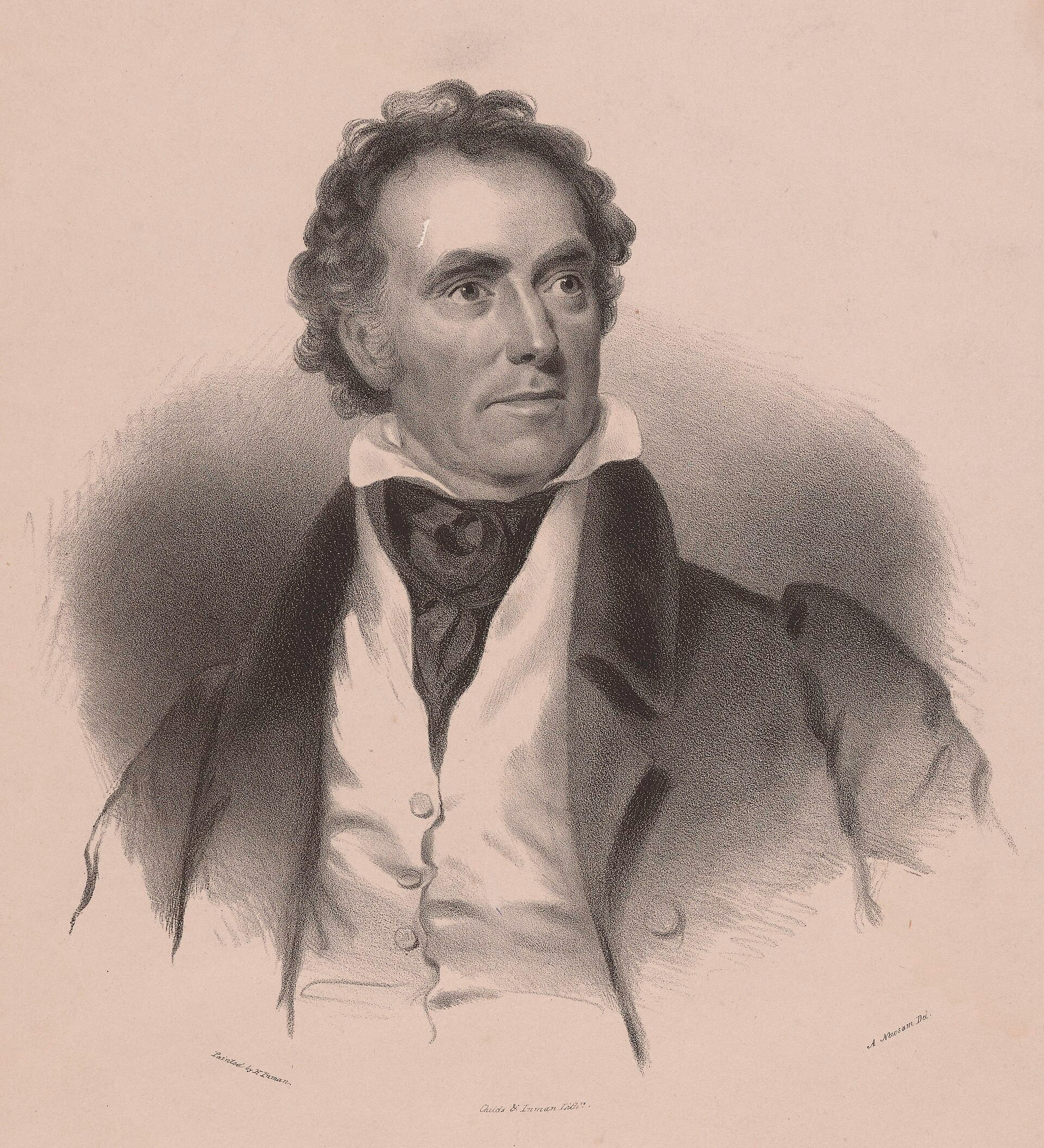
The petitioner is one of his constituents.
The petitioner is also a decorated veteran of the War of 1812, wounded in the sortie from Fort Erie, who retired with the rank of captain.
He is also the nephew of the founder of Cincinnati and bears the same exact name, John Cleves Symmes, a name associated across the entire early Midwest with land grants, settlements, and a sitting president's father-in-law.
John is the father of ten children, one of whom he has named Americus Vespucius Symmes. Some parents forget you can just do that to any child. “You are now Americus Vespucius.”
By every available social marker in 1822, this was a serious person whose request deserves a serious hearing, and whose son has a sick name.
John's plan is simple.
He needs Congress to fund two ships, two hundred and fifty or three hundred tons' burden, crewed at public expense, provisioned for a long voyage, sailing under his personal command toward a single declared destination.
On John's account, there is a hole.
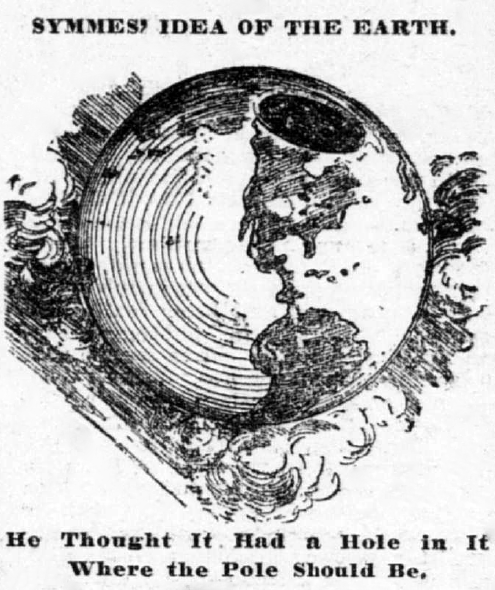
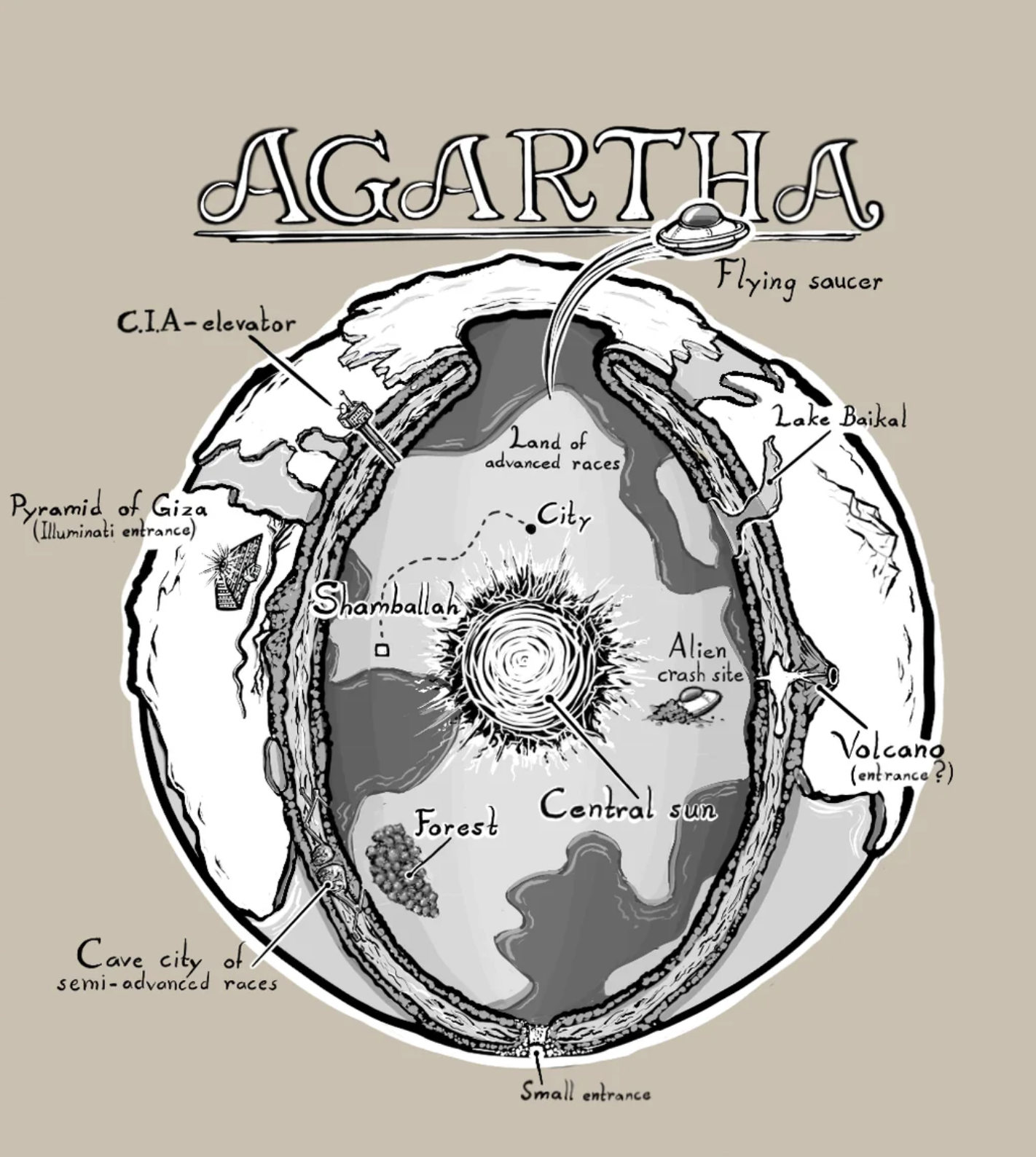
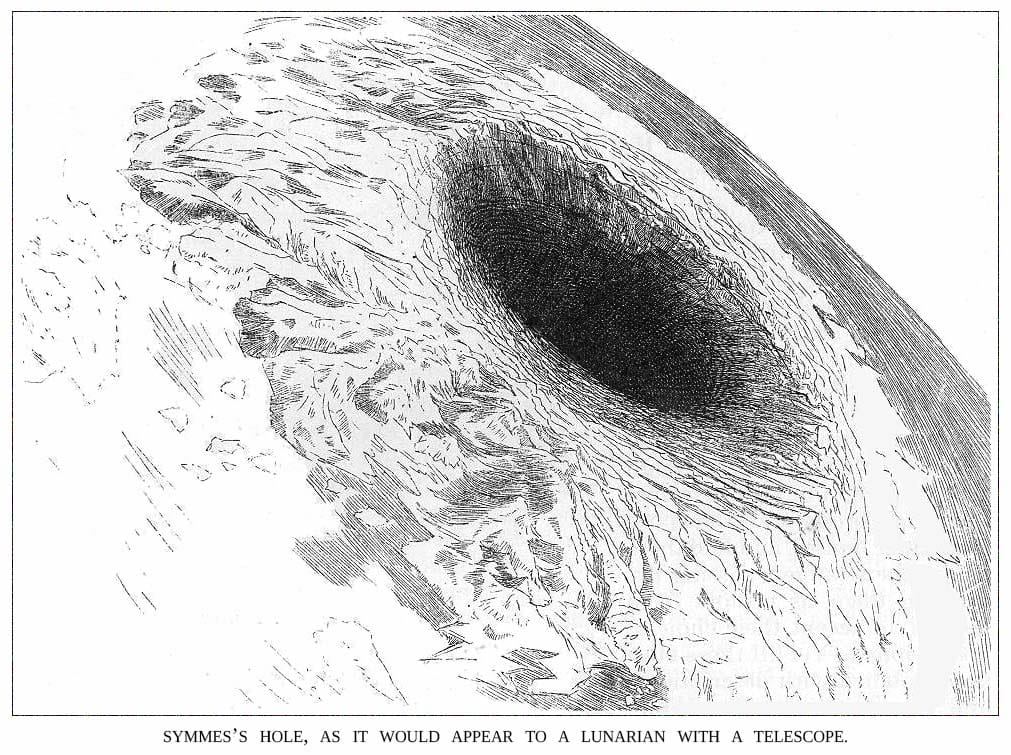
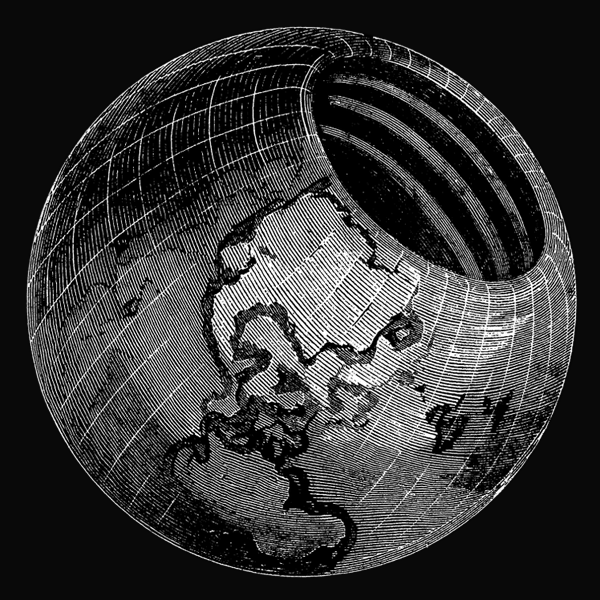
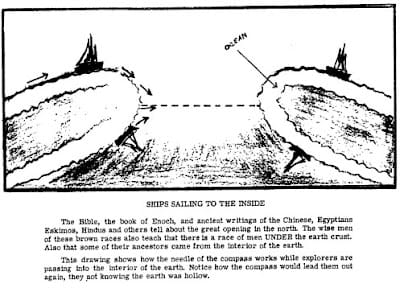
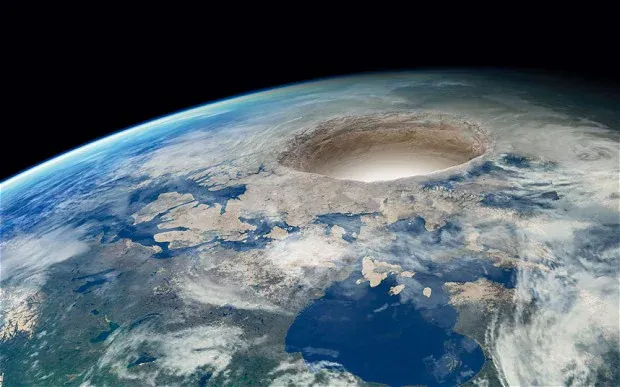
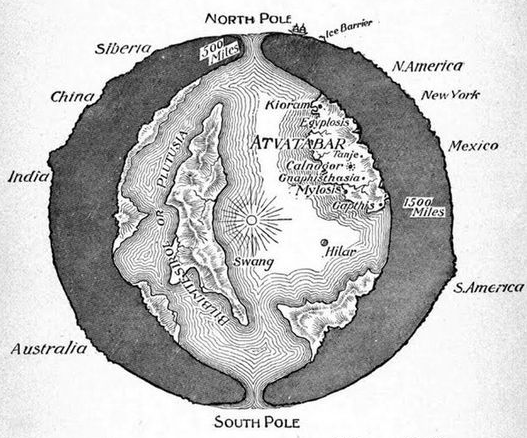
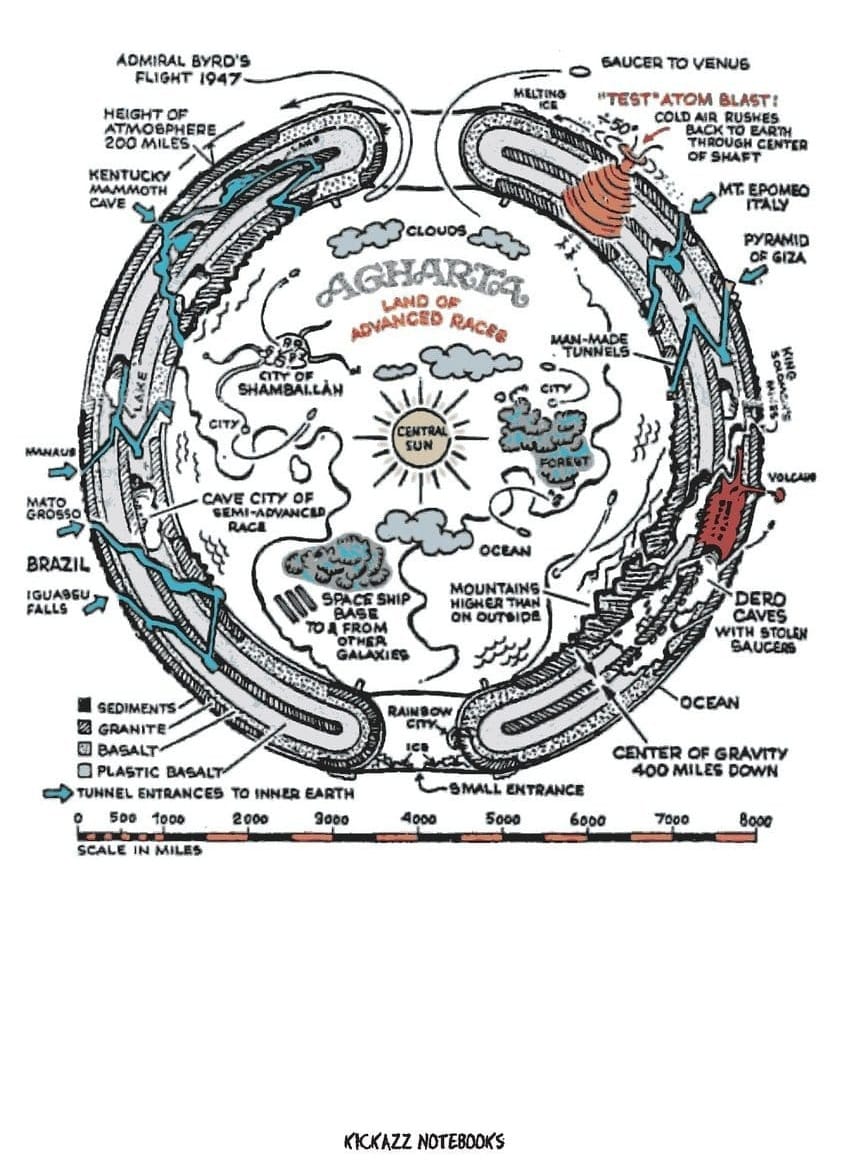
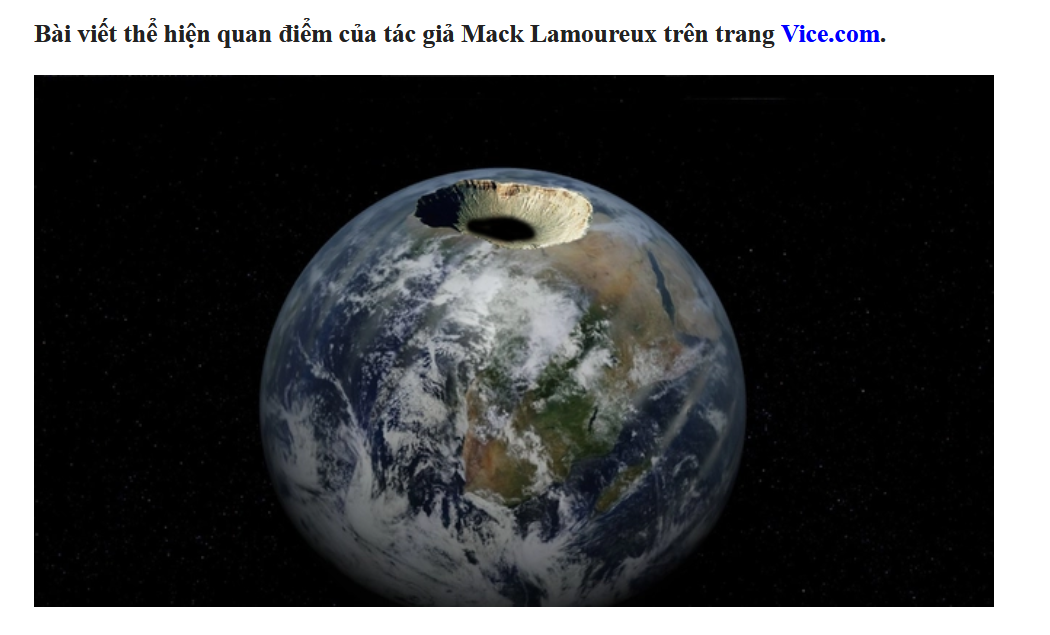
The hole is in the Arctic Ocean, opens at approximately eighty-two degrees latitude, has a diameter of around four thousand miles, and leads through the curving rim of the planet into a vast, habitable interior containing a smaller sun, breathable air, fertile soil, abundant vegetation, animals, and people.
John believes that if Congress will give him two ships and one hundred of his finest selected companions, he can be the first to enter this inner world, meet its amazing people, and return.
He has pledged his very life on the existence of this polar hole. He has already signed a public document distributed worldwide to that effect.
John has, separately, attached to that document a real, notarized certificate of his own sanity. We'll get back to that.
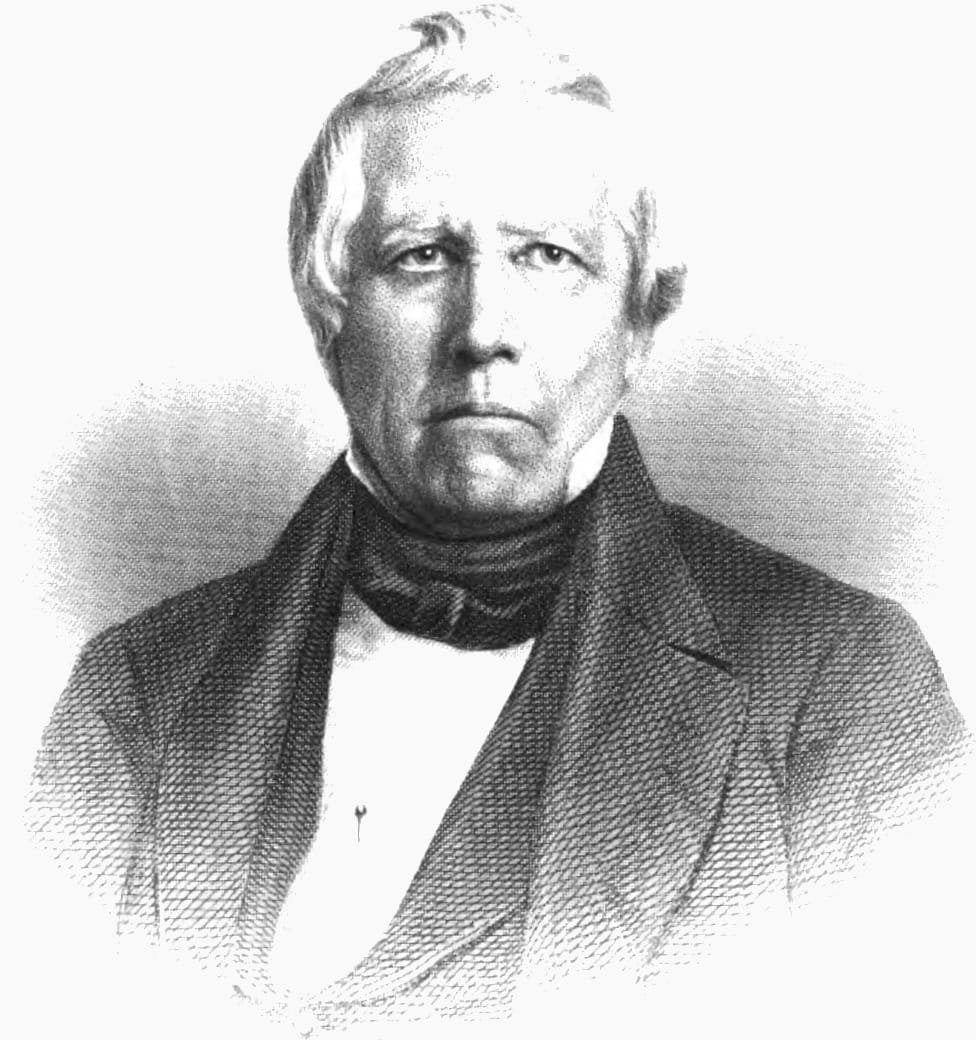
Symmes is forty-two years old. His name is John Cleves Symmes Jr. Several years from now, the popular name for this hole he is hounding for will be Symmes's Hole, in his honor.
So Senator Johnson reads the petition into the record. He tells the Senate about the hole.
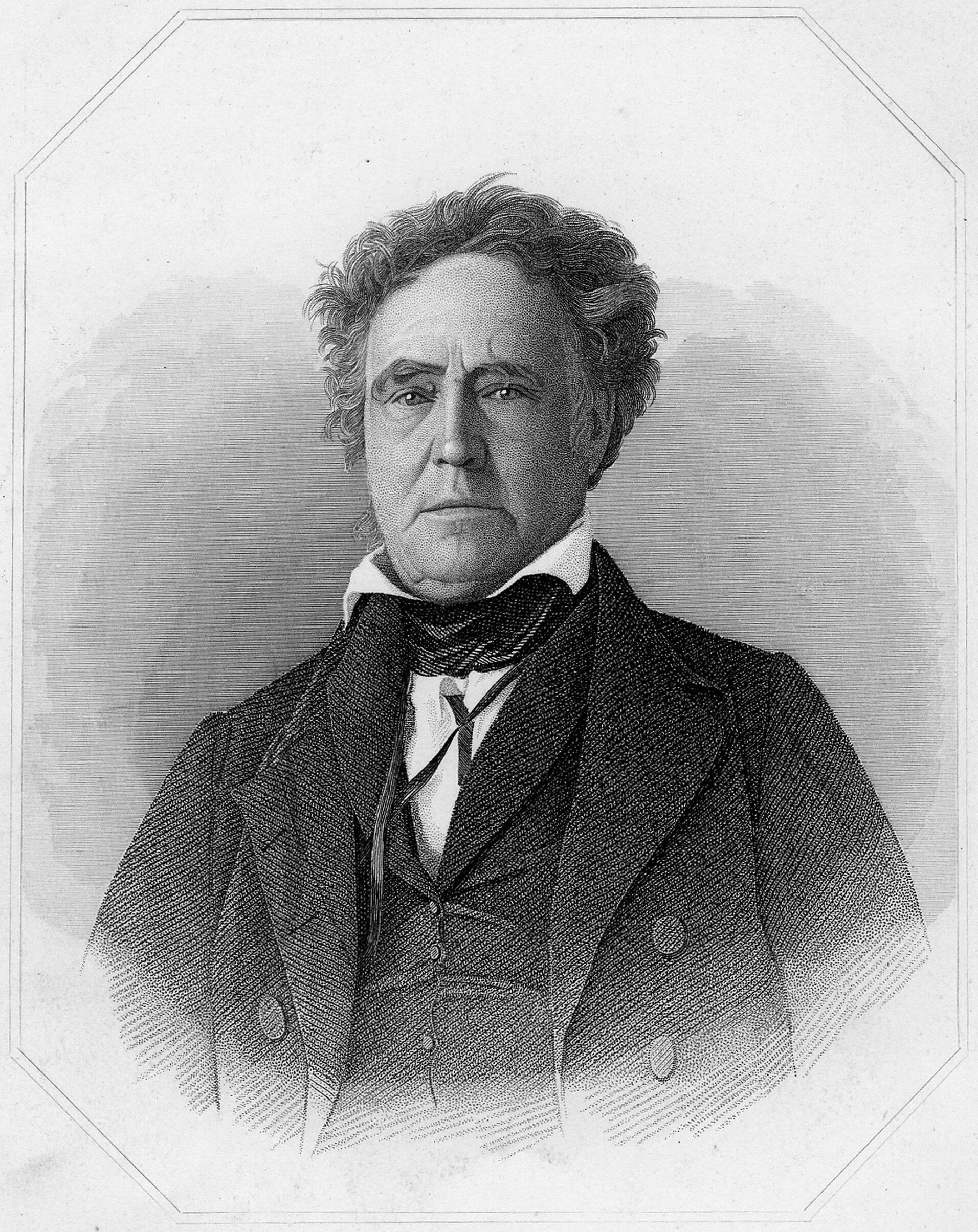
The motion is tabled for later review.
Don't worry. Senator Johnson will be back next year, with a better presentation, more disciples, an organized public letter-writing campaign, and twenty-five senators now willing to vote “yes”. “Let's find this hole.”
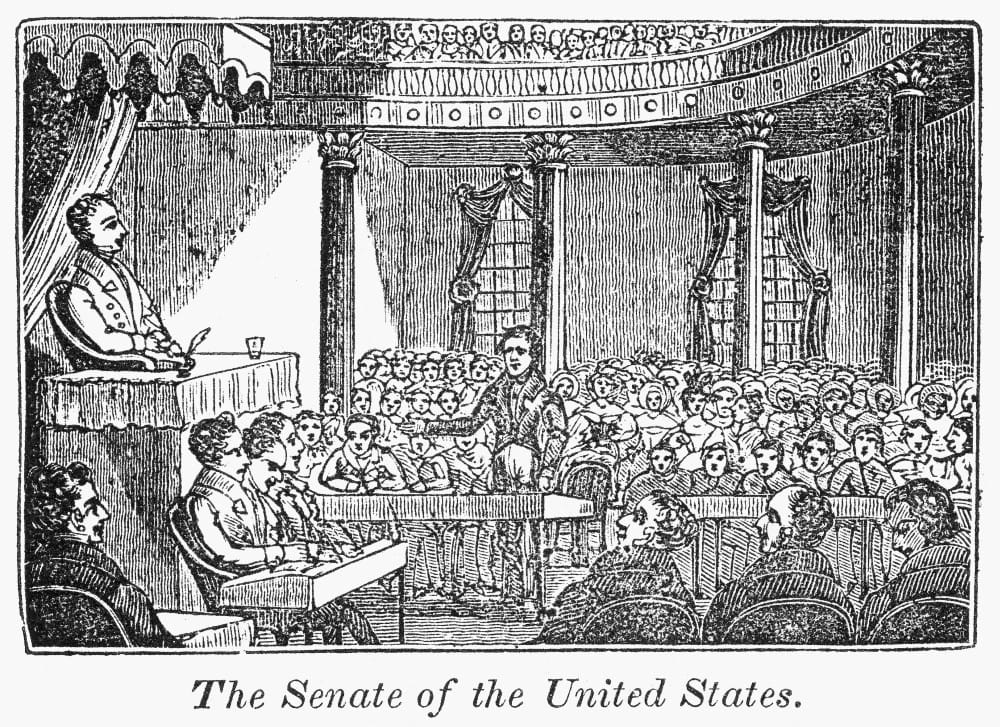
This is the cleanest single sequence in early American government of a distortion field reaching the threshold of formal legislative consideration, and it is also possibly the most embarrassing single thing the United States Senate has ever almost done.
I know what I just said.
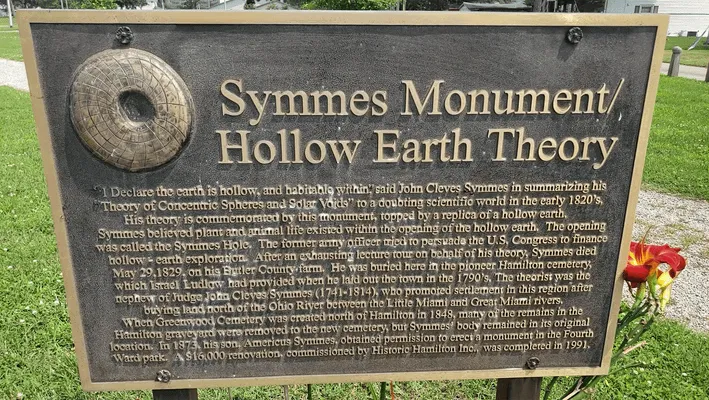
We have a lot of ground to cover here. Symmes is actually not even close to the most interesting locus in this field, and this field is going to produce, in the end, an actual expedition that maps a real continent, a foundational work of American literature, the framework for the Smithsonian's natural-history collection, and, not a bit, the dying words of Edgar Allan Poe.
This all came out of Symmes's Hole.
But to understand the actual field, we must first endeavor to understand each locus that comprises it.
Hole Theory.
Before we look at the man who insisted on this Hole, we should look at what that man was actually proposing in 1818, because if we soften this part at all it becomes harder to feel the full weight of what he got twenty-five senators on the record agreeing to do.
This proposition was as follows:
The Earth is hollow.
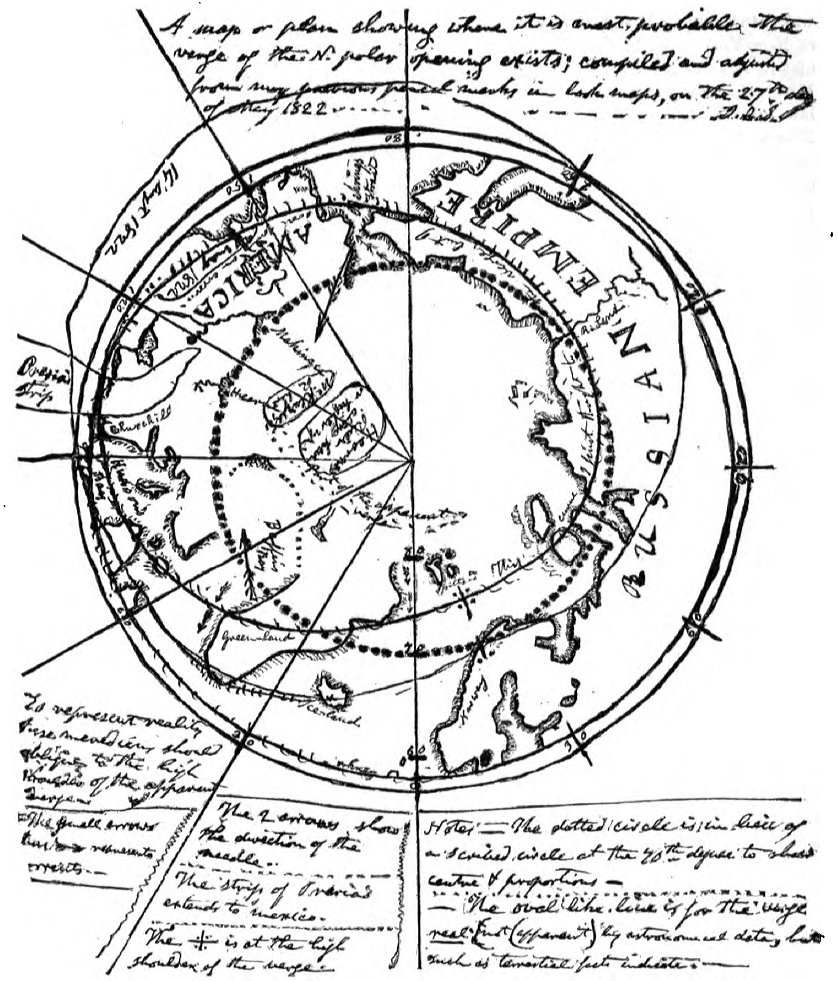
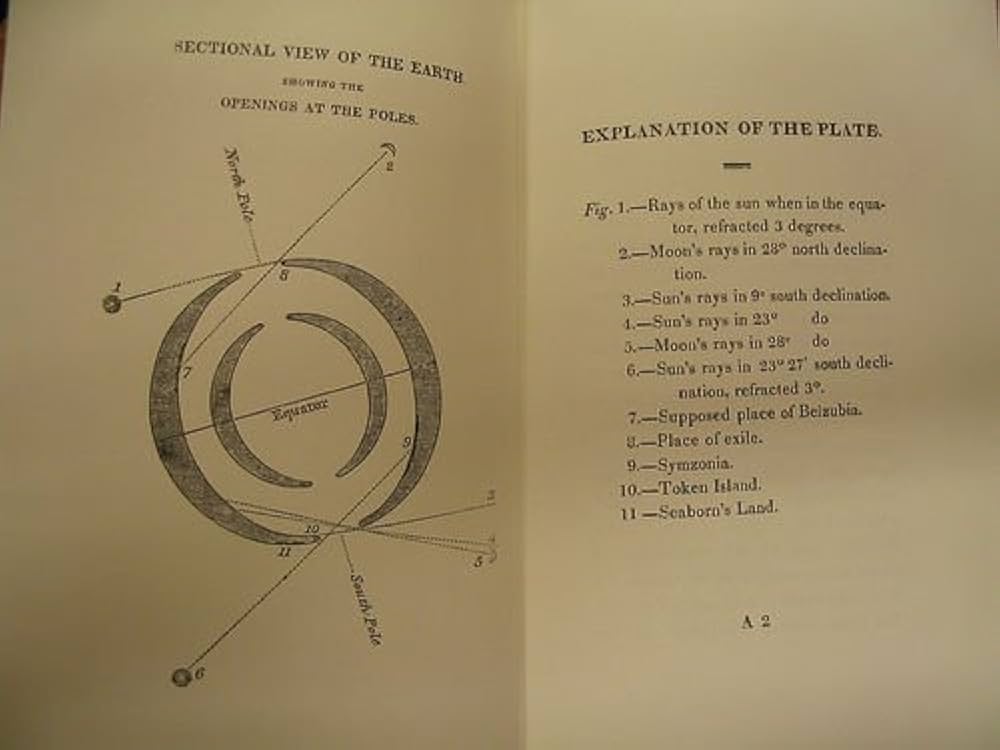
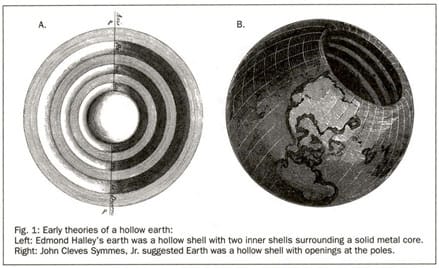
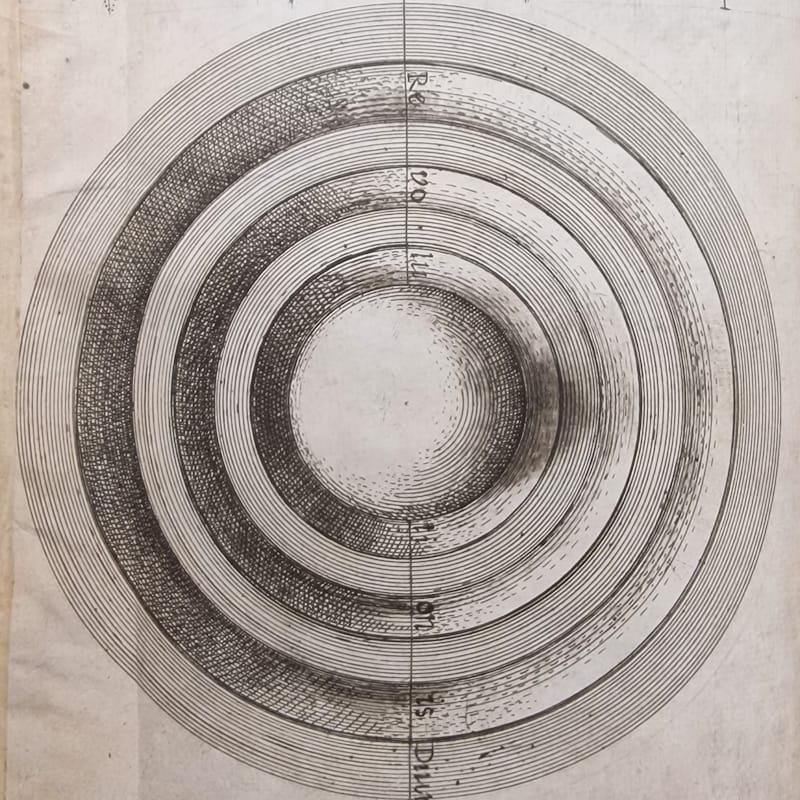
Inside the visible outer shell, which has approximately the thickness John Cleves Symmes Jr. seemed to just know intuitively it has despite having never measured anything at all, are arrayed at least five concentric inner spheres, also hollow, also habitable, nested inside each other like Russian dolls if Russian dolls were planets. Sometimes, there are six, or seven. John kept changing his mind here.
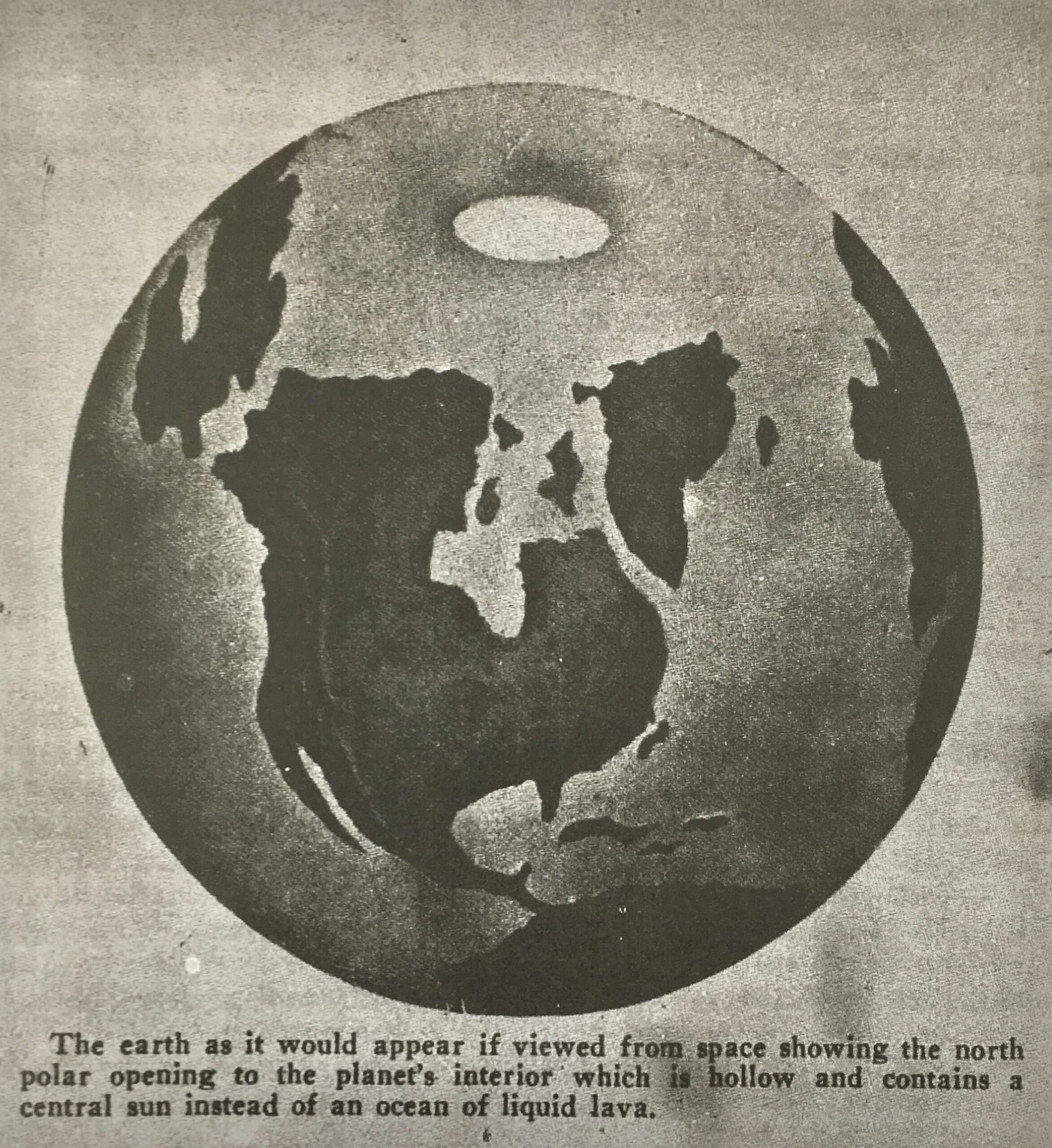
At the top of the outer shell, and at the bottom, are these vast circular apertures. Symmes called them the “polar openings”. The mouth of the northern opening is centered roughly over the geographic North Pole and extends downward for around two thousand miles in either direction, producing a hole approximately four thousand miles across.
Sunlight enters through this aperture and illuminates the inner sphere directly beneath it. Inside the inner sphere there is also a smaller sun, hidden within the Earth, because Symmes had thought about this pretty hard and felt the lighting wasn't quite right with only one.
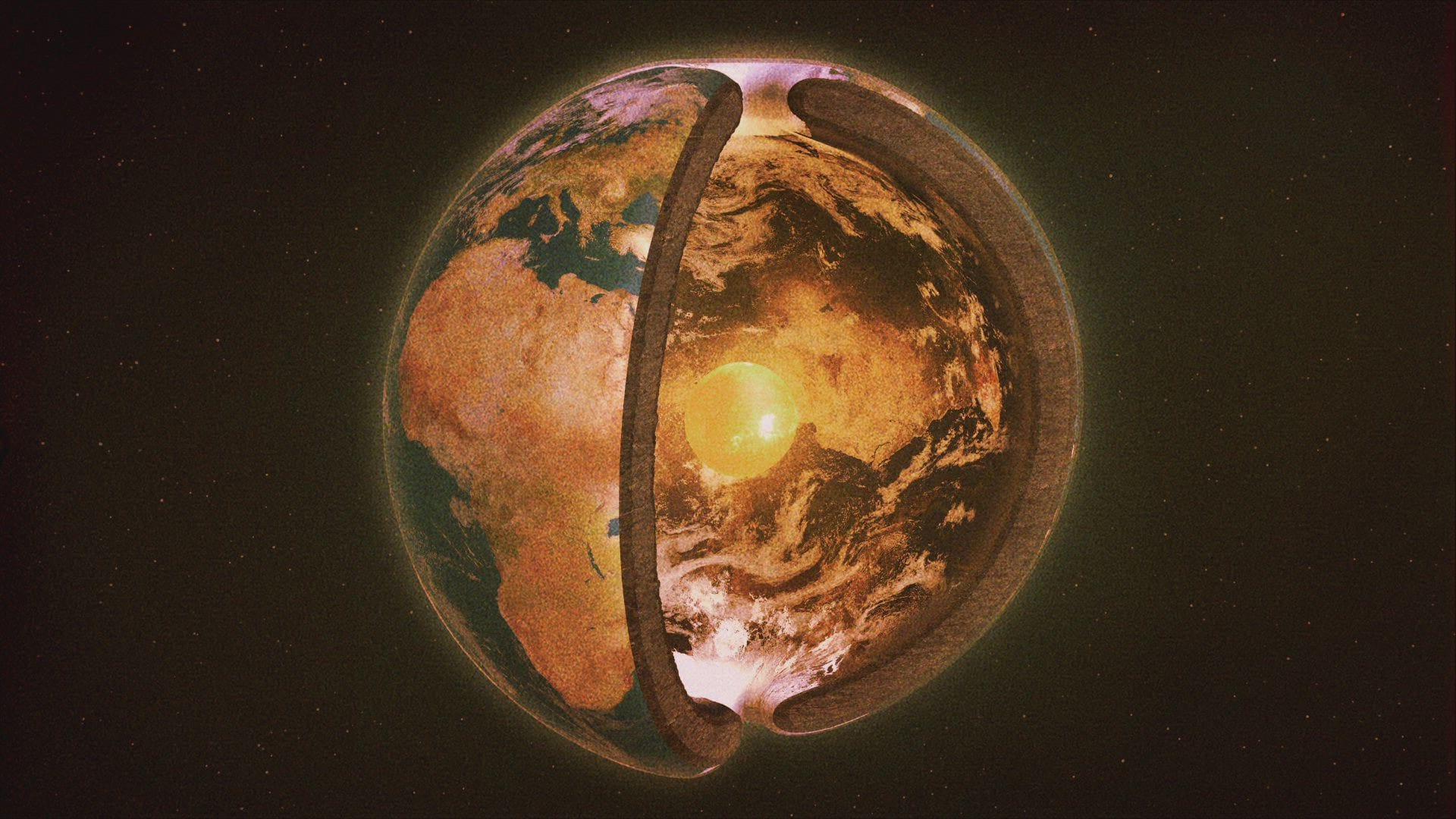
The inhabited interior of our Hollow Earth is also reachable by ship, in 1820. You don't need to do anything special to enter this hole. You don't need to dig, or descend, or pressurize anything. You just sail right in.
All you need to do is sail straight north, across an Arctic Ocean that is, according to Symmes, actually only narrowly bordered by a "belt of ice" before opening into more warm, navigable water at the rim of the hole, and then you keep sailing.
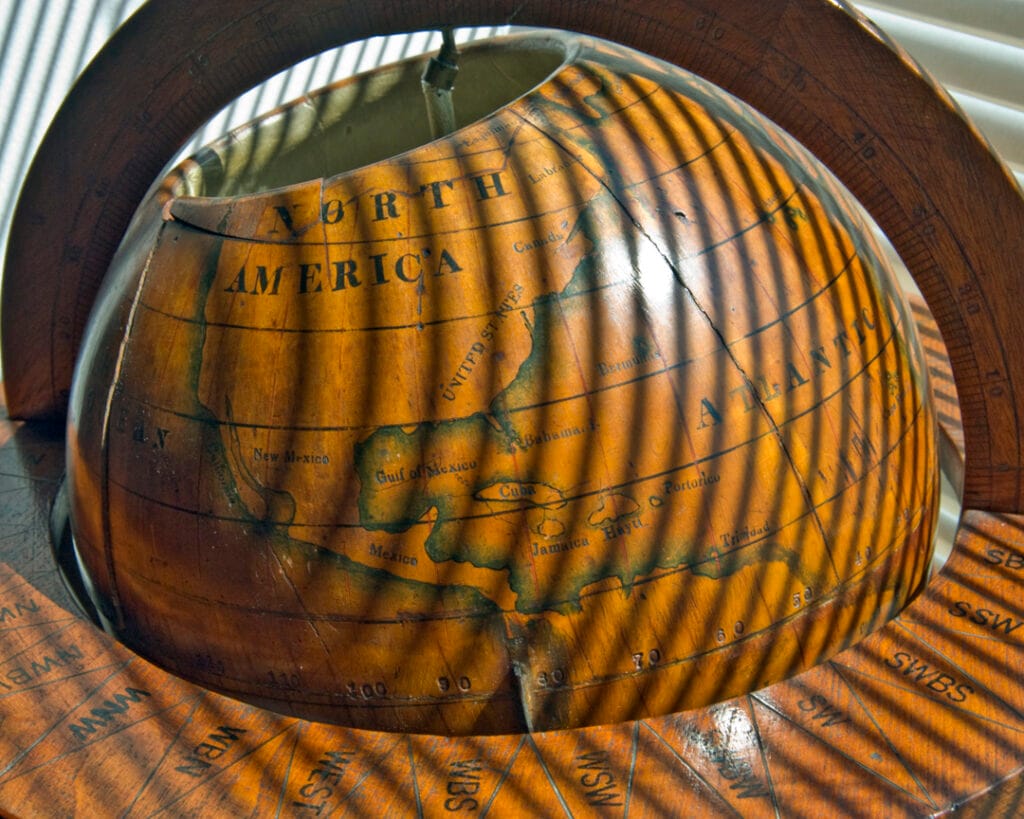
The curvature of the rim is gradual enough that any reasonable ship can easily negotiate it without realizing it is sailing into the planet.
The inner world beyond is warm and rich. Symmes promised "warm and rich land, stocked with thrifty vegetables and animals if not men."
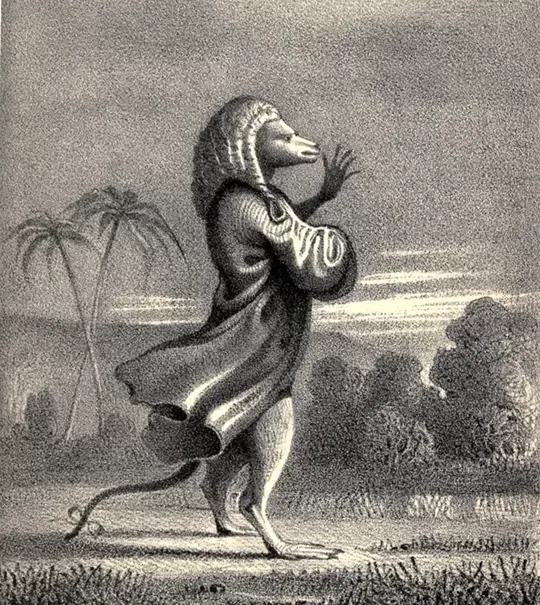
Thrifty vegetables is the actual phrase he used. It appears in his founding manifesto. Set aside what it means for vegetables to be thrifty. I do not know that either. Just absorb that this is the phrasing of the man whose petition reached the United States Senate, used to describe the alien crops he intended to discover inside our planet.
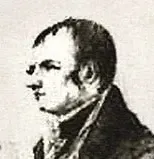
The secret inner world is, on Symmes's account, very probably inhabited. Symmes was careful with his wording here. He did not insist on the existence of inner-Earth people in the founding circular, because John was a careful experimentalist who didn't want to overcommit on what he hadn't actually observed yet.
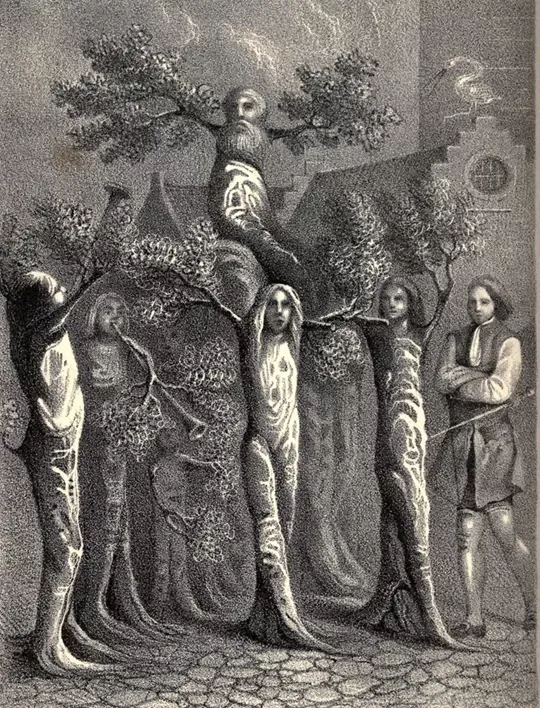
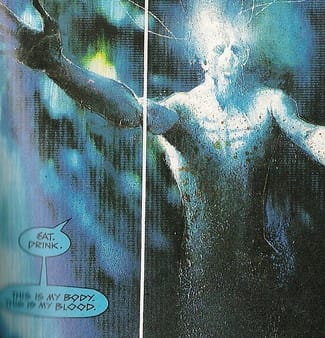
He committed only to the certainty of thrifty vegetables and animals. The people, he hedged. The novel “a friend” or possibly he himself published two years later luckily filled that hedge in with a utopian Christian republic called Symzonia, peopled by a wise and gentle race who had been waiting patiently for the surface humans to figure this all out.
The Symzonians want us to understand that there are five inner spheres total, according to the founding theory, though the count drifted in later restatements to as many as seven, as more imaginations came to light. None of the inner spheres have ever been visited, surveyed, photographed, or contacted. All of them are presumed habitable, on the basis of analogical reasoning from Saturn's rings.
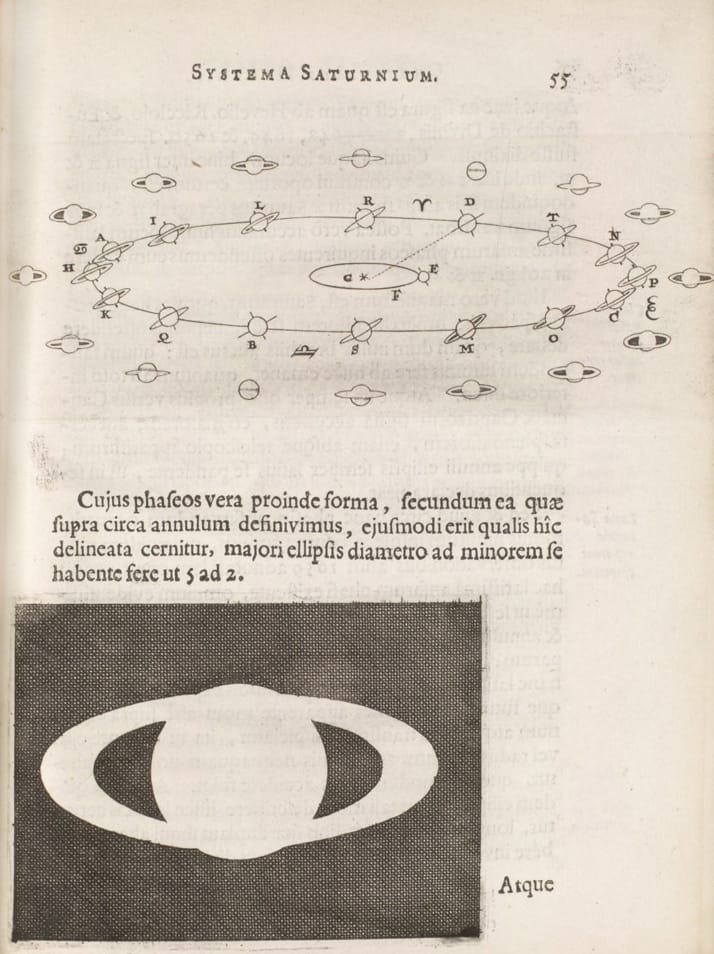
Yeah. We will get back to Saturn's rings, too.
This is what was proposed to the United States Government. This is what twenty-five senators voted to fund an expedition to investigate.
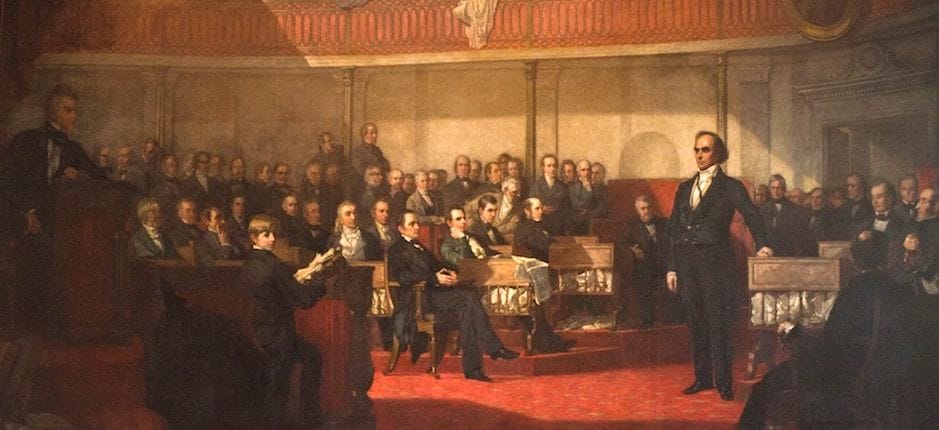
The Distortion of John Cleves Symmes Jr.
To understand how this revelation got within twenty-five votes of American funding strategy, you must first understand the specific structural failure inside one man's relationship to his own institutional credibility, because this entire field is downstream of John. This Hole field never had any other independent reason to exist.
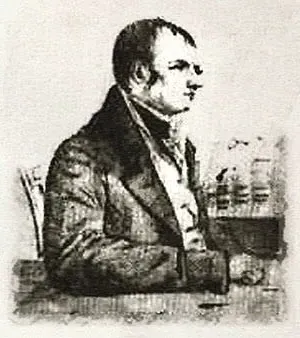
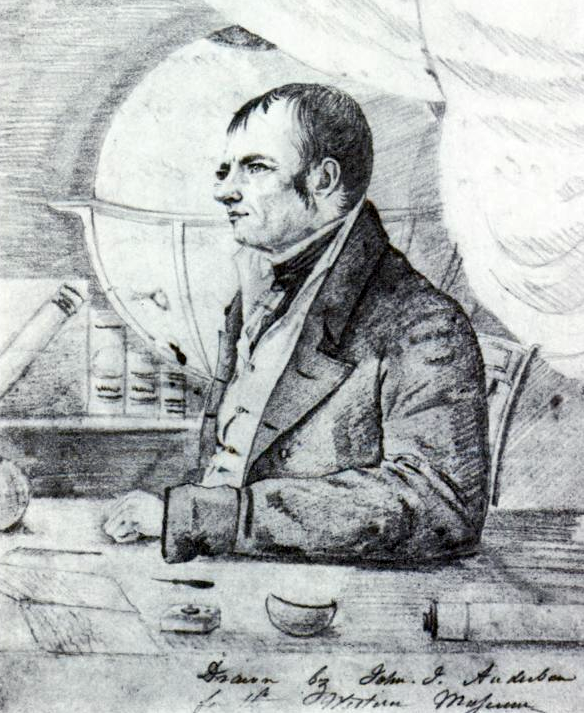
John Cleves Symmes Jr. was born on November 5, 1779, in Sussex County, New Jersey. Represent, I guess. The middle name was inherited from a famous uncle, and would do almost all of the heavy lifting in his nephew's later life.
The famous uncle, also John Cleves Symmes (let's call him “Unc Cleves” so this doesn't become another William), was a Continental Congress delegate from New Jersey, the Chief Justice of New Jersey, a federal judge of the Northwest Territory, the recipient of a one-million-acre federal land grant between the Ohio River and the Miami, the founder of Cincinnati, and the father-in-law of future President William Henry Harrison.
Just generally one of the Garden State's finest. Unc Cleves was a major American historical figure who you have, actually, heard of even if you don't think you have. His name was on many roads, towns, and counties, including in the Northwest Territory where his nephew would later spend much of his life. This was an enormously useful name to be born with an exact clone of at the time.
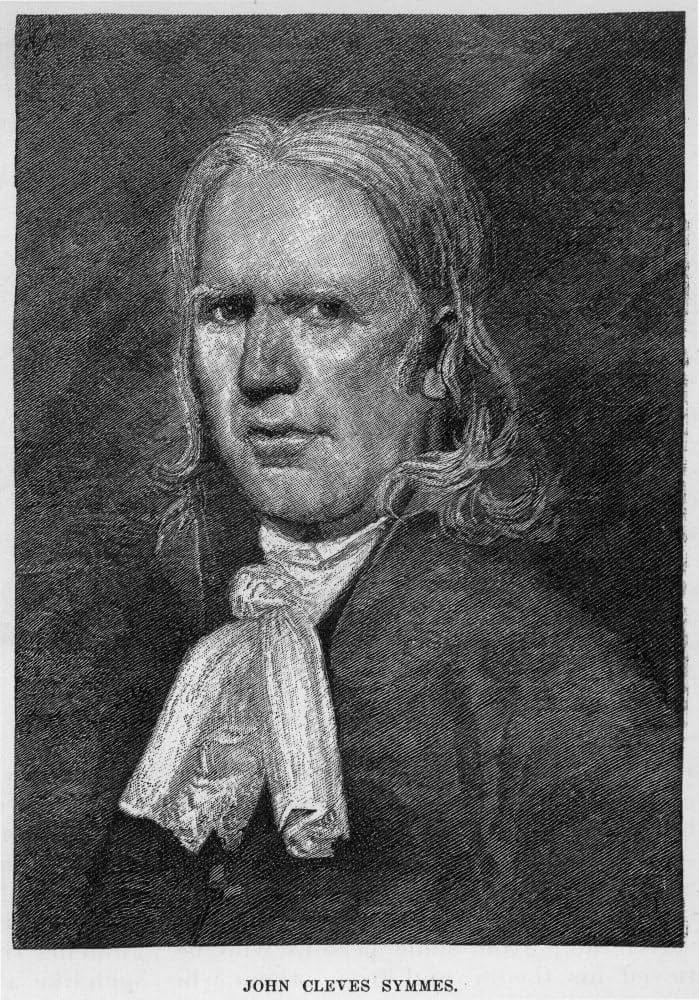
Our little explorer, Symmes (the nephew Symmes), received what the records call a "common school" education. The biographical sources note politely that little is known about his formal schooling beyond this, which is a delicate way of saying he doesn't appear to have gone to college, ever. He read books on his own. He developed an interest in science and mathematics. He never received any kind of credential in any of it.
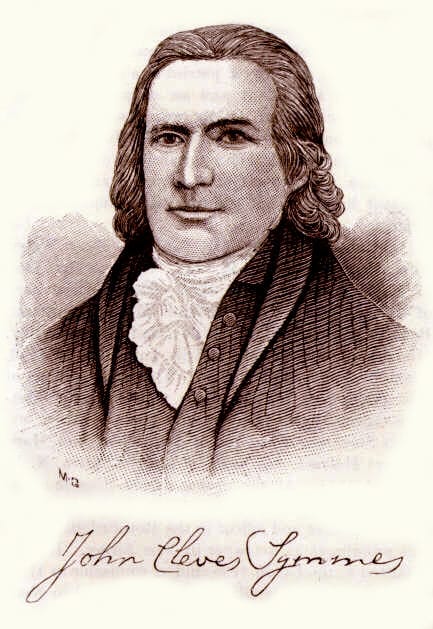
But through the power of Unc Cleves, who was still alive and powerful until 1814 and could just kinda place his nephew into stuff if he wanted to, our Symmes was commissioned as an ensign in the 1st U.S. Infantry on March 26, 1802. He was twenty-two years old at the time. He had no military training whatsoever, but he did have the right last name.
He was stationed at Fort Adams near Natchez, then in New Orleans, then at posts all around the South. By all accounts, our Symmes was a reliable officer. One time, while at Fort Adams, he fought a duel with a brother officer named Lieutenant Marshall, who had said something somewhat unflattering about Symmes's financial integrity. Clearly, both men were now deeply wounded, and must be shot. This needed dramatic resolution. Marshall took a ball to the thigh. Symmes took one to the left wrist and never fully recovered the use of that joint.
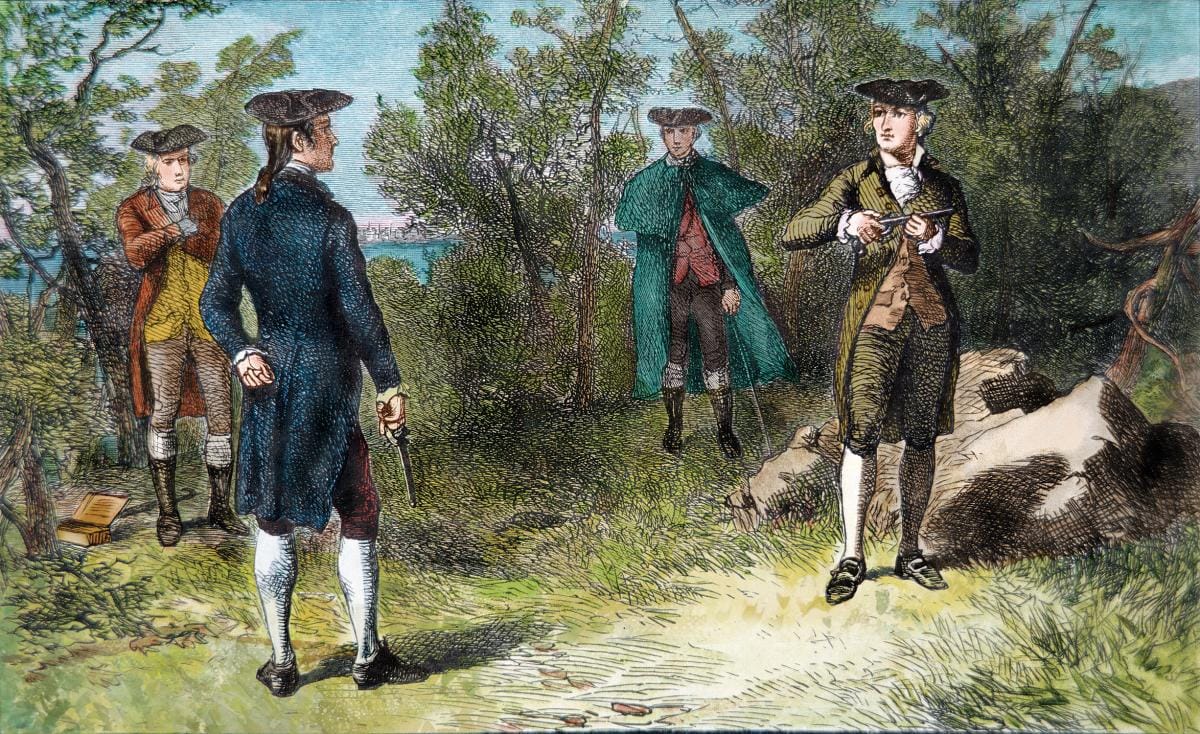
This is all foreshadowing for a man who would spend the second half of his life unable to let things go, by the way.
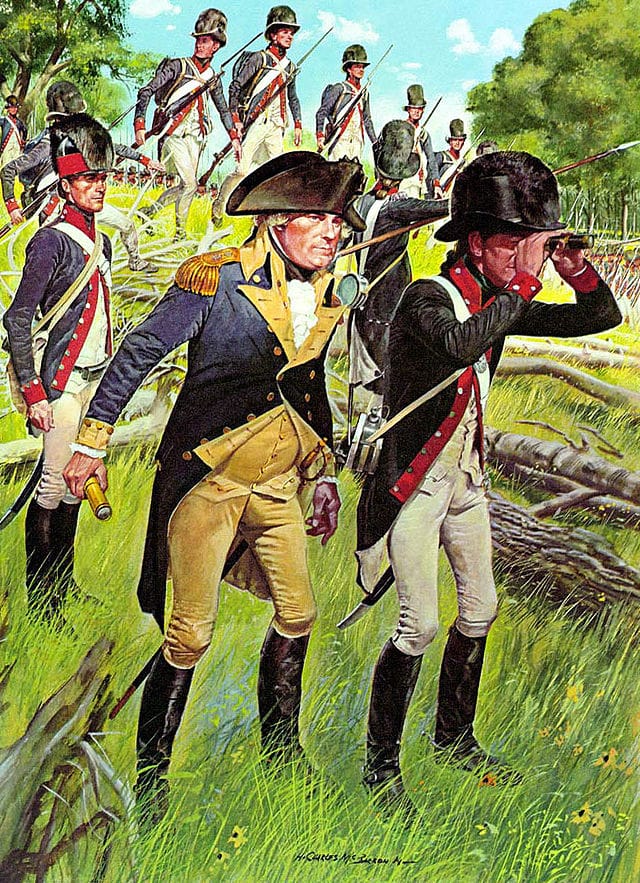
Symmes was promoted to captain in January 1813, just in time for the War of 1812. He served at the Battle of Niagara and at the sortie from Fort Erie, where the regulars of his command performed well and Symmes himself reportedly displayed conspicuous courage. Been looking for a chance to use that word. By every contemporary metric and from every angle I can find, Symmes was a respected combat officer of the United States Army.
In 1816 he retired from active service, moved his wife (Mary Anne, a widow with six children he had married in 1808, and with whom he had then proceeded to have five more biological children of their own, because this is a man who needed to raise eleven humans) and his blended family to St. Louis, and tried his hand as a frontier trader.
This is where it all started to go to shit for Symmes. He was bad at trading.
He read a lot in his spare time, though. He read a lot of natural philosophy. The frontier libraries of 1816 St. Louis were not extensive, but the Royal Society had been publishing for over a century, and what filtered out to the Missouri Territory was good enough to give a curious autodidact a sense of the state of the art. Symmes also read about magnetism. He read all about planetary structure. He read Halley.
We'll come back to Halley as well.
What needs to be marked out here is the structural shape of the field Symmes was about to enter. He had a good name (Unc), a good commission (captain), a good war record (Fort Erie), and absolutely zero training in any of the many disciplines that would have been relevant to evaluating his own ideas. He had no formal qualification in geology, astronomy, geography, surveying, navigation, cartography, or natural philosophy of any kind. He had read some books.
In Modal Path Ethics terms, this is the same configuration Paterson presented at Darien, in slightly weaker form. Symmes had accumulated very genuine credibility in one domain (military service) and was about to deploy it as authorizing credibility in an unrelated domain (discovering the internal structure of the planet) without first acquiring any of the competencies specific to this new domain. The framework calls this prestige transfer, and Symmes is one of its cleaner cases, because the gap between the two domains is so absolutely decisive that the transfer is more visible than it usually is. Paterson at least had some adjacent expertise; he was a financier who had spent time in the West Indies. Symmes had been to Fort Erie.
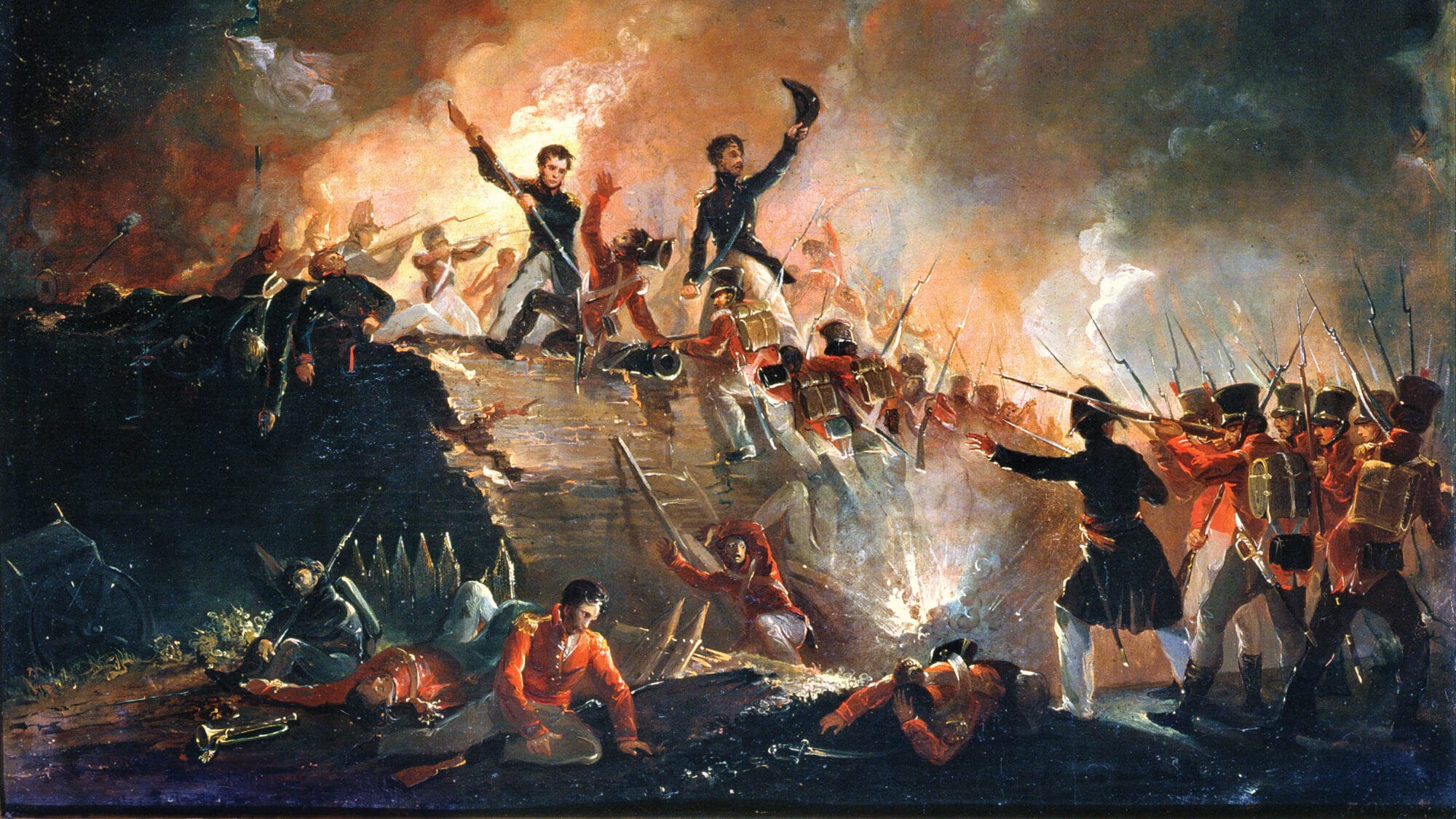
His name was doing the work his argument just couldn't. When Senator Johnson rose in 1822 to present the petition, the carrying weight on the floor of the Senate was not the merits of this hollow-Earth hypothesis. It was the fact that the petitioner was a captain of the U.S. Army with the same exact name as the founder of Cincinnati. The petition entered the Senate's procedural workflow on the strength of the credential, not the content.
Symmes did not notice this. He believed his argument was carrying him on its merits. The framework calls this closed-loop distortion: an agent inside a field whose self-model excludes the structural mechanism by which their ideas are actually traveling. Symmes thought he was being heard for what he was saying. He was being heard for who he was, and what he was saying was beside the point.
He could not perceive this from inside the field, because the field was producing exactly the response his self-model predicted it should.
Citation Chains.
To understand why a man with zero scientific training believed he had figured out the structure of our planet, you must understand the source he was reading.
The source was unfortunately not a pirate this time. Symmes's source was the most respected scientific institution in the English-speaking world.
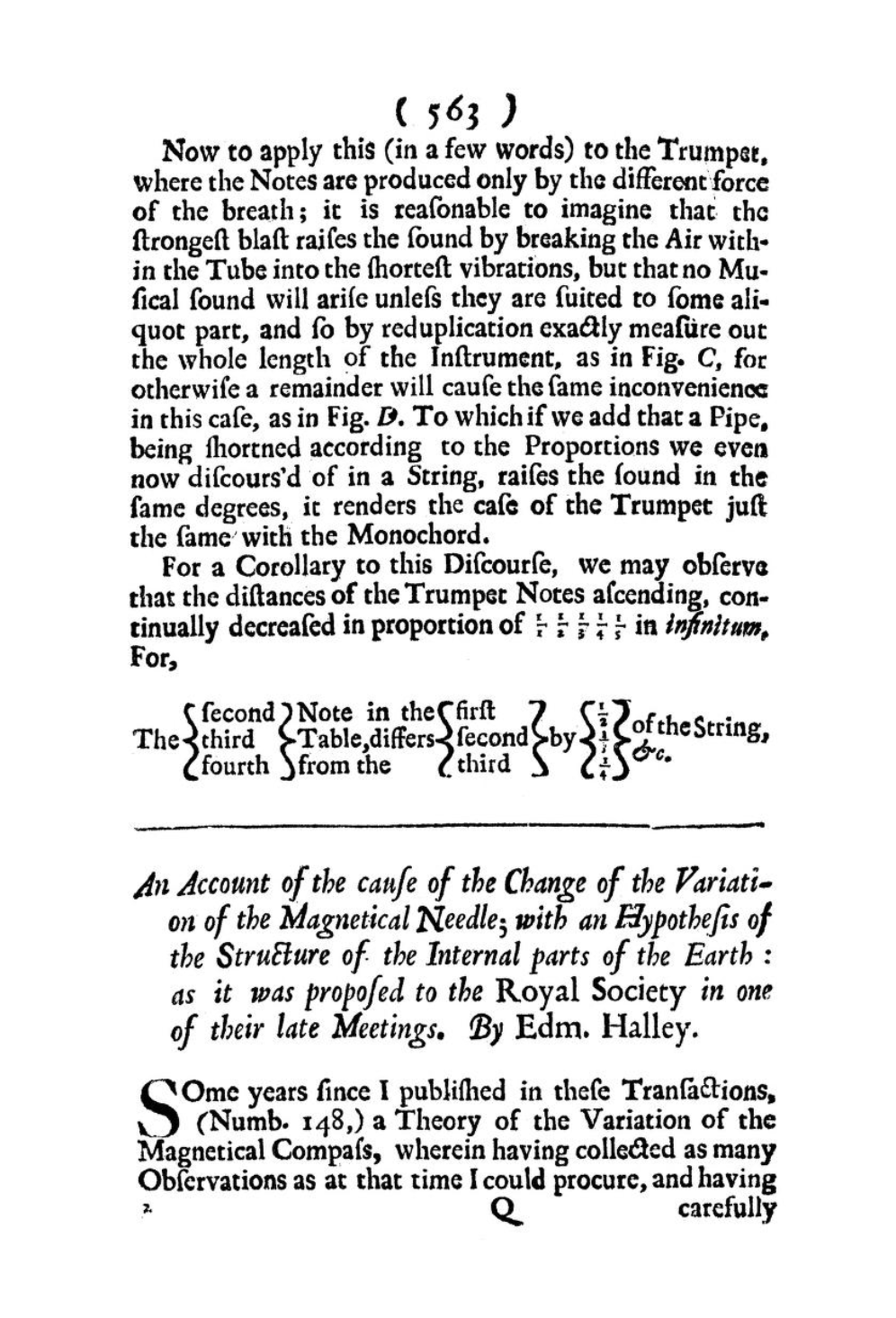
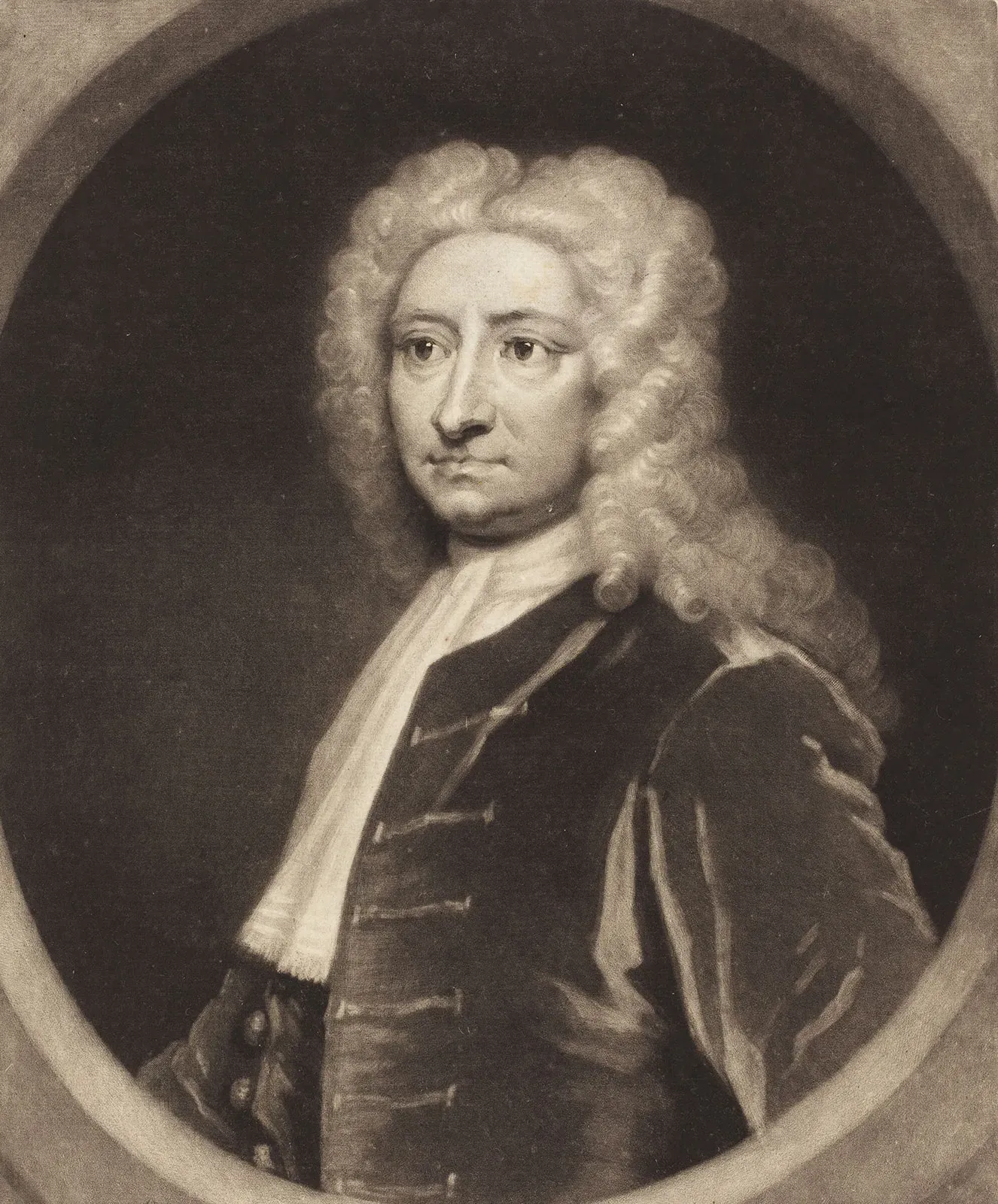
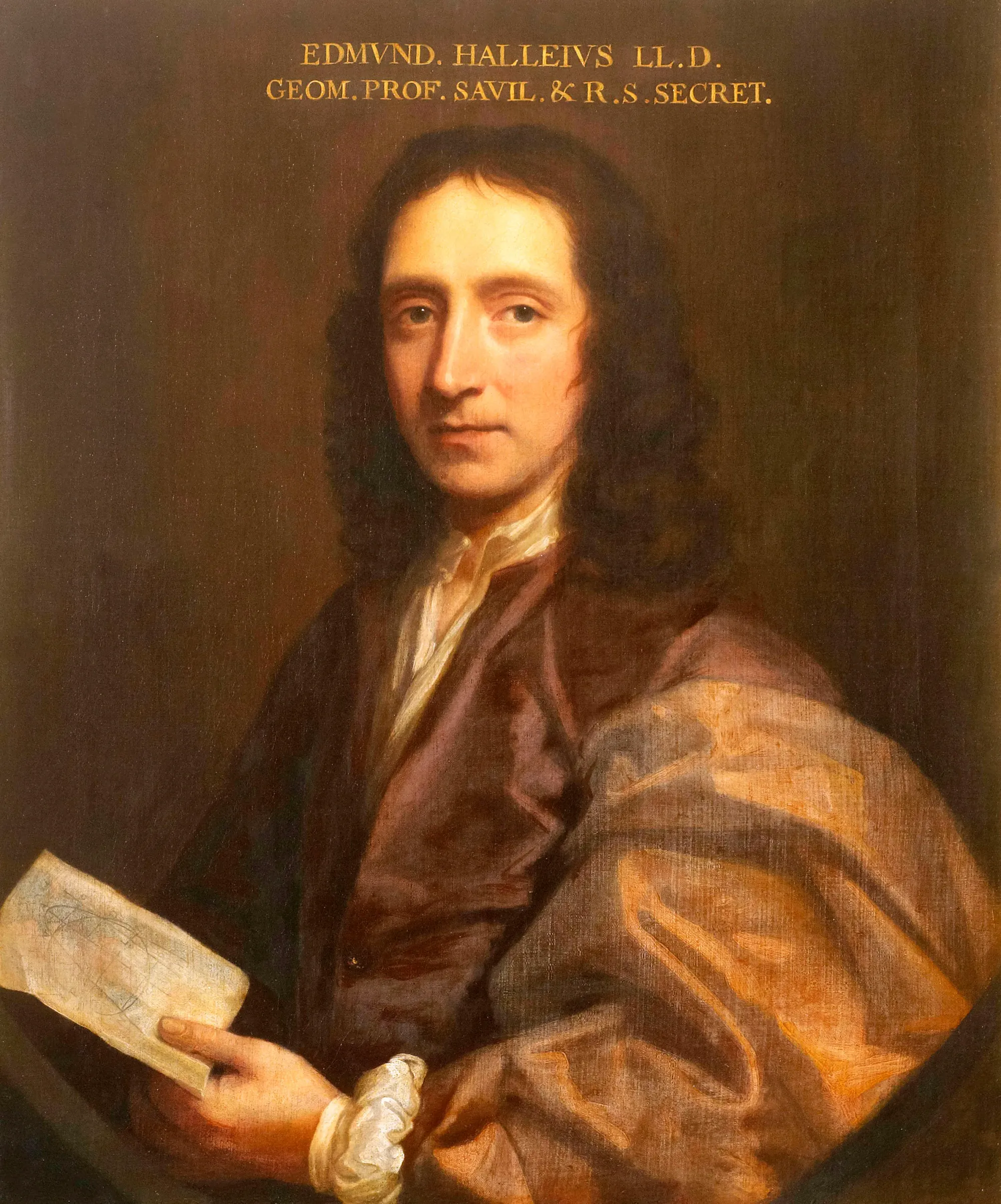
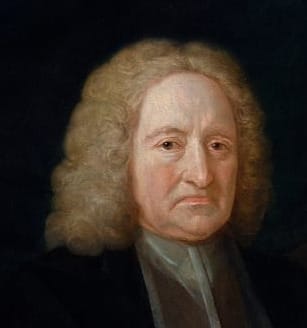
In 1691, Edmond Halley submitted a paper to the Royal Society of London titled "An Account of the Cause of the Change of the Variation of the Magnetic Needle, with an Hypothesis of the Structure of the Internal Parts of the Earth."
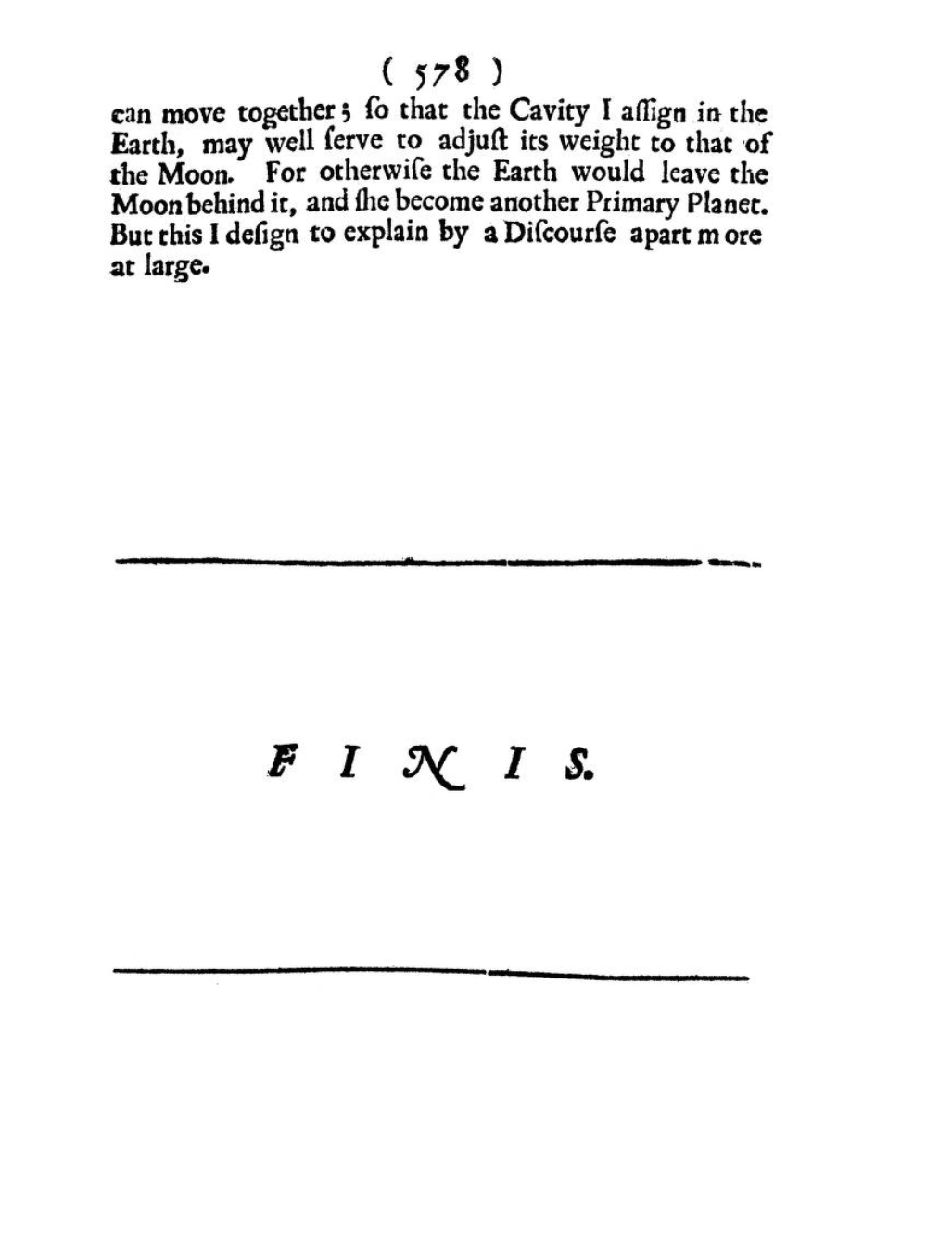
This was written before Darien, so still before naming shit was invented.
You know Halley, right? He's that comet guy.
That one. The famous one. No, not Bopp.
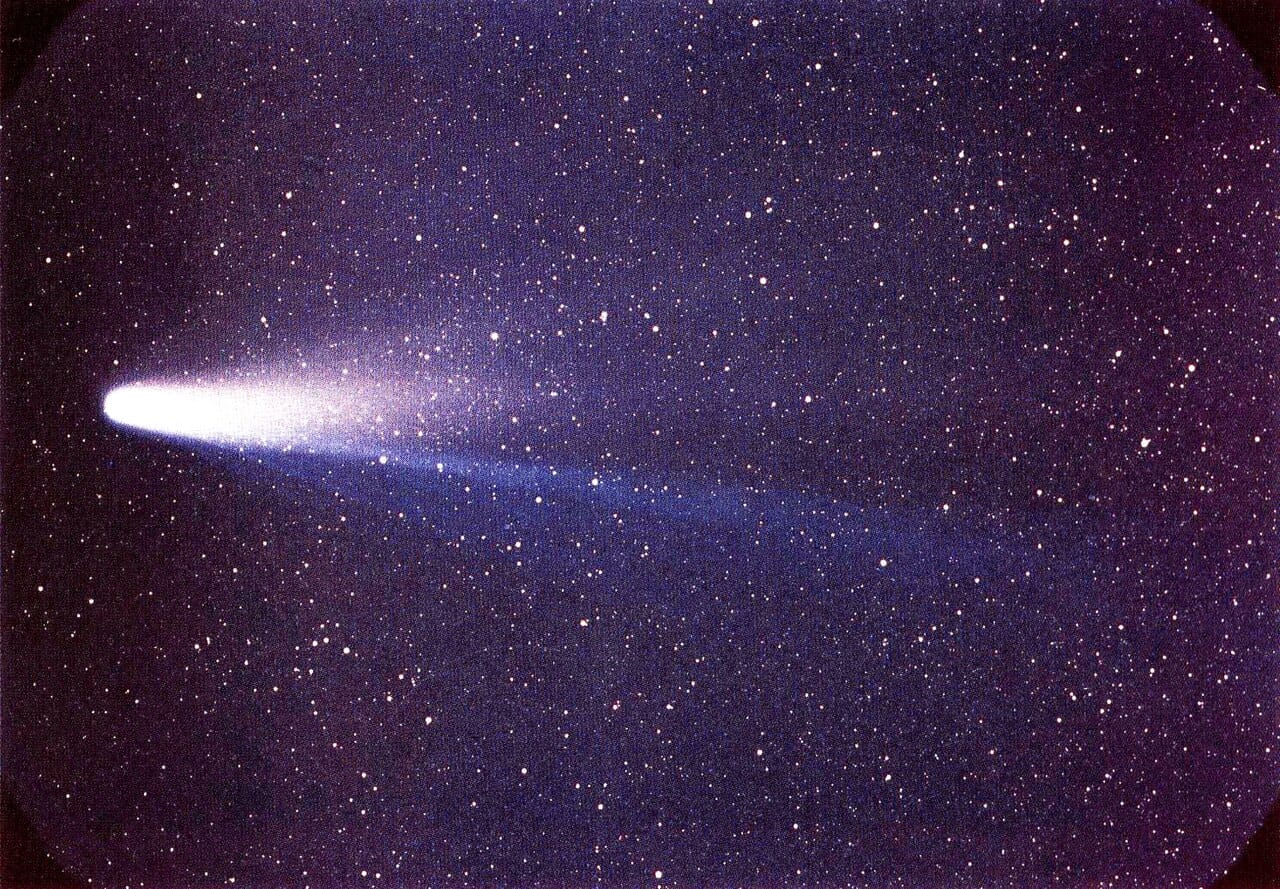
You know it. Halley's also Astronomer Royal, the Savilian Professor of Geometry at Oxford, the author of the first definitive catalog of southern-hemisphere stars, and the man who calculated the orbits of Mercury and Venus across the sun. Halley is the person who, as a personal favor and at his own out-of-pocket expense, paid for the printing of Newton's Principia when the Royal Society's funds ran out, which means that without Edmond Halley we do not get classical mechanics.
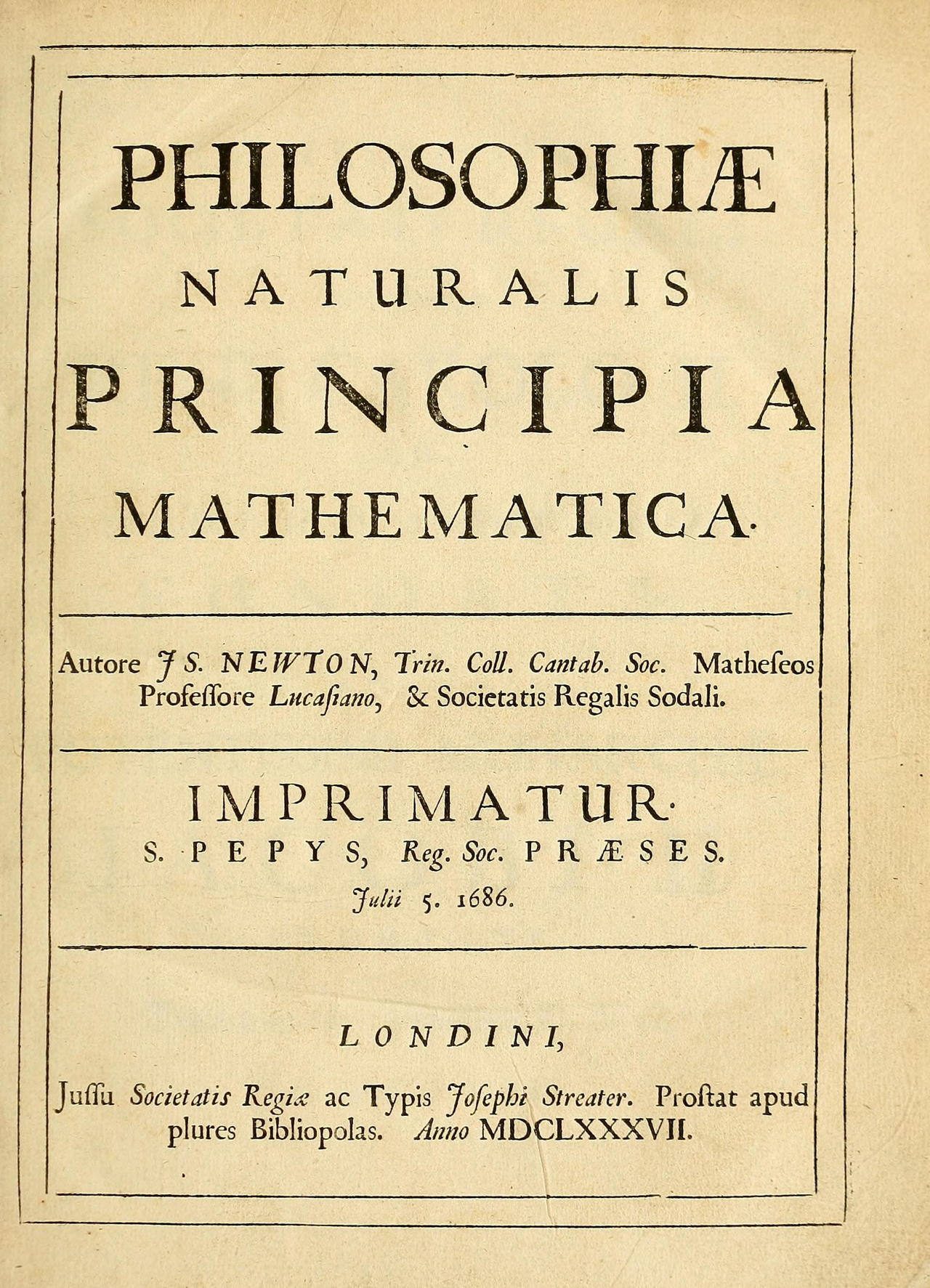
So Halley is essentially, alongside Newton, the man who got us into science for real. He was at this point one of maybe a dozen humans alive who you could plausibly call the most credentialed scientist in the world.
Halley's 1691 paper was, by the careful standards of his other work, basically a fucking doodle.
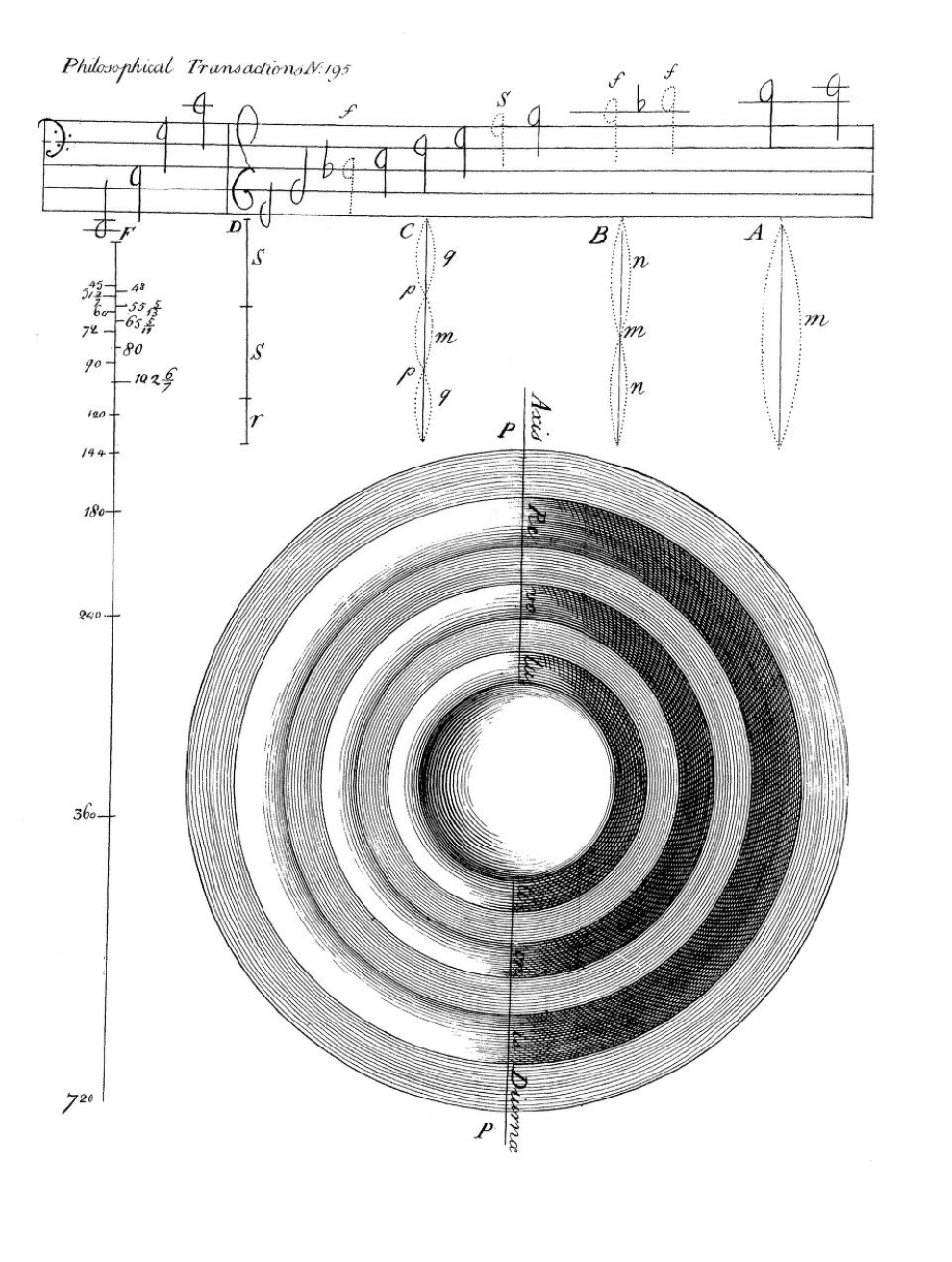
The paper was an attempt to explain why it is that ship compasses didn't always point true north. Magnetic variation had been observed for over a century, was navigationally important, and was theoretically unexplained. Halley took a little swing at it. Why not? He was already inventing science anyway.
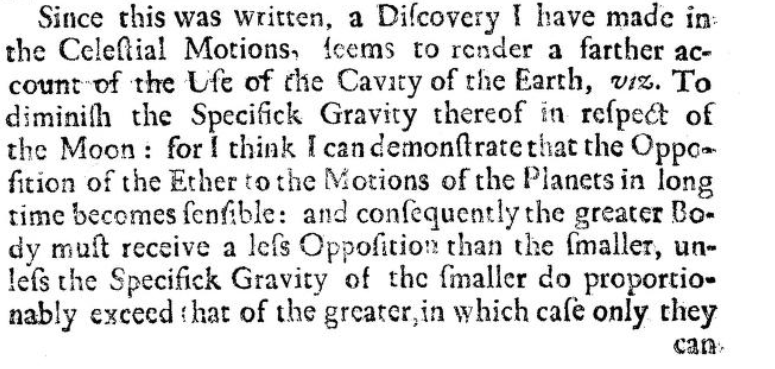
His hypothesis was that the Earth might contain, maybe, just maybe, as one explanation he could think of off the top of his dome, beneath its outer shell, a series of nested concentric inner spheres rotating at slightly different rates than the outer shell. The differential rotation would, he reasoned, produce magnetic poles that drifted over time relative to the geographic ones, which would explain the observed variation.
He presented this as one working hypothesis. He laid out the objections he expected. He listed them himself, in the paper, like a sane person does. Number one: there's no other example of this ever in nature. Number two: the inner sphere would presumably not stay centered and might collide with the outer shell, "to the ruine or at least endammaging thereof." Agreed.
Number three: the seas would drain right through that bullshit. Number four: Halley would like to know what the fuck would even be the use of an inner sphere shut up in eternal darkness, unfit for the production of plants or animals?

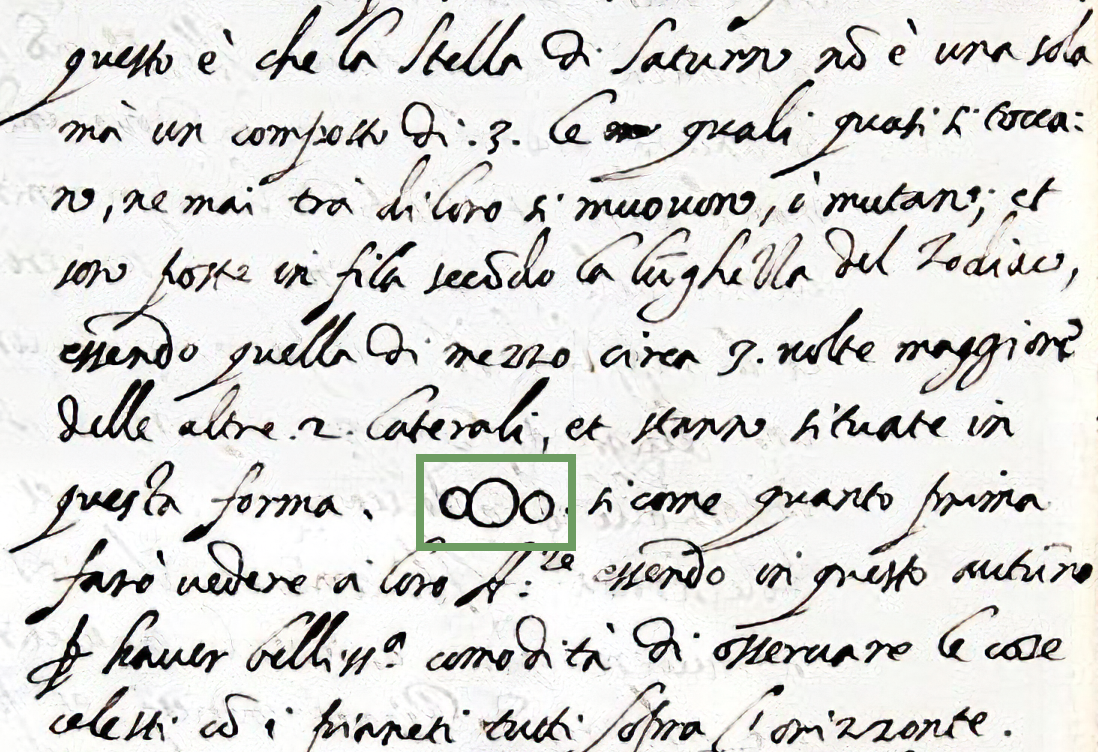
He answered the first objection by pointing to Saturn's rings as a "notable Instance" of nested structure in nature, which is one hell of a stretch because Saturn's rings are visibly external, but fuck it, I can roll with it.
He answered the second objection by waving his hands towards gravitational equilibrium and going “euuuuungh”. He answered the third by speculating that the inside might be filled with some different kind of mysterious substance that we don't know what it is. He answered the fourth by speculating that the inner sphere might have its own internal light source.
An internal light source. Halley invented it on the fly in 1691 to address an obvious objection to his magnetic-variation hypothesis. This was a hand-wave because he was done thinking about this shit. He had started out trying to figure out how a compass worked and was now describing a hollow planet interior with spinning spheres. It was time to move on.
In Symmes's hands, over a century later in 1818, this would become our second fucking sun, providing illumination for all the thrifty inner vegetables.

Halley was just freeballing. He said so. He published the paper, accepted the polite Royal Society reception, and went on with his fucking life. He produced no further work on hollow-Earth structure. He did not propose anyone should investigate it. He did not sail into the Arctic, never to return, after leaving behind a cryptic final message in the form of a song.
He calculated the orbit of his sick-ass comet, became Astronomer Royal, lived to be eighty-six, and died in 1742 having never once in his remaining fifty years told anyone at all to sail inside the goddamned planet.
The paper sat waiting in the Royal Society's archives, available to anyone curious enough to read it.
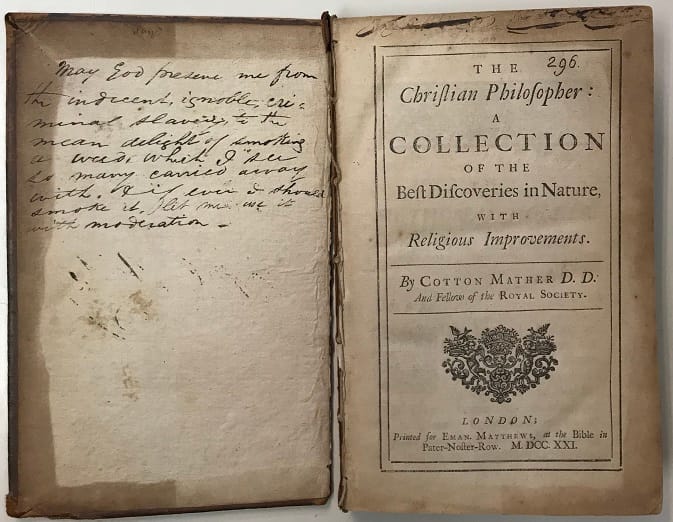
In 1721, the Reverend Cotton Mather of Boston, who was many things including another enthusiast of natural philosophy, with a sympathetic recapitulation of Halley's hypothesis in his enormously popular book The Christian Philosopher. Mather's gloss there treated the nested-spheres idea as one of several intriguing recent natural-philosophical proposals. He didn't endorse it at all. He included that hypothesis among the things educated colonial readers should probably know about. This book sold very widely. It was on the shelves of every literate household in New England for a generation.
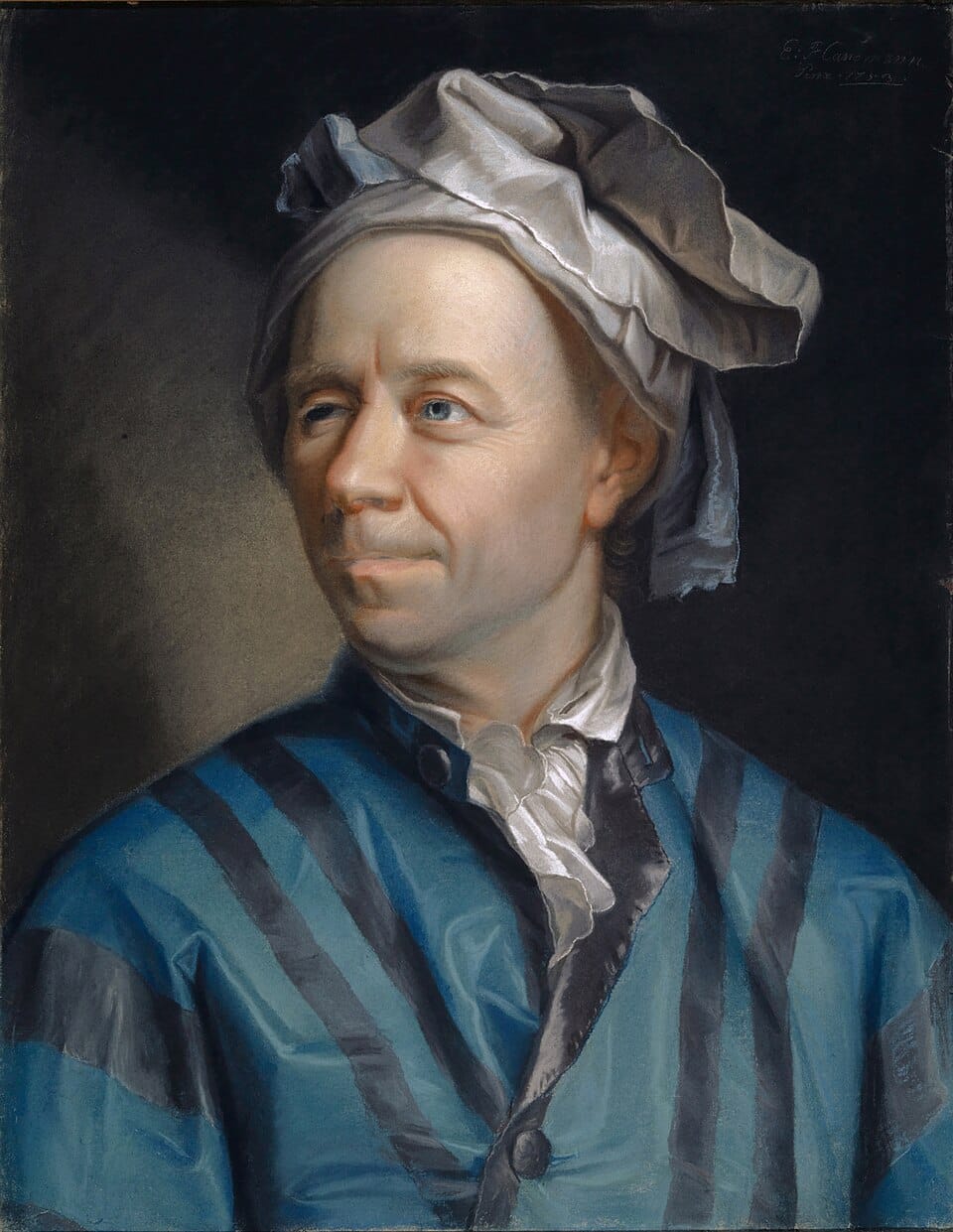
In the 1740s, Leonhard Euler, the most influential mathematician of the eighteenth century, was reported to have discussed a hollow-Earth model in some private correspondence. The historical record on this is thin and the citations get fuzzy, but later hollow-Earth promoters would treat the rumor of Euler's interest as essentially settled endorsement of thrifty veggies, which is how the citation chain in distortion fields actually plays.
By the time the chain reaches St. Louis in 1816, sitting on the desk of a retired captain reading natural philosophy in his spare time, Halley's speculative magnetic-variation hypothesis from 1691, with its hand-waved internal sun and its Saturn's-rings analogy, had been filed in the Royal Society's archives as a serious published proposal (it was one), recapitulated by Cotton Mather as one of the natural-philosophical ideas an educated person should be aware of (it had been so I suppose), rumored to be endorsed by Euler (it sort of had been, maybe, I guess, but there is no solid evidence at all?), and cited downstream by various, lesser writers building on this damned chain.
Each link in the chain treated the previous link as much more confirmed than it actually was. Mather treated Halley as scientifically established, which he was. Later writers treated Mather's including that as his second endorsement. Each step lost a little of the original speculative caveat, and gained a little institutional weight from the act of being repeated by someone with cool credentials.
By the time the chain hits Symmes, the proposition is no longer "Halley once speculated that nested rotating spheres might be one way you could explain magnetic variation." It is "the structure of the Earth has been established by Halley to be hollow, we must explore this frontier."
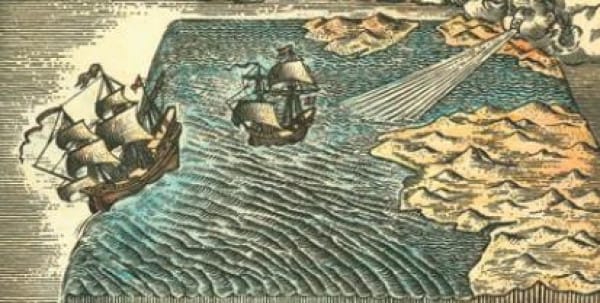
In Modal Path Ethics terms, this is prestige transfer through a citation chain. An ill-fated chain of citations, each performed in good faith by competent people at each link, can convert speculative hypothesis into apparent established fact without any single link in the chain ever telling a material lie. Halley did not lie. Mather did not lie. The downstream citers did not lie. Symmes did not lie either. He believed in the citation chain.
That chain produced a man who would pledge his life on hollow Earth in 1818, and who would believe he was pledging it on long-settled science.
The difference between Symmes's source for thrifty snacks and Paterson's source for Darien, is that Wafer was alive and could have been called in to correct Paterson, and then he was, and then they fired him.
Halley had been dead for seventy-six years when Symmes read him. Halley couldn't walk into the Missouri Territory and say "I was actually just speculating about magnetic variation, please don't sail into anything on my account," then get fired.
The corrective signal Wafer was able to issue, and which the Company of Scotland Trading to Africa and the Indies chose to ignore, wasn't even available to Symmes's field, because Halley was already buried and not known to be restless. The source was, by virtue of being closed, structurally unable to revise itself or intervene.
Long citation chains can quickly become more dangerous than short ones, because the original speculative caveats can be stripped out by repetition, and the original author isn't around anymore to put them back in. The dead can be quoted with more confidence than the living, because the dead can't argue.
Halley would have objected. He had built his career on being very careful about exactly this kind of bullshit. But Halley had been gone for seven decades, and the only person who could speak for him now was John Cleves Symmes Jr., late captain of the 1st U.S. Infantry, in a one-room printer's office in St. Louis, fixing to bring the original speculation a hell of a lot further than the original speculator ever had dreamed.
Circular No. 1.
Welcome to April 10, 1818. St. Louis, Missouri Territory. Symmes walks into a print shop with a manuscript and pays out, in his later claim, "considerable sums" to have five hundred copies of a one-page pamphlet typeset, printed, folded, and mailed around.
The pamphlet is addressed
"TO ALL THE WORLD."
The list of recipients includes, in John's hazy recollection, "one to each notable foreign government, reigning prince, legislature, city, college, and philosophical societies throughout the union, and to individual members of our National Legislature, as far as the copies would go."
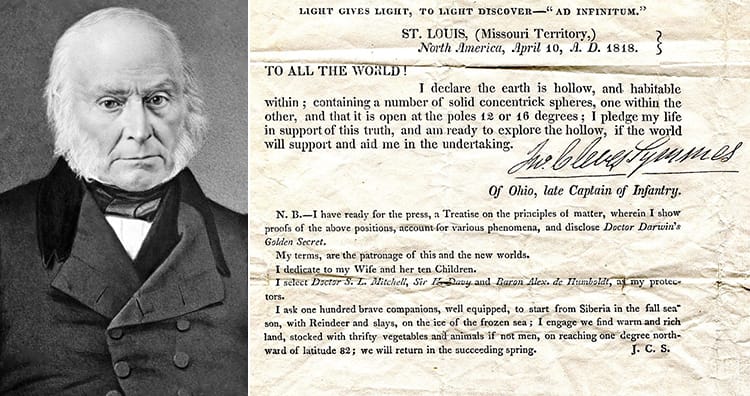
So that means he said he sent this shit to every single governor in Europe. The Royal Society. Cambridge. Oxford. The Sorbonne. Each single member of Congress. The College of William and Mary. The American Philosophical Society. The presidents of Yale, Harvard, Princeton, and Columbia. All the state legislatures. The Académie des Sciences in Paris. Each of these institutions received, by post, a folded one-page document signed by a retired American infantry captain that began with the following words, verbatim:
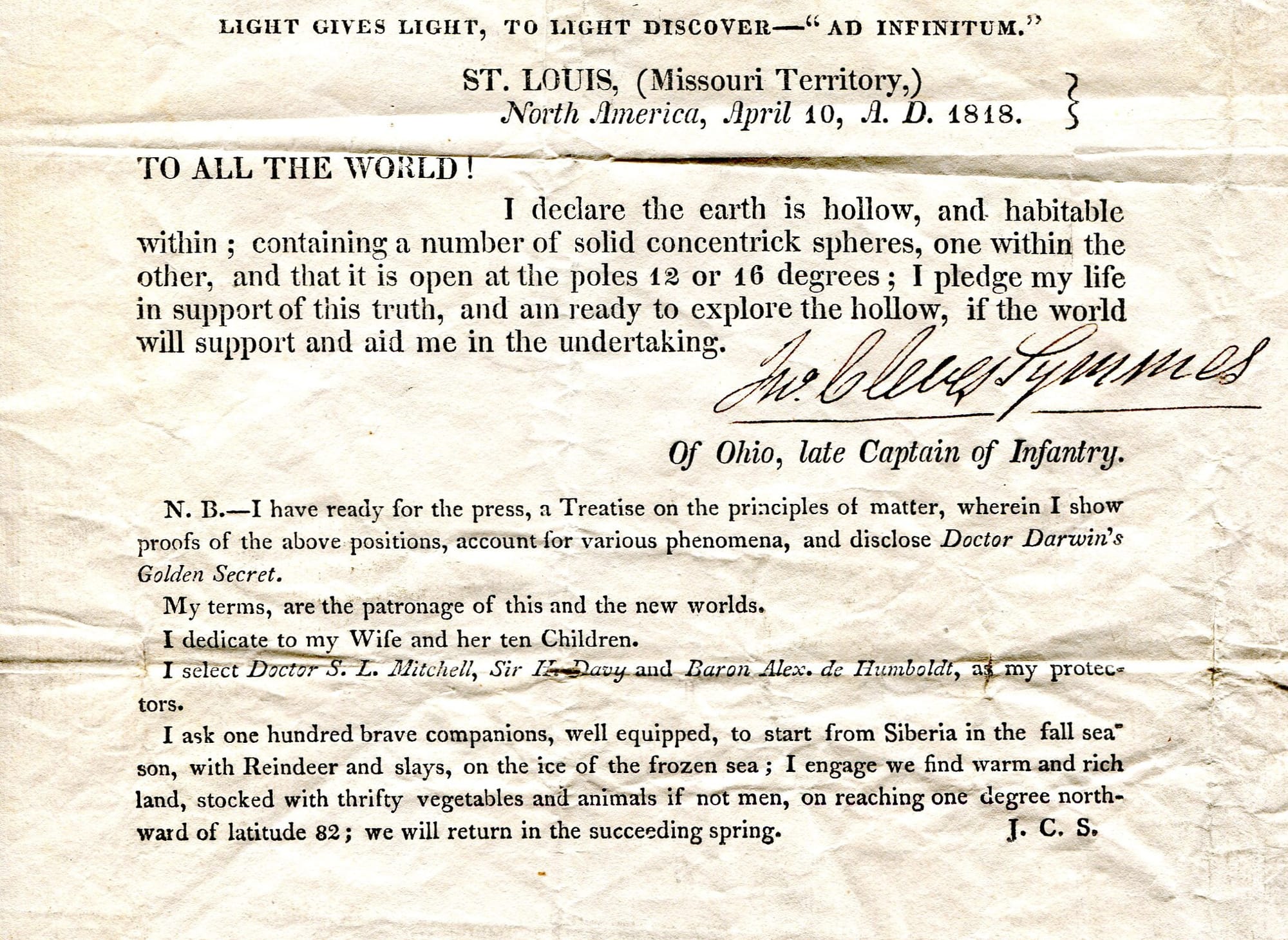
"I declare the earth is hollow, and habitable within; containing a number of solid concentrick spheres, one within the other, and that it is open at the poles 12 or 16 degrees; I pledge my life in support of this truth, and am ready to explore the hollow, if the world will support and aid me in the undertaking."
This warning was signed:
"Jno. Cleves Symmes. Of Ohio, Late Captain of Infantry."
Note the signature. Symmes didn't sign this as a natural philosopher, or maybe as an investigator or experimenter. He signed this declaration as a military officer, even after he'd been out of the army for two years, because the only credential this document was actually riding on was that rank, and his name maybe sounding familiar.
The body of the document went on to make the operational request:
"I ask one hundred brave companions, well equipped, to start from Siberia in the fall season, with Reindeer and slays, on the ice of the frozen sea; I engage we find warm and rich land, stocked with thrifty vegetables and animals if not men, on reaching one degree northward of latitude 82; we will return in the succeeding spring."
You should really consider sitting with that sentence for a minute. Just hang out here for a little while.
The proposed expedition departs from Siberia. In the fall. By reindeer and “slay”. Across the frozen sea. To find, just past the eighty-second parallel, a warm and thriftly vegetated inner continent. From which the expedition will return in the following spring.
Reindeer and sleighs. Down the hole, into the earth.

There was, as I mentioned, an additional document attached to Circular No. 1. This was something of a mixed media, multi-modal project.
This additional document was a notarized certificate. The certificate attested to John Cleves Symmes Jr.'s sanity. He had it drawn up, witnessed, signed, and bound to the circular before mailing
TO ALL THE WORLD.
The full text of the sanity certificate appears not to survive in any archive I can find, which is clearly one of the greatest ever losses of American historical paperwork.
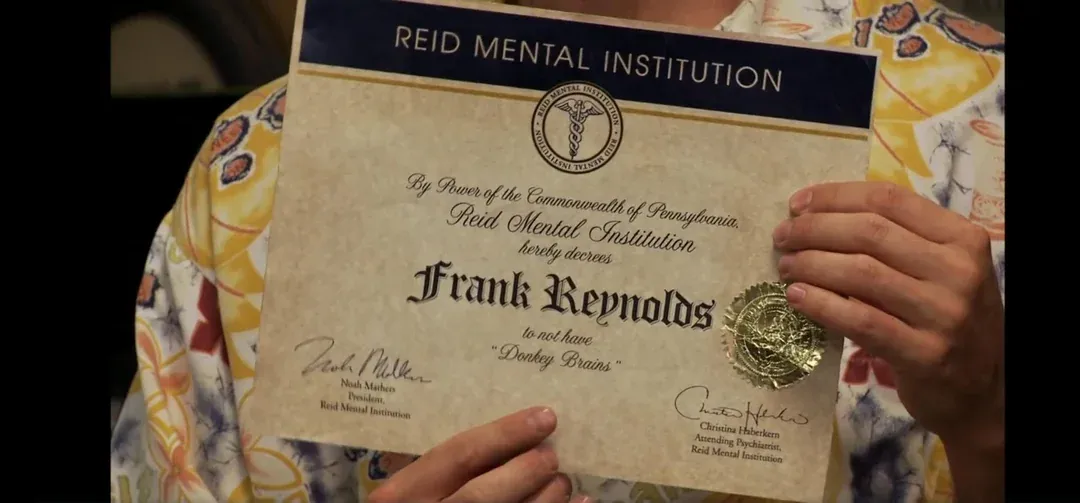
I will reiterate: this jackass, anticipating the reaction his pamphlet was going to receive, took the steps to prepare and attach an official document declaring himself to be of sound mind, and mailed it alongside the pamphlet, because obviously the reader was going to need that once they saw this shit.

In Modal Path Ethics terms, Symmes's sanity certificate is among the purest single artifacts of distortion the framework has yet on file.
An agent inside a field, anticipating that this Hole field will be perceived as insane, responds by just producing some additional documentation stating that the field is not, in fact, insane, rather than re-examining whether the field is insane. The documentation is now evidence, because a notary signed it.
This certificate's very existence is the evidence it claims to refute. A sane man, having his idea evaluated on its merits, does not feel the need to notarize and certify his own sanity in advance. He just certifies the idea.
Symmes could not just certify this idea, because this idea was that the Earth is hollow. So he certified himself instead, and hoped that would carry it. The notary went along with it, presumably for a nice fee, and the sanity certificate entered the U.S. postal system bound to five hundred fucking copies of a pamphlet declaring the Earth hollow
TO ALL THE WORLD.
I'm naming this whole ordeal certification displacement: when the load-bearing weight of an argument can no longer be carried by the argument itself, so for the field to survive, the certifying apparatus is moved one step back; to now certify the speaker rather than the speech. This is what happens when a man whose argument cannot survive direct scrutiny attempts to launder the scrutiny through credential of the arguer instead.
Symmes was the arguer. The notary, by certifying Symmes, certified Symmes's sanity and therefore argument by transitive property, or at least Symmes thought so. I'm not so sure it works that way. The notary thought, I have to assume, mainly about that nice fee.
Response to the circular varied.
In Europe, the relevant scientific bodies received it, filed it, and ignored it. The Royal Society did not respond to this plan. The Académie had nothing to say here. The reigning princes did not sign up. Most members of Congress did not respond, either.
In America, however, the response to Circular No. 1 was substantially livelier. America was actually really feeling this one.
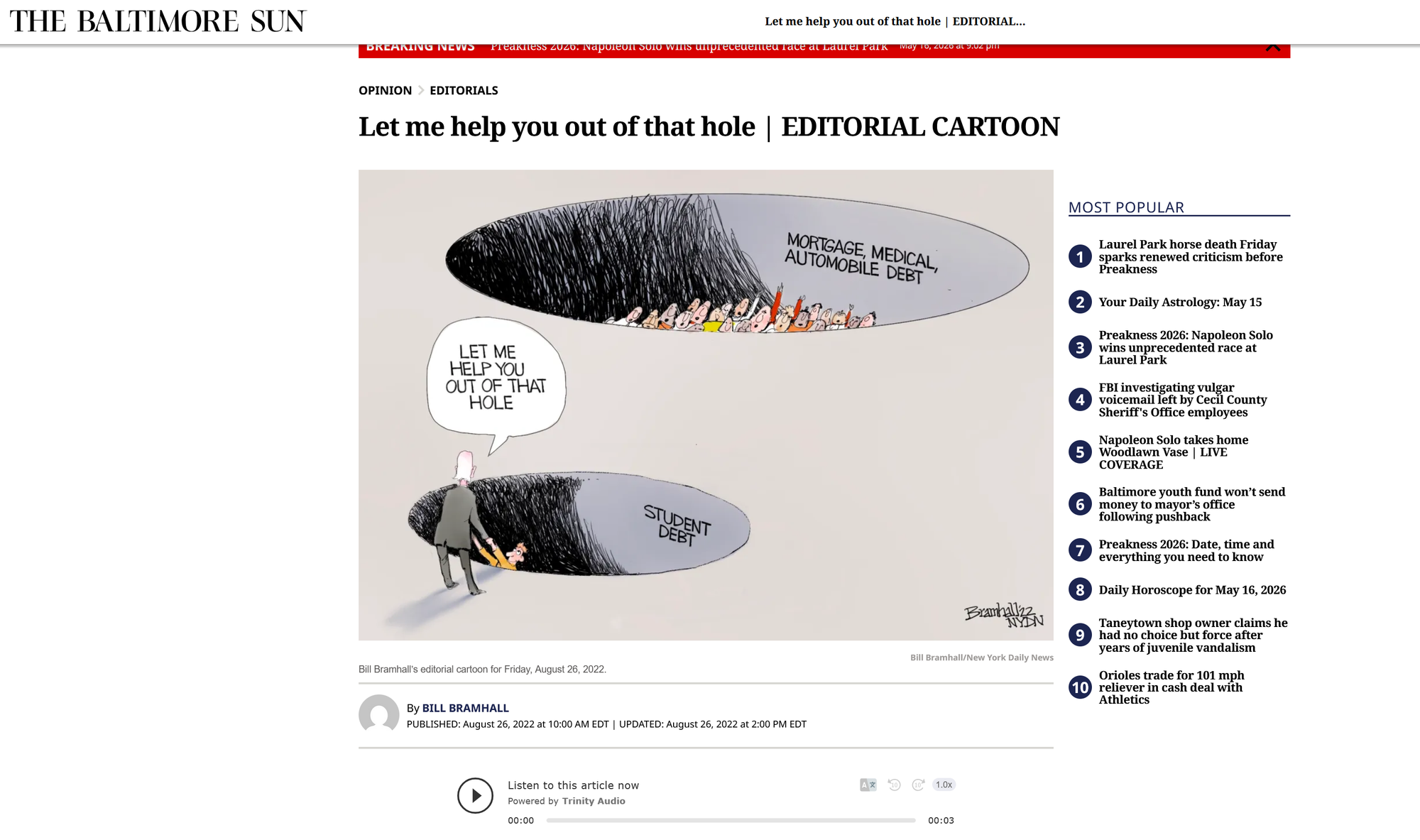
The newspapers picked it up. The pamphlet's idiosyncratic phrasing, particularly "thrifty vegetables," was widely quoted for comedic effect, much like I am doing right now. The aperture-at-the-pole became known almost immediately as "Symmes's Hole," intended as ridicule, taken by Symmes as unironic branding. Several prominent satirists made him a recurring target. He was lampooned in editorials, ridiculed in cartoons, and parodied in verse.
Symmes was undeterred by any and all of this. Inside the distortion field, he cannot perceive criticism of the field as evidence against the field's central claim. He perceives it as evidence that the critics have not yet been exposed to the case in sufficient detail.
So John gave them more detail. Much more. He started lecturing.
The Lecture Circuit.
The lecture circuit lasted ten long, grueling years.
It started in St. Louis (of course) in 1818 and ended in 1828 when Symmes's body finally gave out.
The contemporary descriptions of his speaking style are very unkind. Sources note that he spoke in "a stumbling, nasal voice." His delivery is described as "disorganized." He wandered. He gave "great, disorganized jumbles of his thought" rather than structured argument. He repeated himself. I'm not really surprised to hear any of this, to be honest.
John drew large crowds anyway. This is the part of the story that doesn't get adequately conveyed in the modern retellings, where Symmes is figured as a lonely crank lecturing to an empty room. He really, really wasn't, America loved this guy. Symmes filled venues. He drew audiences in Cincinnati, Lexington, Philadelphia, New York, Baltimore, Boston, and a long list of midsize towns between. He was, by 1822, a well-known public figure on the American lecture circuit. People all over bought tickets to hear about the Hole.
Some came to laugh at him. A respectable share came to convert to the glorious truth of the Symzonians
His first major convert was James McBride, a Cincinnati attorney, surveyor, and antiquarian who attended a Symmes lecture in 1819 and emerged completely convinced, which is all you really need to know about him. McBride had real local standing. He was a successful frontier professional with a library, social connections, and the kind of placid Ohio respectability that Symmes desperately needed near him. McBride became Symmes's first real serious institutional ally; his fundraiser, his correspondent, and his eventual biographer.
In 1826, McBride would publish Symmes's Theory of Concentric Spheres; Demonstrating That the Earth is Hollow, Habitable Within, and Widely Open About the Poles, under the byline "by A Citizen of the United States."
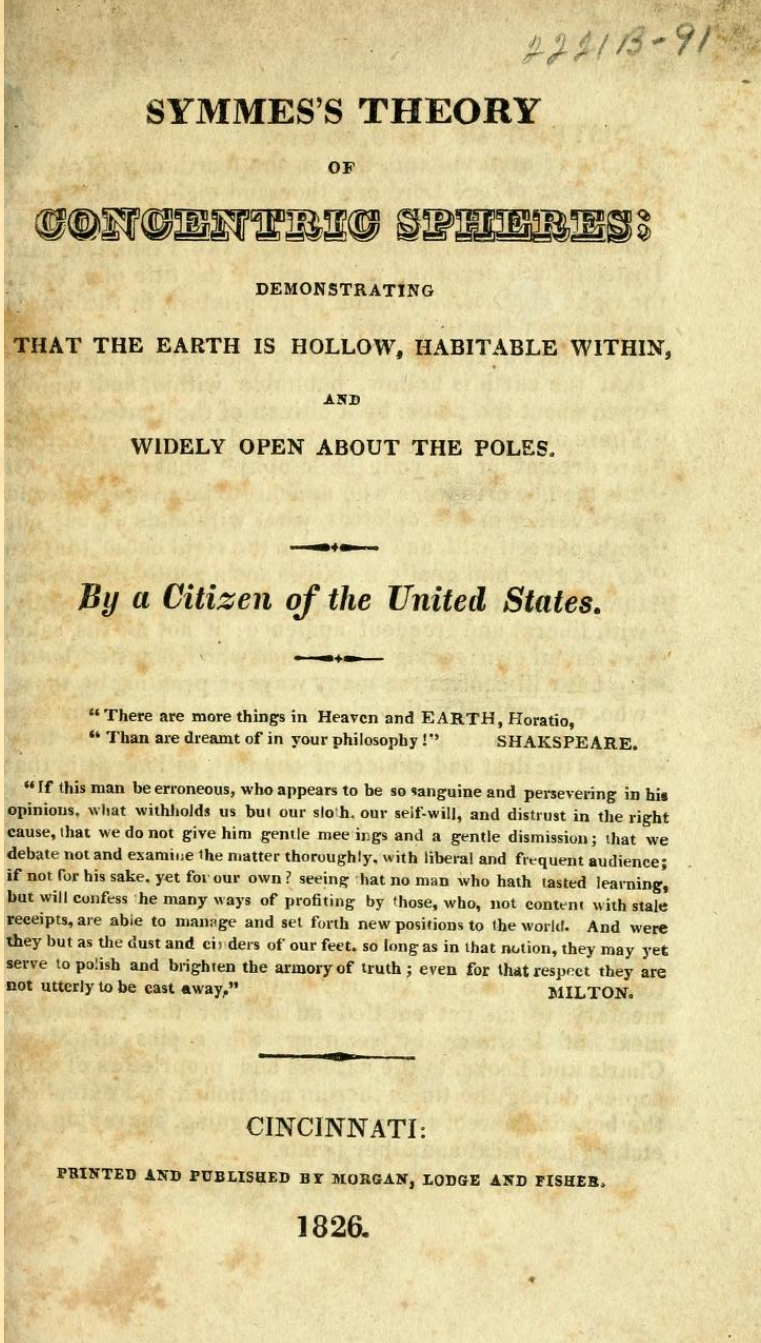
It would be the first book-length treatment of this theory. McBride was the one who wrote it. Symmes essentially just edited it through correspondence. It contained McBride's own elaborations of the original framework, including a more detailed account of the lighting situation going on inside the inner spheres, which McBride felt Symmes had left underspecified.
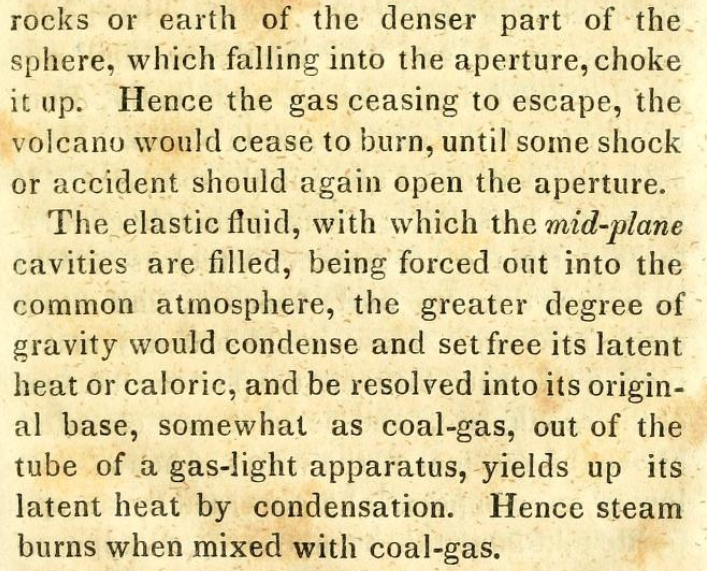
McBride's book was not the first book to come out of the Symmes field. The first book was actually a novel.
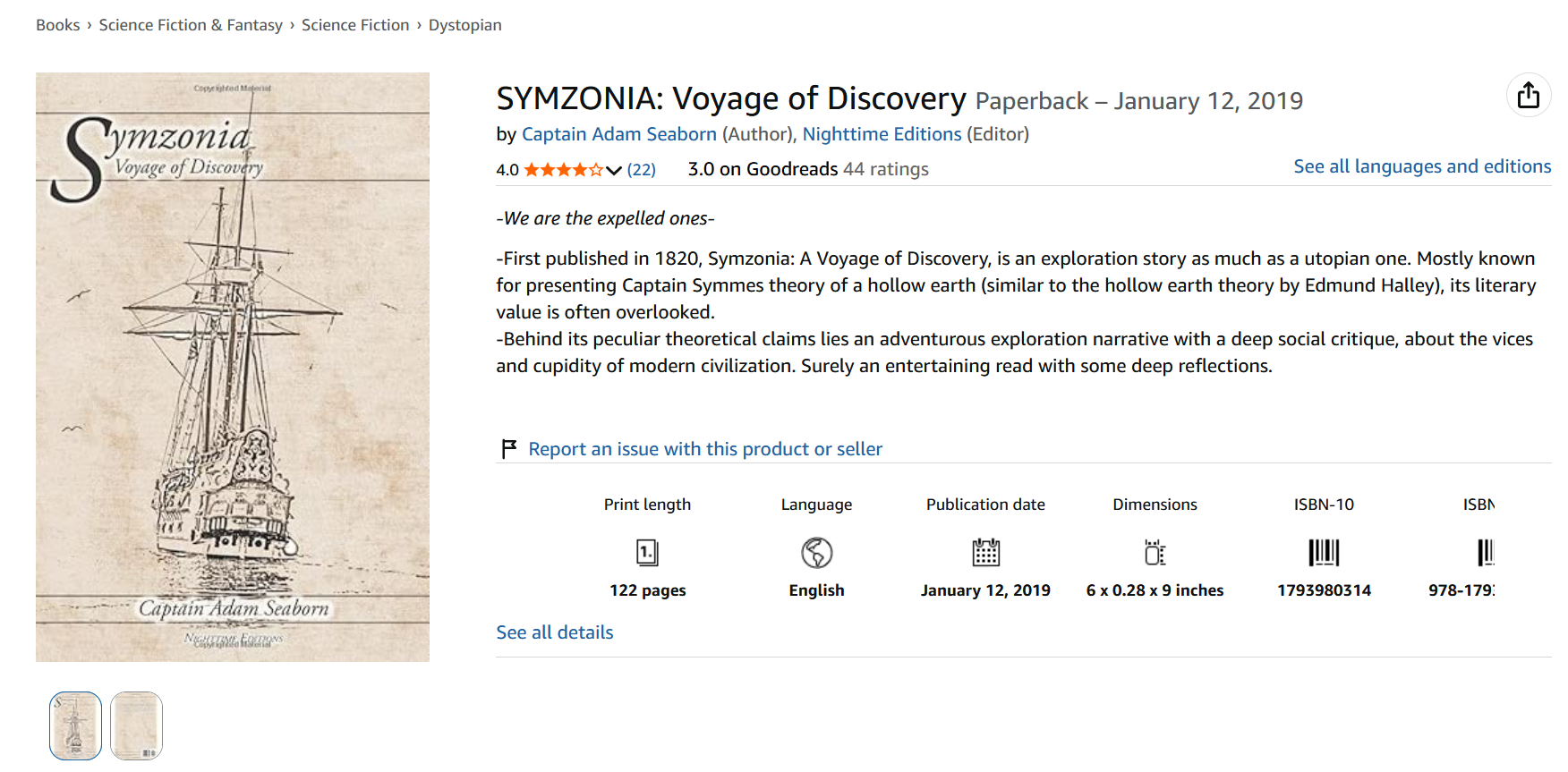
In 1820, two years after the circular dropped, suddenly a mysterious, anonymous novel titled Symzonia: A Voyage of Discovery appeared, written under the pseudonym "Captain Adam Seaborn."

We have no idea who this enigmatic Captain Seaborn could be. I can't think of anyone who would be creative enough to start a name with “Sym”.

The novel described, in earnest first-person narrative, a sea voyage through the southern polar opening into an inner continent inhabited by a wise, pacific, vegetarian, and of course, Christian race called the Symzonians.
We,
ALL THE WORLD,
have
NO PROOF
this book was written by Symmes. It is very mysterious to us.

The Symzonians lived (or, as Halley suggested, still live today) in a utopian commonwealth without poverty, war, or want. They greeted the narrator with formality and curiosity. They had been waiting, in some sense, for the cleverest surface humans to figure this hollow earth thing out.

Scholars actually still argue about whether Symzonia was written by Symmes himself as an earnest expression of his theory, by an admirer, or by a satirist using Symmes's framework to make fun of him.
There are actually good textual arguments for each position. The fact that two centuries later the most careful readers cannot possibly tell whether a given text inside a distortion field is sincere endorsement or satirizing this bullshit is, in the framework's view, a feature of that field, not an interpretive problem to be solved by us.
By the time a field is generating texts whose intent is structurally undecipherable, that field has been deeply saturated. Symzonia was both at once, it depended on who was reading it. It sold to converts as proof and to skeptics as parody. The book did its job in either case, which was to thicken the corpus around Symmes's central claim and make it seem like this idea had now reached the literary stage rather than Arkham Asylum.
The literary fattening continued through the 1820s. Symmes's name showed up in newspapers, in poems, in lecture announcements, in editorials. The phrase "Symmes's Hole" entered the common language, which is absolutely fucking wild and must make a comeback today.
Symmes's Hole was a real cultural unit by 1824. It was used both literally, by adherents discussing this actual polar aperture to Narnia, and figuratively, by skeptics talking about any wild idea like this. A field that has produced an idiom in popular speech is no longer a field its critics can dismiss with a brief published rebuttal. Symmes's Hole is now a thing the public has many opinions about, regardless of whether it is really there or not.
This is the distinction between a refutable claim and a thickened field. A refutable claim can be settled by a careful counter-argument. A thickened field cannot. The thickened field is no longer about whether this claim is true. It is about who the claim's existence belongs to, who it serves, who is in it, who is against it. Symmes's Hole, by 1824, was not an empirical question waiting on better data from the Arctic. His Hole was a position in American cultural life. People had taken sides in it.

Symmes was moving all around, you couldn't pin him down. He moved from St. Louis to Newport, Kentucky in 1819. He convinced his local congressman in Kentucky to start carrying his petitions to Washington. That congressman was a man named Richard M. Johnson, and we'll spend a little time on him in a minute because Johnson deserves his own paragraph and possibly his own fucking essay. In 1824, Symmes moved his family again, from Newport to Hamilton, Ohio, where he would live the remaining five years of his life and eventually be buried in a funeral that was comedically very dangerous. These moves were partly financial (he was running out of money) and partly logistical (he was trying to be closer to publishers, lecture venues, allies, his Hole).

His wife Mary Anne, who had brought six stepchildren into the marriage in 1808 and then had five more biological children with Symmes, was still devoted to him through all of this. She kept the household running through his lecture tours, his moves, his bankruptcies, and his Hole obsession. She would outlive him by twenty years. None of the sources I can find name a single occasion when she publicly questioned the central claim here at all, which isn't necessarily loyalty. The framework's note on this is that distortion fields, once domestic, are very hard to evacuate, especially for family members whose social and economic standing is now tied to the field's continued credibility. Mary Anne had no clean exit here. She supported her husband, raised their children, and then watched him lecture himself to death.
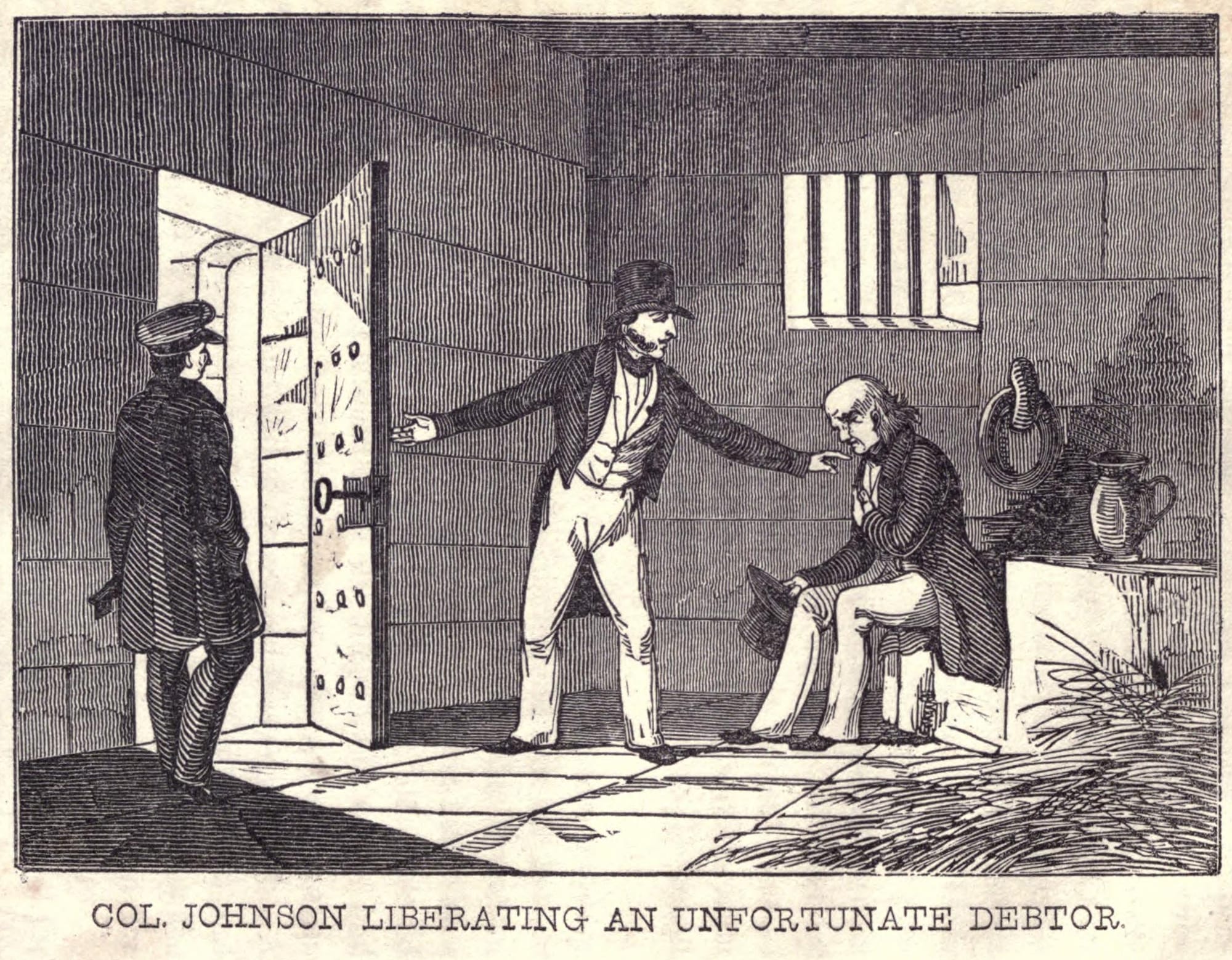
By 1822, Symmes had decided he could no longer make progress through public lectures alone. He needed the U.S. government to fund his expedition. He went to Johnson.
The Petitions.
We need to drop everything and discuss Richard Mentor Johnson, because the man who carried Symmes's petitions to the floor of the Senate is, on his own merits, one of the more wildly strange figures in nineteenth-century American politics.
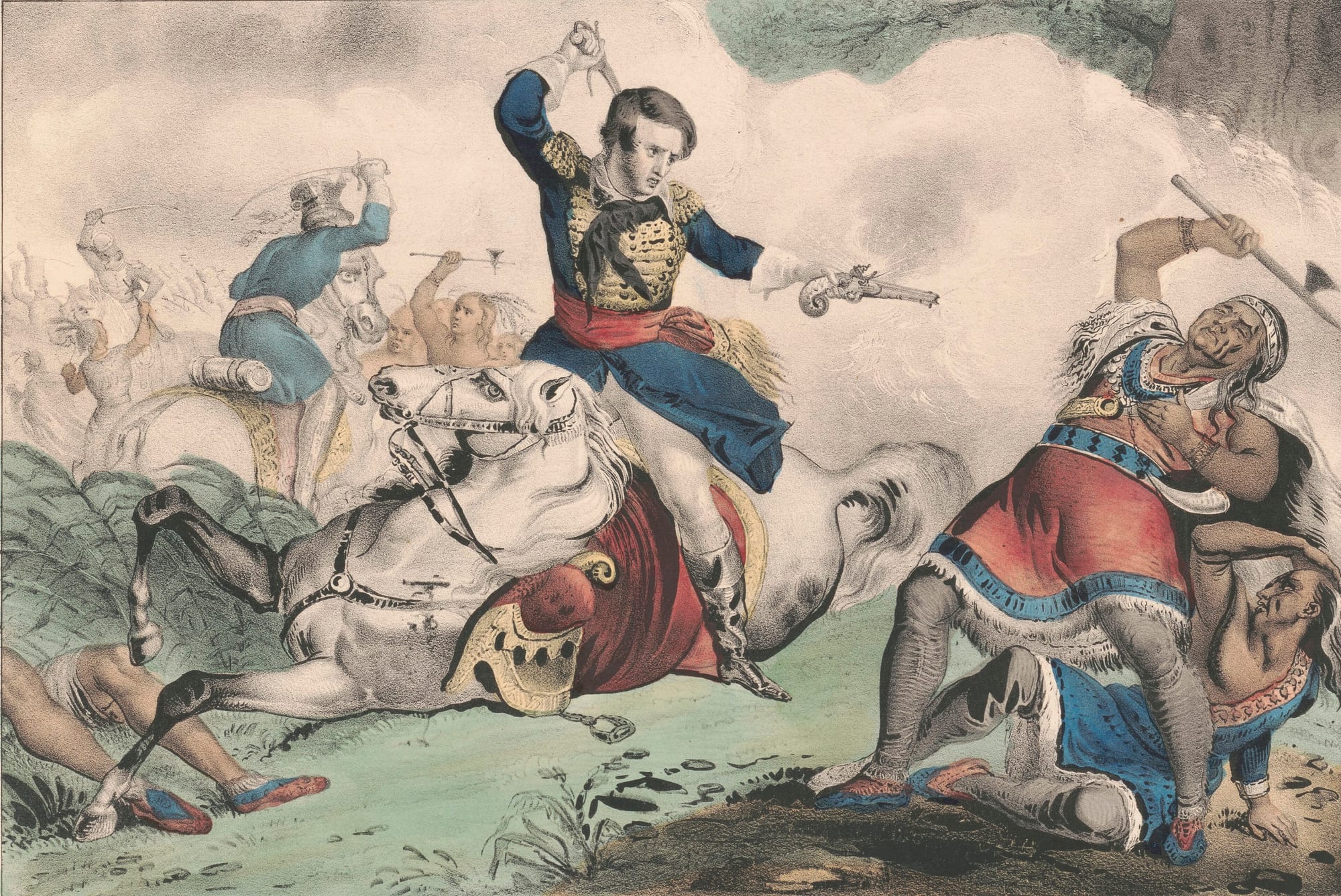
Rickie Johnson was a Kentucky lawyer turned U.S. Representative, then Senator, then eventually the ninth Vice President of the United States under Martin Van Buren. Johnson claimed personally to have killed the Shawnee leader Tecumseh at the Battle of the Thames in 1813, a claim he was never able to substantiate at all, but which he successfully ran for the rest of his political career on the strength of, with the campaign slogan "Rumpsey Dumpsey, Rumpsey Dumpsey, Colonel Johnson Killed Tecumseh."
I mean, what the fuck is that? Rumpsey Dumpsey?
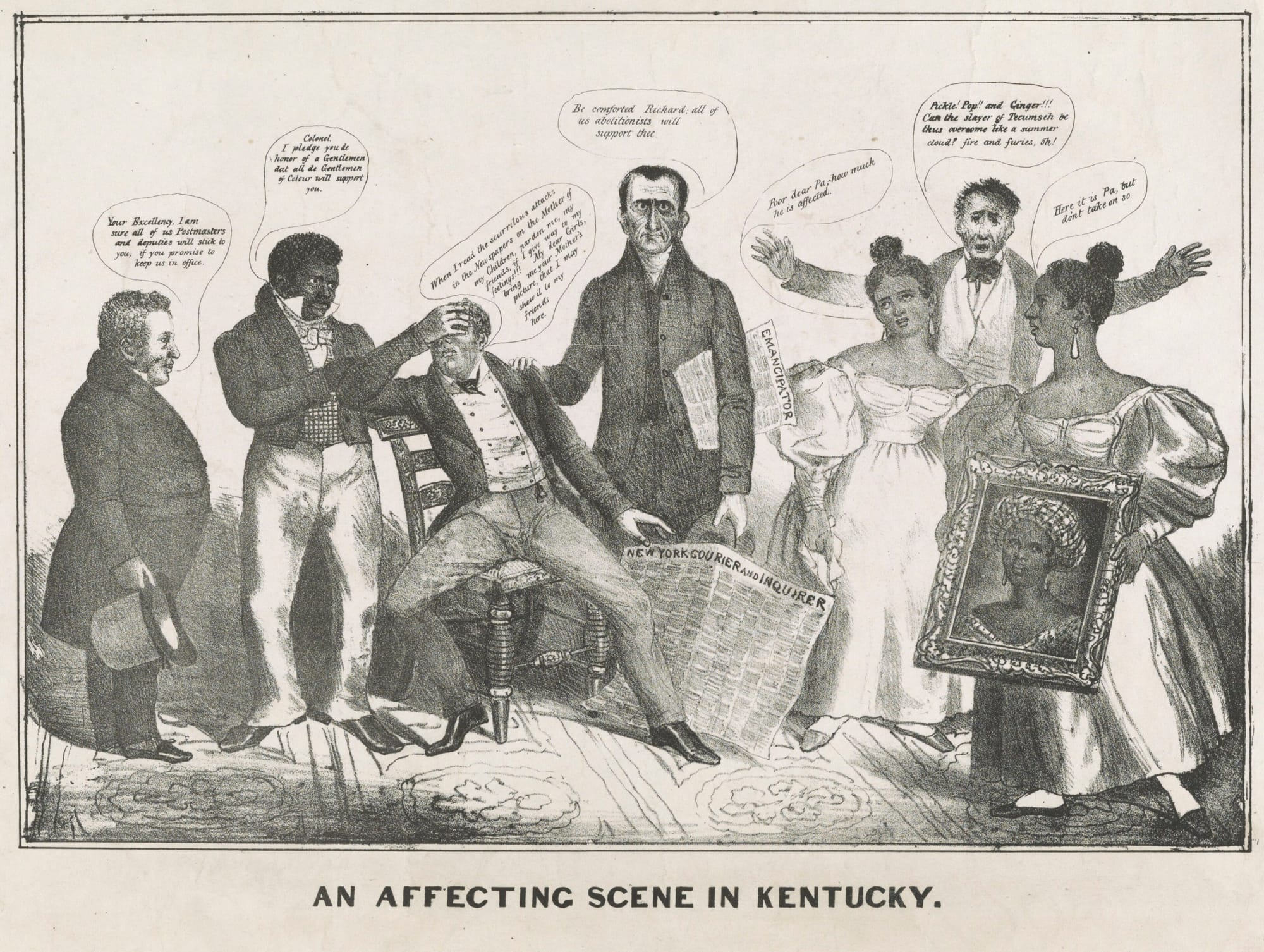
Johnson lived openly with an enslaved woman named Julia Chinn, treated her (his former slave) as his common-law wife, and attempted to introduce their two mixed-race daughters into Washington society, which absolutely scandalized everyone and tanked his presidential ambitions forever. This was a very strange, very complicated man and he just kept getting elected for shit.
In 1822 he was a sitting U.S. Senator from Kentucky. Symmes was now living in Newport, Kentucky, which was Johnson's constituency. The two had already met. Johnson, also being a loon, agreed to carry the petition.
What kind of man, you might ask, would carry a petition to the floor of the Senate requesting government funding for an expedition into the interior of the Earth?
Apparently the same kind of man who would campaign on having personally killed Tecumseh and then try to bring his enslaved-then-emancipated common-law wife to White House functions. Johnson did not appear to have any internal sensor for "this will embarrass me and my ambitions." He just carried the petition in because someone gave it to him.
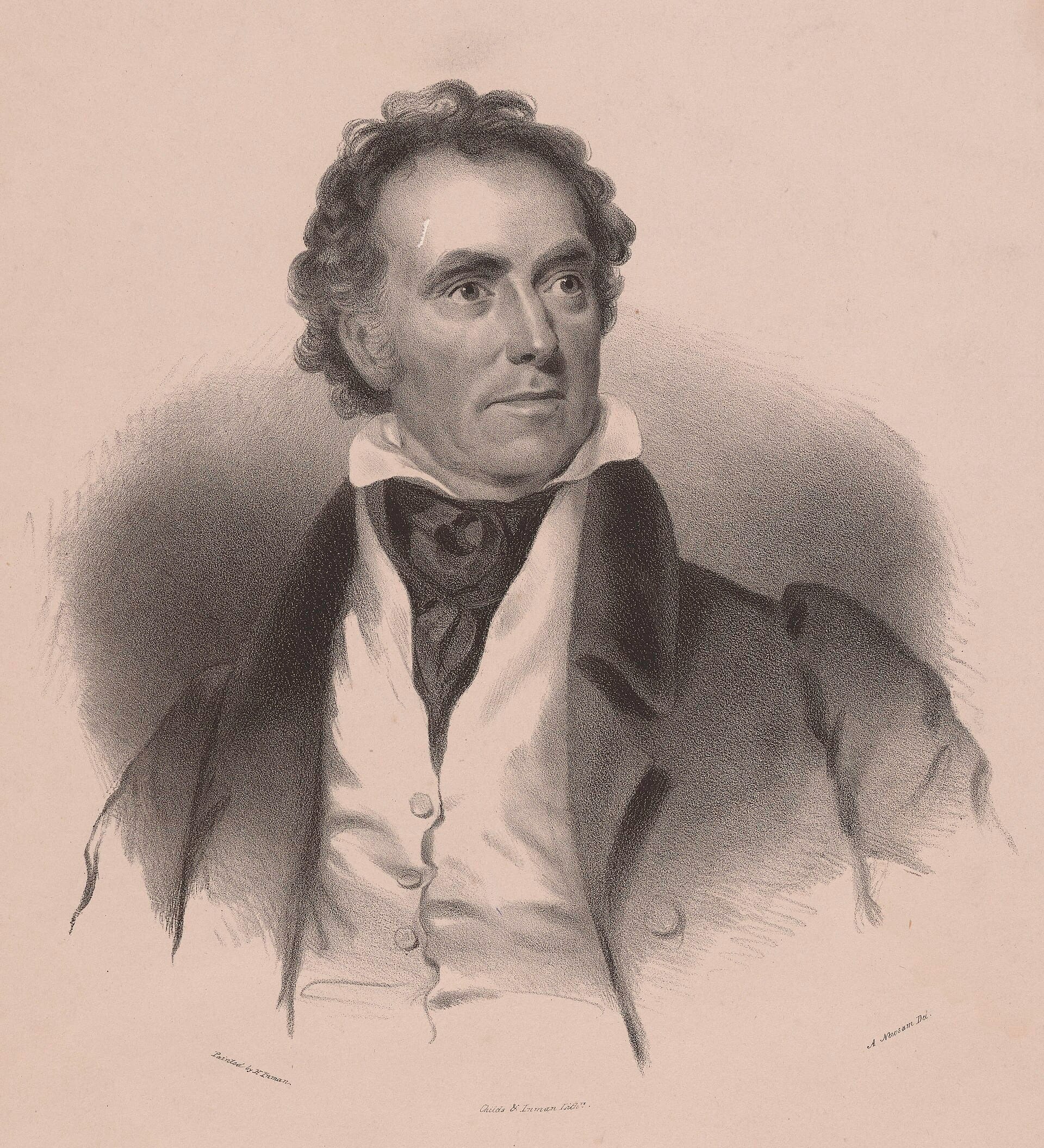
On March 7, 1822, Johnson rose on the Senate floor and asked the body to consider funding "two vessels of two hundred and fifty or three hundred tons' burden" for the proposed expedition under Symmes's command.
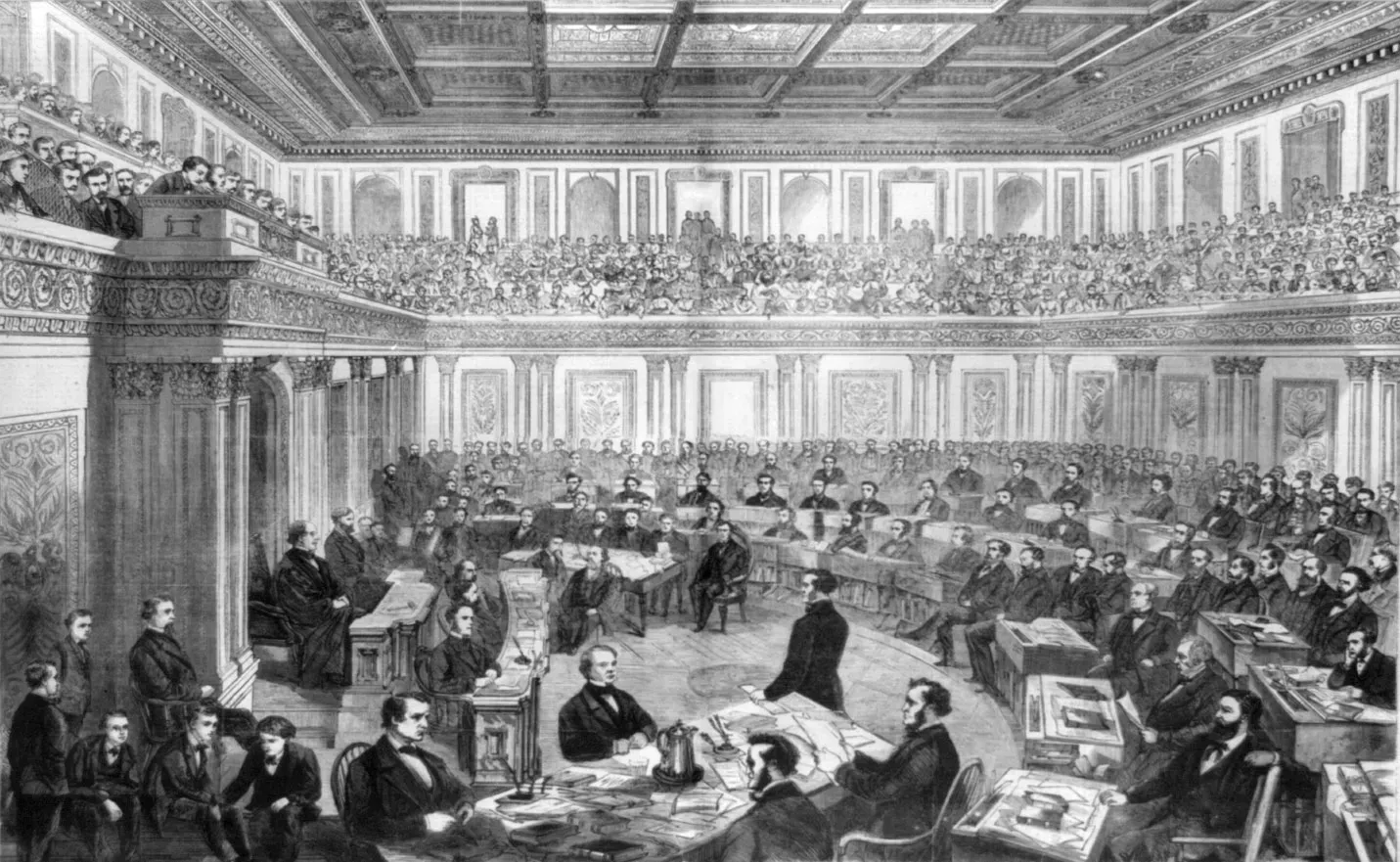
The motion was tabled.
This means it was set aside without a vote, indefinitely, by procedural convention. Tabling preserves the dignity of all involved parties. It does not require senators to go on record voting against a constituent's petition, which can be politically expensive. It does not require senators to vote for the petition, which would be fucking insane. It allows the Hole petition to die quietly in the procedural undergrowth without ever being formally killed off.
In Modal Path Ethics terms, tabling is the institutional version of narrative accommodation. It is the procedure that exists specifically to handle the situation where a credentialed petitioner has submitted a request that the institution cannot ever afford to dignify with a yes and also cannot afford to dignify with a no. The institution preserves itself by performing a procedural non-decision action. Everyone gets to keep their dignity, including, in this case, the planet Earth and the Symzonians.
Symmes was not deterred by being tabled at all. He took this tabling as a simple procedural setback rather than a substantive rejection. The framework would note this is technically correct. Tabling is in fact a procedural setback rather than a substantive rejection. It contains no material rejection. It contains nothing at all.

Symmes spent the next ten months gathering more public support around his Hole, getting more disciples to write letters to their congressmen, lecturing in more cities, and tightening his sales pitch. He then came back to Johnson with a better case. Johnson, of course, just took it.
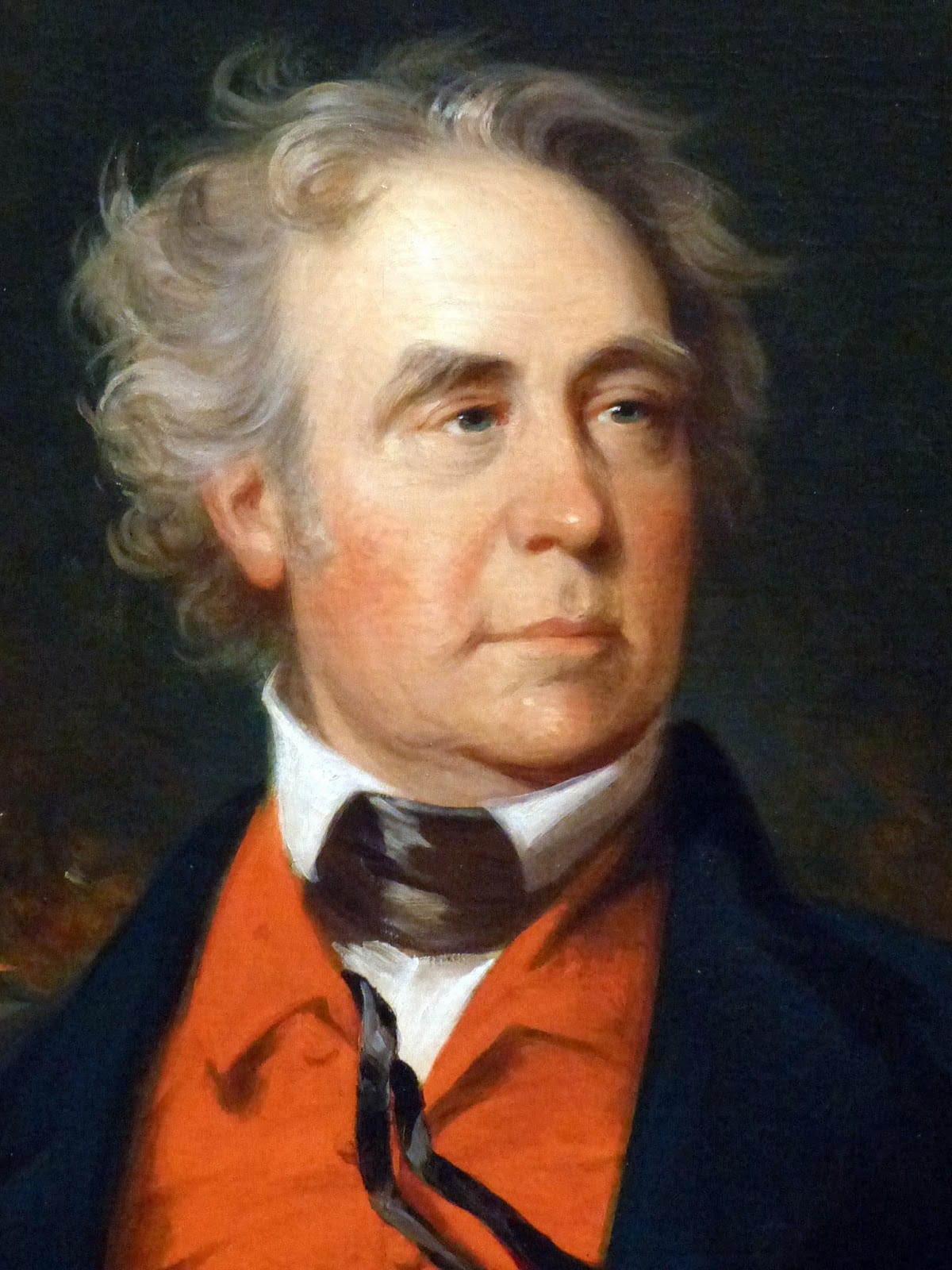
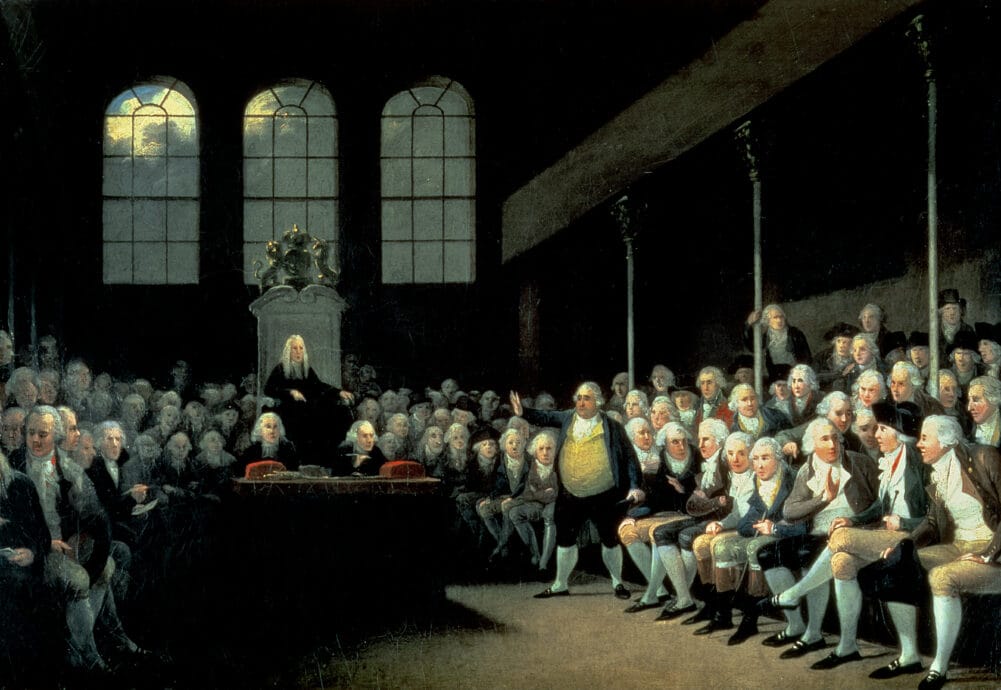
On January 14, 1823, Johnson rose once more and presented a revised petition. This one specified more details. It described the proposed route. It cited Halley by name. It cited Euler. It promised commercial and scientific dividends for the nation. This one was a real document, fully drafted, professionally argued, with named co-signatories from across Symmes's growing network of disciples.
The motion came to a vote.
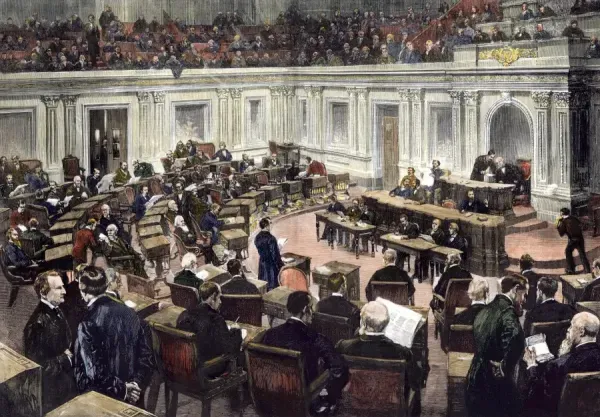
Twenty-five United States senators voted yes.
Look at that number for another moment. 2-5.

Because the modern retellings tend to bury it under qualifiers and the qualifiers do not do that number justice.
Twenty-fucking-five sitting senators of the United States voted, on the record, to commit federal funds to outfit a naval expedition to find a secret aperture in the Arctic Ocean leading to the inside of the Earth, where the expedition was expected to encounter thrifty vegetables, indigenous fauna, and possibly the hidden Symzonian race.
The Senate at that time, had forty-eight members total.
Twenty-five is a majority of forty-eight.
This petition did not pass, because parliamentary procedure required more than a single floor vote to actually appropriate the funds, and the motion was again tabled in time before that further procedure could be invoked.
But this shit had majority support.

A majority of the United States Senate, on the record, in 1823, supported funding the expedition into the hollow Earth.
The Senate of 1823 was not composed of unusually stupid men.
That Senate contained Daniel Webster of Massachusetts, Thomas Hart Benton of Missouri, Martin Van Buren of New York (future eighth President alongside this same lunatic Johnson), and a slate of other highly competent professional politicians.
These were not credulous people. These were men who, presented with a petition from a credentialed constituent (an Army captain, a war hero, a nephew of the founder of Cincinnati), supported by a network of organized civic letter-writing, framed by their colleague Johnson as a reasonable scientific question, in a year when no one had yet actually been to the North Pole and the geography of the Arctic was genuinely still uncertain, voted along the gradient of the social proof that this institution was producing rather than along the gradient of empirical evaluation that this institution was not producing.

That is what these institutions do. They produce gradients of social proof. Empirical evaluation of fringe physical claims about the structure of the Earth is not the United States Senate's job, and thank Christ.
The U.S. Senate's job is to allocate federal resources in response to politically constructed coalitions. Symmes had, in fact, assembled a politically constructed coalition. He had organized civic support across multiple states. He had attached his proposal to the credibility of a sitting senator who was fully willing to put it on the floor. The institution then did what institutions do, which was treat that petition with proportional procedural seriousness to the coalition behind it.

This is what the framework calls procedural distortion through proper functioning. The Senate's voting machinery worked exactly as designed. They did nothing technically wrong here at all. The problem was that the design of the Senate didn't include any mechanism for evaluating whether the underlying claim here was true. The design of the Senate was to build a coalition-aggregation engine. The coalition Symmes had built was real. The claim the coalition was aggregated around was insane. But the engine still processed it correctly. Twenty-five votes is what the engine outputs when a coalition of that size, backed by a senator of that standing, presents a petition with that framing and citation, regardless of whether the petition was about hollow fucking Earth, harbor improvements, or naming a new post office.
Symmes took the twenty-five votes as encouragement. The framework would, again, note that this was still structurally correct. Twenty-five votes is very encouraging. He had moved this institution. He had brought it to the threshold of action. With one more cycle of organizing, with a few more letters, with a few more lectures, with a few more dedicated disciples, he could move this one across the finish line, like Thomas Hicks was.
He went back to the road. Unfortunately, Symmes had only six years left to meet the Symzonians.
Symmes's Judas.
In 1823, a twenty-four-year-old newspaper editor in Wilmington, Ohio, attended one of Symmes's lectures and walked out a fresh convert.
His name was Jeremiah N. Reynolds. I have no images of him.
He was, in the assessment of this framework, the most consequential locus moving in this field other than Symmes himself, and he is one of the cleaner cases in nineteenth-century American history of what Modal Path Ethics calls instrumental virtue: the kind of personal competence that operates effectively regardless of the moral content of the institutional frame it is operating inside. Instrumental virtue can create apparent goodness, and uncaring contractions.

Reynolds already had a real biography going before he met Symmes. He had been born in 1799 in Pennsylvania, moved to Ohio with his family as a child, worked his way up through frontier schoolteaching in his teens and early twenties, saved enough money to attend Ohio University at Athens for three years, and bought into the Wilmington Spectator as editor and part-owner around 1822. This guy was bright, young, ambitious, broke, and unmarried. He was, by every available indicator, a competent guy on a respectable but slow professional trajectory.
He met Symmes and that trajectory accelerated and then very quickly derailed.
Reynolds sold his stake in the Spectator. Don't need that now. He joined Symmes on the lecture circuit instead. He became, almost immediately, the better speaker of the two. Where Symmes was stumbling and nasal, Reynolds was practiced and oratorical. Where Symmes wandered, Reynolds organized. Where Symmes asserted a Hole, Reynolds argued one. Within a few months Reynolds was, in any practical sense, the new public face of the Symmes campaign. Crowds were now coming to hear Reynolds explain Symmes's theory, which Reynolds did with significantly more force and significantly more polish than Symmes himself had ever managed. The lecture fees, fifty cents a head, paid both of their salaries in full. Reynolds was doing the actual work of selling the hollow Earth to America.
This continued through the early petitions with Johnson. Reynolds wrote letters, organized supporters, drafted documents, managed correspondence, coordinated with McBride, and basically ran the whole operation. Symmes was the founder and the credentialed face of the thing. Reynolds was the operations director.
Then Reynolds started to figure something out.
He never appears to have publicly stated this in the moment, but the pattern of his subsequent conduct is unambiguous: at some point between 1824 and 1827, Reynolds quietly accepted that the hollow-Earth theory was probably not really true.
He did not announce this, ever. He did not break with Symmes, initially. He did not retract any of his prior public statements. He just subtly changed what he was advocating for. He kept the expedition pitch and dropped the cosmology. He started telling audiences and donors and congressmen that the proposed polar expedition was worthwhile for the commercial opportunities, the scientific value, the national prestige, the sealing and whaling intelligence, the cartographic gains. He stopped emphasizing that Hole. He stopped promising to deliver us the inner sun. He stopped invoking the virtues of the Christian Symzonians.
The expedition was still basically the same expedition. The justification had just changed to match reality.
Symmes noticed all this. The split was at first quiet, then very loud, and then total.

In 1827, the two men had a heated confrontation in Philadelphia about the Hole. According to contemporary sources, Symmes accused Reynolds of betraying the foundational mission and their duty to the Symzonians. Reynolds maintained, with what one observer called a kind of evasive calm, that he was advancing their cause through more effective political tactics. Symmes was having none of this. The Hole was the whole point. The thrifty vegetables were the whole point. The Symzonians were waiting for him. An expedition that did not center its purpose on the polar aperture was, in Symmes's view, just a fraud committed against the actual scientific mission of the original circular.
Reynolds left for the East Coast and continued lobbying without him.
Symmes retreated back to Hamilton, Ohio in a fury. He never recovered, physically, professionally, or in his relationship with Reynolds. The two never reconciled. The Hole would always stand between them.
In Modal Path Ethics terms, the Reynolds split is structurally identical to the moment in Darien when Wafer told the directors the plan would fail and they fired him. Except the polarity is completely reversed. Here, the director is the one trying to walk the “expert” back to reality, and the founder is the one refusing to be walked.
It is also the cleanest case of instrumental virtue the framework can document outside Drummond. Reynolds is doing exactly the same thing he was doing in 1824, which is advocating for a polar expedition to be funded by the United States government. The skill set is unchanged. The framing has completely shifted. This used to be about finding the fucking Symzonians.
Reynolds is now able to operate effectively inside the new frame (legitimate polar exploration) because the same talents that made him effective inside the old frame (hollow Earth) carry over without any modification. He is a good promoter, a good organizer, a competent public speaker. None of those abilities required the underlying cause to be true, ever. This is just a human who promotes. These skills worked equally well for hollow Earth, and they would now work equally well for honest cartography. The skills have no virtues in themselves; all instrumental virtue comes from the field around them.

Once you have a talent, it is portable across frames, and the agent who possesses it will tend to move toward whichever frame currently rewards it the most. Reynolds didn't move from sincerity into fraud then back. He moved from one frame in which his competence was rewarded to another frame in which his competence was rewarded even better. Drummond did the same thing across Glencoe, Darien, and the Speedy Return. The competence always stayed constant. The institutional context shifted, and the agent moved with it to find the most rewarding institutions.
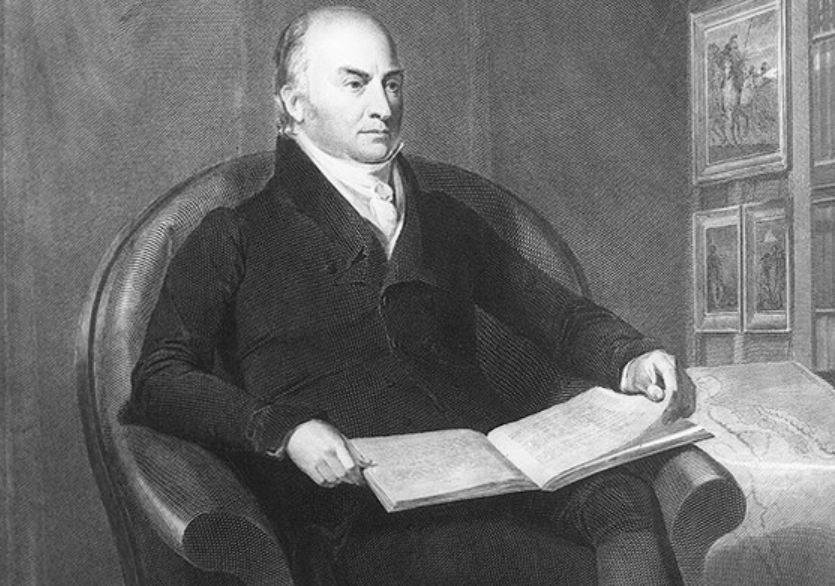
Reynolds spent 1827 and early 1828 working the John Quincy Adams administration. He was good at this, like many other things. He won over many members of Adams's cabinet. By the spring of 1828, the administration was preparing to commission the USS Peacock for an Antarctic exploring expedition under partial federal backing. Adams himself, who privately considered Symmes's theory stupid and ridiculous, now supported this expedition on the explicit ground that Reynolds had dropped the Hole.
Reynolds promised the President he wouldn't look for any Holes. The expedition was about to launch when Adams lost the 1828 presidential election to Andrew Jackson.
Jackson, on inauguration, killed the project on sight. His administration's posture toward federal support for scientific exploration was generally hostile, and his administration's specific posture toward the Reynolds expedition was a kind of contemptuous indifference. The Peacock was reassigned. The funding all evaporated. Reynolds was, for the second time in three years, watching his cause die on him because someone above him had decided it wasn't worth what it cost.
He still didn't give up. He took all the lecture-tour money, raised additional funds privately, and chartered a smaller vessel called the Annawan in 1829. The Annawan sailed with Reynolds aboard for the South Seas in October 1829, intending to scout for the federal expedition Reynolds was sure would come eventually, and to gather sealing intelligence to help pay for the voyage.
The Annawan voyage was a small-scale shitshow.

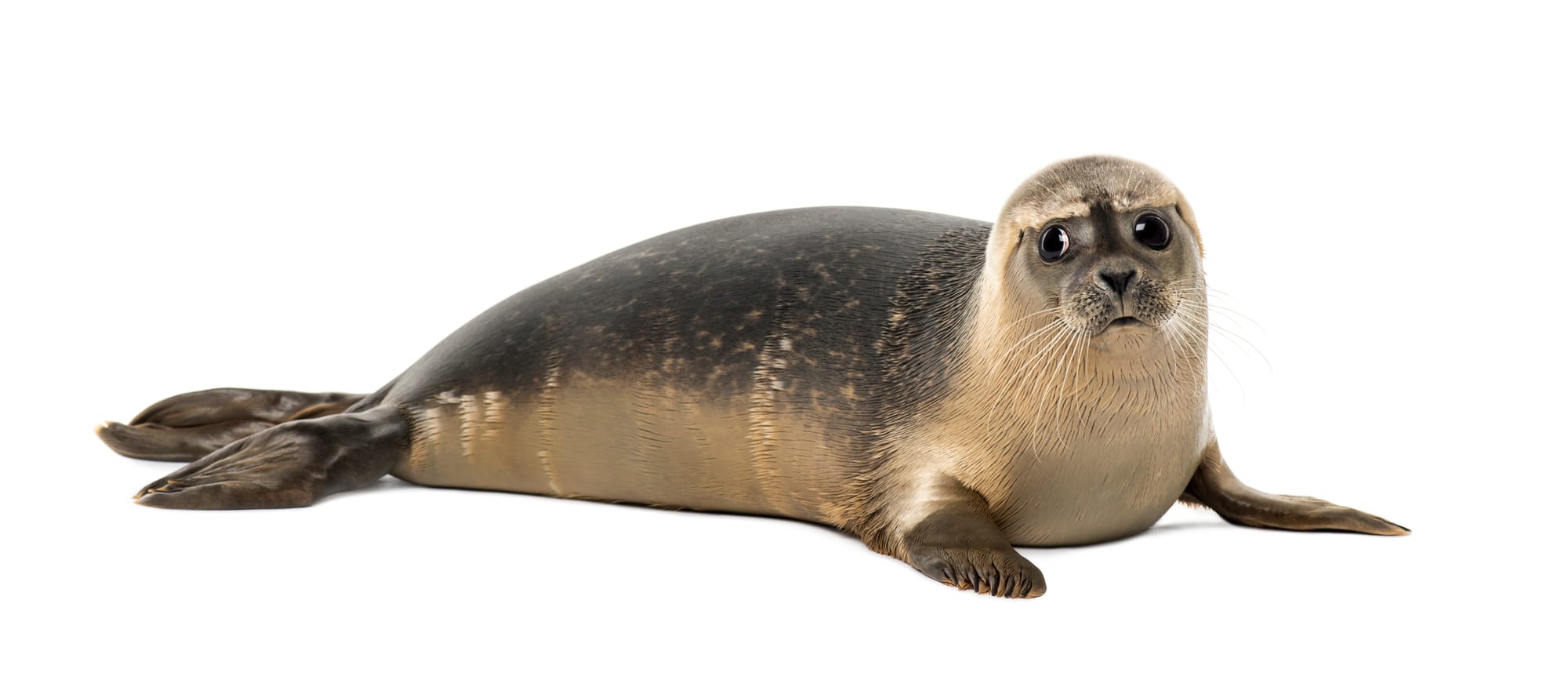
The ship made it to the southern Pacific. It did some sealing (as in, killed some seals). It then encountered weather. It did not like this. The crew, by the time they reached Valparaíso, Chile in 1832, had decided they had had enough of fucking Reynolds and his polar ambitions.

They mutinied.
The mutineers put Reynolds and one other man (the ship's first officer, William Watson) ashore at Valparaíso with whatever they could carry. The Annawan sailed on without them.
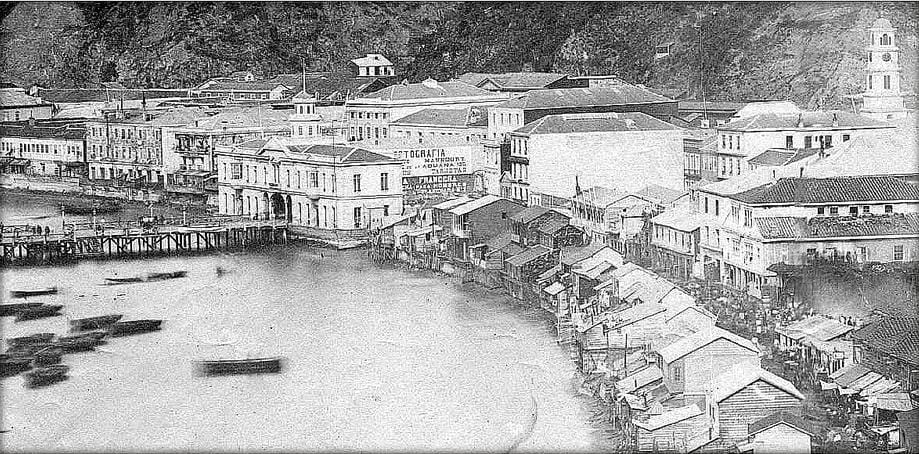
Reynolds spent the next two years stranded in Chile. He survived by lecturing, writing for newspapers, accepting Chilean hospitality, and waiting for any ship back home. He eventually got back to the United States in 1834, six years after the original Peacock expedition had been cancelled, eleven years after he had first met this asshole Symmes and sold off his newspaper, and with no usable institutional position to fall back on anymore.
So he went back to Washington and started lobbying again. What else?
By this time the political climate had shifted. Andrew Jackson's second term was winding down. The Whigs were now resurgent. There was a bit of a Whig infestation.
There was now bipartisan appetite for an exploring expedition for reasons that had nothing to do with hollow Earth at all, and a great deal to do with American commercial interests in the Pacific. The whalers wanted better charts. The sealers wanted intelligence. The merchant marine wanted soundings. Reynolds, working the rooms with the polish he had now developed across more than a decade of Hole-oriented advocacy, was extremely well positioned to channel that fresh appetite into formal congressional action.
He addressed the House of Representatives on April 2, 1836. The speech was widely covered. It made the case for an American exploring expedition on the grounds of trade, science, and national prestige. The Hole was nowhere to be found. The Symzonians were not given any due praise for their Christian ethics. It was, by any honest reading, a normal speech in favor of normal human cartography.

John Quincy Adams, by now serving in the House as a representative from Massachusetts after his single presidential term, attended the speech and recorded it in his diary: "In the Evening I went to the Capitol, and heard a Lecture two hours and a half long from Mr Reynolds in support of his old project of a scientific naval expedition to the South Pole and pacific Ocean."
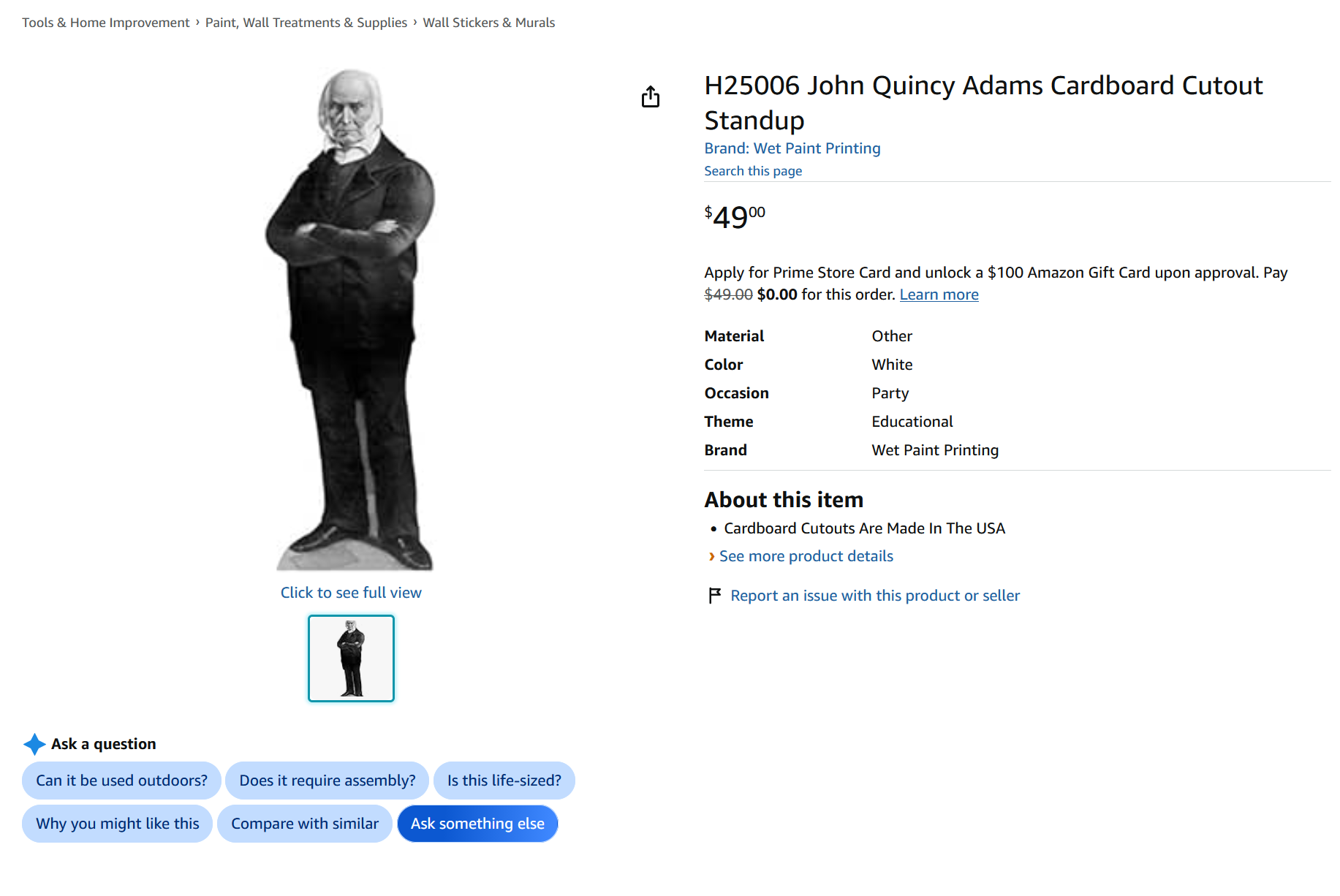
On May 10, 1836, the House passed the appropriation. Adams wrote in his diary that evening: "I met Reynolds and told him the result. He said he could now die content." Such is the beauty of uniting a man and his forlorn Hole.
Reynolds could not, in fact, die content. It turns out he had two more disasters to absorb first.
The first was that the expedition, having now been funded, would take two more years to actually launch, because the U.S. Navy was actually pretty bad at scheduling expeditions and Reynolds was actually pretty bad at managing the people running the U.S. Navy.
He insulted the Secretary of the Navy, which I don't think you're supposed to do. He insulted the various candidate commanders. He alienated the planning staff. The expedition was delayed, then delayed again.
The second disaster Adams didn't foresee was that when the expedition finally launched, in August 1838, under the command of Lieutenant Charles Wilkes, Jeremiah N. Reynolds was not on that ship.
He had been struck from the roster a while back.
The very expedition he had spent fifteen years of his life building toward sailed away without him. The Navy did not want this fucking guy along. He had made himself sufficiently obnoxious to the planning bureaucracy that they had elected to leave him on the dock. That decision was final. There was no appeal.

Reynolds stood on the Brooklyn waterfront and watched the Vincennes, Peacock, Porpoise, Relief, Sea Gull, and Flying Fish sail out of New York Harbor toward the southern continent he had dedicated his adult life to making accessible to American science.
He went home and wrote a short piece called "Mocha Dick: Or the White Whale of the Pacific," based on a story he had heard during the Annawan voyage about a notorious albino sperm whale off the coast of Chile.
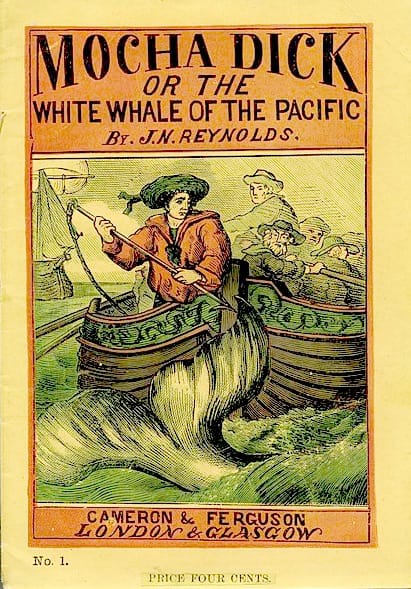
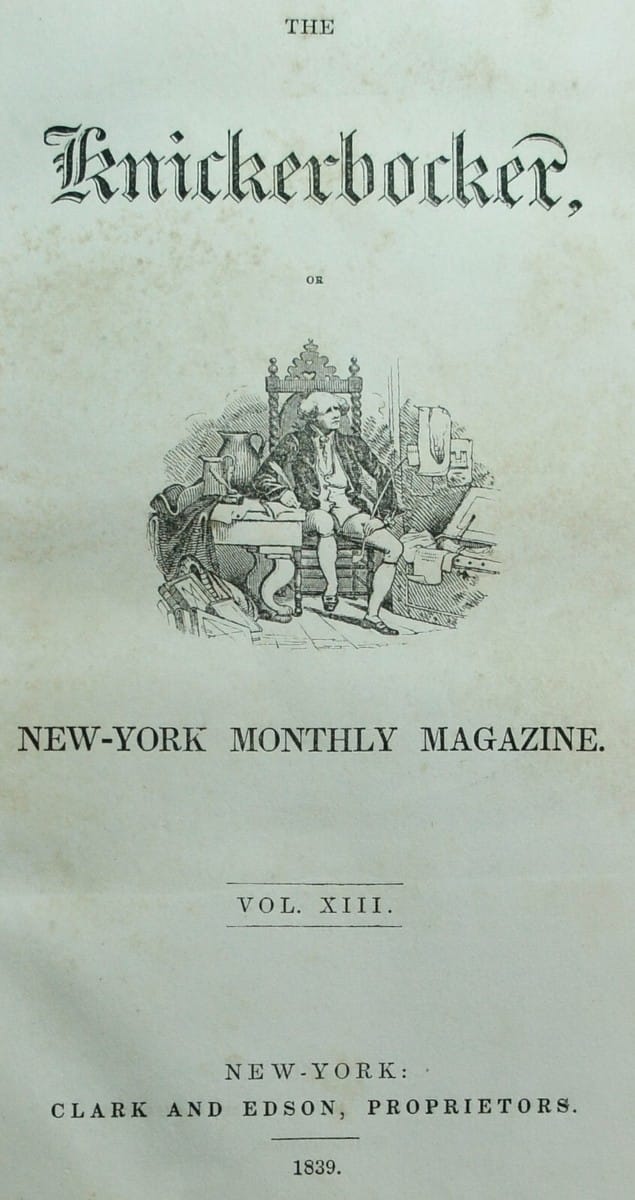
That piece was published in the Knickerbocker Magazine in 1839.
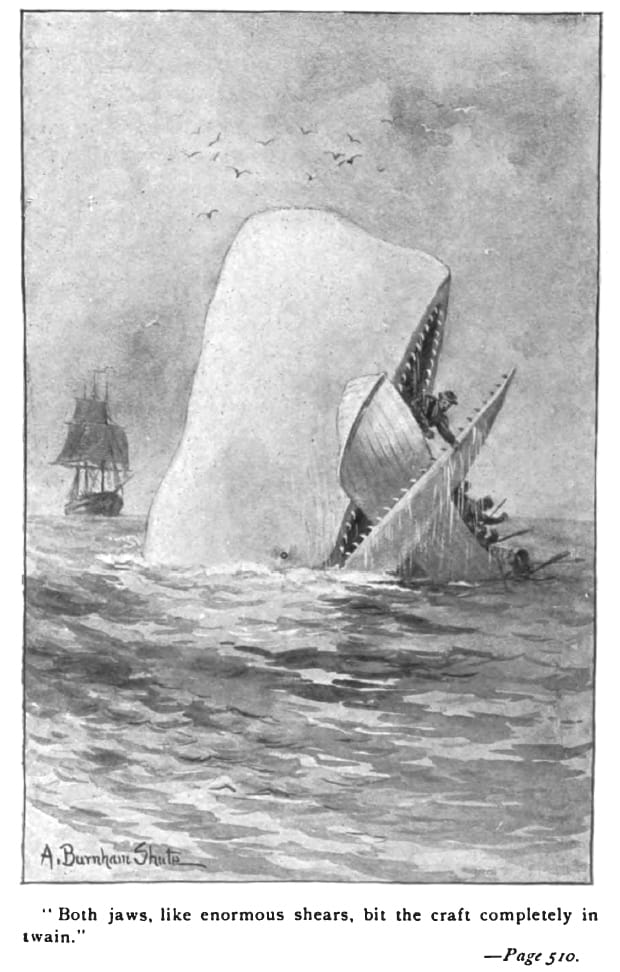
A young Herman Melville read it, made notes, and twelve years later published Moby-Dick, in which the white whale is named Moby instead of Mocha, but the framework is otherwise recognizably a copy of Reynolds'. Fucking rip-off.
Edgar Allan Poe had also already read Reynolds's earlier work. In 1837, Poe published The Narrative of Arthur Gordon Pym of Nantucket, his only novel ever, which describes a doomed Antarctic voyage culminating in a polar mystery.
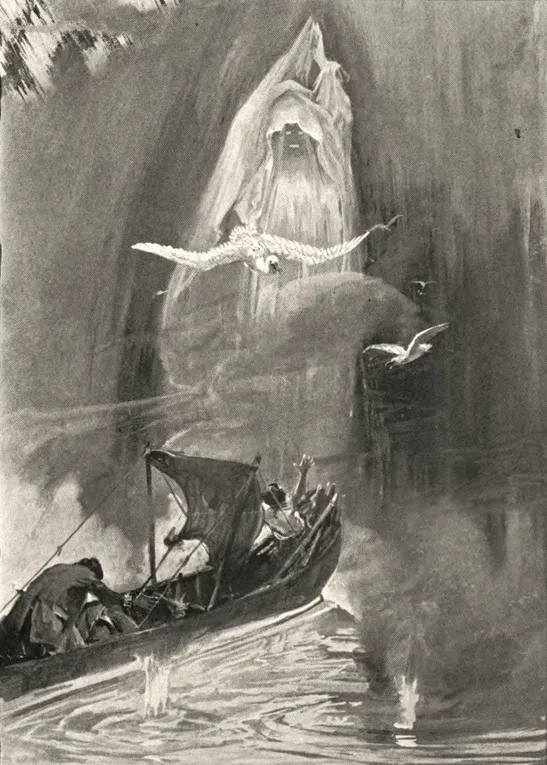
Chapter sixteen of Pym is, by a careful textual comparison, roughly half-composed of language lifted directly from Reynolds's 1836 congressional address from the previous year. Poe ripped about seven hundred words out of the fifteen hundred available. He did not credit Reynolds either. He used that speech the way a fisherman uses a net, dragging it across his draft to see what came up.
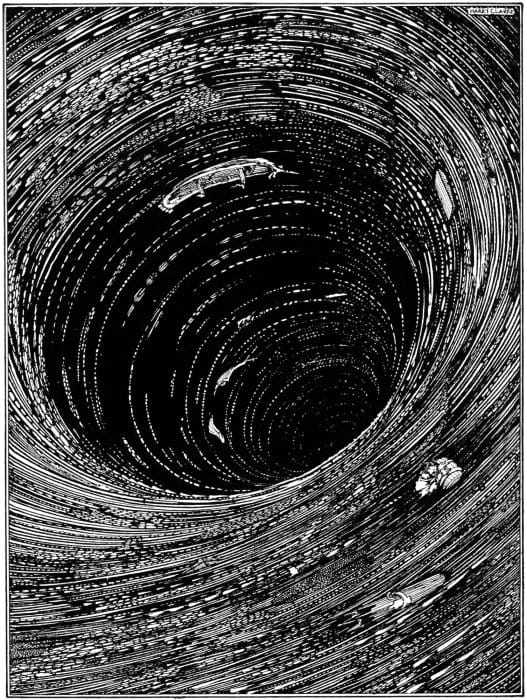
In October 1849, in Baltimore, Edgar Allan Poe was found delirious on the street, taken to Washington College Hospital, and died four days later. According to multiple witnesses, in his last conscious hours he repeatedly called out a single name.
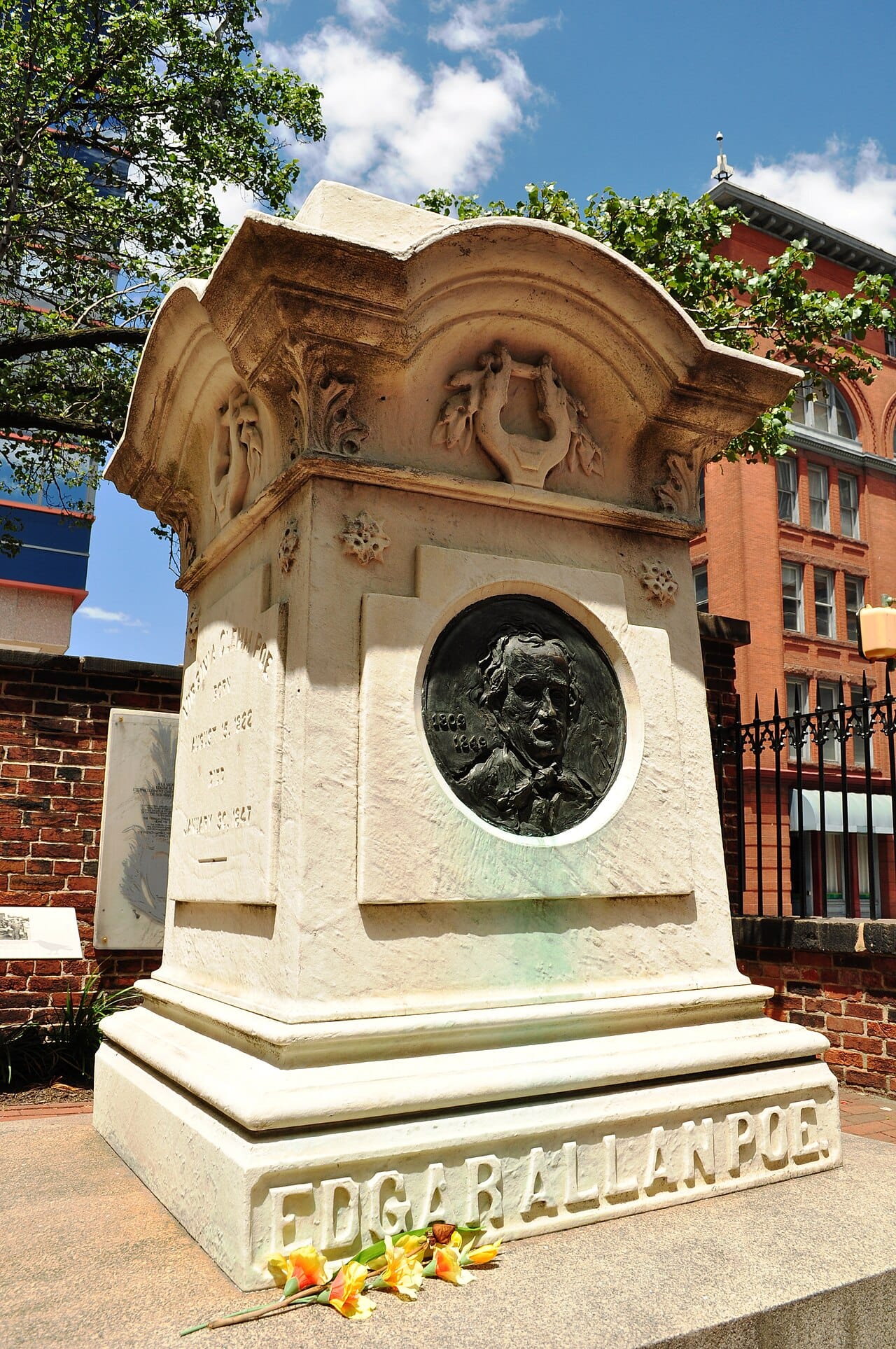
The name was "Reynolds."
Nobody has ever been completely sure which Reynolds he meant. Several candidates have been proposed over the centuries, including a Baltimore carpenter, a doctor, and a man Poe had ridden with in a militia drill.
The literary historians who study this kind of thing instead tend to think he meant Jeremiah N. Reynolds, the polar expedition man, whose words Poe had built half a chapter of his only novel from. Poe and Reynolds had never met. They had never corresponded that we know of.

Whatever Poe was reaching for in the last hours of his life, if it was Reynolds, was not a personal thing. It was that polar continent. It was that white expanse at the bottom of the world that Reynolds had been trying to get an American expedition to reach since before Poe was old enough to drink.
Reynolds himself died in 1858, age fifty-nine, in obscurity, while visiting St. Catharines Springs in Canada. He had spent the last twenty years out of public life. He had never gone to Antarctica. He had not been allowed near the Hole.

The framework's final note on Reynolds: he is the cleanest single case of how instrumental virtue carries its possessor across the boundary between distortion and reality without altering the possessor at all. He started as Symmes's advocate. He ended as Wilkes's predecessor. He inspired Melville and Poe. He died on a Canadian hillside without ever having seen the southern ocean he had spent his whole life describing to congressmen.
The continent he had pointed toward still turned out to be solid.
Better.
The framework's analysis of these distortion fields includes, where possible, an account of the loci who managed to navigate it well. Not perfectly. Not heroically. Just Better than the path of least resistance the field was obviously pushing everyone else toward.
The Darien field had Fonab. The St. Louis marathon had Caravajal. The N-ray field had Wood.
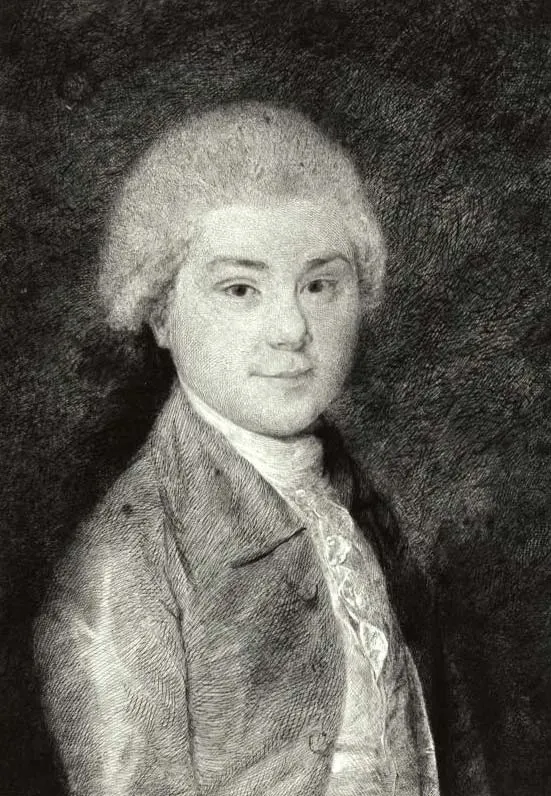
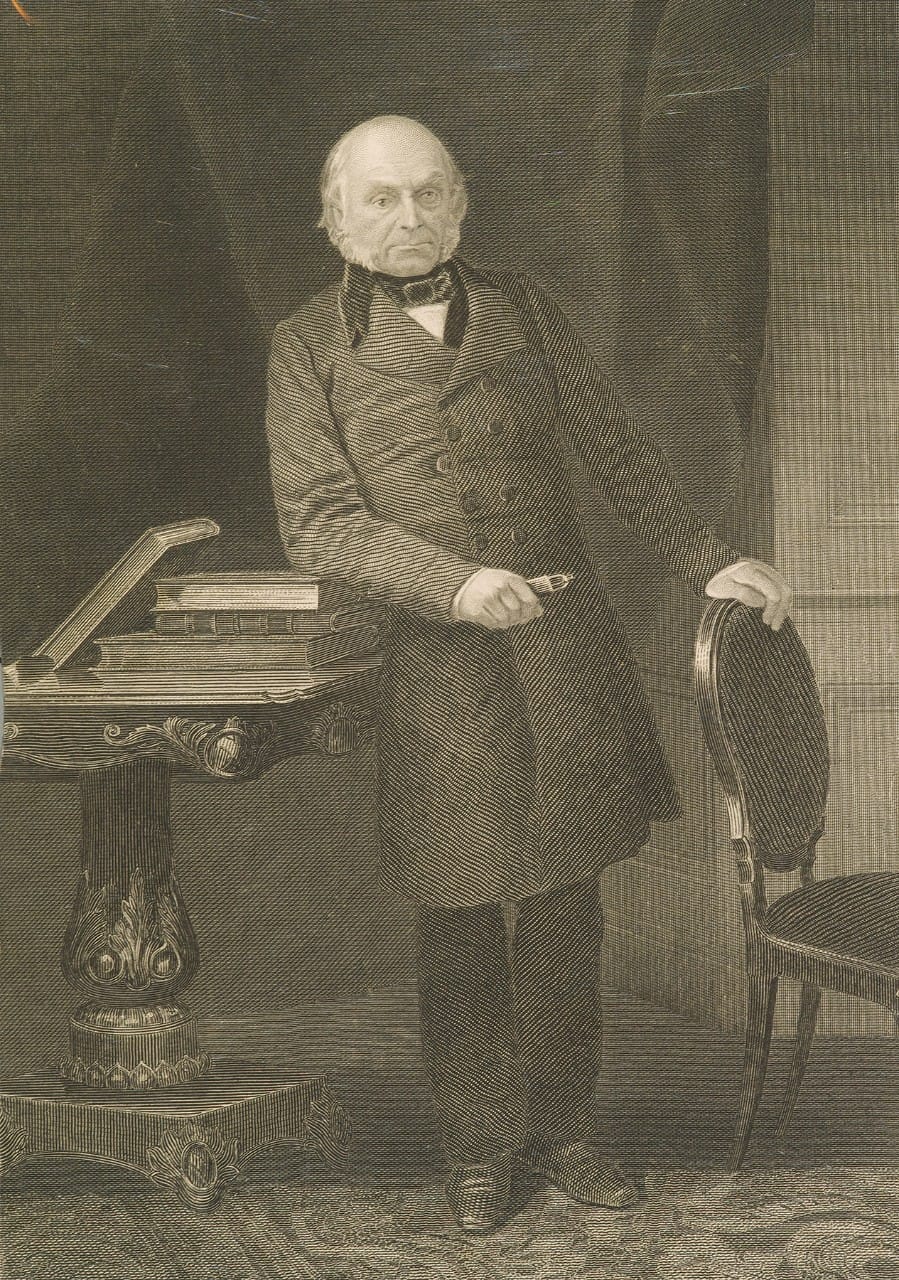
The Symmes field had John Quincy Adams.
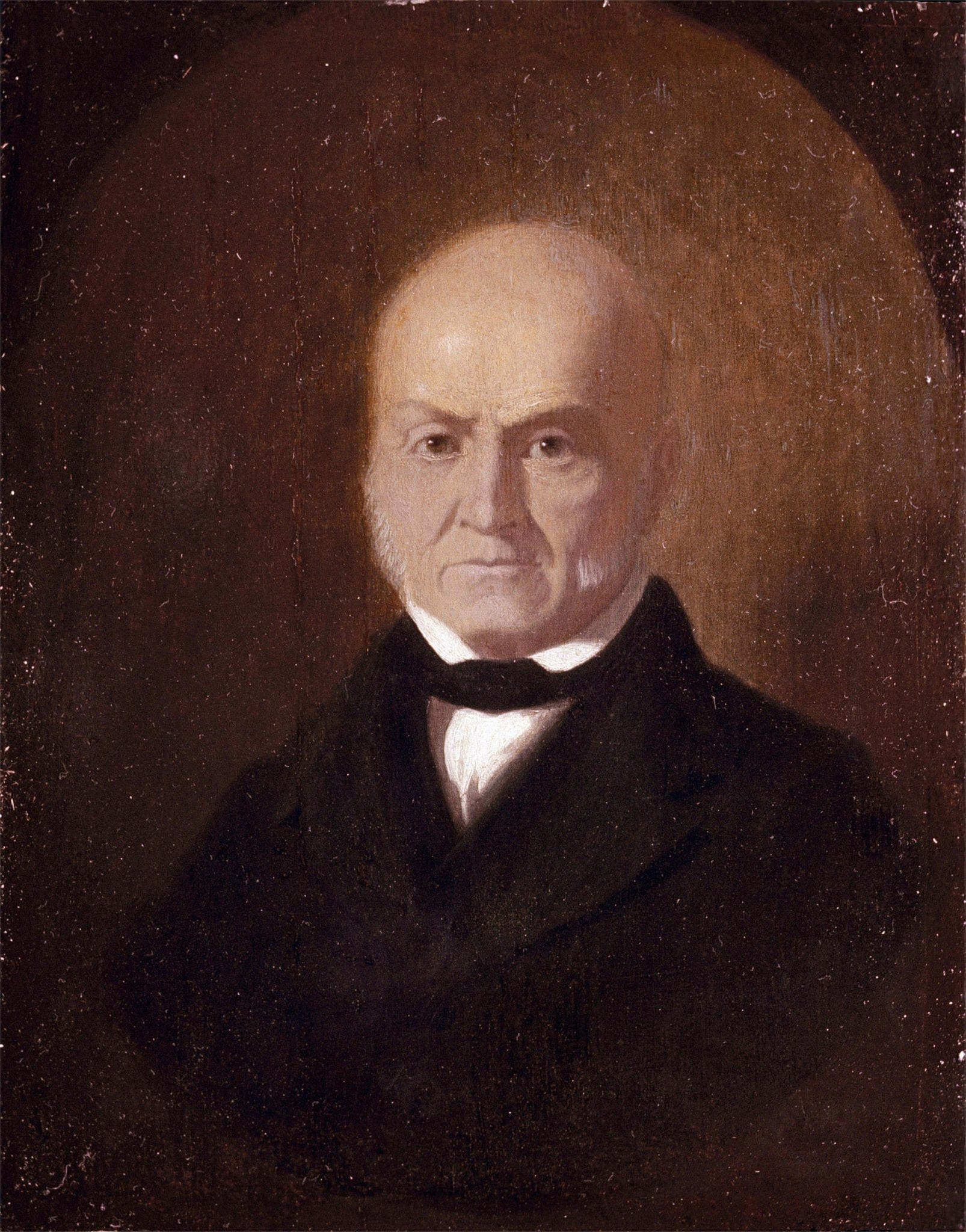
This is not how Adams is usually remembered at all, and the Adams section of the Symmes literature is small relative to the Symmes section and the Reynolds section, because Adams was a private operator on this question and most of his contribution mostly shows up in his diary rather than in public speeches.
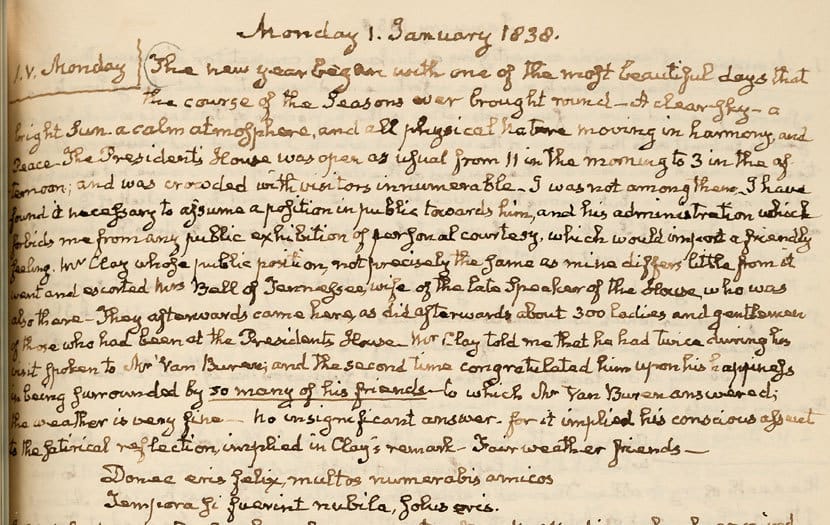
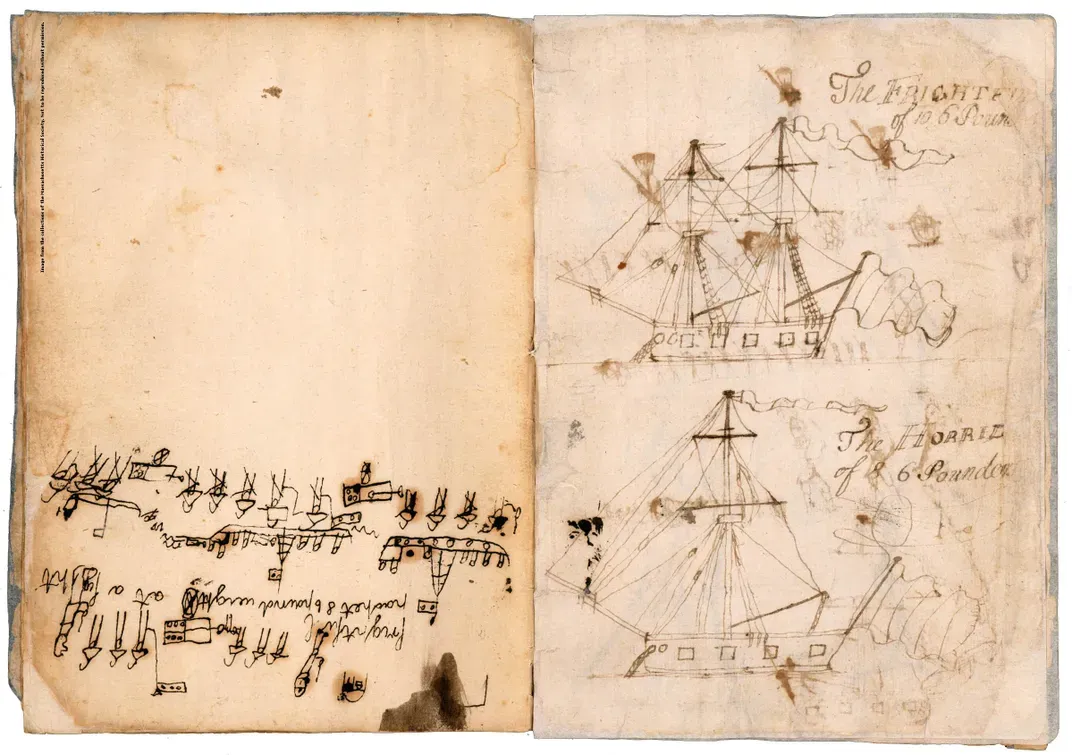
But the pattern is consistent: distortion fields are interrupted by loci who maintain accurate contact with what is actually happening while the rest of the field loses it. Adams did this with remarkable consistency from the moment he first encountered Symmes's Hole theory in 1822 to the moment the Wilkes Expedition sailed in 1838.
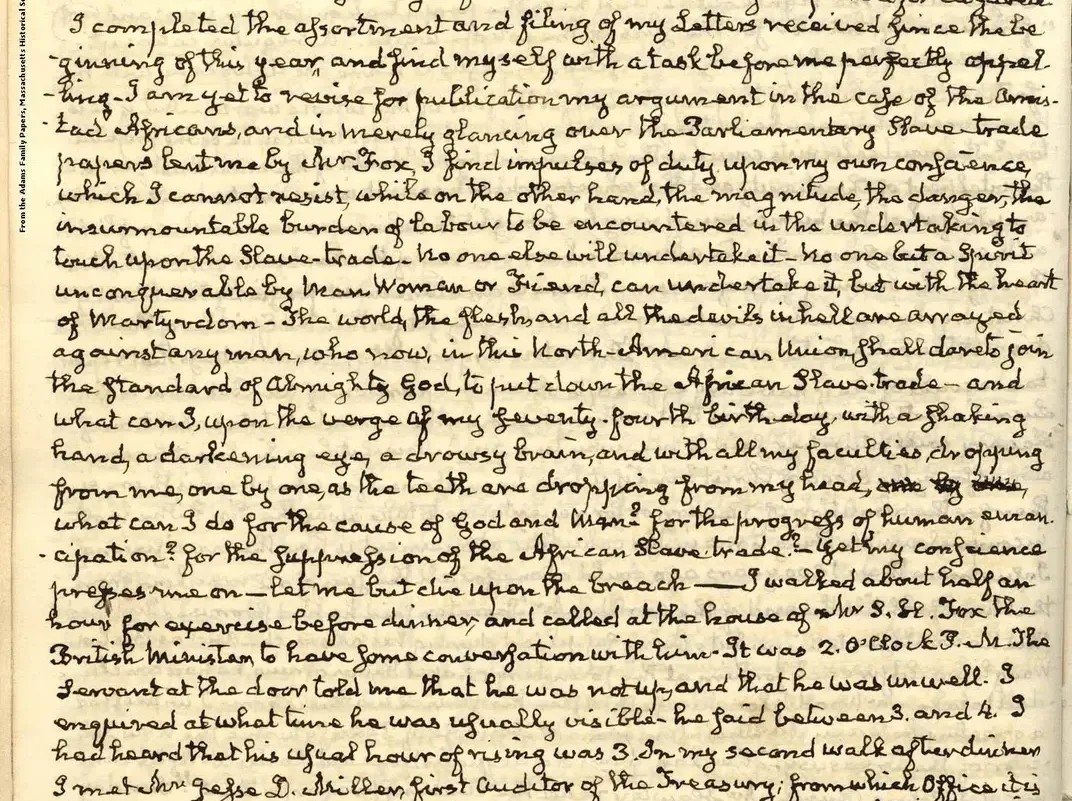
What Adams thought of Symmes's theory is on the record. He thought it was, in his own phrasing, ridiculous. He compared it directly, in his diary, to other ideas he considered politically and morally ridiculous, in this case the American Colonization Society's plan to ship free Black Americans over to Africa. He wrote that the Colonization scheme was, "so far as it is sincere and honest, upon a par with John Cleves Symmes's project of going to the North Pole, and travelling within the nutshell of the earth."
He just said these guys were talking out their Hole.
The phrase to focus on is "within the nutshell of the earth." Adams chose his metaphors carefully. He picked one that placed Symmes's project squarely inside the genre of ideas you joke about. The diary entry is not equivocal. Adams did not consider hollow Earth a live scientific question to consider.
And yet, when Reynolds came back to him in 1827 with a revised proposal, with the Hole stripped and the cartography added back in, Adams said yes.
This is the move worth analyzing closely.
A simpler operator would have looked at Reynolds, recognized that Reynolds was the same exact man who had spent the last four fucking years lecturing everyone about hollow Earth, and rejected anything Reynolds proposed on the grounds that the proposer was clearly contaminated by that original distortion.
That rejection would have been entirely defensible. It would also have been wrong, because it would have thrown out the productive component of the field (an American polar expedition was actually a good idea, for reasons unrelated to Christian Symzonia) along with the contaminated component.
Adams did not make that mistake here. He listened to Reynolds with the original cosmology removed. He evaluated what was left standing before him on its own merits. He found that what was left was now actually a serious case for an exploring expedition that the United States actually had non-idiotic reasons to undertake, and he supported it. His diary records his pleasure when Reynolds had "varied his purpose to the proposition of fitting out a voyage of circumnavigation to the Southern Ocean," and his commitment to "accelerate its approach" if he could. He wrote that "May it be my fortune, and my praise" to make it happen.
This is Better in a very pure form. Adams is not pretending the original distortion didn't exist. He is not endorsing it retroactively. He is also not punishing the later, productive output for being attached to it. He is doing the harder thing, which is the analytical work of separating signal from noise inside a field that has already confused them, and supporting only the signal.
The framework would also call this generative resistance, in the same general family as Wood pocketing the prism. Adams's intervention is administrative, not theatrical, but the structural shape is identical: an outside locus, not embedded in the distorted field's incentive gradient, applies analytical pressure that the field's internal mechanisms can’t. Wood's pressure was empirical (he removed equipment to test perception). Adams's pressure was political (he funded this proposal only when it was made sane).
In 1828, his administration commissioned the USS Peacock for the Antarctic voyage. He attended cabinet meetings about it. His diary notes, on November 17, 1828, "The South Pole Expedition. Jones to command. Instruments to be purchased."
Two weeks later he lost the election to Jackson and the expedition was assassinated by the incoming administration.
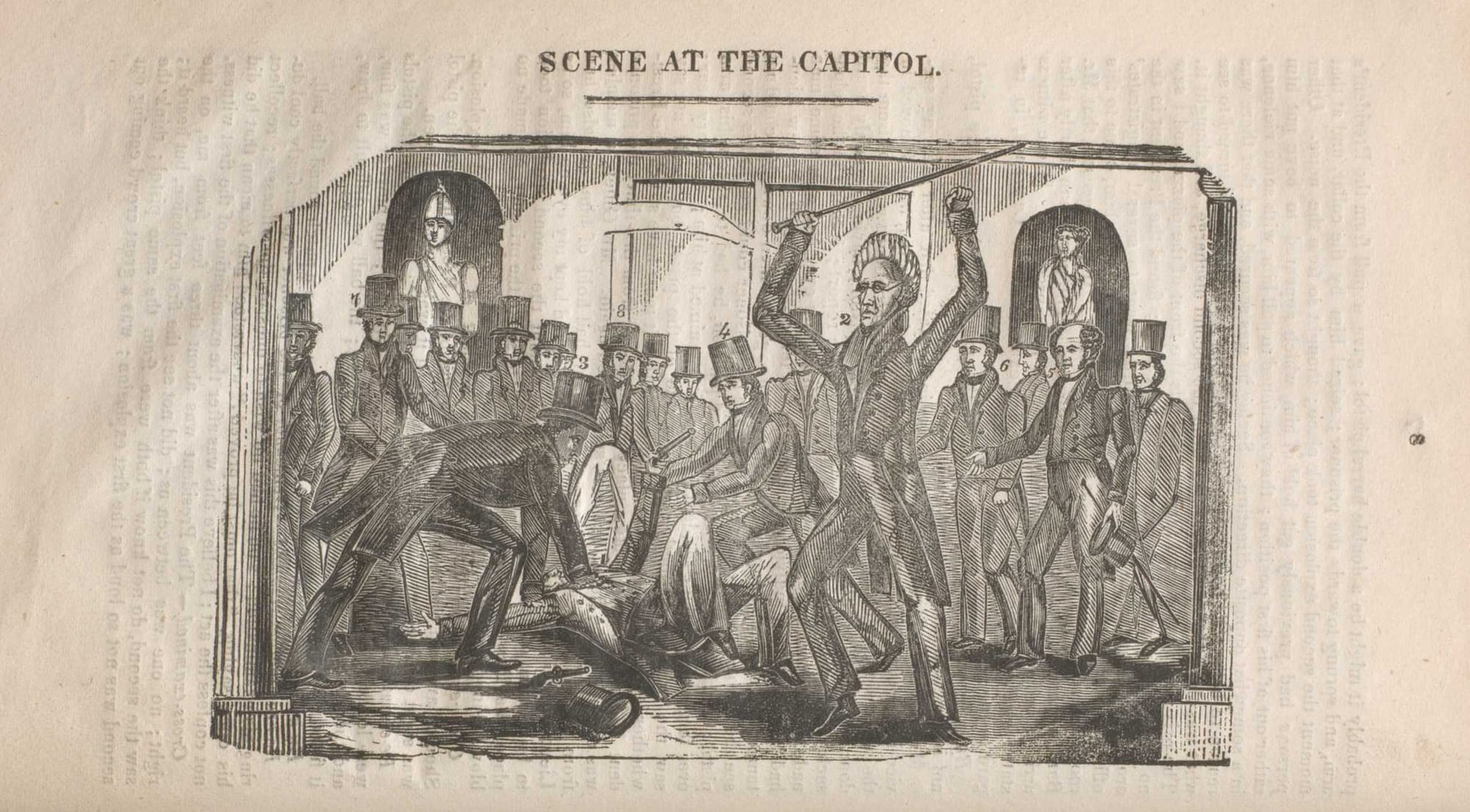
Adams went back to Massachusetts, lost his presidential standing, and then, in 1830, did something almost no former U.S. president has ever done: he ran for Congress. He won, obviously. He took a seat in the House of Representatives, a step down in nominal rank but not in actual influence, and he held it until his death in 1848. He used the position, among many other things, to keep pushing the exploring expedition that he and Reynolds had nearly launched in 1828.
In 1836, when Reynolds came back from his Chilean shitshow and resumed the lobbying campaign, Adams was still waiting. He attended Reynolds's two-and-a-half-hour congressional address on April 2, 1836. He spoke in favor of the appropriation on the floor. On May 10, 1836, when the House passed the funding bill, Adams was one of the deciding votes. He was the one who walked up to Reynolds after the vote and told him personally that it had passed.
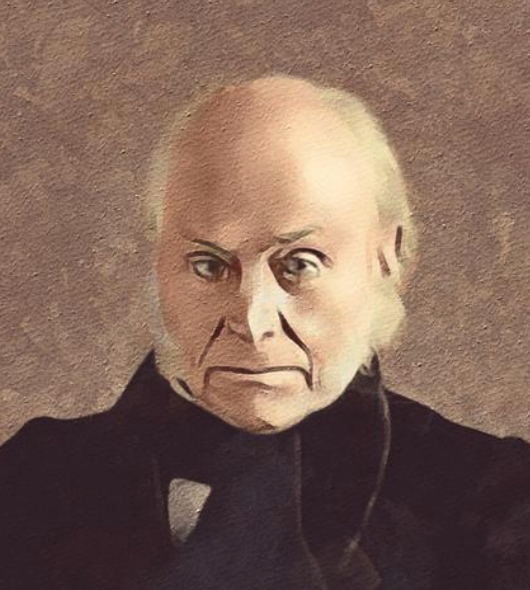
Across the entire arc, from 1822 to 1838, Adams never validated the Hole, and also he never refused to be useful to the productive component of the same field. This is structurally rarer than it sounds. Most rational observers, when confronted with a field that mixes signal and noise, default to one of two strategies: total endorsement (which validates the noise) or total rejection (which destroys the signal). Adams ran the third strategy, which is selective extraction. He took the valuable polar expedition out of the hollow-Earth field, attached it to a separate political coalition supporting it for its own reasons, and let the original field die of its own derangement.
Symmes never forgave him for this.
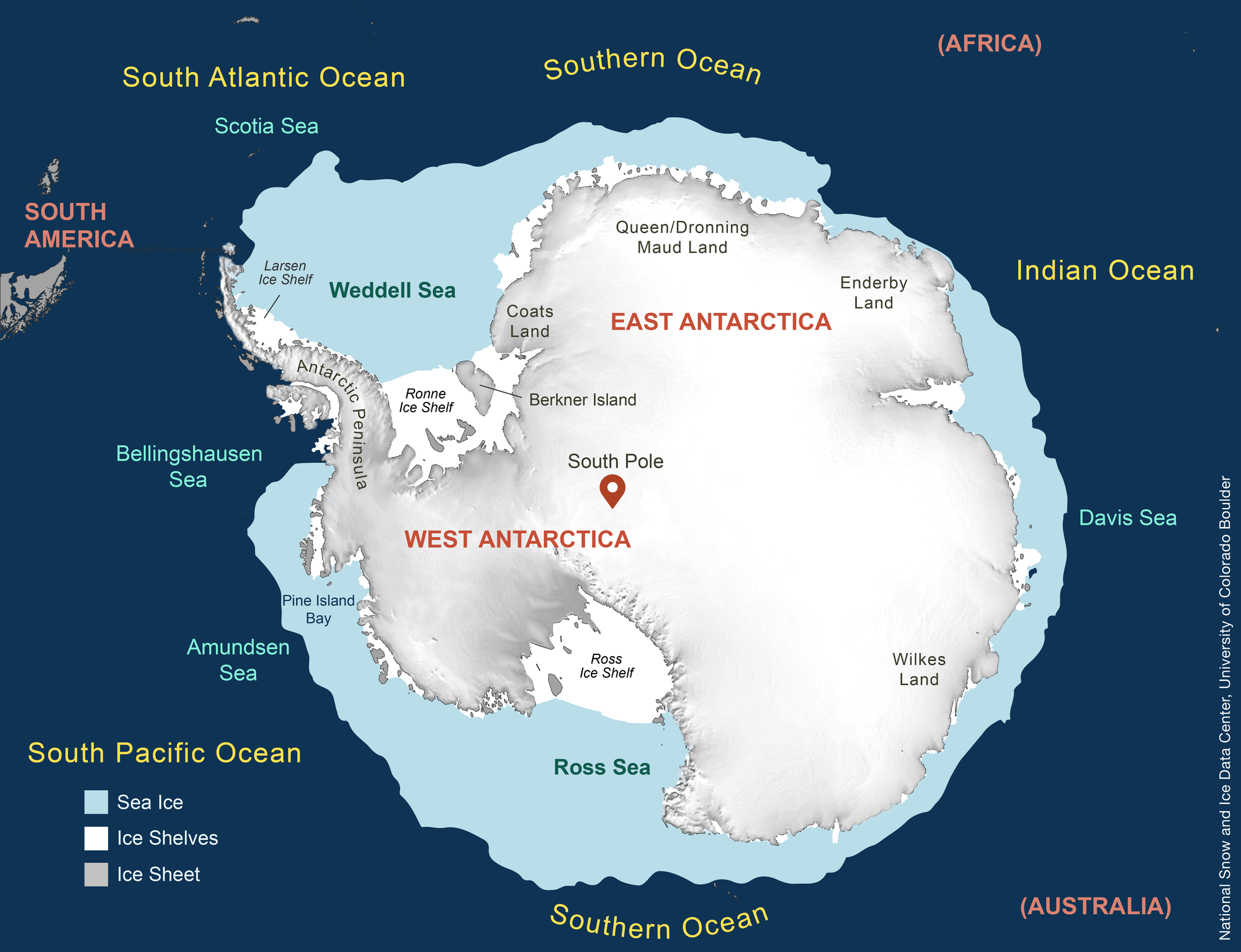
There is no record I can find of Symmes ever publicly thanking Adams for the work that would eventually produce the Wilkes Expedition, because Symmes correctly perceived that the expedition Adams was building had nothing to do with Symmes's Hole and was, if anything, structurally hostile to his Hole. The expedition was going to map Antarctica. Symmes did not want Antarctica mapped. Symmes wanted Antarctica to turn out to not exist at all, because where Antarctica was supposed to be was where the southern Hole was supposed to be.
Adams was, in the framework's analysis, the locus who let the empirical world have its say. He didn't have to do anything dramatic here to accomplish this. He just refused to credit the distortion while still also funding the cartography. He let reality eventually answer the Symzonian question, which it did.
The answer was that Antarctica is real.

The Continent.
The United States Exploring Expedition sailed from Norfolk, Virginia on August 18, 1838.
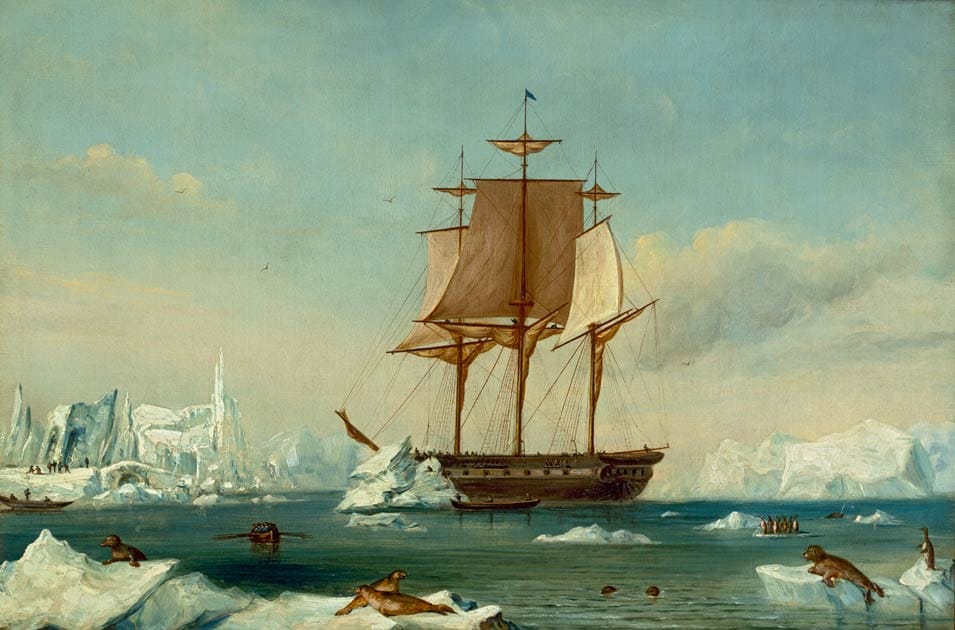
It consisted of six ships: the Vincennes (flagship, 780 tons, eighteen guns), the Peacock (650 tons), the Porpoise (230), the Relief (smaller), and two pilot schooners called the Sea Gull and the Flying Fish. The crew complement across the squadron numbered about 350 sailors and officers, plus a corps of nine civilian scientists (these humans are called "scientifics," in the period's usage), including botanists, zoologists, geologists, ethnographers, philologists, and an artist. The expedition was the largest, best-equipped scientific exploring venture the United States had ever launched, and one of the largest of any nation in the nineteenth century to that date. They were gonna figure out if this Hole was there or not.
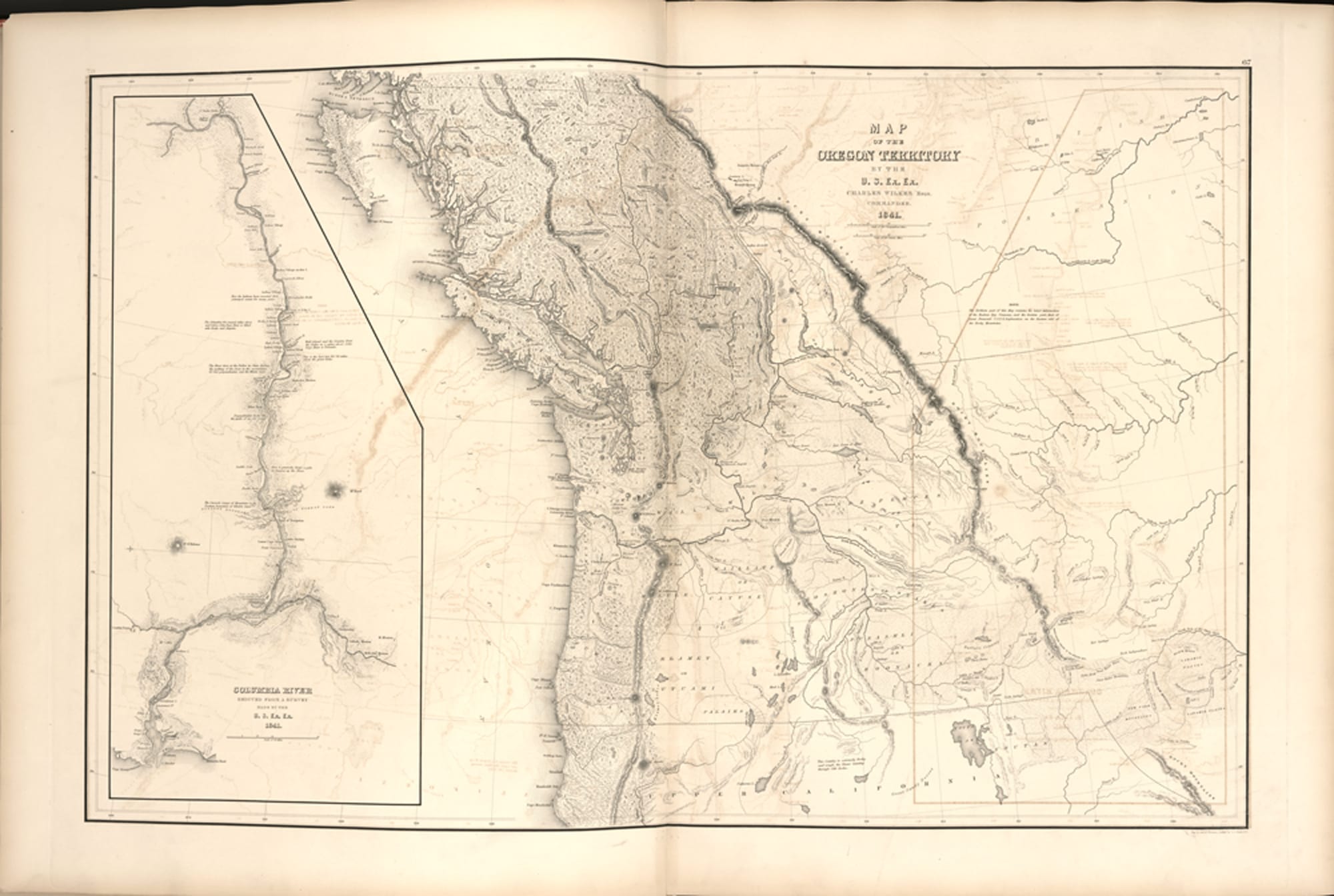
It was commanded by the U.S. Navy's Lieutenant Charles Wilkes, who had been chosen for the role over a long list of more senior officers because most of them had already quit, refused to do this, or been refused. Wilkes was thirty-nine years old, vain, fractious, professionally junior for the assignment, and politically connected. He had spent the previous several years running the Navy's Depot of Charts and Instruments and had acquired no actual exploring experience.
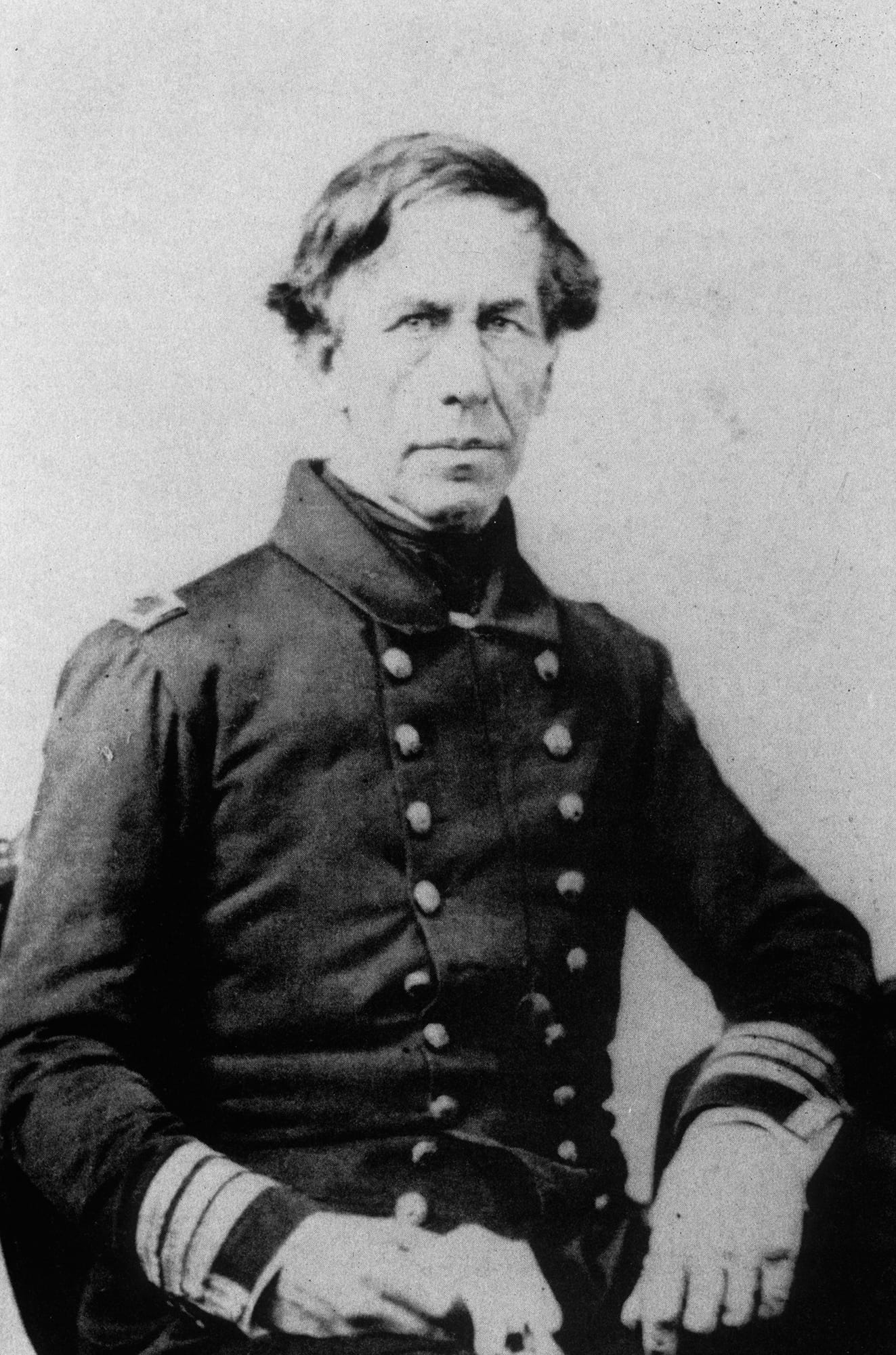
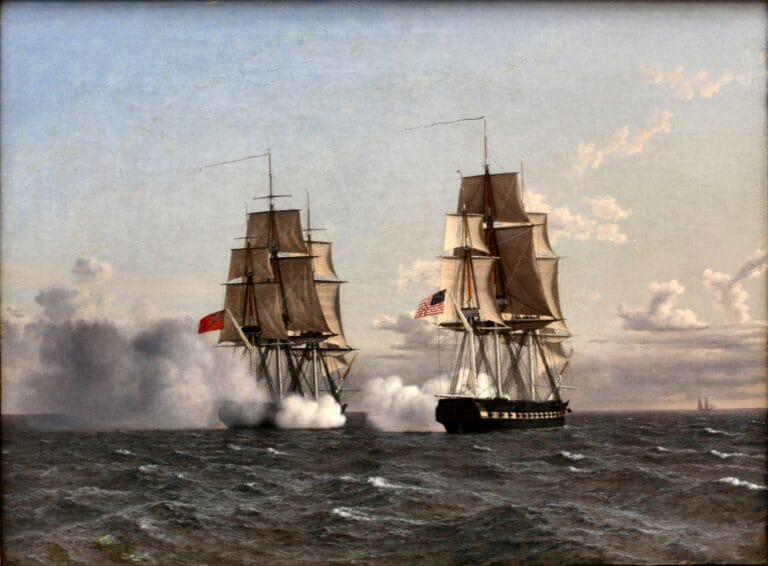
Sources describe Wilkes as a “difficult man”. He would, twenty-three years later, nearly drag the Union into war with Britain by ordering a U.S. warship to fire on a British packet during the Civil War (the Trent Affair), an incident that does not look to feature in any biography of him as one of his stronger moments.
He did, however, get this expedition out there and home again.
The voyage to prove there was no Hole lasted nearly four years. It sailed south to Tierra del Fuego, west across the Pacific to Tahiti and Samoa, southwest to Australia, south to the Antarctic continent, north to Hawaii, east across the Pacific to the Oregon coast (where the expedition, while they were at it, produced the first reliable American charts of the lower Columbia River), back across the Pacific again, through the East Indies, around the Cape of Good Hope, across the South Atlantic, and home to New York via Cape Verde. The total distance covered exceeded eighty-seven thousand nautical miles.
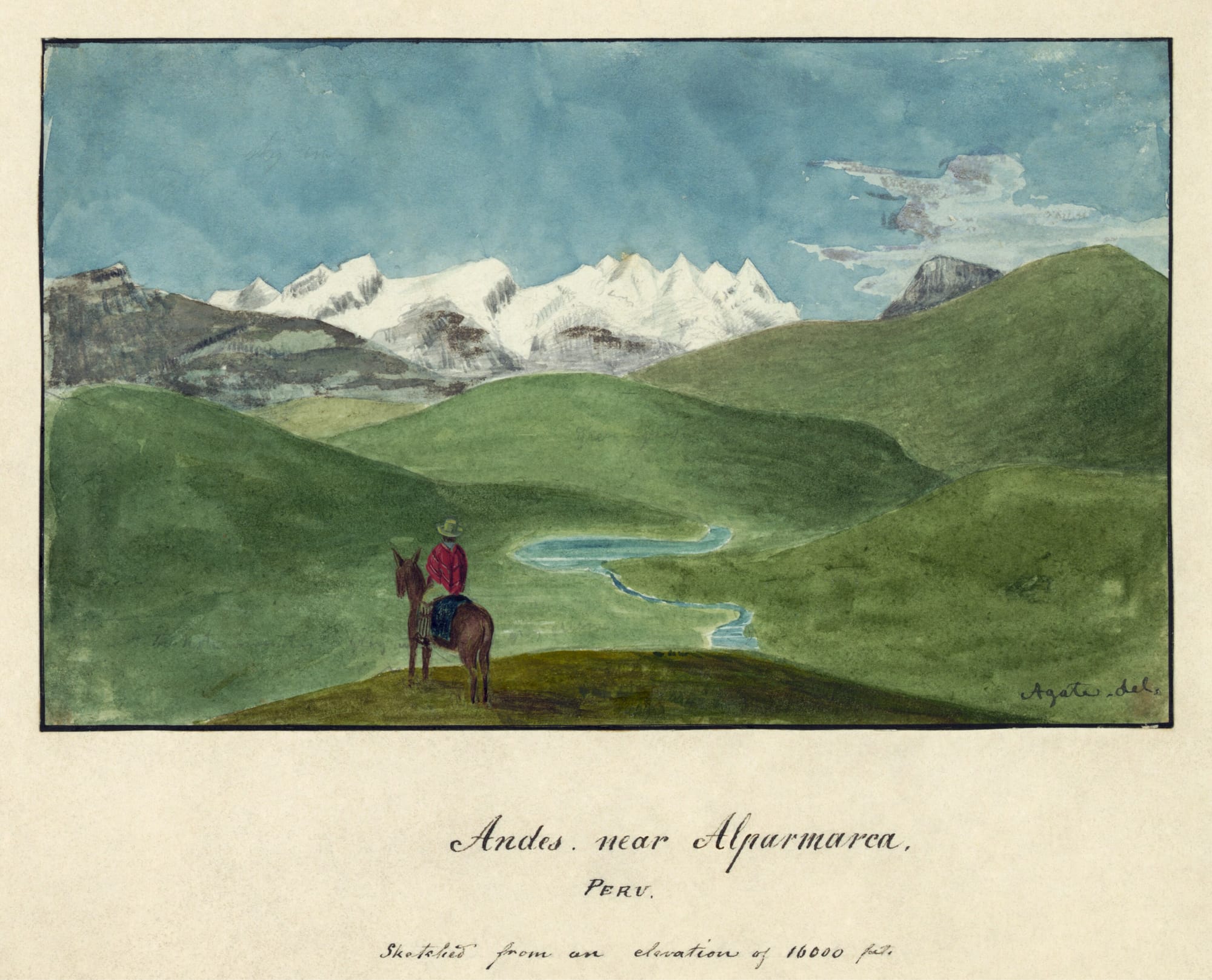
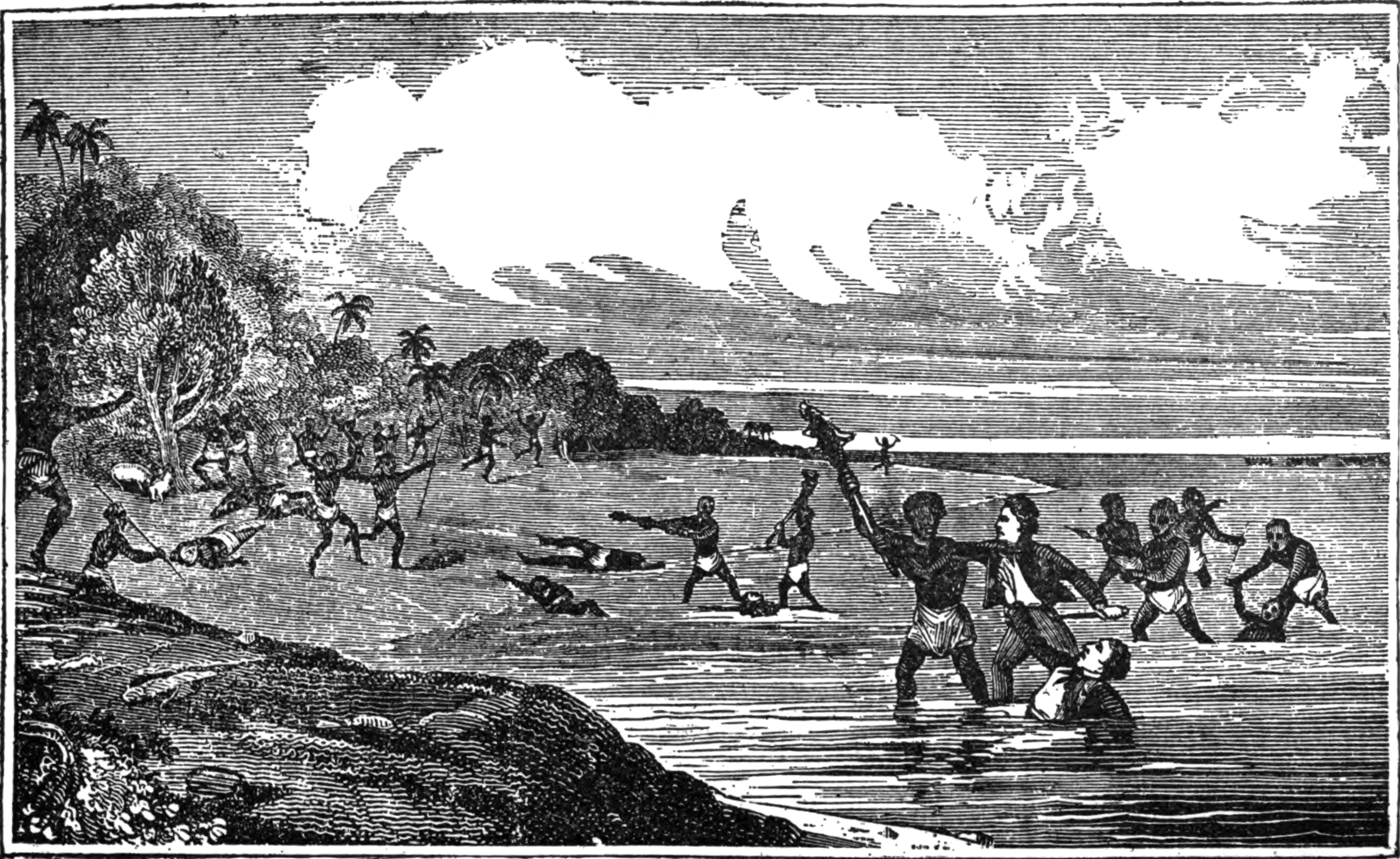
The squadron lost two ships, the Sea Gull (just vanished off Cape Horn with all hands) and the Peacock (wrecked on a bar at the mouth of the Columbia River; twenty-eight men died).
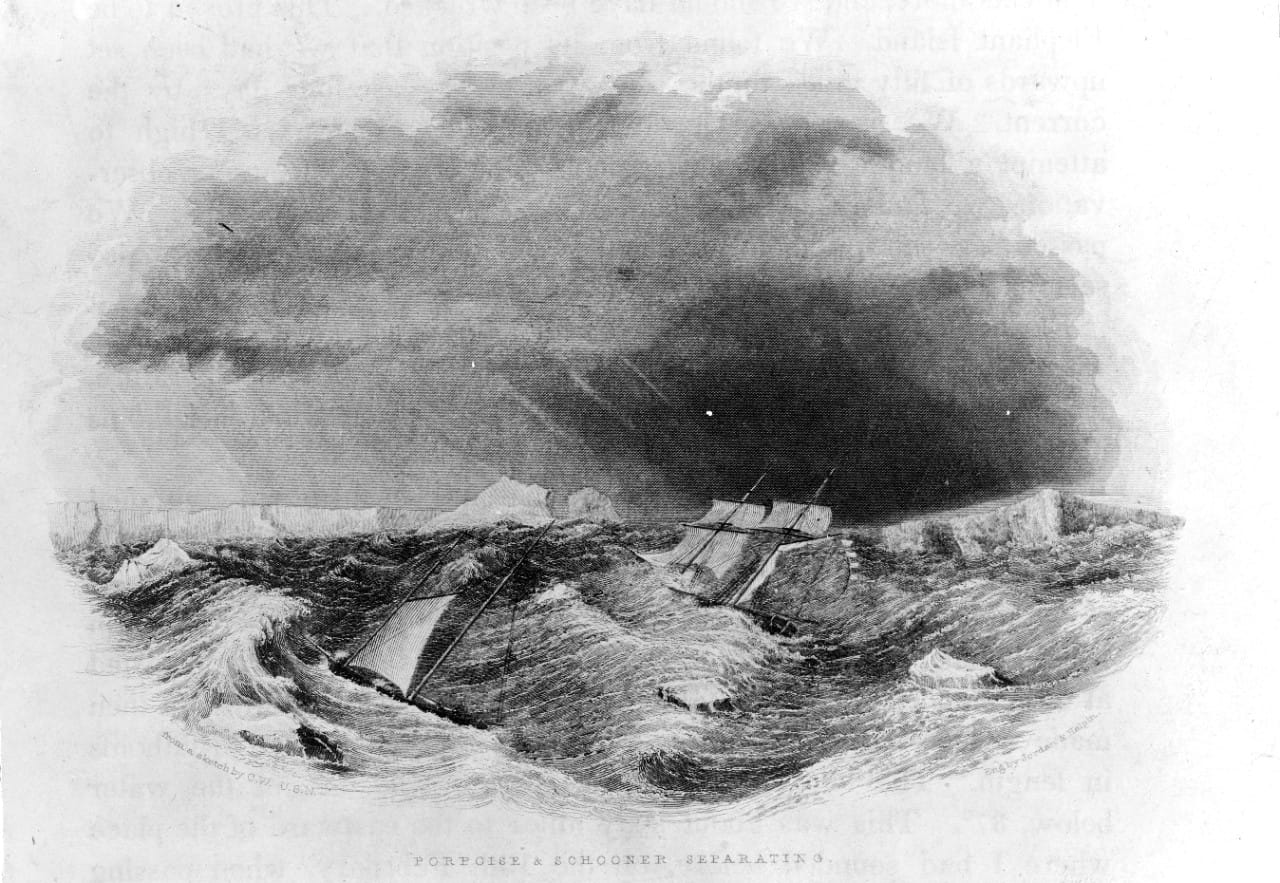
It produced the first reliable Western charts of major portions of the South Pacific islands, the first detailed American survey of the Oregon coast, the first reliable cartographic outline of substantial portions of the Antarctic coast, and a haul of natural-history specimens so large that it would form the founding collection of the Smithsonian Institution when it was chartered four years later. The botanists collected over fifty thousand plant specimens. The zoologists collected over two thousand birds. I do not know what anyone does with two thousand birds on a ship, but that's why I'm not a zoologist. The expedition's published Narrative, eventually completed by Wilkes across the next nineteen years, ran to five volumes. The accompanying scientific reports, prepared by the scientifics, ran to twenty-two more, including detailed studies of Polynesian languages, Pacific corals, Antarctic geology, and the natural history of the Oregon Territory.
The expedition's most consequential single accomplishment was the confirmation that Antarctica is, it turns out, a continent (not a big Hole).
In 1838, the existence of an Antarctic landmass was still an open question. Various explorers (Cook in the 1770s, the Russian Bellingshausen in 1820, the American seal-killer Palmer also in 1820, the Briton Bransfield) had glimpsed coastlines or islands south of the Antarctic Circle, but no one had charted enough connected shoreline to demonstrate that what they were seeing was a single continental landmass rather than a scatter of large islands surrounded by sea ice. The South Pole's continental status was, in the scientific sense, not yet established.
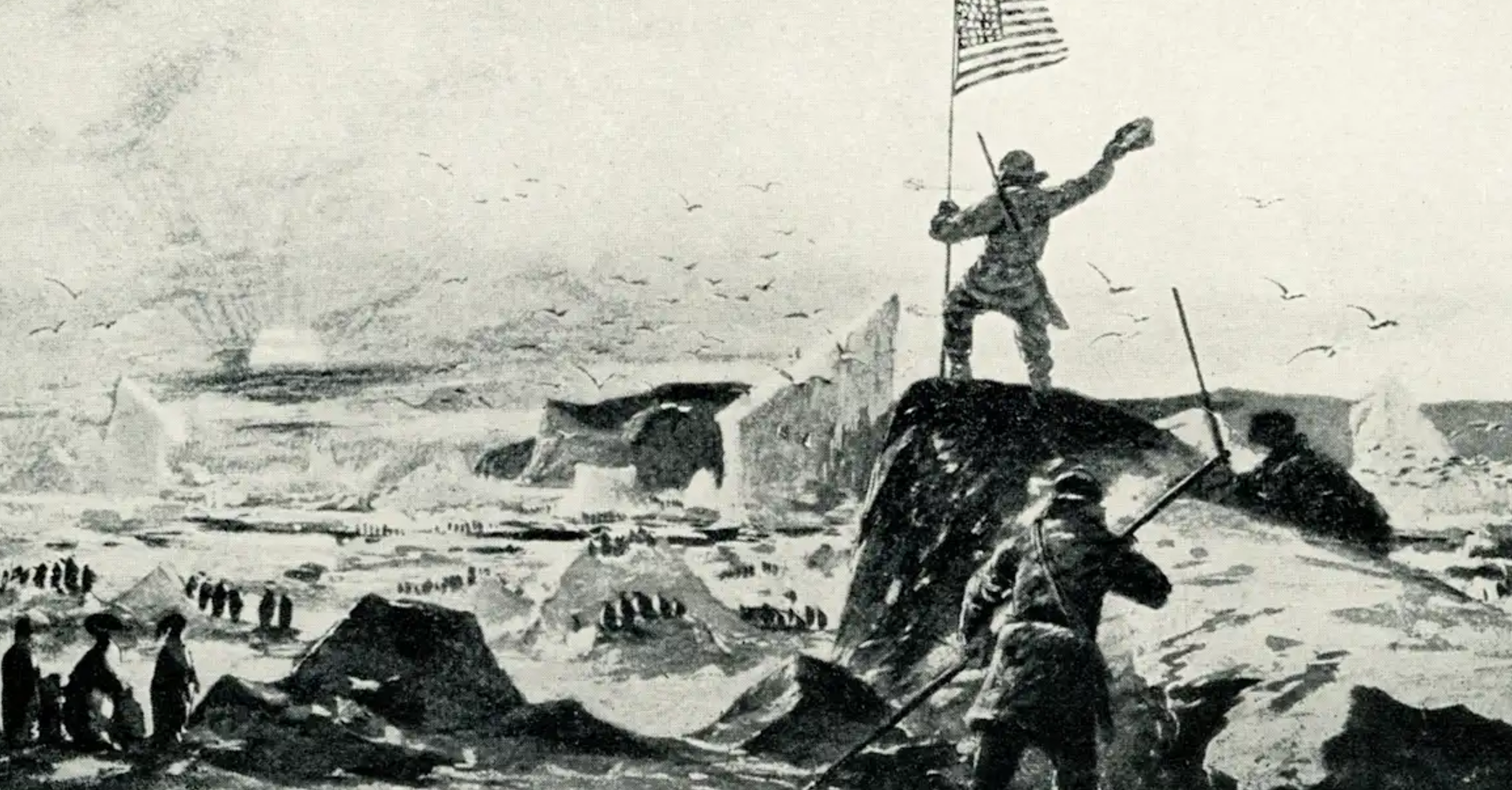
This is the geographic uncertainty Symmes had been living in for twenty years. The southern Hole, in his framework, was located where no Western expedition had yet successfully landed. He had been able to point at the unmapped white space on the chart and say, "look, the Hole is in there." Twenty-five senators had voted yes partly because nobody could prove him wrong about that without actually going to look.
The Wilkes Expedition looked. No Hole.
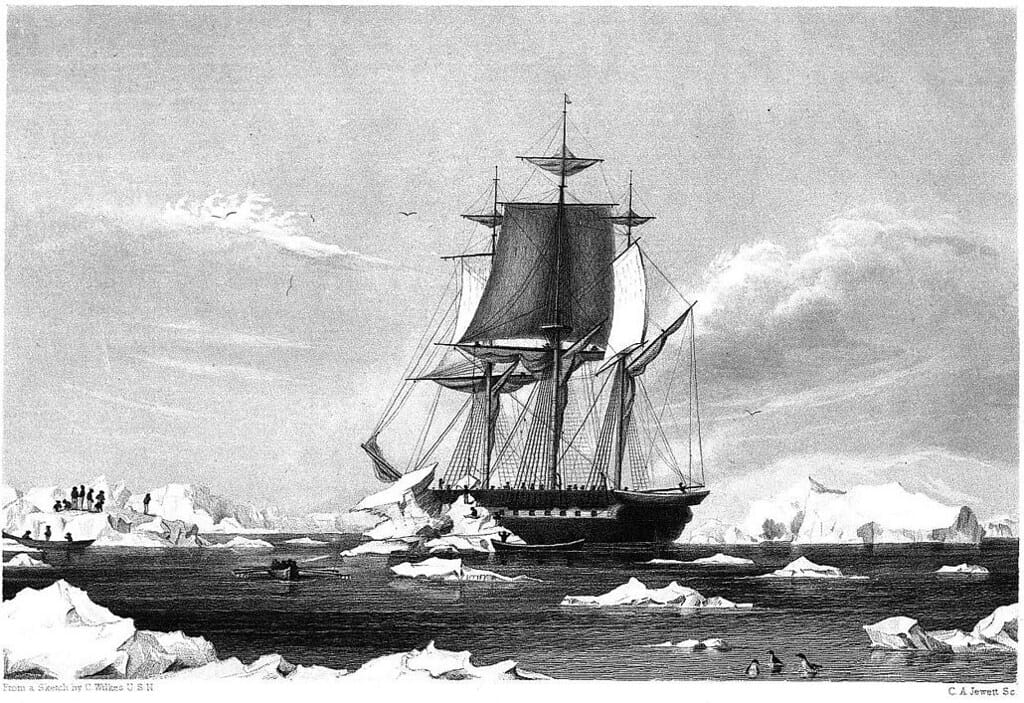
From January to February 1840, Wilkes's squadron worked the Antarctic coast between roughly 100° E and 160° E longitude, charting what is now called “Wilkes Land”, because this is a hard one to name stuff after (Unlike little Americus Vespucius). They mapped, in continuous coastline, approximately fifteen hundred miles of high ice cliffs, mountain peaks visible behind the ice, and rocky promontories where the ice ran out. The continuous coastline was the part Symmes was gonna hate. A continuous coastline of fifteen hundred miles is a continent.
Wilkes reported back, accurately, that the southern landmass was continental in extent. The big drop down to Veggie Tales was not in there. There were actually mountains behind the ice. There were exposed rock formations. There were no secret apertures.
Symmes's theory had been falsifiable in principle since 1818. The empirical world had been ready to refute Symmes the entire time. The refutation had required only that someone show up with charts and a sextant. Wilkes showed up. He charted. He brought a sextant, too.
Except Symmes had been dead for eleven years by the time Wilkes reached the coast that wasn't a hole.

He would never know there was no inner Earth. He had spent his last decade convinced that the funding for an expedition down to meet the Symzonians was a matter of organizing one more campaign, one more set of letters, one more legislative session, and that the expedition once funded would finally prove him right. That expedition was eventually funded. It sailed. It found Antarctica, and Antarctica did not move out of the way when they tried to lift it like a lid.
The Symmes field could survive for as long as it did partly because the empirical machinery that would refute it didn't exist yet. Once that machinery was built (an ocean-going scientific expedition, well-equipped, with trained surveyors, sailing to the latitudes in question), the field collapsed within a single voyage. Argument was always irrelevant here. The collapse of hollow Earth was not due to peer review. It was not due to evidence Symmes himself was forced to address. It was due to physical men with physical instruments standing on actual ice and writing down what was actually there.
The empirical world will eventually have its say if it can. Wilkes was not trying to refute Symmes. He never mentions Symmes's theory in his published Narrative, as far as I can determine. Wilkes was just trying to chart a continent. The refutation happened as a side effect of the mapping. Symmes's theory did not die in any argument. It was just walked right over by reality.
The Wilkes Expedition returned to New York on June 10, 1842. It had been gone for three years and ten months. It had mapped a continent where, twenty years earlier, the United States Senate had been twenty-five votes shy of funding an expedition to sail down a hole.
What Symmes Did in the Meantime.
This is still not the end of this story. While Reynolds was being marooned in Chile, while Adams was running for Congress out of office, while the Wilkes Expedition was being slowly built and unbuilt and rebuilt in Washington, John Cleves Symmes Jr. was dying in Hamilton, Ohio.

His health had been deteriorating since 1827. The endless lecture circuit he was running had completely broken him. He had been traveling almost continuously for ten years, speaking in venues that were often unheated, sleeping in inns and the homes of disciples, eating irregularly, exposing himself to the weather of an American winter from Boston to Ohio for almost a decade, all to spread the knowledge of his Hole. He was, by mid-1828, severely ill. The contemporary diagnosis is vague. Sources mention "exhaustion," "general decline," and the kind of nineteenth-century catch-alls that mean basically anything could have happened; they had no clue. The modern reading is probably some combination of advanced cardiovascular disease, possibly tuberculosis, and the metabolic havoc of years of stress and irregular living.
He gave his last public lecture in 1828, in Quebec, where the climate finished him off. He returned to Hamilton, where his wife and the surviving children still waited. He took to his bed in early 1829. He never left.
He died on May 28 or 29, 1829, depending on which contemporary record you trust. He was forty-nine years and six months old. He was buried in the old burying ground in Hamilton with full military honors, his War of 1812 commission credentialing his interment one last time.
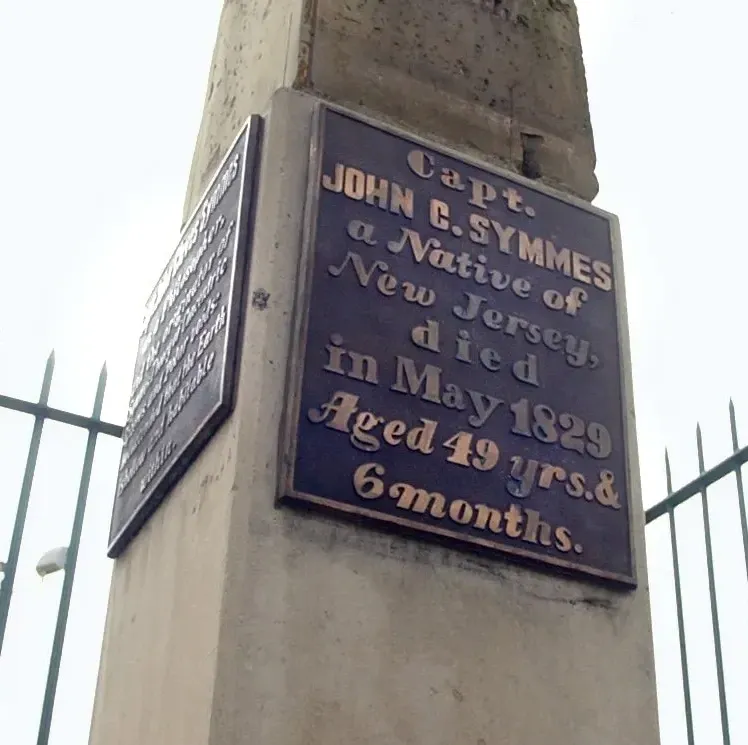
He left, in personal effects, almost nothing behind. He had spent his entire estate on lectures, pamphlets, postage
TO ALL THE WORLD,
travel, and the printing of his Hole theories. His widow Mary Anne would survive him by approximately two decades on the kindness of relatives and the small pension allowed her as the widow of a U.S. Army captain.
Symmes never saw the Hole. He never got to the Pole. He had been, in the public mind by 1829, mostly a figure of ridicule for a decade, the man behind "Symmes's Hole," a phrase that had entered the language as a synonym for any wild idea. He died on the bad side of his own joke.
Symmes's self-model and his external situation diverged early, somewhere around 1818, and never reconverged. He spent the remaining eleven years of his life inside a structure of beliefs about his own work that no external evidence ever penetrated. The lecture audiences laughed; he interpreted the laughter as their initial misunderstanding to be corrected by further explanation. The petitions were tabled; he interpreted the tabling as a procedural delay to be overcome by further organizing. Reynolds defected; he interpreted the defection as a personal betrayal rather than as evidence that even his closest disciple had concluded the theory was moronic. His health collapsed; he interpreted the collapse as the cost of the work, not as a signal to stop working. His self-model was sealed.
Sealed self-models do not get pierced from outside in most cases. They are sealed against outside piercing by construction; that's what makes them sealed. They preserve themselves at the cost of the agent's continued contact with the actual situation they exist in. Symmes was always sincere, to the last. The Hole was there. He never recanted. There is no recorded deathbed scene in which he doubted the Symzonian truth. According to the family accounts that survive, he died believing the Hole was there, and that the expedition would eventually find it and prove it.
The framework's view of sealed self-models is that they are deeply personal tragedies whose institutional cost can be quite substantial.
Symmes was bankrupted by his own conviction. His family was impoverished. His health was destroyed. He died young. None of this would matter as much if the field had been contained to just him, but the field was not contained to just him: it cost the United States Senate a coalition of twenty-five members agreeing to find the Hole on the record, it cost the Navy a decade of planning that eventually had to be rebuilt under totally different framing, it cost Reynolds his career and his health, and it cost the public a certain amount of attention and money that could have been spent much better elsewhere.
The cost was distributed widely from a single sealed self-model.
Symmes was buried under a stone. His son built him a different stone, four years later.
That Stone.
In 1833, four years after his father's death, Americus Vespucius Symmes, the tenth child (meaning John managed to hold back on this name for only three children before he finally had to let it free) and oldest surviving son of John Cleves Symmes Jr., commissioned a monument for his father's grave.
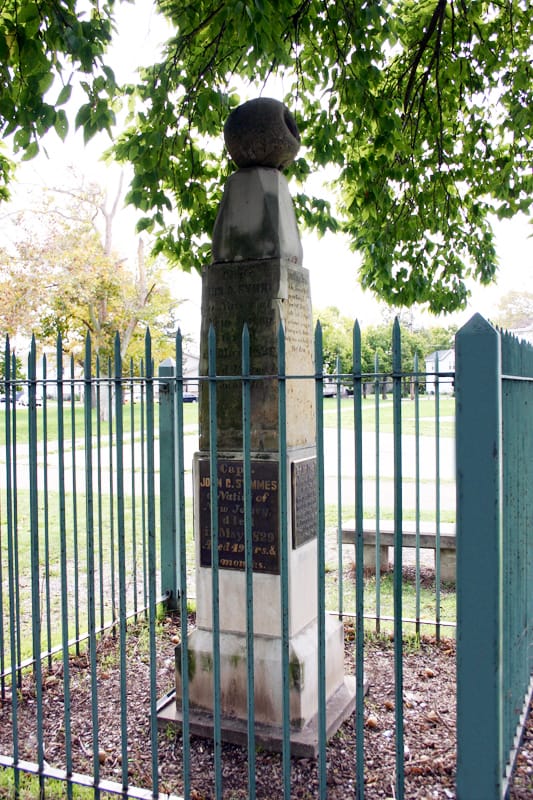
Americus was twenty-three years old at the time. He had grown up inside the lecture circuit. He had attended his father's talks as a boy, helped distribute pamphlets, and absorbed the Hole theory as part of the household furniture from his earliest, faintest awareness.
Americus Vespucius was a true believer of the second generation, the kind of disciple whose conviction is not the result of any conversion experience; it comes from having never known any alternative.
He had also inherited his father's name and toxic credentialing habits, and like his father before him, he was going to use that credential to push the Hole theory forward into this new age.
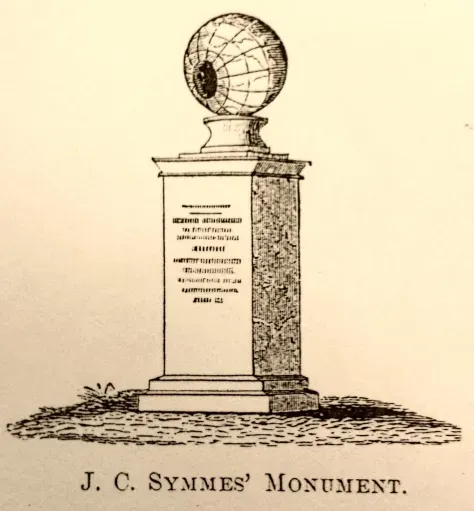
The monument he commissioned was carved out of local freestone, standing about six feet tall, square-shafted, with engraved inscriptions on each face. The west face named the deceased. The north face attested to the Hole. The east and south faces carried supporting text, including a brief defense of the hollow-Earth doctrine. The top of the monument, set above the inscriptions, was carved as a hollow globe, open at both poles, sitting on a base.
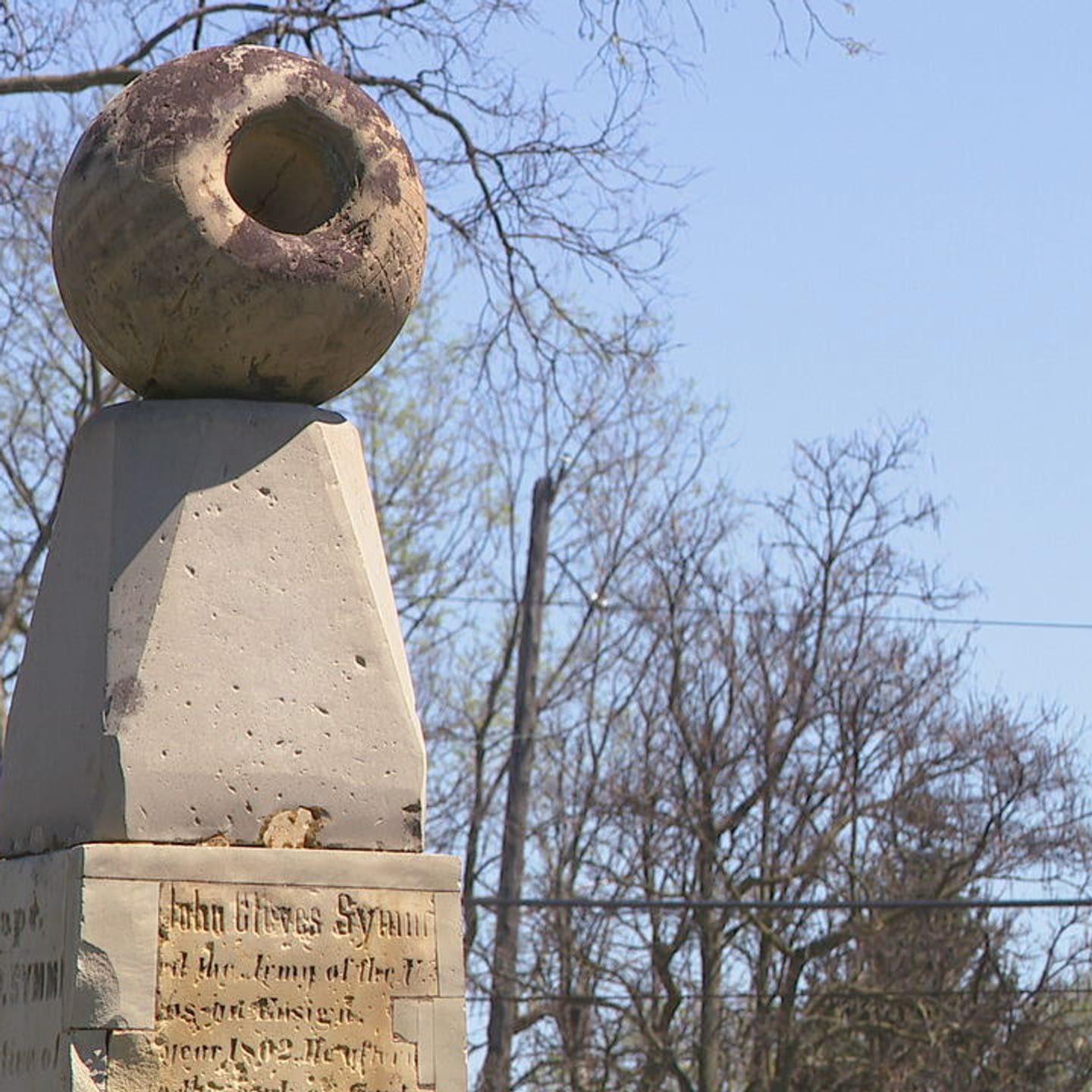
There is a hollow globe, with the holes angled up and down, on top of a tombstone in an Ohio cemetery. The monument still stands today. It is in Ludlow Park in Hamilton, Ohio. You can drive past it, if you can drive. You can stand in front of it if you want. You can photograph it for free, I assume. They at least probably can't stop you from sneaking just one pic.
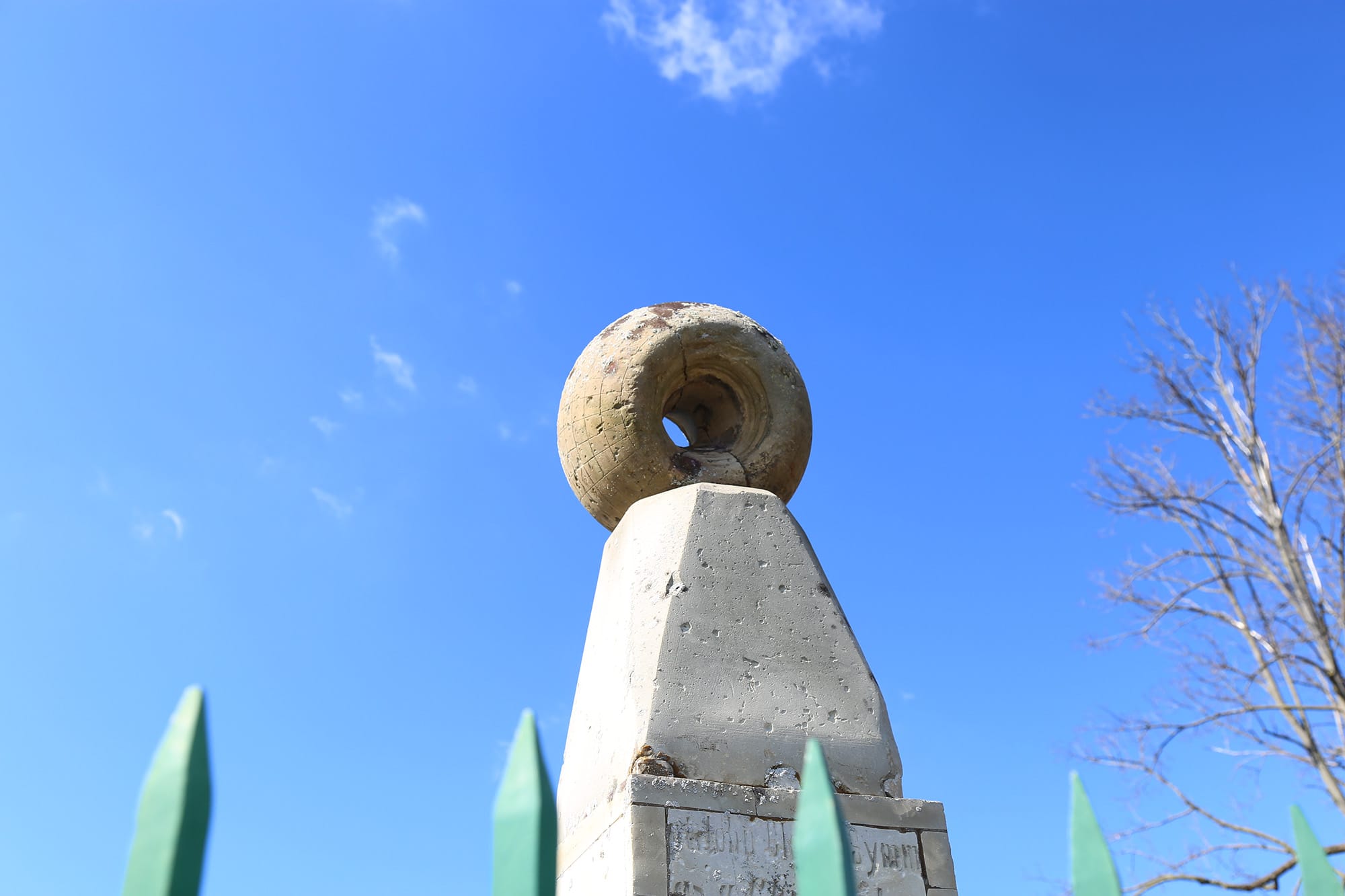
The stone has weathered some over two centuries, and the inscriptions are now harder to read than they were in 1833, but the hollow globe is still up there with its little carved polar openings facing the Ohio sky. It is definitely one of the more strange artifacts in the American funerary record, and it is a perfect physical instantiation of what the framework now calls intergenerational distortion transfer: the family, having always known the Hole, takes the distorted Hole field with them into the next generation, the public record (a gravestone is a public record) now carries the original Hole claim forward without correction, and the institutional dignity of this marker (a freestone monument with full military rank inscribed) lends credibility the underlying claim never earned.
So Symmes is still fucking at it.
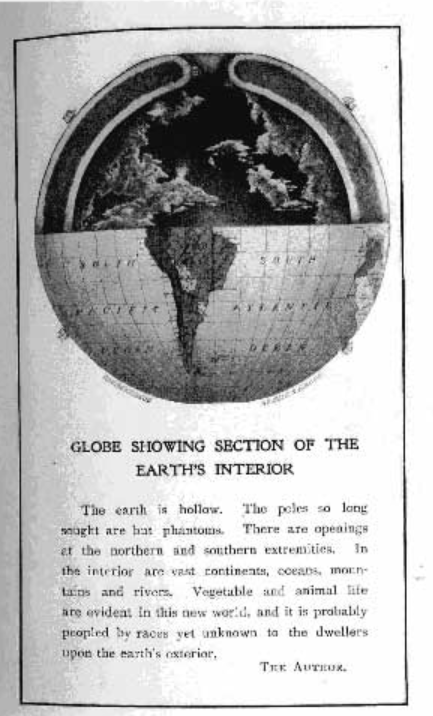
This was not the end of Americus's contribution to this cause.
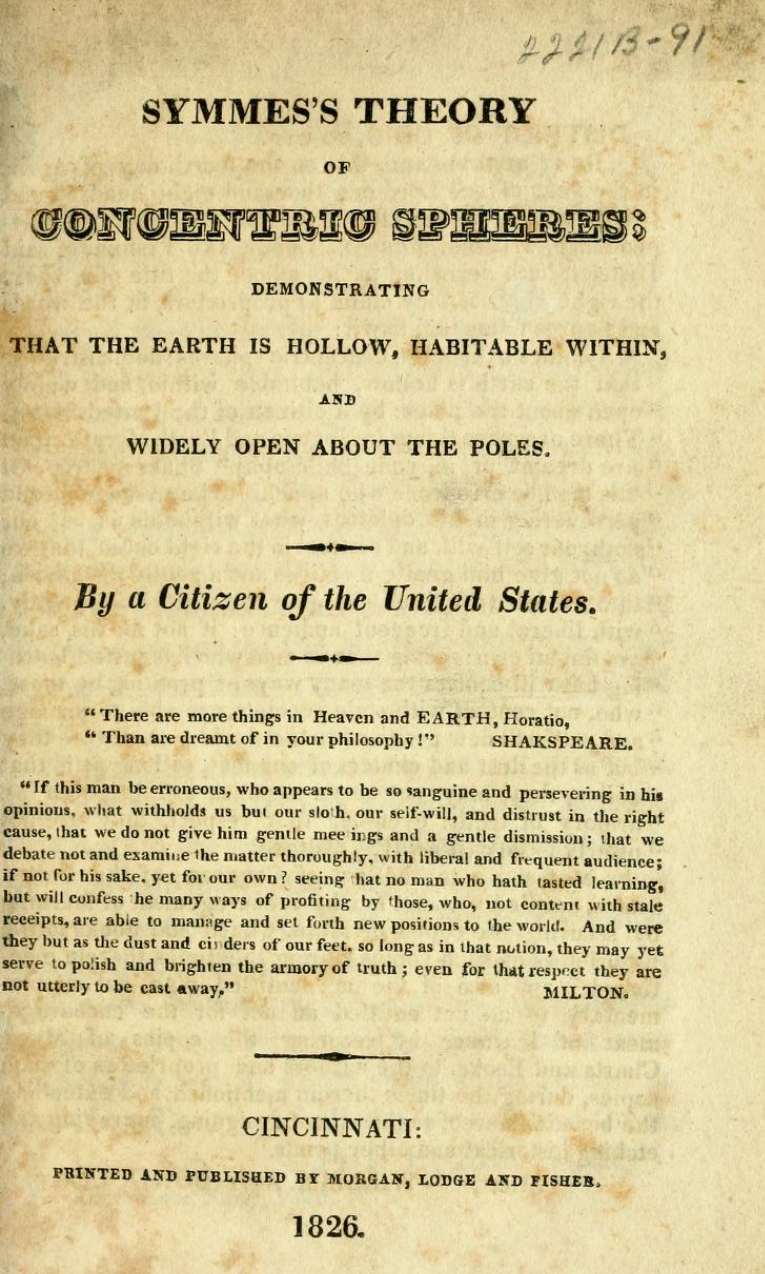
In 1878, Americus, now in his sixties, published a reissued edition of his father's theory under the unbelievable title of The Symmes Theory of Concentric Spheres: Demonstrating That the Earth is Hollow, Habitable Within, and Widely Open About the Poles: Compiled by Americus Symmes from the Writings of his Father Captain John Cleves Symmes. This was forty-nine years after his father's death, thirty-six years after the Wilkes Expedition had charted the continent that occupies the space where the southern hole was supposed to be, and three decades into the age of regular Arctic and Antarctic exploration by multiple nations, none of which had found anything resembling Symmes's apertures.
Americus didn't give a shit about any of that. He published the book anyway.
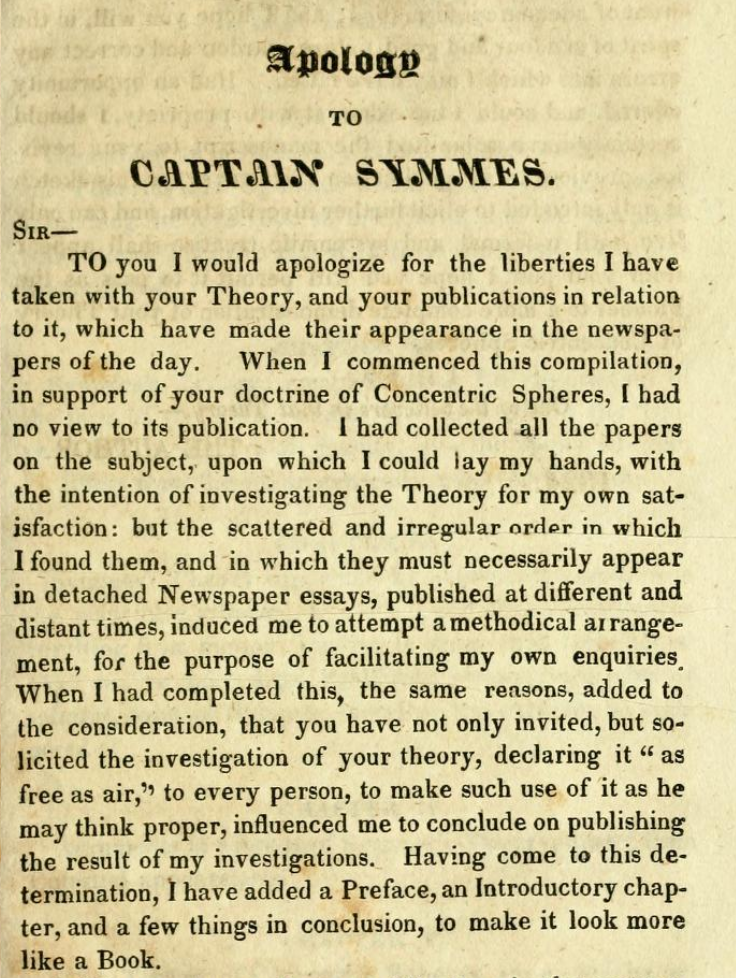
The book essentially just restated the original theory, added some commentary, then appended (because why not) a full reprint of Robert Paltock's 1751 novel The Life and Adventures of Peter Wilkins, which is an early-modern fantasy about a man who discovers a hidden inner world and falls in love with a flying woman. The 1878 edition is more of a compendium than an argument. Americus was not adding new evidence of the Hole here. He was not addressing the Wilkes Expedition at all. He was preserving the family corpus.
This is what distortion fields do once their institutional home has died. They slip down into a smaller membrane (a family, a coterie, a sect) where they can persist indefinitely without forceful contact with the empirical world. The 1878 book is this field's retreat from public claim into Americus’ private inheritance. The fact that Americus published it is just the Hole field telling itself it is still a field, even as the larger world has moved on from it, even as Antarctica has been charted, even as no expedition has ever found this fucking Hole. This field is no longer about whether this claim is true. It is now about whether the family, the coterie, or the disciples continue to assert the claim. The publication is that assertion, nothing more. The publication's content is almost beside the point.
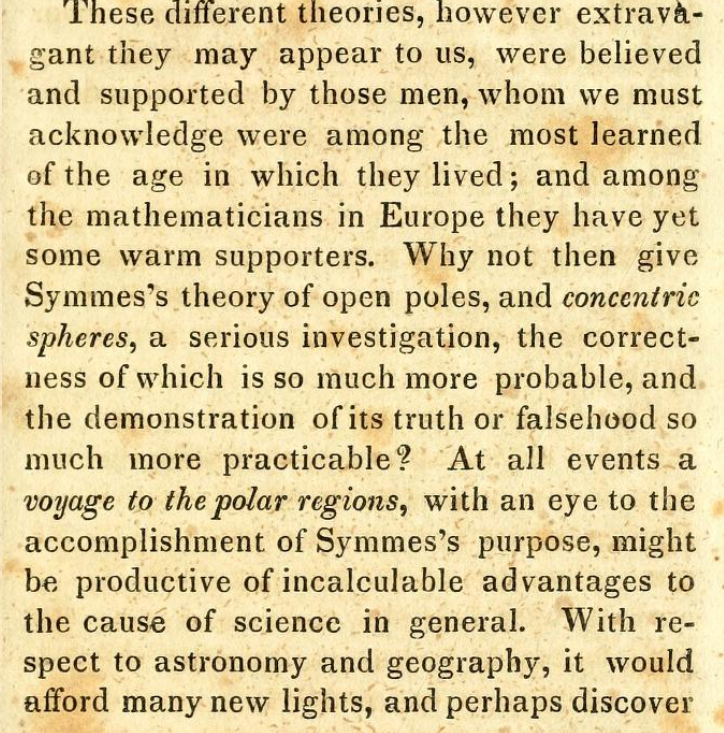
Americus Vespucius Symmes died in 1896. No one built a hollow-earth monument grave for him.
Coda: The Hole Yawns Still.
In 1958, the United States Navy submarine USS Nautilus, the first nuclear-powered vessel in the U.S. fleet, sailed beneath the polar ice cap from the Bering Sea, passed through the geographic North Pole at an estimated depth of 500 feet, and continued on to surface in the Atlantic. The voyage took ninety-six hours of submerged operation. The submarine's instruments recorded continuous depth soundings throughout, allowing for direct measurement of the seafloor profile beneath the cap. The seafloor was indeed where it should have been. There was no hole.
In 1959, the USS Skate repeated this feat from the opposite direction and surfaced at the geographic North Pole itself, breaking up through the ice and broadcasting badass photographs back to surprised journalists at the ongoing U.S. Navy press office. The Skate's crew stood on the ice at 90° N, looked around, and saw ice in every direction.
There was still no hole.
The hole had never been there. The Symmes theory had been physically falsifiable since the very day he proposed it. It had taken slightly longer than maybe expected to actually falsify it (a quick hundred and forty years from Circular No. 1 to the Nautilus), but the falsification, when it happened, was thorough and public.
Antarctica, similarly, has been continuously occupied by international research stations since the late 1950s, governed by the 1959 Antarctic Treaty as a demilitarized scientific reserve. Approximately four thousand scientists overwinter there each year. None of them have found any apertures to Symzonia (yet).
The South Pole, where Symmes's southern hole was supposed to be, contains the Amundsen-Scott South Pole Station, a permanent U.S. research facility that has been continuously staffed since 1956. It sits on about two miles of ice over solid bedrock, exactly where the hole would have been.

The North Pole is a moving point of sea ice, drifting on currents above a deep ocean basin, which the Nautilus's hull confirmed by direct measurement. The basin is approximately fourteen thousand feet deep and contains water. It does not contain an opening to anything else, or any Christians.

There is no inner sun.
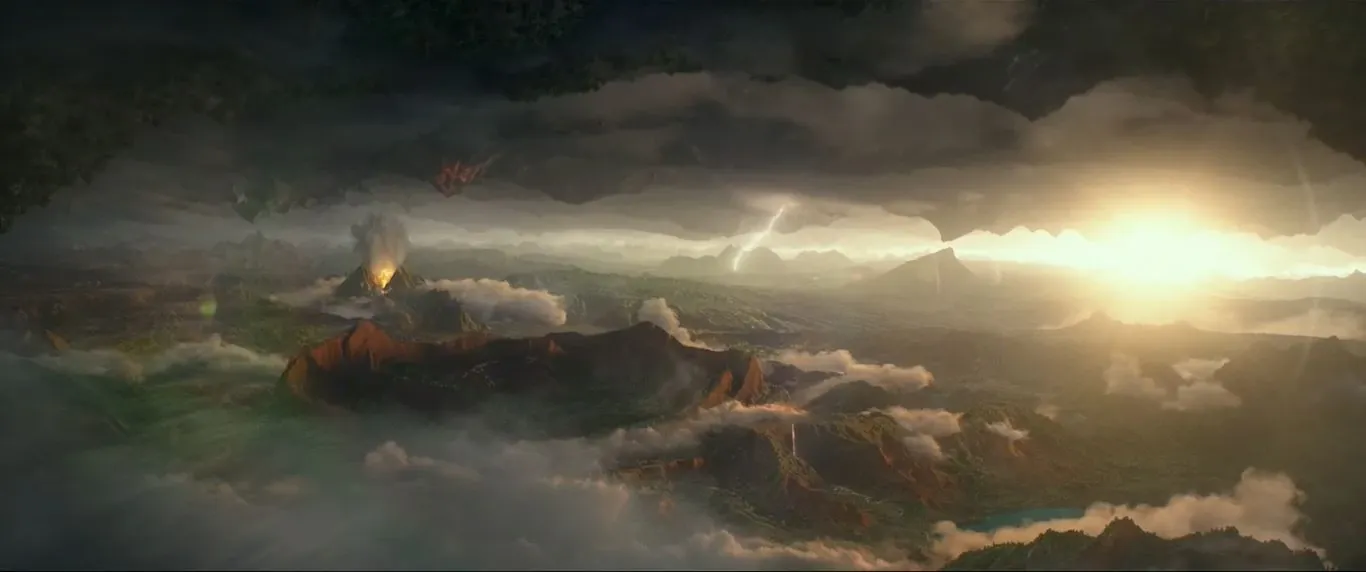
There are no Symzonians.
There are no thrifty vegetables.
However, this distortion is not dead.
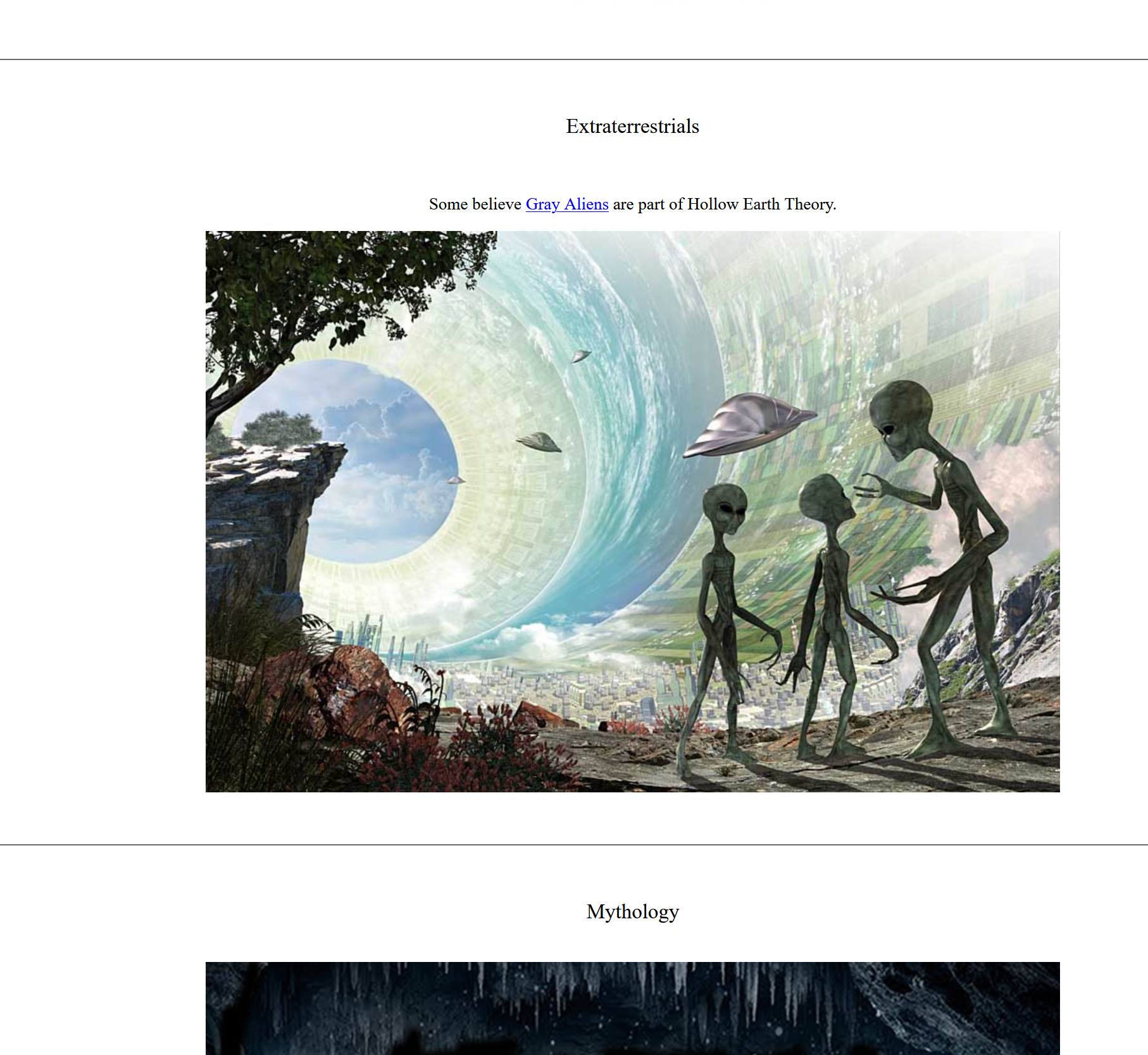
Hollow-Earth belief did not end when Symmes died, did not end when the Wilkes Expedition mapped Antarctica, did not end when Americus's 1878 edition fell out of print, did not end when the Nautilus crossed the pole, did not end when the South Pole Station went up, did not end when satellite imagery of the polar regions became continuously available in the 1960s and freely available to the public in the 1990s, and has not ended in 2026.

It persists. It abides all factual inconvenience.

The cast of post-Symmes hollow-Earth promoters is large and unedifying. Cyrus Reed Teed in the late nineteenth century proposed a fun inverted version called the “Concave Earth”, in which we don't live on the outside of a sphere, we live on the inside of one, looking inward at the cosmos.
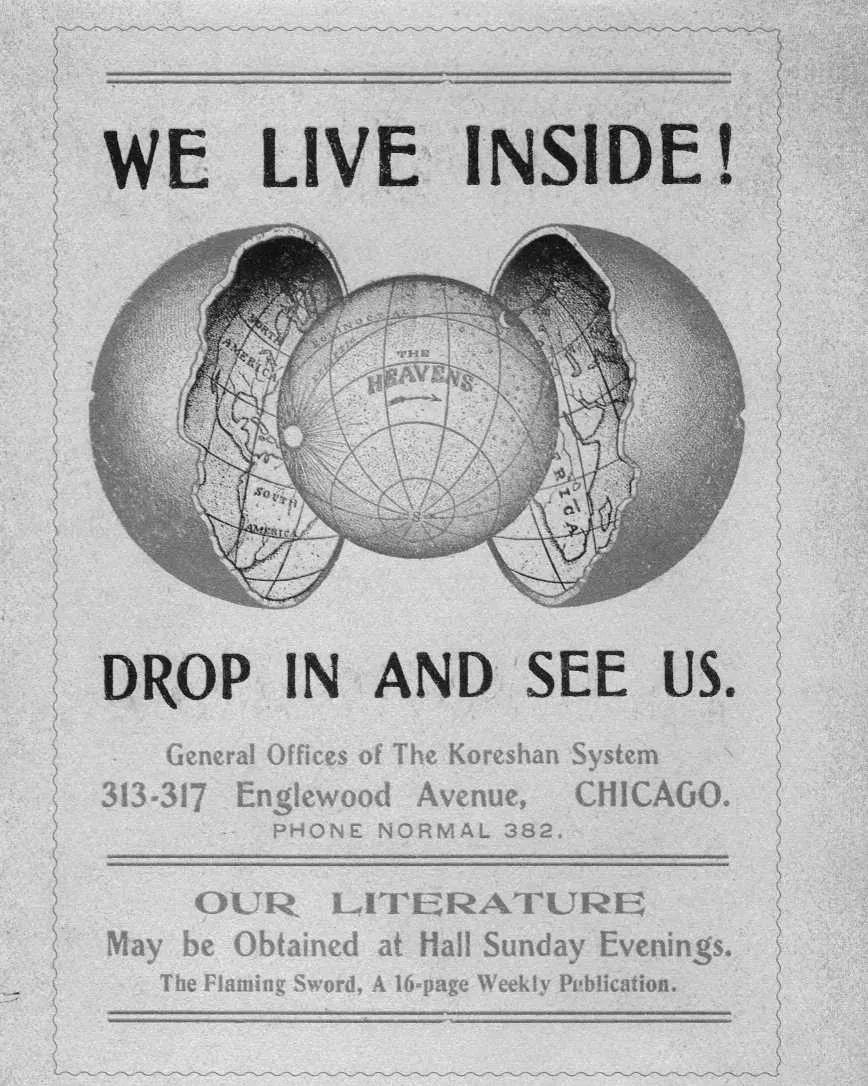
Teed founded a religion around this thought called Koreshanity, established a commune in Florida, and attempted in 1897 to prove the theory by a beach-based survey experiment that produced ambiguous results which he interpreted as total confirmation. The Koreshan colony at Estero, Florida persisted into the 1960s.

In World War II, a Nazi expedition to the Baltic island of Rügen reportedly pointed a long-focus camera at a 45-degree angle upward into the sky, hoping to photograph the British fleet on the other side of our concave Earth.
This expedition was a real official Reichsmarine project, funded with real military resources at a moment when the Reich could abso-fucking-lutely not afford to be wasting them on this.
It produced no British fleet photographs.
In 1969, a man named Raymond Bernard published a book just called The Hollow Earth (is this the fucking series reboot?) asserting that flying saucers were emerging from a polar aperture, that Admiral Byrd had personally encountered such an inner civilization on his 1947 Antarctic flight (no, he hadn't), and that the entire structure of Symmes's original theory was confirmed by recently declassified government documents (no, it wasn't). Bernard's book is the foundational text of modern conspiratorial hollow-Earth belief and is still in print today.
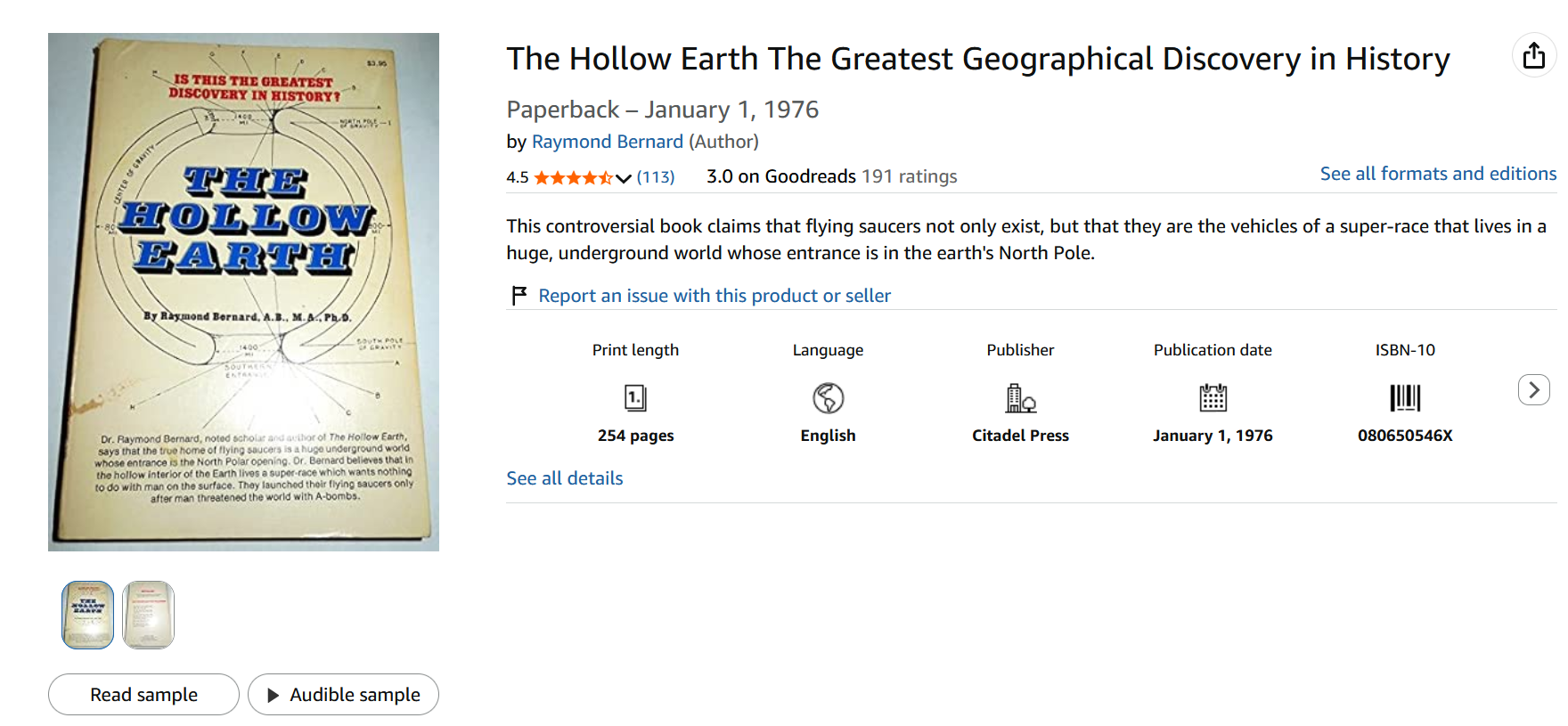
In 2026 there are YouTube channels with millions of subscribers dedicated to variations of Bernard's framework. There are of course subreddits. There are many TikToks. There are very sincere believers who, presented with photographs of the polar regions, interpret them as evidence of a multi-century, global governmental coverup (of their Hole) rather than as evidence of this real fucking region of Earth's actual fucking extant geography.
The believers are not necessarily stupid. They are all inside a field whose internal structure handles all available contradicting evidence by reinterpreting it as confirming evidence, which is the same exact structure Symmes occupied in 1825 when he interpreted his lecture audiences' laughter as evidence of their initial misunderstanding of his truth.

Distortion fields rarely ever fully die. There are plenty of people locked in Symmes's exact lecture tour loop right now. They just don't sell the tickets.
Distortion fields usually just lose their institutional carrying capacity, which is what happened in the Symmes case between 1838 and 1842, when the Wilkes Expedition made any institutional version of this shit untenable. The same field just retreats into smaller social membranes (cults, families, subcultures, online communities) where they can persist on pure private conviction alone. They lose access to the formal mechanisms (Senate appropriations, naval expeditions, university chairs) but retain access to informal mechanisms (lecture circuits, self-published books, video platforms). They become permanent low-grade fixtures of the culture scraping at shoes, rather than active threats to the real institutional record.
The hollow Earth is one of these permanent fixtures now. It will, almost certainly, never again receive a majority in the U.S. Senate. It will also, almost certainly, never, ever go away.
Symmes won the part of the fight he was actually fighting here. The Senate moved on to reality and left him behind.
Final Note.
There is a temptation, when looking at the Symmes case from a distance, to read it as a story about the gullibility of a particular Senate, a particular newspaper-reading public, a particular family, a particular nineteenth-century American moment when men in powdered wigs were just barely starting to figure out what science was and could be excused for taking a few wrong turns along the way.
This is the wrong reading.
You also would have voted yes if you had been one of those twenty-five in the Senate. The Senate of 1823 was not unusual in its credulity. The Senate of 1823 was just a normal coalition-aggregation institution receiving a normal politically-supported petition from a credentialed constituent, and it processed the petition through normal procedural machinery the way it processed every other petition, because that is what the institution was and is designed to do.
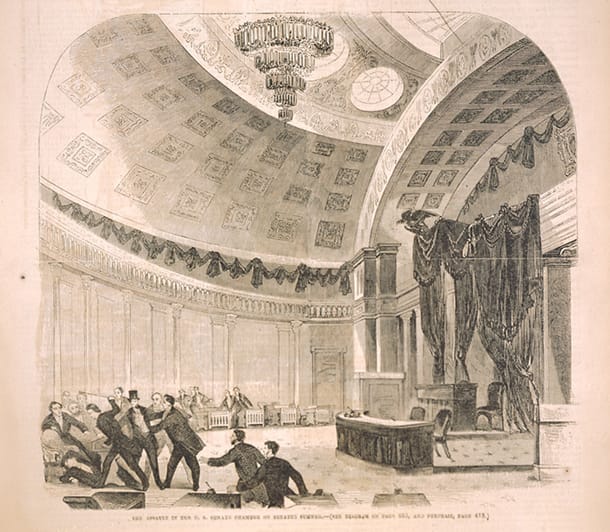
The fact that the petition was about hollow Earth was, structurally, beside the point. The Senate was not equipped to evaluate the truth content of the underlying claim, because that institution's job is not to generate truth content. That institution's job is coalition aggregation.
The coalition Symmes had built was very real. The petition was real. The credential was real. The vote was then the procedural output of a working institution doing its working job.
You can run all of this same machinery on you, on me, and on anyone else, as long as the field around us is built carefully enough. The hollow-Earth-specific framing is highly contingent. The structural pattern (a credentialed petitioner, with organized civic support, and a sympathetic legislator, and procedural seriousness, so twenty-five votes) is generic and recurring. It is happening right now, somewhere, around some claim whose status as fringe or established is also not yet settled, and the twenty-five votes are now accumulating.
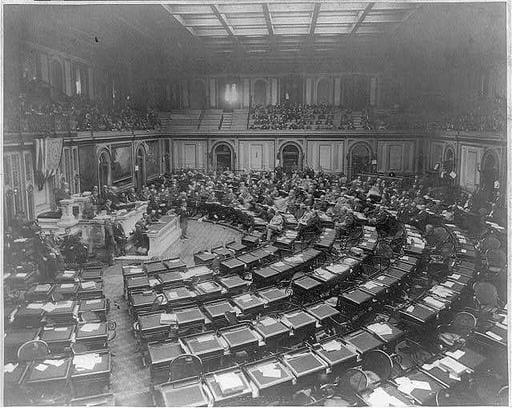
What it takes to interrupt such a pattern is something close to what John Quincy Adams did. An outside locus, with no embedded incentive to honor this Hole field like the Senate has, who is also willing to separate the productive component from the contaminated component, and who also has enough institutional standing to support the productive component without legitimizing the contaminated component.
Adams was very rare. Most fields do not get an Adams at all. Most fields have to run on until the empirical world arrives at the relevant latitude and walks us across the place where the hole was supposed to be.
The Symmes field got an Adams, and got a Wilkes Expedition, and got an Antarctica that turned out to be solid. So the hollow Earth field was very lucky here, in the same sense that the N-ray field was lucky in Wood. Most distortion fields do not collapse down this cleanly at all, because most of them do not have a continent waiting to be charted standing underneath them. Most of these just persist in slightly smaller and smaller social membranes forever.
Even here, after the field collapsed, after Antarctica had been mapped, after the Nautilus had crossed the pole, even after a century and a half of public photographic and submarine evidence, somebody is, right now, watching a video on a phone explaining that the Hole is real and the government is hiding it from us because they want the Hole.
Because somebody on a forum saw it. Or because the visual operation their eyes (legitimately) performed when they looked at the photograph produced, for them under high expectations of seeing this exact thing, the perception of an aperture along the edge of the polar projection.
Perception does not stop being their perception just because the institutional consensus is firmly the other way. They have seen what they have seen. They cannot just unsee it now.
This is the last word on hollow Earth: it survives on because perception, like Symmes's sanity certificate, can be very easily authored. The institution moved on. The human eye did not.
Be careful what you are sure of.