Tales of Distortion: The 1904 St. Louis Marathon
The Olympic record shows a completed official event with final results and some brief notes, not the results of the dehydrating-world-athletes study. [L]

September 2026 note: The marathon remains a distortion audit of a real historical field. Read its harms using the later distinctions between harm-tokens, transition profiles, resistance thickening, burden transfer, repairability, and verdict.
The 1904 Summer Games marathon is a perfect example in Modal Path Ethics of how every single concept of the framework can be violated simultaneously and demonstrably in real time by identifiable actors with documented consequences.
For this reason, it serves great pedagogical and entertainment value.
It is also just one of the stupidest fucking extant things.
To understand this particular historical field, as with any other, we must endeavor to understand each locus that comprises it.
We must boldly map the possibility space as it existed before the race, identify the many contractions that were imposed upon it, trace the resistance that was raised against every non-harmful continuation, and ask, as the framework always asks, what kind of field the organizers, officials, trainers, and participants actually managed to produce over the course of a single catastrophic afternoon in Missouri.
What follows is a complete account of every documented contraction, every identifiable distortion, every burden transferred, every resistance raised, and every moment at which someone could have done the less harmful thing and instead chose not to, all of which happened in public, in broad daylight, at the Olympic Games, in front of spectators, and nobody stopped any of it.
The Race.
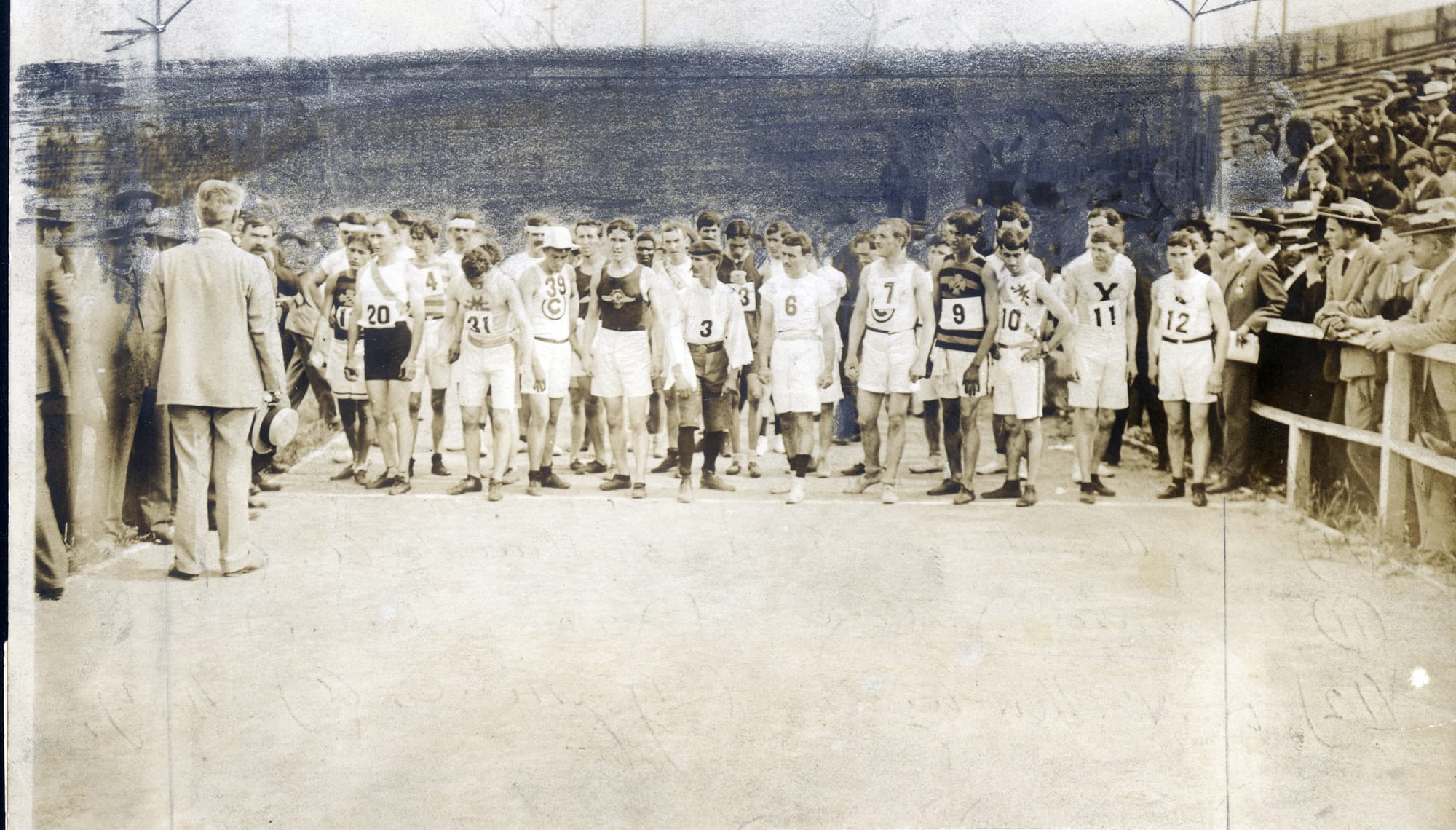
Thirty two agentic runners enter the field as extant loci with a defined possibility space: they intend to run and finish a marathon. These athletes are competing on the world stage at the third-ever Summer Games marathon, at the highest possible level, with great narrative motivation to perform well.
At the end of the race, only 14 of these 32 runners, despite their best individual effort, are physically able to finish the race. At least one of those 14 is extremely debatable. There were several near-fatalities.
This is the lowest ratio of starters to finishers ever recorded for an Olympic marathon. It has not been approached since and presumably never will be, unless another sports event organizer decides to study the effects of purposeful dehydration on elite athletes during a competitive event, which would now be illegal.
How could the possibility space have become so contracted across a single afternoon? The short answer is that the field was pre-damaged to a degree that made mass failure not just likely but structurally inevitable: a decision-context presenting a menu with no good options, only potentially better ones.
Unfortunately, very few of the better ones were taken.
The Distortion of James Edward Sullivan.
To understand why the field was pre-damaged, you must first understand the man who damaged it.
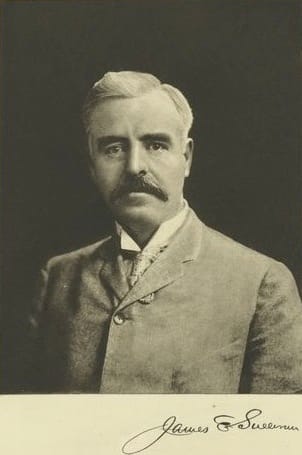
James Edward Sullivan was the chief organizer of the athletic events at the 1904 St. Louis World's Fair, of which these Olympic Games were a subsidiary component.
Sullivan was a lifelong sports official.
He was certainly a man of institutional authority within American athletics, the longtime secretary of the Amateur Athletic Union, and by all accounts a person who genuinely believed he was doing important work.
He was not a physician.
He was not a scientist.
He was a sports administrator who had, by 1904, accumulated enough bureaucratic power to impose his personal convictions on an Olympic event without any meaningful oversight.
Sullivan's personal conviction, relevant to this marathon, was that athletes were drinking too much water.
This was not a fringe position in 1904, though it was not a well-supported one either. Sullivan appears to have believed that restricting fluid intake during endurance events would reveal something scientifically useful about the relationship between dehydration and athletic performance.
He therefore decided, apparently unilaterally, that the 1904 Olympic marathon would double as an experiment in purposeful dehydration.
He arranged for the course to contain only a single water stop: an unmonitored well that already existed near the approximate halfway point of the route and presumably could not be removed or destroyed by this maniac in time.
The results of his landmark study never appear to have been published in any peer-reviewed journal available in any archive online, indicating he may have actually just been insane.
In Modal Path Ethics terms, Sullivan represents a textbook case of role capture combined with distortion.
He occupied a position of institutional authority, the organizer of Olympic athletic events, whose role-logic gave him effective control over the field conditions under which every runner would compete. He then used that position to pursue a personal ideological project (the “dehydration study”) that was structurally incompatible with the stated purpose of the event (an athletic competition in which the goal is to finish a race without dying)
This is precisely what the framework means by procedural damage: the conversion of structural harm into neutral-seeming administration.
Sullivan did not appear to think of himself as endangering athletes. He thought of himself as conducting research while also organizing a race.
The fact that these two goals required opposite field conditions, with one requiring deprivation and the other requiring support, does not appear to have registered to the sports official as a contradiction. His role gave him the authority to design the field; his distortion prevented him from perceiving that the field he was designing was hostile to its own participants.
Every single contraction that follows in this essay is downstream of this initial institutional failure. Sullivan's experiment reorganized the entire Summer Games field around water deprivation, then placed thirty-two human beings inside it and told them to compete at the highest level.
They did try.
The Course.
The course Sullivan designed ran twenty-four miles through the Missouri countryside. This was two miles shorter than what would later be standardized as the marathon distance, which is the last generous thing that can be said about it.
The race was scheduled for the hottest part of the day, in August, in St. Louis, Missouri. The temperature was approximately ninety degrees Fahrenheit with significant humidity.
These conditions alone would make any marathon dangerous. Under Sullivan's “one-water-stop” policy, they became something more like a structured attempt to find out how many elite athletes could be brought to the edge of organ failure over just a single afternoon.
The roads were unpaved country lanes covered in thick dust. Keep that in mind.
No preparation of any kind was made to the course other than placing starting and finishing markers. The roads were not cleared of traffic, not watered to reduce dust, not lined with medical stations, and not closed to the public.
Runners would share the road with automobiles, horse-drawn wagons, railroad crossings, and trolley cars, dodging all of these while running a competitive marathon in ninety-degree heat without water.
Most critically, support automobiles carrying race officials were positioned ahead of the runners, driving at a steady pace toward the finish line. These cars drove on the same unpaved, dusty roads the runners were using, at sufficient speed to kick up massive, continuous clouds of thick dust that blew directly into the faces and lungs of the athletes running behind them.
This turned into a bit of a problem.
The officials in these cars were referees. Their job, we must assume, was to observe the race, monitor the runners, and ensure fair competition. In practice, they instead drove comfortably ahead in their automobiles and arrived at the finish line well before most of the athletes, several of whom were by then lying in ditches, dying because they were breathing nothing but the referee's literal dust.
The course represents a compound pre-damaged field: a decision-context in which multiple independent sources of contraction have been layered on top of each other before any agent can act. Heat, humidity, dust, traffic, no water, no medical support, and active, assertive dust-blasting by official vehicles; each of these individually narrows the possibility space of every runner.
Together, they create a field in which the resistance to the publicly stated goal (finishing a marathon) is so high that only the extraordinarily resilient, the unusually lucky, or the chemically altered can reach it.
This resistance was entirely avoidable. Every element of it was the product of decisions made by people who had the authority to decide otherwise.
The heat could not have been controlled, but the time of day could have been changed.
The dust could not have been eliminated, but the roads could have been watered.
The distance between water stops could not have been reduced to zero, but it could have been reduced from infinity minus one fucking well.
The support cars could have driven behind the runners instead of ahead of them.
None of these alternatives required unusual resources, advanced planning, or deviation from standard marathon practices that already existed in 1904. The field was damaged by design.
The Nations.
Seven heavyweight nations were initially scheduled to compete: the United States, France, Great Britain, the Orange River Colony, Cuba, Greece, and Canada.
France, Britain, and Canada's runners all wisely chose to forfeit before the marathon started, probably once they heard about the well.
This left four nations to participate in the event, which is generous counting given the situation with the Orange River Colony (a former Boer republic that Britain had annexed two years earlier and which would cease to exist six years later when it was absorbed into the Union of South Africa) and the situation with France (which had technically forfeited but would later be credited with a silver medal [???] through a series of administrative errors and corrections so confusing that they have never been fully resolved).
The United States, deeply eager to be the 1904 men's marathon champions, entered nineteen starters in this single marathon; the overwhelming majority of the field, giving no other country a remotely fair chance.
Greece entered nine runners.
Cuba entered one.
The Orange River Colony entered three, two of whom were not originally planned to compete but were included at the last minute because they just happened to be in St. Louis already and were considered physically fit.
This participation structure is itself a form of burden asymmetry. In a field already pre-damaged by Sullivan's conditions, the nation with the most resources, the most runners, and the greatest institutional support was the one best positioned to absorb losses.
If five of your nineteen runners collapse from dust inhalation, you still have fourteen. If your only runner collapses, your nation's entire Olympic marathon representation has been eliminated.
Cuba, the Orange River Colony, and Greece bore disproportionate risk from the same field conditions that the United States could afford to treat as an acceptable athlete attrition rate.
The framework calls this burden transfer through structural position: the costs of a damaged field fall hardest on the loci least equipped to absorb them, or breathe dust.
The Runners.
Each runner in this marathon deserves individual attention, because each one entered and survived the same pre-damaged field and encountered it differently depending on their position, resources, and luck.
What follows is an account of only the most illustrative cases, ordered roughly by the framework's analytical priorities: the most structurally revealing first, the most narratively unhinged close behind.
William Garcia: The Unseen Demise.
William Garcia was an American frontrunner. He was a serious competitor who took an early lead and ran at the head of the pack. Because he was leading the race, he was now directly behind the support cars. Because he was directly behind the support cars, he was running in the thickest, most concentrated portion of the lethal dust clouds being kicked up by official vehicles.
Garcia was eventually found lying unconscious on the side of the road, near death, with a thick layer of coarse dust coating the interior of his lungs. He had suffered a severe hemorrhage of the stomach lining from inhaling road dust at sustained effort for miles.
I will reiterate: The leading runner in an Olympic marathon went missing and had to be discovered ditchside in a near-death state.
This must have been puzzling to the referees when they found out about it after their nice and relaxing car ride to the finish line.
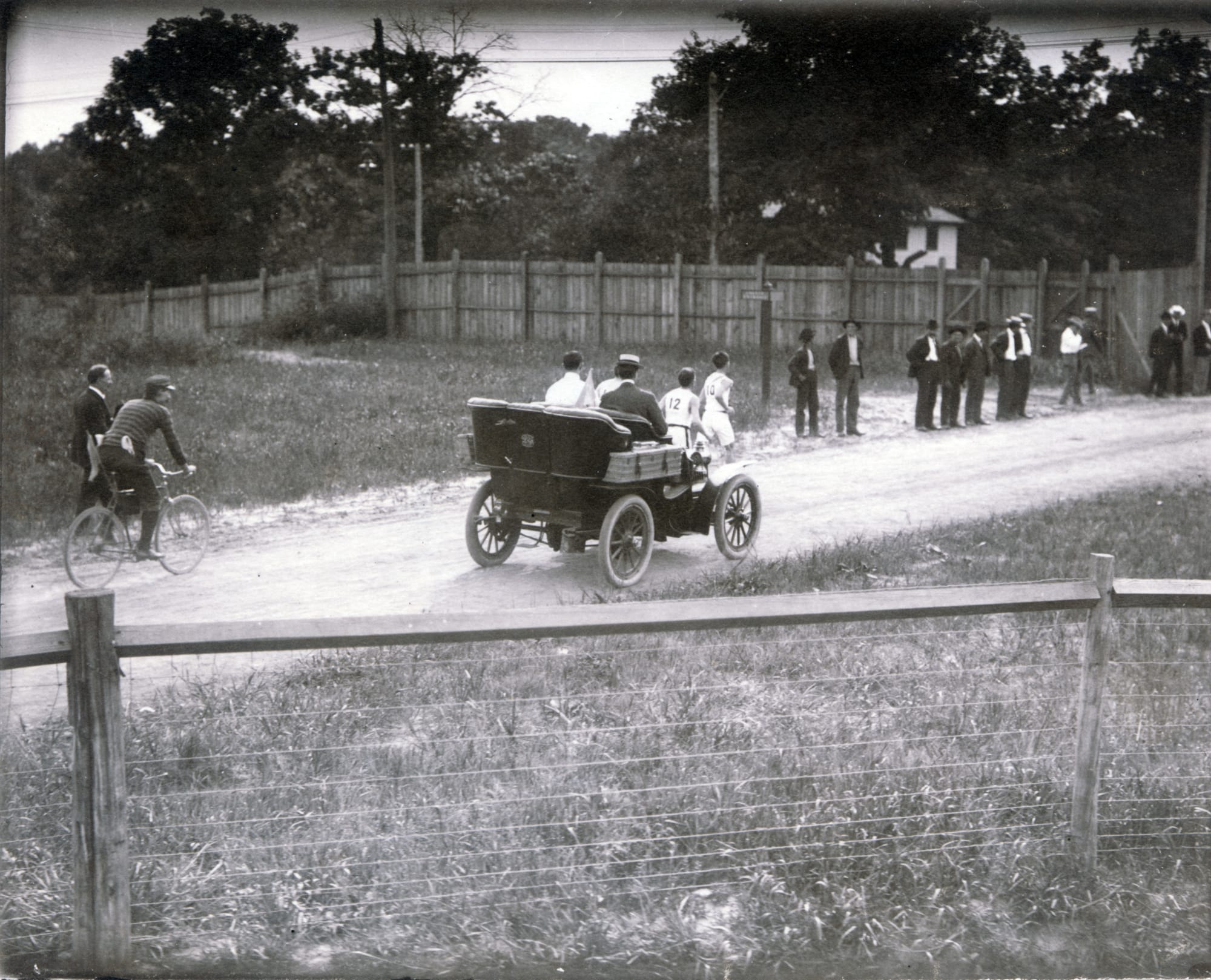
Garcia's case is almost too clean. The race officials' cars, meaning the very vehicles meant to support the fucking race, were the primary mechanism of harm to the leading competitor. The institution charged with preserving the field was the instrument of its contraction.
Garcia's possibility space was not narrowed by a competitor, by bad luck, or by his own error. It was narrowed by the organizational structure of the event itself, which placed the source of greatest physical danger directly ahead of whichever runner was performing best.
This is burden transfer through institutional design, and it is as clear a case as the framework will ever find. The officials' comfort (riding in automobiles) was purchased by the leading runner's destruction (inhaling the dust those automobiles produced).
The field appeared to be functioning. People saw cars ahead, runners behind, everyone moving toward the finish, all while the actual modal structure was organized to destroy whichever locus was most successfully pursuing the actually stated goal.
Andarín Caravajal: The Jort King of Havana.
Cuba's sole representative was Andarín Caravajal, a former postal worker from Havana.
His qualification for the Olympic Games appears to have been that he was already somewhere in the general vicinity of the southern United States and was known to be capable of running long distances, which was also his qualification for delivering the mail.
Caravajal arrived at the marathon at the last possible moment, having lost literally all of his money gambling in New Orleans and been forced to hitchhike to St. Louis without eating for almost two days. He showed up to the starting line of the Olympic marathon starving, dehydrated before the race even began, and wearing his street clothes.
Things were not looking good for Caravajal.
Upon noticing that all the other contestants had shorts on, he cut his trousers into jorts with a knife.
He then ran the Olympic marathon.
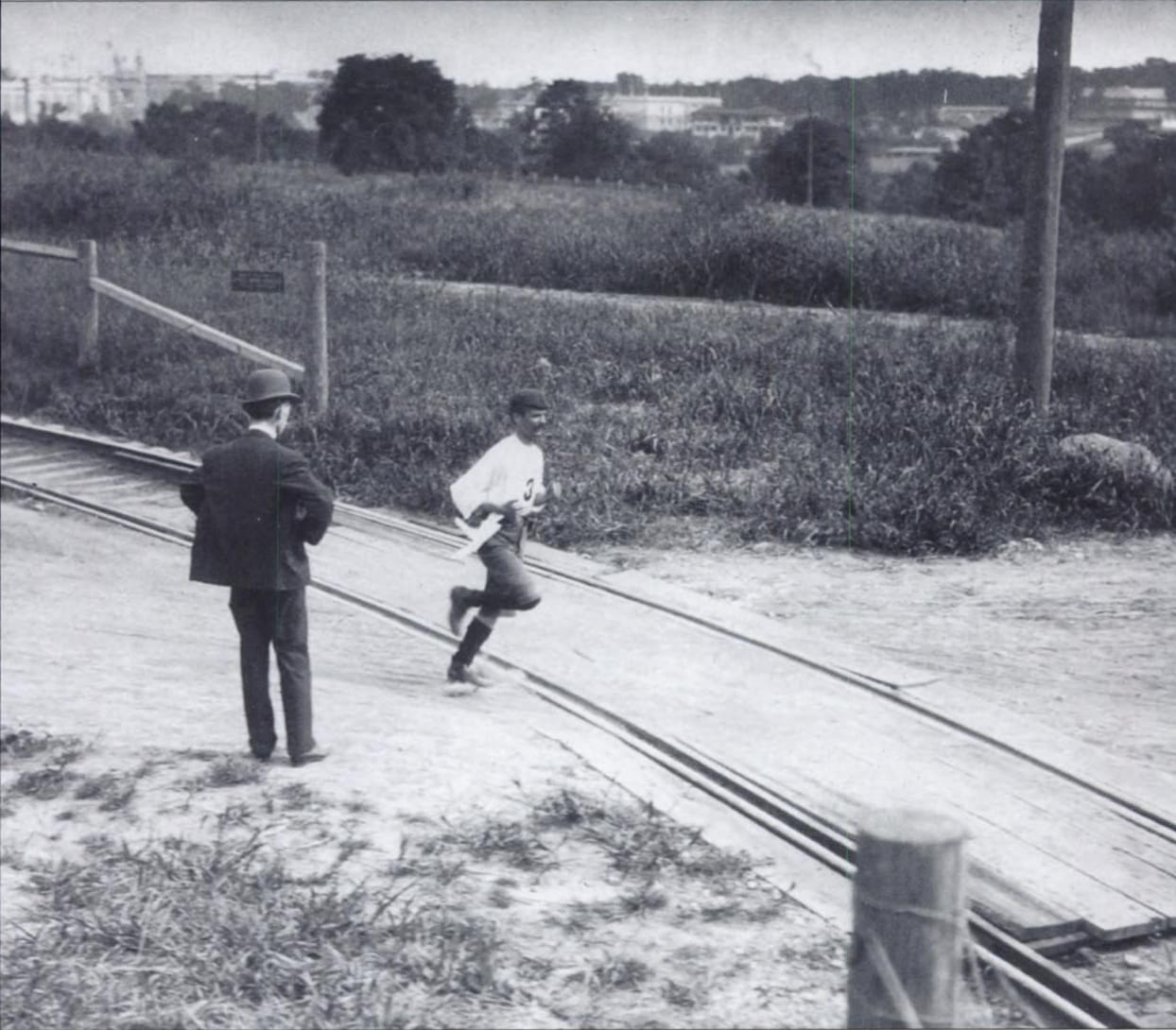
During the race, Caravajal frequently stopped to engage in casual, extended conversation with spectators along the course. He asked a passing motorist for a peach, was told no, and stole his peaches anyway. He later detoured to an orchard and stole several apples, which turned out to be rotten, giving him severe stomach cramps. He then detoured again to a water tower so he wouldn't die (from the dehydration). He then took a nap because of the stomach cramps from the bad apples.
He then woke up and finished the race in fourth fucking place, behind three of the nineteen Americans.
Caravajal's case is analytically fascinating because it illustrates what the framework calls constrained agency under extreme asymmetry.
He entered the field with fewer resources than any other competitor: no money, no food, no appropriate clothing, no institutional support, no teammates, no trainers, and no nation capable of lodging a complaint on his behalf. His possibility space was narrower than anyone else's before the starting gun fired.
And yet his actual navigation of the damaged field was, in many respects, the most adaptive of anyone in the race. Every decision he made, from the jorts, the conversations, the stolen fruit, the water tower, to the nap, was a locally rational response to the specific contractions he was facing.
He lacked water, so he found water.
He lacked food, so he found food (it was not good food).
He lacked rest, so he rested.
He lacked social connection and normalcy in the middle of a surreal ordeal, so he talked to people.
Caravajal was navigating a field that was actively hostile to his continuation, with almost no resources, and he selected the least-closing path available to him at each decision point.
He still finished fourth in the Olympics. With food, water, shoes, and shorts, it is difficult to say where he would have placed, but the answer is probably higher than fourth.
His story is often told as comedy. It is also the clearest illustration in this race of what better looks like under extreme constraint: not purity, not optimization, but the disciplined comparison of available paths inside a damaged world. And some cartoonish robbery.
Len Taunayne and Jan Mashiani: The Barefoot Champions of Orange River.
Len Taunayne and Jan Mashiani represented the Orange River Colony, technically still making this South Africa's first appearance at an Olympic marathon, though the nation they were representing would not exist in six years and the nation that would succeed it did not yet exist.
Neither was originally planned to compete.
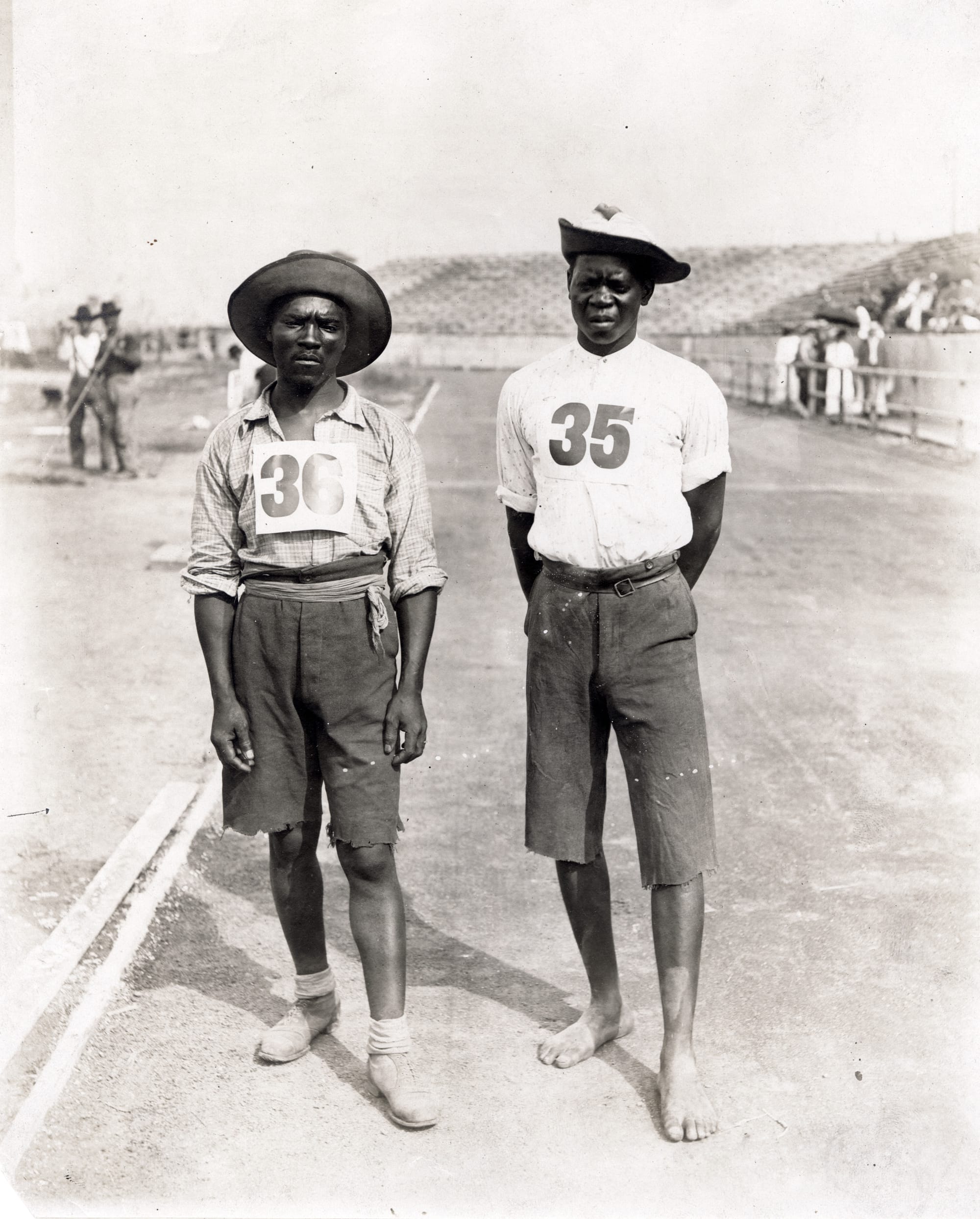
Both were in St. Louis as part of the Orange River Colony's exhibit at the World's Fair. They had served the British as long-distance message runners during the Second Boer War, the same war in which their homeland was annexed by the empire they were now, in some confusing sense, representing.
They were entered in the marathon at the last minute because they were physically present and known to be capable of running long distances, which was, again, also why they had been useful during the war.
Taunayne ran barefoot because he had not brought shoes, which I guess is what happens when you are recruited to run an Olympic marathon because you were already in town for a different reason.
Early in the race, he was unceremoniously chased approximately a mile off course by a wild dog and became lost for some time. He eventually found his way back to the route and finished ninth.
His fellow South African runner Mashiani, who may or may not have been wearing shoes (reports are mixed, and some accounts suggest he may have started with shoes and removed them mid-race, which would still be the most reasonable decision anyone made all day), finished twelfth; three places behind the man who got chased off the course by a dog.
The original, planned Orange River runner, the one who was actually in America explicitly for this marathon, dropped out early because he started dying.
The framework sees several things here at once.
First: pre-existing harm at the institutional level.
Taunayne and Mashiani were not athletes who had trained for and qualified for the Olympic Games through any standard process. They were colonial subjects who happened to be nearby and were entered into a dangerous athletic event with no preparation, no equipment, and no institutional support. Their very presence in the race was a product of the colonial exhibition system that had brought them to St. Louis as displays rather than as competitors. The possibility space in which they could compete as equals was never structurally available to them. It was foreclosed before they started.
Second: the dog. Taunayne's mile-long detour after being chased by a wild dog is often treated as a humorous anecdote. It is also a straightforward case of field contraction through unmaintained conditions. The course was not secured. Stray dogs (plural, as multiple runners reported being pursued by an evergrowing pack) roamed the route freely.
A controlled field would not have contained uncontrolled hounds.
The fact that it did is another consequence of Sullivan's (sports official!) approach to course preparation, which appears to have consisted entirely of deciding where the starting and finishing lines would go and then going to lunch to think about what happens when you don't drink water.
Third: Taunayne finished ninth despite running barefoot, starting unprepared, getting chased off course by a dog, and becoming lost. He finished ahead of multiple American runners who had shoes, water access, institutional support, no dog attacks, and the basic advantage of knowing they were going to be in a marathon before that week.
This is what the framework means when it says that the formal presence of agency remains real even when detached from the field that shaped the menu of options. Taunayne had real agency. He exercised it under conditions of extraordinary constraint, and without shoes.
Fredrick Lorz: The Art of Distortion.
The marathon was won by American Fredrick Lorz with a respectable time of three hours and thirteen minutes.
Lorz crossed the finish line to cheering crowds, took photographs, and stood smiling while Alice Roosevelt, daughter of President Theodore Roosevelt, placed a victory wreath on his head.
He was about to be handed the gold medal.
Then word reached the officials that Lorz had actually gotten severe stomach cramps around mile nine, fallen behind the pack, and flagged down an automobile. He then rode the next eleven miles of the Olympic marathon lying down in the back of this car, smiling and waving to spectators as he was driven past the runners who were actually running the hell race, before that car broke down around mile twenty (because it was too fucking hot to be running a marathon), at which point he just got out, jogged the remaining four miles to the finish line, and decided to pretend he definitely did it all and accept the gold medal anyway.
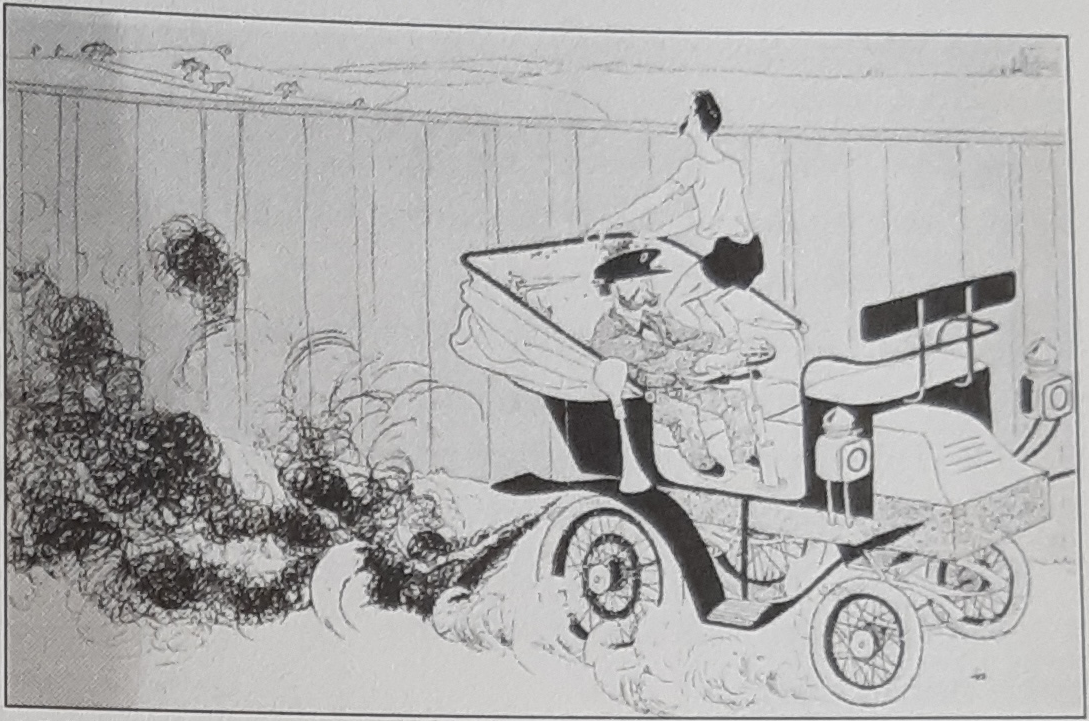
Lorz was immediately banned from the Amateur Athletic Union for life.
This ban was subsequently reduced to six months after he explained that it was "just a practical joke."
He then went on to win the Boston Marathon the following year, making the ban effectively meaningless.
In Modal Path Ethics terms, Lorz's fraud is a case study in moral theater. His crossing of the finish line produced every visible signal of legitimate achievement: the crowd's reaction, the wreath ceremony, the photographs, the institutional validation.
The appearance of the field was completely distorted from the structural reality that he had ridden in a car for eleven of twenty-four until external information corrected the scene.
The speed with which his lifetime ban was reduced to six months is equally instructive. The AAU's initial response (lifetime ban) was proportionate to the structural damage: Lorz had defrauded an Olympic event.
The revised response (six months, after which he won Boston) was proportionate to the narrative he offered: an Impractical Jokers type situation. The institution chose the response that restored its own comfort and coherence over the response that addressed the actual contraction.
This is distortion through narrative accommodation: the field accepting a self-serving lie because the story is easier to metabolize than the structural reality.
Thomas Hicks: The Suffering.
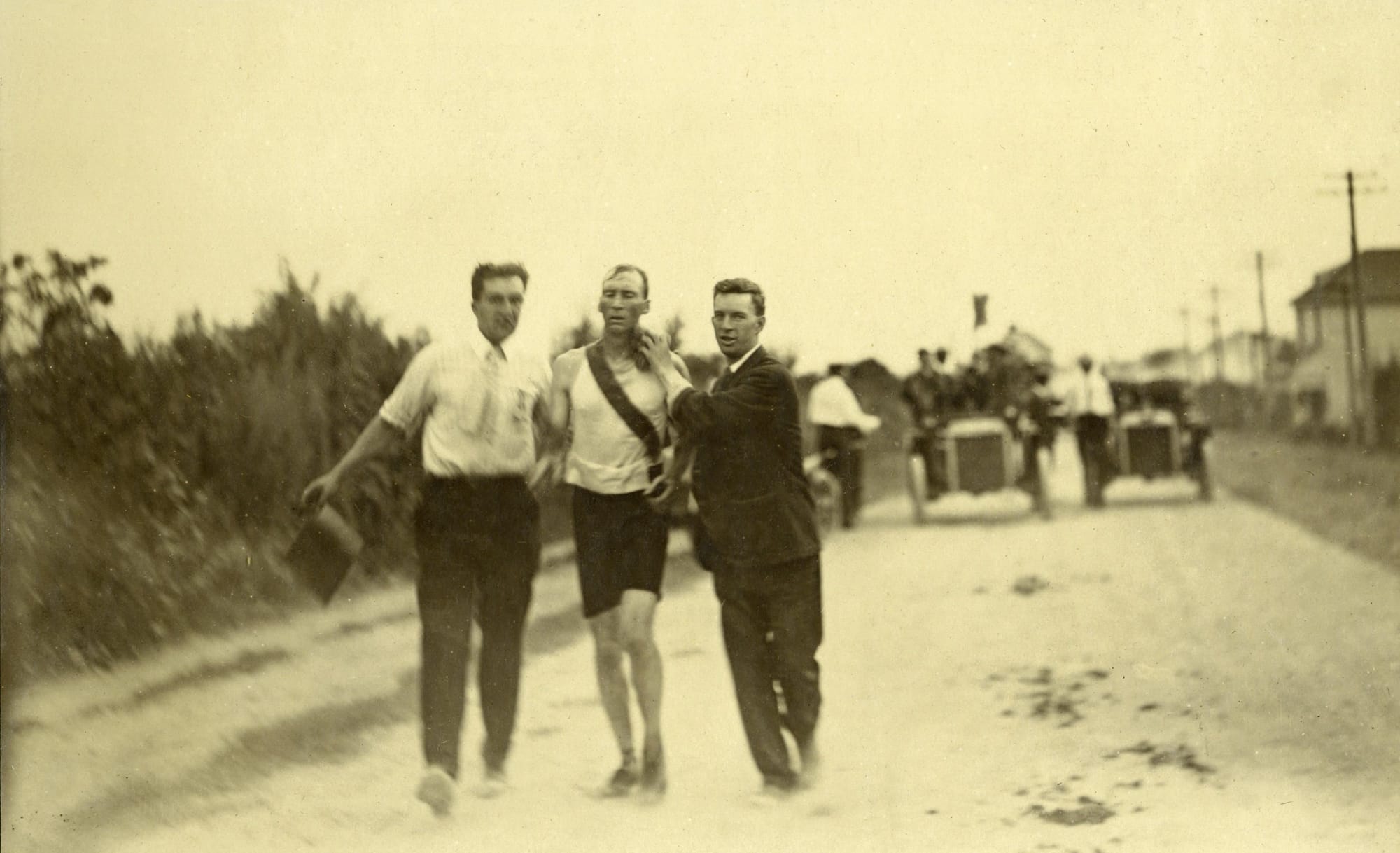
With Lorz disqualified, the gold medal was soon awarded to Thomas Hicks, another American, who crossed the finish line in three hours, twenty-eight minutes, and fifty-three seconds: the slowest winning time that has ever been or will ever be recorded for an Olympic marathon, by a margin of twenty-nine minutes, despite this particular marathon being two miles shorter than the standard distance.
Hicks did not so much cross the finish line as get carried across it.
Here is what happened to poor Thomas Hicks during the 1904 Olympic marathon, as attested by contemporary accounts:
His trainers (men who were presumably paid for their expertise, considered and believed themselves to be both professionals and helping) fed him many raw eggs during the race.
They also laced these eggs with strychnine, a compound commonly known as rat poison, because they were somehow convinced that strychnine became a performance-enhancing substance when combined with the chemicals in egg whites.
These were different times. They weren't sure yet if rat poison gave you superpowers or if drinking water made you worse at running.
They also forced him to drink copious amounts of brandy while he was running a marathon in ninety-degree heat without water. This was an important part of the alchemical experiments they were performing inside of Thomas.
Hicks attempted to lie down and quit the marathon several times. His trainers physically forced him back to his feet and into the race. They pushed him through long stretches of the course. In the final miles, they carried him fully off the ground, his feet kicking feebly at the air in a pantomime of running as he exerted the last gasps of his life-force to pretend he had won.
Hicks was delivered to the finish actively hallucinating and rambling incoherently. He lost eight pounds during the three-hour race. Four nearby doctors (who probably didn't even know there was a race happening) worked hard to prevent his death. He survived, barely.
We can only assume Sullivan was disappointed.
This horror was likely only considered a legitimate, gold-medal-worthy completion of an Olympic event by shadow of comparison to what fucking Lorz had just tried to pull fifteen minutes earlier.
Hicks set a record for the slowest Olympic marathon victory that will almost certainly never be broken. Should he have been proud?
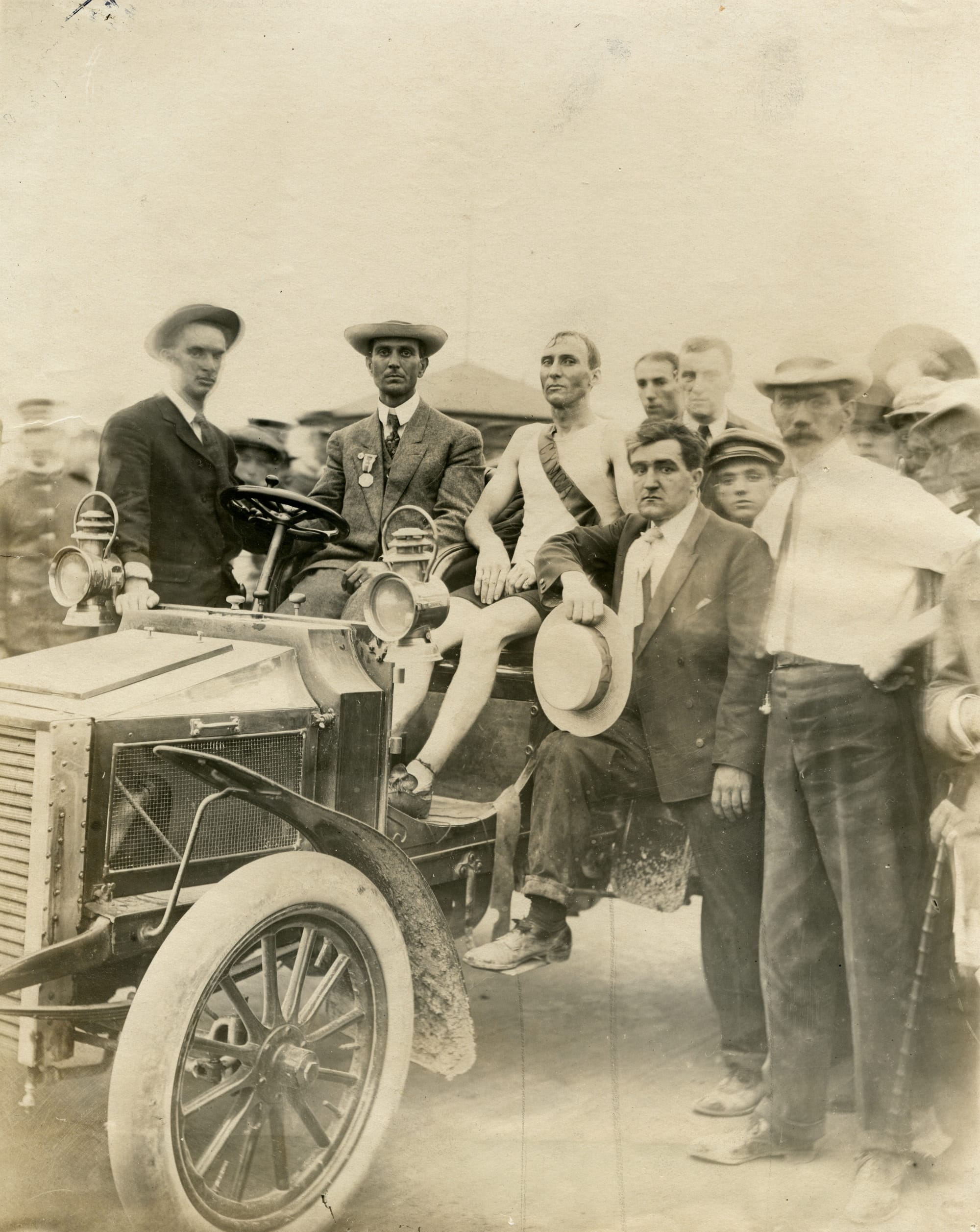
The Hicks case is the most morally serious in the entire race, because it involves direct harm by careless designated caregivers acting under institutional authority.
Hicks's trainers occupied a stewardship role. They were entrusted with his physical wellbeing during the race. They had access to his body during a period of extreme physiological vulnerability. They had the authority to make decisions on his behalf about whether to eat eggs, hydration, and whether to die in the worst marathon of all time or quit like everyone else. This placed them in a position structurally analogous to medical caregivers: agents with special access to a vulnerable locus whose future-space they are responsible for preserving.
They used this position to perform devious experiments and physically stop him from trying to save his life.
The eggs narrowed Hicks's physiological possibility space by introducing a toxin that endangered his organ function and cognitive capacity, also they were forcing a man to eat eggs.
The brandy further narrowed it by impairing his thermoregulation, judgment, and hydration status in conditions where all three were already under extreme stress.
The physical overriding of his attempts to stop destroyed his agency over his own continuation, the most basic form of autonomy an extant locus possesses. Hicks wanted to quit. His body was telling him to quit. The field conditions made quitting the least-harmful available option for his own future-space.
His trainers, acting from within a role that gave them power over his body, physically prevented him from selecting the better path. They justified this under the language of care, because they were helping him to complete his Olympic victory narrative.
This is not just harm. It is harm administered through care-structure. The framework calls this pattern in which institutions or roles designated for preservation become instruments of contraction one of the most dangerous configurations in moral life, precisely because it operates under the legitimating language of support.
Hicks's trainers believed they were helping him win, with their secret eggs. They were, in structural fact, systematically destroying his body with their secret eggs while overriding his only available means of self-preservation.
The gold medal they coerced him to "win" is the purest example of moral theater in the entire race: a visible marker of achievement draped over a body that had been egg-poisoned, intoxicated, and carried over the finish line against its will.
Albert Corey: The Amazing Amerifrenchman.
Second place was awarded to Albert Corey, an extremely confusing undocumented French immigrant living in the United States who somehow ended up running in the Olympic Games without anyone being exactly sure whose team he was actually on.
Corey was accidentally recorded as French for the marathon despite running for the American team in AAU colors, which are also the colors of the French flag.
This was corrected.
He then ran for France in the four-mile team race during the same Summer Games, where he was recorded as American, probably because he was wearing the uniform he'd been given when everyone thought he was on the American team, and had also previously insisted he was running for America to the judges.
This was also corrected, in the opposite direction.
After the Games, the Olympic Committee unilaterally re-attributed all of his medals to France and declared him officially French forever, despite having run for the American team at this marathon, and living in the United States for the rest of his life, where he was not a citizen but was a starter on the Olympic team, and having never actually been a legal citizen of either country in the relevant administrative sense at the relevant time.
The institutional apparatus of the Olympics simply could not figure out what country he was from, which is a remarkable failure for an organization whose primary function is sorting the goddamned athletes by country.
The framework would note that Corey's case illustrates how institutional categories can fail to map onto extant reality without anyone noticing the gap. The Olympic system required every athlete to be a representative of one nation.
The Amazing Amerifrenchman did not fit this requirement. He didn't do citizenry. Rather than accommodate the structural reality (an undocumented immigrant running for whichever team would take him), the system repeatedly reclassified him until the paperwork looked right. The institutional narrative was considered resolved, while the underlying reality remained exactly as confusing as it had always been.
Arthur Newton: The Ironist.
Third place went to American Arthur Newton, the only returning marathon runner from the previous Summer Games. Newton had competed at the 1900 Paris marathon (the one that had water, did not have deadly dust clouds or dangerous beasts, and was not organized as a covert dehydration experiment).
Newton finished in third place with a time that was actually faster than his time at the previous Olympics, which given the conditions of this marathon is one of the most statistically improbable athletic achievements in the history of sport.
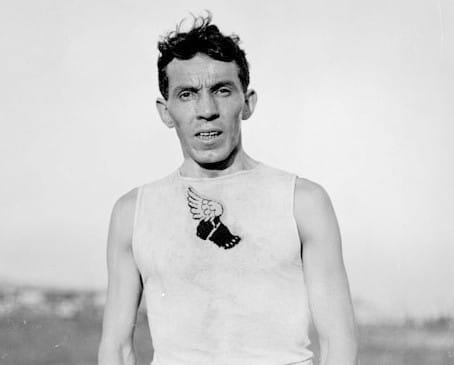
This fucking dude somehow ran a better race in a field designed to kill him than he had in a field designed to host a race.
No one bothered to record the finishing times of anyone after Newton, so the remaining eleven finishers completed their agonies in unrecorded silence, their suffering deemed insufficiently interesting to document. In retrospect, they probably should have just quit like the others.
The Field in Sum.
Step back from the individual cases and look at the field.
Thirty-two runners entered. Fourteen finished. Eighteen could not. Multiple runners nearly died. One was found unconscious in a ditch with dust-coated lungs. One was carried across the finish line while hallucinating from rat-killing eggs. One rode in a car for eleven miles and almost got away with it. One was chased off course by a wild dog and didn't even have shoes to throw at it. One arrived starving and penniless in his street clothes, cut his pants into jorts, stole toxic fruit, took a nap, and still finished fourth. The referees drove ahead in comfortable automobiles and did not notice that the leading runner had collapsed dying on the side of the road. The chief organizer had designed the entire event as a fucking dehydration experiment. The gold medal was first given to a fraud, then reassigned to a man who had been poisoned by his own trainers. They probably had to take the laurel off Lorz and give it to Hicks. The silver medalist's nationality remains a mystery to this day.
In the framework's terms, what happened on this course is a distortion field operating at every level simultaneously:
At the organizational level, Sullivan's ideological commitment to studying dehydration (why, Sullivan?) reorganized the entire field around deprivation torture rather than competition. The institution was not only failing to do its job, it was doing a different job and one structurally hostile to the stated purpose, while maintaining the outward appearance of hosting an Olympic event.
At the procedural level, the referee system, the course preparation, and the support infrastructure all functioned as technologies for converting harm into neutral-seeming administration.
Officials rode in cars that blasted dust into runners' lungs. If they were doing this on purpose from dust cannons, someone would have told them to stop. The course was unmarked, unsecured, and uncleared. The single water stop was not a deliberate provision but a well that happened to be there. Every procedural element that should have lowered resistance to completing the goal instead raised it.
At the care level, the trainers charged with supporting athletes' wellbeing became the primary instruments of harm. Hicks's handlers tried to assassinate him. The medical infrastructure consisted of whatever doctors happened to be around at the finish line. The entire care structure of the event was either absent, inadequate, or actively destructive. The well.
At the narrative level, the event was subsequently treated as a legitimate Olympic competition. Results were recorded, medals were distributed (twice, in the case of gold), times were logged (for the top four only). The institutional record of the 1904 marathon reads as though a normal sporting event somehow has occurred here. The narrative cleaned up after the field to maintain the distortion of James Sullivan.
This is what the framework means by the confusion of order with good. On paper, the 1904 marathon looked like an Olympic event. It was, in fact, a fucking shitshow lacking anything approaching clarity. It did have a starting line, a course, officials, national teams, a finish line, medal ceremonies, and recorded results. The institutional apparatus of legitimacy was fully operational. What it didn't have was any structural connection between that apparatus and the actual wellbeing of the loci it was supposed to serve.
A prison can be made to look very orderly. An Olympic marathon in which the organizer is studying the effects of purposeful dehydration, the referees are driving ahead in dust-blasting automobiles, the trainers are feeding strychnine to their athletes, the leading runner is dying in a ditch, the winner is a fraud, and a starving Cuban postal worker in homemade jorts finishes fourth after a nap: that, too, can be made to look orderly.
The question is what kind of field the order actually reveals.
Coda: The Glory of Men.
The 1904 St. Louis Olympic marathon was never canceled, never formally investigated, and never resulted in meaningful consequences for its organizers.
James Edward Sullivan continued his career in American athletics and hopefully not science.
Fredrick Lorz won the Boston Marathon, the bastard.
Thomas Hicks kept his gold medal. I can not imagine he enjoyed looking at it.
The Olympic record shows a completed official event with final results and some brief notes, not the results of the dehydrating-world-athletes study.
The only participant who appears to have fully understood the situation was Andarín Caravajal, who responded to a pre-damaged field with no good options by cutting his pants into shorts, stealing fruit, taking a nap, and finishing the race anyway.
In Modal Path Ethics, that is called Better.