Field Instruments: Property
The property question is never simply “mine” or “ours.”
September 2026 note: Property remains best understood as an enforceable control grammar over access, exclusion, use, transfer, and future flows rather than as a metaphysical property of the underlying thing. Later work sharpens the jurisdiction point: legal title or ownership does not by itself establish moral standing, unlimited authority, or the right to disable correction for affected loci. Current locushood is stricter than the broad May taxonomy, so the bearer of a property transition must be identified at an explicit grain rather than inferred from whatever object is owned. September provenance and source-object work also strengthens the article's intellectual-property and preservation examples: a copy, archive, license, or replacement may preserve information or function without preserving source-object identity or the original continuation. Property is an instrument of continuity only while its jurisdiction remains bounded by the field it structures.
Property is not any thing.
A house is not property. It is shelter, material structure, land relation, neighborhood node, memory site, investment vehicle, collateral, rental stream, tax parcel, and possible home.
Land is not property. It is soil, water, habitat, location, mineral possibility, cultural memory, food source, watershed, burial ground, border, battlefield, neighborhood, farm, and future.
A book is not property. A game is not property. A patent is not property. A server is not property. A data set is not property. A forest is not property. A song is not property. A factory is not property.
Property is the enforceable grammar placed around these things.
It says who may enter, who may use, who may exclude, who may sell, who may inherit, who may rent, who may mortgage, who may extract, who may copy, who may modify, who may abandon, and who may call the state when someone else crosses the line.
That grammar is important because extance is fragile.
Without stable access, future paths collapse into a scramble. A person who cannot keep their tools cannot reliably build. A family that cannot keep shelter cannot plan ahead. A farmer who cannot rely on this land across seasons cannot steward soil. A community whose places can just be taken at will cannot remain itself in any meaningful way. An inventor who cannot preserve some claim over a created work may never get the time, capital, or trust needed to finish it. And a public institution whose records, buildings, archives, and equipment can be seized at whim cannot function as a real institution.
Property can lower resistance. It just also raises walls where paths used to be.
And Modal Path Ethics already has some property to speak of.
Access.
Property is often spoken of as if it were a natural, metaphysical layer of the object:
My house.
My land.
My book.
My invention.
My account.
My game.
That grammar is useful, but also very misleading.
The object exists in extance. The property relation to it is a social, legal, institutional, and sometimes violent structure attached in our minds. The object can burn, rot, shelter, feed, teach, compute, grow, decay, or continue whether or not the property relation is just. But the property relation always changes which futures can be reached through it.
A house can shelter a family, or a house can sit vacant as an asset.
A house can become collateral or an eviction machine.
A house can be an inheritance. A house can also become a speculative unit inside a market that makes shelter less reachable for the people who live nearby.
The material structure did not become six different objects here. The property grammar changed which futures could pass through it.
This is why property is a Field Instrument.
Money moves symbolic claim-power through the field. Accounting remembers and classifies that movement. Property stabilizes claims into enforceable control over extant things, places, expressions, rights, and future flows.
Money says: this transition can be activated through claim-power.
Accounting says: this claim, asset, liability, cost, revenue, or obligation is remembered here.
Property says: and this control can be defended.
That is a different kind of force the others do not provide.
The Good of Property.
Modal Path Ethics cannot be anti-property in the simple and unserious sense.
Property exists because the field requires stable access. Persons and institutions need continuity. If every tool, home, field, record, vehicle, server, manuscript, archive, and garden is always open to seizure, no one can really plan very far. If everything is available to everyone at every moment, then the strongest, fastest, nearest, or most organized take first. That result is not freedom. This is called “a scramble.”
Property can keep the local tyrant, thief, corporation, mob, neighbor, landlord, or state from taking what a locus needs to continue.
A home protects domestic continuity. A workshop protects creative and productive capacity. A farm can protect seasonal stewardship. A personal device can protect communication and privacy.
A title can protect a family against arbitrary seizure. A copyright can protect an author’s expression from immediate commercial capture.
A patent can, at least in the intended case, give an inventor a limited claim strong enough to justify costly development.
A community land trust can protect housing from speculative conversion. A public park can preserve shared access against private enclosure. A library can hold books and lend them under rules that keep them available.
A commons can preserve use through shared governance rather than private possession.
These are all different property-like structures. The question is not whether a thing is “owned” in the cartoonish way. The question is which access structure preserves the relevant future paths.
Sometimes, private ownership does that.
Sometimes public ownership does.
Sometimes cooperative ownership does.
Sometimes commons governance does.
Sometimes temporary use rights do.
Sometimes non-transferable stewardship does.
Sometimes prohibition does.
A field without property is not automatically open, and a field with property is not automatically closed. The exact property form always matters.
The Edge of the Instrument.
The sharp edge of property is exclusion.
That is not some accidental abuse. Exclusion is central to this instrument.
Property always says: this is mine, not yours. This use is authorized, that one is trespass. This person may enter, that person may be removed. This copy may be made, that one may not. This water may be drawn, that access may be blocked. This medicine may be manufactured, that generic version may be delayed. This data may be held, this user may not take it elsewhere.
Exclusion like this can protect.
It can protect a home from invasion, a farm from seizure, a child’s bedroom from strangers, an artist’s work from commercial theft, a community’s land from extraction, a public watershed from private capture, a sacred site from development, a small business from predatory copying, or a patient’s records from exposure.
But exclusion can also close.
Housing can exist while shelter is unreachable. Medicine can exist while patients wait. Land can be held while communities are displaced. Water can be controlled while ecosystems fail.
A vacant apartment can remain an asset while a person sleeps outside. A forest can become timber rights while watershed, habitat, cooling, species, and future soil are treated as secondary.
A platform can own user data while the public field absorbs epistemic damage. A company can own a factory while the town owns the collapse if the factory leaves.
Property is never just the right to hold. It is more the power to shape who can continue through the held thing. That is why property must be always answerable to extance.
Ownership != Stewardship.
Ownership and stewardship can align.
They often do. A person who owns a home may maintain it better because their own future is tied to its continuance. A farmer who expects to work the same land for decades may treat soil pretty differently from someone extracting one season’s gain. An author who controls a manuscript may protect its integrity. And a community that owns land collectively may preserve forms of continuity a distant investor would never notice.
But ownership and stewardship also come apart quick.
A landlord can own without living there.
A fund can own without being present in the community.
A corporation can own without depending on the local future it alters.
A patent holder can own without producing access.
A mineral-rights owner can own the extraction path while the community owns the aftermath.
A publisher can own a live-service game’s access conditions while players own memories, files, attachments, practices, and expectations that the publisher’s switch can close.
Ownership only answers: who may control?
Stewardship answers: can this controlled thing continue?
These are very different questions.
When ownership supports stewardship, property can be a repair instrument. When ownership survives after stewardship has failed, property now becomes a shield for closure.
This is one of the central property failures in any money-dominant field. The account recognizes ownership. The market recognizes transferability. The law recognizes exclusion. But extance asks us a different question:
What futures does this control structure keep reachable?
If the answer is “fewer,” then the fact of ownership does not settle the matter. It names the power that must now be judged against its conditions.
Property and Artificial Scarcity.
Money can make a physically available transition socially unreachable. Property can do the same thing.
A field may contain enough housing units, medicine, land, software, bandwidth, food, or technical knowledge for wider access than actually occurs, but property rules may hold access behind exclusion, rent, license, title, patent, subscription, account lock, or contract.
This does not mean every scarcity produced by property is now false. Some exclusion still preserves the thing. A public trail may need limits to prevent ecological damage. A workshop may need controlled access for safety. A lab may need protocols. A home needs privacy. A game designer may need commercial control to keep the reachable production path alive. A protocol may need license discipline to avoid incompatible capture.
But property can also manufacture scarcity where extance could support easily more access. Housing can become scarce just because ownership holds units out of use. Medicine can become scarce only because exclusivity delays production.
Research can become scarce because paywalls fence knowledge. Software can become scarce because licensing blocks repair. Data can become scarce because platforms trap users inside extraction systems. Land can become scarce because speculation outbids habitation.
Property can make the existing unavailable. That is one of its deepest modal powers and dangers.
IP.
Intellectual property is where the ordinary idea of property starts to wobble and bend, but in useful ways.
A house can be fenced. A tool can be locked in a drawer. A server can be put behind access control.
But a game rule is stranger. Once learned, it moves through minds, tables, gestures, arguments, variants, memories, and play. It is not nothing anymore. It now shapes real futures. It can create a real field around just itself. This thing does not behave like a chair.
The law already knows this, at least partially. The United States Copyright Office says the idea for a game is not protected by copyright, and neither are the game’s name, or title, or the methods for playing it. Copyright may protect sufficiently original expressive material connected with the game, such as rule text or graphic art on a gameboard or container.
That includes my game, on this website. Chirality is knowingly being published into exactly that unstable space.
Chirality is already public enough to be played. The rules can be read by anyone. The game can be tested and played. This game field can be entered. Feedback can return to the player. The ludic structure can begin doing what it exists to do.
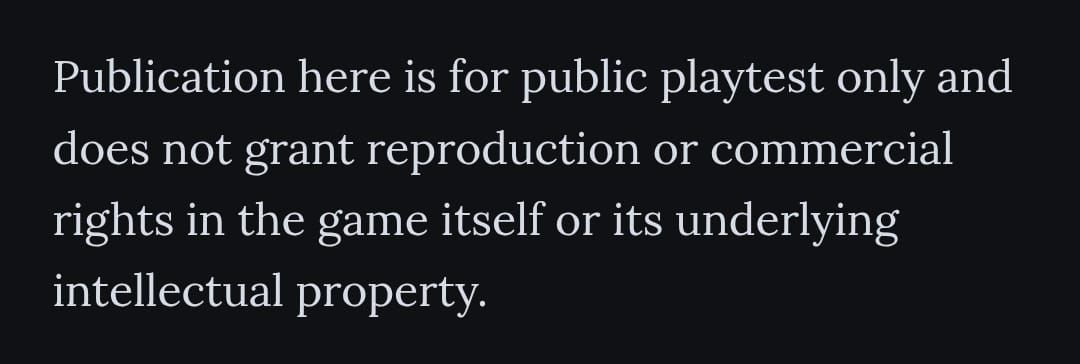
My public page describes Chirality as an “abstract combat strategy game played on a rosette-shaped board of uncut P3 Penrose rhombus tiles, presented in abbreviated publication form for testing, discussion, and refinement.” It also states that publication is for public playtest only and does not grant reproduction or commercial rights in the game or underlying intellectual property.
That notice is doing more subtle work than it may appear to be doing here.
As we just saw, that cannot mean, in the simplest possible sense, “I, Aidan Edward Lawson, own the abstract method of playing Chirality as if I own my chair.” Game methods just do not work like that. The rule-structure already wants to travel through play. If it cannot travel, it cannot do its extant work.
So what that notice reserves is only the production path: title and brand position, written expression, diagrams, board presentation, manufactured-game future, publisher route, video-game adaptation, variants, and the surrounding authored project identity. The phrasing opens the game for play without surrendering the project to capture.
This is not a contradiction. It is the point of property in this space.
Chirality exists in part because, to me, philosophy has lost too much of its ludic practice. The earlier essay on the lost ludic tradition argues that philosophy has not always been only private reading, solitary writing, or public argument from the outside. Dialogue, disputation, formal exchange, and structured contest were ways philosophy got done. Chirality exists partly to reopen that door on my end: the game is not a metaphor for Modal Path Ethics, more intended as a playable structure through which asymmetric possibility, positional constraint, local action, and reachable paths can be inhabited through play, a unique and valuable mode of cognition.
So, clearly, the game cannot remain sealed. A locked ludic philosophy is barely ludic at all.
But if public playtest became commercial surrender, another path would close. The project would become harder to publish, manufacture, develop, adapt, and sustain. The board game, video game, variants, rules bank, website, brand, and production route could all become less reachable because the public test had been mistaken for my abandonment of the project.
So, to avoid this trap, Chirality uses a specific property form:
Protected openness.
Open enough for the field to be played. Protected enough for the authored project to continue.
The Crew shows us the opposite danger at the tail-end.
The earlier Applied Case on The Crew argued that this game (which I never played) was a real ludic and cultural locus: not a person, not a living being; a playable field whose future could be narrowed by technical, legal, and corporate decisions. The article called the live-service structure the “cut” by which a playable ludic object becomes conditional access to an ongoing publisher-controlled field.
That structure is property as continuance control.
The player sees a game. The storefront says buy. The library says owned. The legal terms say license. The technical architecture says server access. The business field says support lasts while support remains viable. The shutdown says: without us, the game is gone.
The issue was not that Ubisoft stopped adding new content and input to the field forever. No company owes infinite support to every old service, that would be absurd. The issue was that ordinary play itself was intentionally structured to depend on remote corporate authority. The single-player road went away, too. No part of the playable future was owned by the player in the way the purchase field taught the player to expect. The entire ludic field remained technically hostage to the seller’s access structure.
The archive still survived.
Footage, reviews, screenshots, wikis, memories, and arguments survived. Those records matter. But the Applied Case made the key distinction: a video of The Crew is not The Crew. A review is not The Crew. A wiki is not The Crew. A screenshot is not The Crew. The archive is not the field. It is trace.
That is the property lesson. Intellectual property can protect a field. It can also preserve control while the field dies.
Chirality’s public playtest structure says: this field should be entered, but the production path should not be captured.
The Crew’s shutdown structure says: this field was entered, but its continuance remained under remote corporate control all along.
Klein Conformance Protocol gives us a third model.
KCP is not a board game product path. This one is evidence infrastructure. My own article introducing it describes it as a protocol stack for packaging, signing, and independently verifying evidence artifacts for substrate execution attempts under uncertainty. Its first public alpha can validate artifacts, run conformance suites, emit and check evidence logs, package portable run bundles, and verify them independently.
So, that kind of project wants a very different property form.
A closed KCP would be much less KCP.
This protocol’s core purpose is independent verification. Its value increases when others can inspect it, test it, fork it, verify it, and build against it. The public alpha I put together is described by me as “portable and inspectable”, with repository, documentation, demo commands, verifier paths, and evidence artifacts available for others to run and check. My GitHub repository identifies KCP as a protocol stack for producing, packaging, signing, and independently verifying evidence of physical-substrate execution attempts under uncertainty; upon review, this is public alpha software released under the MIT license.
So openness is not charity there. It is just functional design.
A board game public playtest and an evidence protocol do not need the same property structure. Chirality needs protected openness because its ludic field must be playable while its authored production path remains viable. KCP needs inspectable openness because verification infrastructure becomes stronger when its evidence boundary can be tested without just trusting the random author. And The Crew needed an end-of-life access path because its property and server structure turned cultural play into revocable dependence.
This is why Modal Path Ethics cannot just rule for or against intellectual property in the abstract.
The question is not whether the creator owns or releases, it is what each ownership or release actually does to the reachable field.
A board game may need protected openness.
A protocol may need inspectable openness.
A live-service videogame may need a preservation path that survives the business case.
A medicine patent may need limits when access is blocked.
A brand may need protection so that a project can remain identifiable.
A rule may need to move freely so that play can occur.
Property is never just one answer. Property is a control structure that must fit the field it lives in.
Commons != No-Property.
The usual debate between property and commons is often shallow.
A commons is not the absence of rules. A commons without rules is better described as a temporary pile before capture, exhaustion, neglect, or domination. Any serious commons has access rules, maintenance duties, exclusion conditions, membership norms, dispute processes, stewardship obligations, and sanctions.
So that makes it suspiciously property-like.
The difference is not that property has rules and commons have none. The difference is exactly who holds the control, for what purpose, and under what obligations.
A private owner may preserve a forest. A state agency may destroy one.
A cooperative may steward housing. A private landlord can do the same.
A commons may protect a fishery. A commons may also collapse if its governance fails.
A public system may keep water reachable. A public system may also poison a city and then hide behind procedure.
The property question is not answered by chanting the holy words of “private,” “public,” or “common.”
The real question is always:
Which access structure preserves the field best here?
Sometimes, the answer will be private property because privacy, autonomy, stewardship, investment, or personal continuity require durable exclusion.
Sometimes the answer will be public ownership because this field cannot tolerate private gating.
Sometimes the answer will be cooperative ownership, because those who depend on this thing should govern it together.
Sometimes the answer will be commons governance because shared access and shared maintenance will preserve the field better than enclosure.
Sometimes the answer will be temporary rights because permanent ownership would just become capture.
Sometimes the answer will be non-transferable stewardship because sale would break the relation that justifies access.
And sometimes the answer will be prohibition because no property form can make this transition acceptable.
Property is not sacred. Access is not sacred.
The field always decides by what continues.
Property & Capital.
Accounting turns held things into institutional memory.
Property gives those remembered claims enforceable control.
Capital then uses property as its durable reachability.
A house becomes collateral.
Land becomes rent.
A patent becomes royalty.
A factory becomes productive capital.
A server farm becomes compute capacity.
A warehouse becomes logistical power.
A data set becomes extraction possibility.
A copyright catalog becomes licensing revenue.
A debt becomes an asset to the lender.
A future revenue stream becomes something that can be sold today.
Property is therefore the necessary bridge between Accounting and Markets.
Money can move without becoming capital.
Accounting can remember claims without making them fully transferable.
Property lets claims harden into control over future flows.
So Capital is not only money. It is money, property, accounting, law, expectation, and enforceable future claim woven together.
Capitalism is not just “people trade things.” People have always just traded things. Capitalism becomes something more specific when property and accounting allow capital to accumulate, compare itself, discipline production, move across fields, claim future output, and demand expansion.
Marx saw part of this clearly, and we'll get to him, but before Marx, we need Markets.
Because once property defines what can be held and transferred, markets decide how those held claims compete, circulate, accumulate, and select futures at scale.
Sovereignty as Property Logic.
Property also points us again toward geopolitics.
Sovereignty is not identical to property, but sovereignty can imitate property logic when a state treats land and people as recoverable objects inside a national title structure.
A polity is not a misplaced possession.
A people are not a detachable asset.
A living democratic society is not a historical object waiting to be reincorporated by whoever claims the older deed.
The structural problem with coercive sovereignty claims is not only that they threaten war, more that they treat extant loci as transferable property.
That is one of the reasons the Taiwan question cannot be solved by asking the riddle of who “owns” the island in some flattened historical sense. The island is never inert. This one is a living field of persons, institutions, industries, languages, memories, dependencies, vulnerabilities, and future paths. Its semiconductor role matters, but it does not exhaust that locus. Its democratic continuity matters. Its people matter. Its coercion risk matters. Its place in global infrastructure matters.
And it shows us how a sovereignty claim becomes harmful when it treats the wrong field as a thing to be held.
Property logic does not become harmless because it is scaled up and called history.
The Failure Mode.
Property fails whenever holding becomes closing.
It fails when the right to exclude closes paths the owner has no defensible claim to close.
It fails when ownership survives after stewardship has failed.
It fails when a held thing is allowed to rot because the account still benefits from holding it.
It fails when a patent protects revenue while blocking access to necessary medicine.
It fails when housing is held as appreciation while shelter becomes unreachable.
It fails when data ownership becomes behavioral control.
It fails when copyright or licensing preserves corporate power while the cultural field dies.
It fails when land title erases prior stewardship and then calls the erasure order.
It fails when public ownership becomes bureaucratic abandonment.
It fails when commons governance collapses and calls the collapse freedom.
Every property form has a new failure mode.
Private property can become domination.
Public property can become political neglect.
Common property can become unmanaged depletion.
Cooperative property can become internal capture.
Intellectual property can become rent.
Open release can become abandonment or capture.
Closed release can become enclosure.
The answer is not to be found in one property ideology, just field-specific control under repair discipline.
Ruling.
Property is a Field Instrument for stabilizing access, exclusion, use, transfer, and stewardship over parts of extance.
It is necessary because extant loci need durable access to continue. Persons need homes, tools, privacy, records, and spaces they can rely on. Communities need places, systems, and practices that cannot be seized at will. Creators need enough control for production paths to remain reachable. Institutions need stable claims in order to maintain, borrow, plan, and repair. A field with no property does not become open. It often becomes scramble.
But property is not the field.
The owner is not the field.
The title is not the field.
The license is not the field.
The asset is not the field.
The right to exclude is not the field.
Property becomes harmful when its enforceable boundary closes futures that the holder has no defensible claim to close, or when ownership persists after stewardship has failed. A vacant house is still shelter withheld. A poisoned river is still damaged after the factory’s account improves. A dead live-service game is still a closed ludic field after the legal terms explain the license. A public playtest can open a game without surrendering its production path. An open protocol can be strengthened by inspectability because verification is its field function.
The property question is never simply “mine” or “ours.”
It is:
What control structure keeps the relevant futures reachable?
Private, public, cooperative, common, temporary, conditional, non-transferable, open, closed, licensed, stewarded, or prohibited; none of these forms is innocent by name.
Each must always answer to extance.