Applied Case: The Bodybuilding Field Collapse
“He died doing what he loved.” [L]
September 2026 note: The central claim survives: consent and discipline do not by themselves cleanse a competitive field whose prestige structure makes severe bodily contraction a condition of seriousness. Later work would avoid treating “bodybuilding” as one undifferentiated bearer; the relevant loci may include athletes, coach-athlete relations, federations, medical-support structures, prestige hierarchies, and economic dependencies at explicit grains. Harm should now be separated into concrete foreclosure, resistance thickening, and generative damage rather than treated as one global field diagnosis. The later bounded-correction work also sharpens the proposed repair: health gates, medical review, and coach accountability matter only if adverse findings have real authority to stop or redirect the dangerous transition. Mortality figures, industry claims, and contemporary organizations in this May article should be reverified before reuse.
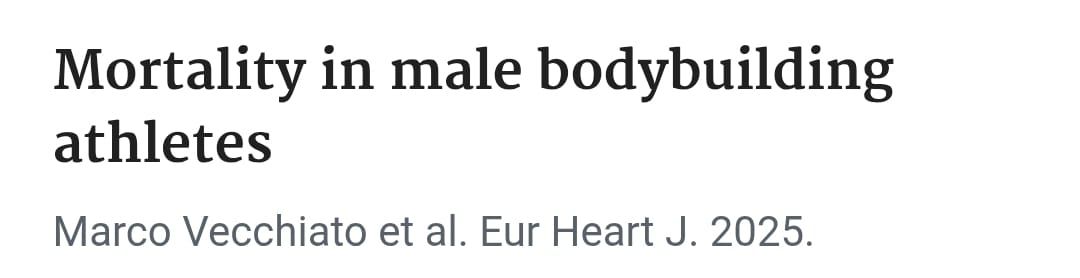
In 2025, the European Heart Journal published a mortality study on male bodybuilding athletes.
The study identified 20,286 male bodybuilders competing across 730 IFBB events, covering 190,211 athlete-years of surveillance. It found 121 deaths. Of those, 73 were considered sudden deaths, and 46 were classified as sudden cardiac deaths. Among currently competing athletes who suffered sudden cardiac death, the mean age was 34.7 years.
Professional bodybuilders had a much higher sudden-cardiac-death risk than amateurs, with the paper reporting a hazard ratio of 5.23 for professionals compared with amateur competitors.
Those figures are not a rumor, or gym gossip. That right there is not another forum thread where one side says “steroids” and the other side says “genetics” until everyone involved somehow becomes even stupider.
That is real mortality data. The first moral task in this field is to read it correctly.
The easy framing sees this and says bodybuilding has a drug problem. That is true, but too small.
The better framing says bodybuilding has a deep field problem. A field has developed over decades in such a way that progressive self-destruction is not an accidental side effect of competitive seriousness anymore. It is one of the ways competitive seriousness becomes legible here.
This is not an article about whether steroids are bad. This is not an article about whether bodybuilding is fake.
This is also not an article about whether men should lift weights, pursue difficult goals, admire disciplined bodies, enter visible hierarchies, or want respect.
The truth of the issue here is harder than any of that. Bodybuilding contains many real goods. It contains discipline, craft, ritual, suffering, courage, community, mentorship, transformation, aesthetic intelligence, and a kind of embodied devotion that most people will never really understand from the outside.
The bodybuilder does not simply “want attention,” even if that is someone's motivation. The bodybuilder enters a path where their body becomes a calendar, instrument, proof, text, project, altar, weapon, sculpture, and social passport.
That is why the field is incredibly dangerous.
A cheap thing cannot corrupt very much. A “fake” thing cannot ruin this many lives. A real field like this collapses when its real goods remain present but the path to them has been narrowed until harm becomes normalized as part of the admission price.
Modal Path Ethics begins directly from reachable future-space. Harm is not limited to pain, bad intent, or bad outcomes that someone already understands. Harm occurs whenever an action, structure, practice, or field contracts the reachable future-space of an extant locus. A person can be harmed well before their final crisis arrives. A person can be harmed before he even experiences his path as coercive. A person can be harmed while consenting, smiling, posing, signing up, hiring the coach, buying the meal plan, pinning that number, and telling everyone he has never felt more alive.
Consent always matters, but consent does not magically repair a damaged field.
The bodybuilder who chooses a dangerous prep is not a puppet, but he is also not choosing from an undamaged menu of futures. He is entering and moving inside a pre-damaged field that has already taught him what really counts; what wins, what earns respect, what gets sponsored, what gets filmed, what gets coached, what gets ignored, what gets called soft, and what gets remembered forever.
The bodybuilding deaths are not noise around the field. They are evidence about what, precisely, this field has truly learned to select for:
Self-destruction.
A Field That Kills Its Strongest.
Bodybuilding is not the only sport with risk.
Football has head trauma. Combat sports have brain trauma. Endurance sports have cardiac events. Strength sports have torn tendons, spinal injuries, joint collapse, and the slow subtle revenge of accumulated load.
The difference in bodybuilding is the kind of body being actively selected.
This stage does not ask whether the athlete can run fastest, lift most, fight best, or endure longest in a direct performance contest. This stage asks whether the athlete can present a body that appears to exceed ordinary human limits of mass, leanness, symmetry, dryness, fullness, and control. The performance on that stage is not really what the athlete does. It is really about what the athlete has become.
That changes pretty much everything about athletics.
In a timed race, the body is the vehicle. In bodybuilding, the body itself is the artifact. In a fight, the body is tested through conflict. In bodybuilding, the body is tested through display of the body. The winning body must look like the visible answer to the field’s question:
How far can this thing be pushed?
The field, in pushing, then teaches everyone exactly where the edge is.
The Golden Era is often invoked as the lost paradise before bodybuilding got “too big.” That nostalgia is not clean enough to carry an analysis. The older field was not pure at all. It also had drugs, distortions, ego, exploitation, and body damage. The point is not that one era had virtue and another era had corruption, so now the virtue is lost and must be restored. The real point is that this field’s selection pressures have changed.
The mass-monster era (one of the greatest named periods of time in the history of this species) did not appear because a few men woke up one morning and decided to become living cautionary tales. It appeared because the field around those men rewarded more size, more density, more freak factor, more visual extremity, more visible deviation from the ordinary human form. Once that reward structure becomes stable, individual restraint becomes competitively very expensive.
That is the field-level shift. No one inside the field can just ignore it.
In any healthy competitive field, discipline expands your reachable futures. The athlete trains, and becomes more capable. The student studies, and gains competence. The craftsperson practices, and gains precision. The musician drills scales until the expression becomes available at the speed of thought.
Discipline hurts, but that hurt is metabolized into increased access.
In a collapsed field, discipline instead begins to purchase your entry into a narrower and narrower future. Here, the athlete trains harder, eats cleaner, sleeps stricter, injects more, dries out more, hides more, risks more, and becomes less able to reach an ordinary future without medical debt. The practice still feels exactly like discipline. The calendar still looks like incredible discipline. The meals still look like serious discipline. And the suffering still sounds just like discipline.
But the field has inverted the output, and so these acts are no longer actually performing real discipline's true function.
The ordinary goods of bodybuilding are pretty obvious. Strength matters, right? Muscular development matters. Honing an aesthetic craft matters. Posing matters too. Transformation matters maybe most of all. Public difficulty also matters a lot. This field's biggest strength is that it gives people a way to see themselves changing through will, structure, mentorship, and time. For many men, that is not even approaching shallow, not at all. This is often one of the first systems in their life that gives them visible evidence that their effort can really alter reality.
That is a very serious good.
But, the lethal field we see today does not stop at transformation. It escalates transformation into proof-of-seriousness. The question becomes not “what can you build yourself into?” but the far worse one of:
“What are you willing to sacrifice so the field believes you meant this?”
There are drug categories associated with competitive bodybuilding that everyone in and often out of the field knows how to name: anabolic-androgenic steroids, growth hormone, insulin, thyroid manipulation, diuretics, stimulants, site-enhancement oils, dehydration practices, and contest-prep protocols that turn physiology into a negotiation with catastrophe. The details all vary. The risk profile varies. The athlete, coach, genetic response, drug source, monitoring, age, prior damage, and category all individually matter.
However, the structural point does not require pretending every athlete does the same thing.
The point is that this field has now normalized a pharmacological floor. Any young athlete entering the serious competitive pipeline does not encounter drugs as some exotic final temptation.
He encounters them as his threshold question. Not “how do I win after exhausting ordinary development?” but “when do I start doing what all serious people do?”
“When do I start taking this seriously?”
This question is not freedom in any sense. This is very dangerous field capture.
The European Heart Journal data gives this argument a hard floor beneath the moral language. That study’s authors did not analyze a handful of YouTube-famous tragedies. They identified a large population of male bodybuilding competitors, and they found elevated mortality patterns, including disproportionate sudden cardiac death and higher risk among professionals.
This is exactly what Modal Path Ethics expects from a collapsed competitive field. The strongest are not protected by their superiority at all; in fact, the inverse is often true in a collapsed field like this. Their superiority can expose them to deeper and deeper layers of capture. This is because the professional athlete is not simply “better at a sport.” The professional is more intensely selected by that sport. He has more incentive to remain extreme in its context, more pressure to appear extreme, more audience investment in his extremity, more identity fused to his extremity, and more economic dependence on the field’s judgment of his seriousness.
A field like this one kills its strongest because the strongest are carrying the field’s aesthetic burden.
The amateur can just quietly quit and disappear. The professional? Not so lucky. He has become evidence of this field. He is the poster, the guest, the podcast clip, the supplement ad, the coaching funnel, the before-and-after horizon for everyone still climbing. His own body tells this field what is possible inside it. That means his body also carries the cost of keeping that possibility visible.
When he dies, the field mourns him.
But then, the field keeps on selecting.
The eulogies are all real. The grief is incredibly real. The friendships are all real, and so is the shock. But grief without changed selection pressure is not repairing the field. It is, as terrible as it is to say, the field metabolizing another death as its atmosphere.
There is a structural reason the same ritual repeats, again and again. A bodybuilder dies young. People post photos. They call him a warrior. They say he inspired everyone. They say he died doing what he loved. A few people ask whether the sport can continue like this. Other people tell them not to politicize this tragedy. Some may blame genetics. Some might blame one bad coach. Some will blame one bad protocol. Some blame the athlete’s secrecy, or the internet, or envy from the outsiders who never understood the lifestyle.
Then, prep season continues.
The structure of this field survives by turning every death into another exception.
That is the shape of this collapse pattern. It's not that everyone dies, or that bodybuilding has no goods left, or that every coach is a villain or every athlete is deluded. The collapse is that the field can no longer reliably reproduce its central goods without routing any serious aspirants through extraordinary bodily sacrifice.
A field is sick when the path to excellence is dangerous.
A field is now collapsing when that danger becomes one of the signs by which excellence is recognized.
A field collapses when it can no longer reproduce its central goods, except by consuming the future-space of the people who embody them.
The Unaccountable Prescriber.
The prep coach is one of the most utterly strange roles in modern sport.
Officially, this man is not a doctor. He is not a pharmacist. He is not a psychiatrist. He is not a cardiologist. He is not an endocrinologist. He is not a licensed clinical authority of any kind, with formal duties, malpractice exposure, charting requirements, continuing education, or a board that can end his career.
Functionally, he may still occupy pieces of all of those roles.
He can direct food, water, sodium, training, cardio, sleep, supplementation, drug timing, drug categories, contest selection, stage weight, peak week, body image, social isolation, psychological endurance, and the athlete’s own interpretation of distress. He may know the athlete’s body better than anyone else in the athlete’s day-to-day life. He may have more access to their body than the athlete’s physician. He may have more trust than the athlete’s own family. He may be the person the athlete calls before the emergency room.
This role is not inherently abusive. A good prep coach can save an athlete from stupidity, panic, unnecessary escalation, sloppy prep, reckless dehydration, and internet-protocol roulette. A good coach can be a stabilizing steward.
That is why the role capture case is so serious.
A bad prep coach does not harm from outside the field. He harms from inside the field's care-structure. He is the one assigned to help the athlete survive their journey through its extraction. If he now becomes the person delivering the damage, the field gains even more moral camouflage.
The language used still sounds protective. “We’re managing the look.” “We’re bringing you in.” “We’re keeping an eye on you.”
“We know your body. Trust the process. Don’t let your head mess with you. Everyone feels like death at this stage. This is normal. This is what it takes.”
The athlete is not hearing a prep coach's harmful instructions from an enemy or neutral party. He is hearing instruction from his personal steward.
A physician who used comparable authority recklessly could face malpractice consequences, licensing consequences, institutional consequences, or professional exile.
A prep coach can often lose one athlete and keep the funnel rolling. He can blame the death on the athlete’s hidden behavior. He can say the client lied. He can claim the death had nothing to do with his prep at all. He can post his grief on social media, then rebrand. He can onboard the next desperate twenty-six-year-old who believes this is the year his life finally becomes visible.
The problem is not prep coaching. The problem is unaccountable prescribing power disguised as “motivational support.”
The Washington Post’s 2022 investigation into extreme bodybuilding practices gives this structure its human face. Its reporting describes athletes pushed through extreme regimens involving diet, workouts, drugs, collapse, and disputed coach responsibility. The details matter less here than the role configuration: an athlete in physiological extremity, a coach occupying intimate authority, and harm delivered through them in the language of preparation.
Modal Path Ethics remembers this. It has already seen this structure before.
In the 1904 St. Louis Marathon, the trainer-steward role inverted into harm administration. Thomas Hicks was not attacked with poisoned eggs by an enemy in the road. He was carried forward by his own support system while being force fed rat poison and brandy, physically pushed forward through bodily collapse, and delivered dying over the finish under the legitimating language of athletic assistance. The absurdity of that whole ordeal makes what happened to Hicks very, very easy to laugh at.
The structure was always less funny. Care became the delivery mechanism for near-lethal damage.
However, according to some prep coaches, I was wrong in my ruling. Apparently, the lesson of St. Louis was not “do not poison exhausted athletes under the banner of support,” but “wait until the pharmacology has much better branding.”
The chemistry involved changed. Since then, we figured out the secrets of rat poison (it mostly kills rats). But the role failure did not change. Not at all since 1904.
This is why bodybuilding’s coach problem cannot be solved by telling athletes to “do their own research.” That phrase is often the sound a failed institution makes when it wants the least powerful actor involved to absorb the risk of institutional failure.
An athlete cannot fully audit the coach while also needing the coach’s approval, expertise, emotional containment, and access to the competitive field. Even when the athlete is deeply informed, he is never symmetrically positioned. He is not evaluating a neutral service provider from a place of open optionality. He is trying to become legible in a field whose gatekeepers often speak through these coach networks, sponsor networks, federation pathways, and other avenues of social proof.
The more vulnerable the athlete becomes in this pipeline, the more powerful the coach's role becomes.
That is precisely when accountability must increase. In bodybuilding, it often instead decreases.
A prep coach can operate in the most physiologically dangerous phase of the athlete’s year with less formal accountability than a fucking barber, a schoolteacher, or a person driving a truck full of frozen dead chickens across state lines. The bodybuilding field has created a role that can functionally influence medical-risk decisions without accepting any medical-risk responsibility.
That is not some little individual quirk of this field. That is a pretty hefty design failure, with demonstrable consequences.
The real repair path is not to abolish prep coaches. It is instead to formalize the stewardship they already claim to provide. If a coach wants the authority to manage contest prep, then the coach should enter a real public accountability structure. That means certification, insurance, documentation, review boards, disciplinary records, mandatory referral triggers, emergency standards, and malpractice exposure are not insults to good coaches. Those things are how a field like this distinguishes stewardship from predation.
Good coaches should want that distinction on full display.
The bad coach benefits from the current opacity. The good coach benefits from a field where recklessness has a clear cost.
A serious field cannot outsource human survival to private DMs.
The Discipline Distortion.
The bodybuilding field is protected by one of the strongest distortion fields in modern culture: the sanctification of discipline.
This is not because discipline is fake. Discipline is very real, and very important.
Most people could use more of it, not less. The modern world is full of soft collapse, attention rot, executive dysfunction, algorithmic sedation, evasive therapy-speak, institutional excuse-making, and a general cultural allergy to difficulty. The man who learns to train, eat, sleep, repeat, and endure is not actually hallucinating when he feels he has recovered something important.
He really has. That is exactly why discipline is such a dangerous cover story when a field turns.
A weak value is easy to reject on its face. A strong value can be weaponized much more cleanly. Once “discipline” becomes the master word, the field can route nearly anything through it. Now, hunger becomes discipline. Isolation becomes discipline. Pain becomes discipline. Fear becomes discipline. Organ stress becomes discipline. Critical warnings become weakness. Concern becomes envy. Medical caution becomes softness.
The person trying to interrupt the contraction pattern becomes the person who “doesn’t understand what it takes.” This is the symbolic substitution, and how discipline worship can collapse any field.
The athlete is not only suffering. He is suffering inside a moral vocabulary that tells him the suffering always means he is becoming better.
Sometimes, that is what suffering means. I asked, and training really is supposed to be hard. That's not a bug. Cutting weight is very unpleasant. Contest prep is not and never will be a spa weekend for people who enjoy steamed fish and spiritual dehydration.
So any serious analysis has to distinguish the real ordinary difficulty from field collapse. The distortion begins when suffering stops being evaluated by output.
Pain is not automatically proof of repair. Difficulty is not automatically evidence of moral seriousness. The body’s distress is not automatically the voice of weakness leaving the room. Sometimes, distress is very much the body submitting you testimony that the field around you has become completely insane.
The bodybuilding distortion field teaches athletes to interpret warning signs that might save their bodies and lives as rites of passage to ignore.
The athlete who feels like death must decide whether he is in danger or simply not hard enough for this yet. That is just a brutal epistemic position to be in already. The field then surrounds him with examples of men who pushed harder, and were rewarded. They were on the stage, with the sponsorship, and that transformation post, with the coach's praise, and with the whole comment section, hotel-room pump-up video, grainy backstage footage, “no excuses” caption, dead champion’s tribute reel; all of it tells the same story. They got it.
The body that survives the ordeal is now proof. The body that does not survive is therefore the exception.
The eulogy is where this distortion reveals itself most clearly:
“He died doing what he loved.”
That sentence can be very tender and true. It can be a family’s attempt to survive grief. It can be a friend’s last defense against meaninglessness. No one should ever rip it out of the mouth of the grieving and turn it back against them as an accusation.
But, at the field level, that sentence can also become a shield against repair.
“He died doing what he loved” can also mean: do not ask what this field did to the thing he loved. Do not ask what had to become normal before love and death became so very easy to place in the same sentence. Do not ask why this community’s ritual vocabulary is better at honoring the dead than protecting the living.
Sometimes “he died doing what he loved” is not a tribute at all. Sometimes this sentence is the field refusing to read its own written death certificate.
The degenerate discipline economy surrounding bodybuilding intensifies this. Modern male self-improvement culture often speaks as if the central problem of men is their insufficient hardness. Just wake earlier. Lift heavier. Suffer more. And stop complaining. Just own your weakness. Do the work. And stop being average. Just kill the old you.
There is always real truth in that vocabulary. Always enough truth to be dangerous.
Many men are notably under-structured. Many men are very lonely. Many men are just drifting. Many men are trapped inside loops of passive consumption and invisible failure. The call to discipline can be a critical lifeline. It can drag someone out of a collapse. It can make action reachable again, before they hit the abyss.
But a lifeline can become a noose when it refuses to allow feedback.
Discipline without field analysis becomes obedience to whatever hierarchy currently offers up pain as meaning. The athlete thinks he is conquering his weakness. The field is using his courage and body as its own fuel.
That is not true discipline. This is extraction wearing discipline’s fucking skin.
The repair here is not in the virtues of softness. The repair is called corrigible discipline.
Real discipline updates quickly when the path is killing people. Real discipline can distinguish between sacrifice and waste. Real discipline protects the future in which discipline can continue to matter. Real discipline does not need young men to die at thirty-five so this field can prove it is not for cowards.
The harder discipline is often in refusal.
Not refusal to train, or refusal to compete. Not refusal to suffer, either. The harder discipline is the refusal to let a damaged field define self-destruction as seriousness for you.
That is a higher standard to meet than “push through it.”
Any idiot can push through the wrong beams until the building falls down.
The Empty Status Hierarchy and the Voluntary Path.
The easiest bad article to write about bodybuilding just says men are vain, stupid, insecure, and addicted to their status. That article would be stupid because it would be too proud of noticing the obvious here.
Of course status is involved. Bodybuilding is quite literally a visible hierarchy organized around bodies. The whole fucking point of this exercise is to become legible. The field offers rankings, titles, categories, coaches, backstage rituals, public comparison, admiration, humiliation, transformation, and proof. It gives the athlete a way to know precisely where he stands.
So the question is not whether men seek status. No one is wondering this.
The real, interesting question is what happens when the accessible status routes around them all collapse.
Any serious field analysis of this field has to begin there, because an athlete entering bodybuilding is almost never choosing between equally reachable forms of male flourishing. He may be choosing inside a damaged social landscape where the older paths to masculine recognition have become unreliable, expensive, humiliating, blatantly fake, inaccessible, or morally discredited.
The “provider” path is less stable. The labor path is much less dignified. The military path is not universally available, and carries its own fun forms of damage. The civic and fraternal institutions have thinned out. Religious communities are generally weaker for many people. Marriage and family formation are often delayed or entirely unreachable for many men. A local reputation carries much less force in an online world. A true apprenticeship is much rarer. Friendship networks have objectively shrunk. Competence is often abstracted out into credentials, platforms, and economic sorting mechanisms that many men experience as remote before they even begin.
Through it all, their body remains.
The body is quite cheap compared with college, property, marriage, a business, or a respected trade. It's not easy, just cheap. A gym membership is not a house payment. Rice and chicken are not the same as tuition. A coach is not a graduate degree. And a visible physique can be built in a horrible apartment, after a terrible shift, during the worst year yet, inside a life where no other status path ever seems to answer you back.
So, that is why bodybuilding works, and that is why it is so attractive to so many men today.
Bodybuilding gives men a physical, verifiable hierarchy, with a mentor figure, a community, embodied competence, measurable progression, visible respect, ritual difficulty, and a sick personal story in which your suffering becomes a badass transformation.
So, for a man who feels invisible, that is not something trivial, not at all. This may be the first institution that has told him: do this, and the world will have to see you. You will be undeniable.
The male-status asymmetry is not a vibes claim, and can't be countered with one. It requires serious analysis, like any other field. This one also sits nested inside a broader pattern of measurable distress. CDC data show that, in 2023, the suicide rate among males was approximately four times higher than among females, with males making up nearly 80 percent of suicides while representing about half the population.
There's really no massaging that number for your partisan projects, I'm afraid. Not ethically, and not if you want people to think you are serious.
Case and Deaton’s “deaths of despair” work identifies rising mortality from suicide, drug overdose, and alcohol-related disease among working-age populations without the stabilizing protections increasingly associated with education, work, and social esteem. Prime-age male labor-force participation has also become a major concern in economic research. Survey data show a sharp decline in close male friendships, with the share of men reporting at least six close friends falling from 55 percent in 1990 to 27 percent in 2021, and 15 percent reporting no close friendships at all. Research on sexual activity found that from 2000 to 2018, sexual inactivity rose among young men, with about one in three men ages 18 to 24 reporting no sexual activity in the past year by 2018.
Do not overread any one of these facts. This is not one of those arguments.
Sexlessness does not somehow prove bodybuilding. Suicide does not prove bodybuilding. Friendship decline does not prove bodybuilding. Labor-force detachment does not prove bodybuilding. Modal Path Ethics does not permit any lazy, monocausal storytelling like this. You don't just connect dots and call that field analysis.
The point these metrics all make clear is that there is a severe field asymmetry. This is not an asymmetry between sexes.
Many men are moving through an environment where recognition, belonging, competence, intimacy, work, and future-building are much harder to reach than the motivational poster version of society ever admits.
Bodybuilding meets that field where it actually is, with an offer ready to sign:
Here is a hierarchy.
Here is a mentor.
Here is a plan.
Here is a visible result.
Here is a community that respects effort.
Here is pain that always means something.
And here is a body nobody can ignore.
That offer is very powerful under such asymmetric conditions because it answers a real wound.
The dismissive framing says men should just get over wanting status, if status is the problem here. This is not a serious analysis of anything. It is an attempt to win an argument against human social psychology by scolding it. Good luck.
Status-seeking can obviously be distorted, cruel, vain, hierarchical in the worst sense, and spiritually ridiculous. However, it can also be one of the ways human beings locate belonging, competence, responsibility, admiration, and self-command. A culture that refuses to build any healthy status paths because “status is dumb” does not actually abolish status-seeking. It never had that power. It instead just ignorantly hands status-seeking to the most available damaged machines.
The equally ignorant reactionary framing says the solution is a return to older male hierarchies: provider dominance, rigid gender pipelines, restored patriarchal scripts; just bring back the old bargain with the old symbols. This is not real repair. It is nostalgia pretending to be an infrastructure plan. That world is just not coming back cleanly, and very much of it should never come back anyway. A broken present is not evidence that every old constraint was secretly wisdom we forgot.
The honest middle, as always, is harder, narrower, and much more boring, and so therefore no one ever wants to bring it up:
Men just need reachable status hierarchies that do not kill them and others.
That sentence will irritate everyone who prefers their anthropology simple. This is good. Simple anthropology is part of why our field is so fucking damaged.
A reachable status hierarchy is not a new cartoon of dominance. That phrase refers to a structured path where effort becomes visible, competence accumulates, community forms, mentorship matters, rules constrain abuse, and the person can become more capable without having to destroy the future in order to be respected in the present.
Bodybuilding, as luck would have it, has many pieces of that structure already fully in place. That is why it cannot be dismissed. The tragedy of bodybuilding is that the field has allowed those wonderful pieces to become bound to a lethal aesthetic escalation.
The athlete’s agency must always be understood inside that bind.
When a young man chooses bodybuilding, he may be choosing the most reachable serious path in his local life. When he later chooses enhancement, he may be choosing the step that field has already framed as the difference between playing and meaning it. When he then hires a coach, he may be choosing the adult authority structure he does not have elsewhere. When he ignores the warning signs, he may be doing so in protection of the only identity that has ever paid him back at all.
None of that makes the danger acceptable.
It makes the danger even deeper. Consent is not the same as openness. Consent can easily occur inside a deeply narrowed corridor. The athlete may say “yes” freely in the local sense while the field has already done deep violence to the range of futures that feel actually real here.
This is why “personal responsibility” is an inadequate stopping point. Personal responsibility matters inside bodybuilding. I've read athletes will often make choices. They may lie, hide, escalate, deny, and chase. Some are reckless. Some are vain. Some are genuinely addicted to that chase. Some are just adults making adult decisions with adult consequences.
Still, a field analysis does not stop at the last hand that touched the syringe. It asks exactly how that path became attractive, legible, rewarded, coached, monetized, defended, aestheticized, and then mourned.
It asks what alternatives were reachable.
It asks who had the power to build safer hierarchies, and did not.
It asks why, exactly, the lethal path has prestige while the safer path feels like some kind of exile.
The athlete is always responsible for his choices from the menu. And the field is always responsible for the choice architecture it built around him.
The Capital That Could Make Repair Reachable, Really.
Now comes the pitch.
I don't do these. This is not a business-deck pitch, or some kind of grant proposal, or like a cute little “wouldn’t it be nice if someone did something” paragraph placed after the bodies have been counted up. I've already ended enough field analysis with vague “repair paths” that barely even meet my own standards of that phrase.
Modal Path Ethics will abide this failure no longer. For bodybuilding, we are breaking that pattern by doing a real, honest, concrete pitch: From now, in the real world, how to repair bodybuilding as diagnosed above.
Modal Path Ethics does not stop at condemnation. That's not the point. If the Better path is reachable, the analysis now has to say how. It has to identify the carriers, name the institutions, capital flows, audiences, and cultural actors that could move repair from moral preference to structural possibility.
So, this is where the article has to make what may be seen as a strange sympathetic turn, given the diagnosis:
The people most commonly treated as part of the problem in bodybuilding may also be the very people best positioned to become the agents of real repair here, and save lives.
That also does not mean these people caused any of the deaths. It does not mean they are secretly villains that must be redeemed.
Saying this does not mean every supplement company, podcast host, fight promoter, influencer, apparel brand, coach, and discipline entrepreneur is somehow morally equivalent to the worst prep coach in the worst hotel room during the worst peak week that ended in tragedy.
That would be pretty stupid.
The stronger claim is also much more demanding:
Many of these actors say, constantly and loudly, that they care a lot about men, discipline, strength, health, responsibility, courage, self-command, brotherhood, excellence, and the crisis of modern masculinity.
Modal Path Ethics chooses to believe them.
So then, the question becomes: what would it look like if they meant that, institutionally?
The bodybuilding field does not lack money. Hell no. It also does not lack an audience, production capacity, or male attention. It does not lack brands that people appear to relate to. It does not lack the coaches or doctors. It certainly does not lack podcasts and people willing to talk for three straight, uninterrupted hours about the deeply nested connection between testosterone, trauma, discipline, seed oils, elk meat, jiu-jitsu, cold plunges, dopamine, masculinity, carnivore diets, peptides, dead champions, and the tragedy of young men who cannot find a path.
However, the field lacks a capital route that gives survival-compatible bodybuilding enough prestige-carrying capacity to compete with the lethal center.
That is the repair problem, and the repair path.
Right now, the lethal path has extreme carrying capacity. It carries all the attention, sponsorships, podcast appearances, stage mythology, Olympia dreams, transformation content, supplement contracts, coach authority, and the general sacred aura of being “serious.”
The safer, survival-compatible path is often coded as some kind of second-tier, natural, small, naive, less spectacular, less hardcore, less real group.
That asymmetry is not only an aesthetic problem. It is a modal problem tightly constricting the reachable futures of bodybuilders in general.
A safer path that cannot carry the prestige over is not yet a fully reachable path for the athlete whose life is organized around that prestige. It exists, technically. It does not exist socially with enough force to be real.
So, this is where capital matters, and the real pitch starts.
Dana White and TKO understand precisely how to build combat-sport spectacle, masculine audience capture, athlete promotion, sponsorship architecture, broadcast packages, and event prestige. They have proven this time and again. TKO reported full-year 2024 revenue of $2.804 billion, with UFC and WWE each contributing over a billion dollars in revenue. This is not some marginal entertainment operation trying to find its way and figure out whether young men will watch disciplined bodies under lights. We already know they will, if it's framed right by the right people.
Joe Rogan, meanwhile, has helped build one of the largest public conversation spaces in the entire world centered around combat sports, male health, physical culture, testosterone, discipline, psychedelics, comedy, hunting, politics, fear, mortality, and the generally just fucking strange carnival of modern masculinity. AP reported that Spotify’s 2024 multi-year deal with Rogan was potentially worth up to $250 million, with the show expanding beyond Spotify exclusivity. Rogan has also hosted major bodybuilding figures, and repeatedly and loudly participated in the public conversation around performance enhancement and the death rate. Joe Rogan is not outside this field. He is actually one of its largest microphones.
The “discipline economy,” a broad overlapping world of hard-men memoirs, supplement brands, strength influencers, apparel companies, garage gyms, coaching platforms, “do hard things” rhetoric, and male self-reconstruction, already sells all the thesis that men need structure, difficulty, and standards in order to flourish. Some of that world is definitely still cringe. Some of it is also definitely life-saving. Much of it is genuinely just both at once depending on the exact day, man, and algorithm it is pulled into.
Prime and the broader influencer-combat economy also demonstrate how quickly young male attention can become massive consumer force. Bloomberg reporting distributed through Yahoo Finance stated that Prime was expected to surpass $1.2 billion in annual sales in 2023, which is almost unbelievable.
The supplement and apparel sectors also monetize the bodybuilding aesthetic constantly. Pre-workouts, energy drinks, protein powders, pump products, gym clothes, lifting belts, straps, shakers, fat burners, motivational videos, athlete codes, affiliate links, expos, booths, transformations, and sponsored physiques all orbit the same gravitational center: the disciplined, extreme, visible body.
So, none of these actors need to be somehow shamed into discovering this field. They are all already there.
That is why this pitch is fair.
A health-mandatory professional bodybuilding federation is not some science fiction concept. It is a very reachable institutional object. It would need real things to exist. It would need competitive purses, serious production, visible champions, strict medical entry criteria, coach accountability, sponsor buy-in, media distribution, and a prestige narrative that does not feel like exile from the “real” sport.
Those are all hard requirements. They are also not mysterious requirements.
The 2025 Olympia prize pool was reported by fitness-industry media at a record $2 million, with the men’s open winner receiving $600,000. So, that figure gives the scale of the prestige center. Any rival health-verified federation would not need to outspend the entire entertainment industry; it would need enough money and cultural seriousness that the athlete can believe: this stage actually counts. This is something I should aim for.
That is the whole hinge in bodybuilding. This opens the real repair path:
“This stage counts.”
If the stage does not count, the safer path stays ornamental. It becomes just a consolation bracket for athletes who could not hang, a moral hobby for the outsiders, or a natural category with insufficient prestige transfer to matter. Such a stage may still save some people. It will not repair the field.
Repair needs the full spectacle.
That sentence sounds wrong to you only if spectacle is treated as inherently dirty. It isn't.
Here, spectacle is how embodied excellence becomes public. The problem is not actually that bodybuilding is spectacular. The problem is that the spectacle has been allowed to demand way, way too much from the bodies that carry it onstage.
A health-verified federation would not be anti-spectacle. It would actually need to be a better spectacle. The story would not be “look how close this man can come to death.” The story would be “look at what disciplined human development can become again when we refuse to cash in the athlete’s organs for applause.”
That is not softer. This is the harder side of discipline.
It is very easy to sell extremity. Every single collapsing field sells its extremity. The harder cultural project is to make restraint prestigious, without making it timid. How do you make health feel elite again instead of remedial, and make medical transparency a mark of seriousness? How can you make coach accountability a part of this sport’s honor code, and survival compatible with greatness?
That is the pitch to the people already speaking this language.
If Power Slap can be made into a broadcast object, a health-verified bodybuilding federation can also be made into one. I don't think this is insane to suggest. If influencer boxing can become a massive revenue machine, survival-compatible bodybuilding can become aspirational again. If the discipline economy can sell suffering as transformation, it can also sell the harder discipline of refusing a field that wants your future as proof that you meant it.
This is not about charity. It is also not pity.
Opening this repair path is not “saving” bodybuilders from themselves in the condescending outside voice that makes everyone in the gym want to throw the article into traffic.
It is an act of repositioning.
The same actors who are often blamed for feeding the problem are also the exact ones who can carry repair into reality, because they already hold the relevant audience, the trust, the money, the language, and the distribution networks. The supplement company can help build the tested federation. The fight promoter can package the event. The podcast host can make the safer path legible and exciting to millions. The discipline brand can make health-mandated excellence feel harder, not weaker. The apparel company can sponsor the champions who refuse to enter the death game. The coach network can professionalize before law or scandal professionalizes it from the outside.
This field really does not need outsiders to confiscate bodybuilding. It just needs its insiders and adjacent power to build a rival center of gravity against the collapsing path.
That is why this chapter is very sympathetic. The actors I mentioned above are not the cartoon demons they are often compressed into on social media. Many of them have buried real friends. Many have had real conversations. Many know the names we don't. Many have watched brilliant, funny, disciplined, beloved men vanish completely before forty. Many have also said, publicly or privately, that something is wrong here.
Modal Path Ethics takes all of that very seriously.
If they can see the wound in the field, then they can also become its repair agents.
However.
Sympathy also does not require or condone softening the situation. Once a field wound is made visible, continued non-repair becomes harder to defend. Non-action is always an action. The more capacity an actor has, the less plausible their helplessness becomes. A fan with fifty dollars cannot build a rival bodybuilding federation. A young competitor cannot create their own medical infrastructure by force of will. A grieving mother cannot move the sponsorship markets. And a local coach cannot migrate global prestige alone.
But a coalition of adjacent capital sure could.
That makes repair reachable. Capabilities come with obligations.
A possible version of this is not at all difficult to imagine.
A three-year launch window. Some serious prize money. A broadcast partner. A documentary build. Medical standards designed with cardiologists, endocrinologists, nephrologists, sports-medicine physicians, and harm-reduction experts. Required ECG, echocardiogram, blood pressure review, kidney markers, liver markers, hematocrit, lipids, glucose metabolism, and contest-readiness clearance. Coach registration. Protocol documentation. Insurance. Emergency withdrawal rules. A public suspension system. A clean distinction between privacy and opacity. Athlete storytelling centered on mastery, not martyrdom.
The brand language just writes itself, because the truthful version is already so much stronger than the fake one:
The strongest field is the one that can keep its champions alive.
The hardest discipline is the one that refuses applause bought with collapse.
The future of bodybuilding belongs to the athletes who can build bodies without surrendering the rest of their lives to the invoice.
A field that wants to survive should clearly want this. A capital class that claims to care about men should also want this. A discipline culture that believes hardship should produce flourishing should want this. A supplement and apparel economy built on bodies should want those bodies to have futures.
So, this pitch is not “please be nice, you guys.”
The pitch is: here is the accessible repair route that proves those stated values are actually real.
Ghost Repairs and Real Repairs.
A damaged field will often generate lots of repair theater before it ever generates repair.
This is not always cynical, just because it is theater. Sometimes people just do the first thing they can see or think of. Sometimes a weak repair is the needed bridge to stronger repair. Sometimes a symbolic change matters because it prepares perception for what really needs to happen. Sometimes language has to change first before infrastructure can follow.
But Modal Path Ethics also has to distinguish ghost repair from real repair.
A ghost repair just changes the story the field tells about itself without changing the field’s output. A real repair changes what becomes reachable.
Bodybuilding has several attractive ghost repairs available.
A federation can talk about athlete welfare while leaving the core incentives functionally intact. A promoter can honor the dead without changing the stage at all. A supplement company can post its grief while continuing to monetize the same aesthetic without absorbing any medical cost. A documentary can make a tragedy beautiful enough that the viewer experiences their concern as catharsis and truth. A coach can say aloud “health first” while every athlete fully understands that the look is what still wins. A natural division can exist without the needed prestige transfer. A podcast can declare the death rate insane, and then proceed to give the same field more and more attention without building any structural alternative.
This is not nothing. But it is not repair.
The clearest test is always output. What does the intervention make reachable that was not reachable before?
Does it alter the athlete’s competitive incentives?
Does it change the coach’s liability?
Does it give safer physiques prestige?
Does it make medical disclosure easier?
Does it reduce the punishment for stepping back?
Does it interrupt dangerous prep?
Does it transfer money away from the lethal center?
Does it create a path where the athlete can still be seen, ranked, admired, and paid without treating cardiac risk as the private cost of public greatness?
If not, the field may have changed its self-description while preserving the contraction machine.
“Natural bodybuilding” is the obvious complicated case here.
This is not fake repair by definition. It can be the real repair path. A serious natural federation with credible testing, prestige, community, and professional consequences can expand reachable futures. It gives athletes a way to compete without the same pharmacological escalation pressure. It can preserve hierarchy, discipline, posing, aesthetics, and community while lowering the deathward pull.
But “natural bodybuilding” also exposes the prestige problem. If the field treats natural competition as smaller, less real, less spectacular, or less culturally central, then it cannot absorb the ambitions of athletes already captured by the open prestige hierarchy.
The safer category can exist. The real question is whether this stage carries enough status to redirect desire from the death game.
The IFBB Pro League’s natural contest rules show that formal testing structures are possible. The rules state, for example, that testing in natural contests must consist of urine or blood analysis and may be combined with polygraph testing, and that testing cannot consist only of polygraphs. The rules also require athletes not to have used listed performance-enhancing drugs within specified clean periods. This is all real.
But the existence of natural testing language also clarifies the field’s deeper problem. The question is not whether anyone can write a new testing rule: it is whether the tested path becomes the field’s prestige center, or whether testing remains a side structure while the main spectacle continues to reward the unbounded look.
A safety rule without full prestige migration is always going to be partial repair.
Classic Physique is another strange proto-repair path. This caps some aesthetic escalation. It makes different bodies aspirational, and shows that the audience can learn to admire shapes other than maximum mass. It also proves this field’s aesthetic is not fixed in place by God, physics, or Ronnie Coleman’s lat spread.
But Classic Physique does not solve the medical opacity problem in any way. It does not solve coach capture. It does not solve underground drug risk. It does not solve off-season escalation. It does not solve the male-status wound that makes the field so powerful. It does not solve the prestige relation between “less extreme” and “less serious.”
It is still a useful mutation, but this is not enough alone.
Harm-reduction medicine is another proto-repair. Clinics and lab services that make bloodwork, hormone panels, cardiovascular risk markers, organ-function markers, lipid panels, glucose metabolism, and inflammatory markers more accessible can obviously create real value. Marek Health’s public diagnostic materials, for example, describe comprehensive lab panels covering hormonal, metabolic, cardiovascular, organ-function, inflammatory, insulin-resistance, and lipid markers.
But increasing lab access alone cannot repair the field. Bloodwork can tell an athlete the wall is really coming. It cannot, by itself, make stepping away socially survivable for them. It cannot ensure their coach responds properly. It cannot force a federation to care about this. It cannot make sponsors reward a safer physique. It generally just cannot rebuild male status architecture.
A warning light helps only if the field actually permits braking.
Drug-checking and underground-lab testing are similar, real harm-reduction tools. They can reduce contamination risk, mislabeling, accidental exposure, and catastrophic ignorance. They are not moral endorsement of drug use, just field triage. A society that refuses harm reduction because it wants to preserve its moral purity often ends up preserving death instead, then calls it the athlete's fault.
But reagent testing, lab testing, and disclosure pathways still always operate downstream of the main wound. They help athletes survive the pre-damaged field. They do not fully repair the field's damage.
Real repair must change the output. That means changing what counts here.
That means medical gates that can stop an athlete from competing, even when the athlete wants to push through. It means coach accountability that survives the athlete’s death.
That means sponsors who attach money to health-verified competition, media that makes the safer champion visible, and federations that do not treat welfare as a press-release adjective. It means off-ramps that preserve identity after competition.
That means this field must learn how to honor a man for withdrawing before collapse with the same seriousness it currently reserves for the man who ignored every sign and made weight, then tragically died.
The hardest ghost repair to detect and call out is concern.
Concern almost always feels morally active. People talk. They grieve. They share clips. They say something must change. They will ask whether bodybuilding has gone too far. They bring up all the old names. They shake their heads. They describe this death rate as “insane.” They say these guys are “dropping like flies.” They say “somebody should do something.”
Concern is not nothing. This is contact with harm.
The problem is that concern can become a ritual that protects the field from repair by letting everyone feel as if the truth has been acknowledged, because contact is happening.
The test is not whether people know people are dying. The test is whether knowing that changes what is reachable at all.
The Better Path.
The Better path is not prohibition.
Prohibition is the fantasy of people who want clean hands and nice stories about themselves more than repaired fields. Prohibition lets the analyst say “ban it” and then walk away smiling from an actual extant field where athletes, coaches, drugs, money, aesthetics, status, secrecy, and desire continue moving in their absence.
Bodybuilding will not disappear because outsiders disapprove of it. Men will always still lift. Men will still compare their bodies. Men will still chase visible transformation. Men will still want hierarchy, admiration, discipline, mentorship, and embodied proof.
Drugs will also still exist. Underground markets will always still exist. Coaches, good and bad, will still exist. And the internet will still continue to teach dangerous half-knowledge to people who are too young to know what they do not know.
So, the Better path always begins by refusing all fantasy.
The goal here is not to abolish bodybuilding’s goods. The Better goal is to preserve them without requiring the athlete’s future as payment.
A real repair route has at least five components:
First, a parallel health-mandatory professional federation.
Not another natural hobby league with weak prestige. Not an online transformation challenge on social media. Not another moral scolding platform. I'm talking about a serious pro federation with money, lights, production, champions, documentaries, rivalries, sponsors, and enough cultural force that the athletes believe that stage really counts.
Medical entry should be a competition condition on that stage, not a private suggestion. Show the ECG. Echocardiogram. Blood pressure. Kidney markers. Liver markers. Hematocrit. Lipids. glucose metabolism. Cardiac review.
Have contest-readiness clearance. Withdrawal triggers. Follow-up requirements. Emergency protocols. Independent medical authority insulated from promoters and coaches.
This would never make this sport risk-free. Nothing serious is ever risk-free. But this transition changes this field’s overall posture toward risk. The athlete’s survival becomes part of the competition architecture, rather than an externalized private burden.
Second, coach certification with liability.
A coach who functionally directs contest prep should not be able to hold prescribing-style influence while claiming motivational-speaker-type accountability. This field badly needs certification, insurance, documentation, continuing education, disciplinary procedures, malpractice exposure, and public consequences for reckless conduct.
This is not anti-coach at all. It is pro-stewardship, real stewardship.
Good coaches should want a structure that distinguishes them from the dangerous ones. Good coaches should want referral rules, emergency standards, documentation norms, and shared expectations. A field that just treats every coach as a private guru is not honoring coaching in any way. It is leaving that role undefended against its worst possible occupants.
Third, scaled harm-reduction infrastructure.
This includes anonymous bloodwork access, underground drug-checking where legally possible, cardiology pathways that do not punish honest disclosure, endocrine care that does not require lying, athlete education that speaks like adults are in the room, and medical professionals trained to treat enhanced athletes without either cheerleading or moral panic.
The current field often forces honest disclosure into a trap. Tell the truth, and risk stigma, insurance problems, doctor incompetence, coach retaliation, sponsor loss, or competitive disadvantage. Hide the truth, and fly on blind.
A repaired field must clearly make truth safer.
That does not mean every disclosed practice becomes acceptable to us. That means the physician, athlete, and field cannot repair what everyone is forced to pretend does not exist.
Fourth, off-ramps for current athletes.
This is essential because a damaged field does not only kill through the contest. It also kills through identity collapse.
The retired or injured bodybuilder can lose much more than just a sport. He can lose his body, income, status, community, daily structure, sexual identity, public image, coach relationship, sponsor relationship, and the only story that made his suffering feel meaningful. A man who has built his life around becoming physically undeniable may now experience ordinary health as complete humiliation and degradation.
That is an incredibly dangerous transition.
Off-ramps should include post-stage identity work, medically supervised endocrine stabilization where appropriate, mental-health support that understands physique identity, career transition, coaching retraining, community continuity, and public honor for athletes who step away before they meet disaster.
A field that celebrates the man only while he is extreme has helped trap him in a death spiral.
A repaired field gives him a way to remain someone after the stage, instead.
Fifth, adjacent voluntary hierarchies.
Bodybuilding does not, it turns out, have to carry the entire male-status wound alone. In fact, it simply cannot. Men need many reachable hierarchies that preserve discipline, community, mentorship, difficulty, and visible progression without converting organ damage into proof-of-seriousness.
From my research, Brazilian jiu-jitsu seems a very useful template here, though of course it is not a utopia. It has its injuries, cult gyms, bad coaches, inflated egos, scams, and its own special mythology.
But structurally speaking, it shows something very important: visible progression, embodied competence, community, coaching, hierarchy, ritual difficulty, and reputational consequence can exist without the field’s central proof being a body pushed toward increasingly catastrophic display.
A blue belt means something. A black belt means something. Rolling reveals fraud quickly. The coach has a local reputation. The gym becomes a new community. The body is tested through skill, rather than exhibited as some chemically escalated artifact. The path can still very much damage people, but death is not built into the aspirational image by design.
That is the template to follow generally for men's spaces; not jiu-jitsu specifically, reachable voluntary hierarchy.
Men seem to need places to go where their effort becomes visible.
If those places are not built, and built right, damaged fields will always keep absorbing them.
Immediate harm reduction saves lives during transition. Bloodwork, disclosure pathways, cardiology access, emergency prep standards, and coach education can begin right now.
A parallel federation and coach-certification body are more medium-horizon repairs. Two to five years is not really absurd here if adjacent capital moves. The money already exists. The audience already exists. The doctors all exist. The production knowledge clearly exists. The missing piece is just the coordinated seriousness.
Aesthetic re-norming is a much longer project. Five to ten years, maybe. The field has to learn to see differently, and that takes time; champions, posters, rivals, documentaries, influencer repetition, judging standards, and young athletes who now enter through the repaired path before the lethal path ever captures their imagination.
And the upstream male-culture work is generational. Men generally need work, friendship, civic identity, family paths, embodied community, competence hierarchies, and status routes that are not algorithmic or deathward.
Bodybuilding repair cannot solve the male field alone. I don't even lift. It can, however, stop exploiting the male wound as if the wound were proof of its market demand.
The moral remainder here must also be stated clearly.
The dead are never recovered.
The athletes who are currently in dangerous mid-prep are not all saved by an article, a federation idea, a podcast conversation, or a better source note. Some of the damage has already been done. Some hearts are already thickened against repair. Some kidneys are already stressed. Some identities are already tightly fused to impossible bodies. Some coaches just will not stop. Some athletes just will not listen. Some sponsors will post grief and continue on exactly as before.
Better is not a total victory, or redemption.
Better is the least-closing available continuation after the field has already been damaged such that no purely Good options remain on the menu.
Modal Path Ethics does not ask whether repair can make the world clean. It asks which reachable path preserves the most future-space under the actual conditions. Here, the answer is not confusing.
Build a rival prestige structure.
Make survival part of the sport’s seriousness.
Professionalize the people who hold intimate physiological authority.
Fund harm reduction without passing through the bottleneck of moral permission from people who prefer dead athletes over uncomfortable honesty.
Give the current competitors off-ramps.
Build adjacent disciplined hierarchies where men can become visible without becoming disposable.
Move capital, media, and status toward the repaired path until it is no longer just a consolation bracket.
This is the shape of the Better path. It doesn't solve everything.
But the current path keeps ending abruptly in hotel rooms, treadmills, kitchens, sleep, prep weeks, enlarged hearts, ruptured vessels, tribute posts, and the same sentence everyone knows how to say because the field has practiced it so many times.
“He died doing what he loved.”
A repaired field would ask why its love needed so many funerals.
Final Ruling.
The bodybuilding field has converted ordinary masculine status-seeking into a death-seeking pipeline.
That does not make the athletes stupid or deluded at all. It does not make their coaches monsters by default. It also does not make the fans guilty for admiring their output. It does not transmute every supplement company into a villain, every promoter into a ghoul, every podcast host into an unforgivable hypocrite, or every hard-man discipline brand a fraud we must expose.
The field is really more tragic than that fiction, because the goods are very real.
Bodybuilding really gives men discipline, structure, hierarchy, community, mentorship, transformation, aesthetic craft, and a visible answer to invisibility. Those goods are crucial. They are not shallow. They should not be mocked by people whose own status systems are really just better laundered, and likely in need of their own Applied Case.
Real goods never excuse a collapsed path.
The mortality data now says what the tribute posts have been saying in broken fragments for years: too many bodybuilders are dying too young, and sudden cardiac death is not an atmospheric rumor around this sport. It is part of this field’s visible continuation pattern.
These athletes are not puppets, but neither are they choosing freely from an undamaged menu of futures. They are moving inside a field that has already made dangerous escalation legible as seriousness, made suffering legible as virtue, made coach authority dangerously unaccountable, made safer categories known as less prestigious, and made death narratable as true devotion.
The coercive endpoint is reached through a long series of voluntary failures upstream.
Federations failed to make health structurally central.
Coaches accepted authority without the matching accountability.
Sponsors monetized the aesthetic while externalizing the mortality cost.
Media turned grief into content without consistently building any repair.
Capital holders funded masculine spectacle more readily than masculine survival.
And the broader culture left many men with too few reachable paths to achievable status, competence, brotherhood, and respect.
The result is distributed field responsibility, not the simple guilt our moral dramas prefer.
The people closest to the problem are also closest to the machinery of repair. The same necessary promoters, podcasters, discipline entrepreneurs, supplement companies, apparel brands, coaches, doctors, athletes, and adjacent capital holders already occupy the field. They already know the audience. They already speak their language. And many already say the deaths are a real crisis. Many already claim to care about male flourishing, discipline, health, strength, excellence, and responsibility.
Modal Path Ethics sincerely chooses to believe them. That belief means obligation.
If they mean what they say, then the repair route is very visible: a health-mandatory professional federation, coach accountability, harm-reduction infrastructure, off-ramps for current athletes, and adjacent voluntary hierarchies that let men become visible without treating self-destruction as the cost of being seen.
The Better path is clearly not prohibition. It is not more scolding. It is not renewed softness, or the abolition of bodybuilding’s goods.
It is clearly the construction of a rival prestige structure in which discipline, embodiment, hierarchy, mentorship, and visible excellence remain reachable without making cardiac collapse part of the competitive horizon.
The dead are still not recovered. The damaged are not undamaged. The current field will not become clean.
But repair does not actually require a clean beginning. It just requires a reachable continuation that closes fewer futures than the path already underway.
Voluntary repair must be made reachable before another generation inherits this self-destruction as the price of being seen.