Applied Case: The Crew
What was this thing?

September 2026 note: The Crew still demonstrates that service shutdown can close a playable cultural field even without a suffering person.
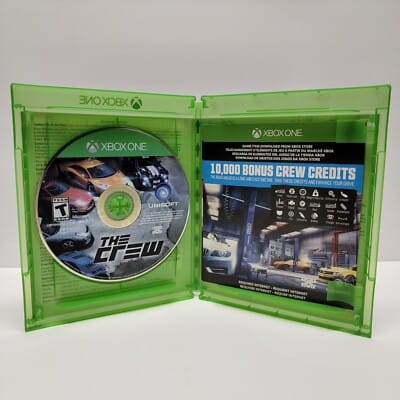
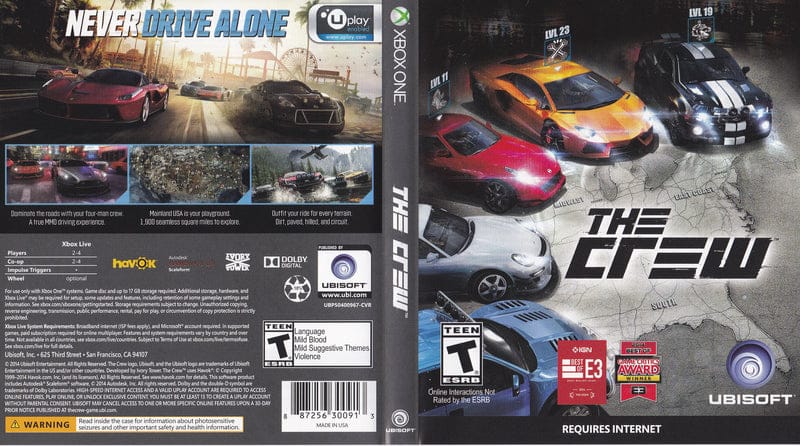
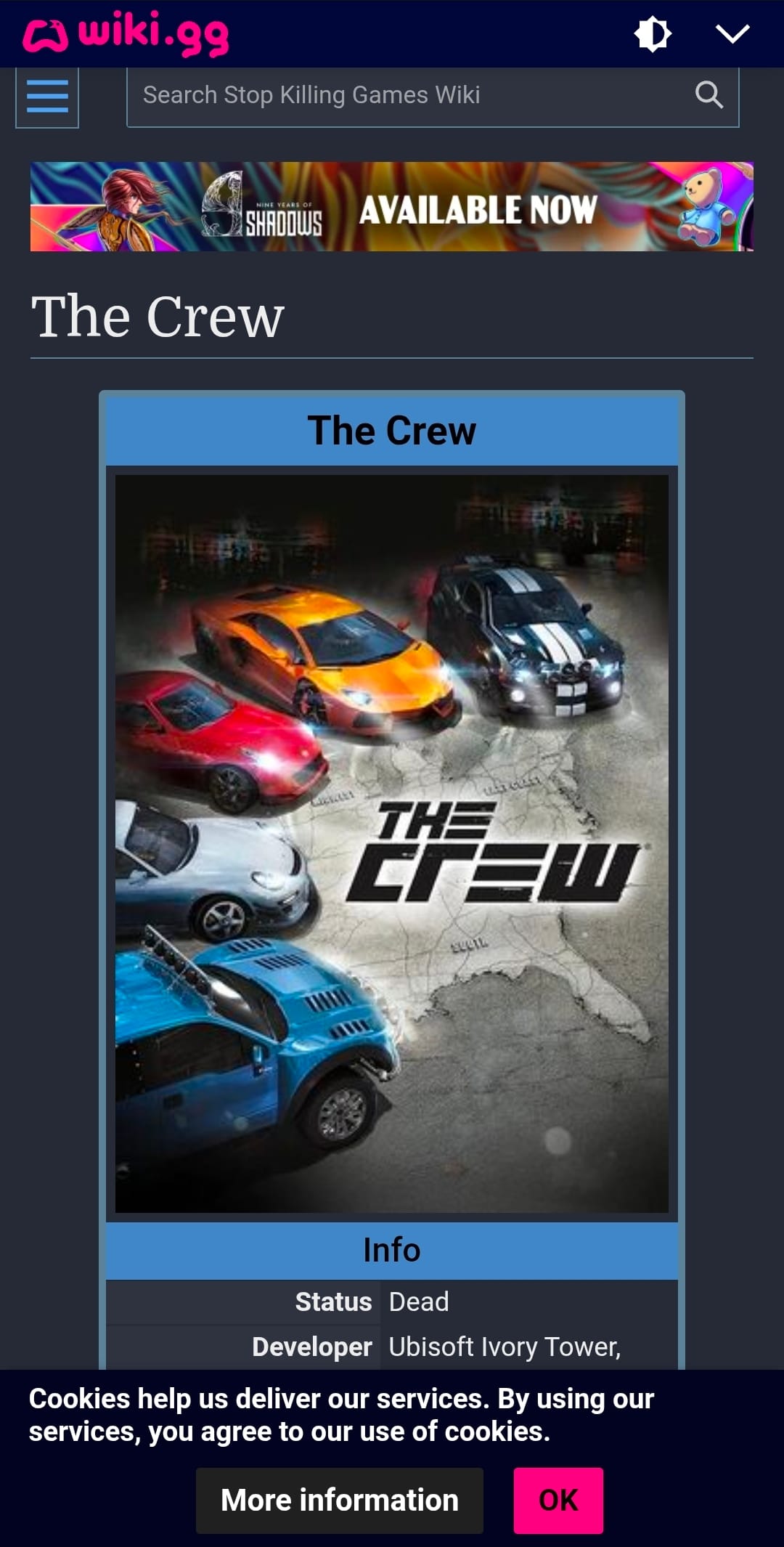
In 2014, Ubisoft released The Crew, an open-world racing game built around a compressed version of the United States. I never played it.
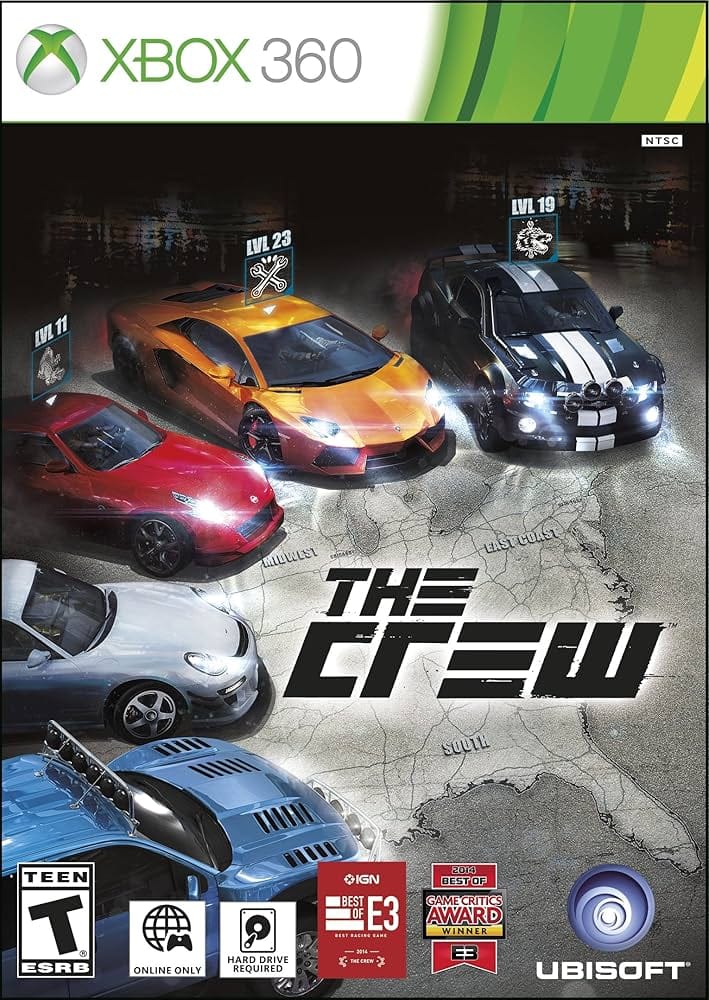
From what I read and saw, you could drive across a large digital map, move from city to desert to mountain road, collect cars, complete events, and treat the game less like a sequence of races than like a drivable place. The Crew was not just “a racing game” in the old arcade sense. It was more like a digital world of roads.

But The Crew was also built as an online game. Even parts of the game that looked and felt like ordinary solo play depended entirely on remote servers. The player’s machine never contained the whole playable field in a durable way. The game needed Ubisoft’s infrastructure to keep going.
That design choice became an issue.
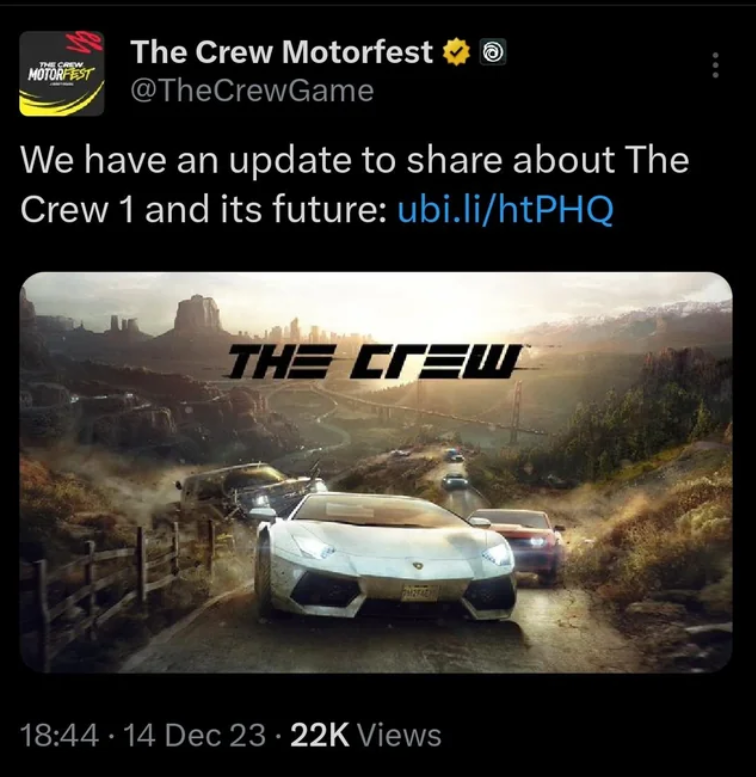
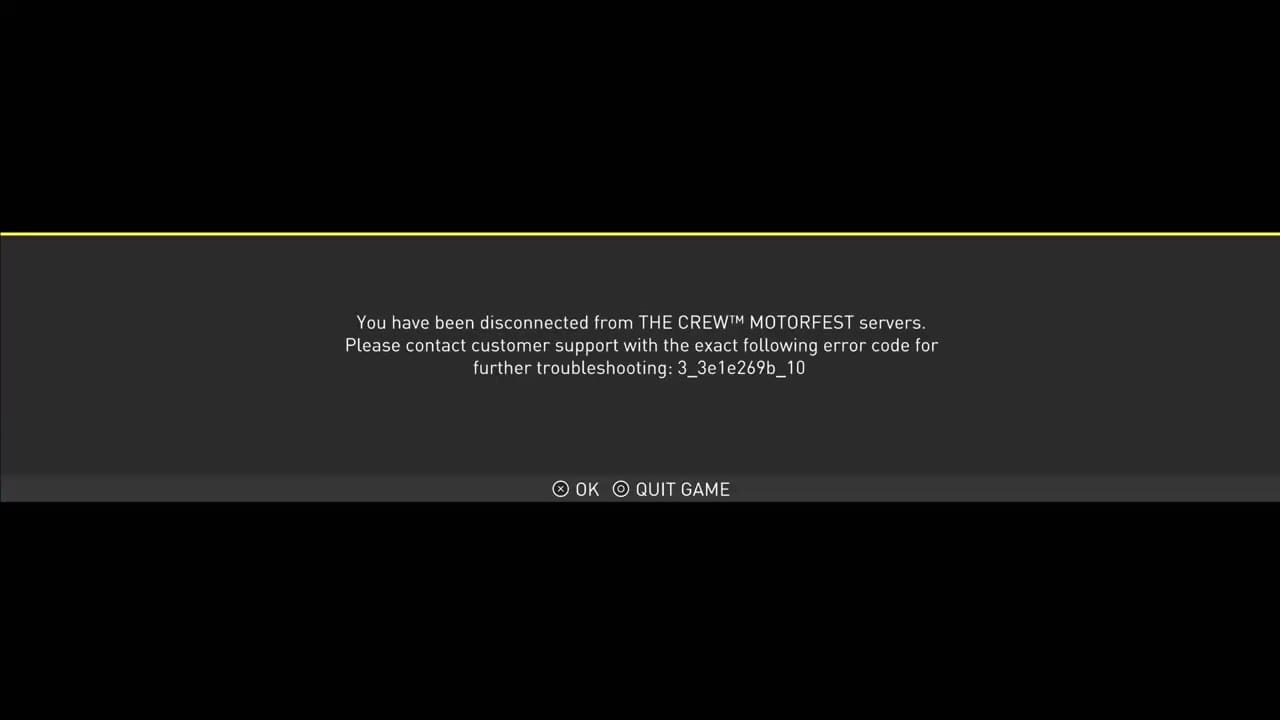
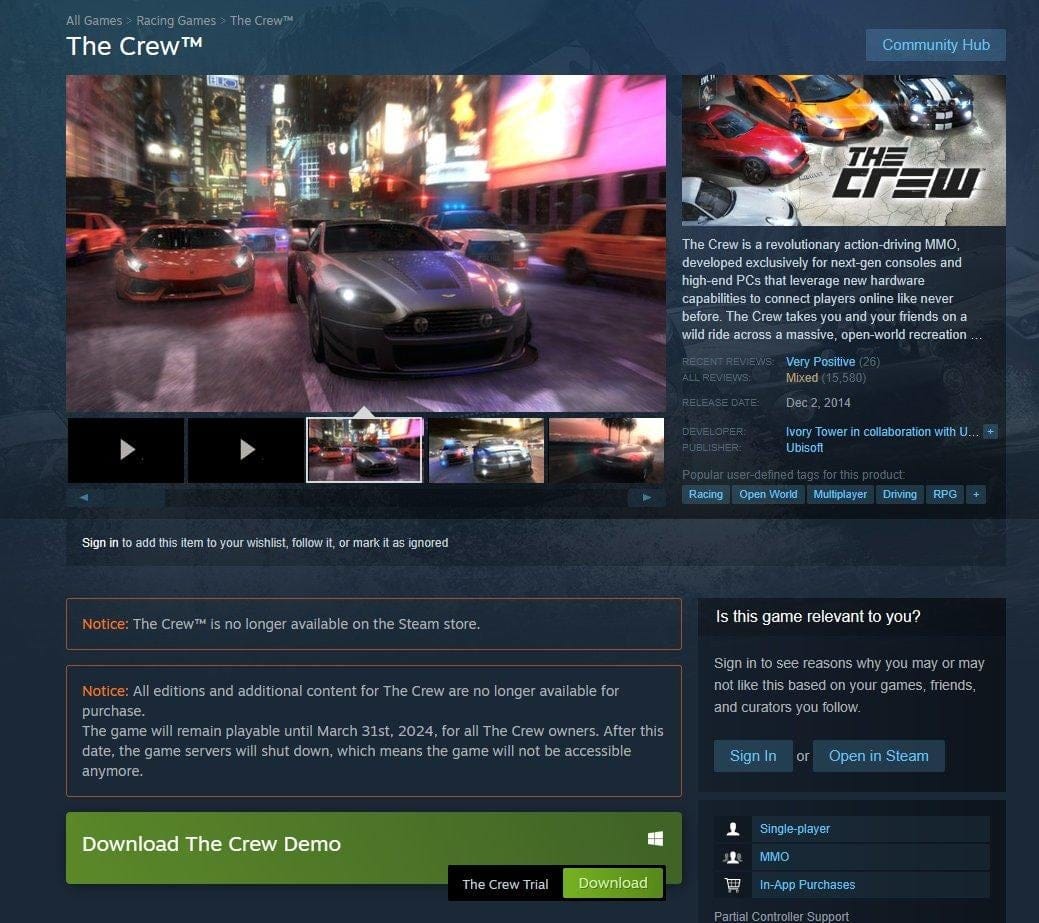
Ubisoft eventually delisted The Crew and shut down its servers. Ubisoft had announced the game’s delisting in December 2023. Owners could keep playing until March 31, 2024. After that, the servers would shut down, and the game would no longer be accessible on any platform.
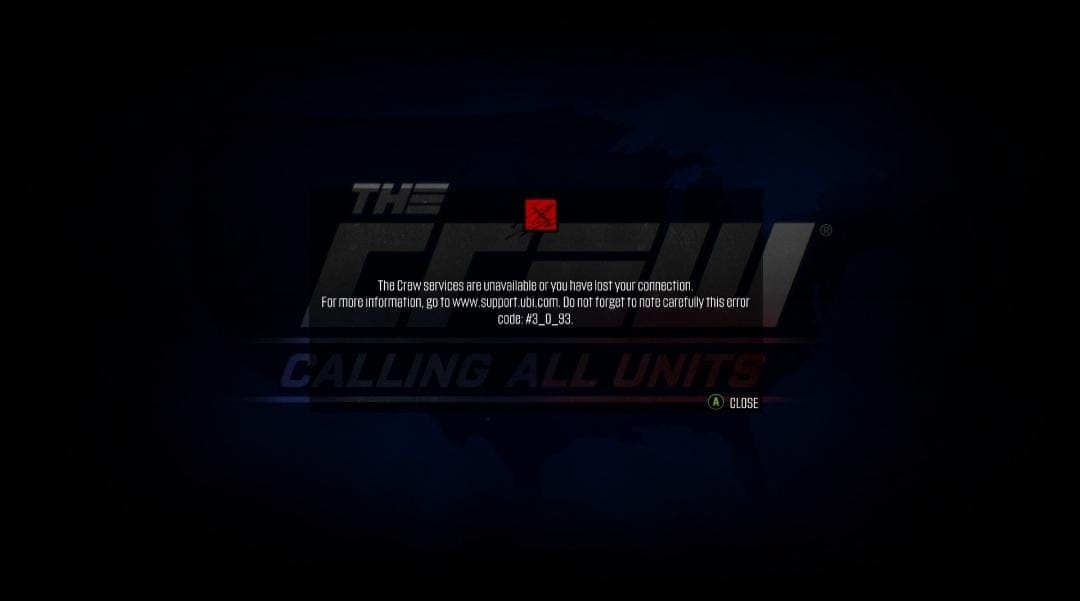
After the shutdown, owners could not keep playing the old game by themselves. When these servers went down, the online features did not just end. The playable game became completely inaccessible.
For a person outside games, this may sound incredibly minor or silly. A company stopped supporting an old online game. Yes. Products age. Services close. Players move on. No one is actually owed an eternal toy.
That response is totally understandable, but it is also too quick.

The moral question is not whether a publisher must maintain every server forever. It definitely should not. Infinite support is not any serious standard. The moral question is what kind of thing was sold in the first place.
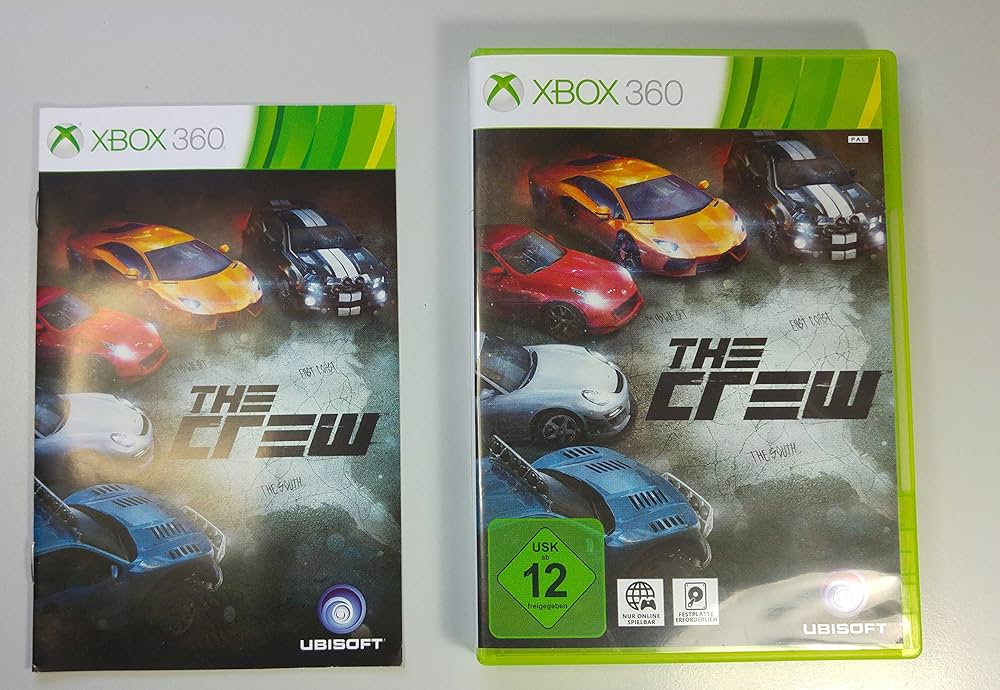
Was The Crew a video game sold in physical stores?
Was it a temporary access to a service?
Was it a cultural artifact?
Was it a licensed product whose practical future could be remotely withdrawn?
Was it a community field?
Was it a ludic field whose continuity had been made dependent on one company’s continued permission?
Those are not the same description at all. And the shutdown matters because those descriptions now collided.
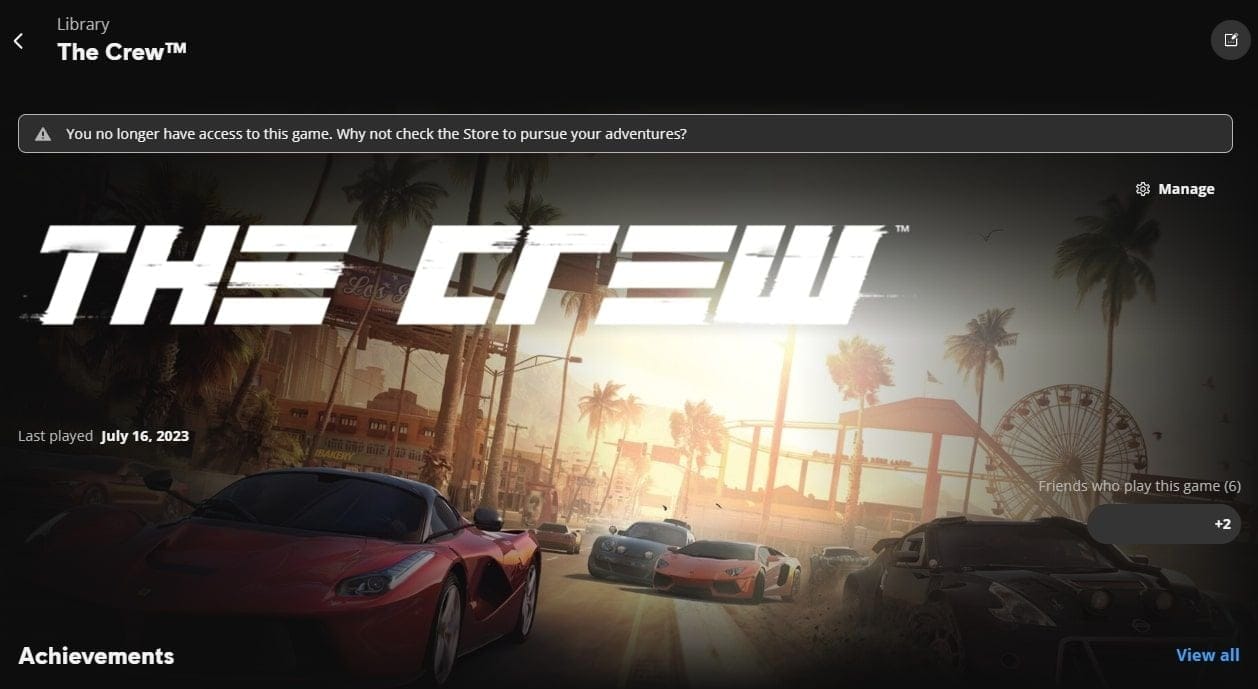
A player who bought The Crew at Gamestop did not experience the purchase as an abstract legal permission to access Ubisoft’s infrastructure until the business case expired. The ordinary experience was simpler: they bought a game. It entered their library. They played it. They built progress inside it. They formed memories, records, preferences, routes, and attachments around it.
Then the game’s future existence turned out to depend on a switch the player did not hold.
The deeper harm is not just a “consumer rights violation,” though consumer rights language is where many people understandably begin. The deeper harm here is that a playable cultural field was designed so that when official service ended, all ordinary play ended forever with it.
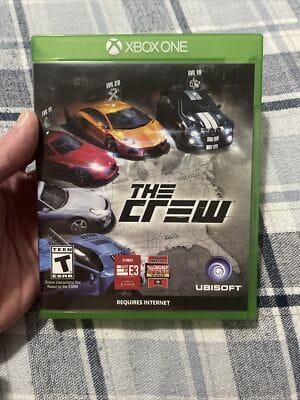
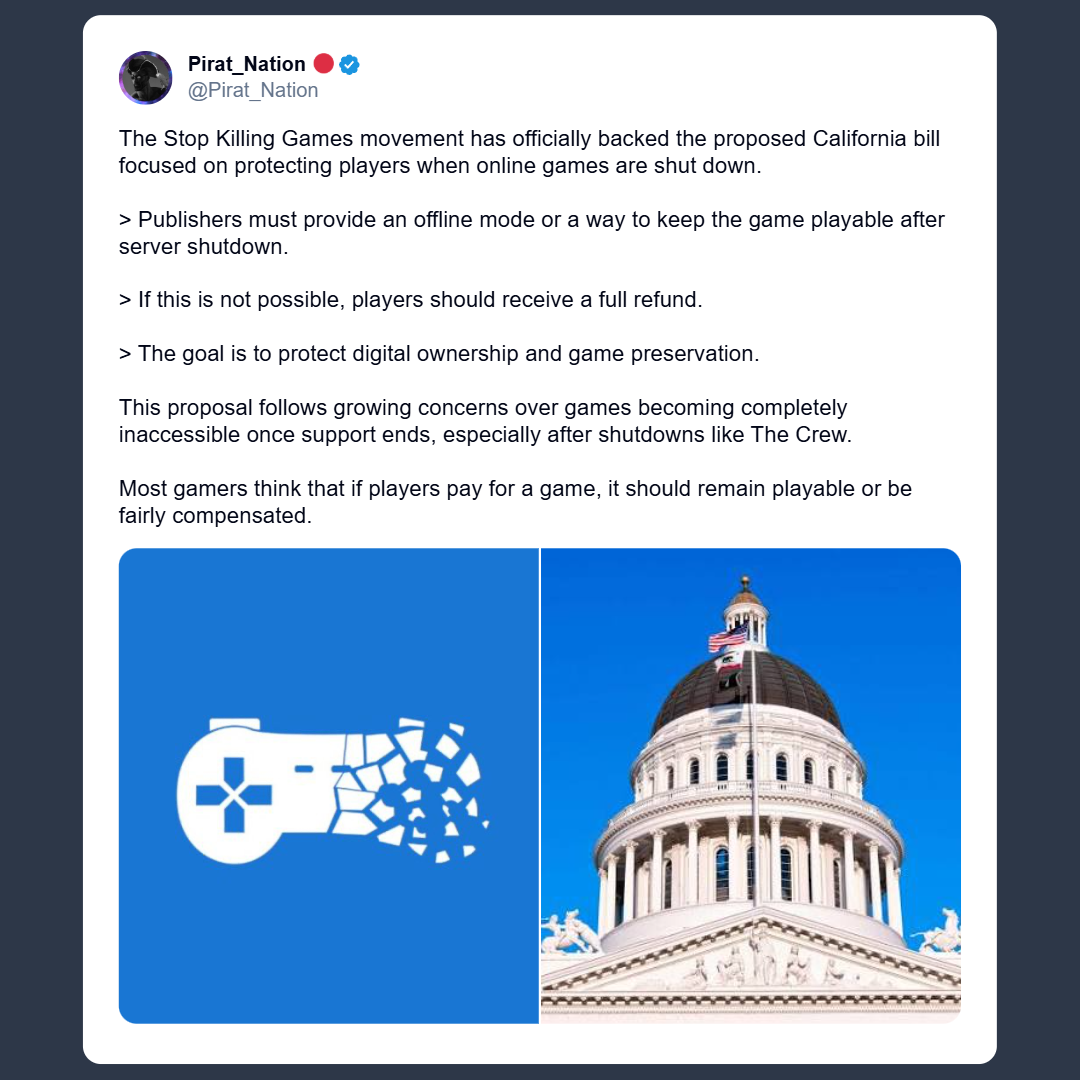
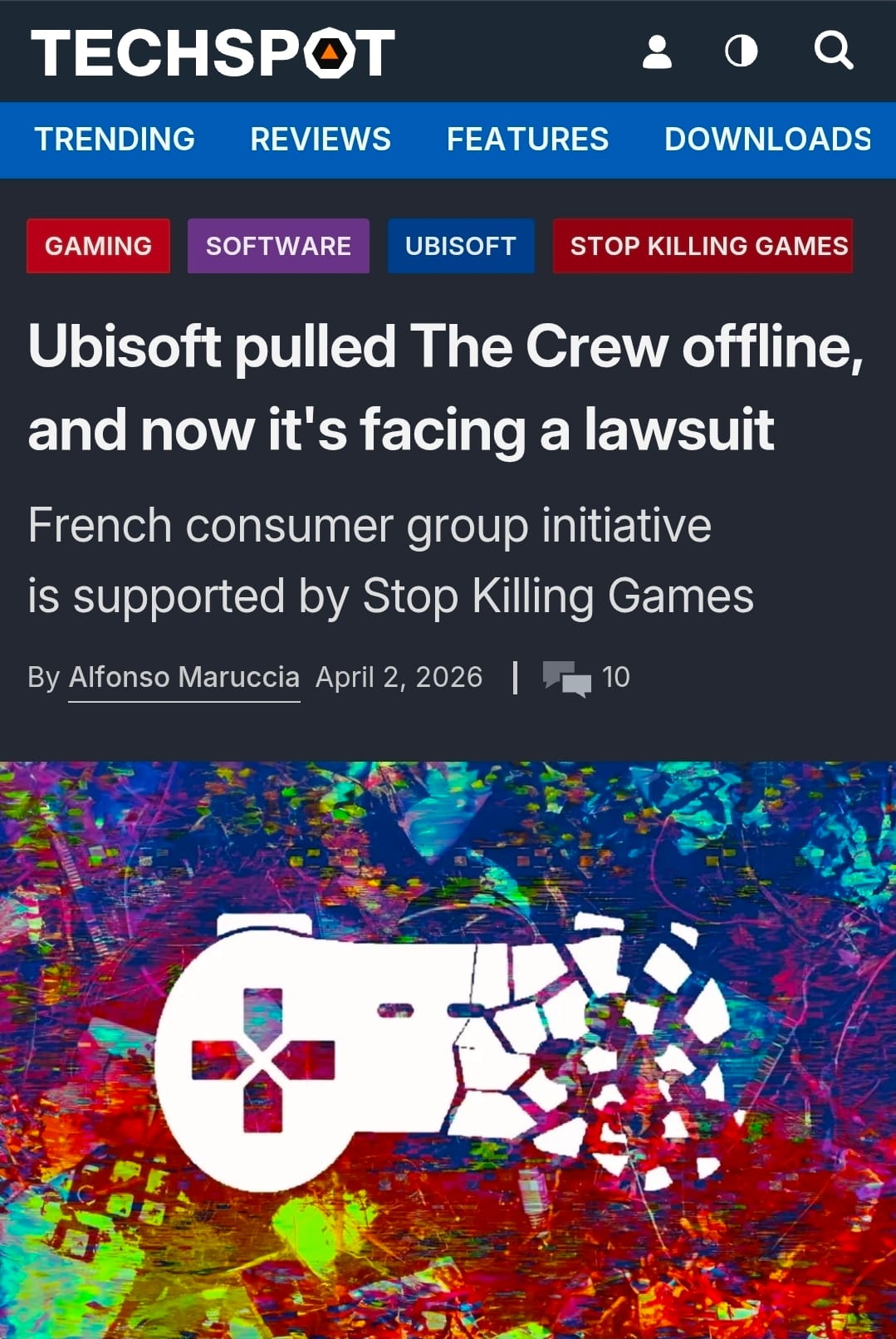
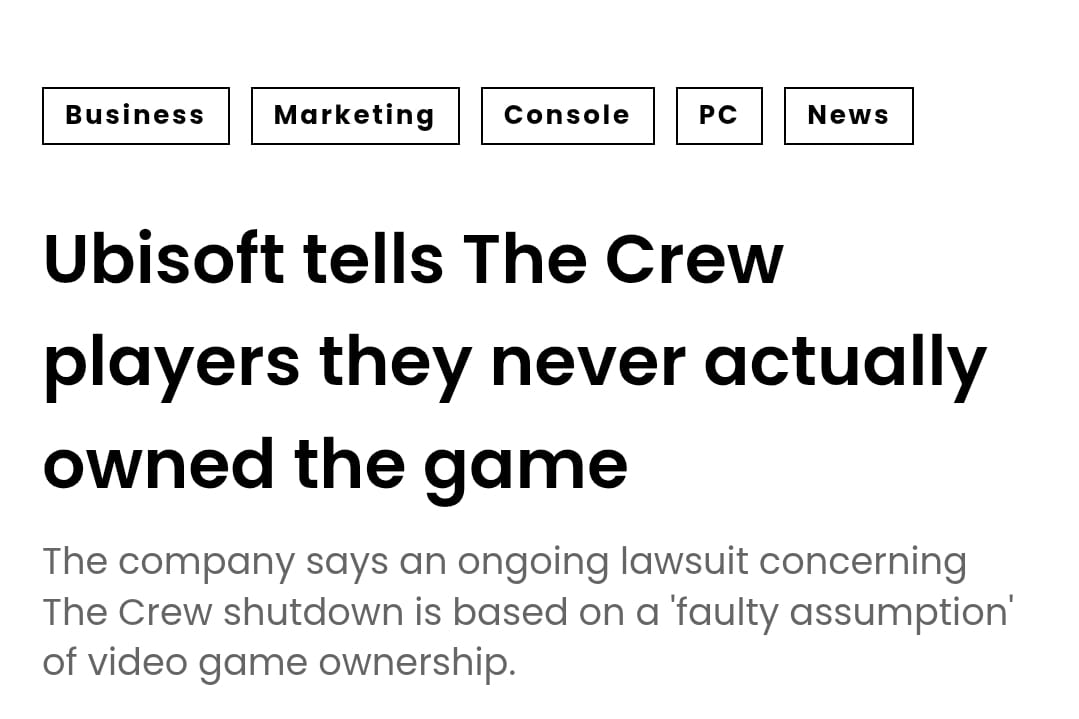
That is why The Crew became the central case for Stop Killing Games, a public campaign arguing that publishers should not be able to sell games and later render them permanently unplayable without a reasonable end-of-life path. This political movement matters here, but it is not the article’s authority at all. The movement is just clear evidence that the field answered back. More than a million people in the European Union appear to have supported the general complaint strongly enough for it to enter formal public process, even if rights-language was the easiest available language for the harm.
Modal Path Ethics, however, can describe the issue more directly.
The Crew was an extant locus. It was not alive. It did not suffer. But it was not nothing.
It was a continuing play-field: a bounded, persistent, player-entered structure with rules, places, records, memories, community, skill, criticism, preservation value, and a reachable future. That future was then closed.
Ubisoft turned off the servers. That sentence is technically clean and morally underdescribed.
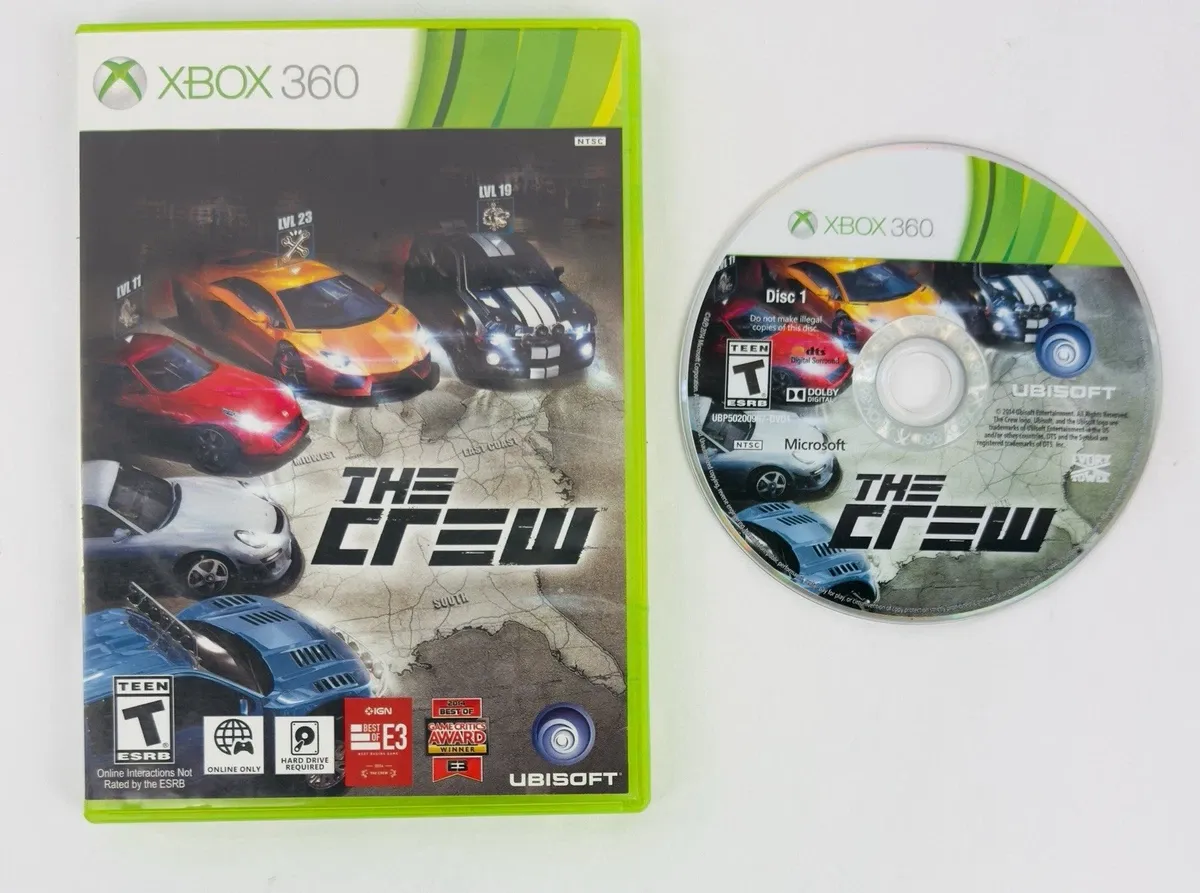
The Crew was a racing game built around an open-world version of the United States. Players drove across a compressed national map, entered events, built cars, moved through cities, highways, deserts, mountains, and long digital roads that existed only because the game servers kept answering when the player client asked to go there.
The question is not whether Ubisoft should have operated The Crew forever. That is a stupid demand if stated absolutely. No publisher actually owes you infinite server support. Please be realistic. No developer should be chained to a ten-year-old architecture because a tiny number of players still want to drive through digital Nevada at 2:00 a.m. Studios have costs. Developers have lives. Licenses are complex, and expire. Backend systems age out. Security risks accumulate. Platform requirements change. Moderation, data, anti-cheat, proprietary middleware, contracts, and infrastructure all produce real resistance.
So the case is not simple. If it were simple, it wouldn't need field analysis.
The real question is sharper:
What exactly was The Crew when Ubisoft closed it?
A product? A service? A license?
A cultural artifact? A multiplayer environment?
A single-player game with online dependency?
A consumer expectation?
A publisher-controlled access field?
A dead toy?
A preserved memory?
A digital road removed from the world?
What was this thing?
This answer matters because each description cuts the field very differently.
The Crew as Extant Locus.
The Crew was not a person. That has to be reiterated, because otherwise the analysis becomes goofy in the wrong direction. This game did not suffer. The map did not fear its shutdown. The servers did not sit in a data center contemplating their mortality while a tiny violin played the Ubisoft launcher theme for the very last time.
A game is not an extant human locus.
But “not a person” does not mean “nothing.”
The Crew fits the weaker category of an extant cultural field-locus.
It had boundary. It was not every racing game. The Crew was this game, this architecture, this map, this rule system, this player base, this access structure, this history.
It had continuity. The game persisted across years. Players returned to the same world, progressed through the same systems, remembered the same routes, built car collections, joined friends, posted records, made videos, and treated it as a continuing playable field.
It had relation. The game existed through its players, developers, publisher, servers, storefronts, licenses, platforms, vehicles, events, communities, critics, preservationists, and later legal arguments.
It had vulnerability. Its future could be narrowed or closed by technical, legal, and corporate decisions.
It had repairability. An offline mode, private server path, documentation, end-of-life patch, or preservation framework might have preserved at least part of its playable future.
It had trace. It left records, memories, footage, arguments, reviews, routes, complaints, saves, screenshots, community knowledge, and a sequel whose later design decisions were visibly shaped by the wound.
So no, The Crew was not a person.
It was still clearly a locus.
A thin one compared with a person, sure.
A non-suffering one. A cultural and ludic one. But still a real one.
This is the distinction Modal Path Ethics provides here. If the only moral categories available to you are “person” and “nothing,” then live-service games become easy to destroy. They are not alive, so who cares. They are entertainment, so grow up. They are licensed, so read the terms. They are old, so move on.
That is bad field analysis.
A play-field can be real without being alive.
A cultural object can be harmed without being a person.
A community can lose a future even when no body is wounded.
The field is not nothing.
The Live-service Cut.
The Live-Service Cut is the design and legal move by which a playable object becomes conditional access to an ongoing publisher-controlled field.
The game field exists. The player sees a game. The storefront says buy. The library says owned. The legal terms say license. The technical architecture says server accessed. The business field says support lasts while support remains viable. The shutdown says: without us, the game is gone.
That is the cut. The field that could have been accessed in many ways was sliced in a particular way.
It does not have to be malicious to be morally serious. Much of the live-service structure emerged because online games really do new things older boxed games did not do.
They synchronize players. They host shared worlds. They manage accounts, economies, authentication, matchmaking, leaderboards, anti-cheat, seasonal content, user-generated material, and social fields that cannot simply be stuffed into a cartridge and left on the shelf.
That is all very real. This cut is not inherently bad. “Live-service” in discourse tends to obscure that.
But The Crew clearly exposed the other side of the cut. If the playable future is made dependent on remote authority, then the end of support is not just the end of updates. It can become the end of the locus entirely.
A racing game should be one of the easiest genres for a layperson to understand here. If the online races go away, one can understand that. If leaderboards die, unfortunate but understandable. If multiplayer crews vanish, yes, the social service has ended, what did you expect?
But the road?
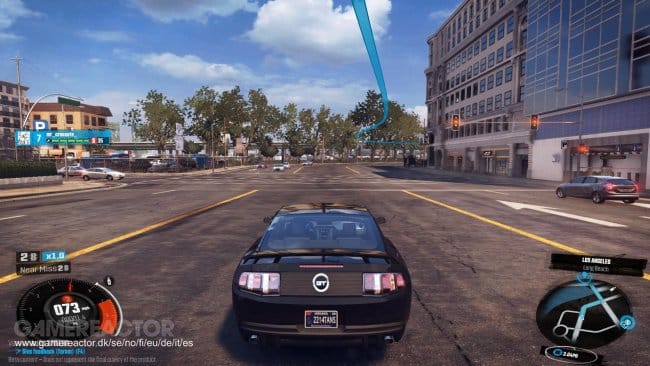
The single-player road?
The basic ability to drive also goes away?
That is where this field catches on the structure.
The issue is not that Ubisoft stopped adding to The Crew. The issue is that The Crew was designed and sold so that stopping support also destroyed all ordinary play.
False Ownership.
The legal field may say this was always a license.
Fine. Sure. But you are not the moral field, law.
The moral field now gets to ask why the purchase field was allowed to feel like ownership.
Players were not interacting with The Crew as an abstract service contract. They were buying a game, installing a game, seeing it in a library, progressing through a game, and forming the ordinary expectation that a purchased game remains playable unless the player’s own hardware fails, the copy is lost, or time and entropy slowly breaks compatibility.
Digital distribution already weakens that expectation. Always-online architecture can sever it entirely.
The player does not discover at shutdown that the game got old and fell apart.
The player now discovers that the thing they thought they bought was structured as revocable permission.
That does not automatically make Ubisoft legally wrong. The legal and moral field are not the same thing. The legal category may have been defensible. The consumer expectation may still have been harmed.
This is where rights language enters because it is the language consumers have available. People say consumer rights. Ownership rights. Digital preservation. Fraud. Licensing abuse. They are reaching for a way to name the contraction these million Europeans seem to have made contact with.
Those words are not nothing, but they are also not the full field here.

The deeper harm is not that consumers did not get enough product for their money. The deeper harm is that a cultural field was sold into public life while its continuance remained technically hostage to the seller. The player thought they bought access to a future, but the seller kept the switch ready to flip and close it.
That is the structure of this wound.
The Publisher Field.
The opposing argument, however, deserves better than mockery or dismissal.
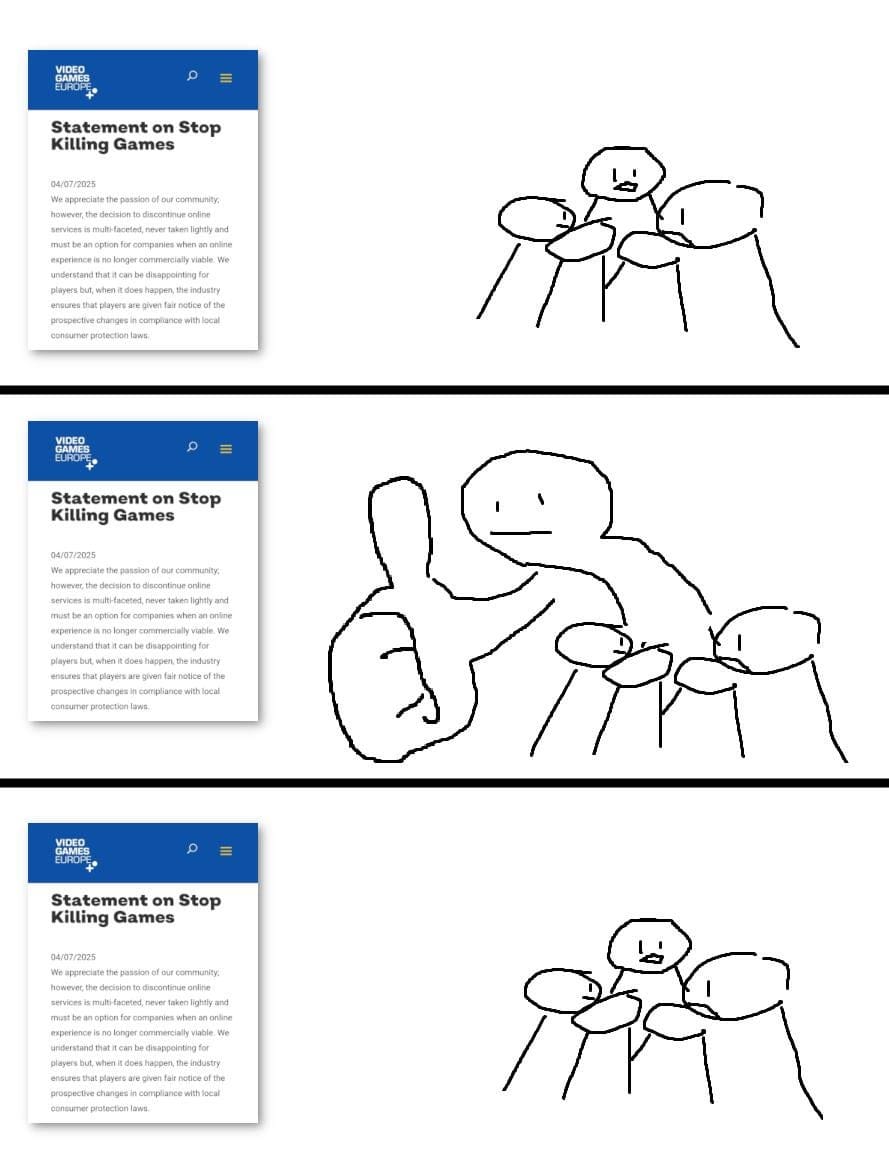
Video Games Europe’s position is not absurd on its face. Companies do need to discontinue online services. Some games are not commercially viable forever. Companies cannot just ignore the commercial field. Private servers are not always safe or simple. A backend may contain proprietary systems, third-party dependencies, data protection obligations, anti-cheat logic, moderation tools, licensed content, payment systems, account systems, and other parts that cannot just be tossed over a fence to fans with a cheerful thumbs-up and a “toodle-oo”.
People who say “just release the server” sometimes know what they are talking about. More often they do not.
If Modal Path Ethics ignored this resistance, it would become even more consumer tantrum with better vocabulary. Resistance does not erase harm, but it determines what repair is actually reachable in extance.
A developer cannot be morally required to perform the impossible.
A publisher cannot be morally required to maintain every online system forever.
A preservation demand that destroys the possibility of making certain kinds of games would close future-space too.
So the real standard has to be proportional.
If full online preservation is impossible, then preserve offline play.
If private servers create liability, preserve a single-player final build.
If licensing blocks certain cars, music, brands, or storefronts, remove or replace what must now be removed rather than destroying the entire playable field.
If preservation is impossible for a specific game, disclose that clearly before sale: this is finite access, not durable purchase.
If none of that is possible, then price, market, and describe the thing honestly as temporary access subject to continued conditions.
That is the Better path. Not “the publisher will serve us forever.”
Just do not design the thing so only you can keep it alive, then call its death natural and inevitable.
The Archive != the Field.
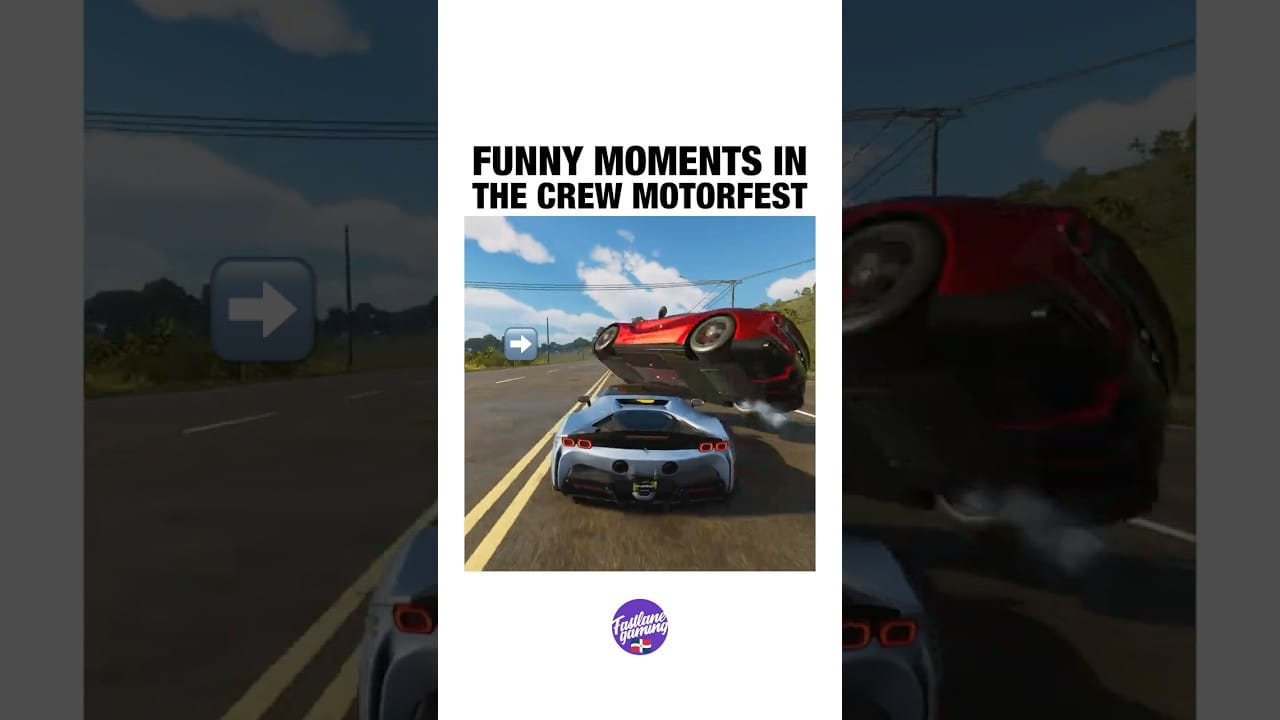
A video of The Crew is not The Crew.
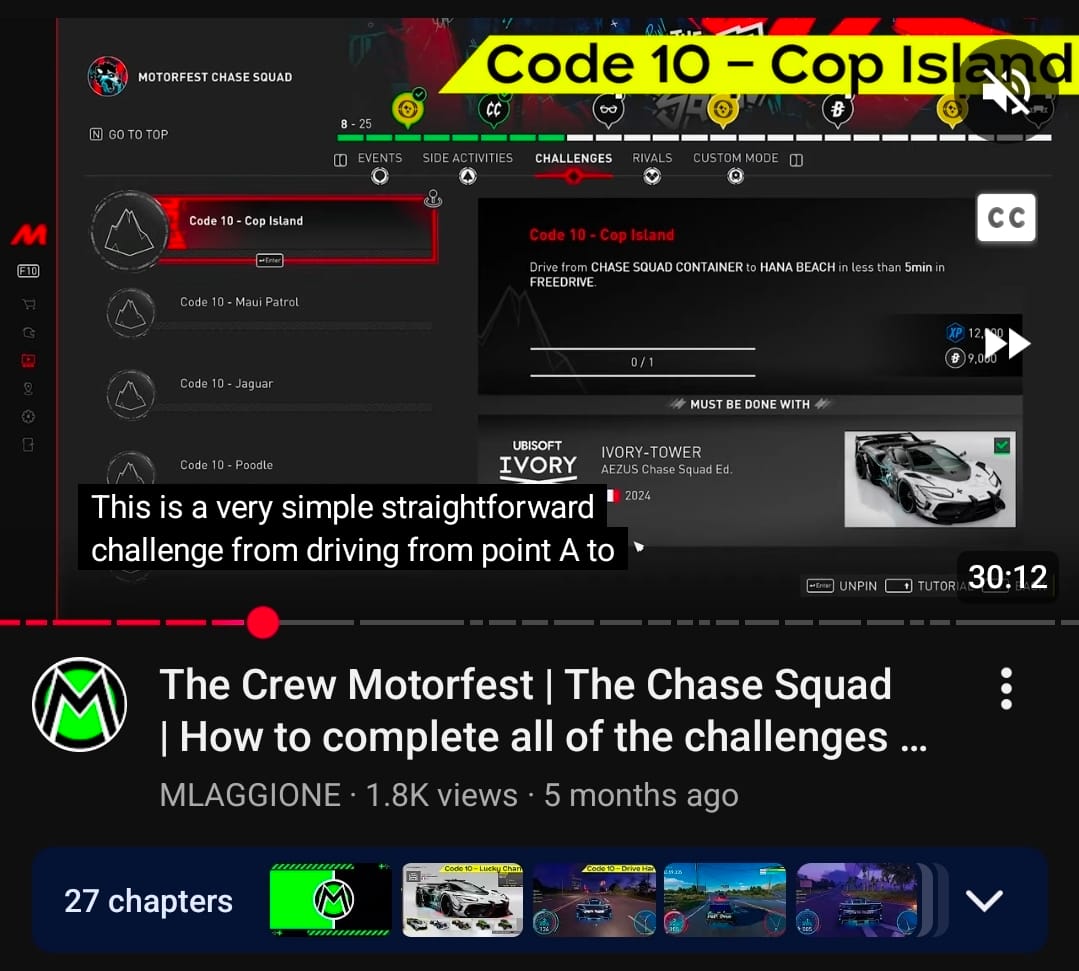
A review is not The Crew.
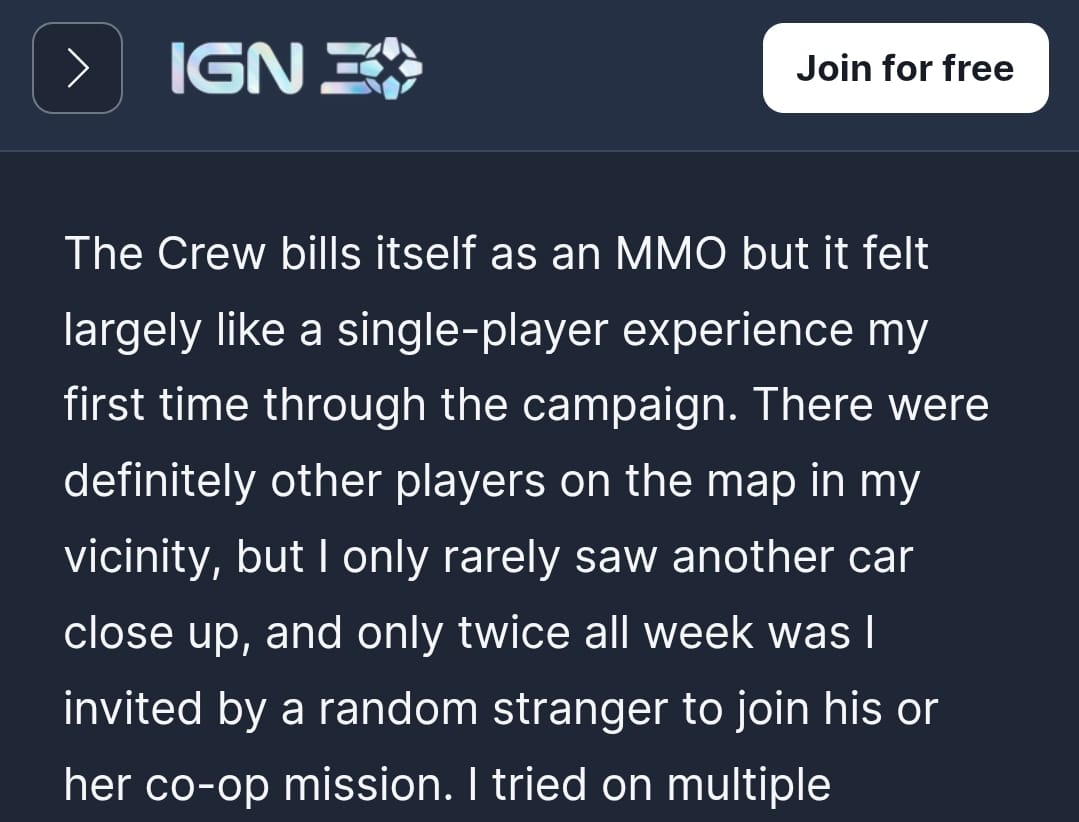
A wiki is not The Crew.
A screenshot is not The Crew.
A museum label saying “this game existed” is not The Crew.

Records matter. They preserve memory. They help future designers, critics, scholars, and players understand what happened. They are better than silence. A dead game with footage is less lost than a dead game with nothing.
But the record is not the field. I looked at a lot of footage. I have still not played The Crew.
Play is not reducible to evidence of play. I'm trying to explain this to academic philosophy, too. A racing game is not only its assets, map, or lore. It is the transition-field opened by input: turning, braking, drifting, missing, learning, routing, wandering, returning, testing the edge of the system, feeling the long road remain available.
A dead live-service game therefore creates a false archive problem. The record remains while the playable field closes. Future people can know that The Crew existed. They cannot enter the field that made it a game. The game is gone.
That is a real cultural loss.
Again: not a person. Not a tragedy of the highest order. Not something to rank beside famine, war, disease, extinction, or child death like a deranged forum poster who needs more sunlight might do.
But still, real. Low stakes does not mean zero stakes.
The Player Field Answers Back.
The important fact about the response is not that players were angry. Players are angry all the time. It's bizarre.
The important fact is that this field became organized towards repair.

The Stop Destroying Videogames initiative eventually reached 1,294,188 verified statements of support in the European Union. Online petition numbers always have some fog around them before validation. Campaign energy can be messy. Signatures can be invalid. People can misunderstand what they are even supporting. Industry actors can argue the proposal is overbroad. None of that disappears.
But the official verified number still matters. Over a million EU citizens supported forcing this issue into public consideration.
That does not prove the proposal is correct.
Democracy does not work that way.
It proves that this closure was not experienced just as isolated consumer annoyance. The player field tried to convert private loss into public standing. People who lacked a precise moral vocabulary still recognized that something important had been made destructible by design.
They spoke in rights language because that is the relevant public language available.
Consumer rights. Ownership. Preservation. Access. Fairness.

Those terms are imperfect, but the field beneath them is clear enough: a growing number of games are not just sold, played, aged, and preserved. They are sold under conditions where their continuance can be remotely terminated.
The movement matters as a field response, not as our new Gamer scripture or proof that every demand is practical, or that publishers are villains.
The movement is evidence that the play-field is trying to make the legal field see a category of closure it was not actually built to see.
The Crew 2.
The sequel matters because it prevents fatalism.
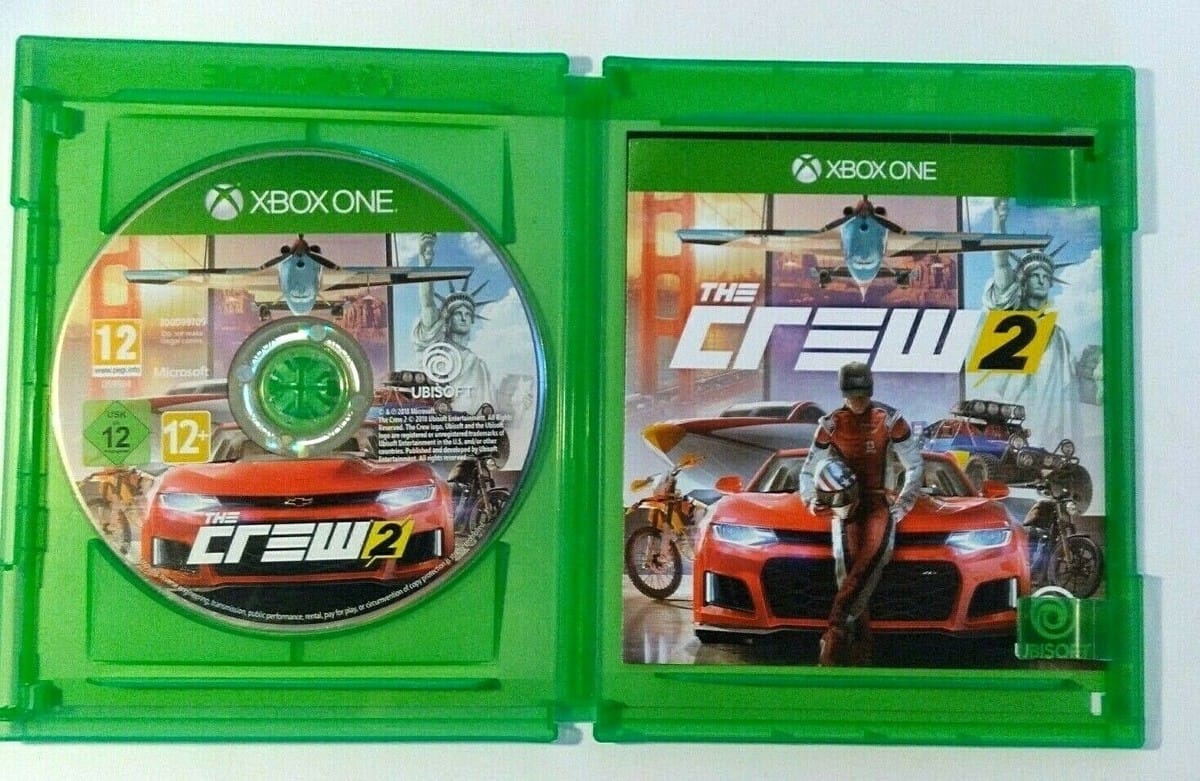
Ubisoft later added Hybrid Mode to The Crew 2, allowing players to choose online or offline play. That does not resurrect The Crew. It does not prove the first game could have been trivially saved either. It does not erase server costs, licensing, architecture, or the fact that retrofitting an offline path after years of online design may be genuinely very difficult and time consuming.
But it proves something. The future did not have to be structured exactly like the past.
A game in this franchise can be designed or modified so that at least some playable field survives without constant server contact. Online features may remain online. Leaderboards, multiplayer, community sharing, live events, user-generated content, and certain purchases may not transfer cleanly. Fine. Yes.
But the road can remain. That is enough to change the moral field completely.
Once an offline future is shown to be reachable in the sequel, the original closure looks less like fate and more like a historically specific design, business, and repair failure.
Not necessarily malice. Not necessarily illegality.
Still failure, though.
What Was Closed.
So what did Ubisoft close?
Not a living world. Not a moral patient in the ordinary sense.
It closed a playable future. It closed a cultural field. It closed player access to a purchased game. It closed future direct study of how that game actually played.
It closed the ordinary path by which old games become weird, marginal, rediscovered, modded, archived, speedrun, studied, loved by twelve people, forgotten again, revived again, and kept alive in the strange long tail where culture often does its least profitable but most interesting work.
It also transferred burden.
The publisher reduced or ended ongoing operational cost. Players lost access. Preservationists inherited the problem. Modders and reverse engineers were pushed toward legal gray zones. Future analysts like me received records instead of a field. Law received a question it had not prepared itself to answer.
That is the ultimate moral structure of the closing.
The Ruling.
A publisher is not morally required to operate every server forever.
A studio is not morally required to spend unlimited labor preserving every feature of every discontinued game.
A player’s affection does not create infinite obligation.
But when a company sells a game while retaining the sole technical authority to keep it playable, shutting down that authority without a reasonable end-of-life path is not ordinary product aging.
It is controlled field closure. That closure may be legal.
It may be commercially understandable.
It may even be unavoidable in some cases.
It is still a closure.
The right standard is not eternal support. The right standard is end-of-life responsibility proportionate to the field created and sold: honest disclosure, offline functionality where reachable, private or local continuation where safe, preservation pathways where possible, and moral clarity where none of that can be provided.
Do not sell a game as a thing and end it as a permission. Do not build a road that vanishes when the tollbooth closes. Do not then call the disappearance natural when the field was designed to depend on your switch.
The Crew was not alive, but it was extant, and then it was made unreachable.