Applied Case: The Solved Game & The Degenerate Meta
A game does not need to be completely solved to suffer the solved-game effects.
September 2026 note: The degenerate-meta analysis remains a useful model of locally rational behavior inside a bad game. Later work names the deeper failure as instrument or system sovereignty: a successful local strategy becomes dangerous when it gains authority over the field, its correction criteria, or the conditions under which alternatives remain executable.
A solved game is a game whose outcome can be known under perfect play.

Tic-tac-toe is the obvious example. Once both players actually know what they are doing, the game is no longer any kind of real contest in the traditional sense. We all know that the first player simply cannot force a win against a competent second player. The second player cannot force a win either. Correct play of tic-tac-toe therefore always leads to a draw.
The game still exists, and a child can still learn something from it. Someone can still enjoy it as ritual, nostalgia, or whatever other purpose.
But as an adult, the decision-field here is mostly completely gone. The question of the game is no longer, “What should I do next?”
It is now, “Do I know the correct answer?”
The game is solved. A solved game is not necessarily destroyed. It is not erased from reality. It may still remain useful and wonderful, playable in some literal and secondary sense, historically important, pedagogically valuable, or aesthetically neat. We don't necessarily throw out a game once we solve it, but something about its living play-field has changed.
A possibility space that once held uncertainty, experiment, style, danger, discovery, and local judgment has become a solidified answer-space.
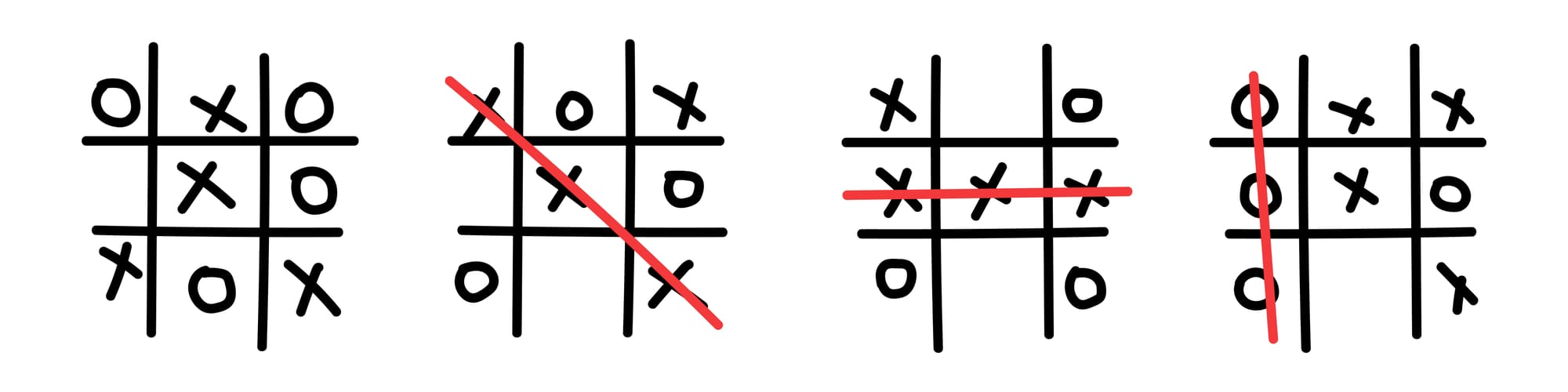
The solved game shows us that a field can be transformed without being physically damaged. No one needs to be injured because we solved the game. No institution needs to collapse. Nothing needs to get killed or destroyed here.
The acquisition of knowledge can narrow a field. This is a global epistemic risk.
What I am saying there is that knowledge is not inert, or elsewhere. That doesn't mean knowledge is bad. Truth still enters a specific field and changes what remains reachable inside that field. In many cases, truth opens futures. Truth often lowers resistance, makes repair possible, and corrects error. Truth reveals structure and it prevents harm.
However, in some fields uncertainty is fundamental, not a mark of ignorance. A game is one of those fields.
Solving A Game.
A game can be solved in a few different senses.
The weakest sense is knowing the outcome of perfect play from the starting position. In that case, you will know from the start that the game is a win for the first player, a win for the second player, or a draw, even without possessing a complete practical guide for every possible position.
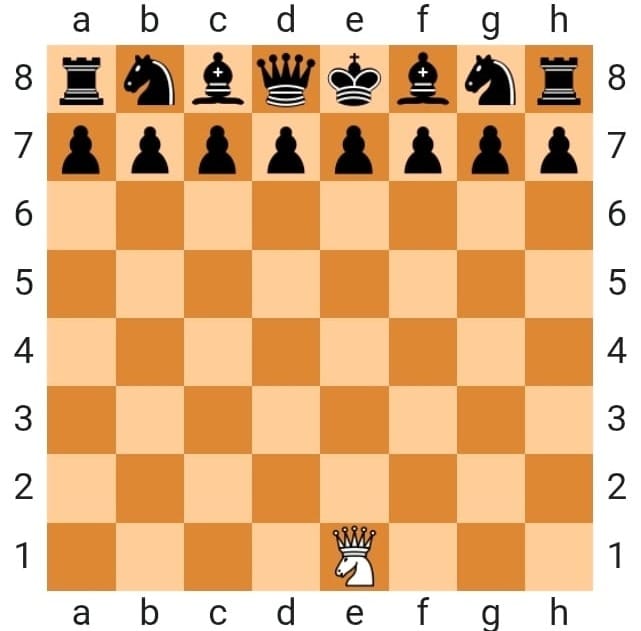
A stronger sense is knowing a strategy from the starting position that guarantees the best available result. This means a player can, in principle, follow the golden line that secures the win or at worst draw against any opponent response, including their golden line.

The strongest possible sense is knowing the correct outcome and optimal play from every legal position. At that point, the game is not just solved from the opening: the whole field of play-space has been formally mapped out.
The moral issue here begins well before the strongest form. A game does not need to be completely solved to begin suffering the solved-game effects.
A competitive community may never possess a formal proof. It may never know every branch. It may not have literally exhausted the mathematical tree. Still, if a dominant strategy, opening, character, deck, build order, route, engine line, or theory becomes authoritative enough, the living play-space may contract anyway.
The game may still remain formally open while becoming practically narrow. This is the distance between formal possibility and actual reachability.
A move can still be, by definition, legal while no longer being seriously reachable in a competitive context.

A style can still be allowed in the format while becoming competitively completely nonviable.

A path can remain inside the rules while being dead inside the metagame.
The rulset defines what is possible, but the field always tells us what is actually reachable.
Solution != Good.
The first common mistake is to treat the solved game as a human triumph.
There is an obvious reason to make that mistake: solving a game is, in fact, a human achievement. It can require intense mathematical insight, computational power, patience, theory, proof, and real intellectual discipline. To solve a game is to bring a hidden structure into view. It is a form of direct contact with reality.
A solution can reveal a game's depth, or preserve knowledge that would otherwise remain scattered in fragments of play. It can show which intuitions were right, which were wrong, and which only worked because nobody had yet pressed the field hard enough.
And for the knowledge-field, solution is often an opening.
It gives players, designers, historians, mathematicians, and game-theorists access to real truth. It makes the game more legible. It reduces local superstition, and can clear away false openings, fake threats, inherited myths, and bad local theory.
So, this case cannot be an argument against truth. The solved game, however, is an argument against treating truth as though it always expands every locus it touches in the same way.
The same solution that opens one field and may close another. The epistemic field is opening (now we know), and the playable field is closing (there is less to discover).
This is exactly why Modal Path Ethics begins with fields, loci, reachability, and weighting rather than any simple praise language. “Knowledge is good” is too broad. “Uncertainty is bad” is too broad. “Solving is progress” is too broad.
The real question is what kind of knowledge is entering what kind of field, at what cost, and with what effect on future reachability.
Solution != Death.
The opposite mistake is to treat a solved game as dead. This is also too simple. A solved game can still very much matter.
It can become a teaching object or a ritual. It can become a memory discipline, or an execution challenge. It can become a computational monument in the form of a solved puzzle whose beauty lies in the clarity of its own closure.
Tic-tac-toe is, in fact, not a rich adult strategy game. It is nonetheless still a useful childhood introduction to turn-taking, spatial threats, blocking, forcing, and the discovery that a game has a structure beneath its surface.
The harm of solution is more often conversion than total destruction.
A game can be converted from a living decision-field into an object of study, memory, execution, or demonstration. None of those is a game.
We all understand that the first reading of a mystery novel is not the same as rereading after the murderer is known. The book remains unsullied. The sentences remain in their proper places. The craft may even become more visible on reread. But one field has now closed forever: the field of not knowing it was the butler.
The solved game is the same. Again, the moral point is not that this should never happen, only that it is a real transition, which changes the field and deserves analysis.
The Core Question.
What is lost when a decision becomes an answer?
Before solution, the player stands inside a field of uncertain futures. Some of those futures are traps. Some are opportunities. Some are subtle mistakes that will only become visible later on review. The player must always judge under incomplete command of the field. This is called play.
After solution occurs, the field forever changes. The player may still choose, but if the correct line is known and available, the player’s agency is constrained by the live question, which becomes less exploratory and far more about obedience.
Can you and will you follow the line? Will your opponent follow the line, and if not, will you punish them for it?
These are often not at all even related to the questions the same game once asked of its players.
The players may have gained correctness, but they have lost the potential for discovery that made the game valuable as a method for detecting structure.
A Game as Loci.
The solved game cannot be analyzed as one object. There is no single “the game” (which you did just lose) that receives the same effect from solution across every scale. At minimum, we need to distinguish several loci here.
The first is the formal ruleset.
The ruleset may not be harmed by solution at all. In many cases, it is actually clarified. The solution reveals what the rules already always implied. The game as mathematical structure may now become more completely known.
The second locus is the play-space.
This is where the main contraction almost always occurs. Play-space is the set of meaningfully reachable decisions, plans, experiments, styles, discoveries, uncertainties, and strategic futures available to players under conditions of real play, not just all the legal moves. A solution may leave the formal tree categorically intact while collapsing large parts of the play-space down into known error.

The third is the player.
A player gains knowledge but may lose a kind of agency. Before solution, the player decides how to play under uncertainty. After solution, the player may now instead be asked to either remember, comply, or knowingly deviate from a known standard. That can still be very skillful, but it is demonstrably different.
The fourth is the community.
Game communities often persist in a state of active disagreement: local theories, schools of play, rival interpretations, and developing metagames that scream at one another on Reddit. Solution can stabilize knowledge, but it can also reduce the space in which community discovery occurs.
The fifth is the designer.
For a game's designer, solution can be useful because it reveals what kind of object they had actually built. It may show that a game has more depth than expected, or less than they believed. It may expose the in-built degenerate lines, first-player advantages, dead openings, or fake choices. This is all epistemically valuable for the designer.
The sixth is the wider design field.
A solved game can also help future games. It can teach us generally what closes play-space, what preserves it, what kinds of complexity are real, and what kinds really only decorate a narrow decision tree.

So, solving a game is complex transition, not at all a simple case of harm.
Modal Path Ethics is now useful here precisely because ordinary language wants to collapse this field into one verdict: solved good, solved bad, game dead, knowledge progress, no one cares.
Generative Resistance.
This case also forces the framework to produce a new refinement of resistance.
In all Modal Path Ethics discussions, resistance names the thickening of paths that make good futures harder to reach. That still remains true.
But the solved game has now proven to us that not all local resistance is strictly harmful. Some is generative.
A game without its resistance is not actually improved into pure goodness. It instead tends to become empty.
The difficulty of a game is not an obstacle standing between the player and the good of winning. The difficulty itself is the medium in which the player’s agency becomes real.
If a perfect computer oracle tells a player the correct move at every turn, it has removed all resistance. It has completely changed the activity. The player no longer has to perceive the board, test plans, make judgments, recover from their mistakes, infer the opponent’s idea, or build structural intuition in the same way at all.

While the path to correctness has become far smoother, the paths to actual play have been narrowed severely.
Some forms of resistance are, in fact, developmental. A child learning to walk needs a world that does not do all the movement for them. A student learning mathematics needs problems, not answers. A thinker needs friction against their own assumptions. A community needs disagreement it can survive to grow. Likewise, a game needs decisions that are not already settled.
This clearly does not mean all difficulty is good. Much resistance is destructive. Poverty, coercion, deprivation, trauma, exclusion, disease, and needless confusion are not actually ennobling game mechanics. They definitively close futures.
The solved game therefore gives Modal Path Ethics a sharper distinction:
Destructive resistance blocks or burdens continuance.
Generative resistance supports the elaboration of capacities required for richer continuance.
A solved game is dangerous to the play-field when it removes generative resistance and replaces judgment with answer retrieval.
Practical Solution.
A game also does not have to be formally solved to suffer from solution.
Tic-tac-toe is easy because the solution is very simple for ordinary players to internalize. Checkers is different. It can be solved in a technical sense while still being too difficult for most human players to actually memorize enough information to make that real over the board.
Connect Four is also solved, but many casual players still experience it as an open game because they do not know the forcing lines.
So, a formal solution changes the knowledge-field, while a practical solution changes the play-field.
A game may be formally solved while still practically alive for most people, like Connect Four. If the solution is too large, too difficult, too inaccessible, or too computationally demanding to function as ordinary play knowledge, then players can still experience real uncertainty and discovery. They can still make meaningful plans. The mathematical ceiling has already been identified, but the lived, practical field remains active and alive beneath that claim.
The opposite can also happen. A game may remain formally unsolved while becoming practically dead.
No one has actually proven the full game tree, or mapped every position. No one can demonstrate the result under perfect play.
The community may nevertheless converge on a narrow set of dominant strategies so strongly that most other paths stop functioning as serious options.

Formally, the game remains open. Practically, the game is closed, or at the very least greatly narrowed. Formal solution belongs to the field of mathematics, while practical solution lives with the culture.
A practical solution then occurs when enough of the player field behaves as though the answer has, in fact, been found. It may come from a dominant opening, a superior character, a degenerate deck, an exploit, a speedrun route, a build order, a known endgame table, an engine line, or simply a professional consensus that certain paths are just no longer worth playing seriously.
This is important because Modal Path Ethics is not really concerned with what can only be imagined as possible from outside the field. It is concerned with what currently remains reachable from within the field.
A legal move can be very dead, or a strategy still possible while obviously unserious for anyone trying to win. A game can easily retain vast formal possibility space while its competitive future contracts into a much smaller set of real paths.
The Metagame.
A metagame is the game around the game.
This includes the strategies players expect, the counters they prepare, the habits they inherit, the styles that dominate the field, the tools they will use, the public theories they share, and the social incentives that shape what counts as serious play. The rules may define the formal game, but the metagame always defines the living field in which people actually play the practical game.
The metagame is often where the game itself becomes real. A ruleset can permit countless options, but if the metagame punishes most of them instantly, then those options are not meaningfully available. If all serious paths around it have already collapsed, the option exists mostly as a decorative menu item.
The metagame defines the reachability structure. It tells us what futures are practically open to a player who wants to remain in the game.
This is why game balance matters more deeply than people usually notice. Balance is not actually about fairness, fun, or politeness.
Balance is the preservation of meaningful future-space. A balanced game keeps multiple styles, plans, responses, and forms of agency alive under practical pressure. An unbalanced game may still have many legal choices, but it narrows the actual field of serious play.
A good metagame does not require every option to be equally strong. That would usually be impossible and probably undesirable. Some paths should be risky, specialized, or difficult. Some should be narrow but powerful, or accessible but limited. Some should also exist as counters, threats, traps, or local solutions.
A healthy metagame has a live structure, and gives players a reason to think before any script to obey.

The Degenerate Metagame.
A degenerate metagame does not necessarily mean a solved game. A degenerate meta is often actually much worse.
In a solved game, the field narrows because the truth of the game has been discovered. The narrowing may be unfortunate for the play-space, but it is at the very least tied to real contact with the actual structure of the game.
In a degenerate metagame, the field narrows because the incentive structure has discovered an exploit.

The game may remain unsolved forever. Its deepest structure may remain completely unknown. Its possibilities may remain rich on paper. But any serious players are now pushed toward a small set of strategies because those strategies are safest, easiest to reward, hardest to punish, or most efficient under the actual scoring conditions of the practical game.
This is effectively practical solution without any truth. The field has, instead of solving the game, converted the practice of play into an extraction of maximal reward regardless of whether or not it reveals any structure.
A degenerate metagame can still be extremely difficult and competitive. It can require a player to have expertise, discipline, timing, memory, rhetoric, mechanical skill, social knowledge, technical fluency, and engage in enormous labor.
The fact that a line of play is degenerate does not mean it is easy at all, only that the line has become too dominant relative to the field’s deeper purpose.
A game can become difficult in a way that preserves available play-space, or in a way that punishes exploration and rewards repetition of the safest exploit.
The second form is morally interesting because it does not always look like collapse at all. It more often resembles professionalism, or optimization. A degenerate metagame can easily look like the community finally taking the game seriously, but beneath that appearance, the field remains narrow.

The Scoring Condition.
Every game has some kind of scoring condition.
That condition may be explicit, as in points, victory, checkmate, territory, time, survival, or completion. It could also be social, as in prestige, rank, publication, grants, followers, reputation, career advancement, or institutional authority. Either way, the scoring condition shapes what players learn to do. The scoring condition is necessary. Without it, the field may lose direction.
But when the scoring condition becomes detached from the reason the game mattered in the first place, the metagame tends toward rot.
Players begin optimizing the score instead of the field. This is not always cheating; often it is completely legal and expected, which is the problem.

The dominant strategy may exist inside the original rules, and even be praised by the community because the community has learned to identify their own success with the score rather than with any preservation of the underlying activity.
In education, it might mean students optimize for test performance rather than learning.
In science, it might mean institutions optimize for publication count, grant capture, and citation metrics rather than discovery.
In philosophy, it might mean professional players optimize for paper production, citation armor, objection management, and personal career survival rather than live contact with conceptual structure, which is explicitly their job.
Same structure everywhere. The scoring condition becomes a parasite on the activity it was supposed to guide.
Academic Philosophy as Degenerate Metagame, Again.
The point of the article I just linked was not that academic philosophy is bad because it is technical, difficult, or professional. Those are very weak criticisms and I don't respect them. Any serious field will develop technical language, standards, apprenticeship structures, and specialized problems.
The stronger claim is that academic philosophy has become badly balanced. Its professional metagame now rewards moves that are only loosely coupled to the discovery of any philosophical structure. The rewarded player learns to produce polished papers, anticipate the referees, position themselves in a corpus of literature, defend a tight, manageable patch, signal their personal seriousness, survive the job market, and preserve a stance long enough for that stance to become a professional identity and brand.
None of those moves is automatically illegitimate.
The problem arises when those secondary management tools become the game itself.
Now, we have a field that trains philosophers to succeed at the professional interface rather than to move well through conceptual structure. This is a degenerate metagame.
The dominant lines of professional success increasingly reward defensive stability over live exploration.
A philosopher in that field may become very good at producing a defensible paper without becoming equally good at testing a problem through motion. They may become very good at anticipating objections without becoming good at changing their mind, at all. They may become very good at literature positioning without becoming good at finding the level at which a problem should really be reframed. They may become very good at preserving a view while losing the important habit of abandoning a view once the field shows it is no longer the best path, even if your brand doesn't line up.
The game never got easy, but it did get very degenerate, and very narrow.
The Paper as Post-Game Log.
A philosophical paper from this context is not worthless at all. It is extremely useful. It preserves an argument and helps to stabilize important distinctions. It lets others look into a line of thought and creates memory. It slows our thinking down enough for the precision we need to understand some things. It also makes claims durable enough to be criticized.
The problem is treating the paper as though it were, in any way, the whole philosophical activity.
A paper is a log. This document records a path taken through a problem. It may show the final position, the key moves, the objections considered, and the route by which the author wants the reader to arrive at a conclusion.
This is not the living game.

The living game includes provisional occupation of positions, role-switching, counterfactual pressure, reversal of burdens, collaborative map-building, live objection, immediate revision, and the discovery that the real problem was not where the initial thesis claimed it was.
Those activities, it seems, are very hard to compress into the modern prestige artifact.
As a result, they became secondary, then optional, then emotive.
Then the discipline looks around and wonders why it is producing very intelligent work that somehow feels so much less alive than it should.
Then I have to say that the answer is field-structural, and your metagame has blatantly and obviously selected for post-game artifacts over playable inquiry.
Practical Solution.
Academic philosophy is not solved in the noble sense. Its deepest questions have not been settled. The field has not, in fact, discovered the optimal line through ethics, metaphysics, epistemology, philosophy of mind, political philosophy, aesthetics, or even logic.
It has certainly not mapped the board. It is not solved, but its professional metagame often behaves as if the safest lines have already been discovered.
They have found a practical solution without structural truth.
Players learn the lines that maximize reward and preserve their own viability.
These lines became dominant enough to narrow the field of reachable philosophical play. They make broad structural experimentation costly. They make public revision feel risky. They make role-switching seem unusual. They make the polished artifact more rewarded than the actual live discovery process. They make safe incrementalism feel like useful rigor and make foundational exploration look unserious unless it arrives already armored in their meta-accepted form.
This is called a degenerate metagame.
Truth vs. Incentive.
A solved game may deserve respect even where it changes or diminishes play-space. The solution is contact with the object.
A degenerate metagame always deserves deep suspicion because its narrowing may not be contact with the object at all. It may only contact the pretty incentives surrounding the object.
If the professional field rewarded the deepest contact with philosophical structure, then its difficulty would be a form of generative resistance. It would be the difficulty through which better philosophers are formed.
But if the professional field rewards survival inside publication and prestige systems more than live structural discovery, then much of its difficulty becomes instead destructive resistance. It now burdens the very future the field claims to preserve.
Anytime a practice develops a scoreboard, the question is always:
Does the dominant line of play reveal the field, or does it just exploit its management layer?