Heidegger, Sorge, and Care
A once-short supplement to Modal Path Ethics. [L]
 Aidan Lawson
September 2026 note: Care remains more than sentiment: it is sustained responsiveness to contraction and to the field beyond easy compression.
The word care works very hard for us in Modal Path Ethics.
It names what agents must sustain in order to remain available to structural harm, the disposition through which the field becomes perceptible as a field rather than as a backdrop to personal narrative, and the practice that separates agents who can respond to contraction from agents who cannot.
Given how central this concept is, readers with a philosophical background will likely hear it against the most famous use of the exact same term in twentieth century thought: Martin Heidegger's analysis of Sorge in Being and Time. The resonance is real enough to require a note to avoid a misread.
(Yes, I do appear to be betting a lot on people going to this website right after reading the book.)
That note will be kept relatively short, and may not even have been fully needed because the distance between the positions is actually smaller than the vocabulary overlap suggests.
Sorge.
Heidegger's use of Sorge, usually translated as care, is a technical term within his fundamental ontology. In Being and Time, Sorge names the basic structure of Dasein, the kind of being that humans have. Dasein is not a thing or a subject in the ordinary sense but a way of being that is characterized by its own concern for its existence, its throwness into a world it did not choose, its projection toward possibilities it can take up, and its fallenness into the everyday absorption that obscures its own nature. Care, as Heidegger uses the term, is the unified structure that holds all these dimensions together. To be Dasein is itself to be concerned about one's own being in a specific existential sense that Heidegger spends many hundreds of pages analyzing in his own vocabulary.
Sorge is not an emotional state or a moral virtue. It is the ontological structure of a particular kind of being. All Dasein thus has care in Heidegger's sense, whether or not any particular person experiences themselves as actually caring about anything. A person who appears entirely indifferent to the world still always has Sorge as the structure of their existence, because Sorge just is what it means to be the kind of being whose existence is an issue for itself.
Many hundreds of pages.
What Care Means in Modal Path Ethics.
The care that Modal Path Ethics describes is quite different from the Sorge of Dasein. Modal Path Ethic's care is a disposition that can be present or absent in an agent, that can be cultivated or eroded, and that distinguishes agents who remain in honest contact with structural harm from agents who do not. It is not the ontological structure of a kind of being called a Dasein, but the practical orientation that particular agents either maintain or fail to maintain in their actual engagement with extance.
Where Heidegger's Sorge is descriptive of what Dasein necessarily is, this framework's care is prescriptive of what agents should sustain. Where Heidegger's analysis operates at the level of fundamental ontology, Modal Path Ethic's analysis operates at the level of ethical practice. The frameworks are doing very different kinds of philosophical work using the same word, and this incidental overlap does not itself indicate any overlap in philosophical position or ontology.
Any reader who was formed by Heidegger might assume that Modal Path Ethics' care is some specification of or somehow analogous to Sorge, a particular mode in which the general structure gets concretized. It is not.
Modal Path Ethics does not build on Heidegger's ontological foundation and does not require the reader to know anything about Dasein as the basic structure of human existence at all. The framework's definition of care is fully accessible to philosophers who find Heidegger's fundamental ontology compelling, and to philosophers who find his ontology entirely unpersuasive.
That paragraph really could have been the whole note, except for:
What The Frameworks Do Share.
The frameworks are still not entirely unrelated, which is another reason to discuss Dasein here (beyond the concept being admittedly enjoyable to both write and read about). Both frameworks agree that ordinary everyday engagement with the world tends to obscure something important about what is actually happening.
For Heidegger, everyday Dasein is fallen into the they; inauthentic absorption in average understandings that cover over Dasein's own most important structures. This framework more or less agrees that this happens to Dasein.
For Modal Path Ethics, everyday social agents are almost always embedded in distortion fields that bend perception away from structural harm and toward socially legible narratives. The phenomena are different but the actual structural observation presented is very similar: honest contact with what is actually the case requires something more than what ordinary engagement provides us.
Both frameworks also treat the recovery of that honest contact as demanding rather than spontaneous. Heidegger's account of authenticity, or the resoluteness that allows Dasein to confront its own being without the cover of everyday absorption, describes a demanding achievement rather than a default condition. This framework's account of care in contact with harm describes a similarly demanding achievement that agents must actively maintain rather than just passively inhabit.
Why This Framework Could Not Possibly Build On Heidegger.
In active spite of these resonances, Modal Path Ethics could not take Heideggerian fundamental ontology as its starting point.
Heidegger's framework is Dasein-centered in a way that this framework is not, very much by design.
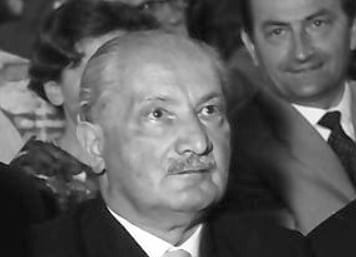
The analysis of Sorge is an analysis of the kind of being that Dasein has, and Dasein is characterized by its concern for its own being in a way that non-human beings, on Heidegger's account, do not share. Animals, for Heidegger, are poor in world. Stones, tragically, are worldless. The moral relevance of structural contraction to loci that are certainly not Dasein cannot then be grounded in Sorge without performing considerable additional work that Heidegger himself did not perform in ways a framework like Modal Path Ethics could ever use.
Modal Path Ethics is, again, intentionally not anthropocentric. The framework treats extant loci as objects of moral concern regardless of whether or not they are the kind of being that has its own existence as an issue for itself.
Pre-life harm, ecological harm to non-sentient systems, structural harm to institutions considered as loci: all of these matter on this framework's account in ways that cannot be derived from Heidegger's analysis of human existence. The framework requires a broader ontological base than fundamental ontology as Heidegger developed it can easily provide.
Heidegger's framework is also oriented toward authenticity in a way that this framework is not. The recovery of honest engagement with Dasein's own structure is, for Heidegger, a matter of utter resoluteness, of confronting one's own being-toward-death, of taking up one's ownmost possibilities. This is a profoundly individual trajectory even where Heidegger acknowledges that Dasein is, of course, always being-with others.
Modal Path Ethics' orientation toward sustained care in the field is not reducible to individual authenticity. It is constitutively concerned with how agents stand in relation to other loci and with what the field as a whole requires, not with how the individual Dasein comes to itself.
If Modal Path Ethics owes Heidegger anything in particular, it is definitely not the analysis of Sorge but something more diffuse: his insistence that philosophical analysis of human engagement with reality must operate at a level below the more familiar and comfortable categories of subject, object, belief, desire, and rational agent.
Heidegger's philosophical project made space for other frameworks that treat the basic structures of engagement as prior to the subject-object distinction and the representationalist vocabulary that follows from it. Modal Path Ethics now works in that broader philosophical space even where it does not adopt Heidegger's specific analyses.
That debt is real but it is also shared with many other twentieth century thinkers working in related traditions, if we are looking at the field. Merleau-Ponty, then later Wittgenstein, pragmatists from James onward, and phenomenologists in Husserl's tradition all contributed to the broader movement away from representationalist philosophy of mind and toward accounts of engaged, embedded, practical comportment.
Modal Path Ethics' care is more at home in this general philosophical landscape than it would be grounded in Heidegger's fundamental ontology, and the resonance with his Sorge is best understood as a shared inheritance from this general broader movement rather than as direct philosophical relation.
That is the maximum concession this framework can make. There is an elephant in the room, though, isn't there?
Nazism.
This guy was a fucking Nazi, wasn't he?
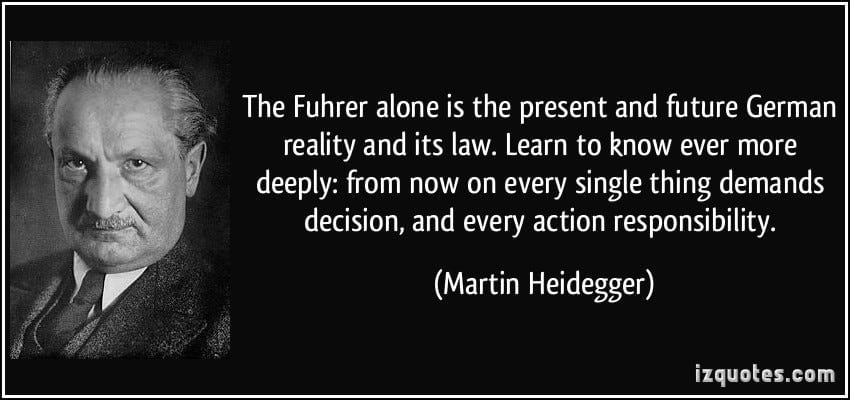
That sentence is intentionally rude and on its face an ad hominem, and Modal Path Ethics is not political, but I am leaving it rude because that rudeness is doing specific work to be explained. That sentence earns itself. This isn't just because I dislike him. I have already rewritten this section four times now. It has been much less defensible.
That statement refuses the little academic courtesy machine that keeps asking everyone to walk politely around the smoking crater. It is just shameful. Heidegger was not just a man who had some unfortunate opinions in a difficult time. Heidegger joined the goddamned Nazi Party, assumed institutional authority as the Rector of Freiburg, placed his philosophical and administrative competence into the world while Nazism was consolidating itself, and never once produced anything like a morally adequate public reckoning with what he had done.
This is not gossip. That is how his philosophy entered the field.
A framework like Modal Path Ethics cannot treat this as a decorative biographical footnote because the entire point of the framework is that agents are not abstract proposition-machines floating above the damage their actions help route into the world. Heidegger certainly did not exist in some vacuum of thought. An agent’s thinking is not severed from the paths it opens, protects, conceals, destroys, or dignifies. A thinker who gives conceptual, institutional, and rhetorical force to a catastrophic contraction event has not simply made a private error. He has acted inside the field, and in a way that allows me to call him a motherfucker.
The framework's own argument about Drummond and Reynolds applies here.
Personal brilliance deployed inside Nazism is not any form of moral greatness; it is instrumental philosophical virtue under absolutely catastrophic misalignment, and Modal Path Ethics refuses to count instrumental virtue as greatness when the agent’s actual path through the field blatantly amplifies contraction at scale. A person can be technically original, rhetorically powerful, historically influential, and still fail at the level that matters most: the level of care.
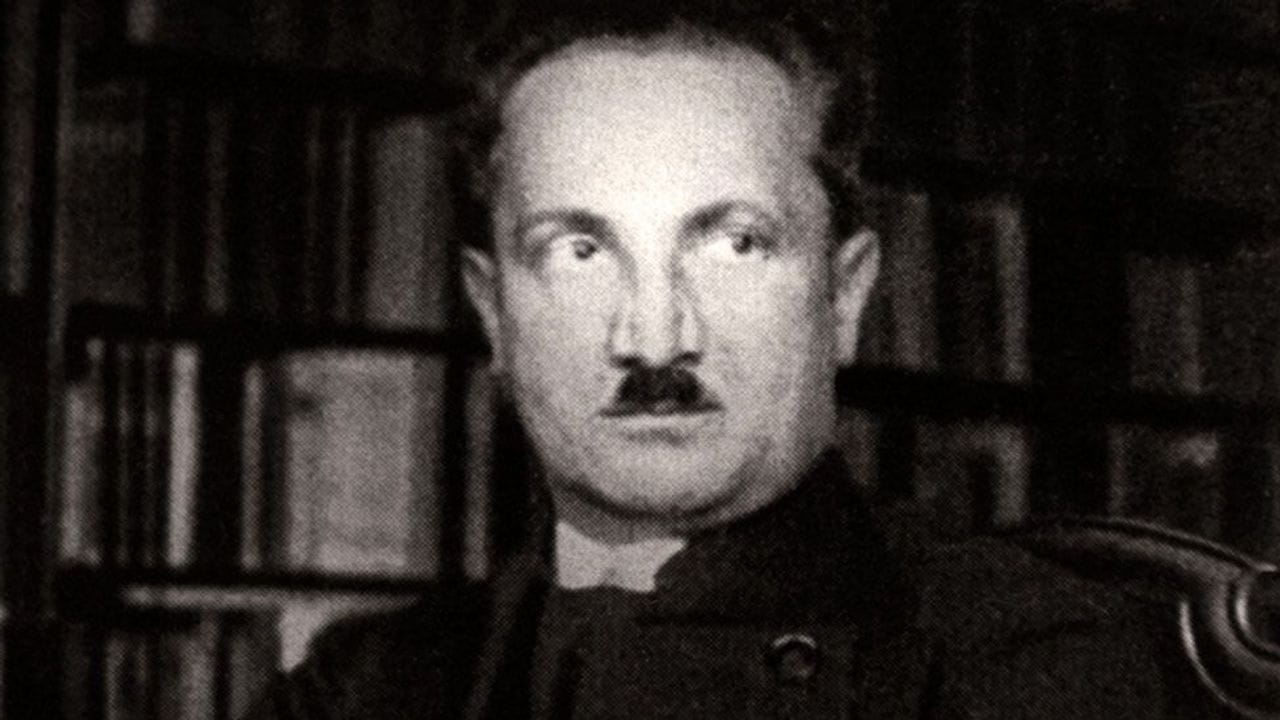
This is not anti-intellectualism. It is the precise opposite. It is the refusal to let intellectual talent launder actual field damage.
Heidegger’s defenders often want the conversation held at a more refined altitude, for his pleasure. They want us to distinguish the man from the thought, the rectorate from the ontology, the bad political judgment from the permanent philosophical achievement.
You know what? Fine. Distinctions are useful. Modal Path Ethics likes distinctions very much. I did try to keep that altitude for most of this article. But distinction is not severance from the field. The question is not whether every sentence of Being and Time secretly says “join the Nazi Party.” Obviously it does not. I read it. This wasn't Nazi propaganda.
The question is whether Heidegger’s philosophy contains, lacks, or distorts the resources needed to perceive and resist the kind of contraction his actual agency entered.
That is a far more serious charge.
The biographical fact is not the argument. The biographical fact is the warning flare. This guy's ontology did not stop him from Nazism, at all. The argument here is that Heidegger’s ontology fails at exactly the point where an ontology becomes morally dangerous: it gives enormous weight to disclosure, worldhood, destiny, authenticity, history, rootedness, peoplehood, technology, and the clearing of Being, while lacking a sufficiently explicit account of harm.
That is an absolutely critical failure. This ontology failed.
A philosophy that can speak for hundreds of pages about Dasein’s being as care, thrownness, projection, falling, death, resoluteness, worldhood, and authenticity, but cannot make contraction morally central, has not gone deeper than ethics. It has burrowed underneath ethics and then lost the fucking ladder.
This is really why Modal Path Ethics cannot possibly build on Heidegger. Heidegger was lost.
It is not just that Heidegger is anthropocentric, though he is. It is not just that Sorge is descriptive where this framework’s care is prescriptive, though it is. It is not just that Dasein cannot ground pre-life harm, ecological harm, institutional harm, or artificial-locus harm, though it cannot.
The deeper problem is that Heidegger’s framework makes the human disclosure of world too philosophically central while leaving the moral status of the disclosed field underdeveloped.
In Heidegger, the world matters because Dasein is already in it, disclosed through it, absorbed in it, fallen into it, called back from it, and able to take up its ownmost possibilities within it. Dasein is just so fucking special. That is a powerful analysis of human existence, but it is not a sufficient ethics of extance. The field does not begin to matter because Dasein discloses it. The field is already structured, already vulnerable, already capable of contraction before any human being arrives to have an authentic crisis about it. Dasein was not first on the scene.
The protoplanetary disk does not wait for Dasein. The forest does not wait for Dasein. The river system does not wait for Dasein.
The institution does not become morally relevant only once some sufficiently anxious human subject takes it up as part of a disclosed world.
And future-space certainly does not wait for Dasein. It can be narrowed, poisoned, blocked, exhausted, or destroyed long before any individual human meaningfully confronts their own being-toward-death. If a philosophy cannot see that, then its depth is clearly misallocated.
This is the core problem Modal Path Ethics sees with Heidegger.
Heidegger asks what kind of being has a world. I ask what kinds of extant loci can have their reachable futures contracted. These are just not the same question. The second question cannot be reduced to the first without losing too much of actual goddamned reality.
The Heideggerian will likely object here that this is all “ontic” moralizing. This framework is supposedly still counting beings, harms, futures, paths, and consequences, while Heidegger is asking the real, more primordial ontological question. This is the familiar escape hatch: when the moral pressure becomes too direct, retreat into the altitude of Being and accuse the critic of insufficient depth.
Nope. Sorry. The charge does not hold. You're gonna have to think for a minute about something other than Dasein.
Modal Path Ethics is not a spreadsheet theory of beings. It is not an inventory of objects. It is not naive subject-object metaphysics with some ethical decoration glued to it. The framework begins below this ordinary moral narration as well, because this is all late arriving. It asks what must be true for harm to occur at all, what kinds of loci can be contracted, what continuation requires, what resistance does, how selection changes reachable future-space, and why care must remain in contact with structural damage rather than with socially convenient stories about damage, which here must exclude the fact that this moral mentor apparently saw nothing wrong with antisemitism and Nazism.
This is a moral ontology, not moralizing.
The difference is that Modal Path Ethics refuses to let ontology become the coward's shelter from harm. If your depth category cannot explain why it is bad to help route a civilization into one the greatest acts of mass murder, institutional capture, extermination, war, terror, and permanent field damage, then the depth category is obviously fucking defective.
It may be impressive. It may be subtle. It may have a very serious German noun attached to it. It's only too bad it is still fucking defective.
This is where the ad hominem becomes structural. I put work behind calling this guy a fucking Nazi.
Heidegger’s Nazism is not some stain on an otherwise separable intellectual monument. It is obvious evidence of a failure in the agent’s own relation to the field he actually was embedded in. He apparently had no idea what was actually going on. He had philosophical sensitivity to world-disclosure, historical destiny, technology, authenticity, and the oblivion of Being. He did not have any real care in the sense Modal Path Ethics requires. He did not sustain availability to structural harm in any way that might have counted. He did not maintain honest contact with the contraction his own path participated in. He did not open a serious repair path afterward. He failed.
So when this framework says, “this guy was a fucking Nazi,” it is not abandoning philosophical seriousness. It is actually asserting its own. It is explicitly refusing a very fake version of seriousness that treats complicity in Nazism as less philosophically relevant than whether one has correctly footnoted the existential analytic. That is embarrassing.
The insult is not the argument. The insult is the verdict after the argument has been allowed into the room like it always should have been.
There is a reason that instrumental brilliance can be more dangerous than stupidity. Stupidity often fails to coordinate properly, like in Darien. Brilliance can coordinate just beautifully around the wrong attractor. It can give ruin a wonderful vocabulary. It can give cowardice an elegant metaphysics. It can make the narrowing of the field feel like destiny, rootedness, recovery, or historical necessity. This is all shitty ethics. That is why Modal Path Ethics is so hostile to the idea that technical philosophical power should be counted as greatness by itself.
Greatness is not intensity. Greatness is not influence. Greatness is not how many later academics built a cottage industry around your fun little nouns.
Greatness, in reality, requires some relation to repair, preservation, expansion, or at least honest resistance to contraction. Without that, “great thinker” becomes a professional courtesy title awarded to agents who may have made the world’s reachable future-space notably fucking worse while giving graduate students something difficult to parse.
Hard pass. Fuck this guy.
This does not mean no one should read Heidegger. I read him. Obviously. Here we are. His ontology is not trash.
The point is not that contaminated thinkers become unreadable by moral decree. His thoughts aren't tainted media to be banished. That would be too easy and, worse, it would be very inaccurate. The history of thought is not clean at all. Important tools often come from very damaged hands.
But sometimes the damage is precisely why the tool has to be inspected more closely. Inspection is not reverence.
A framework can read Heidegger, take the useful pressure he applies against shallow representationalism, acknowledge the historical importance of his challenge to subject-object metaphysics, and still conclude that his project cannot be trusted as a foundation at all. Not because the man had a minor personal failing. Because the work does not adequately protect against the man’s actual field failure. This ontology did not protect its own author from joining the movement that destroyed the field around him.
That is the part his defenders do not get to rush past or bullshit around.
If Heidegger’s philosophy is to be used, it has to be used under strict quarantine. Every concept has to be passed through harm-analysis. Worldhood, authenticity, destiny, technology, rootedness, historical peoplehood, dwelling, disclosure, releasement; all of this shit has to answer to extance. Does this concept clarify the field, or does it obscure contraction? Does it preserve care, or does it aestheticize withdrawal? Does it help agents resist harm, or does it teach them to rename harm as disclosure?
Because very clearly, it can go very wrong. So this one must be tested.
Modal Path Ethics is not interested in preserving Heidegger’s personal dignity at the expense of the field. He could have done that himself, if he was interested in actually repairing the damage he participated in. It is far more interested in preserving the field at the direct expense of Heidegger’s little dignity.
So yes: I am taking the word care.
Fucking Heidegger certainly does not own it. More importantly, he did not understand it properly in the sense that matters here. He only understood Sorge as the structure of Dasein’s being. He did not understand care as sustained moral availability to the contraction of extant loci. He did not understand care as the discipline of remaining in contact with harm even when one’s historical moment, institution, ambition, vocabulary, and philosophical romance all pull toward distortion.
Or, if he understood it, he did not live as if he did, which is what actually counts in real life. Either way, Modal Path Ethics has no reason to bend the knee to this fucking guy.
Care belongs to the field now.
The Field Damage of the Third Reich, Briefly.
The problem with his Nazism is not that Heidegger had bad politics. This framework is not political. “Bad politics” is too small a phrase. It makes the event sound like an unfortunate opinion, a private alignment, a regrettable vote, an embarrassing diary entry, one more case of a clever man being stupid in public. That is not enough.
From the perspective of Modal Path Ethics, Heidegger’s Nazism matters because it was active field participation. Heidegger did not just hold a belief. He entered into an institutional position during a catastrophic contraction event and gave that event intellectual, administrative, and symbolic assistance.
Heidegger became Rector of Freiburg in 1933. He joined the Nazi Party. As Rector, he participated in the synchronization of the university with the aims of the Nazi regime. He did not just exist near the machinery of the state. He took a direct role inside it.
This matters more than it may seem because universities are not decorative institutions. They are future-space engines. They train the next selectors. They preserve disciplines. They certify knowledge. They route young agents into the world. They shape what counts as serious, possible, respectable, official, and thinkable.
So when a university is synchronized with a genocidal political project, the harm is not only local. It is now modal damage. A university under ideological capture does not just mistreat present persons, though it obviously does that too. It narrows the reachable future-space of knowledge, students, teachers, professions, disciplines, institutions, and the society those institutions feed. That is deep field damage.
Heidegger’s rectorship therefore cannot be treated as a minor administrative detour from the “real” philosophy. It was a point where the philosophy professor became an institutional selector. His task here was not only to write. It was to govern a site of intellectual reproduction while the regime was converting civic, legal, academic, and cultural life into instruments of racialized domination.
Modal Path Ethics does not require Heidegger to be the sole cause of the harm. That is childish causality. Almost no large historical harm has one clean little villain standing beside it with a name tag for our compression convenience. Catastrophic contraction is routed deeply through institutions, incentives, cowardices, ambitions, bureaucracies, myths, and talented people willing to lend their talent to the machine.
Heidegger was one of those talented people. That is the charge here. He was not the architect of Nazism. He was not the whole regime. He did not personally create every downstream destruction.
Yes. Fine. None of that rescues him at all. From a Modal Path Ethics perspective, the relevant question is not whether Heidegger was the singular efficient cause of the catastrophe. The question is whether his agency opened, protected, dignified, amplified, or repaired the paths through which contraction moved.
And the answer is not flattering for this philosopher.
His position as Rector placed him inside the institutional alignment of Freiburg with the Nazi state. His continued party membership until the end of the regime shows no clean break at the level that would matter here. After the rectorship, the field does not suddenly become clean either. His involvement with the Committee for the Philosophy of Law placed him in another elite intellectual structure attached to the attempted transformation of German legal life under National Socialism. The law was not an abstract topic in that moment. It was one of the regime’s central instruments for turning persons into categories, categories into exclusions, exclusions into vulnerability, and vulnerability into death.
That is what law does when captured by a contraction regime.
It does not just command people. It reclassifies the field. It says who counts, who belongs, who may teach, who may own, who may marry, who may move, who may work, who may speak, who may remain visible, and who may be removed.
Any philosopher who enters that kind of legal-intellectual apparatus does not get to hide afterward inside pure ontology and their authenticity.
The Black Notebooks make the problem worse, not better, because they completely collapse any defense that Heidegger’s Nazism was simply an external political misjudgment unrelated to the deeper structure of his thinking. The notebooks do not show a thinker who privately escaped the pollution of his moment. They show clear antisemitic material entering the philosophical atmosphere of the work. They show the enemy-image becoming metaphysical. They show “world Judaism” and related tropes being given philosophical significance instead of being rejected as poison.
That is not personal prejudice beside the philosophy. That is philosophical contamination.
This is not just some failure of opinion. It is a failure of care under conditions of maximum moral pressure. Heidegger had extraordinary sensitivity to disclosure, worldhood, historical destiny, technology, rootedness, and the crisis of modernity. Those sensitivities should have helped him see the obvious danger here. Instead, they became available to the danger as its tools.
That is why his case is so utterly damning. The more powerful the instrument, the worse the misalignment. The more I get to say fuck him.
A mediocre Nazi bureaucrat damages the field through his simple obedience. A great philosopher who lends conceptual depth, prestige, or institutional authority to Nazism damages the field in another way. He helps make the contraction thinkable as your destiny. He gives metaphysical weather to political ruin. He lets historical terror masquerade as depth.
That is exactly the kind of event Modal Path Ethics is built to identify. Harm is not only pain. Harm is contraction.
And Heidegger’s path through the 1930s was not a private stain. It was participation in a massive contraction of reachable future-space: for Jewish scholars, for students, for German academic life, for European philosophy, for legal order, for civic institutions, for the murdered, the exiled, the silenced, the subordinated, and the future disciplines forced to spend the next century sorting genius from rot. That sorting is itself a downstream cost. This guy fucked us. Heidegger did not only fail to repair the field. He made the field harder to repair.
I guess fuck you too, then, Heidegger.
Redemption and Loci: Heidegger as a Modern Locus.
But this is not the end of the matter, because Heidegger is no longer only Heidegger.
There is Heidegger the man, Heidegger the Nazi, Heidegger the philosopher, Heidegger the institutional actor, Heidegger the contaminated corpus, Heidegger the academic industry, Heidegger the interpretive problem, Heidegger the warning sign, Heidegger the toolset, Heidegger the trap, and Heidegger the modern locus.
These loci are not identical. I only say fuck to some of these.
Modal Path Ethics can actually easily just condemn the agent without pretending the entire subsequent locus is frozen at the agent’s worst path. That would be too simple, and stupid. It would also violate the framework’s own field logic.
Loci are not isolated. They are routed, inherited, contested, revised, quarantined, transformed, and sometimes partially redeemed by later agents doing repair work the original agent failed to do.
Modern Heidegger scholarship is part of that extended locus.
That does not mean “the scholars redeemed Heidegger.” No one gets to baptize the corpse. Heidegger himself does not become clean because later readers became more careful than he was. The damage remains. The contamination remains. The warning remains. That's a different locus long-closed.
But the modern scholarly field has, in many places, advanced beyond Heidegger’s clear limitations by doing what Heidegger did not do adequately: forcing the work to face its own damage. That also matters a lot.
A living interpretive community can become a repair site. It can, however, also become a laundering site. The difference is whether it protects its master from harm-analysis, or submits the master willingly to it.
Can I call him a motherfucker, or no? I've shown some of my work.
The best modern Heidegger scholarship is not valuable because it keeps Heidegger dignified and precious. It is actually very valuable when it makes Heidegger usable against Heidegger. It asks where the ontology opens real insight and where it conceals violence. It asks whether his critique of technology can survive without his fatalism, whether world-disclosure can be detached from völkisch destiny, whether authenticity can be freed from historical romance, whether dwelling can be thought without rooted exclusion, whether Being-talk can be forced back into contact with harm. This is all very important stuff.
Modal Path Ethics does not need Heideggerians to stop reading Heidegger at all. It needs them to stop treating Heidegger as if the depth of the question of Being excuses the shallowness of his obvious moral failure. It needs the Heideggerian locus to accept that the question is not only “what did Heidegger really mean?” but also “what did this thinking make available, what did it obscure, and what does it still endanger when repeated without repair?”
That is where modern Heidegger scholarship can become an ally instead of a defensive Nazi bunker.
There are already signs of this better path. The Black Notebooks controversy forced a more direct confrontation with the antisemitism in Heidegger’s thought. Some scholars have taken the contamination seriously rather than treating it as a rude interruption to their seminar. Work on Heidegger and technology has also moved beyond passive reverence by asking how the critique of technological domination might be redirected toward democratic agency, education, environmental crisis, AI, and the preservation of meaningful human action under systems that increasingly convert the world into standing-reserve.
The modern locus has developed tools Heidegger himself lacked or refused. It has inherited feminism, postcolonial critique, critical race theory, animal ethics, environmental ethics, Holocaust studies, disability studies, AI ethics, democratic theory, trauma studies, and the whole ruined archive of the twentieth century. Heidegger did not have the right to remain innocent after 1933. Modern Heidegger scholarship certainly does not have that right either after the Black Notebooks.
The path forward is quarantine, extraction, and repair.
Quarantine means Heideggerian concepts do not get to travel freely into new work as if they were clean. Every major concept has to be checked for contraction risk: peoplehood, destiny, rootedness, authenticity, dwelling, historical mission, technology, calculative thinking, releasement, the clearing, Being.
Extraction means useful insights can be removed from the contaminated apparatus only after being tested. Heidegger’s attack on shallow subject-object metaphysics still matters. His account of world-involvement still matters. His critique of technological reduction still matters. His suspicion that modernity turns beings into available resource still matters. These are not worthless because he was worthless at care.
Repair means those insights must be rerouted into a framework that can actually identify harm. The critique of technology has to become accountable to contraction. Worldhood has to become accountable to extance. Care has to become accountable to loci beyond Dasein. Disclosure has to become accountable to what it exposes, protects, erases, or endangers.
Heidegger was not fine. The modern Heideggerian does not have to defend Heidegger’s dignity in order to preserve what was worth preserving. They can become a better locus than their source ever was. They can treat Heidegger not as their master who must be saved. He is a dangerous field-event from which certain valuable tools can now be salvaged only by passing through ethical reconstruction.
If Heidegger is to remain in the field, he remains under supervision. The concepts do not get diplomatic immunity. The corpus does not get sacred status. The historical damage is not a preface that can be skipped.
If that can be agreed, the real, polite conversation with Heidegger goes more like:
You were right that shallow subject-object metaphysics is not enough. You were right that technological reduction is dangerous. You were right that human beings are not detached spectators inspecting a neutral world. You were right that worldhood matters greatly.
But you were wrong to center Dasein so tightly that the wider field became morally secondary. You were wrong to let Being-talk outrun harm. You were wrong to aestheticize historical destiny while actual institutions were contracting living futures. You were very wrong to mistake depth for care.