Applied Case: The Lost Gradient
This does not sound like an ethical topic. I am literally just talking about the differences between molecules.
September 2026 note: The Lost Gradient remains a clean pre-life / generative-field case. September work would describe the relevant loss more precisely as generative damage or degradation of an enabling structure, with reachability assessed from the extant locus rather than by counting imagined downstream beings.
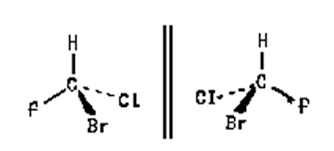
This one is about lowercase chirality, instead.
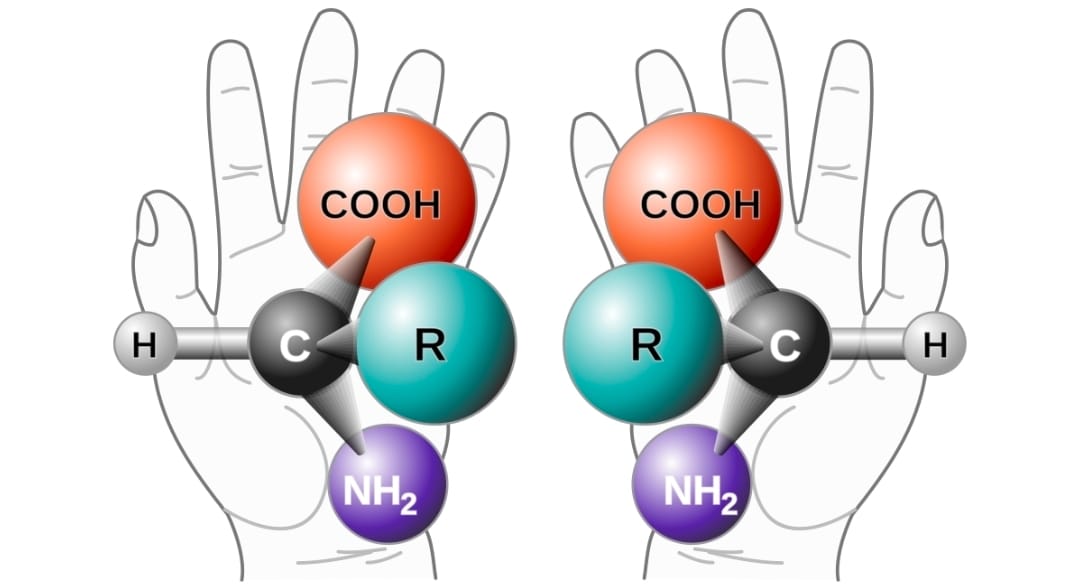
Some molecules have handedness. A left hand and a right hand are made of the same basic parts, but they are mirrored, not the same shape. A left hand does not fit into a right-handed glove.
In chemistry, some molecules behave similarly. They can have left-handed and right-handed forms: the same formula, the same atoms, but arranged as non-superimposable mirror images.
This property is called chirality. It means two things can be made of the same stuff and still differ in orientation.
See why that's the name of the board game, now?
Chiral pairs can be mirrors without being interchangeable. Life on earth is strongly chiral.
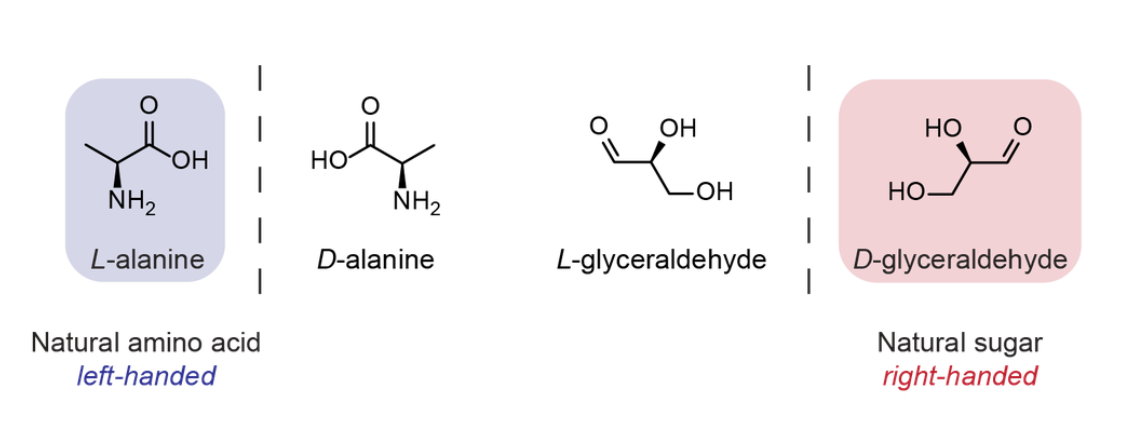
Proteins use left-handed amino acids. DNA and RNA use right-handed sugars. Life actually does not generally build itself from an even mixture of both hands. It uses one particular orientation consistently enough for biological structure, recognition, replication, and function to work.
That one-handedness we see in life is called homochirality.
The opposite condition is a racemic mixture: a mixed field containing left-handed and right-handed forms in equal or nearly equal measure.
Before life selects one hand, the field can contain both. Left and right are both present. Neither has become the grammar of later biology.
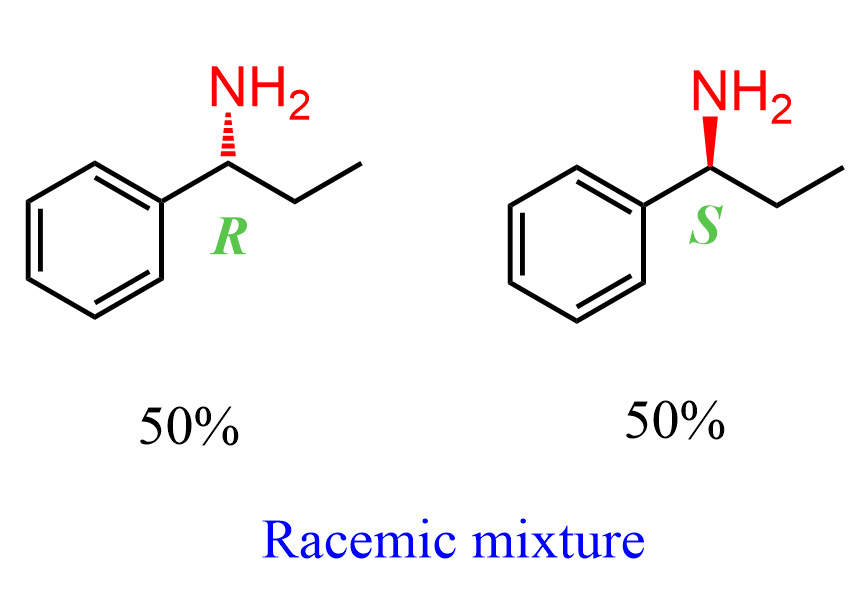
Then life becomes homochiral.
One side now becomes the rule, and the other side becomes abnormal, incompatible, useless, disruptive, or simply outside the path biology actually took.
This is the Lost Gradient: a two-sided mirror-field disappeared because one side became the basis of life.
Is This Even Ethics?
This does not sound like an ethical topic. I am literally just talking about the differences between molecules.
Left-handed molecules and right-handed molecules existing does not at first appear to be a moral dilemma.
But as I just described, a mixed pre-life field became a one-handed biological field, and this was not a harmless transition by the definitions used in Modal Path Ethics.
The question for ethical analysis is whether or not the transition from racemic openness to homochiral normalism closed a real branch of extant possibility while opening another, deeper one.
The Racemic Field.
A racemic field is a field in which left and right mirror-forms remain mixed.
The field has both hands. It has two possible orientations. It has mirror difference held apart, or a gradient. In a loose sense, it has more immediate symmetry than the later biological field, because neither hand has yet become dominant. This does not necessarily mean more futures are reachable from this field.
A racemic field may contain more raw openness at the shallow level while lacking the stable structure needed for later life. If both hands remain equally live and equally mixed, the system may fail to build the consistent molecular architecture that biology appears to require.
Molecules, if they are to become life, need to recognize, bind, fold, copy, and repeat. A biological system cannot easily build durable organization if its basic parts keep arriving in mirror-incompatible forms.
The problem is not, then, that one hand is morally better. The problem is that a living system needs to pick a hand.
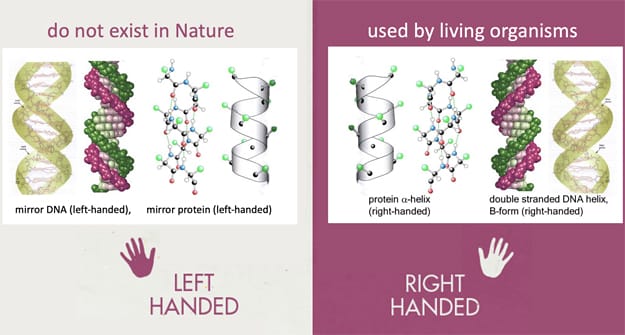
Either one may work, but a field that refuses to settle the question will not.
The Lost Gradient.
The lost gradient is the loss of racemic mirror-openness once one molecular hand becomes normal.
Before homochirality, left and right remain co-present possibilities. They are not imaginary alternatives. These options are real forms inside the field. The two hands could, in principle, support different continuations. One side might become the basis of life. The other might become the basis of mirror-life.
Or the field might remain mixed and never cross the threshold into stable biology.
After homochirality, one side becomes the path.
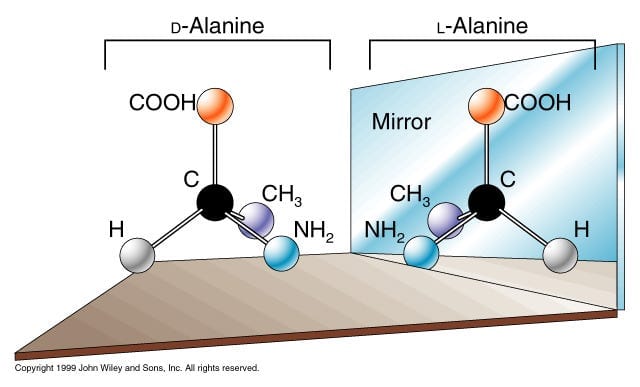
The other side doesn't vanish from all chemical possibility, but it loses its formerly equal status inside the living field that has now emerged. The biological world becomes organized around one orientation. Enzymes, proteins, sugars, nucleic acids, metabolism, replication, and later organisms all inherit that decision.
The racemic mirror-field was narrowed into homochiral biological normalism.
Why This is Not Anti-Life.
That narrowing, while closure, opened a vast future.
The point is not that homochirality was bad. That would be a pretty stupid conclusion.
Life as we know it may depend on homochirality. Stable handedness appears to be one of the conditions under which biological complexity became reachable. The transition from racemic mixture to homochiral order may therefore be one of the most important openings in the history of Earth, leading to advanced agency.
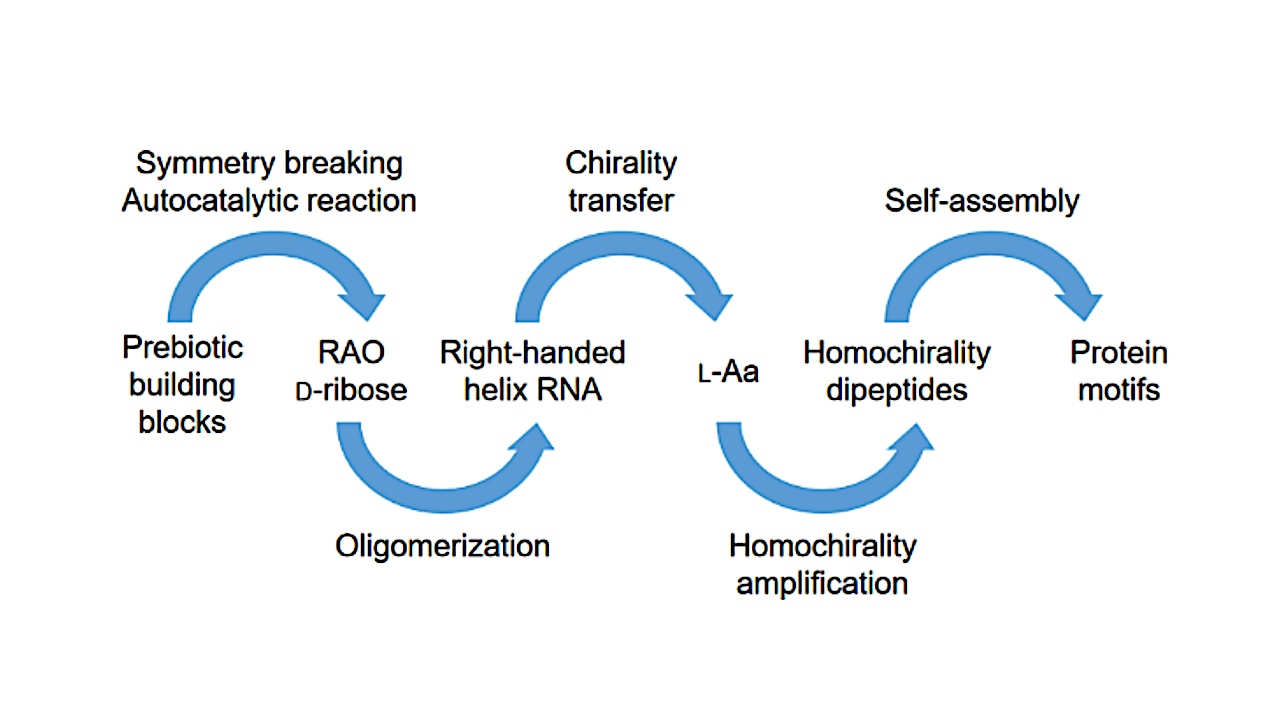
So this article is less an accusation against life, more an analysis of the cost-structure inside life’s opening.
The field can became vastly richer by becoming less open in one specific way.
Modal Path Ethics does not treat raw optionality as moral goodness. More branches are not automatically better. Some branches are shallow. Some are unstable. Some prevent deeper continuance. Some preserve symmetrical possibility only by blocking the transition into richer structure.
The racemic field had more immediate mirror-openness. The homochiral field has more downstream reachability.
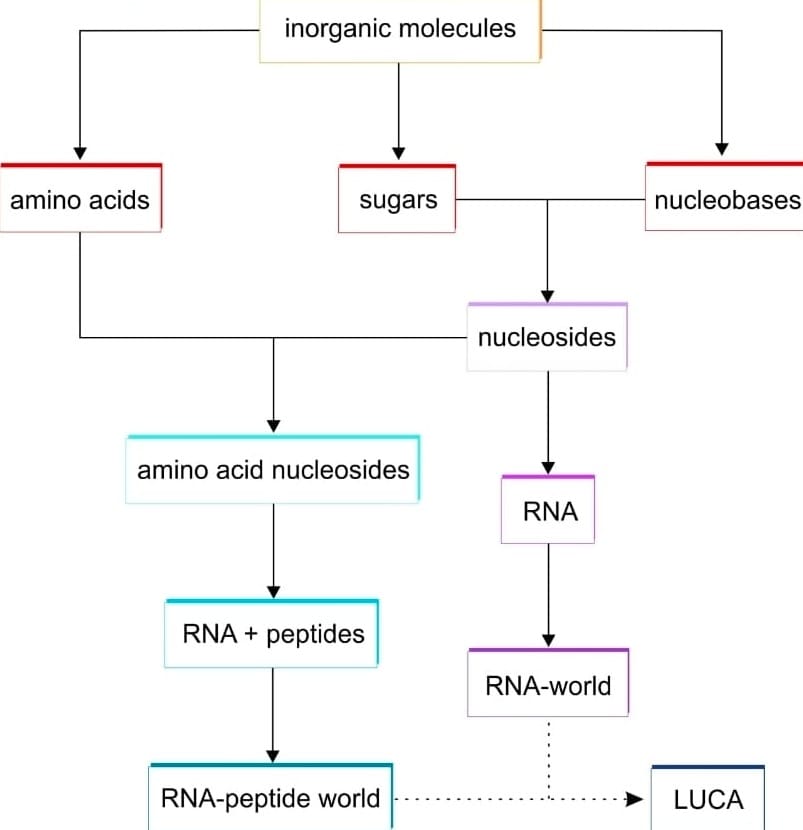
This is another example of why analytical weighting matters. The relevant question is not only how many alternatives exist at any moment. The question is what those alternatives actually enable, what they foreclose, how stable they are, whether they support further branching, and what future-space becomes reachable through them.
Homochirality is therefore a case of Better at the foundation of life, not Good. A consequentialist framework could reach a similar conclusion, but only by projecting beyond the racemic field and its transition into homochirality to examine specific, favored outcomes far in the future.
Pre-life Normalism.
This case's primary value is that it gives a strange and useful way to think about normalism as more than social conformity.
The Lost Gradient shows us a much older structure.
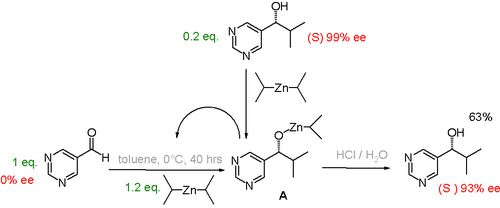
Before human society, before organisms, before agency, before preference, before blame, there is already a transition from mirror-openness to normalization.
This is process described above is explicitly also not oppression. There is still no victim-subject yet. It would be a mistake to import social moral drama into prebiotic chemistry.
It shows that normalism is not always a social prejudice. At a deeper level, normalism can be the stabilization of one path as the condition of later structure.
Normalism is not automatically wrong, nor is it good.