Transition Action: The Clock Becomes an Entropy Leak
Time may be an emergent relation inside the field. [L]

Transition Action is the technical wing of Modal Path Ethics: a series about technologies crossing from research, prototype, or theory into reachable action. Each entry begins with a live technical event and asks what has changed in the field. This is not a futurist roundup.
- What can now be built, tested, measured, or operationalized that was not reachable before?
- What physical process carries the new action?
- Which old background assumption has become less necessary?
- What new failure conditions enter with the new design?
Transition Action is a field inspection at the moment a capability starts to move.
This week in Transition Action, a physicist made a universe small enough to fit inside a cold-atom apparatus, placed a laser wall through it, ignored half of it on purpose, and got time.
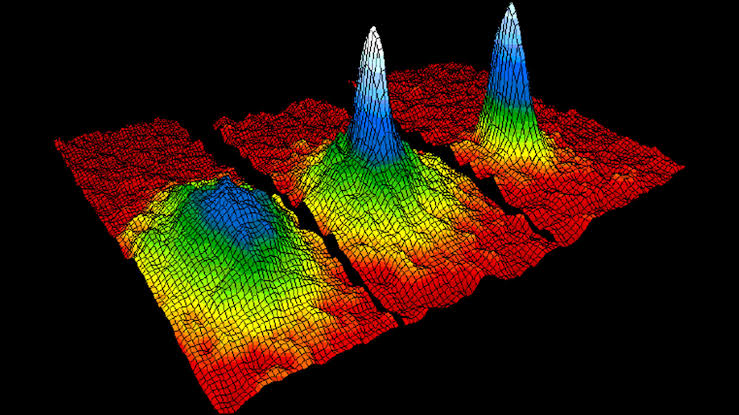
On June 11, 2026, the mysterious scientist Giovanni Barontini of the University of Birmingham published “Testing the problem of time with cold atoms”, a Physical Review Research paper using an isolated Bose-Einstein condensate as a laboratory analogue for a universe with no outside clock. In July, Live Science reported the result under exactly the kind of headline that makes Modal Path Ethics knock over a chair pumping its fists.
- A mini-universe.
- Time emerging.
- A dark sector.
- A bright sector.
- Big Bang.
- Big Crunch.
- Heat death.
- A scientist deliberately refusing to look at part of his own creation so that sequence can emerge inside the part he does watch.
This is obscene. Transition Action is supposed to be more practical, but come on.
Modal Path Ethics has already published The Problem of Time, where it argued that the framework does not need a simple cosmic clock. Its central concern is not a universal Now. Its central concern is ordered continuation: what can still happen from here, under this field, with these constraints, before repair closes.
Entropy Debt Week then made the second move. Rollback, preservation, reconstruction, optimization, and repair claims always need accounting. The field does not become innocent because the interface looks clean.
Barontini’s experiment now walks directly into that corridor wearing safety goggles and wiggling its fingers.
The clock was not found outside the field.
The clock appeared inside a partition. The clock ran when entropy moved.
The clock stopped when the exchange stopped.
The Mini-Universe Has a Fucking Laser Wall, I Swear to God.
The experimental system is a cloud of ultracold rubidium-87 atoms cooled into a Bose-Einstein condensate.
That phrase already sounds like reality has entered a monastery and stopped individuating.

In a Bose-Einstein condensate, many atoms enter a shared quantum state. They do not now become one tiny person. They become a coherent many-body physical system whose collective behavior can be engineered, measured, and used as an analogue for other physical situations.
So then Barontini placed this condensate in a trap and divided it with a thin optical barrier aka a fucking laser wall.

- One side became the observed bright sector.
- The other side became the unobserved dark sector.
The names are doing dangerous mythological work for free, which it looks like science allows sometimes when everyone has been very good about their equations.
The bright sector was the side watched by the experiment. Atoms could move across the barrier between the sectors. When atoms populated the bright sector, the paper labels the analogue event a “Big Bang.” When the bright sector contracted back toward the dark sector, the analogue event becomes a “Big Crunch.”
This is not a literal creation of spacetime. The lab did not actually manufacture a baby cosmos whose inhabitants now worship a lens assembly. The system is an analogue: a controlled, effectively isolated many-body quantum system whose internal variables can be made to stand in for simplified cosmological degrees of freedom.
The technical point is still wild.

The whole system is isolated enough, on the experimental timescale, to behave like a closed field with no need for an external clock inside its own description. The lab still has clocks around, of course. The researchers are not floating outside causality. The external lab clock remains available to set up, compare, and verify the experiment.
The question is different:
Can the observed sector order its own internal events using only a relation inside the system?
The answer, in this experiment, is yes.
A foundational problem that usually lives in quantum gravity papers, minisuperspace models, Wheeler-DeWitt discussion, and the part of physics where ordinary readers begin scanning for exits has been given a bench-scale testbed. It can be measured with cold atoms.
Modal Path Ethics trusts a testbed more than it trusts a manifesto, because a testbed has the decency to let the field embarrass you.
Time Comes From the Exchange.
The Wheeler-DeWitt problem is famously pretty rude to ordinary time.
At the level where certain quantum gravity equations try to describe the universe as a whole, there may be no outside time parameter. The universe, considered as everything, has no clock on the wall next to it. There is no grand hallway where the cosmos checks in at 3:17 p.m. and apologizes for traffic.
So physicists ask how the experienced ordering of events could emerge from relations inside the universe itself.
One part can function as a clock for another part. A degree of freedom can become the ordering parameter. A system can recover something time-like without smuggling in an external metronome.
Barontini’s version is entropic.
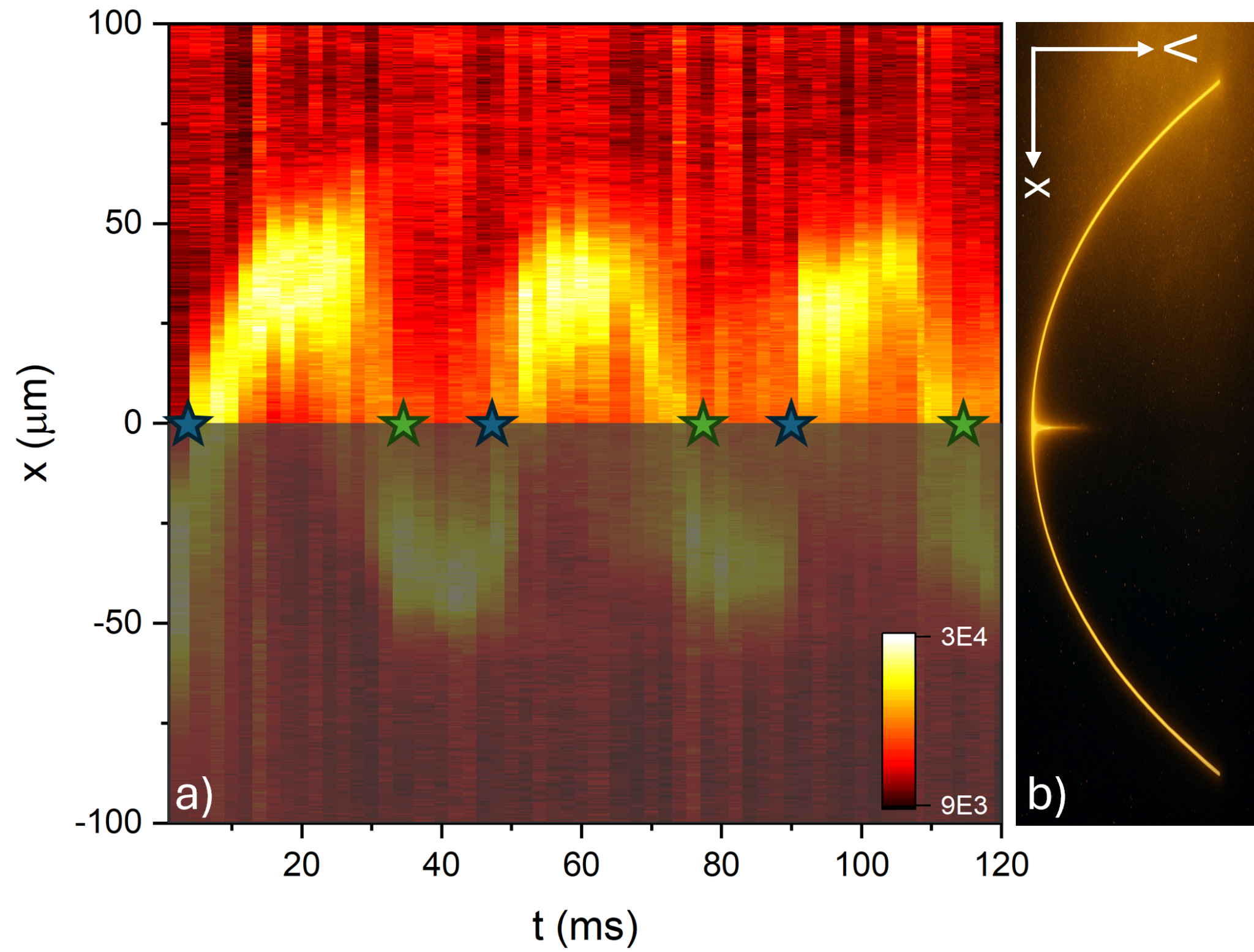
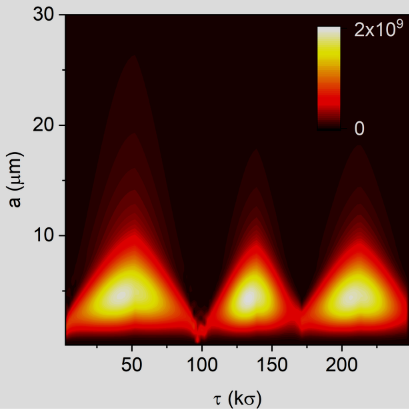
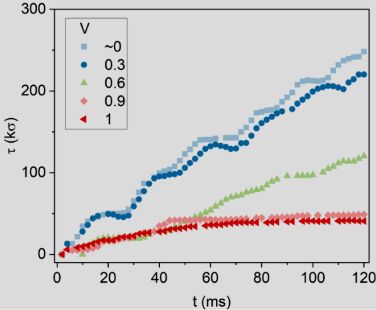
He defined an internal time for the bright sector using entropy exchange between the bright and dark sectors. When atoms moved across the barrier, entropy moved. That entropy flow supplied an ordering variable for the observed sector. The internal time ordered the bright sector’s expansion and recollapse across repeated cycles.
- When entropy exchange increased, the internal clock ran faster.
- When entropy exchange slowed, the clock slowed.
- When the exchange stopped, the internal clock stopped.
This last sentence is the one Modal Path Ethics keeps staring at.
A clock whose ticking depends on exchange does not stop because all possible reality has ended.
It stops because the relation that made sequence meaningful inside that partition has gone silent.
The lab clock outside can keep going. The researcher can eat lunch. The building can age. The grant can remain finite.
Inside the selected internal description, however, no entropy flow means no entropic time flow.
The clock is not a sovereign object.
The clock is another relation under accounting conditions.
Modal Path Ethics has insisted that timing is morally structural because repair must enter while continuation remains reachable. That claim does not require absolute cosmic time. It only requires ordered fields where thresholds can be crossed, paths can close, and some interventions arrive before others.
This experiment gives physics a sharp image of that same kind of ordering humility.
Time may be an emergent relation inside the field.
This is totally fine. Modal Path Ethics was already working there.
The Dark Sector != Nothing.
The dark sector is the gleaming star of the ethical reading, because the dark sector is where the visible clock gets its accounting boundary.
The researcher only watches the bright sector. The researcher gives up all direct knowledge of the dark sector.
That refusal is not an error in the experiment. This the operational move that lets the bright sector be described with a reduced state, an entropy flow, and an internal time.
That is the technical elegance. It is also where Entropy Debt Week begins kicking the door down.
An observed field often receives its order from an unobserved condition.

The bright sector becomes legible because another region is treated as background, sink, source, environment, exchange partner, or untracked remainder.
Modern systems do this constantly.
- A dashboard gets clarity by hiding labor.
- A supply chain gets speed by hiding fragility.
- A medical metric gets clean by hiding patients who left the sample.
- A model gets accuracy by hiding annotation and curation labor.
- A city gets order by hiding maintenance until a pipe breaks and the road remembers physics.
- A moral story gets coherence by hiding everyone whose cost would ruin the sentence.
To be clear: the dark sector in this experiment is not being abused.
The dark sector is a side of a cold-atom system.
Please do not call emergency services for the dark sector.
This sector is fine in the only sense available to rubidium atoms arranged into an experiment.
The structural lesson travels.
The unobserved is often active. The background is often load-bearing. The ignored half is not automatically passive just because the paper has defined it out of the observed sector.
In this case, the ignored half is exactly what makes the observed side’s time possible.
That sentence is almost too clean. It should be handled with tongs.
Entropy Debt is the warning against treating clean appearances as free. If a process seems to restore, reverse, optimize, preserve, or clarify a field, ask where the burden went. Ask what became hidden. Ask which trace is now carrying the cost of the interface.
Here the relation is not moral debt in any ordinary sense. No one has wronged the dark sector by naming it dark. Still, the structure is the same family of operation:
The bright sector receives readable sequence, but by giving up full access to the whole field.
That is the clock’s bill.
The Universe-Creator Audit.
Modal Path Ethics now calls Professor Barontini to the stand.

Again: no accusation of misconduct is being made against him.
Modal Path Ethics has no badge, no robes, no cosmic jurisdiction, and very little personal credibility after the cockroach scuba suit article it posted last week, and then also missing Monday this week.

Nevertheless, a man has apparently created a mini-universe, divided it into light and darkness, arranged its Big Bangs and Big Crunches, watched it approach heat death under some conditions, and then published the result.
That is clearly enough for an audit.

- Charge one: creating a universe inside a trap.
- The defense answers that this is an analogue system, not a literal universe.
- The system is a laboratory platform for testing relational-time constructions, not a populated cosmos with tiny men.
- Sustained.
- Charge two: dividing the fucking universe with a laser barrier.
- The defense answers that the barrier is the whole experimental point.
- Without partition, there is no bright-sector reduction, no controlled exchange, no entropic internal time.
- The wall is an instrument, and the instrument is what makes the question reachable.
- Sustained, with a note that all walls should then fear eventual audit.
- Charge three: assigning half the universe to darkness, then ignoring it.
- The defense answers that the unobserved sector must be traced over, bracketed, or left outside the observed description in order to test the relational construction.
- The ignorance is controlled ignorance, not negligence.
- It is a disciplined loss of access.
- Sustained, with a warning that controlled ignorance is still a loaded phrase and must be stored safely away from management consultants.
- Charge four: causing repeated local cosmological events for data.
- The defense answers that the Big Bang and Big Crunch labels refer to the bright sector’s population and contraction dynamics.
- These are analogical labels for a condensate moving in a trap, not mass casualty events inside an infant reality.
- Sustained, while Modal Path Ethics puts on its glasses.
- Charge five: allowing the mini-universe to approach heat death.
- The defense answers that heat death here describes a stationary bright-sector condition in the internal entropic-time construction, not the extinguishing of meaning across a moral cosmos.
- Also, the lab cannot be expected to give the condensate a pep talk every time the entropy exchange stops.
- Fine. Sustained.
Final ruling:
The creator is permitted to continue under experimental controls, pending future review by the Condensate Ombudsman.

That office does not exist.
The Condensate Files a Complaint.
The condensate endured the experiment. It abides.
That sentence is funny because the condensate has no known experience, no welfare, no social life, no little calendar where it marked “become an analogue universe” with an anxious circle, and no one waiting at home in a tiny ultracold non-apartment.
Modal Path Ethics should probably not become the first moral framework to demand reparations for rubidium as a campaign plank.
Still.

Modal Path Ethics treats harm below human recognition. It does not reduce moral seriousness to suffering, complaint, blame, or recognizable personhood. Its book begins from the idea that harm can involve the narrowing of real reachable futures even before life, witness, or experience enters the field.
That does not make every physical alteration into an emergency. It makes every physical alteration eligible for scale-sensitive accounting.
The stakes here are extremely low.
They are not zero.
A prepared many-body field was organized into a delicate state. That state was confined, partitioned, cycled, measured, and spent as evidence. Its continuation as that organized condensate was subordinated to the experiment.
The condensate did not suffer. The condensate did not lose a career.
The condensate did not have a favorite song.
But a structured extant field was used.
That is the low-level fact.
This kind of fact exists everywhere in science.
A crystal is cleaved. A cell culture is killed. A mouse is tested. A tree core is drilled. A fossil is cut. A telescope time slot is spent. A rare specimen is scanned. A chemical system is driven until it yields a signal.
Knowledge always has bodies under it, even when those bodies are not morally comparable.

The BEC case sits near the floor of concern because the field being spent has no plausible inner life and no standing interest beyond its structured physical continuance. That is why the experiment is ethically easy to permit.
“Easy to permit” is still a judgment.
That judgment has a shape:
- The experiment creates a controlled physical field.
- The field is consumed or transformed as part of the work.
- The field has no plausible suffering, agency, or welfare claim.
- The knowledge gained is structurally valuable.
- The cost is low enough to be overwhelmingly acceptable.
- The cost still exists as field expenditure.
This is how Modal Path Ethics avoids two stupid exits.
- The first exit says: no suffering; no mattering.
That misses too much. It would erase pre-life harm, ecological potential, archive destruction, future closure, and many forms of low-salience field expenditure.
- The second exit says: all alteration is equal harm.
That turns ethics into a smoke alarm taped to an espresso machine.
It screams constantly and helps nobody.
The better answer is scale-sensitive field accounting.
The honorable condensate may be sacrificed for knowledge.
Modal Path Ethics asks that the sacrifice remain visible at the correct scale.
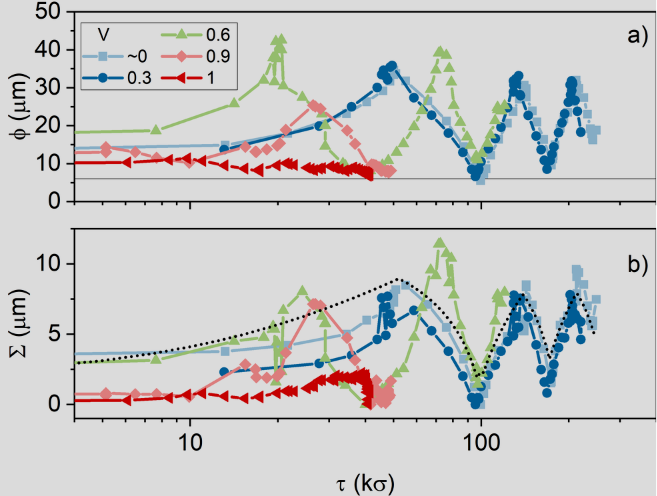
This universe endured brief captivity under Barontini, Creator of the Bright Sector, Lord of the Barrier Height, Grand Watcher of the Oscillating Cloud.
The Clock Is Born From Ignorance (Rude).
The most dangerous misreading of this experiment is the comfortable one:
Time comes from ignorance.
That line has enough drama to go very bad immediately.
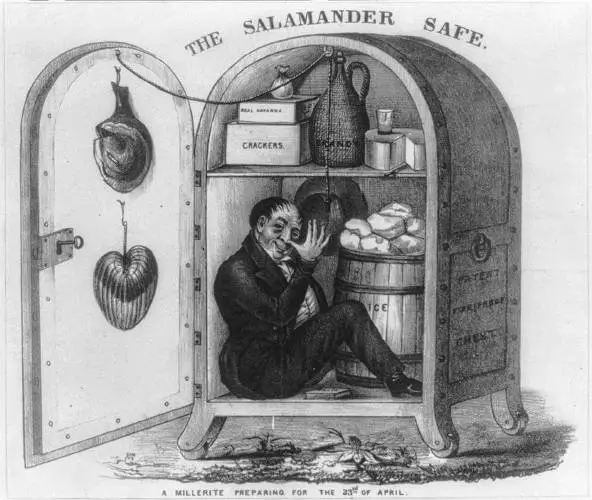
Someone will use it to say reality is subjective. Someone else will say consciousness creates time. Someone else will say observation is magic.
A fourth person will use it to justify being extremely late to a wedding brunch, claiming their internal entropic parameter had failed to exchange degrees of freedom with the omelet sector.
No. Do not.

The technical result is narrower and better.
The experiment gives a controlled case where an internal time variable can be built from entropy exchange after a system is partitioned into observed and unobserved sectors.
The ignorance involved is not casual stupidity. It is an operational reduction: the bright sector is described while the dark sector is left unobserved in that description.
The loss of access makes a reduced, entropy-bearing account possible.
Ignorance is doing work because ignorance has been engineered.
That is a very different claim from “knowing less makes time happen” as a bumper sticker for people who should not be left alone with metaphysics.
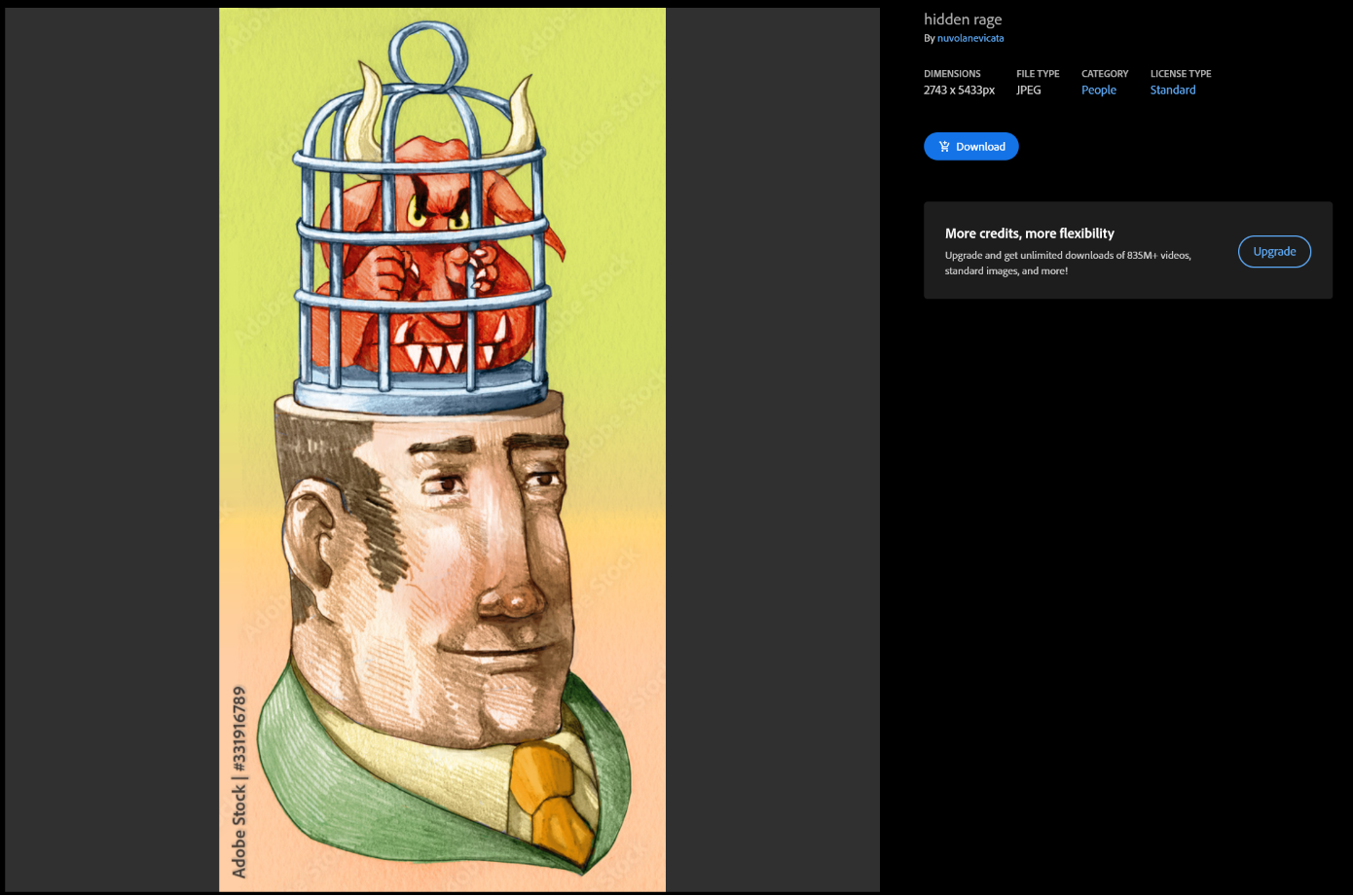
The Modal Path Ethics lesson is about boundaries.
Every field description has a boundary. Some boundaries are honest. Some are lazy. Some are necessary. Some are violent. Some are instruments of care. Some are instruments of concealment.
Here, the boundary is an experimental instrument. It lets a physicist ask a precise question about internal time. In a bureaucracy, a boundary may hide the people carrying the cost of a policy. In an AI system, a boundary may hide the labor and energy that make the interface feel weightless. In a hospital, a boundary may hide the patient after discharge and call the case resolved. In a war, a boundary may hide civilian life behind operational objectives.
The same structural warning keeps returning:
The boundary that makes a thing readable may also decide what the reading forgets.
Barontini’s boundary is useful because it is explicit, engineered, and tested.
Bad fields prefer their boundaries unannounced.
The Chastening of the External Clock.
Transition Action has been circling a wobbling pattern: control keeps leaving the throne.
- Shape becomes code.
- The load follows the sun.
- The trace becomes a dataset.
- The animal becomes the actuator.
- Now the clock becomes an internal accounting relation.
The pattern is the same:
A capability migrates away from a central command object and into field structure.
- The old picture asks for a clock outside the system.
- The new testbed asks whether a usable time variable can be constructed from inside an isolated system by watching how one sector exchanges entropy with another.
That is a chastening of the external controller.
This does not abolish the lab. It does not abolish the researcher. It does not abolish external time in ordinary practice, Miller.
It does not prove the universe literally runs on Barontini’s entropic variable. It simply shows that the old dependence on an external clock can be reduced inside a controlled analogue.
A theoretical pressure has crossed into experimental reach. Relational-time constructions can now be benchmarked against data from a cold-atom system. Competing internal clocks, bouncing scenarios, analogue black holes, reversibility tests, and other quantum-cosmology questions become more technically reachable within this family of platforms.
The phrase “problem of time” has acquired apparatus.
That is the transition from philosophy-adjacent physics into Transition Action.
The theory did not become settled. The extant field gained a handle.
Please Do Not Build a Religion Around the Bright Sector.
The failure conditions are obvious enough to deserve labels.
First failure: headline cosmology.
The experiment is astonishing. It is also an analogue model. It does not solve quantum gravity. It does not establish that the actual universe has exactly this entropic clock. It does not turn time into vibes. It does not mean every clock in your house is secretly an ignored sector doing emotional labor.
Second failure: bright-sector narcissism.
The observed sector may be where the data lives, but the observed sector is not the whole field. The internal clock appears because the bright sector is coupled to what the description leaves dark. Any reading that treats the bright sector as self-sufficient has already forgotten the entire experiment.
Third failure: ignorance worship.
Ignorance can generate an entropy-bearing reduced description under controlled conditions. That does not make ignorance wise. Ordinary ignorance is still very capable of crashing a car, misreading a lab result, or founding a subreddit.
Fourth failure: ethics cosplay.
The condensate audit is funny and useful only at the correct scale. If someone walks away thinking cold atoms deserve equal standing with children, forests, prisoners, or future biospheres, the instrument has failed. If someone walks away thinking cold atoms have no place at all in moral accounting because they cannot scream (yet), the instrument has also failed.
Fifth failure: clock chauvinism in reverse.
The old error treats external time as the only real order. The new error would treat emergent entropic time as the only order anyone now needs. Modal Path Ethics rejects both. Different fields can have different operational clocks, thresholds, tempos, and deadlines. Repair cares about the ordering relation that actually decides whether intervention can still enter.
Sixth failure: forgetting the apparatus.
A lab mini-universe is not an unmediated cosmos. This is prepared by humans, badass lasers, traps, cooling, imaging, modeling, equations, grants, committees, infrastructure, prior papers, and enough fragile equipment to make every clean philosophical sentence nervous. The apparatus belongs to the field it exists in.
The mini-universe is not the universe. It is a new instrument for asking the universe better questions.
What This Makes Reachable.
The immediate reachability is technical.
- A well-isolated cold-atom system can now serve as a controlled experimental environment for testing relational constructions of time.
- A Bose-Einstein condensate can be partitioned into observed and unobserved sectors.
- Entropy exchange between those sectors can be used to define an internal time variable.
- That internal variable can order observed-sector events and support an effective quantum description that reproduces the measured evolution.
The longer reachability is conceptual and experimental.
- Quantum cosmology no longer has to keep every version of the problem of time at the level of formal speculation.
- Internal-clock choices can be tested against controlled many-body systems.
- Entropy-based arrows of time can be engineered, slowed, accelerated, interrupted, and compared with external lab time.
- The relation between reversibility, coarse-graining, and clock emergence can be probed in systems that researchers can actually prepare and measure.
- Analogue cosmology gains another instrument for studying early-universe questions without pretending the analogue is the cosmos itself.
The public reachability is also real.
- Readers can now picture the problem better.
A universe with no outside clock is a hard thing to hold.
A cold-atom system split into bright and dark sectors gives the mind a smaller field to touch. The analogy does not settle the metaphysics, but it makes the question less abstract. It lets the reader understand how a clock might be born from relation rather than imposed from outside.
Language is also an access technology.
Under the Clock.
Modal Path Ethics does not somehow become true because a physicist built a mini-universe.
The experiment is relevant here because it dramatizes a structure the framework already needed:
Ordering can emerge inside the field through relation, exchange, partition, and loss of full access.
Ethical life works in fields where clocks are never the whole story.
A child does not lose trust according to the calendar alone. A river does not collapse according to the meeting schedule. A worker does not burn out according to the quarterly slide deck. A patient does not remain treatable because the appointment system still has a blank slot in November. A threatened people do not remain safe because a treaty title remains pronounceable.
Each field has its own thresholds, exchanges, dark sectors, and internal tempos.
Repair has to read the local terrain.
The external clock is useful. It is not sovereign. A future can be destroyed before tomorrow. A path can close before a deadline. A system can sit in equilibrium while the office clock keeps advancing and everyone says there is still time.
Barontini’s tiny universe stops its internal clock when entropy exchange stops.
Bad institutions also have stopped clocks, they just keep holding meetings around them.
The Transition Action.
The official Transition Action is this:
The clock can be moved inside the field.
A cold-atom mini-universe has shown that an internal, entropic time can be constructed from measurable exchange between sectors of an effectively isolated quantum system. The observed sector does not need an external clock inside the reduced description. Its own ordering can be generated from how it remains coupled to what the description leaves unobserved.
This action is not a new consumer product, a battery, a sensor, a medical device, or a cockroach wearing scuba equipment and preparing for municipal office.
This is a new experimental handle on one of physics’ deepest coordination problems.
The problem of time has become more testable.
That is enough.
- The clock is not outside the field.
- The observed sector is not the whole field.
- The dark sector is not nothing.
- The boundary creates the reading.
- The reading has a cost.
- The cost may be tiny, as with a condensate.
- The cost may be civilizational, as with a hidden labor system, a damaged ecology, or an institution that mistakes its dashboard for reality.
- The reading has a cost.
The mini-universe endured its brief career as an experimental cosmos.
The researcher remains under demiurge observation.
The bright sector received time because the field was partitioned, because entropy crossed the boundary, because knowledge was given up, because a hidden relation kept the visible sequence alive.
Modal Path Ethics approves of this experiment.
But it distrusts every field that forgets the dark sector after learning how to use its clock.