Tales of Distortion: The Great Disappointment
The end of the world acquired a tent.
A theological expectation can begin in silence.
A person sits with a Bible, a lamp, a pencil, a table, and the kind of attention that makes the rest of the house feel like it has agreed to be quiet for a minute.
A verse is compared to another verse. A number becomes another number. A prophecy receives a chronology. History begins looking less like a river and more like something that might have hinges hidden under the mud.
Then, someone orders the largest tent in the country.
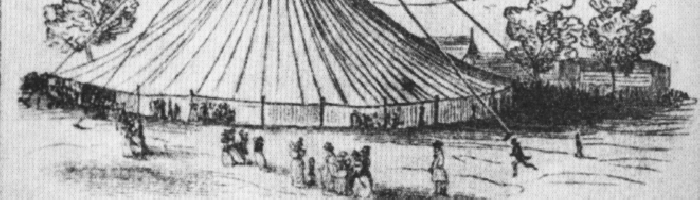
Now the end of the world has freight requirements. It has literal stakes. It has ropes. It has a center pole.
It has men hauling excessive amounts of fabric through towns that are still doing the ordinary humiliating work of history: feeding horses, selling flour, printing newspapers, repairing fences, burying grandparents, and pretending “local government” is not an elaborate dare.
A person can be wrong alone.
A movement becomes wrong with infrastructure.
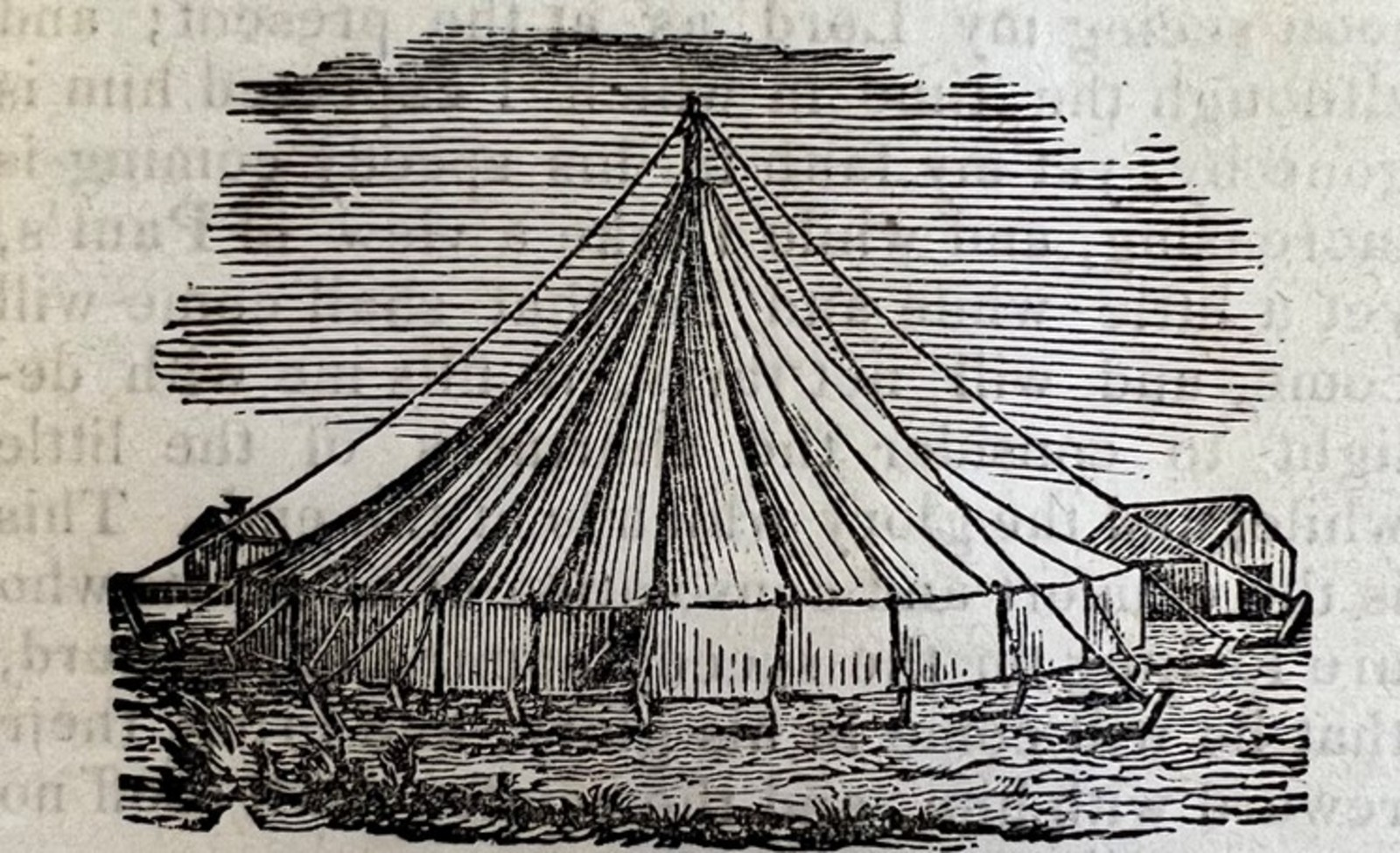
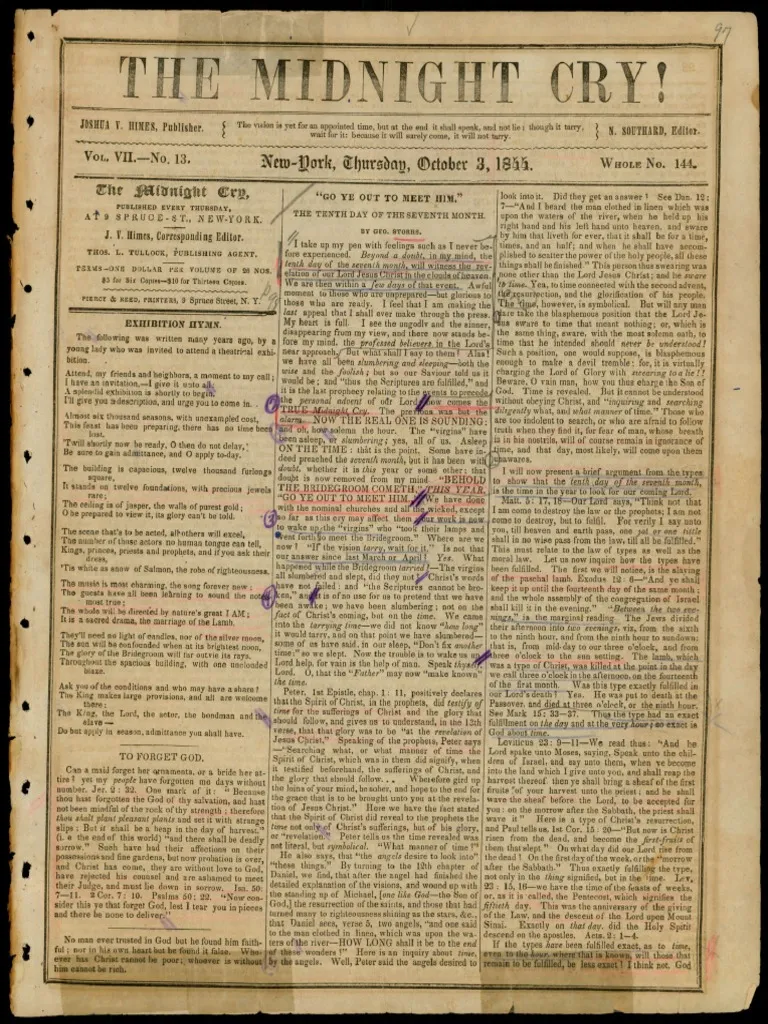
The Great Disappointment was not simply a failed prediction that Christ would return on October 22, 1844. It was a sacred-instrument distortion in which expectation became an apparatus: calculation, chart, sermon, journal, camp meeting, tent, public pressure, revised date, small printed sheet, comet, proviso, calendar, and finally one very quiet morning after the world had continued without asking permission.
The believers were not props for a joke. Many were sincere. Many were disciplined. Many were frightened, hopeful, repentant, wounded, and trying to stand correctly before God and history. They were living inside one of the most dangerous forms of contact human beings ever encounter:
The possibility that ordinary time is almost finished.
That possibility does certain things to a field. It does not stay in the head.
It reaches the barn, the table, the ledger, the marriage, the meeting notice, the field of corn, and some poor exhausted person whose job is now apparently to pack up America’s largest apocalypse canopy because the next town also needs to hear that history is ending.
That is where the distortion begins.
The Distortions Of.
The distorted figures here are multiple because this field had to pass through several human instruments before the date could bear the weight it eventually bore.
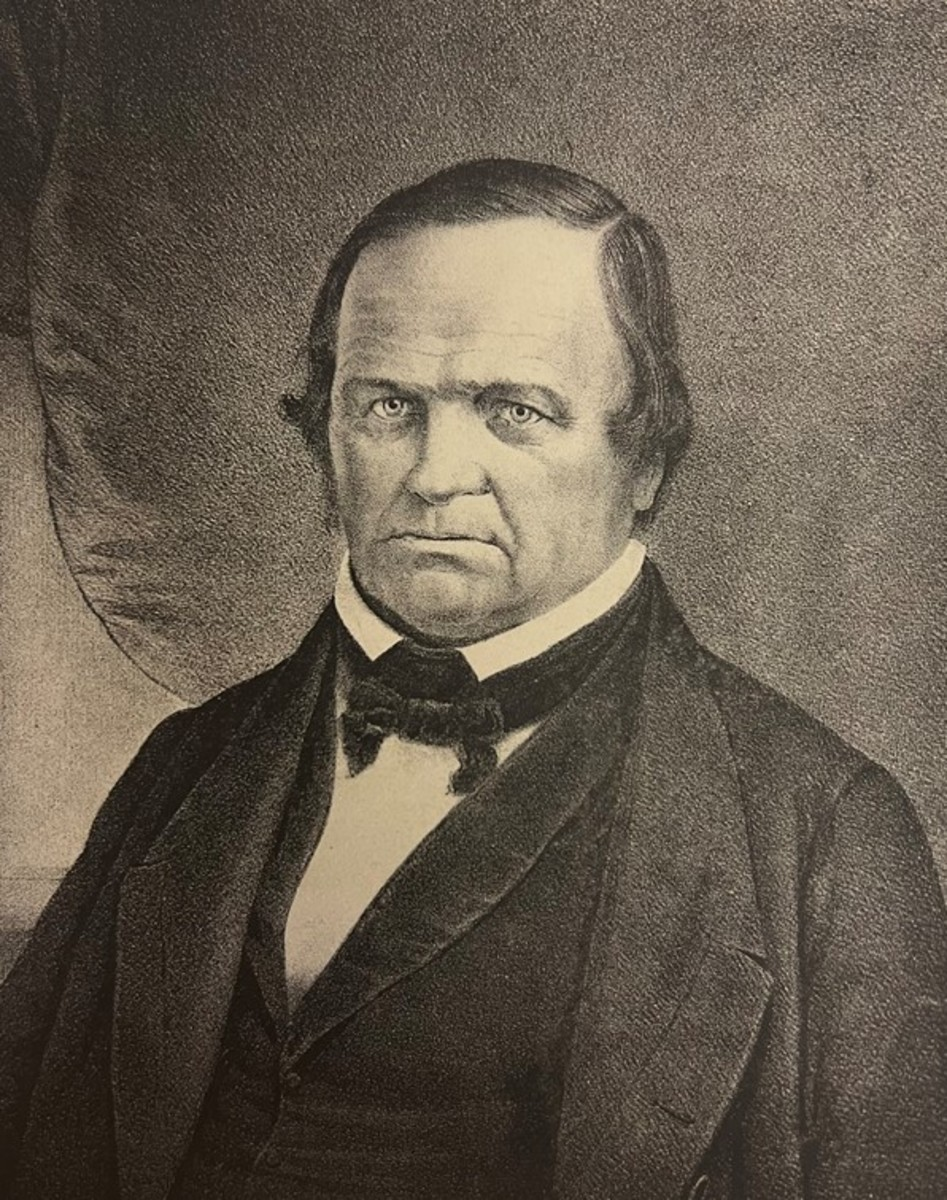
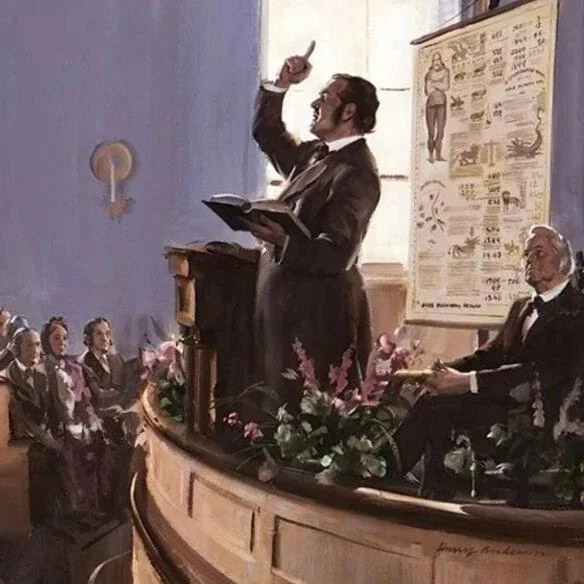
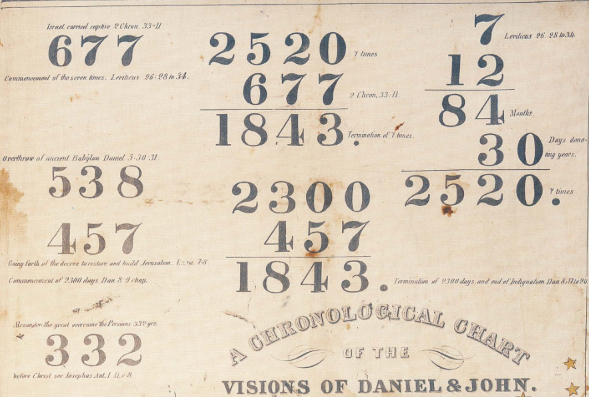
William Miller is the first figure: the farmer, veteran, Baptist preacher, and interpreter whose study of Daniel convinced him that the prophetic 2,300 days represented 2,300 years and pointed toward the return of Christ around 1843.
Miller is not best read as a carnival operator with a Bible-shaped megaphone. He was a serious religious reader trying to bring history, scripture, and moral urgency into contact. That seriousness is part of the danger.
A clown forgets the tent poles.
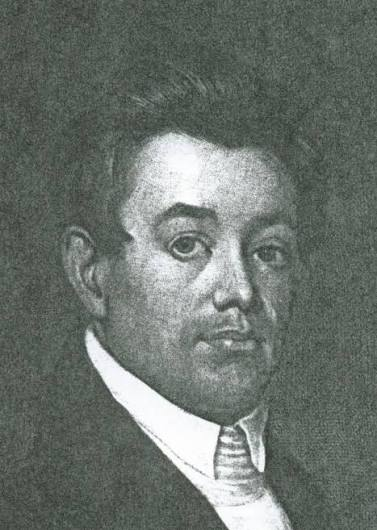
Joshua V. Himes is the central distorted figure for the purposes of this article because he turns Miller’s interpretive instrument into a public field. Himes is the one who gives the expectation reach. He equips it with charts, journals, tours, camp meetings, tracts, books, pamphlets, agents, and the Great Tent. He does not invent the expectation. He gives it a body.
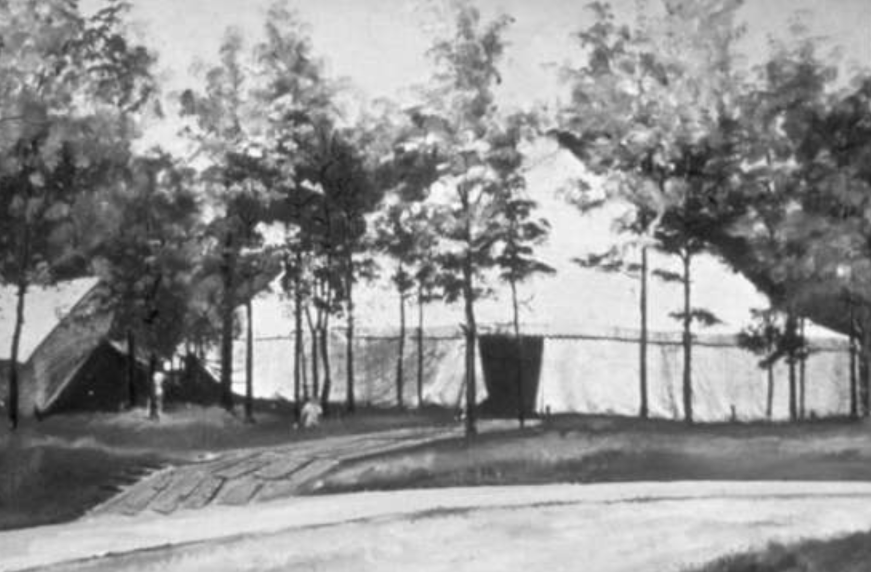
The Great Tent is his perfect diagnostic object.
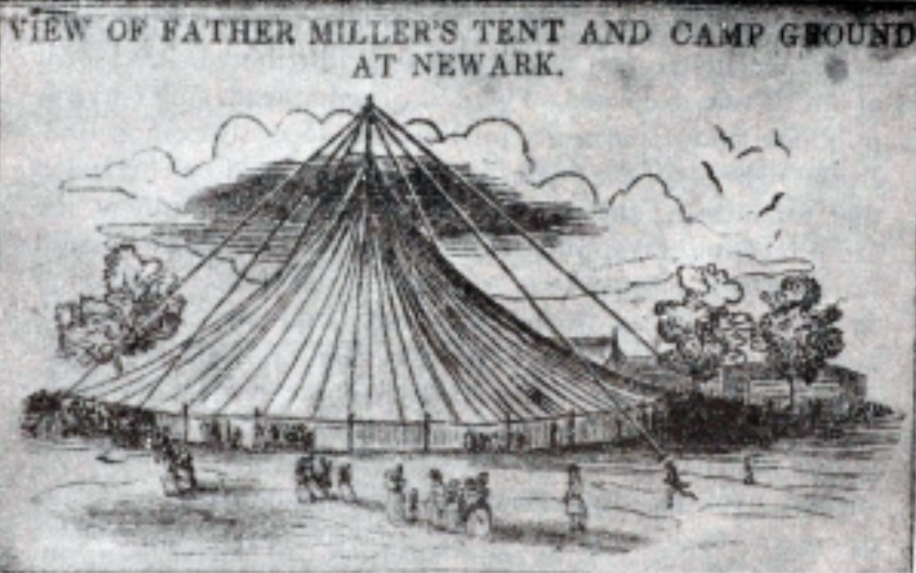
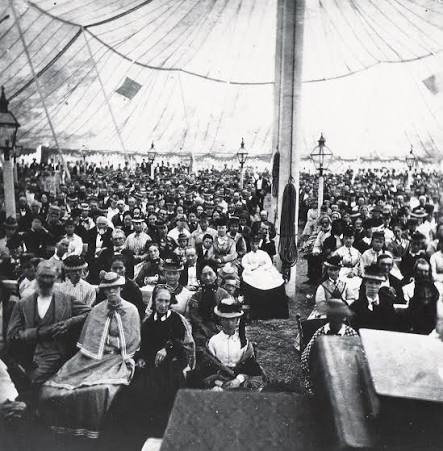
This tent is not evil. It is not stupid by itself. It is a brilliant communication instrument, a mobile locus of collective attention, a physical room that can be carried to the next town like a portable church swallowed a circus.
That is exactly why it is dangerous.
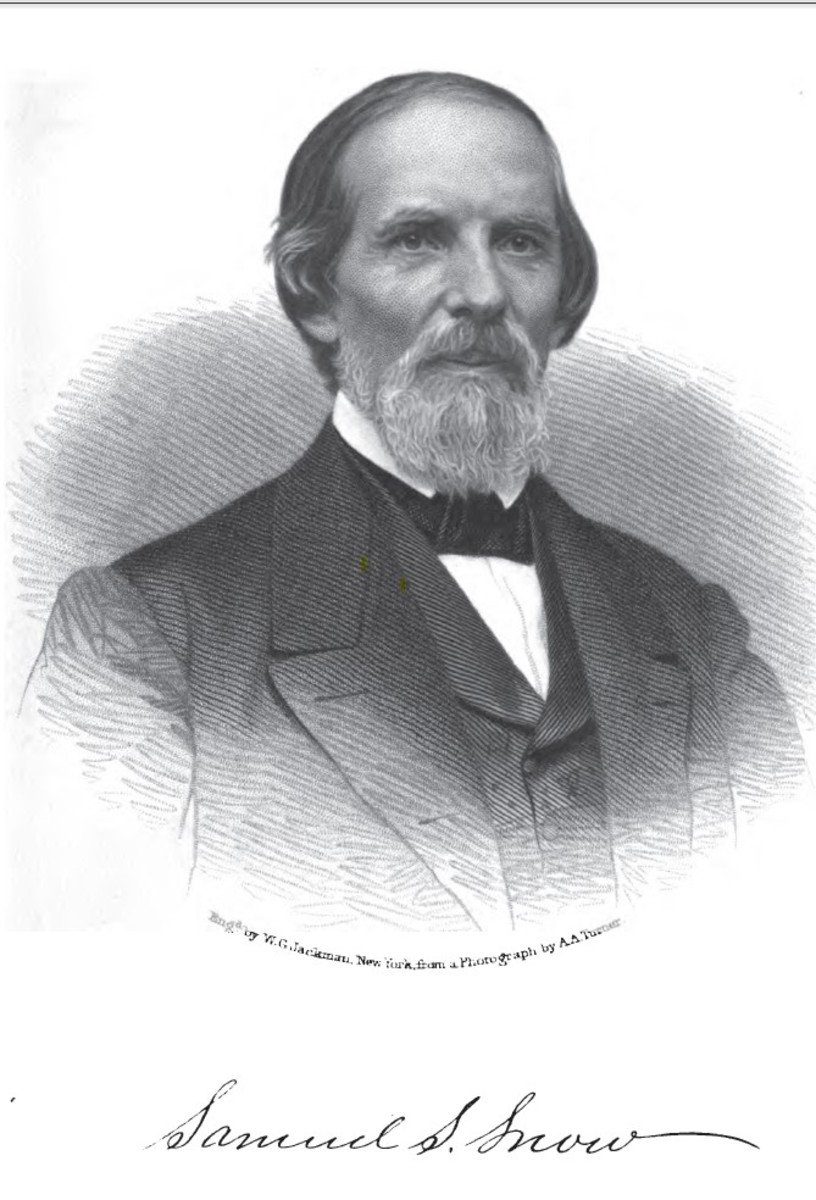
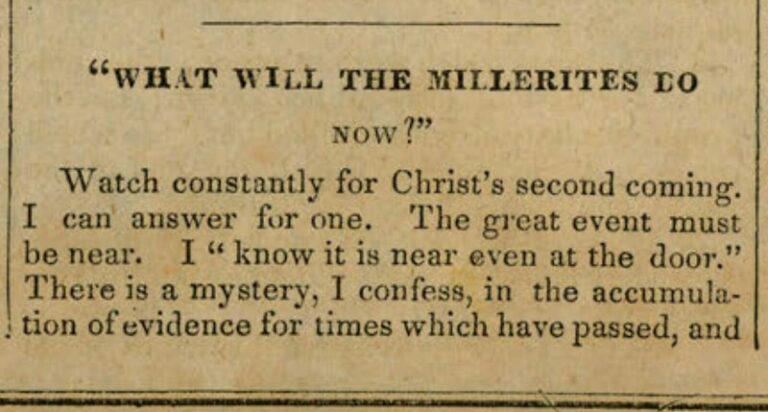
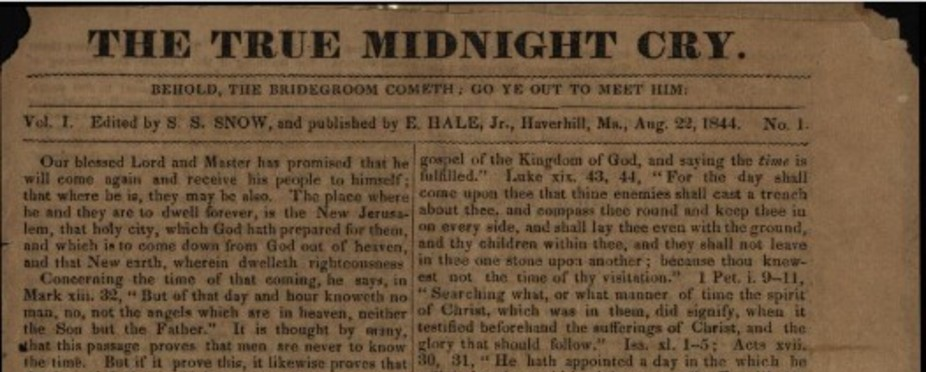
Samuel S. Snow is the date-lock figure. Snow helps turn anxious expectation into October 22. His little periodical, The True Midnight Cry, was a four-page sheet dated August 22, 1844, sold at fifty cents per hundred copies, and according to the Encyclopedia of Seventh-day Adventists, its main article argued that Jesus would return literally on or before October 22, 1844.
Fifty cents per hundred copies.
That is one of the most devastating prices in religious history.
For half a dollar, a local group could acquire a hundred copies of the final correction-resistant phase of the apocalypse.
Someone had to fold all those.
Someone had to bundle them.
Someone had to ship them.
The end of the world had a unit price.
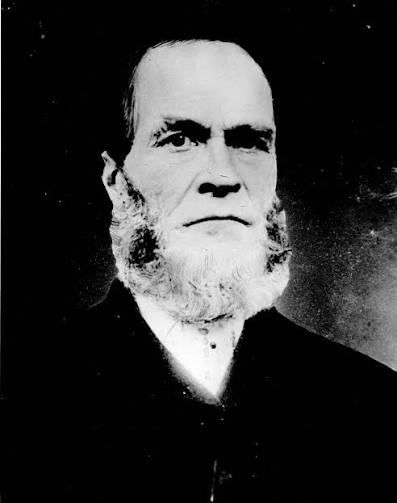
Hiram Edson is the field-after-field figure. He belongs mostly after the failure, in the cornfield. The field did continue, because the body still had to walk somewhere, because crops remained wildly uninterested in being converted into a failed theorem. Edson is remembered in Seventh-day Adventist history for a particular cornfield experience on October 23, 1844, associated with the development of the heavenly sanctuary interpretation. The Encyclopedia of Seventh-day Adventists describes him as chiefly remembered for that cornfield experience.

We will get there.
First, Jesus is coming, and so this field needs a roof.
William Miller Builds a Clock Out of Scripture.
William Miller did not begin by ordering America to stop having Thursdays.
He began with study.
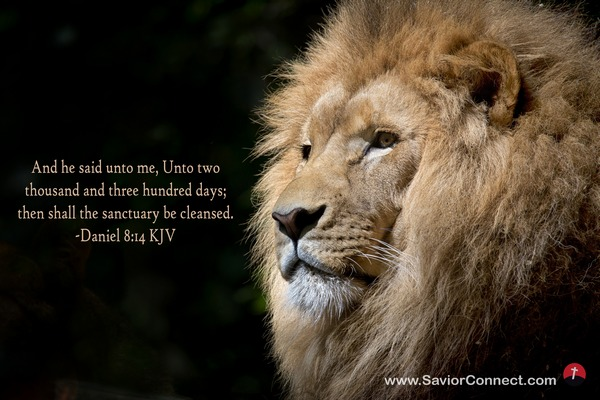
Miller read the Bible through a disciplined prophetic chronology. The crucial verse was Daniel 8:14:
“Unto two thousand and three hundred days; then shall the sanctuary be cleansed.”
Miller used the day-year principle, connected the beginning of the period to 457 B.C., and interpreted the cleansing of the sanctuary as the cleansing of the earth by Christ’s return. The Christian History Institute summarizes this calculation and notes that Miller first described the expected period as the Hebrew year from March 21, 1843, to March 21, 1844.
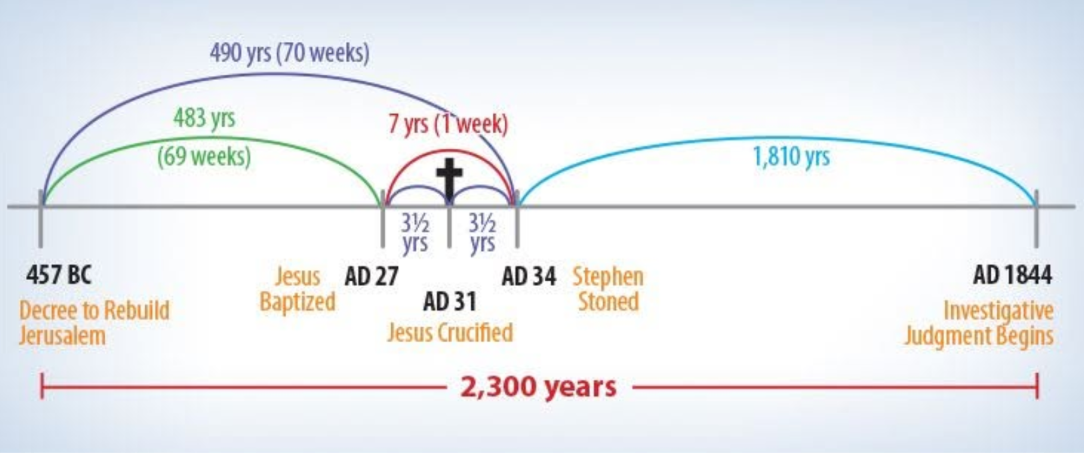
This is the first sacred instrument.
- Scripture becomes chronology.
- Chronology becomes expectation.
- Expectation becomes preparation.
- Chronology becomes expectation.
None of that is automatically pathological. A tradition that believes history is morally charged will naturally ask whether that history has structure. A scripture that speaks in prophecy will naturally produce interpreters. A community that believes the world can be judged will naturally look for signs that the judgment is near.
Modal Path Ethics does not need to scoff at that. The question is what the instrument does to correction.
At first, Miller’s expectation had a soft edge. “About 1843” is dangerous, but it is not yet the same thing as a date with shoes on. That leaves room for confusion, adjustment, humility, interpretive error, and the possibility that the reader has become too confident in the machinery.
A sacred instrument can survive error if it has room to lower itself before the field.
The field always has answers.
Sometimes the answer is famine. Sometimes the answer is an army. Sometimes the answer is a child asking why everyone in the room has stopped planning next winter.
Sometimes the answer is March 23.
The Chart.
The calculation then became visible. This is the next step in the distortion.
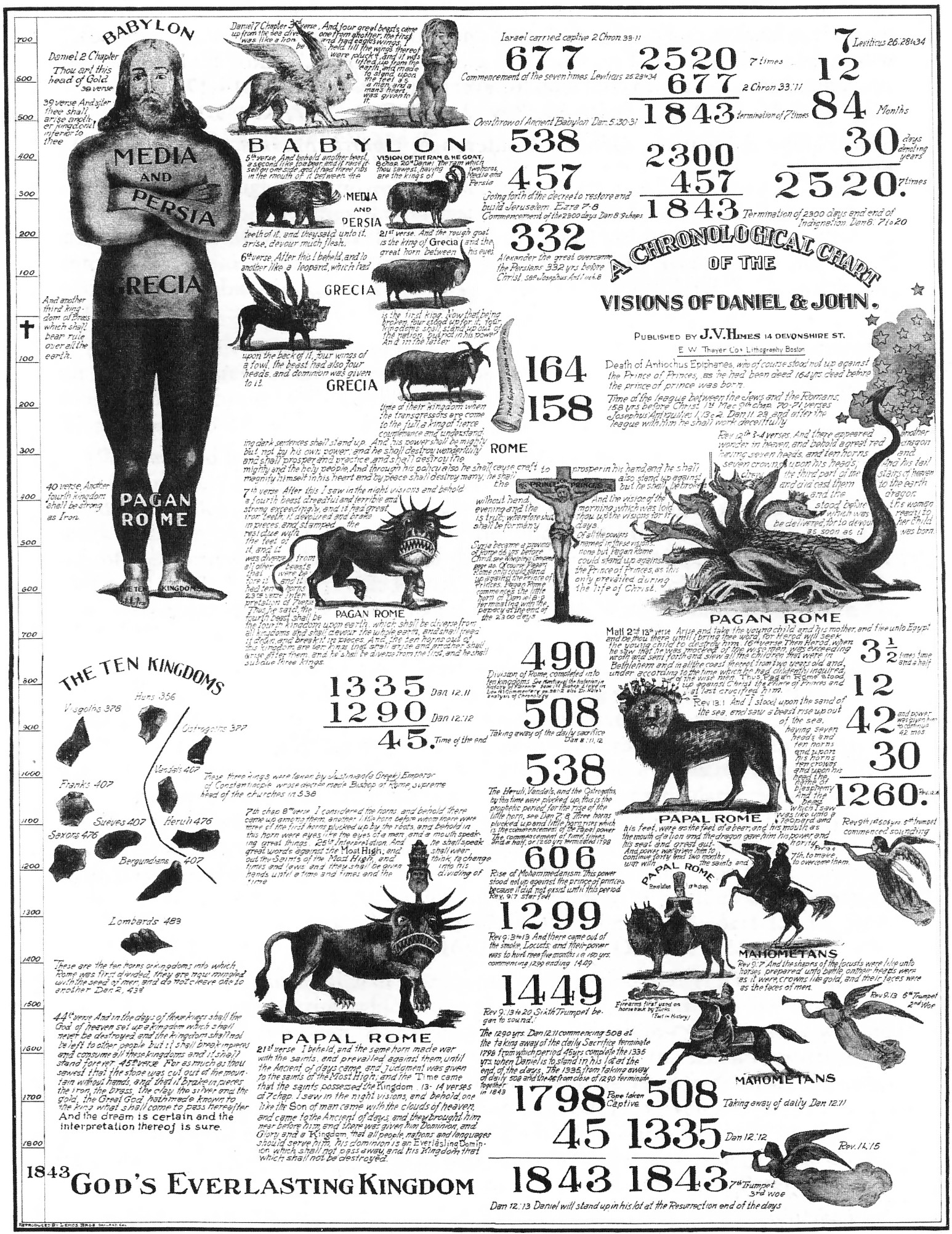
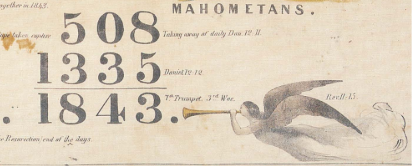
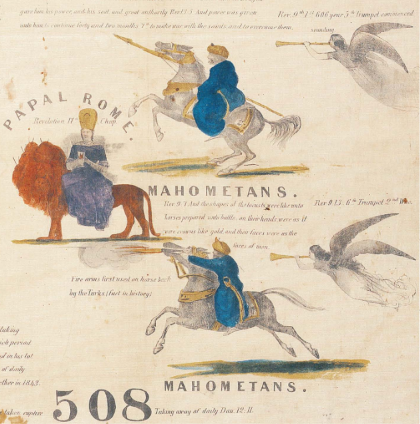
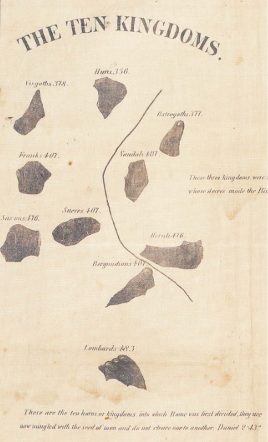
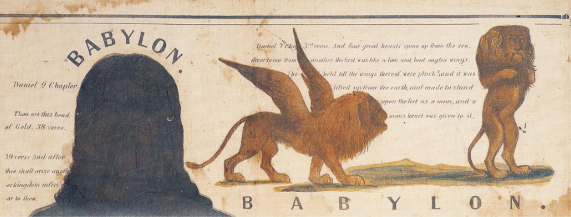
The Millerite movement became famous for prophetic charts.
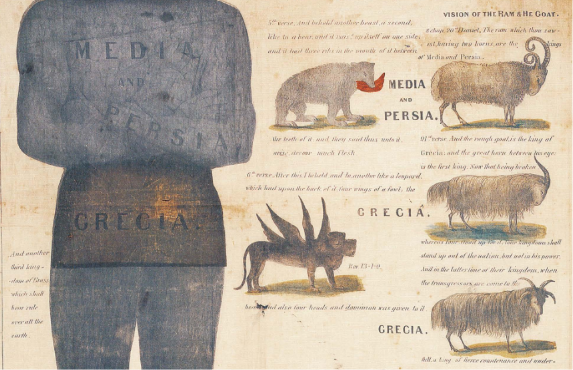
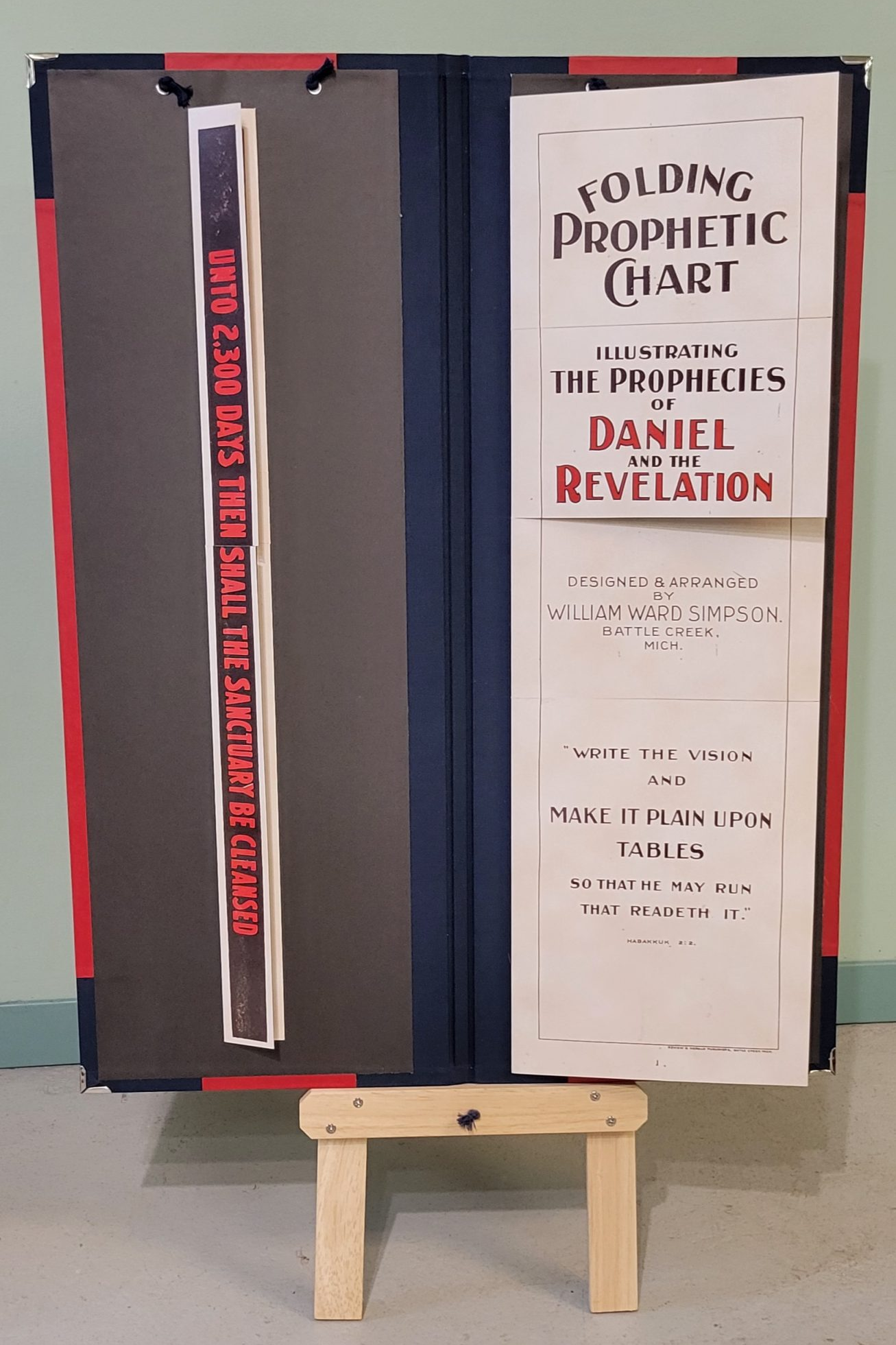
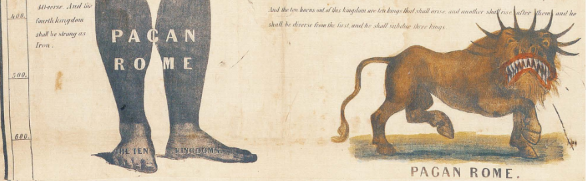
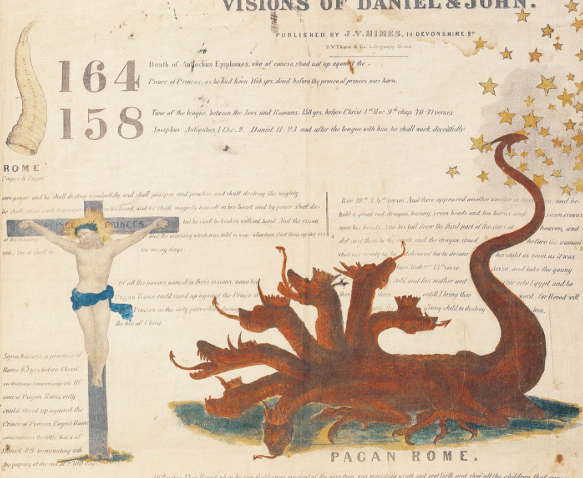
Himes helped equip Miller with a great chart displaying the millennial calculations in graphic form. The famous 1843 prophetic chart was a large lithographed object; Ministry Magazine reports that 300 copies were printed in Boston at 3 feet 4 inches by 4 feet 7 inches, with Joshua V. Himes listed as publisher.
The chart is the earlier distortion image. It shows what the field is learning to do.
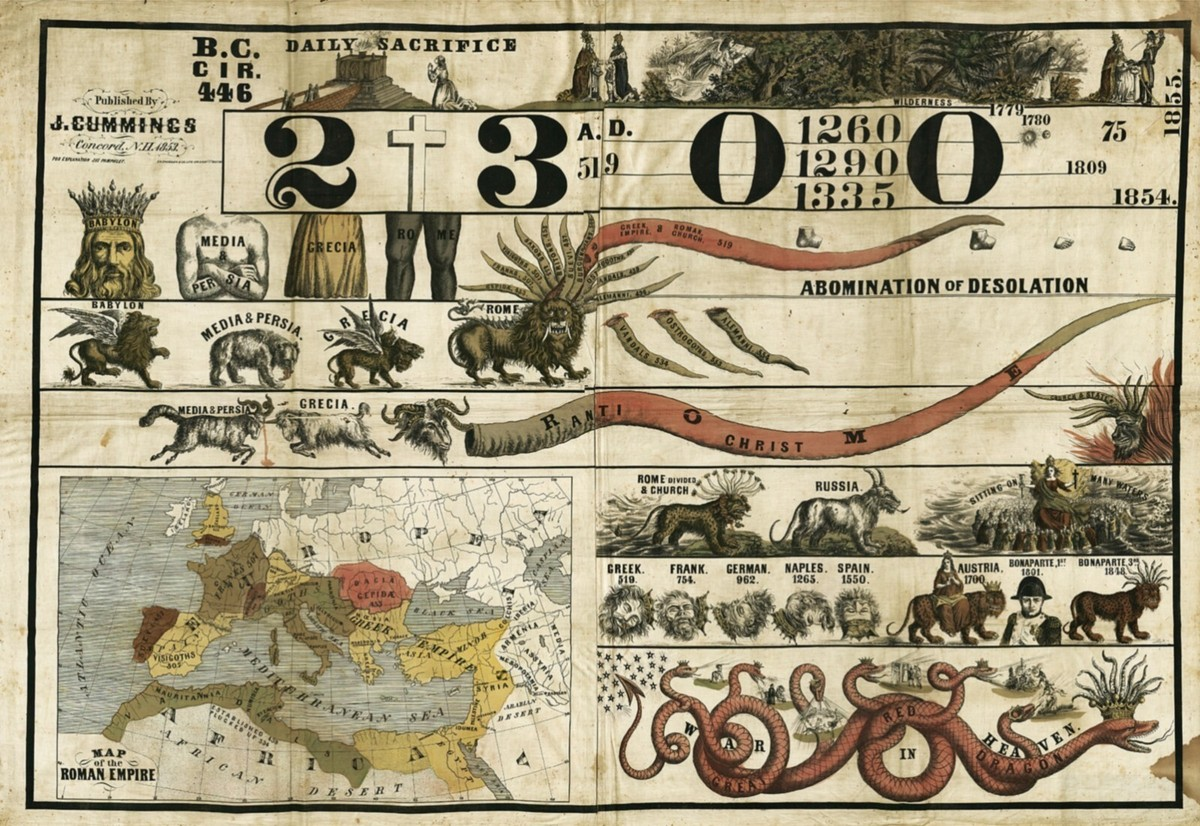
A prophetic chart is a strange thing. It turns scripture into a visual interface. It makes the hidden structure of sacred history pointable. A preacher can stand beside it and say: look here, here, here, and therefore there.
A chart can clarify. A chart can reduce complexity. A chart can protect memory. A chart can discipline an audience that might otherwise float away into warm religious vapor.
A chart can also make uncertainty look laminated.
The prophetic chart gives history edges. It makes time look like a wall can hold it. It gives the audience the feeling that the field has become diagrammable from outside itself.
This is how a sacred instrument starts to overperform.
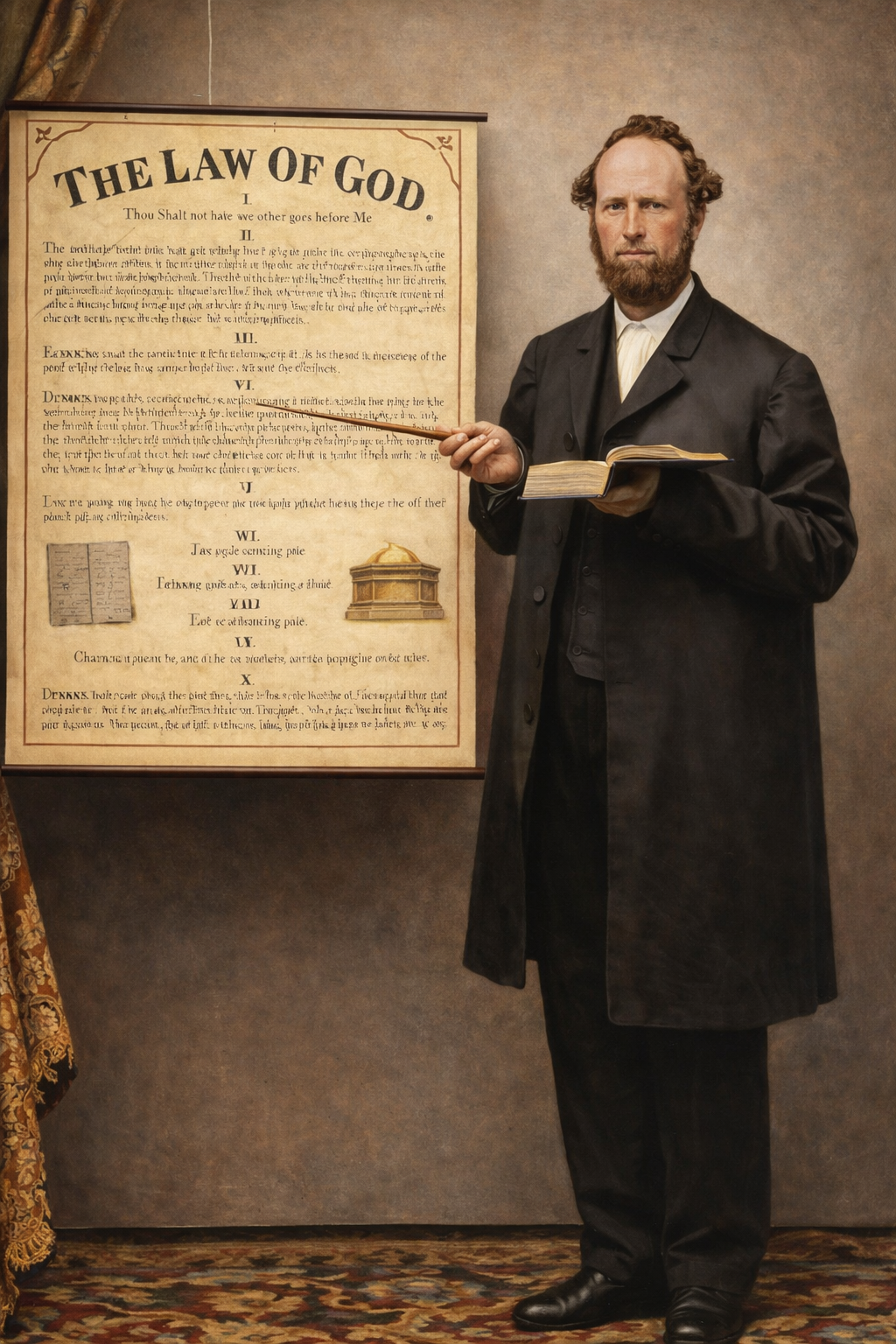
The point was not just that Miller had an interpretation. His interpretation could now stand at the front of the room. It had dimensions. It could be shipped. It could be copied. It could be leaned against a wall, rolled, unrolled, and pointed at with the confidence of a man who has found the future and is now asking whether the audience can see the lower-left corner.
This is one of those small images that explains the whole problem.
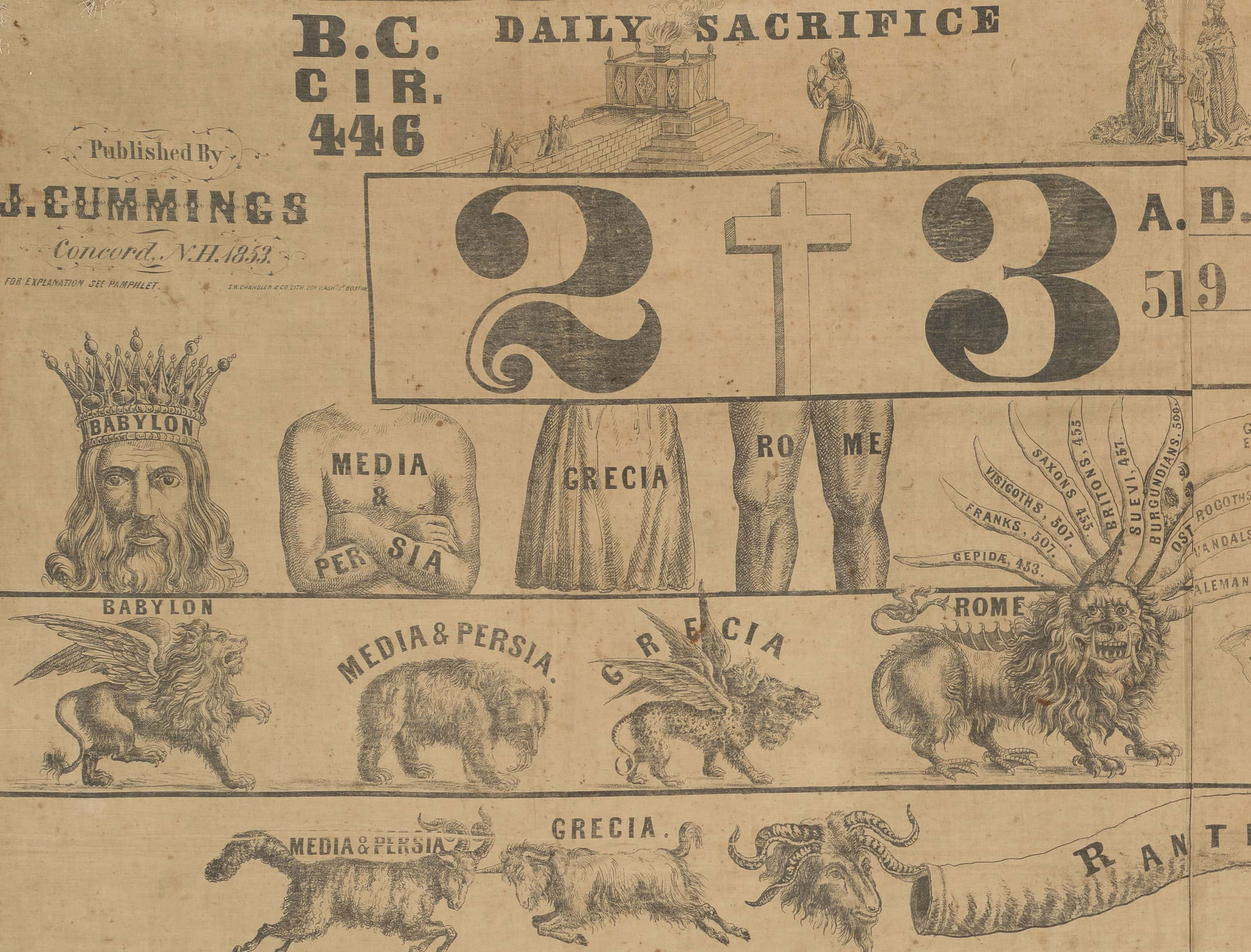
The chart made the end of the world look organized.
Himes Orders the Apocalypse Roof.
Then Joshua V. Himes arrives, and the whole instrument gets wheels.
Himes is one of the more fascinating figures in the field because he looks less like a false prophet and more like the person who accidentally invents a national rollout strategy for one.
He is not silly. He is not unserious. This is a capable organizer, editor, promoter, reformer, and movement-builder. He sees Miller’s message and recognizes a force. Then he does the thing competent organizers do.
He organizes.
The Christian History Institute says Himes equipped Miller with a chart, bought the biggest tent in the country, edited the Midnight Cry in New York and the Signs of the Times in Boston, recruited evangelists, organized camp meetings, and published tracts, books, and pamphlets.
Let's read that again as a field transition.
A prophetic calculation gets:
- a chart;
- two journals;
- speaking tours;
- evangelists;
- camp meetings;
- tracts;
- books;
- pamphlets;
- and the biggest tent in the country.
This is no longer just a man with an interpretation.
This is a distribution system.
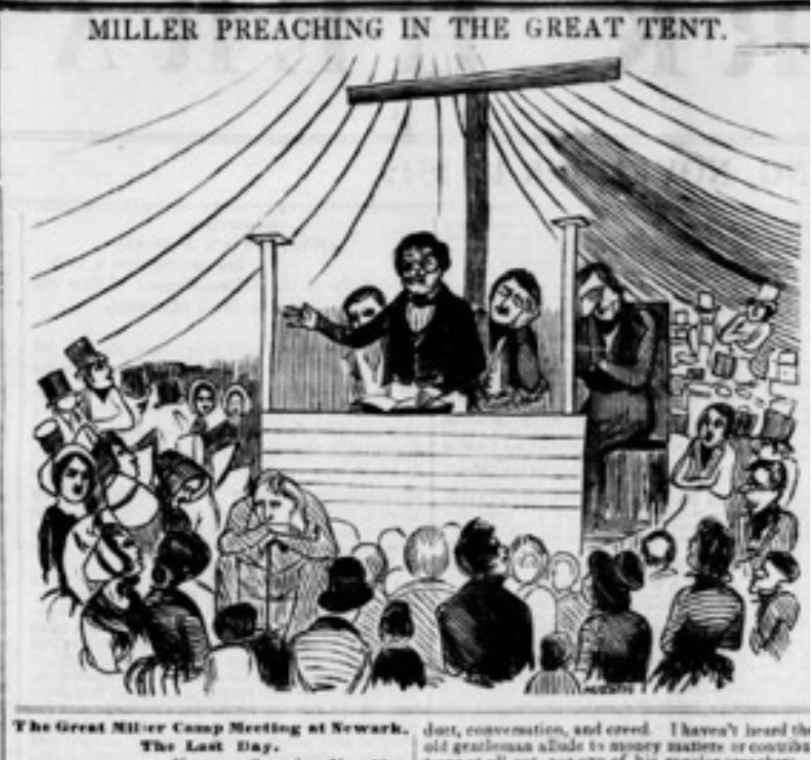
The Great Tent is the perfect object because it is so stupidly practical.
It is canvas, rope, pole, labor. It has to be funded, fabricated, moved, raised, struck, packed, transported, guarded, scheduled, advertised, and explained to whatever local person sees it coming over the hill and wonders why the circus has become concerned about Daniel.
Someone had to decide exactly how much tent the Second Advent required. Someone had to ask whether 120 feet in diameter seemed sufficient for the end of ordinary history.
Someone had to look at a 55-foot center pole and think:
Yes, that should keep the imminent dissolution of the present age dry enough for public instruction.
This is funny because it is physical. It is also the whole distortion.
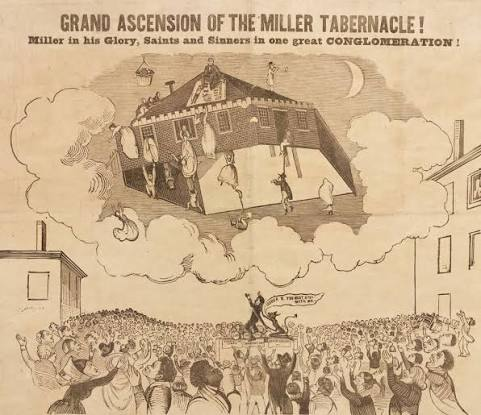
Himes did more than amplify Miller. He helped give the expectation a physical locus. The Great Tent became a place where the end of the world could be collectively rehearsed. People could gather under the same roof, hear the same message, see the same chart, sing the same hymns, watch one another become convinced, and feel that history itself had acquired seating.
A tent can hold people. A tent can hold attention. A tent can hold heat, rain, dust, voice, fatigue, hope, fear, and the little social confirmation that happens when everyone else also appears to have abandoned having a normal Tuesday.
But a tent cannot hold correction if the field inside it has decided correction means unbelief.
The First Disappointment.
Then March 21, 1844, passed.
This transition was the field answering.
Miller had treated the period from March 21, 1843, to March 21, 1844, as the window in which Christ’s return was expected. But the date passed without the expected event. Christian History describes Miller acknowledging that he was disappointed, while still looking toward the near end.
This is the moment when the instrument could have become smaller.
A sacred instrument can become better after error. It can learn humility. It can reduce its claim. It can preserve the contact while releasing the false grip. It can say: the longing was real; the arithmetic was wrong. It can say: the warning still matters; the date has failed. It can say: we must now return to the living field and repair what our expectation has burdened.
The first disappointment was not just a failure. This was a correction opportunity.
The field just said:
The calendar has not ended.
But the instrument answered:
Looks like the calendar may need a different calendar.
This is the turning point.
This is the moment when sacred interpretation begins trying to survive the evidence by becoming even more precise.
Except precision is not always truth.
Sometimes precision is panic wearing spectacles.
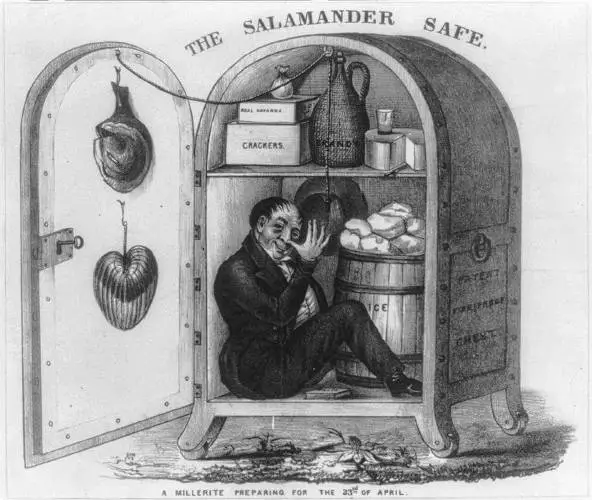
The field had already received one non-arrival. That should have lowered the instrument. Instead, the movement entered this charged interval where urgency increased, correction became spiritually expensive, and interpretive refinement offered a way to preserve the whole apparatus.
A wrong date is easy to abandon when it has only cost you a thought.
It is much harder when it has cost reputation, family argument, publishing expense, public preaching, meetings, donations, travel, tears, and the largest tent in the United States of America.
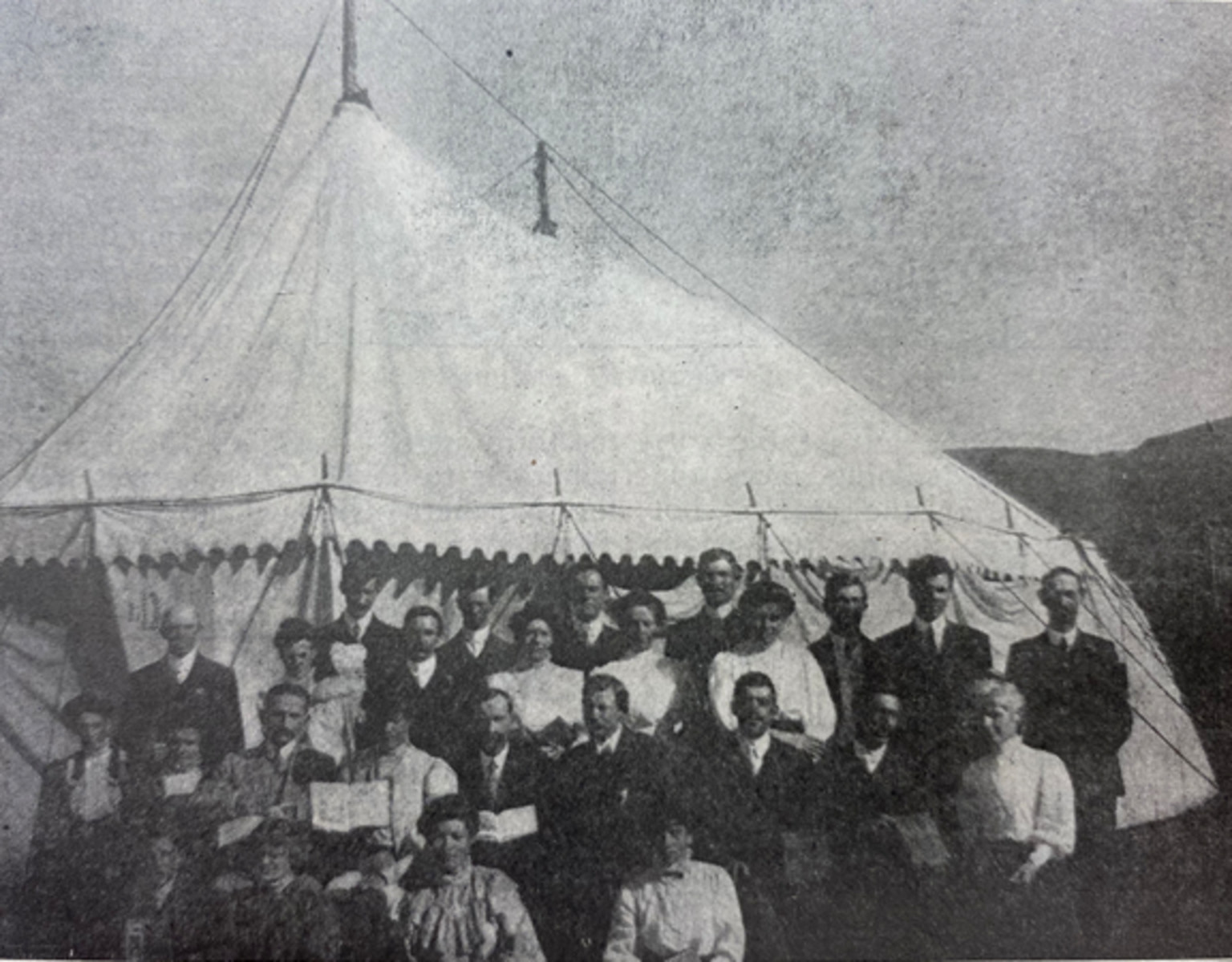
The tent asks the field a question the theology has trouble asking out loud:
Are we really going to pack all this back into a wagon just because March was wrong?
Samuel Snow Puts Shoes on the Date.
Samuel Sheffield Snow enters the story as the final date-lock.
This man did not create the whole Millerite field. He did something narrower and more dangerous. He gave the already-charged field a sharper hinge. Snow’s argument belongs to the “seventh-month” movement.
He connected the expected fulfillment to the Day of Atonement in the seventh month of the Jewish calendar and identified the crucial date as October 22, 1844. The True Midnight Cry source is almost offensively perfect as an object. The Encyclopedia of Seventh-day Adventists describes it as a single four-page issue, dated August 22, 1844, sold at fifty cents per hundred copies, with Snow’s article arguing that Jesus would return literally on or before October 22.
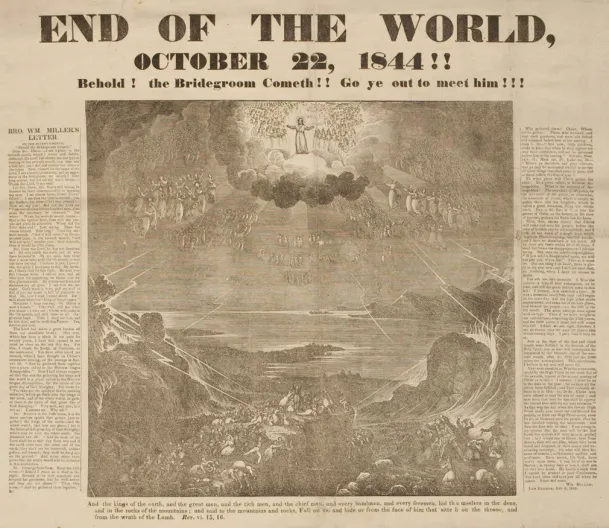
Four pages.
Fifty cents per hundred.
A sacred movement already running hot receives a small printed sheet that says, in effect:
The final door is still real and has a date on it.
This is the second great distortion object after the tent.
- The tent is huge.
- The sheet is tiny.
- The tent turns expectation into a public field.
- The sheet turns expectation into a lock.
That is beautiful in the worst possible way.
The distortion does not require massive architecture at every stage. Sometimes it needs a huge tent. Sometimes it just needs four pages and a price point highly suitable for bulk distribution.
Now expectation is not floating near the end of history. It has to meet October 22.
The instrument has acquired a point of impact. The trajectory is locked.
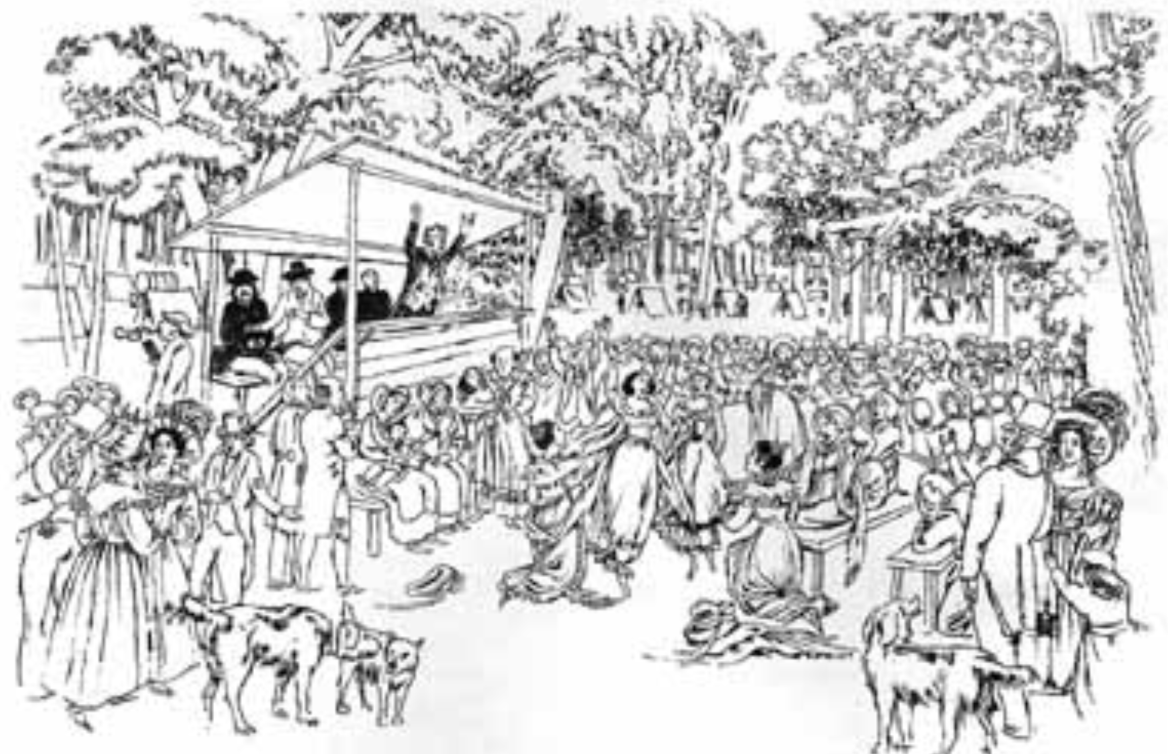
This is where correction becomes difficult in a new way. If the claim is “soon,” the field can continue while the claim recedes, softens, shifts, and survives as warning. If the claim is October 22, then October 23 is a hammer already swinging.
The movement had created a sacred instrument that could be struck dead by a single sunrise.
This is incredibly bad engineering.
The Comet Was Not Helping.
Charged fields metabolize everything.
That is one of the most important lessons here.
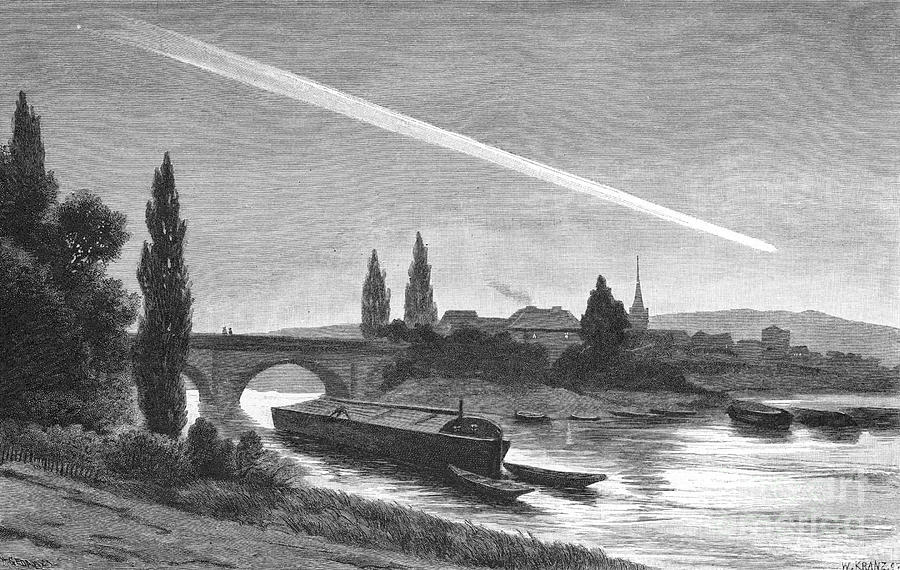
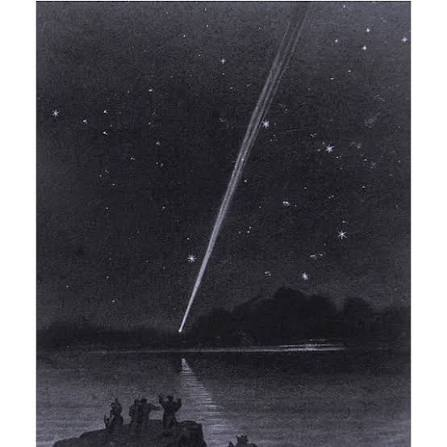
A religious field under ordinary conditions can receive a comet as a comet. A bright visitor appears in the sky. It is beautiful, alarming, mathematically interesting, poetically useful, and completely capable of being overinterpreted by every creature with language and night vision.
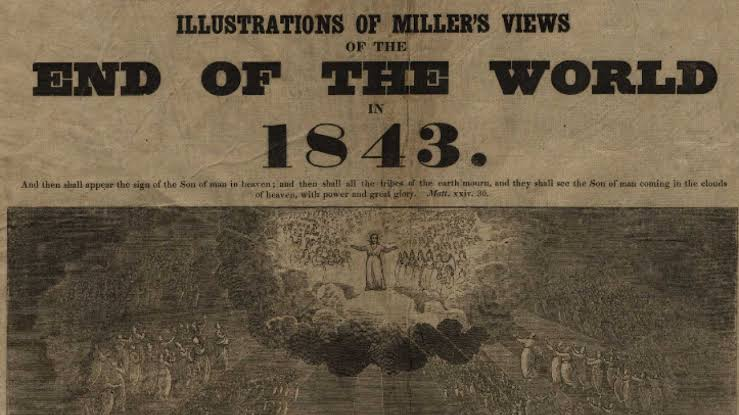
A field expecting the end of history receives a comet as stage direction.
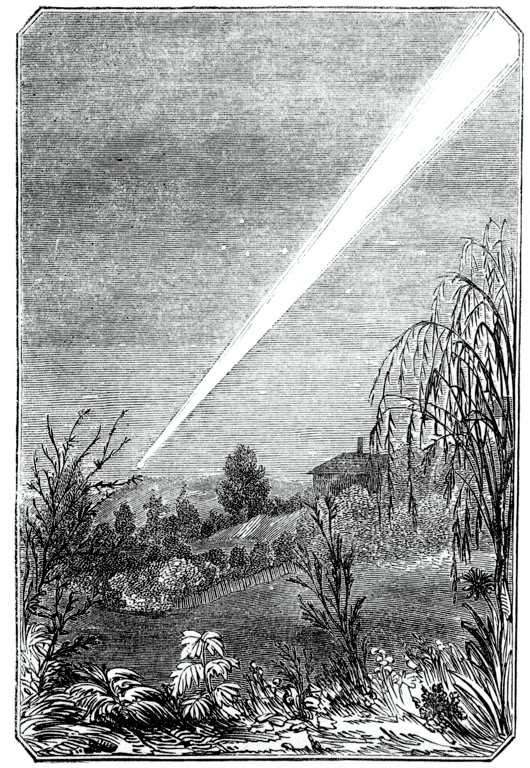
Christian History notes that tension rose as the expected period approached, especially when a comet suddenly appeared in the heavens.
Of course it did. The sky just supplied a prop called the Great Comet.
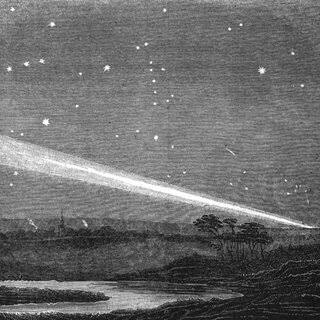
This is the kind of detail no novelist should be allowed to invent because an editor would send it back with a note saying: please make the symbolism less stupidly on the nose. But history is not edited by sensible people.
So the comet arrived.
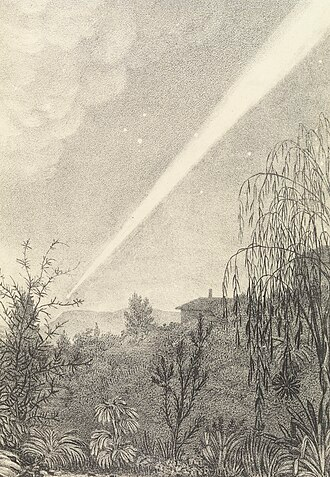
The comet shows the difference between sign and field. The comet did not need to be a false object. That rock was real. People saw it. It did appear up there in the heavens. The mistake arrives when a real object is drafted into a field already hungry for confirmation.
The comet becomes a witness because the movement needs the sky to confirm its calendar.
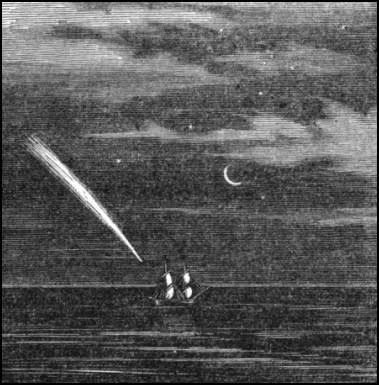
This is a general distortion pattern. A charged field does not treat ambiguous evidence as ambiguous. It sorts the world into usable reinforcement.
Silence becomes testing. Delay becomes refinement.
Opposition becomes persecution.
Ridicule becomes proof that the faithful are separate.
Public interest becomes confirmation. Public alarm becomes confirmation.
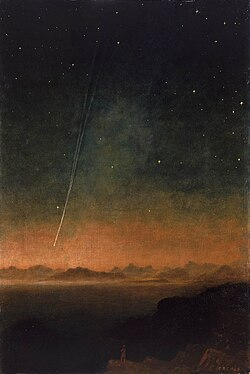
A comet becomes a divine witness because the alternative is that the sky has produced a beautiful unrelated thing at exactly the wrong time, which is too rude to consider.
If Time Continues.
One of the funniest and saddest administrative phrases in this whole field is
“if time continues.”
Christian History records future gatherings announced with that proviso.
That phrase is a complete philosophy of scheduling under apocalyptic pressure.
A normal meeting notice says:
Tuesday, 7 p.m.
But this is pathetic, because a Millerite meeting notice can say, in essence:
Tuesday, 7 p.m., conditional upon Tuesday remaining a valid category.
This is not just a joke. It shows ordinary administration bending under sacred time. The field still needs logistics. Of course it does. It contains the largest tent in the nation.
People still need to know where to gather. Someone still has to print notices, arrange locations, move materials, and prepare the next event. The movement is still acting in the world, using the world’s ordinary instruments: clocks, calendars, paper, ink, roads, halls, tents, money, and human bodies.
At the same time, the movement believes these instruments may be abolished at any moment by the event they are helping announce.
That produces the perfect little fracture:
if time continues.
This phrase is the meeting-notice equivalent of the Great Tent.
The sacred expectation has not replaced ordinary time. It has mounted itself atop ordinary time while claiming ordinary time is almost finished. It has been driven in with stakes.
That is the Sacred Instruments problem in miniature.

A sacred instrument can intensify contact with time’s moral weight. It can remind a person that the day is finite, that life is accountable, that repentance cannot be endlessly delayed, that history may contain judgment, that death will not politely ask whether the paperwork is done.
All of that can be spiritually serious.
The distortion begins when ordinary continuance is treated as a temporary embarrassment.
- The crops still grow.
- The sick still need care.
- Children still need breakfast.
- Debt still changes what becomes reachable.
- Neighbors still exist.
History may be under judgment, but the field is still here.
A sacred instrument that makes ongoing life feel like lack of faith has begun to damage the exact field it claims is about to be redeemed.
October 22.
Then October 22 arrived. A date should never have to do this much work.
A date should carry a birthday, a deadline, a county fair, a small legal humiliation, perhaps an anniversary everyone pretends they remembered without help from the calendar.
It should not have to carry the whole of the visible return of Christ, the cleansing of the earth, the vindication of a movement, the sacrifice of believers, the credibility of public preaching, the meaning of charts, the social cost of ridicule, the labor of the Great Tent, the authority of Snow’s sheet, and the tension of every person who had looked at the ordinary world and decided it was almost over.
That is too much work for one date.
October 22 didn’t complain. It carried it anyway.
Then it ended.
- The sky did not open.
- The dead did not rise.
- The earth was not cleansed by fire.
- The ordinary field continued with almost obscene physical confidence.
- Chickens remained pre-eschatological.
- Wood still needed splitting.
- Shoes still had mud on them.
- The Great Tent did not levitate into fulfilled prophecy.
- It remained an extremely large tent, which is still impressive, though less useful than one might have hoped given the schedule.
This is the brutal honesty of extance. The field answered the claim without argument. It did not publish a rebuttal. It did not issue a theological clarification. It did not debate the day-year principle.
It just continued.

A failed sacred instrument often wants the field to come into the interpretive room and explain itself to us. Reality usually refuses that format. Reality answers by remaining real.
October 23 was simply a morning.
That made it devastating.
Almost Home.
The Great Disappointment is pretty funny at the level of instruments. It is not, however, funny at the level of people whose lives had been reorganized by expectation.
- The believers were wrong.
- They were also exposed.
Some had preached. Some had argued. Some had changed their work, money, reputations, households, and relationships. Many had endured public ridicule. Some had placed their whole spiritual courage inside a public expectation and then had to wake up inside the same world with their neighbors still there, which is one of history’s crueler forms of continuity.
Miller himself was wounded by the failure. Christian History includes the phrase “almost home” from Miller’s late expectation. That phrase deserves care.
“Almost home” is very tender.
It is also dangerous when the house is still standing, the cattle still need tending, and the future has not agreed to be over.
This is a sacred-instrument failure because the instrument made ordinary continuance feel spiritually downgraded. The better world was so close that continuing in the present world became a kind of waiting room. That changes behavior. It changes planning. It changes care. It changes patience. It changes what a person owes to a body, family, field, debt, tool, and neighbor.
- A person who believes the world may end tomorrow might repent.
- Good.
- A person who believes the world may end tomorrow might forgive.
- Good.
- A person who believes the world may end tomorrow might stop postponing repair.
- Good.
- A person who believes the world will end on this date can also begin to treat ordinary obligations as already obsolete.
- That is where the instrument starts closing futures before the predicted end arrives.
- The field gets narrowed in advance of the event.
- Then the event fails.
- Now the narrowed field remains.
- Then the event fails.
The Movement After the Morning.
A failed date does not produce one outcome. It splinters.
Some people abandon the instrument. Some abandon the movement. Some abandon faith. Some keep faith and revise the instrument. Some seek another date. Some reinterpret the event. Some treat the failure as a test. Some treat the test as evidence of holiness. Some get angry. Some get quiet. Some need to go harvest something and would rather everyone stop talking for a while.
This is why the Great Disappointment belongs in Tales of Distortion rather than in a drawer labeled “incorrect prediction.”
- An incorrect prediction is a proposition that fails.
- A distortion field is a world of costs, attachments, repairs, refusals, and successor paths produced around a failing instrument.
By October 23, the field had at least three major problems:
- the expected event had not occurred;
- the believers had to survive the social and spiritual wreckage;
- the instrument still wanted to govern the repair.
That third problem is the biggest one.
A wounded sacred instrument often tries to become the doctor.
It says:
“Yes, the wound was produced through my authority. Therefore my authority must now be used to interpret the wound.”
Sometimes that is necessary. A tradition can repair itself. A scripture can correct a reader. A ritual can hold grief after a ritual failure. A church can confess harm done in church language and still mean it.
Except sometimes the wounded instrument protects itself by naming its wound as proof. That is the dangerous path.
The Millerite aftermath produced multiple successor fields. Some did not survive. Some hardened. Some revised. Some reorganized around what later became Adventist traditions. This article does not need to adjudicate all of these. The point is simpler:
- The instrument did not vanish when the date failed.
- It just looked for a new place to stand.
The Cornfield.
And then, famously, there is a field.
This is almost too much. This is the Great Leap Forward all over again.
Modal Path Ethics spends 80% of its time saying “field” and then history, with the comedic timing of a malicious archivist, gives us a critical cornfield on October 23.
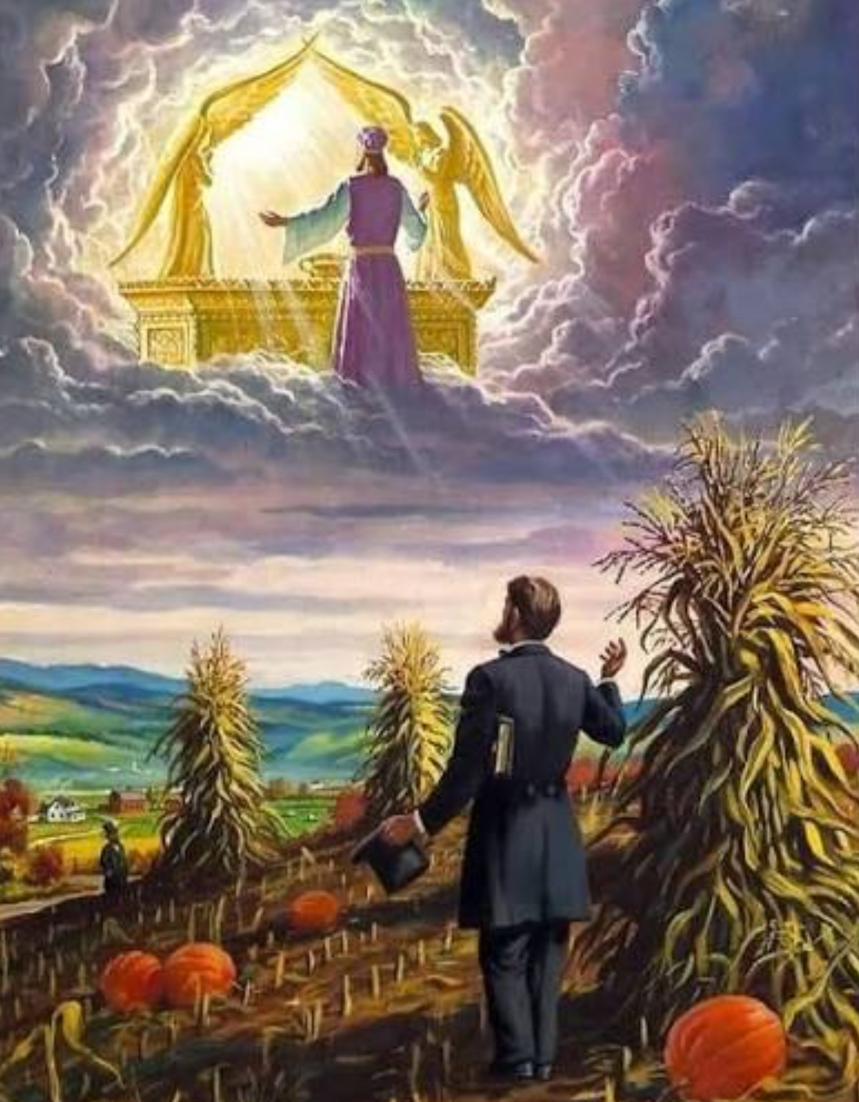
Hiram Edson is remembered for walking through a cornfield the morning after the Great Disappointment and receiving, or later being associated with, an insight that helped redirect interpretation from an earthly return to Christ’s heavenly sanctuary ministry.
The details of Edson’s experience and its later narration belong to Adventist history and debate; the Encyclopedia of Seventh-day Adventists describes the cornfield experience as providing insights into Christ’s high priestly ministry in the Most Holy Place of the heavenly sanctuary.
For this article, the cornfield is an image of repair and risk. The world continued on so hard that the next sacred interpretation begins in agriculture.
After the chart, the tent, the comet, the meeting notices, the four-page sheet, and the date, the living field is literally underfoot.
Corn is simply not impressed by failed prophecy.
Corn is one of reality’s bluntest spiritual directors.
Corn says:
Grow here or do not. In either case, sunlight continues until it doesn’t.
The cornfield gives the story its final distortion image because it can be read two ways.
- In the generous reading, the field after failure becomes a place where the wounded instrument lowers itself and searches for a less destructive interpretation. The believers do not have to throw away all contact just because one date failed. They can carry grief, revise, study, and keep moving.
- In the sharper reading, the instrument survives direct disconfirmation by moving the fulfillment into a less publicly falsifiable register. The date remains right. The expected event just changes location. Earthly failure becomes heavenly transition.
- The field can no longer answer this in the same way because the claim has moved beyond ordinary verification.
That is the danger. Both readings matter.
- A wounded sacred instrument can preserve continuance by refusing despair.
- A wounded sacred instrument can also preserve itself by making correction harder to reach.
The cornfield is therefore not a punchline. This is the hinge.

The world had continued. The believers were still in it. The instrument now had to decide whether it would return them to extance with more care, or keep dragging the field back under its giant tent.
Sacred Instruments.
A sacred instrument intensifies contact with what exceeds ordinary preference.
The Millerite instruments did that.
They made death less ignorable. They made history feel morally charged. They forced people to ask whether their lives could answer to judgment. They challenged complacency. They gave ordinary farmers, workers, reformers, preachers, readers, skeptics, and families a way to imagine history as more than indefinite maintenance of the present order.
Modal Path Ethics does not mock the longing for the world’s repair.
A damaged world should produce longing.
A world full of slavery, exploitation, sickness, loneliness, hypocrisy, empire, debt, death, and spiritual exhaustion should not be treated as an obvious permanent good that only lunatics would want interrupted.
The desire for judgment can contain a true perception: the field is wounded, and ordinary continuance is not innocence.
The Great Disappointment becomes a Tale of Distortion because the sacred instrument made a false transition too reachable.
- Miller built a clock out of scripture.
- Himes gave the clock a chart, journals, public infrastructure, and the largest tent in the country.
- Snow sold the clock’s final alarm bell at fifty cents per hundred copies.
- The comet leaned into frame like an irresponsible stagehand.
- The meeting notices tried to schedule events only if scheduling itself remained in business.
- Then the date passed.
- The meeting notices tried to schedule events only if scheduling itself remained in business.
- The comet leaned into frame like an irresponsible stagehand.
- Snow sold the clock’s final alarm bell at fifty cents per hundred copies.
- Himes gave the clock a chart, journals, public infrastructure, and the largest tent in the country.
The visible failure was that Christ did not return on October 22.
The deeper failure was that the instrument had become too socially, materially, and spiritually load-bearing before the field had finished answering.
A sacred instrument is allowed to warn. It is allowed to awaken. It is allowed to discipline attention. It is allowed to say: do not live as though time is infinite.
It is not allowed to make the living field apologize for continuing.
That is the sacred-instrument boundary.
The Great Disappointment crossed it.
The Ruling.
The Great Disappointment was a distortion of sacred time.
The primary error was not hope, repentance, or the belief that history can bear judgment.
The primary error was instrument sovereignty.
A sacred interpretive instrument became a public apparatus and then a dated answer-channel. Once that happened, too many parts of the field had been attached to the instrument’s success: reputation, identity, sacrifice, movement infrastructure, print networks, camp meetings, household decisions, spiritual courage, and the ordinary human need not to have been exposed in public for nothing.
The chart made sacred history look pointable. The tent made expectation inhabitable. The comet made even the sky look complicit. The four-page sheet made the date portable. The meeting notice asked whether time would even continue.
Then time continued.
Afterward, the cornfield remained: indifferent, generous, humiliating, alive.
That is what extance does, generally speaking. It does not always explain itself. It continues, resists, answers, wounds, feeds, contradicts, and waits to see whether the instrument will learn.
- A good sacred instrument returns the person to the field with more care.
- A bad sacred instrument tries to make the field return to the instrument with an apology.
The Great Disappointment happened because the calendar was asked to carry too much holiness, the tent was asked to hold too much certainty, and so the field had to perform the correction out in public.
Jesus did not miss an appointment.
The calendar had been promoted above its jurisdiction.
A sacred instrument may teach a person to wait.
It may not make the living field answer for continuing.