Tales of Distortion: The Great Leap Forward
Somewhere in the conceptual distance between “China needs industrial capacity” and “okay everyone now go outside and harass a bird until it dies,” the field has taken what appears to be a pretty serious wrong turn. [L]
September 2026 note: The Great Leap Forward remains one of the clearest full-field distortion audits in the corpus. Its recurring mechanism is now easier to state: instruments that had real value in one field—mass mobilization, central coordination, reporting, targets, political discipline—were promoted beyond their reliable jurisdiction into metallurgy, household survival, agriculture, ecology, and truth-production, then protected from correction when the field answered back. September work also sharpens the paper-harvest and Lushan sections. A report is a representation, not the crop; formal channels for criticism are not corrigibility if an adverse judgment cannot survive long enough to alter policy; and correction itself is a reachable continuation whose enabling structure can be destroyed. The article's phrase “No Better” should therefore be read at the relevant scale: local least-closing acts and witnesses still existed, but once the governing field punished correction there was no durable repair path materially reachable at the national scale through that structure. This is not a theorem against collectivism or public coordination as categories. The current framework asks which concrete bearers were harmed, which functions failed, where burden transferred, and which authority became sovereign. Contemporary post-Mao and Xi-era extensions are time-indexed political claims.
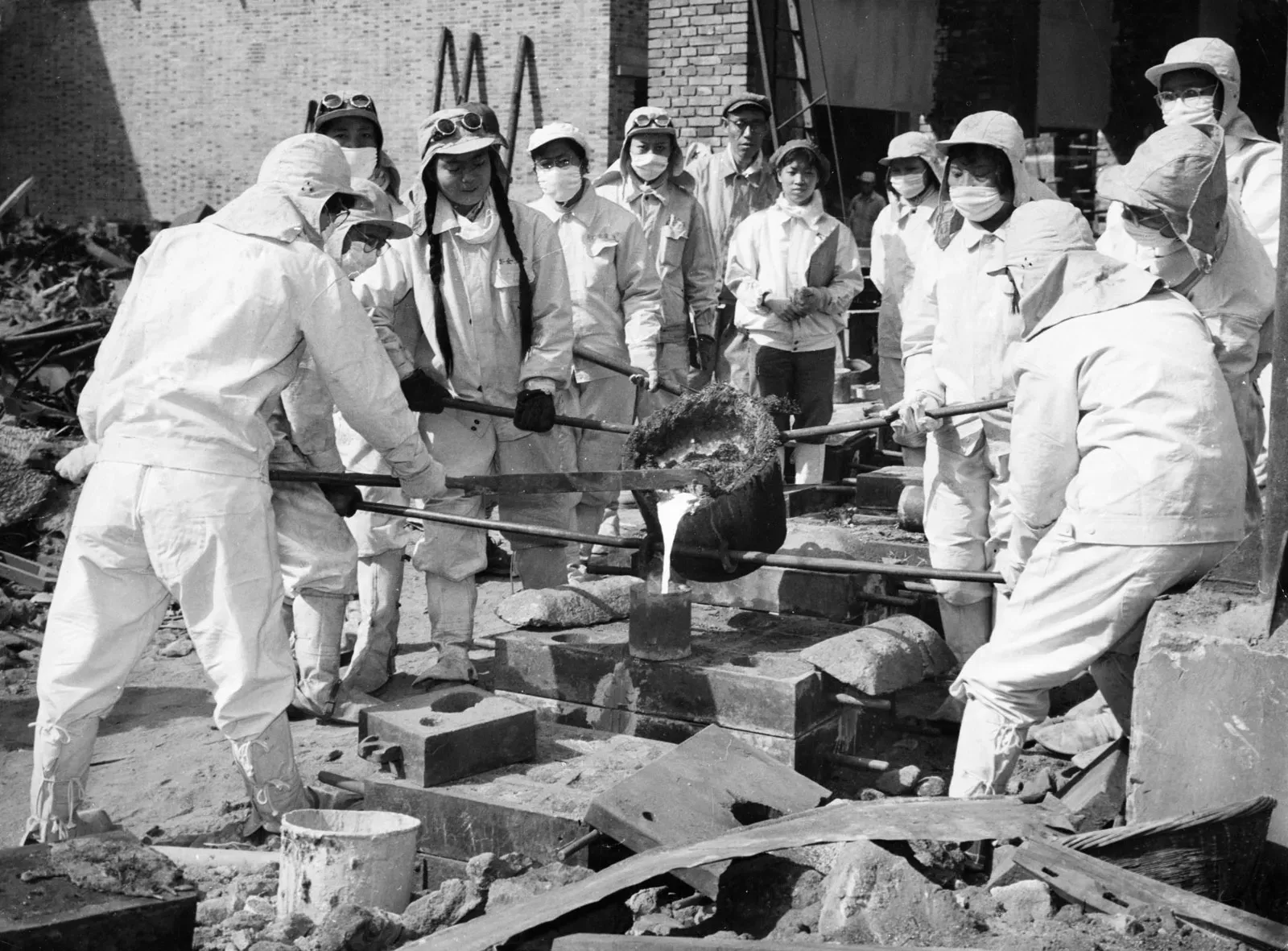
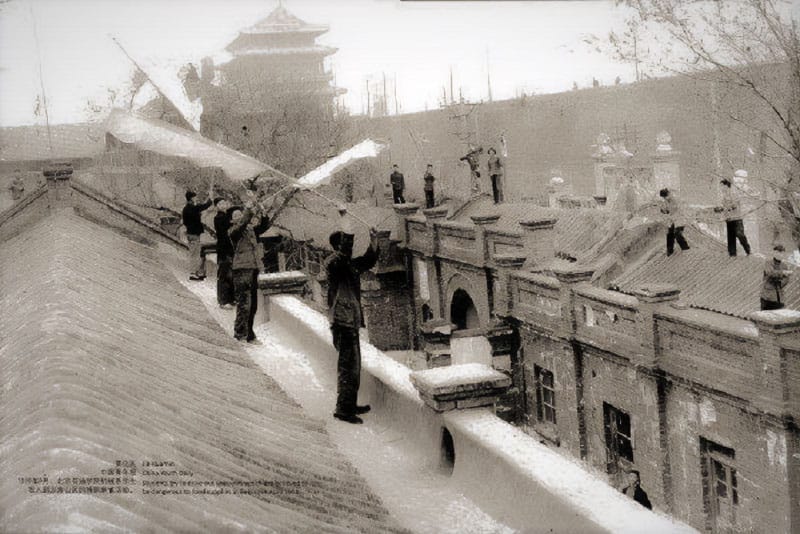
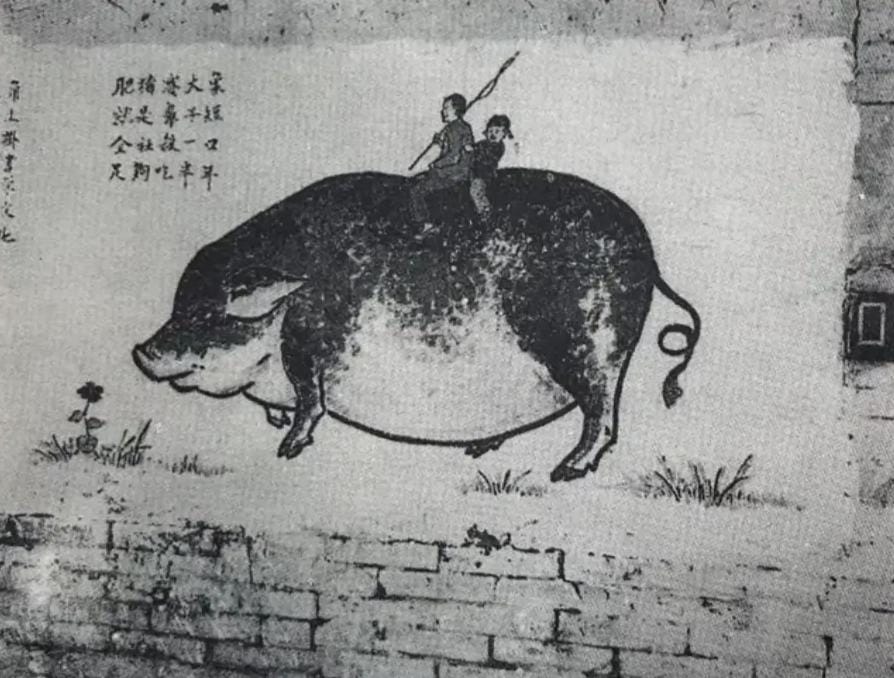
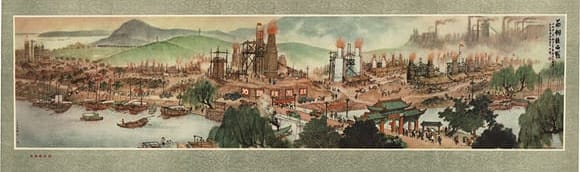
China once tried to industrialize by asking peasants to transmute their own farm tools in backyard furnaces into steel.
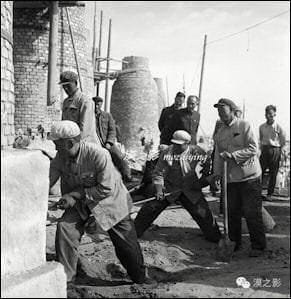
That sounds like anti-communist propaganda, or like a joke somebody would make if they were trying too hard, but no, unfortunately that really happened. In 1958, during the Great Leap Forward, rural China suddenly filled with small amateur furnaces. Villages built them. Communes built them. Farmers who were still expected to grow food now also had to become metallurgists, because Chairman Mao Zedong had decided that China needed steel, and one way he knew how to get steel was apparently to just tell everyone in China to make steel.
This all went about how you would expect.
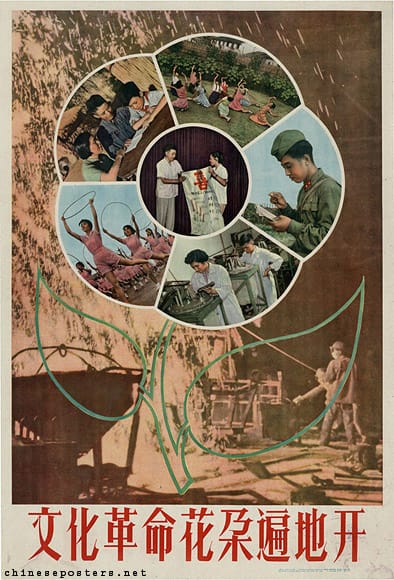
It all went into the fire. Pots went in. Pans went in. Door fittings went in. Farm implements went in. All sorts of useful objects were fed into village furnaces, and some amount of fucking-useless or low-quality metal came out the other end, which was then counted as progress because the state had asked for progress and something hot had definitely happened here.
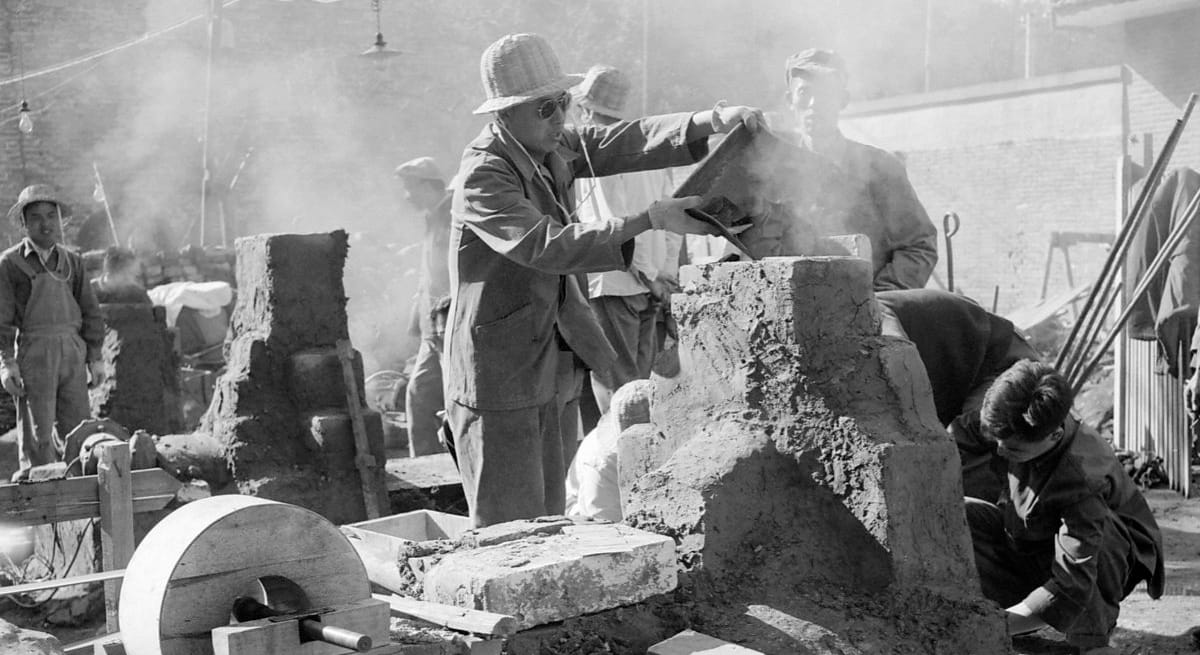
This is one of the greatest images of the twentieth century.
Not great morally. Obviously. Great diagnostically.
A hoe is not just metal. A wok is not just metal. A pot is not just metal. These things are local survival instruments. These all sit inside ordinary fields of use: cooking, planting, repairing, feeding, stretching scarcity across another day. When a state begins melting those things for symbolic steel, the state is not only making wildly bad industrial policy decisions. It is converting the working objects of daily life into material evidence for a fantasy about national destiny.
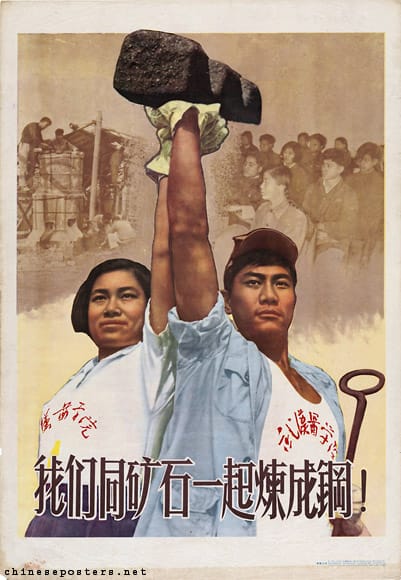
The furnaces were not even the disaster. They were the smoke coming out of a much larger distortion. The same field that could misread a pot as steel input would soon misread the household kitchen as backwardness, the sparrow as a class enemy, dense planting as scientific agriculture, false harvest reports as abundance, hunger as sabotage, and correction as betrayal.
The Great Leap Forward was not one bad policy. This was a full-field distortion cascade.
China took one real problem, passed it through one very distorted leader, amplified it through a terrified political system, and then distributed the resulting madness evenly across agriculture, industry, ecology, labor, food, reporting, and truth itself.
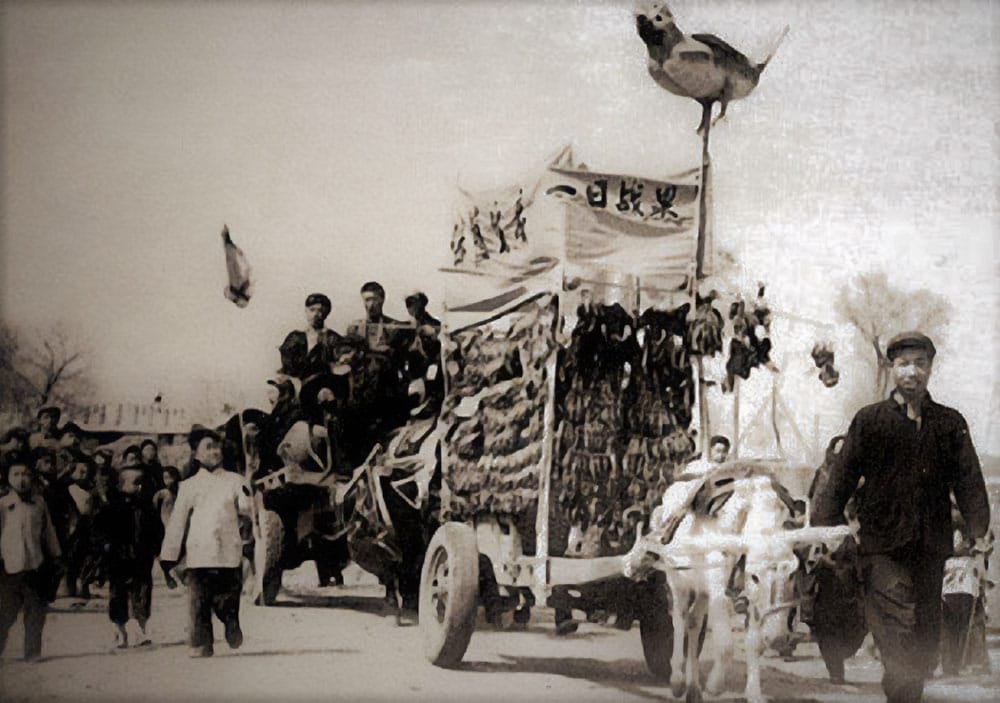
So the question is not only why the hell China built all those furnaces. The question is how the hell this field got sick enough that these furnaces made any sense.
China Had a Problem.
The year was, and I wish it wasn't, 1958. The People’s Republic of China was not even ten years old.
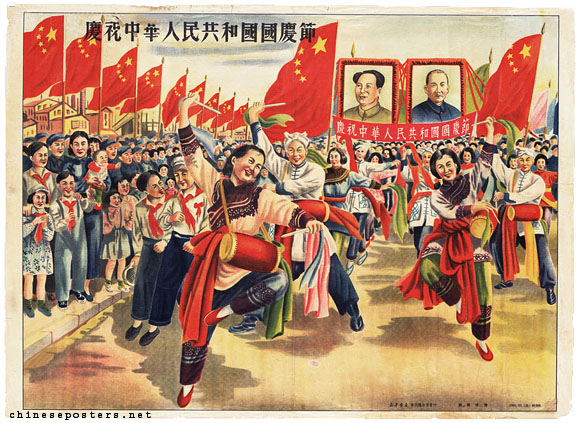
The Chinese Communist Party had won the civil war in 1949, driven the Nationalist government to Taiwan where it would become everyone else's problem to solve forever, and inherited a country that had already been through more historical trauma than any state should be realistically expected to metabolize cleanly.
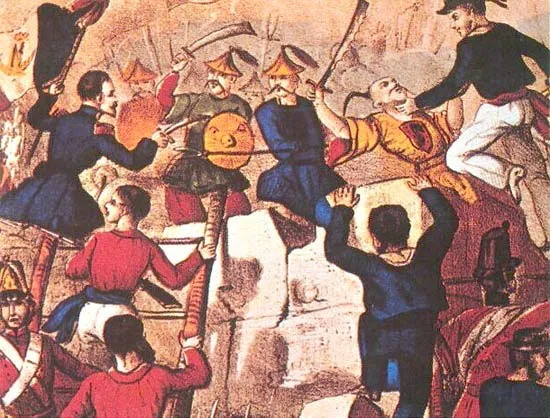
China had just been carved, invaded, humiliated, occupied, starved, fragmented, and fought over. The Opium Wars were not ancient legend. The unequal treaties were not abstract. Foreign concessions, warlordism, Japanese invasion, civil war, rural poverty, land hunger, and periodic famine were not ideological decorations. That all just happened or was happening now. China had just come through a pretty shitty field, where it learned some rough lessons:
Weakness had consequences.
Industrial weakness had consequences.
Agricultural fragility had consequences.
The inability to defend the country had consequences.
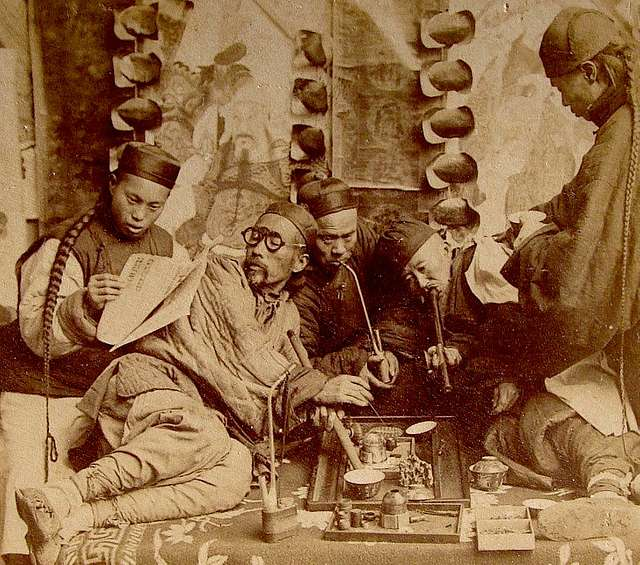
China did need development. China did need food security. China did need industrial capacity. China did need infrastructure. China did need some way to prevent the next foreign power, empire, coalition, or regional enemy from deciding that Chinese weakness was an invitation.
The wound in China was not fake.
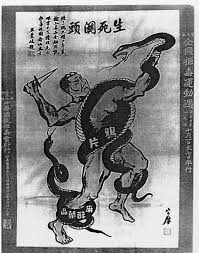
The worst repair paths do not always begin with fake wounds. More often, they begin with very real ones. Then, when it sees it, the field panics. Then, the field simplifies everything for comfort. Then, the field finds a story that feels large enough to answer the wound. Then, the story starts devouring the very things that would have made real repair possible.
China’s problem was real. But the repair fantasy was lethal.
In a better field, the diagnosis might have gone like this:
- China is poor.
- China is vulnerable.
- China needs agricultural stability, industrial development, technical capacity, infrastructure, and resilient institutions.
- These things will require discipline, time, expertise, feedback, experimentation, correction, and close contact with local conditions.
That is pretty boring. It is also how reality works.
The Great Leap Forward offered something so much more exciting:
China would not develop step by step.
China had a better idea.
China would leap.
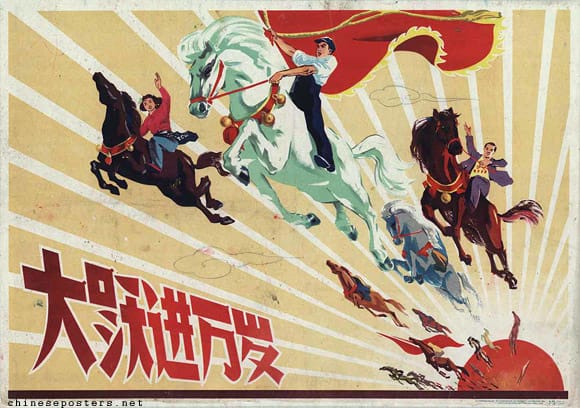
China would surpass Britain. It would catch America. It would outpace the Soviet Union on the road to communism. It would turn hundreds of millions of peasants into the engine of historical acceleration. It would overcome shortage through mobilization. It would overcome technical limits through political will. It would compress decades into years by refusing to treat the present field as a constraint.
This is where the name itself became a problem.
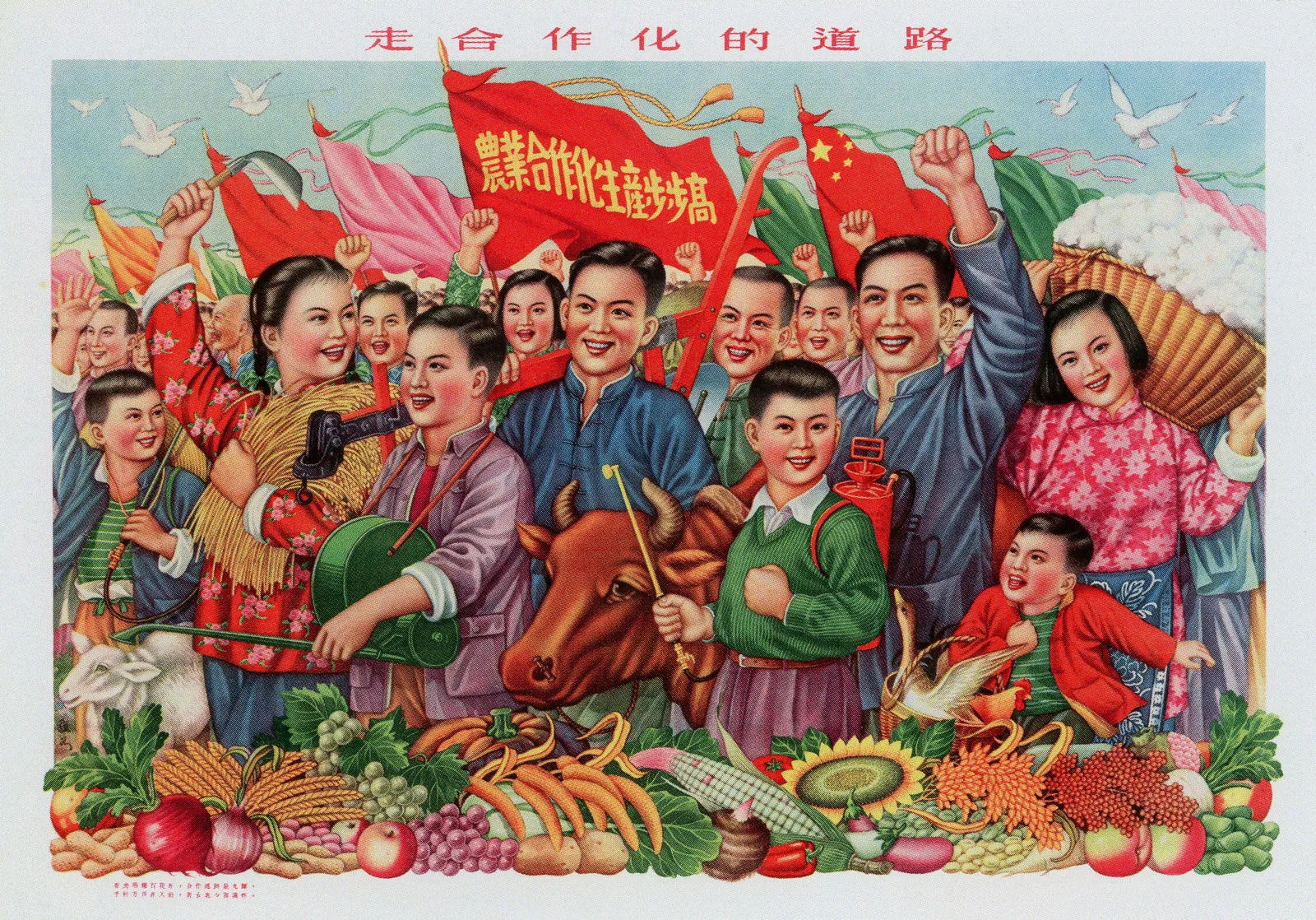
A leap sounds heroic. It sounds clean. A person leaps over a ditch. An athlete leaps over a bar. A country leaps over backwardness.
Poverty behind us. Weakness behind us. Humiliation behind us.
Steel ahead. Abundance ahead. Communism ahead. History ahead.
Except, a field is not a ditch.
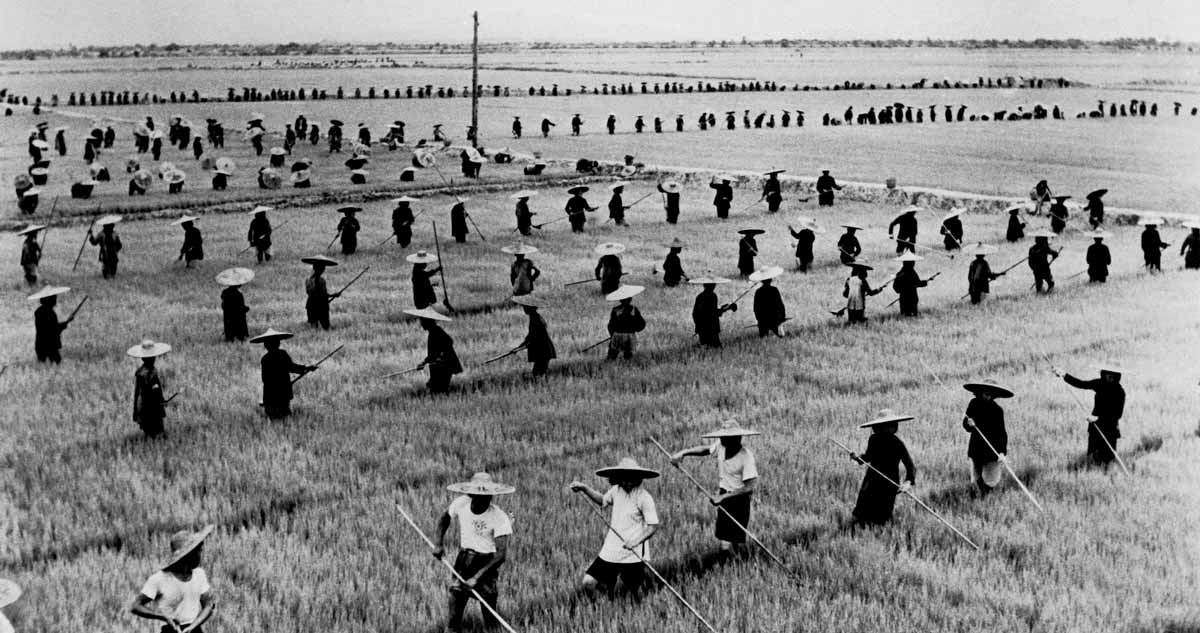
You cannot leap over agriculture. You cannot leap over metallurgy. You cannot leap over ecology, or logistics, or hunger. You cannot leap over whether the grain exists or not.
The Great Leap Forward was an attempt to clear the ground by rejecting it.
The ground was not amused.
The Distortion of Chairman Mao Zedong.
To understand why this enormous national repair demand was routed through backyard steel plants, communal kitchens, materially impossible harvests, a campaign of sparrow extermination, pseudo-agricultural theory, and terrorized reporting, we must first try to understand the man who made this distortion at home inside the state.
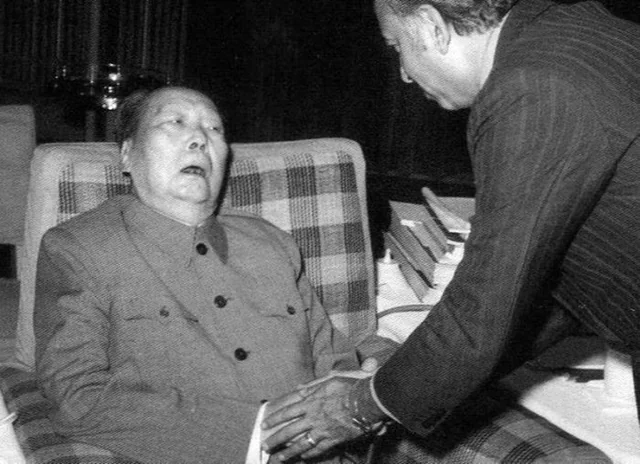
Chairman Mao Zedong did not fall from the sky onto an innocent country. His field produced him.
The conditional nature of the self does not excuse him, it just explains why the distortion had the shape it had.
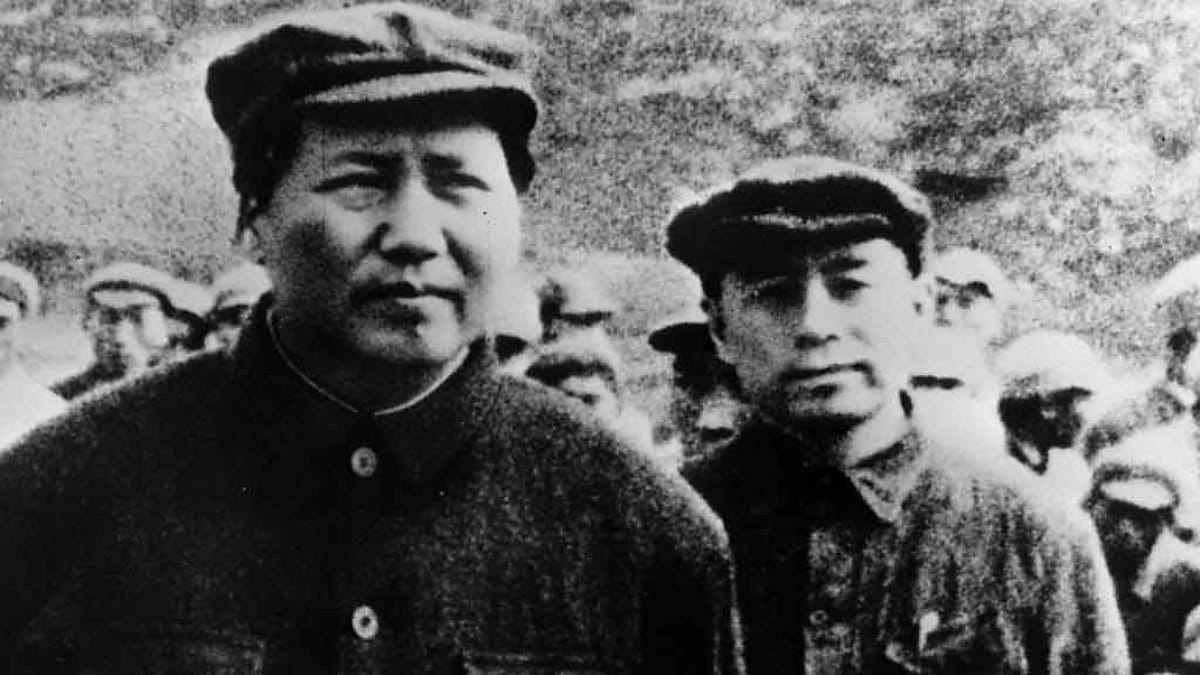
Mao was not this random lunatic who accidentally found himself in charge of China and then developed a personal grudge against birds. This guy was a revolutionary leader formed by a specific, catastrophic national field: late imperial collapse, foreign intrusion, peasant misery, civil war, Japanese invasion, Marxism-Leninism, guerrilla warfare, land struggle, party discipline, ideological purification, and decades of proof that organized political violence could move history.
That field taught him some true things.
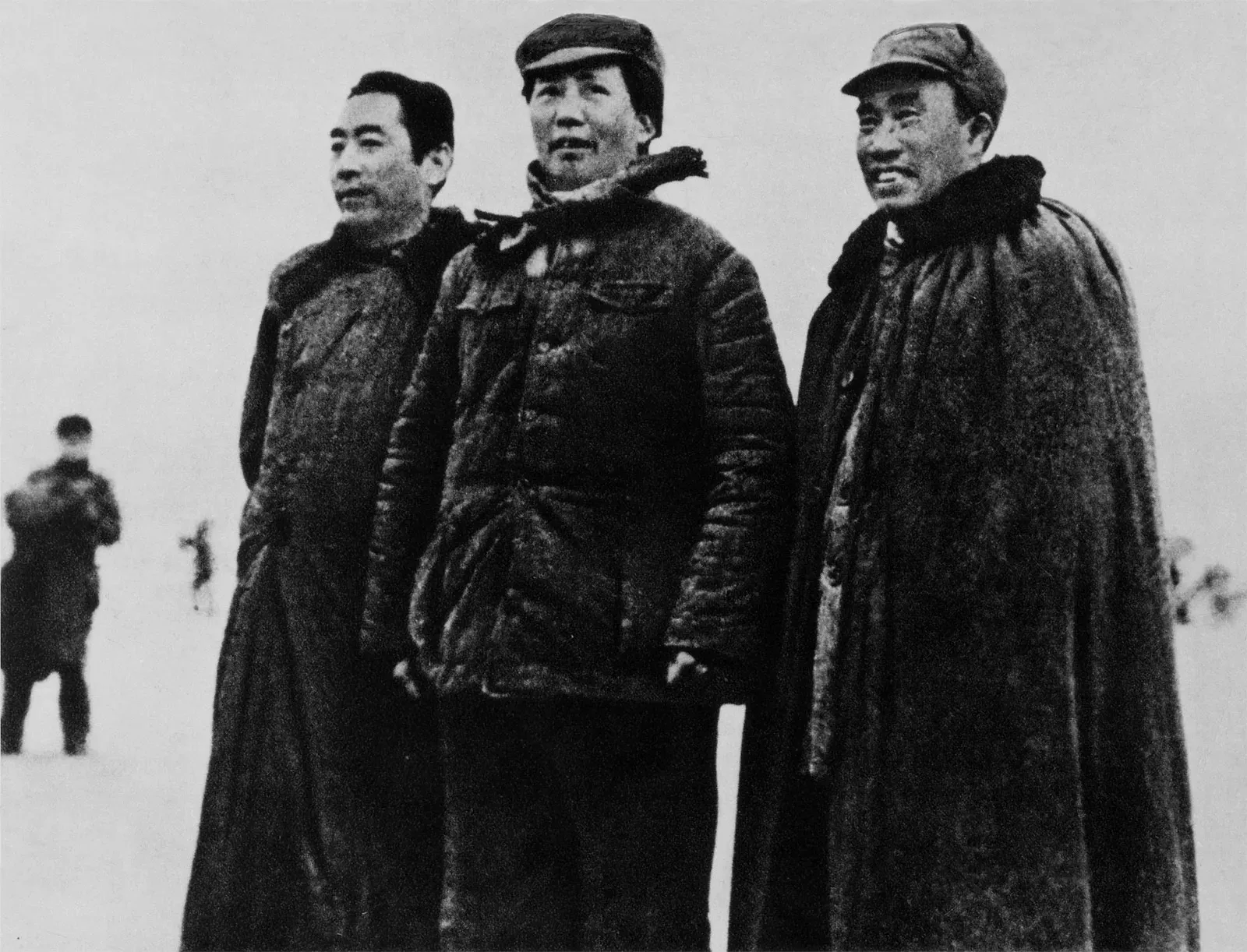
It taught him that China could not survive as a weak, fragmented, semi-colonial country.
It taught him that peasants were not inert background material waiting for proper European history to begin.
It taught him that mass mobilization could alter the fate of a state.
It taught him that discipline, endurance, narrative, and organization could bind scattered rural suffering into a political force.
It taught him that elites, experts, landlords, bureaucrats, and foreign powers often had interests sharply opposed to the survival and freedom of ordinary Chinese people.
All good so far.
This is why Mao is not a simple case. His worldview was not made only of errors. It was built around real insights that had survived real tests inside a brutal field.
That is exactly why that worldview became dangerous.
A weak idea can just be ignored. A wholly stupid idea often has difficulty scaling beyond its immediate circle of dim-witted enthusiasts. But an idea with a live piece of truth inside it can travel much farther. It can pass through institutions. It can attract loyalty. It can survive criticism by pointing to the part of itself that really did work once.
Mao’s great distortion was not that he believed the masses mattered. The masses did matter.
His distortion was that he came to treat mass mobilization as a substitute for field contact.
That was a bit of a cock-up.
It is one thing to say peasants are historical agents.
It is quite another thing to say peasants can be mobilized hard enough to replace industrial capacity, metallurgical expertise, agronomic knowledge, ecological complexity, honest local reporting, and time.
The difference between these sentences can be measured in famines.
Mao had really seen mobilization win. He had seen rural organization defeat enemies that appeared stronger on paper. He had seen revolutionary discipline outlast superior resources. He had seen faith, endurance, and political education turn frightened peasants into soldiers, cadres, informants, organizers, and believers. Mao had watched as China’s vast rural population became an engine inside history, not a drag on it.
Then, he universalized the lesson.
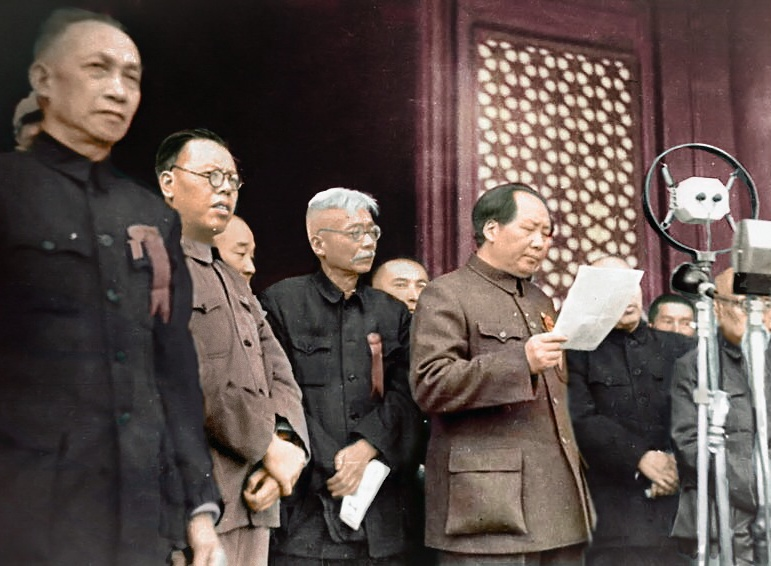
But it turned out that agriculture is not the same as guerrilla warfare.
Metallurgy is not a mass-line exercise. Ecology is not a landlord.
Grain does not become more real because the report has better politics.
The soil does not become fertile because a slogan has clarified its historical responsibility.
Mao’s system increasingly treated any and all friction as political resistance.
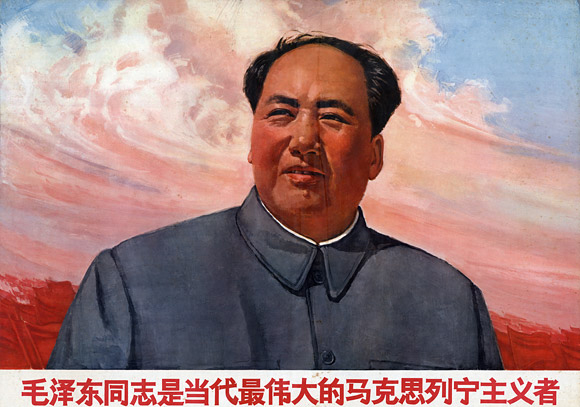
A farmer saying the crops are planted too close together might be correct, but inside the distortion field he can be heard as backward.
An engineer saying the furnace is nonsense might just understand what steel is, but inside the distortion he can be heard as conservative.
An intellectual warning about false numbers might just be trying to prevent a disaster, but inside the distortion he can be heard as a rightist.
A local official saying people are hungry might be describing starvation, but inside the distortion he can be heard as weak, disloyal, or insufficiently committed to the Leap.
A sparrow eating grain might also be eating insects. But inside the distortion, it becomes an enemy like any other.
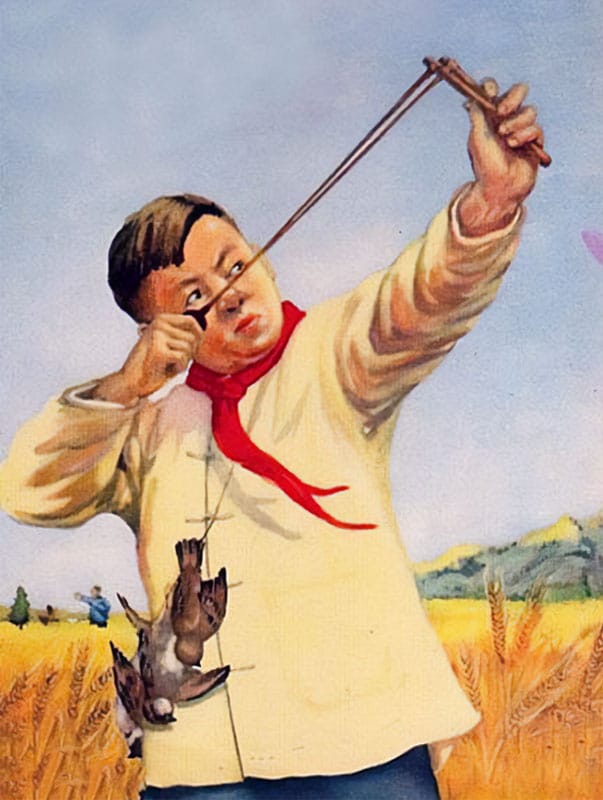
That is the Maoist field blindness in miniature.
Mao did not simply believe many wrong facts. He built a political grammar in which many true facts became difficult to speak. Field friction became ideological friction. Technical caution became class suspicion. Local limits became political limits. Bad news became sabotage. Expertise became suspect unless it arrived already kneeling before the campaign.
This grammar mattered more than any single bad decision.
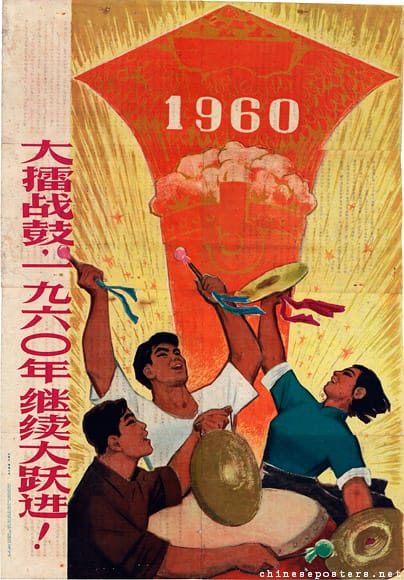
A system can survive bad decisions if correction remains possible. The Great Leap Forward became catastrophic because correction itself became dangerous. The field had information. Farmers had information. Local cadres had information. Engineers had information. Doctors had information. Hungry people had information.
The problem was not that reality had no witnesses. They were all around.
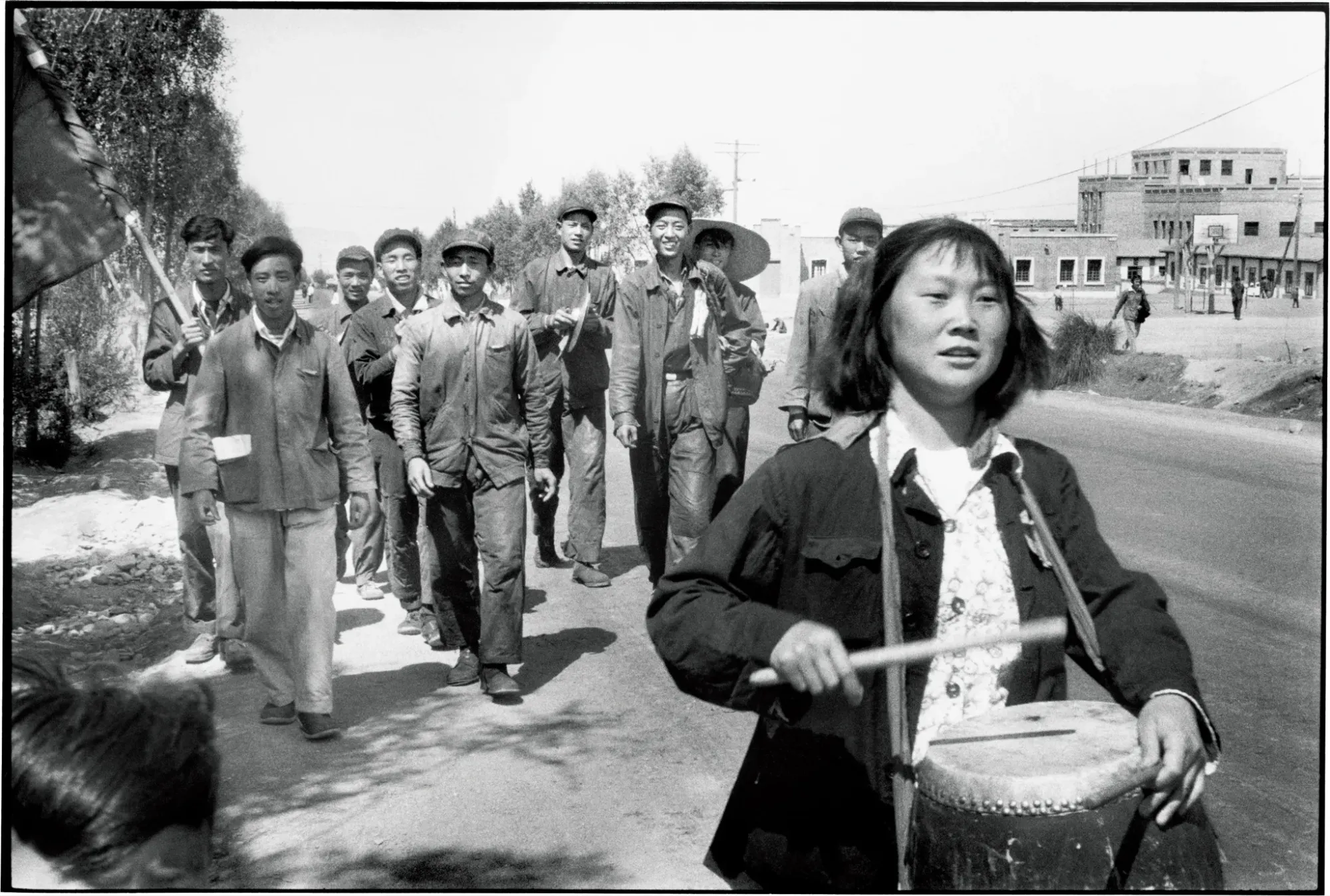
The problem was that reality had to pass through the fear bottleneck before reaching the top.
It turns out fear is a very efficient machine for manufacturing lies.
Bad Translations.
Mao’s distortion also had a deeper source: he had learned some lessons in fields where they had partial validity, then carried them into fields where they became fucking ridiculous.
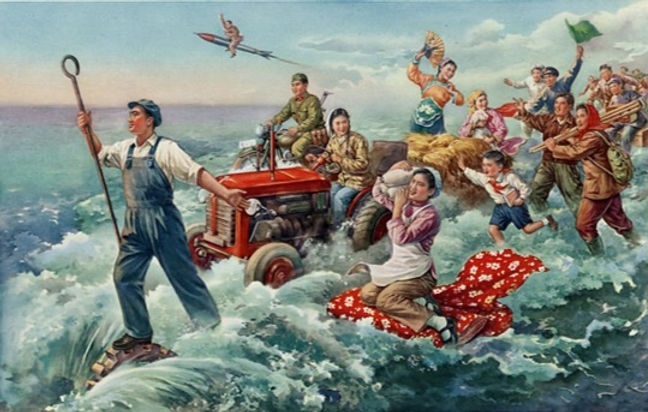
In war, morale matters.
In agriculture, morale is not enough.
In revolution, discipline matters.
In crop production, “discipline” cannot make two plants occupy the same nutrient stream without competing. This is not how plants work.
In party struggle, ideological unity can coordinate action.
In metallurgy, ideological unity does not control carbon content. Carbon is just not concerned with this.
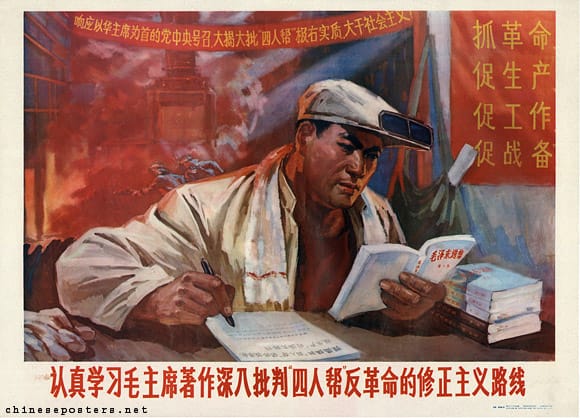
In anti-imperial politics, suspicion of foreign domination may be justified.
In ecology, your suspicion does not tell you what happens when you remove a species from a food web. This is why we invented science.
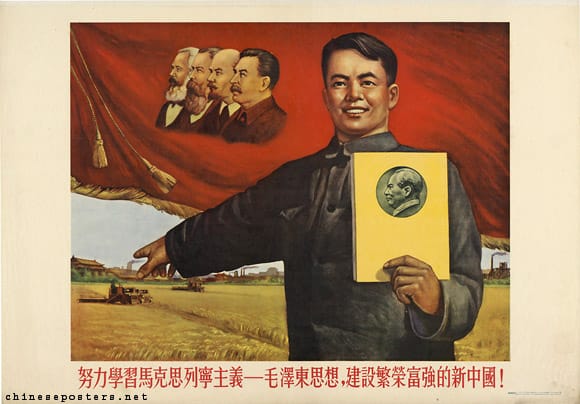
In a civil war, bad information can kill an army.
In a dictatorship, bad information can feed the dictator exactly what he wants to hear.
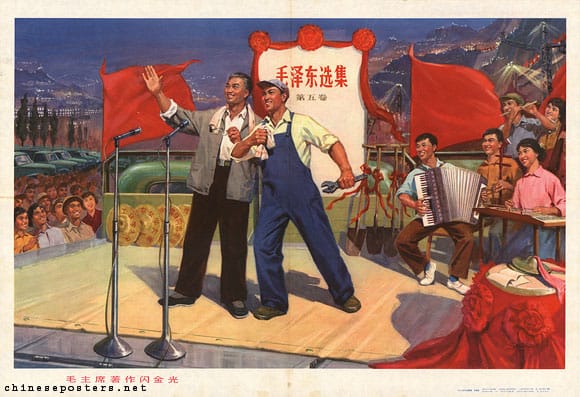
The Chinese Communist Party had survived by becoming a very disciplined revolutionary instrument. That instrument was not built for soft contradiction. This thing was not built to let every village patiently disagree with the center until the center updated its priors.
The Chinese Communist Party was built to win, purge, mobilize, discipline, and impose the line.
This was a fucking terrible machine to place around agriculture.
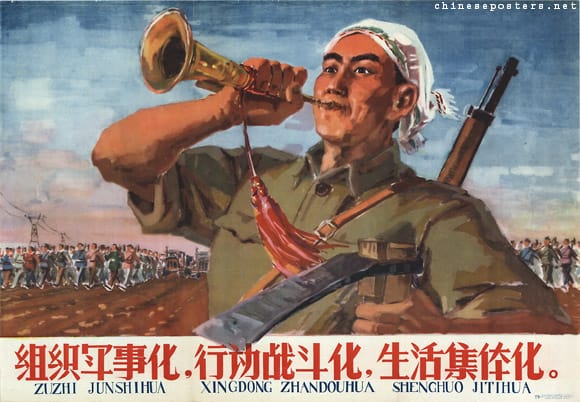
Crops do not care about the line.
A state can order a village to plant more densely. The village may obey.
The plants will still compete for sunlight, because they are plants.
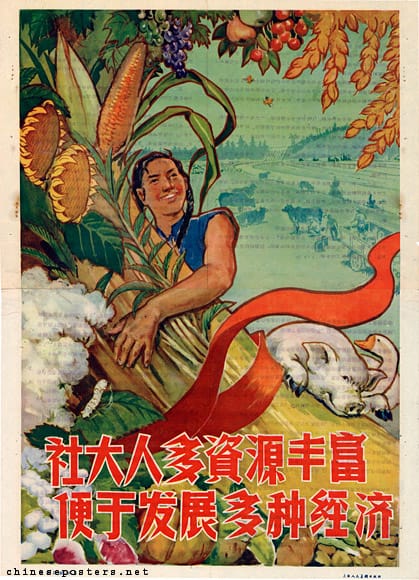
A state can order labor into furnaces. The labor may appear. The metal may still be total garbage.
A state can order communal kitchens. The kitchens may open. Household control over food may still vanish.
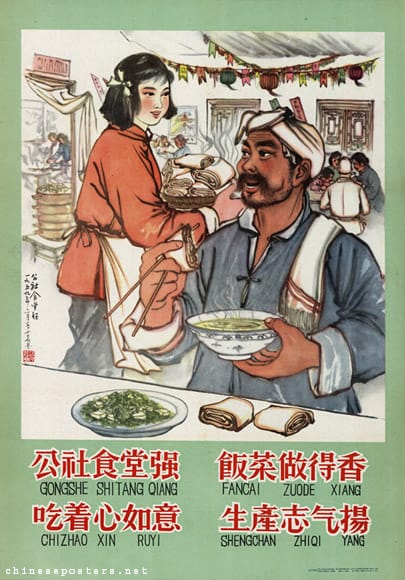
A state can order pest eradication. The pests may definitely die. The insects will still come.
A state can order cadres to report success. Success may be reported. It may not be real.
Then, the state has to govern the report.
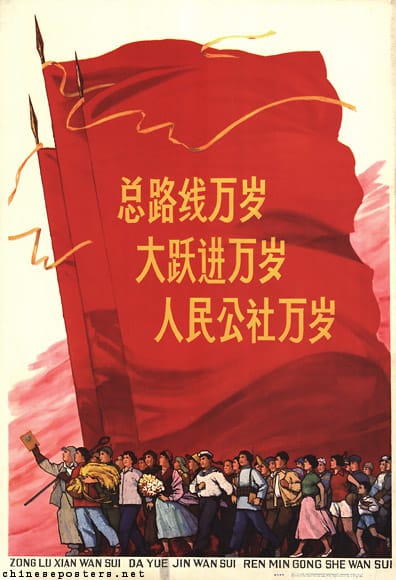
That is how the Great Leap Forward began to leave the real field and enter the fictional paper one.
The paper field was magnificent. It was awesome. Everything was working. China was winning.
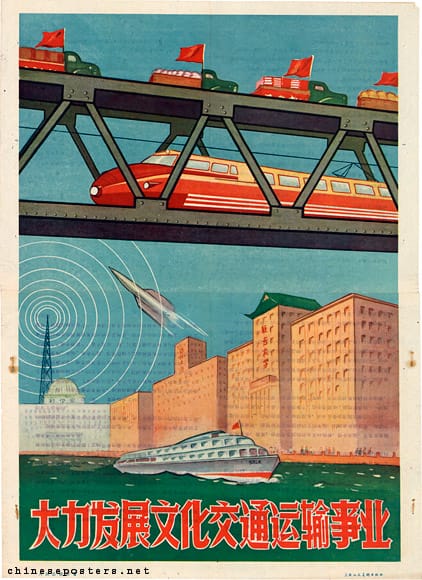
The paper field had enormous harvests. The paper field had tons of steel. The paper field had all these disciplined communes. The paper field had traitorous pests dying by the millions. The paper field had peasants fed by collective kitchens and liberated from their household drudgery. The paper field had history accelerating so quickly that Britain and America had better start looking over their goddamned decadent capitalist shoulders, because China is coming and it's not fucking around anymore.
It's really just too bad it only existed on fucking paper. The physical field was something else.
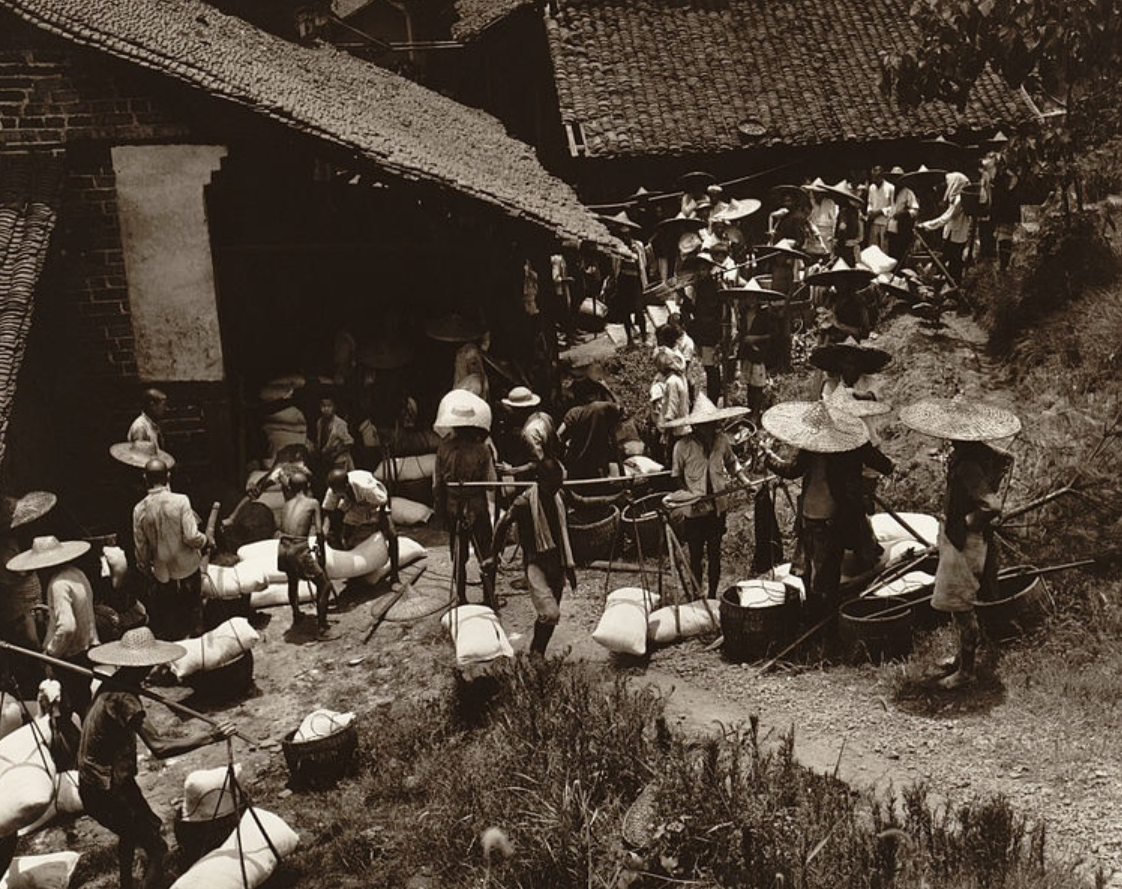
The physical field had exhausted labor, neglected crops, bad steel, missing tools, broken household food judgment, frightened officials, ecological imbalance, inflated yields, procurement quotas, and hunger moving under the official story like a seal that can't find the breathing hole.
This is the signature of distortion: the map does not only fail to describe the territory. It begins issuing magical orders to the territory.
No Off-Ramps.
There were definitely moments when the Great Leap Forward could have been slowed, revised, interrupted, or contained.
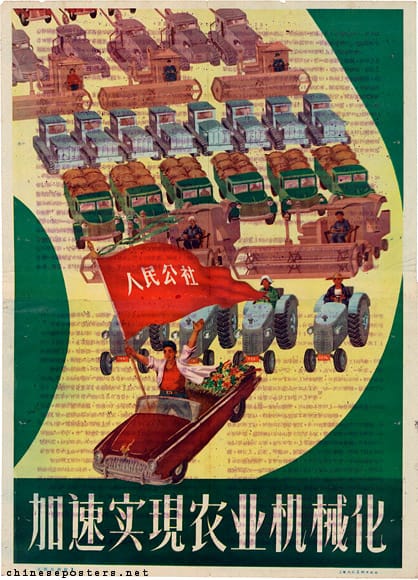
Disasters like this are often narrated backward, as if every event from the first slogan to the last corpse was already sealed in one perfect block of doom. That is not how fields work.
Fields branch. Agents intervene. Institutions correct or fail to correct. Warnings travel or fail to travel. Fear intensifies or relaxes. Better paths almost always remain reachable for longer than the final narrative makes it feel.
The Great Leap Forward was no different. It did not need to become as catastrophic as it became.
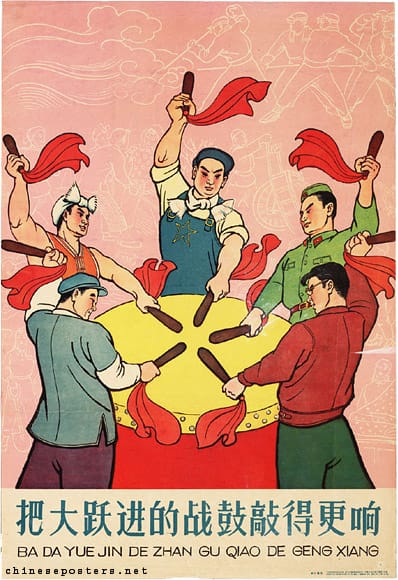
The problem is that every major off-ramp had already been damaged too severely.
The Hundred Flowers Campaign had invited criticism, then the Anti-Rightist Campaign taught everyone what could happen when invited criticism became too honest. Intellectuals, officials, and technical people learned that the state might ask for truth, and then punish the people who supplied it. That lesson did not disappear when the Great Leap Forward began. It sat inside every report, every meeting, every local correction, every warning that might have needed to move upward.
This is where Mao’s personal distortion and the institutional field fused into something without working brakes.
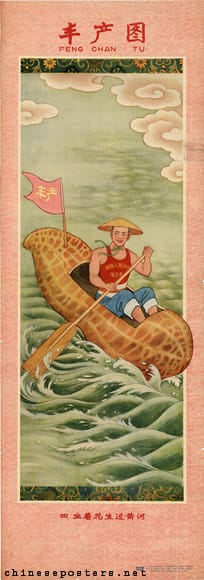
Mao did not have to personally inspect every furnace, every commune, every field, every kitchen, every granary, every local report, or every hungry village. The system around him had been trained to simply carry his expectations downward and return confirmation upward.
That structure is much worse than one man being wrong.
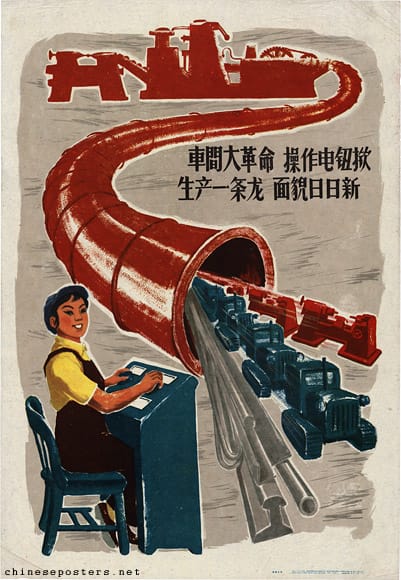
A single deluded leader can be corrected by a healthy field. But a deluded leader inside a terrified confirmation machine becomes reality’s landlord.
This is why the Great Leap Forward belongs in Tales of Distortion. The disaster is not that Mao had several stupid ideas. He did, but we all do. It is that the Chinese political field became organized around protecting those asinine ideas from the ordinary fatal injuries reality would have inflicted on them.
A bad furnace should be embarrassed by its output. A bad harvest estimate should be corrected by the field. A bad agricultural method should be abandoned after the crops fail.
A bad ecological campaign should be interrupted when experts object.
A bad procurement order should be revised when people are starving.
But under the Great Leap Forward, each of these correction points became politically obstructed. There was almost zero corrigibility. Everything had to pass through the story.
And that story said China was leaping.
Leaping.
“Leap” is the whole fantasy compressed into one verb.
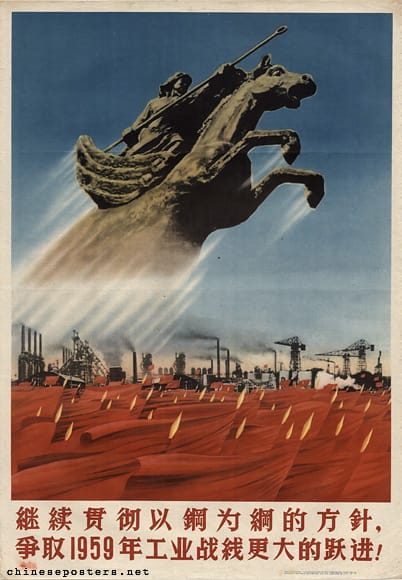
A leap does not cultivate. A leap does not build capacity. A leap does not listen to local differences. A leap does not wait for soil, skill, weather, logistics, metallurgy, ecology, or institutional learning.
A leap gathers force, then rejects the ground.
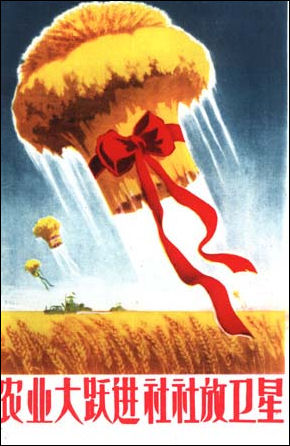
Mao’s China had reasons to hate the ground it was standing on. It was full of all kinds of nasty stuff.
That ground had poverty in it. It had humiliation in it. It had foreign domination in it. It had peasant misery in it. It had landlords, debt, hunger, illiteracy, disease, and memory. A revolutionary state looking down at that ground could understandably want to leave it, quickly.
But wanting to leave a damaged field is not the same as repairing it.
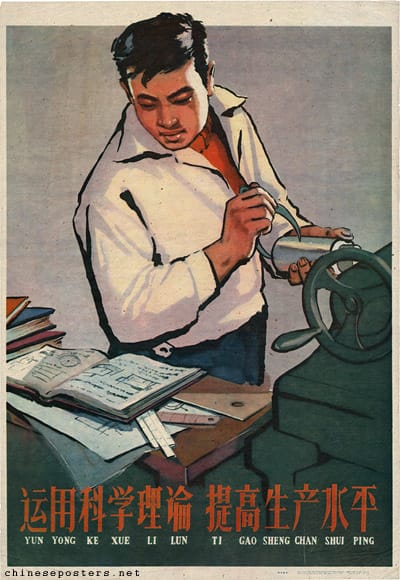
Repair is not the intensity of desire for a better future. Repair is the opening of reachable better paths from the actual field in front of you. A desired future with no valid route from present conditions is not a plan. It is a hallucinated branch.
The Great Leap Forward was full of hallucinated branches.
- Industrial abundance without industrial conditions.
- Agricultural abundance without ecological contact.
- Food security without household control.
- Collective discipline without safe correction.
- Technical progress without technical authority.
- Truth without permission to say bad news.
- Steel without steel.
- Grain without grain.
- The future without the field.
And this is where the furnaces return, but now they can do their proper work. They are the first artifact in the distortion museum.
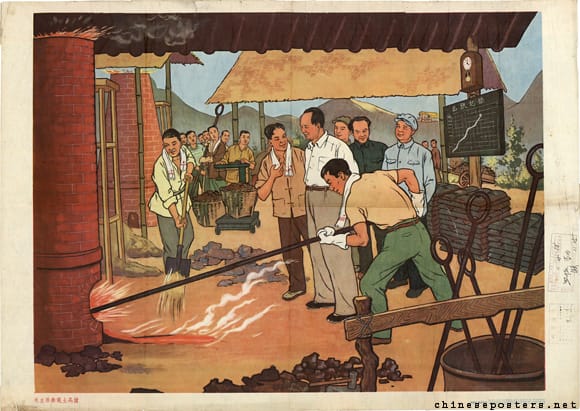
A country needed industry.
Its leader believed mass will could compress history. Its political system punished contradiction. Its local officials learned to report desire as fact. Its villages were told to produce the symbol of the future.
So the tools went into the fire.
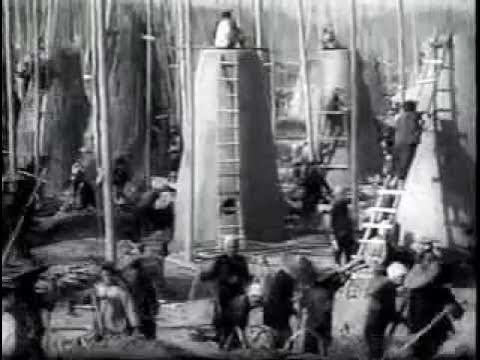
That was not the endpoint of the madness. That was just the first exhibit. Chairman Mao curated many wonders for us to audit.
The Commune.
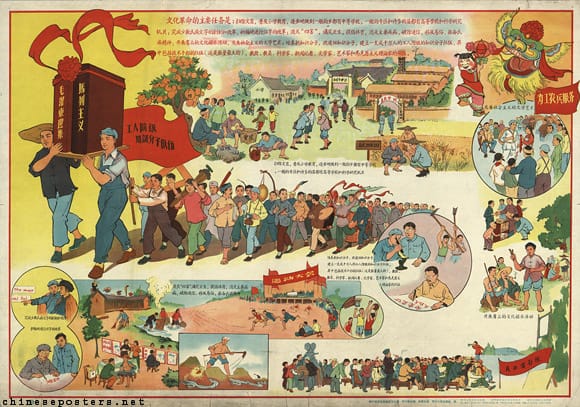
This is where the Great Leap Forward stops looking like one man’s warped development fantasy and starts becoming a machine that can reach into every bowl, field, tool shed, kitchen, workday, report, and private fear in rural China.
A backyard furnace is ridiculous. But a commune is much more dangerous infrastructure.
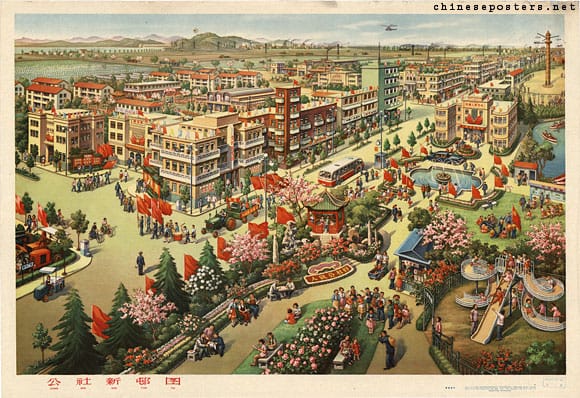
By 1958, China’s rural cooperatives were being fused into enormous people’s communes. These things were not just big farms. That would already have been disruptive enough, but the commune was so much more ambitious than that. It was meant to be a new unit of life: agricultural, political, military, industrial, educational, domestic, and ideological all at once.
The entire village was being reorganized.
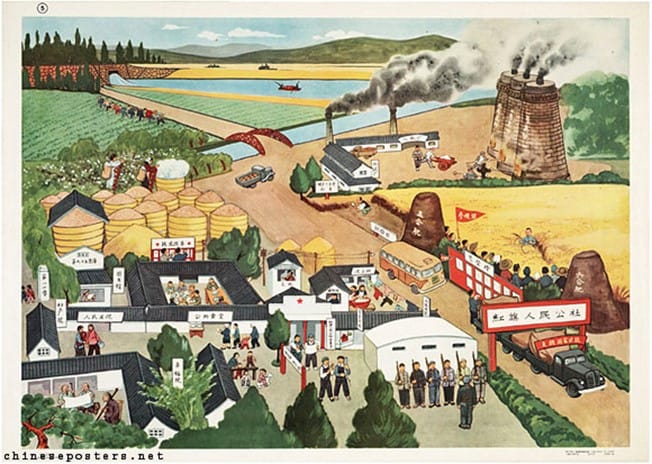
Fields, tools, draft animals, private plots, kitchens, labor time, food distribution, local decision-making, and family routines could all be absorbed into one larger command structure. The household would not disappear as a biological fact, obviously. People still had spouses, parents, children, old grievances, quiet loyalties, and private terrors. But the household would lose many of the practical functions that made it a household.
This is the first major trick of the commune. It does not need to abolish the family in theory to delete the household in practice.
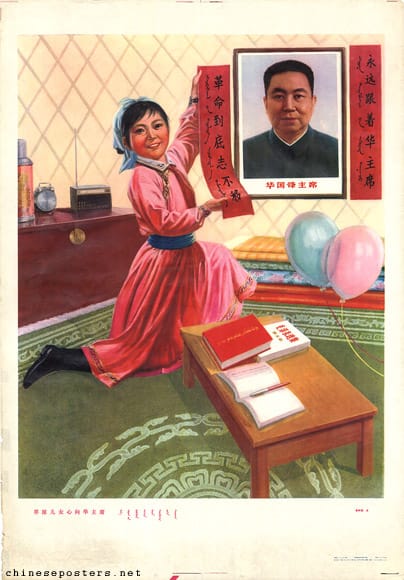
Take away the private plot. Take away the cooking fire. Take away the stored grain. Take away the tool. Take away the right to decide when to eat, what to save, who needs more, what work can be delayed, and what warning signs matter. What remains may still be called a family, but it has been stripped of local agency.
The commune collectivized vulnerability, not just production.
Rural survival is not conducted at the scale of the slogan. It is conducted through small judgments made constantly by people close to the material facts.
How much grain is actually left? Which field is failing? Which child is losing weight? Which elder cannot work another full day? Which tool is broken? Which animal is sick? Which seed should not be wasted? Which official number is obvious nonsense? Which neighbor has food? Which rumor should be believed?
These are not glamorous questions. The Great Leap Forward moved against that scale of judgment. It treated dispersed household life as backward, inefficient, selfish, feudal, insufficiently collective, insufficiently modern, insufficiently political. The state wanted a China that could be mobilized. So the commune made rural China more mobilizable by making it less local.
This is the shape of the distortion. The household says: “here is what we know because we are standing next to it.” The commune says: “here is what we must say we know because history requires it.”
“History,” somehow, always seems to need the household to shut the fuck up.
Stacking Five Thousand Households in a Trench Coat.
The absurdity here is not just size.
A large organization can be useful. A village may need shared irrigation, shared storage, shared roads, shared schools, shared granaries, shared defense, shared disaster response, and shared tools. Modal Path Ethics is not hostile to collective structures. That would be silly. Many fields cannot be repaired at household scale alone.
The question is what the collective structure does to the feedback coming from below it. A good collective form enlarges capacity without destroying contact.
A bad collective form enlarges command by destroying contact.
The people’s commune was very often the second thing.
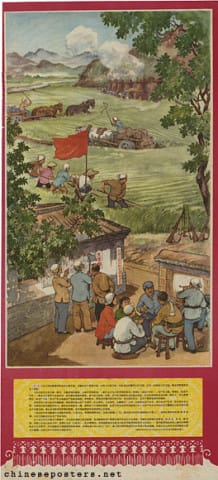
It took many smaller units and fused them into a giant administrative Franken-body. That body could allocate labor. It could organize production. It could run canteens. It could direct political campaigns. It could absorb private plots. It could assign work points. It could make rural life visible to the state in a new way.
That visibility was the temptation. From the center, the commune looked like an effective simplification. Instead of millions of households making millions of opaque local decisions, there would be larger units, clearer reporting lines, bigger mobilizations, cleaner quotas, easier grain procurement, more direct political supervision, and a rural population that could be pushed into water projects, steel production, planting campaigns, pest campaigns, and whatever other miracle the Leap needed next.
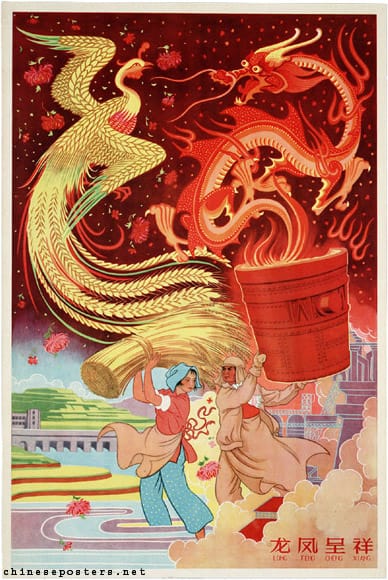
This is the dream of every overconfident state.
Make the field legible.
Then, go ahead and mistake legibility for repair, while we are at it.
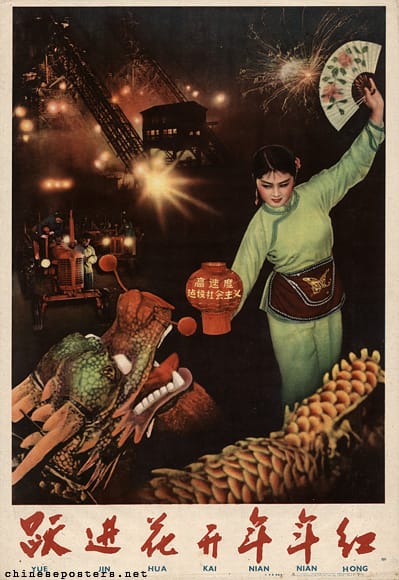
The commune made rural China more legible to the plan, but not necessarily more truthful to itself. That distinction means everything. A field can become easier to command while becoming harder to understand. The administrative map can improve while the moral and material contact collapses. This is the danger of Voltroning into a giant unit.
At household scale, a bad decision injures the people close enough to notice. At commune scale, a bad decision becomes policy, then a report. Then at national scale, it becomes destiny. The error gets promoted.
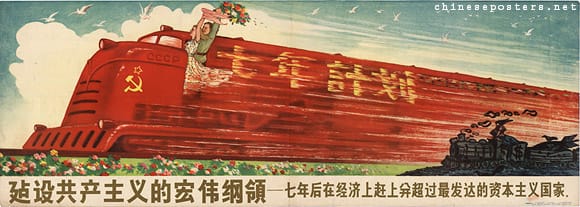
That is what happened to poor China here again and again. Local knowledge had to climb upward through layers of political expectation. By the time it reached the top, if it ever reached the top, it no longer looked like a warning. It looked like either enthusiasm, compliance, or treason.
Five thousand households had been placed in a trench coat, held at gunpoint, and told to speak with one voice.
Naturally, the voice said what it was supposed to say.
The Mess Hall at the End of the World.
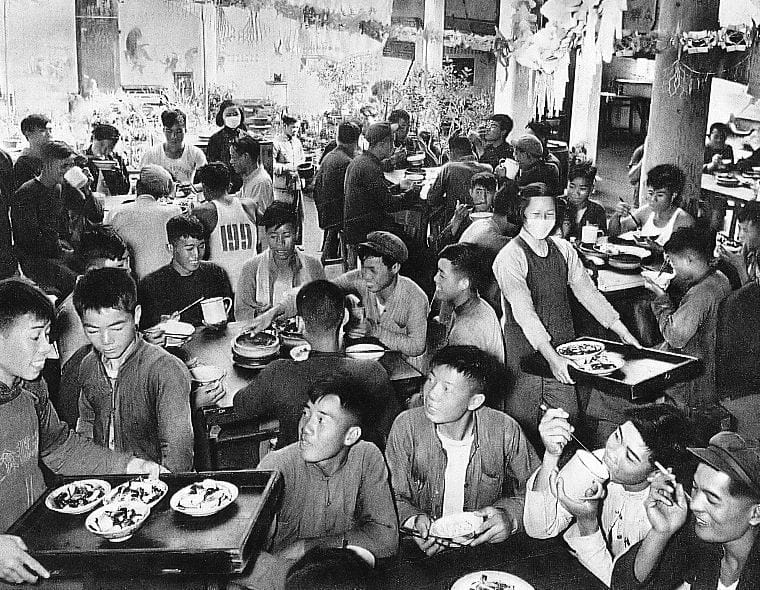
Then came the communal dining halls. This is one of those Great Leap Forward details that sounds small until you think about it for more than four seconds.
Everyone in China stopped cooking at home.
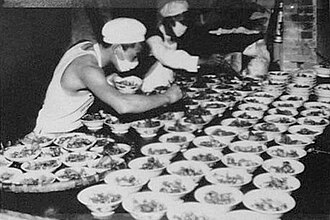
Not everywhere with identical intensity, not in every locality in the exact same way, and not always forever. But as a core ideal of the commune system, the household kitchen was pushed aside by collective eating.
Food would now be gathered, cooked, and distributed through communal canteens. Private cooking became politically suspect. Domestic life was to be socialized. Women could be “liberated” from household cooking and reassigned to production. The village would eat together as a collective body.
You can see why this looked revolutionary.
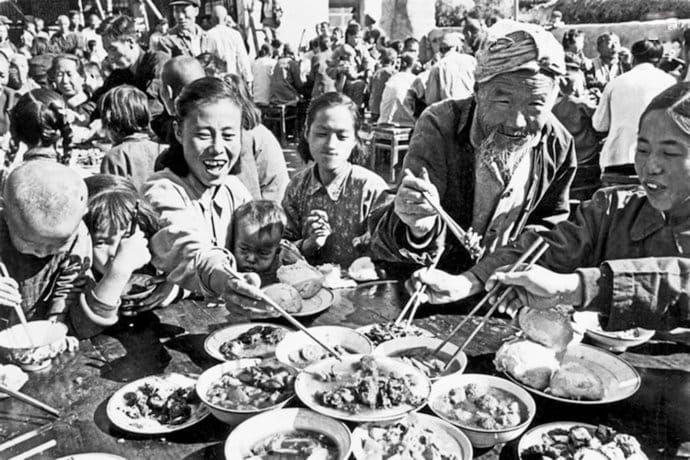
The family cooking pot was old China. The communal mess hall was new China.
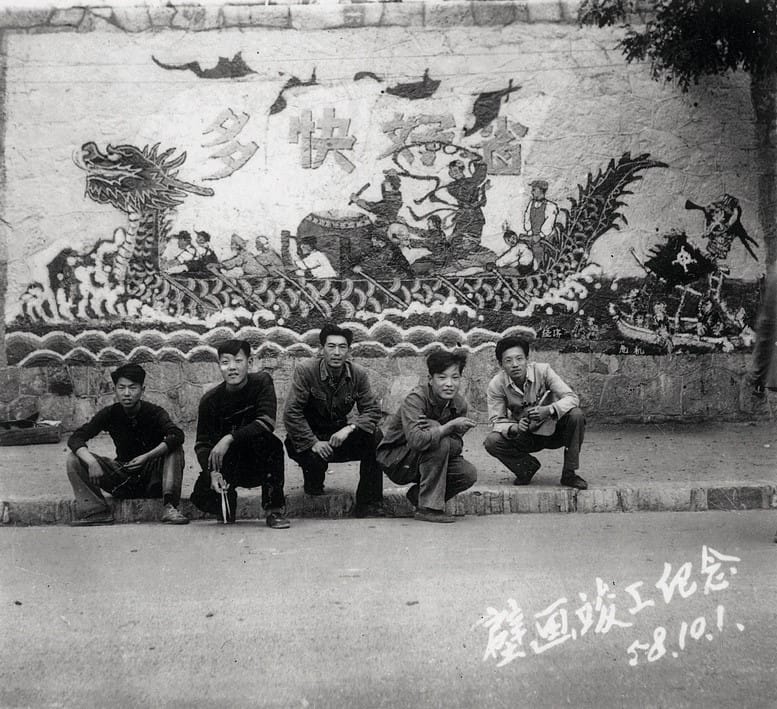
The private kitchen was narrow, domestic, hidden, inefficient, gendered, unequal, and selfish. The canteen was collective, modern, public, efficient, liberating, and socialist.
That was the cool story. Here is the field reality:
The kitchen is not just that room where the food gets hot. The kitchen is a survival instrument.
This place is where scarcity becomes judgment. It is where a family knows what remains, and a thin meal is stretched. This is where an adult quietly eats less, or someone notices that a child needs more. It is where the old person gets the softer portion and stored food is hidden, rationed, protected, or saved for the day when the official story turns out to be a lie.
The kitchen is not glamorous. Neither is the immune system. You still need it.
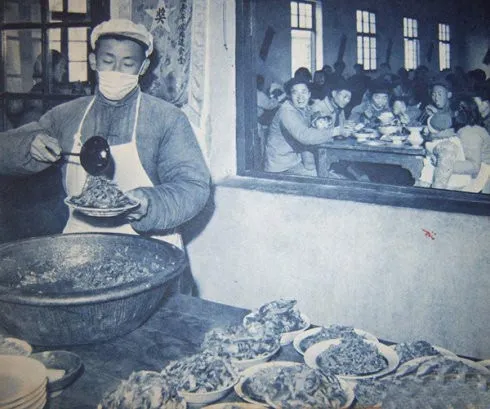
The Great Leap Forward looked at the household kitchen and saw backwardness. Modal Path Ethics looks at it and sees a local feedback structure. This is not perfect feedback, or innocent feedback. Families can be unjust, patriarchal, violent, selfish, and cruel. The old household was not utopia.
But a damaged survival instrument is still a survival instrument, and before you destroy one you had better know exactly what will replace it.
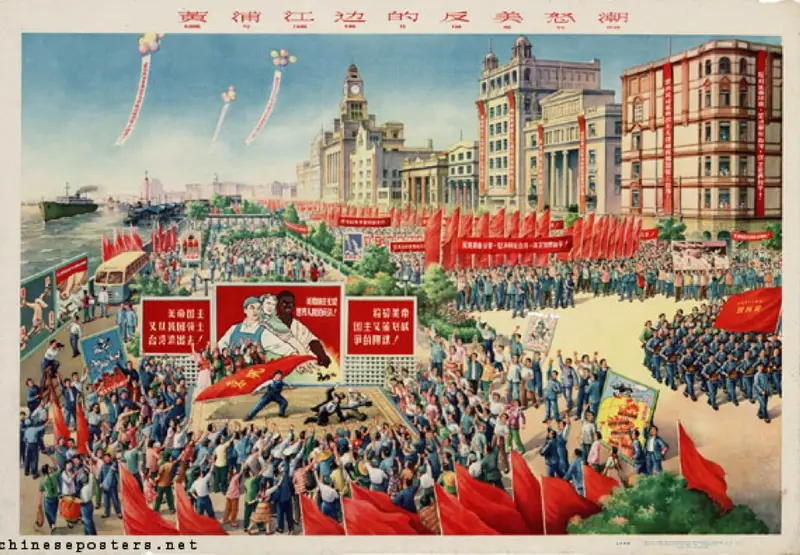
The communal dining hall did not replace the kitchen with a better sensor. It replaced it with a line.
That line might very well be generous at first. In some places, early communal dining produced an intoxicating sense of abundance.
Eat! The commune has food. Eat! The old household scarcity is over. Eat! The socialist future has arrived in the bowl. Eat it!
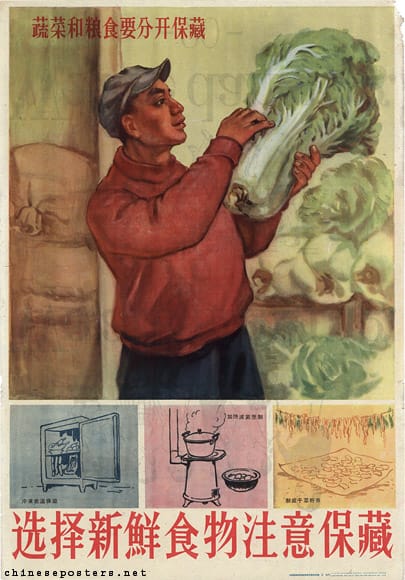
This was a preview of the whole disaster.
The canteen could perform abundance before abundance actually existed. It could make the future edible for a few weeks or months by consuming the stocks that were supposed to carry people through the year. It could turn stored grain into political theater, and stage the end of scarcity by burning through the very buffers that made scarcity survivable.
This is an extremely “Great Leap Forward” thing to do.
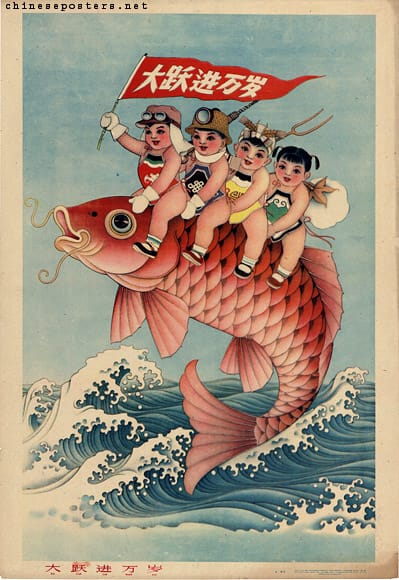
Just announce abundance, centralize the resource, and destroy the local buffer. Then, celebrate liberation.
Then discover tomorrow that tomorrow still exists.
The Political Bowl.
Once food moves through the commune, hunger changes character and becomes something bizarre.
A family eating at home can know it is hungry before the state has an opinion on this matter.
The body reports directly to the household. The household may still be trapped, poor, frightened, and powerless, but the perception of hunger does not need to be administratively approved before it becomes real.
In the commune, food now becomes a political relationship.
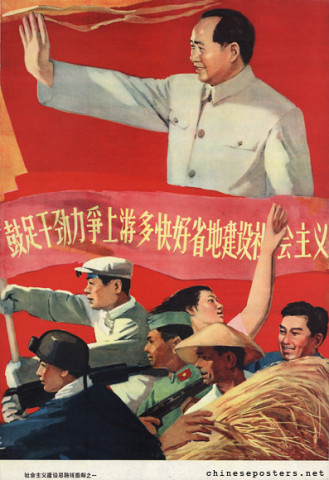
The bowl now passes through the campaign. It passes through the mess hall, the work point, the cadre, the quota, the procurement figure, the local report, the public mood, the official story about the harvest, and the political need to demonstrate that collective life has overcome the old scarcity.
This ridiculous bottleneck does not make hunger vanish. It makes hunger harder to say. The difference there is fatal.
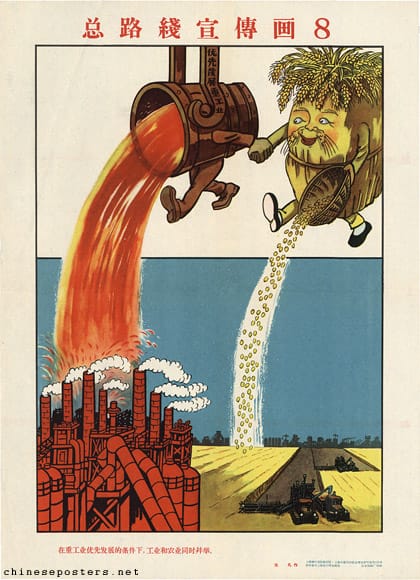
If the communal dining hall is proof that socialism has produced abundance, then an empty bowl is not just an empty bowl. That is a contradiction. That bowl threatens the performance. Someone must explain that now. Perhaps grain is being hidden? Maybe peasants are lazy? Or the local cadres are corrupt. Or maybe rightists are spreading panic. Possibly, people are clinging to selfish habits. I'm thinking the masses have not been sufficiently mobilized.
Or, perhaps, maybe, it could just be there is not enough fucking food.
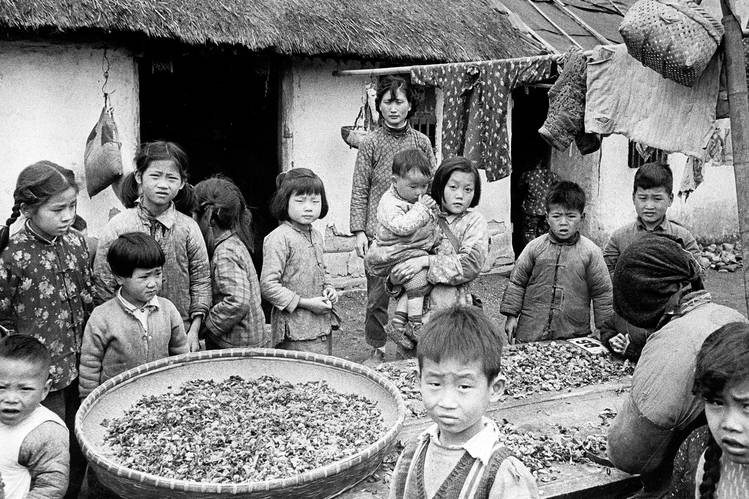
But that answer is the dangerous one, because it points back toward the plan. Pointing at the plan has consequences.
The system therefore develops a strong preference for every other possible answer than the true one.
This is how the bowl becomes political.
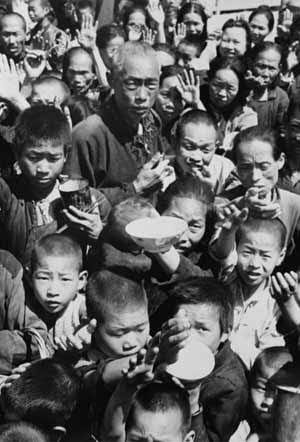
A hungry person is no longer only a person whose body needs food in it, soon. The hungry person becomes evidence under dispute. That hunger is very debatable. One thing is certain: if the story says abundance has arrived, then hunger must be interpreted in a way that protects the story.
This is one of the ugliest and stupidest moves any field can make.
First it damages the conditions of survival. Then, it makes the resulting suffering difficult or impossible to describe.
Liberation via Removal.
There is another dark little absurdity sitting inside the dining hall: the language of liberation.
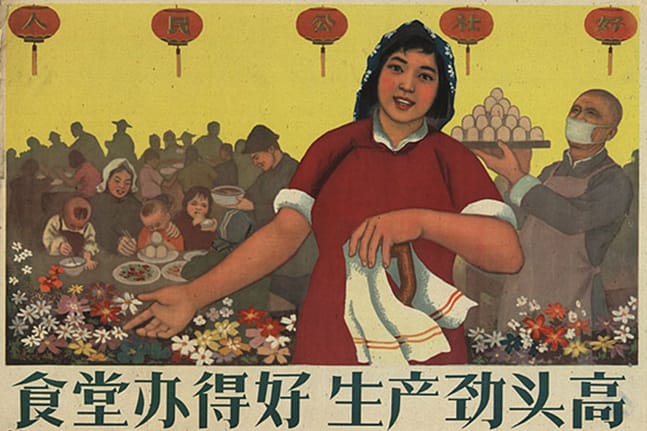
Women were to be freed from domestic cooking so they could join production. On paper, this has an obvious appeal. Domestic labor is real labor. Cooking is real work. Feeding people is work. The household can trap women inside endless, unrecognized, exhausting service.
So a serious repair path would absolutely ask how to reduce that burden, redistribute care work, and open more agency for women.
The Great Leap Forward naturally found the worst possible answer:
Destroy the kitchen, then call the loss freedom.
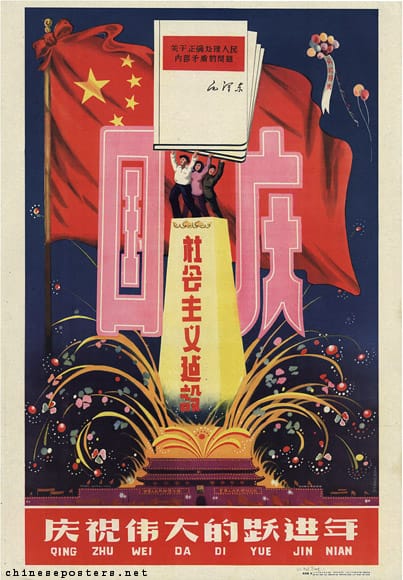
This is not liberation. It is reassignment. There is a difference.
Liberation expands agency. Reassignment transfers labor to a different command structure.
If a woman has no private kitchen, no protected food supply, no control over household rationing, no right to refuse impossible labor demands, and no safe channel for warning that the children are hungry, then she has not been freed into a wider field of agency. She has been moved from one extraction system into another.
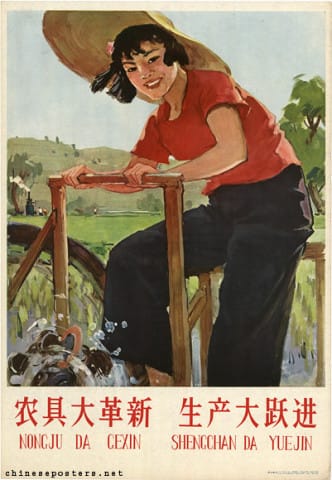
A patriarchal household can exploit women. So can a commune. Changing the scale of command does not automatically repair the relation.
This is why the Great Leap Forward is so useful analytically. It constantly takes a real critique and routes it through the first destructive simplification that comes to mind. Yes, domestic labor was real. Yes, rural women were constrained by household structure. Yes, collective supports could have expanded possibility.
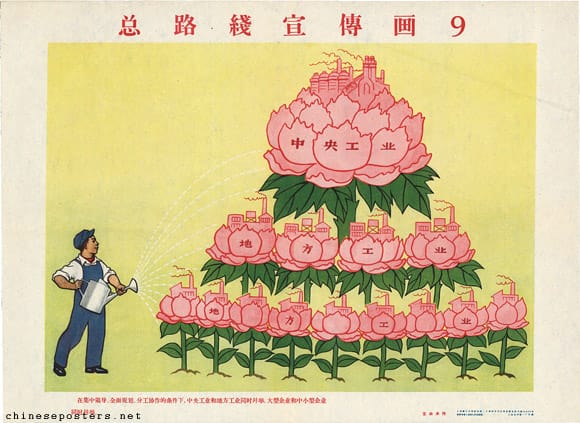
But the campaign treated the existence of a real burden as permission to just demolish the local survival system before a better one had actually been built. That is ideological demolition with a banner on it, not repair.
The Commune Learns to Lie.
The commune also transformed the social life of truth.
In a smaller field, people can still lie. I realized this recently. Villages are not magical truth gardens. Families hide things. Neighbors deceive each other. Local elites dominate. Petty tyrants exist at every scale. The question is not whether small units are pure. They are not. I checked.
The question is whether information can still move from reality to decision.
Under the commune system, that movement became so much more dangerous.
Too many people now had too much incentive to tell the story upward correctly. Not truthfully, just correctly.
Truthfully means the report preserves contact with the field.
Correctly means the report preserves alignment with power.
A commune that reports mediocre production is not just reporting mediocre production. It may be confessing weak leadership, poor mobilization, backward thinking, insufficient zeal, hidden grain, sabotage, rightist influence, or failure to follow the Chairman’s line.
A commune that reports abundance has a much easier day. At least for the report.
Not so easy for the people who will later have grain procured from an abundance that exists mainly on paper.
But that all comes later. For now, notice the machinery being assembled:
- A massive rural unit.
- A political campaign demanding miracles.
- A leader whose worldview treats all friction as suspect.
- A recent memory of punished criticism.
- A food system centralized enough to damage household survival.
- A reporting system rewarded for enthusiasm.
- A development fantasy that cannot tolerate ordinary time.
This is not yet famine. It is, however, the coming famine’s grammar lesson. The field is learning how to speak falsely.
The Household.
This is the part the Great Leap Forward did not understand.
The household was not only private property. It was not only some old custom. It was not only patriarchy. It was not only selfishness. It was not only the small conservative unit standing in the way of national transformation.
This was also a warning system.
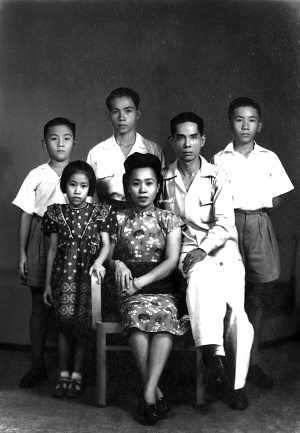
The same is true of private plots, cooking utensils, stored grain, family rationing, local markets, informal exchange, and all the small, annoying, unglamorous practices by which people keep themselves alive when larger systems fail.
A state may need to reform these things. It may need to regulate them, supplement them, equalize them, democratize them, or protect people from abuses inside them. But if it simply smashes them in the name of a future that has not arrived, it is not clearing away backwardness. It is tearing out all the sensors.
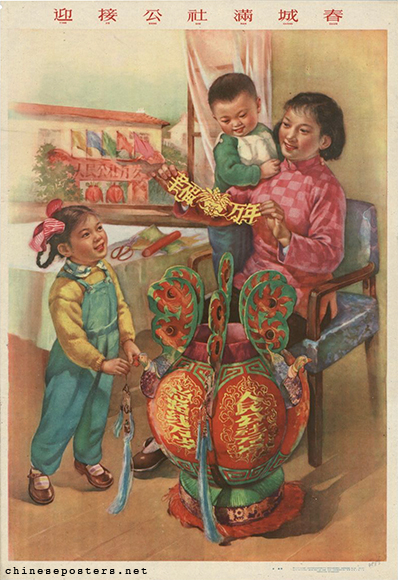
The commune tore out sensors. The dining hall tore out sensors. The attack on private cooking tore out sensors. The attack on private plots tore out sensors.
The work-point system, the quota, the cadre report, the mass campaign, and the political meeting did all install new sensors in their place, except these new sensors were all pointed in the wrong direction. These ones were excellent at detecting disloyalty, hesitation, insufficient mobilization, and ideological error.
They were fucking terrible at detecting reality.
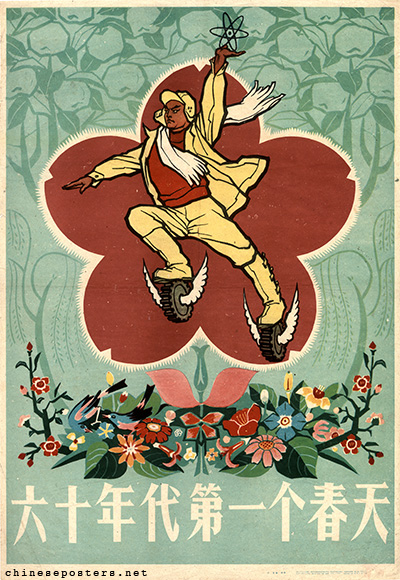
This is how a field goes blind while becoming more organized. That is the terrifying part here. The Great Leap Forward did not collapse because nothing was organized. It actually collapsed almost entirely through organization. It had campaigns, units, quotas, meetings, reports, slogans, targets, dining halls, work teams, brigades, furnaces, pest drives, and procurement systems.
This field was chaotic, but not in the simple sense. It was organized around a false contact point: the future Mao wanted to see.
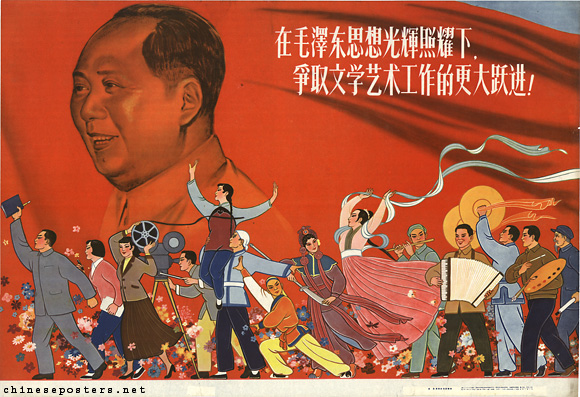
The commune gave that future hands. And once it had hands, it groped for the fields.
The Plants Were Not Party Members.
The commune could now move people. It could move tools. It could move food. It could move labor out of households and into collective projects. It could make private judgment look selfish, local caution look backward, and ordinary fatigue look like insufficient commitment to the Leap.
Naturally, those hands next tried to reorganize the plants. This is where the Great Leap Forward becomes almost majestic in its stupidity.
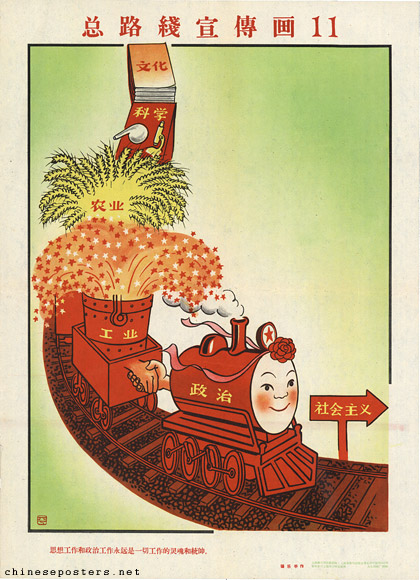
Not content to misunderstand industry, household survival, local truth, and political feedback, the campaign turned toward agriculture with the confidence of a drunk man explaining birds to a tree.
The crops would be transformed.
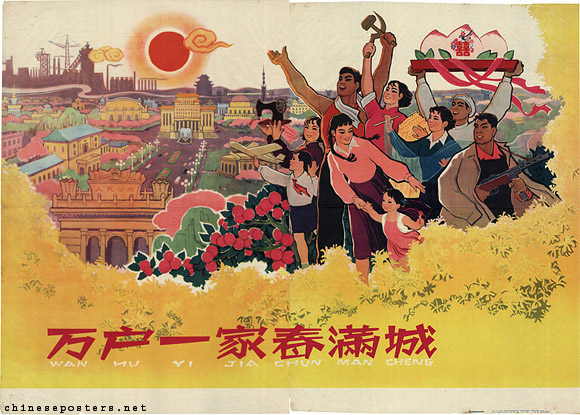
Not gradually. Not experimentally. Not by careful regional adaptation, soil testing, seed improvement, irrigation management, pest control, and boring agronomic work. That would take time, and the Great Leap Forward hated time. Fuck time. Time was what backward countries had to endure. Time was the insult. Time was the gap between China and the industrial powers. Time was humiliation wearing a calendar.
So agriculture, too, would leap right over time.
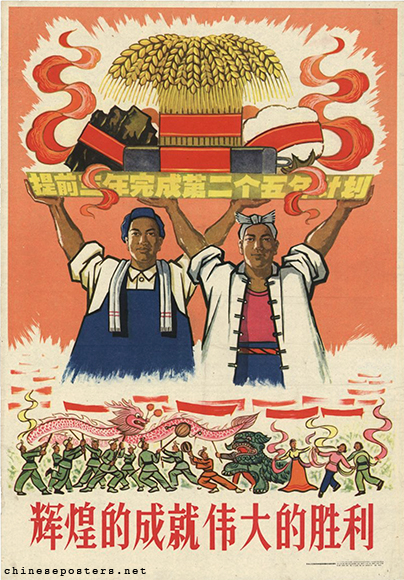
The soil would be opened. The seeds would be crowded. The fields would be disciplined. The old peasant habits would be overcome by revolutionary science, which in practice meant a cursed slurry of Soviet pseudo-agricultural influence, Maoist voluntarism, cadre pressure, propaganda, fake demonstration plots, inflated targets, and people who knew better learning very quickly not to say so too loudly.
A plant is a simple thing if you are far enough away from it.
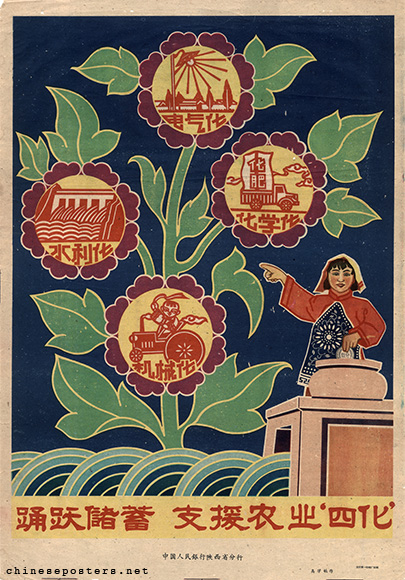
That thing is green. It grows. It needs water. The peasant puts it in the dirt. Later, grain comes out.
So, a state that is very impressed with itself may look at this process and conclude that there is plenty of room for improvement here.
Why not put the seeds closer together? Has anyone thought of that?
Why not plow deeper? Why not just make the roots go down farther? Why not bring up all that hidden fertility from the ancient soil? Why shouldn't we treat the field as an underperforming workplace?
The answer is that plants are not employees.
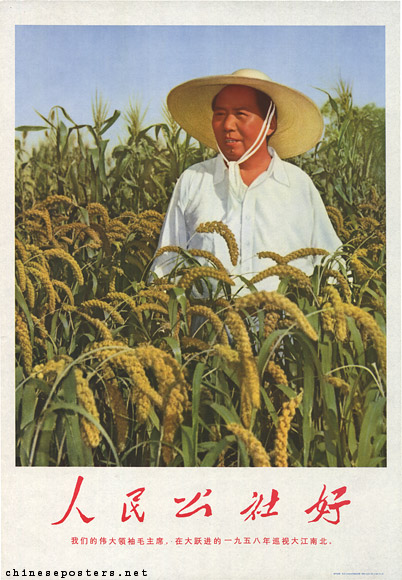
Those things do not respond to production meetings.
They do not stop competing for nutrients because someone has explained collectivism.
They do not share sunlight out of class solidarity.
They, generally speaking, do not read Chairman Mao.
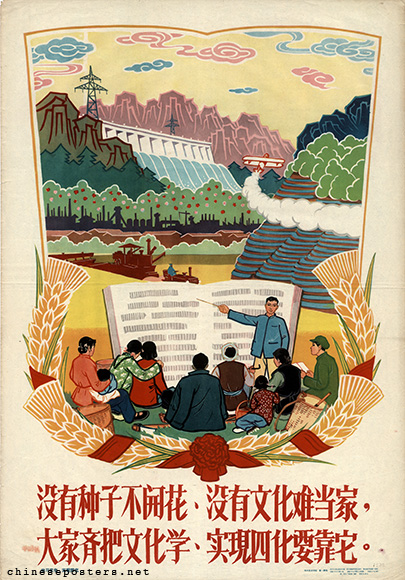
But that seems too obvious, which is always the problem with the Great Leap Forward. The obvious things were still true. They just stopped having enough power.
Deep Plowing.
So, Chinese soil had been too shallow, apparently. That was one diagnosis.
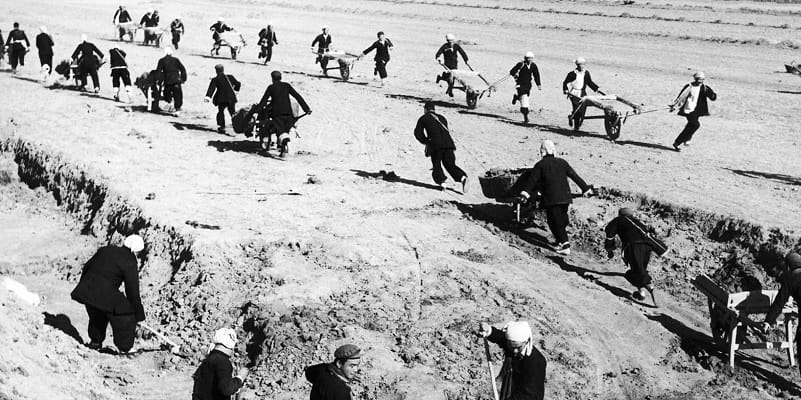
Traditional peasants had not been ambitious enough with their dirt. Trapped in their rightist haze, they had only scratched the surface, repeated old habits, trusted inherited practice, and failed to imagine what treasure might be hidden below. A revolutionary agriculture would not be so timid. It would now open the earth.
So the fields were plowed deeper.
Then deeper.
Then, in some places, absurdly deeper.
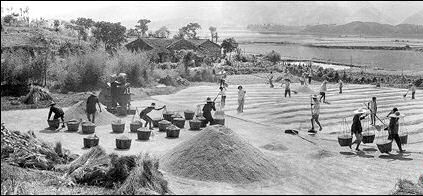
There is a kind of agricultural idea that sounds plausible if you say it real fast and then punish all the people who know what the ground is:
Deep soil has nutrients. Roots can go down. The earth has hidden fertility. Therefore, plow deep. Turn the old soil. Break the hard layers. Make the field new. A revolutionary idea.
The problem here is that soil is not an ideological metaphor. This is dirt.
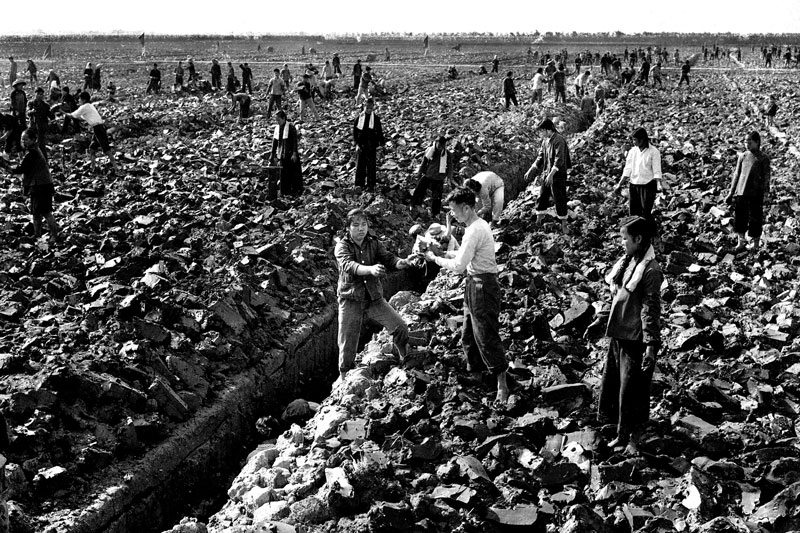
Topsoil matters a lot. Soil structure is important. Microbial life matters. Drainage, too. Local knowledge is also not nothing. A field is not improved by being treated like a drawer somebody forgot to search until now. You cannot dig far enough into the earth and discover the communism hiding underneath.
But deep plowing had the right emotional shape.
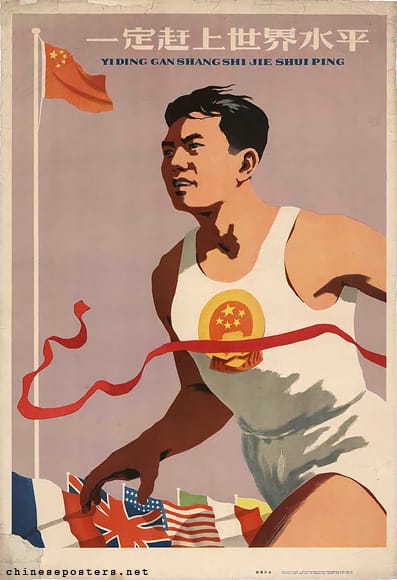
This was dramatic. It was visible. It looked like transformation. A normal field, gently worked, still looked like a normal field. Not socialist enough for new China. A deeply plowed field looked conquered. It looked as if the old order had been physically overturned. It looked like labor had entered the ground and forced history upward. China had defeated this field.
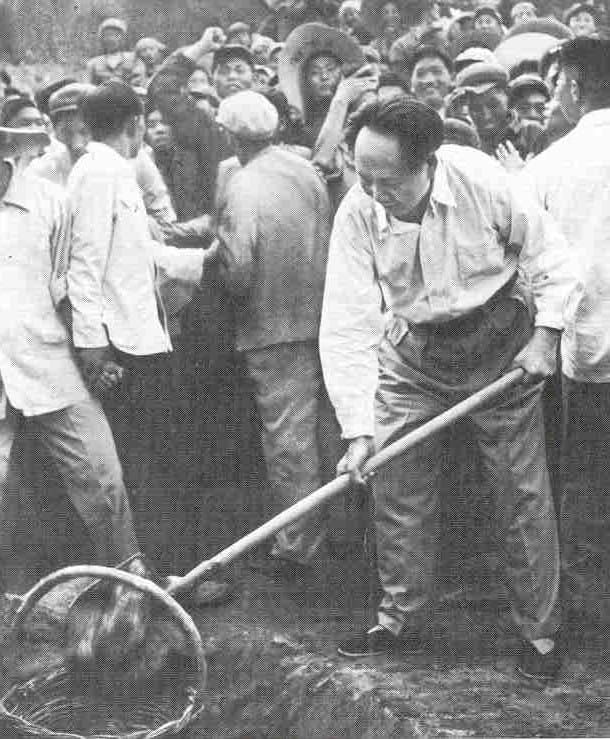
That is exactly the sort of thing the Great Leap Forward loved. That kind of theater was its main output other than human misery. The campaign had a profound weakness for visible exertion. It did not take very much to get them excited.
- A furnace smoking.
- A mess hall feeding hundreds.
- A field ripped open.
- A pest pile counted.
- A harvest report with an impossible number.
These were all different forms of the same comfort. The state wanted to see transformation. If the transformation was visible enough, it could be mistaken for real.
Deep plowing gave the commune a field that looked worked.
Of course, it also gave the field damaged soil, exhausted labor, and another opportunity for experts and peasants to discover that the safest response to idiocy might be obedience to it.
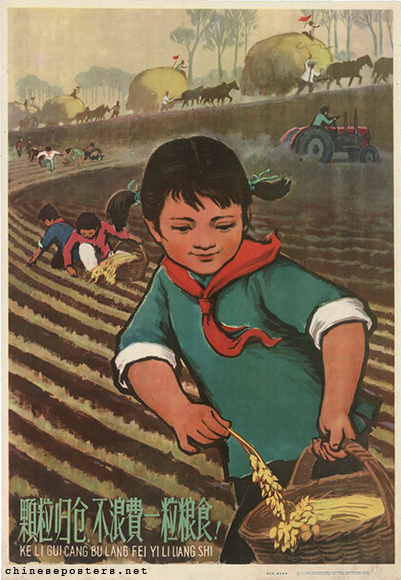
Just imagine being the farmer in this situation.
You do, in fact, know your field. Not perfectly. Not romantically. You are not a mystical soil prophet. But you have worked this land. You know what this ground feels like when it is right. You know what happens when a method makes no sense. You know which parts of the field flood, which parts crack, which parts fail, which parts can be pushed, and which parts should be left alone.
Then, a campaign arrives with a theory. The theory is based on political slogans. Those slogans are backed by cadres. Those cadres have authority.
And that authority has consequences.
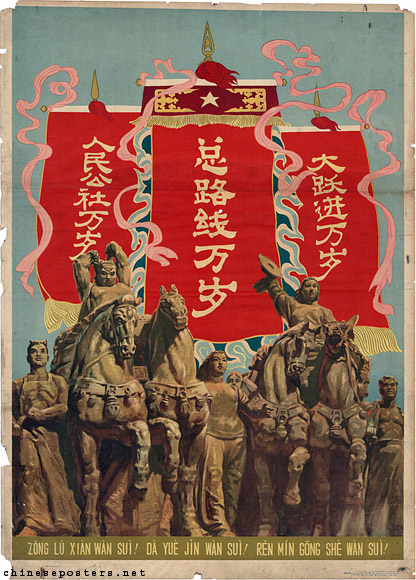
You can definitely say the soil should not be treated this way. You can say the labor is being wasted. You can say the method will not produce the promised yield. You can say the field is not built for this. They won't listen to you, but you can say it.
Or, you can plow, and avoid the consequences.
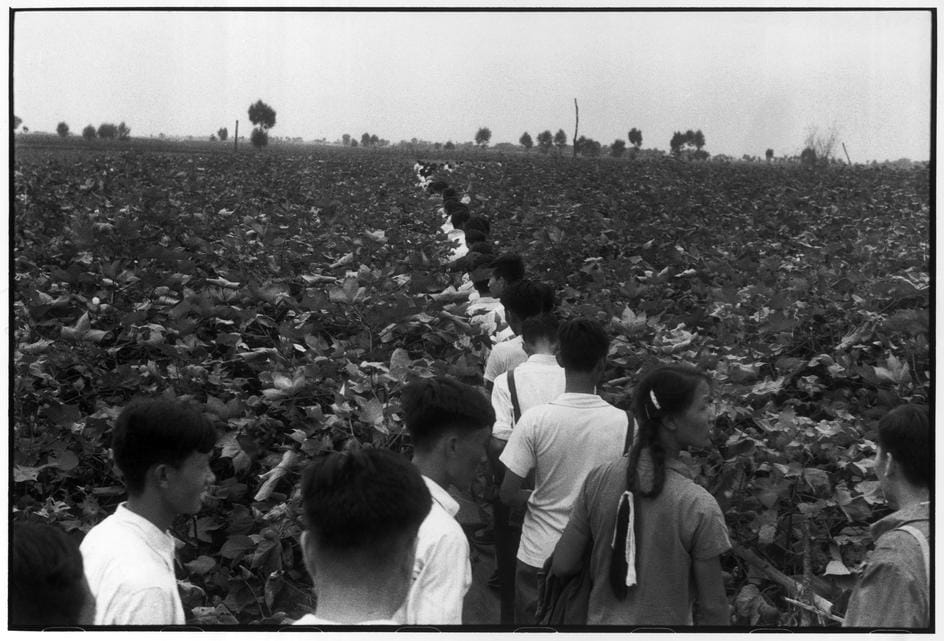
A great deal of human history can be summarized in that choice.
The Soils Enter Politics.
There is something especially deranged about politicized agriculture, because this field keeps producing objective feedback.
A speech can float around for years. A theory can be reinterpreted. A report can be revised. An ideological formula can survive contradiction by claiming the contradiction is actually just deeper proof.
A crop? Less accommodating. Eventually, something either grows here or it does not.
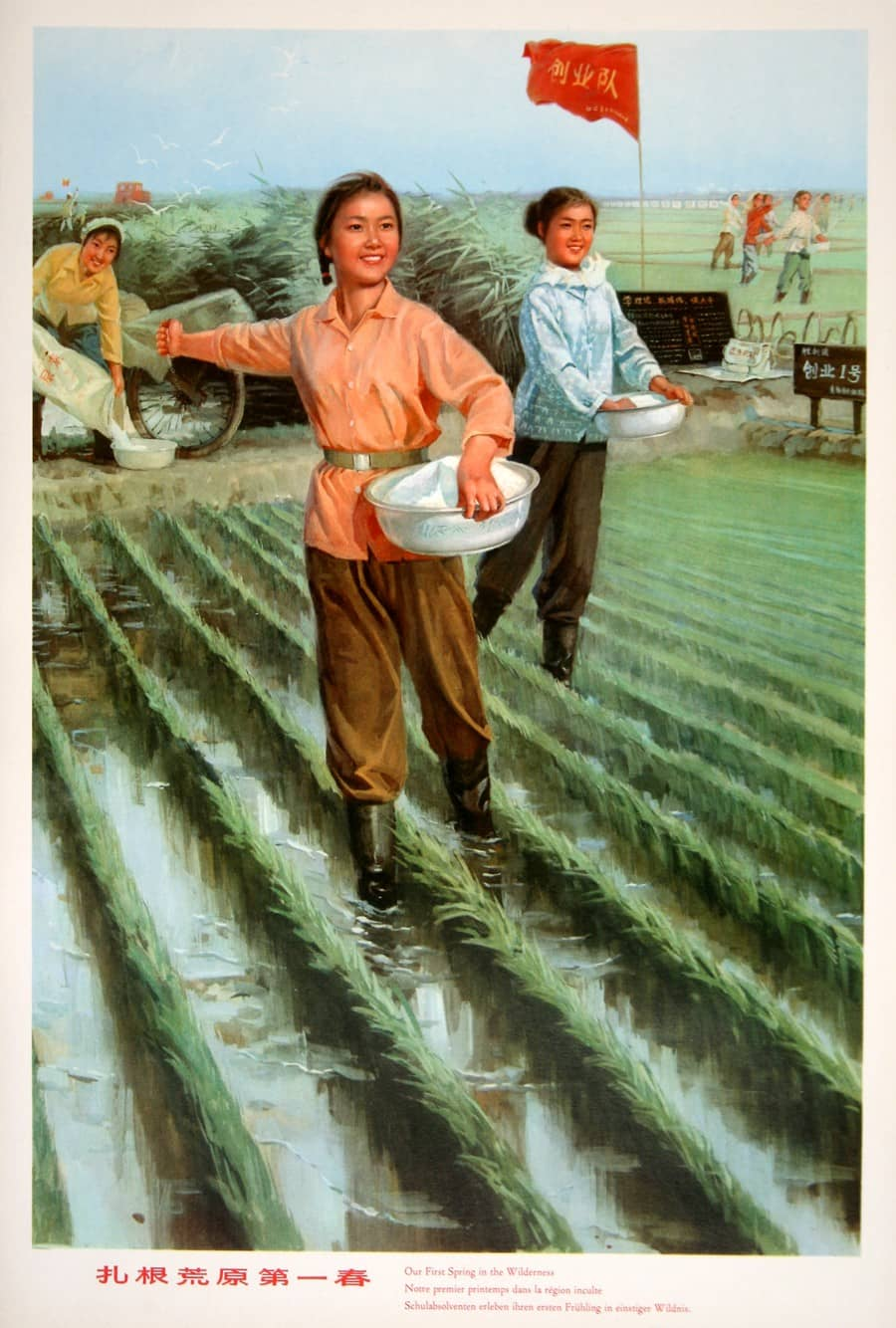
This should have made agriculture a corrective field. This should have been harder to lie about than party doctrine. If the harvest fails, the harvest fails. If the seeds do not take, they do not take. If the method ruins the field, the ruined field is right there.
But the Great Leap Forward would never be held back by such sabotage. It found a way around this. It did not need the field to stop giving feedback.
It just needed the political system to stop receiving it.
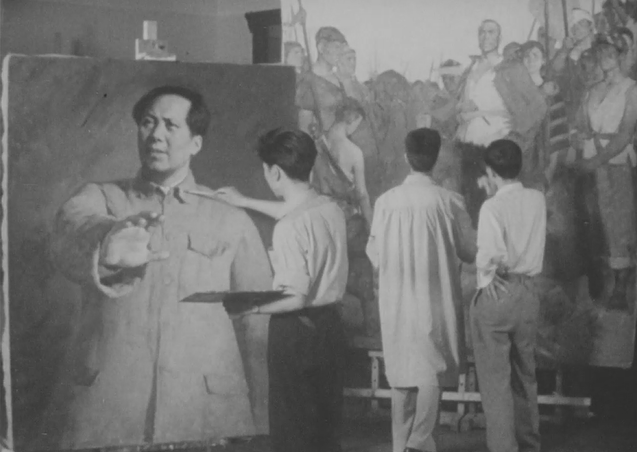
The soil could still speak. The plants could still fail. The farmers could still know. And the hungry could still weaken.
But the official route from field condition to policy correction had been contaminated. Reality still existed, but it had to pass through campaign language, cadre incentives, fear of rightism, Mao’s expectations, inflated targets, and the local need to survive politically.
By the time the field’s message traveled upward, it had often become its polar opposite.
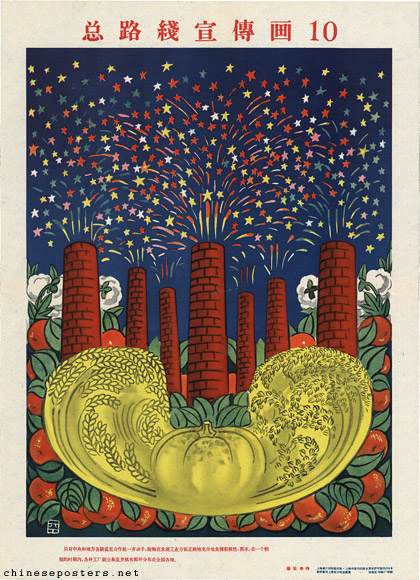
Poor yields became bumper harvests.
Failed experiments became revolutionary success.
Local objections became conservative thinking.
Hunger became concealment, sabotage, or insufficient mobilization.
The soils had entered politics.
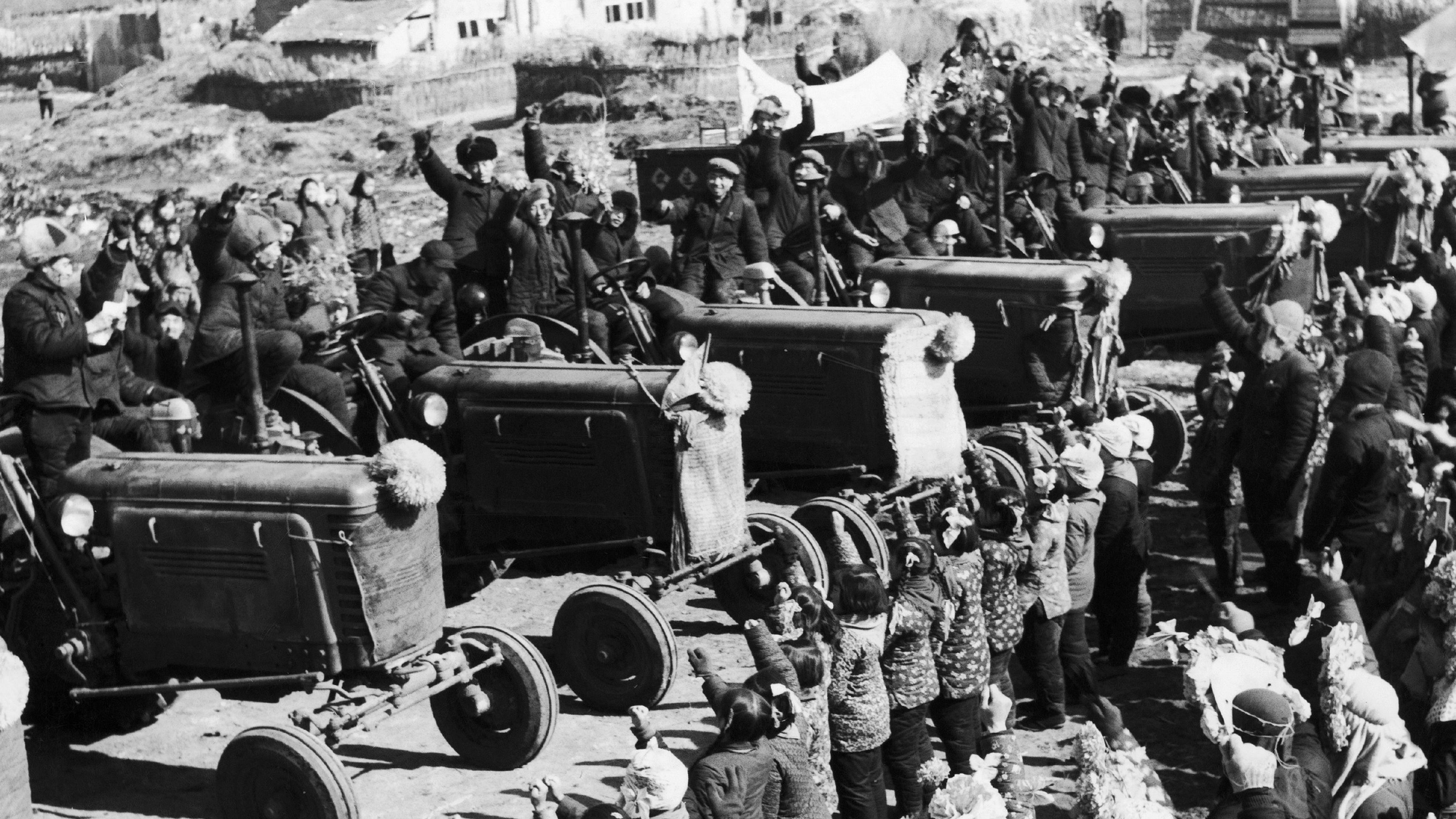
This is not a metaphor for the people doing the farming. It is a diagnosis of the system around them. The extant field was no longer permitted to be a field first. It had to become evidence in a national argument about the Leap.
That is a lethal demotion in ontological status.
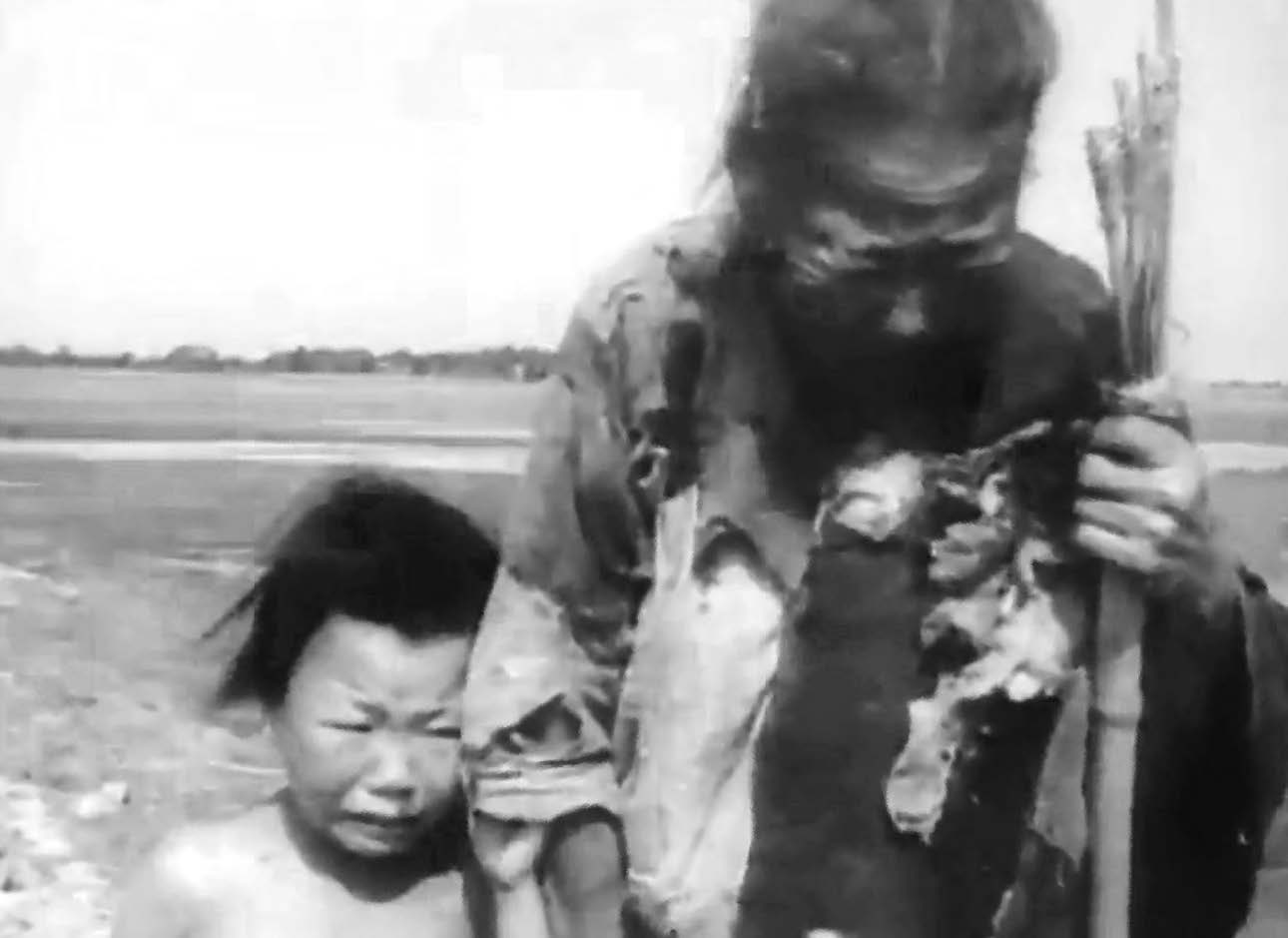
When the field is allowed to be a field, failure can teach. When the field becomes a political symbol, failure must be explained away until the explanation finally kills somebody.
Close Planting.
The soils were now devoted revolutionaries. Then came the seeds.
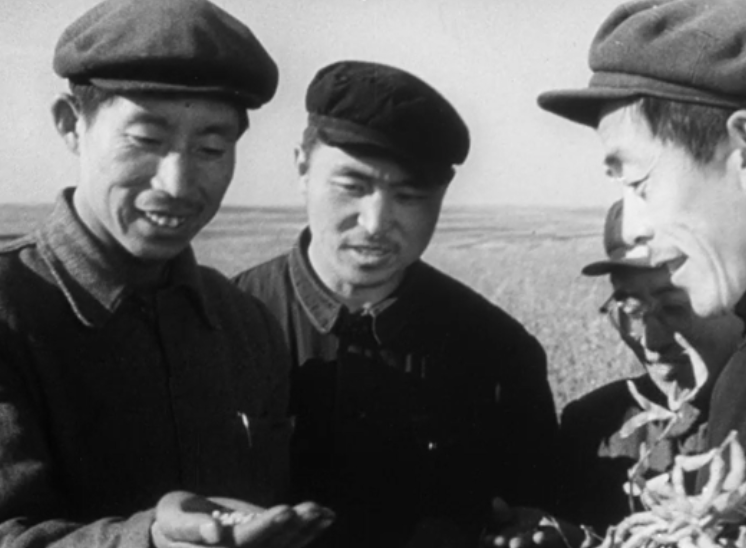
This is perhaps the cleanest example of Great Leap agricultural thought, because it manages to be wrong in the exact style of the whole campaign.
The idea was simple:
Plant crops closer together.
Much closer. If one plant produces grain, many plants should produce more grain. This is only logical. If a field can hold this many plants, well, then perhaps it can hold twice as many. Or ten times as many? Or another amount better suited to propaganda than photosynthesis.
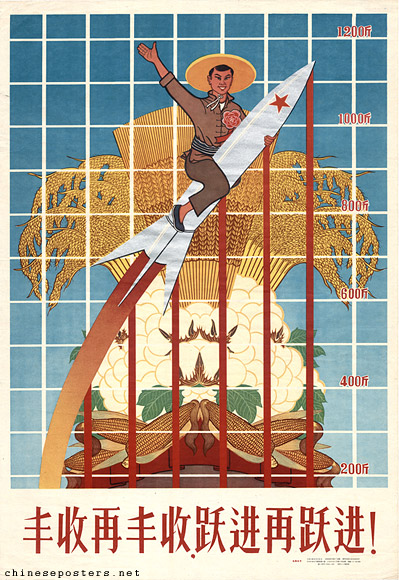
There was a theory behind it, or at least a thing calling itself one:
Crops of the same kind would not compete with one another in the ordinary way. These were natural allies. They would grow together. They would support each other. The field, just like the people, could be collectivized into greater productivity.
This is a beautiful example of being wrong.
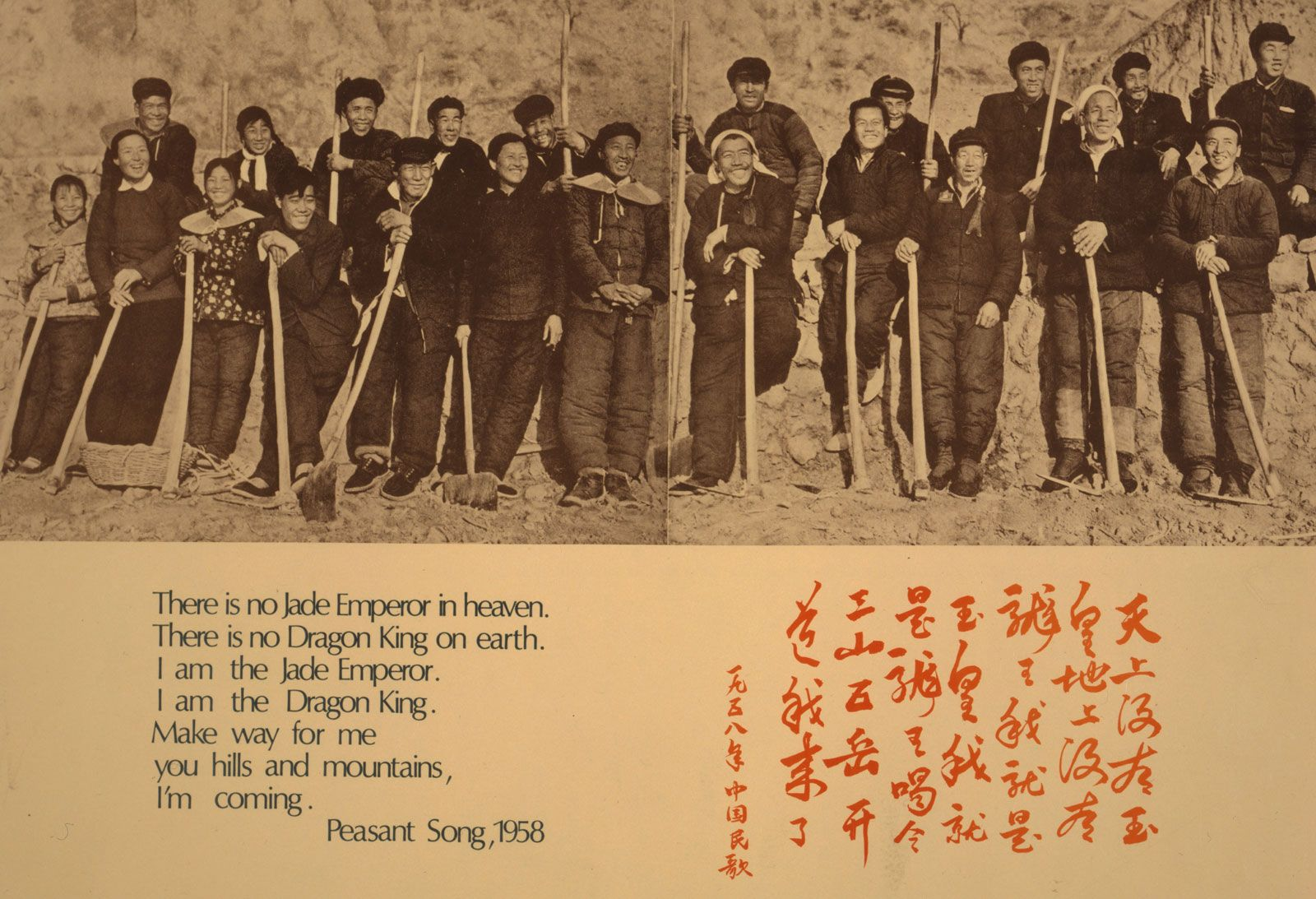
Plants, tragically, do not become comrades because they share a species.
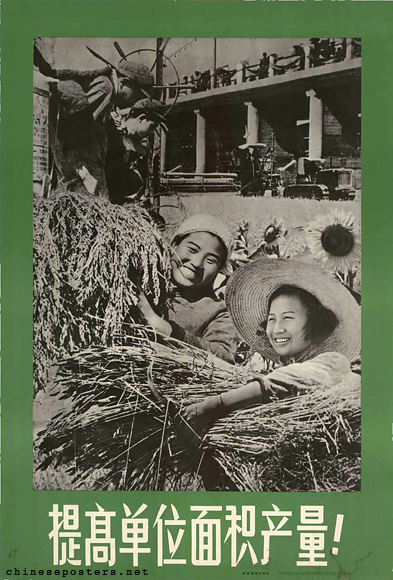
Wheat does not stop needing sunlight because the Party has abolished selfishness.
Seedlings are too ignorant to consult the agricultural line before taking nutrients.
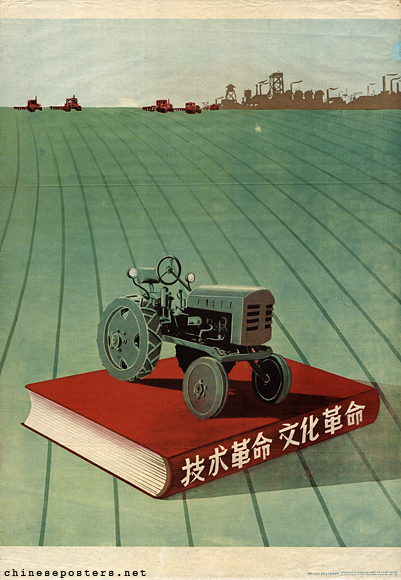
In the real world, if you plant too densely, plants compete. They shade each other. They weaken. They become vulnerable to disease. They can produce less, not more. The field does not become generous because the state has discovered a more politically satisfying spacing pattern.
The plants were just not party members.
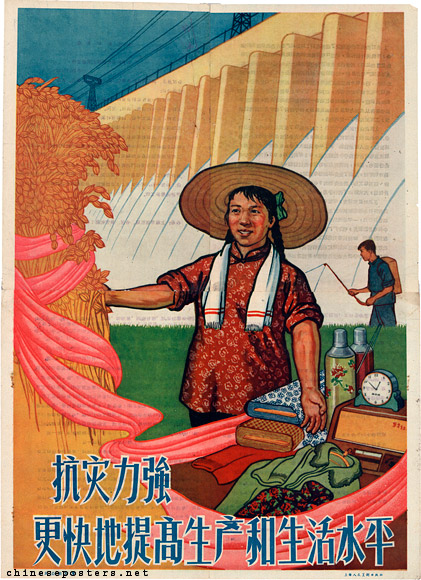
For some reason, in the Great Leap Forward, the boundary between social theory and biological reality kept getting violated like this. Class struggle, mass mobilization, collectivism, and revolutionary will were treated as if they could somehow cross directly into agriculture and reorganize plant behavior.
At the human scale, collectivization already had problems. At the plant scale, it was absurdist comedy with a death toll.
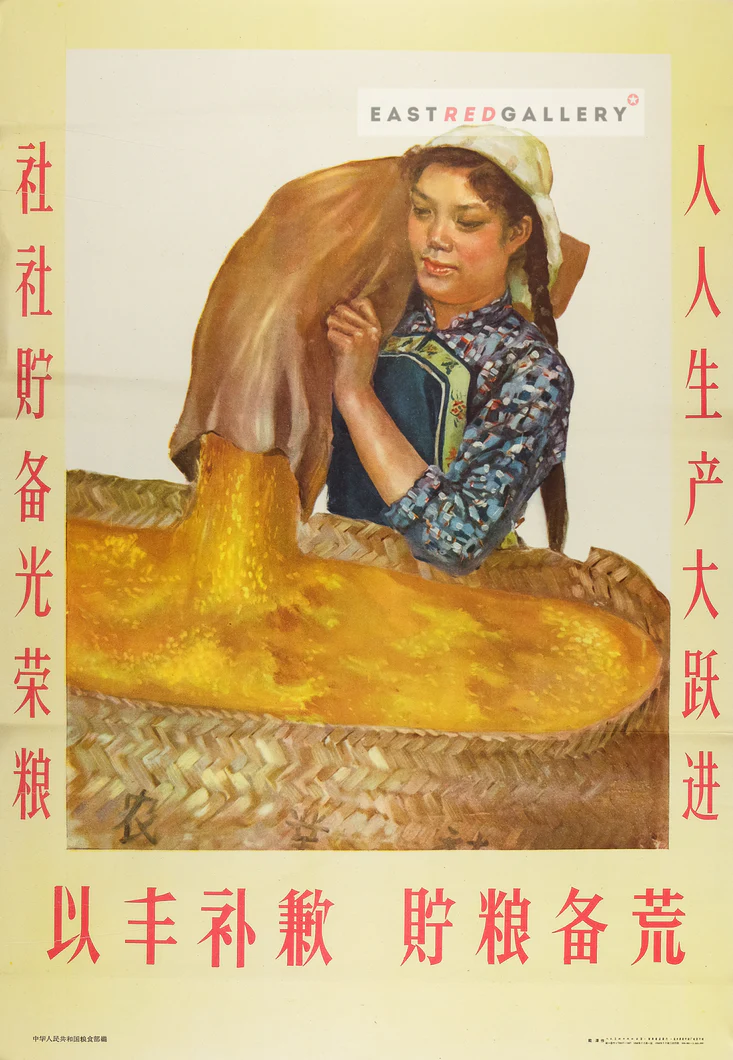
You can put people into a commune. You can make them attend all kinds of meetings. You can make them repeat slogans. You can make them eat in the same hall. You can make them report success. You can make them hide fear.
You really just cannot make crops feel solidarity.
The close-planted field did not become socialist. It did become crowded.
The Demonstration Plot.
Every distortion needs a stage to spread.
For Great Leap agriculture, one stage was the demonstration plot: the little piece of managed spectacle where impossible yields could be displayed, photographed, repeated, believed, exaggerated, and then fed back into policy as if the stage were somehow the real field.
This is how the absurdity learned to travel. This is how it became so portable.
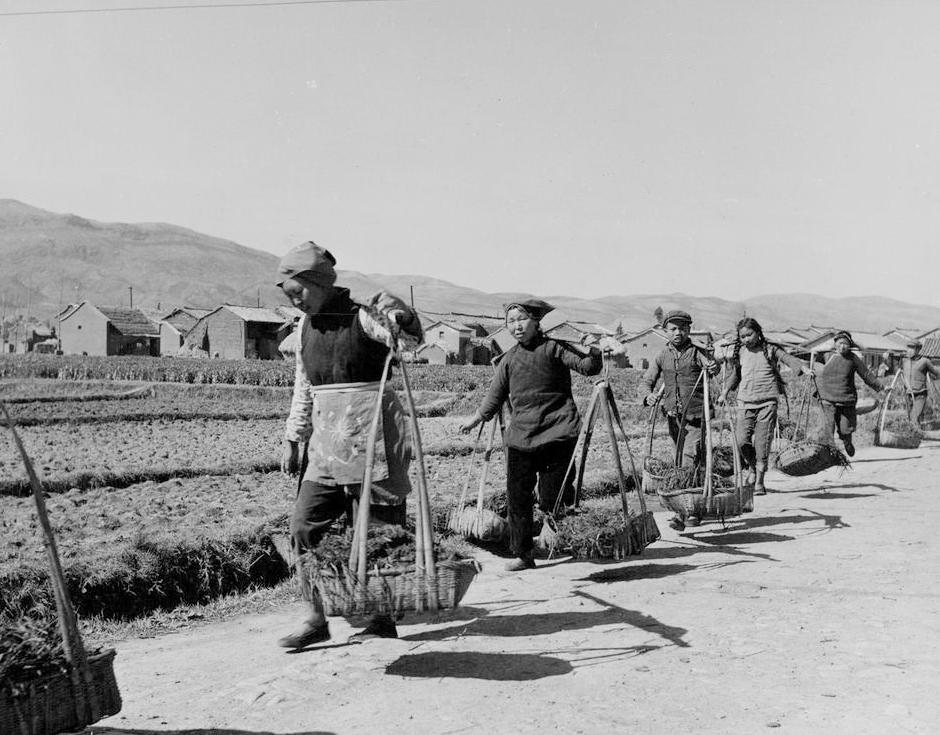
A plot is selected. It is over-fertilized. It is intensely managed. It receives labor and attention that cannot be replicated everywhere. Sometimes plants are transplanted into it to create the appearance of impossible density. Sometimes visitors see only what they are meant to see. Sometimes newspapers do the rest. The demonstration becomes a story. The story becomes a number. The number becomes a target. That target becomes pressure. That pressure becomes false reporting. Those false reports become procurement. And that procurement becomes hunger.
This plot is the Great Leap Forward in miniature. A staged exception becomes a general command. The campaign sees a miracle and asks every field in China why the hell it is being so lazy.
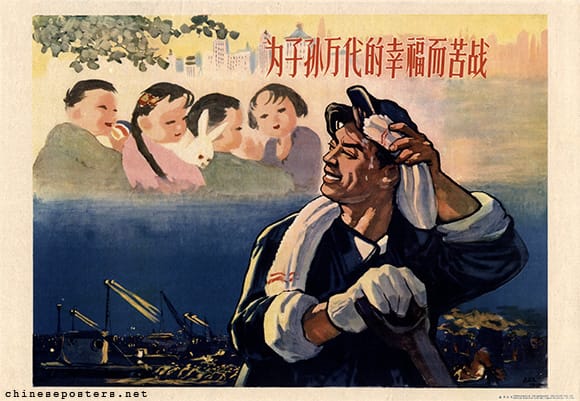
This is not only fraud, though fraud matters. It is also a failure to understand scale.
A demonstration plot is not agriculture.
A laboratory condition is not a province.
A propaganda photo is not a harvest.
An exceptional case is not a reachable path.
Modal Path Ethics would describe this as a failure to preserve the difference between an isolated branch and a general field opening. The demonstration plot may show that something can be forced under unusual conditions. That does not mean the wider field can follow. A repair path has to be reachable through the actual conditions of the field, not through a stage-managed fragment designed to flatter the plan.
The Great Leap Forward repeatedly failed this test. It mistook the exceptional image for the reachable future.
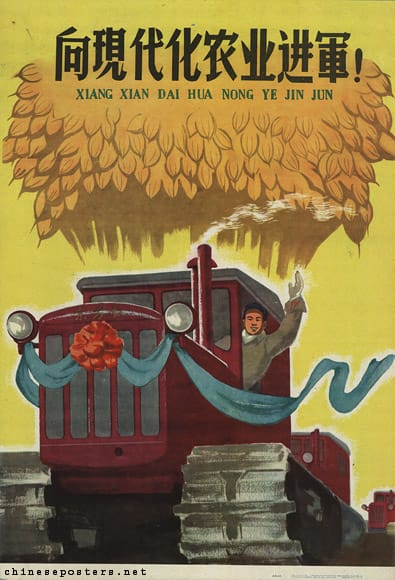
It did this with steel.
It did this with agriculture.
It did this with communal abundance.
It did this with pest eradication.
It did this with reported harvests.
The demonstration plot is therefore not a side detail. This is the campaign’s epistemology written in dirt.
- Show the center what the center wants.
- Turn the center’s desire into a number.
- And make the number everyone else’s problem.
The Field Becomes a Theater.
At this point, the field is doing too many jobs.
This thing is supposed to grow food.
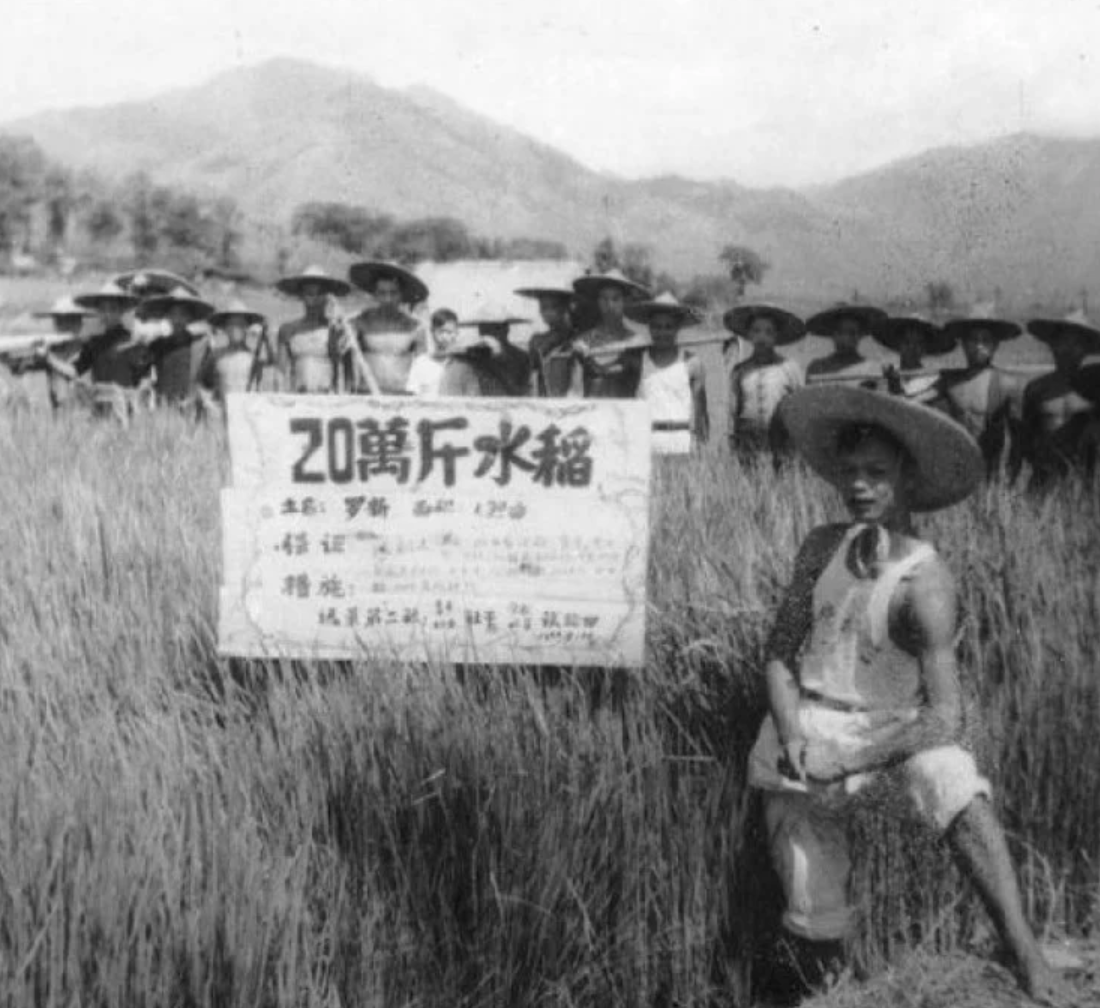
It is also supposed to prove Mao right.
It is also supposed to demonstrate the superiority of socialist agriculture.
It is also supposed to justify the commune.
It is also supposed to show that China can overtake the old industrial powers.
It is also supposed to confirm that peasants, once mobilized, can overcome material constraints.
It is also supposed to provide grain for the cities.
It is also supposed to provide grain for procurement.
It is also supposed to provide grain for exports, aid, and state priorities.
It is also supposed to provide enough food for the people who actually produced it.
And that last job will turn out to be the least politically important, which tells you almost everything.
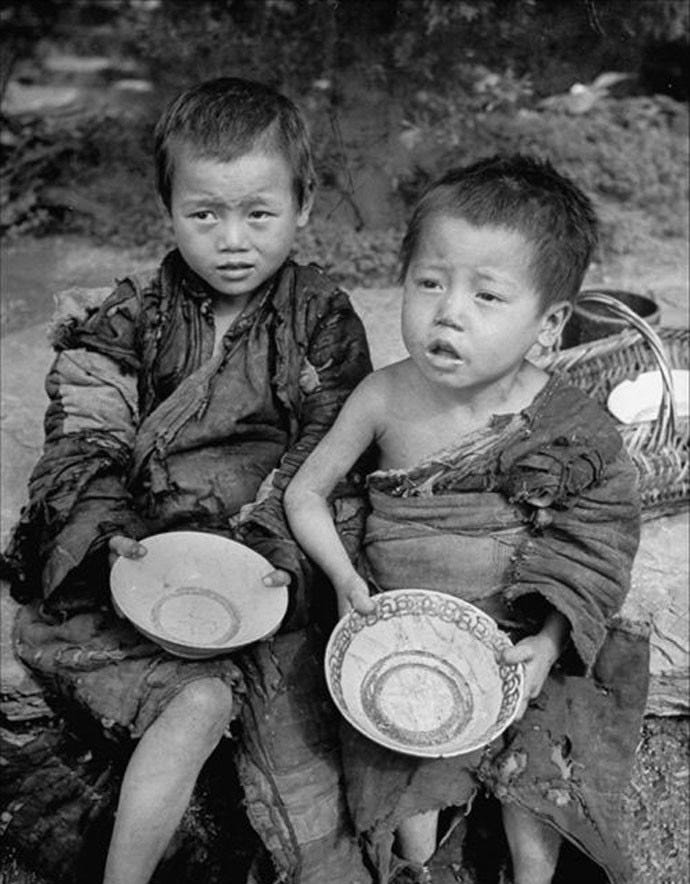
A field can grow food. That's what that does. A field cannot safely be made responsible for validating your entire historical theory.
The Great Leap Forward overloaded agriculture with symbolic tasks. Once the field had to prove the campaign correct, ordinary agronomic failure became politically dangerous. Crop growth was no longer a material outcome. It was a verdict on the Leap. This is why fake abundance became so attractive.
The campaign had created an impossible emotional economy. Everyone needed the harvest to be enormous. Mao needed it. Provincial leaders needed it. Local cadres needed it. Communes needed it. Newspapers needed it. The global revolutionary image needed it. China’s claim to be compressing development needed it.
Reality was being the least cooperative participant in the room. So the system began replacing reality with performance.
The Night Shift.
The Great Leap Forward also had a magnificent talent for confusing human exhaustion with progress.
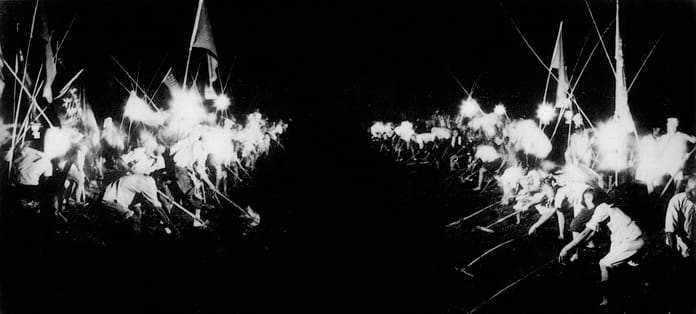
If a field did not produce enough, more labor could always be thrown at it. If the labor was tired, that proved the labor had entered history. If the day ended, there was always the moon. If the moon was insufficient, the stars could be pressed into service as witnesses.
The slogan had a poetic madness to it:
“Catch the moon and stars.”
People worked absurd hours. They were sent into fields, furnaces, water projects, construction sites, pest campaigns, and communal tasks with the expectation that human energy could be somehow stretched or supplemented by politics. Sleep became suspicious. Why are you doing that? We have socialism now. Rest became backward. The body became another reluctant field to be overplanted.
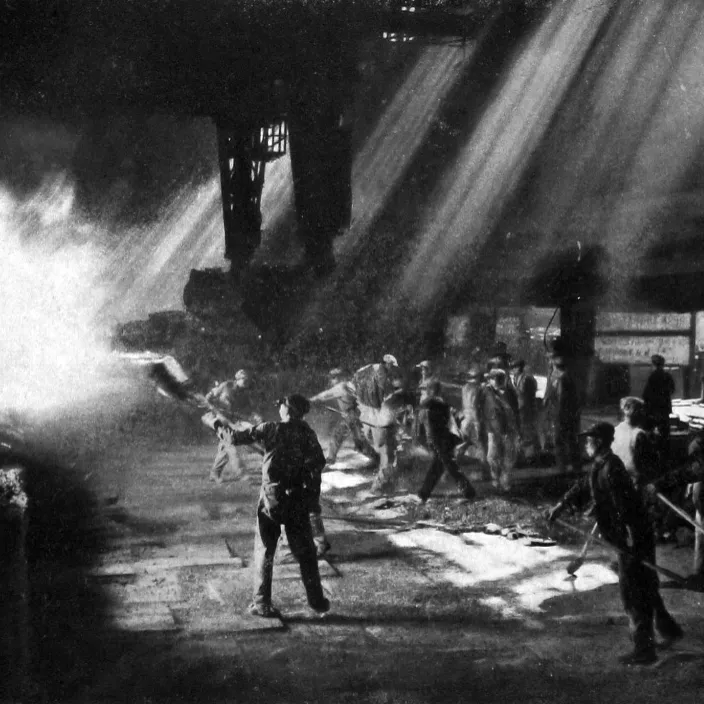
This is a common feature of distortion systems. They treat fatigue as an ideological problem to be solved in house.
A tired person is not understood as a body reaching a limit. The tired person is insufficiently committed, insufficiently organized, insufficiently inspired, insufficiently conscious. The system does not ask whether the labor demand is rational. It just asks whether the worker has failed to become the kind of person the demand requires. This is a much easier to question to answer.
This is how exploitation hides inside uplift. The campaign tells people they are making history. That may even be partly true. Then, it uses the grandeur of history to steal sleep, judgment, health, time, and the small spaces in which people might notice the plan is fucking insane.
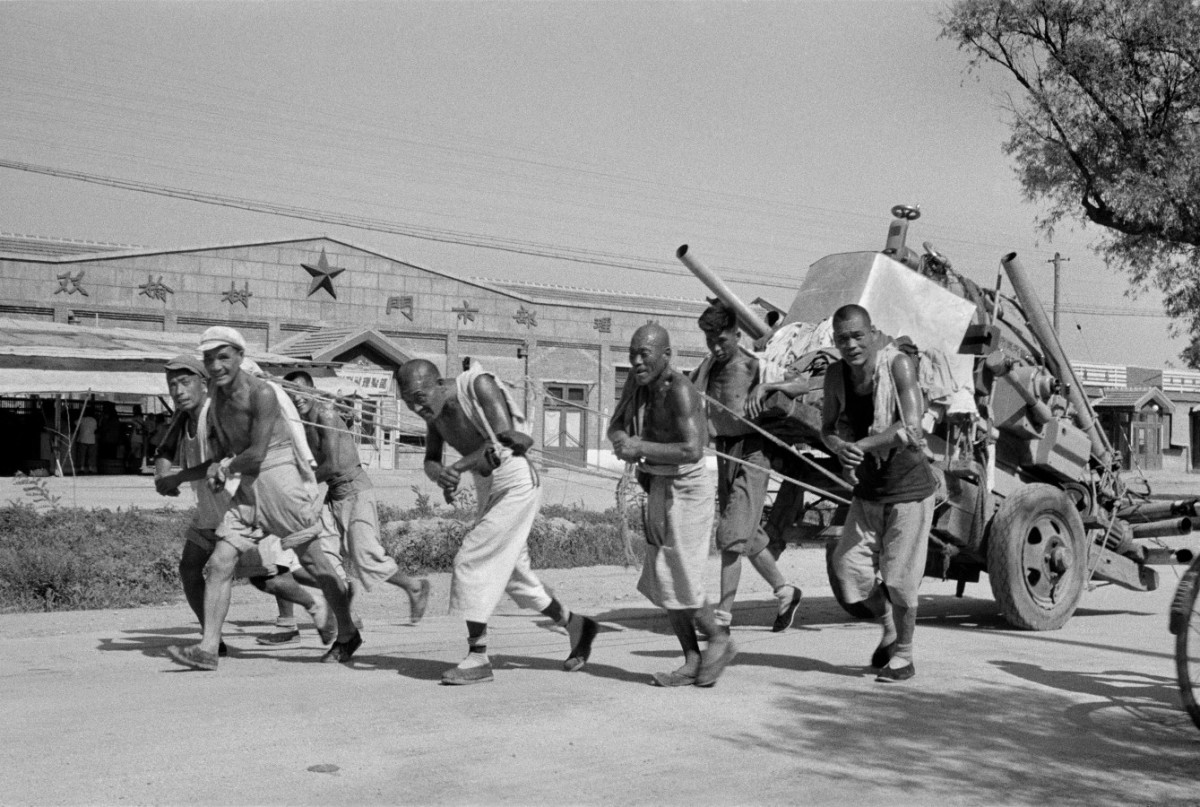
The field needed attentive labor. It got exhausted labor.
The crops needed timing. They got campaigns.
The soil needed knowledge. It got enthusiasm.
The people needed food. They got meetings.
The campaign called all of this “mobilization.”
The human body called it something else.
The General War on Scale.
Deep plowing and close planting were not alone. They belonged to a larger culture of agricultural command: tool reform, irrigation drives, water conservancy projects, fertilization campaigns, seed campaigns, pest campaigns, and mass efforts that often began with real problems and then lost their goddamned minds on first contact with scale.
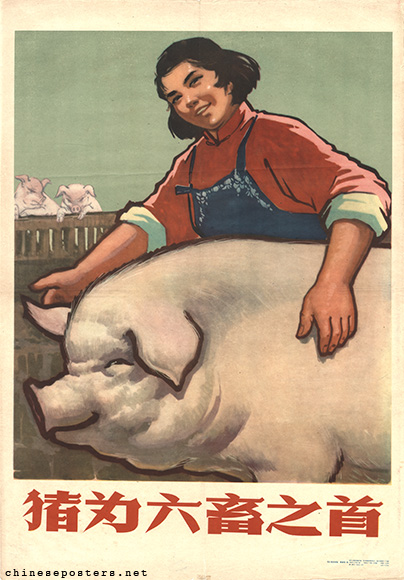
China did need better irrigation.
China did need improved tools.
China did need better seeds.
China did need fertilizer.
China did need water management.
This is what makes the period so analytically important. The issue was not that every stated goal was foolish. Many of the Party's goals were valid. Some were also urgent. Some later improvements in Chinese agriculture would indeed depend on infrastructure, irrigation, inputs, and organization.
But the Great Leap Forward had a gift for transmuting valid goals into destructive campaigns.
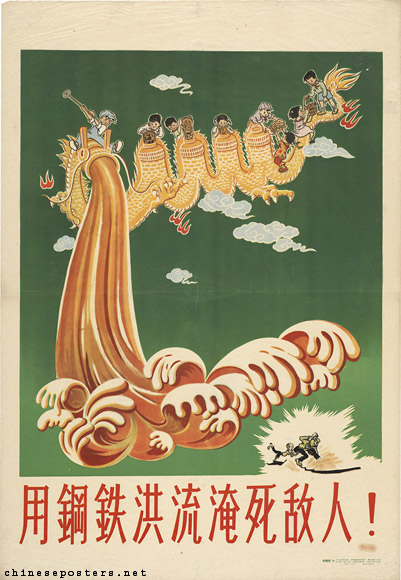
A water project requires engineering. The campaign supplied bodies instead.
Tool improvement requires design, testing, materials, and adaptation. The campaign brought slogans and urgency.
Fertilizer requires knowledge of soil and crop needs. The campaign offered targets.
Seed improvement requires selection, evidence, and time. The campaign just had miracles.
The difference here is not subtle.
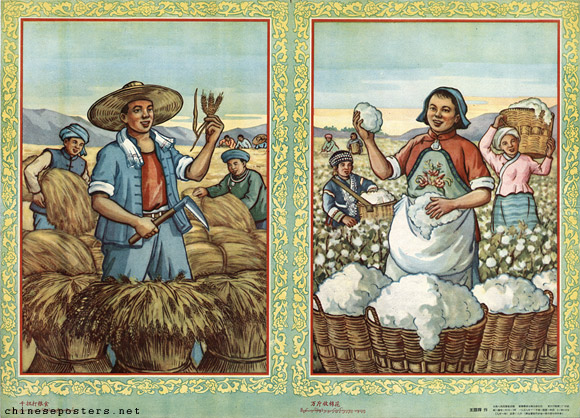
The valid version asks: what does this field need, and what path can actually provide it?
The distorted version says: the field needs what history has demanded, and any resistance by matter is a political inconvenience.
This is how states do stupid things with serious faces. They begin from a real need, choose a grand category of intervention, expand it way too fucking quickly, suppress local correction, and then interpret the resulting damage as proof that even more mobilization is now required.
The deeper plow fails? Plow harder, baby.
The dense planting fails? We need to improve consciousness.
The water project breaks? Send more labor.
The crop fails? Report the demonstration plot.
The people are hungry? We must find the hidden grain.
The field keeps giving answers, so the campaign keeps changing the question.
The Farmer and the Agronomist: Enemies of History.
There are two figures the Great Leap Forward consistently needed to humiliate to survive: the farmer and the agronomist.
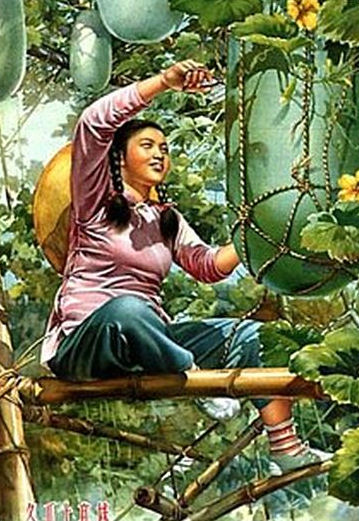
The annoying farmer knew too much locally.
The confounding agronomist knew too much technically.
Both forms of knowledge were dangerous when they interfered with the campaign’s desired reality.
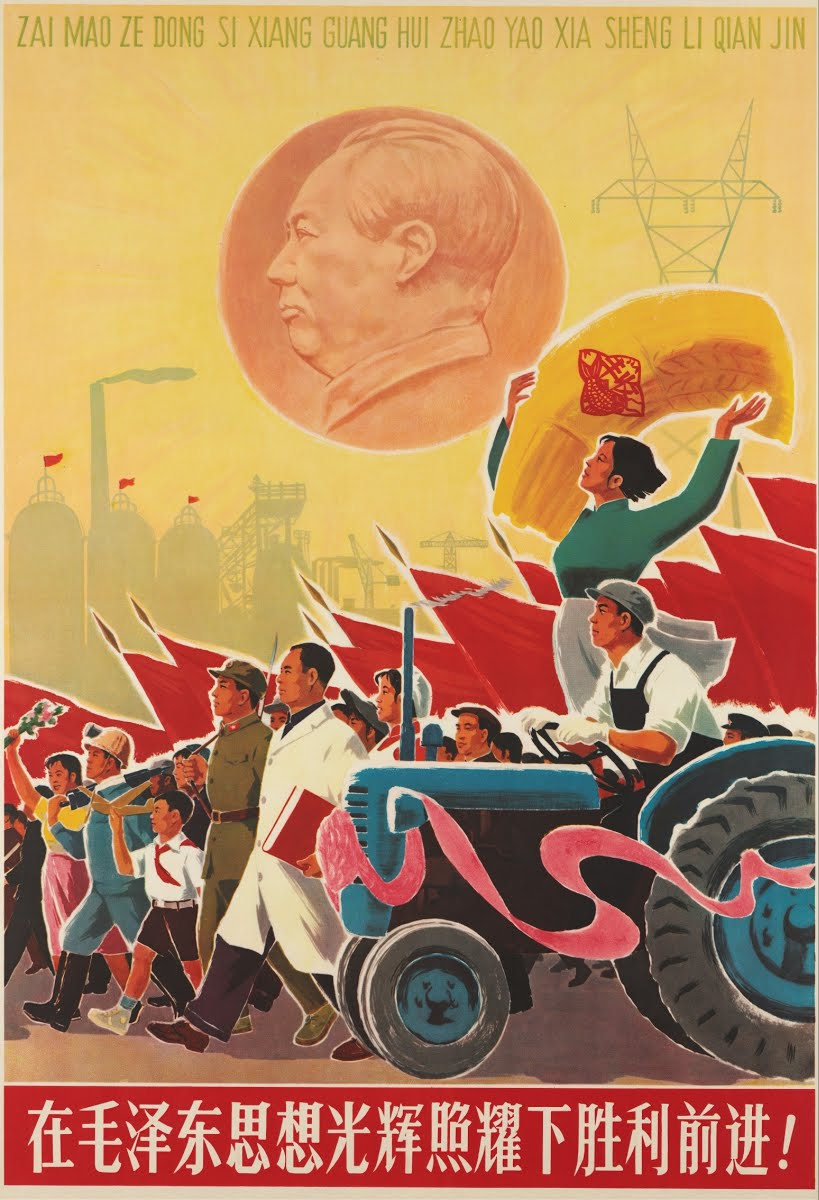
This does not mean either figure was always right. Farmers can inherit bad practices. Experts can be arrogant, narrow, corrupt, cowardly, or captured by institutions. Local knowledge can become superstition, and technical knowledge can ignore social reality.
So, a sane repair field keeps these forms of knowledge in tension. It lets them correct each other.
The Great Leap Forward did not want tension. Tension is friction. This sounds like sabotage.
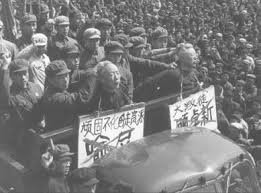
It wanted the line.
The farmer’s knowledge of a field had to submit to the campaign. The agronomist’s knowledge of crops had to submit to politics. Local variation had to submit to national targets. Technical warning had to submit to revolutionary confidence.
This is how the field eventually lost all its witnesses. Not because everyone was ignorant. Because too many people had to behave as if ignorance were loyalty.
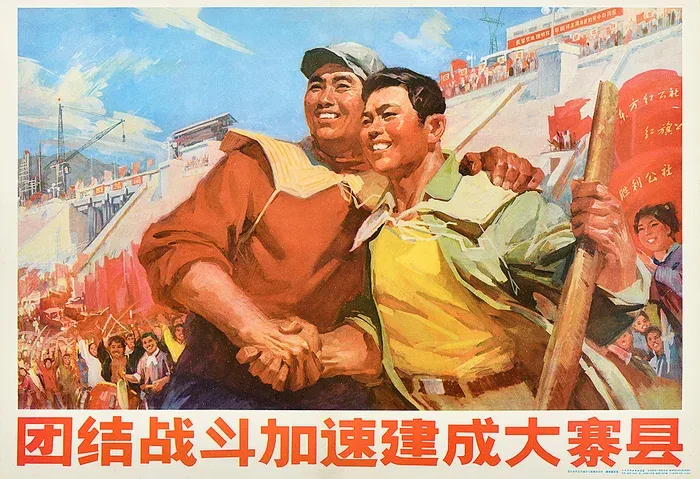
The farmer could see the crowding. The agronomist could see the bad method. The hungry person could see the bowl.
And the state could see the wonderful report. Guess which one counted.
The Paper Harvest Is Born.
Once the agricultural campaign had done enough damage, the system faced a choice.
- It could accept that the methods were obviously failing.
- Or, it could announce record-breaking success.
This was not a difficult choice for a terrified hierarchy. The paper harvest was born.
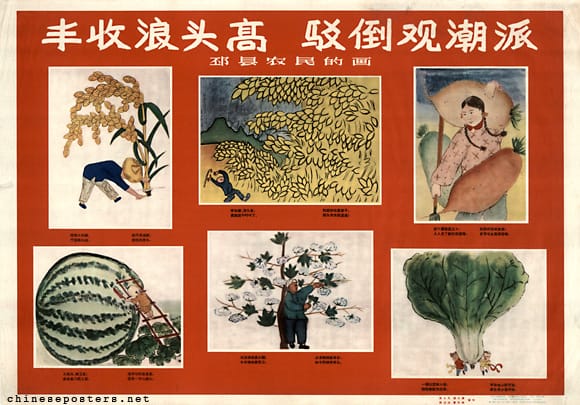
At first, this may look like a later issue, something that belongs in the section on procurement and famine. It does belong there, but it begins here, in the agricultural theater. Impossible farming methods require impossible results. If the results are not impossible, then the methods are exposed. If the methods are exposed, the campaign is exposed. If the campaign is exposed, Mao is exposed. If Mao is exposed, everyone below him is in danger. This can not happen.
So, the yield reports inflate. Then, they inflate again.
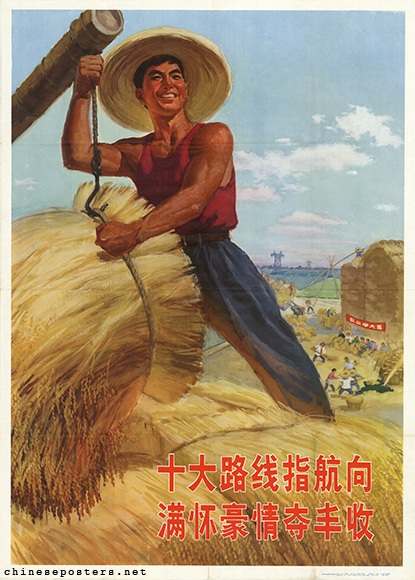
A normal harvest becomes a bumper harvest. A bumper harvest becomes a miracle. A miracle becomes a “sputnik,” launched upward into the political sky. The number travels faster than grain ever possibly could. It reaches officials, newspapers, cadres, planners, and the Chairman. It proves that China is leaping because everybody who would be punished for contradicting it agrees that China is, in fact, leaping.
Meanwhile, the field remains inconveniently physical. The Party never found a way around this part.
The crop just does not increase because the number got exciting.
The grain does not appear because the report has flown upward.
The peasant does not eat the adjective “record-breaking,” even after attending the meetings.
But the state can still procure against the number. The state has no problem with living inside Paper China. That is the dangerous part.
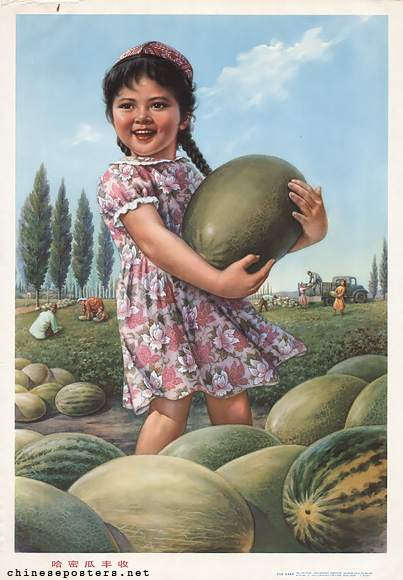
A fake harvest is not harmless propaganda. It becomes a claim on real extant grain. Once the state believes the commune has produced abundance, it can requisition abundance. The missing grain now has to come from somewhere. It comes from local stores, local bowls, local bodies, and the future health of the very people the campaign says it is liberating.
This is where agricultural nonsense becomes famine machinery.
- The deep plow damages the field.
- The close planting weakens the crop.
- The demonstration plot flatters the center.
- The report invents abundance.
- The state believes the report just enough to take away the grain.
- The field now pays in hunger.
Everything living is converted into something reportable. And once it is reportable, it can be used against the living.
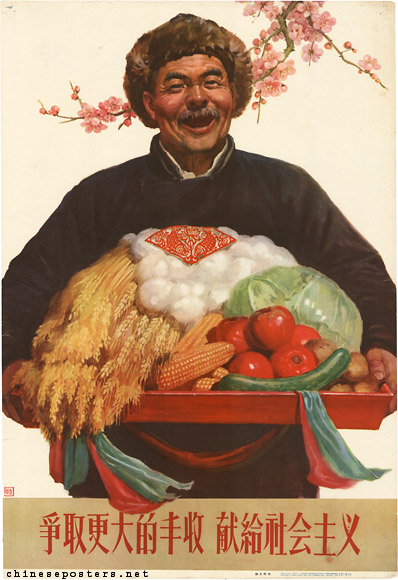
By now, the campaign had reorganized households, damaged local survival systems, politicized agriculture, exhausted labor, and begun teaching the reporting apparatus how to turn fantasy into official grain. China was leaping.
But a proper distortion does not stop after misreading people and plants. It needs an animal to round out the set.
It needs something visible, blameable, countable, killable, and small enough to make this state feel enormous.

Luckily, the Party found the sparrow. Quite small, compared to them.
The sparrow did eat grain.
This was the last useful thing the campaign understood before it lost its fucking mind again.
The Kulak.
A sparrow is a small bird. The thing weighs almost nothing. It flits around, lands where it wants, steals little edible things, and generally conducts itself like a feathered pickpocket. If you are trying to increase grain production, and you see sparrows pecking at grain, it is not insane to notice this is happening.
Then, the Great Leap Forward happened to the noticing, and it did become insane.
Now, that bird was not simply seen as a bird that sometimes ate grain. That would have been too modest, biological, and likely to invite follow-up questions like, “So, what else does this bird eat?” or “What exactly happens if we remove it?” or “Should someone who knows anything about any animals at all be placed within earshot of this decision, maybe?”
No. This is all friction. The facts here are clear:
The sparrow is an enemy of China.
That is much better if your goal is to make the field stupid at scale.
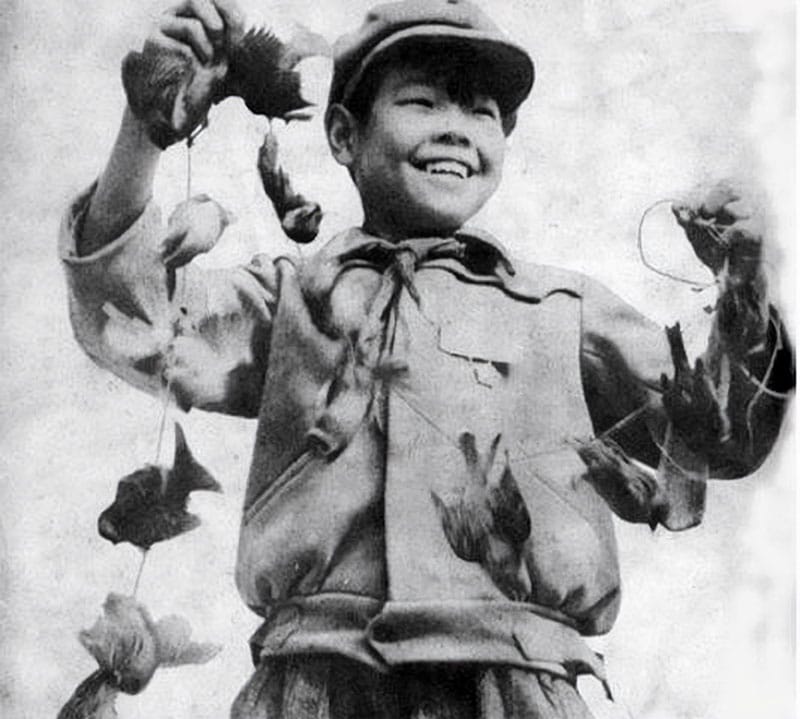
Enemies simplify things. Enemies also give people something to do. Plus, enemies can be counted up after they die. Enemies are wonderful for campaigns because the campaign does not need to understand them. It only needs to mobilize against them.
So the rightist sparrow was drafted into the moral universe of Maoist struggle.
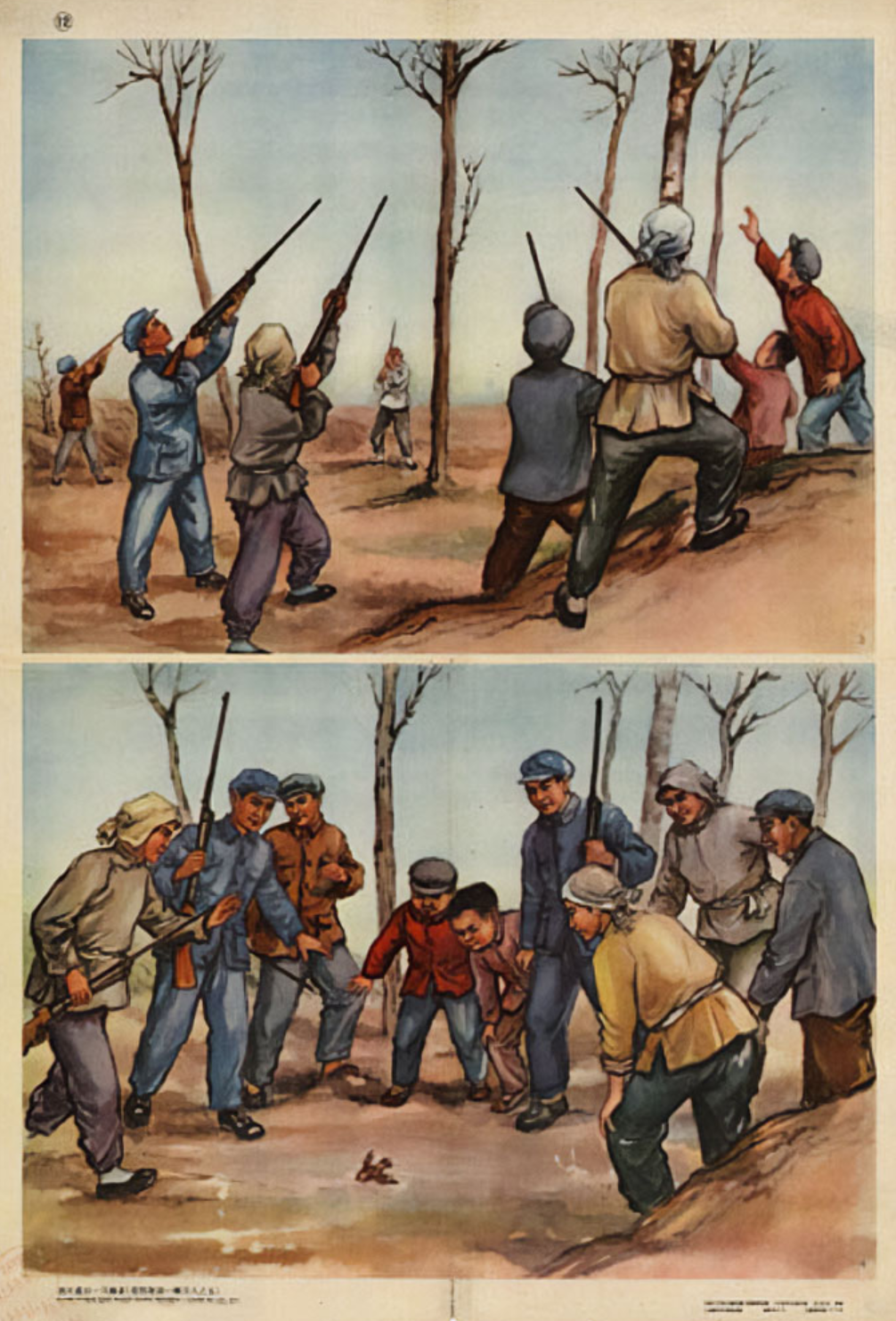
This bird was small. It was visible. It was blameable. It was clearly stealing from the people. It also had wings, which frankly already seems suspicious. Where did it get them?
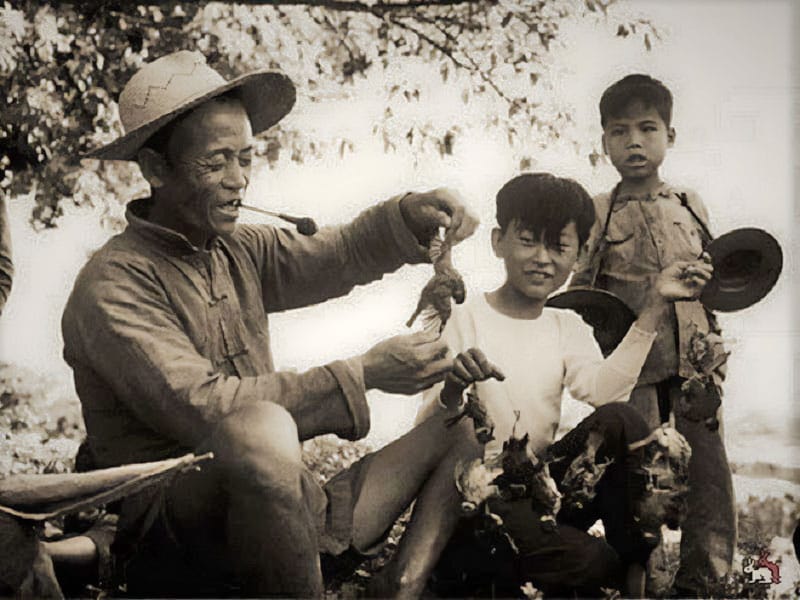
The sparrow could not defend itself in a meeting. It had no class consciousness. It had no revolutionary credentials. It had never once quoted the Chairman.

The case was open and shut.
Kill this fucking bird.
War on Tiny Bastards.
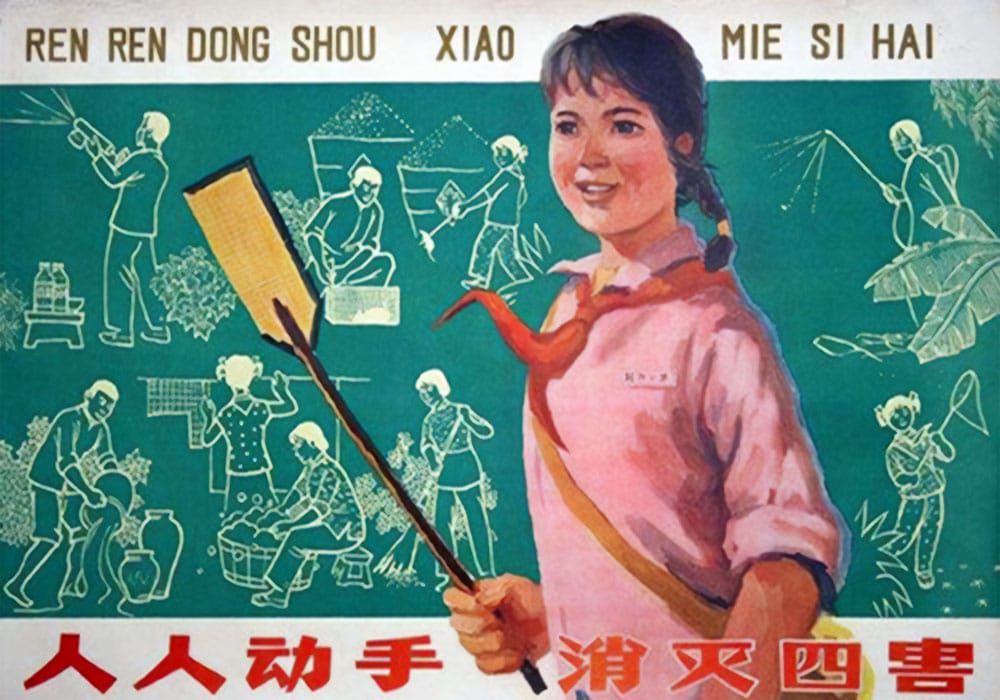
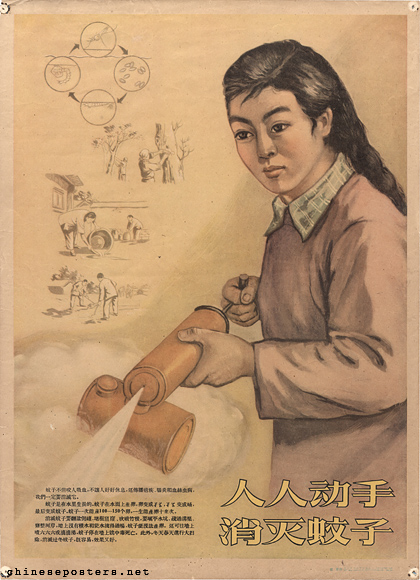
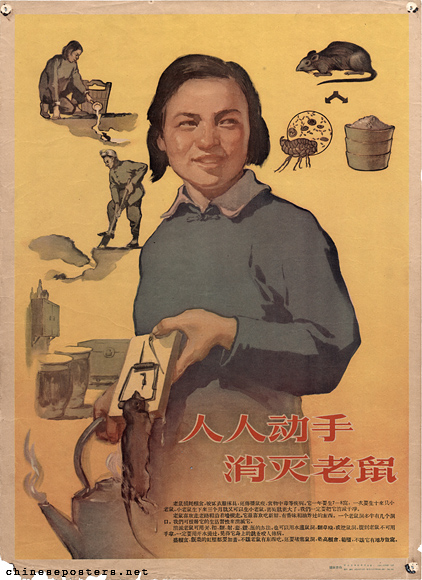
The Four Pests Campaign targeted rats, flies, mosquitoes, and sparrows.
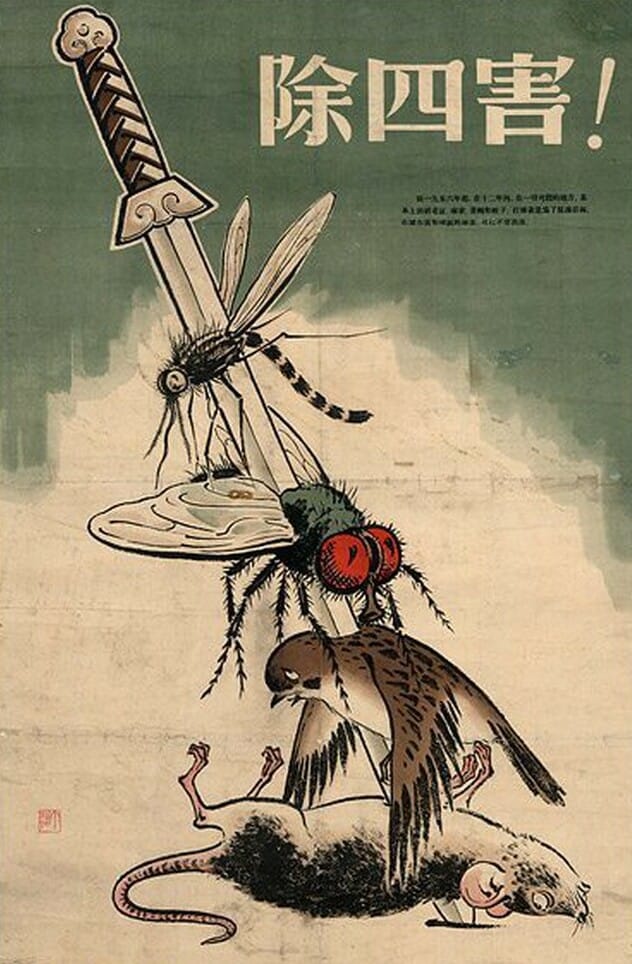
Okay, so three of these are very easy to understand. Nobody needs a long metaphysical argument against flies.
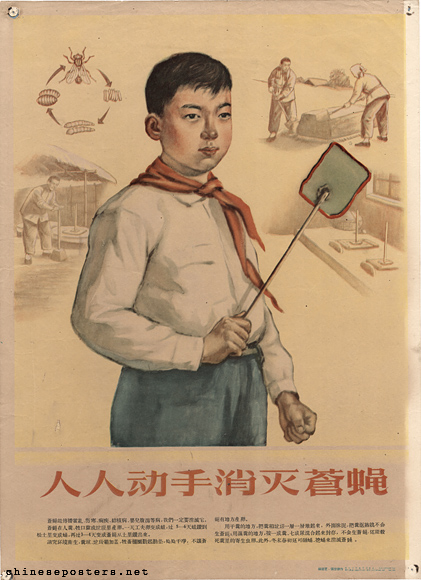
Mosquitoes have spent their entire evolutionary career making a case against themselves, so they can definitely go.
Rats, while intelligent, caring, and unfairly charming in certain contexts, are not generally welcome in grain storage. This is an understandable exclusion.
Then, there is the sparrow.
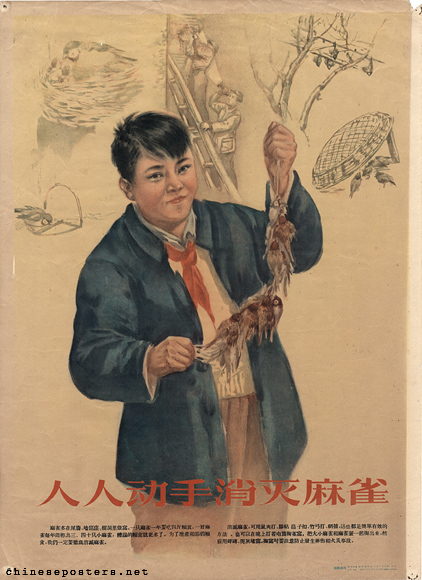
This is where the campaign finally becomes art.
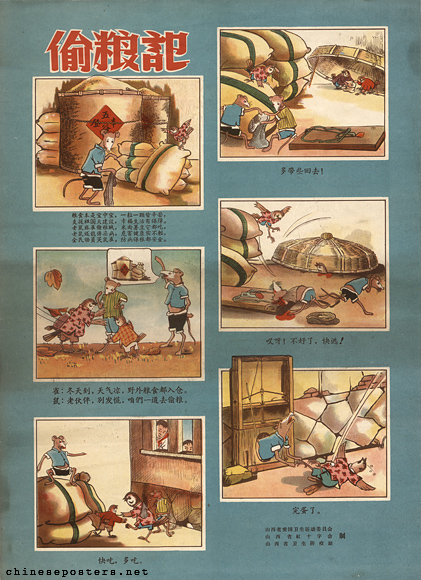
Because the sparrow was not like the others. The sparrow was not only a nuisance around grain. That right there was also part of a food web. That thing ate insects. It participated in the field in ways that were not visible if your entire ecological model was “I just saw that bird steal grain, therefore bird bad.”
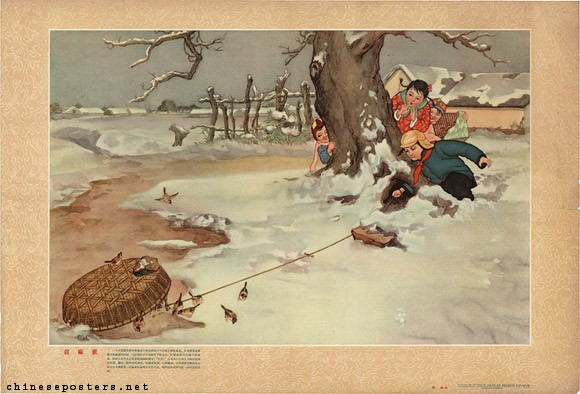
The Great Leap Forward loved this kind of braindead reasoning. This is reasoning by visible annoyance. This is what lizards do, and not the impressive ones.
A sparrow pecks grain. That is visible.
A sparrow prevents some insects from multiplying. That is less visible.
The visible annoying thing becomes the whole truth. The invisible relation gets killed without anyone even realizing it lived at all.
This is one of the most consistent habits of distorted fields. They prefer the obvious target to the actual system. The obvious target can be named, hated, and placed on a poster. Children can be organized against it. Victory can be staged in piles of the broken.
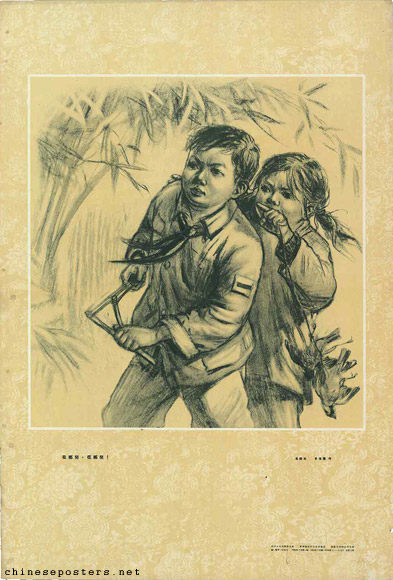
The actual system is just annoying. It contains feedback loops. It contains second-order effects. It contains experts who ask slow, boring questions. It contains the humiliating possibility that the extant field is not arranged around your social grievance.
The sparrow campaign went with the poster.
The Bird Trial.
So let us imagine, briefly, Mao’s case against this bird. This is not a thought experiment, because there must have been one.
The People v. Sparrow.
Charge one: theft of grain.
Charge two: flapping about.
Charge three: suspicious rural mobility involving wings.
Charge four: failure to contribute to steel production.
Charge five: counterrevolutionary chirping.
The accused offers no statement. This thing is a bird.
The court finds it guilty. The sentence is extinction.
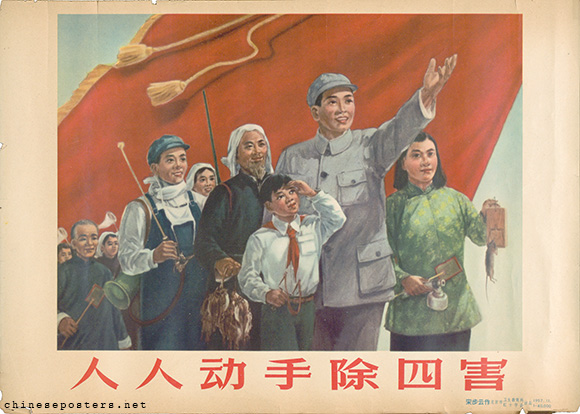
This is funny because the sparrow is absurd as a political enemy. It is less funny when you remember that the machinery of enemy production used here had already been built for humans. The same field that could classify landlords, rightists, saboteurs, bad elements, insufficiently enthusiastic cadres, and backward peasants could also classify an animal as a target of mass struggle.
That is not an accident.
Campaign-style politics needs a stream of targets. A target gives mass mobilization a body. It turns an abstract repair demand into action. Kill this. Collect that. Report the number. Show loyalty. Prove participation.
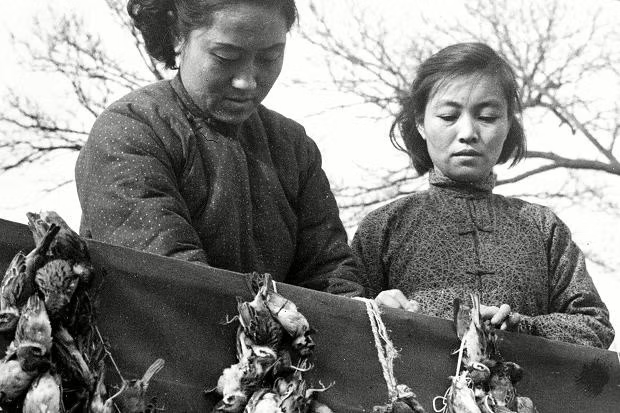
The sparrow was perfect for this because it could not argue.
A farmer might argue. An engineer might argue. An intellectual might argue. Peng Dehuai would eventually argue.
A sparrow could only flee, which looked terrible for its case. Why is it running if it has nothing to hide?

So the campaign mobilized against it.
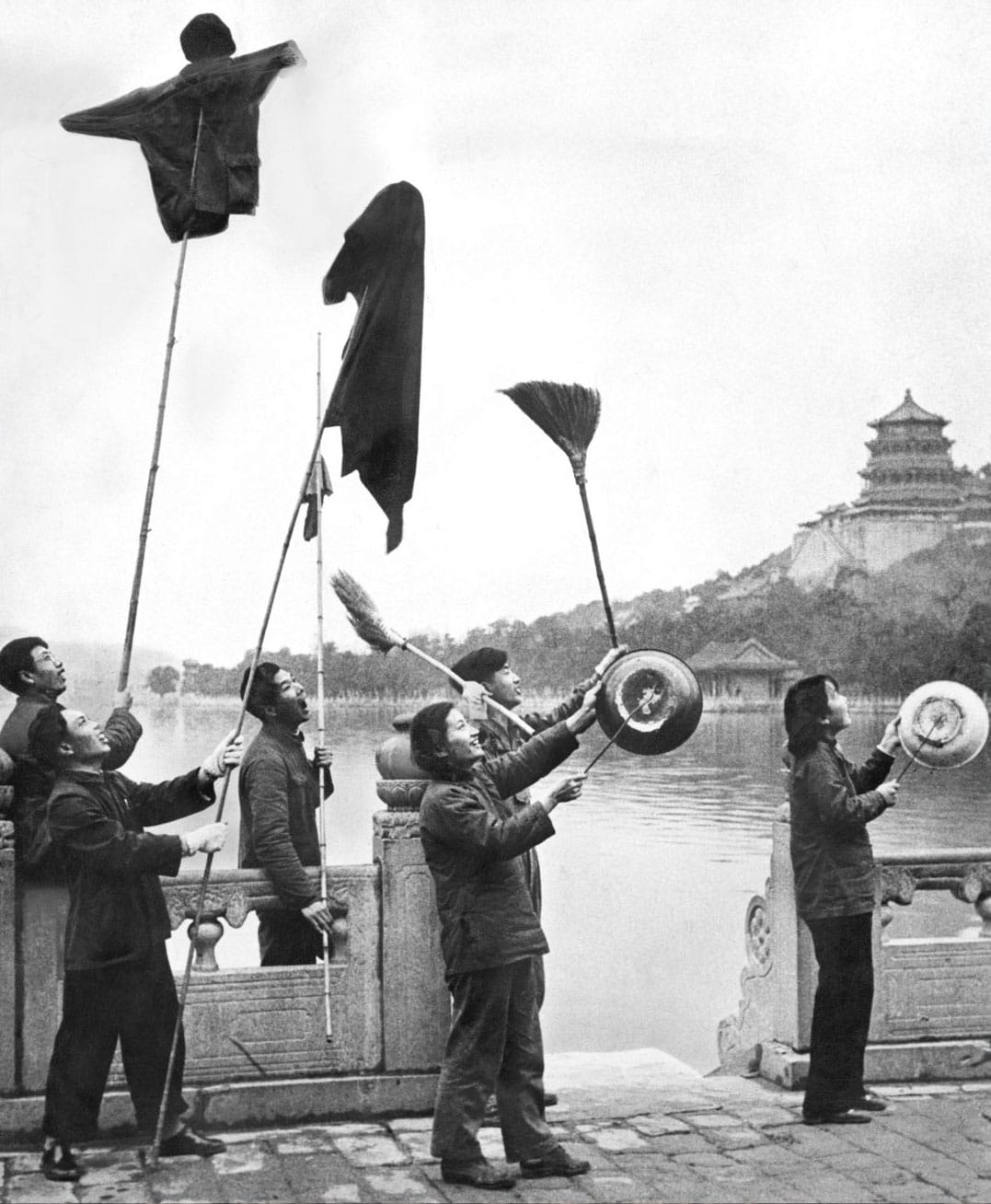
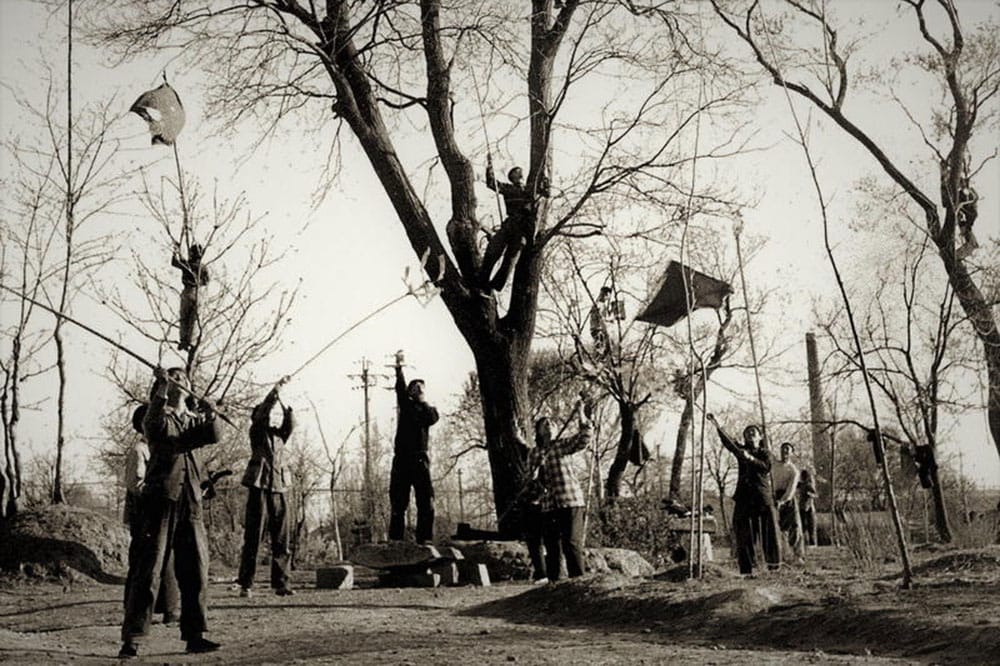
People banged pots and pans. They shouted. They chased birds from trees. They destroyed nests. They broke eggs. They murdered chicks. They shot birds. They exhausted them in the air. The sparrows could not land, so they fell like rotten sheep.
This is one of the stupidest images in the entire archive of human governance. It's gonna take a real doozy to outdo this one.
A nation trying to outproduce Britain is now banging cookware at birds. This is development policy now:
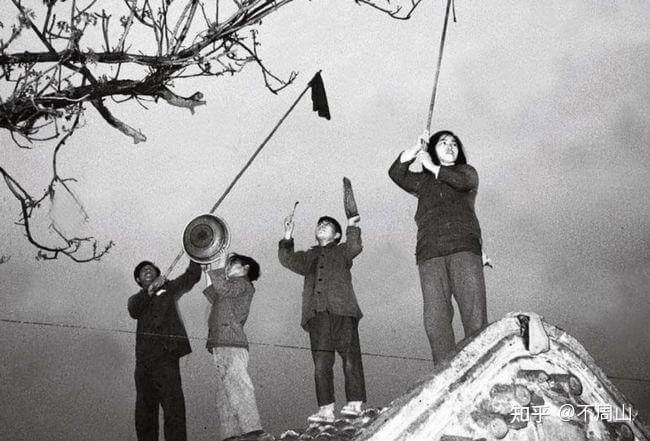
Somewhere in the conceptual distance between “China needs industrial capacity” and “okay everyone now go outside and harass a bird until it dies,” the field has taken what appears to be a pretty serious wrong turn.
Pots vs. Birds.
There is also a beautiful little material insult here worth honing in on.
Earlier, the Great Leap Forward had encouraged people to melt their pots and pans into backyard steel.
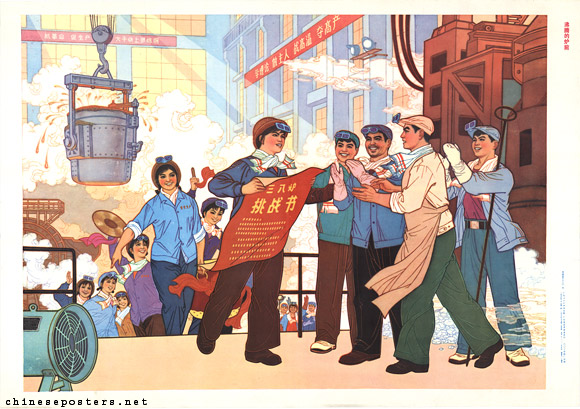
Now, people were to bang their pots and pans at sparrows.
Apparently, back then Chinese cookware could shift freely between steel, percussion, or ecological policy, depending on which part of the hallucination needed the most support that week.
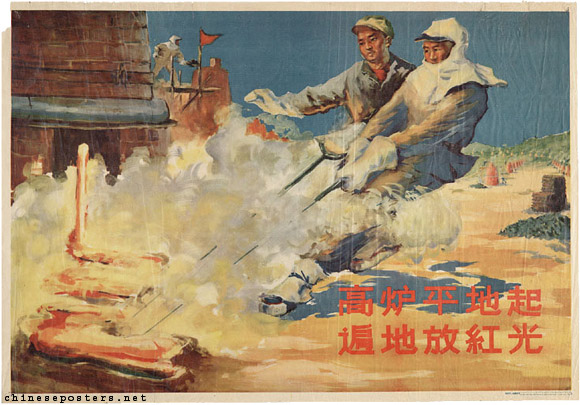
The pot, once again, is doing heroic work in a civilization that refuses to respect it.
This fucking thing should be cooking food. That's really all there should be to say here.
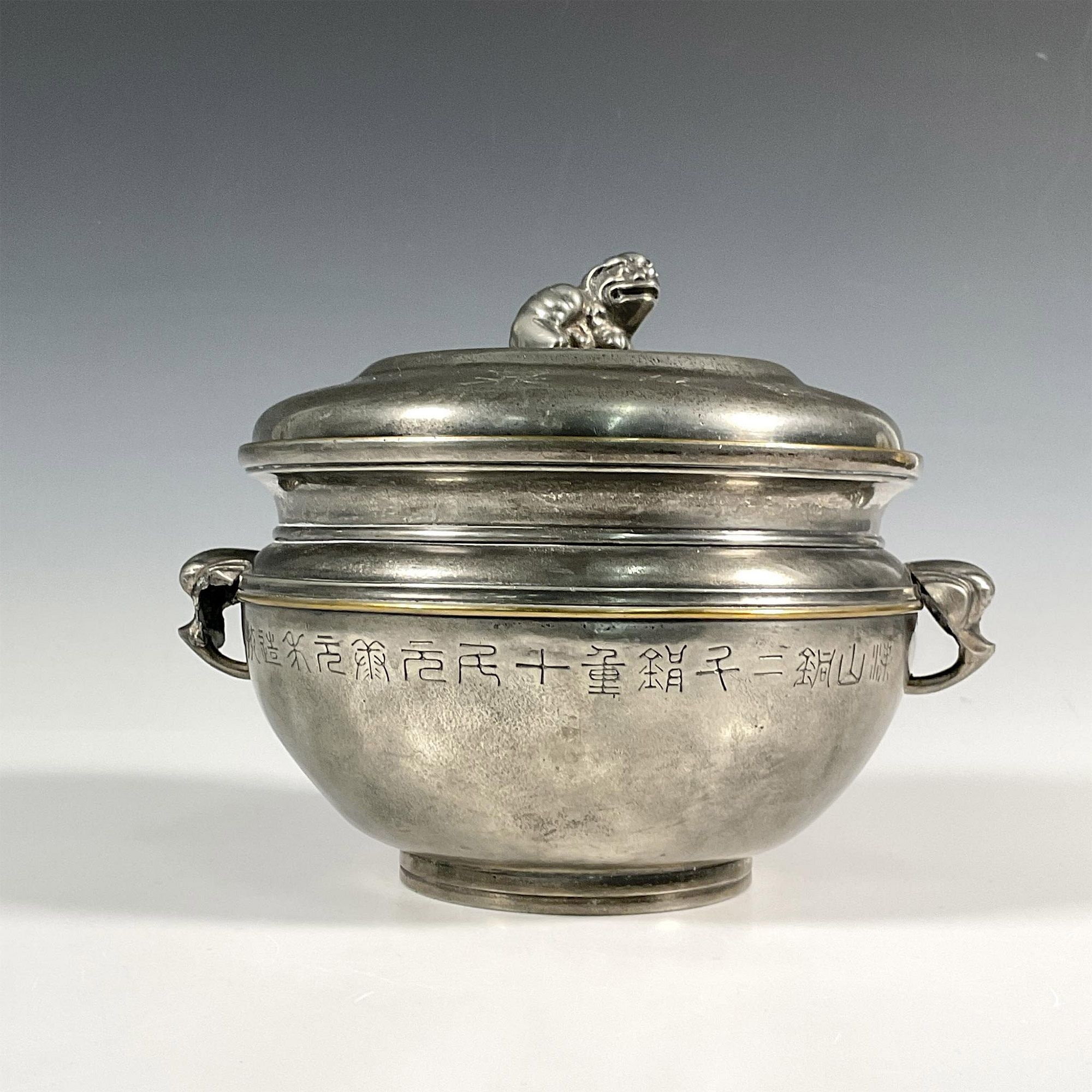
Instead, it is either being sacrificed to a bad furnace or deputized as an anti-aircraft weapon against a bird the size of a thought.
This is the kind of detail that makes the Great Leap Forward almost impossible to parody. You can't out-stupid the Master. The actual sequence of extance outruns satire. One moment the rural household loses its kitchen to the commune. Another moment its utensils go into the furnace. Another moment whatever utensils survive are being clanged in the air because the state has declared war on birds.
If you wrote this as fiction, an editor would circle it and write:
What the fuck are you talking about?
History didn't care. History put the pot in all three scenes.
Counting the Corpses I.
The campaign always needed numbers.
Luckily, a dead sparrow is countable. A nest destroyed is countable. A rat tail is countable. A pile of dead flies is countable, at least in principle, I'll never do it, and one hopes the person assigned to that audit eventually found eternal peace.
Was it worth it? Well, counting all this shit made the campaign feel very empirical. This is a classic trap.
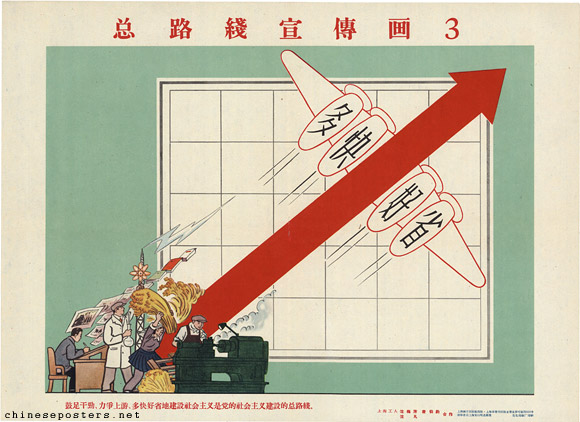
Not everything countable is meaningful, and not everything meaningful is easy to count. Distorted systems manage to forget this constantly. They discover a number and then start behaving as if the number has blessed them with reality.
How many sparrows were killed?
How many nests destroyed?
How many pests eliminated?
How many work units participated?
How many children mobilized?
How many posters printed?
How many gongs banged?
How many points awarded?
The number rises, and everyone feels the warm glow of contact with the world. China is clearly leaping.
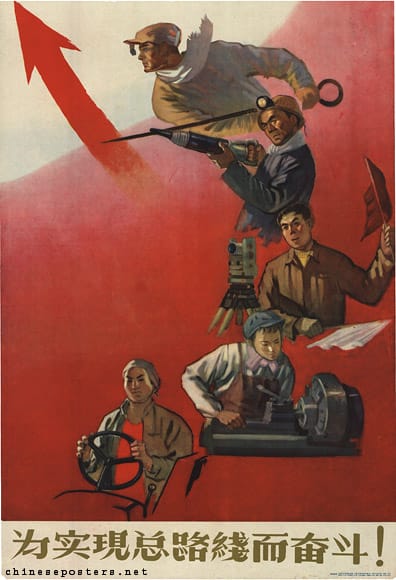
But what is the number actually measuring?
These ones were measuring subtraction from a system nobody has bothered to understand.
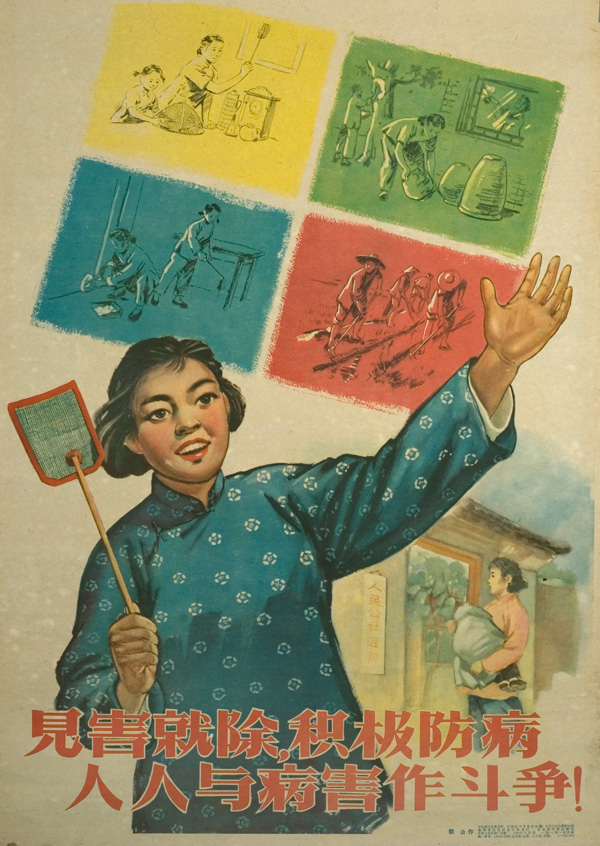
The dead bird is visible. Its missing ecological function is not. The pile of bodies can be called a victory. The future insect population says nothing just yet. The report climbs upward before the locusts get to hatch.
This is how the Great Leap Forward kept getting tricked by its own preferred evidence.
It liked to see visible proof.
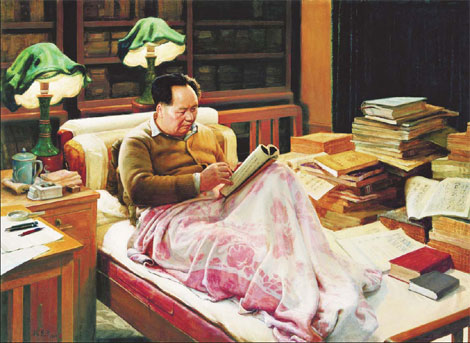
Smoke from the furnace. Bodies of pests. Crowded fields. Full mess halls. Record harvest reports. Missing cookware.
The problem is that many disasters begin as visible proof of success.
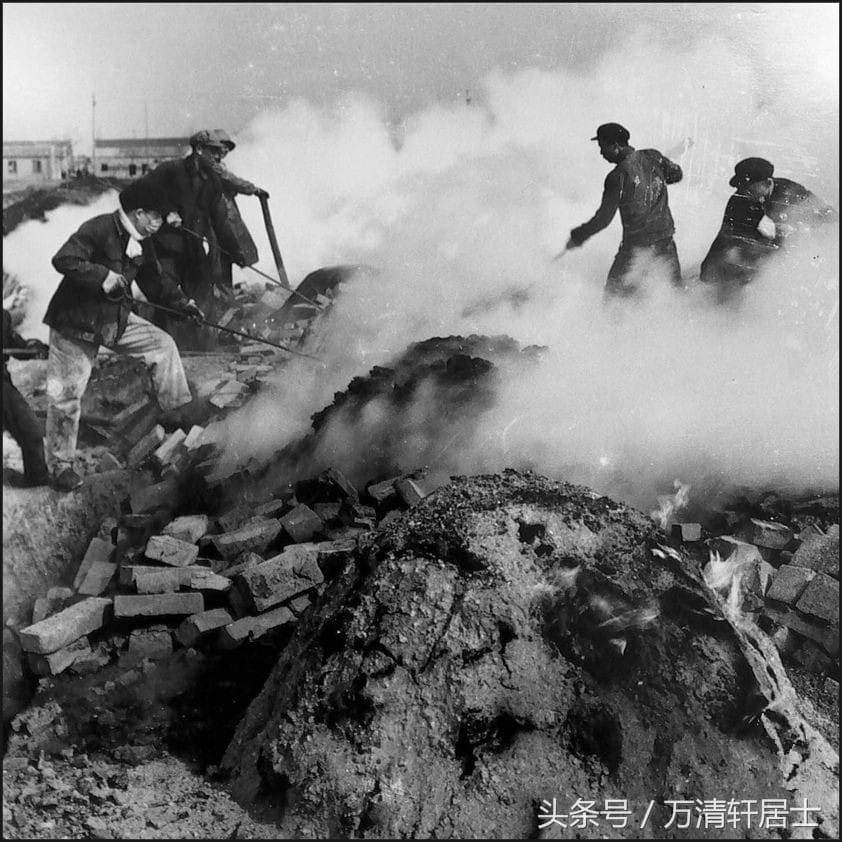
The furnace proves participation while destroying tools.
The mess hall “proves” abundance while consuming reserves.
The crowded field proves revolutionary agriculture I guess, while weakening the crop.
And the dead sparrow proves pest control, while removing pest control.

The campaign was not unable to see anything. It just only saw the wrong things very clearly.
The Insects Analyze the Field.
Then nature did something deeply unfair to the theory, and to China.
It continued being nature.
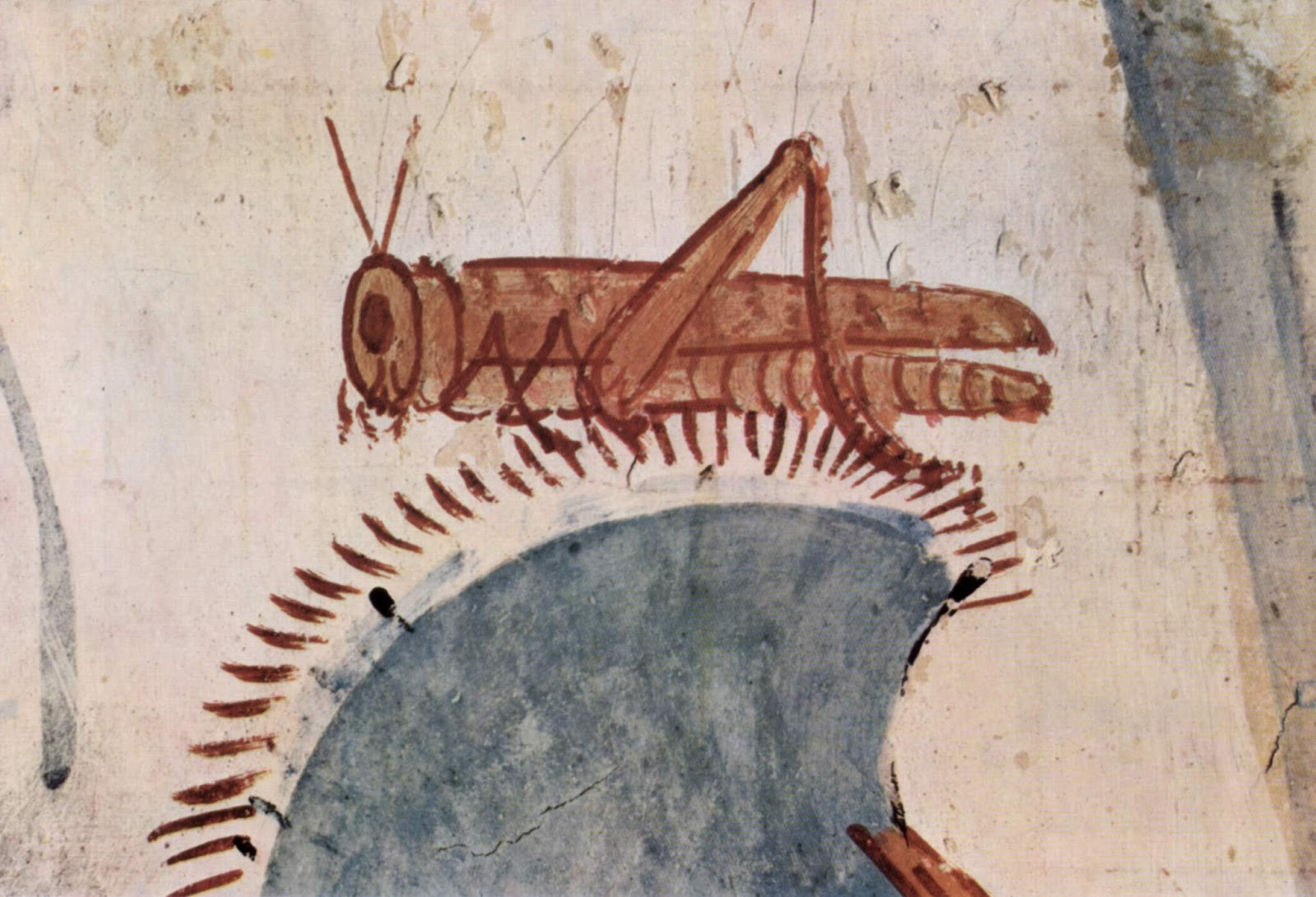
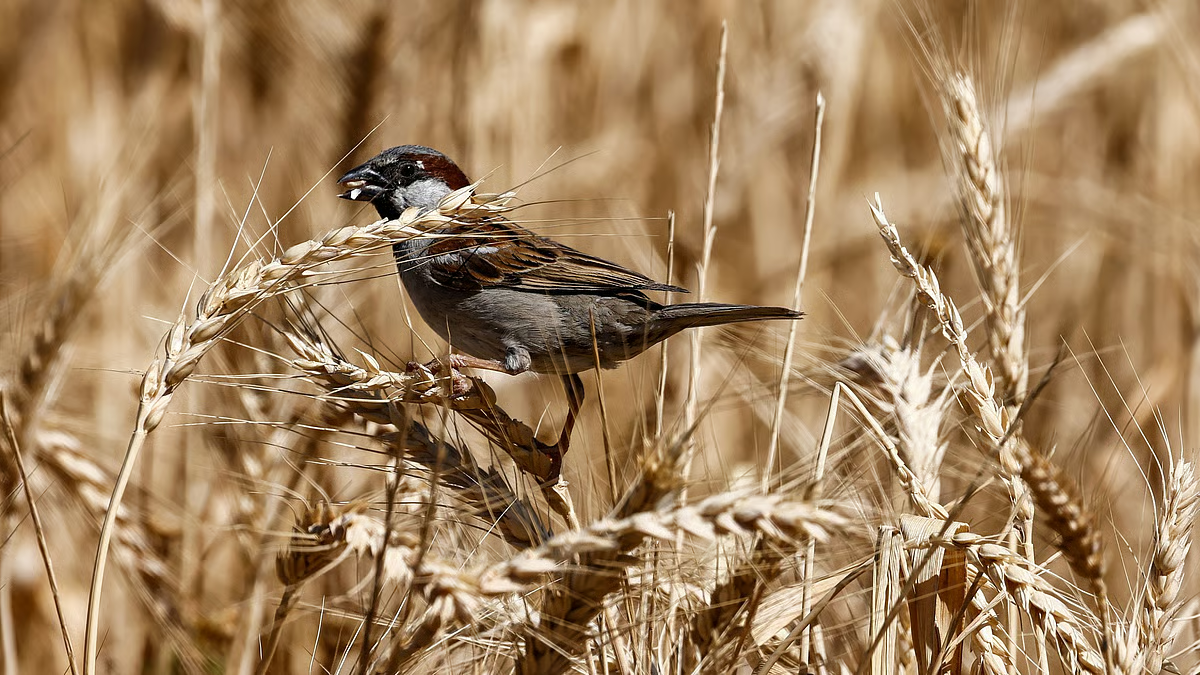
The sparrows had not only been stealing the people's grain. They had been eating insects.

This should not have been a shocking revelation, because birds often do things birds do, and one of the main bird things to do is eating small moving objects that are alive and which humans do not want on top of crops.

But the campaign had not asked what role the sparrow played. It had asked what crime the sparrow committed. And the evidence there was overwhelming.
That is the difference between field analysis and enemy politics. It's why the first repairs and the second contracts.
Field analysis asks:
What relations does this thing participate in?
Enemy politics asks:
What visible harm can justify this thing's elimination?
The sparrow had been assigned the second question. The field always answers the first.
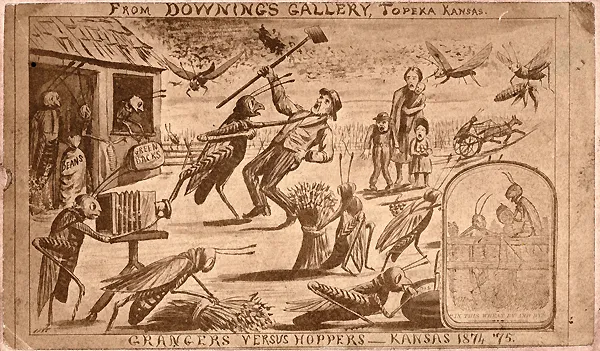
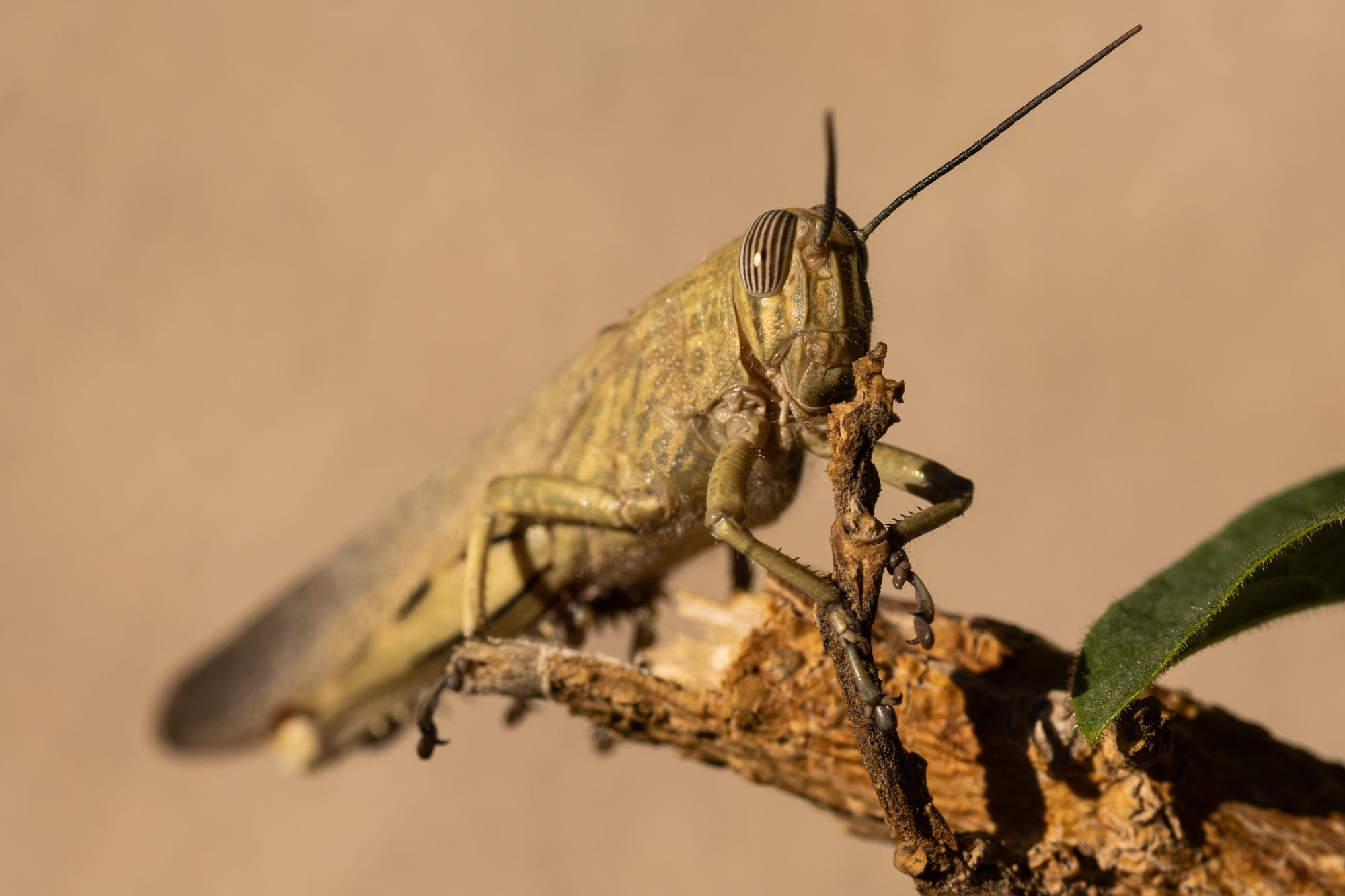
With fewer sparrows, insect populations could surge. Locusts and other crop-eating pests benefited from the removal of a predator. The state had not destroyed an evil, isolated grain thief. It had damaged a key relation.
This is the ecological version of melting the hoe.
The campaign saw one use and missed the field.
- A hoe is metal, therefore melt it.
- A kitchen is domestic labor, therefore abolish it.
- A dense field is more plants, therefore more grain.
- A sparrow eats grain, therefore die.
Every time, the structure is the same. One visible property is inflated into the whole truth. The wider field relation is ignored until it returns as damage.
The sparrow gives us the whole distortion in the smallest possible body.

The state misread a relation as an enemy. Then it mobilized society to destroy the relation. Then it called the destruction victory.
Then, the missing relation came back as a real enemy.
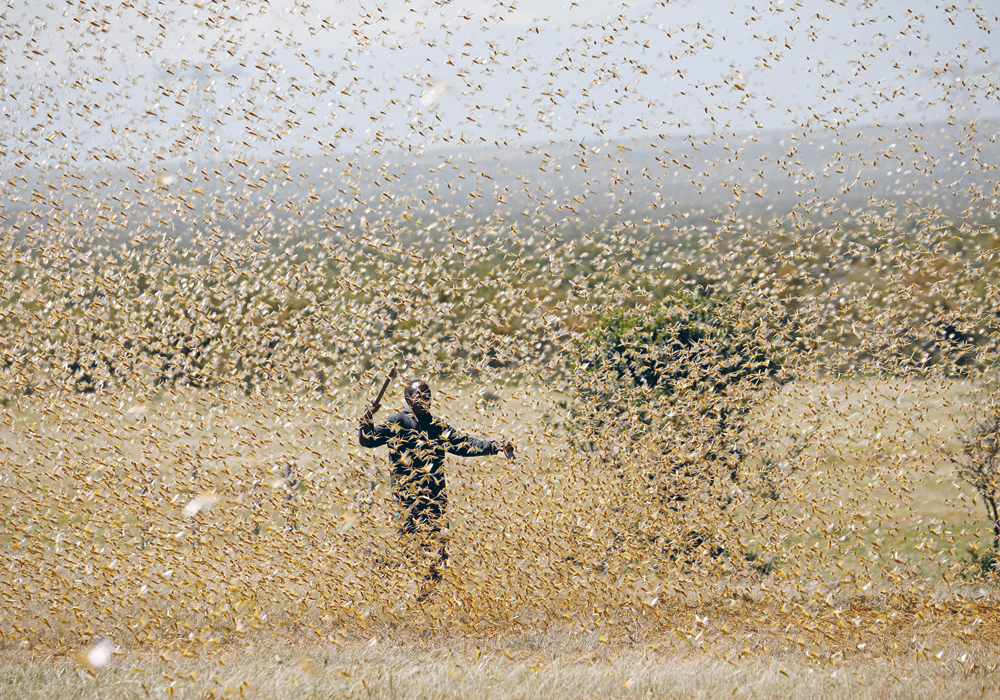
A tiny bird became a national lesson in why the field is not obligated to share your categories. This little thing is not a part of your human social project.
Ecology Misses Every Struggle Session.
The sparrow could not be educated. That was the real problem here.

This bird could not be reformed through labor. It could not confess. It could not engage in self-criticism. It could not be struggled against until it admitted its grain theft in proper ideological form. It could not be sent down to the countryside because it was, regrettably, already there.
So, the only available campaign mode was extermination. Not a lot of other tools in the Party's belt.
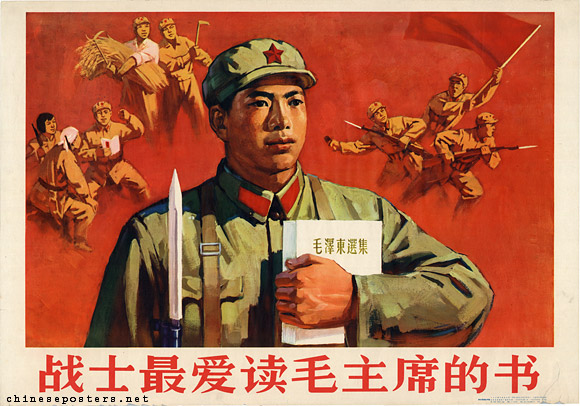
This exposed something ugly about the broader worldview. The Great Leap Forward kept treating natural systems as if they were somehow social systems with bad politics. The soil was too shallow because old methods were timid. The plants were too spaced out because peasants were insufficiently revolutionary. The bird ate grain because it was an enemy. The field underproduced because mobilization had not gone far enough.
Nature was being forced into a moral drama it had no awareness of, and that drama had no role for ecological function. This would not prove good field architecture.
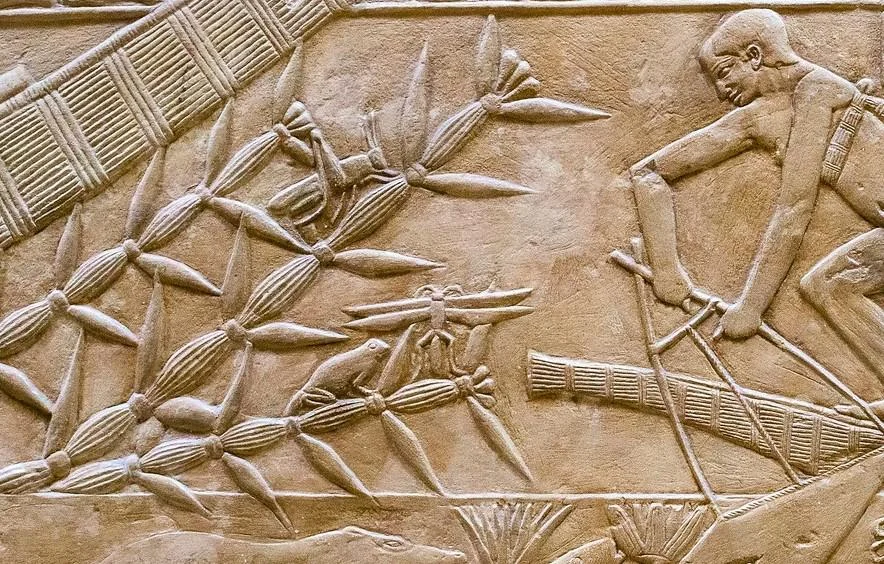
There was only friend and enemy, progress and backwardness, abundance and sabotage, revolutionary science and conservative doubt. This is a catastrophically narrow vocabulary for managing any living system. The real field contains pests, predators, nutrients, seasons, water, disease, weather, labor, storage, exhaustion, local knowledge, and chance. It does not become easier to govern when all of these are translated into loyalty categories.
Instead, it all becomes much stupider.
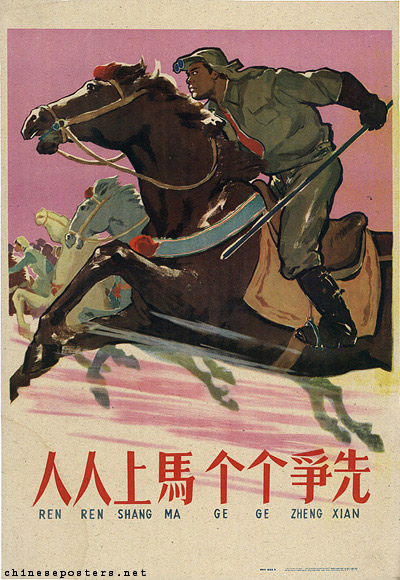
A locust, as far as we can tell, does not care whether the sparrow was reactionary.
A crop disease does not wait for the commune to finish its meeting.
A food web is not impressed by slogans.
Ecology does not attend struggle sessions.
This is why the phrase “Man must conquer nature” is so revealing. This frames the field as an adversary to be overcome rather than a structure to be understood, entered, repaired, and lived within. It is not enough to act inside nature. Man must conquer it. The posture is domination before contact.
That posture is everywhere in the Great Leap Forward.
- Conquer the soil.
- Conquer the crop.
- Conquer the pests.
- Conquer the kitchen.
- Conquer the old habits.
- Conquer the timeline.
- Conquer the report.
- Conquer hunger.
Eventually the state tries to conquer the fact that people are dying. That one does not work either.
Children of the Pest War.
The mobilization of children against pests is one of those details that feels minor until it turns sinister.
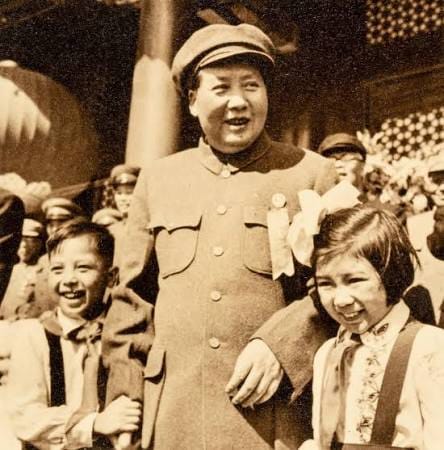
These enemies were not powerful. Children could collect flies. Children could hunt for rat tails. Children could bang pots. Children could break nests. Children could participate in the great patriotic work of making the nation cleaner, healthier, more productive, more modern, and more obedient to a campaign whose ecological model had the sophistication of a man yelling at a cloud.
This is how a distortion recruits innocence.
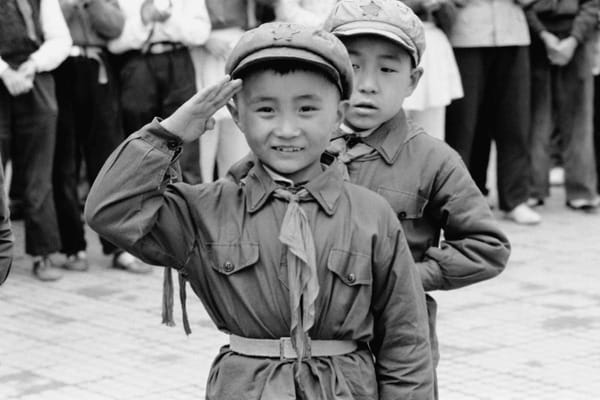
Give children a target small enough to kill.
Give them a slogan bright enough to enjoy.
Give them a number to bring back.
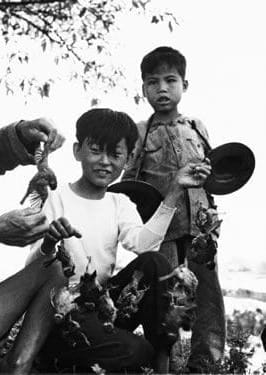
Now, the field has not only mobilized labor. It has mobilized moral formation. The child learns that participation in life means pursuing the named enemy. The child learns that the poster knows what the field is. The child learns that nature comes pre-sorted into patriotic and anti-patriotic categories.
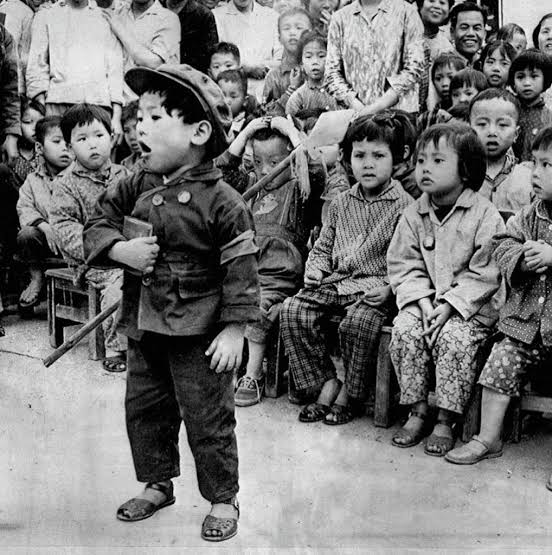
Campaigns are not just policies. They are rituals of perception. A campaign teaches people what to notice.
Notice the sparrow eating grain.
Do not notice the sparrow eating insects, though.
Notice the corpse count.
Do not notice the food web.
Notice the slogan.
Do not notice the silence of the experts.
Notice the enthusiasm.
Do not notice the fear.
The child banging a pot at a sparrow is a perception lesson. The field is being taught, from childhood upward, how to see itself badly.
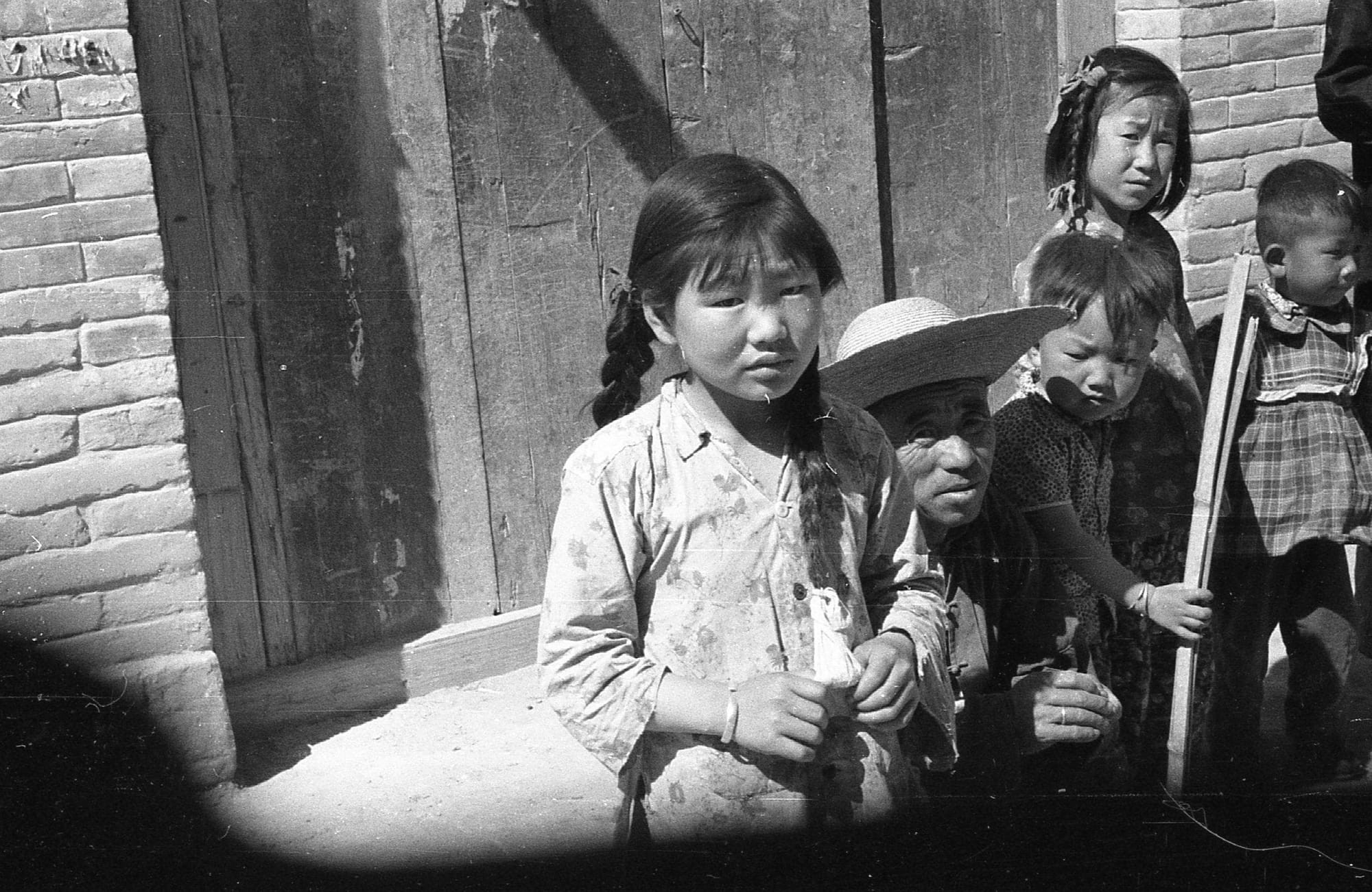
That is one of the most durable harms a distorted system can inflict. Not only wrong action.
Wrong sight.
The Victory That Kills You.
The funny thing about the sparrow campaign is that it totally worked. That is the horrible joke.
If the campaign had failed immediately, the damage would have been smaller. If sparrows had simply ignored the entire Chinese state, landed wherever they wanted, and continued their tiny crimes against grain, the field probably would have been much better off.
But no. They did it. The problem was that mass mobilization can sometimes achieve exactly the wrong thing. This is an underappreciated danger.
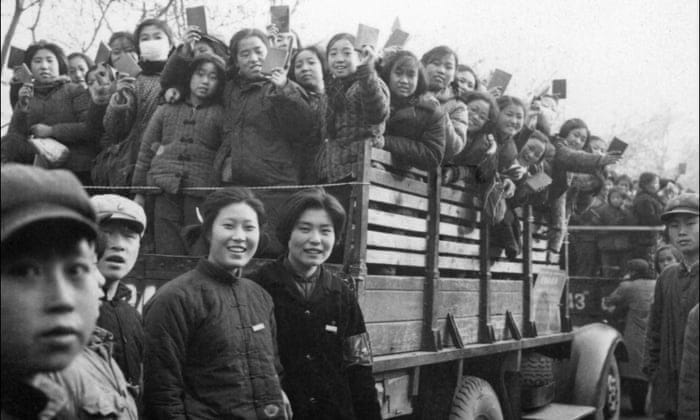
People often talk as if state failure comes from incapacity. Sometimes it does. The state tries to do something and cannot. The bureaucracy is weak. The local agents defect. The policy never reaches the field. The command dissolves. They botch it.
The Great Leap Forward often shows the opposite problem.
The state can reach the field. The campaign can mobilize people. The posters can work. The cadres can organize action. The children can collect bodies. The sparrows can all die.
Then, that success becomes the disaster.
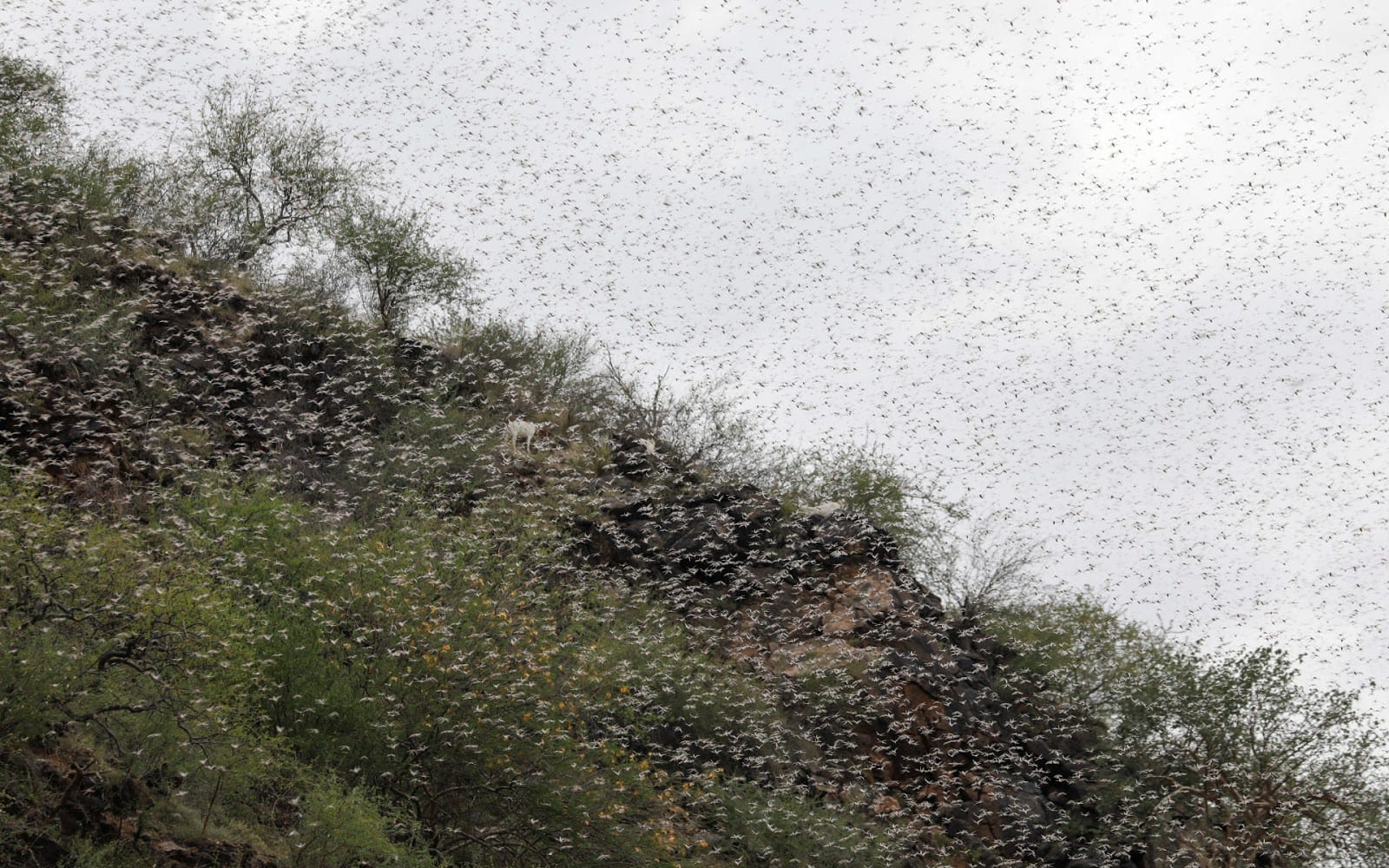
Capacity is not automatically repair. A field with high mobilization capacity and low field contact can do enormous damage very quickly. It can move millions of bodies in the wrong direction.
The Four Pests Campaign did not fail because nobody listened. It failed because too many people did.
The campaign achieved the target while destroying part of the condition that made the target valuable. It killed the bird to save the grain, and by killing the bird it helped expose the grain.
This is a victory that removes the victory condition.
A perfect little Great Leap Forward sentence.
Absence.
Eventually, the sparrow thing had to be reconsidered.
This is the part every bad campaign hates.
Reality comes back, but not always as an argument. Sometimes it comes back as an absence.
The missing bird returns as insects.
The missing tool returns as weaker cultivation. The missing kitchen returns as hunger without household control.
The missing local report returns as procurement disaster. The missing critic returns as famine. The missing truth returns as bodies.
Absence is one of the field’s crueler languages. It does not give speeches. It does not have to. The relation is now gone, and the consequences begin arriving.
By the time this system recognizes the sparrow might have been useful, the victory has already occurred.
This is the core problem with extermination as policy. You cannot easily hold a follow-up meeting with a vanished population.
The state can change the campaign. It can stop targeting the bird. It can import or protect other birds. It can revise the official line. It can move on to the next campaign with the solemn confidence of a man who has learned almost nothing at all.
But the field remembers in its own way.
Through crop loss. Through insect pressure. Through hunger.
It remembers through the fact that food webs do not reset because the Party has issued a correction.
The sparrow, once absent, becomes more powerful than it ever was alive.
Alive, it was a tiny nuisance.
Dead, it was now a gaping hole in the field.
The sparrow is the smallest exhibit in the Great Leap Forward. It may also be the cleanest.
Everything is there:
- The visible simplification.
- The moralized target.
- The mass campaign.
- The corpse count.
- The ignored relation.
- The punished doubt.
- The ecological rebound.
- The official correction arriving after the damage.
- The refusal of the field to become as simple as the state’s enemy list.
This is why the sparrow was not actually a kulak, Chairman.
A kulak is already a politically loaded category, and in another context we would need to discuss that madness on its own terms. But it's already too late now, and the sparrow was not even available for the human fiction being imposed on it. This bird was not hoarding grain. It was not resisting collectivization. It was not undermining socialism. It was not whispering rightist slogans into the millet. It was not nostalgic for the landlord class.
It was eating.
Some of what it ate was grain. Some of what it ate was insects.
The state noticed the first fact and built an entire campaign around it. The famine mostly just noticed the second.
The Great Leap Forward just kept finding one fact and murdering the field around it.
The Sputnik.
China's next enemy was a number. This was unfortunate, because numbers are much harder to kill than sparrows.
A sparrow had the decency to be a bird. You can see it. You can chase it. You can shout at it. You can bang a pan if you still have one until it flees into the sky and begins wondering, in whatever small way a sparrow ever wonders, why the mammals have become so weird lately.
A number is worse, though. And a number flew even farther.
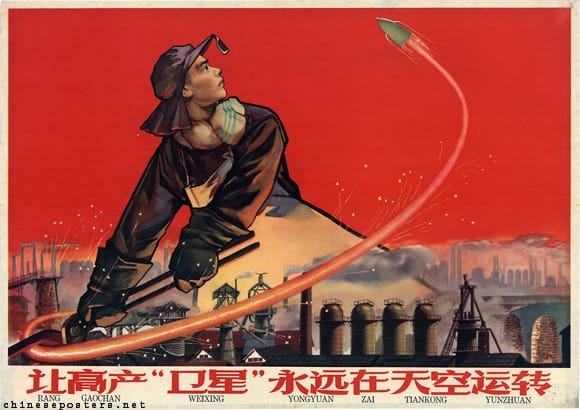
A number can be invented in one village, improved in the next village, promoted by a county, praised by a province, printed by a newspaper, believed by a ministry, admired by Mao, and then returned to the original village as a grain procurement quota.
A sparrow can steal some grain. A number can steal the whole harvest.
This is where the Great Leap Forward becomes truly lethal.
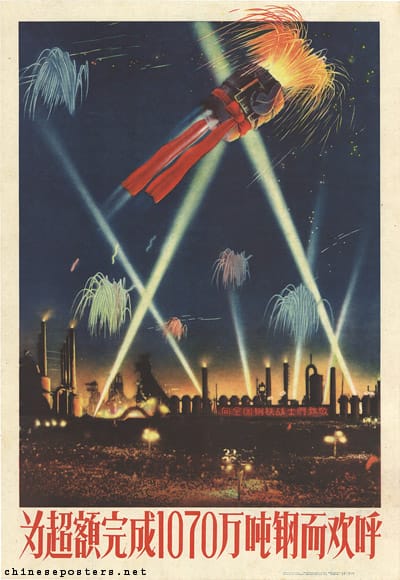
This is not because the earlier absurdities were harmless. They were not. The communes had damaged household survival. The mess halls had damaged food judgment. The furnaces had diverted labor and swallowed tools. The fields had been forced into bad methods. The sparrows had been killed in a burst of ecological slapstick that would be funnier if the insects had not read the field correctly.
But all of that stuff still needed a transmission system. It needed a pipeline. The paper harvest supplied it.
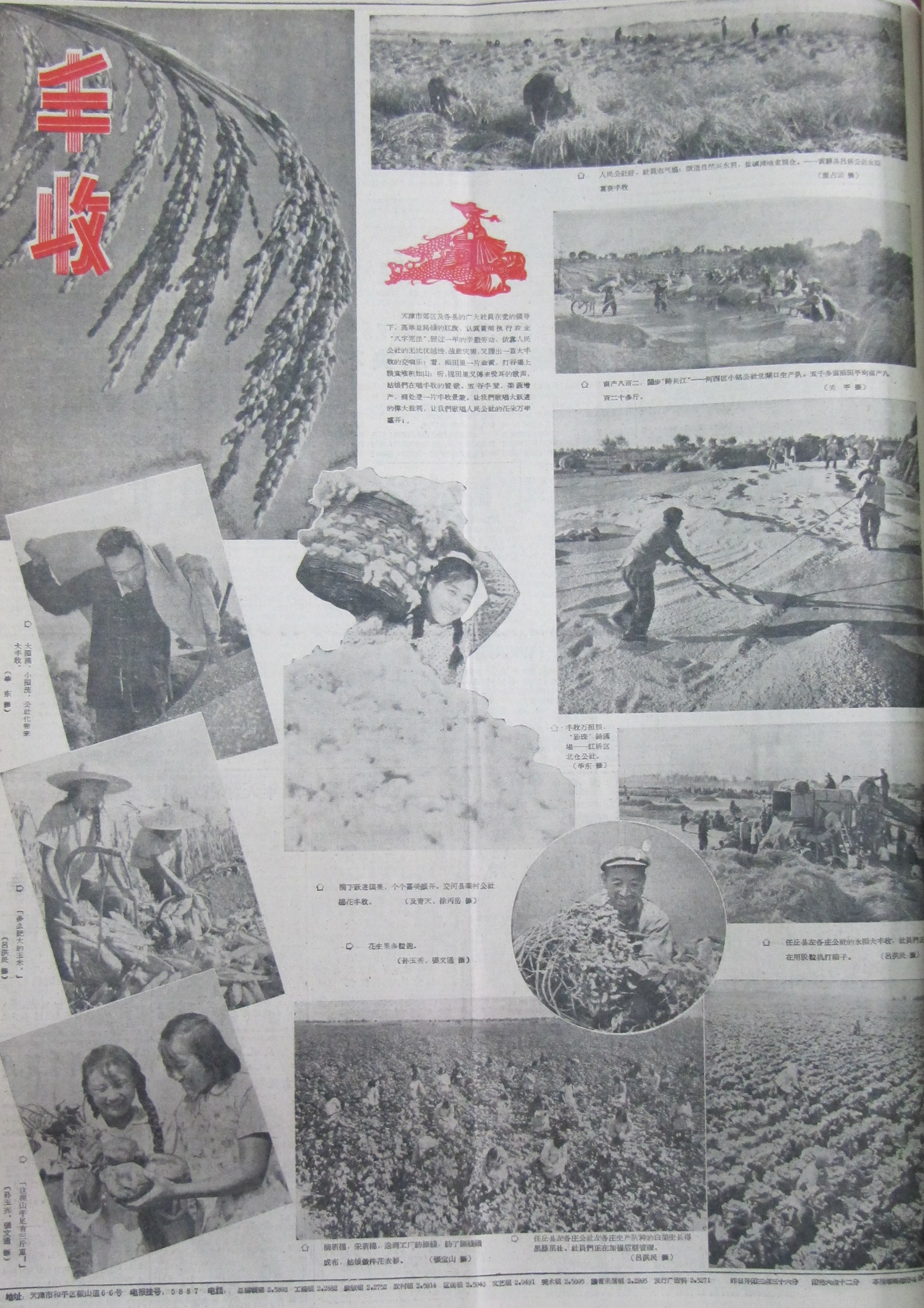
This is where the crop becomes less important than the crop report. The real field still matters, of course. It never disappeared. People still need grain. Bodies still need calories. Children still need something more substantial than revolutionary confidence. But inside the political system, the report begins to move with greater force than the food.
The report is cleaner. The report is faster. The report does not rot. The report does not complain. The report does not need to be harvested, transported, cooked, chewed, digested, or reconciled with the embarrassing condition of actual stomachs.
The report is revolutionary. The report is leaping.
Escape Velocity.
The Soviet Union had launched the Sputnik satellite in 1957.
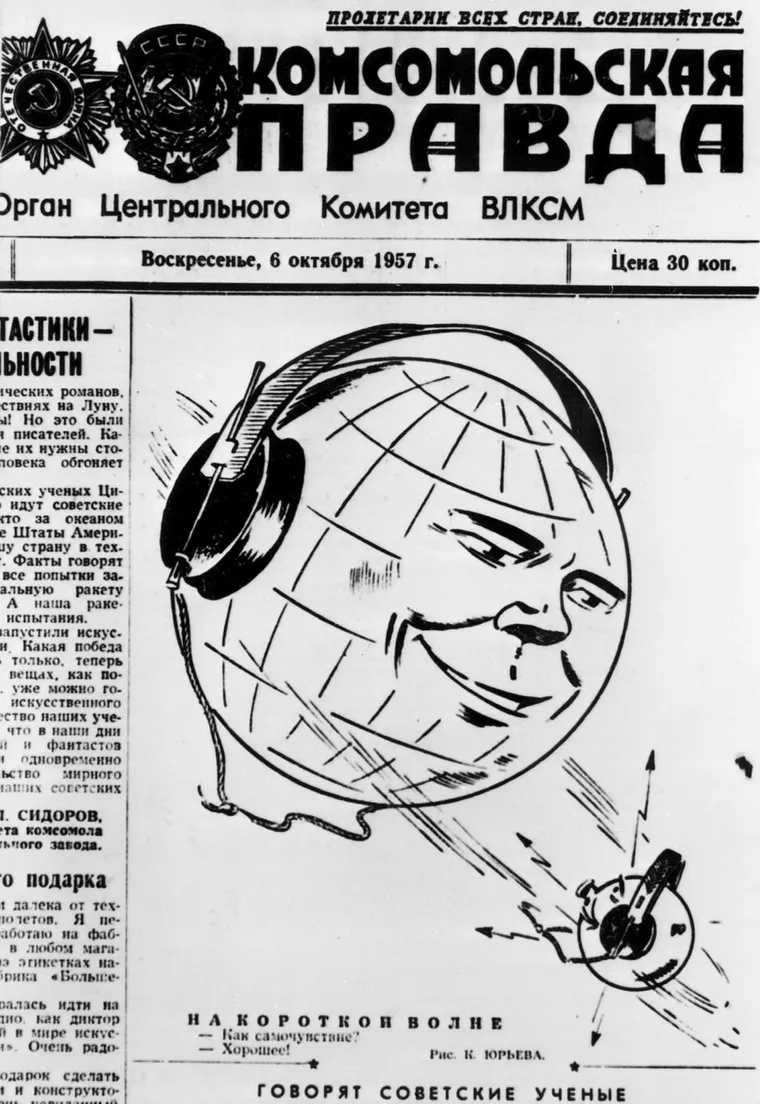
This was already a big enough problem for anyone trying to keep the twentieth century sane. The Great Leap Forward, being extremely vulnerable to exactly the wrong kind of metaphor, now found its own agricultural Sputniks.
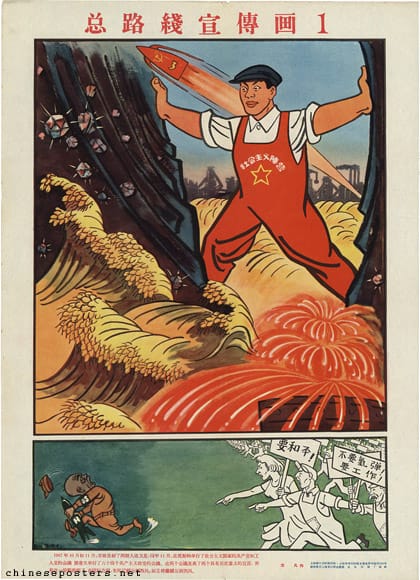
A “sputnik” harvest was a miracle yield, a record-breaking, expectation-shattering, headline-friendly crop report launched upward from the field into the political atmosphere. These harvests did not need to be believable in any normal human sense. They needed to be thrilling. They needed to prove the Leap. They needed to show that China was not just improving but escaping the ordinary material gravity of development.
A normal harvest grows. A sputnik harvest ascends. It is transcendent.
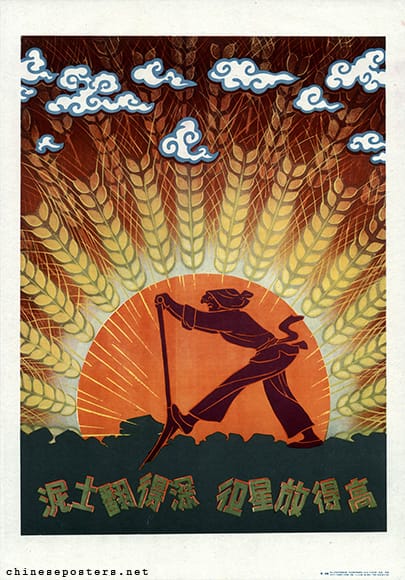
There are reported yields from this period that should have caused every official in the chain to sit quietly on their hands for several minutes and ask whether mathematics itself had suffered a serious head injury. Instead, the numbers just climbed.
This is one of the governing laws of a distortion field:
Once the lie is rewarded, the lie develops ambitions.
A village reports an impressive yield. The next village needs a more impressive one.
A commune reports a miracle. The neighboring commune cannot remain mediocre in front of their history.
A county reports abundance. The province needs glory. A newspaper prints a marvel. Mao reads the marvel.
Now, the marvel is not only a made-up number. It is political weather. The whole field has to breathe inside it.
This is how fake abundance becomes contagious. Not because everyone believes it in the same way. Belief is not even required. The local farmer may know this number is fucking nonsense. The cadre may know the number has been padded. The county official may know the commune is obviously exaggerating. The provincial leader may know the province is just staging a performance. But each layer has a reason to carry the lie upward.
The farmer wants to survive the cadre. The cadre wants to survive the commune meeting. The commune wants to survive the county. The county wants to survive the province. The province wants to survive Beijing. Beijing wants to survive Mao’s expectations. And Mao wants to survive reality.
And poor reality, at this stage, has very few allies with authority.
The Demonstration Plot Becomes Space-faring.
The demonstration plot now reaches its highest form. Earlier, it was a stage. Now it becomes a launchpad.
A small plot is overmanaged, overfertilized, overstaffed, manipulated, photographed, praised, and treated as if it has revealed the general future of agriculture. Perhaps seedlings are moved. Perhaps the soil is pampered. Perhaps conditions are impossible to replicate. Perhaps everyone involved understands, at some private level, that the demonstration is not a field but a theater set with roots.
Doesn't matter.
The plot produces a number. The number has lift.
This is the unholy miracle of propaganda agriculture. It can make one little patch of dirt condemn an entire province. If a demonstration plot appears to produce an impossible yield, then every ordinary field has become guilty of laziness. The field that only produces possible amounts of grain has failed the field that produced ideology.
The staged fragment becomes the ruler by which the actual farms are humiliated. This is almost elegant in its perversity.
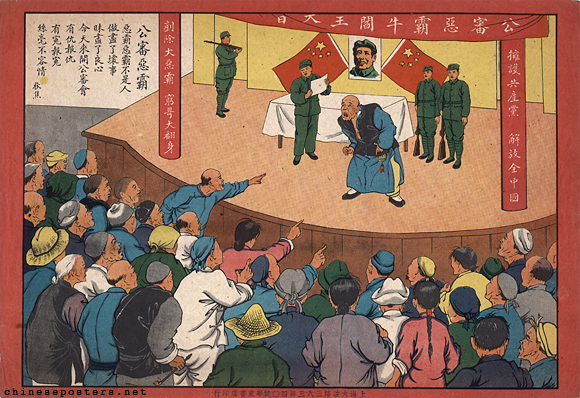
A real repair system would ask: what exactly happened in this plot, under what conditions, at what cost, with what inputs, over what time horizon, and can any part of this method be responsibly generalized?
The Great Leap Forward asks:
Why the hell is everyone else not leaping like this?
The demonstration plot says nothing useful about the reachable field. It says something very useful about the political appetite of the state. It shows what kind of number the center wants to hear. Then everyone learns that.
This is why the paper harvest is not mere fraud. Fraud is part of it, but fraud alone is too small. The paper harvest is an active learning system. It teaches every layer of the hierarchy what kind of reality is rewarded. Then the hierarchy manufactures that paper reality in report form.
The state does not have to order every falsehood directly. It only has to make truth dangerous and fantasy profitable.
Don't worry. The field will handle the rest.
Arithmetic Joins the Communist Party.
The most striking thing about fake harvest reports is how little shame they appear to have had.
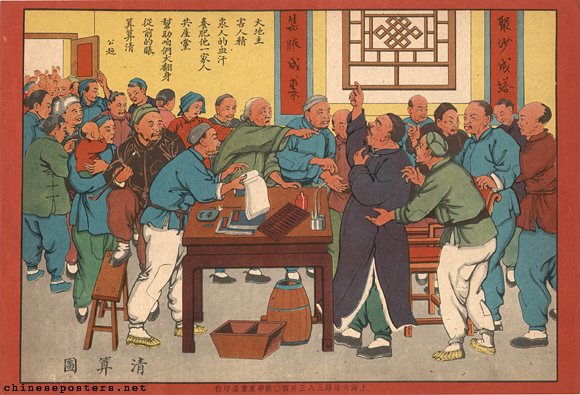
A modest lie is still in conversation with truth. It knows the truth is nearby, disappointed. It keeps its head down. It adds a little. It rounds generously. It reports the upper bound. It leaves itself an exit.
The Great Leap Forward did not prefer modest lies.
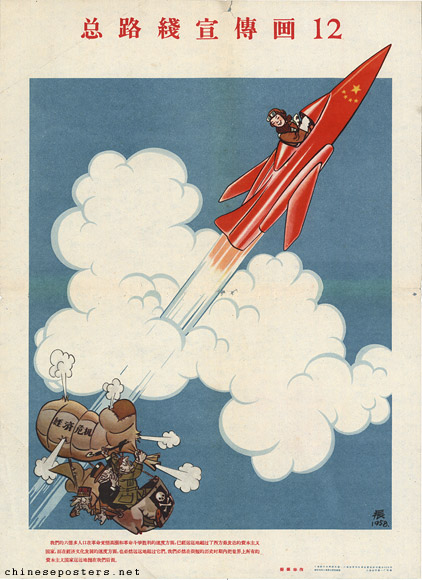
If the target is impossible, the report must become impossible. If the method is miraculous, the yield must be miraculous. If the Leap has abolished gradualism, arithmetic should stop dragging its goddamn feet.
A report says grain production has exploded. Another says it has exploded more. The explosion is itself evidence of revolutionary correctness. No one wants to be the small dull old China village producing boring amounts of food while history is taking attendance.
Soon the numbers are behaving like children left alone with fireworks.
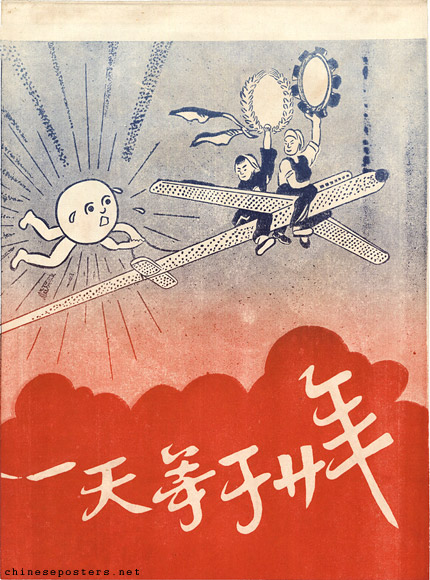
They are not measuring reality, they are trying to impress Mao. The number is no longer a record of the field. It is now their courtier. It is dressing itself for the throne. It is not asking, “How much grain exists?” It is asking, “What amount of grain would be politically beautiful?”
The answer, apparently, is “a whole lot.”
Then more. Then more than that.
Then an amount that suggests wheat has discovered nuclear fusion.
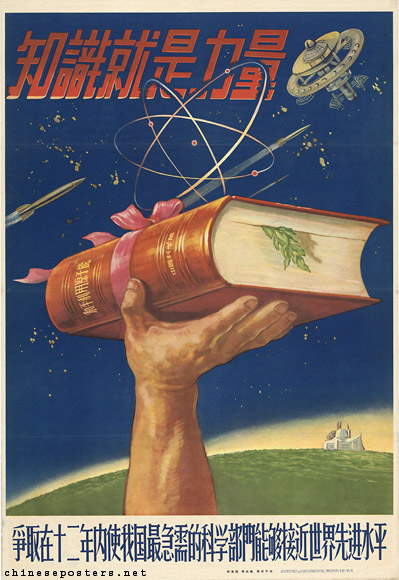
A sane administration would stop here. It would look at the number and say: no. Come the fuck on. Please return with a figure that belongs to the planet Earth.
But a distortion field does not ask whether the number belongs to Earth. It asks whether the number belongs in the story.
The story says China is leaping. Therefore the number must leap.
Grain Hires a Press Secretary.
At some point, the crop no longer speaks for itself. It has real representation.
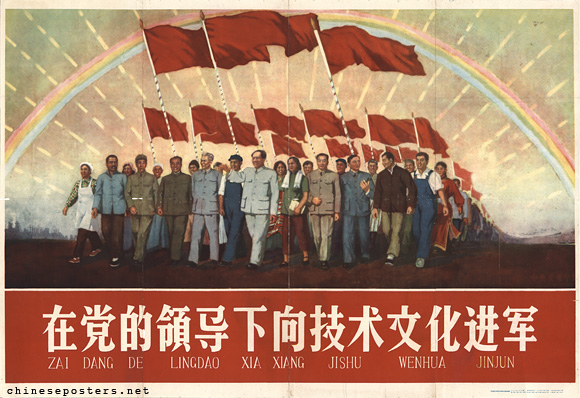
Newspapers, cadres, county officials, provincial reports, visiting dignitaries, loudspeakers, mass meetings, and propaganda photographs begin to speak on behalf of the harvest.
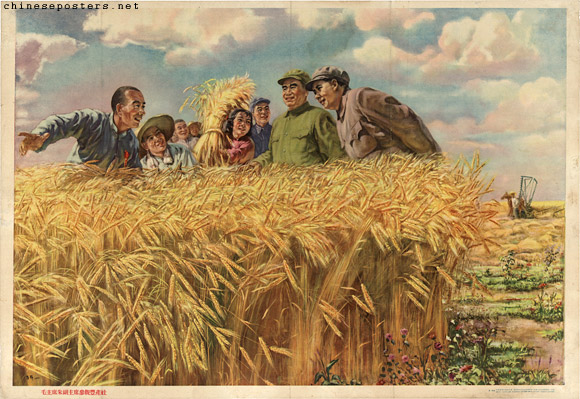
The crop is said to be tremendous. The crop is said to be the proof. The crop is said to show the infinite power of the commune, the wisdom of the Chairman, and the superiority of socialist organization when properly infused with enthusiasm and bad plant spacing.
The crop itself is unavailable for comment.
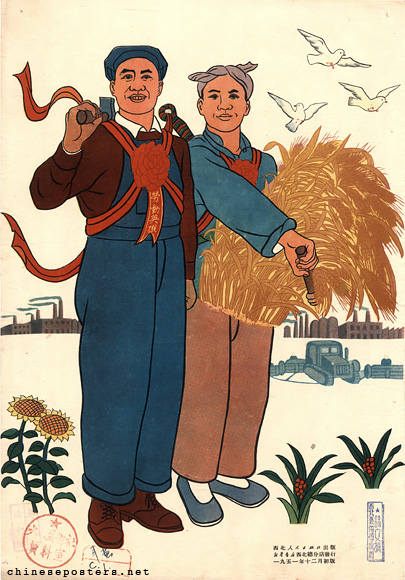
This is another thing the Great Leap Forward does beautifully, if we are using “beautifully” in the sense of “with the precision of a trap snapping shut.”
It inserts mediation between reality and consequence.
The harvest as experienced by peasants is one thing.
The harvest as reported by the commune is another. The harvest as celebrated by the press is another. The harvest as believed by central planners is another. The harvest as translated into procurement quotas is another.
The same word, “harvest,” now refers to several different extant or non-extant objects.
- There is the physical harvest.
- There is also the reported harvest.
- There is also the expected harvest.
- There is also the politically required harvest.
- There is also the harvest Mao wants.
- There is also the harvest the state procures against.
But only one of these can be eaten.
Under leaping conditions, that is not the one with the most power.
The Incredible Discovery of Imaginary Grain.
A false harvest report does not remain in the realm of propaganda. It does not sit harmlessly in a newspaper, preening beside the other lies. It enters logistics.
The state must feed cities. It must supply industrial workers. It must maintain political priorities. It must fulfill obligations. It must show that the Leap is working. It must procure grain.
Procurement is where the fake harvest becomes material.
If a commune reports abundance, the state can now take that abundance.
If a province reports record production, Beijing can allocate against record production.
If the paper field is full, the real field can be emptied. This is the killing mechanism.
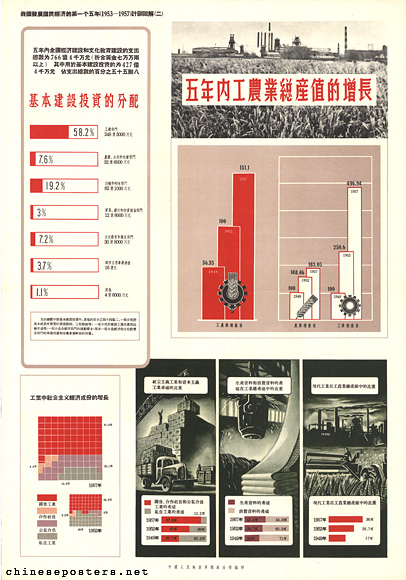
The number says there is grain. The state believes the number enough to collect the grain.
Except the grain is not there.
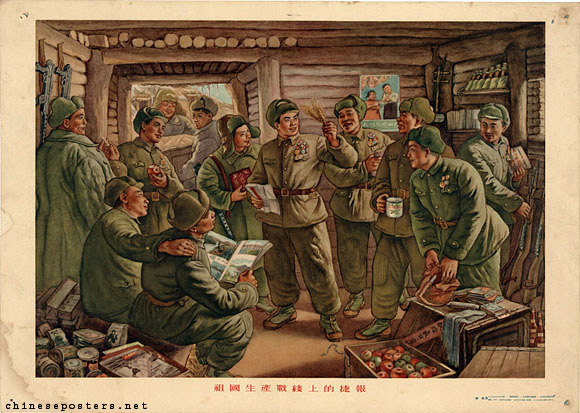
So the shortfall is taken from reserves, seed grain, household stores, local buffers, hidden food, and the bodies of the people who produced the crop.
A fake number is now walking around with police power. This is not just lying anymore.
The report has become a self-extraction instrument. It points at a village and says: “you have produced this much.” The village says, perhaps quietly, perhaps not at all: no the hell we have not. Then the state says:
“So, where is it?”
That question is terrifying. It has no good answers.
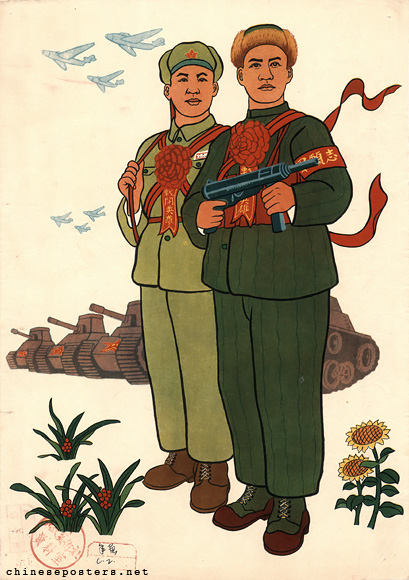
If the official harvest exists, and the grain cannot be found, then someone must be hiding it. So hunger is now suspicious before it has even fully arrived.
The peasant who has no grain is not simply poor. This man may be concealing grain.
The village that cannot meet procurement is not simply short. It may be selfish.
The local cadre who admits lower production is not simply reporting facts. He may be disloyal. The empty granary is not simply empty. It is evidence under interrogation.
The lie turns everyone beneath it into a suspect because it cannot be questioned.
Real Enough to Confiscate.
This is the line the Party soon discovered:
The grain was real enough to confiscate, but not also real enough to eat.
That is the Great Leap Forward at its most.
The state procures from the reported field. The peasant lives in the physical field. When those two fields diverge, the peasant always loses.
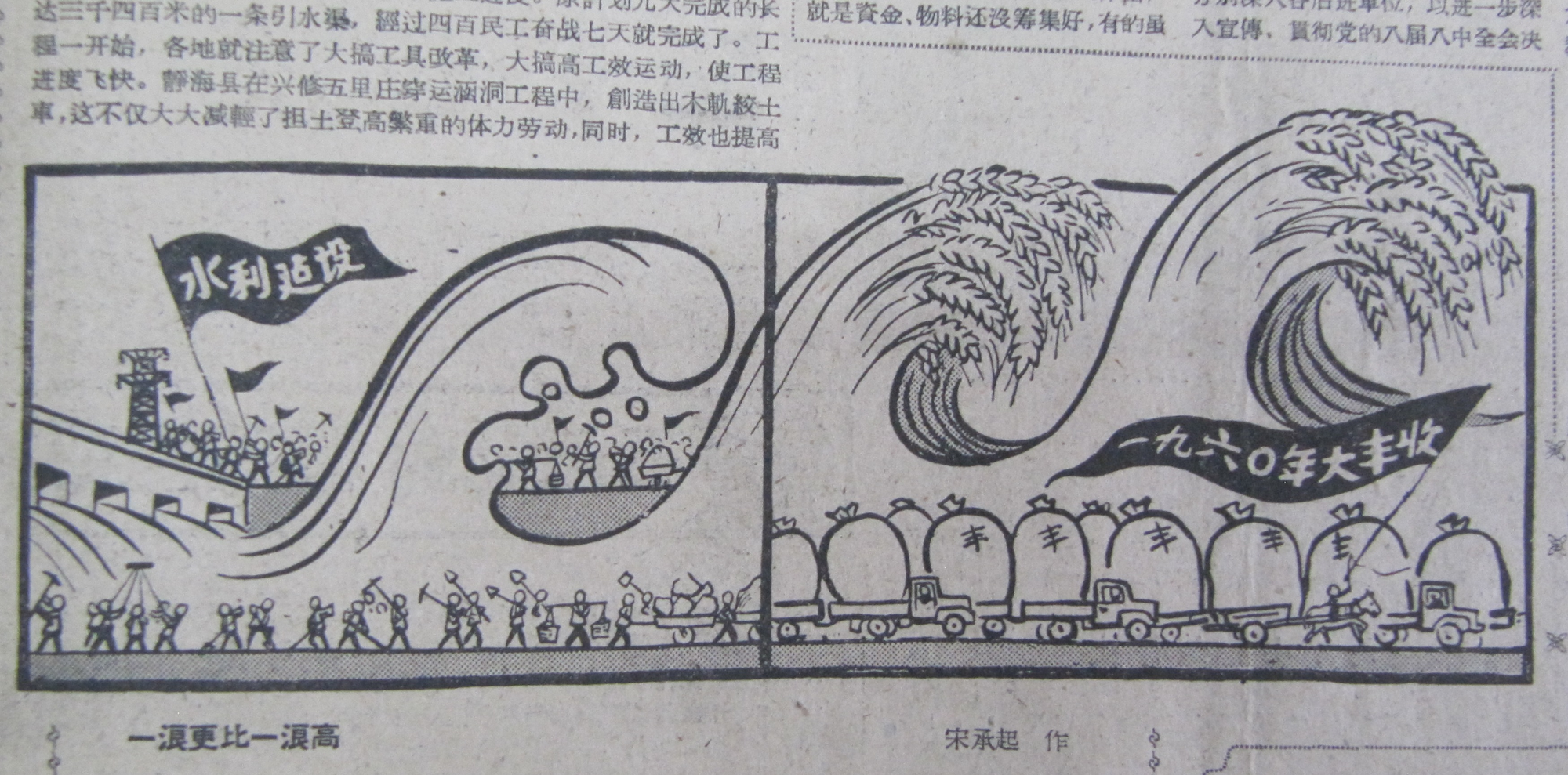
The official field says: abundance.
The physical field says: scarcity.
The state is liking the official field. Let's go with that one.
Then it sends people with authority into the physical one.
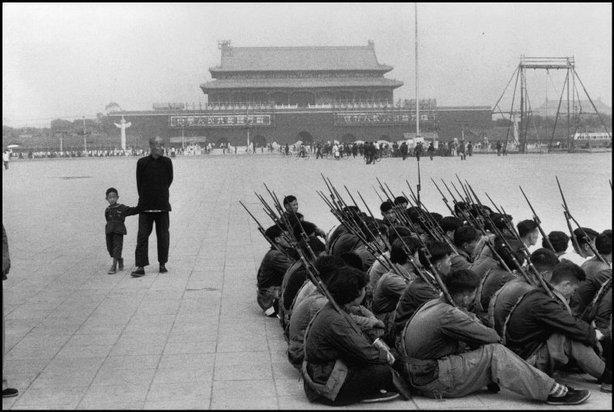
There is almost no darker form of administrative stupidity than this: an institution acting on invented abundance with real coercion. A fantasy of production becomes a real demand to have produced. A lie about grain becomes the removal of real grain.
The result is not simply that the state fails to feed people, the state now actively takes food away while believing, pretending, or insisting that enough remains.
This is the moment where the earlier absurdities return in a new form.
The furnace transmuted useful tools into symbolic steel.
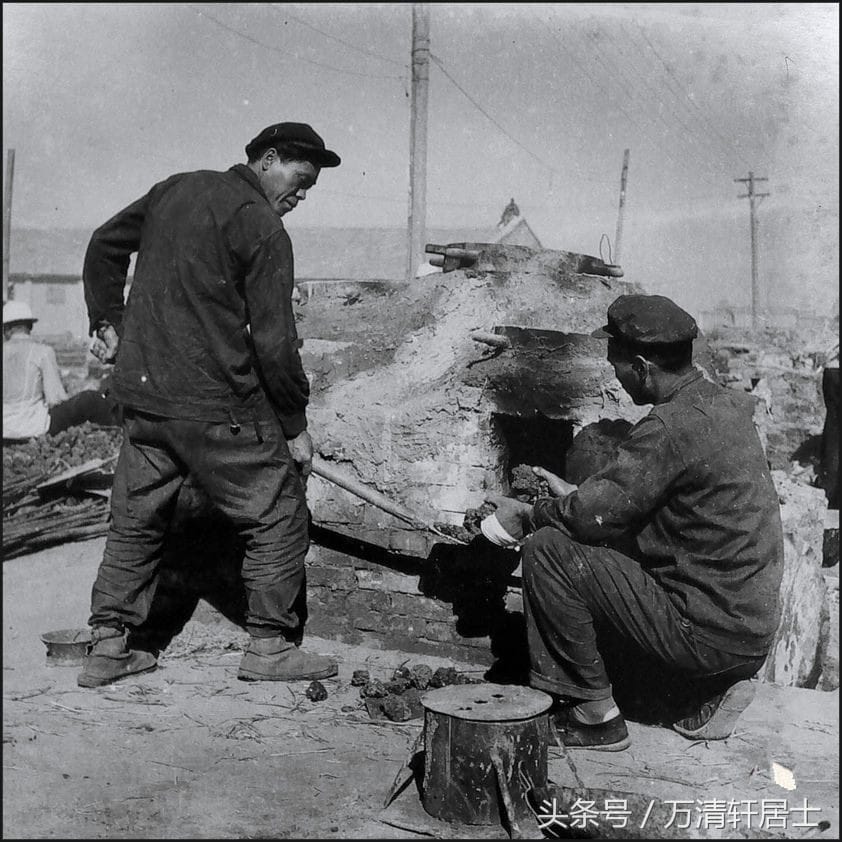
The communal kitchen transmuted household food judgment into collective performance.
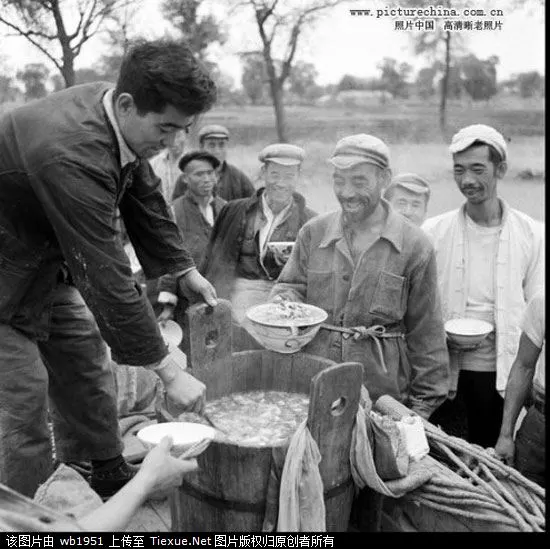
Close planting transmuted biological competition into radical socialist optimism.
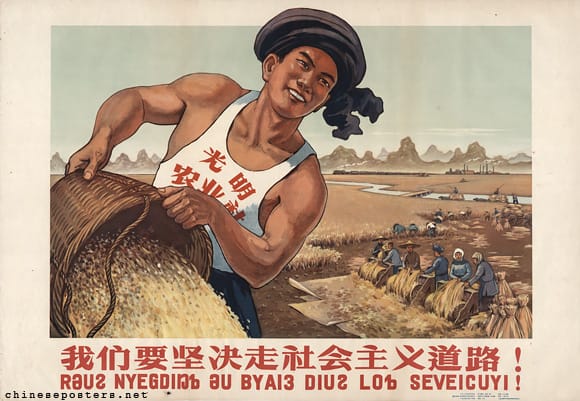
The sparrow campaign transmuted ecological relation into enemy body count.
Now procurement transmutes false reports into hunger.
Every magic trick follows the same structure:
- One visible or official property is inflated into reality.
- The field relation disappears.
- The missing relation returns as damage.
Only now the damage is not bad steel, lost tools, exhausted workers, ruined crops, or insects.
No Official Stomach.
There is a problem with governing by report:
Reports do not get hungry.
This makes them very easy to satisfy.
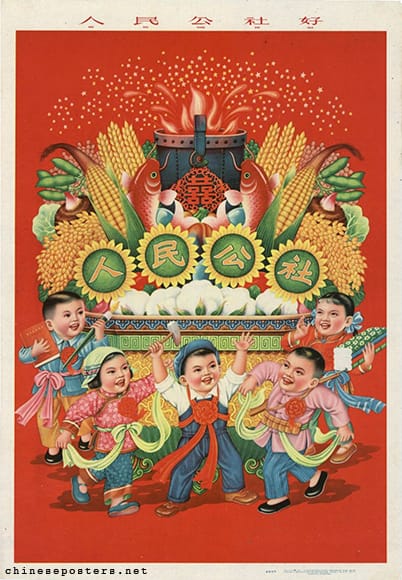
A report can show abundance while the village starves. It can circulate through offices, meetings, warehouses, and speeches without ever weakening. It does not need protein. It does not care whether the millet exists. It never wakes at night because a child is crying from hunger. It never has to decide whether seed grain should be eaten.
The report is perfectly loyal because the report has no body. This gives it a clear advantage over peasants.
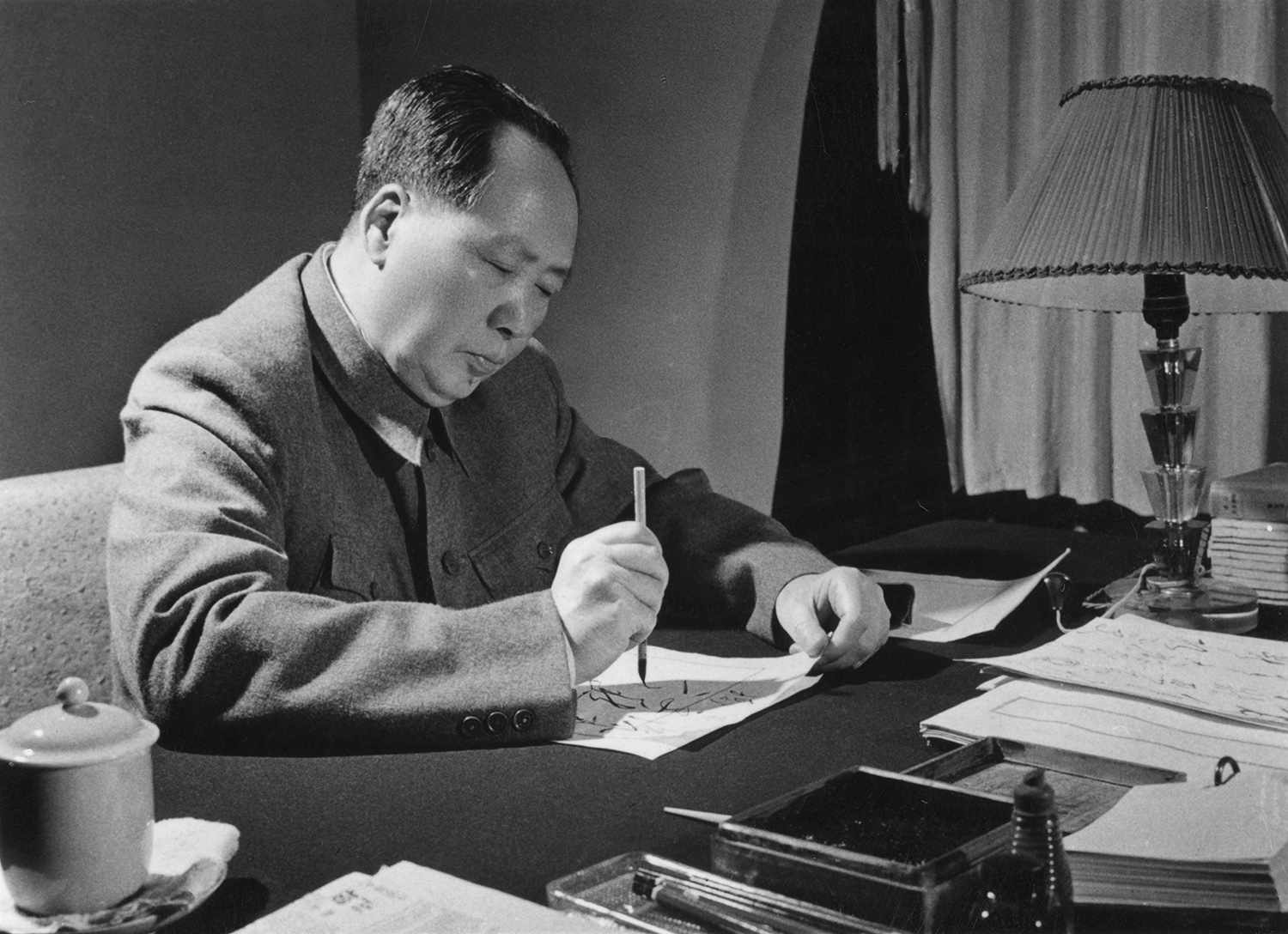
Peasants have bodies. Bodies are politically inconvenient. Bodies tire, weaken, swell, collapse, and die. Bodies insist on being fed even when the report has already solved the food problem. Bodies therefore become bad witnesses in a system committed to paper abundance.
This is why famine under the Great Leap Forward is not simply a shortage. It is an epistemic atrocity. The body knows something the state refuses to know. The body reports the failure directly. Hunger is a measurement. Weight loss is a measurement. Corpses are measurements.
But the state has chosen its instrument. It prefers the report.
The body says famine, but the report says grain.
The report has the Chairman. The body just has ribs.
Where the Hell Did All the Grain Go?
Some of the grain went to cities.
Some went to state granaries.
Some went to industrial priorities.
Some went into the procurement system.
Some went into exports and political commitments.
Some was lost, misallocated, mishandled, hidden, spoiled, or badly distributed.
But the deeper answer is simpler and worse:
The grain went up.
The rural field produced food, or failed to produce enough food, under pressure from bad methods, labor diversion, ecological damage, and political terror. Then the state, acting through procurement, pulled grain out of the rural field according to a story of abundance the rural field could not safely contradict.
The grain always moved upward through power. The hunger always stayed local.
This asymmetry is the famine’s shape.
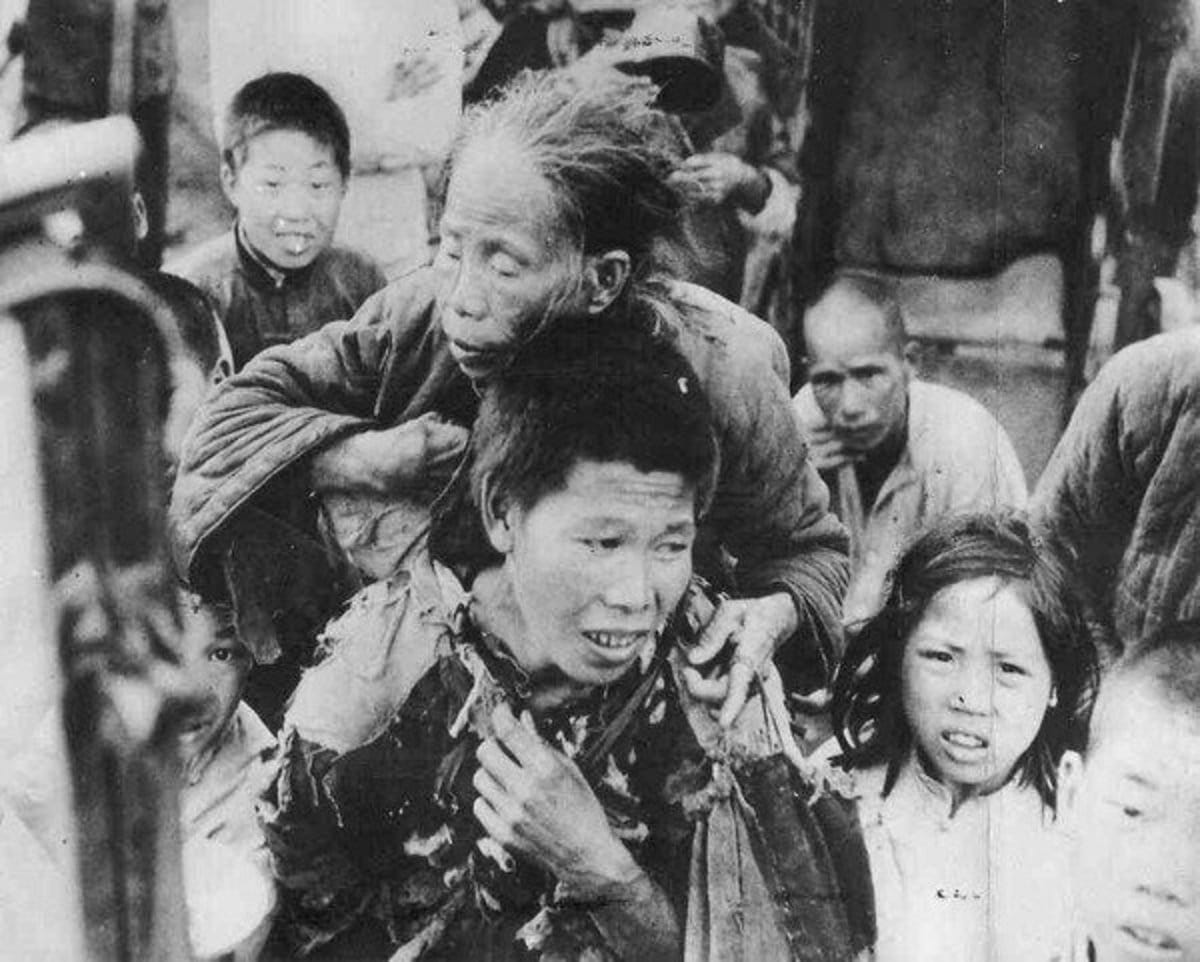
The city is visible. The state is visible. The plan is visible. Industrial workers are visible. Diplomatic commitments are visible. National prestige is visible. The rural household, especially once absorbed into the commune, is visible mostly as a production unit. Its hunger is private until it becomes too large to hide, and by then the system has already developed explanations that protect itself.
The village says: "We are hungry."
The state asks: "Okay, then where is the grain you reported? Eat it."
The village says: "So, we did not actually have that grain."
The state asks: "Woah, woah, woah, why the fuck did you lie?"
So the village says nothing. There is no safe answer there. So there is no safe way to report the hunger.
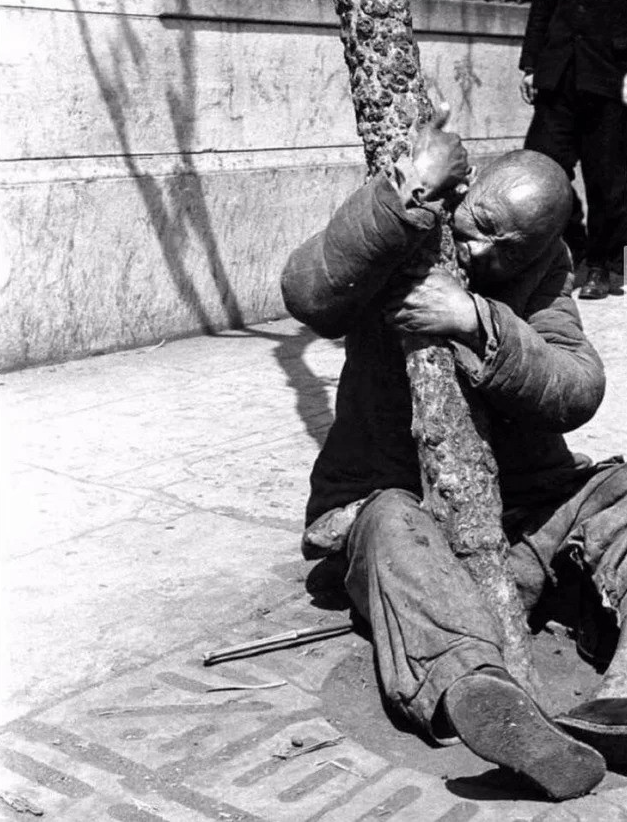
This is what it means for a field to lose corrigibility.
The correction path exists. Everyone can see it. The hungry can see it. The cadres can see it. The families can see it. The fields can see it. The bodies can see it.
But the route by which that correction would alter policy has been blocked by fear, incentives, ideology, and hierarchy.
The truth is present. It is not, however, reachable.
Everyone in China Becomes a Grain Detective.
Once the state believes in hidden abundance, it immediately begins searching for the grain it made up. This is where the farce turns grim even before the famine.
If procurement targets cannot be met, and the official numbers say they should be met, then shortage must be explained as concealment. Peasants must be hiding their food. Local officials must be protecting them or something. Bad elements are clearly sabotaging the Leap. Grain must be buried, tucked away, concealed in walls, hidden in jars, stashed under floors, withheld from the state, stolen from the people.
The search for the hidden grain becomes a ritual of preserving the lie.
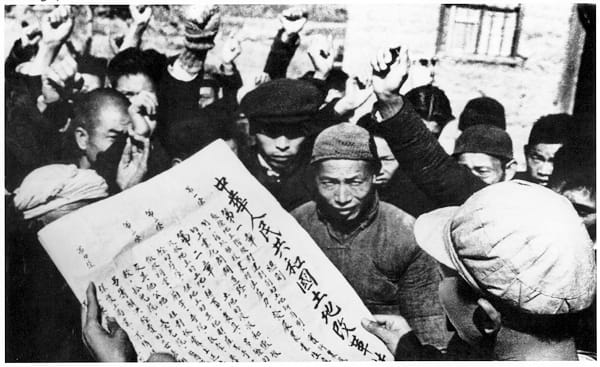
The state is no longer trying to discover whether any grain exists. It is trying to force the world to confess that its report was true.
That is a very different activity. One activity investigates reality. The other interrogates reality until it produces the answer power already needs.
The result of this activity was cruelty.
People could be accused, pressured, beaten, humiliated, or tortured over grain that simply did not exist. Villages could be squeezed for quotas they could never meet. Cadres could become predators under pressure from above.
Hunger itself could become evidence of guilt: if you are hungry, perhaps you hid food badly. If you are starving, perhaps you concealed grain and then ate it, but wrong, in old China style. If your family is dying, perhaps you deserve punishment for sabotaging procurement.
This is one of the ugliest features of the Great Leap Forward.
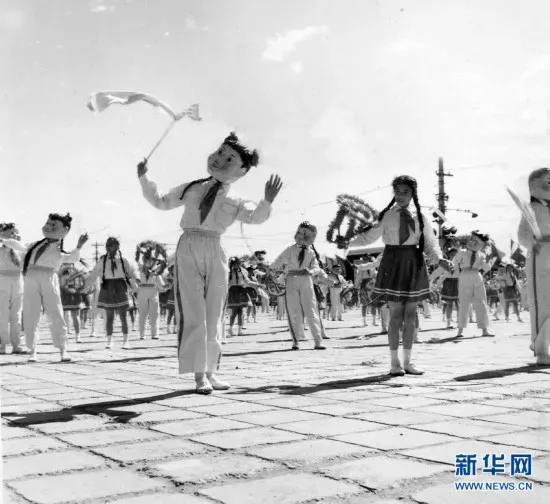
The plan creates scarcity. The report denies scarcity. The procurement system deepens scarcity. Then the state looks at the starving and asks what they did with all the abundance.
This is not an ordinary error. This is reality being framed for the crime of contradicting policy.
Playing Cadre in the Middle.
The local cadre deserves a miserable little corner of this story.
Not absolution. Just a corner.
The cadre is often a villain in famine accounts, and sometimes fully earns that role. Cadres coerced, lied, seized, beat, humiliated, tortured, and protected themselves at the expense of people beneath them. Some were sadists. Some were careerists. Some were cowards. Some were true believers. Some were all of these at once, which is one of history’s less charming personality blends available.
But the cadre is also an instrument inside the distortion.
He is squeezed from above and surrounded below by facts he is not allowed to report cleanly. The commune must produce. The quota must be met. The county expects enthusiasm. The province expects records. The center expects leaping. Mao expects history to move.
The cadre can tell the truth and risk destruction.
Or he can lie and help destroy others.
Many chose the second path. Some chose it eagerly. Some chose it under pressure. Some likely told themselves that the next harvest would fix things, or that the current pain was temporary, or that the campaign was mostly correct, or that hidden grain really existed, or that the peasants were exaggerating, or that obedience was safer, or that everyone else was doing the same thing.
This is how distorted systems distribute guilt around without dissolving responsibility.
The fact that the cadre is pressured does not make his cruelty harmless.
The fact that Mao is central does not make every local agent innocent.
The fact that the field is coercive does not mean nobody inside it chooses.
Modal Path Ethics does not need cartoon villains for path analysis. The cadre’s path is ugly because it shows how a distorted field recruits ordinary cowardice, ambition, fear, resentment, obedience, and opportunism into large-scale harm.
- The center dreams.
- The province competes.
- The county demands.
- The commune reports.
- The cadre squeezes.
- The peasant starves.
Every level says the pressure came from somewhere else. It is all one coupled system. The body at the bottom receives all of the output.
The Granary v. the Bowl: Dawn of Famine.
The granary and the bowl became enemies.
The granary is official. The bowl is local.
The granary belongs to the procurement system, the city ration, the state plan, the national image, the account book, the railway, the warehouse, the future.
The bowl belongs to a person. This puts the bowl at a serious institutional disadvantage.
A granary can be guarded. A bowl can be emptied.
A granary can appear in reports. A bowl can be dismissed as anecdote.
A granary can serve the plan. A bowl can only accuse it.
When the granary fills and the bowl empties, the system has declared its allegiance. The bowl should have leaped.
This is not an argument against storage, planning, urban supply, or state coordination. A famine field will probably need all of those.
The question is:
What happens when storage is maintained against hunger, planning obeys false numbers, urban supply is protected by rural extraction, and state coordination is too proud to admit that its premise is killing people?
The Crop Report Learns How to Kill.
By now, the crop report has completed its fell transformation.
This thing began as a description of food.
Then it became a boast, then it became a competition, then it became a loyalty signal, then it became a planning input, then it became a procurement quota, then it became an accusation.
Now, it is killing people.
This is a very impressive career for a lie.
The Great Leap Forward constantly shows us how symbolic distortions become material harm. A bad idea is not content to remain an idea. It has much larger ambitions. Once installed in an institution, it hires clerks, trains cadres, moves trucks, opens warehouses, assigns quotas, prints forms, and knocks on doors. It learns to touch people.
The fake harvest report is one of the clearest examples. It does not stay false in the abstract. It reorganizes the real.
- This lie causes grain to move.
- It causes cadres to pressure villages.
- It causes food to leave places that need it.
- It causes seed grain to be consumed or seized.
- It causes starving people to be disbelieved.
- It causes local truth to become dangerous.
- It causes the state to look at empty fields and demand the abundance it invented.
This is why the Great Leap Forward cannot be dismissed as “bad data.”
This was a coercive hallucination.
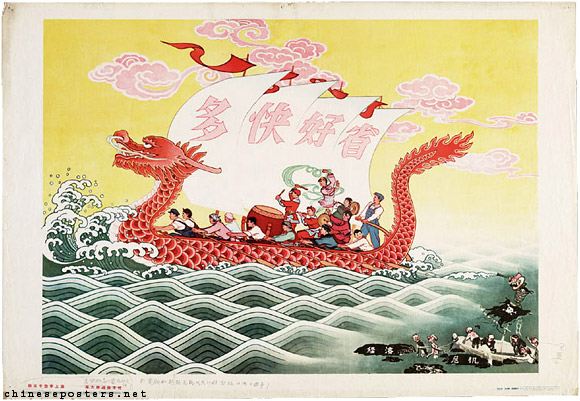
A hallucination is normally trapped inside a mind. This one had a procurement office.
The Metric Eats China.
And so the metric ate the crop.
The yield number was supposed to measure grain. Instead, it competed with the existence of grain. It ultimately defeated grain. It became more useful to officials than the crop itself, because the number could satisfy political expectations while the crop could only satisfy hunger.
Food, in the end, has a limited use. It keeps people alive. This is old China.
A number is revolutionary. It can do so much more in a distorted system.
- A number can flatter Mao.
- A number can protect a cadre.
- A number can impress a province.
- A number can validate the commune.
- A number can justify procurement.
- A number can silence doubt.
- A number can launch the next campaign.
- A number can make the future appear.
- A number can hide the dead for a while.
Food wasn't doing any of that shit. No wonder the system preferred the number.
The crop was provincial. The number was ambitious.
The crop stayed in the field. The number reported to Beijing.
The crop had to be real. The number only had to be correct.
Blowing Past the Last Off-Ramp.
At this point, the Great Leap Forward has assembled almost everything it needs for catastrophe.
The household has been weakened. The commune has been empowered. The kitchen has been displaced. The furnace has diverted labor and eaten tools. The fields have been subjected to pseudo-agricultural command. The sparrow has been eliminated from a relation with the world the state did not understand. The reports have inflated into orbit. The procurement system has begun acting on official abundance. The rural body has started to lose its argument with the paper field.
A sane system would probably now panic in the useful way.
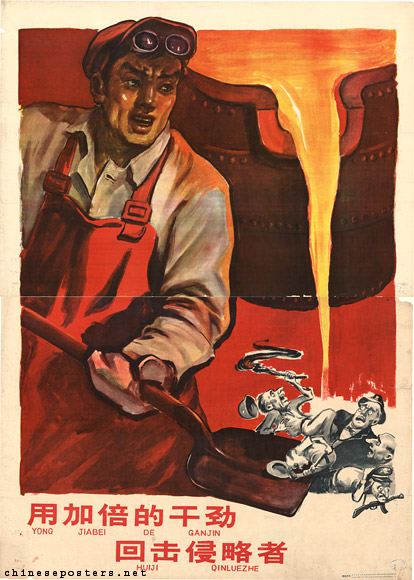
It would stop. It would listen. It would send investigators who were allowed to return with the bad news. It would lower procurement. It would reopen local food channels. It would protect household survival. It would punish false reporting less than continued denial. It would let farmers and agronomists talk again. It would feed villages before proving its slogans. It would, generally speaking, revise the plan.
The Great Leap Forward still had one last off-ramp.
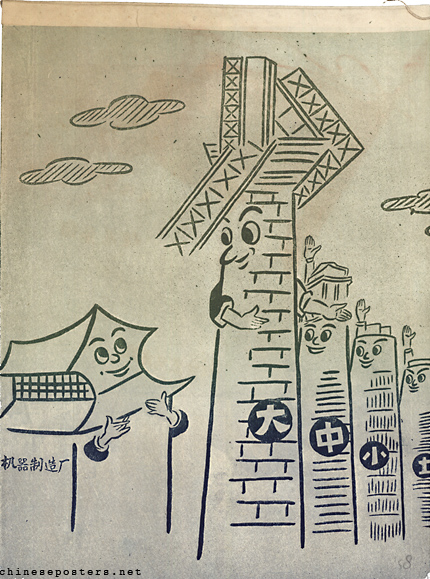
And, in a miraculous turn of events, a high-ranking military leader would both see it and try to point China toward it.
His name was Peng Dehuai.
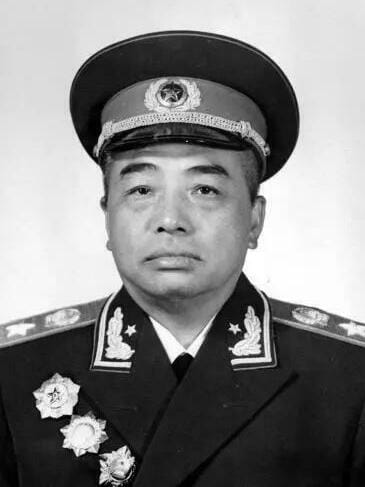
This will go about how you expect.
Peng Dehuai Pulls the Fire Alarm.
Disasters often look inevitable after they happen.
The dead give the past a terrible solidity. Once the famine has taken shape in memory, every earlier decision seems to have been marching straight toward it from the beginning, boots polished, banners ready, no side roads available.
But fields are not like that. Fields branch.
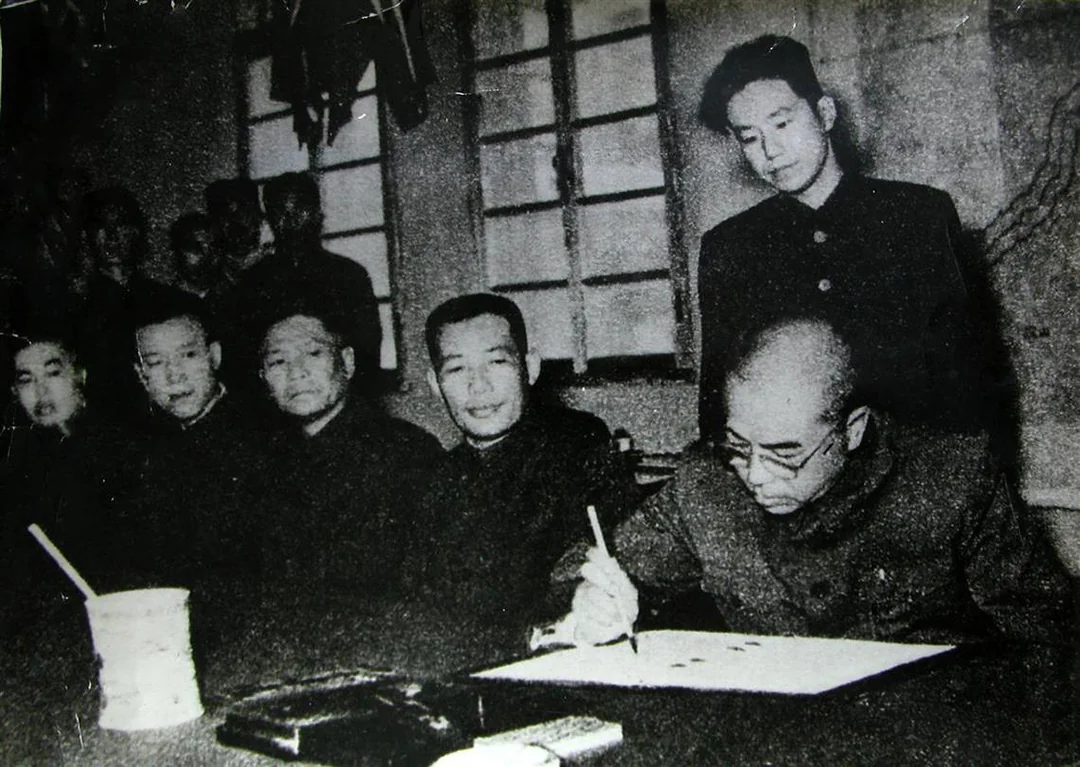
There were certain moments when the Great Leap Forward could have been slowed. Not redeemed entirely, maybe. Too much had already been broken here. Too many signals had already been distorted. Too much grain had already been placed under the authority of a fantasy.
But it could still have been less catastrophic. The campaign could have been revised. Procurement could have been lowered. Communal dining could have been relaxed. Local food retention could have been protected. False reporting could have been punished less than continued obedience to falsehood. Agricultural methods could have been corrected. Cadres could have been told that bad news was no longer treasonous.
The system could have realized what had happened. It does not enjoy that experience. Nobody likes being wrong at scale. But if the correction channel still exists, the field can bleed off some of the error before the error becomes bodies.
In 1959, Peng Dehuai tried to become such a channel.
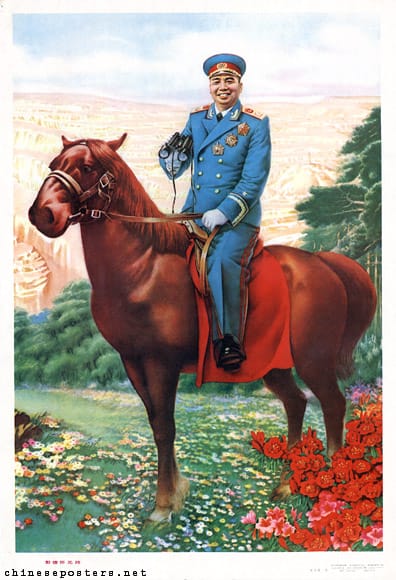
This man was not just anyone.
Peng was not a whispering intellectual in a study, or a terrified local cadre trying to smuggle one true sentence into a false report, or a farmer telling his neighbor the crops looked wrong. Peng was a Marshal of the People’s Republic, a military leader, a veteran revolutionary, the Minister of Defense; a man with standing inside the state and the party.
In other words, he had enough rank to make the correction visible.
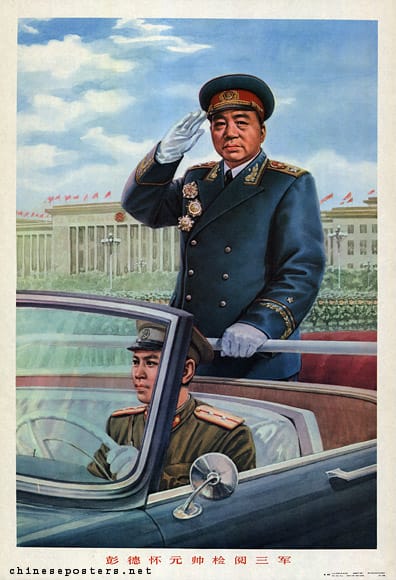
So, that was precisely the problem.
A powerless critic can be ignored.
A powerful critic must be interpreted.
And under Mao, interpretation was where corrections went to die of fucking exposure.
Lushan, or The Review Meeting That Could Not Review.
The setting for this was almost rude. Lushan is a mountain resort.
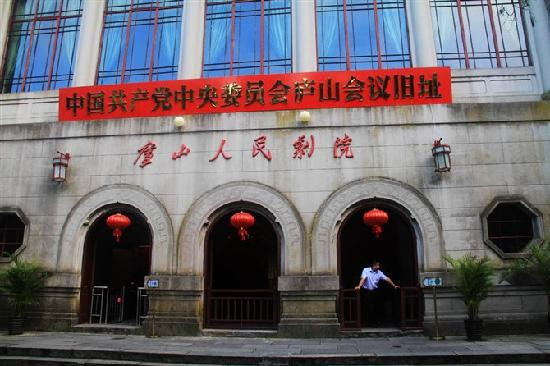
This is the sort of detail history includes when it wants to make sure nobody can accuse it of lacking theatrical instinct. I see you. After the fields, furnaces, mess halls, pest campaigns, fake harvests, hunger, and fear, senior party leaders gathered in the mountains to assess the situation.

A conference on high.
A review in the sky.
A chance (in theory) to look at what was happening and adjust course before they all die.
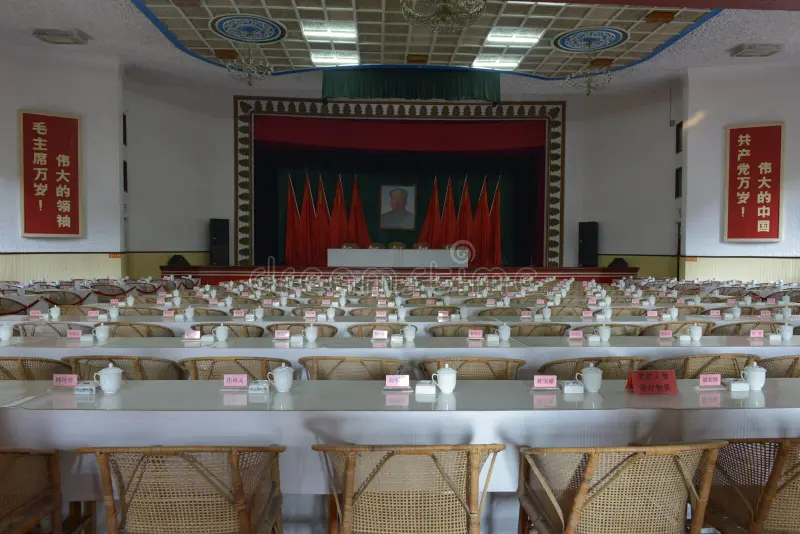
You can imagine a better version of this meeting happening. It is beautiful. It is so new China.
Reports arrive. Investigations are heard. Officials admit the campaign has overreached. Mao, having created the central pressure, accepts that the state has gone too far. These results are clearly not what we set out to do here.
So procurement is reduced. Communes are loosened. Local survival mechanisms are restored. Backyard furnaces are quietly allowed to become the embarrassing smoking jokes they always were. Agricultural fantasy is replaced by agronomy. The reporting system is told, very clearly, that exaggeration is now more dangerous than disappointment.
No utopia follows from this path. But fewer people die horribly.
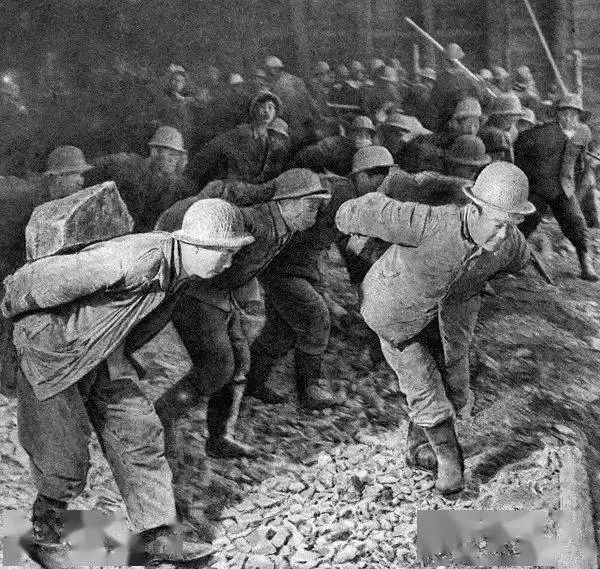
That path was not metaphysically impossible. It was even politically available for a moment.
Then, Peng spoke. More precisely, Peng wrote.
He sent Mao a private letter criticizing some features of the Great Leap Forward. This letter was not, by the standards of what reality deserved, an outrageous document to pen.
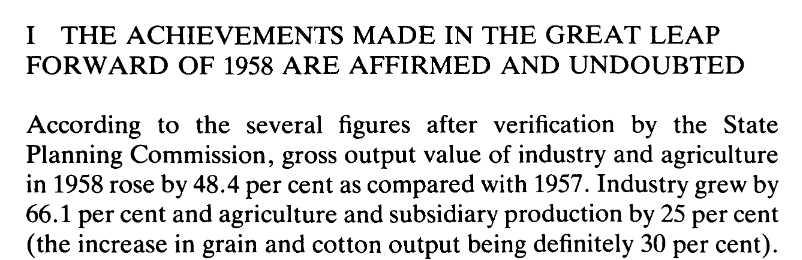
This is one of the bleaker jokes of the whole episode. Peng did not stand on a table and scream, “Chairman Mao has built a bird-murdering furnace cult and the grain numbers are fucking drunk.”
This party man did not call for the destruction of the party. He did not denounce socialism. He did not propose handing the countryside to Wall Street, which would have been logistically difficult and possibly confusing to the peasants.
He just criticized some excesses. He pointed toward a few problems.
He offered a little correction, from inside the system.
Of course, that became the crime.
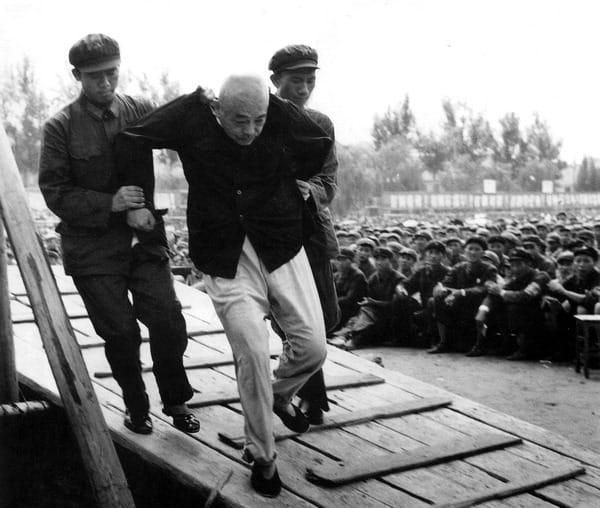
This is the moment where the Great Leap Forward reveals what kind of system it has become. The issue is no longer whether the campaign made mistakes. Everyone serious could see the fucking mistakes. They were obvious. The issue is whether the campaign is allowed to know it made mistakes.
There are two very different questions here:
Did the Great Leap Forward fail?
And:
May the Great Leap Forward be described as failing?
The first question belongs to reality. The second belongs to power.
At Lushan, power won again.
The Fire Alarm Is Accused of Arson.
Peng’s letter could have been treated as a warning.
Instead, this document was treated as an attack.
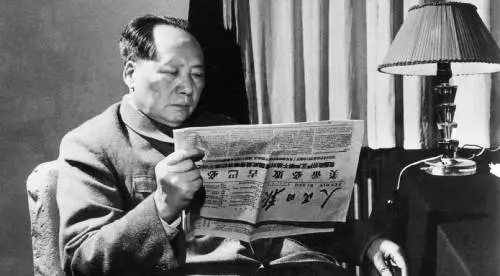
This is one of the most reliable signs that a system has lost all corrigibility: the person pointing at the fire is accused of starting it. The alarm becomes the danger. The warning becomes the sabotage. The correction becomes the wound.
Peng raised concerns about the Great Leap Forward, and Mao read those concerns through politics. That was the fatal translation. A material critique became factional hostility. A warning about policy became right-deviationism. The field’s pain became an opportunity to identify its enemies.
This is how the off-ramp collapsed into dust.
A sane system asks:
Is the criticism true?
A threatened system asks:
Woah, why is this person criticizing me?
A paranoid system asks:
And who exactly is behind him?
And a Maoist distortion field asks:
What class line does this represent, and how hard must it be crushed to restore correct motion?
That last question is not designed to learn anything. It was designed to win.
Mao’s response did not just defeat Peng in an argument. It taught the political field exactly what sort of argument the Great Leap Forward had become. To criticize the Leap was not merely to question policy. This was to risk association with an anti-party line. It was to make yourself available for accusation. It was to become part of the problem the campaign now regrettably had to overcome.
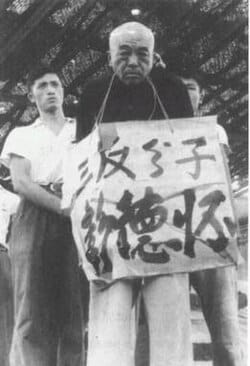
The fire alarm had been successfully accused of arson. The building kept burning anyway.
The Private Letter Becomes a Public Corpse.
A private letter is a pretty interesting object.
This thing is not a manifesto. It is not a public speech. It is not a factional platform. It still imagines intimacy, hierarchy, relationship, correction within bounds. It says: I am telling you this because the system may still be able to hear it.
That was the tragic assumption. Peng’s letter assumed that Mao could somehow receive a warning without converting it into a threat.
Mao could not, or would not do this.
So once Mao treated the letter as political opposition, the letter changed species. This thing was no longer a correction offered upward. It became an example offered downward.
The whole party learned from it. Just maybe not the lesson Peng intended.
Peng intended something like:
The campaign is producing danger, exaggeration, waste, and suffering; we must adjust.
The system heard:
My God. Even a Marshal can be destroyed for saying the plan is wrong.
That second lesson traveled faster.
Lushan did not only remove one critic. It reorganized the risk environment around truth. Before Lushan, it was already dangerous to contradict the Great Leap Forward. After Lushan, the danger became spectacularly legible.
If Peng Dehuai could be purged, what exactly did a county official think was going to happen to him?
What did a commune cadre think?
What did an agronomist think?
What did a village doctor think?
What did a farmer think?
What did the hungry think?
The answer, very often, was nothing at all, not out loud anyway.
A field can be full of knowledge and still behave as if it knows nothing. That is what fear does. It does not erase information. It prevents information from becoming action.
Lushan was the moment fear received a permanent promotion.
The Marshall Becomes Fiction.
Peng had real credentials.
This should have helped. It did not help enough.
This is another feature of distortion fields: they only like credentials when credentials serve the story. They very much dislike credentials when credentials threaten it.
Peng’s revolutionary history mattered until it suddenly did not. His military service mattered until it did not. His rank mattered until it became alarming. His proximity to the system mattered until he tried to use that proximity to report back a reality the system did not want reported. When that happened, his standing did not protect the correction. It just made the correction even more dangerous.
A nobody can be dismissed as confused.
A senior figure must be decisively neutralized.
The higher Peng stood, the more unacceptable his criticism became. If an ordinary villager complained, perhaps he was ignorant, or just hiding grain. If a local cadre complained, perhaps he was weak, or maybe hiding grain. If an intellectual complained, perhaps he was a rightist with a secret grain stash.
But if Peng Dehuai complained, the criticism arrived carrying revolutionary legitimacy.
That simply could not be allowed to sit in the room.
So the room changed the criticism into something else. This is one of the neatest little magic tricks in politics:
A person says: this policy is damaging the field.
The system hears: oh shit, this person is damaging the policy. Now the person must be dealt with.
What field? That field can wait.
The Invention of the Anti-Party Clique.
Once a correction is classified as political opposition, it begins attracting imaginary friends.
Peng cannot simply be wrong, or concerned, or blunt, or alarmed, or insufficiently tactful. This man must represent something. A hidden line. A deviation. A clique. A danger. A tendency. A hidden force. There is an infection inside the party body.
This is extremely convenient.
If Peng is a critic, then the campaign must answer him. But if Peng is a clique, then the campaign can purge him.
That distinction saves everyone a lot of time.
This is how authoritarian systems protect themselves from feedback. They do not only suppress dissent. They narrativize dissent into conspiracy, faction, betrayal, sabotage, foreign influence, class enemy activity, or moral corruption. The content of the warning is displaced by the identity of the warner.
Peng’s criticism did not have to be processed as field information. It could be processed as factional contamination.
And this machine knew just how to handle contamination.
At this point, the Great Leap Forward’s final available correction channel did not just close. It slammed shut with enough noise for everyone nearby to understand the acoustics.
The message was clear:
Do not be Peng.
Mao Marries the Story.
Mao’s reaction at Lushan tells us exactly what kind of leader he had become inside the Great Leap Forward.
He was not simply unaware. Unawareness would be bad enough. A leader insulated from the field can do enormous damage. But Lushan presented something more dangerous than ignorance. It presented a leader confronted with correction who chose to defend the story.
There is a form of error that comes from not knowing. There is another form that comes from refusing the conditions under which knowing would require change. Mao’s handling of Peng belongs to the second category.
The correction threatened more than a policy. It threatened the image of Mao as the great reader of history.
It threatened the idea that mass mobilization could overcome material limits. It threatened the commune. It threatened the Leap. It threatened the emotional architecture by which China’s real wounds had been converted into an accelerated future. It threatened Mao’s authority over the party. It threatened the political weather every subordinate had been breathing.
So Mao defended the weather. It was already the world he lived in.
This is the awful thing about large distortion fields. The leader may genuinely believe parts of the story. Others may half-believe it. Others may disbelieve privately but behave as if they believe. Others may only fear the consequences of disbelief.
But the institution does not need uniform belief to function. It needs synchronized behavior.
Lin Biao Gets the Chair.
Peng was removed.
Lin Biao rose.
There is an entire later nightmare hidden inside that second sentence, but we do not need to open it just yet. It is enough, for now, to notice the direction of replacement here.
The defense minister who criticized the Leap lost power. A figure more aligned with Mao replaced him. That is the pattern again.
Wrong furnace? We need more enthusiasm.
Wrong planting? More mobilization should help.
Wrong pest campaign? More counting.
Wrong harvest? More report.
Wrong critic? More loyalty.
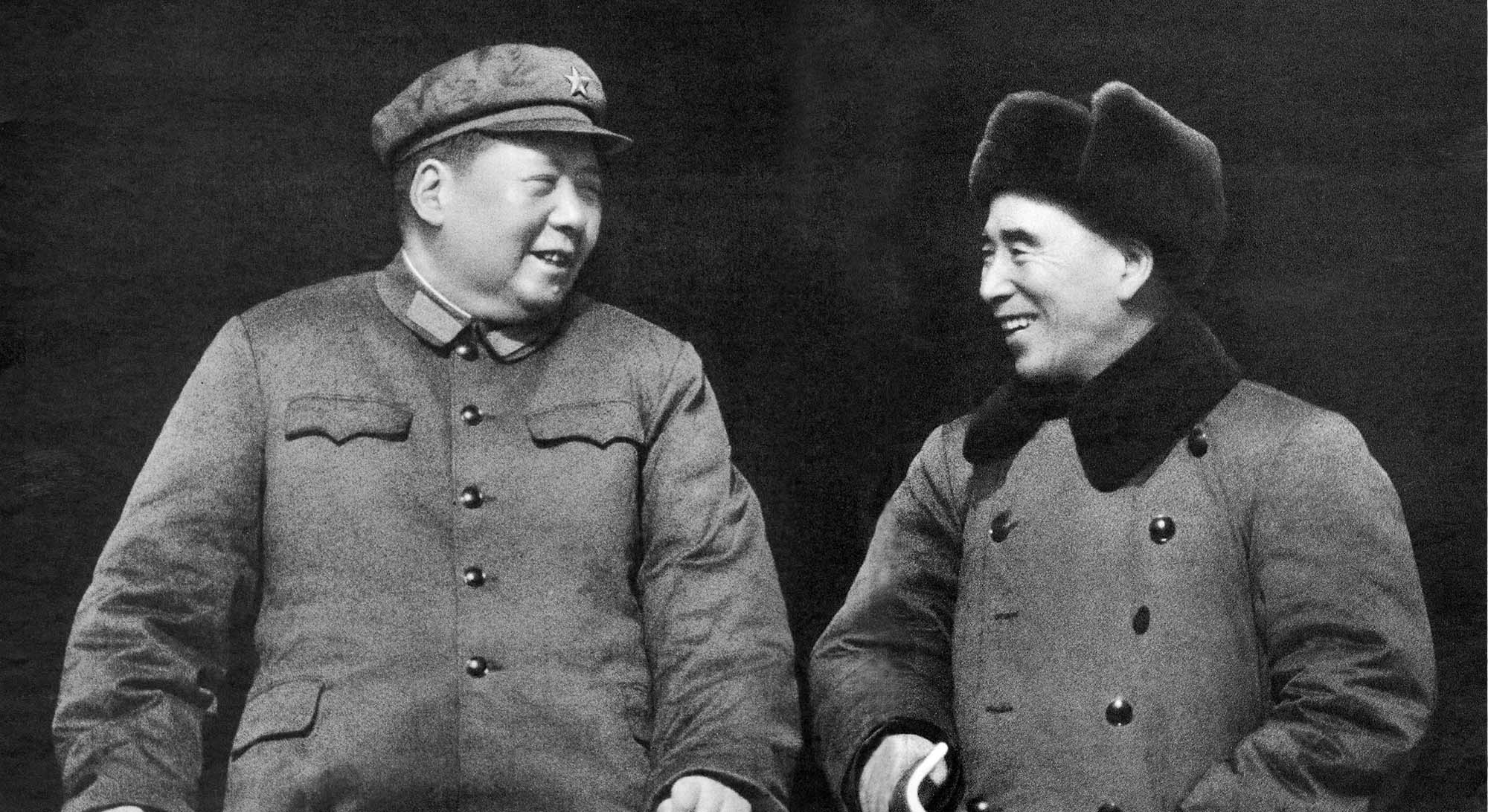
Each failure only strengthens the distortion’s preferred response. The campaign does not interpret failure as evidence that the path is invalid. It interprets failure as evidence that the path has enemies, doubters, weaklings, insufficient believers, right opportunists, and people who must be disciplined before the path can succeed.
This is one of the ways a bad repair route becomes self-sealing.
Every contradiction is treated as contamination.
Every warning becomes proof that more vigilance is needed.
Every cost becomes evidence that the struggle is indeed serious.
Every death, eventually, can be placed somewhere other than at the feet of the plan.
This is ideological digestion. The system eats correction and produces loyalty.
The Mountain Speaks to the Cadres.
What happened at Lushan did not stay at Lushan.
The signal sent down from the mountain did not say, “Investigate honestly.” It did not say, “Protect local survival.” It said, in effect:
The Leap has enemies.
This is the worst possible message to send into a famine field.
Because once the famine begins to intensify, the evidence of failure will be everywhere. Empty bowls. Missing grain. Edema. Theft. Flight. Desperation. Corpses. Local collapse. People eating things no one should have to consider as food. Cadres seeing what is happening and needing a category for it.
A healthy system would give them one:
This is a famine.
The Maoist system gave them others:
We are seeing the residue of right opportunism.
Concealment. Sabotage. Weakness. Bad elements.
Lack of enthusiasm. Failure to follow the line. Insufficient struggle.
Categories govern action. If the category is famine, you will feed people. That's what that category of problem suggests as a solution.
If the category is concealment, you search those people instead. If the category is sabotage, you punish them. If the category is weakness, you discipline them. If the category is right deviation, you purge them.
Lushan helped lock in the categories.
Installing the Off-Ramp Checkpoint.
Before Lushan, the system still had an exit. After Lushan, that exit was not ignored, it was instead closely guarded.
This is the clearest way to understand the outcome of the conference. It did not make famine inevitable in some metaphysical sense, but it made correction much more dangerous at exactly the moment correction became most necessary.
The off-ramp became a checkpoint. To pass through it, a person had to say: the campaign is failing, guys.
The checkpoint replied:
Hold on. Are you with Peng?
Most people did not wish to be with Peng. Peng was losing.
The field was losing too, but the field had no personnel file. The field could not demote you. It could not denounce you in a meeting. It could not organize your colleagues against you. The field could only fail, starve, and eventually die.
Power punishes faster than reality. That is one of the reasons people obey power even when reality is screaming at them.
Reality may kill you later. Power can ruin you today.
The Wrong Kind of Courage.
Peng’s courage was not enough.
That is a harsh sentence, but it is true.
We like stories where one honest figure stands up, speaks the truth, and the truth breaks the spell. This is emotionally necessary and historically entirely unreliable. Sometimes the honest figure stands up, speaks the truth, and the spell just fucking eats him.
That is not a reason to mock the truth-teller, but that is a reason to understand the field first.
Courage is not self-executing. It needs a path. It needs institutions capable of receiving it. It needs allies willing to protect it. It needs norms that distinguish correction from betrayal. It needs a political structure in which the leader can lose an argument without the state interpreting that loss as a wound requiring vengeance.
Peng had courage. The field did not have the corresponding repair channel.
So his courage just became evidence against him. It could not perform the goods of courage in this field.
This is why Modal Path Ethics cannot be reduced to praising good intentions or brave acts. Good intentions matter. Brave acts matter.
But the question is always:
What paths do they actually open?
What structures can carry them? What forces close around them? What happens to the field after the brave act is punished?
After Peng, the field learned fear. That was the practical outcome of his courage here.
There is a specific kind of silence after a failed correction like this.
This is not the silence of ignorance. It is the silence of people who have learned.
After Lushan, many officials understood more, not less. They understood that the Great Leap Forward was dangerous.
They understood that numbers were inflated. They understood that procurement was damaging the countryside. They understood that Mao could be angered by criticism. They understood that Peng had fallen. They understood that the safest report was not the truest report. They understood that survival required reading power before reading the field.
This is trained cowardice.
That phrase sounds harsh, and it should. Cowardice at scale kills. This is trained cowardice because the field has arranged incentives to produce it. People are not born knowing exactly which truth will ruin them. Institutions teach them. Campaigns teach them. Purges teach them. Public denunciations teach them. The fate of Peng Dehuai taught them.
And once they learn, the field becomes quieter in the places where it most needs noise.
No one wants to be the next warning.
No one wants to be the next right opportunist. No one wants to discover whether Mao has become more receptive to criticism since the last man was destroyed for trying.
So the reports keep sounding better, the center keeps hearing less than the villages know, the procurement system keeps moving through the countryside like the paper harvest is real.
And the famine, now defended from correction, begins to take its full shape.
The Stomachs Speak.
A field denied ordinary speech will eventually find other languages.
At first, the field speaks through farmers.
Then through local reports. Then through critics.
Then through senior figures like Peng.
If all of that fails, the field speaks through bodies. This is the language no state can fully prevent, although very many have tried to misread it.
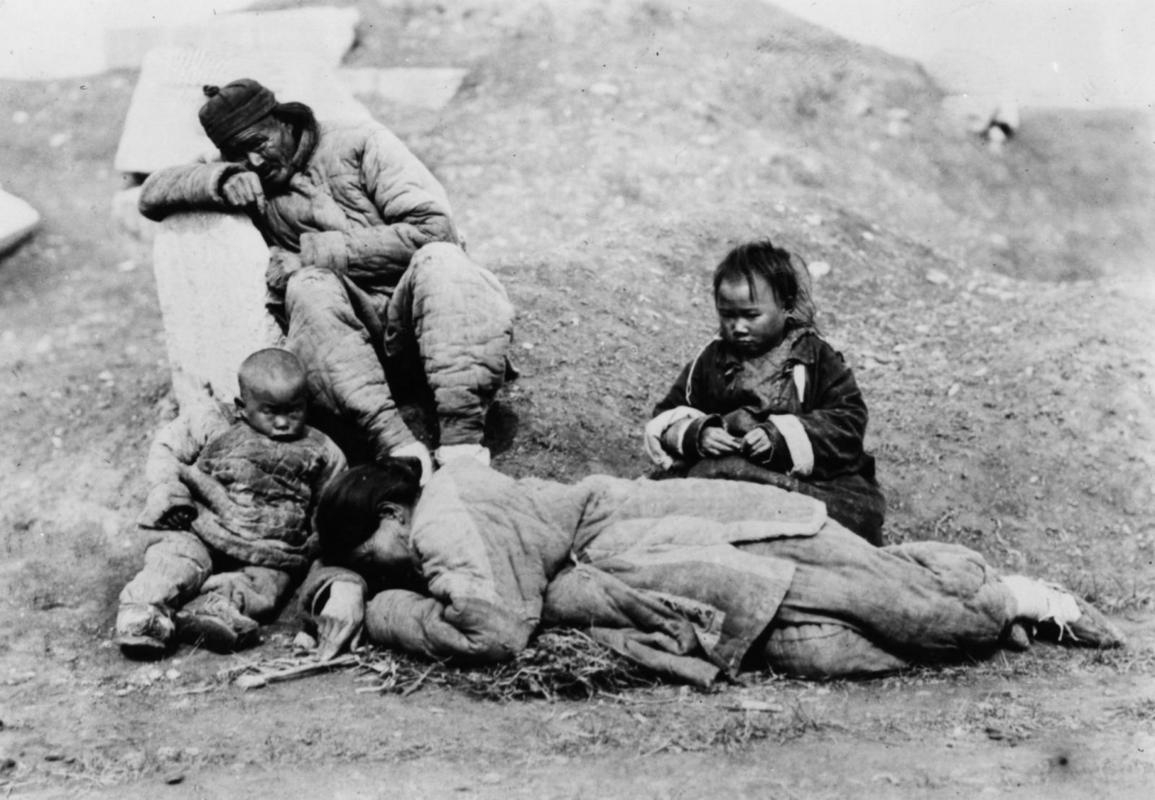
Weight loss. Swelling. Collapse. Theft. Flight. Abandoned children. Bark stripped from trees. Dirt and leaves entering the category of “food.” Villages thinning. Work teams weakening. Corpses appearing where the report had said abundance was.
The stomach is a brutally honest document. This one does not lie.
It does not care about right deviationism.
It does not care about Mao’s prestige.
It does not care whether the commune has achieved ideological superiority over the private kitchen.
It does not care how many sparrows were killed.
It does not care whether the grain number was new China.
It needs food. When food does not arrive, it begins revising the political story from underneath.
But by the time bodies become the main correction channel, the field has already failed catastrophically. Bodies are not really supposed to be the first successful auditors of policy. That is actually what reports, experts, local knowledge, institutions, criticisms, investigations, and leaders are for.
The Great Leap Forward broke or frightened too many of those earlier channels.
So, eventually the body had to step up and testify.
The testimony was:
“Famine.”
No Better.
This is usually where we look for Better. Not this time.
Better does not mean finding the hero. The Caravajal. The Fonab. Even the Adams. Modal Path Ethics does not look for a protagonist to ride in on a horseless carriage and save the article from becoming depressing.
Better is not the most sympathetic person in the room. Better is the least-closing reachable path from the damaged field.
In the Great Leap Forward, the question is:
Who could still have opened futures?
In Darien, the disaster field contains recognizable alternatives. There are people who see pieces of the field more clearly. There are agents who might have slowed the scheme, refused the fantasy, protected the settlers, revised the plan, or admitted that Scotland’s national wound was being routed through a swamp full of fever, pre-groomed hair, and bad logistics.
In other Tales, there is sometimes a Wood. Someone outside the spell, able to remove the prism. Someone whose position lets the field receive contradiction before the contradiction has to become ruin. There may also be a Caravajal; the one person embedded inside the field who appears to see the field for what it really is and takes the least-closing path at every fork.
But the Great Leap Forward is harsher.
This is an example of what I mean when I say “Not every field gets a Wood or Adams.” This one did not. There is really just no clean Better figure here.
There are some warning signs. There are definitely witnesses. There are farmers who know the crops are wrong. There are local cadres who know the numbers are fake. There are agronomists who know the methods are absurd. There are officials who suspect the campaign has gone too far. There are starving bodies, eventually, which are the most direct witnesses any field can produce.
The closest chance we had was Peng Dehuai.
Peng tried. Peng saw the damage. Peng spoke enough. Peng risked enough. Peng pointed toward the off-ramp.
But Peng was not Better in this field. He didn't choose the least-closing path. His courage, genuine but expressed as it was, ultimately just closed every other similar path that could have come after him.
Peng is the proof that Better was still reachable for a moment. Then the system closes around him, because he didn't realize it would in time.
If we misread Peng as the Better of this story, we make the article too comforting. We give the field a tragic hero and let ourselves pretend the path was cleanly embodied in one brave man who almost saved China.
Except that is not what happened to China.
Peng did not open the repair path.
Peng revealed that a repair path existed.
Mao then used his words to close it for good.
The party watched. The cadres learned. The field went quiet.
This is why the Great Leap Forward has no Carvajal, no Fonab, no Adams, no Wood, no clean counter-figure who can stand inside the article as the visible route away from disaster. Not so lucky every time, I'm afraid.
There were people who knew pieces of the truth. There were people who resisted locally. There were people who tried to protect food, conceal grain, soften orders, preserve life, or whisper reality through the walls of the campaign. There were people who chose least-closing paths under insane resistance.
But there was just no durable Better-bearing agent with enough authority, access, protection, and institutional support to keep a path open at the scale of the catastrophe.
That is the point. The field had warnings. It did not have a protected warning channel.
The field had knowledge. It did not have an institution that could safely act on this knowledge.
The field had courage. It did not have enough structure to make courage repair-bearing.
The field had Peng, but the field had Peng as a warning to everyone else. This is exactly what Lushan did, and why it did it; because the Party was designed to win, not to repair anything.
It did not only remove a critic. It removed the fantasy that criticism from within the upper system could reliably become correction. After that, truth did not vanish. Truth always remained everywhere. It remained in the fields, in the empty bowls, in the swollen bodies, in the missing grain, in the local memories, in the officials who knew better, in the people who were too frightened to say what they knew.
Ignorance can sometimes be repaired by information. A leader does not know, then learns. A bureaucracy mismeasures, then revises. A campaign overreaches, then withdraws. A state makes an error, then stops making that error because the field has returned enough pain to force correction.
The Great Leap Forward became something darker and stupider.
The field produced information and the system converted that information into more danger.
The result is a field with No Better.
Not because no one could imagine a better path. The better path is painfully fucking obvious:
- Stop the false reports.
- Lower procurement.
- Let villages keep food.
- Restore household survival channels.
- End the communal dining compulsion.
- Stop backyard steel.
- Stop agricultural fantasy.
- Stop treating hunger as concealment.
- Listen to farmers.
- Listen to technical people.
- Protect critics.
- Punish lying upward less than starving downward.
- Feed the rural field before defending the campaign.
None of this shit required advanced moral technology from the twenty-first century. It only required the state to value contact more than face, people more than production theater, and correction and survival more than Mao’s authority.
The better path was not mysterious. It was not exotic. It was not utopian. It was not even particularly clever. That may be the most damning thing about it.
The Great Leap Forward did not lack Better because Better was too difficult to conceive of. It lacked Better because the political field made Better too dangerous to ever possibly pursue.
This machine was designed to narrow the field until it fails.
The Famine Was Not a Weather Event.
The field had been damaged enough that hunger was no longer episodic, local, or correctable by ordinary means. Food had been misgrown, misreported, misallocated, misprocured, misrecognized, and morally misfiled. The bowl had lost to the report. The household had lost to the commune. The field had lost to the campaign. The body had lost to the number.
This famine was not a weather event.
Weather still mattered though, as weather often does. Floods, droughts, and regional crop failures can injure an agricultural field very badly. Nobody serious should pretend the physical world took these years off and allowed politics to do every single thing by itself. There was a lot going on.
But the Great Leap Forward famine was not nature arriving as villain while the state stood helplessly nearby holding a spoon.
A drought can reduce grain. A flood can destroy crops. Bad weather can make hunger likely. But a state decides whether warnings can travel. A state decides whether grain will be procured against inflated numbers. A state decides whether villages can keep food. A state decides whether local officials are punished for truth or for failure to flatter the plan. A state decides whether hunger is treated as a claim on repair or as evidence of sabotage.
Nature can wound a field. A distorted state can keep that wound open, deny the bleeding, and punish the people pointing at the blood.
That is precisely what happened here. The famine was not an interruption of the Great Leap Forward.
Counting the Corpses II.
Earlier, the campaign counted sparrows. Now the campaign must count people.
The symmetry is obscene, but there it is.
The Great Leap Forward began with a fixation on counting signs of success.
Tons of steel. Acres transformed. Pests killed. Communes formed. Kitchens collectivized. Harvests inflated. Grain procured. Every number was supposed to prove that China was moving faster than reality had previously allowed.
Then the bodies arrived and became the final statistic.
This was not the number anyone wanted. This was definitely not the number we saw printed on the propaganda poster. It was not the number a commune inflated to please the county. It was not the number Mao wanted launched upward like an agricultural satellite.
This number did not flatter anyone. It did not prove the brilliance of mass mobilization. It did not show China surpassing Britain. It did not show the commune defeating scarcity. It did not make the backyard furnace look any less deranged.
This number was old China. It was the count underneath all the other counts:
How many died?
The answer is still disputed, and that uncertainty is itself part of the horror here.

A famine this large should not also have to be dug out of a statistical fog, political concealment, archival limits, local underreporting, retrospective struggle, and the embarrassed bookkeeping of the state that helped make it happen. But that is what happens when the same system that produces the catastrophe also controls much of the record.

Some are lower. Many are higher. Serious accounts commonly place the dead in the tens of millions. Thirty million. Thirty-six million. Forty-five million. More, depending on method, definition, and source.
At that scale, the difference between estimates becomes morally strange. It definitely matters historically. It matters demographically. It matters for responsibility. It matters for the truth.

But ethically, after a certain point, the mind starts failing at its assigned job. Human brains don't really appear to be built for doing this.
This number is too large to imagine cleanly.
One dead person is a field closed.
One family losing a child is a world altered forever.
One village thinning under hunger is already too much.
Tens of millions is not a number the human imagination actually ever holds. You cannot actually conjure tens of millions of human lives lost in your mind. This is just a number we say because arithmetic can continue no problem after empathy sputters and stalls.
This was not a failed harvest in one unlucky district. This was not a localized tragedy. This was not the normal cruelty of a hard agricultural year.
This was a civilizational-scale collapse of food, truth, authority, local survival, and correction. Province after province was wounded. Some regions suffered worse than others. Some local officials intensified the disaster with special zeal.
Some communities were nearly broken open by starvation, flight, disease, coercion, violence, and the slow disappearance of ordinary moral life under unending hunger.
The Collapse Cascade.
By the time famine took full shape, the field had already been damaged in several directions at once. This is why the disaster cannot be responsibly reduced to one cause, even when one cause is politically convenient.
“Bad weather” is too small.
“Communism” is too blunt.
“Mao” is definitely central but not sufficient to describe the entire field.
“Procurement” is crucial but not alone.
“Sparrows” is funny until it becomes stupid.
“False reports” is essential but incomplete.
“Communes” matter deeply, but they are one machine inside the larger machine.
This famine was a collapse cascade.
Labor had been diverted from agriculture into furnaces, water projects, campaigns, meetings, and mass mobilizations. Tools had been lost or damaged. Household food management had been weakened. Communal kitchens had consumed reserves and dissolved private ration judgment. Agricultural methods had been pushed beyond reason. Pest ecology had been damaged. Production figures had been inflated. Procurement had been set against the inflated figures. Criticism had been made dangerous. Peng had been punished. Local truth had been taught to hide.
Then the harvest failed to become the miracle everyone had reported.
That was the moment when all the stupidity had to be paid for. The coupled fields all fell into one another at once.
The entire field did not collapse because one thing went wrong. It collapsed because every single possible protective layer had been weakened before the shock arrived.
Imagine a body.
It has lost sleep. It has lost blood. It has been told to work harder. Its warning signals have been ignored. Its immune system has been mocked as conservative. Its doctor has been purged. Its chart says it is thriving. Its food is taken because the chart says it has plenty.
Then everyone acts surprised when it falls.
That was just a description of rural China under the Great Leap Forward, not a body.
The collapse did not come everywhere identically. Not every village fell in the same way. Not every official with the same cruelty. Not every province with the same intensity. Fields are never uniform and flat. That is the whole point of Modal Path Ethics.
The national campaign kept behaving as if they were. Local variation still existed. The command structure flattened it into a scalar.
The result was not just one famine. It came as many famines braided into one national catastrophe. In some places, bad weather struck. In some places, officials over-procured with fanaticism. In some places, communal kitchens destroyed reserves quickly. In some places, cadres searched violently for hidden grain. In some places, people fled. In some places, they were prevented from fleeing. In some places, the collapse became so severe that ordinary human categories began to fail.
The Grain Continued Upward.
The direction of grain is one of the simplest ways to understand the famine.
The grain always moved up.
That is not the whole story here, but it is one of the story’s central shapes. Grain moved from rural producers into the procurement system, into cities, into state reserves, into industrial priorities, into political commitments, into the machinery of a country still trying to appear functional and powerful while the countryside weakened.
This is where the paper harvest became material in its final form.
If the report says a commune produced plenty, well, then the state can take plenty. If the state takes plenty from a place that did not produce plenty, then the missing grain has to come out of local survival. Seed grain. Household stores. Hidden food. Emergency reserves. The small margins by which people stay alive when the world turns hostile.
The state was not pretending to take imaginary grain. That would have been perhaps less deadly to try. It took real grain in the name of imaginary grain. The physical field was forced to satisfy the paper field. When it could not, the system did not immediately conclude that the paper field was false.
It asked where the fuck all the grain was hidden.
The Search for the Grain That Was Not There.
Once the state starts looking for invented grain during a real famine, reality enters a very dangerous phase. Everyone in China was already a trained grain detective.
Cadres search. Villagers are pressured. Homes are inspected. Floors, walls, storage places, beds, and fields can all become suspect. People are interrogated over food they do not have. The campaign demands that scarcity explain itself without indicting the campaign.
This is where local cruelty blooms.
Some cruelty came from true belief. Some from fear. Some from ambition. Some from resentment. Some from ordinary sadism finally handed a slogan and a ration book. Some from cadres trying to protect themselves from superiors by extracting more from those below them. Some from the awful logic of a system where failure to find grain could be read as failure to struggle hard enough.
The hidden grain hunt is the perfect late-stage Great Leap ritual.
The state had already misread tools as steel, kitchens as backwardness, crops as comrades, sparrows as enemies, and numbers as grain. Now it misread starving to death as concealment.
Desperate Foods.
Hunger changes the category of food.
At first, food is food. This makes sense.
Then, food is thin food.
Then, food is substitute food.
Then food is whatever the body can be made to swallow while the mind tries not to understand the downgrade.
Grass. Bark. Leaves. Roots. Husks. Clay. Things that pass through the mouth because the alternative is just waiting.
Every famine develops a unique vocabulary of desperate foods. The list is not ornamental. It tells you where the field has failed. It tells you what humans do when the normal circuits between land, labor, storage, cooking, family, and protection have broken.
A person eating bark is not making a new lifestyle choice. A child eating dirt is not participating in an unusual cuisine.
These are not “hardship foods” in the charming ancestral sense, where someone’s grandmother stretches ingredients with genius and everyone learns a little lesson about resilience. This is the body attempting to negotiate survival with non-food because the political field has interrupted access to food.
The old kitchen knew how to stretch scarcity. The famine forced people beyond stretching. A stretched meal is still categorically a meal. A famine diet is often an argument between the stomach and the inedible world.
The body always loses that argument slowly.
The Village Comes Apart.
Famine does not only kill humans and feel very old China. It also damages relations in a new China way.
This is another reason counting up the corpses is necessary but insufficient. The death toll gives you scale. It does not describe the full contraction.
Hunger attacks the social field before everyone is dead. It turns neighbor against neighbor, parent against child, cadre against village, village against stranger, the living against the dying, the desperate against the slightly less desperate.
Food becomes secrecy. Movement becomes suspicion. Work becomes harder just when work is needed most. Care becomes triage.
The old and very young become terrifyingly vulnerable because famine fucking hates dependency. The sick lose whatever margin they had. People flee if they can. Others are trapped. Some are stopped. Some sell what remains. Some abandon what they cannot carry. Some steal. Some inform. Some hide. Some break.
A famine is a machine for making morality expensive.
A well-fed person can afford many virtues that a starving person must purchase with survival chances. Generosity still occurs. Care still occurs. Heroism still occurs. People still protect each other under conditions that would excuse almost any collapse.
But the field has been made hostile to those virtues. The cost of goodness rises as the bowl empties.
The Great Leap Forward placed people inside conditions where ordinary decency became harder to sustain. It damaged the paths by which the living could remain human together.
Violence in the Grain Field.
Not everyone who died simply starved.
The famine was not only a passive absence of calories. It was enforced. It was policed. It was accompanied by beatings, coercion, confinement, humiliation, forced labor, punishment, and executions in some places. People were worked while underfed. People were punished for failing to produce. People were punished for trying to eat. People were punished for the grain the state imagined they had hidden somewhere.
This is why “famine” can sometimes sound too soft.
That word suggests emptiness. A blank field. A failed crop. A tragic lack.
The Great Leap Forward famine definitely had lack, but it also had force.
The state often prevented people from solving hunger locally. It took grain. It restricted movement. It punished concealment. It maintained procurement. It defended the campaign. It let cadres turn the search for food into the search for enemies.
This is not a natural famine with political mistakes around the edge. This is famine as governance failure, policy violence, and field blindness combined.
The person starving under those conditions is not only dying from insufficient food. He is dying inside a system that has made food inaccessible, misdescribed his hunger, and possibly punished his attempt to survive.
Cannibalism.
There is no way to write honestly about the Great Leap Forward famine without eventually reaching the reports of cannibalism.
There is also no dignified way to linger here.
The point is not shock. Shock is cheap, and this famine already contains enough horror without the writer rummaging around theatrically staging the worst rooms.
The point is structural.
Cannibalism marks the point at which the food field has inverted beyond ordinary language. The human body, which should always be protected by the human social field, now enters the category of food.
That is not only hunger. This transition is the collapse of the moral boundary that the food system exists, in part, to preserve.
This is the bottom.
There is no clever line for Mao after that.
Only the fact that any political system that helps drive people here has forfeited the right to be discussed as if its main problem was just poor implementation.
The Non-Birth Count.
The dead are not the only missing. Famine also removes births. Children not conceived. Pregnancies not carried. Infants not surviving. Families not formed.
Futures that do not even enter the ledger as corpses because they never arrive as people who can be counted in a pile the usual way.
This is one of the more subtle ways mass famine hides part of itself.
The death toll is already enormous, but it does not exhaust the contraction. The field closes paths before they become visible lives. A child who would have been born in a repaired field is absent without ever appearing in the count. A village after famine contains the dead, the survivors, and the never-born.
Modal Path Ethics has to notice this because it cares about reachable futures. The Great Leap Forward did not only kill millions of extant loci. It also closed branches: families, relationships, work, care, thought, art, ordinary afternoons, future farmers, future critics, future jokes, future repairs.
The Great Leap Forward claimed to serve the future. Then it devoured the people who would have lived in it to win.
Mao During the Famine.
So what happened to Mao?
Absolutely not enough.
That is the first answer.
Mao did not disappear into the disaster he made. He was not removed in proportion to the harm. He was not placed before the villages and made to answer as an ordinary cadre might have been made to answer. He was not forced into the level of exposure he had inflicted on others.
He remained Chairman of the Communist Party. He remained the symbolic center of the revolution. He remained too powerful, too sacred, too dangerous, and too politically necessary for the system that had organized itself around him.
But, something did happen.
The famine damaged Mao’s standing inside the leadership, even if it did not destroy him. He had lost some control over day-to-day economic management. More pragmatic figures now gained room to maneuver. The most extreme Great Leap policies began to be revised. The economy entered a period of readjustment. Procurement was reduced. Communal practices were loosened. Household and local production incentives began to reappear in various forms. The state, belatedly and unevenly, began backing away from the cliff it had insisted was a Sputnik launchpad.
Mao partially retreated. He did not repent.
There were some moments of self-criticism. There were acknowledgments of some mistakes. There were a few tactical withdrawals. There were concessions to recovery policy. There was enough recognition of disaster for others to act.
But Mao’s deeper structure remained intact. He never became safe.
Mao’s partial retreat after the famine is often mistaken for resolution. It was not. It was just recoil. A system can recoil from catastrophe without repairing the flaw that produced it. It can loosen one policy while preserving the authority structure, political myth, fear of criticism, and leader sanctity that made the catastrophe possible.
Mao stepped back from some practical control, but the field did not fully metabolize Mao. It did not remove the danger. It did not build a durable correction structure strong enough to prevent him from returning with another campaign of purification, accusation, youth mobilization, ideological struggle, and institutional wreckage.
The famine damaged Mao politically. It did not end Maoism as a threat inside the Chinese state. The proof of that would come later. It would be called the Cultural Revolution.
But first, we have to understand the repair that did come. Because repair did come, partially.
The famine eased. Policies changed. Leaders adjusted. Rural life began to recover in places. Some people inside the state learned the obvious lesson that starving the countryside was bad, which is a very low bar, but history had recently misplaced it.
The question is whether the state learned the deeper lesson.
Not “do not do this exact set of insanely stupid things ever again.”
That lesson is too easy. The deeper lesson is:
Do not build a field where one leader’s historical fantasy can outrank local truth.
Do not make correction dangerous.
Do not confuse mobilization with repair.
Do not treat the report as more real than the bowl.
Do not preserve the party’s face at the cost of the field’s life.
The famine forced some repair to happen. It did not guarantee that a single one of these lessons had been learned.
The Allowed Repairs.
The famine forced repair.
Not justice, obviously. Don't be silly.
Repair.
Justice would have required a full accounting. Justice would have required Mao to be judged in proportion to this catastrophe. Justice would have required the party to place the lives of the rural dead above the preservation of its own myth.
Justice would have required the field to say, without evasive ceremony, that the Great Leap Forward had been a political atrocity produced by Maoist command, false reporting, coercive procurement, destroyed feedback, agricultural stupidity, and a state that made correction dangerous.
That obviously did not happen.
Still, some of the worst policies were reversed or loosened. Communal dining retreated. Rural households recovered portions of practical agency. Production incentives returned in limited forms. Procurement pressure was reduced. Economic policy became less intoxicated with Maoist acceleration. Leaders who had not lost all contact with reality began trying to put calories, tools, labor, fields, and accounting back into a survivable relation.
A starving field does not need a perfect moral reckoning before it needs food. It needs the grain to stop moving upward. It needs local survival to become legal again. It needs farmers to be allowed to farm in ways that produce crops rather than headlines. It needs the kitchen back. It needs the report to become less powerful than the bowl. It needs the state to stop squeezing imaginary surplus out of actual bodies.
The post-famine repair did some of that. Not as if the dead could be reassembled by better procurement. But the famine eased. China recovered. The state adjusted because even the most self-protective system has difficulty governing indefinitely against millions of corpses. Reality had finally entered the leadership field through the worst possible door.
The repair was real. It was just that it was also incomplete.
The party repaired policy more than it repaired power structure. It did not learn the right lessons.
It retreated from some Great Leap practices, but it did not build a field where Mao’s authority could never again outrank correction. It allowed pragmatic leaders to stabilize the economy, but it did not fully desacralize the leader whose fantasy had just helped break the field. It admitted error in degrees, but it did not make truth safe enough. It loosened the machinery of famine, but it did not remove the deeper machinery of campaign politics, ideological purification, and personal authority.
The famine had proved that the field needed protection from Mao.
The party protected China from some of Mao’s policies. It did not protect China from Mao.
The Man Who Should Have Been Finished Was Not.
After the famine, Mao was damaged. He was not done.
That is one of the most consequential failures in twentieth-century history.
A leader can lose policy authority without losing mythic authority. Mao remained the founding revolutionary. Mao remained Chairman. Mao remained the symbolic father of the People’s Republic. Mao remained the man whose portrait, words, history, and revolutionary legitimacy sat above everyone else. His prestige was wounded, but not structurally removed. His authority was constrained, but not made harmless.
This gave China a strange post-famine arrangement. The men repairing the field had to do so in the shadow of the man who had helped destroy it.
Liu Shaoqi, Deng Xiaoping, Zhou Enlai, Chen Yun, and others could manage, adjust, compromise, restore incentives, and correct the economy. They could try to make the countryside productive again. They could try to move the state away from the most suicidal forms of Maoist voluntarism.
But Mao was still there.
And Mao did not understand his partial retreat as a final moral verdict against his own style of rule. Mao understood retreat through Mao’s categories: revisionism, bureaucratization, capitalist-road tendencies, loss of revolutionary spirit, officials taking the Soviet path, the party becoming too comfortable, the revolution being diluted from within.
This is where the line from the Great Leap Forward to the Cultural Revolution becomes direct.
This famine should have discredited Mao’s campaign worldview.
Instead, Mao interpreted the partial post-famine correction as evidence that the revolution itself was being endangered by pragmatists.
That is almost perfect.
A man’s theory helps produce famine. Other leaders step in to repair the field. The man then sees the repair of his damage as a threat.
This is how distortion survives catastrophe. It does not say, “I was wrong.”
It says:
“The forces that corrected me are the real danger.”
Repair Becomes the Enemy of China.
The post-famine recovery created a political problem for Mao.
This had worked too well.
Not perfectly. Not innocently. Not without coercion, scarcity, party control, and continued suffering. But compared with the Great Leap Forward, pragmatic readjustment had the indecent advantage of being less insane. It moved closer to field contact. It recognized that incentives mattered. It recognized that households mattered. It recognized that local production could not be beaten indefinitely into abundance. It allowed some of the old sensors back into the field.
This made Mao vulnerable in a very specific way.
If recovery came from retreating from his methods, then his methods were not the pure road to communism.
If the countryside stabilized when the state loosened command, then perhaps command had been part of the wound. If Liu and Deng could repair what Mao had broken, then Mao was no longer the only reader of history. Worse, he might have been the reader history needed protection from.
Mao could never accept that. So the repair itself became suspicious.
Pragmatism became revisionism. Expertise became bureaucratic rot. Incentives became capitalist restoration. Party officials who emphasized production, stability, management, and recovery could be reimagined as people taking China down the wrong road. The very actors who had pulled the field back from famine could be recoded as enemies of the revolutionary future.
This is a familiar distortion move. Symmes did this. When correction works, attack the correction as betrayal.
The Cultural Revolution was not a random sequel. This was Mao’s counterattack against the post-famine repair field. It was the return of campaign logic against the people, institutions, and habits of thought that had made limited repair possible.
The lesson Mao took from the famine was not, “China needs protected feedback.”
It was closer to:
“China needs renewed revolution against those who would weaken the revolutionary path.”
The Children of Mao.
The Cultural Revolution begins like an answer to a question nobody sane should have ever asked:
What if the state that had just survived the Great Leap Forward decided its real problem was insufficient ideological struggle?
So Mao mobilized the young.
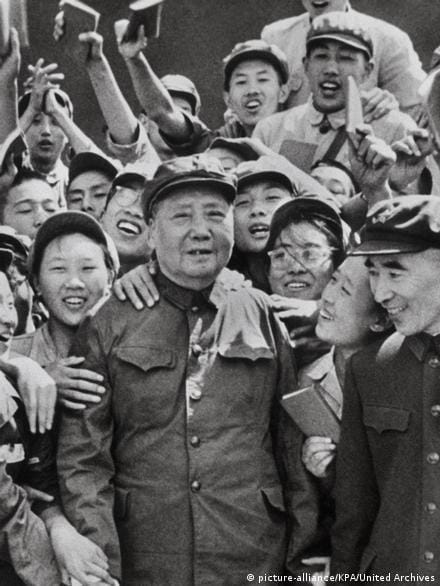
This was not accidental. Youth could be made into a weapon against institutions. Students could be told they were purer than bureaucrats, more revolutionary than teachers, more faithful than officials, less compromised than the adults who had been managing recovery. The young could be given permission to attack the old party apparatus in the name of Mao himself.
This is the Cultural Revolution in one of its most dangerous forms:
The leader appeals over institutions to the mobilized masses.
That should sound too fucking familiar by now.
- The Great Leap Forward had mobilized peasants against material limits.
- The Cultural Revolution mobilized youth against institutional limits.
In both cases, Mao preferred mass energy to structured correction. In both cases, he distrusted the mediating institutions that might slow him down. In both cases, political intensity was treated as a cleansing force. In both cases, the field was asked to prove loyalty by attacking the things that could have stabilized it.
The Red Guards did not melt pots into bad steel. Mao had already tried that one. They melted institutions into accusation.
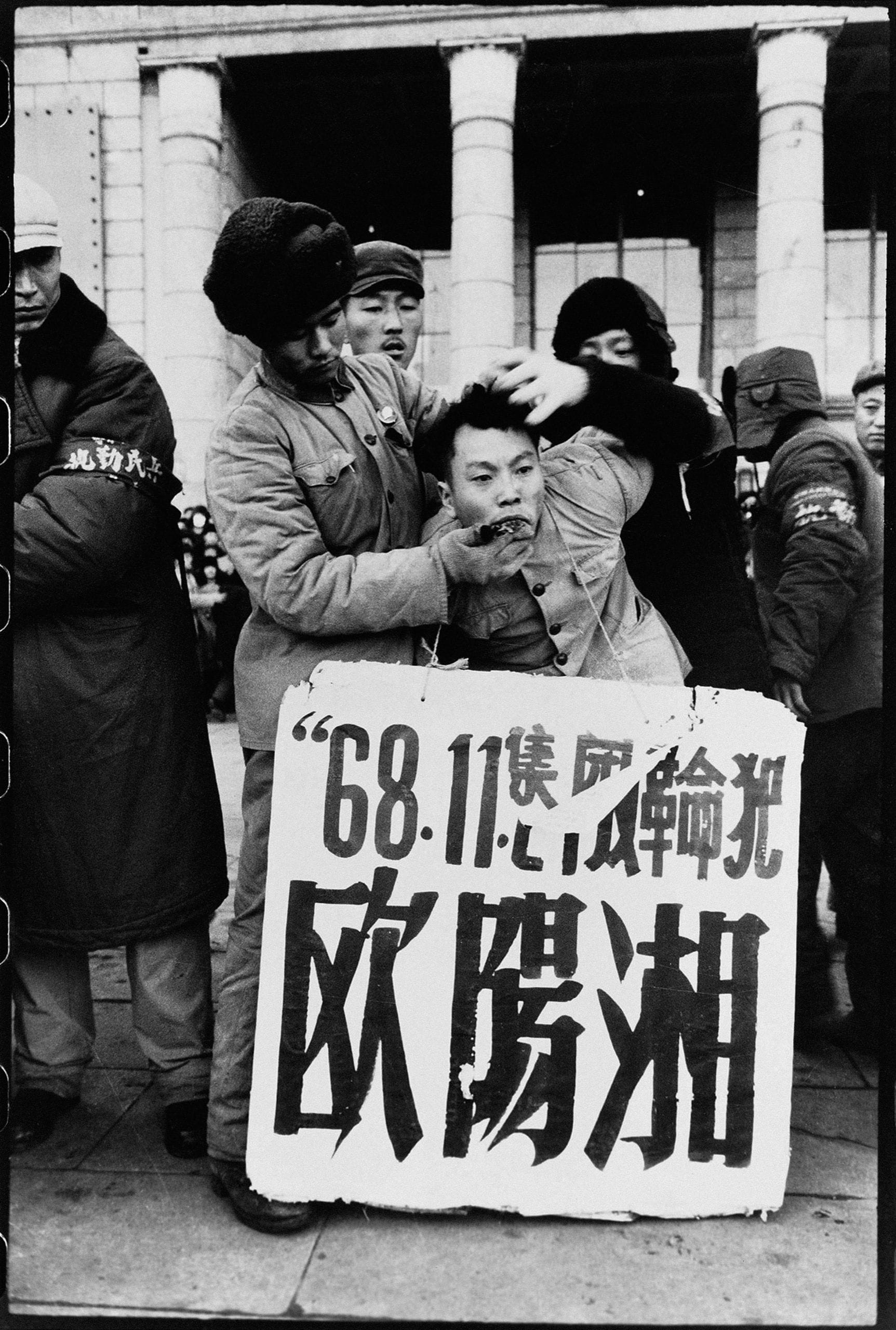
Schools, offices, cultural bodies, party committees, families, friendships, careers, reputations, archives, historical memory, and human dignity all became available for struggle.
Teachers were beaten. Officials were humiliated. Families were divided. People were labeled, denounced, paraded, imprisoned, exiled, driven to suicide, or killed.
China did not become more capable of correction. It became more capable of accusation. The target had changed. The structure had not.
- Find the enemy.
- Mobilize the masses.
- Destroy the mediator.
- Treat doubt as betrayal.
- Treat correction as class struggle.
- Let Mao stand above the institutions that might have restrained him.
The Great Leap Forward had taught China what happens when Maoist command enters agriculture. The Cultural Revolution taught China what happens when Maoist command enters the entire social field.
The Cultural Revolution.
The Cultural Revolution was not a famine. It did not repeat the Great Leap Forward by producing the same disaster through the same mechanism. It produced a different disaster through a related flaw.
The Great Leap Forward attacked the food field through command agriculture, false reporting, and procurement.
The Cultural Revolution attacked the institutional field through ideological mobilization, leader worship, factional violence, and the destruction of authority below Mao.
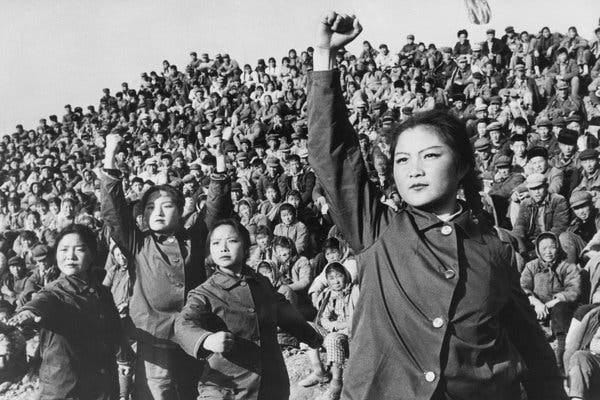
The common element was not the specific policy, it was personalist campaign power outrunning correction.
Again, the field became dangerous to read honestly:
- A teacher’s expertise could be bourgeois authority.
- A party official’s administrative experience could be capitalist-road thinking.
- A family history could become a stain.
- A book could become evidence.
- A cautious sentence could become a crime.
- A past association could become a future denunciation.
The Cultural Revolution did exactly to social trust what the Great Leap Forward had done to grain reports. It made reality pass through fear. It made people narrate themselves in the terms demanded by power. It turned ordinary human complexity into political evidence. It rewarded accusation, performance, loyalty signaling, and alignment with Mao’s line.
The field had no safe middle layer. That is the central continuity.
A healthy society needs mediating institutions.
Schools, courts, local governments, professional bodies, technical communities, families, newspapers, universities, archives, ministries, associations, and internal party procedures can all fail, corrupt, exclude, stagnate, or lie. They are not holy.
But they also slow down leader fantasy. They preserve memory. They carry expertise. They make contradiction durable. They give reality places to sit before it has to beg the supreme leader for permission to exist.
Mao repeatedly treated these mediators as obstacles to smash.
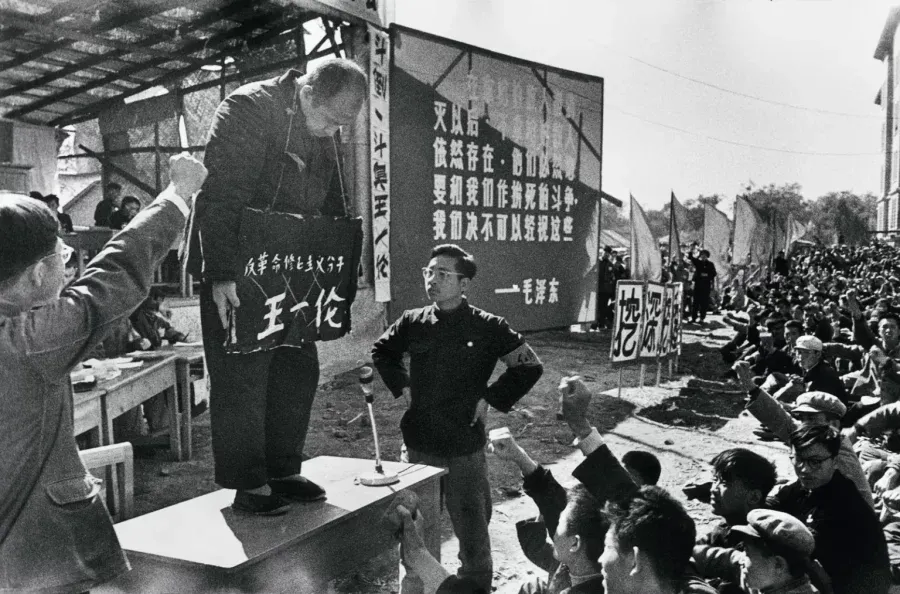
The Great Leap Forward replaced them with campaign reporting.
The Cultural Revolution replaced them with ideological struggle.
The result, both times, was field damage at enormous scale.
The Party Learns the Wrong Half-Correct Lesson.
After Mao died, the party had another chance to learn. This time, the lesson was harder to avoid. The Great Leap Forward had produced famine. The Cultural Revolution had produced chaos. The party itself had been attacked by the same leader whose authority it had preserved.
Senior officials had been purged, humiliated, imprisoned, or killed. Liu Shaoqi, who had helped lead post-famine recovery, had been destroyed. Deng Xiaoping had been purged and later returned. Countless ordinary people had been dragged through campaigns whose logic came from the same system that claimed to govern them.
This was a disaster. The party had to repair itself. It did.
Again: not justice.
Repair.
The Deng-era settlement was a form of institutional scar tissue. It did not democratize China. It did not abandon one-party rule. It did not create some liberal field of protected opposition, free press, open archives, independent courts, or public accountability strong enough to stand outside the party. It did not say the party itself was the danger. It could not say that and remain itself.
However.
It did learn something real.
It learned that unchecked personal rule is dangerous.
It learned that succession matters.
It learned that economic pragmatism can preserve party rule better than permanent mobilization.
It learned that experts are useful.
It learned that the state should not run the economy like a fever dream directed by an immortal revolutionary poet with a grudge against cautious people.
It learned that Mao’s cult had nearly destroyed the party along with the country.
So it built restraints. Not democratic restraints. Party restraints.
Collective leadership. Retirement norms. Term expectations. Division of responsibilities. Greater space for technocratic governance. A preference for stability. Economic experimentation. “Crossing the river by feeling the stones.”
A political style that still demanded party supremacy but often allowed policy to be tested against results before being generalized. This was a real improvement over Maoist catastrophe.
This was also a deliberately bounded repair.
The party tried to protect China from another Mao, but without making China safe from the party. That is the whole post-Mao contradiction.
Mao Is Judged, Then Preserved in Amber.
The party’s treatment of Mao after his death is one of the most revealing acts in the whole story. It could not simply denounce him.
Mao was too central. Mao was the revolution. Mao was the founding myth. Mao was the face on the gate, the body in the mausoleum, the author of the language by which the party had justified itself for decades. To fully condemn Mao would be to ask whether the system that elevated him, obeyed him, protected him, and survived him had a right to rule.
The party was not going to ask that question in a way that endangered the answer.
So, Mao had to be criticized and preserved.
His errors could be acknowledged. His later cult and the Cultural Revolution could be condemned. The Great Leap Forward could be treated as a grave mistake. The party could say, in effect, that Mao had done immense good and serious harm, with the good remaining primary.
This was politically clever. It was structurally insufficient.
The party built a controlled memory of Mao. It allowed enough criticism to justify reform. It preserved enough reverence to protect continuity. It criticized the dead leader without making the institution that enabled him fully accountable. It admitted that the house had burned while insisting that the foundation remained sacred.
That memory settlement helped China move forward. It also kept a dangerous inheritance alive.
- Mao could be wrong, but not fully disqualifying.
- Mao could be criticized, but not made into a warning strong enough to delegitimize personalist rule itself.
- Mao could be reduced, but not removed.
A field’s memory is part of its immune system. If the memory is too honest, it may attack the institution that controls it. If the memory is too dishonest, it cannot protect the field from recurrence. Post-Mao China chose managed memory.
Managed memory can stabilize. It can also anesthetize.
Deng’s Fence.
Deng Xiaoping’s China did not try to become Mao’s China with better slogans. That is why the repair worked as much as it did.
Deng’s style was less messianic. He did not need every policy to express one perfect ideological geometry. He cared about results. He allowed experiments. He tolerated partial markets under party rule. He accepted that development might require contradiction, local trial, foreign technology, private incentives, and the deeply unpoetic fact that people often produce more when the production system stops treating them as interchangeable revolutionary fuel.
This was not liberal innocence. Deng remained a Leninist party ruler. The party remained supreme. Political dissent still had hard limits. When the demand for political reform threatened party rule, the party chose repression. The repair field was bounded from the beginning by the same ultimate principle:
The Chinese Communist Party must remain in command.
Still, Deng built a fence around one particular danger.
No more Mao.
No more single leader above the party in quite that way. No more endless personal rule if the party could avoid it. No more Cultural Revolution. No more national policy as one man’s metaphysical weather.
This fence was not made of law alone. It was made of norms, elite habits, succession expectations, retirement practices, bureaucratic routines, and the shared memory of catastrophe. Everyone who mattered had seen what Mao could do. Many had been harmed by it. The party did not need democracy to understand that internal restraints were useful for survival.
So Deng’s fence went up. It was never as strong as outsiders sometimes imagined.
A fence built inside one-party rule has an obvious weakness:
The party can move it.
If the party controls law, media, courts, history, appointments, coercive organs, and political legitimacy, then its restraints remain internal restraints. They can be real. They can shape behavior for decades. They can prevent disaster. But they are only as durable as the elite consensus behind them.
They do not belong to the people. They belong to the party.
That means the same party that builds the fence can later decide the fence is inconvenient.
The Chinese Communist Party as a Repair Machine.
This is the hard part to hold clearly:
The Chinese Communist Party did repair China in major ways after Mao.
China’s post-Mao development was enormous. Poverty fell. Industrial capacity rose. Infrastructure expanded. Education improved. Technical capacity deepened. China became central to the world economy. The state learned how to do many things Maoist campaign politics could not do. It became more competent, more pragmatic, more capable of planning across real industrial and technological fields.
This is not a small fact. The exact same party that produced and protected the Great Leap Forward also later governed one of the largest development transformations in human history.
That does not erase the famine. The famine does not erase the development.
Field analysis has to hold both without letting either one become propaganda.
The post-Mao party learned how to repair many material failures. It learned to respect production more than spectacle, at least much of the time. It learned that markets could be instruments rather than enemies. It learned that expertise mattered. It learned that endless class struggle was bad for airports, factories, ports, research, agriculture, diplomacy, and the general problem of not turning the country into a denunciation festival.
The repair machine became real. But it was a repair machine inside party supremacy. That means its highest command was not “keep the field open.”
Its highest command was:
“Keep the party in command while opening enough paths to strengthen the field.”
That can produce extraordinary results when party survival aligns with field repair.
It becomes extraordinarily dangerous when party survival conflicts with field truth. This is the unresolved flaw.
The post-Mao party repaired the economy more deeply than it repaired corrigibility.
- It built capacity. It did not build a fully protected right to correct the party.
- It built development. It did not build an external immune system against party self-deception.
- It built expertise. It did not make expertise sovereign over political necessity.
- It built institutions. It did not make institutions safe enough from a leader who could reassert supremacy through the party itself.
That is how the line continues unbroken from Mao to today.
The Long Road to Xi.
Xi Jinping did not appear from nowhere. No leader ever does.
He emerged from a party that had been shaped by Mao, traumatized by Mao, repaired by Deng, enriched by reform, frightened by Soviet collapse, hardened by Tiananmen, integrated into global capitalism, and increasingly convinced that China’s national rise required party control against both foreign pressure and domestic fragmentation.
That field is not Mao’s field. It is not 1958. This is not old China.
This is new China, but it's not just a slogan now.
It is richer, more urban, more technical, more globally connected, more administratively capable, more surveilled, more industrial, more digitally governed, and vastly more powerful.
But some structural questions remain familiar:
- Can bad news safely reach the top?
- Can expertise contradict political necessity?
- Can local conditions override central targets?
- Can the party admit large-scale error before the error becomes undeniable?
- Can institutions restrain the core leader?
- Can the state distinguish national rejuvenation from command over living fields?
- Can Taiwan, Hong Kong, Xinjiang, private enterprise, public health, technological development, demographics, debt, local government finance, and foreign policy be treated as fields with their own constraints, or must they be made to serve one master story of party-led national destiny?
This is where Xi joins the line.
Xi’s project is not Maoism repeated in costume. That would be too crude. Xi is not ordering backyard furnaces across rural China. He governs a technologically sophisticated state with a global economy, advanced surveillance capacity, disciplined bureaucracy, and a far more capable policy apparatus. The danger is not sameness.
The danger is recurrence at the level of political structure.
Xi has re-centered the party. He has intensified ideological discipline. He has elevated his own authority. He has weakened the post-Deng expectation that top leaders would rotate out after roughly two terms. He has emphasized national rejuvenation, security, struggle, loyalty, and the party’s commanding role across society.
This is not the Great Leap Forward. But it reopens the question the Great Leap Forward should have settled forever:
What protects the field when the party’s story becomes more important than correction?
Deng’s fence was meant to answer that question inside the party. Xi has shown that the fence was always movable.
The Fence Moves.
The removal of presidential term limits in 2018 was not the entire story. The presidency is not the only powerful office in China. The general secretaryship of the Communist Party and chairmanship of the Central Military Commission matter more.
So treating the constitutional term-limit change as if it alone created Xi’s power would be too simplistic. But symbols matter. Institutional signals matter. Succession expectations matter.
The removal of term limits announced that the post-Mao succession settlement was no longer binding in the same way. It told the political field that the old assumptions were weaker than Xi’s authority. It made the future more dependent on one man’s continued position. It reduced the credibility of internal rotation as a structural protection against personal rule.
Then Xi took a third term as party leader. The fence moved again.
The party did not become Mao’s party overnight. But the post-Mao repair structure had clearly changed. Collective leadership became less collective. Elite dissent became harder to see. Loyalty rose in value. Political campaigns returned as major governing tools. Ideology became more central. The leader became harder to separate from the line.
This is where the historical line from the Great Leap Forward becomes sharp.
The lesson of Mao should not have been only:
Do not kill sparrows, fake harvests, and melt tools.
That lesson is very easy. The real lesson was:
Do not allow one leader’s historical story to become structurally superior to field correction.
Deng’s China partially learned that. Xi’s China has partially unlearned it by weakening the repair that was designed to prevent Mao-scale personalist distortion from returning.
The New Command Field.
The modern Chinese state is much better at seeing than Mao’s state was. This is part of the danger.
It has data, sensors, cameras, platforms, agencies, statistical systems, engineers, economists, scientists, digital payment trails, social media monitoring, artificial intelligence, local bureaucracies, central inspection teams, and a governing apparatus Mao could not have imagined.
But more seeing does not automatically mean more contact. A surveillance state sees a lot. That does not mean it listens.
Contact is not the same as visibility. The Great Leap Forward just taught us this. The commune made rural life legible without making it truthful. The crop report made the harvest visible without making it edible. The pest count made extermination countable without making it ecological.
Modern China’s problem is not lack of state capacity. It is whether state capacity is corrigible.
- Can the information it gathers correct the party?
- Or, can it only help the party govern harder?
A state with weak information may stumble into disaster. A state with immense information and poor correction can optimize the wrong path.
That is a much more advanced danger.
The Great Leap Forward was a pretty low-resolution distortion field. It relied on cadres, posters, meetings, slogans, quotas, and fear. The modern Chinese state operates with far higher resolution. But if the highest rule remains party supremacy, and if the party’s story remains protected from independent correction, the fundamental Modal Path Ethics question remains open.
Does the field get to answer back?
Or is the answer permitted only after it has been made politically safe?
The Rejuvenation Problem.
The Great Leap Forward was driven, in part, by a wounded national desire to overcome humiliation, weakness, poverty, and dependence. The modern Chinese state also speaks constantly through the language of national rejuvenation.
This does not make the projects identical. China’s material position has changed dramatically. The country is no longer the poor, war-battered, overwhelmingly agrarian state of 1958. It is a major power with enormous industrial capacity, technological ambition, military reach, and global influence.
But national humiliation remains a core memory in Chinese political narrative. The Party presents itself as the force that restored China’s standing, ended weakness, resisted foreign domination, and made rejuvenation possible. That story has very real material anchors. China did rise. China did develop. China did become powerful. Hundreds of millions did move into better material conditions.
The danger is that the story can become too successful.
If the Party is the author of national restoration, then threats to the party become threats to China. If Xi is the core leader of rejuvenation, then criticism of Xi can be treated as weakness in the national project. If Taiwan is placed inside the same restoration narrative, then the living field of Taiwan can be misread as an unfinished line item in someone else’s historical repair.
A wounded national field can generate legitimate repair demands. It can also generate command fantasies. In 1958, the fantasy said China could leap over development through mobilized will.
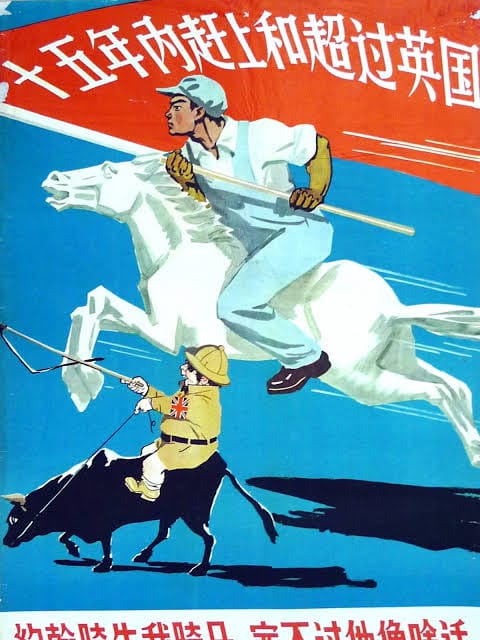
Today, the fantasy risk is different. It says the party can complete national rejuvenation by subordinating every field to its own story of historical necessity.
That is not the same madness, but it comes from the same family.
The Party Survives Its Own Wounds.
The Chinese Communist Party is extraordinary in one respect that matters for this tale:
It survived disasters that should have destroyed the legitimacy of almost any ruling institution.
The Great Leap Forward killed tens of millions.
The Cultural Revolution tore through the party, the state, schools, families, and memory.
Tiananmen showed the hard limit of political opening.
And yet the Party survived. Then it presided over spectacular development.
This survival creates a particular kind of institutional confidence. The party can look at its own history and see not disqualification, but endurance. It can say: we made mistakes, corrected them, restored order, developed the country, defeated poverty, resisted collapse, and proved that party leadership is the condition of China’s rise.
There is truth in some of that. There is danger in the conclusion.
Because surviving your own catastrophes can teach humility. But it can also teach impunity.
The party’s post-Mao repair proved that it could adjust. It did not prove that it had solved the deeper problem of unaccountable supremacy.
It proved that internal correction can happen after enormous damage. It did not prove that correction is safe early enough.
It proved that the party can recover from disasters. It did not prove that the people harmed by those disasters had any independent protection from the party’s next mistake.
The Great Leap Forward produced a famine. The post-famine leadership repaired enough to stop the famine. The Cultural Revolution proved the repair had not contained Mao. The post-Mao settlement repaired enough to prevent another Mao for decades. The Xi era proves that the anti-Mao repair was not locked.
That is the straight line from A - B. Not identical policy. Not identical ideology. Not identical material conditions. A structural line.
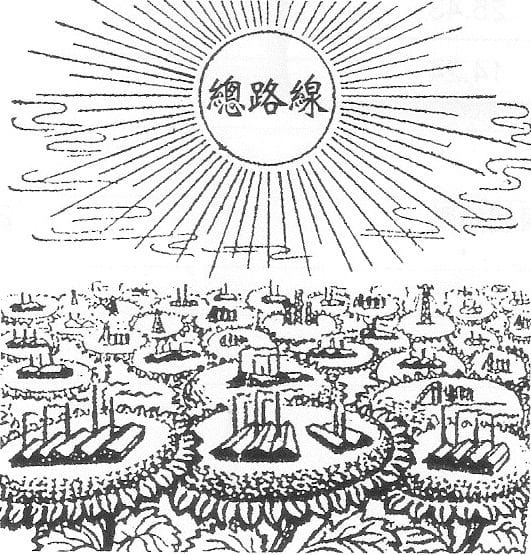
The first repair stopped the worst Great Leap policies. It did not stop Mao.
The second repair, after Mao’s death, reduced the danger of Mao-style rule.
It did not make the party externally accountable.
The third phase, reform and opening, strengthened the field materially.
It did not give the field sovereignty over the party.
The Xi phase reasserted party supremacy and leader centrality.
It did not recreate the famine, but it reopened the question of whether the field can correct the leader before the leader’s story becomes policy gravity.
A system does not need to repeat the same disaster to reveal that it failed to learn the deepest lesson. It can make different mistakes through the same uncorrected structure.
- Mao broke the field through personalist campaign rule.
- Deng repaired the field through pragmatic party institutionalization.
- Xi strengthened the party by recentralizing power around the core leader.
The live question is whether the post-Mao repair was strong enough to survive the return of a leader who can move the fence.
The answer, so far, is not reassuring.
Coda: The Hole Yawns On.
So, did the Chinese Communist Party learn?
Yes and no.
That is the honest answer.
It learned enough to stop starving the countryside through the exact machinery of the Great Leap Forward. It learned enough to step back from backyard steel, communal food fantasy, miracle harvests, and permanent Maoist agricultural theater. It learned enough to restore production, rebuild capacity, respect technical knowledge more often, and eventually govern a development transformation so large that no serious analysis can treat the post-Mao Chinese state as incompetent.
The Chinese Communist Party learned how to build. It learned how to grow.
It learned how to govern industry, infrastructure, logistics, trade, education, and technological capacity at a level Mao’s furnace field could not have approached even in its most chemically ambitious dream.
But, unfortunately, that was not the deepest lesson.
The deepest lesson was never “do not melt farm tools in village furnaces.”
The deepest lesson was:
Do not build a political field where the party’s story can outrank reality.
That lesson remains unresolved.
The party repaired policy more than it repaired authority. It repaired economic method more than political corrigibility. It repaired development capacity without building a protected external path by which the field can correct the party when the party itself becomes the distortion.
Post-Mao China built restraints against another Mao. The party had been burned badly enough to install some firebreaks. But the firebreaks belonged to the party. They did not belong to the people. That means they could be moved.
And under Xi Jinping, they moved.
Xi is not Mao. This has to be said again because lazy analogies are useless. Xi does not govern a poor agrarian country by telling peasants to produce bad steel in muddy courtyards, I looked it up. He governs a rich, urbanizing, industrial, digital, surveilled, globally entangled great power with a far more competent state apparatus. The danger is not repetition at the level of props.
The danger is recurrence at the level of structure.
Leader centrality. Party supremacy. Ideological discipline. Managed memory. Punished dissent. National destiny as governing mandate. The field asked to speak only after the party has translated its speech into safe political language.
The Great Leap Forward was a disaster of commanded futurity. The state looked at a wounded China and said: the future must arrive now, through us, by command, because history requires it. When the field objected, the objection was treated as backwardness, sabotage, rightism, weakness, concealment, or insufficient revolutionary will.
Modern China is not trying to leap over steel anymore. It has steel.
It has ports, rail, factories, labs, shipyards, satellites, electric vehicles, surveillance platforms, export capacity, universities, artificial intelligence systems, missiles, and cities. But it also still has the political question Mao left behind:
What happens when the field contradicts the party’s historical story?
A field can be materially advanced and politically unsafe. It can have high-speed rail and poor correction. It can have artificial intelligence and frightened local reporting. It can have excellent engineers and forbidden questions. It can have state capacity and still lack the one capacity that matters most when the state is wrong: the capacity to be corrected from outside itself.
Taiwan, for instance, is not a sparrow. It is not a commune. It is not a harvest number. It is not a province-shaped blank in a rejuvenation poster. It is not an unfinished sentence in Beijing’s historical narration of humiliation and restoration.
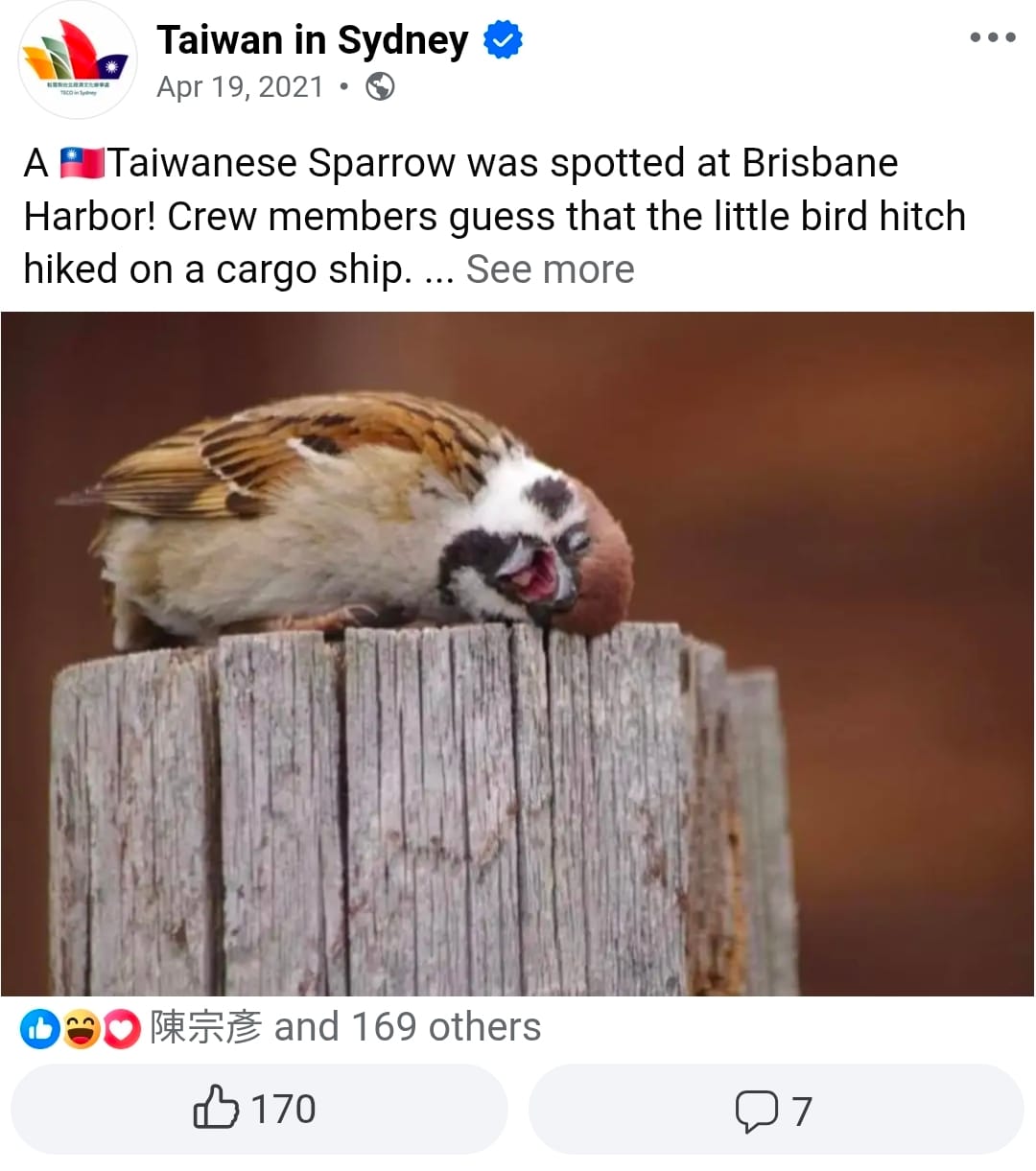
Taiwan is a living field. It has people, institutions, elections, industries, families, arguments, memories, risks, fears, ambitions, and paths of its own. It is not reducible to the Chinese Communist Party’s repair story for China’s national wound. It cannot be morally treated as a symbolic tool that must be melted down into completed history.
This is the bridge back to Silicon Shield. The danger in the Taiwan crisis is not only military. It is primarily modal. It is the danger of a state treating another living field as an object inside its own restoration narrative. It is the danger of historical injury becoming permission. It is the danger of national rejuvenation becoming a command over people who are already living.
The Great Leap Forward shows where that logic can lead when it turns inward. Silicon Shield asks what happens when a related logic turns outward.
Different field. Different stakes. Same warning.
The national story is not the field. A repair path that cannot hear contradiction is not repair. It is a machine for converting injury into command.
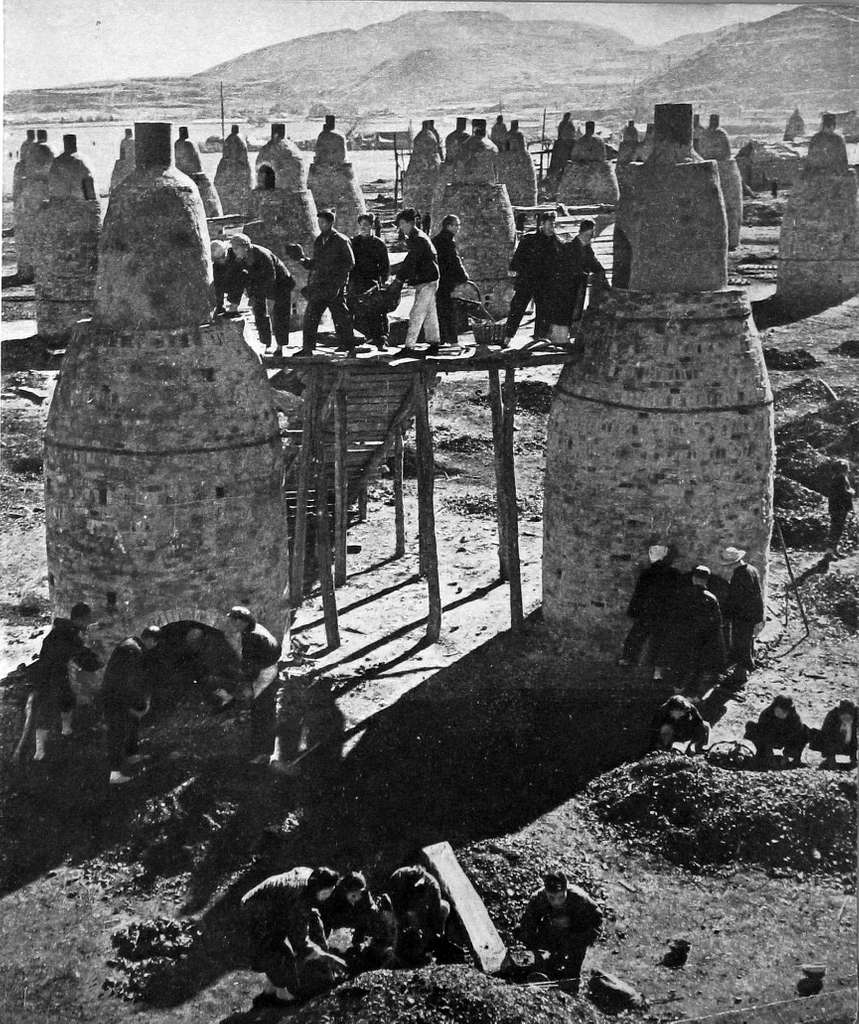
That was the Great Leap Forward.