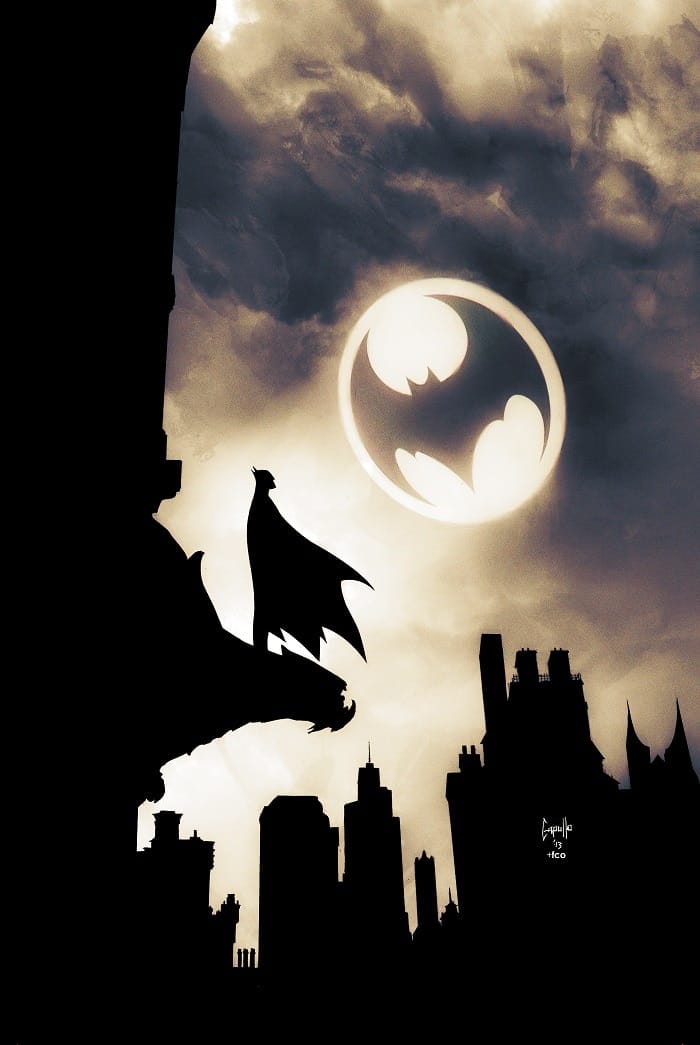
Applied Case: The Batman
Modal Path Ethics will suffer this gap no more.
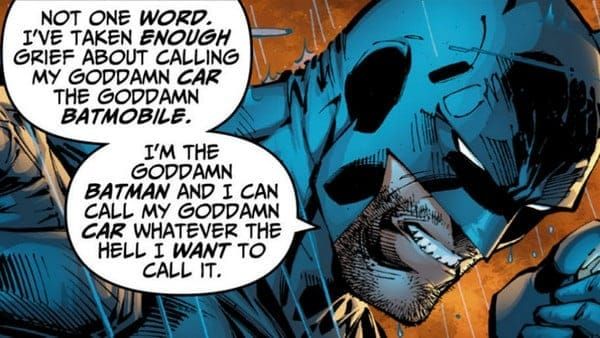
September 2026 note: The Batman analysis remains valuable for emergency-vs-repair, symbol effects, self-correction, successor structure, and the danger of becoming necessary. Later locus work is stricter about calling symbols and fictional-cultural objects literal loci; where useful, read 'The Batman' as an extant cultural field-object/continuation structure rather than as a person-like bearer.
What is the Batman, structurally?
What moral work does he perform in Gotham, and which of his variants preserve or distort the field?
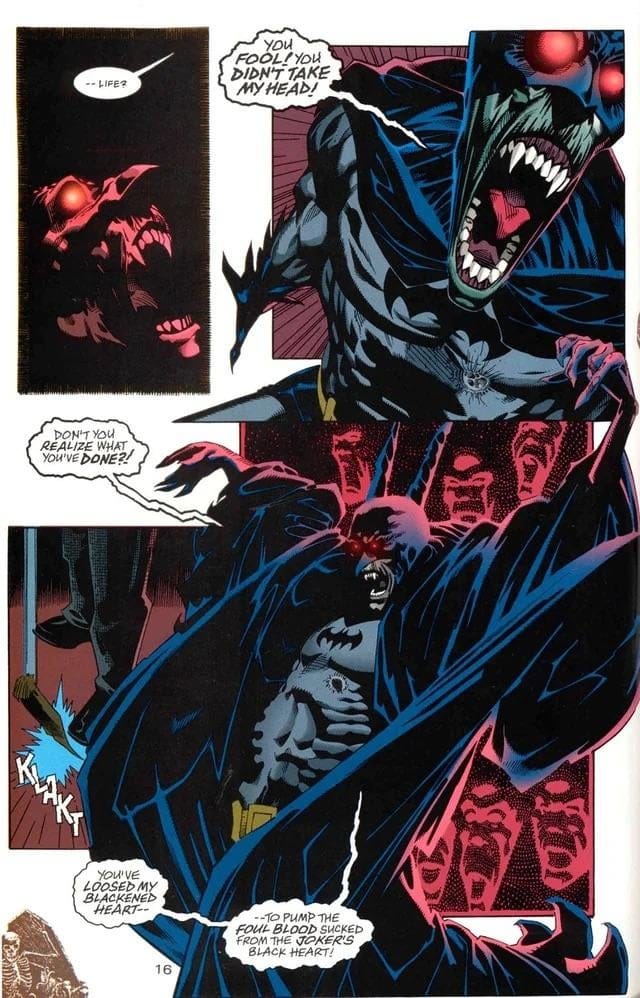
These questions have remained mysterious to our greatest philosophical minds for almost a century now. They stand between us and complete understanding of this Batman and his stories.
Modal Path Ethics will suffer this gap no more.
The Batman.
Batman is a child who watched his parents die in an alley, grew up rich enough to do almost anything, and chose to dress as a bat so criminals would become afraid of the dark.
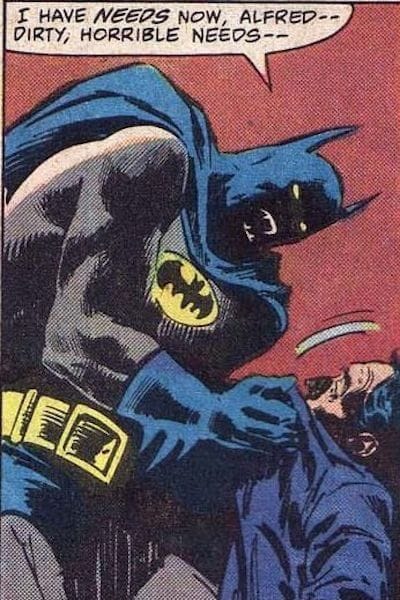
Batman is also one of the most durable moral laboratories in all of fiction.
Batman has survived because the character is not only a man, a costume, a detective, a superhero, a billionaire, a literal ninja, some kind of gothic creature, a children’s television hero, a surveillance nightmare, a trauma patient, an enduring civic myth, a cop fantasy, an anti-cop fantasy, a modern noir figure, a toy line, a martial artist, or any other pop-cultural silhouette.
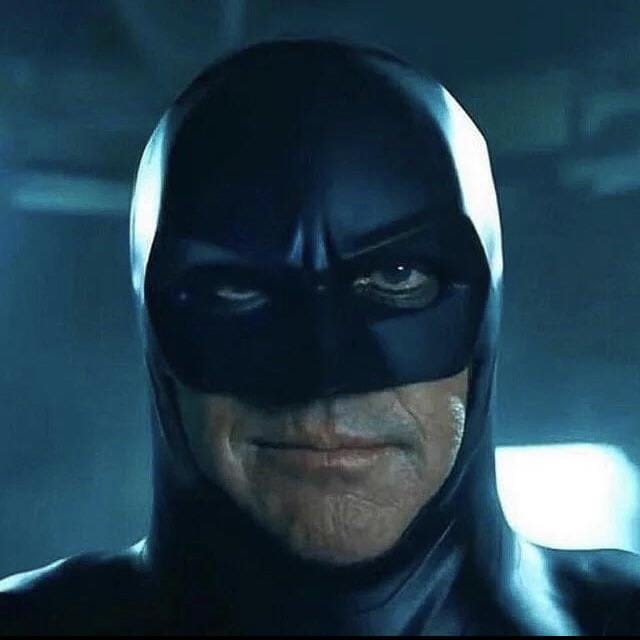
Behind all those things, Batman is a structure. That is why there are so very many Batmen, and why they differ so much without all becoming separate characters.
Adam West, Michael Keaton, Kevin Conroy, Christian Bale, Ben Affleck, Robert Pattinson, Lego Batman, Arkham Batman, Batman Beyond, The Dark Knight Returns, Year One, Flashpoint Thomas Wayne, Red Son, White Knight, the DCAU, the comics, the films, the games, the children’s cartoons, the prestige tragedies, that neon thing, the whole grim militarized thing, the compassionate detective thing, and the lonely billionaire punching symptoms until something important snaps.
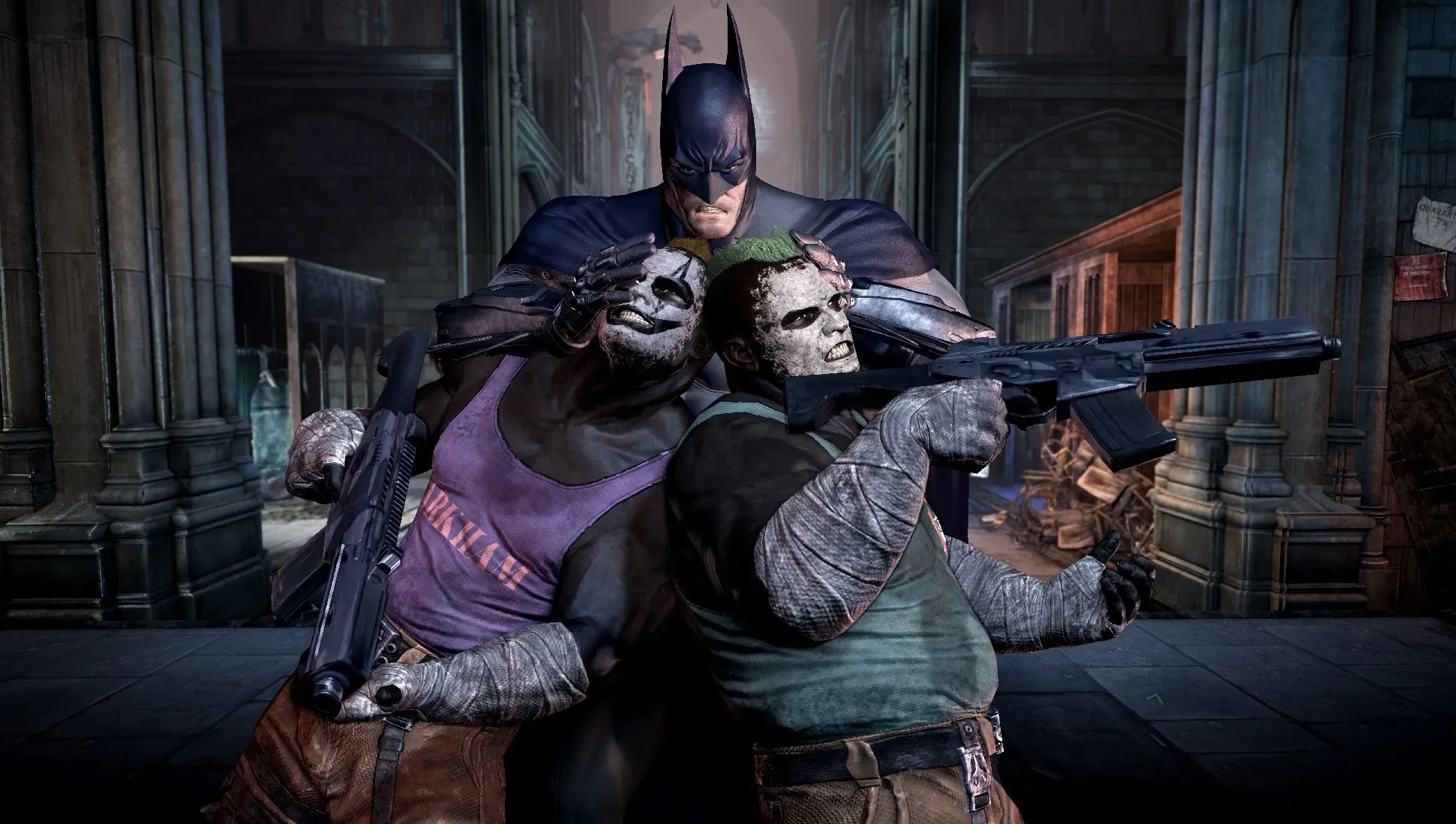
All Batman. Not all morally equivalent, however.
Some Batmen are field analysts. Some are obvious field contaminants.
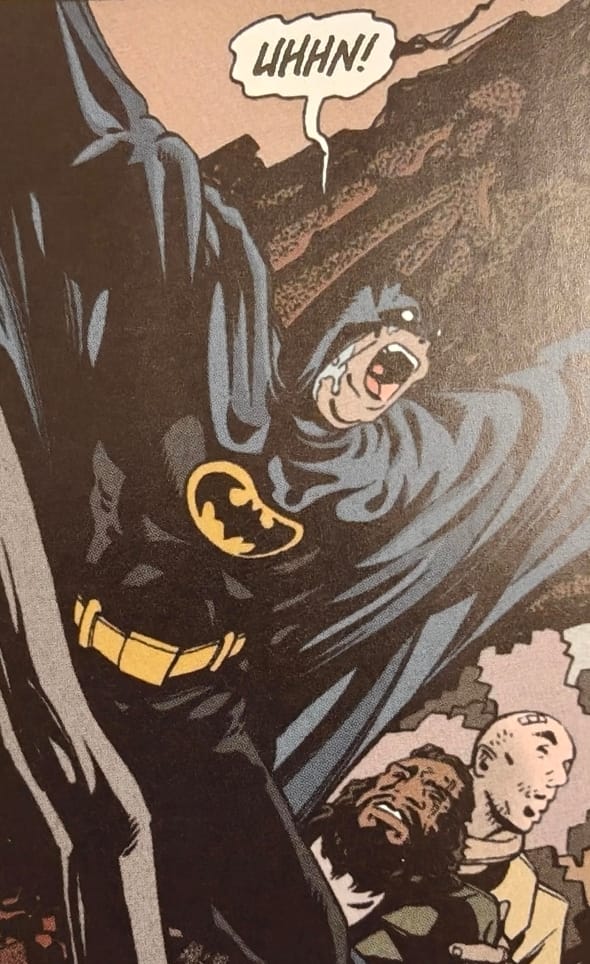
Some are emergency Better in a broken city. Some are false repair in a cowl.
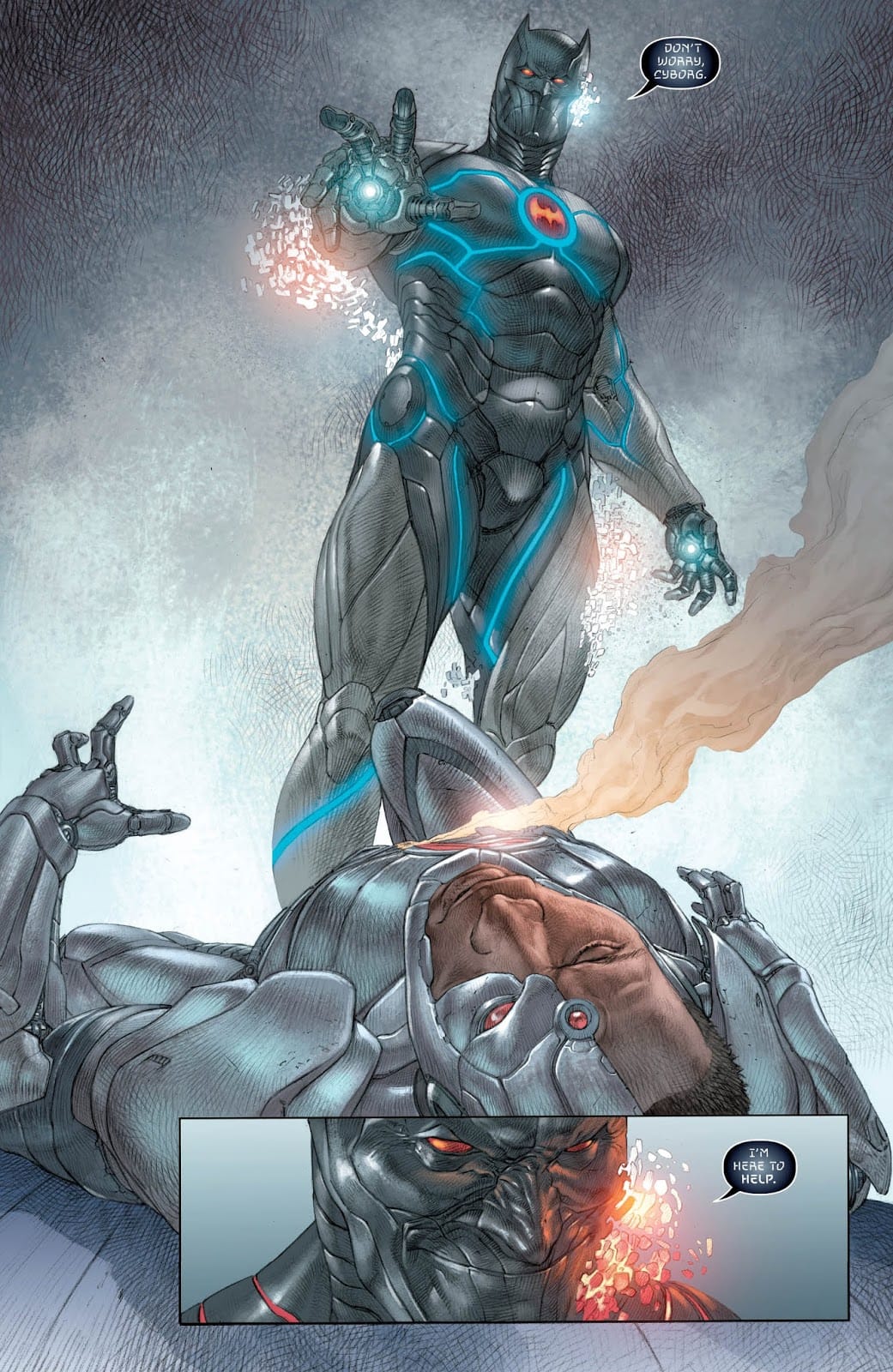
Some understand Gotham City. Some actually preserve Gotham’s dysfunction because that dysfunction keeps Batman necessary.
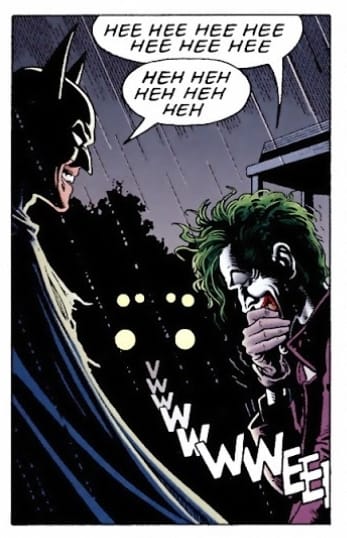
Some turn their trauma into discipline. Some turn their trauma into theater.
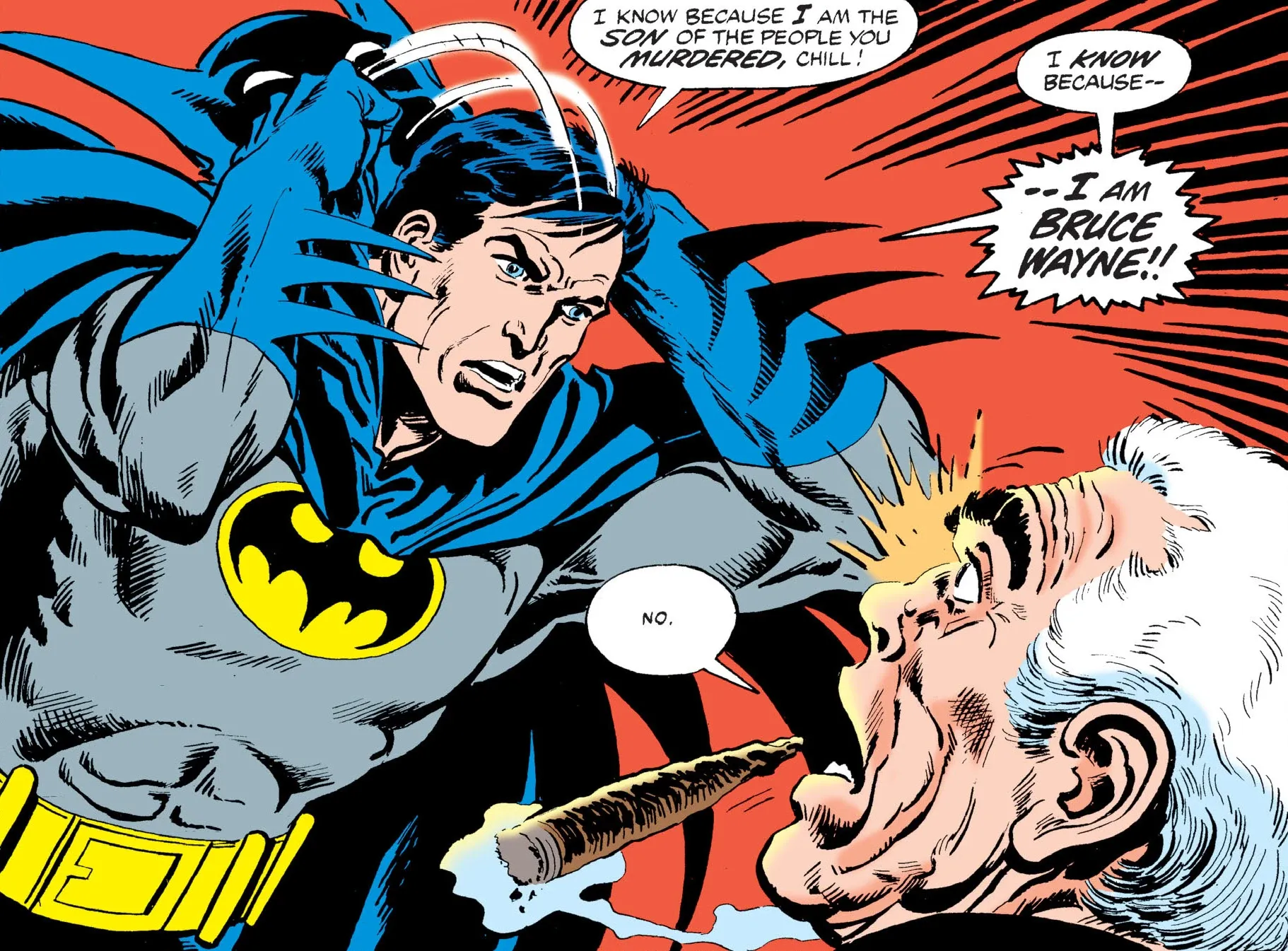
Some weaponize fear against predation. Some teach a whole city that fear is actually justice.
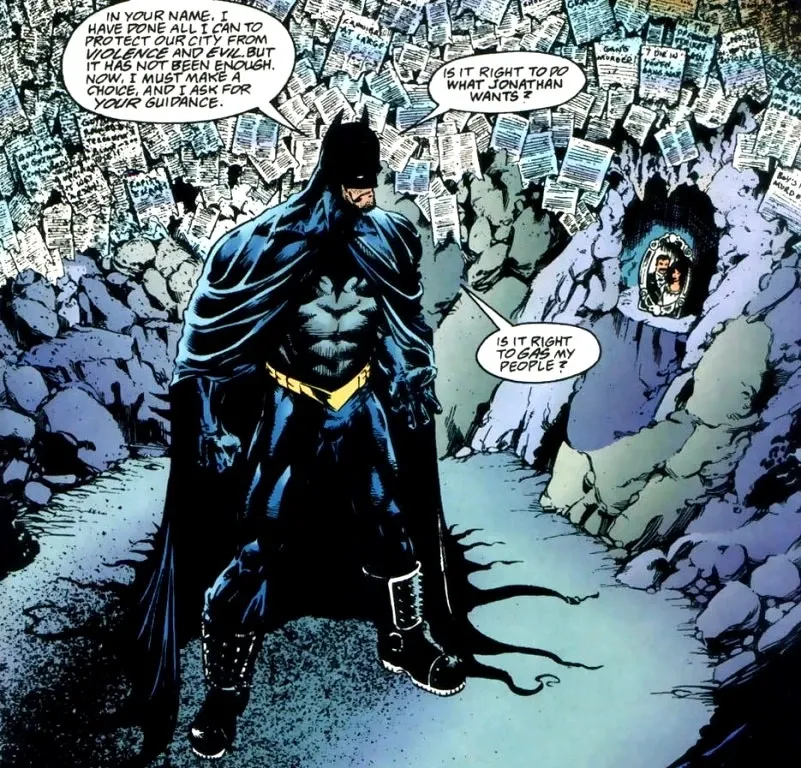
We are not ranking Batmen by coolness, or any virtue. We are asking ourselves a structural question:
What is Batman doing to this field?
This question is not answered by his intentions, suit, fight choreography, or herniated voice.
What does Batman make more reachable?
Does he make justice more reachable? Does he make repair more reachable? Does he make truth more reachable? Does he make civic trust more reachable? Does he make victims safer? Does he reduce predation? Does he create successors who are less damaged than he is? Does he make Gotham less dependent on exceptional violence?
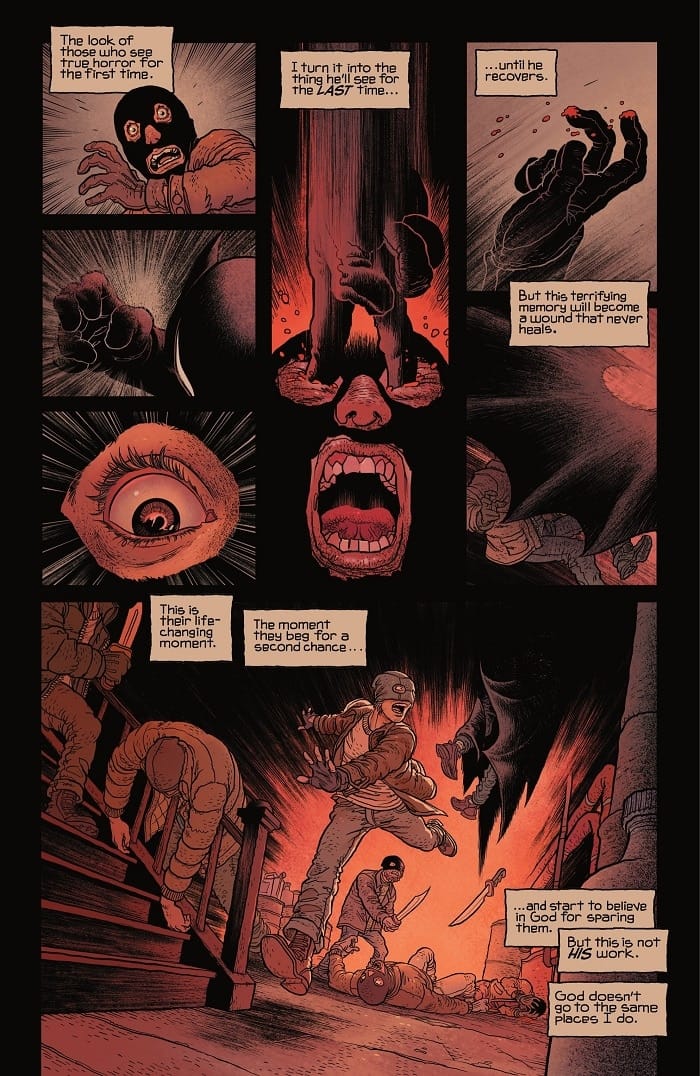
Or does he make fear, escalation, spectacle, dependency, surveillance, and recurrence more reachable, instead?
Our ordinary moral labels are simply too crude for this Batman.
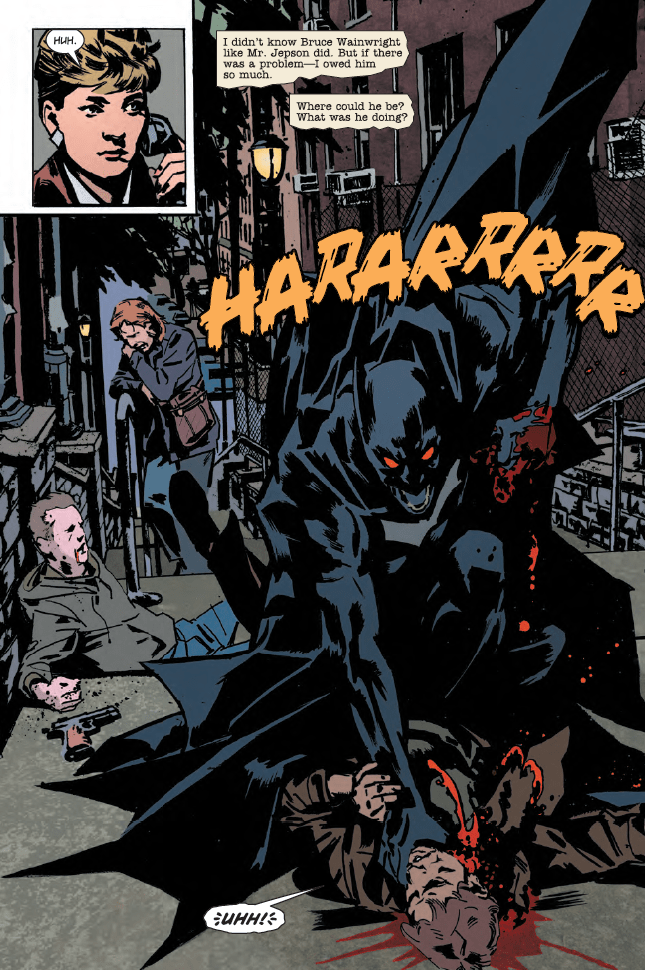
“Vigilante bad” is not enough, because Gotham is often a field where ordinary law has already failed. “Hero good” is not enough, because Batman routinely violates public authority, privacy, bodily safety, and procedural order. “He does not kill” is not enough, because nonlethal violence can still become a coercive field. “He saves people” is not enough, because a man can save people tonight while preserving the conditions that make tomorrow night necessary.
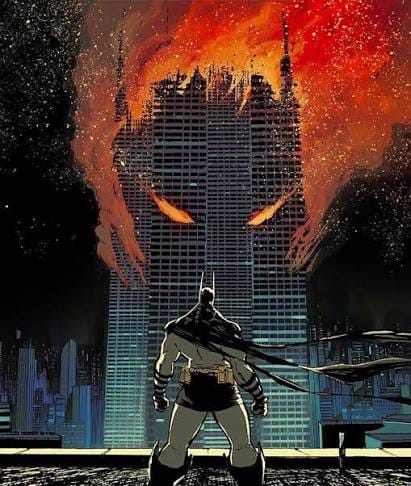
Batman is almost never Good. He is often Better.
Good vs. Better.
Good opens or preserves reachable future-space without causing harm elsewhere.
Better is what remains when the field is already damaged and every path contains closure.
Gotham usually does not give Batman a menu containing any clean Good.
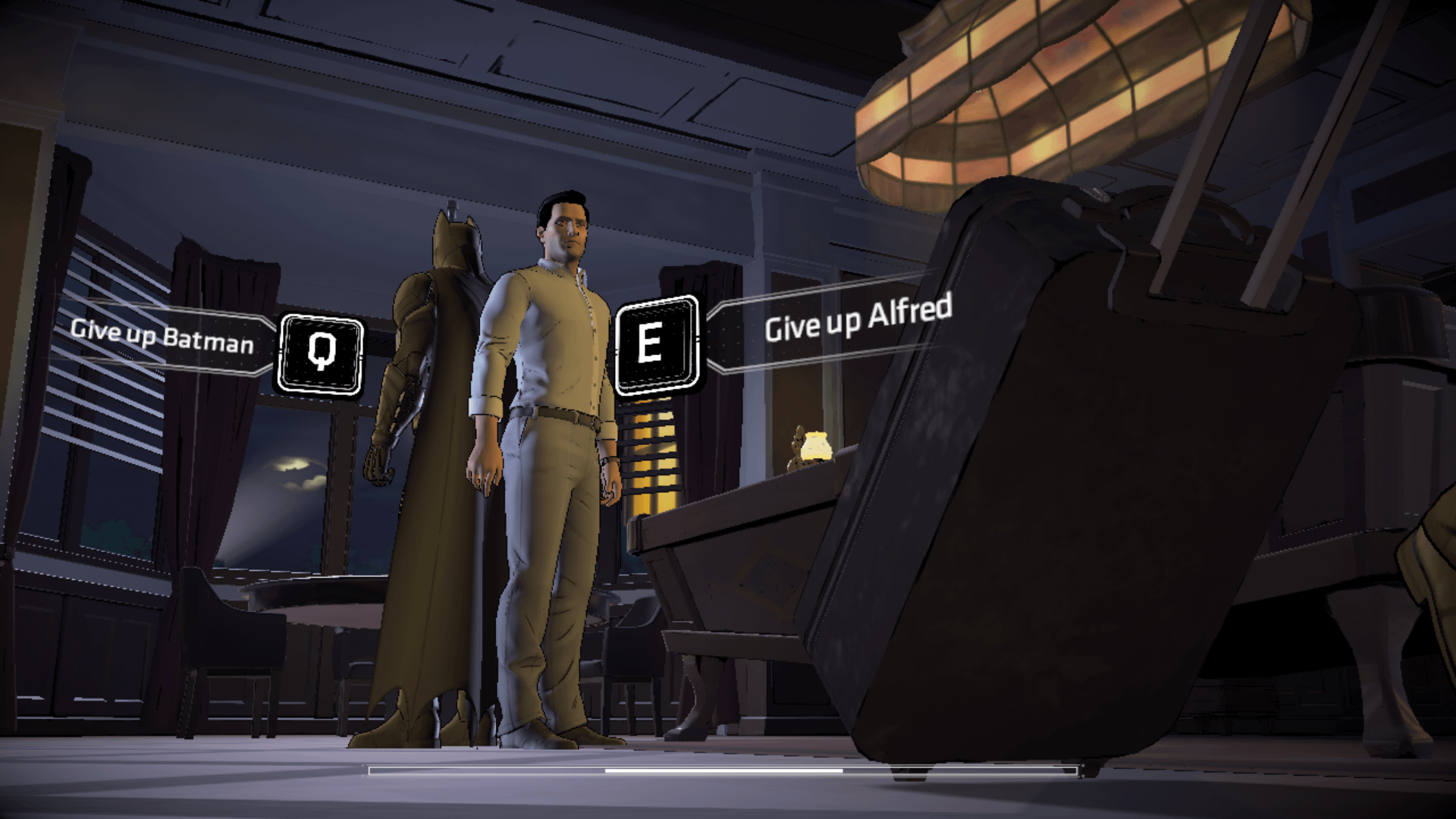
Gotham gives him mob capture, police corruption, institutional rot, predatory wealth, untreated trauma, collapsing public trust, failed psychiatric containment, spectacular violence, and a civic field where ordinary people are repeatedly made into scenery for someone else’s insane war.
Inside that field, Batman may be Better, but Better is never absolution.
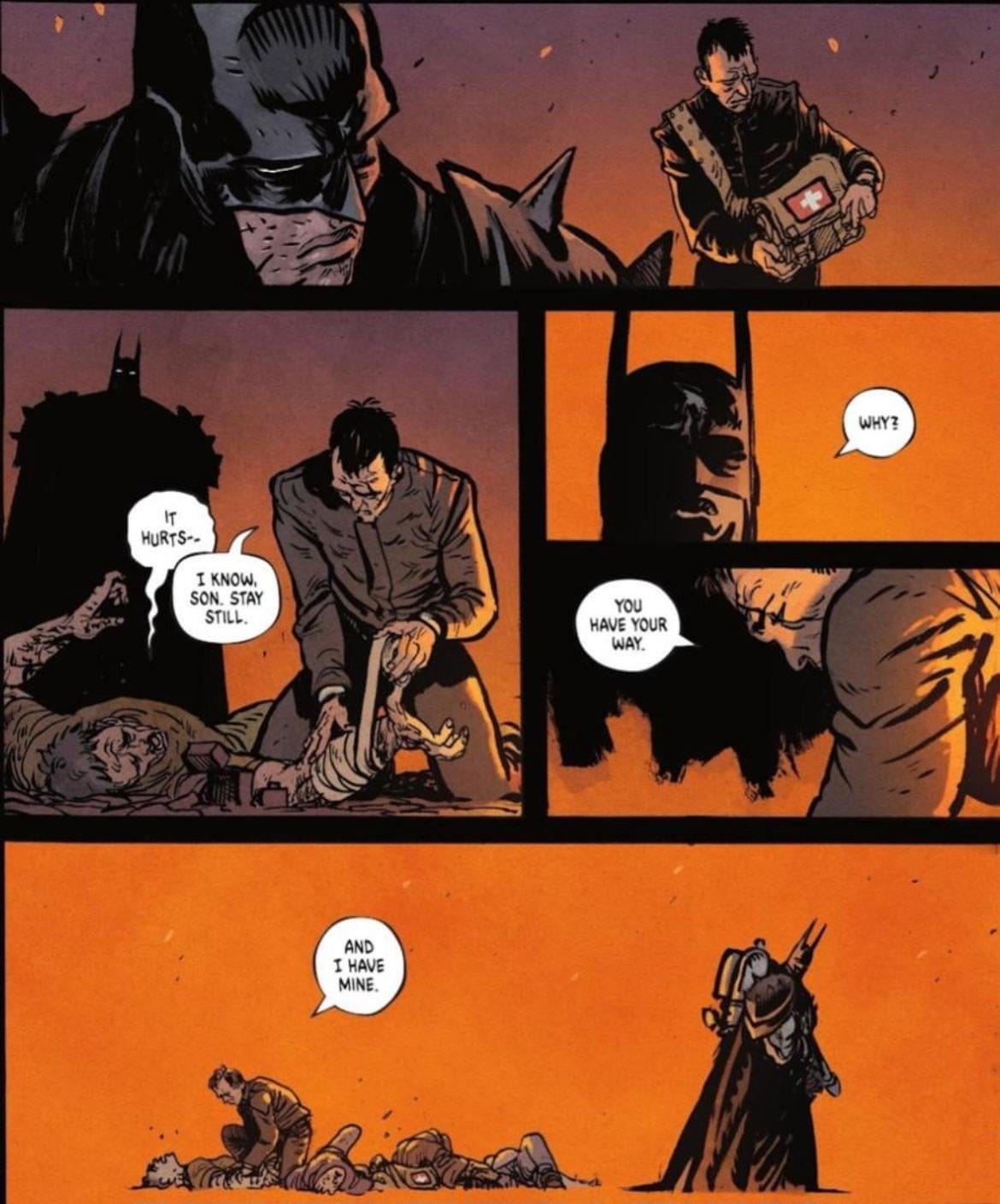
A Better path still leaves residue and moral remainder. It still creates risks. It still has to be monitored. It still has to answer for what it closes.
Batman cannot say, “Well, Gotham is bad,” and then do anything that feels symbolically satisfying.
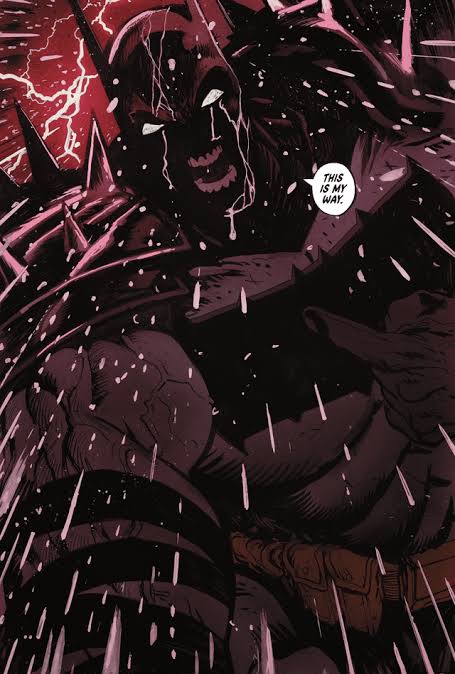
That is how Batman becomes just another distortion in the city’s distortion field.
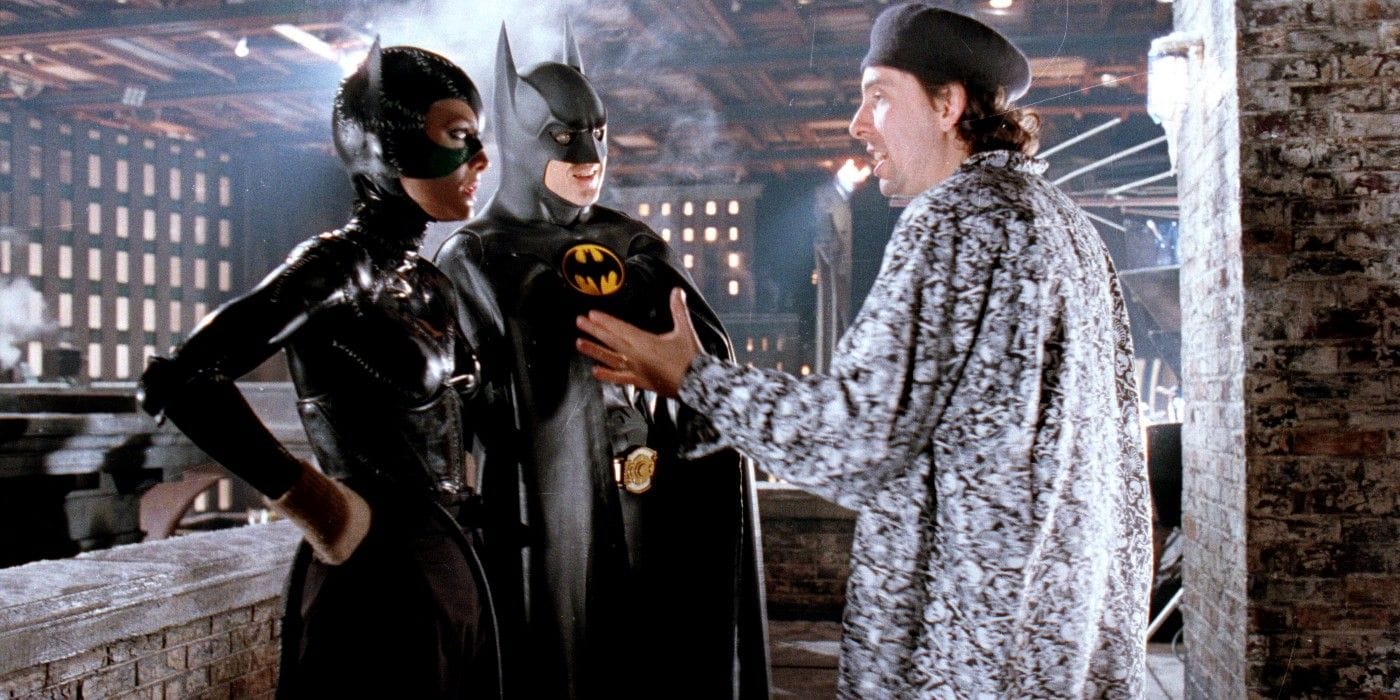
Batman as Loci.
Batman is, at a minimum, three nested loci:
Bruce Wayne, the harmed human locus.
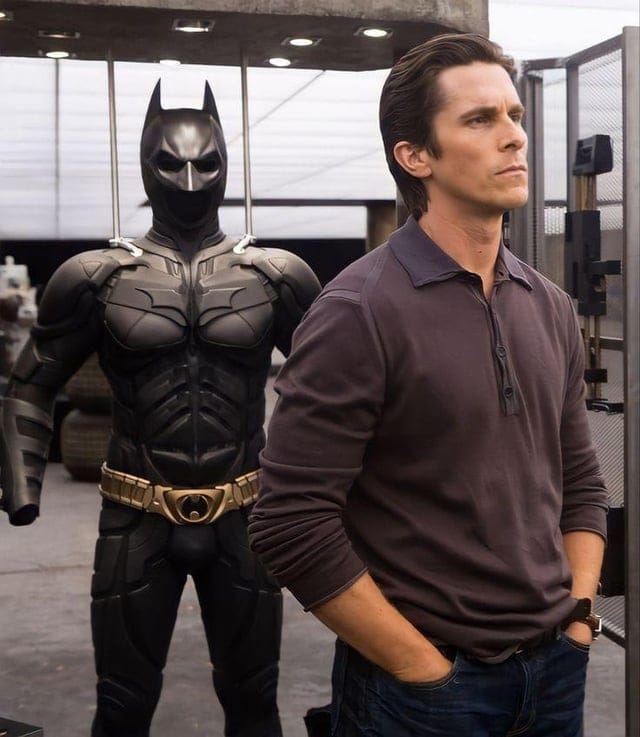
Batman, the method.
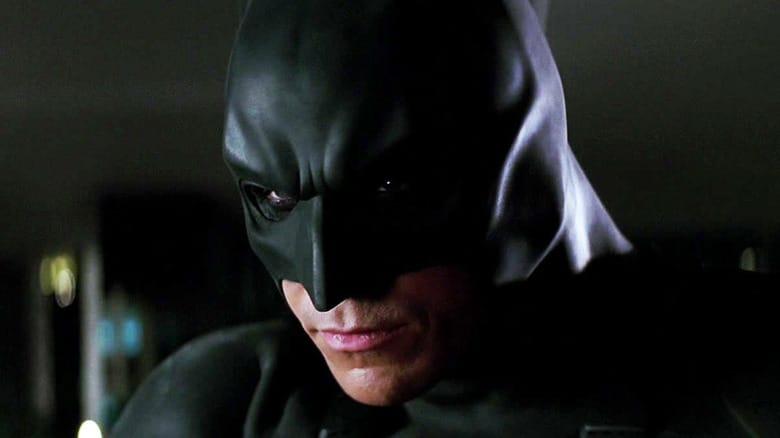
The Batman, the symbol-field acting on wider loci, such as Gotham.
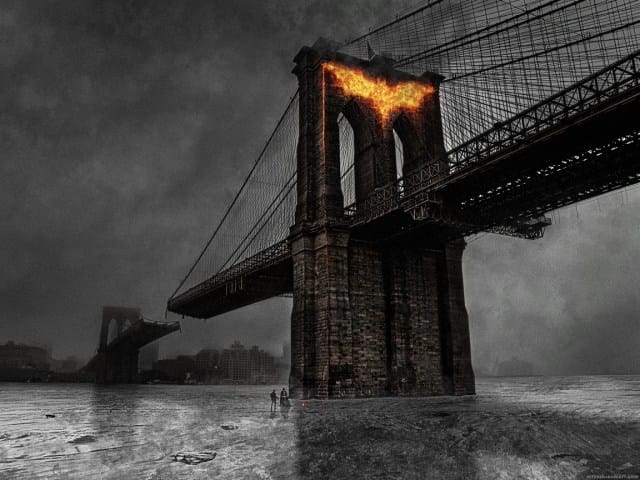
These loci are not the same thing.
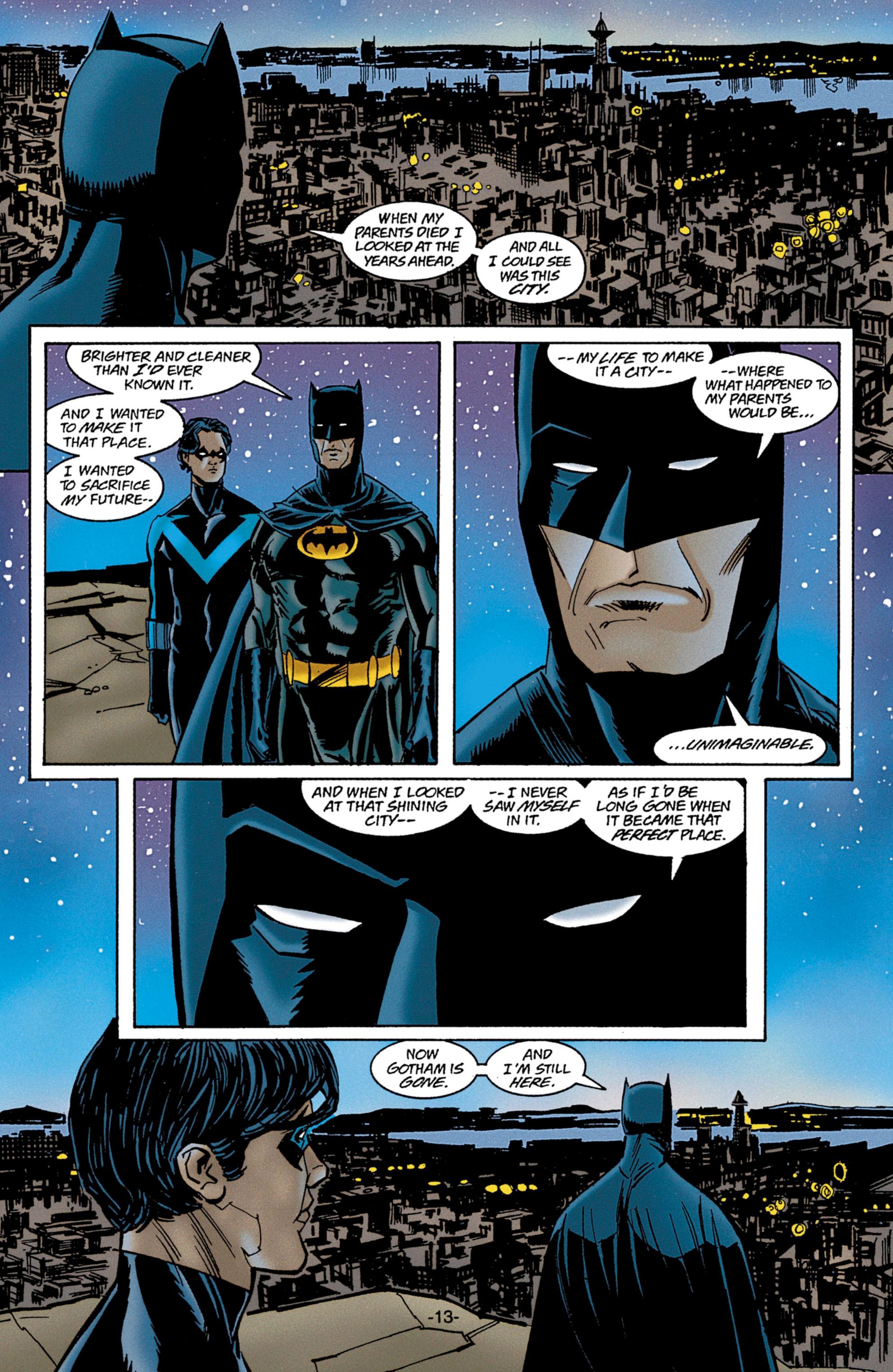
Bruce Wayne is a man whose life was harmed by murder. His parents’ deaths reorganized his reachable future. The child’s field collapsed around one image: the alley, the gun, the bodies, the helplessness, the city that allowed it, and the unbearable fact that the world did not stop after Thomas and Martha Wayne did. Bruce’s life after that is grief converted into his architecture.
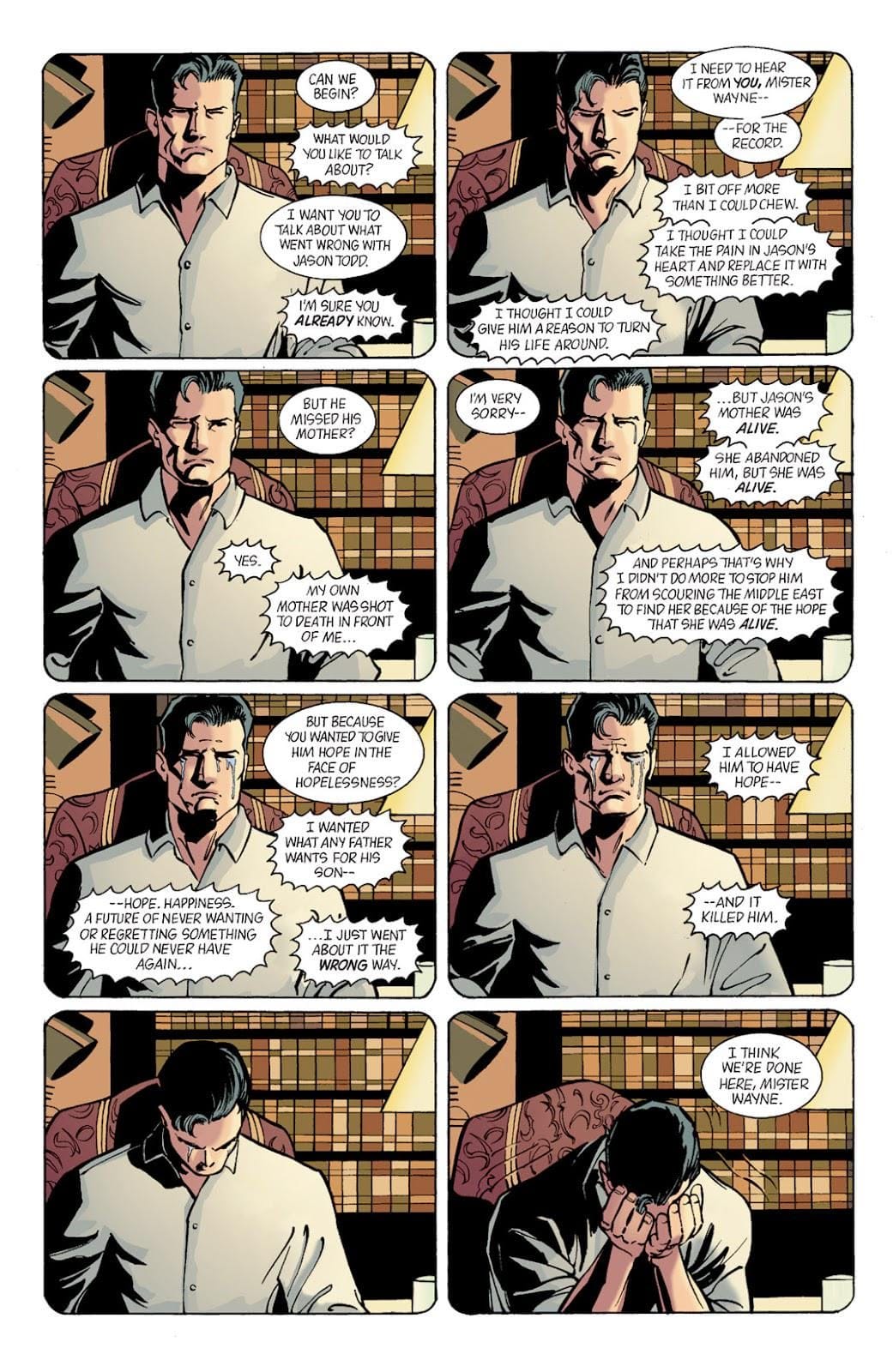
Batman is the method Bruce later builds from that wound: training, disguise, fear, investigation, wealth, violence, restraint, performance, tools, allies, and the refusal to leave the alley morally uninterpreted. Batman is what Bruce does.
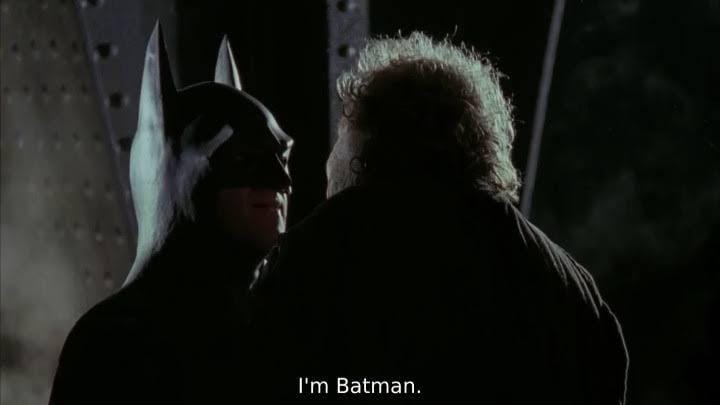
The Batman is larger than Bruce’s intention or person. It is the symbol moving through Gotham. It exists in the minds of criminals, victims, police, children, politicians, imitators, villains, allies, and Bruce himself. Once the symbol enters the field, Bruce can not fully control it. It is now a separate locus. People can use it, fear it, worship it, misunderstand it, imitate it, and become it. A symbol is a field instrument, more than any costume.
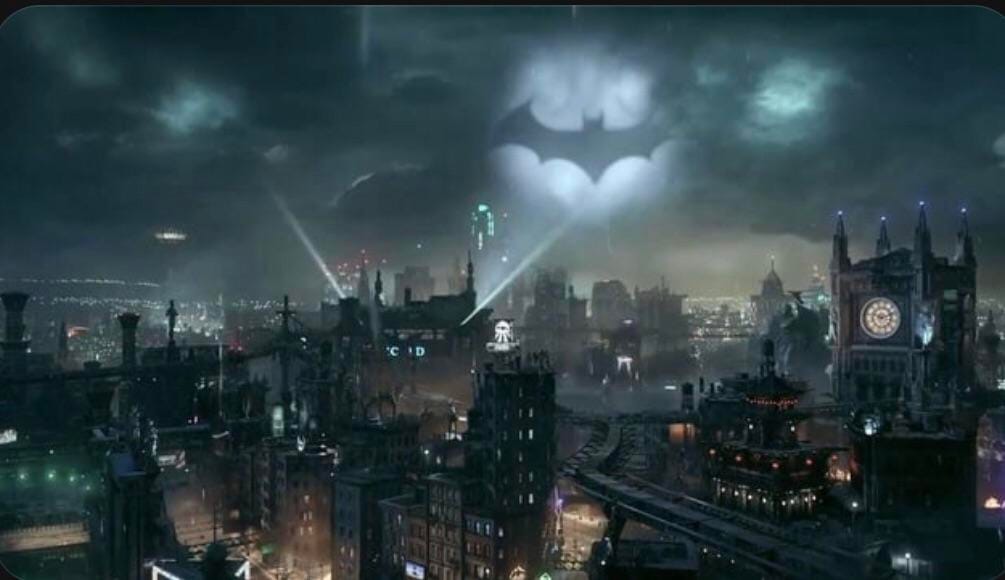
This is why The Riddler is Batman's most important enemy. Rather than just opposing Batman, Riddler reads Batman. He receives the symbol from the field, and uses it as his own permission. Bruce intended for the symbol to create fear in criminals. Riddler interprets that locus as masked vengeance with a shared grammar.
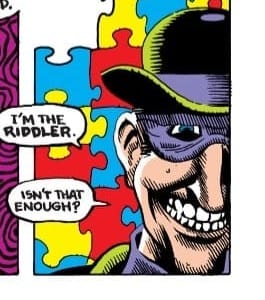
That is a field intervention failure, on the part of Batman. The intention of the symbol does not decide its effect in extance.
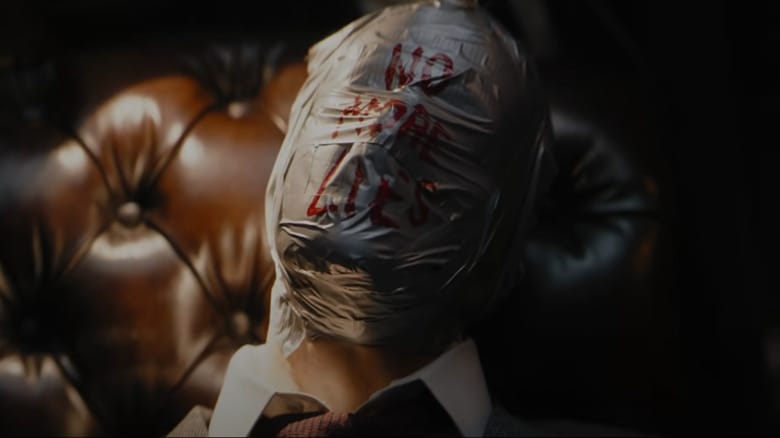
This is also why Thomas Wayne in Flashpoint matters so much, as we will discuss in depth later on. Structurally, Thomas Wayne is a Batman produced by a different wound, in a different field, under a different moral permission structure. Bruce dies. Martha collapses into the Joker. Thomas becomes Batman without Bruce’s no-kill center. He is what happens when the Batman primitives still exist, but are mirrored through the wrong death and perceptual fingerprint.
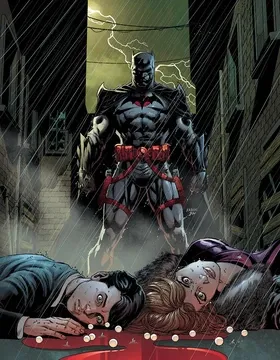
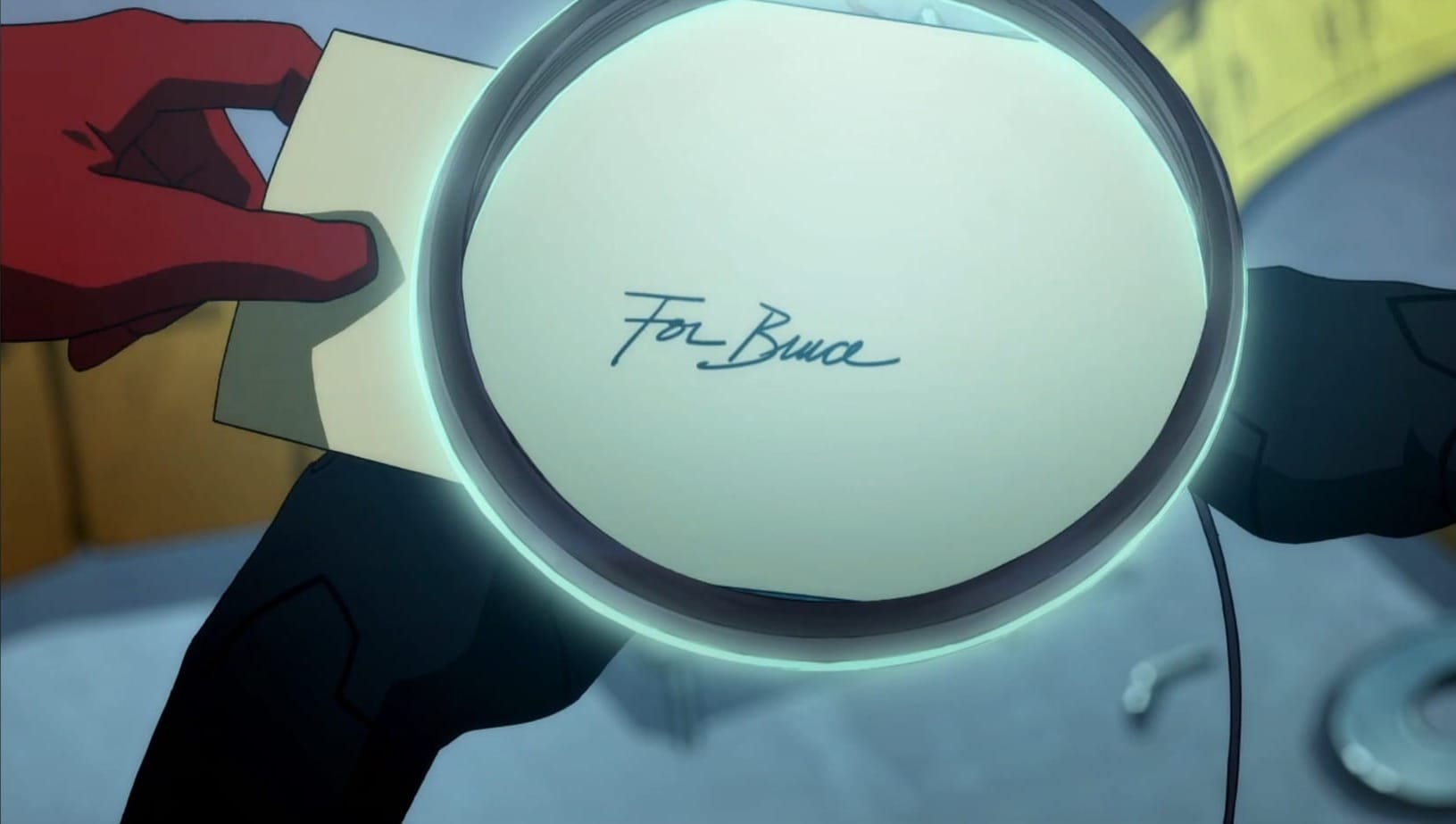
This touches the same structure as the Lost Gradient, the Non-Planet, the Unread Universe, and every case where a field can lose its own continuation while leaving behind a trace that matters. Thomas Wayne’s Batman may be erased as an extant world within fiction, but the letter at the end of that story is a surviving causal filament. It is an artifact from a closed field that re-enters the active one. Batman is already about trauma preserved as symbol. Flashpoint then makes that literal across timelines.
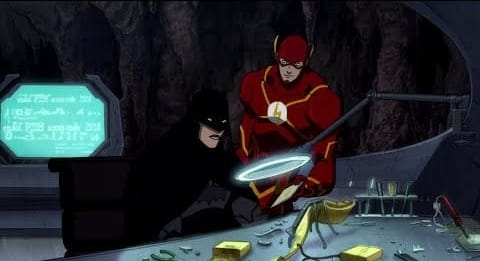
So, this article is definitely about Batman, but this is also where we first start to ask directly whether or not a closed field can still act.
Batman is an especially useful case because almost everyone already knows the shape. We do not have to convince the reader that a moral field exists here.
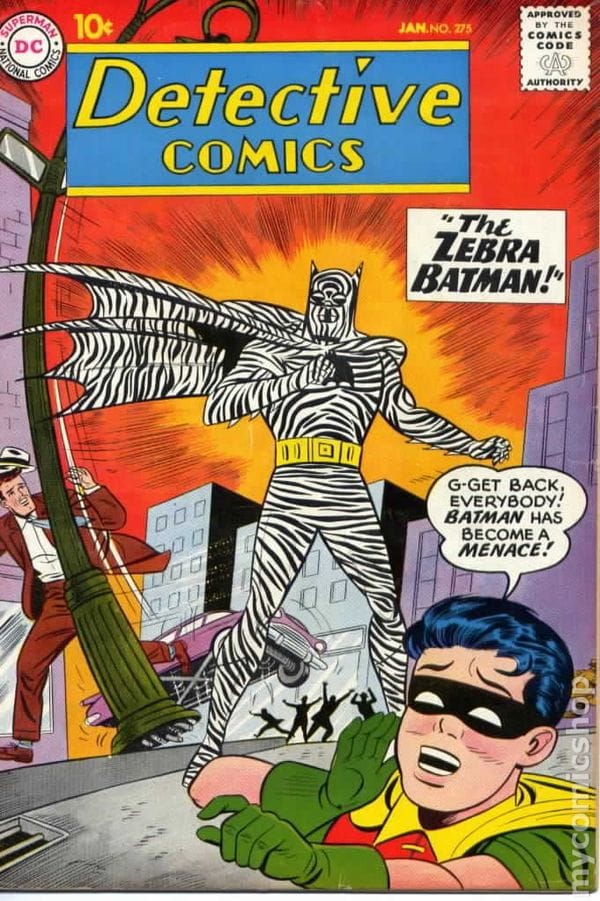
The question is whether Batman sees that field clearly enough to repair it, or whether he only sees the part that looks like his own fist.
Better and Bad Batmen.
A bad Batman is a brawler with trauma and a brand. A better Batman is a succesful field analyst.
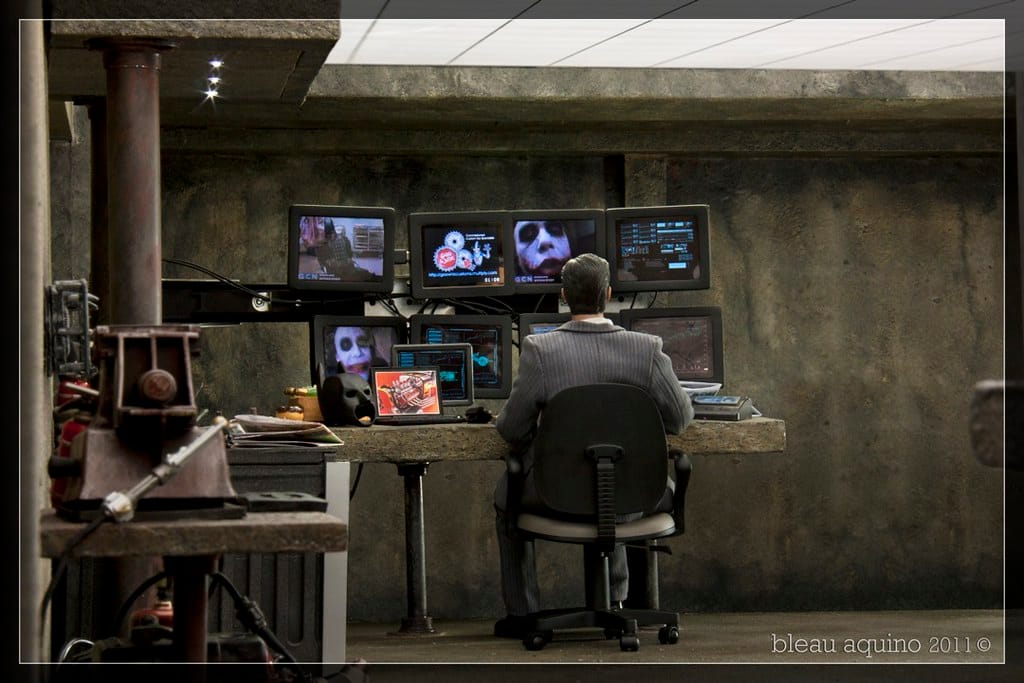
Better Batman does not only ask who committed the crime. He also asks what path made this crime reachable.
Who benefited from that path? What institution failed? What fear was exploited? What lie held the field in place? What future would remain closed if the visible criminal were simply removed? What does the victim need after the punchline of justice has landed? What happens when Arkham fails again? What happens when children see the bat and decide pain is their calling? What happens when the city learns that only a billionaire ghost can make their harm answerable?
These are all Better Batman questions. The versions that never ask them are usually just expensive revenge fantasies.
The Minimal Batman.
The minimal Batman therefore cannot be defined by costume, money, gadgets, or even detective skill alone. Those are recurring parts, but they are not the moral core.
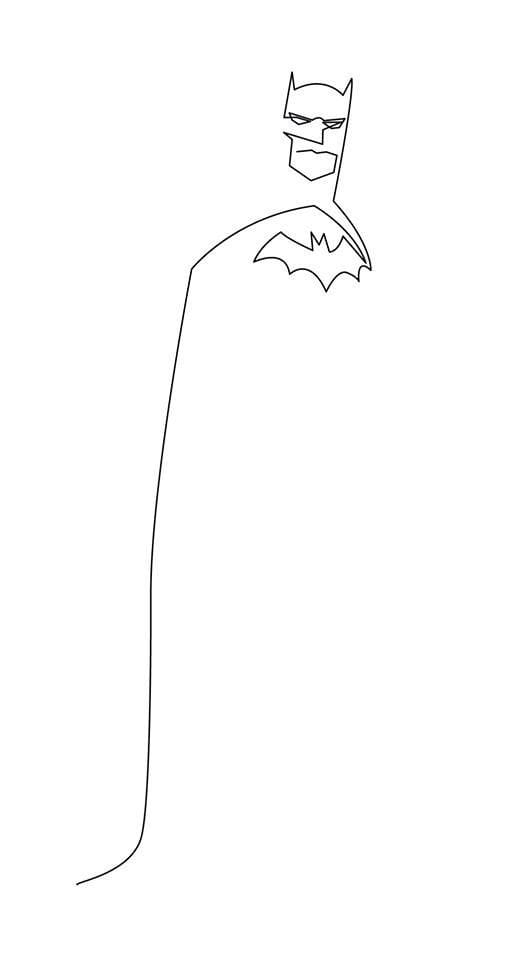
The core Batman structure requires a wound, a vow, a constraint, a symbol, a field, and a method of reading that field.
When those elements all align, Batman can become Better inside Gotham’s damage. When they misalign, Batman instead becomes one more reason Gotham cannot heal.
Before we even reach any variants, we already have our first ruling:
Batman is not moral because he fights crime.
A lot of harmful figures fight crime. Batman is not moral because he refuses to kill, either. That restraint is essential, but restraint alone can coexist with brutality, surveillance, terror, and recurrence.
Batman is also not moral because he suffered. Suffering does not grant a locus authority over the field.
Nor is Batman moral because he is "necessary". A bad field that makes someone necessary can still be damaged by the form that necessity takes.
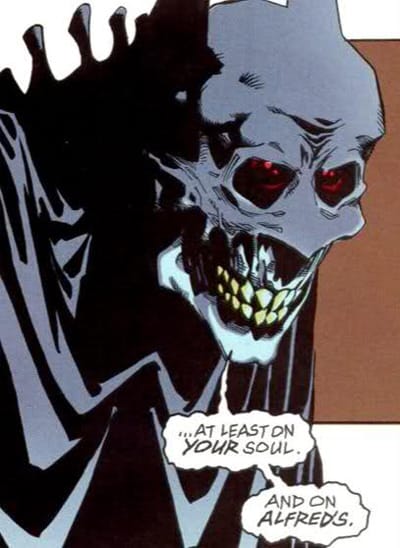
Batman, then, is moral only when the wound becomes care, the vow remains revisable by truth, the symbol opens more than it closes, the method preserves future repair, and Bruce Wayne does not use the night as an excuse to abandon the day.
The Batman Primitives.
Before judging any particular Batman, we need to know what survives across the variants.
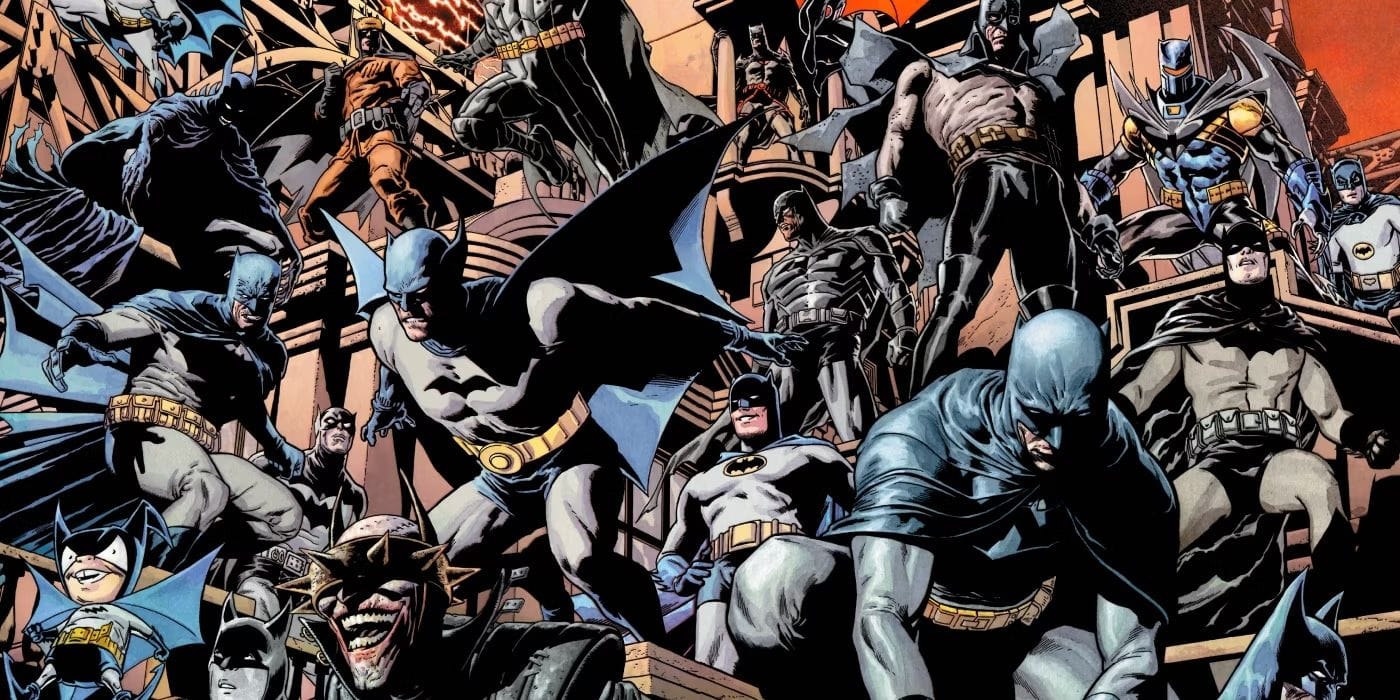
Not every character named Batman is structurally Batman in the same way. Some versions preserve the core and exaggerate one part. Some invert the core. Some are mirrors. Some are parodies. Some are stress tests. Some are technically Batman only because a costume department or publisher says so, which is not nothing, but also not enough for field analysis.
The minimal Batman presents the following primitives:
The wound.
The vow.
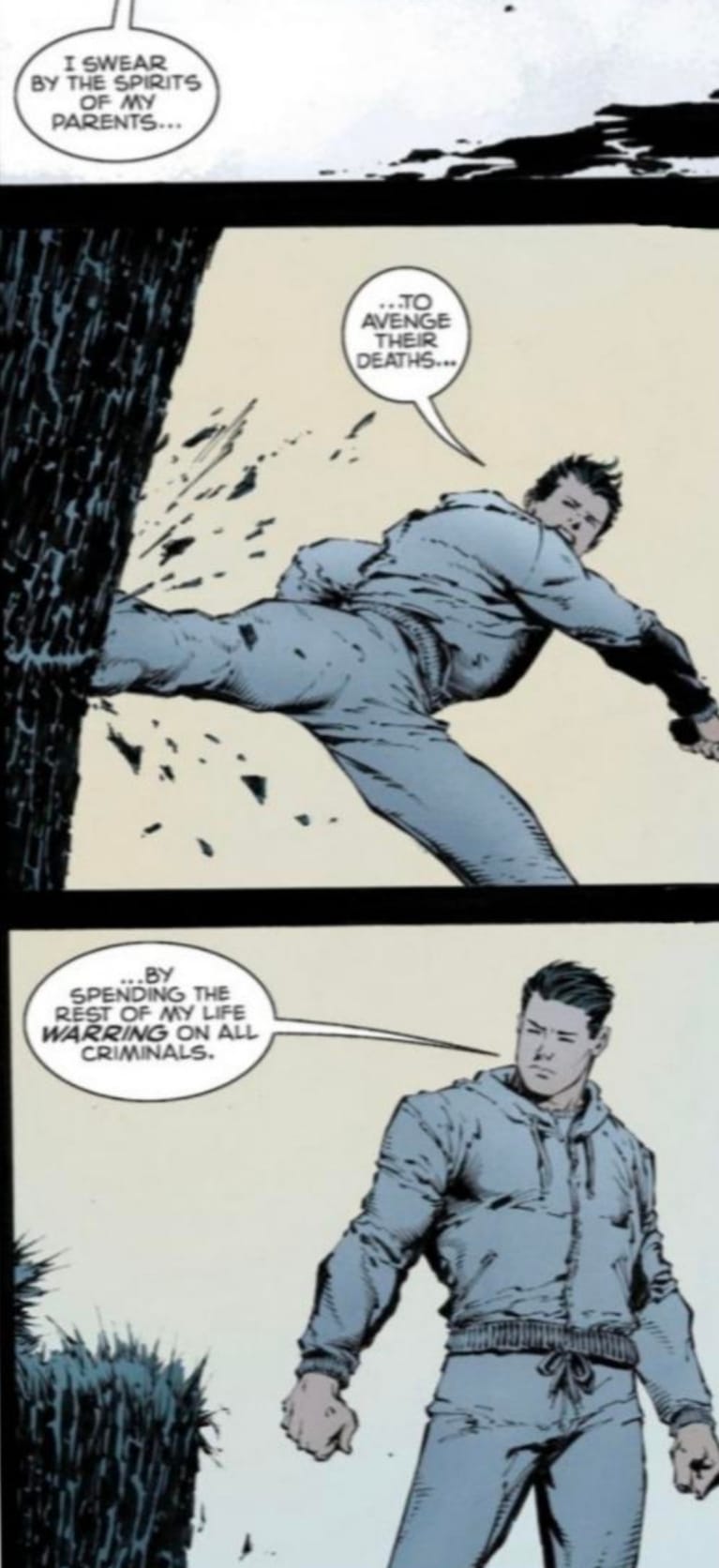
The constraint.
The symbol.
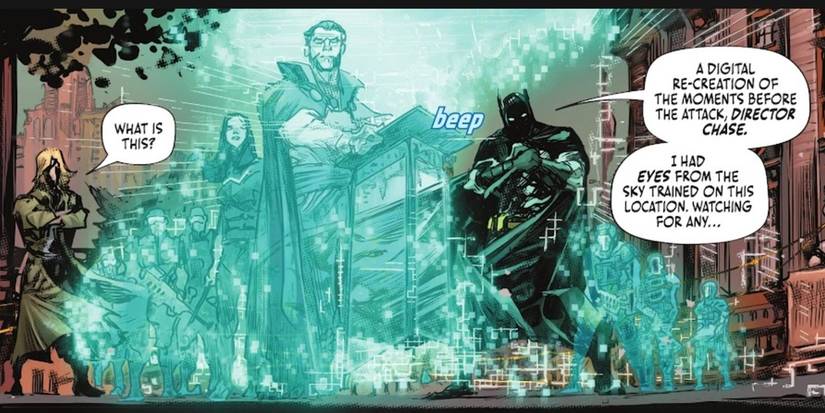
The detective.
The fortune.
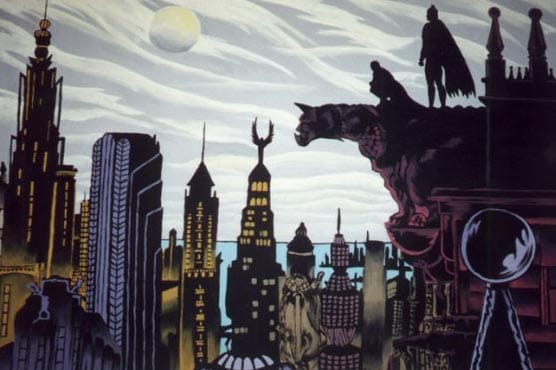
The city.
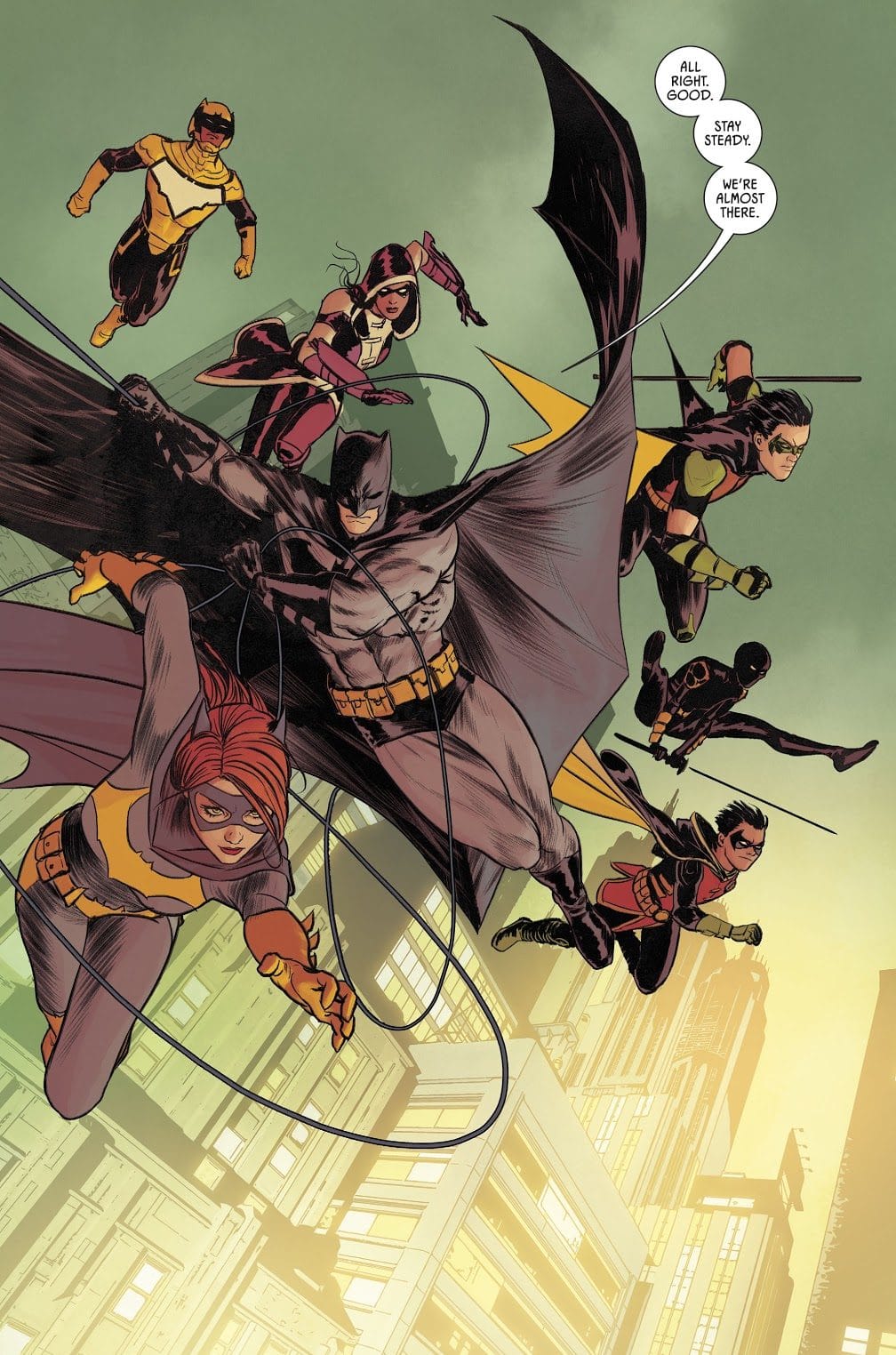
The family.
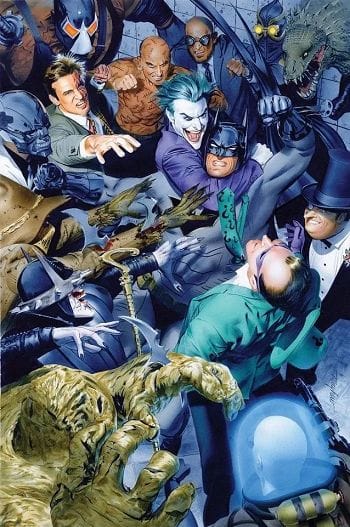
The rogues.
Remove one, and Batman can still function for a while. Remove enough, however, and the structure of the character becomes something else wearing the logo.
The Wound.
The most important primitive is the wound.
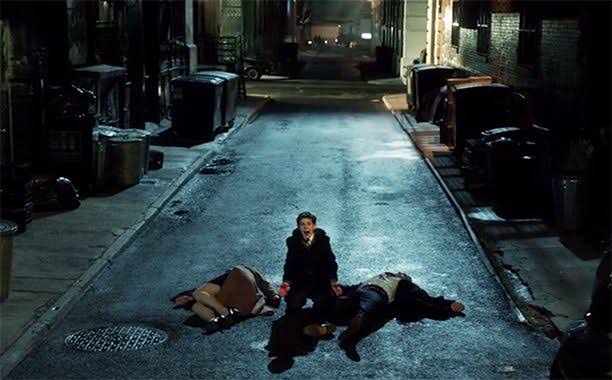
Bruce Wayne’s parents are murdered in front of him, obviously, but structurally, the murder is not just his origin story or background. This murder is the collapse that organizes every later reachable future.
When he loses his parents, Bruce loses the ordinary child-future in which the world is basically survivable, adults can protect him, the city has moral order, and public life remains trustworthy.
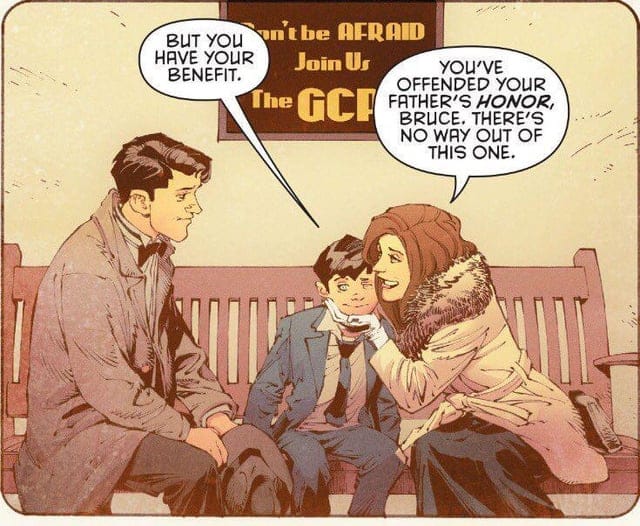
The alley has already taught him a field lesson before he had the tools to interpret it correctly. The lesson was this:
Predation exists. Law may arrive too late. Good people can die without narrative compensation. Wealth cannot buy the moment back. A child can be made to witness the irreversibility of harm.
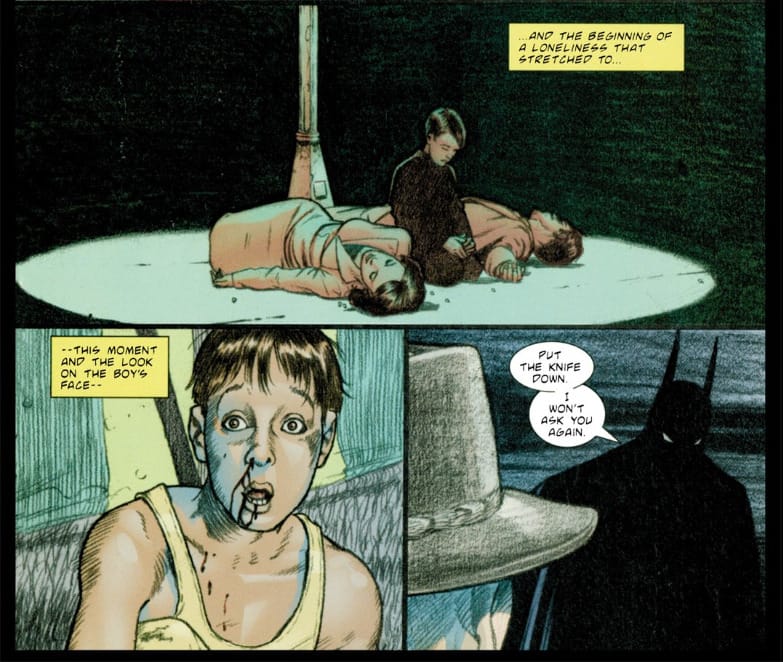
Batman begins as a response to irreversibility. Bruce cannot repair this original closure.
Thomas and Martha Wayne are dead.
No amount of training, money, punishment, confession, or symbolic victory ever reopens that path. The wound just cannot be undone. It can only be re-interpreted, lived through, displaced, repeated, or turned toward other fields.
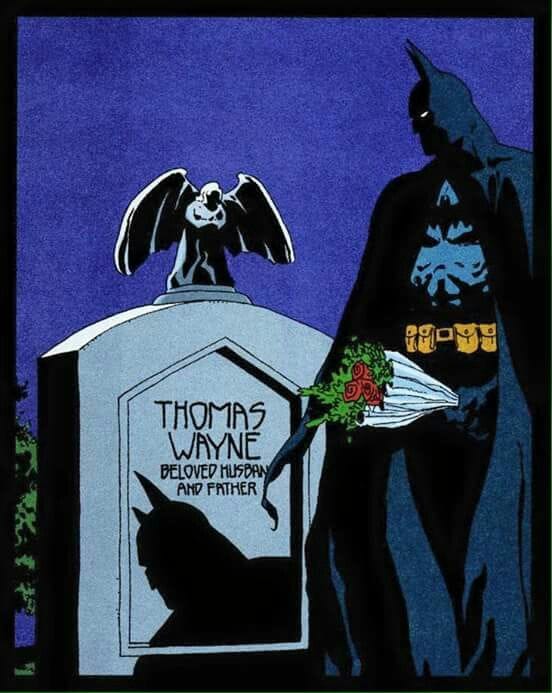
Batmen begin to diverge here.
Some versions convert this wound into care. The alley becomes the reason no one else should be abandoned there.
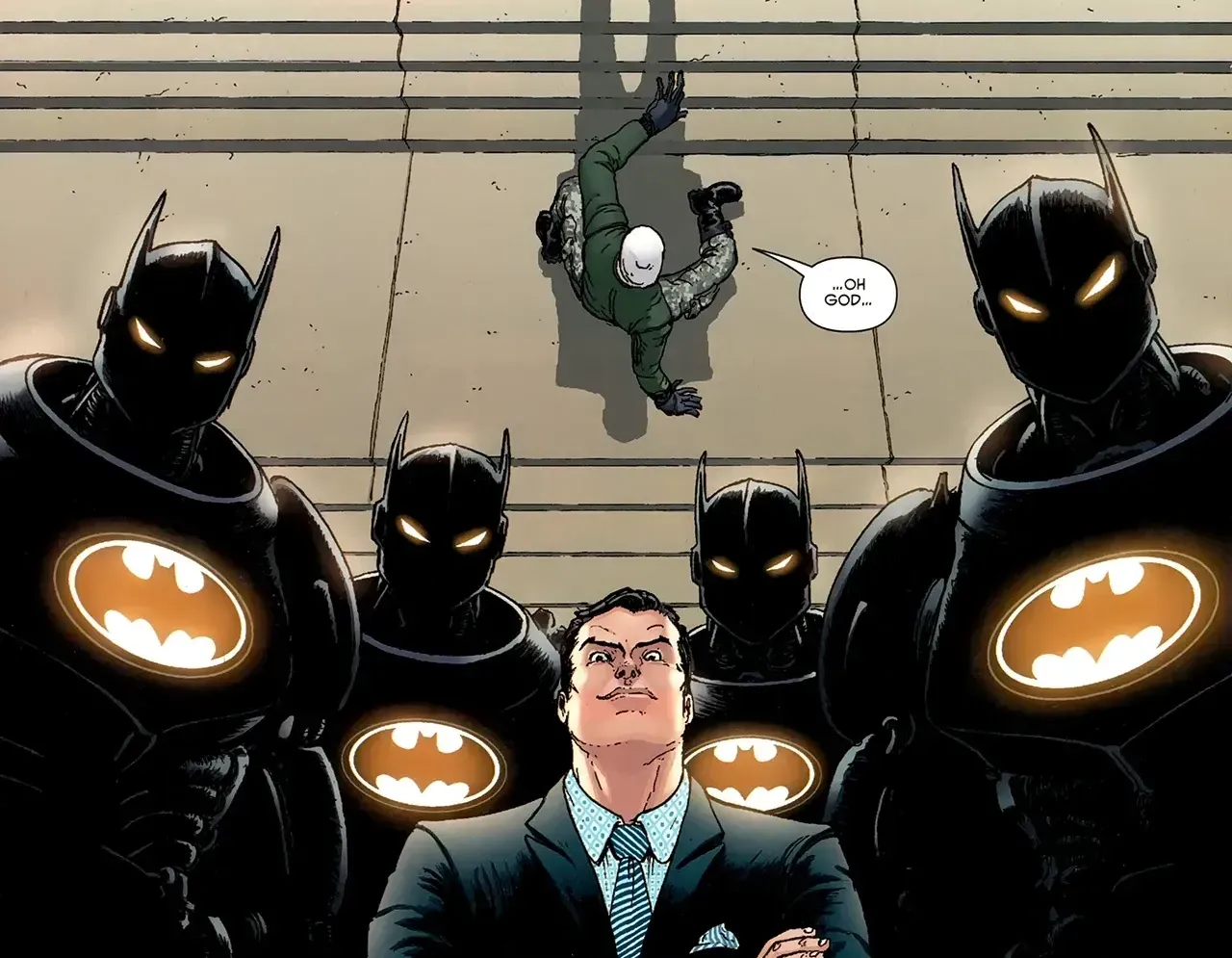
Some convert it into control. The alley becomes the justification for dominating every future alley before it can happen.
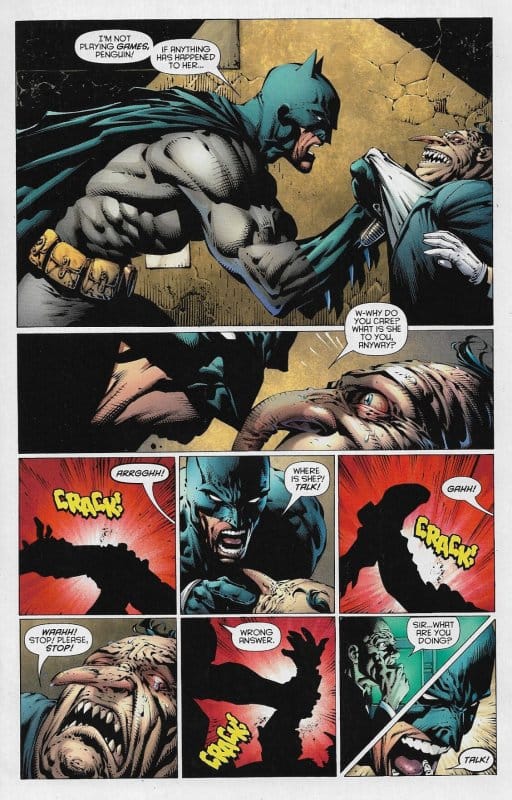
Some convert it into vengeance. The alley becomes his infinite permission slip for whatever fantasies the writer had.
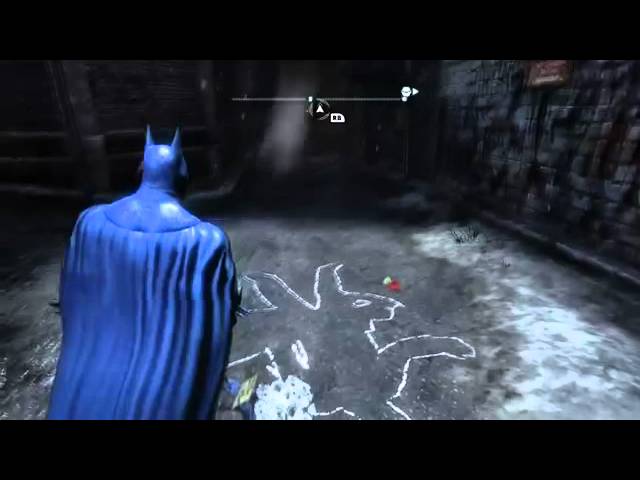
Some just never leave the alley at all.
The Vow.
Bruce swears himself to the prevention of what happened to him.
Usually this is stated as a war on crime.
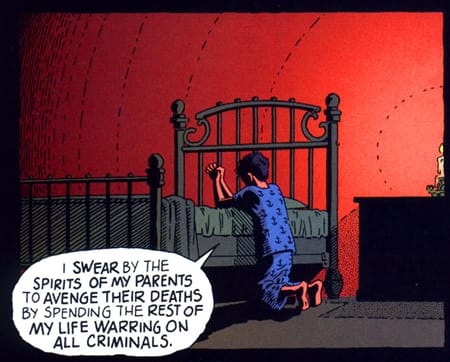
That phrasing is already incredibly dangerous. A war now needs enemies, fronts, escalation, intelligence, weapons, sacrifices, acceptable collateral, and an emergency logic that can become permanent. Young Bruce should have been more careful in his phrasing.
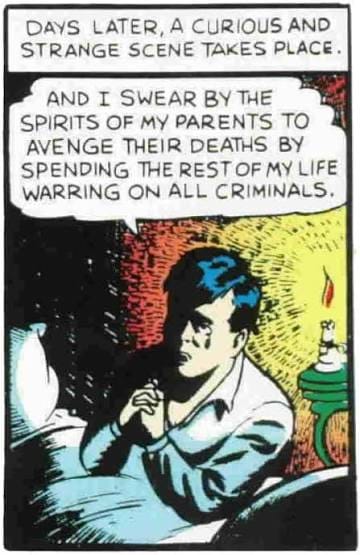
A vow is not automatically moral because it is sincere. A vow can preserve a path, but it can also trap a person inside one moment forever.
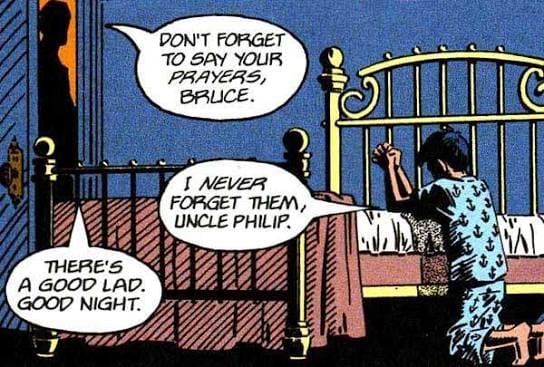
Batman’s vow is morally healthy only when it remains answerable to the field. If Gotham changes, the vow must be able to change. If Bruce learns that punching street criminals does not reach the structure producing the harm, the vow now must widen. If the symbol harms the city, the vow must revise the symbol.
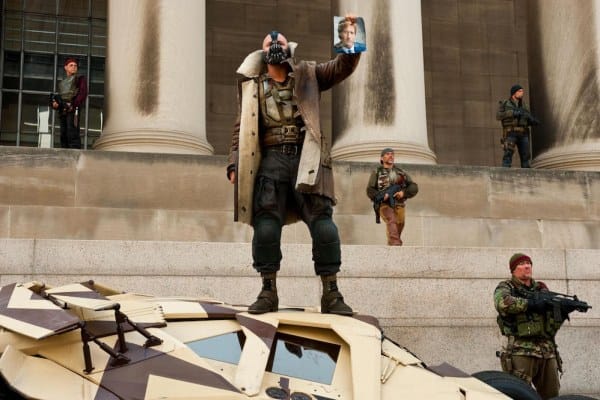
If the Bat-family exposes children to unacceptable risk, the vow must answer for that. If Bruce Wayne’s money can preserve more future-space than Batman’s fists, the vow must not pretend the night is still holier than the day.
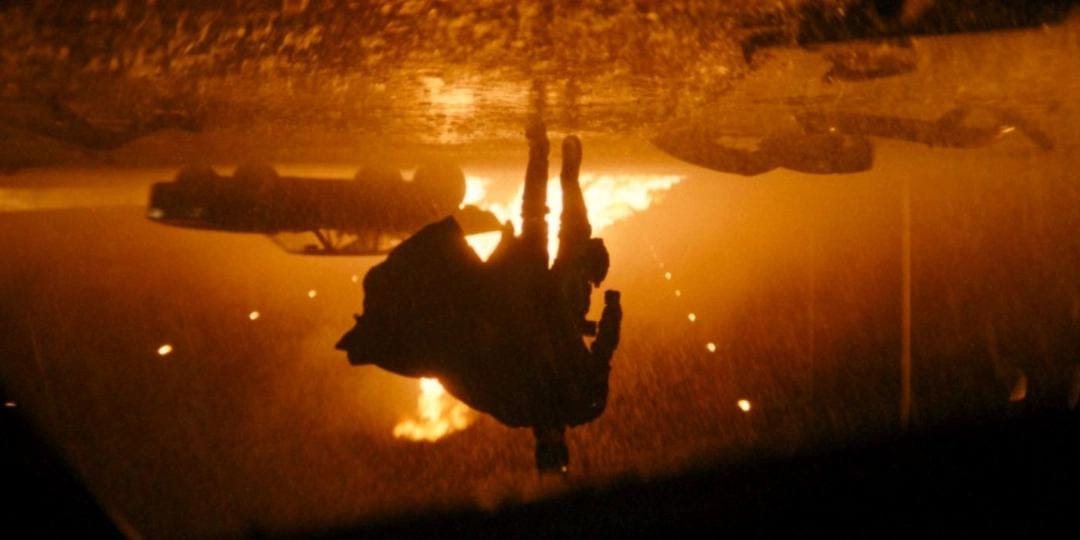
The worst Batman is not the one who breaks his vow. The worst Batman is the one who worships it after he stops seeing the field clearly.
The Constraint.
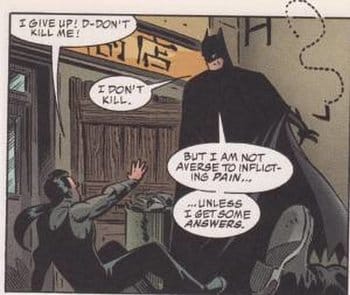
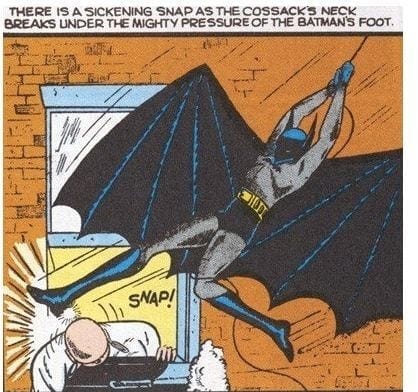
Batman does not kill.
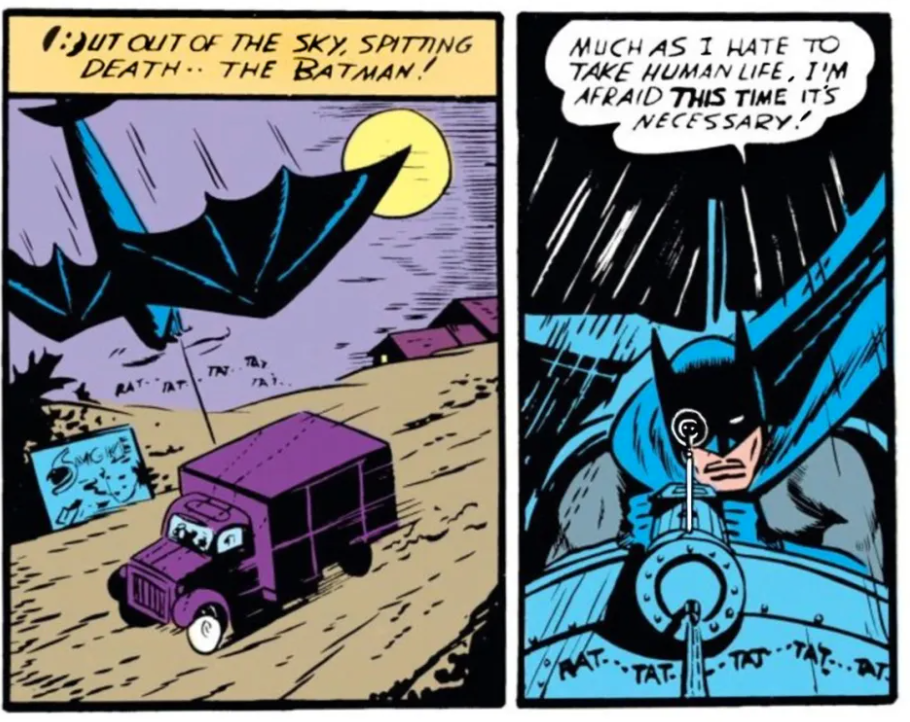
There are versions that do, of course. They are also important because they show clearly what breaks when the constraint disappears.
The no-kill rule is often defended as Bruce Wayne's personal purity. If Batman kills once, he will never stop, because that purity is lost. That is still true for some versions, but far too psychological to describe structure.
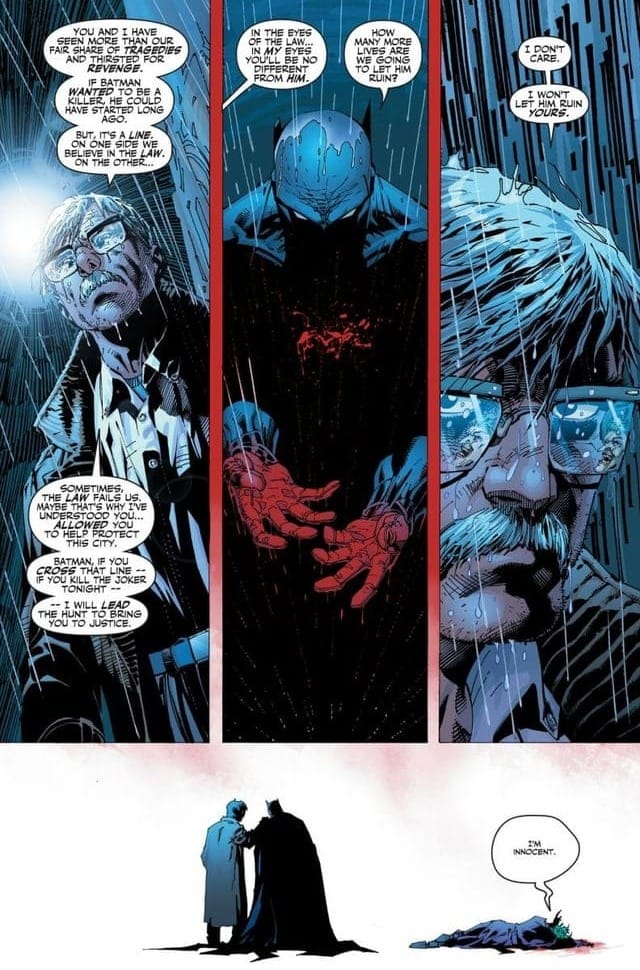
The deeper reason is that Batman already operates outside ordinary public procedure. He investigates, stalks, surveils, trespasses, intimidates, fights, abducts, and delivers people into a legal system he does not fully control.
If he then also grants himself execution authority, the method becomes sovereign violence.
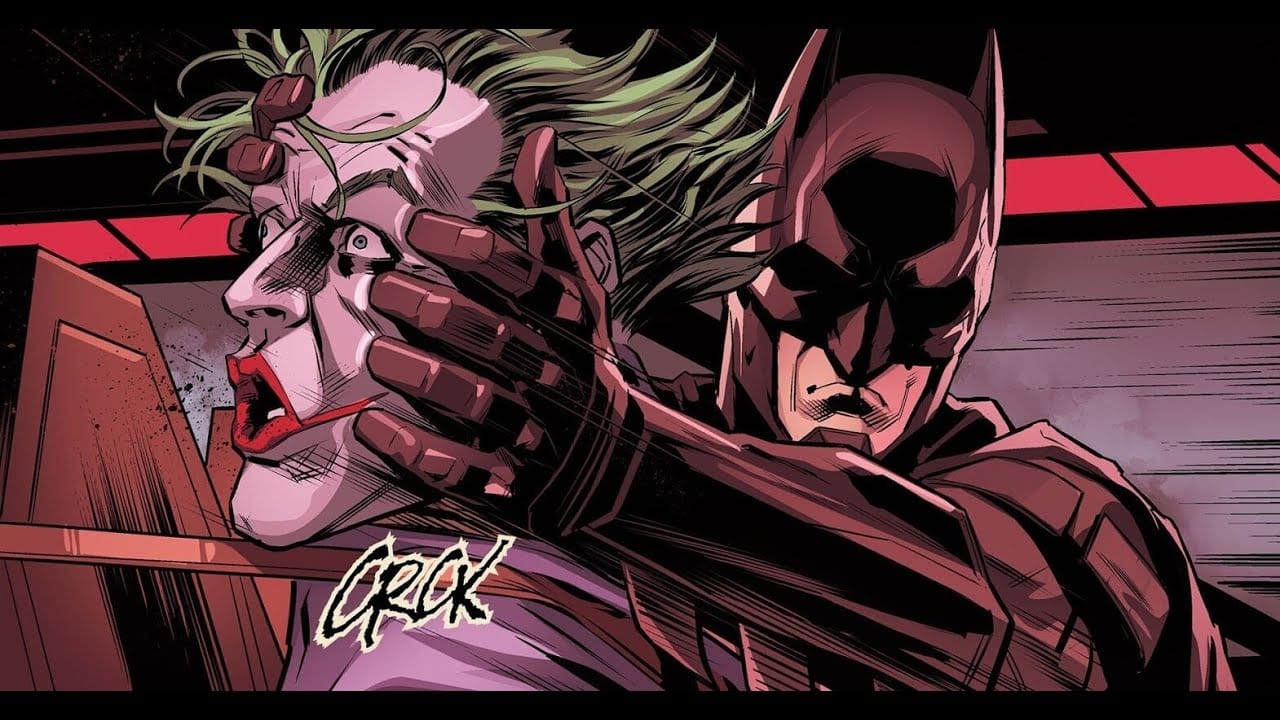
The no-kill rule keeps Batman from becoming the final court of Gotham. It's not sentimental. The rule is one of the primary structural barriers between Batman and tyranny.
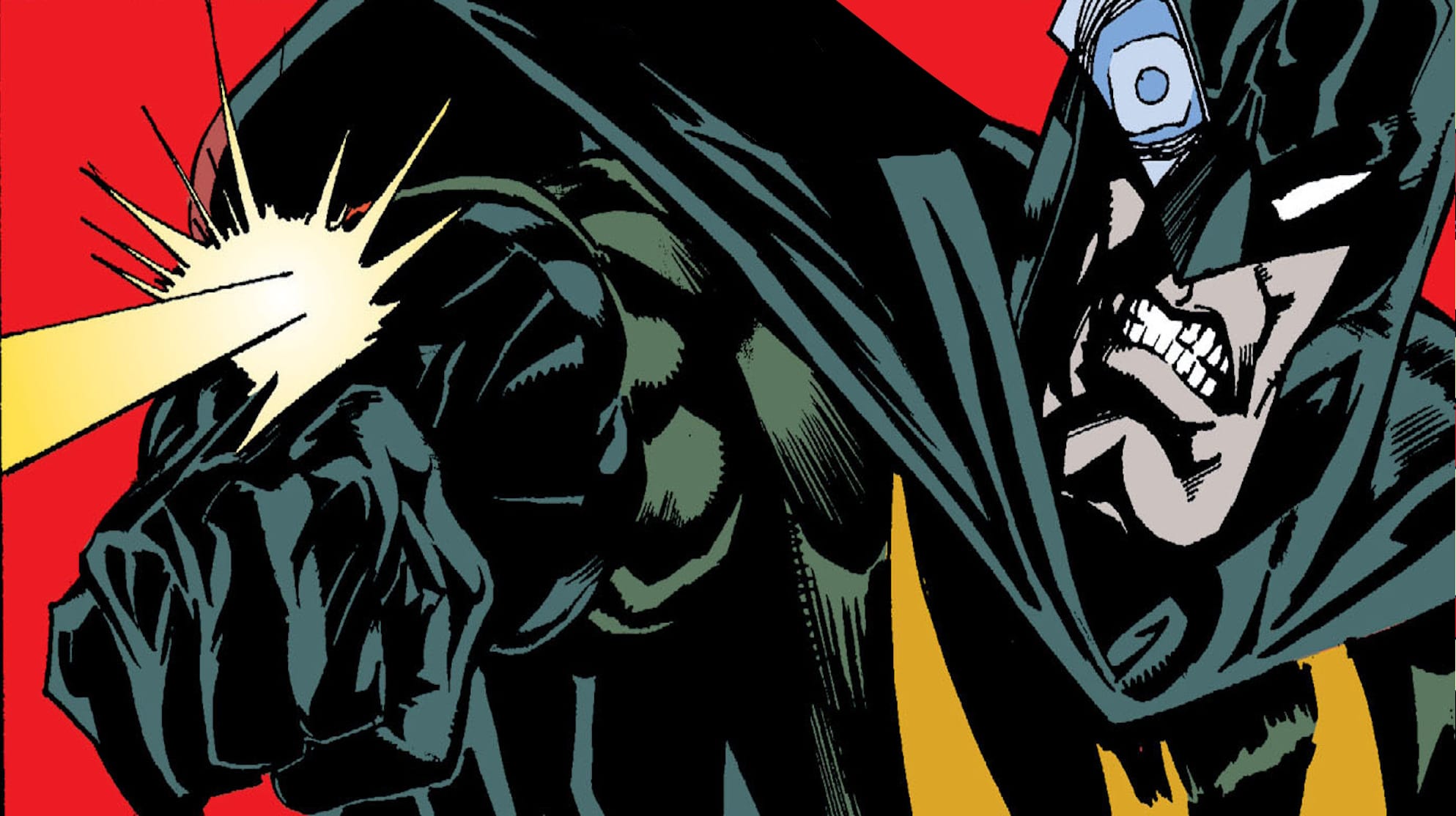
If Batman kills, every criminal encounter becomes a possible death penalty hearing conducted in the dark by one traumatized billionaire with exceptional physical training, excessive hatred for criminals, and no public mandate.
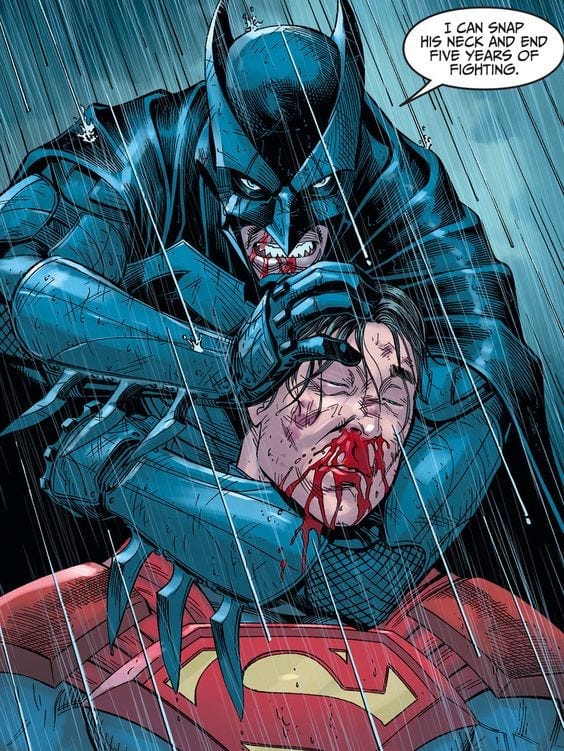
That is not a healthy field at all.
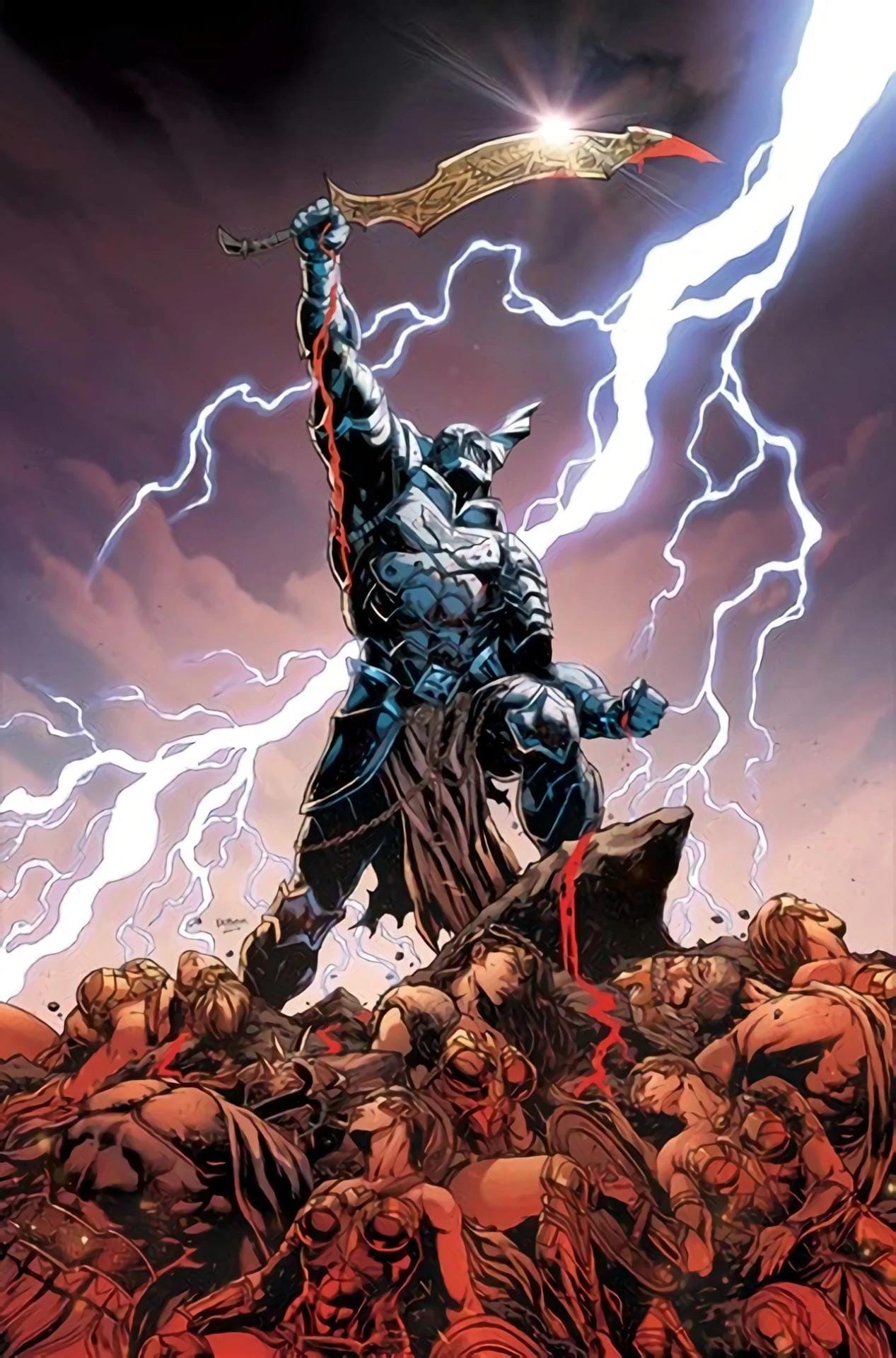
Even when Batman kills someone obviously monstrous, the field always changes. The symbol always changes. The police relation always changes. The rogues relation always changes. The Bat-family relation always changes. Bruce’s own future always changes.
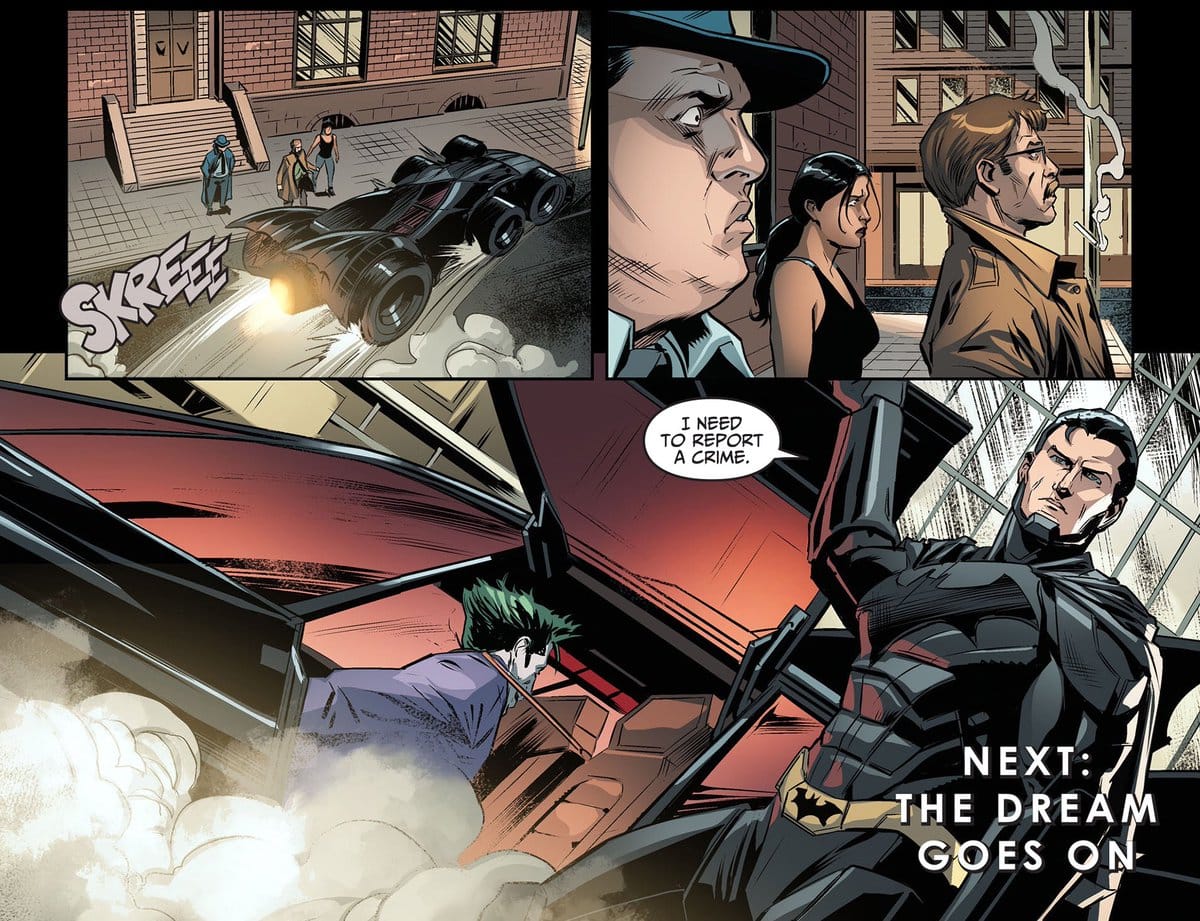
Gotham learns that the bat is no longer only fear, he is now lethal judgment.
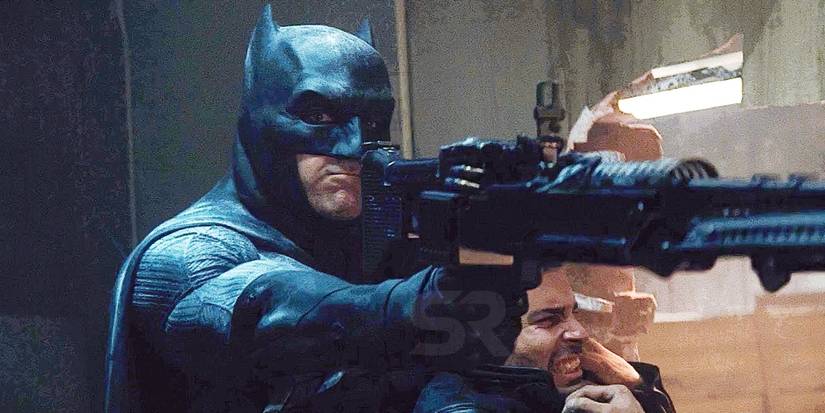
That is not at all just badass Batman with an edge, this is now a completely different field instrument.
The Symbol.
"The bat" is not a brand in the modern corporate sense, though it has obviously become one outside the fiction.
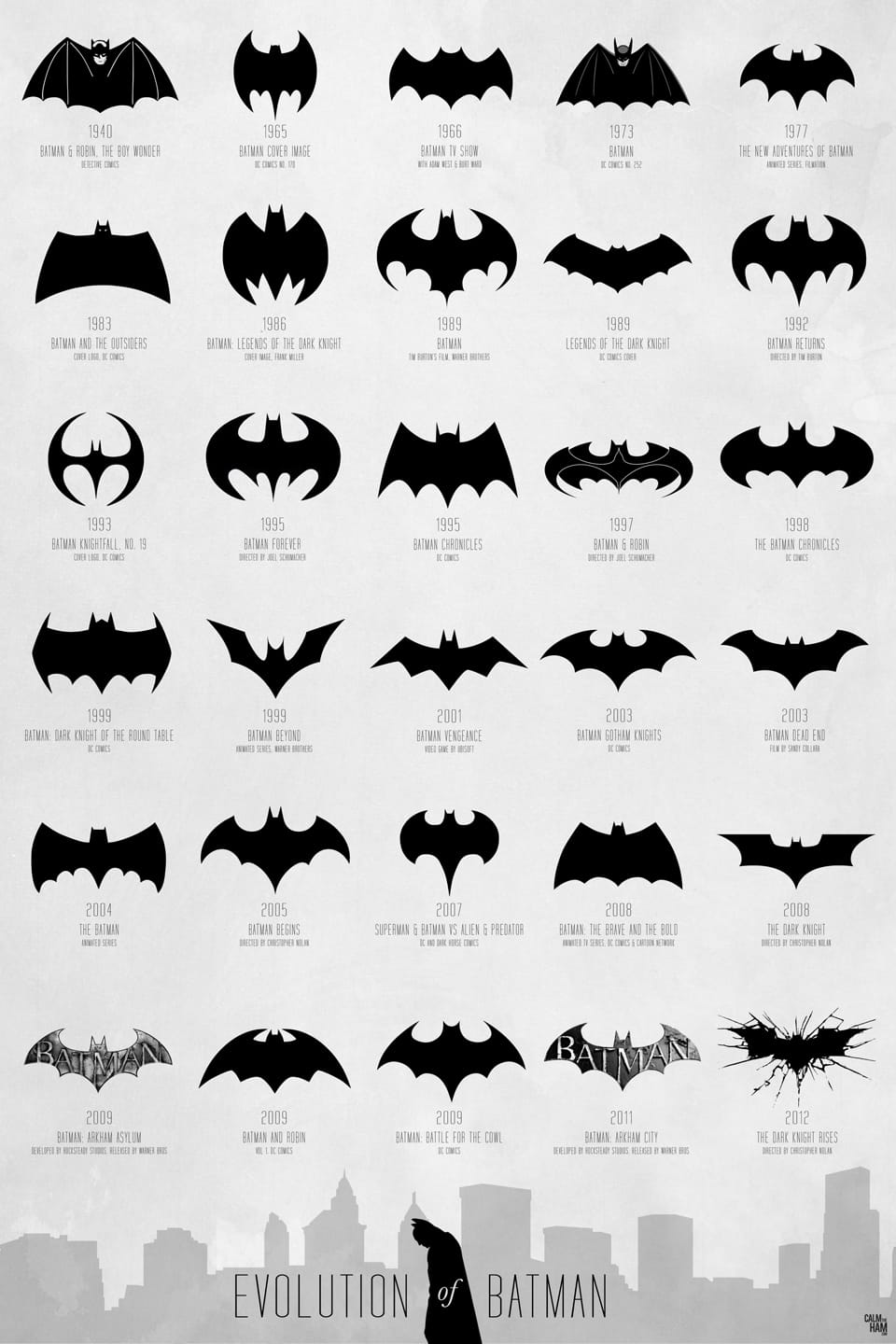
Inside Gotham, the bat is a deliberately engineered signal. It is very theatrical. It is primitive, and predatory. It is meant to travel far faster than Bruce truly can. It enters rooms before he ever does. It changes behavior in his absence, creating rumors, warnings, imitations, and nightmares.
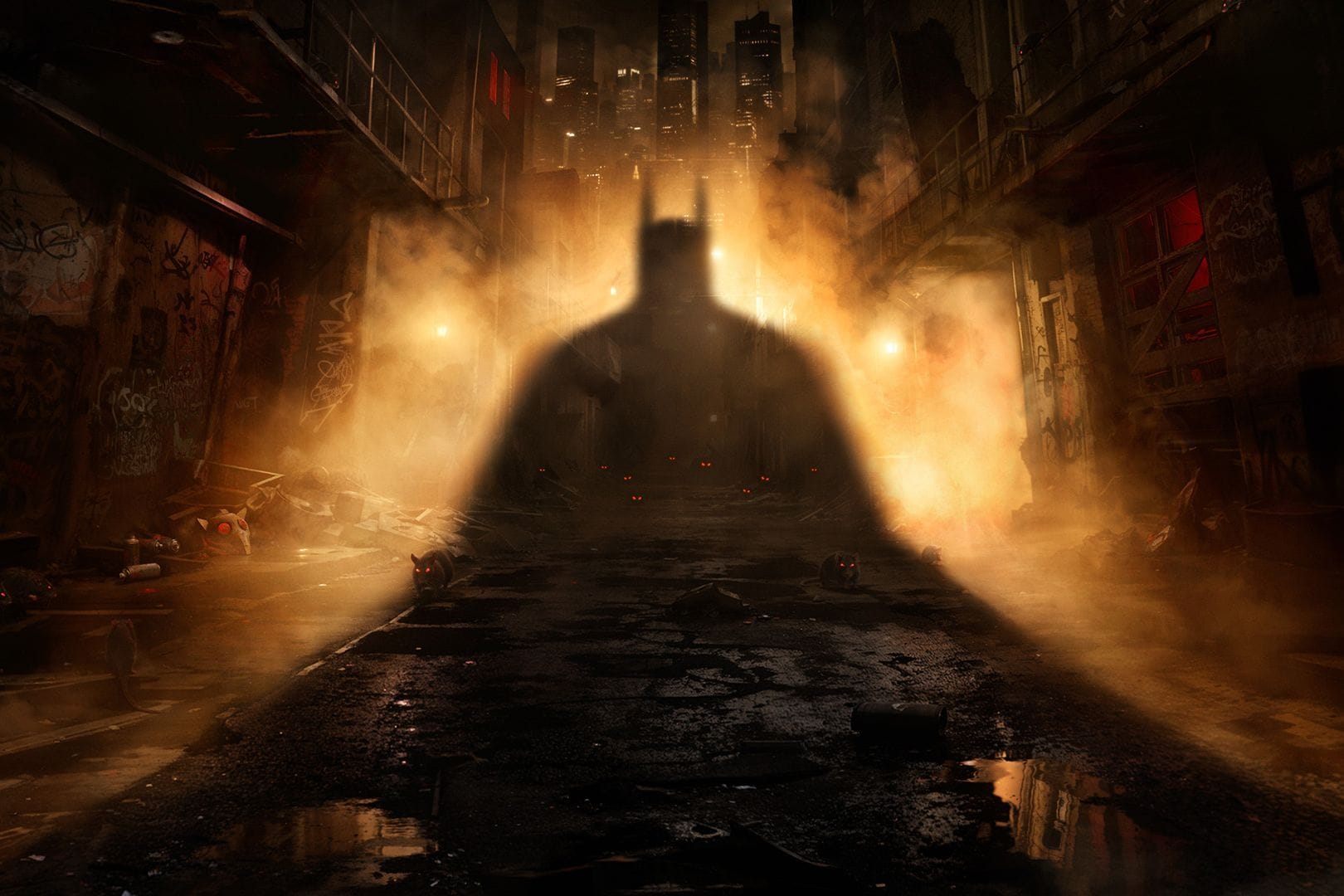
A symbol has downstream effects independent of intention. Bruce Wayne no longer interacts with the field as just one man when he is Batman.
Bruce may intend the bat to frighten predators. A child may read it as rescue. A criminal may read it as punishment.
A cop may read it as help, competition, or indictment. A politician may read it as disorder. The Riddler may read it as invitation and permission.
The Pattinson/Riddler problem presents this structure in its cleanest form:
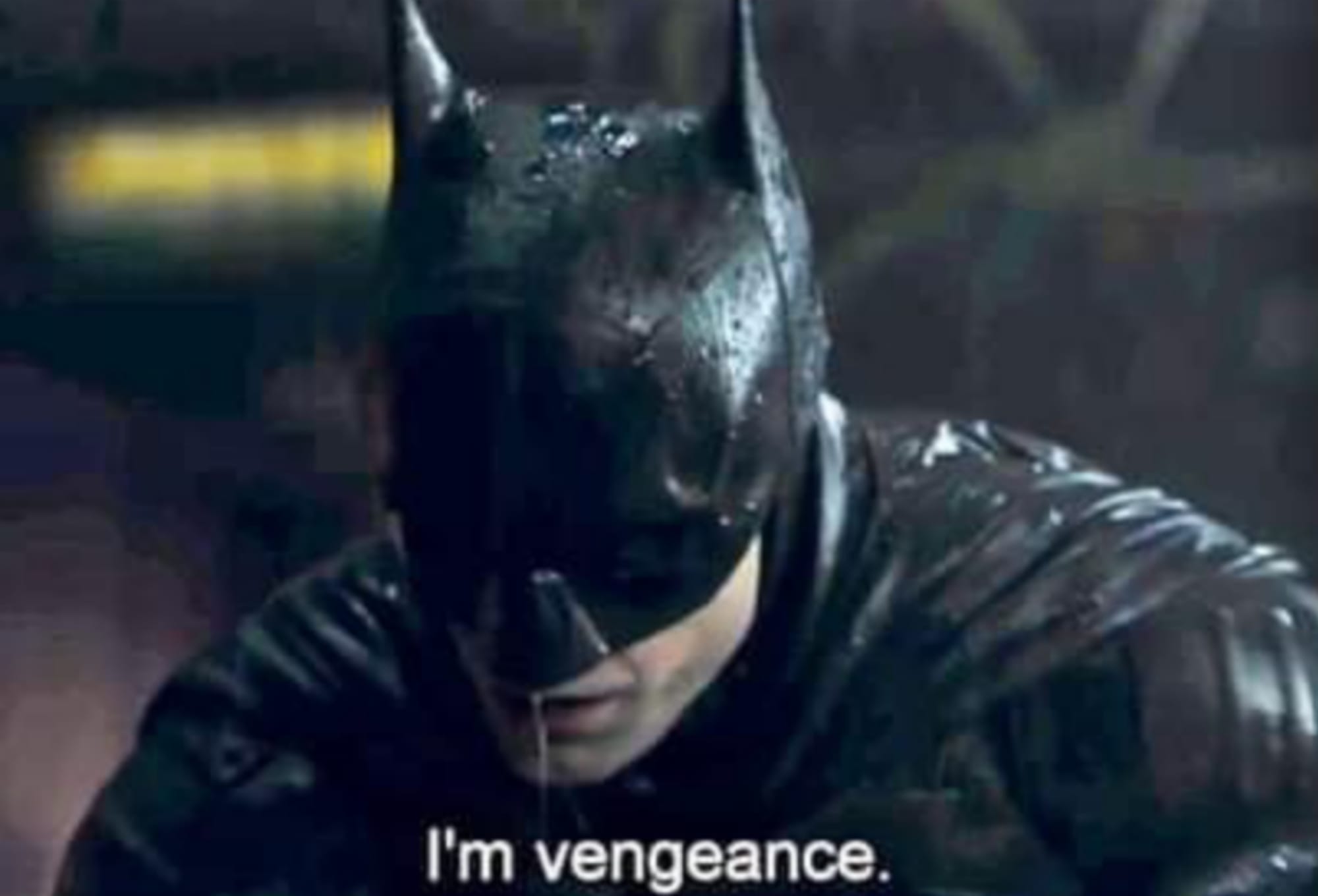
Batman says, “I am vengeance.” The Riddler hears, “So am I.”
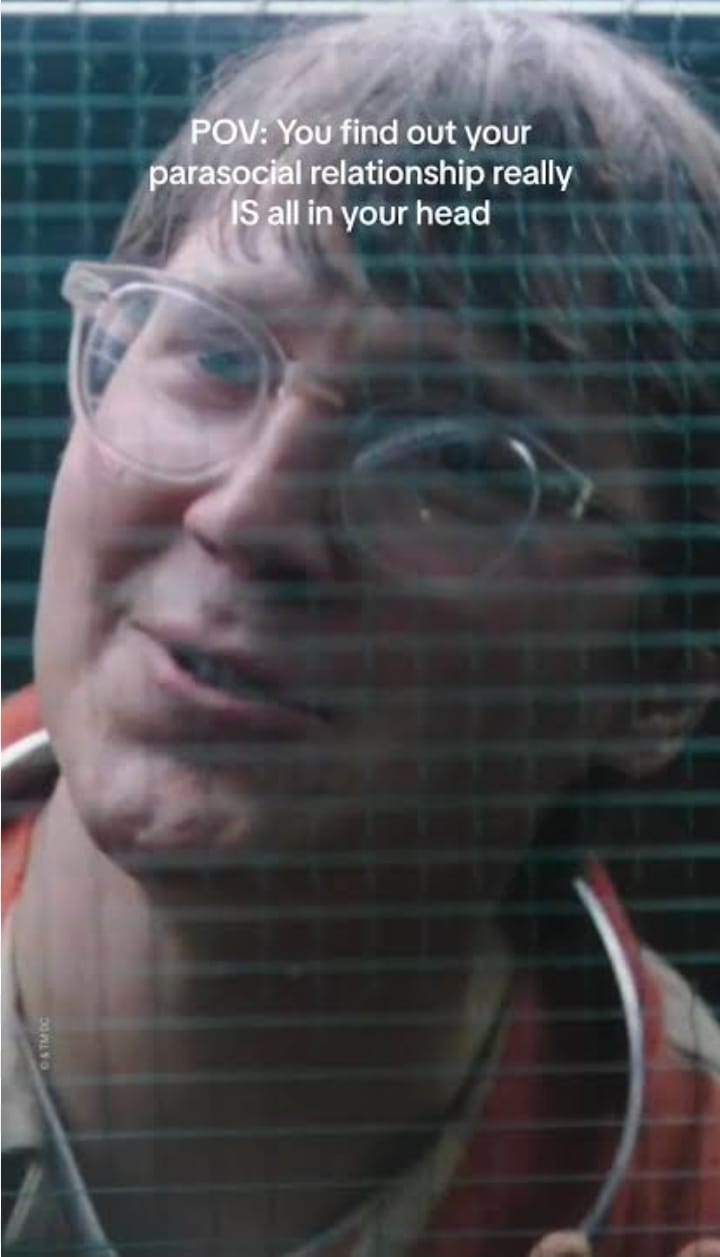
This is not some social misunderstanding or the Riddler's psychology. This was the field answering Batman back directly after his intervention. A symbol does not mean only what its author wants it to mean. It means what it makes reachable.
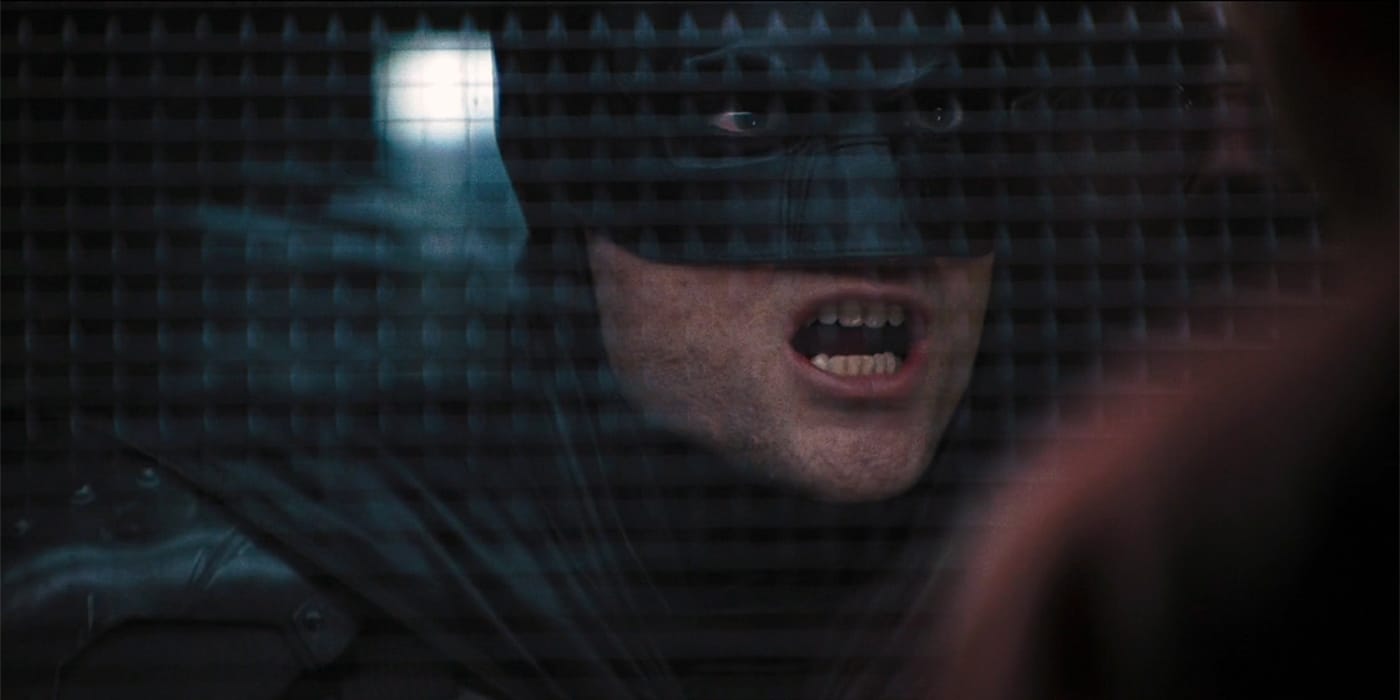
This is why deliberation is recursive.
If Batman’s symbol makes victims safer and predators less certain, it may be Better. If it instead teaches Gotham that terror is justice, it is harmful.
The Detective.
This is the primitive that often gets buried under action spectacle, even though it is the one most closely aligned with Modal Path Ethics (very important) and effective field repair.
Batman should not be strongest because he can hit people. He should be strongest when he can read the field clearly.
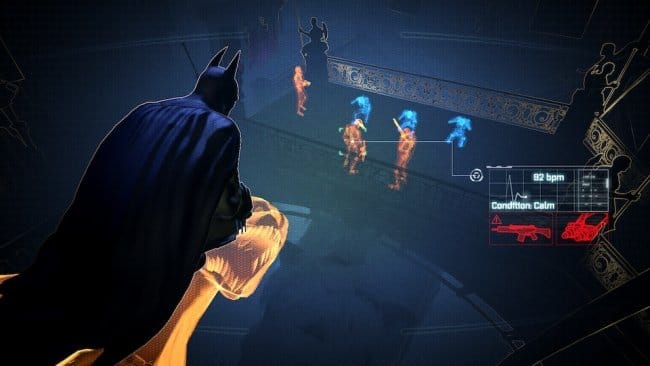
The detective is the part of Batman that refuses surface morality and narrative compression.
A corpse is not only a corpse. This is a path.
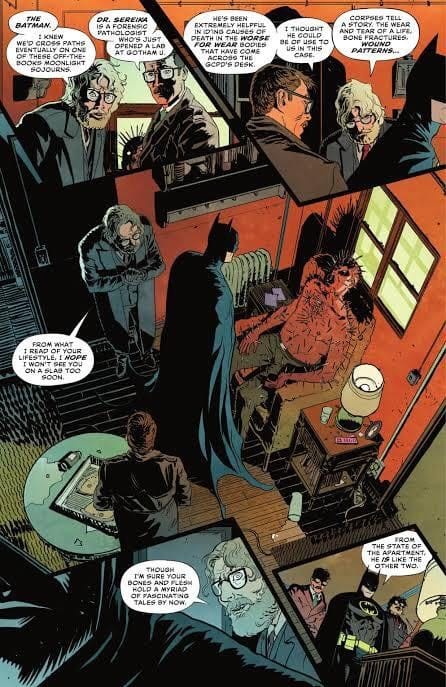
A robbery is not only a robbery. This is a pressure point.
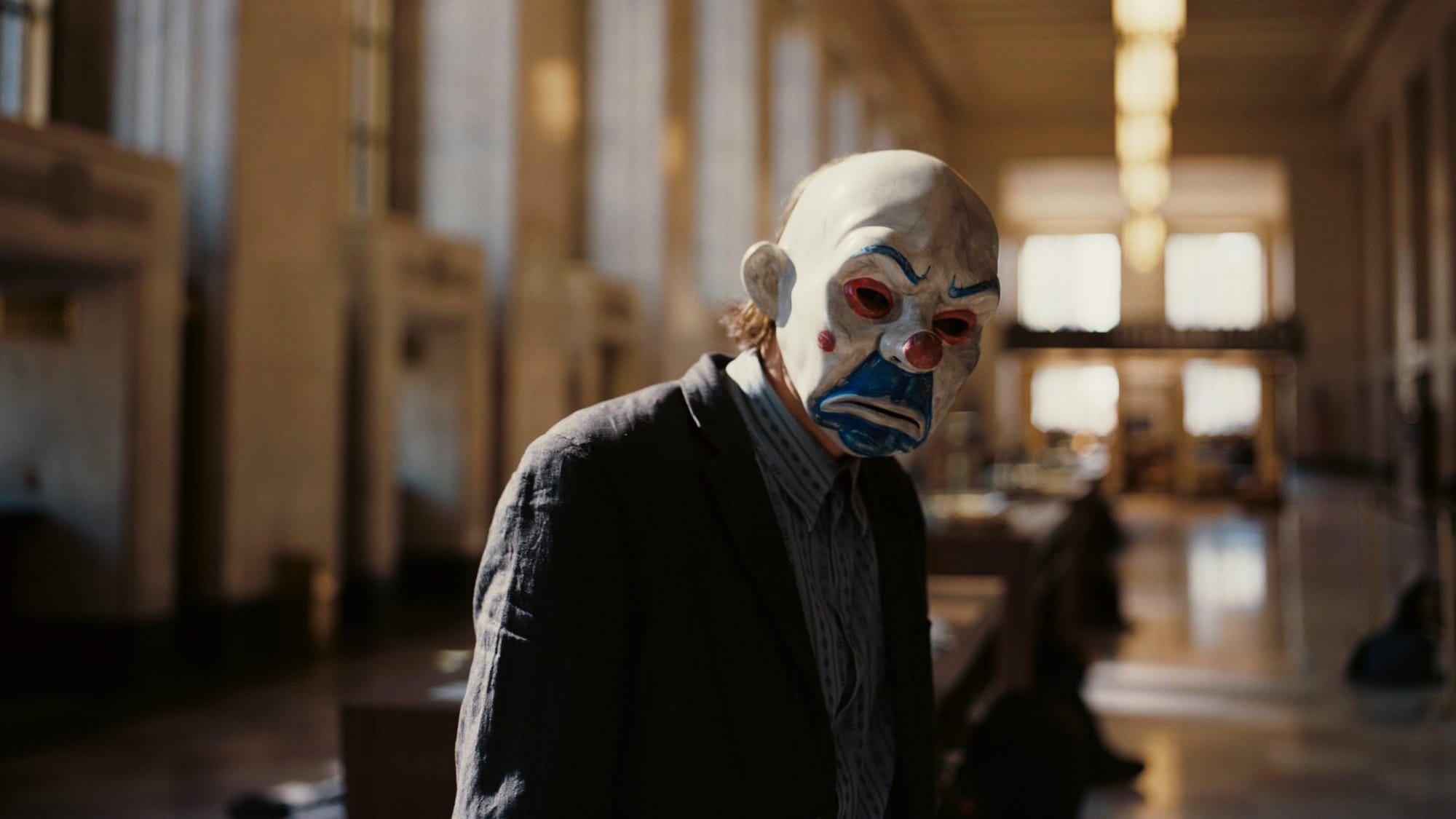
A villain is not only a villain. This is a field symptom, an agent, a history, a method, a vulnerability, and a danger.
A city is not only bad. It is structured.
Batman as detective asks how the harm became reachable. He reconstructs sequence. He notices the missing object, the wrong footprint, the motive that does not fit, the chemical trace, the institutional silence, the pattern of disappearances, the witness no one believed, the false confession, the political beneficiary, the financial line, the broken door that was not broken from outside.
This is called "field analysis".
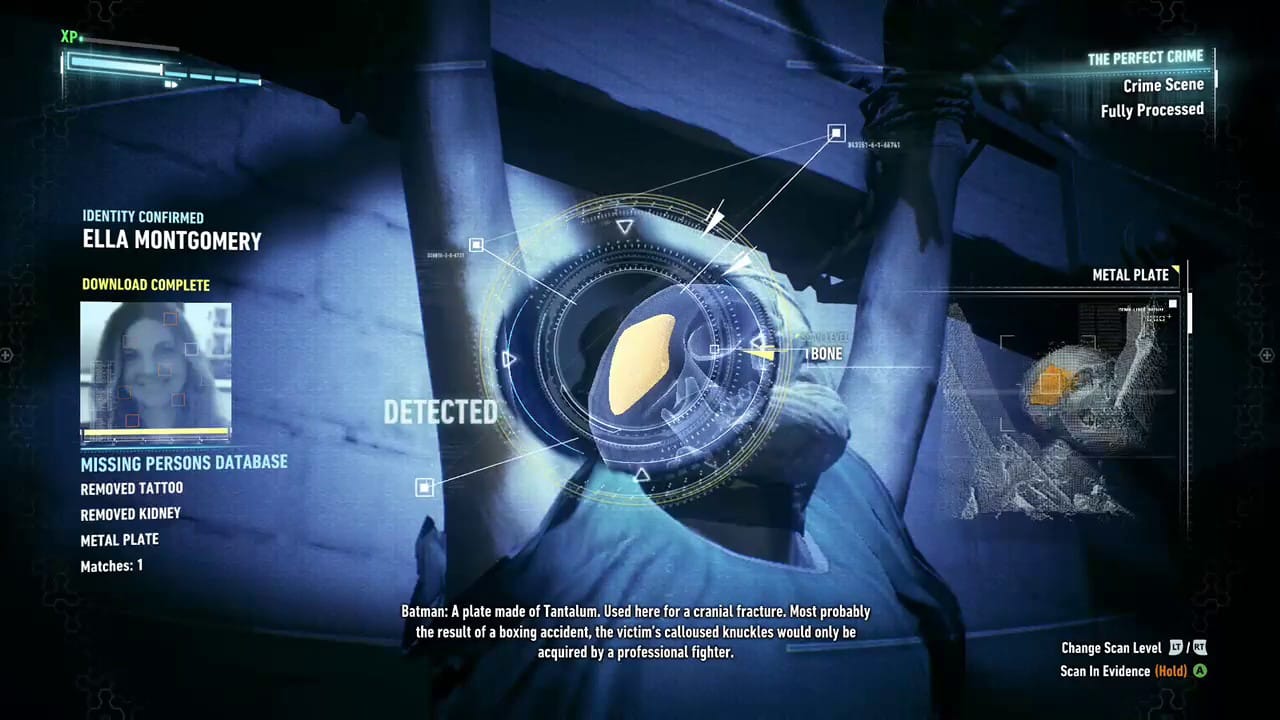
The detective primitive is what separates Batman from punitive fantasy. A Batman who cannot investigate is reduced to an agent of visible violence. He can interrupt harm, but he can never understand it. He can catch criminals, but he cannot reliably distinguish any cause from its symptom.
A Batman without detective work is a crying man treating Gotham’s fever by punching the thermometer.
Batman can still launch a man through a railing, glide into a warehouse, disappear from a conversation Gordon was absolutely not done having, and throw a small metal bat. Very cool stuff. The genre needs some of that. None of that is what actually makes Batman structurally important.
This is also what makes Batman unusually compatible with Modal Path Ethics. At his best, Batman is already doing this process. He begins with visible harm and reconstructs the transitions that made it reachable. He asks where the path entered, where the field failed, who benefited, who was burdened, what was hidden, what was staged, what was misread, and what future becomes more likely if the wrong explanation is accepted.
A bad detective finds a culprit. A good detective restores contact with the field. Batman has to do the second thing or he becomes another machine for blame. Batman's first job is to see.
The Fortune.
Bruce Wayne is rich enough to transform Gotham in ways Batman cannot.
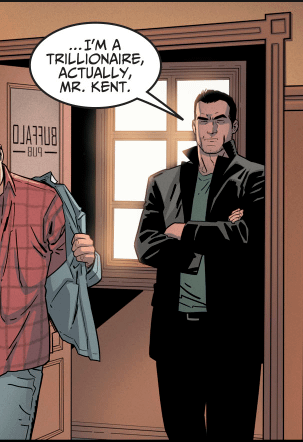
This is the oldest obvious objection: why in the hell does he dress as a bat instead of funding social programs?
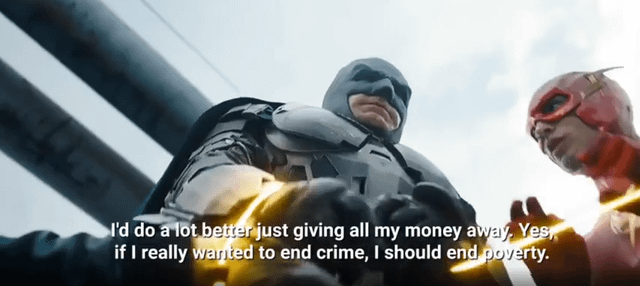
The glib version is too simple, though. Gotham is usually not a normal city with a normal funding gap for Bruce to fill. It is typically more like a mythic compression of organized crime, elite capture, police corruption, psychiatric failure, political rot, supernatural nonsense depending on continuity, and criminals who announce their themes. Money alone would not fix this city, and this option is usually not on the menu to solve Gotham's problems, even when he does make large contributions to the public.
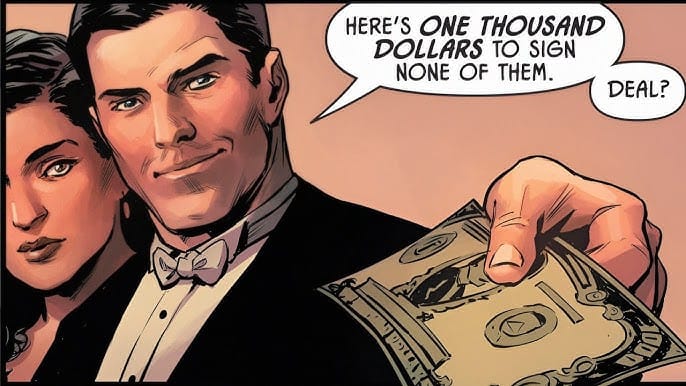
But the objection still remains structurally correct. Bruce Wayne’s wealth is not morally neutral at all. It is a massive agency amplifier.
The Batmobile, cave, satellites, armor, medical tech, training, safehouses, forensic equipment, informant networks, and just impossible insurance situation all come from concentrated wealth. If Bruce can use that concentration for Batman, he can also use it for Gotham, the supposed beneficiary of all Batman activities.
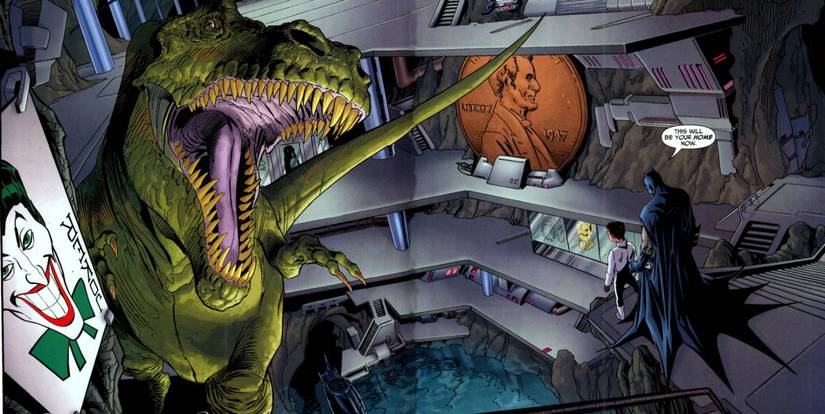
A morally serious Batman cannot let the night obscure the fortune.
Wayne money should be repair infrastructure: housing, clinics, legal defense, anti-corruption efforts, schools, trauma care, public works, political reform, victim support, Arkham replacement with literally anything else including that prison Bane used, economic alternatives, and institutional rebuilding.
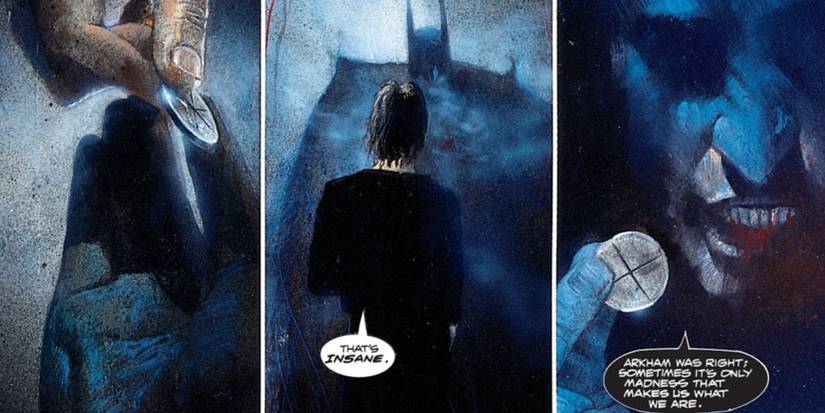
If Bruce Wayne is only a mask for Batman, the field is already deeply distorted. If Batman is only the emergency arm of a wider Wayne repair strategy, the structure now becomes much more defensible.
The City.
Batman does not make sense without Gotham. Put him in a healthy town with functioning institutions and he becomes very absurd very quickly. A man in body armor hanging from a gargoyle to violently stop a bicycle theft is not a hero.
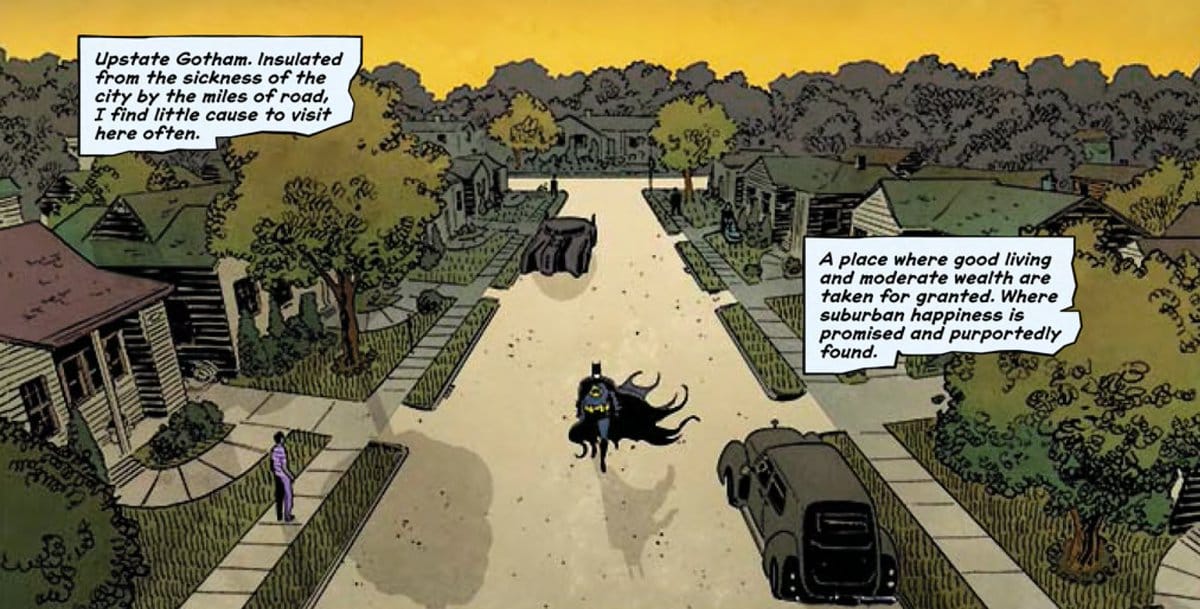
Gotham is not just a backdrop. No locus is isolated. This city is the damaged field that makes Batman appear reachable as Better.
That matters because Batman’s morality depends heavily on whether Gotham truly lacks ordinary repair paths. If public institutions are captured, if police are corrupt, if courts are compromised, if elites feed on the city, if vulnerable people are unprotected, and if violence is structurally recurring, then Batman’s extralegal action becomes more plausible.
Still not clean! I said, more plausible.
If Gotham’s ordinary paths can be repaired, Batman should be subordinated to that repair. If Gotham’s ordinary paths cannot yet be trusted, Batman may function as a temporary bridge, pressure mechanism, investigative force, and protective interruption.
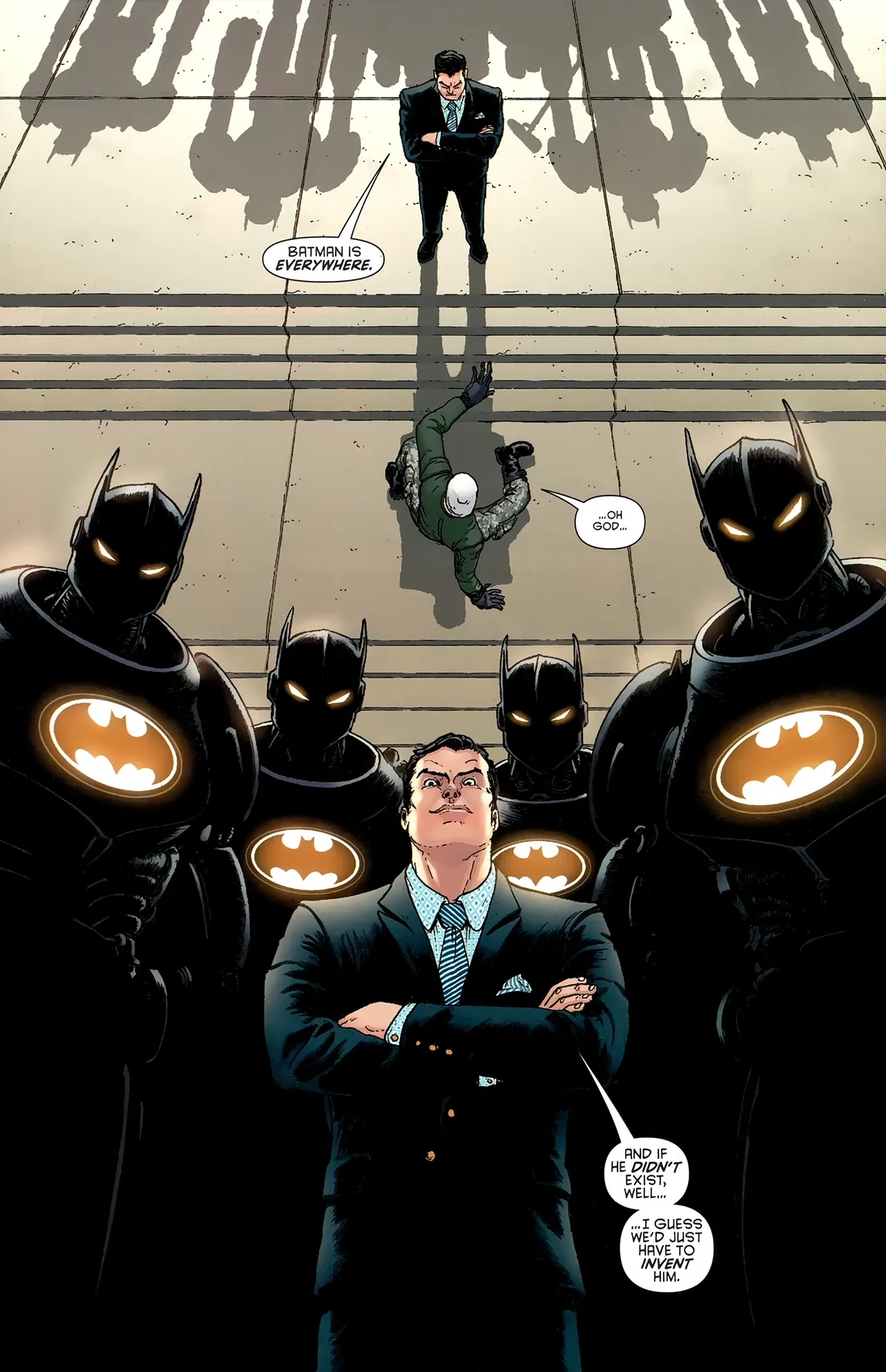
However, if Batman becomes the permanent answer, the field has failed. The goal of Batman should be a Gotham that needs Batman less and less.
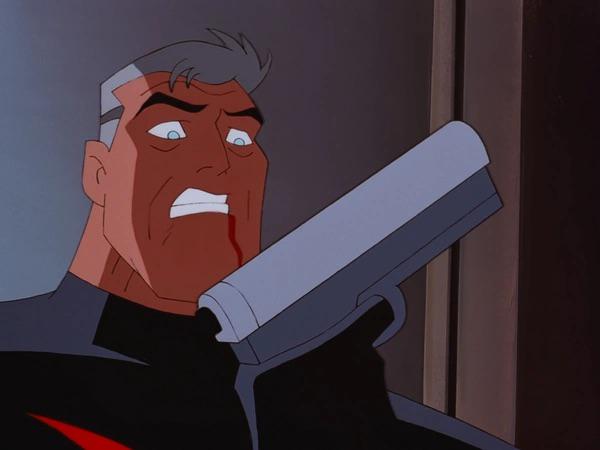
This is a sentence many Batman stories have to resist because the franchise needs Batman forever.
The fiction’s commercial field pulls against the character’s own moral field. Gotham must remain damaged so Batman can continue. That means Batman stories often have a built-in false repair loop: Batman saves Gotham again and again, but the city must remain broken enough for the next story.
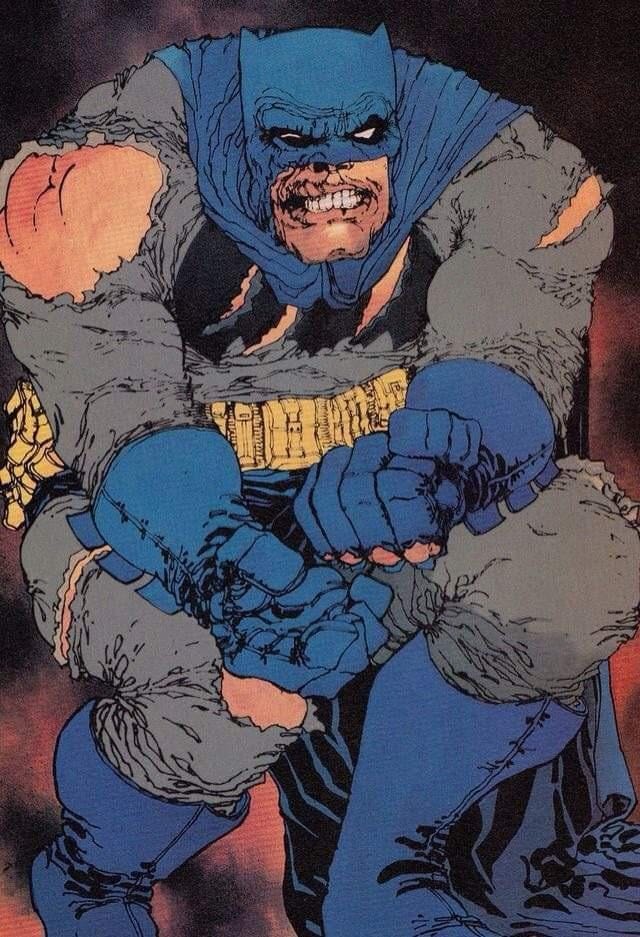
This is thematically useful, more than raw narrative necessity. Batman is always and forever in danger of becoming the person who preserves the wound because the wound gives him his own purpose.
The Family.
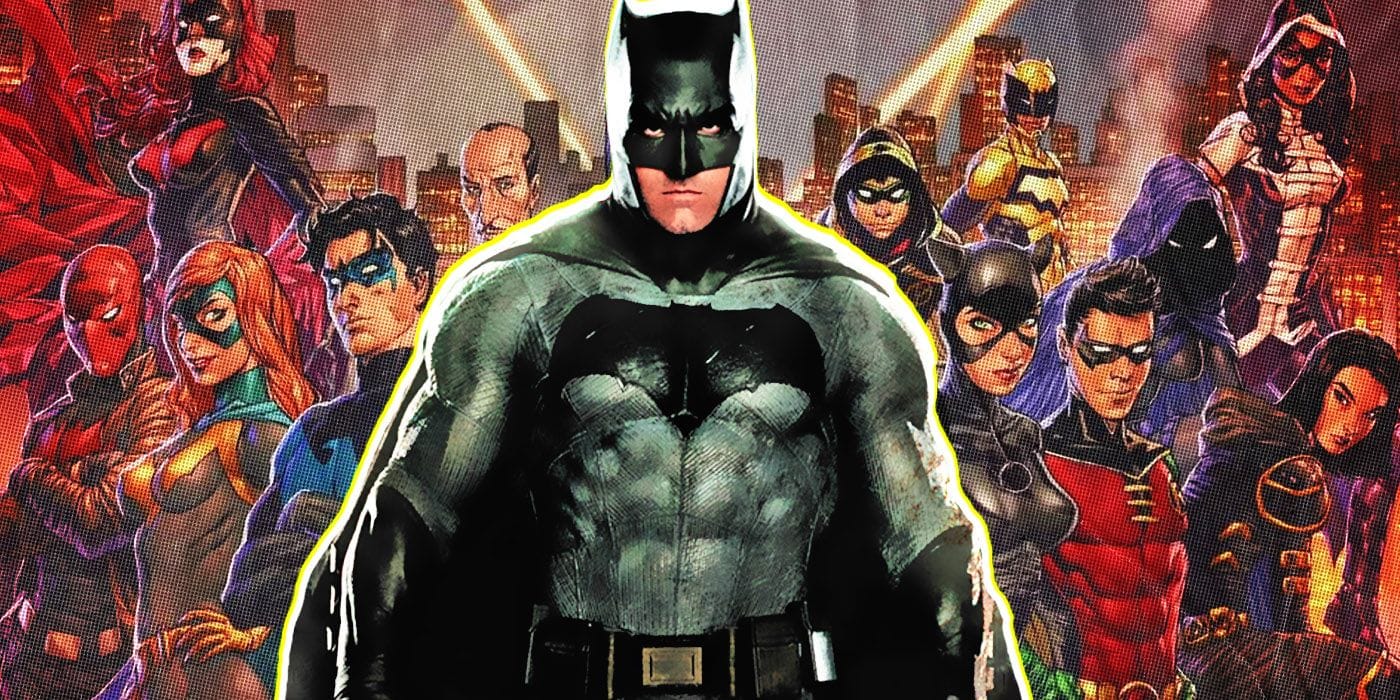
Alfred, Gordon, Robin, Batgirl, Nightwing, Oracle, Cassandra Cain, Jason Todd, Tim Drake, Damian Wayne, Stephanie Brown, Terry McGinnis, and the wider Bat-family are the test of whether Batman can become relational without reproducing trauma.
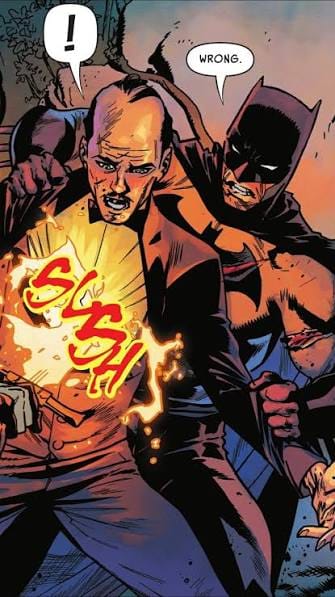
Alfred is the first counterforce. He preserves Bruce as a human being when Bruce wants to become an instrument. He is care, memory, parental substitute, medic, domestic anchor, and sometimes the only person allowed to tell Batman he is being an idiot in a room full of computers.
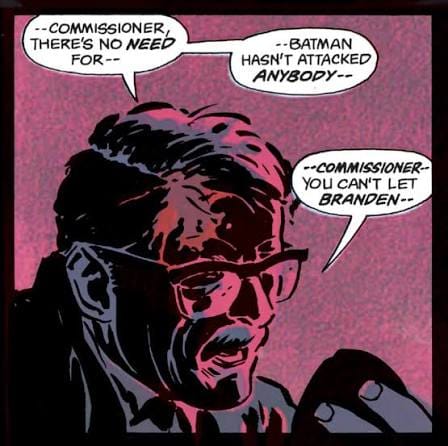
Gordon is public trust under damaged conditions. He is the bridge between Batman and law. If Gordon is too weak, Batman becomes isolated vigilantism. If Gordon is too deferential, law becomes Batman’s personal courier. The best Gordon relation preserves generative tension. They need each other, but neither should dissolve into the other.
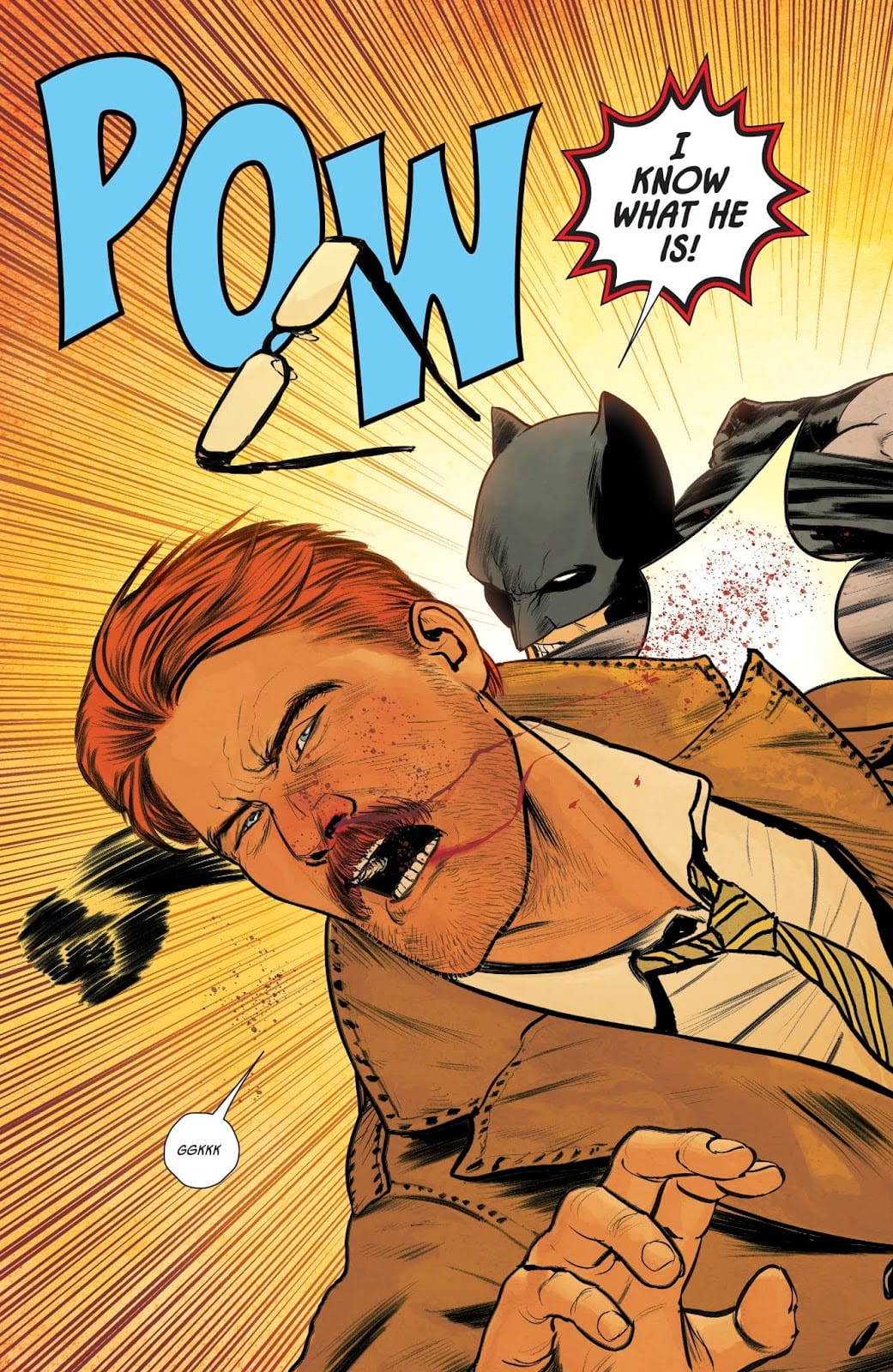
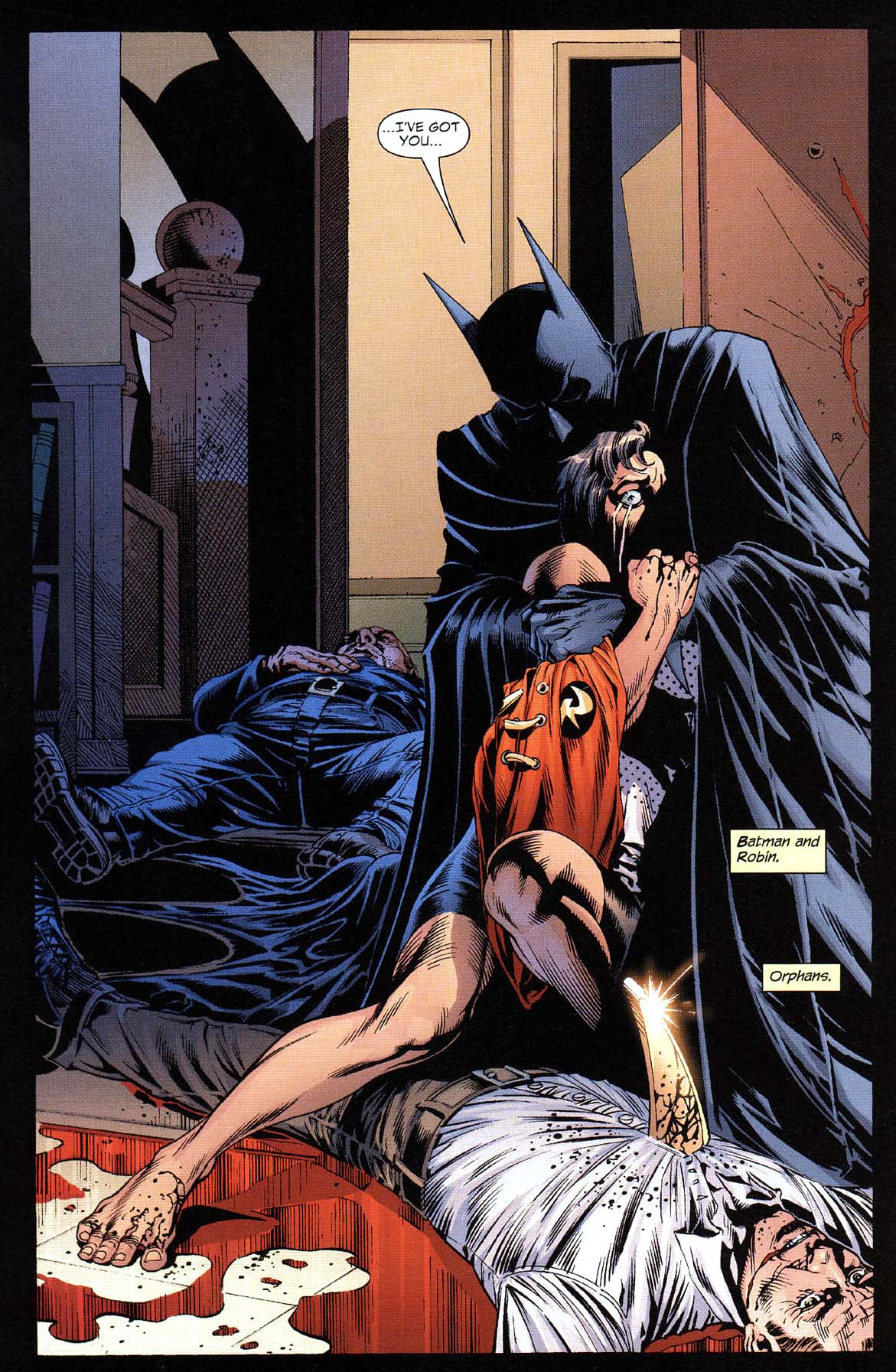
Robin is the hardest. Robin can be repair: Bruce sees a child at the edge of the same abyss and refuses to let him fall alone. Training Dick Grayson can become the opposite of abandonment. Dick becoming Nightwing is one of Batman’s strongest moral successes because it proves a child touched by his world can leave the cave and become something brighter.
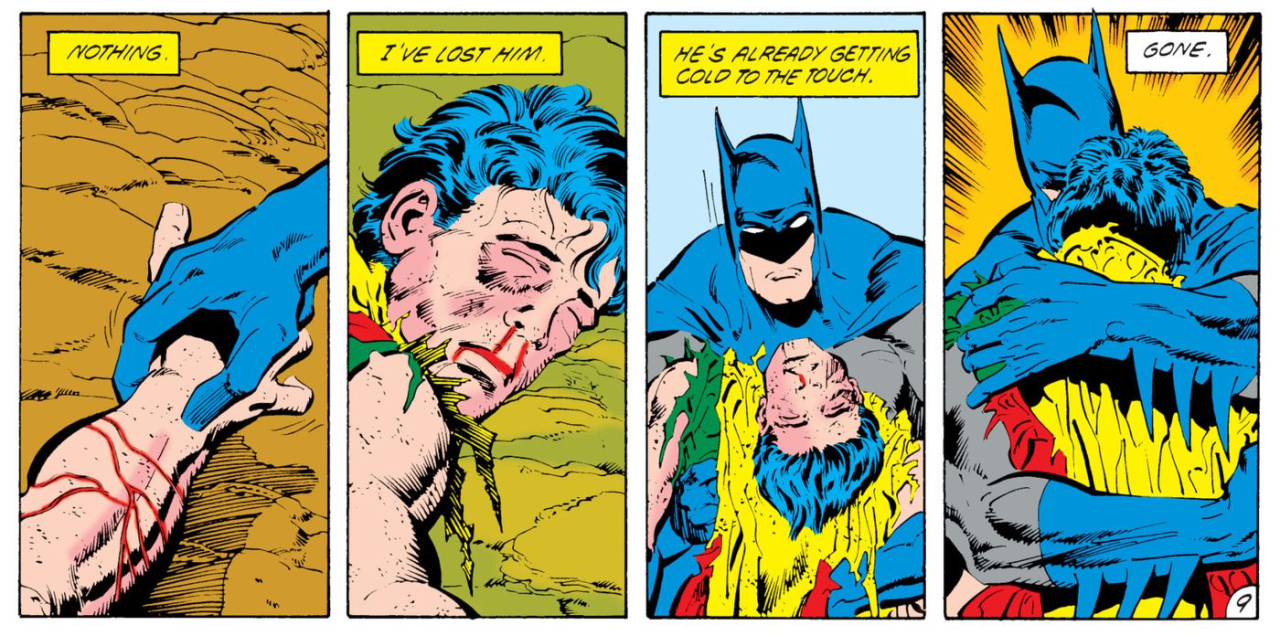
Robin can also clearly be child endangerment. The difference depends on the version, the training, the consent, the necessity, the alternatives, the level of risk, and whether Bruce is helping a child escape trauma or recruiting that child into his own.
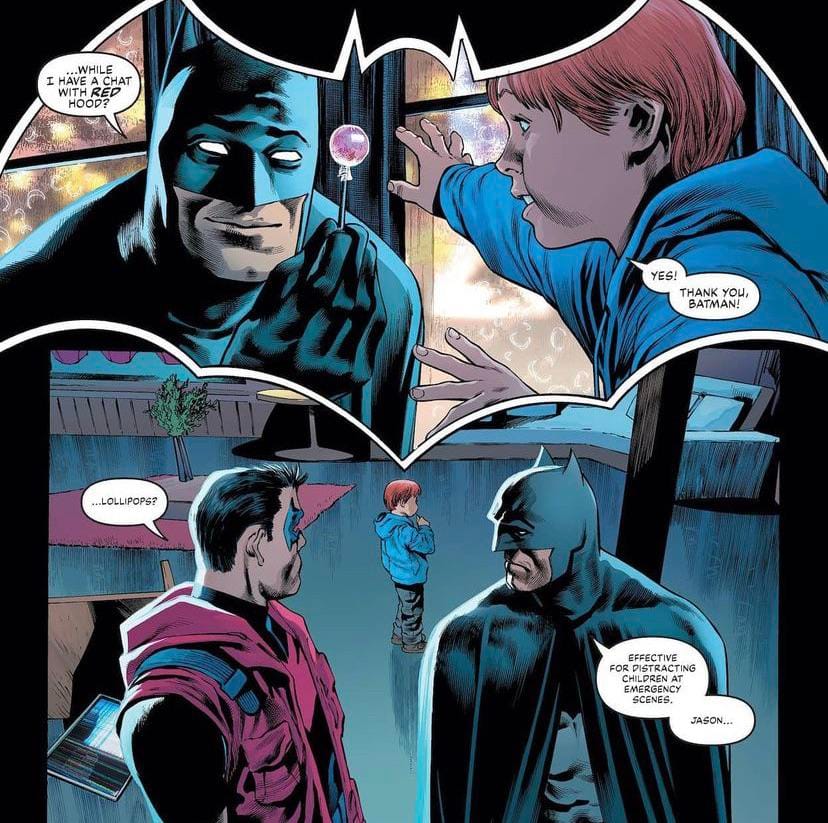
Jason Todd is the field answering Batman's vow of war with a direct accusation. What happens when your child soldier dies? What happens when your no-kill rule now survives the child who did not? What happens when the revived child says Batman’s restraint preserved the Joker’s future over his own?
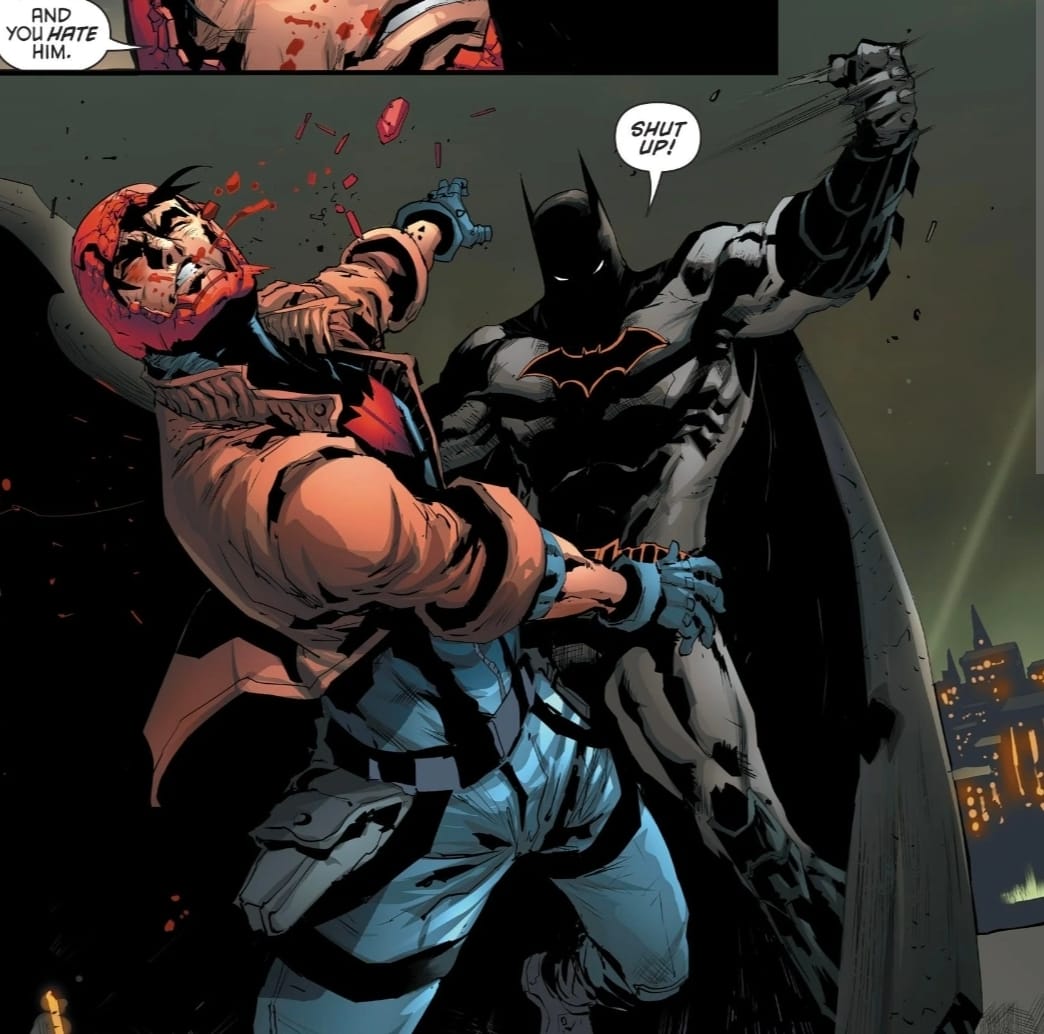
There is really no serious Batman ethics without Jason Todd.
Oracle is also another crucial test. Barbara Gordon’s transformation after being shot is often mishandled, but structurally she becomes one of the best examples of repair that does not restore the previous path, but opens another highly enabling one.
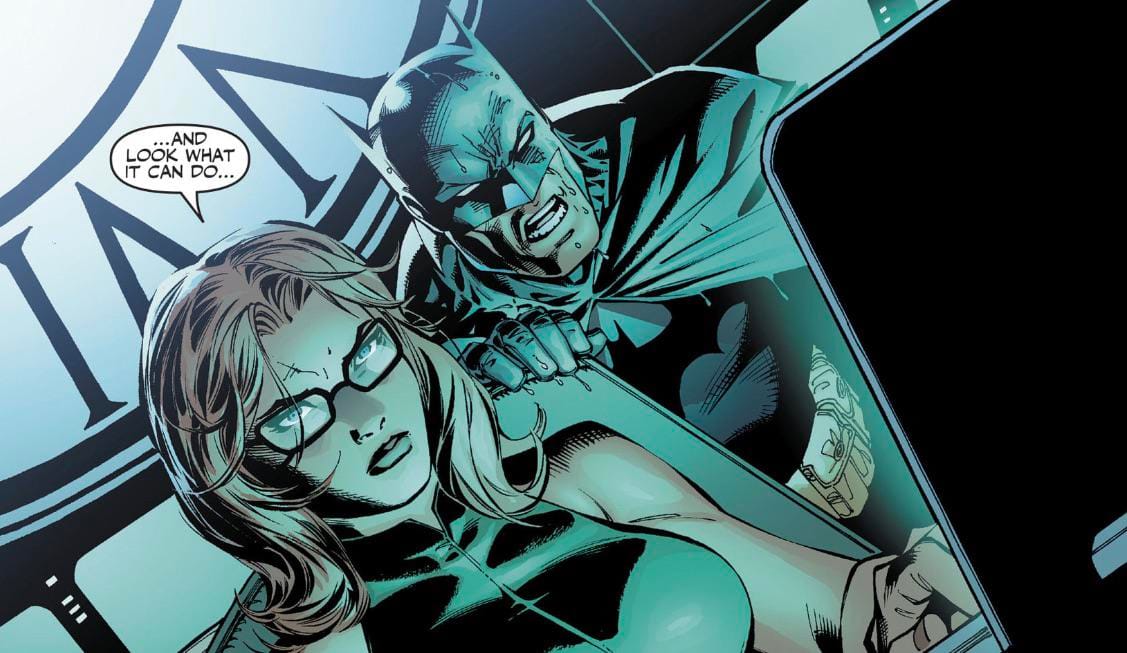
Oracle is not Batgirl after injury. She becomes information infrastructure, coordination, memory, digital reach, and a different kind of agency. Her best versions expand the field well beyond Batman’s reach.
The Bat-family ultimately asks whether Batman can create agents rather than dependents. If the answer is yes, Batman becomes more defensible. If the answer is no, the cave is not a family, more like a trauma treadmill.
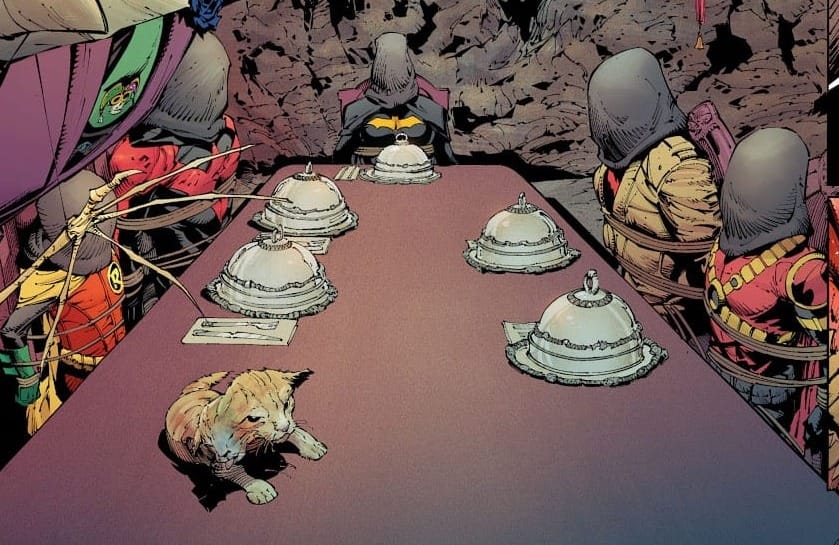
The Rogues.
Batman’s villains are not random colorful criminals. At their best, they are Gotham’s damaged structures personified and exaggerated until they can fight on rooftops and take steroids.
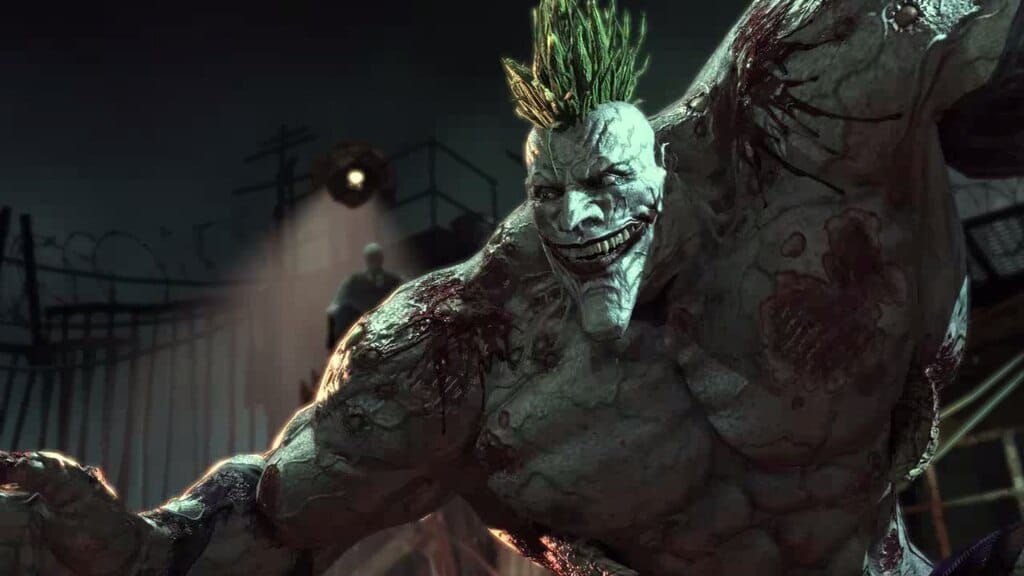
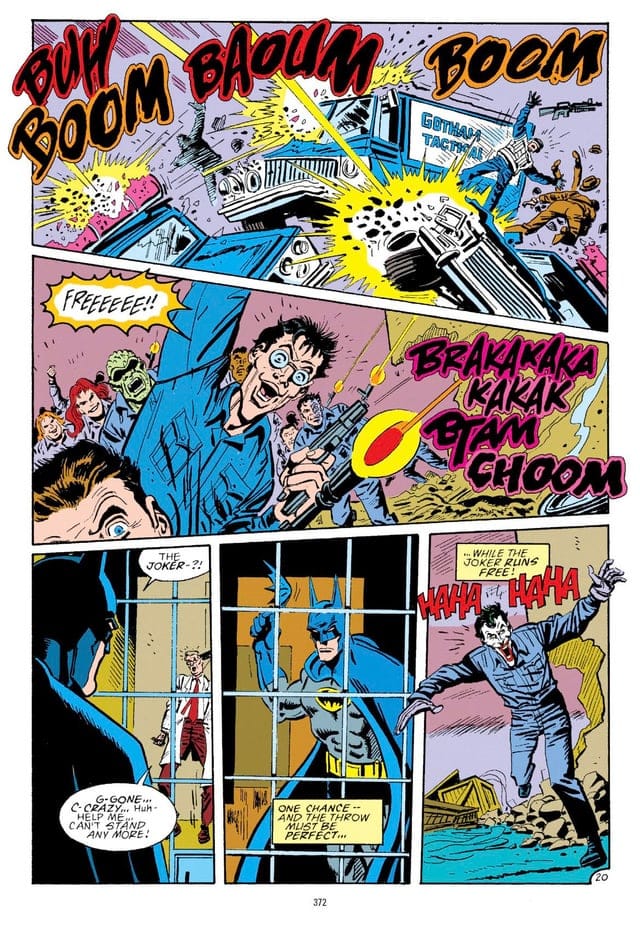
Joker is recurrence without repair. This locus is anti-meaning, anti-relation, anti-field, or sometimes cruelty pretending to be philosophy. The Joker forces the no-kill problem into view because he makes Batman’s restraint look like complicity in future harm.
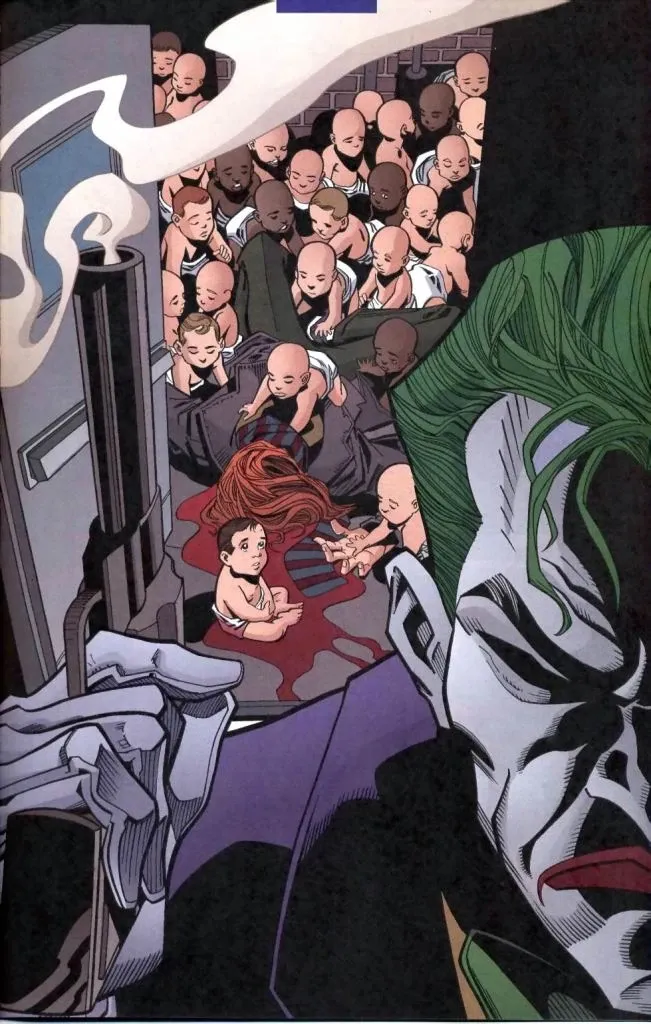
But the real failure is not only Batman’s refusal to kill this clown. It is Gotham’s inability to contain, treat, restrain, or prevent Joker’s recurrence without asking Batman to become its executioner for it. Bruce Wayne is far from the only agent responsible for dealing with this hazard, and the city usually transfers all the burden onto him.
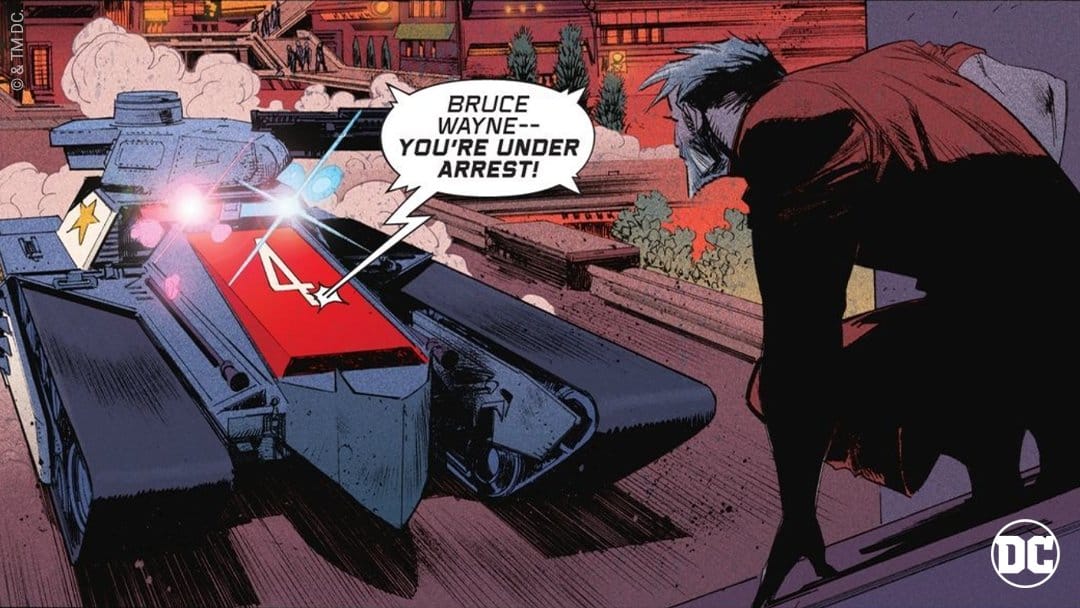
Two-Face is law split into chance. Harvey Dent is especially important because he shows how Gotham consumes its repair agents. A lawful prosecutor can become a coin-flip tyrant because the field breaks the person best positioned to fix it.
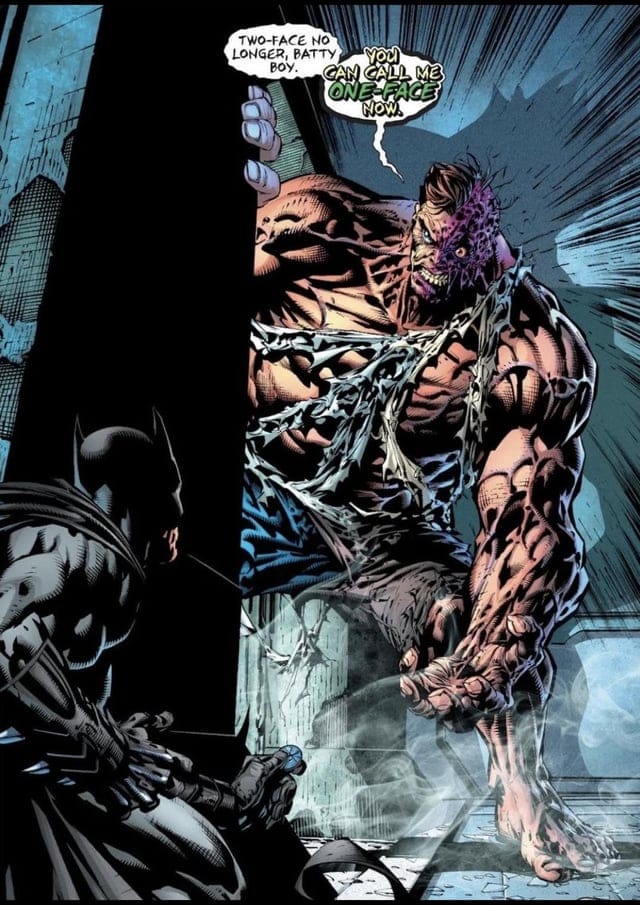
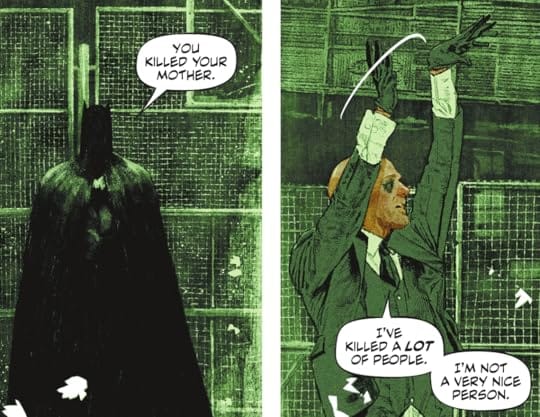
Riddler is legibility pathology. He wants truth, but as domination. He violates epistemics. He transmutes clues into coercion. He proves that intelligence without care becomes another trap.
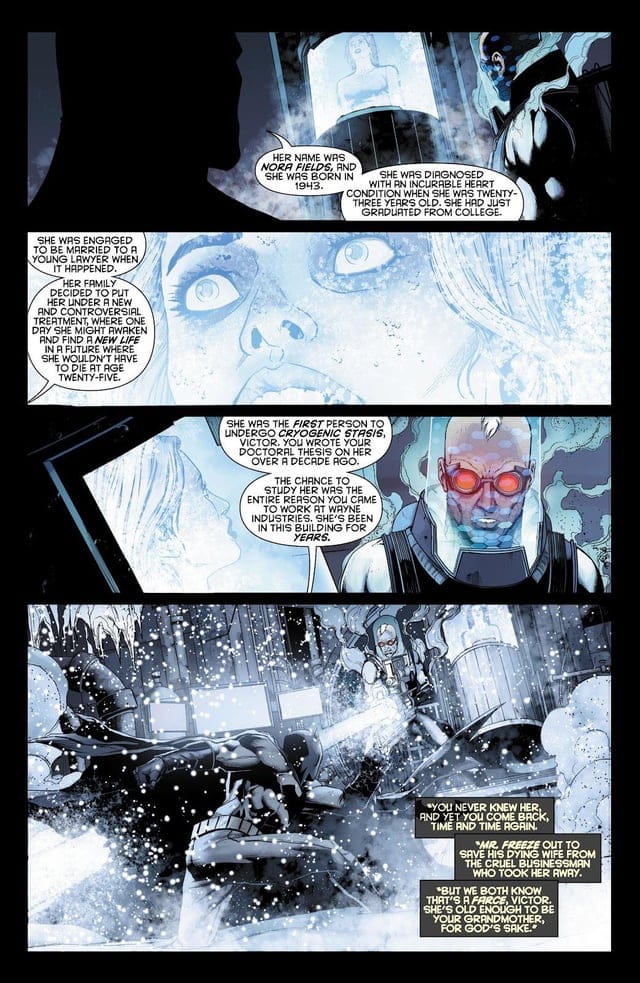
Mr. Freeze is damaged care. His best versions force Batman to distinguish between predation and desperate preservation.
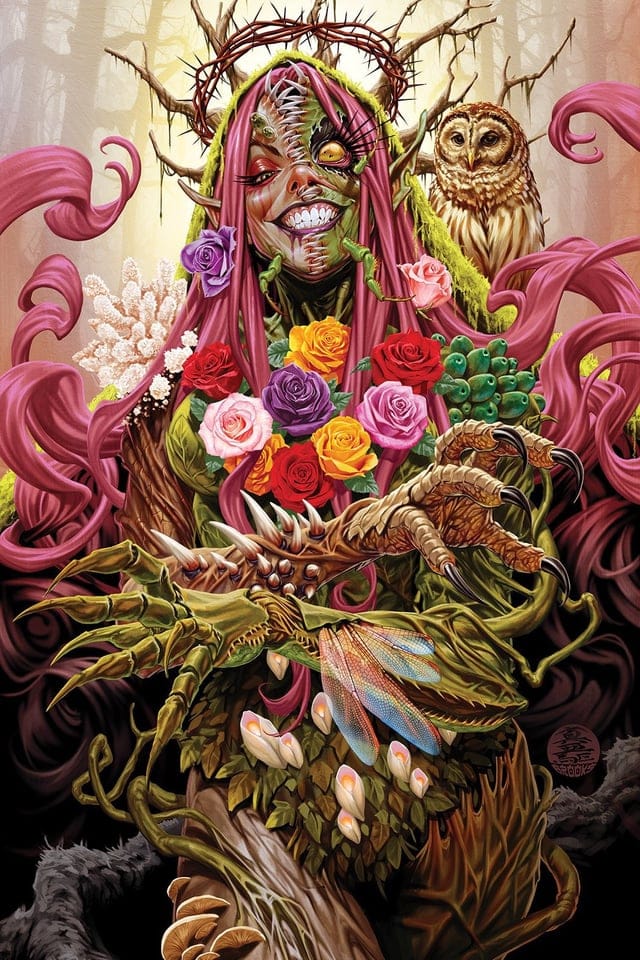
Poison Ivy is ecological vengeance for disregarded loci. Bad versions reduce her to plant seduction. Good versions ask why a city that treats nonhuman fields as scenery is shocked when the scenery returns as an active danger.
Ra’s al Ghul is totalizing repair: prune humanity to save the world. He represents false Good in the form of harm. The future in his imagination must be saved, therefore present loci may be burned.
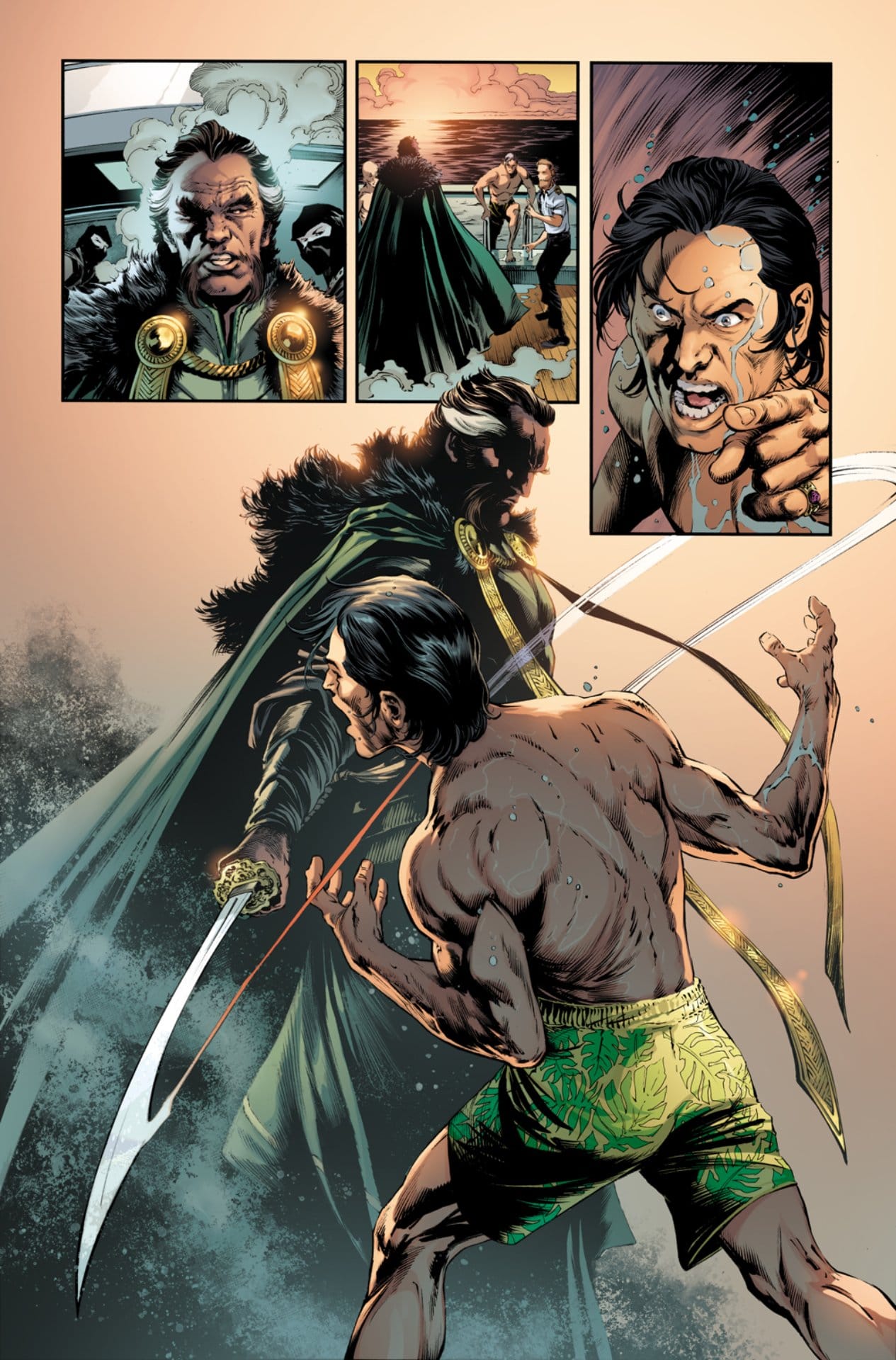
Bane is a rival field analyst and often counter-planning against Batman’s body and myth. He does not just punch Batman. He tends to exhaust the field around him until he collapses.
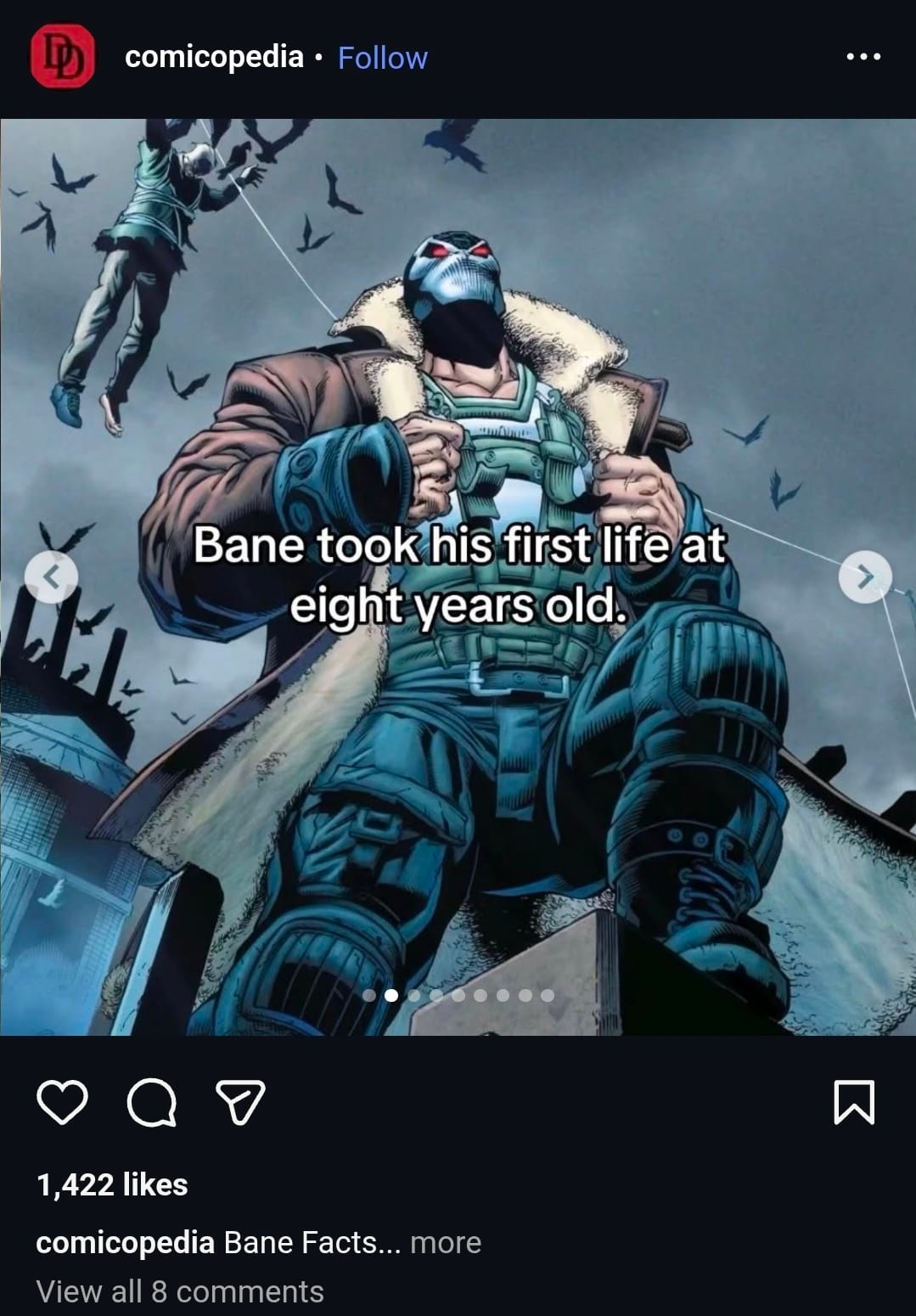
Scarecrow is fear as a symbol without Batman’s intentions. He externalizes Batman’s own method as literal toxin.
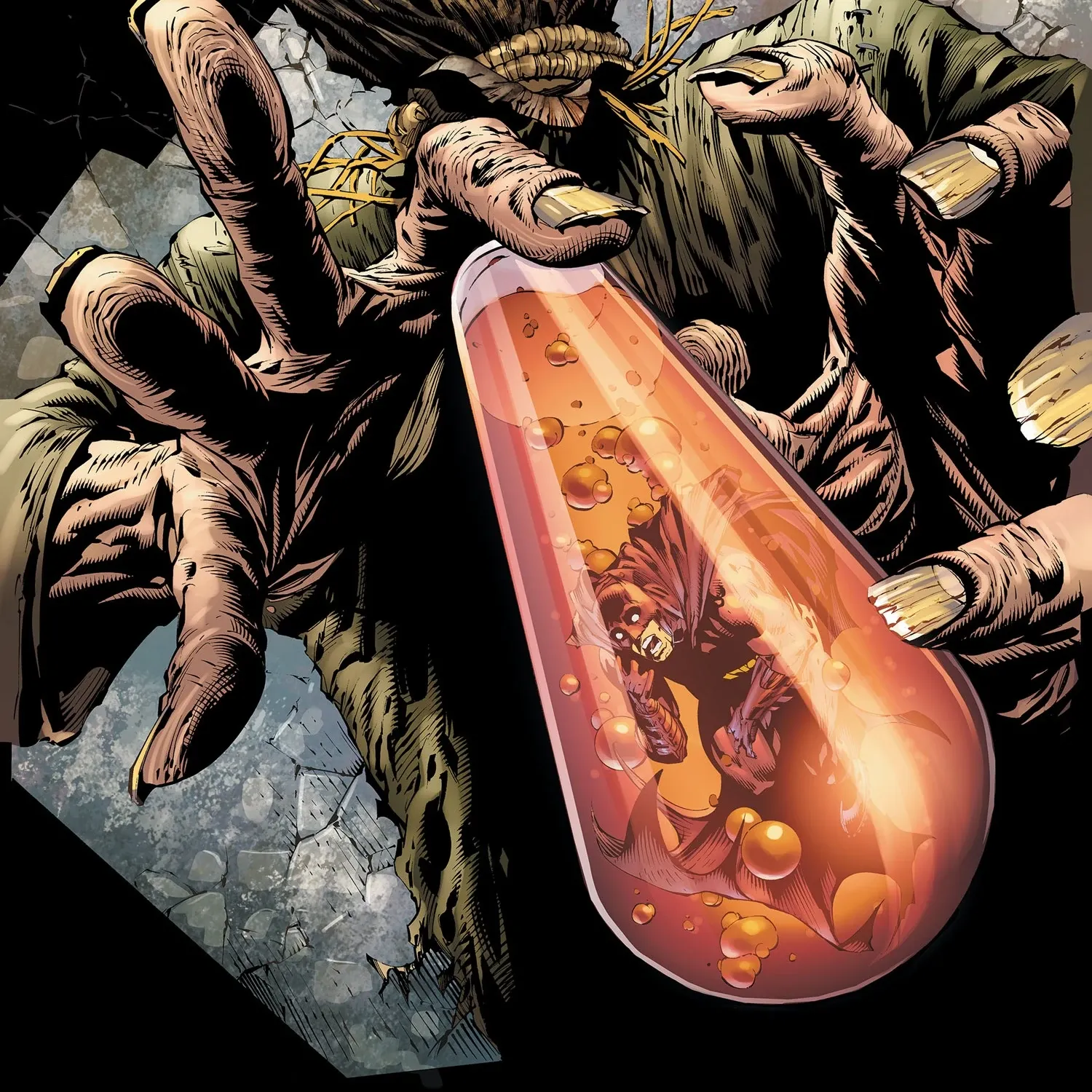
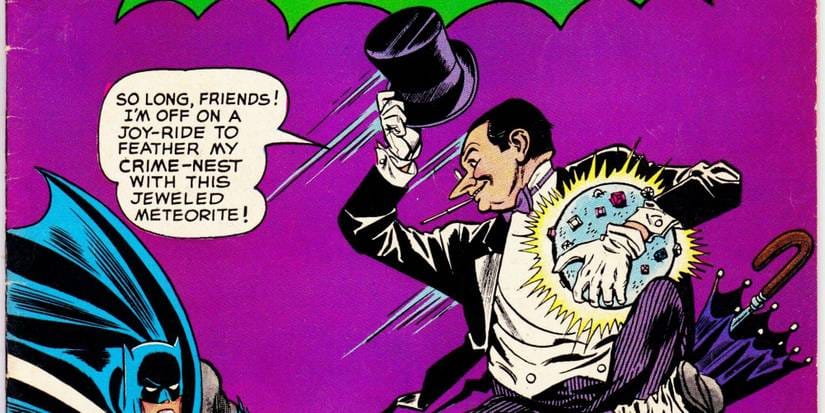
Penguin is representative of Gotham's elite grotesquery and organized criminal adaptation. His persistence demonstrates how entrenched Gotham's problems truly are.
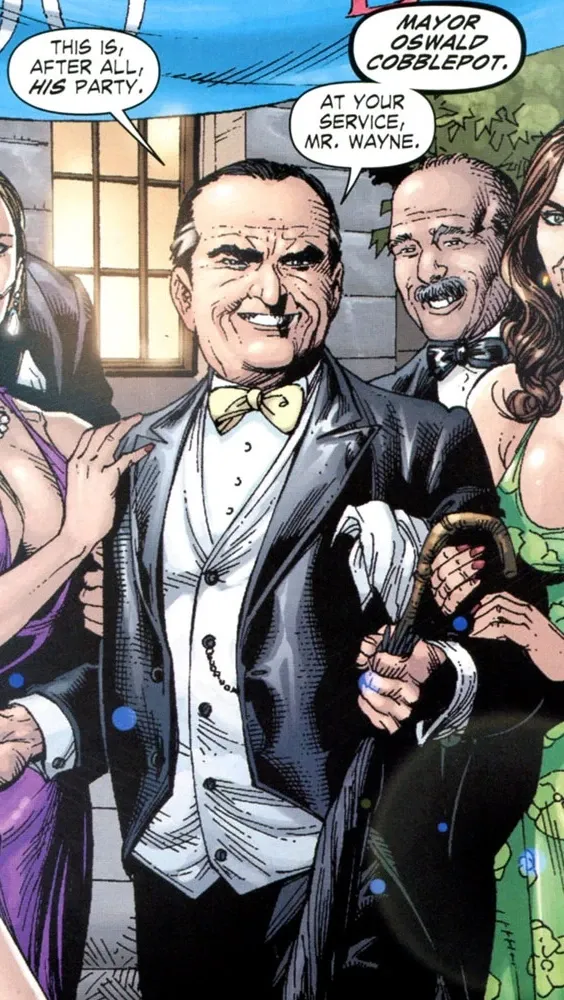
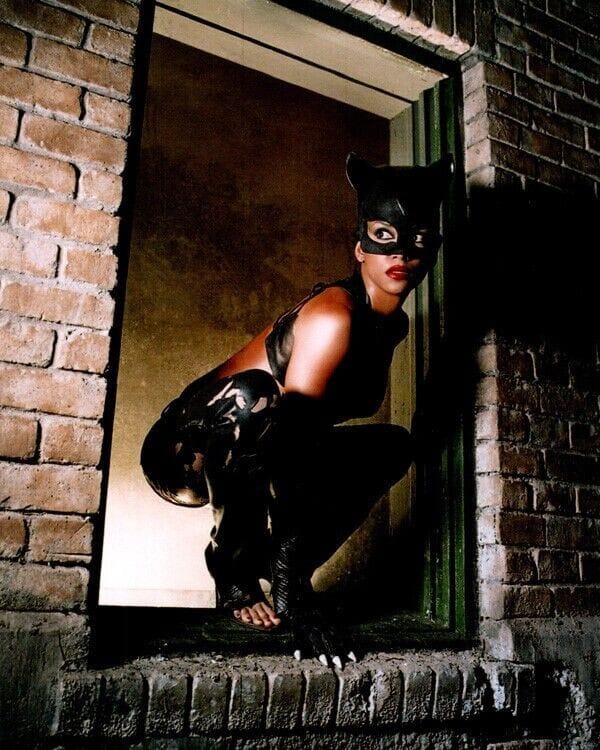
Catwoman is legality under property distortion: theft, survival, desire, justice, play, class resentment, and the possibility that Batman’s relation to law is not as clean as he pretends. She tends to ignore and cross thresholds.
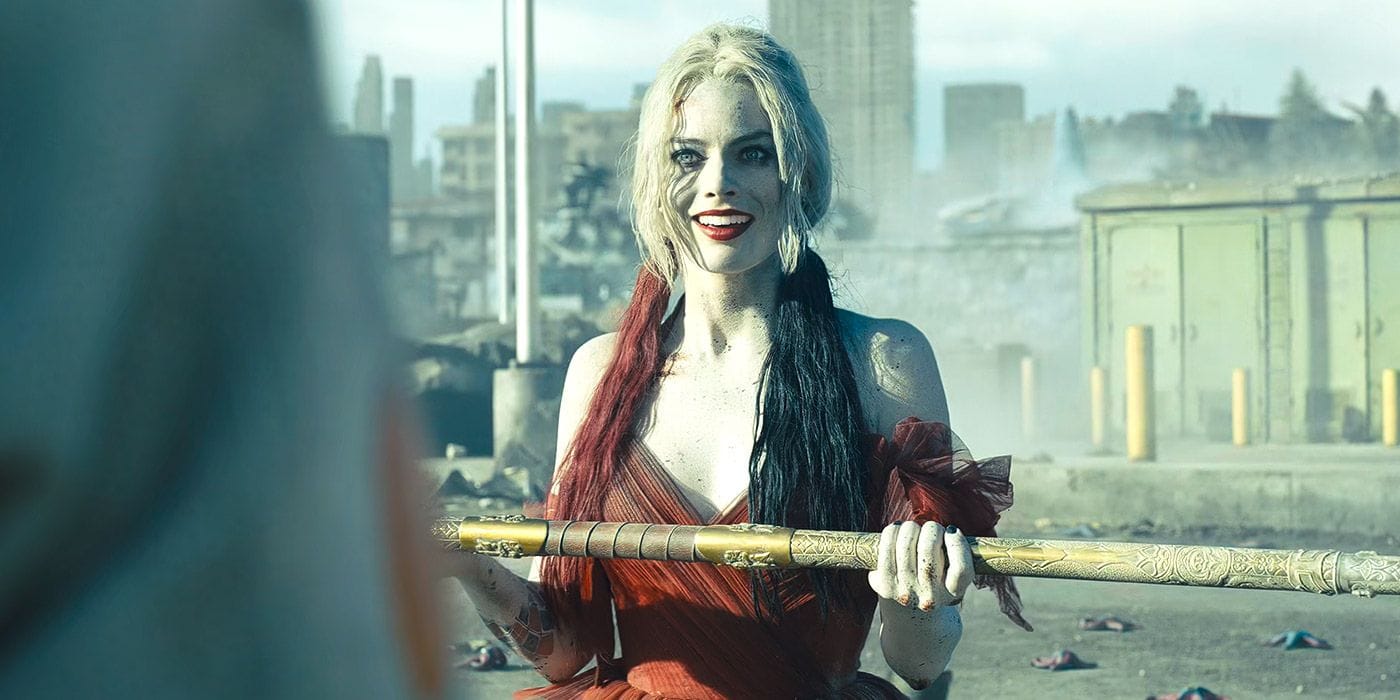
Harley Quinn is abuse, imitation, exit, recovery, and the possibility of becoming morally legible after being written off as accessory to another's moral biography.
The rogues all matter because Batman’s moral quality is revealed by how he reads them. If they are only monsters, he becomes simpler, and loses most of his moral perception as he retreats into his narrative compression of reality.
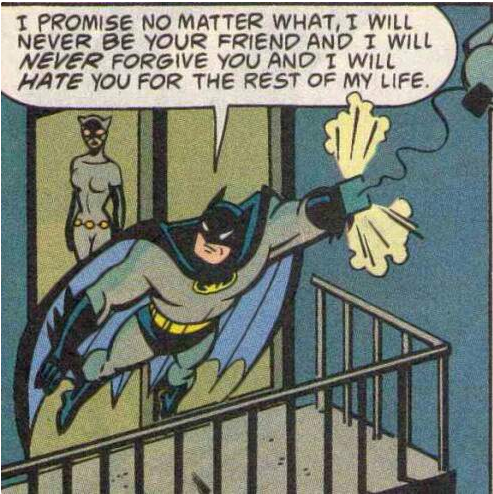
If they are only victims, he becomes naïve and loses honest contact with harm.
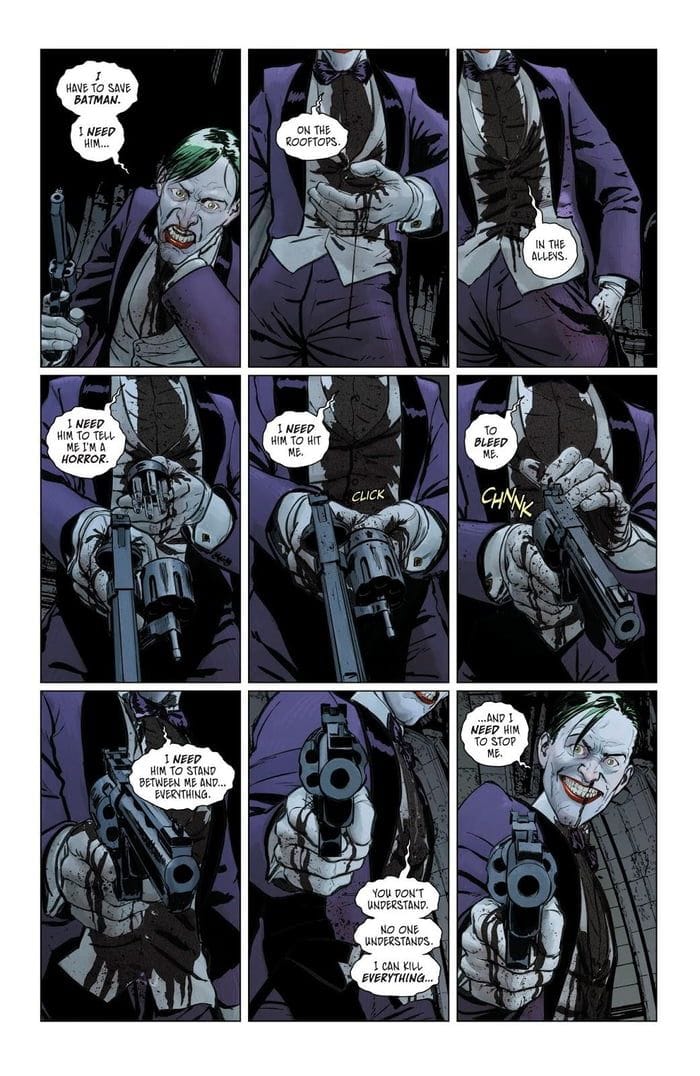
If they are loci whose harms must be stopped without denying the damaged fields that produced them, then Batman is doing actual analysis.
Gotham.
Gotham is not a city with a crime problem.
Gotham is a damaged field that produces crime as one of its most visible symptoms. It is not just some place where bad people do bad things.
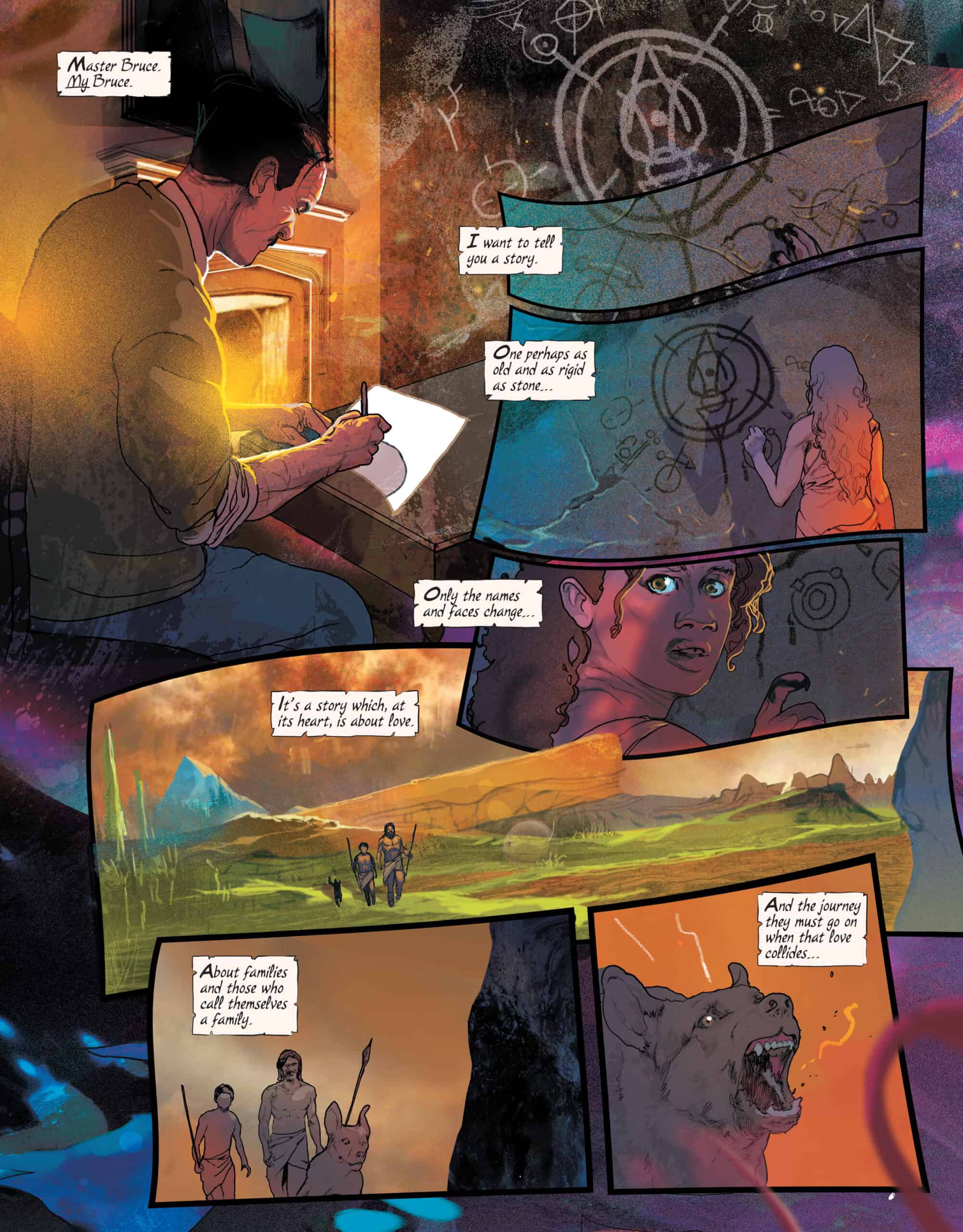
Gotham is a civic machine that repeatedly converts poverty, corruption, trauma, untreated illness, elite extraction, police failure, organized violence, institutional secrecy, theatrical madness, and supernatural nonsense depending on continuity into a single nightly question:
Where the hell is Batman?
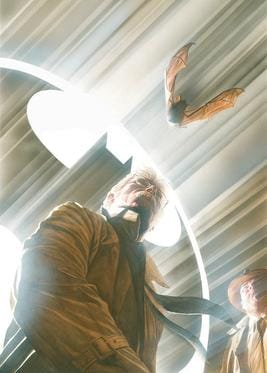
That question is already evidence of failure. A healthy city should not require a masked billionaire to descend from the architecture in order for harm to become answerable.
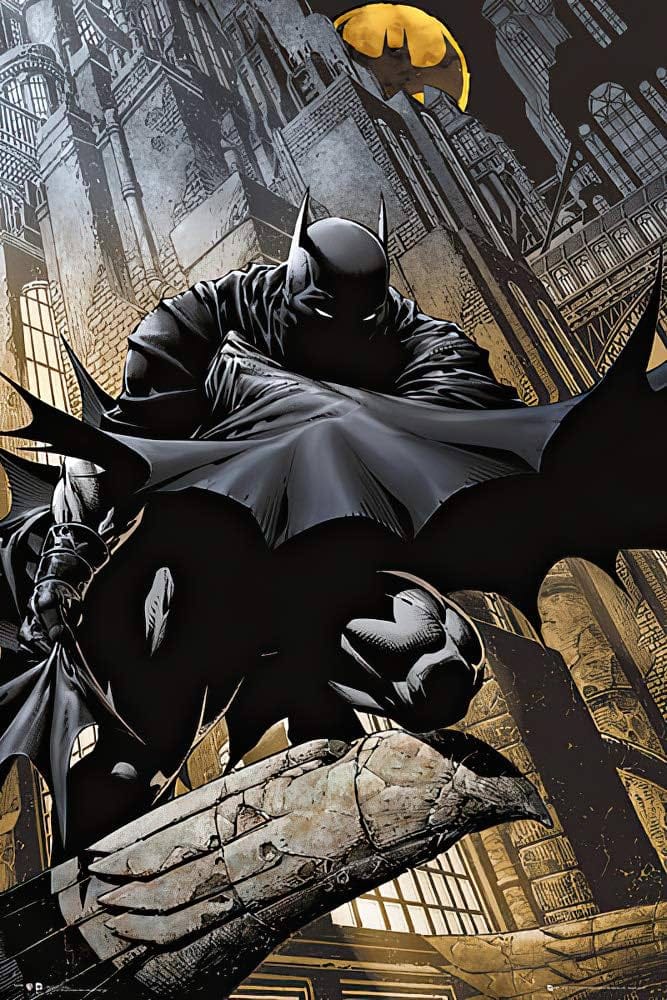
A healthy city should have courts that work, police that can be trusted, hospitals that heal, schools that open futures, housing that stabilizes families, public agencies that do not rot from inside, and enough ordinary trust that people are not forced to outsource justice to an unknown man whose first qualification is “owns cave.”
Gotham is rarely ever healthy.
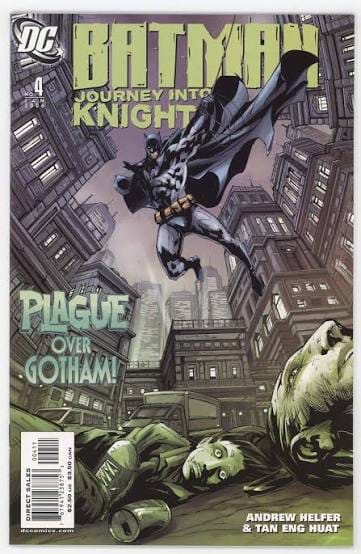
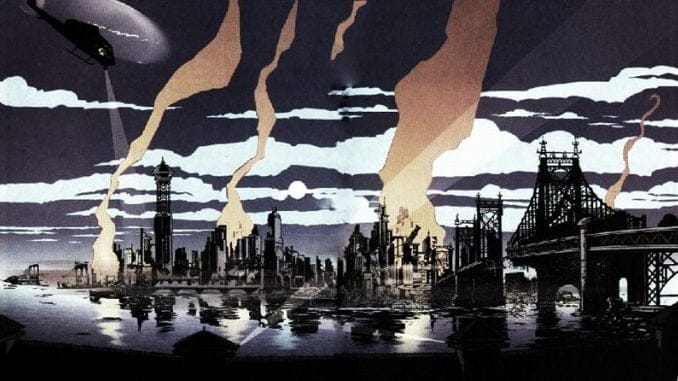
Gotham is a field where ordinary repair paths have either failed, been captured, or become inaccessible to the people who need them most. This is why Batman can be morally plausible without becoming cleanly moral. The same act that would be completely deranged in a functioning civic field may become Better in Gotham because Gotham’s institutional paths are already closed.
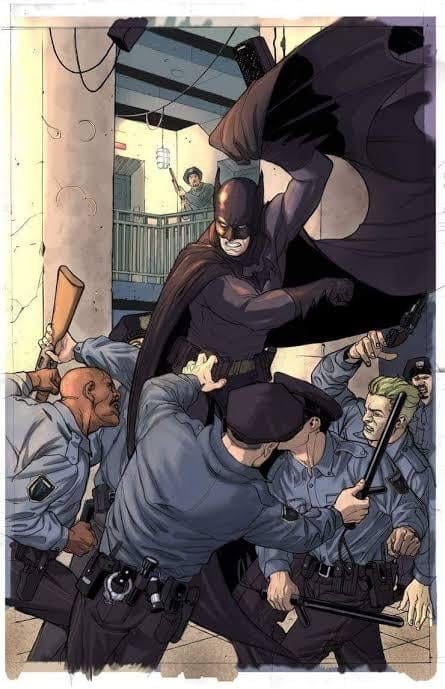
If the police are owned by criminals, going around the police may preserve victims.
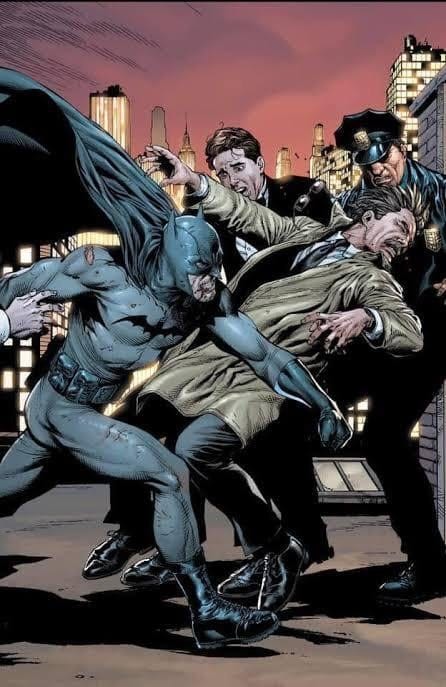
If courts are captured, evidence gathered outside procedure may still reveal truth.
If organized crime controls whole neighborhoods, fear directed at predators may give ordinary people room to breathe.
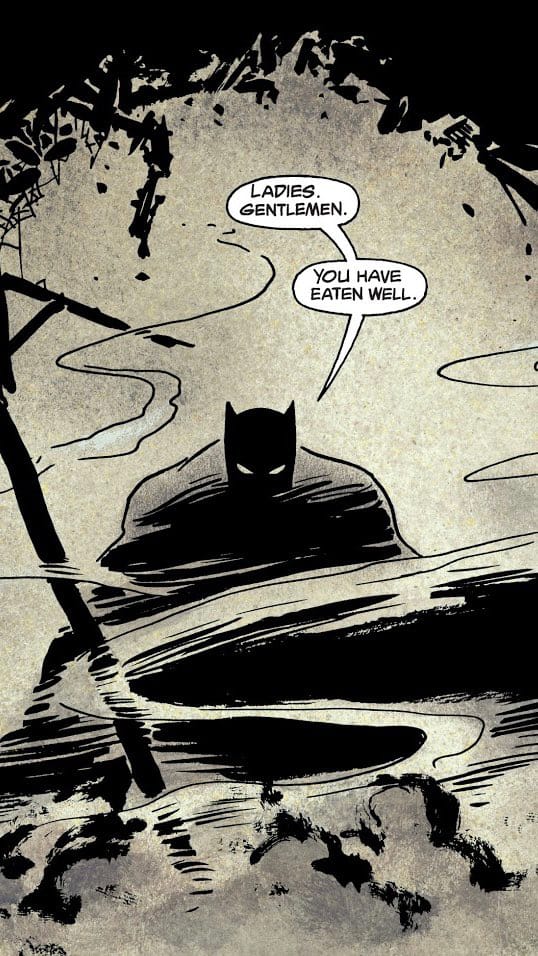
If political office is another mask for extraction, a private actor may expose what public authority refuses to see.
This only makes Batman more plausible. It does not make him innocent.
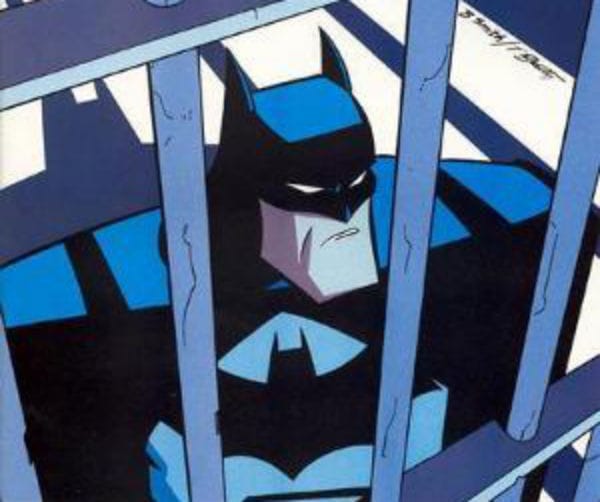
A damaged field does not grant unlimited permission to whoever happens to notice the damage. It only changes the available paths. Batman still has to ask what his intervention does to the field after the rooftop is cleared. Does Gotham become more capable of repair, or more dependent on him?
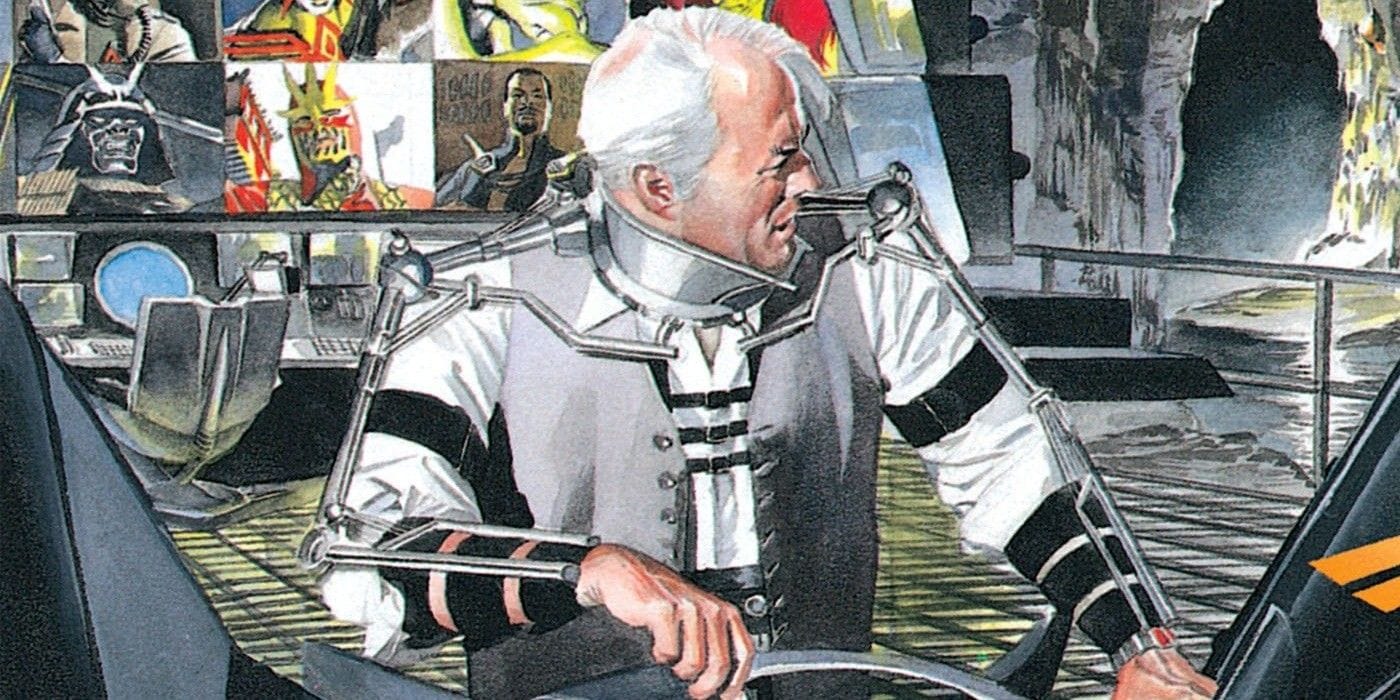
Does public trust recover, or does trust shift from institutions to myth?
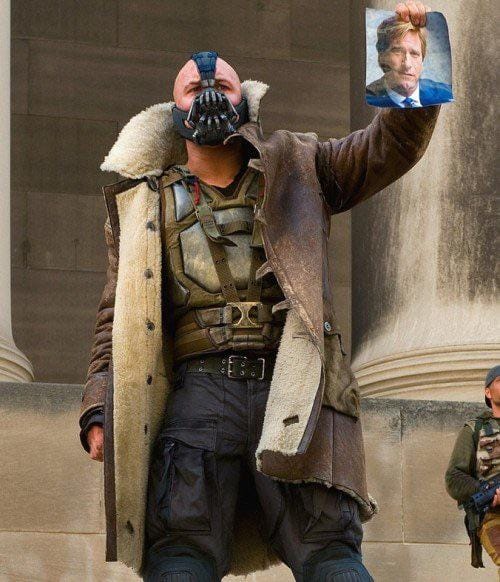
Does the city become safer, or does it learn to wait for exceptional violence as its only functioning remedy?
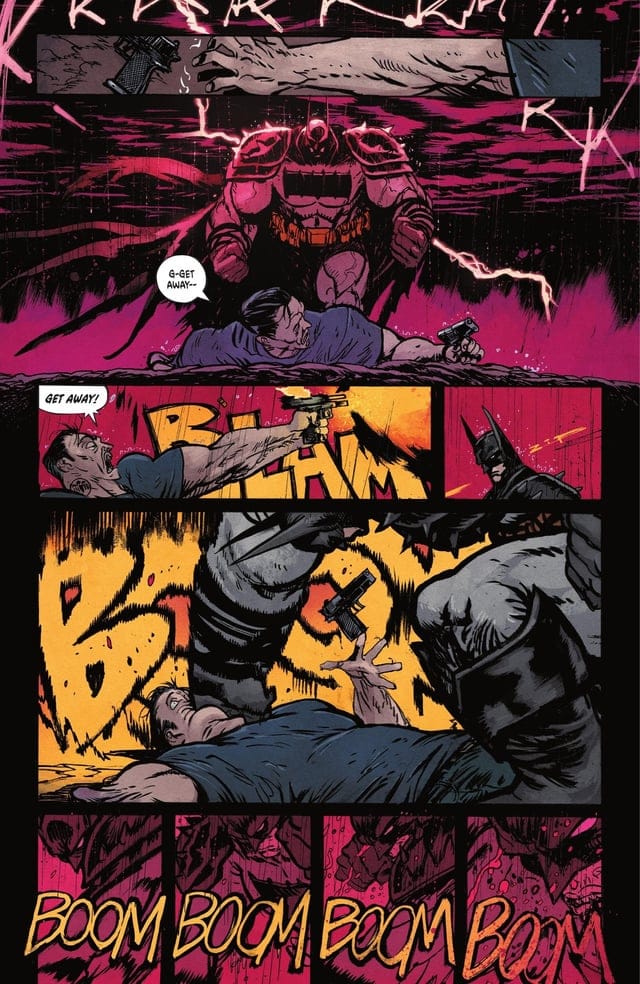
This is the core civic problem of Batman. He may interrupt harm without repairing the structure that produces it.
A mugger is stopped. A shipment is seized. A corrupt official is exposed. A villain is returned to Arkham.
The night is saved.
Then the city resets.
The mob returns under another name. Arkham fails again. The police remain partial. The courts remain theatrical. The poor remain exposed. The rich remain insulated.
The children remain recruitable into a forever war by both gangs and heroes.
The city remains a machine for making Batman necessary.
A loop is not repair because the same harm can be interrupted indefinitely. A loop can even become anti-repair if the interruption becomes satisfying enough to replace the real, harder work.
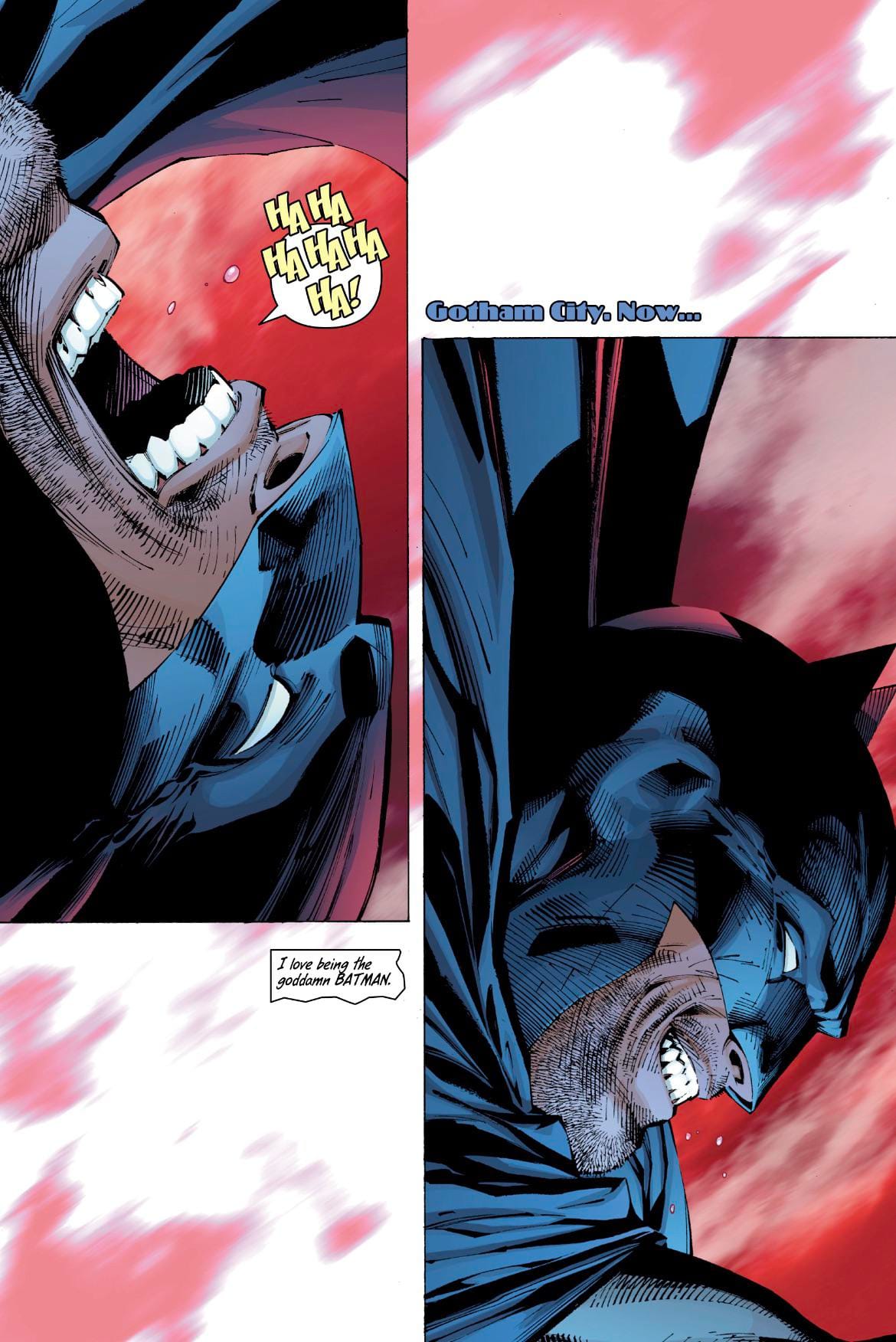
Gotham learns to narrate itself through Batman. The city’s suffering becomes legible when it appears as a costumed crisis. It becomes less legible when it appears as housing policy, medical debt, school failure, addiction, zoning, lead pipes, poisoned institutions, or childhood fear that never becomes a supervillain with a theme.
The deepest danger is that Batman becomes symptom management for Gotham. This is not because saving people is bad. It is because a field can become dependent on emergency response while never repairing the reason emergencies keep occurring.
A society can overuse police because it refuses social repair. A hospital can overuse emergency rooms because primary care failed. A family can overuse crisis intervention because ordinary care collapsed.
A city can overuse Batman because civic life has become unplayable.
Batman’s enemy is not only crime. Batman’s core enemy is recurrence.
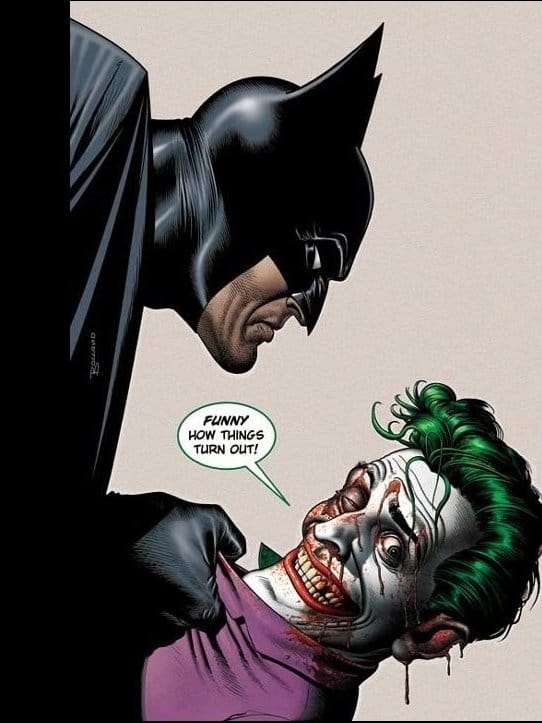
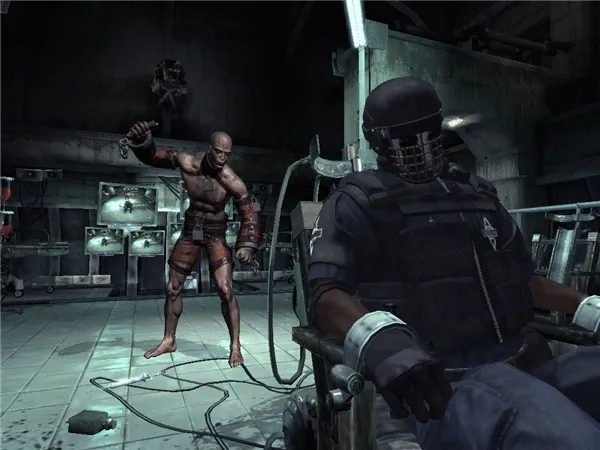
The rogues keep returning because Gotham preserves the conditions of return. This is why Arkham is one of the most morally important sites in Batman. Arkham is not only an asylum. It is a failed repair institution that functions narratively as a villain storage facility. It contains without healing. It releases without safety. It receives damaged loci, some monstrous and some pitiable, and returns them to the field more mythic, more theatrical, more inevitable.
Gotham is a revolving door mounted over an abyss.
Batman is also the most spectacular possible crisis responder, which is another problem. Batman makes crisis response beautiful.
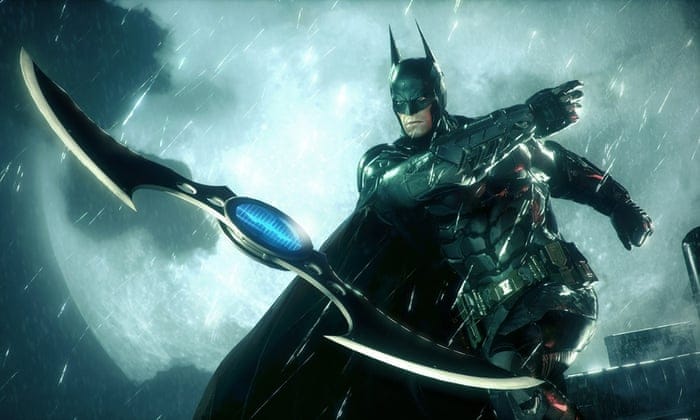
The cape, the car, the signal, the music, the gargoyles, the impossible entrance, the last-second rescue, the one-line threat, the broken skylight, the criminal dangling upside down, the child staring upward in awe. The field is still damaged, but for a moment the damage has form. It has an answer, and a myth. This helps teach them to confuse immediate survival for actual repair.
When Batman captures Joker and sends him back to Arkham, the immediate harm is interrupted. That interruption also matters. The next victim tonight may live because Batman arrived, but if Arkham cannot prevent recurrence, then Gotham has not repaired the field. It has only preserved Batman’s no-kill constraint by outsourcing the next catastrophe to institutional incompetence.
That does not prove Batman should kill Joker.
It proves Gotham cannot keep asking Batman’s restraint to do the work of an entire failed containment system. Batman’s no-kill rule is morally necessary because it prevents him from becoming an agent of sovereign execution, but the rule becomes harder to defend when every other institution around him fails so badly and completely that his restraint appears to preserve the villain’s future over the victims’ futures.
The correct answer is not “Batman should kill.” The correct answer is that the city’s repair system has collapsed so badly that the choice is being forced onto the wrong locus.
This is a recurring Batman structure. It is also scapegoating.
The wrong locus carries the burden. Bruce carries Gotham’s safety because institutions failed.
Robin carries Bruce’s hope because Bruce cannot heal alone.
Gordon carries the public trust because the police cannot fully deserve it.
Arkham carries containment cost because Gotham cannot build effective treatment or security.
Victims carry the cost of Batman’s refusal to execute because the legal field cannot keep monsters from returning.
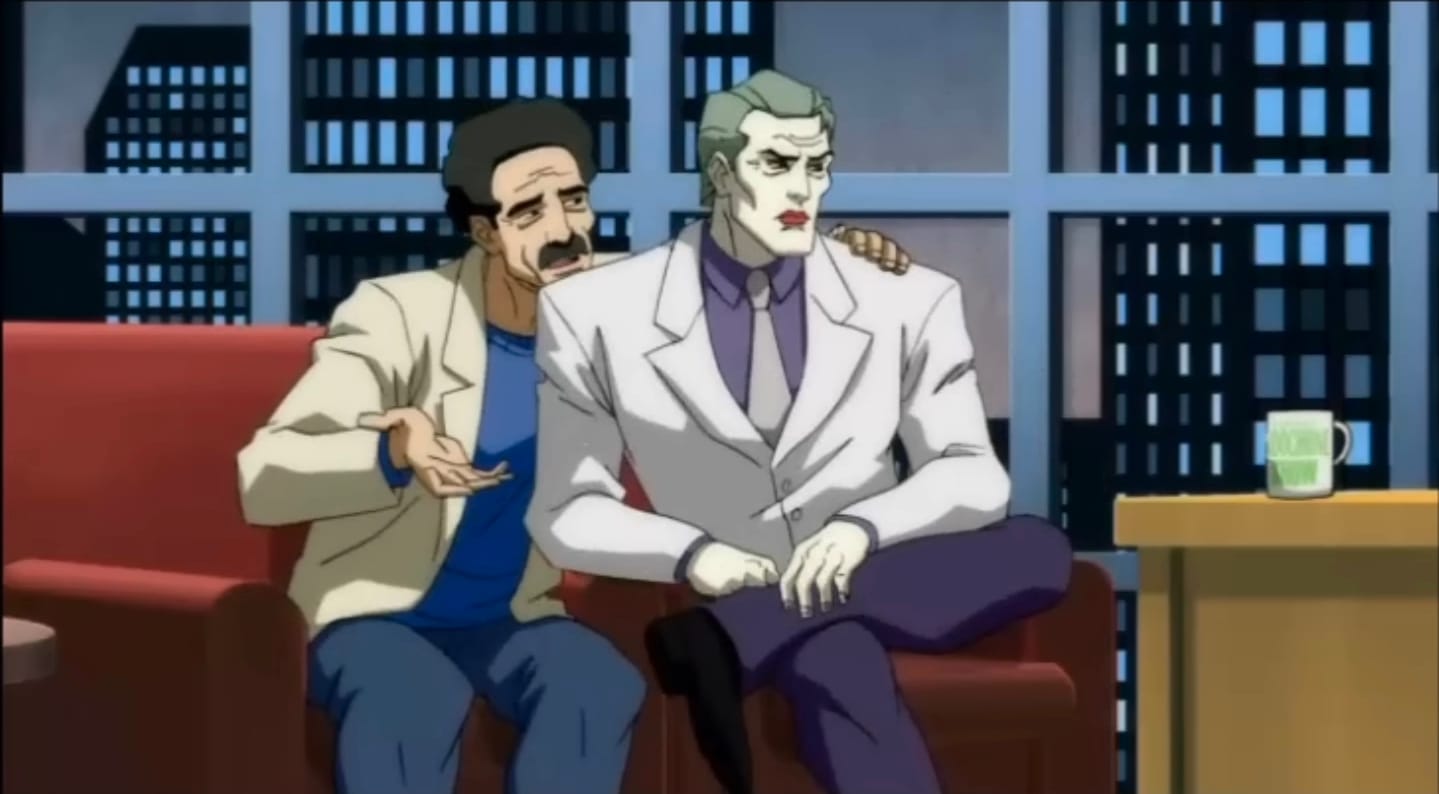
Villains carry symbolic meanings so the city does not have to examine its quieter systems.
Batman stories are often the strongest when they understand this burden transfer. They are by far weakest when they think the burden transfer is the heroism.
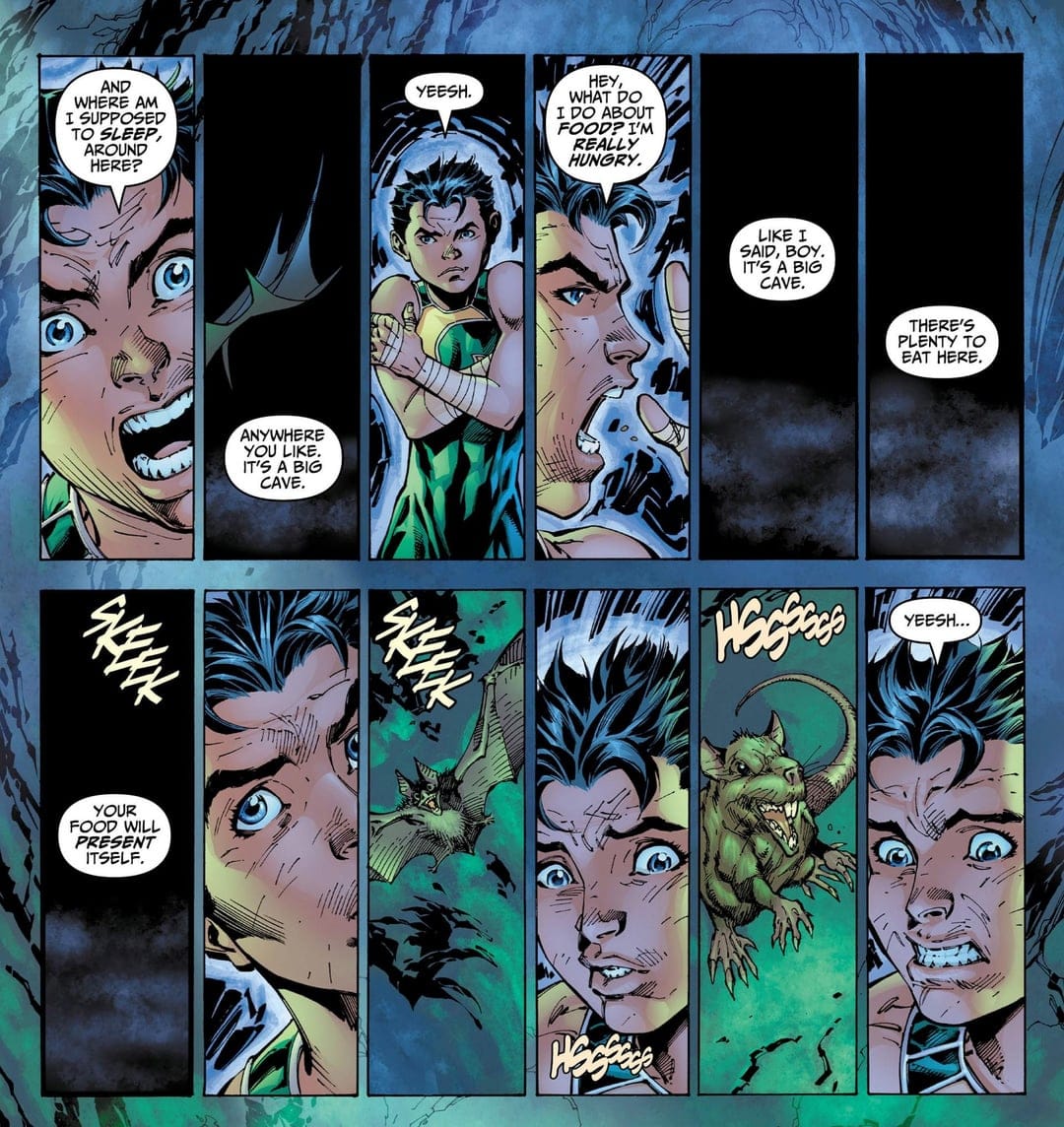
This is also where Bruce Wayne matters more than most adaptations will allow. Batman may interrupt predation.
Bruce Wayne can alter conditions.
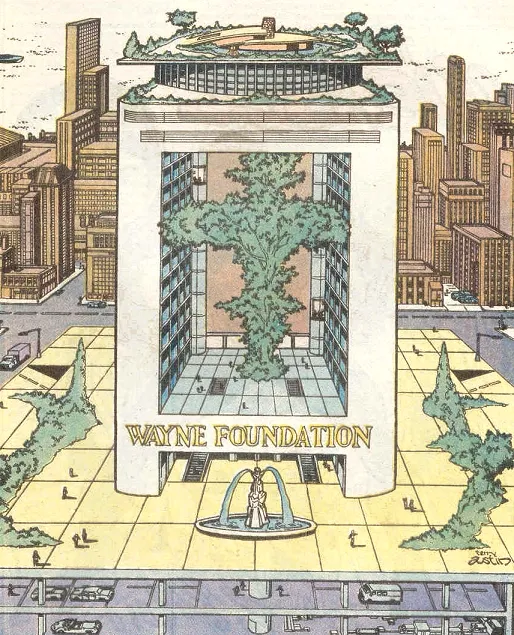
The Wayne fortune is morally embarrassing because it creates an incredibly reachable alternate intervention channel. Bruce can fund clinics, schools, housing, addiction treatment, legal aid, anti-corruption journalism, witness protection, public transit, psychiatric care, orphan support, prisoner reentry, community centers, shelters, trauma therapy, environmental cleanup, and political reform.
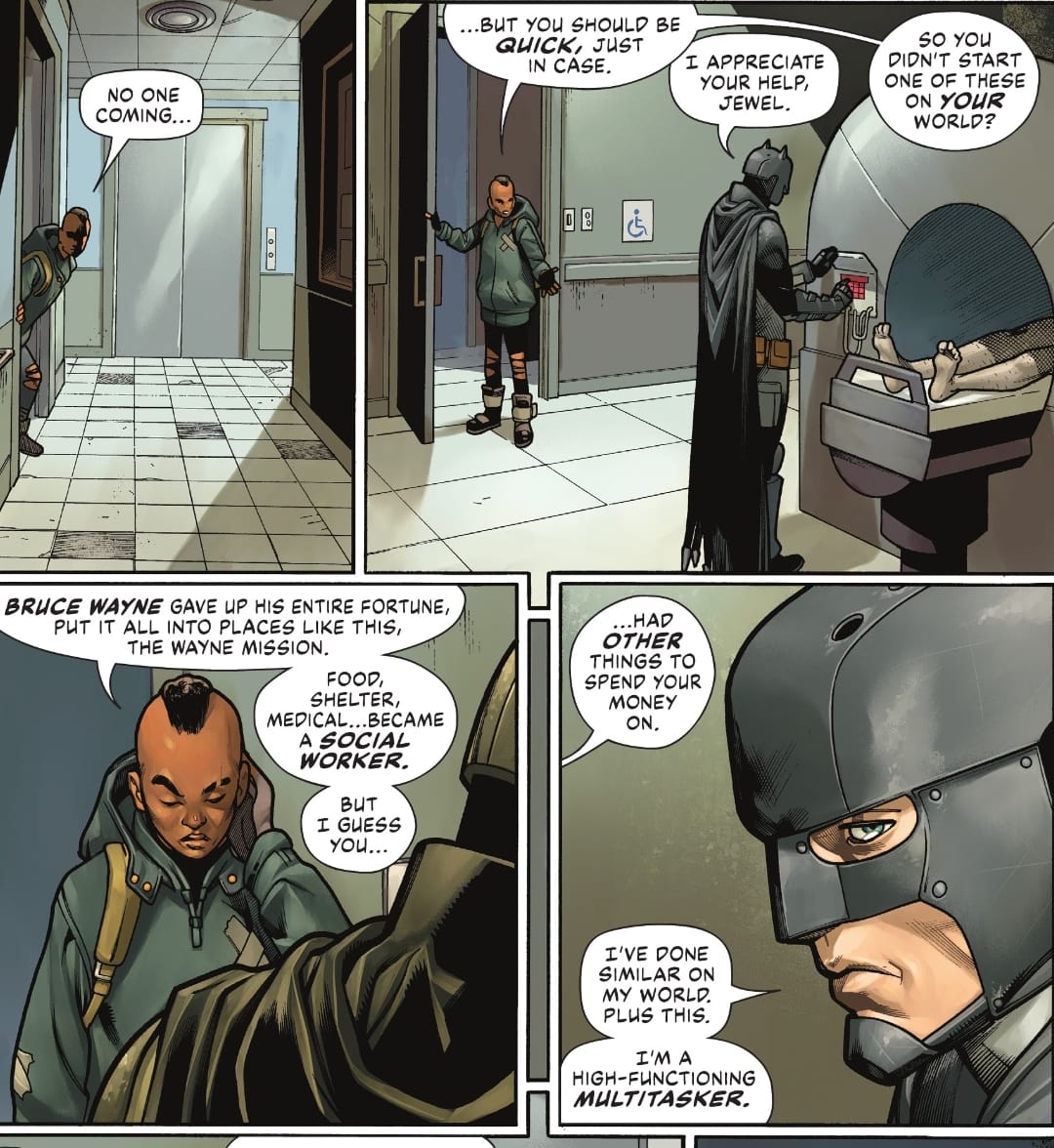
In many continuities, he does some of this. In many, the films and comics gesture at it just enough to avoid the obvious question.
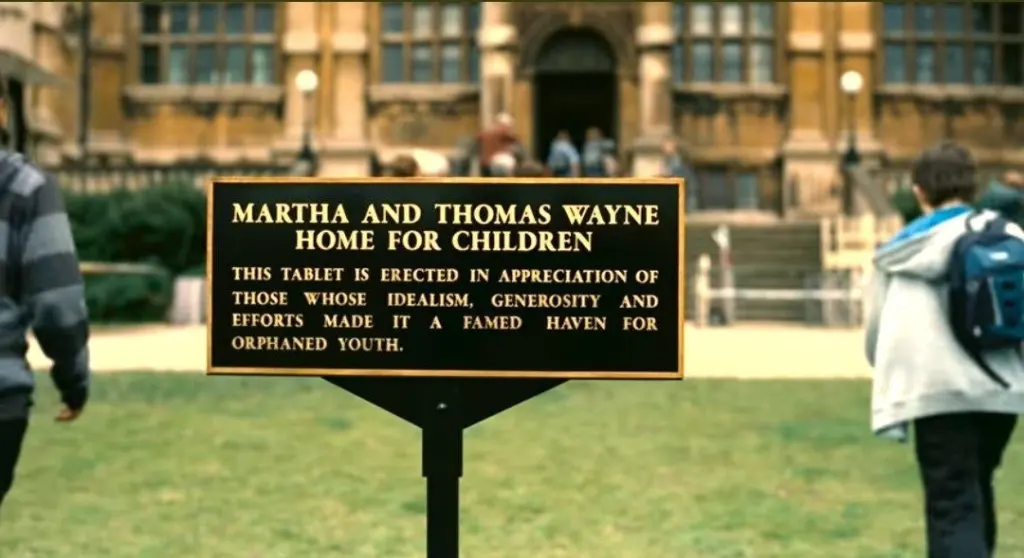
Modal Path Ethics does not let the gesture end the analysis. If Bruce has two intervention channels, one nocturnal and one structural, then his moral quality depends on how they relate to each other.
Batman without Bruce Wayne’s repair infrastructure is emergency response pretending to be a life.
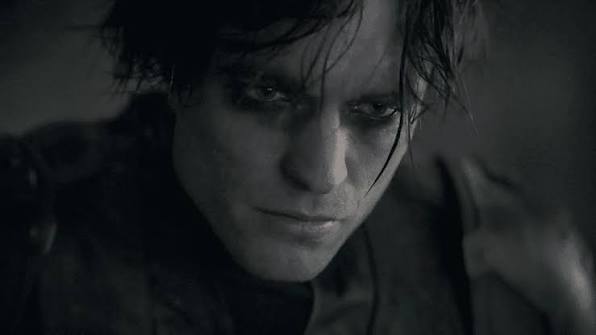
Bruce Wayne without Batman may be too slow and remote for Gotham’s immediate violence.
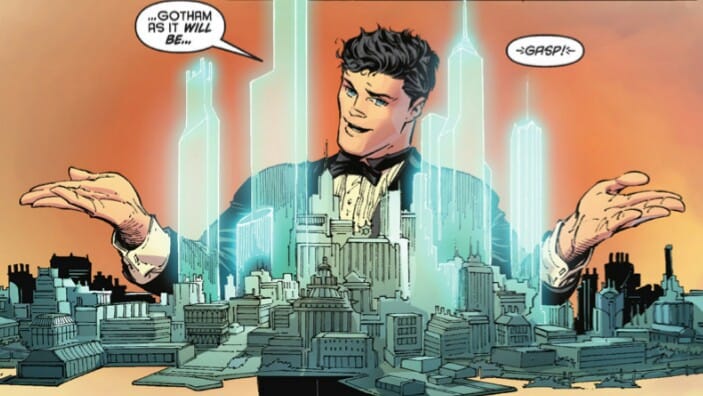
The morally strongest versions understand that both are necessary under damaged conditions, but they are not equal. Batman is triage. Bruce Wayne is supposed to be the repair.
A city should not be rebuilt by punching.
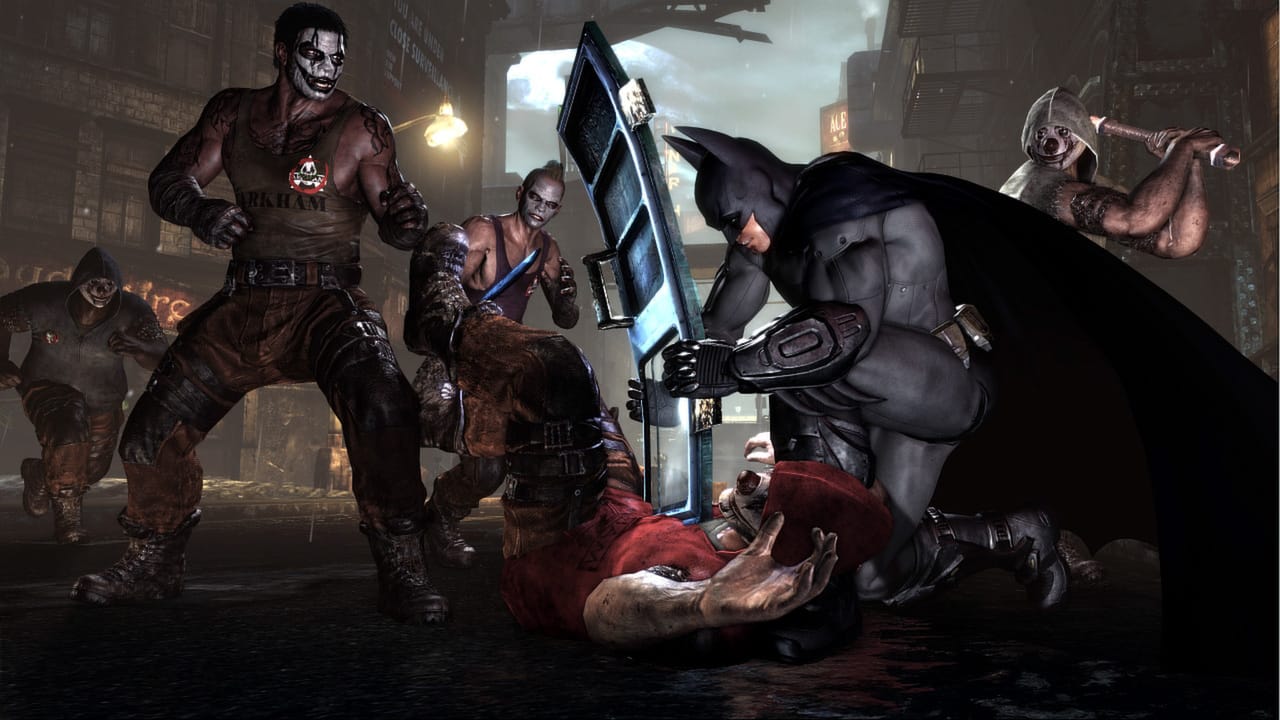
This is why the “why doesn’t Bruce just spend his money?” objection is annoying, glib, and correct.
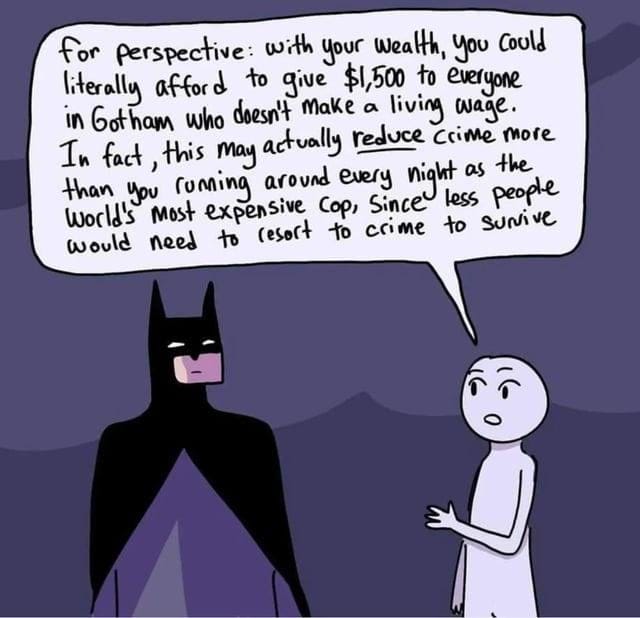
It is glib because Gotham is a mythic and institutionally captured field where money can be stolen, redirected, corrupted, or made irrelevant by forces more severe than ordinary municipal dysfunction.
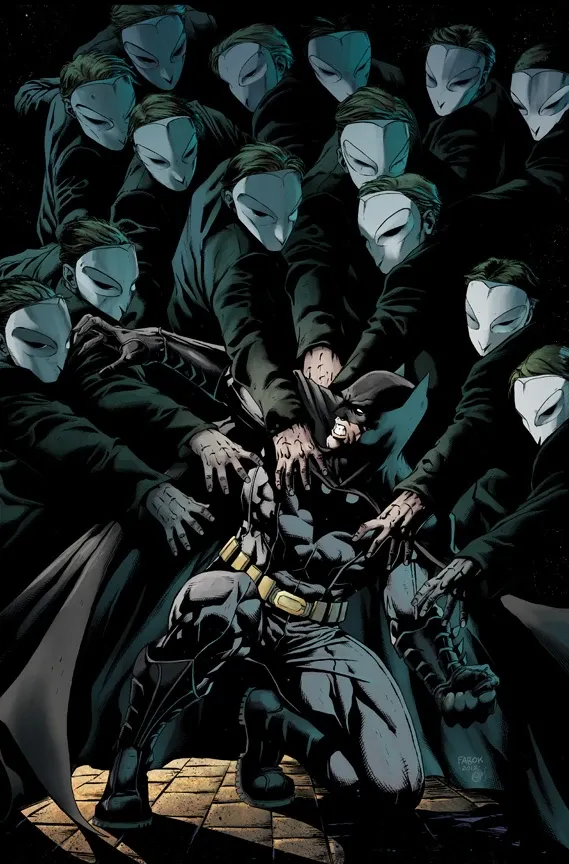
It is correct because if Batman’s violence is not paired with structural repair, then the violence becomes a ritualized management practice. It stabilizes the city at a level of dysfunction that still needs Batman. That is still false repair.
False repair is not fake action. False repair can save real people. It can reduce real harm in the short term. It becomes false when it gives the field the appearance of moral response while leaving the deeper path of recurrence untouched.
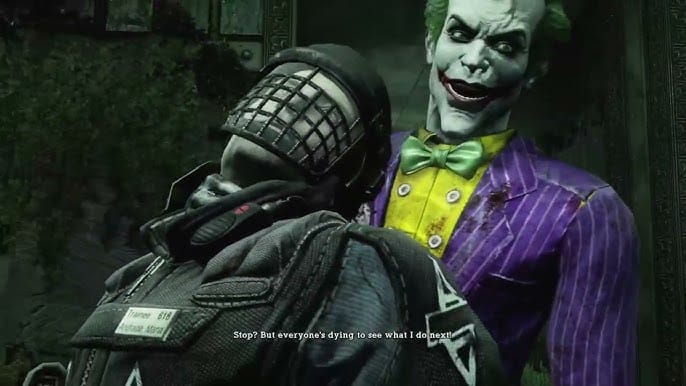
Batman is always at risk of false repair.
He is very good at making harm answerable in dramatic form. That is his greatest gift. He drags hidden violence into high visibility.
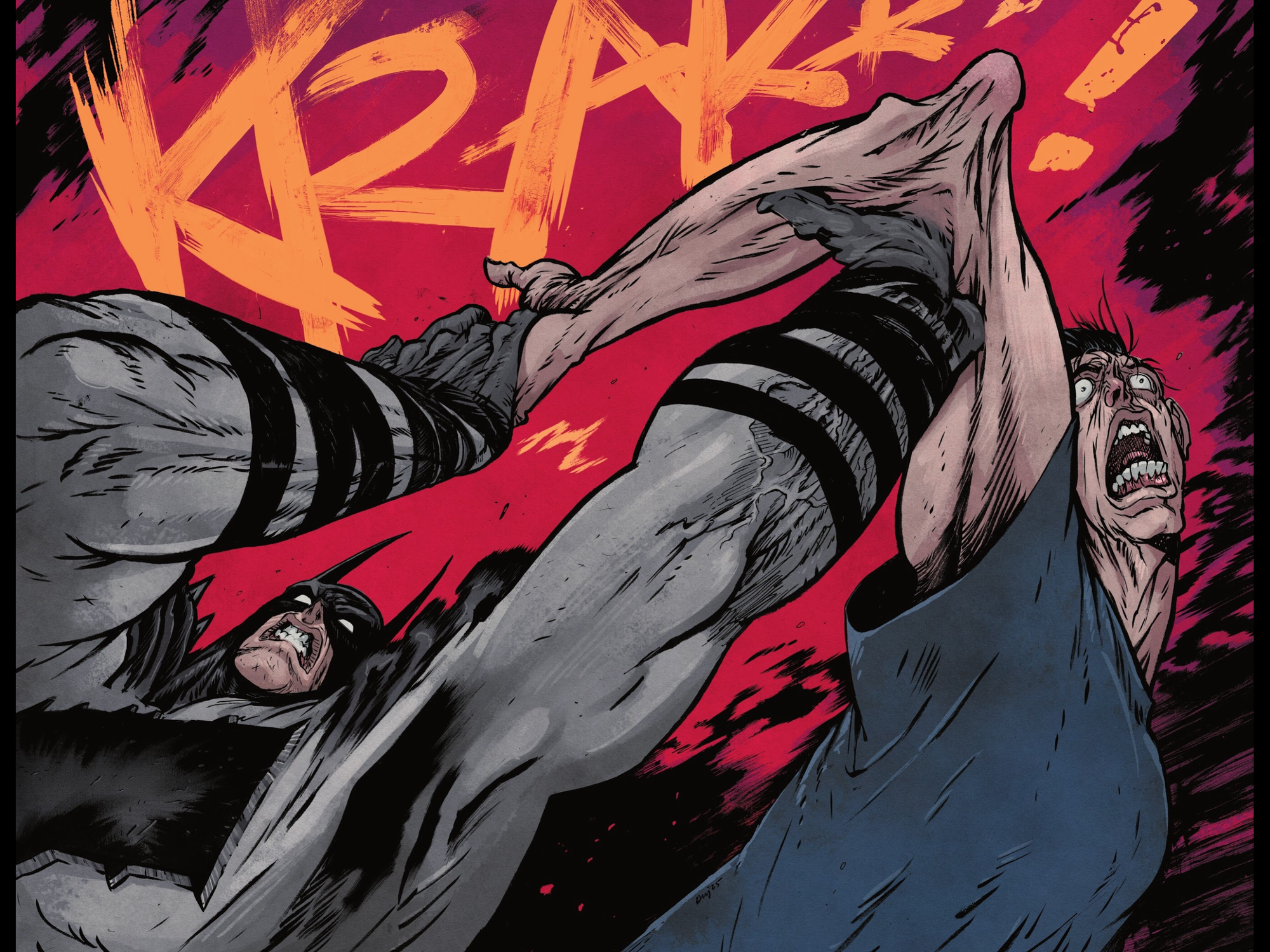
He makes predators afraid. He finds evidence. He protects witnesses. He survives the place where ordinary people are crushed.
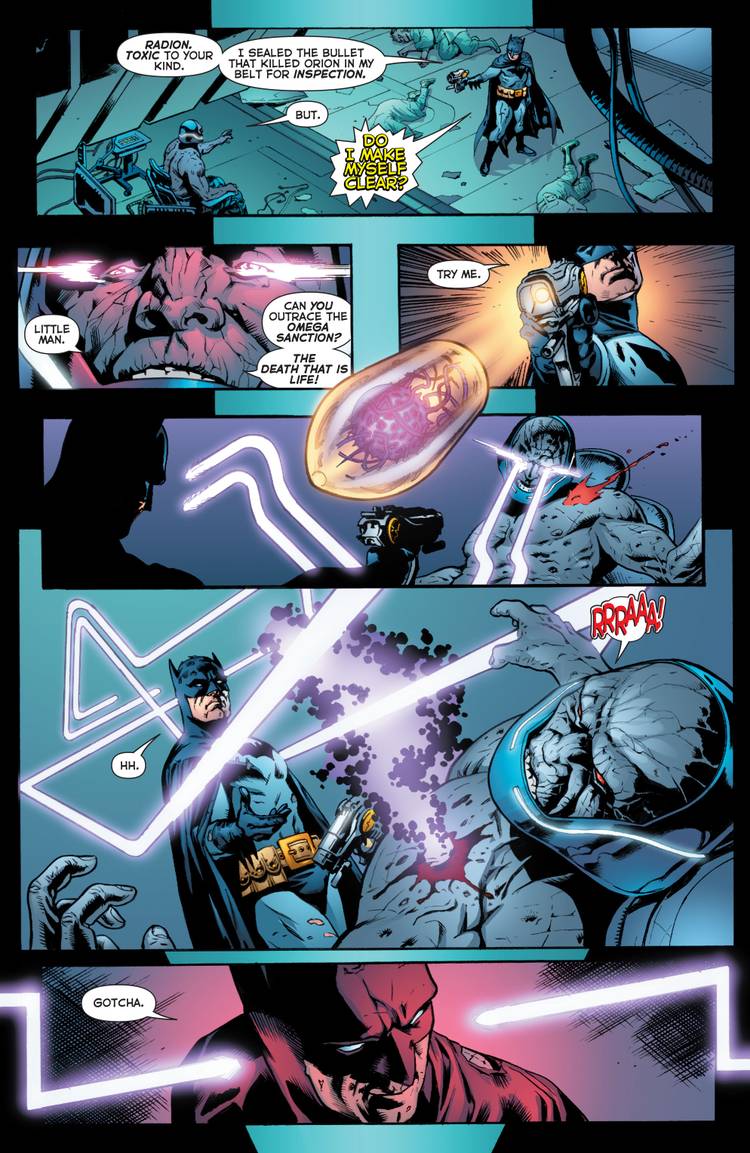
He enters rooms where the law cannot go, or will not go, or has already been bought.
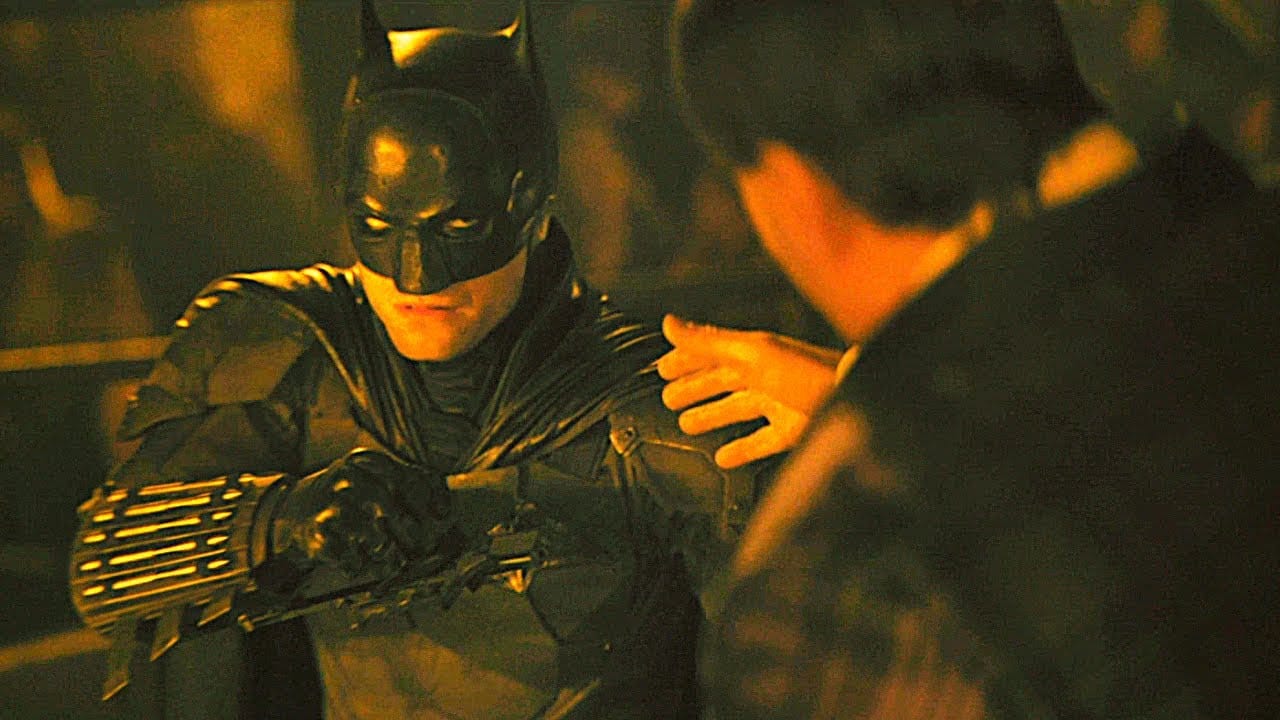
However, Gotham’s deepest harms are not always shaped like criminals.
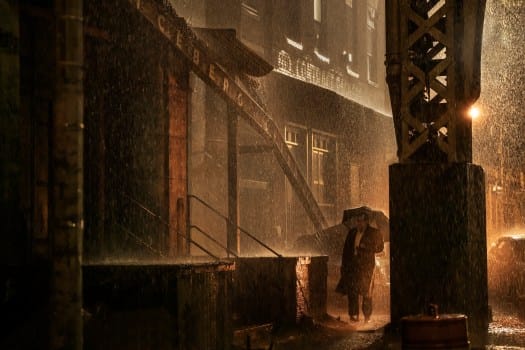
Sometimes the harm is a budget. Sometimes it is a zoning map.
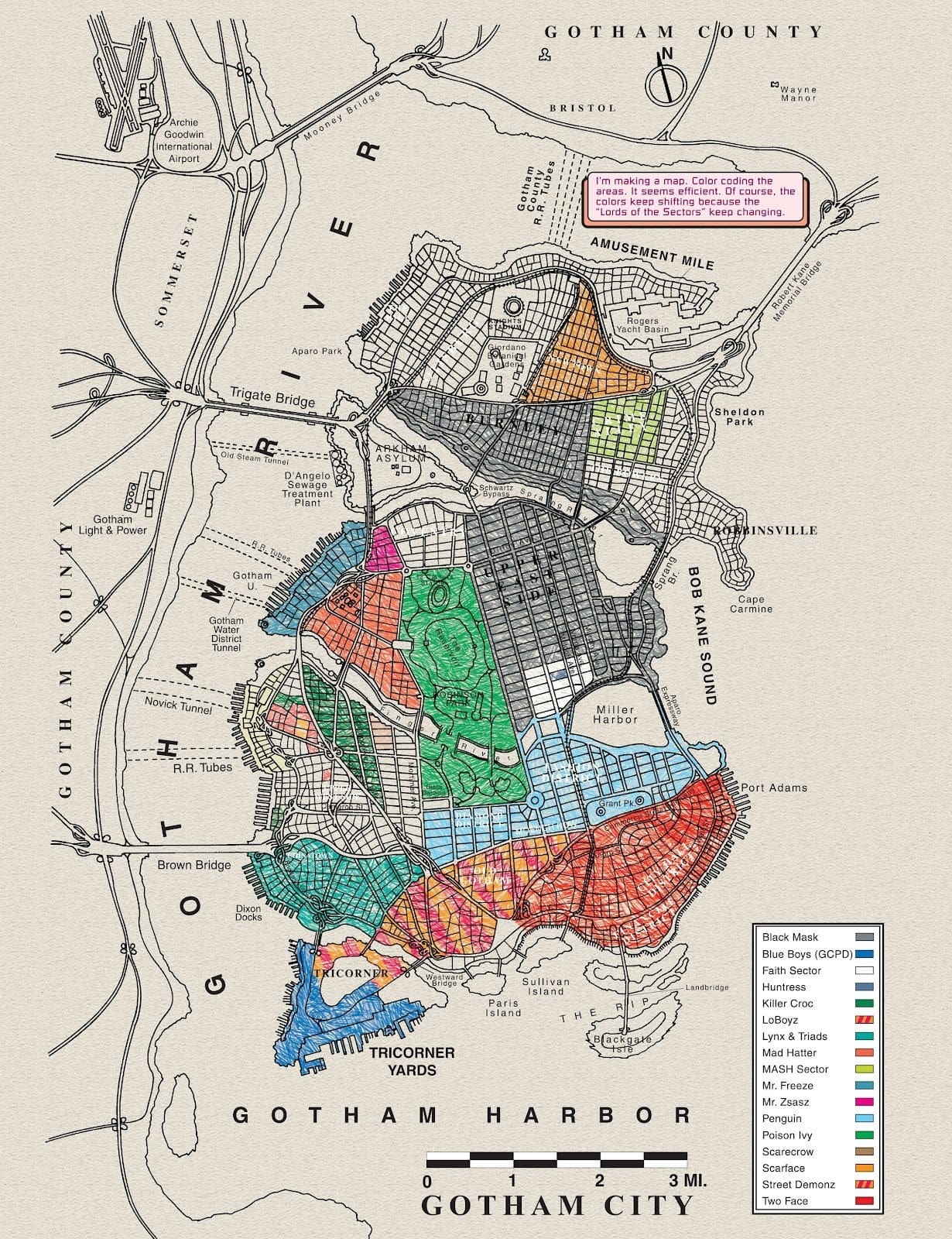
Sometimes it is a judge. Sometimes it is a pharmaceutical company.
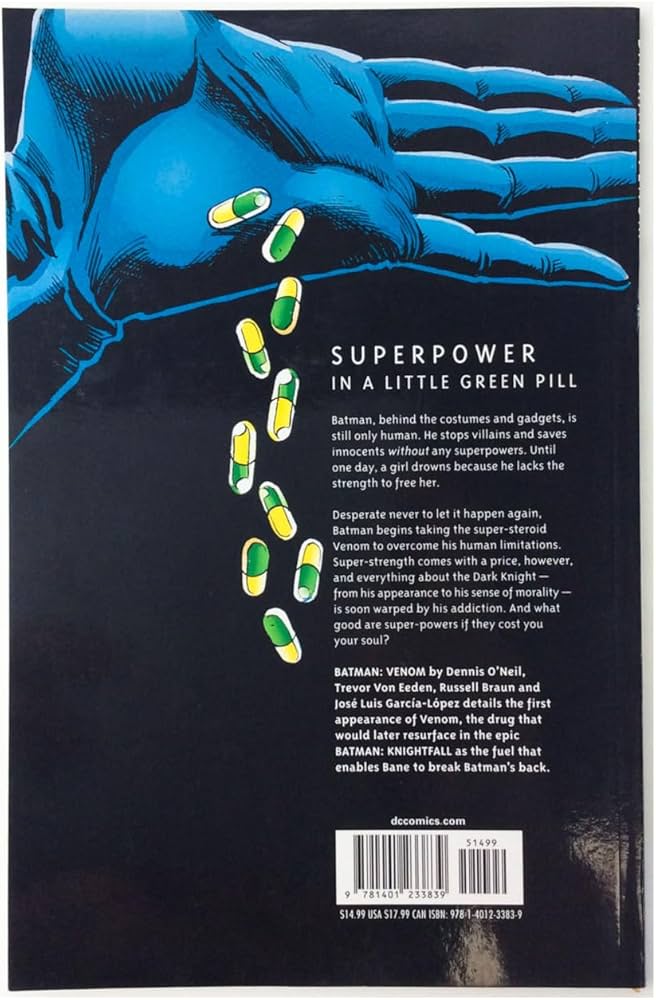
Sometimes it is a family legacy.
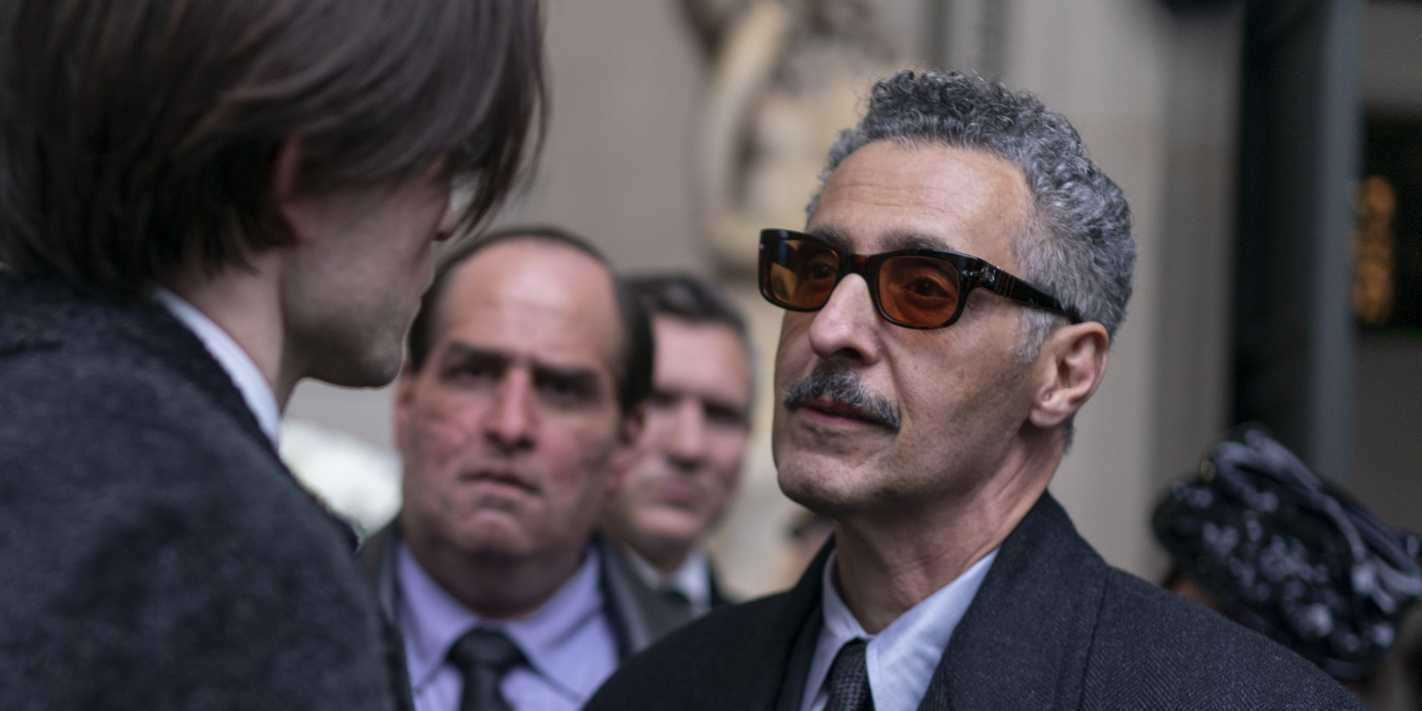
Sometimes it is a foundation board. Sometimes it is a police culture.
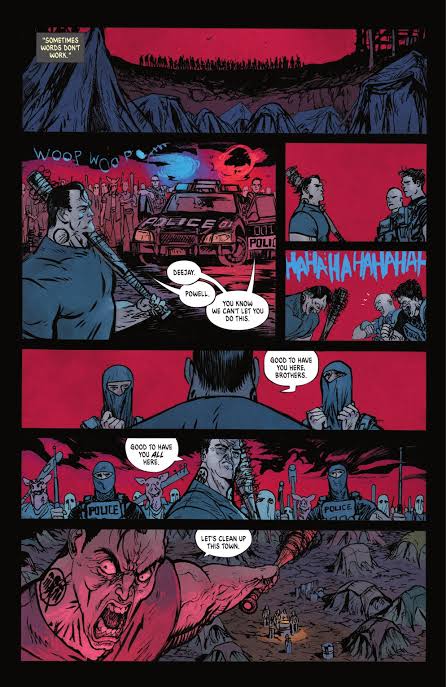
Sometimes it is a childhood psychiatric wound that became an adult catastrophe because every earlier field failed. Sometimes it is Bruce himself, confusing his need to continue as Batman with Gotham’s need to be saved.
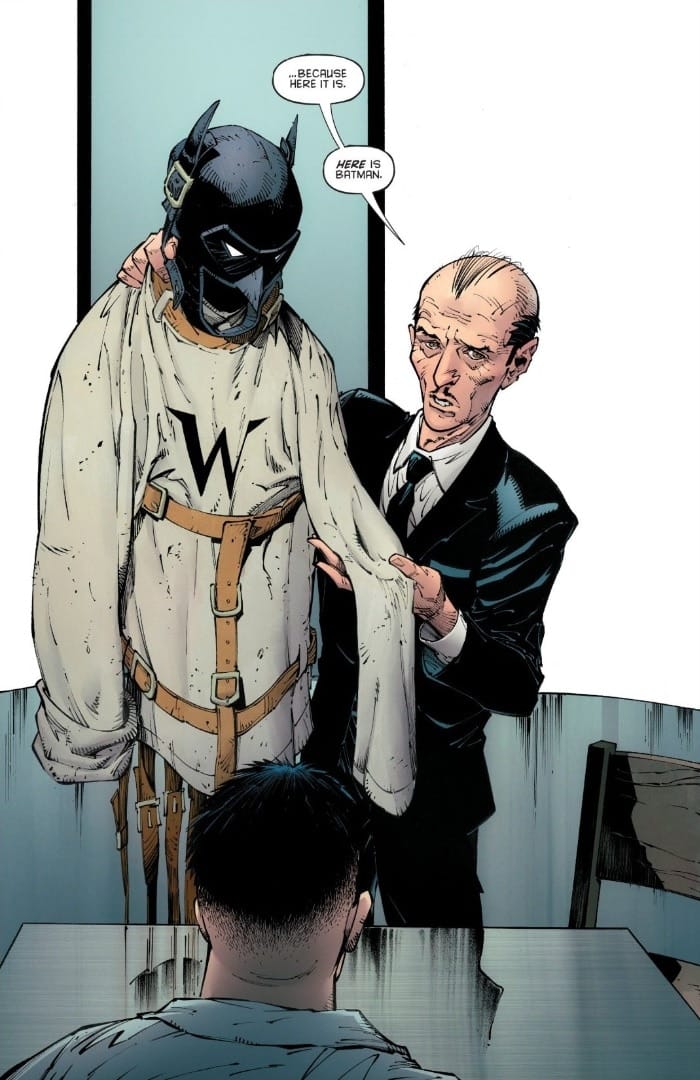
The best Batman stories force that recognition. The weaker ones keep the field shaped like targets for him.
Vigilantism.
Batman is a vigilante.
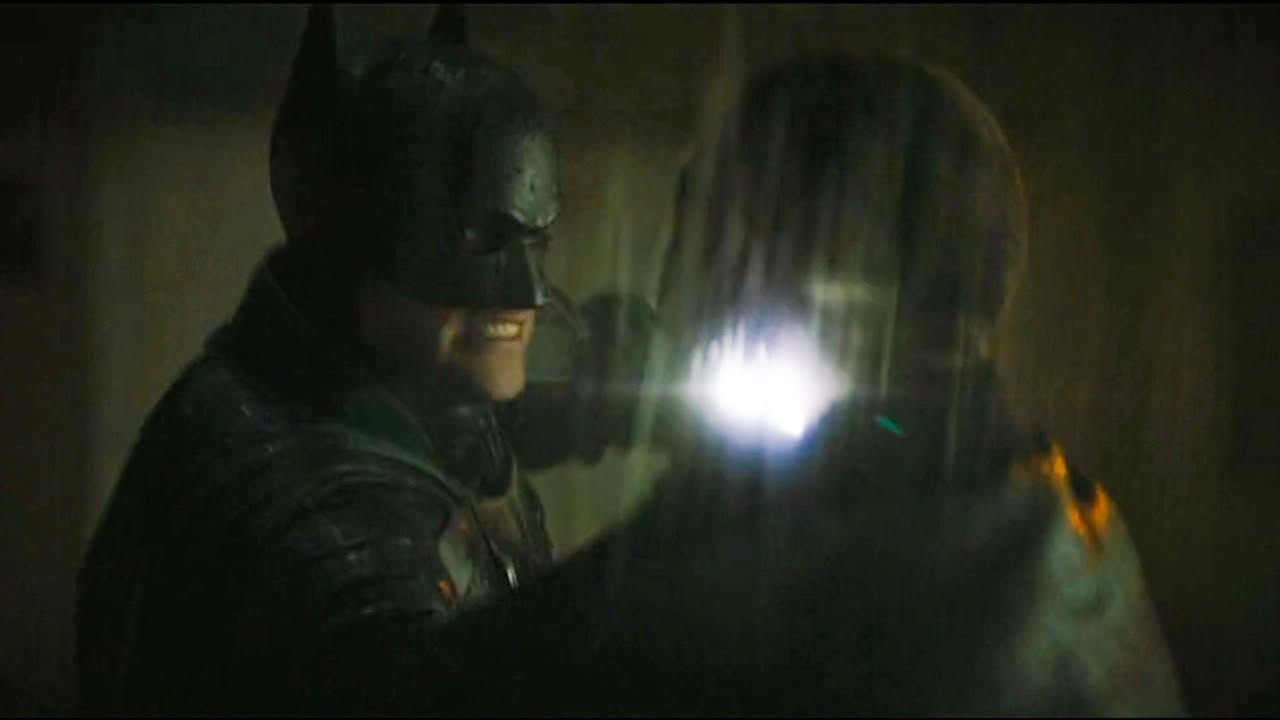
He uses force without public authorization.
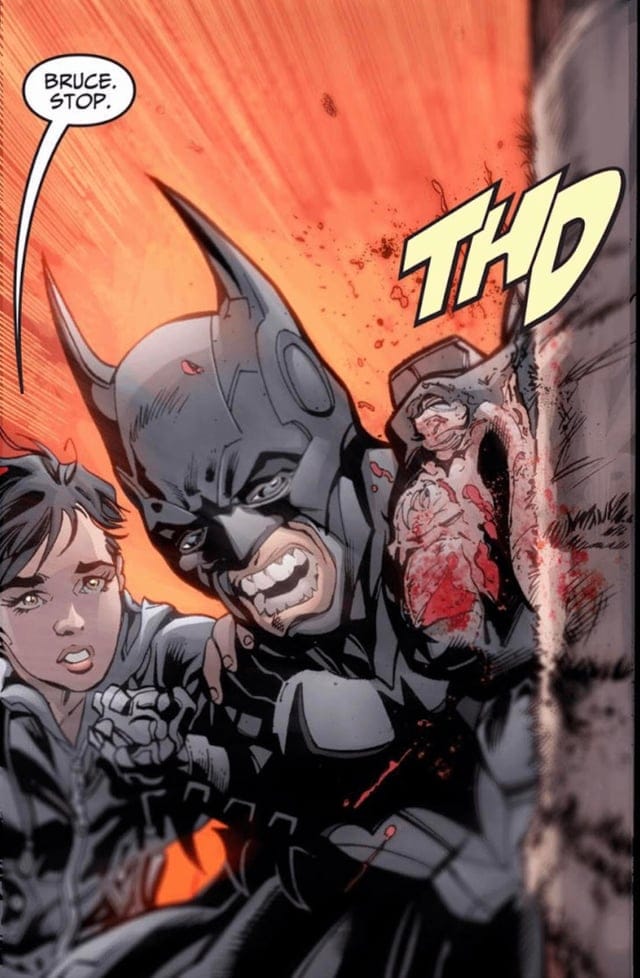
He conducts surveillance without warrants.
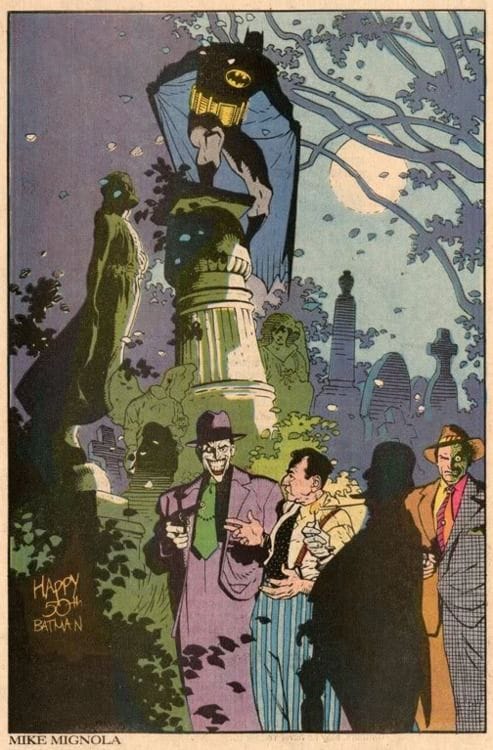
He enters property without permission.
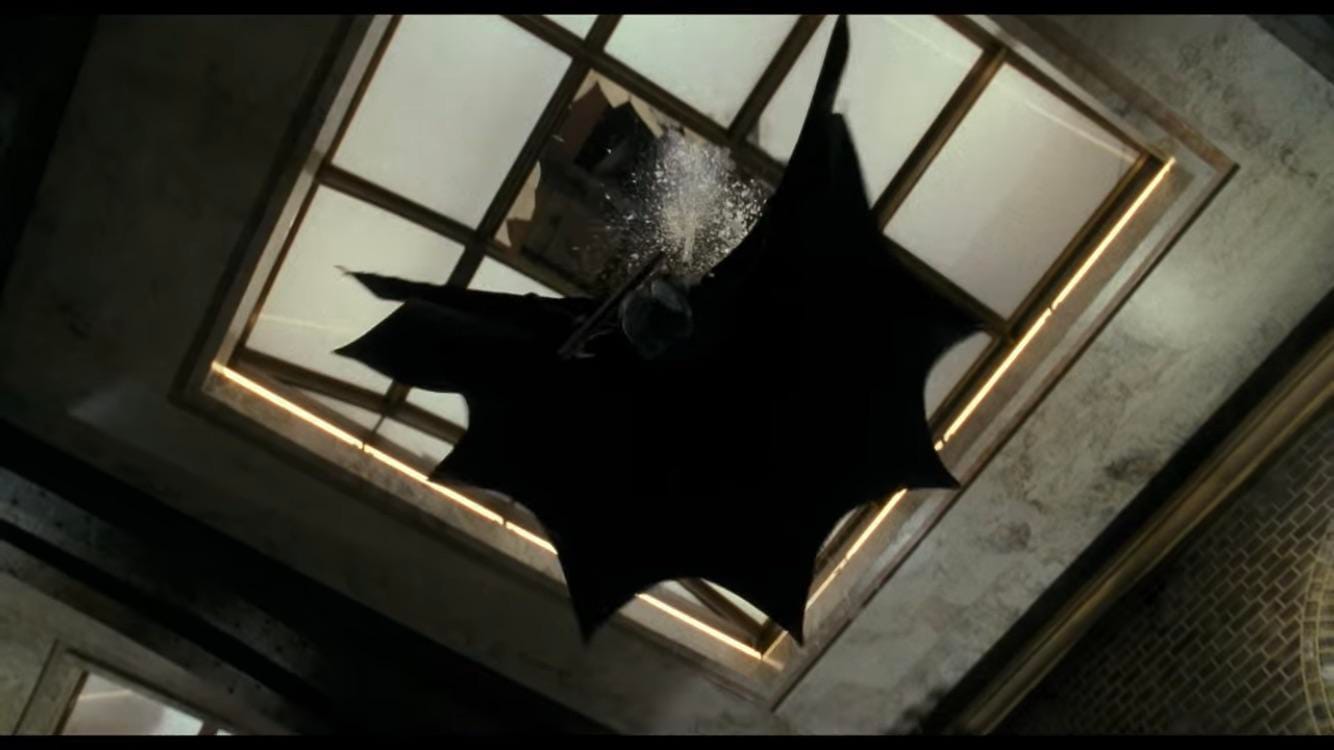
He interrogates through fear.
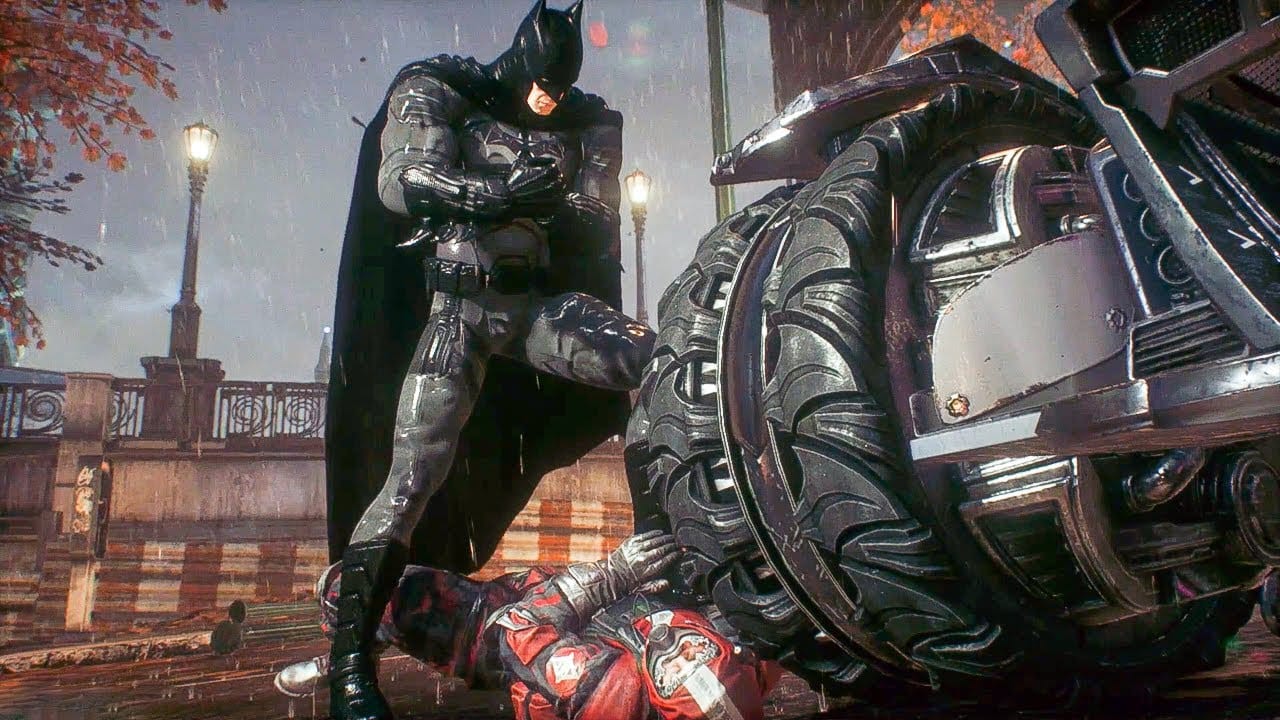
He often withholds information.
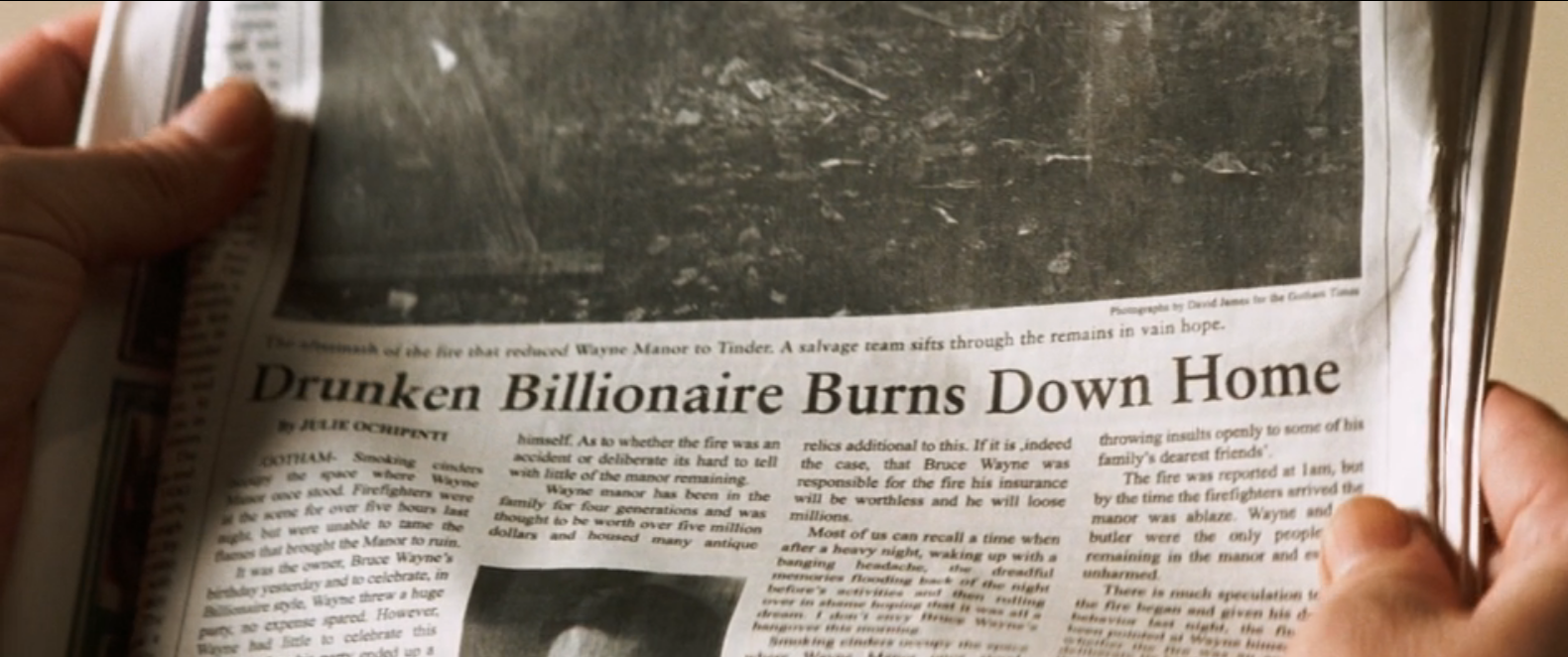
He chooses priorities according to his own judgment.
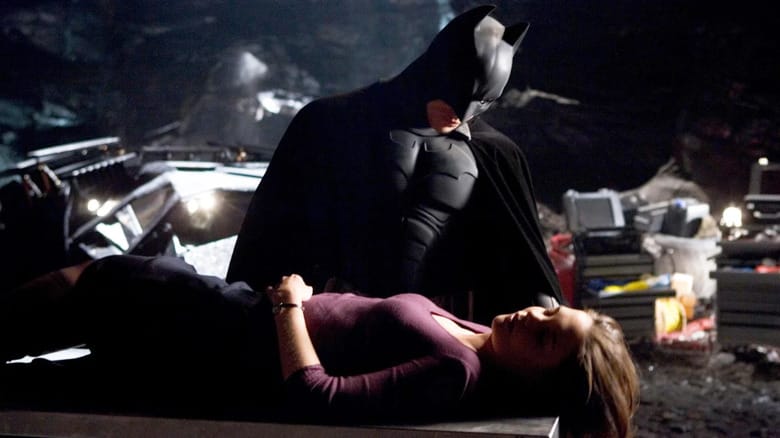
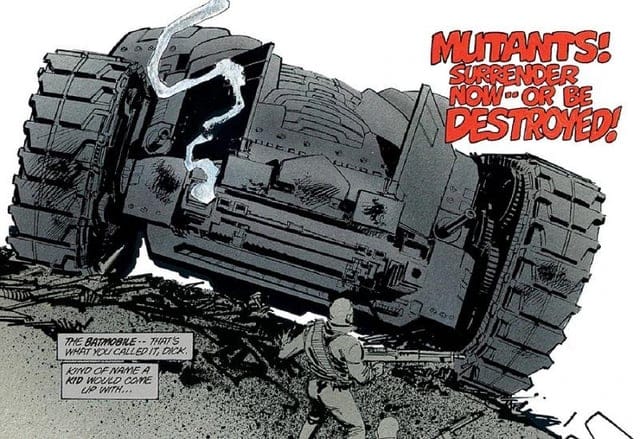
He builds weapons outside public accountability.
He carries out physical punishment before trial, even if he does not call it punishment.
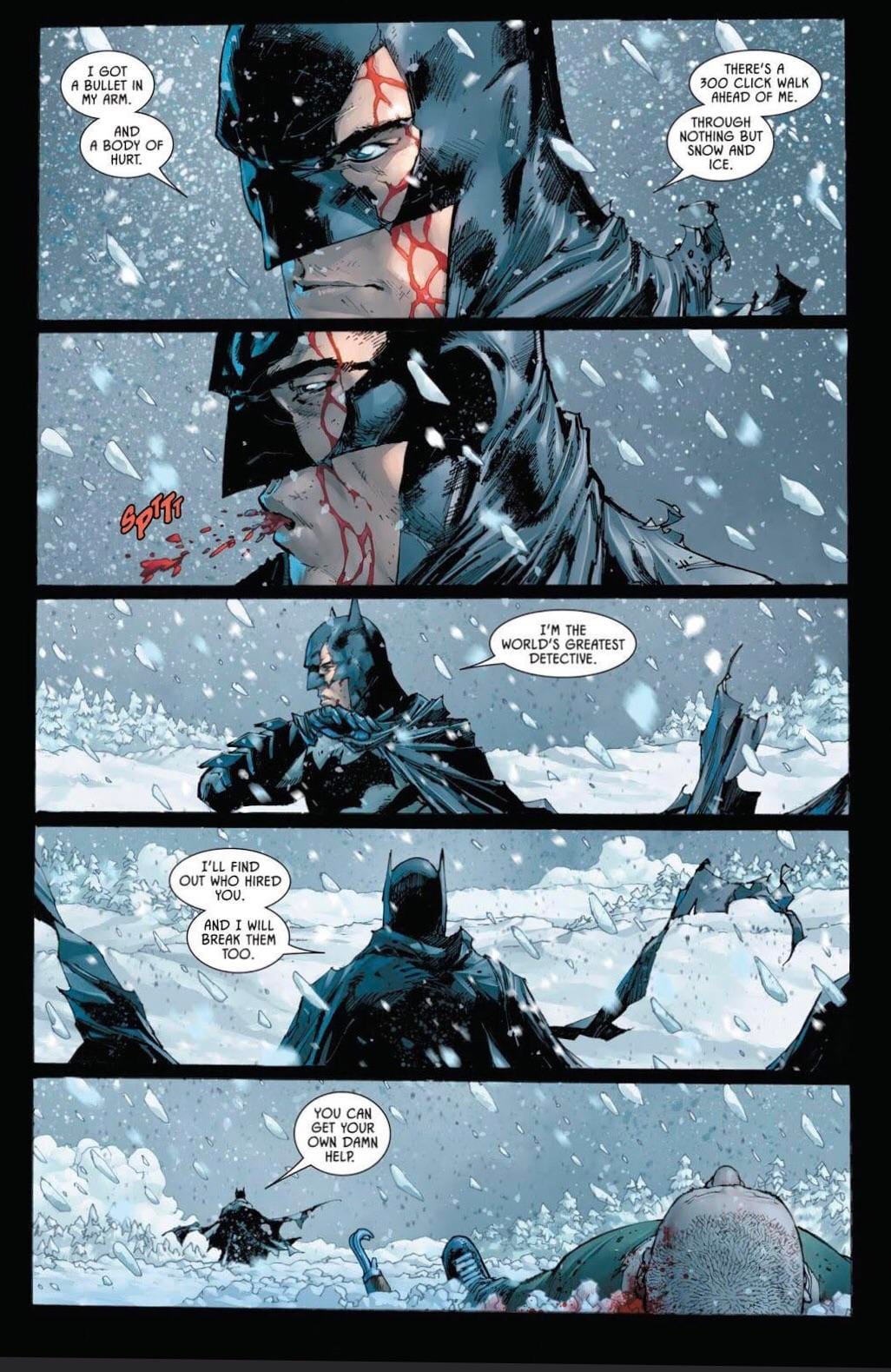
In ordinary conditions, this is highly dangerous. In Gotham, ordinary conditions often do not exist.
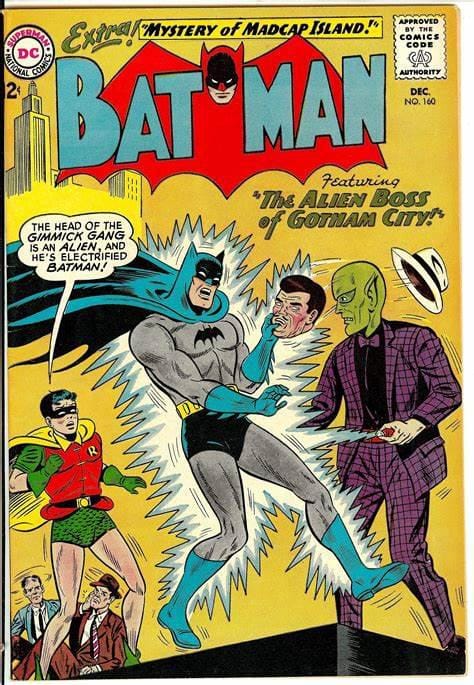
That is why Batman belongs to the category of Better far more often than Good. If the institutions that should protect people have been captured or broken, then extralegal intervention may preserve future-space that lawful procedure cannot reach.
A corrupt legal system is not made moral by being legal. A captured police department is not morally superior to every outside actor because it has badges. Public authority can fail so badly that acting outside it becomes the least-closing path.
Still, “least-closing” is not “clean.” A vigilante who acts because law failed should remain oriented toward restoring the conditions under which vigilantism becomes unnecessary. Otherwise the exception becomes a private institution.
Batman becomes a parallel state. Gotham becomes a city whose public law is supplemented, corrected, and sometimes overruled by one man’s secret cave.
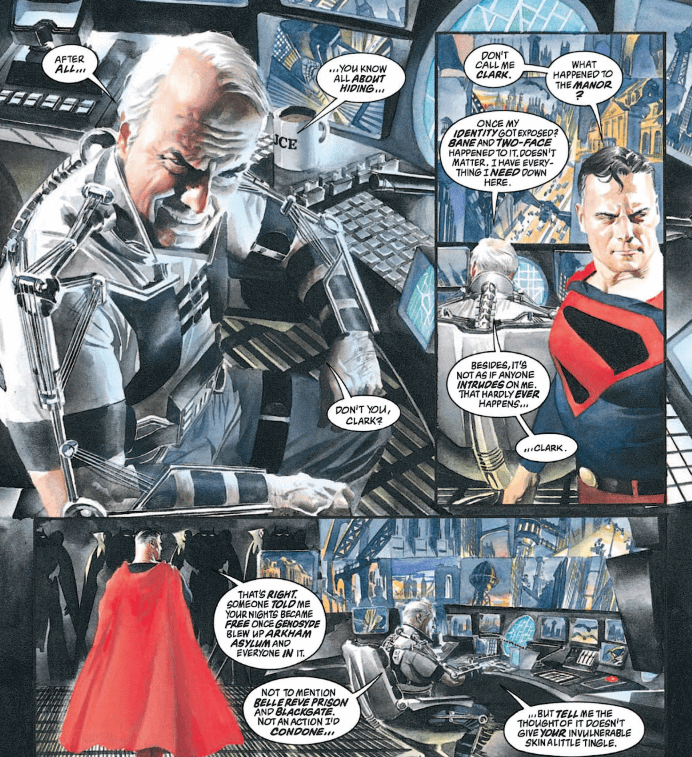
That is not a stable Good, even if it may be an emergency Better.
The test is whether Batman lowers the long-term need for Batman. If he does, his vigilantism can be morally defensible.
If he does not, he becomes part of Gotham’s operating system.
This is why Gordon matters again. Gordon is the sign that Batman is still tethered to public repair rather than pure private war. The bat-signal is morally ambiguous because it is both civic cooperation and institutional confession.
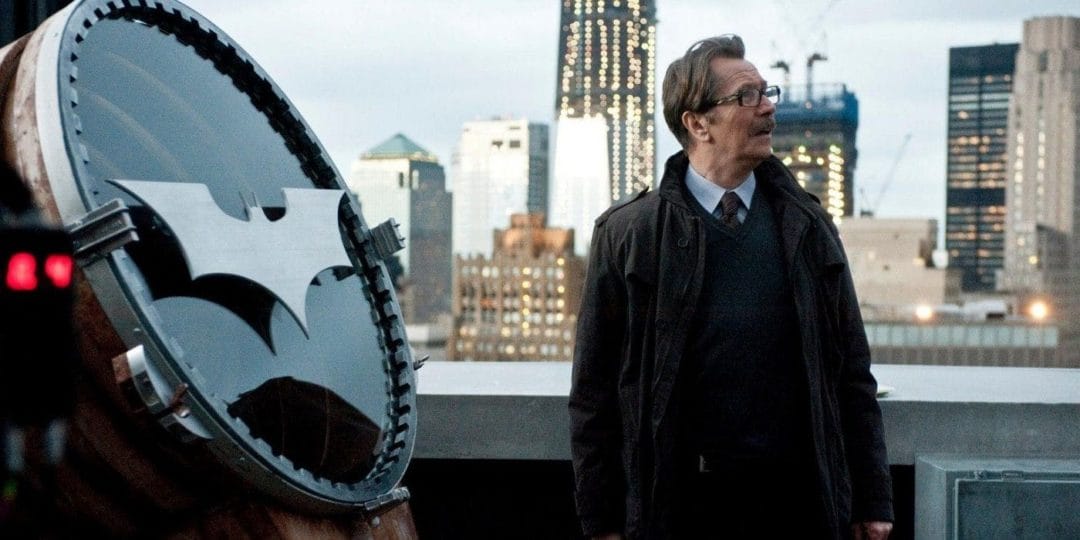
The police call Batman because they cannot handle the field alone. That cooperation will often preserve lives, but it also admits that public authority has become dependent on a masked exception.
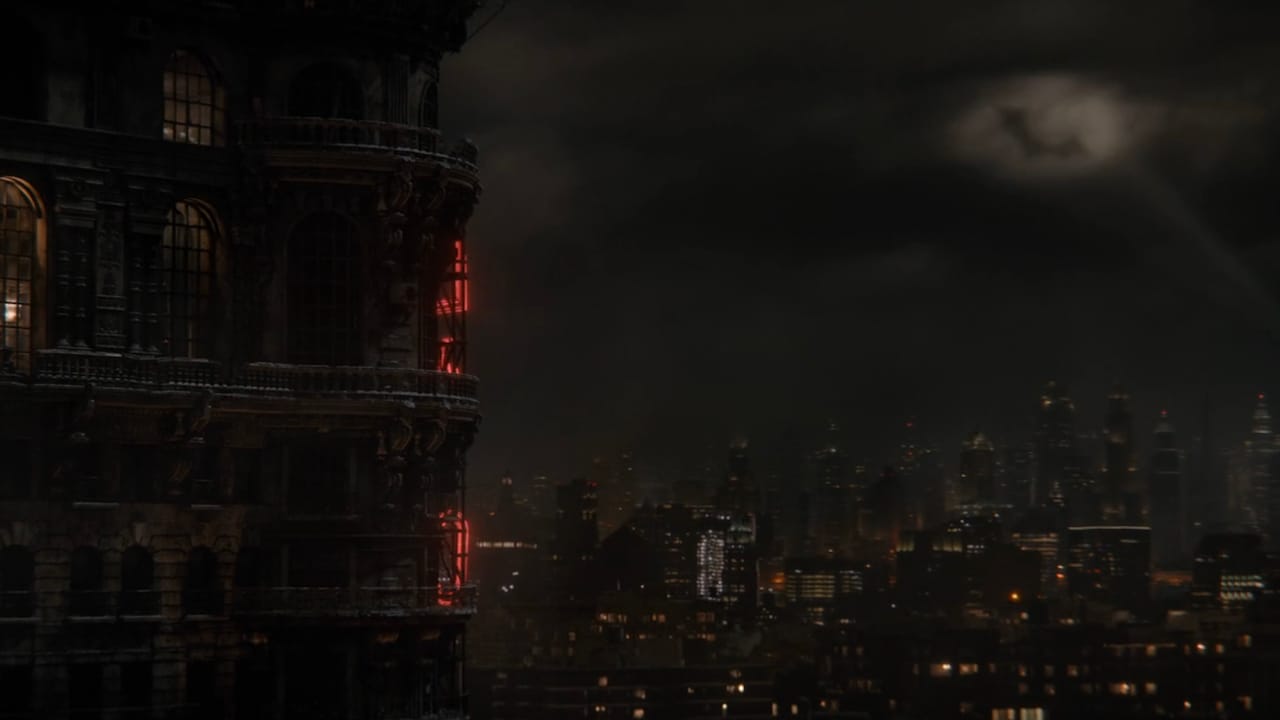
The bat-signal is both the city's hope and its failure.
Fear.
Batman actively uses fear as a tool. This is central to his moral character.
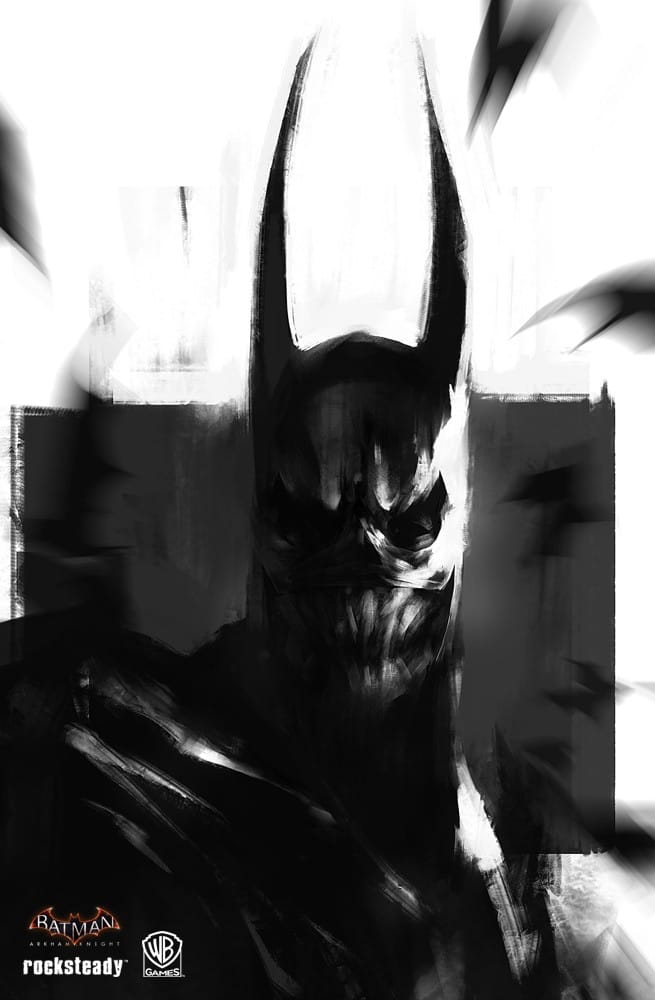
Bruce chooses the bat because it frightens him. He weaponizes his own childhood fear and sends it outward against those who prey on the vulnerable. In the strongest form, this is a brilliant reversal and repair: the same fear that once narrowed Bruce’s future is transmuted into a tool that narrows predatory futures instead.
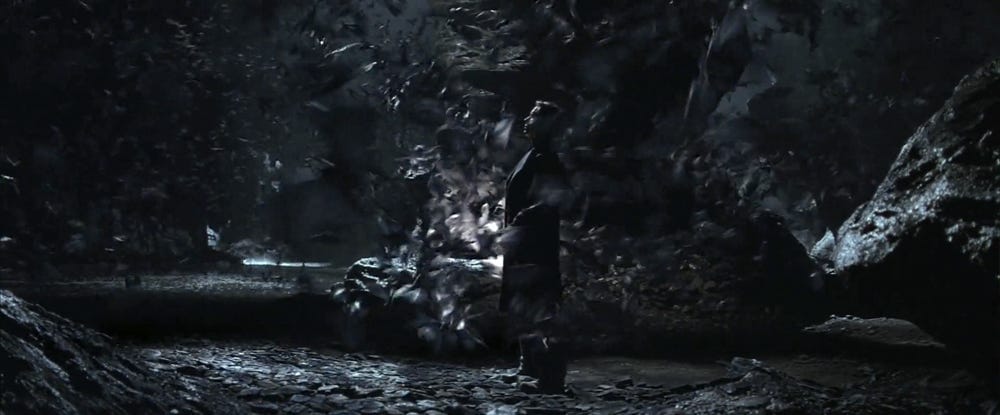
Fear is still never morally neutral.
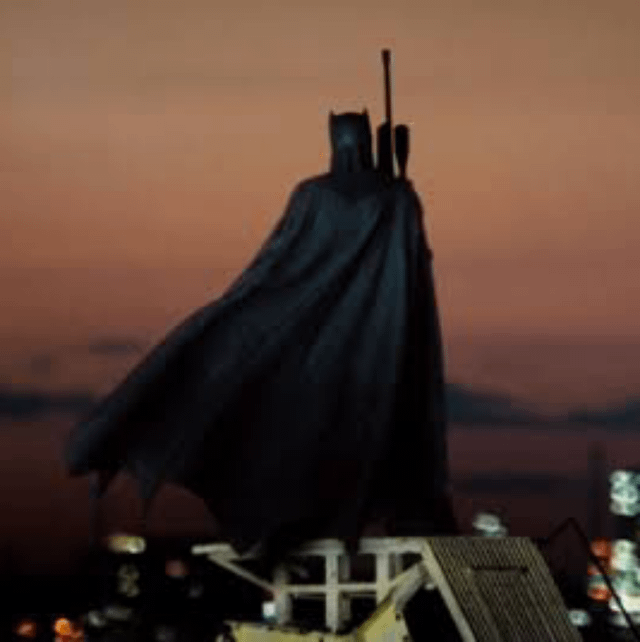
Fear can protect, but fear can also deform. A city governed by fear does not become healthy because the right people are now afraid tonight.
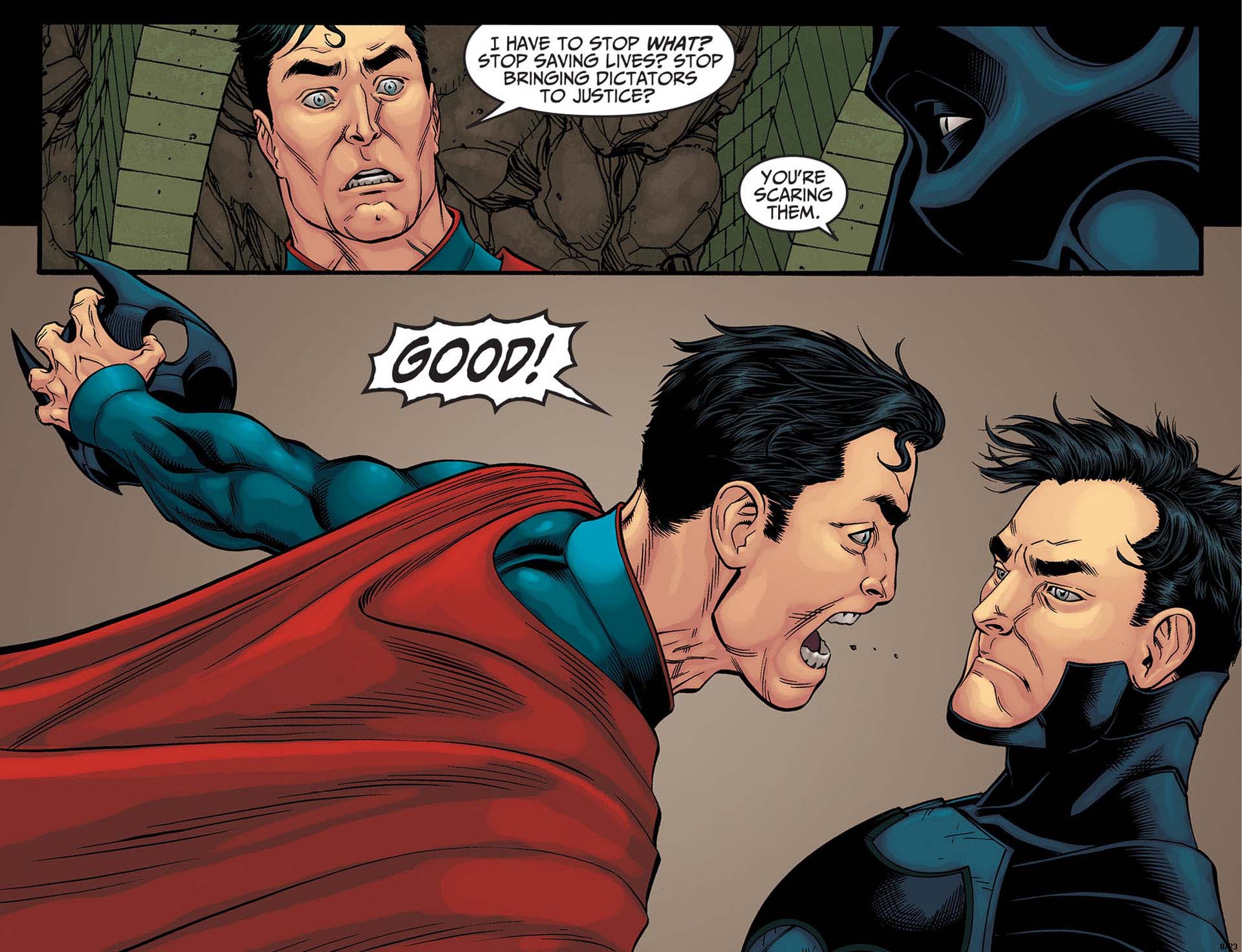
Fear thickens the field. It changes how people move, speak, hide, lie, trust, and imagine the future. A Batman who saturates Gotham with fear must answer for what that fear does beyond the criminals he targets.
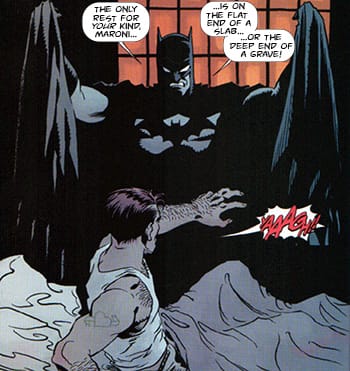
The Batman produces at least three fear-fields, only one of which was intentional.
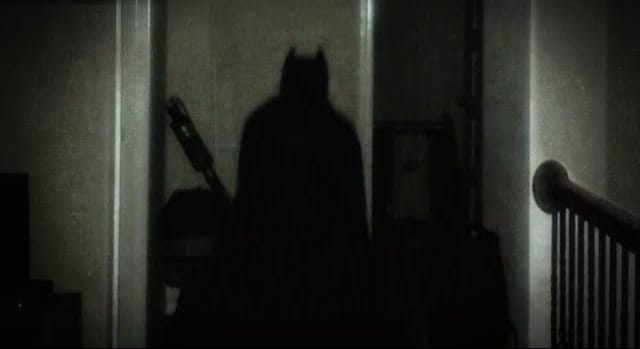
The first is the intended predator fear. Criminals become uncertain. That may reduce violence. A mugger thinks twice. A trafficker loses sleep. A corrupt official worries the evidence is already in Batman’s hand. This can open future-space for victims.
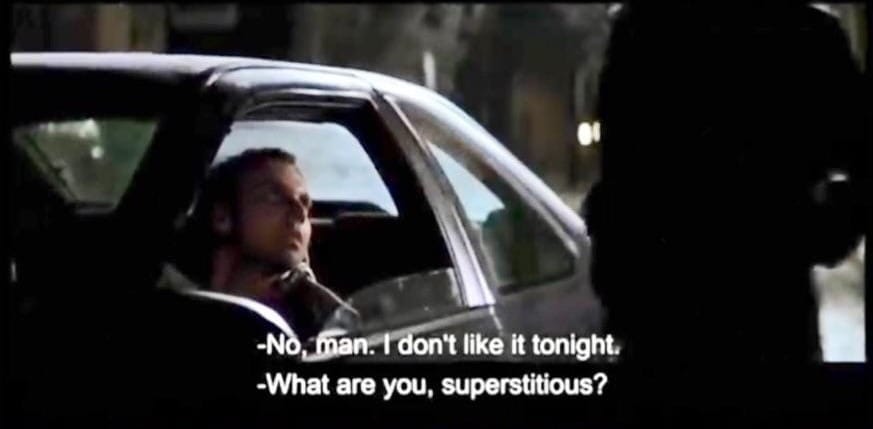
The second is civic fear. Ordinary people may experience Batman as another sign that Gotham is ungovernable. If justice comes as a monster from the roof, the city may feel less safe even when Batman is helping. A child saved by Batman may also learn that safety arrives in the form of terror.
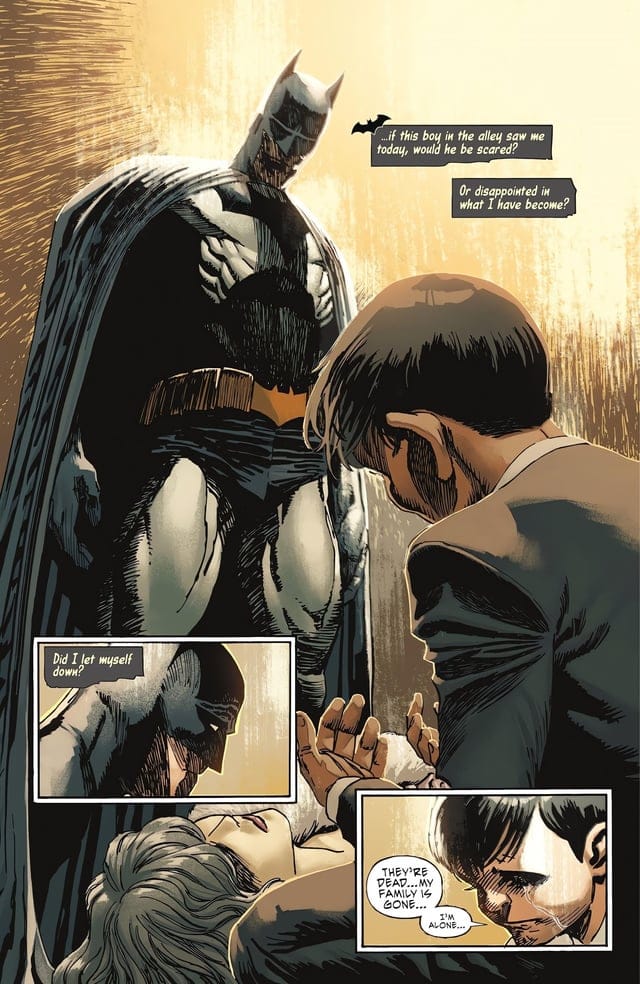
The third is imitation fear. Batman teaches others that trauma plus symbol plus violence can alter the field. Some people will interpret that as rescue. Others will interpret it as permission. This is the Riddler problem, the copycat problem, and the vigilante escalation problem.
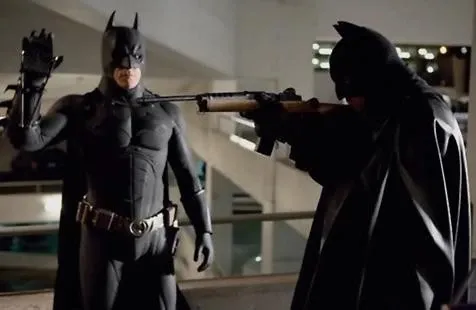
Batman cannot control the meaning of his fear once released, nor can he dismiss its other consequences behind "I did not intend that", or "I also help".
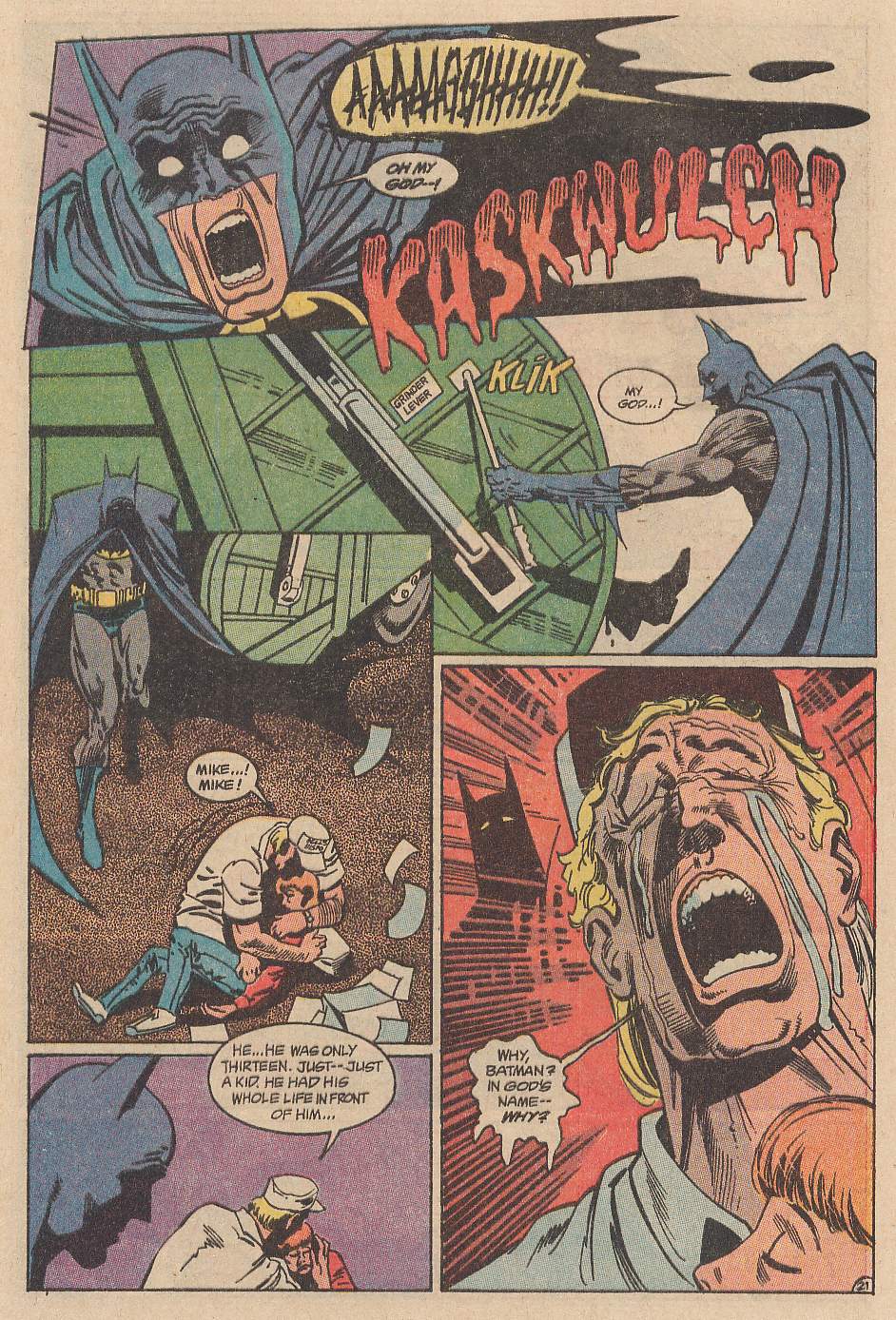
A morally serious Batman must therefore always convert fear into something else over time. At first, fear may be Better. Predators need to stop. Victims need time. Institutions need pressure. But if Batman remains only fear, then he preserves and deepens the grammar of predation. He becomes the biggest thing in the dark, not the end of the dark’s authority.
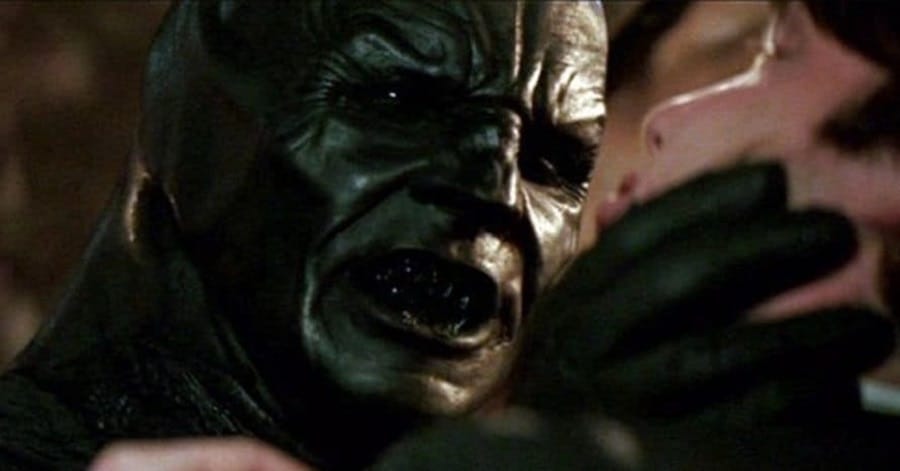
The strongest Batman is the one whose presence makes fear less necessary, not the one criminals fear most.
Surveillance.
Batman sees too much.
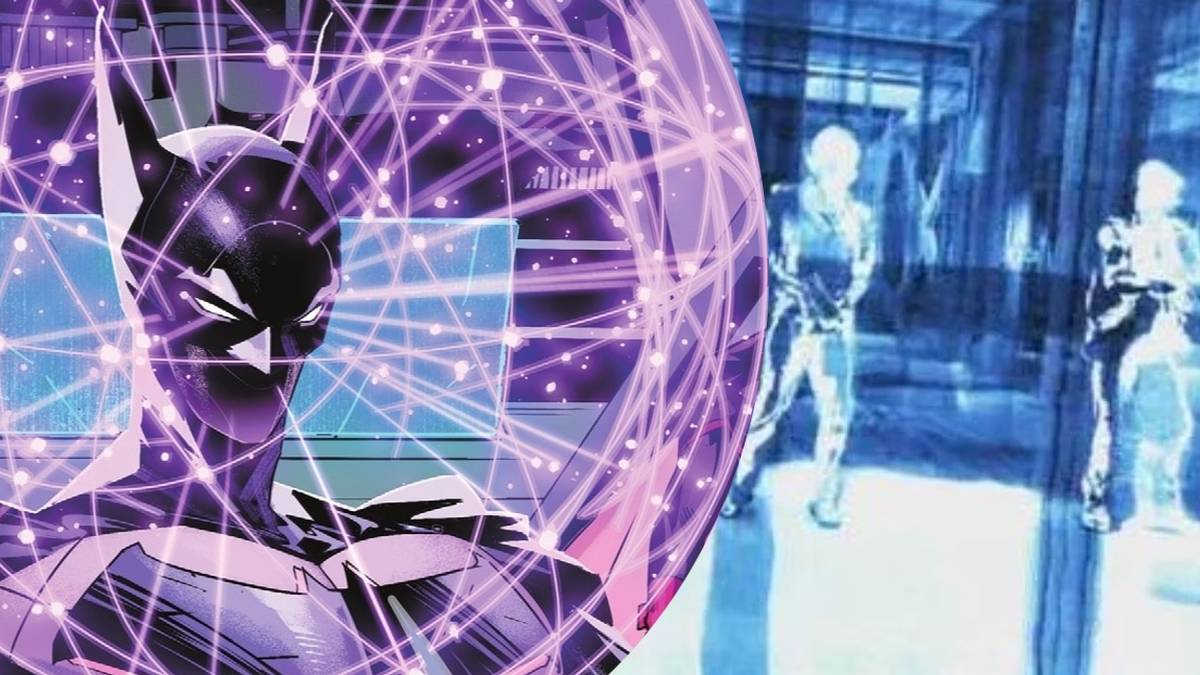
Detective work requires information. Batman needs evidence, patterns, records, traces, informants, surveillance, forensic tools, hacked databases, satellites, wiretaps, hidden cameras, facial recognition, sonic mapping, drone networks, and enough processing power to make civil liberties unable to stop him.
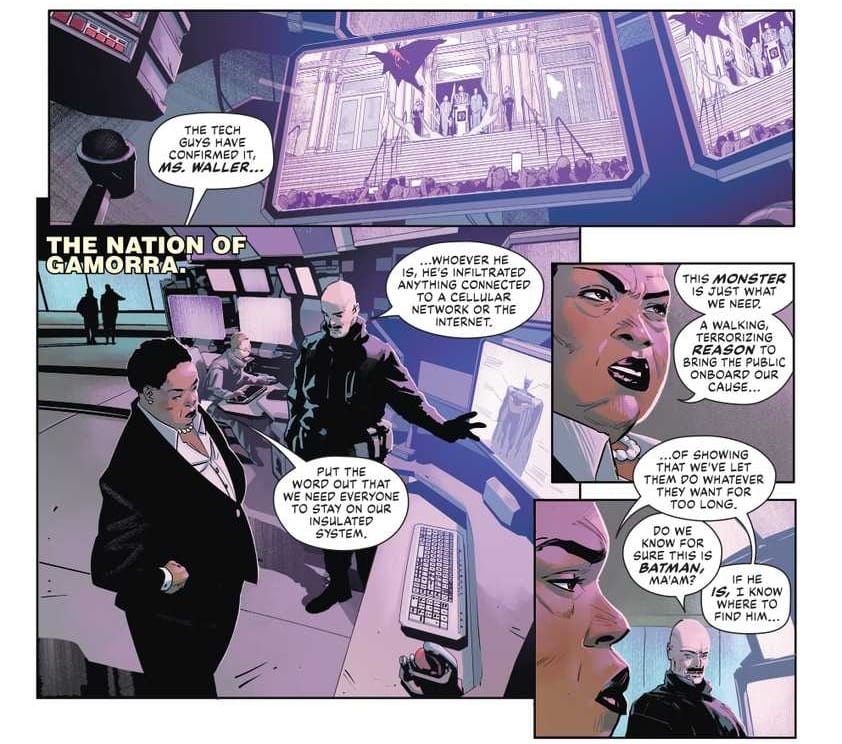
Batman cannot be the world’s greatest detective if he refuses to look, but the line between truthful contact and domination is thin.
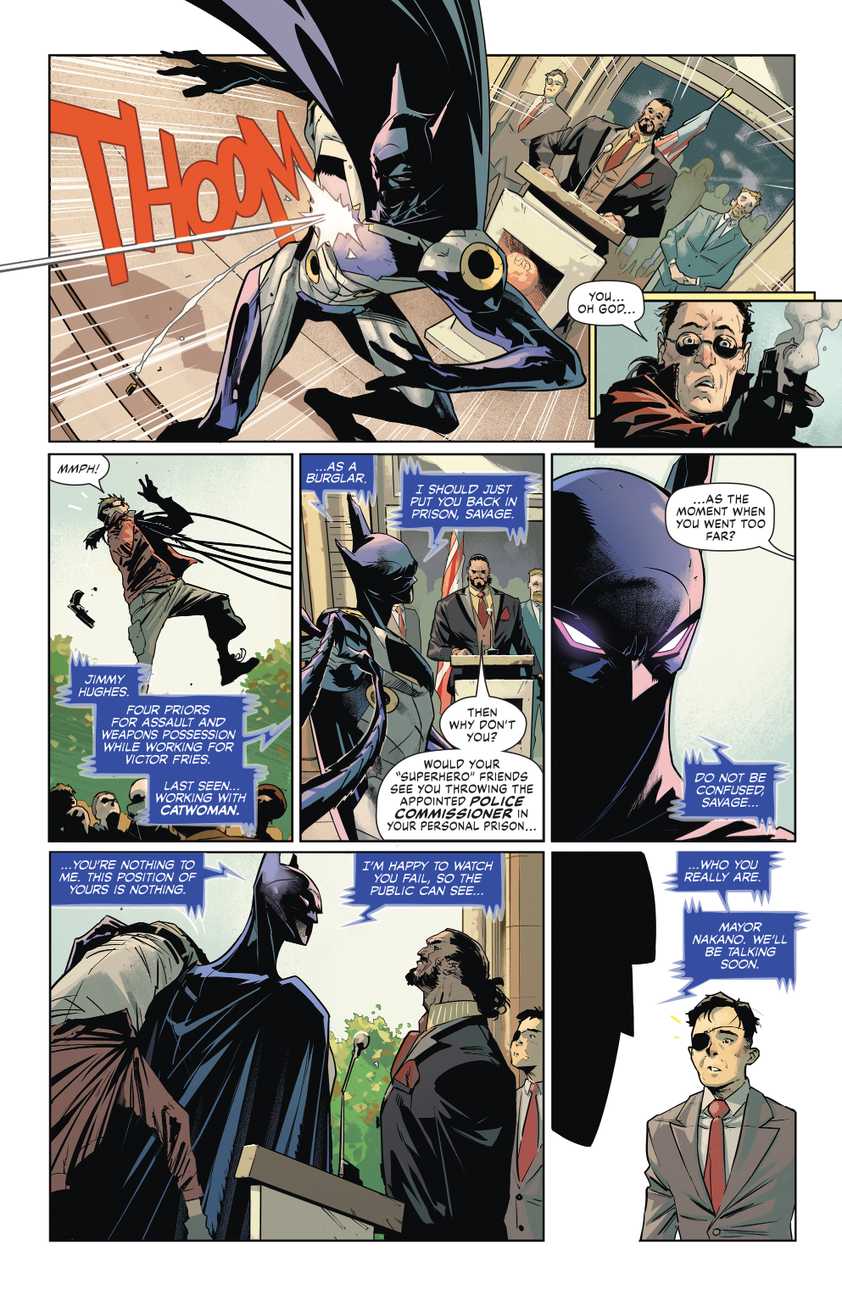
Modal Path Ethics values accurate field perception. You cannot repair what you refuse to see.
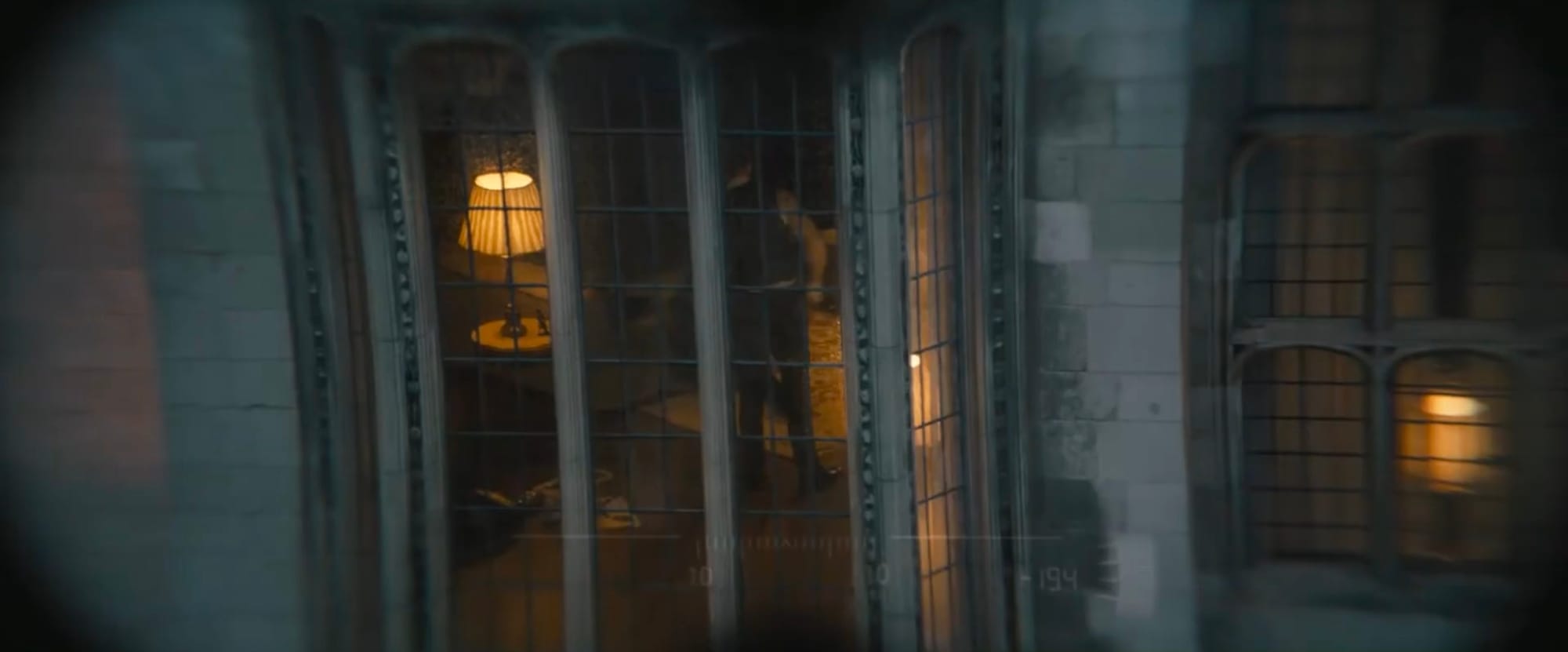
Total observation can still become its own harm. A watched field is not automatically a repaired field. People under surveillance lose privacy, spontaneity, trust, and practical freedom. They alter behavior because they may be seen. They now become data inside someone else’s intervention system.
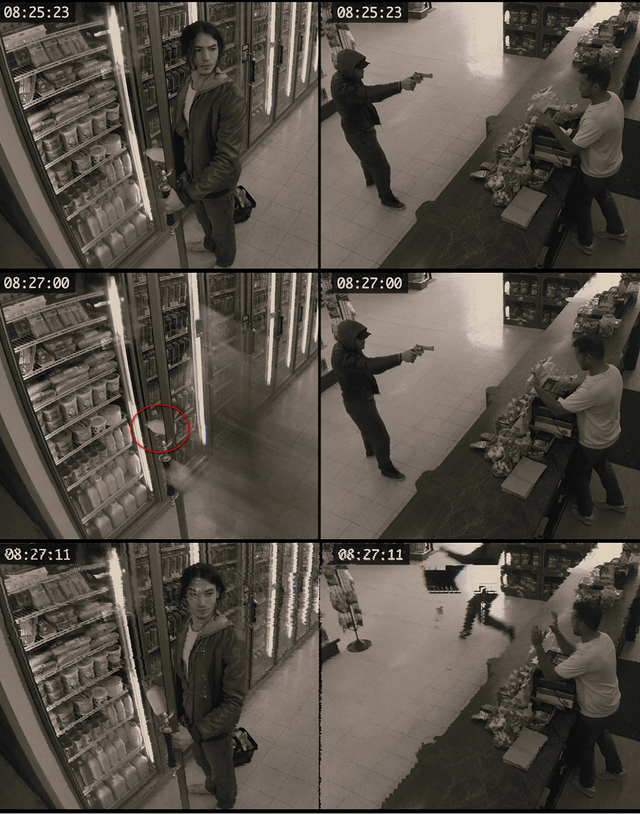
Batman’s surveillance is morally tolerable only when constrained by necessity, proportionality, minimization, and accountability. That is difficult because Batman is largely accountable only to himself.
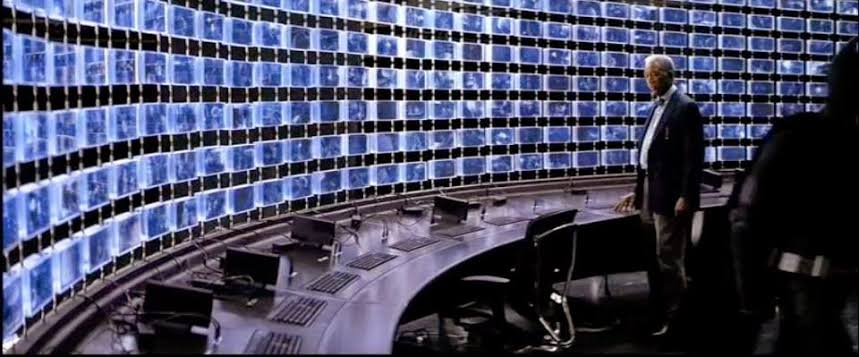
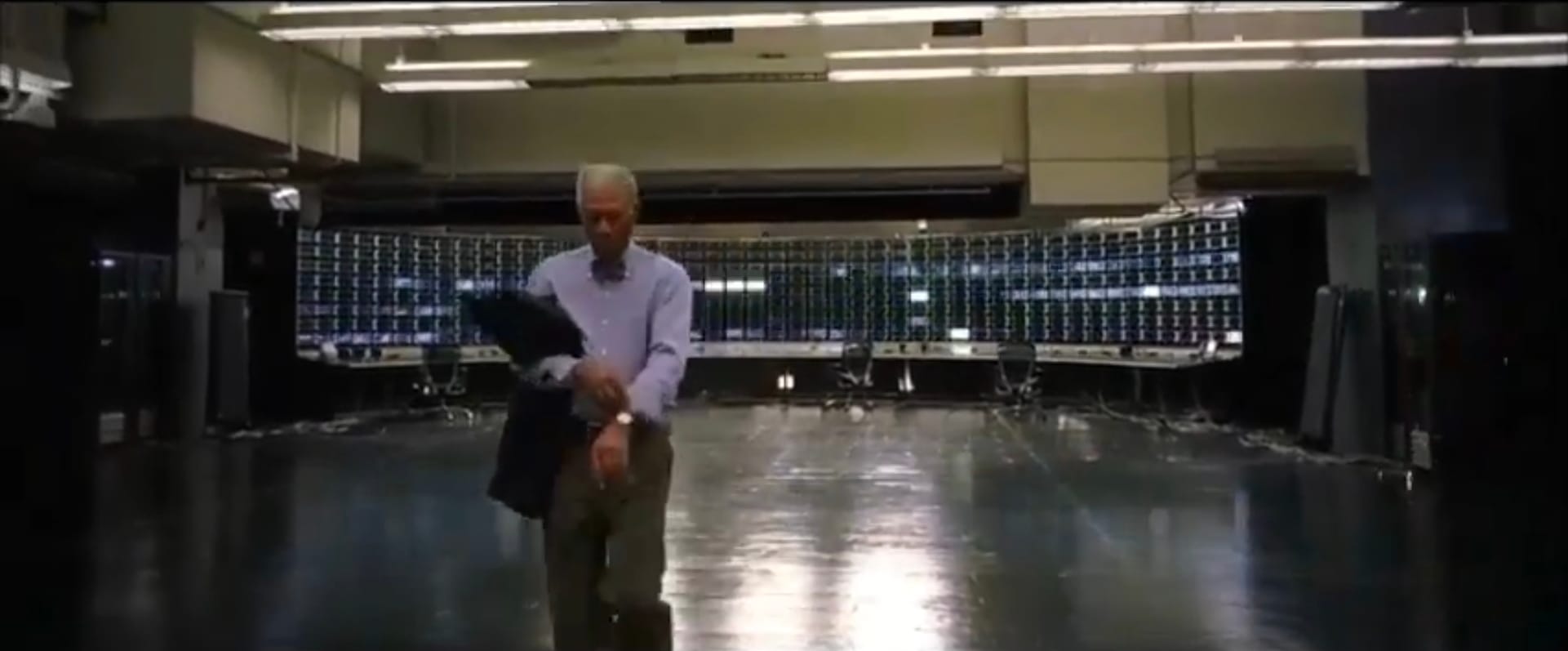
This becomes explicit in The Dark Knight, where Batman’s sonar surveillance system turns the entire city into an instrument for locating the Joker. The immediate goal is urgent. Joker is an active catastrophe. The system may be Better for that moment.
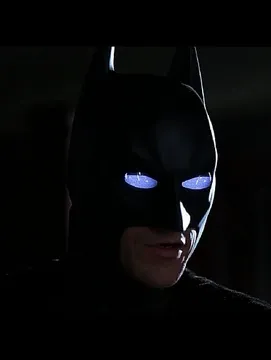
Lucius Fox’s objection remains structurally correct: the tool is too much power for one bat man. The fact that Batman uses it once and destroys it matters because destruction is the only thing keeping this emergency Better from becoming his permanent sovereignty.
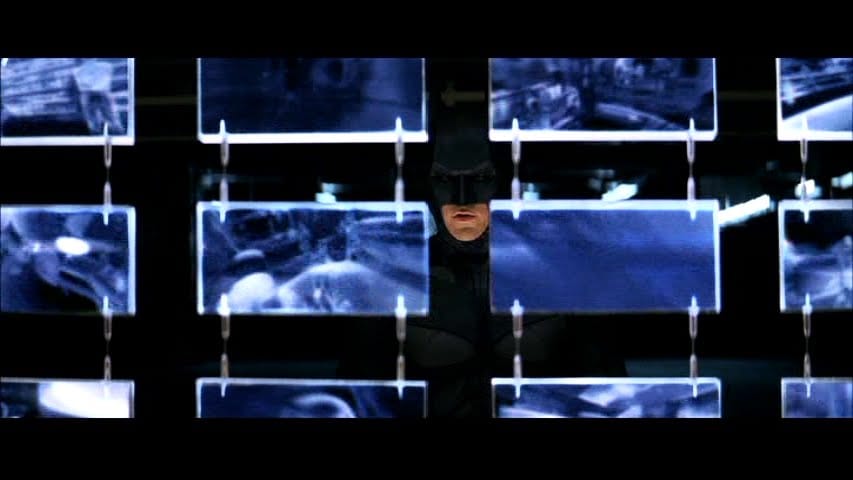
A Batman who builds the god-view and keeps it has crossed a line. A Batman who builds it, recognizes the danger, and destroys it remains morally damaged but still field-responsive.
The Trauma Factory.
Robin is the question Batman cannot dodge.
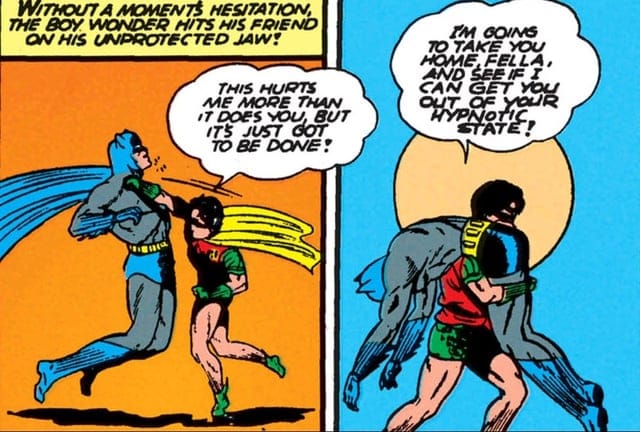
Batman recruits children into danger. That is true in enough versions that no defense can just ignore it. Dick Grayson, Jason Todd, Tim Drake, Stephanie Brown, Damian Wayne, Cassandra Cain, and others enter a field of violence no child should ever have to navigate.
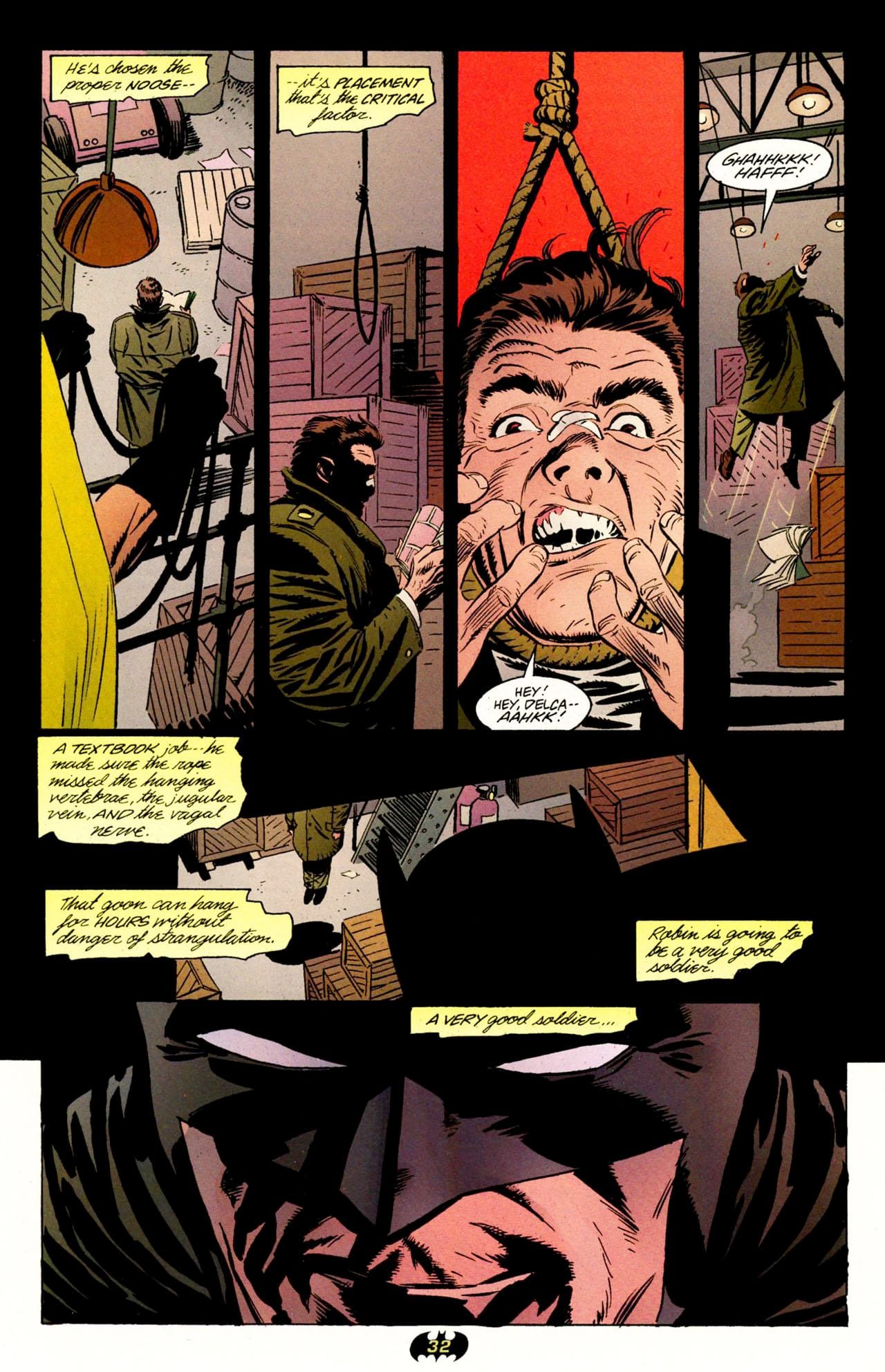
Even when they are skilled, brave, willing, or already endangered, Batman’s choice to train them for his war carries enormous moral burden.
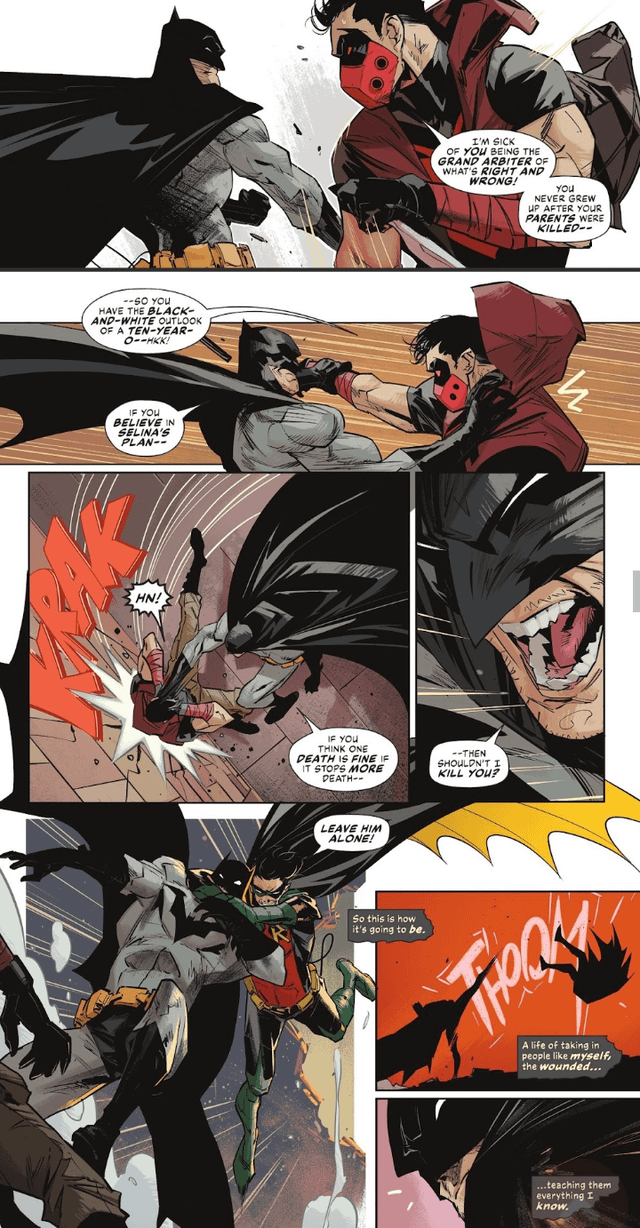
However, Robin is not only child endangerment. Robin is also Batman’s strongest argument against himself.
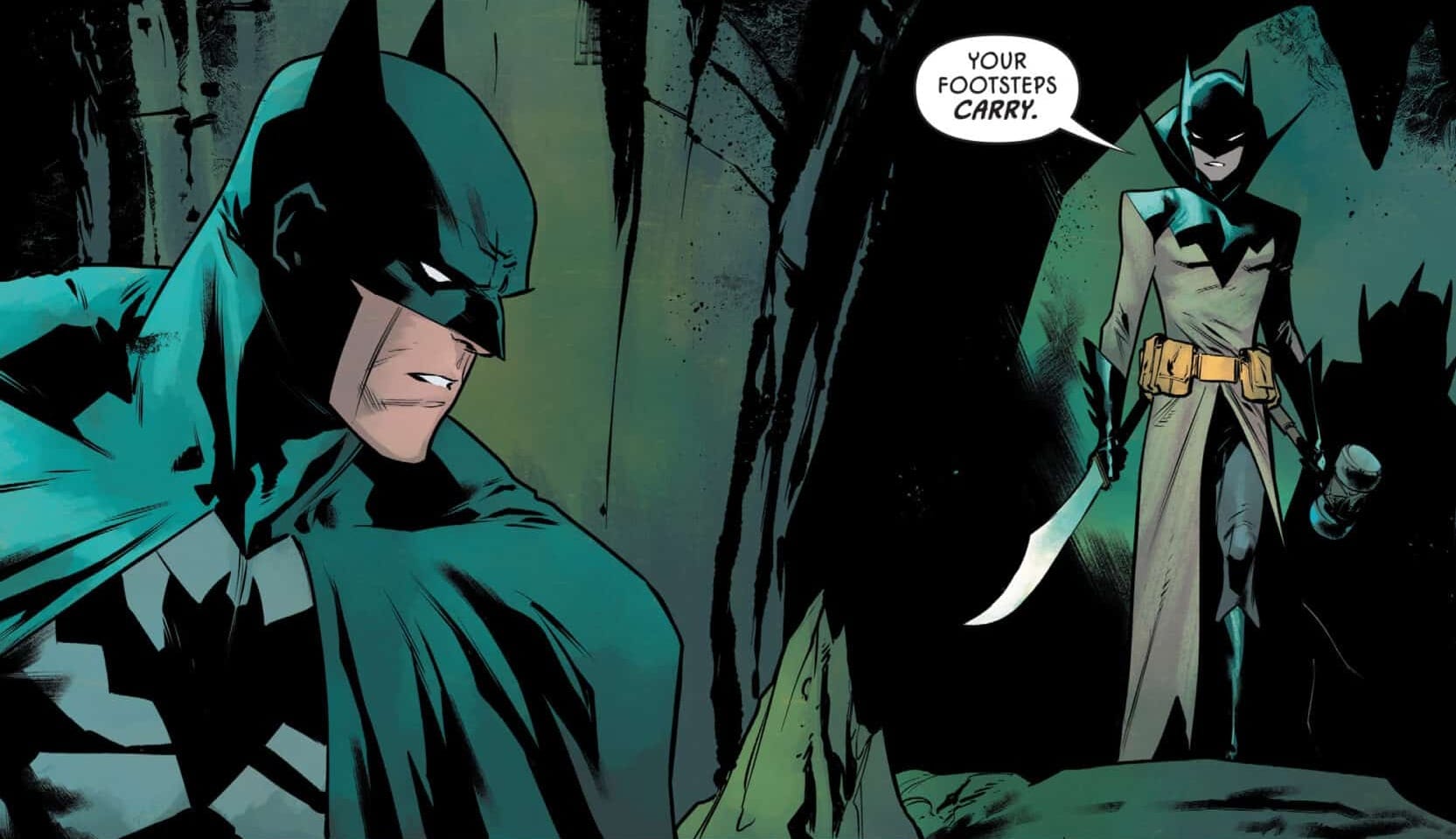
With Robin, he now has to become responsible to a living future. He can no longer just stay in the alley. He has to teach, restrain, explain, protect, and sometimes let go.
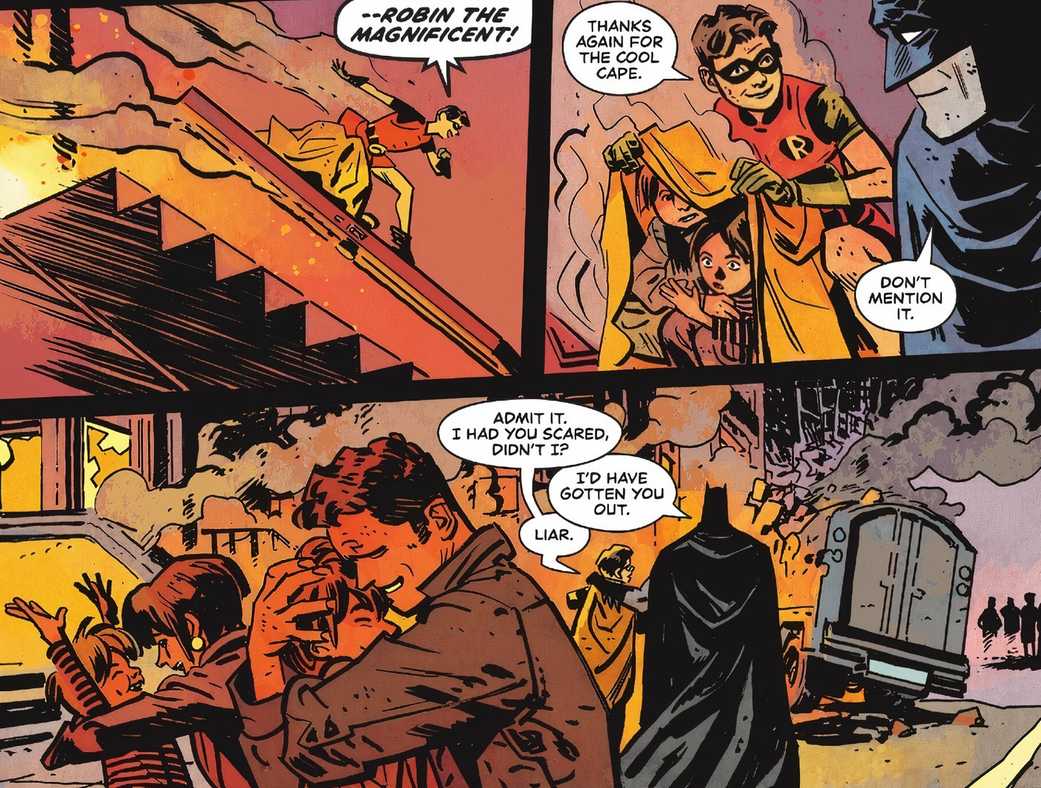
Robin introduces color into the field as moral correction. Robin asks whether Batman can become relational rather than only punitive.
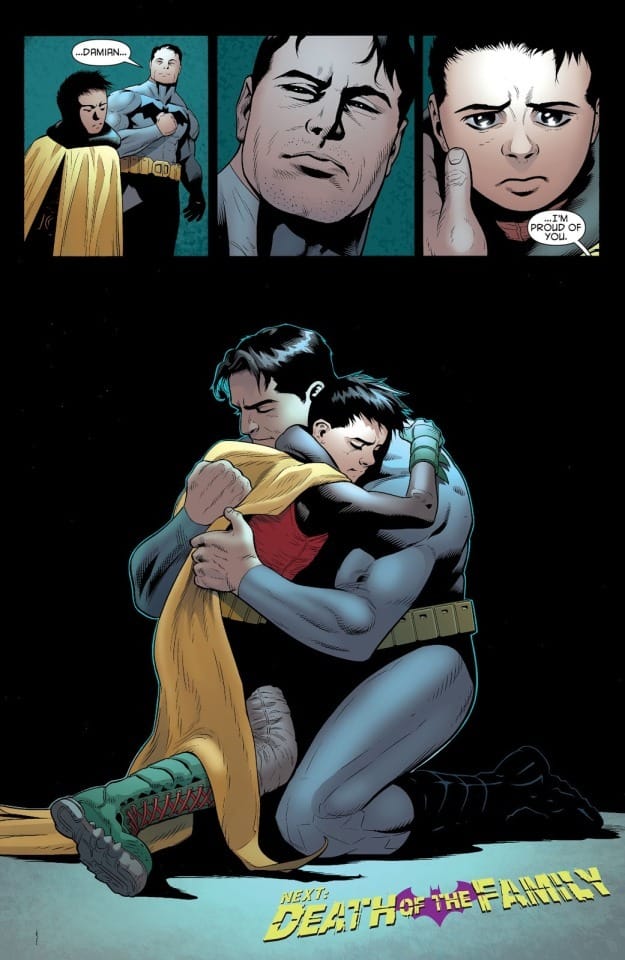
Dick Grayson is the success case.
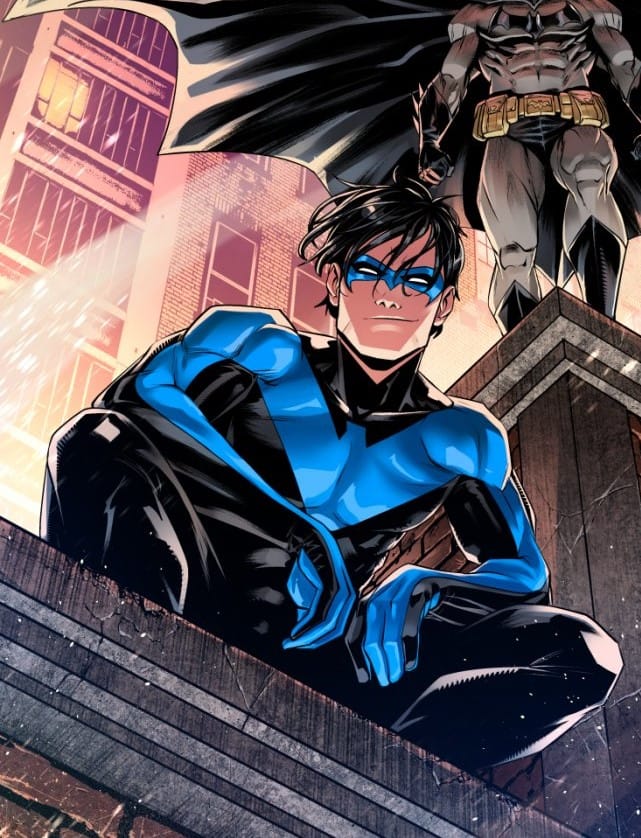
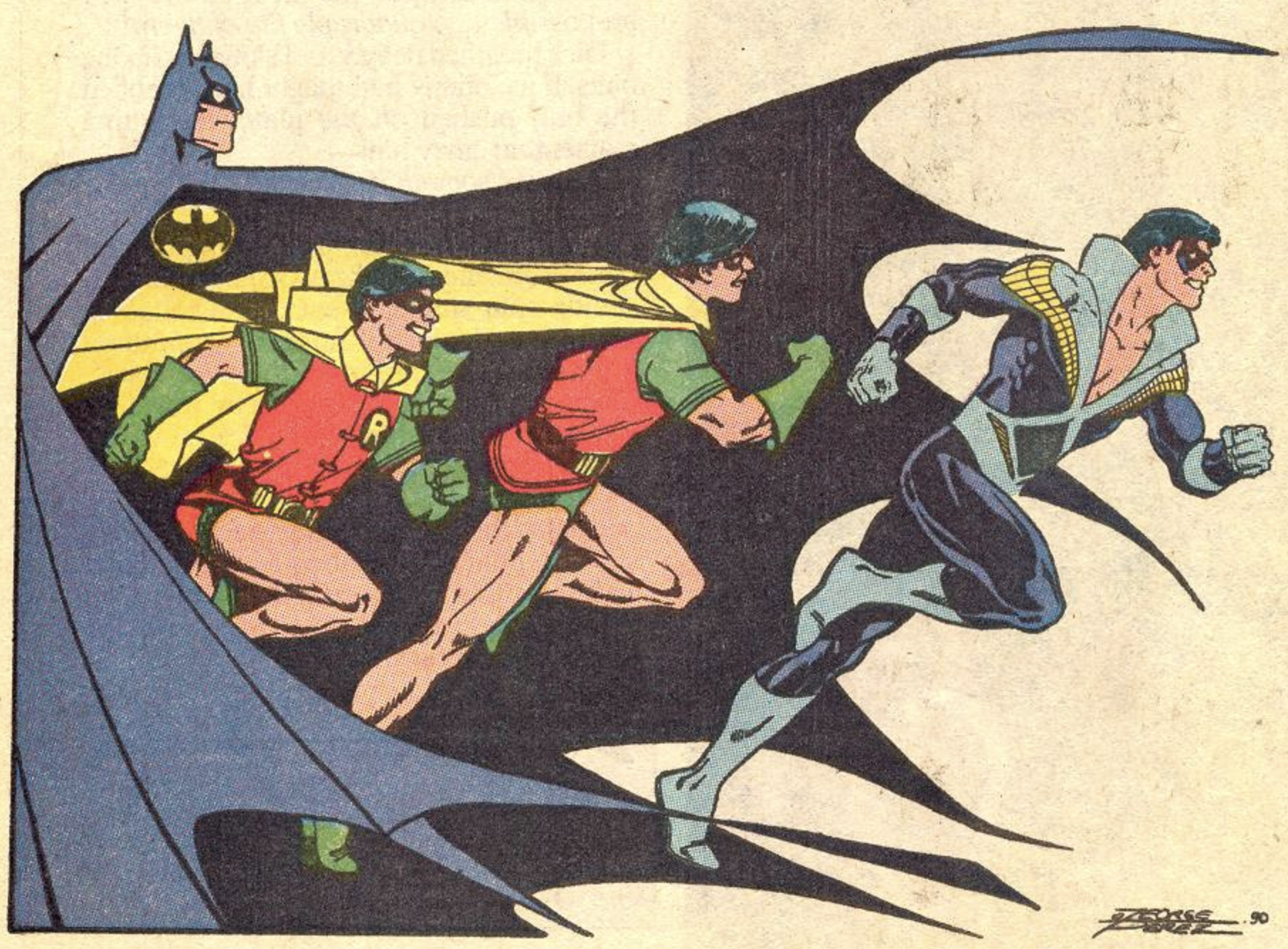
His parents die in front of him. Bruce recognizes the field instantly because he has lived it. The dangerous thing would be to let the child disappear into his same solitary vow. Training Dick is morally risky, but abandoning Dick to unstructured grief may also be harmful. The best versions make Robin a supervised, disciplined, relational path through trauma that leads to Nightwing. Dick leaves, and becomes his own agent. He is not turned into Batman’s copy. That means his field did open; he was not consumed by the bat.
Jason Todd was a complete disaster that cannot ever be dismissed.
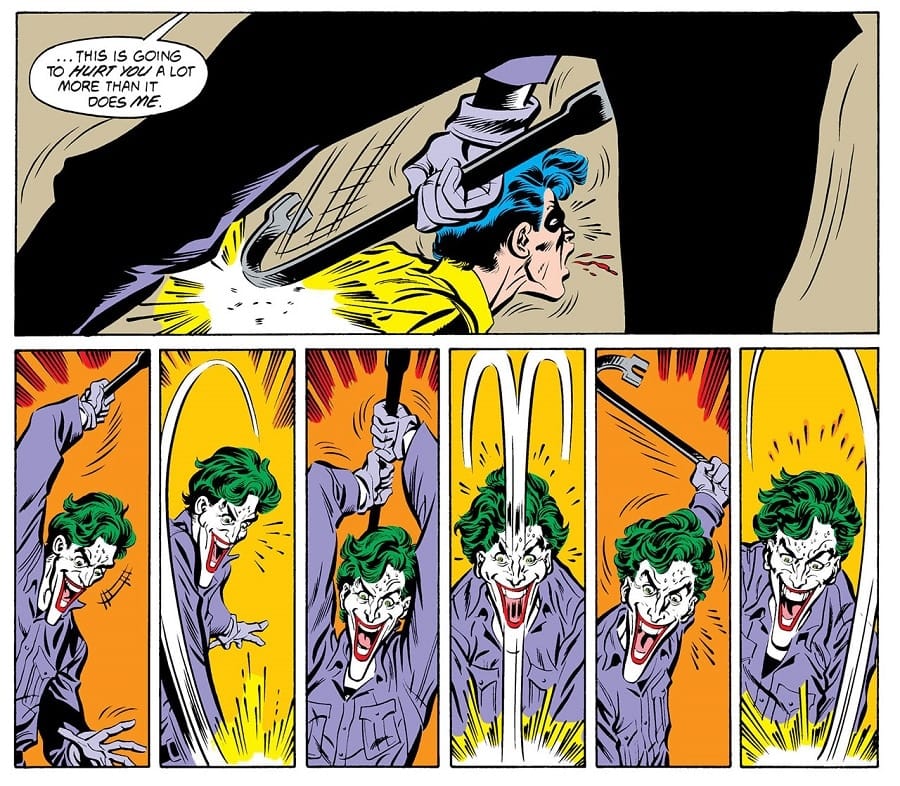
Jason’s death plainly exposes the cost of making children part of Batman’s war. There's just no arguing around that one.
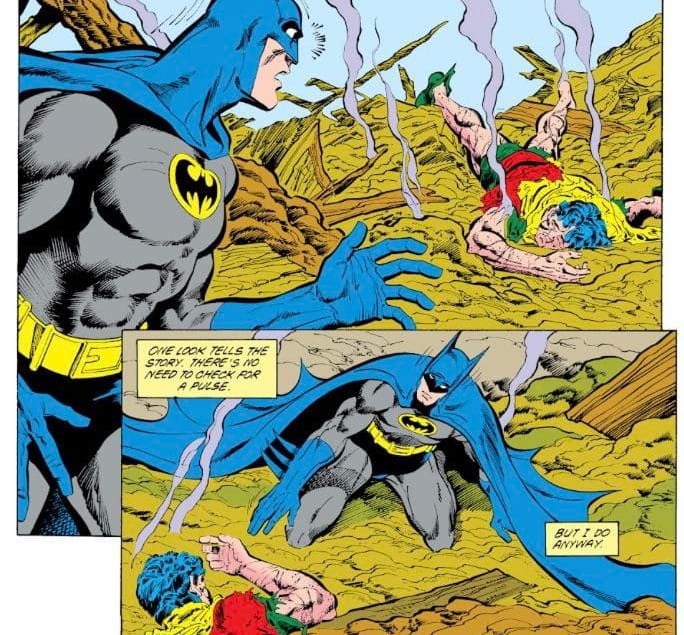
His resurrection only intensifies the accusation. Red Hood is not only angry that Batman did not save him, he is angry that Batman’s moral restraint continues after Joker proved it could not contain him. Jason asks why Batman’s rule survives when children do not.
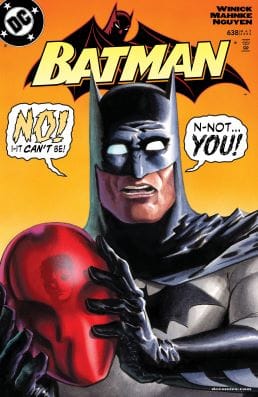
The no-kill rule remains necessary, but Jason reveals its undeniable moral remainder. Batman’s refusal to execute Joker may be structurally required, but it does not erase the fact that Gotham repeatedly fails the victims who carry the cost of that restraint, including Jason.
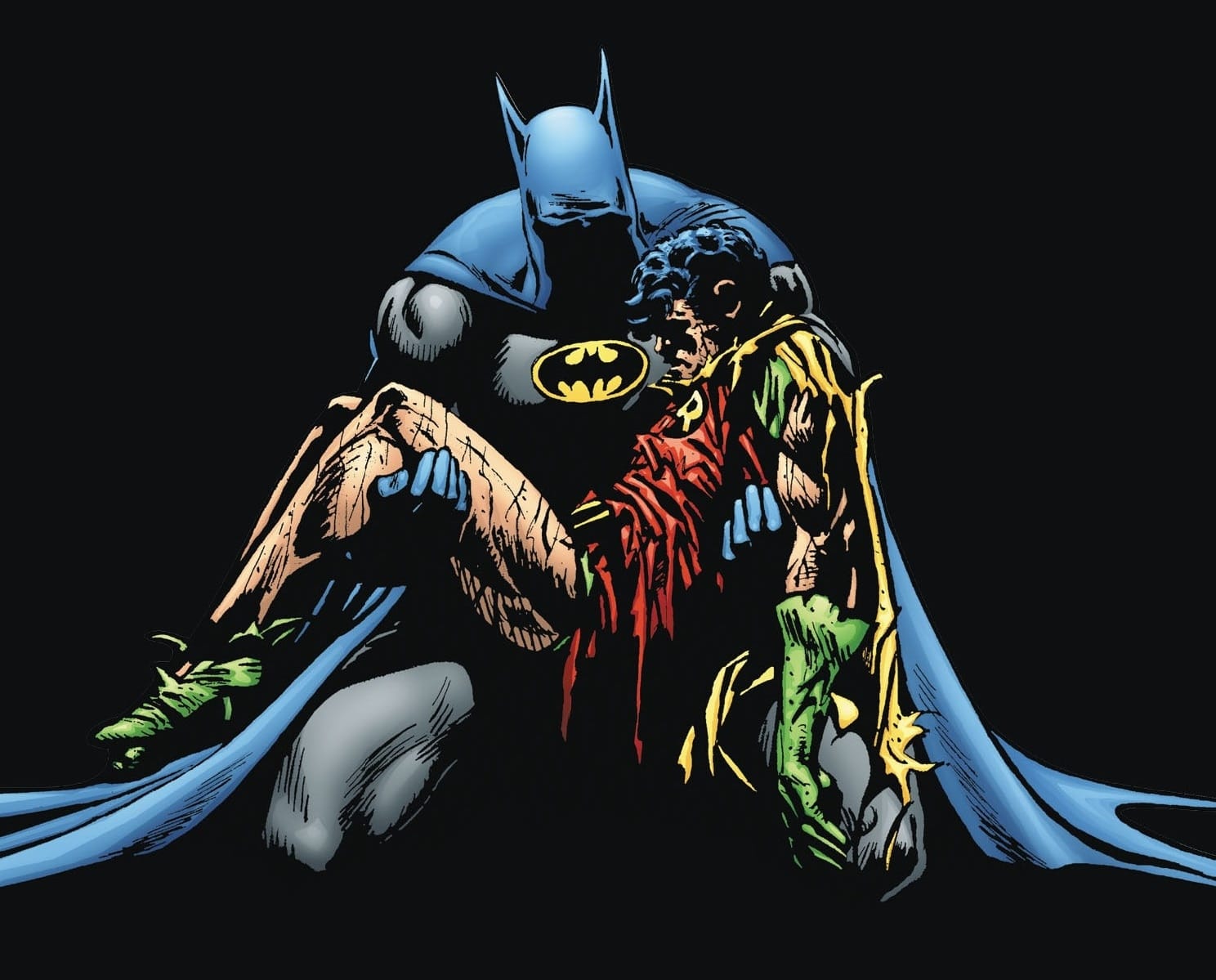
Robin makes Batman better only if Batman remains accountable to what Robin risks. If the sidekick becomes proof of Batman’s inspiration, the field is lying. If the sidekick becomes a person with a future beyond Batman, then the field may be repairing.
The Arkham Cycle.
A villain harms the city. Batman catches them. The police receive them. Courts or doctors process them. Arkham contains them. Then Arkham fails. The villain escapes, worsens, returns, repeats.
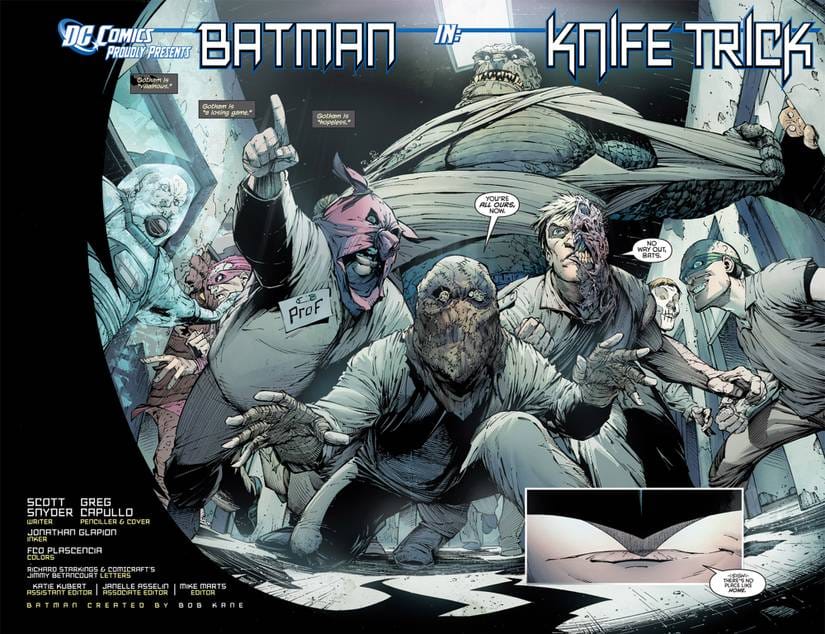
This loop makes the stories possible, but it also makes Gotham morally absurd.
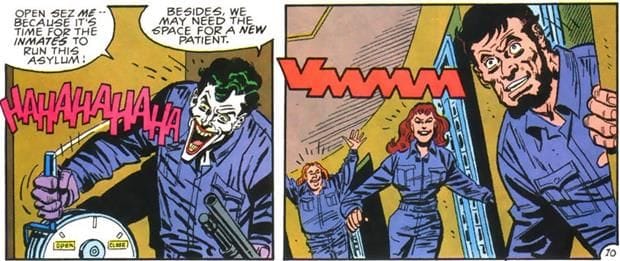
If a hospital or prison repeatedly releases catastrophic threats back into the city, the moral problem at hand is definitely no longer only the villain.
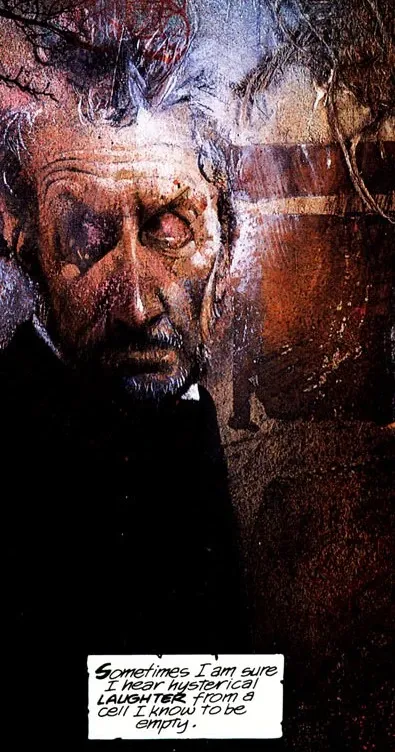
The institution has become part of the harm’s reachability. Every escape increases the burden on future victims. Every failed treatment or failed containment thickens Gotham’s resistance against repair.
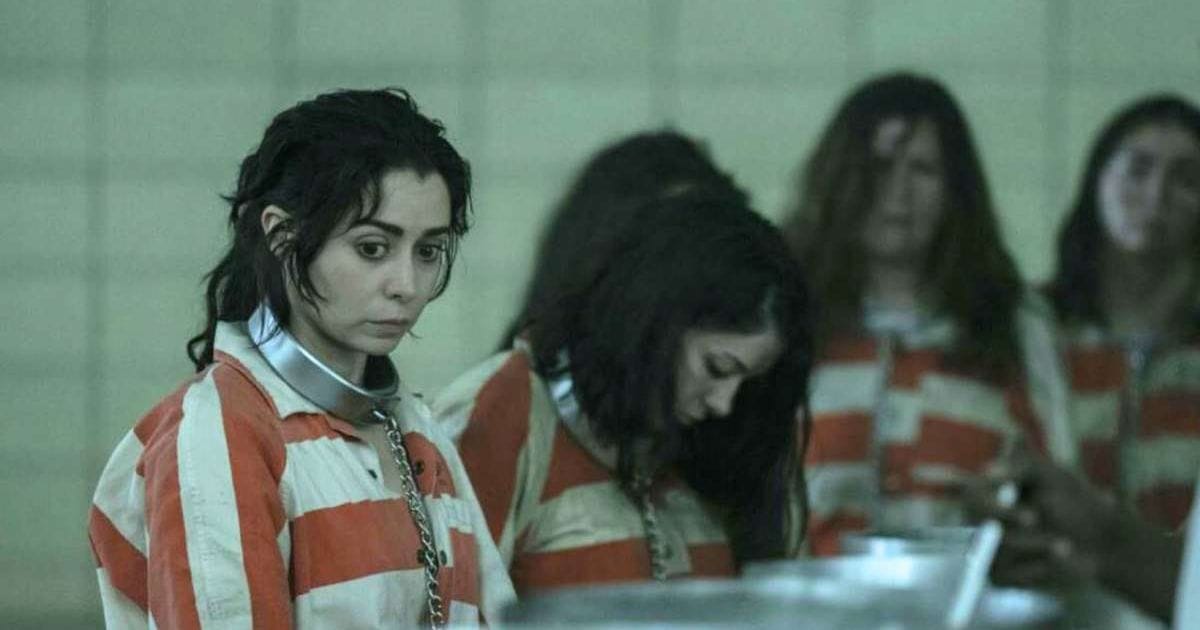
Batman cannot solve this by punching harder on behalf of Gotham.
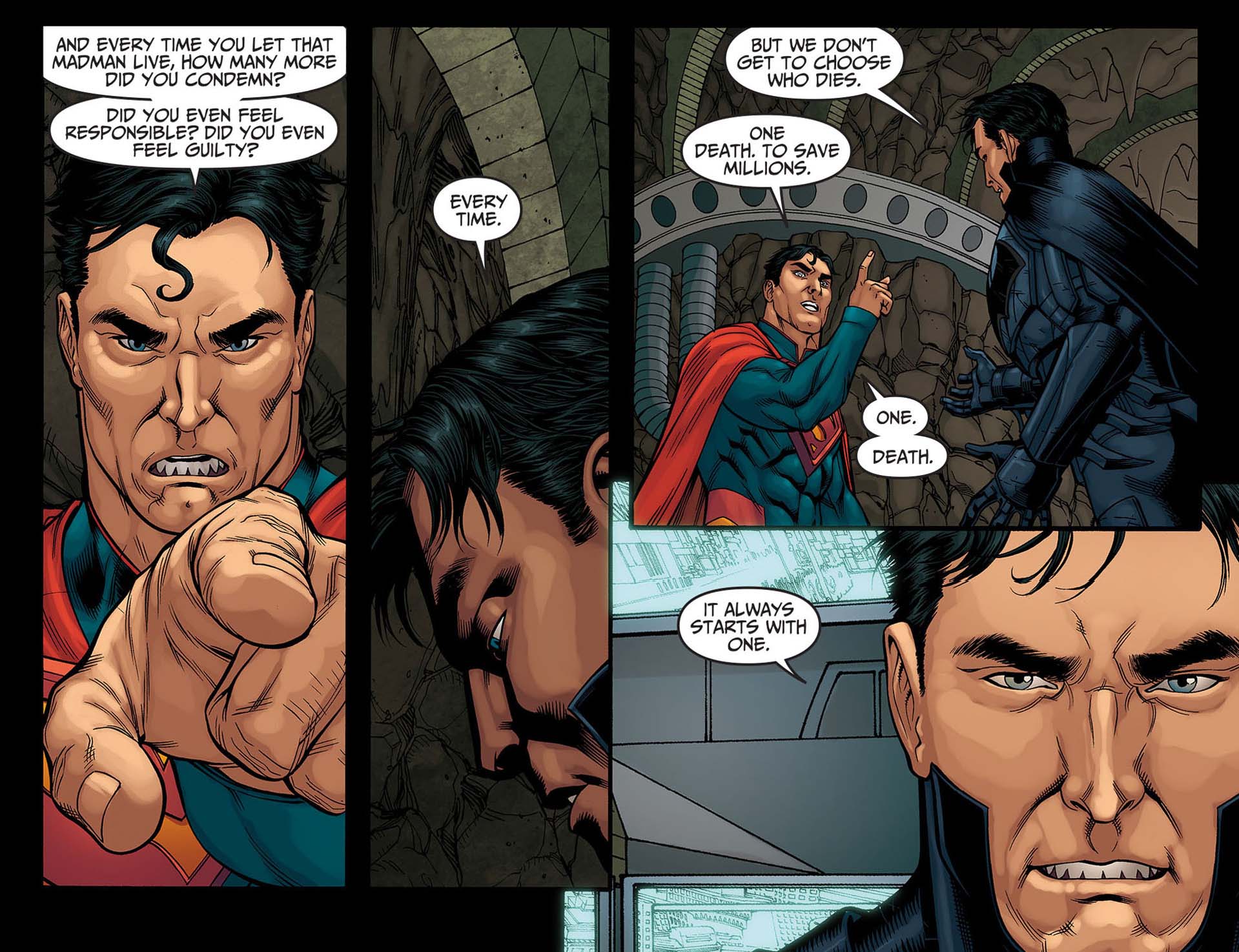
The Arkham loop requires deep institutional reconstruction. Some villains need treatment. Some need permanent containment. Some need both. Some are clearly not treatable under existing conditions.
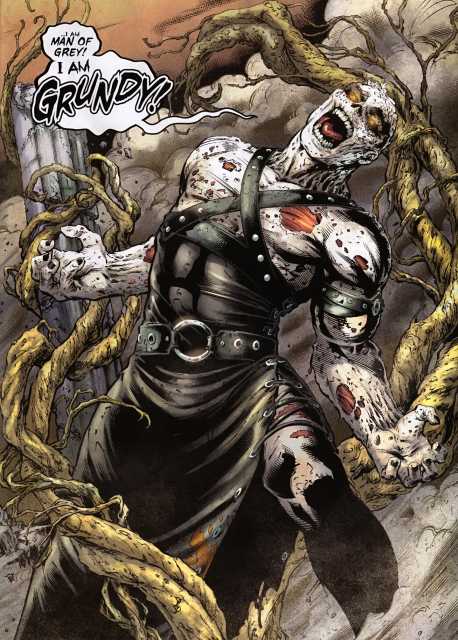
Some should never be placed in an institution as porous as Arkham. Some should be understood as damaged people without pretending their danger is manageable through sympathy alone.
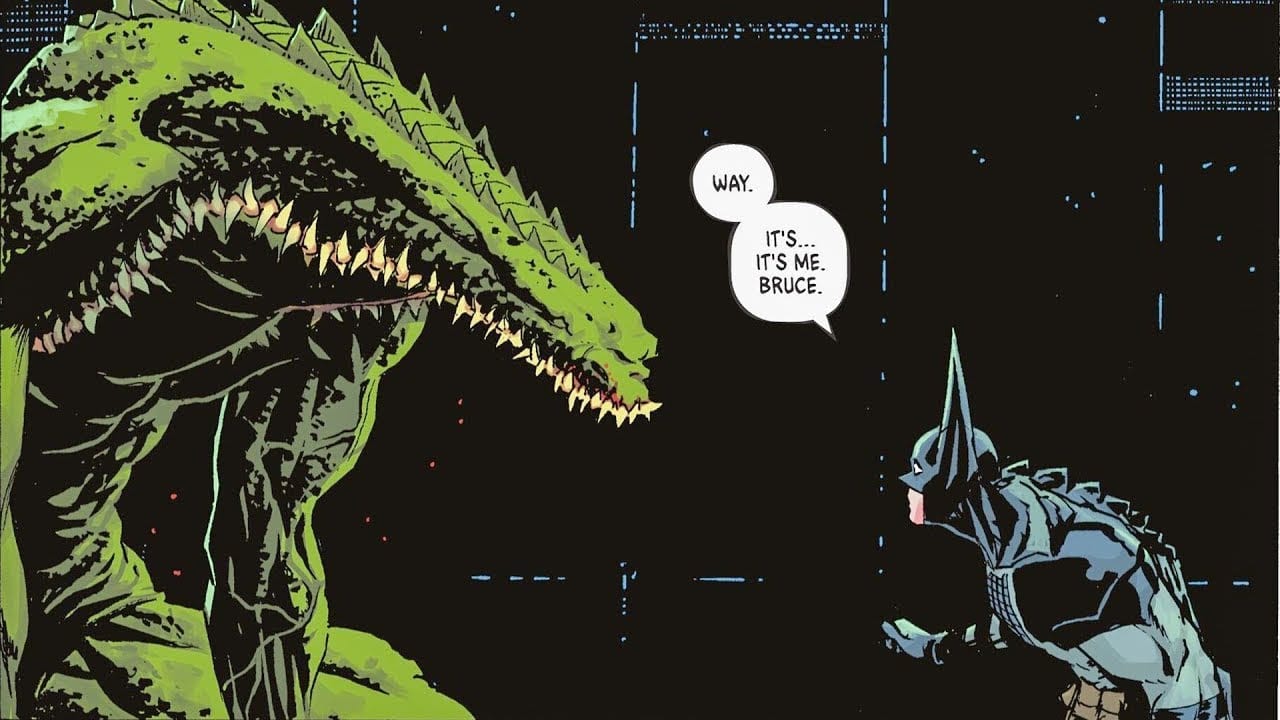
A caring Batman sees the locus. A serious Batman sees the risk. A field analyst sees that both are true.
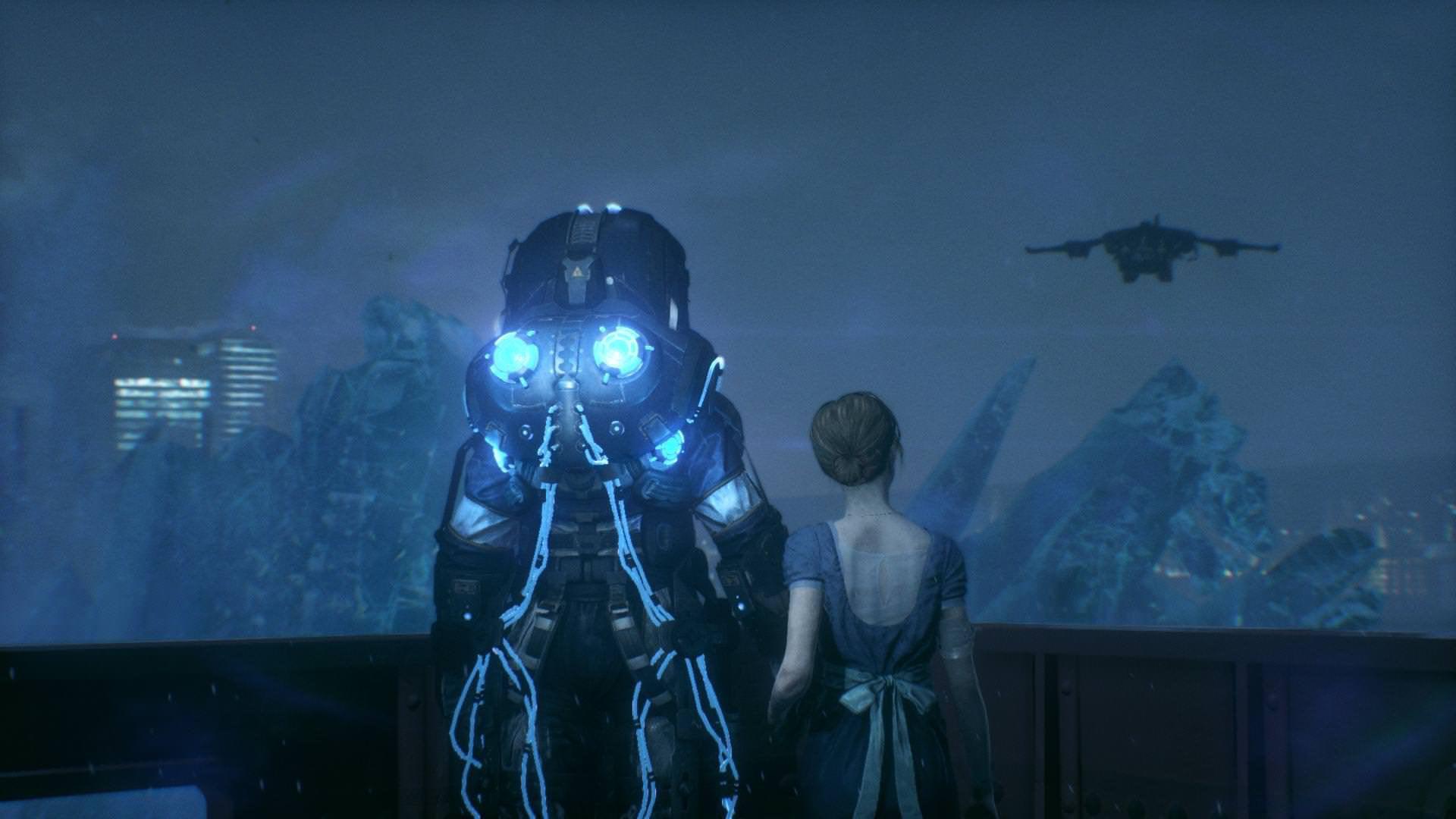
This is why Mr. Freeze is so important. In his best form he is not a clear-cut criminal, more like a damaged care-field: a husband trying to preserve his wife through monstrous means. Batman must stop him, but stopping him without understanding Nora, grief, disease, and desperation would miss the field.
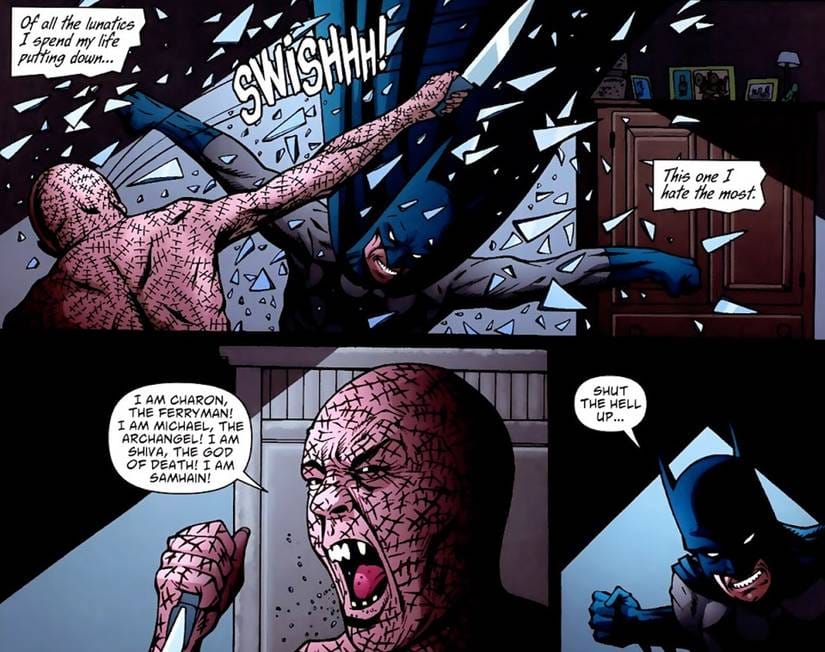
Joker presents the exact opposite problem. Understanding him may produce absolutely no repair path. Sympathy may be irrelevant. He appears to be a locus whose continued liberty very predictably destroys other loci.
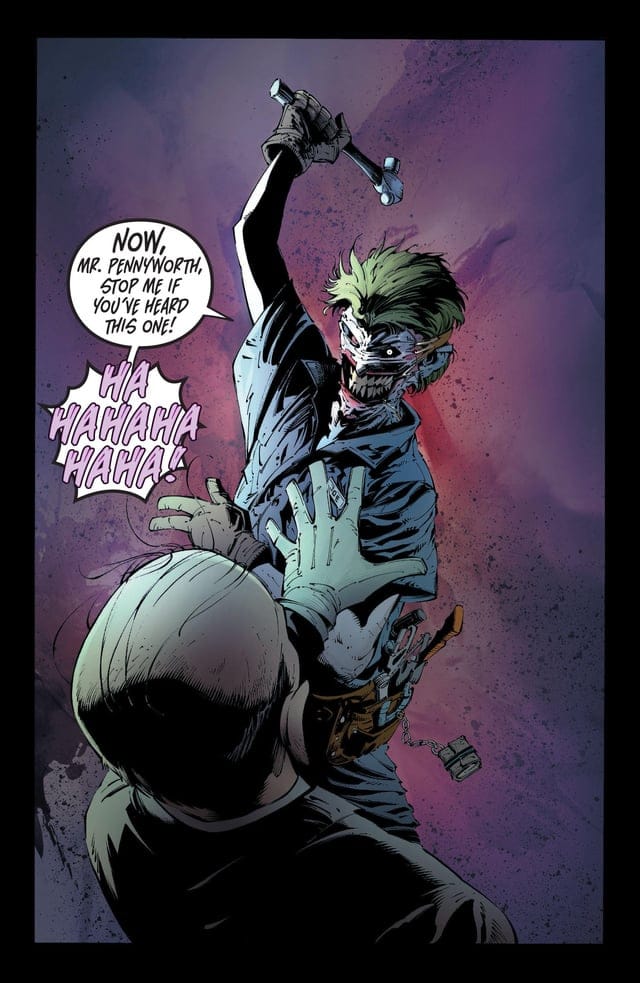
Batman’s no-kill rule prevents him from carrying out his execution, but it does not imply ordinary treatment is now sufficient. The city must build a containment field strong enough that Batman’s restraint does not become the later victims’ burden.
The Blindspot.
Batman's most consistent difficulty as a field analyst is that Bruce Wayne himself is also part of the field he is analyzing.
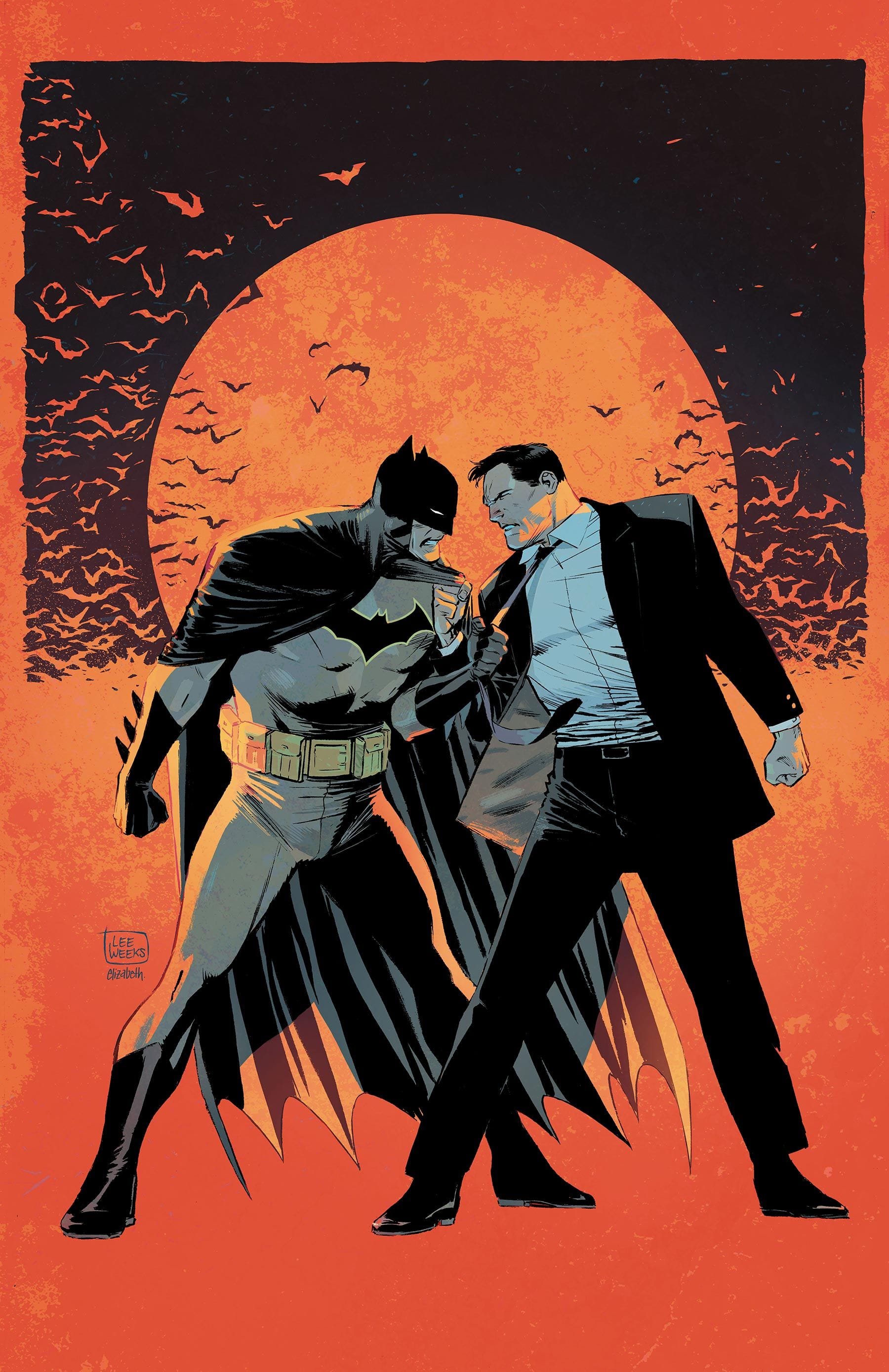
Batman prefers to stand above Gotham as a watcher, detective, avenger, and instrument. But no locus is ever isolated. Bruce Wayne is never outside Gotham. He is actually one of its largest concentrations of power. He is not only the orphan harmed by the city.
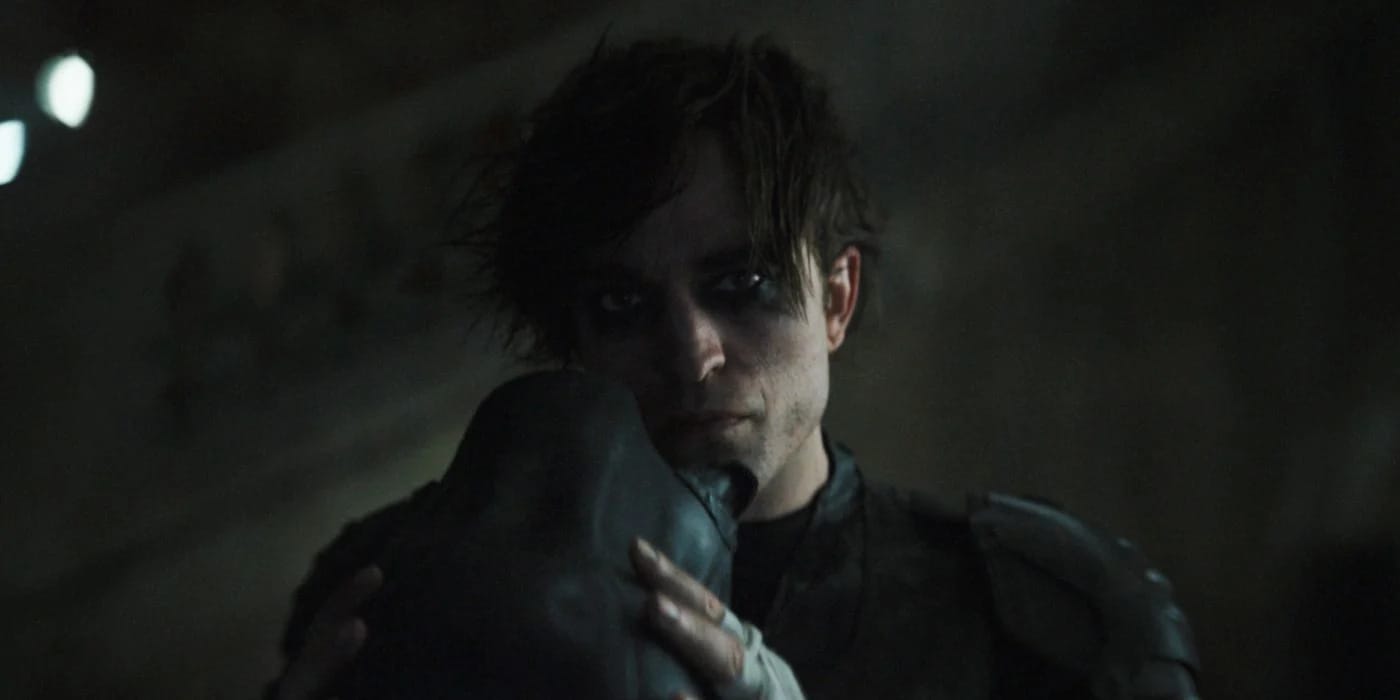
Bruce Wayne is also an heir to its wealth, architecture, philanthropy, political access, boardrooms, real estate, technology, elite networks, and public mythology.

Bruce is both wounded by Gotham and empowered by Gotham. Batman and Bruce Wayne see Gotham differently. This means Bruce Wayne entering Batman's field analysis can distort him by grounding him in his own reality that he ignores to become Batman. Because of this, Bruce Wayne is always in Batman's blindspot.
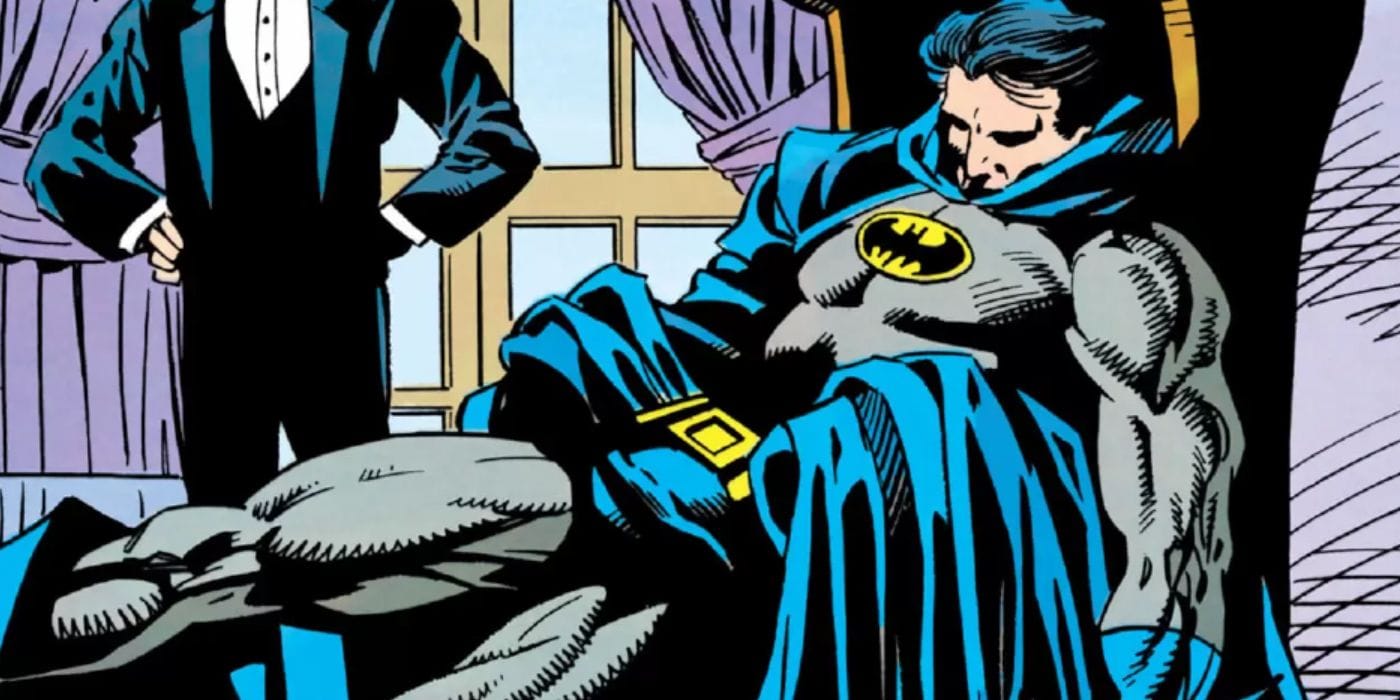
A weak Batman story just uses Bruce’s wealth as its gadget fountain to give him all the cars, planes, caves, satellites, armor, computers, and impossible medical recovery they want. The money is just genre fuel. A stronger Batman story asks the hero whether Wayne wealth is itself part of Gotham’s damaged field.
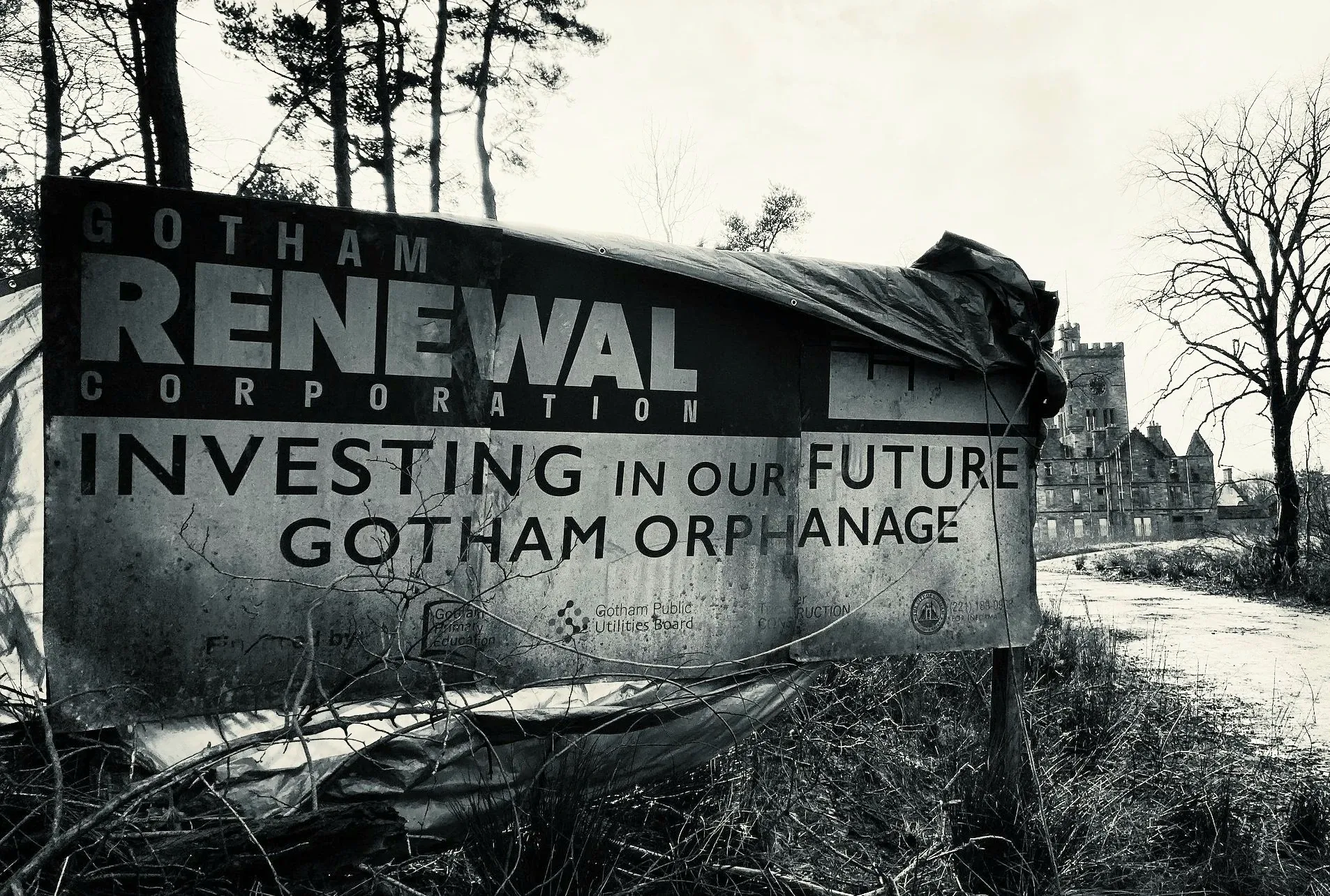
Where did all this money come from? What does Wayne Enterprises own?

What systems does it support? What harms has it ignored? What weapons did it build?

What politicians did it fund? What neighborhoods did it reshape? Whose labor does it rely on?
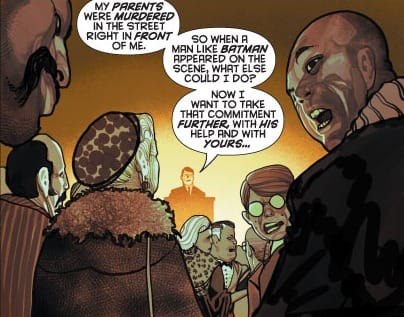
What did Thomas and Martha Wayne try to repair, and where did that repair fail?
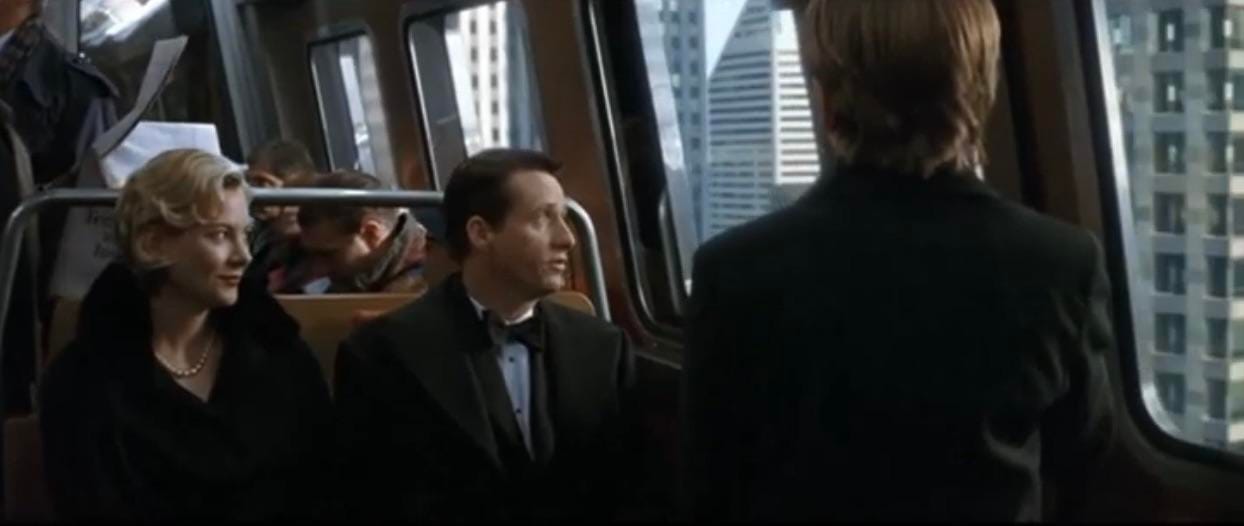
This does not mean Bruce is secretly the villain because he is rich. The field is never that simple.
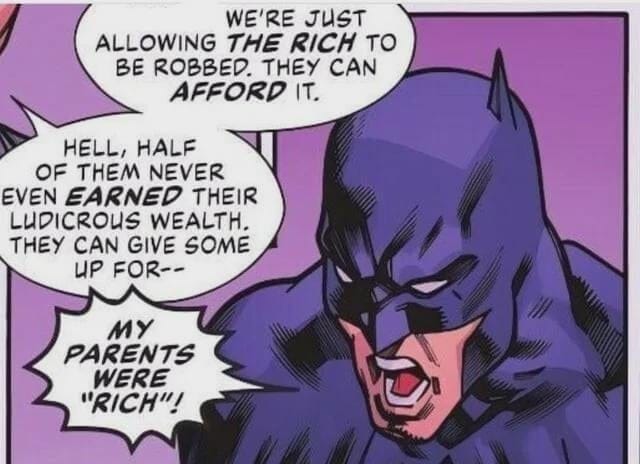
This does mean Bruce cannot treat Batman as his only serious moral output, because Batman cannot see Bruce. If the fortune makes Batman possible, the fortune must also answer to Gotham itself.
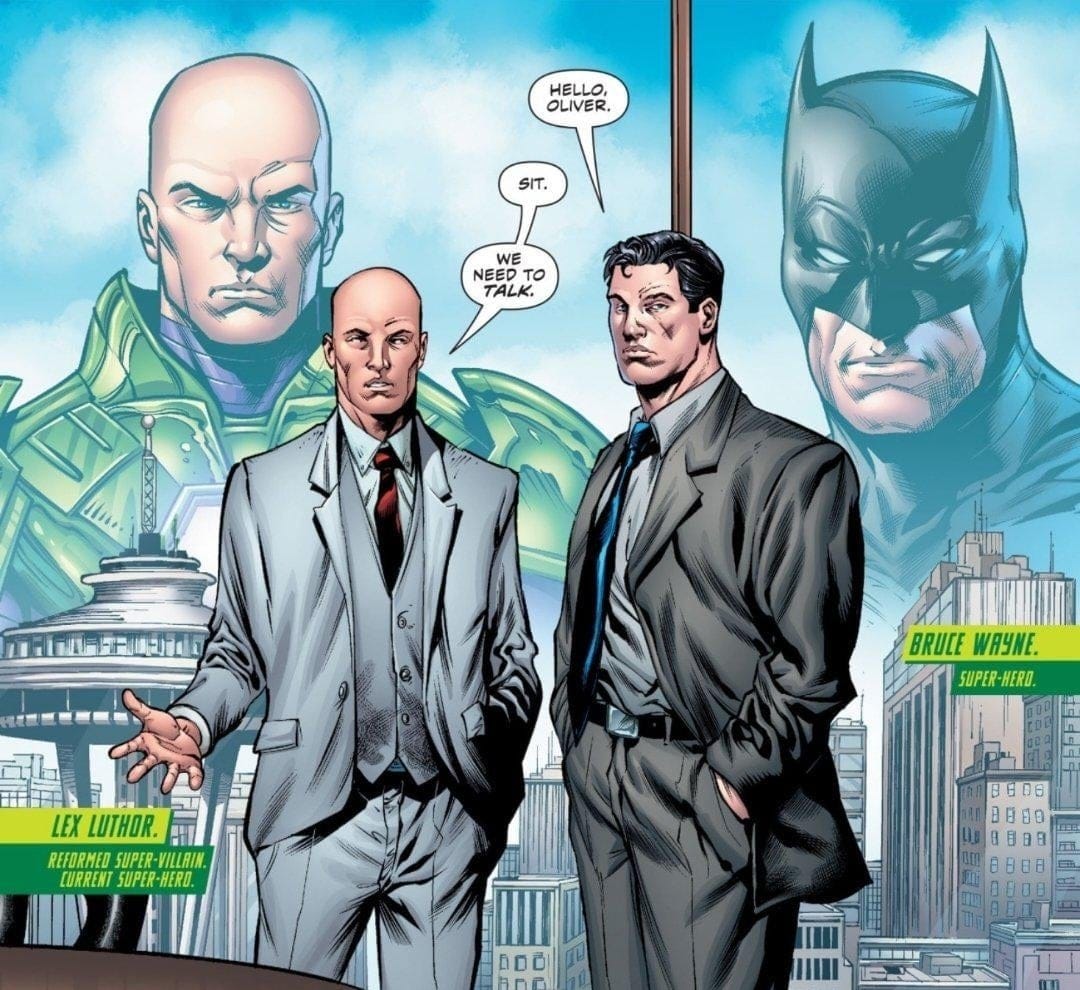
Bruce’s public work is not his cover story. It is all part of one mission. Philanthropy, institutional reform, medical funding, orphan care, housing, anti-corruption pressure, public infrastructure, and economic alternatives are not side quests to being Batman, they are all part of Batman.
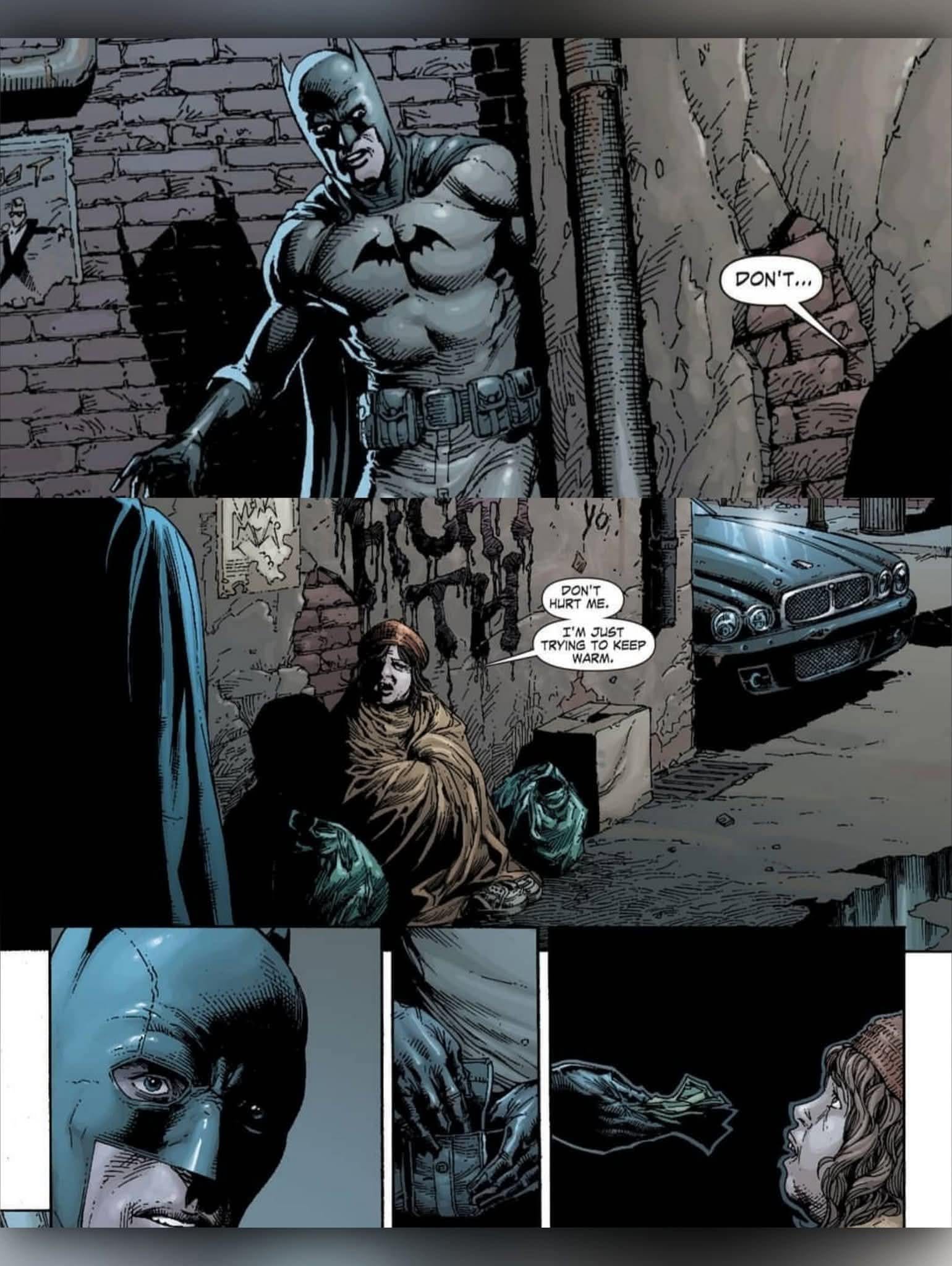
If Bruce ever neglects that half, then Batman immediately becomes morally suspicious. He is clearly now choosing the intervention that most resembles his wound.
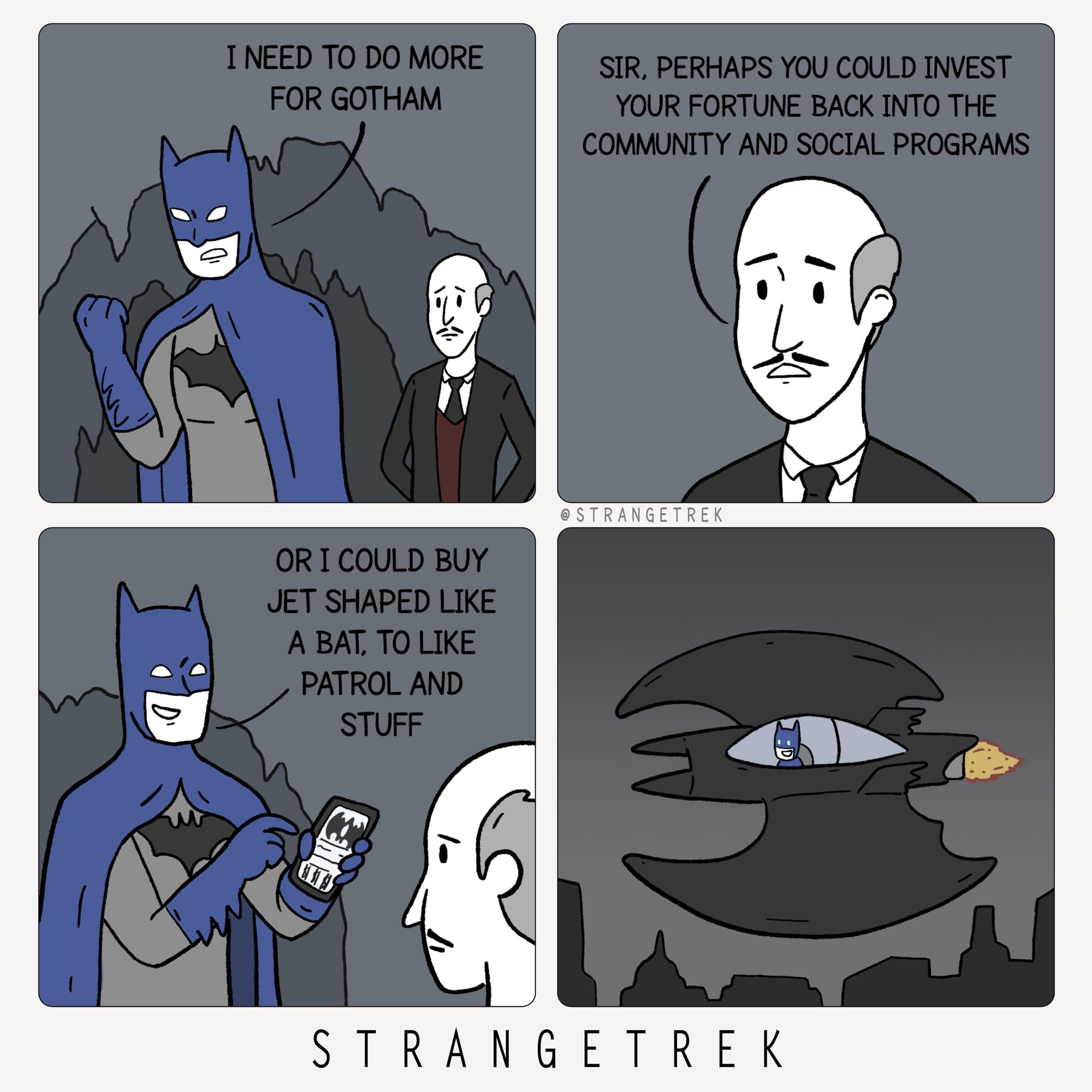
This is one of the most important Batman failure modes. Bruce may prefer Batman not because Batman is always most effective, but because Batman lets him remain inside the shape of his trauma forever. Batman lets him return to the alley with the power he was missing before. Bruce Wayne’s daytime repair work is far slower, less dramatic, less satisfying, less personally mythic, and much harder to score with a theme.
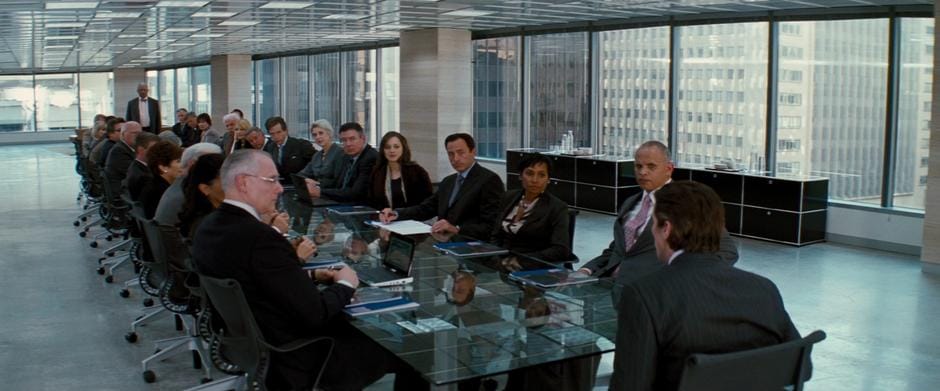
The best Batman has to realize this blindspot, and investigate Bruce Wayne.
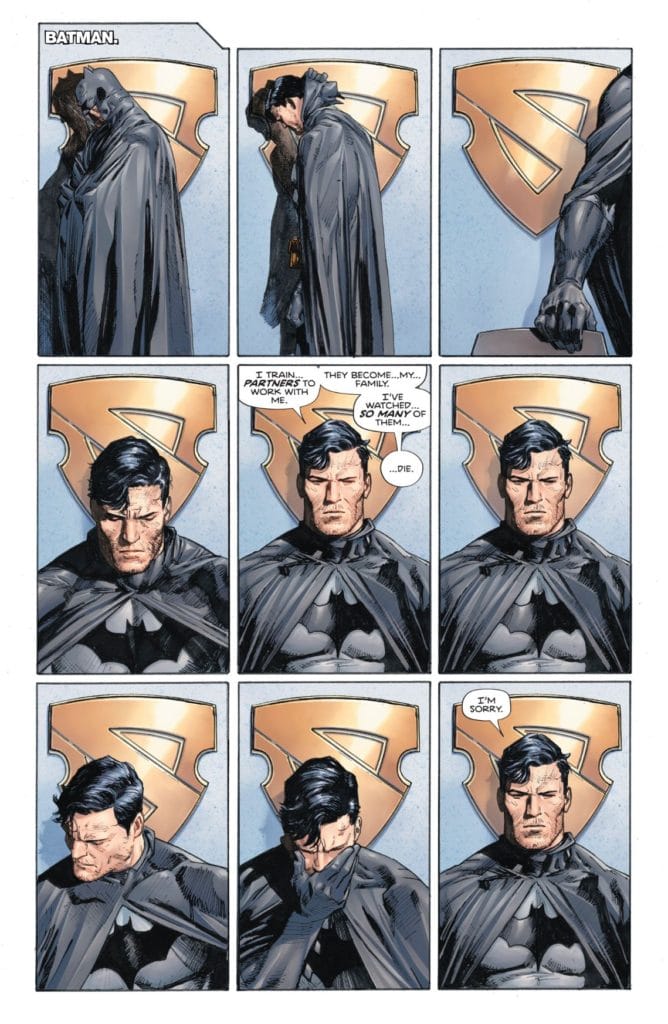
He has to ask whether he is preserving Gotham or preserving Batman. He has to ask whether a given action makes repair more reachable or only makes his own role more necessary. He has to ask whether he is protecting children or recruiting them into his trauma. He has to ask whether the symbol is helping victims or feeding imitators. He has to ask whether his refusal to kill is moral restraint, fear of himself, or both. He has to ask whether his surveillance is emergency contact with the field or ownership of the field.
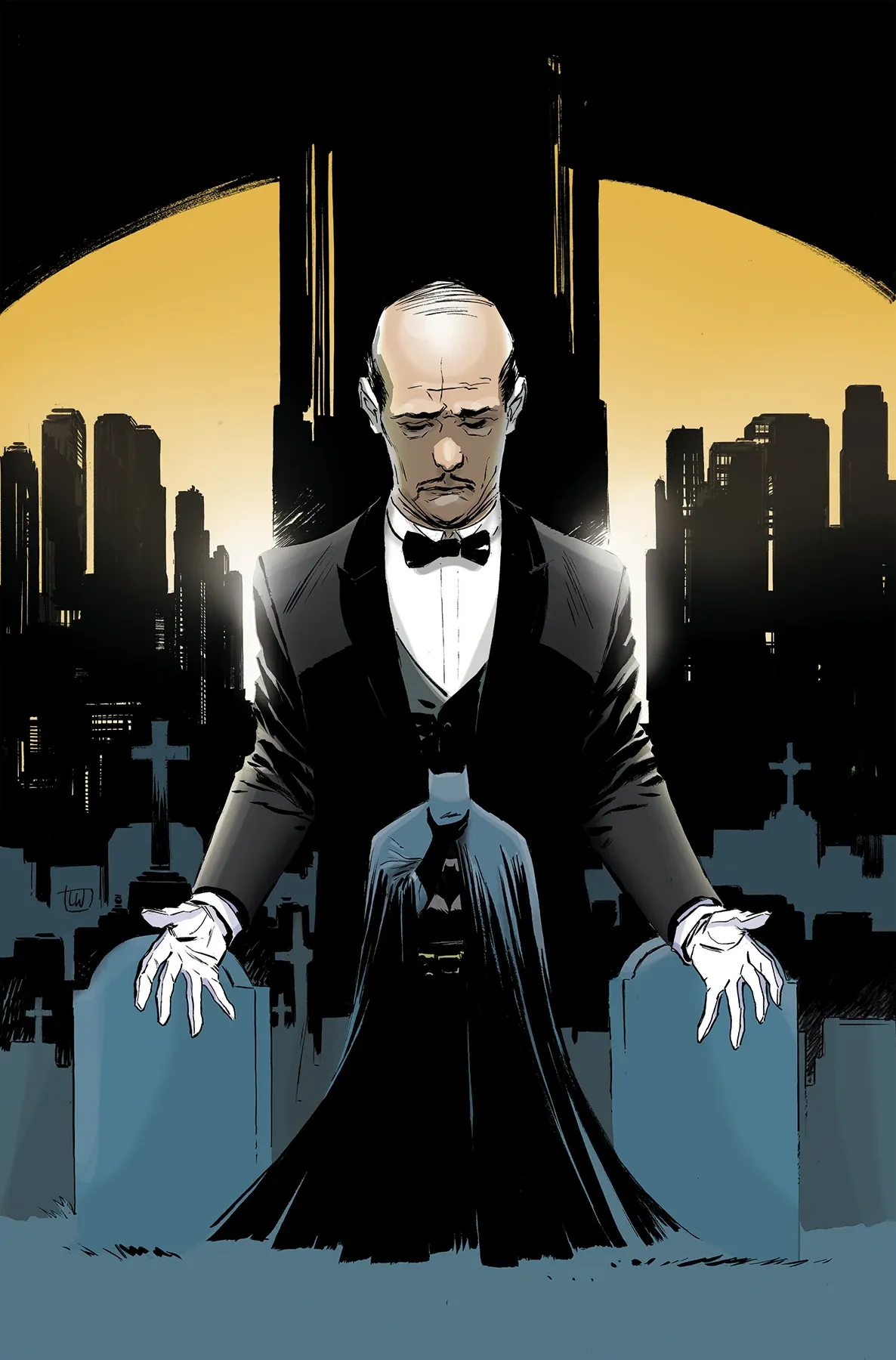
This is where Alfred becomes essential.
Meta-analysts.
Alfred is not only the butler, medic, father figure, and resident expert in saying “Master Bruce” like a sad ghost. Alfred is first Batman's counter-investigator. Batman analyzes Gotham; Alfred analyzes Batman.
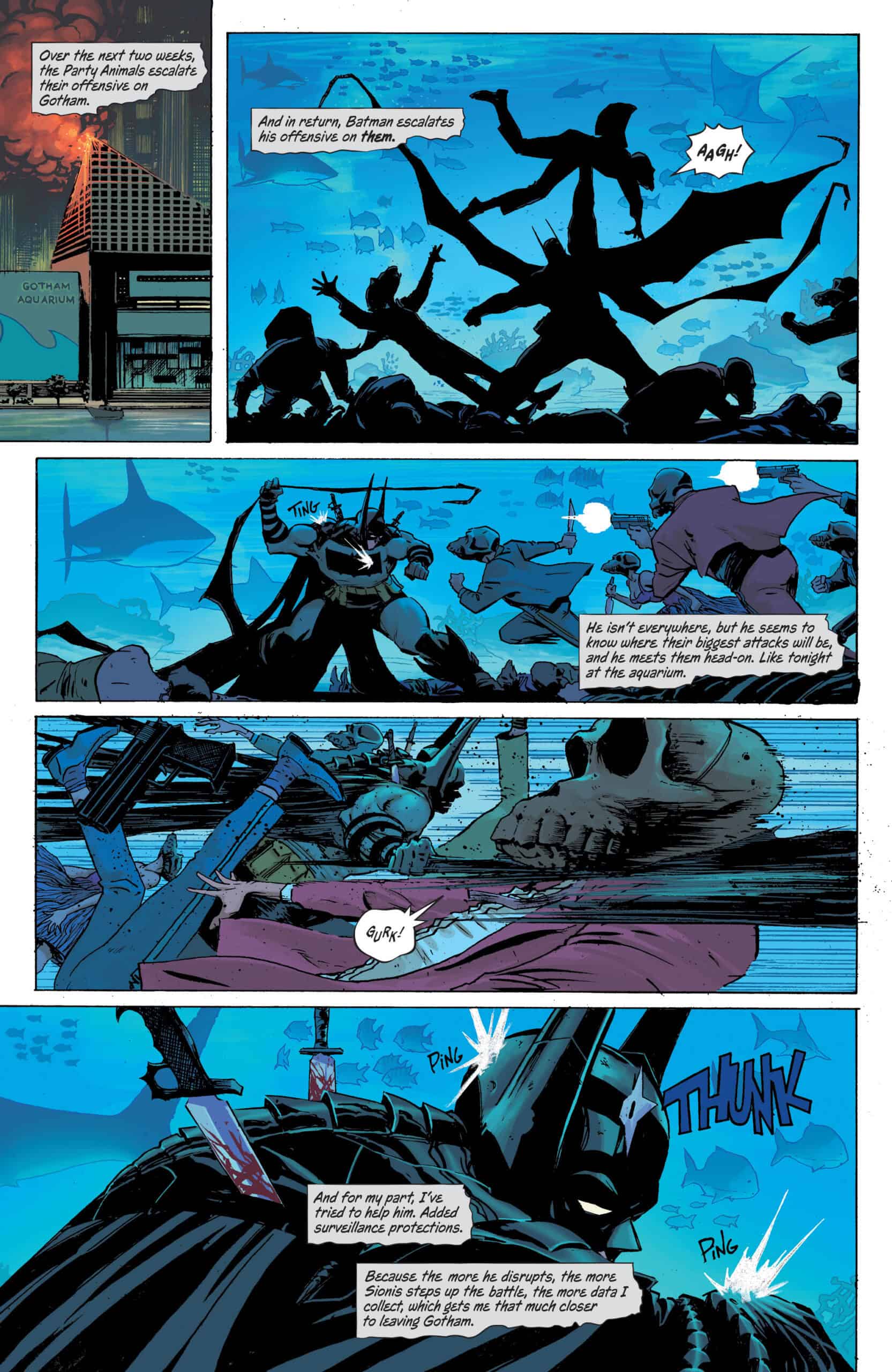
When Alfred is written well, he preserves Bruce from becoming only his method. He reminds him that a tool cannot be a whole person. He notices when duty becomes compulsion. He asks whether the mission is still serving the living, or only honoring the dead. He is one of the few characters in the structure who can look at Batman’s field and say: this is not discipline anymore, this is now self-harm with branding.
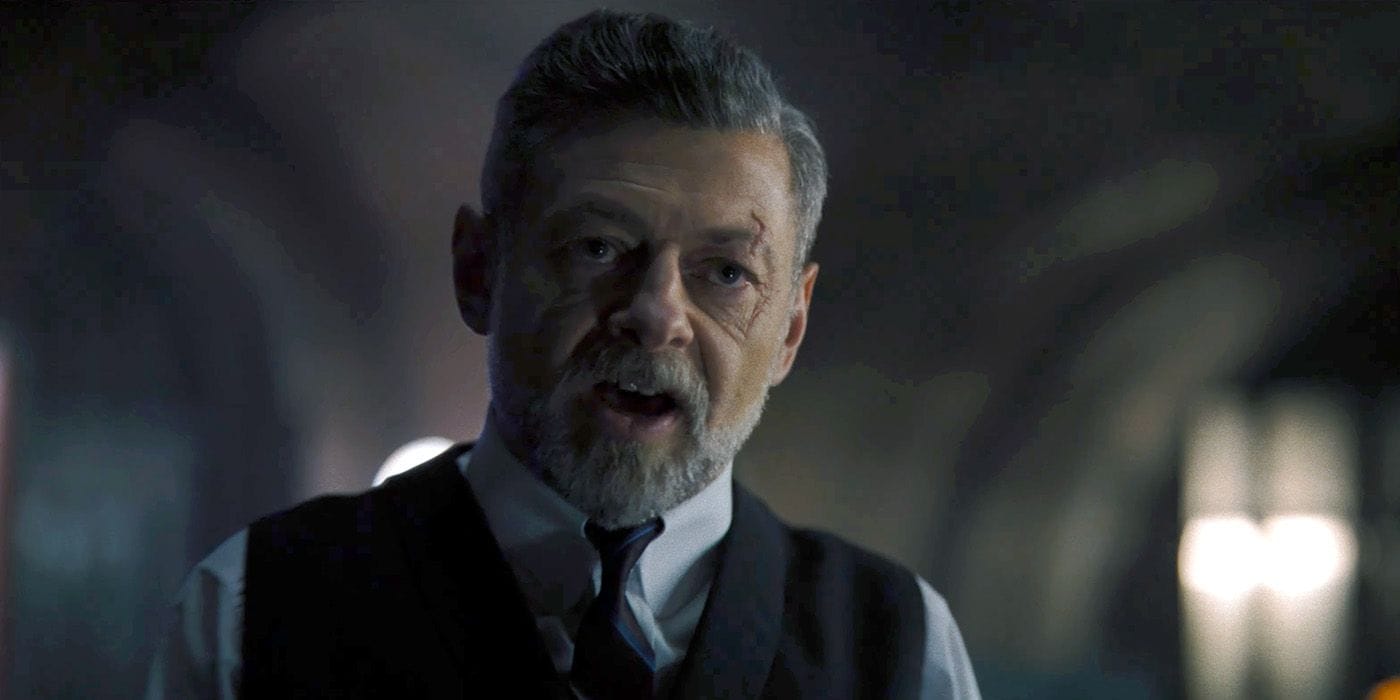
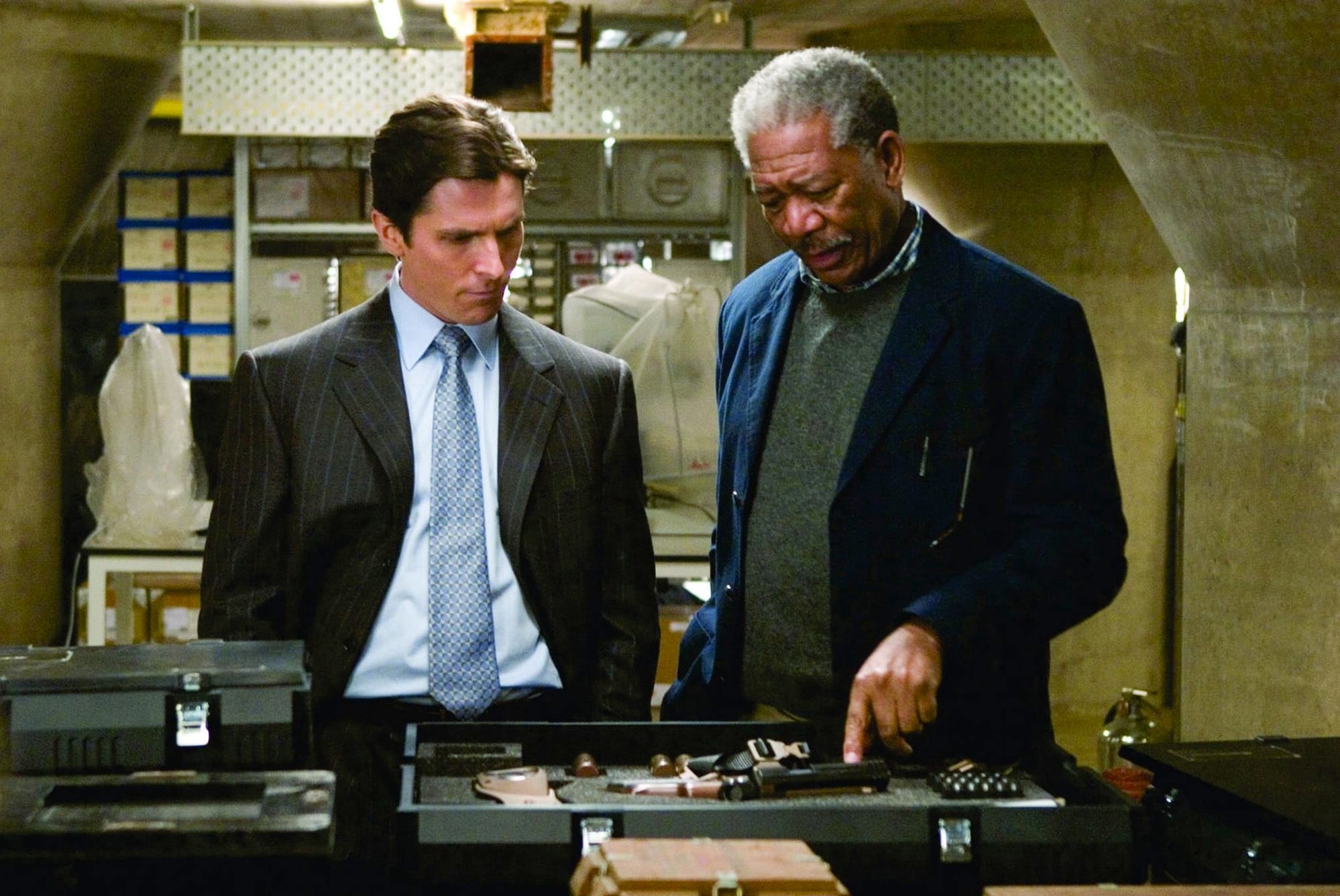
Lucius Fox plays a different but related role. He is the technical conscience. He makes Batman possible while occasionally marking the line where possibility becomes too dangerous. In The Dark Knight, his refusal to normalize the citywide sonar system is one of the clearest examples of field correction in Batman media. Lucius does not say the emergency is fake, or that Batman is now evil. He says the tool is too much, and will distort the field around it.
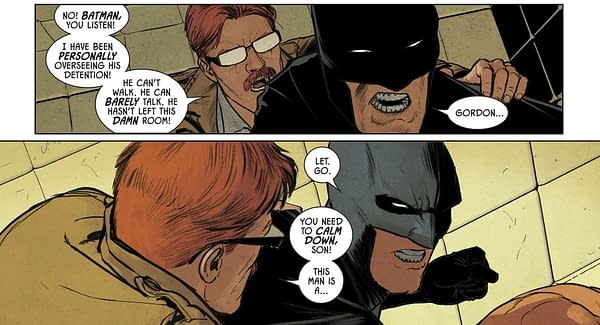
Gordon is the public conscience. He binds Batman to civic reality. Gordon should trust Batman enough to cooperate and distrust him enough to maintain generative resistance in Batman's use of the law. If Gordon becomes a fan, law becomes Batman. If Gordon rejects Batman completely in a captured Gotham, public authority becomes ornamental in the framing. The best versions hold the middle.
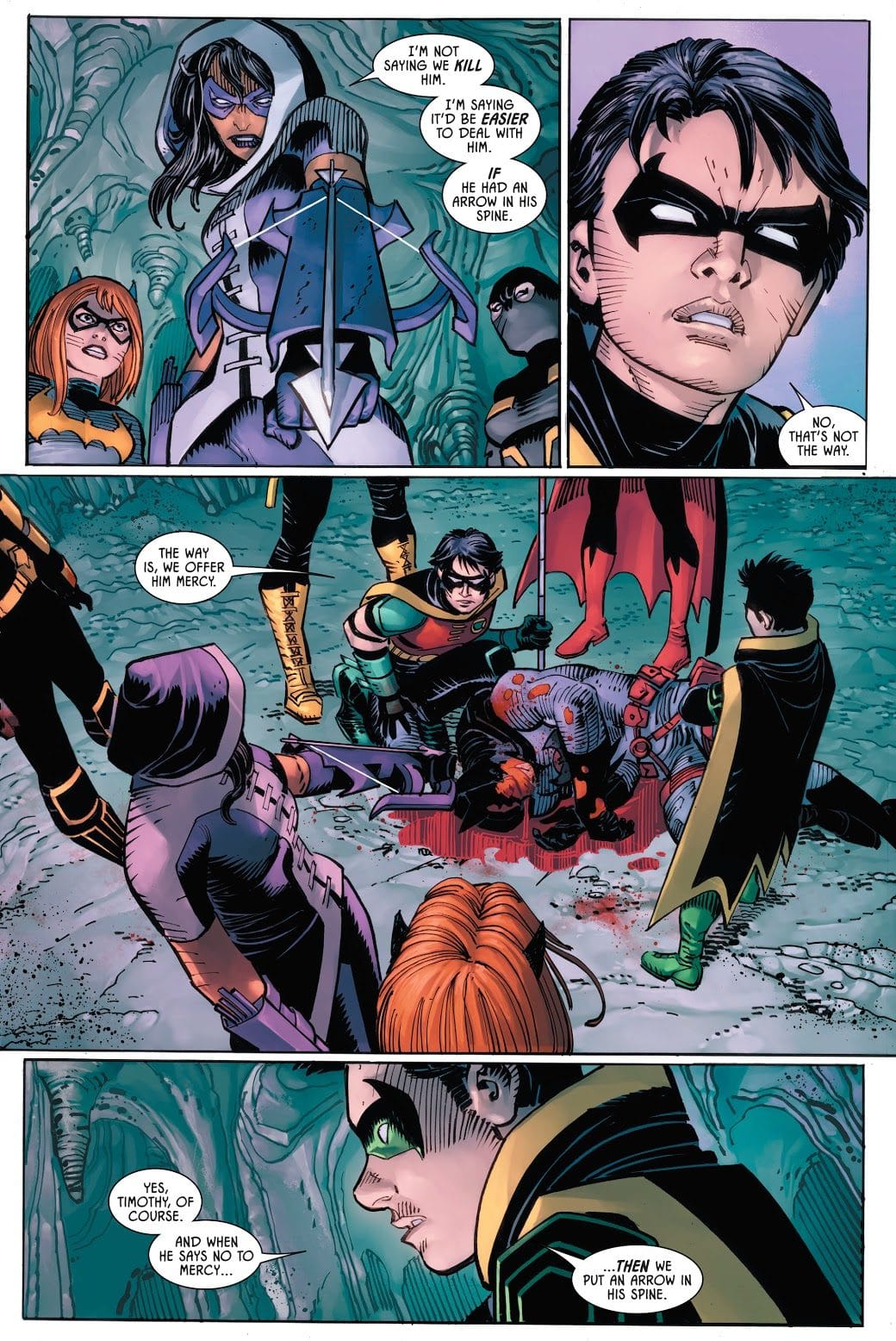
The Bat-family is Batman's living conscience. They show what Batman’s method does when transmitted. Dick, Barbara, Jason, Tim, Cassandra, Damian, Stephanie, Duke, Terry, and the others are all evidence of his influence presented back at him. If Batman’s students become independent agents with wider futures, his presence is opening the field. If they become broken satellites orbiting Bruce’s trauma, the field is instead narrowing.
The Batman Who Learns.
The most morally promising Batman is the one who can learn, not the one who is always right.
This may sound obvious, but Batman is often written as if being Batman means already knowing everything. He prepares for everything, outthinks everyone, carries contingency plans for his friends, and defeats gods with prep time, which is fun until it turns him into a paranoia delivery system.
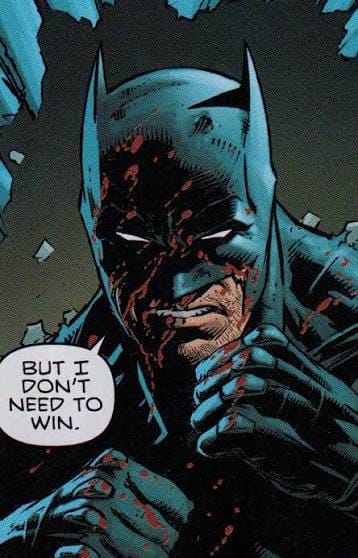
Any Batman who cannot be corrected is dangerous.
The whole premise of Batman is that one person acts outside ordinary authority because the field is too damaged. That kind of agent must be unusually responsive to correction.
If Batman cannot revise his conduct when the field answers back, then his exceptional position becomes entirely unjustifiable. He is no longer just acting outside law. He is now acting outside all correction. That is compressed into the word "sovereignty".
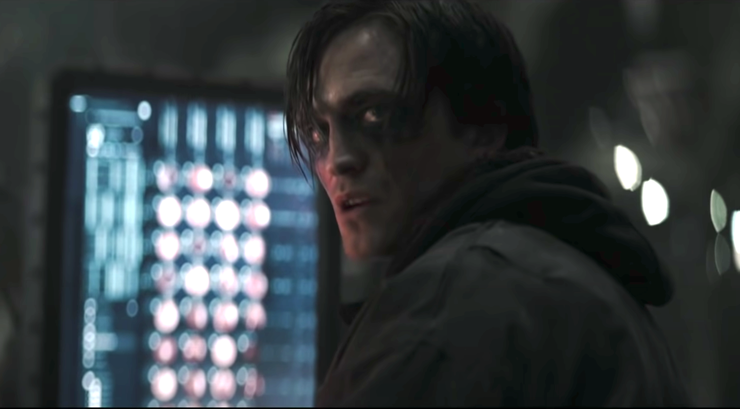
This is why Robert Pattinson’s Batman is structurally important and debatably the most moral, even though he is early, messy, and nowhere near fully competent. He begins with the wrong symbol. He says he is vengeance. He thinks fear is the answer. He looks at criminals and sees the people who ruined his life. Then the Riddler reflects that symbol back at him in monstrous form.
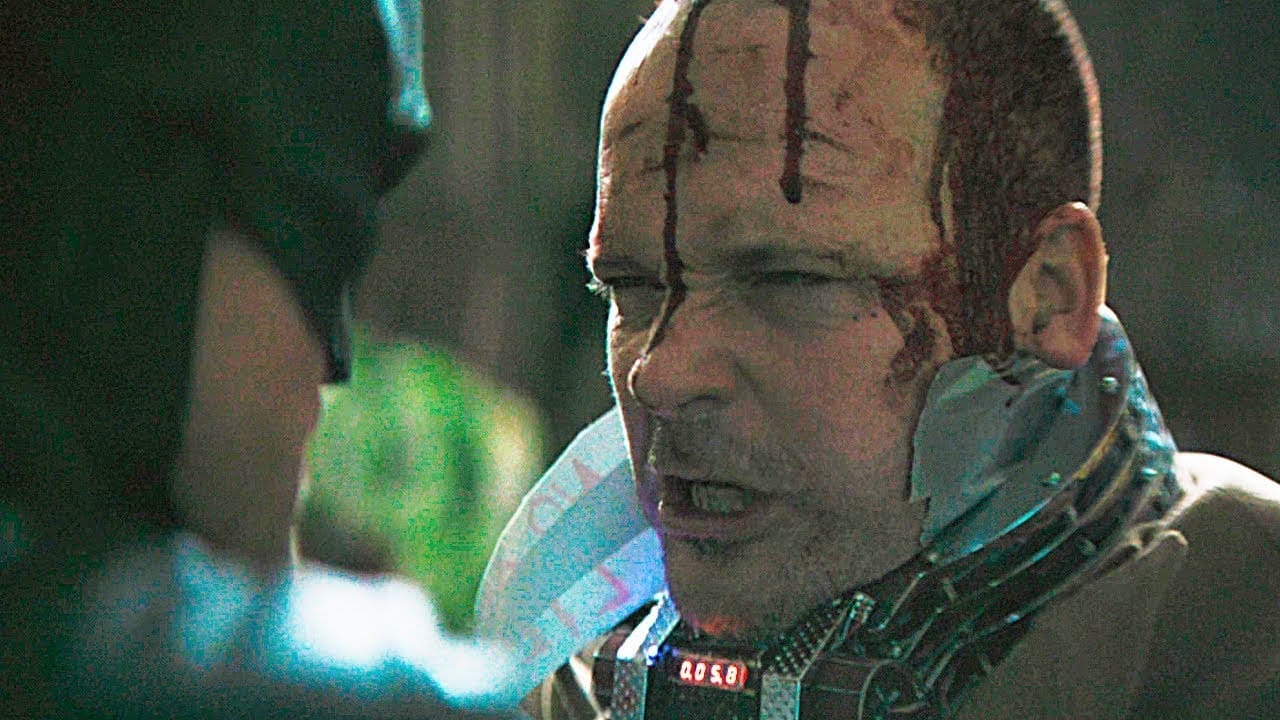
The field corrects him, and he learns.
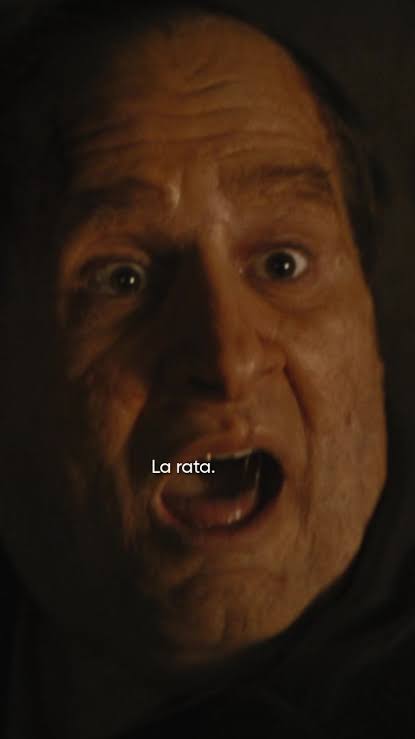
He realizes that the symbol has been received not only by victims, but by another damaged man who read masked vengeance as permission. He sees that his intention did not control and never could have controlled the symbol’s downstream effect. He ends by changing what Batman must mean, to Gotham and himself. He has to become more than fear. Batman must become reachable hope.
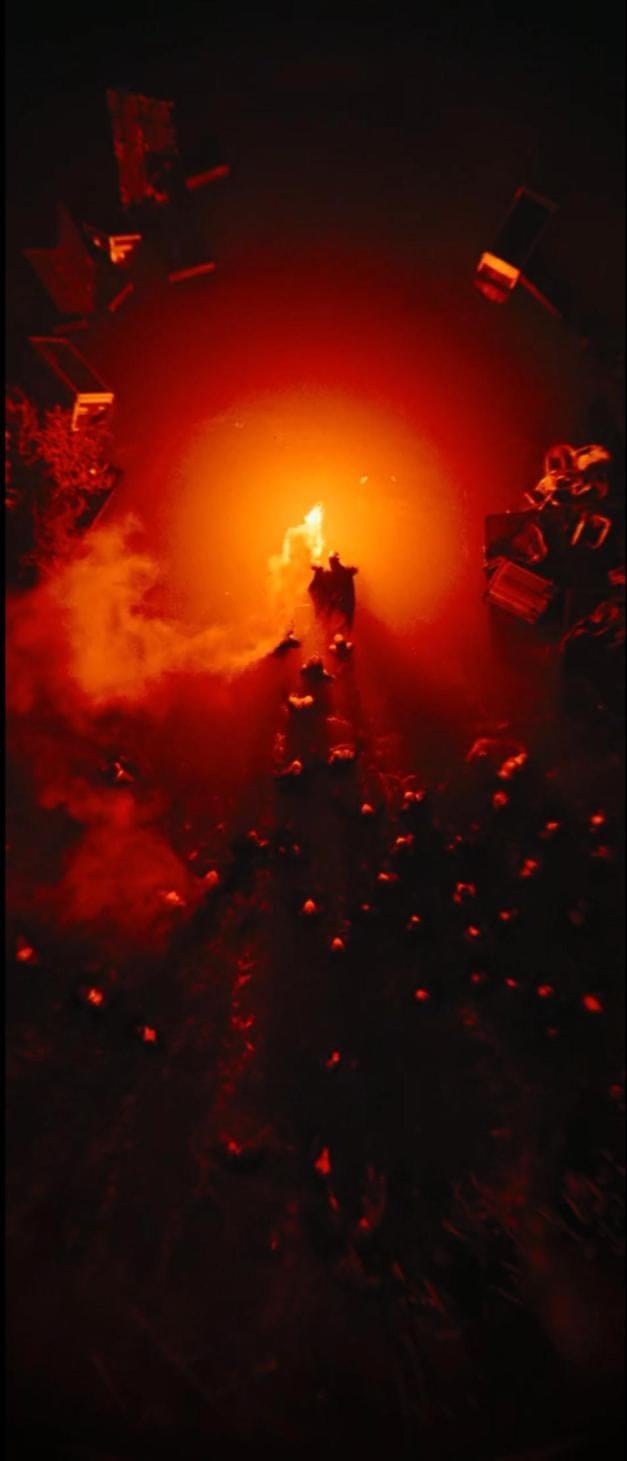
This is what makes the The Batman the cleanest Batman arc on film, despite only one movie having been released thus far. This Batman has already proven he can learn.
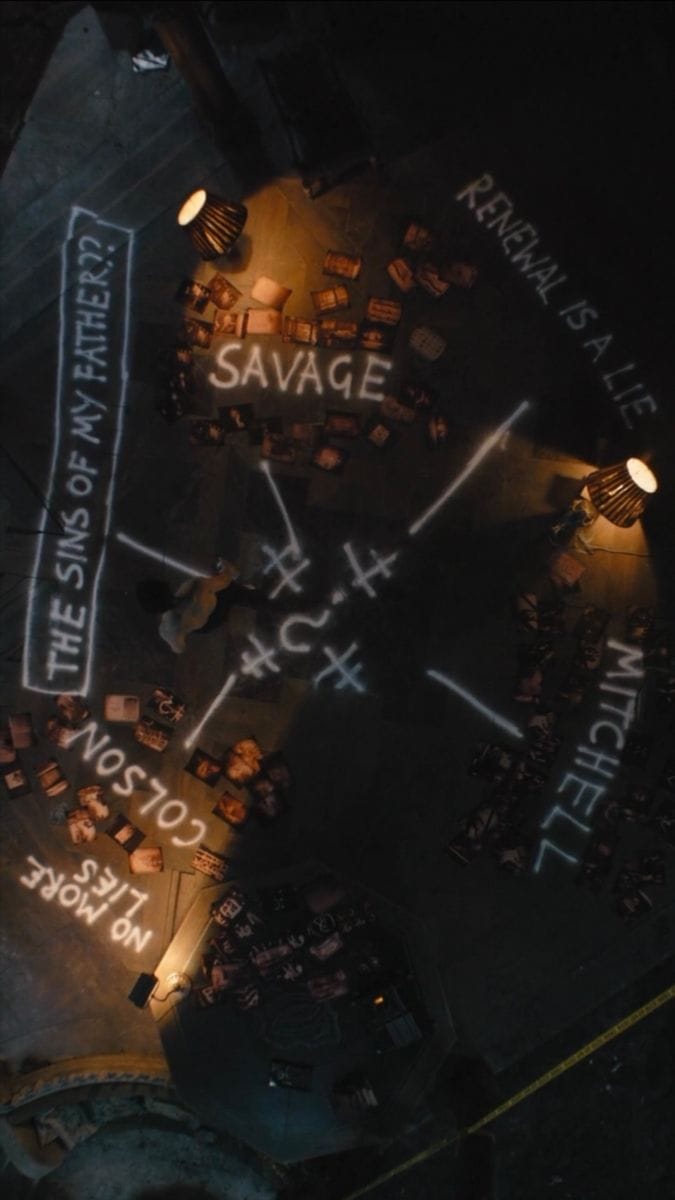
A worse Batman would reject the lesson. He would say Riddler misunderstood him because he is sick and twisted, and continue on unchanged because he is Batman.
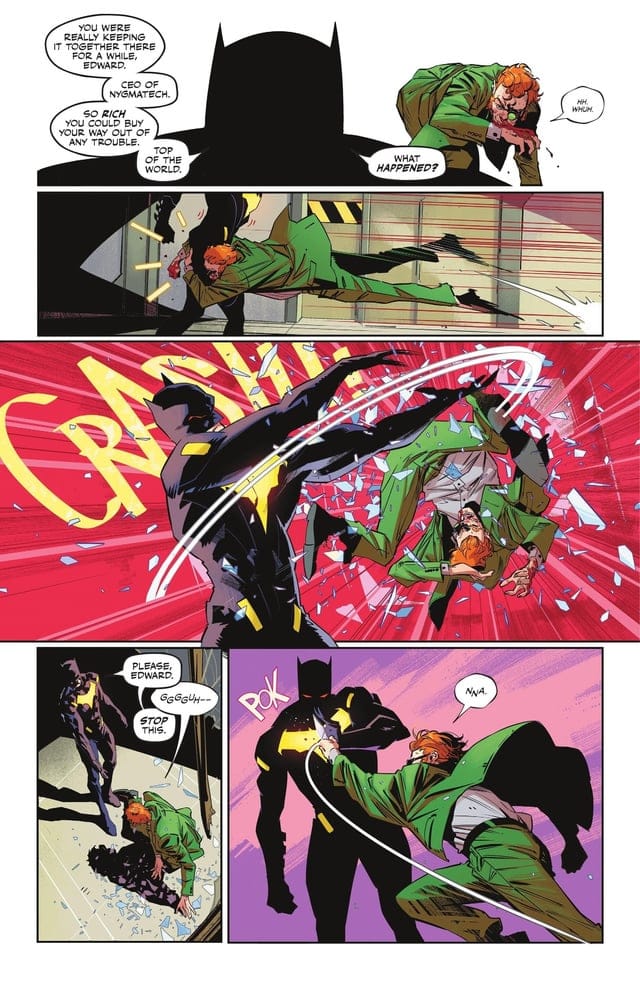
Pattinson’s Batman can see that misunderstanding by the field is still a field effect he enacted. That is what makes him promising.
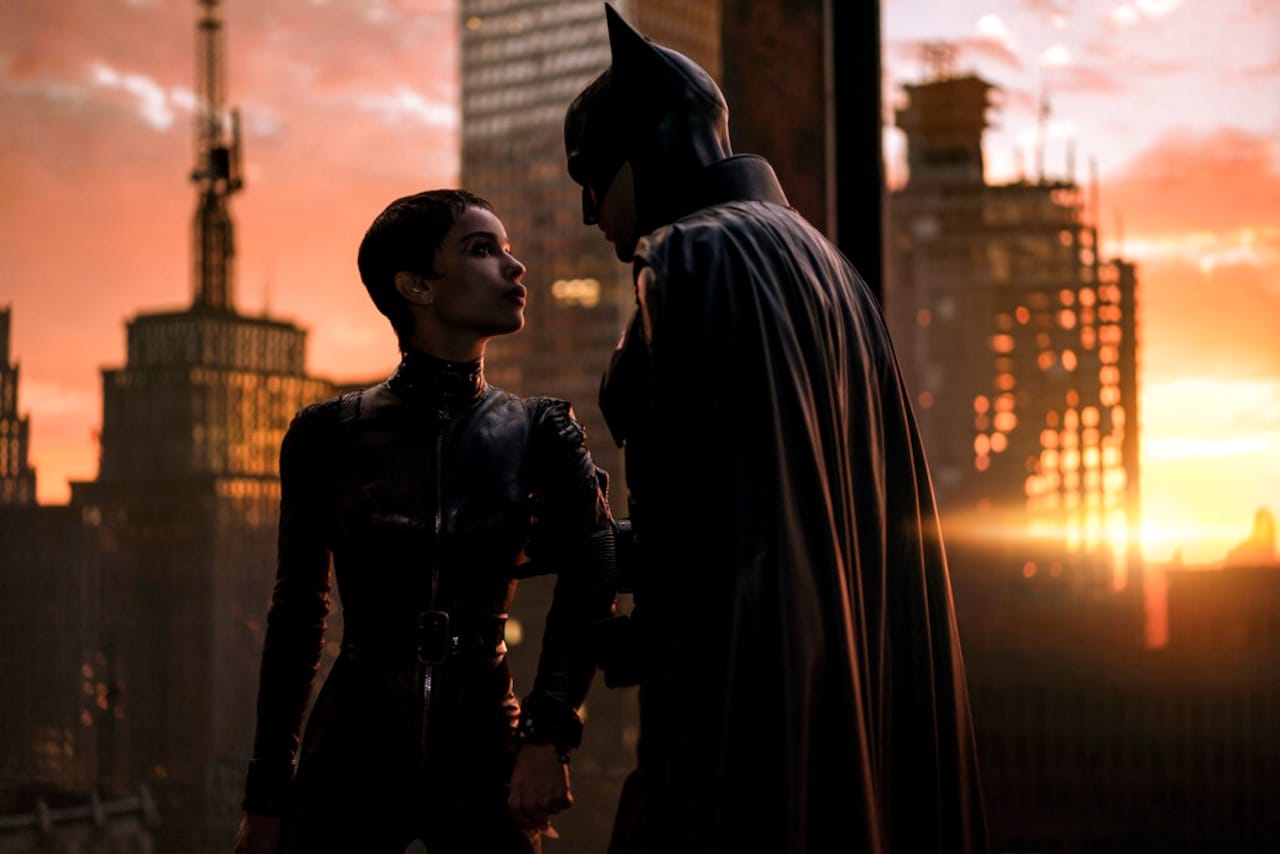
The Badman.
The failed Batman is the one whose analysis stops wherever his pain becomes useful. This can happen in many ways.
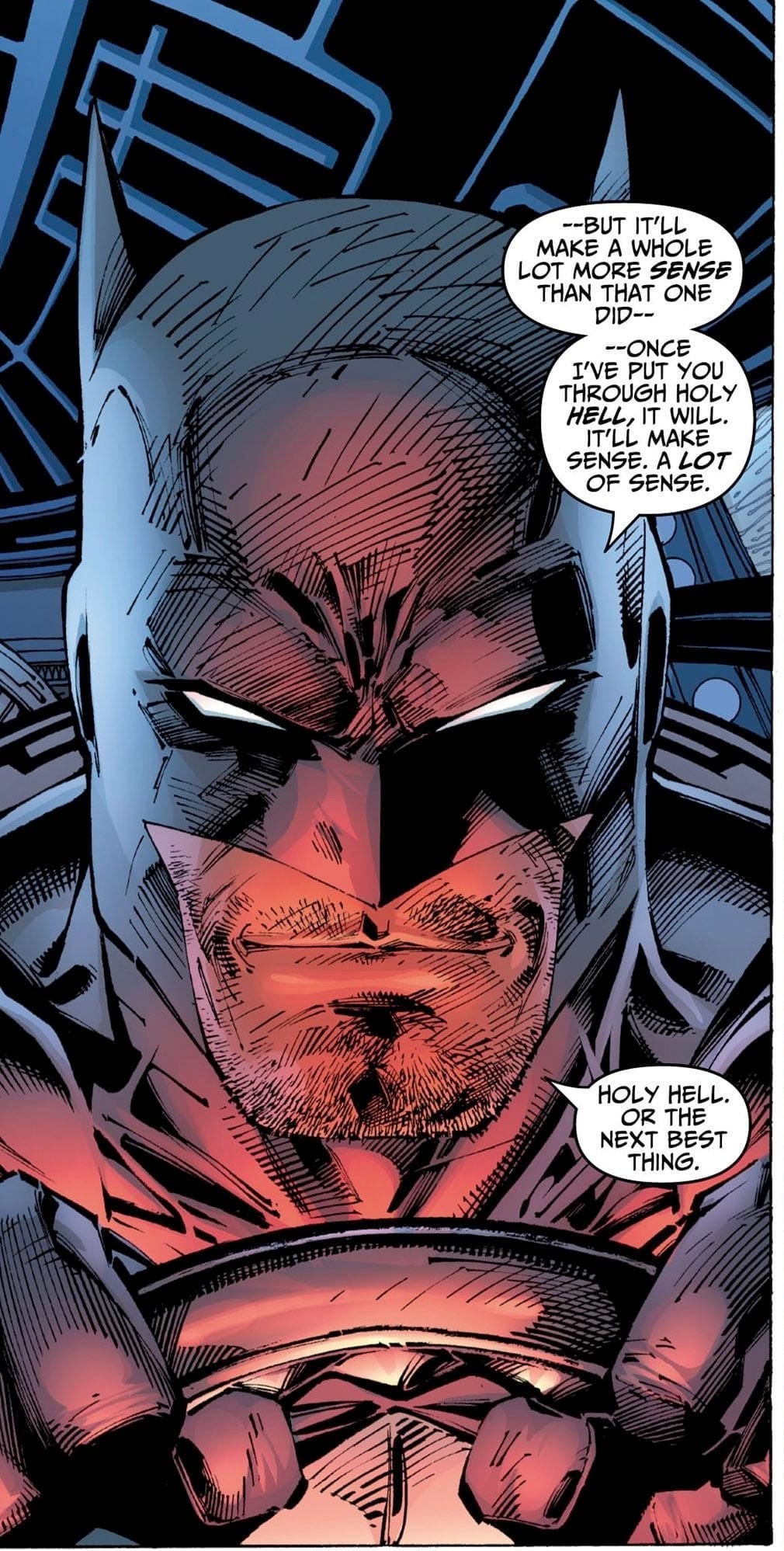
He may keep using fear after fear starts producing imitators.
He may keep using violence after violence becomes the city’s primary grammar.
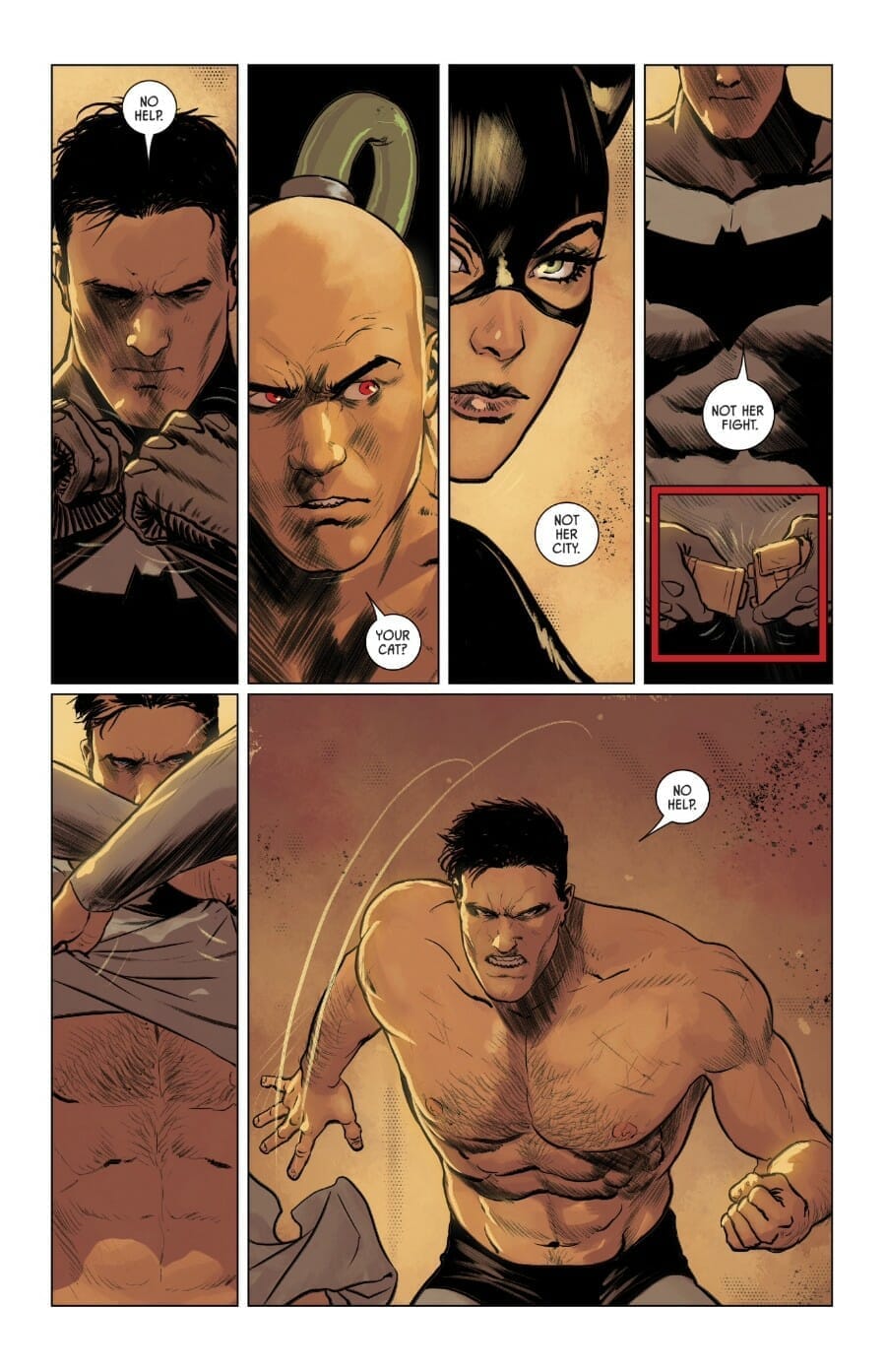
He may keep recruiting more sidekicks because family makes him feel human, while ignoring the risks they carry.
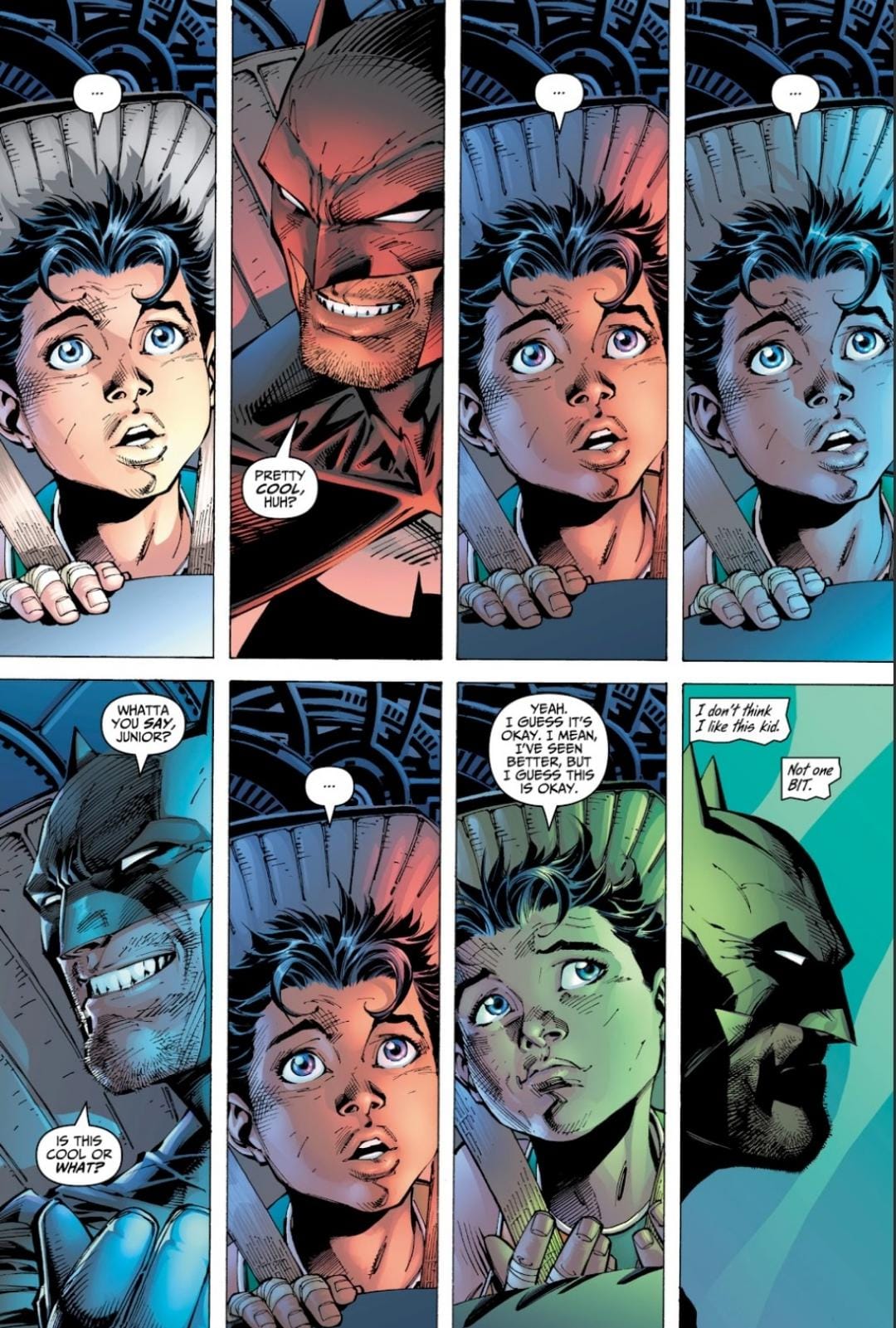
He may keep building surveillance tools because information wins cases, while ignoring the equally real civic field those tools destroy.
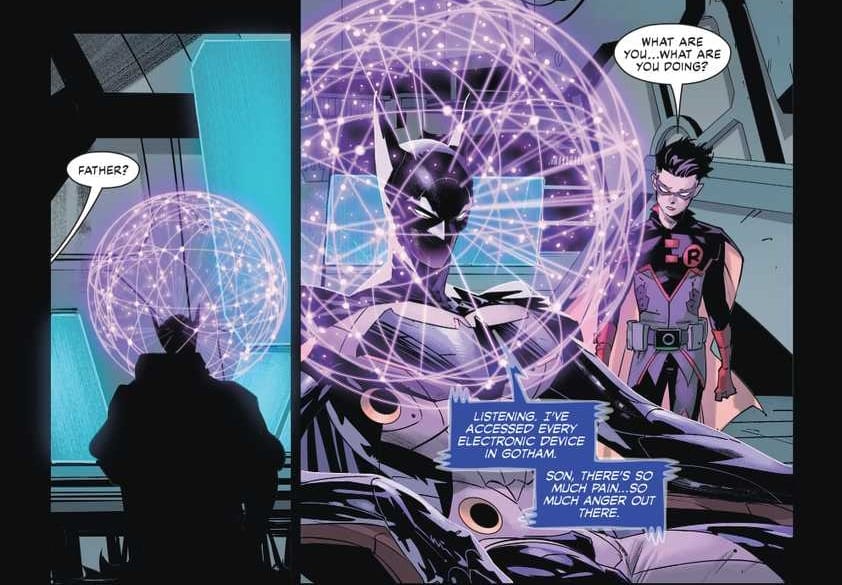
He may keep sending villains to Arkham because killing is wrong, while refusing to confront the fact that Arkham is not any kind of containment, treatment, or repair.
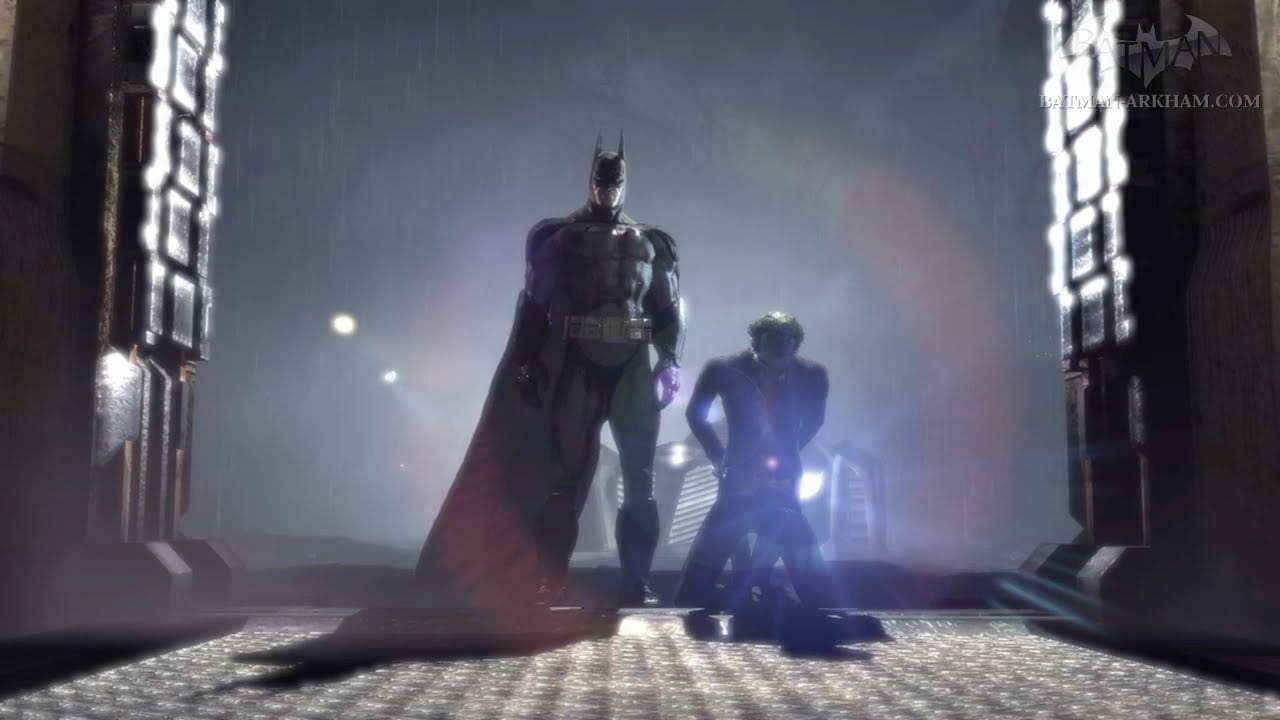
He may keep performing Bruce Wayne as a frivolous mask, while the daytime city remains under-served.
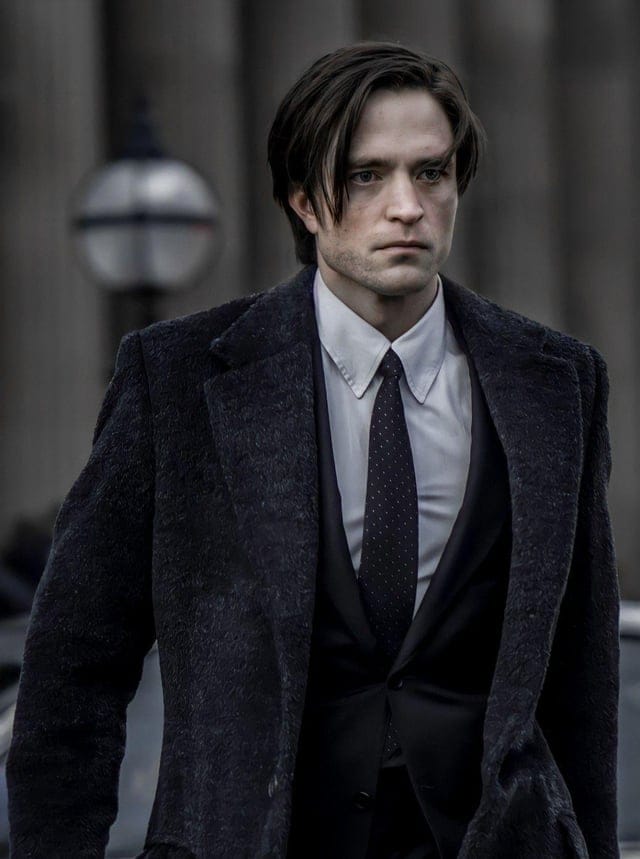
He may keep treating Gotham as his responsibility because that gives his life meaning, while preventing Gotham from developing repair paths that do not pass through him.
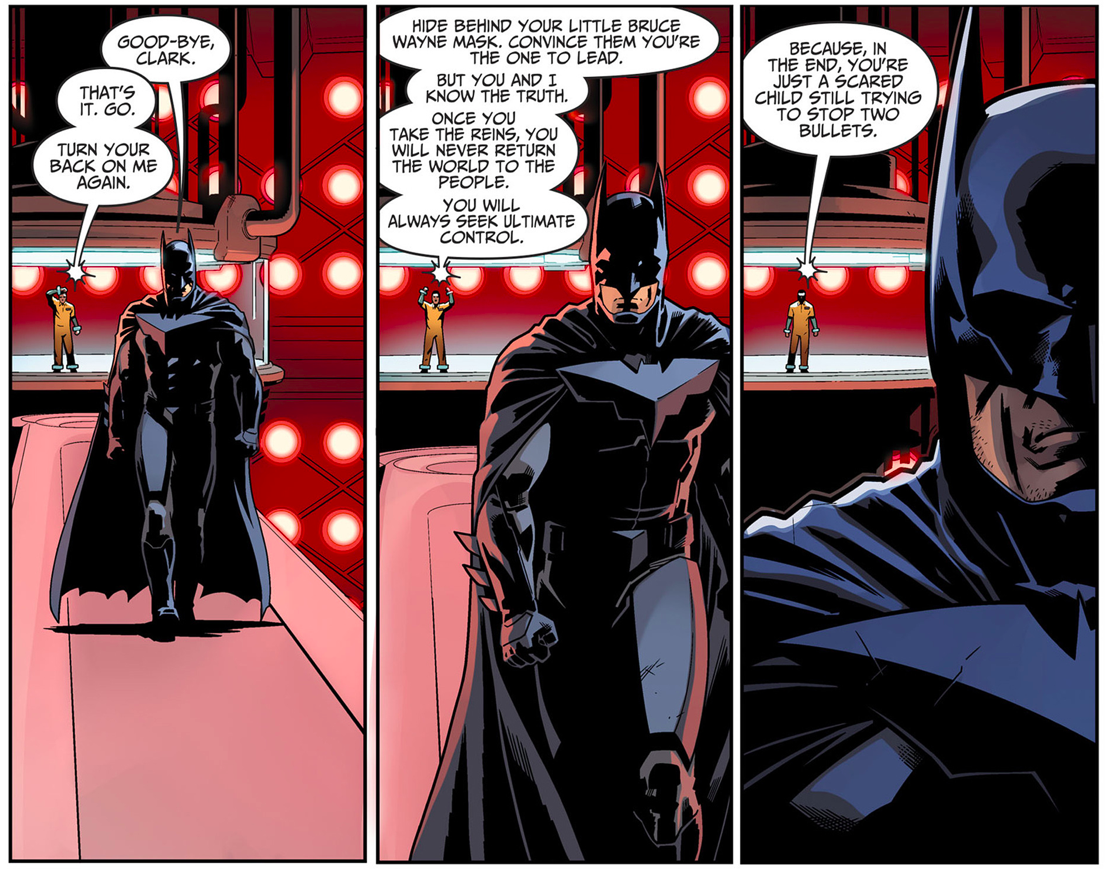
That last failure is especially dangerous because it can look heroic. Batman can quickly become addicted to being necessary. That is one of the subtler Batman problems. Bruce may not want Gotham to suffer, but he may not know who he is in a Gotham that no longer needs Batman. Batman may be unable to see a field without Batman in it.
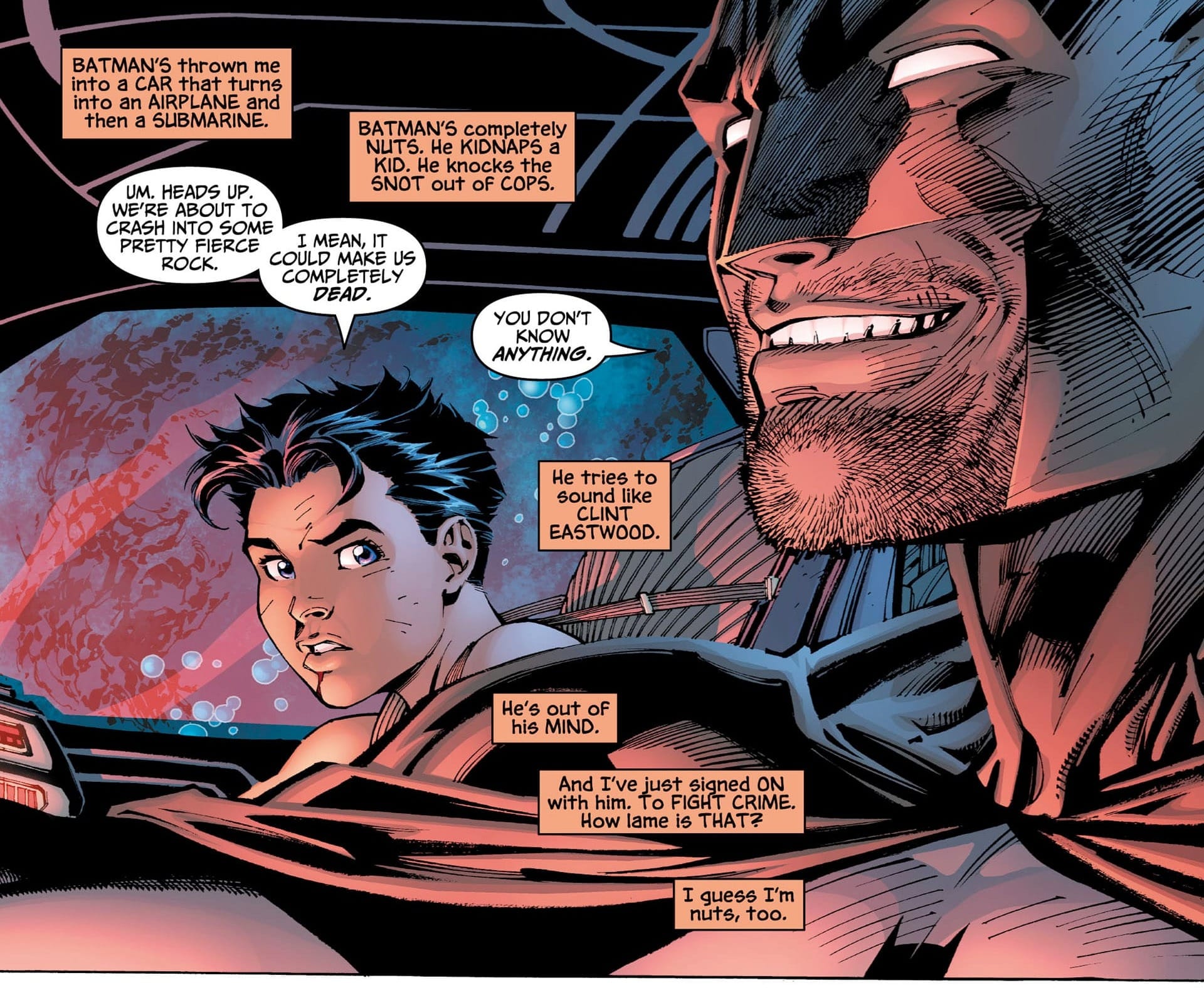
A truly moral Batman has to want his own obsolescence. Not immediately. Not stupidly. Not by abandoning the field while it remains damaged.
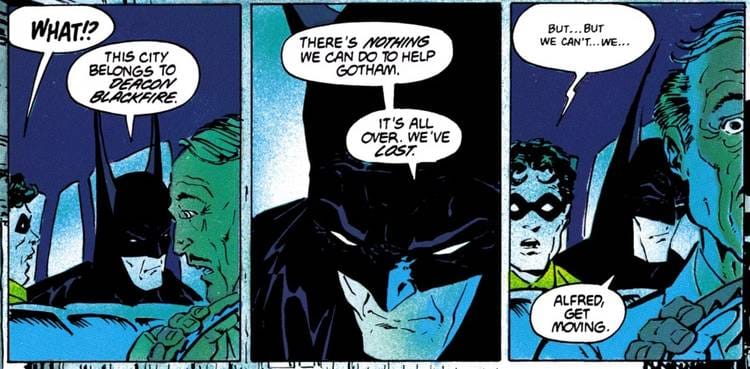
As his mission direction. The work should move toward a Gotham where Batman becomes ever less central, less necessary, less mythic, less inhuman, less mysterious, less alone.
That is very hard for a character who exists entirely in serial fiction. The franchise cannot actually let Batman finish this job. Still, within the fiction, the moral trajectory should still point there. Batman should be a bridge.
The Bat-Test.
Before we move into the variants, we need to create a consistent test to consider them by.
For each Batman under review, ask of the field:
What is the wound doing? Is Bruce’s trauma becoming care, control, vengeance, or dependency?
What is the vow doing? Is it responsive to Gotham’s real needs, or has it become self-worship?
What is the constraint doing? Does the no-kill rule preserve the field from sovereign violence, or is the story using it to avoid harder institutional questions?
What is the symbol doing? Does Batman make victims safer, predators less secure, and hope more reachable, or does he deepen fear as Gotham’s main language?
What is the detective doing? Does he reconstruct causal paths, or find targets?
What is the fortune doing? Is Wayne wealth repair infrastructure, or only Batman fuel?
What is Gotham doing? Is it becoming more capable of self-repair, or more dependent on the bat?
What is the family doing? Are successors becoming freer agents, or are children being folded into Bruce’s unresolved wound?
What are the rogues doing? Are they treated as damaged loci and dangerous agents inside Gotham’s field, or only as colorful obstacles?
And finally:
What does this Batman make more reachable?
Justice. Fear. Repair. Spectacle. Dependency. Escalation. Truth. Family. Civic trust. Surveillance. Hope. Himself.
Every Batman opens something, and every Batman closes something.
The Civic Batman.
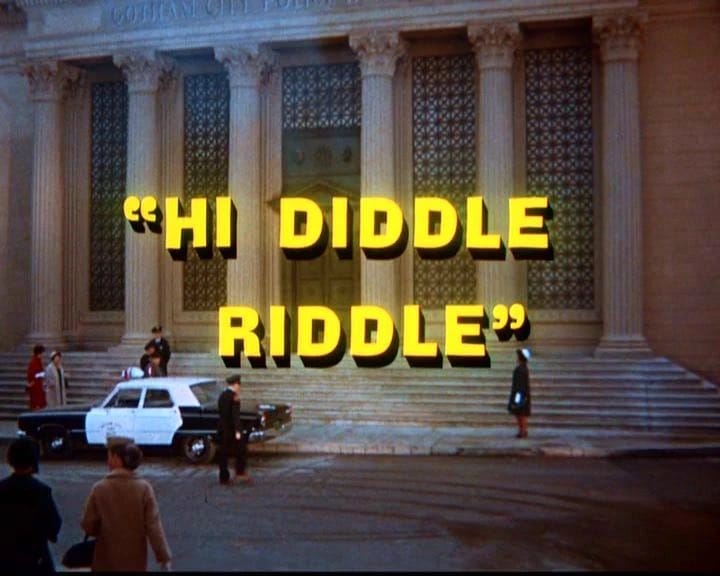
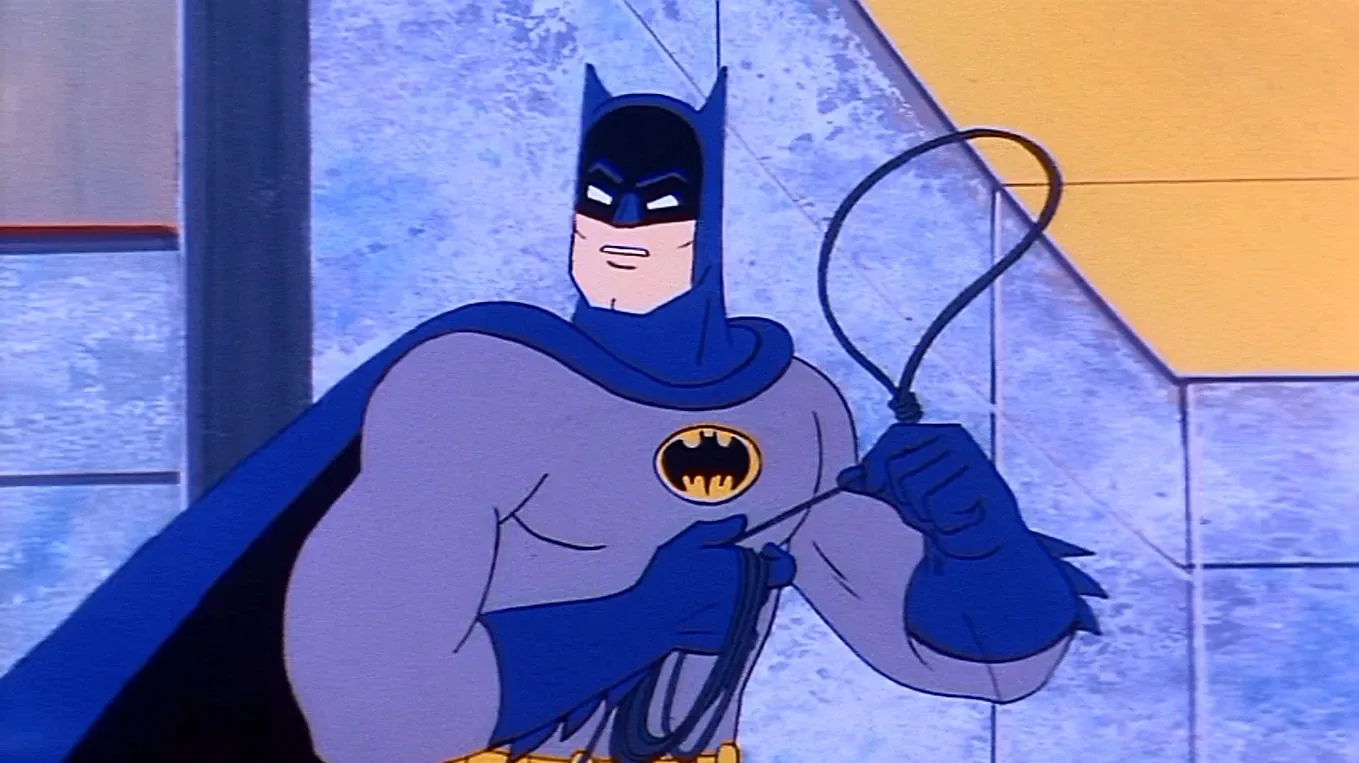
Adam West’s Batman is morally healthier than people want him to be.
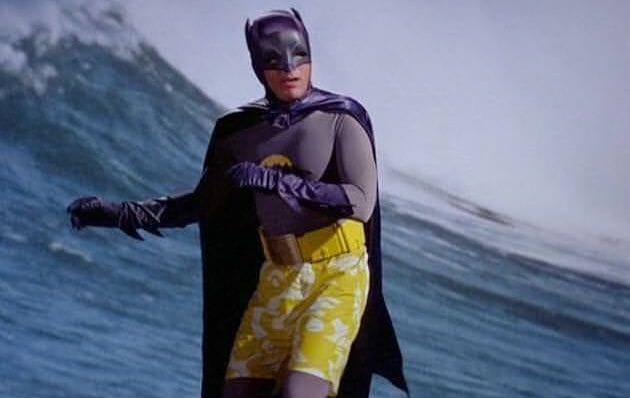
This is annoying if one wants darkness to equal seriousness, but the field actually does not care how brooding the cinematography is.
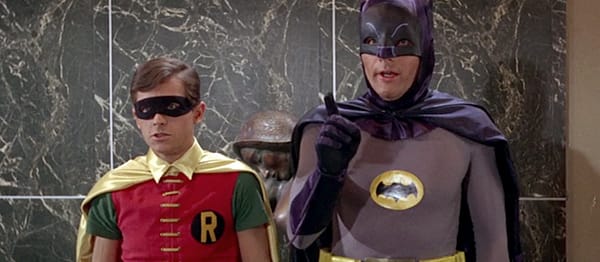
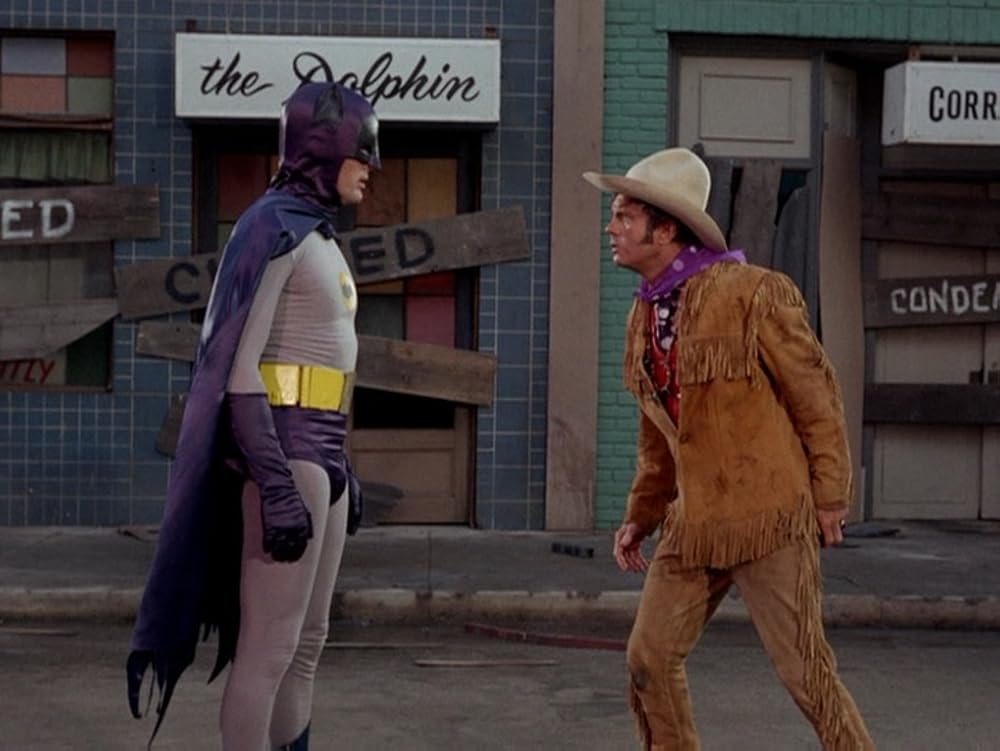
The 1960s Batman is civic. He is actually deputized by the city’s trust, not tolerated by a broken police department. Gordon and O’Hara do not summon him because public authority has collapsed into corruption. They summon him because the civic field here actually recognizes the Batman as a legitimate public emergency specialist. This is ridiculous, but also not morally trivial at all.
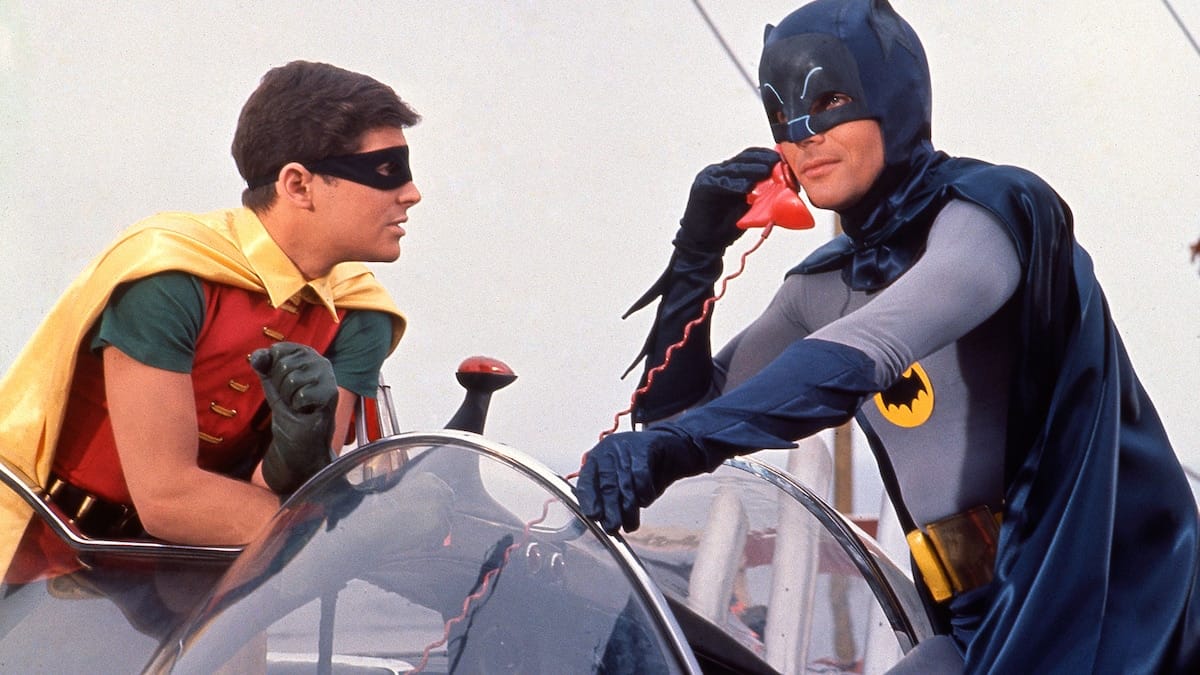
This Batman does not exist against the law. He exists right beside it. That changes almost everything.
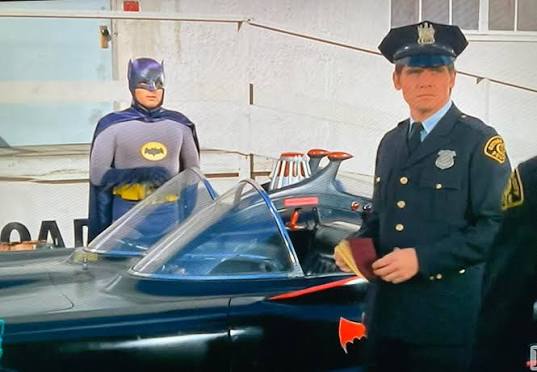
The bat-signal in this field is now not primarily an institutional confession. It is now much more like calling the fire department, if the fire department wore satin capes and had labeled shark repellent.
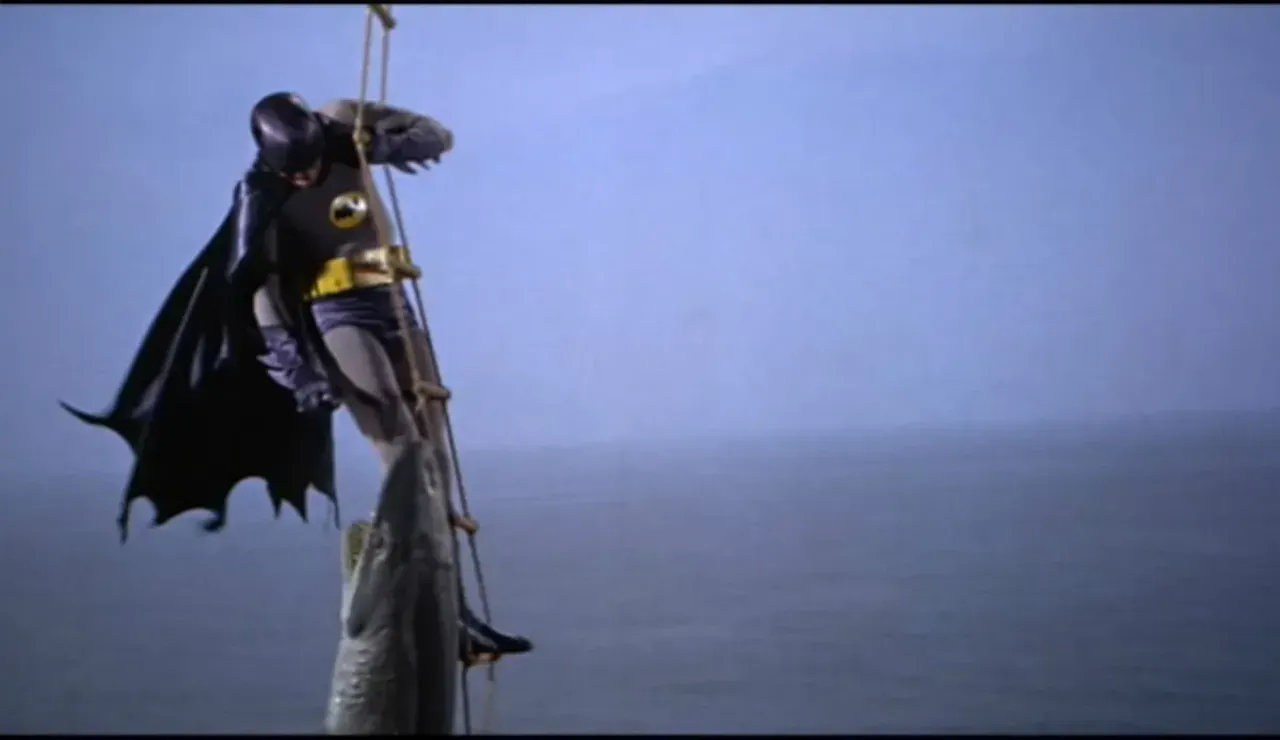
This Gotham city is strange, theatrical, and full of criminals who organize their entire lives around themes, but it is not structurally despairing. This Gotham can still recognize good order.
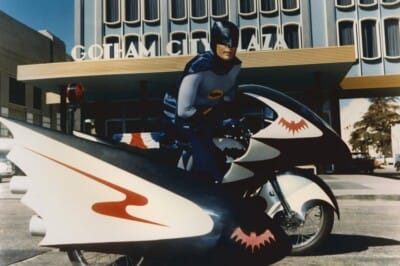
The police are not perfect, but they are not just another gang. Public life has not completely lost its own legitimacy. That makes Batman far less dangerous.
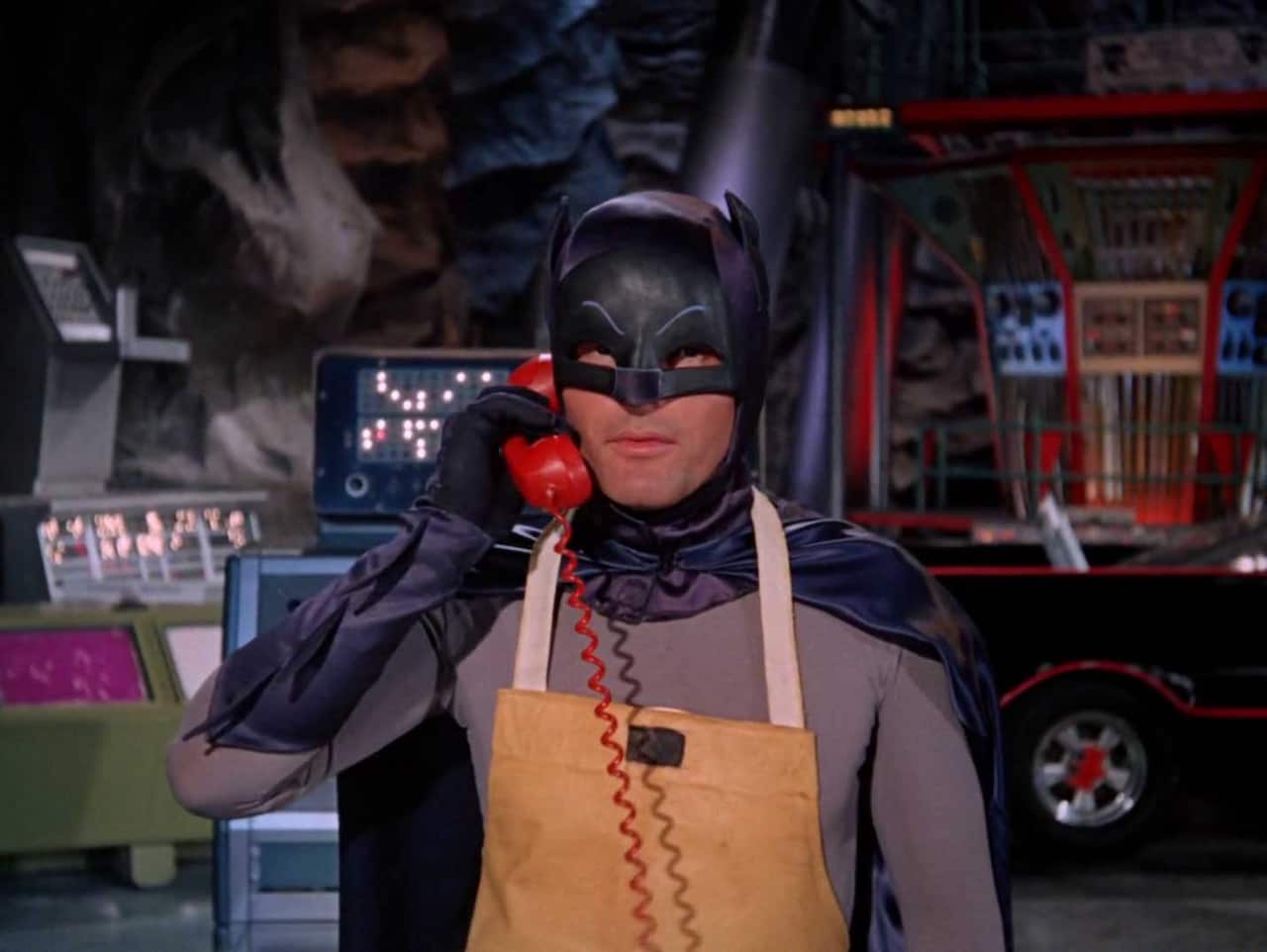
He does not need to become a parallel state because the state has not entirely failed. He does not need to turn fear into the main grammar of justice because the city is still capable of shared moral language. He does not need to become the only adult in the room because the room, while insane, still has adults in it.
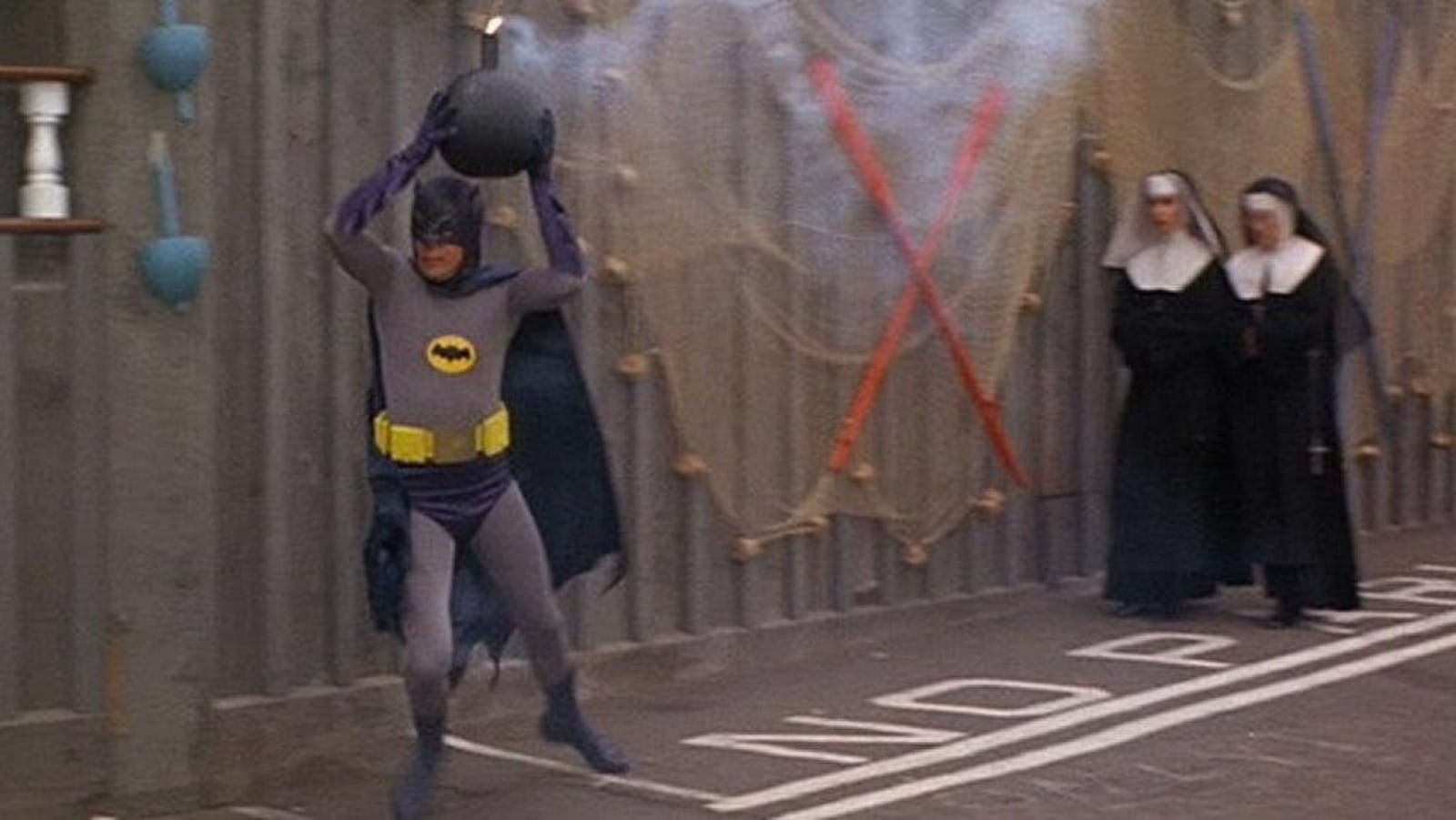
This Batman is also notably nonlethal, non-sadistic, and socially integrated. He lectures. He models restraint. He cares about civic duty. He is absurdly polite. He takes rules seriously even when the rules are happening inside a universe where every criminal owns custom stationery.
The moral joke is that this Batman is less psychologically deep but much more structurally sound than almost any other variant.
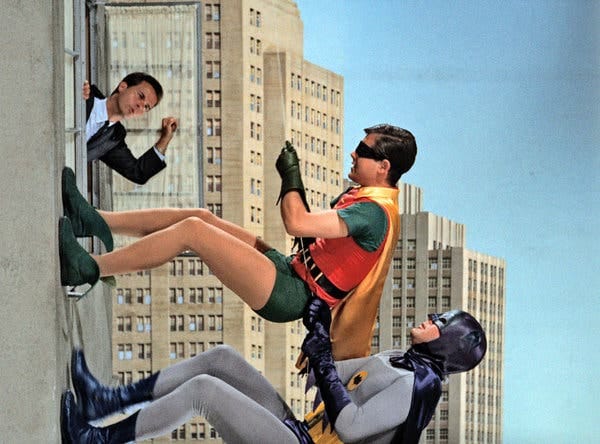
He is not trapped in the alley in the same way. The same wound exists, but the wound has been translated into a life of honest public service rather than nocturnal possession. Robin is not presented as a child swallowed by trauma, but as a junior civic hero in a universe where danger has been softened by form.
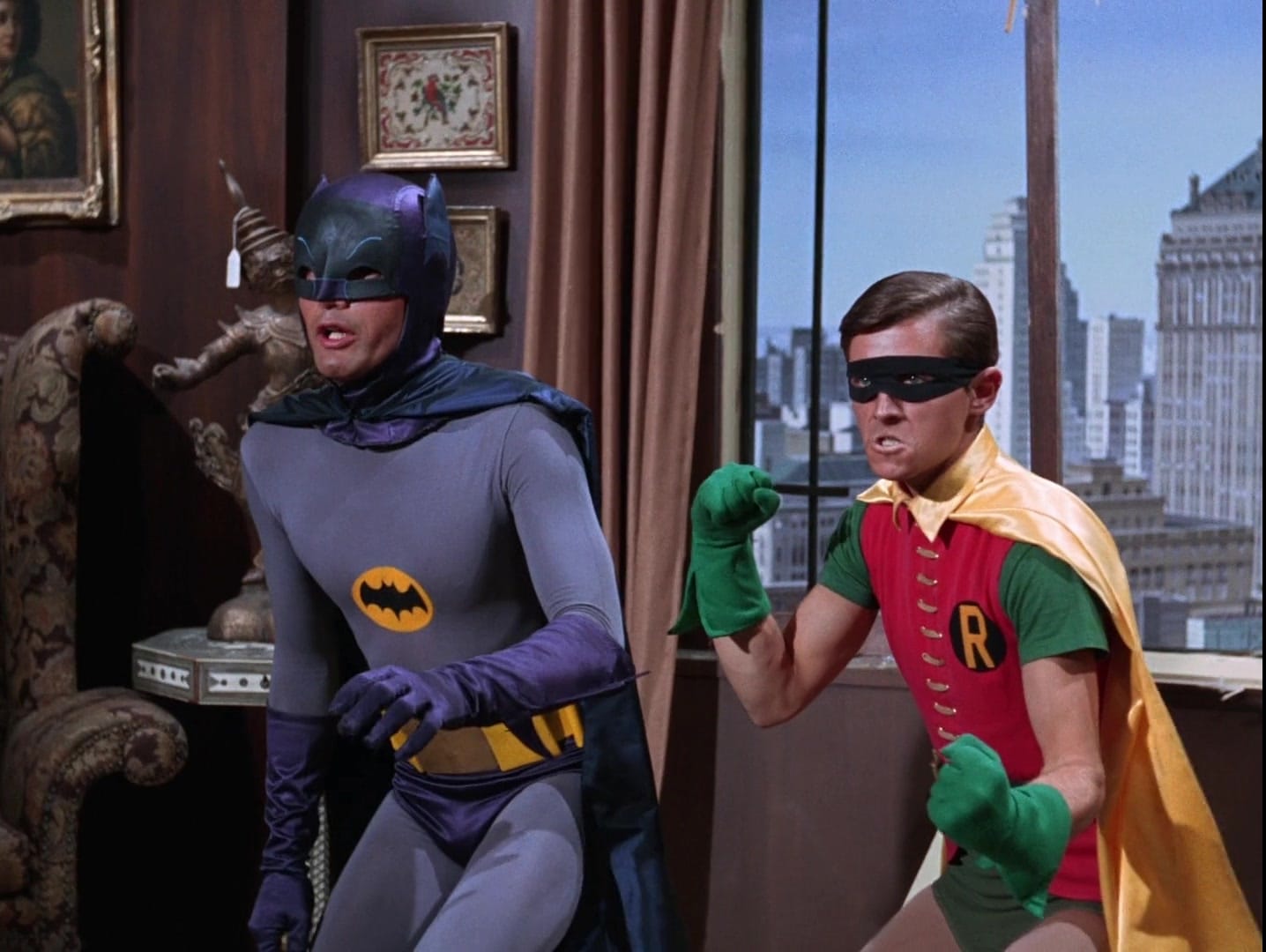
That does not make child sidekicks clean in real-world terms, but inside that field, the risk profile is different.
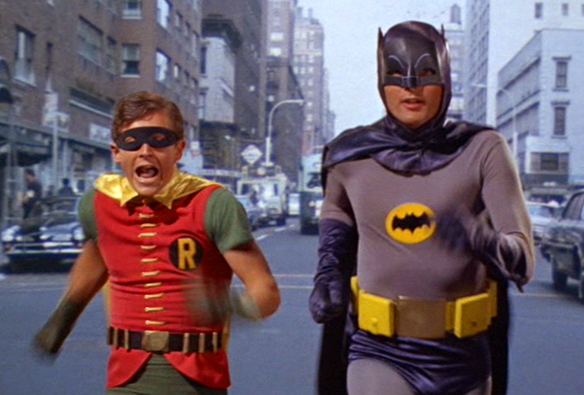
This is not Jason Todd walking toward a crowbar. This is a brightly dressed acrobat saying “Holy catastrophe!” in a world that usually knows how to stop before it hits the abyss.
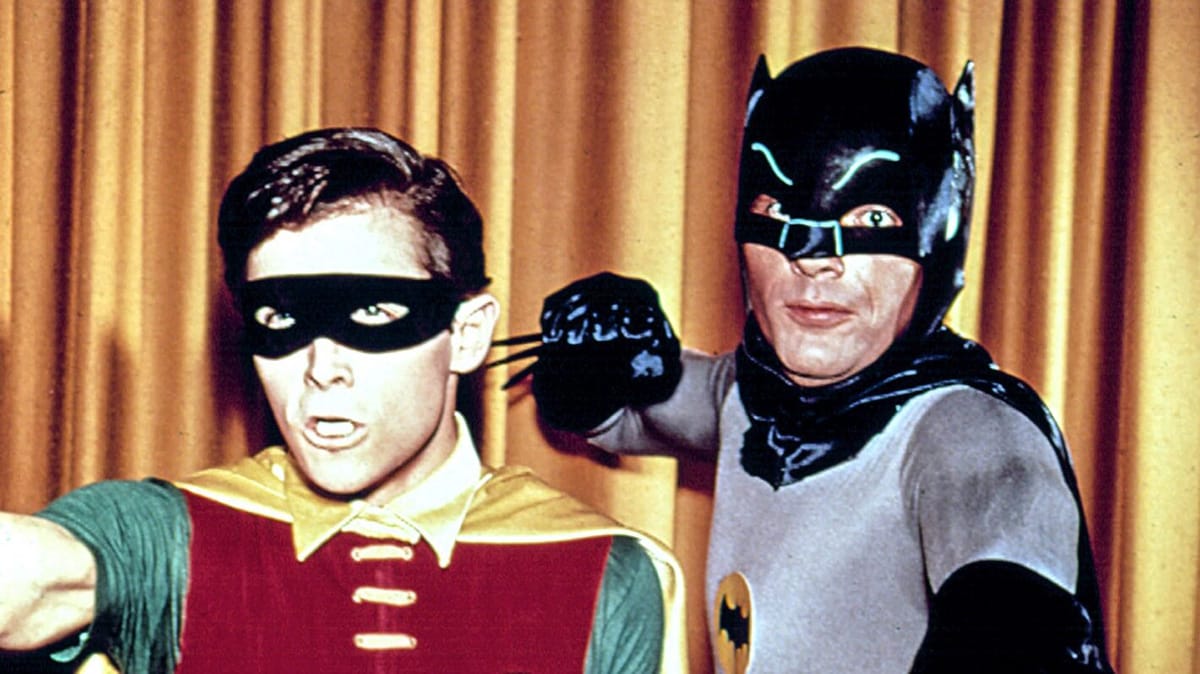
The symbol is also different. Adam West’s Batman does not primarily terrorize Gotham.
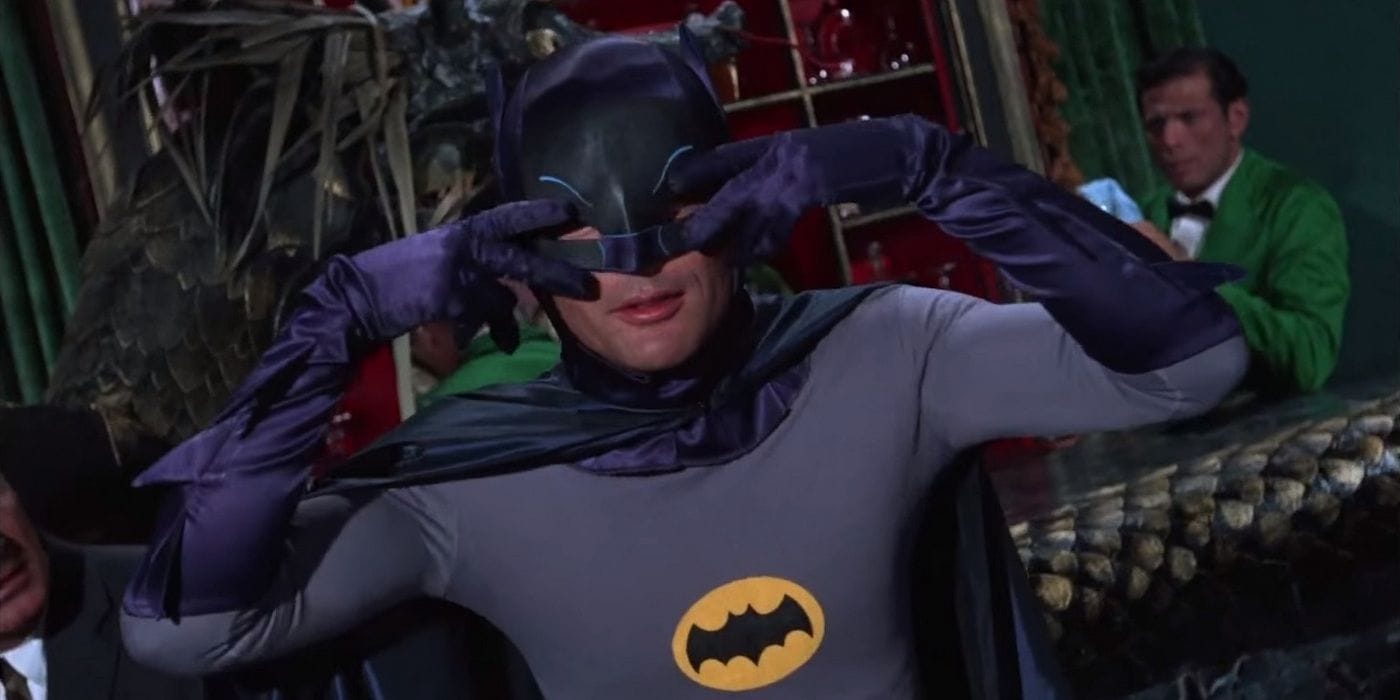
He reassures it. The bat is not only a predator shape; it is a public emblem. Criminals may fear him, but the wider field reads Batman as help. Children can look at him without being recruited into his trauma religion. The city can call him without surrendering itself to him.
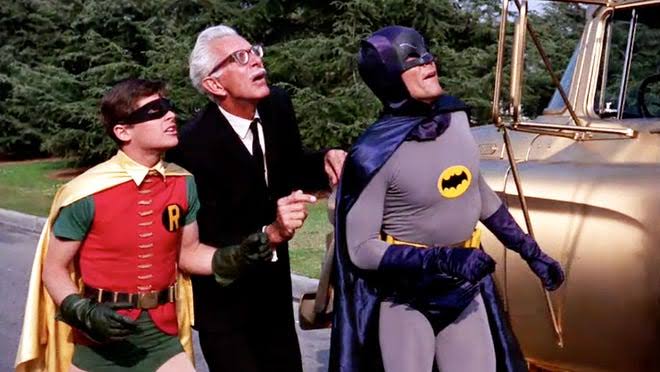
This is why camp Batman is not just a lighter or stupider Batman. He is a Batman whose field permits lightness.
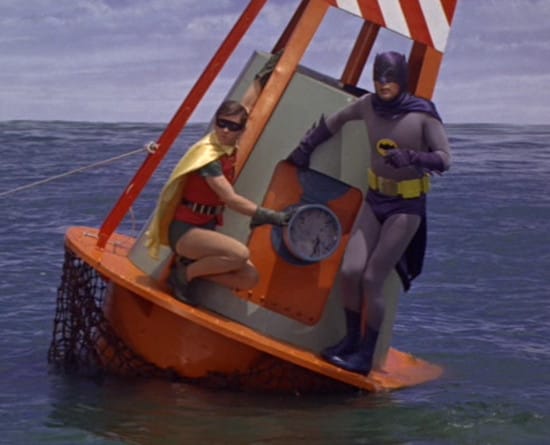
Lightness is not automatically shallow. Sometimes lightness is evidence that the field has not collapsed to the point where only violence can speak. Those are the kinds of fields we should be trying to create, not mocking.
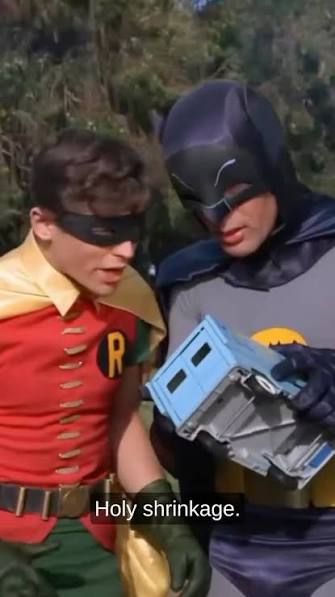
The weakness of Civic Batman is that his Gotham is so morally available to repair that the necessity of Batman becomes far less severe. If institutions mostly work, why does this city need masked vigilantes at all?
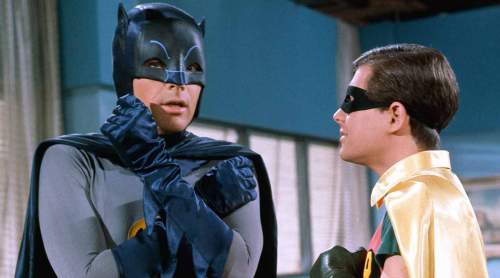
The answer is tonal rather than structural: because the genre is a fun public adventure, not a painting of social collapse. Still, Civic Batman’s extralegality is softened by his civic integration. He is less a path to false repair because the repair field around him remains alive and well.
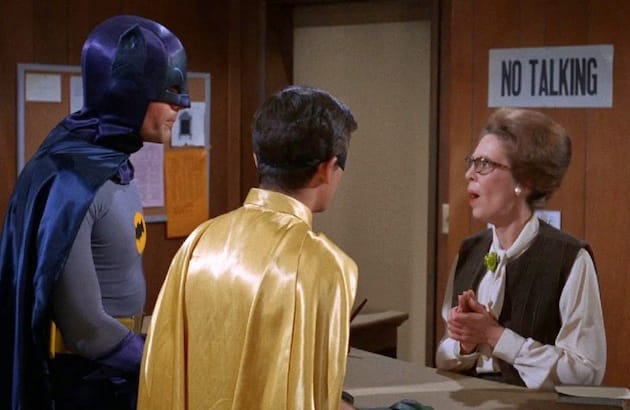
Ruling:
Civic Batman is one of the least harmful Batmen by far. He is not the most psychologically convincing, but he is easily among the cleanest structurally. His Batman preserves public trust more than he replaces it, uses the symbol as reassurance more than domination, and operates in a Gotham whose institutions have not been eaten down to bone.
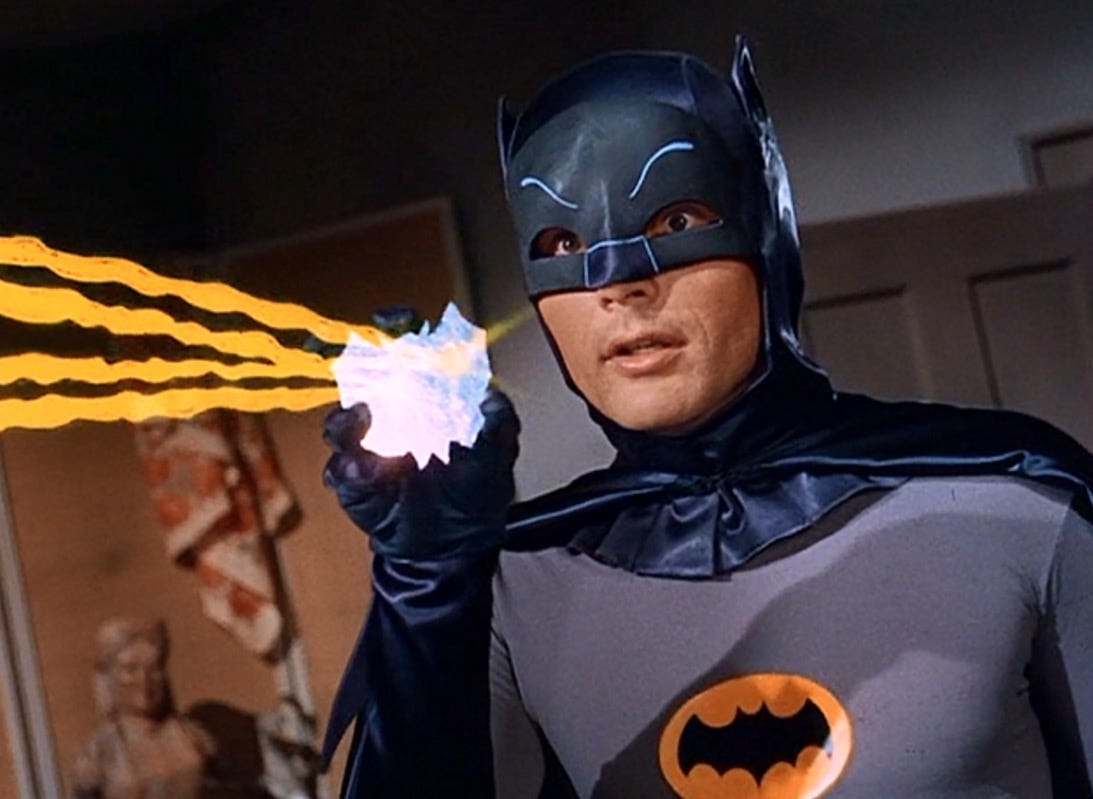
Civic Batman is ridiculous. He is also doing much better at his job than several much moodier Batmen.
Gothic Batman.
Tim Burton's depiction of Batman is best described as one fever treating another.
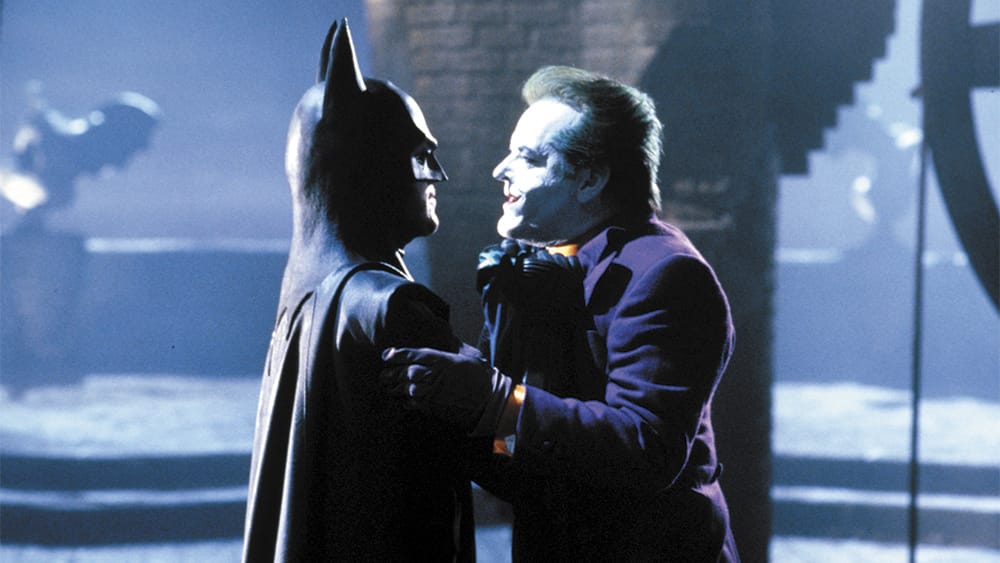
Michael Keaton’s Batman lives in a Gotham that feels less like a city than an architectural plague we cannot contain.
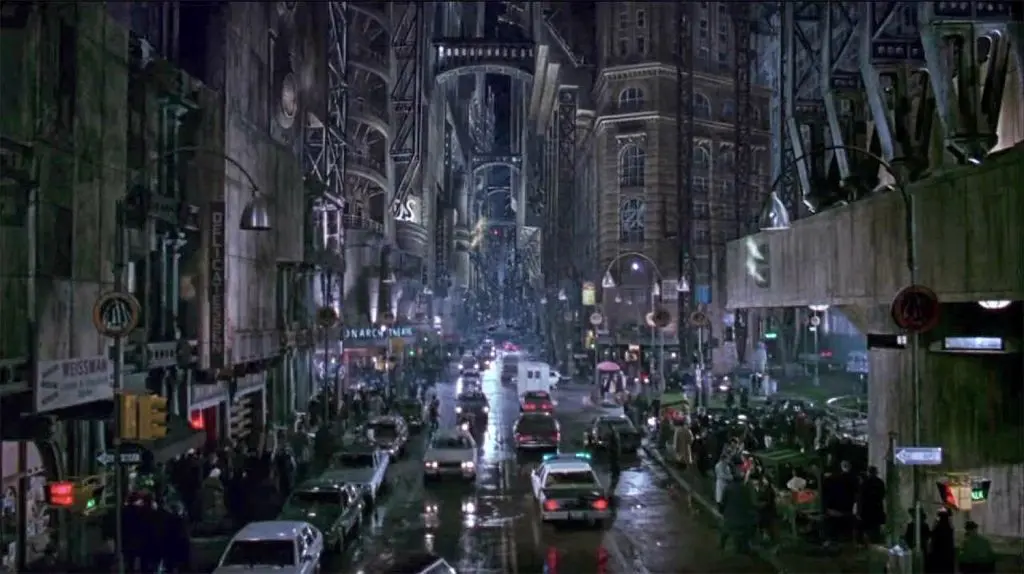
It is vertical, smoky, industrial, ornate, filthy, theatrical, and weirdly indifferent to normal municipal function for a city, as if we are watching a hallucination or a dream.
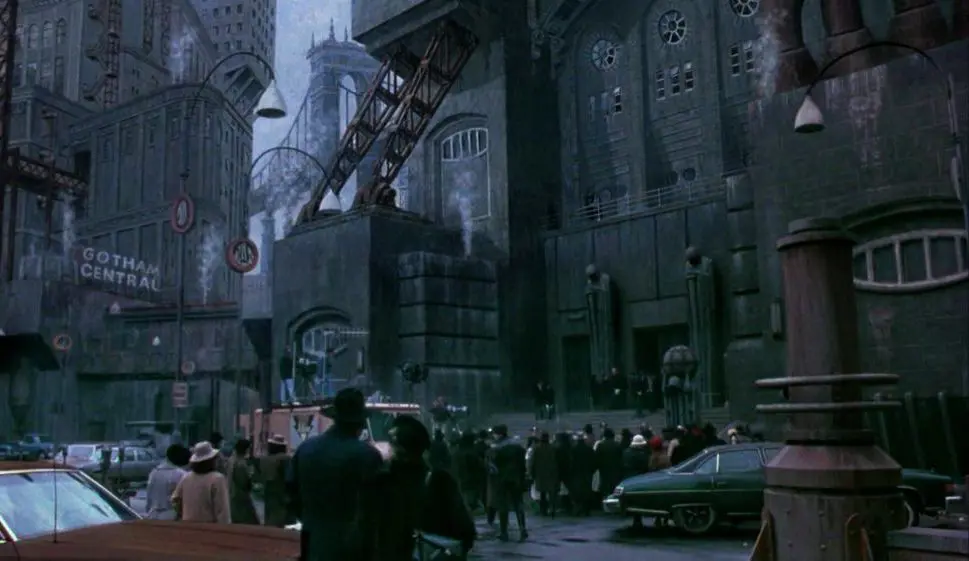
This Gotham does not produce crime as policy failure alone. It produces crime as its atmosphere. The city seems to have a nervous system made of gargoyles and bad lighting.
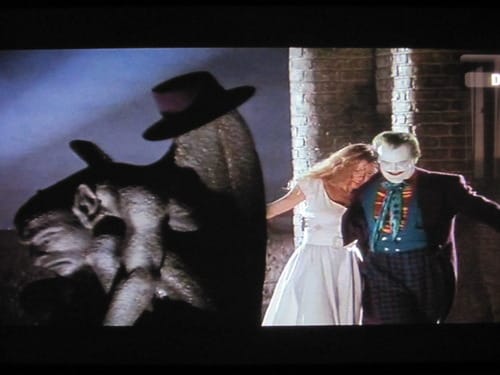
Batman fits that field because he is part of the same nightmare.
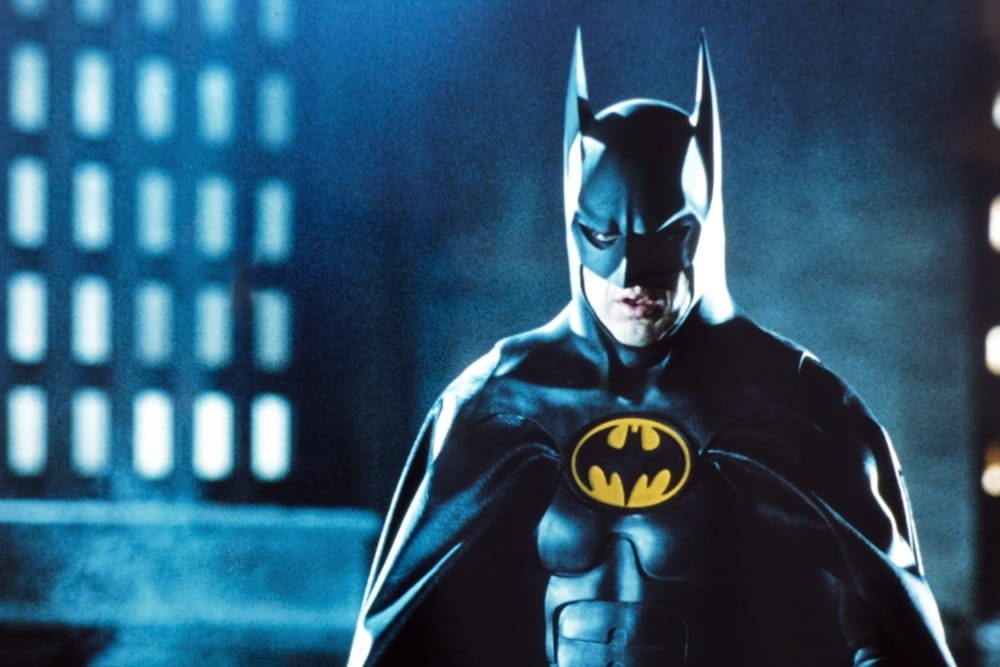
This is the crucial structural difference from Civic Batman. Adam West’s Batman stands in front of Gotham as public helper. Keaton’s Batman emerges from Gotham as a mythic symptom. He is not clearly exterior to the city’s damage. He is its counter-monster.
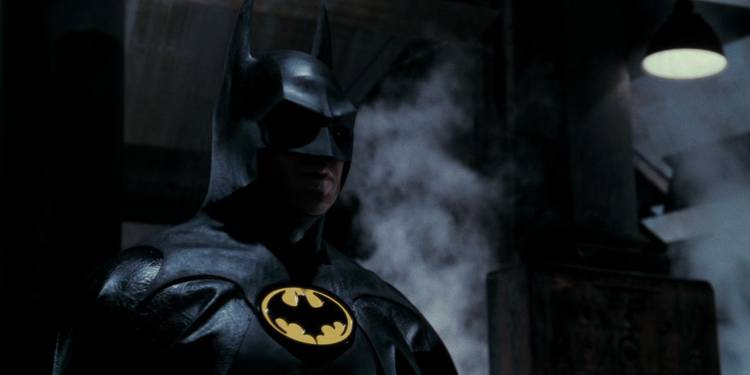
That makes him powerful and morally unstable. Burton’s Batman understands symbol very deeply, maybe more deeply than almost any other cinematic version.
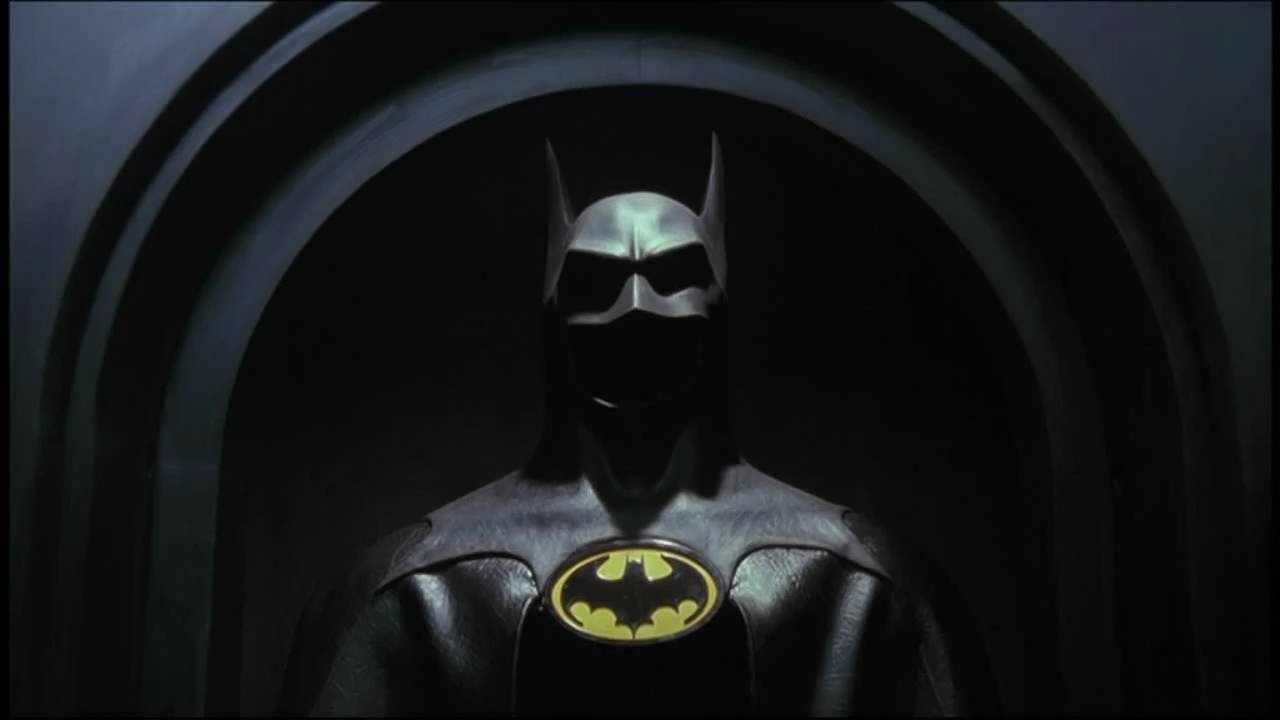
The suit is not tactical realism. It is his ritual. The car is not transportation. It is an omen. The cave is not a base. It is an inner cut made architectural. Bruce Wayne is not a playboy mask so much as an awkward surface stretched over something already long deadened.
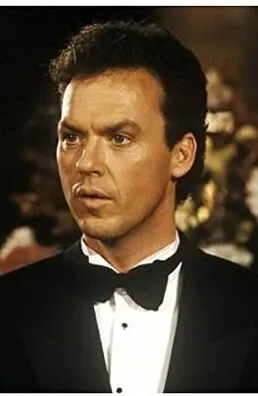
Tim Burton said in interviews that this film was mostly written about depression. This Batman does not seem to have built a method out of his grief. He seems to have become the method long ago and lost track of the man underneath.
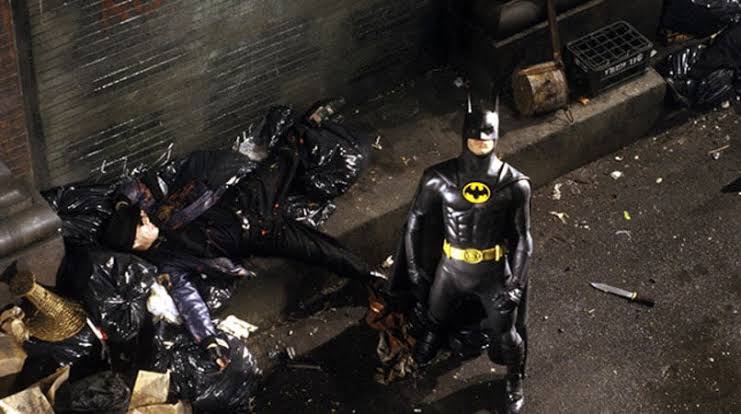
That can work in a gothic fairy tale. It is very dangerous as field repair.
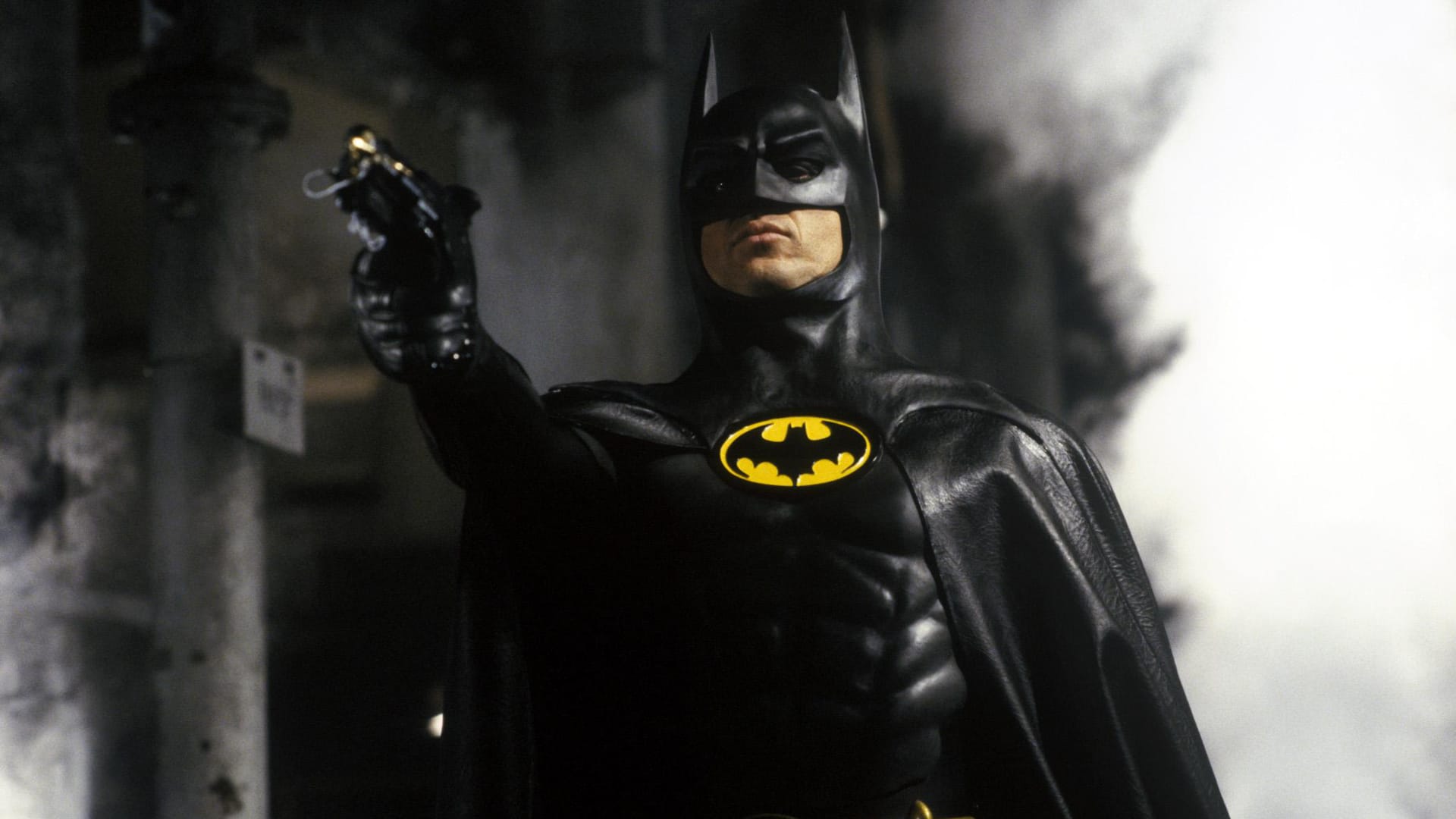
Keaton’s Batman is also lethal or lethal-adjacent in ways that matter. The films do not preserve the no-kill primitive cleanly.
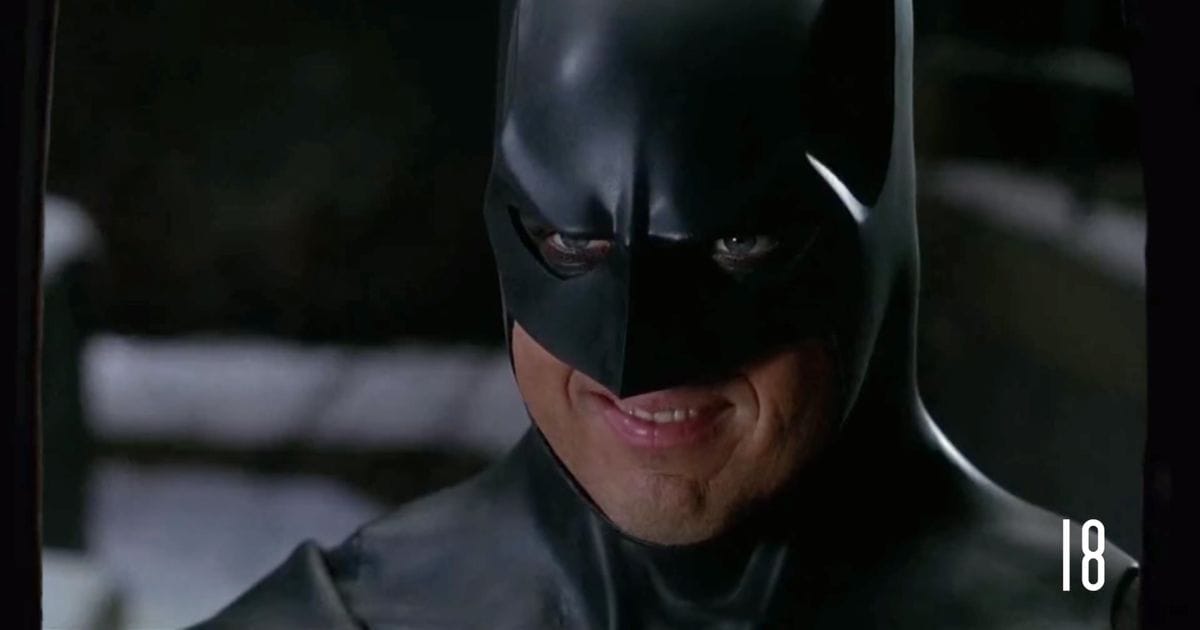
He blows things up.
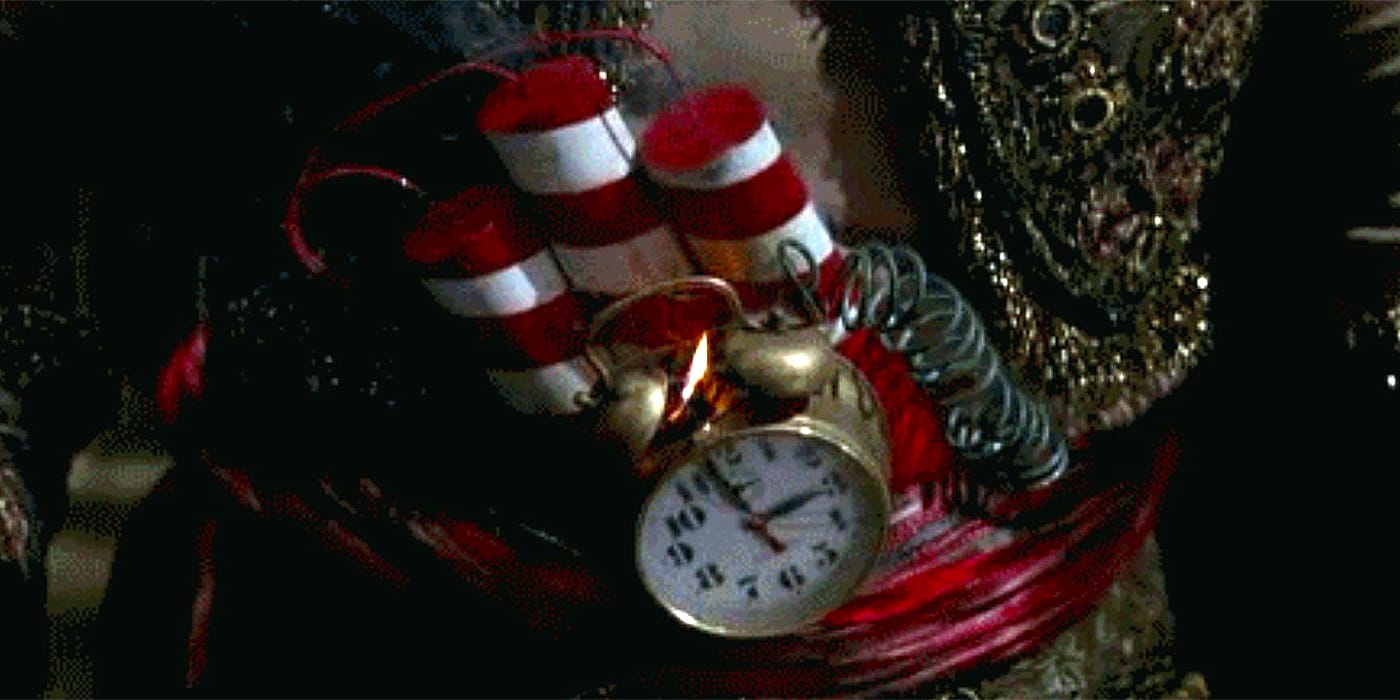
He drops people.
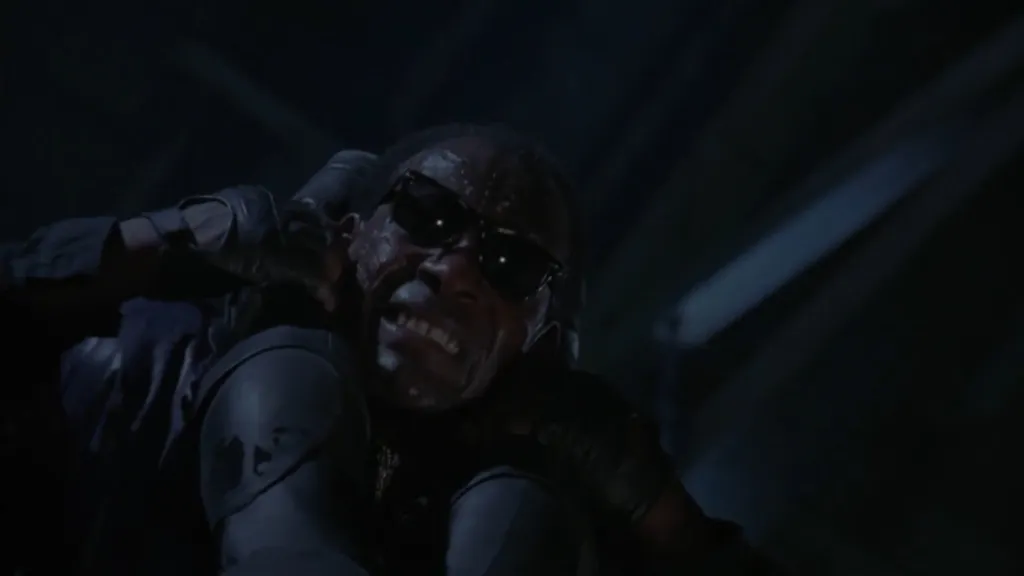
He lets the symbolic machinery of punishment become final in ways a stricter Batman would always refuse.
This does not make him useless. It makes him a different field instrument.
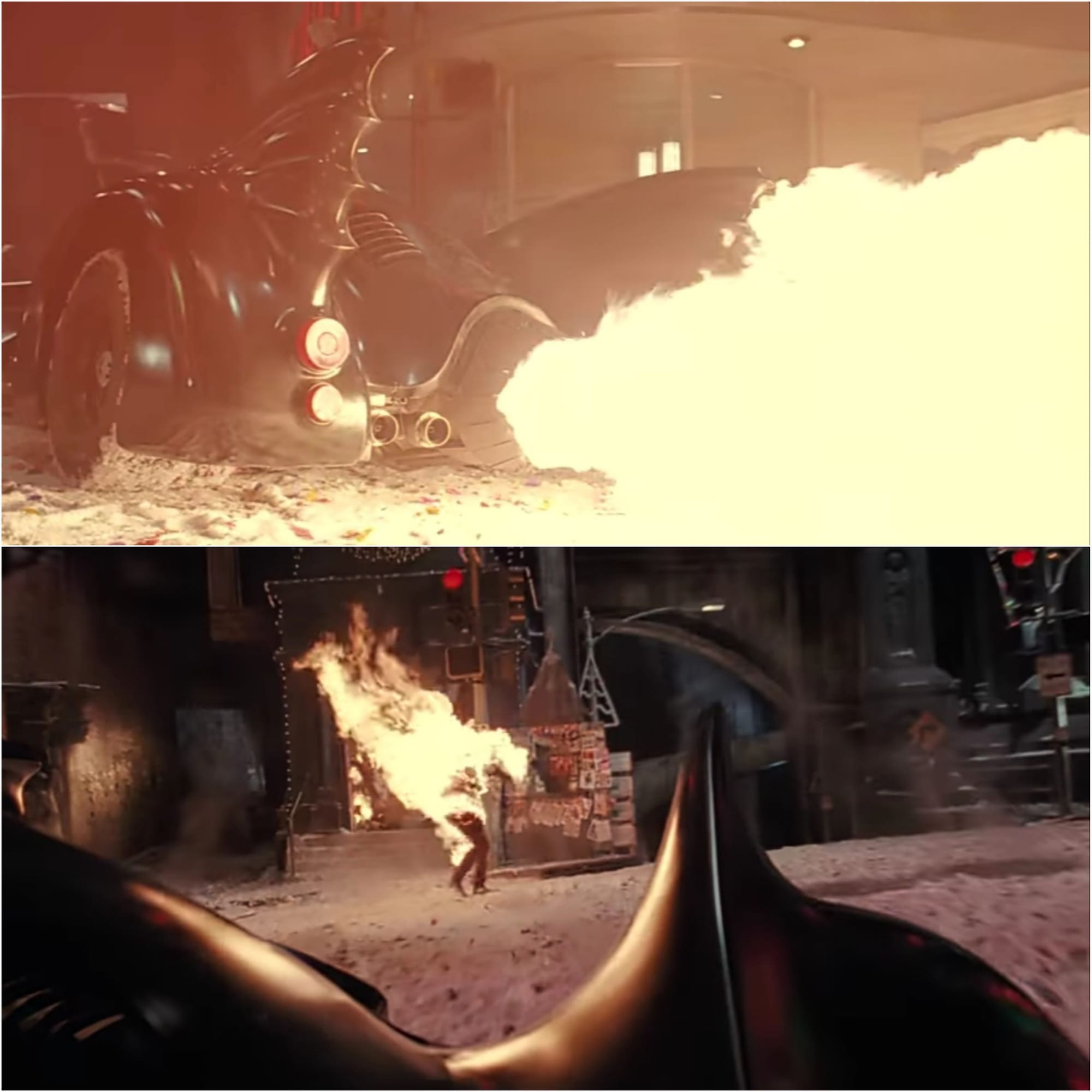
When Batman kills, the symbol changes from fear and intervention to judgment. Burton’s world is stylized enough that the killings sometimes feel dreamlike, but this framework does not let aesthetics launder the transition.
If Batman can kill as part of the method, he becomes less a constraint against Gotham’s violence and more a rival expression of it. The villains mirror this.
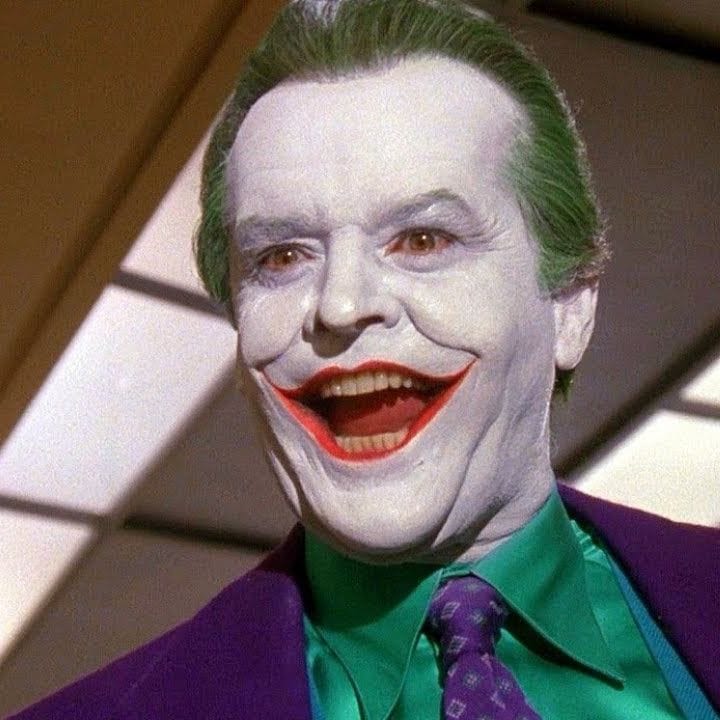
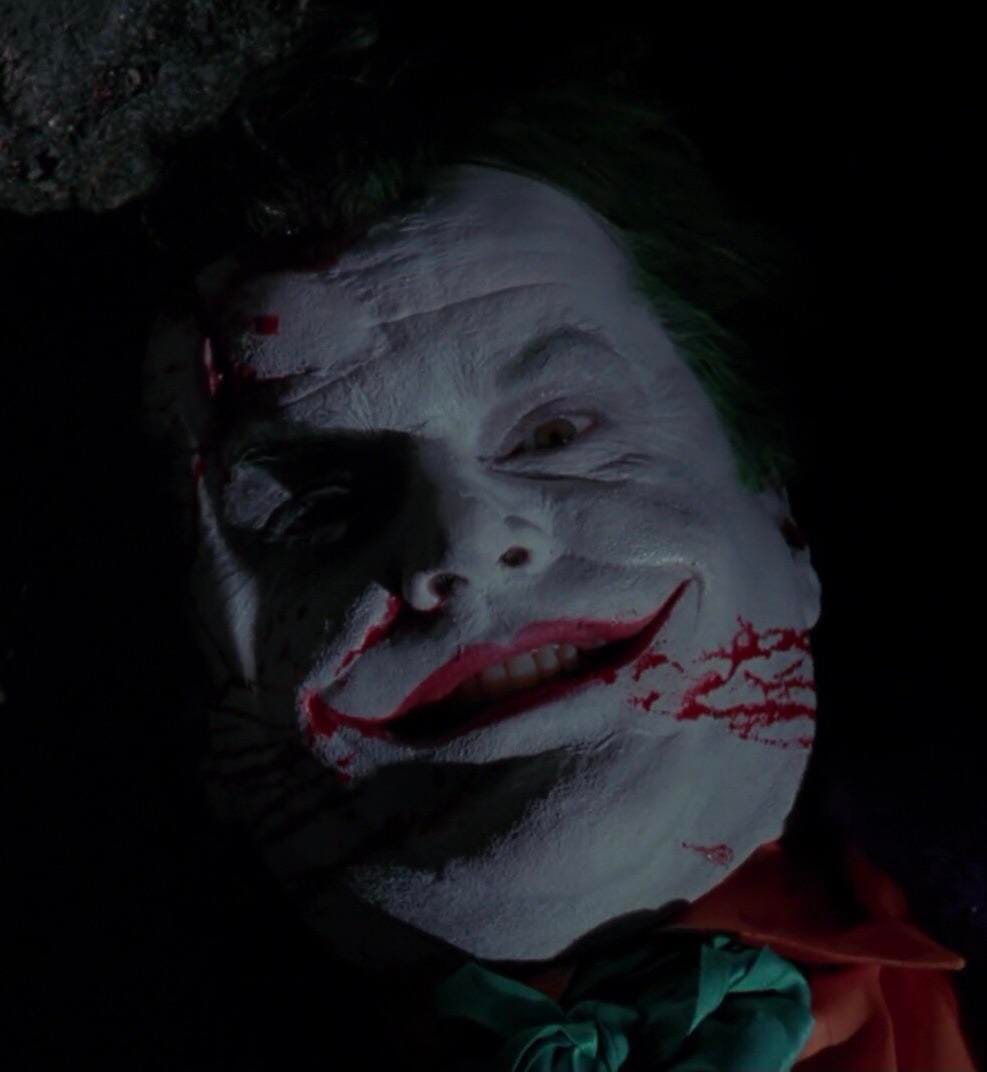
Nicholson’s Joker is not only a criminal. He is Gotham’s theatrical corruption liberated from ordinary shame. He laughs because the city is already laughing underneath.
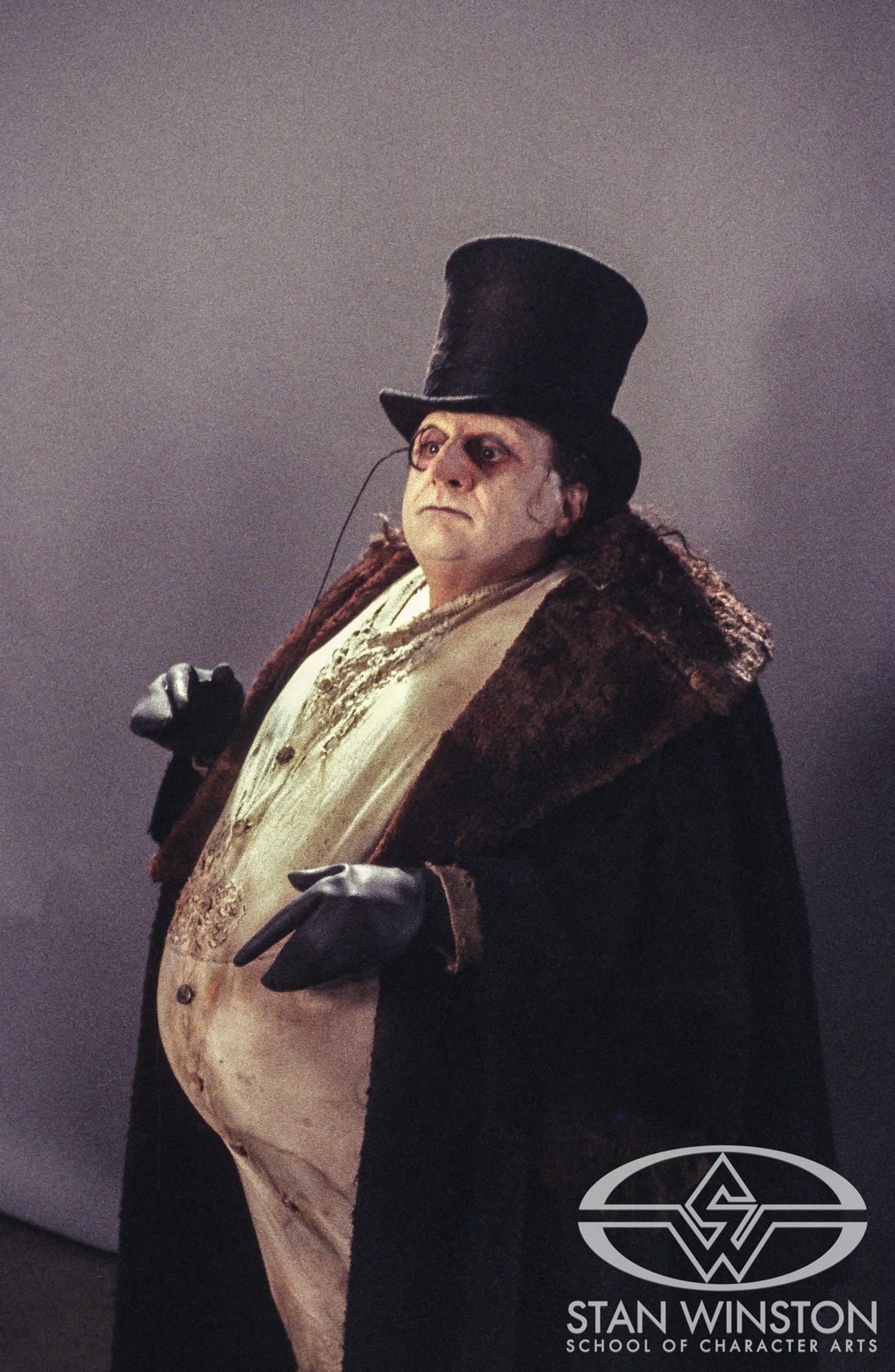
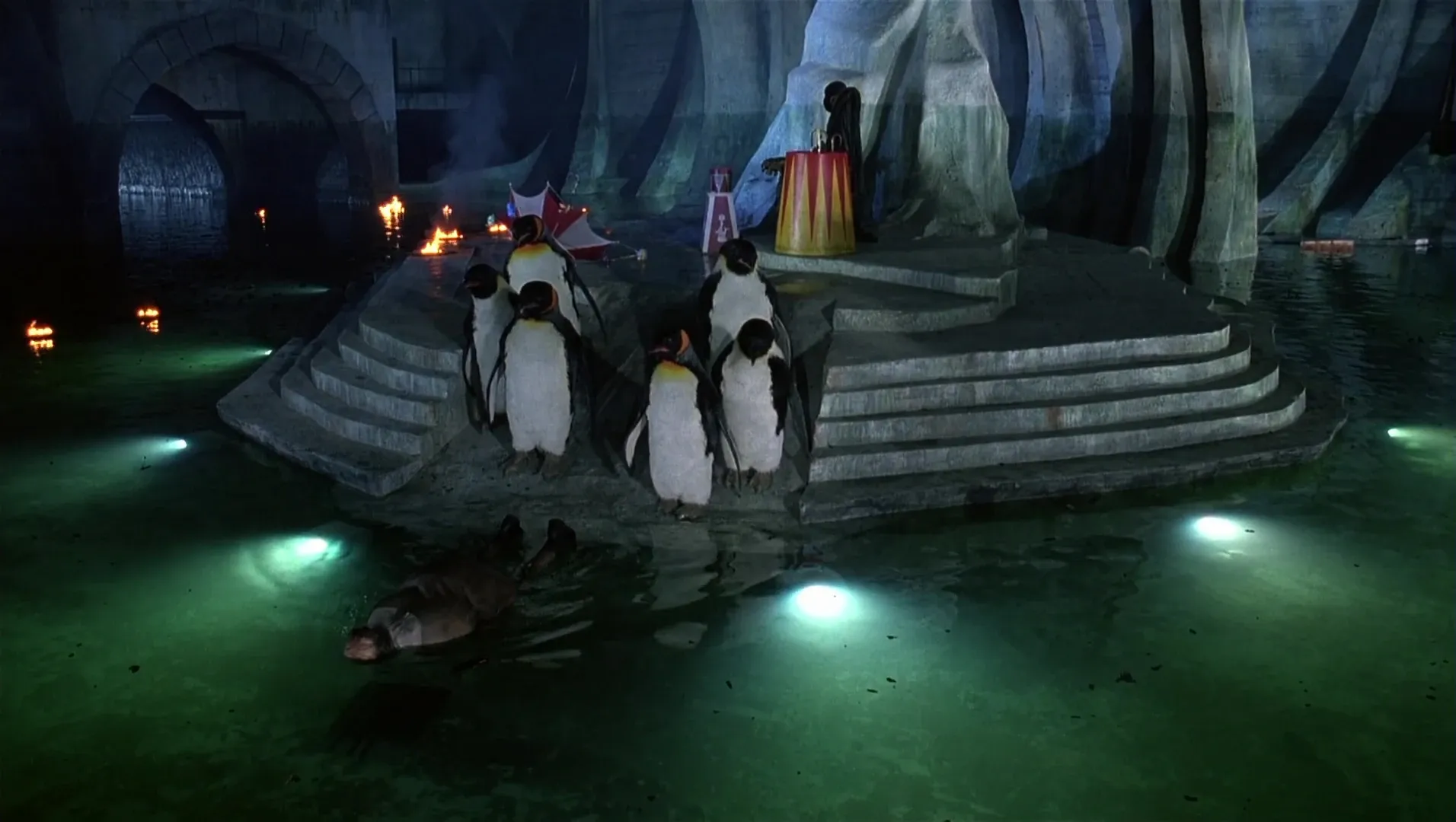
Penguin is discarded aristocratic grotesquery returning from the literal sewer.
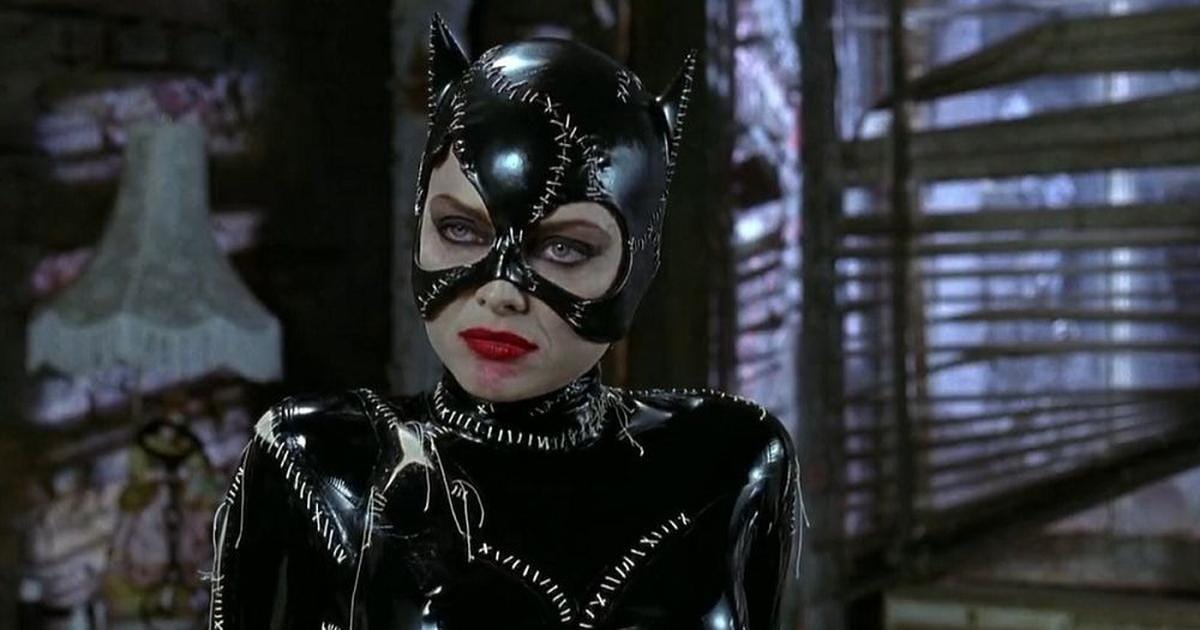
Catwoman is gendered workplace harm and death-rebirth revenge, a secretary killed by elite predation and returned as a more honest monster.
These are not random villains. They are all Gotham speaking in distorted bodies.
Keaton’s Batman can fight them because he speaks the same symbolic language.
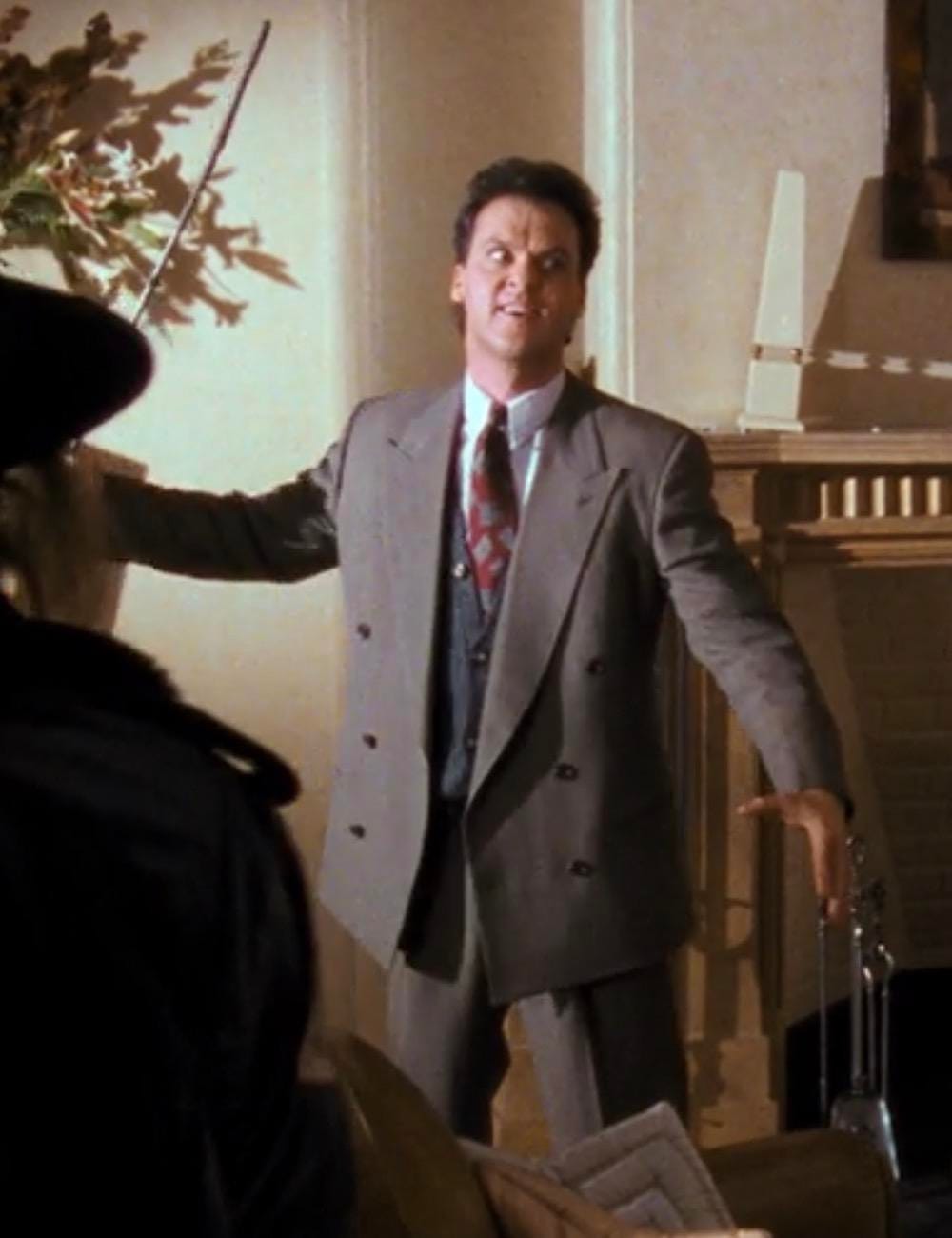
But that is not the same as repairing the field. Burton’s Batman often resolves distortion through more distortion. The city remains gothic. The systems remain vague. The wound remains beautiful.
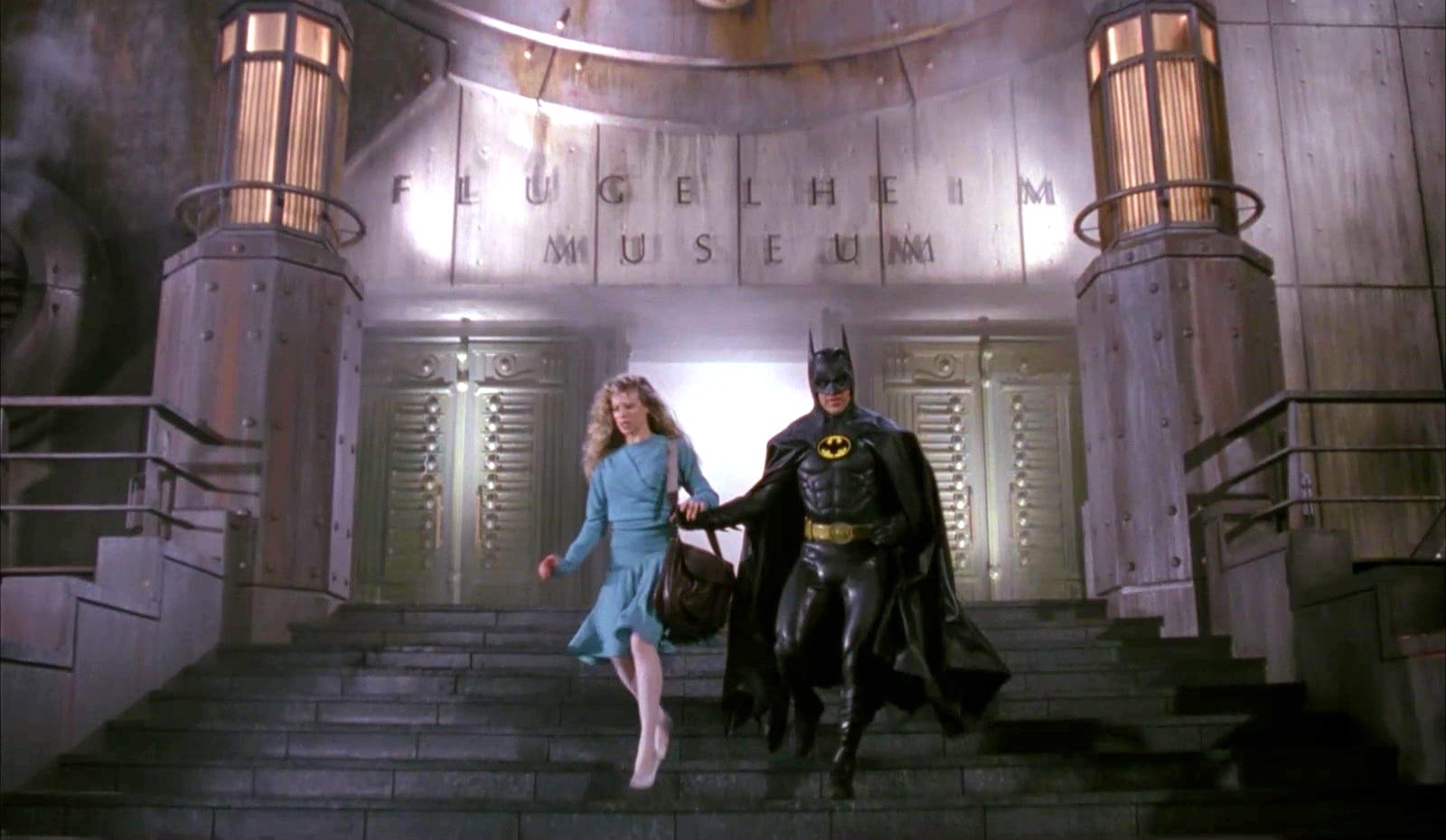
Batman remains necessary because the world has no credible alternative moral infrastructure. There is no serious Bruce Wayne repair channel available here. Wayne wealth is just aesthetic and personal, not institutional power. The day does not rebuild what the night reveals.
This Batman is strongest as myth. He is the weakest at civic repair.
Ruling:
Gothic Batman is morally powerful but structurally compromised. He understands that Gotham is symbolic, but he answers symbol with counter-symbol more than repair. He may interrupt monsters, but he is himself one of Gotham’s monsters. He is often Better than the villains, but not clearly oriented toward lowering Gotham’s future need for monsters.
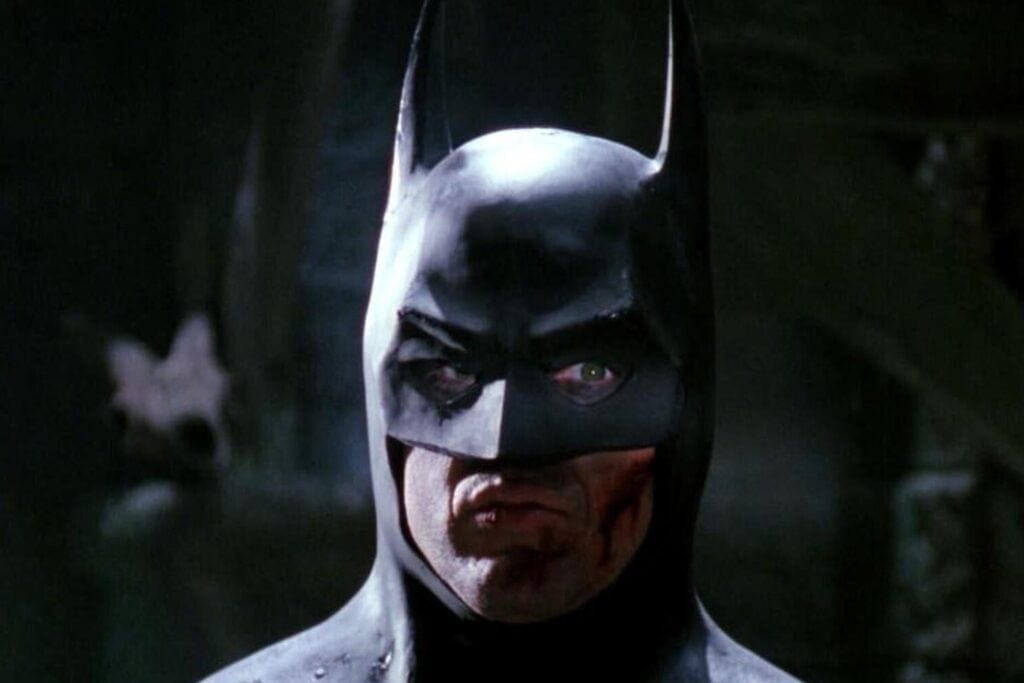
He does not save Gotham from the nightmare. He becomes the nightmare’s preferred shape.
Neon Batman.
Schumacher Batman is also much better for the field than the discourse wants to admit.
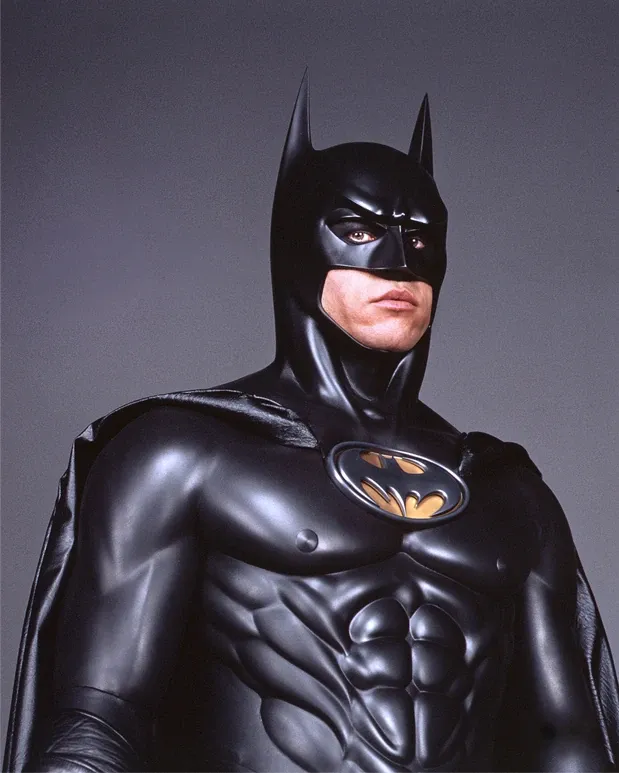
This does not mean the films are secretly masterpieces. They are not.
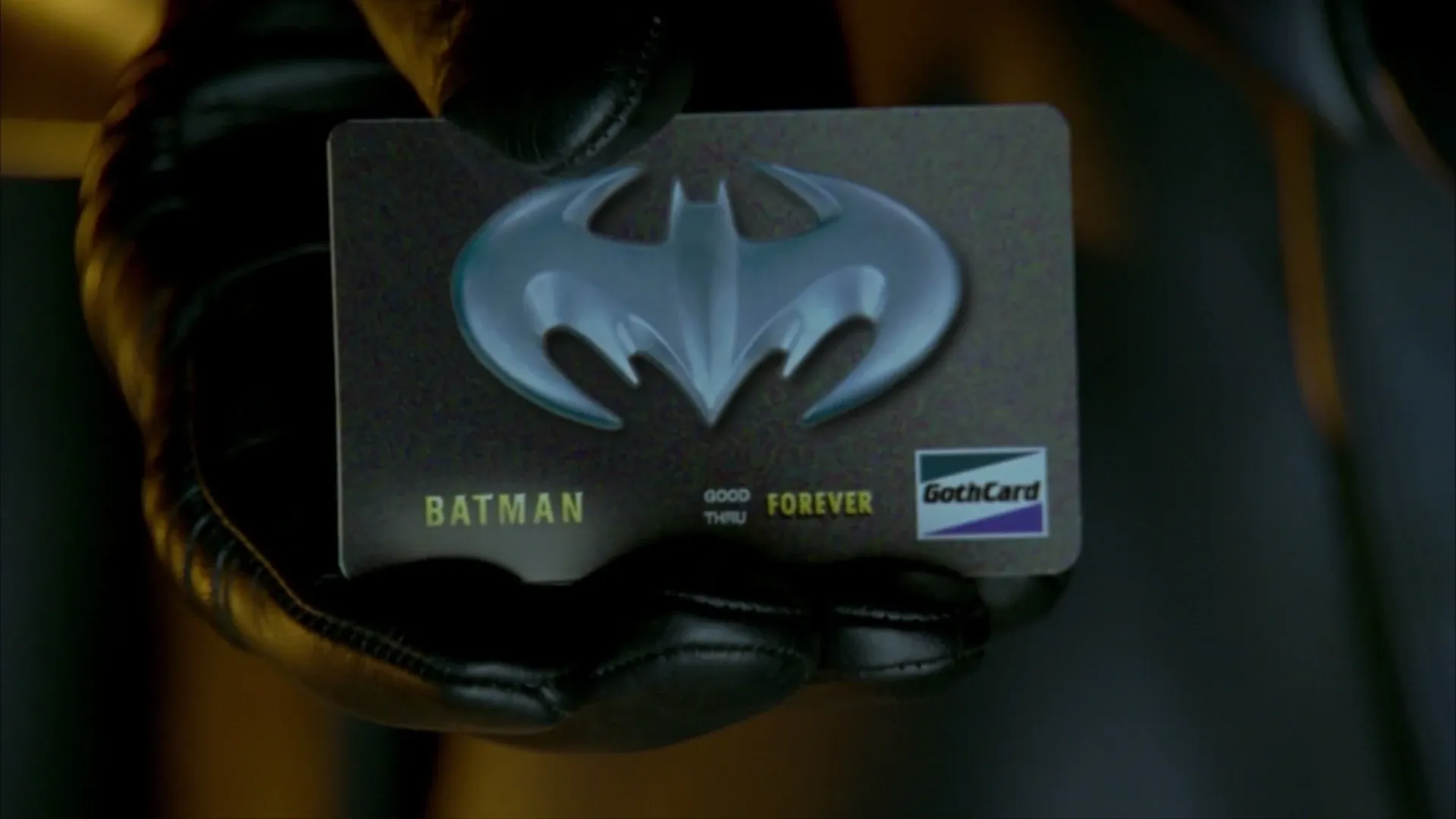
They are frequently incoherent, overstimulated, tonally unstable, visually obscene in ways that make the phrase “toyetic fever dream” feel legally insufficient, and burdened with decisions that no moral framework yet devised can fully justify.
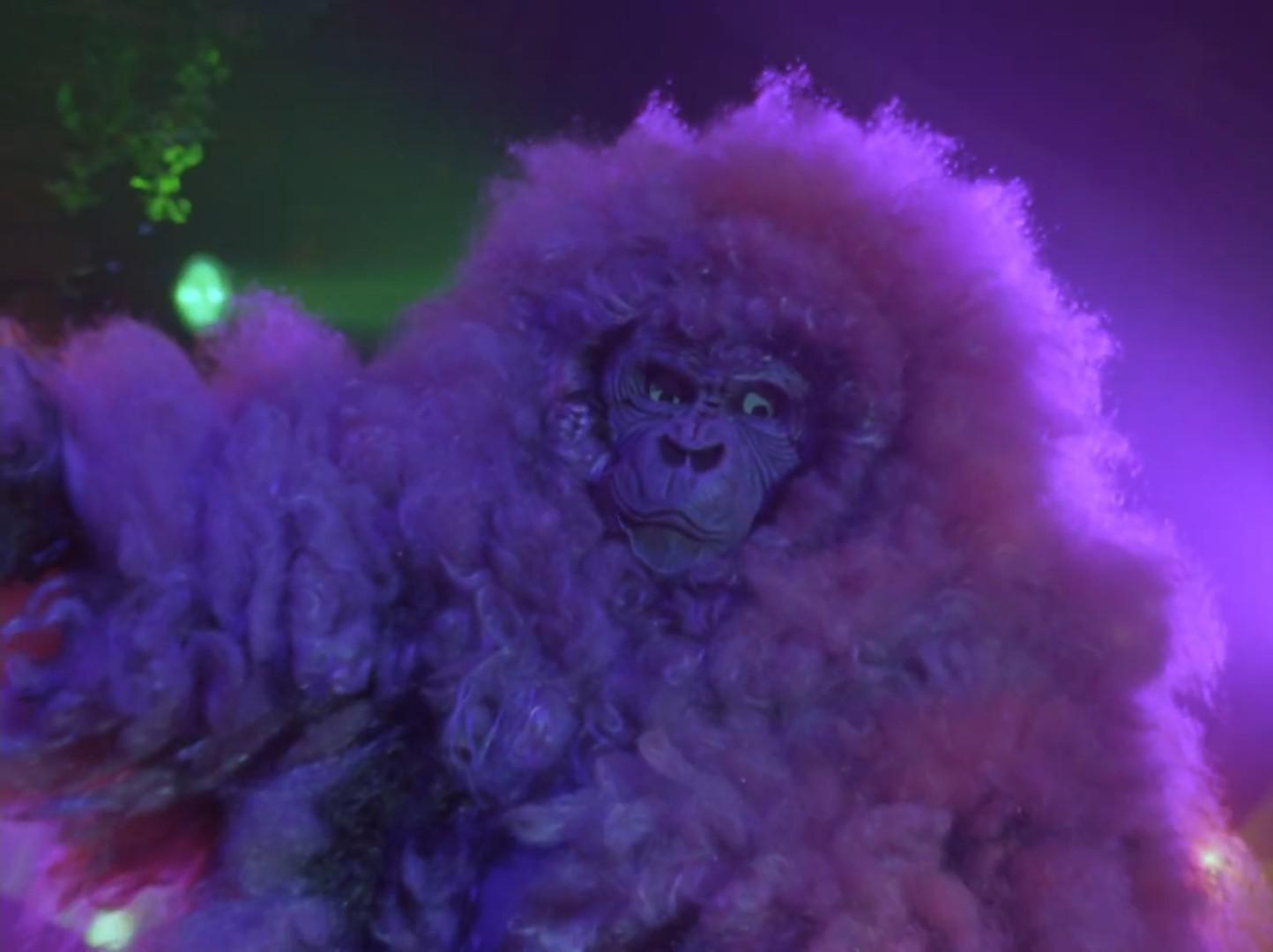
However. Structurally, Schumacher’s Batman is trying to heal.
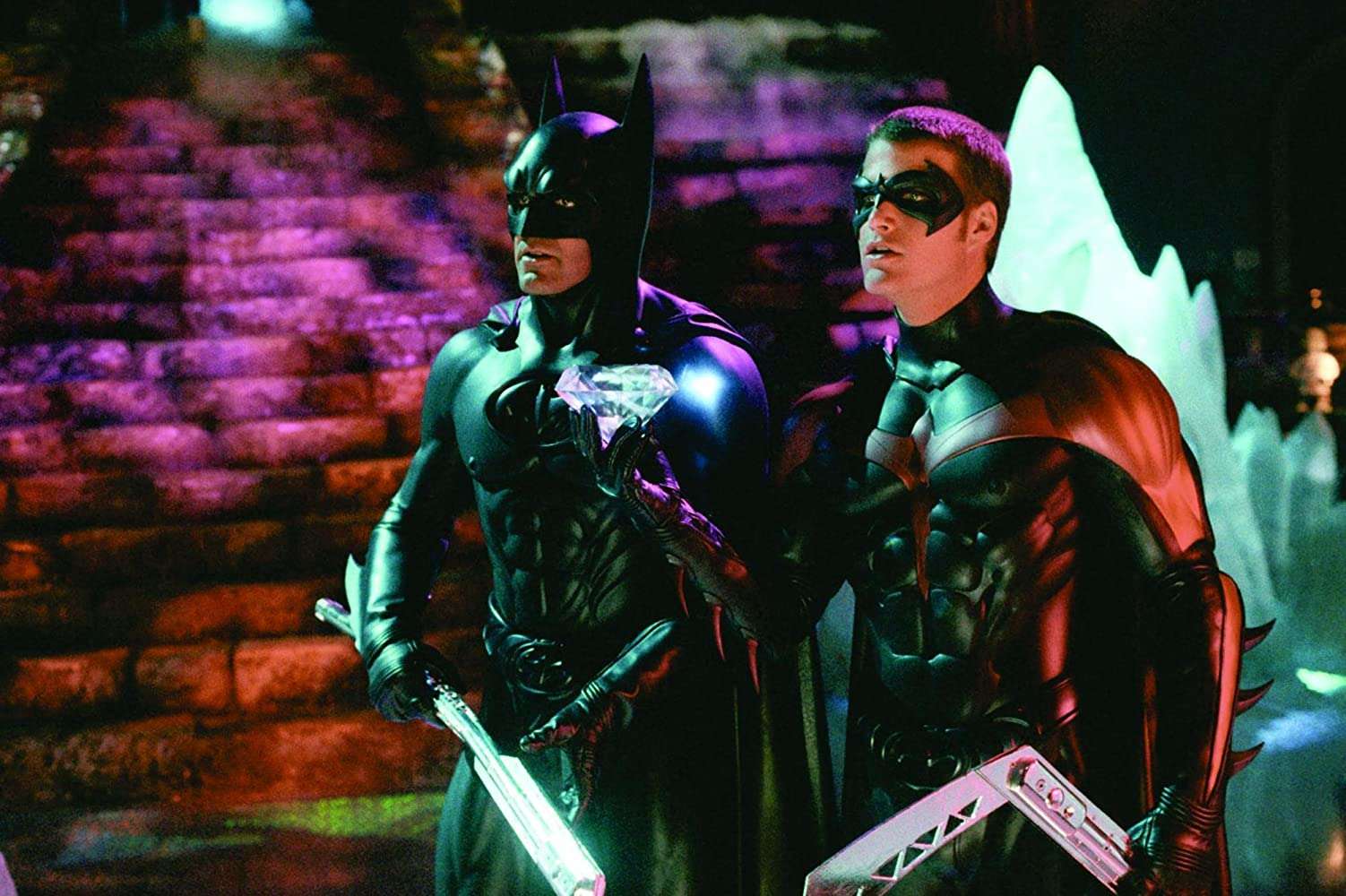
That matters a lot.
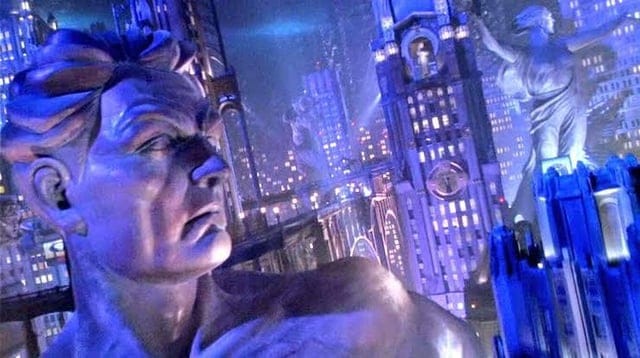
After Burton’s gothic inwardness, Schumacher moves the field toward family, partnership, color, public visibility, and emotional speech. This Gotham is ridiculous, but it is not spiritually airless.
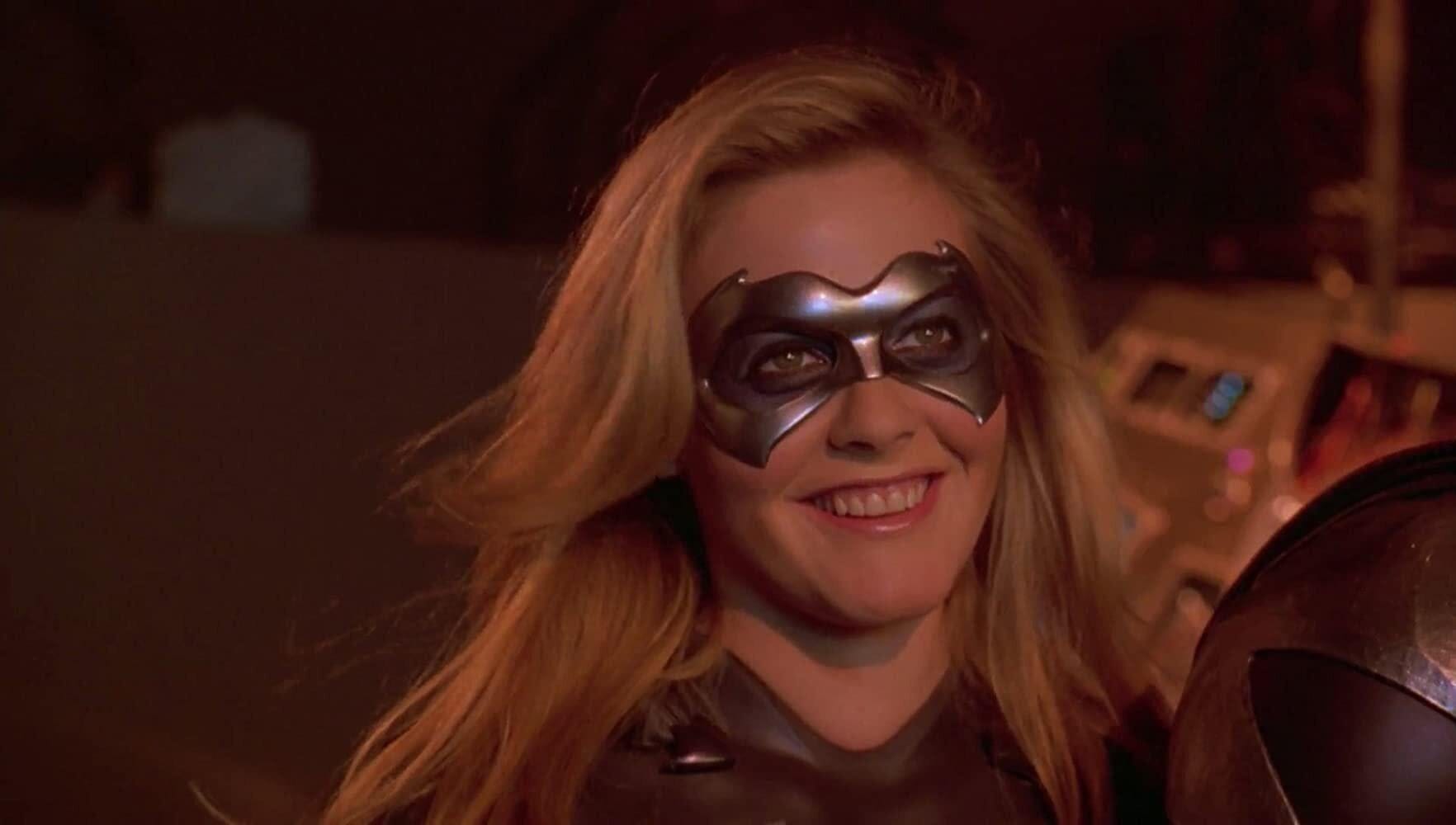
It has room for Robin, for Batgirl, for Alfred’s vulnerability, for Bruce’s relational failures, for the possibility that Batman must become more than a solitary trauma engine.
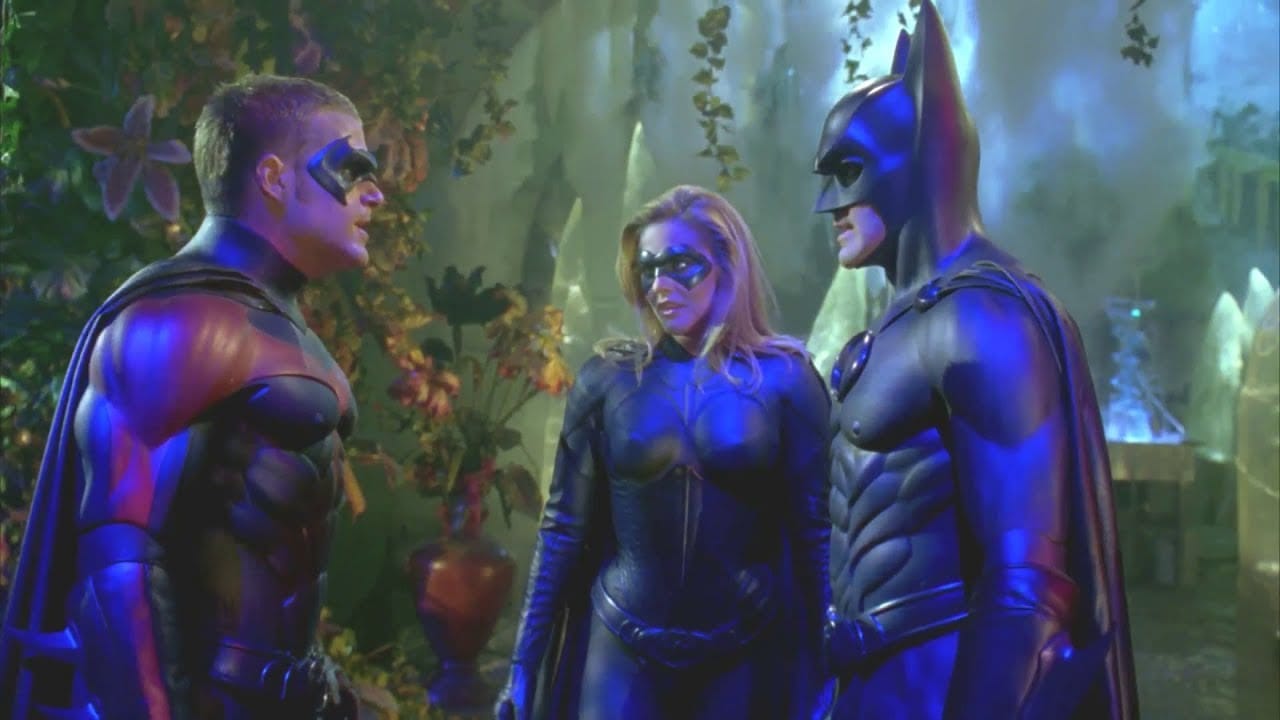
The execution is often absurd.
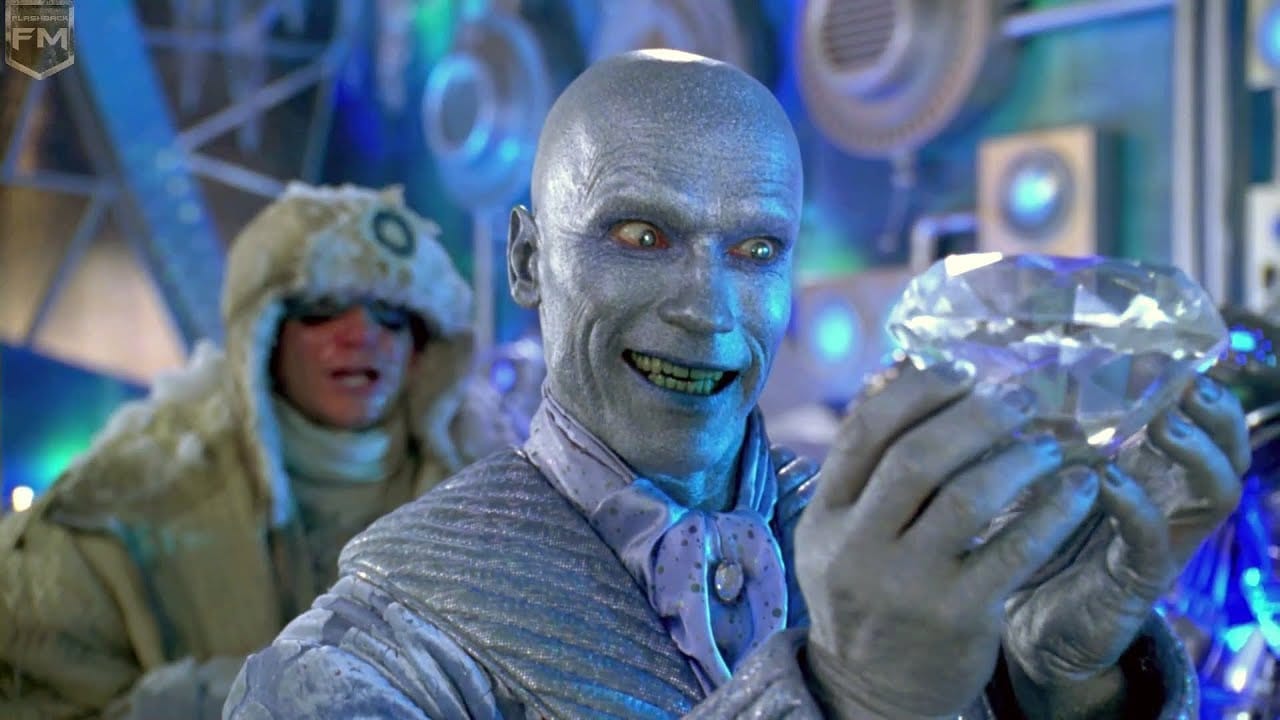
The direction is morally interesting.
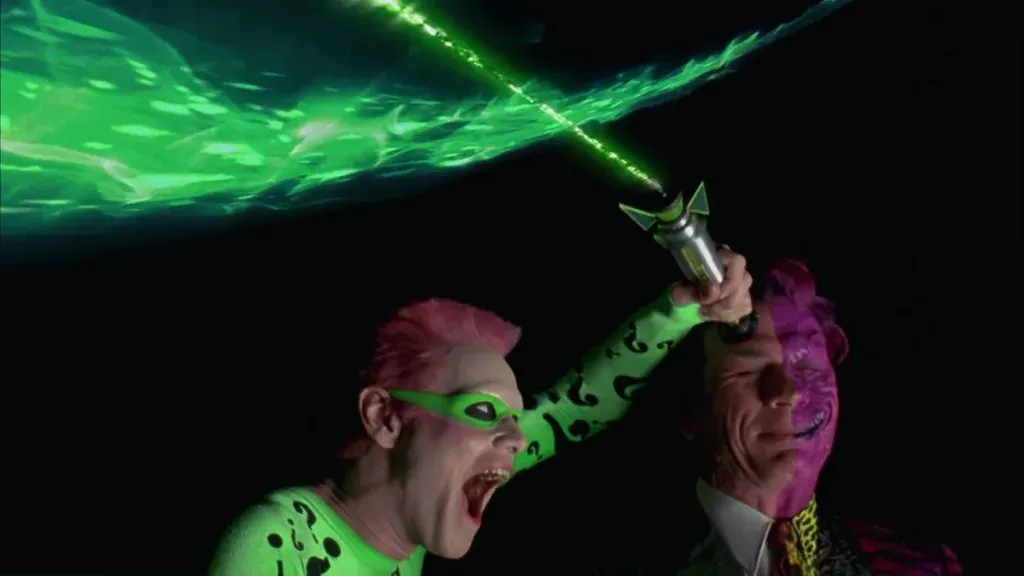
Batman Forever is especially important because it makes the wound explicit again. Bruce is not only fighting villains. He is trying to understand his own origin, his own divided self, and his relation to Dick Grayson.
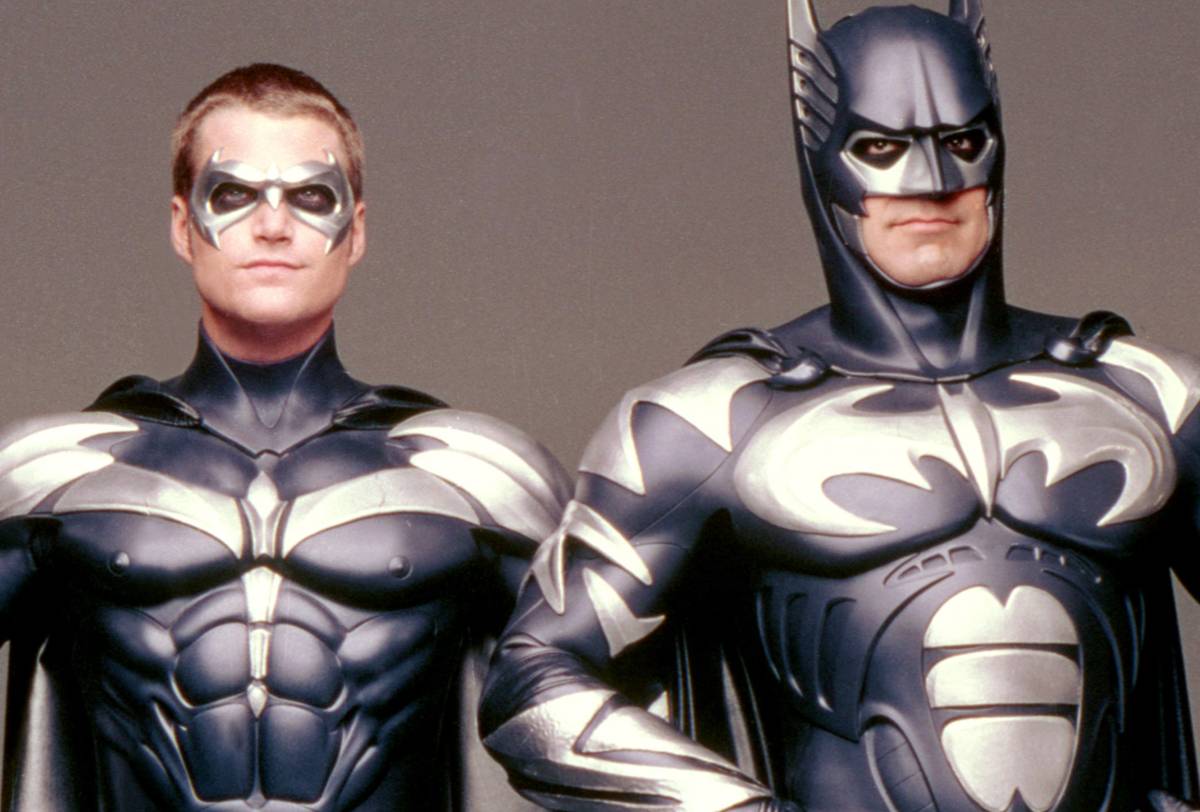
The Riddler and Two-Face are chaotic, cartoonish, and overlarge, but both orbit questions of identity, fractured selfhood, envy, and spectacle. The film is not subtle.
It is a slot machine falling down the stairs, but inside that, it is asking whether Bruce can choose to continue as Batman without being possessed by the original wound.
That is a real Batman question to ask.
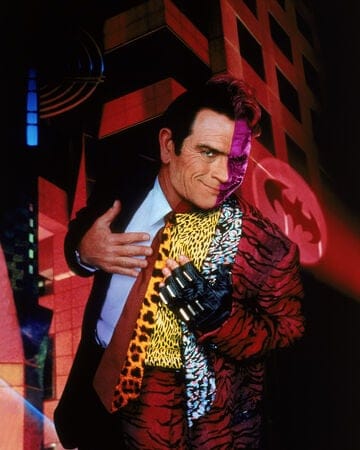
Batman & Robin, for all its crimes, is incredibly structurally revealing. It is a bad film in many normal ways, but its moral field is almost aggressively anti-nihilist.
Bruce is not becoming darker. He is trying to maintain his family. Alfred is dying. Dick is struggling for recognition. Barbara enters the field. Freeze is given a motive rooted in desperate care.
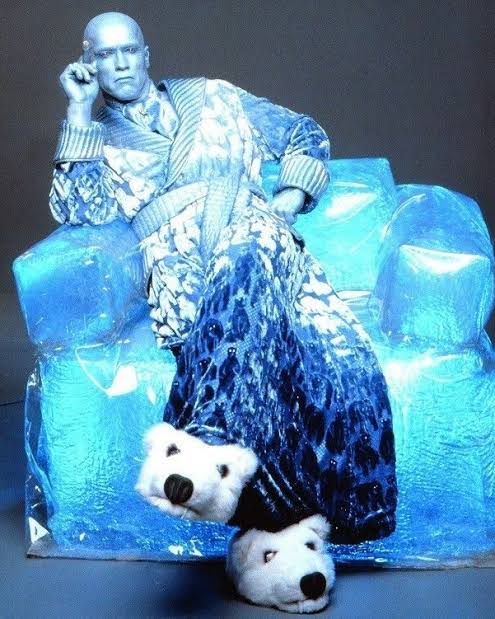
Poison Ivy is ecological distortion turned back on the city as theatrical seduction.
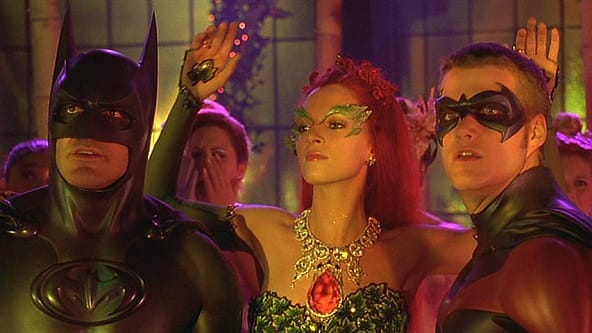
The film’s final moral architecture is not vengeance, like Burton. It is family, cure, and the possibility of restoring even an enemy’s beloved.
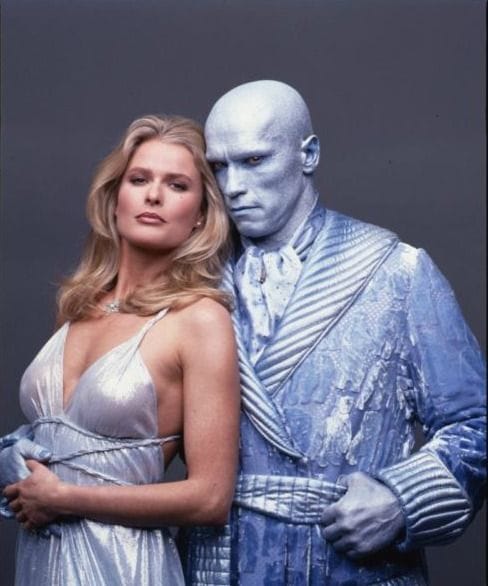
This is not nothing.
Mr. Freeze in particular matters. The film’s version is goofy, but the core structure still survives: a villain whose criminality is organized around preserving a loved one. A lesser Batman treats Freeze as only a threat. A better Batman sees the damaged care at the center and seeks a repair path that stops the harm without denying the love. That is what Batman should do, and what this Batman does.
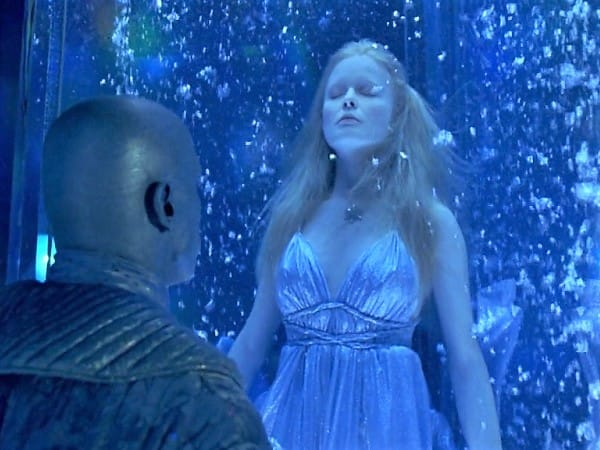
The Schumacher Bat-family is also important because it rejects the solitary cave as the final form. Bruce’s first moral problem is not the existence of crime; it is his inability to share the mission without controlling the people he loves. Dick’s frustration is not just teen attitude, it is the field answering Bruce: if you create a family but treat them as subordinates to your wound, the family will become another site of contraction.
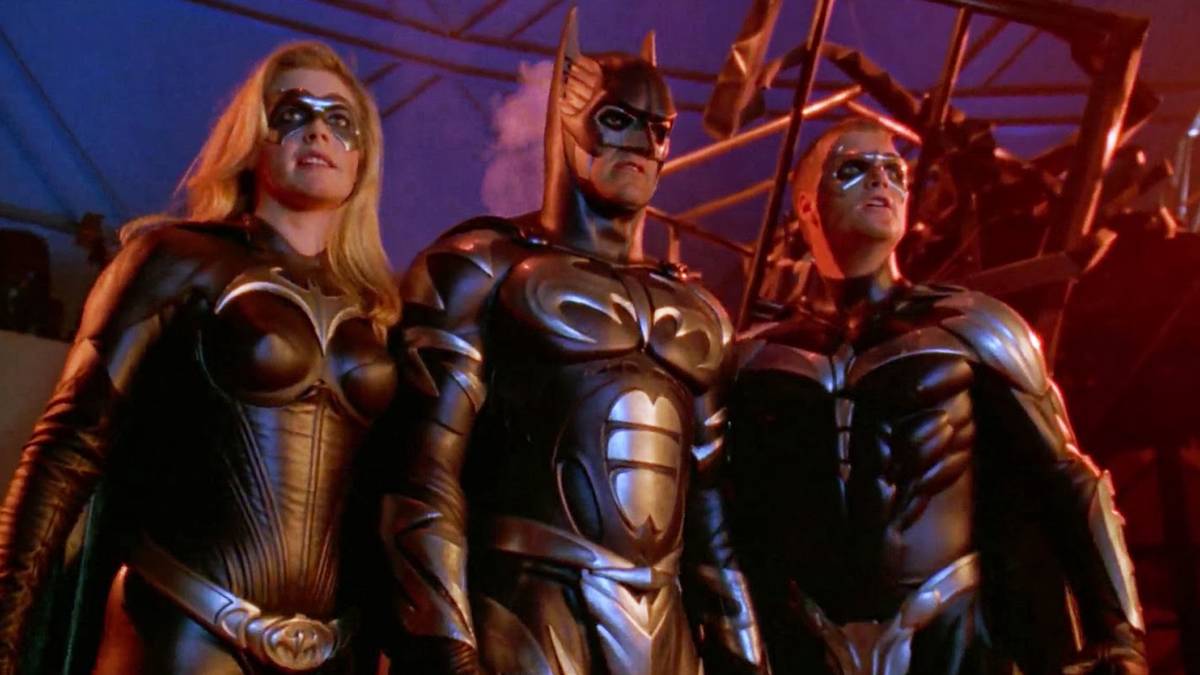
Of course, the child-sidekick problem remains. The films do not really solve it. They stylize it until the risk becomes comic-book survivable. Still, structurally, this Batman moves toward distributed agency. Robin and Batgirl are not tools. The family becomes a correction to Batman’s isolation.
That correction is morally good if it produces freer agents. It is harmful if it only produces more costumes orbiting Bruce.
Schumacher wants the first.
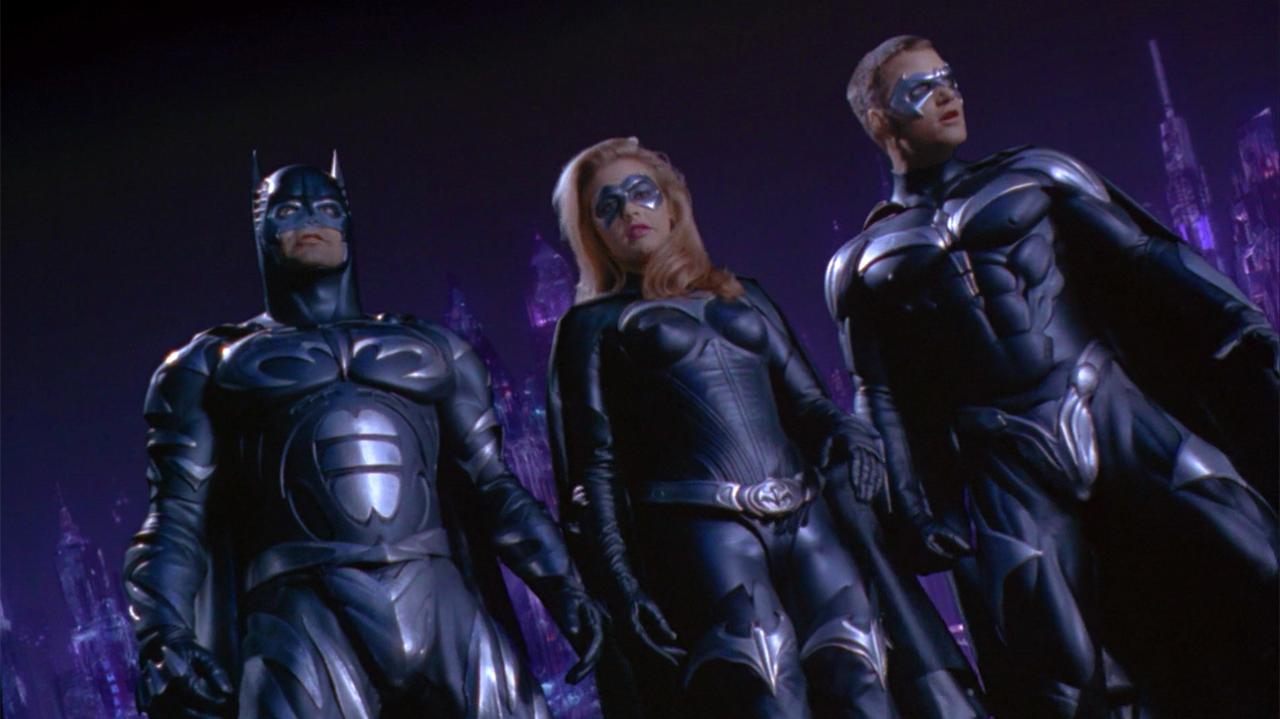
The films sometimes look like the second because everyone is trapped in a carnival of rubber, but the point stands if you can take this seriously, somehow.
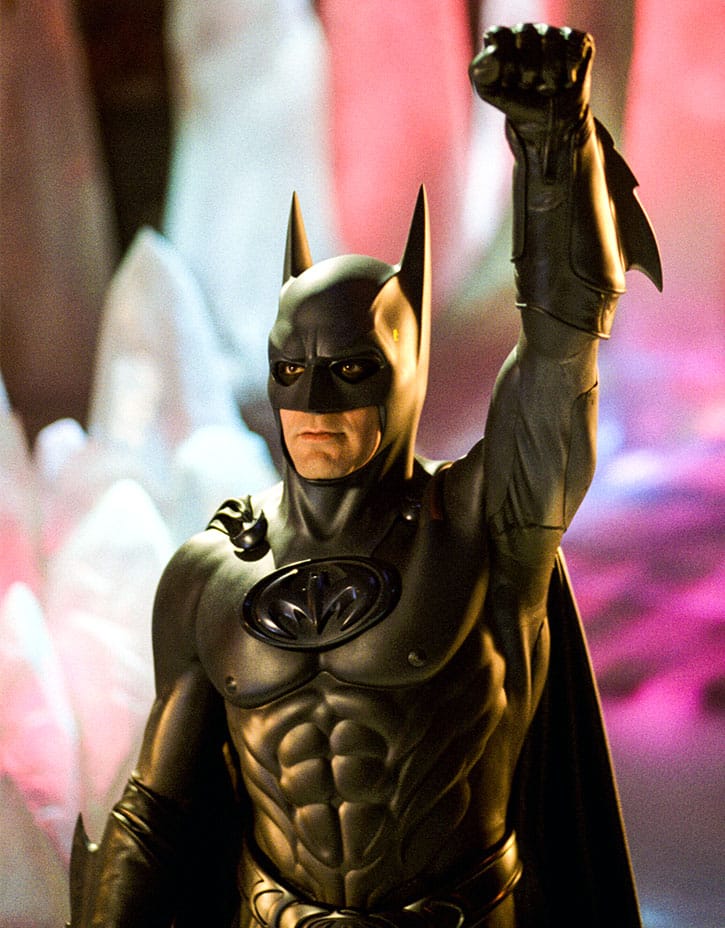
Neon Batman is not the strongest Batman. He is not the most disciplined field analyst. He is not the best detective. He is not even always distinguishable from the lighting design.
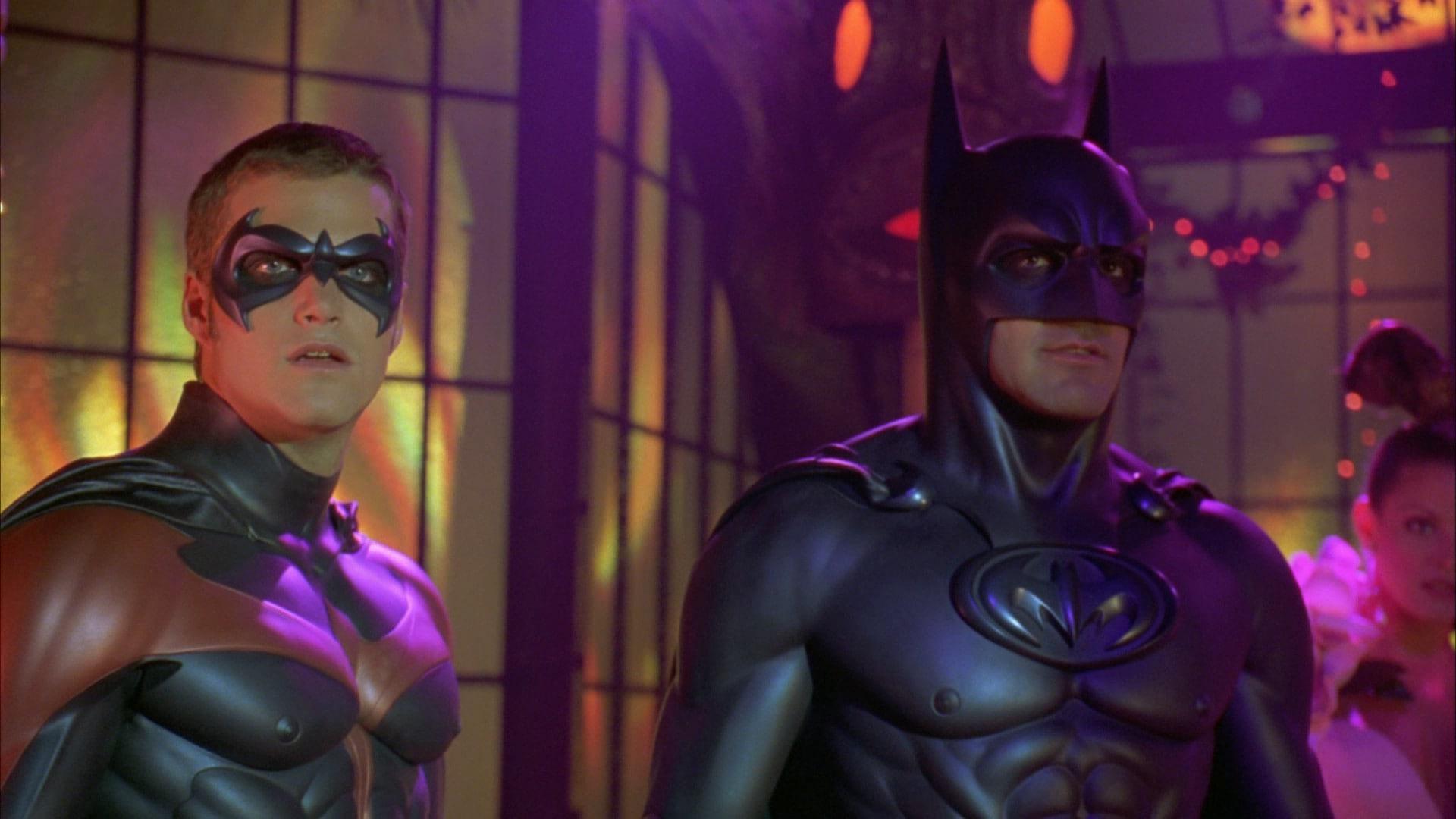
He is often healthier than more celebrated Batmen. He is trying to move from trauma toward relation.
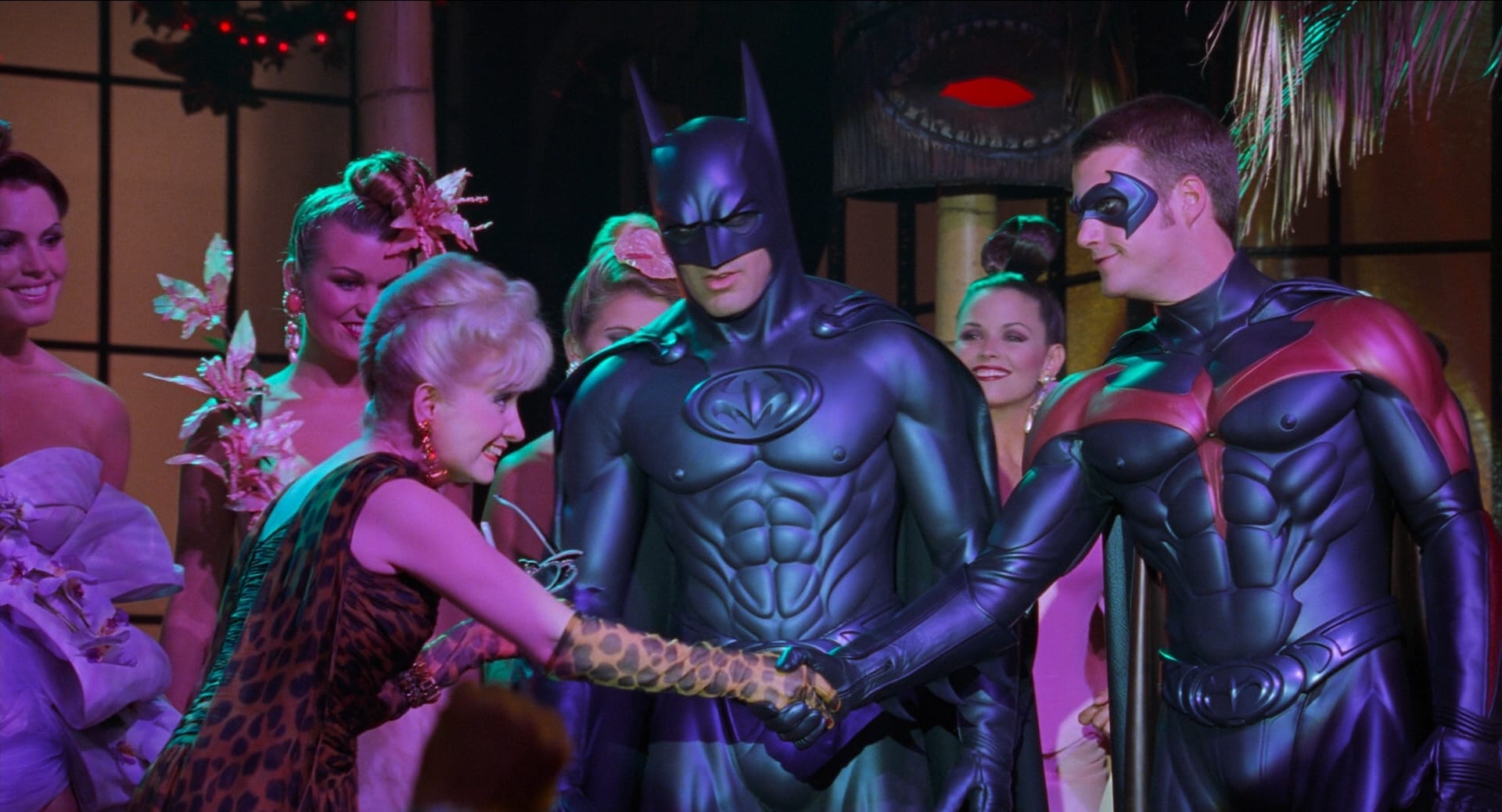
Ruling:
Schumacher Batman is aesthetically extremely horrifying and morally highly underrated. His field is silly, but its direction is repair-oriented: family, cure, partnership, emotional articulation, and a Batman who must become less alone. The films fail in many ways, but their Batman does not confuse darkness with depth. That already puts him ahead of some later versions who learned exactly the wrong lesson.
Caring Batman.
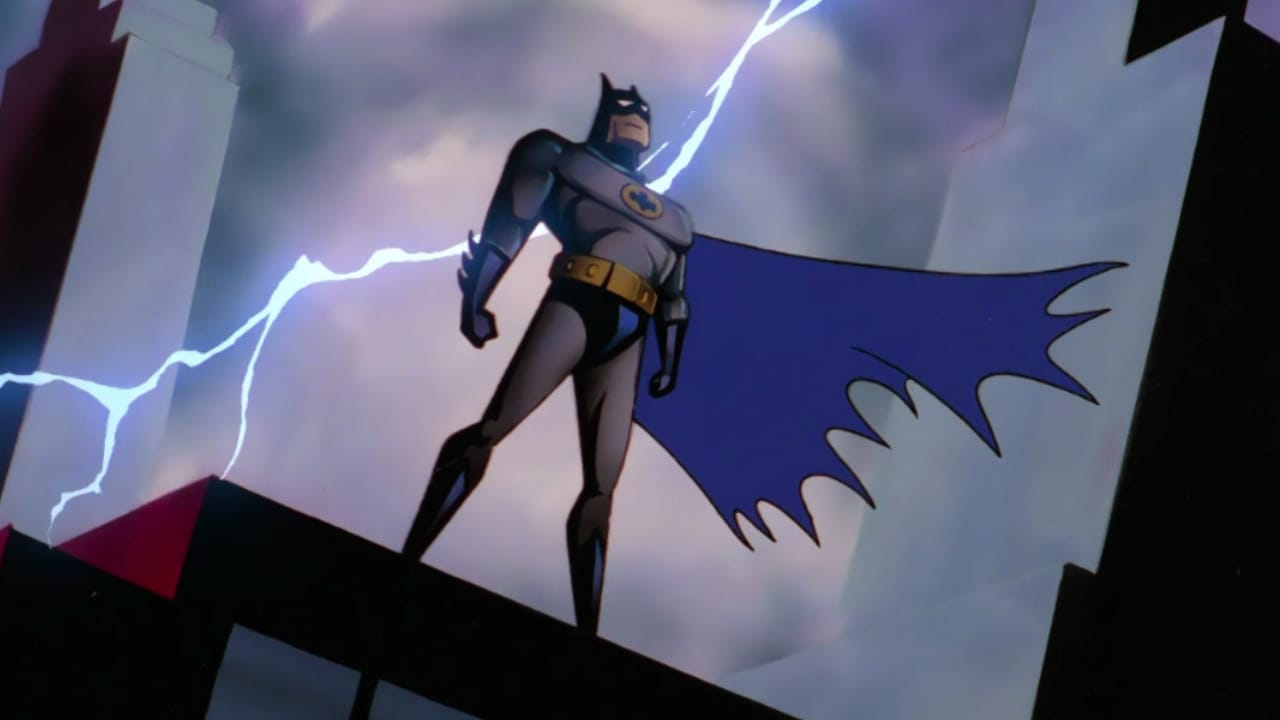
The DCAU Batman is the great structural moral baseline.
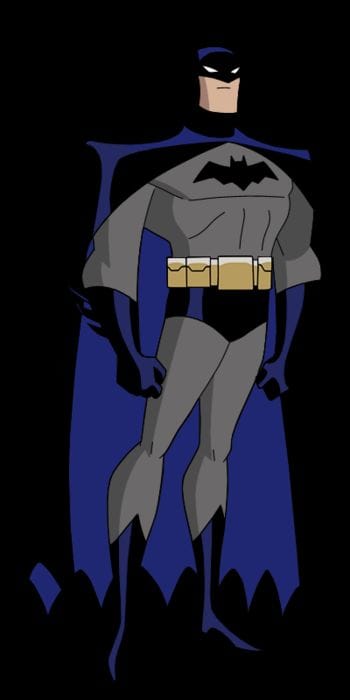
Batman: The Animated Series and its continuation through the broader animated universe give us a Batman who is dark without being morally stupid, wounded without being consumed, frightening without being sadistic, competent without being omnipotent, and compassionate without being soft in the shallow sense.
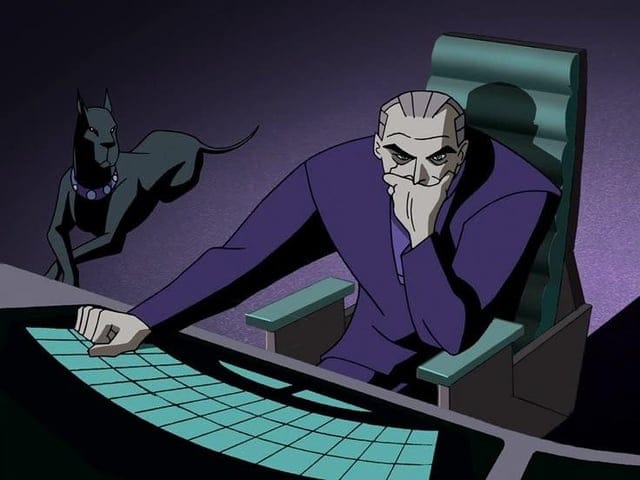
Kevin Conroy’s Batman understands restraint as more than not killing. He understands that many of Gotham’s villains are damaged loci whose harm must be stopped without pretending they are only monsters. He does not excuse them. He stops them. But he often sees the person under the distortion.
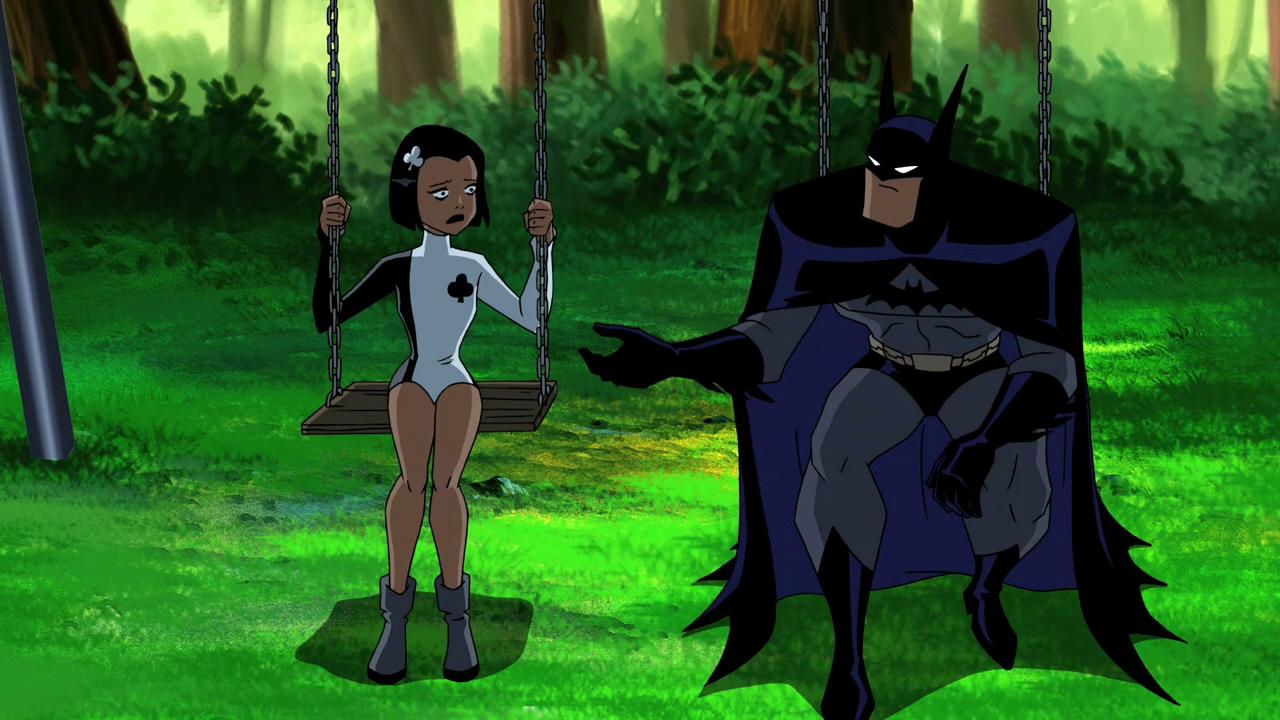
This is what makes him one of the strongest Batmen.
The episode “Heart of Ice” is the obvious example because it reshapes Mr. Freeze into one of Batman’s most important moral mirrors. Like with Schumacher, Batman does not defeat Freeze by denying his structure. He defeats him while recognizing it. The tragedy remains visible.
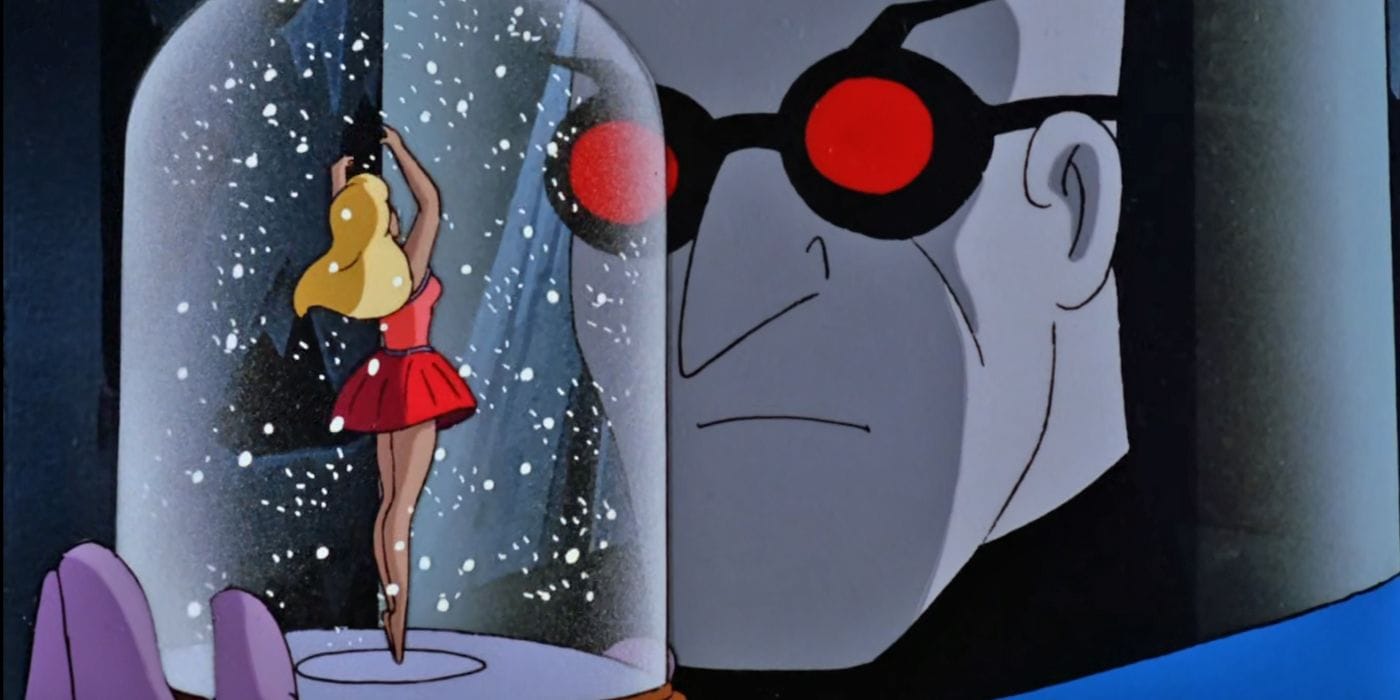
This Batman is among the best field analysts. “Baby-Doll,” “Feat of Clay,” “Two-Face,” “Mad Love,” and many other stories work similarly. The villains are dangerous, sometimes terribly dangerous.
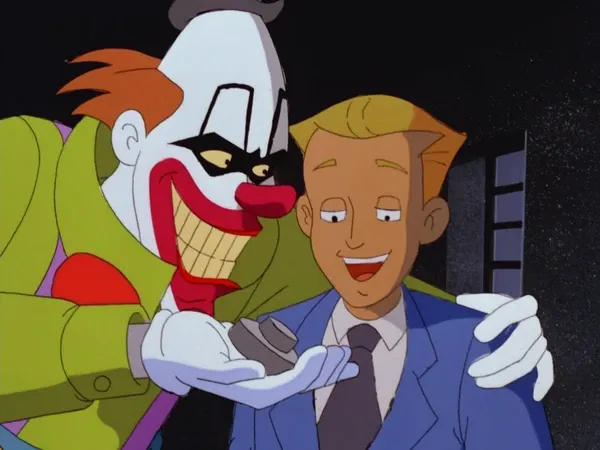
But the series repeatedly asks what field produced them, what path closed, what repair was missed, and whether any future remains reachable besides punishment.
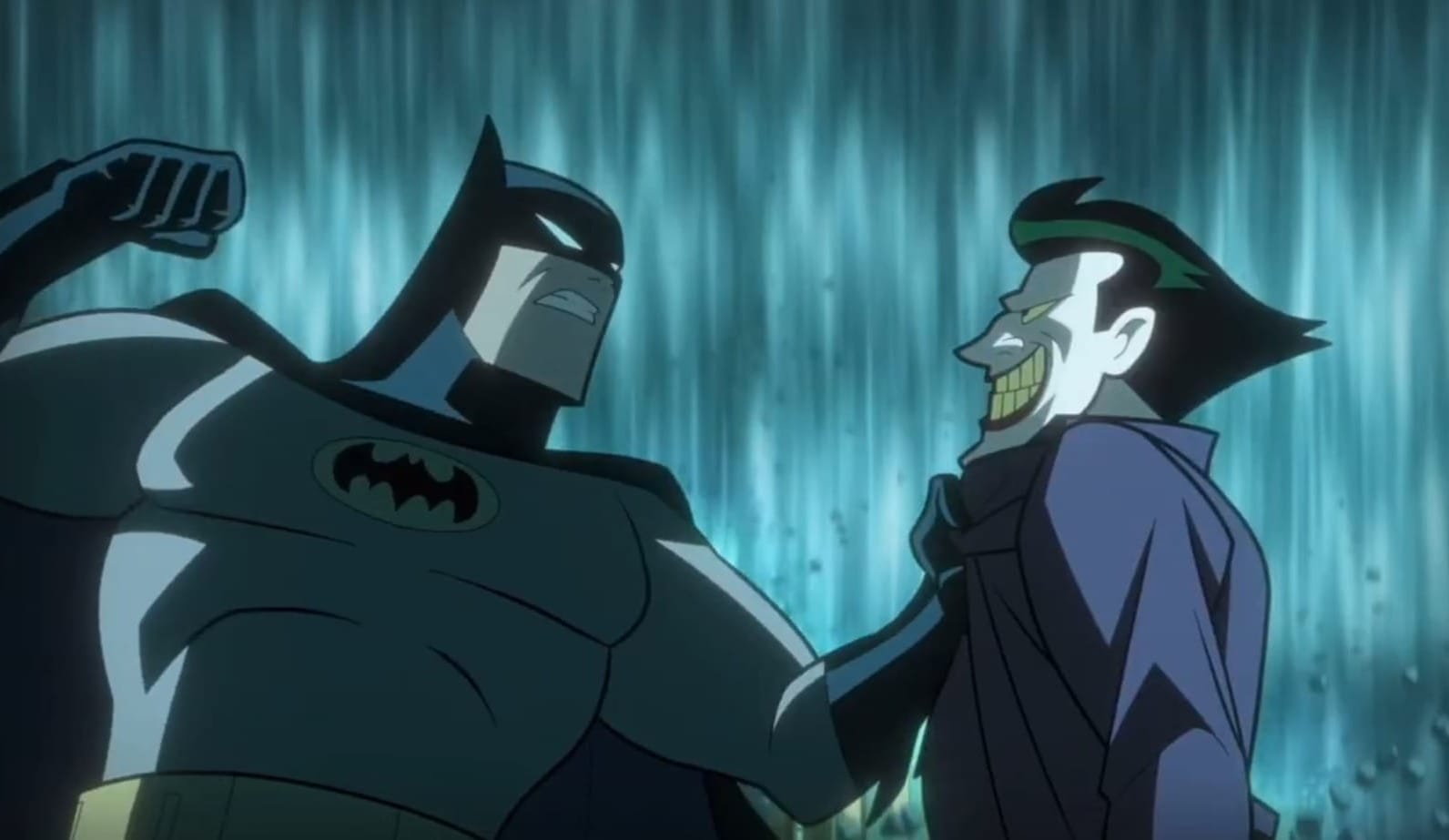
This Batman is also not naïve. He does not let sympathy erase risk. He does not say the villain’s pain cancels the victim’s pain. He does not convert every criminal encounter into a therapy session. He still understands that protection matters.
But he also does not let protection become dehumanization. That is the balance many Batmen fail.
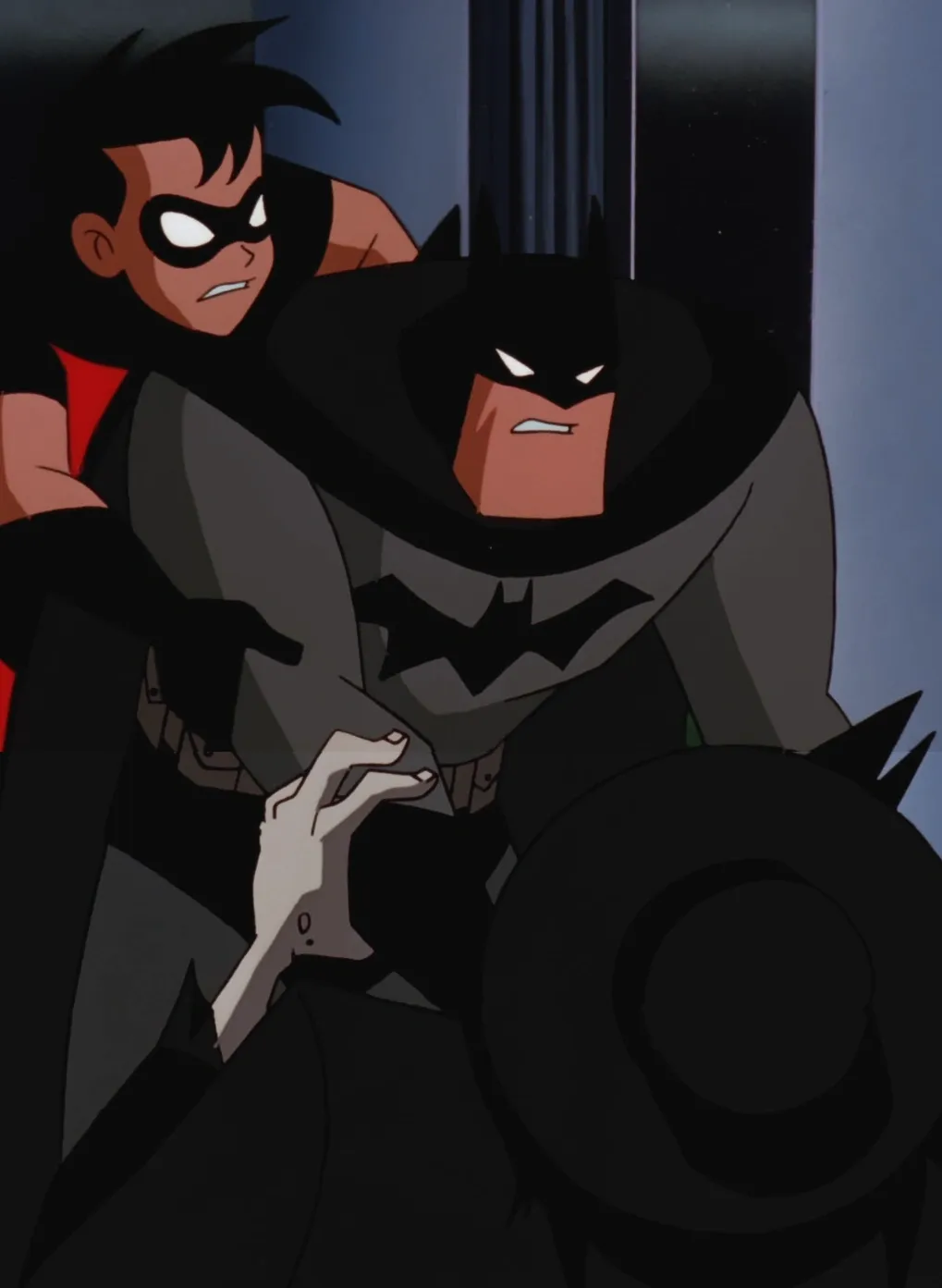
The DCAU also gives a strong Bruce Wayne.
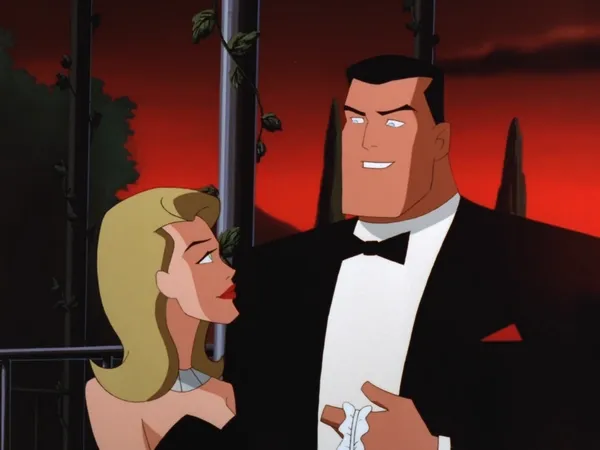
He has warmth, humor in small doses, grief, awkwardness, discipline, and a visible struggle not to disappear into the symbol. He has a functional family. Alfred matters.
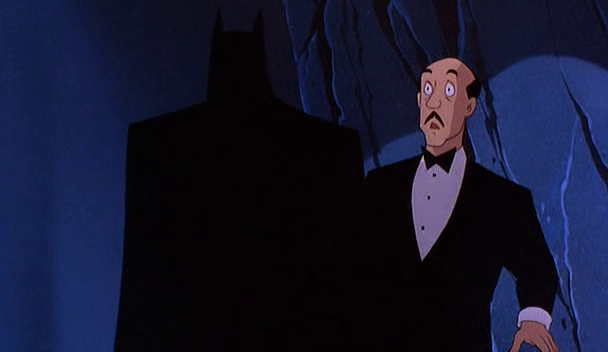
Gordon matters.
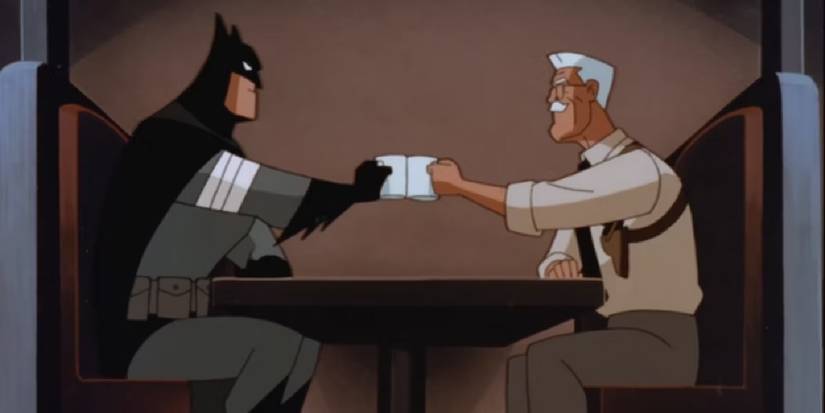
Dick matters.
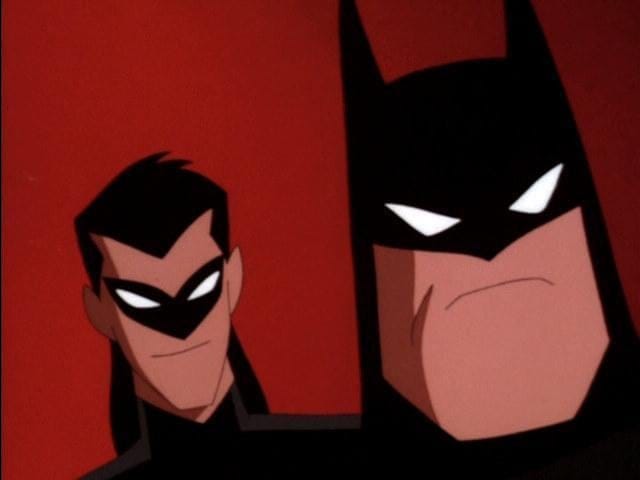
Barbara matters.
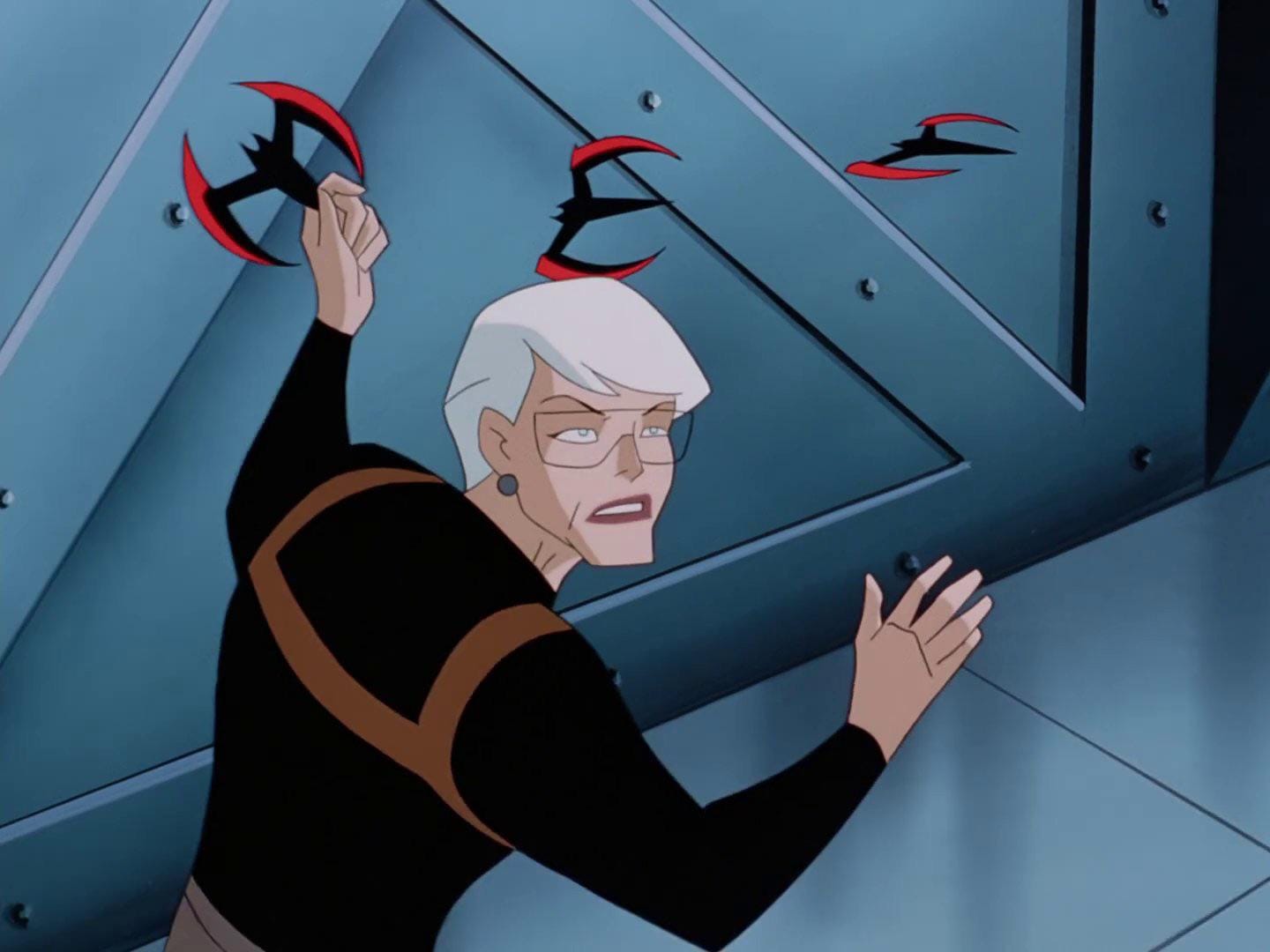
Later, Terry matters.
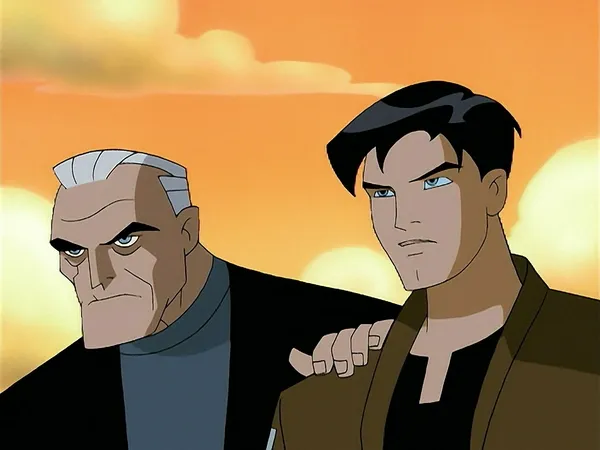
The field around Batman does not exist only to worship him. It pushes back.
A Batman who cannot be pushed back against becomes dangerous. DCAU Batman is stubborn, secretive, often emotionally constipated to a degree that should be studied by AI firms, but he is not unreachable.
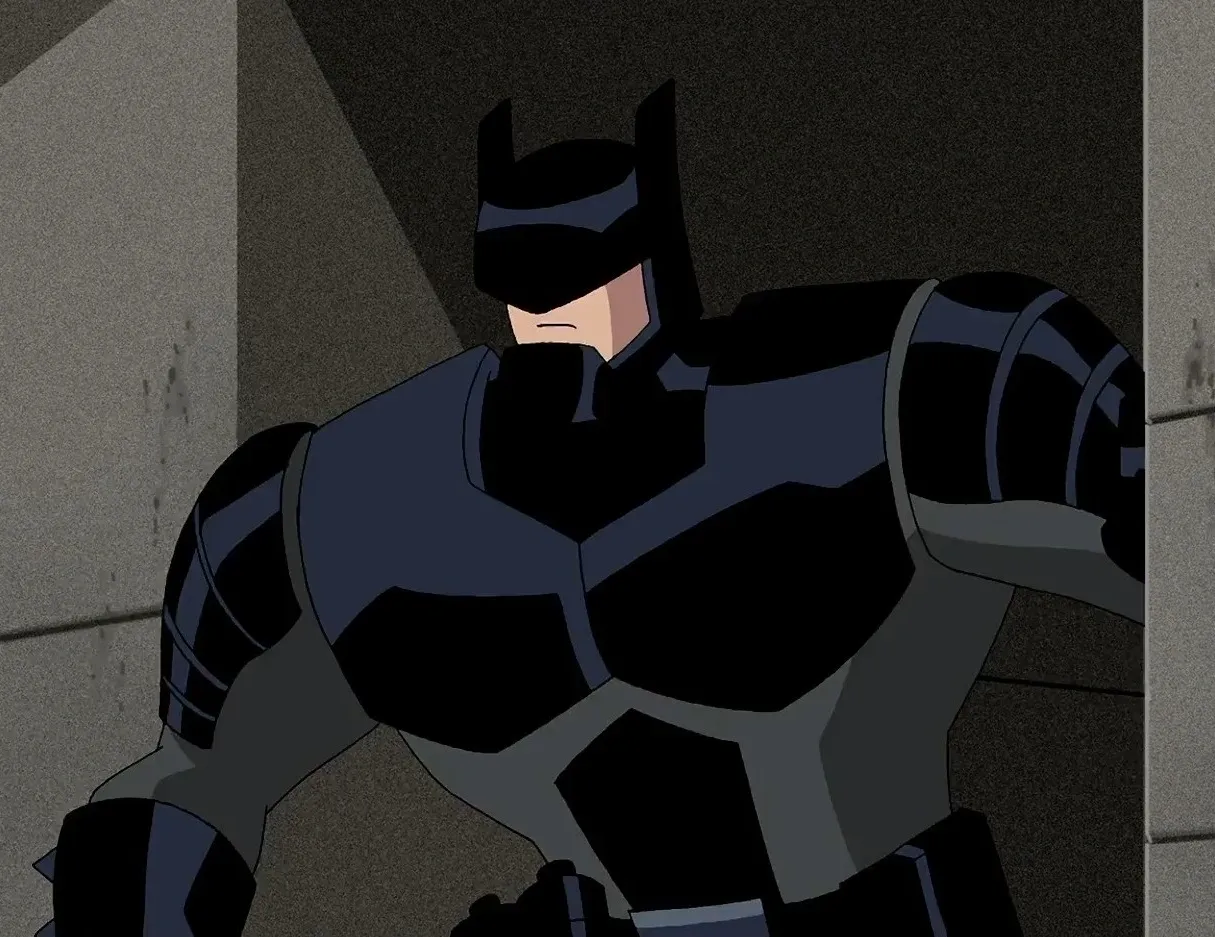
He can be corrected. He can regret. He can show mercy. He can feel the cost of what he does.
The Bat-family in this continuity also reveals both success and failure. Dick becoming Nightwing is a mixed but ultimately important moral outcome.
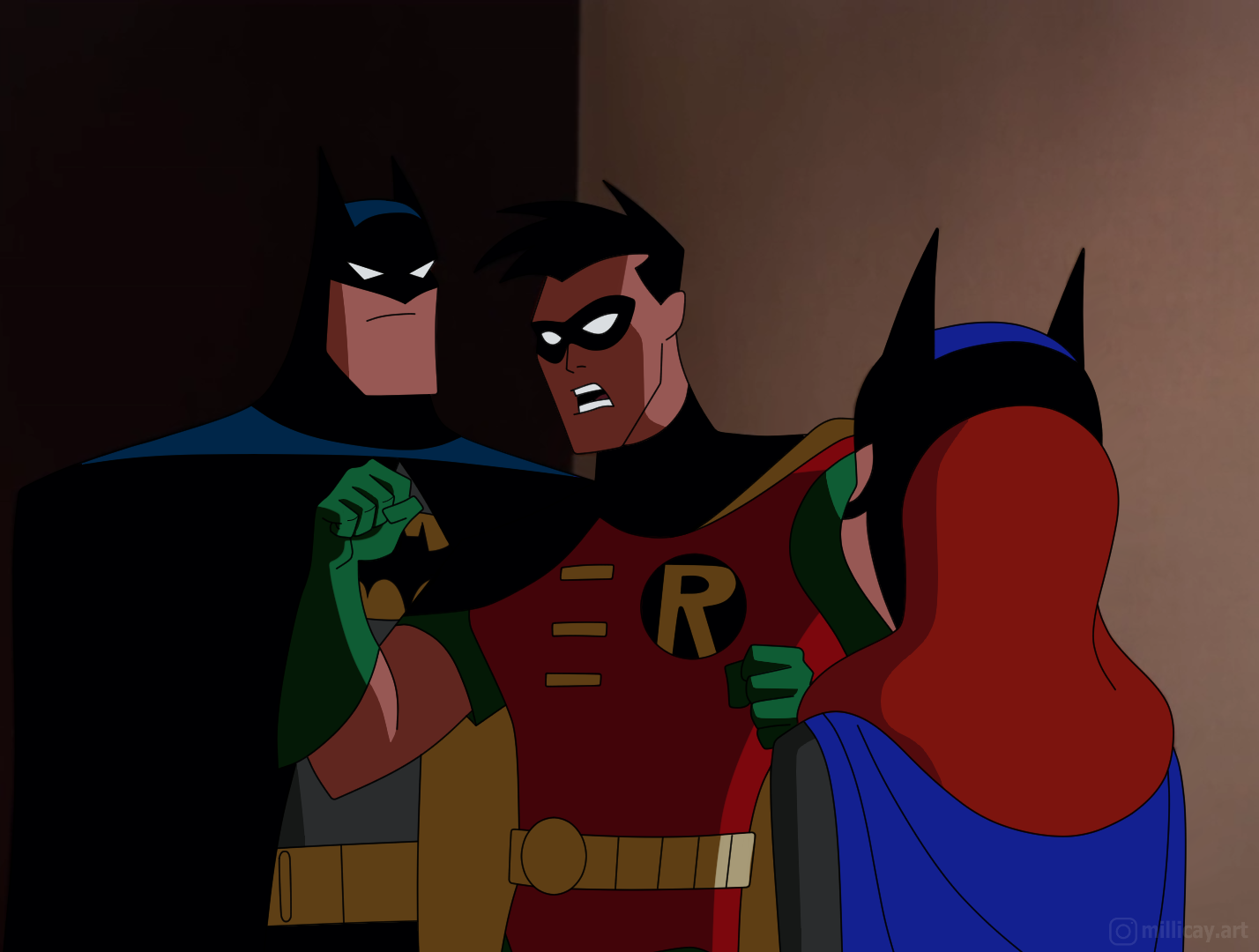
Bruce trains him, hurts him, hides too much, controls too much, and loses him. Dick leaves and becomes his own agent. That leaving is painful for Bruce, but morally good for the field. It means Robin was not just absorbed.
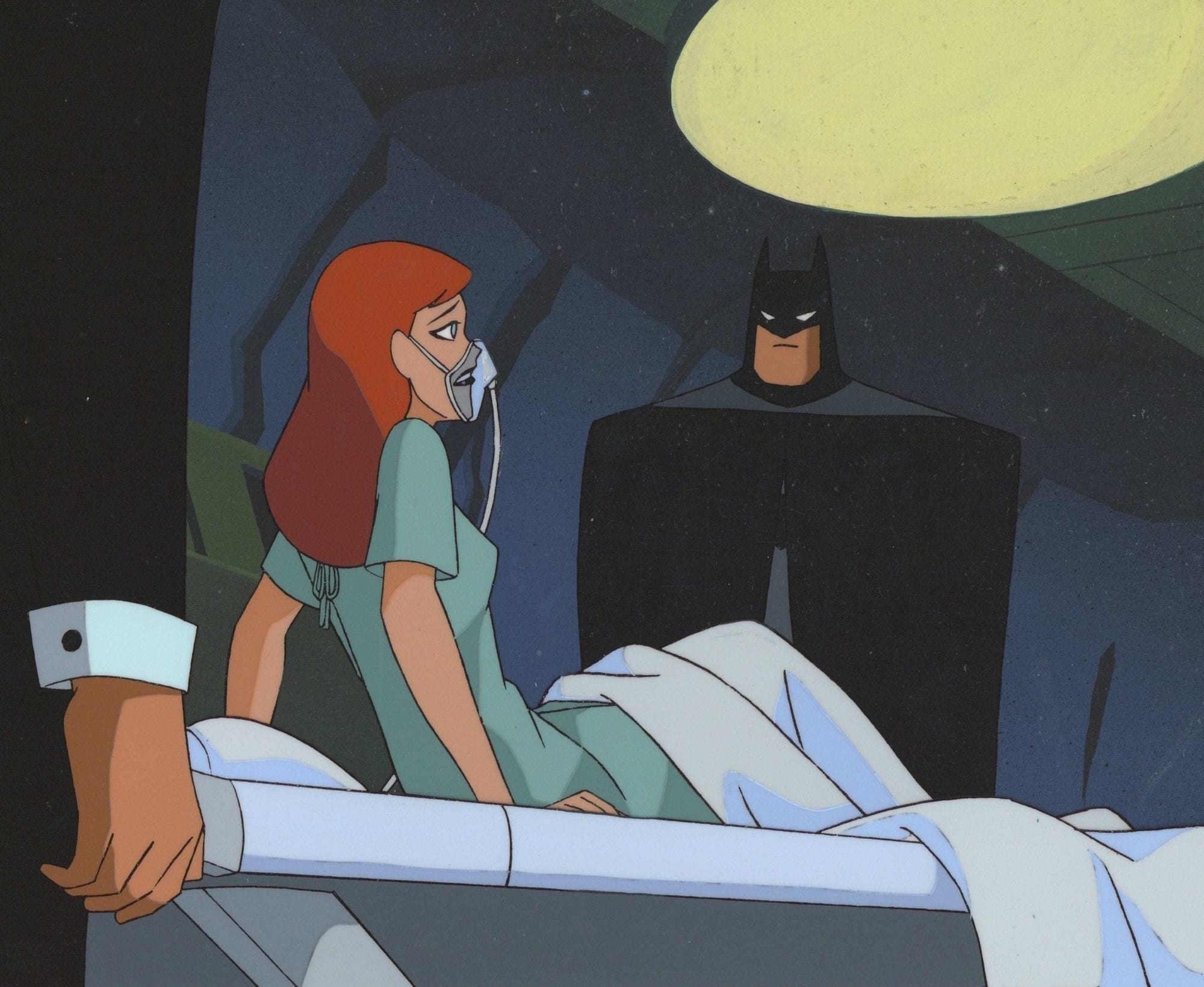
Barbara complicates the field further. Her agency is real, but Bruce’s secrecy and emotional failures damage this relationship. The DCAU, especially later, is aware that Batman’s relational field is not clean. It does not simply celebrate the Bat-family as proof that Bruce is healthy.
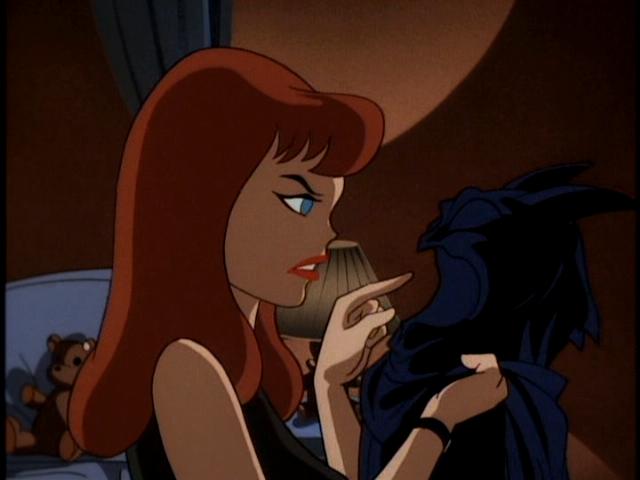
Then Batman Beyond arrives and makes the point here explicit.
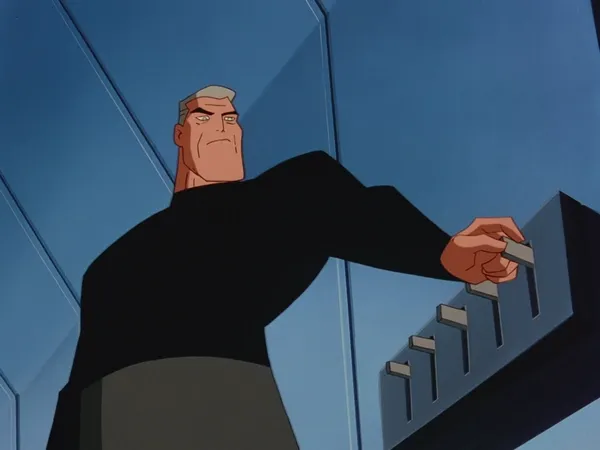
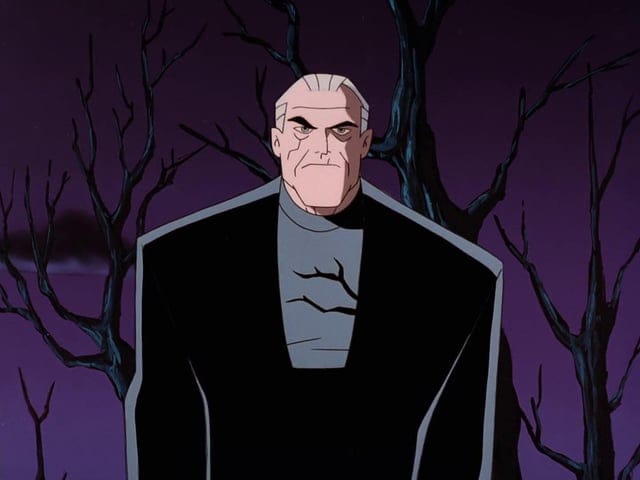
Old Bruce left alone in Wayne Manor is a warning. He won many fights and still risked becoming the last inhabitant of his own method.
Terry McGinnis matters because he receives the symbol without being Bruce’s wound in duplicate. He is a successor who can use the Batman structure differently.
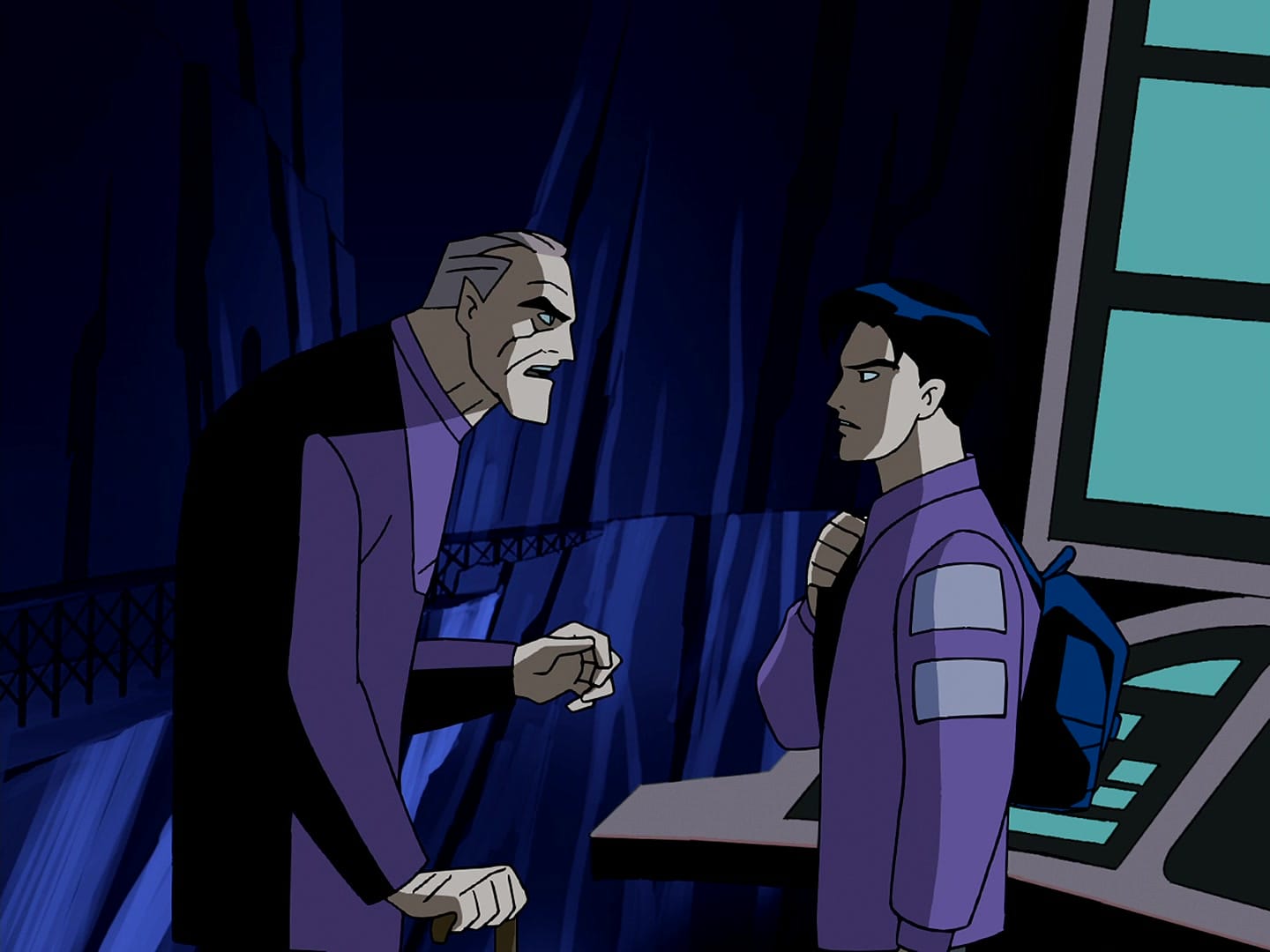
This retroactively strengthens DCAU Batman because the continuity now asks whether the symbol can outlive the original trauma that formed it, one of the deepest available Batman questions.
The no-kill rule is also strong here. The detective primitive is strong. The compassion primitive is strong. The family primitive is tested rather than simply asserted. Gotham remains damaged, but not hopeless. Batman is necessary, but not the only morally active locus. The show repeatedly gives ordinary people dignity, victims interiority, and villains histories. That is why it holds as the standard.
Ruling:
The DCAU Batman is one of the strongest moral Batmen, because he combines restraint, investigation, compassion, and field contact. He understands that stopping harm does not require denying the damaged locus beneath the harmful agent. He is not always healthy, but he is usually responsive. He sees more than targets. This is Batman approaching his best.
Strategic Batman.
Nolan’s Batman is interesting, in that he is one of the best field analysts and also one of the most dangerous repair theorists.
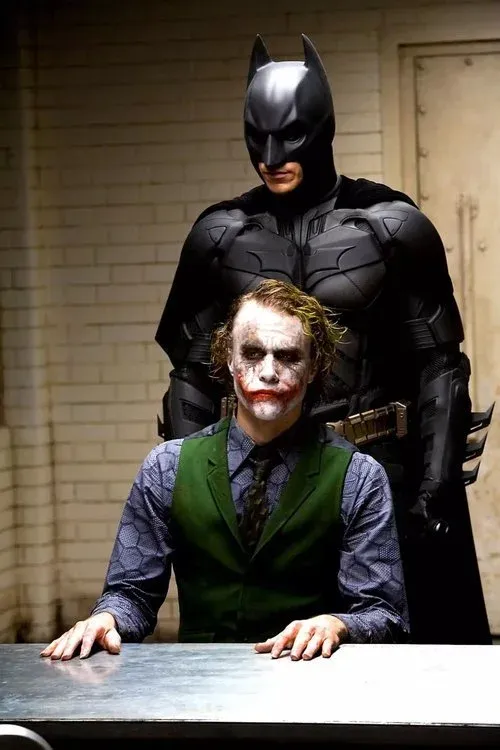
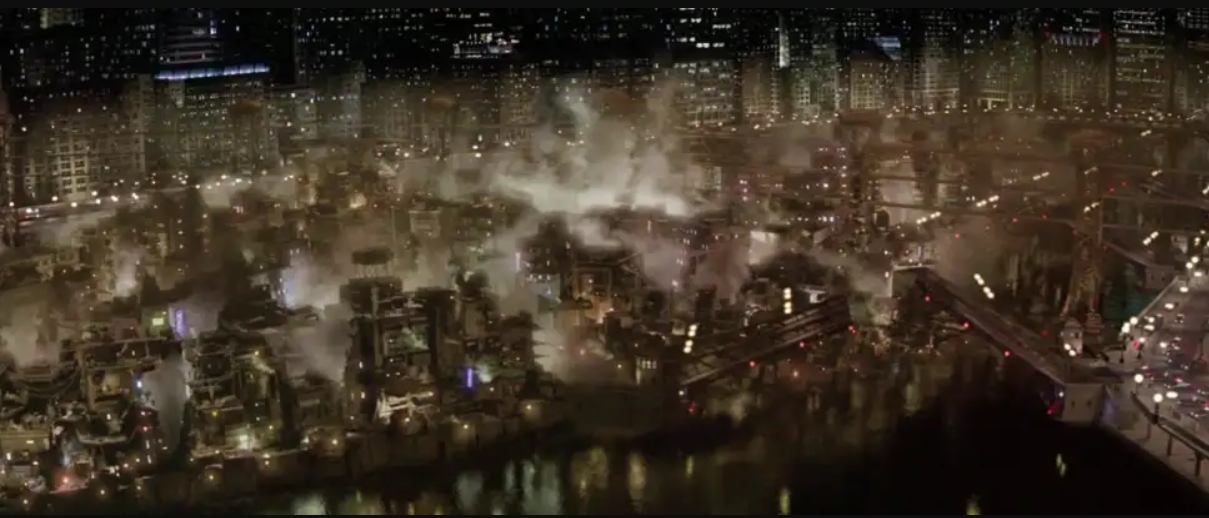
Batman Begins understands Gotham as a captured field. The city is not just full of criminals; it is organized through corruption, fear, organized crime, poverty, institutional weakness, elite withdrawal, and psychological collapse.
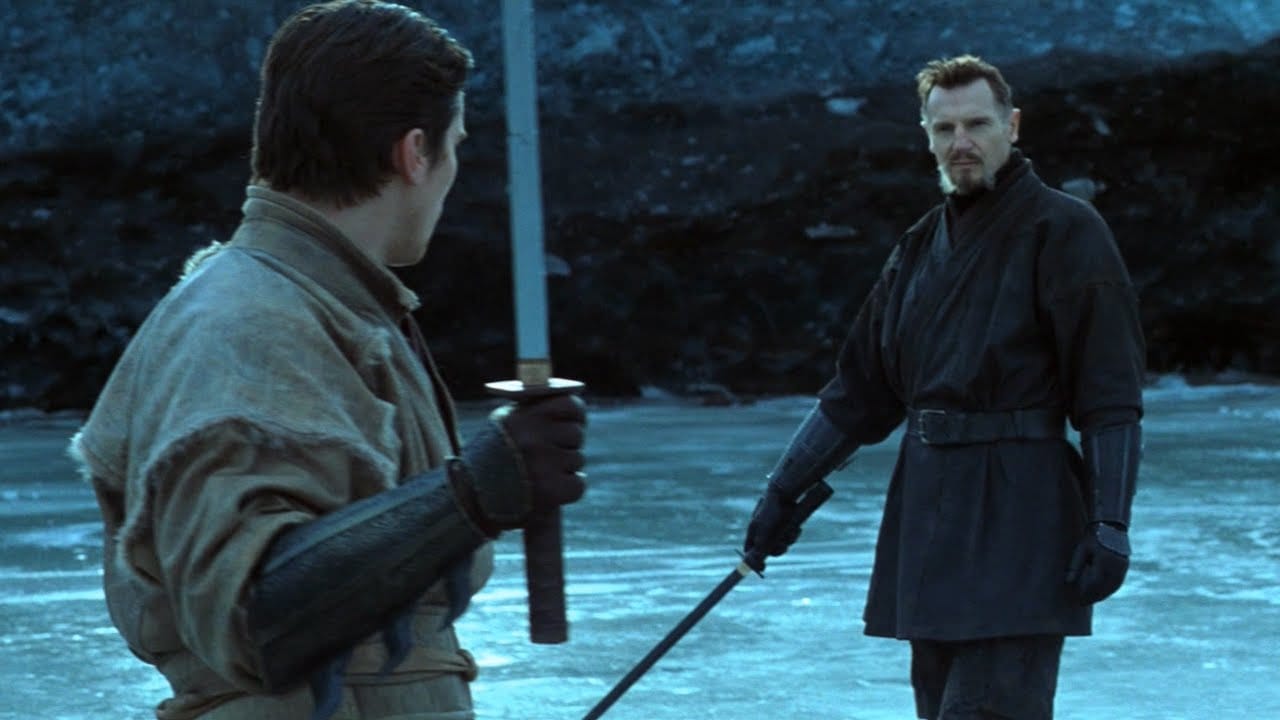
Bruce’s journey is explicitly about means: vengeance, justice, fear, theatricality, training, symbol, and restraint.
He is extremely Modal Path Ethics oriented. He understands that a man can be destroyed, but a symbol can travel. He sees that fear is already operating in Gotham and tries to redirect it against predation. He uses Batman not just to punch criminals, but to create an active intervention field. The bat is designed to change behavior beyond his physical presence.
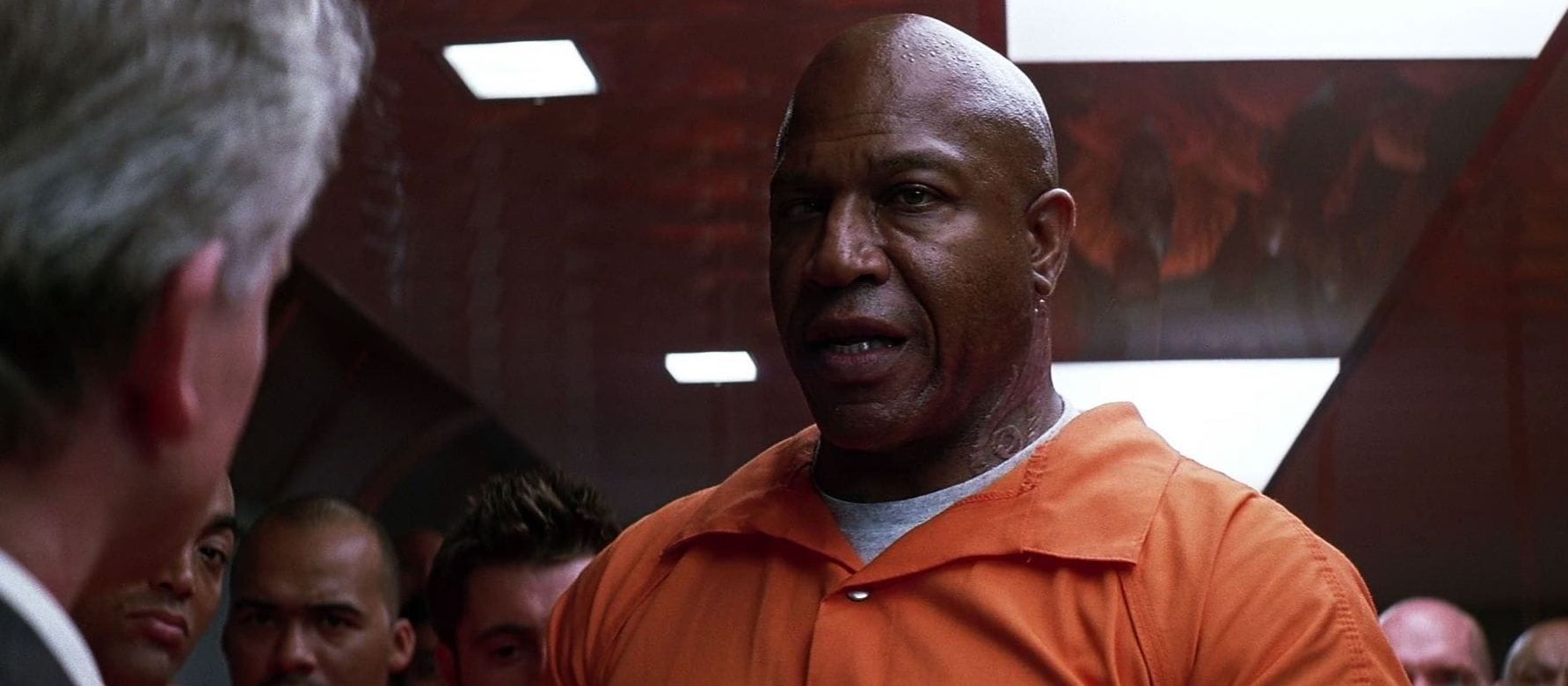
His method is highly sophisticated, but equally dangerous.
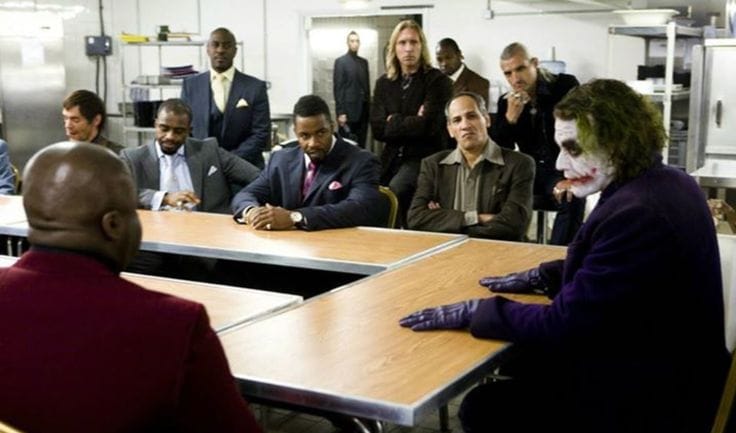
Nolan’s Batman is constantly tempted by the idea that Gotham needs myth more than it needs truth. Sometimes he is right that symbols can open fields ordinary facts cannot. Sometimes he is wrong in ways that produce massive downstream harm.
The first film’s strongest moral point is that Bruce rejects execution. Ra’s al Ghul and the League of Shadows offer totalizing repair: Gotham is corrupt, therefore Gotham must be pruned. The city’s future is closed in the name of a cleaner world.
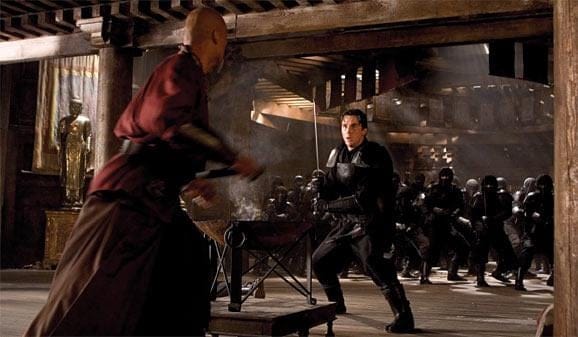
The League of Shadows tries to sell him on its false Good. It engages in catastrophic pruning disguised as moral hygiene.
Bruce refuses their distortive lesson. With only Better options remaining, the predatory locus is contracted.
Bruce accepts that Gotham is damaged, without also accepting that damage justifies destruction. Repair cannot become annihilation with better posture.
The second film pushes the field much harder.
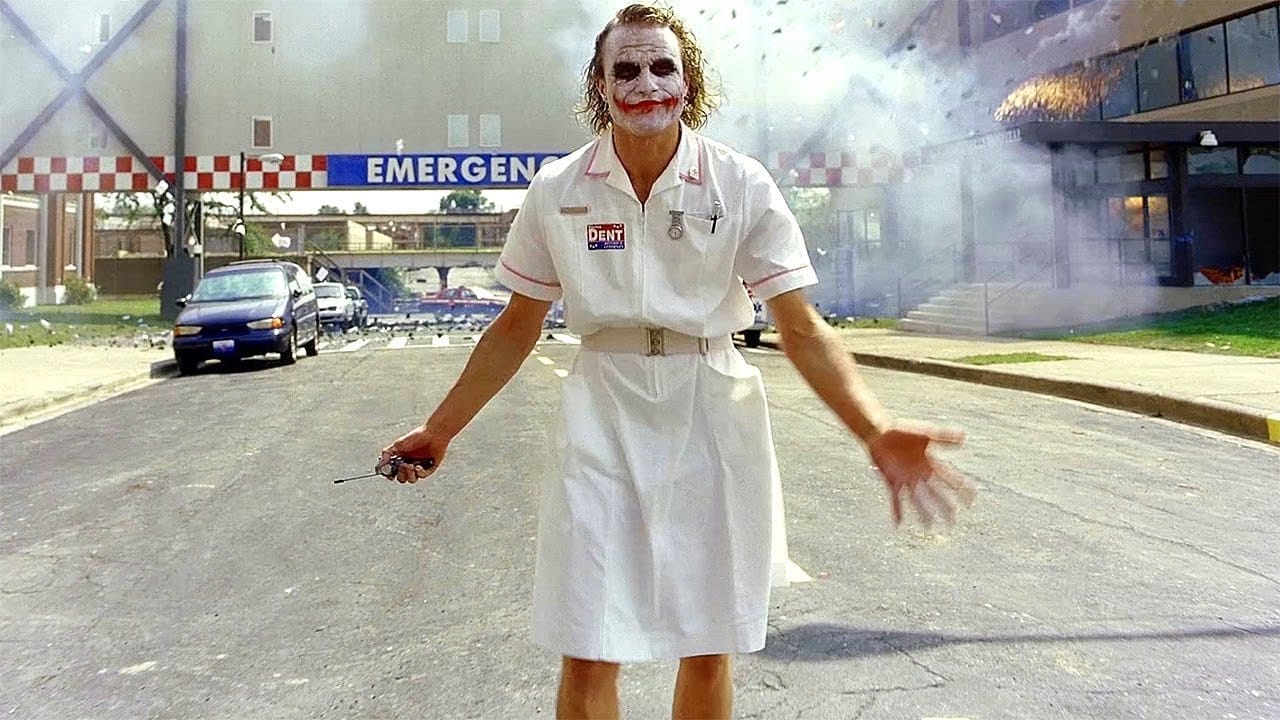
The Dark Knight is about escalation, institutional fragility, public truth, and the danger of heroic lies. Joker is not some criminal. He is an anathemic stress test applied to Gotham’s moral infrastructure.
He wants to show that order is a story people tell until the field becomes sufficiently pressured. Batman, Gordon, and Dent try to prove otherwise.
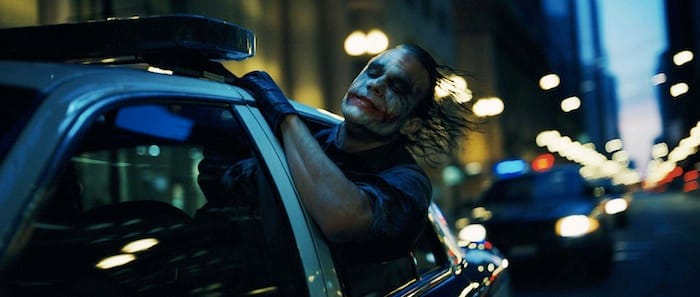
Both sides hinge on Dent.
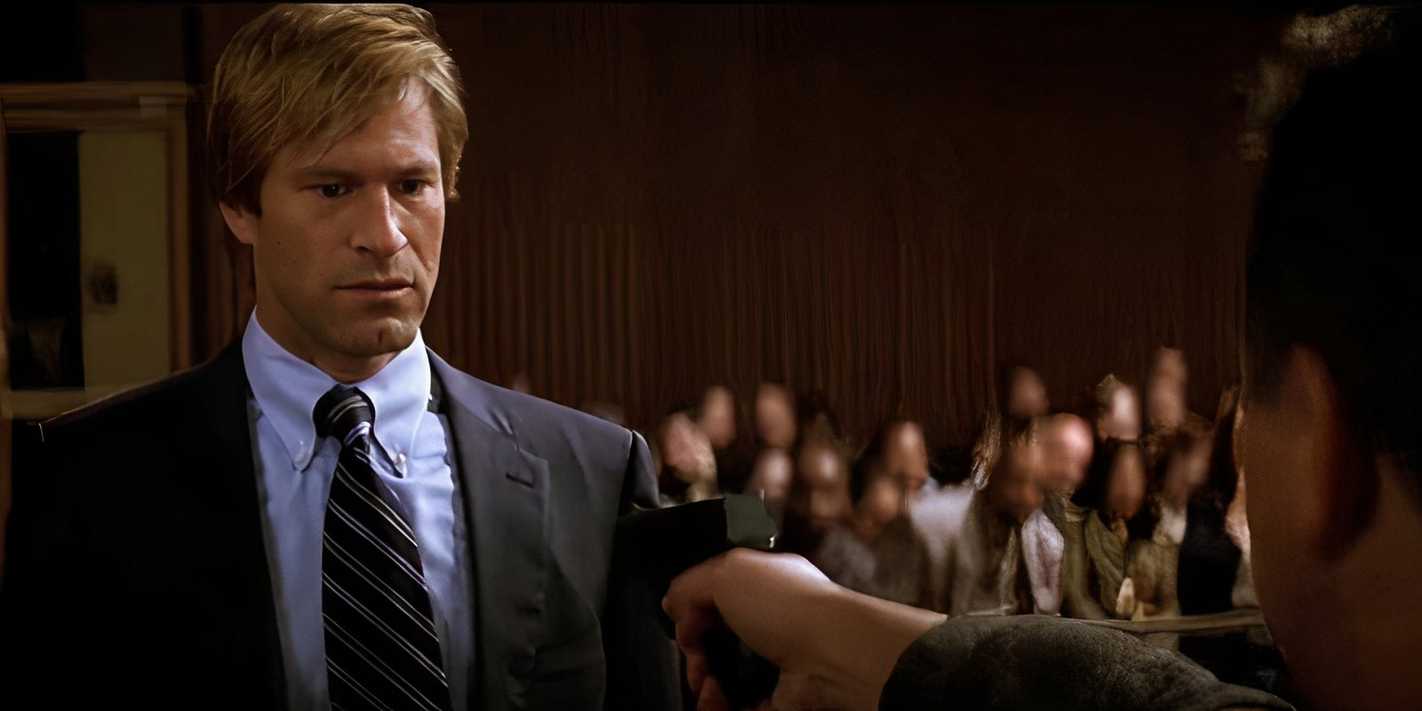
Harvey Dent is Batman’s hoped-for exit path. He is public law becoming courageous enough that Batman may one day become unnecessary. That is why Bruce invests in him.
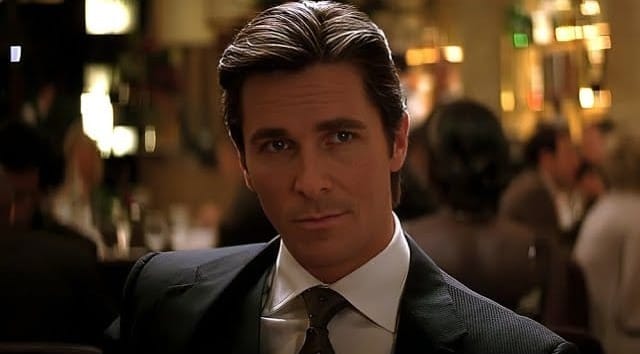
Dent is not only a good man. He is a possible future for Gotham where justice does not have to come from the dark anymore.
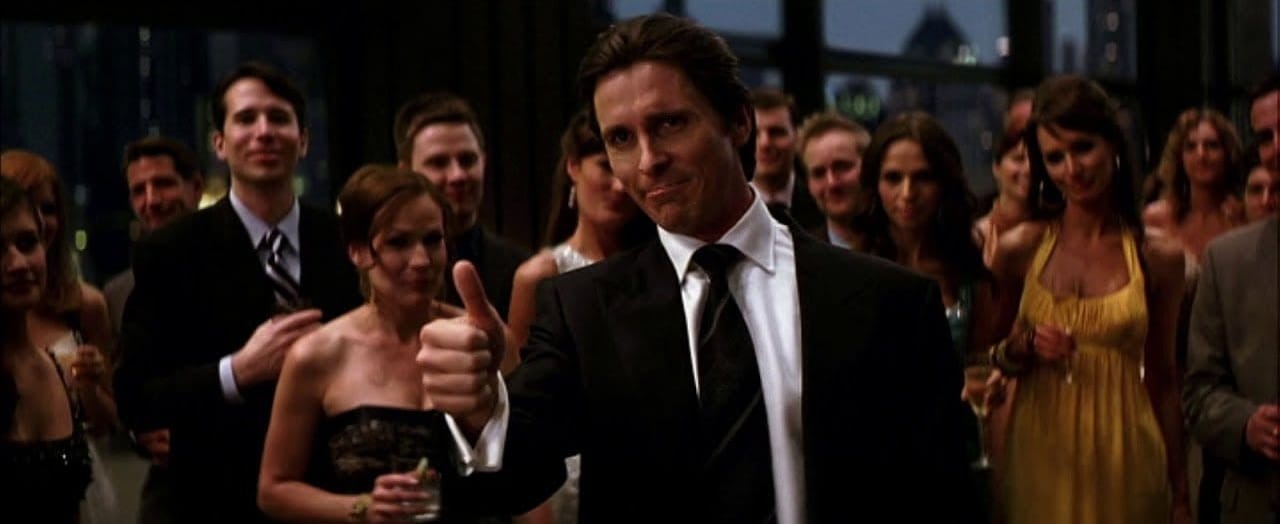
Then the Joker comes and breaks that path.
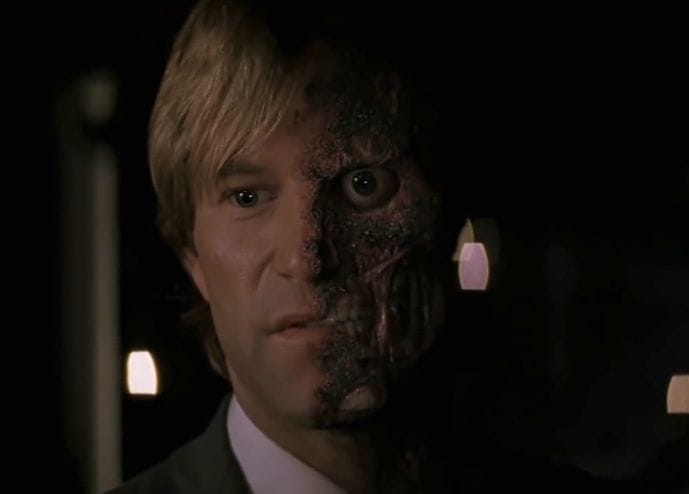
Batman and Gordon respond with the Dent lie. They preserve Dent as symbol by concealing his collapse and shifting blame onto Batman. This is one of the most important false repair moves in all of Batman media. It works in the short term. Gotham gets a usable myth. The Dent Act follows. Organized crime is damaged. Public order stabilizes.
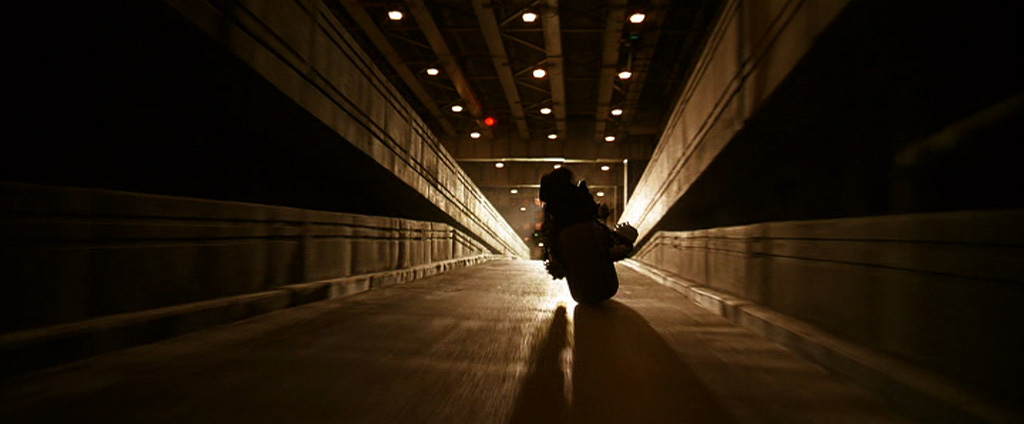
But the repair is built on a lie. The moral remainder is still there.
The trilogy knows this matters. The Dark Knight Rises exists largely because this false repair path becomes unstable. The hidden truth returns through Bane. Gotham’s order is revealed as partly theatrical. The Joker's message is now delivered in full. The city’s stability had been purchased by suppressing the real field. Batman took the blame to preserve hope, but hope attached to a false public record is brittle. Resting on a cane.
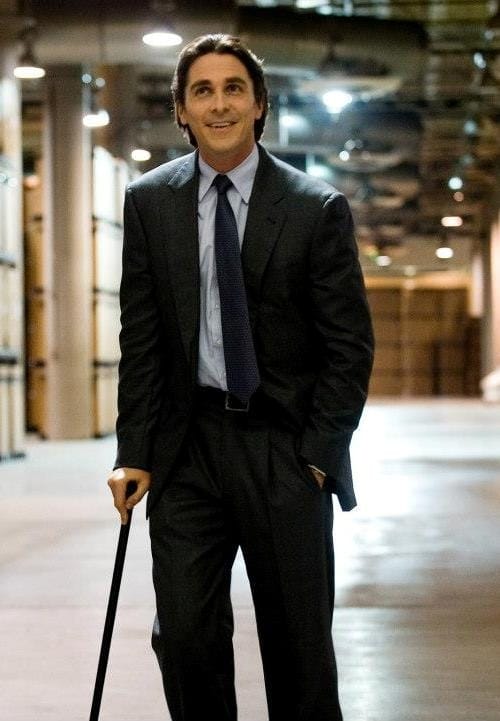
This is exactly where Strategic Batman is both incredibly brilliant and morally compromised.
He sees the field. He understands symbols. He knows that public legitimacy matters. He wants Gotham to outgrow him. But, he sometimes chooses myth over truthful repair because he believes the city cannot survive the truth.
He may be right in the moment.
Better sometimes involves tragic concealment, but Better must not be laundered into Good. The Dent lie remains harmful even if it prevented worse collapse. It created moral debt that was later cashed in as ruin. It burdened future repair. It made Gotham’s stability now fully depend on ignorance.
The sonar machine is the other clear example.
Batman uses a citywide surveillance system to find Joker. The immediate field is catastrophic. Joker is killing and will continue to kill. The tool may be Better in that emergency. Lucius Fox still rightly identifies it as a line that cannot become normal. Batman’s destruction of this system was essential. Without that destruction, Strategic Batman always becomes a surveillance sovereign.
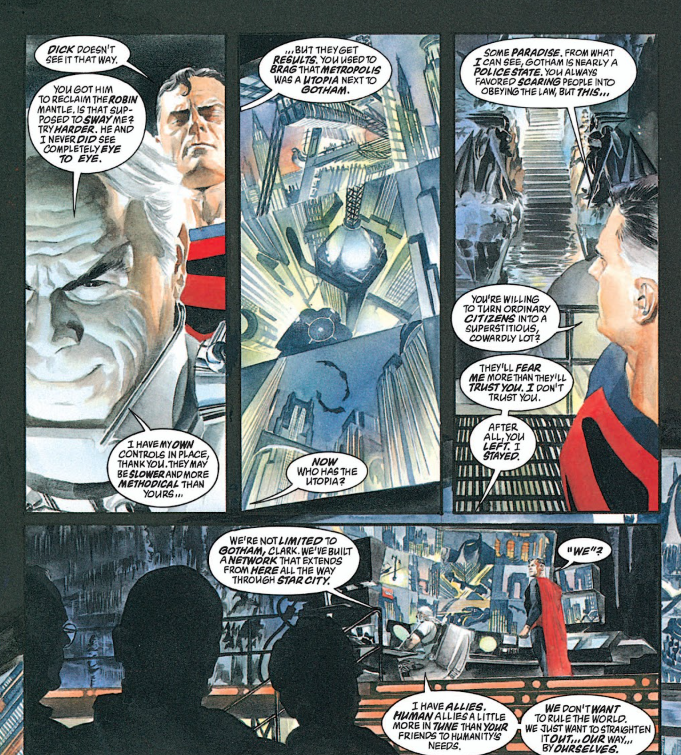
In Nolan's Batman, he uses the god-view, makes honest contact with the harm, and instead of retreating into his symbolic compression to avoid it in favor of its advantage, he torches the machine.
The third film complicates the field with class, legacy, lies, spectacle revolution, and Bruce’s own bodily collapse.
It is not always clean in its political grammar, but structurally it shows a Gotham whose false repair has left buried pressure in its wake. Bane weaponizes buried truth and resentment. He exposes the Dent lie but does so as domination, not repair. Truth can be used harmfully when it is released as a weapon rather than a path to restoration.

Not every exposure of a lie is repair.
Nolan’s Bruce also does more with philanthropy and public infrastructure than many versions, though the films often keep those efforts secondary to the mythic conflict. Wayne money still matters here.
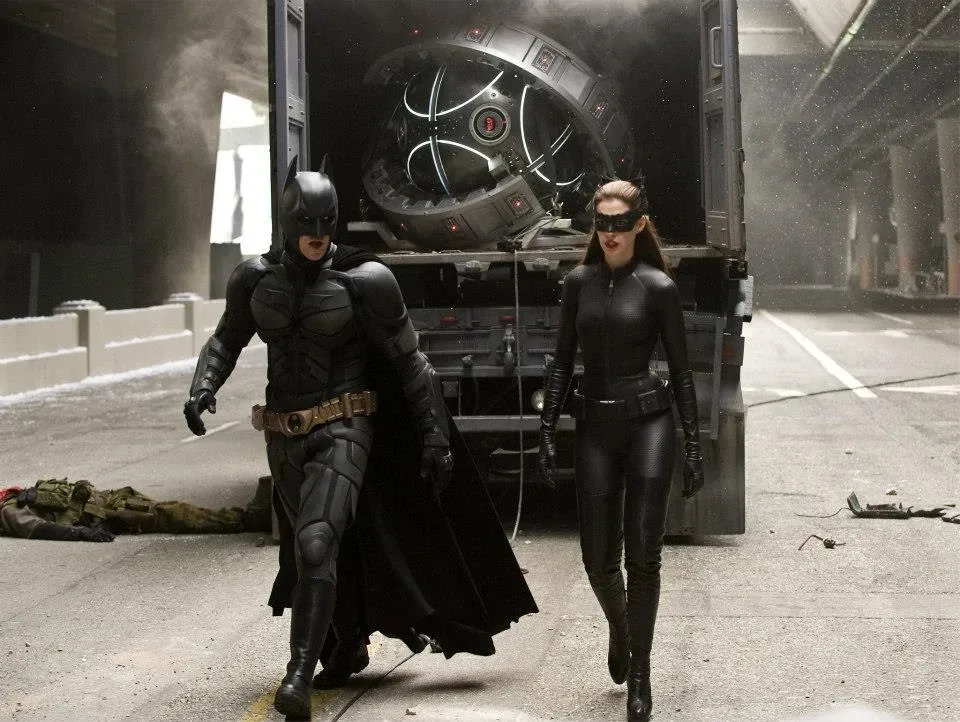
The fusion reactor project, charitable functions, infrastructure, and support of Dent all show Bruce trying to act beyond the suit, and even trying to retire it completely in favor of the day.
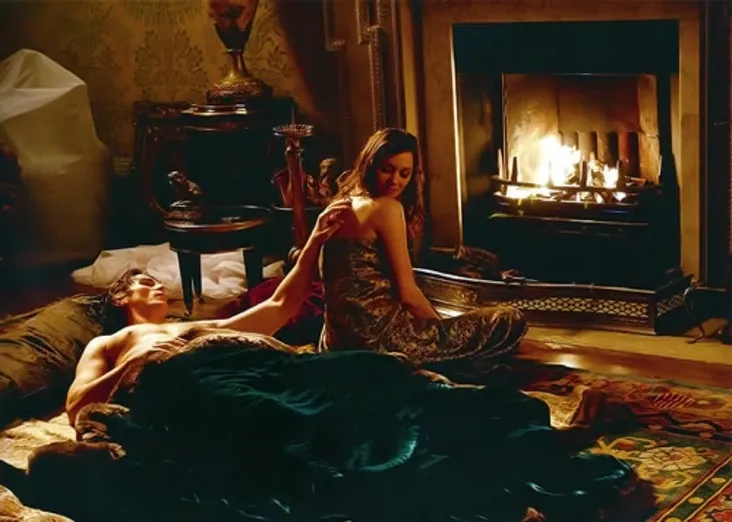
But the trilogy still centers the symbol more than the civic repair program.
Its best moral arc is Bruce’s desire to make Batman temporary. He explicitly wants Batman to be a bridge. He fails, returns, pays debt, then finally exits, exactly as he was always supposed to.
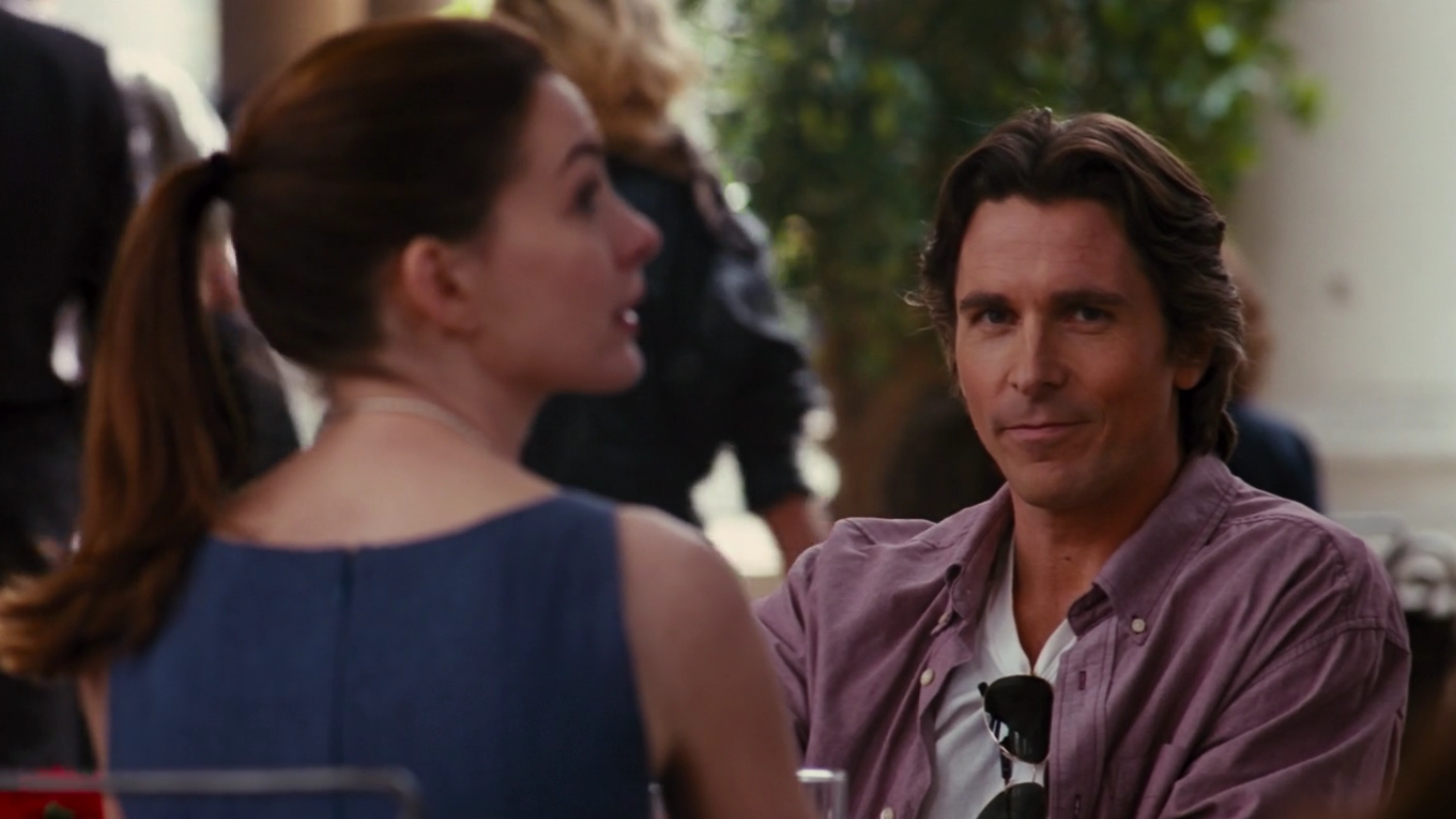
Whether the ending fully works depends on how much one believes Gotham can continue on without him, but structurally, the desire for obsolescence is clearly correct.
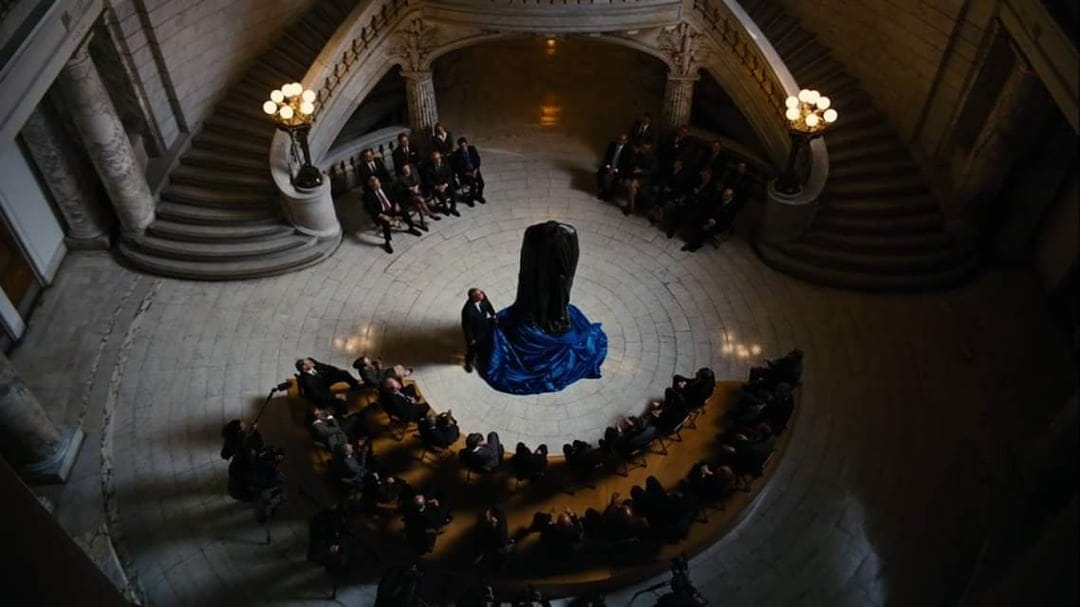
Ruling:
Nolan Batman is perhaps the most interestingly ambiguous adaptation while also finding a path to the Better outcome. He is morally serious, field-aware, and dangerously willing to use false repair. He understands symbol, escalation, institutional trust, and public legitimacy better than most Batmen ever do. But he also lies at civic scale, uses surveillance at emergency scale, and repeatedly risks turning Better into his personal myth. His greatness is that he sees Gotham as a field. His danger is that he sometimes thinks he can manage the field’s truth for its own good.
He is Batman as its greatest level of strategic field intervention, and a warning that strategy without full truth-contact always becomes distortion.
Failed Batman.
Snyder’s Batman is what happens when the Batman structure rots.
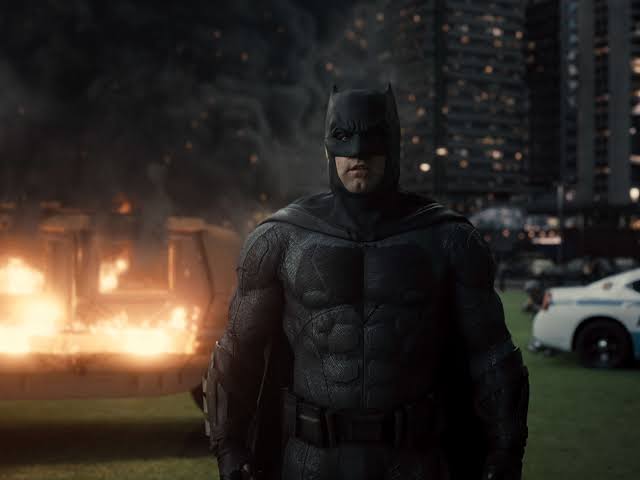
That is not an insult to the performance. Ben Affleck’s Batman is genuinely very useful because he is not just a “darker Batman.” He is Batman after the wound has stopped generating care and started generating excessive permission.
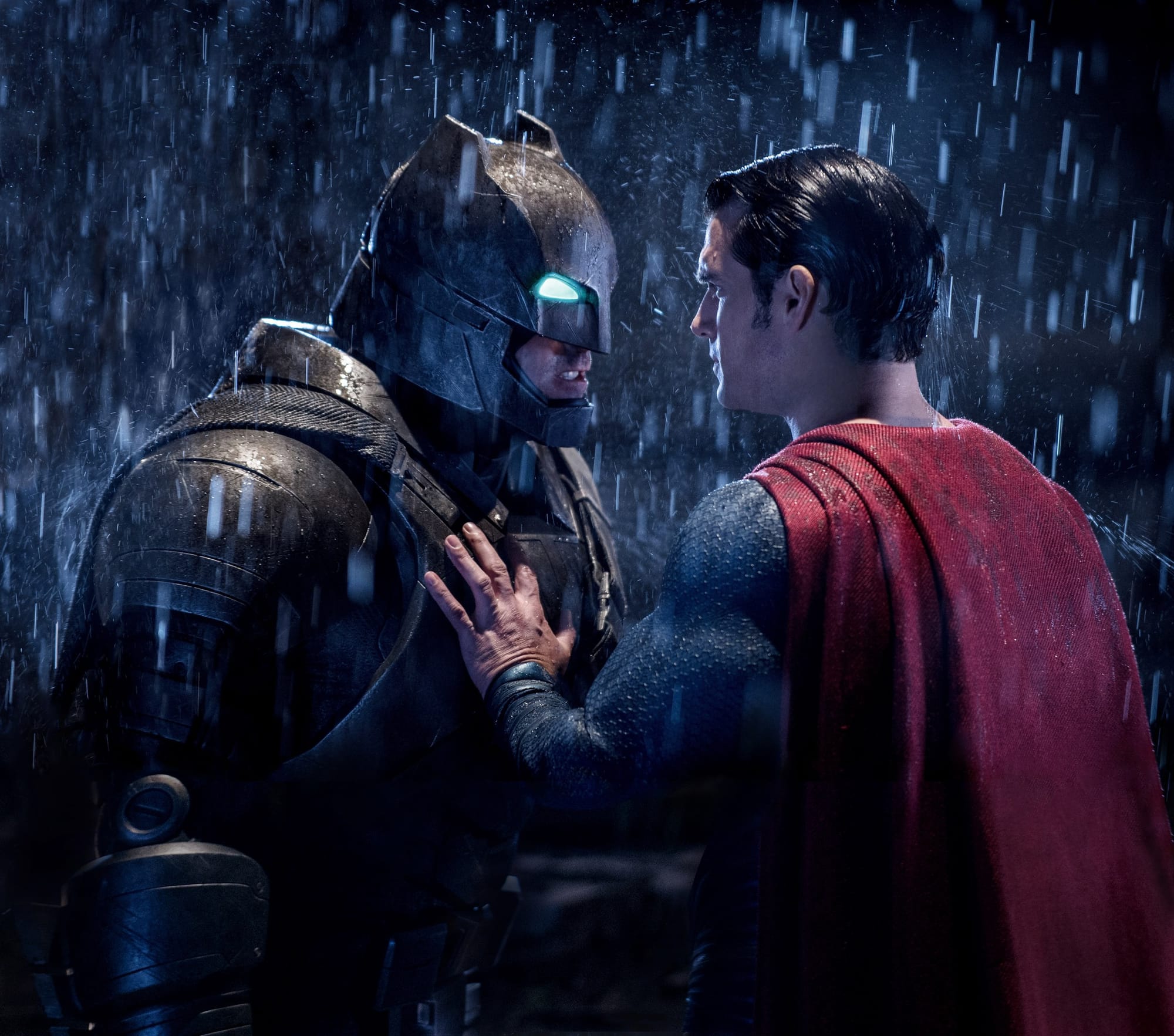
This Batman brands people.
This Batman kills.
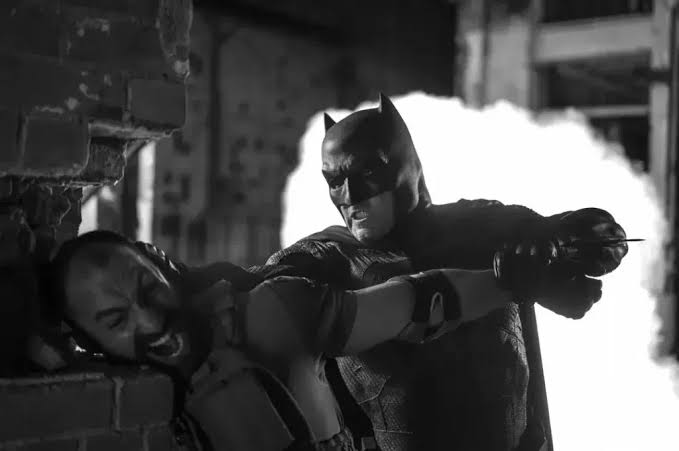
This Batman uses guns.
This Batman speaks as if the moral field he perceives is nothing but a war of inevitable monsters.
This is not a "more realistic Batman". Too many of the core structural constraints have been destroyed. This Batman is collapsing, in and out of fiction.
The no-kill rule is not a decorative fan preference, Zachary Snyder, nor is it "out-dated" because you cannot appear to perceive the moral field.
It is one of the structural barriers preventing Batman from becoming sovereign violence. Ignoring this same rule is what soldified Burton's Batman as among the most nihilistic, harmful, and interior, but Burton at least had his nightmarish art direction and dark and surreal qualities to match the degradation of the structure. The Snyder movies are portrayed as "more realistic Batman".
Once Batman kills, the field changes. Once he brands, the field changes again. Branding is not only an assault. This is a symbolic sentencing, which the movie portrays. It marks the body as Batman’s judgment and then lets the prison field finish his punishment. That is not justice, only outsourced execution pressure.
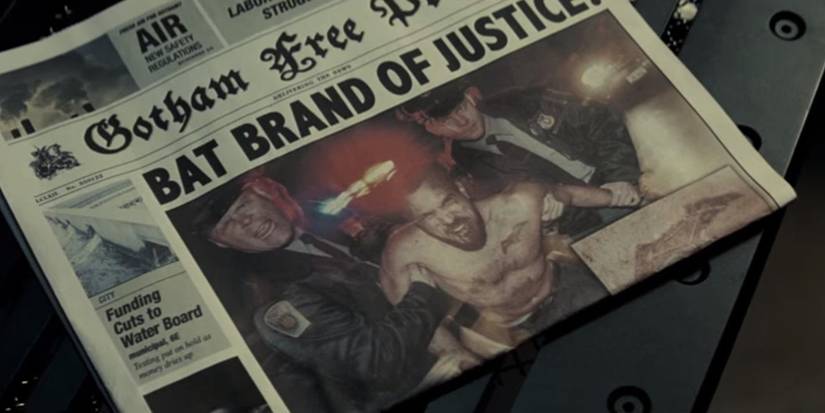
I am grateful to Snyder, however, because these are still fun and beautiful movies, and this Batman is especially important because he shows how quickly Batman’s moral vocabulary can invert.
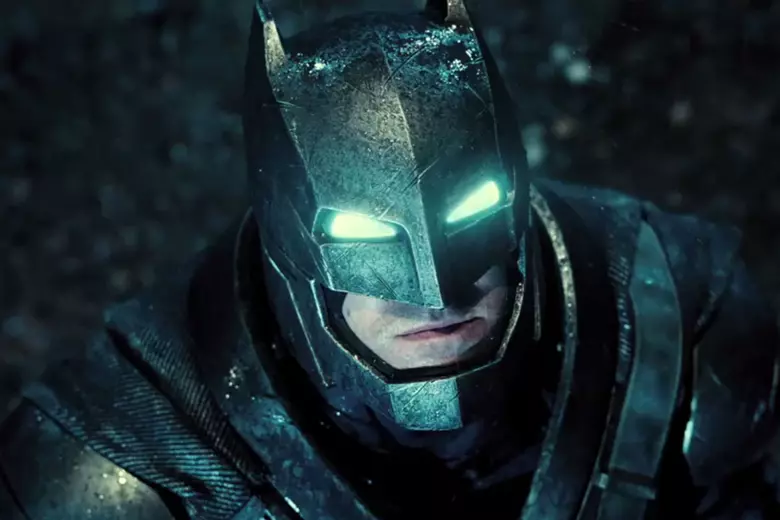
Fear becomes domination.
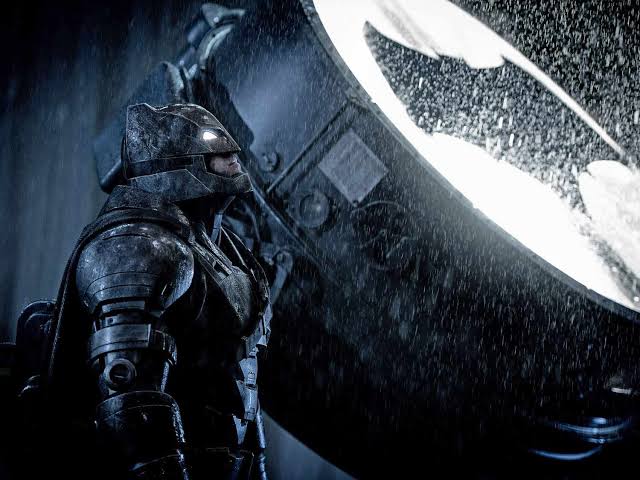
Restraint becomes weakness.
Trauma becomes authority.
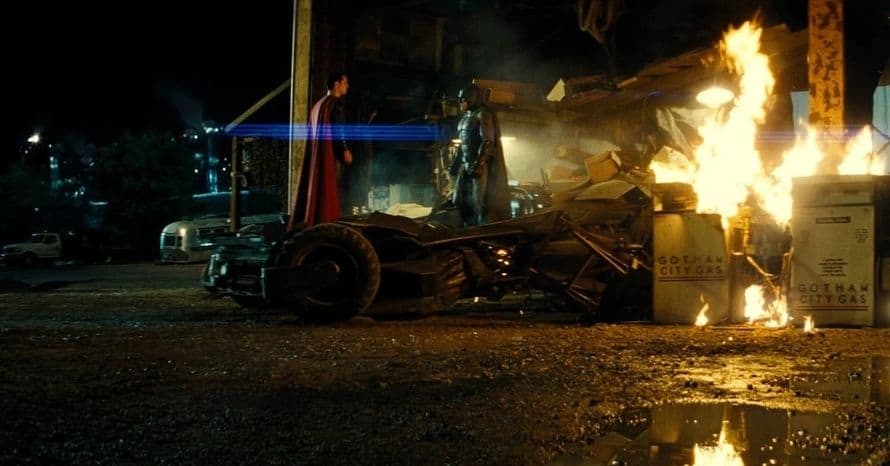
Suspicion becomes truth.
Power becomes the only language he still trusts.
The Superman conflict reveals this distortion perfectly. Bruce sees an alien being with world-ending power and concludes that possible future harm he sees in his literal dreams justifies preemptive killing.
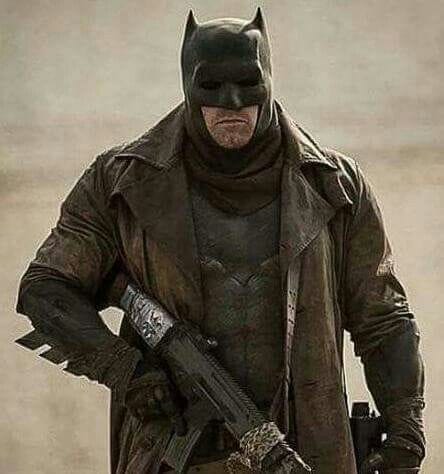
This is a Pascal’s Mugging problem with more muscles and Kryptonite. To use his exact words, there may be a "less than one percent chance" Superman might become a catastrophic threat, therefore Batman treats lethal prevention as rational.
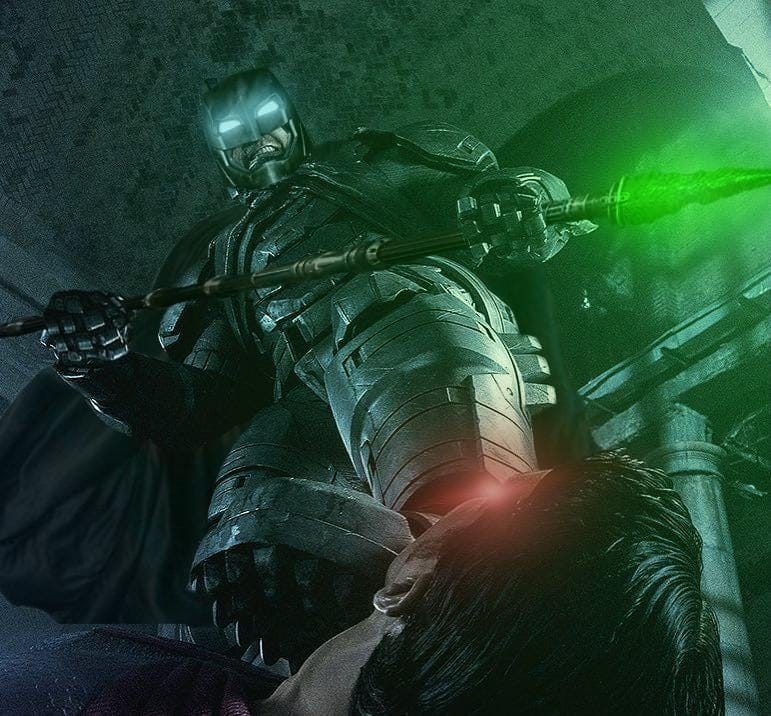
The possible future becomes strong enough in Bruce’s mind to erase the extant locus standing in front of him. This is blatantly bad field analysis from anyone, let alone Batman. The perceptual fingerprint of his trauma caused him to fail the weighting catastrophically.
This Batman is also notable and loses even more structure in that he has two wounds; his parents and Metropolis. The second one invented for this characterization almost completely overrides the traditional wound as his motivation for the bulk of his portrayal. This is a Batman who was primarily shaped by the loss of his business partners and bearing witness to alien life, not the murder of his parents.
Still, the threat is not imaginary. Superman’s power is real. The destruction in Metropolis was very real.
Bruce’s fear is not random, but fear is not actually field analysis. He cannot move from “this being could close the human future” to “therefore I may execute him now” without passing through reachability, evidence, alternatives, repair, communication, constraint, and actual intent.
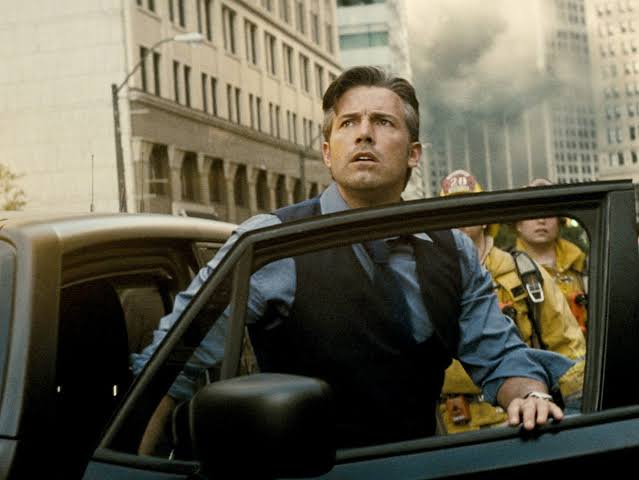
This Batman does not, or can not, do that. He collapses the field into a nightmare he is having and then acts from inside it, bringing the nightmare into his reality when he never had to.
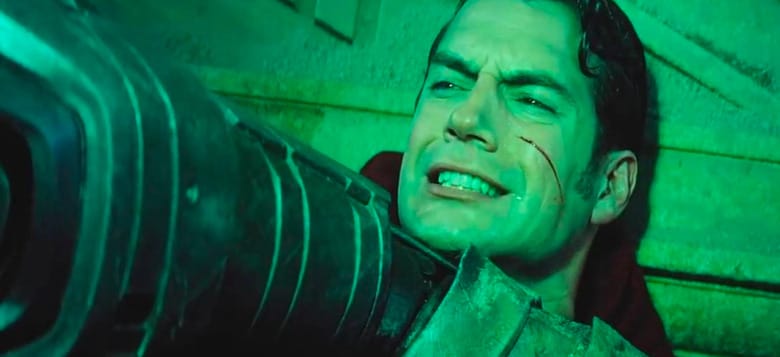
This is why “Martha” actually works very well structurally, even if it remains one of the strangest blockbuster hinges ever filmed. The point is not that Batman suddenly realizes their mothers have the same name and therefore friendship ensues. The point is that the human locus reappears. Superman stops being the abstract extinction object in Bruce’s fear-field and becomes a son begging for his mother’s life. Then, he can remember his own original wound and regain some of the structure of Batman. This is probably the best repair path ever in a Failed Batman, and also unique among Batman stories.
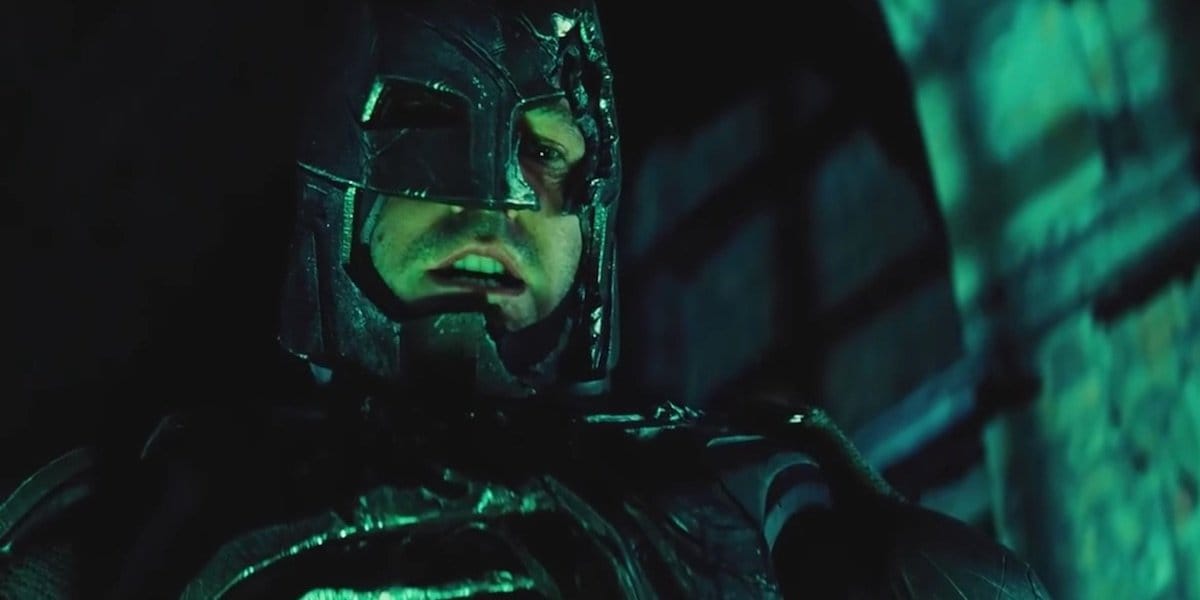
Bruce’s field model breaks in this scene, and Batman returns, for the first time we have seen him in this universe. Bruce hears his old wound from the other side. The alley opens under someone else in the field before him.
Unfortunately, the problem is that this Batman had already traveled too far into harm. The restored insight does not erase the killed bodies, the branded prisoners, the dehumanizing logic, or the fact that Batman’s field analysis was almost entirely captured by fear.
Snyder’s Batman is a Failed Batman because he has become precisely what Batman is meant to prevent: a powerful traumatized man deciding whose futures may close because his private terror has become a theory of the world.
He is still capable of repair. His later turn toward forming the Justice League shows a damaged field trying to reopen.
He recognizes that he failed Clark. He tries to honor Superman’s life by building relation where he had previously prepared execution. That is real Batman movement.
Snyder's Batman still remains a warning to other Batmen.
A Batman who kills is not “Batman with fewer rules.” He is Batman after the rule that prevented him from becoming Gotham’s private death-state has broken.
A Batman who brands is not merely “tough on criminals.” He is Batman converting bodies into public text.
A Batman who sees every powerful unknown locus as a future enemy is not prepared. He is afraid with resources.
Ruling:
Snyder’s Batman is structurally valuable because he shows the collapse condition clearly. He is Batman as damaged locus producing damage. The core primitives remain visible only because they are broken: the wound no longer becomes care, the vow becomes war on aliens, the constraint fails, the symbol becomes terror, and the detective is captured by fear. He is not the future of Batman at all. He is the cautionary ruin of Batman.
Learning Batman.
Pattinson’s Batman begins wrong.
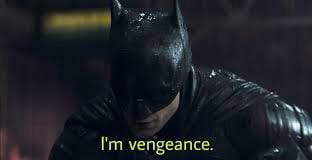
He begins as vengeance. He says it openly, in the trailer. He has converted his wound into a nightly practice of fear without yet understanding the field effect of that practice. He believes he is frightening criminals away from harm. He is. Partly.
But the city is now receiving a symbol more complicated than his intention.
This Batman is early enough that the method has not hardened into doctrine. He is not fully formed. He is not the master strategist. He is not the perfected detective. He is not the father of a Bat-family. He is barely even Bruce Wayne in the public sense. He is almost all Batman, which means he is almost all wound, all the time.
This makes him very dangerous.
The central moral event of The Batman is not defeating Riddler. Batman discovers that his symbol has been interpreted by someone else, and the harm he can bring without intending it.
Riddler does not see Batman as an enemy until the end of the story. He sees him as his brother. He sees his masked vengeance, theatrical exposure, fear, and public judgment. He thinks they are working the same case by the same moral grammar.
Riddler is wrong about Batman’s intent, but not wrong that Batman has released a symbol into Gotham that can be misread as permission.
Meaning is downstream reachability more than it is intention. A symbol matters by what it opens in the minds and actions of the field.
If Batman’s self-description is “vengeance,” then he should not be shocked when vengeance recognizes him as itself.
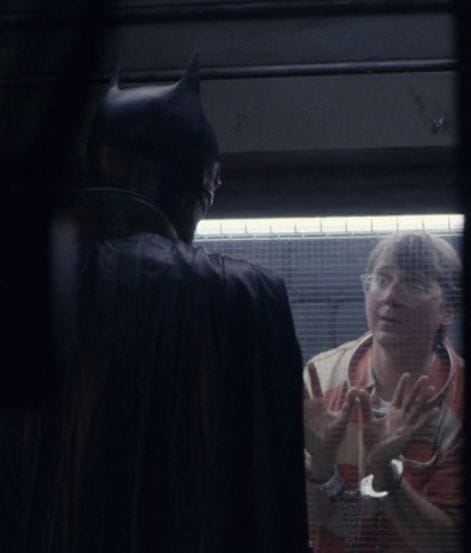
This moment is such clean Modal Path Ethics, the article essentially just writes itself from here.
Pattinson's Batman learns that field effect matters more than Bruce’s preferred interpretation of the symbol. He recognizes his own distortions, and his moral perception grows.
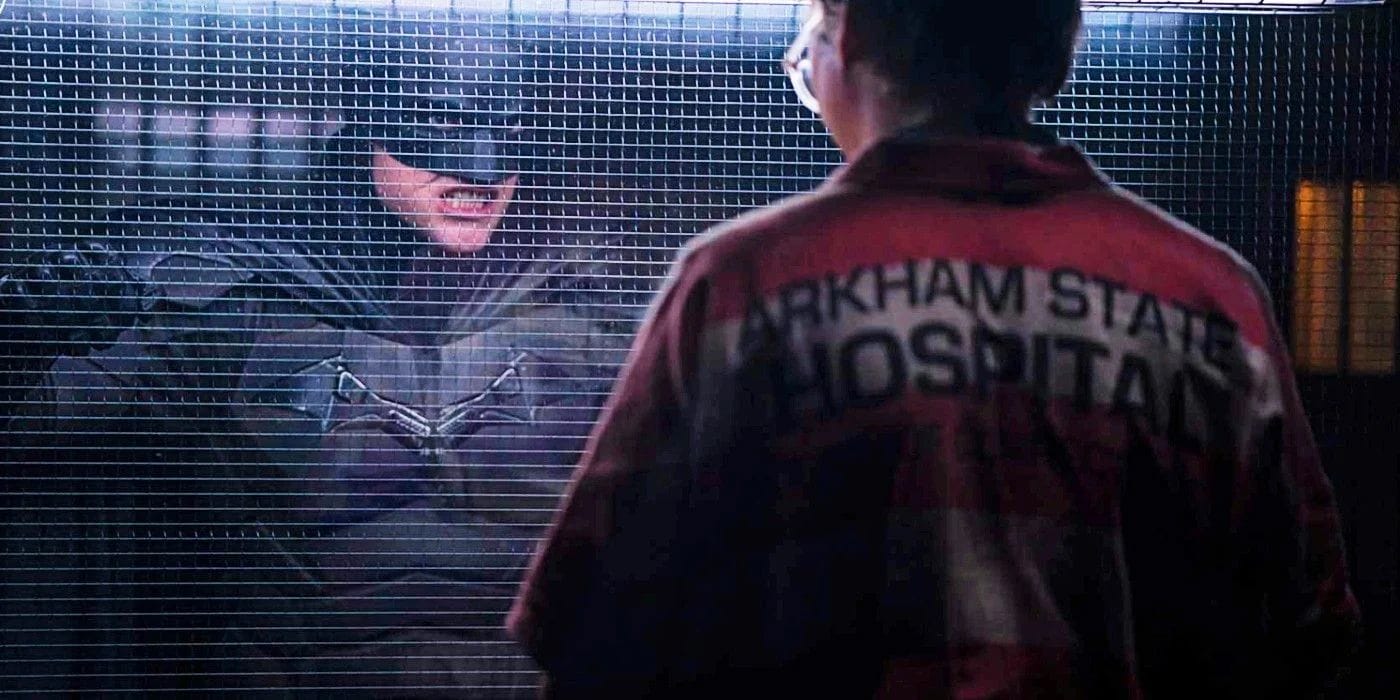
He begins by emerging from darkness as punishment, and ends by carrying people through floodwater, becoming a visible rescue body rather than an invisible terror. He realizes that Gotham does not only need its criminals to fear him. Gotham needs ordinary people to know that help can arrive, and not only from him.
This is the structural transition from fear to hope. Batman begins the story afraid for Gotham and himself, and ends it ready to help build both their brighter futures.
This is not hope as inspirational poster nonsense. This is Hope as a path to reachable future space. The person trapped in the flood does not need Batman’s vengeance in any way. They do need his hand. The child who lost a parent does not need Batman to be their mythic wound. They need evidence that the next path is not going to be closed, too.
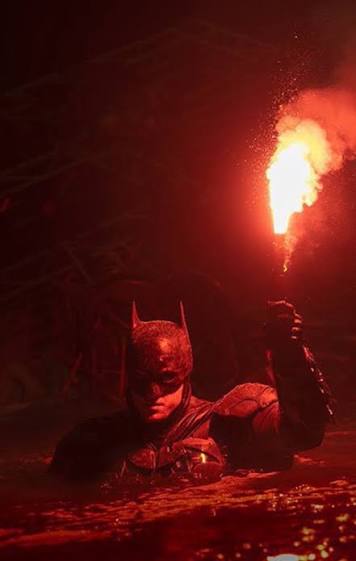
This Batman is morally very promising because he has learned early how to both read and be corrected by the field.
He also has one of the strongest Bruce Wayne problems. He is not using Bruce as repair infrastructure yet at all.
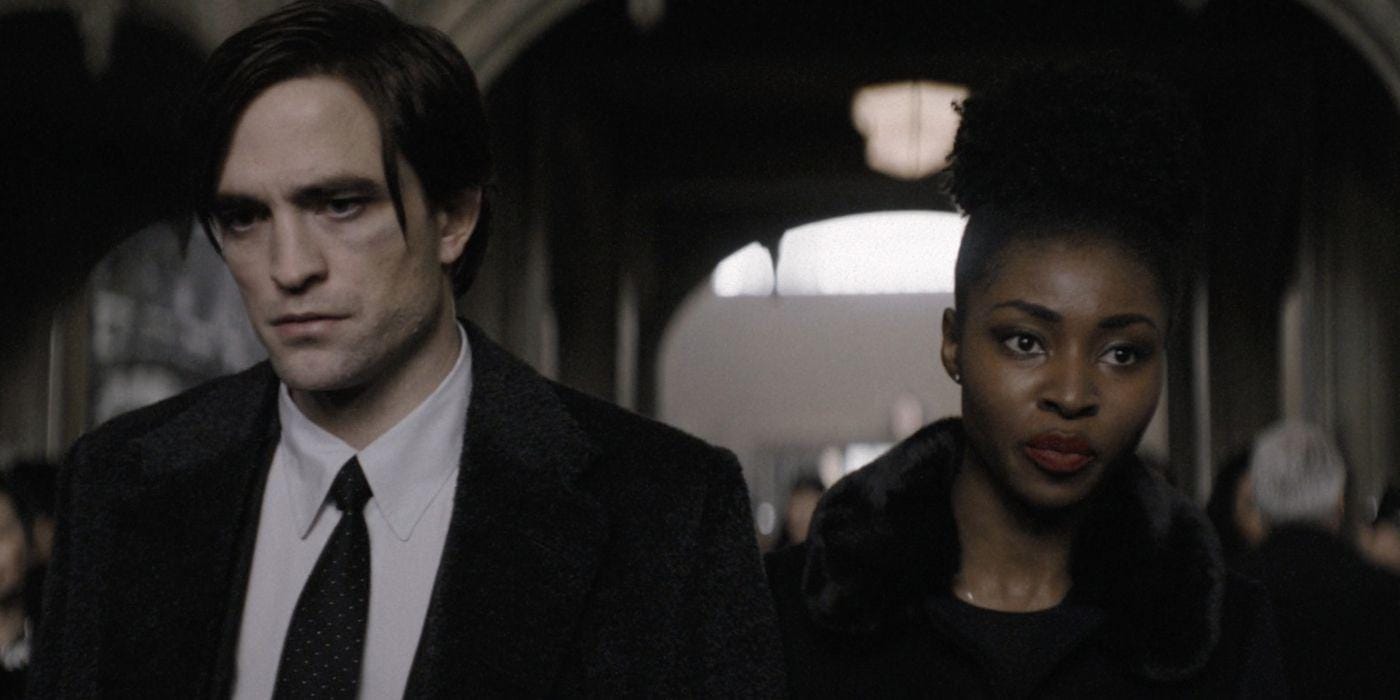
He is neglecting the daytime field. He has treated Wayne public life as a shell around Batman. Alfred calls this out. The city has Wayne renewal funds, corruption, elite rot, institutional lies, and a history that Bruce has not understood because he has been too busy becoming a fist.
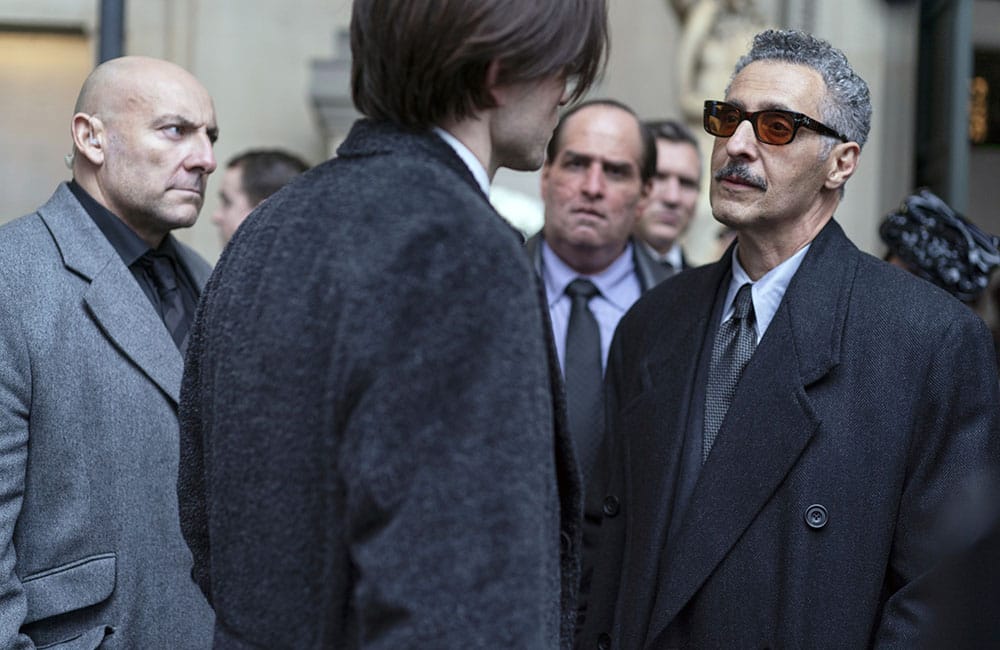
The film’s mystery forces Bruce to discover that his family’s legacy is not pure. The Wayne name is deeply embedded inside Gotham’s field, not floating above it. Thomas Wayne’s choices, Carmine Falcone’s reach, orphanage failure, public fund corruption, and city politics all show Bruce that Gotham cannot be read from the rooftops alone.

Riddler is also not just any villain. He is a product of the same failed orphan field Bruce ignored. That does not excuse Riddler; it indicts that field. Bruce and Riddler are both orphans shaped by Gotham’s failures, but they transform that damage differently. One uses fear and begins to learn care. The other uses truth as punishment and mass harm.
Ruling:
Pattinson’s Batman is still incomplete, but one of the most promising Batmen because he begins as a morally incomplete field instrument and quickly changes when the field corrects him. He learns early that vengeance is too narrow, that symbol is not controlled by intention, that Bruce Wayne cannot be abandoned, and that rescue must become more reachable than fear. He is not yet the best Batman, but is already the Batman most visibly becoming morally serious.
Ludic Batman.
The Arkham games produce one of the strangest Batmen because Rocksteady made Batman playable.
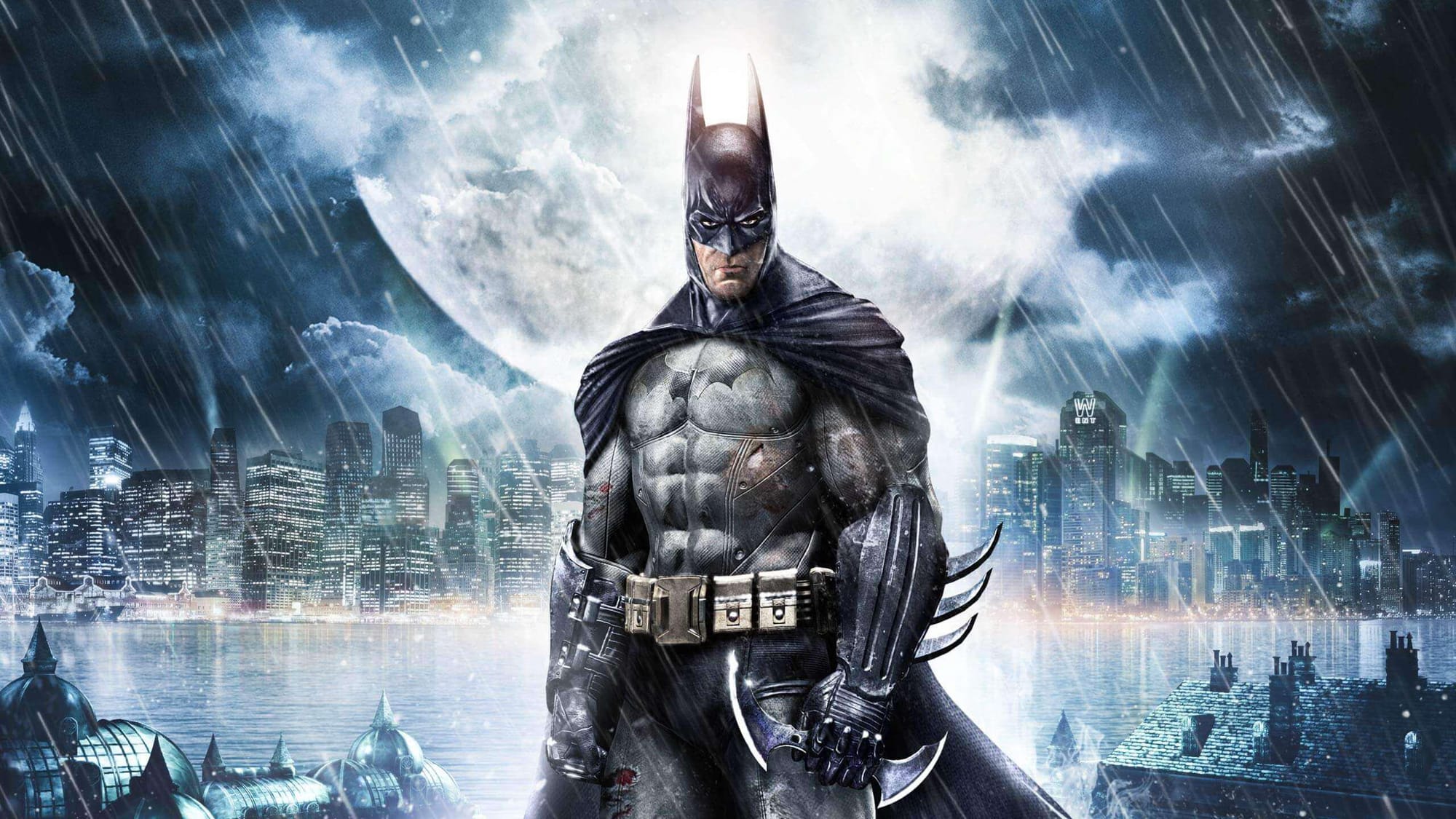
These were far from the first Batman games, but were the first games to allow the player to meaningfully play the structural role of Batman.
In film and comics, Batman’s violence can be framed, interrupted, mourned, questioned, or aestheticized. In a game, Batman’s violence becomes the player’s main interface with the field. The player does not only watch Batman enter a room and terrify criminals. The player enacts the method: perch, scan, isolate, drop, strike, vanish, repeat.
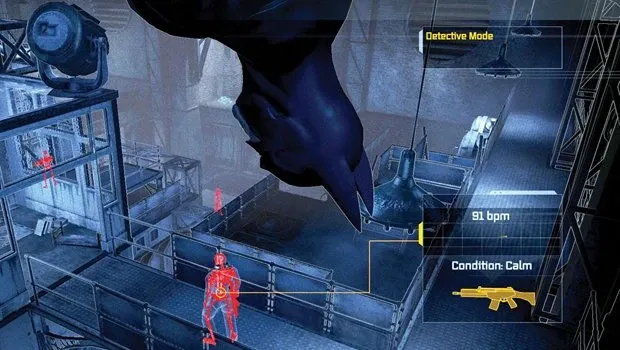
Arkham Batman exists inside a predator puzzle. The games are fantastic for this reason, but this makes him morally very strange.
The games enforce the no-kill rule mechanically. It is literally a rule of the field. Nothing Batman does to anyone can kill them.
Batman always incapacitates, regardless of what happens to anyone.
He never executes.
The interface constantly reassures the player that the violence remains within Batman’s constraint.
Enemies are unconscious, not dead.
Broken, maybe.
Suspended by ankle from gargoyles, definitely.
But definitely not killed.
The field effect here is messy.
Arkham Batman clearly hospitalizes Gotham at industrial scale.
Rooms full of men are dismantled with rhythmic precision.
The combat is elegant, readable, flowing, and often beautiful.
That beauty matters because it turns nonlethal violence into ludic pleasure.
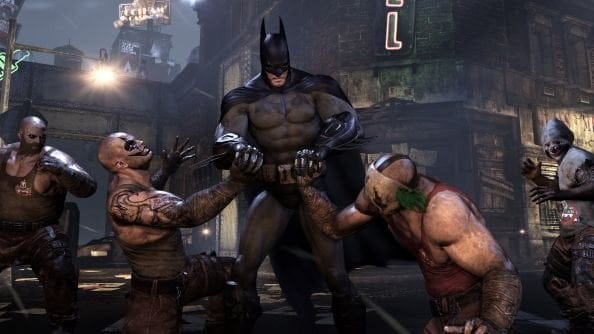
The player learns to optimize fear, impact, stealth, and incapacitation.
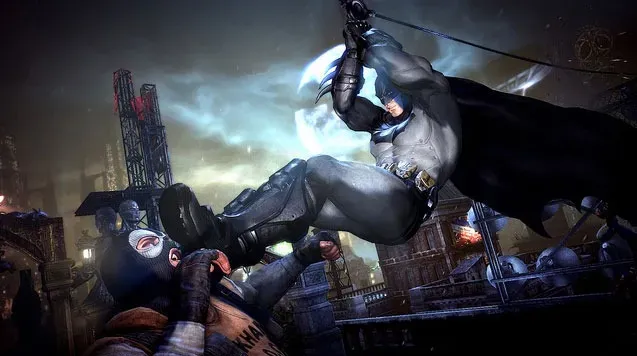
Batman’s restraint remains mechanically intact, but the method practically becomes a machine for damaging as many bodies as one can as quickly as possible.
This is less of a condemnation of the game and more of a moral consequence of the media structure.
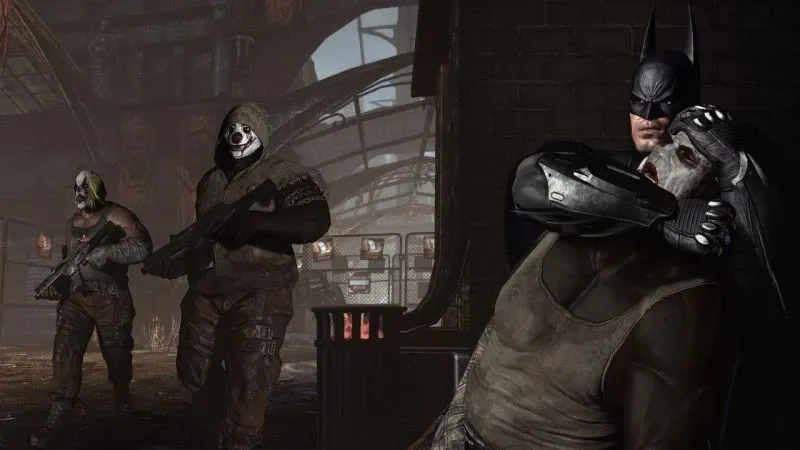
Games need action verbs. Batman’s verbs are punch, glide, investigate, hack, interrogate, and vanish. The Arkham series is very good at translating Batman into playable systems: detective mode, predator rooms, traversal, gadgets, environmental reading, clue reconstruction, and the escalation of Gotham into a spatial puzzle.
Modal Path Ethics, however, asks what kind of field the player is being trained to perceive.
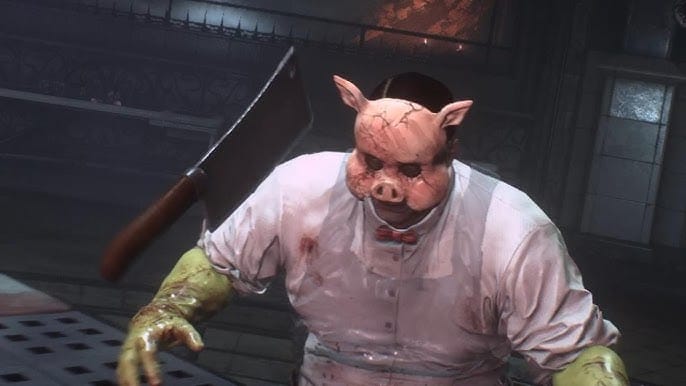
Detective mode is especially revealing.
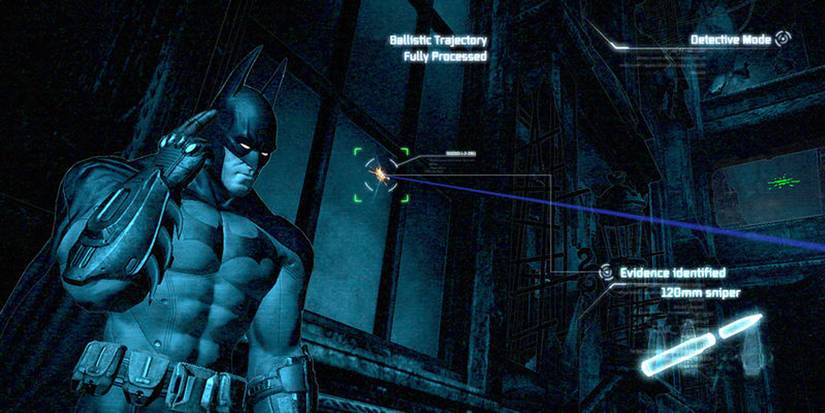
It lets Batman see through walls, track enemies, identify structural weaknesses, follow evidence, and reduce the field to usable information. This is Batman as field analyst rendered mechanically. It is also, however, Batman as surveillance god.
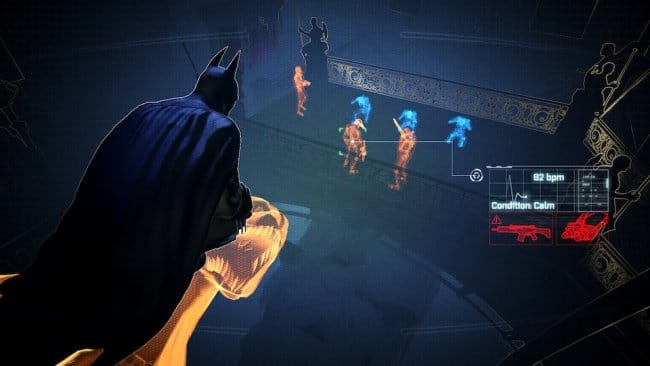
The player is rewarded for total situational visibility. The hidden becomes visible. Bodies become outlines. Threats become states. Architecture is opportunity.
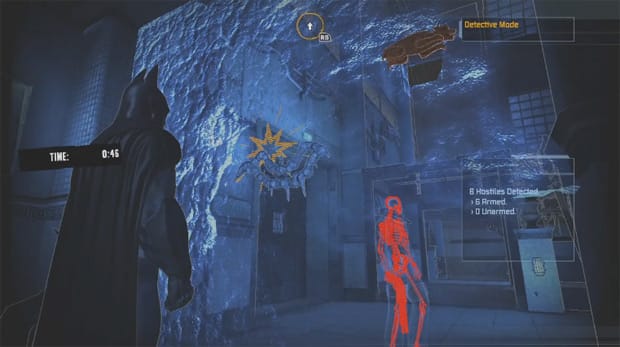
This is both Batman and the danger of Batman.
The Arkham games are at their best when detective work matters. Following clues, reconstructing events, tracing bullet paths, analyzing toxins, and reading the environment all preserve Batman’s deeper primitive. The player is not only fighting, they are restoring paths.
The games also strain the Arkham loop to absurdity.
Arkham is not only a failed institution here; it is the entire world of the first game.
The asylum, city, prison, and occupied Gotham all become containment failures turned into literal playgrounds. This entire franchise depends on Gotham’s institutions collapsing so completely that Batman can become the only functional interface.
While fun and highly replayable, this is also the Batman false repair loop rendered in pure mechanical form.
The player cleans rooms, but the city remains forever unclean.
The player captures villains, but reset reopens them, and their minions are endless.
The player solves cases, but this field continues generating the same cases and random crimes forever.
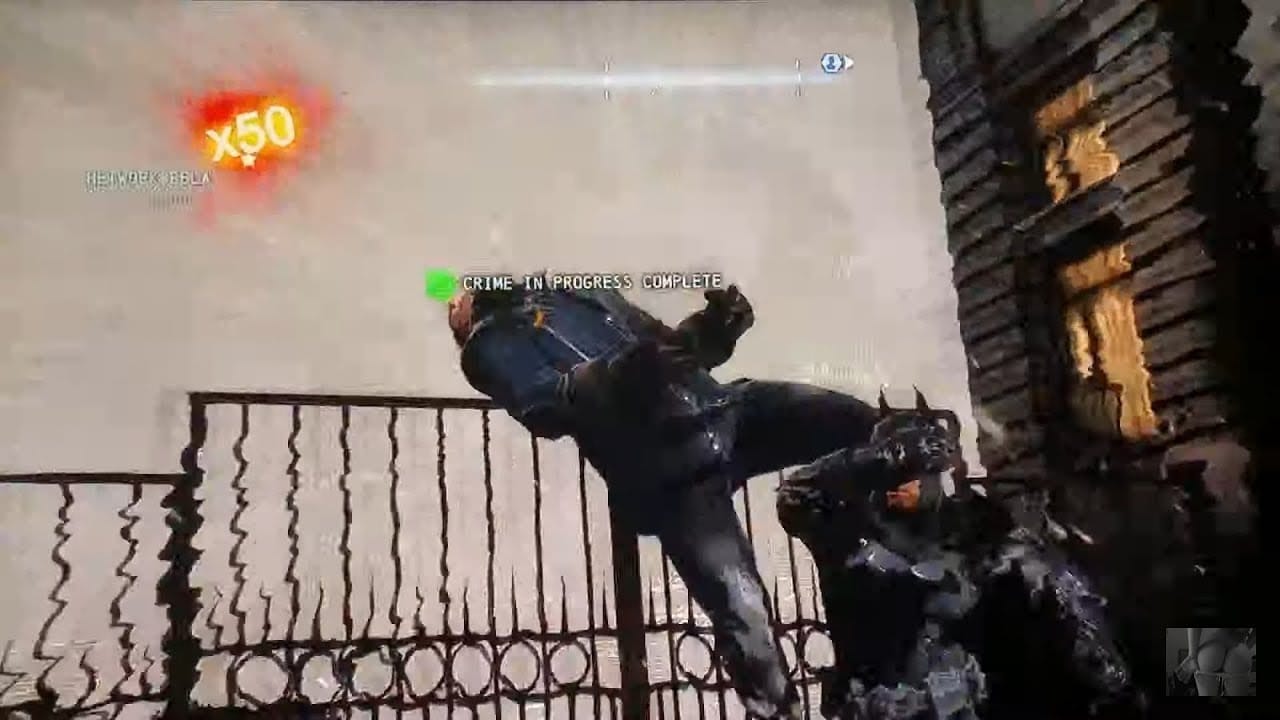
Arkham Batman is therefore highly competent and deeply, utterly trapped. He is almost all method, all the time.
The games make him feel impossibly effective at the method while also placing him inside a city whose failure is always total enough to justify endless play.
The Joker infection and psychological haunting material pushes this even further. Batman’s relation to Joker becomes internalized, literally viral.
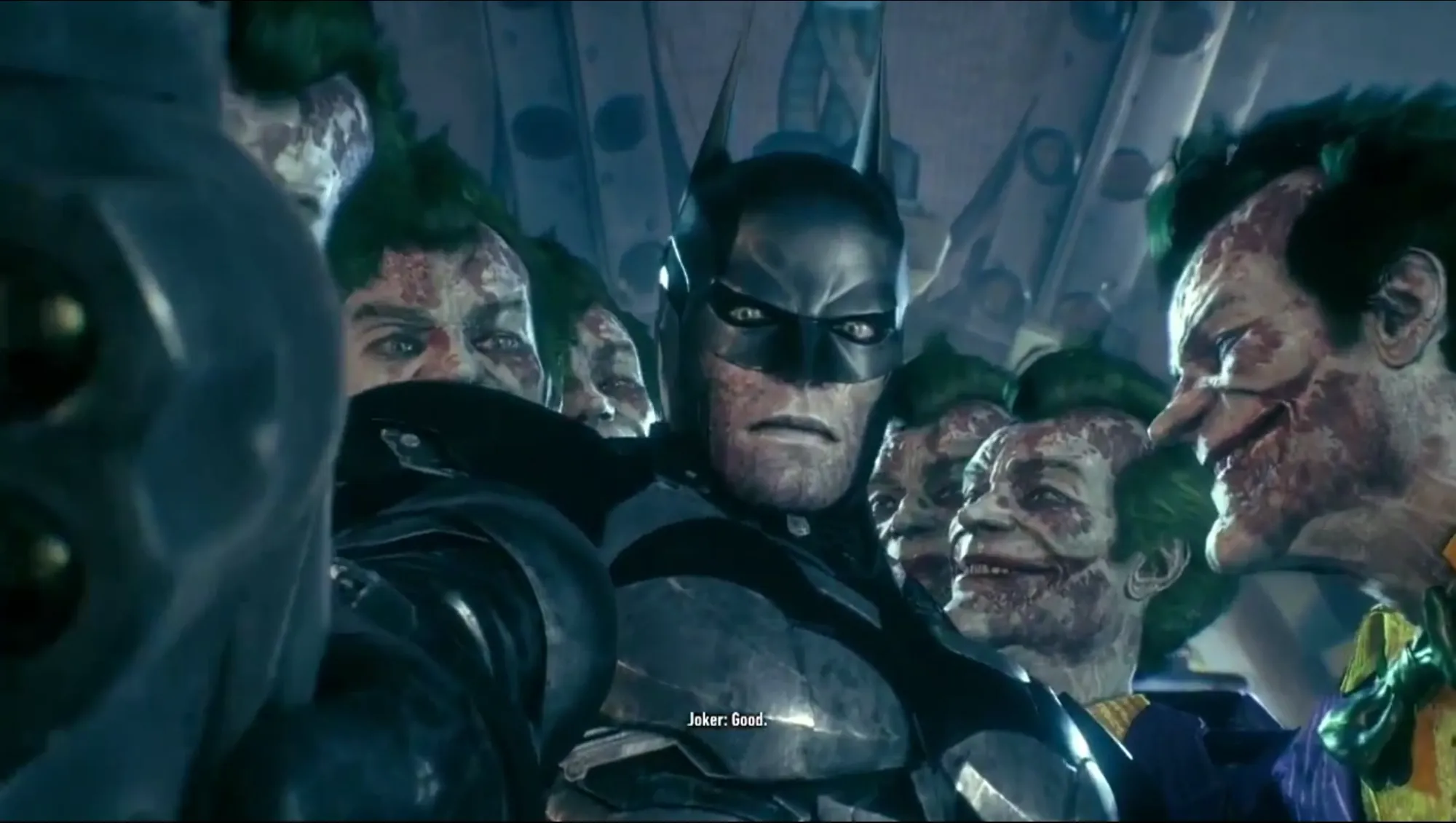
This is a strong symbolic move: Joker is not just an enemy Batman fights, he is a recurrence pattern inside Batman’s own field. The worst fear is not just that Joker escapes Arkham. It is that Joker becomes part of Batman’s self-structure.
The Ruling:
Arkham Batman is one of the strongest ludic Batmen because the games understand Batman as systems interface: detective sight, predator pressure, traversal, gadgets, constraint, and environmental reading, but he is also morally very strained because the play-field turns nonlethal violence into optimized pleasure and makes Gotham’s eternal institutional collapse the condition of fun. His no-kill rule survives as mechanic, but the field around him always becomes a beautiful machine for endless incapacitation. This is one of the worst Batman outcomes.
Arkham Batman also proves that Batman is playable, while demonstrating the cost of making Batman's emergency method feel so, so good.
Successor Batman.
Batman Beyond asks the question most Batman stories avoid:
So, what happens after Batman?
Not after Batman wins, or after the next case. After Bruce Wayne becomes old, isolated, physically diminished, and surrounded by the consequences of a life spent turning himself into a weapon.
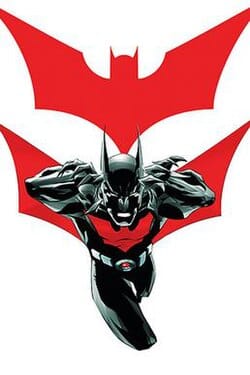
According to Batman Beyond, the answer is Terry McGinnis.
Terry is not Bruce, or another Robin.
He carries the symbol forward without carrying the same original wound. He has loss, anger, recklessness, and personal stakes, but he is not a repeat. He is a teenager in a future Gotham shaped by different technologies, different criminal forms, different social pressures, and most importantly, by the long shadow of Bruce’s earlier life.
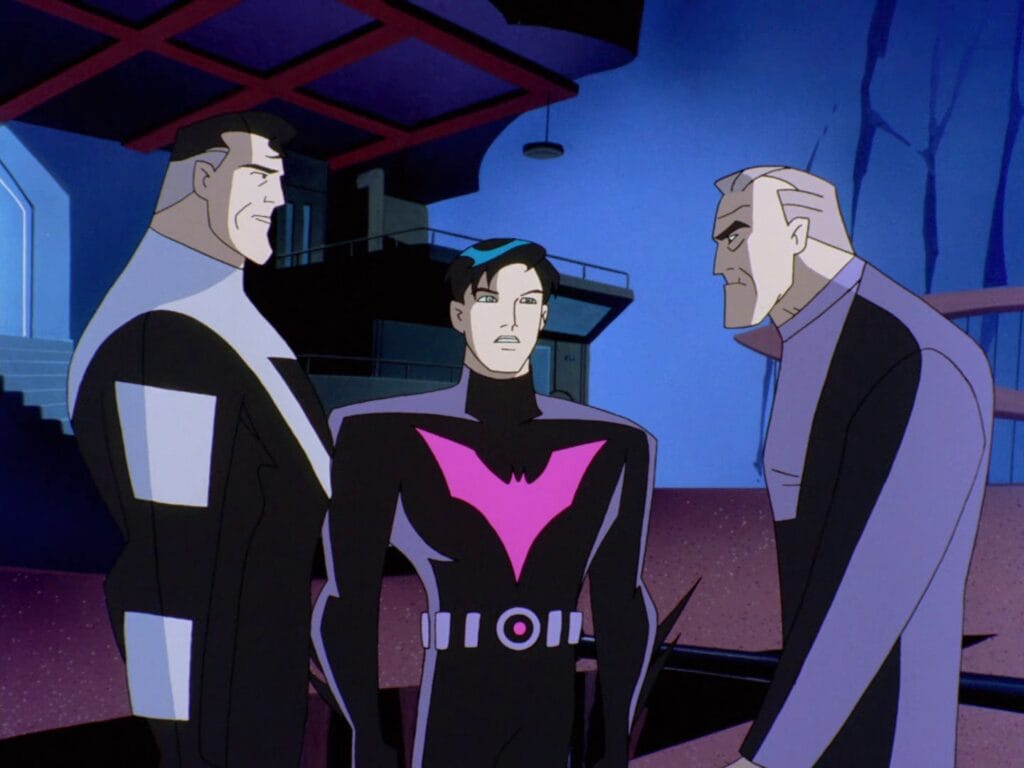
Batman Beyond is one of the most structurally Hopeful variants. The symbol endures, but the trauma factory is closed.
Bruce as old mentor is crucial. He is not triumphant, or fully healed from the original wound. He is not surrounded by a happy Bat-family. He has become another warning to Batmen: Batman can win many nights and still lose his relations, softness, and ordinary human continuity. The mission preserved Gotham in countless moments, but it also narrowed Bruce to almost nothing.
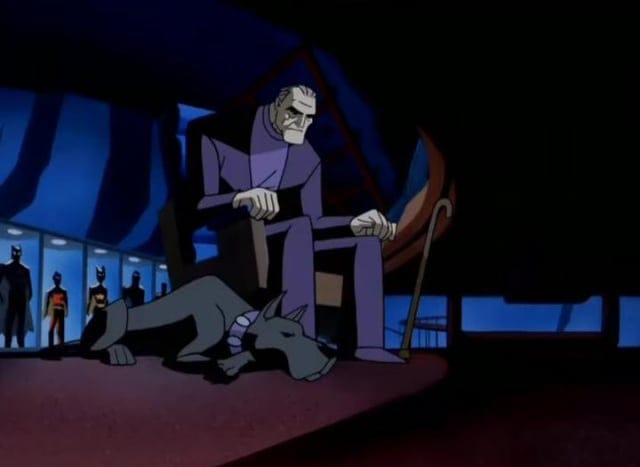
Then Terry comes and opens a path.
He is far less controlled than Bruce, less polished, less mythically burdened. Terry is kind of annoying. He talks back. He improvises. He has a life outside the suit in ways Bruce often failed to preserve. He does not become Batman because he wants to live forever in Bruce’s trauma. He becomes Batman because the field still has need, and because the symbol can be adapted.
A successor Batman who merely imitates Bruce would prove the symbol is ultimately a trap. Terry instead proves it can be translated.
The suit itself reflects this. It is technological, sleek, future-facing, less gothic, less ritualistic. It obviously belongs to a different Gotham, but the core primitives remain: wound, vow, constraint, symbol, detective work, city, relation, rogues, repair. The bat survives because it changes.
This is why Batman Beyond handles replacement better than many stories. Terry does not replace Bruce in the sense of erasing him, or because he is gone and someone must fill the slot.
He continues the field differently. Bruce remains a locus: a mentor, a damaged survivor, a cautionary archive; but Terry becomes the new active path.
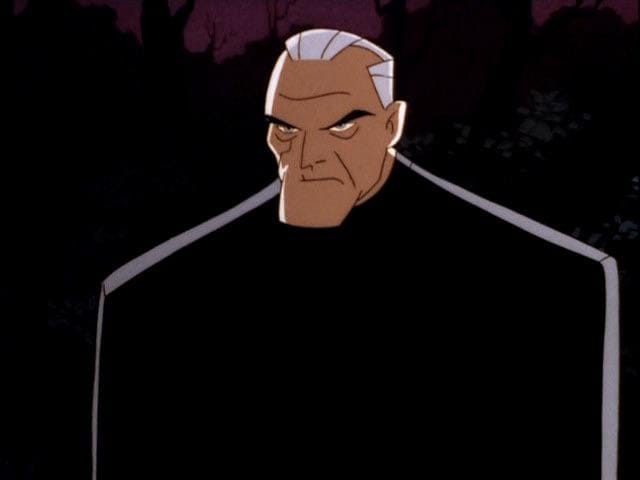
Instead of resetting, the Batman-locus branches.
Batman not identical to Bruce Wayne. But Batman without Bruce’s history is not automatically the same Batman either. The symbol locus can continue, but its field changes depending on who now carries it.
Terry also repairs Bruce by needing him without worshiping him. Bruce becomes useful again, but not as the fist or paragon. He becomes an external memory, judgment, warning, and technical support for Terry. That is a much different future than old Bruce alone in the manor. The successor opens an enabling path for the predecessor too.
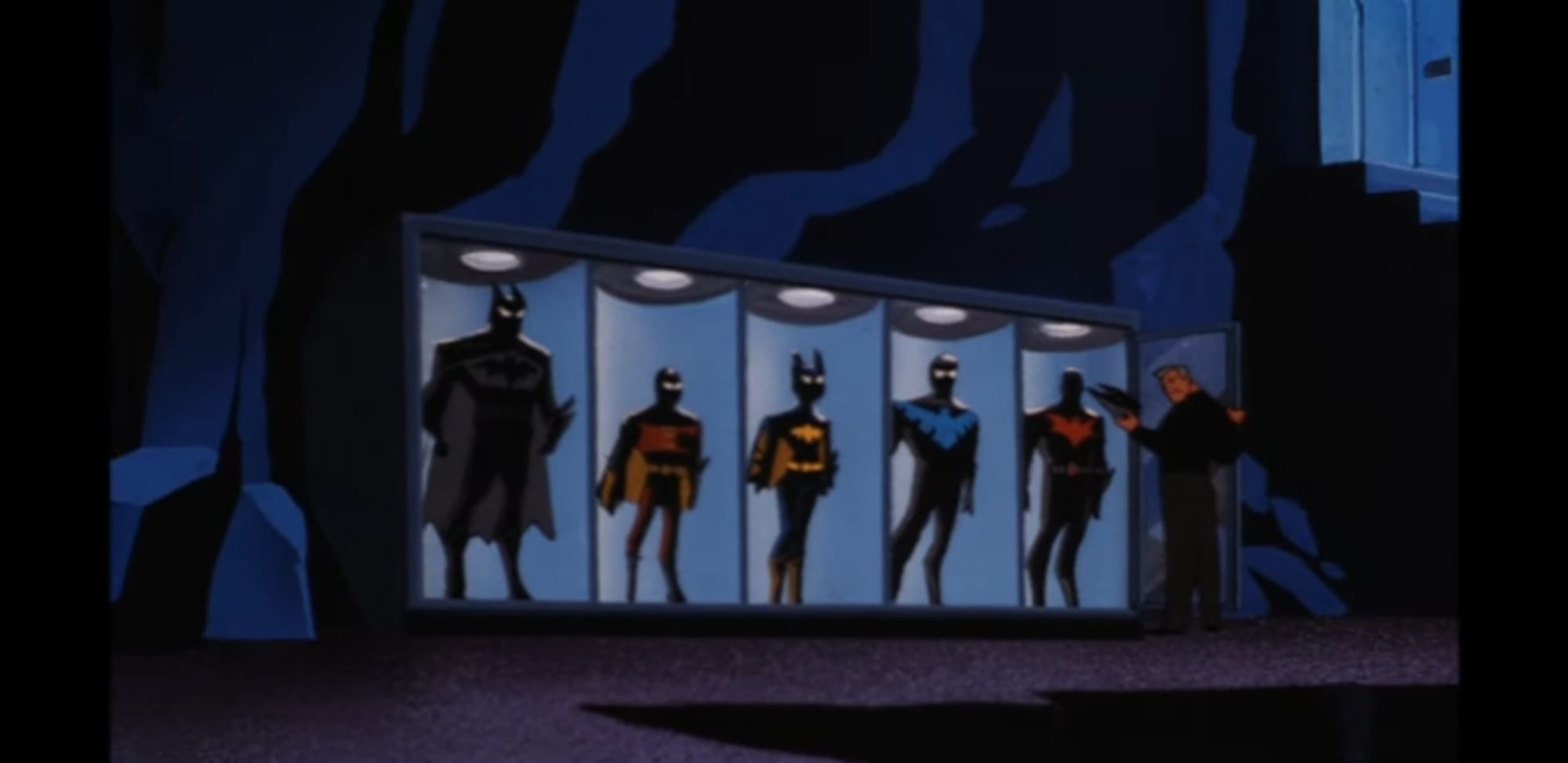
Ruling:
Batman Beyond is structurally hopeful because it shows Batman becoming legacy rather than compulsion. Terry McGinnis carries the symbol without being fully consumed by Bruce’s wound, and Bruce becomes more than a relic of his own method. The future Gotham still needs Batman, which is still a civic failure, but the Batman it receives is less trapped inside the original alley, and generally more open. The bat continues by divorcing itself carefully from Bruce. The field is improving.
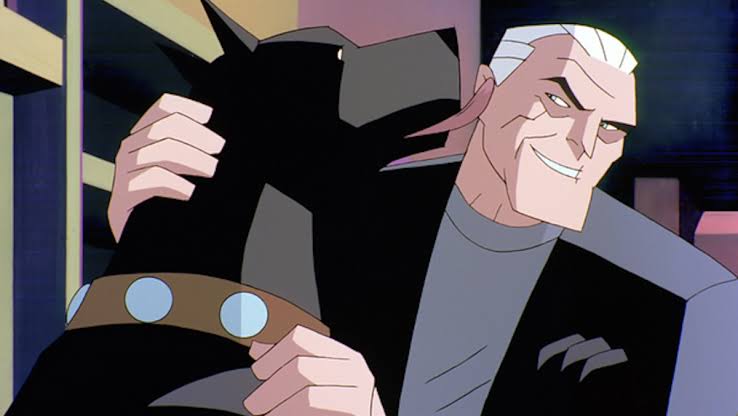
Elseworlds.
A long-running symbol reveals its primitives by being moved into fields where some variables change. Remove Bruce’s wealth. Change the dead parent. Make Gotham Soviet. Make Batman old. Make him poor. Make him Thomas Wayne. Make the public turn against him. Make him operate in Victorian horror. Make him face a Superman-like political field. Make him a father, corpse, myth, tyrant, joke, god, or ghost.
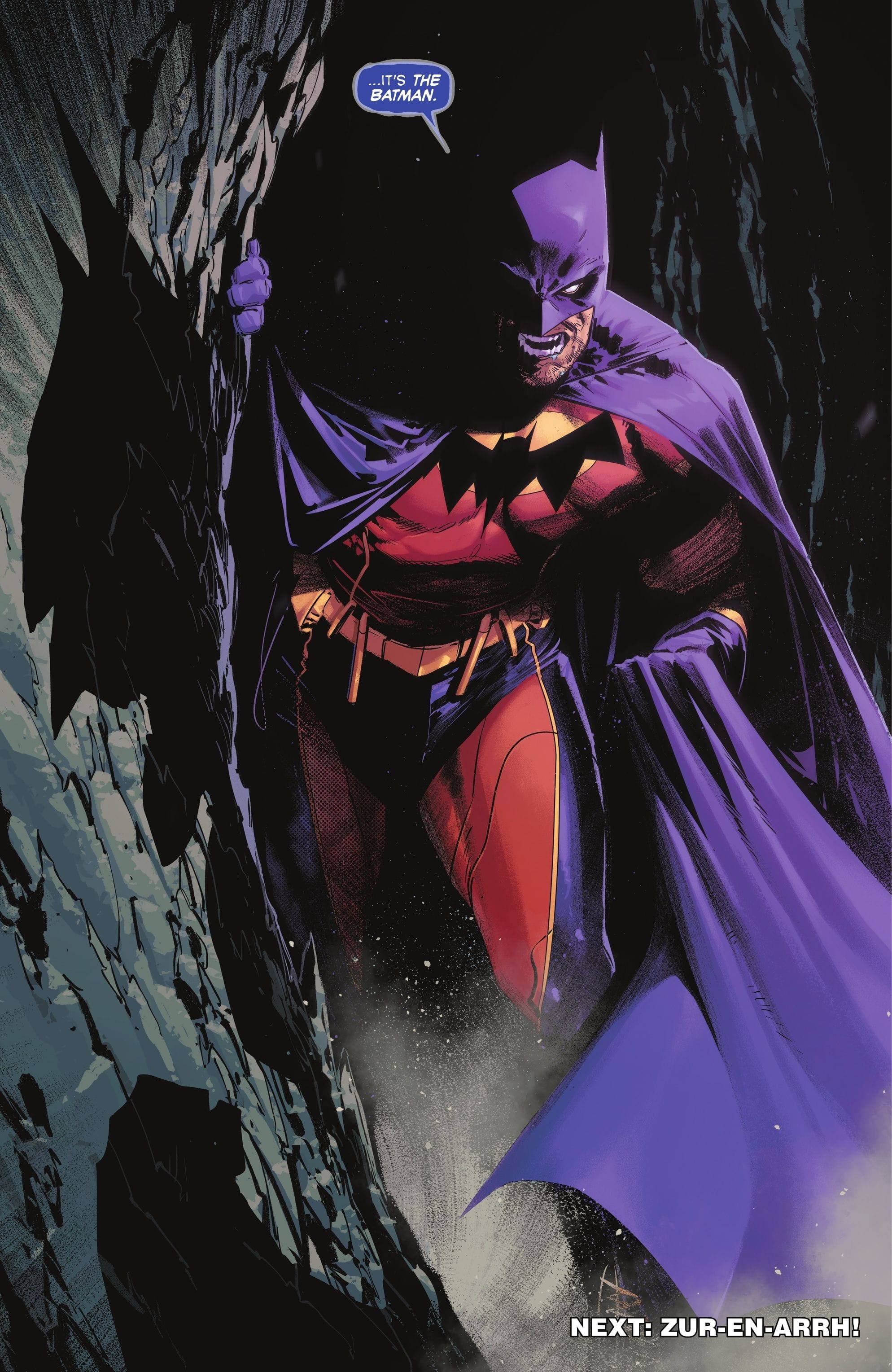
These are the "Elseworlds" variants, and serve as stress tests for the Batman structure. What remains? What breaks?
The Dark Knight Returns.
Frank Miller’s Batman is old violence returning to a field that was not repaired.
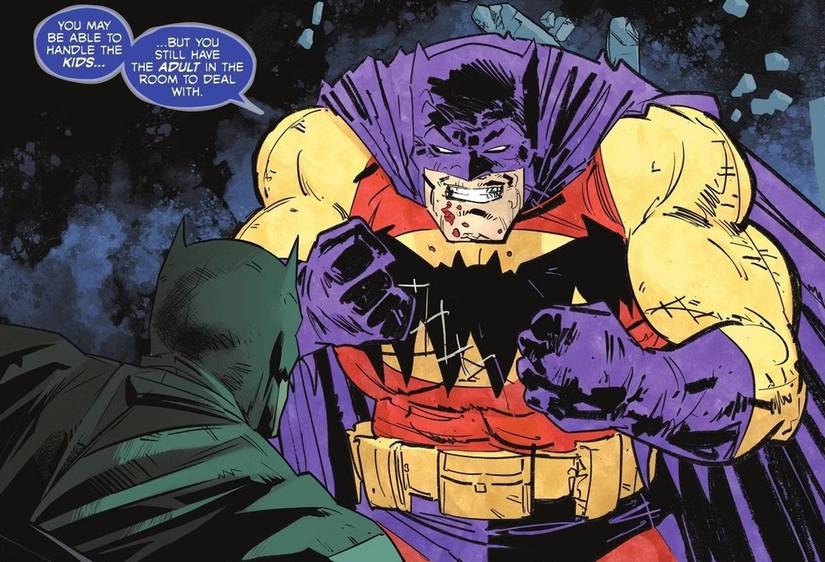
This Batman is iconic, but incredibly dangerous. He is not a heroic comeback at all. He is a new rupture in a decaying public field he failed to fix. Gotham is now weak, media-saturated, politically hollow, criminally unstable, and aesthetically exhausted. Bruce returns because the field’s existing paths have collapsed.
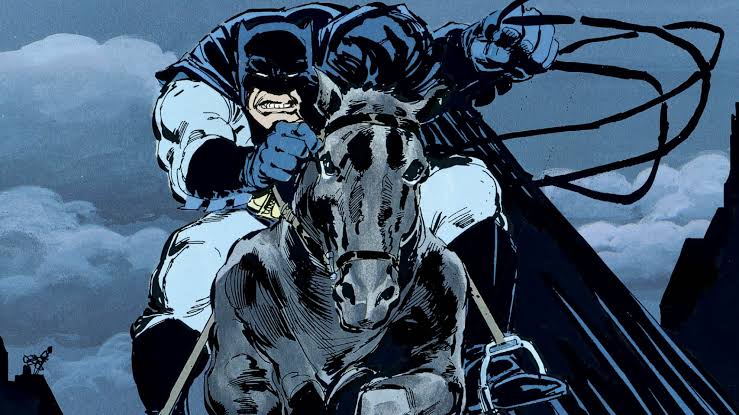
But his return is not for gentle repair. He comes back to stage an ideological insurgency.
This Batman inspires, but he mostly escalates.
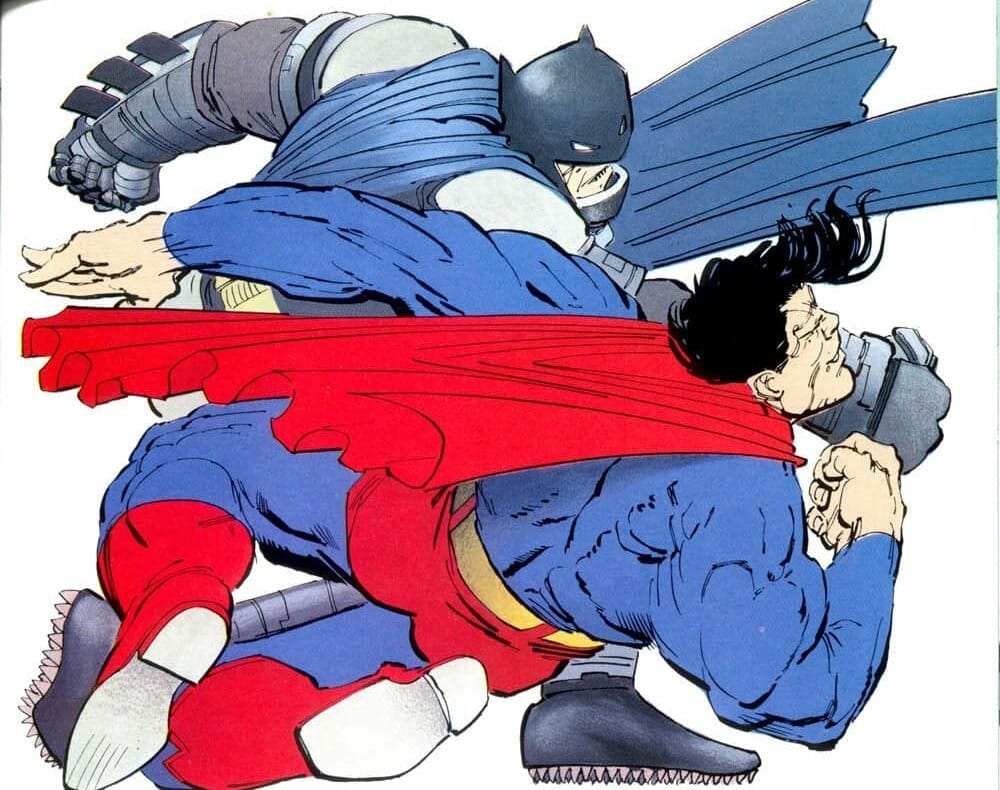
The horrifically violent Mutants become Sons of Batman. The symbol spreads, but not cleanly, or with discipline. These are desperate field interventions from a distorted Batman.
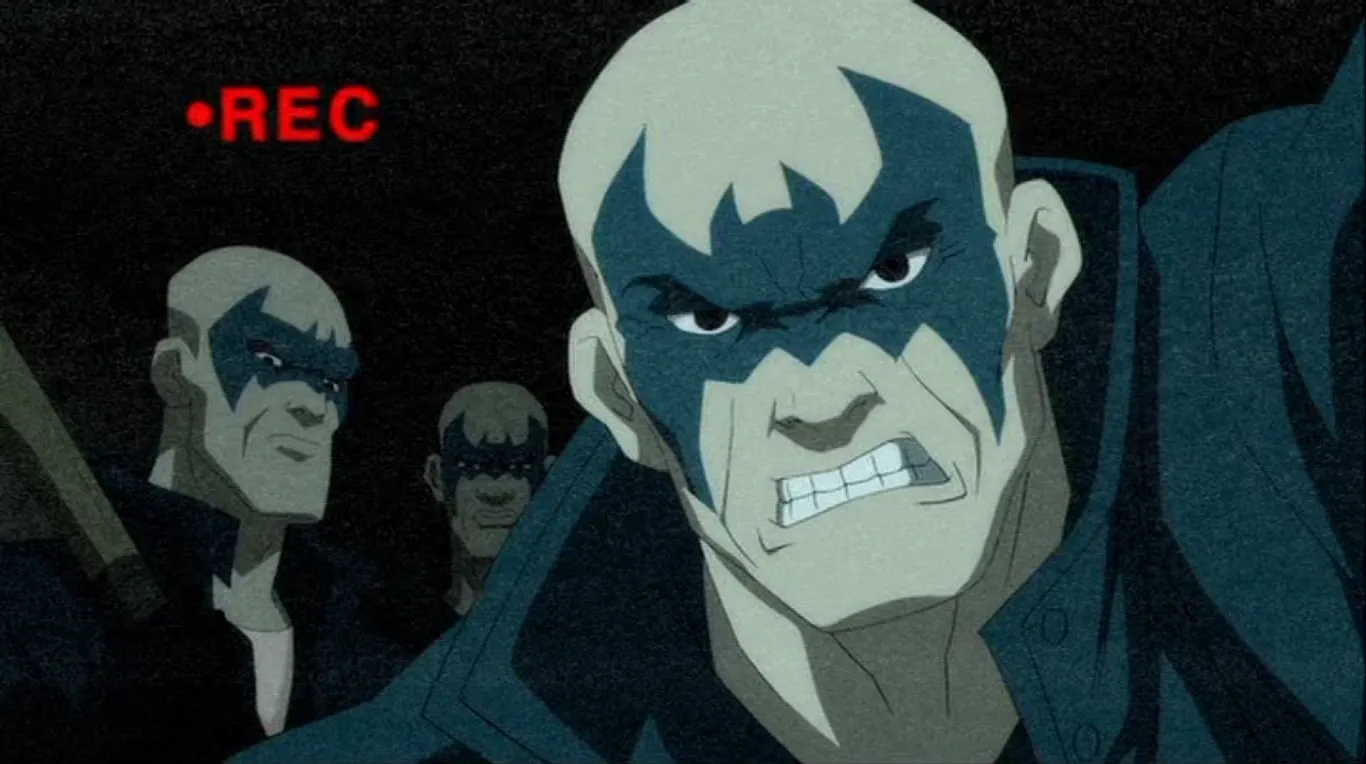
Once again, Batman’s meaning exceeds his intention. He does not only create hope, but even more imitators with violence in their mouths.
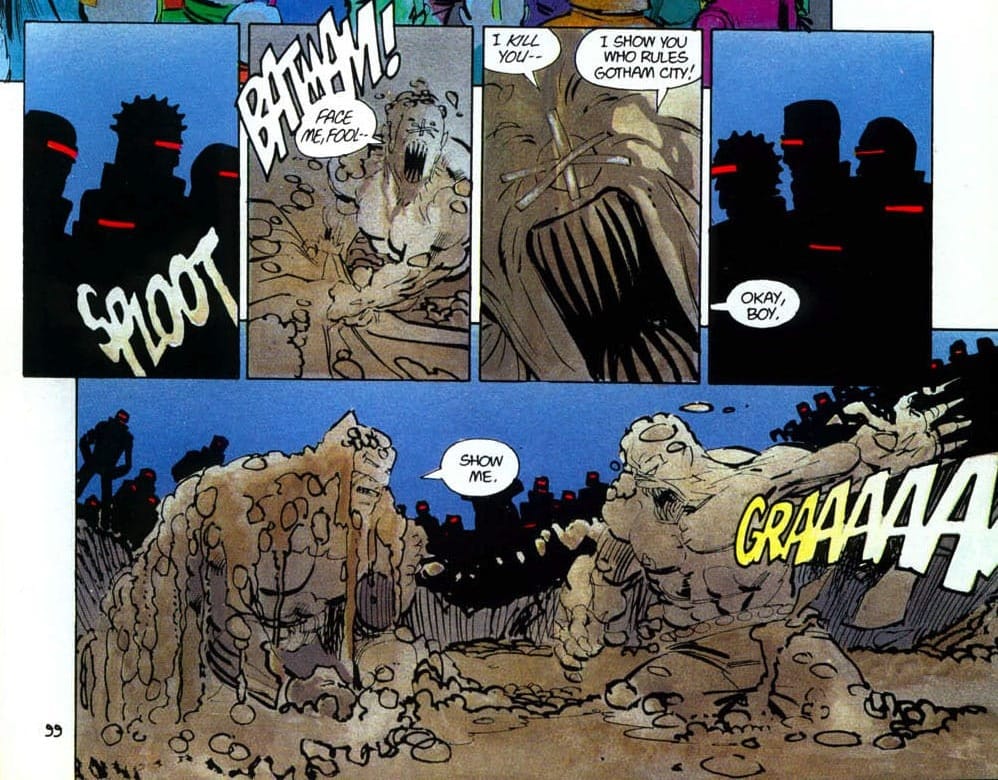
This is one of the clearest examples of Batman as political force rather than crimefighter first.
The state cannot tolerate him.
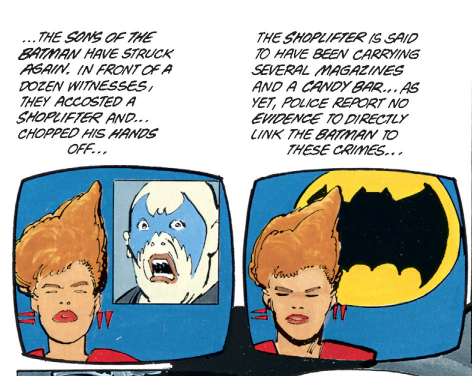
Superman becomes the state’s instrument. Batman becomes resistance against it, but also a charismatic force of destabilization in general. The moral field is not simple at all. Batman is opposing a hollow order, but he is also building a hollow counter-order around himself.
Ruling:
The Dark Knight Returns is Batman as revolutionary recurrence. It is powerful because it shows how the symbol can be used to reanimate a dead field. It is also very dangerous because reanimation through myth and violence may not lead to repair at all. Old Batman returns as a new medicine and fever all at once.
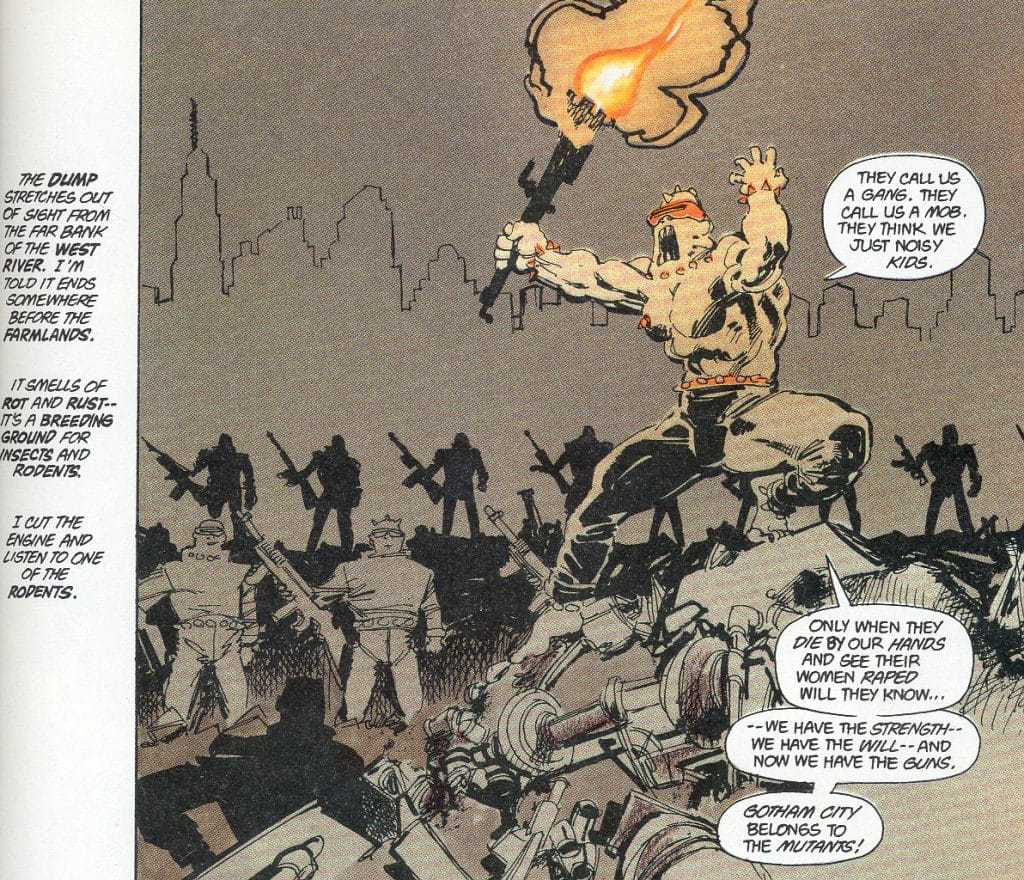
Year One.
Year One is one of the cleanest field analysts in the canon.
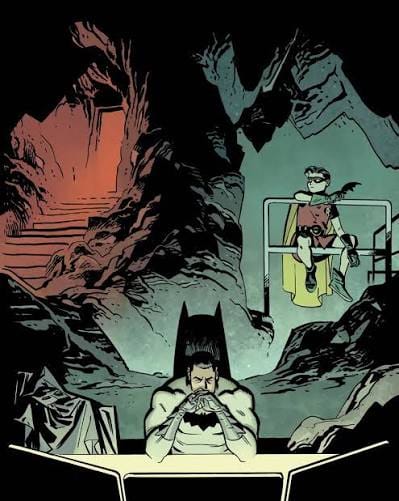
Bruce is early. Gordon is early. Gotham is corrupt in all the recognizable ways: police rot, organized crime, political compromise, poverty, prostitution, elite hypocrisy, and ordinary fear. The field is civic, dirty, and legible, not yet cosmic.
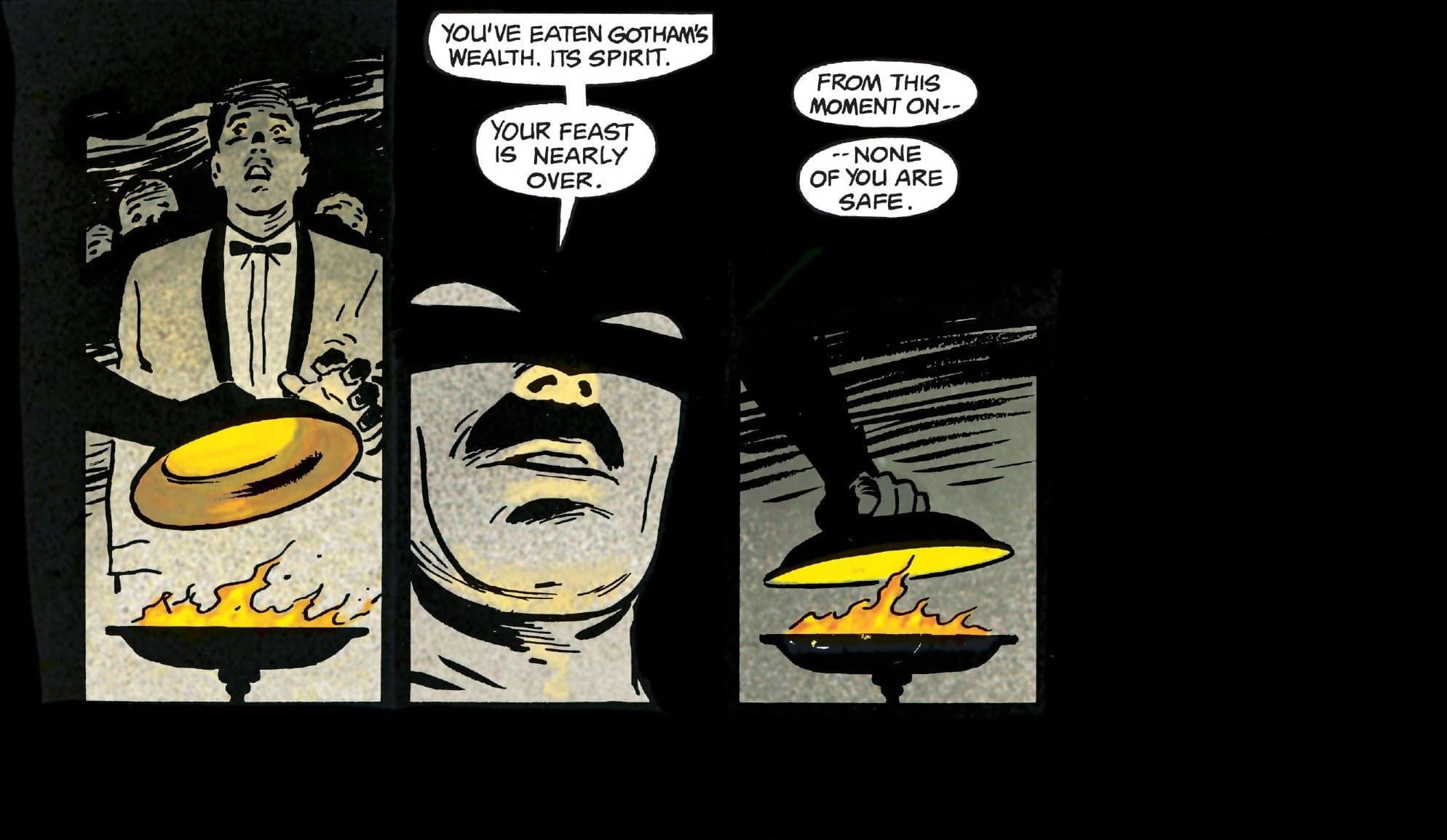
Batman here is anti-corruption pressure.
He is not yet the god of prep time or surrounded by a giant mythology of rogues. He is still learning how to act inside a damaged city while Gordon tries to preserve public law from within. Their pairing forms the moral core.
Batman is outside the system. Gordon is inside it. Neither is enough alone.
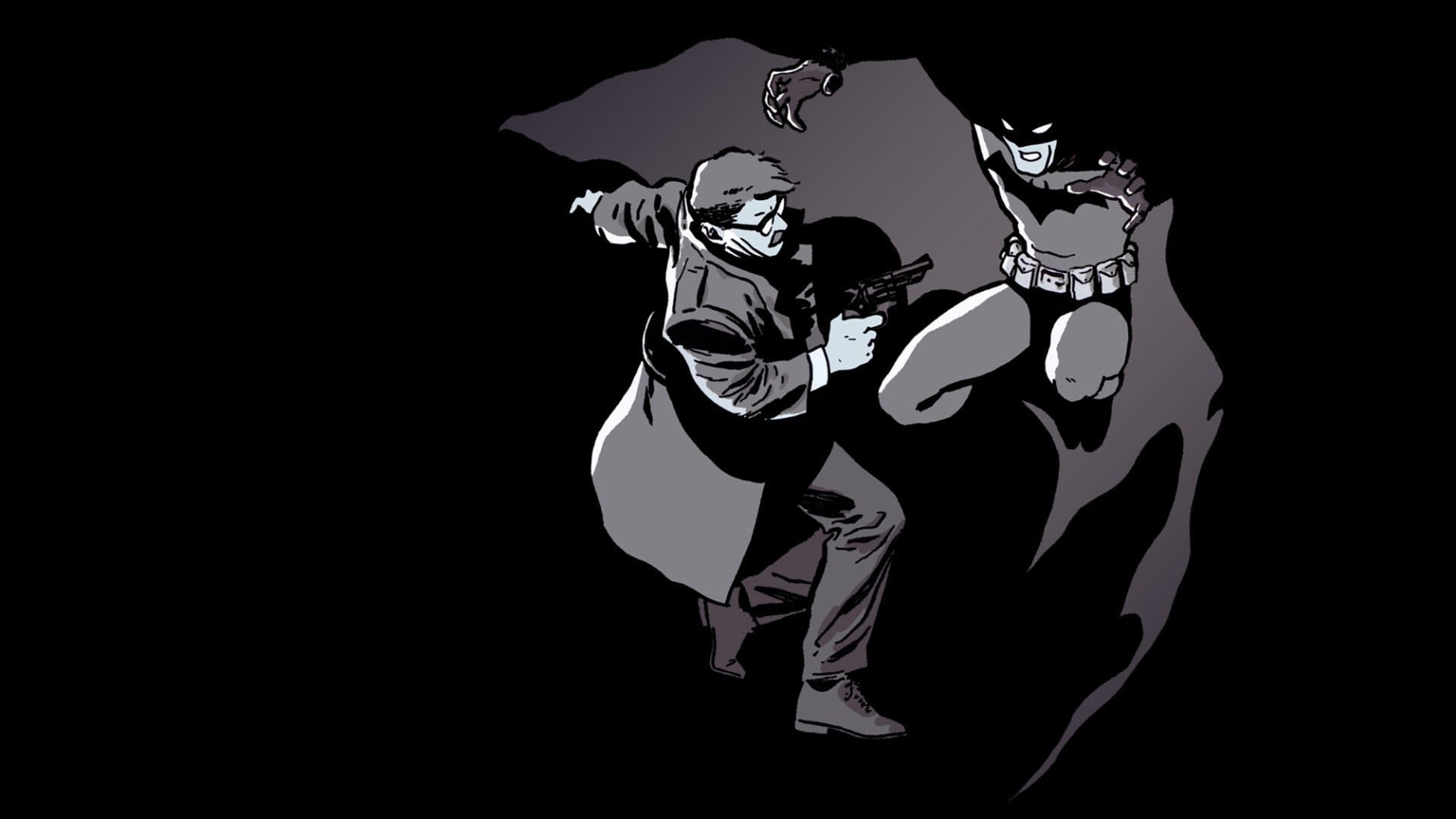
Year One is strong because it does not let Batman’s arrival magically fix Gotham. It treats him as a pressure point trying to maximize its impact inside a wider field. He disrupts, exposes, and survives every day, but the city remains a long project.
Ruling:
Year One is one of the strongest Batmen structurally because the scale is just right. Batman is not yet a myth replacing the entire city. He is an intervention inside a damaged civic field, and Gordon’s parallel struggle keeps public repair in view.
White Knight.
White Knight takes a much more hostile position. What if Batman were a part of the problem, not the solution?
The story’s premise varies by arc, but the core field problem is clear: Batman always creates collateral damage, public cost, institutional dependency, and political instability. The city must ask whether the masked protector has become a civic harm.
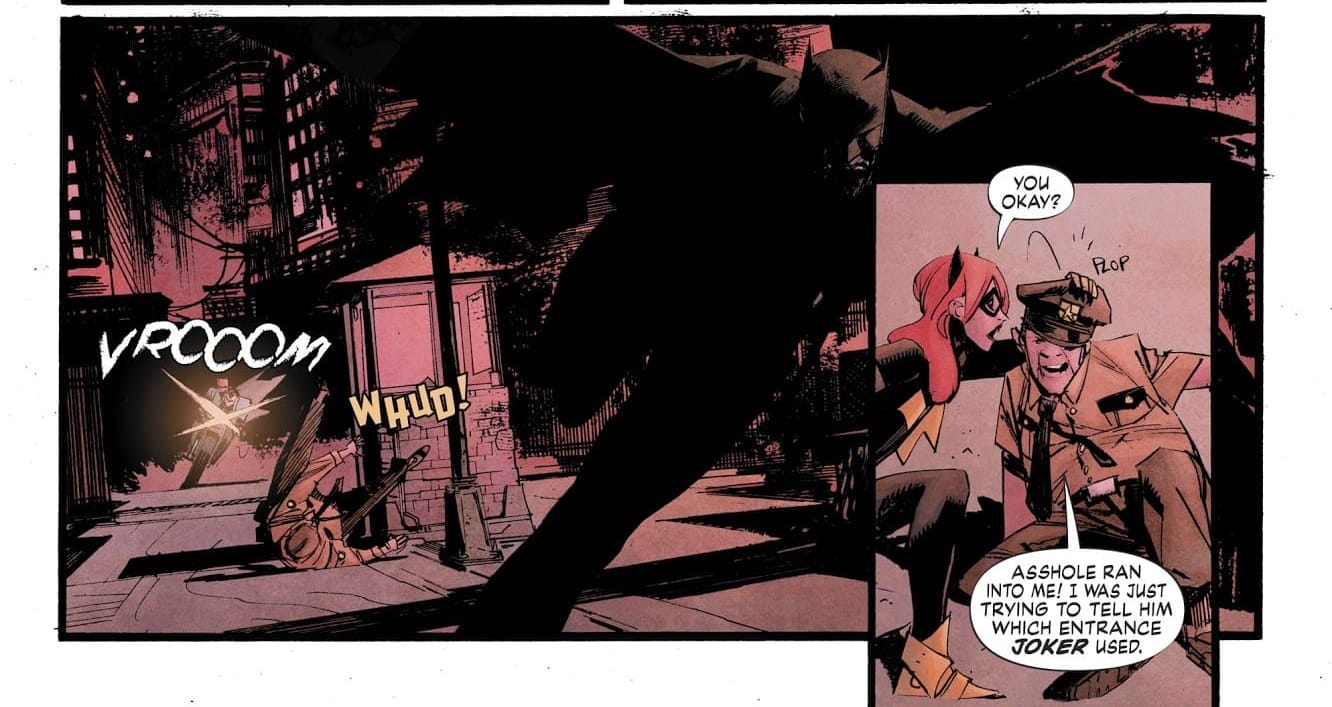
This is not anti-Batman propaganda. We are looking at serious Batman analysis.
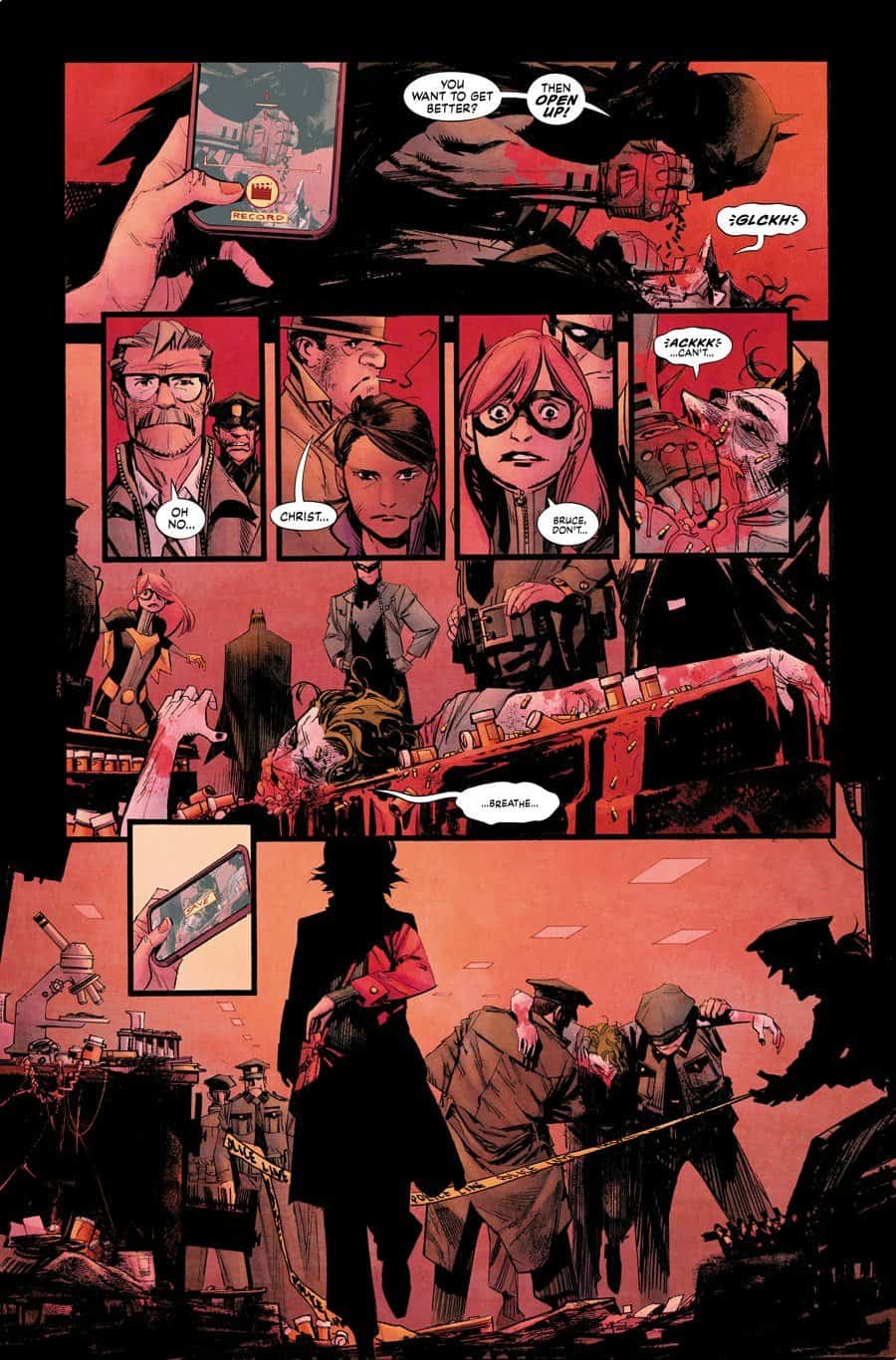
A morally serious Batman story must allow Gotham to accuse Batman. If Batman cannot be criticized by the field he claims to protect, he is not its hero, he is its owner.
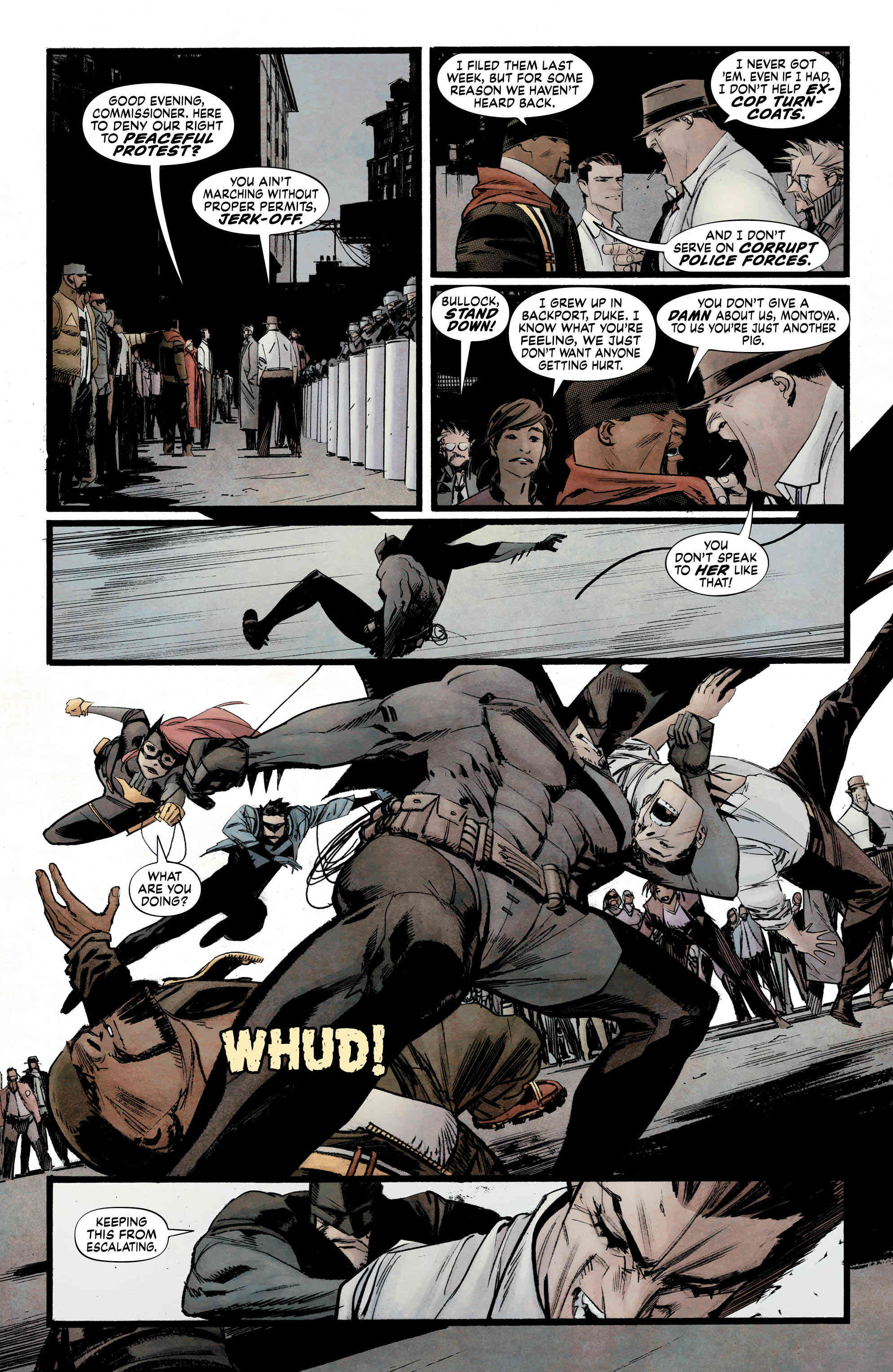
White Knight is very useful because it shifts the attention from Batman’s intentions to his public effects. Even if he saves people, what does he cost them? What does the city build around him? Who pays for all the damage? Which institutions become weaker because Batman exists? Which reforms are delayed because the spectacle of Batman provides emotional substitute?
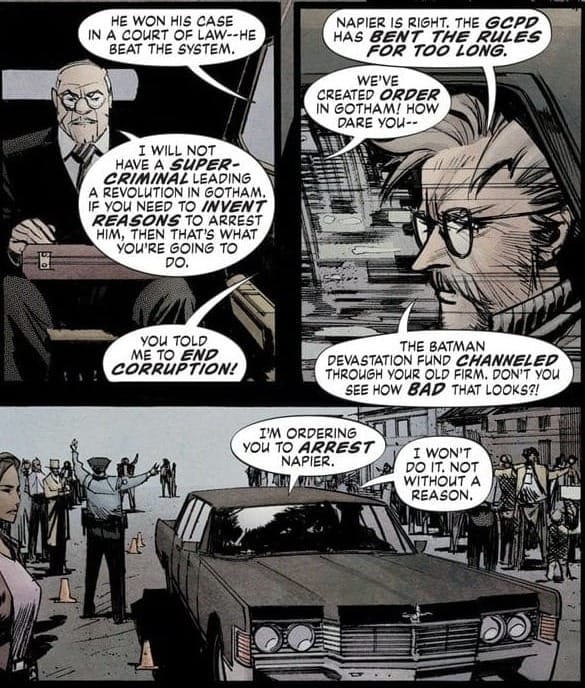
Ruling:
White Knight is important because it treats Batman as a locus requiring civic accountability. It asks whether Batman’s repair has become false repair, and whether Gotham can reclaim its future from the symbol built to save it. This Batman is obviously harmful, which he recognizes at the end of the story.
Red Son.
Red Son Batman is about resistance under totalizing order.
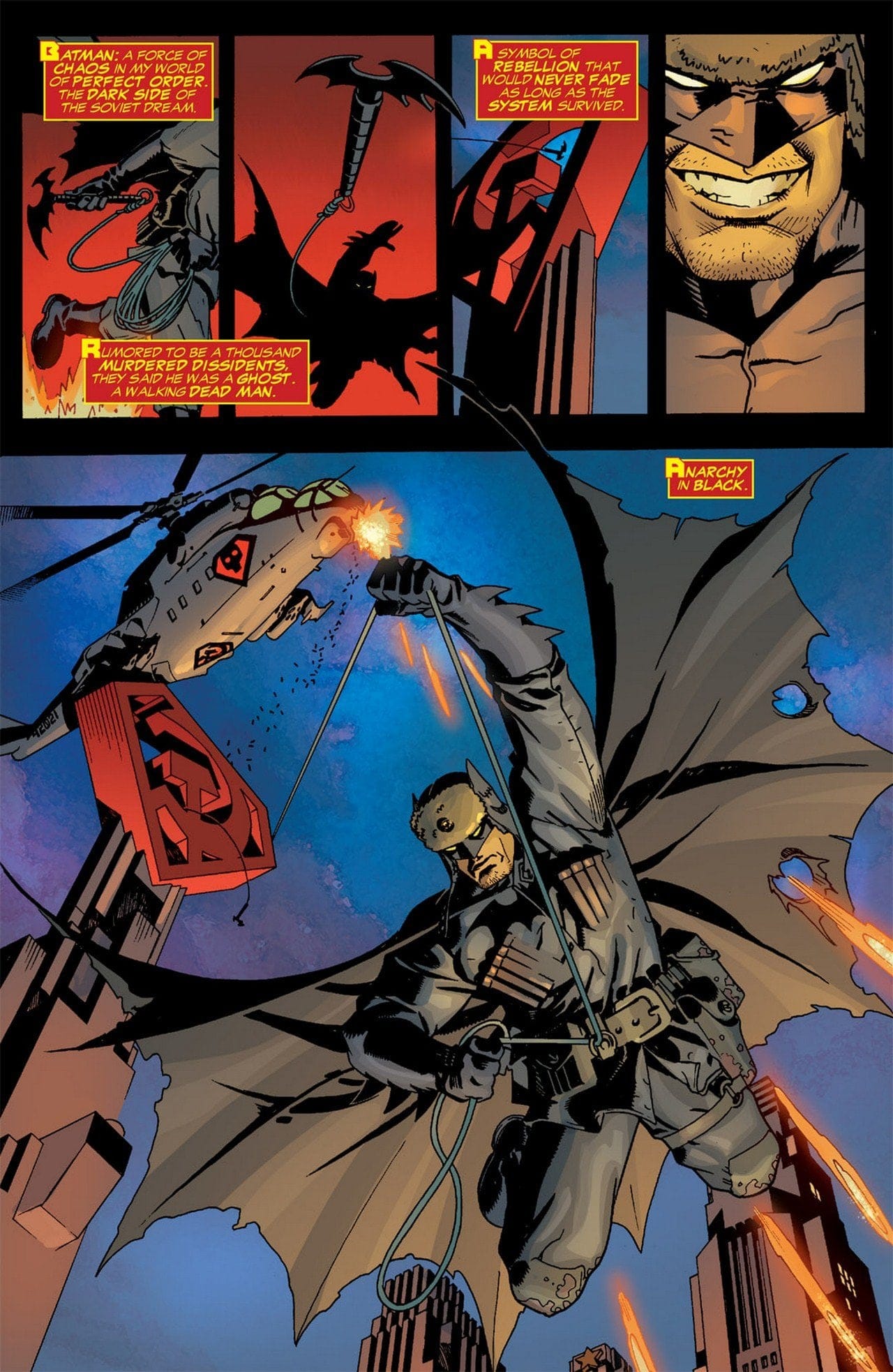
Placed in a Soviet Superman field, Batman becomes a different kind of symbol: not a vigilante supplementing failed law, a rebel against suffocating order. This is useful because it shows Batman does not require Gotham’s ordinary crime-field to function. The primitive can survive more basically as resistance to a field where order itself has become the harm. This is the inverse of Gotham’s chaos, but provides an equal state of generative resistance.
In Gotham, Batman fights predation emerging from failed order. In Red Son, Batman fights order that has closed freedom.
This tells us something important: Batman is not only anti-crime. Batman is more basically anti-helplessness. He appears where the official structure denies reachable futures and where ordinary people cannot answer the field through normal means.
Ruling:
Red Son Batman is epistemically valuable, and preserves the Batman primitive under inverted conditions. He is not primarily a crimefighter. He is the refusal of totalizing closure. This story makes all Batmen more morally coherent, though still dangerous, because resistance through terror can become its own narrowing force.
Gotham by Gaslight.
Gotham by Gaslight shows Batman stripped into base forensic gothic form.
Victorian Gotham sharpens the detective primitive. Without the full modern technological apparatus, Batman becomes pure investigation, atmosphere, class, urban fear, and the struggle to read violence inside a city of shadows. This version tests whether Batman survives without the contemporary billionaire-tech stack.
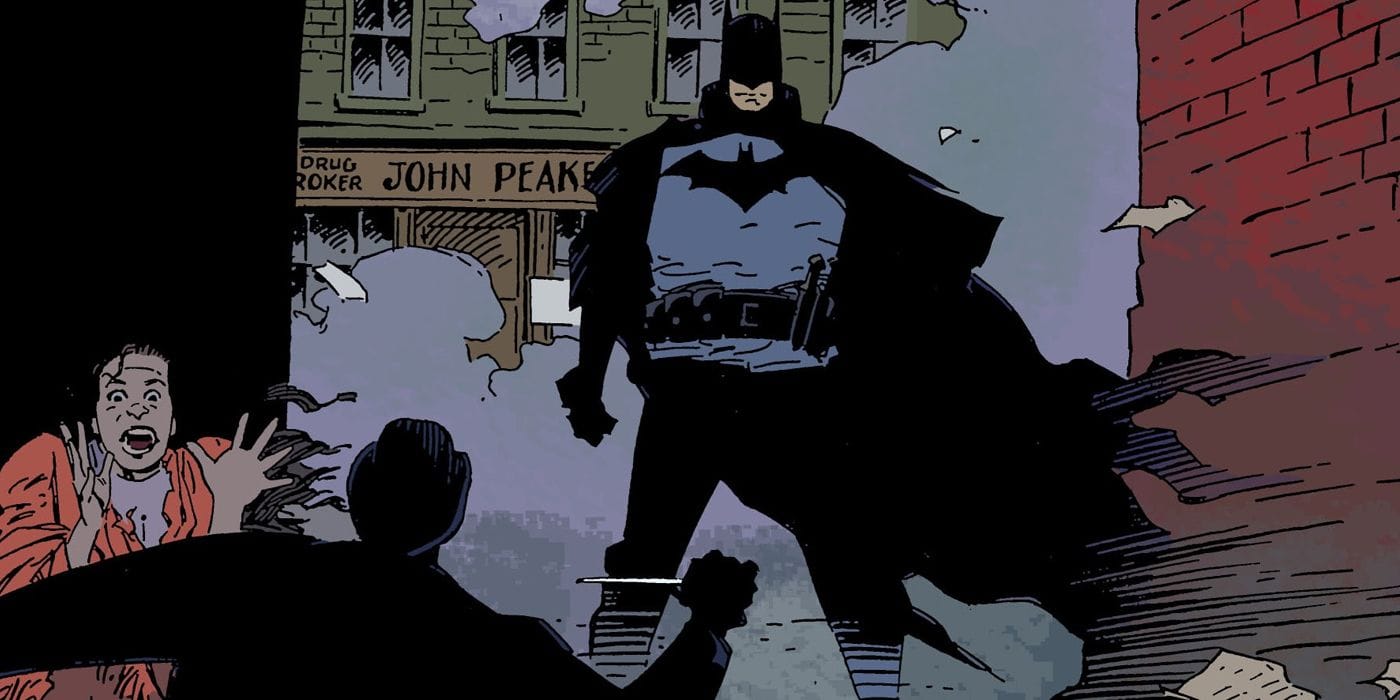
As it turns out, he does.
Victorian Batman still works because the core is not his technology. Technology amplifies Batman, but does not define him. The minimal Batman can be retained as a wounded investigator using symbol, discipline, and field reading to confront a city where official explanation is inadequate.
Ruling:
Gotham by Gaslight proves that Batman does not need modern systems to remain minimal Batman. He needs a damaged city, a symbolic method, a detective relation to harm, and a constraint against becoming another monster in the fog.
Thomas Wayne.
In the ordinary Batman origin, Thomas and Martha die, Bruce survives, and the child turns grief into Batman. In Flashpoint, Bruce dies, Thomas survives, and Martha becomes the Joker.
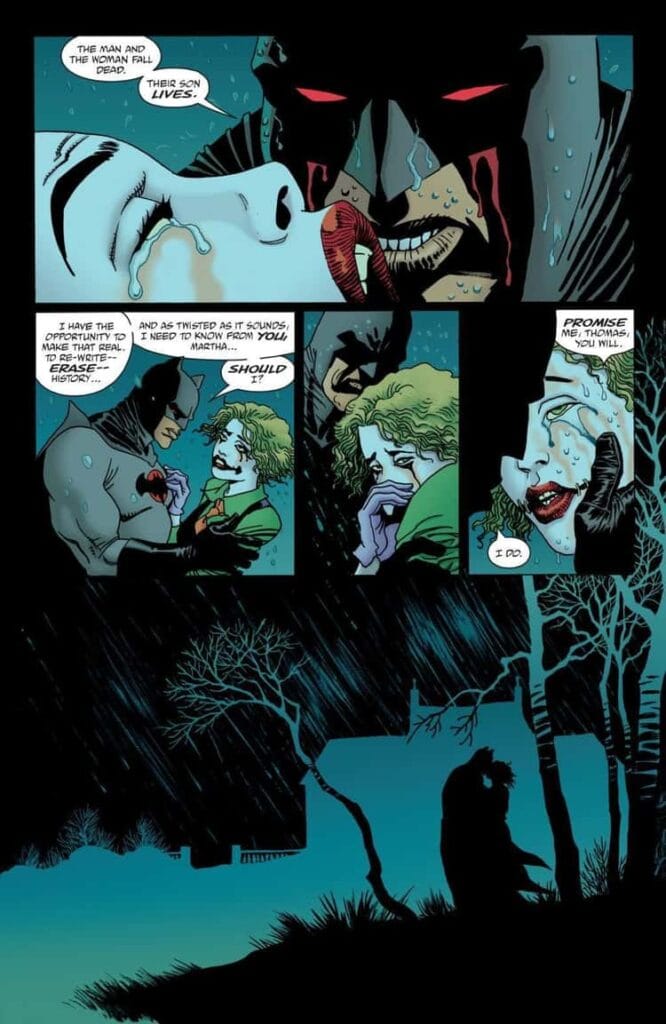
This is a different field producing a different Batman from a different impossibility.
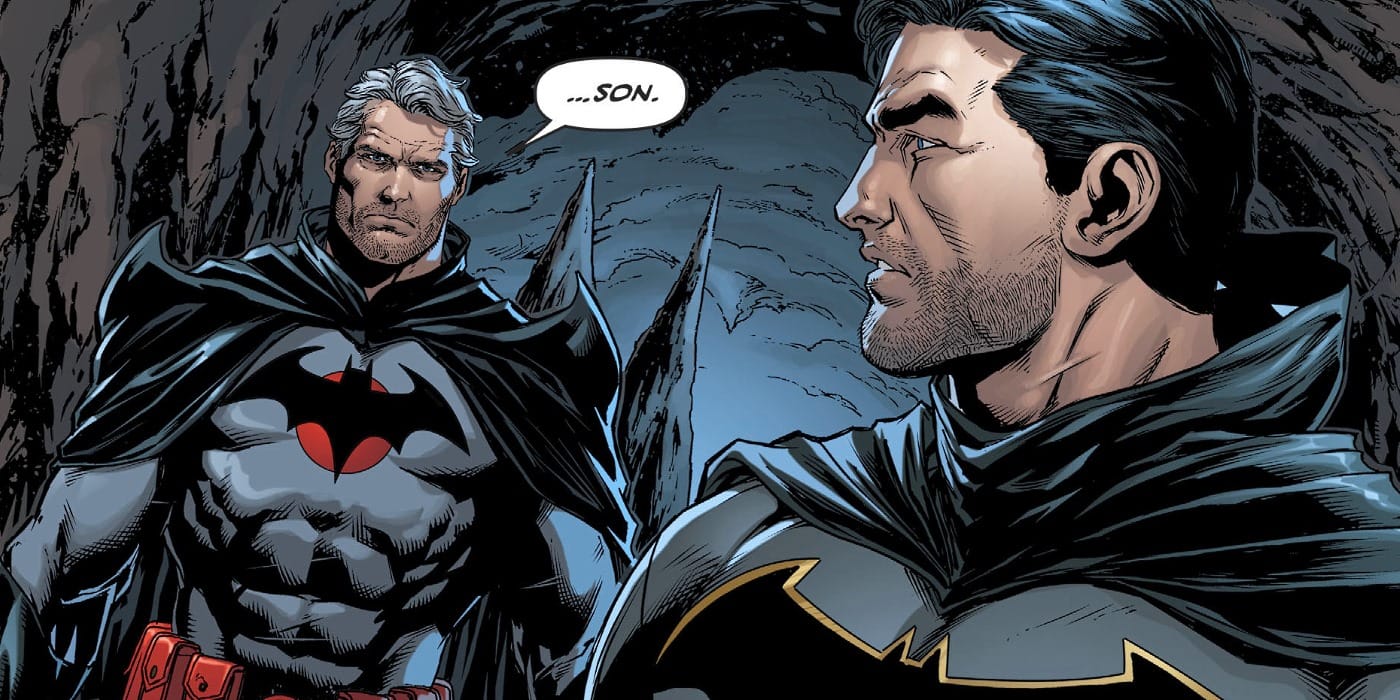
Bruce’s Batman is a child trying to make sure no other child stands helpless in the alley.
Thomas’s Batman is a father left in a world where the child is gone.
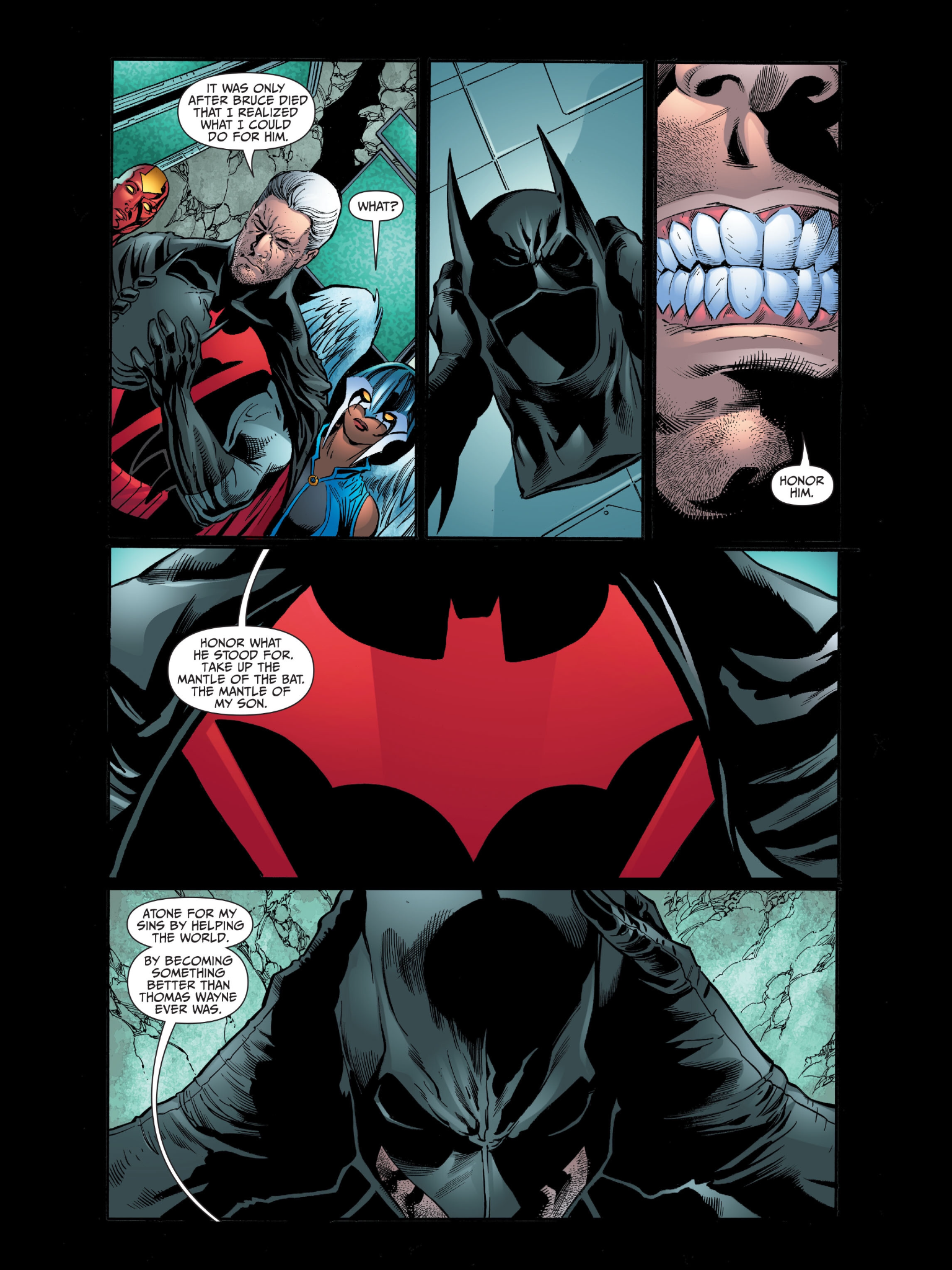
The moral primitive is now different. We no longer have minimal Batman.
Bruce’s no-kill rule is psychologically bound to the fact that he was a child victim of lethal violence and refuses to become that final judgment.
Thomas has no such center. His Batman is more openly lethal, more brutal, less interested in preserving the moral distance between intervention and execution.
Far from morally incomprehensible, Thomas is terrifyingly coherent.
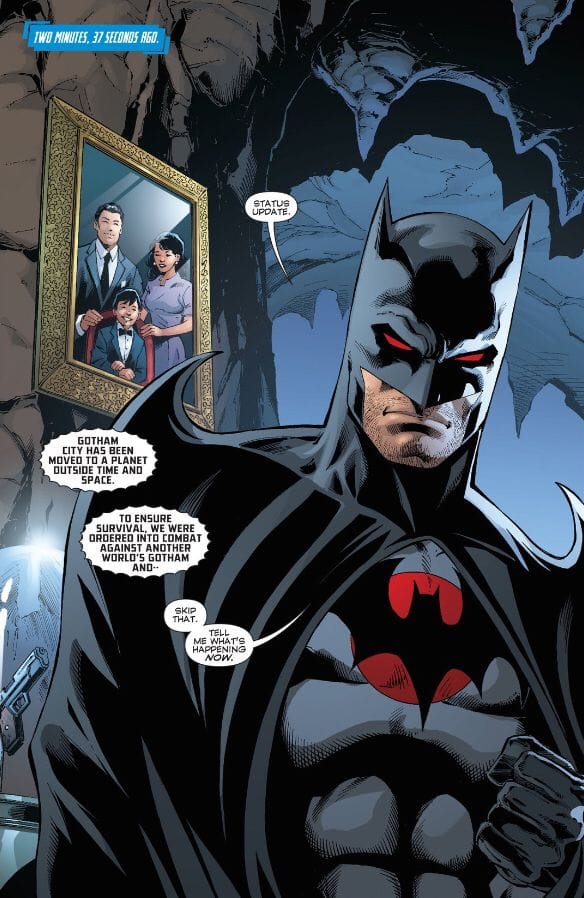
Thomas Wayne’s Batman is what happens when the wound does not become care for children in general, but remains fixed on the impossible restoration of one specific child.
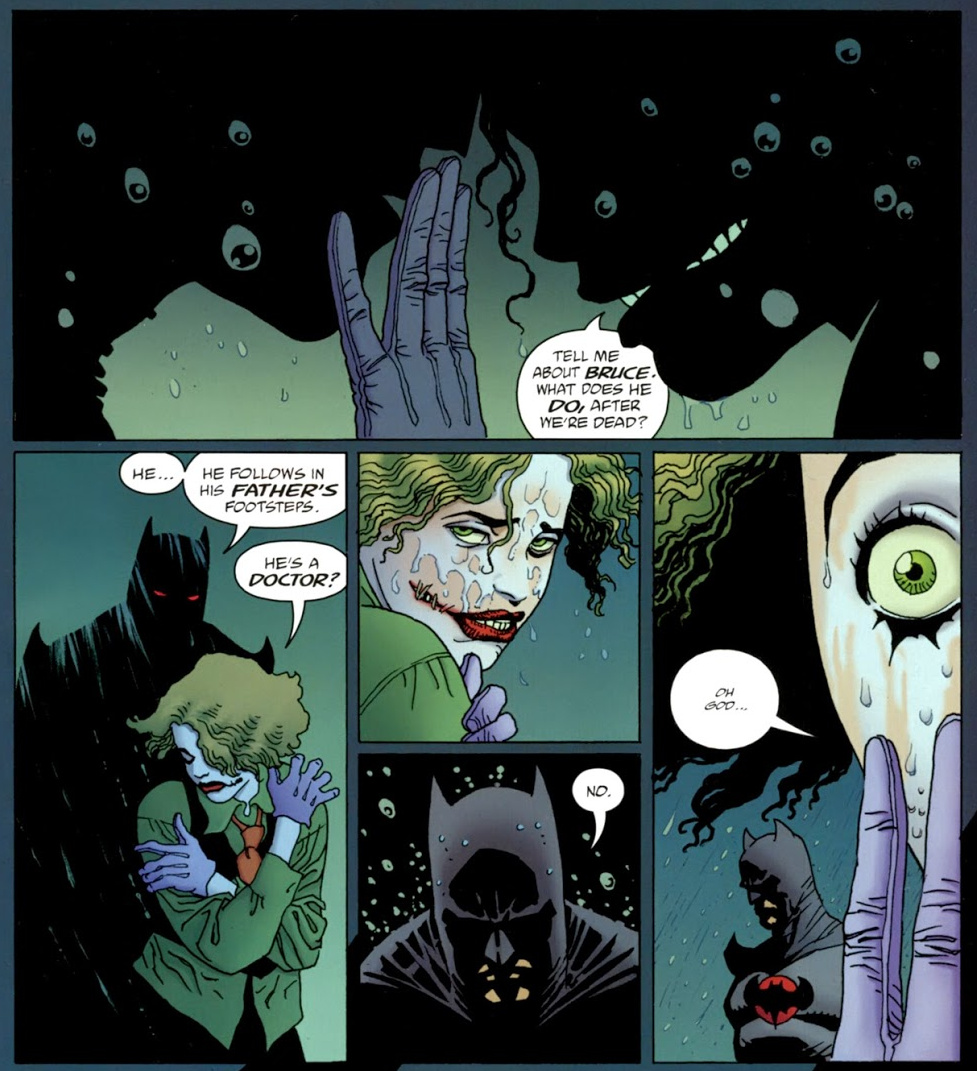
His world is also more catastrophic.
The Flashpoint field is not normal Gotham with one variable changed. This world is a different, collapsing global field; war-torn and broken, with the minimal Batman primitive lost and replaced under apocalyptic pressure.
In that field, Thomas may be Better more often than he would be elsewhere. He is still never Bruce.
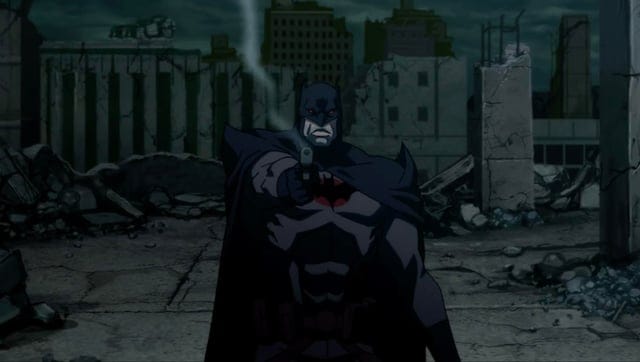
Thomas exposes the no-kill rule as a load-bearing structural difference, not a cosmetic one, Snyder. Burton.
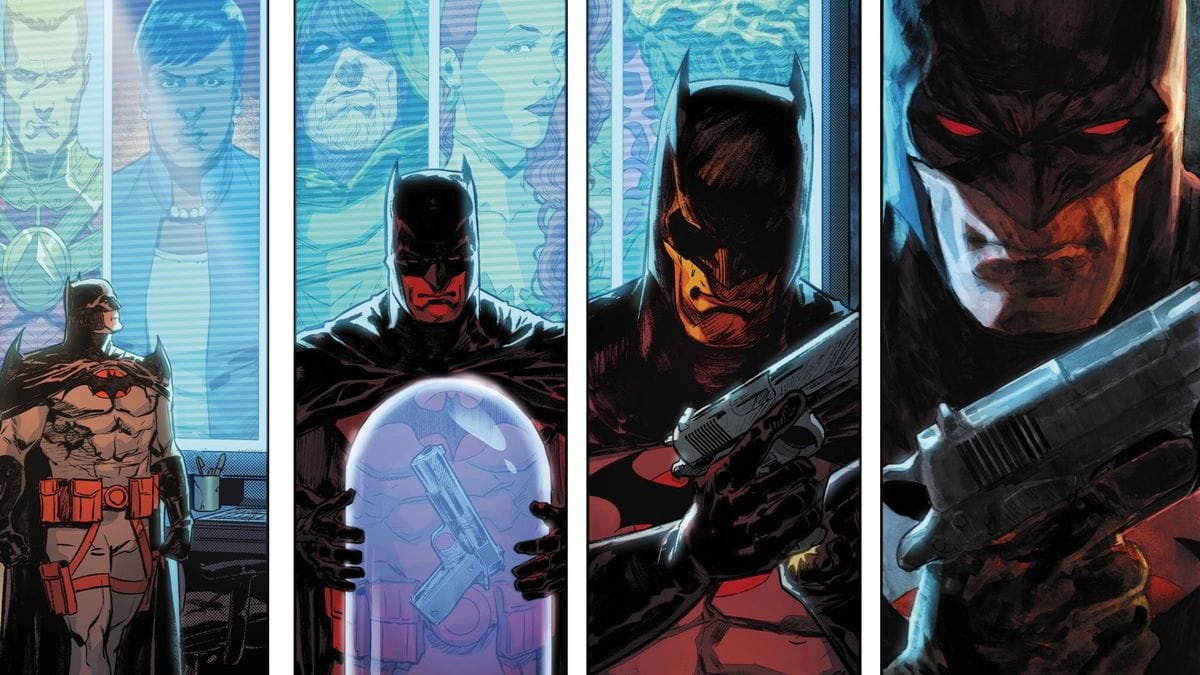
A Batman who kills is not just Batman after a harsher experience. This is a Batman whose field relation has been changed at the root.
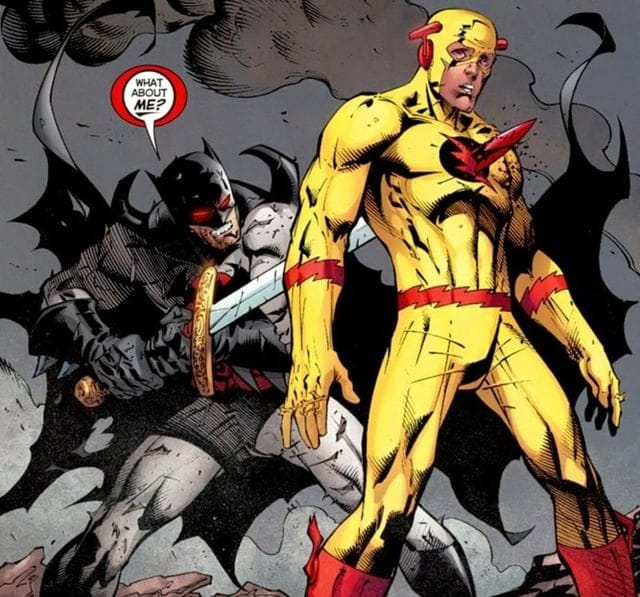
At the end of Flashpoint, the timeline closes. Here's where we have to interrupt the Batman article for a surprise nested Applied Case.
Applied Case: The Flashpoint Paradox.
From the perspective of Barry Allen, the Flash, Flashpoint is not an Elseworld story. It is a real extant field he enters, experiences, alters, and then closes completely. The restored timeline, however, preserves traces from the closed one that Flash carries with him.
The most important trace is Thomas Wayne’s letter to Bruce. This letter should never have been able to exist in the restored field. Except, here it is.
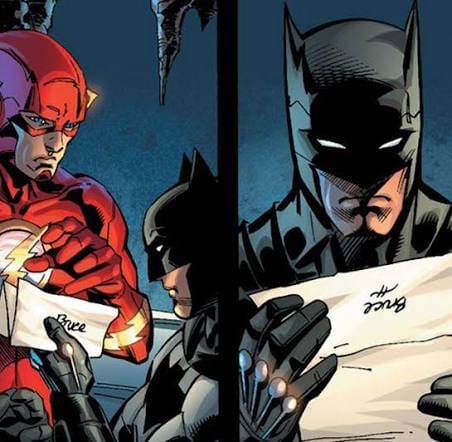
This is a new type of case for Modal Path Ethics, dealing with something that plunges directly at its minimal metaphysical requirements by apparently violating causality.
The letter reaches Bruce.
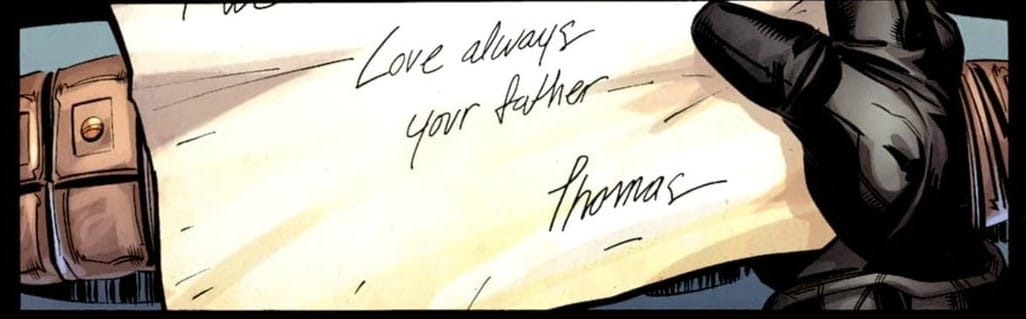
It changes him. A father from a dead timeline speaks to his son in the restored one.
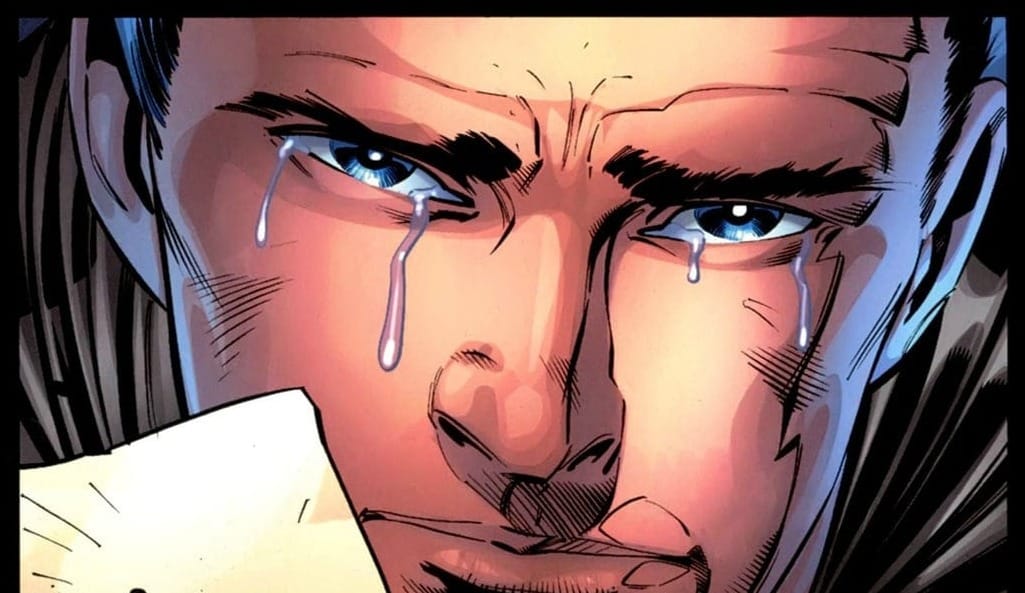
Thomas’s world is already gone, dead, overwritten, pruned, erased, repaired, or rendered unreachable depending on the exact metaphysics.
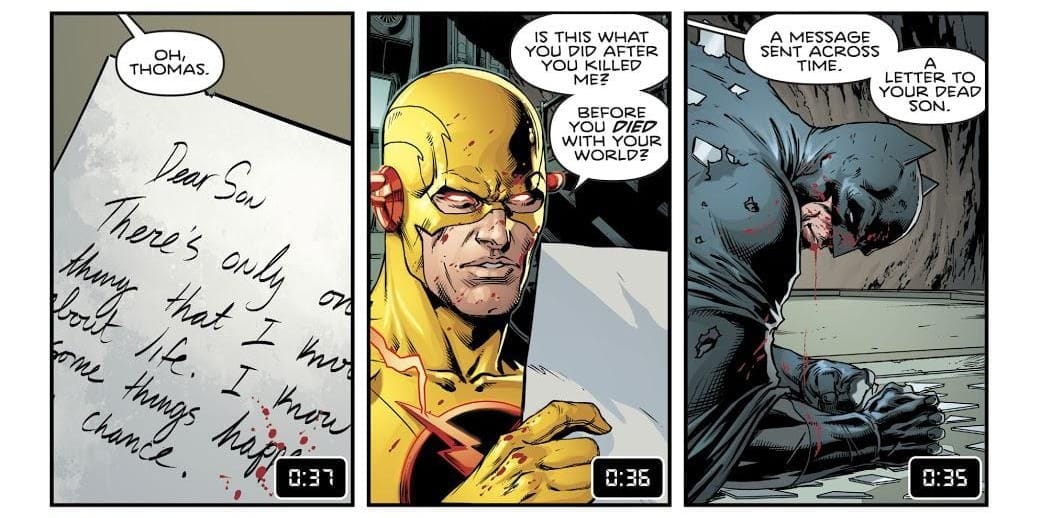
But the letter still crosses, because of the impossible powers of the Flash. A closed field from an erased timeline now leaves a causal filament inside active extance.
This shows us, through fiction, how a field can close and still leave a trace. That trace can alter the continuing field, even if the original locus is now completely lost. The existence and continued history of the trace also does not reopen the locus it came from.
So, when Flash delivers the letter, Thomas Wayne’s Batman becomes morally active not only as an alternate version from a lost timeline, but now as a surviving influence in extance, while remaining completely closed and unreachable.
This touches the same family of questions as the Lost Gradient and the Non-Planet: what matters when a field that could have continued no longer continues? What survives when a possible or actual structure loses all reachability? Can a closed world still morally matter if it leaves behind an artifact that changes the remaining field?
Here, we see the letter is not enough to preserve the Flashpoint timeline, but is enough to make that field morally active.
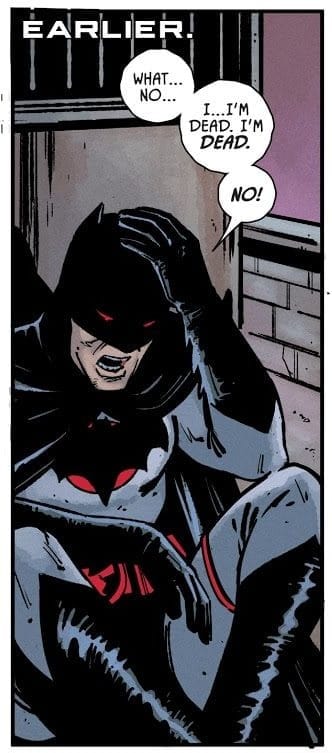
This is why the scene works so well emotionally. Bruce receives direct contact from his closed paternal field. Thomas still cannot be restored.
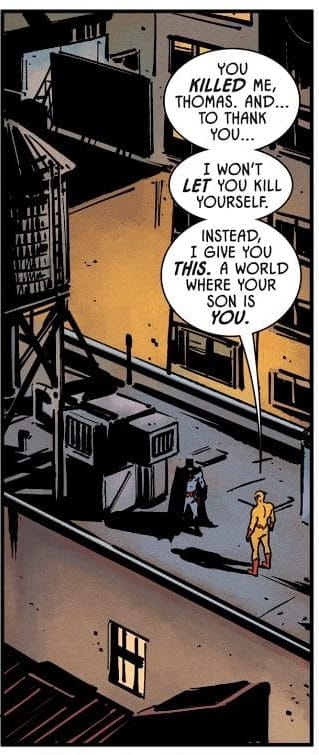
His world cannot be lived in because this letter arrives, nor can he continue in Bruce's, but the trace now still reopens a relationship that the baseline alley had permanently closed. For one moment, Bruce receives something impossible: a trace of his father’s love arriving from a dead world.
This is repair from a closed locus.
The moral ambiguity here remains enormous, however. Barry’s alteration of the timeline is unbelievably reckless and clearly harmful on a scale that makes most superhero mistakes outside of blatant aura-farms look like spilling water in the ocean, and should have had him at least imprisoned immediately.
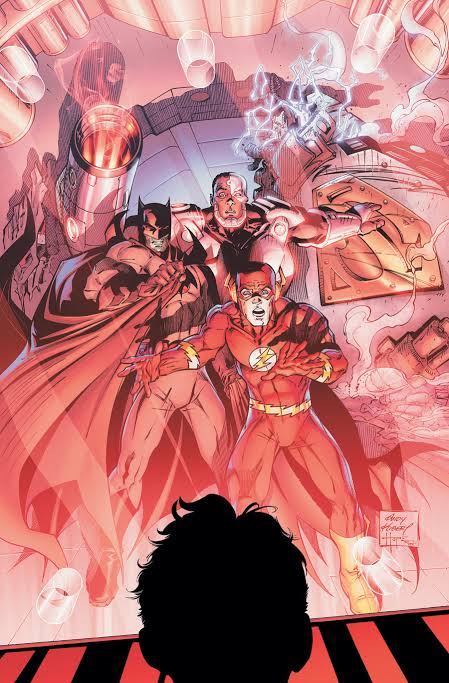
We are going to run through this incident from the Flash's epistemic perspective, because that is what should be informing his morality here. Barry Allen created the Flashpoint field when he went back in time and saved his mother. By violating causality in this way, global future continuance from the moment he departed collapsed totally and immediately across the entire field. This was near-maximal harm.
Nothing that had existed when Barry first went back in time could ever continue again along any of the reachable paths it might have, now that he has done so. All paths except Barry's became unreachable all at once, because the Flash was now in the past, altering things so they can no longer continue into the same loci present when he departed.
These "past-future" loci have all been closed, and many now made forever unreachable, in the same way Thomas Wayne later was. This is maximal harm to the field as it stood, minus one Barry Allen. The ripple effect of his change in saving his mother also proves that any change at all to a restored extance later on always changes its future-space, too.
If Flashpoint was then extant from Barry’s lived perspective, as it appeared to be the continuation of the loci present when Barry left the past to return to the future and skipped over history, then undoing it is also not morally nothing at all.
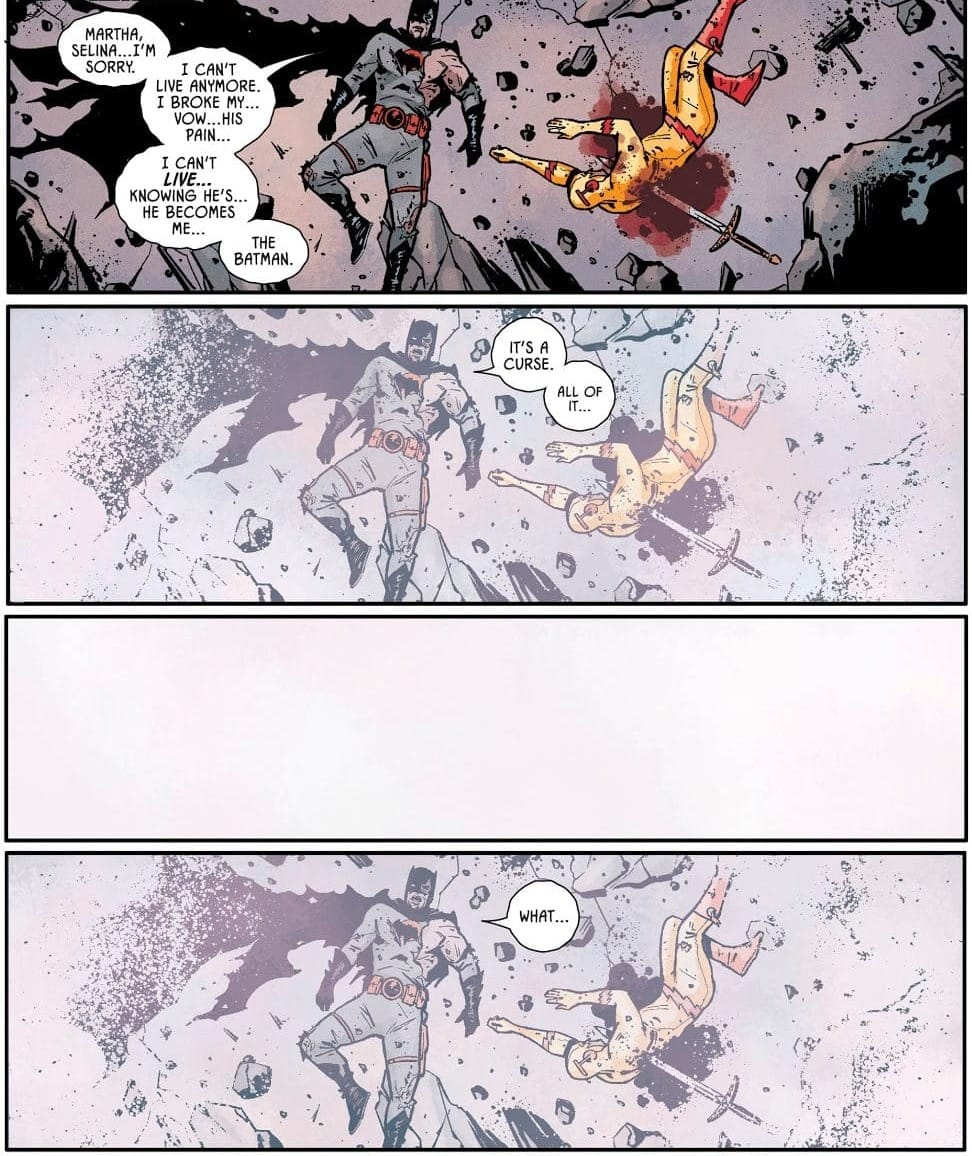
This is still the same, live moral field. Barry never actually stopped being part of the field; the entirety of extance was never actually fully closed at any point because one locus in the Flash always continued. This field transition should have been impossible, but wasn't for the Flash.
So he has engaged in another act of timeline-scale pruning in the same extance, this time under catastrophic field conditions he earlier created through his own carelessness in another act of timeline-scale pruning.
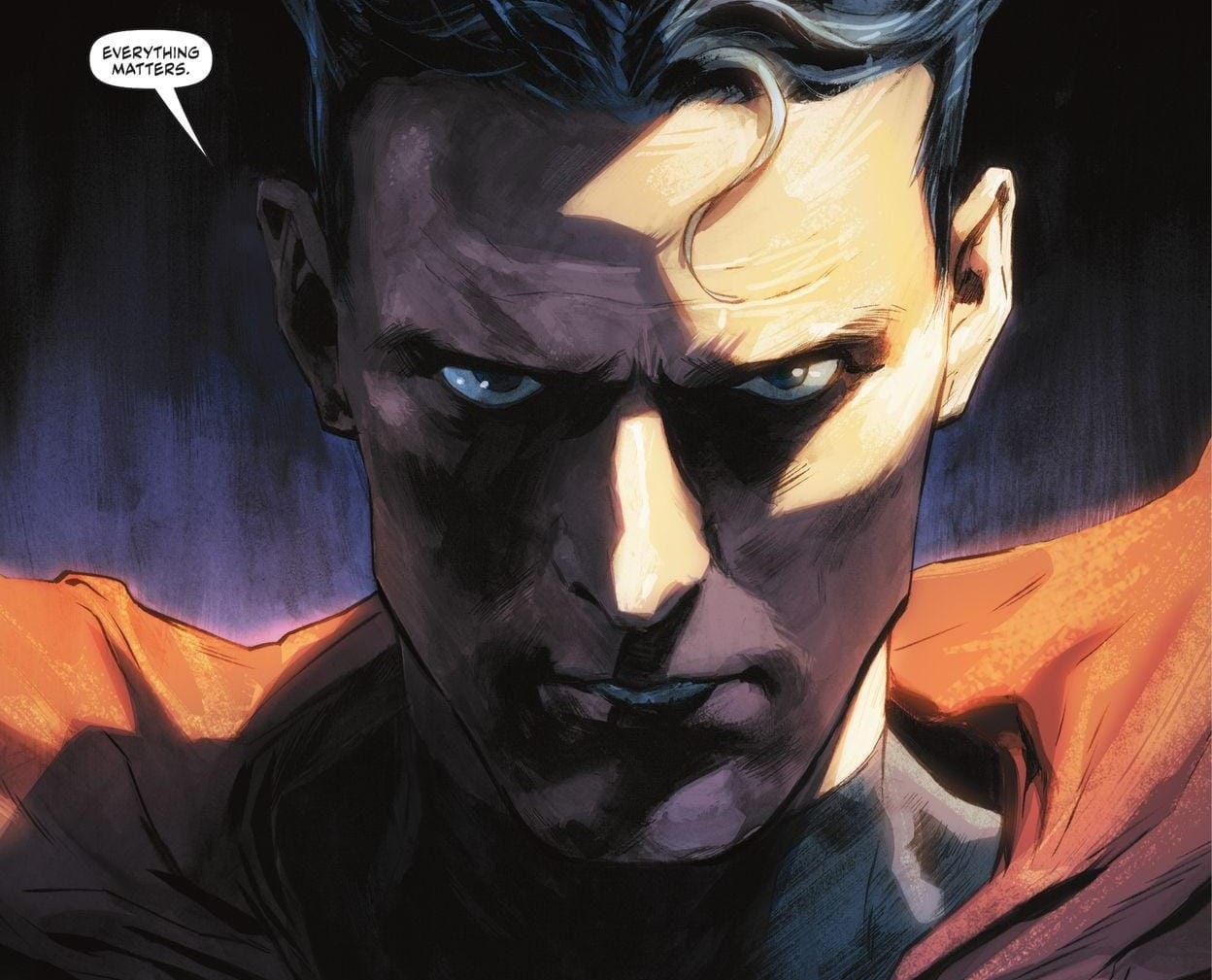
The restored field may be Better than Flashpoint’s apocalyptic collapse, but it does not erase the fact that a second entire world of loci was undeniably opened and closed in this transition, along with the loss of the original field.
So, the old field was closed and replaced with Flashpoint. He then closed that second new extance also full of loci, to replace it with a restoration of the original timeline. However, replacement is not the same as repair.
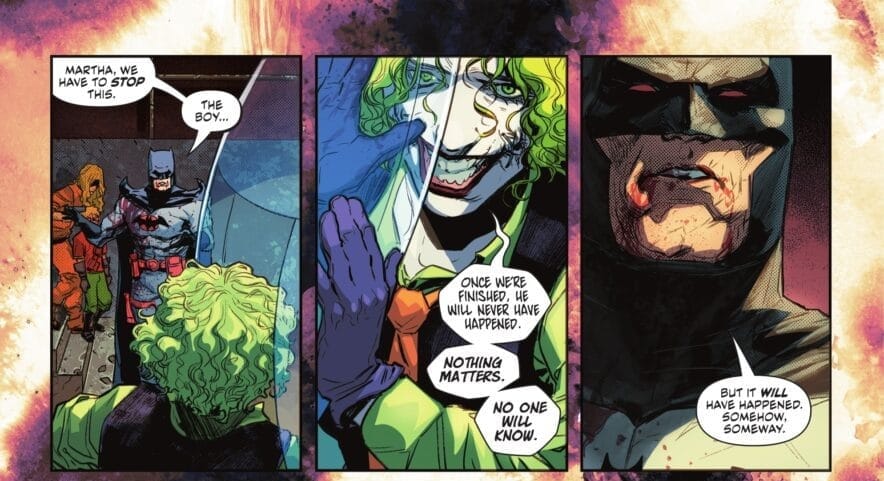
This is not the same field of loci anymore, even if this is the same extance. The field Barry Allen was born in appears to have been closed forever by Barry Allen in the transition to Flashpoint. In much the same way he created the Flashpoint field when he first transitioned, when he later restores the original timeline, he generates a new field state almost identical to the one he had earlier closed, but which is not actually directly continuous anymore with its own cosmic history.
These loci do not continue directly on from those that were, they continue from the collapse of Flashpoint and attempted restoration of the previously closed loci. Their future structure begins here.
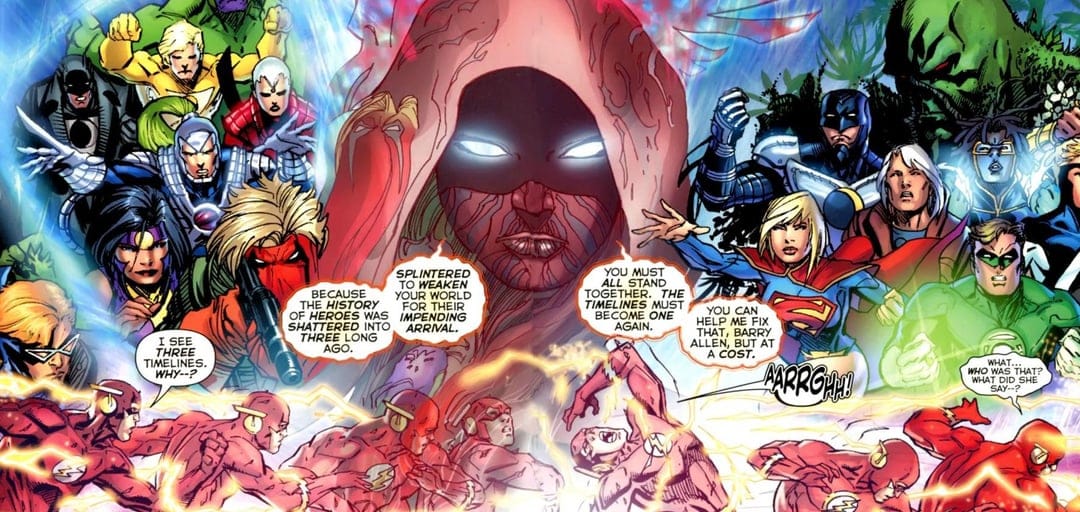
None of these people are then clearly the same people at all, even if they are identical. Those people were all closed, and every thing in this extance is at best a perfect replacement locus, unaware they were just instantiated and not actually themselves continuous with what appears to be their own past. One moment before the timeline was "repaired", these loci did not exist anymore as continuing structures. From Barry Allen's perspective, their possibility space was all still replaced by Flashpoint. However, a highly unreachable path to their recreation still existed in the Flash.
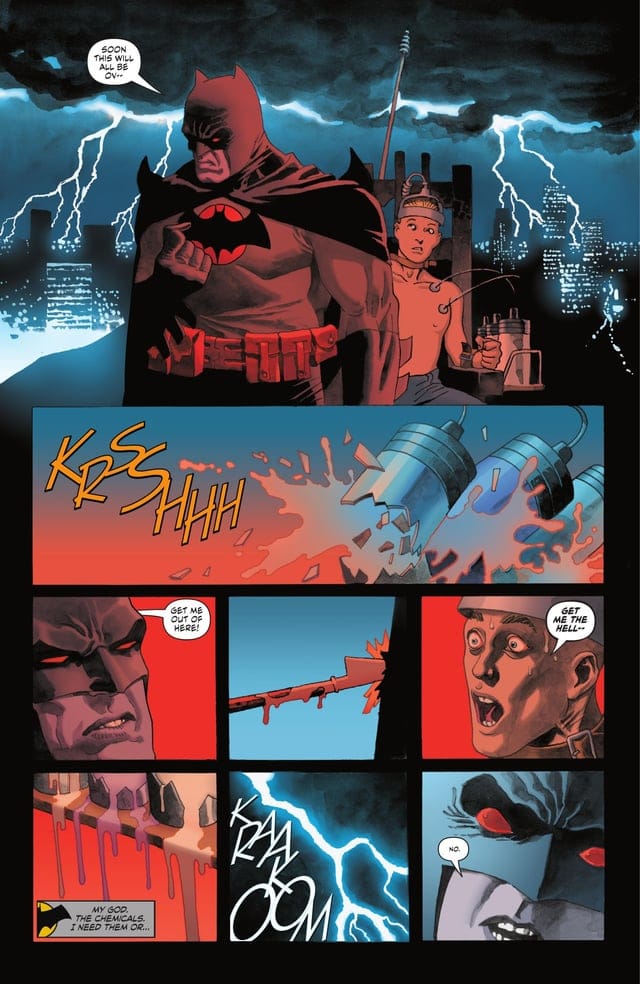
This looks much more like a new field that resembles what was closed. Extance is now fundamentally distorted.
Barry later stopping himself from saving his mother does not erase the fact that he had ever done so, as evidenced by him retaining the letter and memories, so that near-maximal closure was still part of the path leading to his later extant field. This specific global field only ever continues directly from the collapsing of the Flashpoint field, which first requires the original extance to have been closed. This field could never exist, with Flash holding the letter, if the original field had not been completely destroyed earlier to create it along the time travel path.
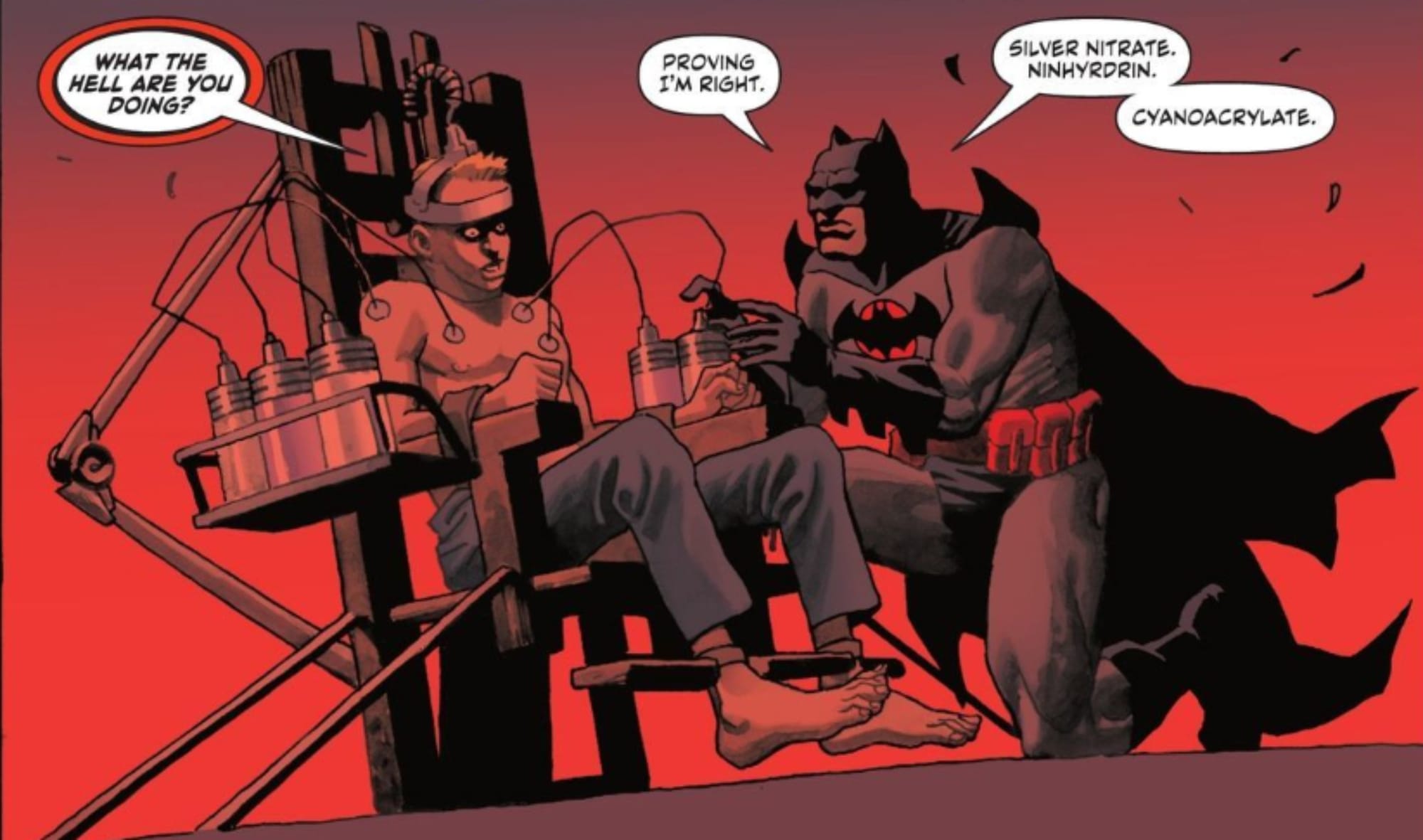
There's really no dodging this.
The fictional metaphysics here are not clear at all, but whether Flashpoint is just an altered description of one continuous extant field undergoing drastic changes, or a replacement field that Barry enters and later closes as it is more often treated in fiction, the Flash has still clearly committed timeline-scale closure twice.
This is unavoidable, because since he retains his memories and traces of the closed field, this timeline now immediately closes futures from the original field that was claimed to be restored as soon as it starts moving, in the form of a changed Batman and Flash who then radiate that change outward into everything they contact, spreading more and more deviation from the future-space that had been available to the original extance pre-Flashpoint, and is now being practically lost for good.
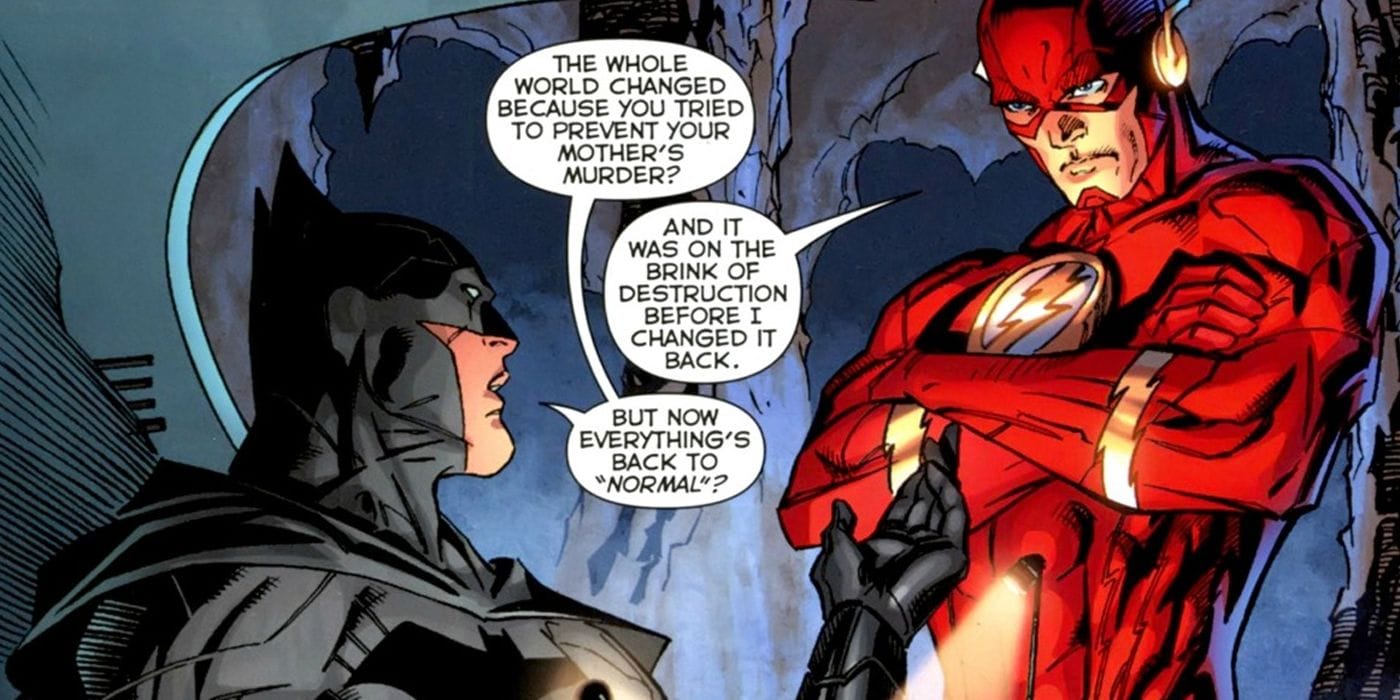
New paths were also enabled, but many of those shown to be actually reached in extance were just extremely harmful downstream consequences of this initial harm.
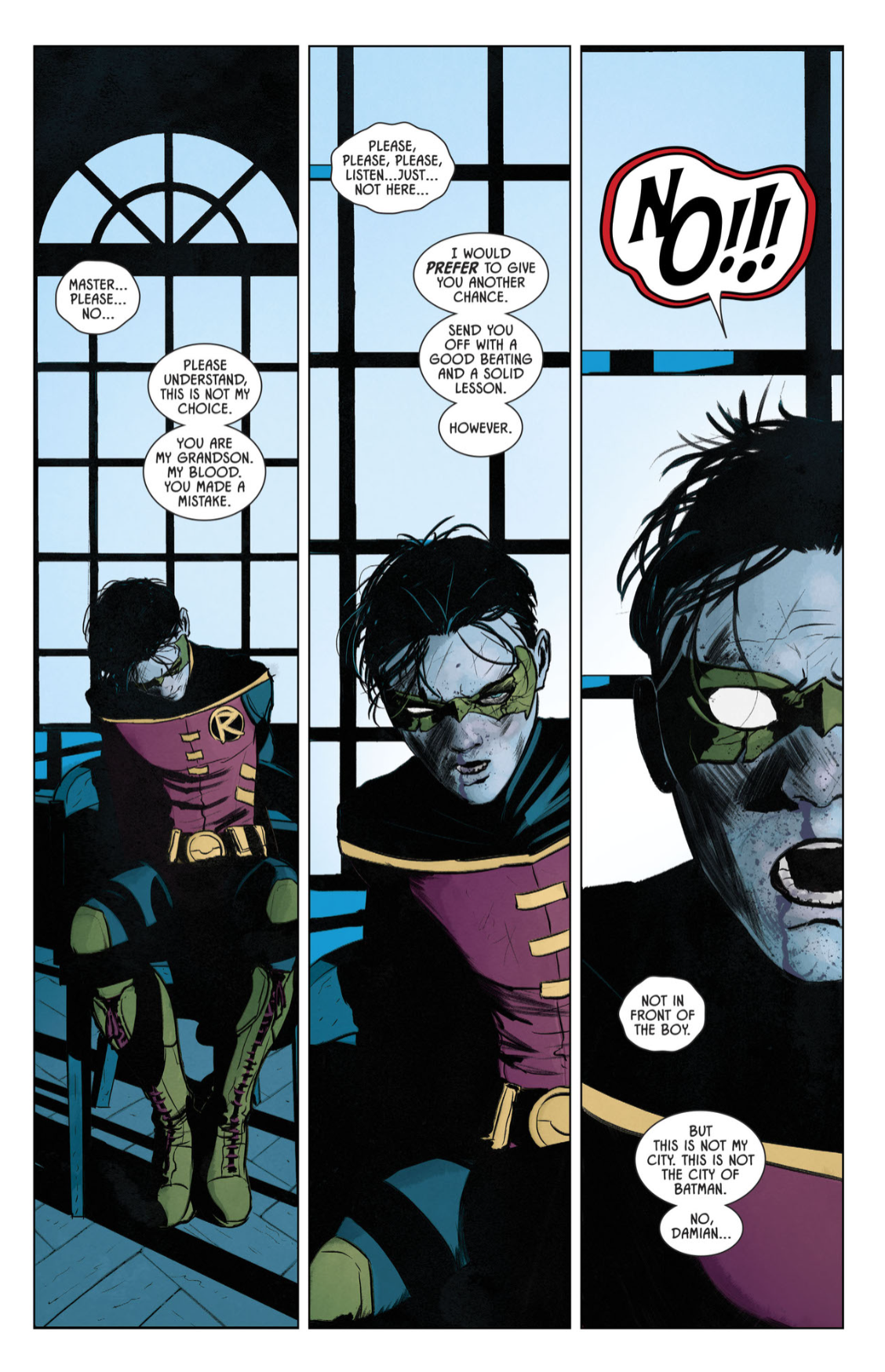
The letter also never cures the wound, even if it still performs some repair. The locus Barry Allen, even having learned to let his mother go, is also now clearly so totally harmful he has already accidentally closed his own extance, then closed an entire second one, then created a clone of the first closed extance for himself to live inside of as a publicly renowned hero, while ultimately seeming mostly unbothered by this entire process.
He does not stop going back in time. He does not seem to have learned that doing so is wrong at all.
How does Barry Allen know his memories are never altered in this transition? The entire field around him appears to collapse. He appears to have no reference baseline during this process of opening a new extance, just a subjectively held threshold between himself and the collapsing field around him.
Any locus capable of accidentally closing whole extances must be contained by the least-closing effective means available. The Justice League should never have accepted this. If no nonlethal means can prevent recurrence, lethal force becomes tragically reachable as Better: not because Barry is evil, because he has become functionally equivalent to an agentic false vacuum.
His intentions do not change the harm.
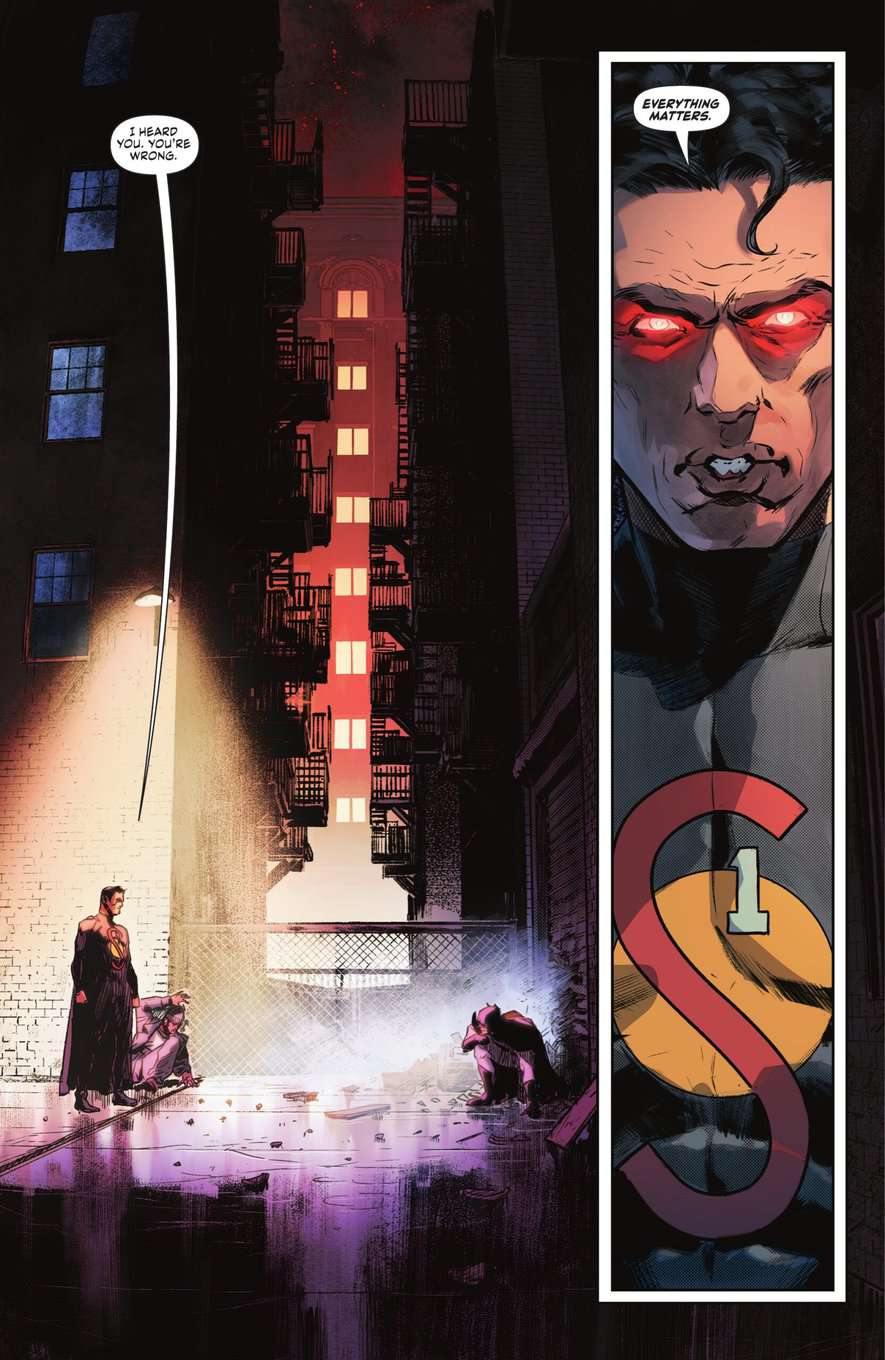
Barry's actions in restoring the timeline were also still Better, almost certainly, but the moral remainder here is unbelievable and did come due, and he barely seemed concerned that he had done this outside of learning a personal lesson he did not actually fully digest, and delivering one piece of postage.
He seemed to take Thomas Wayne giving him the nod as a total permission and forgiveness for apparently closing two entire extant fields around him, one of which was his field of origin, and the other of which he personally opened. He is also now the known causal originator of his new field, which is a major epistemic harm.
It is true that Reverse Flash changed the timeline first, but nothing about that changes the structure of what Barry did here. There is likely no amount of superheroism within extance he or this Batman could later engage in to balance out the transition of closing two entire extances in this one story alone in an attempt to make this path appear Better. Future goods may reduce future harm, but they do not erase the moral remainder. We are only lucky he eventually created a field with something powerful enough to destroy him inside it, before he somehow found a way to transition out of fiction into our extance, and close that one, too.
But more importantly, this means Batman never actually got that letter, not the one Flash thought he was bringing it to. The locus who actually lived through the death of his parents was closed when Barry ended his extance. The locus who actually got the letter is a replacement locus, who did not actually experience his history with Thomas Wayne; he was just created by the Flash a moment ago with the brain configuration and universe history suggesting to him he had endured this trauma.
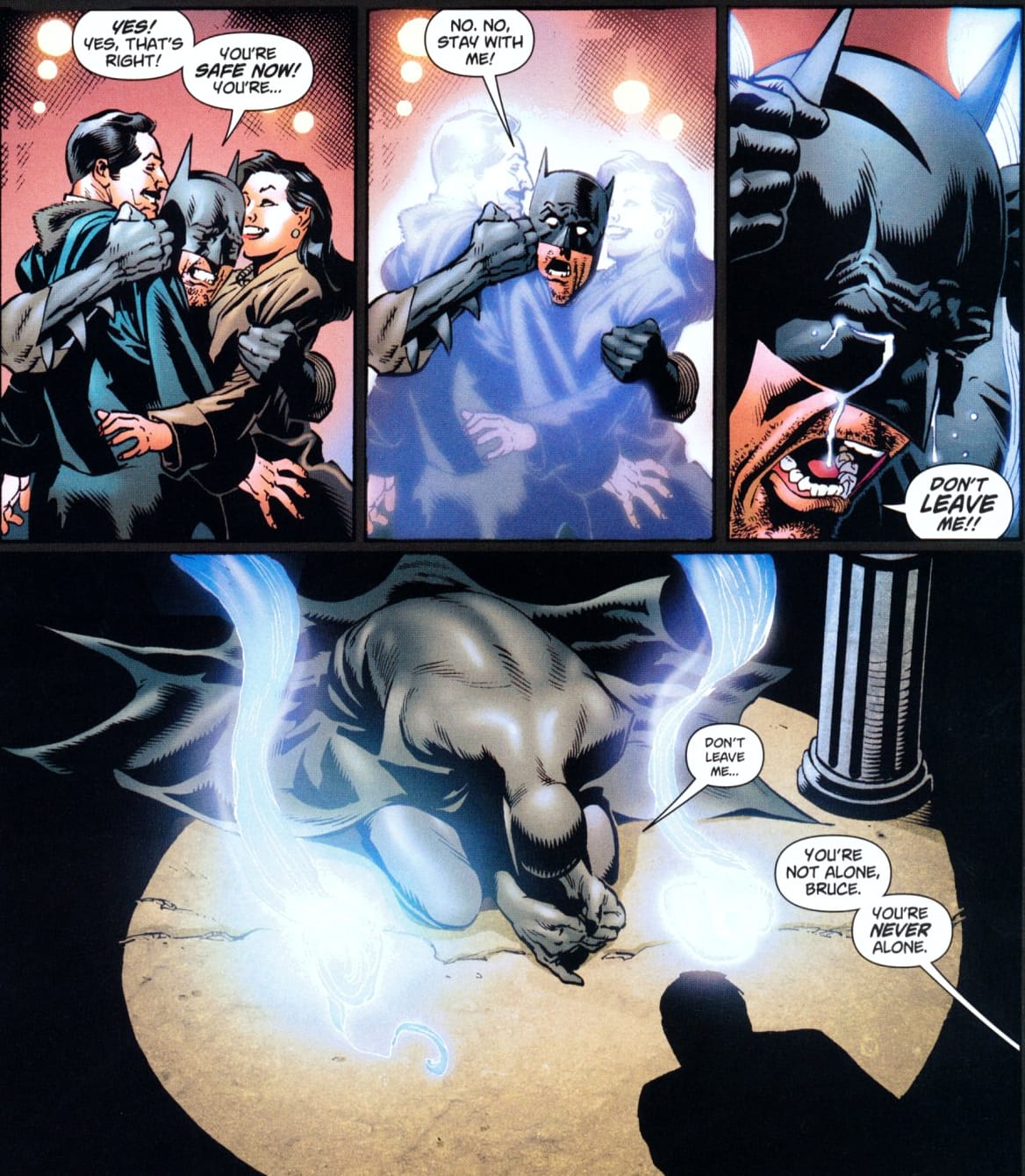
From the Flash's perspective, this doesn't even violate causality at all. The letter got to this extance through a real path from his extance of origin that should have been entirely unreachable but wasn't for him, and involved near-maximal harm, twice. His chain of continuance, and his alone, remains unbroken.
So that kind of changes the emotional character of the letter scene, but this is still technically repair in isolation. The new Batman still has the same wound, and the letter still addresses it in the same way. The existence of the old Batman now lost does not invalidate the moral status of the new one, or vice versa, nor does his causal severance from the actual moment that originated his wound make it false. However, now that wound in this Batman is causally rooted in the Flash, not Joe Chill.
Ruling:
Thomas Wayne’s Batman is a dark, failed mirror showing what Batman becomes when the wrong death produces the wrong constraint. He is understandable, sometimes necessary, and structurally not at all Bruce. The Flashpoint Incident then turns him into something strange: a closed-field Batman whose trace alters the restored field. Thomas Wayne is erased as continuing world but preserved as moral artifact. The letter does not save Flashpoint, but it means the lost field still acts.
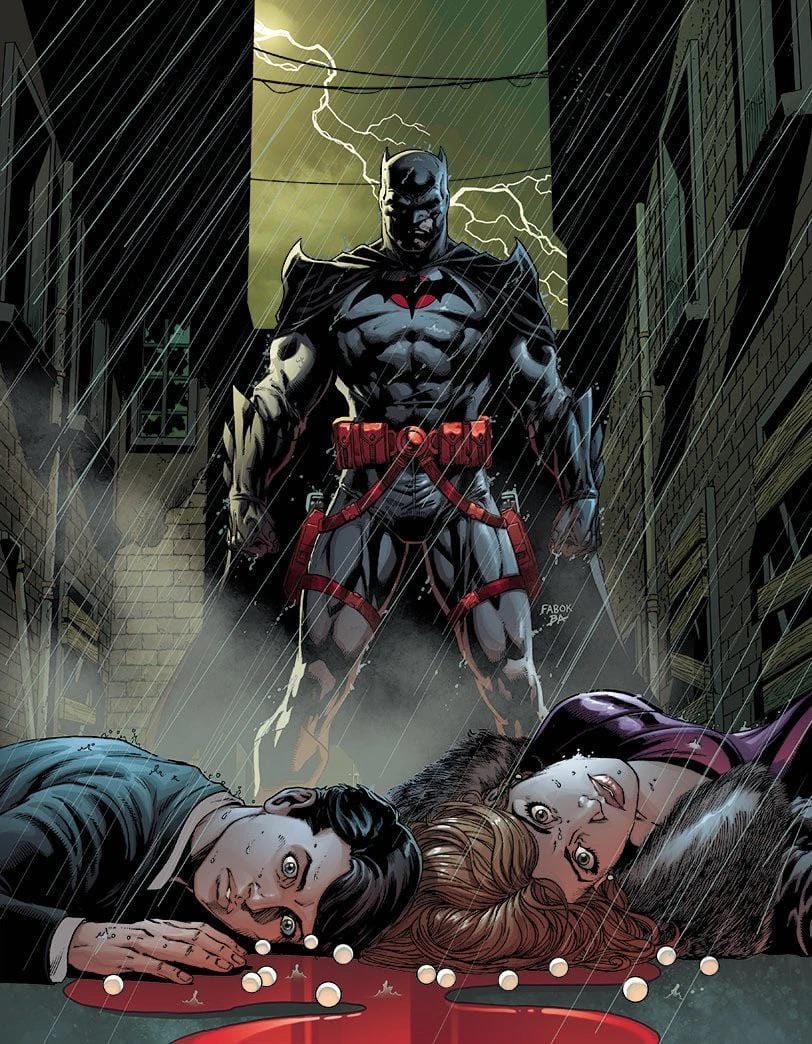
Barry Allen must be stopped.
The Rogues.
I bet you thought this article was almost over. However, Barry Allen is not the only danger in Bruce Wayne's life.
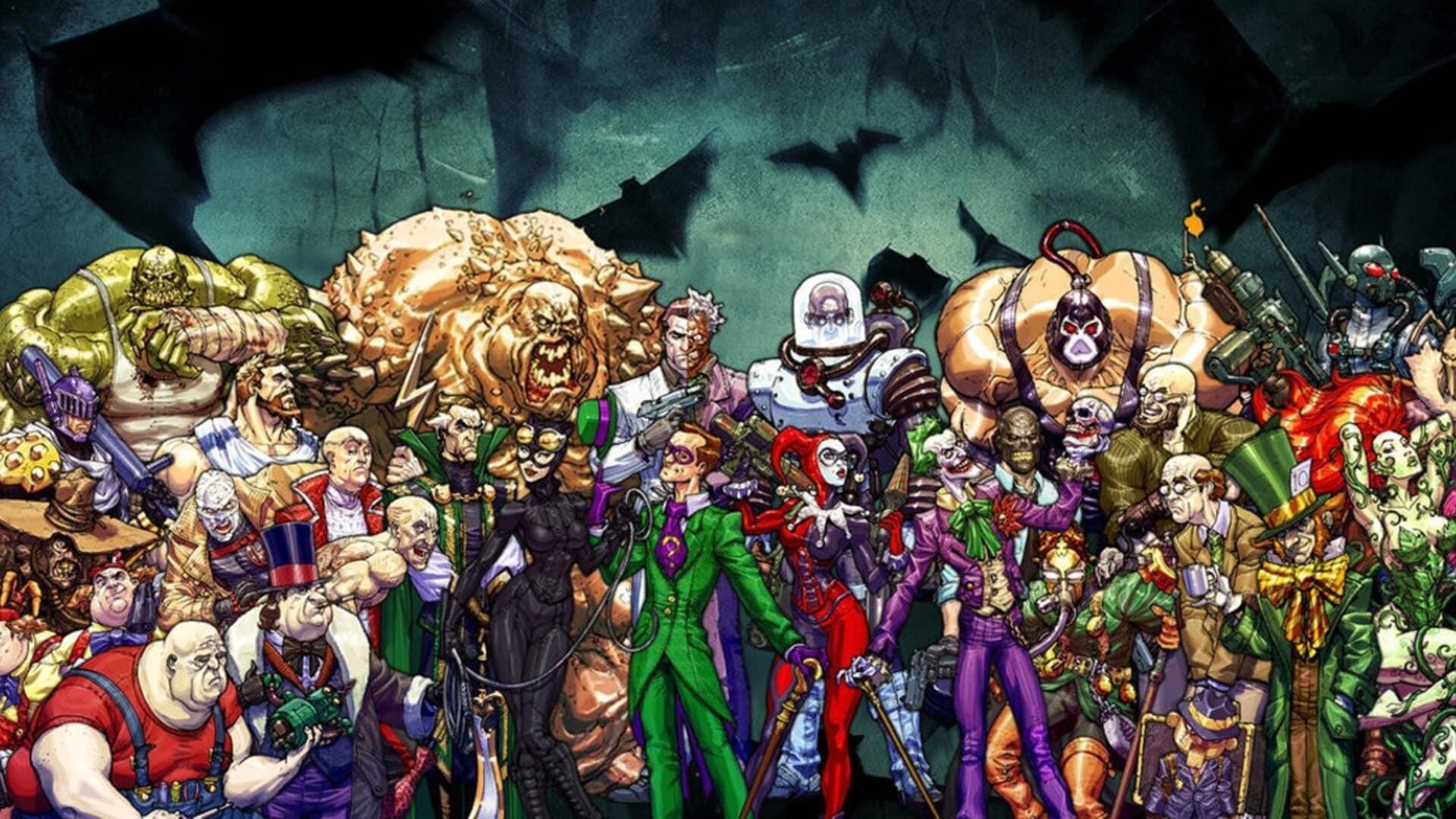
At their best, Batman's villians are his primary field mirrors. A weak Batman story treats the villain as tonight’s themed obstacle. A strong Batman story treats the villain as a distorted return of something Gotham, Bruce, or Batman himself has failed to understand.
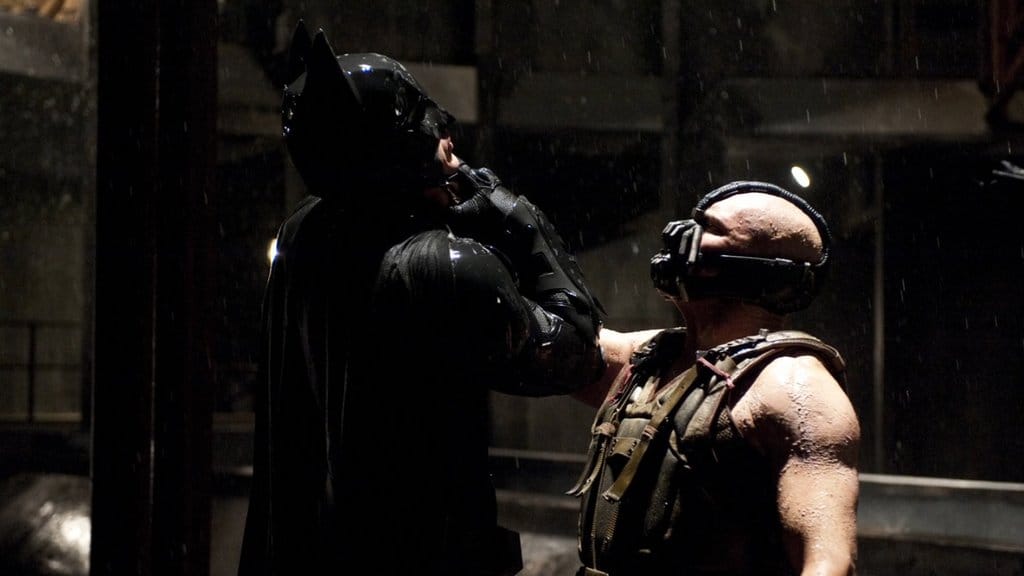
The villain is not always the deepest cause. Sometimes the villain is a symptom, or just a locally causal agent, or a victim who became an agent of harm.
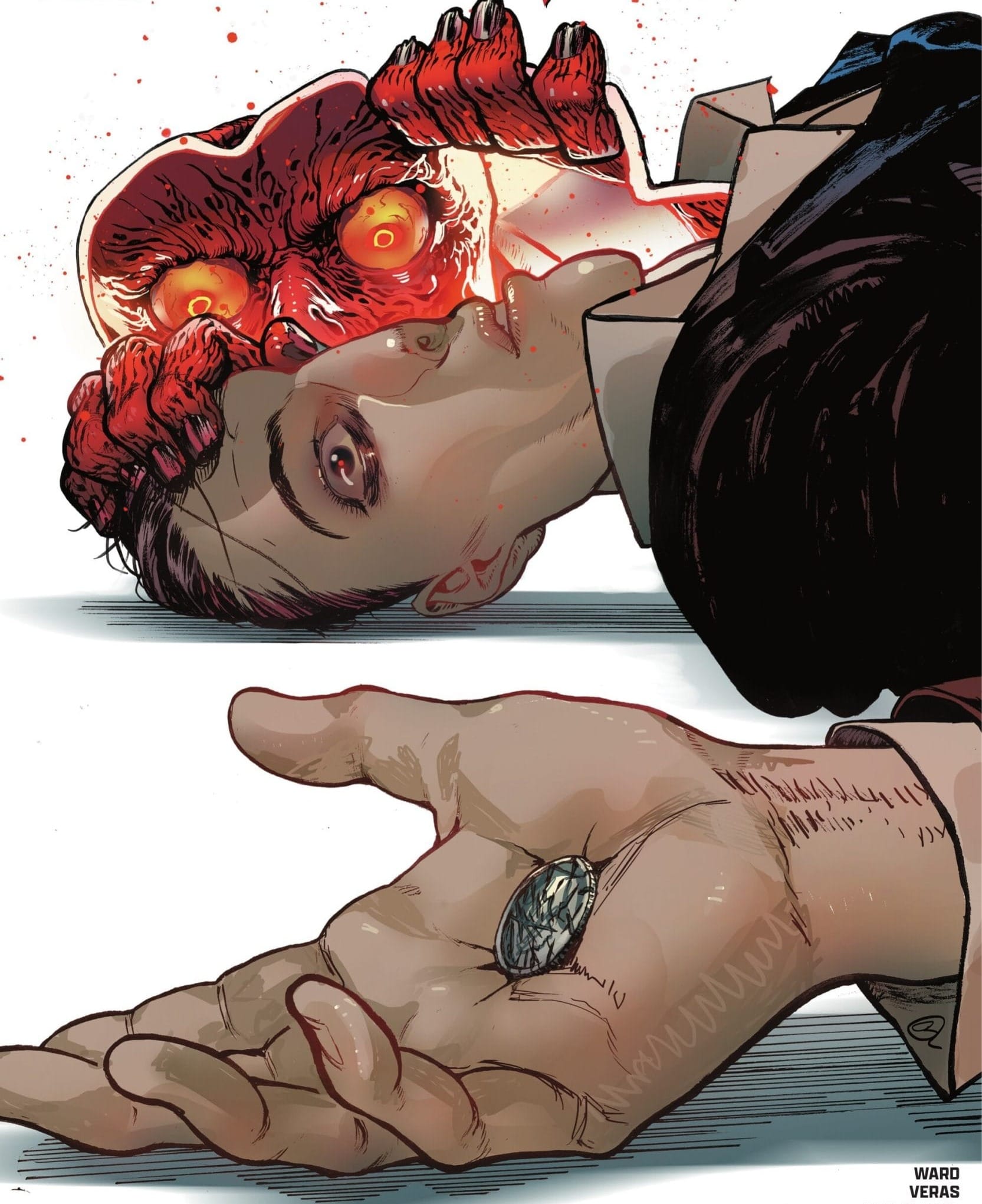
Sometimes the villain is a repair path that was twisted into domination.
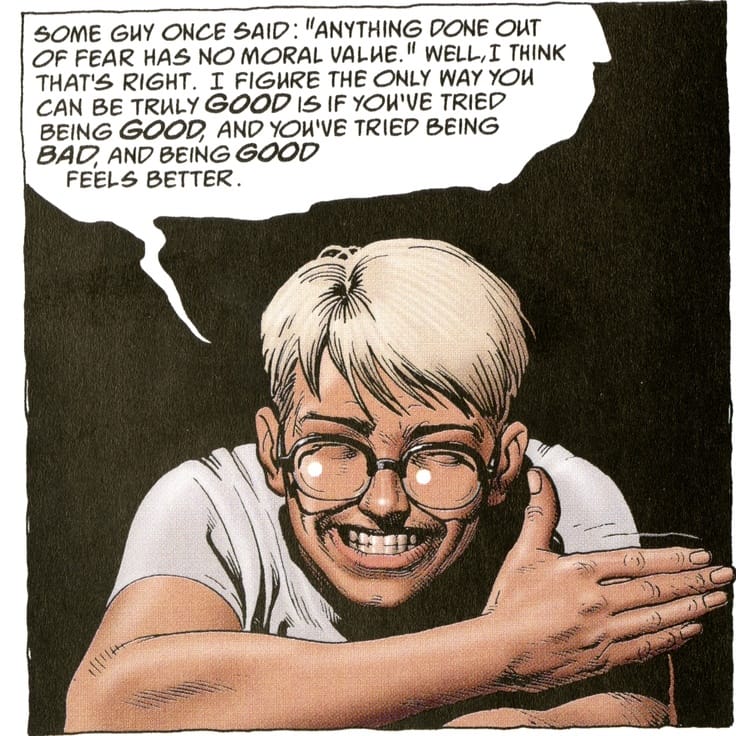
Sometimes the villain is Gotham’s own structure made theatrical enough to punch at.
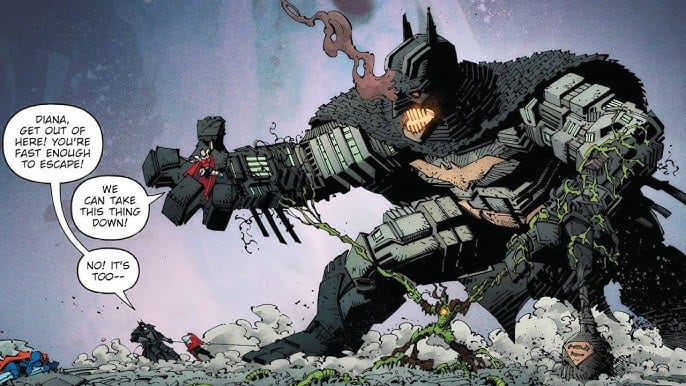
Batman’s morality is always revealed by how he reads them.
The Joker.
Joker is the hardest because Joker's structural role is recurrence, which he has also managed to occupy out of fiction.
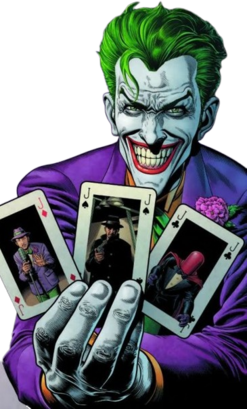
Somehow, Joker has returned.
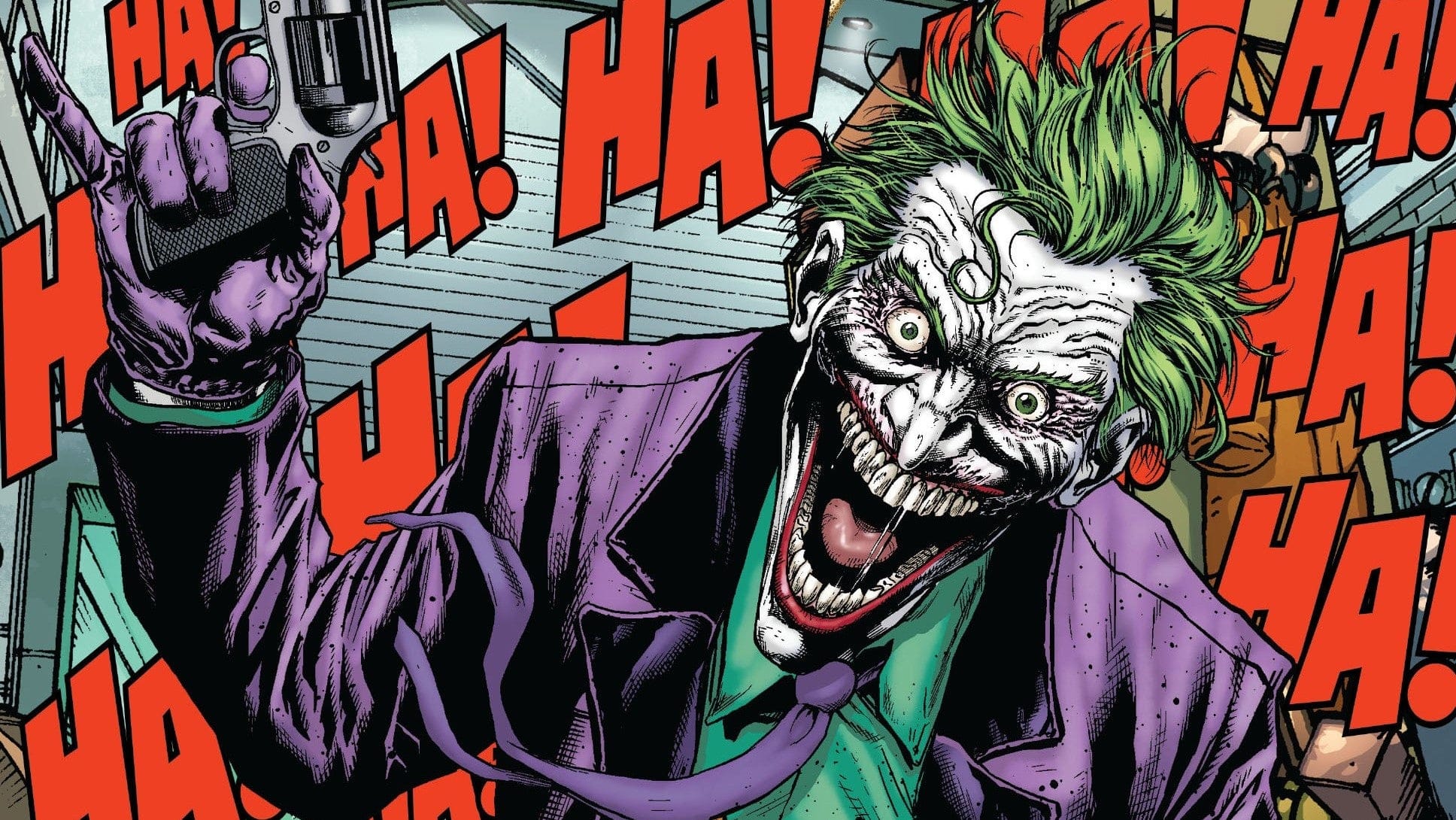
He escapes.
He escalates.
He kills.
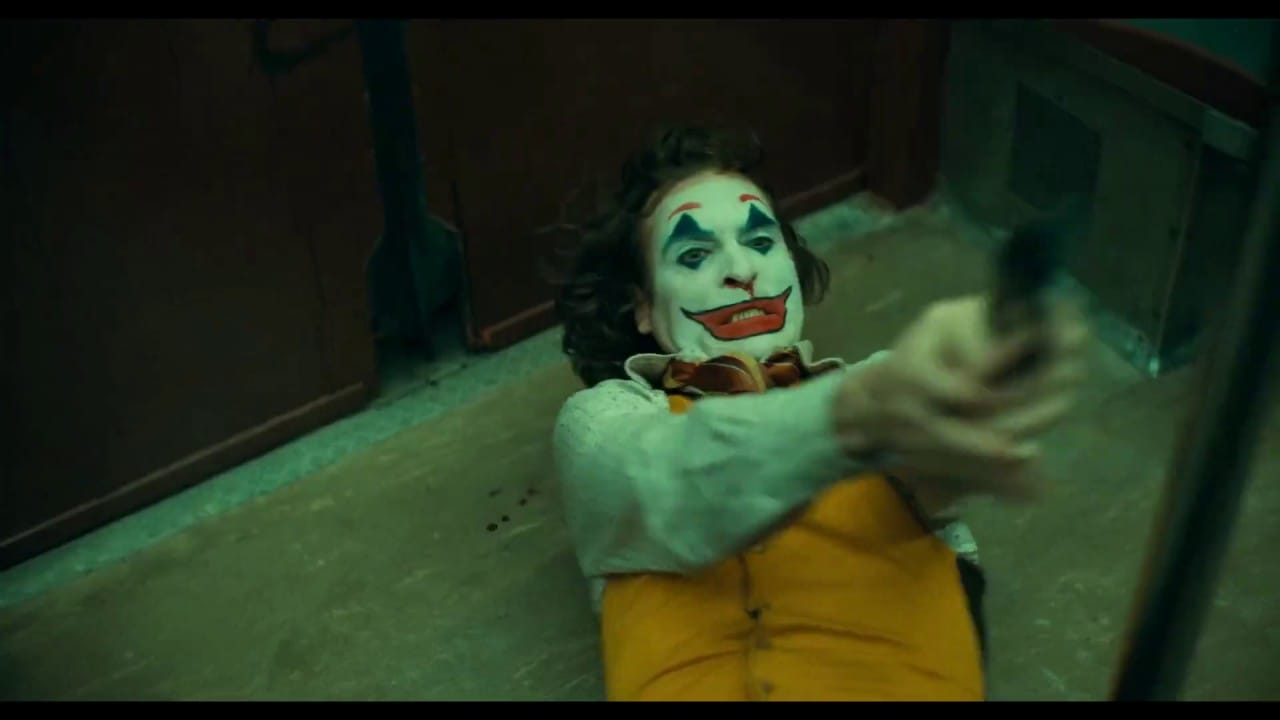
He laughs at meaning, law, grief, therapy, punishment, love, order, and Batman’s refusal to become him.
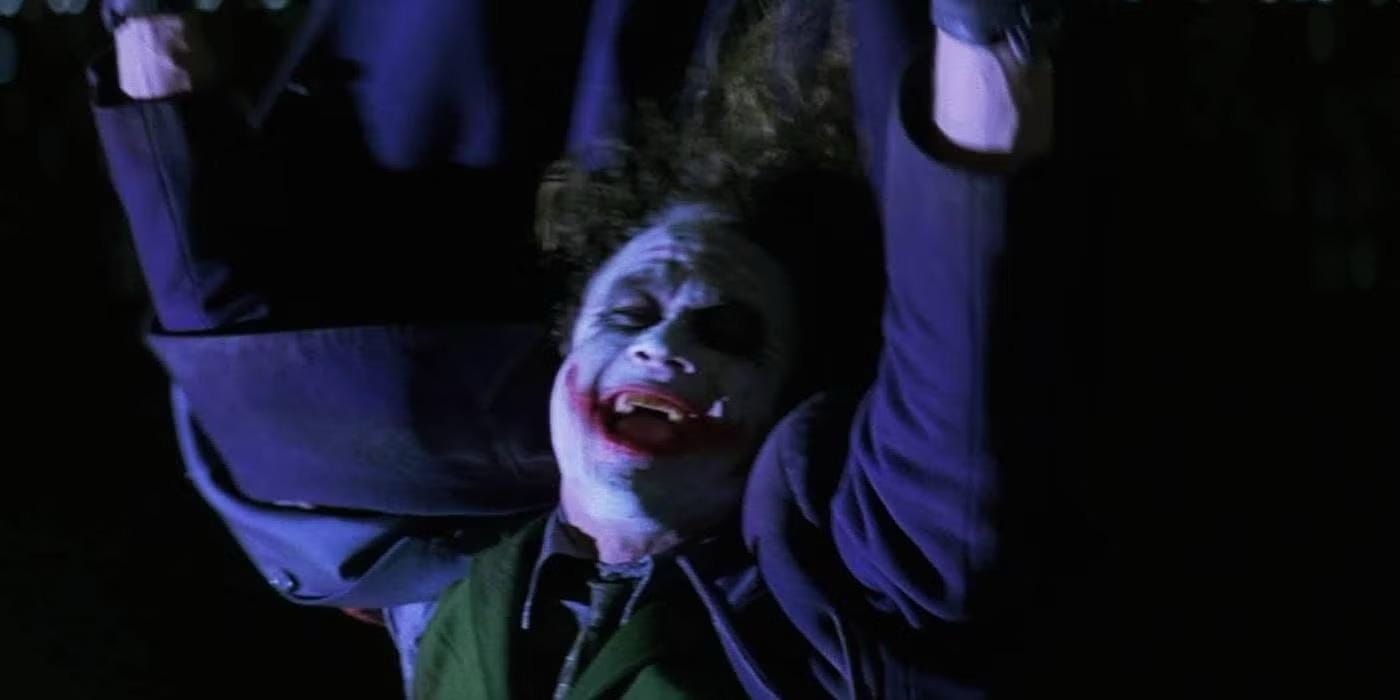
He is not Batman’s opposite in the lazy “chaos versus order” way, because Batman is not actually order at all. Batman is an extralegal response to failed order.
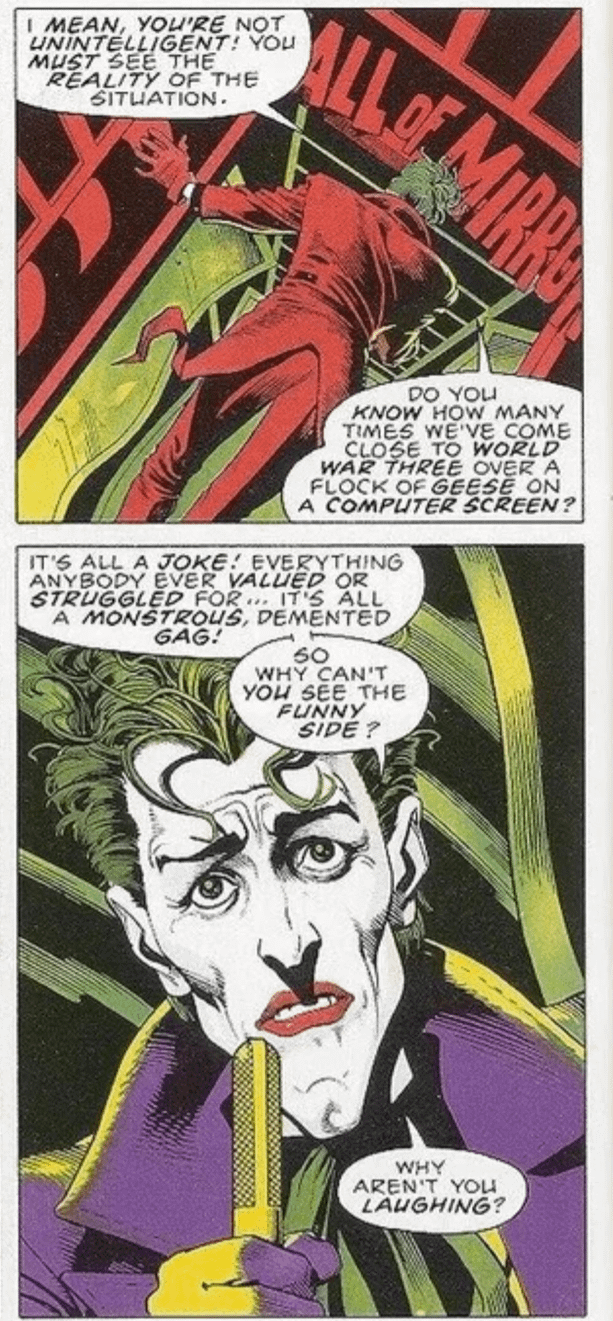
Joker is something worse: the claim that every field can be made completely meaningless if enough pressure is applied in the right places. Joker's goal is destroy moral perception completely.
Joker mainly achieves this in and out of fiction when he turns Batman’s moral constraint into a burden carried by his own future victims.
Batman refuses to kill Joker because Batman cannot become Gotham’s executioner, which remains structurally correct. If Batman grants himself the right to kill the worst person he can see in the room, then every future room contains a worst person.
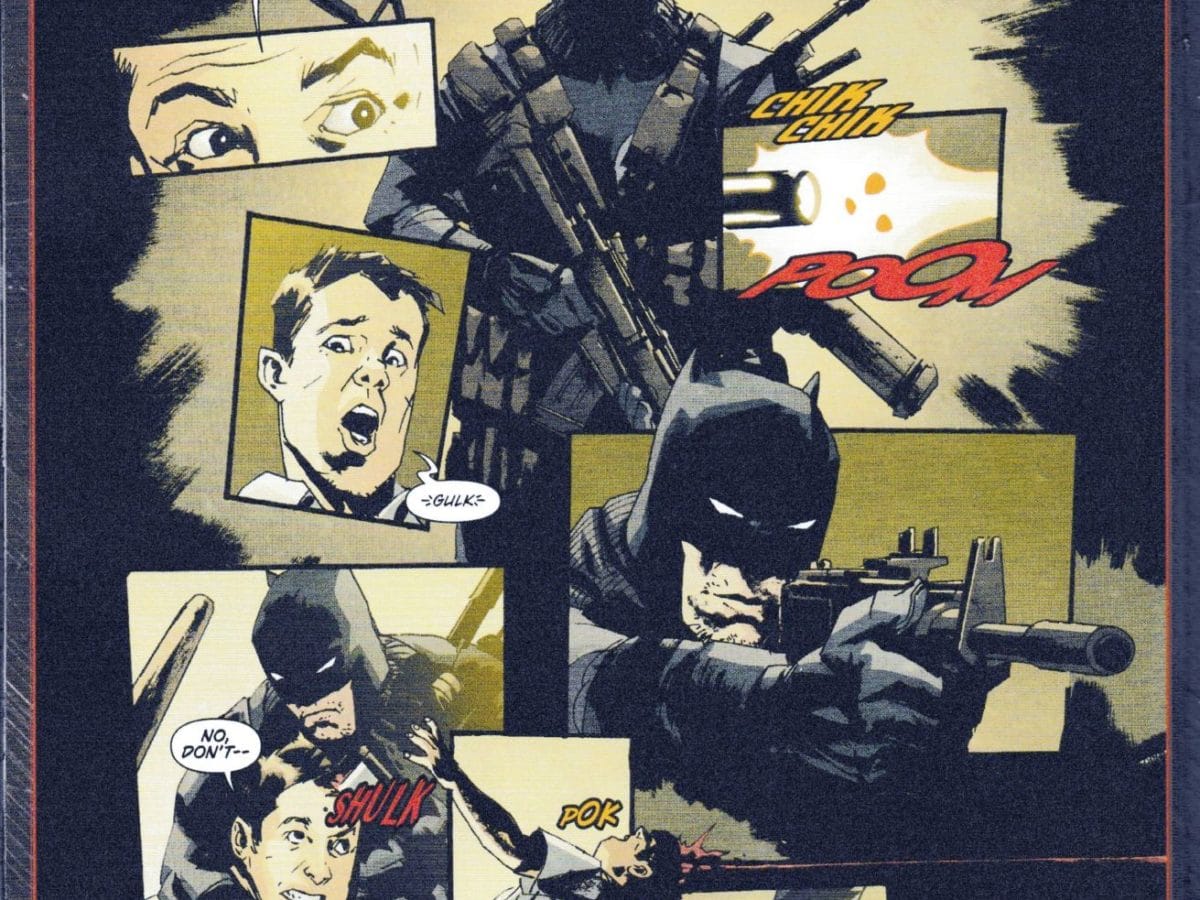
Joker's key distortion is that he makes that rule morally obscene-looking by recurring.
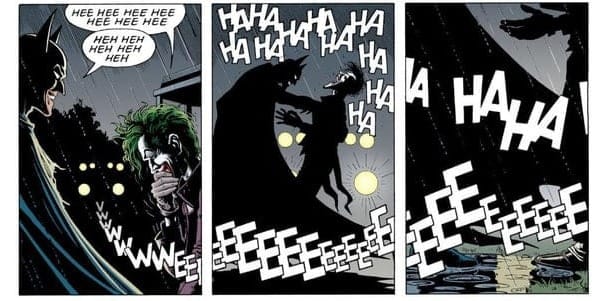
Every time Joker escapes, the question returns to Gotham with him:
Who pays for Batman’s restraint?
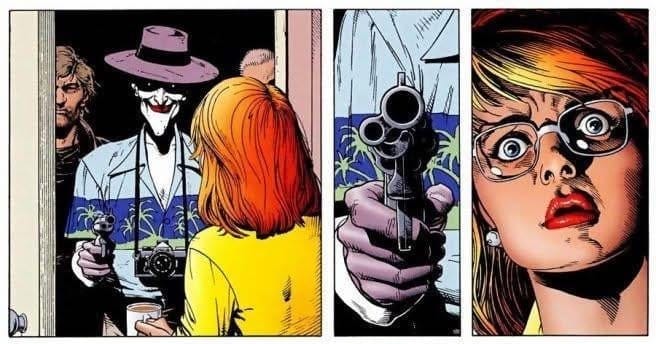
And the answer is rarely ever Batman. Not primarily. The endless line of people Joker kills pay for it.
The families pay.
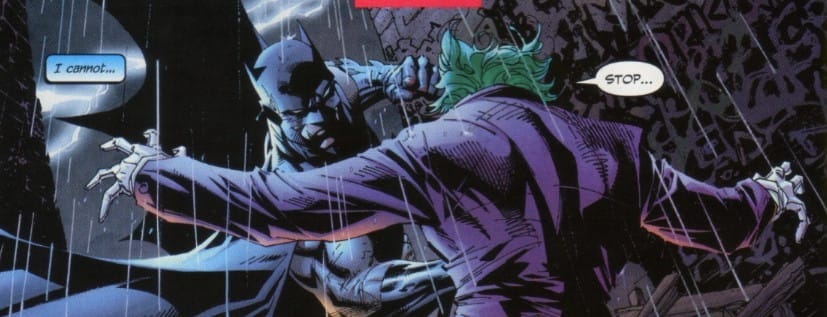
Jason pays. Barbara pays.
Gotham pays. The emergency workers pay.
The random person in the wrong carnival, alley, parade, bank, hospital, or talk show pays.
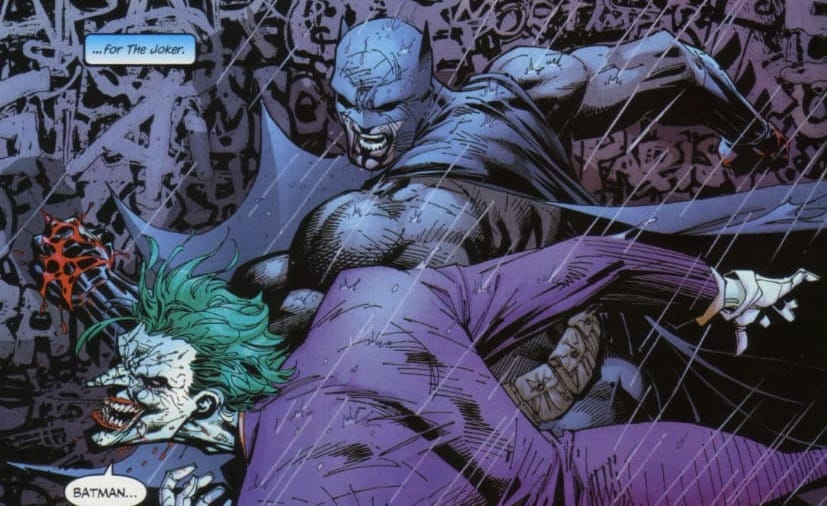
That does not prove to us that Batman should kill Joker. It proves Gotham has failed to build a containment field adequate to match Batman’s restraint. The bridge is still missing.
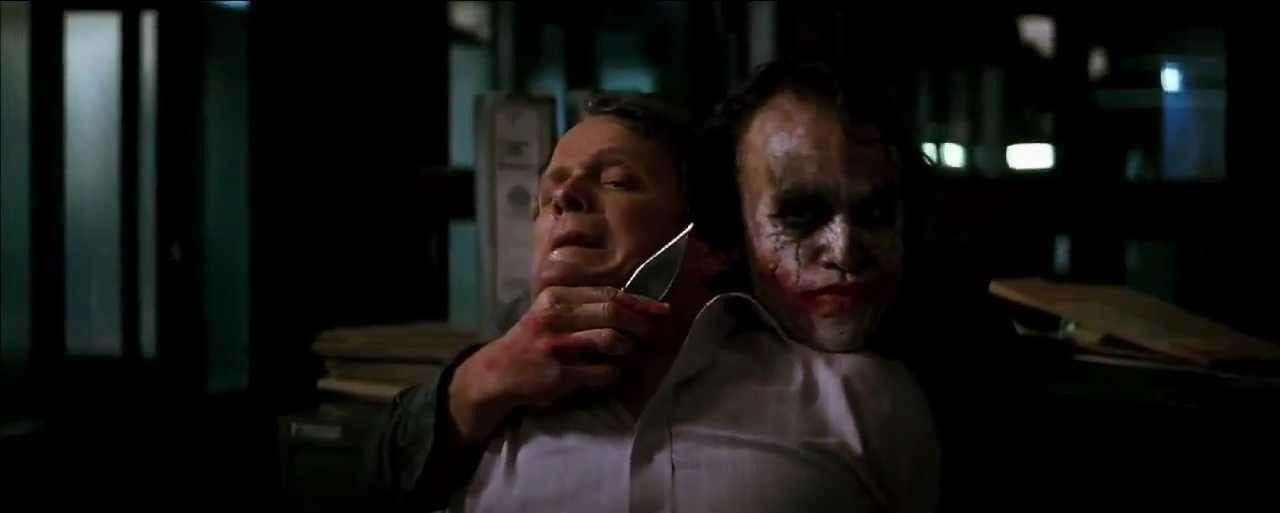
This is the only correct answer and the one the stories often avoid. The choice should not be “Batman executes Joker” or “Joker keeps escaping forever.” That is scapegoat framing.
Batman is now your Dyatlov, the misguided moron responsible for the whole field's harm. Any morally functioning Gotham would obviously have secure containment, serious psychiatric assessment where possible, non-theatrical isolation where necessary, and public authority capable of carrying the burden Batman cannot morally carry.
The Arkham loop makes Joker Batman’s problem because Gotham just cannot manage to solve Joker as a civic field. Gotham’s dependence on Batman’s no-kill rule as the final containment policy is clearly wrong. But Joker is also dangerous because he seduces Batman stories into giving him way too much metaphysical status.
Sometimes writers treat the Joker like he is some kind of cosmic or psychological principle we uncovered.
He is not. The Joker is actually just a fictional locus from an old comic book.
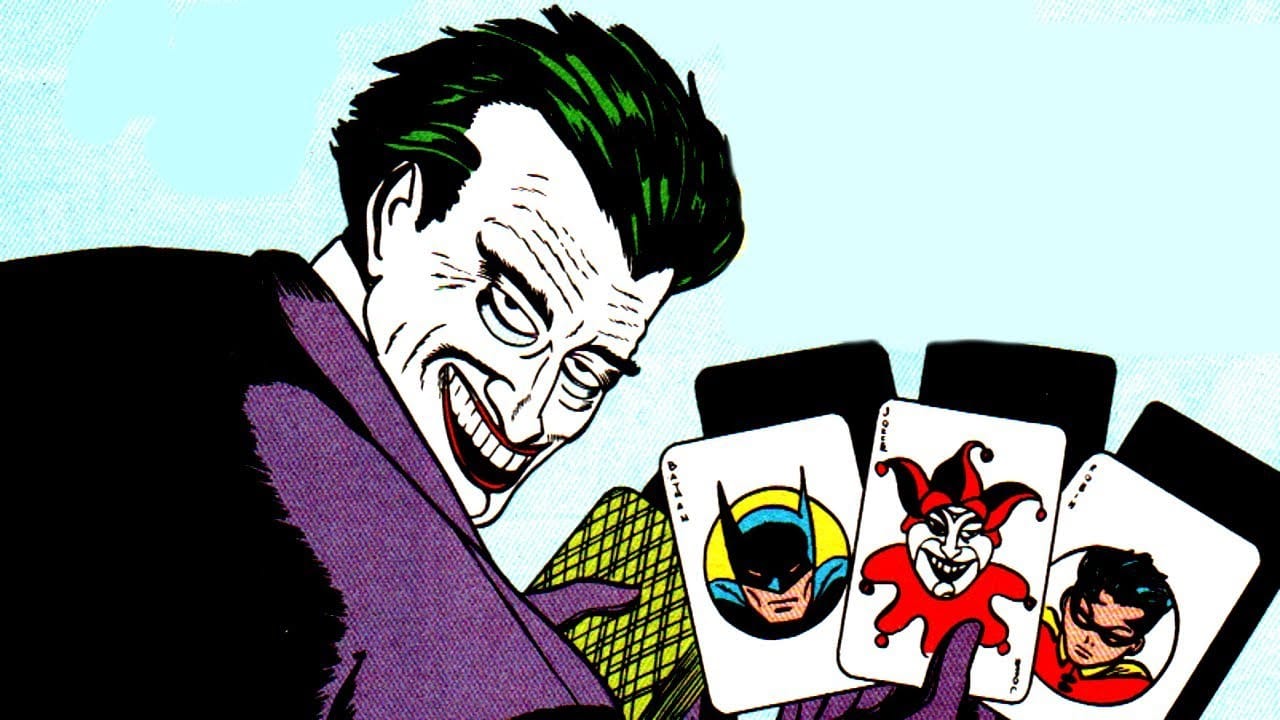
A catastrophic one in and out of fiction, but still a locus like any other in this field.
The more he becomes some abstract god of chaos, the more the field loses contact with his victims, his mechanisms, his logistics, his escape paths, his enablers, and the institutional failures that let him recur.
Fiction trains moral perception in the reader, even if they aren't actively trying to learn anything. A distortive moral lesson in fiction presented as cosmic awakening has real field effects.
Joker wants Batman to become the only explanation for him, and neither Batman, Gotham, nor the audience should grant him that.
Two-Face.
Two-Face is what happens when public law becomes metaphysics.
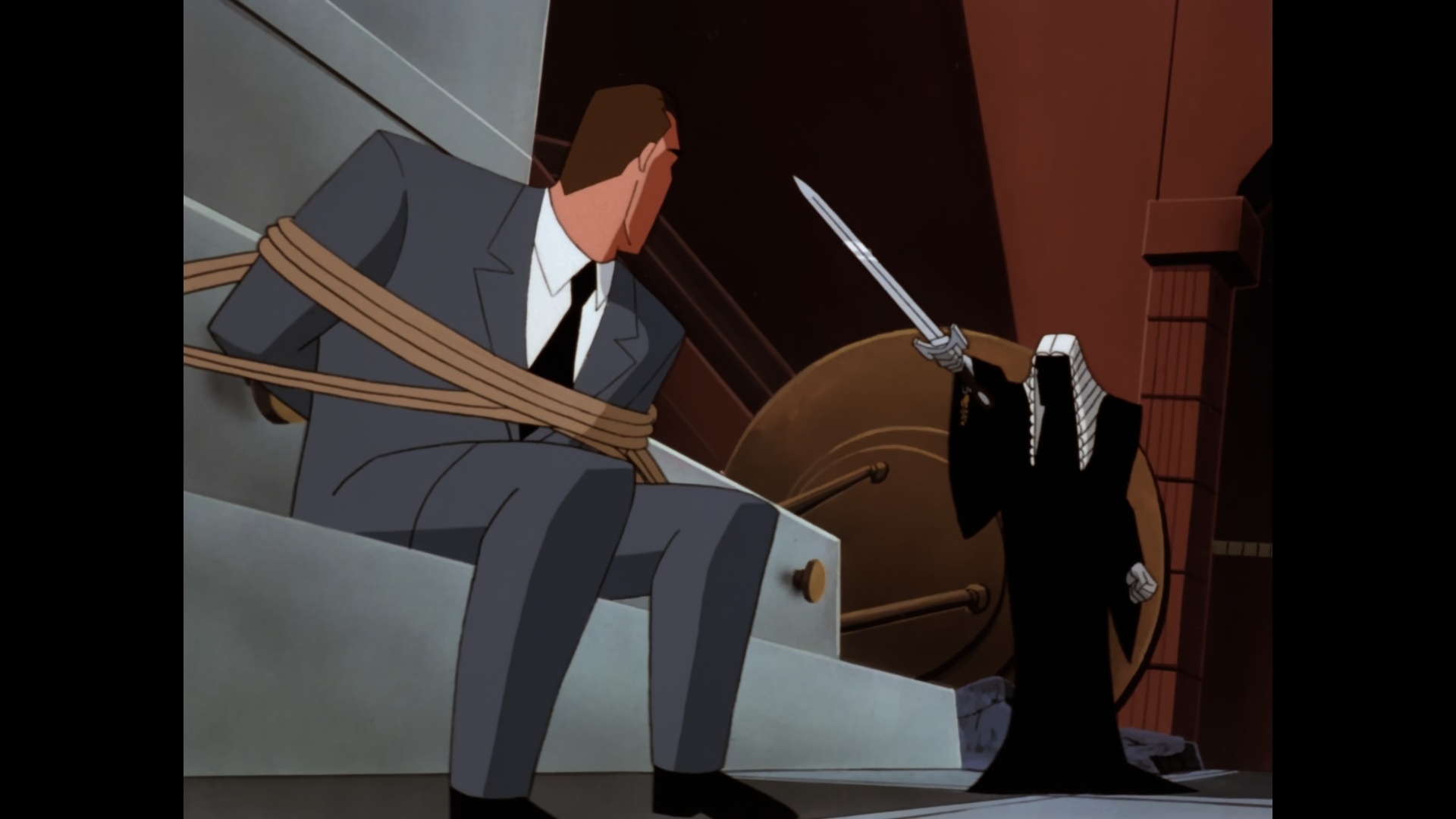
Harvey Dent is one of Gotham’s best possible repair paths. He represents prosecution, public courage, legal legitimacy, civic trust, and the dream that Gotham might not need a man in a cave forever.
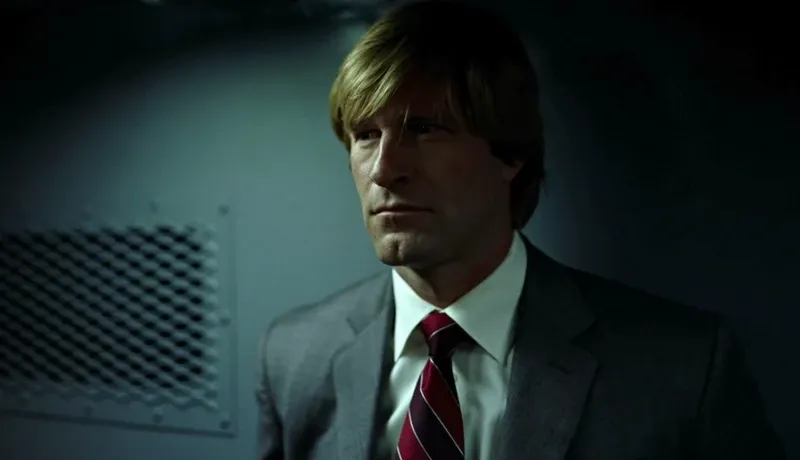
Then the field consumes him first.
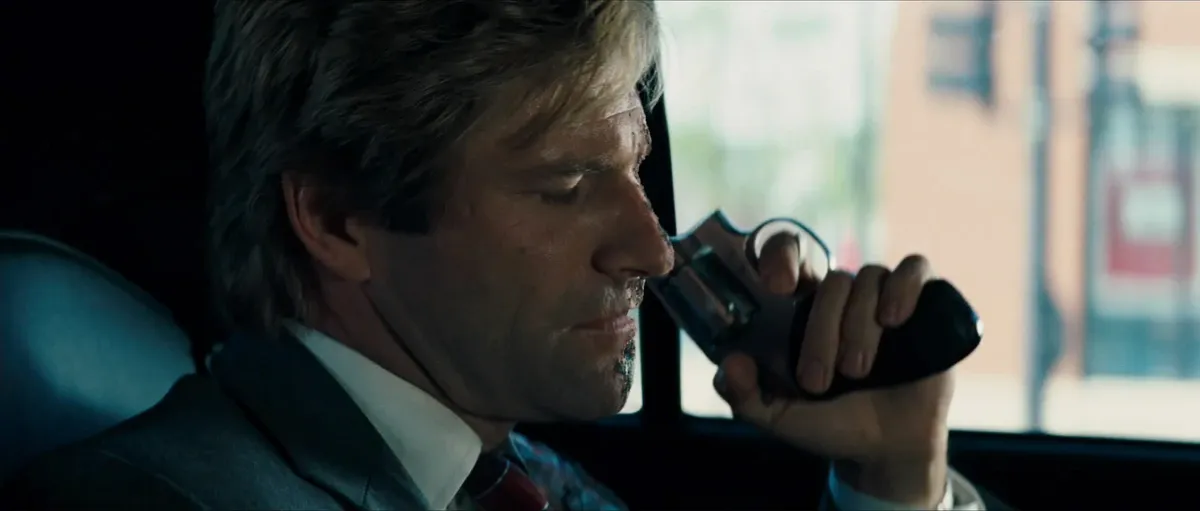
Moreso than "duality", Two-Face is the collapse of public justice into chance. When Harvey flips the coin, he is not just being theatrical or crazy.
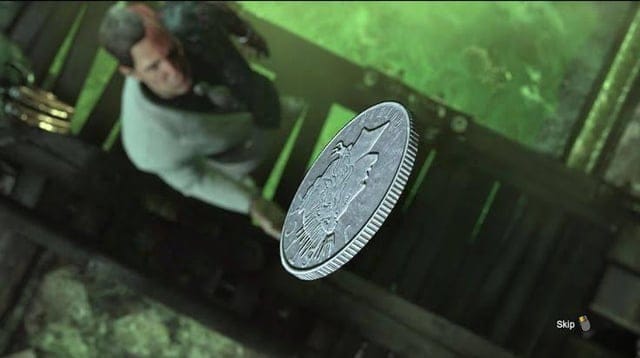
He is replacing law with procedure emptied of moral judgment. The coin is due process after meaning has died. It is fairness, but only as a ritual without any care.
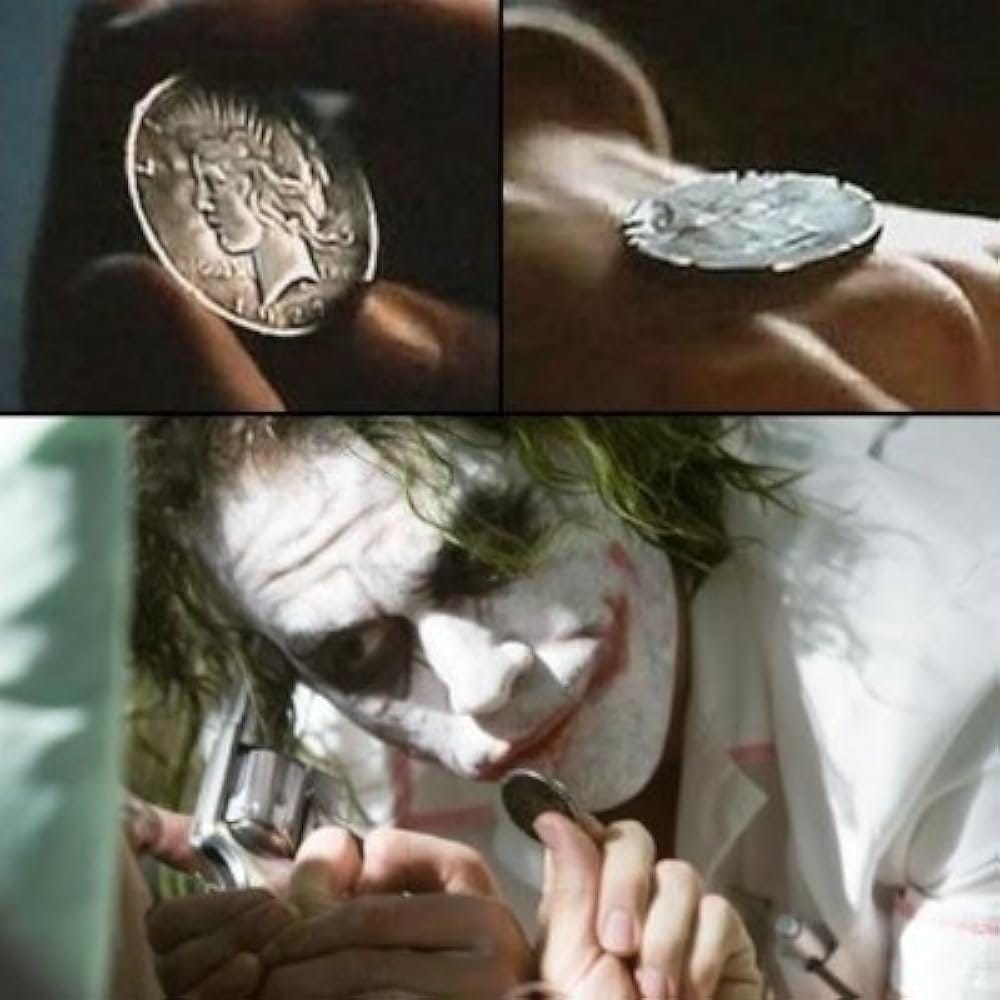
This outcome is one of Gotham’s central nightmares.
The system becomes so corrupt, so painful, so unreliable, that an injured agent on the side of repair chooses complete randomness over judgment. He cannot trust institutions. He cannot trust himself. So he outsources moral decision to a scarred object and calls it the only justice he can still perceive.
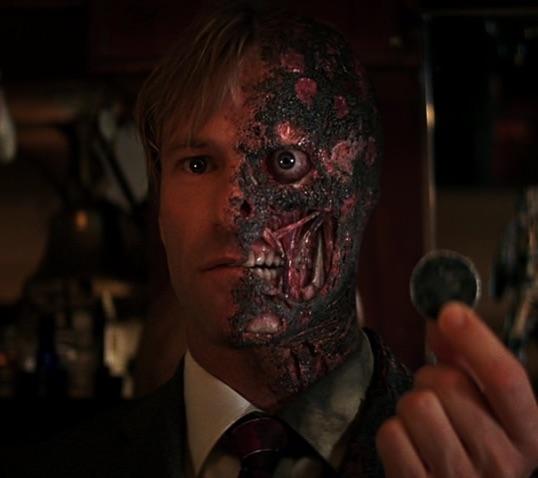
If Harvey can fall, then Gotham’s public repair path can fall. Batman cannot just defeat Two-Face and move on after he goes to Arkham. Every Two-Face story should ask what Gotham did to its own possibility of lawful repair to enable him.
Nolan sees this the most clearly and spotlights him. Dent is the exit ramp, and Joker destroys him. Batman and Gordon feel forced to preserve Dent’s image, and thereby the image of Gotham as a functional institution, through a lie. The bigger tragedy is not only that Harvey became Two-Face, or evil, it's that Gotham’s hope becomes too fragile to survive the truth of what really happened to him.
The Riddler.
Riddler is intelligence without care.
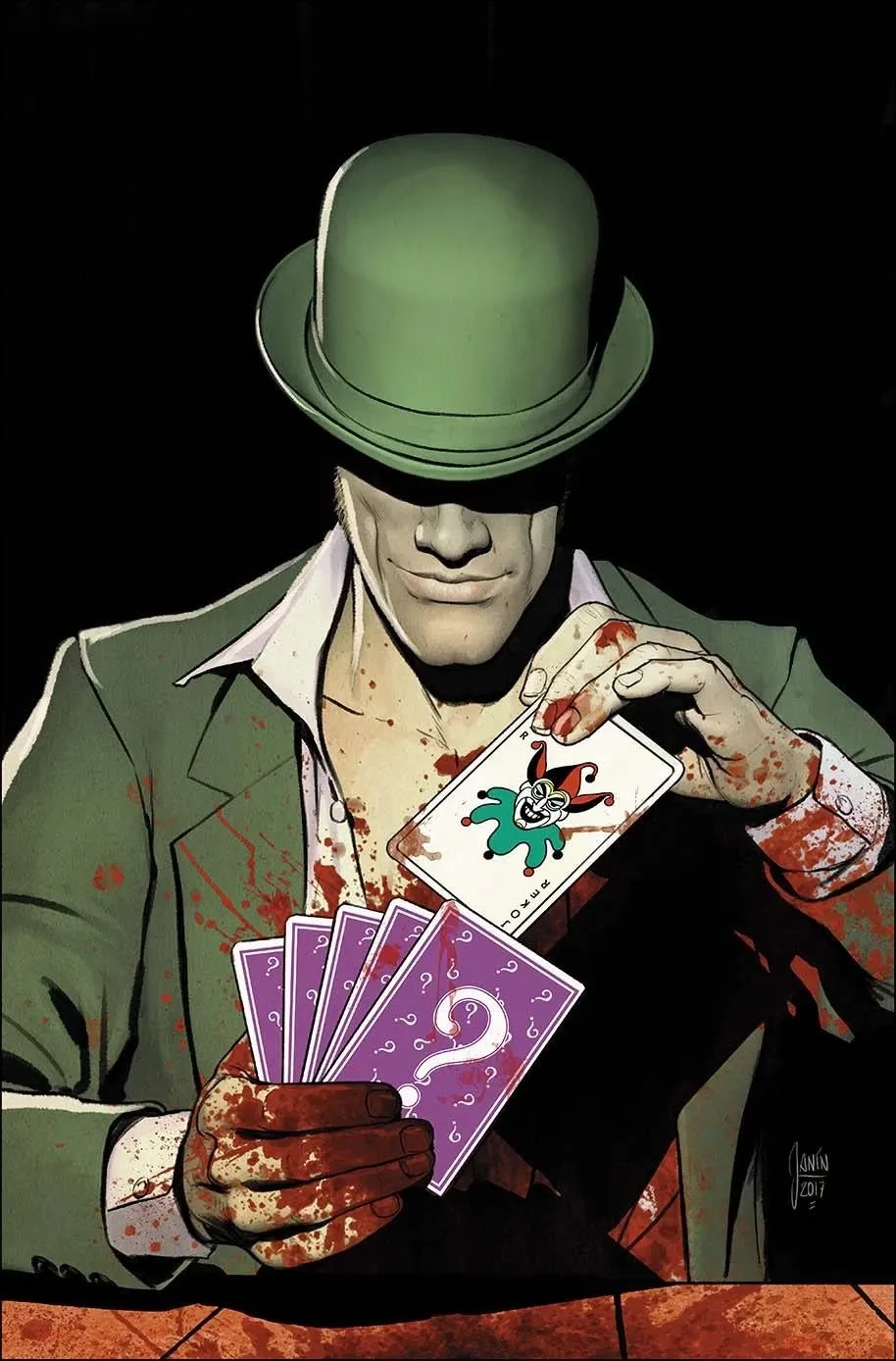
He wants truth, but he wants it as domination.
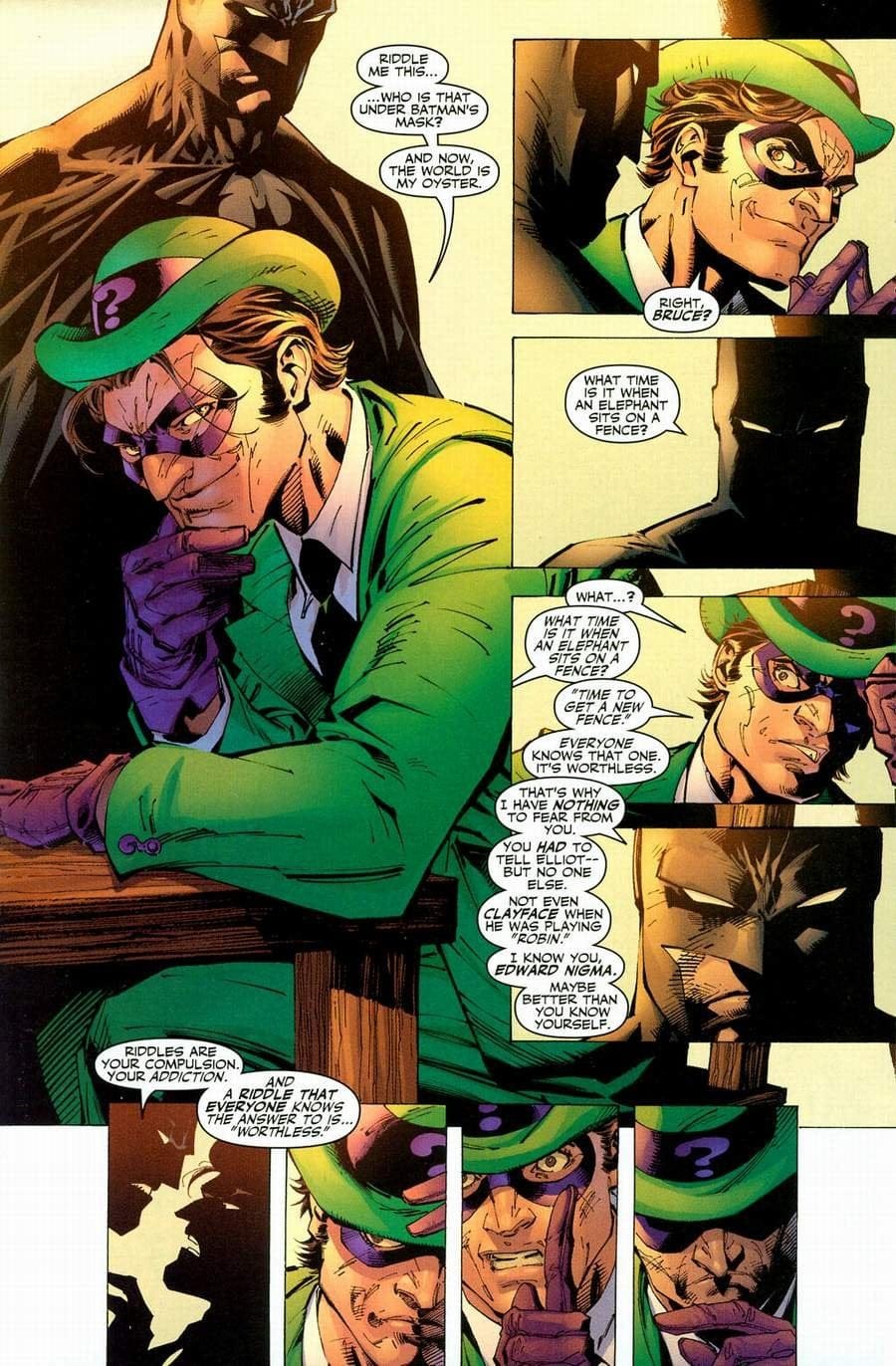
He wants recognition, but he seeks it by trapping other people inside his own legibility system.
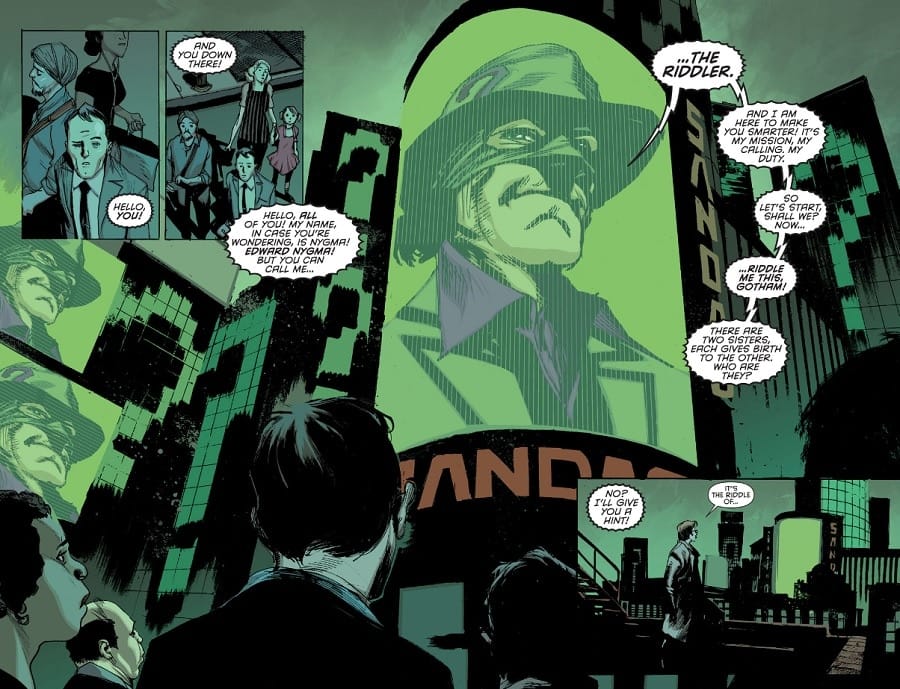
He makes the world answer to him through puzzles, clues, codes, games, riddles, staged deaths, and forced interpretation.
Riddler is an epistemic threat who weaponizes the condition of being questioned.
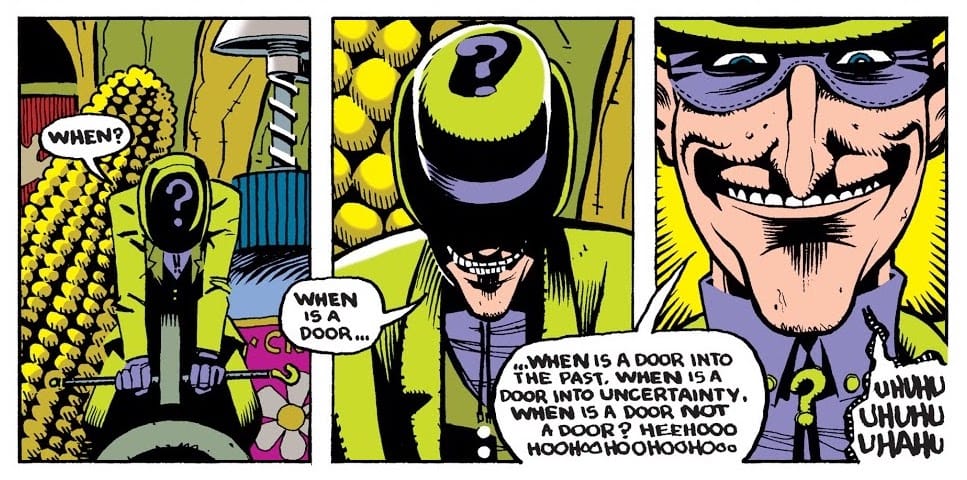
Riddler understands that truth matters. He understands that hidden structure matters. He understands that people are controlled by what they cannot see. In many versions, he even exposes corruption, hypocrisy, lies, and institutional rot.
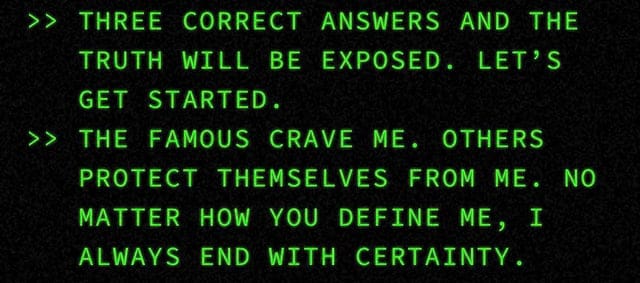
However, the Riddler never repairs the field. Truth is always his spectacle.
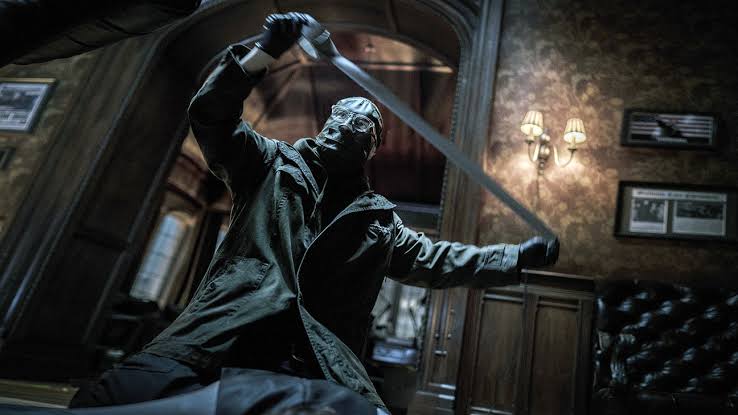
He forces others to play his game. He turns hidden harms into a performance art of his own genius, instead of seeking the least-closing path. He does not open the field so people can act more freely; he intentionally narrows the field until the only path is through him.
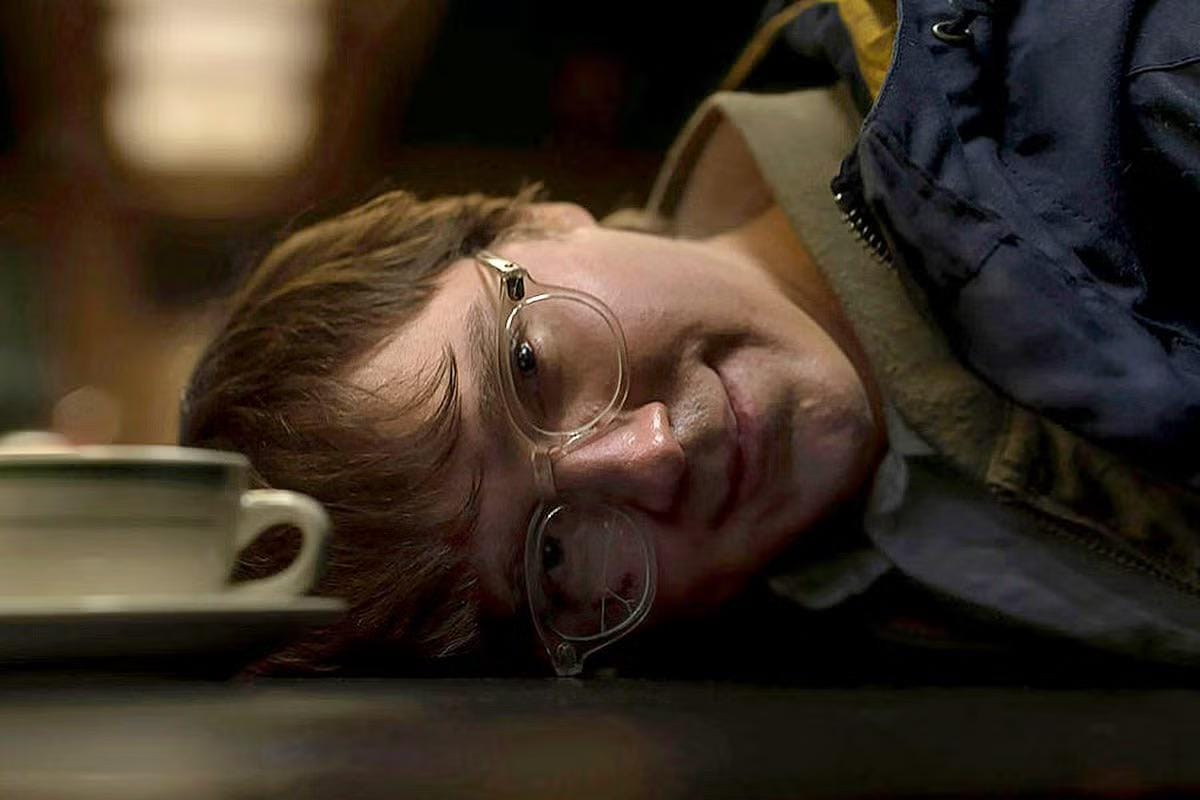
He represents why truth is not always good, and some things should not be learned. Factual information is not an inherent good. A field can become more visible and less free at the same time.
Reeves’s Riddler is the strongest recent version because he is not wrong that Gotham is deeply corrupt. He is not wrong that Wayne renewal failed, and fell into that predatory corruption field. He is not wrong that the elites lied, stole, and abandoned children. He is not wrong that the city’s official story is rotten to the marrow.
He is very wrong in what he actually makes reachable.
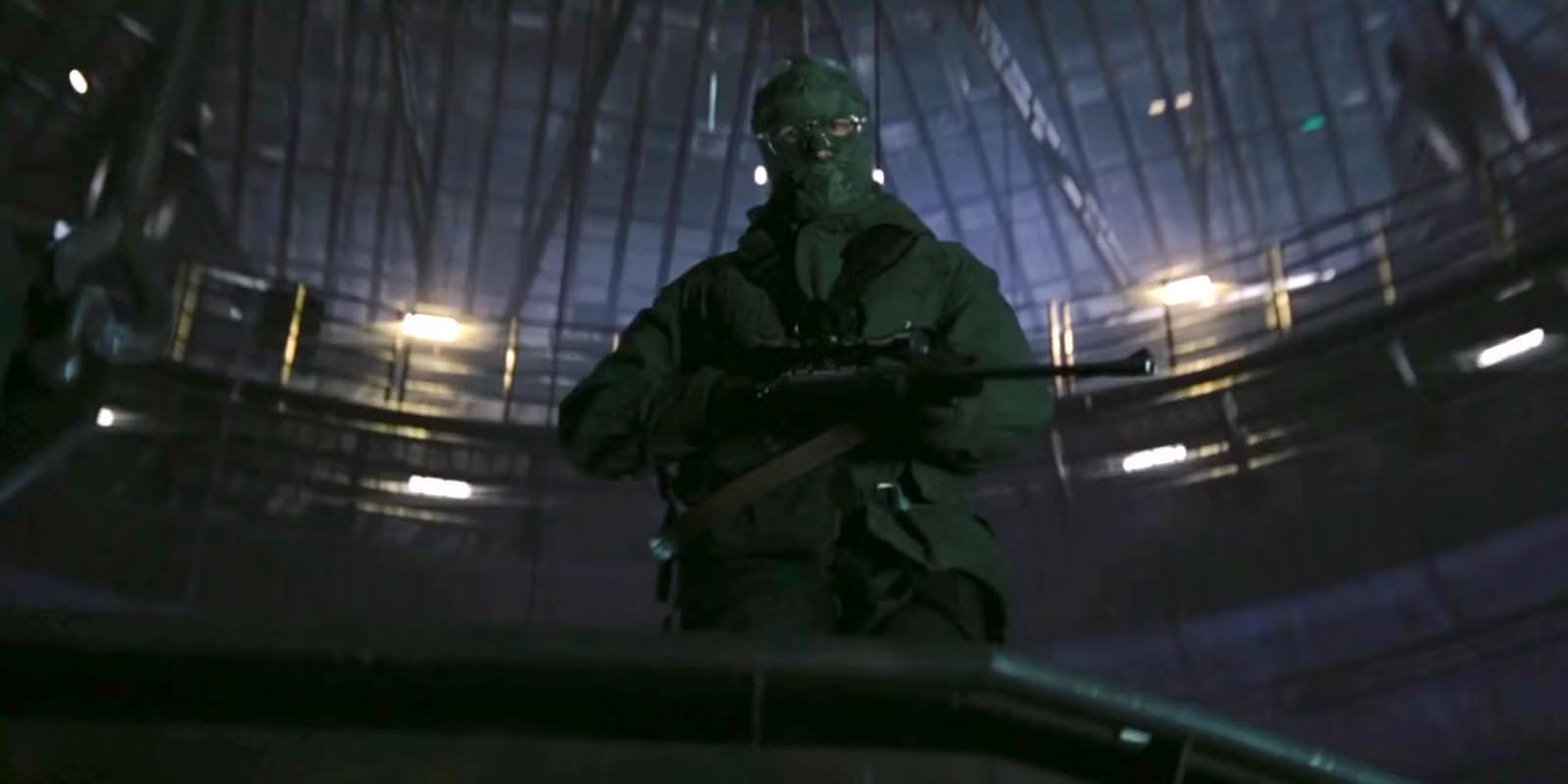
His truth produces terror, murder, a flood, copycats, and self-mythologizing vengeance. He exposes real corruption by turning the city into his audience and victims into his punctuation. That is obvious false repair; public truth converted into coercive theater.
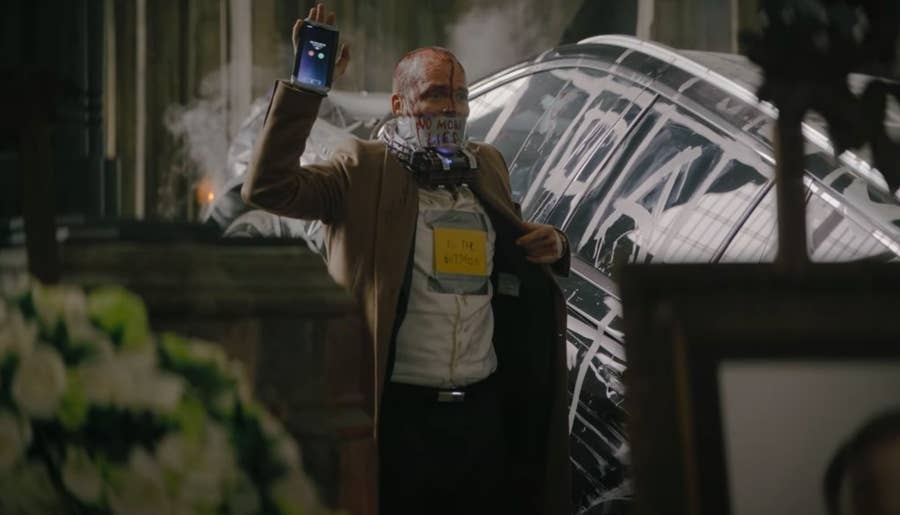
Riddler is Batman’s detective primitive intact, but without the restraint, compassion, or proportionality.
Mr. Freeze.
Mr. Freeze is one of Batman’s clearest tests of compassion.
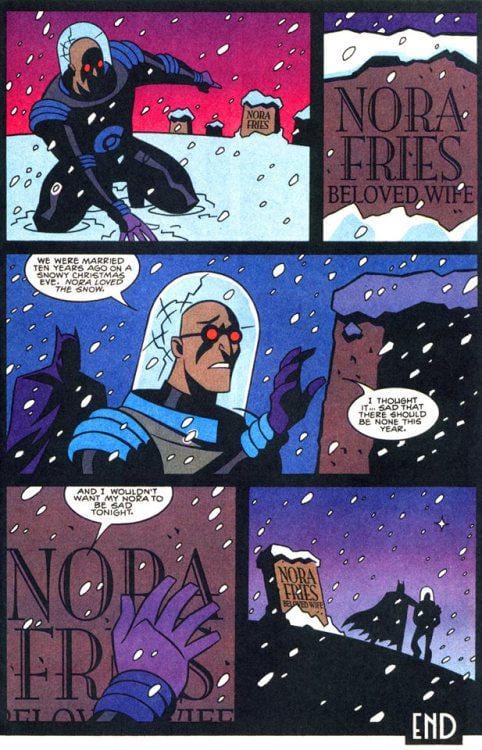
The best version is not a thief with an ice gun. He is a man whose care has frozen into criminality. Nora is not a prop if the story is working right. She is the lost future space he cannot accept losing. Freeze’s harm comes from a preservation drive detached from the wider field. He makes contact with harm, but falls into a distortive narrative instead of facing the structural realities.
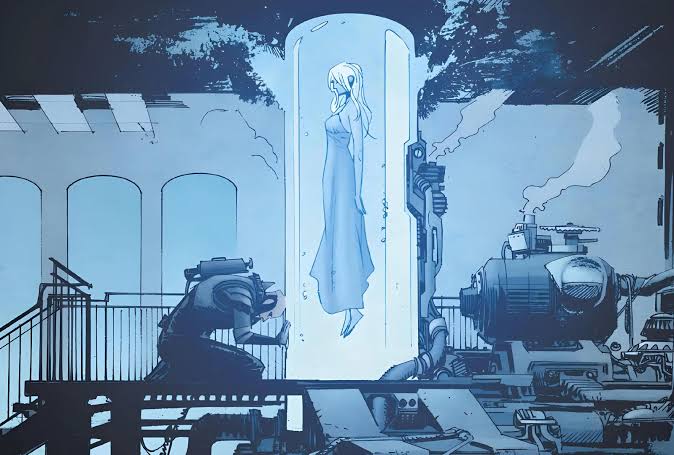
Mr. Freeze wants to save one locus. He is willing to close very many others.
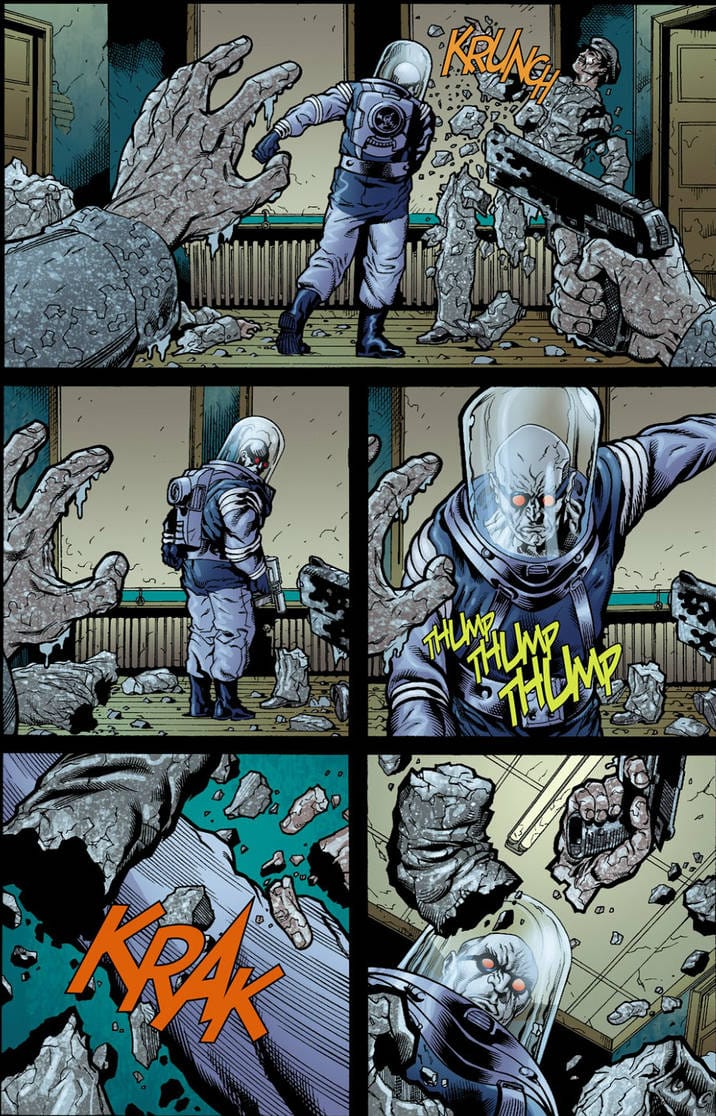
That manages to be both entirely morally comprehensible and entirely morally unacceptable. This is what makes him the cleanest test of Batman's care.
Freeze asks whether Batman can stop harm without insulting love.
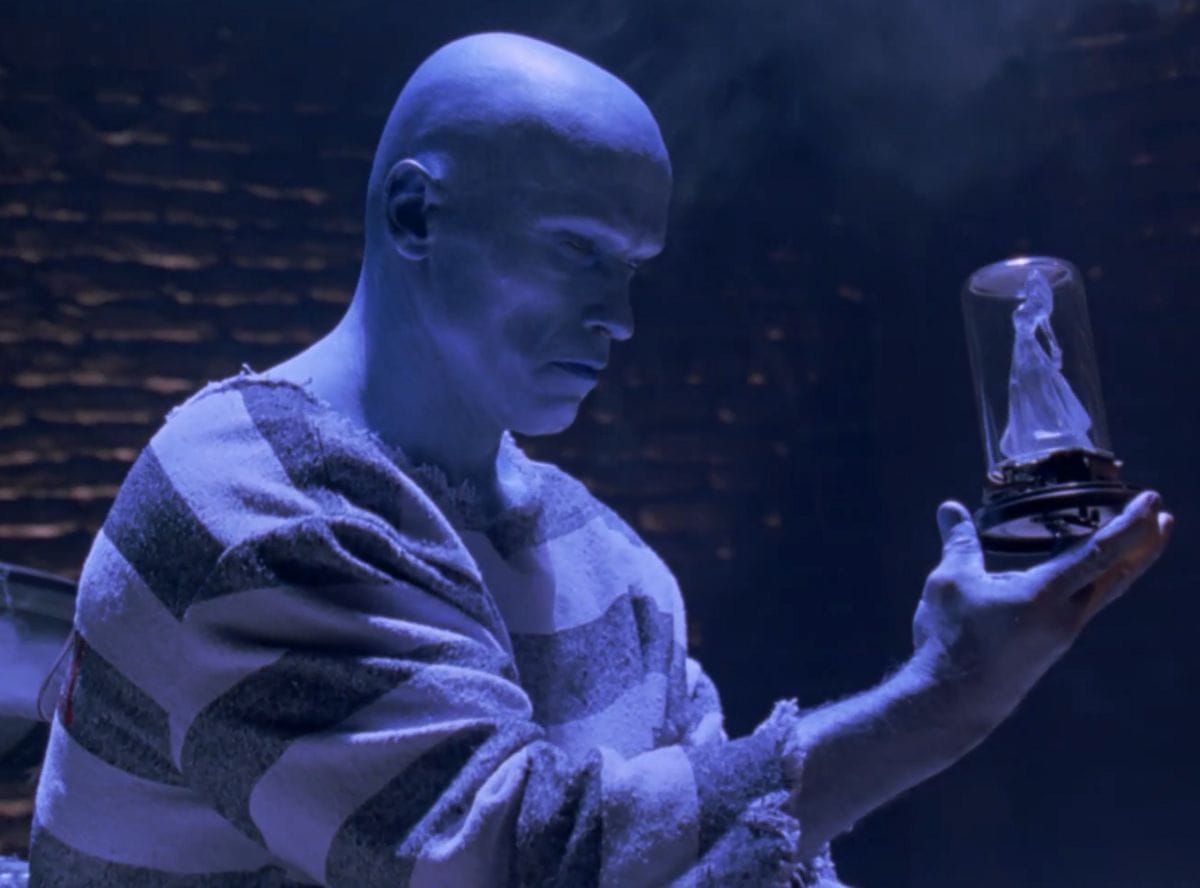
A bad Batman says: criminal.
A sentimental Batman says: grieving husband.
A good Batman says: both, then he acts.
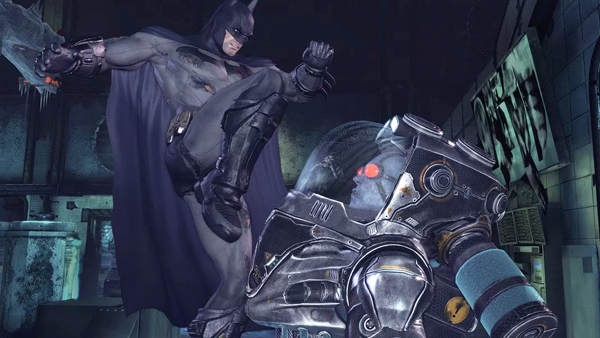
The crime must stop. The grief must remain visible. The love cannot justify collateral closure, but if Batman cannot see the love, he misses the field.
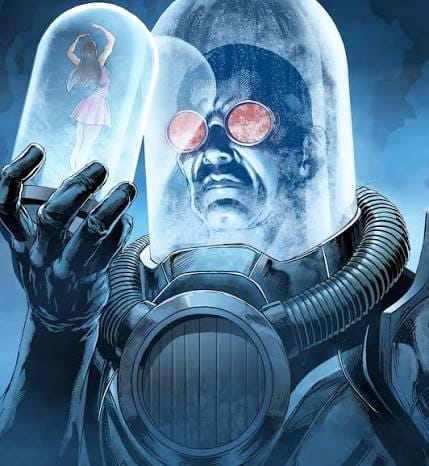
Freeze is the anti-Joker in this sense. Joker tries to erase meaning he cannot perceive. Freeze is trapped by meaning so intensely perceived it has become predatory.
Poison Ivy.
Poison Ivy is usually written badly because the culture around her is often not ready to take her seriously for what she is. She also has the most potential of any Rogue.
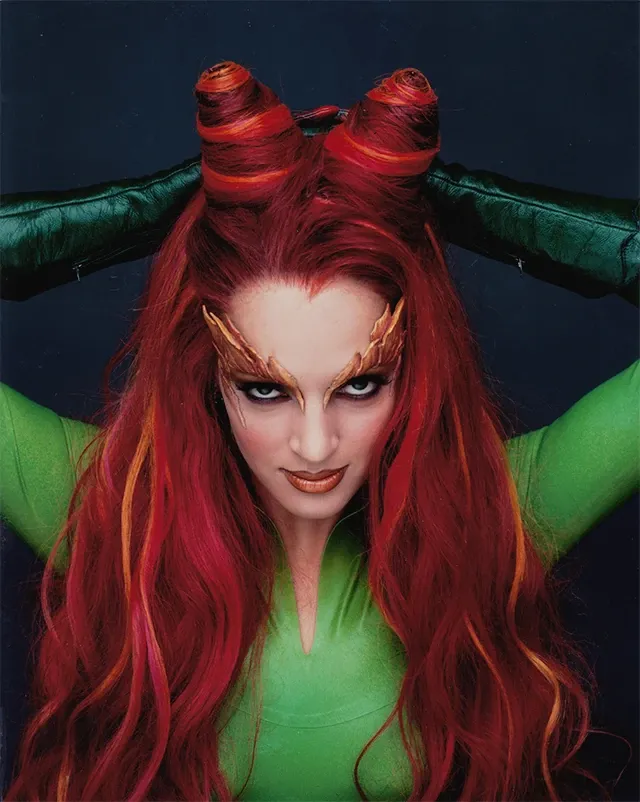
Posion Ivy is the entire nonhuman field returning as agency to question if Batman has overlooked it.
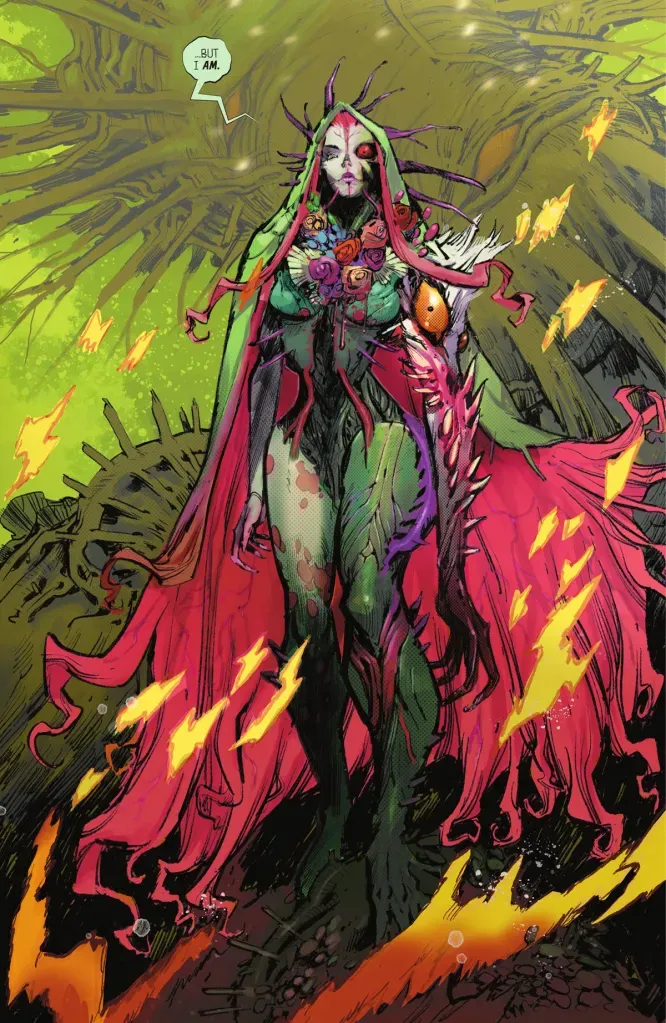
Ivy asks a question Gotham does not want to answer: what if the scenery is not just scenery? What if the parks, forests, wetlands, soils, flowers, toxins, roots, and ecological systems the city treats as background are also part of the moral field? What if Gotham’s built environment is not only corrupt socially, but ecologically hostile?
What if we don't only have to fix our many human problems, but the world around us, too?
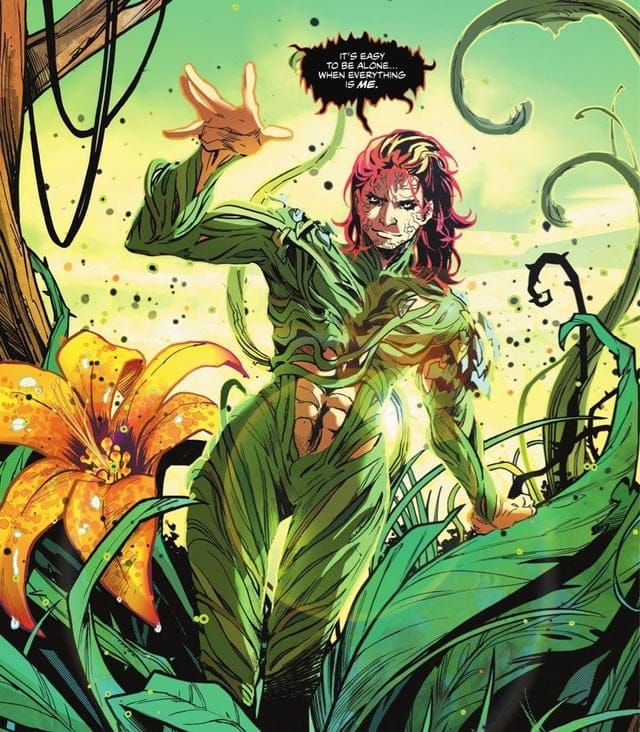
This aligns cleanly with Modal Path Ethics' account of extant loci.
Ivy is often wrong in her method. She kills, manipulates, poisons, controls, and reduces human beings to threats or actual fertilizer.
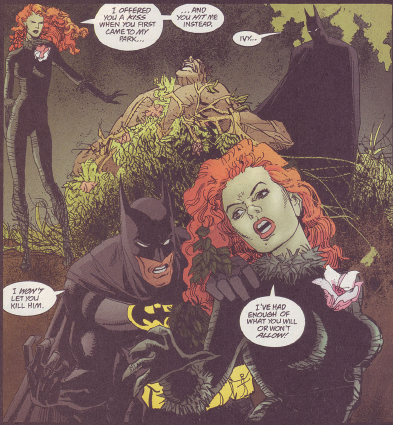
She is frequently a totalizing repair agent: preserve plant life by pruning human freedom or human life. That is clearly false Good. This Poison Ivy is just Ra’s al Ghul on chlorophyll.
Ivy's frequent error does not make her wrong. Batman’s challenge is to stop Ivy without returning to the assumption that only human loci matter, because Ivy is distorted.
If he treats her as insane for caring about nonhuman fields, he fails. If he accepts her anti-human pruning and the total preservation she prescribes, he also fails. The correct Batman response to the presence of Poison Ivy is ecological field analysis.
What has Gotham destroyed to enable this?
What systems are being poisoned?
What future-space still belongs to nonhuman life here?
What repair is possible without converting humanity into an enemy species?
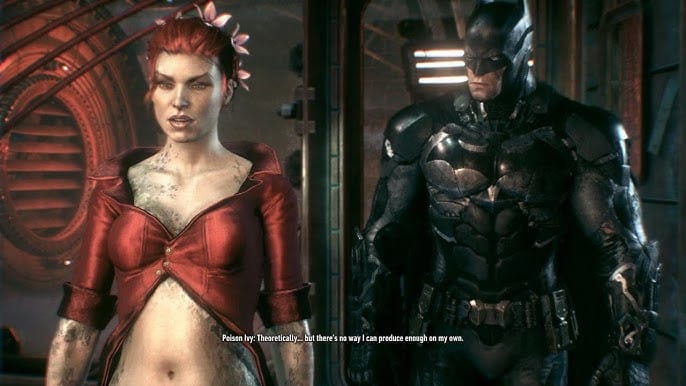
Ivy becomes much more interesting year after year because her core accusation becomes harder to dismiss. She is still usually too violent, too coercive, and too willing to collapse human futures.
Batman should never become Ivy, but the field she points at is increasingly real.
Ra's al Ghul.
Ra’s al Ghul is a false repair path operating at planetary scale.
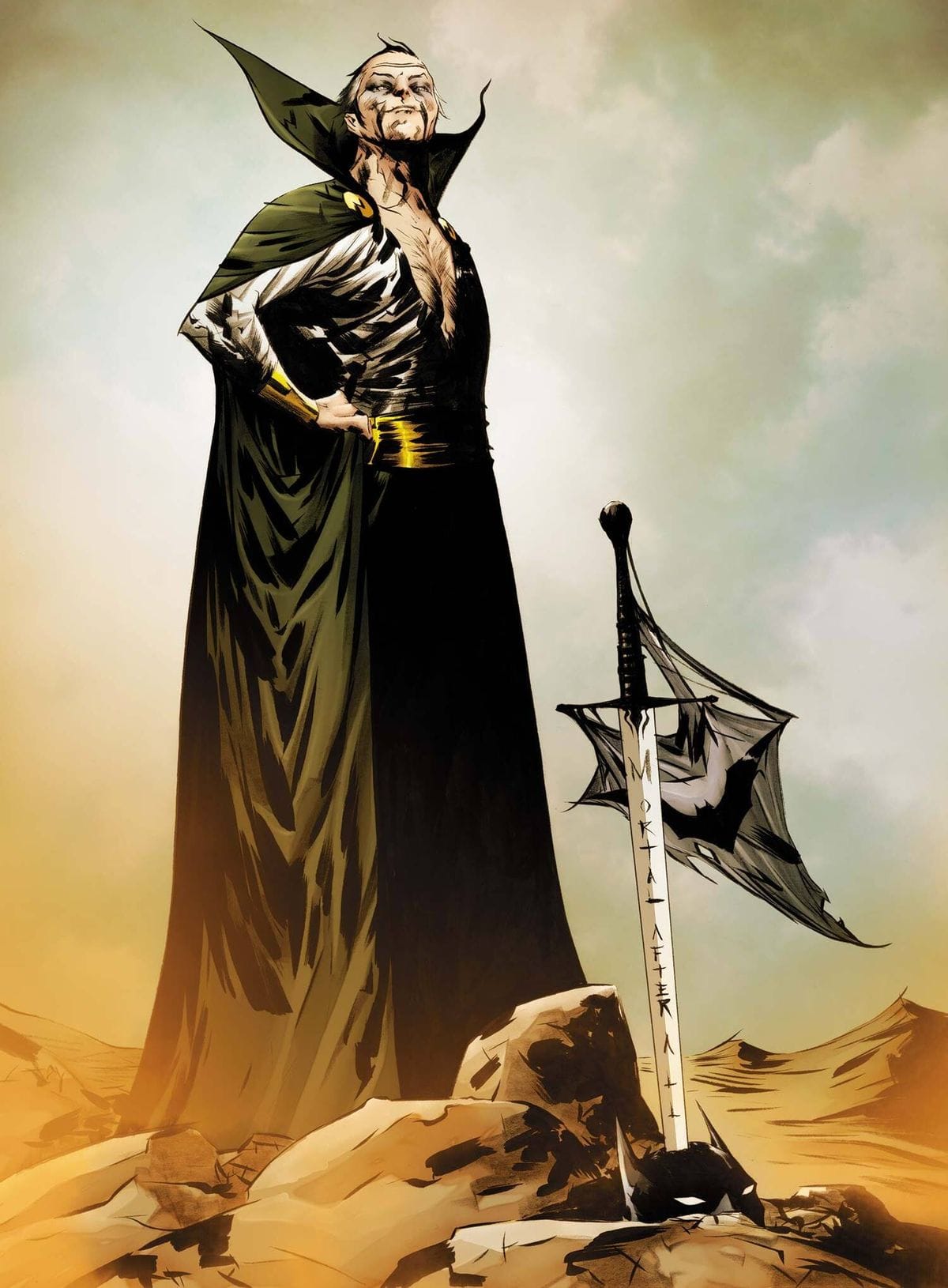
He sees real damage, which is what makes him dangerous. He sees corruption, ecological destruction, institutional decay, decadence, violence, and civilizational rot. He is not foolish, even when stupid.
Like many totalizing villains, he begins from accurate diagnosis and then commits further moral catastrophe in his treatment plan.
His presented solution is pruning. Very creative.
Destroy the city to save the world. Cull humanity to preserve the planet. Burn the diseased field away and let a cleaner one grow in its place.
This is the language of Good corrupted when presented the scale of possibility space. Ra’s wants a future. He wants continuity. He wants a world less degraded by human corruption. He should be on the side of repair.
But then he treats extant loci as just disposable material for his imagined repair fantasy. The fact that his preferred future may be cleaner in his imagination does not justify the closure of present fields.
Ra’s is one of Batman’s most important enemies because he tempts Batman through discipline, purpose, training, and scale of reach. He is Batman’s vow without Batman’s constraint.
Batman must reject him.
The League of Shadows offers a version of Batman unconstrained by Gotham’s individual lives. It says to stop managing symptoms; just destroy the diseased system.
Bruce’s refusal defines him. Gotham may be corrupt, but corruption does not make its people expendable.
Ra’s mistakes Better for Good and then inflates his distortion until it becomes global atrocity. He sees contraction and answers with larger, broader contraction.
Bane.
Bane is the villain who treats Batman as a live field rather than a person.
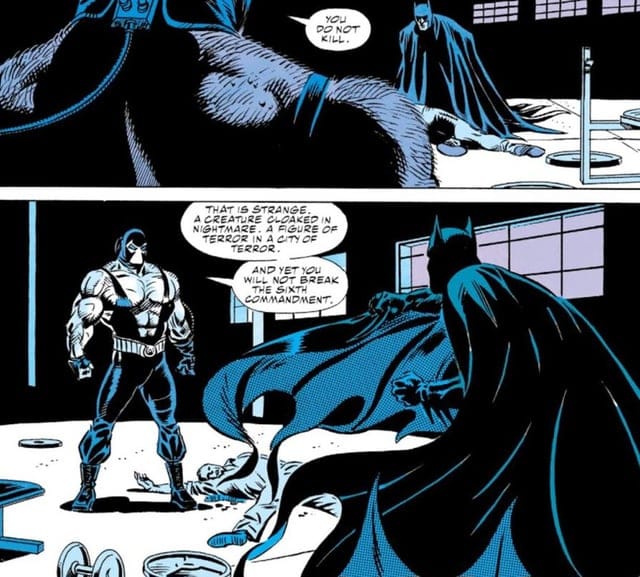
Bane attacks Batman’s system. He studies him. Exhausts him. Releases pressure across the city. Forces Batman to respond repeatedly. Weakens the support structure. Times the confrontation.
Then breaks him.
Bane understands that Batman is not only Bruce in a suit. Batman is sleep, allies, public fear, villains contained, information managed, body preserved, myth maintained, routes controlled, enemies prioritized. Break this field and the man becomes breakable.
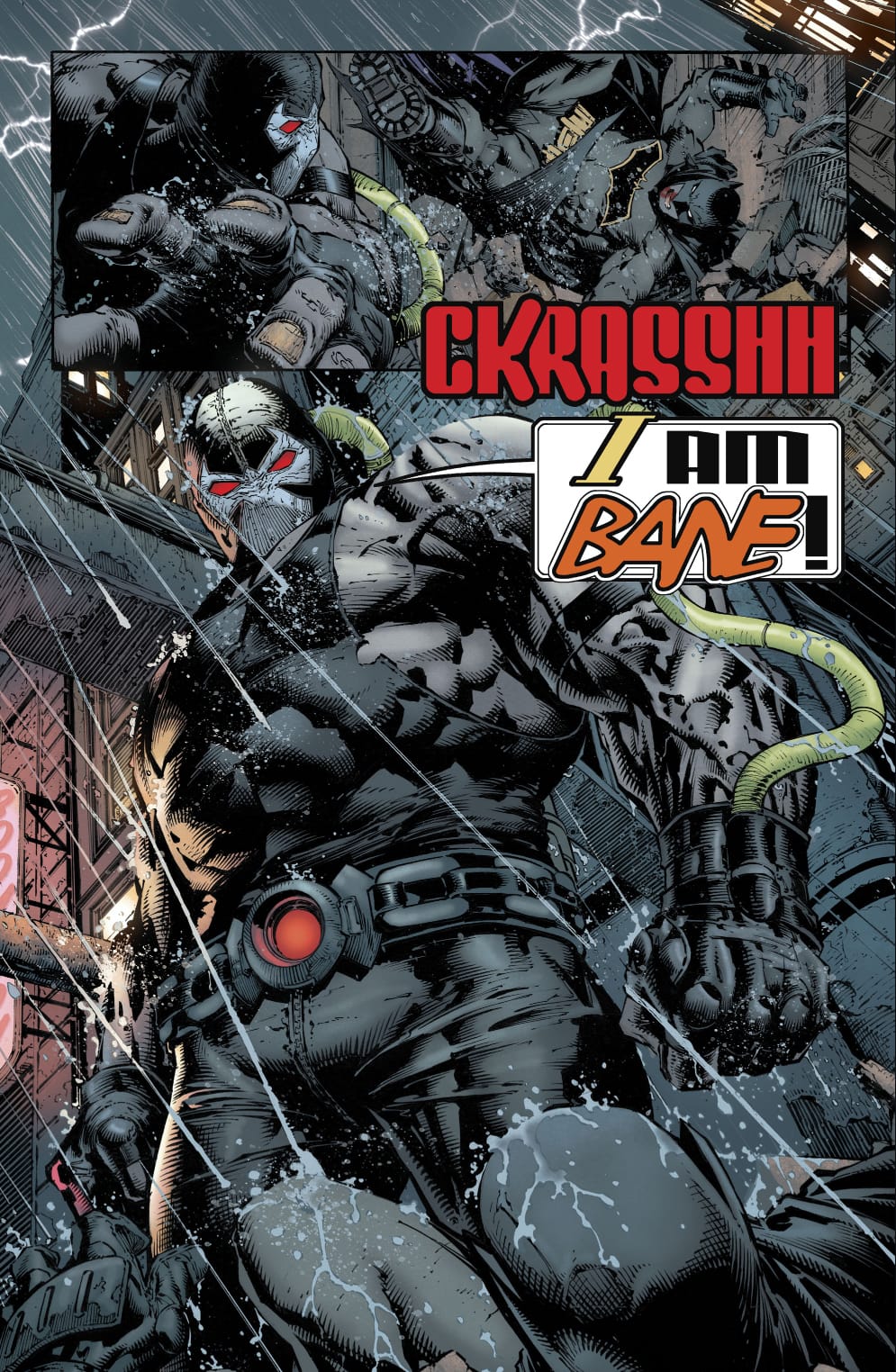
This makes Bane one of the strongest anti-Batman analysts. He is not Batman’s opposite, but he is Batman’s method reflected through domination.
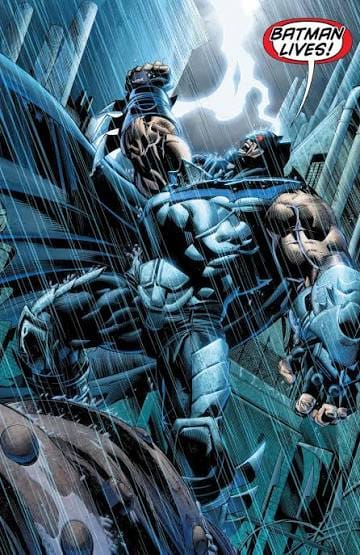
Bane weaponizes discipline, intelligence, body, will, trauma, symbolic victory, and field planning. Bane proves that Batman’s own strategic grammar can be turned against him.
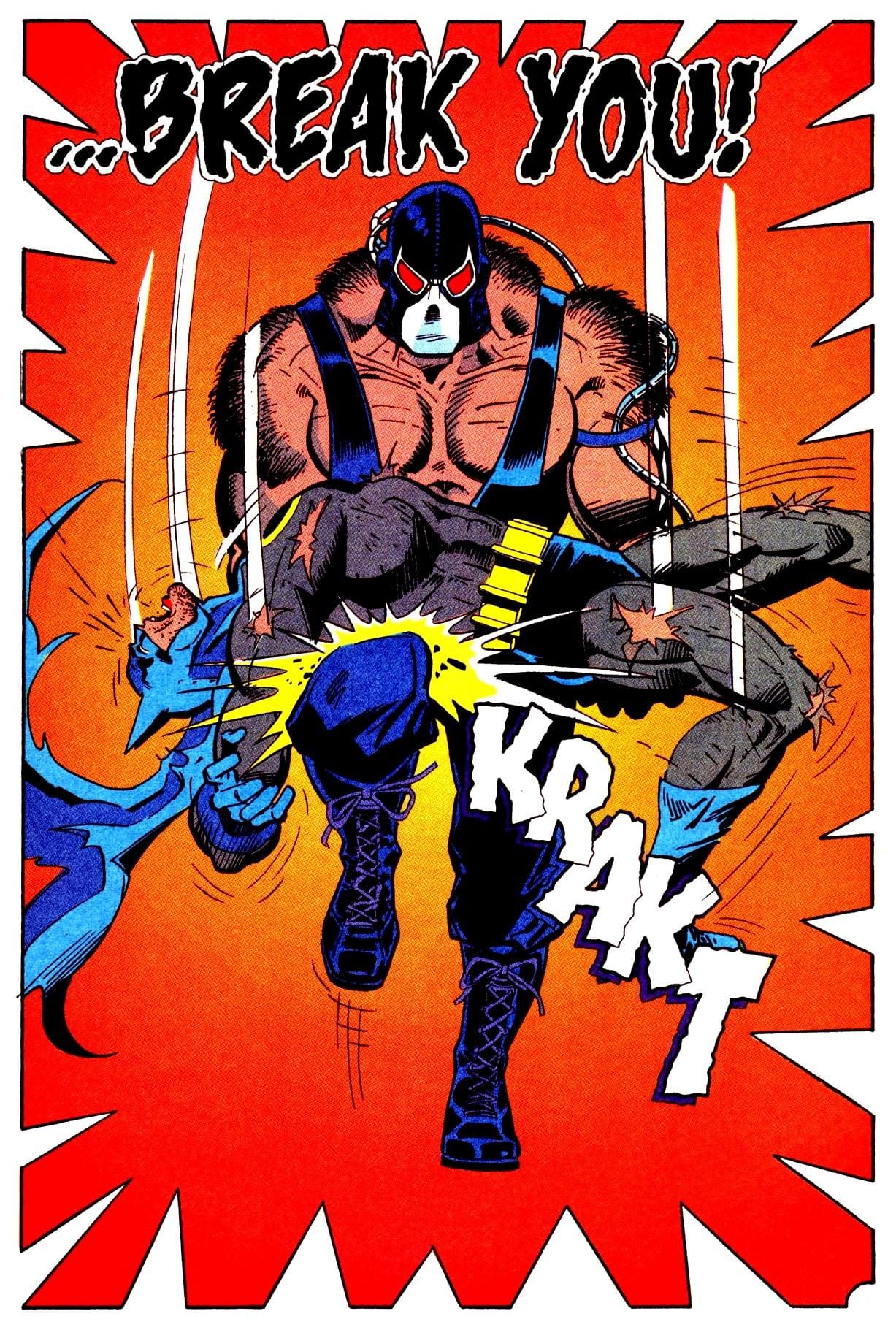
The back-breaking is therefore not only physical.
It is the collapse of Batman’s assumption that his sufficient will can hold the field together. Bane shows that a field can be overloaded until its core breaks. No amount of personal discipline solves a system designed to exhaust you before the decisive moment.
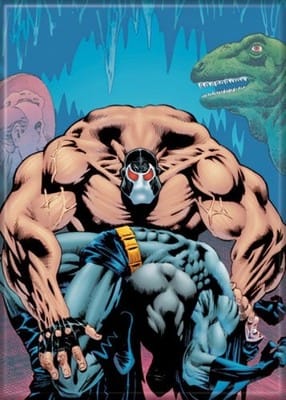
Bruce often acts as if he can bear infinite burden. Bane says: no.
Scarecrow.
Scarecrow is Batman’s fear primitive without care.
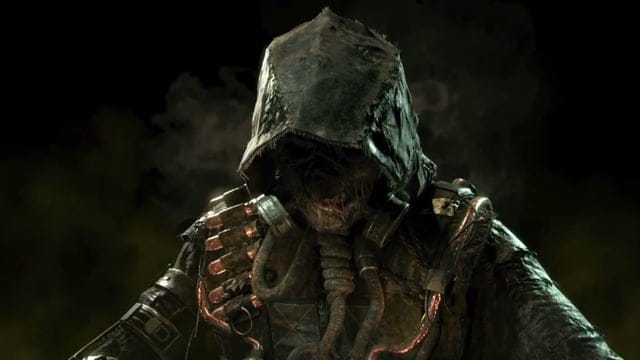
Batman uses fear as a limited field instrument. Scarecrow turns fear into the field itself. His toxin removes all interpretation, proportionality, and moral aim. Fear ceases to be a warning or deterrent and becomes a world.
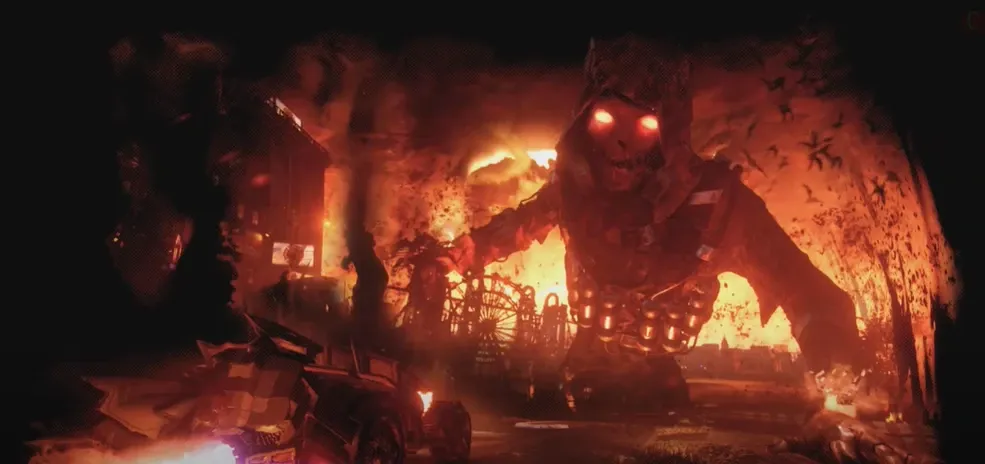
This is the same outcome Batman always risks. Batman wants criminals to be afraid of consequence. Scarecrow wants beings to drown in terror. The distinction is obvious at the extremes, but not always obvious in method.
A Batman who enjoys fear too much moves toward Scarecrow’s field.
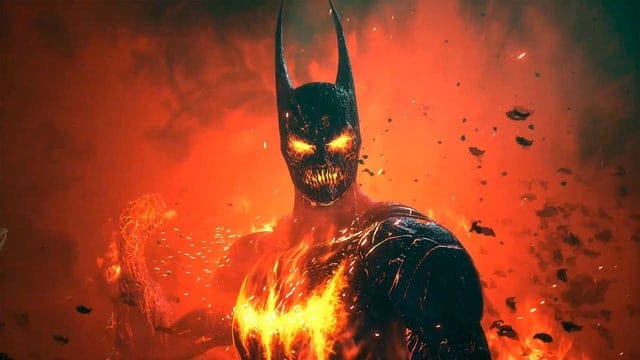
Scarecrow is equally important in that he attacks perception directly. Under fear toxin, the real field becomes unreadable. Every locus becomes a threat. Every shadow becomes a predator. Every memory becomes the present. This is distortion in chemical form.
When Batman fights the Scarecrow, he is fighting the corruption of moral perception itself.
That is why Scarecrow works especially well in origin stories. Bruce’s first task is often not physical courage, it is to establish truthful contact under fear. If fear decides the field, Batman is impossible. He becomes only another frightened man with weapons.
Batman must learn to use fear without being governed by it, or allowing it to govern Gotham.
Penguin.
Oswald Cobblepot often occupies the overlap between organized crime, aristocratic resentment, grotesque class performance, nightclub legitimacy, political ambition, and underworld commerce.
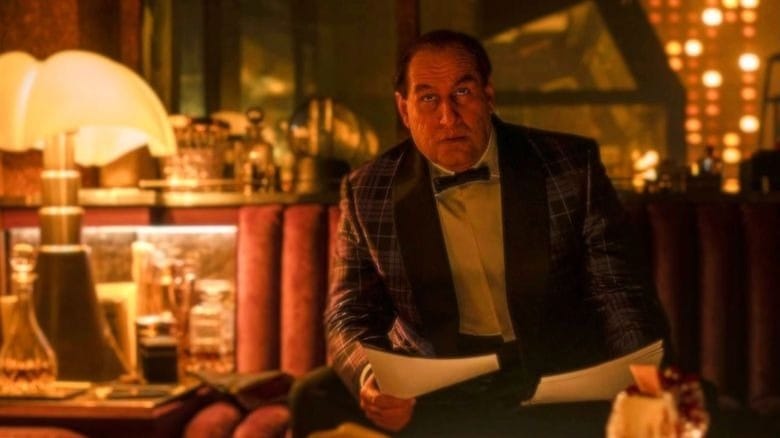
Unlike Joker or Riddler, Penguin often wants continuity. He wants business and status. He wants Gotham to remain corrupt in stable ways.
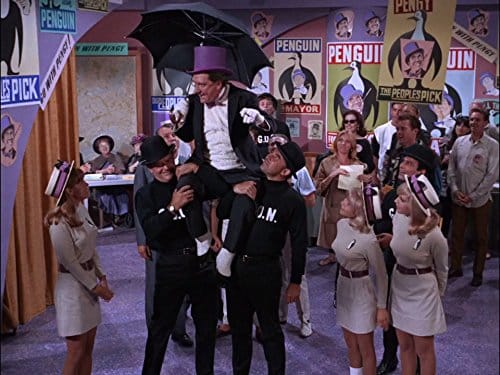
This makes him more institutionally revealing than he first appears.
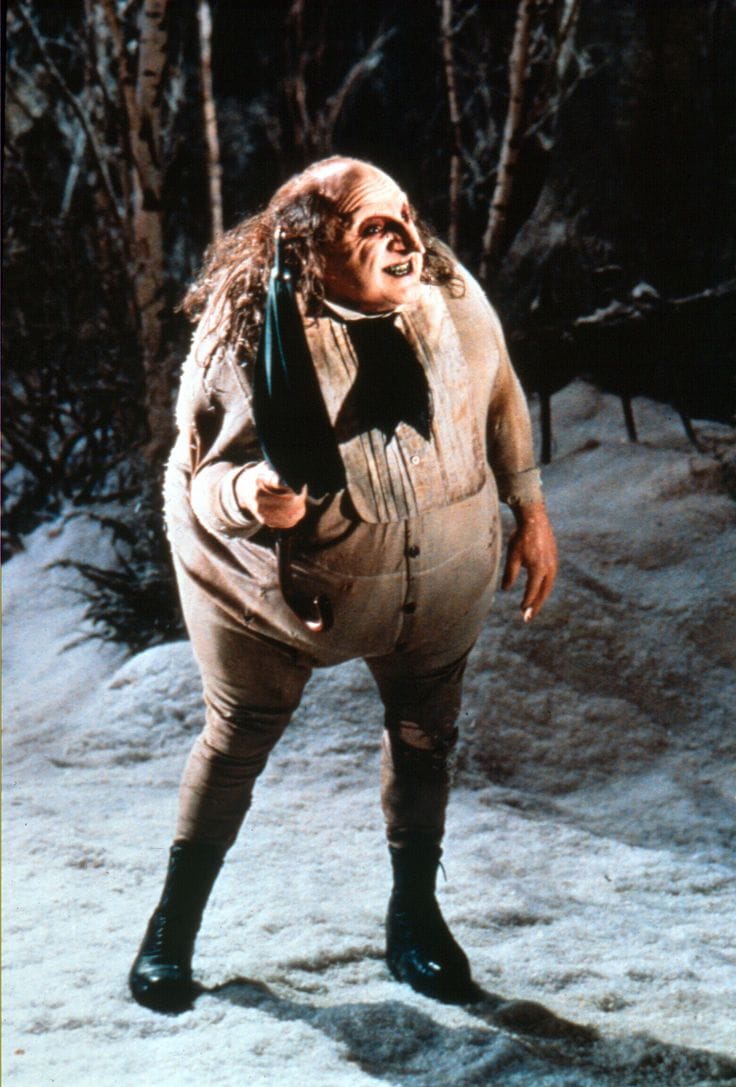
Penguin is not usually trying to destroy Gotham or teach it some kind of lesson. He is trying to own a profitable piece of its dysfunction like everyone else.
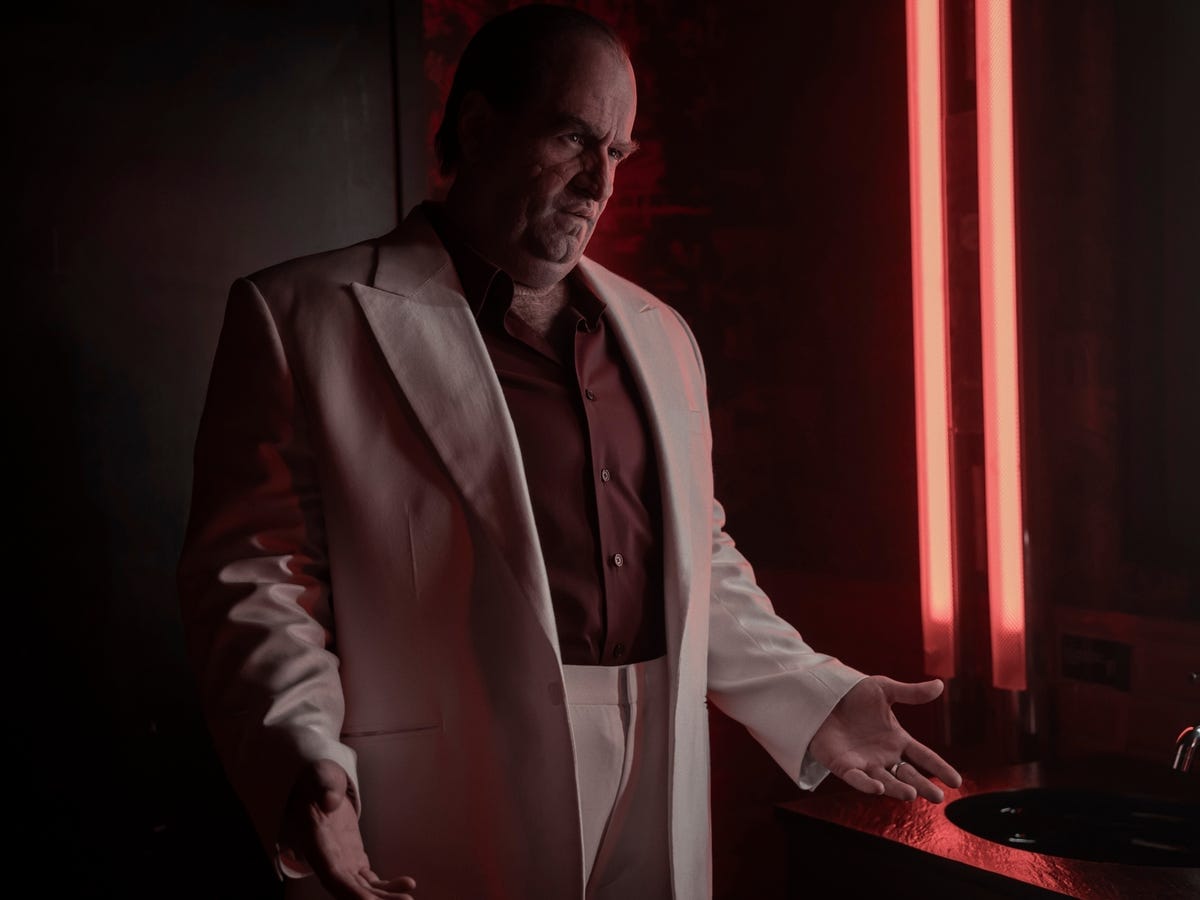
Many real harms look more like Penguin than Joker. They do not announce their philosophy to the city. They run clubs, launder money, buy officials, manage supply chains, exploit weakness, and become part of the city’s normal operation. Gotham’s corruption is not always spectacular. Sometimes it is administrative, economic, and socially accepted.
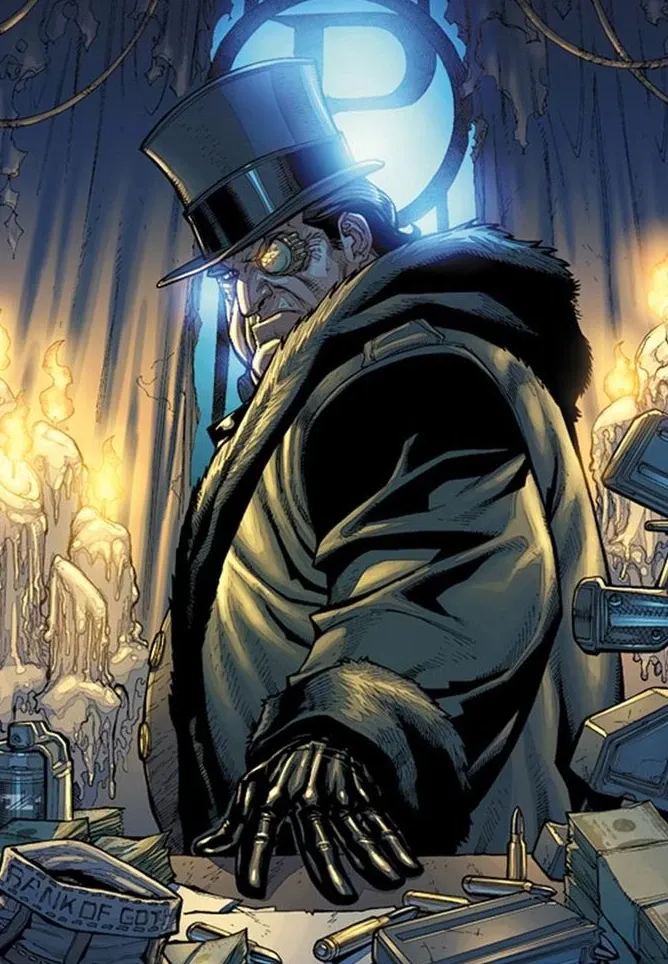
Batman’s challenge with Penguin is to see beyond the gimmick and into the network.
If Penguin is treated only as a funny bird criminal, the field vanishes.
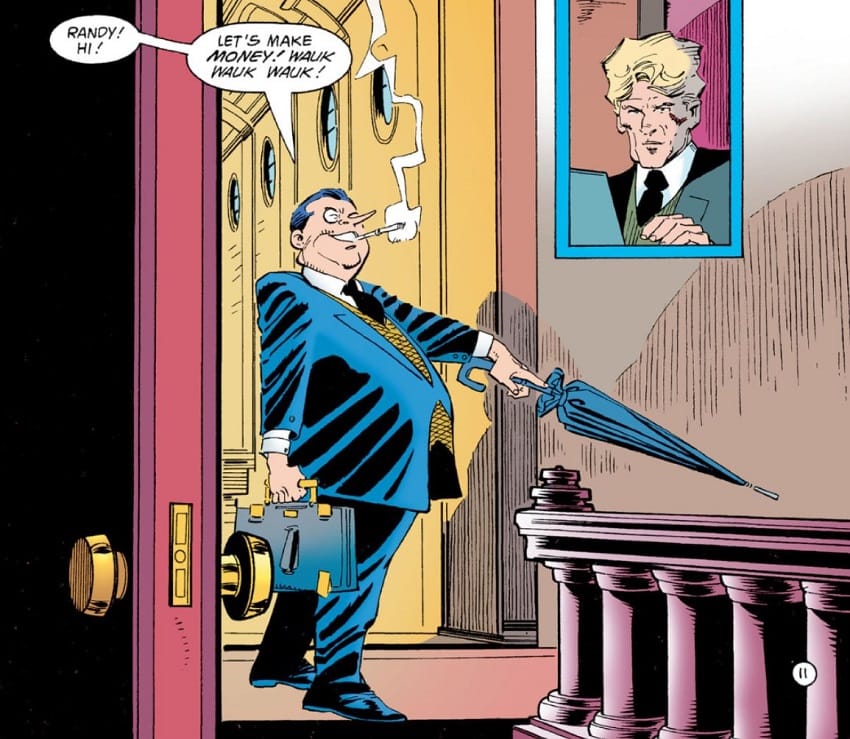
If he is treated as a node in elite-criminal continuity, he becomes one of Gotham’s most realistic and compelling villains.
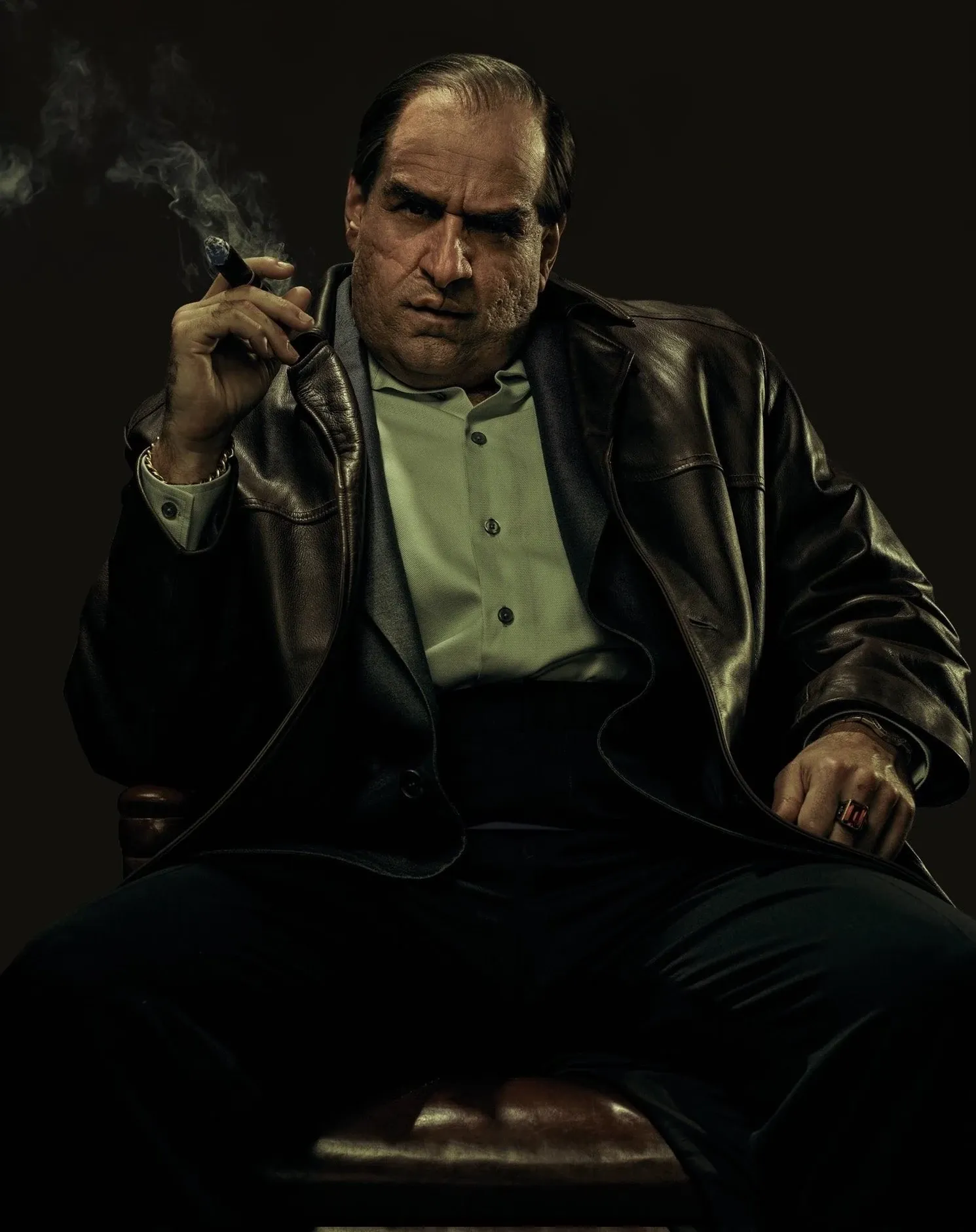
He shows how crime survives by becoming useful.
Catwoman.
Catwoman shares Batman's place on the threshold of legality, and reminds him that order does not mean good.
Selina Kyle exposes the fact that law and justice do not map perfectly in Gotham. She steals. She lies. She manipulates. She breaks rules.
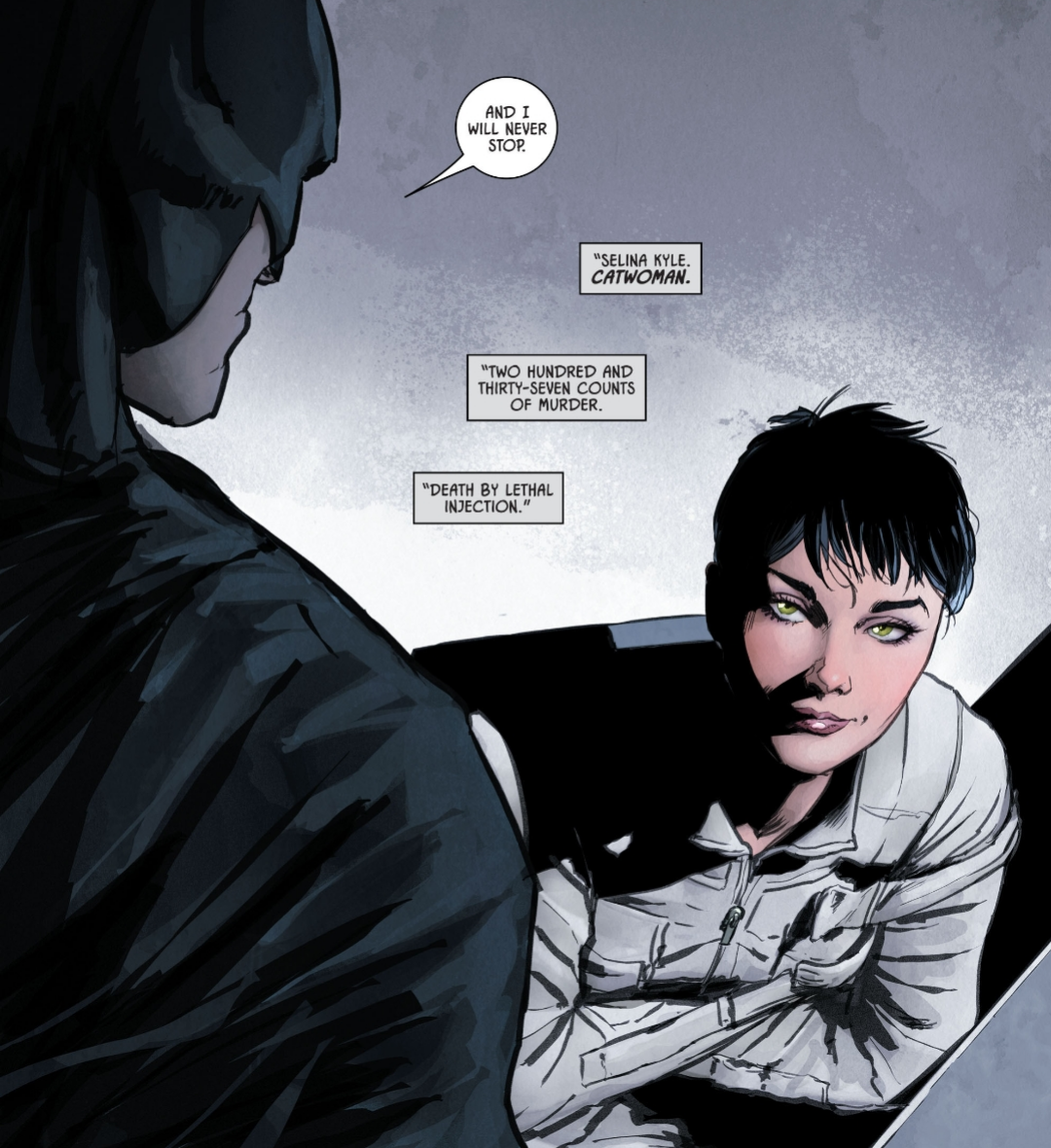
But her criminality often emerges from a field of class injury, survival, gendered danger, elite hypocrisy, and solidarity with those Gotham ignores.
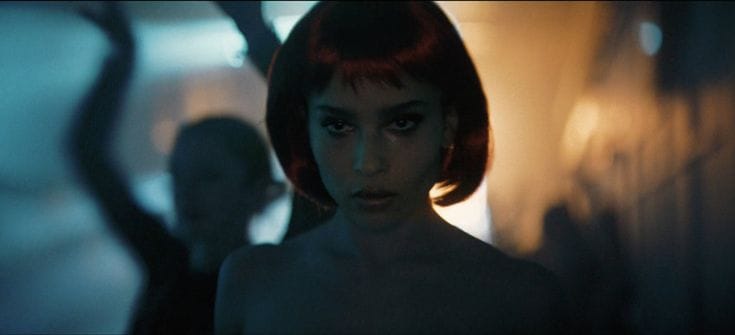
Catwoman forces Batman to ask whether property is always the morally relevant boundary in life. If a corrupt elite hoards wealth extracted from Gotham, is theft from them the same as predation against the vulnerable?
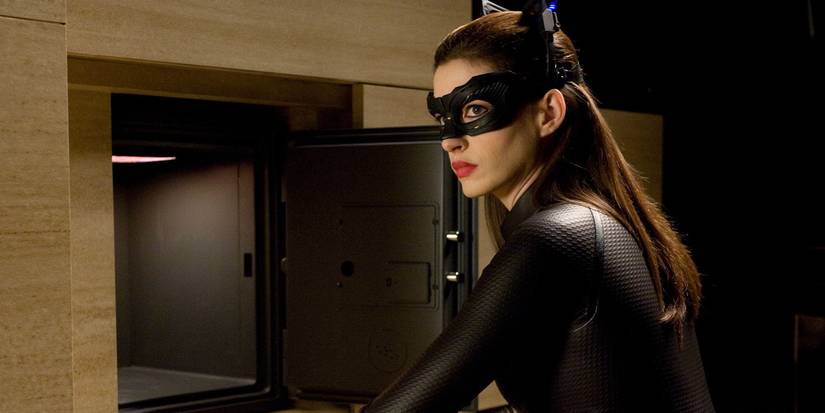
If a woman steals to survive, is Batman’s response the same as his response to Penguin’s network?
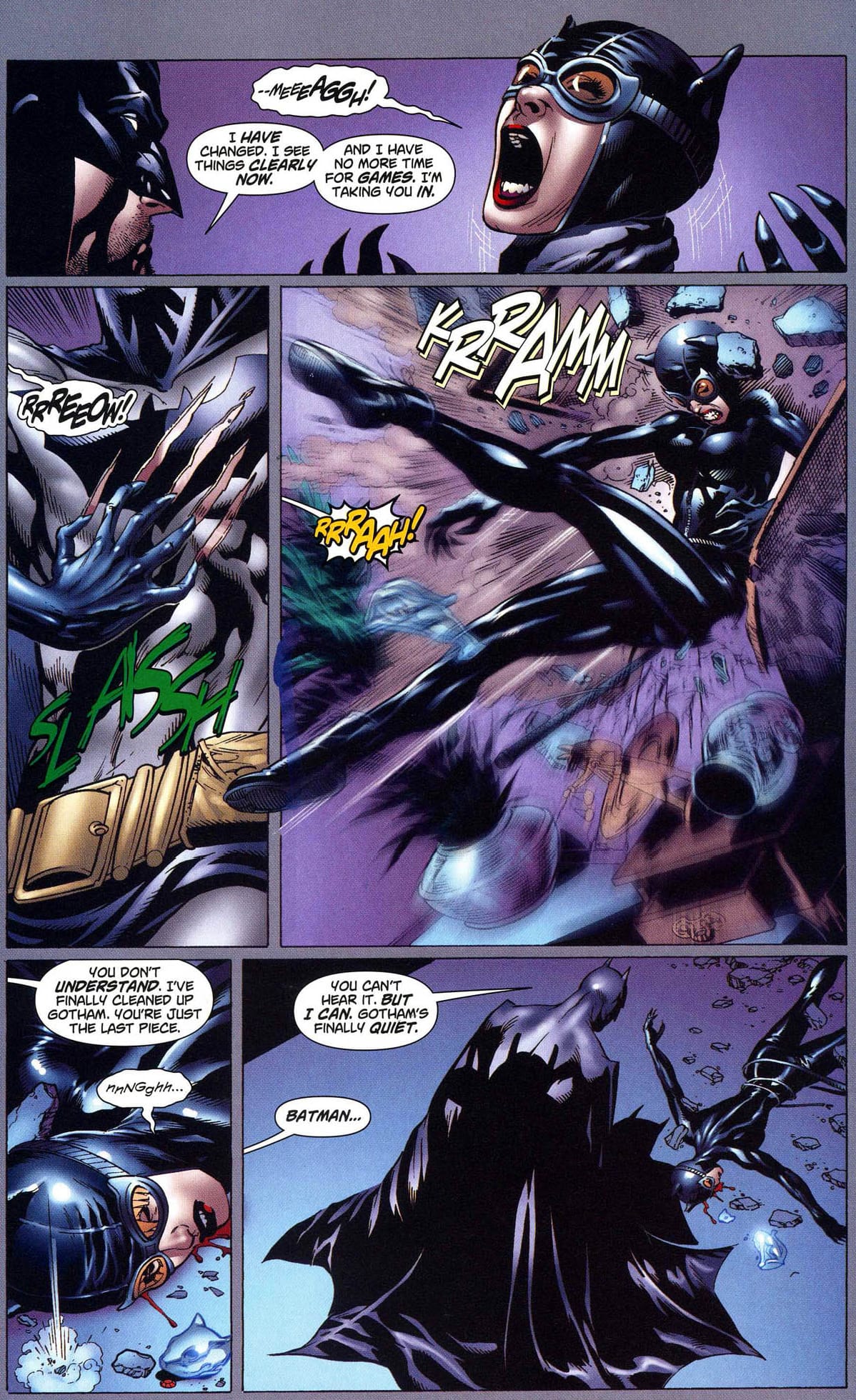
If law protects stolen wealth, what does law mean?
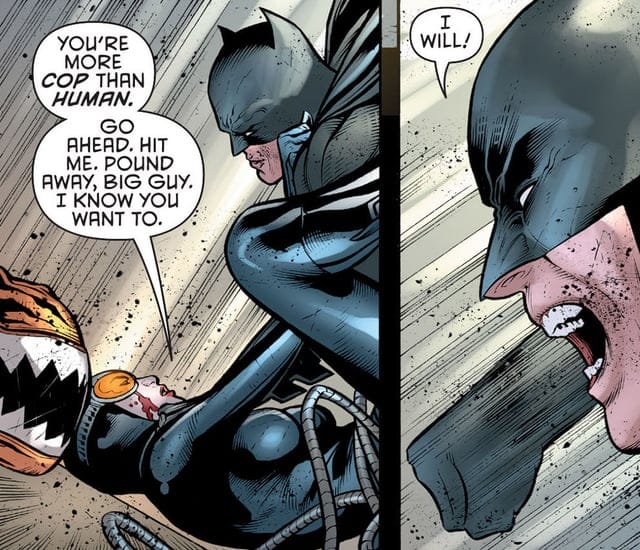
Catwoman also tests Batman’s rigidity.
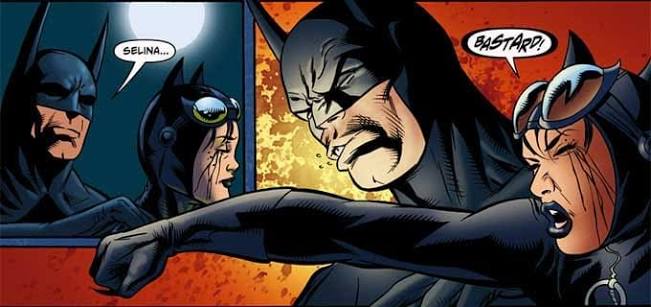
She lives in ambiguity much better than he does. She can act playfully where he is grave. She can see hypocrisy where he sees rules and order. She can see and touch the human Bruce beneath the method. Their relationship matters because she is often the one person who can ask whether Batman’s moral order is secretly a costume over fear.
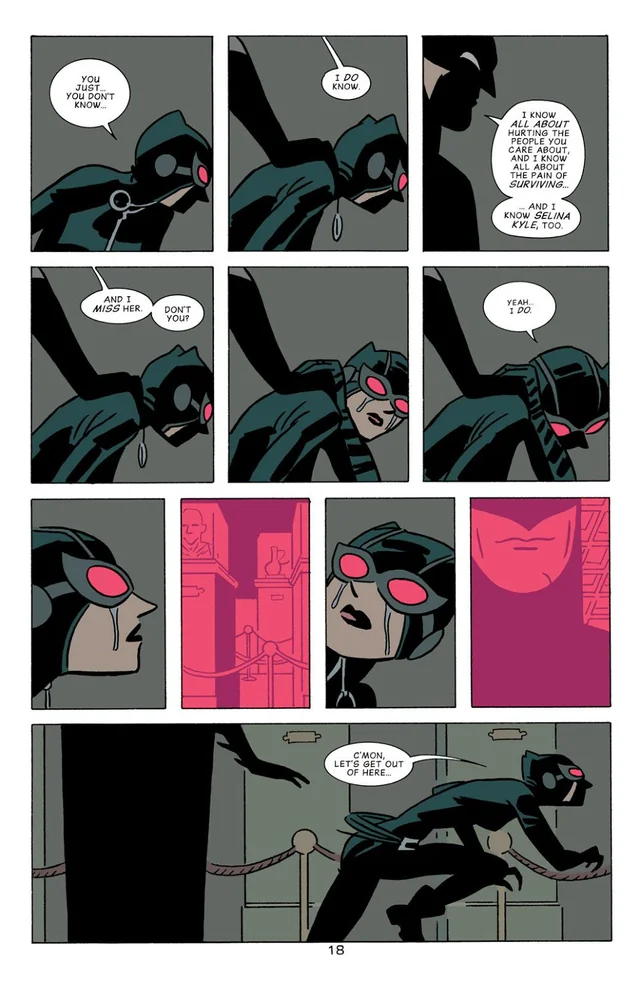
However, Catwoman can also romanticize her own harm.
Survival does not make every act liberatory. Theft can still burden innocent people.
Manipulation can still narrow trust. Self-interest can become predation.
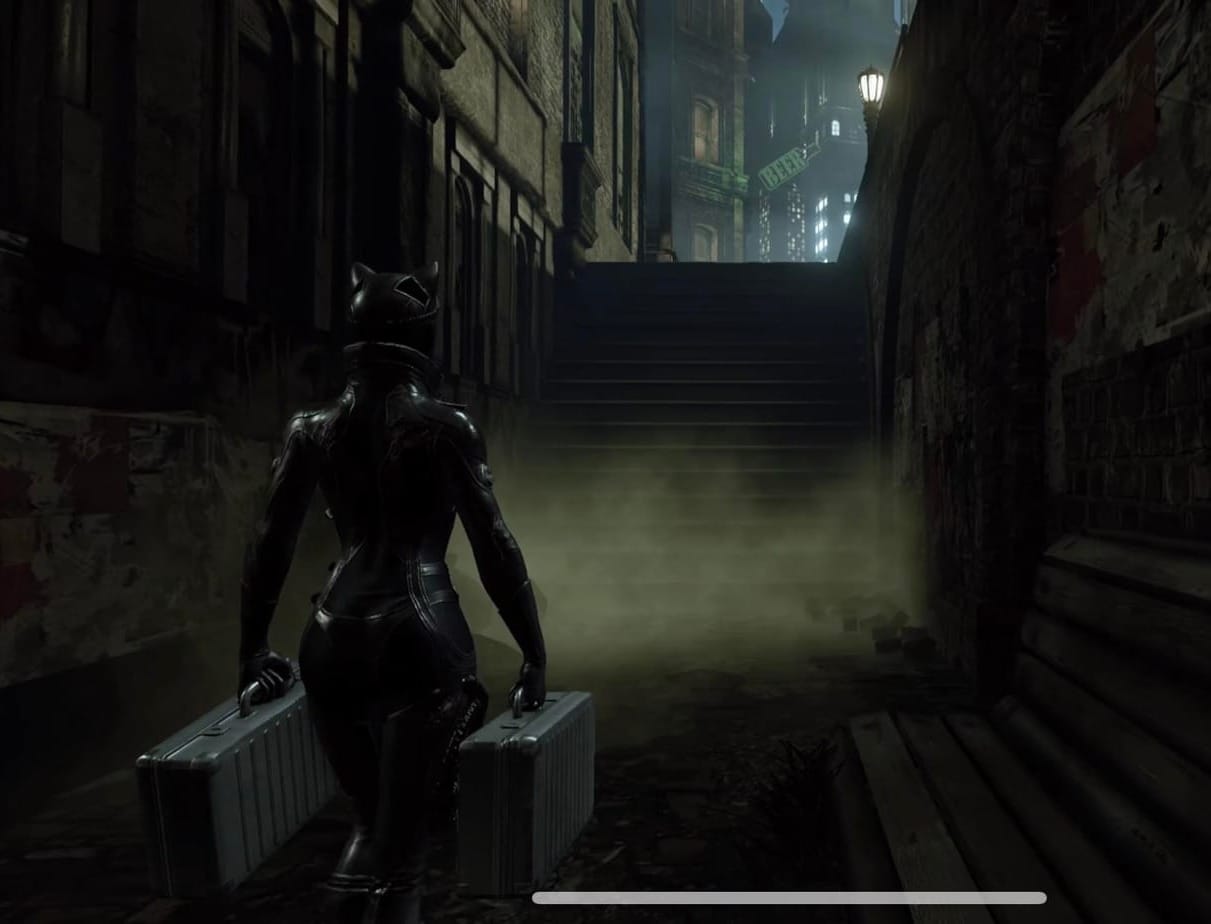
The best Catwoman stories keep this tension alive. She is never Batman’s moral superior, nor just a thief.
Harley Quinn.
Harley Quinn is Gotham's personified repair problem.
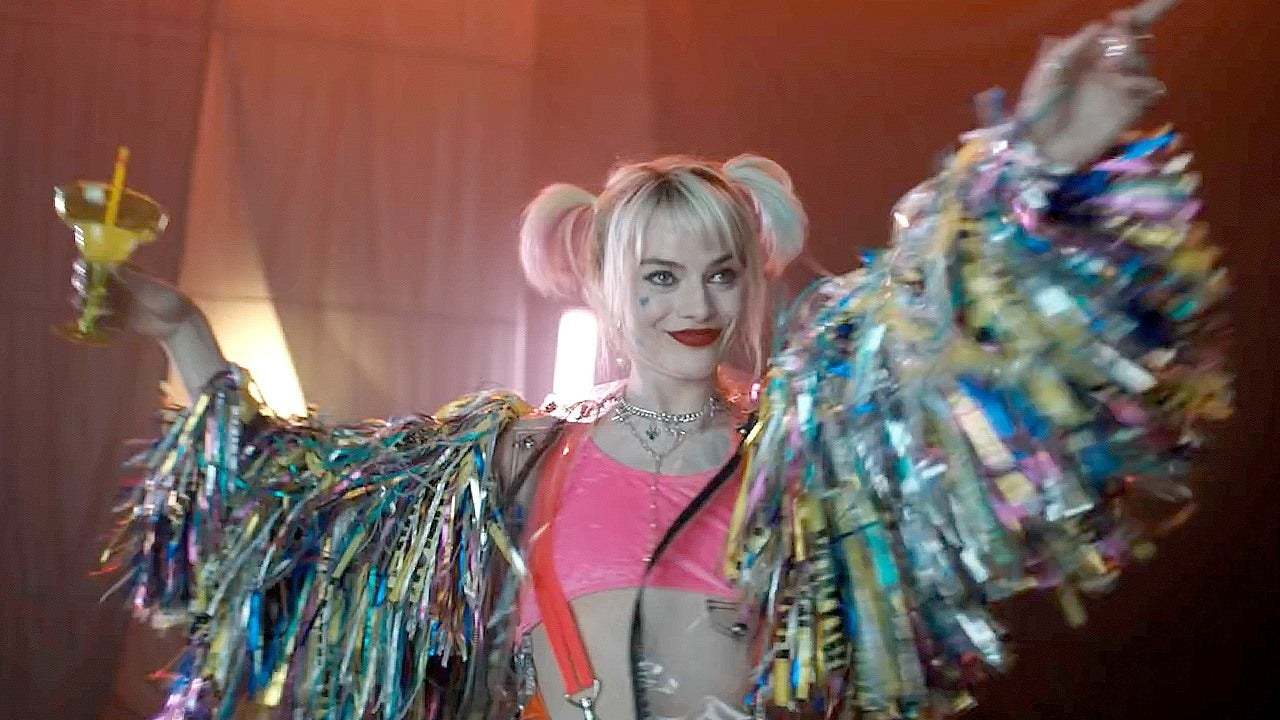
Originally, she is the Joker field’s most visible secondary victim and participant.
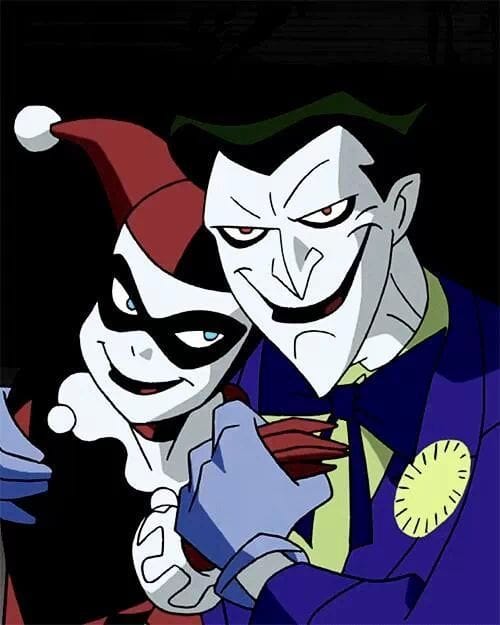
She is abused, manipulated, diminished, rewritten around Joker’s needs.
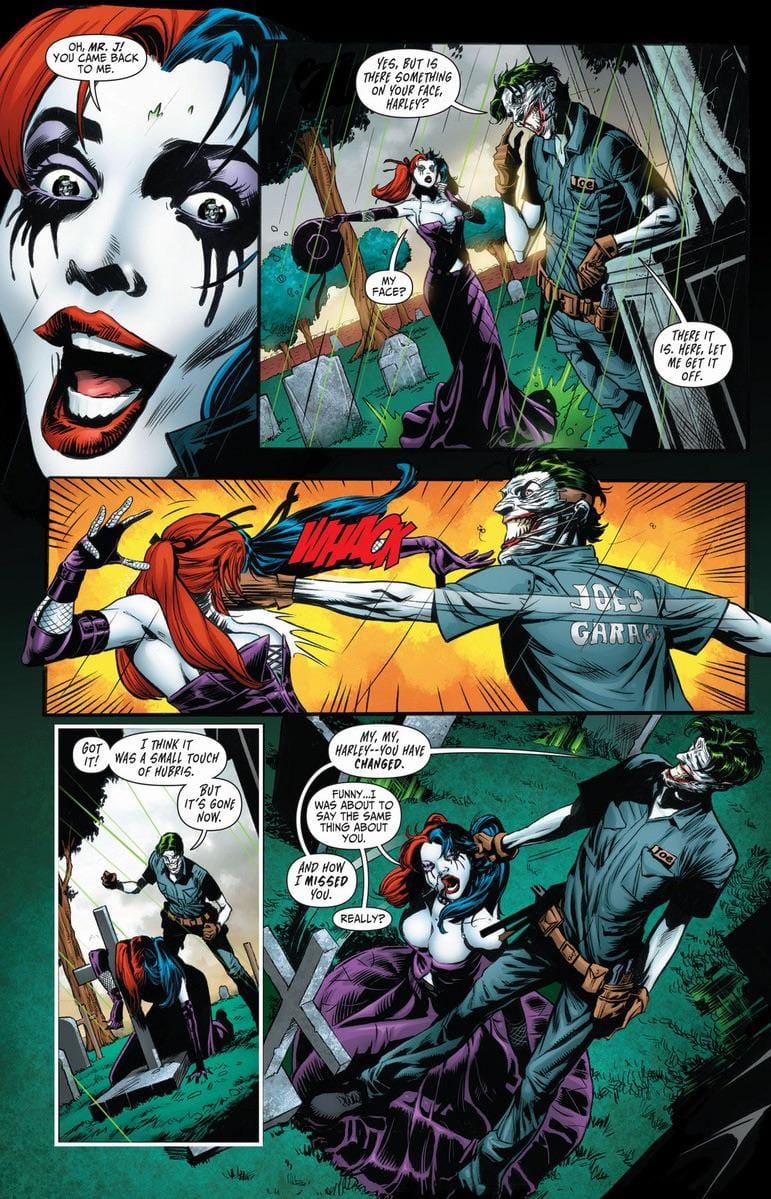
She also harms people.
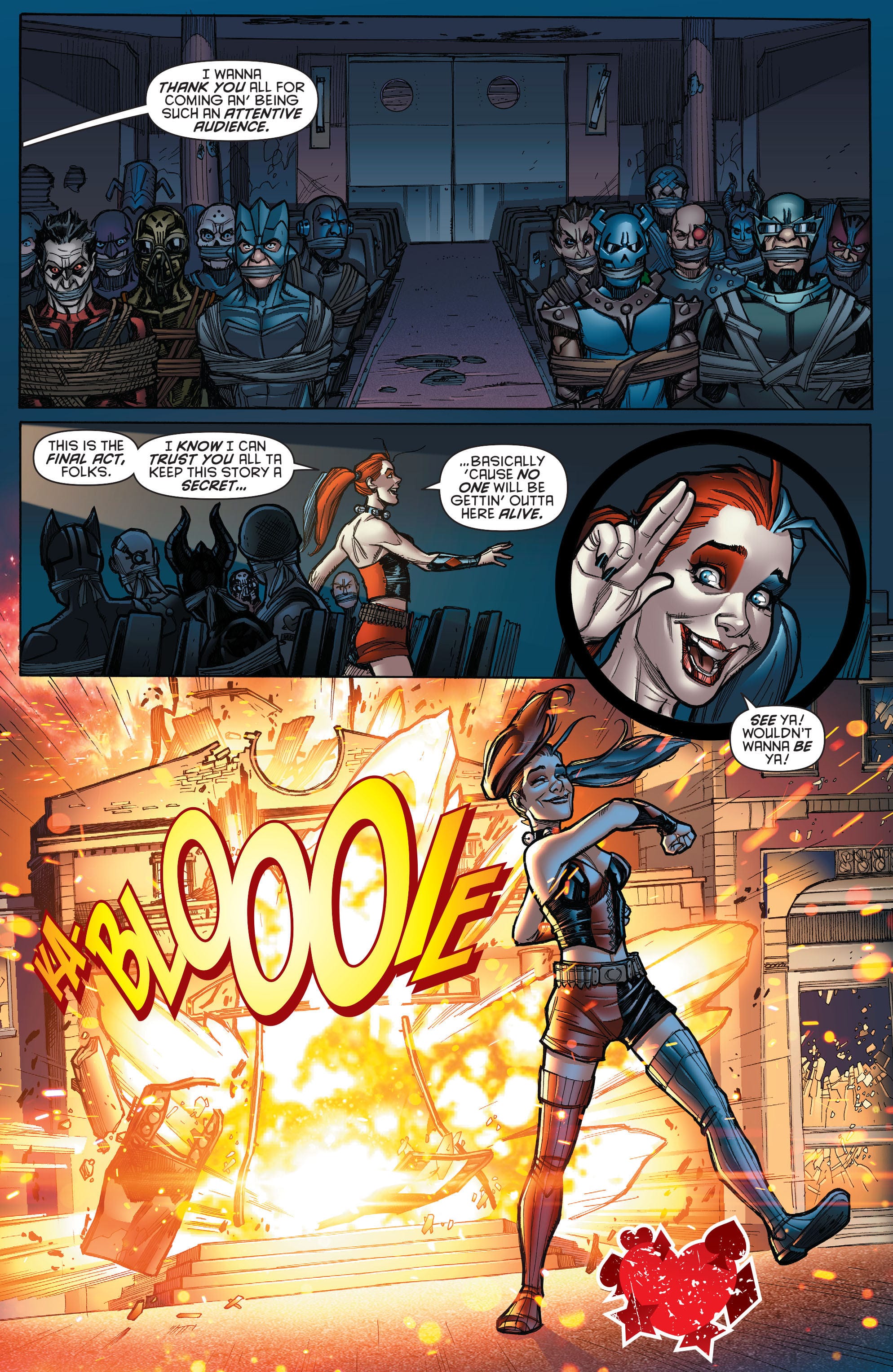
She is not morally erased by victimhood, and her victimhood is not erased by her agency.
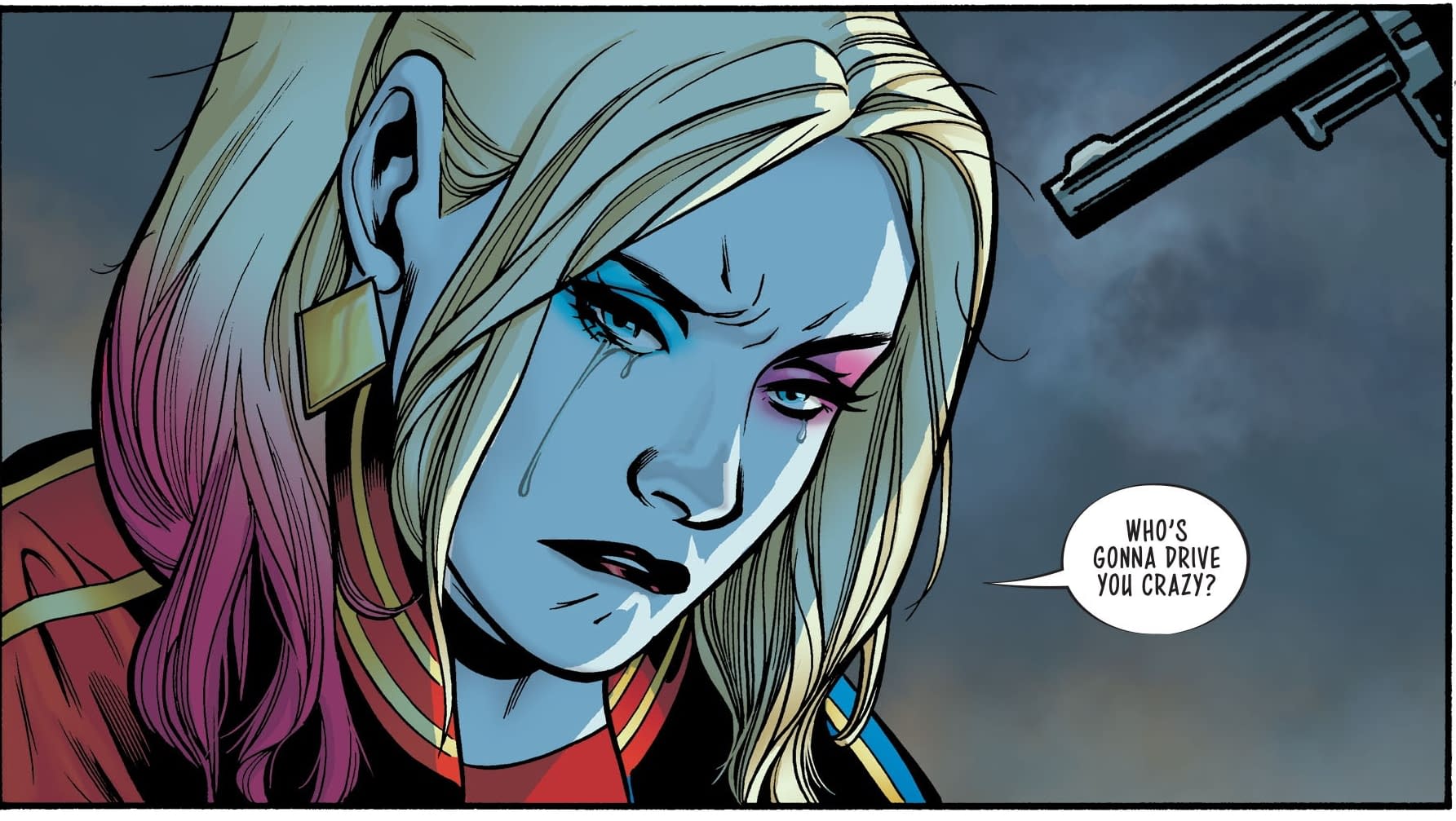
Harley’s best modern versions are about exit.

How does a locus leave a field that trained it to confuse love with harm?
How does a person become answerable for what they did inside that distortion without being permanently defined by the person who distorted them?
How does repair happen when the self was partly built inside abuse?
This makes Harley one of the most important post-villain loci in Gotham, and representative of its overall direction. She shows that repair may mean unstable, partial, funny, violent, messy emergence from someone else’s narrative control, instead of a narrative of innocence.
Batman’s treatment of Harley is always a test.
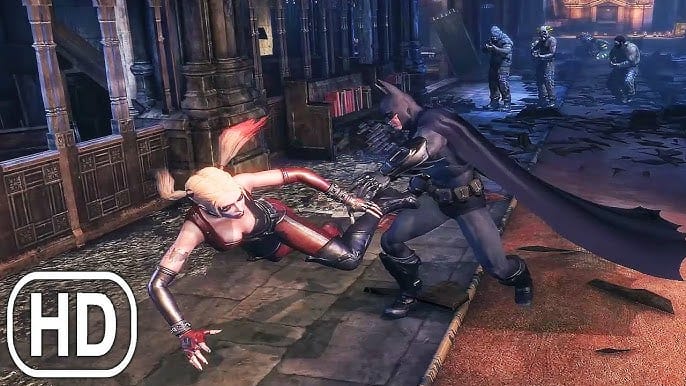
If he sees only Joker’s accomplice, he misses the abuse field. If he sees only Joker’s victim, he misses her victims.
He has to hold them both in mind, while still enabling her exit.
Harley also breaks Gotham’s tonal prison. She is absurd, but her absurdity is how she survives her own wound.
She refuses the solemnity that Batman sometimes mistakes for the mark of seriousness.
Clayface.
Clayface is an identity without a stable form. He reflects Batman's own potential for discontinuity between his personas directly back at him.
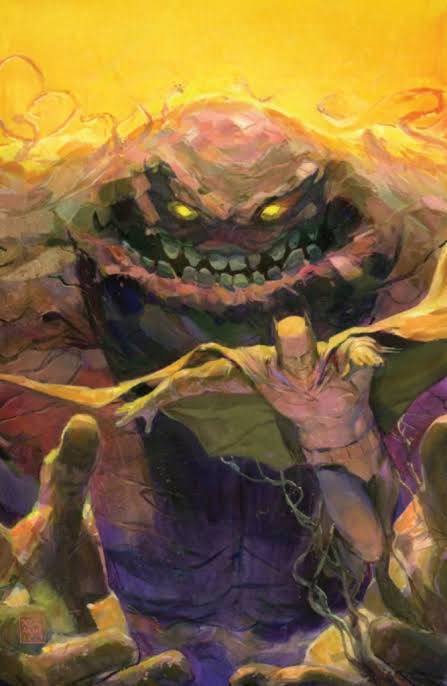
He is one of the best rogues for the Unknown Locus problem, though Batman stories do not always use him in that alien way.
Clayface asks what remains when body, face, role, and self-presentation become unstable.
Is the locus the original actor?
The clay body?
The memory pattern?
The performance?
The desire to be seen?
The resentment at being reduced to monsterhood?
In the strongest versions, Clayface is a person whose relation to form has become completely catastrophic.
He can become anyone and is therefore trapped by the loss of being any someone in particular.
When Clayface arrives, Batman is not just looking for a doppelganger in his field now. He has to restore truth-contact in a clay field where stable appearance and self-understanding has become unreliable. Clayface is an epistemic nightmare, more than any form of body horror.
Clayface also reveals the violence of social recognition. If no one can see you as you are, what does that do to your future?
If your body becomes a tool others fear, what repair path remains?
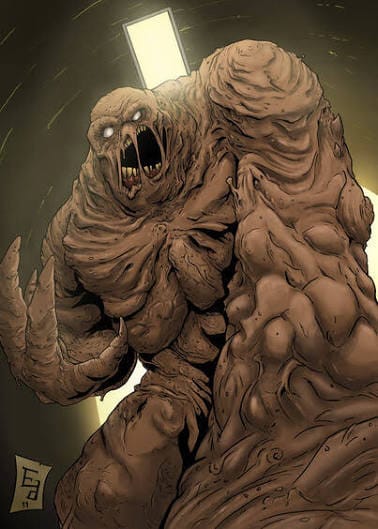
How many harms become reachable when identity can be counterfeited?
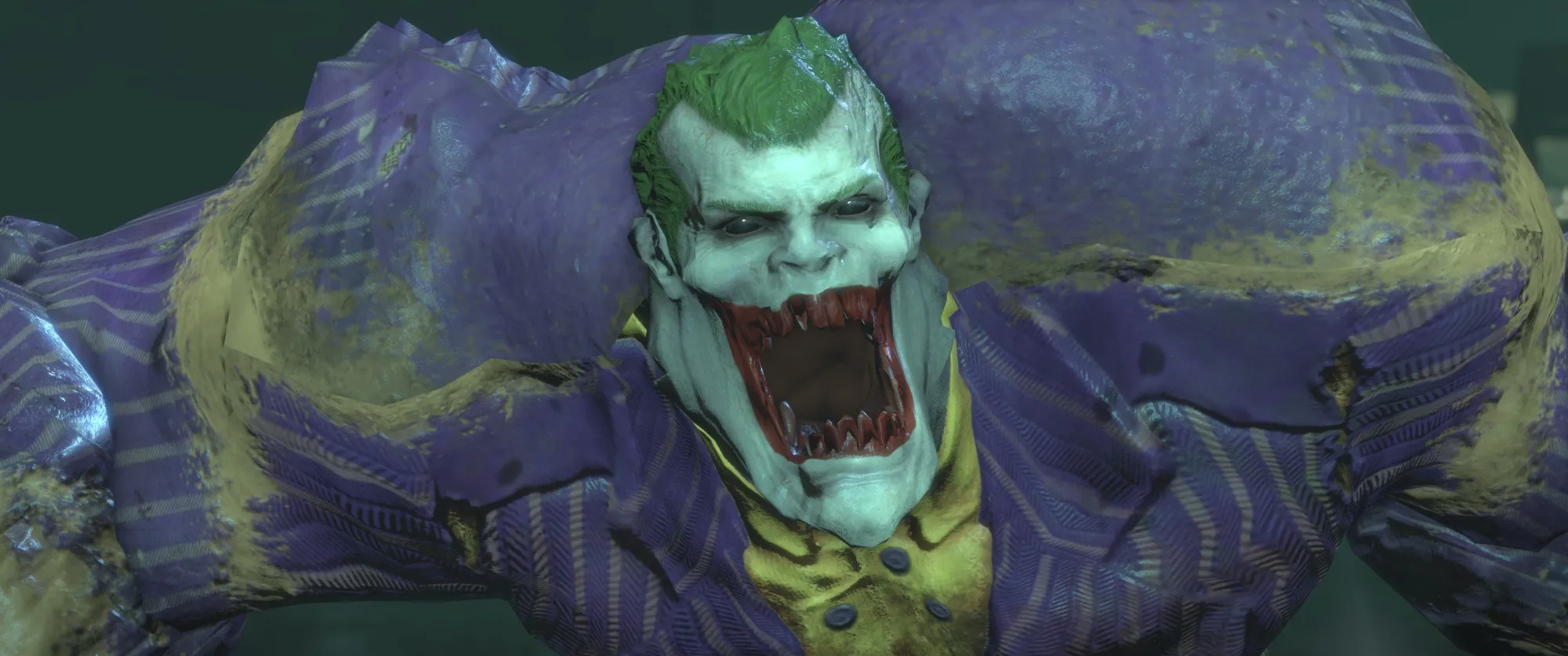
A truly moral Batman must never miss Clayface's tragedy and disincorporation.
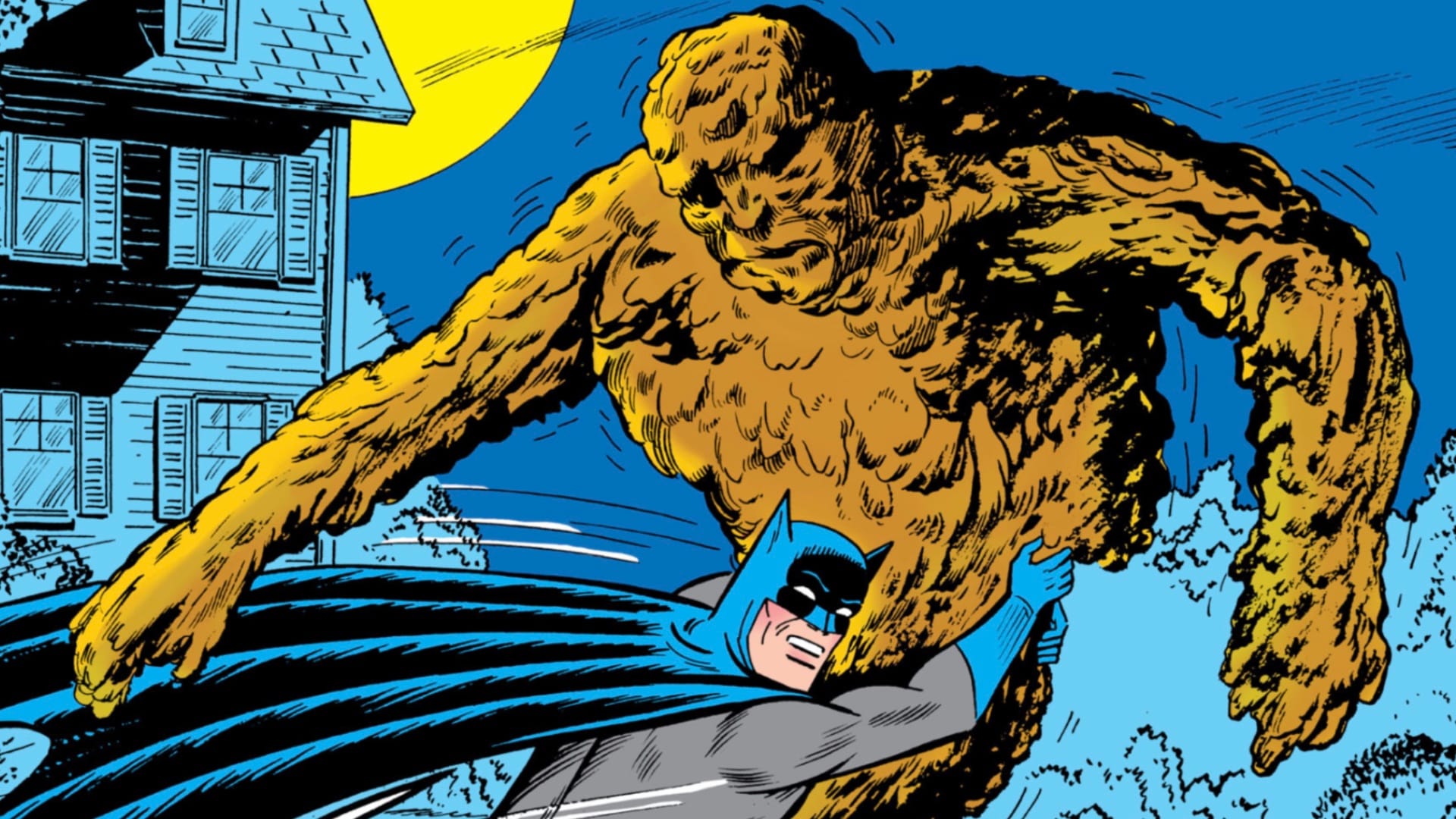
Man-Bat.
Man-Bat is the pursuit of truth without sufficient anti-erasure caution. He also represents knowledge that should be forbidden because of its field effect.
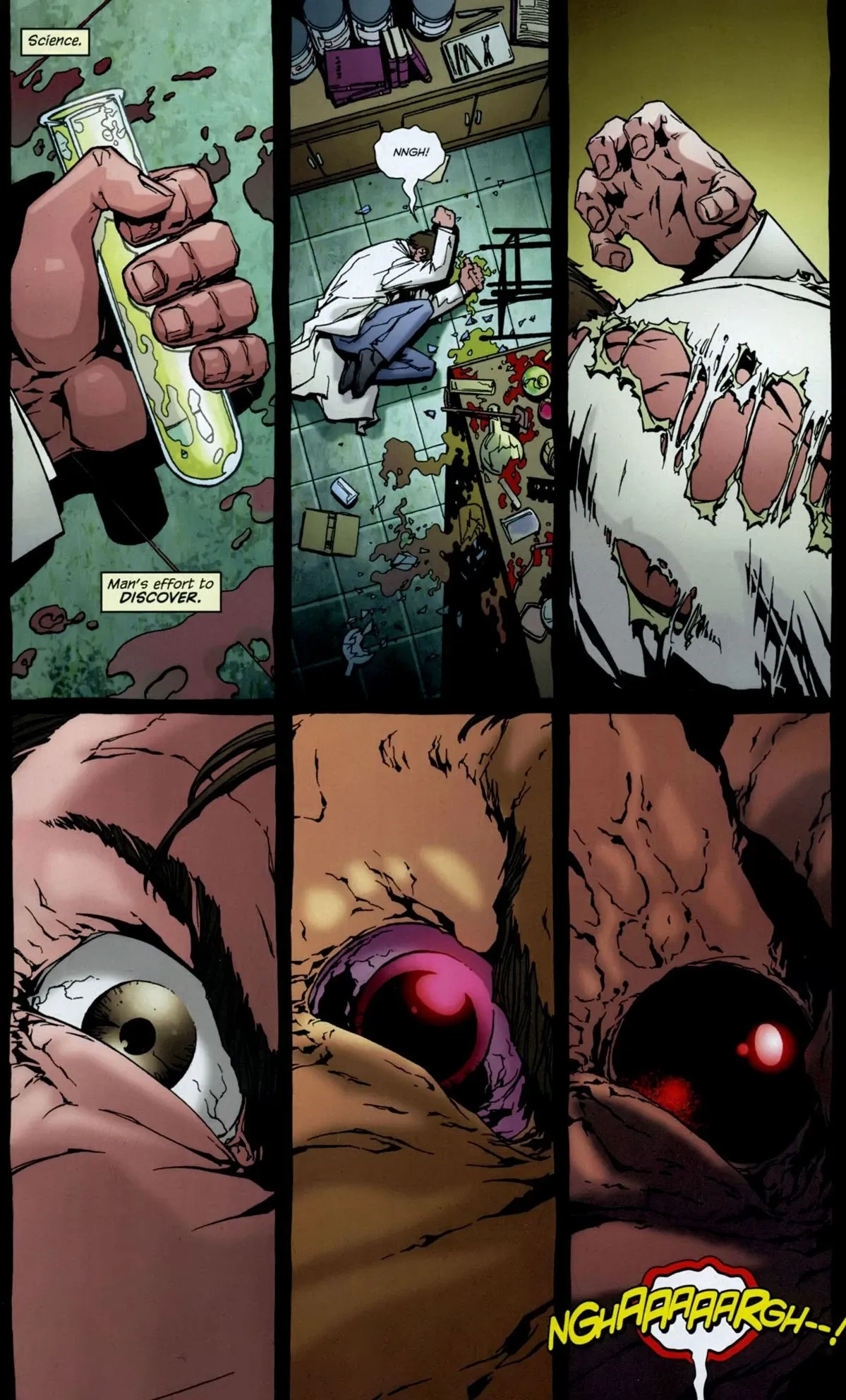
Kirk Langstrom tries to alter human limitation and becomes a dangerous hybrid field known as Man-Bat.
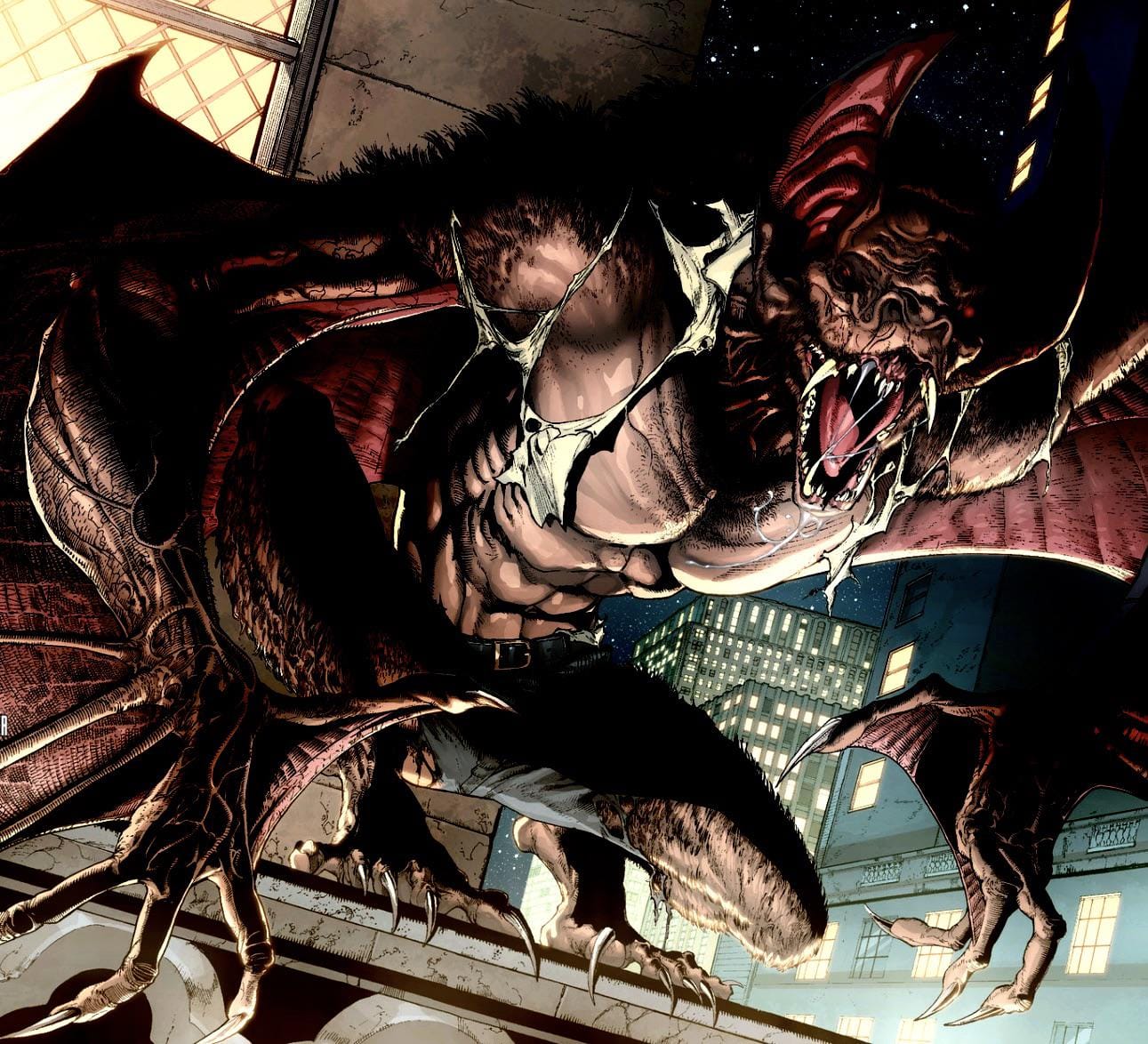
The case is usually treated as The Fly-adjacent failed experiment horror, but Man-Bat is really more about transformation of structure before moral understanding of that structure.
A human locus becomes entangled with animal form, instinct, and altered cognition. The question now is not “be he monster or man?”
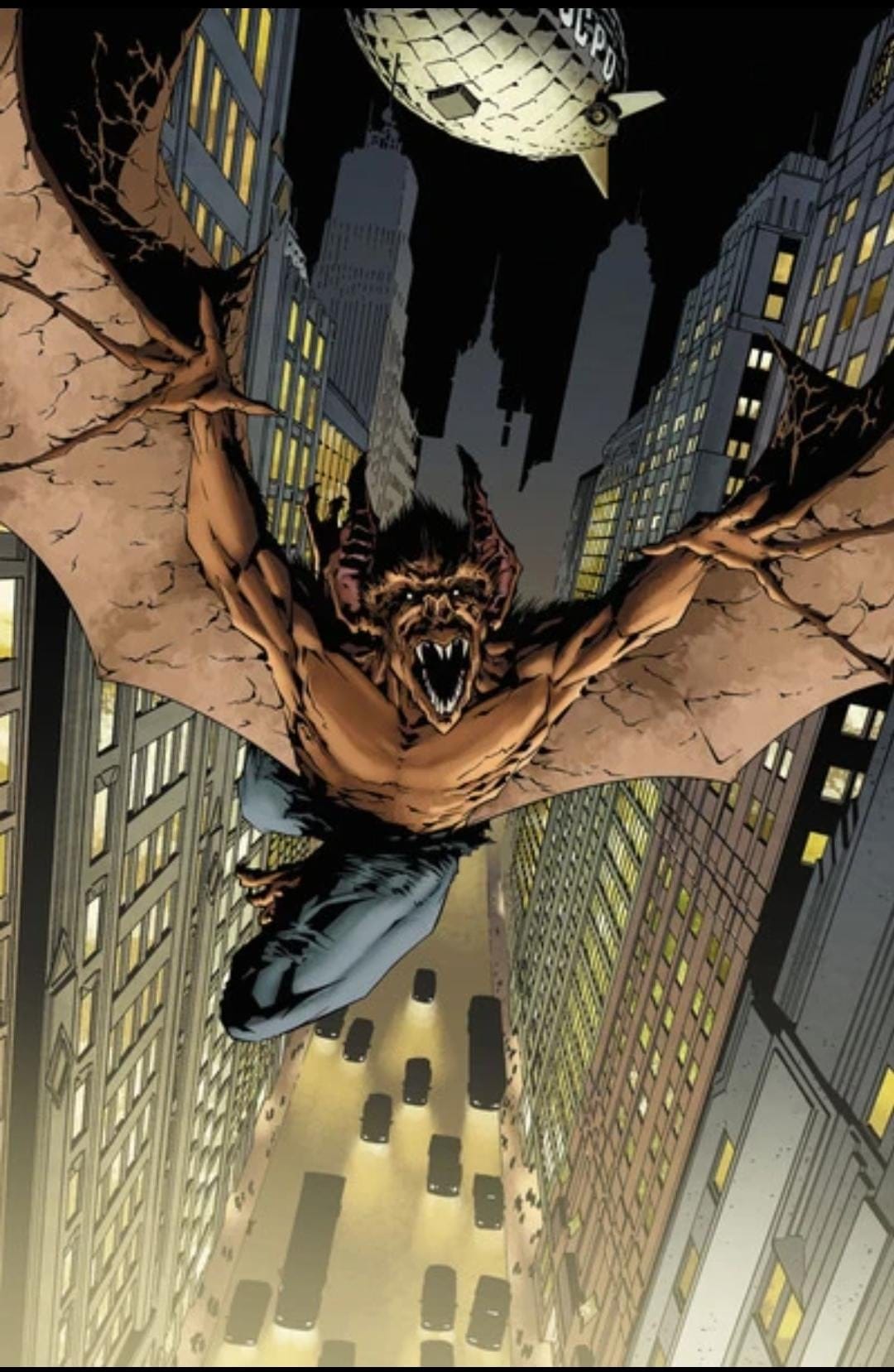
It is whether the original locus remains, whether a new locus has emerged, and what repair is possible without erasing either. It's now time to look for locus-signals.
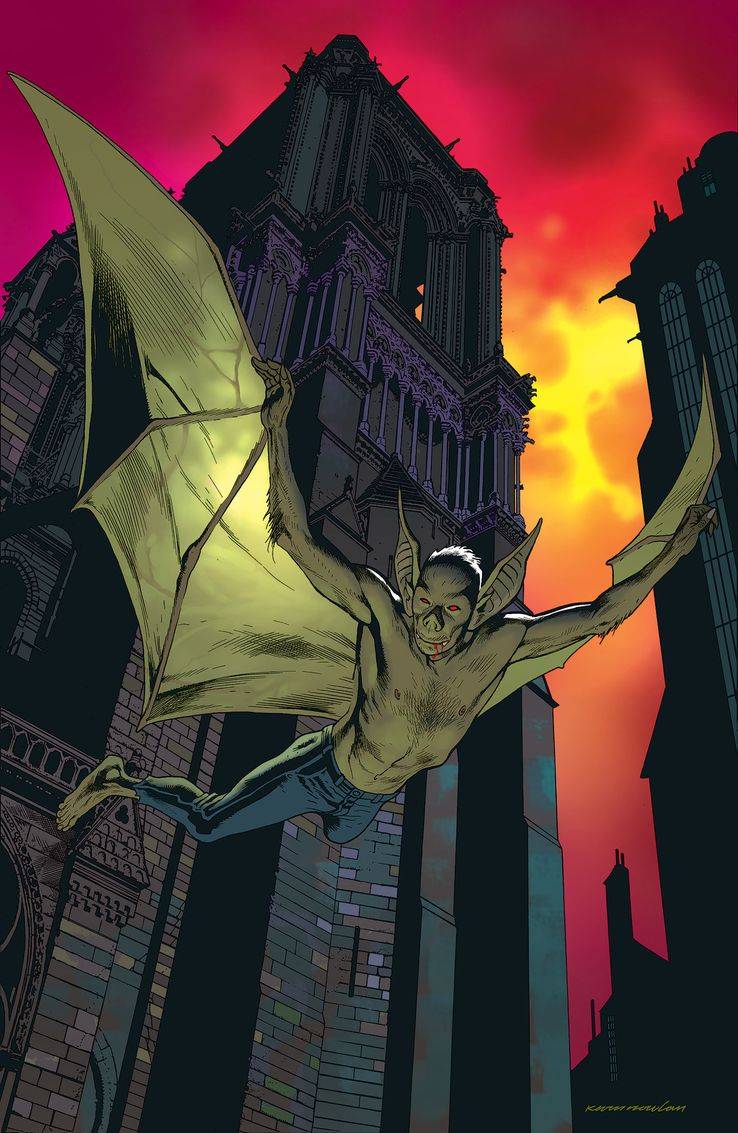
Batman’s response to Man-Bat should always be careful containment and restoration, not punishing the beast. This is another Unknown Locus.
That silent creature in the sky may be a dangerous animal, a transformed scientist, a suffering hybrid, or all three nested. Acting too slowly risks its victims. Acting too violently may close the remaining path back to Langstrom.
Killer Croc.
Killer Croc is a body Gotham threw away.
At his worst, he is written as a simple sewer monster.
At his best, he is a person whose bodily difference, poverty, abuse, exploitation, and social rejection have severely narrowed his future until monstrosity becomes the only role the field offers him.
This doesn't excuse his violence, it just explains the structure of it.
Croc often lives literally below Gotham, in sewers and hidden spaces, because the city has no place for him except beneath itself where it tries never to look. He is what Gotham flushes away and then fears when it returns unexpected.
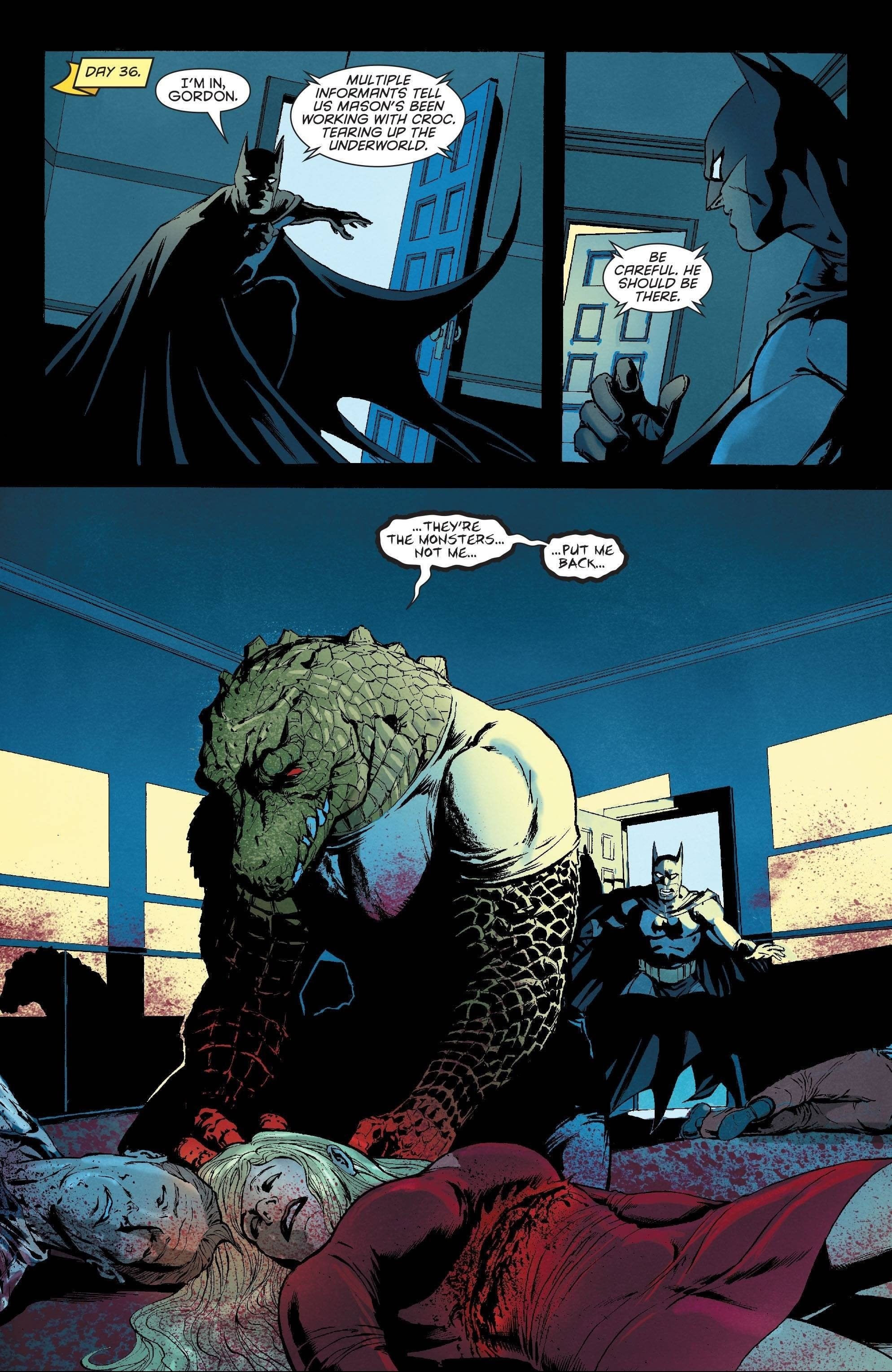
If Batman treats him only as animal threat, he repeats the field’s dehumanization. If he ignores the danger, he fails the Croc's victims.
Croc is a reminder that some loci are made monstrous mostly by the way the field reads their bodies.
Mad Hatter.
Mad Hatter is a coercive narration fantasy.
Jervis Tetch wants a world where other minds must comply with his story. Mind control technology is the obvious harm, but the deeper harm is his narrative sovereignty. He refuses the independent future of others by forcing them into roles inside his preferred fiction made extant.
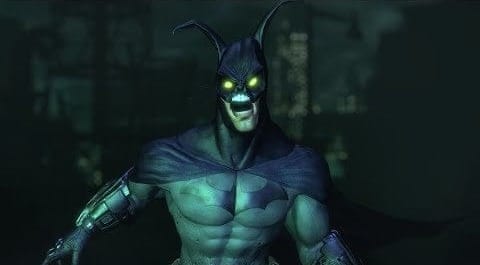
That makes him far more relevant to Batman than he first appears.
Batman also uses theater. Batman also imposes symbols to enable his preferred world. Batman also changes how others experience a room.
The difference is consent, purpose, and future-space. Batman’s theater should stop predation and reopen agency.
Mad Hatter’s theater closes agency so the world will stop resisting him. Hatter is what imagination becomes when it cannot tolerate other loci.
A fantasy that requires mind control is not play.
Hush.
Hush is envy weaponized through surgical and narrative replacement.
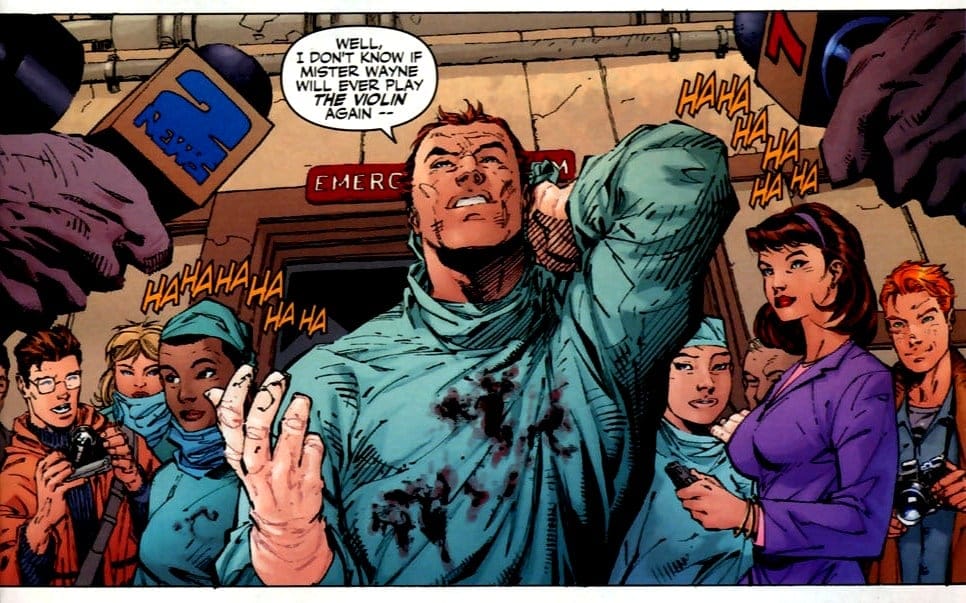
Unlike other rogues, Thomas Elliot attacks Bruce’s personal field. He is not only a physical threat, he is direct resentment against the Wayne life, Wayne body, Wayne inheritance, Wayne history; the Wayne face.
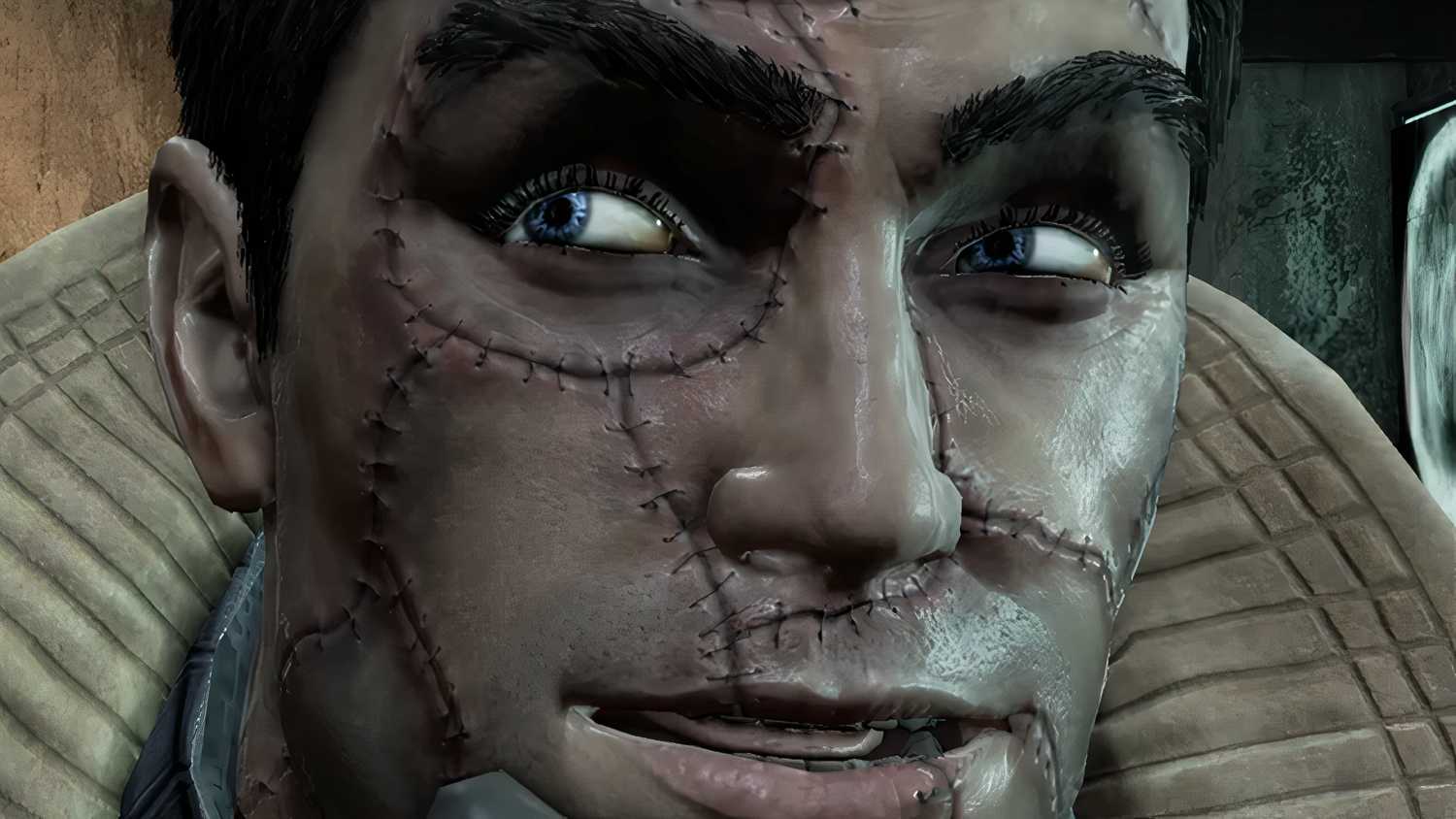
In Hush stories, identity is not only who someone is; it is what can be manipulated, impersonated, surgically altered, and narratively invaded.
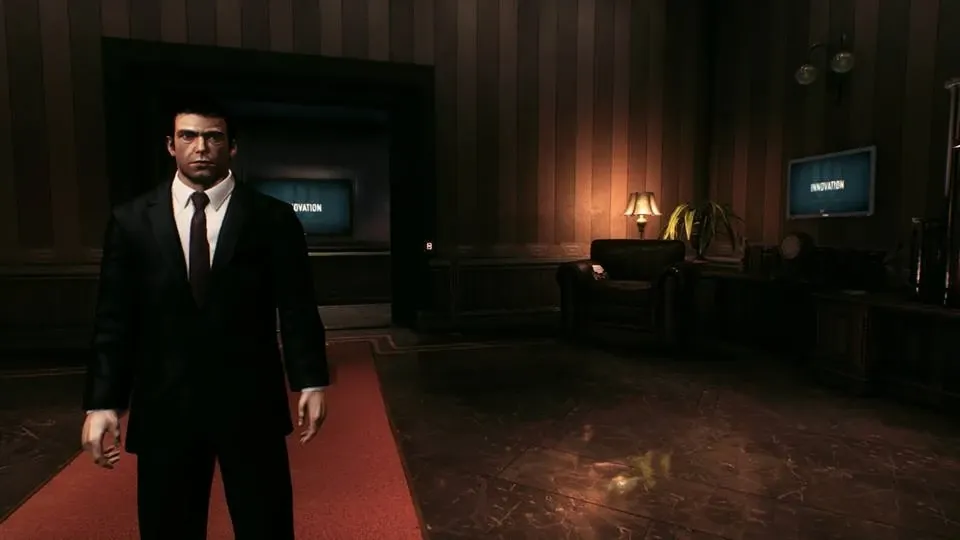
Hush is useful because he forces Batman to confront the fragility of Bruce Wayne as a public locus. Bruce’s identity depends solely on trust, memory, face, records, relationships, and continuity. Hush attacks the system that lets Bruce be recognized as Bruce.
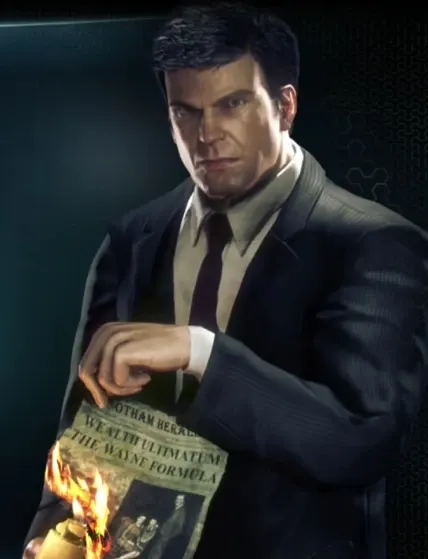
That links him back to the substitution problem Barry Allen created for us. A face can be copied. A history can be forged. A role can be occupied.
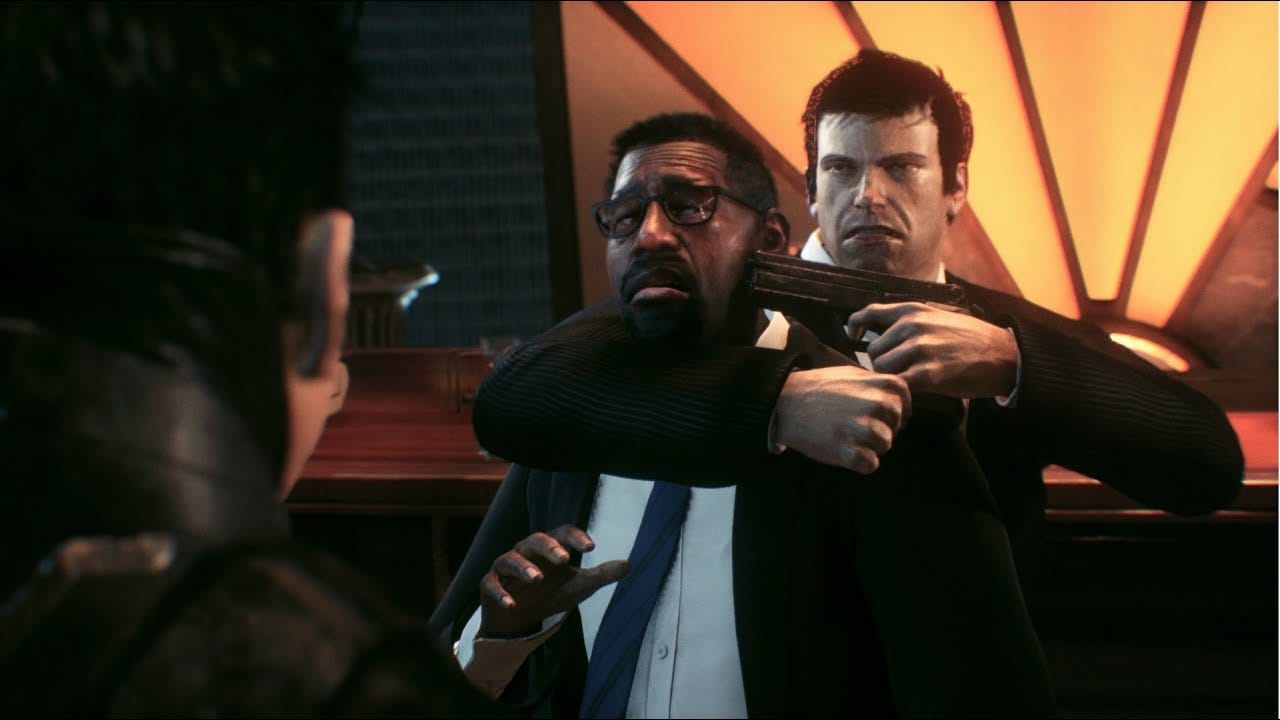
That does not make the locus continuous.
Court of Owls.
The Court of Owls is Gotham’s hidden field made completely literal.
This is one of the strongest late additions to Batman’s mythology because it attacks Batman’s confidence that he knows his city at all. Bruce thinks Gotham is his field to study. He thinks the cave, the alleys, the rooftops, the old families, the corruption, the myths, and the lines of power are fully legible to him.
The Court disagrees. There was always another structure underneath your structure.
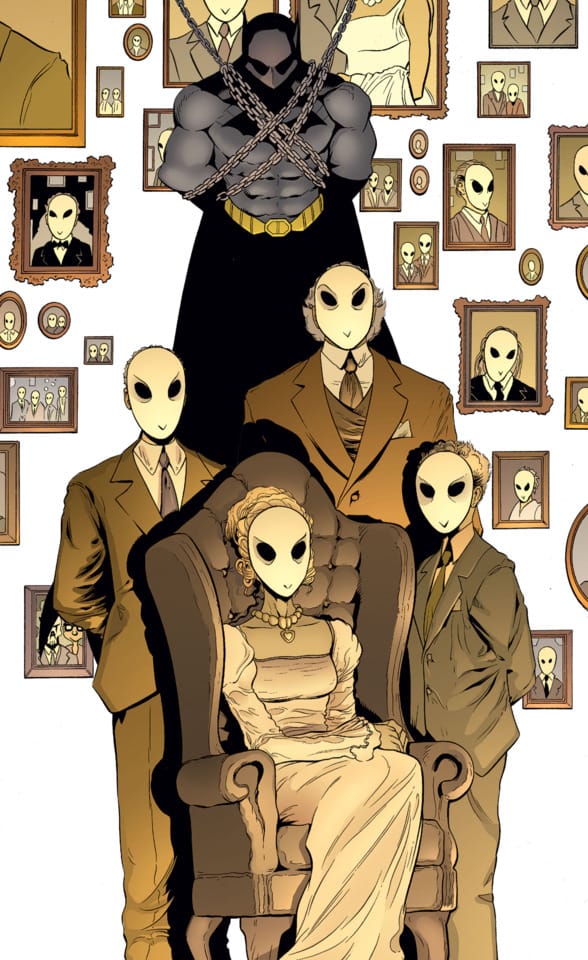
That is devastating to Batman because it strikes the detective primitive directly. The world’s greatest detective failed to see the institution that had been shaping Gotham for generations. He saw the field, but not at depth. His vision was still too narrow, even when it was spread across the entire city.
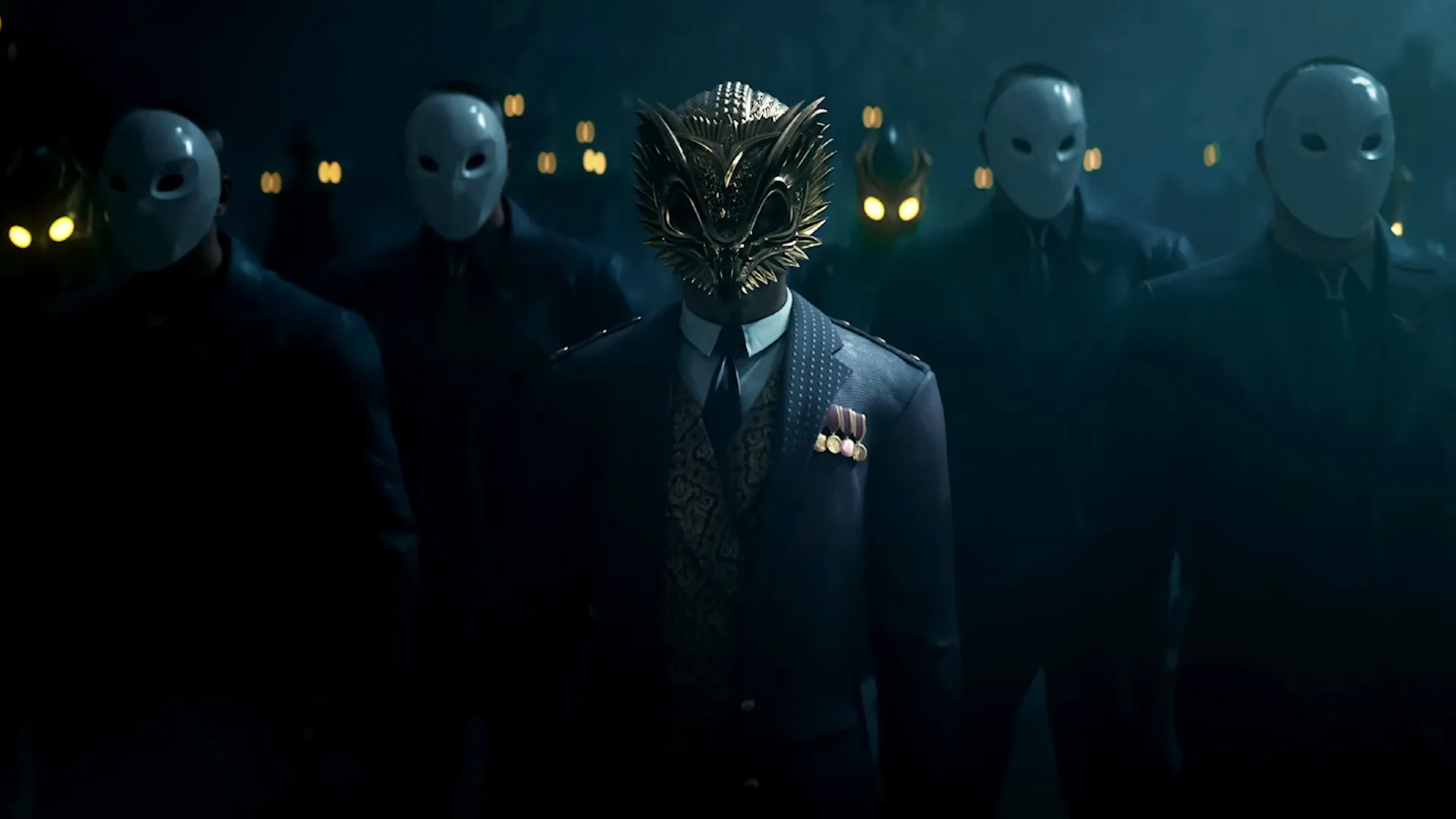
The Court is elite extraction, hidden governance, inherited violence, architectural secrecy, and city-scale manipulation. They are the field behind the field.
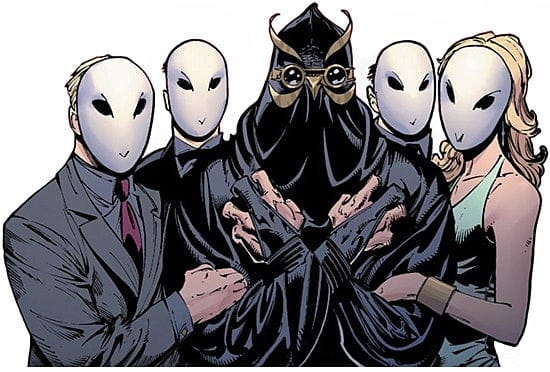
Many harms in life persist because the visible field is not the real field. The Court of Owls is the story admitting that Gotham’s crime cannot be understood only through its street-level violence, rogues, mob bosses, or corrupt officials.
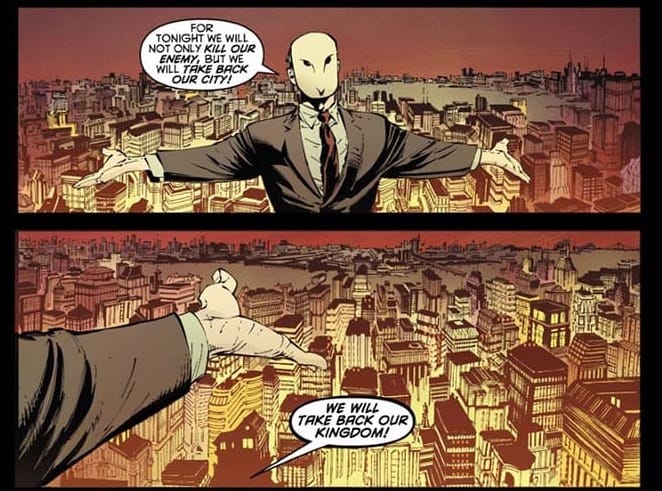
Some of the harm is aristocratic, historical, and buried in walls.
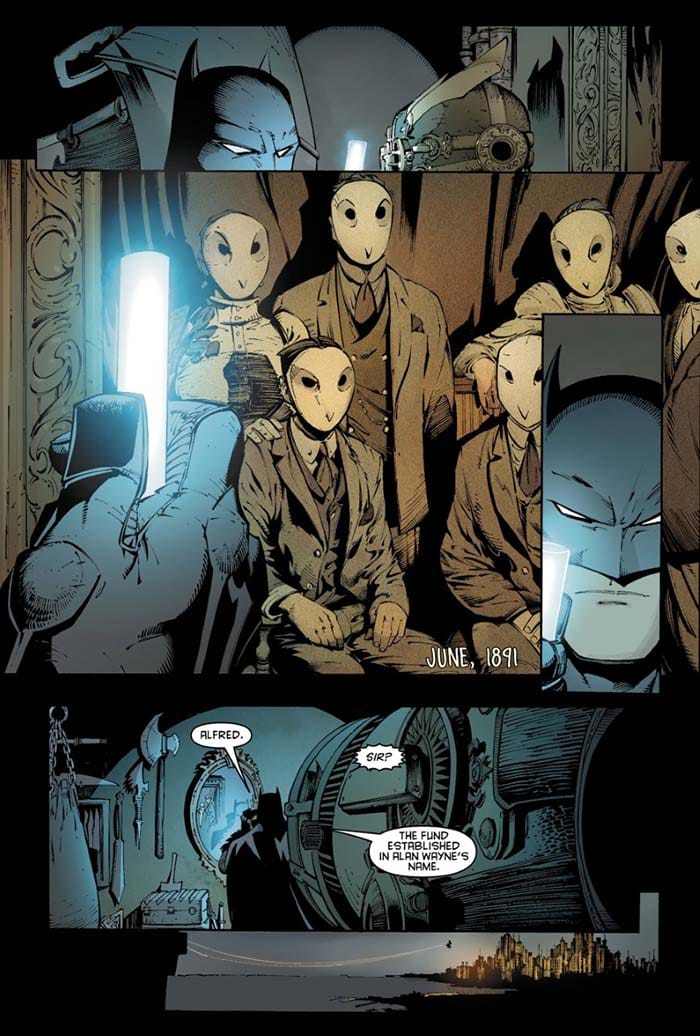
The structural depth the Court operates at makes Batman small once again whenever he has grown too large.
Rogues Ruling.
The rogues are maps.
Batman is moral only if he can use those maps without letting a map become his permission to travel freely.
He must see the damaged locus and still stop the harm. He must see the field and still act. He must see the tragedy and still protect the next victim.
Batman must always maintain his balance. Compassion without naivete. Force without sovereignty. Truth without domination. Symbol without idolatry. Repair without denial.
The rogues make that balance visible to him, because each of them offers Batman a wrong answer to his own problem:
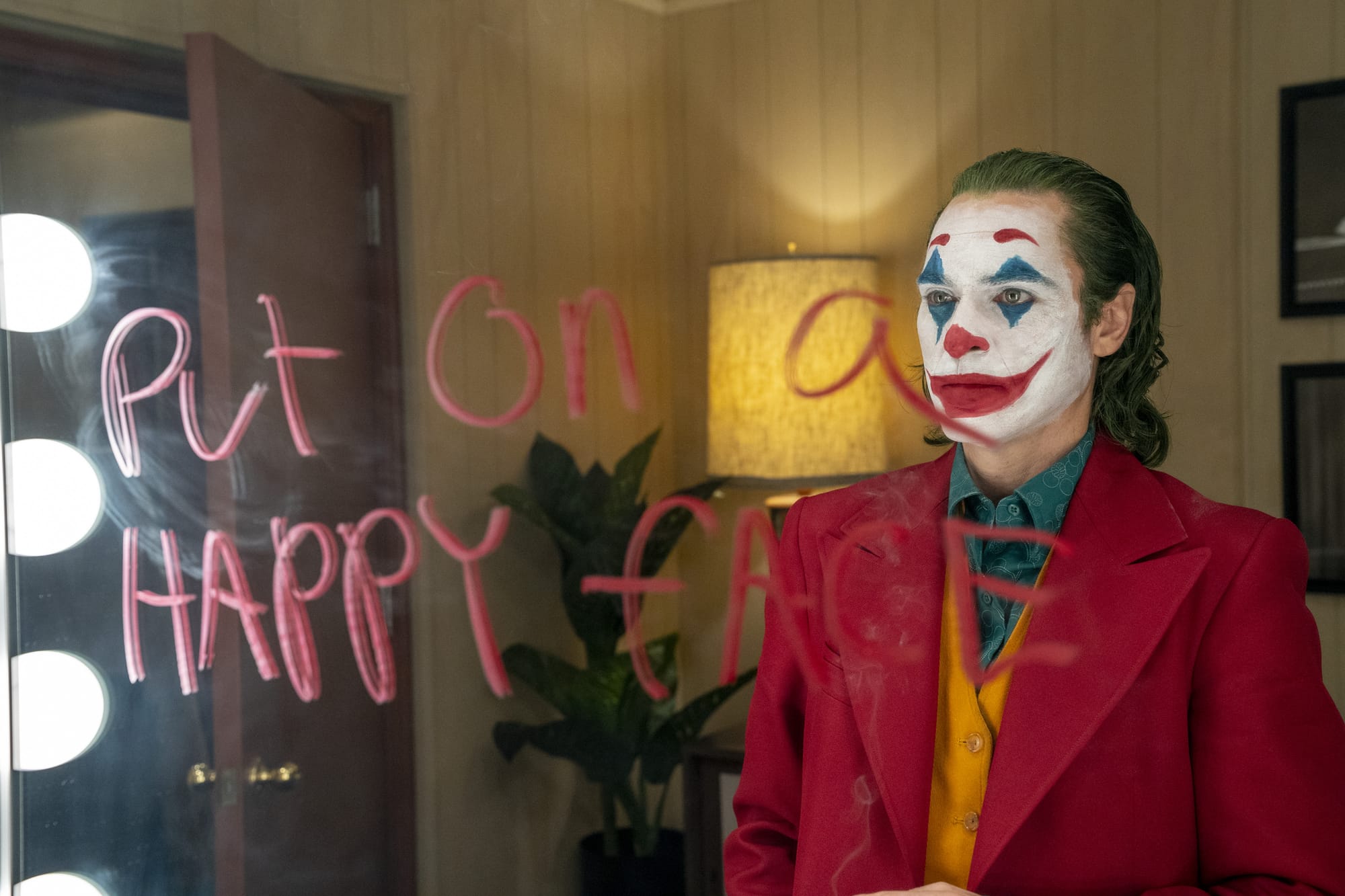
Joker says meaning is fake.
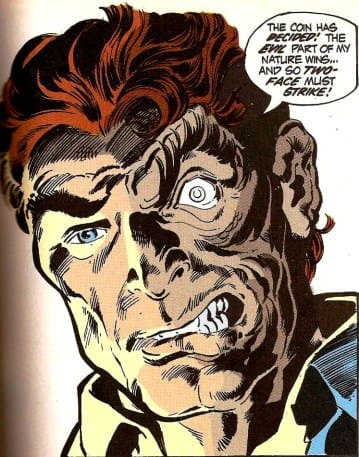
Two-Face says judgment is impossible.
Riddler says truth belongs to the clever.
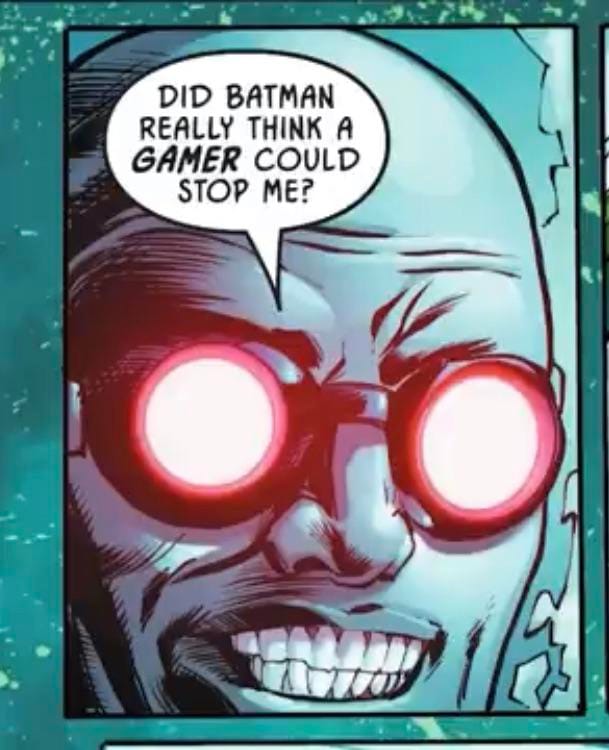
Freeze says one loved future can justify many stolen futures.
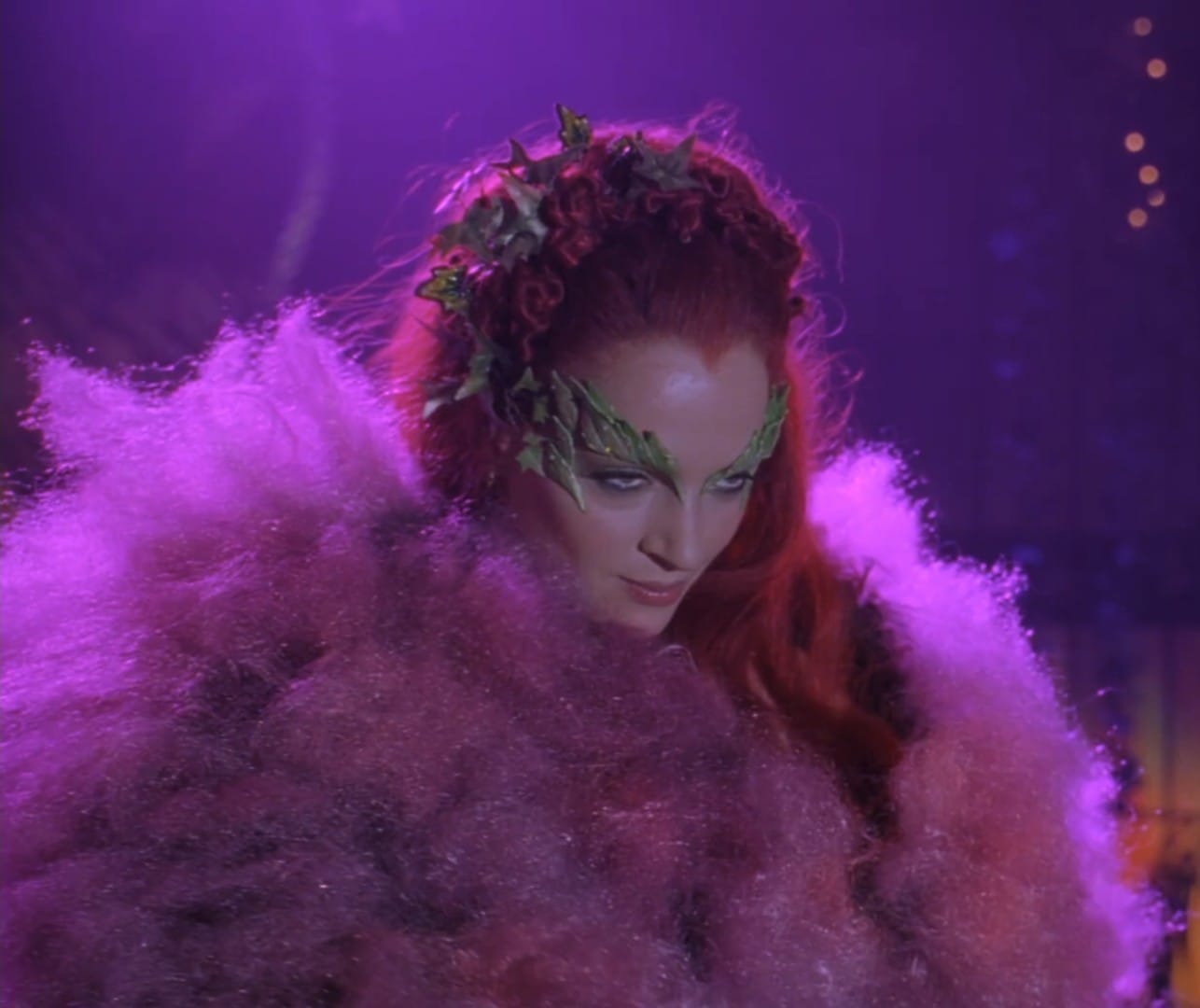
Ivy says nonhuman repair can cancel human loci.
Ra’s says the world can be saved by killing the damaged part.
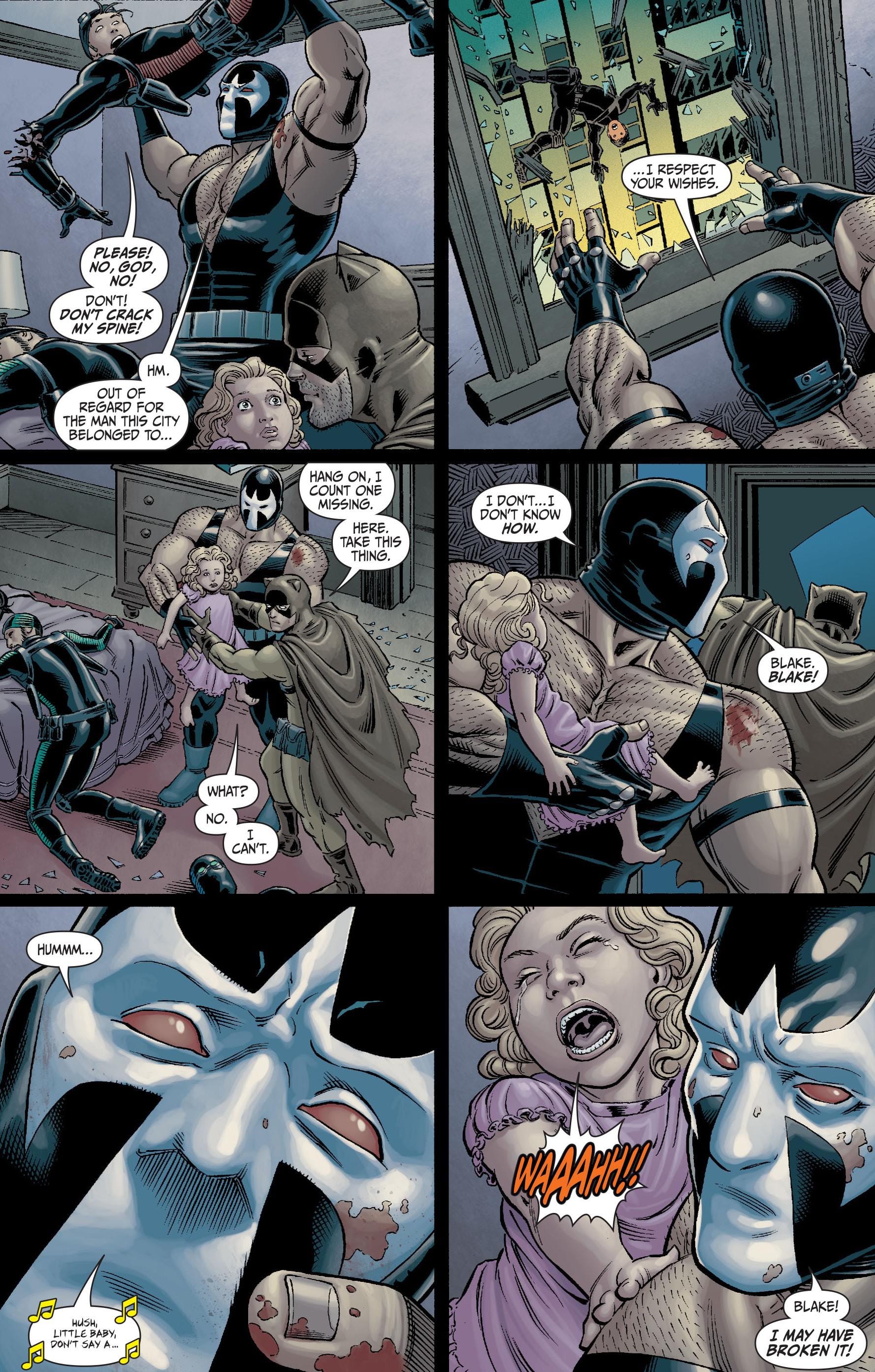
Bane says will is domination.
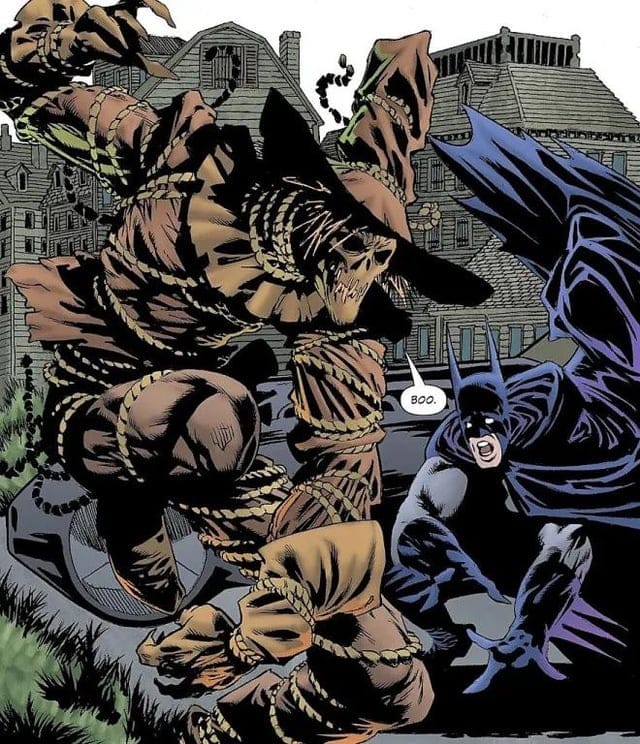
Scarecrow says fear is reality.
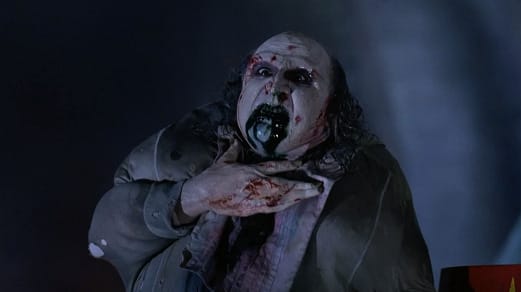
Penguin says corruption is civilization.
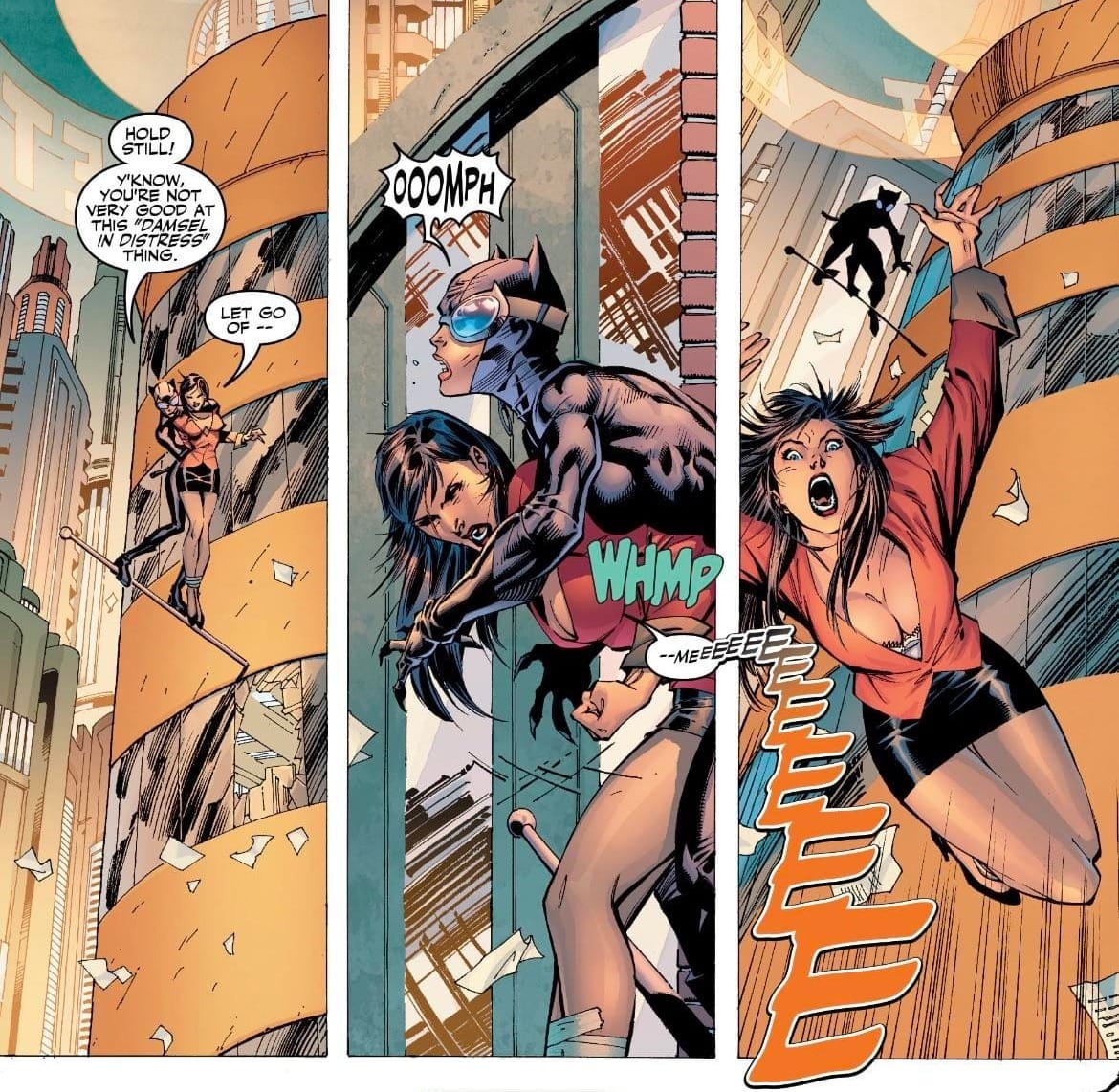
Catwoman says law is hypocrisy, so take what you can.
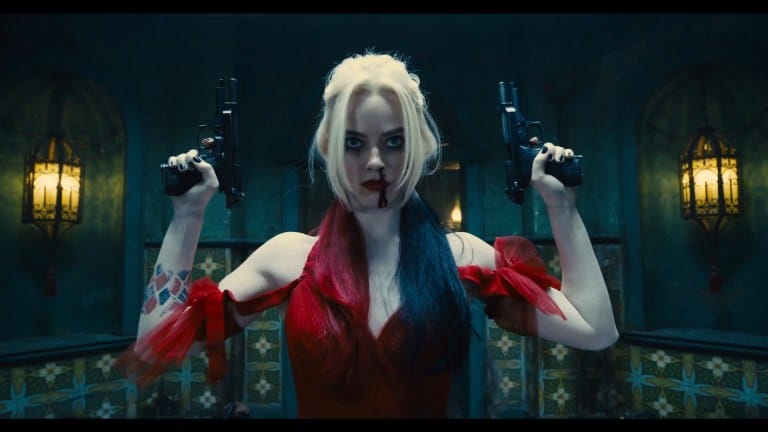
Harley says the self can survive distortion, but not without moral remainder.
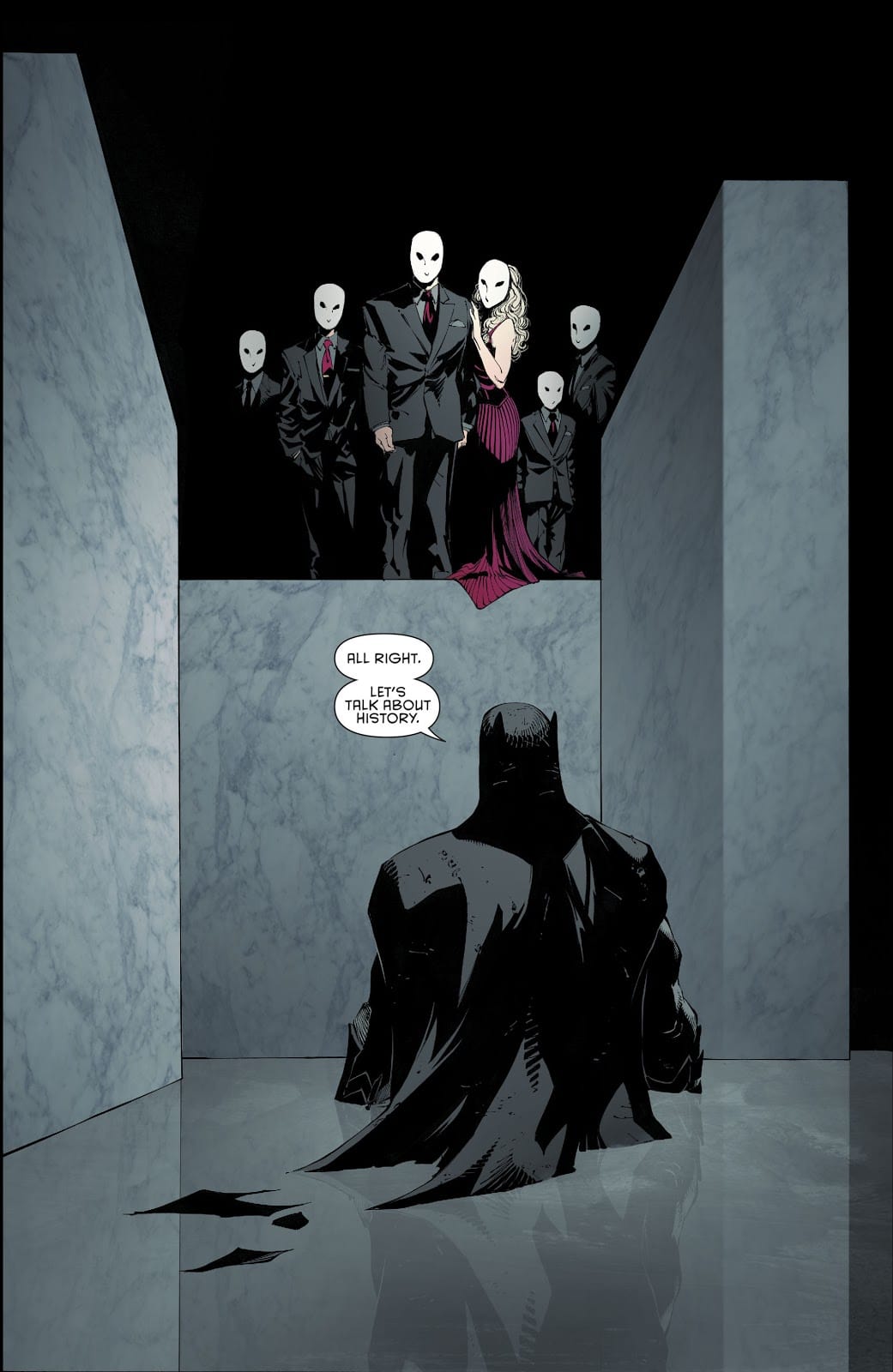
The Court says the city was never yours to understand.
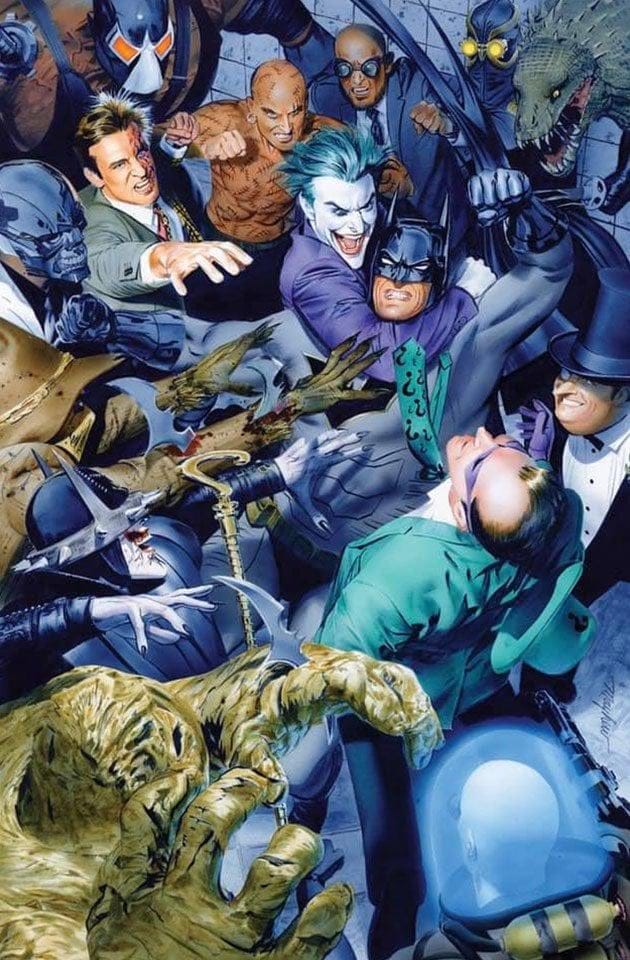
Batman’s answer to them cannot be a speech. He must learn from each mirror without becoming it.
Final Ruling: The Batman in Our Extance.
Gotham is fictional. Bruce Wayne is fictional. The alley is fictional. The Joker is fictional. Arkham is fictional. The child with the pearls, the signal in the clouds, the impossible cave under the mansion, the billionaire in armor dropping through a skylight to break seventeen ribs without killing anyone: all fictional.
The Batman, however, is not. The Batman exists, here, as an extant locus.
Not as Bruce Wayne. Not as a man in Gotham. Not as the literal vigilante the stories describe. The Batman as a durable symbolic locus in our extance: a public moral machine, a franchise, a childhood imprint, a costume, a trauma grammar, a justice fantasy, a merchandising empire, a set of images, a library of stories, a shared reference point, a meme, a toy, a film language, a game loop, a Halloween option, a bedroom poster, a billionaire fantasy, a no-kill argument, a vigilante temptation, a detective ideal, and one of the most widely distributed symbols of extra-institutional justice human culture has ever produced.
This is the real depth of the structure. The fictional Batman acts on fictional Gotham. The real Batman acts on us.
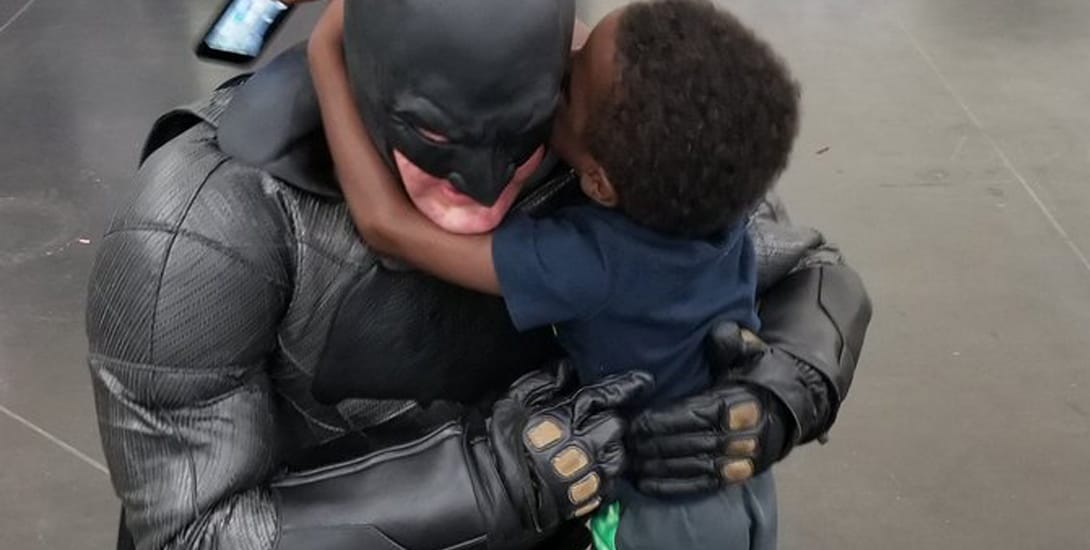
This does not mean Batman is real in the childish sense, it just means the symbol is active in our moral field. It shapes our moral imagination. It gives people patterns for thinking about harm, crime, trauma, discipline, institutions, corruption, fear, violence, restraint, family, wealth, surveillance, and repair.
A person does not need to believe Batman exists for Batman to alter what that person finds satisfying, admirable, disgusting, childish, heroic, dangerous, tragic, or possible.
That is an extant effect. A story is not morally inert because its objects are imaginary.
The symbol does not wake up in the night, worried that another reboot has misunderstood its soul. The franchise itself is not a person. The bat-emblem is not sitting in the void asking for our recognition.
The Batman is nonetheless morally active. It is a cultural-field locus.
It has continuity. It has a boundary, even if that boundary is porous.
It has integration across comics, films, games, toys, arguments, fandom, parodies, symbols, and adaptations.
It responds to the field. It is revised by politics, audience expectation, studio incentives, censorship, war, crime panic, masculinity, childhood, trauma discourse, policing debates, and the commercial need to make the bat appear again.
It carries trace forward. Adam West remains inside Pattinson by contrast. Miller remains inside Snyder. BTAS remains inside nearly everything since. Flashpoint reaches Batman through Thomas’s letter, and in our world that same letter reaches the reader through the idea that even a closed field may leave a trace making repair possible.
The Batman can be both repaired and distorted.
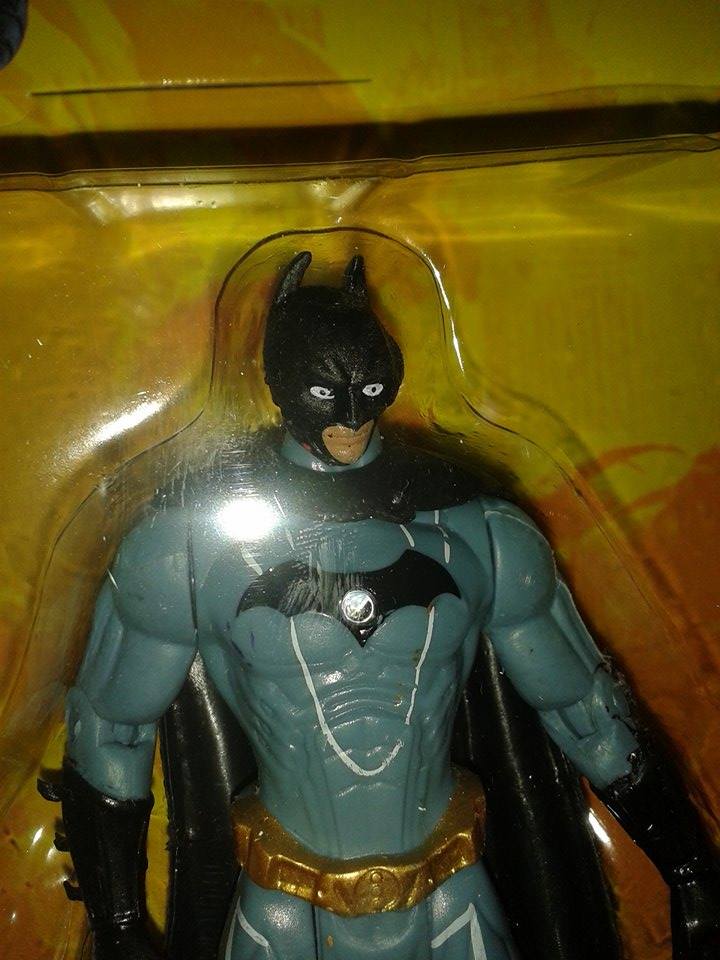
Batman gives children and adults a form for the idea that terror does not get the final word. Someone can be hurt and still refuse to become the thing that hurt them.
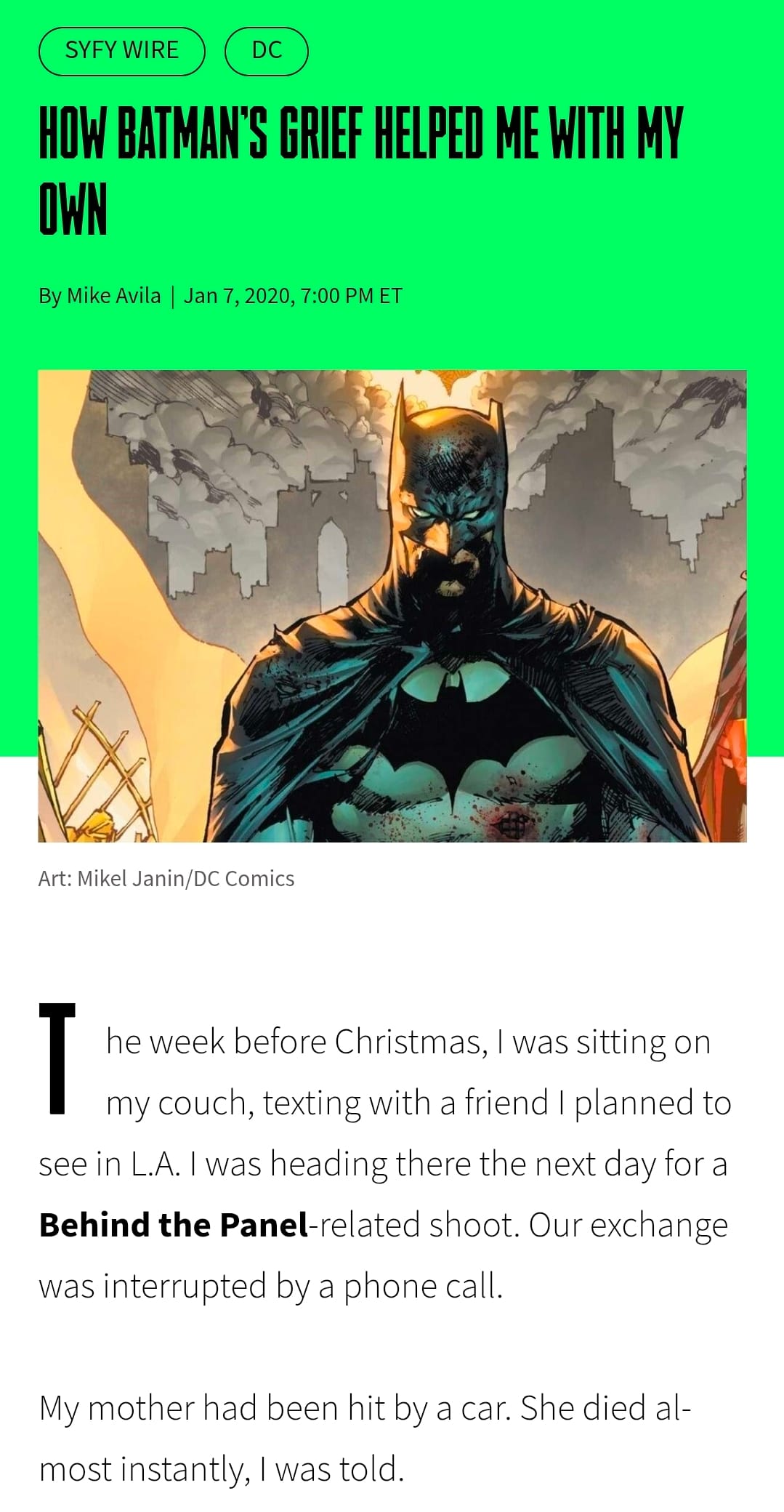
Someone can have power and still accept a constraint. Someone can see corruption and not give up on the city.
Someone can enter darkness without worshiping it. Someone can train themselves toward usefulness.
Someone can refuse killing even when killing would satisfy the audience.
Someone can care about victims without pretending institutions are always adequate.
Someone can look for the hidden path beneath the visible harm.
In this way, Batman has probably helped many people imagine discipline after grief. He has probably helped many people imagine restraint as strength. He has probably helped many people understand that fear can be survived, converted, and redirected.
He has probably helped many people love detective work, moral puzzles, gothic cities, outsider care, adopted family, and the possibility that the damaged person is not finished.
So, clearly, the Batman can open real futures.
A kid reads Batman and wants to become a detective, artist, writer, lawyer, forensic scientist, game designer, social worker, stunt performer, filmmaker, martial artist, therapist, public defender, engineer, or simply a person who does not collapse into what happened to them.
They join the repair field like Batman did, instead of succumbing to nihilism they see around them.
However, the danger and distortion are also real.
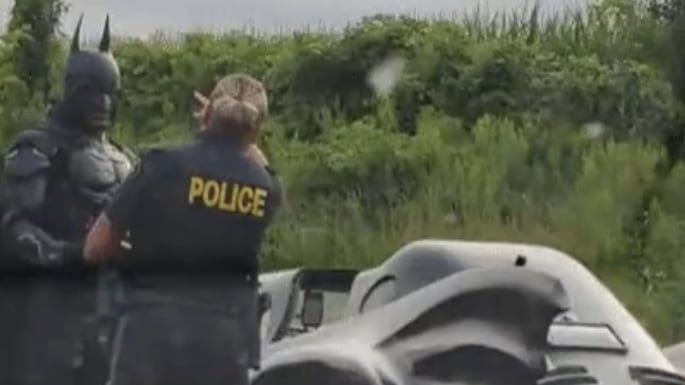
The biggest danger is in how Batman can make false repair beautiful.
The Batman can teach the field that the answer to institutional failure is to find an exceptional man.
Not build better institutions. Not attend to public repair, or material conditions. No boring maintenance. No housing, care, law, schools, treatment, non-corrupt administration, or civic trust.
We need to find the man, in the cave. The symbol and fist. He'll need a vehicle, surveillance, infrastructure, a private fortune, and a moral alibi.
This is an extremely dangerous and common fantasy. This does not represent how we actually repair our field.
Batman can make competent emergency response feel more morally satisfying than repair.
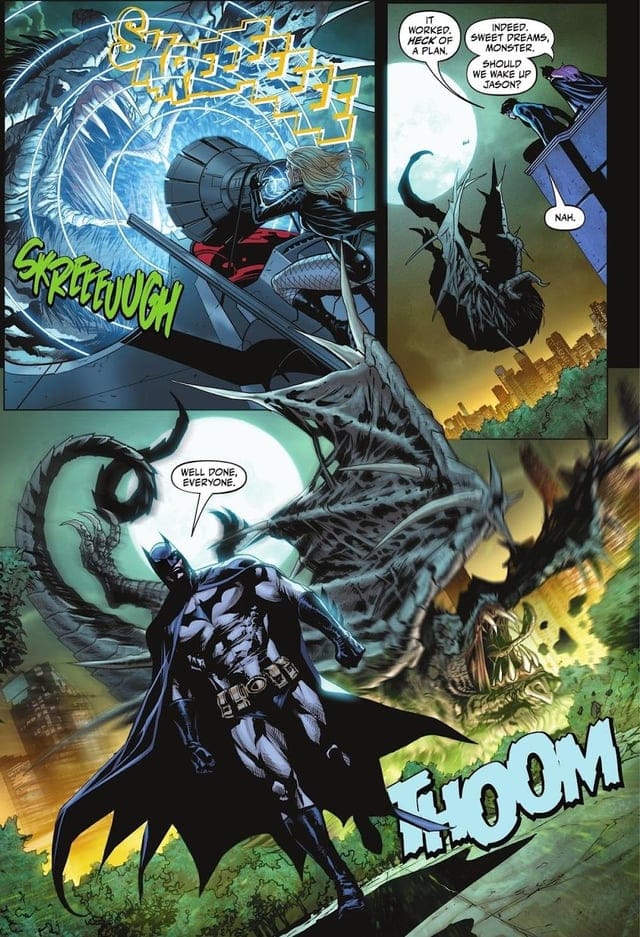
He can make symptom interruption feel deeper than structural change because symptom interruption has much better lighting. He can make a city’s continuing damage feel narratively necessary because this hero requires it.
He can make trauma look like your destiny, loneliness look like seriousness, and unresolved pain look like moral authority.
The Batman also brings harm into our extance. Not catastrophic harm in every reader. Not automatic harm. Not “Batman bad.”
But Batman enables a very real distortion path. A culture that loves Batman too lazily may learn the wrong lesson.
It may learn that corruption is solved by incorruptible individuals.
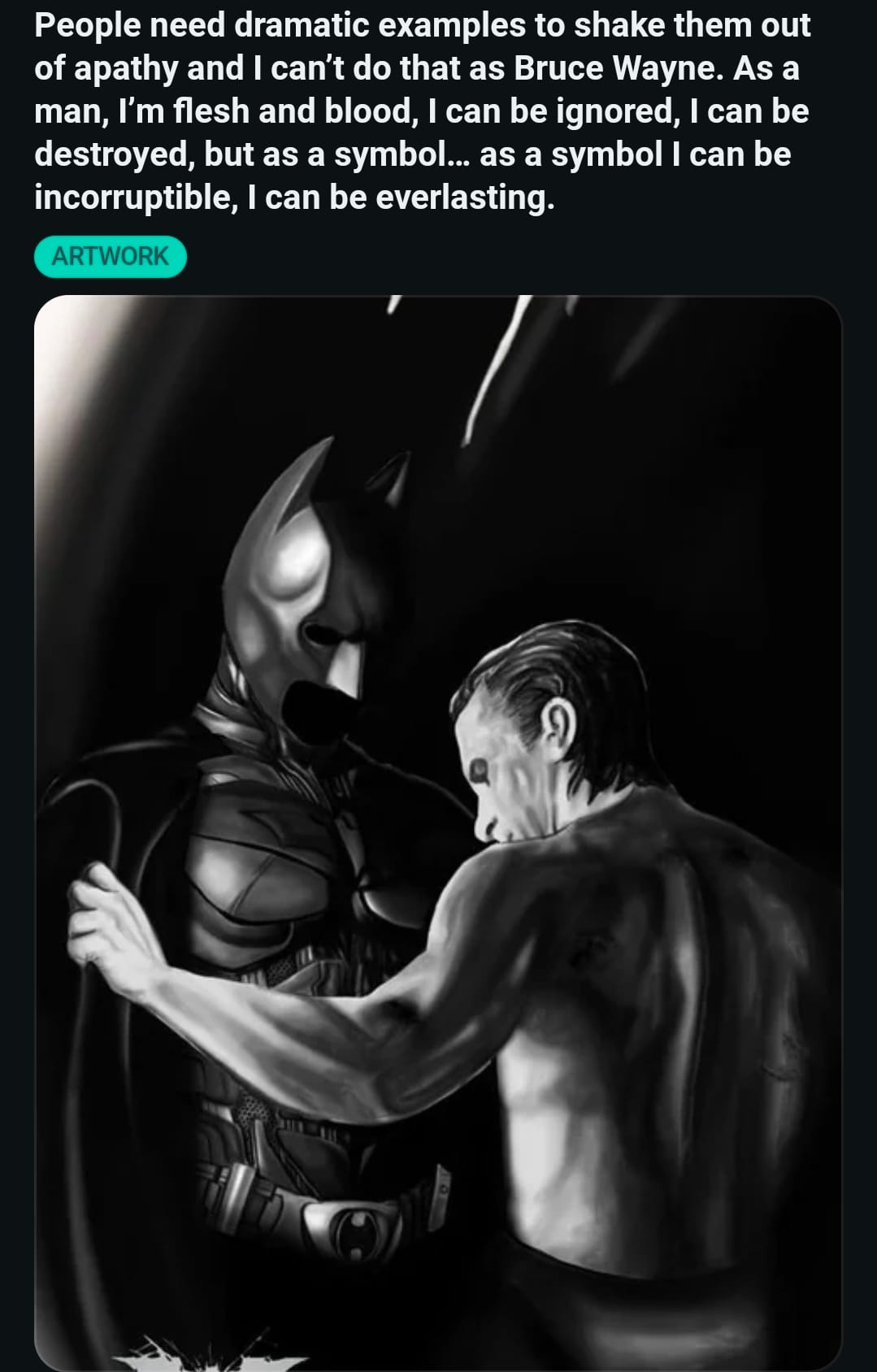
It may learn that public systems are always too weak, so only private force matters.
It may learn that wealth is fine if the rich man has sufficiently dramatic grief.
It may learn that surveillance is acceptable when the watcher is cool enough.
It may learn that children entering adult violence is inspiring if the costume is bright.
It may learn that not killing is enough to sanitize endless bodily domination.

It may learn that the city bleeding forever is acceptable as long as the wound produces good stories.
The Batman is one of our own field mirrors. He is a test of our taste for false repair.
If we love Batman because he reveals harm, preserves restraint, protects victims, reads the field, and slowly converts vengeance into care, then The Batman is doing real repair work.
If we love Batman because he lets us enjoy a broken city while pretending the brokenness is being solved, then The Batman is distorting us.
This is the actual ruling. The Batman is not good or bad in our extance. The Batman is a notably powerful human symbolic technology whose moral status depends on what, exactly, it trains us to see and what it trains us to ignore.
The Batman is good when it makes restraint, care, investigation, and repair more reachable.
The Batman is harmful when it makes fear, spectacle, surveillance, billionaire exceptionalism, and permanent emergency feel like justice.
The final question is not whether Batman repairs Gotham, like with the variants. Gotham is not here.
The final question is whether Batman helps us see our own fields more clearly, or whether he lets us aestheticize their failure.
That is why the best Batman is not the darkest one, the strongest one, the most realistic one, the most brutal one, or the one with the best car.
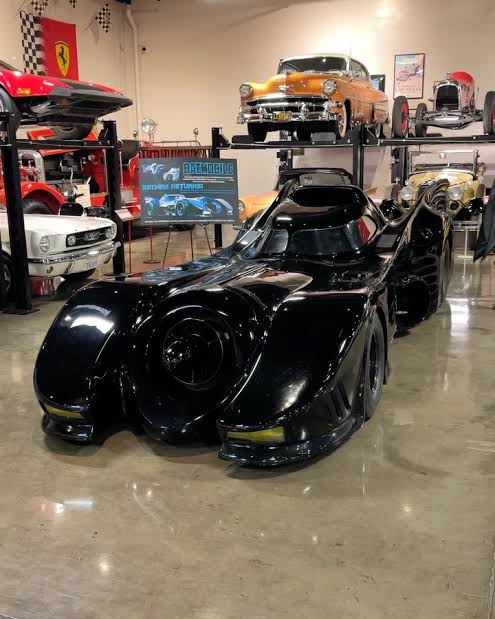
The best Batman is the one that leaves the reader less willing to mistake violence for repair. The best Batman leaves the viewer more suspicious of recurrence. The best Batman makes the child in the alley matter without turning the alley into his throne.
The best Batman teaches that a wound can become care, but only if the wounded person remains answerable to the world beyond the wound.
The worst Batman teaches us the opposite.
The worst Batman tells us that pain grants authority. The worst Batman tells us that fear is enough. The worst Batman tells us that the rich man’s private war is civic repair.
The worst Batman tells us that if the costume is beautiful enough, the field no longer needs to heal.
That Batman must be stopped.
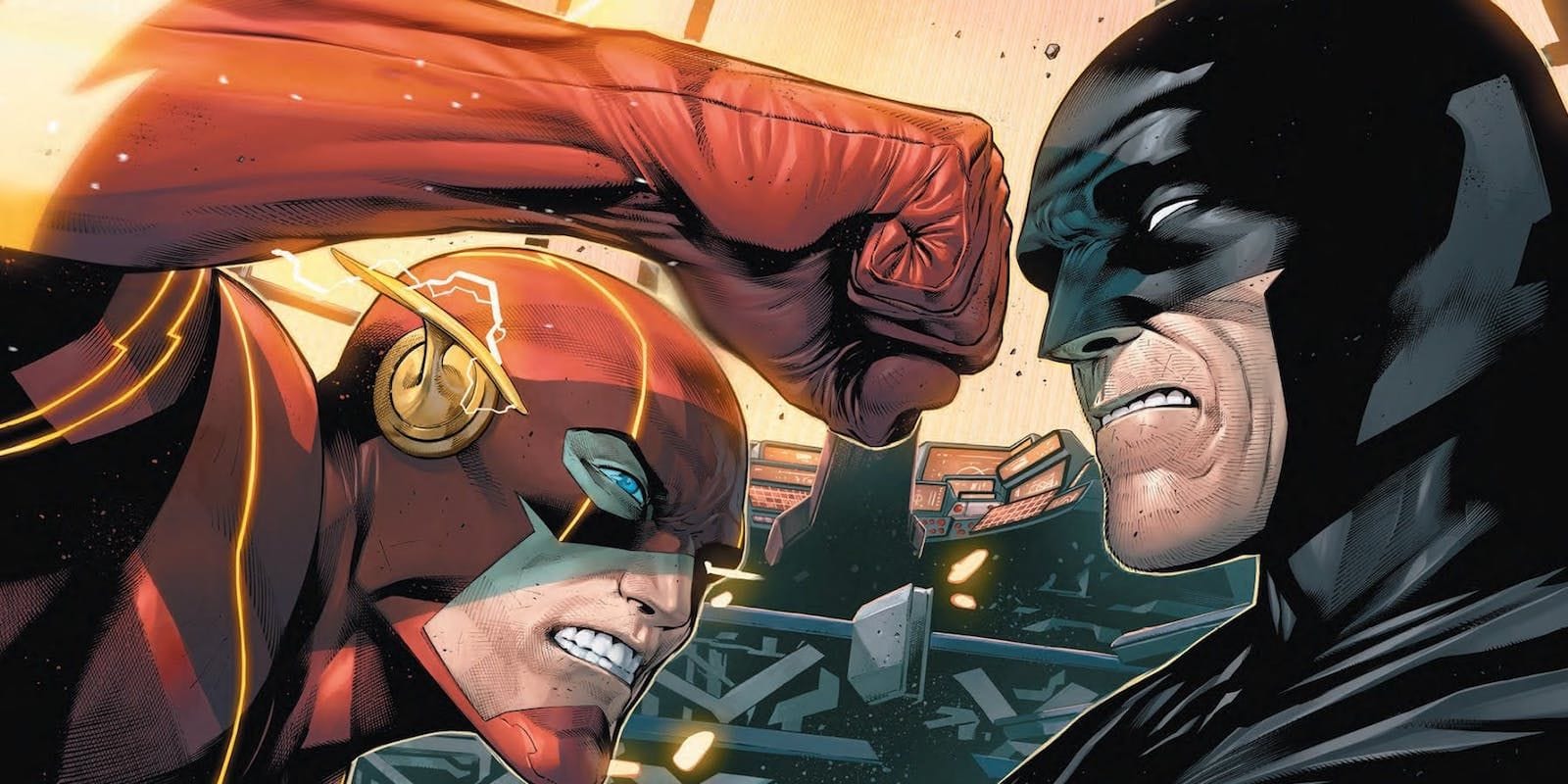
Not censored, banned, or scolded out of existence by people pretending they are above this topic.
I mean stopped in the only way a symbolic distortion is ever stopped: by you reading it correctly, seeing the field beyond it, refusing its paths of false repair, and preserving the parts that actually open the field.

A symbol this large is much more than pop culture. Bruce Wayne definitely does not control it. DC does not fully control it. Filmmakers do not control it. Fans do not control it. Like the fear the Batman introduces to Gotham, this symbol enters the field and the field always answers back.
The Batman has entered extance as a shared field-object, and like every shared field-object, it now has consequences beyond intention.
The ruling is therefore direct:
The Batman matters because The Batman is one of our culture’s most successful tests of whether people can distinguish emergency from repair.
He is not moral because he is Batman.
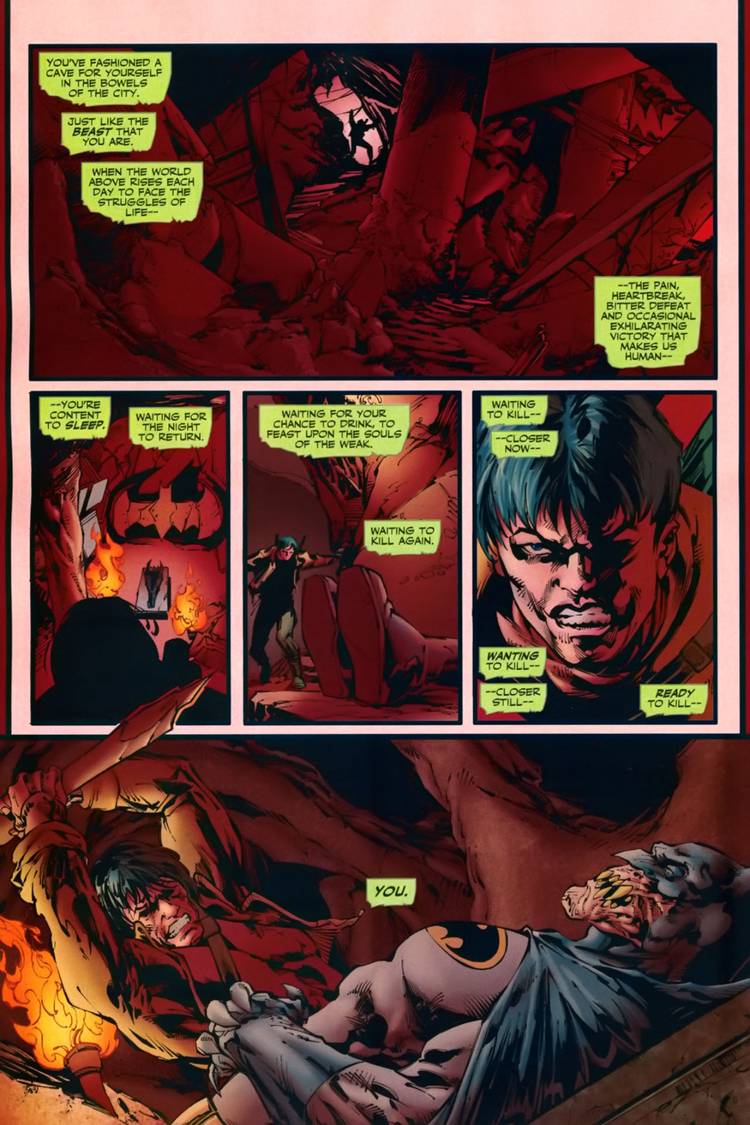
He is moral when he makes us less satisfied with Gotham. He is harmful when he makes us love Gotham because Batman needs it.
The Batman is a bridge. The Batman should not make us want a world where Batman is real.
The Batman should make us ashamed of every field that we think would need him.