Thought Gauntlet V: The Scapegoat
Even a mild scapegoating can thicken the field around a person until ordinary futures become harder to reach.
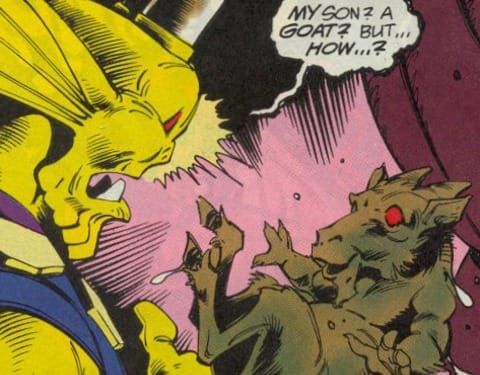
This is the False Repair arc of the gauntlet I've decided to run through.
A scapegoat is an innocent person punished so that a group, institution, or society can feel that a problem has been answered.
This was already discussed in the Darien article, but was buried deep in that long story.
You probably know this one, but just to spell it out, the basic case is as follows:
Something bad has happened.
The real cause is unknown, inconvenient, too powerful to accuse, or too deeply embedded in the structure of the field. So the system now finds someone else.
They select a scapegoat, who will be blamed and punished for the bad something.
In exchange, the public receives a culprit that may not even have existed at all in reality, the institution receives relief it may need to continue; the crowd generally receives symbolic closure.
The actual field still remains utterly unrepaired.
The scapegoat is not only an innocent victim, which they often are. The scapegoat is best described as a false repair path.
The act appears to resolve disorder while preserving the same exact conditions that enabled that disorder. It closes one exposed locus so the surrounding field can avoid honest contact with its own damage. This is one of the most distortive versions of burden transfer.

There doesn't seem to be much need for a toy case here, but quickly:
A town is going to erupt into violence because a serious crime has been committed, and the public demands punishment. The authorities know who did it, or they do not know, it does not matter for our purposes here, but they do know one thing: if no one is punished, the town will likely erupt into violence.
If the innocent person is punished, the town calms down. So, should they be?
No.
The wrong reason for that no would be to say, “one innocent person’s suffering cannot be outweighed by public order,” and then stop there. That may be emotionally satisfying, but it is still too small to count as structural analysis. The harm here is not only that one person is wronged.
The deeper harm is that the field of justice is converted into a tool of deception and distortion against repair.
The scapegoat’s future is closed or burdened. That alone is already morally serious, but the action also damages the public’s relation to truth, the institution’s relation to honest evidence, the community’s ability to identify real causes, and generally every future person’s security under that system.
A scapegoat hides disorder from its own field.
Why Numbers Lie.
At first, the scapegoat case can look like another numerical sacrifice problem. One future is narrowed so many futures remain open.
That framing is already wrong.
The scapegoat is not traded in a metaphysical moral market-space for public peace. The scapegoat is used to produce a false description of reality.
Future repair depends on truthful contact. The scapegoat narrows the repair paths requiring that honest contact.
Your count may say one person harmed, many spared, but the field disagrees.
The Confusion of Order with Good.
Order still matters. A society without order can become terrifying and very closing, very quickly. People need stability, predictability, trust, and protection from violence.
A riot is not morally romantic just because it expresses anger. Social collapse narrows the futures of the most exposed people first.
The problem is that order can be purchased by hiding harm, not that order in itself is without value.
A society can look calm because the harmed are made silent.
A courtroom can look functional because the innocent were convicted.
A school can look disciplined because a frightened child learned to stop objecting.
A workplace can look productive because the only person telling the truth was removed.
A family can look peaceful because one member has learned to absorb everyone else’s disorder.
These are not the signs of a healthy field.
The Innocent Locus.
The scapegoat is also not “the price” of peace in some clean arithmetic sense. The scapegoat is a real locus with a future of their own. Punishment, imprisonment, exile, execution, humiliation, or public blame obviously narrows that future.
Even a mild scapegoating can thicken the field around a person until ordinary futures become harder to reach.

But the scapegoat’s potential innocence adds another layer.
The punishment is then not connected to the actual cause of the harm. It did not redirect the harmful path. It simply does not correct the field.
If the crime was committed by someone else, that person remains free or protected. If the disaster came from institutional failure, the institution avoids its correction. If the public rage came from real deprivation, the deprivation still remains. If the crisis came from corruption, incompetence, inequality, or neglect, then scapegoating lets those structures survive behind the social spectacle of a punishment story.
Once a scapegoat has been accepted, the public field may defend the false answer. Evidence against the scapegoat may become threatening because it would reopen the disorder the punishment was believed to close.
Institutions may also protect the lie to protect their own legitimacy. The community may prefer the false settlement to the humiliation of admitting it was managed, even if they do perceive the reality.
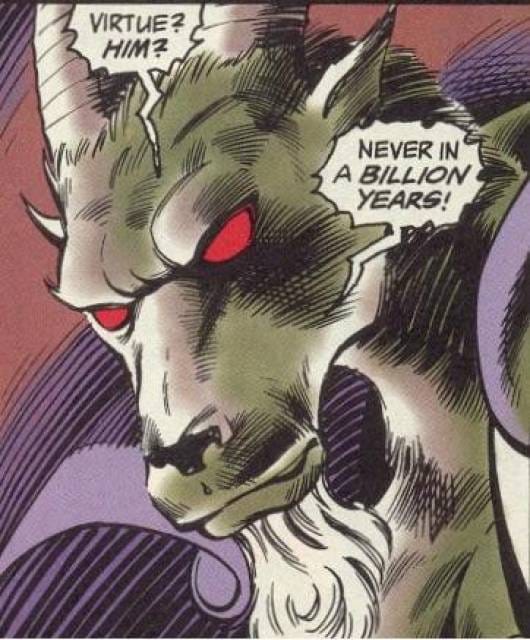
In this way, the false punishment story seals the field against its own correction.