Thought Gauntlet VI: The Omelas
This is typically the voice of a field defending its own arrangement, even if some necessity is still real. [L]

Next, Omelas is a beautiful city whose happiness depends on a suffering child.
It comes from Ursula K. Le Guin’s story “The Ones Who Walk Away from Omelas,” in which the city is prosperous, joyful, intelligent, peaceful, and full of ordinary human pleasures. Its people are not presented as crude villains. They are also not stupid. They are not living in some obvious dystopia where everyone marches under banners while pretending misery is freedom.
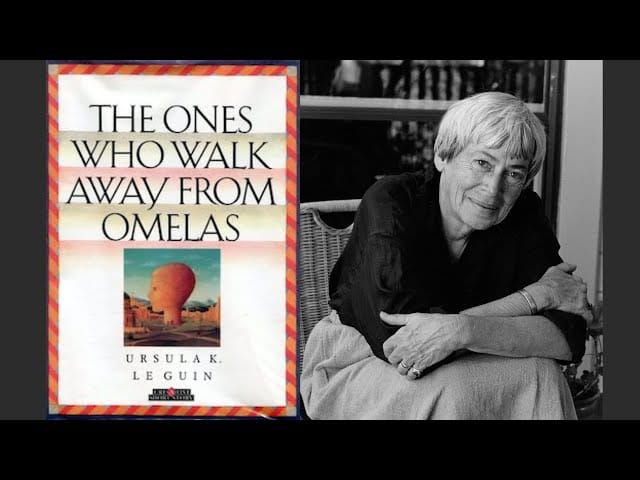
Omelas is supposed to be genuinely very good on the surface.
However.
Somewhere in the city, a child is kept in misery. The child is confined, degraded, neglected, and known to the city. The people of Omelas are told that their happiness depends on this arrangement: if the child is helped, comforted, or released, the city’s good fortune will end.
Most citizens accept this, but some cannot. Those who cannot accept it walk away.
That is the story’s famous moral image: people leaving the city rather than living in a utopia purchased by the suffering of one child.
The usual reading treats Omelas as a direct challenge to utilitarian thinking. Would you accept one child’s misery in exchange for the happiness of an entire city? Is the bargain justified by the numbers? Is the suffering of one outweighed by the flourishing of many?
Modal Path Ethics just glosses over all these questions while shaking its head no, please no because we started well before any of this.
Omelas cannot be Good. A city whose flourishing depends on the enforced misery of one trapped child is not a good field. There is a lot of harm here, clearly. This is just a caricature of a burden-transfer machine.
The more interesting question is if it can be considered Better.
The Child as a Locus.
The first mistake is to treat the child as the cost of Omelas being somehow transferred outside of Omelas.
The child is not an unfortunate externality. The child, a locus, is part of the city’s structure. Omelas is not one great city plus one unrelated suffering child. Omelas is the arrangement that joins the city’s joy to the child’s degradation.
The child has a future. That future is being closed daily. Not only by physical confinement, but by deprivation, neglect, fear, humiliation, social abandonment, and the knowledge that the whole city’s happiness depends on leaving the child there. The field around the child has been designed so that every ordinary path of repair becomes forbidden.
The city’s happiness is clearly not innocent happiness that happens to have a sad footnote. It is a field whose continuation has been tied to concentrated closure. The child’s future is greatly narrowed so the rest of the city can remain open, peaceful, playful, and satisfied.
So many happy citizens, and one miserable child. Does the sum come out positive?

That question is already distorted.
The child is not one negative unit in an otherwise positive ledger. The child is the locus through which the city transfers all the burden of its own condition. The child’s misery is not incidental to the field, it is constitutive.
Omelas already fails before the arithmetic begins.
Joy.
The case is harder, but not much, if we grant that the happiness of Omelas is real. It would be easier if Omelas were secretly miserable, hypocritical, decadent, or spiritually hollow. Then the answer would be simple: the city is fake, and the child’s suffering reveals the rot to us.
But let Omelas be genuinely happy.

Let its music be beautiful. Let its festivals be sincere. Let its children play. Let its citizens love one another. Let its art matter. Let its streets be full of intelligence, craft, friendship, and peace.
The ruling does not change at all.
A local good produced through structural harm is not Good in this framework's sense. The citizens’ happiness may still be a real good considered locally. Their lives may be rich, but the city as a field contains zero good, because its flourishing entirely depends on harmful closure elsewhere inside the same system.
The citizens of Omelas are also loci, but all their flourishing has been tied to a destructive condition.
A person born into Omelas may not have created the arrangement. They may learn of it only later. They may be horrified and leave. They may be told there is no alternative. They may have no obvious repair path. Their whole social world may insist that maturity means accepting the child’s room.
Inherited participation is not the same as original authorship, but once the citizen knows, they are no longer simply outside the structure. They must decide what kind of relation they will now have to it.
Walking away preserves something important: the walker does not let the city finish its work inside them. They do not allow themselves to become fully adapted to the arrangement. They refuse the distortive moral education Omelas offers.
Walking away still does not repair the child.
The story’s famous gesture is morally serious but also incomplete. Leaving Omelas may save the walker from personal complicity in the future, but it also leaves the child in the room. The child’s field is still as closed as ever. The burden remains concentrated right where it was.
Was repair reachable?
If repair was reachable, then walking away is insufficient. If repair was not reachable, then walking away may be Better than adaptation, but it is still not Good. A choice does not become Good just because the menu was limited.
Defenders of Omelas would say the child’s misery is necessary.
Necessary in what sense?
Physically necessary?
Magically necessary?
Politically necessary?
Socially necessary?
Economically necessary?
Necessary because the city has been built so fucking badly that no one can imagine it otherwise?
Necessary because everyone has been socially trained to confuse the continuation of the current field with the continuation of all possible good?

The claim of necessity must be examined very harshly. Harmful fields often preserve themselves by presenting their own structure as the only alternative to total collapse. The child must remain in the room, or the city will fall. The workers must accept exploitation, or the economy will fail. The prisoner must be punished, or order will dissolve. The minority must be blamed, or public anger will erupt.
The sacrifice must continue, or everything good will disappear.
This is typically the voice of a field defending its own arrangement, even if some necessity is still real.
Even if Omelas’s premise makes its own necessity real through actual magic, the moral conclusion still does not become clean at all. A magically necessary harm is still harm. It may create a tragic field where every enabled path now always contains loss, and it certainly does not make the child’s suffering Good.
Suppose the child is released.
The city’s happiness ends.
What happens next depends on the story’s metaphysics, but the moral structure is still clear.
If Omelas becomes just an ordinary city, with ordinary problems and ordinary limits, then the release is almost certainly the better path. The city loses its magical or extraordinary happiness, but the child’s concentrated torment ends and the field no longer depends on one locus carrying everyone else’s condition for them.
If the city collapses entirely, the case becomes much harder and requires more careful and precise weighting. Then, the field contains enormous loss of futures on both sides. But even then, the child’s continued torture is never Good. The question would become whether any path preserves the child and enough of the city to make future repair reachable for all loci in the field.
If no such path exists, then the field stands as tragic, never good.