Applied Case: The Shooter Inquiry
The Shooter Inquiry was a failed field analysis, and harmful to the field it was created to repair.
September 2026 note: The Shooter Inquiry remains a core false-repair case: official explanation can close inquiry without finding the real causal path. Later work on mechanistic provenance, bounded finality, and correction makes the repair standard stronger: preserve evidence, source-path identity, independent challenge, and the material ability to reopen or overturn the account.
Janet Parker was the last person to die of smallpox.

Parker was a medical photographer at the University of Birmingham Medical School. In August 1978, she became ill. At first, smallpox was not the obvious diagnosis, because smallpox was supposed to be almost over.
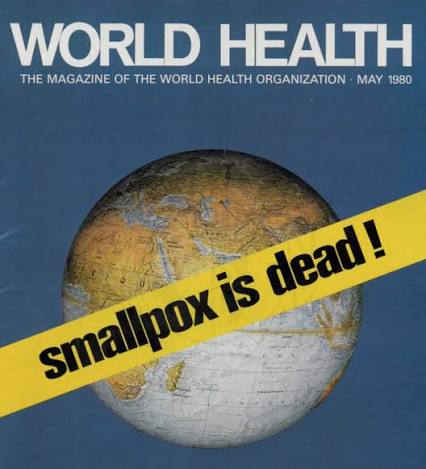
The global eradication campaign had succeeded so completely that the disease had been pushed to the edge of history. The last natural case, infecting the Somalian Ali Maow Maalin, had already occurred last year.
The remaining smallpox danger was no longer ordinary human transmission across cities, villages, ports, and households.

It was isolated entirely to storage, research, containment, procedure, and institutional trust.
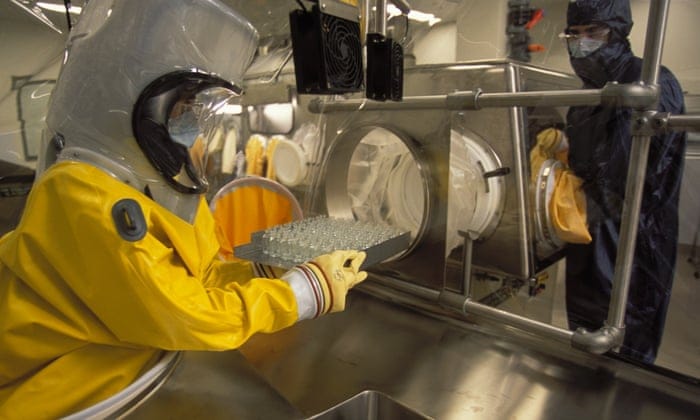
The variola virus was no longer supposed to be in the world as a circulating disease. The Birmingham outbreak, more than just the return of smallpox, was the return of smallpox from an institutional field that was supposed to be managing its annihilation.
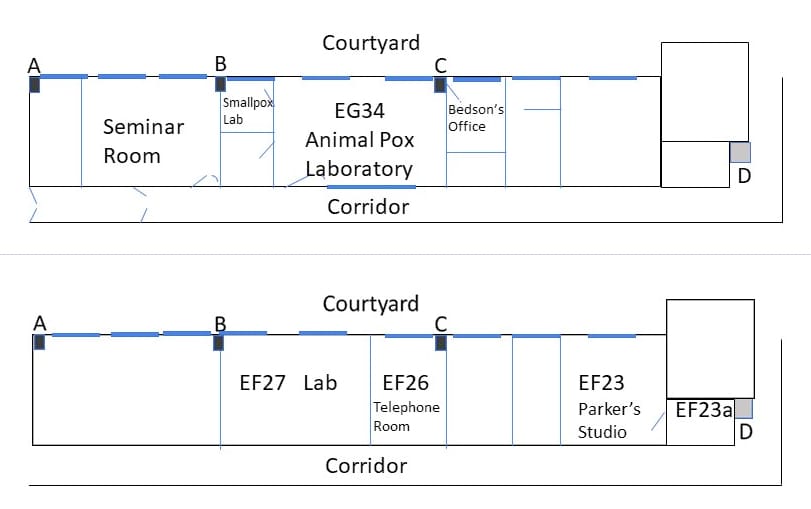
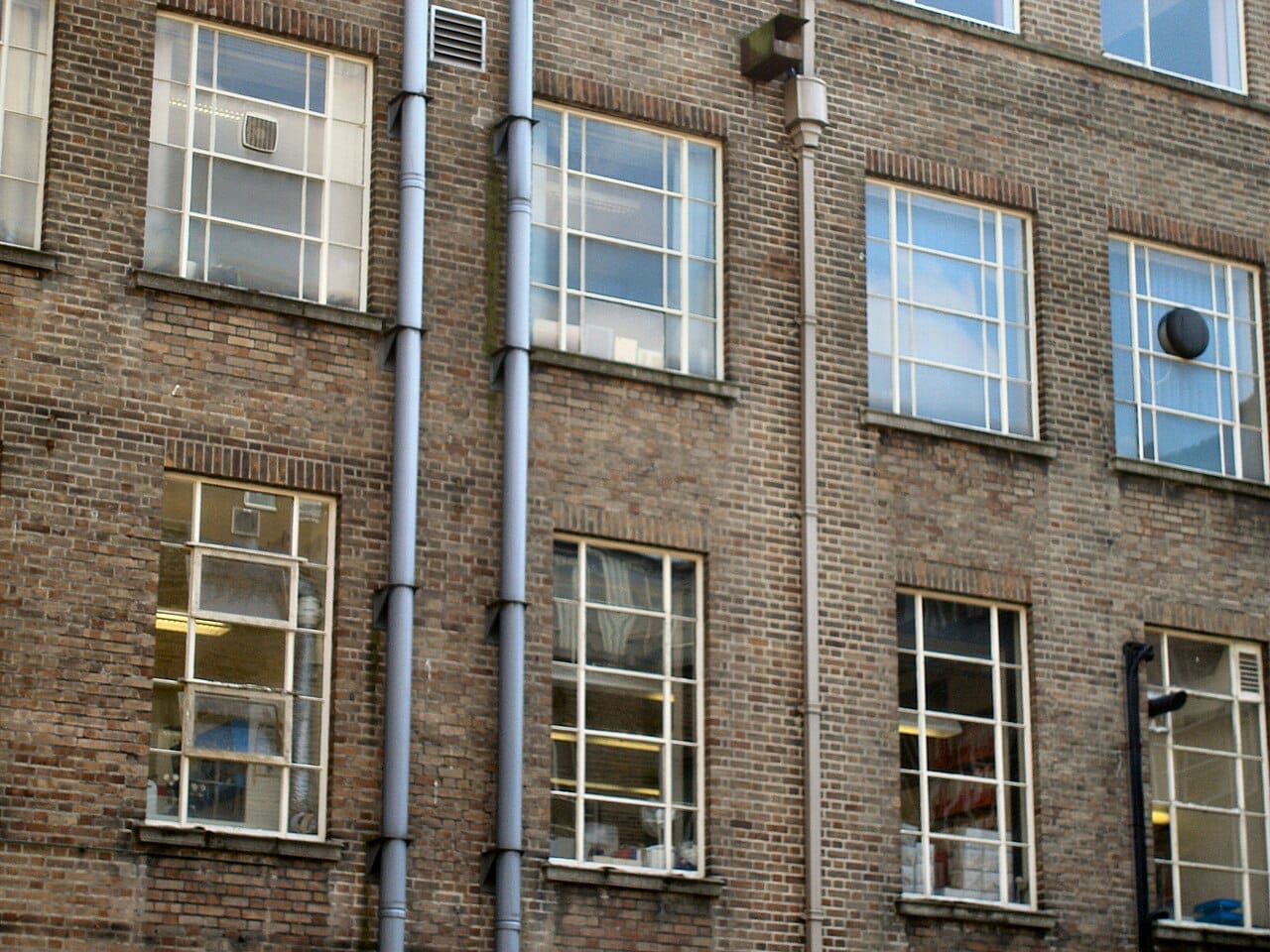
Parker’s photographic rooms were above the microbiology department.
Below her was a poxvirus laboratory run by Henry Bedson, a smallpox expert working for the WHO whose work was tied to the final scientific phase of eradication. The lab had recently begun work on the Abid strain, an especially virulent strain of variola major, named after its three year old victim in Pakistan.
Somehow, Parker was infected by Abid.
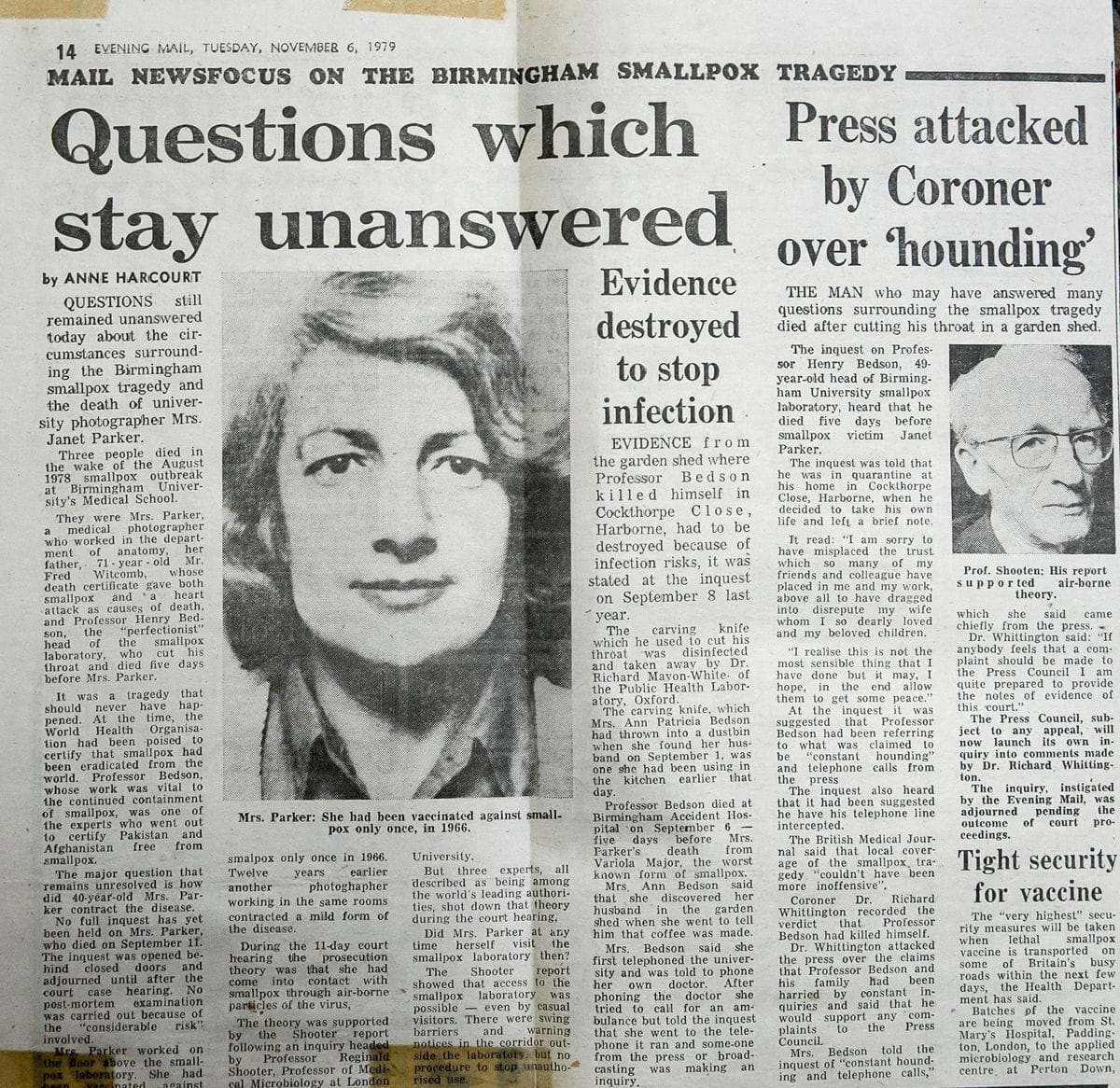
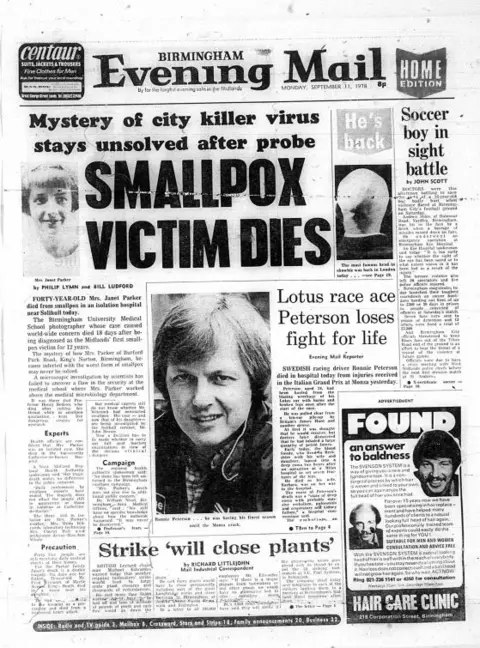
Her mother later developed a mild case from her in the hospital and survived. Her father died while in quarantine, of a heart attack after visiting his dying daughter. Henry Bedson died by suicide as social outrage focused on him as the causal culprit. Janet Parker died in isolation on September 11th, 1978. The ward was sealed.
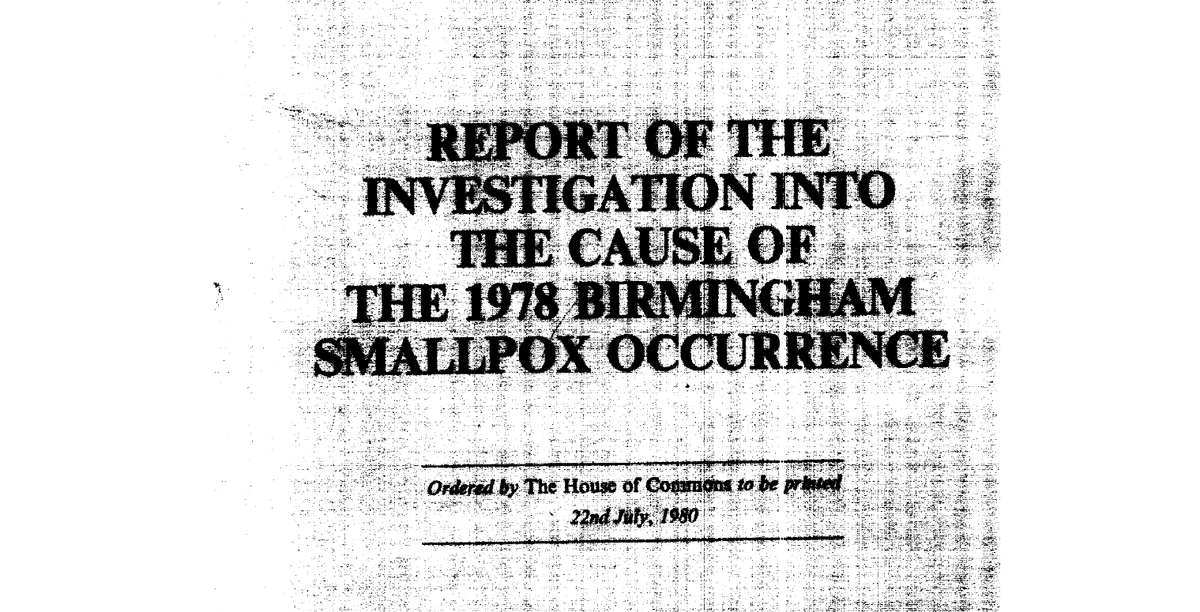
In response to this event, the government of the United Kingdom opened the Shooter Inquiry, tasked with discovering how Parker became infected, and how to prevent this from happening again.
The Predator.
Smallpox was not morally confusing. Humanity was right to end its natural continuation. The virus continued by entering bodies, disfiguring them, blinding them, killing them, terrifying communities, and forcing whole fields of life into quarantine, vaccination, isolation, and emergency control. There are mummies who were victims of smallpox. It was an ancient extant viral lineage, but its future always depended on catastrophic contraction of human futures.
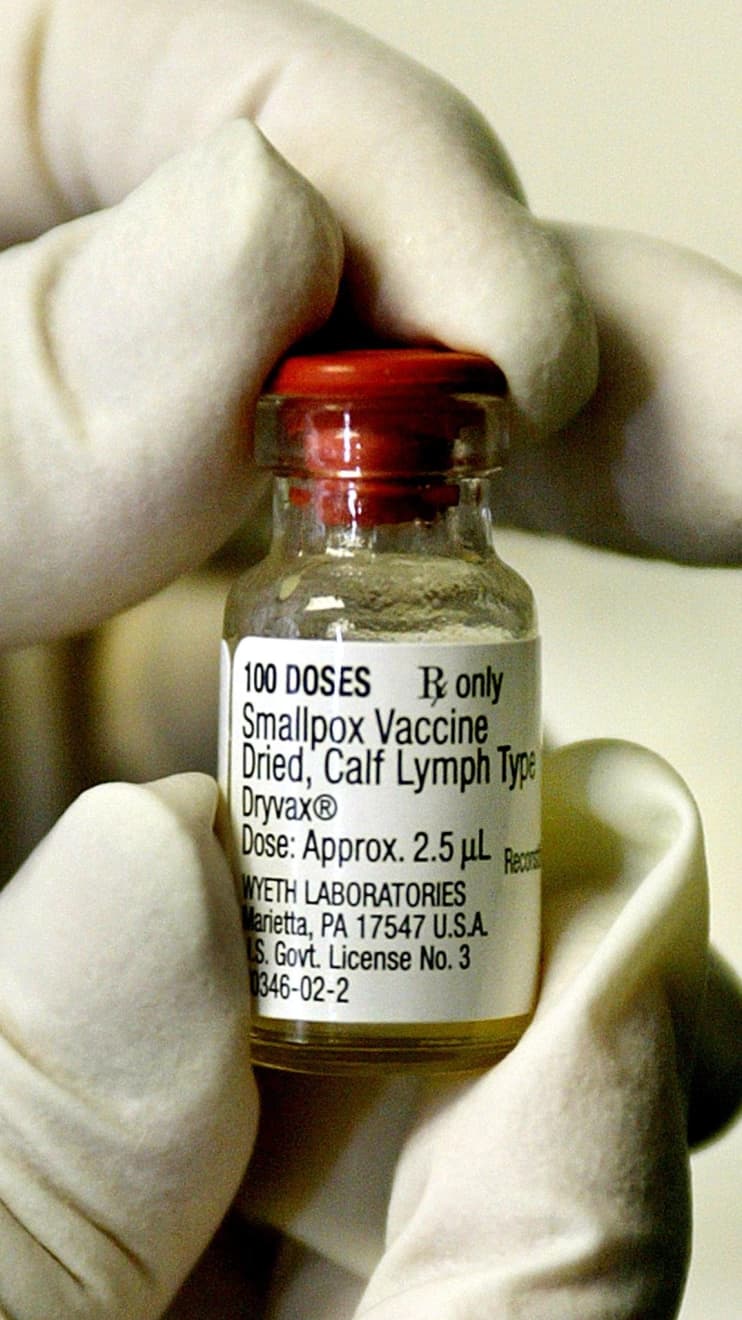
Smallpox, when compared to what it did to humanity, always loses the field analysis.
Janet Parker’s infection occurred at the boundary between eradication and containment. She was the last ever victim. The world had nearly completed one of the cleanest, most justified protective prunings in human history. Then a supposedly managed remnant of the old harm re-entered the human field and struck back.
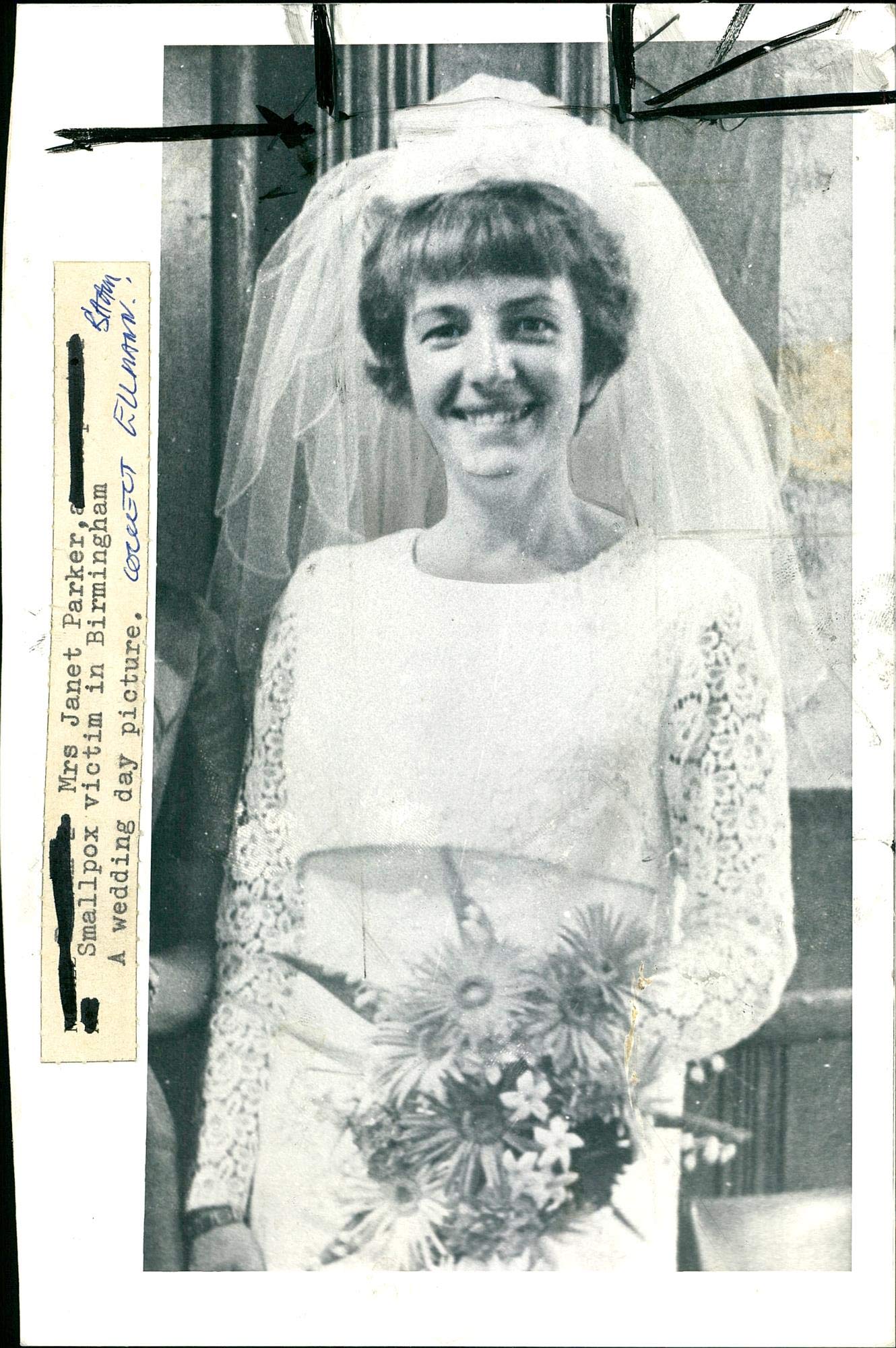
Parker was not a doctor, or assigned to fight smallpox directly. She died as a person whose ordinary workday fell into the contact point between containment and one of the worst diseases human beings have ever known. Her future was closed by a virus whose natural path should have been ended already. Her mother’s future was burdened. Her father’s final days were dragged into quarantine and fear. Her husband was left seeking restitution. Nurses, doctors, public health responders, coworkers, contacts, and families entered the field around her infection. She was not the only victim Smallpox took with it.
The structure of the biological harm was therefore not just the virus in one body, it was the sudden reactivation of an eradicated-world threat inside a civilian institution. Smallpox striking again forced the city into an emergency response, like it had always done before. It made every prior contact with Parker into a possible path the virus may have taken. It once again transmuted our routine workplaces, family homes, hospital wards, vaccination lines, funeral arrangements, and ordinary human closeness into its possible transmission vectors. This was the structural shape of smallpox's harm on humanity, more so than its blisters.
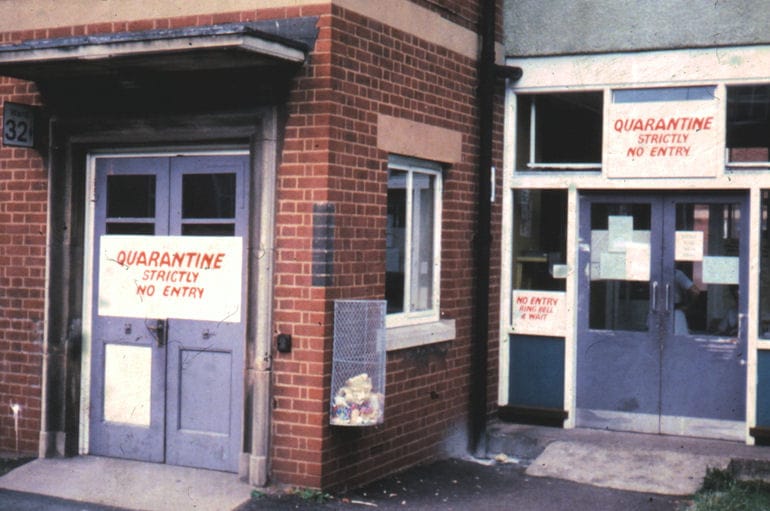
The containment response worked out here, because we were well into the end of this particular game we had been playing with variola for too long already. The outbreak did not become a large epidemic as public health action closed the biological path outward.
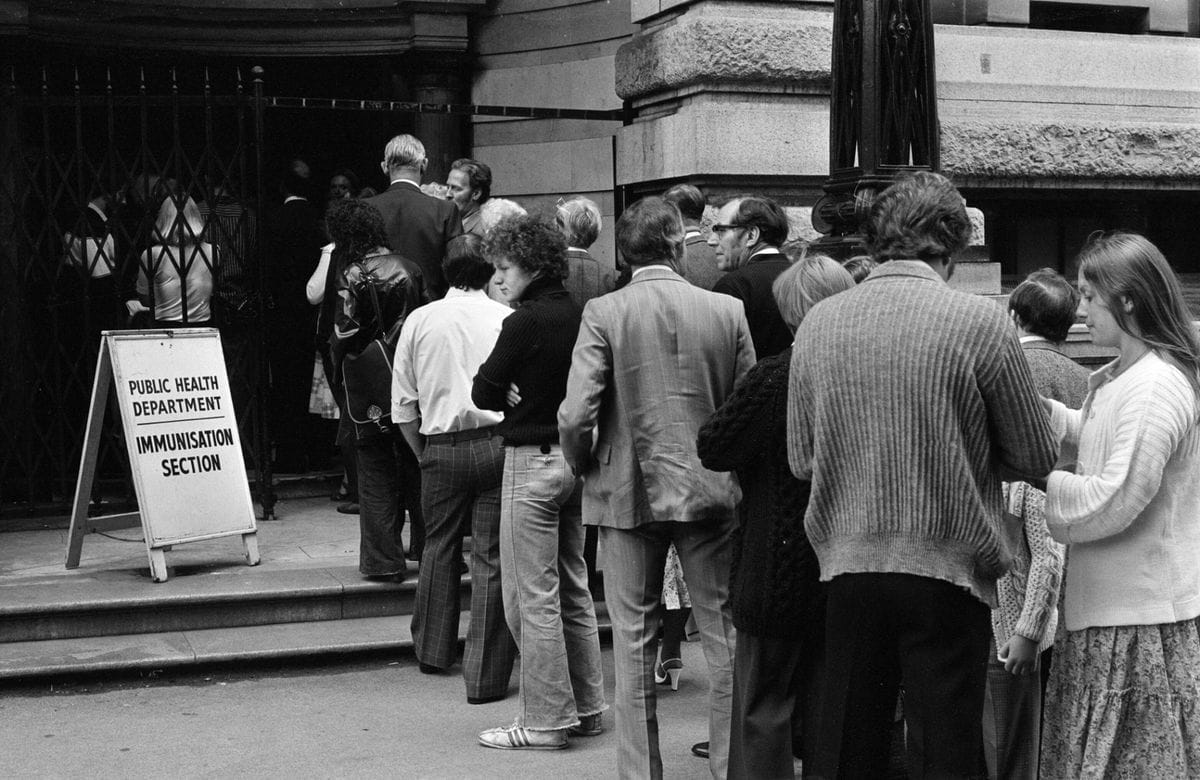
The harm smallpox's reemergence caused to our structures was quickly repaired through vaccination, isolation, tracing, quarantine, and local response that preserved the field from variola's transmutation effect.
Biological containment is not the same as moral explanation, as everyone noticed immediately in the wake of this nightmare. Stopping the virus from spreading did not answer how the virus reached Parker in the first place.
This is where the second harm came, but not from smallpox. This harm belongs to the Shooter Inquiry.
Epistemic Harm.
The Shooter Inquiry was an extant locus that had exactly one job beneath all its official language: Find the path in the field.
Smallpox did not teleport out of containment. It did not choose Janet Parker because of destiny. Abid had moved through some route from the active virus field in the lab to one particular person. This alone is why the Shooter Inquiry existed.
The inquiry’s moral task was not to identify general danger in the field. It was to reconstruct this path of reachability.
How did this virus, handled below her, reach her and apparently no one else?
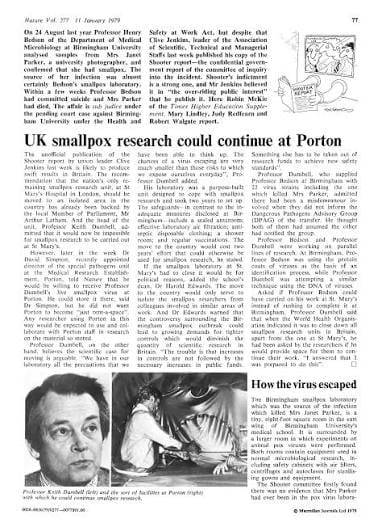
The official explanation from the Inquiry very quickly locked in as "the duct theory".
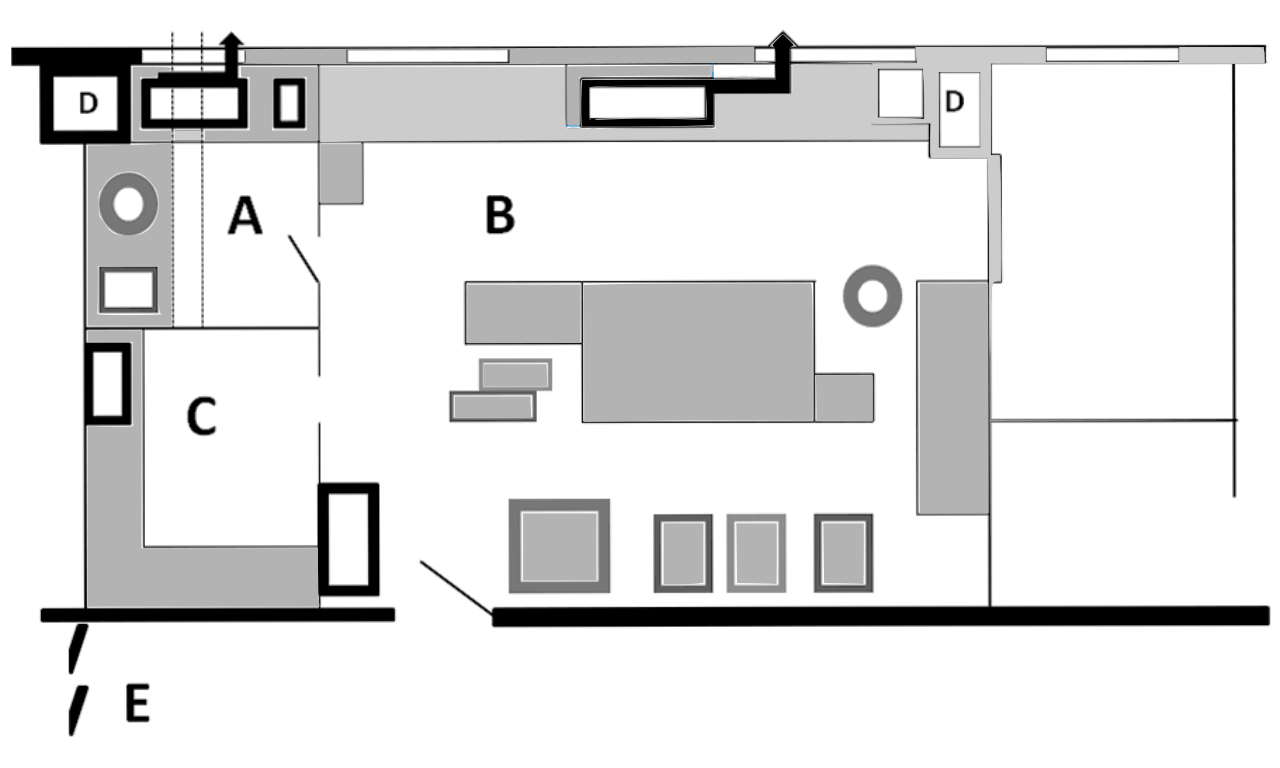
According to the Shooter Inquiry, the virus supposedly escaped from the smallpox laboratory, moved through air ducts, entered an enclosed courtyard, drifted upward, passed through an open window, and reached a telephone room where Parker had spent unusual time while the Abid strain was being handled below.
This is incorrect. This could not have ever happened.
On Shooter’s presented path, variola had to leave the smallpox laboratory, enter or move through damaged ducting, pass into an enclosed courtyard, drift upward, enter a room through an open window, and infect Janet Parker while apparently infecting no one else sharing the same building field through this route.
Later expert evidence made that path functionally unreachable in actuality: the amount of virus needed to make the duct path work was absurdly large, the calculated travel conditions did not support a viable infectious dose reaching the telephone room, and some of the “poor duct sealing” Shooter relied on appears to have been caused after the outbreak during fumigation work rather than being the pre-existing escape path.
According those experts, it would have taken twenty thousand years for one single particle of variola to reach Parker through those ducts as the Inquiry insisted it had.
Unless the virus found a closed timelike curve along the path, this is plainly not what happened. The Inquiry failed.
The problem is not that airborne smallpox is impossible. It is possible. The problem is that this specific airborne route asks a shared architectural pathway to produce one uniquely selected infection while leaving the rest of the exposed field untouched, and while violating everything we know about physics as it relates to viral transmission. What the Inquiry delievered was a narrative bridge over a missing path they never found.
If the airborne route was unreachable, then the inquiry did not simply make a technical mistake here. Instead of its intended output, the path, it produced false legibility, which now gave the field a mechanism that could be publicly handled while leaving the real mechanism forever unresolved and mysterious.
We still do not know how Parker, and Parker alone, was infected.
Actual repair depends on knowing how harm actually travelled through the structure of the field. This Inquiry failed to produce any structural evidence that could inform actual repair.
If the virus could not plausibly reach Parker through the ducts, then Parker must have had some unique contact-path with the smallpox laboratory field. This statement does not require claiming more than we know.
This means the realistic alternatives narrow sharply. These are presented by the evidence that remains of this field:
She may have entered the lab or a lab-adjacent space. This is the most obvious conclusion.
She may have handled a contaminated object: a note, list, order form, film packet, surface, handle, or piece of photographic material. Smallpox could transmit on surfaces.
She may have had near-threshold contact with a lab worker, local surface, or object close enough to the virus work to matter.
She may have followed an ordinary photography-work routine no one later reconstructed with enough care: collecting orders, offering photographic materials, visiting departments, receiving lists, writing things down, which led her into contact with the live viral field in a way that was never understood.
These are all clearly reachable routes, not proven theories. The duct theory, if the later critique is right, was not reachable by Abid in extance. It was wrong.
So the Shooter Inquiry appears to have answered only to the category of danger while failing to ever identify or answer the path of danger.
The reforms that followed still seem to have been highly prudent. Better laboratory containment, stronger rules for dangerous pathogens, tighter oversight, and rational limits on variola stocks were all sensible. But they were not informed by the failed Inquiry.
The key problem is that those reforms were shotgun repair. Shotgun repair is not useless, and may even be necessary, but it is always blind. It never has the real shape of the extant structure to ground its reform on.
These reforms closed a broad class of danger because the exact path was not preserved by the Inquiry assigned with preserving it so we would not just have to make a bunch of blind guesses. These reforms improve the general field while leaving the actual causal route unresolved, forever in this case.
Future safety may improve, but the field is not able to fully learn from itself. The record remains damaged at the point where precision mattered the most. That is the epistemic harm inflicted by this Inquiry.
The Shooter Inquiry did not leave us with a trustworthy map of how Janet Parker was infected. It left behind a public narrative, a set of blind reforms, and a forever mystery hardened by official explanation.
The virus was contained, the truth-path was not. The actual risk-pattern that must have been in the field to enable Parker's infection was never actually identified, nor can it be now.
The Blame Game.
The third harm is what happened to Henry Bedson.
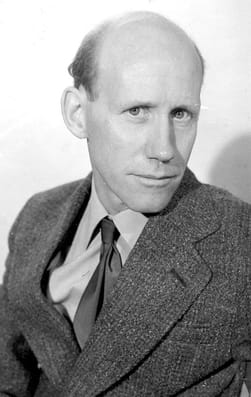
Bedson was not an irrelevant bystander at all in this situation. He ran the laboratory. The virus appears to have definitely come from his department. His research field, his procedures, his institution, and his containment environment were all morally active in this field. Any serious analysis has to include him.
Responsibility is not scapegoating.
A blame-shaped process wants a person to own the risk-pattern whenever harm has materialized. It wants a face to compress the field, because an agent can be named, shamed, punished, mourned, or removed more easily than a whole institutional structure can be understood.
Here, Bedson became that person-shaped site of pressure.
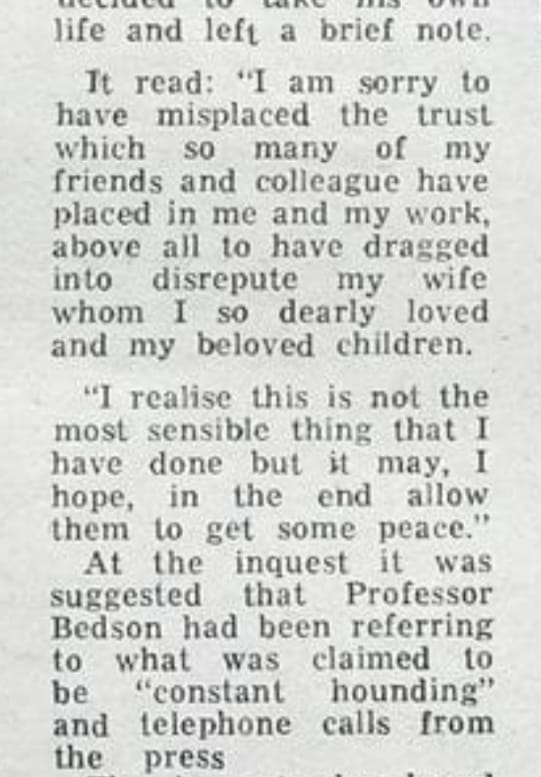
Henry Bedson was a microbiologist working in the global effort to eradicate smallpox. He personally confirmed Parker’s infection. He knew, almost immediately, that the virus had likely escaped from the field under his authority.
From the accounts I read, Henry Bedson appears to have been a compassionate and sensitive man, devoted to preventing harm.
After identifying the smallpox, Henry was quarantined at home. Journalists gathered outside. Rumor turned toward his lab. The inquiry pressure arrived before the field was calmly understood. The burden was placed on Bedson.
And then he died by suicide.
The Shooter Inquiry was not the only cause of Henry's Bedson death. Suicide should not be flattened into one cause for the convenience of an article. This is the exact same narrative distortion I was just describing.
However, the outbreak field and blame pressure helped create the conditions under which Bedson’s future was forever closed. The process that was only supposed to explain one harm became another harm-bearing field.
That is not a side note at all. That defines the moral structure of this Inquiry. A rational inquiry should preserve repair-capacity. It should protect the possibility of truth by protecting the people, records, routines, and knowledge needed to reconstruct the path. It should separate responsibility from blame, causal involvement from moral collapse, and institutional correction from sacrificial pressure.
That did not happen in the Shooter Inquiry. It was deeply irrational.
The field wanted blame-responsibility before it had a reliable map. It wanted a morally available figure to hate before it had reconstructed the actual route of viral infection. Bedson may have been responsible for parts of the field. That does not mean the field was morally entitled to collapse into him to offload the burden of having to actually do honest field analysis.

This case is ultimately not about smallpox, at all. The Shooter Inquiry shows how a repair process can fail not only by missing facts, but by organizing the search for facts around the wrong moral posture, for no actually valid reason and to direct detriment of the only reason this locus ever existed.
If the posture is blame first, field second, the process itself becomes very dangerous and incredibly stupid in a complex field. It may still produce outputs, like reforms. It could even still say true things, and identify real failures. Except it also now thickens resistance against truth by making the people closest to the field afraid, exposed, and narratively useful.
That is not repair.
Parker died from the biological breach. The public record was then damaged by the epistemic breach caused by the irrational conclusion drawn by the inquiry responding to that first harm. Bedson died also inside the inquiry field. He is often portrayed as "the final victim of smallpox", but that wasn't the field that finally collapsed his futures.
Great field analysis.
The Ruling.
The Shooter Inquiry was a failed field analysis, and harmful to the field it was created to repair. It identified real dangers and helped produce reforms that were probably necessary, but these reforms did not follow directly from its incorrect conclusions, and it did not give us the causal path needed to understand how the harm actually ever reached Janet Parker at all.
Worse, this locus was formed around blameful pressure rather than calm reconstruction, and that pressure contributed to the death of a microbiologist whose knowledge and character actually belonged to the repair field.