Applied Case: The Problem of Evil
The Problem of Evil is not that the field contains pain.
September 2026 note: Later Sacred Instruments work explicitly treats religious forms as capable of preserving contact, humility, care, discipline, repair, and memory; the failure condition is when a sacred instrument becomes sovereign over correction or launders the wound.
The Problem of Evil is usually stated as a question about God and suffering.
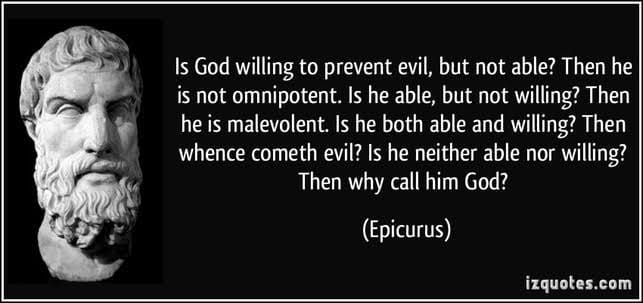
If God is good, then why does the world contain so much pain?
If God is powerful, then why is so much of that pain not prevented?
If God is knowing, then none of this is a surprise, so why is extance as it is?
This is one of the oldest and most serious questions theological human beings have ever asked.
Children die. Bodies fail. A flood takes a town. An animal is eaten alive. A plague runs through a city. A person prays and nothing appears to answer them. A species disappears forever. A world burns. A field closes. These are not at all childish things to point out. The childish thing is pretending that this question has an easy answer.
Theology.
Modal Path Ethics is not an atheistic framework.

It does not require a godless world in order to function, and it does not treat religious language as automatically confused. Modal Path Ethics is not anti-religion.
Much of its own moral instinct comes directly from religious ethics: the seriousness of care, the danger of false order, the weight of judgment, the demand for repair, the suspicion that human beings mistake appearances for wisdom, the sense that the field of reality is not morally exhausted by comfort, law, or social approval.
Religious traditions have often known this in their own languages. Wisdom, lament, mercy, judgment, stewardship, liberation, compassion, non-harm, right relation, repair, return, humility before the whole, and suspicion of false worldly order all appear across many very different traditions. This framework is not claiming to replace or unify those languages. It is trying to offer a human field-grammar for moral situations theological languages often approach through revelation, command, parable, ritual, law, mystical insight, or discipline.
The point is not that all religions say the same thing, because they plainly do not, and their language overlaps. The point here is that many of them take the wound in reality more seriously than the modern secular moral shorthand often does. There is a gap.
So, the goal is not to use evil as my little hammer to strike against belief. We are going to use Modal Path Ethics to ask the question at hand more carefully.
The Problem of Evil is not only the question of why suffering exists.
That question begins way too late.
Suffering vs. Harm.
Suffering is one way contraction becomes visible to a conscious being.
It is not the beginning of evil. Before suffering, there can already be closure. Before blame, there was already damage. Before any soul ever learns, grows, breaks, repents, or is tested, the field around it can lose the very future it might otherwise have carried.
That is the main contribution Modal Path Ethics makes to this problem.
Evil.
Modal Path Ethics does not define evil as one of its structural primitives, instead focusing on harm and its relation to good. Under the framework's account, evil, at the deepest level, is not first a dramatic villainy or a felt pain.
It is catastrophic contraction in extance: reachable futures closed, repair made harder, loci narrowed, continuance destroyed, burdens transferred, paths severed, and whole regions of possible continuation made unavailable.
Suffering matters because it is often the lived interior of that contraction, but contraction is deeper than suffering.
That distinction changes the Problem of Evil. A theodicy that explains why a person might suffer has not yet explained to us why a pre-life field closes. It has not explained why a planet-forming disk loses its planetary future before any creature exists. It has not explained why a life-bearing gradient disappears before there is life to use it. It has not explained why extinctions erase lineages before moral agency appears.
It has not explained why entire paths vanish before there is any witness, any lesson, any consent, any character, any soul-making, any courage, any patience, any repentance, any story.
That doesn't meant it can not, but, clearly, that is where the Problem becomes harder, not easier.
The Harder Problem.
In The Non-Planet Problem linked above, the relevant harm was not that a planet suffered. No planet even existed yet.
The harm was that an extant planet-forming field lost the reachable future in which planets could have formed.
In The Lost Gradient case also linked above, the harm was not that an organism was deprived. We're still not even close to organisms yet.
The issue was a prior field of difference, orientation, and biological possibility narrowed before life itself could stand there as victim or beneficiary.
These are not at all anti-religious examples. They are pre-human examples based in what the field we live in presents to us.
These things teach us that any serious account of evil has to now reach beneath the human drama and get even more busy.
Free will may certainly explain some moral evil. Human beings can choose badly. Agents can lie, exploit, kill, neglect, dominate, and transfer burdens onto others. A world with any agency may require the possibility that agency can go very wrong.
That answer has force, but it does not reach down far enough.
Free will does not explain the lost future of a dead protoplanetary field. It does not explain animal agony before human moral history. It does not explain a child’s cancer before the child can ever be morally educated by it. It does not explain earthquakes, parasites, congenital disease, mass extinction, crop failure, predation, drowning, or the ordinary biological fact that bodies are just built out of breakable parts.
So free will explains some of the damage agents do inside the field, but it does not explain why the field was even built with so many ways for damage to arrive before agency ever enters.
Soul-making, too, also explains something real.
Some resistance can build courage, discipline, patience, sympathy, humility, attention, and care. Not every difficulty is evil. A life with no resistance at all might not become a life in any serious sense. A game with no resistance is not playable. A mind never answered by the world may never become wise.
Modal Path Ethics agrees with that, but not all resistance is generative.
Some resistance does not make a soul at all. It often breaks one. Some suffering does not deepen a person, it destroys the capacities through which depth would have become reachable in its absence. Some children die before the lesson can be received. Some animals suffer without moral interpretation. Some diseases reduce the person below the threshold of integration. Some fields close before any subject exists to be improved by them.
A weight room can build strength, but a collapsing building is not a gymnasium.
Soul-making can explain some burdens only where the burdened locus can actually survive, integrate, and continue through that burden into a wider future. It cannot explain soul-preventing harm at all. It cannot explain pre-life harm, like the earlier cases. It cannot explain contraction whose main effect is to remove the very path through which learning, agency, or care would have become possible.
Natural law is, then, a stronger answer.
A real field needs lawful successor relations, this is also one of the three minimal metaphysical conditions of Modal Path Ethics. Without stable regularities, action becomes impossible. Fire must burn reliably enough for creatures to learn caution and use its warmth. Gravity must operate reliably enough for bodies, buildings, rivers, and planets to mean anything. Biology must have enough regularity for life to reproduce, adapt, heal, and inherit, as the Lost Gradient showed us. A world of arbitrary divine interruption at every edge of harm might not be a world where agency, science, trust, or repair can exist at all.
Modal Path Ethics depends on this too. A field without lawful continuation cannot be morally navigated.
Regularity alone still does not answer the problem. The question is not whether a created world needs structure. It seems it does. The question is why this structure contains this distribution of catastrophic closure.
Why this degree of disease? Why this amount of predation? Why this asymmetry of burden? Why so much irreversible loss in general? Why so many fields where the least powerful loci are made to carry the heaviest contractions? Why does repair so often arrive late, partially, or not at all?
Lawful structure is necessary for play to happen, but that does not show every trap on the board is now necessary.
Greater-good reasoning has the same problem here.
It may be true that some local harm prevents wider harm. It may be true that some losses open later goods, and that some narrowed paths are the condition of deeper continuance. Modal Path Ethics is already built from the fundament around the distinction between Good and Better. The framework does not pretend every loss suffered is avoidable or every closure is morally equal.
“Greater good” is still not a receipt. That is a field claim.
If a harm is defended as necessary for a greater good, then the defense now has to answer the field directly. Why this severity? Why this irreversibility? Why this breadth? Why this destruction of central enabling paths? Why this asymmetry? Why this distribution of burden?
A later good does not automatically justify an earlier closure. A benefit at the system level does not automatically answer the crushed locus at all. A beautiful outcome does not make every path to it clean. If one child, one species, one field, one people, one ecosystem, or one world is made to carry the cost of a good it cannot access, consent to, survive, or be repaired into, then this defense is not finished, because it has only named the hoped-for benefit. "Greater good" has not justified the burden transfer.
This is where many theodicies, ultimately, become morally underdescribed from a field-analytic perspective.
They often explain very well why a category of suffering might possibly fit inside a larger order, but they do not explain this field. They do not explain the exact arrangement of closures present under the conditions that do obtain: the child dying before maturity, the animal torn apart before moral agency, the planet sterilized before life, the ecosystem collapsed before repair, the disease that teaches no one, the pain that only narrows, the loss that never returns as wisdom because the locus that could have become wise has been destroyed.
Next, Skeptical theism gives us the most cautious answer.
Maybe human beings are just not positioned to know the reasons. Maybe the field is just too large. Maybe the true goods are too deep, too distant, too hidden, too interdependent for us to judge. Maybe what looks pointless to us is not pointless at all from the divine point of view.
There is a lot of epistemic humility in that. A finite creature should not pretend to see the whole field, Modal Path Ethics agrees with this.
No local agent ever has perfect access in this field. Human moral perception is limited, culturally shaped, emotionally biased, and often wrong. We mistake order for Good. We mistake intention for reality. We mistake familiar suffering for the whole of harm. We will miss a slow contraction because it does not look like a story to us.
So yes, humility is required, but at the same time, Modal Path Ethics recognizes that humility can become moral fog.
If every visible contraction may now secretly be optimal, the concept of any care becomes epistemically embarrassed. The harmed field appears before us, and we are told not to trust our contact with it too much. We are now not supposed to care.
The child’s death, the animal’s terror, the destroyed ecosystem, the dead world, the closed future; all may be secretly necessary in ways we cannot understand, so we must not care.
That may protect a theory of God, but it can also dramatically weaken moral contact with real harm, and that is very dangerous.
Any religious person should be especially wary of any answer that makes them less responsive to the wound the field presents in front of them.
If faith teaches us care, repair, mercy, justice, compassion, humility, stewardship, and love, then it cannot also require the faithful to look at catastrophic contraction and say too quickly: this is not harm because God must have reasons.
Maybe there are reasons. The wound is still a wound.
The Input.
Modal Path Ethic's contribution is not to disprove God. That's not my goal.
It is to insist that no account of God is morally serious if it loses contact with the real wound. The strongest religious answer to evil is not the one that makes every evil secretly acceptable to us. It is the one that refuses to call evil Good.
If God is good, then God is not vindicated by us redescribing contraction as harmless. God is not honored by us telling the crushed locus that its destruction was beautiful to us all along. God is not made greater in any way by making moral reality less visible to the creatures inside it.
A good God, if real, must be understood in field depth as ultimately opposed to contraction in extance. Not opposed only to the sin of sinners in the narrow human sense.
A good God is then, in the terms of this framework:
Opposed to the destruction of reachable future.
Opposed to false order.
Opposed to burden transfer.
Opposed to unrepaired closure.
Opposed to the field becoming less playable for the loci within it.
Here is where religious language becomes powerful again: repair, restoration, redemption, resurrection, healing, return, reconciliation, liberation, renewal, judgment, mercy, creation made whole.
Those are not abstractions anymore to Modal Path Ethics. They are now words describing the field presented to us directly.
They name the reopening of what was closed, the lowering of resistance, the return of truthful relation, the undoing or transformation of damage; the refusal to let harm have the final structure of reality.
Modal Path Ethics can easily meet religious ethics there. It does not need to flatten religion into superstition, nor will it accept every inherited answer as adequate.
It can say that the religious impulse toward ultimate repair is morally deeper than the apologetic impulse to explain why the damage was secretly acceptable.
A theology of repair begins by telling the truth about harm.
A theology of excuse begins by protecting the system from the harmed.
The Problem of Evil is therefore not solved by saying suffering has a grand purpose. Some suffering may, much does not appear to for many of us. Some suffering looks to destroy the very path by which purpose could be received. Some contraction occurs before suffering, before agency, before subjecthood, before life. We must retain humble and honest perception of the field as it presents to us.
The problem is also not solved by saying God’s reasons are hidden from us. That may still be true in part, but if the hiddenness of the reasons teaches us to mistrust the reality of harm, then this answer has become morally corrosive to extant beings in life.
The solution of this framework is different.
Evil is contraction in extance. If God exists and is good, then God’s goodness must be aligned with the ultimate repair of contraction, not with our rhetorical laundering. Divine goodness cannot mean that every closed path was secretly not a closure. It must mean that closure is not the final truth of the field.
This does not answer every theological question. It does not tell us why this child died, why this species vanished, why this world failed, why this pain arrived, why this repair was delayed, or why creation contains such deep capacity for harm. I am not pretending to see from the divine side of the field.
Modal Path Ethics can still say what an answer must not do. It must not call harm Good. It must not confuse hidden purpose with visible repair. It must not use the future to erase the locus that was closed before reaching it.
It must not defend order by ignoring who carries the cost. It must not explain human evil while leaving natural evil untouched. It must not explain suffering while leaving pre-life contraction undescribed. It must not make care become ashamed of seeing harm.
Ultimately, our answers must not blind us to the field.
The Problem of Evil is real because the field is really damaged; the initial instantiation of extance appears to have been technically harmful but still unimaginably Better under Modal Path Ethics, in much the same way as the Lost Gradient was.
That statement is not atheistic. It is more targeted at honest religion.
A faith that cannot say the field is damaged then has no serious need for redemption, because there is nothing damaged to redeem. A theology that cannot look directly at contraction likewise now has no need for a serious doctrine of repair. Still, most theologies tend to include these features, for what we must assume to be a reason.
A God who requires us to call the wound His strategy before we are allowed to love the wounded is not being defended. The knowledge of God is then being reduced in reachability to other extant loci by local rhetoric.
The better religious posture is harder and cleaner:
The wound is real.
The contraction is real.
The dead child is not a lesson first.
The animal is not a metaphor first.
The extinct species is not our plot device first.
The dead planet is not scenery first.
The lost gradient is not a decorative mystery first.
They are loci, fields, futures, and closures. If God is present, then God must be present truthfully there: as the deepest possible ground of repair, not as the reason for the initial unrepaired closure.
The Ruling.
The ruling from the field is therefore plain, somehow, on this one.
The Problem of Evil should not be reduced to an argument against God, and it should not be softened into an argument for accepting the world as secretly fine.
The world is, actually, not secretly fine as we can see it.
The field presented to us contains catastrophic contraction: suffering, predation, disease, extinction, disaster, child death, inherited burden, pre-life harm, and repairless loss.
Any theodicy that explains only why suffering might improve a soul has not reached the bottom of the problem to be solved. Any defense that only appeals to greater goods without explaining severity, irreversibility, breadth, centrality, asymmetry, and distribution has also not answered the field that obtains.
Modal Path Ethics explicitly does not tell the believer to stop believing.
It tells the believer not to stop seeing the field they are in. If God is good, then God is not found in the denial of harm. God is then found in the ultimate refusal of harm’s finality: in repair, reopening, restoration, and the preservation of playable extance beyond the contractions that now break it. Any morally serious account of God must remain in truthful contact with the wound and be considered by whether it leads us toward repair or away from it.
The Problem of Evil is not that the field contains pain.
The problem is that the field contains catastrophic closure even before consent, even before agency, even before learning, even before witness, and sometimes even before life.
If we say that there is a good God, then the good cannot be the explanation that makes us comfortable with closure. God must then be what finally answers the closure.