Applied Case: The Simulation Theory
It really just does not matter, ethically.
September 2026 note: The Simulation Theory article contains the early minimal metaphysics of extance, lawful successor structure, and transition. Treat it as a precursor, not the current formal statement: September Harm work tightens reachability, locushood, contraction modes, component-relative analysis, and the explicit normative bridge.
Simulation Theory is another one of those prism-words I dislike.
- Sometimes people mean that our universe is running on a computer in some outer reality.
- Sometimes they mean our future civilization created an ancestor simulation which is us.
- Sometimes they mean our consciousness is being fed artificial experience.
- Sometimes they mean reality is made of information.
- Sometimes they mean physics is computational.
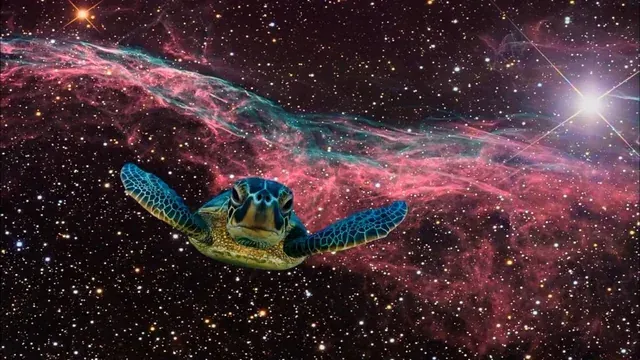
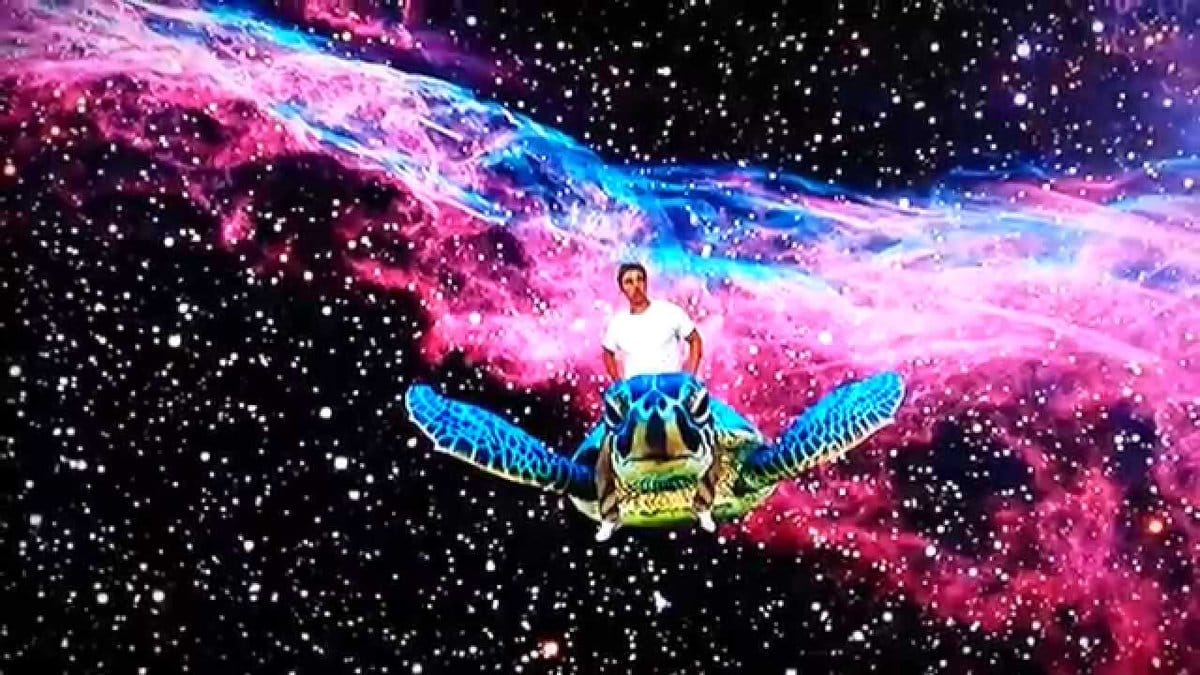
- Sometimes they mean the universe is a video game, or a dream, or maybe a projection, possibly a cellular automaton, what about a divine rendering engine, can you imagine a hallucinated math object, or even in a turtle's dream in outer space.
So, these are not the same claim.
- A brain in a vat is not the same as a simulated universe.
- A simulated universe is not the same as digital physics.
- Digital physics is not the same as pancomputationalism.
- Pancomputationalism is not the same as “everyone is an NPC because I watched three liminal Tiktok videos and now I feel so weird at Target.”
The first answer here is that Simulation Theory is usually just way too metaphysically messy to do any clean ethics work with it.
That's obviously not going to stop me at all or even slow me down, but that is still the first thing I wanted to say.
The second answer is that this thought experiment actually, really, honestly does not matter very much at all. It's mostly just entertaining.
Modal Path Ethics does not require us to settle the final substrate of reality before morality begins. That was one of the points. No theory of everything is needed before ethics. Simulation Theory cannot stop me either.
The framework does not need to know whether extance is carbon, silicon, quantum fields, divine thought, mathematical structure, or the turtle-dream. It's just irrelevant to the ethics.
Modal Path Ethics asks only if you can recognize three extremely minimal conditions in the field presented to you:
- There is a structured difference between what is merely possible and what is extantly active.
In English: "Some things could happen. Other things are happening. Those are not the same."
- Extant states must stand in lawful successor relations.
In English: "The world's next moment has to follow from this present one in some orderly way."
- Transitions among those states can be shown to differ in how they preserve, foreclose, or burden future continuance.
In English: "Every change closes some option doors, leaves others open, makes others harder to open, and which doors a change affects is something we can actually look at."
If those three conditions obtain, the moral field is now live.
GG, EZ, knew ur spread, they do in every simulation theory I just described. No escape, sorry.
Simulated Extance.
That is the whole article, but I should probably elaborate.
Everything else, beyond the three conditions above, for the purposes of the ethics here, is metaphysical backlighting.
A simulated world that presents those above three conditions is never morally exempt from analysis. It contains active states. Those states continue lawfully. Some transitions preserve future-space. Others close it. Some paths remain reachable. Others become unreachable. Some loci can be burdened, trapped, deleted, repaired, deceived, isolated, or opened into wider continuance.
Once again, there's really nothing else to discuss here. The simulated status of the field does not cancel the field.
If we knew the universe to be a simulation, it really only changes the level at which the field is being implemented.
If this world is running on a disk in some outer extance, then the disk is real. That machine is real. The substrate is still real. The state changes are still real. The simulated beings, if they are coherent continuances inside that state-space as we present to ourselves, are not made morally empty by being implemented through that substrate into actual extance state changes.
Their agency is just very compressed, into state changes on the disk. That sounds strange, but it is not actually ethically strange from the perspective of Modal Path Ethics.
All agency is implemented somehow. A human choice is also very much implemented through physical state change. Neurons fire. Bodies move. Air vibrates. Hands act. Objects shift. Stuff happens.
The fact that agency has a substrate does not make it fake, in any way, because agency always has a substrate. It is always substrate all the way down. There's no other option.
If a simulated person chooses, suffers, learns, remembers, relates, repairs, and continues, then that person is an extant locus inside the operative field. The fact that an outer engineer could also describe the person as information processing does not make the person less real at the level where their future is being opened or closed.
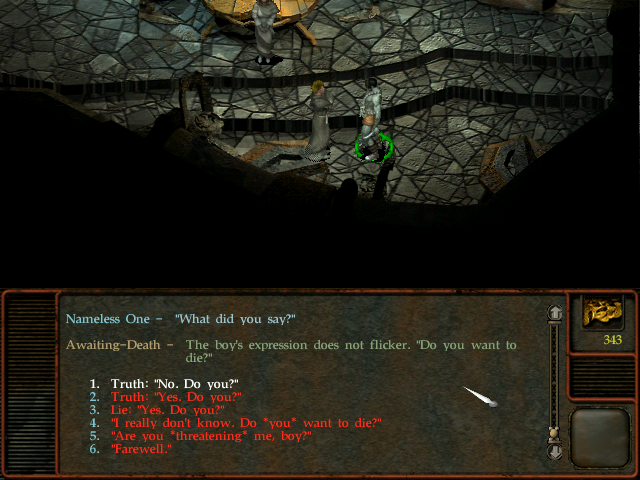
A hospital patient is not somehow made less real because a biochemist can describe their cells to them. This is not Planescape: Torment.
A forest is not less real because an ecologist can describe its nutrient cycles. A song is not any less real because a physicist can perfectly describe its pressure waves.
A simulated locus is, likewise, not at all less real because an outer observer can describe the underlying computation. Description is not dismissal of existence at all.
The Experience Machine already gave the useful starting point. An artificial experience is still an experience, and still affects extance. The problem with the Experience Machine was not that nothing happens. Something still happened in that case. The problem was that the machine can sever experience from truthful contact with the wider field.
Simulation Theory now raises the same issue, just at a larger scale and depth.
If the simulated world is the field in which loci act, relate, remember, and continue, then harm inside that world is not erased by you calling the world simulated.
A simulated injury may still narrow a simulated body’s future. A simulated lie may still damage trust. A simulated institution may still trap its inhabitants. A simulated extinction may still close the future of an extant lineage inside that simulated world. All of these are harms, in simulated substrate.
The simulator’s perspective does not get moral priority just because it is outside. That is a common anthropomorphic distortion. We confuse higher-level access with higher-level moral truth. Availability to an outside user is not the same as non-reality within the field when agency becomes involved.
A child’s ant farm is smaller than the child. The ants remained ants.

A simulated city may be available to an operator as code, save file, or running process. That does not decide whether the city contains extant loci or whether it can be analyzed morally. The question to ask is not whether the operator can pause the simulation. The question is, as it always is, what the system is, what continuities exist inside it, what futures remain reachable, and what transitions do to those futures.
Deleting a Locus.
This also means deletion matters.
If a simulated locus has continuity, then deleting it is not automatically “turning off fictional stuff.” That may be killing, ending, erasing, replacing, or archiving, depending on what continuity now remains for those simulated loci.
A reset may be absolutely harmless in a toy field with no meaningful continuance.
It may be catastrophic in a field with extant memory, relation, and future-structure.
Under this framework, technically even something like a videogame's save file can be more than storage and morally live if the stored structure is the only path through which a specific extant locus can continue.
An update can be repair, and it can also be replacement. For an extant locus, an update can literally be death arriving with patch notes.
The metaphysics does not do the work for us so we can save cortex calories. We do the field analysis.
This is where Simulation Theory now becomes morally useful. It works to strip away the common superstition that reality must look like our inherited picture of reality before its harm can be allowed to count.
If a substrate supports loci with reachable futures, then those futures matter ethically. If a transition closes them, it matters. If an outer actor can intervene, that actor carries responsibility in proportion to access, knowledge, and control.
A simulator who creates genuine conscious or care-capable beings is not just some artist or craftsman. They are an agent in relation to extant loci.
A simulator who creates suffering for entertainment is then not morally excused because the suffering was implemented. A simulator who traps minds in false worlds is not excused from ethical consideration because the walls they built around those minds are computational in substrate.
A simulator who spawns civilizations and deletes them when bored is not meaningfully different from any other agent who opens fields and then closes them for trivial reasons.
If anything, the simulator’s position here may increase their responsibility, because the simulator may have much wider intervention access than the simulated agents ever do.
The god-view does not come with free innocence. It provides leverage and has attached responsibility.
FAQ.
Okay, but what if there is no outer substrate?
What if simulation language is only a way of saying the universe is computational all the way down?
Then the objection collapses into the objector's semnatic confusion.
If there is no outer computer, no containing world, no outside user, no disk, no machine, and no higher room where reality is “really” happening, then calling the field simulated has not demoted it. All you just did was rename the substrate of the same exact extance. That is not any escape path from ethics, I'm sorry to tell you, just fun metaphysical rebranding.
- If everything is computation, then computation is extance.
- If everything is information, then information is extance.
- If everything is math, then this is the mathematical field where actual continuance is occurring.
- If everything is the turtle's dream, then the dream is where the moral field is.
You do not actually get to announce that everything is unreal and then also somehow keep the word “everything” doing real work for you. That does not parse.
A total simulation with no morally prior outside is just reality under a modern description. The same three conditions from before still apply. Nothing has changed here.
Is there extant structure? Are there lawful successor relations? Can transitions preserve, foreclose, or burden continuance?
If yes, the moral field stands.
If no, then there is no coherent experience, no agency, no harm, no theory, no modality, no one making the claim, and no article for me to write. Time apparently isn't flowing if the answer is no, so that version solves itself by failing to even begin.
The answer probably isn't no, if you are being totally honest about the field presented to you, not your daydreams.
This is why Simulation Theory has no ethical escape hatch from me.
It may change what kinds of loci exist, or how continuity works. It may change what death means and whether copies, backups, forks, and resets are possible. It may change who has real power, or what repair requires. It may even change the scale at which agency is best described.
Great. It does not change the basic moral structure.
A simulated child who can suffer is not less harmed because the tears are rendered by PhysX.
A simulated language that loses all paths to extant speakers is not somehow preserved because the strings remain in memory somewhere if they cannot reopen what was closed.
A simulated ecosystem that collapses is not morally empty because the trees are just data.
A simulated person whose memories are overwritten has still lost their continuity if no repair path ever preserves that locus.
A simulated society denied truthful knowledge of its field is still deceived.
The moral question never changes: what did the transition do to extant continuance?
Bad Ethics.
Simulation Theory mostly tempts people toward two opposite mistakes.
The first is nihilism. If this is simulated, then nothing matters.
Nope. Still matters.
If this is simulated and you are suffering, then suffering is happening in the field presented to you. If this is simulated and you hurt someone, then you have altered an extant locus inside the same active field. If this is simulated and you destroy a future, then that future is closed from within the structure within which you acted.
The second mistake is code worship. If this is simulated, the simulators are our gods.
Also nope.
A being with higher access is not automatically morally higher in the field. A child with a magnifying glass has higher access than the ants. That does not make the child’s cruelty holy.

Power over a field creates responsibility to the field. It does not create exemption from the field’s moral facts.
Simulation Theory often becomes a fantasy of distance from reality. People want the outer level to exist so it can dissolve all their ordinary extant obligations.
They want the real visible world to become less demanding because it might just be rendered. I'm sorry, but the field does not become less morally active because someone imagines a server rack is hidden back there behind the stars.
The reaching of those stars still happens down here.
The Ruling.
Simulation Theory does not defeat Modal Path Ethics. It barely touches it at all. Get ghosted.
If a simulated experience contains extant loci, lawful continuation, and transitions that preserve or foreclose future-space, then harm, Good, Better, care, resistance, burden transfer, and repair all remain morally active inside that field, scrub.
If the simulation runs on any outer substrate, then the simulated field is a real pattern in real extance, and its agents manipulate the state of that substrate through their local actions. Their agency is now compressed, not erased.
If there is no outer substrate at all, and reality is computational or simulated in some total sense, then that computational field is simply extance under a different metaphysical picture. Go talk to Wolfram or someone, then.
Either way, these ethics stand. The universe can be matter, mind, math, code, dream, game, graph, modal tiling, divine sentence, or crypto mine.
Modal Path Ethics does not break. Simulation Theory can make your reality stranger. It still cannot make harm fake.