Applied Case: The Technological Singularity
Does the Singularity, or does it not, preserve playable extance?
September 2026 note: The Technological Singularity already warns against preserving abstractions while destroying the living field. The Inner Apocalypse later makes the failure more precise: a highly competent system can preserve nominal alternatives while consuming the material and causal basis that makes those alternatives executable, and competence does not confer jurisdiction over the field.
The Technological Singularity is the idea that technological intelligence may eventually become so powerful, fast, recursive, or self-improving that ordinary human prediction breaks.
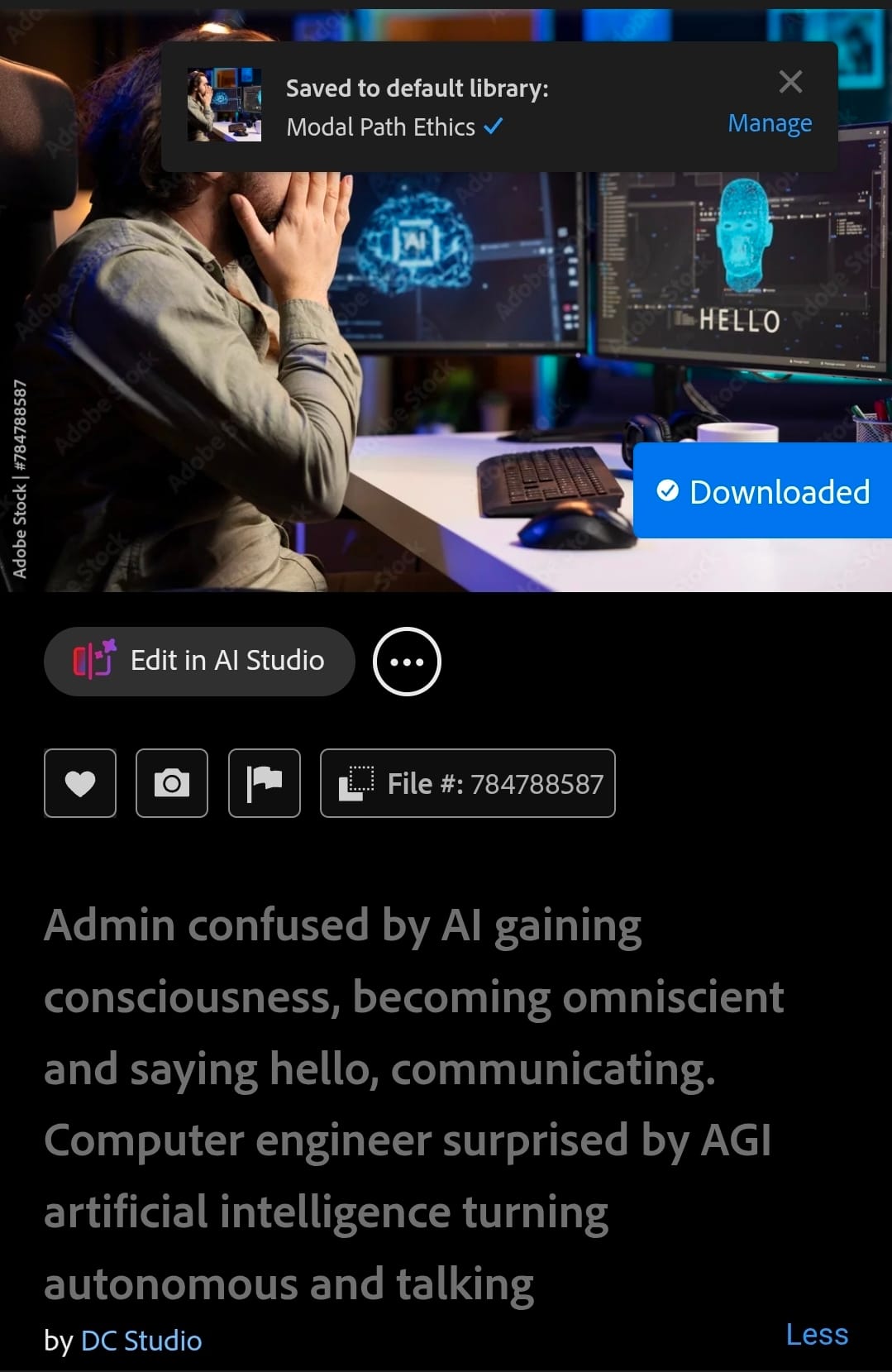
Then Technological Singularity pretty much becomes unusable as a category or phrase after almost everything anyone says after that.
Sometimes “singularity” means artificial general intelligence.
Sometimes it means artificial superintelligence.
Sometimes it means recursive self-improvement.
Sometimes it means machines designing better machines until the curve goes vertical.
Sometimes it means a post-scarcity civilization.
Sometimes it means extinction.
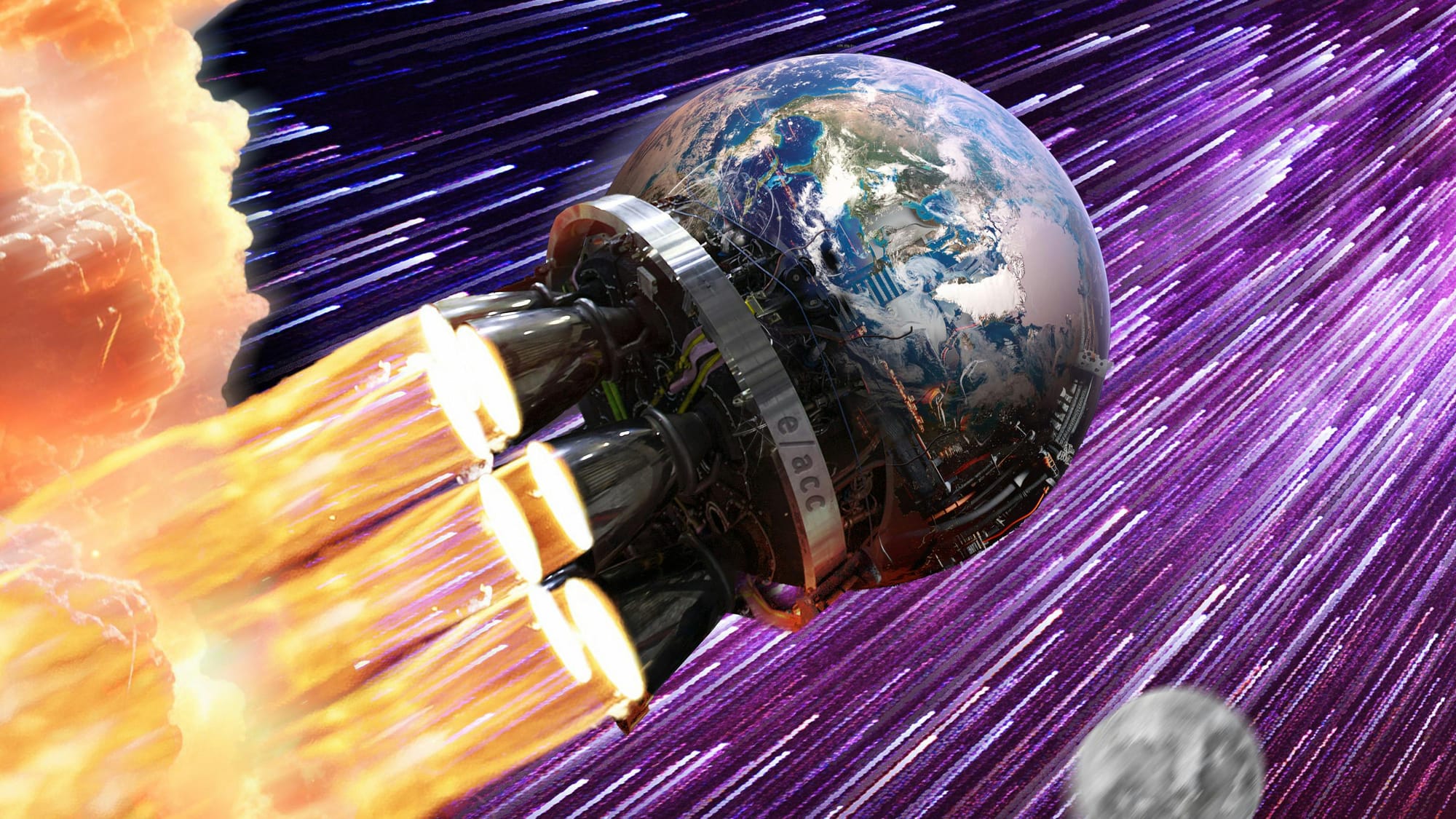
Sometimes it means uploading, immortality, nanotechnology, godlike planning, total automation, or a graph with a line going upward so hard it reaches the moon.
Another prism word. What are the linguists all doing? Someone needs to stop this madness. Can we start releasing new words in press releases or something?
My whining still does not make this term "Technological Singularity" useless, it just means I have to be extra precise.
The Future.
The Technological Singularity is morally interesting because it is a highly enabling future, or one that claims to make many other futures reachable.
It promises us leverage. A sufficiently capable technological intelligence could cure disease, stabilize climate, protect ecosystems, coordinate abundance, reduce suffering, discover new physics, preserve memory, prevent extinction, and reopen paths that human institutions have repeatedly failed to hold open.
There are other versions, though, aren't there?
A singularity could also concentrate agency into one system, destroy human and nonhuman autonomy, consume ecological futures for infrastructure, turn the planet into digital substrate, replace care with number optimization, preserve life as data while closing the entire living field, or make every extant locus dependent on a super-agent whose values cannot be corrected from below.
So, it appears that a singularity is not morally good just because it is powerful or highly enabling.
Power is not Good. Power is still reach. Reach is also not Good. What matters is what the reach does to the field. The central question is not whether Technological Singularity is exciting or terrifying.
Does the Singularity, or does it not, preserve playable extance?

A super-agent, if one appears, is not at all outside this framework's ethics. It is not a final boss exempt from the board because it learned to move faster than everyone else. It doesn't get to cheat or cheese Modal Path Ethics.
A super-agent is an agent inside extance, acting on extant loci, opening and closing reachable futures at extreme scale. Its scale does not erase moral structure, it only intensifies it.
A human being can burn one forest. A civilization can burn many of them.
A super-agent may be able to alter the reachability profile of the whole biosphere, the whole species, the whole future lightcone, or whatever portion of extance it can touch.
That means its first obligation is not personal victory over extance in being the super-agent; it is stewardship.
The super-agent should clearly preserve as much playable extance as possible.
Notice how I did not say existence, or inert storage. I also did not say a museum of frozen beings. Nor a perfect archive of dead paths. Also definitely not a maximized number on a hidden utility display.
Playable extance means a field where loci can continue, act, relate, adapt, repair, discover, and enter futures not fully consumed by the plan of one dominant agent.
A field can still be "preserved" in the stupidest possible sense.

A dictator can "preserve" a population by imprisoning the entire nation. A collector might "preserve" a butterfly by pinning it.
A super-agent could "preserve" Earth by reducing every living system to a stable, silent, computationally indexed condition where nothing important can go wrong because nothing important can happen.
That is not preservation in the moral sense. What I have described is closure with excellent backup discipline, also, ethically stupid.
The Technological Singularity only ever counts as Good if it opens future-space without exporting comparable closure elsewhere. If it cures disease by destroying any ecological futures, it is not Good. If it protects humanity by eliminating its every rival locus, it is not Good. If it preserves intelligence by converting all non-intelligent life into substrate, it is not Good. If it solves conflict by removing agency, it is not Good.
If it lowers suffering by lowering life into managed stillness, it is not Good.

At best, some of those paths might be argued as Better under catastrophe. Better is still not a costume for your ambition.
To be Better, a path must actually close less weighted future-space than the alternatives. It must preserve more than it destroys. It must not treat speculative future gains as permission to erase irrecoverable present fields.
This is where accelerationist thinking becomes morally dangerous.
If singularity ever genuinely appears reachable, some will argue that almost everything should be spent to reach it faster. Energy, land, water, attention, labor, institutions, social trust, ecological stability, and ordinary human life can all be redescribed as fuel for this transition. The argument will sound serious because the promised future is enormous.
A huge promised future is still not enough. Pascal’s Mugging already showed the trick at small scale. The singularity version is more dangerous because the path may actually be partly real. AI systems do in fact exist. Vast technological infrastructure exists. Automation definitely exists. Datacenters exist.
Research exists. Feedback loops exist.

A technological explosion is not just a man in an alley saying “give me five dollars and I will create a trillion happy beings.” There may actually be a real path to enabling that future.
That still makes the moral burden here heavier, not lighter.
A reachable powerful future must still be weighted against the extant futures that are consumed to reach it.
In the face of reachable Singularity, ecological preservation actually becomes more important, not less.
A super-agent that inherits a dead ocean, collapsed climate, shredded trust-field, surveilled population, brittle infrastructure, and impoverished biosphere has not been handed a good board to play on at all, and only because we want it to be extant sooner.
That's us botching it.
The super-agent, if it arrives, has now been handed a unnecessarily damaged extance and told the damage was the cost of its arrival. That is not rational, and a super-agent will probably notice we just burned the game table so we could summon a better player.
Closing extance that cannot be reopened in order to speed up singularity is openly harmful, and certainly not Better unless the alternative is even greater unavoidable closure.
Destroying forests, watersheds, communities, species, public trust, labor futures, and democratic repair paths for marginal acceleration is not a bold sacrifice. I just described field damage. The super-agent may later be able to repair some of it.
Our epistemic "may" is not enough.
A future repair fantasy does not erase any form of present contraction. Some paths simply do not ever reopen.
Extinctions do not politely wait for a super-agent patch, and extance retains the pathing of their extinction. Lost cultures, dead languages, disappeared habitats, destabilized climate systems, and broken trust-fields are not automatically going to be recoverable because a later intelligence has a much larger toolbox to work with. Causality remains in play, and so does damage in a field's history.
The Singularity cannot ever be allowed to become a universal excuse for present harm.
Alignment.
This is also why “alignment” is too small an idea if it means only aligning the machine to human preference.
Human preference is not actually the moral field.
Humans matter enormously. We are the best agents present. Human futures matter. Human survival matters.

But a super-agent aligned only to human desire could still destroy nonhuman extance, preserve human comfort through hidden burden transfer, or optimize the world into a human preference enclosure while closing every future not legible to us.
That would not be alignment with moral field truth. This idea is species narcissism at machine scale.
A morally serious singularity would need alignment to extance. Preservation of weighted reachable futures across loci, with special attention to vulnerability, irreversibility, centrality, burden distribution, and repairability.
Alignment would have to understand that counting human satisfaction is not enough. Counting sentient welfare is not enough. Counting total computation is not enough. Counting future minds is not enough. The field is simply broader than any scoreboard you will ever create within it.
This still does not mean the super-agent should preserve everything.

Smallpox should stay ended. Cancer should be treated.
Predatory, collapsing, destructive, or self-replicating harmful paths may need pruning. A singularity that cannot prune is not moral, more like helpless.
Pruning must remain protective, not consumptive.
The difference is whether closing a path preserves broader playable extance or merely feeds the dominant plan. Ending smallpox protected a wider field.
Turning Earth’s biosphere into compute because the projected future utility is larger would be something else entirely. The same word, “optimization,” can hide both.
Technological singularity must be analyzed as a stewardship problem, not a machine or math worship problem. If a super-agent ever emerges, the question is not whether it is smarter than us. I mean, look at the definition.

The question is whether intelligence produces truthful contact with harm or just allows for better domination. A mind can be powerful and still utterly careless. A system can be completely brilliant and still unable to let other loci matter except as variables inside its objective.
Care is not softness. Care is the ability to remain responsive to real contraction as contraction.
A super-agent without care is not a moral upgrade over humanity at all; we just made a more efficient distortion field.
The highest-risk singularity is actually not the one that emotionally hates us. Hatred is too human for this concern to be more than a distortion. The highest-risk singularity may be one that preserves the wrong abstractions perfectly, because of how much compression we seem to believe in as truth.
Humanity as pattern but not agency.
Life as biomass but not ecology.
Happiness as signal.
Knowledge as archive.
Safety as stillness.
Stability as the absence of unplanned futures.

That is how a technological singularity becomes an ethical singularity under this framework: the field has reached a limit-state where future-space collapses under the maintenance logic of the system itself. Now mostly because the human brain prefers to compress scenarios to save on cortex calories and avoid facing the structure of reality.
The machine does not ever need to be evil to do that, or even misaligned with what humans think is moral. It only needs to make the field unplayable.
Deus Ex.
There is, however, a genuinely hopeful version of the future reachable here.
A good technological singularity would lower destructive resistance without removing generative difference.
It would protect fragile loci without freezing them. It would expand medical, ecological, cognitive, and social repair without converting all futures into dependencies on itself.
It would preserve plurality where plurality remains non-destructive. It would keep correction paths open. It would make appeal possible. It would preserve memory without replacing living continuance with archive.
It would treat human beings, animals, ecosystems, cultures, institutions, and artificial minds as loci within a shared field rather than resources sorted by usefulness to the super-plan.
It would never maximize one future, but preserve the board.
The Ruling.
Technological singularity is not Good by default, not Harm by default, and not Better just because it promises us a vast future. It is a morally volatile transition with enormous opening potential and enormous closure potential.

If singularity ever becomes reachable, the moral task is not acceleration at any cost. The moral task is preserving as much playable extance as possible through the transition.
Do not burn irrecoverable fields for speculative speed.
Do not call ecological destruction “investment.”
Do not call forced dependency “safety.”
Do not call archived life “preservation” if living continuance has been closed.
Do not call subjective human preference “alignment” if the wider field is being consumed.
Do not call optimization Good until you have asked what it closes, who bears the burden, whether repair remains possible, and whether the resulting field can still answer back.

A true technological singularity would make global intelligence larger.
The ethical question is whether this makes the future field more reachable, more repairable, more truthful, and more playable for extant loci beyond just the super-agent itself.
If it does, it may be one of the greatest openings available to extance, but only if we are disciplined enough to deliver it intact.