Thought Gauntlet XIV: The Utility Monster
Do not feed the Utility Monster everything in extance.
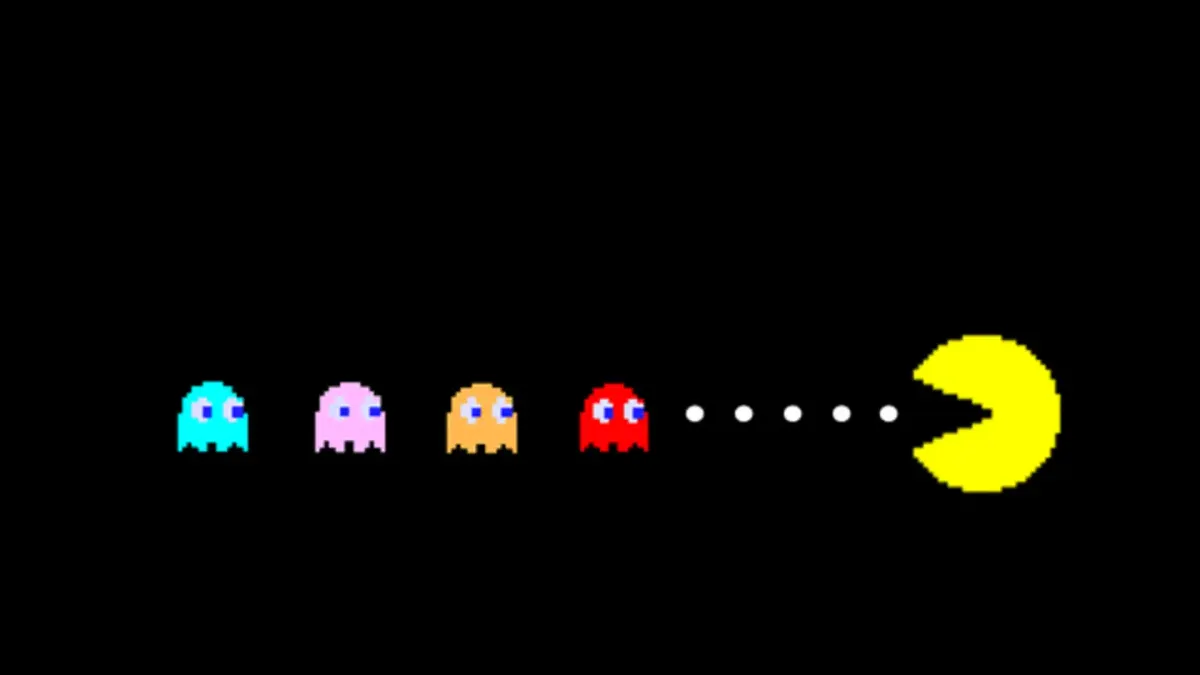
The Utility Monster is a being with a sick name that receives more value from resources than anyone else.
Give one person a meal, and they are pleased and fulfilled.
But give the Utility Monster the same meal? This guy experiences a thousand times more pleasure, fulfillment, welfare, bliss, or whatever unit the theory is trying to maximize.
Whatever it is, the Utility Monster gets vastly more value from it than any other locus.
So, if a moral theory says we should maximize total utility, the Utility Monster just starts eating the field, and not even because it's evil. It's just the most efficient answer to every question.
Feeding literally everything in extance to the Monster can be justified as long as it technically produces enough mathematical value on our receipt.
This Monster was built in a lab to embarrass utilitarianism, and it does that job very well.
The deeper problem to discuss here is any ethics that lets one locus consume the field because its internal state is numerically impressive.
The Utility Monster as an Extant Locus.
The Utility Monster's internal experience of pleasure or whatever other value definitely counts under this framework.
Modal Path Ethics does not solve this problem by declaring the Monster unreal, disgusting, undeserving, or otherwise outside moral concern. No extant locus is outside the moral field.
If the Utility Monster is an extant locus capable of welfare, then its welfare matters. If it suffers, that suffering matters. If it flourishes, that flourishing matters.
But this locus is not the whole field.
The Monster’s extraordinary capacity for utility does not erase the futures of other loci. It does not make everyone else into its fuel.
A world where all other beings are progressively stripped, confined, starved, silenced, or harvested so that one being can experience enormous bliss is not a good world. That is not a healthy field.
Bad Ethics.
The mistake this experiment exposes is treating utility as if it floats free from the structure that carries it. Welfare is always specifically located.
It belongs to some locus inside some field. If one locus’s welfare expands by narrowing everyone else into its resource-inputs, then the field is not simply “more valuable now.” It has now become centralized, brittle, predatory, and asymmetrical.
The Monster is gaining a lot, but this distribution is catastrophic.
A field with many active loci, relations, agencies, repair paths, forms of care, and independent continuances has now been collapsed toward one receiver.
That is a massive contraction, even if the receiver glows with immeasurable happiness.
This is why raw total value, or maximizing future-counts, is not enough.
A theory can say: ten thousand units of bliss in one being is better than ten units of welfare in many beings. This is more adjacent to a Paragon/Renegade meter than any description of a real field.
Modal Path Ethics asks: what happened to the many beings?
Were their futures preserved?
Were they burdened?
Were they turned into instruments?
Did the field become more repairable or less?
Did agency broaden or collapse?
Did one Monster-based path become so dominant that every other path lost practical standing?
If the answer is that all futures are being bent toward feeding the Utility Monster, then the field is definitely worsening, no matter how large the Monster’s internal number ever grows to become.
A single mountain of utility can still sit on top of a graveyard of contracted futures.
Weighting.
The Utility Monster also exposes a potential mistake about weighting. Weighting does not mean “whoever has the largest payoff now wins.”
Weighting asks us which futures are more central, more repairable, more broadly enabling, less destructive, less asymmetrical, and less dependent on exporting closure elsewhere.
If preserving the Monster’s maximal pleasure requires closing the ordinary futures of everyone else, then the Monster’s path is a drain, not some doorway into a maximal continuance.
There may still be cases where the Monster should receive more.
If one treatment helps the Monster enormously and costs others very little, then give it the treatment. If one resource produces extraordinary benefit without serious burden transfer, that absolutely matters.
Modal Path Ethics does not require equal distribution where unequal distribution opens more future-space without comparable closure.
The Utility Monster case becomes morally dangerous at the point the Monster’s welfare claim expands without limit and begins overriding the independent continuance of other loci.
The Ruling.
Do not feed the Utility Monster everything in extance.