Thought Gauntlet XV: The Lifeboat
A lifeboat selection is already terrible.
The end of the gauntlet is in sight.
The Lifeboat is a thought experiment about scarce rescue. It's mostly there in the name.
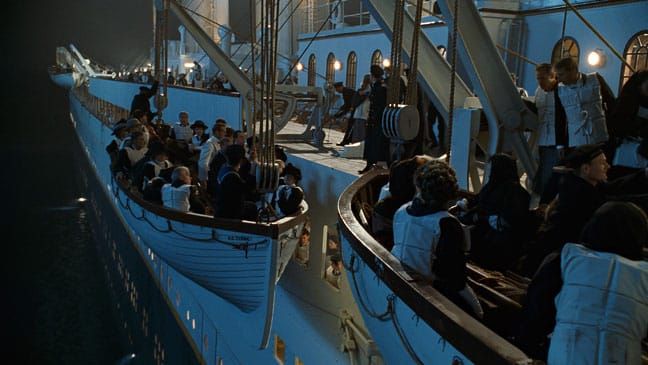
A ship sinks. There is one lifeboat. More people need rescue than the boat can carry. If everyone tries to board, the boat sinks and everyone dies. If some are kept out, those people die and the others survive.
Who gets a place on the Lifeboat?
It is one of the oldest moral problems because it strips away comfort very quickly. Equality sounds good until equal access now kills everyone. Utility sounds pretty good until someone starts ranking lives like they are cargo. First-come-first-served sounds neutral until we ask ourselves who was already closer to the boat. Random lottery sounds fair until it ignores medical need, caregiving dependency, or maybe bringing the person who can actually row.
The good path was enough boats.
That path is gone.
Better.
The Lifeboat is not a lesson that some people are worth more than others.
The lesson here is that scarcity can make worth the wrong question to be asking.
Everyone outside the boat matters. Everyone inside the boat matters.
The moral problem is not that some lives become empty in the face of others. The problem with the Lifeboat is that the field no longer contains enough safe carrying capacity for all the lives present.
The first moral fact is that failure.
There simply should have been enough rescue capacity. There should have been preparation, maintenance, warning, evacuation procedure, emergency training, and institutional responsibility before anyone was left freezing in the Firth while someone else became a tragic committee.
The lifeboat choice begins after those earlier paths have already been closed by earlier transitions. People will often stand at the end of a failed field and act as if the final chooser has somehow authored the whole catastrophe.
That Tragic Committee.
Still, the choice must be made.
If allowing everyone aboard sinks the boat, then “save everyone” is no longer an enabled action. That phrase now describes a path that has already become unreachable. Unreachable options are not moral solutions.
The remaining task is to preserve the most weighted future-space while also not pretending the excluded futures do not matter.
That means several methods may be morally relevant in the Lifeboat case.
A lottery may be best when the people are similarly situated and no meaningful difference affects survival, dependence, or rescue. Lottery preserves equality under scarcity by refusing to invent rankings where none are justified. Flipping a coin to make a decision is not immoral if the options are genuinely tied from the honest epistemic situation of the chooser. What would be immoral would be rigging the lottery based on imported secondary metrics.
Triage may be better when some people are much more likely to survive with rescue, or when some will die even if given a seat that could save another. That is still rough and remainder remains, but the pathing decision cannot ignore medical reality.
Role-based priority may matter if one person’s survival preserves the boat itself: the only navigator, the only medic, the only person strong enough to row, the only person who can signal rescue. This is not because that person has higher inherent moral worth, just because that locus' survival may be central to the path that enables everyone else’s reachable future.
Dependency may also matter here. A child dependent on a parent, or a patient dependent on a caregiver, changes the moral field. Saving one particular person in this case may preserve more than their isolated future path ranked against all others.
No single rule solves every lifeboat. As always, defer to the field as it presents.
Bad Ethics.
What cannot be allowed is social human power pretending to be triage.
The wealthy do not get seats because they are wealthy.
The strong do not get seats because they can push harder.
The captain does not get a seat because rank now means self-preservation.
The majority does not get to define the weakest as excess to discard.
The familiar hierarchy of the old field does not automatically govern the emergency field. In fact, emergencies often reveal which hierarchies were never even moral in the first place.
A lifeboat selection is already terrible. It becomes notably worse when scarcity is used to preserve social status.
The excluded also remain morally present. This is the part Lifeboat reasoning often tries to rush past.
If some must be left behind, their deaths do not somehow become clean because the choice was necessary. Their futures closed. Their terror, cold, grief, anger, and final moments remain real. The survivors do not get to redescribe them as ballast they had no choice but to discard.
The Ruling.
In a true Lifeboat case, where saving everyone would sink the boat and every available path contains death, selection is typically Better, given that the method of selection tracks the actual field: survival likelihood, centrality to rescue, dependency, responsibility, and fairness where no relevant differences exist.
The moral remainder remains. And next time, bring more boats.