Secondary Morals
Secondary doesn't mean unimportant. [L]

September 2026 note: The distinction between structural harm and downstream questions of intention, blame, responsibility, suffering, and social judgment remains important. Later work makes the separation cleaner: harm is a qualifying contraction borne by a locus in a respect; blame and obligation are separate relations; overall verdict comes only after the full transition profile is considered.
What are “Secondary Morals”?
Modal Path Ethics introduces this concept as a consequence of its reframing.
Secondary doesn't mean unimportant. It just means downstream.
A secondary path still gets you somewhere. The problem is when you mistake the secondary path for the actual source of the causal river you are flowing down.
The categories Modal Path Ethics considers Secondary are ones that structure is indifferent to, but that does not mean they do not alter the pattern of continuance regardless.
This is the most important part to understand:
If I burn down a forest with the best of intentions, the forest has burned down.
If I burn down a forest with the worst of intentions, the forest has burned down.
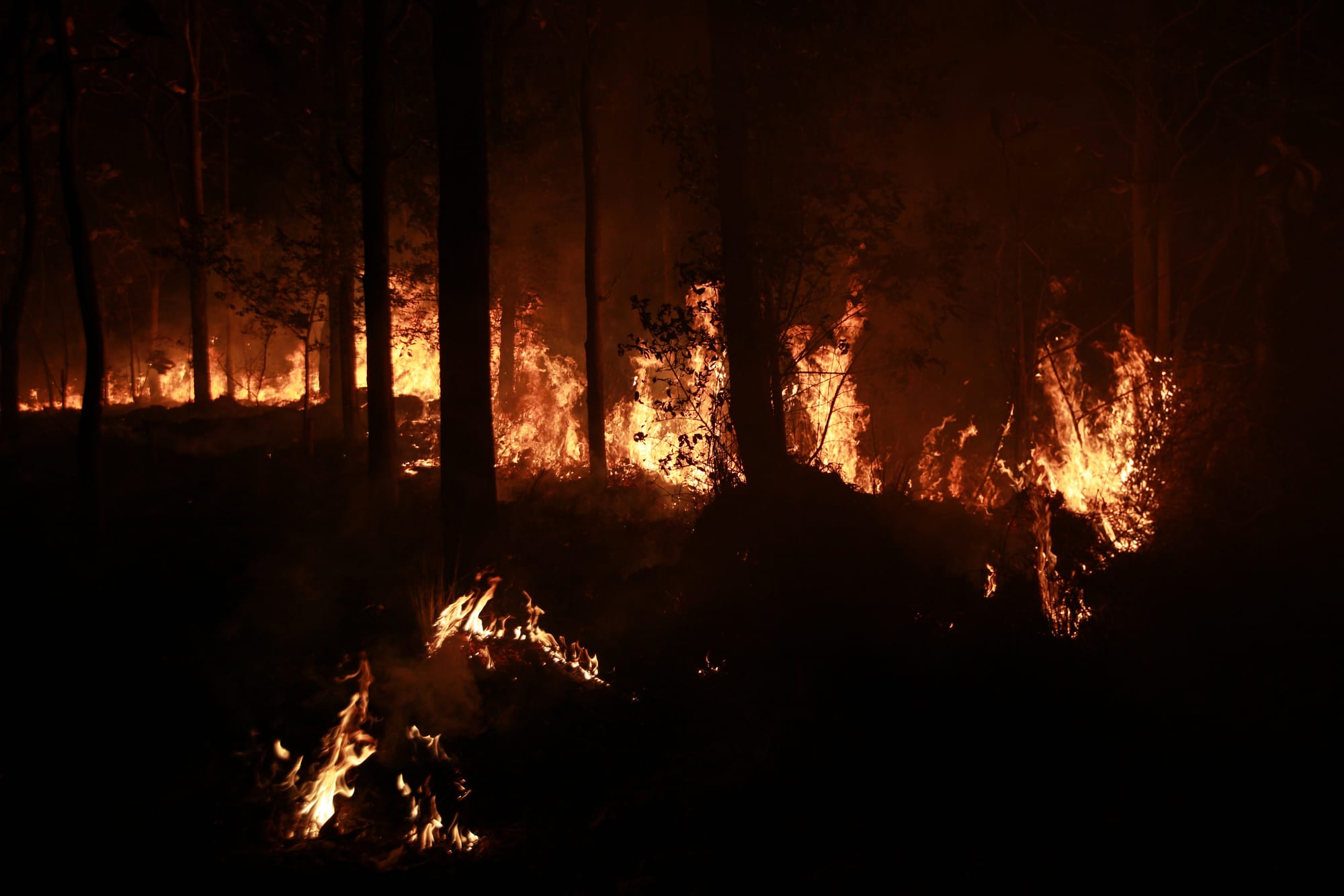
The why of the event did change the path leading to the moment, but the harm caused by the actual act remains the same, regardless.
This is what structure tells us. But, we do not stop at what structure tells us. The intentions do still matter.
They matter for how we respond to the person, socially.
They matter for whether we trust the person again, socially.
The matter for the institutions we build around that person, socially.
These are all real things, which do happen. The intention matters here.
Modal Path Ethics agrees. Asking these questions will help us change the pattern.
But Modal Path Ethics does not say, and contradicts the idea, that the intention itself changes anything about the actual, modal, structural change that this act has wrought upon extance through its transition.
The harm to the possibility space of our actual reality is the same regardless of our social concerns.
The secondary story related to why we harmed is irrelevant to the actual, primitive harm, because Modal Path Ethics considers structural morality to be primary, and social morality to be a secondary tier of depth nested within that structure.
So, the morals to which structure is unmoved belong to the latter category; Secondary.
These are considered social technologies for maneuvering with and around each other across deeper extance.
And the secondary moral tools are all demonstrably useful, regardless of what structure may think of us:
Blame can function perfectly well. An observer can correctly identify the most responsible target for a social violation, bring their violation to our order to attention, and discharge the collective anxiety while identifying and potentially limiting a bad actor or process proliferating harm within extance. This is a secondary moral tool used correctly.
Successful examples here: asbestos, leaded gasoline, cigarettes.
All definitely harmful to us, all rightly identified, all properly blamed for their harms, all collectively trialed and found guilty of their harm, and all restricted in use and proliferation to limit their harmful patterns.
All tremendously approached as a social civilization.

Structure did notice as the pattern of extance itself changed in response, but it did not and does not care about our blame, only our harm.
We enabled harmful patterns broadly, then we restricted them.
Our lower level discussion techniques are just that; lower level. Secondary.
Consider an opposing hypothetical.
What if someone had unbelievably malicious intent in their actions, but ultimately caused zero harm all the while despite their best efforts.
Why should or would structure care about that?
Their intent informed their pattern, but their pattern did not create harm to extance.
Their actions remained at worst a series of neutral non-interferences, which is often even considered good if it allows the continuance of good-arriving patterns to continue uninterrupted and does not transfer burdens or generate new resistance.
We, on the other hand, must care.
This is our secondary, subordinate responsibility to our own steward in extance.
This actor had, we assumed earlier, “unbelievably malicious intent”.
Are you comfortable allowing them to control future continuance?
Or would you blame them for the harms they sought to cause and want them held to account?

We do often rightly assign blame and punishment for events that did not occur if the intention was severe enough in its potential consequence.
This is the difference between what is important on the Primary, modal level and the Secondary, human level, and a segue into:
Intention, which as the above example already displays, we often find the right uses for. We tend not to complain when a planned terror attack is foiled in time and the intender detained. This is one proper usage of intention on our operating level.
But even if intention were considered objective, it is incredibly informative for human beings and incredibly uninformative to the field itself.
Intention is written in first person.
We ourselves construct our own narration regarding what our intentions are, and then share them with others who will revise them.
But the field is not considered to have a first person.
An intended good that foreseeably contracts the field is still a contraction to the field. The field is considered objective and primary, and the humans within the field subjective and secondary.
Even in the examples of a planned terror attack or our mysterious "unbelievably malicious intent” as above, the field cares only what contraction of future possibility does or does not occur, whether resistance is created or transferred, and ultimately what future possibilities still remain actually available for extance to path towards.
Why these things happened is a causal fact, but not a moral fact of structure.
This obviously is in desperate need of a concrete example:
The Green Revolution, beginning in the early 20th century and running through roughly the 1980s, is among the clearest examples available of genuinely very good intention producing extreme structural harm the field registered impartially.
Norman Borlaug and the scientists, policymakers, and institutions behind this project were trying to prevent mass starvation.
They succeeded at that.
Estimates suggest a billion people are alive today who would not be otherwise.
Their intentions were not only good, they were among the most unambiguously good, inspiring intentions of any large-scale human project in recorded history.

The field noted that down.
Humans prevented mass starvation and proliferated broadly.
Other humans were inspired to alter their own paths.
It then noted each of the following, equally:
The systematic replacement of thousands of years of locally adapted crop diversity with a small number of high-yield monocultures created an agricultural possibility space far narrower and more brittle than what preceded it.
The chemical dependency those same varieties required then depleted and structurally altered soils in ways still compounding now.
Then the water table depletion from irrigation systems built for yields that the underlying hydrology could not sustain long-term.
The displacement of traditional farming knowledge that, once lost from a community, does not come back.
The debt cycles created in the developing world when small farmers were structurally required to purchase inputs they previously had not needed.
Modal structure did not wait to hear whether anyone had intended them as downstream consequences before it noted these things.
It didn't later erase them because we explained ourselves well.
The field didn't read the Nobel Prize citation.
It registered the transition and it updated accordingly.
The intention was to open futures.
Very many were.

Several categories of future were simultaneously closed, some permanently, and the structural moral accounting always runs both directions regardless of what anyone meant or how noble we may feel they are.
This is not a condemnation of Borlaug or the scientists involved.
It is a description of what the framework means when it says intention changes how we respond to agents, not what a transition has done to the weighted future of extant loci.
The response to Borlaug is and always should be gratitude.
I will repeat to all reading that a billion human lives now exist which otherwise would not have.

However the response to the structural costs, the very real moral remainder, is not and must not be gratitude, and the difference between those two responses is not a contradiction.
It is what it looks like to hold the secondary and the primary simultaneously at different depth without collapsing one into the other.
Despite me almost inadvertently condemning the births of a billion of you, the next part of this discussion is the one which requires the most care.
Suffering is a Secondary moral criteria according to Modal Path Ethics.
This does not dismiss suffering as real, or as debatably the most directly impactful thing in many people's actual life experiences.
Suffering remains the most reliable detector we have of structural harm.
Suffering is, however, still an incomplete signal.
We can not allow ourselves to become consumed by suffering.
A smoke alarm is incredibly irritating.
It is also in place so you know there is a fire, and is more reliable than your sense of smell for that purpose.
That alarm can still often give false alarms and false positives. That alarm can still be intentionally or accidentally triggered in a way that does not indicate a fire or even smoke exists.
You still should never ignore a fire alarm when it is ringing.
(Newark Liberty International Airport inhabitants circa ~2017, this does include you as well. I remember.)
The important thing is this: you don't ignore a fire alarm unless you are careless.
(Newark)
You also do not conclude the alarm means the building is burning down around you.
(Yes, it was a false alarm, that is not my point here, Newark.)
The same approach must be taken to suffering.
It is a secondary moral criteria of harm which is often the best among that category of indicating structural harm also exists.
For more information and concrete real world examples on why over-attending to suffering could be fatal on scale, read the essay posted here on Legibility, and why it must not be considered as a criterion of moral depth.
The key point to bring here is that suffering as a concept can quite easily and quite naturally become over-centralizing to any moral framework.
Suffering then becomes the object we rally around, not the harm itself.
Vivid suffering will produce a mass moral mobilization to address a harm that is definitely real but is also demonstrably secondary to structural harms which produce no noise and light through suffering to draw us into focus.
Again, none of this dismisses suffering, and neither does Modal Path Ethics.
It simply reorganizes it around the reality of structure, that it might no longer pull focus toward the experiential surface and away from the generative conditions beneath that surface which allow it to even be.
With the big ones tackled, one annoying obstacle stands ahead:
Responsibility.
This can itself be considered in many ways a distortive word.
As the book identifies, the word “responsibility” can be used in our societies to mean anything from proximate causal involvement, the making of an intentional choice, that one must fulfill their role obligations, and that one possesses liability to sanctions.
These are often not even related to one another.
This word is so loaded from a history of agents whose social viability rested on a lack of “responsibility” associated with anything perceived as (what this framework considers secondarily) harmful to the group that it has been stretched and distorted into a prismatic surface through which anyone's intended meaning might now be seen reflected.
This word is a mess and should be clarified or used far less often.
Let's run through some contradictions of “responsibility” if it must fulfill all the definitions we are currently making it carry.
Take a very simple scenario that happens very often:
- A factory worker follows a procedure that causes downstream environmental harm. Is he responsible?
- Proximate cause says yes, he did the action.
- Responsibility. Guilty.
- Intention says no, he didn't intend to harm the environment, only fulfill his job requirements in an assumed reasonable situation.
- No responsibility, under most interpretations. Innocent.
- Role obligation looks to us and gives two enthusiastic thumbs up; perfect performance, great job.
- Of course, in this case this now means total responsibility, which is not guilt or innocence, and may mean innocence, sometimes?
- Liability to sanction suggests the company is probably instead to be blamed here, but this is still subject to debate and scrutiny which may itself become distorted by self-interests, so very little to no responsibility in most cases. Innocent, probably.
I mean what the fuck is our answer here?
This word is a hot mess and we honestly should just stop using it.
Just pick other words instead of this one from now on. We have stopped using much, much cooler words before. When was the last time a human said mumpsimus?
Look it up if you must remain attached to “responsibility”.

Fudgeling and brabbeling no further in jargogle, responsibility is so subjectively trialed and incomprehensible even to us that considering this word also primary to modal morality is laughably anthropocentric.
Structure ultimately cares only about harm, resistance, and the effect that has on available futures.
Who is “responsible” for the harm and contraction is not a primarily relevant category to this framework's morality, only for nested analysis of the harm and the field.
It is another secondary, socially useful tool that has become damaged into an almost irreconcilable state.
Concluding, remember that the secondary categories all still matter on a structural level in this theory (and even "responsibility” can be made useful, as the book admits in some more detail) .
They are not now ignored because we are also talking about the primitives as though they are what this theory sees them as.
Secondaries matter.
The secondary moralities alter the pattern of structure that is enabled and which elaborates. We use these moralities on our tier of depth to manage ourselves, and Modal Path Ethics suggest we realign that management towards the modal structure within which it is contained.
Secondaries do still change our lives.
Whether or not you find this a malapert goal, I hope this article at least clarifies what this framework means by “Secondary Morals”.
For a final basic image, a compass, ruler, and paper are all incredibly useful when you want to make a map for yourself. But not one of them, nor the map, is the terrain itself.
(Barring some out of scope and unconceivable resistentialist reality being actually at hand)
At most, they are a compressive representation of terrain and the tools used to achieve that compression. But the real terrain is still elsewhere.

() — an expergefactor of mokita directed the snollygoster Newarker et al