Applied Case: The Epicurean Death Problem
The harm is not missing an experience or having a bad one, the harm is losing the reachable future.
September 2026 note: The Epicurean Death Problem remains a strong case for treating death as closure of an extant personal continuation rather than requiring posthumous suffering. Later work adds that this identifies a harm-token; complete judgment may still require the surrounding transition profile, duties, causes, and competing harms.
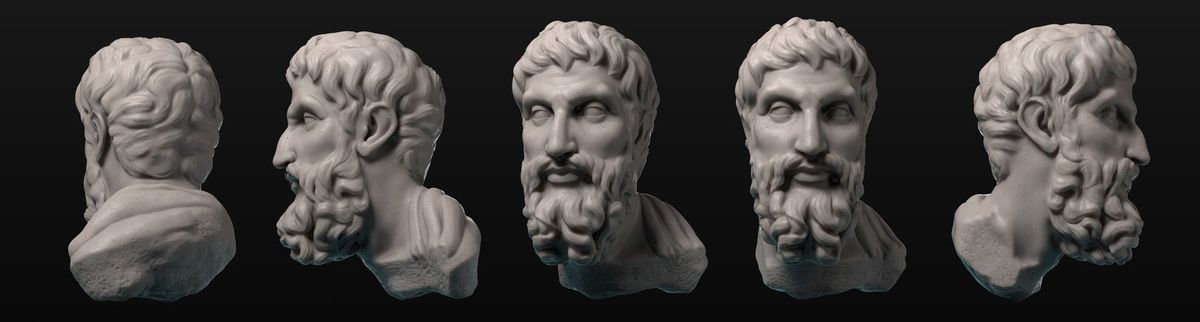
While still in this thought-space, the Epicurean Death Problem says death is not actually bad for the person who dies. The argument is simple.
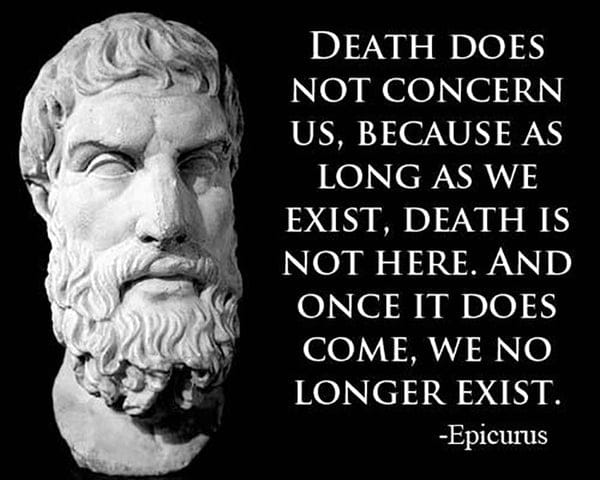
When you are alive, death is not present.
When death is present, you are not there.
So, death is never experienced by you.
You do not sit around after dying, annoyed by the inconvenience. You do not occupy death as a bad room to be in. You do not wake up in nonexistence and file some kind of complaint.
Therefore, the argument says, death cannot be bad for the dead person.
Death.
This sounds clever because it catches a real confusion. Death is not actually bad in the same way pain is bad. Pain is occupied. Fear is occupied.
Death, at least in the ordinary non-afterlife version of the argument, is not occupied by the one who dies, but the conclusion still does not follow.
Death does not actually need to be experienced after the fact in order to harm the person who dies.
Death harms you by closing your extant locus at the transition.
That is pretty much the whole case.
Being a Locus.
A living person is not some present experience-container.
A living person is an ongoing locus: body, memory, relation, agency, habit, repair, unfinished thought, unfinished work, unfinished love, unfinished stupidity, unfinished errands, and all the next states that remain reachable while the person is alive.
Death closes that path.
The harm is not then located in a ghostly post-death subject feeling deprived. The harm is located in the transition from continuance to non-continuance. A future that was reachable for that person is no longer reachable for that person because the person is gone.
That is actually enough. The Epicurean argument depends on you looking for the victim in the wrong place. It asks where the person is after death so they can experience the badness. This framework avoids that, because it asks what happened to the extant locus at the moment of death.
The answer there is clear.
The locus lost all ordinary future-space. This is why sleep is not death. This is why anesthesia is not death. This is why forgetting an afternoon is not death. In those cases, experience may be absent or interrupted, but the future path continues to exist. That person can wake, resume, repair, learn, regret, laugh, answer, remember, or at least continue through some successor state.
Not so lucky with death. Death ends the successor path for that locus.
The harm is not missing an experience or having a bad one, the harm is losing the reachable future.
This also explains why death can be bad for you even if painless. A painless killing is not harmless. It still avoids one kind of harm: suffering during the transition, and that matters, but it still closes the person’s future. The absence of terror, pain, or awareness does not erase that closure.
If someone burns a library at night while no one is inside, the library doesn't scream, but the loss is still real. The future readings, uses, repairs, discoveries, and continuations are all gone. A person is not a library, obviously, but the point is the same at the structural level: not all loss has to be felt at the moment it occurs in order to be loss in extance.
The dead person still does not later suffer deprivation, but the living locus was deprived of later continuance. This distinction also keeps Modal Path Ethics from making the opposite mistake. Death is not always equally bad. A child’s death is not structurally identical to the death of a person at the end of a long life. A sudden preventable death is not the same as a peaceful death after every meaningful path has narrowed and suffering has become dominant.
A death that destroys many central futures is weighted differently from a death where continuance had already become almost entirely burdened, painful, or unreachable.
That is why end-of-life care is morally serious. Sometimes preserving bare biological continuation may not preserve the person’s better reachable futures. Sometimes death is the closing of an already collapsing field, and the remaining question is whether the transition can be made less cruel, less fearful, less lonely, less resistant, and less harmful to those still living.
None of that proves death is not bad, just that death must be weighed, like everything else.
Death is also not automatically the worst possible event in every field, even if it is always closure.
Antinatalism.
The Epicurean argument also differs from antinatalism. Before a person exists, there is no extant person whose future is closed by non-creation. A possible person is not sitting in the void, deprived of birthday cake and oxygen.
However, once a person exists, they have an active future-structure. Their death is not the same as their never having been born.
Non-creation withholds extance from a merely possible locus. Death closes extance for an actual one. Those are not the same moral event.
The Ruling.
Death can definitely be bad for the person who dies even though the dead person does not experience being dead.
This badness is not a post-death feeling.
It is the transition that closes the reachable future of the extant locus.
A person does not need to be present after death to be harmed by death, because the harm occurs in the loss of the path by which that person would have continued.
Epicurus was right that death is not a pain we later endure, but he was clearly wrong if that means death is nothing to us.
Death is not an experience. Still, it is the end of the field in which experience, agency, relation, repair, and further continuance remained possible for that person.