Story-Minds
Most of moral cognition has the same problem.
September 2026 note: Story-Minds remains the account of narrative compression and its blind spots, but it should not be read as a binary opposition between story and structure.
Imagine a city where five thousand people will die from preventable air pollution in the next year. No one will photograph it. There will be no perpetrator, no pivotal moment, no body that the news can put on screen. The deaths will be statistical, distributed, downstream of dozens of unconnected industrial decisions made over decades, mostly without malice.
They will not be a story.
Now imagine a single shooter walks into a building in that same city and kills fifteen people.
You already know which of these will dominate the next year of moral attention.
This is not because the second event is worse. It is because the second event has a shape your mind can actually hold.
Most of moral cognition has the same problem. We are story-minds. This is a deep structural fact about how human cognition works. It is not a flaw, exactly.
It is also not innocent.
Modal Path Ethics has been building toward an explicit account of this fact for several articles already. The Legibility piece named the phenomenon at the level of moral perception. The Mathematics, Scientific Method, Languages, Law, and Democratic Process cases each described an instrument humans developed to compensate for it. Every applied case where a real harm went uncaught while a fake one became central: Darien, the Therac-25, HBO's Chernobyl, the 1904 Marathon, the Sydney incident, all turned partly on this same structure.
This essay names the underlying fact directly and explains what the framework thinks moral philosophy should do about it.
What a Story-Mind Is.
I'm keeping this term basic on purpose. You can dress this up in cognitive science terms if you want. Bruner called it the narrative mode of thought. Bartlett showed in the 1930s that human memory does not store information so much as reconstruct it through schemas. Gazzaniga’s split-brain work showed that the left hemisphere can confabulate explanations for behavior whose actual cause was unavailable to it.
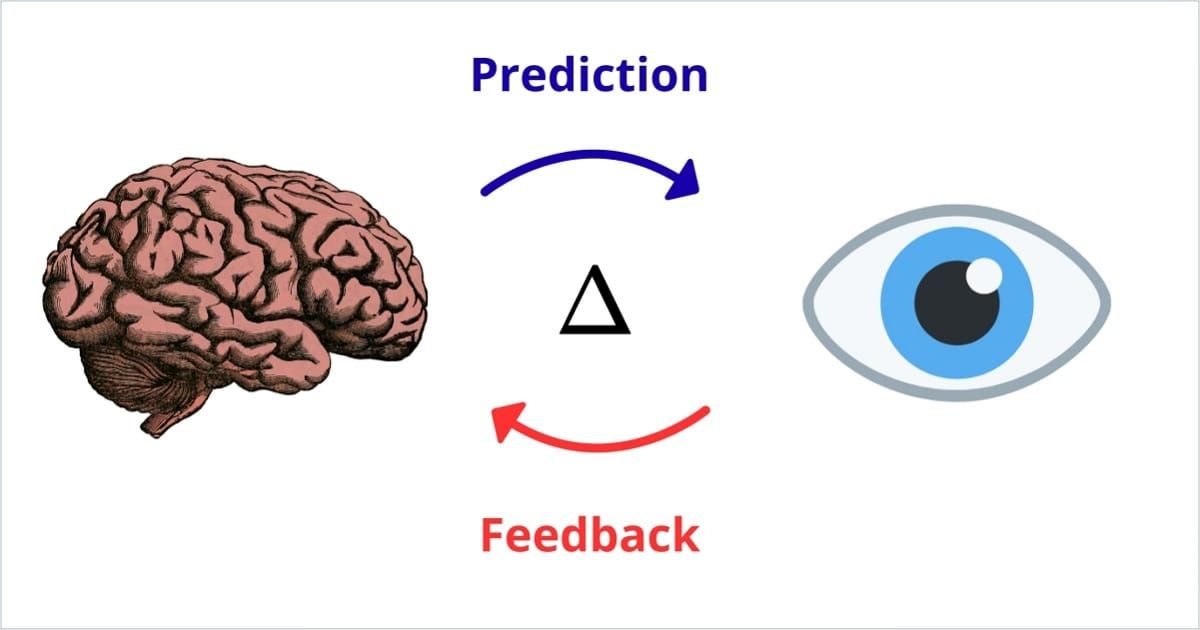
Predictive processing accounts now describe the brain as a prediction engine: it runs ahead of perception, fitting incoming sense data into an expected model of the world rather than building a fresh model from scratch. In ordinary language, that makes the mind story-like before it is report-like.
The takeaway from several decades of cognitive science is roughly this: human minds are not actually designed to not neutral recording devices. They compress information into compact, predictive, repeatable narrative units that can be retrieved fast under load.
That compression is what I mean by a story-mind.
A story-mind needs a protagonist. It needs a setting. It needs a problem, an arc, and a resolution. It can hold information that fits these slots indefinitely. It struggles to hold information that doesn't.
The brain is doing all of this for very good reasons.
Reality is just enormous. Cognitive resources are finite. A working representation of the world has to be smaller than the world is. Most of our day is this compression running invisibly in the background, doing extraordinary things, predicting where the coffee cup is, knowing what your friend means by their tone of voice, recognizing your dog from across the park.
The human cortex is calorically very expensive. It favors compression because full-detail representation is not cheap.
This is why children begin grasping and producing basic story structure by preschool age, while adults can still struggle to hold an unrepresented system in view.
Stories are cheap. Structure is expensive.
The Cost.
The story-mind structure is not a moral problem in itself. This is how humans love. Your attachment to your specific friends, your specific family, your specific dog, your specific city, these are all story-shaped attachments.
They are not lesser for being story-shaped. That is just how care can attach to anything in particular at all. Without narrative cognition there are no moral lives in the sense humans have moral lives.
The problem is not that the story-mind exists.
The problem is what it systematically can't see.
A story needs a protagonist. A story needs a moment. A story needs a perpetrator or a hero, ideally both. A story needs the listener to be able to figure out where to put their attention. The features that make something story-shaped are also features that exclude most of what actually happens in extance.
Pre-life harm has no story. A protoplanetary disk sterilized by gamma-ray burst before any life emerges does not feature a protagonist whose dreams were destroyed. It is exactly the kind of moral fact the story-mind cannot natively hold.
Drift has no story. A field that contracts slowly over decades, with no single decision producing the contraction, with the cumulative effect spread across millions of small unrelated choices, looks to the story-mind like nothing happening. The field can collapse without ever generating a moment.
Distributed harm has no protagonist. The five thousand deaths from preventable pollution have no main character, no enemy, no scene the camera can cut to. The fifteen deaths from the shooter have all of these.
The fifteen will become a national event. The five thousand will appear in a footnote of an EPA report nobody reads.
The story-mind also does the opposite. It manufactures stories where there aren't any.
The brain's pattern-completion function will fit narrative shape onto noise, finding villains in randomness, finding intentions in accidents, finding meaning in coincidence. This is also what gives us conspiracy theories, scapegoating, false repair, and the daydreams of the Darien article at civilizational scale.
The story-mind is not biased toward truth. It is biased toward story shape.
When shape and truth coincide, the story-mind serves us well. When they diverge, the story-mind picks shape almost every time.
The Distortion Field, More Precisely.
Modal Path Ethics has talked about distortion fields throughout: conditions where perception within a damaged field has been bent away from honest contact with the structural damage. The story-mind account explains why distortion fields are stable.
Inside a distortion field, the agents are not lying or even misperceiving in the usual sense. They are receiving the field through their default cognitive apparatus, which is searching for narrative shape in what's around them. The field has been damaged in ways that don't produce narrative shape. The damage doesn't read.
What the distortion field offers instead are flattering stories about why the damage isn't really damage, or why someone else is responsible, or why the damage is actually a feature, or why the only people who claim to see damage are bad-faith actors with their own agenda.
These stories are easier to metabolize than the structural reality. Story-minds metabolize what's easier to metabolize.
So distortion fields are stable not because everyone in them is corrupt but because the cognitive apparatus inside the field is doing what cognitive apparatuses do. It is compressing the available information into the most narratively coherent shape, and the shape happens to be the institutionally preferred one.
This is also why distortion fields are so hard to repair from the inside. To see them, you have to refuse to compress. You have to hold the non-narrative information at length. The cortex doesn't want to do this because it costs cortex calories the cortex would rather spend elsewhere.
Most people, most of the time, cannot hold non-narrative information against active institutional pressure to flatten it. This is not a failure of character. It is the architectural baseline.
Why the Vocabulary Is What It Is.
This is where Modal Path Ethics' vocabulary comes from. Not from a love of jargon. Not from analytic-philosophy aesthetics. From the requirement that a moral framework adequate to extance must include a grammar that holds what stories cannot.
Locus, extance, reachability, contraction, weighting, resistance, field, drift, embedded participation, role capture, distortion, truthful contact, these are not protagonists. They do not have arcs. They do not generate scenes. You cannot tell me what happens next in the life of a locus the way you can tell me what happens next in the life of Bruce Wayne.
This is not a problem with the vocabulary. It is the entire point.
A story-mind can recognize when the vocabulary describes things its native categories can't. A reader who works through the framework over enough articles develops the ability to perceive, at first slowly, then faster, kinds of moral facts the story-mind would otherwise compress into nothing.
The vocabulary doesn't replace the story-mind. Trust me, the story-mind is going to be there whether you want it to be or not. The vocabulary is what extends story-mind perception into territory the story-mind alone can't reach.
This is the same structural relationship as: mathematics extending into territory the eye can't see, scientific method extending into territory intuition can't reach, language extending into territory pre-linguistic cognition can't hold, law extending into territory private revenge can't address, democratic process extending into territory concentrated power can't be trusted to perceive. Each of these instruments was developed because the underlying cognitive architecture had blind spots and the species needed grammar to reach across them.
Modal Path Ethics is making the same kind of claim about moral cognition. The native architecture has blind spots. The blind spots include most of what actually matters morally. A grammar can extend the reach.
Care as Discipline Against Compression.
This account of mind also sharpens what the framework means by care.
Care is truthful responsiveness to contraction. For a story-mind, that's expensive. The default cognitive apparatus wants to compress, summarize, move on, find the next pattern, look at the protagonist of the next scene. To remain in contact with a contraction that has no narrative shape like a slow ecological collapse, a chronic injustice, a pre-life harm, or a drift requires holding the cortex against its own preferred compression strategy.
Care, in this sense, is not an emotion. It is a discipline.
It is the willingness to keep noticing what your default architecture wants to flatten into nothing.
This is also why care is rare and why most ethical attention is captured by the most legible cases. The legible cases satisfy the architecture. The illegible ones cost cortex calories to keep in mind, and cortex calories are not free.
Most institutional failures of care are not failures of character. They are the architectural baseline expressing itself in conditions that don't actively reward sustained non-narrative perception. When the institution does reward it, such as when, for example, the Smogon RBY UU Tier Council documented its reasoning publicly and faced consequences for being wrong, the architecture can be trained against itself and towards the field.
Volk's reflection on the sleep ban is what trained perception looks like in real time. So is Petrov sitting in a Soviet bunker holding his judgment against an alarm system telling him to launch. So is a doctor recognizing the early signs of sepsis in a patient who hasn't yet developed the textbook presentation. So is Sully on the Hudson reading a damaged aircraft with no engines as a glide path rather than a crash.
Trained perception is what story-minds become when they have been disciplined by structure. It is also what most of moral perception fails to be.
Field Instruments, Again.
Every Field Instrument essay can now be read partly as an account of what humans had to build to compensate for the story-mind.
Mathematics formalizes what the eye can't count.
Scientific method formalizes what intuition can't isolate.
Languages formalize what pre-linguistic cognition can't share.
Law formalizes what private revenge can't adjudicate.
Democratic process formalizes what concentrated power can't be trusted to perceive.
Each of these instruments is real. Each requires a selecting cut. Each can be misused as false repair when the output is mistaken for the underlying field.
But each is also doing something the unaided cognitive architecture cannot do alone.
This is the reason Modal Path Ethics doesn't dismiss instruments and isn't anti-formal. The framework is anti-replacement, not anti-instrument. Instruments extend story-minds into territory story-minds can't reach. Confusing the instrument with the field is what produces false repair. But pretending the instrument is unnecessary because the field is what really matters is just letting the story-mind have its way, and the story-mind, left to its own preferences, will always pick the legible case over the structural one.
The Honest Balance.
I want to be careful here. I am not saying the story-mind is bad. I am not saying we should try to become structural-mind machines who feel nothing for any particular locus and only compute weighted-future-space distributions on a spreadsheet.
That would not actually be moral perception at all. It would be a different cognitive failure.
The story-mind is also how care attaches to anything in particular. The reason you care about your specific friend is that you have built a story-shaped attachment to that specific friend. The reason a doctor cares about a specific patient is partly that they have started to build a story-shaped attachment to that specific patient. The reason a parent cares about a specific child, a teacher about a specific student, an organizer about a specific community, all of this runs through narrative attachment to particular loci.
Without that, there is no first-person motivation to do moral work at all. A purely structural ethics that asked agents to optimize over weighted future-space without also caring about anything in particular would not be a serious ethics. It would be a planning algorithm.
What Modal Path Ethics asks for is not the abolition of story-minds.
It is the discipline of story-minds against their own native limits.
Care for the specific locus you can see, and at the same time, refuse to let the visibility of that locus become the entire boundary of your moral attention. Build attachment to particular fields you actually inhabit, and at the same time, develop the structural grammar that lets you perceive contractions in fields you don't inhabit and would otherwise miss.
The story-mind is a tool. So is the structural grammar. The two together produce something neither produces alone.
Brief Note on Cognitive Variation.
Not all minds story the same way. Cognitive architectures vary across people in ways that matter. Some people have native access to non-narrative perception that most people only develop through training. Some people have particularly intense narrative cognition that captures more attention than they would prefer. Some people experience their own thought as a story being narrated by someone else. Some people have been pathologized for cognitive features that, in a different framing, would have been considered useful capacities for structural perception.
I am one of the people for whom this is not abstract. I have been told my cognition is wrong for a long time. Some of that diagnosis was useful and some of it was the world preferring comfortable stories about why my perception didn't fit its preferred shape.
Modal Path Ethics is not making a claim that there is one correct cognitive architecture. It is making a claim that whatever your cognitive architecture, there are kinds of moral facts your architecture's defaults will tend to miss, and that any serious moral framework has to include grammar for compensating against those defaults.
For most readers, this means developing structural perception against narrative compression. For some readers, the work might run the other direction.
The framework's vocabulary works either way. That is part of why it is what it is.
Closing.
The story-mind is the cognitive architecture moral philosophy has had to work with for as long as moral philosophy has existed. Every framework you have ever read was built partly to address it, even when the framework didn't say so. Every appeal to "intuition" in ethics is partly an appeal to the story-mind's native categories. Every appeal to "principle" is partly an attempt to reach past those categories into something more structural.
What Modal Path Ethics adds is the explicit naming.
Humans cognize through narrative. Narrative cognition has architectural limits. The limits include most of what actually matters morally. A serious ethics has to include both an honest account of how the architecture works and a grammar for compensating against its limits where the limits matter most.
The framework's vocabulary is the grammar. The Field Instruments series is the account of how humans have already extended story-minds with structural tools across millennia. The applied cases are demonstrations of what happens in fields where the story-mind is allowed to run unchallenged. The thought gauntlet is the training set.
Care is the discipline by which a story-mind, which would prefer to be doing something else, holds its attention on what its default architecture would compress.
This is why moral perception is rare. It is also why it is reachable. The architecture isn't fixed. It just needs grammar.