
Applied Case: The Public Has Been Moved Downstream
The permit can remain open after the decision has become expensive to change.
So the public had until August 21 to comment on whether future members of the public should always get a chance to comment.
This is an impressively efficient way to encounter the problem.
On July 7, the Environmental Protection Agency published a proposed change to the federal rules governing minor New Source Review, the Clean Air Act permitting system used for new minor stationary pollution sources and minor modifications to existing sources.
- The existing federal regulation establishes public participation as a minimum feature of state and local minor-source programs approved into State Implementation Plans.
- The Environmental Protection Agency proposes removing that federal floor.
If the rule becomes final, state and local air agencies would instead decide whether public participation belongs in their minor New Source Review programs, when it should occur, and how long the opportunity should last. Existing state requirements would not instantly disappear. An air agency that wants to remove or alter requirements already contained in its approved plan would have to change that plan through the State Implementation Plan process. States could also retain stronger participation rules. Federal participation requirements for major New Source Review permits are outside this proposal.
So, first, precision.
- The federal government has not abolished public comment on datacenters.
- The rule is proposed, not final.
- It concerns one defined class of air permitting.
- Some states may retain exactly what they have.
- Some datacenter projects will encounter other permitting systems carrying their own notice, hearings, review, and participation requirements.
Good. Cool. Now we can look at the actual problem.
Capital B reported this week that the change could matter directly to the current datacenter buildout because datacenters and the power infrastructure serving them can involve pollution sources requiring air permits. Communities already contesting large facilities fear losing one of the few formal routes through which they can discover a project, enter objections, ask questions, and place information into the permitting record before approval.
That is a bounded object.
We even have a docket number.
EPA-HQ-OAR-2025-1212.
This is going to become important later.
The Public Does Not Get the Permit.
A public meeting is not an atmospheric model. This is not an insult to public assemblies.
A neighbor just does not become an electrical engineer because somebody proposed a datacenter across the road.
Five hundred angry residents cannot vote nitrogen oxides into a different chemical structure.
Local opposition can also be parochial, mistaken, selectively informed, resistant to useful infrastructure, or motivated by the ancient political principle that every necessary thing should ideally be built somewhere else.
All that counts. There is no reason to romanticize proximity.
Sometimes the engineer knows something the neighbor does not. Sometimes the developer has correctly modeled a burden that the surrounding public has badly misunderstood. Sometimes the facility is worth building.
Standing is still not command.
Modal Path Ethics made this distinction recently while auditing Irreplaceable, the new anti-artificial-intelligence movement attempting to assemble datacenter opposition, labor anxiety, concerns about children, surveillance, frontier risk, military systems, open weights, and other injuries into a national politics of “Big AI.” The argument over there was explicit.
- Nonspecialists belong in public decisions because they carry consequences, local knowledge, values, and rights.
- That standing does not grant one selected public authority over every technical or political question connected to the thing under dispute.
The article asked whether environmental groups in Irreplaceable's future coalition would even be allowed to conclude that one datacenter justified its burden while another did not.
That distinction works perfectly here.
- The public does not receive the air permit.
- The public receives a route into the decision that produces the air permit.
Those are very different powers. And the second one matters.
The Hearing.
Imagine a permitting office evaluating the generators attached to a proposed facility.
The application contains engineering specifications, expected emissions, maps, modeled conditions; the applicant's description of the project.
It may contain considerable technical expertise that nobody living beside the proposed site possesses.
Then, the public enters.
- Someone knows that the road shown as an ordinary access route is already dangerous during school pickup.
- Someone knows that the creek floods farther than the available map suggests.
- Someone has lived beside the existing industrial site and knows exactly when its noise crosses into the neighborhood.
- Someone remembers a mitigation promise made during the last development that nobody in the present office was around to hear.
- Someone asks whether the backup equipment expected to run only occasionally has been modeled under the conditions in which the local grid is actually likely to fail.
- Someone notices that a statement made to the county does not match one made to the utility.
- Someone is completely wrong.
- Someone else notices the thing everybody with institutional standing missed.
The purpose of participation is not to presume which one of the above has arrived. It creates a route by which the answer can enter. Public participation is therefore doing at least one job deeper than public approval:
It is an evidence-admission instrument.
The host field gets a port.
The permitting authority still evaluates. Engineers still engineer. Law still defines the applicable standards. The final decision can remain with an office actually equipped to make the decision.
The office just does not get to infer from its own incomplete map that the outside world has nothing further to report here.
This is very close to the constitutional machinery Modal Path Ethics has been developing throughout The Inner Apocalypse runway.
A decision can require a bounded last word. The last word gets safer when the deciding institution does not also own every path by which evidence can reach it.
East Palestine already supplied the ugly version. Incident command needed authority to act. Relevant chemical disagreement failed to reach that authority before an irreversible operation proceeded.
- The problem was not that somebody had the power to decide.
- The evidence path broke before the decision closed.
A public-comment process is obviously a much slower and less dramatic instrument. Same constitutional question.
Can information from outside the deciding hierarchy still arrive while it can matter?
The Federal Floor.
The Environmental Protection Agency has a serious defense of its proposal.
The Clean Air Act gives state and local governments substantial responsibility for constructing and administering these programs. The agency argues that the statute does not require public participation as a universal federal minimum for minor New Source Review and that air agencies closer to local conditions should be able to decide what participation is appropriate.
Removing the federal floor, on this account, reduces administrative burden and speeds permitting while leaving states free to retain participation where they find it useful. That deserves more than a sneer about deregulation.
Federalism can itself preserve correction.
- A national rule can be badly fitted to local conditions.
- A small modification and a contentious industrial development need not warrant identical procedural burdens.
- A state may know that an existing process produces pages of paperwork, months of delay, and almost zero useful information.
Local discretion can sometimes move authority closer to the field.
There is just one problem with treating that as the end of the analysis.
The local air agency and the local public are not the same thing.
Giving an agency discretion over participation gives the agency discretion over whether another part of the local field receives a guaranteed route into its decision.
- Decentralization has occurred.
- So has a transfer of meta-jurisdiction.
The office does not only administer the permit.
Under the proposed federal structure, it can have greater authority to determine whether the affected public receives this particular route into the permit at all.
That may be justified in some cases. It is still power over the correction channel.
“Local control” cannot settle a dispute about public participation when the question is which local actor receives control over participation.
A state can be closer than Washington and still be very far from your house.
Then the Concrete Arrives.
There is a second Environmental Protection Agency proposal sitting nearby.
It concerns a different part of New Source Review and should be kept separate from the public-participation rule.
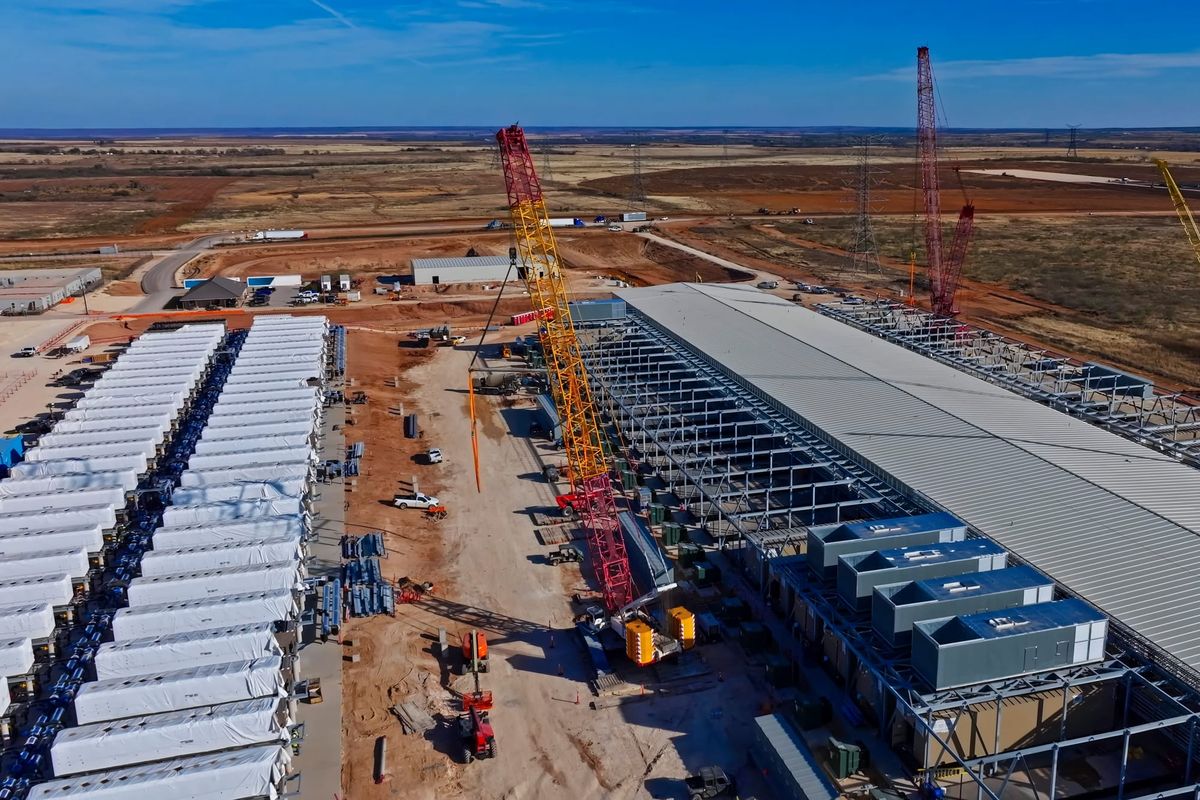
Current major New Source Review rules restrict when construction can begin before a required permit has been obtained. In May, the Environmental Protection Agency proposed changing the definition of Begin Actual Construction so that certain non-emitting components or structures could be built before the major New Source Review permit is issued.
The agency gives examples including certain cement pads, wiring, piping, and associated support structures. Its argument is straightforward: if the component itself does not emit pollutants, forcing the developer to wait for the air permit before building that component can create delays unrelated to the environmental purpose of the permit. The proposed rule expressly targets non-emitting construction; it is not a license to install and operate the emissions unit before receiving the required permit.
Again, grant the case. A concrete pad does not emit because an air permit remains unfinished. Wire does not suddenly become sulfur dioxide.
There can be waste in making an entire complex project stand still while an agency resolves a question concerning a particular emissions source.
The engineering distinction is coherent.
Then the project enters time.
The Building Begins Voting.
Suppose the final permit remains completely undecided.
Nobody has promised approval. The regulator retains all of its legal authority. The developer proceeds only with whatever preliminary construction the law allows.
- A foundation goes in.
Money has now become concrete.
- The project employs contractors.
- Schedules begin coordinating around it.
- Equipment orders acquire dates.
- Financing moves.
- Equipment orders acquire dates.
- Schedules begin coordinating around it.
Related infrastructure planning becomes easier to justify.
Public officials point at visible progress.
Workers begin depending on continuation.
Other decisions are made on the expectation that this one will probably survive.
Nothing about those facts legally requires the regulator to approve the permit.
They change something else. They change the cost of saying no.
A future does not have to become formally impossible before it becomes less reachable.
The framework has always distinguished abstract availability from reachable continuation. A path can remain on the board while added resistance makes taking it harder, costlier, politically stranger, or dependent on increasingly exceptional intervention. Applied Case: The Datacenter already described the current buildout as a timing mismatch in which artificial-intelligence demand moves faster than energy systems, utility planning, water planning, and democratic oversight, creating pressure to “build first” and distribute the burden later.
Now the same structure appears inside the permitting sequence.
The decision still says:
YES / NO
The building increasingly says:
Do you understand what NO costs now?
That is how the building begins voting. It has no ballot.
It has sunk cost.
Sunk cost is not a moral argument. Economists have spent enough time warning everyone about that.
It is still a causal fact. A regulator may correctly ignore money already spent when applying an environmental standard. A politician may find that harder.
A community may discover that the argument has changed from
- should this project exist here?
- to
- are you really going to destroy this nearly built project now?
- to
A worker may reasonably ask what happens to the job.
A lender may reasonably ask what happens to the investment.
A utility may have begun planning around the load. The developer may truthfully point to costs that did not exist before construction began.
Nobody had to falsify the original procedure.
The option set changed around it.
Procedural openness can survive while reachable correction shrinks.
That is the problem.
On Having a Boundary.
Modal Path Ethics recently gave Irreplaceable a hard time for starting with a political object called “Big AI” and then gathering datacenters, labor, children, surveillance, military systems, frontier risk, and other injuries beneath it.
This case shows why that distinction mattered.
No object called Big AI is needed here. There is an Environmental Protection Agency proposal, a defined permitting regime, an identifiable correction channel, and people whose standing can be stated without granting them jurisdiction over artificial intelligence as a whole.
EPA-HQ-OAR-2025-1212.
That is smaller than Big AI.
It does not require a theory of whether human beings are replaceable.
It does not require one political subject called everyday Americans.
It does not require everyone angry about their child's chatbot to inherit a position on air permitting. It does not even require opposition to artificial intelligence.
The question is almost aggressively bounded:
Should federal law continue requiring some minimum opportunity for public participation before state and local agencies issue this defined class of preconstruction air permits?
Democracy Happens Before the Vote.
There is a larger constitutional error hiding inside our ordinary picture of democracy.
We tend to imagine democratic control at the moment of decision.
There was a vote. A hearing. A ruling. An election.
That moment matters. The path leading to it matters too.
- Who learned about the proposal while alternatives were still inexpensive?
- Who could submit evidence before the technical record hardened?
- Who had standing before contracts depended on the answer?
- Who could object before infrastructure was built around the expected result?
- Who could appeal before reversal required tearing something down?
A correction instrument can remain formally intact while its location in the causal sequence makes it progressively weaker.
Move disclosure downstream. Move participation downstream.
Move review downstream. Move remedy downstream.
Keep the institutions. Keep the forms.
Keep telling everyone they retain the right to object.
Eventually the objection arrives after enough of reality has reorganized around the expected answer that changing course requires a political miracle.
No dictator had to abolish democracy. Sequencing did all the work.
This is why the two Environmental Protection Agency proposals are more interesting together than either is alone, even though they govern different permit classes and different legal questions.
- One asks whether a federal minimum public-participation requirement should remain upstream in minor-source permitting.
- The other asks which physical commitments can move upstream of final major-source permitting.
Neither proposal, on its own terms, says:
Make correction impossible.
That is not the standard. The constitutional question is whether correction continues arriving while the paths it might select remain realistically reachable.
The Host Field Was Speaking.
Modal Path Ethics encountered this problem months ago through the datacenter itself.
The original audit refused both easy stories.
Datacenters open real futures. They carry medicine, research, accessibility, communication, public administration, education, scientific modeling, useful artificial intelligence, and computational capacity that smaller institutions and individuals could never build alone.
They also have bodies.
A particular facility takes electricity from a particular grid. It occupies particular land. It may draw particular water. Its generators produce emissions somewhere. Its construction uses roads. Its tax arrangements belong to an actual jurisdiction. Its infrastructure costs can enter somebody's utility bill. Its noise enters somebody's night.
The benefits may travel globally while much of the burden remains local.
That article therefore gave communities real standing: the capacity to examine, contest, shape, benefit from, or reject projects altering their local field. It simultaneously rejected opposition to datacenters as a category. The relevant question was always this facility, here, powered this way, cooled this way, governed this way, serving these workloads, carrying these burdens.
The present case adds another requirement.
Standing has a clock.
Give the community an answer after every important transition has already occurred and you have preserved something much thinner than the original power.
The host field may be wrong. It may slow the project. It may produce bad objections. It may misunderstand the technology. It may force another study.
It may find something.
That last possibility is why the friction cannot simply be classified as waste.
Resistance sometimes contains information about a relationship the design failed to include.
A permitting delay can indicate bureaucracy. It can also indicate that a burden has finally encountered someone who carries it.
Those cases need distinguishing.
The instrument that distinguishes them cannot work after the answer has been insulated from whatever the surrounding field might say.
The Ruling.
The Environmental Protection Agency's public-participation proposal does not abolish public input across American datacenter development.
Its construction proposal does not authorize companies to build and operate unpermitted emissions sources.
Those distinctions matter. So does the direction exposed by the two cases.
- One makes a federal correction channel optional at a lower level of permitting.
- The other can allow some physical commitment to begin before a higher-level permit is complete.
Each may have defensible applications.
Each also places more weight on what remains reachable later.
That is where the constitutional audit belongs.
A correction channel has to arrive while correction remains reachable.
The public does not have to govern the datacenter.
The public does not have to win.
The public can be wrong. The developer can be right.
The regulator can still issue the permit. The facility can still be built.
But a datacenter placed inside a living community has to encounter that community while the encounter can still change something.
Otherwise participation becomes increasingly ceremonial:
You may speak. The contracts are signed.
You may object. The concrete is poured.
You may appeal. But everything now depends on the answer surviving.
The institution can point at every commitment as another reason correction has arrived too late.
Eventually, the host field starts to look like the problem.
There is one obvious way to solve that.
Remove the hearing.
There is another.
Move the datacenter.


Comments ()