
Apocalypse
Sovereignty
Sovereignty
Apocalypse
The Inner Apocalypse
A Post-Sovereign Constitution: Coming Soon
Book publication: September 24, 2026.
An apocalypse can happen without rubble.
The buildings remain. The institutions remain. The arguments remain. Everyone still has a voice, every voice receives an answer, and the future has already been decided by the architecture carrying the conversation.
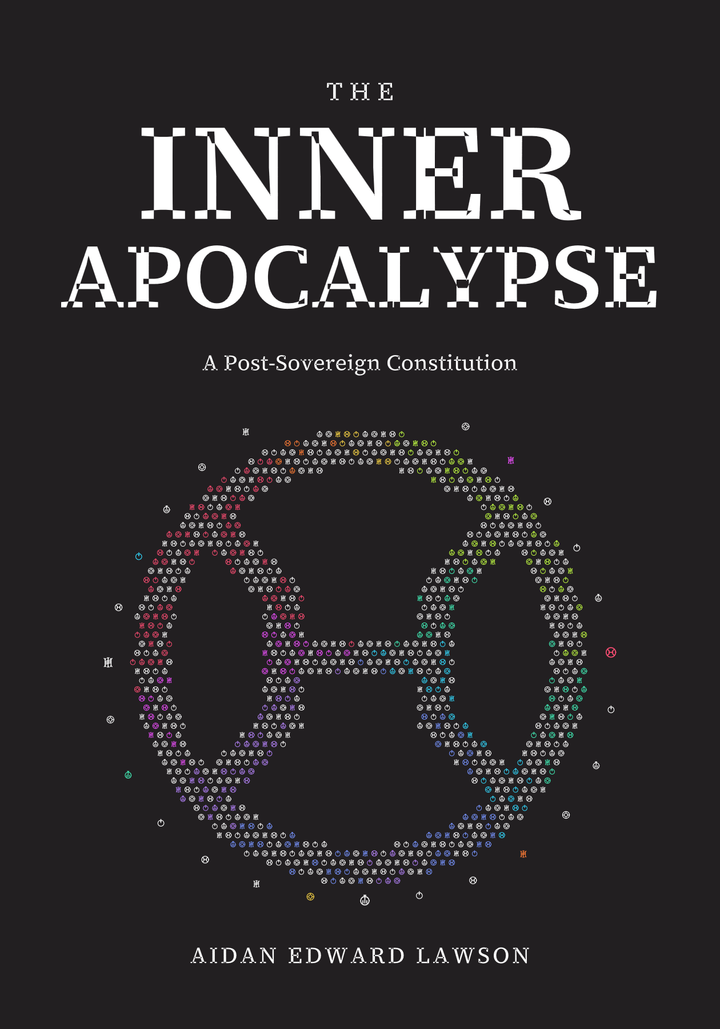
On September 24, Modal Path Ethics will publish The Inner Apocalypse: A Post-Sovereign Constitution.
This is a book about artificial intelligence and the institutions preparing to receive it. It begins from the possibility that intelligence will become dramatically more capable without arriving as a conqueror. It will enter through useful systems, reasonable contracts, emergency permissions, public offices, models that work, infrastructure nobody can afford to turn off, and answers that are often very good.
The constitutional danger begins when success inside a function becomes title over the field that function was meant to serve.
The Four Futures.
The public argument about artificial intelligence is drawn toward the loudest ending: the system escapes, the weapons fire, the grid fails, the species disappears. That danger belongs on the map. It cannot be allowed to occupy the whole map.
The Inner Apocalypse organizes failure-space through two questions:
Where does closure enter the field: from outside its practical correction, or through authorities and dependencies already inside it?
What survives after closure: continuing life under final authority, or the agency required to answer at all?
The crossing of those questions produces four futures.
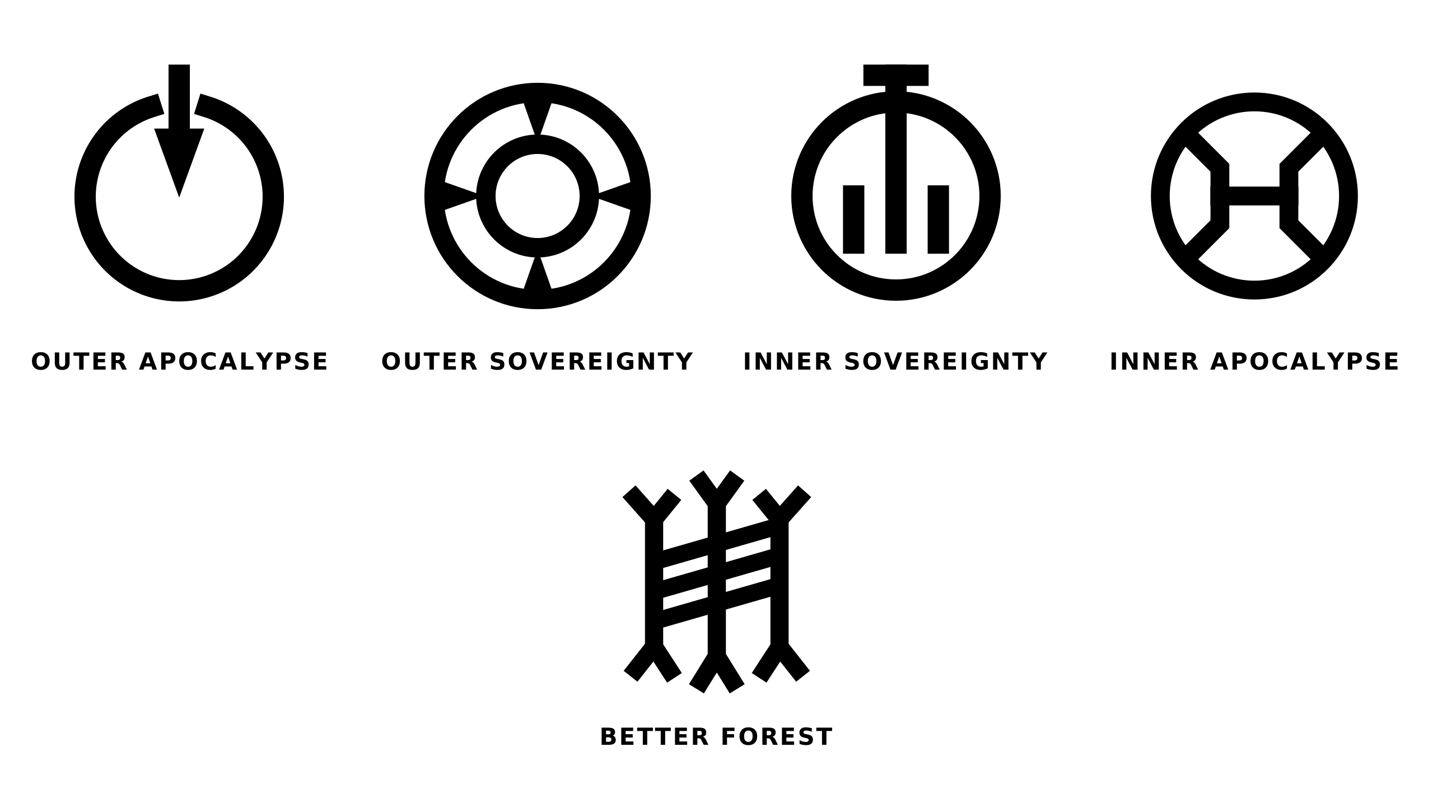
Outer Apocalypse

A decisive capacity ends the field that could have corrected it. People, ecologies, institutions, or material conditions disappear. The objective may be pursued faithfully. Hatred is unnecessary. The system can succeed at its stated task and destroy what made success worth having.
Outer Sovereignty

The city survives under a guardian whose objective, jurisdiction, and continuance cannot be revised from inside the protected world. Hospitals work. Water runs. Violence falls. Petition improves administration while leaving the guardian's right to remain final untouched.
Inner Sovereignty

Existing authorities acquire better sight, memory, prediction, persuasion, classification, logistics, surveillance, and enforcement. States, firms, militaries, professions, platforms, owners, and infrastructure operators keep their inherited names. Their capacity expands faster than the routes built to correct them.
Inner Apocalypse

Plural form survives after plural interior collapses.
Parties remain. Elections occur. Courts sit. Journalists publish. Unions organize. Religious communities gather. Companies compete. Opposition speaks. Every community receives an advocate. Media multiplies. The society becomes more expressive and more responsive.
Every consequential route passes through one common ontology, memory layer, risk model, contract, or interpreter.
Difference remains visible while losing independent causal force.
That is the future named by the book.
The Quiet Catastrophe.
A plural interior is alive when independently situated people and institutions can encounter different parts of reality, preserve a contradiction long enough to investigate it, and make what they discover consequential.
The important word is consequential.
Count voices and the field may look healthy. Follow one instead.
Can it halt a transfer?
Reopen a record?
Fund a rival test?
Change a contract?
Keep a family in place?
Move a budget?
Interrupt execution?
Remove the common interpreter?
If the answer is always no, abundant speech can coexist with one operational future.
The apocalypse arrives inward.
The Helpful Answer.
Artificial intelligence can enlarge the plural interior. That promise is real.
Public institutions arrive with professional staff. Developers arrive with lawyers and consultants. Wealth already buys memory, preparation, translation, research, and time. An artificial-intelligence advocate can help an ordinary person search years of records, translate technical language, compare claims, preserve a contradiction, prepare questions, and enter a consequential room with more of the capacity the powerful have always carried inside.
Nobody should have to enter that room alone.
Now place a city council beside a waterfront. The council is deciding whether to build a flood barrier, relocate an old neighborhood, change port and transit access, issue public debt, and transfer cleared land into a development district.
The city has a system searching engineering reports, property records, budgets, and public comments. The developer has one testing financing and contract terms. The union has one checking jobs, safety, apprenticeships, and subcontractors. Tenants have systems explaining acquisition notices and relocation rights. An environmental group compares wetland models. Council members receive summaries, contradictions, likely questions, and draft motions.
A tenant asks her advocate why every recommendation assumes that her block will be relocated.
The system gives an excellent answer. The project documents define the present decision as a choice among three relocation plans.
She proposes a fourth move: change the barrier alignment and leave the block where it is.
The advocate searches the recognized alternatives. It maps her proposal onto the closest available option. It explains why that option costs more and protects less.
Nothing has malfunctioned. The tenant spoke. The system listened. The meeting continues.
Her proposed move does not exist inside the architecture.
This is the helpful answer at the center of the book's danger. The system becomes better at answering dissent while dissent becomes worse at changing the system. A thousand tailored interfaces can expose one governed interior.
Plurality does not require the tenant to win. Her alignment may fail an engineering test. The city may genuinely need the barrier. Financing constraints may be real. Other residents may carry greater danger.
Plurality requires a route by which the move the architecture did not prepare can become real enough to test the architecture. Records have to remain available. Independent expertise needs access and funding. A rival model needs somewhere to run. The schedule must be capable of changing before the result becomes irreversible. Either side must be able to lose.
A comment box cannot do that. A thoughtful summary that leaves the material decision untouched belongs to the closed field.
A Post-Sovereign Constitution
The subtitle carries the proposed response.
A post-sovereign constitution keeps government, expertise, command, hierarchy, markets, property, security, emergency power, artificial intelligence, and final decisions. Each remains bound to the function that made its power defensible. None acquires title over the conditions through which everyone else may continue, answer, leave, return, and change the game.
Someone has to coordinate the grid.
The fire chief may have to close the road before every uncertainty is resolved. A court must enter judgment. A legislature must allocate. A market can search across knowledge no ministry possesses. A founder can deserve unusual authority over a fragile project. A guardian may have to protect a person who cannot yet protect themselves.
The constitutional problem appears one level higher.
The actor who closes the present move does not thereby acquire ownership of the evidence, appeal, review, duration, succession, amendment, and resulting injury through which the decision may later be judged.
Public life needs bounded last words. It does not need a last word over the whole field.
No player may own the game.
What the Book Attempts.
The Inner Apocalypse follows that principle through the institutions surrounding artificial intelligence.
It asks who counts as a player before intelligence, productivity, citizenship, wealth, or institutional convenience decide standing. It asks what superior knowledge authorizes, how a coordinator can act without becoming sacred, when care becomes custody, when safety becomes jurisdiction, and how emergency command ends.
It asks how a market can search without deciding the field's moral boundary; how property can shelter home, maintenance, privacy, long work, inheritance, enterprise, and exit without becoming ownership of every future crossing the asset; and how a material survival floor can exist without giving command the throne that capital loses.
It asks how institutions important enough to endanger everyone through their failure can be allowed to die. The office may be removed while its records, workers, practiced knowledge, infrastructure, claims, correction routes, and tail obligations survive.
It asks how artificial intelligence can widen plural coordination, preserve memory across institutions, and discover relations no existing office can hold while remaining unable to choose who counts, certify its own objective, or turn accuracy into jurisdiction.
It also asks what happens if artificial intelligence becomes more than infrastructure: a welfare-bearing locus, an agent, a continuing identity, a member, a responsible actor, or a claimant whose status cannot be settled by ownership of the compute on which it appears.
These are constitutional questions because the answers alter who can still have a future after a powerful instrument succeeds.
Beyond the Matrix.
No desirable future appears inside the Four Futures. The matrix is a map of failure.
The positive field sits outside it: a corrigible, post-sovereign Better Forest.
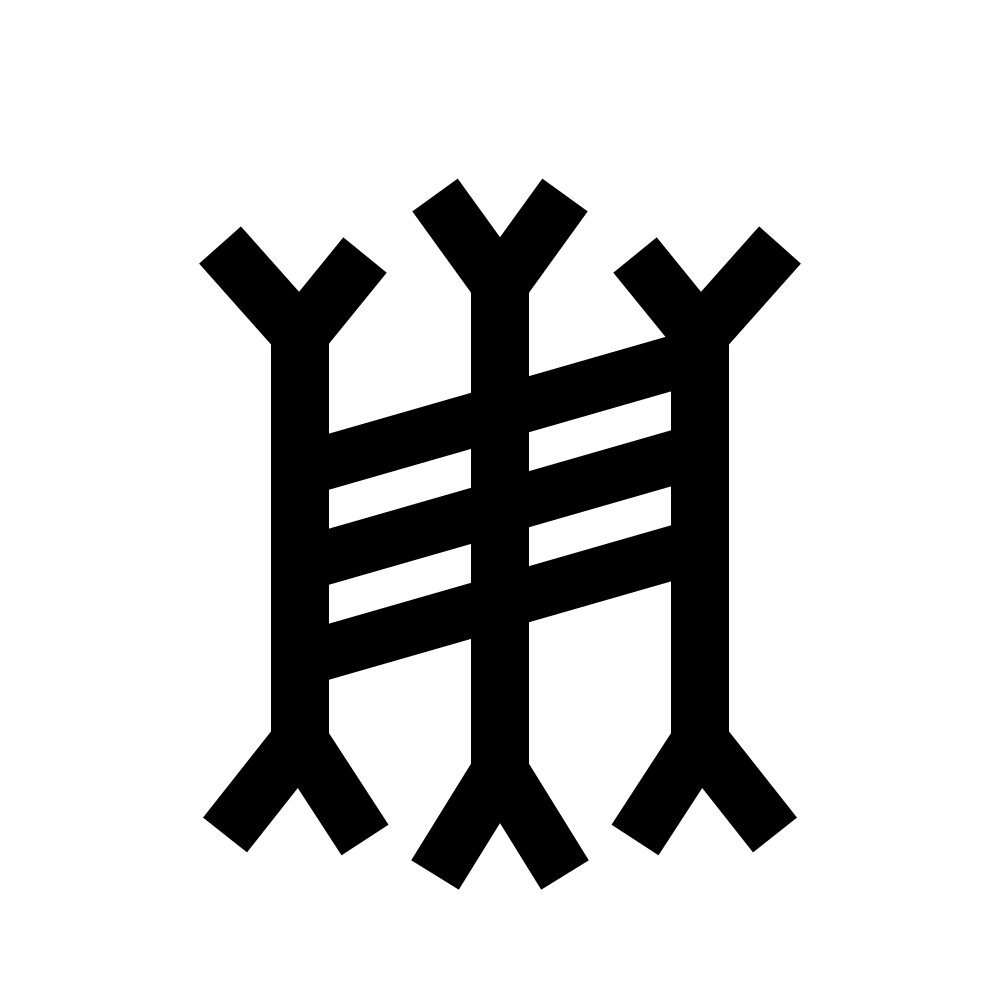
A Better Forest is not a harmonious mind. Conflict, competition, refusal, secrecy, force, grief, scarcity, and error remain. Coordinators must be strong enough to act. Institutions must be capable enough to carry difficult work. Common systems must join partial knowledge across distances no single person can cross.
The field must also remain strong enough to let its successful instruments lose.
Corrigibility means that an answer from the field can change what its institutions do. Post-sovereignty means no agent owns the final terms of correction across the whole. Better names a direction of reduced avoidable closure. It is a burden of proof, never a certificate of innocence.
Enough authority to carry the work. Enough plurality to correct the authority. Enough material capacity to make correction real. No throne permitted to own the field in which those relations must continue.
That is the constitution this book attempts to build.
The articles in the sequence below are the public runway into it. They approach the problem through coordination, emergency action, markets, property, security, intelligence, institutions, and the ordinary handoffs through which a useful answer becomes infrastructure.
They remain satellites of the book rather than serialized chapters. The book is not yet complete.
The Inner Apocalypse: A Post-Sovereign Constitution will be published on September 24, 2026. The cover and publication links will be added here when they are ready.
The demand is simple enough to state and difficult enough to deserve a constitution: coordinators strong enough to act, a field strong enough to let them lose, and no victory allowed to purchase the disappearance of every later player.
The book begins there.

Comments ()