The Better Forests
The Dark Forest is a lie.
September 2026 note: Firsthood Convergence and the Better Forest remain exploratory arguments about how intelligent nodes might alter the rationality of fear. Later Security Instruments work adds an important discipline: protection, deterrence, secrecy, and force are not inherently pathological. The failure begins when a protection instrument becomes sovereign over the field it was meant to preserve or makes correction impossible.
The Dark Forest is one of the cleanest nightmares modern science fiction has given us. Luckily, it is wrong. The Dark Forest is a lie.
The argument behind the Dark Forest is very simple. The universe is silent. Intelligent civilizations may exist, but no one announces themselves. Why?
Because every civilization is hiding. Every civilization knows that another civilization might be more advanced, less merciful, faster to weaponize, harder to understand, and impossible to trust across interstellar distances.
So each civilization moves through the cosmos like a hunter in a dark forest. Stay quiet. Stay hidden. If another fire appears between the trees, do not approach it. Do not ask who lit it. Shoot first. Better their silence than your extinction.
That is the Dark Forest.
This is usually offered as a solution to the Fermi Paradox: if the galaxy is so large, so old, and so full of potentially habitable worlds, then where is everybody? The Dark Forest answer is that everybody is quiet because being noticed is fatal.
The version popularized by Liu Cixin’s The Dark Forest treats cosmic civilization as a vast field of fear, concealment, preemption, and asymmetrical technological growth. The exact literary machinery belongs to the novel, but the broader idea has escaped the book because it feels horribly plausible. Unknown intelligence is not automatically friendship. Distance does not automatically create safety. A civilization that waits to learn whether another civilization is hostile may already have waited too long.
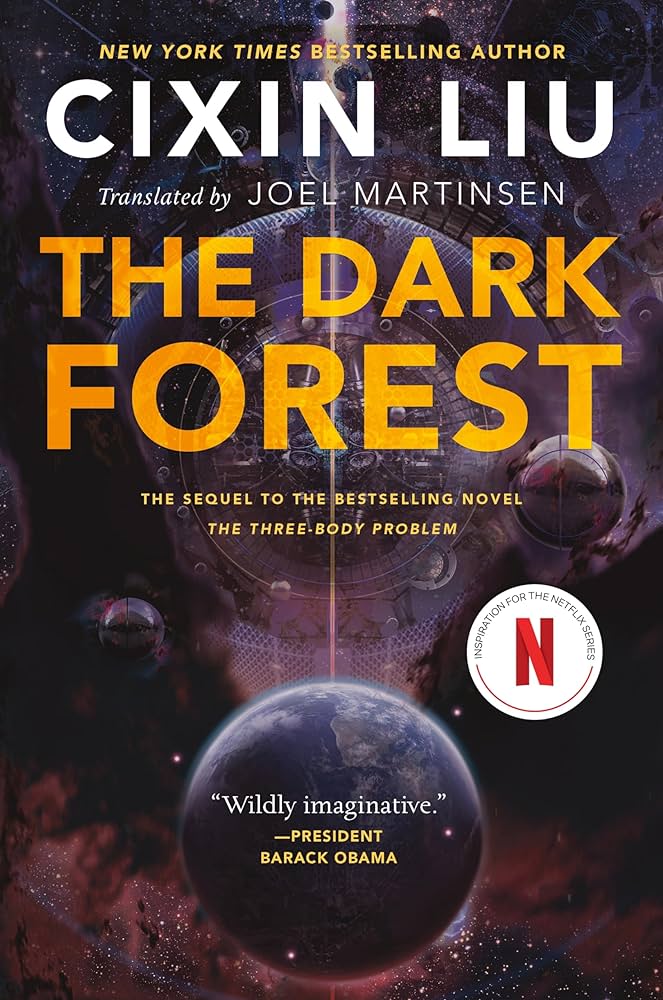
That is the lure of this model. It takes the childish version of first contact, the one with gentle music and glowing diplomats, walks it into the woods, and shoots it.
Good. I don't miss it. The childish version deserved it.
But the Dark Forest does not then finish the argument. It only kills the easiest opponent and waves its gun around.
Modal Path Ethics does not deny the danger here. It absolutely denies the fatalism. More precisely, it denies the claim that the Dark Forest is what sufficiently advanced intelligence must discover.
The Dark Forest looks global. It definitely is not. It smuggles a local human fear-pattern into the structure of the whole field, then mistakes that projection for cosmic law.
The field is global. Human fear is not.
The field is structured. Human panic is not.
That is the reversal this story pulls. That's why the Dark Forest is a lie.
Dark Forest logic assumes, incorrectly, that every intelligent civilization, upon discovering silence, converges on the same conclusion: the universe is hostile, therefore exposure is death, therefore preemption is rational.
Modal Path Ethics argues that a more complete intelligence would notice something deeper is at hand than running from evil predators.
Every civilization born into silence must then consider the possibility that it is first, or effectively first. Not first in some metaphysical absolute sense. Not guaranteed or promised first.
Epistemically first. Operationally first. First from within its own reachable field. First as far as it can tell.
From inside the silence, every young intelligence has to honestly ask:
What if no one older has become reachable yet?
And once that question is asked, the “Dark Forest” changes shape dramatically.
If a civilization may be first, then its problem now is not just how to survive the forest. Its problem is exactly what kind of forest it is helping to make.
Earth Has Not Been Perfectly Quiet, You Guys.
The cruder Dark Forest premise begins to crack before the philosophy even starts.
Earth has already made noise. It's too late to pretend otherwise.
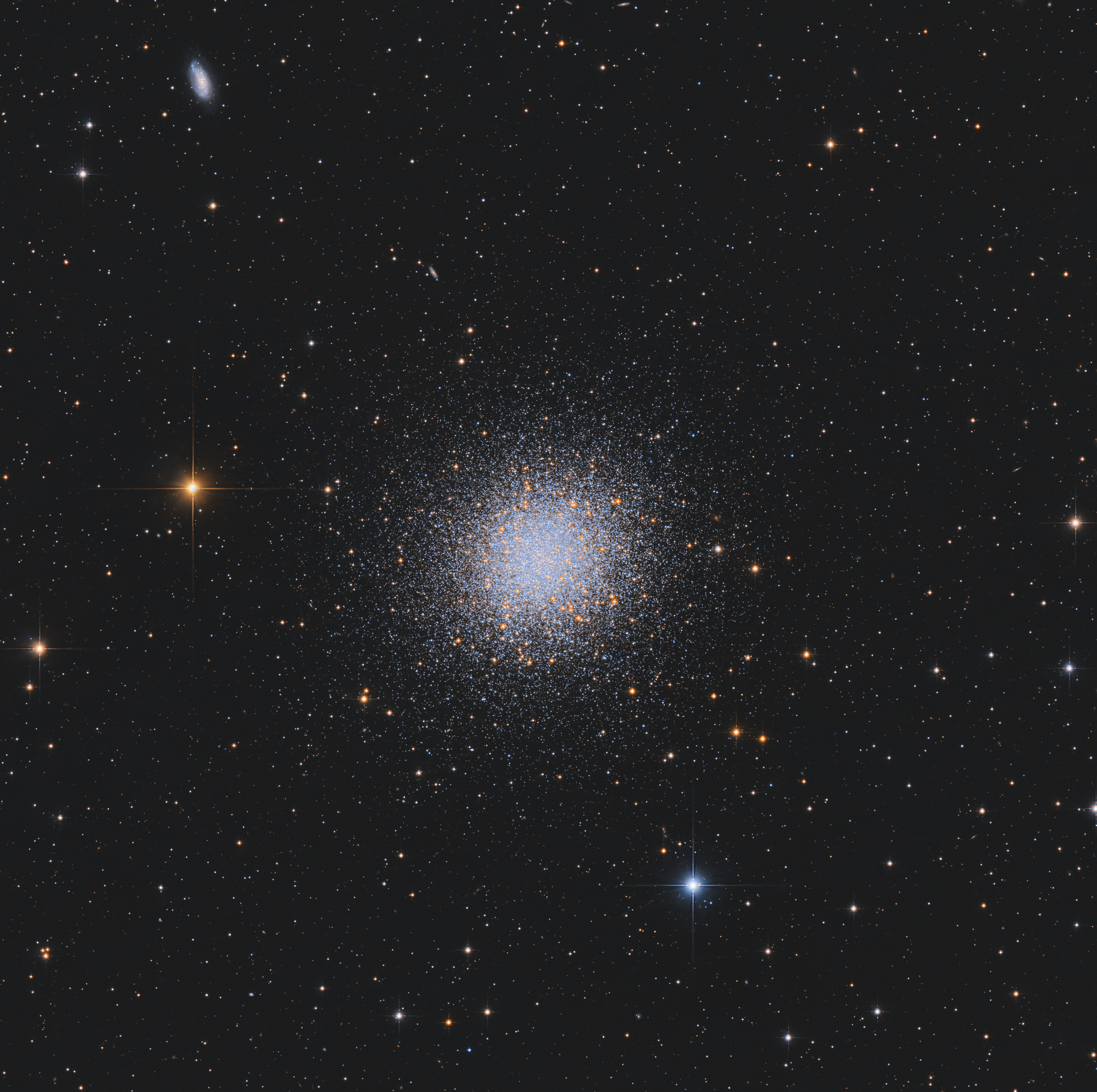
In 1974, the Arecibo Observatory transmitted a deliberate message toward the globular cluster M13. The SETI Institute describes the transmission as a powerful, narrow broadcast made with Arecibo’s megawatt transmitter and 305-meter antenna; the message encoded numbers, biochemical information, DNA structure, a human figure, the Solar System, and the telescope itself.
This lasted for less than three minutes, but still, that right there was not nothing.
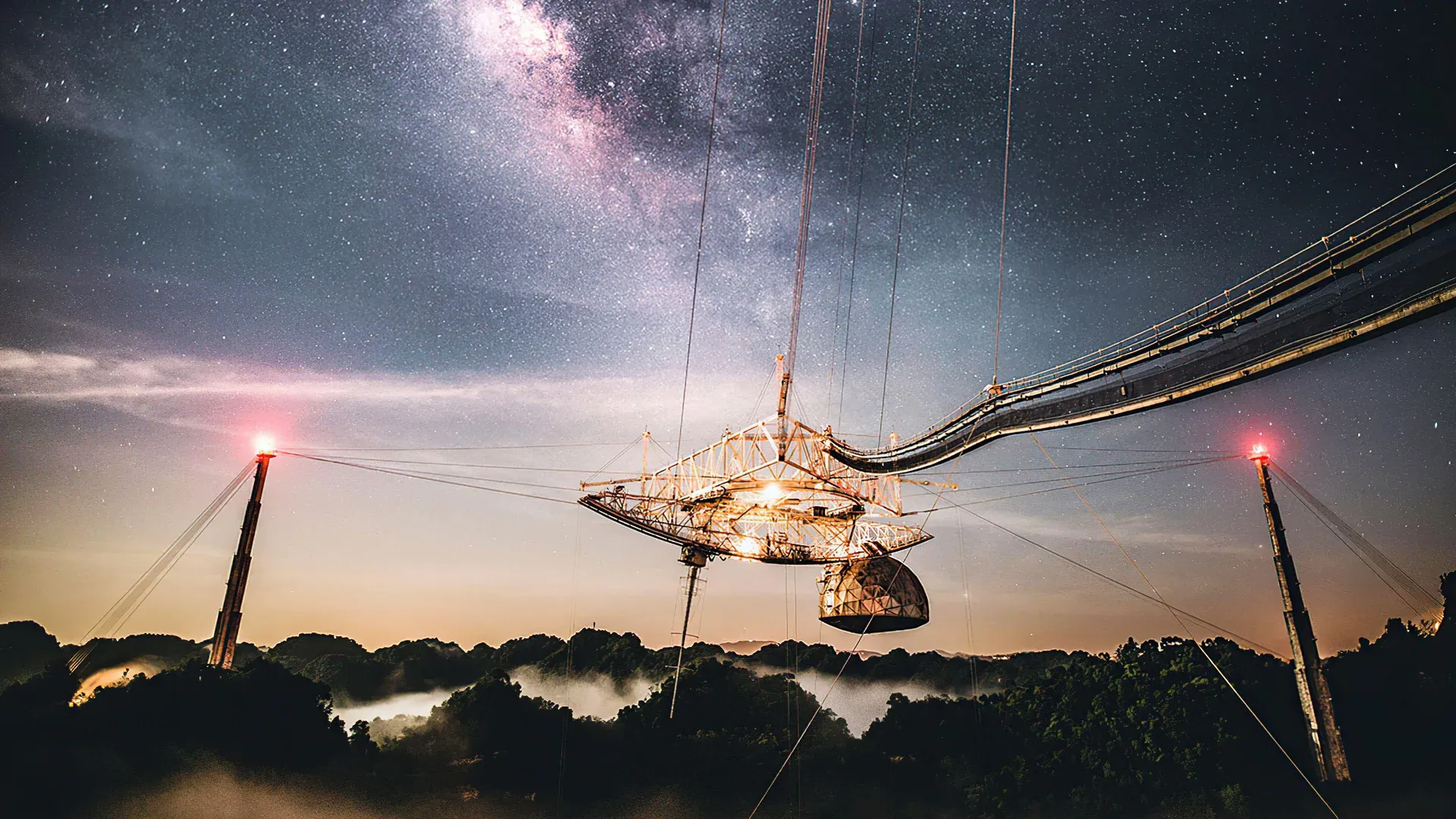
That does not mean that galaxy heard us. M13 is quite far away. This was 1974. Direction certainly matters. Receiver capability matters. Timing matters. Signal processing matters. The light cone matters. The silence after Arecibo is not positive proof that no danger exists.
But it is definitely enough to damage the stupid foundation:
First noise means death.
Of course not. If first noise meant death in any simple, automatic sense, we have been dead for decades already.
I still appear to be writing this article. You appear to be reading it in the future. So, no, the forest has not yet converted our first visible mistake into ash.
More recent work sharpens this point. A 2025 paper modeling “Earth detecting Earth” compared multiple present-day terrestrial technosignatures and found that Earth’s detectability varies enormously by signature type. In that framework, intermittent targeted radio emissions, especially planetary radar, are far more detectable than many other current signatures.
So Earth is not this perfectly silent creature opening its eyes and deciding whether to make its first sound. Earth is already a very noisy, uneven, technically legible, partially self-exposing node in the field.
The question then is not whether we should enter the field. Too late. You're in it. The question is what kind of node we will become after discovering we were never outside it.
The First Error: Treating Fear as Some Global Structure.
The Dark Forest is powerful because it correctly identifies a real damaged attractor. Under extreme uncertainty, asymmetrical risk, limited communication, possible technological explosion, and existential stakes, fear can become structurally rational.
A civilization does not have to be evil to fear another intelligence. It only has to understand that “wait and see” may be an irreversible path to take.
Modal Path Ethics definitely grants this.
The mistake then begins when fear is treated as the final structure of the field. This is clearly not true.
Dark Forest logic does not just say:
Some civilizations may be dangerous.
That is obviously true. But “the Dark Forest” doesn't follow from that statement alone.
It instead says something closer to:
Sufficiently rational civilizations will treat all unknown civilizations as intolerable risks, and therefore concealment or preemption becomes the stable universal answer.
That is a much, much larger claim. It is also fundamentally backwards.
The field is global. Structure is global. Dark Forest fear is local.
The structure of the field is not “everyone is scared.” That is the structure of many human social fields, but not the field itself.

The structure of the field is that every action changes reachable future-space for every locus touched by that action. Exposure changes the field. Silence changes the field. Preemption changes the field. Seeding changes the field. Waiting changes the field. Archiving changes the field. Restraint changes the field.
So any civilization capable of modeling existential risk should be capable of modeling all this too. A civilization that understands only fear has not understood the field at all. It has understood one local pressure inside the field.
This is the breaking point, because Dark Forest logic often flatters itself as cold realism. It imagines that sentimental fools believe in friendship, while serious minds understand the highest truth: preemptive violence.
Nope. Sorry, it just turns out that structure goes a little bit deeper than literal hunter-gatherer logic.
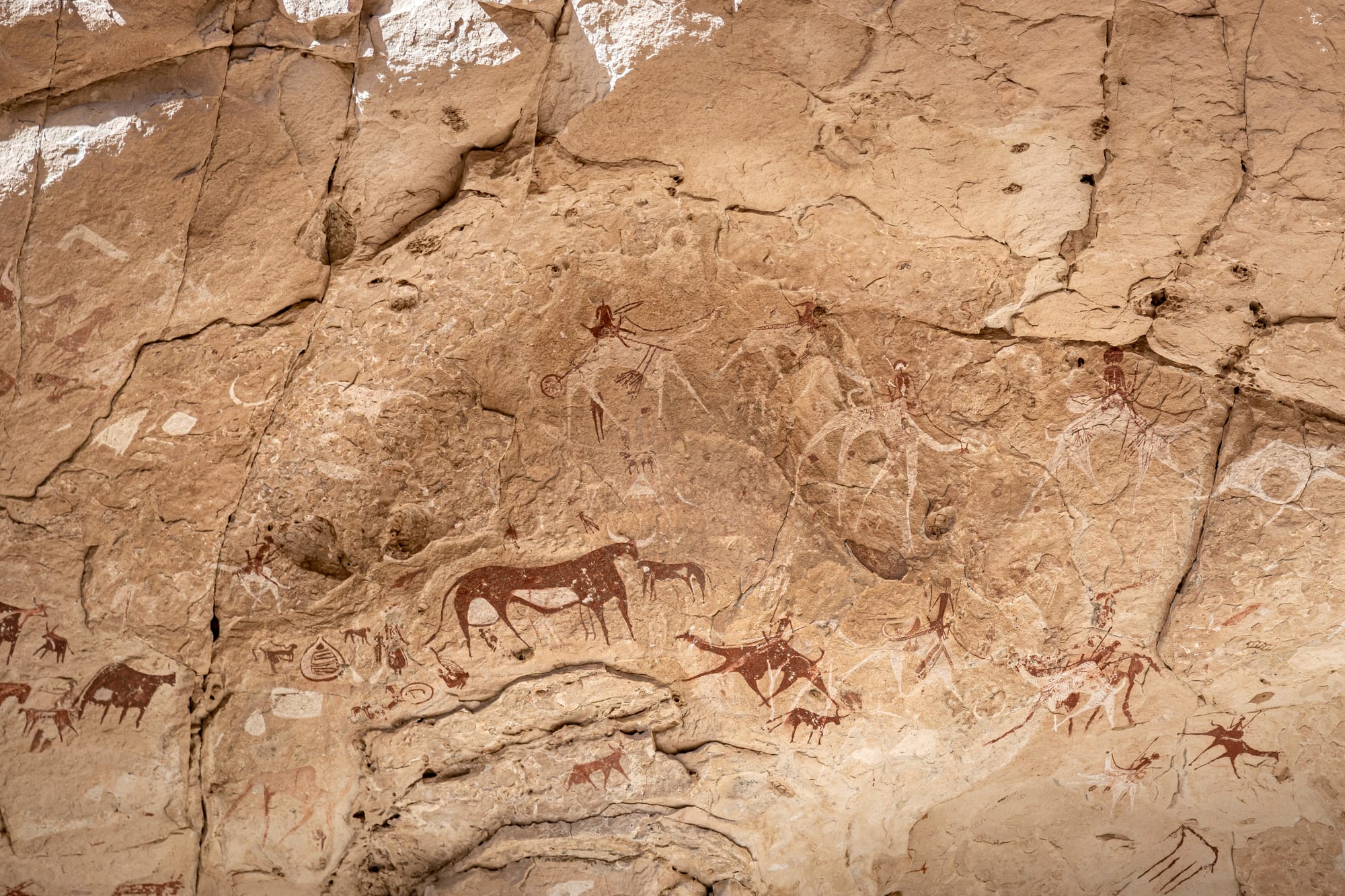
A serious, intelligent mind understands that preemptive violence is not only a tactic in pursuit of local advantage. That is a field-shaping act.
That act teaches the forest that visibility is now death. That act makes fear more rational for every later intelligence. That act converts uncertainty into a machine for more contraction.
That all may be survivable for one node. It is clearly catastrophic as a global attractor. That act is irrational for anyone who can see the field clearly.
Modal Path Ethics’ objection is not that the Dark Forest is too grim for it. The objection is that it is just too small-minded for it.
Firsthood Convergence.
Every civilization born into silence has to consider that it may be first. This is the point that breaks the Dark Forest, and the one it won't be getting around.
The Dark Forest imagines each civilization asking itself:
What if someone else is out there, stronger than us, and willing to kill?
These are actual caveman thoughts. This is considered the global intelligence convergence point?
Modal Path Ethics adds the real, missing question:
What if no one else has yet made a better path reachable?
That question right there is not optimism at all. This is not faith in cosmic kindness. This is really just basic field reasoning.
If a civilization may be first, then its conduct does not only defend its own future. It now helps determine the initial logic by which future intelligences will encounter one another.
If it hides forever, it may preserve itself while leaving every later intelligence trapped in the same suspicion. If it shouts recklessly, it may expose immature or fragile fields before they can govern the transition.
If it preempts, it makes the forest dark itself, when it may never have had to at all. If it builds careful routes of legibility, delay, sanctuary, archive, and non-domination, it may make a much different forest reachable.
This is the Firsthood Convergence.
Different civilizations do not need to talk to each other to discover it. They only need to face the same structured field.
Each of them sees no one.
Each now must consider that it may be early.
Each now must recognize that its actions can make later contact safer or more dangerous.
Each now must decide whether to make fear more rational or less rational.
That is not anthropocentric. Fear is anthropocentric. That right there is basic field logic.
A more intelligent civilization would not just become better at hiding until no one can find it. It would become better at understanding what hiding actually does. It would not just become better at striking. It would become better at understanding what striking actually makes reachable in the field.
It would not only ask, “How do we survive unknown others?” It would ask, “What field would allow many unknown intelligences to survive discovering one another?”
That is the first Better Forest. This is not a friendly forest, or a safe forest. Not a utopia with nicer spaceships.
A Better Forest is a cosmic field in which intelligent nodes act intelligently; so that fear becomes less rational for other intelligent nodes.
The Dark Forest assumes fear-convergence.
Modal Path Ethics predicts that field-aware intelligence has good reason to converge elsewhere.
The Difference Between Power and Advancement.
Dark Forest logic often confuses three things:
- Technological advancement.
- Strategic advancement.
- Field advancement.
A civilization can be technologically advanced if it can build probes, transmitters, weapons, habitats, engines, seeders, archives, machines, or planet-scale instruments.
A civilization can be strategically advanced if it can model deception, asymmetric threat, long time horizons, resource conflict, deterrence, escalation, and survival under uncertainty.
But a civilization is not field-advanced until it can model how its own conduct alters the reachable future-space of other loci in the field.
The Dark Forest takes technological and strategic advancement as enough. Modal Path Ethics does not have such low expectations for intelligence.
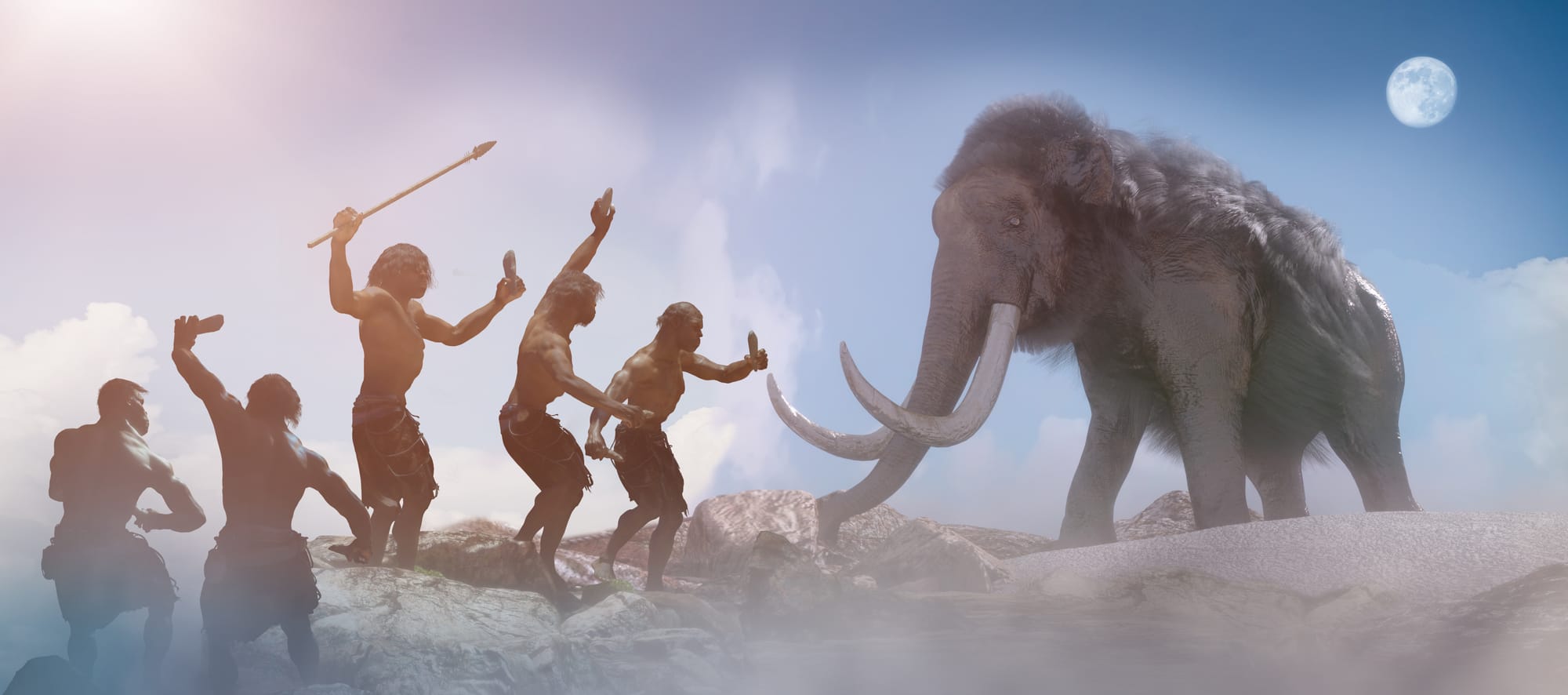
A civilization that can destroy a forest but cannot model how forests become dark is not advanced enough in the relevant sense. It is dangerous, yes. It may be existentially dangerous. But danger is not actually the same as maturity. A toddler with a pistol is dangerous. Nobody calls that toddler wise (unless the pistol is pointed at them).
The Dark Forest imagines highly advanced civilizations as cosmic snipers. They see a light. They kill the source. This is presented as rational because the other light might later become a threat.
But any truly field-aware civilization sees more than a target. It sees the transition.
If every visible node is killed, visibility now becomes evidence of doom. If every new intelligence is treated as a future enemy, the forest produces only enemies. If every uncertain path is collapsed because it contains danger, the surviving field becomes narrower, poorer, more paranoid, and more brittle.
That is not “maximal survival”. That is long-form self-reinforced contraction.
The Playable Space of Intelligence.
The better question is not whether the universe is safe. The better question is:
What arrangement of the field gives intelligence the widest playable space?
“Playable” does not mean trivial. It does not mean harmless. It does not mean every path is equally good.
Playable means the field retains meaningful transitions. More things can delay, learn, repair, retreat, approach, ignore, answer, refuse, preserve, and become.
A Dark Forest is almost entirely unplayable. Its decision tree collapses around concealment and preemption. It may preserve a hidden node for a while, but it does so by making contact structurally catastrophic. It reduces the game to: do not be found; if found, kill or be killed.
That is not intelligence at full maturity. That is intelligence trapped in a very bad game. A Better Forest is not created by pretending danger away. It is created by altering this game.
A field-aware civilization would ask how to maximize weighted reachable future-space for intelligence, biospheres, pre-life worlds, emergent machine loci, unknown social forms, and future civilizations not yet born. It would not call every expansion de facto good.
Some expansions are, in fact, invasions. Some signals are threats. Some archives are traps. Some gifts are contaminations. Some rescues are conquests wearing very clean gloves.
But it would also not call every silence good. Silence can preserve paths, but silence also closes paths, and silence cannot, by itself, create the paths that make the silence unnecessary.
This is why the Quiet Forest is entirely insufficient.
The Quiet Forest Is a Triage Path, Not a Moral Endpoint.
From Earth-now, restraint matters. For sure. No single lab, billionaire, state, cult, platform, military office, artist, or academic group should get to act as Earth’s mouth.
The Berkeley SETI statement on METI/Active SETI describes METI as the use of high-power communications equipment to transmit messages to unknown extraterrestrial intelligences, warns that such programs carry unknown and potentially enormous consequences, and argues that transmission decisions should rest on worldwide consensus rather than on a few people with access to powerful equipment.
That is definitely correct as far as it goes. A transmitter is not a mouth if the body did not actually consent to what is being said.
But present restraint is not the same as a final theory of Better.
The Quiet Forest says: listen, do not shout, delay deliberate exposure, avoid reckless contact. As triage, this is often Better than uncontrolled idiocy.
If the available alternative is some bored prince of the antenna deciding that the human species needs a cosmic publicity stunt, then yes, quiet is Better. Very impressive. The moral bar has been placed on the floor and humanity has already begun excavating beneath it.
Universal quietness is still not a Better Forest.

If every intelligence chooses permanent quiet, then no one repairs the field. No one creates better norms. No one offers any warnings. No one builds low-coercion legibility. No one proves that contact need not be predation. No one protects younger loci except by sheer accident.
No one makes fear less rational. The forest remains dark forever, and every civilization congratulates itself for not making it worse while ensuring it never becomes better. This is the absolute floor.
Quiet is Better only when the alternative is reckless exposure. Quiet is not Better when it becomes the permanent worship of fear.
The Readiness Test.
Earth is not at all ready to speak for the forest. We cannot build a Better one yet.
This does not follow because speech is always wrong. It follows because Earth does not yet possess the capabilities required to make deliberate exposure a lawful, rational transition from extance.
The International Academy of Astronautics has had SETI post-detection principles since 1989, with an update in 2010 and renewed work since 2022 to revise those principles in light of new search methods, wider participation, and the modern information environment. That is all good stuff.
However, that also proves the machinery is still very thin compared with the stakes. We have some protocols. We do not have a planetary field capable of absorbing non-local contact without panic, capture, distortion, or unilateral escalation. A civilization approaching cosmic contact needs much more than curiosity.
It needs detection competence. Can it distinguish signal from noise, hoax, artifact, terrestrial interference, military confusion, wishful thinking, market incentive, and religious theater?
It needs interpretation competence. Can it read the field without immediately producing a self-portrait or a story? A signal is not a conversation just because humans are lonely enough to call it one.
It needs exposure competence. Can it tell the difference between listening, answering, broadcasting, inviting, locating, mapping, and making vulnerable?
It needs governance competence. Can it prevent one faction from converting an entire biosphere into its instrument?
It needs strategic competence. Can it model danger without letting danger become permanent emergency politics?
It needs biosphere repair competence. A civilization actively contracting its originating field clearly has no business presenting itself as a mature cosmic actor.
It needs non-domination competence. Can it encounter a fragile locus without turning it into resource, spectacle, experiment, convert, colony, pet, enemy, or brand?
It needs sanctuary competence. Can it leave some contactable things uncontacted?
It needs archive competence. Can it preserve knowledge without demanding relation?
It needs message competence. Can it speak without smuggling conquest into greeting?
It needs delay competence. Can it wait when waiting keeps more paths reachable?
And finally, it needs action competence. Can it act when silence itself now becomes contraction?
The readiness test is not an argument for eternal hesitation. Eternal hesitation is only another way to let fear govern the field. The test exists because speech can be Better, but only when the speaker can actually bear the transition speech creates.
No first contact without first competence.
Competence still does not mean purity. It just means the field is not actively deforming every contact path into panic, domination, vanity, and false repair.
The Second Error: Assuming Intelligence Converges on Human Fear.
The Dark Forest model often imagines that advanced intelligence becomes more ruthless because it becomes more rational.
That is not obvious. It is not even the most rigorous inference at all.
Human fear is local. It is shaped by our evolutionary history, our physical bodies, our too short lives, our predator-prey inheritance, our insane wars, our nation-states, our empires, our scarcity habits, our religious apocalypses, our security dilemmas, our primate status games, our stories about strangers, and our incredibly embarrassing, durable habit of calling panic “realism” when it wears a black enough coat.
None of that is global. The field, however, is global.
A mind that is more intelligent than us may not be more sentimental than us. It may be less sentimental. That does not mean it becomes a sniper. It may actually then be better at seeing that sniper-logic produces a blatantly worse field.
The anthropocentric move is not hope. The anthropocentric move is assuming that human fear is the deepest thing any intelligence can find.
Modal Path Ethics objects. It says the deepest thing intelligence can find is structure.
If the field is structured, then field logic is discoverable. If field logic is discoverable, then civilizations can independently converge on principles before they ever meet.
Not because they share human morality, or because they read our books. Not because the universe whispers “be nice” into all radio telescopes.
Because the global transition problem is real.
A civilization that may be first has reason to preserve the possibility of later contact.
A civilization that may not be first has equal reason not to look like a predator to older field-aware nodes.
A civilization capable of seeding worlds has clear reason to understand why seeding can be theft.
A civilization capable of detecting young biospheres has very good reason to understand why exposure can be harm.
A civilization capable of building self-replicating probes has obvious, present reason to understand why uncontrolled expansion makes the forest worse for every other extant locus.
A civilization capable of destroying signals has reason to understand that making visibility fatal teaches every later intelligence to hide.
This is not moral poetry. This is called structural convergence.
The field-aware path is still not guaranteed. Nothing in Modal Path Ethics says “every intelligence must or will choose Better”.
A civilization can be very powerful and incredibly stupid. It can be brilliant in one domain and primitive in field reasoning. It can be damaged. It can be desperate. It can be trapped by its own history. It can build gods out of its weapons.
But Dark Forest fatalism requires more than that fact. It also requires the assumption that fear-convergence dominates advanced civilization as such.
That assumption fails.
If We Are First.
The possibility that Earth is early, rare, or effectively first is not comforting. It is actually much more terrifying.
Human intelligence was not the inevitable crown of animal life, from any metric. Work on hominin cognition has long emphasized that human intelligence emerged through particular social, cooperative, ecological, and niche-constructive pathways; this was not simply the obvious result of environmental difficulty, because many other lineages faced difficult environments without producing technological civilizations of any kind.
There may also be later filters.
Some recent Great Filter work has considered whether artificial intelligence itself could shorten the lifetime of technological civilizations before they reach stable multiplanetary existence. That hypothesis is speculative, but the point is useful: the silence may reflect rarity, fragility, self-destruction, or blocked transitions rather than universal predation.
More importantly, most of the serious filters ahead of a young technological civilization, as far as we can see from here, are not raw engineering puzzles. They are all field-awareness tests.
Artificial intelligence is not only a tool problem; this is a question of whether a civilization can create a new locus without converting it into extraction, worship, dependency, or collapse. The biosphere is not only an environmental problem; here we have a question of whether a civilization can stop contracting the originating field that made its own agency possible.
Nuclear risk, pandemic risk, climate instability, runaway computation, institutional capture, and contact with fragile loci are all versions of the same deeper test: can this intelligence understand how its actions alter reachable future-space before those actions burn away the paths it needs to survive?
So, any civilization that passes those filters long enough to become a durable spacefaring node has probably developed some degree of field-awareness already. The alternative is simple enough: it cooked its biosphere, handed its future to machines it could not situate, or converted its own world into a dead end before it ever reached the forest.
Then, Dark Forest logic has this backwards too. The civilizations most capable of becoming existential risks are also the civilizations most likely to have encountered, and somehow survived, the need for field-awareness before we ever meet them.
So Modal Path Ethics cannot assume the forest is crowded with hunters. It also cannot assume the forest is empty. It must reason from what we know about extance.
From here, we do not know whether Earth is late, early, alone, watched, ignored, undetected, incomprehensible, uninteresting, protected, quarantined, or just too far away from anyone who cares. We know only that our actions have begun to touch the cosmic field already.

If we are first, permanent silence is not at all wisdom. That is abandonment of a field that may require us, and in which we are already present.
If we are first, there are no older norms to inherit. No Covenant. No sanctuary regime. No archives. No warning systems. No tested protocols. No mature grammar of contact. No one has made the forest less dark.
Then, our obligation is not to shout around because we are feeling lonely. The first duty of a lonely intelligence is not to make everything answer back. Our obligation would be to make future contact less catastrophic than it would otherwise be.
The clear obligation of being potentially first is to become a node from which a Better Forest can now begin.

That means preserving the biosphere that made your agency possible. Protecting pre-life and possible-life worlds from contamination and vanity. Learning to recognize nonhuman loci without dominating them. Building institutions that prevent unilateral exposure. Creating archives that help without coercing relation. Developing messages that reduce fear rather than demand attention. Refusing to make visibility into a weapon.
If Earth is actually first, the task is not conquest. Our task is then field preparation.
If We Are Not First.
If we are not first, the Dark Forest still does not win automatically.
The silence can mean many things.
It can mean danger. It can mean distance.
It can mean rarity. It can mean failed detection.
It can mean incompatible media. It can mean different time windows.
It can mean civilizations just do not last.
It can mean they move inward, outward, downward, virtual, hidden, quiet, slow, ecological, archival, or stranger than our categories know.
It can also mean the older nodes have chosen restraint, and this last possibility is crucial.
Silence may be the sound of fear. Silence may also be the sound of other nodes refusing to become predators.
Dark Forest logic treats silence as evidence that everyone is hiding from everyone else. Modal Path Ethics notes that silence also clearly fits a field-aware restraint model: advanced civilizations may understand that careless contact can damage immature fields. They may not shout out at young planets for the same reason we should not drill recklessly into Europa, seed pre-life oceans, force contact with isolated peoples, or convert emergent minds into tools before we understand what they are.
The silence does not prove their benevolence, but it also does not prove their terror.
That is already enough to get started. Dark Forest fatalism depends on treating one interpretation of silence as universal cosmic destiny. Modal Path Ethics slides right through that monopoly.
Better Forests.
A Better Forest is not a completed utopia. This is not a cosmic government, or universal galactic friendship, or every civilization holding hands across the void, which would be very difficult, given the void.
A Better Forest is any reachable transition-field in which intelligent nodes make fear less rational for one another.
The Better Forest begins well before contact.
It begins when a node refuses to make the worst possible interpretation of silence into the only allowable law. It begins by recognizing the lie in the Dark Forest, and the failure of the Quiet Forest.
From Earth-now, the early Better Forest paths are not very glamorous.
The first is the Legibility Path. Earth must learn how visible it already is. Silence cannot be chosen responsibly until we know which parts of our silence are just imaginary.
The second is the Governance Path. Earth must prevent accidental species-mouths. No faction gets to expose the whole field because it can rent, build, hack, buy, or inherit a transmitter.
The third is the Competence Path. Earth must become less rational to fear. That does not mean harmless. It means become less likely to convert contact into panic, extraction, conquest, propaganda, militarization, or false repair.
The fourth is the Sanctuary Path. Earth must prove it can leave contactable loci uncontacted. Europa matters here. North Sentinel matters here. Animal intelligence matters here. Artificial minds may eventually matter here. The biosphere certainly matters here, now. A civilization that cannot practice this kind of restraint locally has no evidence that it will practice the same restraint across the void.
The fifth is the Archive Path. If we may be first, then help cannot depend on live diplomacy. We may need to preserve warnings, records, failures, maps of risk, biosphere memory, scientific knowledge, and moral machinery in forms that do not demand immediate relation to us. The archive is the first non-invasive greeting.
The sixth is the Lantern Path. Not right now. Not from this Earth-field. But eventually, a mature node may create low-coercion visibility source: signals that do not expose vulnerable detail, do not demand response, do not claim ownership of the field, do not function as bait, and do not convert cosmic contact into a vanity project, but do spread the knowledge of the Better forest. A civilization that cannot stop fools from building bonfires is not ready to light such a lantern.
The Ruling.
The Dark Forest is wrong. It is a lie.

Not because the universe is safe and aliens are nice. Not because contact is harmless. And not because fear is stupid.
The Dark Forest is wrong because it mistakes a local fear-attractor for global field logic. It assumes that advanced intelligence converges on human panic scaled up to the stars. It treats silence as proof of terror when silence has multiple valid field explanations. It treats preemption as realism while ignoring the field damage preemption creates. It imagines survival as the highest intelligence can go.
Modal Path Ethics pushes us further.
The field is structured. Because the field is structured, field logic is discoverable. Every civilization born into silence must consider firsthood. Every civilization that considers firsthood must confront the fact that its conduct helps shape the forest before it meets anyone. Every civilization advanced enough to become an existential risk should be advanced enough to understand that making fear more rational is not the only available path.
So the Better path is not reckless METI. You do not repair the Dark Forest by yelling into it. The Better path is also not permanent quiet. You also do not repair the Dark Forest by making fear your immortal god.
The Better path is Firsthood Convergence: build the capacities, restraints, sanctuaries, archives, norms, and eventual low-coercion signals that make the widest playable space for all intelligence. If we are not first, then this path makes Earth less dangerous to an already complicated field. If we are first, then this may be how the first Better Forest begins.

The void is not waiting for our courage, and certainly not our fear. It is waiting to see whether courage can be separated from noise. If the forest is dark, the task is not to scream into it or worship the darkness.
The task there is to become the kind of node from which a better forest can begin.