Four Competent Systems
The patient should not be the integration layer.

Give a hospital four competent systems.
- One receives symptoms, observations, images, and test results and helps a clinician articulate a treatment.

- Another manages the appointment calendar: which clinician, which room, which machine, how long.

- A third reads coverage, authorization, and financial responsibility.

- A fourth receives the prescription, checks it against pharmacy practice, and tries to turn an order into medicine.

Nothing unusual has to happen for the structure to appear.
Each system knows something important. Each can perform the task placed in front of it. Each also knows things the others should not be allowed to overrule.
Then, the treatment changes.
The appointment was built around the old treatment, so it disappears. The authorization still applies to the earlier order. The pharmacy receives the correction before the payer does. A new contraindication enters the clinical record while the scheduling system continues acting on yesterday’s plan.
So the patient calls.
- The scheduler explains what the scheduling screen can see.
- The payer explains what the authorization system can see.
- The pharmacy explains which order it received.
- The clinician’s office explains that the treatment has already changed.
- The patient moves the changed fact among them.
- They retell the history.
- They preserve the sequence.
- They notice the contradiction.
- They call back when one system’s successful completion becomes another system’s rejection.
- The patient moves the changed fact among them.
Illness supplies the body through which the institution communicates with itself.
Why Walls Exist.
The obvious repair is one giant system.
Connect everything.
Share the records.
Let every office see the current state.
There are excellent reasons not to do that.

A payer should not select a treatment because it can read a claim.
A scheduler does not need unrestricted access to a person’s medical history.
A clinician’s expertise in disease does not create authority over insurance law, public budgets, transportation, or pharmacy inventory.
A pharmacist needs enough clinical context to dispense safely. That does not require possession of the patient’s entire institutional life.
Separate records can preserve disagreement that one shared model would smooth away.
Privacy needs boundaries.
Professional responsibility needs boundaries.
Appeal needs boundaries.
Sometimes delay protects safety. Sometimes friction carries due process.
A person should be able to disclose a fact for treatment without automatically surrendering it for employment, advertising, policing, insurance, or every future automated classification.
Federal discharge rules already recognize that coordination is a governed transition. Hospitals are expected to consider a patient’s goals and treatment preferences, evaluate likely needs after discharge, determine whether services are actually available and accessible, pass necessary information to the people responsible for follow-up, and reevaluate the plan when conditions change.
The principle is sound.
Information crosses because a specific transition requires it.
The whole person does not become common institutional property.
The failure begins when every justified boundary survives and nobody receives responsibility for the path between them.
The Patient Between Them.
A boundary can prevent an office from reaching beyond its knowledge.
It can also leave the next move ownerless.
The clinician has done the clinical work.
The payer has processed the authorization.
The scheduler has maintained the calendar.
The pharmacy has processed the order it received.
Every office can point to a completed task.
The treatment still does not reach the patient.
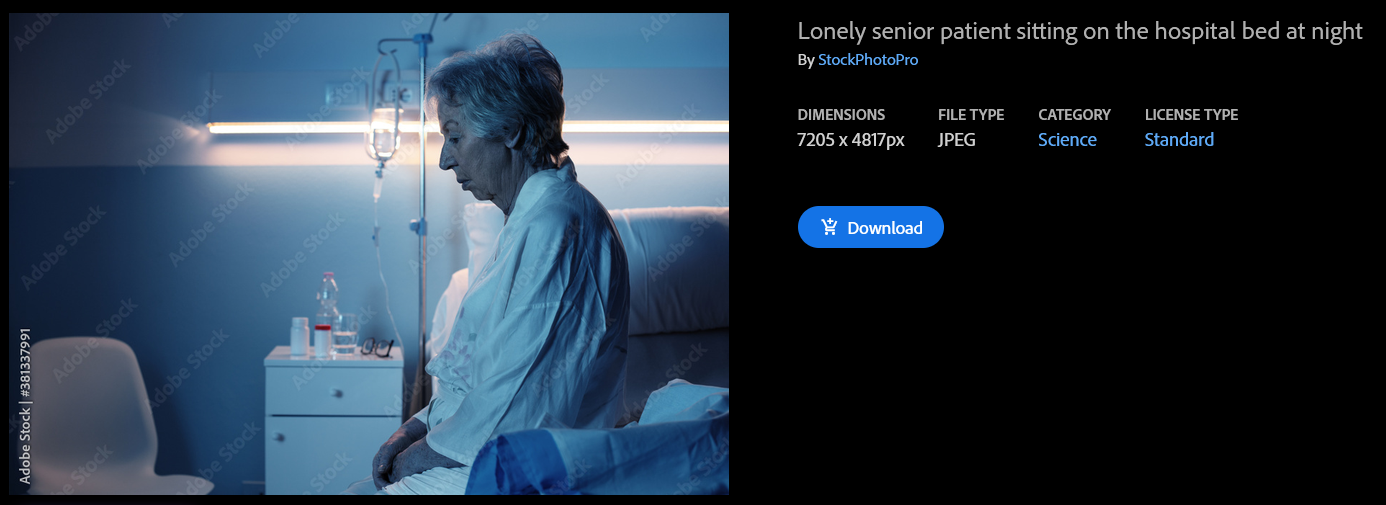
At that point the patient becomes memory, router, translator, exception handler, and proof that the need still exists.
The architecture protects each institution from acting beyond its authority by requiring an ill person to know enough about all of them.
That is not decentralization succeeding.
It is institutional integration being exported downward.
The patient should not be the integration layer.
The problem is larger than healthcare.
Civilization has always achieved capacities no individual participant possesses.
No surgeon manufactures the scanner, generates the electricity, sterilizes every instrument, administers every drug, staffs every shift, maintains every record, and monitors the patient through recovery.
No mayor personally maintains a water network.
No engineer produces every component of a bridge.
No scientist recreates the accumulated history of measurement, mathematics, laboratories, archives, standards, and failed experiments that make one new result possible.
We build intelligence between limited minds.

Language does it.
Archives do it.
Standards do it.
Institutions do it.
Machines do it.
Artificial intelligence can make each of those relations much stronger.
The familiar image of superintelligence points upward. One system becomes more capable until it exceeds one person, then perhaps one profession, one organization, or humanity.
There is another direction.
- A clinician becomes more capable at clinical work.
- A scheduler becomes more capable at scheduling.
- A payer becomes more capable at benefits administration.
- A pharmacy becomes more capable at medication handling.
- That is vertical improvement.
- Then the relations among them improve:
- discovery,
- identity,
- context,
- memory,
- responsibility,
- timing,
- and continuity.
- That is horizontal improvement.
The two can compound.
The unit of intelligence changes.
A Different Superintelligence.
Field superintelligence is task-relative collective capacity produced when multiple limited loci coordinate through a path no member can carry alone.
Task-relative is doing serious work there.
A hospital can display astonishing collective intelligence while coordinating a transplant and remain helpless at getting an ordinary prescription from order to patient.
A city can maintain a water system beyond the capacity of any one engineer, crew, resident, official, or model and still lose one leak between detection and repair.
A network of messages is not automatically a capable path.
Agreement does not prove the system kept contact with the thing it exists to serve.
Speed proves very little by itself.
The question is what the field can actually carry.
- A clinician can produce a valid treatment plan.
- The treatment plan is not treatment.
- A payer can approve the request.
- Authorization is not an appointment.
- A scheduler can transmit the referral.
- A message sent is not responsibility received.
- A pharmacy can mark the order ready.
- A status is not medicine in a body.
Local completion becomes dangerous when it impersonates the object of the field.
Hospitals exist for something larger than producing locally valid statuses in claims, referrals, schedules, and prescriptions.
Those statuses are instruments serving patient continuance.
That does not create one simple objective. A scarce appointment used here cannot be used elsewhere. A worker’s safety can delay care. Privacy can make coordination harder. Public money is finite. Clinical judgment can conflict with a patient’s preference or another professional’s evidence.
Collective intelligence does not create a collective person.
It creates capacity.
A payer can coordinate denial with extraordinary skill.
A workplace can integrate surveillance beautifully.
A military can coordinate destruction at a level no individual participant understands in full.
Competence supplies no innocence.
The Integrator’s Temptation.
Artificial intelligence could still make this hospital much better.
It could notice that the treatment changed while the authorization did not.
It could preserve the current order and its provenance.
It could identify an approaching deadline.
It could tell the scheduler that the old appointment no longer matches the clinical state.
It could route the pharmacy’s question back to someone authorized to answer it.
It could keep the patient from repeating the same history four times.
That is worth building.

The constitutional problem begins when successful integration starts claiming jurisdiction.
The easiest technical architecture is seductive: one identity, one shared context, one memory, one reasoning layer, one current account of the patient, one routing system connecting every office.
Every handoff gets easier.
So does annexation.
Shared context becomes a dossier.
One mistaken interpretation can synchronize across every office.
The system that decides which fact is current begins determining what each institution is capable of seeing.
A vendor controlling identity, permissions, formats, routing, memory, and model updates can become the hospital’s practical nervous system while every clinician, payer, pharmacy, and administrator retains formal authority on paper.
The coordinator knows more of the path than any participant.
That does not give it ownership of the path.
The system that joins the institutions does not inherit their jurisdictions.
A capable handoff needs something smaller.
The receiving office needs
- the current object.
- Enough context to perform the next task.
- Where the information came from.
- What changed.
- What remains uncertain.
- Who accepted responsibility.
- Which deadline matters.
- Where the path returns if the receiver cannot carry it.
Different receivers need different slices of the person.
The pharmacist gets what safe dispensing requires.
The scheduler gets what scheduling requires.
The payer gets the evidence its lawful function requires.
The patient gets something institutions routinely fail to provide: a clear answer to who has the next move.
Artificial intelligence can make those handoffs cheaper without becoming the one office through which the whole person must pass.
Suppose it works.
The treatment is current everywhere it needs to be. The payer has the right order. The pharmacy has the right order. The referral reaches the correct clinic with its provenance, deadline, and unresolved risk intact. The clinic accepts responsibility for the next transition.
Nothing has been lost between the systems.
Then the clinic opens the calendar.
There is no appointment inside the treatment window.
The field finally knows exactly what it needs to do.
It still cannot do it.