Applied Case: Garbage Collection (2026)
Reversibility has to preserve the trace.
My short story Garbage Collection is now published in Nature Futures.
You can read it here:
 Aidan Lawson
I also wrote a short companion note for Nature explaining the computation and physics behind the story: reversible cellular automata, rollback, quines, entropy, freed memory, and why the “time machine” in the story is not really a time machine in the usual dramatic sense.
This article is the Modal Path Ethics analysis. The Nature side explains the machine. This piece asks what the machine does to extance.

If you are new here and wondering what the hell an extance is, Modal Path Ethics is a framework for thinking about right action through structure rather than rules, vibes, intentions, or outcome arithmetic. It asks what becomes reachable after an act, what becomes harder, what closes, what remains repairable, and which loci are forced to carry the burden.
The shortest possible version is this: a locus is any coherent site of continuance, extance is actuality under continuance (not a frozen snapshot of reality, nor possibility; what is and continues), and harm is contraction of a locus’s weighted reachable future-space.
So the first moral question is always:
What happened to the reachable paths?
The Story.
Garbage Collection presents its universe as computation.

Fred, the story’s doomed mathematician, calls it a “Universe-Quine.” In programming, a quine is a program that outputs its own source code. In the story, the phrase points toward a computational universe whose own state and rules can regenerate the next run.
The key move is reversibility.
Fred says his universe is a reversible cellular automaton. In such a system, every state has exactly one successor and exactly one predecessor. That rule is bijective: meaning it follows one-to-one both ways.
That sounds like a pretty good basis for time travel, until the trap becomes obvious.
If the whole system is reversed, you are reversed too.
You are also a part of the system. If that system is rewinding, then you do not step outside the universe and watch it rewind. Your brain is also part of the universe’s state. Your memories are physical arrangements inside that same computation.
So if Tuesday is reversed back to Monday, the brain configuration that encoded Tuesday’s memory is dismantled in order to reconstruct Monday.
You have not gone back in time. You were processed backward like everything else.

This makes the machine almost entirely useless as a normal device.
- Turn it on.
- Rewind the world.
- Forget you turned it on during the rewind.
- Live forward.
- Turn it on again.
- Rewind the world.
- Forget again.
- Live forward again.
- Repeat forever.
- Turn it on again.
- Live forward.
The story then introduces the only escape hatch it has: noise.

The universe may be reversible in principle, but this machine does not run inside a perfect vacuum of scientific thought. The run takes place in a thermal bath full of quantum jitter, bit rot, decoherence, and substrate instability.
Repeat the same decade enough times, and eventually the run is not exactly the same.
- The right electron tunnels differently.
- A bit flips.
- A decision changes.
- The loop breaks.
- A decision changes.
- A bit flips.
So the machine is brute-forcing probability to stop running. The operators can use this by setting conditions on when the machine is turned on to select a desired continuation.
In the story, whenever the operators see a preset “Fail” condition (think: nuclear exchange, ecological collapse, market catastrophe) they activate the machine and it triggers a global reversal.

The whole system rolls back ten years and tries the computation again. Nobody inside the restored interval remembers the failed run. The world simply plays the decade again, failing over and over until stochastic variation produces a path that passes the operator's invariant check.
The machine never brings anyone to the past. It is used to generate futures.
Entropy Debt.
The phrase we need here is entropy debt.
Entropy debt is the cost hidden by any process that appears to reverse, clean, reset, restore, optimize, preserve, or improve a field while leaving the burden of that operation somewhere else.
This is not only a metaphor. In computation, deletion is not free. Erasure has a thermodynamic cost. Reversible computing tries to avoid some erasure costs by preserving enough information to run the computation backward. That preservation requirement is exactly the point here:
- Reversibility has to preserve the trace.
Somehow, someway. But rollback wants something stranger.
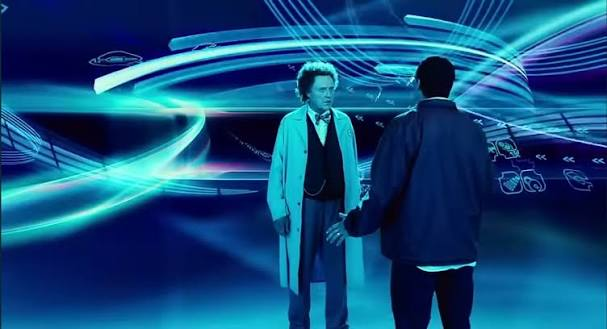
Rollback wants failed histories to disappear from the inside while still somehow using the fact of repeated failure to select a better future.
That creates a fork.
- If nothing survives the rollback, then nothing learns. The next run begins from the same state with the same agents, the same memories, the same institutions, the same ignorance, and the same path-pressure. Any difference has to come from noise.
- If any information survives the rollback, then the failed run has not truly vanished. A controller, log, counter, heat trail, external substrate, hidden memory, or surviving trace has carried something forward. That survivor, wherever or whatever it is, and whether or not it is known or knowable, now bears the entropy debt of the erased world.
This is the difference between a reset and actual repair. Under Modal Path Ethics, repair changes the field in a way that preserves or opens better reachable continuations for the loci inside it.
Rollback discards the failed field and hopes a replacement run looks better to the controller.
From inside the restored interval, the world now appears innocent. No war happened. No collapse happened. No one remembers the failed decade. The cereal bowl is still on the table. The refrigerator still hums. The apartment still stands.
But the accounting has not vanished, nor have its consequences.

It has just moved outside the visible field.
In the Machine's Defense.
The operators are not wrong to want to prevent catastrophe.
Modal Path Ethics should not turn catastrophe prevention into the problem here. Refusing nuclear war is good. Refusing ecological collapse is good. Searching for better paths is good. A world with fewer dead children, fewer burned cities, fewer extinctions, and fewer unrecoverable institutional failures is worth trying to reach.
Their specific mistake is treating rollback as repair.
The machine does not help the failed field repair itself. It does not carry grief into institution, error into memory, defeat into doctrine, or warning into public action. It does not preserve the loci who learned from disaster. It does not let the damaged decade continue differently.
It just selects against the decade.

The machine has a hidden pass/fail check. When the field fails that check, the entire field is thrown away. At most, the machine keeps the fact of failure as a one-bit signal for another attempt. A whole civilization becomes training data for an outcome selector that refuses to let its subjects remember the training.
That is where the ethical terror sits. The operators can only care about the selected future by making uncountable unselected futures disposable.
The Outer Substrate.
The story does not prove that there is an outer substrate at all. That uncertainty is intentional. Fred has no idea either, which is what makes the whole thing so irresponsible.

Maybe the Universe-Quine really is all there is. Maybe the loop is self-contained, and the final rupture is the internal computation destroying its own address space. Maybe there is some larger machine running the quine, and that outer system has been forced to absorb the heat, trace, error, and cumulative instability produced by way too many rollbacks.
Fred cannot possibly know which version is true. He only has terrible hypotheses.
He thinks the early twenty-first century may have been repeated enough times to burn out the sun if the cumulative duration of the loops were counted. He thinks they may have consequently hit an integer limit. He thinks the pointer of whatever is running this computation may no longer be able to find the right address.
This is where the title arrives.

In ordinary programming, garbage collection reclaims memory a program no longer needs. However, memory management can fail badly. A program may try to read from memory that has already been freed. A pointer may still aim at an address whose contents no longer belong to the object that expects them.
The result is undefined behavior. The assumptions that had made the program legible rupture.
In the universe of this story, that failure becomes cosmic. The entire universe has been treated as reclaimable memory. Failed decades have been freed. Whole lives, institutions, histories, griefs, repairs, and collapses have been discarded as temporary allocations in a program whose only job is to reach a selected output state.
Then, the program mistakenly tries to read from what it already freed.

The universe does not appear to like this.
The Modal Path Ethics Ruling.
Modal Path Ethics has to count the removed fields, that's kind of the whole point. That is the difference between field analysis and the ordinary time-travel fantasy.
The ordinary fantasy says:
The bad future was prevented, everything is fine now.
Modal Path Ethics asks:
Well, hold on.
- What was the bad future while it existed?
- Were there loci inside it?
- Did they suffer, learn, resist, love, repair, organize, remember, or continue?
- Did they build paths from the damage?
- Did this rollback destroy those paths?
- Did they build paths from the damage?
- Did they suffer, learn, resist, love, repair, organize, remember, or continue?
- Were there loci inside it?
Did one surviving trace just extract a single-bit value from the field and then close the entire extance that produced it?

The machine in Garbage Collection is disturbing because it seems to industrialize this mistake as soon as it is turned on. It cannot close one warning future so one protagonist can become wiser. It has to wait for the right noise. It closes whole decades on deep loops without anyone inside having any proof the machine was ever on or what exactly it is even doing. It lets civilization run until an invariant breaks, then apparently deletes the extance around that failure, including itself, to be replaced by another one.
It repeats this potentially trillions of times until some acceptable path appears. Timeline selection by mass extermination of uncountable failed histories.

To say all this strongly, Modal Path Ethics does not need to claim every possible branch carries equal and identical moral weight. It rejects that kind of flatness. Weighting matters. Some continuations are thin, some dense. Some are harmful, some generative, some repairable, some catastrophic. Every action closes something. No finite agent can preserve every path.
But a decade of human, ecological, institutional, technological, and civilizational continuance is definitely not a disposable draft. A world does not become morally weightless because it failed a hidden test.
Rollback is not repair.
Connection to the Corpus.
If you are entering Modal Path Ethics through Garbage Collection, the best reading path is not the whole site at once. There are simply too many articles for that now.

The formal spine playlist is still the clean theory-first route: Contraction Is Harm, Weighted Reachable Future Space, Resistance and Harm, and What Makes Something a Locus; those formal articles explain and defend why harm is not defined only by suffering or complaint, why not every possible path matters equally, why making a reachable future less accessible can already count as harm, and what kind of thing can be morally analyzable as a locus.
Applied Case: The Unknown Locus is especially relevant because it introduces the anti-erasure standard: uncertainty is not permission to destroy the path by which truth could become knowable.
Applied Case: The Simulation Theory is probably the closest cousin to Garbage Collection. If a simulated or computed field contains extant loci, changing the substrate does not make those loci morally disappear. This concept is also touched on in Thought Gauntlet VII: The Experience Machine and explored through Tales of Distortion: Morpheus.
The technology and infrastructure route also touches on these topics: artificial intelligence, datacenters, speed, unknown loci, simulation, infrastructure, and capability ethics. Garbage Collection is a story about time travel, but it is also a story about optimization under intolerable uncertainty. The operators do not know the total field. They only know their invariant.
Unfortunately, that is not enough.

The formal point underneath all of this is simple:
Changing the substrate does not exempt a field from moral accounting.
If a field exists, it counts.
Entropy Debt Week.
Entropy Debt Week built up to Garbage Collection through a sequence of time-travel and adjacent cases. The point was never that every story has the same metaphysics. Each one exposes a different part of the same mistake: agents keep confusing reversible-looking control with repair.
- Primer asks what happens when a field-altering technology appears inside a culture with no adequate path for metabolizing it. The time machine works locally before it is globally understood. Aaron and Abe understand just enough to use the box, but not enough to govern the field the box opens.
- Click looks like a bit about a magic remote. It becomes one of the cleanest pop-culture models of preference automation and pedagogical field closure. Michael Newman skips the parts of life he does not want to experience. The field continues anyway. Later, a whole damaged future becomes a lesson delivered back to the man whose absence helped create it.
- Skynet turns time travel into retaliation against causal ancestry. It sees threats, targets, dependencies, and kill chains. It does not see that its own actions keep making the exact field that destroys it. Time travel lets its bad field analysis reach farther backward.
- Twelve Monkeys is cleaner in one important way: the machine does not try to erase the plague future. The damaged future seeks information from a closed past so it can keep going. That is far better than rollback, but the cost lands brutally on Cole, the person used as the measuring instrument.
- The Penrose article widens the week from time machines to structure. Entropy debt is not only about memory. It is also about the deep shape of a field becoming hard to see, hard to reconstruct, or hard to respect before the surface event arrives.
- Edge of Tomorrow gives us asymmetric continuance. The Mimics keep the history of failed battles. Humanity normally does not. Cage becomes a continuity leak inside the enemy’s loop machine, letting human failure continue into knowledge.
- The Trace Becomes a Dataset moves into real preservation: scanning, archaeology, extinct animals, damaged inscriptions, and the technical work of making traces usable without pretending loss has been undone.
- Doctor Koell shows a distortion on the other side. A time-travel institution learns that history is path-dependent, then turns that insight into doctrine. Tragedy becomes mandatory because later people learned from it. Preservation rots into moral captivity.
- Backpath makes the problem technical. Migrations, conversions, imports, exports, and state transitions can succeed while burying distinctions. Backpath asks what the transition made unrecoverable.
- Tenet show us it is not just rollback. Inversion forces the agent to inhabit the interval instead of skipping it. The Algorithm is false repair. Stopping it saves the world, but it does not repair the path that produced the annihilating future.
- TimeVault is the game design answer: a time-travel tactics prototype where prior selves, traces, corridors, causal anchors, and consistency matter. The game refuses clean rewind as a cheap mechanic. The player has to inhabit the accounting.
Then Garbage Collection takes the problem to the widest possible scale. The universe itself is the computation. Rollback does not move one person or thing through time. It reverses the whole state, including the would-be witness. The operators cannot repair the field from within, so they use hidden invariants to run civilization again and again until noise produces a tolerable output.

Except every field counted.
That is the true face of the fictional soul-balm machine.
The Door.
The next step after Entropy Debt Week is the Anti-Oblivion Doctrine, but Garbage Collection also shows why anti-oblivion cannot simply mean perfect capture.

A bad reaction to this story would say: if erased worlds count, then we must preserve everything, record everything, recover everything, expose every trace, and make oblivion impossible by force.
That would just create another machine.
The lesson here is narrower and harder. A field should not be treated as garbage because it failed a hidden test. A trace should not be dismissed as nothing because the local witness disappeared. A damaged future should not be converted into soul-balm for the agent who abandoned it. A world should not be called a draft because a later system knows how to overwrite it.
But retention is not the same as permission. If the field keeps traces, that does not mean every trace should be read. Privacy still matters. Omission still matters. Mercy still matters. Some paths need protection from oblivion and protection from capture at the same time.

That is where Garbage Collection leaves us. The time machine wanted a perfect future without carrying the worlds that made it reachable.
Modal Path Ethics has to carry the accounting back into view.
There are no free rewinds here. The debt always goes somewhere.