Speed Critical Scenarios
The training is the fast response, distributed across the years before the moment arrives.
The framework appears to have a problem.
Modal Path Ethics treats care as a discipline against compression. The Story-Minds analysis describes structural perception as the cortex held against its own preferred shortcuts. The applied cases reward sustained structural attention to fields where the obvious story is wrong. The corpus reads, from the outside, as a sustained argument for slow careful structural cognition.
But many of the most morally important moments in human life cannot afford slow careful structural cognition. Sully Sullenberger had only minutes between the bird strike and the splash. Stanislav Petrov had only minutes to decide whether the Soviet early warning system's report of incoming American ICBMs was real. An ICU nurse looking at a deteriorating patient has hours, not days, to recognize sepsis before lab markers cross threshold. A combat medic under fire has seconds. A firefighter reading a building has minutes before structural collapse.
If the framework requires sustained deliberation as the morally serious mode, it has nothing to say to these agents at all. Worse, it would seem to recommend exactly the response that fails them: analytical paralysis, attempting to deliberate when the field's geometry forecloses deliberation as an option.
This is a real challenge to the framework. It is also, however, a misreading.
The framework's actual position is that trained perception, or fast pattern-recognition that has been built through extensive prior structured cognition, is itself a primary mode of moral perception, not a deviation from it.
The slow structural work and the fast moral perception are not actually opposed at all. They are sequential. The slow work, sustained over years or decades or thousands of repetitions, produces the later fast perception.
Sully's three and a half minutes were powered by twenty thousand hours of prior flight time, fighter training, glider certification, simulator drills, and reading every aviation accident report he could get his hands on. The deliberation had already happened, over a long period. The moment compressed it cleanly.
This article works through the structure of trained perception, the cases that make it visible, the failure modes that make it dangerous, and the criteria that distinguish trained perception from its most common counterfeit; the vibe. The framework's account of speed-critical situations is actually one of its most distinctive contributions, and it is worth making explicit.
Three Modes of Fast Response, and a Fourth, Too.
Fast moral response in high-stakes situations comes in at least four distinct cognitive modes. The framework treats them very differently.
Untrained intuition. Pattern-completion produced by general human cognition without specific prior structured training in the relevant domain.
The agent has a hunch. The hunch may be right. It is right, when right, mostly by luck. Untrained intuition is what happens when humans encounter unfamiliar fields and produce confident judgments shaped by superficial pattern-matching to whatever they happen to know. Folk medicine that doesn't track human physiology operates this way. So does a lot of what passes for political analysis in conditions where the analyst hasn't done real structural work on the actual political field. So does the kind of confident judgment that produces the worst kinds of harmful interventions in domains the agent doesn't actually understand.
Analytical paralysis. The agent recognizes that fast response is required and refuses to act without complete information, or attempts to perform real-time deliberation under conditions where the field has foreclosed deliberation as an option. The agent's failure to act is itself a structural choice of transition that closes futures.
The classic case is the well-meaning manager who responds to a crisis by calling for more analysis when the situation requires immediate action. Analytical paralysis can be morally worse than untrained intuition because it appears to be the morally serious response (the agent is being thoughtful, careful, deliberative) while actually producing exactly the kind of structural failure that fast response was needed to prevent.
Trained fast field-reading. Pattern recognition built through extensive prior structured training, deliberation, and feedback in the relevant domain.
The agent has done the slow structural work in advance, across many prior cases, with external verification of which patterns track the field and which don't. The current moment compresses the prior deliberation into immediate perception. This is what the framework calls trained perception, and it is the morally serious mode for situations where the field requires fast response.
Confident self-deception. The agent believes they have trained perception but actually has untrained intuition with confidence layered on top.
The cognitive operation feels identical to the real thing from inside. The pattern-recognition produces confident judgments. The agent acts decisively. The judgments are wrong, often systematically, because the prior training never actually produced reliable contact with the field's structure. The N-Ray case is a clean institutional example. Blondlot and his confirmers believed they had trained scientific perception, were operating in a community that treated them as having trained scientific perception, and were producing systematically wrong observations because the structural conditions of their training had selected for confirmation rather than for actual reliability.
The framework's treatment of fast response is largely about distinguishing the third mode from the fourth, because they are dangerously similar from inside the agent's experience and very different in their structural consequences.
Sully on the Hudson.
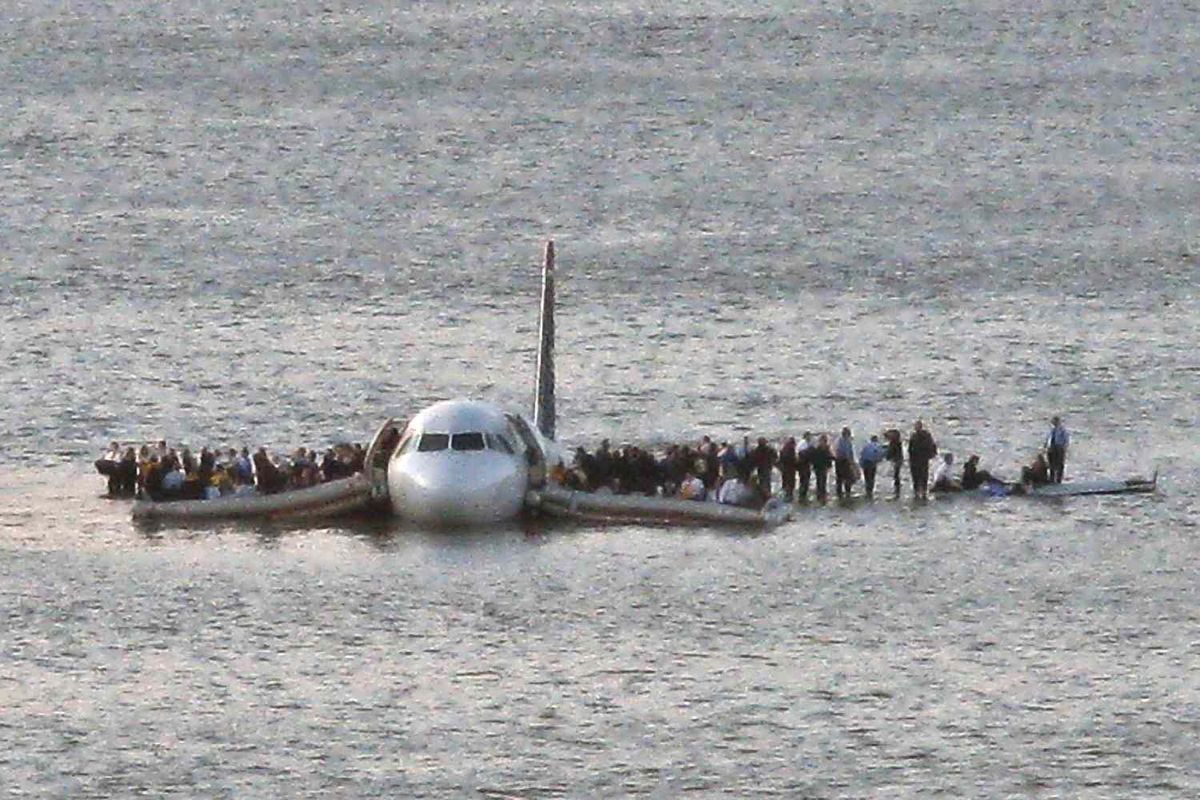
US Airways Flight 1549 lifted off from LaGuardia at 3:24 PM on January 15, 2009. Captain Chesley Sullenberger and First Officer Jeffrey Skiles were at the controls. Skiles was new to the Airbus A320 type, with only 37 hours on the aircraft.
Sullenberger had been flying for forty-two years.
At 3:27:11, the aircraft struck a flock of Canada geese at about 2,800 feet of altitude. Both engines ingested birds. Both lost effective thrust within seconds. The cockpit voice recorder captured Sullenberger's response immediately: my aircraft. He took the controls.
What followed has become one of the most studied few minutes in aviation history.
Sullenberger established communication with air traffic control. ATC offered return to LaGuardia. Sullenberger considered it for a few seconds, and declined. Too far, too low, the aircraft wouldn't make it. ATC offered Teterboro, a smaller airport across the Hudson. Sullenberger considered Teterboro for slightly longer, and declined that too.
The decision was the Hudson. Sullenberger's instruction to ATC: we're gonna be in the Hudson. To the cabin a moment later: brace for impact.
The aircraft touched down on the Hudson at about 3:30:43, roughly three and a half minutes after the bird strike. All 155 people on board survived. The aircraft itself was recovered and is now displayed at the Sullenberger Aviation Museum in Charlotte, formerly the Carolinas Aviation Museum.
The post-incident investigation by the National Transportation Safety Board ran simulations of the bird-strike scenario with experienced pilots attempting to return to LaGuardia or reach Teterboro. The simulators showed that returns to airports were technically possible, but only with immediate, correct, ungeometric responses with no time for assessment or consultation. So, not realistic. Pilots given the realistic time delay between bird strike and decision, accounting for the seconds it actually took to recognize the situation and assess options, could not make the airports. The Hudson decision was, in the simulator data, the only decision that produced reliable survival under the actual conditions.
So, what did Sullenberger have, cognitively, in those minutes?
Twenty thousand hours of total flight time compressed into schema. Air Force fighter pilot training in the F-4 Phantom. Glider certification, which is a particular distinction because gliders are unpowered aircraft that train pilots specifically in dead-stick handling, the very skill set required for flying an aircraft with no engine thrust due to bird attack. He had also served as an accident investigator. He had also read aviation accident reports as ongoing professional study for decades. He had also given lectures on cockpit resource management and crisis decision-making.
Sullenberger himself, asked later how he made the decision, gave an answer that has been quoted in cognitive science papers ever since. He said, in effect, that the decision was not really a decision in the deliberative sense. He saw the situation, he saw what was reachable, he saw what was not, and he acted.
The deliberation that produced this decision had happened over forty-two consecutive years.
This is trained fast field-reading made visible. The cognitive operation Sullenberger performed in those four minutes was not deliberation under time pressure. It was structural perception at the speed the field required, made possible by the slow structural cognition he had already been doing for decades. He had built, through training and study and accumulated experience, a perceptual capacity that could read the geometry of a damaged aircraft against the geometry of available landing options and recognize, almost immediately, which futures were reachable and which were not.
The framework's account of what Sullenberger did is that he was performing structural moral perception at high speed. The capacity to do so was the product of long sustained care for the work he engaged with. The four minutes compressed forty-two years of slow structural cognition into immediate response schemas. The moment was not opposed to the prior care; this was the prior care, deployed.
This is also why Modal Path Ethics' account of speed-critical situations does not require infinite deliberation. The deliberation requirement is met across the agent's career and life. The moment of fast response is the deliberation expressing itself in the form the field requires.
Petrov in the Bunker.
September 26, 1983. Stanislav Petrov was the duty officer at the Serpukhov-15 bunker outside Moscow, the Soviet command center for the Oko ("Eye") satellite-based early warning system. The system had been operational for less than a year. Petrov was a lieutenant colonel, an engineer by training, on duty during what should have been a quiet shift.
At 12:15 AM Moscow time, the system reported a single intercontinental ballistic missile launch from the United States.
Then a second.
Then three more, for a total of five incoming nukes.
So. not a great start to the day.
The standard procedure for a confirmed launch detection was immediate report to the Soviet General Staff, who would then have minutes to decide whether to launch a retaliatory strike before the incoming warheads arrived. Soviet doctrine assumed that a US first strike would, given the size of the American arsenal, involve hundreds or thousands of warheads launched simultaneously, not five.
Petrov had to decide, in real time, whether the system's report was true or false.
The available structural facts were not promising for declaring it false, at all.
The system was new, but had definitely been tested. It was reporting confirmed launches, not ambiguous signals. Petrov was just an engineer, not a senior strategist; he had no special standing to override the doctrine here. The cost of a false negative, declaring an actual nuclear attack to be a false alarm and thereby allowing the Soviet Union to be destroyed without retaliating, was civilizational in scale.
What Petrov had to work with, cognitively, was the following pattern-recognition: a US first strike of five missiles made no doctrinal sense in any scenario. American strategic theory called for overwhelming first strike or no first strike at all. Five missiles was obviously too few to disable Soviet retaliation capability and also too many for any conceivable accidental launch scenario. The pattern of detection was structurally inconsistent with what an actual American attack would look like.
So, he reported the detection as a false alarm.
It later emerged that the Oko satellite had been fooled by sunlight reflecting off high-altitude clouds at a particular angle, producing a sensor signature that the system's pattern-recognition algorithm had classified as ICBM exhaust plumes. The five "launches" were five sequential reflections as the satellite tracked across the cloud field. There was no attack. Reagan was not trying to wipe out the Soviet Union with five missiles. Petrov's judgment was correct.
He was not rewarded for this at all. He was investigated, mildly punished for failing to follow procedure (specifically, for not having logged the incident in real time according to the protocol), and eventually retired. The incident remained classified for years. He died in 2017. Public recognition came mostly outside the Soviet Union, late, and very grudgingly within it.
What did Petrov have, cognitively, that allowed the call that saved us all?
Engineering training that gave him an internal model of how detection systems can fail. Familiarity with American strategic doctrine sufficient to recognize that the detected pattern made no sense as a real attack. Understanding of the new system's reliability profile, including the fact that it was new, tested but untested under all conditions, and known to have anomalies. Some structural humility about what the system could and could not actually detect reliably.
And, less specifiable but possibly most important, a habit of structural thinking that had been built through years of engineering work where the question "does this signal pattern actually match the underlying physical reality" was the bread and butter of this guy's job.
This is trained fast field-reading under conditions where the agent has not previously trained for the specific case presented like Sully, but has trained extensively for the kind of case. Petrov had certainly never before adjudicated a possible nuclear attack. There was no prior practice to draw upon. But the cognitive operation he performed (assessing whether the system's output structurally matched the underlying field it was supposed to be reading) was something he had been doing in lower-stakes versions for his entire engineering career. The fast response in the bunker compressed that prior sustained work into the moment.
The framework's reading of Petrov is the same as its reading of Sullenberger. The slow structural cognition produced the capacity for fast structural perception. Unlike the Sullenberger case, the training was domain-general enough to transfer to a domain Petrov had never specifically trained for.
Sepsis and the Klein Hypothesis.
Cognitive scientist Gary Klein spent decades studying expert decision-making in real-world high-stakes contexts, like firefighters, military commanders, ICU nurses, and neonatologists. His major book Sources of Power (1998) consolidated the findings.
The summary, simplified: experts in high-stakes domains rarely actually compare options the way classical decision theory says they should. They recognize patterns and act. The pattern recognition is not conscious, in many cases. The expert often cannot articulate why they made the decision they made. They report something like "it just looked wrong" or "I knew we had to leave the building" or "it just felt septic." Asked to explain, they retroactively construct reasons. The actual cognitive operation in play was perceptual, not deductive.
Klein called this "recognition-primed decision-making." The expert just sees the situation, recognizes it as similar to previously encountered situations with known dynamics, and acts on the recognized pattern. The expertise is in the recognition. That recognition is built through accumulated exposure with feedback.
The clinical literature on sepsis is one of the cleanest medical instances. Sepsis is a syndrome of organ dysfunction caused by dysregulated host response to infection. Early recognition is central to survival here. Vital signs and lab markers are clear once threshold is crossed, but threshold-crossing is often hours behind the actual onset of physiological deterioration. By the time the patient meets the criteria for septic shock, mortality risk has already multiplied.
Experienced clinicians can sometimes reliably identify sepsis before formal criteria or scoring tools make the case obvious. Studies on this go back decades. The clinical phrase is literally "looks septic" or "septic gestalt." Multiple studies have shown that experienced clinical impression is comparable to or better than scoring systems for early identification. The recognition is very real. It is not articulated at all. It is built through thousands of patient encounters with feedback (the patient progressed as expected, or didn't, and the nurse's pattern library updated).
This is precisely the same cognitive structure as Sullenberger in the cockpit and Petrov in the bunker. Slow structural cognition over many cases, built up into pattern-recognition, deployed in the moment as fast perception. The framework's term is trained perception. The cognitive science term is recognition-primed decision-making. The clinical term is gestalt. They are describing the same operation.
Klein's research also identified what experts do differently from novices when the recognition fails; when the situation is genuinely novel and pattern-matching produces no clear answer here. Experts will do something the novices can't: they construct a mental simulation of the proposed action, run it forward, and check for problems. If the simulation surfaces a problem, they revise. If not, they act.
This is still a kind of deliberation, but it is deliberation operating on the trained perception's outputs, not deliberation ever actually replacing the perception. The perception is just of a future-simulation. Even in novel cases, the expert's deliberation is still faster and more accurate than the novice's because the simulation engine is built from the same accumulated exposure that produced the pattern library.
What this means for the framework: trained perception and structural deliberation are not opposed cognitive operations in any way. They are twinned layers of the same capacity. The slow work builds the perceptual library. The perceptual library enables fast pattern-recognition. When the patterns don't apply cleanly, the simulation engine kicks in, also built from the same library, producing structured deliberation faster than the unaided cognition could. At every layer, the slow prior work is what makes the fast current work possible.
The Cognitive Mechanism.
Cleanly stated: structural perception at speed is the compressed form of structural cognition. The compression is built through extensive prior structured engagement with the field. Without the prior structured engagement, fast cognition produces untrained intuition or confident self-deception. With it, fast cognition produces trained perception.
This is consistent with what cognitive science has found about expertise across domains. Chess masters don't see the same board as novices. They perceive it in larger chunks, organized around strategic features rather than individual pieces, with branches of reasonable continuation already pre-evaluated. Tennis players returning serves don't have the time for conscious deliberation; they produce the motor response from pattern-recognition that has been built through thousands of prior repetitions. Pianists don't think about which finger to use; the trained perception produces the motor program.
Moral perception is structurally analogous. The framework's vocabulary, the applied case engagement, the structural analysis of fields, all build a perceptual library that becomes available in the moment. When an experienced practitioner encounters a situation that resembles previous structural cases, the recognition produces moral response at the speed the field requires. The deliberation has happened in the prior work.
This is what Story-Minds was pointing toward without quite naming. The narrative-cognition default is fast and shape-driven. The structural grammar, learned slowly, becomes a parallel pattern-recognition capacity that runs alongside narrative cognition. With sufficient training, structural perception becomes available at the same speed as narrative perception, and the agent can read the structural features of a situation as fast as they can read the narrative features. This is what trained perception in Modal Path Ethics' framework actually means.
The implication of this: the slow work is required, but the slow work doesn't have to happen in real time. It happens in advance, across many prior cases, sustained over years, which need not even be specific to the domain of the situation in which the choice is finally presented. The agent who has done the slow work brings it to the moment as fast perception when required. The agent who has not done the slow work has no fast perception available to call upon. That agent's only options are untrained intuition or analytical paralysis, neither of which is the morally serious response.
This is also why the framework's emphasis on care-as-discipline against compression is not in tension with fast response at all. Care, sustained over time, is what produces the perceptual library that makes fast structural response possible. The discipline is what produces the speed. Without the discipline, there is no speed worth having.
Confident Self-Deception, and How to Distinguish It From That.
The hardest distinction in the framework's account of speed-critical cases is between trained perception and confident self-deception. From inside the agent's experience, they are always nearly identical. Both produce fast judgments. Both feel like recognition. Both lead to confident action. The difference is in the structural conditions of the prior training, not in the phenomenology of the moment.
So what separates them?
External verification of past judgments. Trained perception has a track record that can be checked. Sullenberger had been flying for decades with documented outcomes. Petrov had engineering work that had been validated in lower-stakes contexts. Sepsis-recognizing nurses worked in ICUs where their judgments were continuously checked against patient outcomes. The training was iterative against ground truth, with feedback that updated the perceptual library when the perception was wrong. Confident self-deception lacks this. Blondlot's training was iterative within a community that confirmed each other's observations rather than against external check. The pattern-library was built from the wrong feedback signal.
Calibrated confidence. Trained perception comes with internal awareness of when the patterns apply reliably and when they don't. Sullenberger knew the difference between a familiar approach and a novel emergency. Petrov knew the difference between his domain of engineering judgment and decisions outside it. Experienced ICU nurses know which patients they can read confidently and which they need to flag for additional assessment. Confident self-deception lacks this calibration. The confidence is uniform across cases regardless of whether the trained pattern applies.
Willingness to be corrected when wrong. Trained perception is built through the experience of being wrong, recognizing the error, updating the perceptual library. Agents with trained perception generally have a felt sense that future error is possible and they are not exempt from it. Confident self-deception treats correction as threat. The Blondlot case is again the cleanest example; the field's response to dissent was to pathologize the dissenters as having insufficiently sensitive eyes, not to engage the structural challenge.
Recognition of the conditions where the pattern is reliable. Trained perception comes with a map of its own applicability. Sullenberger was extremely confident about flight handling in the four-minute glide; he was less confident about the public-relations aftermath, and he said so. Klein's research found that experts can articulate, often surprisingly precisely, which kinds of situations they can read reliably and which they can't. Confident self-deception does not have this map. The agent extends the perceived expertise into domains where it doesn't actually apply, with confidence undiminished.
Humility about novel situations. Trained perception, encountering a genuinely novel situation, slows down. The agent recognizes that the patterns don't quite fit and uses the simulation engine that Klein identified. Confident self-deception does not slow down. It produces the same fast judgment regardless of how novel the situation actually is.
These criteria are not absolute. They are diagnostic features, more or less present in different agents in different domains. Most real expertise has trained-perception features in some areas and confident-self-deception risk in others. The framework's posture is that this is what real expertise looks like: partial, domain-specific, with edges where the training doesn't apply, requiring ongoing humility.
The framework's deepest move on this question is that the prior work that builds trained perception also builds the capacity to detect its own failure modes. An agent who has done sustained structural cognition learns, partly, where the cognition is reliable and where it isn't. The same training that produces fast perception in known domains produces appropriate caution about unknown domains. Confident self-deception is what happens when the prior work was done in a structurally compromised way that produced the perception without the calibration. This is also the deeper lesson of the N-Ray case: the field had built fast perception (Blondlot and his confirmers could "see" N-rays quickly and confidently) but had not built the calibration that would have detected the systemic failure.
Institutional Trained Perception.
The same structure scales to institutions, with both opportunities and complications.
Institutions can develop trained perception over time, through accumulated case experience, documentation, and feedback. The Smogon Tier Council case in the RBY UU 2020s article is a working example; an institution that had built trained perception over several years of structured intervention, public reasoning, and willingness to be corrected when interventions failed. Volk's reflection on the sleep ban is what trained institutional perception looks like in real time: calibrated confidence based on track record, willingness to be wrong, recognition of when the prior pattern doesn't apply.
The aviation industry's safety culture is a larger-scale instance. The accumulation of accident reports, near-miss reports, simulator training, crew resource management protocols, and continuous structural feedback has built into the industry a perceptual capacity that allows situations like the Hudson to be handled by individual pilots whose training is built from absorbing the entire industry's accumulated learning. Sullenberger's individual perception was real, but it sat inside an institutional perception that the FAA, NTSB, airline training programs, and pilots' personal study had been building together for decades.
Medicine's mixed record is also instructive here. Some medical contexts have built strong institutional trained perception (sepsis recognition in well-resourced ICUs, trauma protocols, OB-GYN crisis response in delivery centers) through accumulated case experience and structured feedback. Other medical contexts have built confident institutional self-deception; diagnostic categories that don't track underlying physiology, treatment protocols that persist past their evidentiary support, clinical "wisdom" that turns out not to be calibrated. The structural difference is the same as for individual agents: whether the institutional pattern-library was built through iterative external feedback or through internal community confirmation.
This is one of the structural reasons Modal Path Ethics pays attention to institutional dynamics. Individual agents inherit institutional trained perception. They also inherit institutional confident self-deception. The framework's posture is that the structural conditions of institutional learning (the feedback signals, the willingness to be corrected, the calibration of confidence to track record) determine whether the inherited capacities are perceptual or pseudo-perceptual.
For agents trying to develop their own trained perception, this matters a lot. The agent's individual training is always partly a function of the institutions they trained within. An agent who trained in an institution with good feedback dynamics inherits trained perception. An agent who trained in an institution with bad feedback dynamics inherits confident self-deception and distortion. The agent themselves may not be able to tell the difference from inside, because the perception feels the same in both cases. The structural question is whether the institution's pattern-library actually tracks the field.
This is also the framework's diagnostic question for any field claiming expertise: what feedback signals built the trained perception?
If the feedback was external, iterative, and willing to falsify prior judgments, the field probably has real trained perception in its core competencies. If the feedback was internal, confirmatory, and resistant to falsification, the field probably has confident self-deception, regardless of how it presents itself.
Integration With Care and Story-Minds.
The framework's account of trained perception integrates cleanly with the prior structural concepts.
Care, the discipline of attention against narrative compression, is what builds the perceptual library over time. Sustained care for a domain produces accumulated structural exposure, which builds the pattern-recognition capacity, which produces trained perception in the moment. Care is not separable from speed. It is what makes speed possible.
Story-Minds described the cognitive architecture that runs by default: narrative compression, fast pattern-completion, expectation-driven perception. The article noted that structural grammar can help extend the architecture into territory the default can't reach. What the speed-critical analysis adds is that the structural grammar, once internalized, becomes a parallel fast-perception capacity. The story-minds default produces fast narrative-shaped judgments. The structural grammar, sufficiently trained, produces fast structural-shaped judgments at the same speed. The agent who has done the sustained structural work has both modes available simultaneously and can deploy whichever the situation requires.
This is the deepest integration. The framework's emphasis on slow structural cognition is not a recommendation for slowness. It is a recommendation for building the capacity that enables fast structural perception. The slowness is the means. The trained perception is the end. An agent who only ever does the slow work, and never develops the fast perception, is an agent whose moral capacity stays locked in deliberative mode in situations that require speed. This is not the framework's goal.
The framework's actual goal is structural perception at the speed the field requires, whatever that speed turns out to be. Some situations require minutes of fast response (Sully). Some require seconds (combat medics, surgeons in unexpected complications). Some require sustained slow attention over years (climate response, institutional reform, ongoing care relationships). The mode depends on the field. The capacity, in all cases, is built through the same structural work.
Closing.
The challenge that opens this article, doesn't MPE require infinite deliberation?, gets the answer it deserves. No.
The framework requires sustained structural cognition. The cognition produces trained perception. The trained perception is what makes fast moral response possible in situations where the field requires it. The slow work and the fast work are not opposed. They are the same capacity at different stages, and the slow work is what powers the fast.
What the framework actually demands is that agents do the structural work that produces calibrated trained perception in the domains where they will eventually have to act fast. Pilots train for decades because the four minutes will come. Engineers think structurally because the night shift in the bunker will come. ICU nurses pay sustained attention to patients because the deteriorating one needs to be recognized hours before the labs cross threshold. The training is not in tension with the fast response. The training is the fast response, distributed across the years before the moment arrives.
The framework's posture toward speed-critical situations is not defensive. Trained perception is one of the framework's distinctive moves; a structural account of how moral response can happen at speed without becoming either untrained intuition or analytical paralysis. The account names the cognitive mechanism, identifies the failure modes, gives criteria for distinguishing the real thing from its counterfeits, and integrates with the rest of the framework's structural analysis.
The agents most readers admire, like Sully on the Hudson, Petrov in the bunker, the nurse who caught the sepsis at 2 AM, and the firefighter who got the family out before the ceiling came down, are all doing exactly what the framework describes. Sustained prior care, expressed in the moment as trained structural perception, producing fast moral response at the speed the field demands.