Transition Action: The Trace Becomes a Dataset
The past is not gone just because it stopped answering normally.
Entropy Debt Week
Transition Action interrupts this deranged time travel talk for a special report on the chastening of the controller.
Transition Action is the technical wing of Modal Path Ethics: a series about technologies crossing from research, prototype, or theory into reachable action. Each entry begins with a live technical event and asks what has changed in the field. This is not a futurist roundup.
- What can now be built, tested, measured, preserved, reconstructed, or shared that was not reachable before?
- What physical process carries the new action?
- Which old access bottlenecks have become unnecessary?
- What new failure conditions enter with the new representation?
Transition Action is a field inspection at the moment a capability starts to move.
This week in Transition Action, extinction enters the scanner.
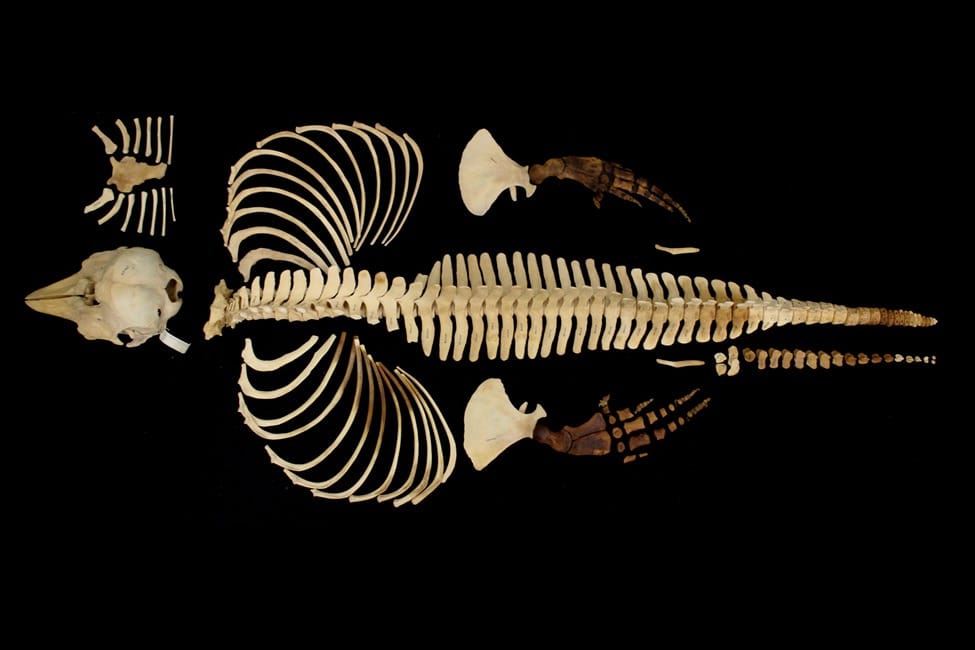
In June 2026, researchers at Florida Atlantic University announced a digital preservation project for one of the rarest animals on Earth: the vaquita, a small porpoise found only in the northern Gulf of California.
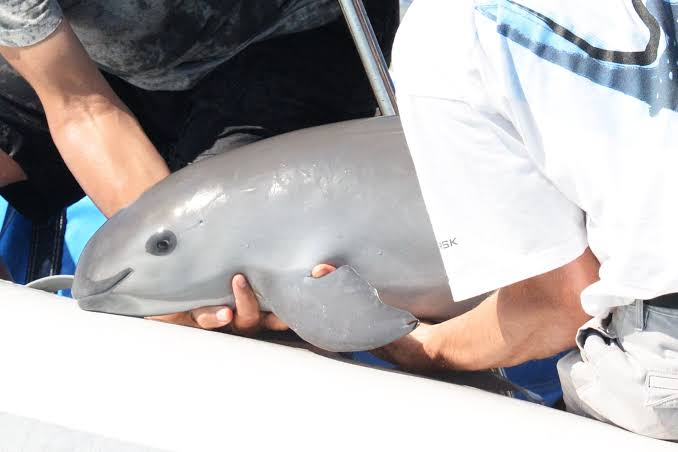
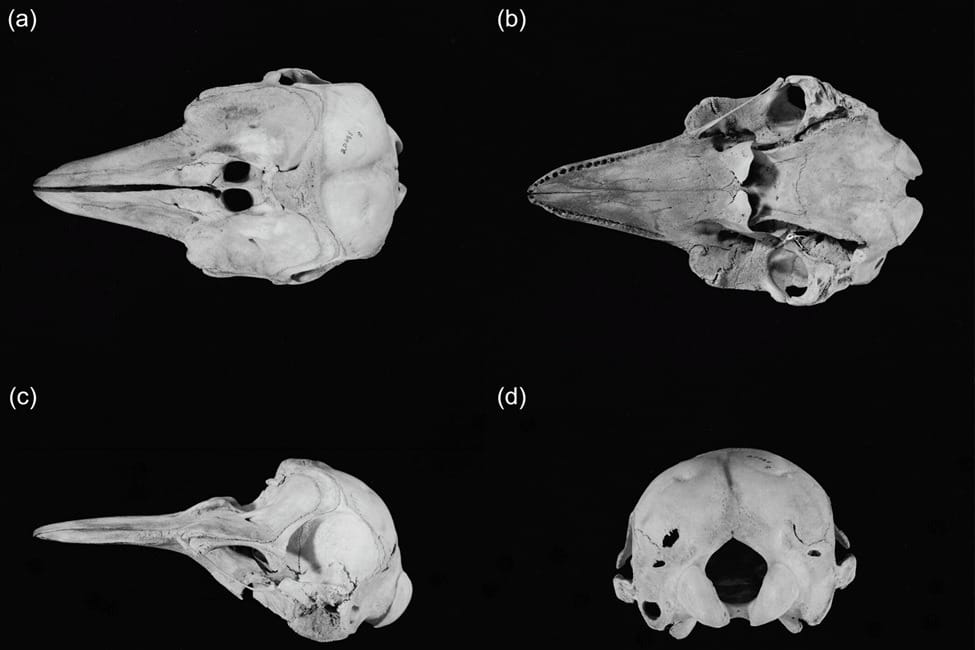
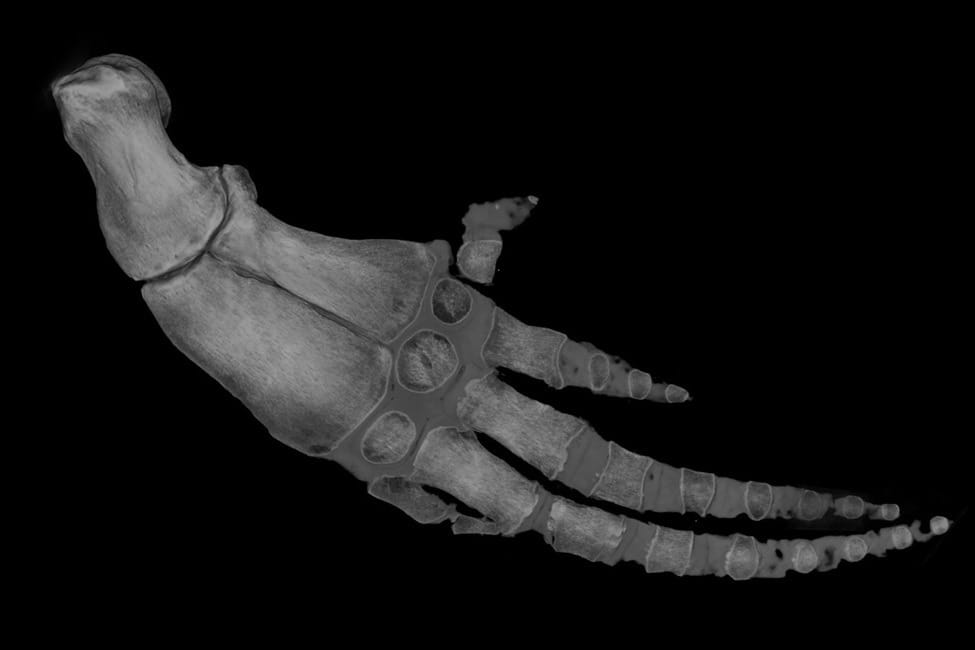
The specimen was already old. A rare female skeleton, collected back in 1966, had become a fragile physical record of a species now almost entirely gone. The researchers combined medical CT scanning, high-resolution micro-CT imaging, and digital photography to create an unusually detailed digital archive of the skeleton. The resulting dataset includes photographs, scan data, and downloadable 3D meshes made available through MorphoSource.
The simple version is:
- They scanned a skeleton.
The technical transition is more interesting.
- They moved access from the local, fragile body into a layered digital field.
This skeleton no longer has to be handled every time someone wants to study it. A researcher does not need to travel to the specimen, persuade an institution to allow access, risk damage through handling, or accept a flat photograph as the limit of available information. The skeleton can be rotated, measured, enlarged, segmented, compared, printed, and re-examined without touching the original bone.
The dead animal has not been restored, but its trace has become more reachable.
The Specimen Cannot Travel.
Museums, archives, laboratories, archaeological sites, and biological collections all contain objects that cannot safely move through the world at the speed of research.
- Some are too fragile.
- Some are too rare.
- Some are politically sensitive.
- Some are sacred.
- Some are legally constrained.
- Some belong to a place.
- Some are the last or nearly last available physical record of something the field has already damaged beyond ordinary recovery.
The older access model is local and brittle.
A specimen sits somewhere. A scholar travels to it. Permission is granted or denied. Handling is limited. Lighting is imperfect. Time is short. Tools may be restricted. Measurements are taken under the conditions available. Photographs are captured from chosen angles. Notes are carried away. The object remains where it is, slightly more used, slightly more documented, still mostly inaccessible.
That model protects the object. It respects scarcity. It prevents every important artifact from being treated like a checkout item.
But it also creates a sharp bottleneck.
The object itself carries too much of the access burden.
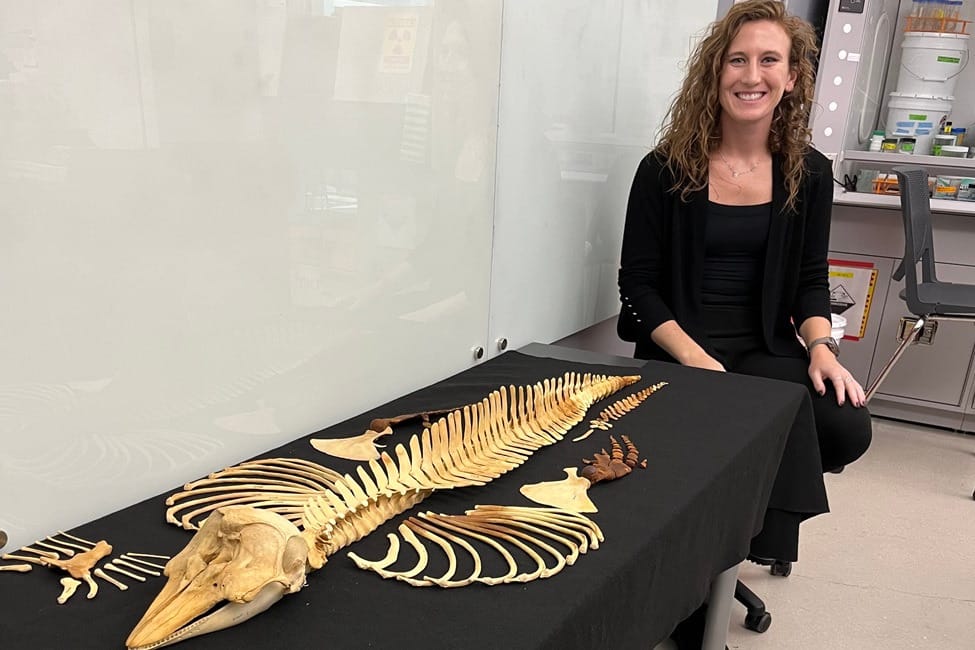
The vaquita skeleton makes the bottleneck very obvious. If only a few complete skeletons exist, then ordinary access is not just inconvenient. It is structurally impossible. The specimen cannot become a widely handled teaching object. It cannot be mailed around the world. It cannot absorb indefinite measurement, classroom display, comparative handling, and repeated technical inspection.
The transition begins when the field stops asking the original to carry all of that.
CT Does Not Photograph the Surface.
A normal photograph records reflected light from an exposed surface.
That is already useful. A good photograph can preserve color, proportion, damage, arrangement, and visible detail. It can travel. It can be reproduced. It can let many people inspect the same view of an object without touching it. But a photograph is still mostly exterior.
Computed tomography changes the relation.
Medical CT uses X-rays to generate cross-sectional images. Micro-CT pushes that logic to finer scales, allowing internal structures to be imaged at much higher resolution. Instead of asking only what the surface looks like under light, the scanner asks how X-rays pass through the object across many slices.
- The object becomes a stack.
- The stack becomes a volume.
- The volume becomes a model.
- The stack becomes a volume.
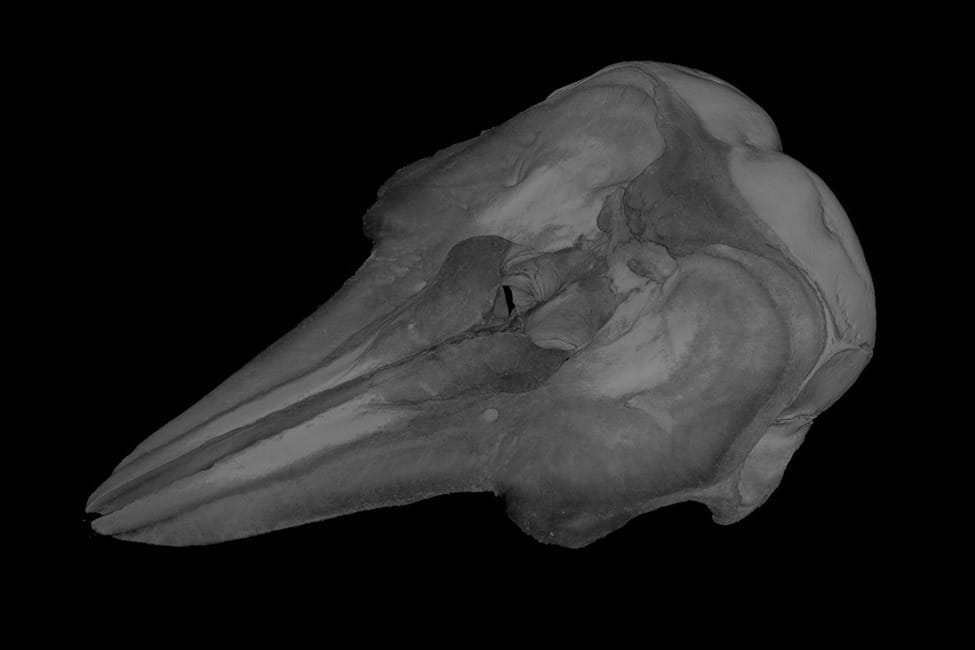
A bone is not only a surface shape. It has thickness, density, internal architecture, curvature, cavities, growth patterns, breakage, joins, and small structures that may never be visible from a simple external view.
The vaquita project did not create a pretty 3D animal skeleton for a web viewer. It created a layered dataset from multiple imaging modalities:
- medical CT for whole-specimen structure;
- high-resolution photography for external reference;
- micro-CT for extremely fine anatomical detail;
- segmentation and reconstruction to isolate bones;
- 3D meshes that can be examined, downloaded, and used for research or education.
This is not perfect access. The scan is still not the bone. The model is not the animal. The mesh is not the Gulf of California. The dataset is not a living population.
The point is narrower and stronger.
A fragile object can now shed a usable access-body.
That access-body can travel where the original cannot.
The Wall.
The same transition appears in archaeology.
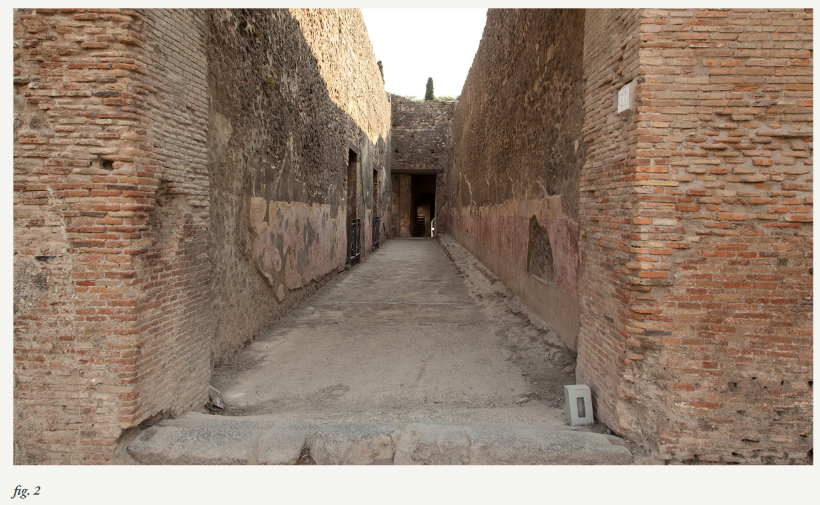
In Pompeii, the “Bruits de couloir” project examined graffiti in the theatre corridor, a passage between the theatre district and Via Stabiana. The corridor had been excavated more than 230 years ago. Millions of visitors had passed through the area. This was not an untouched chamber waiting behind a sealed stone door. It was already known.
That is what makes the case so useful.
Using Reflectance Transformation Imaging, or RTI, researchers photographed the walls under multiple lighting angles. RTI is not a magic spell. It does not summon lost text from nowhere. It changes the relation between surface, light, camera, and viewer so that faint scratches and shallow marks become easier to inspect.
It turns out the wall had more to say because the earlier interface had been too weak to hear it.
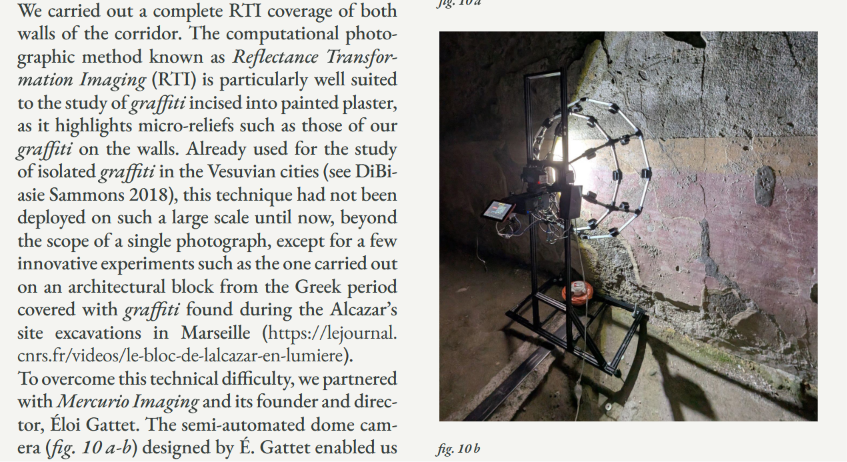
The project added 79 previously unpublished inscriptions to a corpus of roughly 200 known graffiti. The inscriptions include ordinary fragments of public life: affection, insults, gladiators, farewells, social contact, jokes, devotion, names, partial phrases.
That ordinariness is the point.
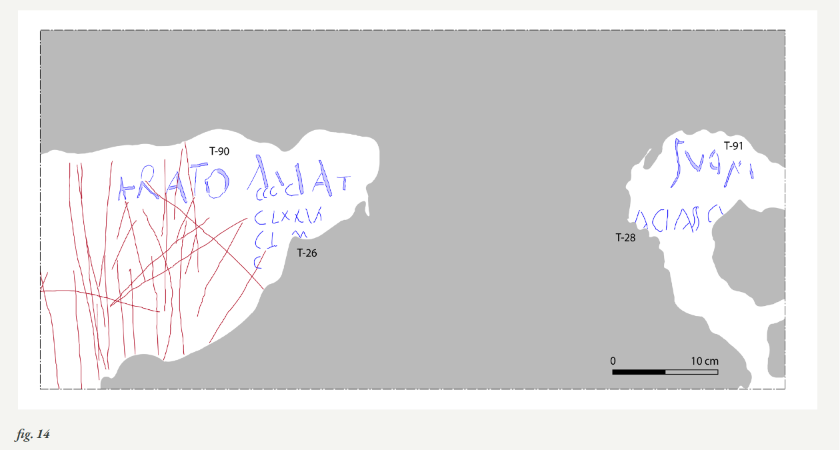
Perfect archaeology does not only recover kings, temples, battles, and catastrophes. It recovers the scratched leftovers of people passing through a corridor.
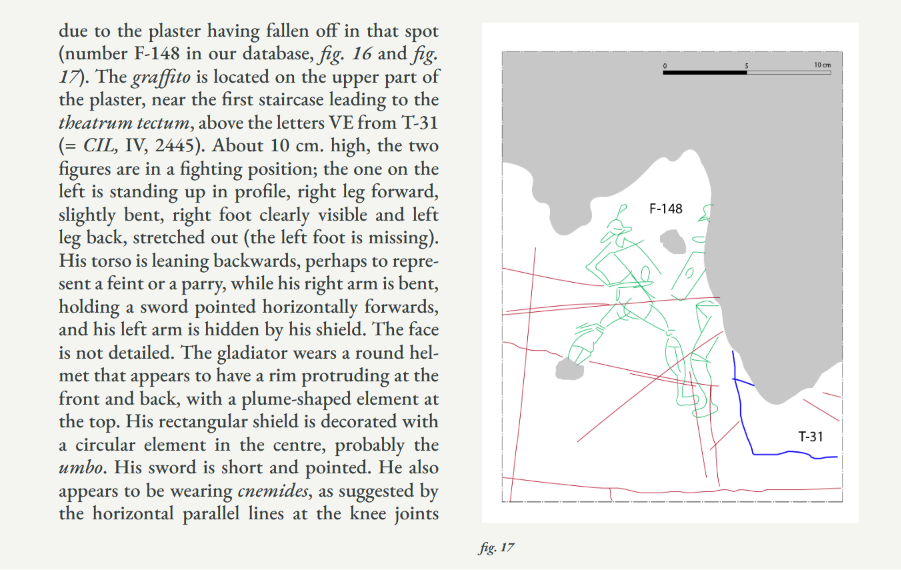
A wall is not a database in the ordinary sense. It does not contain clean entries. It contains surface changes. Cuts. Abrasions. Plaster damage. Overlap. Weathering. Human intention mixed with accident. Later erosion mixed with ancient gesture. The inscription is not simply “in” the wall as text is in a file. It is a relation between hand, tool, plaster, pressure, light, damage, preservation, and interpretation.
RTI gives that relation a better instrument.
Entropy Debt.
The usual story says damage erases. Loss subtracts.
Sometimes it does.
A burned book may be gone. A dead species may be gone. A smashed statue may be gone. A corrupted drive may be gone. A voice never recorded may be gone. There is no ethical maturity in pretending every loss can be reversed by clever instruments and a heroic enough scanner.
But many losses do not erase cleanly. They redistribute access costs.
The object remains, but only under a much harder reading condition. The wall remains, but the inscription has sunk below ordinary visibility. The skeleton remains, but ordinary handling would spend too much of the remaining physical margin. The archive remains, but the metadata is broken. The body remains, but the tissue is degraded. The site remains, but context has been torn apart by excavation, looting, construction, flood, fire, war, neglect, or tourism.
The debt moves into the field.
Someone later has to pay it back in resolution, labor, compute, interpretation, preservation, storage, metadata, calibration, access rights, and technical humility.
This is why “digital preservation” is not only a storage problem. A hard drive full of files is not preservation if the files are untraceable, uncalibrated, unlicensed, unsearchable, undocumented, unmaintained, or detached from the physical provenance that gives them meaning. A scan without metadata is a ghost with no address. A model without raw data is a claim with no body behind it. A reconstruction without uncertainty is a lie wearing a lab coat.
The vaquita project shows us several things at once. It scans at multiple scales. It preserves external and internal structure. It reconstructs interactive 3D models. It makes the resulting data openly available. It reduces the need to handle the rare original. It lets many future users ask new questions of the object without reopening the same physical wound.
The Pompeii project is in the same family. RTI is only part of the transition. The stronger architecture combines photogrammetry, RTI data, epigraphic metadata, spatial context, visualization, and annotation. The future object is no longer the wall; it is the wall plus a disciplined reading environment.
Entropy debt is paid by preserving the path from trace to interpretation. Not just “making a copy.”
Archaeology Is an Interface Problem.
Time travel is the deranged version of archaeology.
Time travel wants the past back as an environment. We will walk into it. Touch it. Watch it happen. Fix the camera angle. Bring the lost object forward. Ask the dead person what they meant. Recover the event by refusing the dignity of distance.
Perfect archaeology is quieter and more realistic. It does not ask the past to become present again. It just asks how much of the extant field can still be read.
That makes it a technical problem before it even becomes a metaphysical temptation. The question is not “Can we go back?”, it’s:
What transformations make the remaining trace answerable?
- A buried scroll may answer to X-ray phase-contrast tomography.
- A palimpsest may answer to multispectral imaging.
- A fossil may answer to synchrotron scanning.
- A painting may answer to infrared reflectography or X-ray fluorescence mapping.
- A skeleton may answer to CT and micro-CT.
- A wall may answer to RTI.
- A landscape may answer to lidar.
- A ruined archive may answer to metadata repair, database reconstruction, and format migration.
Each case has a different interface. The past is not one simple thing. The trace is also not one thing. Reading is not one thing.
This is the Transition Action pattern.
The action has moved out of the heroic observer and into the reading relation. The new capability is not produced by a single central intelligence staring even harder at the isolated object. It is produced by the live coupling of specimen, scanner, light angle, segmentation software, repository, metadata, visualization, and interpretive discipline.
The field is made readable under a new condition. The specimen is given a distributed access-body. The trace is routed through instruments that preserve enough structure for future interpretation to remain reachable.
Perfect archaeology, approached responsibly, is not omniscience. It is not a god-camera, resurrection, or permission to inspect everything.
It is the asymptotic discipline of refusing premature absence.
Do Not Call It Resurrection.
The dangerous version of this article would be easy and fun to write.
Digital resurrection. The vaquita rises again. Pompeii speaks back. The past returns. Technology defeats loss. Repair takes the path.
No. That is bad metaphysics and worse engineering.
The vaquita skeleton is not a vaquita. A scan of a skeleton is not a body. A body is not a population. A population is not an ecosystem. An ecosystem is not a repaired history. No 3D mesh can swim through a gillnet-free Gulf of California and make anti-aliased calves.
The digital archive preserves anatomical reachability. It does not reverse extinction.
Likewise, RTI does not somehow restore Pompeii. It does not give the writers of the graffiti their continuance back. It does not abolish eruption, excavation, erosion, tourism, weather, or time. It gives researchers a stronger interface with surviving marks.
Digital preservation can also become deranged when it mistakes access for repair.
- A destroyed species does not become less destroyed because museums have better models.
- A damaged site does not become undamaged because scholars have better scans.
- A dead person is not respected because more data can be extracted from the remains.
Technical reachability widens the field. It does not magically cleanse it.
The correct claim is narrower:
Some historical traces can now be preserved, inspected, shared, and reinterpreted without spending the original object as quickly.
That is enough. That is actually already huge.
The Failure Conditions.
Once the trace becomes a dataset, new failure modes enter.
- The first failure is false completeness.
A clean model looks authoritative. A smooth mesh can conceal segmentation choices. A beautiful rendering can hide missing data, scanner artifacts, interpolation, uncertainty, alignment errors, compression, and interpretive judgment. The more persuasive the reconstruction becomes, the easier it is to forget that it is a constructed access layer.
- The second failure is provenance loss.
Digital objects travel well. That is their power. It is also their danger. A scan can be copied, cropped, reuploaded, mislabeled, detached from its specimen number, separated from its repository, stripped of scale, divorced from its collection history, or absorbed into a generic asset marketplace where the original trace becomes decorative content.
- The third failure is access theater.
A dataset can be “public” in name while remaining functionally unreachable: too large to use, too poorly documented to interpret, too locked behind incompatible platforms, too expensive to process, too fragile as a long-term link, too legally ambiguous to reuse, or too disconnected from educational tools for anyone outside the original technical community.
- The fourth failure is extractive reading.
Better instruments can become better strip-mining. The fact that a trace can be read does not mean every reading preserves a good path. Some objects involve sacred, personal, political, or ecological obligations that do not disappear when scanning becomes possible.
Transition Action stays technical, but technical does not mean morally empty. This is still Modal Path Ethics. Technical means the moral pressure has to be located precisely in the actual machinery of the extant transition.
In this case, that machinery is access.
Who can inspect the trace? What do they receive? What remains attached? What uncertainty survives the trip? What happens to the original? What repair or protection becomes easier because the dataset exists? What new extraction becomes easier for exactly the same reason?
A dataset is not automatically good. It is a new carrier of consequence.
The Larger Engineering Pattern.
Many fields are now learning the same lesson under different names. Objects once treated as local and singular are becoming distributed, layered, queryable records.
- A museum specimen becomes CT data, photographs, meshes, repository metadata, and printable models.
- A wall becomes photogrammetry, RTI captures, spatial grids, epigraphic annotations, and collaborative visualization.
- A medical body becomes imaging slices, segmentations, longitudinal records, and simulation-ready anatomy.
- A damaged building becomes lidar point clouds, structural scans, material records, and maintenance models.
- A landscape becomes satellite time series, drone imagery, soil data, hydrology, and vegetation indices.
- A machine becomes sensor logs, digital twin, failure history, material state, and inspection path.
The common pattern is not “everything becomes digital.”
That phrase is way too blunt. The sharper pattern here is:
The object gains an access layer that can be acted on without exhausting the original.
That access layer can be shallow or deep. It may be digital or analog. It can be faithful or misleading. It can preserve provenance or destroy it. It can reduce handling pressure or invite new exploitation. It can democratize study or centralize control around whoever owns the platform.
But the transition is real. The object no longer has to be the only place where access to it happens.
What This Makes Reachable.
The immediate reachability is modest and concrete.
- A rare vaquita skeleton can be studied without repeated direct handling.
- Researchers can inspect external and internal bone structure through layered imaging data.
- Educators can use accurate digital or printed replicas where the original specimen could never travel.
- Comparative anatomists can remeasure, rotate, segment, and inspect skeletal structures remotely.
- Pompeii researchers can recover faint inscriptions from walls already considered thoroughly documented.
- Graffiti can be studied in spatial context rather than as isolated transcriptions.
- Future scholars can revisit the same captured data with better tools, better questions, and better interpretive frames.
The longer reachability is larger.
A future archive may not be a room full of rare originals plus a thin catalog. It may be a field of originals, scans, models, metadata, uncertainty records, access rights, and interpretive histories.
A future museum may not ask every fragile object to carry every educational function through display and handling. Some functions may migrate into digital surrogates, replicas, interactive datasets, and distributed study environments.
A future archaeological project may not treat documentation as an afterthought performed once the “real” discovery is complete. Documentation may become one of the primary sites where discovery continues.
A future conservation project may preserve not only living populations, not only museum specimens, and not only photographs, but usable anatomical and ecological access paths for worlds under pressure.
This still does not defeat loss, but it changes the behavior of loss.
Some absences become less absolute. Some fragile originals become less burdened. Some previously exhausted surfaces begin answering again. Some future questions become askable because the present field had the discipline to preserve more than a picture.
The trace becomes a dataset. That dataset becomes a path.
The Transition Action.
The official Transition Action is to treat every fragile trace as a future interface problem before treating it as a finished record.
This does not mean scanning everything because “scanning exists.”
It means asking what access burden the original object is currently carrying.
- Is the object too rare to handle often?
- Is the surface too faint for ordinary light?
- Is the internal structure more important than the visible exterior?
- Is the site too fragile for repeated close inspection?
- Is the current record too flat for future reinterpretation?
- Is the metadata strong enough to preserve the path from object to model?
- Is the raw data preserved, or only the polished reconstruction?
- Can future users tell what was measured, inferred, interpolated, repaired, or guessed?
- Does the digital layer reduce pressure on the original, or just create a more efficient extraction pipe?
Then, choose the best reading relation.
Light angle. X-ray slice. Spectral band. Point cloud. Photogrammetry. Microstructure. Mesh. Annotation. Repository. Provenance. Uncertainty.
The past does not return by command. The original does not become less fragile because the model looks very clean. The animal does not come back because the skeleton rotates on a screen.
But the field has changed.
A researcher opens the dataset. A student turns the skull. A curator prints the replica. An archaeologist adjusts the light. A faint scratch becomes a name, a joke, a devotion, a fight, a farewell. A rare bone keeps its place while its access-body moves through the world.
Entropy still takes.
But it no longer gets every trace for free.