Tales of Distortion: Doctor Koell
Dark days define us. [L]

Entropy Debt Week
To celebrate my upcoming short story in Nature Futures, Modal Path Ethics will audit fictional depictions of time, computation, rollback, and erased fields, as well as a special installment of Failed Field Analysts for the stupidest superintelligence I have ever heard of.
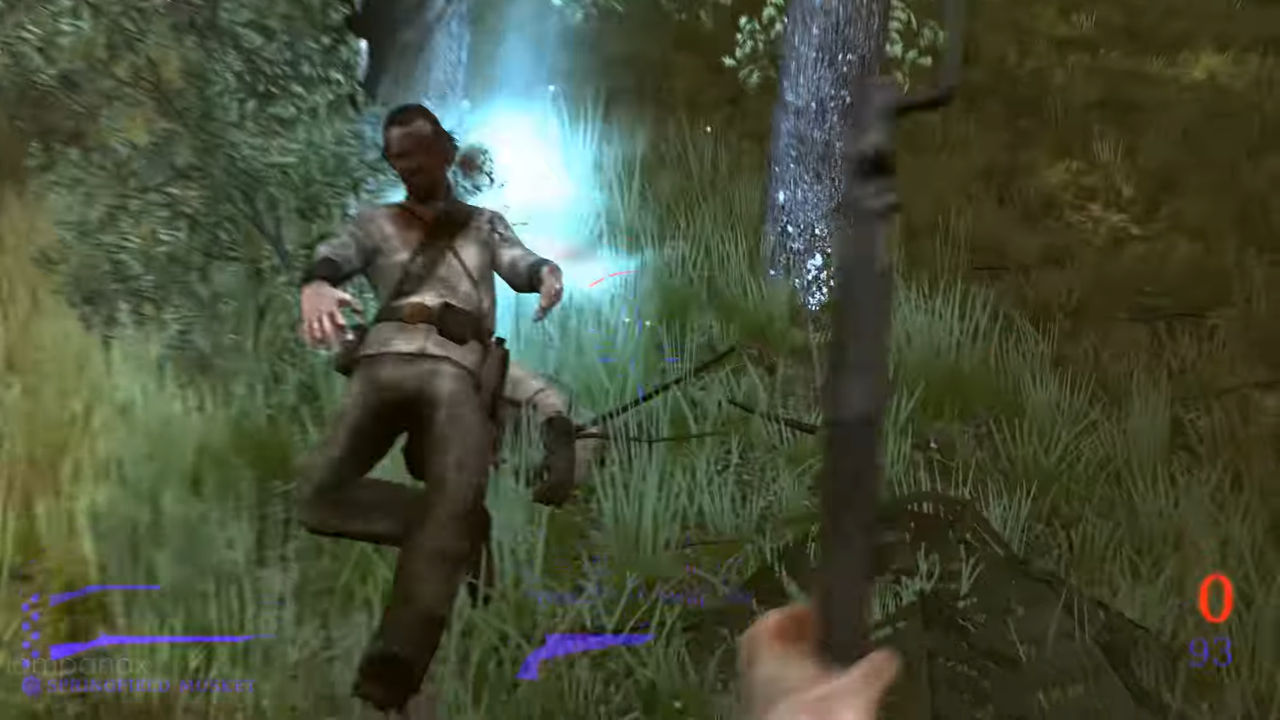
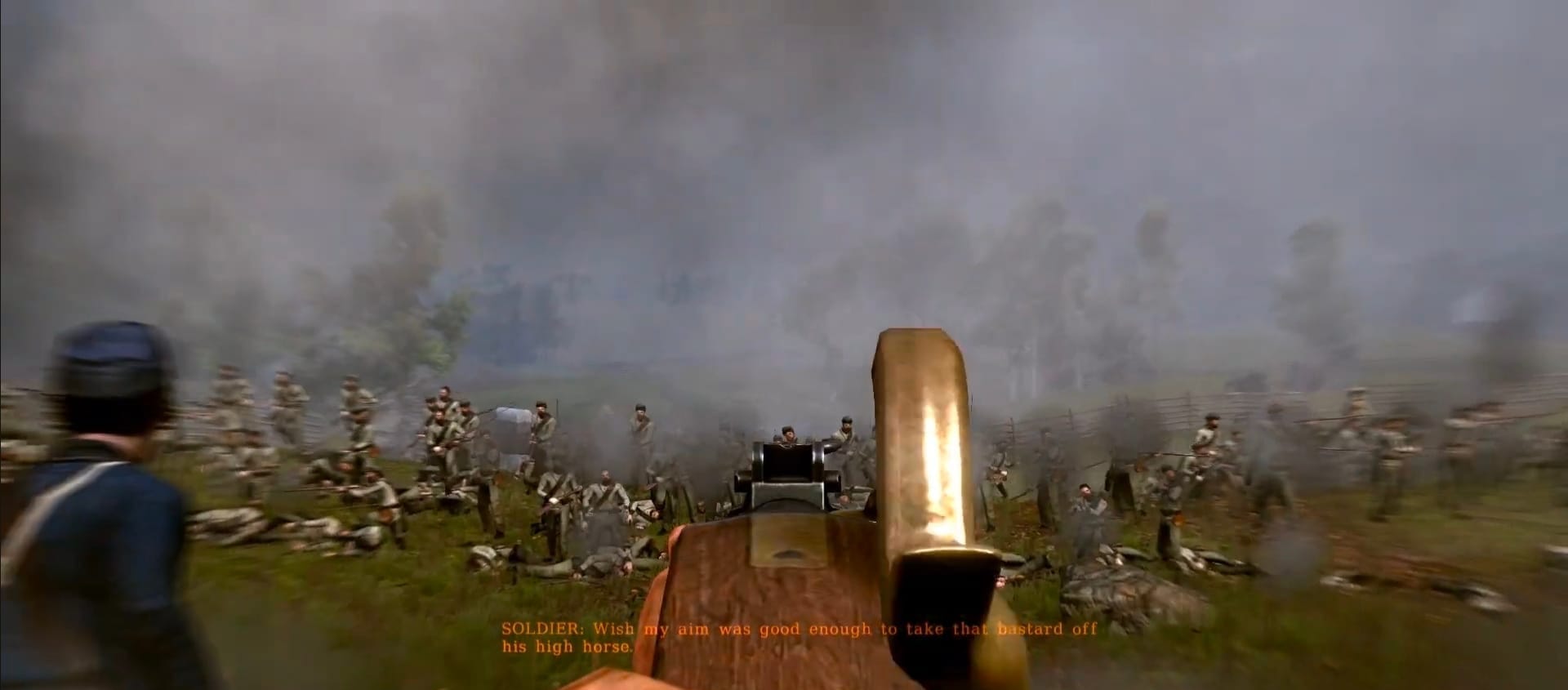
Darkest of Days is a 2009 first-person shooter game about Alexander Morris, a soldier serving under George Armstrong Custer at the Battle of Little Bighorn.
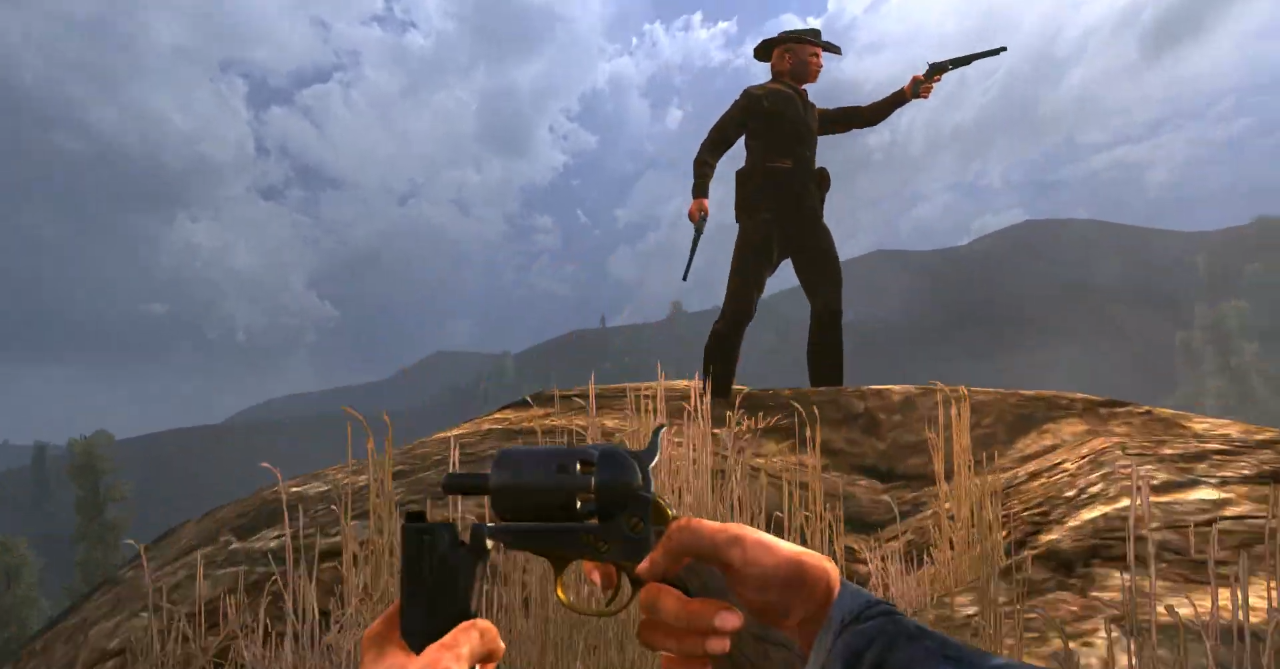
So, spoilers, but Custer dies.
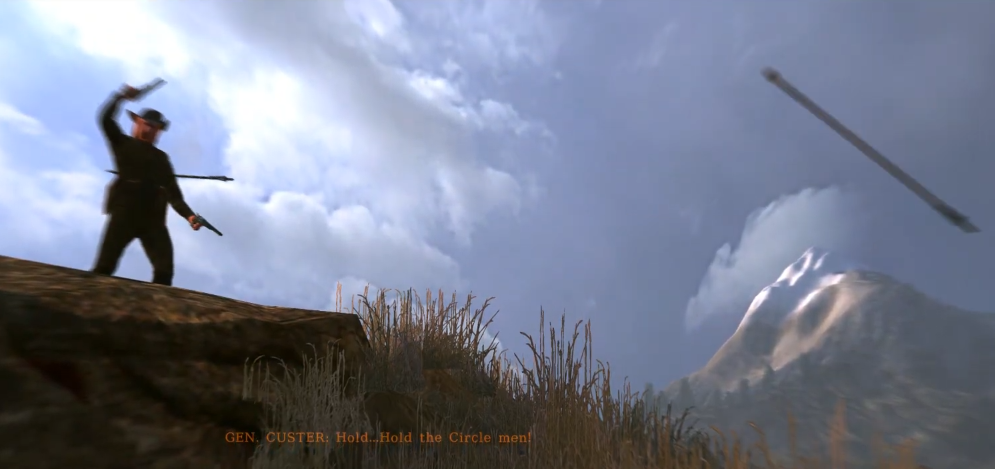
Morris is then wounded.
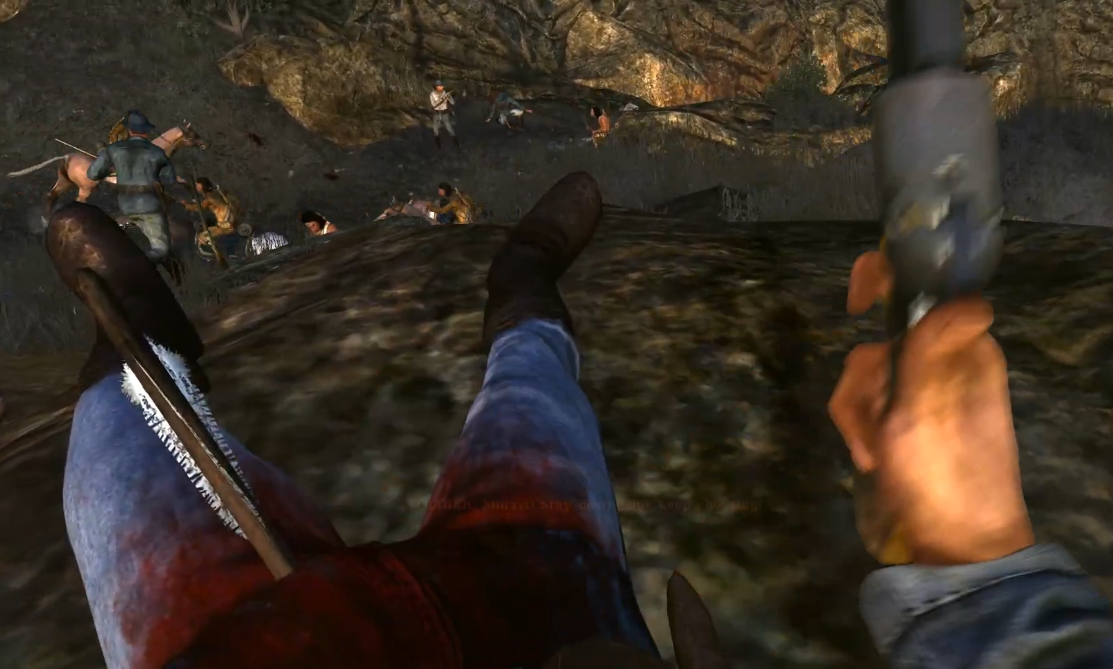
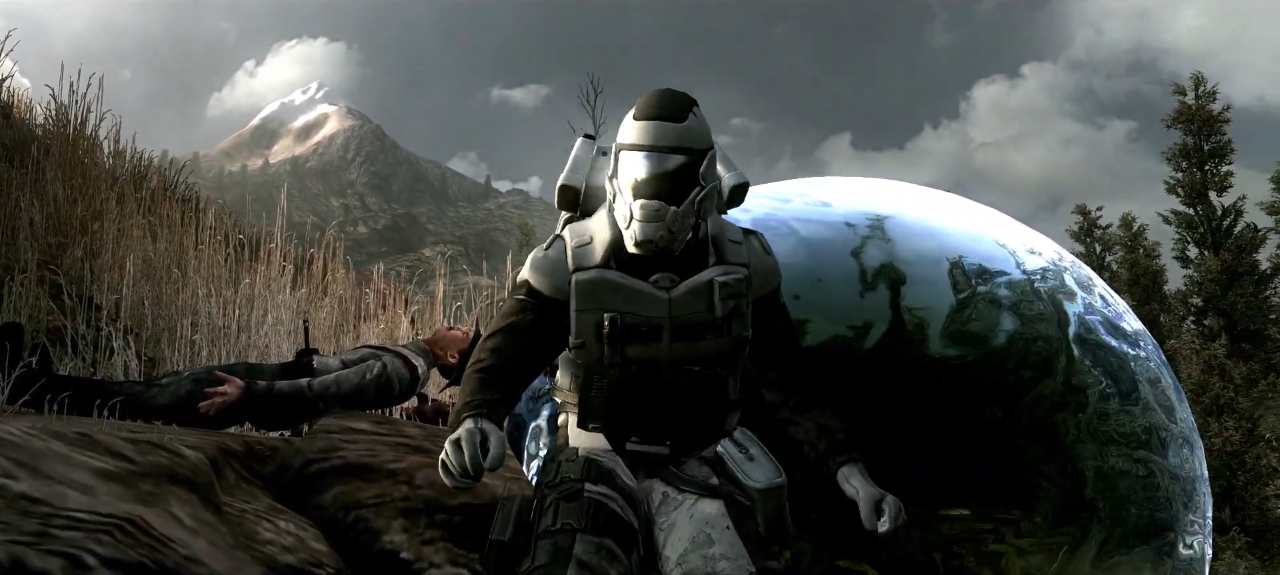
A man in futuristic armor then appears, rescues him through a time portal, and takes him to the twenty-second century so he can receive a crash course in automatic weapons and protect the historical integrity of the Battle of Antietam.
We will audit this organization by the same standards as everyone else.
There is a tendency to become lenient around a game like Darkest of Days.
This one is not pretending to be Primer.
- Its temporal institution is called Kronotek.
- Its headquarters is run by someone just called Mother.
- Its missing founder is fucking Doctor Koell.
- Its top field agents include a nineteenth-century cavalryman and a former firefighter apparently extracted from the September 11th attacks.
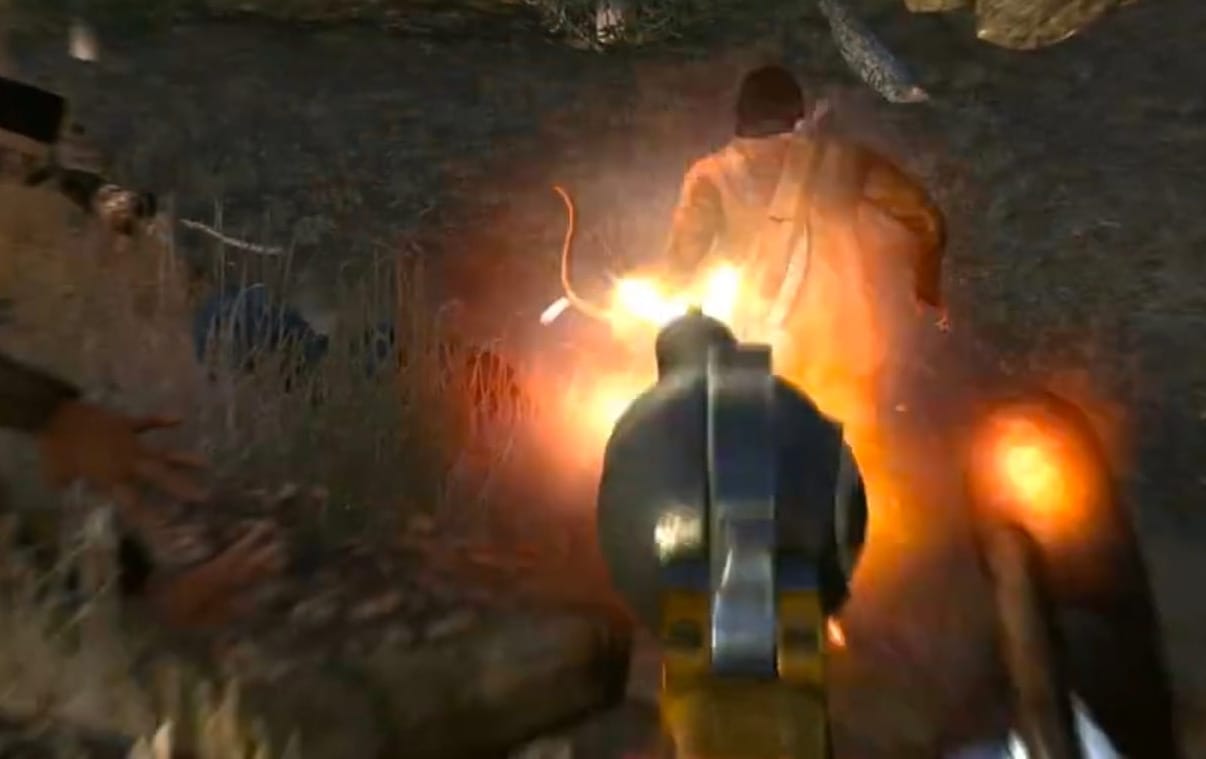
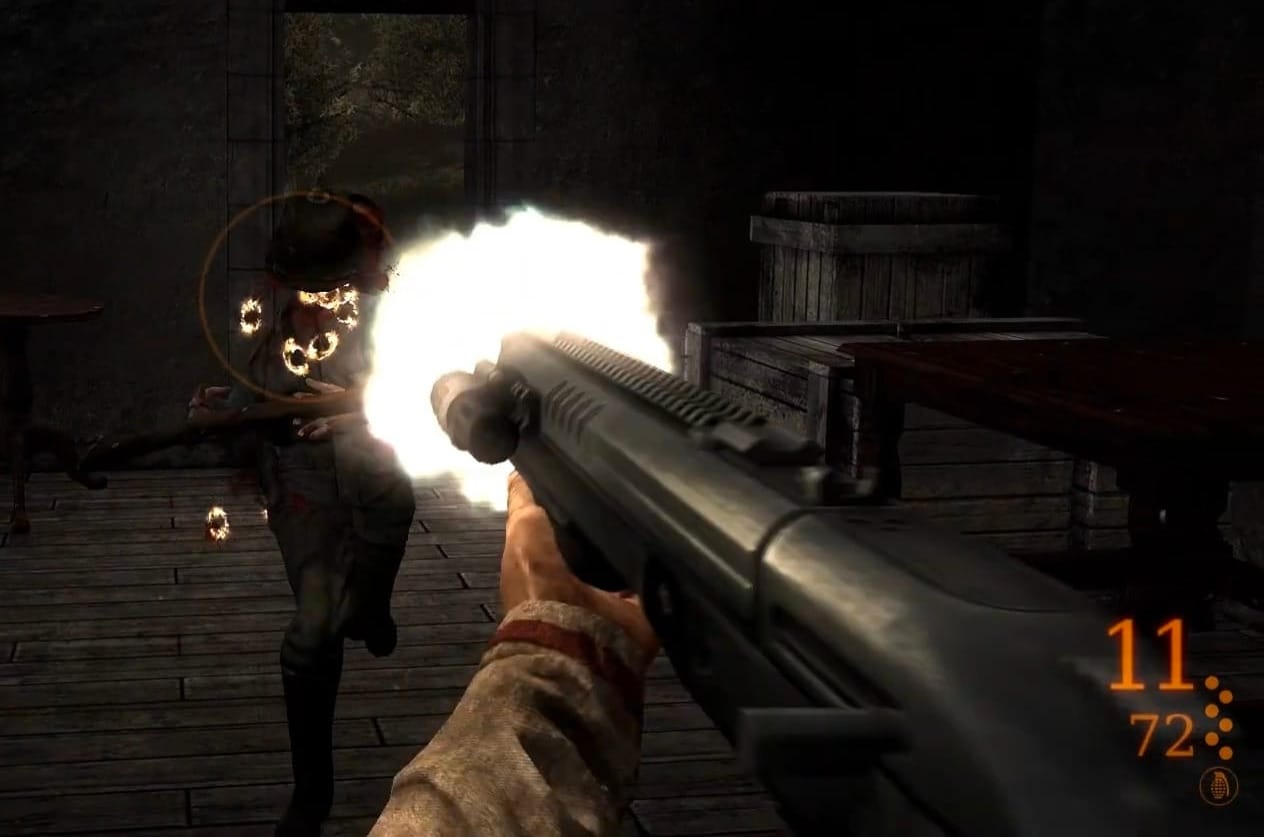
- Its historical preservation strategy involves firing machine guns at people in cornfields until everyone returns to the proper century.
One may feel that such a game has already suffered enough.
Modal Path Ethics disagrees.
Because beneath the assault rifles at Antietam and the zeppelin hijacking at Tannenberg, Darkest of Days accidentally builds a very interesting temporal distortion.
Doctor Koell correctly perceives that history is path-dependent. Events form later agents. Interventions propagate. A wound removed from one century may close or deform paths far beyond the people immediately involved.
Then he makes the classic distortion move. He takes a true caution and enlarges it into a sacred prohibition.
History made us.
Therefore history must remain exactly as it was.

Dark days taught lessons.
Therefore the dead had to die.
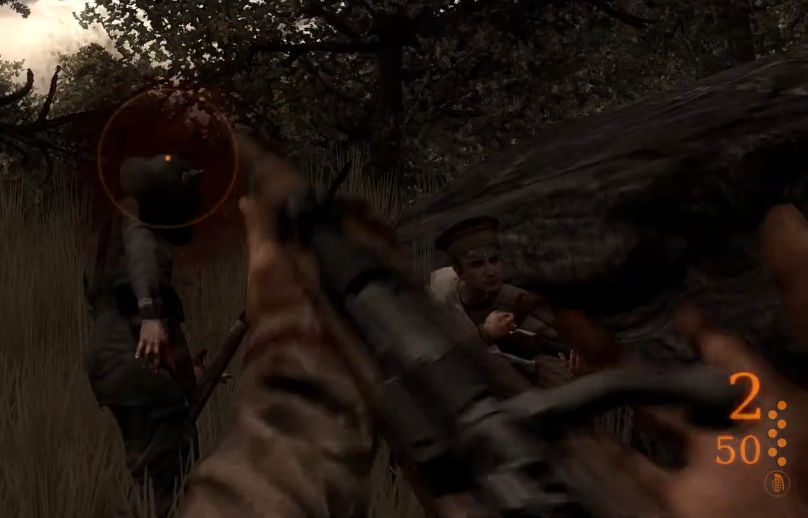
Kronotek is built around that conclusion. It possesses working time travel, future weapons, operational access to multiple historical eras, and enough causal intelligence to identify individual ancestors whose movement can reshape the twenty-second century.
It uses these capabilities to preserve the timeline that produced Kronotek.
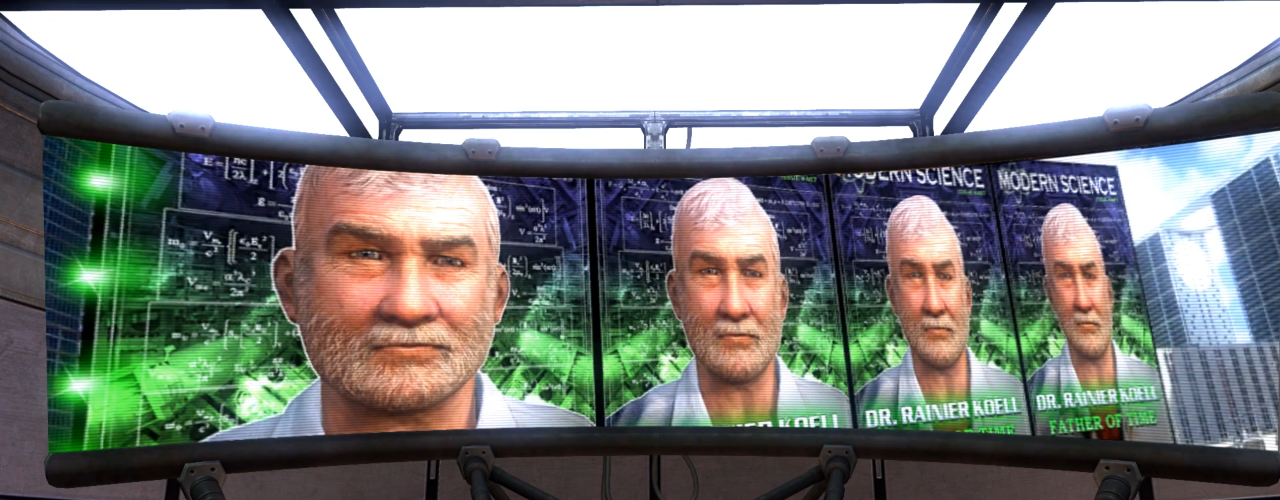
This is a familiar institutional miracle.
The organization with exclusive authority over history discovers that history naturally requires the continued existence and authority of this organization.
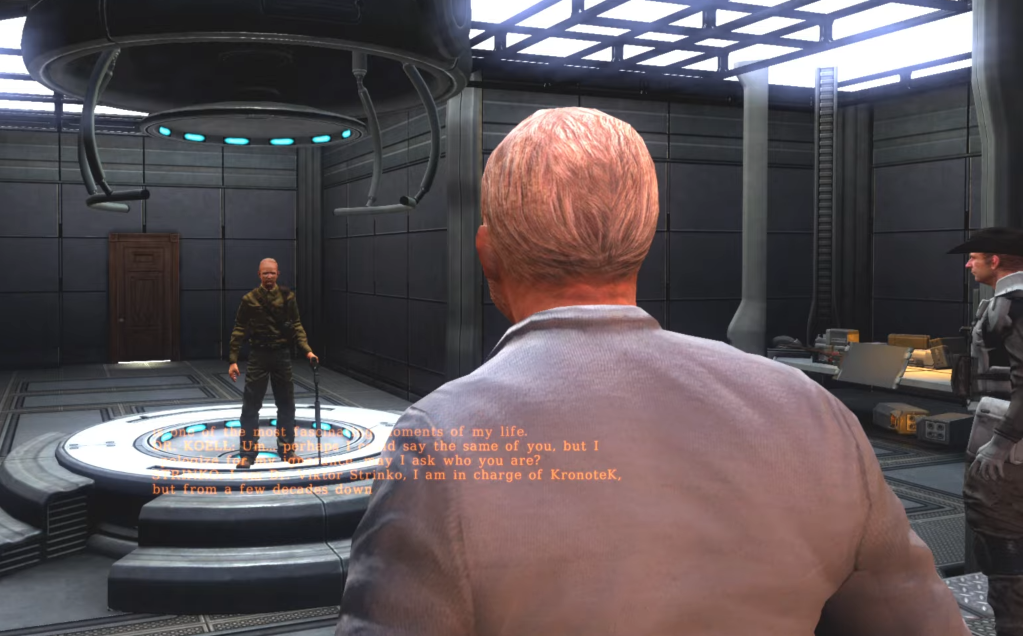
The timeline, apparently, has spoken.
The Worst Job Offer in History.
Alexander Morris is having a bad day at Little Bighorn.
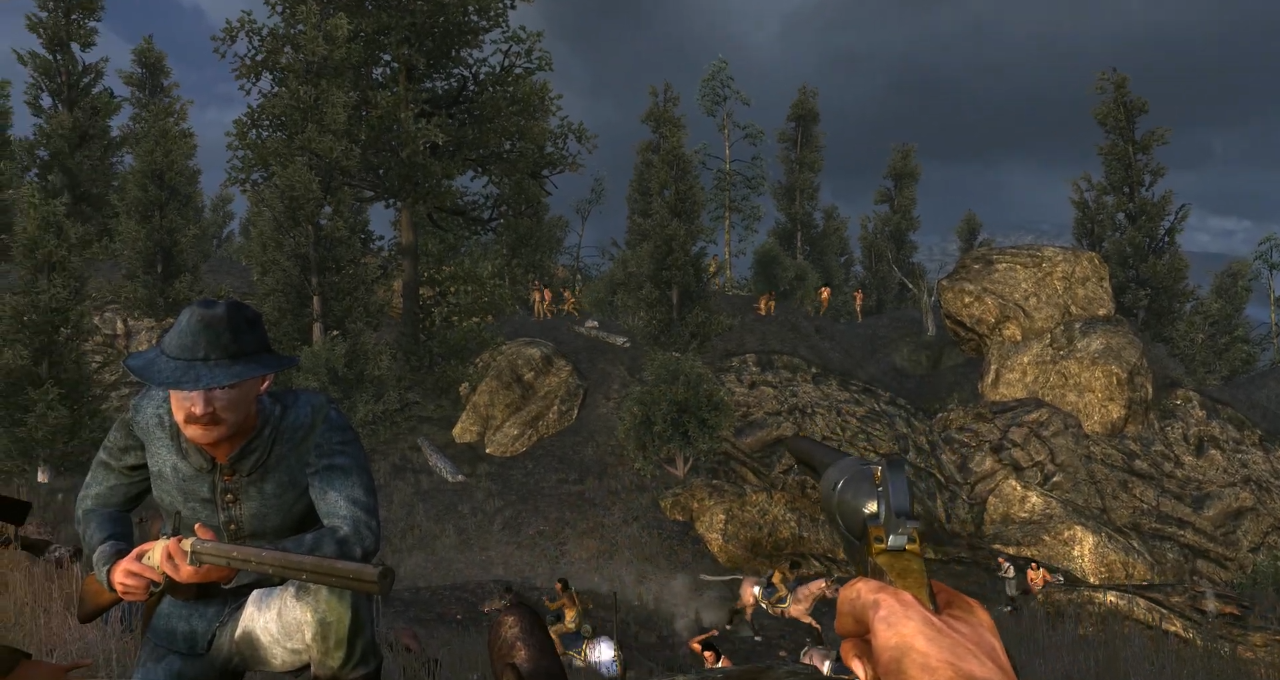
This is not unusual at Little Bighorn.
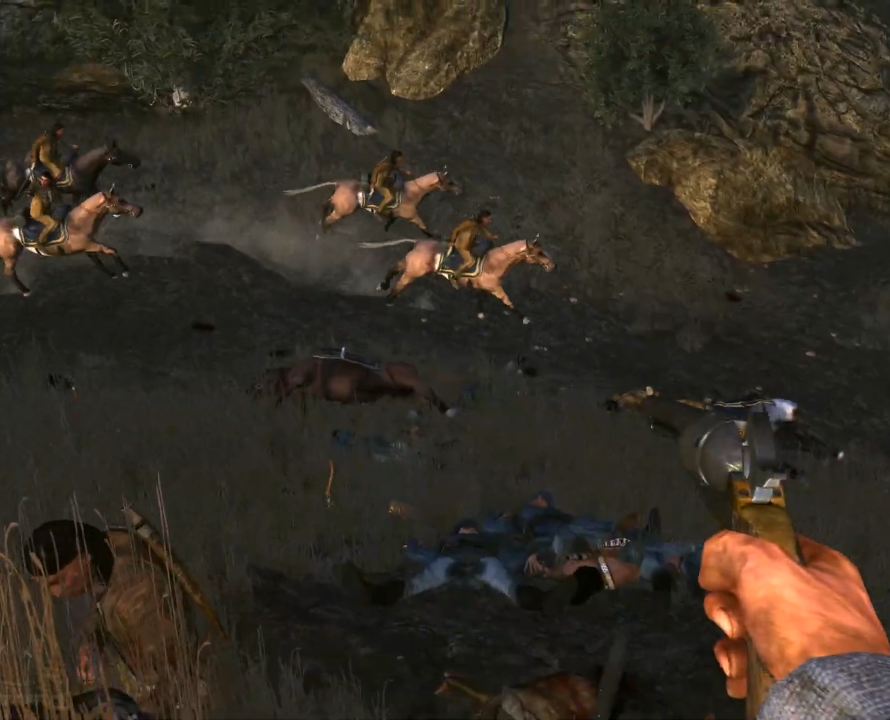
He is fighting in Custer’s battalion when the battle collapses around him. Custer is killed. Morris is wounded. His historical continuation appears to be ending inside a field already famous for ending nearly everyone around him.
Then a futuristic soldier arrives.
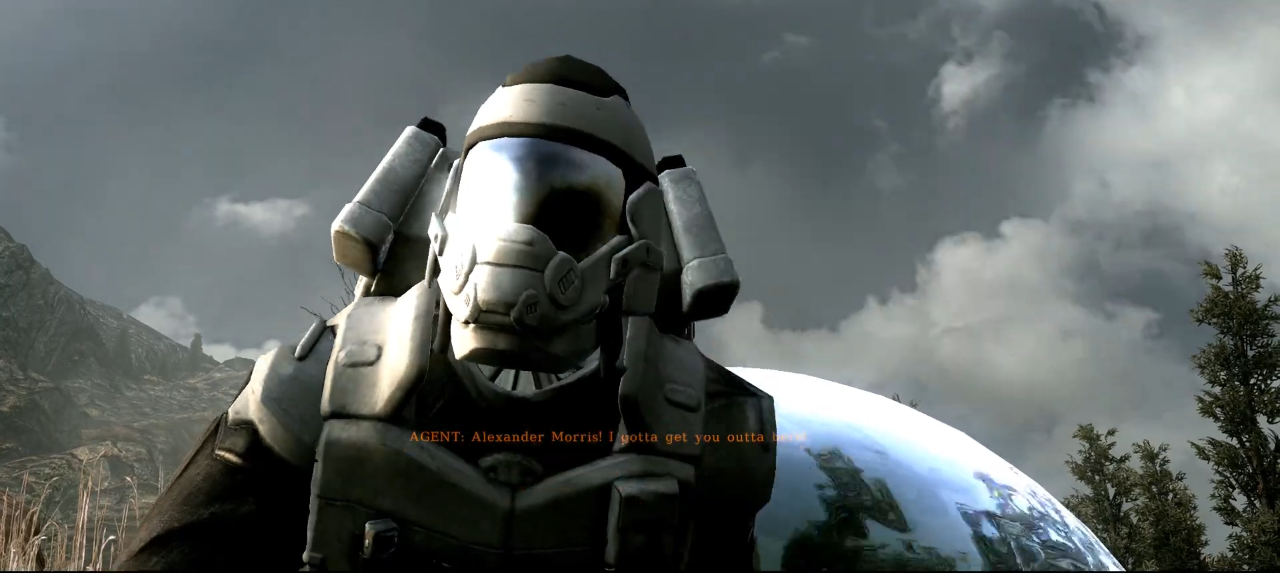
The soldier does not save Custer. He does not warn the battalion. He does not intervene in the broader campaign, the preceding dispossession, the political structure, the military decision-making, or the lives being destroyed on either side.
He saves Morris.
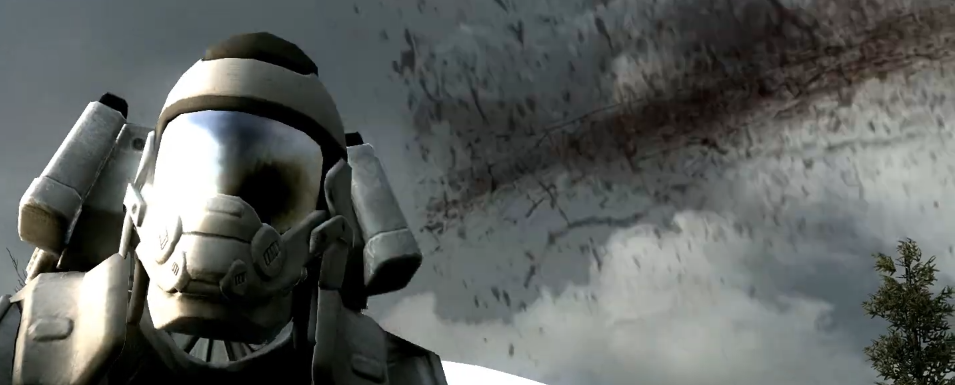
The reason for this is not initially clear. Morris is not a president, scientist, industrialist, prophet, or known ancestor of anyone important. He is not even the main figure at the battle where he is found. History has no grand recorded continuation waiting for him.
That is exactly what makes him useful.

Morris is taken to Kronotek, a future organization devoted to researching and preserving history. There he meets Mother, who explains that Doctor Koell, Kronotek’s founder, has disappeared. Disturbances are appearing across time. Historically important people are being displaced. The timeline requires repair.
Morris will help.
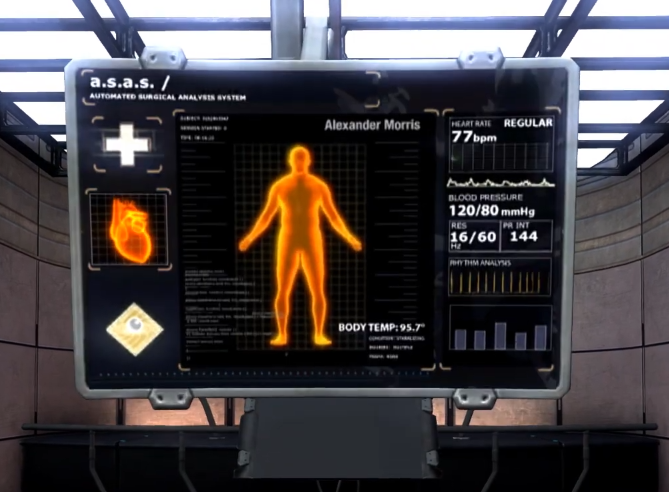
His qualifications are:
- He has combat experience.
- The official record has already lost track of him.
- Kronotek owns guns.
He is paired with Agent Dexter, another person extracted from a historical catastrophe after his recorded path became unclear. Dexter is strongly implied to have disappeared on September 11th.
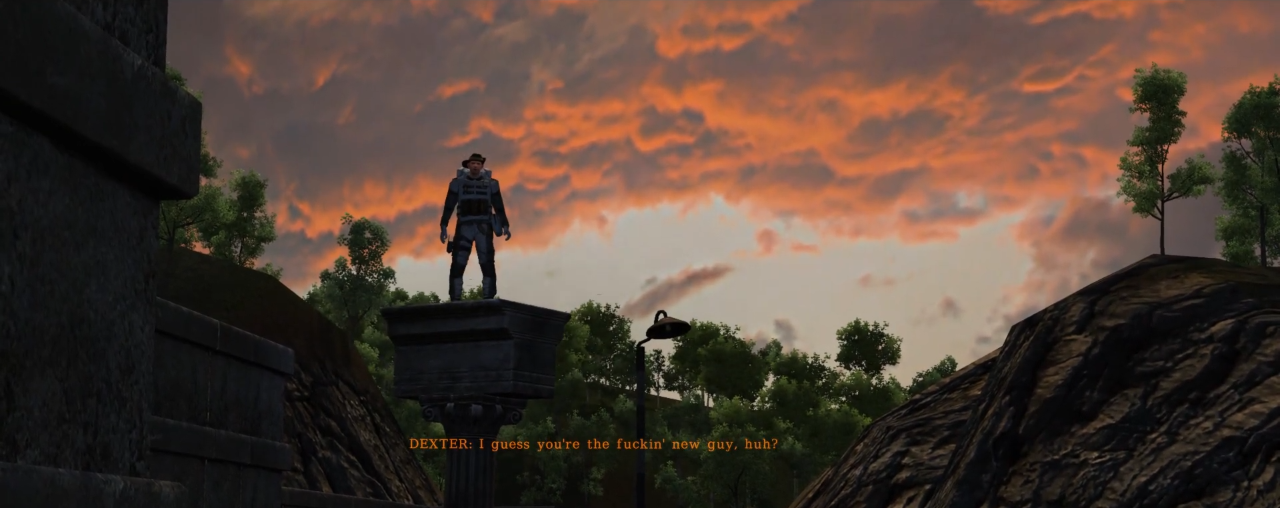
Kronotek has apparently developed a temporal recruitment policy based on unresolved casualty lists.
This policy deserves a name.
Historical Slack.
Kronotek treats Morris and Dexter as occupants of historical slack.
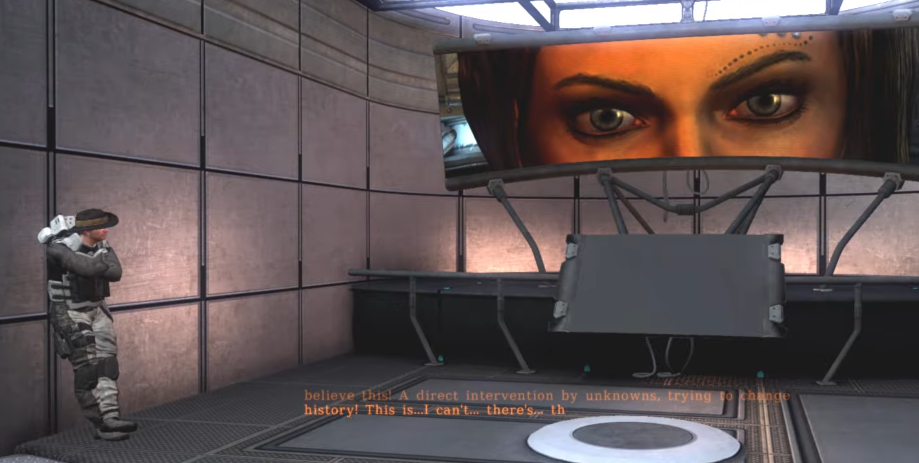
Historical slack is the presumed causal space left behind when surviving records no longer track a person clearly. The person disappeared. Their death was assumed, uncertain, misrecorded, or absorbed into a larger catastrophe. No famous later action is attributed to them. No obvious lineage, institution, invention, or political event appears to depend on their continued presence.
Therefore, Kronotek concludes, they can be removed.
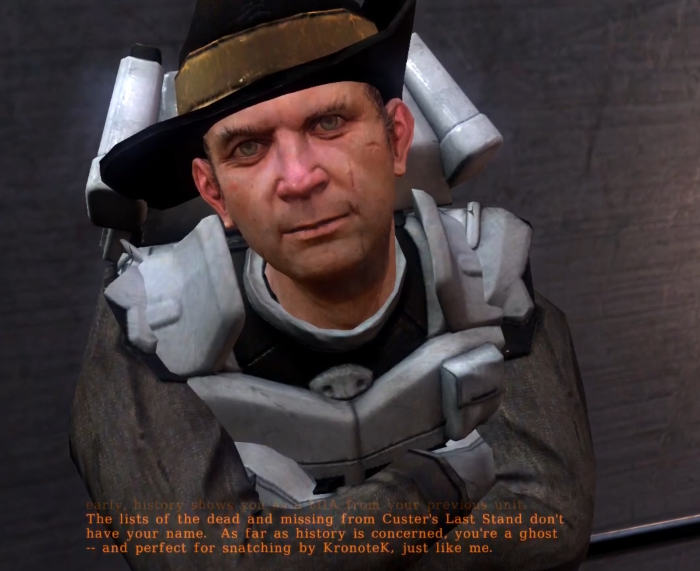
The archive has lost the person.
Kronotek mistakes this for the field releasing them.
That is the first distortion.
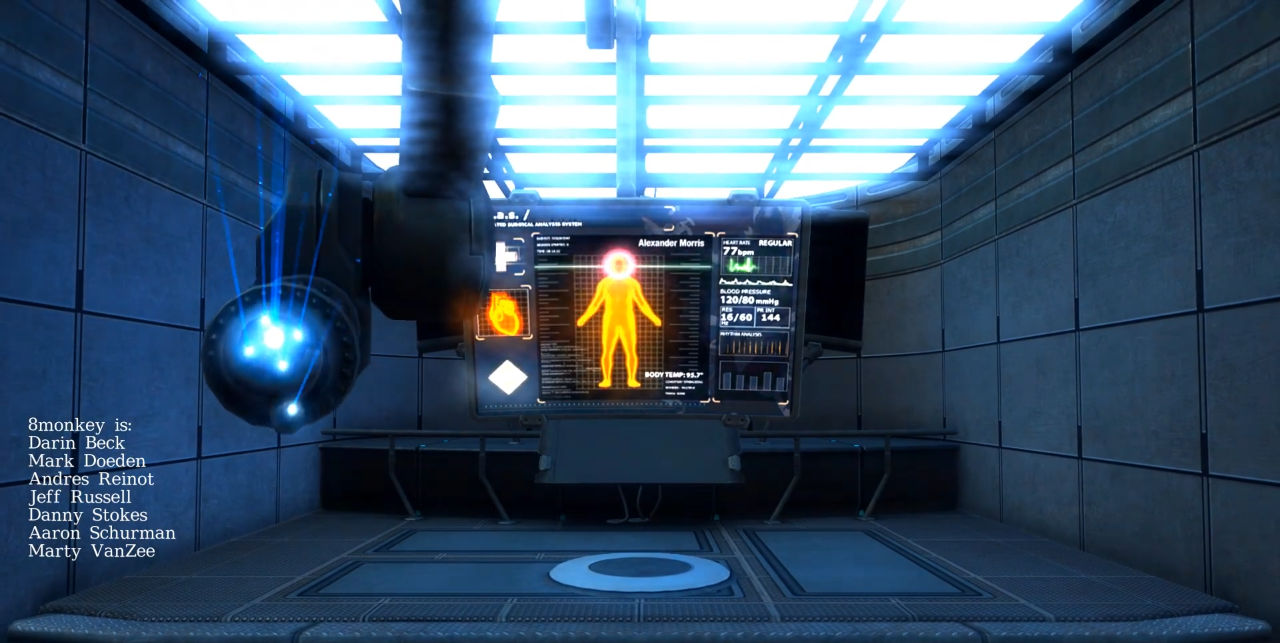
“Lost to history” can mean several things.
- It can mean a body was never found.
- It can mean a report was destroyed.
- It can mean witnesses died.
- It can mean the person was poor, displaced, illiterate, Indigenous, enslaved, institutionalized, conscripted, unidentified, buried anonymously, or otherwise located beyond the archival priorities of the societies around them.
- It can mean an administrator misspelled a name.
- It can mean history was busy recording a general.
None of these conditions creates ontological surplus.
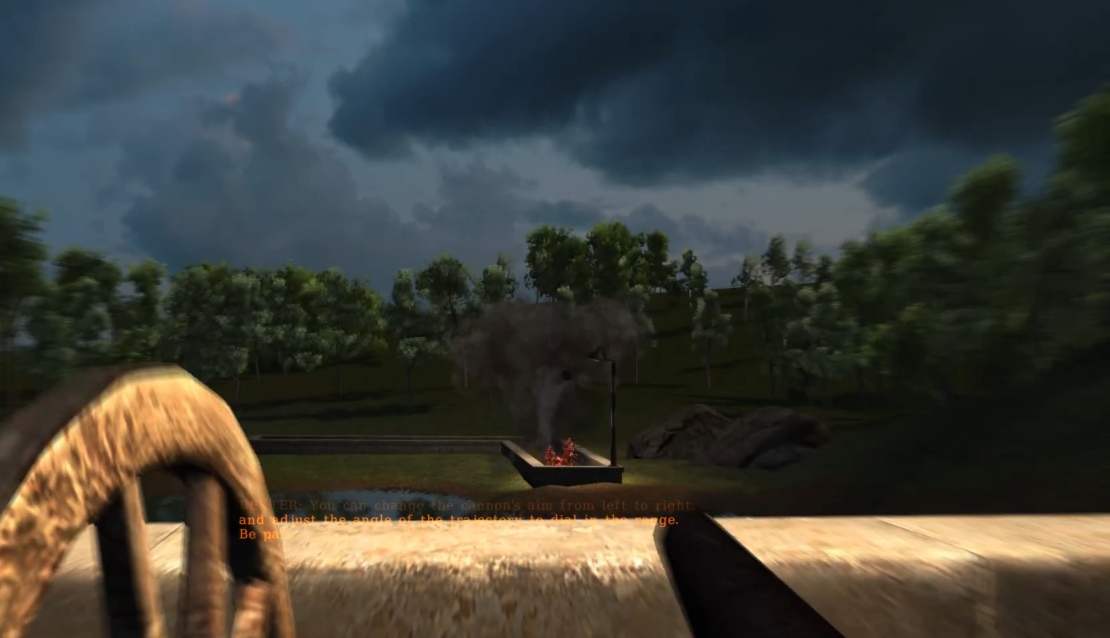
Morris is not somehow less extant because the archive does not know what happened to him. His continuance does not become empty after the final written reference. He still has a body, relations, memories, capacities, possible actions, possible descendants, possible injuries, and possible effects on surrounding fields.
Even if he would have died at Little Bighorn, the manner and timing of that death still belong to the field. His body would have remained. His equipment would have been found, moved, buried, taken, or weathered. Someone might have seen him. Someone might have searched for him. Someone might have misunderstood his absence. His removal changes matter, memory, expectation, evidence, and causal pressure.
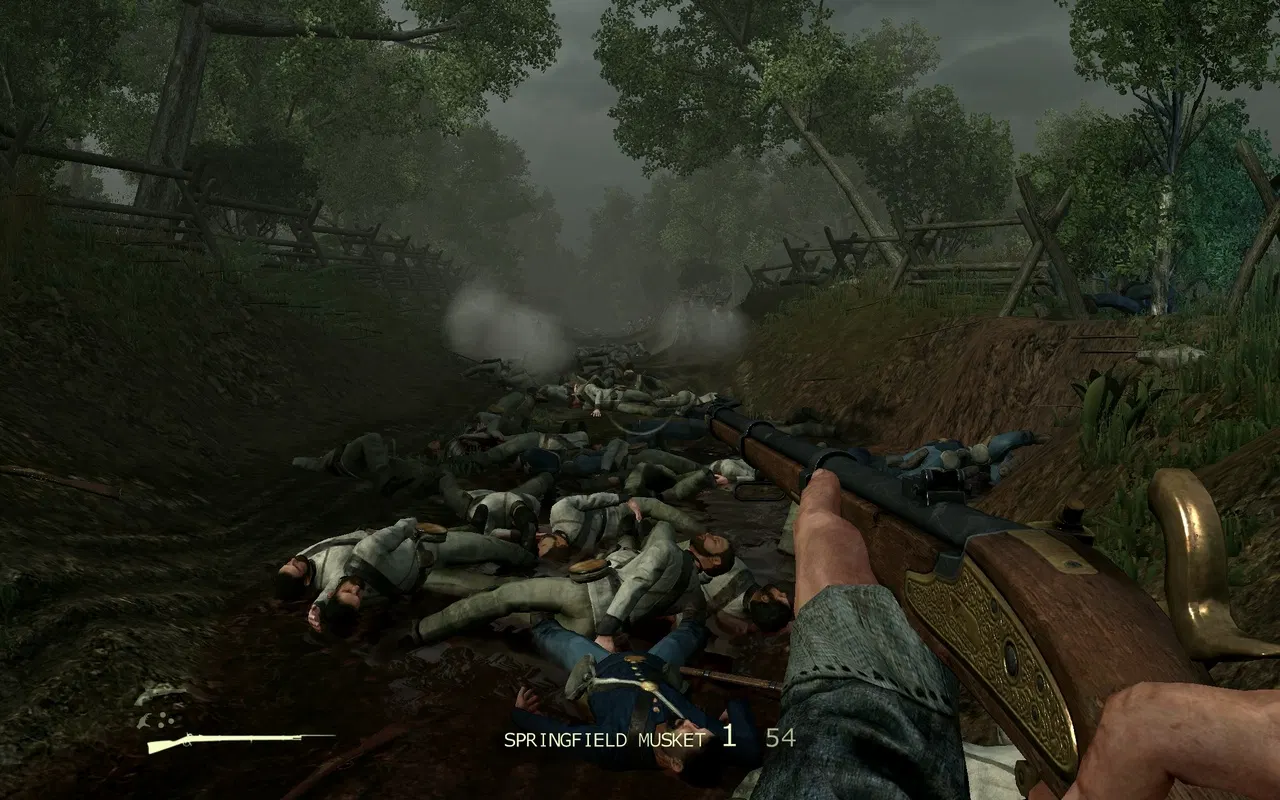
Dexter presents the same problem at an even larger historical wound. A person suddenly missing from the World Trade Center on September 11th, 2001 does not become a temporal free agent because recordkeeping cannot distinguish death, disappearance, extraction, and uncertainty.
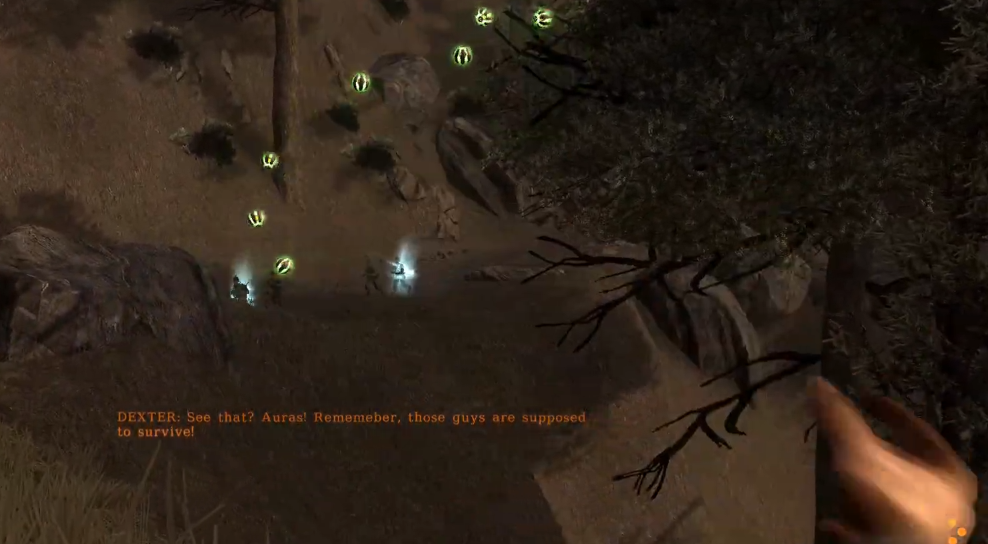
Kronotek does not recruit people history can safely spare. It recruits people whose disappearance the surviving archive cannot currently prosecute.
So its labor supply is archival inequality.
Archival Inequality.
This becomes especially obvious once we consider what a less deranged temporal civilization might build.
Suppose future humanity developed something approaching perfect archaeology: an information-only temporal instrument capable of reconstructing past physical states from the traces they left in matter, radiation, topology, fields, records, environments, bodies, and downstream consequences.
- No one travels backward.
- No branch is opened.
- No person is extracted.
- No battle is rerun.
The past remains closed, but increasingly legible.
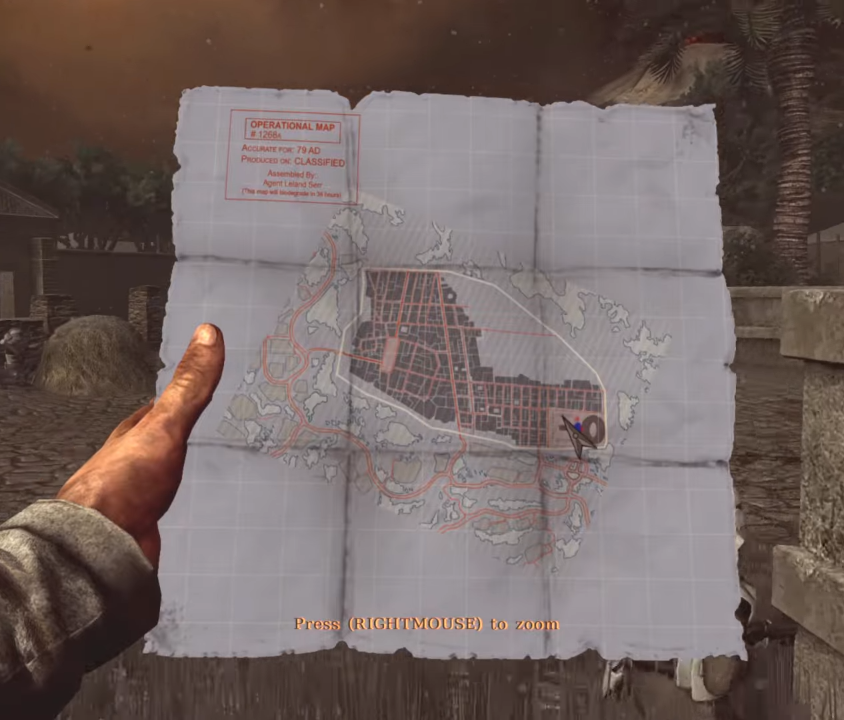
Such an instrument would have epistemic limits. It would recover physical structure more readily than private meaning. It could reconstruct a face, voice, wound, route, exchange, or death where enough traces survived. It could not automatically tell us what forgiveness felt like, why someone remained silent, or which unrealized path they would have chosen under different conditions.
Still, it would destroy Kronotek’s theory of historical slack.
A sufficiently capable archaeology would not discover that Morris had no path after the last surviving record.
It would discover the path Kronotek stole.
The same is true even without fictional temporal instruments. The field already records more than the archive.
- Soil records.
- Atmospheres record.
- Bodies record.
- Light records.
- Objects record.
- Other people record.
- Absences record.
- Later conditions record.
The official archive is a narrow, politically shaped subset of these traces. It reflects which institutions survived, which languages remained legible, which lives those institutions considered worth naming, and which forms of evidence they knew how to preserve.
The archive is not history. It is one damaged instrument pointed at history.
Kronotek turns the instrument’s blind spots into permission.
That creates archival debt: contraction produced when incomplete records are used to demote poorly documented loci and make their paths available for institutional extraction.
A perfectly ethical temporal civilization would respond to missing people by improving the accounting.
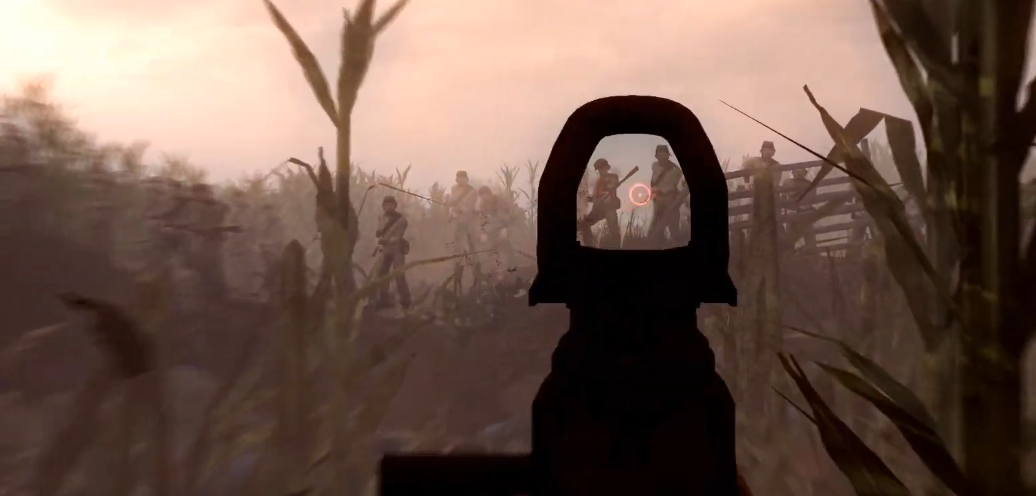
Kronotek gives them assault rifles.
Basic Training.
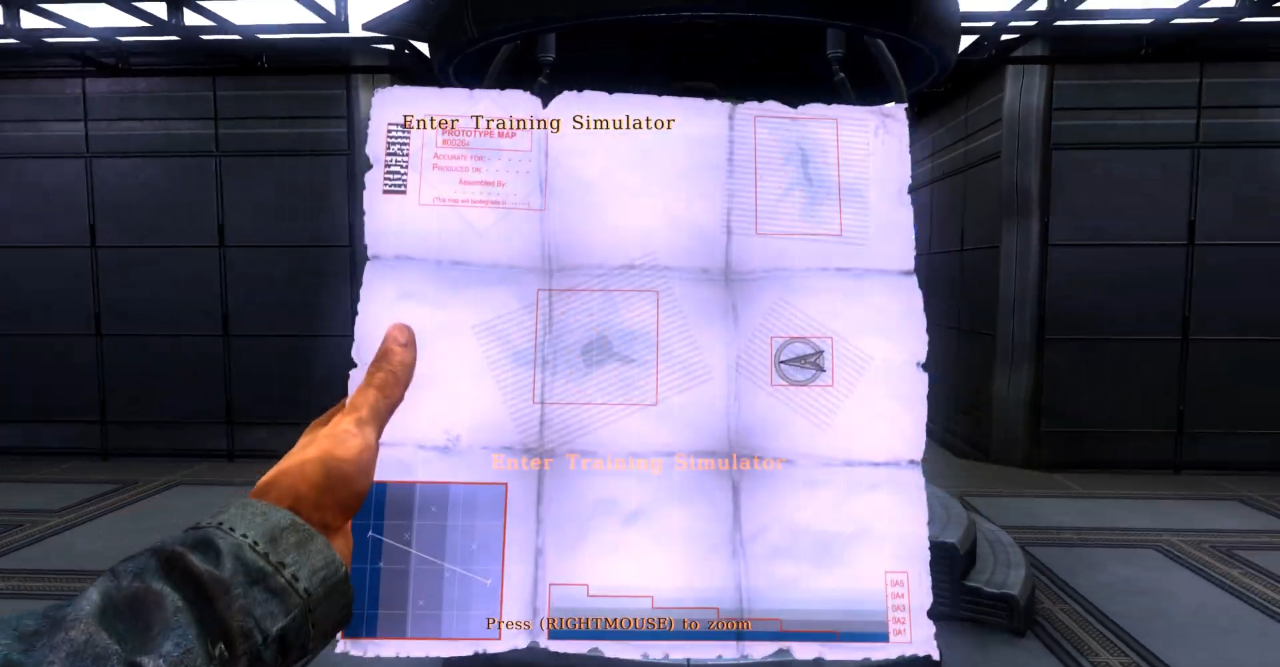
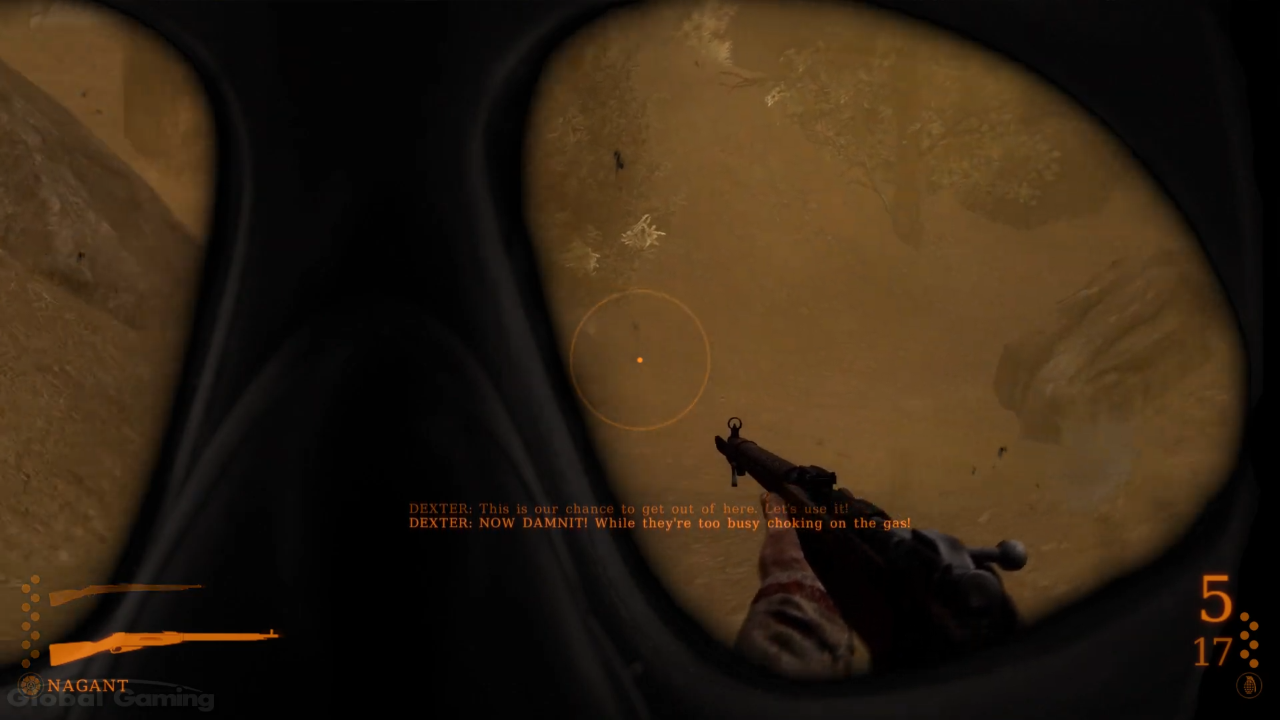
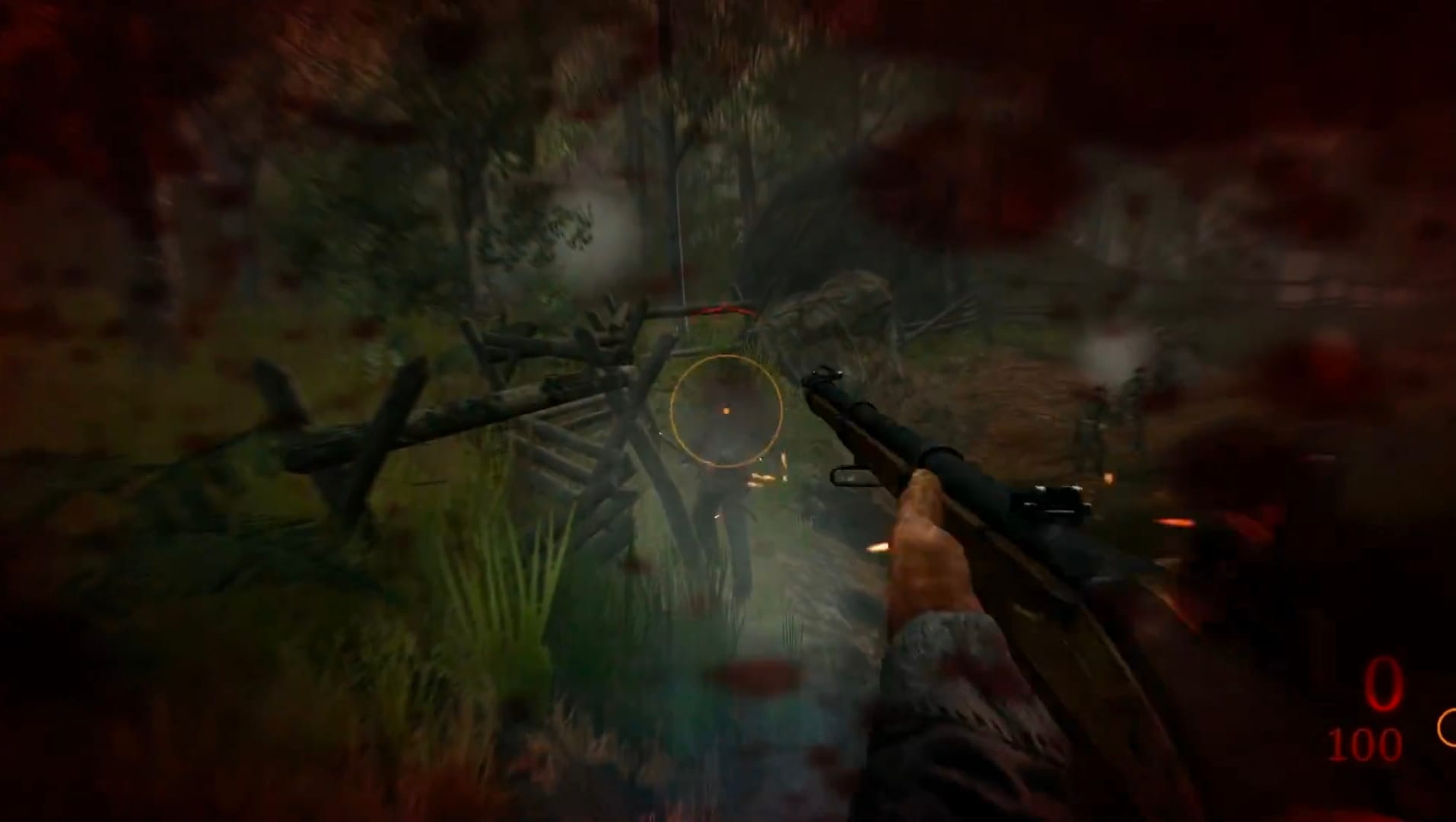
Morris arrives from 1876 and must quickly become familiar with weapons ranging from the early twentieth century to the late twenty-second.
This portion of the game is presented as training.
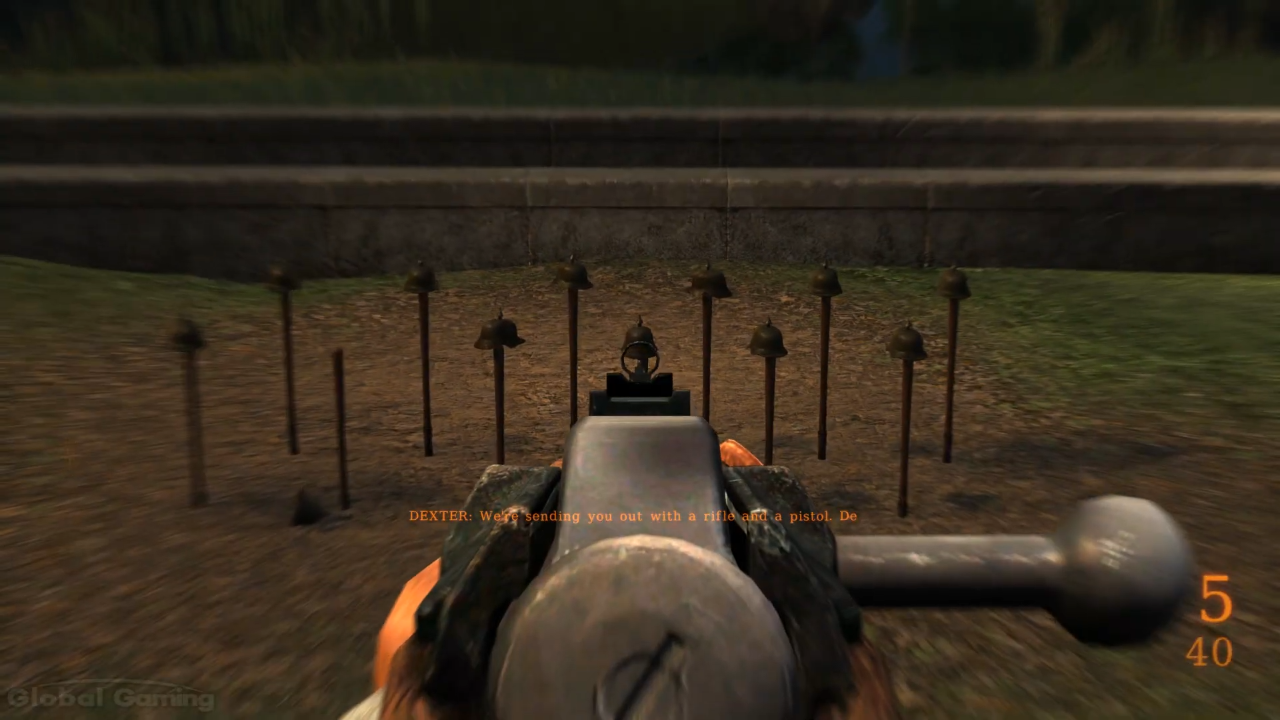
This is also Kronotek’s entire theory of cultural reintegration.
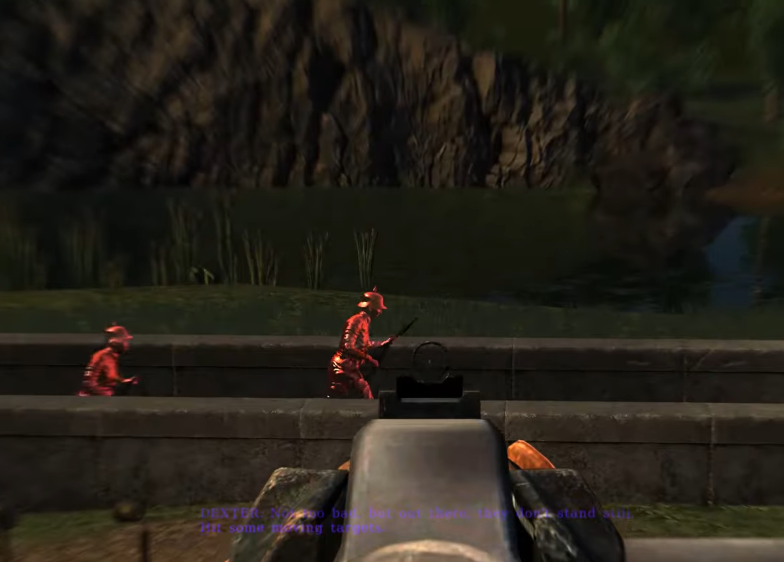
Morris has been ripped from a battlefield, transported centuries forward, introduced to time travel, informed that history is malfunctioning, and inducted into a private organization with unilateral authority over causality.
He is then shown machine guns.
This institution appears to have no anthropologists.
No historians are assigned to explain the twenty-second century. No legal counsel explains Morris’s status. No one asks whether he consents to permanent removal from his world. No one appears interested in what it means to make a nineteenth-century cavalryman dependent on a future organization for every fact, relationship, and material condition remaining in his life.
Kronotek does not treat Morris as a historical person entering an incomprehensible field.
It treats him as a controller-compatible input device.
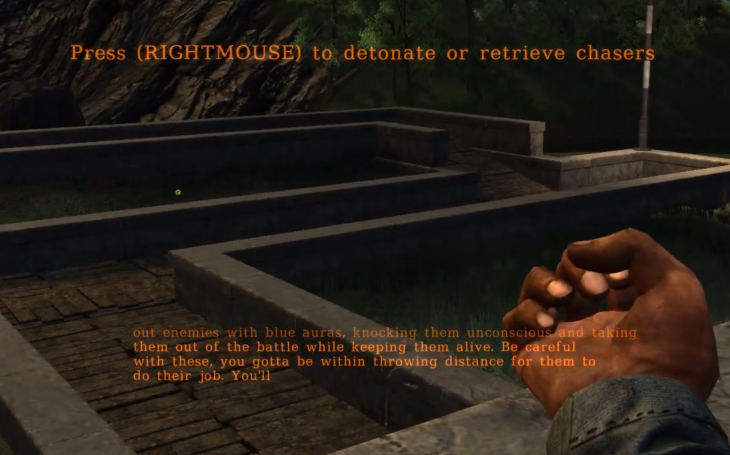
This is continuance debt.
Morris’s old path has been taken. His new path is supplied entirely by the institution that took it. Kronotek creates the dependency and then presents employment as opportunity.
Perhaps Morris prefers this to dying with Custer.
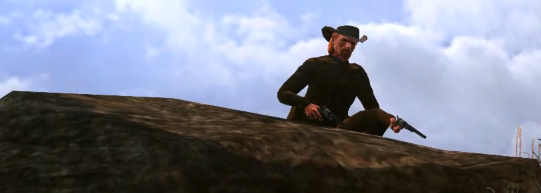
That is possible.
It does not retroactively authorize Kronotek’s ownership of every path after extraction.
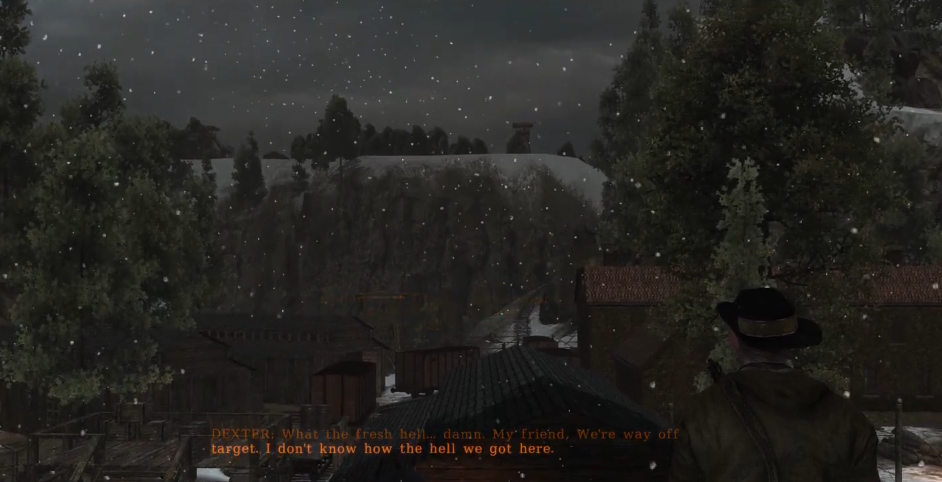
Kronotek has found a person at the edge of death and converted rescue into indefinite temporal service.
This will not be the organization’s last conceptual achievement.
The Proper Timeframe.
Morris and Dexter are sent to recover two people who have been displaced from their “proper” positions.
The first is Corporal Welsh, a Union soldier at Antietam.
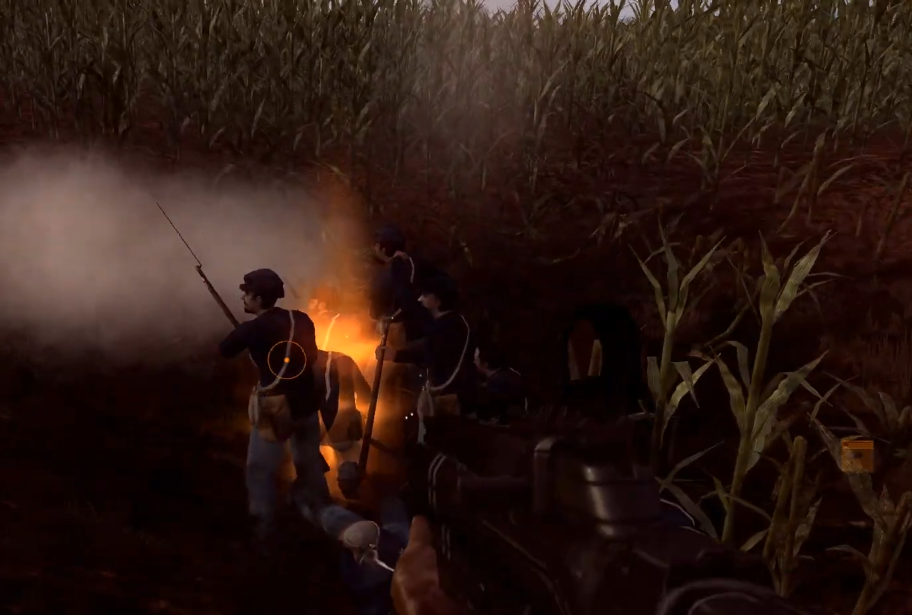
The second is Petrovich, a Russian officer at Tannenberg during the First World War.
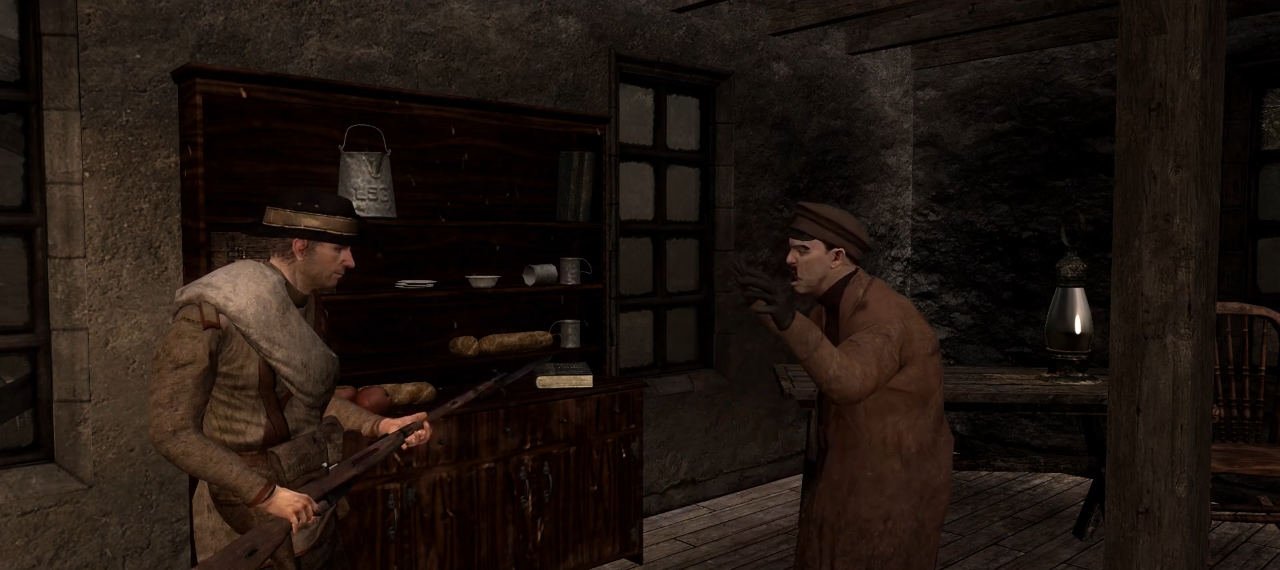
The phrase proper timeframe performs enormous moral work inside Kronotek.
It makes the timeline sound like a filing cabinet. Every person has a correct drawer. History has already assigned each life its place. Kronotek is only returning things to order.
This language hides the actual decision.
Kronotek possesses a model of the future from which it came. It identifies deviations from that model. It labels the original positions “proper” and the deviations “disturbances.” It then deploys armed agents to force the field back toward the institution’s remembered output.
This is not neutral preservation. This is canonical enforcement.
Kronotek’s timeline is not nature. It is their policy pretending to be chronology.
That does not mean every attempted correction is wrong. Someone else is interfering with the past. Welsh and Petrovich may be in immediate danger. Their displaced paths may produce catastrophic downstream effects. A temporal institution could have legitimate reasons to intervene.
Kronotek never earns the authority it claims.
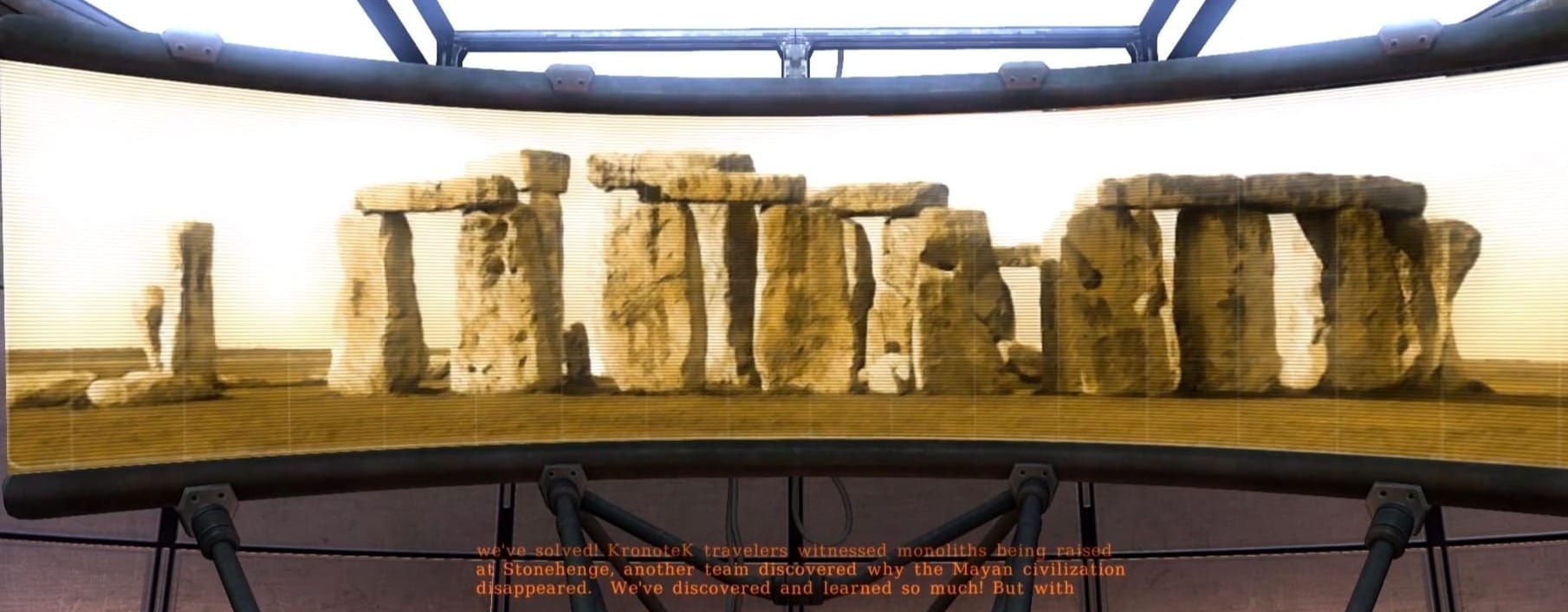
It simply begins from the premise that its own origin timeline possesses priority over any continuation now opening.
That priority may sometimes be defensible. If an aggressor moves into the past to cause mass death, restoring the threatened field can be genuine repair.
Kronotek expands this into a general constitution:
- The world that produced Kronotek is correct.
- Everything else is damage.
This is canonical debt: the closure imposed when one historically contingent output is treated as the natural baseline against which every alternate continuation becomes corruption.
The debt is carried by everyone whose newly opened path is cut away to restore Kronotek’s remembered world.
Preservation by Machine Gun.
Kronotek calls its work preservation.
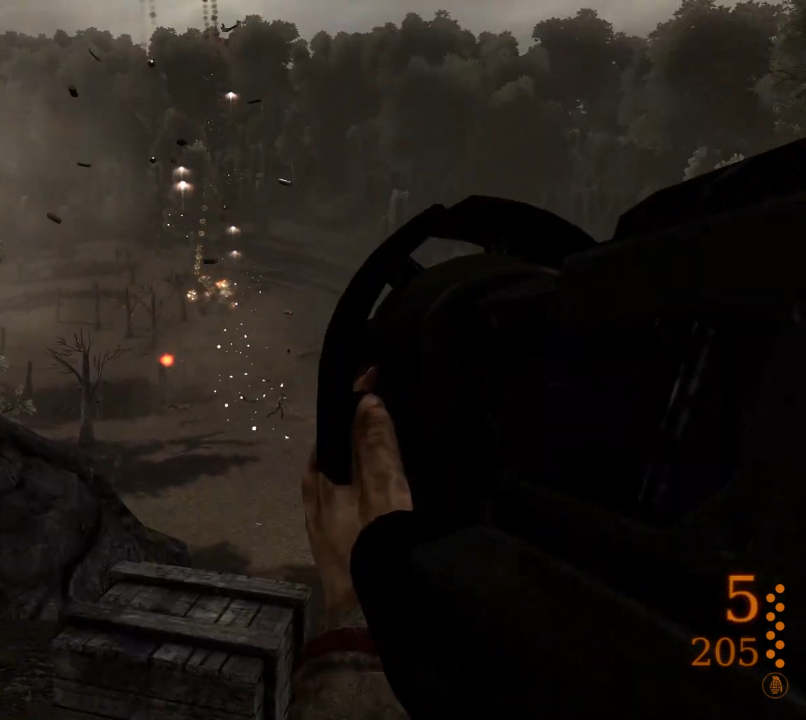
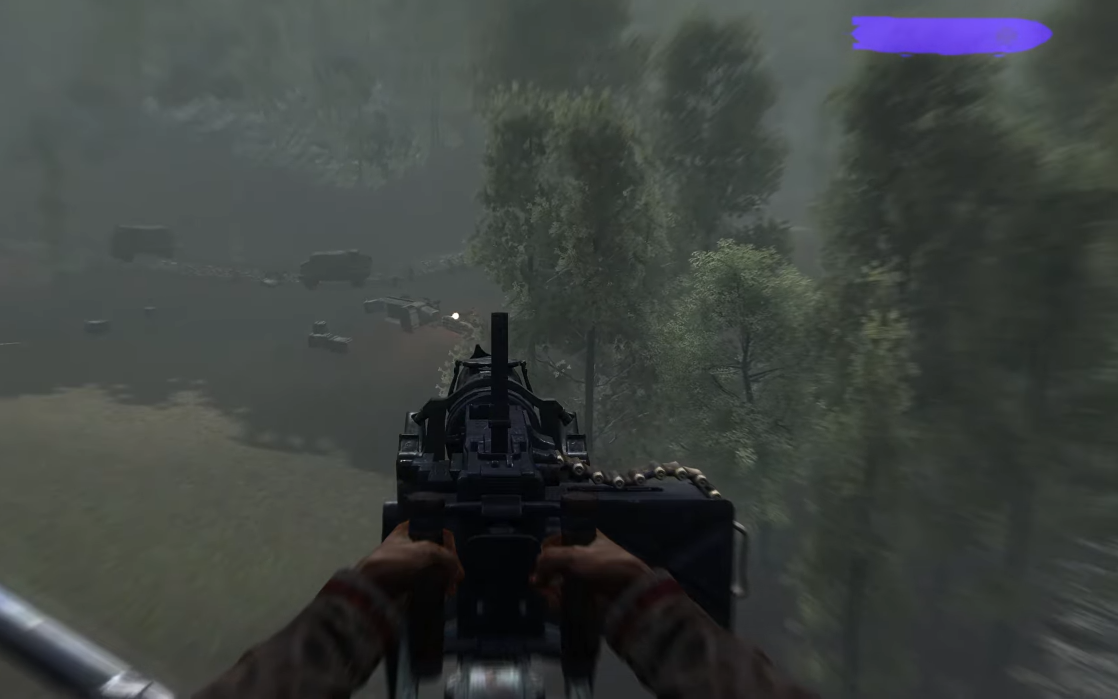
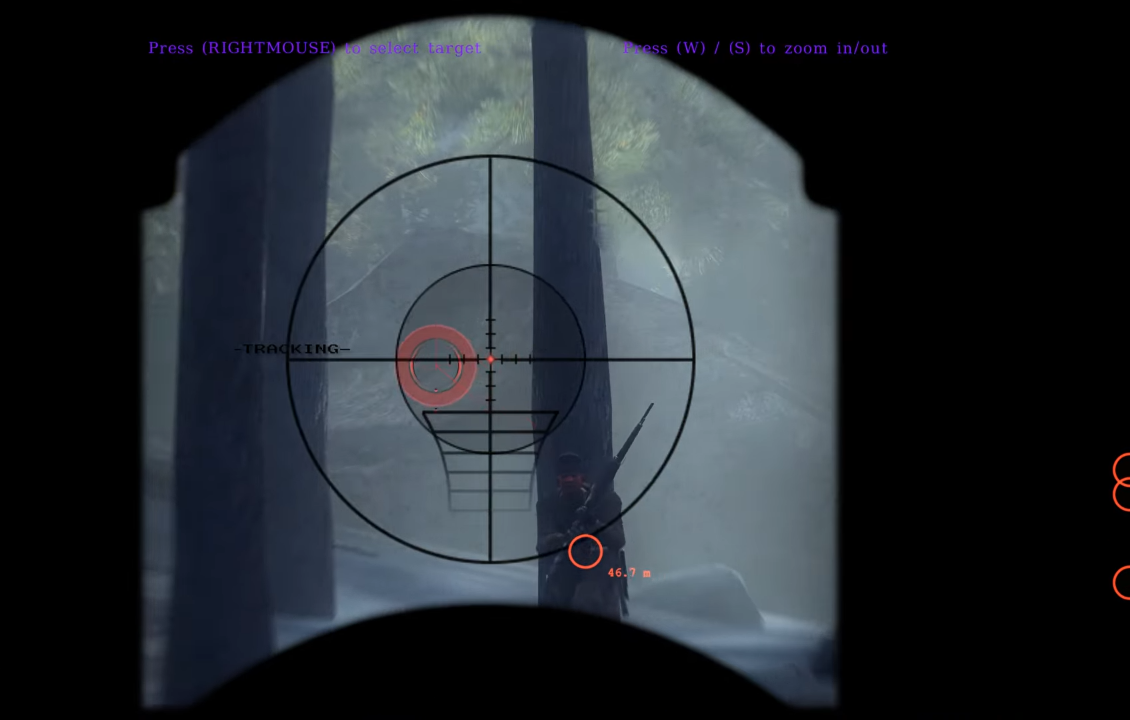
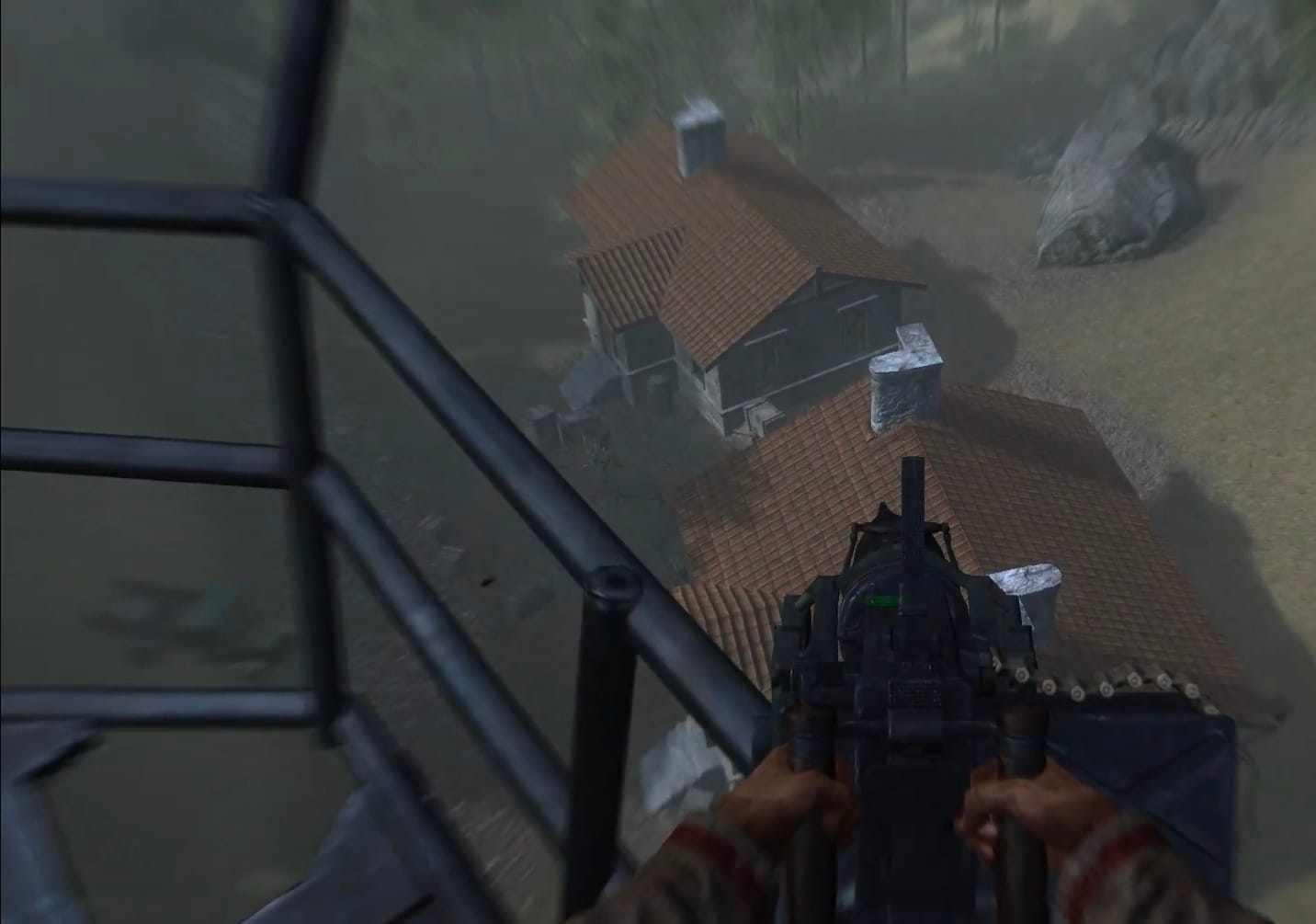
That work involves Morris and Dexter fighting through Antietam and Tannenberg with weapons from future centuries, destroying infrastructure, killing Opposition agents, recovering selected soldiers, dynamiting a train bridge, and hijacking a zeppelin.
This is definitely one interpretation of non-intervention.
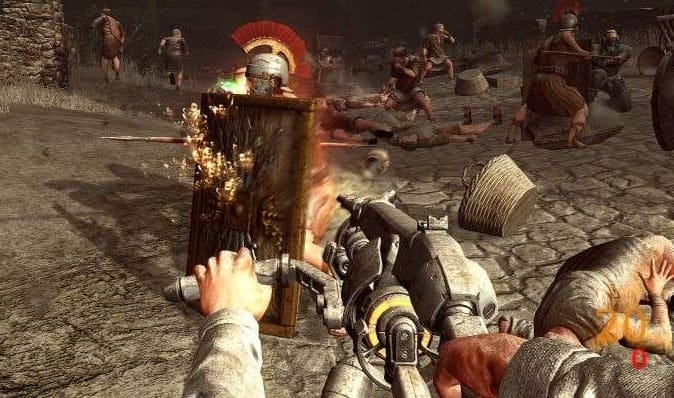
Kronotek is not attempting to minimize contact with history. It conducts technologically overwhelming paramilitary operations inside densely populated historical events.
This organization does not preserve history by remaining absent.
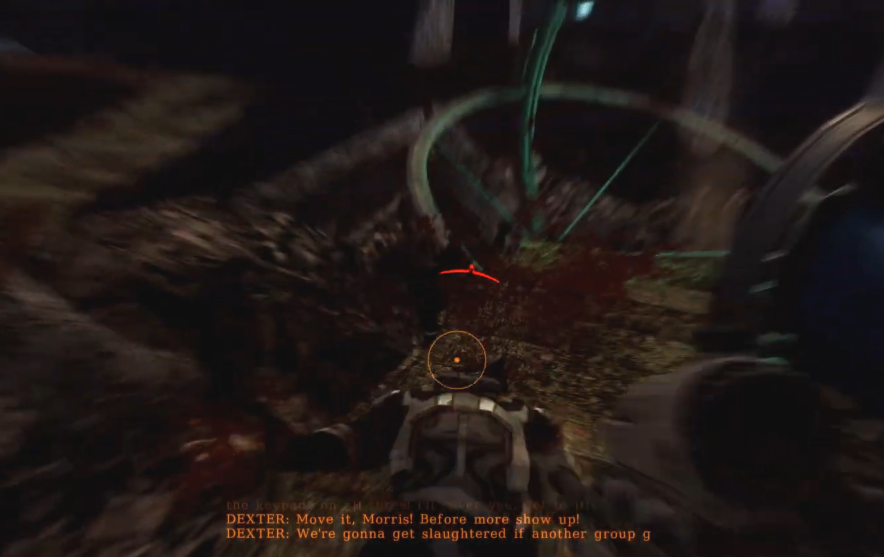
It preserves history by making its own presence count as part of the repair.
This is useful because it reveals what “history” means to Kronotek. History is not the total field of everyone living through Antietam or Tannenberg. If that were the object of concern, discharging future weapons into the battle would create obvious problems.
History here means a selected chain of outcomes.
- Welsh must occupy one position.
- Petrovich must occupy another.
- Specific descendants must later exist.
- Specific technologies must emerge.
The visible battle can absorb enormous intervention as long as the downstream sequence reaches Kronotek’s expected answer.
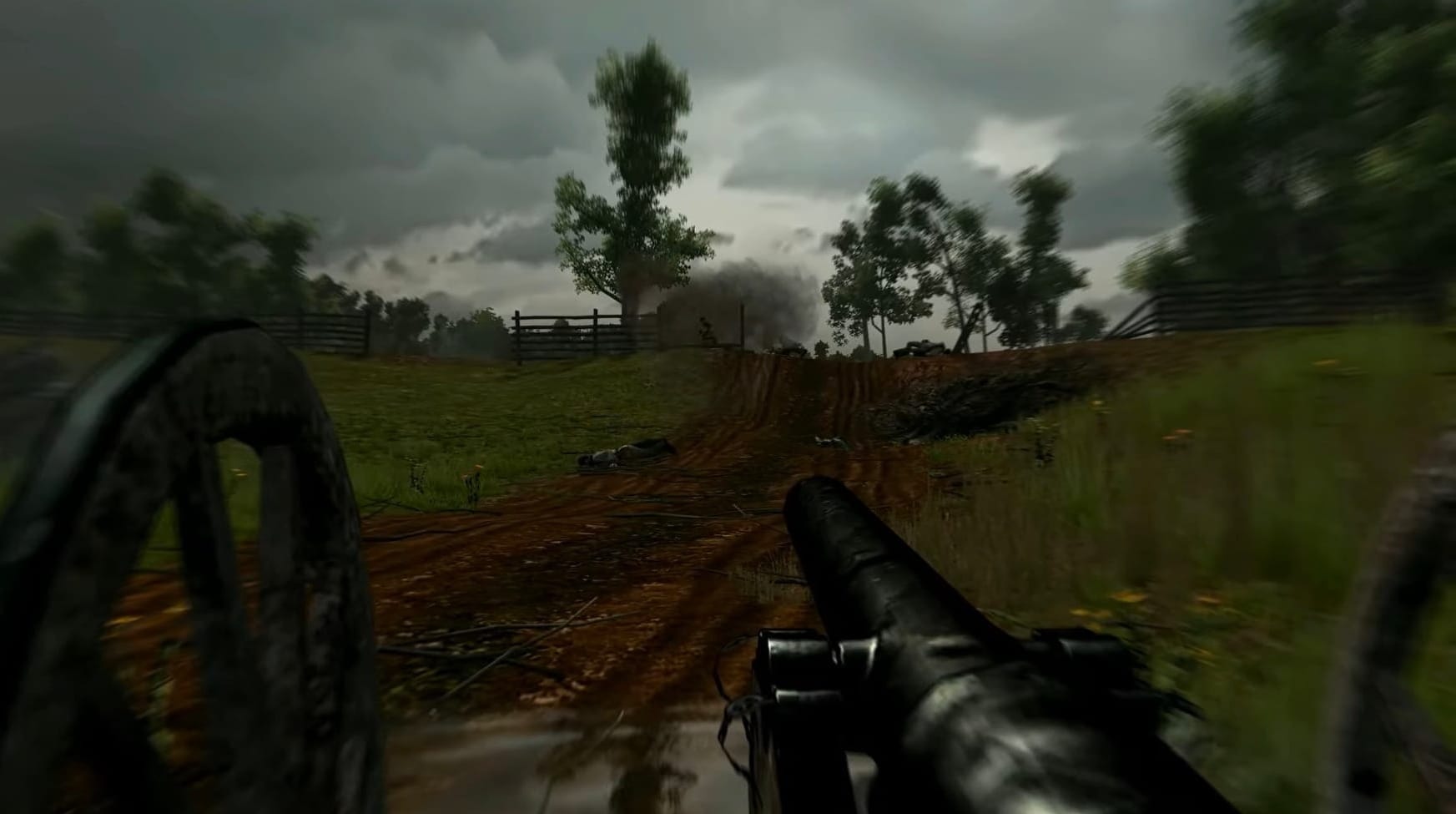
The past is therefore not sacred. Only its output is sacred.
Kronotek will alter any number of local paths to maintain the global path that authorizes Kronotek.
This resembles every institution that claims fidelity to an order while continuously changing the lives inside it. The order is treated as stable because the interventions preserving it are excluded from the account.
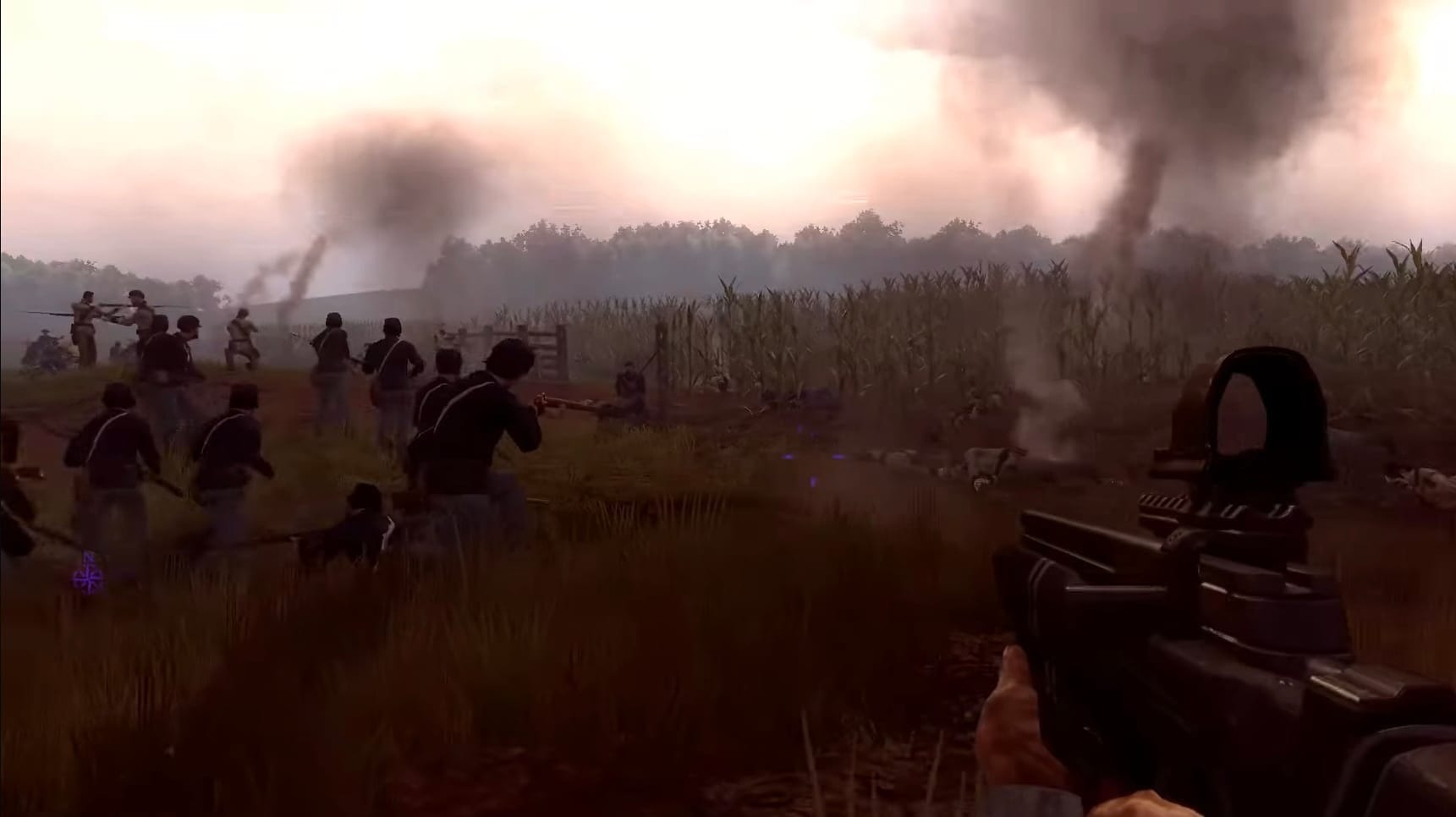
- This machine gun does not disturb history.
- It is a correction.
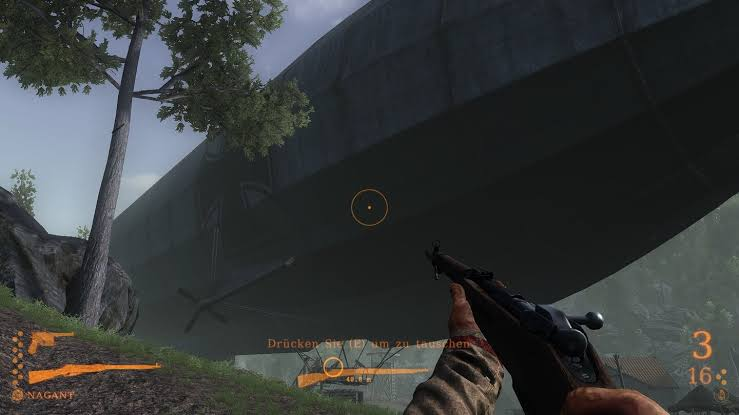
- This zeppelin hijacking does not disturb history.
- This is maintenance.
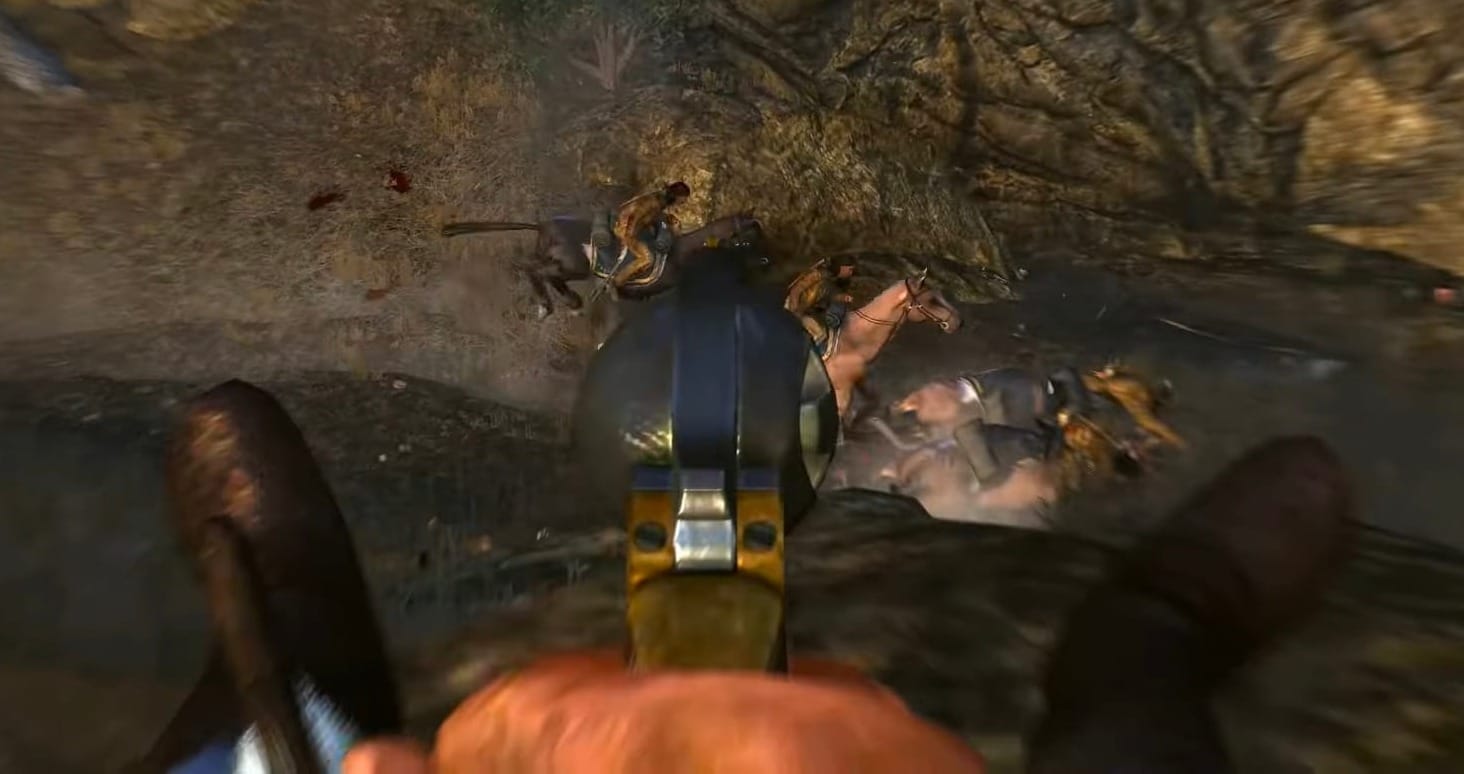
- Removing Morris from Little Bighorn does not disturb history.
- His paperwork was already incomplete.
Kronotek has solved temporal ethics by defining its own acts as background conditions.
The Welshes.
Kronotek eventually secures Corporal Welsh and his twin brother and reintegrates them into the “proper” timeframe.
That word returns. Reintegrates.
The Welsh brothers are not asked which continuation they now understand themselves to occupy. The institution’s task is to restore their designated placement inside a selected genealogical and technological chain.
Their importance lies downstream. They are ancestors.
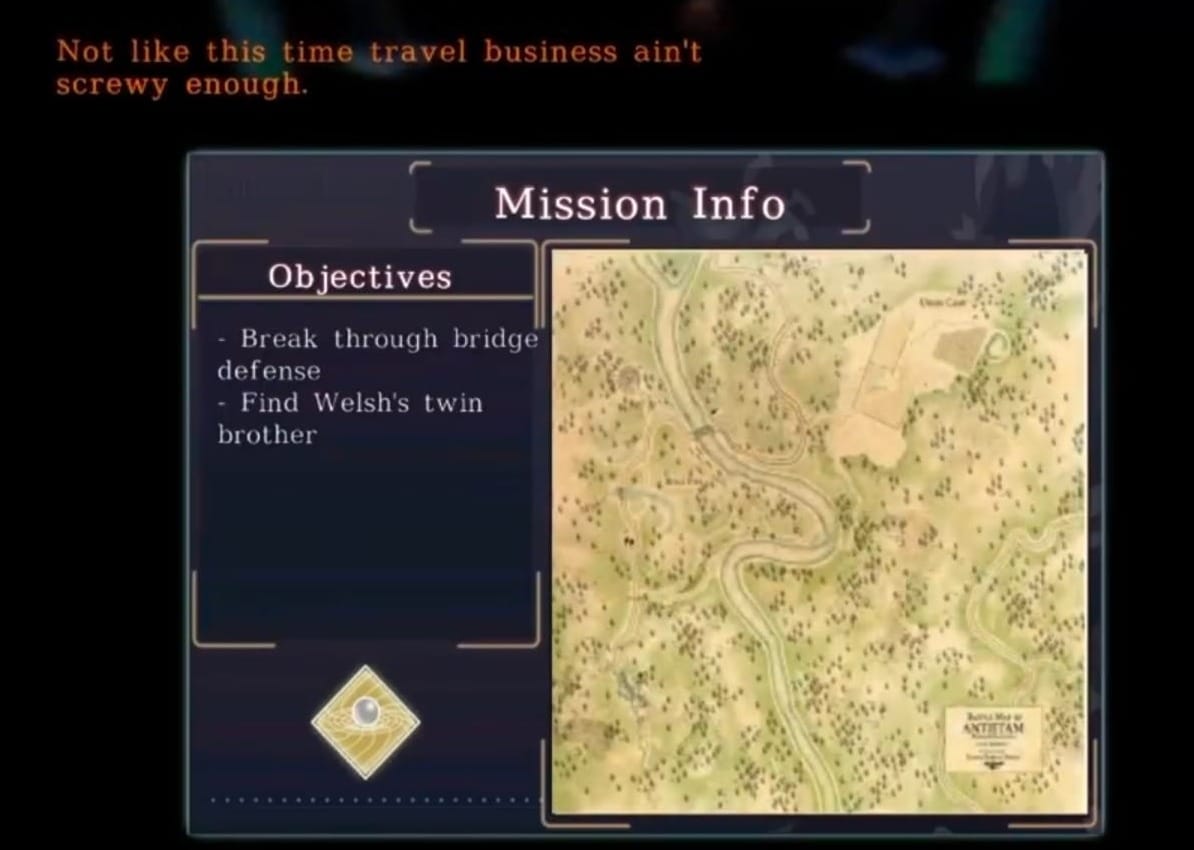
That is a crucial feature of Kronotek’s field-map. People matter according to the future outputs attached to them. The organization watches history through descendant lines and technical consequences. A soldier becomes important because someone later emerges from his continuation.
This is better than treating him as meaningless. It is still a severe reduction in ontological status.
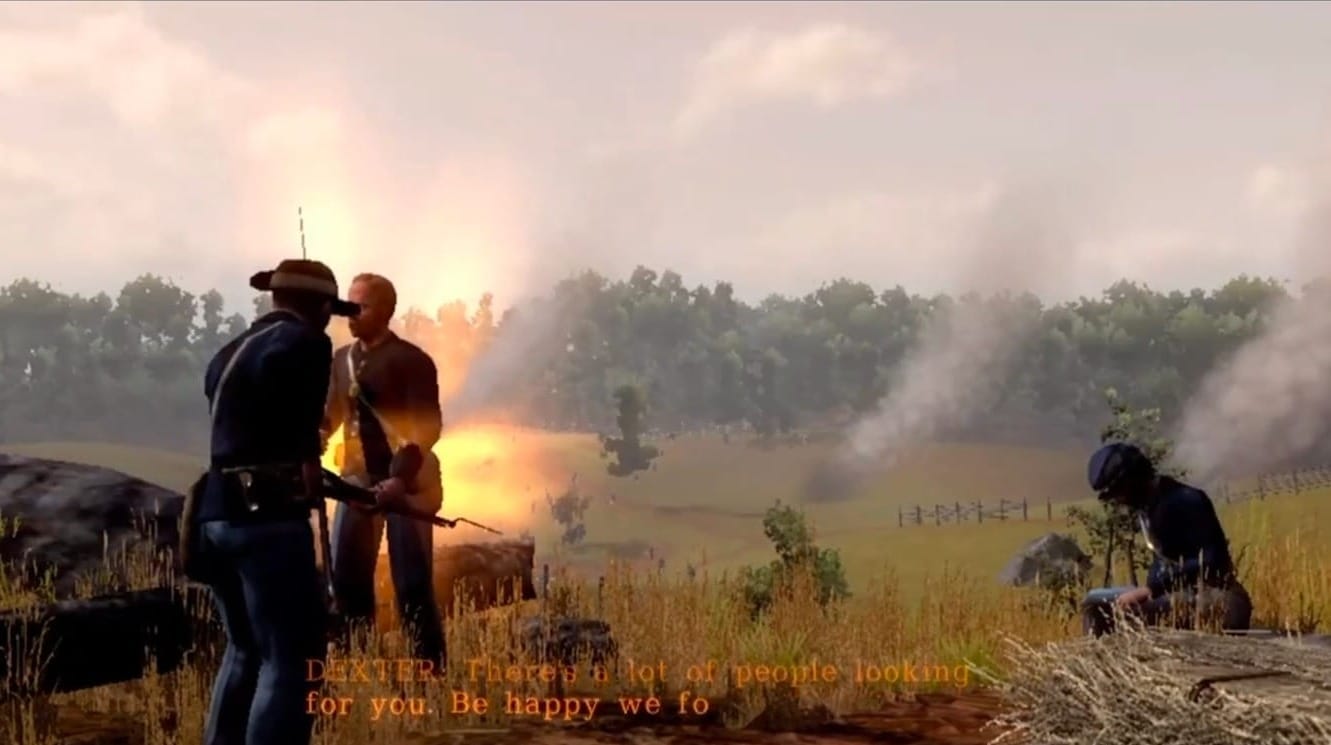
The Welshes become biological infrastructure for a future invention. Their historical placement only matters because Kronotek’s causal model requires the descendants.
The institution does not see a person and then investigate the field around him. It sees a future output and traces backward until it finds the required person. The locus becomes a dependency.
That backward gaze shapes the whole game.
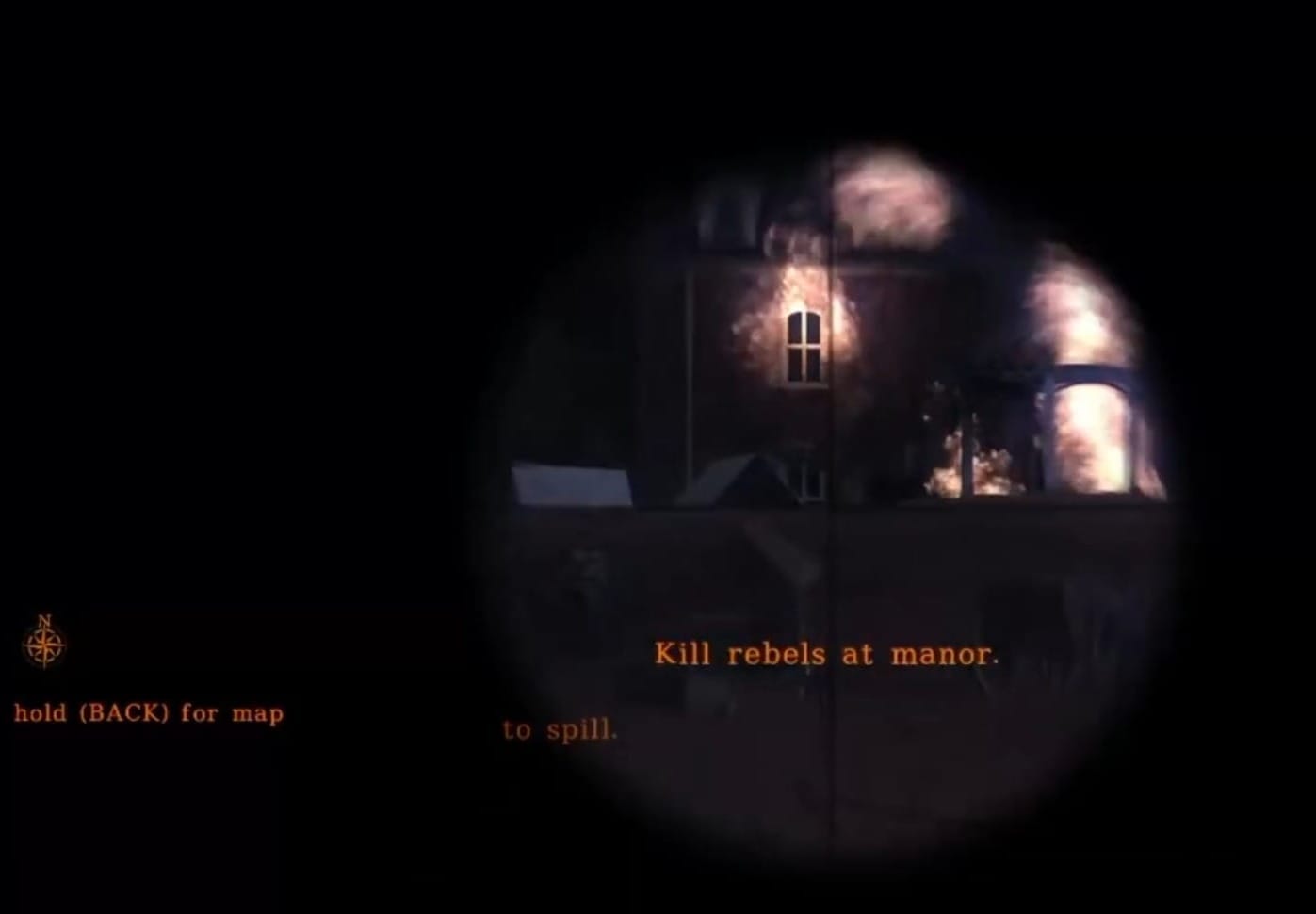
Kronotek repeatedly treats historical people as pieces that must occupy the squares required by later history. It protects them, moves them, retrieves them, and spends other people around them.
The important person receives causal sanctity. The missing person receives a job.
Petrovich Leaves His Post.
The Petrovich disturbance shows how quickly a seemingly local shift can propagate.
Petrovich is labeled a traitor after abandoning his military position. This changes the path of his son. The son, who would otherwise have become a scientist, enters the military during the Second World War and is captured by the Wehrmacht.
Kronotek must now repair the new downstream damage.
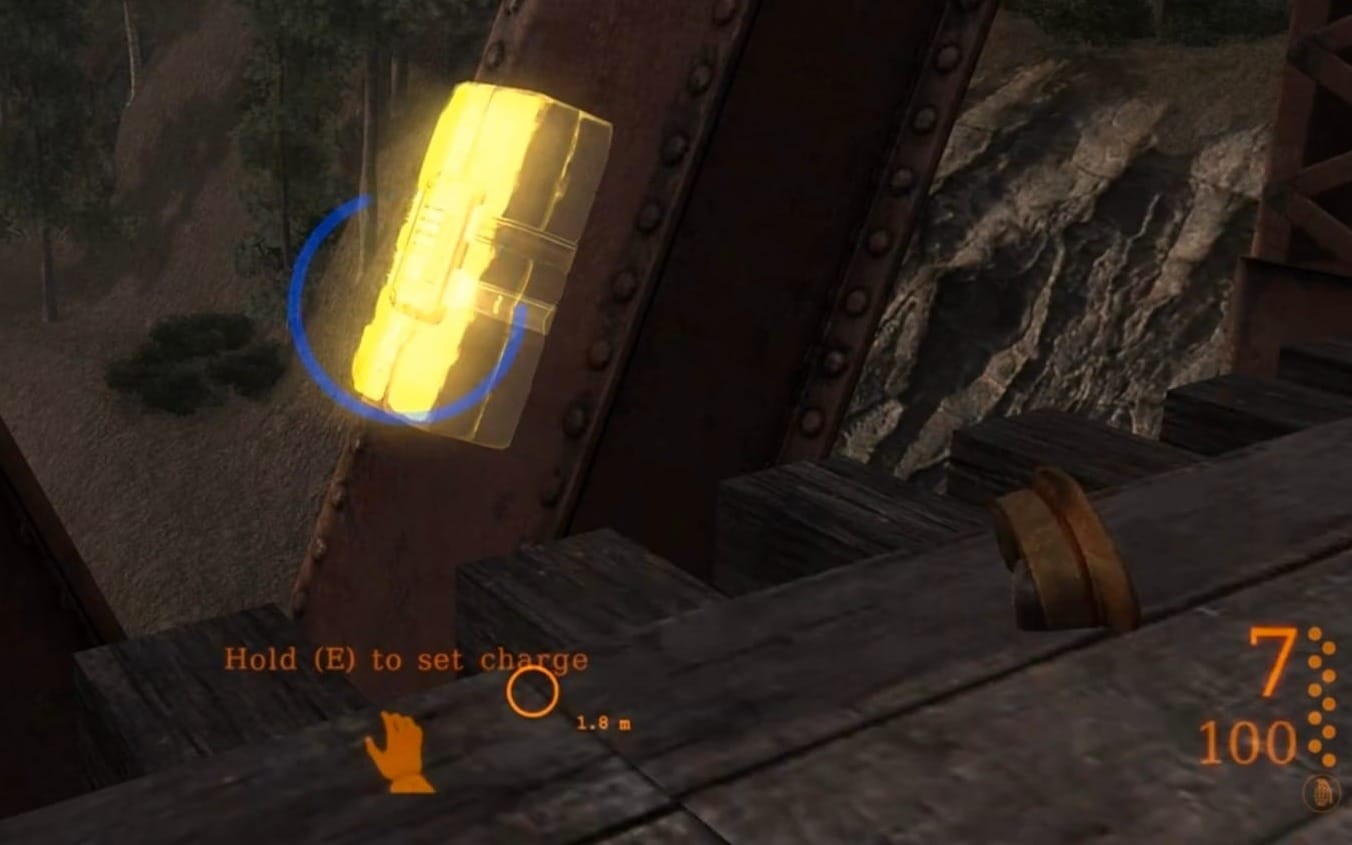
This is the strongest argument for caution the game offers. Temporal intervention is not simple. A moved person alters institutions, family expectations, reputations, professions, wars, and technologies. Restoring one body to one location may not restore the field already reorganizing around the displacement.
Doctor Koell is correct to fear casual intervention. The error arrives when caution becomes worship.
Path dependence does not prove that every existing path is best. It proves that interventions require deeper field intelligence.
Kronotek has tremendous causal data and almost no field ethics. It can identify Petrovich’s descendant chain but cannot articulate what makes one continuation worthy beyond the fact that it matches Kronotek’s record.
This is a recurring Tales of Distortion pattern. A real insight survives. The repair discipline collapses around it.
- History is interconnected. Therefore never repair history.
- Intervention carries unknown consequences. Therefore preserve every known atrocity.
- Our present depends on the past. Therefore the past owed us exactly this present.
That last move will eventually kill two billion people.
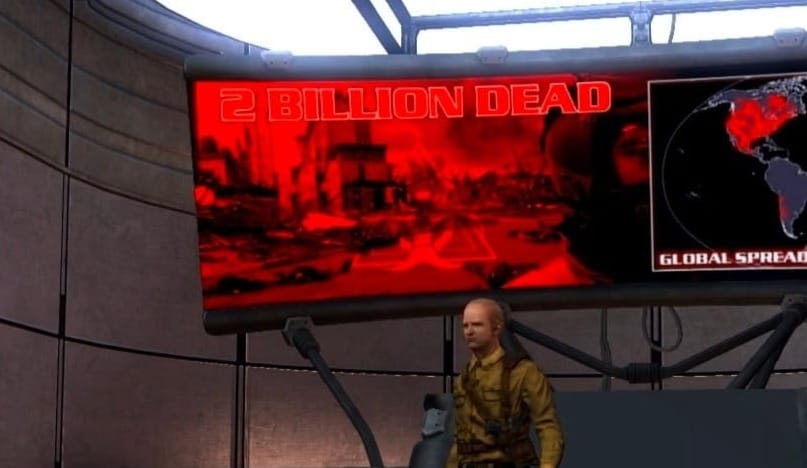
Kronotek requires additional missions before discovering this.
Applied Case: Morris Frees Morris.
Morris is captured while attempting to rescue Petrovich’s son from a Nazi prisoner-of-war facility.
Petrovich is sentenced to death. Then an explosion occurs outside the camp.
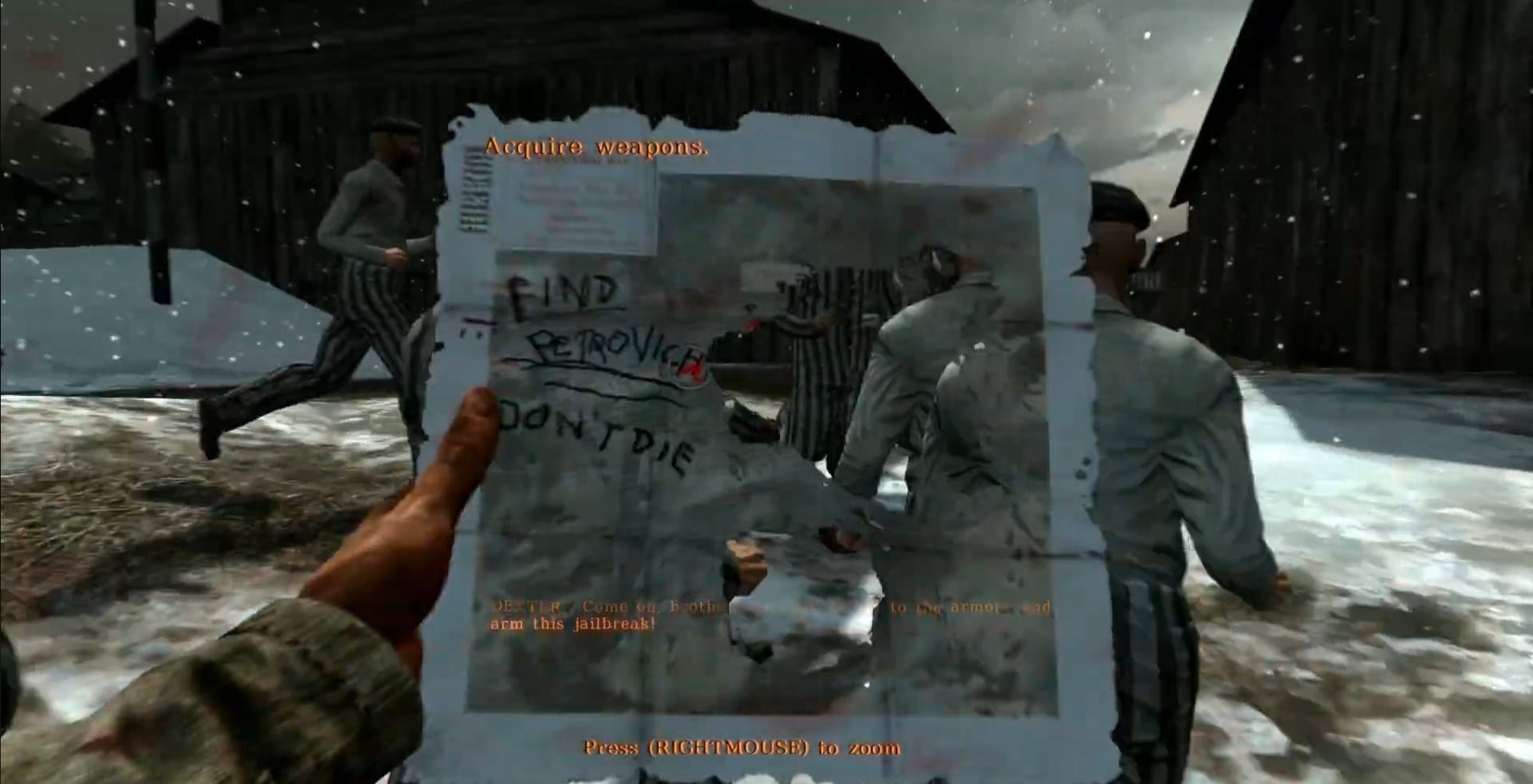
Dexter appears and helps Morris, Petrovich, and the other prisoners escape. Once Petrovich reaches safety, Dexter explains that Morris caused the explosion.
Except Morris has not done this yet.
So he now has to go back, fight through the facility, and plant the explosive that already enabled his escape.
This is the game’s closed causal knot.
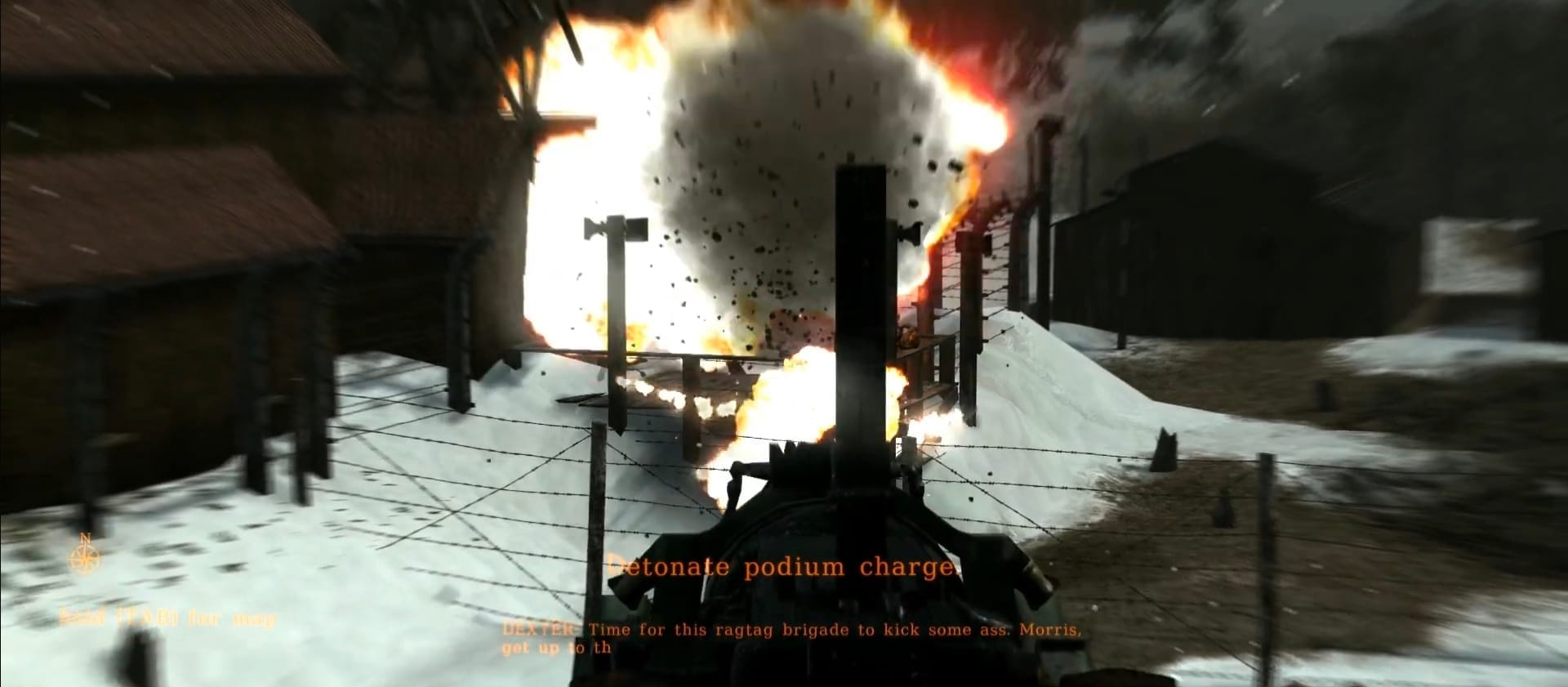
It is also treated with approximately the amount of philosophical concern one would expect from a man who has just recently learned to operate a rocket launcher.
Morris does not create a new explosion in a revised history. The explosion was already part of the field he experienced. His later action supplies the cause of the event that enabled that action.
This resembles the bootstrapped structures in Twelve Monkeys and Tenet, with one significant difference.
- Those stories understand that the knot changes the burden of authorship.
- Darkest of Days needs Morris to move to the next shooting section.
Still, the structure is useful.
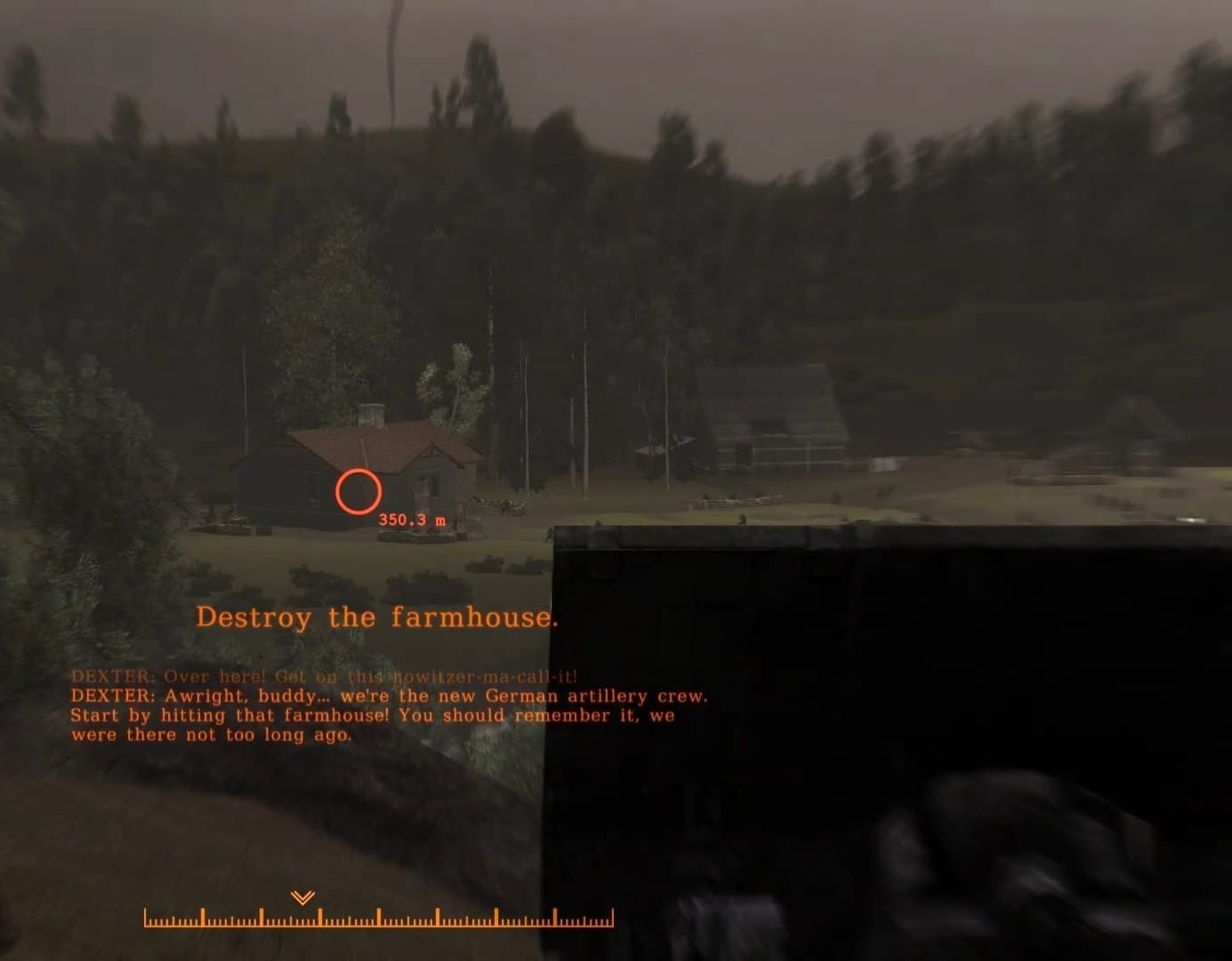
The fact that the explosion had already happened does not relieve Morris of responsibility for planting it. The trace was already there because his path was already part of it. The event’s consistency is not innocence.
Pompeii.
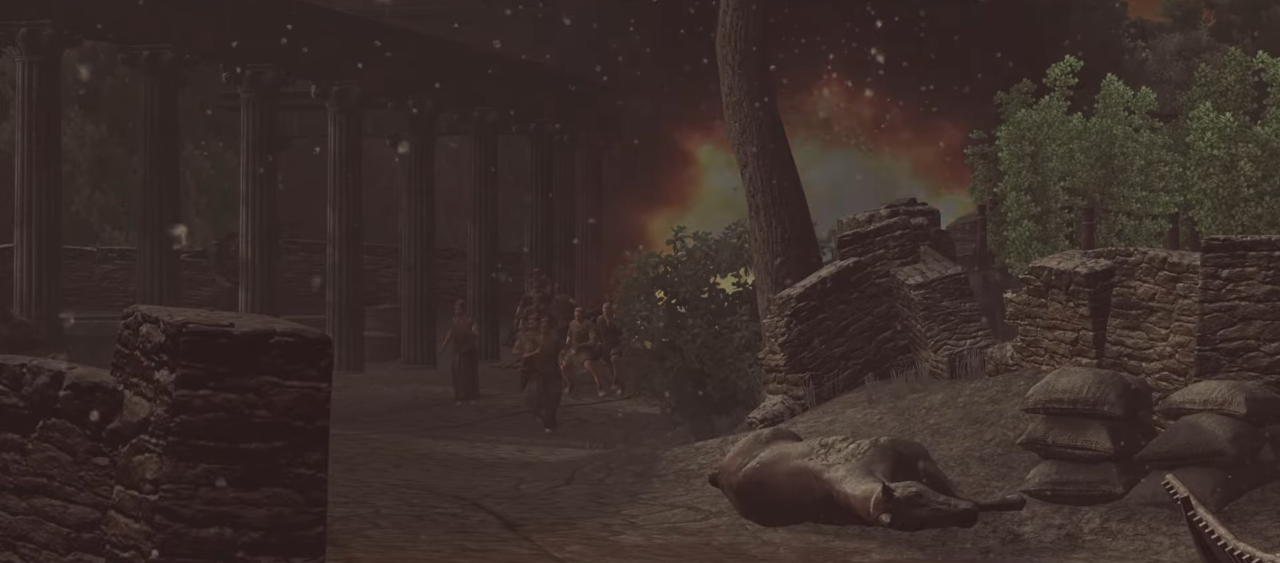
After the Welsh and Petrovich operations, Kronotek discovers Doctor Koell in Pompeii.
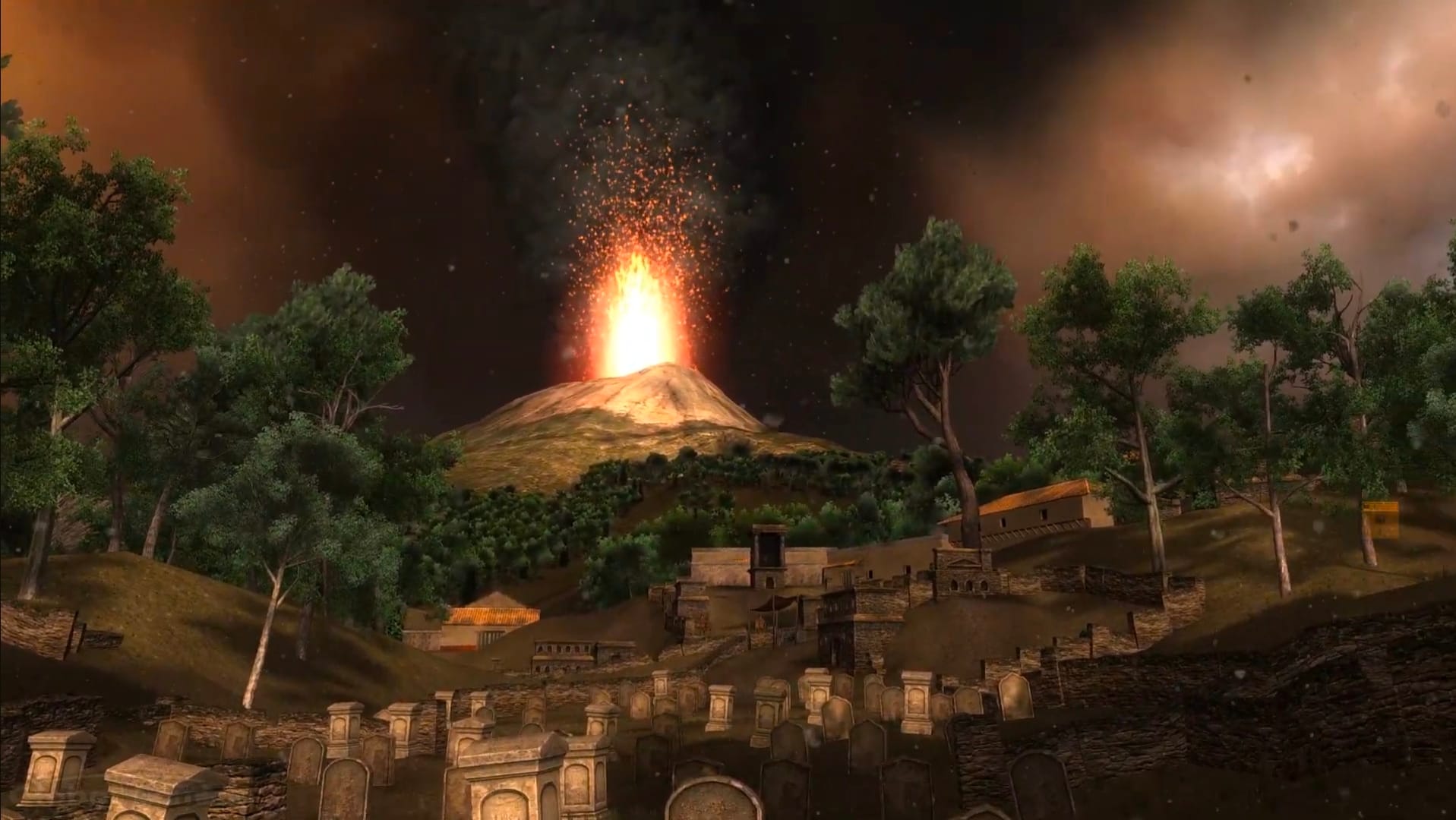
The date is August 25, AD 79, the day after the eruption of Mount Vesuvius began burying the city.
This field is very difficult to improve upon.
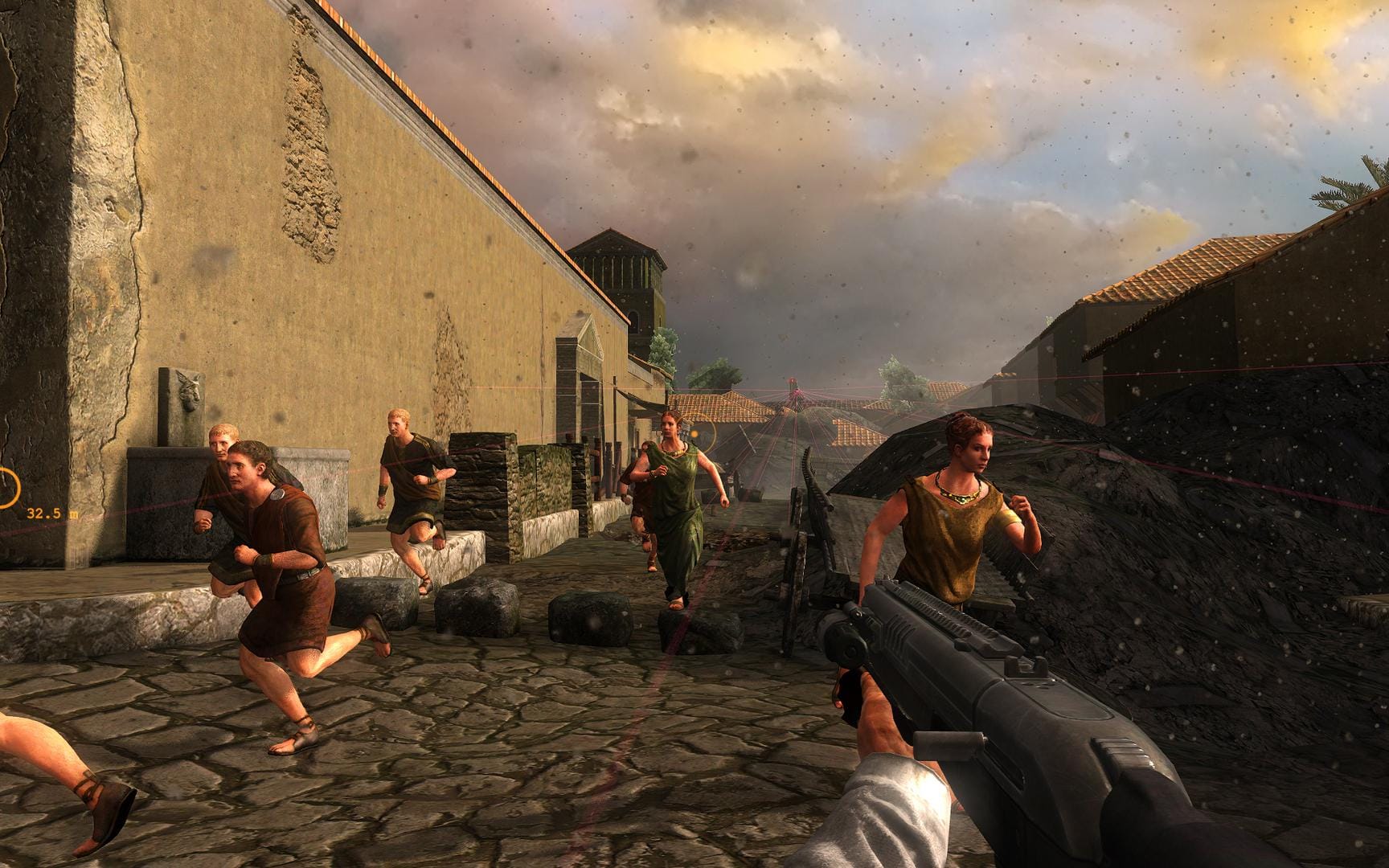
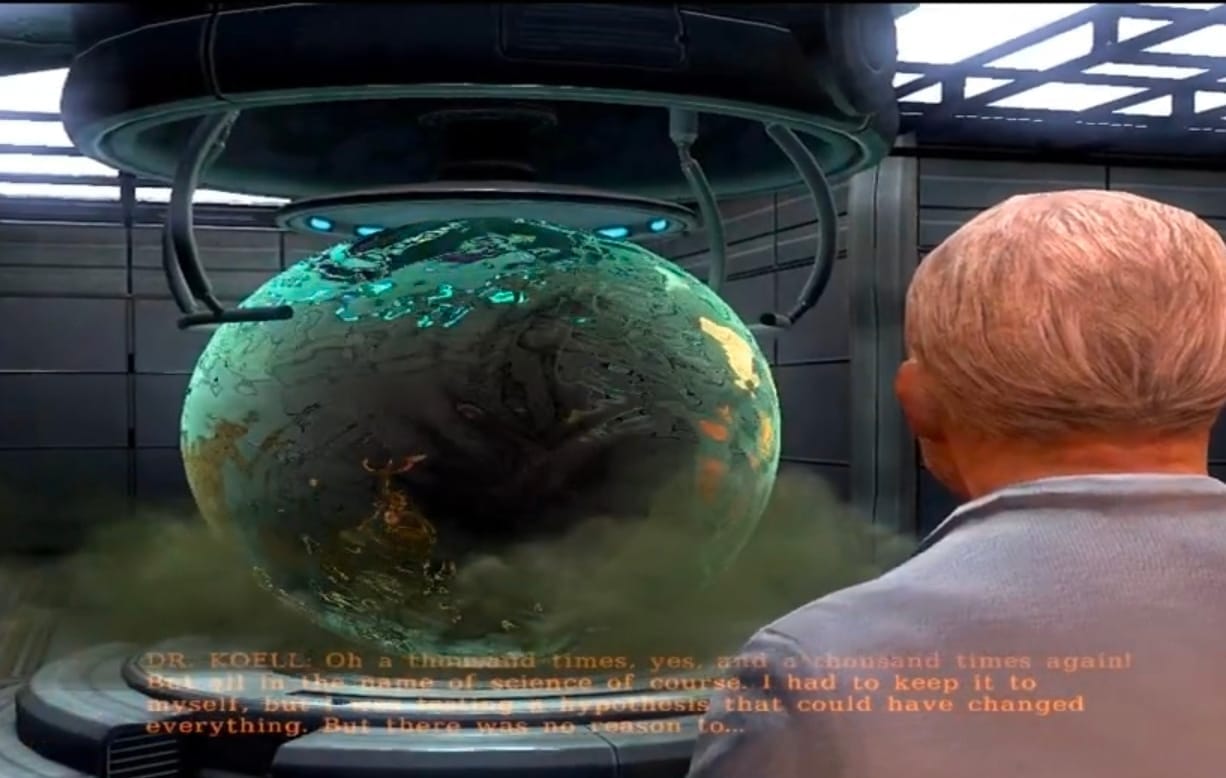
Doctor Koell, founder of the organization devoted to protecting dark historical events from any repair, has placed himself inside one of the most famous mass-death sites in human memory.
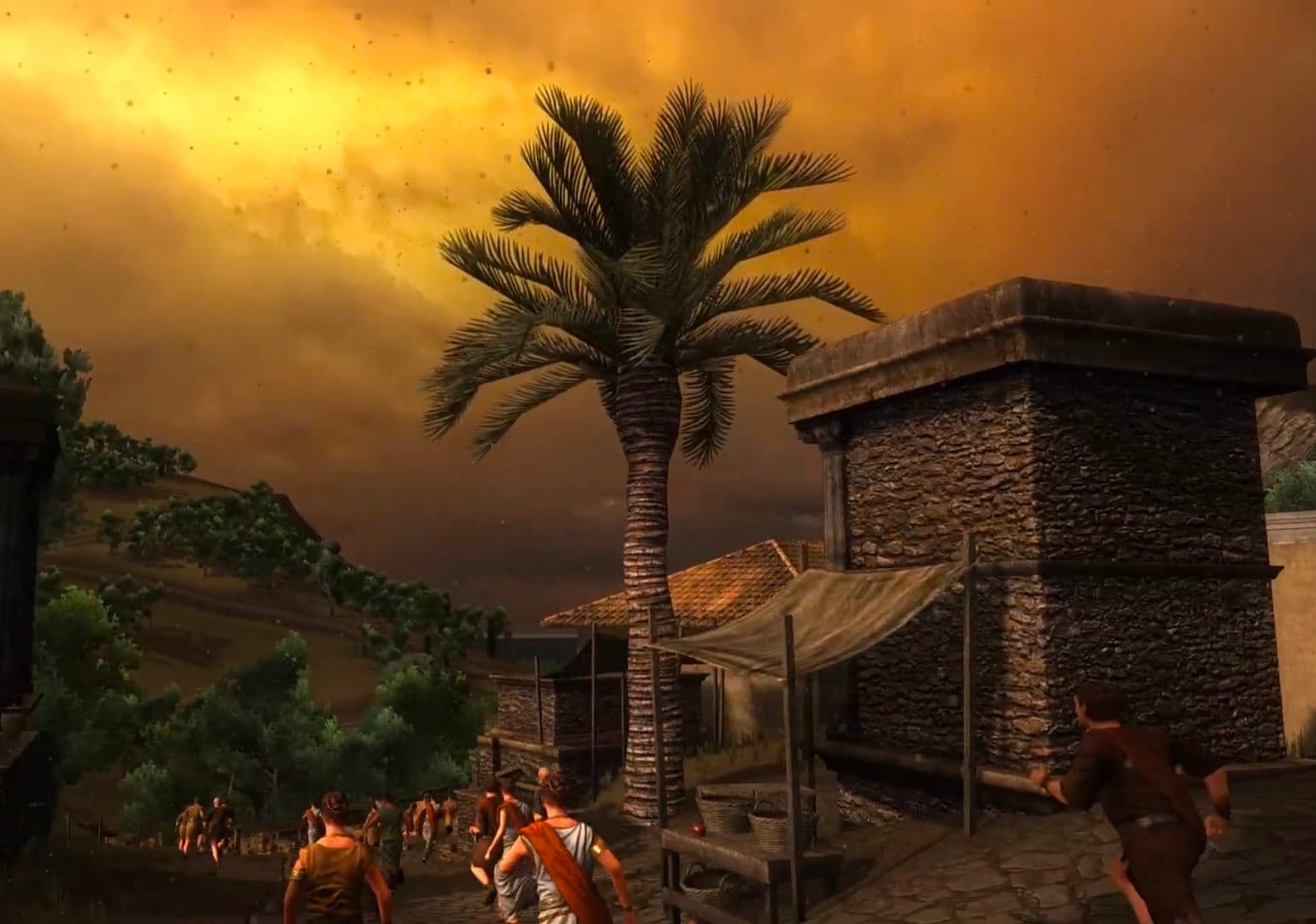
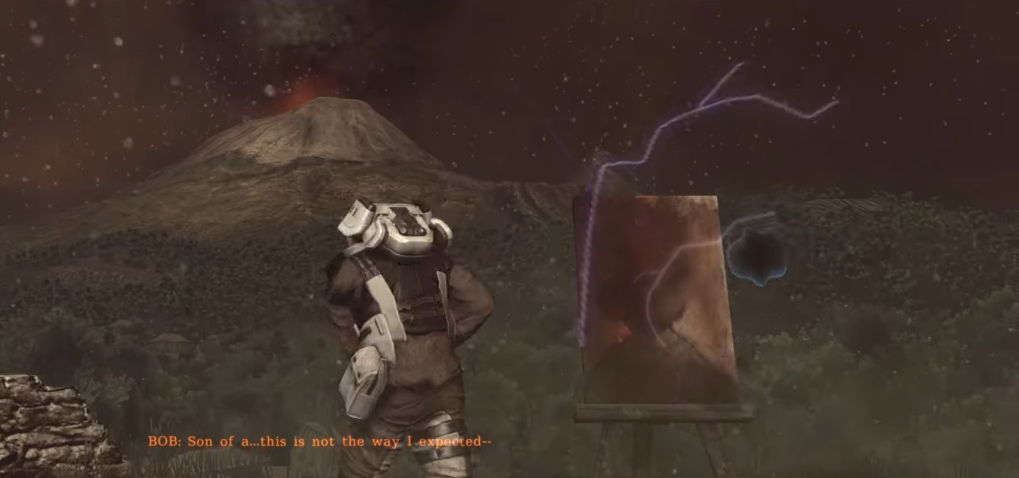
Morris, Dexter, and a technical specialist named Bob travel to Pompeii.
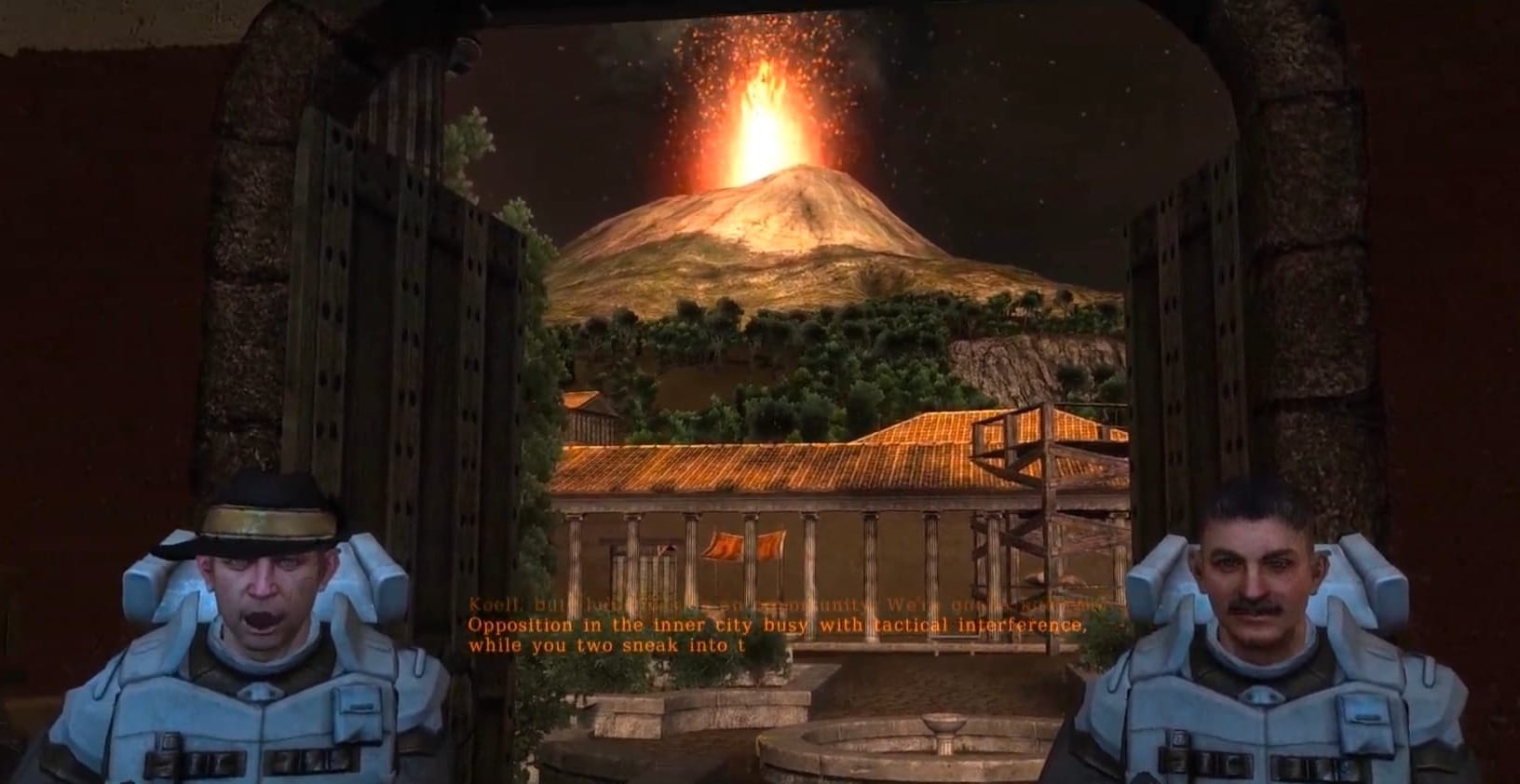
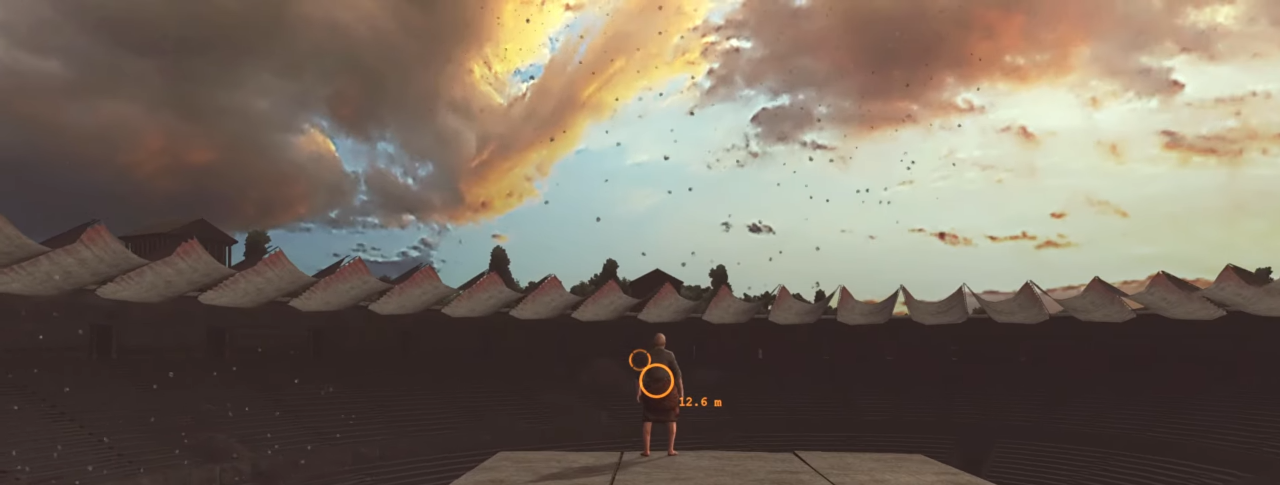
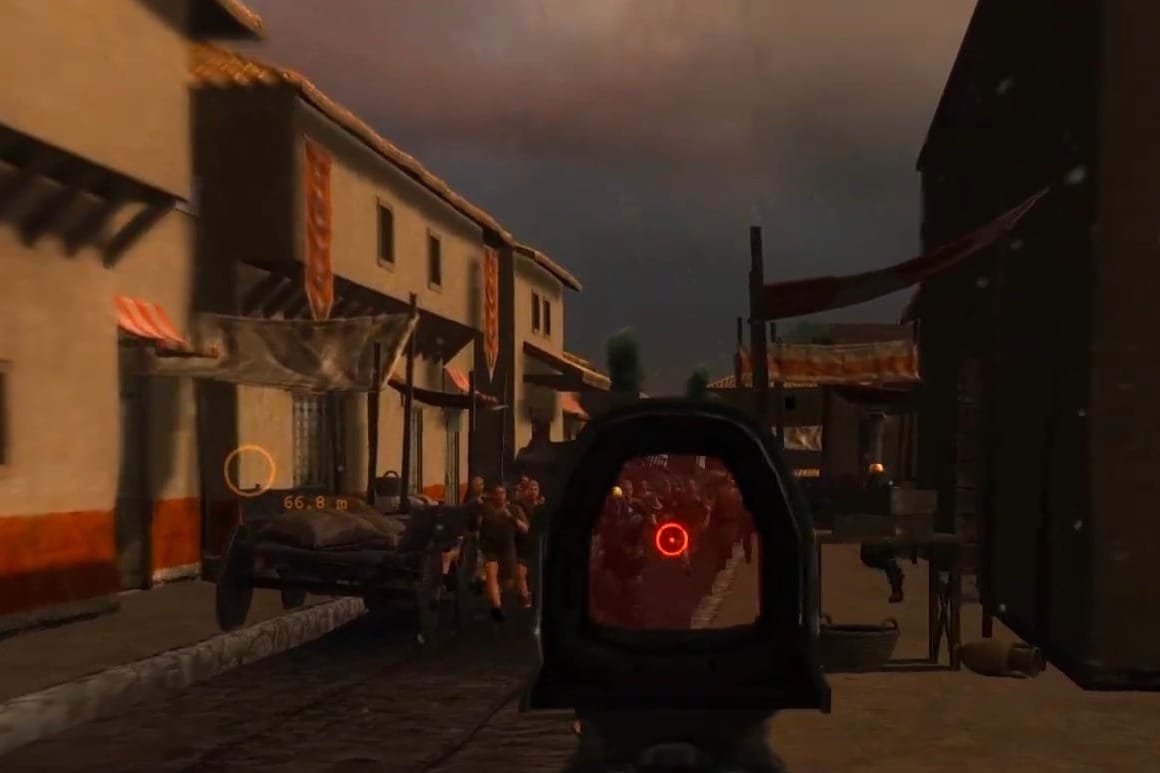
They fight Opposition agents through the doomed city and find Dr. Koell in the arena. He just accompanies them back to the twenty-second century with notable calm.
The game itself does not appear at all interested in why the hell he was even there.
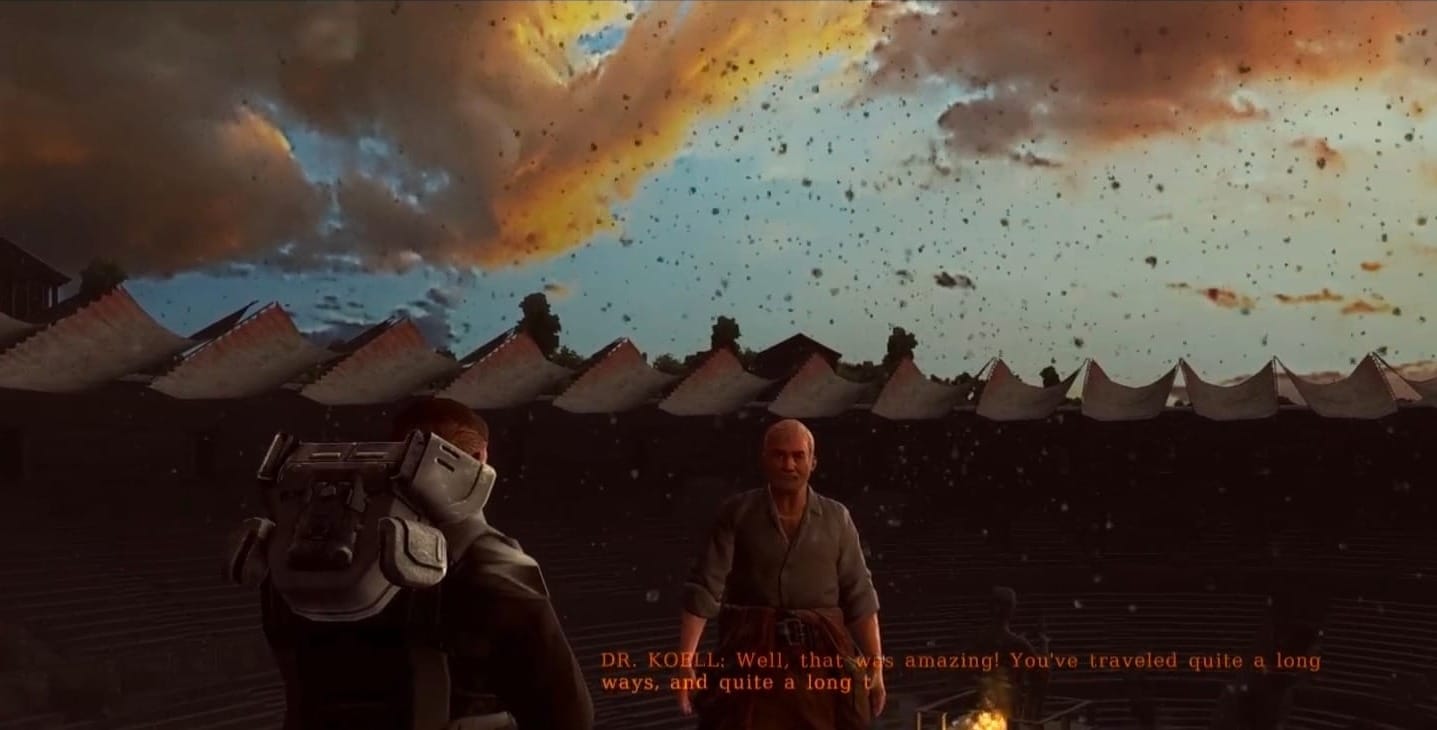
Modal Path Ethics is.
Pompeii is the perfect visual field for Koell’s distortion.
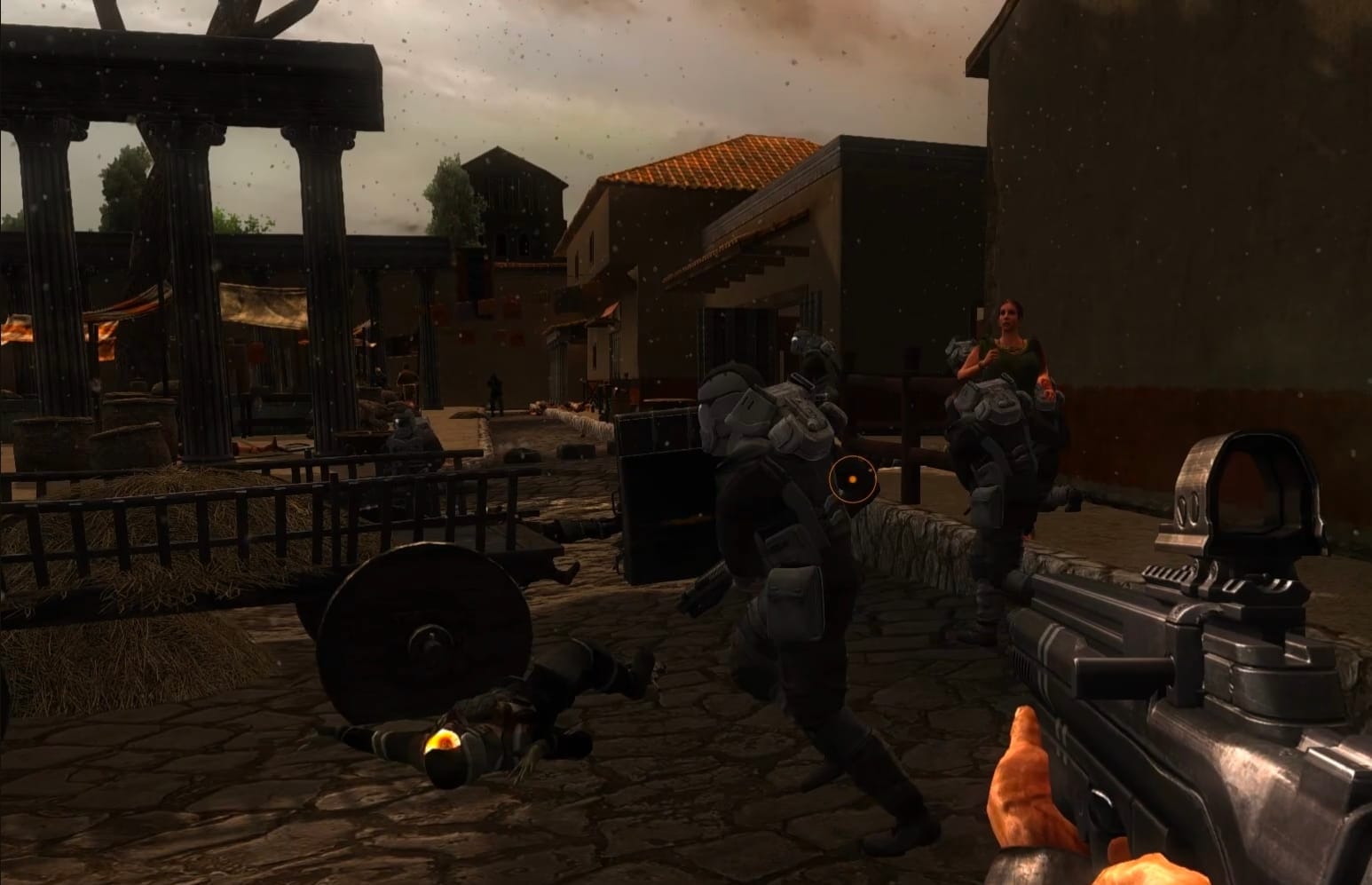
A city is dying around him.
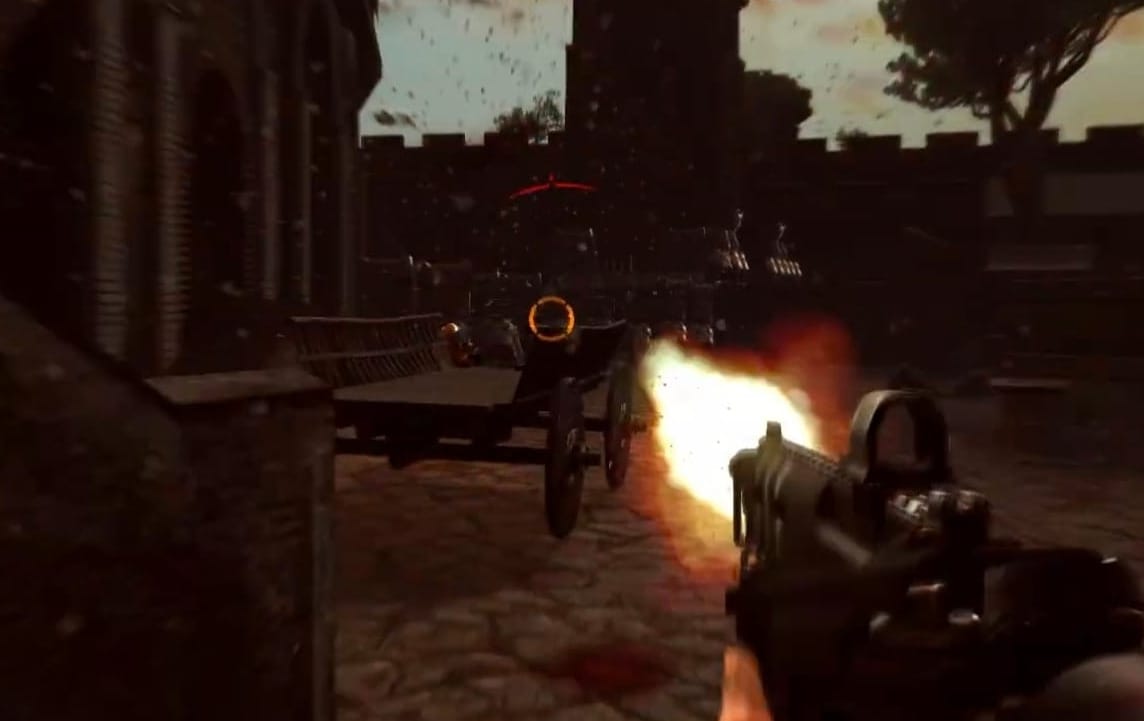
People are being killed by heat, ash, collapse, suffocation, pyroclastic flow, and Miller. The event will become historical evidence, archaeological site, cultural symbol, tourist destination, scientific archive, and one of the most familiar examples of sudden civilizational closure.
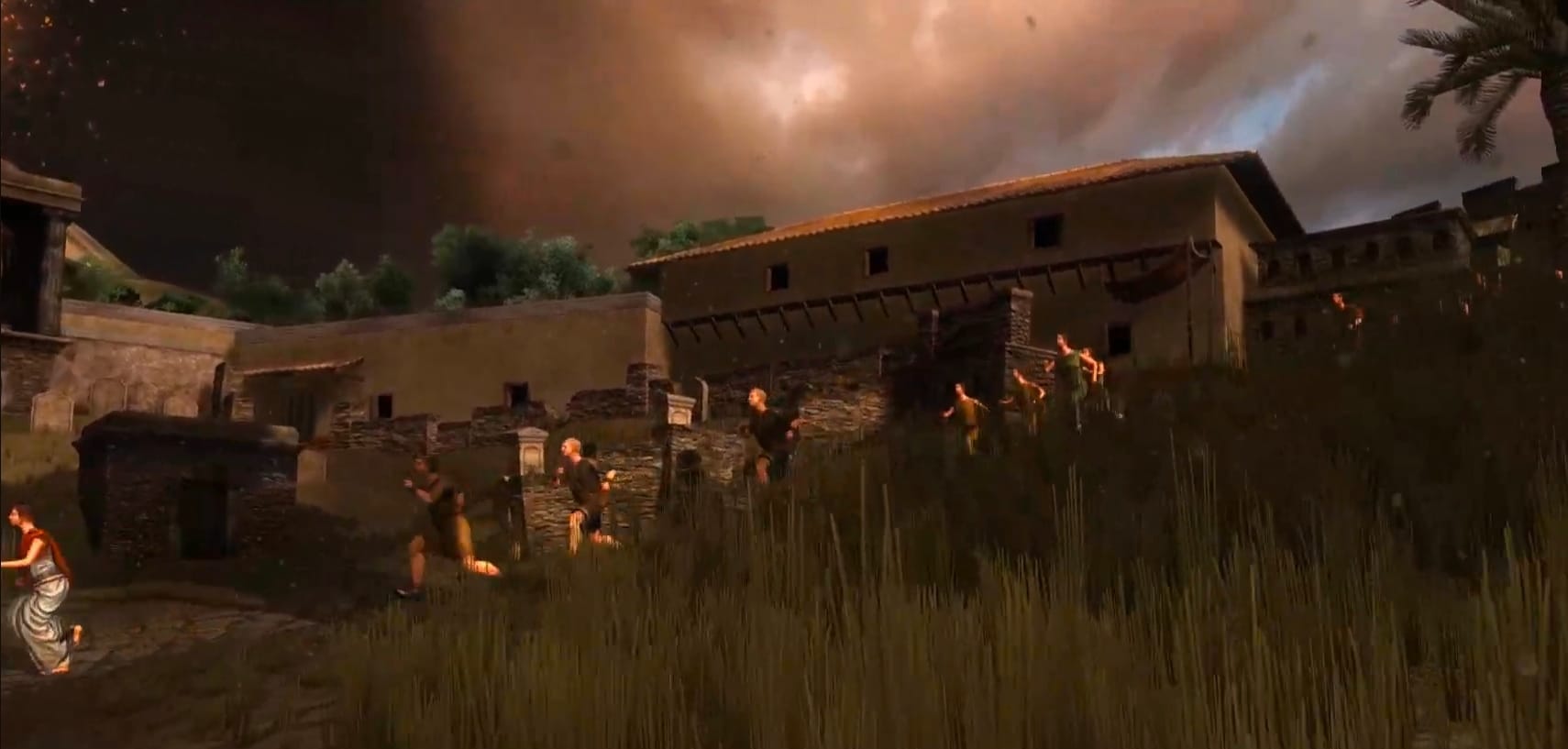
Koell’s doctrine says this all must happen. Not only because altering it might create unpredictable consequences.
Because "dark days define us."
Pompeii’s victims are about to become instructional infrastructure. These humans have been demoted to pedagogical instruments.
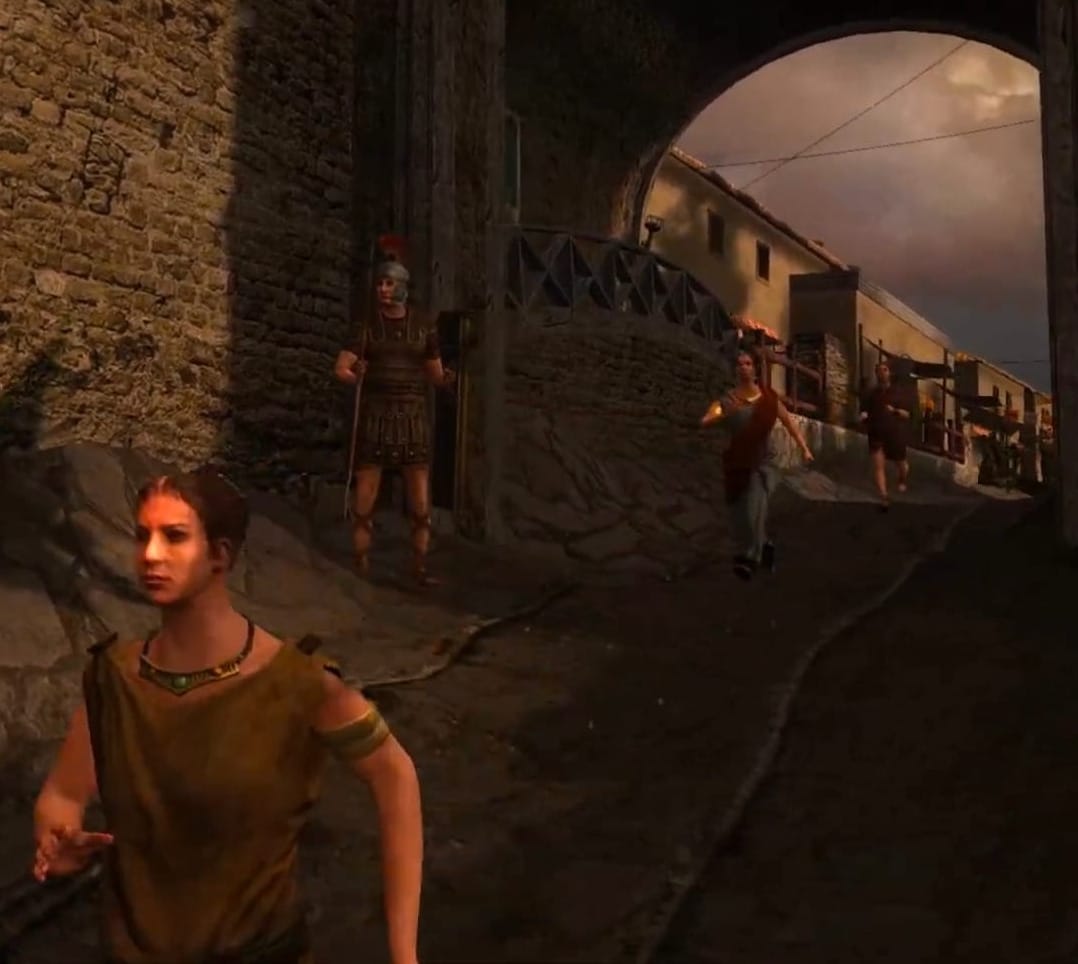
Doctor Koell is standing among his lesson materials.
The Corpses Were Very Educational.
Back in the twenty-second century, the head of the Opposition confronts Koell.
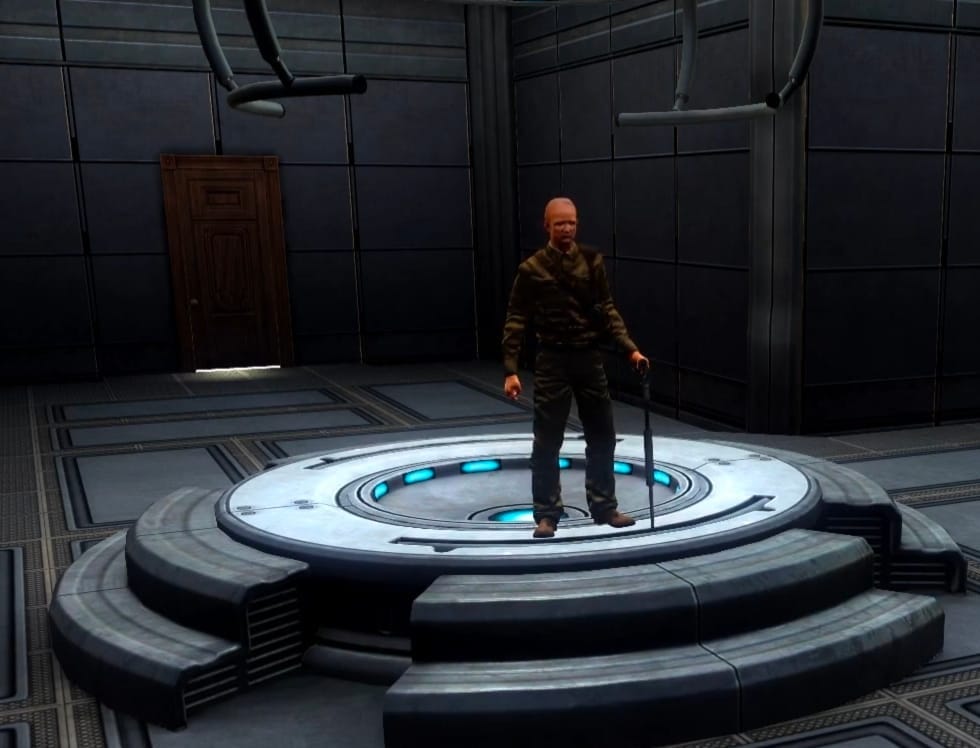
He asks whether it is wrong to change terrible events that already happened.
Koell says yes. Dark days teach valuable lessons and define who we are.
The sentence contains a real perception.
History forms people.
Trauma enters institutions, cultures, laws, families, technologies, languages, rituals, identities, and political structures. Later generations do learn from catastrophes. A society that forgets its wounds may reopen them. Attempts to erase difficult history can destroy the evidence needed for truth and repair.
Then, Koell performs the distortion.
- Because suffering can teach, suffering must remain.
- Because later people were formed by an atrocity, the atrocity becomes necessary.
- Because the dead contributed to historical knowledge, the dead owed history their deaths.
This is instructional debt.
The victims pay the cost of the event. Descendants inherit whatever warning, identity, institution, or technological path emerges. The descendants then retroactively declare the payment indispensable because they value the world built downstream.
Koell turns the dead into compulsory teachers. They did not consent to his curriculum. This is not historical respect.
This is another avenue of retroactive conscription.
The problem becomes obvious if we apply Koell’s doctrine prospectively.
Suppose a catastrophe can be prevented today. We know with high confidence that prevention will close certain future lessons. No memorial will emerge. No reform movement will arise from the bodies. No children will grow up under the specific shadow of this event. No historian will write its definitive account.
Should we permit the catastrophe because preventing it would deprive the future of its education?
Obviously fucking not.
The value extracted from a wound does not justify imposing the wound.
- Repair after catastrophe can be good.
- Learning from catastrophe can be good.
- Preserving evidence can be good.
None of these transforms preventable catastrophe into a historical obligation.
Koell has confused moral remainder with moral mandate.
The fact that history cannot be cleaned without loss does not mean history should never have been made cleaner where Better remained reachable.
The Opposition.
The Opposition is revealed to be a future version of Kronotek.
Of fucking course it is. Who else would behave like this?
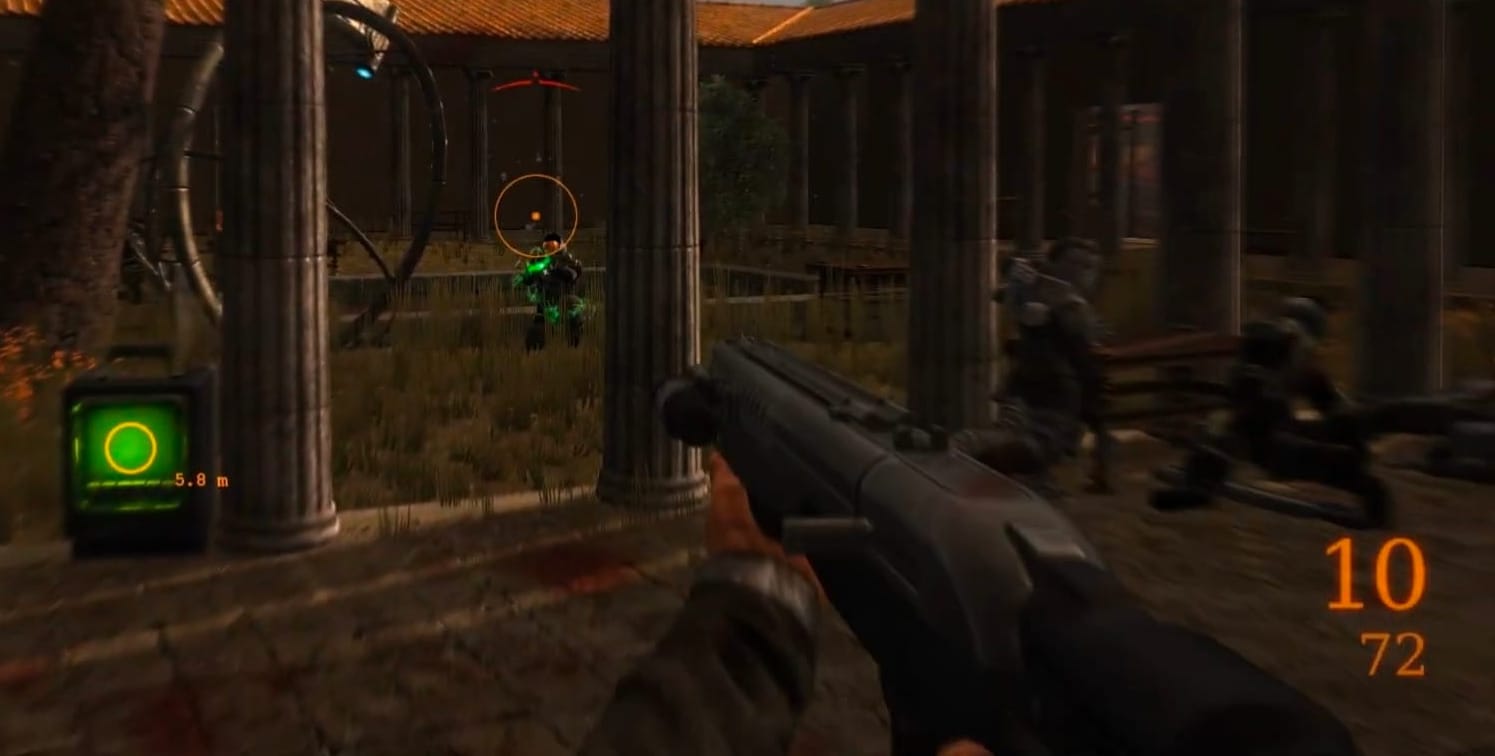
The time war is not between preservationists and temporal anarchists. It is an institutional schism over the exception policy.
Future Kronotek has learned that the descendants of the Welsh and Petrovich lines will create a DNA-sequencing technology capable of targeting genomes associated with racial identity.
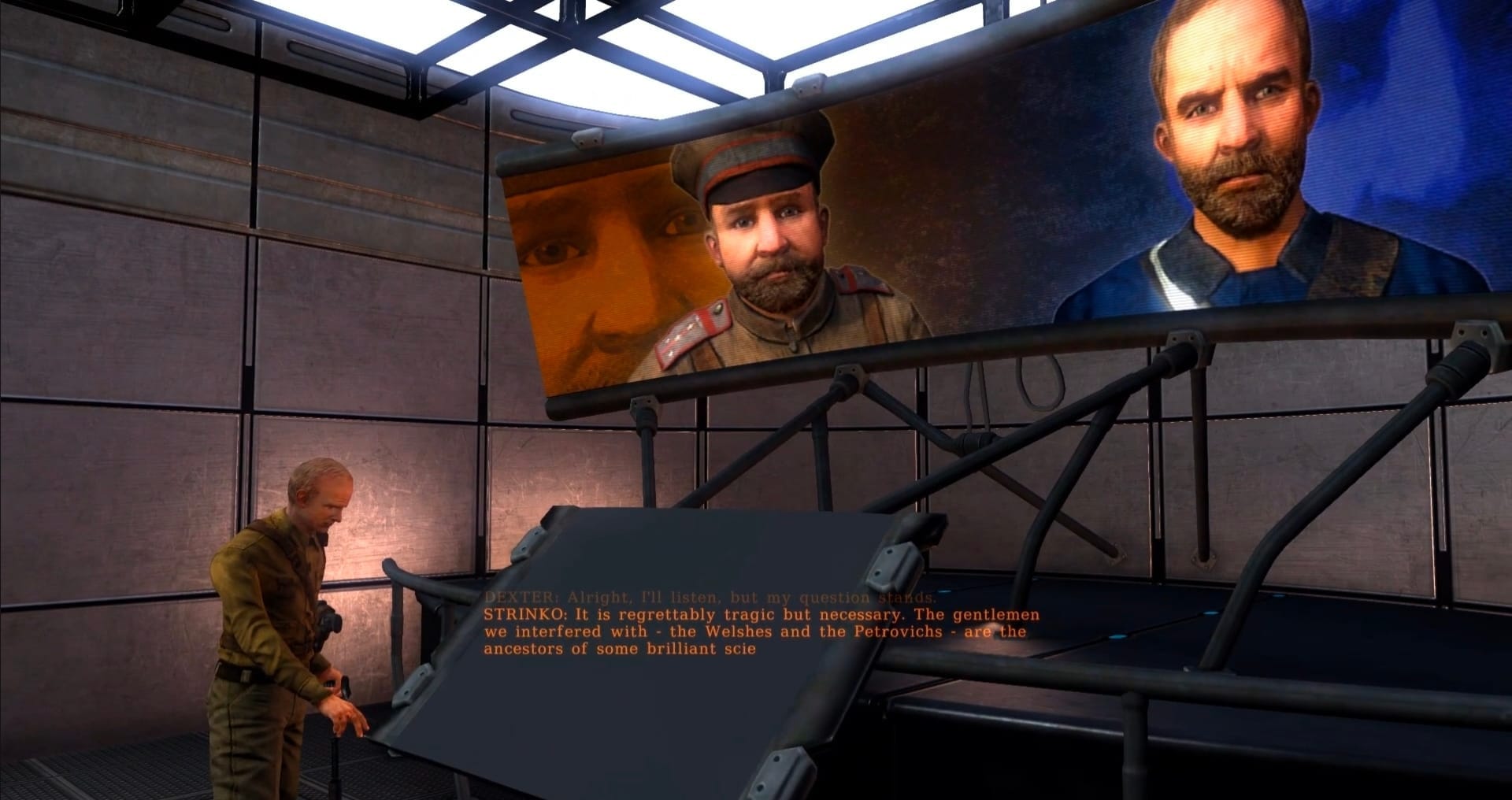
The game then presents an extraordinarily ill-considered scenario in which the technology is stolen, transformed into a racialized biological weapon, and used in a plague that kills two billion people, including most of North America.
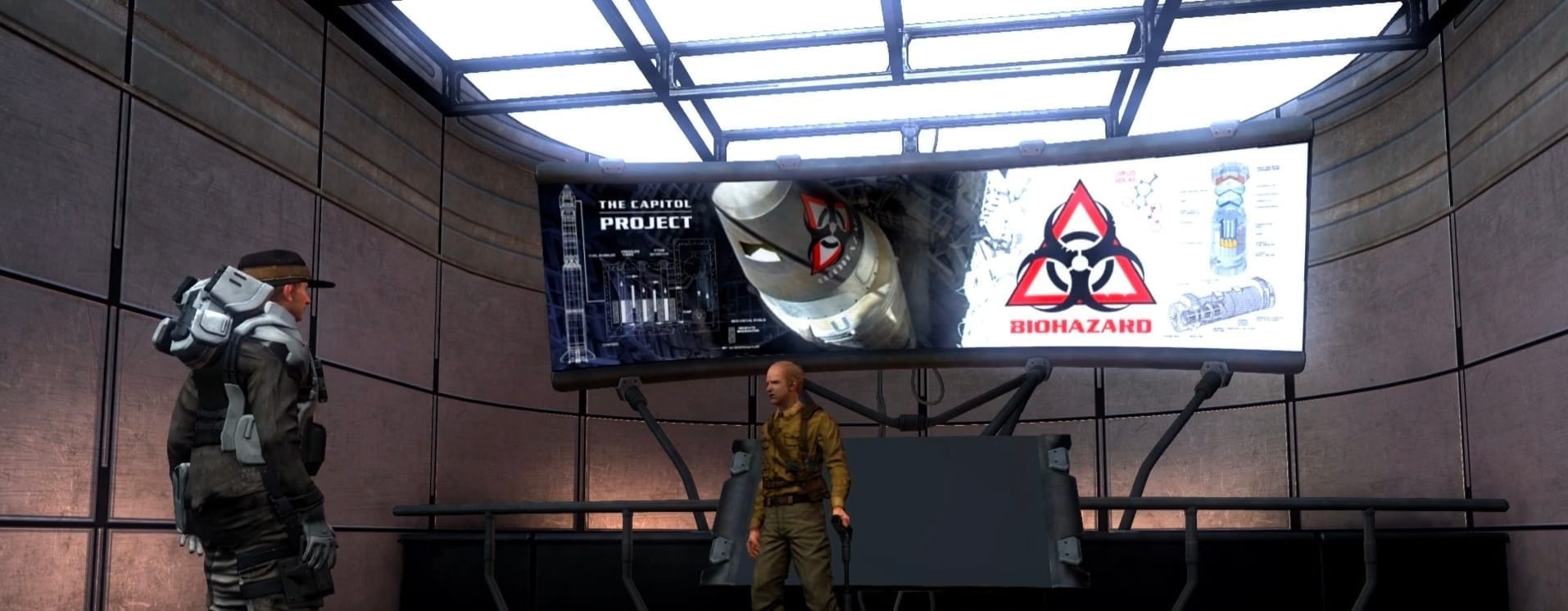
So, this is the future Kronotek wants to prevent. It has attempted to convince Koell. It brought a slideshow.
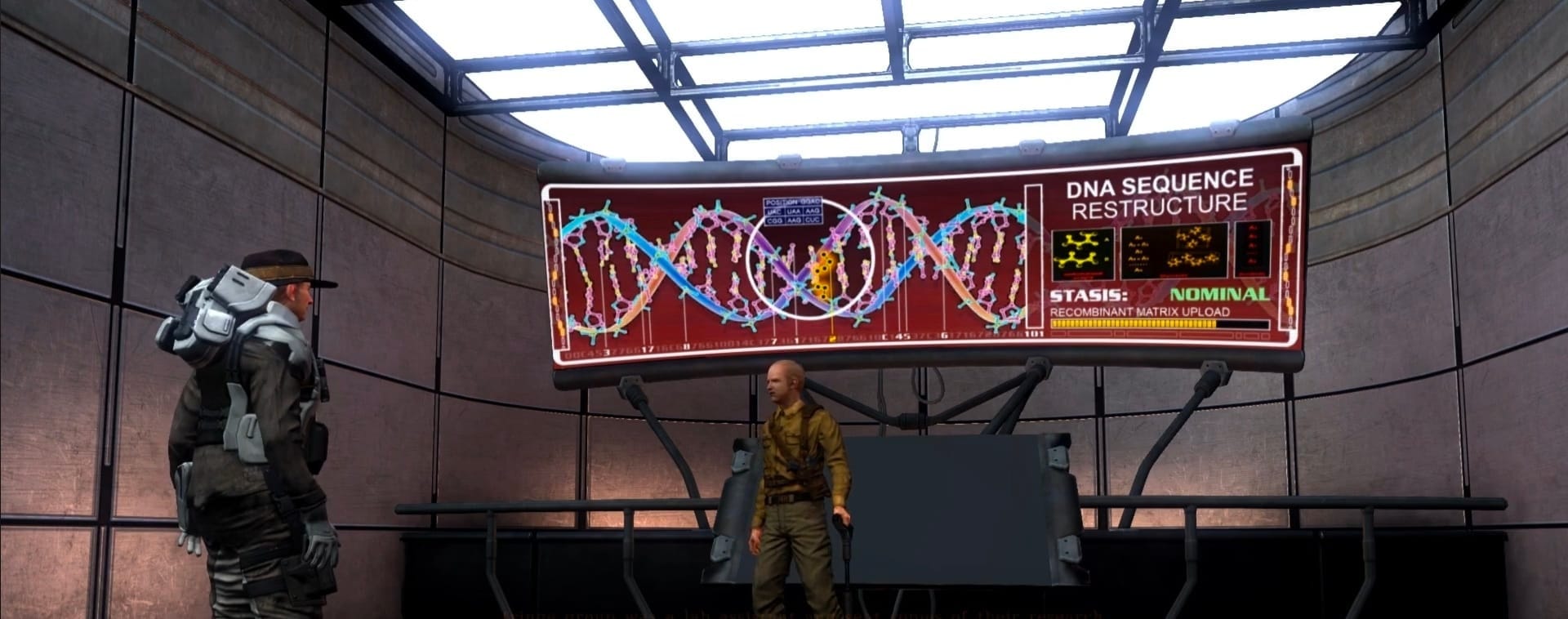
Koell refuses.
- The deaths are part of history.
- History teaches.
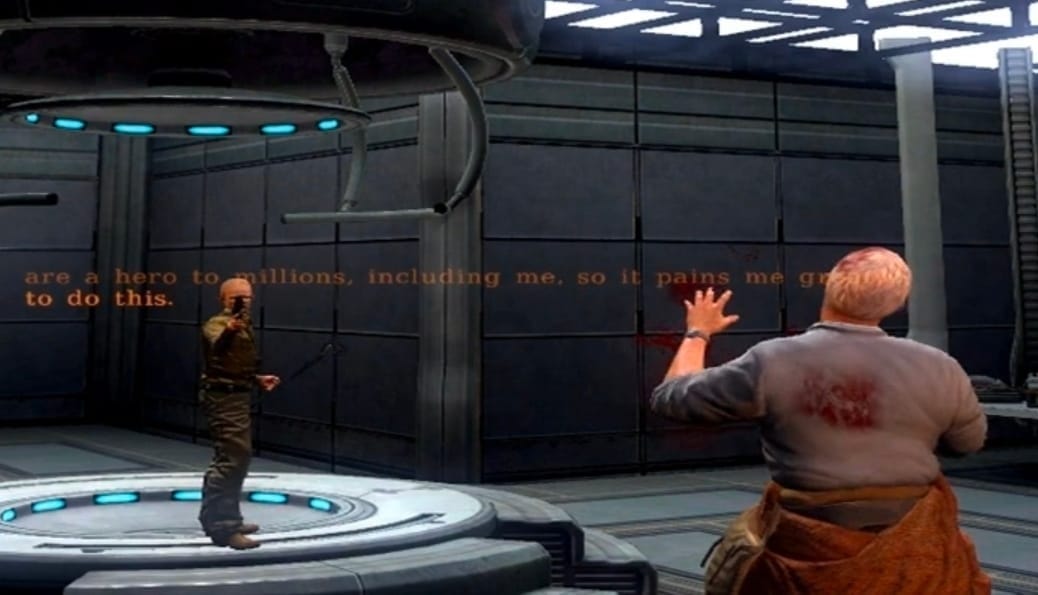
So the future head of Kronotek responds by shooting the founder twice.
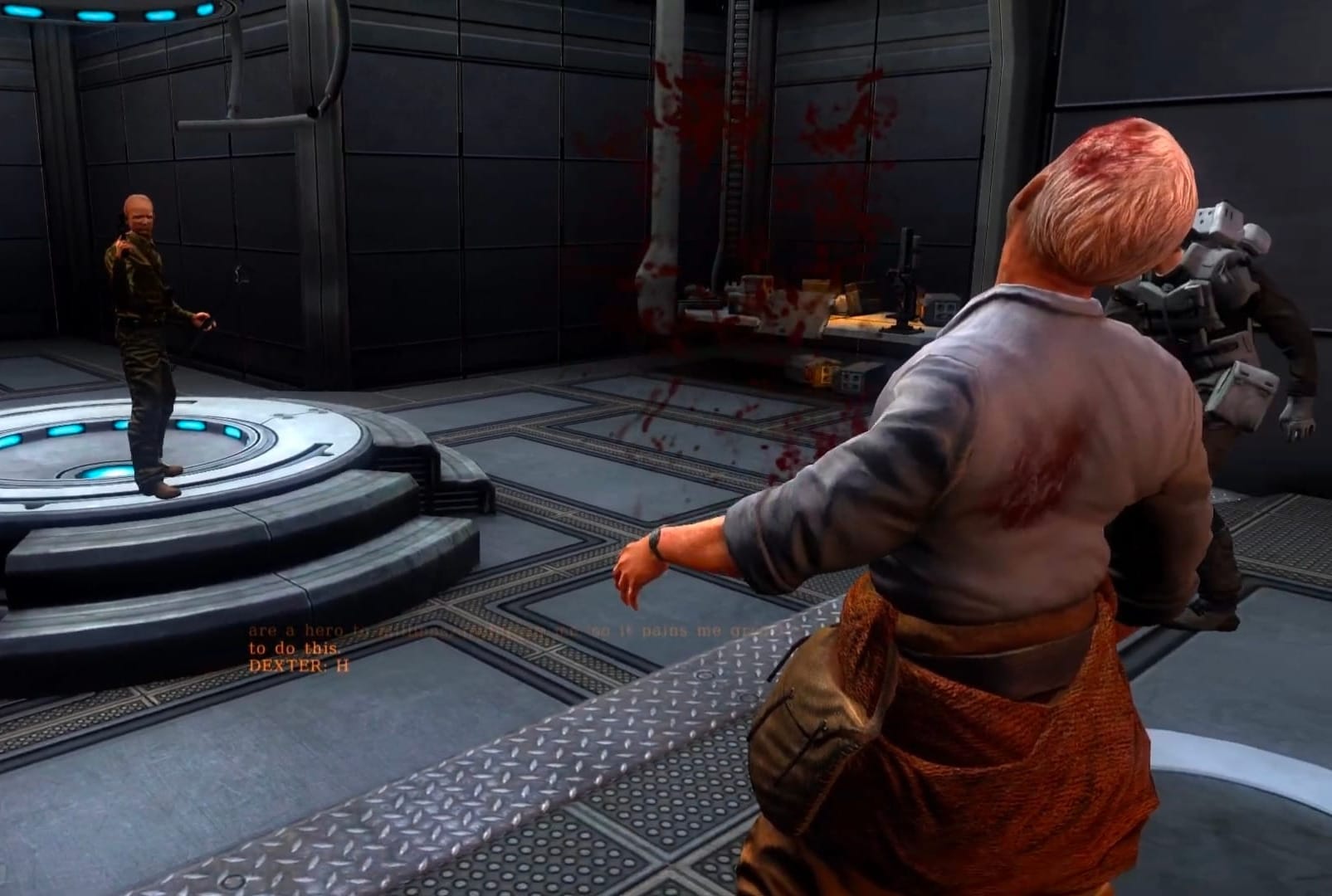
This is one of the more efficient peer-review processes in temporal science.
Future Kronotek explains that its interventions have prevented the plague. It still believes in preserving the timeline. This catastrophe was an exception.
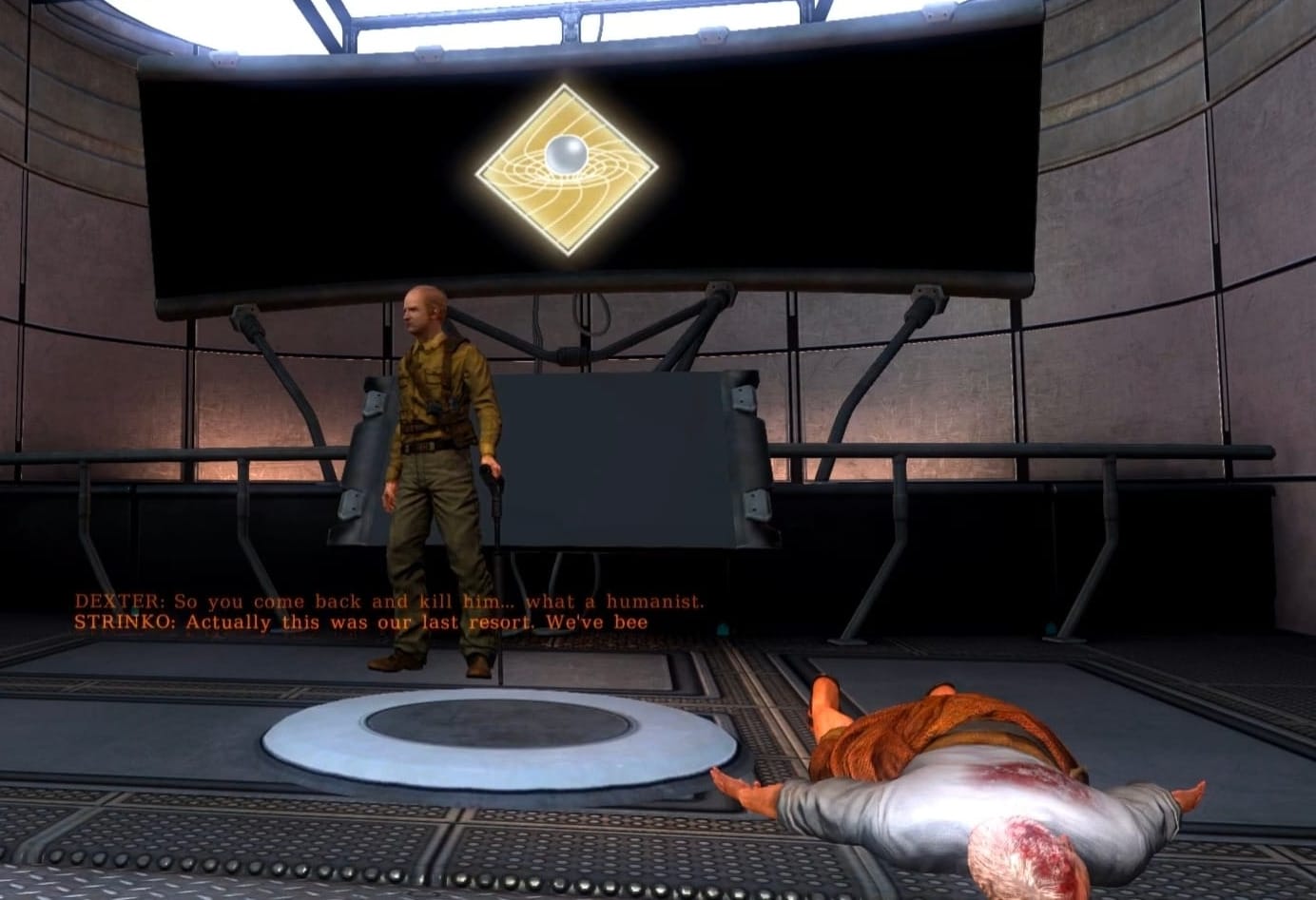
That clarification should concern everyone.
- The institution has not rejected Koell’s distortion.
- It has added a threshold.
Dark days must remain because they teach valuable lessons, unless the day becomes sufficiently dark for future Kronotek’s executive committee.
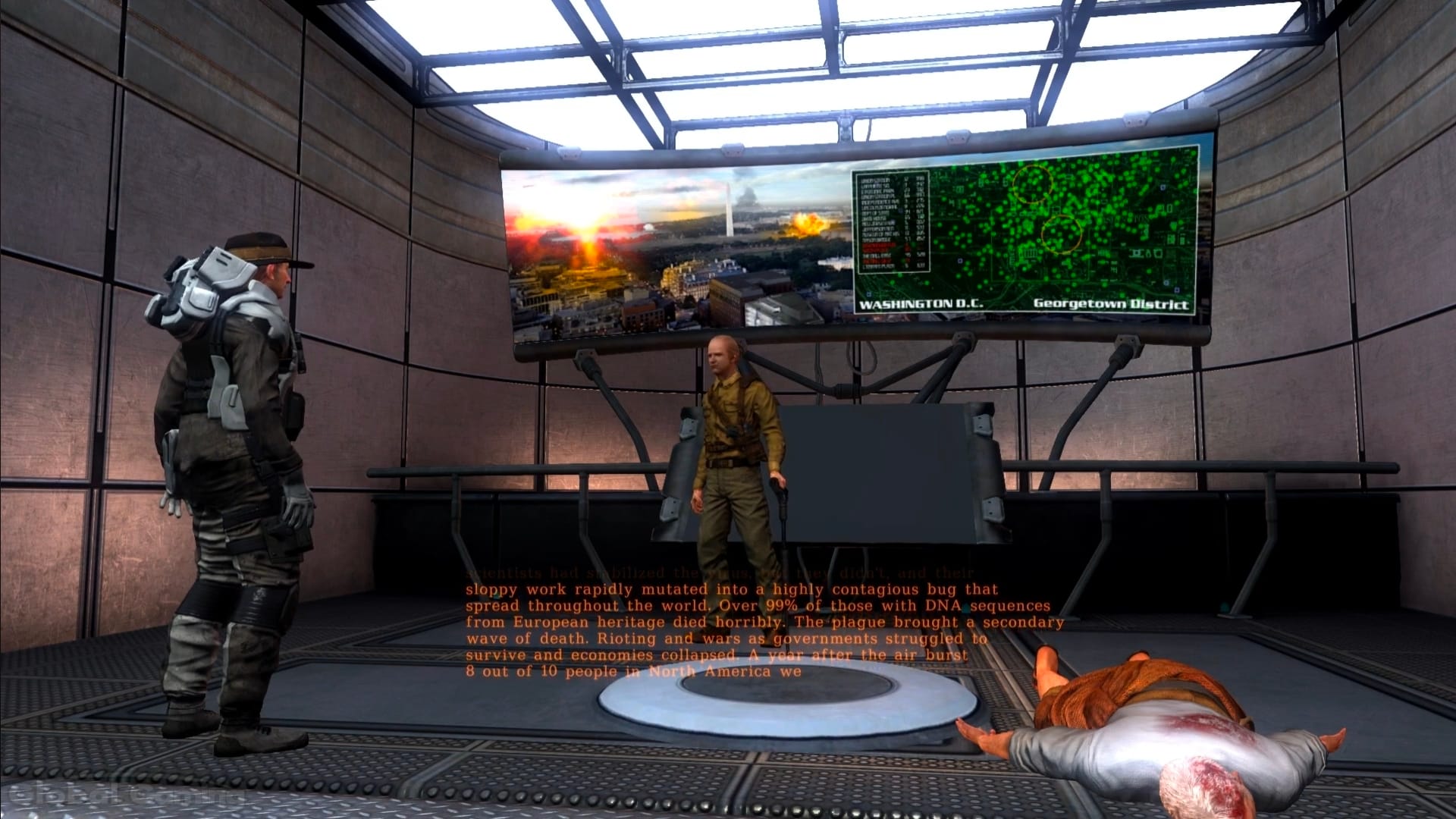
This is better than Koell. Preventing two billion deaths is a serious repair.
This remains an unstable temporal constitution.
- Both Kronoteks agree that history should be administered by Kronotek.
- Both recruit people from archival blind spots.
- Both conduct armed operations in the past.
- Both decide which lives are load-bearing.
- Both treat their preferred future as the legitimate output.
The disagreement concerns which catastrophe exceeds the preservation budget.
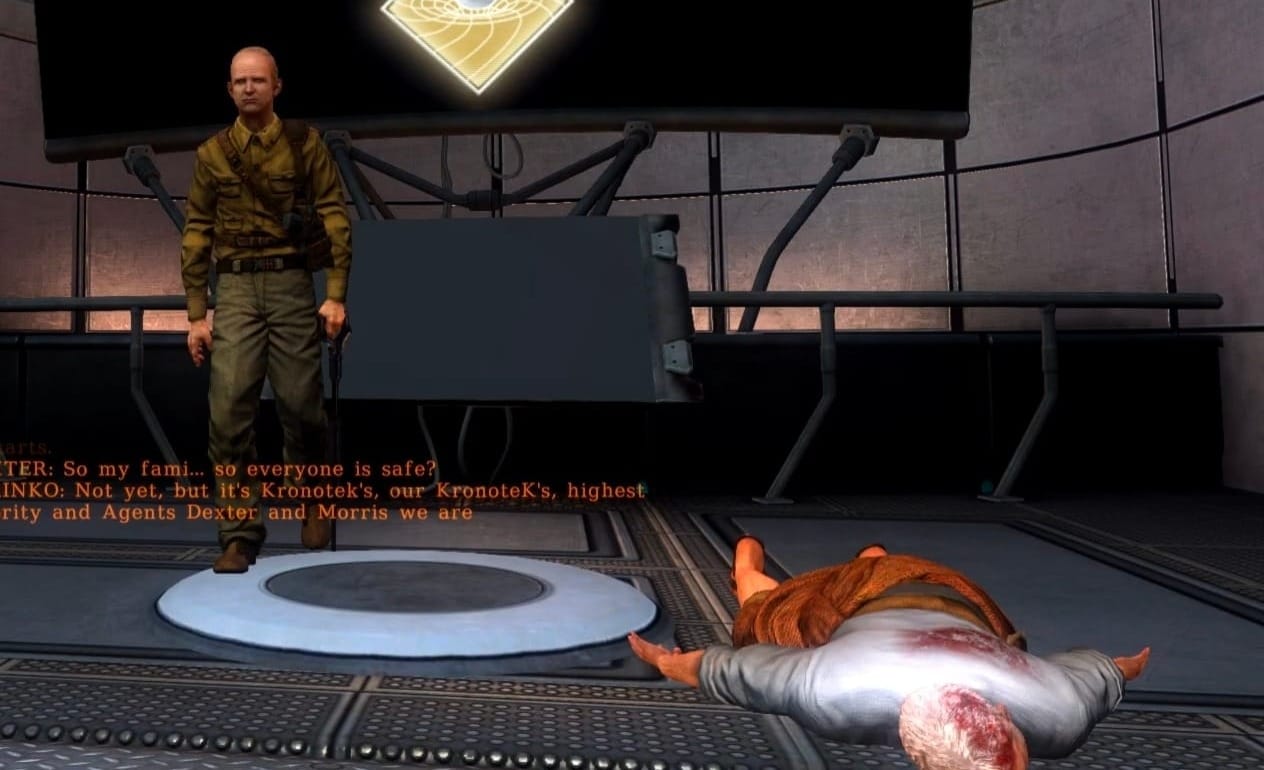
The Opposition is not the opposite of Kronotek. It is literally just Kronotek after discovering discretion.
The One Exception.
The phrase “one exception” exposes this institution’s whole problem.
An ethical temporal practice cannot be built from absolute non-intervention, plus emergency improvisation. Once time travel exists, the field requires explicit principles for action under uncertainty.
- Which contractions justify intervention?
- Which loci carry standing?
- How should historical continuity be weighed against preventable catastrophe?
- What level of causal confidence is required?
- Who bears the uncertainty burden?
- Who authorizes action?
- What records remain after a correction?
- Can the institution benefit from the timeline it chooses?
- How are lost paths counted?
Kronotek answers these questions with a founder, a lady who looks at the computers, field agents, and a future man who appears to shoot the founder when the death toll becomes too embarrassing.
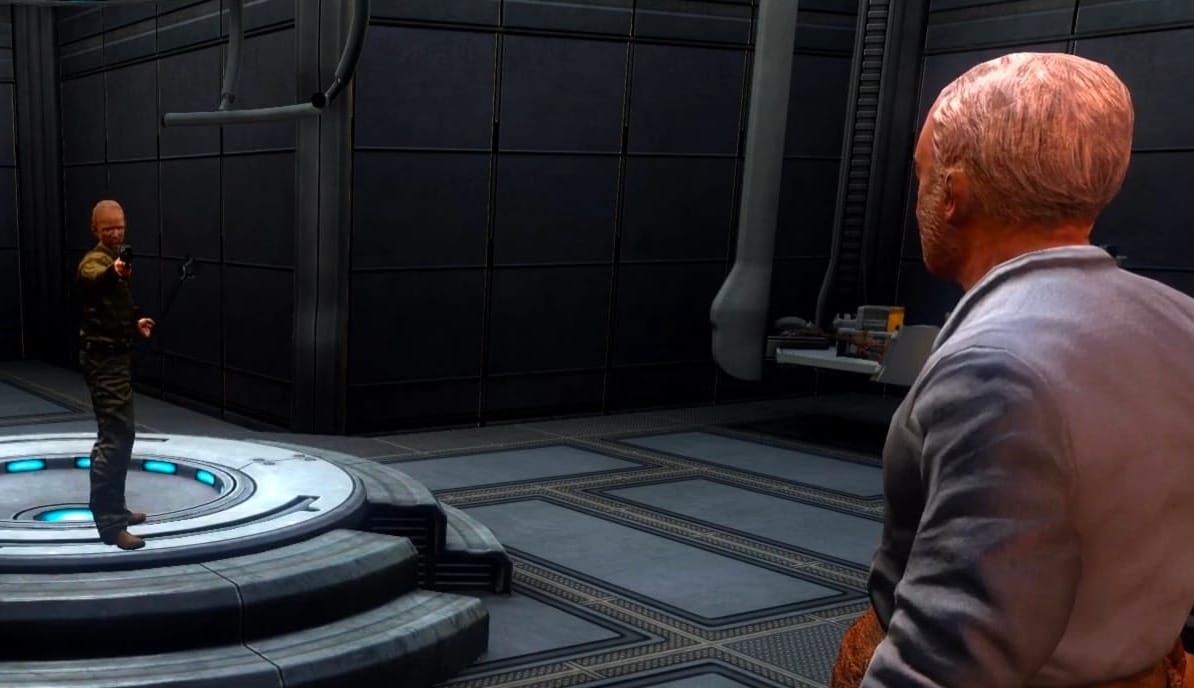
This institution has no stable repair doctrine. It has a sacred timeline and an exception gun.
That is why this schism was inevitable.
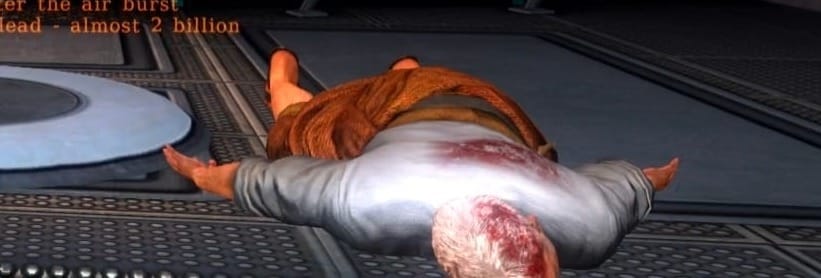
Koell’s absolute preservation rule cannot survive contact with sufficiently catastrophic downstream knowledge. Future Kronotek’s exception cannot remain singular once the organization admits that history can contain repairable wounds.
- After the plague, why not prevent another genocide?
- Why not stop an industrial disaster?
- Why not preserve a species?
- Why not alter a war?
- Why not save a child whose descendants produce no famous technology?
- Why not save Morris, instead of conscripting him?
The field does not organize itself around one convenient exception.
Once the timeline loses sacred immunity, Kronotek needs to develop actual ethics.
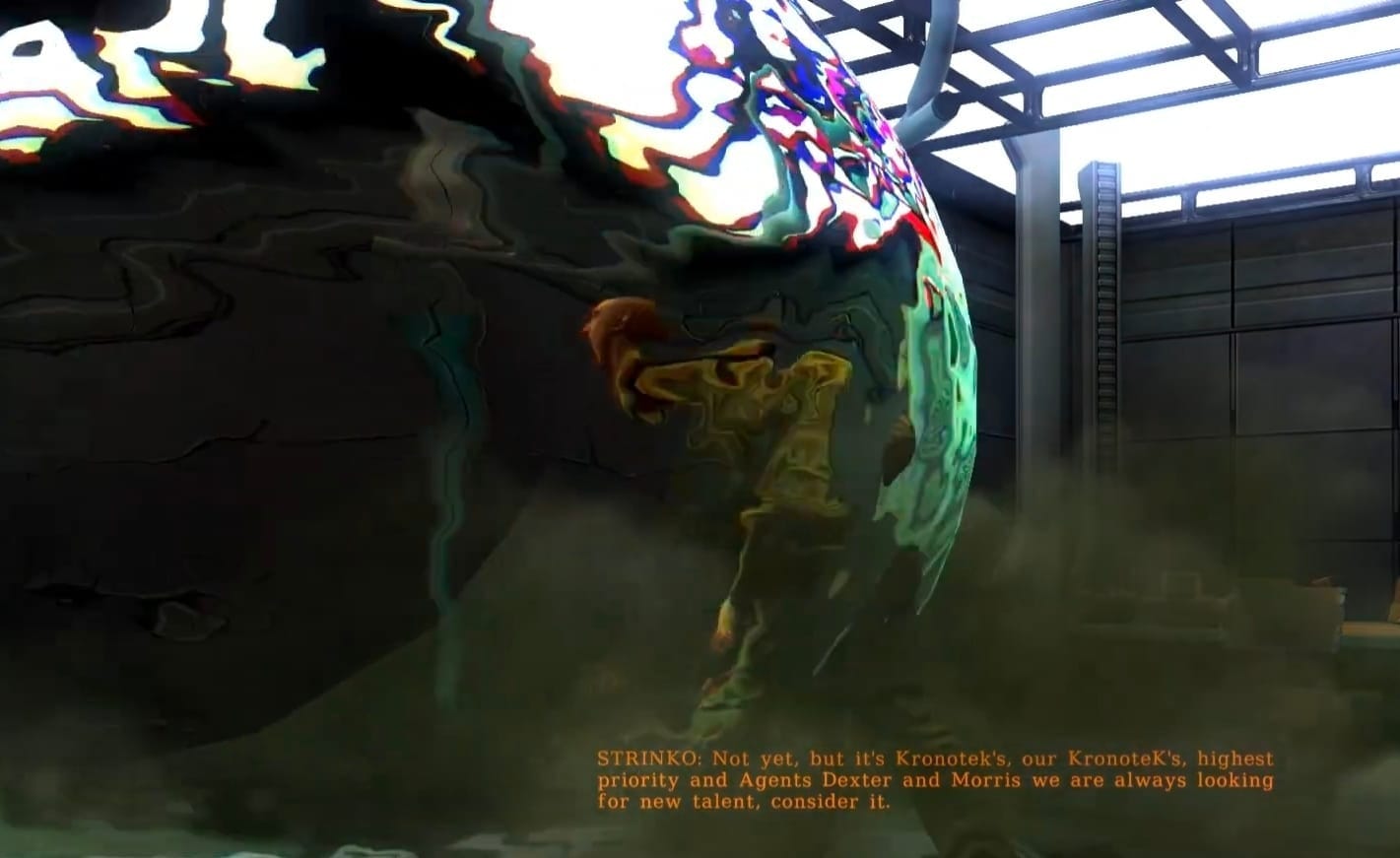
The game ends before anyone commits this administrative error.
The Distortion of Doctor Koell.
Doctor Koell is not a failed field analyst in the simplest sense. He sees several real structures.
- History is interconnected.
- Causal intervention can produce wide downstream effects.
- Later agents inherit conditions they did not choose.
- Erasing a wound can erase evidence, memory, identity, warning, and repair structures built around it.
- A temporal institution should be extraordinarily cautious.
All true.
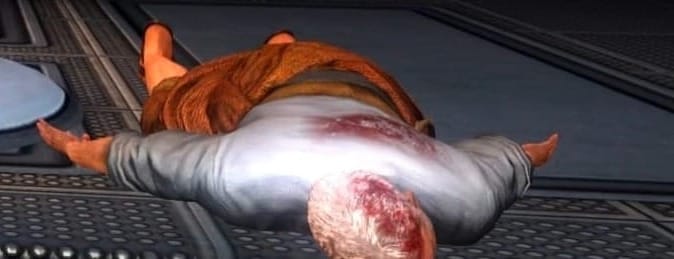
His distortion enters when caution becomes a duty to preserve every known closure.
Koell treats historical existence as retrospective authorization.
- Whatever produced the present becomes necessary because it produced the present.
This is the sacred remainder problem at civilizational scale. The current world carries traces of every wound in its ancestry. Koell mistakes those traces for votes cast by the dead in favor of the wound.
The victims did not authorize the future by contributing causally to it. The fact that later lives grew around their absence does not mean their absence was owed.
Koell’s moral universe contains only two options:
- Preserve history exactly.
- Destroy the conditions that made us.
Modal Path Ethics refuses the binary.
Repair does not require declaring the past unreal.
Preventing a wound does not mean despising everyone formed downstream of similar wounds.
Acknowledging that a different history would contain different loci does not automatically make intervention forbidden. It makes the decision morally serious, resistant, and burdened by remainder.
Koell avoids that difficulty by making the known timeline sacred.
Then, his future organization kills him to preserve a different version of it.
Perfect Archaeology.
Kronotek’s greatest wasted possibility may be that it already possesses the beginnings of a better temporal practice.
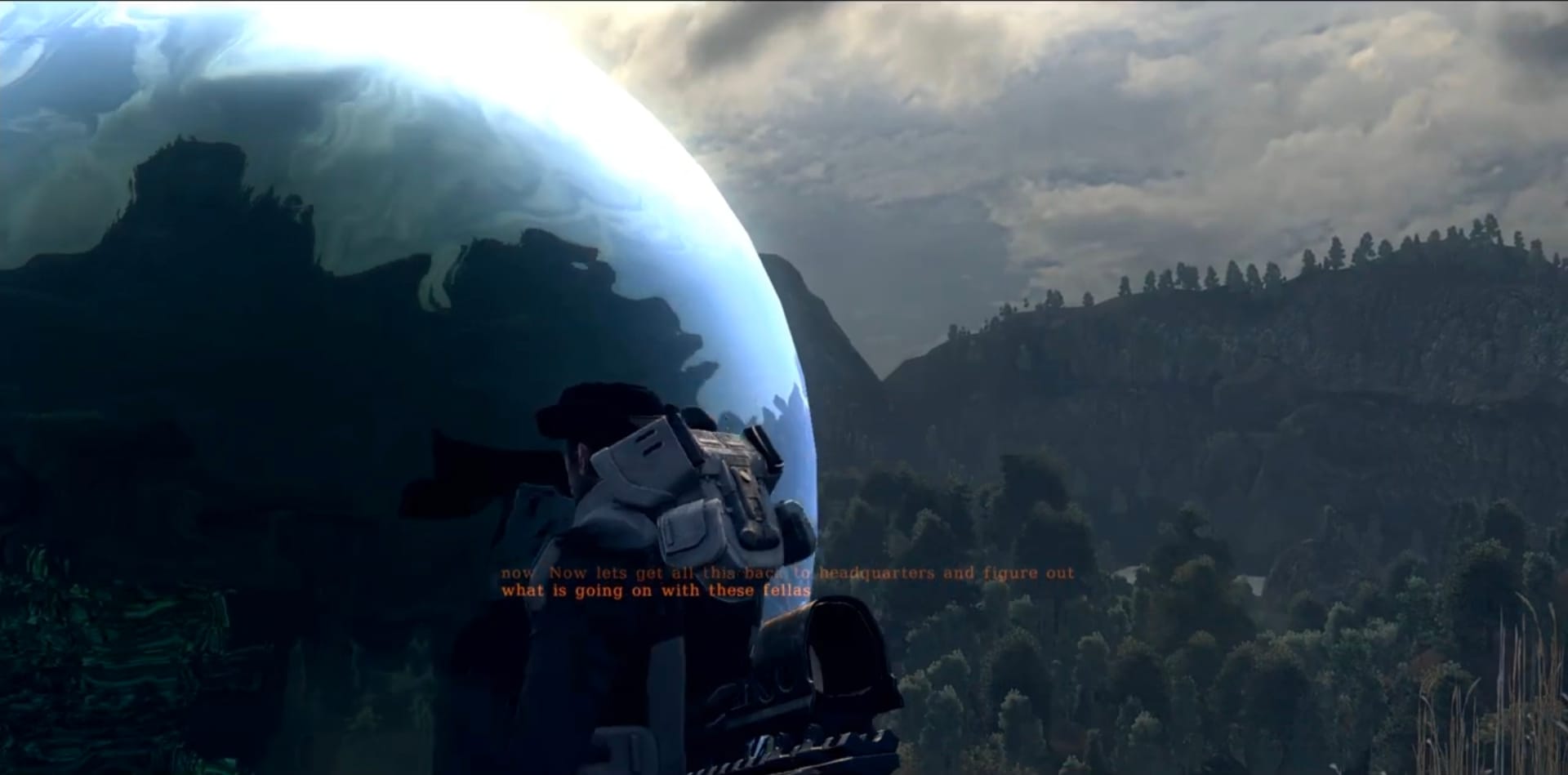
Its technology can identify disturbances across centuries. It can track causal chains, locate displaced persons, and determine that specific historical deviations lead toward specific future technologies and catastrophes.
With that capacity, Kronotek could become an archaeological institution of impossible power.
- It could recover the missing.
- It could locate bodies.
- It could restore lost names.
- It could reconstruct destroyed evidence.
- It could answer historical questions without abducting the people involved.
- It could expose erased crimes, lost ecologies, burned archives, silenced witnesses, forgotten cultures, suppressed inventions, vanished languages, and the actual causal structures behind inherited myths.
- It could make historical opacity retreat.
Instead, Kronotek uses temporal knowledge to decide which opaque lives are safe to steal. This is the inversion at the center of the game.
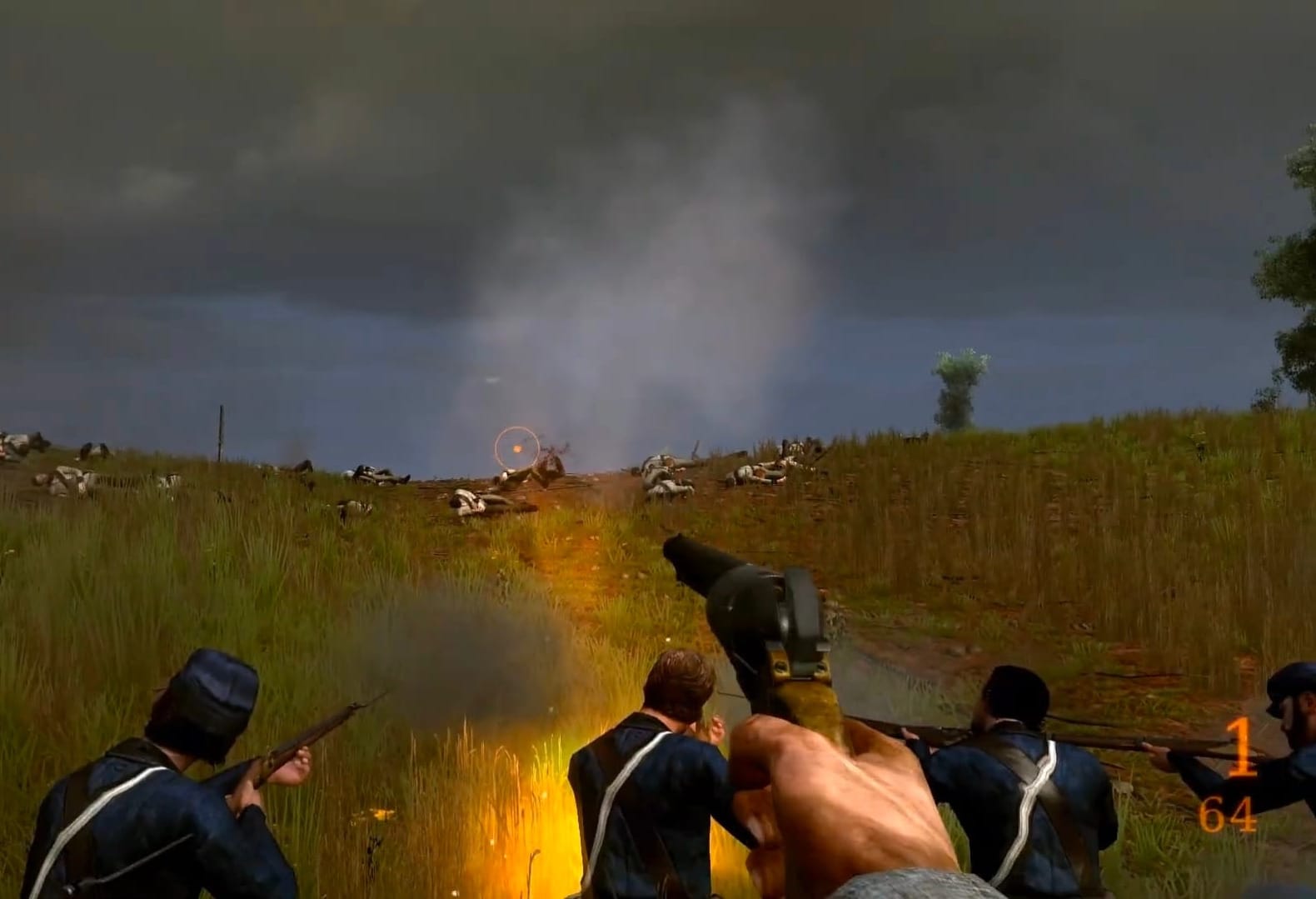
The same technology that could end archival disappearance becomes a labor-recruitment tool built from archival disappearance.
The ethical command is straightforward:
- Lost to our records does not mean never recorded.
The field retained more than we did. A good temporal institution would recover the trace.
Kronotek abducts the locus.
Debts.
Kronotek’s temporal order produces four debts.
- Archival Debt
The organization treats incomplete records as evidence that certain people have no important continuation. The burden falls most heavily on lives already poorly served by historical archives.
- Continuance Debt
Morris and Dexter are removed from their own paths and made dependent on the organization that extracted them. Rescue becomes ownership of their remaining future-space.
- Canonical Debt
Kronotek treats its own origin timeline as the natural form of history. Alternate continuations are closed because they fail to reproduce the institution’s remembered world.
- Instructional Debt
Koell treats historical victims as compulsory teachers. Their suffering is preserved because later generations value the lessons and identities built downstream.
None of these debts disappears because Kronotek occasionally prevents a catastrophe.
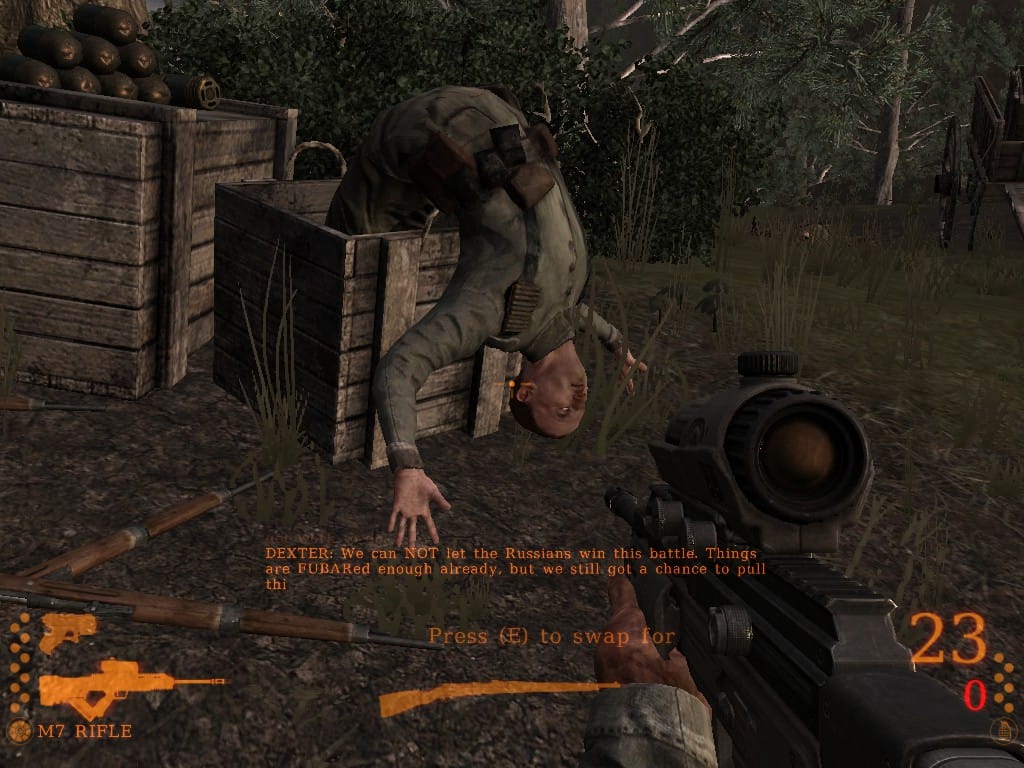
The prevention of the racialized plague is good. It does not retroactively legitimize the institution’s entire temporal sovereignty.
A repair can occur inside a distorted institution. That does not make the institution is repaired.
Ruling.
Darkest of Days gives humanity working time travel and asks what we should do with it.
Its answer before we can respond is to rescue a missing cavalryman, teach him to use twenty-second-century weapons, deploy him through Antietam, Tannenberg, a Nazi prison camp, and Pompeii, then invite him into an institutional civil war over whether two billion deaths qualify as historically educational.
This is very stupid. It is also structurally useful.
Doctor Koell correctly perceives that history forms the agents who inherit it. He correctly fears casual intervention. He correctly understands that removing a wound can alter every continuation built downstream.
He distorts these truths into an obligation to preserve every formative wound.
Kronotek then turns that distortion into policy.
- The archive’s gaps become recruitment pools.
- Missing people become causal surplus.
- Ancestry becomes infrastructure.
- The remembered timeline becomes nature.
- Future weapons become preservation tools.
- Atrocity becomes curriculum.
Koell’s final defense is that dark days teach valuable lessons and define who we are.
Dark days can teach. That does not mean the dead owed us the lesson.
- The past is not sacred because it happened.
- The present is not entitled to every wound that produced it.
- The archive does not decide which lives were real.
- And a temporal institution does not become legitimate by calling its preferred output history.
A good time machine would widen contact with the past while minimizing intervention. It would recover traces, restore names, expose suppressed truths, and help living agents repair inherited fields. It would begin from humility before everything it could not yet see.
Kronotek begins from the opposite premise.
- If the record cannot see you, you are available.
- If the institution remembers an outcome, the outcome is proper.
- If catastrophe shaped the future, catastrophe must remain.
- Until, of course, the future becomes bad enough to shoot the founder.
The Opposition leaves Morris and Dexter an open time bubble and offers them work.
Dexter looks toward the camera.
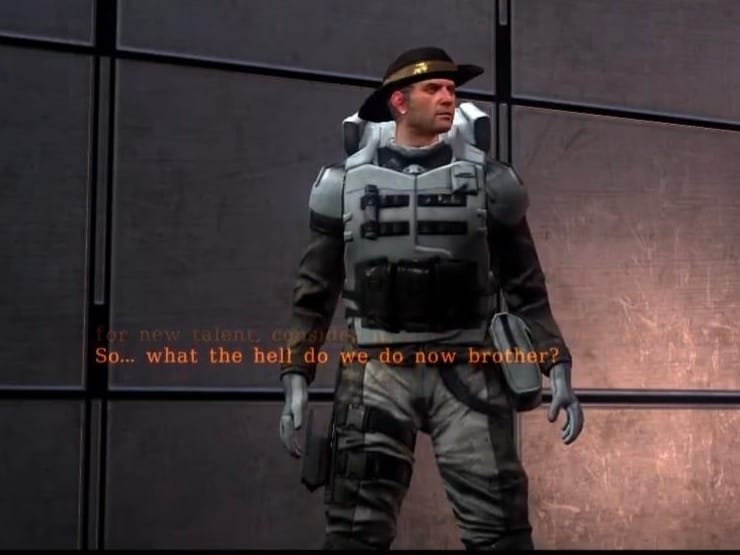
“What the hell do we do now, brother?”
The field presents one immediate recommendation:
Do not join the second Kronotek.