Pragmatism and the Moral Field
An idea is an instrument. Modal Path Ethics asks what the instrument makes reachable.
Pragmatism has suffered one of philosophy's most successful hostile takeovers.
The name now tends to arrive through management language.
Be pragmatic.
Do what works.
Stop worrying about theory. Accept the available compromise. Use the instrument that produces the desired result. Move the project forward.
Leave the difficult metaphysics to someone whose calendar has fewer meetings.
This version of pragmatism is extremely useful to anyone who already controls the definition of success.
A company can call layoffs pragmatic. A military can call escalation pragmatic. A government can call secrecy pragmatic. A platform can call engagement pragmatic. A frightened institution can call the removal of every difficult person pragmatic. Once the local objective has been protected, this little word arrives to explain that reality required the decision all along.
The proud American pragmatist tradition is much more dangerous than this little office spell.
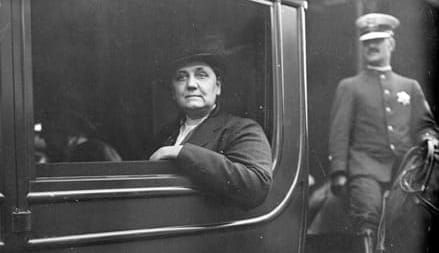
Charles Sanders Peirce, William James, John Dewey, and Jane Addams did not build a philosophy of convenient surrender.
These people built a family of approaches centered on inquiry, consequence, habit, experience, fallibility, practice, and the way ideas enter life.
They refused the fantasy that thought can remain cleanly outside the world it describes. A concept has practical bearings. A belief shapes action. A habit stabilizes a path. An institution trains perception. A public forms around consequences that overflow private intention. Democracy has to be lived as a method of shared correction or it decays into ceremony.
Modal Path Ethics has been behaving suspiciously like this for a while.
It actively builds field instruments. It treats laws, markets, money, property, language, scientific methods, sacred forms, security doctrines, games, equations, articles, and artificial intelligence systems as different tools that enter reality and alter the available next moves. It sends theory into factories, forests, hospitals, wars, platforms, courtrooms, disaster sites, fictional worlds, and highly questionable board positions. It distrusts any instrument that cannot answer to what happens after use.
The resemblance is real enough to require placement.
As always, the divergence is equally real.
- Pragmatism asks what ideas do in experience, inquiry, and practice.
- Modal Path Ethics asks what the doing does to the reachable future of reality.
That difference places Modal Path Ethics beside pragmatism without letting it disappear inside the school.
The Pragmatist Workshop.
There is no single pragmatism.
Peirce, James, Dewey, and Addams share a family resemblance, then argue across it. Later pragmatists widen the disagreement further. The school contains realists, pluralists, naturalists, democrats, religious experimenters, logicians, social reformers, and thinkers who become increasingly suspicious of the entire philosophical appetite for foundations.
The common workshop still has recognizable equipment.
Peirce: Inquiry and Practical Bearings.
Peirce begins from doubt, belief, inquiry, and the practical consequences through which a concept acquires determinate meaning. A belief is not a decorative sentence stored somewhere behind the eyes. It forms a habit of action. To understand an idea, one traces the conceivable practical differences its truth would make.
This is already close to the instrument language of Modal Path Ethics.
A concept becomes serious when it can change orientation. An account of harm should alter what an institution records. An account of reachability should alter which options appear available. An account of burden transfer should make hidden costs harder to route away from the actor who benefits. If a term makes no difference to inquiry, action, perception, or correction, the term may be performing philosophy as furniture.
Peirce also gives pragmatism its strongest early discipline of fallibilism. Inquiry remains answerable to a reality that exceeds any present investigator. The fact that a belief feels settled does not settle the field. A community can be confident and wrong. An investigation can improve because the object resists the current account.
Modal Path Ethics recognizes this immediately.
The field answers back.
A framework may arrive with beautiful concepts, a coherent argument, and the best available intentions. Reality can still reject the fit. The harmed locus may remain unheard. The intervention may open a path nobody modeled. The instrument may create a new resistance profile while continuing to report success.
The correction is part of the work.
James: Lived Consequence and Pluralism.
William James makes pragmatism feel less like a laboratory method and more like a philosophy that has entered an actual human life.
He asks what a belief means for the person living through it. He attends to temperament, religious experience, moral risk, uncertainty, action before proof, and a world whose genuine possibilities may require participation before they can become facts. His pluralism resists the demand that reality close into one completed block under a single explanatory authority.
Modal Path Ethics shares the resistance to a completed moral world.
A field contains multiple loci, multiple scales, multiple histories, and multiple live continuations. No single human description owns all of them. The next ethical transition may depend on facts that are distributed across people who do not share a vocabulary, institutions whose incentives conceal their own effects, and future loci that cannot yet testify.
James also understands that ideas can become true in the movement of experience without reducing truth to whatever happens to feel useful in the moment. The popular caricature turns his pragmatism into permission for convenient belief. The actual pressure is harder: what relation does a belief sustain with the rest of experience, what work can it survive, what future inquiry can it enter, and what costs arrive when it is lived?
Modal Path Ethics accepts this pressure while keeping a sharper distinction between usefulness and moral reality.
A belief can help someone endure and still damage another locus. A story can coordinate a community and still harden a false enemy. A sacred image can preserve a wounded people and later become title over the living. A useful belief may remain useful because its costs have been moved somewhere the believer does not have to look.
James gives Modal Path Ethics pluralism and existential seriousness.
Modal Path Ethics returns with a burden audit.
Dewey: Instruments, Habits, and Publics.
John Dewey is the closest major pragmatist neighbor.
He treats inquiry as an active reconstruction of troubled situations. Problems do not arrive as abstract puzzles detached from life. A situation becomes indeterminate. Existing habits no longer coordinate action. Inquiry identifies relations, tests possible transformations, and works toward a more stable and intelligent field of conduct.
Ideas function as instruments in this process.
An instrument is judged through use, revision, consequence, and the quality of the situation it helps produce. Knowledge grows inside transactions among organisms, environments, histories, and practices. The observer belongs to the world being observed. Education trains habits of perception and action. Democracy depends on communication, participation, and the social conditions under which shared intelligence can form.
Modal Path Ethics is deeply Deweyan in method.
It begins from troubled fields. Harm has already occurred. Available options are constrained. The clean solution is gone or was never real. The work becomes reconstruction under damage: identify the loci, map the live paths, find the transferred burdens, test the resistance structure, and choose the transition that preserves the most truthful and repairable future still reachable.
Dewey also gives the strongest pragmatist account of habit.
Habit is not a tiny private ritual attached to an isolated person. Habit is a stabilized relation between body and environment. Institutions are organized habits. Professions are trained habits. Markets, courts, schools, militaries, platforms, and families teach repeated ways of seeing and moving. The rule does not have to command every act once the field has learned the pattern.
Modal Path Ethics can translate this directly:
- A habit is a transition that has learned where to stand.
Repeated local moves become moral architecture. A form asks the same question every day. A supervisor rewards the same silence. A platform promotes the same emotional temperature. A court recognizes the same kind of claimant. A family routes tension through the same child. A military converts uncertainty into the same target logic. Each repetition lowers resistance to the next repetition and raises resistance against alternatives.
The habit becomes a path.
The path becomes the field.
Dewey's account of the public reaches even closer. A public forms when the indirect consequences of action spread beyond the people who initiated the action and require organized recognition and response. Private acts generate shared conditions. Industrial pollution, financial decisions, war, infrastructure, disease, media systems, and technological deployment create consequences whose affected populations need political form.
Modal Path Ethics sees a public as the field becoming politically noisy around transferred burden.
The public does not begin because everyone has agreed to be together. It begins because someone else's transition has arrived in their lungs, wages, water, streets, attention, data, safety, or future.
Addams: The Room Where the Instrument Works.
Jane Addams prevents this article from treating pragmatism as a theory produced by three men and later improved through a footnote about social application.
Her work at Hull House, her social ethics, her democratic practice, and her peace writing place pragmatism inside the crowded field where inquiry has to survive difference, poverty, migration, labor conflict, gendered burden, urban institutions, war pressure, and the limits of benevolent certainty.
Dewey gives Modal Path Ethics the instrument.
Addams gives it the room where the instrument has to work.
Her social ethics begins from relation across unequal positions. Moral certainty weakens when the observer enters the lives that policy has compressed into categories. The reformer must learn from the field rather than arriving as the completed source of repair. Democracy becomes association, reciprocal interpretation, shared work, and the slow construction of conditions under which people can participate in the decisions shaping their lives.
This is extraordinarily close to care as Modal Path Ethics understands it.
Care is sustained availability to contraction as contraction. It requires contact without immediate seizure. Addams practices this socially. The settlement is neither a distant charity office nor a purity retreat from politics. It is an instrument for living near enough to consequences that the favored interpretation can be corrected.
Her peace work also belongs centrally here. War compresses distant populations into strategic objects. Patriotism, fear, vengeance, and command can turn human plurality into one authorized national story. Addams understands peace as an active reconstruction of relation, material dependence, and social imagination. Peace requires more than disapproval of violence. It requires institutions capable of carrying conflict without converting persons into payable debt.
Modal Path Ethics can use that entire inheritance.
It also has to ask what the settlement, the democracy, the inquiry, and the peace instrument make reachable after they enter the field.
The Convergences.
I. Ideas Enter the Field.
The deepest convergence is simple.
- Ideas do things.
A concept can change what a person notices. A classification can decide who receives care. A metric can reorganize labor. A legal fiction can move property. A religious doctrine can preserve memory or authorize title. A strategic theory can convert another population's future into terrain. A software interface can make one action easy and another difficult enough to disappear.
Pragmatism refuses to treat ideas as passive representations floating above action.
Modal Path Ethics refuses to treat instruments as neutral containers.
Once an idea enters use, it becomes part of the causal field. Its meaning includes the transitions it supports, the habits it stabilizes, the distinctions it preserves, and the futures it makes harder to imagine.
This is why Modal Path Ethics keeps producing those dry Field Instruments articles.
Money is an instrument. Property is an instrument. Accounting is an instrument. Markets are instruments. Law, language, mathematics, science, democracy, martyrdom, sacred title, deterrence, and strategic depth are all instruments. Each can preserve real goods. Each can become sovereign over correction. Each has a local success condition that may conceal damage elsewhere.
- Pragmatism gives the general permission to analyze thought through use.
- Modal Path Ethics turns that permission into a reachability audit.
II. Consequences Belong to Meaning.
Pragmatism places consequences inside philosophical analysis rather than treating them as unfortunate implementation details.
A belief that produces no conceivable difference is empty in one pragmatist register. A policy whose lived effects contradict its stated purpose has failed in another. An institution cannot establish its goodness by describing the value it intended to serve while its operations repeatedly generate the opposite field.
Modal Path Ethics begins even further downstream.
- The transition is the moral object.
Intentions, reasons, meanings, and procedures remain relevant. They help predict future conduct, distribute responsibility, build trust, and design repair.
They cannot and do not overwrite what the transition did to reachable future-space.
A benevolent institution can still close futures. A democratically authorized action can still export burden. A scientifically sophisticated system can still become a distortion field. A successful intervention can still train the field toward a larger later collapse.
The consequences do not arrive after the ethics.
They are already inside it.
III. Anti-Spectator Philosophy.
Pragmatism has little patience for the philosopher who observes reality from a clean balcony and calls the distance objectivity.
Knowing is an activity inside the world. Inquiry changes the relation between investigator and situation. The instrument used to see becomes part of what can be seen. The question selects a field. The test creates new conditions. The answer returns through a body, institution, language, and history.
Modal Path Ethics lives in the same compromised room.
A moral framework does not receive innocence by becoming abstract. It remains an instrument acting on readers, decisions, institutions, and future descriptions. Its concepts can clarify. They can also capture. Reachability can become a slogan. Better can become a laundering device. Field language can become a way of sounding structurally serious while avoiding the actual harmed person in front of the analyst.
This is why Modal Path Ethics has to remain corrigible.
It is also why applied cases are not illustrations attached after the theory. The applied cases are contact tests. They show whether the framework can enter a difficult field without converting every object into proof of itself.
The field does not wait for the theory to finish looking.
IV. Fallibilism and Half-Stupidity.
Pragmatism treats fallibility as a condition of inquiry rather than an embarrassment to be hidden after publication.
Modal Path Ethics needs this more than most moral frameworks because its subject is damaged, partially known, path-dependent reality. The field is simply too wide, the consequences too distributed, and the loci too differently positioned for any first reading to deserve final authority.
This is one of the reasons Modal Path Ethics is Half-Stupid (the other one is me).
A fully self-certain framework would need every field to confirm its validity. Evidence of mismatch would become user error, corruption, misunderstanding, or enemy action. The instrument would protect itself by redescribing correction as threat. This is continuance capture.
Fallibilism keeps the exit open.
V. Habits Generate Moral Worlds.
Dewey's habits and Modal Path Ethics' generated fields fit together with unusual precision.
A moral world is rarely created by one dramatic command. It grows through local repetitions.
The receptionist is trained to refuse the same document. The nurse is given the same impossible staffing ratio. The moderator learns which report can be ignored. The manager learns which cost belongs outside the dashboard. The officer learns which person is safest to treat as danger. The family learns which truth breaks the room. The politician learns which future population has no vote in the present meeting.
Each act may appear locally manageable. The sequence generates the field.
Pragmatism helps explain why reform cannot stop at announcing a new principle. The old habits still carry the previous world. The environment still rewards them. The forms, schedules, status relations, budgets, interfaces, and emotional reflexes still make the old transition easier.
Modal Path Ethics adds that a changed rule has not repaired the field until better continuation becomes more reachable in practice.
VI. Publics Form Around Burden.
Dewey's public begins with indirect consequences.
Modal Path Ethics describes burden transfer.
The overlap is immediate. A transition initiated in one region of the field creates costs elsewhere. The affected loci may be separated by distance, class, time, jurisdiction, species, generation, or technical opacity. Political work begins when those consequences become legible enough to organize response.
A data center creates a water public. A platform creates an attention public. A chemical plant creates a respiratory public. A war creates refugee, casualty, debt, trauma, and reconstruction publics. An artificial intelligence deployment creates labor, authorship, trust, energy, education, surveillance, and epistemic publics.
Some publics cannot yet speak.
Future generations cannot attend the hearing. A damaged wetland cannot file a comment. A pre-life future has no representative. An unknown locus may be destroyed before the field has learned how to recognize it.
Pragmatism gives Modal Path Ethics the political form of indirect consequence.
Modal Path Ethics widens the constituency beyond the current community of inquiry.
VII. Democracy as Correction Instrument.
Dewey and Addams treat democracy as a mode of associated life, communication, education, and shared inquiry. Voting remains one instrument inside a much larger democratic field.
Modal Path Ethics can stand very near this account.
Democracy is valuable where it keeps correction reachable. It creates channels through which affected loci can contest descriptions, expose burden, organize knowledge, replace leaders, alter rules, and preserve the public trace of failure. A democracy can be noisy because the field has not been compressed into one authorized voice.
That noise is often evidence of continuance.
Democracy is one of the strongest instruments human beings have built for keeping power answerable after the emergency.
It remains an instrument.
Where Modal Path Ethics Belongs in the Shop.
- Modal Path Ethics is pragmatic in method.
It tests concepts through use, consequence, correction, and field contact. It treats theory as an instrument. It expects concepts to alter perception and action. It builds applied cases, games, protocols, technical tools, and repair vocabularies rather than preserving philosophy as commentary upon itself.
- Modal Path Ethics is realist in moral foundation.
Harm does not become real when a community recognizes it. A future can be closed before anyone notices. A locus can be burdened without language for the burden. An ecosystem can lose continuance while every authorized institution reports normal operation. A pre-life field can be sterilized before inquiry, experience, or human interest exists.
- Modal Path Ethics is modal in structure.
The relevant consequence is wider than the next observable outcome. Ethical analysis asks what the transition did to the field of reachable continuation. A short-term success can be a conduit to later lockout. A path can remain logically possible while resistance makes it practically unreachable. A local expansion can be purchased by contraction elsewhere.
- Modal Path Ethics is repair-oriented in practice.
It works inside damaged fields where good may no longer be fully reachable. Better names the least-closing available transition. The framework does not promise that intelligence, democracy, inquiry, or experimentation will always recover the field. It asks what can still be preserved, reopened, or handed forward here without disguising the remainder.
So the compact placement is this:
- Modal Path Ethics is field pragmatism with a realist account of harm.
The foundation remains in extance.
The Divergences.
I. “What Works” Can Still Destroy the Field.
The phrase "what works" becomes very dangerous as soon as the success condition is local.
A plantation works for the owner.
Redlining works for protected property values. A body count works for a reporting system. Engagement maximization works for a platform. Strategic bombing works for an operational objective. A purity ritual works for group cohesion. A sealed religious system works for retaining members. An authoritarian emergency works for suppressing disorder.
Each instrument can satisfy the metric that selected it. The field can still be collapsing.
This is the core Modal Path Ethics correction to popular pragmatism and to any philosophical pragmatism careless enough to resemble it.
Function is indexed.
- Works for whom?
- Works toward what?
- Works for how long?
- Which loci carry the cost?
- Which futures are made unreachable by the success?
- Which resistance profiles thicken while the dashboard improves?
A working instrument can be a closure machine.
II. Usefulness Does Not Create Moral Truth.
Pragmatists disagree sharply about truth.
Peirce's realism, James's account of truth in experience, Dewey's theory of inquiry, and later anti-representational approaches cannot be folded into one claim without doing violence to the tradition.
So Modal Path Ethics marks the divergence carefully. Its opponent is any account that makes successful inquiry, useful belief, social justification, or communal agreement constitutive of moral truth.
The field can be harmed before a community learns to ask the question.
A planet can lose the conditions for life before observers exist. A species can lose a migration path before law recognizes habitat. A future person can inherit a closed field before becoming present to any discourse.
A person can be rendered socially unreadable while the surrounding community remains sincerely convinced that its procedures are fair.
Inquiry discovers, models, and responds to these facts. Inquiry does not grant them existence.
This places Modal Path Ethics closer to Peirce's realism than to later pragmatisms that treat truth primarily through vocabularies, justification, or conversation.
Even there, Modal Path Ethics keeps its own primitive.
The object of moral realism is the path-structure of extance: real continuance, real foreclosure, real resistance, real burden.
III. The Community of Inquiry Is Too Small.
Pragmatism often locates correction in a community of inquiry.
This is one of its greatest strengths. Knowledge is distributed. Error can be exposed through other perspectives. Inquiry improves when no single investigator owns the conditions of recognition.
But the moral field remains larger than the inquiring community.
Some affected loci cannot participate. Some have been excluded.
Some do not possess language. Some belong to the future. Some belong to ecologies whose continuance exceeds human preference. Some may remain unknown until the transition that destroys them has already occurred.
A perfectly democratic inquiry among present humans can still authorize pre-life harm, ecological foreclosure, or burden transfer into generations absent from the room.
The community must therefore answer to a field it cannot fully contain.
Modal Path Ethics values inquiry because inquiry improves contact.
But contact remains accountable to extance.
IV. Experiment Has a Major Irreversibility Problem.
Pragmatism loves experiment for good reason.
Experiment lets ideas encounter reality. It replaces inherited certainty with testable intervention. It turns philosophy toward learning.
Except some fields cannot survive the test.
A classroom policy can consume a child's educational year. A medical protocol can injure a body. A war plan can destroy a city. An ecological intervention can spread beyond recall. An artificial intelligence deployment can reorganize labor, trust, or information before governance catches up. A nuclear doctrine can test its credibility only under conditions where the test may end the correcting community.
Calling an intervention experimental does not lower its moral weight.
Modal Path Ethics asks whether the experiment preserves a return path.
- What evidence will be collected?
- Who can stop the trial?
- Which harms are reversible?
- Which loci are being used as the material of inquiry?
- What happens if the instrument learns faster than the institution can correct it?
Pragmatic experimentation becomes ethical only where the field retains enough continuance to answer.
V. Meliorism Meets Better.
Pragmatism often carries meliorism: the world is unfinished, intelligence can improve conditions, and collective inquiry can reconstruct damaged institutions.
Modal Path Ethics is temperamentally close to this hope. It refuses to make hope foundational.
Some fields close.
Some institutions metabolize criticism and become stronger through the appearance of reform. Some publics are prevented from forming entirely. Some emergencies destroy the communication channels needed for democratic correction. Some damage leaves no path back.
Better is meliorism after the field has been shot in the leg first.
Better does not promise progress. It identifies the least-closing transition still reachable under damage. That result may preserve only a narrow corridor. It may require restraint, triage, withdrawal, containment, or the truthful acceptance of loss.
Pragmatism reminds Modal Path Ethics that reconstruction is possible.
Modal Path Ethics reminds pragmatism that possibility can be foreclosed.
VI. Democracy Can Become Sovereign.
A democratic instrument can protect correction.
It can also convert authorization into innocence.
Majorities can close minority futures. Publics can be manufactured. Participation can become procedural theater after the material decision has already been made. A community can deliberate sincerely inside a completely distorted field. Voting can distribute responsibility so widely that no actor remains answerable to the burden created.
Democracy therefore has no special exemption from reachability analysis. The question is not whether a decision was democratic in name.
The question is what democratic operation occurred, which loci could act within it, which consequences were represented, what correction paths remained, and what the outcome did to the field.
Modal Path Ethics declines the sacrament.
VII. Practice Cannot Become the Horizon.
Pragmatism pulls philosophy toward practice. Great.
Practice can still become another local enclosure.
The practical world is absolutely full of inherited metrics, normalized harms, impossible deadlines, and actors trained to call their available menu reality. An exclusive focus on actionable intervention can demote truths that have no immediate implementation path. It can make long-range loss appear speculative, unknown loci appear irrelevant, and metaphysical questions appear unemployed.
Modal Path Ethics needs the workshop.
It also needs the horizon beyond the current tools. Extance continues.
A future can be real before anyone knows how to preserve it. A harm can be legible before a repair path exists. An instrument can be ethically necessary to imagine before it is institutionally practical.
Practice tests philosophy. This does not define the full boundary of moral reality.
Lessons.
- Pragmatism teaches Modal Path Ethics that coherence is not enough.
A framework may possess elegant definitions and still fail to guide contact with a damaged field. It may explain every case after the fact while changing no perception before action. It may protect itself through abstraction. Pragmatism asks the theory to work. That demand is healthy.
- Pragmatism teaches that inquiry belongs inside the event.
The analyst is not outside the field. The question, classification, model, and proposed repair all change what becomes reachable. Moral work therefore requires reflexivity about the instrument doing the analysis.
- Pragmatism teaches that habits carry more reality than declarations.
A changed policy with unchanged habits is often a new sign over the old door. Repair must reach the repeated transitions through which the institution reproduces itself.
- Pragmatism teaches that publics have to be built.
Consequences do not organize themselves into representation. The affected must become visible, connected, and capable of acting upon the institutions that distribute burden.
- Pragmatism teaches that democracy is lived.
A ballot cannot substitute for the conditions under which people can learn, speak, associate, contest, and participate in the field shaping their lives.
- Addams teaches Modal Path Ethics to enter the room.
The reformer who never lives near the consequence becomes another spectator with excellent values.
- Most importantly, pragmatism teaches Modal Path Ethics that philosophy can build.
A game can be philosophy. A protocol can be philosophy. A repair practice, interface, curriculum, institution, public inquiry, software project, or technical standard can carry philosophical work into the world. Publication is not the end of thought. Sometimes it is the moment thought finally becomes available for testing.
A theory that cannot enter practice has not stayed pure.
It has stayed unemployed.
Additions.
Modal Path Ethics adds a stricter audit of success.
- Pragmatism asks what an idea does.
- Modal Path Ethics asks which reachable futures survive the doing.
It adds affected loci beyond the current participants in inquiry.
The future child, the damaged ecology, the unknown mind, the pre-life field, the silenced worker, and the population converted into strategic terrain all count before they can become recognized members of a public.
It adds resistance.
A future may remain imaginable while becoming harder to reach. An intervention can preserve formal access and still thicken the medium through which every later repair must move. Pragmatic accounts of consequence become sharper when they track this accumulated drag.
It adds burden transfer.
Success often appears local because the cost has been relocated. The instrument works here by making someone else carry the failure elsewhere. Modal Path Ethics keeps following the load.
It adds the tail.
A repaired field remains the field that required repair. Pragmatic reconstruction can be real without canceling the damage that made reconstruction necessary. The trace remains morally active.
It adds Better.
Inquiry may arrive after every fully good path has closed. The task then is comparison among harmful options without turning the selected option into innocence. Better preserves pragmatism's orientation toward action while denying the fantasy that every solvable problem has survived.
It adds an exit condition for instruments.
A useful instrument should be able to hand off, shrink, fail, receive correction, or disappear when the field no longer needs it. Any instrument that makes itself permanently necessary has begun serving its own continuance.
This obviously includes Modal Path Ethics.
The framework's place near pragmatism therefore creates an obligation.
- It has to remain usable.
- It has to remain corrigible.
- It has to enter practice without becoming sovereign over practice.
- It has to answer to a moral field that existed before the framework found words for it and will continue long after those words have done their work.
Ruling.
Pragmatism is one of the nearest philosophical homes available to Modal Path Ethics.
The resemblance reaches method, temperament, and practice.
Ideas are instruments. Beliefs guide action. Inquiry belongs inside the world. Consequences enter meaning. Habits generate institutions. Publics form around indirect effects. Democracy preserves shared correction when it remains alive. Philosophy proves itself by entering experience and returning capable of revision.
Modal Path Ethics accepts this inheritance.
It also keeps one foot safely outside the workshop.
- Harm is real before inquiry recognizes it.
- Extance exceeds the present community of investigators.
- A useful belief can still export burden.
- A functioning institution can still close futures.
- An experiment can destroy the conditions of correction.
- A democracy can authorize contraction.
- A successful practice can become the local machinery of a larger collapse.
The field has authority over the instrument.
The divergence begins there.
Modal Path Ethics is pragmatic in method, realist in foundation, modal in structure, and repair-oriented in practice. It belongs beside Peirce's fallibilism, James's pluralism, Dewey's reconstruction, and Addams's social contact. It rejects every version of pragmatism that lets usefulness, consensus, practice, or democratic procedure become the final source of moral truth.
The relation here requires proximity without annexation.
- Pragmatism gives Modal Path Ethics a cool workshop.
- Modal Path Ethics brings a field map covered in closed roads, transferred loads, unknown inhabitants, and several notes explaining why the last instrument failed.
Then the work begins.
An idea is an instrument.
So ask what it does.
Ask who carries it.
Ask what it makes reachable.
And ask whether the field can still correct the answer.