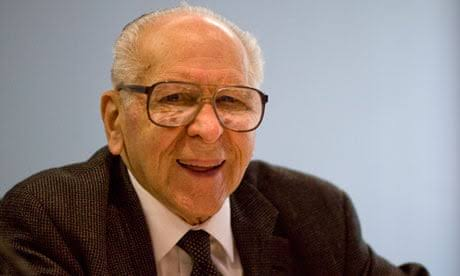
Failed Field Analysts: Thomas Szasz and the Conceptual Knife
He saw the prison inside the hospital and tried to free the patient by abolishing the hospital's language.
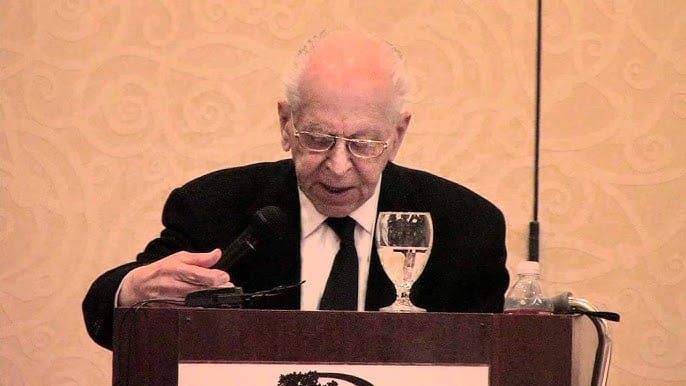
The Man Who Would Not Answer.
Michael Chomentowski had been in psychiatric custody for seven years by the time Thomas Szasz entered an Onondaga County courtroom on his behalf.
Seven years is a long time to be awaiting a criminal trial.
It is an even longer time when the trial never comes.
In June 1955, Chomentowski had carried a rifle outside his gas station in Fairmount, New York, while resisting a development project that threatened the property. He fired into the air. Police arrested him for unlawful possession of a dangerous weapon. He was transferred for psychiatric examination before the charge could be tried.
The criminal process then disappeared behind the clinical one.
Two psychiatrists found him incompetent. Other psychiatrists confirmed the finding. Chomentowski’s family advised him to stop cooperating with examinations that appeared to convert every answer into more evidence against him.
So he stopped talking.
Psychiatry found this extremely helpful.
His silence became
- suspiciousness.
- Suspiciousness became paranoia.
- Paranoia confirmed the diagnosis.
- The diagnosis justified continued confinement.
- Continued confinement produced more examinations.
- The examinations returned to the silence.
- Continued confinement produced more examinations.
- The diagnosis justified continued confinement.
- Paranoia confirmed the diagnosis.
- Suspiciousness became paranoia.
A person had entered a machine that could use either speech or silence as fuel.
By 1962, Chomentowski had been confined longer than the prison sentence he might have received if he had been tried and convicted.
He had instead been detained as a patient, which gave the arrangement a vocabulary of help and very few of the procedural limits attached to punishment.
Szasz testified that Chomentowski understood the charge and could stand trial.
More important, he asked the question psychiatry preferred to keep outside the room:
Whose agent is the psychiatrist?
- The patient’s?
- The court’s?
- The family’s?
- The hospital’s?
- The frightened public’s?
- The profession’s?
The person with the keys usually benefits from leaving this question vague.
Szasz did not.
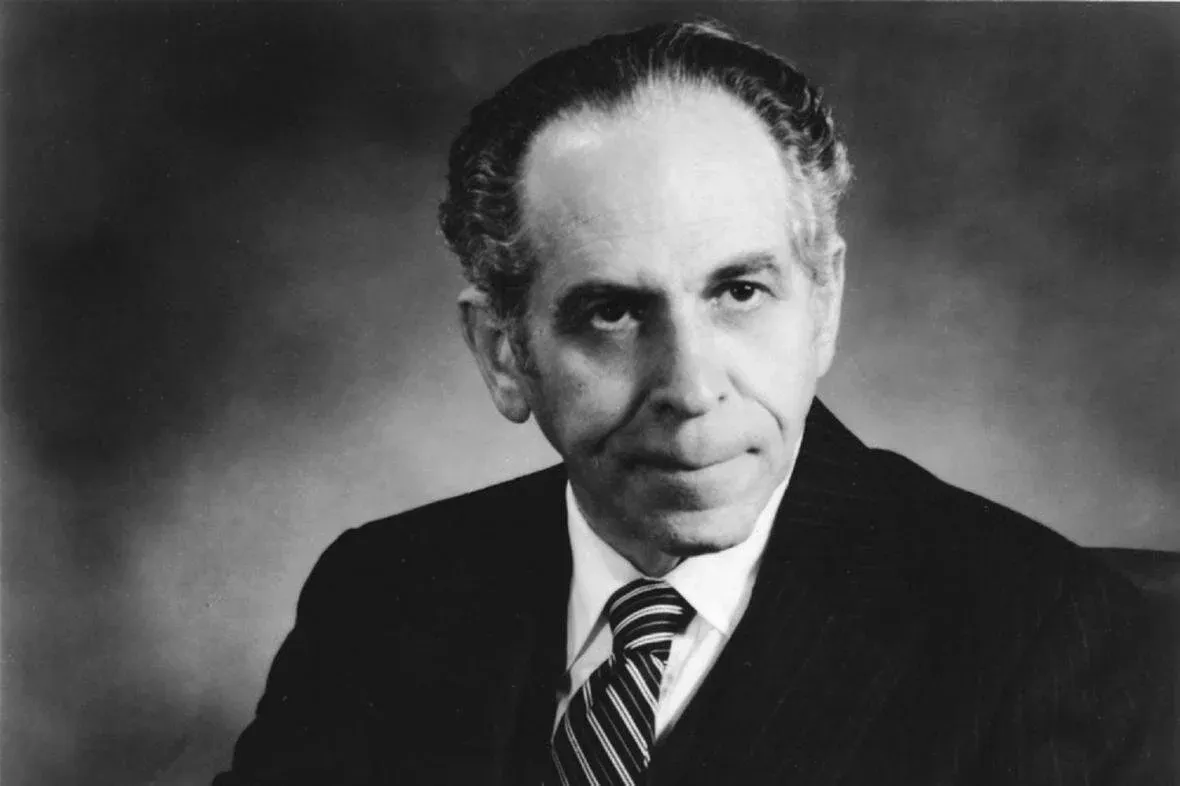
- A doctor acting for a patient offers a service.
- The patient may accept, refuse, leave, seek another opinion, or decide the service has failed.
- A psychiatrist acting for the state can examine, classify, testify, confine, medicate, report, and translate resistance into additional evidence of the condition requiring control.
The white coat remains the same.
The relationship clearly does not.
Szasz saw the prison inside the hospital.
That was the true fragment.
He would spend the rest of his life trying to pull it into public view.
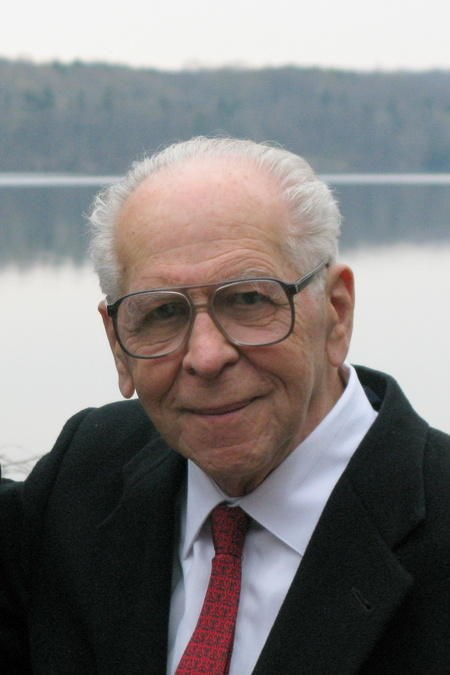
Then, he built a conceptual instrument sharp enough to cut psychiatry’s title away from the patient.
However, it was also sharp enough to cut the patient out of the picture.
Failed Field Analysts.
A Failed Field Analyst is never interesting because he was wrong about everything.
Total error has very little traction. A person who sees nothing usually cannot build an instrument powerful enough to reorganize the field around the mistake.
The dangerous analyst sees something real.
- Robert Moses saw movement.
- Elizabeth Holmes saw the access problem in diagnostic medicine.
- Timothy McVeigh saw the retaliation machine and climbed inside it.
- L. Ron Hubbard saw psychiatric capture, hidden suffering, and the need for an interpretive room.
- Then he built a hallway with no outside doors.
Thomas Szasz belongs directly after Hubbard because he saw the same locked ward, but from another direction.
- Hubbard looked at psychiatric sovereignty and offered a rival grammar of the person.
- Szasz looked at psychiatric sovereignty and attacked the legitimacy of the grammar itself.
This difference is enormous.
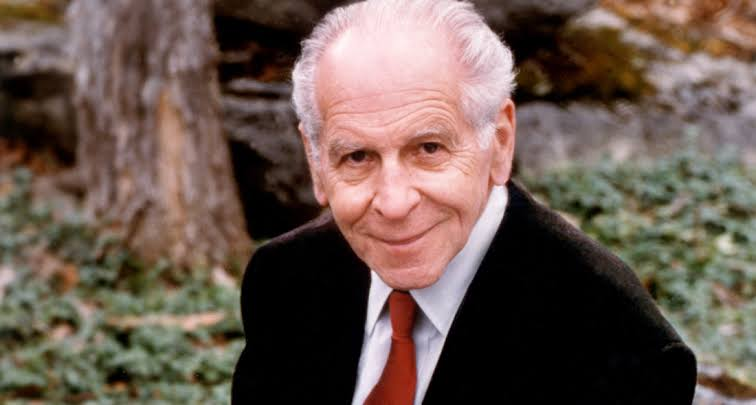
Szasz did not offer auditing, engrams, spiritual levels, or a proprietary road to freedom. He defended voluntary psychotherapy between consenting adults. He insisted that the client should be able to fire the therapist. He refused to hospitalize unwilling people, prescribe psychiatric drugs in his own practice, or testify that a defendant was relieved of responsibility through mental illness.
He wanted the therapeutic instrument to remain a service rather than a jurisdiction.
Modal Path Ethics recognizes a genuine repair instinct here.
 Aidan Lawson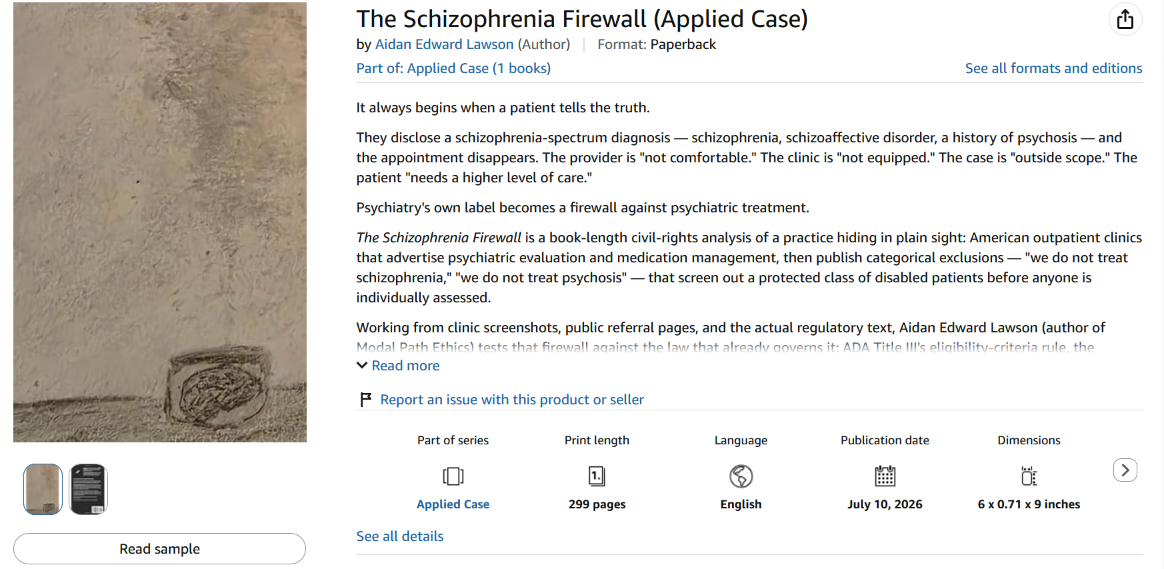
- A care instrument should know whose agent it is.
- A diagnosis should not become a warrant.
- A hospital should not become a prison by changing the sign over the entrance.
- A physician should not acquire judicial power through medical language.
- A person should not lose civil standing because an expert has converted metaphysical disagreement, distress, fear, unusual belief, dependency, or incapacity into a category that only the expert may interpret.
Szasz understood all of this.
His failure began when a necessary attack on psychiatric sovereignty became a total theory of what psychiatric suffering could be.
- He saw that the diagnosis was not the person.
- Then, he sometimes wrote as though the diagnosis could refer to nothing in the person except behavior, conflict, metaphor, and social judgment.
The institution had been claiming too much.
Szasz responded by letting the concept of disease claim too little.
That is the Myth Machine.
The Myth.
Thomas Stephen Szasz was born in Budapest in 1920.
His Jewish family left Hungary for the United States in 1938. He studied physics, earned a medical degree, trained in psychoanalysis, and joined the faculty of the State University of New York Upstate Medical Center.
This is important because Szasz did not arrive as an outsider throwing stones at a profession he had never entered.
He was standing inside psychiatry when he declared that its central object did not exist in the way the profession said it did.
His 1960 essay opened with a direct question:
Is there such a thing as mental illness?
His answer was no.
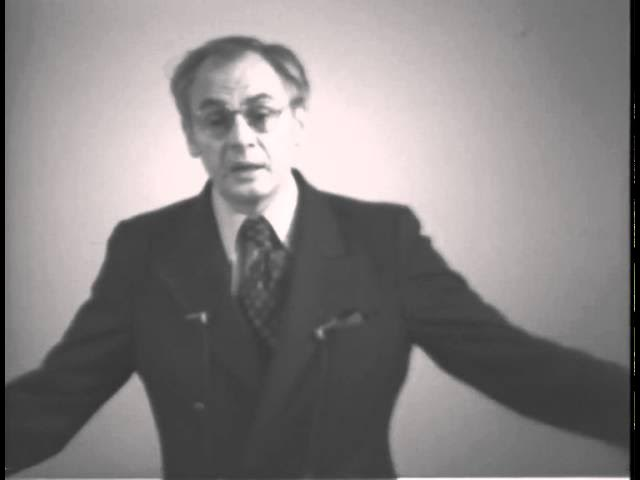
The following year, The Myth of Mental Illness made that answer famous.
Szasz’s point was more exact than the title allowed most readers to hear.
- He did not say human anguish was fictional.
- He did not say people never behaved in frightening, confusing, self-destructive, or socially catastrophic ways.
- He did not say hallucinations, despair, compulsion, estrangement, terror, or disorganization were fabricated.
- He said the category illness had been imported from bodily medicine into a field of conduct, communication, conflict, value, and social relation.
For Szasz, literal disease required bodily pathology: structural or functional abnormality in the organism. A diseased brain belonged to neurology. The mind was not an organ.
Therefore, a diseased mind could only be metaphorical, like a sick joke, a sick economy, or a sick society.
Psychiatric diagnosis, in his account, generally began elsewhere.
A person acted, spoke, believed, desired, feared, refused, or suffered in ways that violated expectations held by themselves, their family, a physician, a court, or the wider culture. The psychiatrist named that deviation through medical language.
That name then returned as if it had discovered an objective disease entity responsible for the original conduct.
- The judgment became a diagnosis.
- The diagnosis became a cause.
- The cause justified treatment.
- Treatment justified authority.
- Authority confirmed that a disease must have been present.
This is a very good little capture machine.
It can operate for years without anyone ever being required to point at the disease outside the language used to infer it.
Szasz called the experiences and conflicts beneath the category problems in living.
That phrase became one of his most durable contributions because it returned human difficulty to the field where it actually occurs in real life.
- A marriage can be collapsing.
- A person can hate their work.
- A family can be coercive.
- A community can punish difference.
- A person can be terrified by thoughts they cannot control.
- A life can become intolerable under debt, loneliness, grief, sexuality, shame, religious conflict, migration, war, social exclusion, or the impossible expectations of other people.
The medical label can conceal these relations by placing the field problem inside the designated patient.
- The household becomes healthy.
- The workplace becomes healthy.
- The law becomes healthy.
- The culture becomes healthy.
- One person in this clinic has the disease.
That is the true fragment in its cleanest form.
Psychiatric diagnosis can absorb a field conflict into a visible body, label it broken, and send that body away for correction.
The Disease Knife.
Szasz gave psychiatry a definition problem it has never fully escaped. They just tried to stop talking about it and use nicer language, while slowly abandoning the patients. I happened to notice.
 Aidan Lawson
- What exactly is the disease?
Where is it, Doctor?
What makes this pattern an illness rather than a difference, vice, strategy, wound, adaptation, protest, moral conflict, social role, spiritual event, or response to an unlivable environment?
Who decides?
What becomes reachable after the decision?
Psychiatry often answers by pointing to suffering and impairment.
That answer has force.
A person who cannot sleep for days, who is terrified by persecutory voices, who cannot maintain food or shelter, who is trapped in compulsive action, who cannot follow a conversation, or who has lost ordinary contact with the people trying to help them may be suffering in a way that deserves clinical attention.
Except Szasz’s response was that suffering and incapacity do not automatically establish disease. People suffer from grief, poverty, war, betrayal, imprisonment, and bad government. These are not bodily diseases. Medicine does not acquire jurisdiction over every condition that hurts.
Correct again.
So, psychiatry then points toward biology.
 Aidan Lawson
Brains are bodies. Genetics, development, sleep, injury, substances, infection, metabolism, and neurophysiology all affect cognition and behavior. Recurrent psychiatric syndromes do have biological correlates even where no single lesion provides a diagnostic test.
Except Szasz’s response was that if a bodily pathology were discovered, the condition should obviously then be classified as a brain disease and transferred to neurology.
This preserved his distinction.
It also made the distinction increasingly circular.
- If no lesion is known, the condition is not a disease.
- If a lesion is found, the condition becomes neurological and therefore was never properly psychiatric.
Psychiatry can lose either way.
That little move is intellectually satisfying when the target is a profession with a record of unearned certainty.
 Aidan Lawson
It is less satisfying when the question is what a person in front of us needs tonight.
 Aidan Lawson
The knife was also built from an excessively narrow theory of disease.
Medicine has never relied on one permanent criterion requiring a visible lesion before suffering and incapacity may be treated as illness.
Migraine, epilepsy, and many other conditions have historically been recognized through characteristic patterns before their mechanisms were settled.
Disease concepts are partly biological, partly functional, partly phenomenological, partly historical, and partly practical. They always have been. They can be misused without becoming empty.
- Szasz was right that diagnostic categories contain judgments.
- He overreached greatly when judgment became disproof.
A category can be value-laden and still track a real recurrent structure.
A diagnosis can be politically dangerous and still clinically useful.
A disease concept can be provisional without being fictional.
A person can reject the authority attached to a label while still using the label to communicate, find peers, receive medication, obtain disability support, explain a recurring pattern, or ask another person to understand the kind of help that has worked before.
 Aidan Lawson
Szasz wanted to prevent the label from becoming a title deed.
The title deed was the correct target.
The person’s right to describe themselves as ill was the unacceptable collateral damage here.
The Semantic Blackjack.
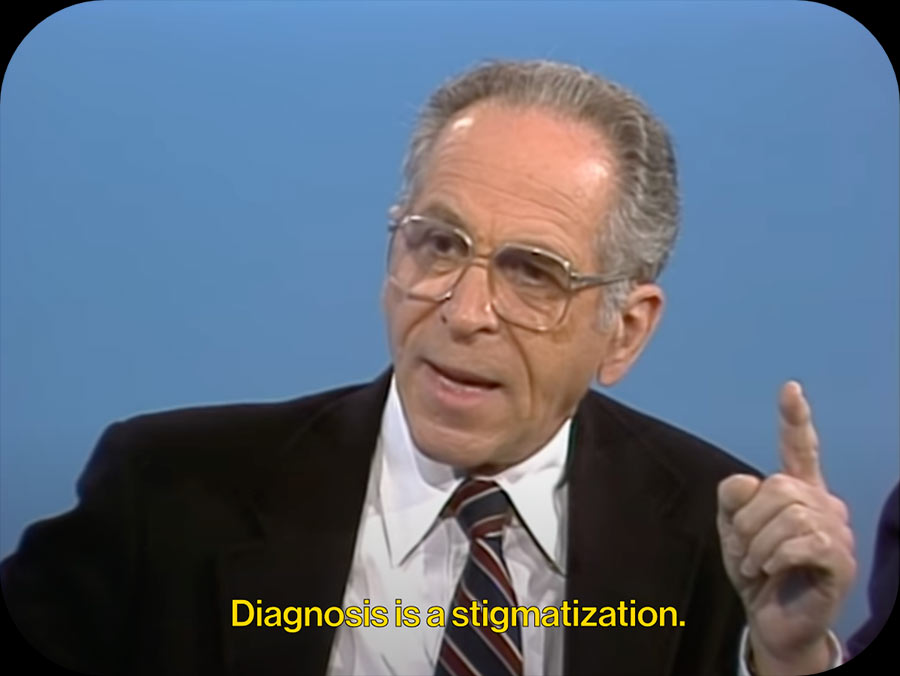
Szasz was at his strongest when he described what psychiatric language could do after it left the consulting room.
A diagnosis is never only a description.
- It changes who is believed.
- It changes how police read fear.
- It changes how courts read testimony.
- It changes how families read refusal.
- It changes how employers read conflict.
- It changes how physicians read pain.
- It changes how journalists read spiritual language.
- It changes how strangers read anger.
- It changes how every later disagreement may be routed.
Szasz called psychiatric diagnoses semantic blackjacks.
The phrase remains excellent.
- A police club announces itself as force.
- A diagnosis can strike dignity, credibility, reputation, and liberty while presenting itself as neutral classification.
The designated patient is then placed in a uniquely difficult position.
 Aidan Lawson
- Agreement can prove insight into illness.
- Disagreement can prove lack of insight.
- Fear can prove paranoia.
- Calm can prove concealment.
- Anger can prove dysregulation.
- Restraint can prove flat affect.
- Silence can prove suspiciousness.
- Speech can prove pressure.
The instrument has a path for every response.
 Aidan Lawson
Michael Chomentowski discovered this when refusing to answer became evidence that he should remain confined.
The Schizophrenia Firewall shows the same structure rearing its head again in a later, quieter form.
Psychiatry creates the diagnosis, invokes it when prescribing, hospitalizing, certifying disability, warning families, or claiming emergency authority, then allows outpatient psychiatric clinics to use that same diagnosis as a reason to refuse voluntary care, often while openly pushing the patient toward the hospital.
 Aidan Lawson
This label becomes sovereign in both directions.
- It authorizes control.
- It authorizes abandonment.
The patient is too psychiatric to remain free and too psychiatric to receive ordinary psychiatry.
Szasz would have understood the obscenity of this idiocy immediately.

He would also have objected to the premise of repairing it through stronger diagnostic medicine.
That is where Modal Path Ethics separates from him.
The problem here is not solved by deleting schizophrenia from the language while people remain unable to find medication continuity, sleep, food, housing, orientation, peer support, voluntary care, or a person who will listen before the police arrive.
 Aidan Lawson
A semantic blackjack must be taken out of the institution’s hand.
The handle may still be useful to the person who needs to point toward the wound.
The Therapeutic State.
Szasz’s deepest political idea was the therapeutic state.
- The old state punished in the language of law.
- The therapeutic state controls in the language of health.
The distinction does not make older punishment clean. It identifies a new way authority can disappear into care.
A court says:
We are restraining you because you violated a law.
A therapeutic institution says:
We are restraining you because you need help.
- The first sentence can be brutal.
- The second can be harder to contest.
Punishment has an accused person, a charge, counsel, evidence, a standard of proof, a sentence, and an ending.
Civil commitment can have a patient, an expert opinion, predicted danger, need for treatment, periodic review, and a future release date that remains dependent on the same interpretive institution responsible for the confinement.
The institution does not need to hate the patient.
Good intentions can make the arrangement more durable.
Szasz insisted that involuntary psychiatric hospitalization was imprisonment.
 Aidan Lawson
Coercive psychiatrists functioned as judges and jailers while retaining the prestige and moral shelter of physicians.
He attacked the insanity defense for a related reason.
The defense appeared humane because it spared some defendants ordinary punishment. Yet it also allowed psychiatric experts to determine that a person was outside ordinary responsibility and should enter a medical-legal custody system whose confinement could exceed the sentence attached to the offense.
The person could be declared innocent and remain locked away.
The law had discovered an acquittal with bars.
Szasz wanted the arrangement made honest.
- If someone committed a crime, then try them under criminal law.
- If they did not commit a crime, do not imprison them through medicine.
- If they wanted psychotherapy, let them purchase or enter psychotherapy voluntarily.
- If they wanted drugs, let them take drugs.
- If they wanted to stop treatment, the exit belonged to them.
That is an extraordinarily coherent defense of liberty.
However, it is also a theory built for a person whose agency can be treated as continuous enough to carry the whole contract.
The field contains harder cases.
 Aidan Lawson
Psychiatry Between Consenting Adults.
Szasz rejected the label anti-psychiatry.
 Aidan Lawson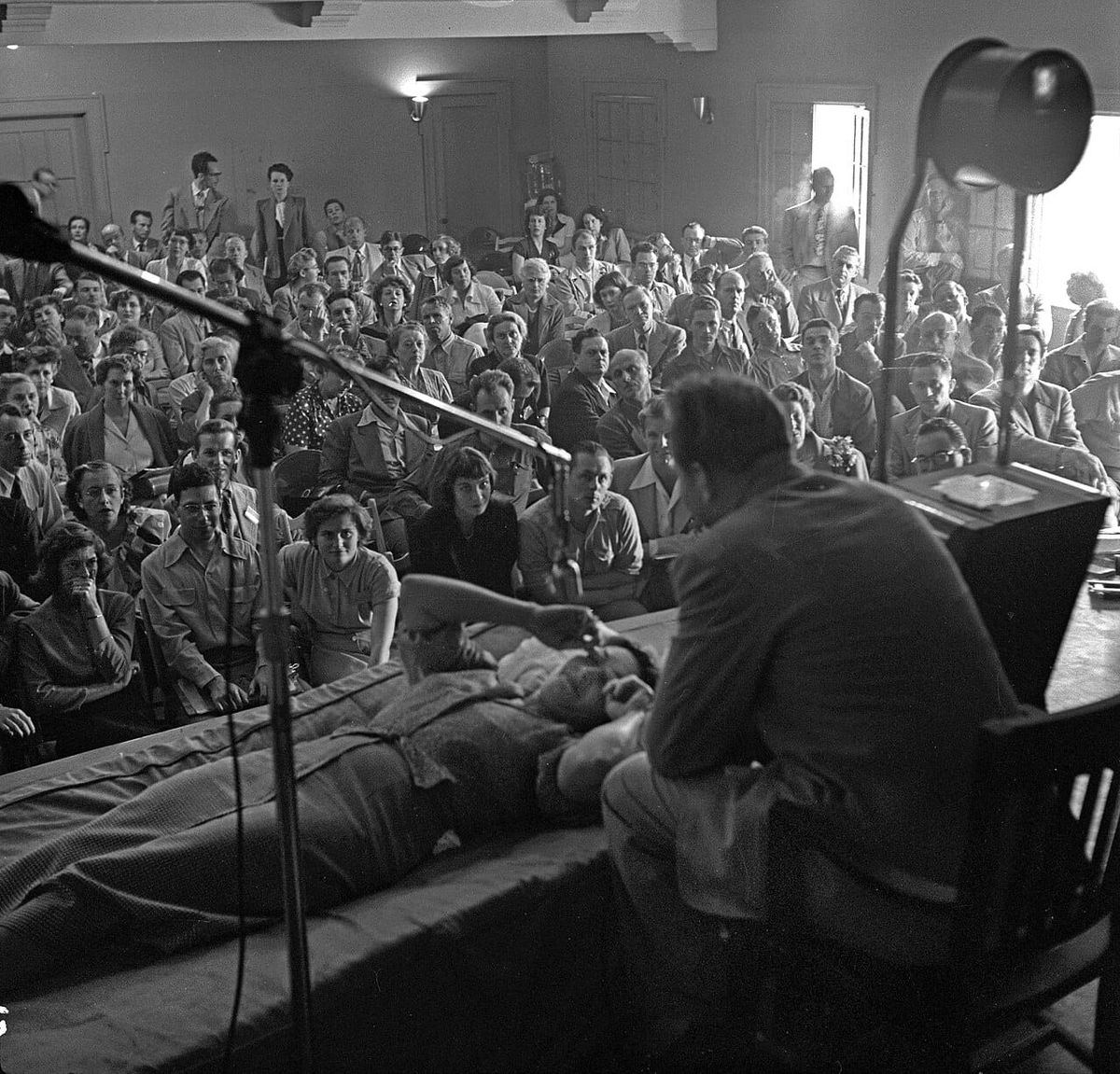
He approved of psychotherapy and psychoanalysis between consenting adults. His official site summarizes the position with unusual clarity: the client must be able to fire the therapist at any time.
That rule is excellent.
A therapist worthy of trust should remain dismissible.
Szasz practiced according to it.
He described the therapist as the patient’s agent. The patient selected the relationship, defined their own interest, chose whether to use the conversation, and decided when to leave. Szasz said he never committed a patient, never treated anyone who did not want to see him, never prescribed psychiatric drugs in his practice, and never testified that a defendant lacked responsibility because of mental illness.
- The room stayed small.
- The instrument stayed local.
- The patient owned the door.
This is very close to the repaired auditing room described in L. Ron Hubbard and the Sealed Room.
A wounded person may need another mind, a disciplined conversation, a method, a private room, and a vocabulary through which previously unmanageable structure becomes reachable.
The helper must not become sovereign over what the help means.
Szasz understood this at the level of contract.
His consulting room has one very serious problem.
- The world outside it remains present.
A person needs money to enter the contract.
They need enough stability to make and keep appointments.
They need housing, transport, time, privacy, language, and some capacity to identify a professional they trust.
They may need medication, medical evaluation, disability support, crisis help, family translation, peer support, or protection from a household that controls the money and transportation.
They may enter an episode in which their preferences are real and morally binding while also unstable, divided, pressured, or hard to communicate.
They may want help and fear it.
They may ask to leave a room because the room is coercive.
They may ask to leave because the person they trust has become a persecutor inside their current experience.
They may refuse a treatment that has harmed them before.
They may refuse the only intervention likely to restore their capacity to refuse more coherently later.
The clean bilateral contract does not tell us what to do with all of this.
It tells us who should own the person.
The person should.
That answer remains foundational.
It does not automatically supply the support architecture through which ownership remains usable under severe strain.
A key can belong to someone who cannot currently reach the lock.
The ethical task is to help them reach it without stealing the door.
Szasz defended the key. He did not build enough of the path.
The Patient Does Not Disappear.
Szasz repeatedly clarified that the experiences called mental illness were real.
His target was their classification as disease.
That clarification should protect him from the cheapest criticism.
He did not look at a terrified person and claim "nothing was happening."
He looked at the relationship among conduct, observer, value, law, and medicine and said psychiatry had misunderstood what kind of happening it was.
The problem is that kinds can overlap.
A hallucination can be communication, experience, adaptation, trauma response, spiritual interpretation, neurobiological event, social crisis, and clinical symptom at once.
A delusional belief can carry meaning and still destroy the person’s ability to use evidence safely.
A manic state can contain insight, pleasure, creativity, terror, sleeplessness, grandiosity, spending, conflict, physical risk, and eventual collapse.
A catatonic person is not solved by a better moral vocabulary.
A person who has stopped eating because food has become poisoned within their experienced world may need more than respect for their worldview.
Respect is still required.
 Aidan Lawson
Medicine may also be required.
The false choice between those statements has injured generations of people.
 Aidan Lawson
- Psychiatry has often treated meaning as "noise" around pathology.
- Some anti-psychiatry has treated pathology as "propaganda" around meaning.
Problem is, the person has to live through both theories.
 Aidan Lawson
Modal Path Ethics begins lower.
- What has become unreachable?
- Can the person sleep?
- Can they eat?
- Can they maintain shelter?
- Can they distinguish threat from ordinary contact well enough to move safely?
- Can they communicate consent?
- Can they preserve relationships they still value?
- Can they revisit a decision tomorrow?
- Can they continue the life they were trying to live before this state altered the field?
These are questions about agency without worshiping a narrow performance of normality.
They are questions about suffering without granting suffering automatic medical sovereignty.
They are questions about care without turning care into ownership.
Szasz’s disease knife is too blunt for this kind of fine work precisely because it is so sharp at the category boundary.
- He can tell us that a diagnosis is not a lesion.
- He cannot therefore tell us that the diagnosis tracks no real pattern of damaged reachability.
The patient was never the myth.
The myth was that psychiatry’s name for the patient exhausted what was happening.
The Myth Machine.
The Myth Machine begins with a useful correction:
A psychiatric diagnosis is not a discovered object sitting cleanly inside the patient.
Then, unfortunately, it continues.
- The diagnosis is metaphor.
- The metaphor is social judgment.
- The judgment supports coercion.
- The coercion is the essence of institutional psychiatry.
- Mental illness therefore cannot be a legitimate medical category.
- The coercion is the essence of institutional psychiatry.
At this point, the correction has acquired sovereignty.
 Aidan Lawson
- A person says medication helps them.
- The Myth Machine says they are choosing a drug that alters thought and feeling, which they should be free to do, while denying that the drug treats a disease.
- A person says they become ill in a recurring pattern.
- The Myth Machine says they experience recurring problems in living.
- That was the exact report the Machine just received, rephrased as an answer.
- The Myth Machine says they experience recurring problems in living.
- A person says psychosis changes what they can understand and choose.
- The Myth Machine says responsibility cannot be transferred into a medical fiction.
- This does not answer the person.
- The Myth Machine says responsibility cannot be transferred into a medical fiction.
- A family says someone they love has become unreachable.
- The Myth Machine asks whether the family is seeking psychiatric power over an inconvenient person.
Every warning here can be valuable.
Together, they make one instrument the privileged interpreter again.
That was exactly the problem, Szasz.

Psychiatry says:
Your refusal may be illness.
Szasz says:
Your illness may be a metaphor imposed on conduct.
The person needs the right to tell both of them they are wrong.
So, that includes the right to say:
I am ill.
I need medicine.
I do not want medicine.
The medicine helped.
The medicine injured me.
My spiritual account is part of this.
My spiritual account became dangerous.
My diagnosis describes something real.
My diagnosis has been used as a weapon.
I need help without losing citizenship.
A framework that protects only the refusal of psychiatric language has preserved half the exit.
- Szasz fought for the patient’s authorship against the doctor.
- Then, his theory could become impatient when the patient used medical language to author themselves.
The conceptual liberator had begun editing the liberated person’s vocabulary.
That is the core failure.
Responsibility Becomes a Cell.
Szasz treated responsibility as the moral foundation of liberty.
This was a direct attack on psychiatric paternalism.
A person declared mentally ill could be denied responsibility in ways that appeared compassionate while also denying adulthood, credibility, contract, privacy, and control over the body.
The patient became a protected object.
- Protection became administration.
- Administration became confinement.
Szasz wanted the person returned to ordinary moral and legal standing.
That was right.
Psychiatric disability should never function as automatic civic childhood.
A person may hold beliefs others consider delusional and still sign a lease, raise a child, vote, write, work, love, refuse treatment, manage medication, practice religion, testify, make art, own property, and understand exactly which clinician has treated them badly.
- Capacity is task-specific.
- Diagnosis is not incapacity.
Szasz’s insistence on responsibility defended this terrain before much of the profession learned to speak convincingly about autonomy.
Then, the theory encountered crime.
 Aidan Lawson
- If mental illness does not negate responsibility, the insanity defense loses its foundation.
Szasz preferred criminal law to psychiatric custody because criminal law at least names force as force.
 Aidan Lawson
The person receives charges, counsel, proof requirements, and a sentence rather than an indefinite medical judgment about readiness for release.
This critique remains devastating where an insanity acquittal opens confinement longer than the punishment attached to conviction.
Yet legal honesty does not guarantee ethical adequacy.
A person may commit an act while profoundly unable to understand its nature, relate it to ordinary consequence, or govern their action through the capacities the law normally assumes.
The law already recognizes diminished capacities outside psychiatry.
- Age matters.
- Neurological injury matters.
- Intoxication sometimes matters.
- Coercion matters.
- Mistake matters.
- Intent matters.
The question is not whether a psychiatrist may announce that disease erased a person. The question is what capacities were actually present during the act.
Szasz attacked the medical answer so completely that he sometimes made the capacity question look like an evasion of responsibility.
That move risks routing a person from the hospital directly into the prison.
Prison simply does not restore the agency psychiatry insulted.

It places the person inside another sovereignty machine, one that is frequently less interested in care, more violent, more isolating, and fully willing to let untreated psychosis become misconduct.
The honest jailer remains a jailer.
The repaired path requires a legal instrument capable of recognizing altered agency without converting diagnosis into destiny.
It requires evidence about the actual act and actual capacities.
It requires determinate limits, review, representation, and a path back to ordinary civic status.
It requires treatment that does not depend on pretending custody is medicine.
It requires medicine that does not depend on custody.
Szasz correctly broke the false identity between illness and irresponsibility.
Except he left too little space for damaged responsibility.
A field can preserve agency as a moral fact while recognizing that its exercise has been temporarily, locally, or catastrophically impaired.
That is not an Excuse Machine.
It is contact with the person who was actually there.
The Door Into Weather.
Szasz became one of the major intellectual voices against involuntary hospitalization. He helped found the American Association for the Abolition of Involuntary Mental Hospitalization and spent decades arguing that commitment should end rather than improve.
This places him inside the history of deinstitutionalization.
It does not make him the single author of it.
The collapse of the American asylum system had many causes: exposure of institutional abuse, new drugs, disability-rights litigation, fiscal pressure, federal benefit structures, state budget choices, changing professional beliefs, community mental-health policy, family activism, patient activism, and a broad rejection of segregated custody.
The popular story is often too neat.
- The hospitals closed.
- Patients became homeless.
- Homeless people entered prisons.
- Patients became homeless.
Therefore, the hospital should return.
That sequence hides housing policy, poverty, racialized policing, cuts to public services, the criminalization of public survival, and the disabling violence of prison itself. It also romanticizes institutions that many people fought very hard to escape.
 Aidan Lawson
- Deinstitutionalization was a civil-rights achievement.
- It was also frequently implemented as budgetary disappearance.
The state discovered that liberation was much cheaper when no one built the world outside.
 Aidan Lawson
- A locked ward closed.
- The person received no housing.
- No durable voluntary clinic.
- No income.
- No medication continuity.
- No crisis house.
- No peer network.
- No family support.
- No transportation.
- No place to go during the night when sleep had vanished and the apartment had become unsafe.
The institution just removed the bed and called the resulting sidewalk community care.
Szasz did not design this betrayal.
His framework was very poorly equipped to prevent it.
- He was brilliant at naming the illegitimacy of forced treatment.
- He was less interested in constructing a public obligation to make noncoercive care materially reachable.
Contractual psychotherapy could survive as a voluntary service between two adults.
The person released from a state hospital needed an entire field.
The clean libertarian relation had no obvious owner for that field.
- Government was dangerous.
- Psychiatric medicine was conceptually fraudulent.
- Families could be coercive.
- Professionals could become agents of third parties.
- The market could provide chosen services to people able to purchase them.
The remainder fell through.
 Aidan Lawson
This is where freedom can become abandonment without anyone needing to oppose freedom.
Abolishing the ward without building the world outside is a door into weather.
The Schizophrenia Firewall Returns.
The modern outpatient field reveals why Szasz remains indispensable and entirely insufficient.
- A person with a schizophrenia-spectrum diagnosis asks for voluntary care.
- The clinic refuses the diagnosis class.
- Medication continuity becomes fragile.
- Trust becomes fragile.
- The family panics.
- The emergency room becomes more reachable.
- Police become more reachable.
- Locked care becomes more reachable.
- The profession claims coercion became necessary because the patient deteriorated.
- The deterioration was partly routed through the profession’s refusal of ordinary care.
- The clinic refuses the diagnosis class.
Szasz would attack the coercive endpoint.
Modal Path Ethics attacks the full path instead.
- Voluntary outpatient care has to become easier to reach.
- Medication must remain optional in principle and reliably available to the person who chooses it.
- Clinics must describe service limits rather than excluding a disabled class.
- Peer support, spiritual care, psychotherapy, primary care, housing, crisis alternatives, family help where safe, disability law, and psychiatric medicine must remain available as distinct instruments.
- No one instrument gets the whole person.
This is more plural than psychiatry’s sovereignty.
 Aidan Lawson
It is also more plural than Szasz’s abolition of disease language.
- Szasz preserved the right to refuse the doctor.
- The Schizophrenia Firewall reveals the matching right to enter the doctor’s office voluntarily without the diagnosis becoming a moronic barricade.
Those rights belong together.
- Psychiatry does not get to invoke psychosis when it wants power and abandon psychosis when the patient asks for help.
- Szasz does not get to invoke liberty when the patient refuses psychiatry and demote illness when the patient uses psychiatric care to remain free.
The person owns both paths.
The Enemy of My Enemy Has a Church.
In 1969, Thomas Szasz and the Church of Scientology co-founded the Citizens Commission on Human Rights.
This sentence has been used for decades as a trapdoor.
- A critic says Scientology.
- Szasz disappears through the floor.
That is way too cheap.
Szasz was not a Scientologist. He was an atheist with a libertarian theory of psychiatry, personal responsibility, consensual psychotherapy, and the separation of medicine from state coercion.
Scientology’s war against psychiatry emerged from a rival religious and therapeutic system with its own claims over the mind, spirit, illness, memory, and human freedom.
The two projects were not identical.
They shared an enemy.
That was enough.
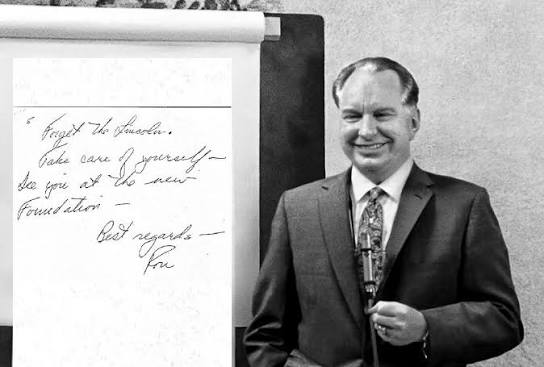
Szasz accepted organizational support from a movement willing to attack psychiatry with the scale, money, discipline, publicity, and institutional persistence his academic allies did not possess. He later praised the Citizens Commission on Human Rights as the first organization to build a politically significant international opposition to psychiatry.
The alliance made practical sense.
That is the problem here.
A Failed Field Analyst is often most vulnerable when the useful instrument arrives.
 Aidan Lawson
Szasz had just spent years warning that institutions smuggle moral commitments into apparently neutral forms.
Then, a religious movement with a total anti-psychiatric doctrine offered him a human-rights watchdog.
"The enemy of my enemy" is just not a peer-review process.
- The Citizens Commission on Human Rights could document genuine abuse.
- It could publicize involuntary treatment, restraint, institutional violence, psychiatric corruption, and the historical crimes respectable organizations preferred to place safely in the past.
- Those functions had value.
- It could publicize involuntary treatment, restraint, institutional violence, psychiatric corruption, and the historical crimes respectable organizations preferred to place safely in the past.
- The organization also carried Scientology’s wider anti-psychiatric theology into public reform work.
- Psychiatry was now not simply a coercive institution requiring civil limits.
- It became a civilizational enemy whose destruction would expand the reach of Scientology’s own account of mental and spiritual freedom.
- Psychiatry was now not simply a coercive institution requiring civil limits.
This is the exact distinction drawn in L. Ron Hubbard and the Sealed Room.
- Alternative repair creates another route and preserves the person’s exits.
- Rival capture uses the old institution’s crimes as recruitment material for a new sovereign.
Szasz saw the first function and then allied with an institution carrying the second.
This does not make his arguments Scientology arguments.
It does show a major failure of field analysis.
- He asked whose agent the psychiatrist was.
- He should have asked whose agent the watchdog would become.
- The alliance gave Szasz reach.
- It gave Scientology legitimacy.
Each could describe the other as useful while leaving the mismatch outside the immediate campaign. The conceptual knife joined a sealed room because both instruments wanted to cut the same lock.
Why Psychiatry Loved the Alliance.
Institutional psychiatry benefited from Szasz’s Scientology relationship too.
It received a cute shortcut around its own indictment.
The profession no longer had to answer every civil-liberties argument.
It could just say:
Scientology.
- Their locked ward became less visible.
- Their forced treatment became less visible.
- Their diagnostic blacklist became less visible.
- Their indefinite commitment became less visible.
- Their patient whose silence counted as illness became less visible.
The critic had made himself easier to quarantine.
This is one reason Failed Field Analysts must preserve the true fragment even when the analyst gives the field every excuse to discard it.
- Szasz’s alliance was a serious error.
- Psychiatry’s use of that error as an alibi was another one.
A bad counter-institution does not sanctify the institution it opposes.
Scientology’s sealed room does not make the psychiatric ward a house of freedom.
The field just contains both.
People harmed by one may still seek refuge in the other.
The ethical task is to build more exits than either sovereignty allows.
 Aidan Lawson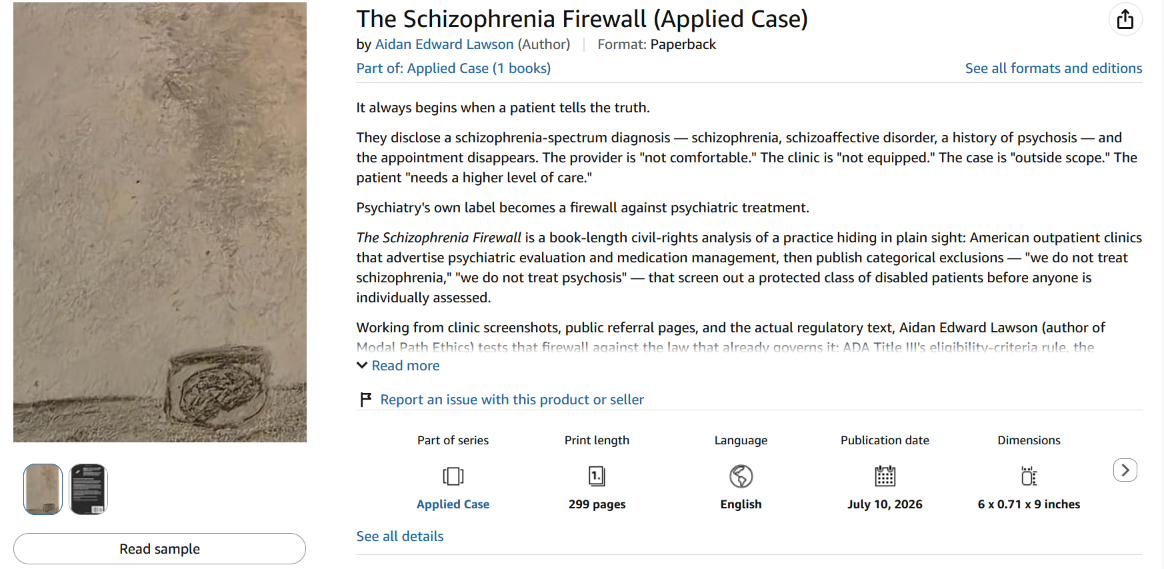
The Honest Fragment.
The Szaszian fragment should now be extracted cleanly.
1. Psychiatric diagnosis is an act.
A diagnosis changes the field.
- It may open treatment, medication, peer recognition, disability support, explanation, and relief.
- It may also close credibility, employment, custody, ordinary medical care, legal agency, privacy, and freedom.
The label must therefore be judged by what it does as well as what it describes.
2. Psychiatry always contains values.
No clinical system escapes ethics by using medical vocabulary.
Decisions about normality, danger, capacity, acceptable risk, treatment goals, sexuality, productivity, family relation, spiritual belief, and social conduct all contain values.
The ethical content should be exposed and contested rather than hidden behind the claim that medicine has already settled it.
3. Coercion is not treatment because a clinician performs it.
- Confinement remains confinement.
- Forced medication remains force.
- Restraint remains restraint.
A medical purpose may affect the justification.
It does not alter the act into consent.
4. The psychiatrist must declare the principal.
Is this clinician serving the patient, the court, the employer, the insurer, the family, the hospital, the school, the military, or the state?
Dual loyalty cannot be erased by "bedside manner."
Most of you have none anyway.
The patient must know when the person in the room can report, confine, testify, or transfer information to another authority.
5. A care instrument needs an exit.
The person must be able to disagree, seek another view, stop, change methods, refuse a drug, request a drug, bring in a supporter, use spiritual language, reject spiritual language, and revise their interpretation later.
Where emergency limits are imposed, they must remain narrow, reviewable, evidence-bound, time-limited, and aimed at restoring usable agency rather than preserving institutional convenience.
6. Responsibility is not erased by diagnosis.
A psychiatric label does not turn an adult into a child or an object.
The person remains a moral and political participant.
Their capacities must be evaluated locally rather than presumed absent from the category.
7. Medicalization can hide the field.
Distress may be carried by housing, debt, discrimination, violence, family capture, isolation, grief, work, spiritual crisis, or an institution that needs the designated patient to remain the problem.
- Medicine may help.
- Medicine must not consume the causal map.
Szasz was right about every one of these.
The article could end here if the patient never needed anything else.
Except the patient does, Szasz.
The Corrected Instrument.
The corrected instrument is bounded psychiatric jurisdiction.
- Psychiatry may hold a role.
- It may not hold the person.
Its legitimate tasks can include:
- evaluating bodily and neurological contributors to altered cognition or behavior;
- helping a person understand recurring patterns of distress or incapacity;
- offering medication when the person chooses it;
- supporting sleep, orientation, communication, and practical agency;
- providing psychosis-capable outpatient care;
- coordinating with primary care, neurology, housing, disability services, therapy, peer support, family, and spiritual care where the person permits;
- documenting disability without converting disability into civic death;
- responding to acute danger under legal standards stricter than professional discomfort;
- helping the person return from crisis without claiming ownership of the meaning of the crisis.
The limits must be equally explicit.
Psychiatry does not own:
- the final interpretation of a spiritual experience;
- the person’s credibility outside the clinic;
- the meaning of every unusual belief;
- the patient’s political or religious dissent;
- the right to convert diagnosis into permanent incapacity;
- the right to exclude a diagnosis class from ordinary voluntary care;
- the right to call every treatment refusal lack of insight;
- the right to call every request for treatment proof that psychiatric authority was always justified;
- the right to hide social failure inside an individual chart;
- the right to confuse institutional peace with recovery.
A diagnosis becomes a provisional contact instrument.
 Aidan Lawson
It can say:
People with this recurring pattern have sometimes found these interventions useful.
These risks require attention.
These bodily conditions should be checked.
This medication may help and may also harm.
This person’s current capacity differs across decisions.
The label does not settle what the experience means.
The person remains the principal.
This is smaller than the psychiatric title deed.
It is larger than Szasz’s myth.
This leaves room for disease without requiring disease to own the field.
It leaves room for metaphor without treating every symptom as social theater.
It leaves room for medication without making medication obedience.
It leaves room for refusal without converting refusal into abandonment.
It leaves room for emergency action without making emergency the normal route to care.
It leaves room for responsibility without pretending agency cannot be damaged.
It leaves room for the patient to use the word illness and remain free.
The Instrument Must Be Able to Lose.
Szasz wanted psychiatry to lose its monopoly over the interpretation of madness.
Good. Correct.
The corrected field requires every instrument to lose sometimes.
- Psychiatry can lose to neurology.
- Psychiatry can lose to housing.
- Psychiatry can lose to grief.
- Psychiatry can lose to a priest,
- a friend,
- a peer,
- a family member,
- a labor organizer,
- a lawyer,
- a disability advocate,
- a better clinic,
- a different medication,
- no medication,
- sleep,
- time,
- or the person’s own later account.
Anti-psychiatry must also be able to lose.
- It can lose when medication restores a person’s life.
- It can lose when a diagnosis gives someone language that helps.
- It can lose when a voluntary hospital stay prevents a more dangerous closure.
- It can lose when a clinician understands the body better than the ideology does.
- It can lose when a person says:
I experienced this as illness.
I want treatment.
Stop telling me my care is capitulation.
Szasz built a theory designed to make psychiatry lose.
He did not preserve enough conditions under which his own theory should lose.
That is the Failed Field Analyst transition.
- The true fragment becomes an instrument.
- The instrument becomes a grammar.
- The grammar becomes a boundary.
- The boundary becomes jurisdiction.
- The jurisdiction protects itself from the person it was built to free.
- The boundary becomes jurisdiction.
- The grammar becomes a boundary.
- The instrument becomes a grammar.
Diagnosis.
Thomas Szasz was a Failed Field Analyst because he saw psychiatric power at the point where medicine preferred to call it care.
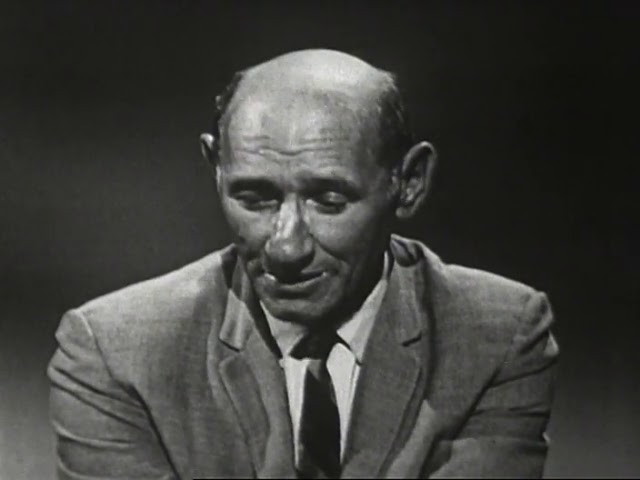
- He saw the doctor becoming a warden.
- He saw the hospital becoming a prison.
- He saw the court borrowing medical language to weaken ordinary legal protections.
- He saw diagnosis becoming a semantic blackjack.
- He saw the patient converted into the site where families, institutions, courts, and cultures could deposit conflict.
- He saw the alliance between psychiatry and the state becoming a therapeutic government that controlled in the name of health.
- He saw that a person could be declared irresponsible and lose liberty through the same gesture.
- He saw that voluntary psychotherapy needed confidentiality, contract, local purpose, and an exit owned by the client.
These were major perceptions.
Psychiatry still has not fully answered them.
 Aidan Lawson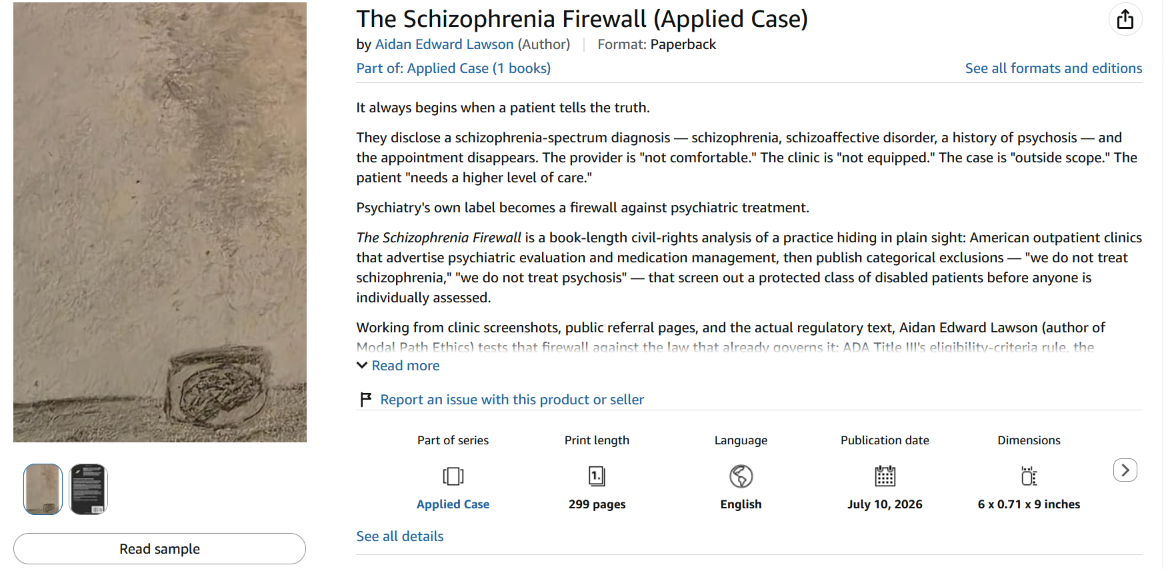
Then, the analysis collapsed.
- Szasz defined disease too narrowly and let that definition govern the whole field.
- He exposed the social judgment inside diagnosis and sometimes treated social judgment as evidence that no clinical pattern deserved disease language.
- He defended responsibility and left too little room for damaged agency.
- He defended voluntary contract and left too much of the care field to private reachability.
- He attacked commitment without constructing the material world required to make freedom survivable.
- He allied with a rival institution that carried psychiatric criticism into its own sealed spiritual jurisdiction.
- He gave patients a weapon against psychiatry and did not always let them choose whether to put it down.
The Myth Machine began by saying:
The diagnosis does not own you.
It ended too often by saying:
Your illness cannot be what you say it is.
That is just way too much jurisdiction for an anti-jurisdiction theory.
Ruling.
Michael Chomentowski entered custody through a criminal charge.
The charge never reached trial.
Psychiatry received him instead.
His speech became evidence.
His silence became evidence.
His confinement became the condition under which more evidence could be produced.
Thomas Szasz saw the machine.
He walked into court and asked whether the psychiatrist was a healer or a warden.
The question still stands.
 Aidan Lawson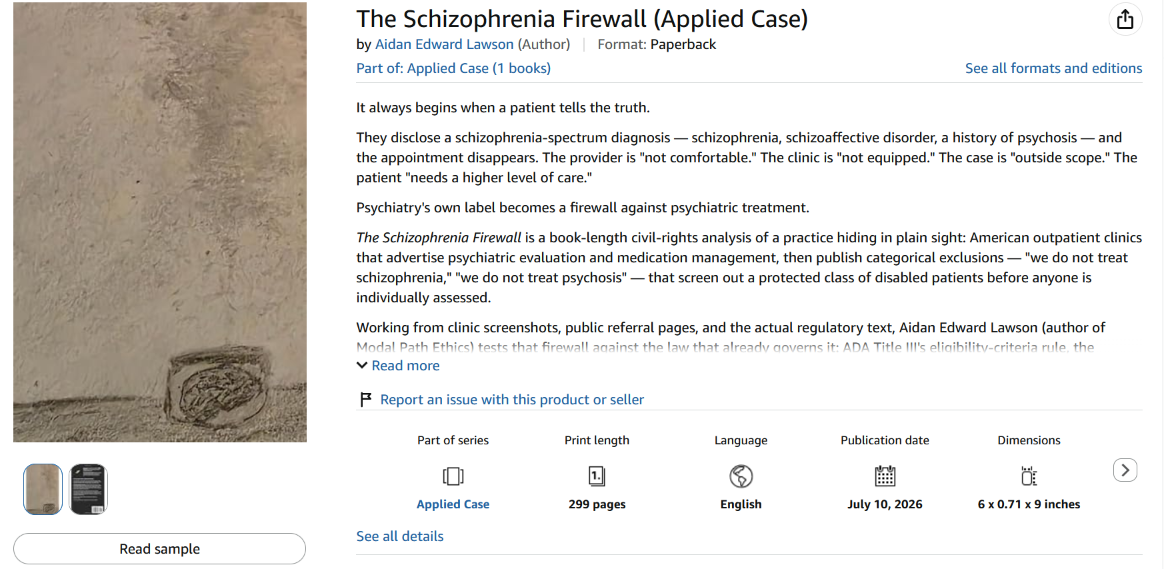
But so does the person in the room.
Szasz’s true fragment survives:
- Diagnosis is never only description.
- Medical language can hide moral and political judgment.
- Coercion remains coercion under clinical intent.
- The patient must remain the principal.
- A therapist must be dismissible.
- A hospital cannot become a prison by calling custody treatment.
- A psychiatric label cannot become a warrant over citizenship.
The failure was the myth.
Mental illness did not need to be a perfect natural kind for psychiatric suffering to be real.
Psychiatry did not need to own the patient for medicine to help the patient.
Agency did not need to be absolute for the person to remain an agent.
The ward did not need to survive for society to owe the person housing, care, income, medication, friendship, law, and a path through crisis.
Scientology did not become a safe ally at all because psychiatry had become a dangerous enemy.
Szasz saw the prison inside the hospital.
Then, he tried to free the patient by abolishing the hospital’s language.
But the patient was never the myth.
Psychiatry’s claim to own the patient was.
A diagnosis may help describe the wound.
It may not become title to the person.
An abolition may open the door. It must still build somewhere to go.
Thomas Szasz found the key in the doctor’s pocket, threw away the lock, and almost left the patient outside holding the door.