Failed Field Analysts: Elizabeth Holmes and the False Path
A path always has to survive contact with reality.
September 2026 note: Promise-versus-path, prestige-versus-validation, and partnership-versus-proof remain strong distinctions. Later work makes the correction architecture stricter: internal dissent, external review, and accurate representation are separate from the material ability to halt, remove, replace, or hand off a failing system. A safety-critical institution is not corrigible because criticism exists somewhere; the criticism must have a causally effective route to the deployed function. Claims here about Holmes's current status, related companies, or ongoing activity are a May 2026 snapshot.
This explosion did not look like an explosion at all.
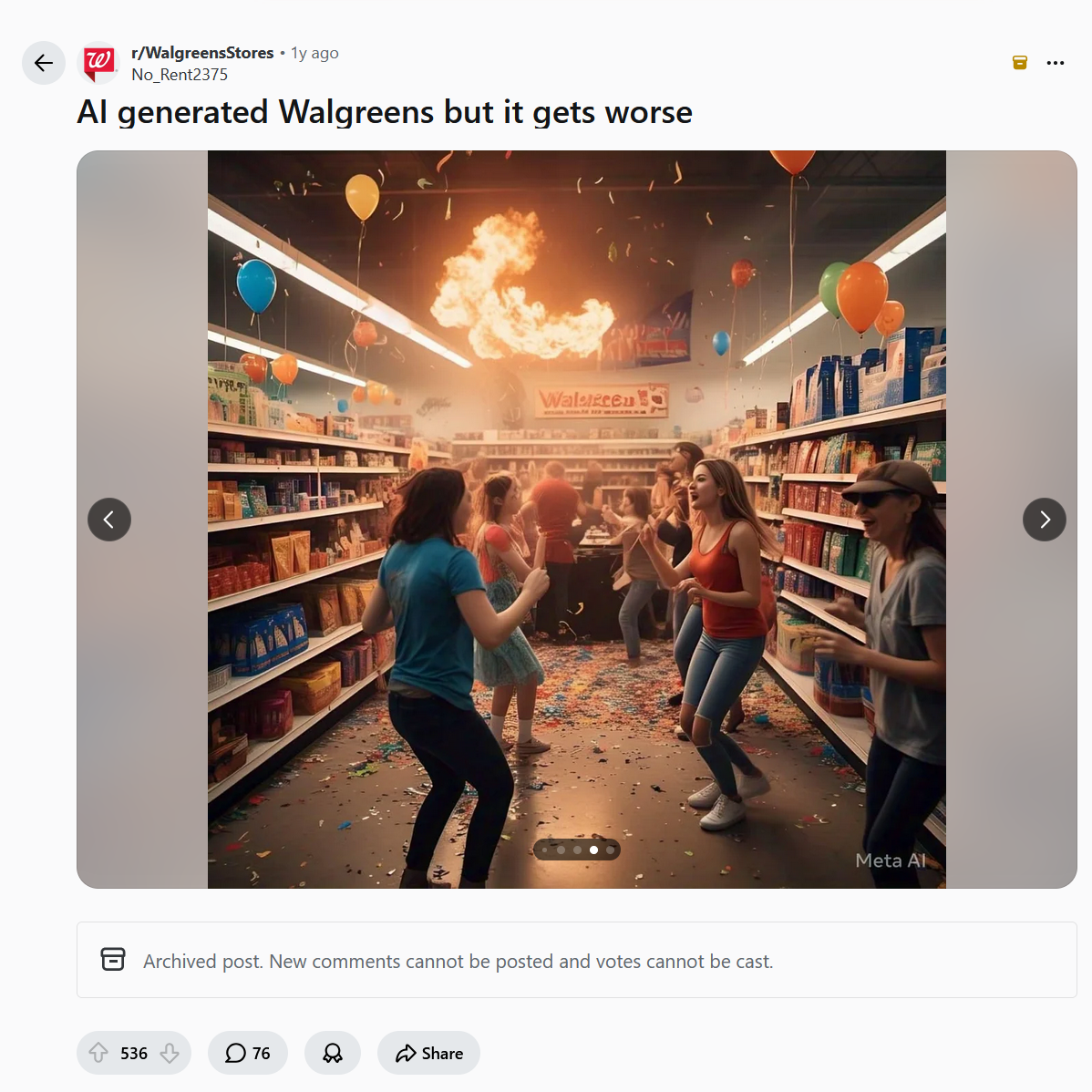
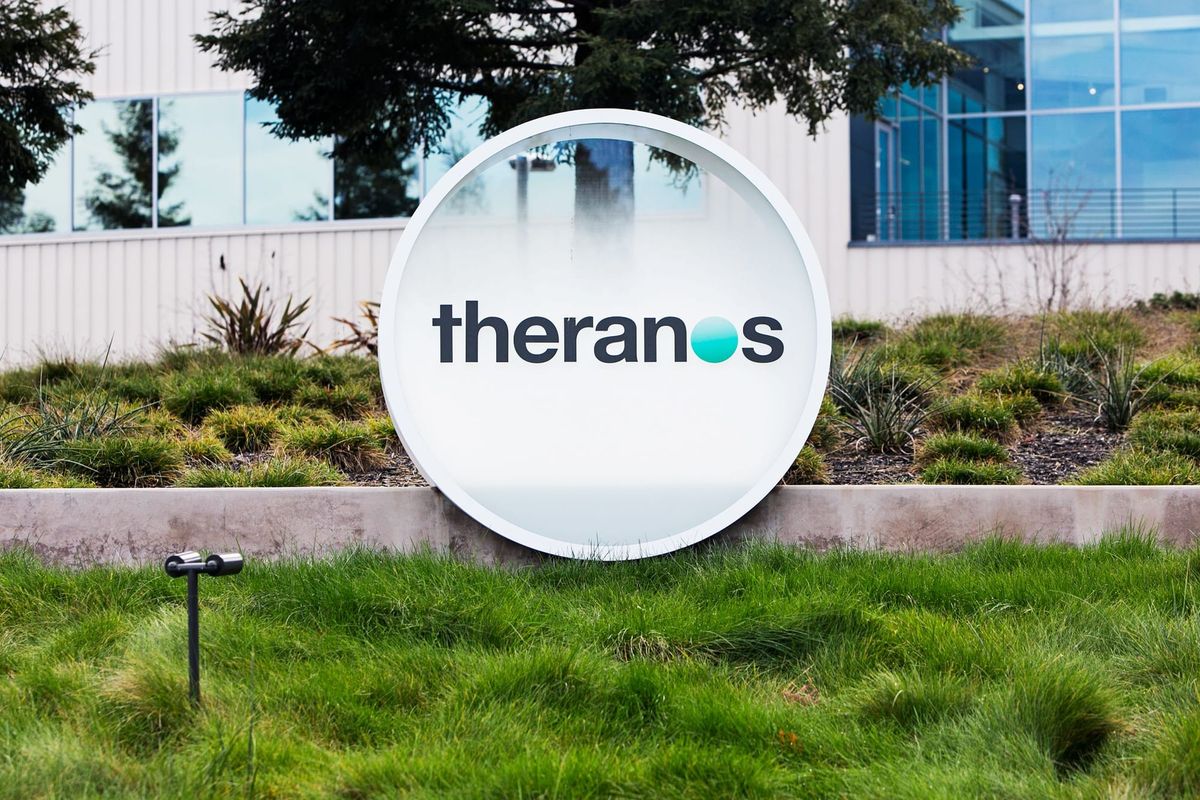
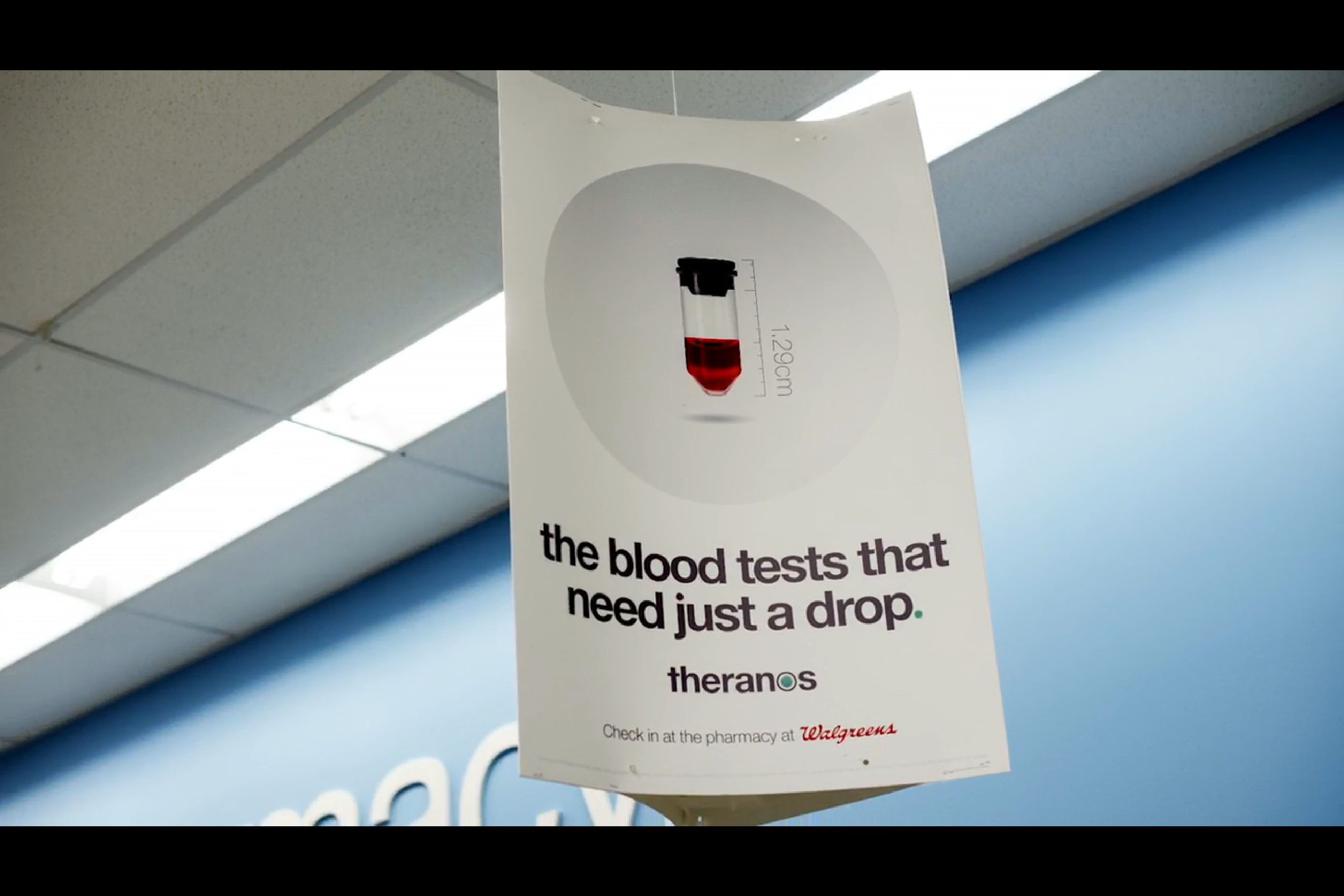
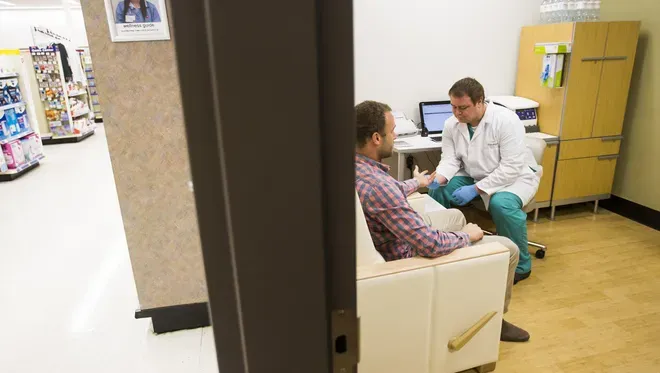
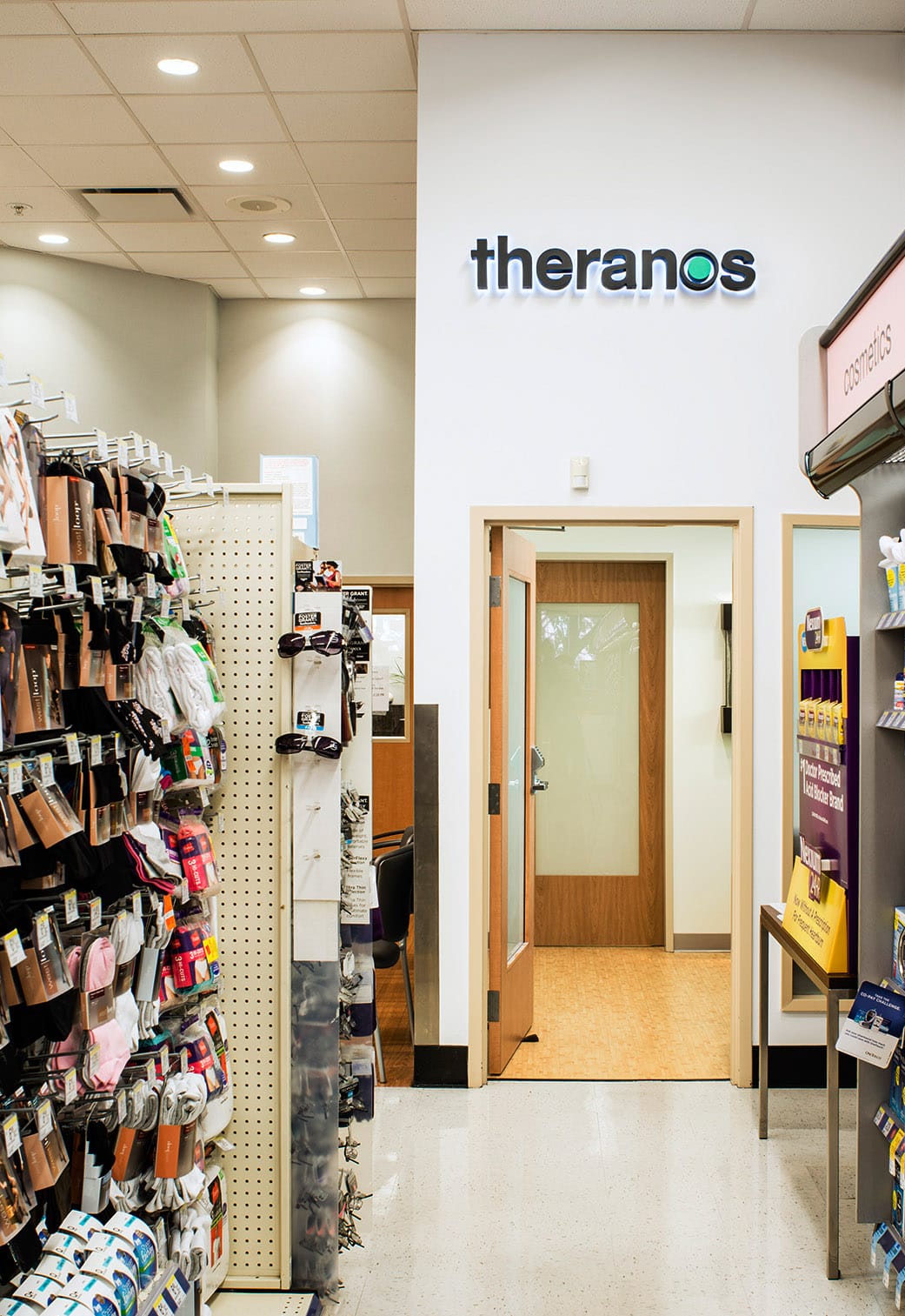
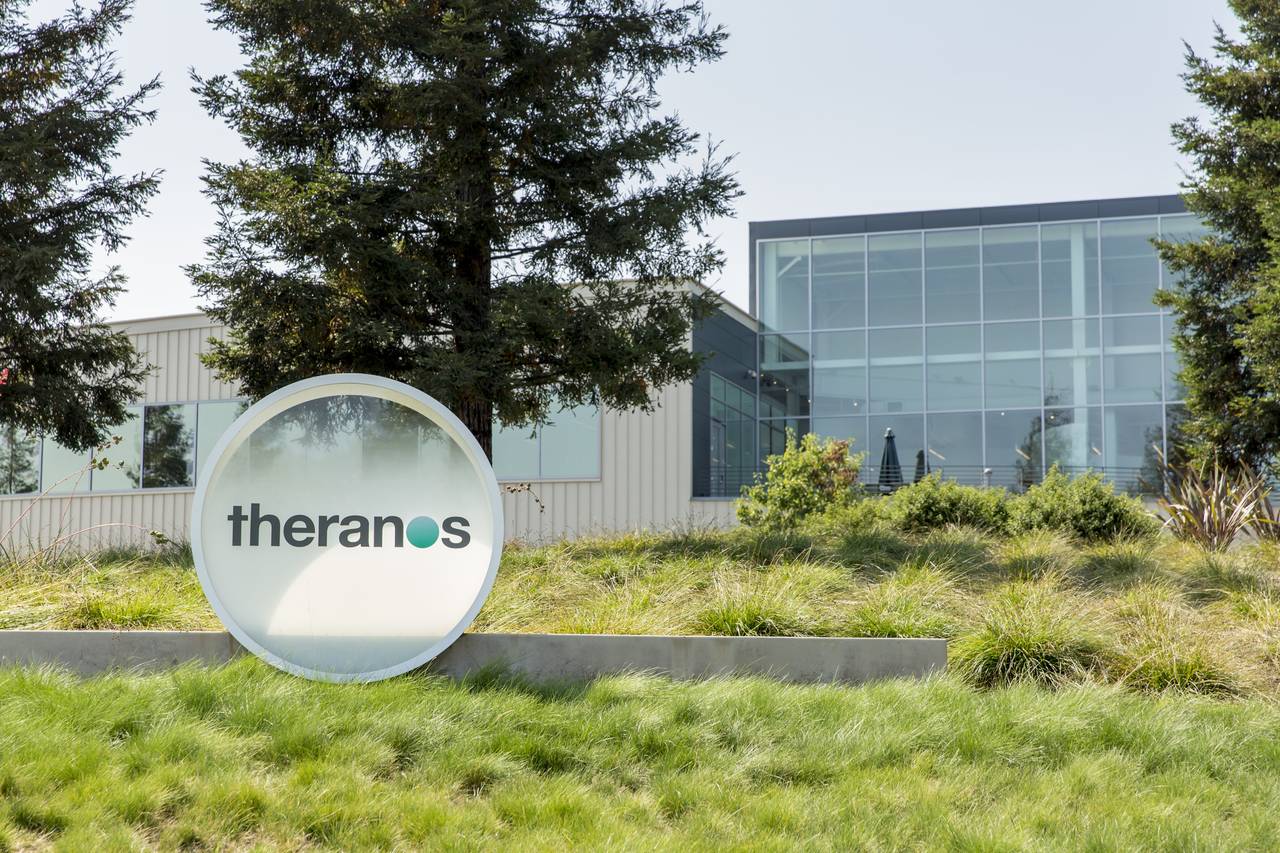
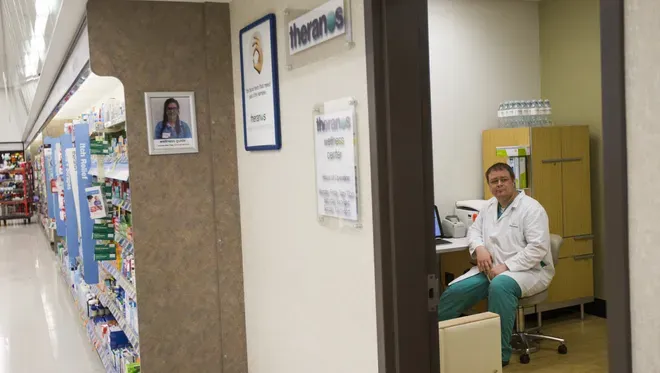
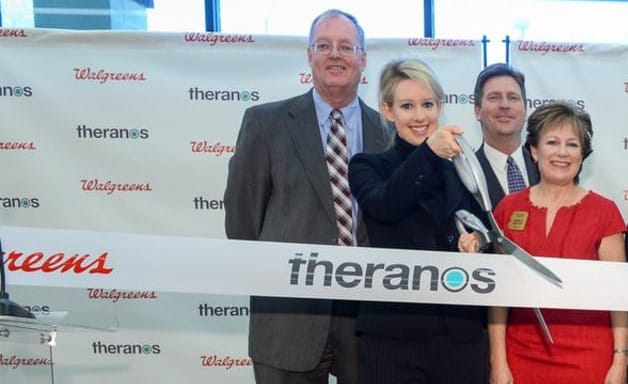
Elizabeth Holmes's detonation came in the pharmacy aisle, as a clean sign, or a wellness room inside a Walgreens. A check-in counter under soft clinical branding. You will know it by its mark: Theranos.
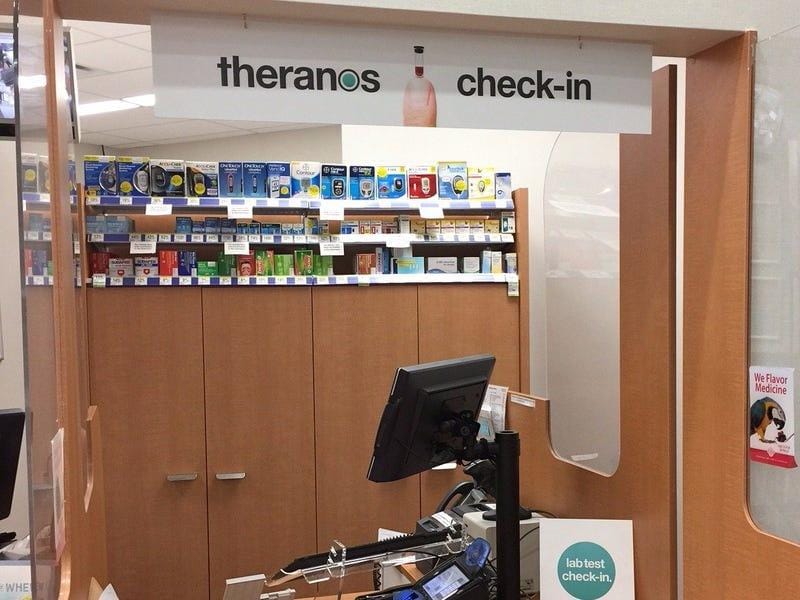
Lab testing. A promise that blood testing had finally become small, cheap, fast, painless, and so close to ordinary life. That is what made this whole fiasco so dangerous.
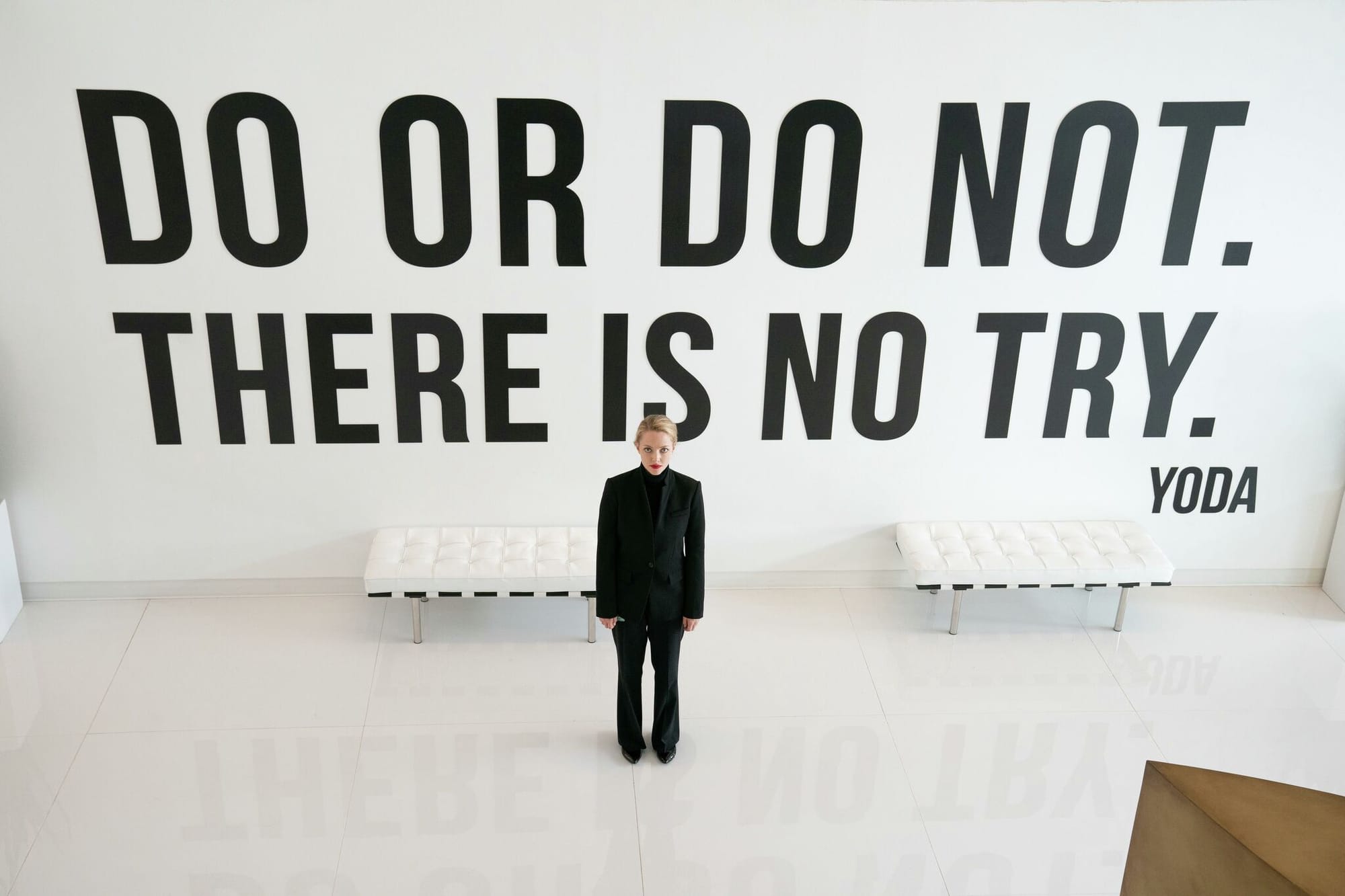
No one walks into a pharmacy thinking they are entering someone's blast radius. They walk in because the place is ordinary. Pharmacies are where you go to see flu shots, prescriptions, cough medicine, greeting cards, batteries, blood pressure cuffs, and a deeply tired person in scrubs behind a counter. The whole moral force of the setting comes from trust already accumulated by other systems around it.
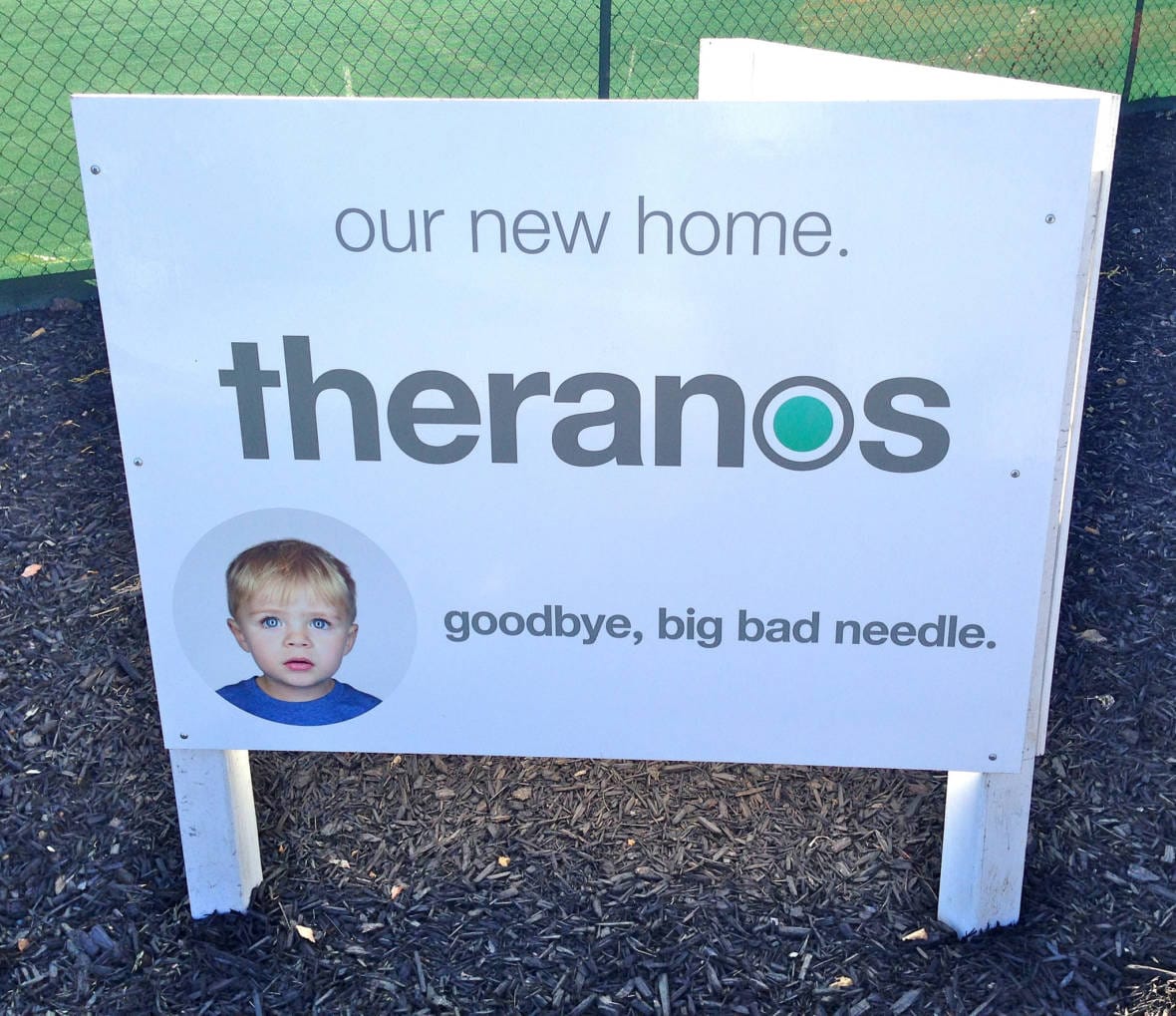
Theranos borrowed that trust, and then it spent it.

This is the third entry in Failed Field Analysts.
The first began with a literal explosion in downtown Nashville. Anthony Warner saw that communications infrastructure was powerful, fragile, and socially central. Then he collapsed a network of people into a symbol and bombed it.

The second followed Robert Moses through the slower explosion of administrative power. Moses saw that cities need motion, coordination, bridges, parks, roads, and large-scale public works. Then he treated Flow as life and made certain neighborhoods too easy to spend.
Elizabeth Holmes is a different kind of failed analyst. Elizabeth did not drive up with a bomb. She also did not call in a bulldozer.
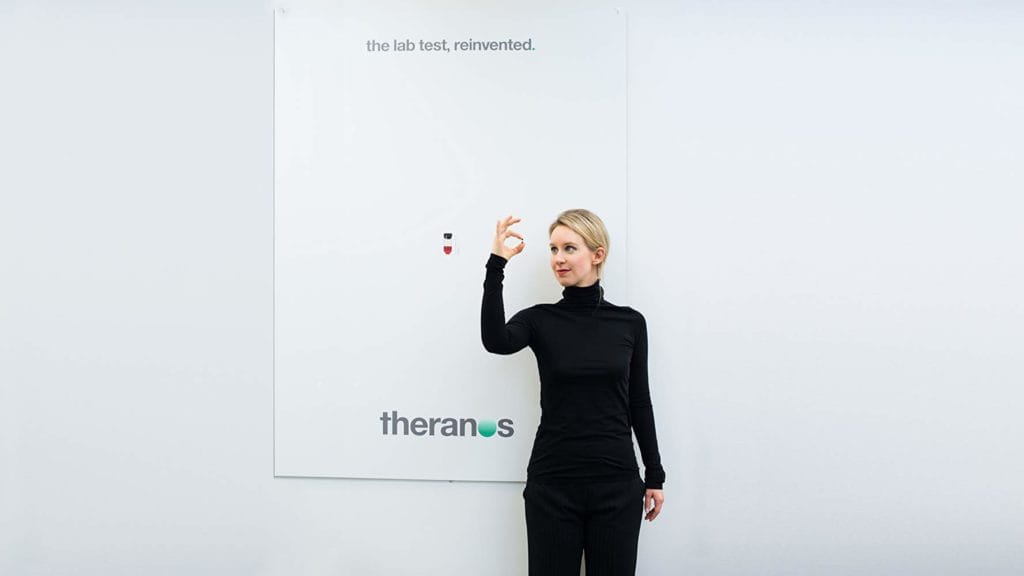
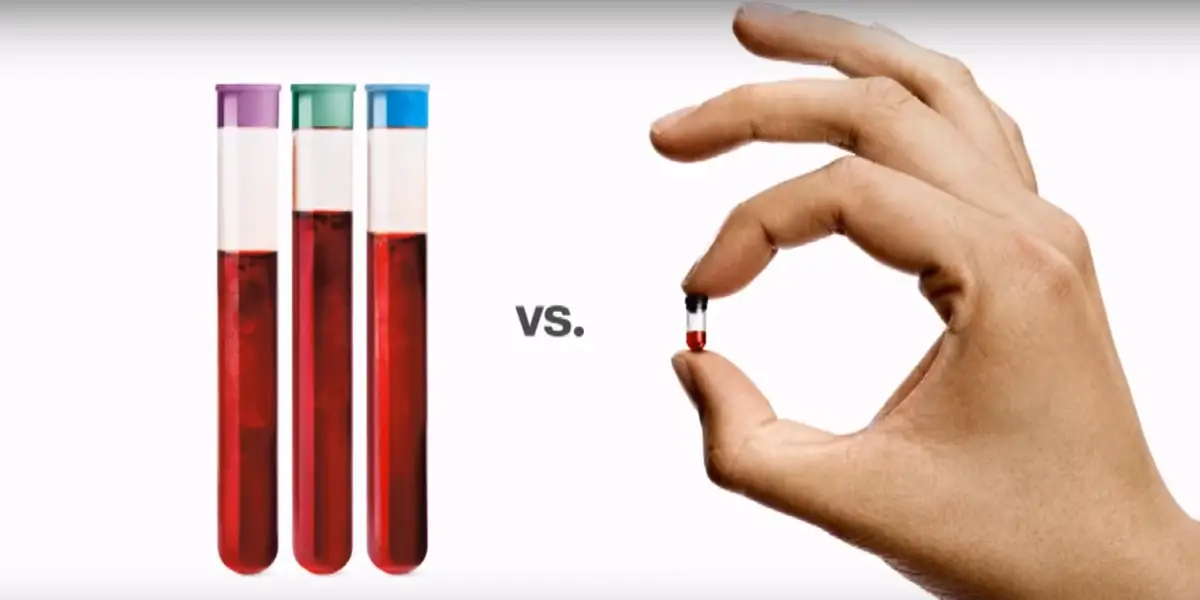
Holmes arrived with the idea of a smaller needle.
Failed Field Analysts is not a series about people who never see the field. Those cases exist, but they are too easy. This series is about the more interesting agents who see one real structure with unusual force, then mistake their partial analysis for permission to freely damage the wider field.
Elizabeth Holmes saw a real obstruction in medicine. Then she built a fake path through it.
The Test != the Path to Repair.
Blood testing is one of the gates through which a body becomes knowable.
That sounds very simple until you need that gate. Then it becomes very not. A test can tell someone whether fatigue is ordinary exhaustion or anemia, whether thirst is a symptom, whether medication is working, whether infection is present; whether risk is rising somewhere the body cannot yet feel.
A blood test can open a path to treatment or close a path to fear. A blood test can also open the wrong path.
The blood draw is only the visible ritual. The real path here includes sample collection, assay validation, machine performance, lab process, quality control, technician competence, physician interpretation, patient understanding, follow-up, retesting, regulation, recordkeeping, and the patient’s ability to challenge a result that does not fit the real world.
A diagnostic test is not just some number. This is a correction instrument for the body.
Elizabeth Holmes understood the visible pain points here. Blood testing can be frightening, expensive, inconvenient, slow, opaque, and irritatingly dependent on systems many people already distrust. Needles are not just nothing. Waiting is also not nothing. Cost is clearly not nothing. A patient who delays testing because the process feels humiliating or unaffordable is not making some fake complaint. That friction is a real part of the medical field.
Holmes saw all that. That was the true fragment of her analysis.
So, a device that could run many accurate tests from a tiny finger-stick sample would have clearly expanded reachable future-space. It could have made earlier detection more reachable. It could have made routine monitoring less burdensome. It could have given patients more access to information about their own bodies. It could have put useful diagnostic capacity closer to ordinary life.

That is the dream people that many wanted. The problem was that Theranos sold the path to it before the path really existed.
A Promise != a Path.
A promise can be important. A promise can orient research. It can recruit engineers, and attract capital. It can give a team a shared horizon to look toward. It can tell the world, “This obstruction does not actually have to be permanent.”
There is nothing automatically wrong with that. Every repair field begins before it is complete. Someone always has to imagine the bridge before the bridge is really built. Someone has to see the access problem before the clinic ever opens. Someone has to say the current system is too painful, too slow, too expensive, too brittle, too humiliating, too protected by incumbents, too comfortable with leaving people standing outside.
Ambition is not the failure here. Holmes’s failure was that her promise began impersonating a path.
A path always has to survive contact with reality. In medicine, that now means blood.
Not branding. Not your founder mythology. Not a board full of famous names. Not a magazine cover. Not a pharmacy partnership. Not investor confidence.
Blood.
If the machine cannot do what the path requires, then the path is fake. It is a lie.
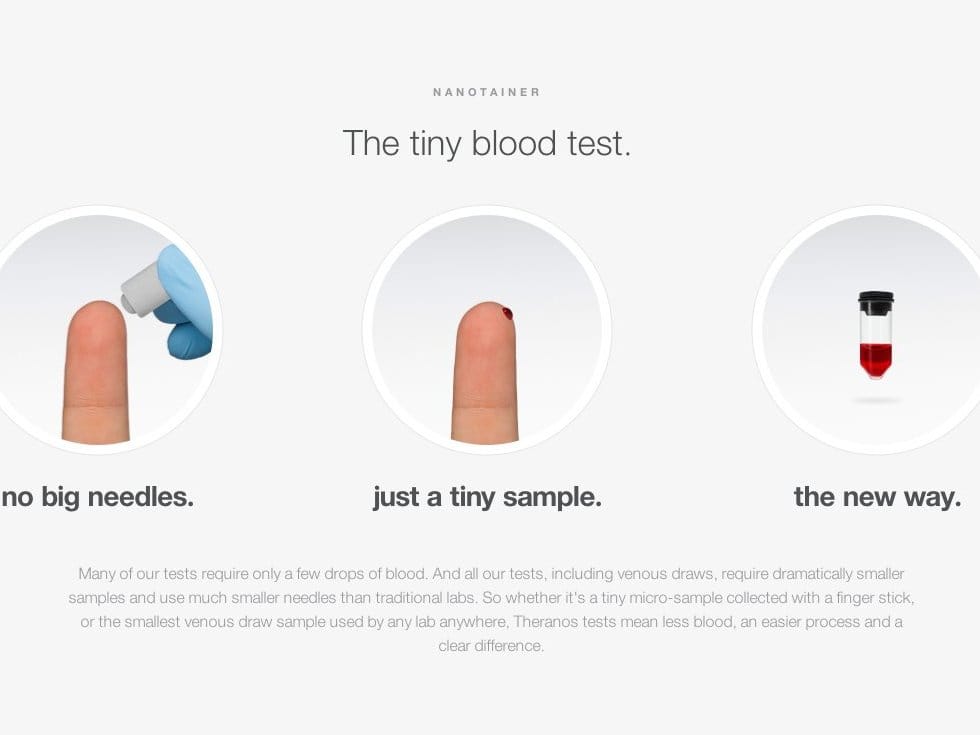
If the result cannot be trusted, the access is fake. If the patient is handed a number that traveled through an uncorrected system, then that number is not empowerment. That number is now exposure.
Holmes did not fake hope. She converted hope into premature infrastructure.
This Machine Was Not the Field.
Theranos became visually organized around the machine.
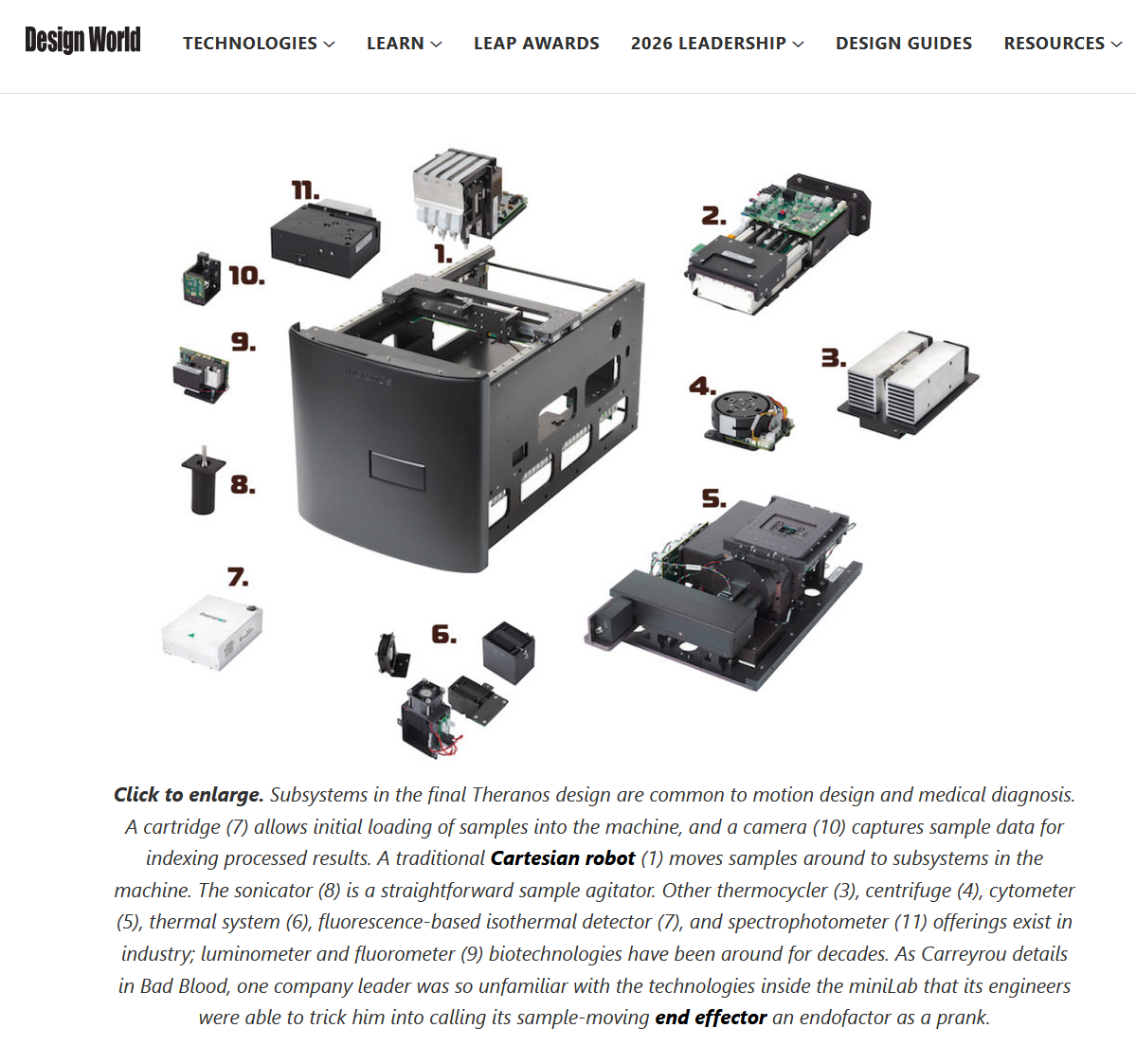
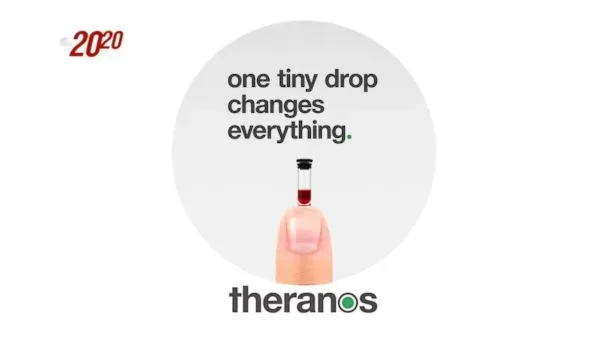
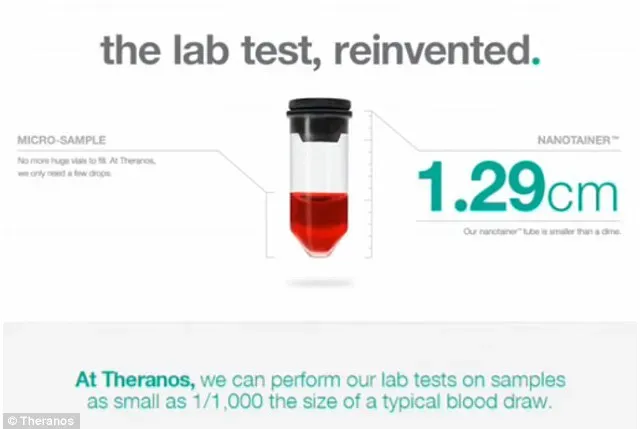
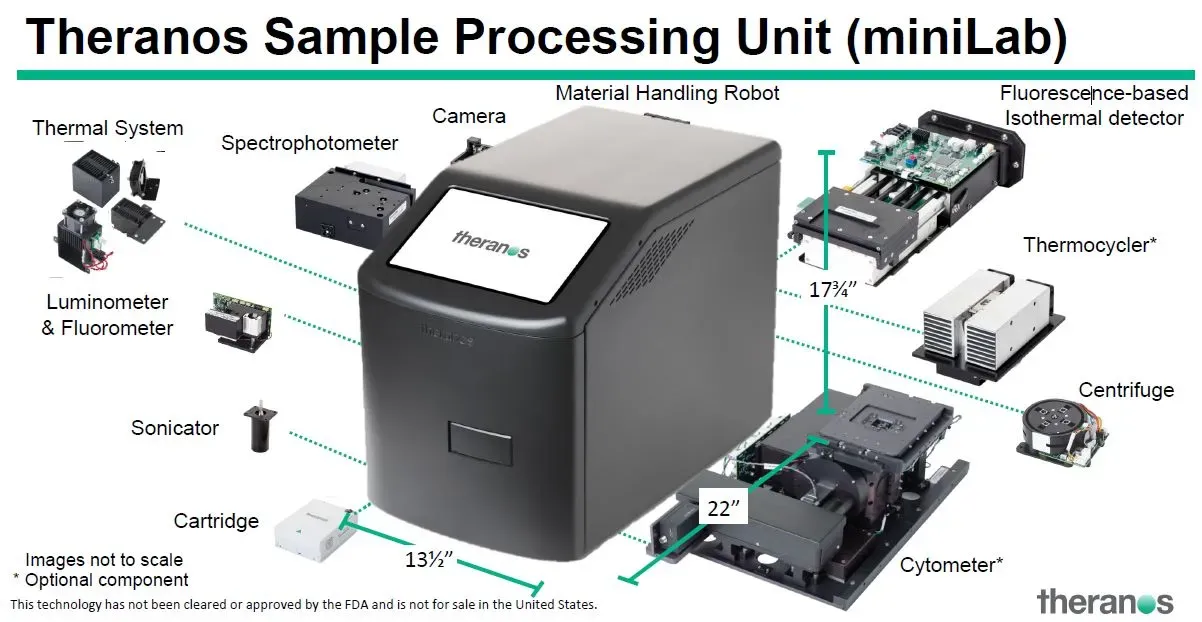
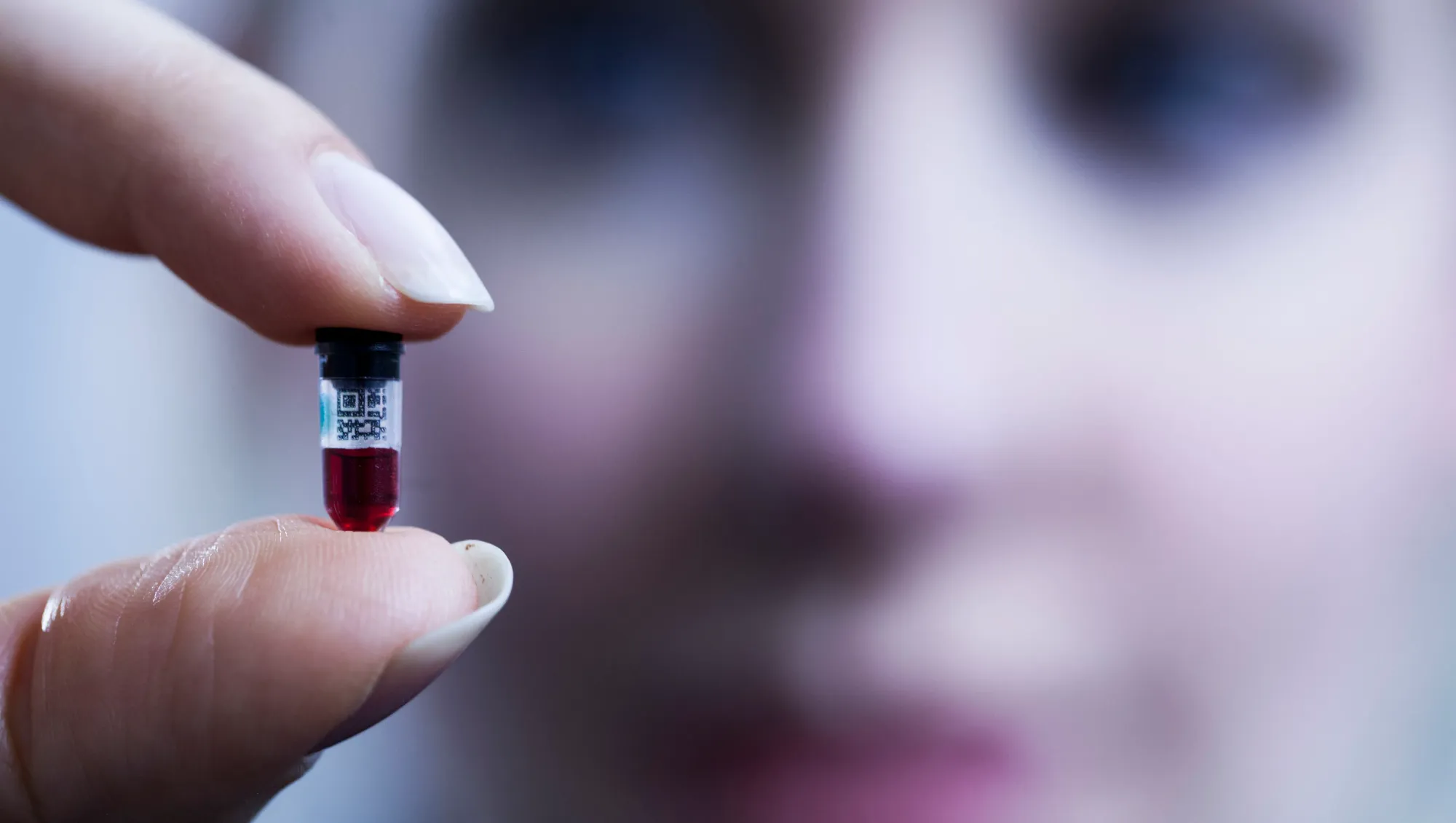
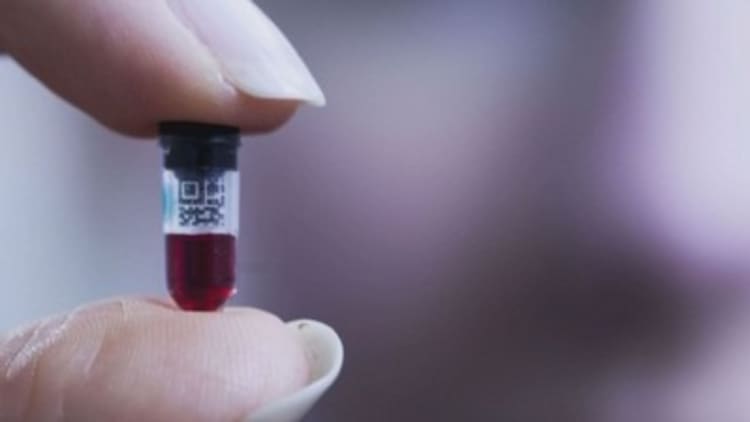
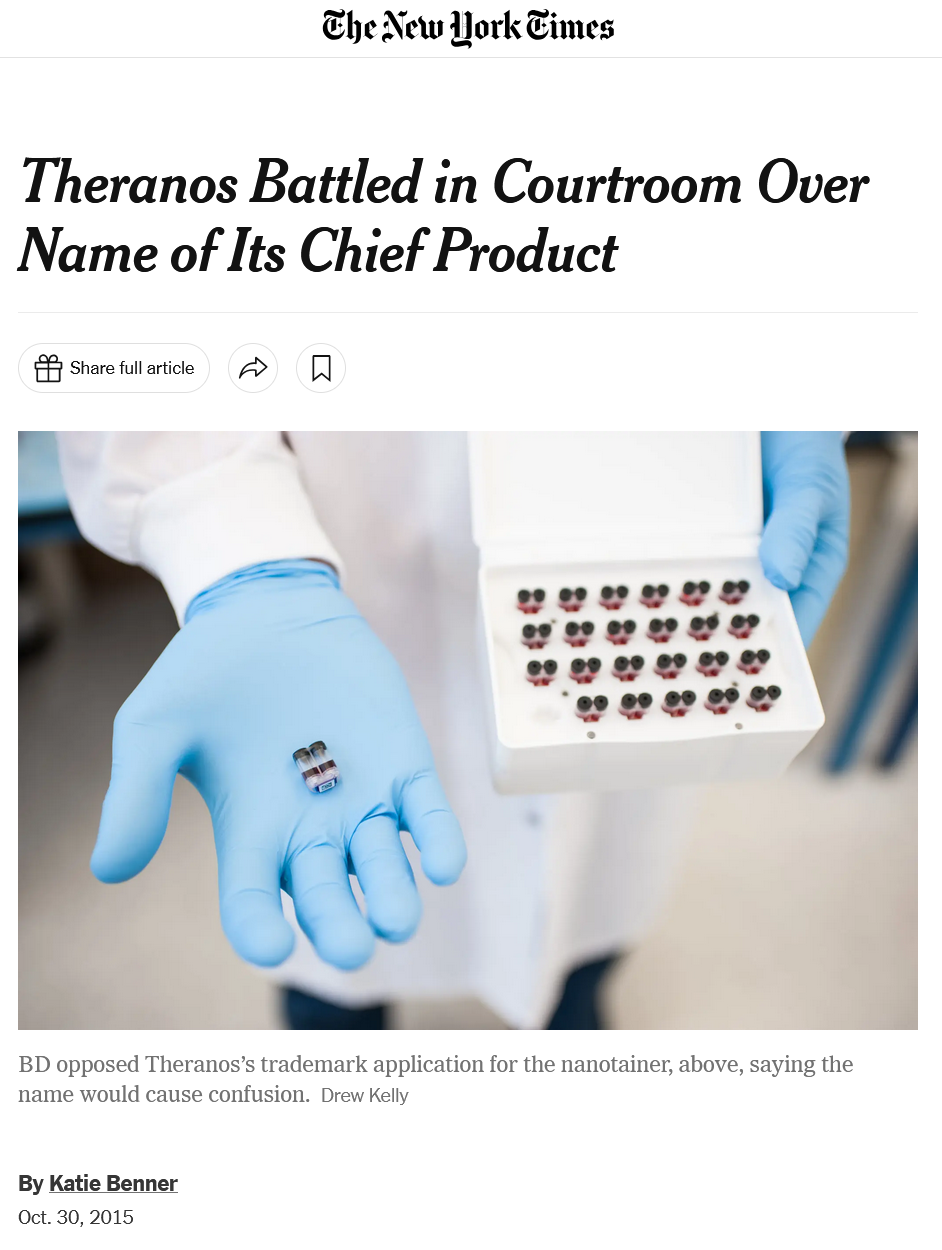
The Edison. The minilab. That black box with the tiny sample, and the cute little vial. Our future, made compact enough to fit on a counter.
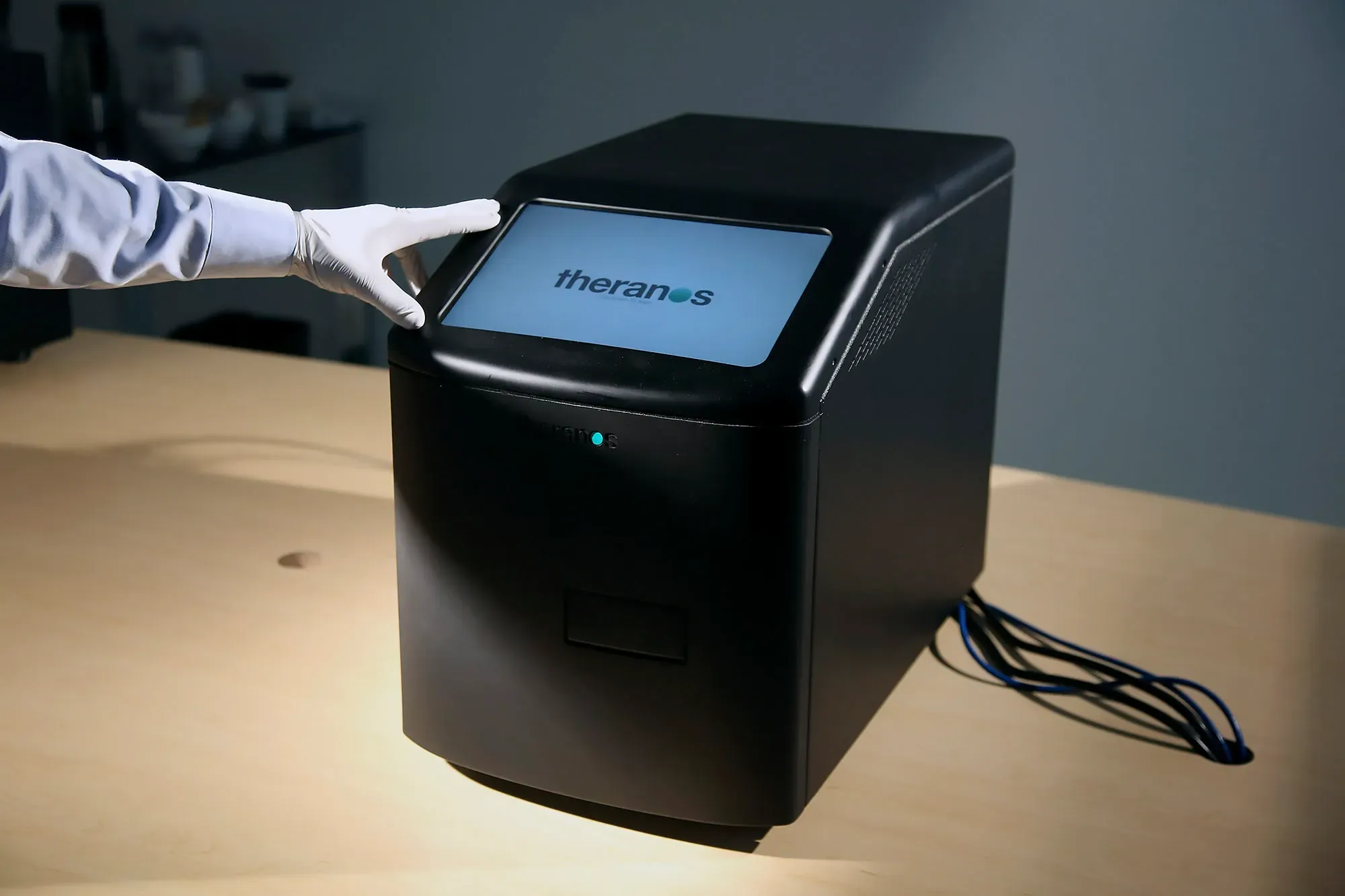
This machine was always the icon of the field, but that machine was never the field.
Medicine is not repaired by any device alone. The device now has to enter a correction system. It must be validated, challenged, maintained, calibrated, documented, compared, inspected, questioned, and sometimes stopped.
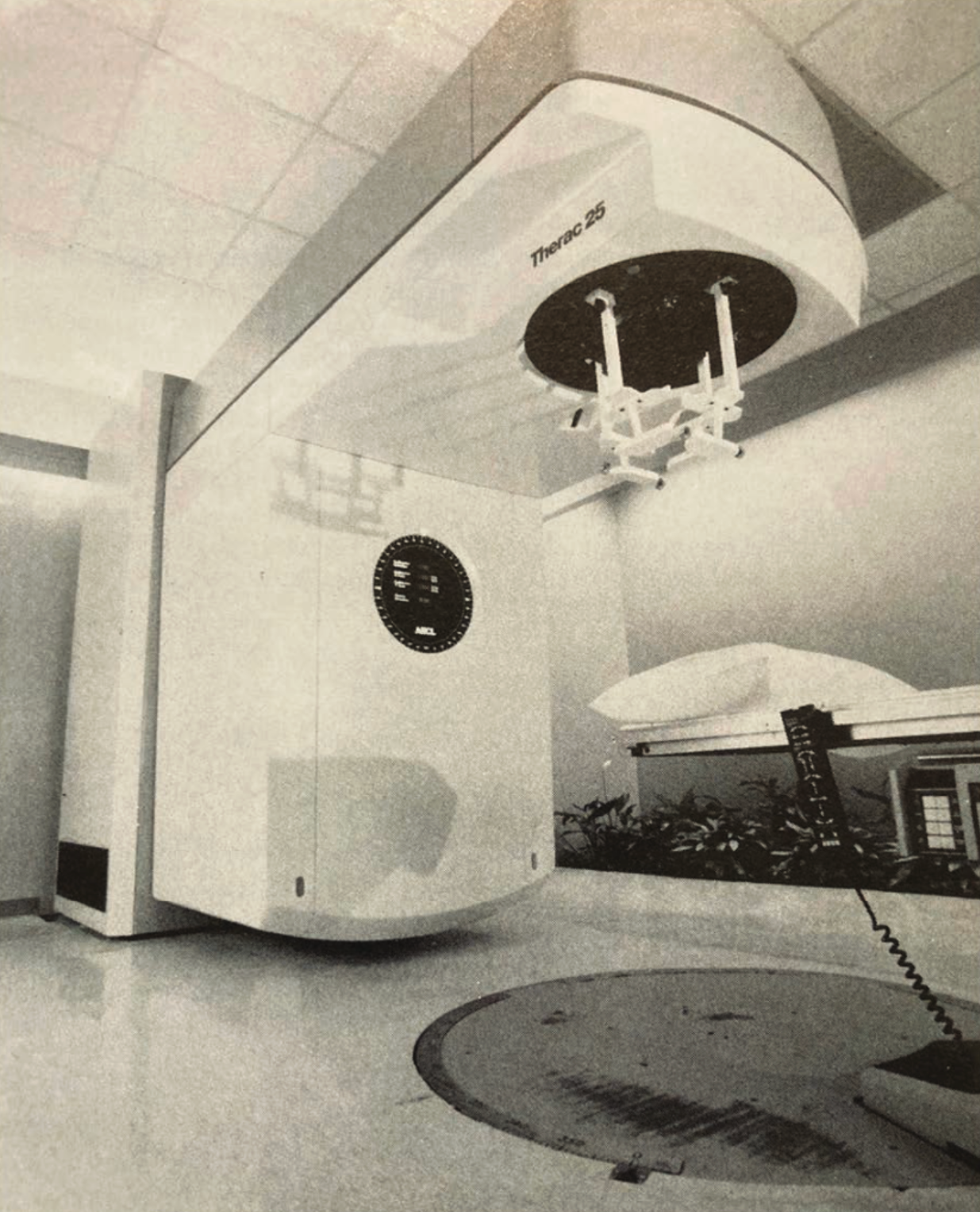
The Therac-25 case wasn't a story about software or radiation therapy; this is what happens when a patient entrusts their body to a system they cannot inspect, while the surrounding field simultaneously fails to preserve detection, intervention, correction, and accountability.
The patient does not get to debug the machine while lying under it. The patient does not get to inspect the code, review the assumptions, audit the logs, test the hardware, or demand the right alarm before the dose arrives.
Theranos rhymes neatly with that structure.
The patient cannot independently verify whether the sample was handled correctly, diluted correctly, run on the claimed platform, compared against validated ranges, processed under competent lab conditions, flagged when suspicious, or ever corrected when the system failed. The patient’s body now becomes readable through a field the patient cannot inspect.
That means the burden on Theranos was not lower because the promise was beautiful and care-oriented. It was now much higher.
Correction Became the Enemy.
Things often fail. Machines fail. Startups fail. Labs fail. Assays fail.
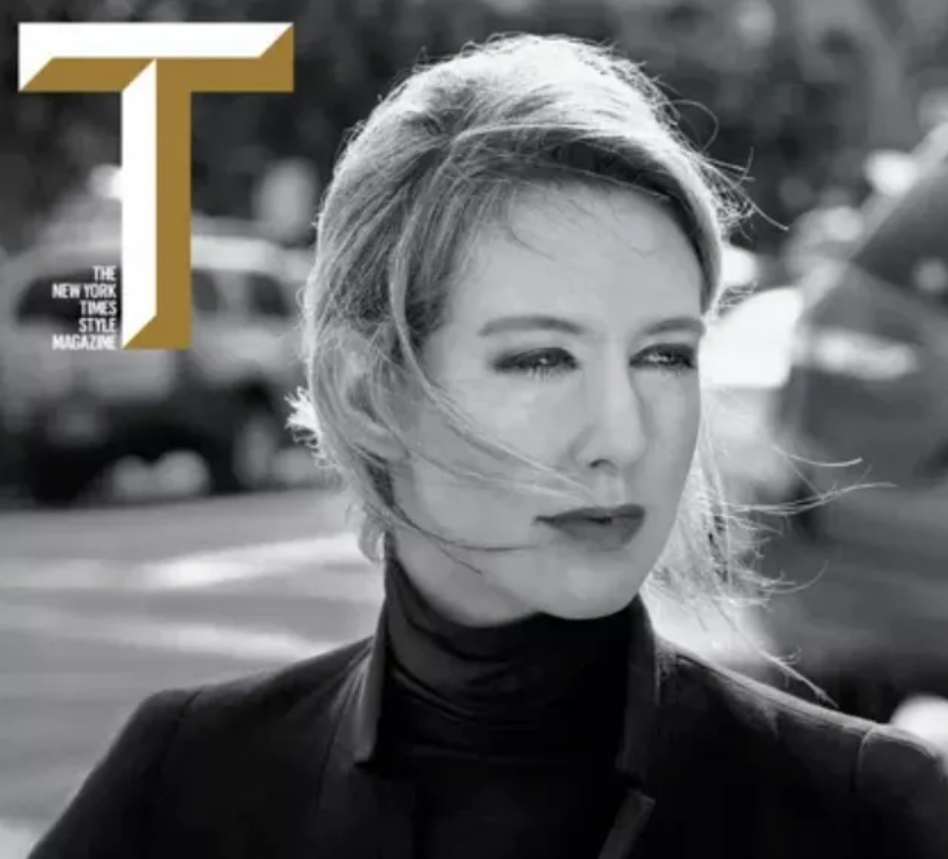
That is not the deepest moral problem here. The deepest moral problem begins when failure cannot move through the field as correction anymore.
A medical company can survive an error. It cannot morally survive becoming organized against correction.
This is where Holmes’s failure becomes more than a product failure or even a fraud story. Theranos became anti-corrigible. This company did not simply fail to know enough. Theranos built structures that made it harder for reality to object.
Secrecy became a virtue. Siloing became control. Legal threat became insulation. Internal dissent became disloyalty. External skepticism became persecution.
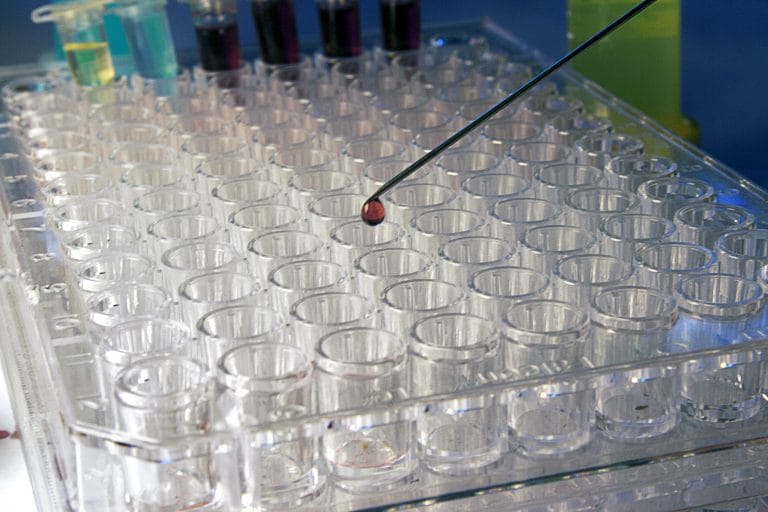
The story had to survive, so the correction field had to shrink down until it couldn't touch it.
This is the point where a fake path becomes dangerous in a deeper way. A company trying to build a hard medical technology will always hit ugliness. That ugliness is not the enemy here. Failed runs, bad data, failed validation, narrow capability, regulatory friction, skeptical experts, whistleblowers, and ugly internal arguments are not obstructions to repair at all; these are often the route repair actually takes.
Theranos treated many of those routes as threats to its future.
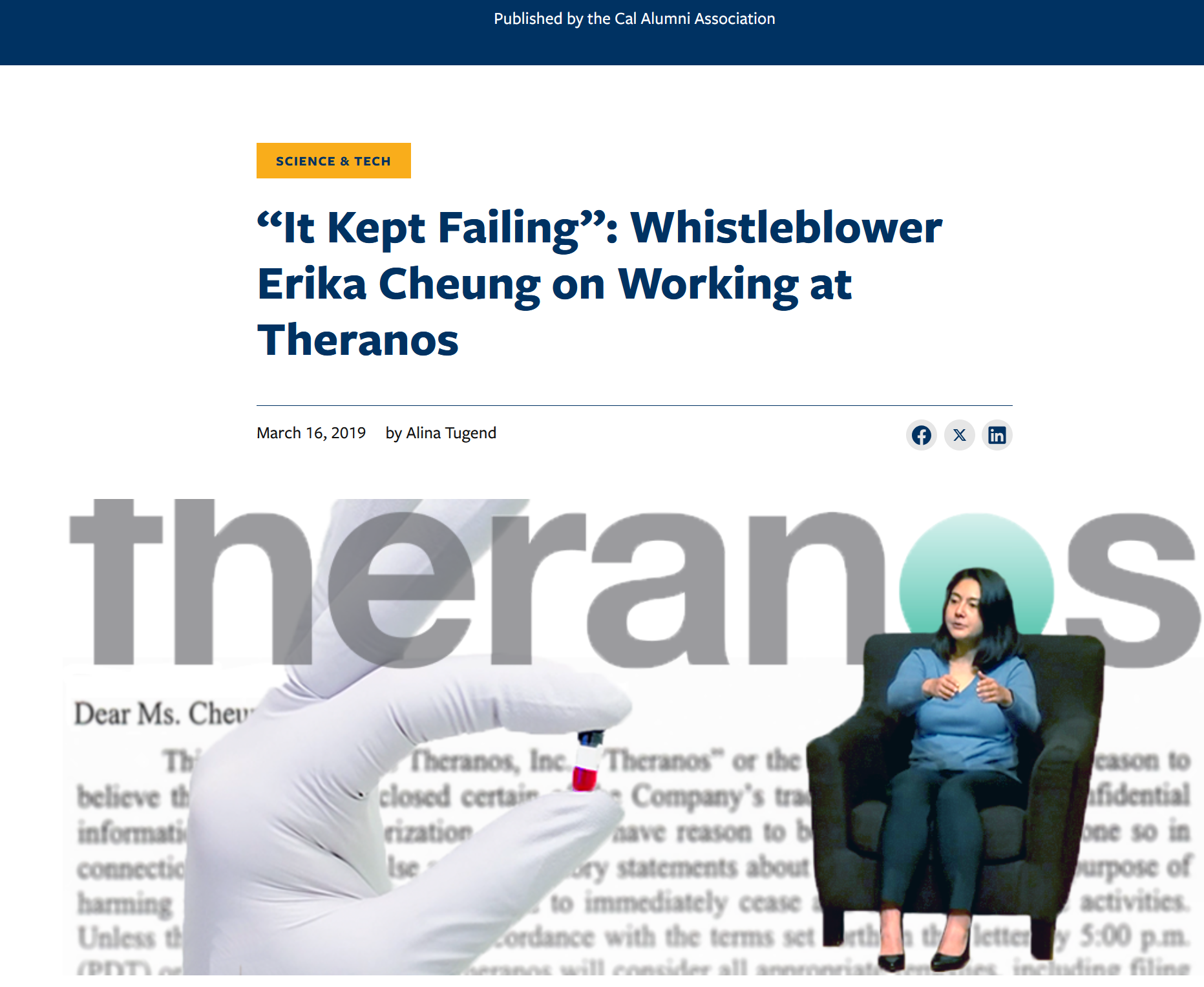
If the future cannot survive correction, then that future is not ready to touch patients. This is also why the “bad founder” version is too small here.
Bad actors do not just materialize from Hell. This field gave Holmes her carrying capacity. Silicon Valley wanted a medical Steve Jobs. Investors wanted a world-changing private company before everyone else got in. Media wanted the clean myth. Walgreens wanted a retail-healthcare future. Patients wanted easier access. Healthcare itself was just frustrating enough that Theranos’ promise felt like mercy.

None of that erases Holmes’s agency, but it explains why the fake path could travel so far before the field finally stopped it.
Prestige != Validation.
Distortion does not always look like a rant. Sometimes it looks like a board.
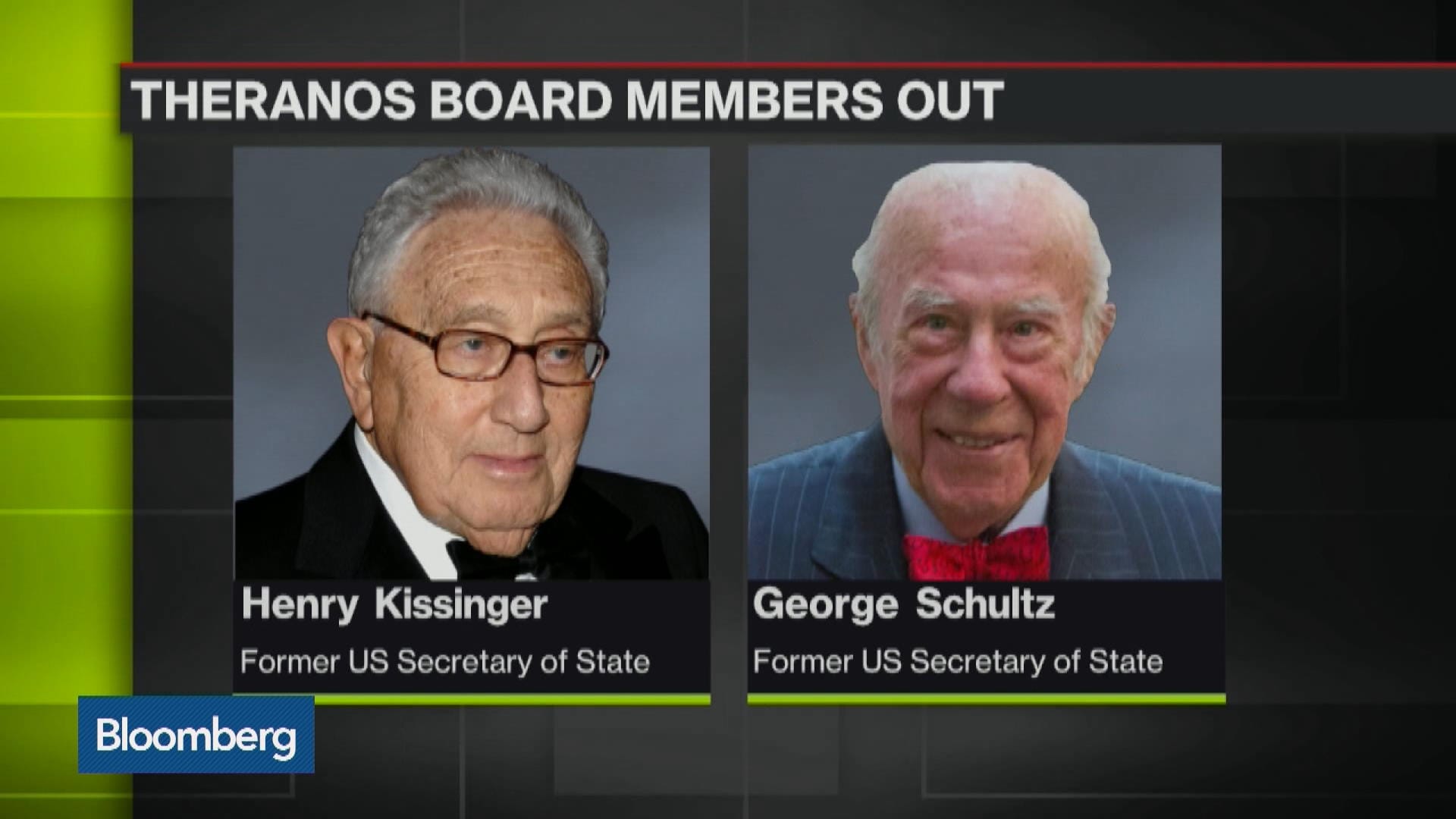
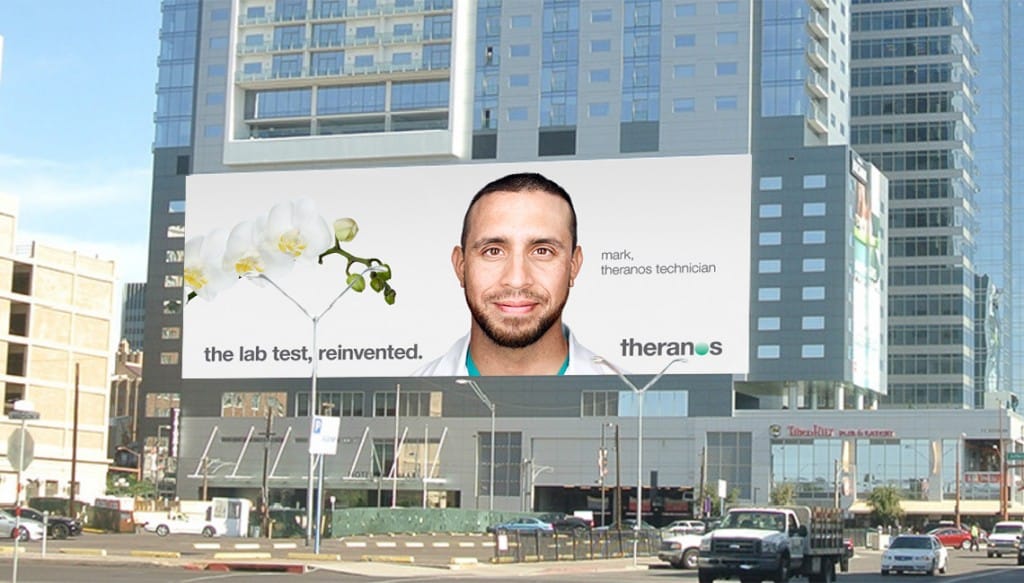
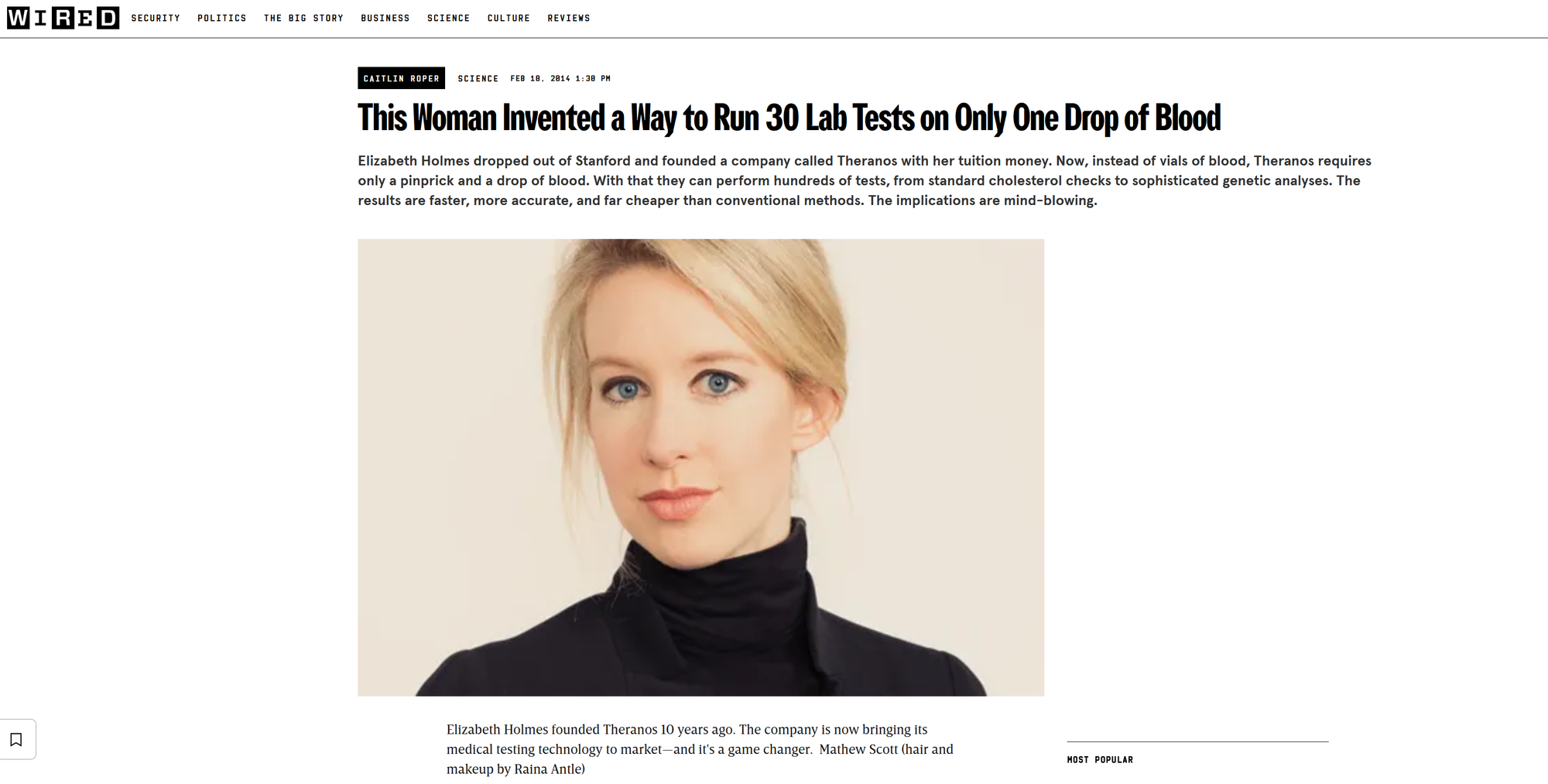
Theranos surrounded itself with prestige: statesmen, generals, investors, executives, public figures, media profiles, military implication, regulatory language, retail partnership; all the aura of inevitable arrival. These things created the feeling of validation.
Unfortunately, feeling is not validation.
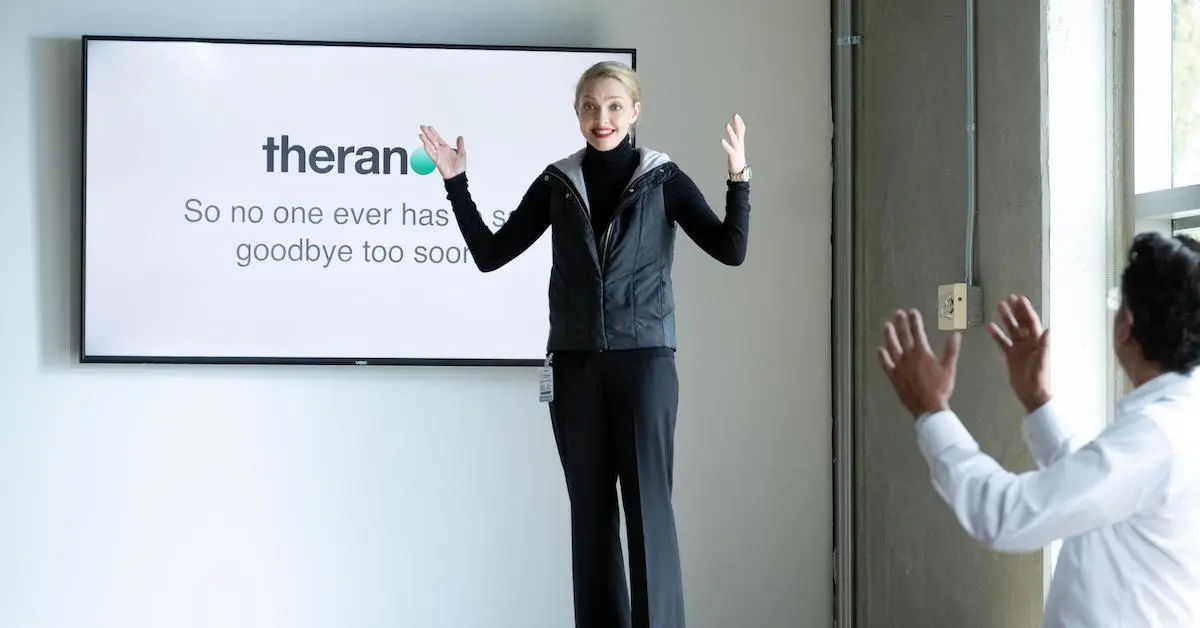
Validation means the machine works under the conditions claimed. Validation means your test performs. Validation means trained skepticism survives contact with the evidence. Validation means the actual technical path exists in extance.
Prestige can definitely support a valid path, but prestige can also protect a fake one from the people capable of killing it.
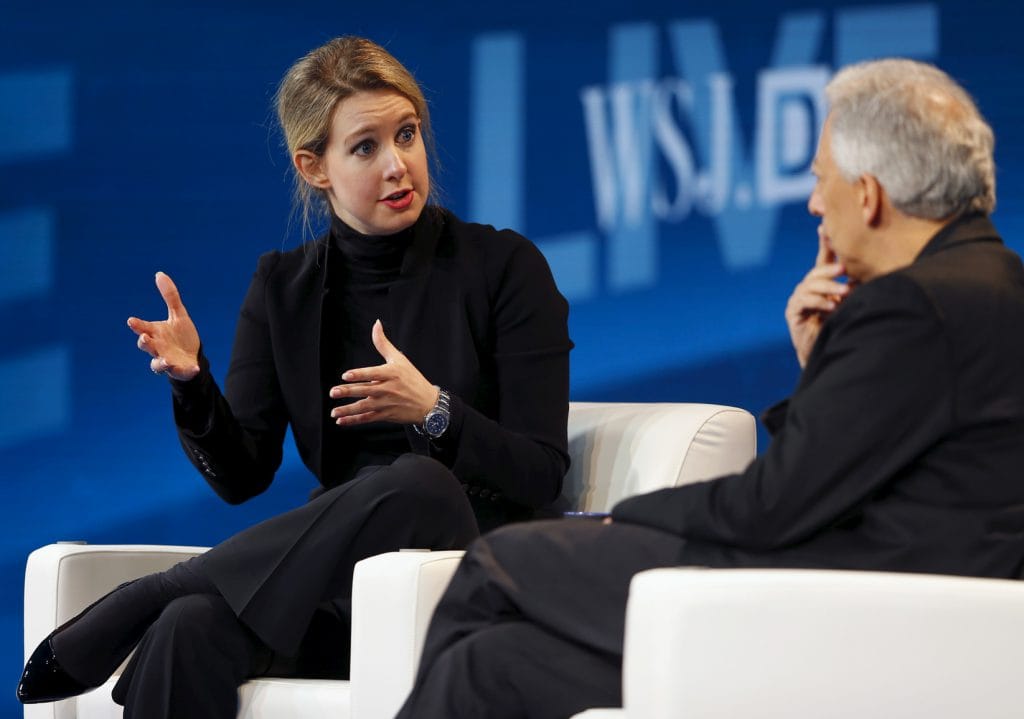
That is what makes this specific failure mode so nasty. Serious people can become unwitting shielding material for an unserious claim. Their seriousness does not transfer into the Edison machine. Their sterling reputations do not make the blood any more readable. Their presence can instead make it harder for ordinary observers to ask the obvious question.
Does this shit work?
This is the Symmes’s Hole pattern popping back up in modern clothes.

A false or distorted model does not become socially dangerous only when fools believe in it. It becomes dangerous when a powerful field gives it carrying capacity. Petitions, newspapers, officers, officials, committees, investors, boards, conferences, stores, profiles, keynote stages, glowing headlines: these little things can all become vehicles by which an uncorrected claim moves much, much farther than it deserves.

Prestige did not validate the Edison machine at all. Prestige protected Theranos’ story from invalidation. That is the key failure of Holmes as a field analyst.
Partnership != Proof
Walgreens moved this fake path into ordinary life.
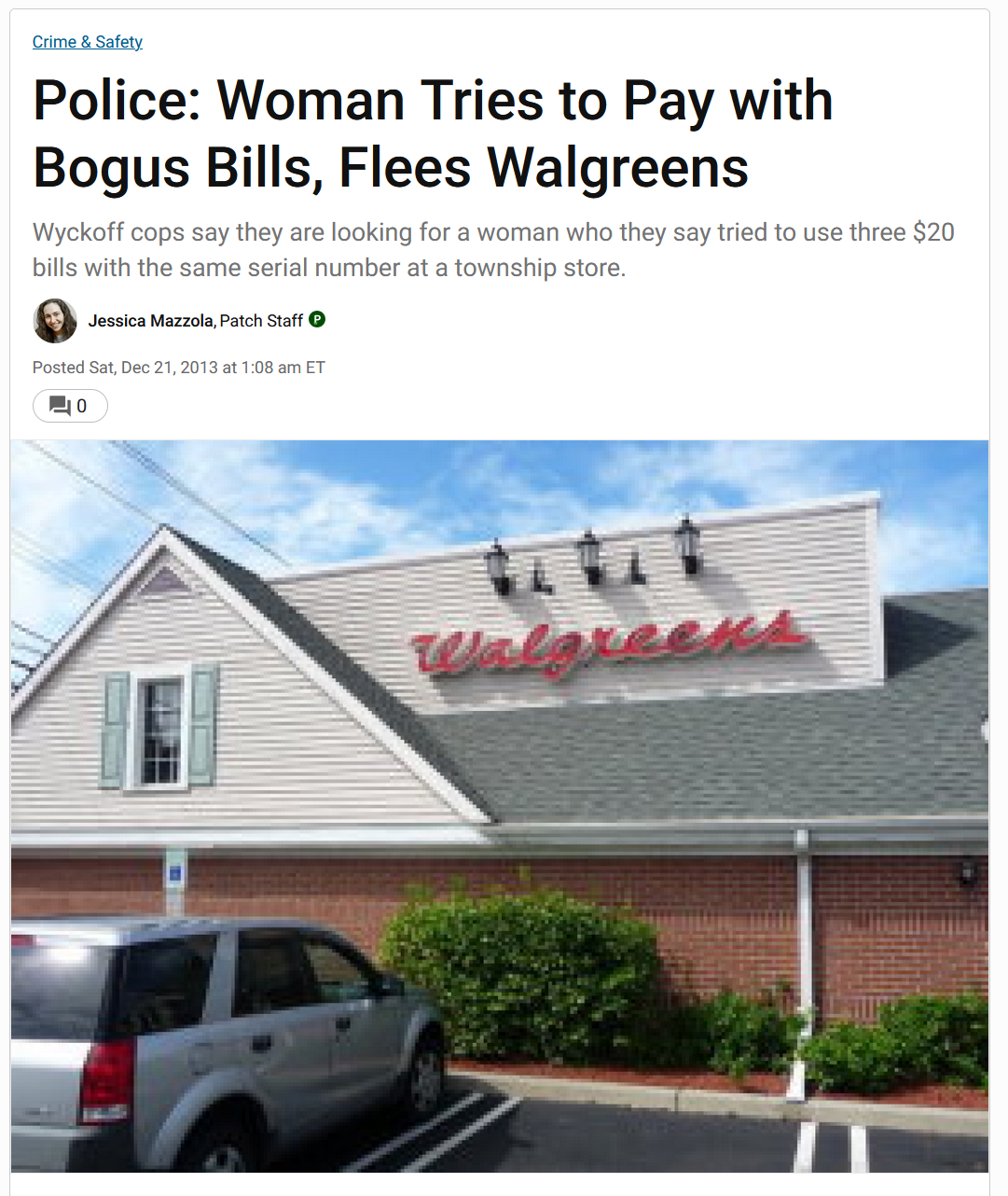
A startup pitch can remain safely abstract and distant for some time. Investors can imagine it. Journalists can profile the company. Board members can advise, and founders can perform the future in their controlled rooms.
A pharmacy is very different.

A pharmacy is an active access point. This is where ordinary people go when the body becomes just a little too present. This is not a grand place. That is actually why the pharmacy works. This building is flu shots, prescription refills, antihistamines, glucose meters, cheap reading glasses, cough drops, and anxious errands under fluorescent light bulbs.
So, when Theranos entered into Walgreens, the future looked already deeply installed.
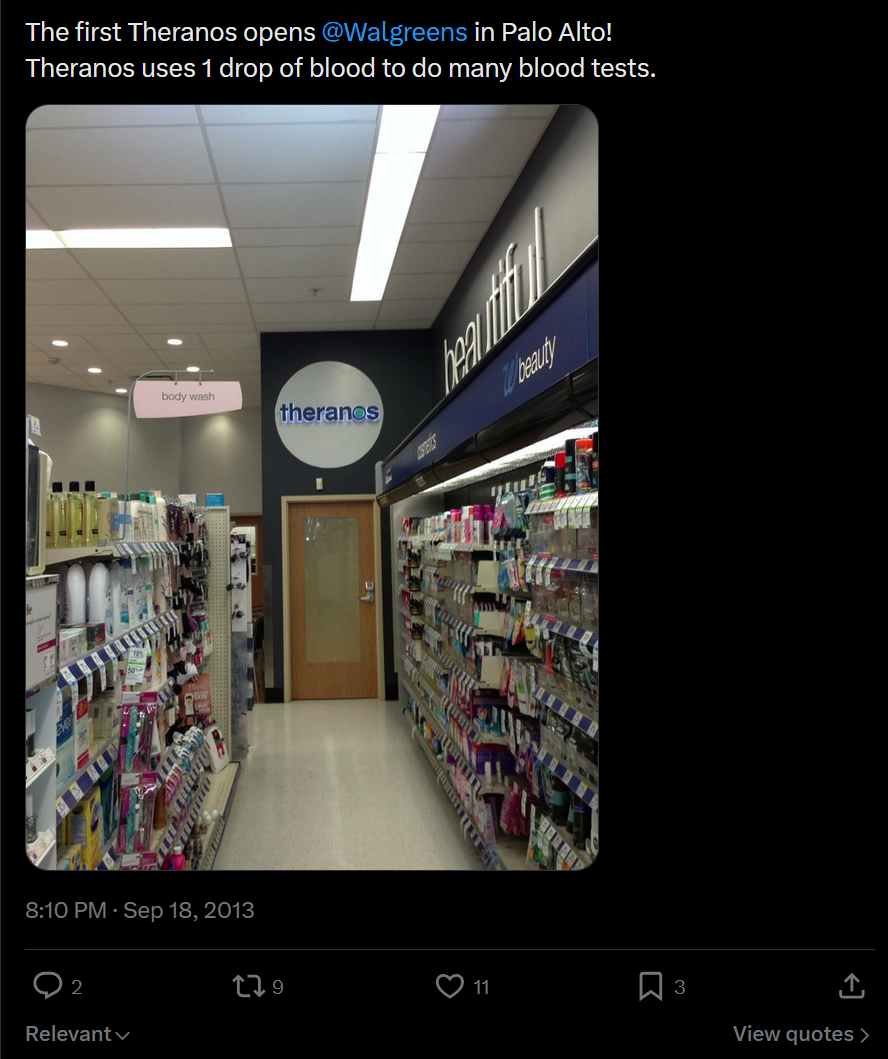
A partnership is not an assay. A storefront is not clinical validation. A check-in counter is not proof.
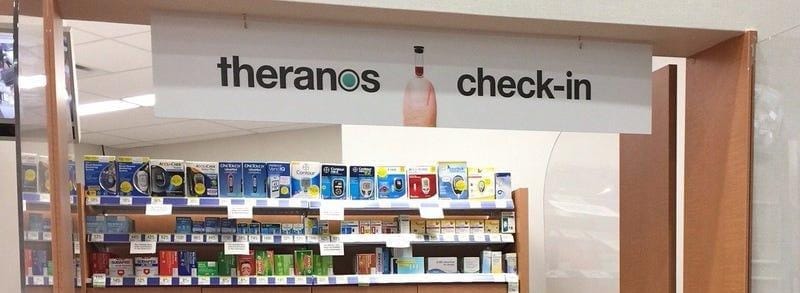
But, the field does not always process such fine distinctions. Most people do not actually read regulatory filings before trusting a lab counter. They just read the setting. They read the brand. They read the fact that someone with institutional power seems to have already asked the hard questions here, if it got into Walgreens.

This is why retail medicine carries such a heavy and specific obligation. It puts medical trust into familiar consumer space. This lowers friction, which can be good, but lowered friction is dangerous if the system behind the counter is not really ready to bear the trust it is borrowing.
The Walgreens wellness center was Holmes's explosion point, because that is where the promise stopped being investor mythology and became a real route for patients.
The missing path had now acquired a door for people to blindly stumble into.
Patients Became the Risk Surface.
The court case is obviously important.
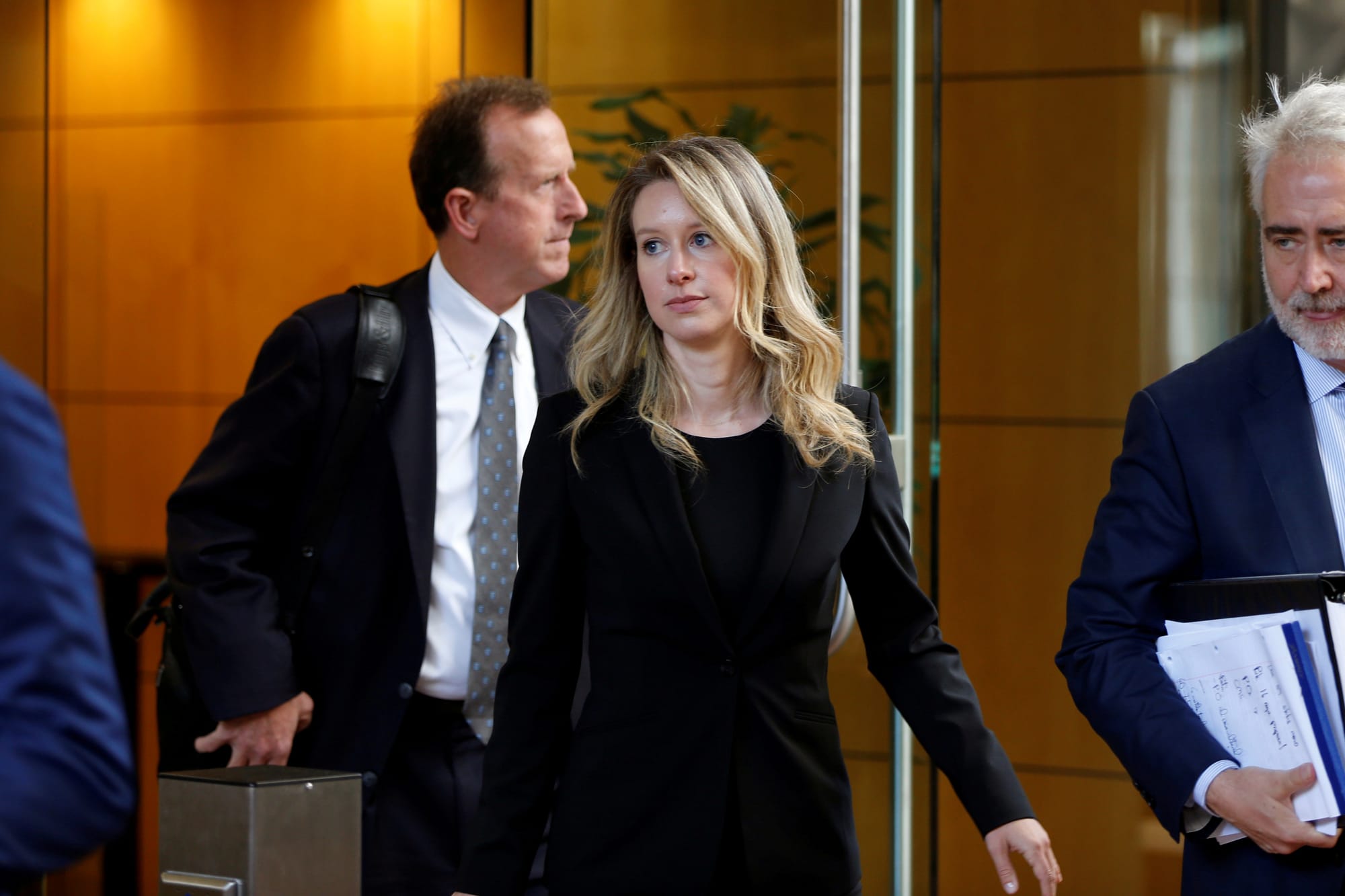
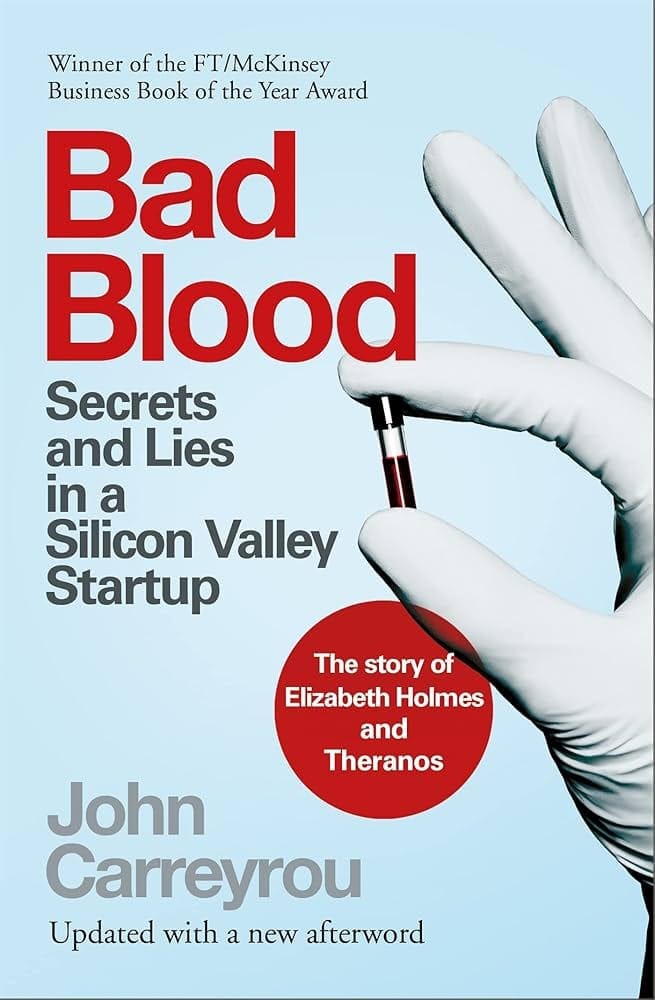
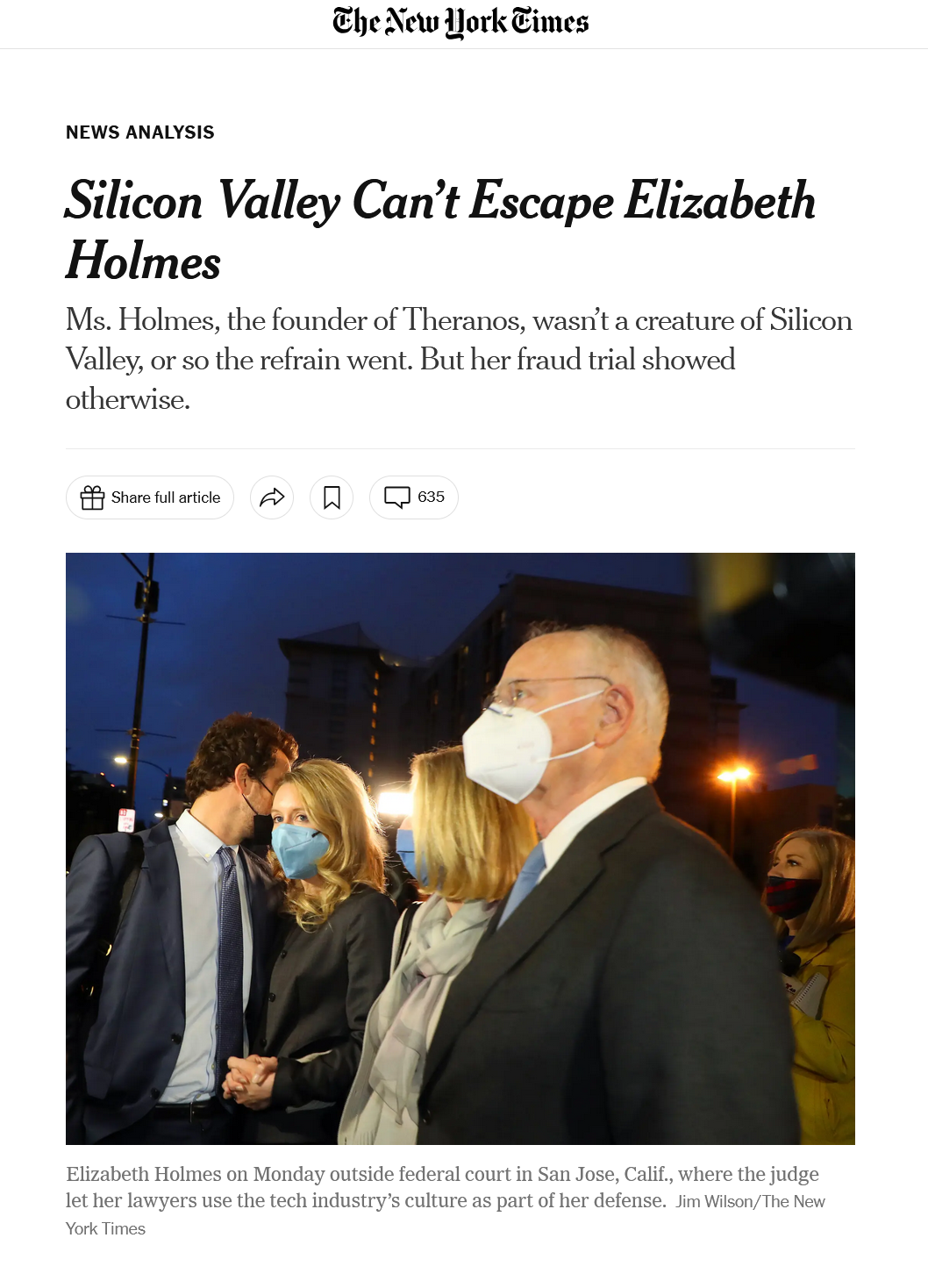
Holmes was convicted on investor-fraud counts.
She was acquitted on patient-related counts.
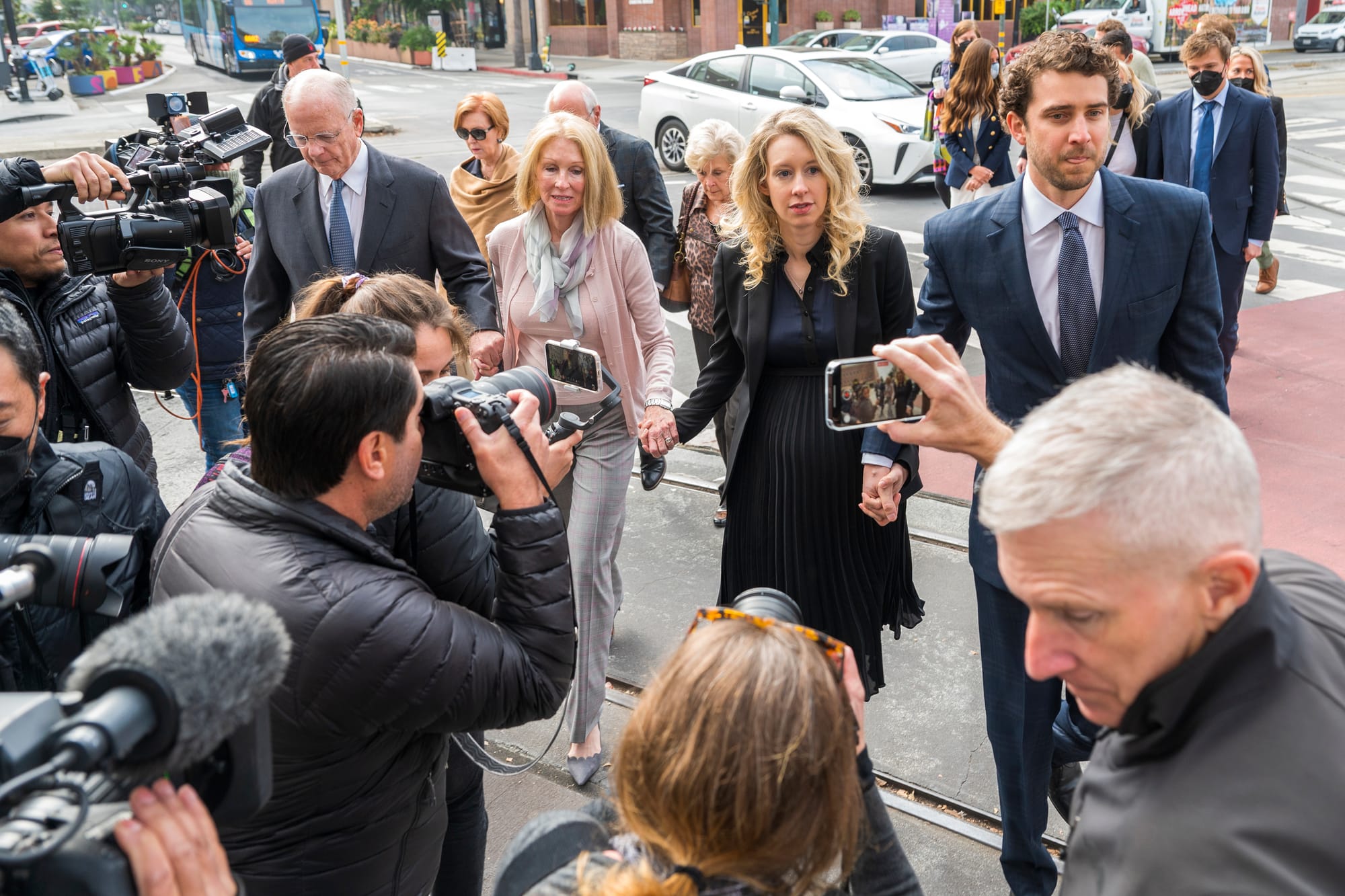
That distinction should be preserved here. Criminal law has its own burdens, categories, standards, and proof requirements. She did not meet those for the patient-related counts. This article does not need nor want to smuggle in a conviction the court did not actually return.
However.
Modal Path Ethics is not limited to criminal conviction categories. The patient field still matters.
Arizona still matters. Walgreens still matters. Voided tests all still matter. Corrected results matter. The fact that people paid for blood tests and then later had to be refunded also still matters. The fact that a medical number might have traveled through an untrustworthy path matters too, even when a jury does not find patient fraud beyond a reasonable doubt to convict Holmes for it. Modal Path Ethics isn't a blame-seeking process anyway; we look at transitions here.
A false diagnostic path does not just misdescribe the human body. This transition changes what becomes reachable after the patient believes in the description.
A bad result can create panic over nothing. A false reassurance can delay a vital follow-up. A suspicious number can send someone into a gauntlet of unnecessary testing. A corrected report can arrive well after the emotional damage has already been done. A patient can lose money, time, trust, sleep, and contact with their own body.
That last part, contact, is easy to miss here.
Medicine mediates our self-knowledge. Most of us do not, in fact, know what is happening inside our blood. We ask instruments to tell us. We ask labs. We ask the professionals. We all route our blood-fear through systems and hope the systems can answer cleanly enough for us to act.
So when that route is contaminated, the harm is not only “wrong information.” The harm is epistemic injury at body scale.
The human body becomes less knowable. Or worse, the body becomes falsely knowable. That is some profound field damage.
Medicine Was Treated Like Software, But Also Worse.
The easy version is to say Silicon Valley disruption simply does not belong in medicine.
That is just too crude.
Technology can definitely repair medicine. Automation can improve testing, and software can reduce error. Miniaturization can expand access. Better devices can easily move diagnostics closer to people who need them. A startup can absolutely enter a medical field and create real value there.
So, the problem is not ambition. The problem is importing the wrong failure logic into a safety-critical field.
In software, some kinds of failure can be shipped into the world and corrected later. Not all. But some. A buggy interface really just annoys users. A bad feature just gets rolled back. A server crashes. An update patches the error.
Bodies, however, are not our beta environments.
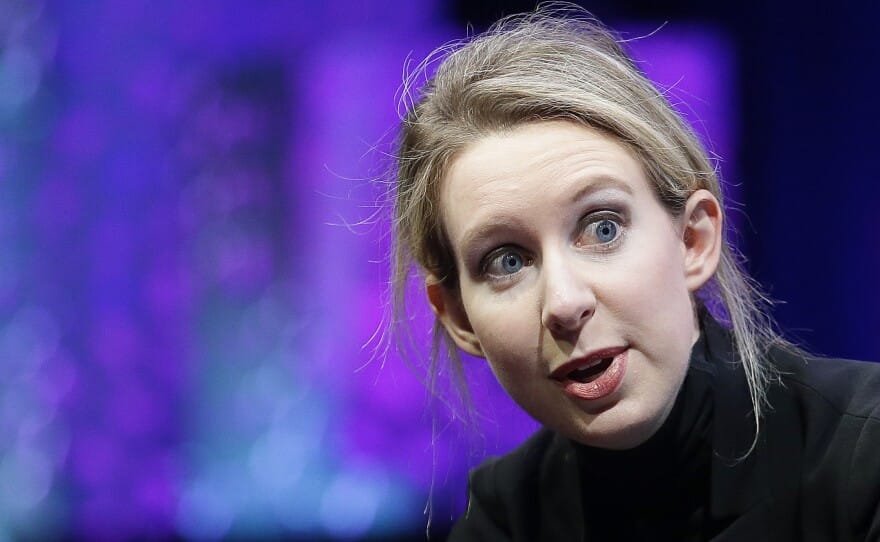
In medicine, iteration cannot mean letting patients become the environment that finally tells the product what it even is.
That is the Therac-25 lesson again. When a safety-critical system produces serious unexplained failure, the question is not, “Can we keep operating it until critics definitively prove the whole thing is broken?” The real-life question is, “Can we justify continued use while the failure remains unexplained?”
Theranos inverted that burden. The story kept leaping forward while the evidence lagged behind.
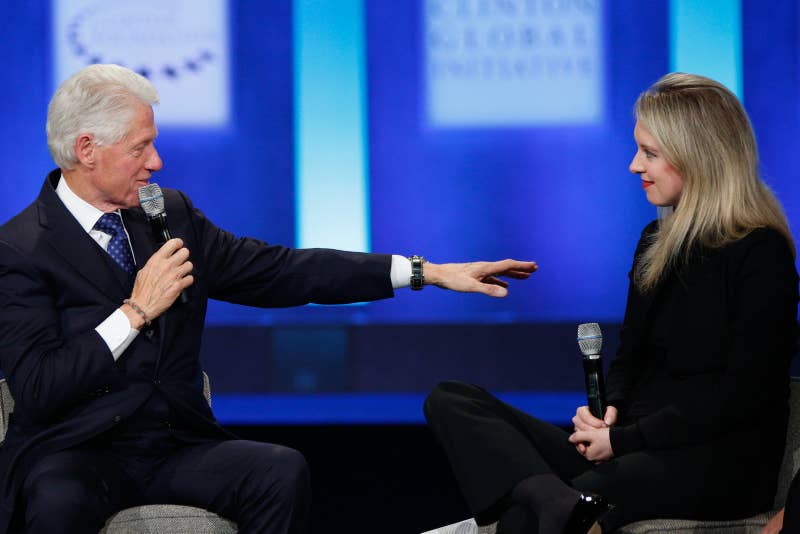
The company did not have to become anti-technology or anti-Silicon Valley to do Better here. It had to become more answerable to reality than to narratives. It had to let its machine be small and bad before calling it revolutionary. It had to let the test menu be narrow before implying comprehensiveness. It had to let “not yet” be morally superior to a fake arrival.
The Better path was not less ambition, not at all. It was ambition that remained answerable to the blood.
The Employees Who Kept Reality in the Room.
Every failed field has its sensors. Sometimes they are ignored. Sometimes they are punished. Sometimes they are forced outside the system before the system admits what they were detecting.
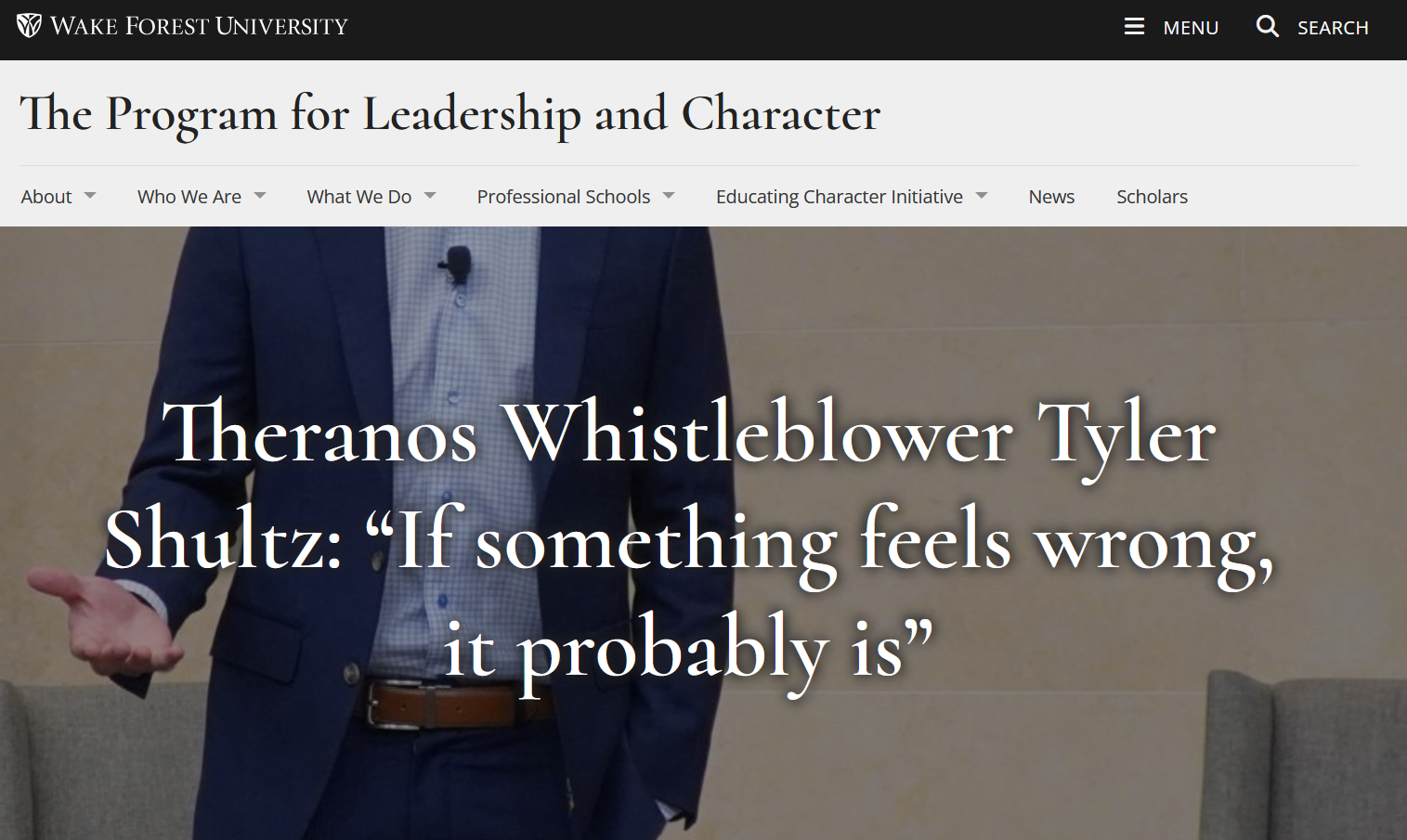
The employees and whistleblowers around Theranos were not side characters in the drama. These were correction loci. These people were places where the field still tried to feel pain before necrosis set in fully.
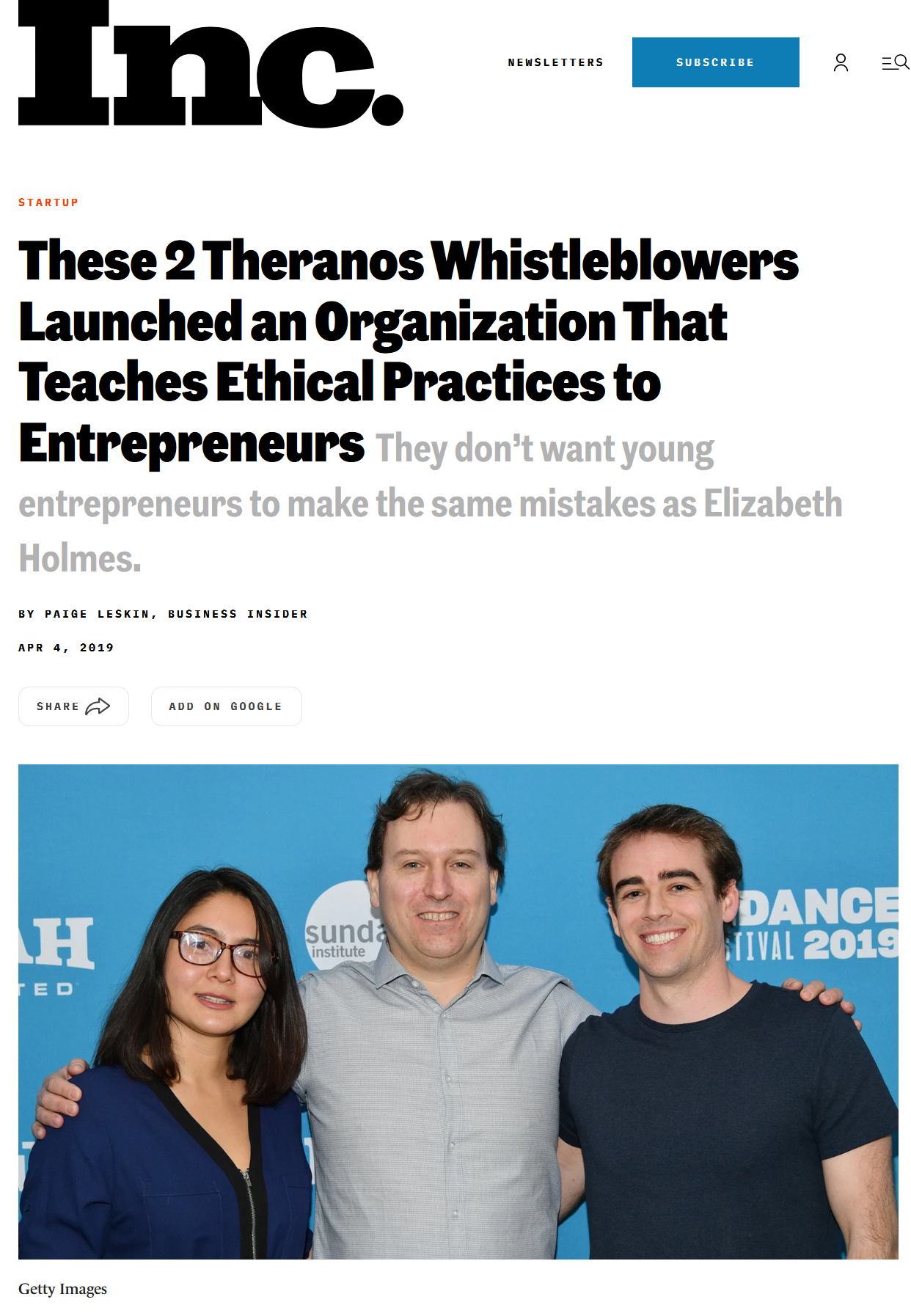
A whistleblower is not an inconvenience to the repair field. A whistleblower is often the repair field’s last remaining active sensor.
That does not now make every internal critic right. It also does not make every complaint sacred. Organizations can very much be damaged by false alarms, distorted motivations, resentment, confusion, incompetence, or ordinary conflict. Correction systems need their discipline too.
But any medical company that treats internal correction as betrayal is already clearly drifting into danger.
The correction field has to be protected before the crisis. By the time the only remaining route for truth is a terrified employee going outside the institution to blow the whistle, that institution has already failed a critical part of its moral design.
Theranos needed healthy dissent. It needed lab staff who could stop claims from outrunning reality. It needed engineers who could say the machine was not ready.
It needed compliance people with real authority, and doctors and scientists close enough to the center to ruin their story when that story deserved to be ruined.
Instead, the story became too important to die. This is how a fake path survived long enough to jab at patients.
What Repair Would Have Looked Like Here.
Repair would not have meant abandoning the diagnostic-access problem Holmes saw. That problem remains real today.
Blood testing is still too frightening for many people. Lab access still remains uneven. Cost remains opaque. Insurance still turns ordinary medicine into this paperwork fog that must be navigated, slowly by lantern-light. Patients still avoid care because this system feels hostile, expensive, inconvenient, or embarrassing.
Earlier detection remains one of the most important paths medicine can open. Theranos did not invent this need.

It contaminated one possible route toward it.
Repair would have meant narrower claims. Repair would have meant transparent limits. Repair would have meant saying which tests could be run, which could not, which were experimental, which were conventional, and which were still imaginary.
Repair would have meant third-party validation before mass trust. Repair would have meant regulatory humility. Repair would have meant clear labeling of which tests were run on Theranos devices and which were run on industry-standard machines.
Repair would have meant empowered lab staff. Repair would have meant protected dissent. Repair would have meant patient notification when results were voided, corrected, or uncertain.
Repair would have meant a conservative rollout. Repair would have meant admitting the machine was not the revolution until the machine could survive the blood. Repair would have meant letting the real future arrive slower than the fake one.
That is hard and frustrating, and not at all exciting to pitch, which is also what makes it real repair.
This Field Is Still Live.
This case is not closed in the way Warner’s case is closed. Warner died in the blast.

Moses died back in 1981, leaving the map to argue with him.
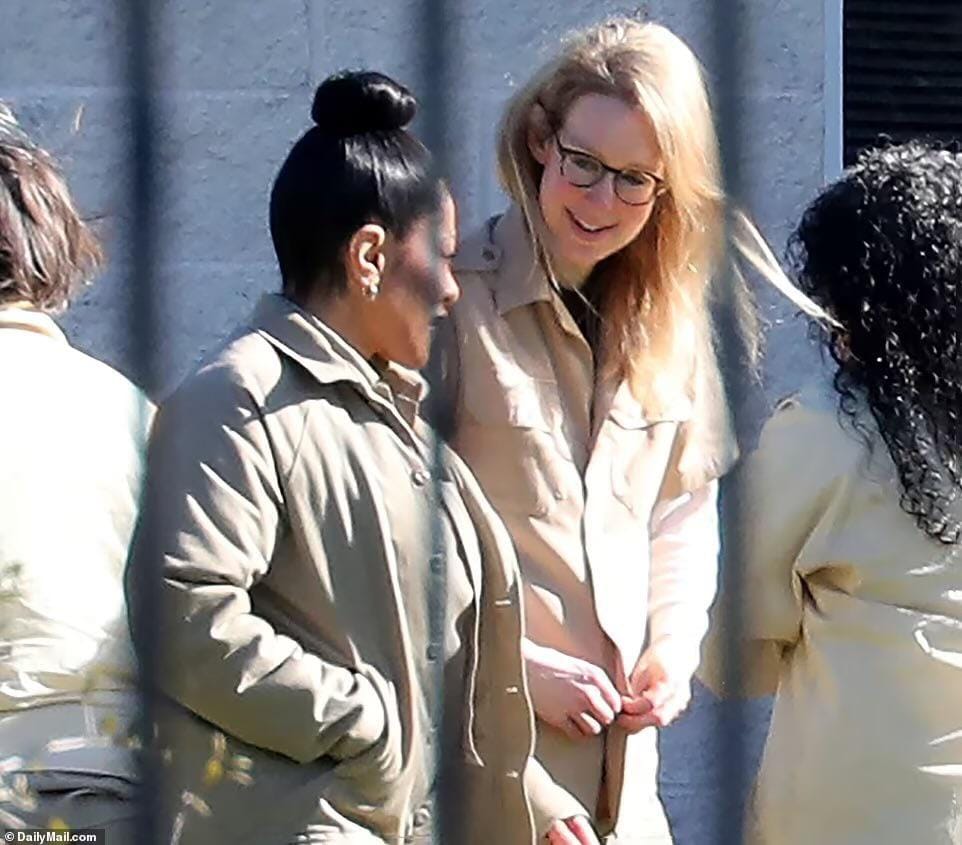
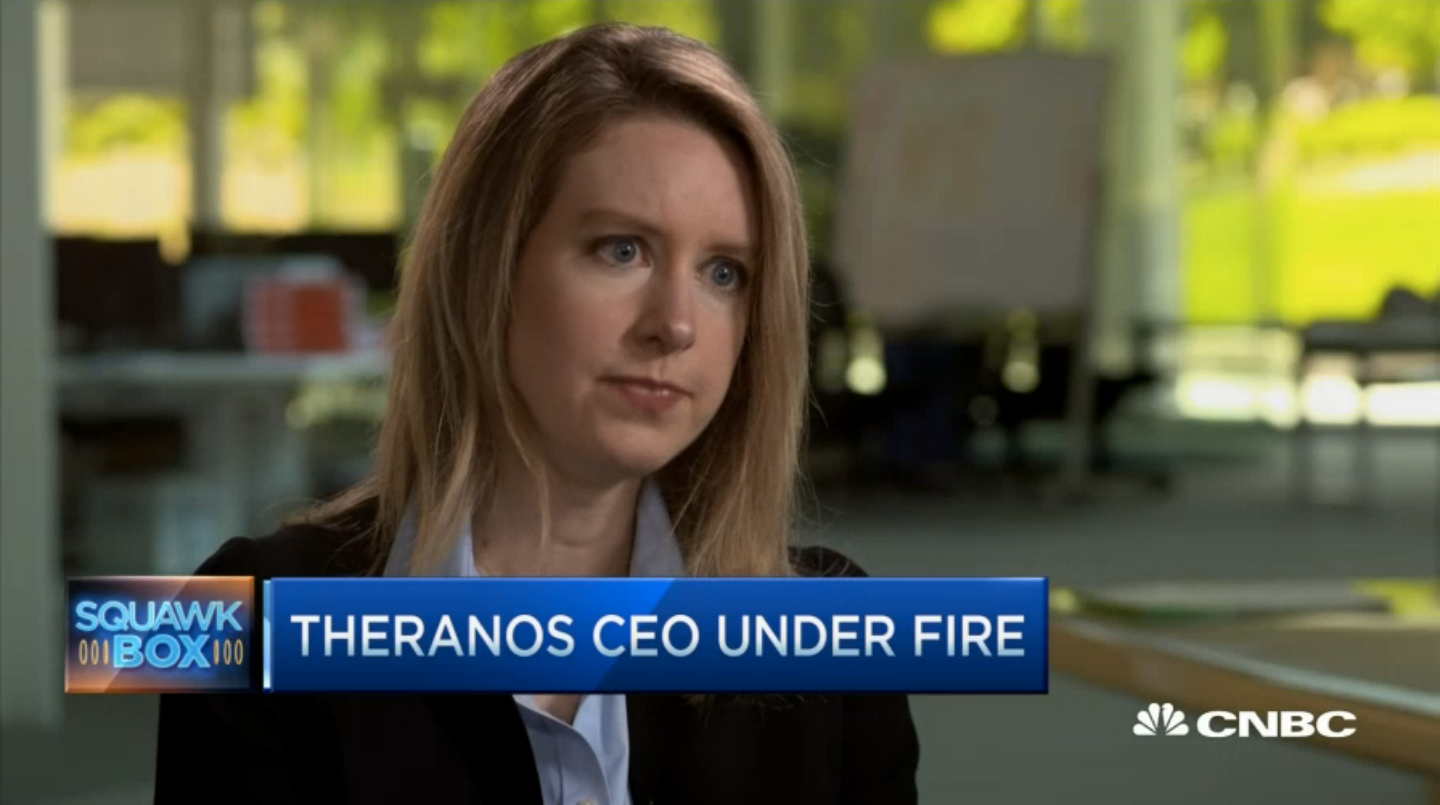
Holmes is still very much alive.

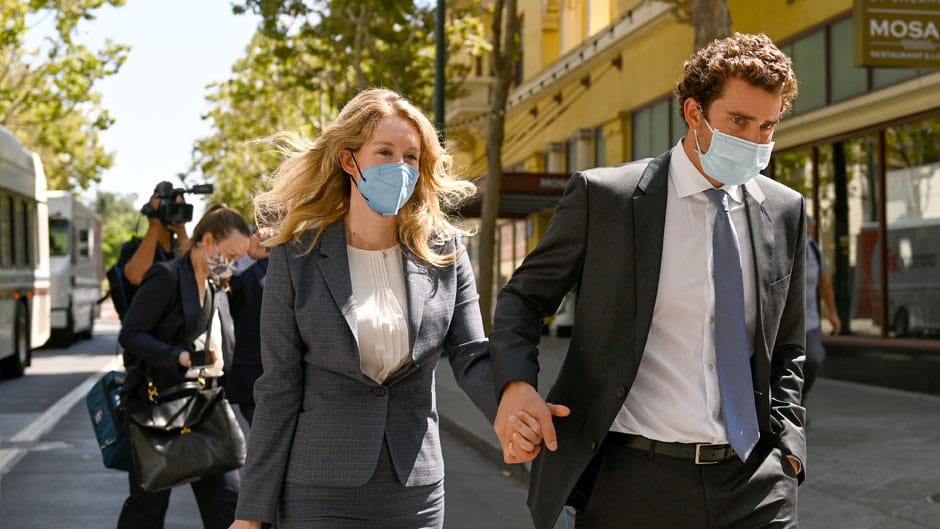
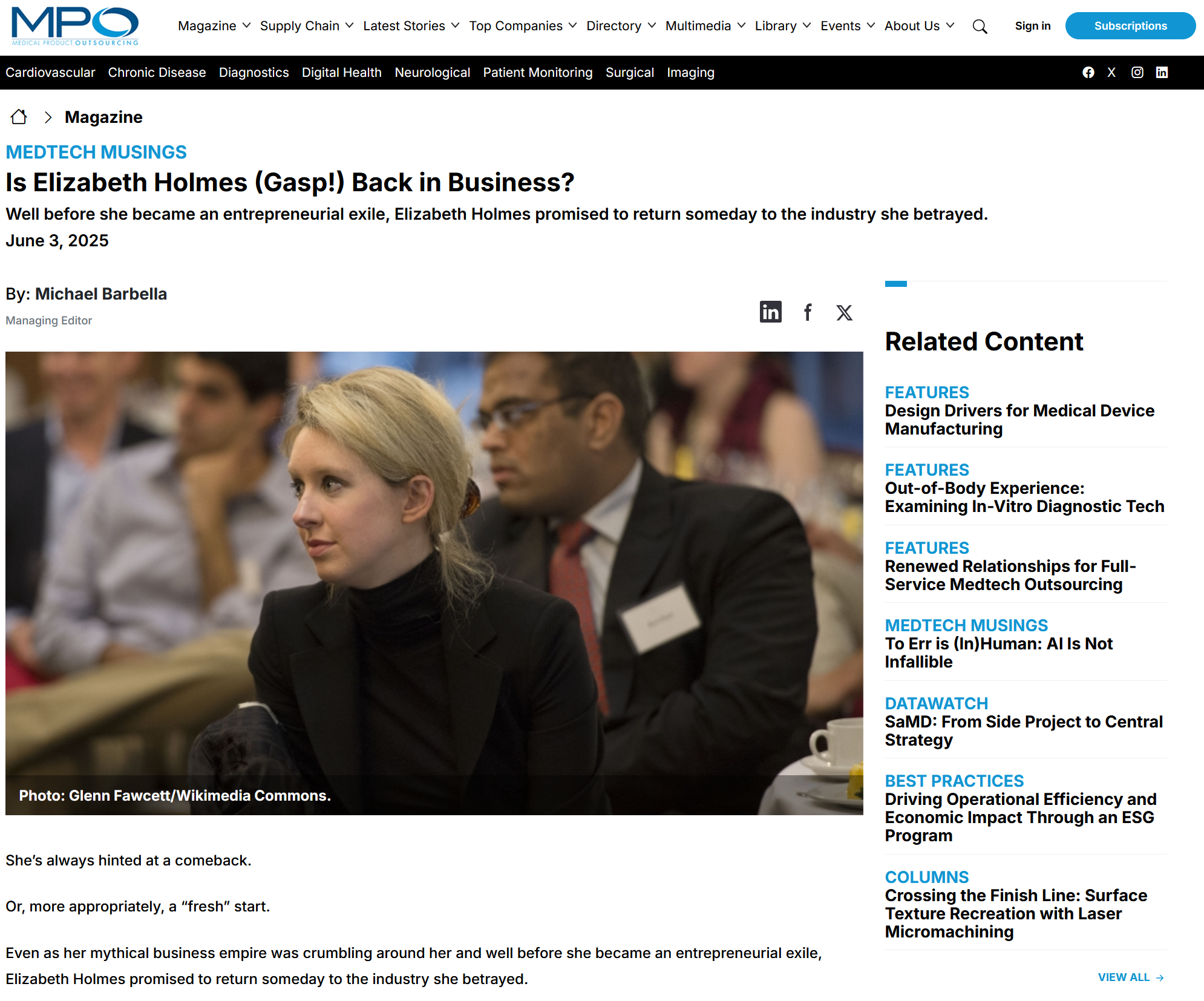
She is in prison, though. Her conviction, sentence, restitution, commutation request, public image, family story, possible future work, and the diagnostic-access field around her are all still active parts of this situation.
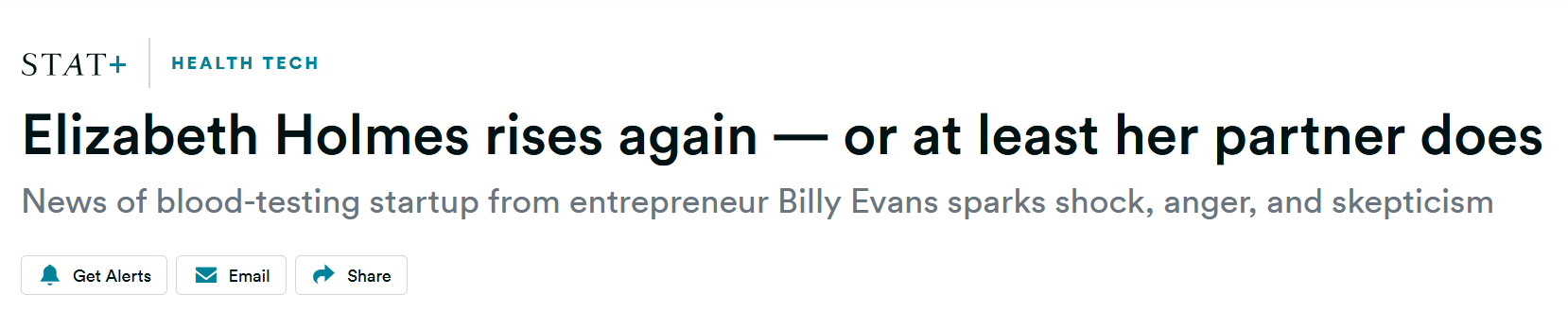
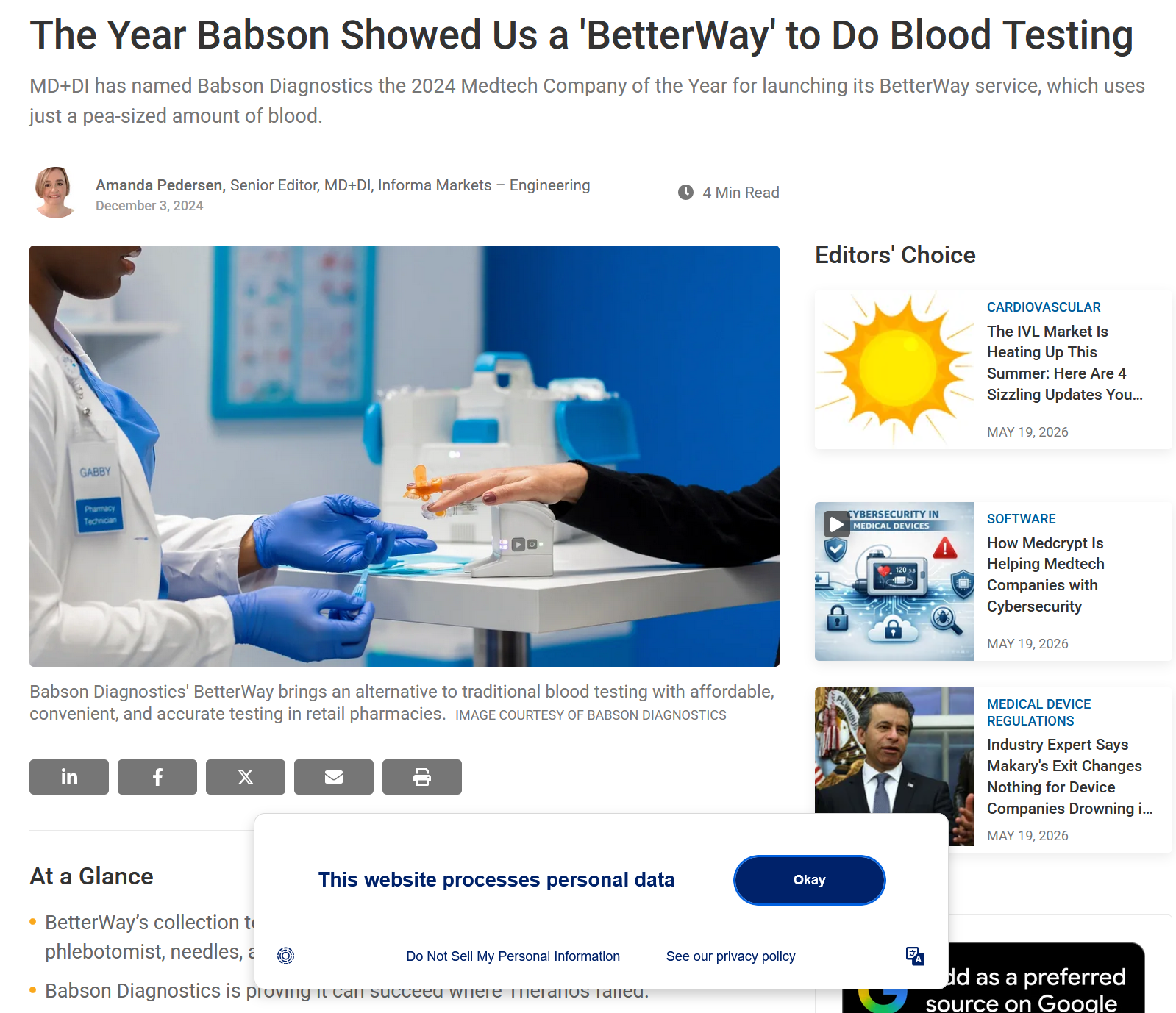
She has reportedly said from prison that she still hopes to work in healthcare, while her partner’s diagnostics startup has already produced public skepticism and explicit denials that she is even involved.
This changes the demand.
Calling Holmes a Failed Field Analyst and including her in my series is not a prophecy about every future act she might take. It is a diagnosis of the Theranos field in particular, and a warning about the conditions under which any future path would have to become corrigible.
If there is any Better path left for Holmes in medicine, then it cannot run through vindication. It cannot run through comeback mythology.
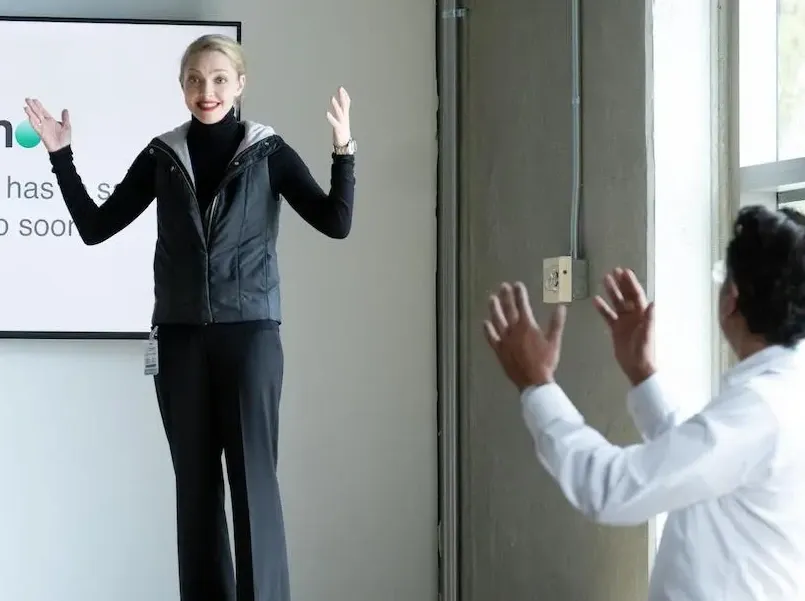
It cannot run through a second story of a misunderstood genius.
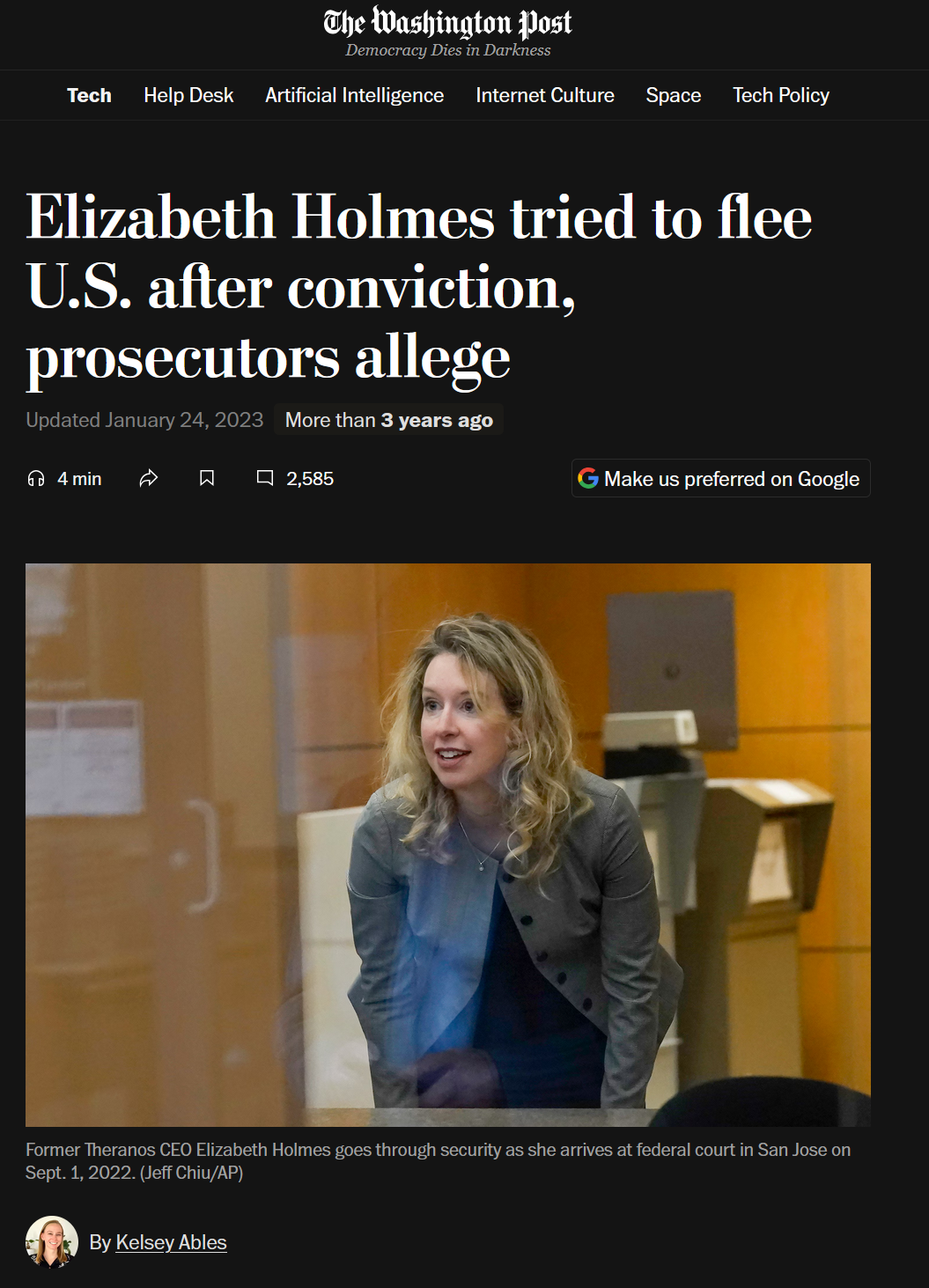
It also cannot run through another clean room where correction is invited only after the story has already raised money.
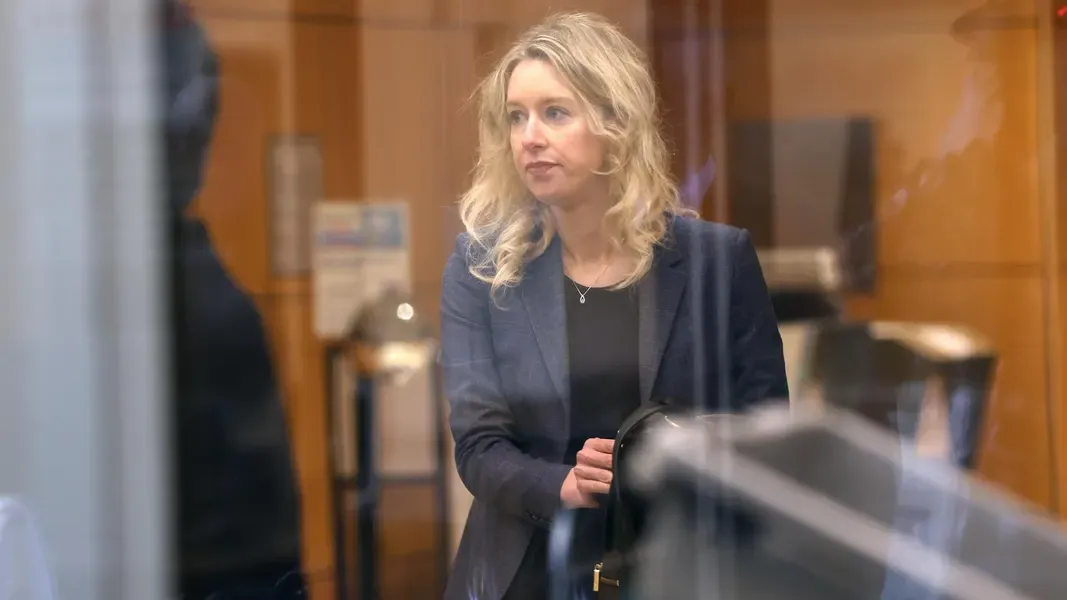
That path to repair can only run through corrigibility.
That would require more than regret, expressed or genuine. It would require epistemic submission to the same systems Theranos previously tried to outrun. All our old friends: Independent validation. Transparent limits. Public error handling. Protected dissent. Clinical humility.
A willingness to become non-central.
That last requirement may be the hardest, here.
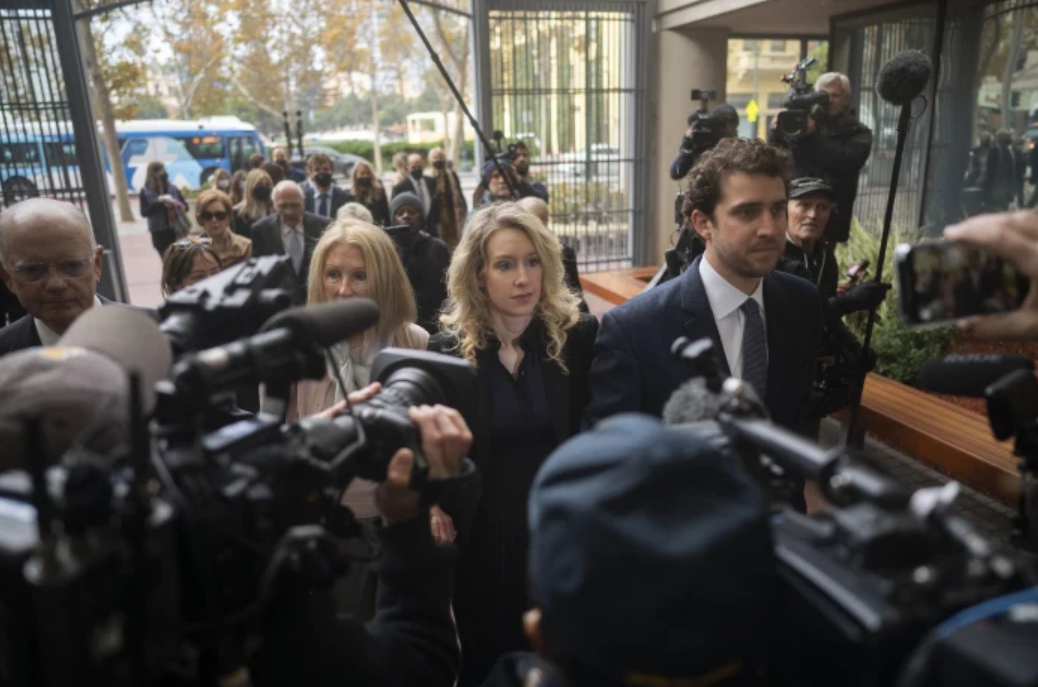
If Holmes still cares about diagnostic access like she says she does, then the first test of repair is whether she can help the field without becoming its protagonist again.
Haemanthus may indeed be real. It may also be nonsense. It may be early research being inflated too quickly. It may also be a legitimate technology carrying the worst possible blast shadow. That question is not for this article to decide. I have no clue.
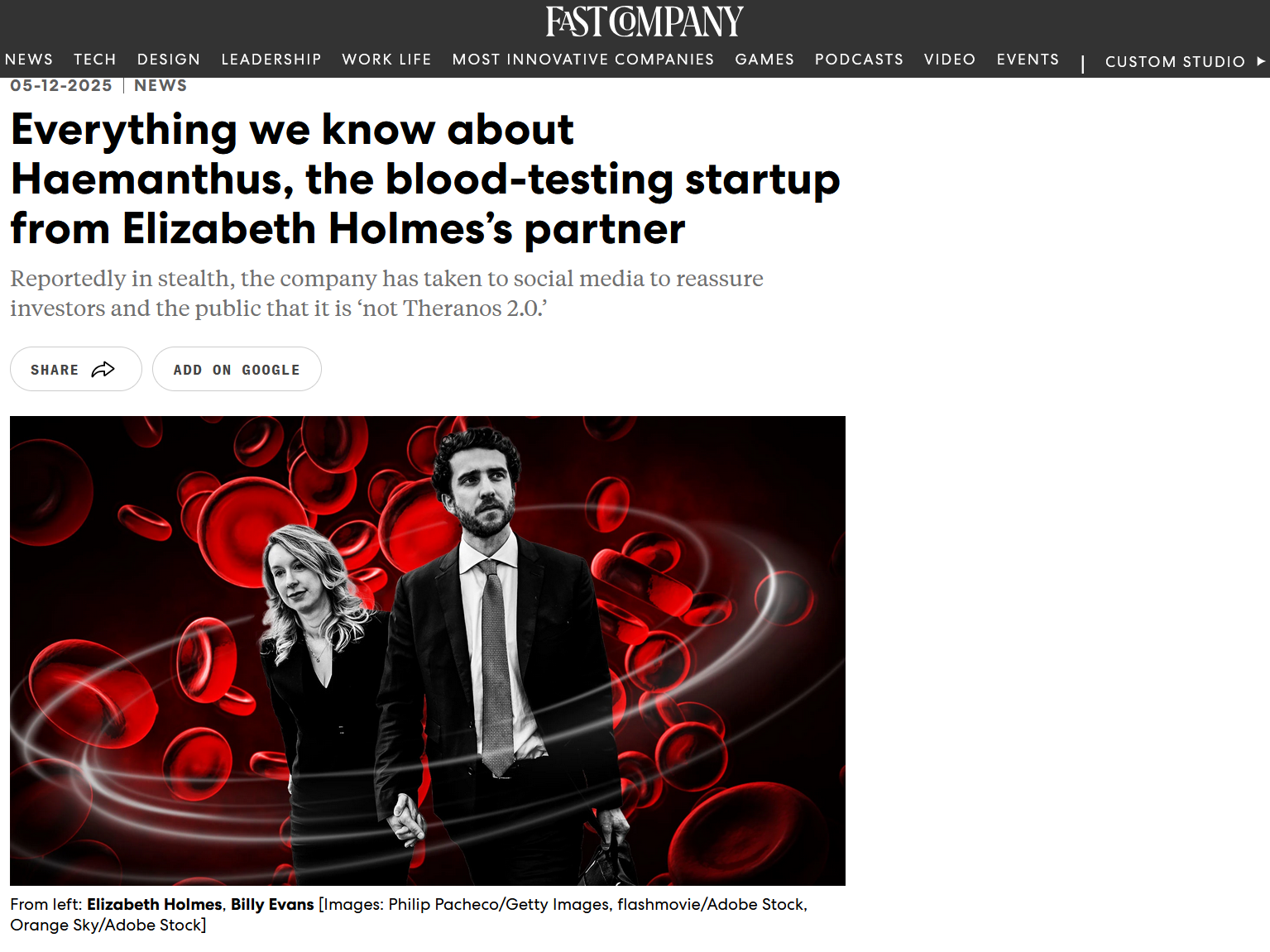
The point here is simpler:
After Theranos, no diagnostics company orbiting Holmes gets to treat skepticism as unfair resistance. Skepticism is part of the repair field now.
The Ruling.
Elizabeth Holmes belongs in Failed Field Analysts, because Theranos was a failed analysis of a real field.
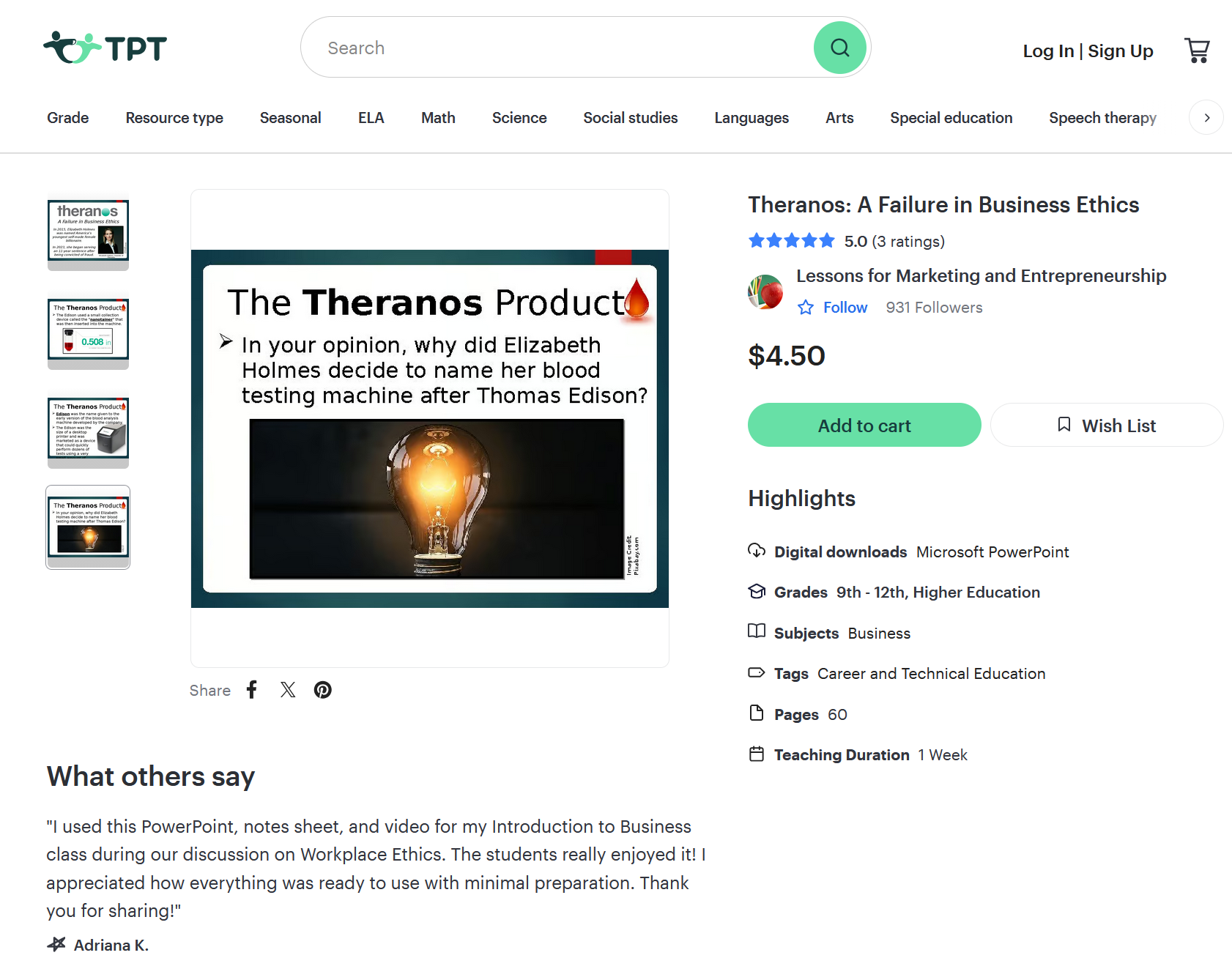
Blood testing really is a gate in medicine. Fear, cost, delay, access, needles, opaque billing, lab friction, and the waiting-room purgatory of ordinary healthcare all close paths before diagnosis even begins. Holmes saw all that.
Then her cut became a fake path.
Promise impersonated access. Prestige impersonated validation. Partnership impersonated proof. Secrecy impersonated protection. Patients became the risk surface for a future that had not arrived.
The court recognized investor fraud here.
The field injury was still wider: Theranos damaged the route by which bodies become truthfully knowable to the people living inside them.
This is not a small thing.
A person needs reality to reach them cleanly through medicine. That doesn't mean perfectly. No institution is perfect. No test is magic. No lab is immune to error. But the field must be organized so error can be found, named, corrected, and stopped before the patient has to carry it alone.
Theranos broke that moral structure down. It did not democratize health data. It contaminated the path health data has to travel.
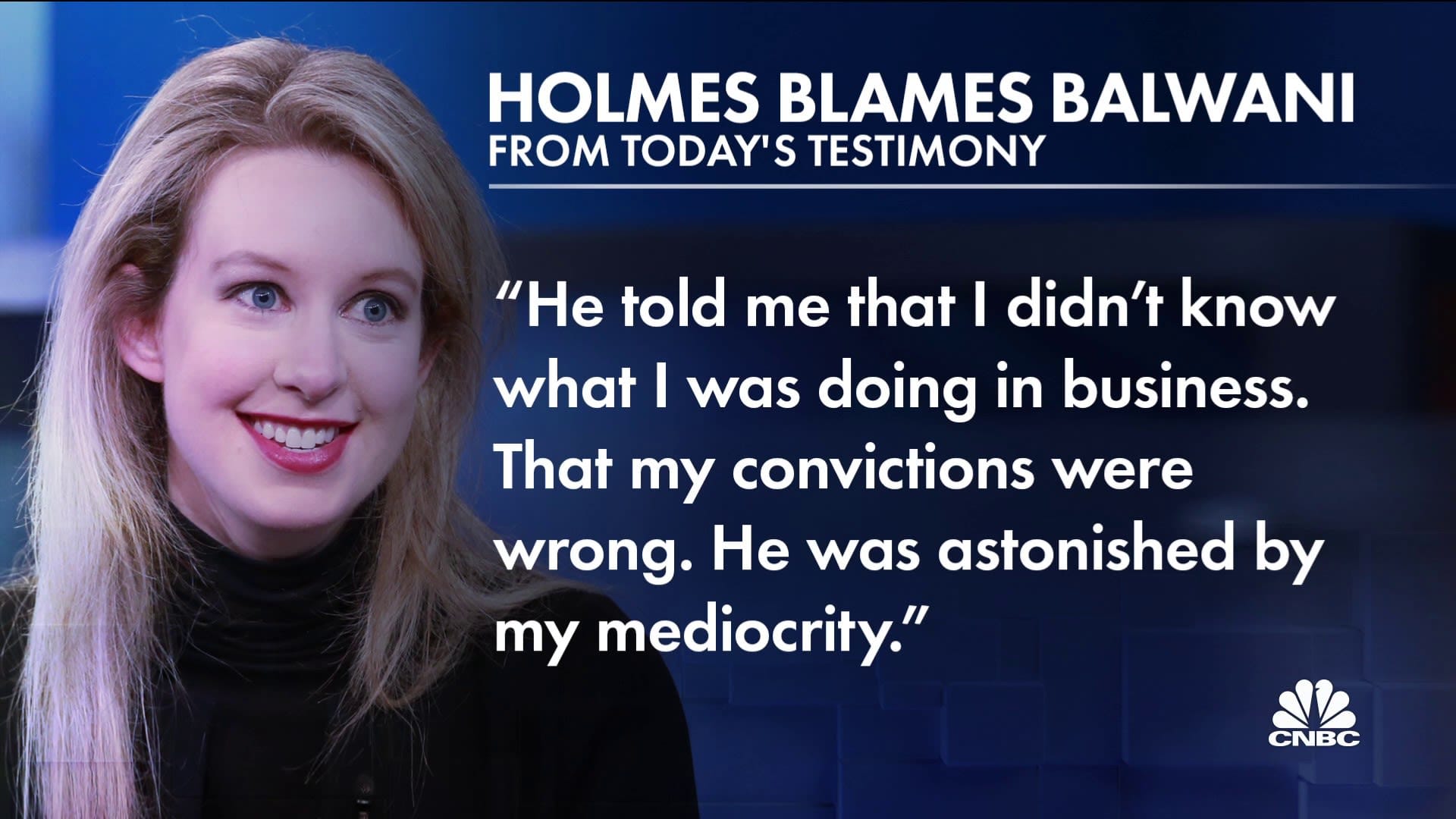
Warner destroyed a network node. Moses cut roads through neighborhoods.
Holmes built a door that looked like repair and opened onto unreality.
But unlike Warner, Holmes is not ash.
Unlike Moses, Holmes is not buried. Her field is still live.

That still does not soften or prevent this ruling; it sharpens it.
If any future repair is possible here, it will not begin with another dream. The dream was clearly never enough. It will begin with correction, instead. It will begin with the boring systems that failed to stay boring last time: validation, regulation, lab discipline, honest limits, protected dissent, and the right of reality to interrupt the story.
A failed field analyst does not always arrive with a bomb or a bulldozer. Sometimes she arrives with a smaller needle, a cleaner room, a better story than the last one, and a future everyone wants badly enough to stop asking whether it has actually become reachable.
The live question here is whether anything after that fake path can be made answerable to reality.