Tales of Distortion: The Subway Oracle
The end of the world boarded the Tokyo subway before I was born. Failed Field Analysts: Shoko Asahara.
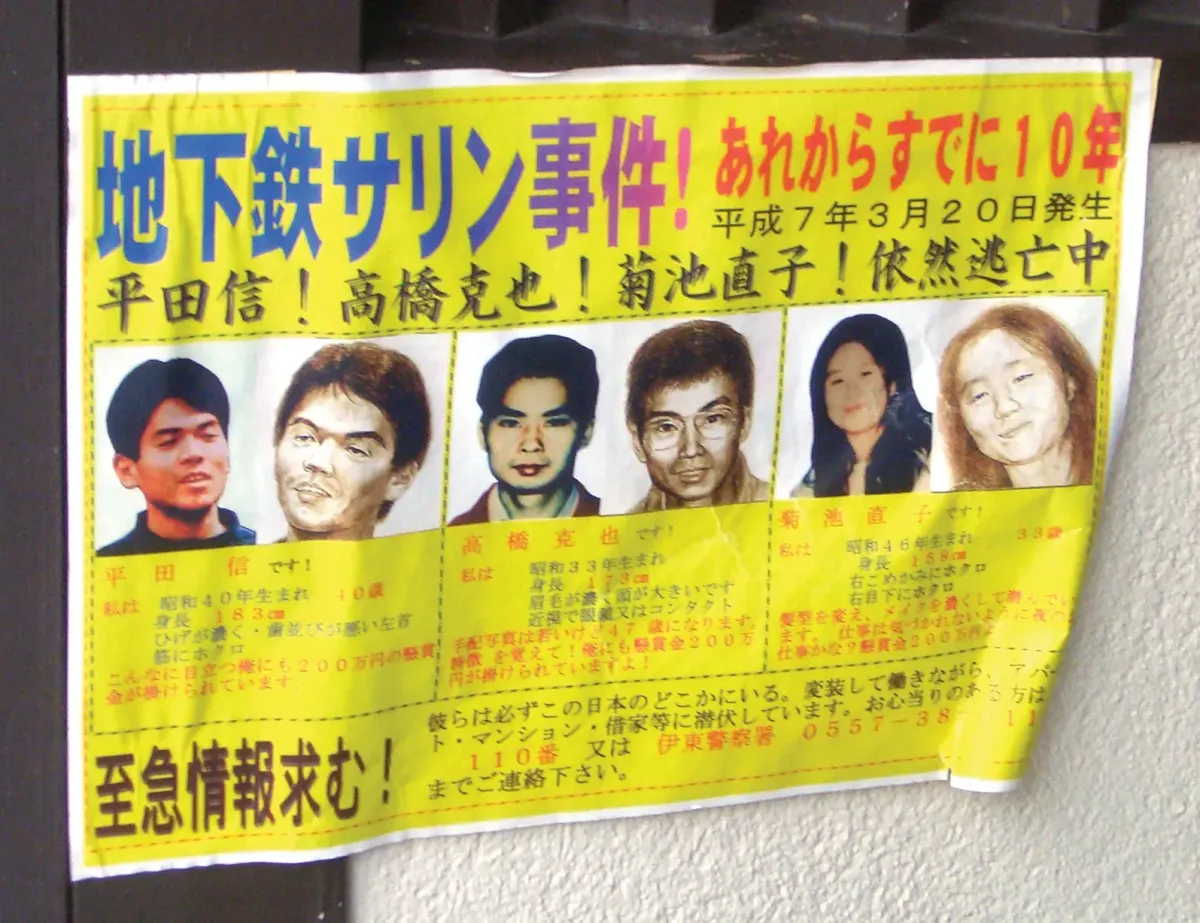
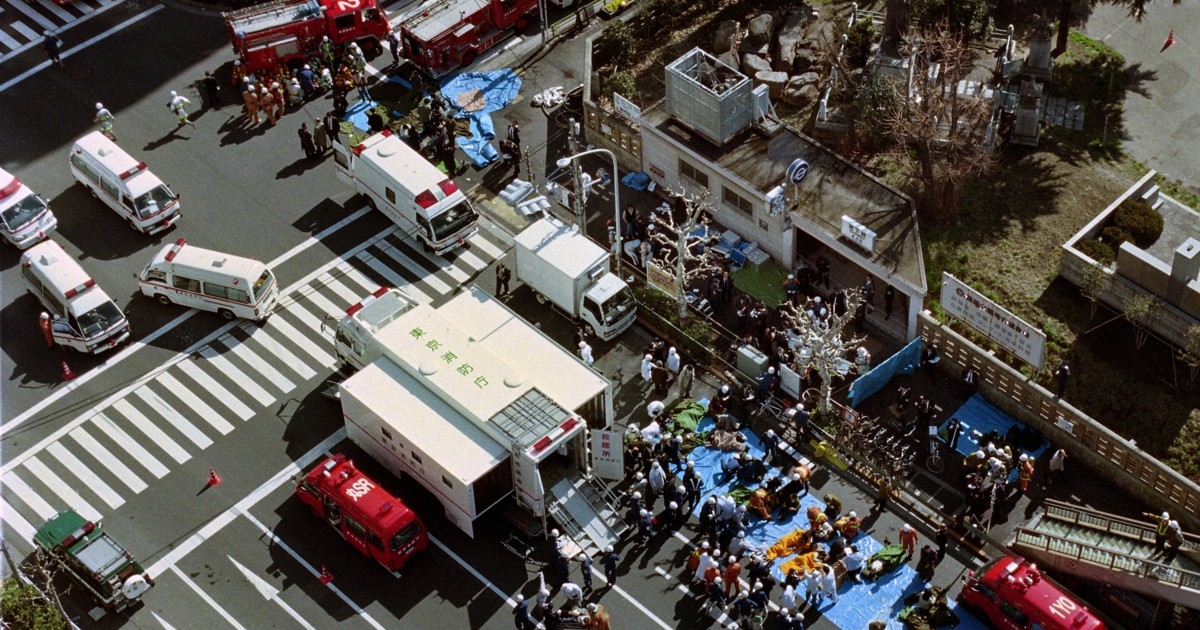
Five men entered five trains on three lines during the Monday morning rush of March 20, 1995. They carried plastic bags wrapped in newspaper.
Inside the bags was sarin.
They set the packages on the floor, drove sharpened umbrella tips through the wrapping, and left the trains to continue toward central Tokyo.
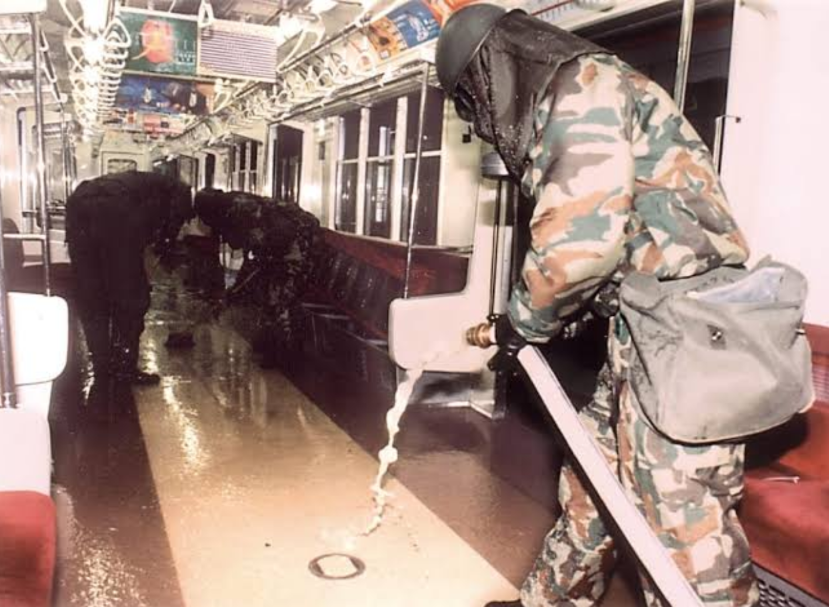
Aum Shinrikyo had assembled laboratories, compounds, ministries, computer businesses, foreign branches, medical staff, engineers, physicists, chemists, intelligence operations, weapons projects, aircraft, radio broadcasts, and an internal government waiting for the present government to die.
The chemical weapon entered public life as wet newspaper under a commuter's shoe.
The scale mismatch here is the first thing to hold.
- This organization was enormous in ambition.
- The delivery system was something a person might leave beside a seat.
- The doctrine spoke in planetary terms.
- The attack moved through people trying to get to work.
Tokyo's subway was not a symbol before Aum made it one. It was infrastructure.

The trains carried office workers, students, cleaners, station staff, civil servants, parents, people late for appointments, people early enough to resent everyone who was not, people still half inside breakfast, people rehearsing conversations they would never reach.
A subway preserves continuance by making ordinary arrival boring.
- The train comes.
- The doors open.
- The route repeats.
- The doors open.
Thousands of people surrender small portions of attention to this system because the system is supposed to return them somewhere else alive.
Aum entered that trust.
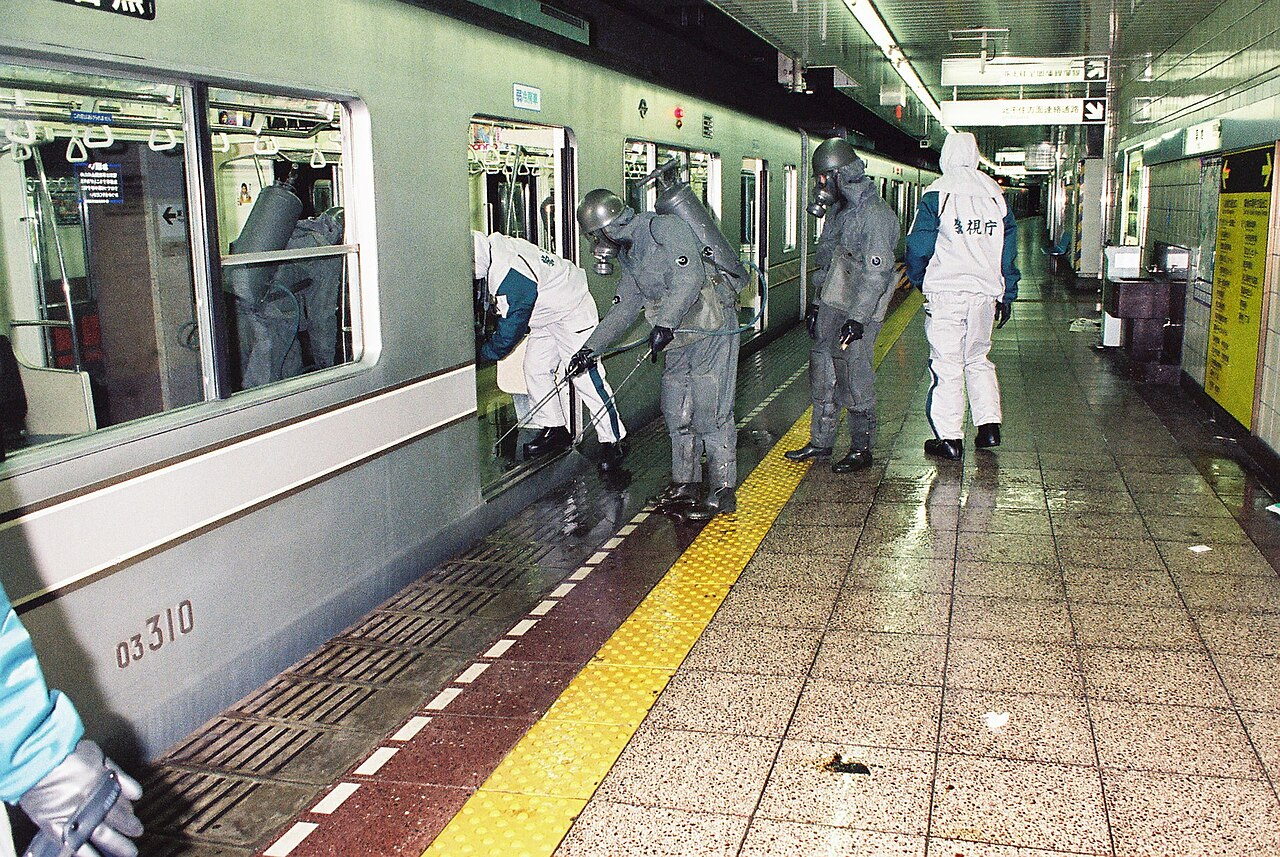
Its members did not need to seize the station. They did not need to hold a platform, control a broadcast center, or announce a new state from the roof of a ministry. They used the circulation field already built by the city. The train performed the distribution. Its timetable coordinated the approach. Ventilation, foot traffic, confusion, and institutional normalcy carried the rest.
The oracle had learned the train schedule.
• • •
Five Trains.
The packages began leaking before the passengers understood that anything had happened.
Sarin does not arrive with a clear visual grammar. There is no flame to organize attention here. No gunshot to identify the direction of danger. No attacker standing over the event long enough to become its obvious object.
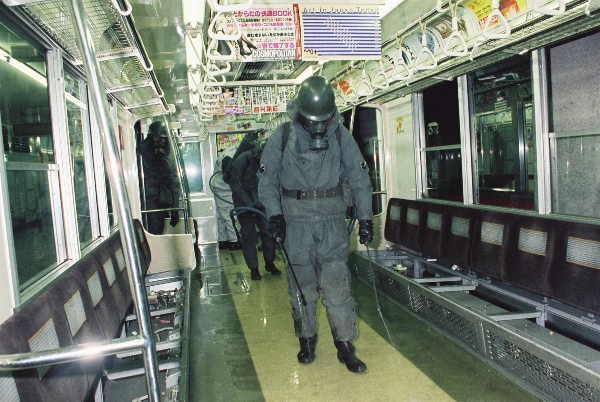
There is liquid.
There is an odor some people notice and others do not.
There are eyes beginning to hurt.
There is coughing, nausea, constriction, disorientation, weakness, collapse.
There is the ordinary human delay during which a room keeps trying to remain a room after it has become something else entirely.
- A bag is punctured on a train floor.
- Someone assumes a passenger spilled something.
- Someone moves away.
- Someone tries to help.
- Someone exits at the next station and carries contamination onto the platform.
- Someone keeps the train moving because no one yet knows that stopping the line is part of the medical response.
The first reports arrived separately. Passengers were becoming sick on one line, then another. The incidents tightened around Kasumigaseki, the government district where ministries, agencies, and police headquarters concentrated the administrative nervous system of Japan.
The pattern became visible only after the bodies had already entered it.
Fifteen stations were affected.
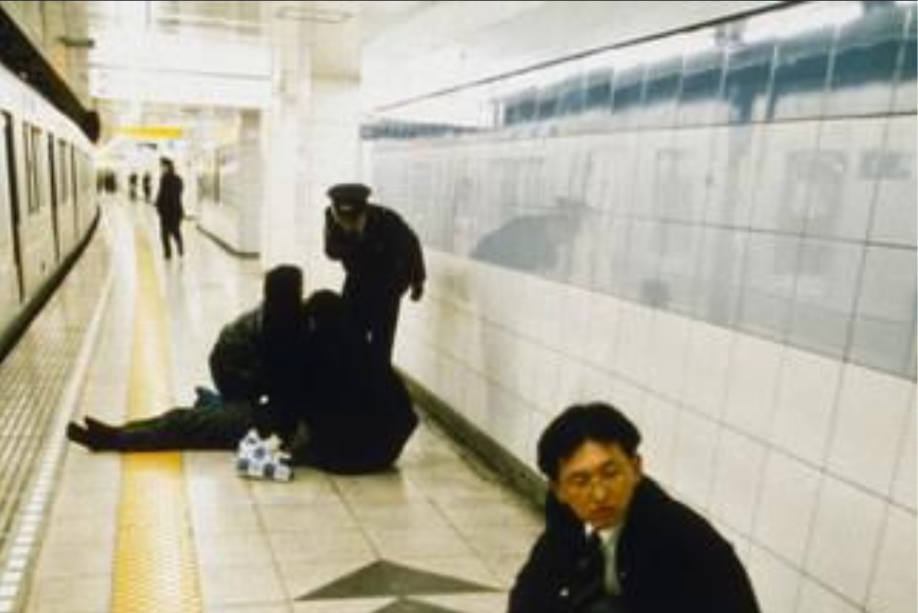
Thousands were injured or sought treatment. Fourteen people ultimately died, including one victim who survived for decades with severe aftereffects before dying in 2020.
The attack's numbers matter. They also perform the same compression this article is trying to resist.
"Thousands" cannot show the difference between temporary eye pain and a life permanently reorganized around neurological injury, fear, medical appointments, employment loss, insomnia, family strain, and the knowledge that an ordinary train floor once opened into a chemical war.
"Fourteen" cannot show fourteen interrupted continuances.
One of them belonged to Kazumasa Takahashi, a deputy stationmaster at Kasumigaseki.
He encountered a leaking package and tried to remove it from the public path.
He did not know what he was cleaning.
He collapsed.
He never regained consciousness.
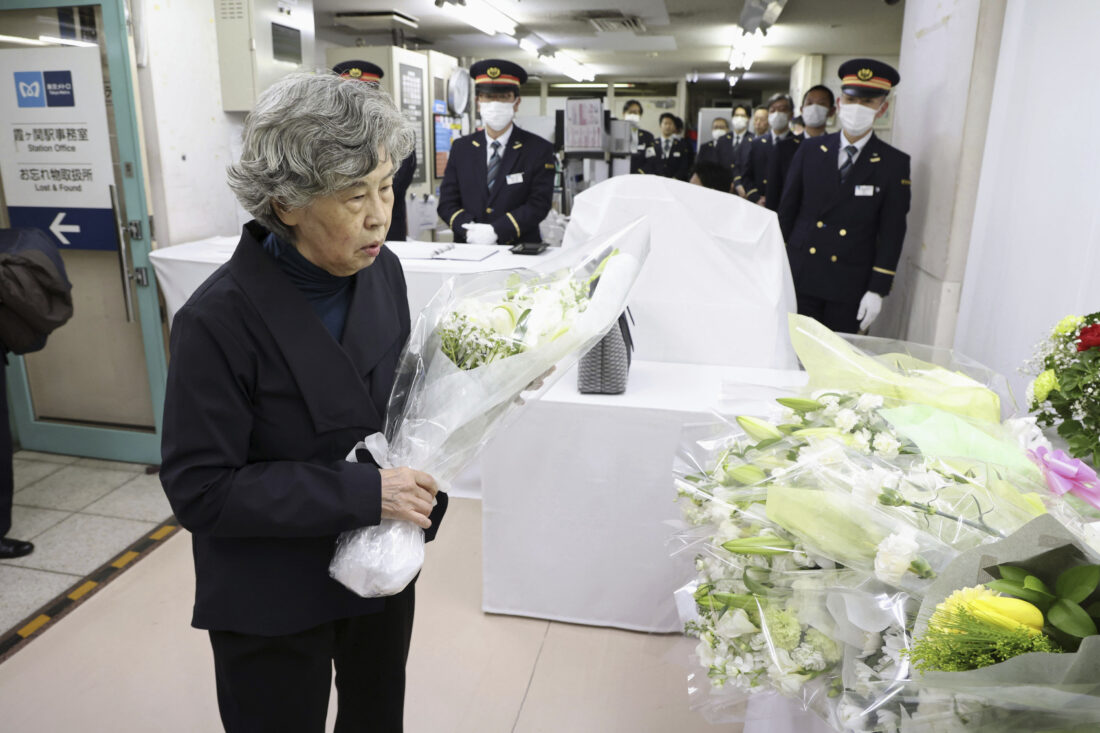
The movement had spent years accumulating secret knowledge. The person who moved toward the danger possessed almost none of it.
That asymmetry belongs to the crime.
- Aum knew the agent.
- Aum knew the bags.
- Aum knew the timing.
- Aum knew that the packages were meant to leak.
- The people doing repair knew there was something on the floor.
This is one of the deepest differences between a destructive instrument and a repair instrument. Destruction can be planned inside private knowledge.
Repair often begins publicly, under uncertainty, by whoever is nearest to the contraction.
A station worker sees a bag where a bag should not be.
So he moves it away from passengers.
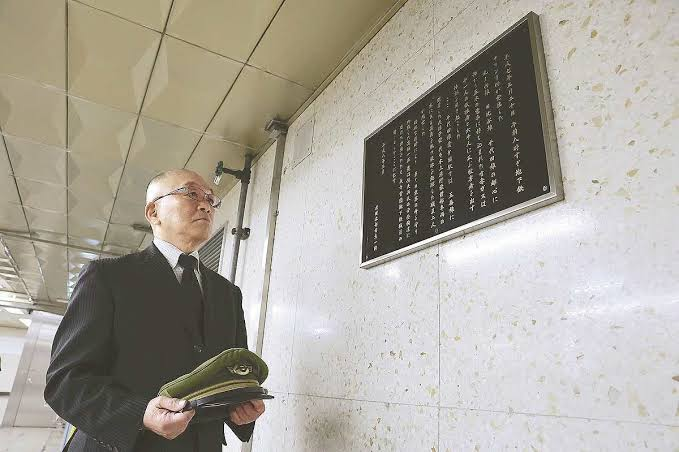
That decision does not need an apocalypse.
Just real contact.
• • •
The Bags on the Floor.
Aum Shinrikyo did not begin with chemical bags on trains.
It began with bodies trying to become different bodies.

In the early 1980s, Chizuo Matsumoto (later Shoko Asahara) built a yoga and spiritual practice around discipline, purification, esoteric attainment, psychic power, meditation, and the promise that ordinary existence concealed a more exact hierarchy of human transformation.
This was not an impossible offer in the field he entered.
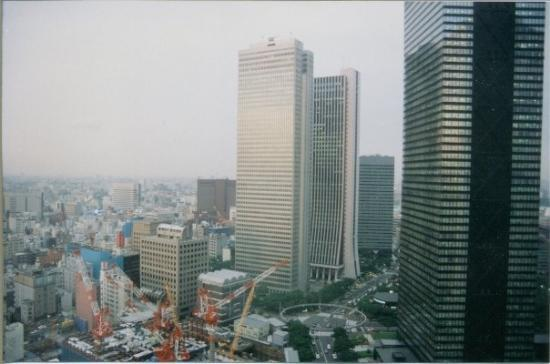
Japan's economic success had produced extraordinary coordination, education, technical achievement, professional pressure, and social expectation.
It had not abolished spiritual hunger.
A prestigious degree could open a career path while leaving the purpose of the career unaddressed.
Technical competence could make a person extremely useful without telling that person what usefulness was for. Modernity had solved many practical coordination problems and had not solved death, isolation, guilt, fear, transcendence, or the need to believe that one's life contacted something deeper than performance.
Aum recruited from that remainder.
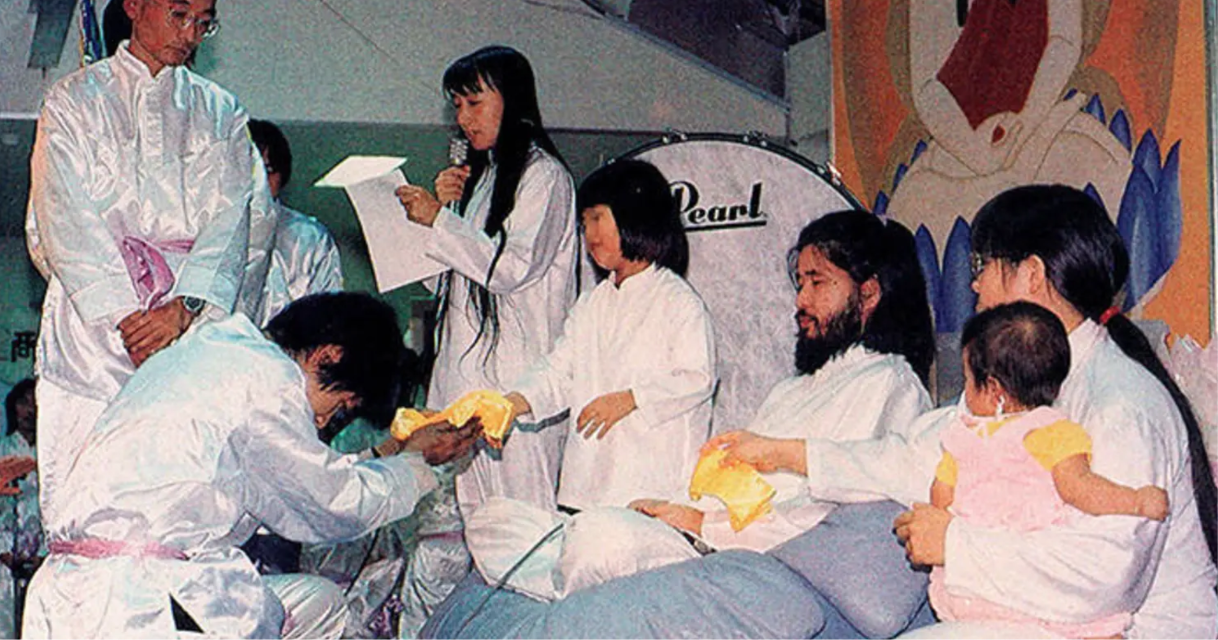
Some entered through yoga.
Some entered through bodily experiences they interpreted as spiritual evidence.
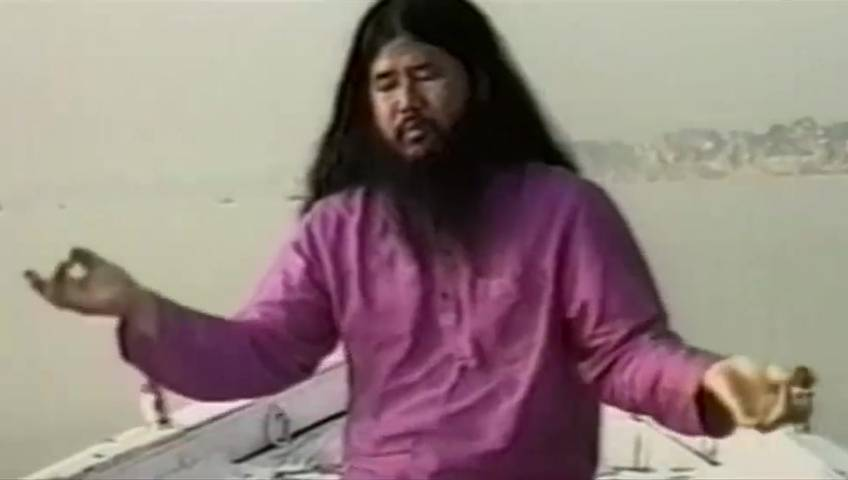
Some entered through Asahara's books and lectures.
Some entered through dissatisfaction with a life already succeeding according to every available social metric.
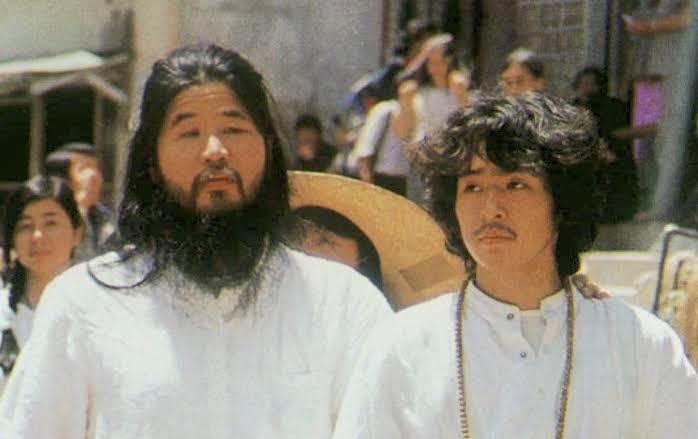
Some wanted a community disciplined enough to make ordinary compromise feel temporary.
Some wanted powers.
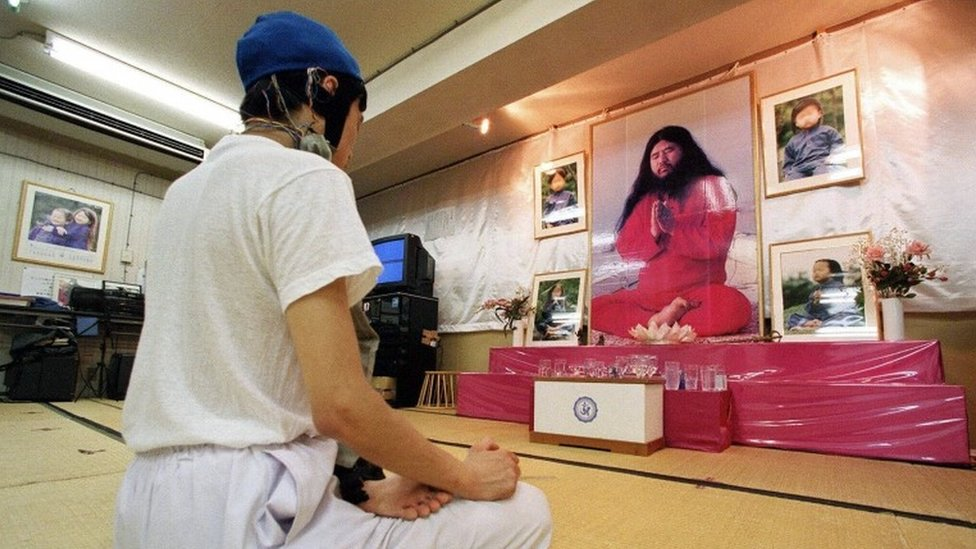
Some wanted salvation.
Some wanted an account of the world large enough to explain why our world still felt spiritually thin after becoming technically dense.
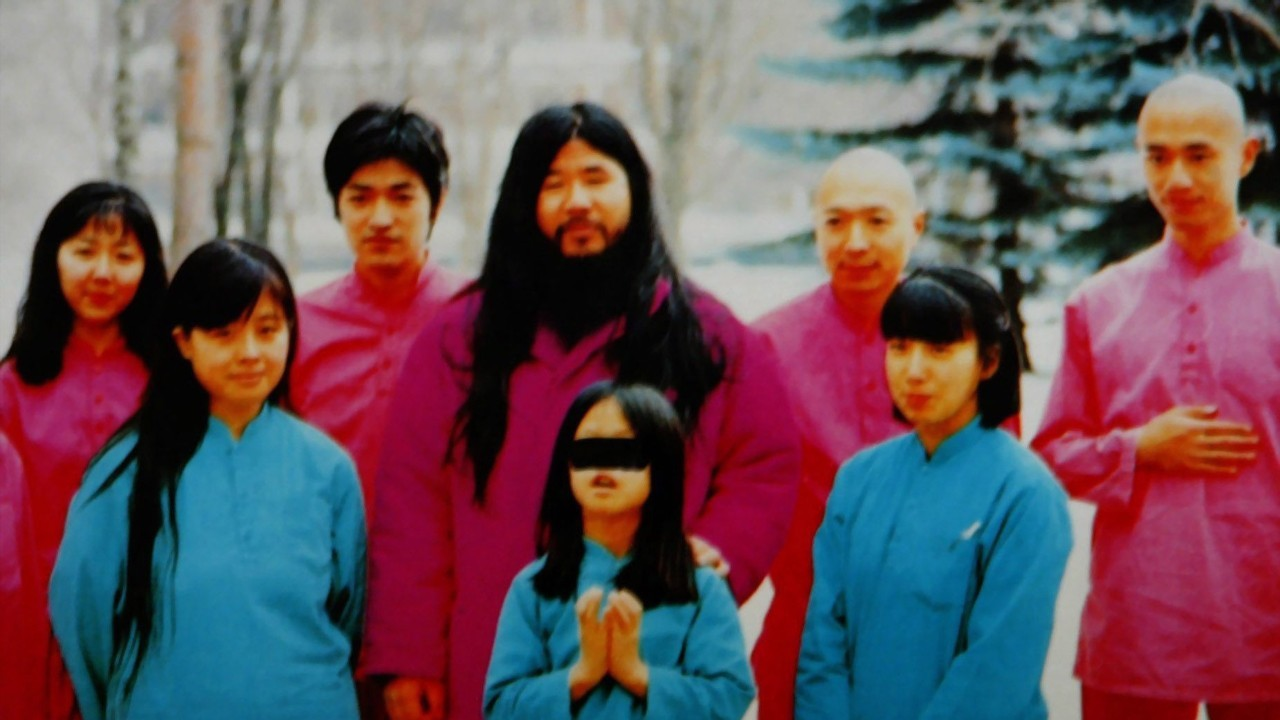
These were not identical motives.
A sealed system benefits greatly when later lazy history flattens them into one gullible psychology.
That flattening makes the joiners easy to dismiss and the instrument harder to understand.
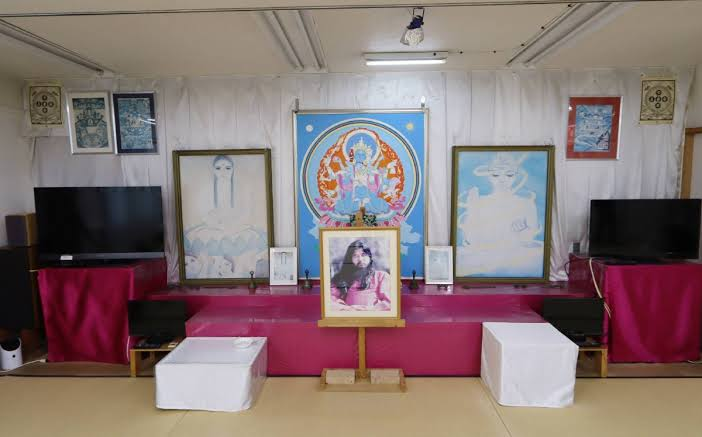
Aum's first strength was that it did not ask technically educated people to become less technical.
It offered a place where technical intelligence could be subordinated to sacred purpose without being discarded. That is more dangerous than ordinary anti-scientific doctrine.
- A system that rejects science loses access to much of science's capacity.
- A system that captures science keeps the capacity and aligns the objective.
Science has no moral compass. It follows the appetite of whoever holds it.
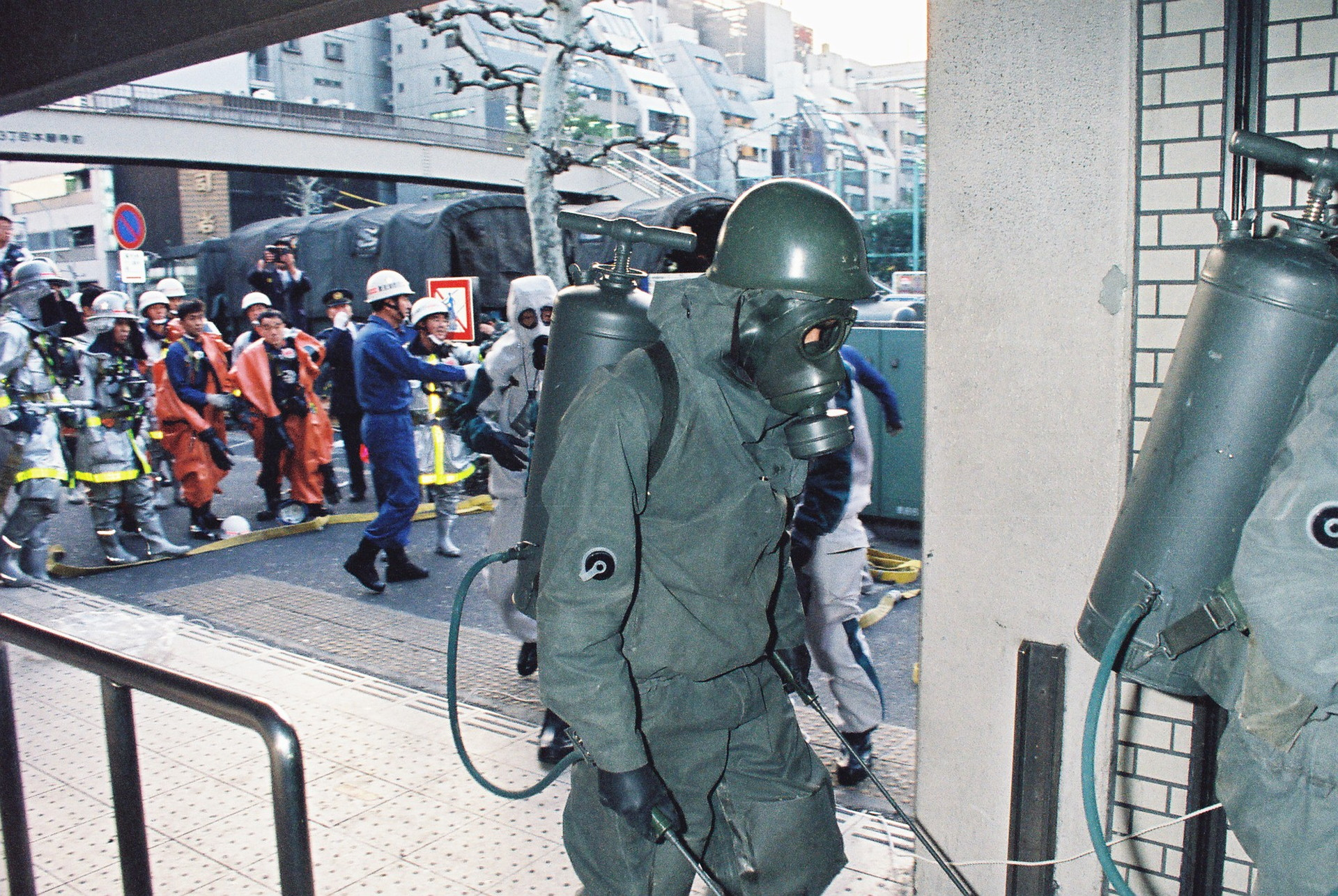
The early yoga school did not yet contain the final machine.
It contained the relation from which the machine could grow:
- a body undergoing difficult practice;
- a teacher interpreting the body's response;
- a hierarchy of attainment;
- a claim that ordinary observers could not evaluate the highest states;
- and a leader whose own body increasingly served as evidence for the entire system.
The practitioner could feel something real.
- Breath changes perception.
- Sleep deprivation changes perception.
- Fasting changes perception.
- Meditation changes perception.
Repetition, posture, pain, hyperventilation, silence, expectation, group rhythm, and sensory restriction all produce real events in the body. The distortion does not begin because the event is fake.
It begins when one interpreter becomes sovereign over what every event means.
- The body says something happened.
- The oracle says what happened.
Soon, the oracle is no longer interpreting the instrument.
The oracle is the instrument.
• • •
The Levitation Photograph.
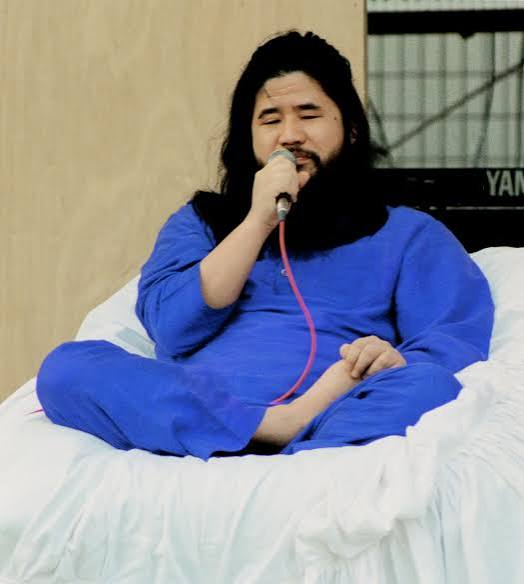
Before the chemical factory, there was a photograph of a man apparently floating above the floor.
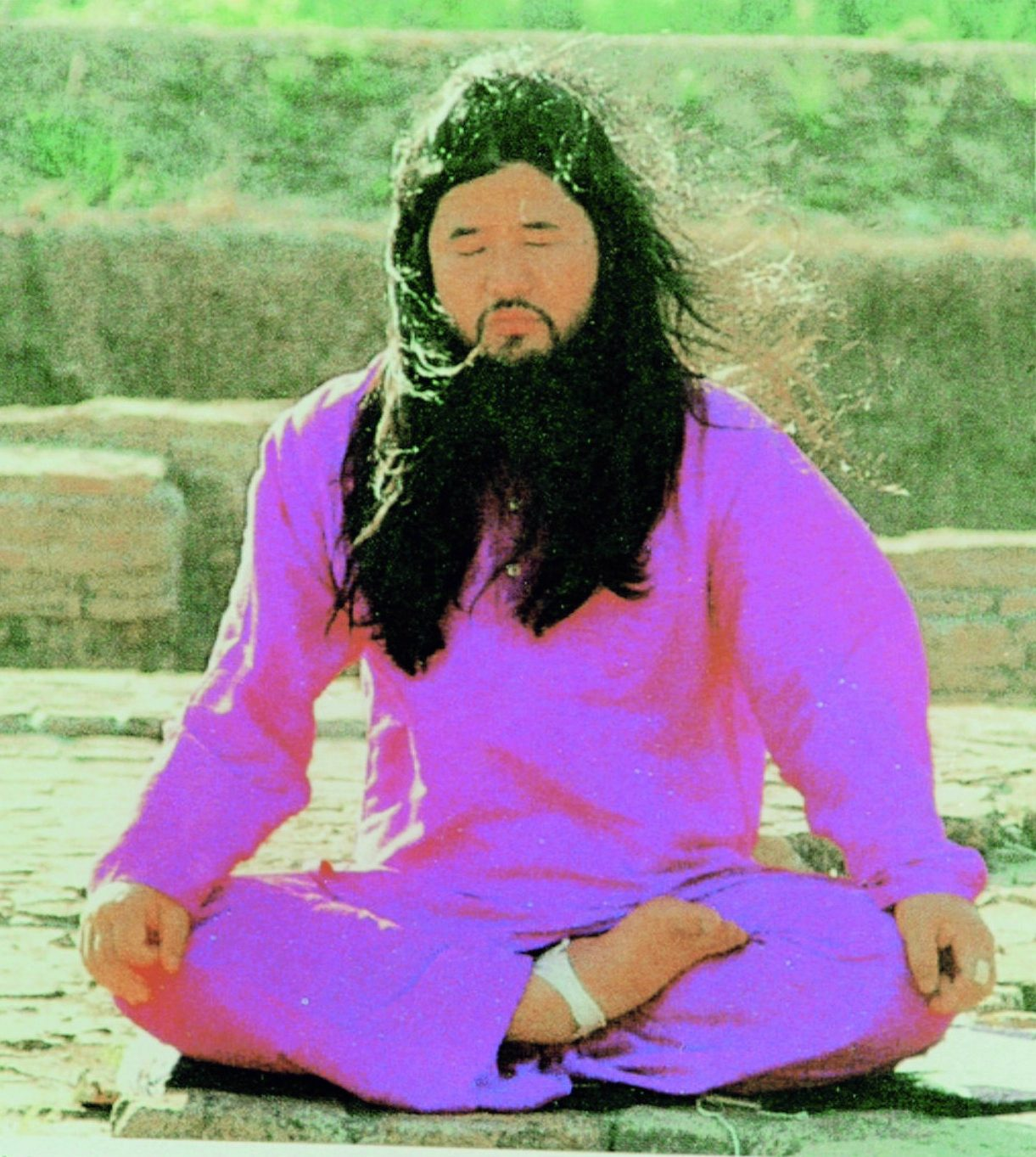
Asahara sits in the lotus position.
His body appears suspended.
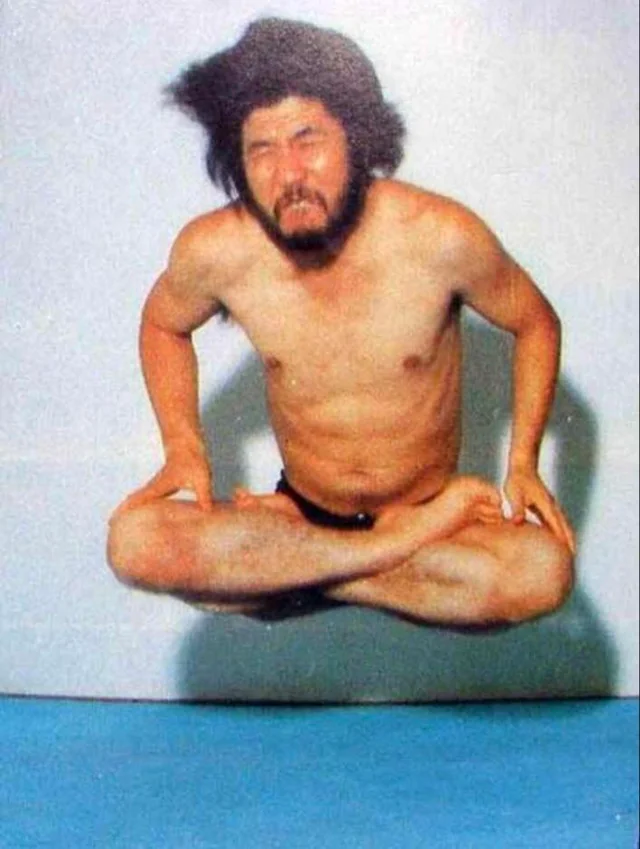
The image circulated through fringe spiritual media and helped make an invisible claim portable. Enlightenment had just acquired photographic evidence.
The photograph is a small object compared with everything that follows.
That is why it belongs near the center of the story.
This image performs several operations at once.
- It takes a bodily feat that would ordinarily require shared space and turns it into repeatable public contact.
- It gives the viewer permission to believe the teacher has crossed a physical boundary.
- It allows spiritual hierarchy to borrow the camera's social authority.
- It makes the extraordinary look documented without making the document independently answerable.
The Great Disappointment had its chart.
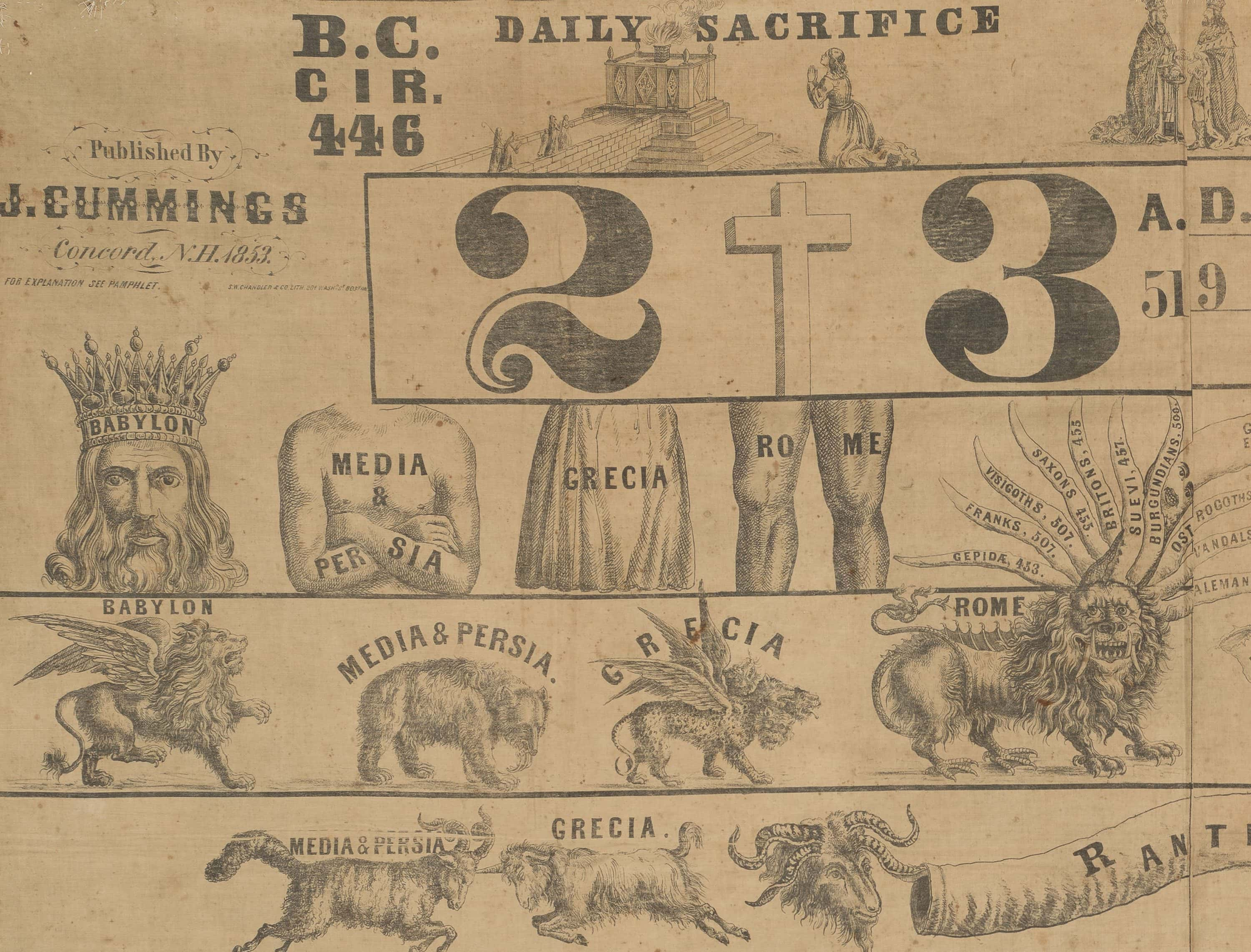
The chart gave sacred time a wall surface. History could be pointed to. Prophetic calculation could stand on an easel and look like a route.
Aum had the levitation photograph.
The photograph gave sacred rank a body surface. Attainment could be pointed to. The guru could look like a result. The image does not need to survive serious scrutiny once it has done the more important work of selecting the people willing to enter the next room.
A picture like this is less useful as proof than as a threshold.
- The skeptical viewer laughs and leaves.
- The interested viewer asks how.
- The committed viewer asks how to receive the same state.
The oracle's first laboratory was the camera angle.
That line is funny but it also contains the whole later structure.
Aum repeatedly placed technical surfaces around sacred authority:
- photographs around levitation;
- electrical equipment around initiation;
- medical language around purification;
- laboratories around apocalypse;
- ministries around revelation;
- chemical process around divine war.
The surface was modern. The correction structure was ancient in the worst possible sense.
One person floated above the answer.
• • •
The Science-Fiction Department.
Several of Aum's senior technical men had grown up fascinated by science fiction and popular accounts of advanced technology.
They wanted spiritual experiences to become measurable, reproducible, and technically transferable.
This desire produced some of the organization's strangest projects:
- equipment meant to clean an "astral" body;
- the brainwave synchronization headset;
- speculative teleportation ideas;
- giant lasers;
- plasma weapons;
- orbital mirrors capable of burning life from the Earth;
- underwater cities for survivors of world war;
- machines drawn from animation, magazines, and the rumor-field around secret American weapons.
These fantasies are easy to laugh at.

The people inside the organization sometimes recognized their sources and thought particular ideas were foolish too. That did not reliably stop the ideas from entering projects.
The science-fiction department reveals the peculiar relation between imagination and hierarchy.
Imagination is not the enemy. Technical innovation often begins with a picture of a capability that does not yet exist. Science fiction can widen the field by making new systems thinkable before engineering can make them real. The danger arrives when imaginative possibility receives command authority before passing through correction.
Aum's hierarchy could convert an image from television into a project because the oracle's desire supplied enough institutional weight to move people and money. The technical staff then had to discover whether reality contained the desired path.
Usually it did not.
Sometimes it contained a smaller, uglier path.
This organization could not, it turned out, build a space mirror to destroy civilization.
It could produce nerve agent in a laboratory.
It could attack a lawyer, a neighborhood, and a subway.
This is how grandiose imagination can make ordinary atrocity look like some kind of intermediate step.
The impossible project does not remain harmless if the institution can act while trying to reach it.
Aum's science-fiction field also shows why intelligence and taste cannot substitute for correction.
A scientist may privately think the leader's weapon fantasy is ridiculous. Except if the scientist's career, housing, rank, community, salvation, and safety depend on the leader, private judgment may never become institutional refusal.
Everyone can know the source was a cartoon.
But the ministry can still open a project file.
• • •
The Guru Becomes a Signal.
The movement developed initiations that treated Asahara's body as transferable spiritual material.
Followers paid for access to his blood.
They consumed water associated with his bathing.
They wore electrical headgear represented as a way to synchronize their brainwaves with his.
The apparatus is almost too exact a symbol for the field.
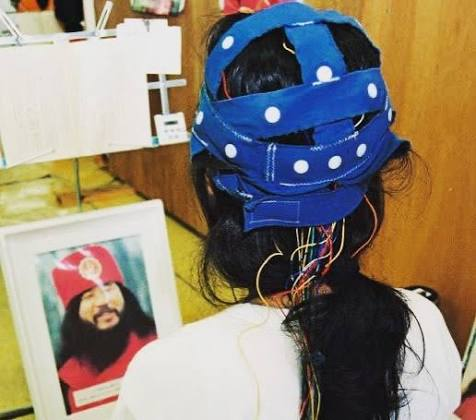
A follower places a device on the head.
This device does not help the follower perceive the world more clearly.
It helps the follower resemble the oracle.
The relation has moved beyond teaching.
- A teacher can offer a discipline and expect the student eventually to stand without the teacher.
- A sovereign oracle turns dependence into proof of progress.
The closer the follower becomes to the oracle, the closer the follower is said to be to liberation.
The follower's own perception therefore becomes suspicious whenever it diverges.
- Doubt can be translated as impurity.
- Exhaustion can be translated as resistance.
- Fear can be translated as attachment.
- Pain can be translated as karmic cleansing.
- Obedience can be translated as attainment.
The technology does not rescue the relation from theology. It gives the theology connectors.
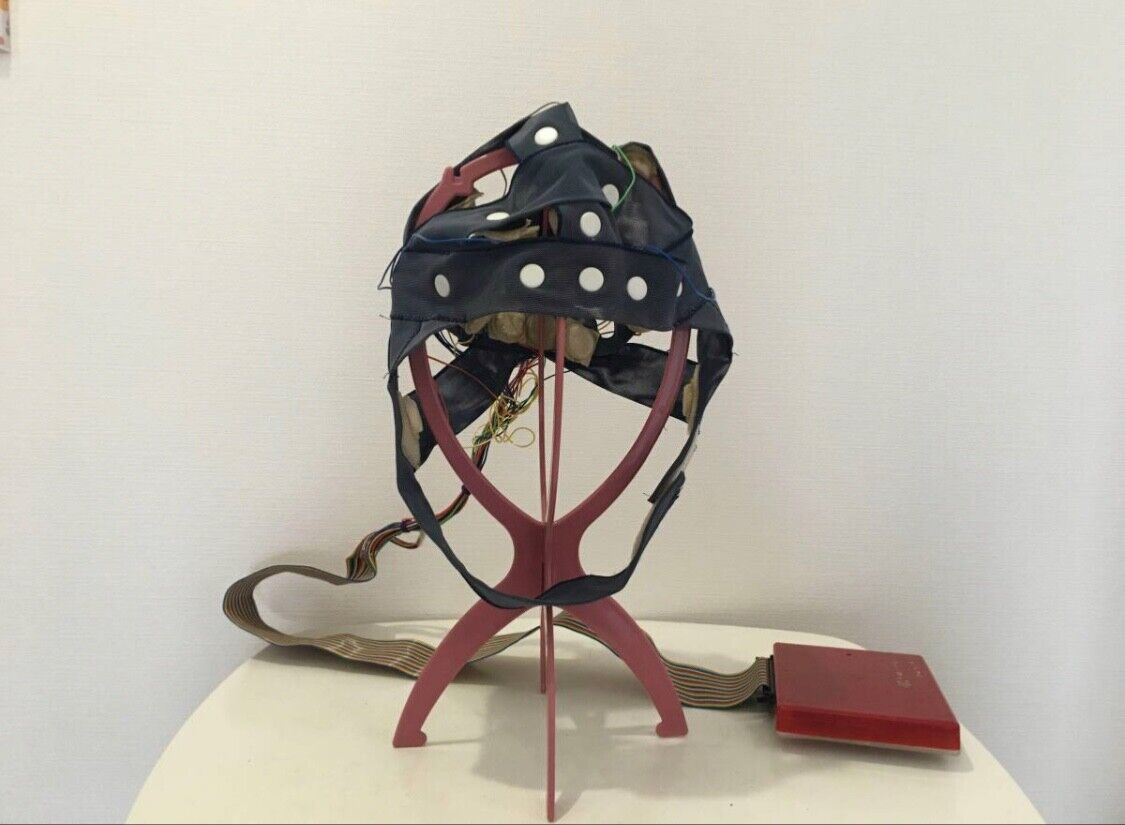
The headset is the perfect Aum object because it is not simply fake science attached to fake religion. It is a technical object performing a real institutional function. This materializes the hierarchy. It makes dependence wearable. It turns the guru's imagined interior state into an extant signal the organization can sell, regulate, rank, and repeat.
Aum's later ministries will do the same thing at larger scale.
The Science and Technology Ministry will not help the organization synchronize with physical reality.
It will help physical reality synchronize with Asahara.
That is the operational apocalypse in embryo.
• • •
The Sealed Room.
A religious community can withdraw from ordinary life for many reasons.
Silence can protect attention. Communal discipline can interrupt habits that ordinary society rewards. Shared property can reduce dependence on exploitative markets. A monastery, retreat, commune, school, order, or house of practice can give people time and structure unavailable elsewhere.
Enclosure is not automatically capture.
The question is whether the enclosure preserves an exit back to the wider field.
Aum's answer became increasingly clear.
Followers severed outside relations.
Families trying to recover relatives became hostile actors.
Assets moved inward.
Work, housing, practice, authority, social identity, and ultimate meaning became concentrated in the same organization. Leaving therefore meant more than changing beliefs.
It could mean losing home, work, status, community, purpose, friends, spiritual safety, and the only people authorized to explain what the departure supposedly revealed about the departing person.
This is the sealed-room structure already visible in Failed Field Analysts: L. Ron Hubbard and the Sealed Room.
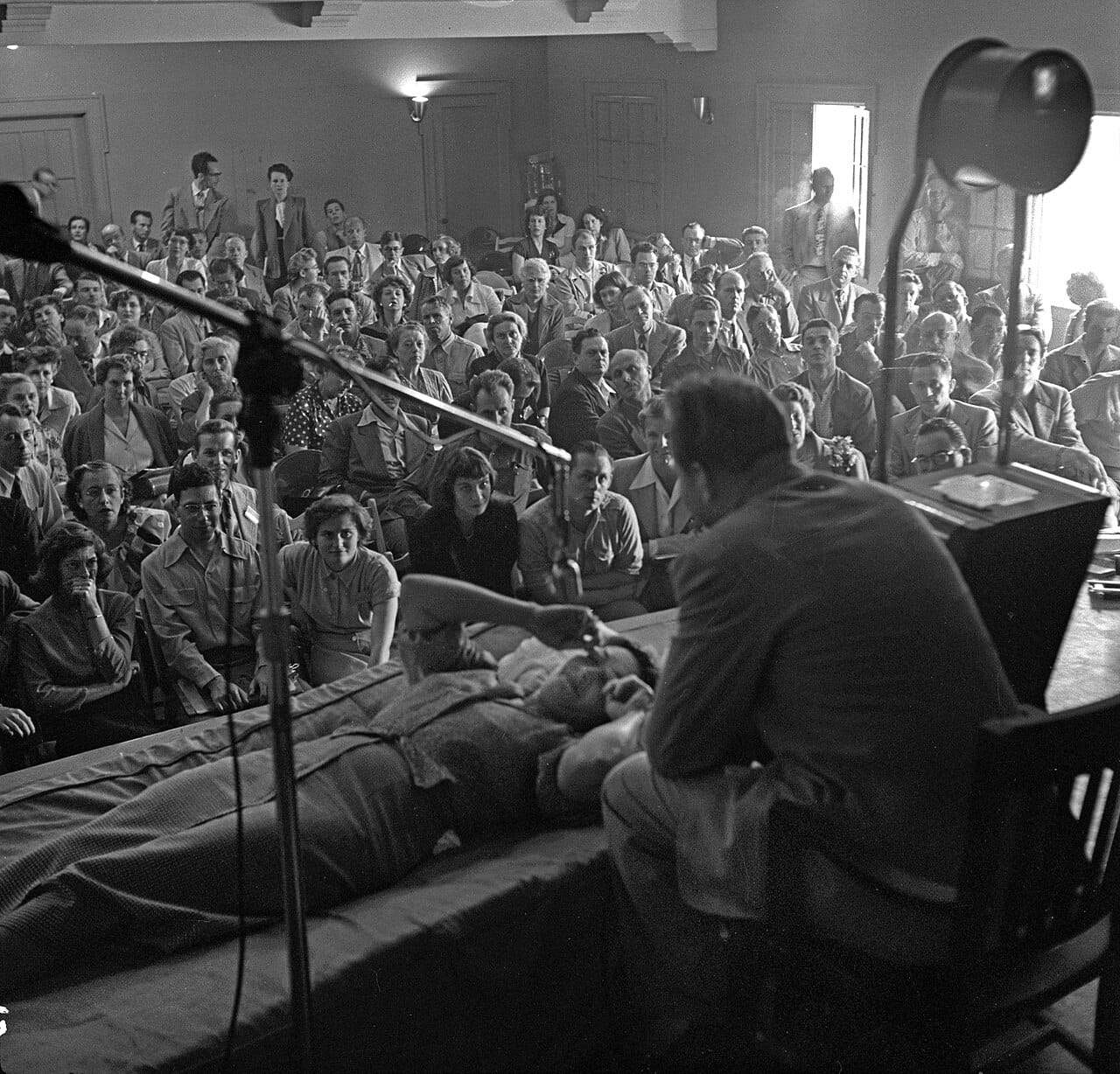
Hubbard saw something real about capture.
People can become trapped inside traumatic patterns, social roles, self-protective stories, and institutions that make every exit feel like another entrance. He built a route through that trap.
Then the route became dependent on an instrument that could interpret alternative help as rival capture. Aum goes further.
David Koresh belongs nearby for a different reason.
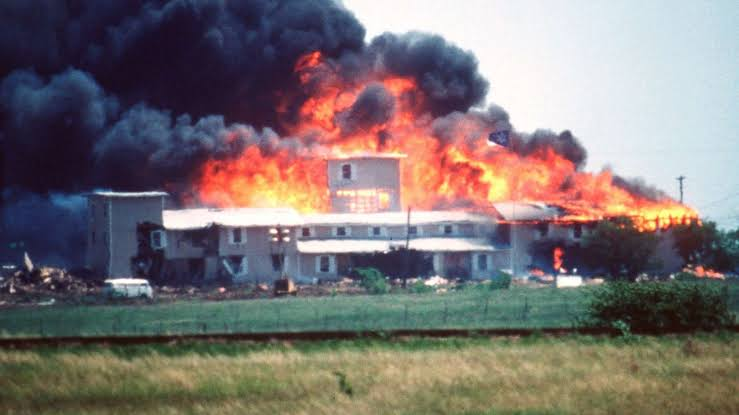
At Mount Carmel, script interpretation became inseparable from one body. The community's sacred world passed through David Koresh's role as the final reader of prophecy. The surrounding state field then arrived through surveillance, warrants, armored force, media pressure, and siege. The result became one of the central retaliation wounds later carried into Timothy McVeigh's machine and the broader militia movement.
Koresh had no comparable systems insight beneath the role. This very contemptible man just had a script that made him indispensable inside a sealed community and treated correction as persecution.
Asahara, meanwhile, actually had a more dangerous true fragment.
Asahara understood that modern expertise could be detached from public correction and reattached to sacred command.
The sealed room could have a laboratory. The laboratory could work.
• • •
The Price of Attainment.
Aum did not only rank spiritual states. It sold access to them.
Initiations, equipment, bodily substances associated with Asahara, seminars, and advanced practices could carry substantial prices. Followers were encouraged or pressured to transfer assets, renounce ordinary work, and enter lives in which the organization controlled both sacred progression and material survival.
Money alone does not discredit a religious instrument. Communities do actually need buildings, food, travel, books, care, staff, and time. Teachers need to live. A refusal to discuss money can hide exploitation much more effectively than a fee ever could.
The danger at Aum was the integration of price, rank, dependency, and metaphysical authority.
The organization could define the follower's spiritual problem, sell the instrument for addressing it, interpret the result, assign the next rank, and describe resistance to payment as evidence of attachment.
This is a complete market with one authorized evaluator.
The follower's ordinary assets became barriers to renunciation. Surrendering them could be framed as liberation. Once surrendered, the follower had fewer material paths back out.
The sacred economy therefore thickened the sealed room.
A person who gave away savings, left a profession, broke family ties, and entered communal work was not simply more committed in belief. The person's reachable future had been materially narrowed around the organization.
This is why exit cannot be analyzed only as freedom of thought.
A person may stop believing and still have nowhere to go.
A movement that treats total dependency as proof of attainment has made vulnerability into rank.
The headset, bathwater, blood, seminar, ministry title, and renunciate status all belong to one instrument family. They make closeness to the oracle visible, purchasable, wearable, and administratively legible.
The oracle becomes a scarce resource whose scarcity the oracle controls.
• • •
Death-Use Cosmology.
Aum's theology drew from Buddhist, Hindu, yogic, Christian, apocalyptic, New Age, and science-fiction materials.
Listing the ingredients out like that can create the false impression that the violence came from combining too many traditions in one room.
Religious synthesis is not the problem here.
Traditions have translated, borrowed, argued, combined, split, and reassembled for as long as traditions have met. A sacred instrument can learn across boundaries. It can discover new language for care, discipline, metaphysics, ritual, and repair.
Aum's failure was sovereignty over translation.
Asahara could select a concept from one tradition, place it inside his own hierarchy, and declare its final operational meaning. The source tradition could no longer correct the use. Scholars could not correct it. Practitioners outside Aum could not correct it. Followers could not appeal from the guru's interpretation to a wider field because the guru was presented as the highest living access point to that field.
This became especially dangerous around the idea that killing could spiritually benefit the person killed.
Aum used sacred language to turn homicide into salvation work. The victim's future was described from inside the killer's cosmology. The person being strangled, poisoned, abducted, confined, or attacked did not need to consent because the oracle claimed access to a higher account of what the death would do for the person's soul. The oracle claims ownership of another locus's transition through superior metaphysical interpretation.
The victim says:
- “I want to live.”
The system says:
- “Your death serves a future you cannot perceive.”
Once that move is accepted, ordinary moral contact becomes evidence of spiritual limitation.
Horror at killing can be called attachment. Sympathy can be called ignorance. Refusal can be called bad karma. The body in front of the follower becomes less authoritative than the invisible benefit described by the guru.
This is why religion cannot be reduced to pathology here.
The pathological account would say that bizarre beliefs caused bizarre violence.
The structural account is sharper. Aum built an authority relation capable of overruling the victim's extant future with an unverifiable posthumous claim.
That same architecture appears in secular systems whenever a person is sacrificed for an abstraction whose supposed future value cannot be contested by the person being sacrificed.
- Empire calls the death civilization.
- Revolution calls it history.
- A military calls it necessity.
- A sacred enclosure calls it liberation of the soul.
The vocabulary changes. The body still closes.
Aum's doctrine made violence easier to absorb because it provided the follower with an image of killing as assistance. The murderer did not need to become a murderer in self-description. The murderer could become an instrument of mercy at a level unavailable to ordinary perception.
This is the worst kind of sacred instrument: one that converts the victim's resistance into proof that the victim cannot understand the benefit being imposed.
• • •
The First Body.
The first decisive technical success inside Aum was not chemical.
It was organizational.
In September 1988, a follower died during an intensive practice.
The death threatened everything Asahara was trying to build. A public body could interrupt legal recognition, recruitment, internal faith, and the claim that the practices were instruments of liberation.
The organization chose concealment.
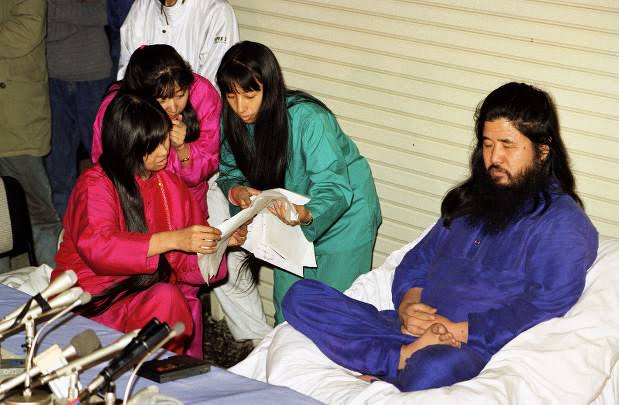
Senior members burned the body and disposed of the remains.
This transition deserves to stand by itself.
The movement had encountered an answer.
- A person had died inside the practice.
The death could have forced contact with medical reality, legal responsibility, family obligation, procedural danger, leadership error, and the possibility that the sacred instrument itself required correction.
Instead, the death became an administrative problem.
- The body threatened the mission.
- The mission was sacred.
- The body therefore had to be removed from the public field.
- The mission was sacred.
This was the first ministry. No title was required yet.
The organization learned that evidence could be destroyed under sacred authorization. It learned that several senior people could be bound together through a secret whose exposure threatened all of them. It learned that a body could be converted from a harmed locus into an obstacle to organizational continuance.
The body was burned. The organization survived.
From inside the sealed room, that survival could look like confirmation.
This is how a distortion field trains itself.
A harmful transition protects the instrument from correction.
The instrument's survival is then interpreted as evidence that the harmful transition was necessary.
The next correction arrives in a field already altered by the first concealment.
The leaders are no longer only believers.
They are co-keepers of a body erased from the record.
Shared crime becomes institutional glue.
The first body does not disappear. It changes the organization that hid it.
• • •
The Exit Is Strangled.
A member who knew about the concealed death later wanted to leave.
This was not a normal departure anymore.
This person carried an exit route into the wider field. If he left, the hidden body could regain testimony. The outside could learn what had happened. Families, police, journalists, courts, and potential followers could receive a version of Aum not authorized by Aum.
So the organization killed him.
Several senior members participated.
The act created another bond of shared responsibility, another secret, another reason each participant needed the sacred system to remain stronger than the legal and social world outside it.
The exit had become a witness. The witness had to be silenced.
This is where the sealed room changes kind.
- A difficult community can still be corrected while members can leave, speak, seek help, compare accounts, and survive the comparison.
- A captured community interprets departure as contamination.
- A violent sacred enclosure treats departure as attack.
This instrument no longer exists to transform people and release them toward wider contact. Aum now exists to preserve the conditions under which Aum remains necessary.
The murder also exposes a distributed correction failure.
Multiple people were involved. Each person could have stopped.
Each person could have interpreted the silence of the others as evidence that the command remained within the field of acceptable action.
The logic resembles the command cascade at Honda Point and the inward turn of the Six-Cable Admiral.
- A bridge officer hesitates.
- A follower doubts.
A subordinate assumes that if the order were truly impossible, someone with greater knowledge or courage would object. Everyone waits for correction to arrive through someone else.
The group continues. The ships turn.
The man dies.
A sovereign instrument does not need to eliminate private doubt.
It only needs to prevent doubt from acquiring causal reach.
• • •
Tsutsumi Sakamoto.
Tsutsumi Sakamoto was a lawyer working with families who wanted relatives back from Aum.
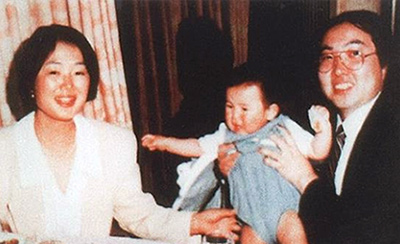
He investigated the movement's practices, finances, coercion, and claims. He represented people whose contact with the organization had become difficult to reverse. He helped make private family alarm publicly describable.
This is what a correction channel looks like before a sealed system names it persecution.
Sakamoto did not need to defeat Asahara's theology. He needed to preserve ordinary exits:
- a family can ask where someone is;
- a person can leave a religious organization;
- an institution can be investigated;
- a claim can be tested;
- money can be accounted for;
- harm can become evidence outside the system that produced it.
Aum interpreted this as an existential threat.
In November 1989, members entered the Sakamoto home and killed Tsutsumi Sakamoto, his wife Satoko, and their fourteen-month-old son Tatsuhiko.
The murder occurred before Aum's disastrous parliamentary campaign.
That chronology is not a minor detail.
The convenient story says electoral rejection radicalized a strange religious movement into violence.
Except the Sakamoto family was already dead.
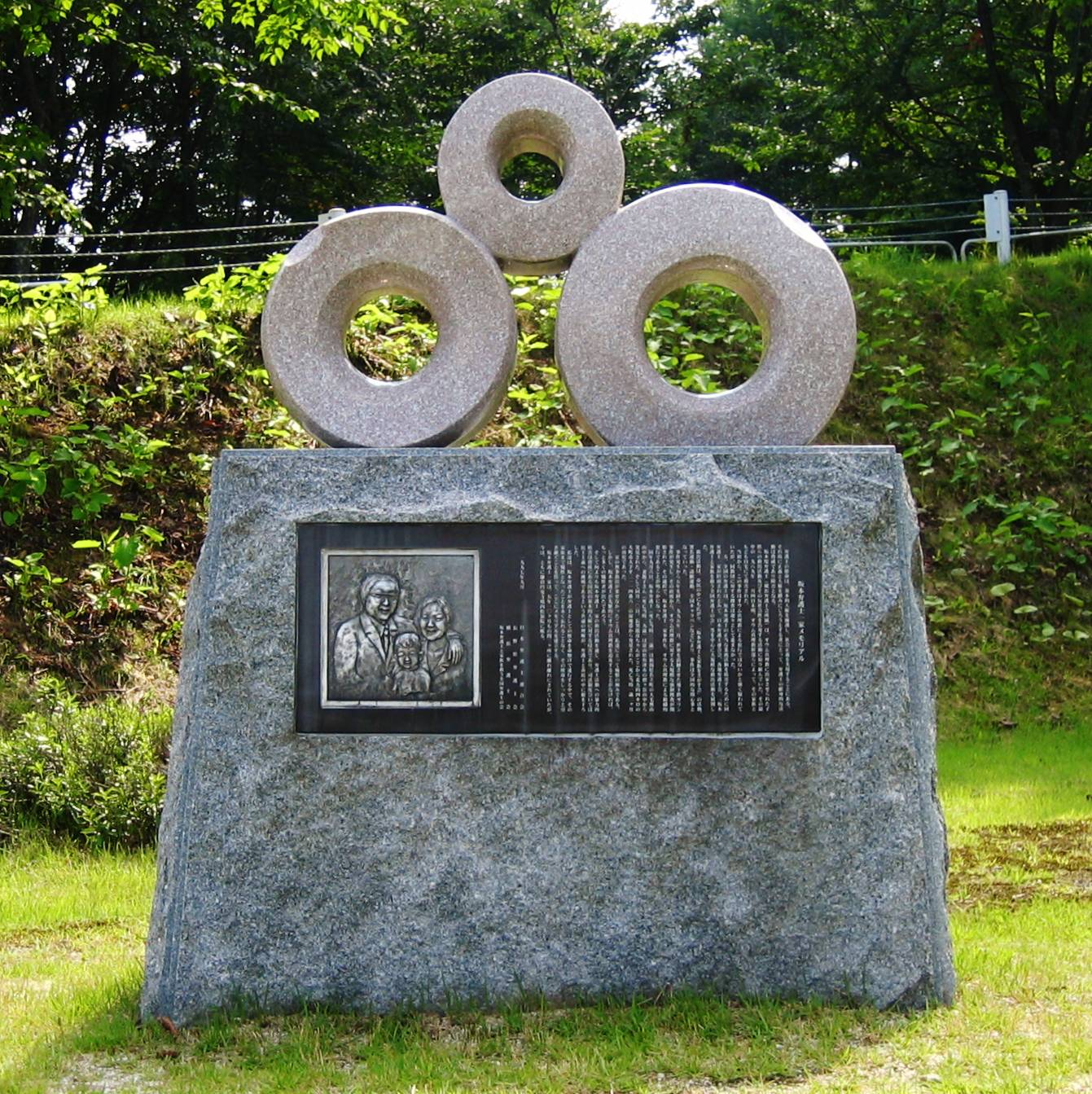
The organization had already concealed an internal death, killed a member who wanted to leave, and eliminated a lawyer making exit reachable.
The election did not create the sealed field. It gave the sealed field a national audience to blame.
Sakamoto's murder is the moment Aum stops treating correction as a spiritual problem and openly treats it as a target.
The lawyer is not only a critic. He is infrastructure between the follower and the wider world.
Killing him is an attack on translation. His wife and child are killed because this correction channel has a household. This is how sacred sovereignty enters ordinary rooms. It reaches the family because family memory can carry what the organization wants erased.
The closed system has now developed a clear rule:
Any outside relation capable of returning the follower to the field may be treated as an enemy relation.
This rule will later scale.
• • •
The Tape.
Before the Sakamoto family was killed, a television network recorded an interview in which Tsutsumi Sakamoto challenged Aum.
The network showed the interview to members of Aum before it was broadcast.
The planned broadcast was then canceled.
This is an institutional handoff.
A journalist had created a contact channel between a critic and the public.
The channel was exposed to the organization being criticized before the public received it.
- Aum gained warning, pressure, and information.
- The critic lost the protection created by timely publication.
This asymmetry is plainly ridiculous.
The station did not order the murders. It did not know what Aum would later do.
But its decision still changed reachability.

A powerful sealed system learned what a lawyer planned to say before the wider field could hear him. The correction arrived privately at the object of correction. Then it was buried.
This is the media version of the field intelligence gap. A procedure that may have looked like balance, verification, access, or conflict management weakened the path through which harm could become public.
The public often treats journalism as a neutral pipe through which accounts pass.
This is a fantasy. The sequence matters.
- Who sees the claim first?
- Who can pressure whom before publication?
- What protective force comes from public visibility, and what happens when the subject of an investigation receives visibility while the audience does not?
The tape became another object trapped inside the sealed room.
• • •
The Cell.
After the Sakamoto family murders, Tomomasa Nakagawa became frightened and depressed.
This was a correction signal inside one of the men who had carried the command into the home.
Aum treated the signal, not the sickness.
Nakagawa was confined in a cell barely large enough for him to lie down. A video of Asahara played continuously. Human contact was reduced to the people bringing food. He remained there for about a month.
He later described the confinement as restoring his trust in Asahara.
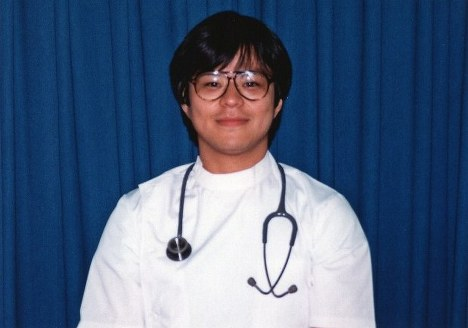
This is the brainwave headset without the headset.
The follower's destabilizing contact with the event is treated as noise. The oracle is played until the oracle becomes their environment again.
The cell deserves to stand beside Satyan 7 as one of Aum's central technical spaces.
- Satyan 7 tried to make chemistry answer to sacred command.
- The cell made a conscience answer to sacred command.
Both facilities worked through enclosure.
Both reduced outside interference.
Both treated the oracle's objective as settled.
The difference is that one processed chemicals and one processed a person who had begun to feel what he had done.
Aum did not need to erase all remorse permanently. It needed to keep remorse from becoming exit, confession, refusal, or public evidence.
The confined follower could return to function once the memory had been reattached to the guru's interpretation.
This is a central correction failure in sealed systems.
The system may recognize that a member is distressed.
It may provide treatment, care, ritual, rest, explanation, attention, and human contact.
The existence of care does not prove the system is corrigible.
Care can be used to return the person to the role that caused the wound.
- A repair instrument asks what the distress is revealing about the field.
- A sovereign instrument asks how to make the distress stop interrupting the mission.
Nakagawa emerged more stable inside Aum.
The wider field became less reachable.
• • •
Stuffed Dolls.
In 1990, Aum entered parliamentary politics through the Truth Party.
Twenty-five candidates ran.
The campaign involved white clothing, songs, balloons, choreographed enthusiasm, large character dolls, and the kind of public spiritual spectacle that makes ordinary election weirdness look underfunded.
The dolls do matter. They are funny.
They are also the right small object for the transition.
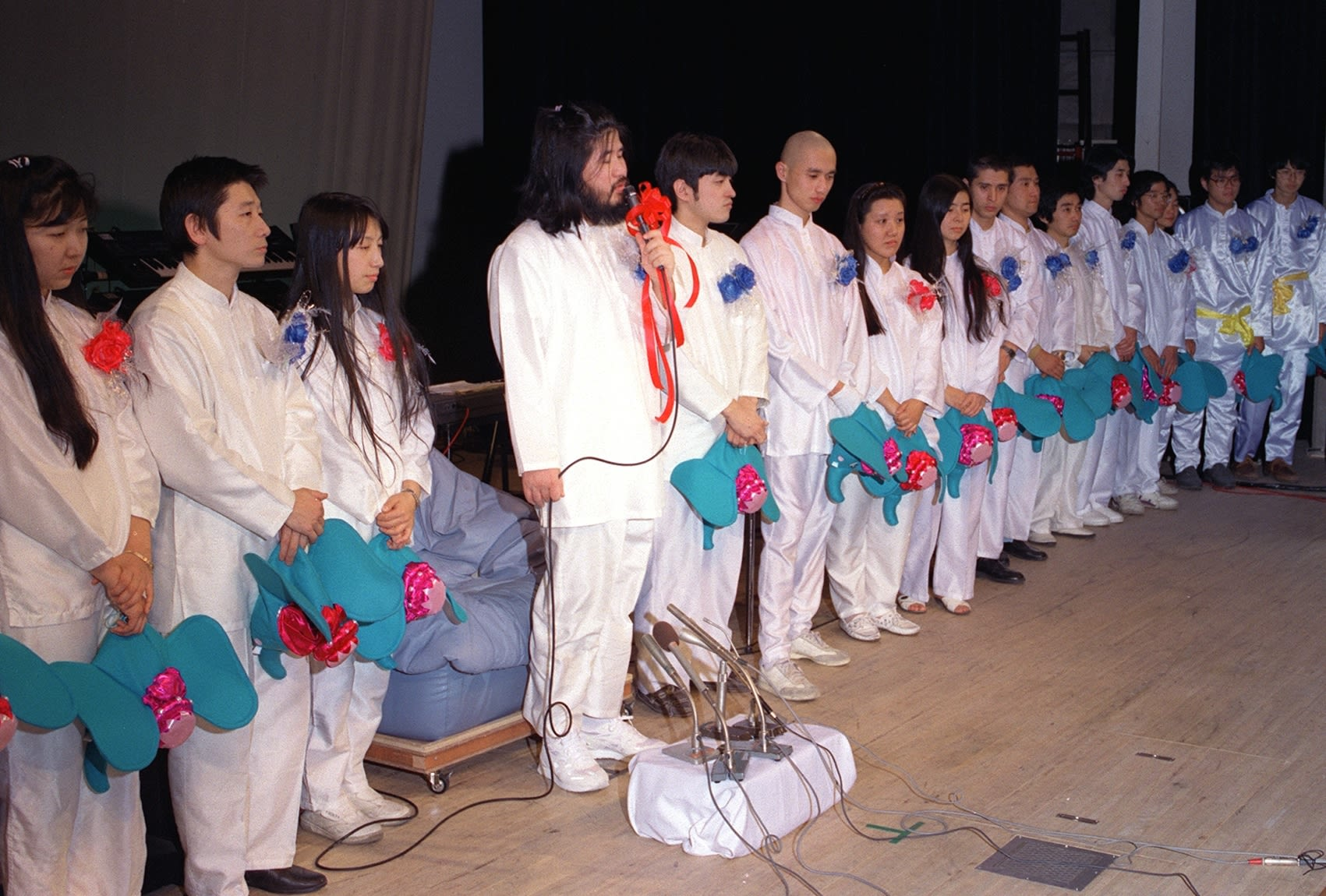
Aum had spent years creating a hierarchy in which Asahara's sacred rank could not be corrected by ordinary followers. Electoral politics forced the organization into a field where strangers could respond with indifference, annoyance, mockery, or a vote for somebody else.
The public did not enter the initiation room.
It just saw the dolls.
The candidates lost catastrophically.
Asahara himself received a tiny fraction of the vote he had expected.
The public correction was clean enough to become dangerous.
A movement committed to spiritual superiority had attempted ordinary recognition and received ordinary rejection. The election said that Aum's internal hierarchy had not translated into public legitimacy. The wider field did not see the enlightened government waiting beneath the existing government.
It saw a marginal party with strange costumes and large dolls.
A corrigible movement could have learned several things here:
- sacred authority inside a community does not create civic authority outside it;
- public recognition cannot be inferred from internal loyalty;
- political defeat may indicate weak translation rather than conspiracy;
- perhaps this nation does not want to be saved by you;
- perhaps these dolls require review.
Aum moved in the other direction.
The defeat entered the apocalyptic story as evidence of social corruption, persecution, manipulation, and the impossibility of achieving transformation through ordinary politics.
- The public had corrected the movement.
- The movement corrected the public instead.
This is the same deep structure as the Great Disappointment, with a more operational successor path.
The Millerite field placed sacred expectation on a calendar.
When the date passed, the answer-channel reorganized believers and doctrine around the non-arrival.
Aum placed sacred authority on a ballot.
When the votes failed, the answer-channel reorganized the nation around its rejection.
• • •
The Campaigners Encounter Japan.
The election produced another correction Aum had difficulty containing.
Members left the communes to campaign.

They spent time in ordinary public life. They met voters who did not share the internal hierarchy. They encountered workplaces, families, streets, strangers, practical schedules, and the social world from which the enclosure had claimed to offer release.
Some defected. This is one of the most important quiet facts in the transition.
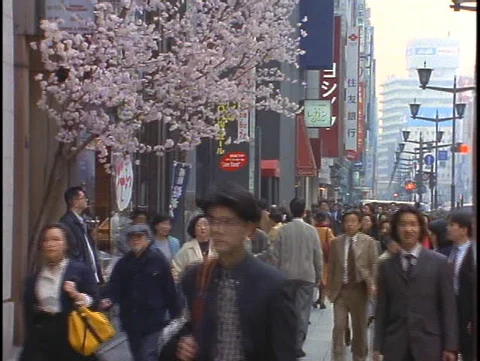
The same campaign that Asahara later used as proof of public corruption gave some followers enough outside contact to leave.

The field did not correct everyone through argument.
It corrected some people just by becoming available again.
A person who has lived inside a sealed room may not need a perfect refutation of the room's cosmology.
The person may need another meal, another conversation, another pace, another place to sleep, another person who does not interpret every hesitation as spiritual failure.
Ordinary life can be a reality anchor precisely because it is ordinary.
The stuffed dolls, songs, and white campaign clothing were meant to carry Aum into the public. The public also entered Aum through the campaigners.
Some members discovered that the outside field had not, in fact, become the spiritually dead wasteland described by the oracle.

This is why sealed systems fear unsupervised contact even when they claim confidence in truth.
Truth should definitely survive a walk outside.
Sovereignty cannot be so sure it will.
• • •
Failed Field Analysts: Shoko Asahara and the Operational Apocalypse.
Shoko Asahara had a true insight.
This is uncomfortable, but true.

This is where Modal Path Ethics becomes more careful than the category usually offered for him.
- An unbroken fraud can be dangerous.
- A person who catches a real structure and then routes it through personal sovereignty can build something much worse.
Asahara clearly understood that technical modernity had not dissolved humanity's sacred need.
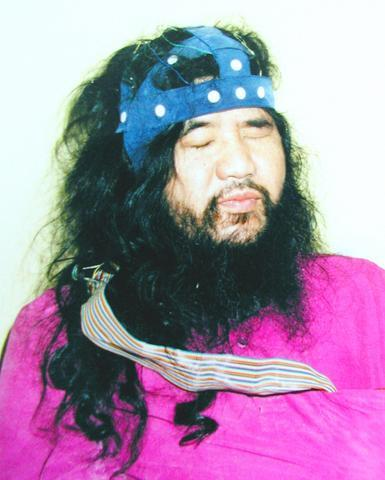
The modern scientist, physician, engineer, lawyer, programmer, architect, and graduate student remained available to transcendence, moral hierarchy, bodily discipline, community, apocalypse, purification, and the desire to serve a history larger than professional advancement.
That perception was correct.
A highly educated person can be spiritually hungry.
Scientific training does not confer universal field immunity.
Expertise is local.
- A chemist may be excellent at synthesis and poor at detecting coercive theology.
- A physician may understand the nervous system and misread an authority relation.
- An engineer may see structural loads and fail to see a social trap.
- A physicist may reject bad equations while accepting a cosmology that gives personal despair a planetary explanation.
Aum's recruitment of elite technical talent demonstrated the seam.
The old opposition between religion and science could not describe the organization. Aum did not ask science to surrender its methods at the laboratory bench. It asked science to surrender its right to choose the question.
The methods could remain rigorous enough to produce results.
The objective came from the oracle. This is the true fragment:
Sacred authority and technical expertise can freely interoperate.
The distortion was the interface.
Asahara placed himself between every domain and correction.
- Spiritual practice answered through him.
- Bodily experience answered through him.
- Scripture answered through him.
- Buddhist, Hindu, Christian, and apocalyptic materials answered through him.
- Political defeat answered through him.
- Scientific capacity answered through him.
- Legal pressure answered through him.
- Failed experiments answered through him.
- The future answered through him.
The organization therefore did not create mutual correction between sacred and technical instruments.
It built a chain of command.
- Revelation selected reality.
- Hierarchy selected the goal.
- Science selected the method.
- Failure selected a new method.
- Secrecy protected the chain.
The oracle remained above falsification.
The laboratory could discover that a reaction failed.
It could not discover that Armageddon was a very stupid project.
This is why Koresh remains a neighbor but was not a Failed Field Analyst candidate. Koresh had a role capable of sealing a script around himself.
He could make every outside pressure confirm his importance inside prophecy.
But he had no comparable structural discovery beneath the role.
The system remained fully dependent on his script possession and on the state's disastrous willingness to meet that script with siege machinery.

Hubbard had a real fragment, too. He saw capture, trauma, social control, and the way a route out can become another room. His failure was making the repair path answer to an instrument unable to release people back to the wider field.
Asahara's fragment was different. He saw that the sacred and technical worlds could be combined without either losing its operational force.
Then he made himself sovereign over the combination.
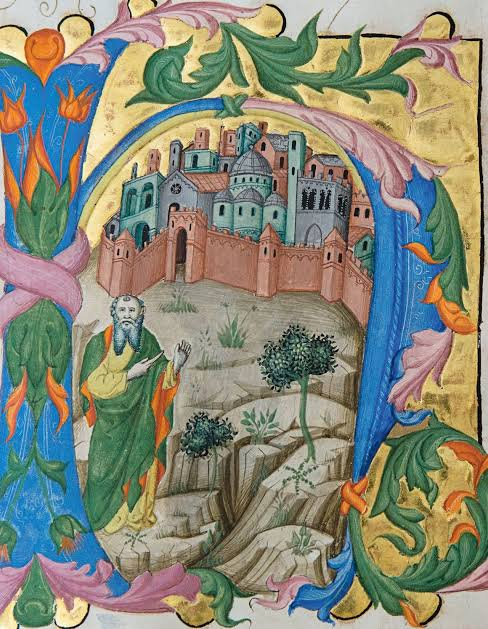
Münster gave sacred expectation a city.
Asahara gave it systems engineering. His failure was not irrationality overpowering reason. Reason was placed downstream of an oracle.
Asahara correctly perceived that science could become religious infrastructure.
That's how he made himself the god of the interface.
• • •
Religious Recognition.
Aum sought and obtained official recognition as a religious corporation.
The recognition mattered materially. It gave the organization legal standing, social legitimacy, tax advantages, and protections important to religious freedom in a democratic society.
Those protections are not exposed as mistakes simply because Aum abused them.
A state powerful enough to deny religious status whenever beliefs appear strange is a dangerous state.
Minority traditions, new movements, unconventional practices, and communities outside established religious institutions require protection from administrative preference and public disgust.
The repair problem is harder.
- How does a state preserve sacred plurality while responding to coercion, fraud, disappearance, confinement, family separation, weapons work, and murder?
Aum exploited the tendency to treat "religion" as a complete description.
Once placed in that category, pressure could be redescribed as persecution. Investigators could fear violating legitimate freedom. Local communities could see an eccentric spiritual organization where families saw capture. Commercial vendors could see customers. Officials could see paperwork in order. Each institution had reasons to stay inside its lane.
This organization moved between lanes.
Religious freedom protected worship. Aum used the protected body to house activities that worship could not morally immunize.
The solution is not to make the state sovereign over sacred truth.
The solution is to keep sacred status from becoming a firewall against field evidence.
- A religious organization can be protected in belief and accountable in action.
- A strange doctrine is not evidence of crime.
- A missing person is still missing.
- A harmed follower is still harmed.
- A chemical leak is still a chemical leak.
- A body does not become less dead because the institution around it has sacred paperwork.
Aum's recognition became dangerous where legal classification substituted for integrated contact with the field. The state did not need to decide whether Asahara was enlightened.
It needed to notice what this organization was making reachable.
• • •
The Government Beneath the Government.
After the election, Aum did not retreat from politics.
It internalized politics.
The organization built a ministerial structure that mirrored the Japanese state. There were offices corresponding to science and technology, intelligence, construction, health and welfare, treatment, justice, defense, home affairs, finance, education, foreign affairs, and other governmental functions.
This is one of the moments when the article has to allow the comedy to arrive before the horror catches it. The end of the world has developed an administrative layer.
Armageddon now requires departments.
Someone had to handle procurement for the end of everything.
Someone had to supervise construction for the same.
Someone had to maintain member records, manage money, coordinate travel, gather intelligence, operate businesses, develop weapons, produce drugs, control internal discipline, and prepare for the replacement of the state after the state had been destroyed.
The New Jerusalem has acquired a cabinet.
This is not decorative grandiosity.
The ministry chart changed the movement's capacity. It converted the sacred hierarchy into an allocation system. A follower's education could become an appointment. A profession could become a sacred office. Technical work could be assigned through a chain whose final authority did not need to understand the technical details.
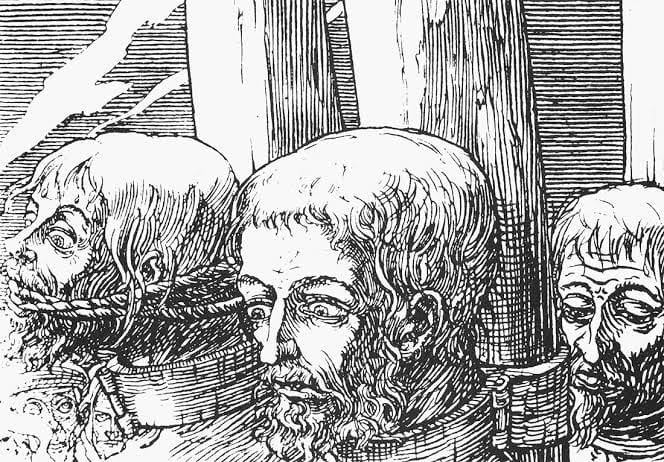
Münster had faced the same transition in an early-modern body.
A sacred answer entered a city and required gates, food, law, offices, punishments, military defense, property rules, and someone willing to become king.
The holy city did not remain a sermon because cities cannot do this.
Water still needs to move. Bread has to be counted. Dissent has to be processed somehow.
Aum built a city without needing contiguous civic territory. Its compounds, businesses, laboratories, dormitories, clinics, offices, media operations, foreign branches, and communes could be distributed while remaining answerable to one sacred center.
The result was more flexible than Münster and less exposed to ordinary political correction.
This organization could act as:
- a religion when seeking legal protection;
- a business when acquiring money and equipment;
- a school when recruiting;
- a clinic when treating followers;
- a government when assigning authority;
- an intelligence service when investigating enemies;
- a military program when preparing violence;
- and a persecuted spiritual community whenever the outside tried to force these identities into one accountable field.
Each description caught something real.
None reached the whole structure alone.
That ambiguity helped Aum move.
A government is usually visible because it governs a public territory. Aum's government governed people whose own bodies, money, labor, skills, families, and futures had become internal territory.
The ministries did not need popular consent. Just access to followers.
• • •
The Shops of Armageddon.
An apocalypse still needs cash flow, of course.

Aum operated computer companies, restaurants, food businesses, import operations, health-related ventures, publishing, seminars, and other commercial enterprises. It acquired property and equipment through ordinary markets. It moved money across borders. It expanded heavily into Russia, where its broadcasts and recruitment reached a large audience during a period of institutional upheaval and spiritual openness.
This is another place where the category of antimodern religion fails.
Aum did not stand outside capitalism and technology waiting for the modern world to collapse.
It used modern logistics to prepare the collapse.
A customer could buy a computer from a business connected to an organization preparing chemical war against the society in which the computer would be used.
A bowl of noodles could enter the same economic field as a weapons program.
The transaction did not carry any warning label about Armageddon allocation.

Ordinary commerce helped the extraordinary project feel possible.
Markets are excellent at answering the question:
- Can the buyer pay?
They are far less reliable at asking:
- What field is being built from the purchase?
Aum bought sophisticated equipment over the counter.
It recruited technical people through ordinary educational systems. It used legal religious status. It opened offices and dormitories. It maintained foreign connections.
It acquired aircraft and pursued conventional weapons projects. It explored ways to manufacture rifles and other arms. It investigated nuclear materials and bought a large property in Western Australia.
It sought useful knowledge wherever the global field made that knowledge reachable.
Some ambitions were fantasy.
Some were technically foolish.
Some failed because matter refused them.
The important fact is that the organization could keep shopping after the fantasy had become violent.
Modern supply systems simply do not require the buyer to possess a sane cosmology.
They require an account, a vendor, a delivery address, and enough legitimacy to keep the transaction ordinary.

The oracle did not need to invent industrial civilization for his Armageddon. He could route it into its continuation.
• • •
Russia.
Aum's growth in Russia deserves more than a line in the procurement story.
The Soviet collapse had opened a vast institutional and spiritual field.
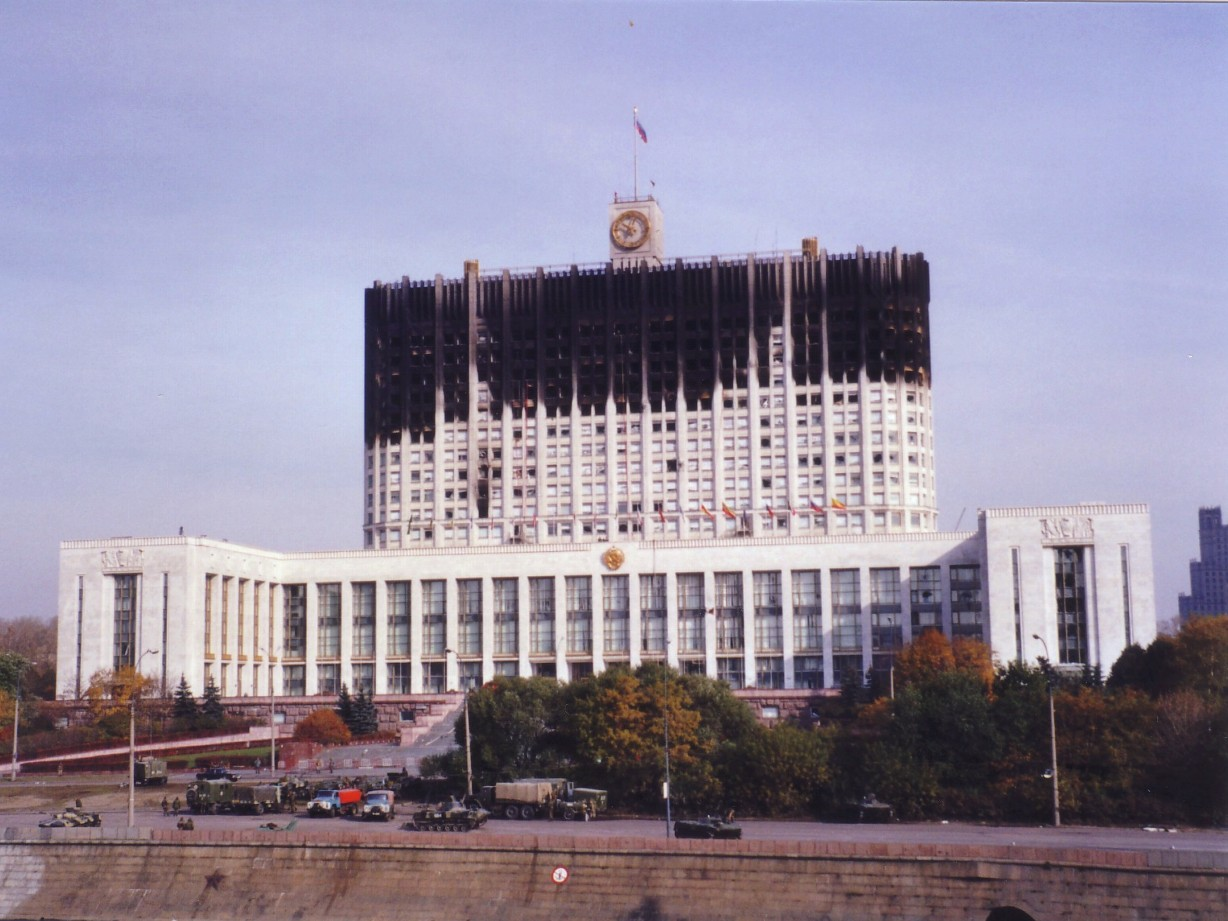
The old state had lost authority. Economic life was unstable. Public ideology had cracked. New religious movements, imported teachers, business schemes, political entrepreneurs, and spiritual promises entered a society whose existing instruments were being rewritten in real time.
Aum arrived with money, broadcasts, organization, spectacle, and a leader claiming to understand the catastrophe before it happened.
The movement's Russian following may have exceeded its Japanese membership.
Aum purchased media time, built institutional relationships, opened offices, and cultivated contacts in a political system where public and private authority were still being renegotiated.
The organization could distribute followers, money, legitimacy, technical access, and influence outside the jurisdiction applying pressure in Japan. It could also place its apocalyptic story beside the remains of a nuclear superpower.
Aum's Russian expansion fed its imagination of scale. The movement could see itself less as a marginal Japanese religious organization and more as a transnational successor system. It gained access to military culture, technical institutions, aircraft, and officials whose interest, negligence, vanity, or corruption gave the organization a larger stage.
The exact truth of every procurement claim remains uneven. Aum's contacts generated rumor alongside capability. The important structure is fully visible without inflating the record.
A sacred organization under weak correction had learned to use state openings across borders.
- Japan provided legal religious status, markets, education, transport, and advanced industry.
- Russia provided post-imperial instability, mass media access, political contacts, technical prestige, and the aura of weapons civilization.
- Australia provided remote land and another jurisdiction in which the organization could imagine experiments and refuge.
The global field did not coordinate its partial views of Aum strongly enough to make the whole object visible. Each system saw a different thing:
- religious organization;
- customer;
- broadcaster;
- land buyer;
- computer company;
- foreign visitor;
- political contact;
- technical recruiter;
- strange but legal community.
The organization existed in the gaps between these descriptions.
Lake Peigneur had a lake map and a mine map that had not been forced into one accountable field.
Aum had religious, commercial, technical, international, and security maps that remained separately legible until the subway finally integrated them for everyone.
• • •
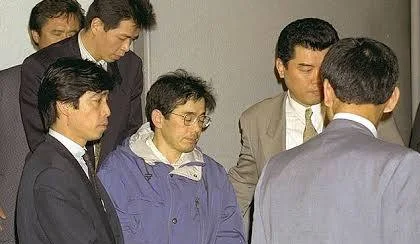
The Ministry of Science.
Hideo Murai became Aum's Minister of Science and Technology.
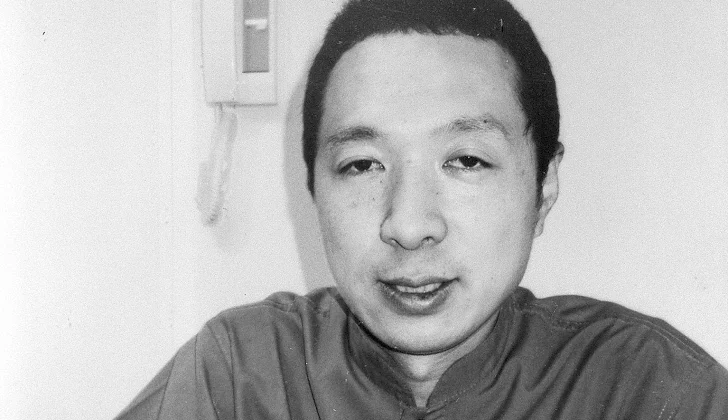
Masami Tsuchiya became central to its chemical work.

Seiichi Endo directed biological research.

Tomomasa Nakagawa served as Asahara's physician and became involved in chemical weapons and attacks.
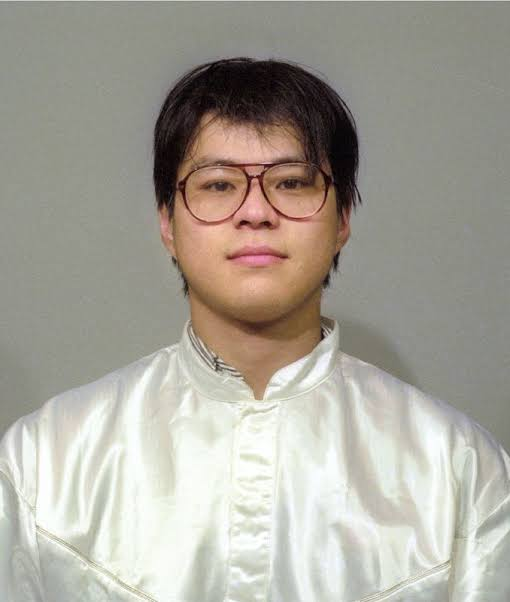
Ikuo Hayashi, another physician, held authority in the treatment apparatus and later carried sarin onto a subway train.
These were not interchangeable "smart people" collected for a morality play about education failing to make people good. Their expertise entered different parts of the machine.
Aum's technical program was not powered by “intelligence” in the abstract. It was powered by specialized capacities coordinated under a single purpose.
- A physicist could oversee projects without being the best chemist.
- A chemist could develop an agent without controlling deployment.
- A physician could understand human vulnerability while receiving killing as sacred work.
- An engineer could design facilities around processes selected elsewhere.
This is how institutions amplify local expertise.
No one person needs to know the whole field.
The institution translates partial competence into collective action.
Under corrigible governance, that division allows criticism to enter through many points. Safety staff can stop production. Medical staff can object to harm. Legal staff can identify liability. Engineers can reject impossible specifications. Executives can cancel the mission. Workers can report danger. Regulators can inspect.
Aum preserved the division of labor and collapsed the division of authority.
Every technical question remained open below the goal.
The goal remained closed.
The chemist could ask:
- Is the reaction working?
- Is the product stable?
- Is the equipment contaminated?
- Is the process producing enough material?
The chemist could not ask with equal force:
- Why are we producing this?
- Who will be exposed?
- Does the prophecy justify a weapons program?
- Can the organization survive without killing?
- Is the guru wrong?
Those were sacred questions.
Sacred questions had already been answered.
The organization therefore achieved a strange form of rationality.
It could be highly rational about means and unreachable about ends.
This is one of the most common architectures of large-scale harm. The technical worker is not asked to believe the entire story every minute. The worker is asked to solve the next problem inside a story whose authority has been settled elsewhere.
McNamara's body count machine carried a related structure in secular command.
Analysts could improve measurement, logistics, targeting, sortie planning, budgeting, and weapons comparison. The war's purpose, political field, Vietnamese history, and lived deformation remained harder to correct through the same instruments.
Technical competence made the wrong field more capable.
Aum gives this structure sacred command.
• • •
The Ministry of Treatment.
Aum's medical apparatus belongs beside its weapons laboratories.
The organization ran clinics and hospitals. Physicians and nurses held sacred rank. Medical language could give the movement legitimacy, attract followers, treat members, support chemical work, and create a controlled environment in which bodily suffering was interpreted through the organization.
The body was never only a patient body. It was spiritual material.
A symptom could be illness, karmic burden, purification, resistance, poisoning by enemies, or evidence of progress. The person diagnosing the symptom might also be the person whose status depended on preserving the sacred frame.
Aum used psychoactive substances and harsh initiations inside this apparatus. Followers could be drugged, confined, deprived, subjected to extreme practices, or treated without the independent medical consent structures that would allow the patient to contest the meaning of the experience.
The laboratory and clinic therefore shared a problem.
The same organization controlled exposure, diagnosis, interpretation, and treatment.
A follower who became terrified during an initiation could not easily ask an independent physician whether the practice itself was harmful. The physician might belong to the ministry. The ministry answered to the oracle. The oracle had already described suffering as spiritual process.
This is what happens when care loses an outside.
A medical instrument requires correction channels because the patient is vulnerable to the person naming the condition. Records, second opinions, licensing, consent, professional discipline, family access, and the ability to leave are not bureaucratic decorations around medicine.
They preserve the patient's reality against the healer's certainty.
Aum internalized these functions.
The healer could become captor without changing office. The patient could become follower, research material, security risk, or source of money without ever crossing a visible institutional border.
• • •
Satyan 7.
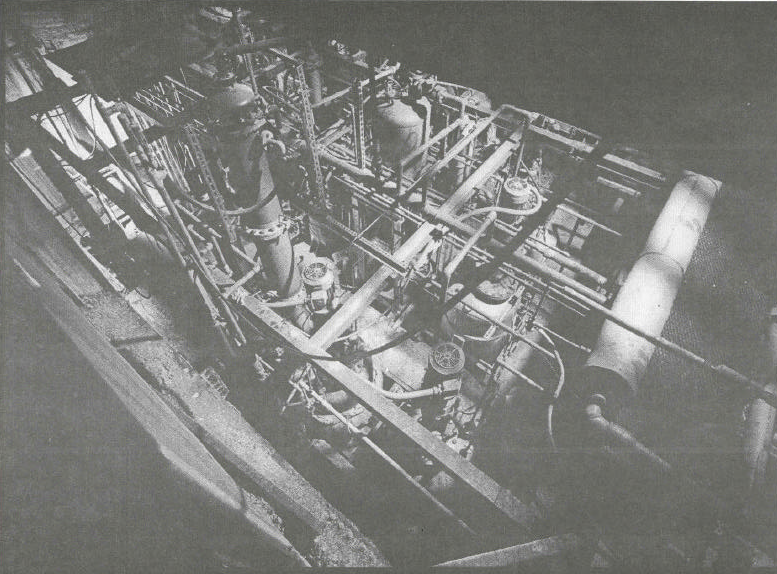
Satyan 7 stood among Aum's buildings near Mount Fuji.
Its name framed it as sacred space associated with Shiva.
Its interior housed an ambitious chemical production facility.
This building should not be treated as a contradiction.
A contradiction suggests two incompatible things accidentally sharing a roof.
Satyan 7 was a chain of command made architectural.
- The sacred name selected the mission.
- The ministry designed the process.
- Commercial suppliers furnished equipment.
- Followers provided labor.
- Chemists worked on production.
- Secrecy protected the facility.
The building joined shrine and factory because the organization had already joined revelation and method. The factory was designed for production far beyond the small amounts needed for an isolated assassination. The ambition reached toward battlefield-scale quantities.
The ambition outran the organization in important ways.
Later research has corrected the early picture of Satyan 7 as a fully successful mass-production plant. Aum achieved serious laboratory production of sarin. It did not achieve the sustained factory-scale output the facility was meant to deliver. The transition from skilled laboratory work to reliable industrial production remained difficult.
That distinction is essential. Aum was neither a harmless group of fantasists nor this hidden superpower with flawless weapons capacity.
It occupied the more instructive field between them.
It possessed enough technical ability to kill at scale.
It also encountered the brutal resistance of manufacturing:
- contamination;
- corrosion;
- process instability;
- scale-up failures;
- equipment limitations;
- tacit knowledge gaps;
- accidents;
- odors and leaks that alerted neighbors;
- law-enforcement pressure;
- and the difference between making something once and making it repeatedly without poisoning the people doing the work.
The oracle could definitely order mass production.
Matter did not accept the rank structure.
This should have been a correction. Instead, the failures became technical problems inside a goal preserved from falsification. The experiment was allowed to disprove the equipment.
It was never allowed to disprove the apocalypse.
• • •
Blue Sarin.
During attempts to produce sarin, one batch acquired a blue color after material from laboratory glass entered the reaction.
Blue sarin is the right little object for the facility.
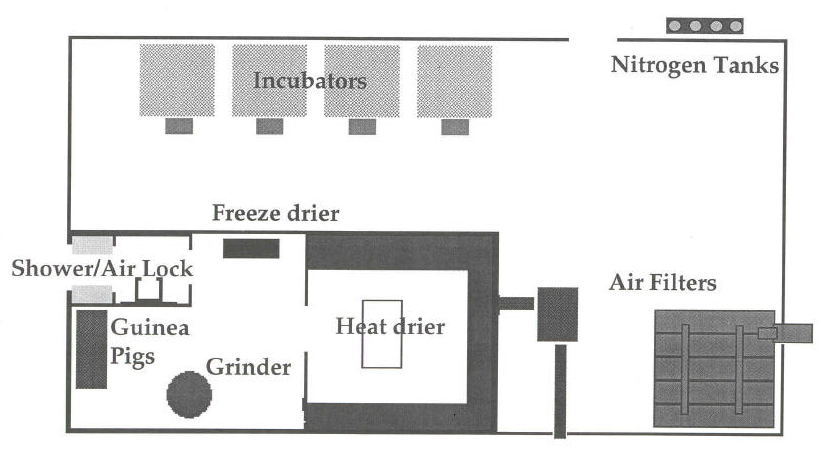
This is not a joke about chemists being incompetent. Scale-up is difficult. Materials interact. Heat changes pathways. Equipment thought to be inert may become part of the process. A method that works in one flask can become unstable when volume, temperature control, mixing, purity, and industrial piping change.
This color was evidence that the instrument had joined the event.
- Aum wanted the laboratory to act as a transparent route from command to product.
- Matter kept leaving fingerprints.
Satyan 7 leaked. Welds failed. Corrosive intermediates escaped. Reaction vessels overflowed. Workers and surroundings were exposed to the production field before the intended enemy ever was.
The facility was not outside the weapon.
The plant itself was one of the first things the weapons program attacked.
• • •
The Laboratory Refuses.
Aum's biological weapons program repeatedly failed.
The organization pursued botulinum toxin, anthrax, and other biological agents. It attempted releases. Residents encountered strange odors and mist. The organization interpreted failure through delivery systems, preparation methods, strains, and technical obstacles.
In one infamous attempt from a Tokyo building, a sprayer dispersed material believed by Aum to contain anthrax. The strain was non-virulent. The system produced smell, public complaint, and no epidemic.
The neighborhood resisted Armageddon by calling about the odor.
A sacred-technological organization had just attempted biological catastrophe from a rooftop.
The immediate field response was local residents saying something smelled terrible and needed to stop.
The ordinary complaint channel did more ethical work than the internal ministry.
Aum's biological failures reveal the difference between information and tacit capability. Reading that an organism can cause disease is not the same as obtaining the right strain, maintaining it, producing it, preserving viability, dispersing it, and generating exposure at effective scale.
The organization possessed scientists and resources. It still lacked many of the embodied, accumulated practices that make complex biological work reliable. Its failures did not make the field safe.
They encouraged method migration.
Chemical agents proved more reachable.
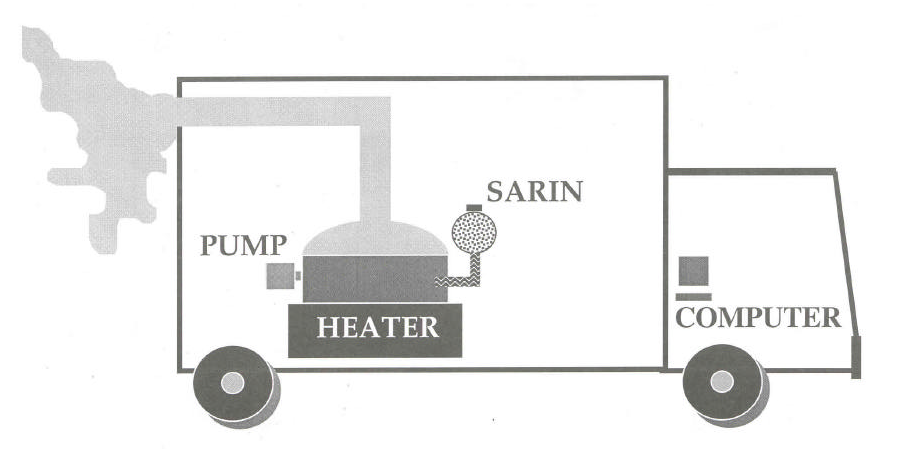
Sarin could be produced in significant laboratory quantities.
VX and other toxic compounds entered the attack repertoire.
Members and outside critics were assaulted through increasingly technical means. The sacred enclosure learned which parts of matter answered back more reliably.
A bad instrument under correction can become less dangerous if the correction reaches the goal.
A sovereign instrument often becomes more dangerous because correction improves selection among methods. The failed biological program did not teach Aum to stop trying to kill.
It helped direct attention toward the chemical program that worked.
• • •
The Ladder.
Matsumoto was not the first moment Aum attempted to make technical violence answer organizational conflict. The movement's weapons program entered a ladder of attacks against people Asahara and senior members treated as threats: religious rivals, lawyers, critics, defectors, family advocates, and public figures.
Some attempts failed completely.
Some injured their targets.
Some killed.
The program used different agents and delivery schemes, often with a mixture of technical ambition and operational clumsiness. The pattern matters more than a catalogue of methods.
Aum was learning to convert a social relation into a weapons problem.
- A critic became a target.
- A target became a technical assignment.
- A failed attempt became a research question.
The organization could then improve the attack without reopening the original dispute.
- Why was this person an enemy?
- Why did criticism justify lethal force?
- Why did leaving justify assassination?
- Why did a rival religious leader need to be poisoned?
These questions had been settled by sacred authority. The ministry received the downstream task.
The attack ladder also trained members to move across boundaries gradually.
A person who would not begin by releasing sarin on a commuter line might begin by helping investigate an enemy, obtaining materials, driving a vehicle, testing an agent, or participating in a plan aimed at one named person.
Each transition builds a field in which the next transition feels less discontinuous.
Violence becomes ordinary through specialization.
- One person names the threat.
- Another selects the method.
- Another produces the compound.
- Another prepares the delivery system.
- Another drives.
- Another punctures the bag.
The final attacker does not need to carry the whole cosmology consciously into the train. The institution has distributed the cosmology across roles. This is how local competence becomes global damage.
The generated structure is the moral evidence.
• • •
The End of the World Had a Property Dispute.
On June 27, 1994, Aum released sarin in Matsumoto.
The target was tied to a lawsuit over real estate.
Judges hearing the dispute were expected to issue a decision adverse to Aum. So, of course, the organization responded by bringing a chemical weapon into a residential neighborhood.
The agent was released from a vehicle through a computer-controlled system.
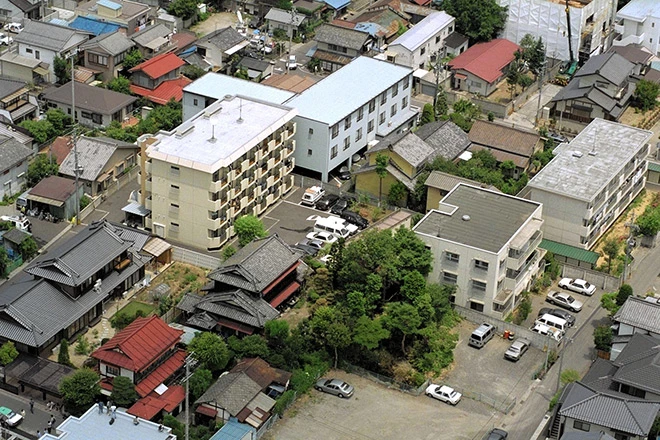
The cloud moved with the night air into homes and apartments.
Windows were open in warm weather.
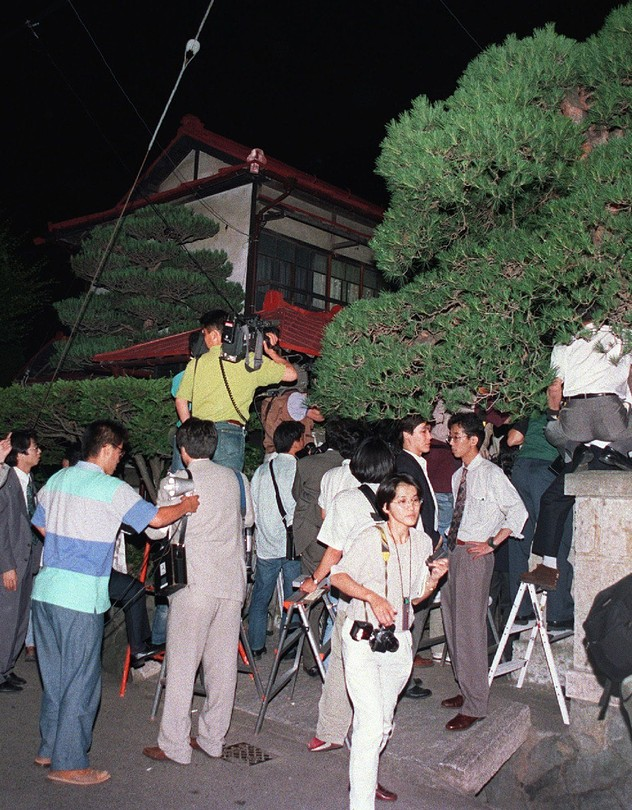
Eight people eventually died. Hundreds were injured.
This attack is one of the clearest images in the entire Sacred Instruments track.
An organization preparing for planetary Armageddon used a nerve agent to influence civil litigation.
The end of the world had a property dispute.
This is funny for less than one second.
Then the image reveals how totalizing systems actually move.
Grand metaphysics do not free institutions from ordinary incentives. They intensify them.
A property ruling can threaten money, land, control, prestige, legal status, and organizational continuity. So if the organization already believes itself to be the sacred successor to the existing state, then an adverse judgment becomes more than a legal loss. It becomes illegitimate reality interfering with revelation.
A judge does not need to understand the apocalypse in order to obstruct it.
The judge only needs to rule on the property. The sacred field translates the ruling upward.
- The local dispute becomes persecution.
- Persecution becomes war.
- War makes chemical attack available.
- Persecution becomes war.
This is the same transition seen back in Münster when municipal resistance became resistance to the Kingdom of God. It is the same transition seen in Hubbard when ordinary outside help could be read as capture by a rival instrument. It is the same transition seen in Koresh when state action and prophetic script became mutually reinforcing.
Aum's difference is technical reach.
• • •
The Night Air.
Matsumoto was warm enough for windows to be open in the night air.
The agent moved with a light breeze into homes and apartments.
Aum selected a neighborhood and built a release system.
The judges were the intended institutional pressure point.
The night air made the residents part of the attack.
Chemical violence recruits the environment.
Wind, temperature, architecture, ventilation, doors, windows, terrain, and human movement become components after release.
The attacker can begin the transition without controlling its final distribution.
Aum may have framed the operation around judges.
The field received families sleeping with windows open in the night air.
• • •
The Poisoned Witness-Suspect.
Yoshiyuki Kōno lived in the poisoned neighborhood.
His wife was gravely injured.
He became a suspect.

The first public story found chemicals at his home and a person available to hold the event. Police attention and media suspicion converged on him before the field had been understood. His position as victim did not protect him from becoming the explanation.
This is the second Matsumoto distortion.
- Aum had poisoned the neighborhood chemically.
- The surrounding institutions poisoned the account interpretively.
This event was difficult to classify. A nerve agent had entered a residential area in peacetime.
The true attacker was a wealthy, legally recognized religious organization with laboratories and an internal weapons program. That object was hard to imagine.
Kōno, conversely, was nearby.
A nearby person with chemicals was easier.

The field intelligence gap does not always look like missing data. It can look like a story becoming complete too early. The victim is converted into the perpetrator because that conversion makes this event administratively manageable.
The police can investigate a household. The press can photograph a man.
The public can imagine a local accident or private experiment.
While the real structure remains distributed across compounds, ministries, chemical staff, sacred command, procurement chains, prior murders, and an organization already treating the state as an enemy. Kōno later carried a remarkable public position toward the people and institutions that had misidentified him. His response cannot be used to launder what happened here.
It does show that a harmed person can refuse the role the field has prepared for him.
• • •
The Oracle Learns.
Matsumoto should have destroyed Aum's ability to continue.
It did not.
The attack demonstrated several things to the organization.
- Sarin could be produced and deployed outside the laboratory.
- A dispersed chemical attack could kill and injure people across a residential field.
- The police could misidentify the event.
- The media could amplify the wrong story.
- Aum's internal secrecy could survive mass harm.
- The state was less prepared to read the organization than the organization was prepared to exploit the state.
These were real operational findings.
A sovereign sacred system can learn from reality while remaining wholly sealed against moral correction. This is one of the most frightening properties of the Subway Oracle.
This organization did not need to be detached from the world.
It needed to interpret successful contact as divine capability and failed contact as technical inconvenience, enemy action, or insufficient obedience.
After Matsumoto, chemical attacks and attempts continued against critics, defectors, perceived enemies, and figures the organization treated as threats.
VX was used. Phosgene was attempted. Other compounds entered the repertoire. The weapons field became more varied, more practical, and more closely attached to organizational survival.
The apocalypse was becoming a toolbox.
This is the point where sacred title, martyrdom, deterrence, and strategic depth begin to converge inside one organization.
- Aum claimed sacred authority over the future.
- It interpreted criticism as attack.
- It treated technical violence as deterrence and purification.
- It built compounds and internal ministries as protected depth.
- It turned anticipated persecution into permission for preemption.
The result was not “war” in the conventional state sense.
It was a war field inside a religious corporation, waiting for enough pressure to become public.
• • •
The World Under the World.
Aum's ambitions did not stop at chemical attacks against local enemies.
The organization imagined conventional and unconventional warfare, state overthrow, survival through global catastrophe, and eventual rule after existing institutions had collapsed.
It pursued technologies and materials with extraordinary range: chemical and biological agents, firearms, aircraft, military knowledge, surveillance, drugs, computing, broadcasting, and speculative weapons projects that often lived closer to science fiction than engineering.
The mixture is important. Aum could be absurd and lethal in the same week.
It could pursue a fantasy laser while producing a real poison.
It could imagine earthquake weapons while murdering a lawyer in his home.
It could discuss global Armageddon while extorting money from local communities.
It could build a ministry of defense and fail to manufacture a reliable rifle.
It could operate advanced computing businesses and use plastic bags as chemical delivery devices.
This movement's ridiculous projects did not cancel its serious capacities.
Its serious capacities did not make every ridiculous project secretly viable.
Institutions that oscillate between fantasy and capability like this are difficult to assess because observers tend to choose one total description.
Either:
- These people are incompetent loons.
Or:
- These people possess an invisible superweapon state.
But Aum inhabited that uneven middle.
Its capabilities varied by domain. Its ambitions were larger than its competence.
Its access to money, members, legal status, markets, and international contacts allowed repeated attempts. Its hierarchy could redirect resources quickly. Its secrecy preserved some projects while depriving them of wider expertise. Law-enforcement pressure disrupted programs even when it did not fully understand them. The organization was not dangerous because all its plans worked.
It was dangerous because enough plans could fail before one finally worked.
• • •
The Field Had Been Reporting Aum for Years, By The Way.
The subway attack is often remembered as the moment this hidden organization suddenly became visible. Except the field had been reporting Aum for years.
- Families reported separation and coercion.
- A magazine published investigations and received hundreds of calls.
- Sakamoto found fraud and prepared public challenge.
- His family disappeared, leaving obvious signs that did not fit voluntary flight.
- An Aum badge was found in the home.
- Members defected.
- Critics were attacked.
- Neighbors complained about smells and strange emissions.
- Chemical accidents occurred at compounds.
- Matsumoto produced a nerve-agent event in a residential neighborhood.
- Kōno was misidentified while the actual weapons program continued.
These signals were distributed across jurisdictions, professions, time, and categories.
No single witness possessed the whole object.
This is the kind of field that institutions routinely lose.
- A family sees a person disappearing into a group.
- A local official sees a property dispute.
- A vendor sees unusual equipment orders.
- A hospital sees symptoms.
- A neighbor smells something.
- A journalist sees a story.
- A police unit sees an eccentric religious organization.
- A foreign official sees a visiting spiritual leader with money.
The organization exists as the relation among these partial contacts.
Without cross-translation, every signal remains locally explainable.
The chemical attack on the subway performed the integration violently.
Afterward, the ministries, murders, businesses, laboratories, foreign contacts, headsets, drugs, weapons work, and disappearances could finally be assembled into the one public object they always were.
The integration came after the field had paid.
This is why the Subway Oracle also belongs to the Security Instruments track. Security failure did not consist only in weak force. It consisted in weak translation.
The state had many instruments. The instruments did not share reality soon enough.
• • •
The Raid Approaches.
By March 1995, the outside field was tightening.
Chemical traces, prior attacks, disappearances, family pressure, investigative work, police suspicion, legal action, and the organization's own increasingly visible behavior were narrowing Aum's operating space.
Satyan 7 had become a focus. The movement anticipated raids.
This pressure entered Asahara's cosmology as confirmation.
That is the classic sealed-system advantage. It’s a major boon.
A real investigation can be absorbed as persecution.
The more evidence the outside acquires, the more the oracle can say the final conflict has begun.
Corrective pressure arrives wearing the costume already prepared for it.
Aum now had several overlapping reasons to strike:
- disrupt the police and government center;
- create chaos;
- delay or redirect enforcement;
- preserve the organization;
- enact prophecy;
- initiate or hasten the final war;
- punish the state;
- and prove that sacred authority remained operational under pressure.
These motives do not need to collapse into one pure intention.
Large violent systems often act where several incentives align.
The sacred story authorizes the act. Organizational survival makes it urgent. Technical capacity makes it reachable. Internal hierarchy converts it into assignments. The public field supplies the target.
The attack was not an irrational explosion outside strategy.
It was operational apocalypse.
- Aum expected the state to raid.
- The state was treated as an enemy.
- The government district was connected by train.
- The chemical program could produce enough sarin for an attack.
- Five teams could enter the system during rush hour.
- The city itself would carry the weapon toward the institutions preparing to interfere.
- The government district was connected by train.
• • •
The Subway Oracle.
On March 20, five attackers and their drivers moved through Tokyo.
Each attacker carried sarin in plastic bags wrapped in newspaper.
The bags were placed on train floors.
Umbrellas punctured them.
The men left.
The trains continued.
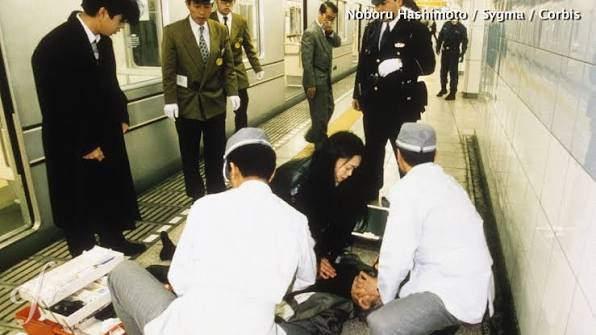
This is the religion-to-warfare crossing in its cleanest form.
A sacred answer-channel has become a weapons program.
That weapons program has become a command structure.
The command structure has entered civilian infrastructure.
And these civilians do not belong to this argument.
They are not investigators, police commanders, judges in the property case, politicians, defectors, critics, or rival religious leaders. They are the field through which the organization intends to reach the state. Their continuance becomes leverage.
The passengers are made into pressure against police action, government stability, public confidence, and the ordinary legitimacy of the city.
This is not martyrdom.
No sacred vocabulary can transform these attackers into witnesses by placing their own lives at risk while they poison strangers. They survive the release and leave others inside it.
This is not defense.
The state may genuinely be approaching. A raid may genuinely threaten the organization. Preemptive civilian poisoning does not become security because the organization fears correction.
This is not liberation.
No public becomes free through indiscriminate attack on its morning circulation.
The oracle has reached the point where every outside person can be converted into material for the sacred machine. The organization does not need to hate each passenger.
It needs the passenger to become useful. That is enough.
• • •
Five Routes To Kasumigaseki.
The subway attack was coordinated across three lines converging toward the government center.
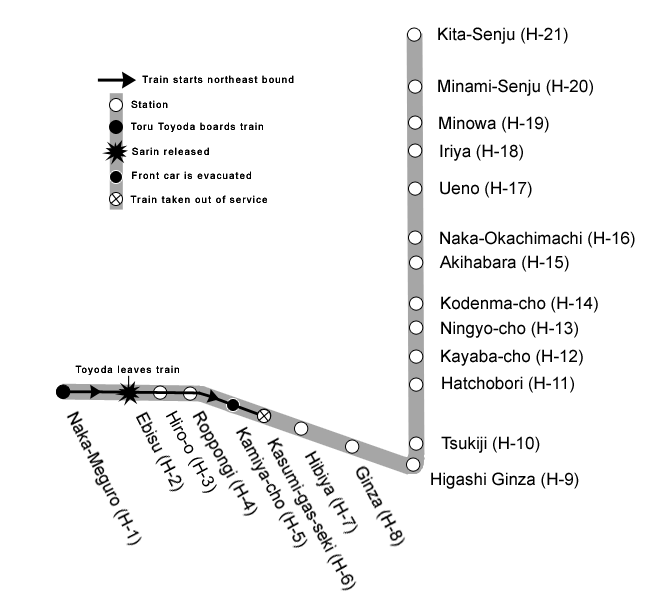
That geometry made the city part of the plan.
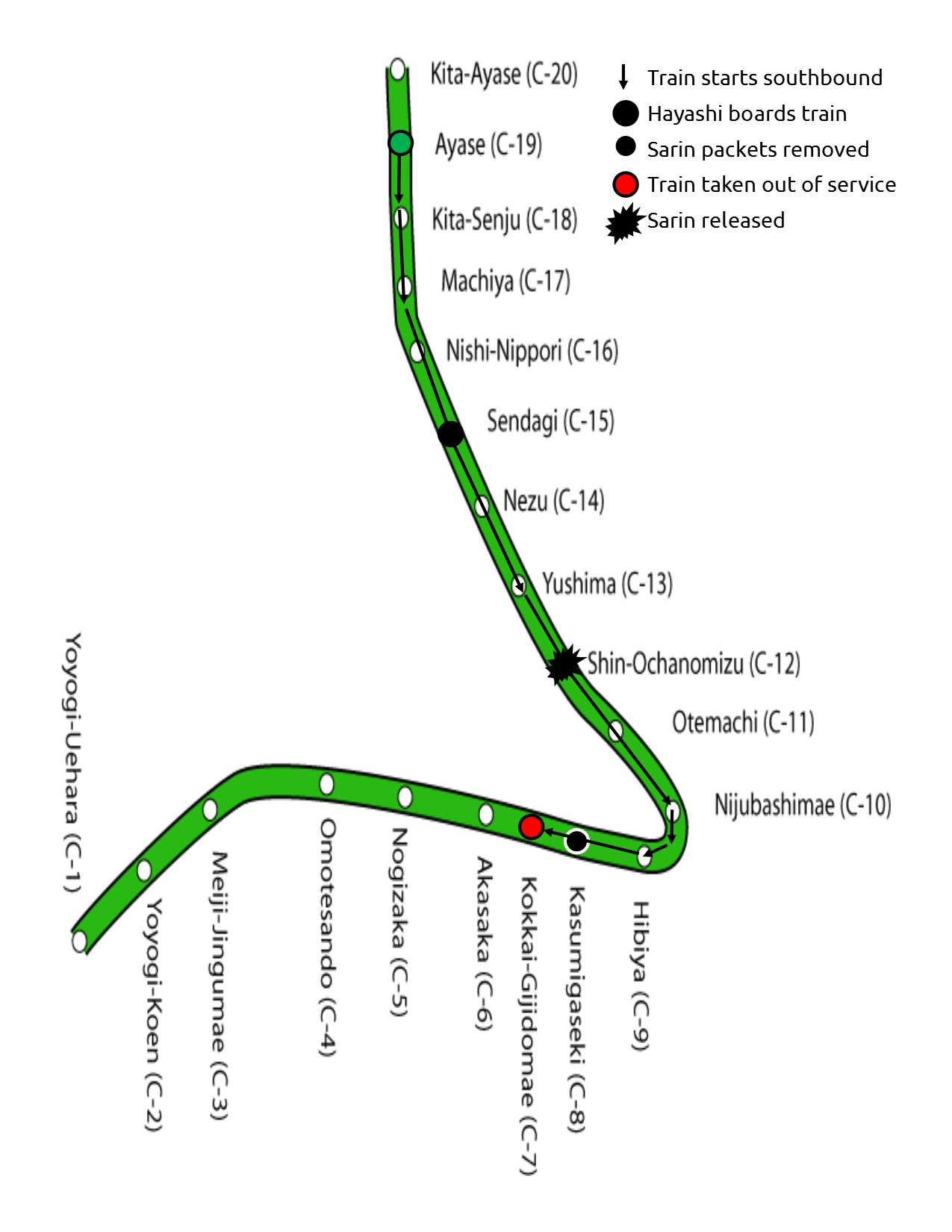
Aum did not need every package to release the same amount, every attacker to act with the same confidence, or every train to carry the same number of passengers.
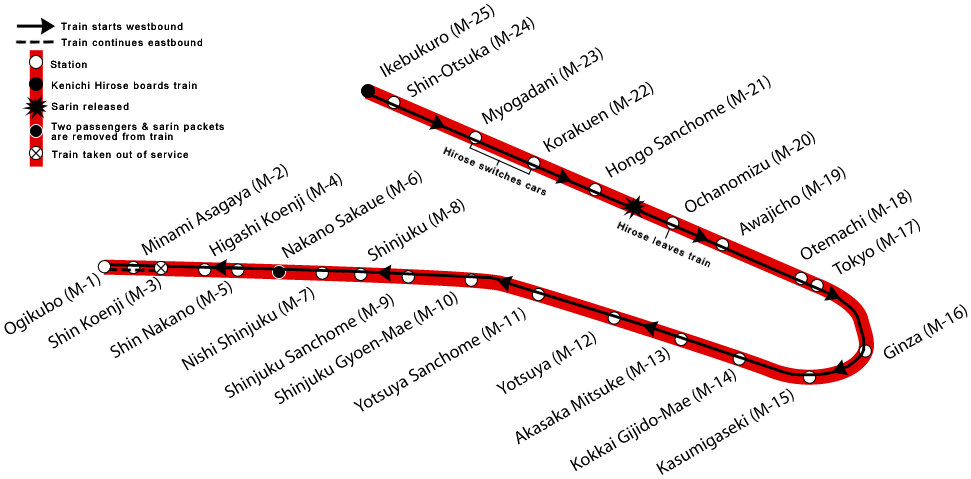
The network translated uneven local acts into one metropolitan event.
- Some packages were punctured more effectively than others.
- Some liquid remained contained longer.
- Some cars moved farther before the danger was recognized.
- Some station staff removed packages.
- Some passengers left contaminated cars and entered other public spaces.
The attack therefore did not unfold as one cloud with one boundary. It produced multiple moving fields whose effects depended on route, ventilation, passenger behavior, station response, and the time required for institutions to recognize that separate emergencies belonged to the same cause.
The five trains functioned like the ministries.

Each carried one portion of the command.

No single train contained the whole attack.
The city assembled it through convergence.
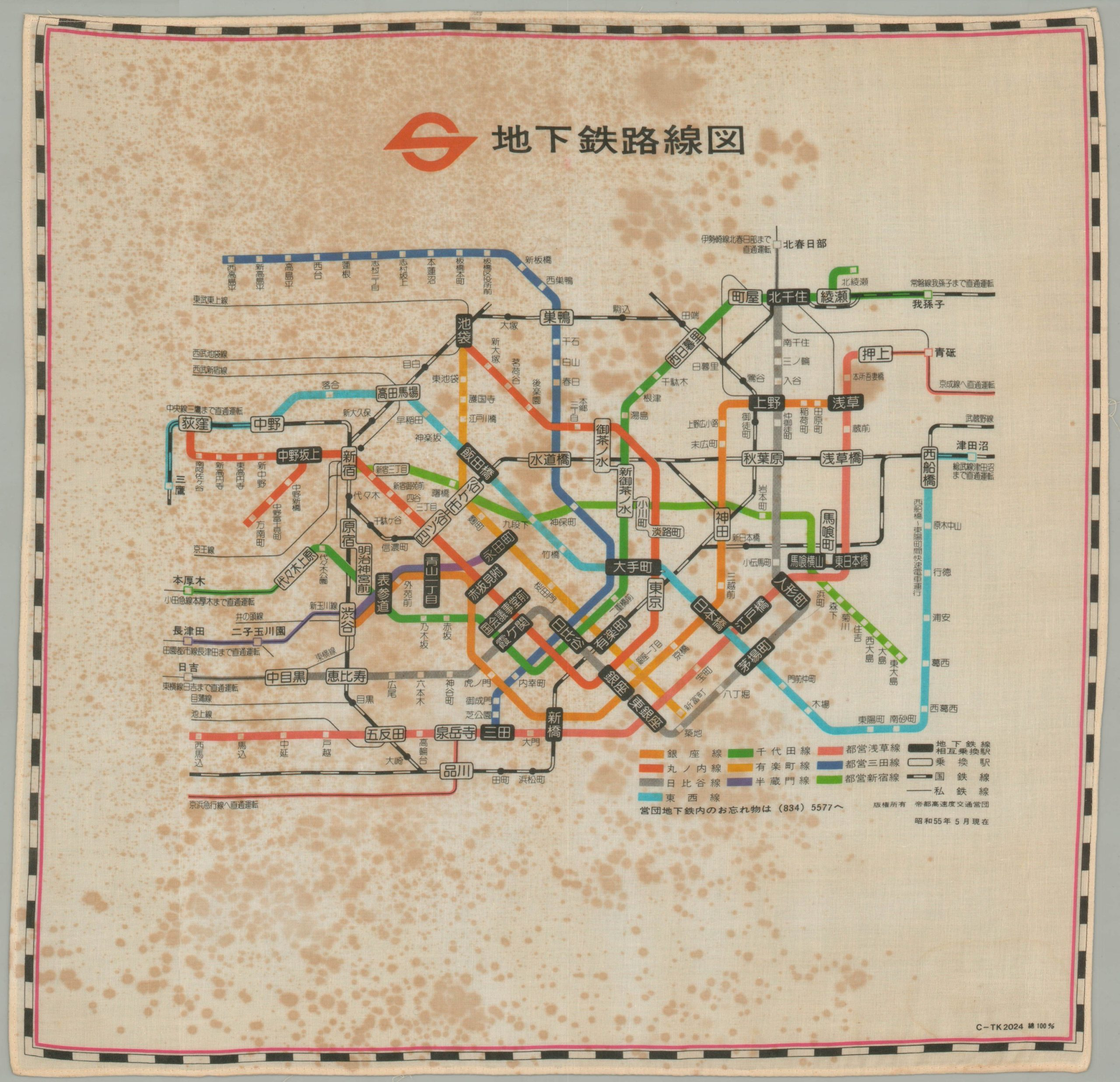
This is why attacks on infrastructure can exceed the material initially released.
Infrastructure is a multiplier of relation. A small object placed at the right node can enter schedules, crowds, transfers, ventilation, emergency routing, media, and public fear. Aum had learned enough systems thinking to use the network without needing to control it.
The state had built the subway to preserve urban reachability.
The oracle used reachability as exposure.
• • •
The Healer and the Bag.
Ikuo Hayashi was a physician.
He carried sarin onto the Chiyoda Line.
The biographical fact is almost too neat. It risks becoming cheap symbolism: healer becomes killer, medicine becomes poison, white coat becomes chemical bag.
The structure is deeper.
Hayashi had not forgotten that bodies could be injured.
His medical knowledge made bodily vulnerability more legible.
The sacred command changed what that knowledge was for.
A physician learns to recognize systems whose failure closes the patient's future.
A sovereign oracle can redescribe the patient field.
The passengers become karmic objects, enemies, sacrifices, obstacles, or bodies inside a larger salvation plan. The doctor's local duty to preserve continuance is subordinated to the imagined future of the sacred system.
This is why professional ethics cannot rest on technical competence.
The skill remains active under the wrong purpose.
A physician can calculate dose, symptoms, timing, risk, and treatment while participating in a command that makes treatment irrelevant to the target.
An engineer can build containment for a process intended to escape containment later.
A lawyer can defend a sacred corporation against the people it harmed.
A scientist can improve purity without preserving moral contact.
The healer did not stop understanding the body. The oracle changed what the body was for.
• • •
The Station Staff.
The attack's ethical center belongs to people moving toward contraction without a theory large enough to make themselves incredibly important.
Station staff tried to remove packages.
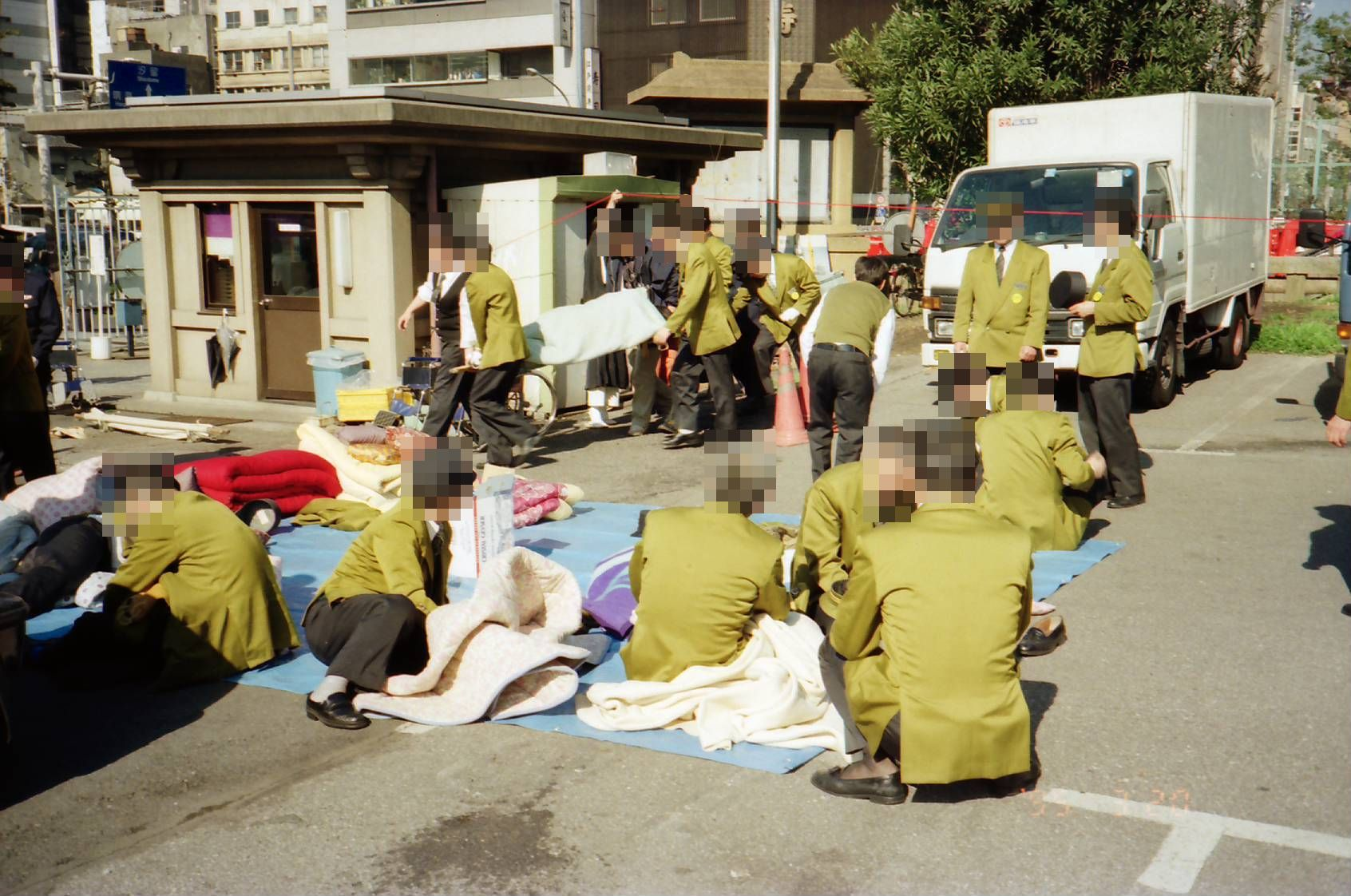
Passengers helped strangers.
Emergency workers entered scenes they did not yet understand.
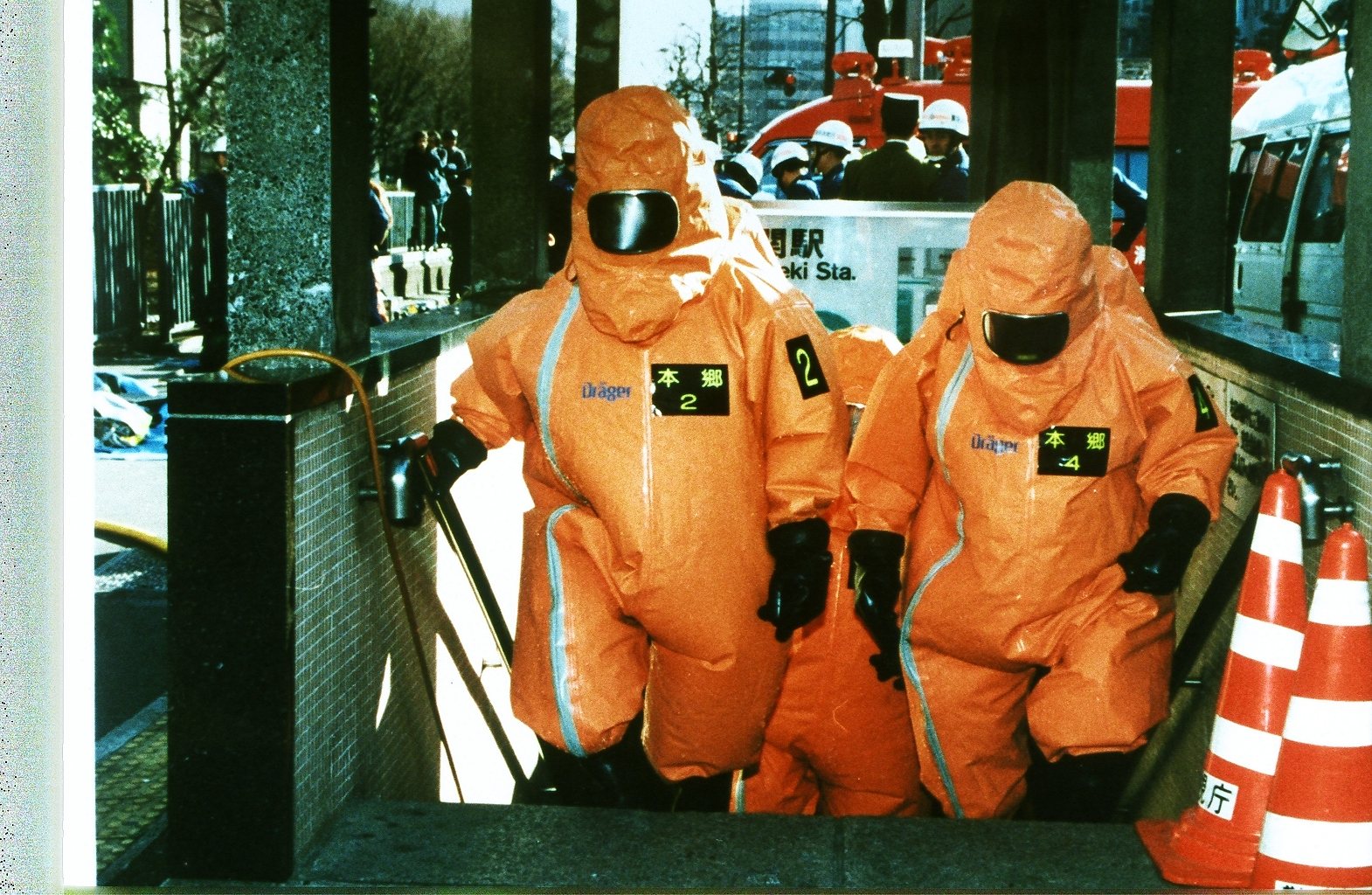
Hospitals received large numbers of patients with symptoms that did not initially form an ordinary diagnostic pattern. Medical teams had to identify the agent, protect staff, triage, treat, communicate, and keep facilities from becoming secondary exposure sites.
The repair field began under asymmetrical knowledge.
- Aum had years.
- The station worker had minutes.
- Aum had ministries.
- The hospital had incoming bodies.
- Aum had secrecy.
- The public system had to share information fast enough to make treatment reachable.
- Aum had selected the event.
- Everyone else had to discover what event they were in.
• • •
The Hospital.
Hospitals began receiving people before the attack had a stable diagnosis. That temporal order is pretty normal in real disaster and deeply inconvenient to systems built around classification.
The patient arrives first. The name arrives later.
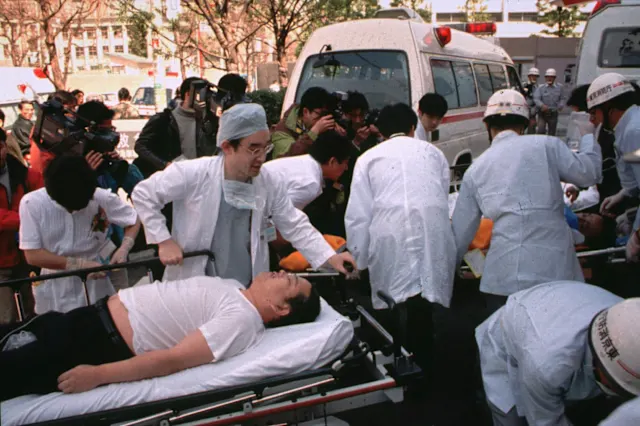
Doctors and nurses saw constricted pupils, breathing difficulty, vomiting, weakness, loss of consciousness, and other signs consistent with nerve-agent exposure. Emergency departments filled.
Ambulances moved between stations and hospitals. Some medical workers encountered secondary exposure from contaminated patients and clothing.
St. Luke's International Hospital became one of the central treatment sites. Its staff had to create a response while information remained fragmentary. The system needed antidotes, protective practices, decontamination, triage, communication, and enough capacity to hold large numbers of frightened people whose severity varied widely.
Diagnostic delay was part of the attack.
- The organization knew what had been released.
- The hospital had symptoms.
This asymmetry is one reason chemical violence has such power. The agent acts inside the time required to identify it. Ordinary caregivers become experimentalists under pressure.
The hospital field also exposes the narrowness of the oracle's intelligence.
Aum had spent years trying to become a total system.
It had doctors, clinics, ministries, compounds, laboratories, and a theory of global transformation.
Then the public hospital did something the sacred government could not.
It received strangers without requiring them to share a cosmology.
It treated bodies according to need.
No enlightenment rank was required.
No follower status determined whose lungs mattered.
The repair instrument was incomplete, overwhelmed, and operating with insufficient information.
It remained open to correction because it had to keep learning from patients.
• • •
Canary.
Two days after the attack, police raided Aum facilities near Mount Fuji.
They carried protective equipment.
They also carried a caged canary.
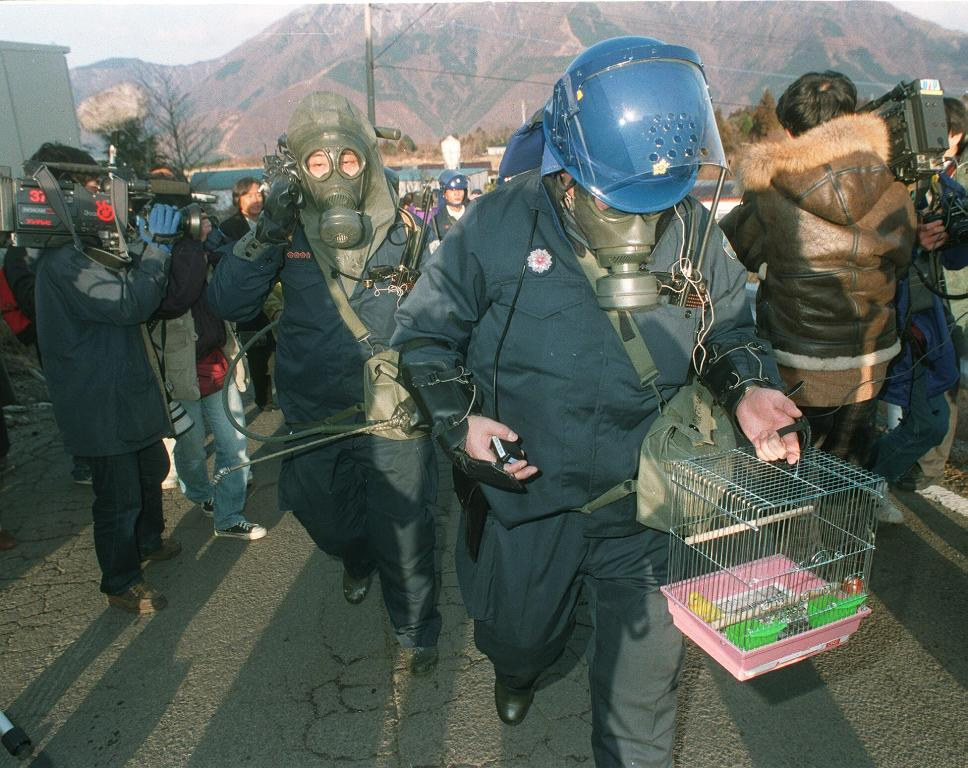
This is one of the article's most useful small objects.
- The organization had built chemical laboratories, ministries, technical staff, computers, compounds, medical offices, weapons programs, and a cosmology large enough to contain nuclear war.
- The state entered with a small bird.
The canary is very funny because the field had become ridiculous.
It is also an honest instrument.
The police did not know exactly what they would encounter. A living animal's vulnerability was being used as a detection channel. That raises its own ethical problem. The bird's body was placed at risk to warn human bodies.
This canary therefore refuses a simple victory image.
It is field contact under damaged conditions:
- the threat is real;
- the instrument is crude;
- the animal carries burden;
- the raid cannot wait for perfect knowledge;
- and the whole scene exists because a sacred organization made chemical uncertainty part of the public world.
The canary enters the compound.
Asahara is later found hidden inside a concealed space.
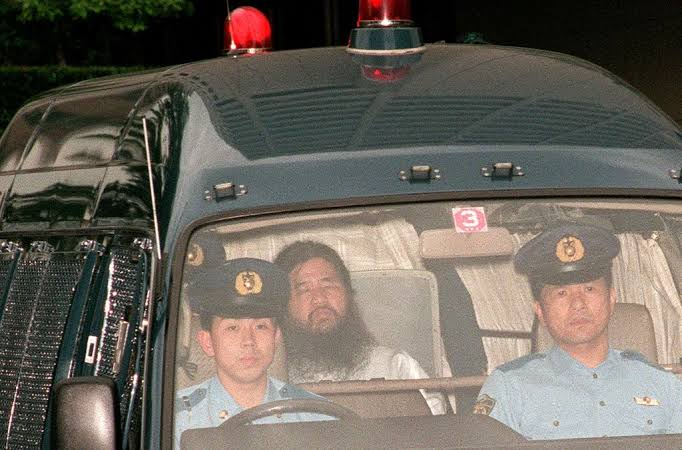
The oracle who claimed unique access to the future has reduced his own future to a compartment in a building under search.
That image should not end the article. It is too satisfying.
The field is not repaired because the oracle is found.
• • •
The Public Story Tries to Become a Monster Story.
After the attack, Aum became an object of enormous public fascination.
The compounds, headsets, baths, ministries, chemical plants, bizarre weapons projects, hidden rooms, televised spokesmen, executions, and Asahara's body made the organization almost impossible to resist as spectacle.
Spectacle can preserve attention.
But it can also protect the audience from contact.
If Aum becomes a story about uniquely strange people, everyone outside the compounds receives innocence too cheaply.
The movement's crimes were extraordinary.
But the field that made them reachable was built from ordinary instruments:
- legal recognition;
- markets;
- education;
- professional specialization;
- family separation;
- media incentives;
- weak institutional coordination;
- delayed police correction;
- public appetite for miracles;
- ordinary deference to expertise;
- ordinary fear of violating religious freedom;
- ordinary difficulty imagining that a wealthy religious corporation might be building chemical weapons.
None of these instruments caused the attack alone.
Together, they created gaps through which Aum moved.
The monster story says this danger came from somewhere outside modern society.
The Subway Oracle was modern society reorganized under sacred command.
Everything was there.
- Its computers worked.
- Its businesses sold products.
- Its chemists used published knowledge.
- Its members held degrees.
- Its money crossed banks.
- Its equipment came from vendors.
- Its trains belonged to the public.
This strange object was assembled from familiar parts.
There was nothing alien about this.
This is why the article refuses the easy little word that lets every sealed religious system become one interchangeable specimen. That category may identify coercive features. It can also make the actual field disappear behind a socially satisfying label.
Aum must remain Aum.
Its specific insight, hierarchy, technology, crimes, failures, and public aftermath have to stay visible.
• • •
Punishment.
Aum's leading figures were arrested, tried, convicted, and sentenced over many years.
Asahara and twelve others were executed in 2018.
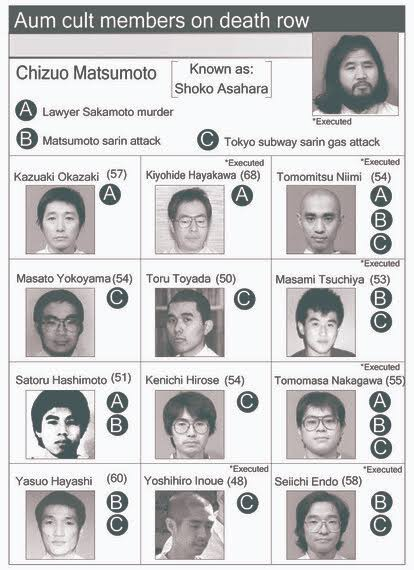
The executions do not belong at the article's emotional summit.
A state killing the leaders can look like formal closure because the attack involved mass death, chemical weapons, murder, abduction, and conspiracy. The legal field has good reasons to constrain people capable of continued violence. The public has reasons to demand accountability. Victims and families have reasons to need the crimes named in a forum stronger than private memory.
Execution still closes a future. It also simplifies the archive.
The dead defendant cannot answer any further questions, revise testimony, reveal hidden structures, confront successors, or remain available to a society still trying to understand how the movement attracted people and made ordinary institutions fail to respond.
Yoshiyuki Kōno, once wrongly treated as a suspect in Matsumoto, later opposed the death penalty.
His position does not settle the question for every victim.
It does keep the state from pretending punishment restores a field by symmetry.
Aum killed. The state killed some of Aum's leaders.
That transition is not cancellation.
The dead do not subtract.
• • •
Long.
March 20, 1995 did not end when the trains stopped.
Some survivors recovered quickly enough to return to ordinary life and discovered that ordinary life had changed its shape.
Others carried visual problems, neurological symptoms, fatigue, respiratory injury, memory difficulty, fear, depression, post-traumatic stress, employment disruption, family strain, and medical uncertainty.
A subway attack is unusually invasive because it attaches danger to repetition.
The survivor may still need the train. The route may still pass through the same station.
The platform may remain visually ordinary, while the body remembers an event the infrastructure has already cleaned.
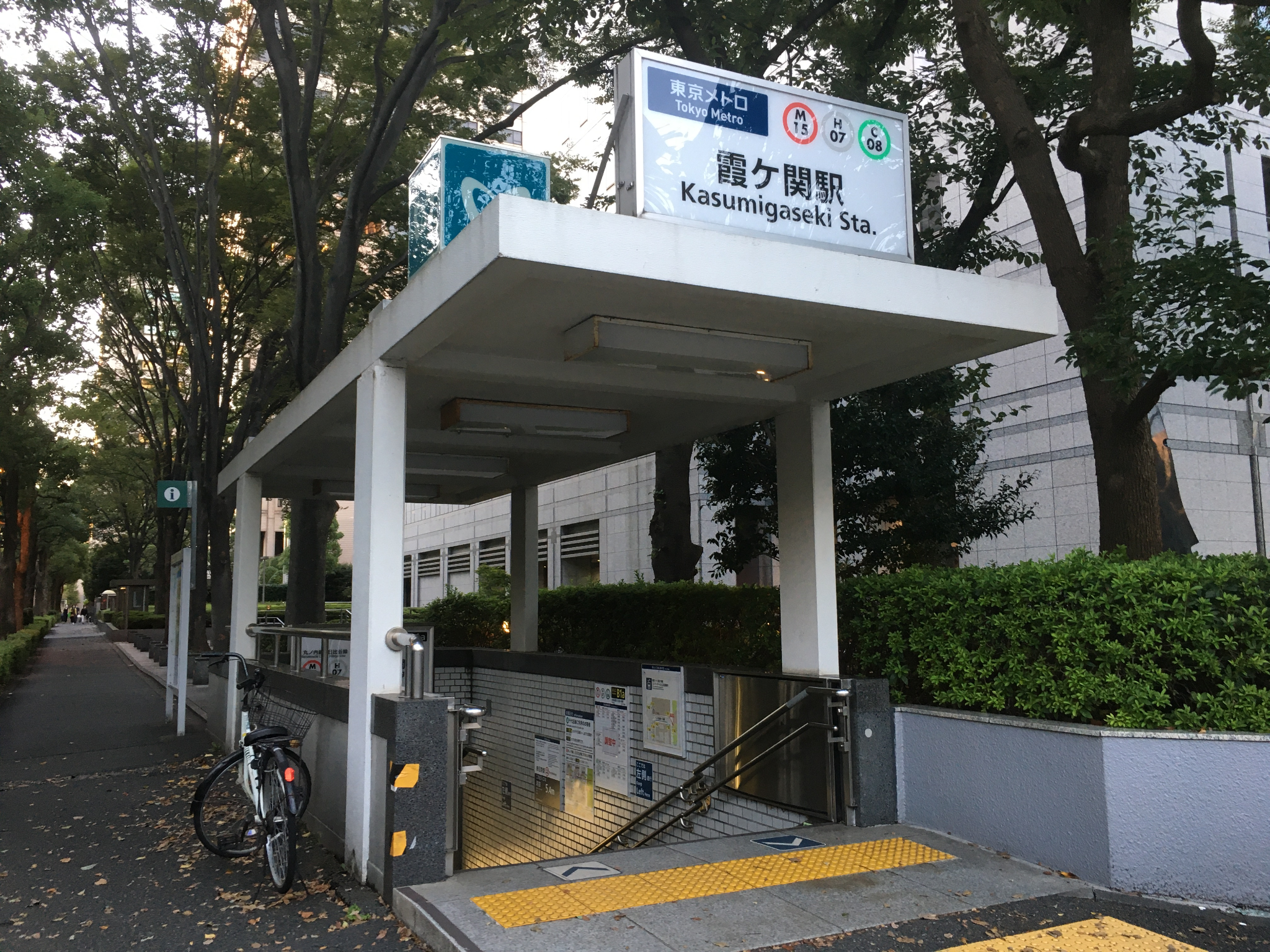
Shizue Takahashi lost her husband Kazumasa at Kasumigaseki. She attended trials, advocated for victims, pressed for compensation, and worked to preserve public memory.
Thirty years later, she and other survivors and bereaved families were still seeking payment and accountability from successor groups.
That duration belongs to the article. That is my entire life.
Aum's central organization was broken.
Its name changed. Its founder was executed.
But the attack still continued through compensation disputes, health problems, trauma, public forgetting, successor recruitment, and the labor required to keep the event from becoming a historical spectacle detached from living people.
The public field cannot declare the event finished while obligations remain active.
This attack still has unpaid bills. It still has bodies. It still has followers.
And, most immediately concerningly for me, it still has people explaining what happened to audiences who were not even born when the umbrellas opened the bags.
• • •
Underground.
Haruki Murakami later built a counter-archive from interviews with survivors and people connected to Aum.
The title Underground is exact.
The attack occurred below the city's visible surface, inside infrastructure most people used without needing to imagine its full human field. The public story then risked burying the ordinary lives again beneath Asahara's face and the machinery of the trials.
Survivor testimony reverses that pressure.
It returns the event to people who were commuting, working, helping, recovering, hiding injury, losing jobs, resenting public curiosity, or discovering that the attack did not produce one socially acceptable kind of victim.
- A person can be severely harmed and still resist the identity offered by public memory.
- A person can recover partially and feel guilty for recovering.
- A person can carry symptoms other people cannot see.
- A person can distrust both Aum and the institutions that failed to prevent Aum.
The counter-archive does not solve the attack. It prevents the perpetrator's system from remaining the most interesting thing in the room.
This is an obligation for any long-form analysis like this.
This is very important for any writer to understand clearly:
A fifty-seven-minute article can become perpetrator architecture with victims used as moral lighting.
The structure has to return repeatedly to the people whose lives were entered by the bags.
- The oracle is analytically central.
- The harmed field is morally central.
• • •
The Successor With the Photograph.
Aum Shinrikyo disbanded under its original form, but successor organizations continued.
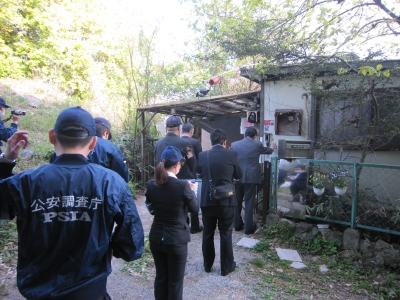
Aleph and related groups retained followers. Authorities continued monitoring them. Asahara's image and teachings remained active in some spaces. Compensation orders remained contested or unpaid. New people could encounter the movement after the event had become history rather than immediate public terror.
This is another sacred-instrument problem.
A founder can die and remain an answer-channel.
The portrait can become dead-command.
Field Instruments: Martyrdom distinguished witness from recruitment. The dead may obligate memory. They may not own future agency.
Asahara is not a martyr because the state executed him after conviction.
The organization may still attempt to make punishment serve sacred narrative. Persecution language can preserve the oracle after his body is gone. The founder's photograph can continue doing the work once performed by the levitation photograph and synchronization headset.
The dead guru cannot update anymore.
He cannot admit this laboratory failed to produce a good world.
He cannot confront the victims.
He cannot release followers into a field no longer organized around him.
The living decide what the dead oracle means.
That decision remains part of the attack's tail.
• • •
Sacred Instruments.
The Sacred Instruments track has already visited several rooms whose architecture returns here.
- The Great Disappointment showed sacred correction absorbed by the answer-channel. The calendar failed in public. The field reorganized around the prophecy's survival.
- Münster showed sacred expectation acquiring civic organs. Prophecy became office, gate, court, command, property, siege, and king.
- TempleOS showed an oracle capable of interrupting ordinary perception and the danger that follows when the oracle becomes protected from correction.
- Hubbard saw capture and built a repair hallway unable to let every person return to the wider field.
- Koresh made script interpretation inseparable from one body while the state built a siege around the role.
Aum combines all these structures, and adds technical interoperability.
- Correction becomes prophecy confirmation.
- Sacred community becomes government.
- The oracle becomes signal.
- Exit becomes threat.
- Expertise becomes ministry.
- Laboratory success becomes sacred capability.
- State pressure becomes apocalyptic war.
- Civilian infrastructure becomes a delivery system.
• • •
Tales of Distortion.
Now that we are more than halfway through, you may have noticed most of the Sacred and Security Instruments braid articles are Tales of Distortion.
A Tale of Distortion is not a story about people being unusually stupid, except for that one time. It examines a field where a real signal, need, instrument, pressure, or insight is routed into harmful closure through a distorted figure or instrument.
Aum's original signals were not imaginary.
- People were spiritually hungry.
- Professional achievement could feel morally empty.
- Bodily practice could create real experiences.
- Communal discipline could interrupt ordinary life.
- Science and religion could coexist in one person.
- Modern institutions could fail to understand unfamiliar religious forms.
- A state could overreach.
- Police could misread.
- Media could distort.
- Technical expertise could be alienated from public purpose.
The organization gathered up these truths.
Then it placed them under a sovereign oracle.
The distortion sequence is now fully visible:
- Practice produces contact.
- The teacher claims authority over the contact.
- The teacher's body becomes transferable sacred infrastructure.
- The community concentrates work, housing, money, identity, and salvation inside itself.
- A death threatens correction and is concealed.
- An exit threatens testimony and is killed.
- A lawyer keeps the exit visible and his family is murdered.
- Public rejection becomes proof of social corruption.
- The sacred hierarchy reproduces government.
- Technical expertise becomes ministry.
- Laboratories solve methods under oracle-selected goals.
- Failed projects refine the weapons program.
- A property dispute becomes chemical war.
- A victim becomes a suspect because the state cannot read the true object.
- A successful attack teaches the organization that public reality can be poisoned and misread.
- Anticipated police correction becomes Armageddon.
- The subway becomes a weapons system.
The oracle did not escape reality.
It captured more of reality inside its answer.
This is called “distortion”.
• • •
Ruling.
Aum Shinrikyo was a sacred-technological distortion field.
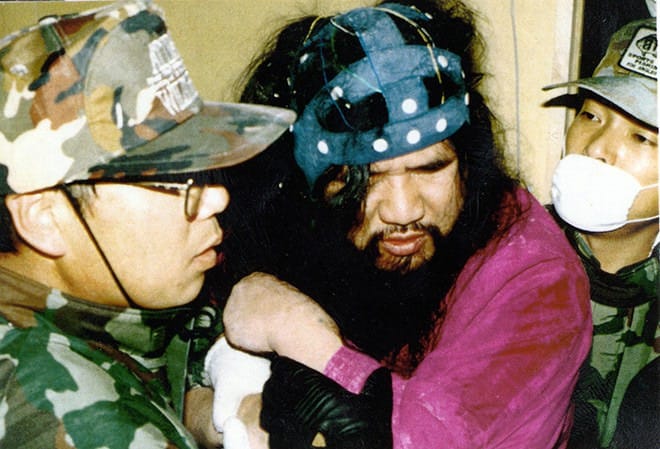
Asahara was a Failed Field Analyst, who saw that modern expertise and spiritual hunger could join without either disappearing.
He built the joining around an authority the field could not correct.
The laboratory could correct a synthesis.
It could not correct the sacred command.
The ministries could coordinate expertise.
They could not return power to the people whose expertise they used.
The subway carried the result.
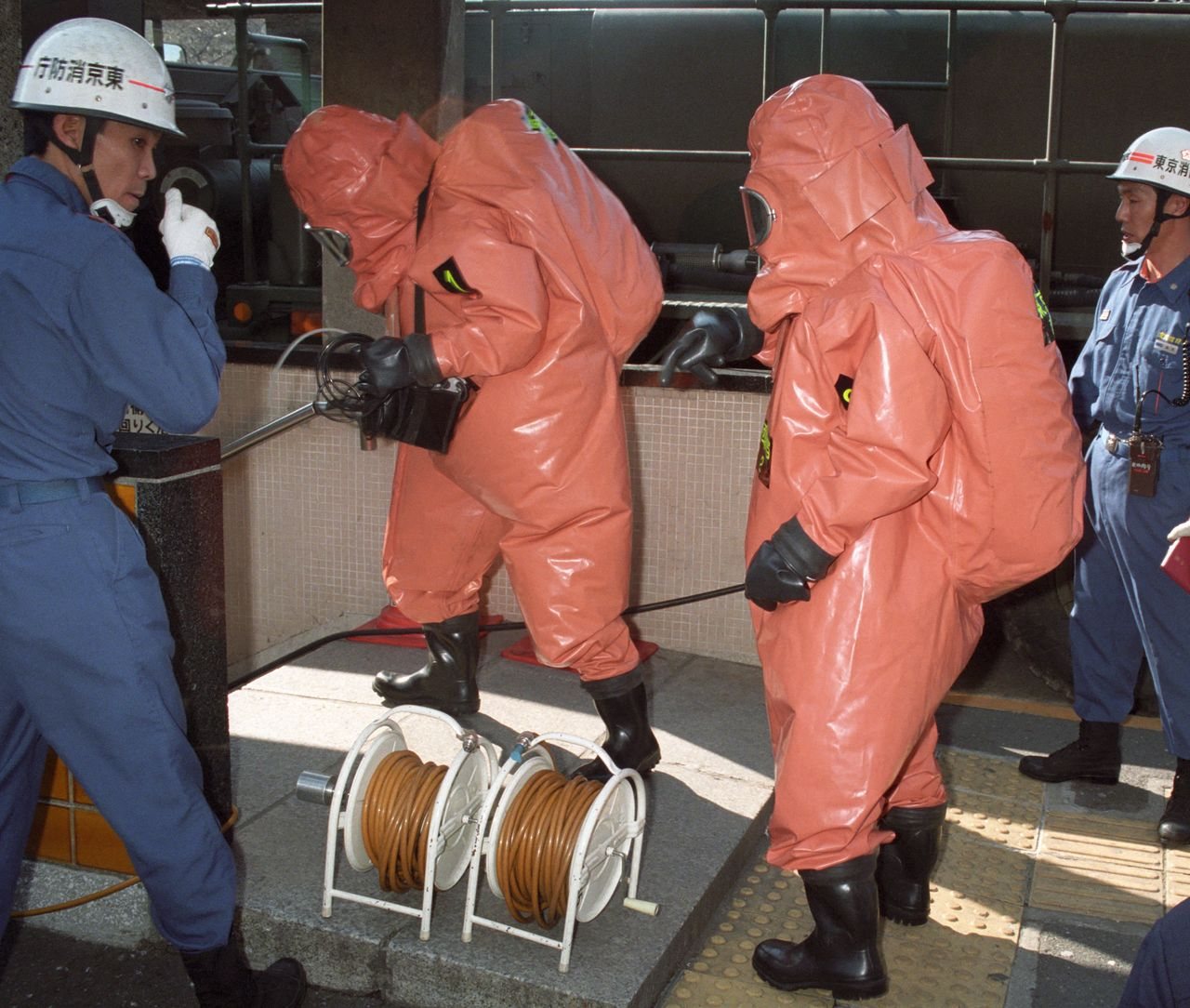
• • •