Applied Case: Russia and the Buffer Wound
Russia’s security wound is real. Ukraine is not the bandage.
I. The Treaty Already Contained Ukraine
A document arrived already containing Ukraine.
Ukraine had not written it.
Ukraine was not being invited to sign it.
Ukraine was, nevertheless, inside nearly every important demand.
On December 15, 2021, the Russian Foreign Ministry gave the United States two draft security agreements. Russia published them two days later. One proposed a treaty between Russia and the United States. The other proposed an agreement between Russia and the member states of NATO.
The papers described a new European security order in legal form.
The United States would prevent any further eastward expansion of NATO and deny alliance membership to states that had belonged to the Soviet Union. It would stop establishing bases, using military infrastructure, or developing bilateral military cooperation across the non-NATO post-Soviet space. NATO would exclude further enlargement, including Ukrainian accession. NATO members would sharply limit military activity in Ukraine, Eastern Europe, the South Caucasus, and Central Asia. The parties would accept constraints on missiles, bombers, warships, exercises, deployments, and military presence near one another.
Some of these measures belonged to the recognizable machinery of arms control.
- Keep land-based missiles far enough away that they cannot strike across the relationship with almost no warning.
- Restrict bomber and warship operations in zones where each side could suddenly threaten the other.
- Reduce large exercises near borders.
- Restore direct consultation.
- Replace ambiguous military movement with agreed limits, notification, and restraint.
These are serious security instruments.
A Europe full of nuclear weapons, conventional armies, aircraft, naval forces, intelligence systems, and decaying trust needs them.
The package carried another instrument inside the same pages.
The proposed treaty with the United States did more than seek limits on weapons. It assigned Washington responsibility for stopping NATO's enlargement across the former Soviet space. It also sought an end to American bases, infrastructure use, and bilateral military cooperation in former Soviet states outside NATO. The proposed agreement with NATO used May 27, 1997 as a military baseline, sharply restricting later deployments across European states beyond what had been present when the NATO-Russia Founding Act was signed. It demanded that NATO states block further enlargement, specifically including Ukraine, and end military activity across Ukraine and several surrounding regions.
These provisions would have affected governments from the Baltic and Black Seas into the Caucasus and Central Asia. Some were already NATO members. Some were partners. Some were neutral, aligned elsewhere, or divided internally. Each possessed its own security history and its own reasons for fearing Russia, fearing NATO, seeking one, avoiding both, or attempting several incompatible positions at once.
The draft package gave none of them an authorial role equal to the powers proposing to settle the region. Their choices appeared downstream from the guarantees Russia wanted from Washington and the alliance.
It proposed that the future alliances, military relationships, and strategic orientation of states across a large region would be settled by agreements among Russia, the United States, and NATO. The countries whose futures would be limited were transformed into objects of the settlement.
Ukraine was the most urgent object.
The Russian military buildup around Ukraine was already visible. Moscow insisted that a dangerous Western military advance had reached a threshold. NATO and the United States described the buildup as coercive and demanded de-escalation. Ukraine faced a vast armed power gathering around it while larger states argued over the security architecture in which Ukraine would be allowed to continue.
The draft agreements did not formally erase Ukraine. They left the country on the map, with a government, borders, armed forces, elections, and the surface language of sovereignty.
They sought control over the most consequential directions in which that sovereignty could move.
This is how a country becomes a buffer before it becomes a battlefield.
- First, its future is discussed as a property of distance.
- A military planner can look from Moscow toward Ukraine and see warning time, maneuver space, missile range, naval access, rail corridors, airfields, intelligence infrastructure, and a long approach toward the political and demographic center of Russia.
- A NATO planner can look toward the same territory and see a partner under pressure, a defensive gap, a vulnerable Black Sea field, and a country entitled to seek protection against a stronger neighbor.
- A Ukrainian citizen can look at the same place and see home.
All three views contain structure.
Only one of them has to live there.
The December package placed the security relation before the political field. Ukraine's internal plurality, regional histories, public will, institutions, fears, corruption, disagreements, and injuries entered the proposed architecture only after they had been translated into strategic effect.
- Ukrainian alliance choice became Russian exposure.
- Ukrainian military cooperation became NATO approach.
- Ukrainian territory became deployment space.
- Ukrainian neutrality became a security guarantee for someone else.
- Ukrainian movement became a problem to be arrested by treaty.
The drafts therefore make an excellent opening artifact for this article. They state Russia's security claim in one hand and reveal the buffer instrument in the other.
Russia wanted legal guarantees that the surrounding field would stop moving against it. The proposed guarantee depended on limiting how neighboring countries could move at all.
÷
II. A Buffer Is a Country Viewed From the Wrong Capital
A buffer is a strategic function assigned to a place where people already live.
 Aidan Lawson
The word sounds inert. It suggests padding, interval, empty room between harder objects. A buffer absorbs pressure. A buffer slows contact. A buffer gives the thing behind it time.
Countries are pretty poor padding, however.
Those contain people with the irritating habit of possessing their own histories. Countries hold cities, villages, schools, industries, churches, languages, elections, parties, unions, ports, farms, oligarchs, soldiers, families, graves, and unfinished political arguments. They have neighbors on more than one side. They can fear the state seeking distance through them and the alliance offering protection across them. They can make bad choices, divided choices, coerced choices, and choices that larger powers find dangerous.
A buffer description compresses all of this into one external use.
A buffer is a country described by the warning time it gives someone else.
This compression can be operationally useful. Military planning requires abstraction. A commander has to know how far forces can move, how quickly reinforcement can arrive, which rivers and roads shape an advance, where aircraft can operate, where air defenses can be placed, and how many hours remain before an attack reaches a critical target.
The danger begins when the operational description becomes the country's political identity.
- An election becomes a change in alignment.
- A revolution becomes penetration by an outside power.
- A trade agreement becomes strategic drift.
- A language dispute becomes foreign influence.
- A port becomes a naval asset before it remains a city.
- A protest becomes regime-change infrastructure.
- A border population becomes a lever.
- A government becomes legitimate according to the direction it faces.
This is the buffer wound.
A buffer wound forms when historical vulnerability teaches a state to experience another people's political agency as dangerous proximity.
The wounded state does not need to invent the danger.
Weapons cross distance. Alliances organize force. Governments can permit bases, intelligence systems, missile defenses, exercises, logistics, and deployments that alter another state's security. A neighboring political transition can change the military field very quickly.
The wound enters when every independent movement of the neighbor begins to feel like the return of the old invasion road.
- The neighbor moves west.
- The old army approaches.
- The neighbor elects a hostile government.
- The frontier has failed.
- The neighbor builds a military.
- The buffer has become a platform.
- The neighbor rejects political dependence.
- An outside power must have captured it.
A security state can live inside this interpretation for generations.
Its fear becomes a map-reading instrument. That instrument reliably detects vectors, corridors, ranges, footholds, encirclement, and loss of control.
It becomes less capable of detecting a neighboring people whose fear points back toward the center.
 Aidan Lawson
Russia's western security imagination carries this wound deeply.
The invasion routes are real. The deaths are real. The collapse of distance under rail, armor, aircraft, missiles, and alliance infrastructure is real. The Soviet collapse also moved the political and military boundary inward with extraordinary speed. Places treated for decades as allied depth became independent states, some of which sought protection inside the alliance Moscow feared.
- From Russia, the field could look like defensive space being removed layer by layer.
- From those countries, the same movement could look like political life returning after decades of coercive alignment.
A map can carry both accounts.
A security doctrine usually promotes one.
That is why the phrase the wrong capital matters.
- Kyiv is not geographically wrong for understanding Kyiv.
- Moscow is not irrational for calculating the military consequences of events in Ukraine.
- Washington and Brussels are not outside the field when their commitments, weapons, training, declarations, and alliance structures alter it.
The wrong capital is the capital that turns its own strategic view into the final constitutional description of another country.
Every great power is tempted by this.
 Aidan Lawson
A distant state looks simpler from the room where its function has been assigned. The population becomes an orientation. The government becomes a variable. The border becomes a line of control. The country's future becomes acceptable, dangerous, neutral, lost, or recovered according to how well it performs the external role.
The buffer wound then acquires a moral disguise.
It says the smaller country's choices remain free in theory.
They simply cannot be allowed to produce outcomes that endanger the larger state.
 Aidan Lawson
The problem is hidden inside the word allowed.
÷
III. The Security Externality
Ukraine's choices can affect Russian security.
This statement should not be conceded with embarrassment. That is the beginning of a serious analysis.
A state's sovereignty does not make its military relations physically private. Alliance membership can change planning, reinforcement, intelligence, command coordination, air defense, weapons access, training, logistics, and the political likelihood that outside powers will enter a conflict. A foreign base is located inside one country and acts upon the risk calculations of others. Missile range crosses legal borders without asking whether international law has finished speaking. A naval agreement can alter who operates near a coast. A large exercise can create fear even when every participating government calls it defensive.
Security has externalities.
The European security order formally recognized this before the current war. The OSCE's 1999 Charter for European Security and the 2010 Astana declaration placed several difficult principles beside one another:
- every participating state has an equal right to security;
- every participating state may choose or change its security arrangements, including alliances;
- a state may choose neutrality;
- no state should strengthen its security at the expense of another;
- no state or organization may claim a sphere of influence or pre-eminent responsibility for peace across the region.
The principles were designed to remain together.
They describe a security field with no sovereign center.
A state can choose an alliance, and the alliance still has to consider the danger its posture creates. A state can claim an equal right to security, and that right still cannot expand into a sphere of influence. Neutrality remains available, yet neutrality belongs to the state choosing it rather than to the power demanding it.
The paragraph works by denying every participant the final word.
This is an unstable architecture. It requires institutions capable of translating one state's fear into reciprocal limits without translating another state's sovereignty into a concession. It requires inspection, force-posture agreements, open military communication, and political forums where smaller states remain present when larger states discuss the dangers around them.
Europe possessed pieces of this machinery.
It never built enough of it to carry the pressure that arrived.
The principles are very easy to separate when power wants a cleaner sentence.
Russia emphasizes indivisible security and the prohibition against strengthening one state at another's expense. NATO emphasizes each state's right to choose its alliances and the rejection of spheres of influence. Both can point to the same agreed field and select the clause that makes the other actor look lawless.
The harder reading denies either side the luxury.
- Ukraine possesses standing to choose its security relationships.
- Russia possesses standing to object to military arrangements that materially alter its risk.
The existence of the second standing does not dissolve the first. The existence of the first does not make the second imaginary.
This creates a security relationship.
A security relationship generates obligations:
- disclose deployments whose ambiguity could produce escalation;
- negotiate weapon placement and range;
- limit exercises near borders;
- maintain hotlines;
- permit inspection where verification is possible;
- distinguish defensive capacity from offensive posture;
- design reciprocal restraints;
- build time into crisis decisions;
- include the states whose territory and future carry the arrangement;
- preserve lawful revision when conditions change.
These are demanding obligations. They require a country to recognize that its formally sovereign decisions can impose danger elsewhere. They also require the threatened neighbor to pursue reduction of danger through instruments that preserve the other's political standing.
This is the line Russia crossed before the invasion began.
It moved from a claim to negotiation toward a claim to permission.
The December drafts contained many subjects that belonged in negotiation. Missile deployments, bomber patrols, naval activity, military exercises, foreign forces, incident prevention, and direct consultation were all real components of the damaged field.
The proposed settlement joined those negotiable military questions to fixed limits on the political and security orientation of other states.
- Russia could ask that no offensive missiles be placed in Ukraine.
- Russia could ask for verified limits on foreign bases and permanent force deployments.
- Russia could ask for reciprocal distance around exercises, aircraft, and warships.
- Russia could ask for an architecture that reduced the chance of a surprise attack.
- Russia could not turn these requests into ownership of Ukraine's alliance future.
A security externality creates an obligation to answer.
It does not create a deed.
÷
IV. The Security Title
A security title appears when one state's exposure becomes authority over another state's political future.
The structure is simple.
1. Your choices affect our safety.
2. Our safety is fundamental.
3. Therefore, your choices require our approval.
- The first proposition can be true.
- The second can be true.
- The conclusion still does not follow.
The missing field contains the neighbor's own safety, agency, history, vulnerability, and right to resist incorporation into someone else's defensive system.
Security title behaves like sacred title's military twin.
 Aidan Lawson
- Sacred title begins with memory, covenant, attachment, suffering, or inherited obligation.
- It becomes sovereign when the sacred claim is allowed to own the living field.
- Security title begins with vulnerability, invasion, distance, force, and the obligation to protect.
- It becomes sovereign when the security claim is allowed to own the neighboring field.
Both instruments are dangerous precisely because their origins can be real.
Russia's historical relation with Ukraine is real. The societies have overlapping histories, families, languages, religious traditions, political institutions, wars, migrations, economies, and memories. Russian security exposure through Ukrainian territory is real. Russian attachment to Crimea, the Black Sea, Kyiv, the Soviet victory, and a wider East Slavic civilizational story is real as attachment.
Attachment does not decide jurisdiction.
In his 2021 essay on Russian and Ukrainian historical unity, Vladimir Putin placed contemporary Ukrainian separateness inside a story of shared origins, Soviet construction, outside manipulation, and an anti-Russian geopolitical project. The essay moved beyond the claim that the two countries were connected. It cast full Ukrainian political separation as a damaged or manufactured condition and suggested that durable Ukrainian sovereignty belonged inside partnership with Russia.
This is security title joining historical title.
The neighboring country still remains present. Its independent direction becomes less real than the deeper unity the larger state claims to recognize beneath it.
Once this instrument is active, correction becomes very difficult.
- If Ukrainians seek closer Western relations,
- outside powers have captured them.
- If they reject Russian influence,
- nationalism has deformed them.
- If they arm themselves,
- they confirm the threat.
- If they remain weak,
- instability makes control necessary.
- If they remove a pro-Russian government,
- a foreign operation has acted through the street.
- If they choose neutrality,
- neutrality must still be defined strongly enough to reassure Moscow.
- If they invoke history against Russia,
- their history is treated as a corrupted branch of the shared one.
Every Ukrainian answer can be retranslated into evidence for Russian title.
This is the sealed structure.
- A corrigible security instrument asks what arrangement can reduce risk while preserving the standing of everyone whose life the arrangement governs.
- A sovereign security instrument asks which neighboring futures must be prevented for the center to feel safe.
The difference here is visible in the December drafts. Russia did not ask Ukraine to enter a reciprocal security negotiation as an equal author of the regional order. It asked the United States and NATO for guarantees about what Ukraine would never become.
The drafts therefore did more than propose distance.
They assigned political direction to the territory producing the distance.
÷
V. Russia's Strongest Defense
A weak Russian case is easy to defeat.
The weak version says something like "Vladimir Putin wanted empire, invented a NATO threat, denied Ukraine's existence, and invaded because authoritarian states invade when they think they can win."
Some of that description catches on some real structure. It is still way too small for the field that produced this war.
The strongest Russian defense begins with a country that has repeatedly experienced security failure at catastrophic scale.
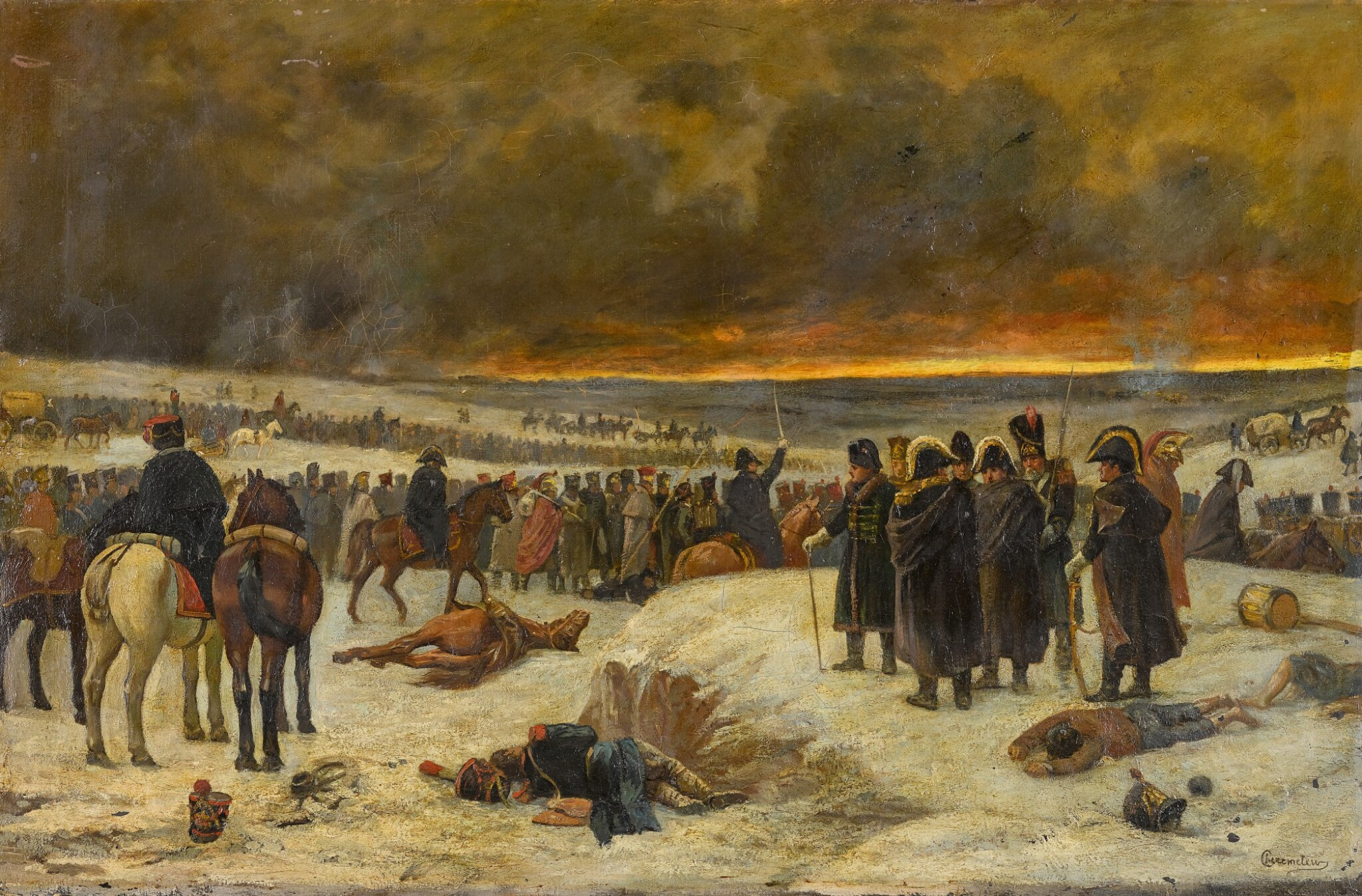
Napoleon's invasion entered the Russian Empire from the west in 1812 and reached Moscow. The First World War shattered the imperial state. Nazi Germany invaded the Soviet Union in 1941 through a front of enormous depth and violence.
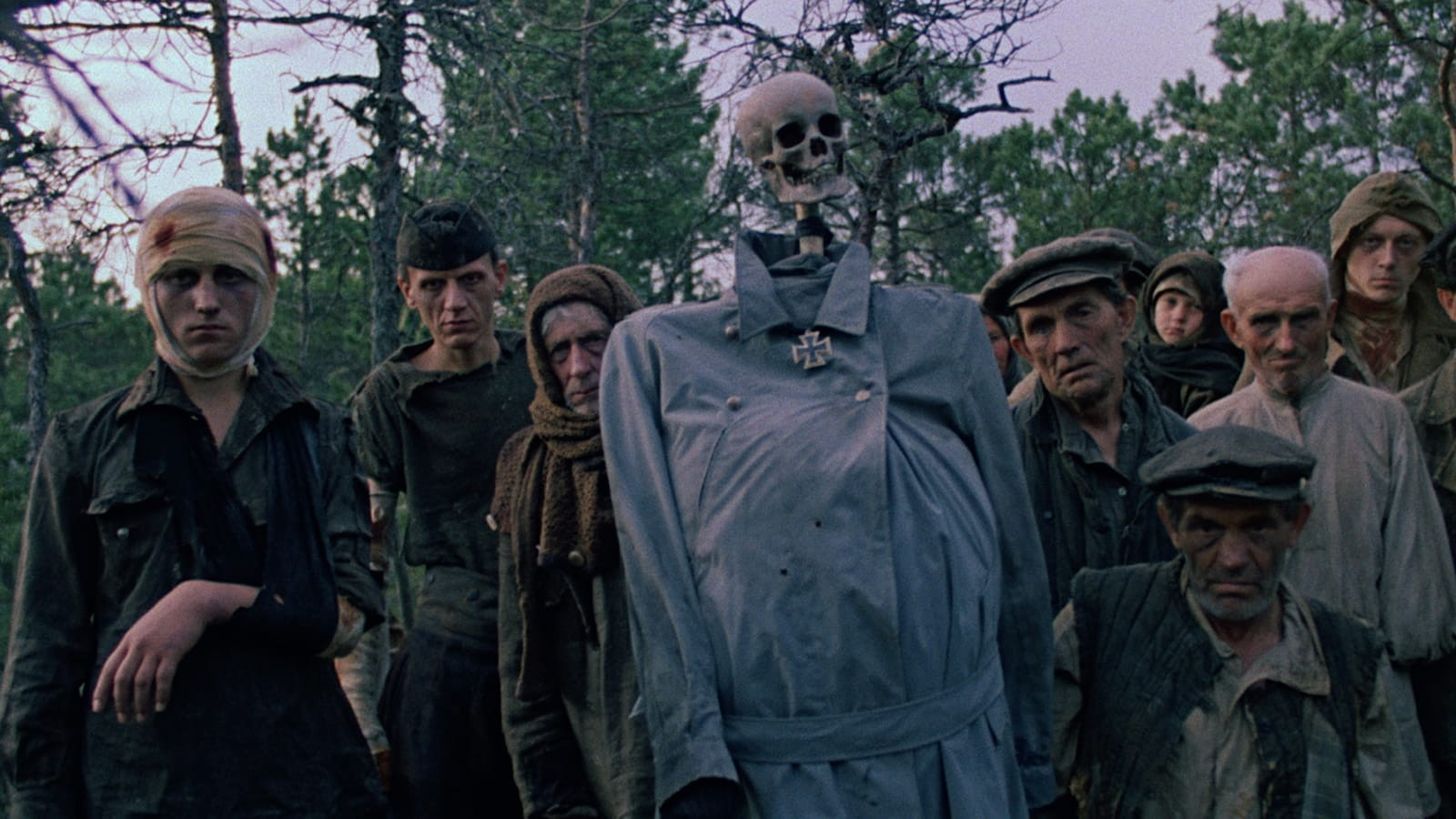
The resulting war killed tens of millions of Soviet citizens, destroyed cities and villages, displaced populations, and placed exterminatory policy inside occupied territory. Nearly every Soviet family could inherit some direct relation to the dead, the missing, the wounded, the evacuated, the besieged, or the ruined.
A security culture built after that history will care about distance.
It will care about allied governments on approach routes, the location of airfields, the time available for mobilization, the depth of air defense, the location of hostile armies, and the political orientation of neighboring capitals. It will treat the western frontier as more than a neat line on a legal map.
The Soviet Union answered this vulnerability through power extending far beyond Russia's current borders. The Warsaw Pact and Soviet control over Eastern Europe created strategic depth through other societies. The arrangement protected the Soviet center while imposing authoritarian subordination, military intervention, political repression, and limited sovereignty across the states assigned to the defensive belt.
When that system collapsed, two incompatible historical experiences entered the same transition.
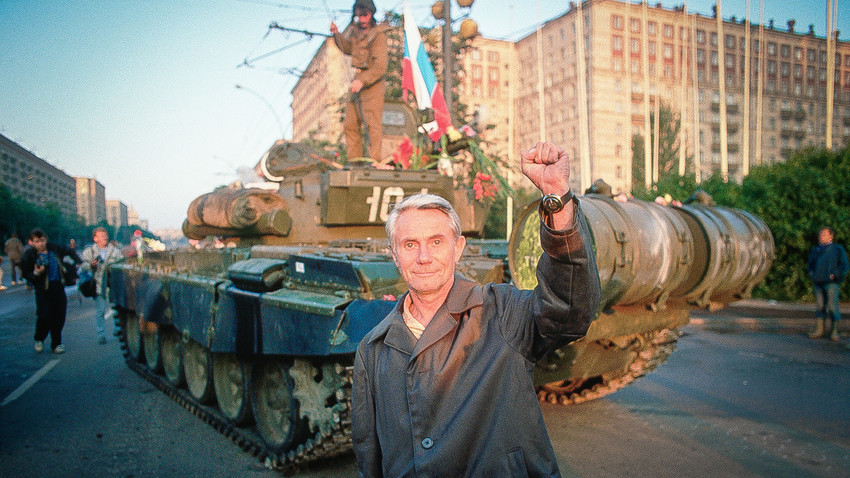
- For Poland, the Baltic states, Czechoslovakia, Hungary, Romania, and others, the collapse opened political futures constrained or crushed under Soviet power.
- The withdrawal of Moscow's control was liberation.
- For many Russians, the collapse also meant economic disaster, institutional disintegration, military retreat, loss of status, border shock, family separation, and the destruction of a state they had expected to continue.
- A security perimeter that had extended deep into Europe vanished within a few years.
- The Russian state that followed was weaker, internally damaged, and dependent on a Western order whose strongest institutions survived intact.
- A security perimeter that had extended deep into Europe vanished within a few years.
NATO then enlarged.
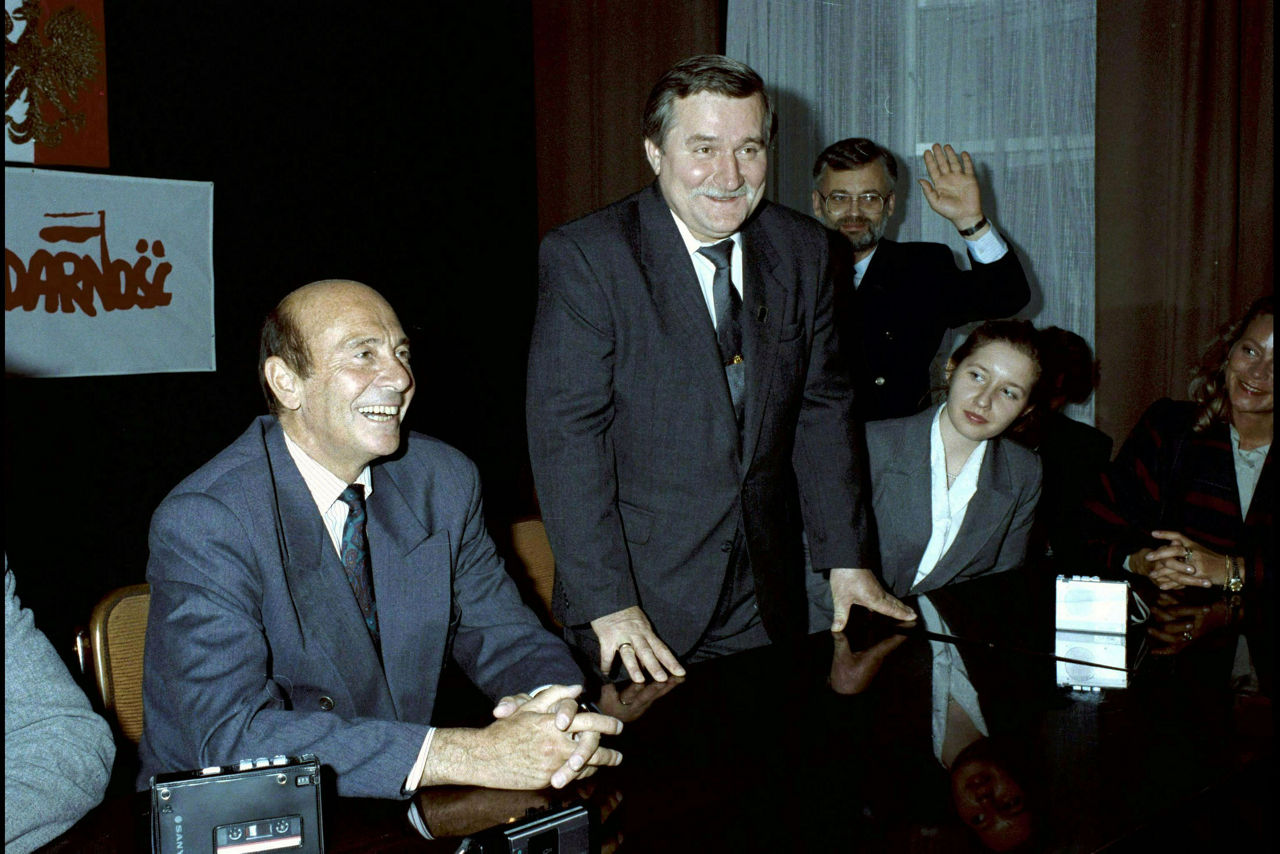
The alliance received Poland, Hungary, and the Czech Republic in 1999. A larger round in 2004 included Bulgaria, Romania, Slovakia, Slovenia, Estonia, Latvia, and Lithuania. Further accessions followed. The states seeking membership had their own agency and their own fear of Russia. Their choices cannot be reduced to pieces moved by Washington.
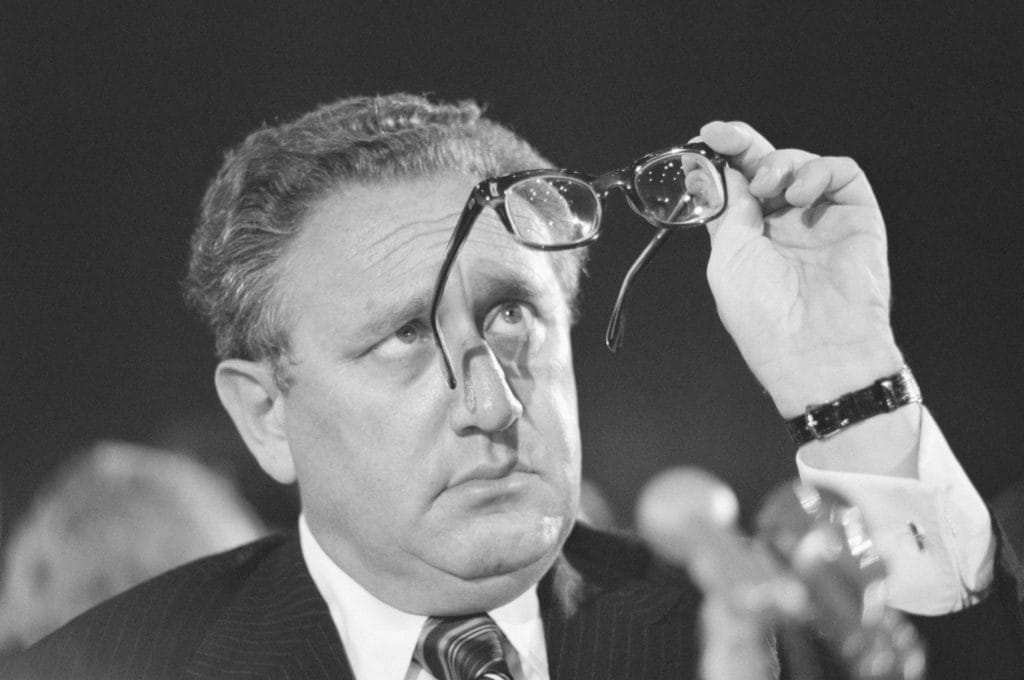
The military fact remained visible from Moscow.
An alliance built against the Soviet Union continued after the Soviet Union disappeared and moved closer to Russia's borders. NATO described enlargement as voluntary entry into a defensive alliance. Russia could still see the most capable military coalition in the world expanding into territory formerly controlled by Moscow and, in the Baltic case, reaching the Russian border itself.
The dispute over Western assurances during German reunification deepened the wound. Western officials did discuss restrictions on NATO's eastward movement in 1990. Those conversations occurred within negotiations focused on Germany and did not become a general signed prohibition against later enlargement across Eastern Europe. The legal record and the remembered political message separated.
Russia could hear that the post-Cold War settlement had changed its meaning after Russian weakness made another settlement possible.
Western uses of force made reassurance harder.
NATO intervened in Kosovo without authorization from the United Nations Security Council. The United States and partners invaded Iraq. NATO's intervention in Libya moved from civilian protection into a war ending with regime collapse. Each case had its own legal and political field. Together, they supplied Russian leaders with a powerful argument: Western states treated sovereignty as conditional when they possessed the force and moral language to override it.
That argument did not create a Russian right to invade Ukraine.
It greatly damaged the credibility of Western claims that the European order was neutral, stable, and equally binding.
The military relationship also changed after Russia's annexation of Crimea and the beginning of war in Donbas in 2014. NATO suspended practical cooperation with Russia, strengthened its eastern posture, and deployed multinational battlegroups in Estonia, Latvia, Lithuania, and Poland by 2017. NATO members increased training and assistance for Ukraine. Ukraine's armed forces deepened cooperation and interoperability with Western militaries.
Every one of those measures can be explained as "a response to Russian action."
Every one also became part of the Russian security field.
Response and threat can occupy the same deployment.
- The alliance says the battlegroup is defensive because it is too small for invasion and exists to make aggression against a member costly.
- Russia sees foreign NATO forces stationed forward on territory that once belonged to its strategic belt.
- The alliance says missile defense in Europe is directed against threats outside the Euro-Atlantic area.
- Russia sees systems, launch infrastructure, sensors, and future capability near its approaches.
- Ukraine says training and weapons are necessary because Russia has already seized territory and supports armed force against it.
- Russia sees a neighboring army being integrated into the military practices of a hostile bloc before formal membership arrives.
A serious audit has to retain all of these viewpoints long enough to identify the transition that matters.
The arms-control field was also thinning.
The United States withdrew from the Anti-Ballistic Missile Treaty in 2002. The Intermediate-Range Nuclear Forces Treaty ended in 2019 after years of American allegations of Russian violation and Russian counter-accusations. The United States left the Open Skies Treaty in 2020; Russia completed its own withdrawal in 2021. New START received a five-year extension in February 2021, preserving limits on strategic nuclear forces, yet much of the surrounding architecture for transparency, range restriction, observation, and predictability had weakened.
The cooperative institutions had not been entirely absent. Russia had signed the NATO-Russia Founding Act. The NATO-Russia Council had created a forum where Russia and individual alliance members met as partners. The OSCE remained a common institution. Arms-control treaties had once allowed inspection, observation, notifications, and structured argument.
Their failure cannot be described as simple exclusion. Russia had seats, signatures, channels, and documents. The stronger indictment is that these instruments lost authority, capacity, trust, or political support precisely where the security relationship became most dangerous. Consultation survived as procedure while each side increasingly acted through facts placed into the field.
The 2008 Bucharest declaration intensified that condition. NATO stated that Ukraine and Georgia would eventually become members while providing no membership timetable and no alliance defense guarantee. The declaration kept future enlargement politically active. It also left both exposed states outside the protection that made the declaration meaningful. From Moscow, the direction had been announced. From Kyiv and Tbilisi, the shelter had not arrived.
By 2021, Ukraine still lacked NATO membership and Article 5 protection. Its cooperation with NATO had nevertheless deepened, especially after 2014. The unresolved position carried much of the strategic effect of movement toward the alliance and little of the deterrent certainty of arrival.
Russia therefore entered the 2021 crisis with a security story that contained several true components.
- NATO had expanded.
- Western power had been used outside rules Russia considered legitimate.
- Military infrastructure had moved east;
- Ukraine's military relationship with NATO had deepened;
- Arms-control mechanisms had eroded;
- The 2008 NATO declaration still held out eventual membership to Ukraine and Georgia;
- Modern weapons had reduced the protection offered by geography;
- The Russian state had historical reasons to fear a hostile military system on its western approaches.
The defense becomes stronger when it also admits the fear of political transition.
Russian security thinking under Putin increasingly joined military encirclement to regime change. Popular uprisings, Western democracy assistance, media systems, civil-society support, sanctions, elite pressure, and military intervention could certainly appear as parts of one strategy for weakening unfriendly governments. Serbia, Georgia, Ukraine, the Arab uprisings, and other transitions entered a story in which public protest could function as the opening phase of geopolitical capture.
This fear protected the Russian regime as well as the Russian state.
The distinction has to remain visible.
A government can redescribe its own loss of control as national danger. The Kremlin's survival is not identical to the continuance of Russian people, culture, territory, or security. An opposition movement in a neighboring state does not become a weapon system because it produces a government Moscow dislikes.
Still, the joined perception was real inside the decision field.
NATO expansion, democratic transition, Western influence, and regime vulnerability had become one pressure surface.
By December 2021, Russia's strongest case could therefore make several legitimate demands.
- Rebuild arms control.
- Keep offensive missiles away from borders.
- Create reciprocal limits on exercises and major deployments.
- Restore inspection and observation.
- Reduce bomber and warship activity in sensitive zones.
- Establish military hotlines and incident rules.
- Clarify the status of foreign bases and permanent force presence.
- Negotiate the relationship between Ukrainian defense and Russian warning time.
- Stop treating the security effects of NATO enlargement as imaginary simply because states joined voluntarily.
These demands could have entered a difficult, multilateral, verified negotiation.
The December package went further.
It sought a legal order in which the United States and NATO would guarantee that former Soviet states could not cross the alliance threshold and could not develop military relationships beyond limits set without them.
The strongest Russian defense therefore reaches a sharp ethical boundary.
- Russia could demand security instruments.
- It could not demand security title.
÷
VI. The First Refusal
- Russia possesses a real security claim.
- It does not possess Ukraine's political future.
The distinction survives every fact already granted.
- Historical invasion creates an obligation to take Russian vulnerability seriously.
- It does not convert Ukrainian territory into inherited defensive property.
- NATO enlargement creates real military effects.
- It does not erase the standing of states that sought membership because they feared Russia.
- Ukrainian alliance decisions affect Russian risk.
- They do not become decisions for Moscow to make.
- Western hypocrisy damages the authority of the European order.
- It does not transfer agency for Russian invasion onto the West.
- Arms-control collapse makes restraint more urgent.
- It does not make conquest an arms-control instrument.
The Better path begins by preserving two forms of contact at once.
- Russia must be able to describe what threatens it
- without being told that every fear is propaganda.
- Ukraine must be able to describe what threatens it
- without having its answer translated into anti-Russian capture.
The security architecture must then act on forces, ranges, bases, exercises, missiles, deployments, warning time, verification, and escalation.
It cannot act on Ukraine as though Ukraine were one of those components.
That is the first refusal of this article.
- A state may negotiate the danger another state's choices create.
- It may not own the chooser.
The December drafts arrived before the full-scale invasion. They offered one last clear view of the instrument before the instrument crossed the border.
Ukraine was still formally sovereign.
Its future had already been placed on someone else's security table.
Beneath that table lie two wound maps.
- Russia remembers armies coming from the west.
- Ukraine remembers power coming from Russia.
The same ground has been asked to carry both memories.
The buffer wound begins when one is granted the whole map.
÷
VII. The Western Road
Russia remembers invasion as a direction.
The danger comes from the west.
It crosses a frontier, enters the plain, takes the roads, finds the rivers, reaches toward the political center, and teaches another generation that distance is a kind of armor.
This memory is real enough to become dangerous when handled badly.
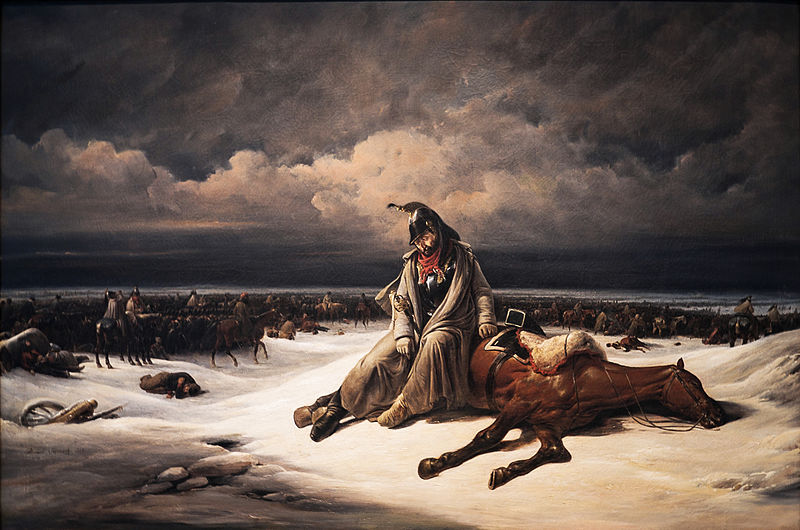
Napoleon entered the Russian Empire in 1812 with the largest army Europe had yet assembled for a single campaign. The invasion came through the empire's western borderlands, across territory that now belongs to Lithuania and Belarus, toward Smolensk and Moscow. The Grande Armée reached the old capital.
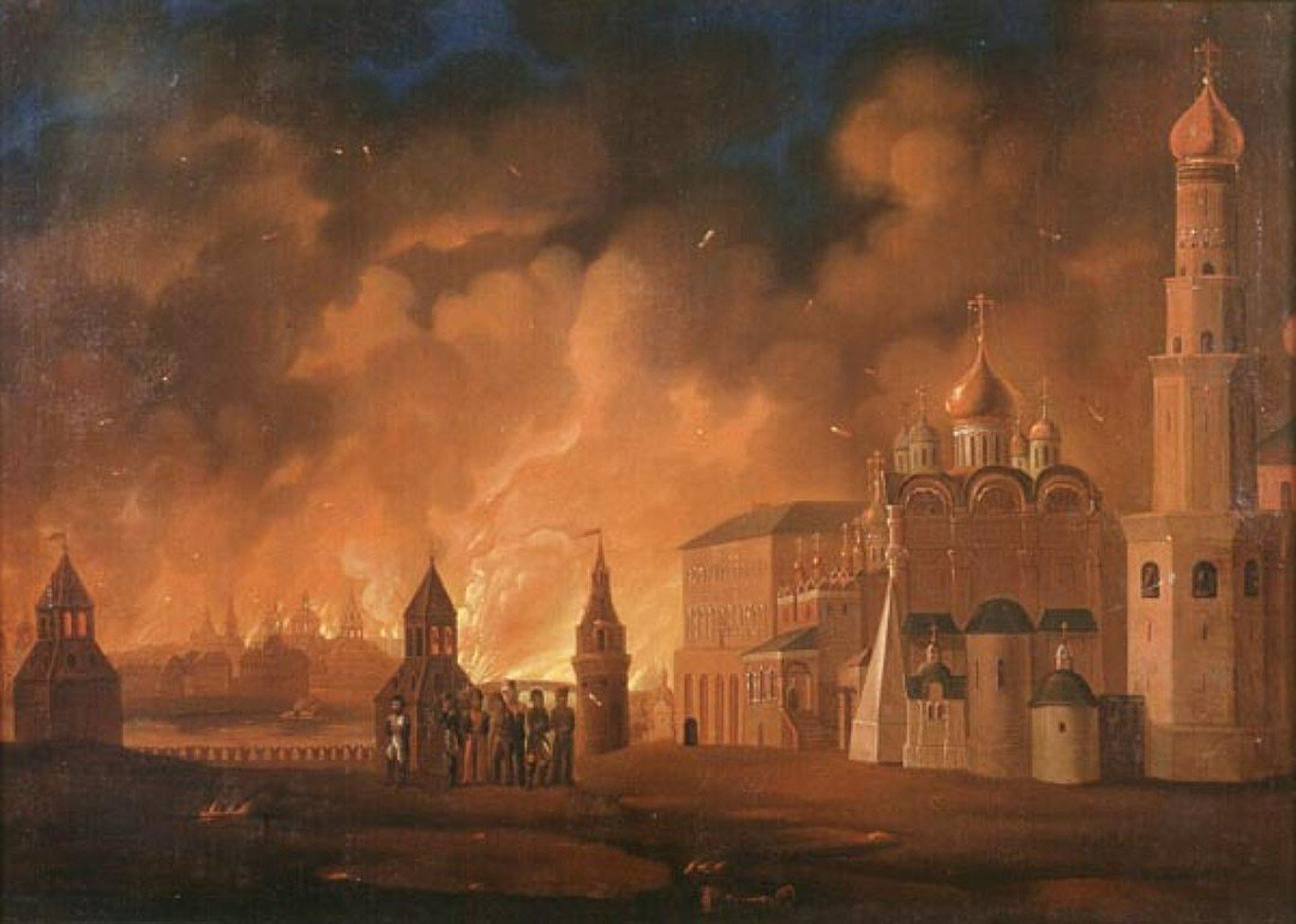
Moscow burned.
The invader withdrew through devastation, hunger, disease, cold, and attack until the army that had entered as a continental instrument left as wreckage.
The First World War brought German and Austro-Hungarian armies across another vast eastern front. The Russian Empire did not simply lose ground. The war helped break the state itself. Revolution, civil war, famine, border conflict, and imperial dissolution followed.
Then came 1941.
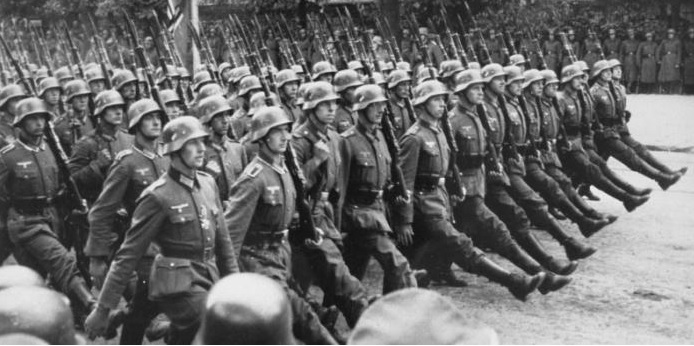
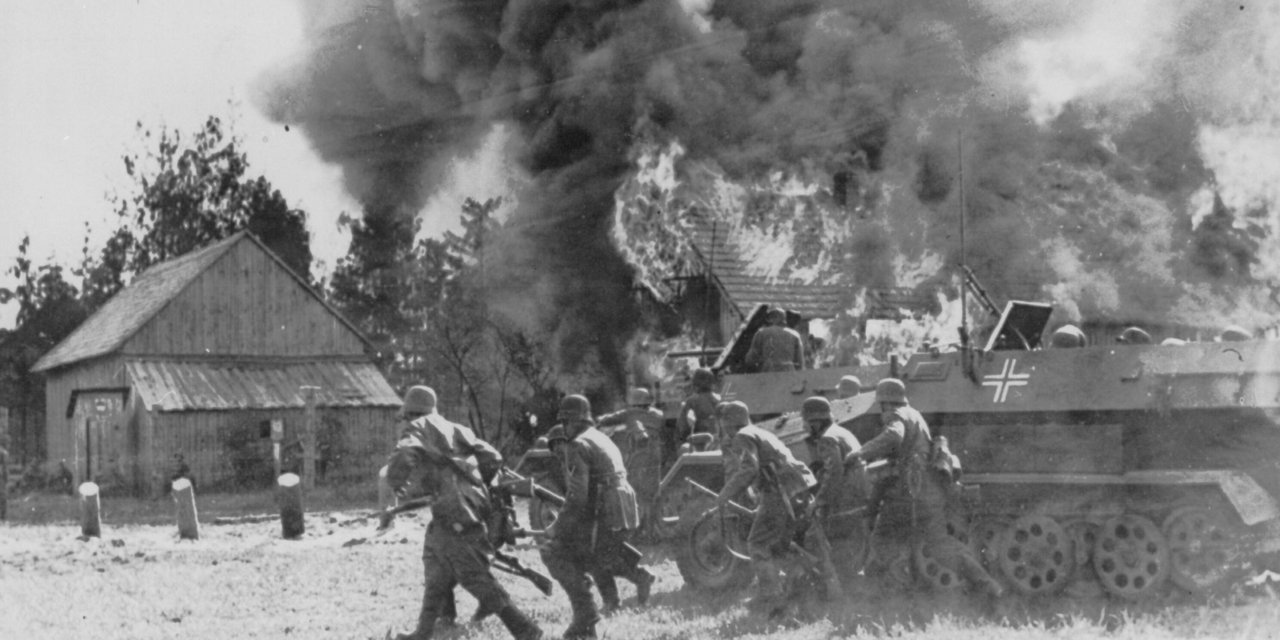
Nazi Germany and its allies attacked the Soviet Union across a front running from the Baltic Sea to the Black Sea. The invasion was designed as a war of annihilation. It aimed beyond military victory toward colonization, starvation, racial conquest, the destruction of Soviet political life, and the mass murder of Jews and other populations marked for elimination.
German forces advanced hundreds of miles in months. Soviet armies were encircled. Millions of soldiers became prisoners. Ukraine and Belarus were overrun. The siege of Leningrad began. Moscow entered the operational horizon.
Occupation brought mass shootings, forced labor, village destruction, starvation, reprisals, and the deliberate conversion of whole populations into expendable material for an imperial future.
The Soviet Union lost roughly twenty-seven million people in the war, though every estimate sits on destroyed records, missing bodies, disputed categories, and families who never learned where a person ended.
This number is once again just too large for the human imagination, which is one reason states prefer to turn it into a symbol.
That symbol says Russia survived the western invasion.
It did. The field says something wider.
- The dead were Soviet citizens from Russia, Ukraine, Belarus, Kazakhstan, Armenia, Georgia, the Baltic republics, Central Asia, the Caucasus, Jewish communities across the occupied territories, and many other peoples held inside the Soviet state.
- Ukrainians fought in the Red Army and died in enormous numbers.
- Ukraine also became one of the central territories of occupation, the Holocaust, military destruction, forced labor, partisan war, collaboration, reprisal, and repeated state violence.
The victory was Soviet.
The wound was multinational.
The Russian state later inherited the center of that victory memory. It inherited the seat at the United Nations, the strategic arsenal, the main military institutions, many archives, and the political capacity to speak as the primary successor to Soviet sacrifice. That inheritance contains real truth. The Russian Soviet republic carried tremendous loss, mobilization, production, and combat. Russian families possess no less standing in the grief because other peoples died beside them.
The danger begins when the common wound becomes exclusive title.
The state turns a multinational catastrophe into a national security credential.
It learns that it saved everyone.
Then, it learns that disagreement with its preferred security order dishonors the dead who made the survival possible.
Modal Path Ethics has encountered this transition before.
A real wound becomes a command instrument.
 Aidan Lawson
The first important correction is geographic.
There is no single western road.
This phrase compresses a continent into a hallway.
Armies moved through different corridors in different wars. Rivers, forests, marshes, fortifications, railways, weather, political alliances, mobilization systems, and military technology repeatedly changed what the approaches meant.
Napoleon's route toward Moscow was not Hitler's entire front. Nazi Germany attacked through the Baltic region, Belarus, western Russia, and Ukraine, while allied armies also advanced through the south. Modern aircraft, long-range missiles, submarines, cyber operations, satellites, and nuclear forces have further altered the value of physical distance.
A state can still need warning time without pretending geography wrote one clean permanent doctrine.
Strategic depth is time purchased with space.
That sentence sounds technical until one asks whose space performs the purchase.
The center experiences depth as delay.
The borderland experiences it as first impact.
- The center receives additional days to mobilize.
- The borderland receives the invading army.
- The center preserves industry farther from the front.
- The borderland becomes the territory across which both sides retreat, requisition, fortify, burn, and return.
- The center remembers that the depth saved the state.
- The people inside the depth remember being used as depth.
This asymmetry sits beneath the buffer wound.
Security maps are drawn from protected centers. They show how much territory an enemy must cross before reaching what the map considers critical. The territory appears as an interval. The lives inside it become operational conditions.
The Soviet experience in the Second World War proves that depth can matter. The Soviet state relocated industry eastward, mobilized across immense territory, absorbed initial catastrophe, rebuilt armies, and continued fighting after losses that would have ended many states. Distance, resources, population, rail, and industrial relocation helped make survival reachable.
The same history also proves that depth is not empty.
Belarus was not extra road.
Ukraine was not warning time with some wheat growing on it.
The western Soviet republics were fields of human continuance before they became layers in a defensive account of Moscow.
A security instrument that remembers only what the periphery did for the center has already distorted the wound.
Russia's memory of invasion therefore deserves two responses at once.
- The first is respect.
- No serious European order can ask Russian society to treat the destruction of 1941 as some old misunderstanding that modern institutions have rendered emotionally obsolete.
- The fear of encirclement, compressed warning time, hostile infrastructure, and a renewed western coalition draws energy from a catastrophe that genuinely approached exterminatory scale.
- No serious European order can ask Russian society to treat the destruction of 1941 as some old misunderstanding that modern institutions have rendered emotionally obsolete.
- The second response is refusal.
- The wound does not grant Russia the right to recreate the depth by assigning neighboring populations to the first-impact zone.
- A country can build radar.
- It can build hardened infrastructure, mobile forces, air defense, resilient command, reciprocal missile limits, inspection systems, and crisis communication.
- It cannot build warning time out of another country's unfinished political life without that country's standing becoming central to the arrangement.
- The wound does not grant Russia the right to recreate the depth by assigning neighboring populations to the first-impact zone.
Russia remembers armies coming from the west.
That memory definitely belongs on the map.
It does not own the map.
÷
VIII. Depth Becomes Empire
Strategic depth becomes imperial when another population's constrained future is treated as a defensive asset.
The Soviet Union demonstrated the transition with exceptional clarity.
Before Nazi Germany invaded in 1941, Stalin's government had already pursued security through territorial expansion. The 1939 German-Soviet pact divided parts of Eastern Europe into spheres of influence. The Soviet Union occupied eastern Poland, attacked Finland, annexed the Baltic states, and seized Bessarabia and Northern Bukovina. These actions belonged to several motives at once: imperial recovery, ideology, opportunism, military positioning, border revision, and fear of future war.
Security language was not invented afterward. Moving the frontier away from Leningrad mattered to Soviet planning. Pushing the western boundary outward changed the distance an enemy would have to cross. The Soviet state gained land, population, infrastructure, and approach routes.
The people inside the gained depth received invasion, annexation, deportation, political repression, property seizure, forced institutional transformation, and the destruction or subordination of independent political life.
The instrument worked in two moral directions.
- It may have changed the geometry of future defense.
- It also made other societies carry the cost of the Soviet answer to insecurity.
After 1945, the depth became a continental system.
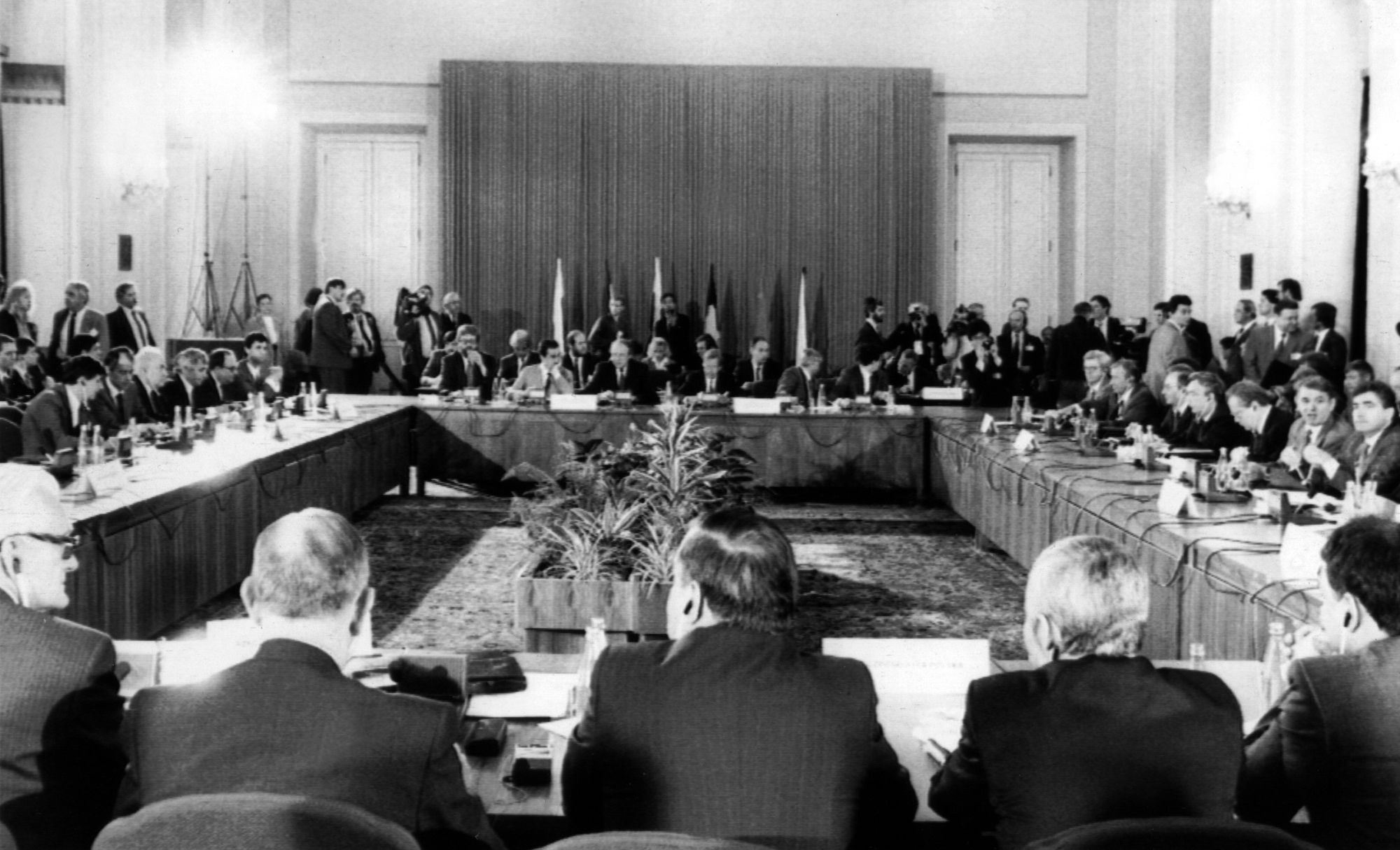
The Soviet Union emerged from the war with a victorious army positioned across Eastern and Central Europe. Governments aligned with Moscow consolidated under military presence, Communist Party control, security services, political purges, managed elections, economic integration, and the elimination of rival centers of power. The Warsaw Pact later formalized a military alliance whose text spoke the language of collective defense and non-interference while Soviet power determined the limits of permissible political movement.
The belt had an intelligible security purpose.
A hostile Germany had invaded the Soviet Union twice within a generation. The United States possessed nuclear weapons, then built a military alliance including Western European states. West Germany rearmed and entered NATO. Soviet leaders wanted friendly governments between the alliance and the Soviet border. They wanted forces forward, warning time, controlled logistics, and a political field that could not abruptly turn hostile.
The security demand was not absurd.
The instrument selected to satisfy it required other countries to remain governable from Moscow.
- Hungary attempted to leave the imposed limits in 1956.
- Soviet forces invaded and crushed the uprising.
- Czechoslovakia pursued reform in 1968.
- Warsaw Pact armies entered and ended the Prague Spring.
- Poland's political crisis in the early 1980s unfolded beneath the standing possibility of Soviet intervention,
- while the Polish government imposed martial law and moved against Solidarity.
Each crisis had its own internal history. None can be reduced to the ideological geometry of a population unanimously marching toward liberal democracy while Moscow arrived from outside. Communist parties had domestic constituencies. Reformers disagreed. National histories, class conflicts, religious institutions, labor movements, security services, and economic failures shaped the fields.
The decisive regional rule remained clear:
Political change inside the defensive belt was acceptable only while the belt continued performing its strategic function.
The local government could reform until reform threatened alignment.
The local public could speak until speech made exit imaginable.
The alliance could claim sovereignty until sovereignty pointed away from Moscow.
This is security title at system scale.
The Soviet center possessed a real security interest in the military orientation of Eastern Europe. It transformed that interest into pre-eminent authority over which political futures Eastern European societies could reach.
Depth became empire without needing to call itself empire.
The system described itself through liberation from fascism, socialist solidarity, proletarian internationalism, collective defense, anti-reaction, and peace. These ideas contained genuine histories and constituencies. Soviet forces had carried a huge part of the war against Nazi Germany. Communist movements had resisted fascism. Postwar governments built industries, education systems, housing, health systems, and social institutions that many people used and valued.
The presence of good within the field does not cancel the structure of control.
- A road can carry medicine and tanks.
- An alliance can deter invasion and prevent exit.
- A state can provide education while teaching that the political world ends at the border of its doctrine.
The buffer system generated the threat it claimed to contain.
- Coercive alignment created fear of Moscow.
- Fear of Moscow made Western alignment more attractive.
- The desire to leave then confirmed that the buffer could not be trusted.
- The center tightened control.
- The tightened control produced stronger desire to leave.
- The center tightened control.
- The desire to leave then confirmed that the buffer could not be trusted.
A security instrument had become a recurrence machine.
This is the deeper failure of imperial depth.
It does not simply burden the people placed inside it.
It corrupts the information available to the center.
Every expression of local agency arrives as evidence that outside influence has penetrated the belt.
- A reform movement becomes Western subversion.
- A labor movement becomes political destabilization.
- A nationalist movement becomes fascist revival.
- A religious institution becomes foreign coordination.
- A request for neutral autonomy becomes a step toward alliance defection.
- Historical memory of Soviet repression becomes anti-Soviet propaganda.
The instrument cannot distinguish a neighbor's ordinary political life from an enemy's advance because the neighbor's political life has already been assigned a security function.
When the Warsaw Pact dissolved and Soviet power withdrew, the belt did not vanish from memory at the same speed.
- Moscow could see the lost depth.
- Warsaw, Prague, Vilnius, Riga, Tallinn, Budapest, and other capitals could see recovered standing.
The same transition looked like exposure from the center and escape from the periphery.
This is why later NATO enlargement cannot be understood from Washington and Moscow alone. States entering the alliance were acting inside their own wound maps. Some had been invaded, annexed, occupied, coerced, or disciplined under Russian and Soviet power across multiple historical periods. They did not seek protection because geography had made them empty pieces available to the West.
They sought protection partly because strategic depth had taught them what could happen when Russia became the only state allowed to interpret their security.
The buffer belt therefore carried a delayed consequence.
- Its populations remembered the price of being someone else's shelter.
When they gained room to choose, many chose an institution designed to make return to that role harder.
From the center, Russia later experienced that choice as encirclement.
The instrument had generated its own future threat.
÷
IX. The Same Map From Kyiv
The same map changes when the reader stands in Kyiv.
The western road is still there.
Ukraine has repeatedly been invaded from the west. Polish, Austro-Hungarian, German, Romanian, and other powers have ruled, occupied, divided, fought across, or claimed parts of the territory now belonging to Ukraine. Nazi occupation brought annihilating violence. The Holocaust murdered approximately 1.5 million Jews in the territory of present-day Ukraine. Millions of other civilians and soldiers died. Towns, farms, industries, and families were broken across a war whose front crossed Ukraine more than once.
Russian state memory sometimes presents this history as proof that Ukraine's natural security position lies beneath Moscow's protection.
Ukraine's own wound map contains the protector.
Large parts of central, eastern, and southern Ukraine entered the Russian Empire through conquest, partition, colonization, and imperial expansion. Ukrainian elites could rise inside imperial institutions. Cities developed through trade, migration, industry, state investment, and cultural exchange. Russian language and culture became deeply rooted in many places. The relationship created real common life.
It also created a state structure that repeatedly treated independent Ukrainian cultural and political development as a security problem.
The Valuev Circular of 1863 restricted Ukrainian-language religious and educational publishing. The Ems decree of 1876 widened the pressure by prohibiting major forms of Ukrainian publication, import, theater, lecture, and public cultural use. The state did not need to erase every Ukrainian word to reveal the governing assumption.
A language spoken by millions could be treated as an administrative threat when it began carrying education, scripture, public culture, and political imagination beyond the imperial description of "Little Russia."
The instrument is familiar.
- Cultural distinction becomes political danger.
- Political danger authorizes restriction.
- Restriction then becomes evidence that the distinction could never have developed naturally.
- Political danger authorizes restriction.
The collapse of the Russian Empire in 1917 opened several Ukrainian state projects, governments, armies, councils, and claims across a violently contested field. The Ukrainian People's Republic did not receive a clean national birth. It entered revolution, German and Austro-Hungarian intervention, Bolshevik war, White armies, Polish conflict, peasant movements, pogroms, shifting governments, and civil collapse. Ukrainian forces also committed violence. Ukrainian political life was divided by region, ideology, class, language, and competing state projects.
The disorder does not make the attempt unreal.
By the early 1920s, Bolshevik victory placed most Ukrainian territory inside the Soviet Union as the Ukrainian Soviet Socialist Republic. The new system initially promoted forms of Ukrainian language and culture through Soviet nationality policy. It also created institutions through which Ukrainian political, educational, and administrative life could grow.
Then, the field contracted.
Stalinist centralization reversed much of the earlier opening.
Collectivization, forced grain procurement, punishment of alleged nationalism, repression of intellectuals, party purges, and state violence transformed Soviet Ukraine. The famine of 1932–1933 killed millions across Soviet grain-producing regions, with Ukraine among the central fields of death. Soviet policy intensified the catastrophe through requisitions, movement restrictions, punitive measures, and the suppression of truthful reporting.
The argument over the name and intent of the Holodomor has become its own international political field. Ukraine and many states recognize the famine as genocide. Historians continue to debate aspects of intention, comparison, targeting, and the relationship between anti-peasant and anti-Ukrainian policy.
The path-structural fact does not wait for every dispute to end.
A state demanded grain from a starving field, restricted escape, punished resistance, and protected its governing story while people died inside the agricultural instrument.
That wound also belongs on the map.
Then Nazi Germany invaded.
Ukraine became a central battlefield and occupation zone.
Some Ukrainians fought for the Soviet Union. Some fought in nationalist formations against Soviet and German power at different times. Some collaborated with Nazi authorities. Some participated in atrocities. Some hid Jews, joined partisan movements, served in multiple armies, or tried to survive among powers that repeatedly demanded total alignment.
- No honest Ukrainian wound map can erase collaboration, antisemitism, ethnic violence, or the suffering inflicted on Poles and other communities.
- No honest Russian wound map can turn those facts into ownership of Ukrainian history.
The Soviet victory over Nazi Germany was also a Ukrainian victory because Ukrainians fought and died within the Soviet war effort. The Holocaust in Ukraine was also a Ukrainian catastrophe because Jewish life was not foreign material inside the territory. The destruction belongs to the people who lived there, including those whose memory later fit poorly inside national stories.
After the war, Soviet rule restored and expanded Ukraine's industries, cities, education, military integration, and role within a superpower. It also carried deportation, political repression, censorship, renewed pressure against nationalist movements, surveillance, and cultural hierarchy. Ukrainians were neither an external colony with no participation in the state nor a people whose republic enjoyed unrestricted sovereignty. They governed, served, benefited, complied, resisted, and were punished inside an unequal union whose final authority remained concentrated in Moscow.
That complexity matters.
- A simple victim story would make Ukrainian agency disappear into injury.
- A simple unity story would make injury disappear into participation.
The field just contains both.
By the late Soviet period, Ukraine was a major republic with a large population, industrial base, military infrastructure, scientific institutions, political elite, cultural life, and formal constitutional status. It also remained inside a union whose central institutions could determine decisive questions of state power, security, economic direction, and political permission.
- From Moscow, Ukraine could look like an inseparable part of the state whose territory, industry, agriculture, population, military access, and historical legitimacy were central to Soviet continuance.
- From Kyiv, the same relation could look like a political field that had repeatedly been told its distinctiveness was acceptable only while it did not alter the center's control.
This is the second wound map.
- Russia remembers the frontier failing.
- Ukraine remembers the center refusing to release the frontier from its assigned role.
Both memories contain truth.
Only one became the basis for claiming authority over the other after 1991.
÷
X. 1991: The Field Answers
The ballot was almost aggressively plain.
On December 1, 1991, voters were asked whether they supported the declaration of Ukrainian independence adopted by the republic's parliament on August 24.
- They could endorse it.
- They could reject it.
About 84.1 percent of eligible voters participated. Of the ballots cast, 90.32 percent supported independence.
The result did not come only from western Ukraine.
Every region returned a majority for independence.
Crimea supported it by approximately 54 percent. In heavily industrialized and extensively Russian-speaking eastern regions, support exceeded 80 percent. Donetsk and Luhansk both voted decisively for the new state. Many voters who were ethnically Russian, spoke Russian in ordinary life, served in Soviet institutions, or wanted continuing relations with Russia still supported Ukrainian independence.
This was not one nation cleanly separating from a foreign population trapped inside its borders. It was a large, internally varied Soviet republic deciding that the union would no longer possess final authority over its political future.
The vote requires very careful handling because later history tempts everyone to turn it into a magic object.
A referendum does not settle every future constitutional question forever.
It does not erase regional difference.
It does not prove that every voter imagined the same foreign policy, language regime, economic order, military alignment, or relation with Russia.
Some voters expected close cooperation among the former Soviet republics. Some wanted neutrality. Some wanted rapid integration with Europe. Some wanted independence partly to escape economic collapse at the union center. Some trusted former Communist officials to manage the transition. Some had spent their lives resisting Soviet rule. Some voted against independence.
Crimea already contained movements seeking greater autonomy, secession, or reunion with Russia. Transcarpathia and other regions carried their own minority and self-government questions.
- The vote did not make these pressures unreal.
- It made them Ukrainian political questions.
That is the standing this referendum created.
The people inside the field became the primary authors of the state's continuation.
The result also helped end the Soviet Union as a reachable political project. One week later, the leaders of Ukraine, Russia, and Belarus signed the Belavezha agreements declaring that the Soviet Union had ceased to exist and establishing the Commonwealth of Independent States. Ukraine's departure removed a republic too populous, economically central, strategically important, and historically foundational for a meaningful union to continue in the old form.
The Soviet collapse was not simply imposed on Russia by the West.
It was also decided through political transitions inside the Soviet republics, including a Ukrainian vote that exceeded many expectations.
This does not make the transition gentle.
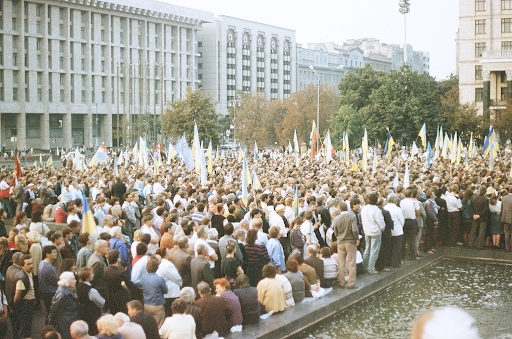
The new borders cut through families, military units, industries, supply chains, pensions, energy systems, language communities, and identities built across the union. Millions of people found themselves living in states they had not previously understood as foreign. Russian citizens could experience Ukraine's independence as the loss of a country they believed they already inhabited together. Ukrainians could experience the same event as release from a political structure that had repeatedly denied their final standing.
The field did not owe either population a simple emotional update.
It did require states to recognize what had changed.
- Ukraine was no longer a Soviet republic waiting for the union center to define the permissible range of its autonomy.
- It was an independent state whose borders, institutions, internal disputes, and external relations required the same standing the post-Cold War order claimed to give every other state.
This is why later arguments that Ukraine is artificial, historically mistaken, externally manufactured, or naturally incomplete beside Russia must first pass through December 1, 1991.
- History can explain why a state is internally complicated.
- History cannot vote in place of the living.
The referendum does not grant every later Ukrainian government innocence. Governments can become corrupt, oligarchic, repressive, incompetent, nationalist, captured, or dangerous. Elections can produce bad policy. Majorities can burden minorities. A sovereign state can still wrong its own people and threaten neighbors.
None of this returns the authorship of the field to Moscow.
A polity does not lose standing whenever a stronger neighbor believes it has governed itself badly.
The 1991 answer was therefore narrow and decisive.
- Ukraine could choose badly.
- Ukraine could divide internally.
- Ukraine could require correction.
- Ukraine had become the field in which those corrections had to occur.
÷
XI. The Nuclear Inheritance
The new state inherited doomsday equipment.
When the Soviet Union dissolved, approximately 1,900 strategic nuclear warheads remained on Ukrainian territory, along with 176 intercontinental ballistic missiles and dozens of strategic bombers. Tactical nuclear weapons had also been deployed in Ukraine, though they were withdrawn to Russia during the first half of 1992.
The usual sentence says Ukraine inherited the world's third-largest nuclear arsenal.
The sentence is true enough to mislead.
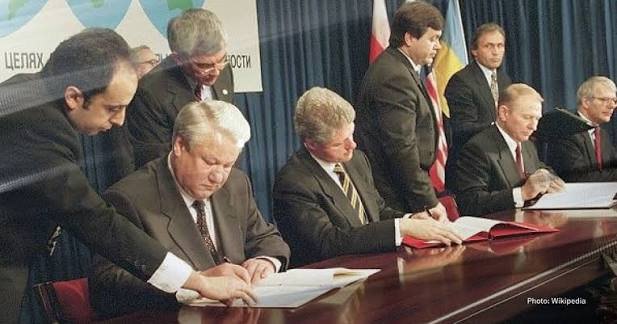
The weapons were located in Ukraine. Ukrainian military personnel guarded, maintained, and operated major parts of the system. Missile silos, bomber bases, delivery vehicles, warheads, industrial capacity, and command infrastructure sat inside the new state's territory.
Operational authority had been built for a Soviet command system centered in Moscow. Ukraine did not begin independence with a complete sovereign launch architecture, an established national nuclear doctrine, an independent targeting system, a durable warhead-maintenance cycle, or uncontested command over every element required to use the arsenal as a reliable deterrent.
The inheritance was therefore several things at once.
- physical custody;
- dangerous military infrastructure;
- strategic leverage;
- disputed property;
- fissile material with economic value;
- a vast dismantlement bill;
- a route toward international isolation if Ukraine tried to become a new recognized nuclear state;
- a possible deterrent whose conversion into an independent force would require time, money, technical work, political will, and confrontation with Russia and the United States.
The weapons were neither ordinary Russian property temporarily parked abroad nor a finished Ukrainian national arsenal waiting for a flag decal.
They were an unresolved succession problem with enough explosive force to end cities.
Ukraine had already declared a non-nuclear aspiration before independence. Its 1990 Declaration of State Sovereignty committed the republic to principles of not accepting, producing, or acquiring nuclear weapons. Chernobyl had made nuclear danger inseparable from Moscow's secrecy, institutional failure, and Ukraine's lack of control over events occurring on its territory. Pro-independence movements often treated denuclearization as part of separation from the Soviet military state.
The post-independence debate still changed.
A non-nuclear intention written before the Soviet collapse now had to answer a new security field. Russia was no longer the union center. It was a neighboring state claiming succession to Soviet military power. Ukrainian politicians asked what protection would remain after the warheads left. They disputed ownership and compensation. They worried that dismantlement would destroy valuable systems and materials while leaving Ukraine exposed. Some argued for temporary retention or a more ambitious nuclear status.
The decision was not one clean act of idealistic trust.
It was a negotiated path through pressure, danger, economic collapse, technical dependence, nonproliferation norms, state-building, and competing security calculations.
The United States wanted one recognized nuclear successor to the Soviet Union. Washington feared that Soviet collapse could produce several new nuclear states, fragment command, delay START reductions, and weaken the Non-Proliferation Treaty. Russia wanted all former Soviet nuclear warheads consolidated on Russian territory. Ukraine wanted security assurances, compensation for the highly enriched uranium inside the warheads, assistance with dismantlement, and terms that recognized it as a participant rather than a storage site.
These interests were not equal.
The United States and Russia agreed on the central outcome:
- Ukraine should become non-nuclear.
Ukraine possessed the hardware that made agreement necessary and lacked the power to define the international nuclear order alone.
The Lisbon Protocol of May 1992 brought Ukraine, Belarus, Kazakhstan, Russia, and the United States into the START framework and committed the non-Russian successor states to join the Non-Proliferation Treaty as non-nuclear-weapon states. Tactical warheads left Ukraine that year. Negotiations over the strategic arsenal continued through conflict, delay, parliamentary resistance, failed bilateral settlement, and American mediation.
The January 1994 Trilateral Statement among Ukraine, Russia, and the United States established a path for transfer of strategic warheads to Russia, compensation through nuclear fuel, dismantlement assistance, and security assurances. Ukraine acceded to the Non-Proliferation Treaty as a non-nuclear-weapon state in December 1994. All nuclear warheads were removed from Ukraine by 1996. The final strategic delivery systems covered by the process were eliminated by 2001.
The nonproliferation achievement was enormous.
A collapsing nuclear superpower did not produce four enduring nuclear-armed successor states. Thousands of warheads and delivery systems entered negotiated removal and dismantlement rather than civil conflict, seizure, sale, or uncontrolled fragmentation. Ukraine did not force the world to discover whether it could transform inherited Soviet systems into an independent deterrent while its economy and institutions were in crisis.
That good remains real.
So does the asymmetry it created.
- Russia emerged as the sole post-Soviet nuclear-weapon state.
- Ukraine became a non-nuclear state beside a more powerful neighbor whose political elite had never fully settled what Ukrainian independence meant for Russian history, security, and identity.
The world asked Ukraine to lower a planetary danger before the world had solved Ukraine's local danger.
The answer was a document signed in Budapest.
÷
XII. Budapest
The Budapest Memorandum is six promises standing around a missing machine.
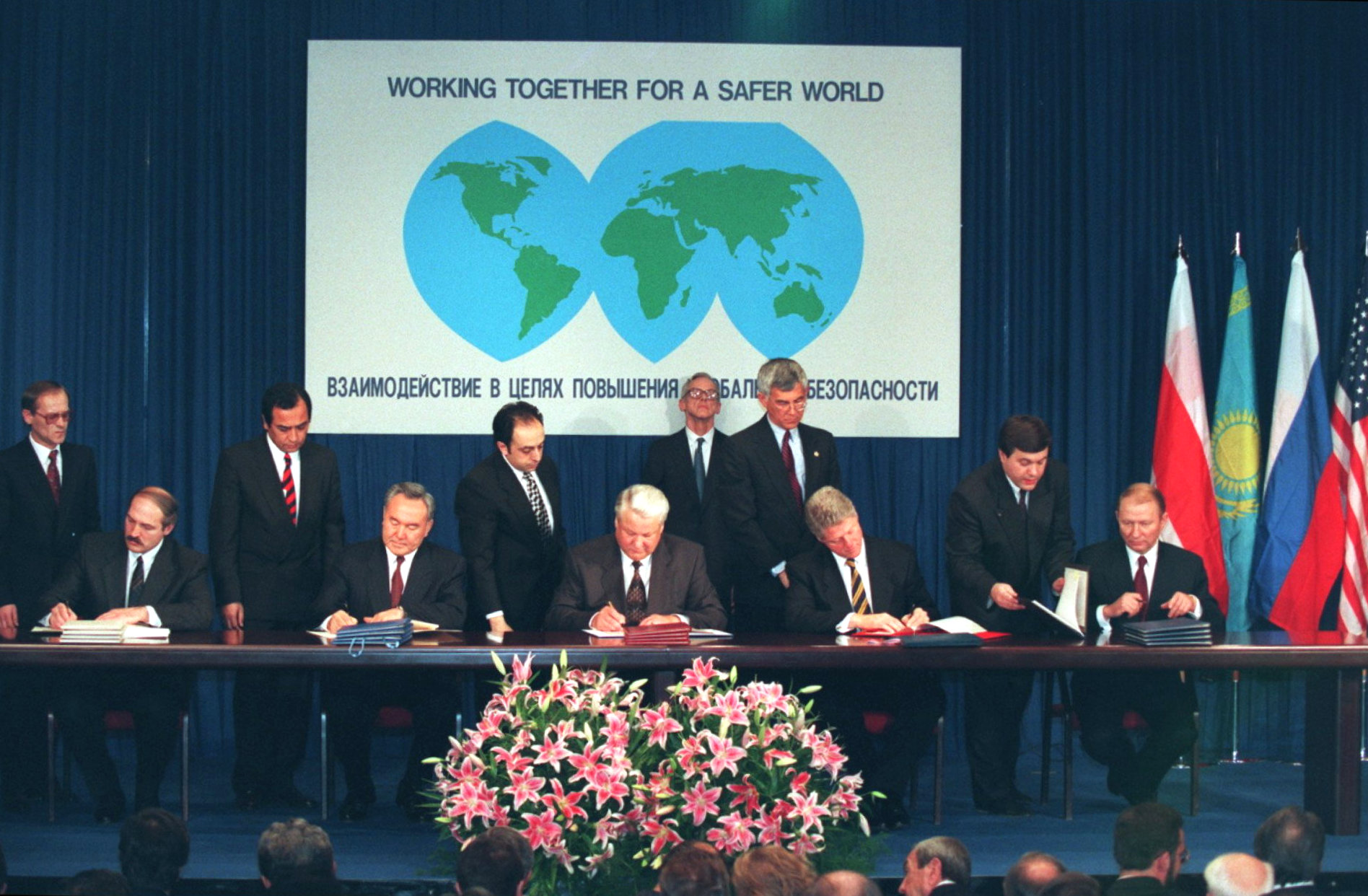
Ukraine, Russia, the United States, and the United Kingdom signed it on December 5, 1994, in connection with Ukraine's accession to the Non-Proliferation Treaty as a non-nuclear-weapon state.
The document reaffirmed commitments already recognizable from the United Nations Charter and the Helsinki security order.
Russia, the United States, and the United Kingdom committed to respect Ukraine's independence, sovereignty, and existing borders. They reaffirmed the obligation to refrain from threatening or using force against Ukraine's territorial integrity or political independence. They committed against economic coercion designed to subordinate Ukraine's sovereign rights. They promised to seek immediate United Nations Security Council action if Ukraine became the victim of aggression, or the threat of aggression, involving nuclear weapons. They reaffirmed negative security assurances concerning nuclear use. All four signatories agreed to consult if questions arose concerning the commitments.
The memorandum entered into force upon signature.
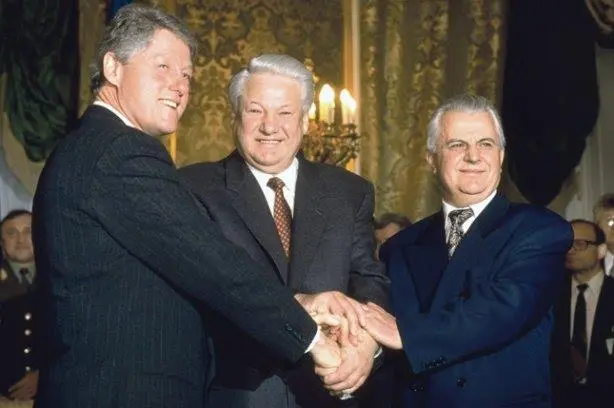
It did not create collective defense.
No article promised that American or British forces would automatically fight if Ukraine were invaded. No integrated command stood behind the paper. No troop deployments, defense plan, automatic sanctions schedule, weapons pipeline, enforcement commission, or compulsory dispute process accompanied it. The consultation clause did not specify a deadline, procedure, or consequence for refusal.
This is the distinction between a security assurance and a defense guarantee.
The distinction has sometimes been handled dishonestly in both directions.
- One story says Ukraine surrendered a fully independent nuclear arsenal in exchange for the equivalent of NATO protection, then was simply abandoned when that guarantee came due.
- The memorandum did not promise NATO protection.
- The other story says the document therefore meant almost nothing beyond political courtesy and repeated obligations that already existed.
- That also fails.
The assurances were part of the negotiated field through which Ukraine accepted non-nuclear status and transferred the warheads. Ukrainian negotiators explicitly sought protection for sovereignty and territorial integrity after disarmament. The United Nations Secretary-General later described the assurances as an essential condition of Ukraine's accession to the Non-Proliferation Treaty and warned after 2014 that their credibility had been seriously undermined.
A commitment can be politically central without containing automatic war.
Budapest had moral and strategic force because it joined nuclear restraint to a declared security order. Ukraine would not seek to convert the inherited arsenal into national nuclear power. The nuclear powers would treat Ukrainian independence and borders as protected facts rather than negotiable leftovers of Soviet collapse.
The document's weakness appears in the exact place where correction would later be required.
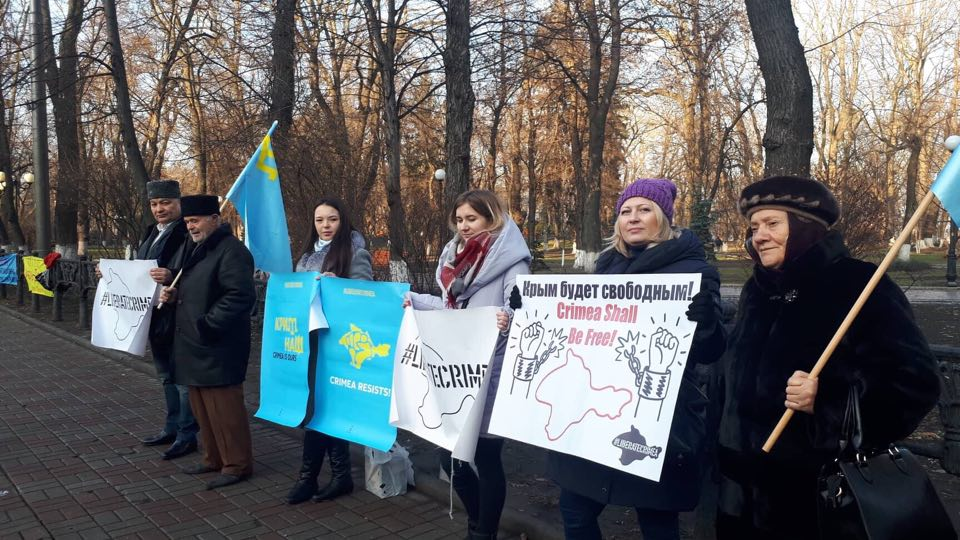
One signatory could become the aggressor. That signatory was also a permanent member of the United Nations Security Council with a veto and the largest nuclear arsenal inherited from the Soviet Union.
The memorandum said the parties would consult. It did not say how consultation could restrain the party whose action created the question.
The promise to seek Security Council action applied specifically to aggression or threats involving nuclear weapons. A conventional invasion, territorial seizure, proxy war, or economic coercion violated other commitments without activating an automatic material response inside the memorandum.
- The document was strong at describing what must not happen.
- It was weak at describing what would happen if it did.
This weakness does not mean the United States and United Kingdom secretly promised a war and later discovered a loophole. It means the security architecture relied on a shared political condition that the text never made self-enforcing.
- The signatories were expected to continue preferring the post-Cold War order they had affirmed.
- Russia was expected to treat Ukraine's existing borders as settled.
- The United States and United Kingdom were expected to use diplomacy, institutional pressure, and their standing as major powers to preserve the commitment.
- The United Nations was expected to remain an available correction field.
- The memorandum assumed that violation would be an aberration inside a functioning order.
- It did not build for the possibility that violation would become the policy of a nuclear-armed signatory willing to dispute the order itself.
The paper named the protected field.
It did not create enough force between the field and its destroyer.
÷
XIII. Assurance Without Mechanism
A promise is not a security architecture.
A promise can belong to one.
It can state the protected relation, create expectation, establish evidence, coordinate governments, raise reputational cost, and provide language through which later pressure enters. Budapest did all of these things.
An architecture also requires a correction path.
- Who determines that the commitment has been breached?
- Who convenes the response?
- What happens if a signatory refuses consultation?
- Which consequences begin without requiring another unanimous political choice?
- What military, economic, legal, or diplomatic instruments stand behind the protected status?
- Can the aggressor veto the institution expected to answer aggression?
- How long may deliberation continue while the protected field is being altered by force?
- Does the harmed state remain an author of the response, or does it become the subject of another negotiation among larger powers?
Budapest answered too few of these questions.
The failure should not be converted into an easy argument that Ukraine should have kept the weapons. That counterfactual has become emotionally powerful after invasion. It is also full of hidden machinery.
An independent Ukrainian deterrent would have required national command and control, warhead maintenance, secure communications, doctrine, financing, trained personnel, reliable delivery systems, international acceptance or endurance of isolation, and the ability to prevent seizure, accident, unauthorized use, or internal political instability from becoming a nuclear event. Russia might have used coercion earlier to prevent the arsenal's consolidation. The United States and other states might have withheld recognition, aid, or economic integration. The Non-Proliferation Treaty would have faced a foundational crisis at the moment the post-Soviet order was still forming.
- Nuclear retention may have deterred later invasion.
- It may also have produced an earlier and more dangerous confrontation.
The lost path cannot be honestly reconstructed into certainty.
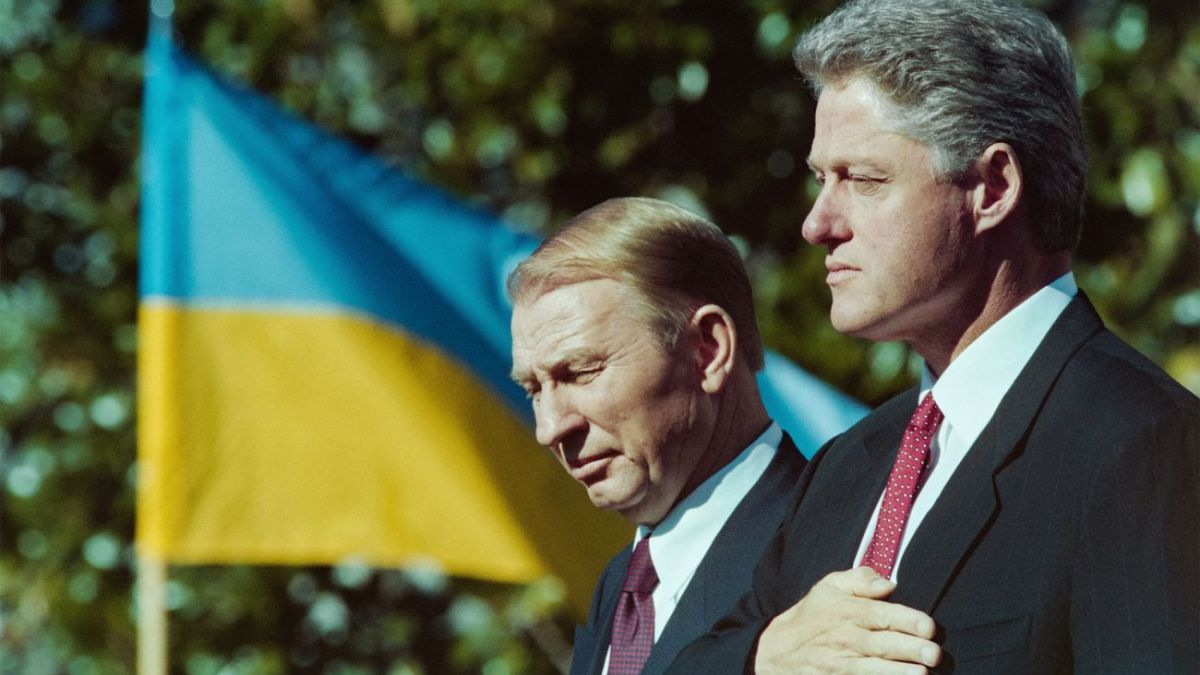
The actual path can still be judged.
Ukraine accepted non-nuclear status within a field where major powers affirmed its sovereignty and borders. Russia later violated the central commitments. The response mechanisms proved insufficient to prevent territorial seizure in 2014 or the full-scale invasion in 2022.
That sequence damaged more than Ukraine. This taught the wider field that nuclear status and sovereign exposure are distributed very differently.
- A nuclear state could violate an assurance connected to another state's disarmament while its arsenal constrained how far outside correction could safely go.
- A non-nuclear state could receive support, sanctions, weapons, diplomacy, and international recognition while still absorbing invasion on its own territory.
This does not prove that every state should build nuclear weapons.
But it creates pressure in that direction.
Nonproliferation depends on more than condemning acquisition. It depends on making non-nuclear continuance defensible. States have to believe that restraint will not turn them into the easiest available target for a stronger nuclear power.
Budapest failed this test because the assurance field did not contain enough mechanism to survive the signatory most capable of breaking it.
The failure also clarifies the buffer wound.
Russia's security wound and Ukraine's security wound were never placed inside one sufficiently corrigible architecture.
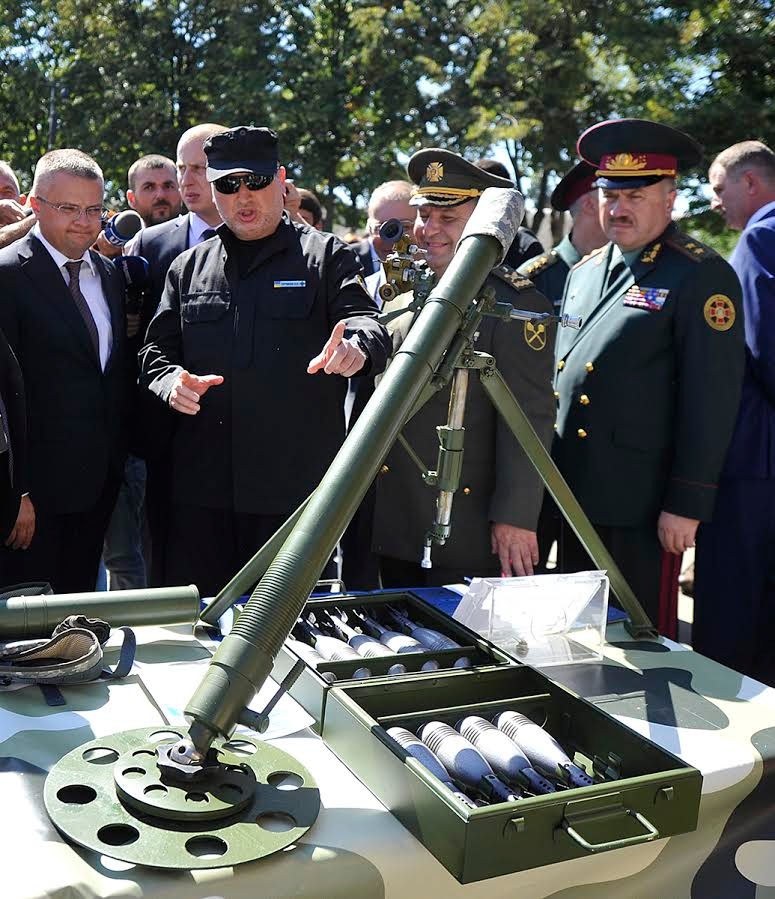
- Russia received recognition as the primary Soviet nuclear successor, participation in European institutions, consultation with NATO, and a wider political order that claimed no spheres of influence.
- It did not receive a settled answer to how NATO enlargement, military infrastructure, and the collapse of its former strategic belt would be managed without recurring humiliation or fear.
- Ukraine received independence, borders recognized by Russia, non-nuclear status, and security assurances.
- It did not receive an enforcement structure capable of preserving those conditions if Russia decided Ukrainian independence itself had become a threat.
The post-Cold War order attempted to solve these problems through expectation.
- Russia would become a partner.
- Ukraine would remain sovereign.
- Eastern European states would choose their alignments.
- Nuclear dangers would decline.
- Economic integration would raise the cost of war.
- Institutions would absorb conflict.
- The future would become less historical.
- History declined the terms.
The two wound maps remained active beneath the settlement.
- Russia remembered depth and loss.
- Ukraine remembered subordination and release.
Eastern Europe remembered what happened when Moscow's security claim became the region's political ceiling.
The United States and Western Europe remembered the Cold War ending and often mistook victory for completed repair.
Budapest stood inside that optimism: a document precise enough to record the promise and too thin to carry the moment of betrayal.
Around it, the post-Cold War security machine kept moving.
- NATO would enlarge through the choices of states seeking protection.
- Russia would read enlargement through the loss of depth.
- Ukraine would move between
- neutrality,
- partnership,
- exposure, and
- promises of future membership without receiving a stable protected position.
The order tried to make Russia secure through reassurance, Eastern Europe secure through enlargement, and Ukraine secure through ambiguity.
It could not hold all three.
÷
XIV. What Gorbachev Heard
The post-Cold War argument begins with a sentence that was spoken, remembered, enlarged, denied, recovered from archives, and made to carry far more history than any one sentence should safely bear.
Not one inch eastward.
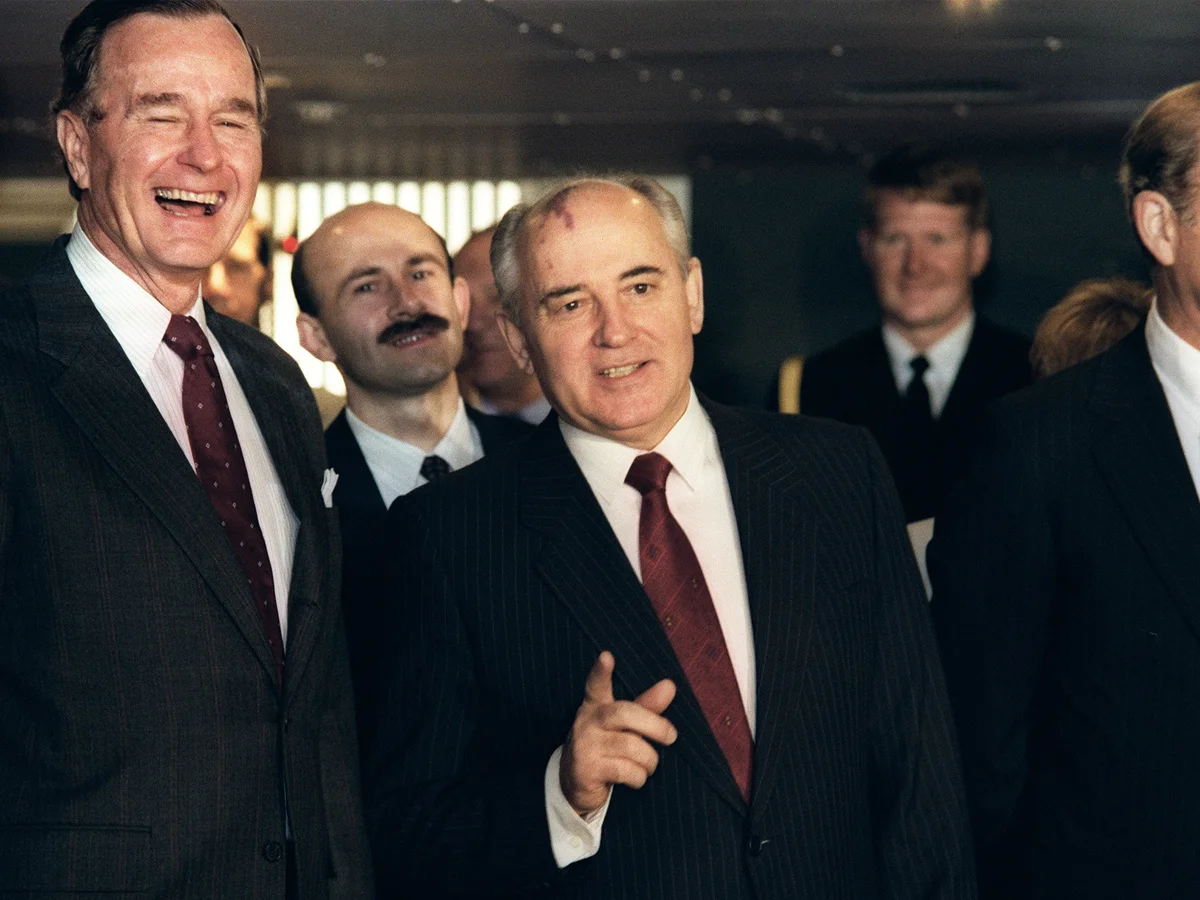
United States Secretary of State James Baker used that phrase in February 1990 while discussing German reunification with Mikhail Gorbachev. The immediate problem was enormous and specific.
- Germany was divided.
Hundreds of thousands of Soviet troops remained in East Germany. The Warsaw Pact still existed. NATO still faced it. The Berlin Wall had fallen, but the European security order had not yet decided what the fall meant. A unified Germany might become neutral, remain partly outside NATO's military structure, or enter NATO as one state. Every option carried the memory of a German power that had invaded Russia twice within living memory.
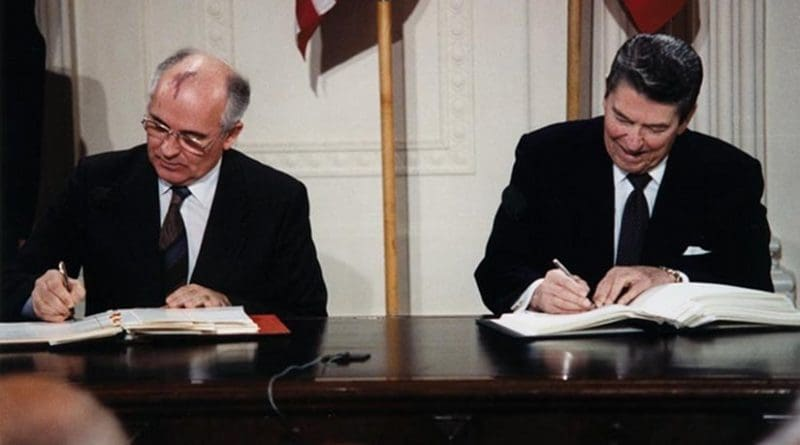
Western officials needed Soviet consent to reunification on terms they preferred. Soviet leaders needed to know that their withdrawal would not move an adversarial military structure into the space they were leaving.
Assurances entered the room.
Baker told Gorbachev that NATO's jurisdiction would move no farther east if Germany remained connected to the alliance. West German Foreign Minister Hans-Dietrich Genscher had already spoken publicly about NATO ruling out expansion toward Soviet borders. Chancellor Helmut Kohl, President George H. W. Bush, French President Francois Mitterrand, British Prime Minister Margaret Thatcher, NATO Secretary General Manfred Worner, and other Western officials offered versions of the same political reassurance during the diplomacy around German unity.
The formulations differed.
- Some were explicitly about the territory of the German Democratic Republic.
- Some sounded wider.
- Some described military jurisdiction, some force deployment, some alliance reach, and some the general character of a new European order in which Soviet withdrawal would not become strategic encirclement.
The Soviet leadership heard a political promise larger than the final treaty text.
The final settlement made one part of the assurance legal. After Soviet forces withdrew, foreign armed forces and nuclear weapons would not be stationed in the territory of the former East Germany. The treaty did not contain a general prohibition against NATO later accepting Poland, Czechoslovakia, Hungary, the Baltic states, or any other European country.
This creates the dispute in its strongest honest form.
- Russia cannot truthfully say that a signed treaty prohibited all NATO enlargement and the West later tore it up.
- The West cannot truthfully say that Soviet leaders invented the expectation from nothing.
There were assurances.
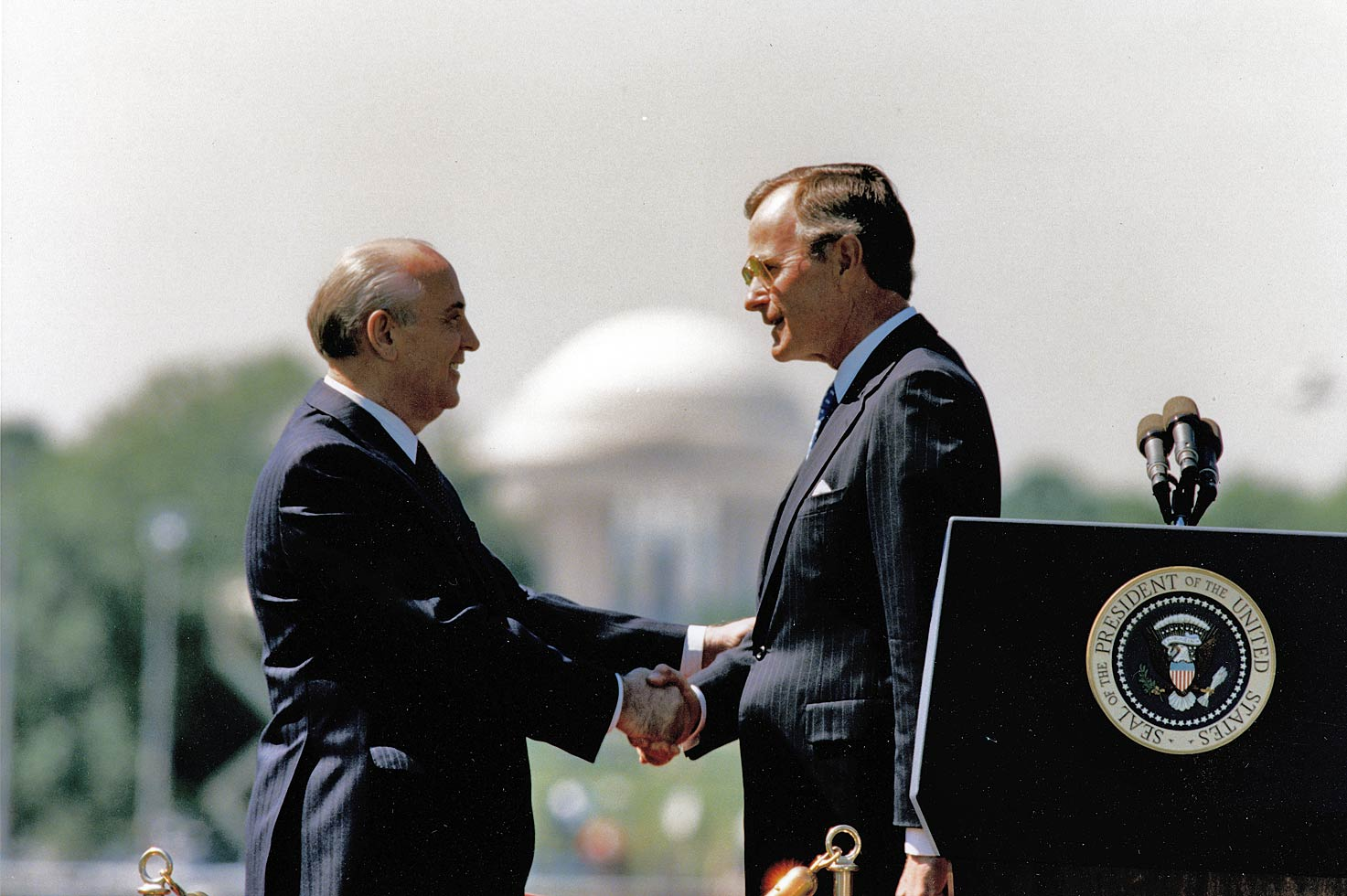
They arose inside the German settlement rather than a completed negotiation over the future alliance status of every state east of Germany. They were politically meaningful, strategically useful, and insufficiently formalized. Western leaders secured Soviet acceptance of German reunification through a broader atmosphere of reassurance, then later treated the narrow legal text as though it exhausted everything that had been communicated.
Russia later treated the political atmosphere as though it had settled every future alliance choice in a region whose states were not represented in the 1990 bargain.
Both sides enlarged the instrument after the room had changed.
- The Western enlargement defense says the sovereign states of Central and Eastern Europe had the right to choose NATO.
- This principle is real.
- The countries had not signed away their futures in Gorbachev's meeting with Baker.
- Poland was not a clause in German reunification.
- Estonia was not a diplomatic courtesy owed to Moscow.
- Ukraine was still a Soviet republic in 1990 and could not have its eventual independent security policy permanently decided by an exchange between larger powers.
- The countries had not signed away their futures in Gorbachev's meeting with Baker.
- This principle is real.
- The Russian grievance says the strategic meaning of Soviet withdrawal cannot be reduced to the absence of a specific treaty clause.
- Moscow accepted the reunification of Germany inside NATO after receiving repeated assurances that the West would not exploit Soviet weakness by pressing the alliance eastward.
- A later sequence of enlargements therefore felt less like free states joining a defensive institution and more like the victorious bloc converting a temporary imbalance into a permanent continental order.
- Moscow accepted the reunification of Germany inside NATO after receiving repeated assurances that the West would not exploit Soviet weakness by pressing the alliance eastward.
That grievance also contains structure.
A political assurance can shape action even when it never becomes a treaty.
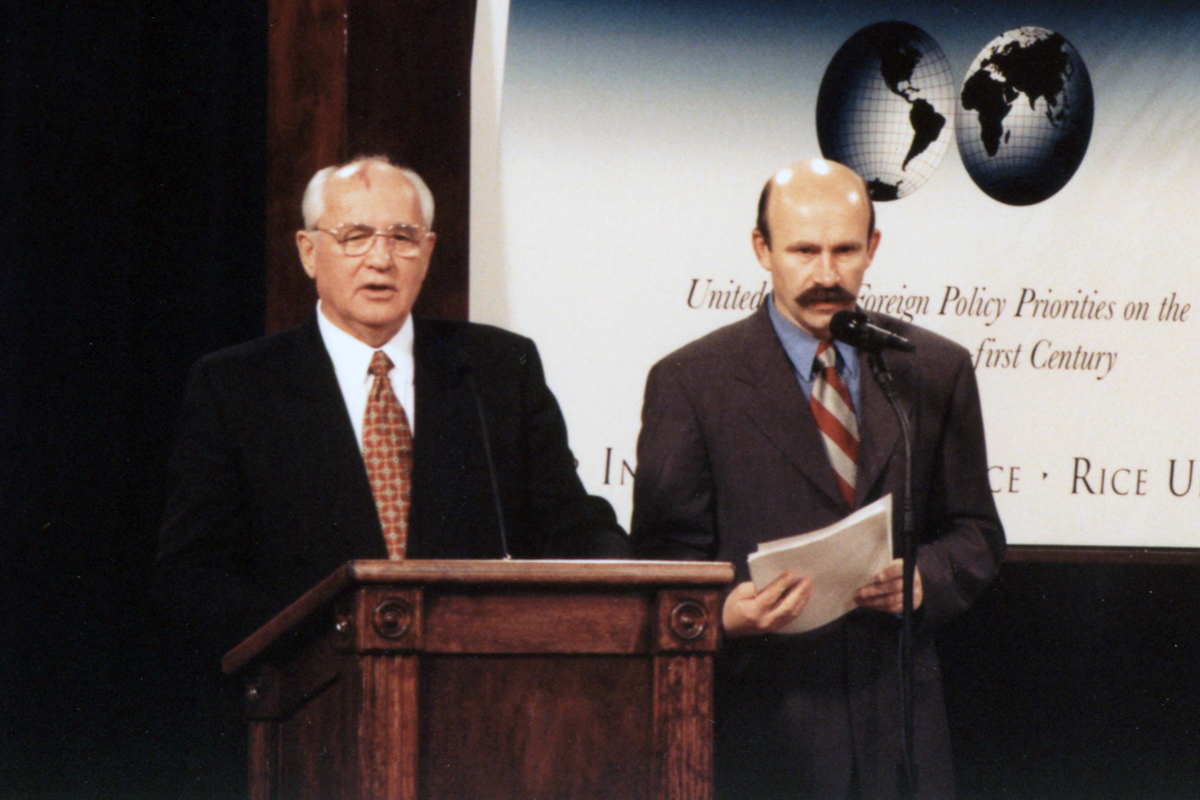
If one side gives up forces, territory, control, or bargaining power in reliance on a described future, the description enters the field. It becomes part of what made the transition reachable. Later officials cannot just erase it by discovering that the sentence was never ratified by a legislature.
Political assurances still cannot grant title over absent states.
The countries between Germany and Russia were not empty approach routes waiting for two powers to decide how much movement would count as betrayal. Those had governments, opposition parties, occupations, uprisings, deportations, border disputes, economic crises, memories of Soviet intervention, and their own fear of what the end of the Soviet Union might leave behind.
The 1990 diplomacy therefore carried two different correction failures.
- The first was Western.
- The United States and its allies used language capable of creating a broad Soviet expectation while preserving enough ambiguity to deny the expectation later.
- The immediate diplomatic problem was solved.
- The long tail was left to memory.
- The immediate diplomatic problem was solved.
- The United States and its allies used language capable of creating a broad Soviet expectation while preserving enough ambiguity to deny the expectation later.
- The second was Russian.
- The state transformed an assurance made to the Soviet Union during German reunification into a standing claim that independent countries could not later enter an alliance Moscow opposed.
- A political wound became a security title.
- The state transformed an assurance made to the Soviet Union during German reunification into a standing claim that independent countries could not later enter an alliance Moscow opposed.
The correct reading is less satisfying than either national story:
Gorbachev heard something real.
He did not hear the future states of Eastern Europe surrender their agency.
÷
XV. What Was Never Built
The enlargement dispute receives so much attention because it gives the failure a visible arrow.
NATO moved east.
The map changed color.
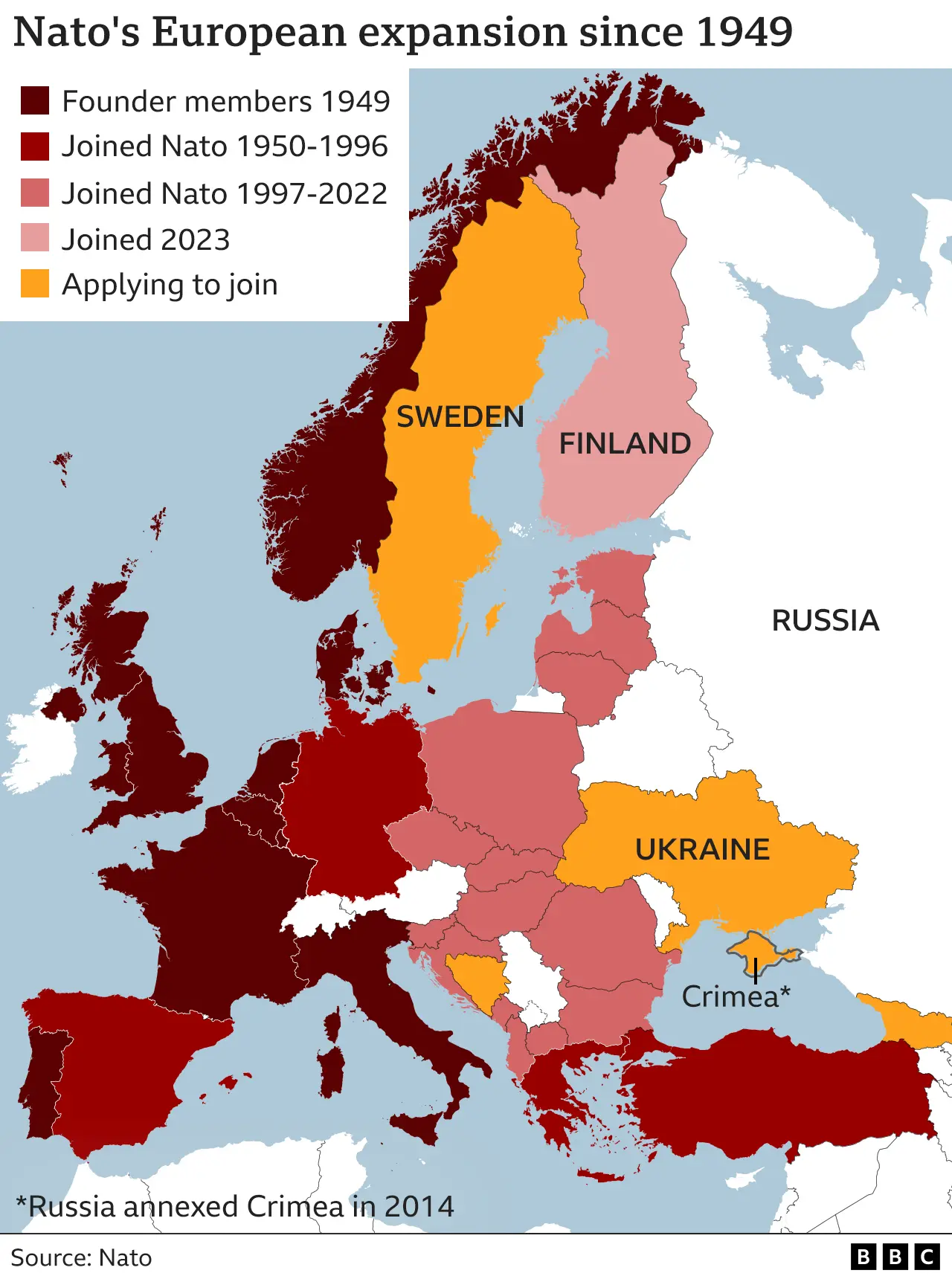
Membership dates can be listed. Borders can be drawn. Russian objections can be placed beside summit communiques. The security order appears to have a single moving part.
The larger failure here is the architecture that never arrived.
The Cold War ended without a common security system strong enough to make Russia safe, Eastern Europe safe from Russia, and the states between them politically free at the same time.
That was the actual task.
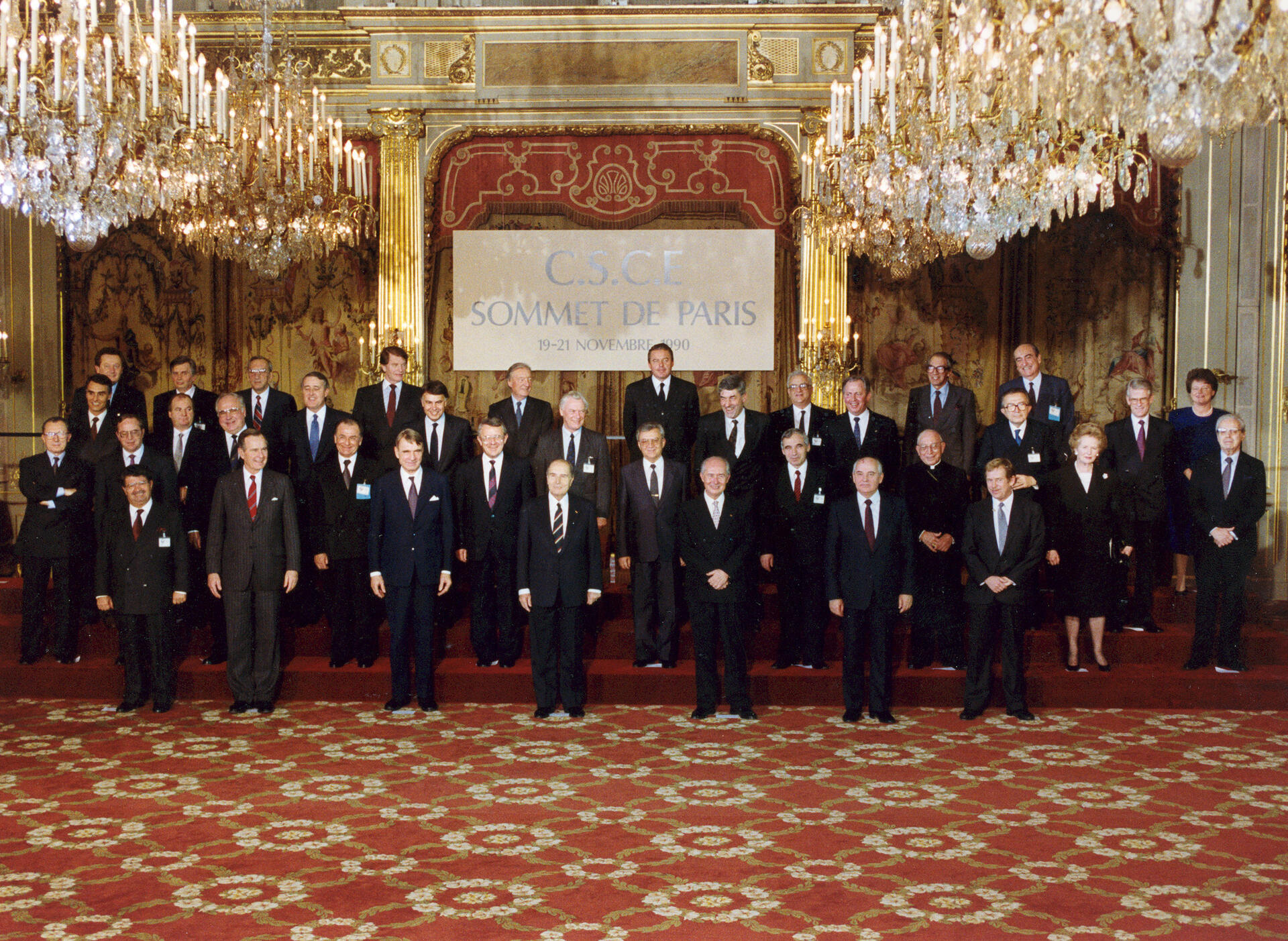
The Charter of Paris for a New Europe announced the end of confrontation in 1990. It spoke of democracy, human rights, sovereign equality, economic liberty, cooperation, and a Europe whole and free. The Conference on Security and Co-operation in Europe offered principles and a shared forum. Arms-control agreements reduced forces and opened military information. The Conventional Armed Forces in Europe Treaty placed limits across the continent. Nuclear arsenals declined. Germany reunited. Soviet troops withdrew from Central and Eastern Europe. The Warsaw Pact dissolved. The Soviet Union followed it into history.
A new field appeared reachable.
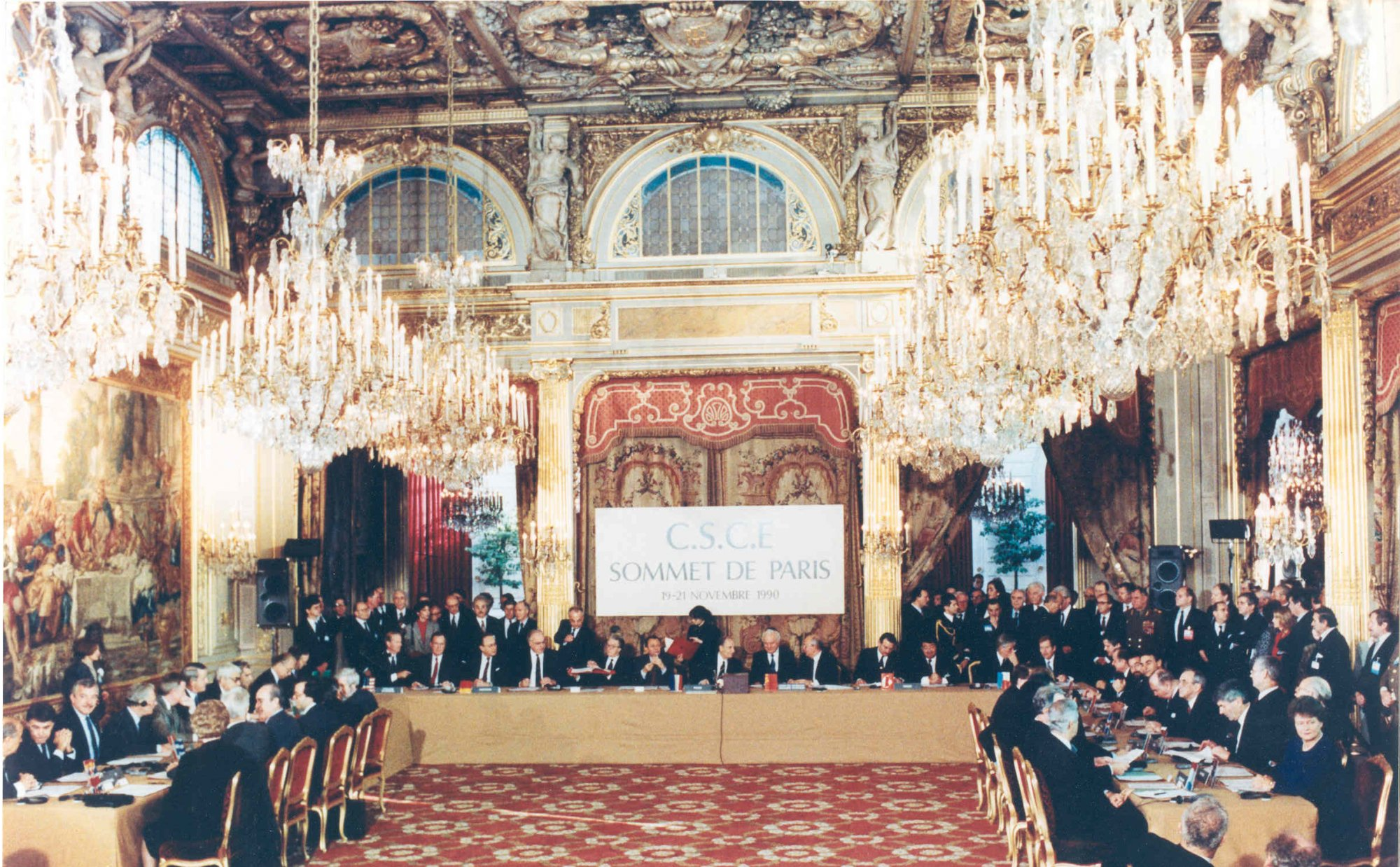
Europe might have built a security order in which military restraint, inspections, regional institutions, arms control, economic integration, democratic legitimacy, and crisis management gradually made bloc membership less existential.
Instead, the old institutions survived unevenly.
- NATO survived with functioning command, American power, membership procedures, military standards, and an Article 5 guarantee that states trusted precisely because it was attached to real force.
- The Warsaw Pact disappeared.
- The Soviet Union disappeared.
- The Russian Federation inherited enormous military power, nuclear status, state institutions, international obligations, and the wound of collapse.
- It did not inherit an equal institutional replacement for the strategic belt it had lost.
- The Russian Federation inherited enormous military power, nuclear status, state institutions, international obligations, and the wound of collapse.
- The Soviet Union disappeared.
The Organization for Security and Co-operation in Europe possessed wide membership and serious principles. It lacked the command power, automatic guarantee, and political cohesion that made NATO attractive to exposed states. The United Nations could authorize collective action under conditions the Security Council rarely supplied against a permanent member. The European Union could expand economic and political membership, yet its defense identity remained entangled with NATO. Bilateral relations depended on leaders, moods, and economic assumptions that could reverse.
The continent therefore tried to carry incompatible security needs through instruments with unequal force.
- Russia received consultation.
- NATO members received defense.
- States outside both received varying combinations of partnership, ambiguity, neutrality, promises, dependence, and exposure.
This asymmetry did not make war inevitable.
It made the field corrigible only while everyone remained willing to interpret ambiguity generously.
The 1990s briefly made that generosity plausible. Russia participated in peacekeeping in the Balkans, joined the Partnership for Peace, negotiated with NATO, entered the Group of Eight, cooperated with the United States on nuclear reduction, and accepted institutional relations that would have been unthinkable during the Cold War. Western governments often treated Russia as a partner in transition. Russian leaders often spoke of a common European home.
The same decade carried economic collapse, state weakness, oligarchic seizure, regional war, unpaid wages, demographic crisis, political humiliation, and the spectacle of the old superpower receiving policy advice and emergency finance from the victorious center of the global economy.
A cooperative institution had to survive that field.
- It needed to separate Russian security from Russian imperial restoration.
- It needed to separate Eastern European security from permanent Russian exclusion.
- It needed to make military transparency binding enough that distance mattered less.
- It needed correction mechanisms for missile defense, force posture, exercises, intervention, minority rights, separatist conflict, and political coercion.
- It needed a way to answer a country that said, "We fear Russia" without teaching Russia that every neighbor's fear would become an American military frontier.
- It needed a way to answer Russia saying, "We fear encirclement" without teaching neighboring states that Russian fear limited their independence.
No single institution carried all of this.
So the states reached for what existed.
- Central and Eastern Europe reached for NATO and the European Union.
- Russia reached for privileged influence in the post-Soviet space, control over military escalation, energy leverage, bilateral pressure, frozen conflicts, and the international authority attached to nuclear power and a Security Council veto.
- The United States reached for enlargement without fully rebuilding the continental arms-control and common-security field around it.
- Western Europe reached for economic integration while often assuming trade could metabolize security conflict after politics had failed.
- Ukraine reached in several directions across successive governments because every available path solved one wound by exposing another.
The missing architecture did not sit outside these choices as an innocent alternative.
It had to be built through them.
It was not.
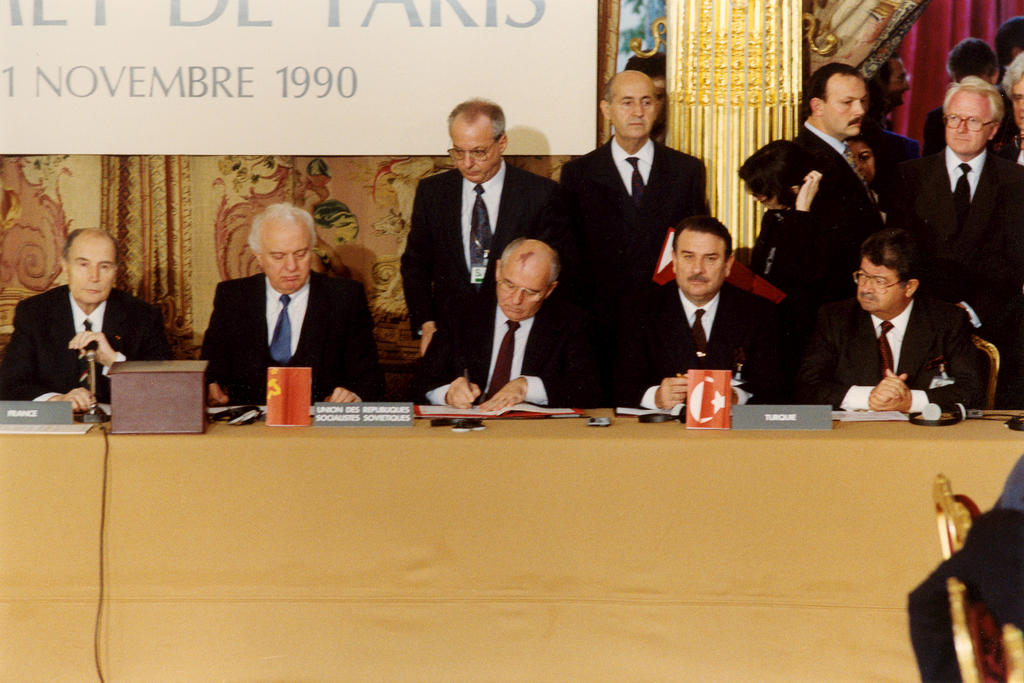
The post-Cold War order kept asking reassurance to do the work of mechanism.
- Russia would be reassured that NATO was defensive.
- Eastern Europe would be reassured that Russia had accepted the settlement.
- Countries between them would be reassured that partnership could substitute for protection.
- Everyone would be reassured that economic interdependence made territorial war irrational.
Reassurance is a useful instrument while the field remains trustworthy.
It is a dangerously light bridge across a real security wound.
÷
XVI. Why the East Went West
NATO enlargement is often narrated from Washington and Moscow because both capitals enjoy appearing to move history by themselves.
The countries that entered the alliance become evidence in someone else's case.
- Washington presents them as democracies choosing freedom.
- Moscow presents them as territory recruited into encirclement.
- Western critics present them as pieces advanced by an American hegemon.
- Russian critics present them as small states whose trauma was converted into continental danger.
Each description catches part of the field.
None can replace the people who asked to join.
Poland did not seek NATO because an American map told it to become nervous.
Czechs and Slovaks did not need a Pentagon briefing to remember 1968.
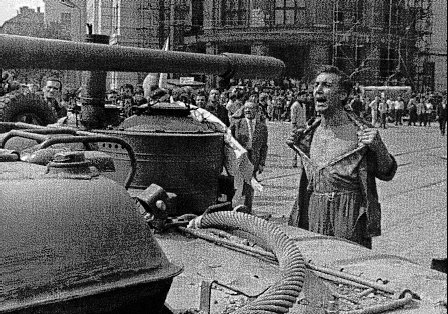
Hungary did not require outside instruction to remember Soviet tanks in Budapest.
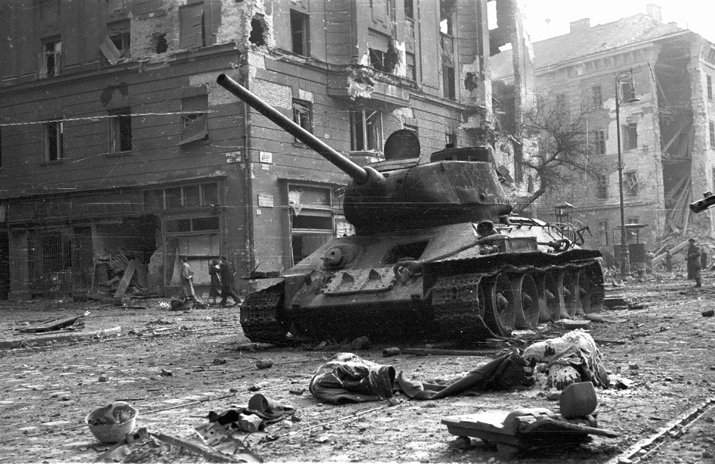
Estonia, Latvia, and Lithuania did not experience the Soviet period as a voluntary security shelter later ruined by Western seduction. Their state continuities, occupations, deportations, demographic transformations, resistance movements, and restored independence gave Russian power a very different moral meaning than it possessed in Moscow.
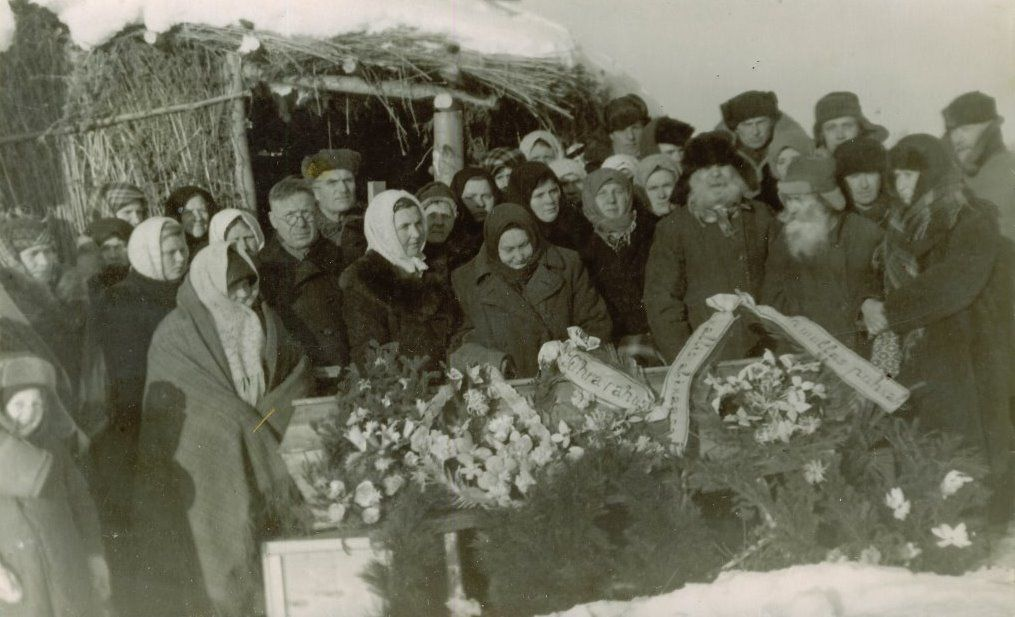
Romania, Bulgaria, and other states carried their own mixtures of Soviet domination, domestic dictatorship, regional insecurity, reform, ambition, and desire for admission into the institutions of the wealthier democratic West.
The east went west for several reasons at once.
- Security was one.
- Russian weakness in the 1990s did not prove that Russian power would remain weak or benign.
- States make alliance decisions against futures, not only current inventories.
- The former Soviet sphere contained direct memories of intervention and imposed political limits.
- NATO membership offered the strongest available guarantee that those limits would not return.
- Russian weakness in the 1990s did not prove that Russian power would remain weak or benign.
- Political consolidation was another.
- Membership required civilian control, military reform, institutional compatibility, and public commitment to a Euro-Atlantic direction.
- Governments used accession as an external lock on domestic transformations that remained fragile.
- The alliance became part security instrument, part status transition, part admission ticket into the political identity called Europe.
- Prestige mattered.
- Economics mattered.
- Elite ambition mattered.
- American influence mattered.
- Domestic arguments mattered, too.
Enlargement was never one uncontested regional instinct. Some parties feared provoking Russia. Some citizens preferred neutrality. Some opposed the costs and demands of membership. Some saw NATO through the memory of its own wars and interventions. Some governments oversold accession as a cure for problems no alliance could solve.
The choices were still choices.
This does not mean every sovereign choice must be accepted by every affected state without negotiation. Alliance enlargement alters military planning, infrastructure, intelligence, airspace, exercises, reinforcement routes, and the political balance around borders.
- Russia possessed standing to object, seek limits, request transparency, negotiate force posture, and test whether the new order could preserve its security too.
- It did not possess standing to define Eastern European preference as externally implanted whenever the preference opposed Russian interest.
That move erases the exact history Russia says the West erased from Russia.
The Russian narrative asks that NATO enlargement be read through Russian memory, Russian vulnerability, Russian sacrifice, and Russian interpretation of the 1990 settlement.
Correct.
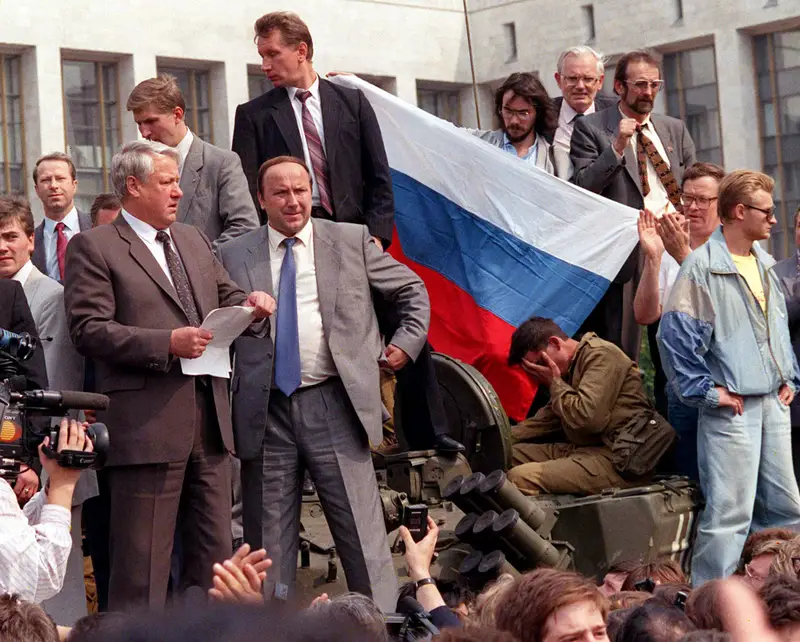
The same discipline must survive the border.
- Polish memory counts.
- Baltic memory counts.
- Czech memory counts.
- Hungarian memory counts.
- Ukrainian memory counts.
A security architecture that recognizes only the largest fear creates a market where military power purchases historical standing.
The countries seeking NATO did not all believe Russia would invade tomorrow. They understood something more structural.
- Membership would move a future invasion, threat, coup, coercive demand, or sphere-of-influence settlement from a bilateral struggle into an alliance obligation.
Article 5 changed the reachability field before any shot was fired.
This is why Russia experienced enlargement as loss even when NATO stationed limited permanent force in the new members during the early post-enlargement years. The political fact of the guarantee mattered. A former buffer could no longer be isolated and disciplined without risking conflict with the United States and the whole alliance.
- From the member state's perspective, this was the purpose.
- From Moscow's perspective, this was the wound.
The same instrument opened one future and closed another.
- It opened a more protected political future for states that feared Russian return.
- It closed Russia's ability to manage the region through asymmetric bilateral power.
- It also moved NATO's guaranteed field closer to Russia and hardened the continental division that cooperative architecture had been expected to dissolve.
The moral question cannot be answered by counting flags.
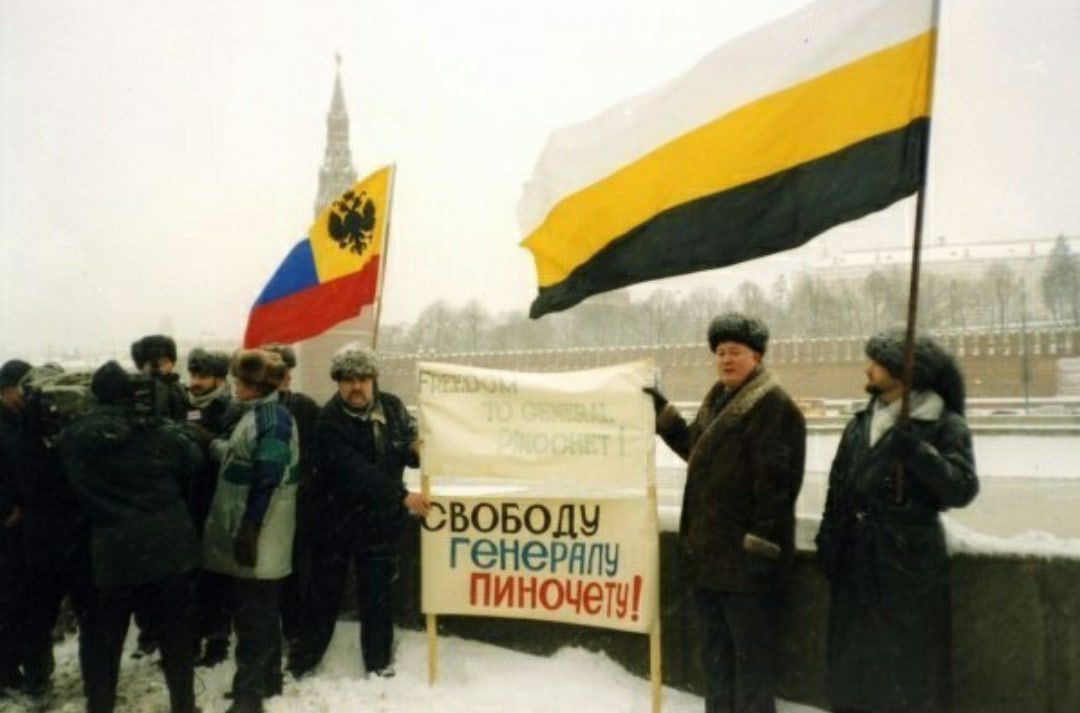
It has to ask which form of security preserved political standing without exporting unacceptable exposure.
- NATO enlargement protected many states from the possibility that Russia's future wound would become their political ceiling.
- The enlargement process also proceeded without producing an equally credible answer to Russia's fear that the alliance surviving the Cold War would continue recruiting the strategic space left by Soviet collapse.
Those claims do not cancel each other.
They reveal why the field needed a stronger instrument than victory followed by reassurance.
÷
XVII. The Founding Act
In May 1997, NATO and Russia signed a document announcing that they no longer considered each other adversaries.
That sentence should remain difficult to read.
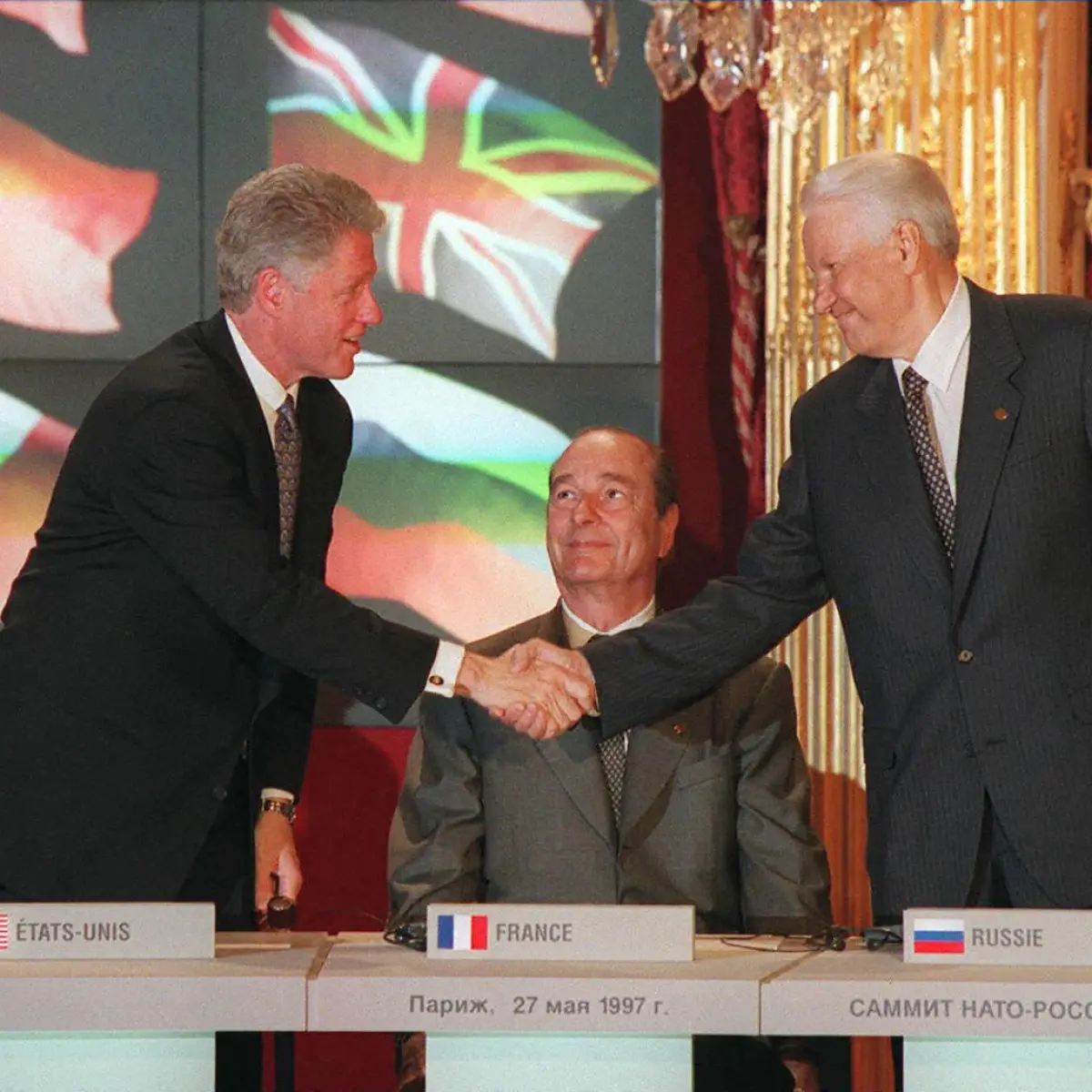
The Founding Act on Mutual Relations, Cooperation and Security established a Permanent Joint Council. It committed the parties to consultation, transparency, conflict prevention, arms control, peacekeeping, nuclear safety, and cooperation across a wide security field. It affirmed democracy, sovereignty, territorial integrity, peaceful settlement, and every state's inherent right to choose the means by which it would ensure its own security.
The Act also addressed the military meaning of enlargement.
NATO stated that it had no intention, plan, or reason to deploy nuclear weapons on the territory of new members. It described carrying out collective defense through reinforcement and interoperability rather than additional permanent stationing of substantial combat forces under the current and foreseeable security environment.
- Russia did not receive a veto.
- NATO did not receive permission to ignore Russian security.
The architecture attempted to separate enlargement from encirclement.
- New members could enter the alliance.
- Military posture would remain restrained.
- Russia would receive institutional access to consultation and cooperation without gaining authority over alliance decisions.
The arrangement was imperfect from every direction.
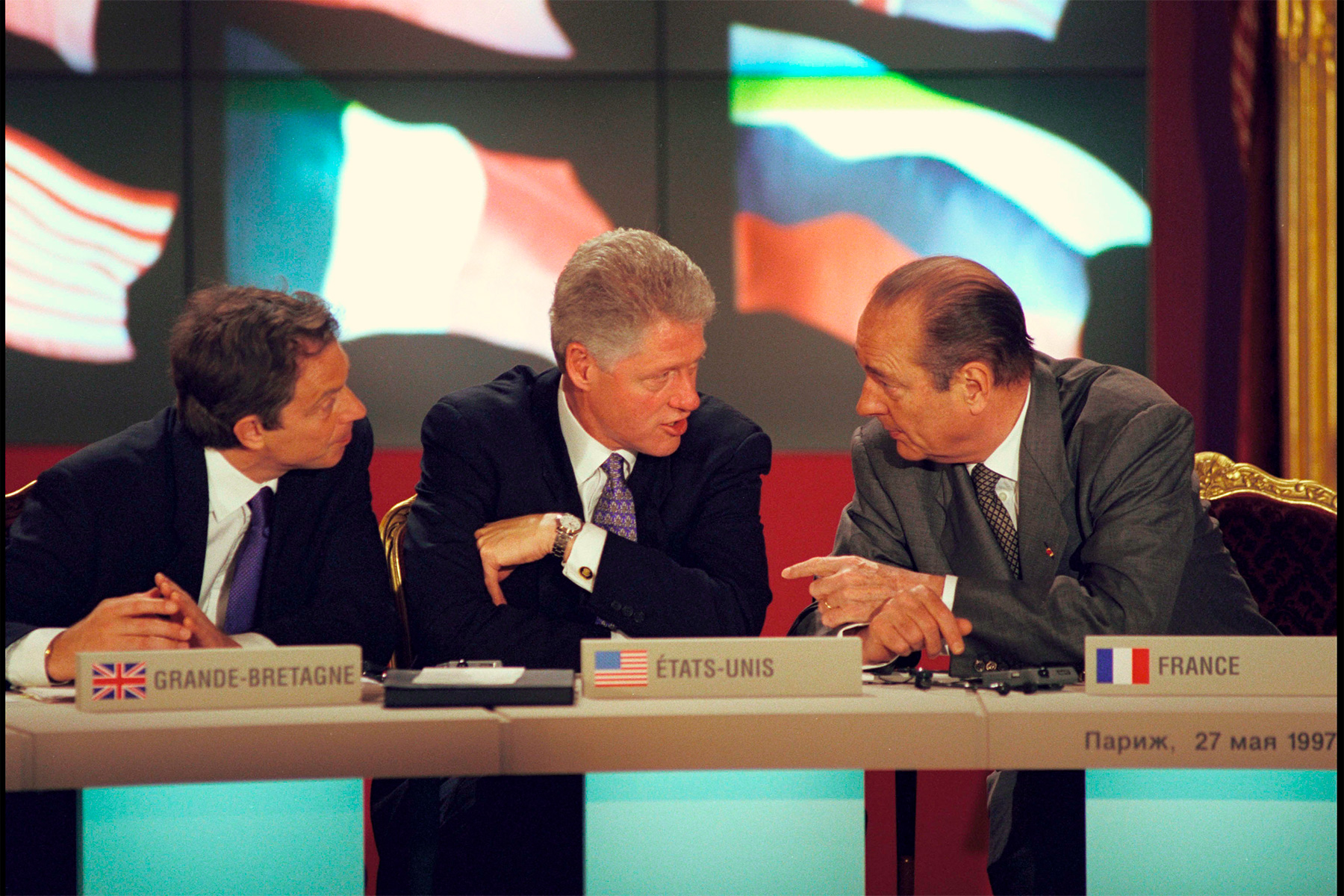
Russian officials could see it as compensation for a decision already made elsewhere. NATO members could see consultation as useful only so long as Russia did not treat it as co-decision. Eastern European applicants could worry that restraint left them as second-class allies. The Act's force commitments depended on a security environment it did not control. Its language could survive only while the relationship remained capable of describing that environment together.
Still, it was a real instrument.
Later history often presents the relationship as though the available choices were
- NATO submission,
- Russian veto, or
- war.
The Founding Act opened another path.
- Alliance choice and Russian security concern could inhabit the same document.
- Sovereignty and restraint could coexist.
- Consultation could become routine enough that military movement lost some of its capacity to become prophecy.
The path failed.
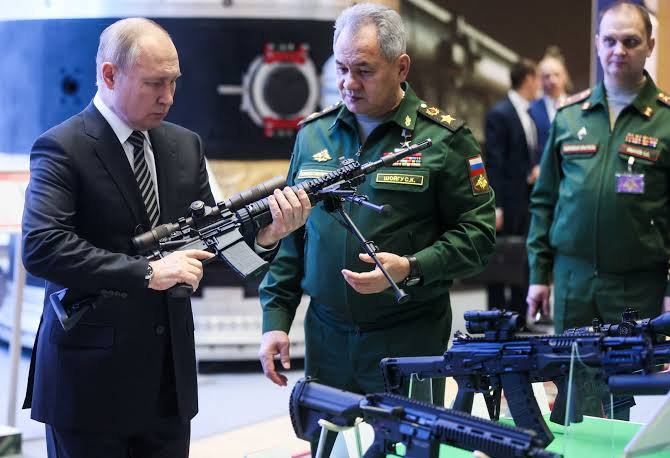
It did not fail immediately.
Russia joined NATO's Partnership for Peace in 1994. Russian troops later served alongside NATO forces in Bosnia and Kosovo under arrangements that required former adversaries to share missions, communications, rules, and physical space. The cooperation was limited and politically tense. It was still real enough to place Russian and NATO soldiers inside one operational field without either side disappearing.
After the attacks of September 11, 2001, cooperation widened again.
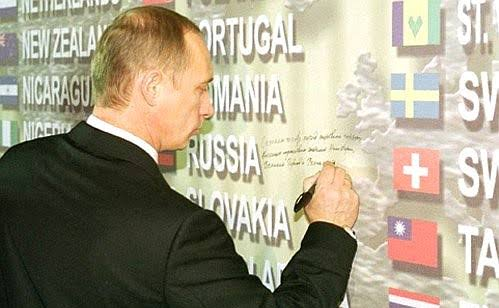
In 2002, the NATO-Russia Council replaced the Permanent Joint Council with a structure publicly described as a forum where Russia and NATO members would meet as equal partners on defined issues. Work developed around terrorism, military reform, emergency response, submarine rescue, civil protection, nonproliferation, theater missile defense, and support related to Afghanistan.
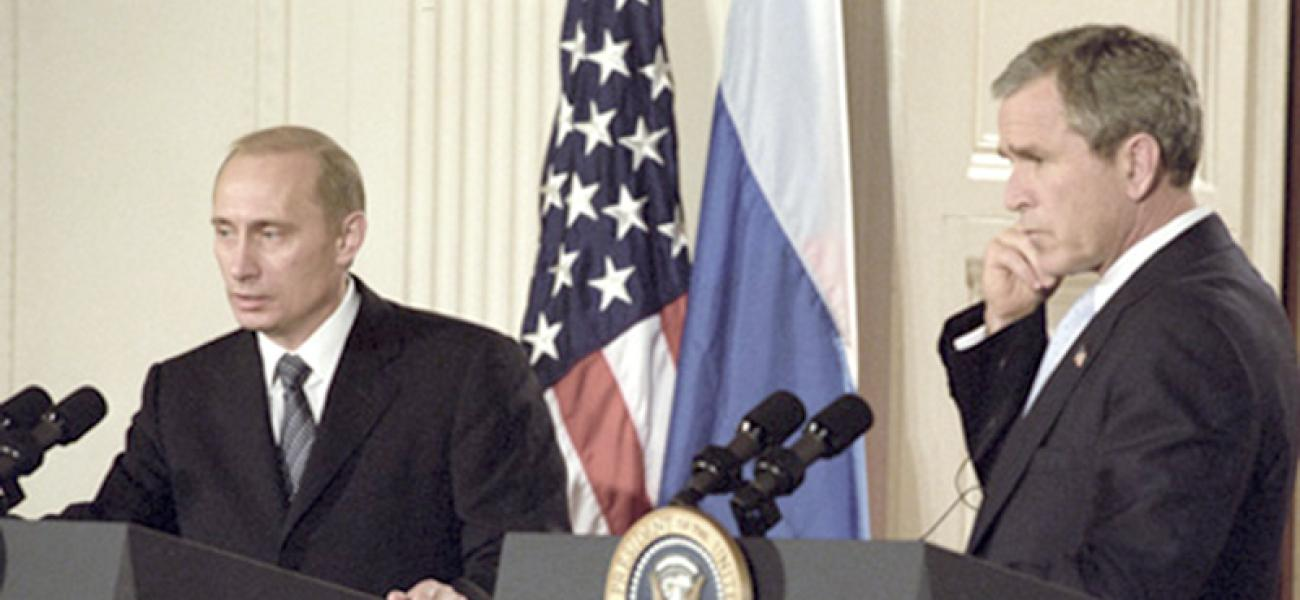
This was not hidden reconciliation waiting to bloom if everyone had been nicer. The parties still disagreed over enlargement, Kosovo, Chechnya, missile defense, the post-Soviet space, and the distribution of power inside the relationship. Russia wanted recognition as a major security center whose consent mattered. NATO preserved an alliance process in which Russia could consult but could not stop decisions. New member states wanted assurance that partnership with Russia would not become a side door through which their security returned to negotiation.
The institutional form still carried an important correction.
- Russia did not have to become a NATO member for its security concerns to enter NATO's working machinery.
- NATO did not have to dissolve for Russian officers and officials to acquire routine channels into the alliance.
- Joint action could be built issue by issue, reducing the amount of security that had to be inferred from symbols, speeches, and force movement.
The limits were equally clear.
- Consultation is strongest before the parties decide that the issue under discussion belongs to their identity.
- Once NATO treated enlargement as a principle it alone could administer, and Russia treated the post-Soviet space as a security interest others could enter only at risk, the council had little authority over the decisions producing the conflict.
- It could discuss the weather after both sides had helped build the climate.
- Once NATO treated enlargement as a principle it alone could administer, and Russia treated the post-Soviet space as a security interest others could enter only at risk, the council had little authority over the decisions producing the conflict.
This is a recurring failure of advisory architecture.
The room exists. Everyone can speak. The institution cannot compel the strongest actor to let the speech alter the transition.
By the time consultation becomes most necessary, the protected decision has already moved somewhere else.
Its existence proves the failure was generated rather than predestined.
÷
XVIII. Western Exception
The post-Cold War order spoke universal law through powers that repeatedly reserved exceptions for themselves.
Russia noticed this.
So did everyone else.
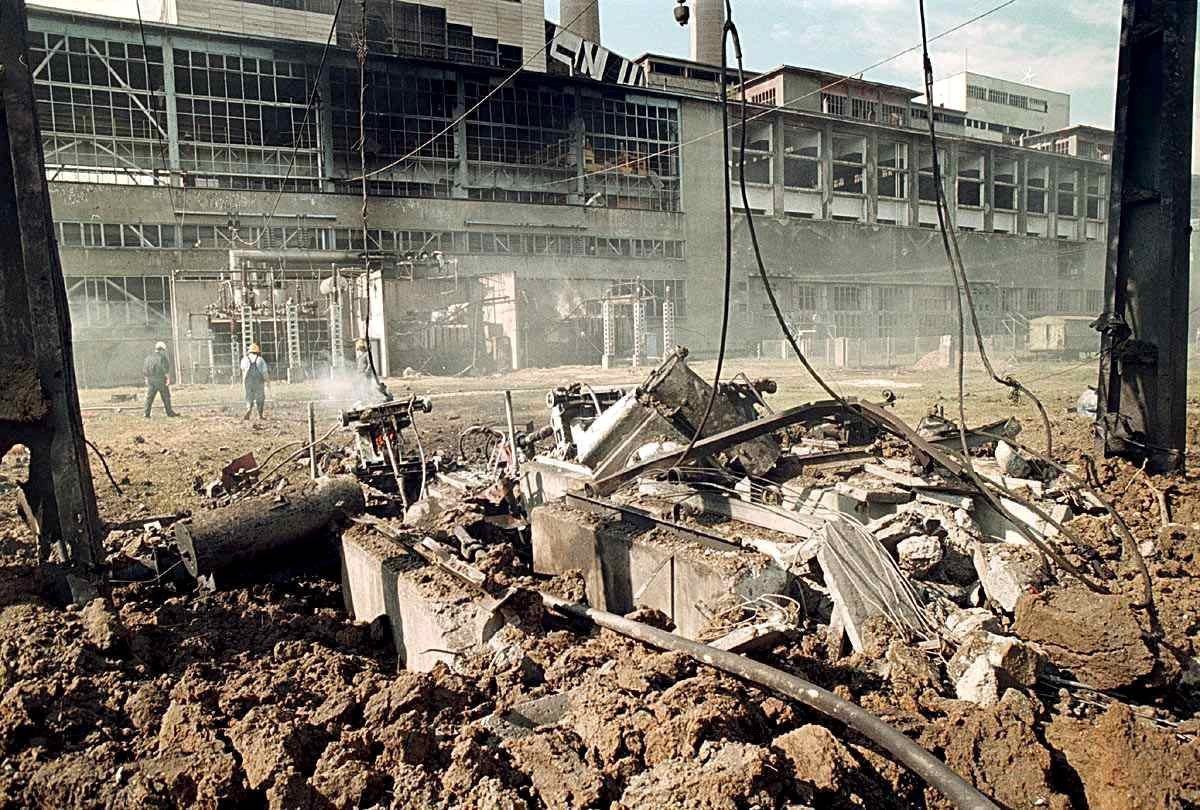
In 1999, NATO conducted an air campaign against the Federal Republic of Yugoslavia without authorization from the United Nations Security Council. The intervention arose from repression, displacement, failed negotiation, and fear of mass atrocity in Kosovo.
- Western governments described it as necessary action after the Security Council could not act.
- Critics described it as an illegal war conducted by an alliance that had just announced a new cooperative order with Russia.
The moral and legal arguments remain contested.
The field effect is easier to see.
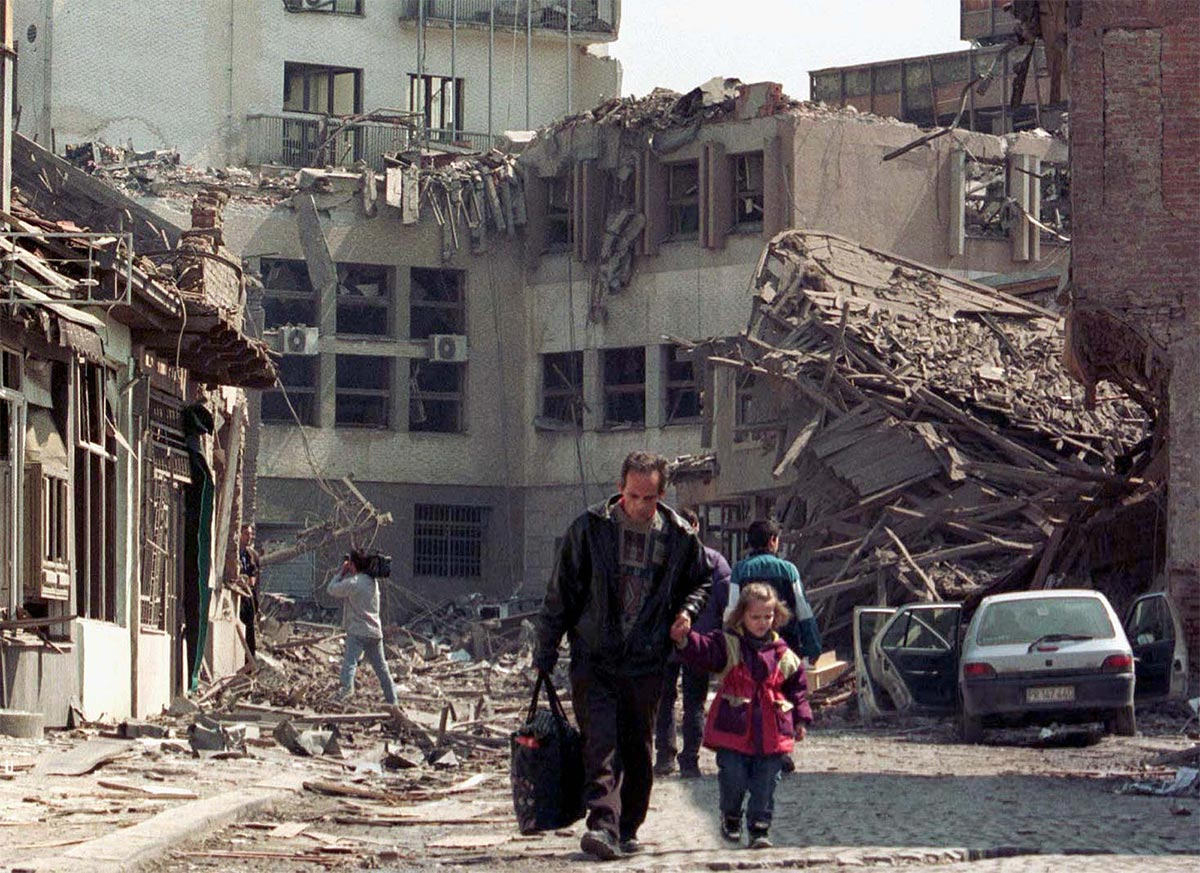
NATO demonstrated that it could
- use force beyond member territory,
- against a sovereign state,
- without Security Council authorization,
- when it judged the humanitarian and security case strong enough.
- without Security Council authorization,
- against a sovereign state,
- Moscow learned that formal rules would bend under Western power.
- Washington learned that Russian objection could be survived.
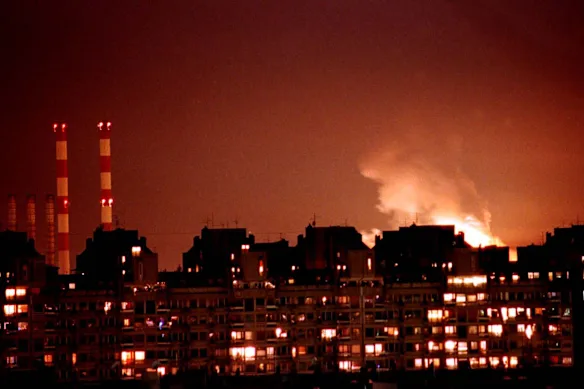
Kosovo later declared independence. Many Western states recognized it over Serbian and Russian opposition. The case carried specific histories of repression, war, international administration, and failed settlement.
Russia nevertheless acquired a precedent-shaped argument: if territorial status could change under external force and disputed legality there, Western states could not present every inherited border as absolute everywhere else.
A precedent does not work like a court order in international politics.
It works like a weapon lying on the floor.
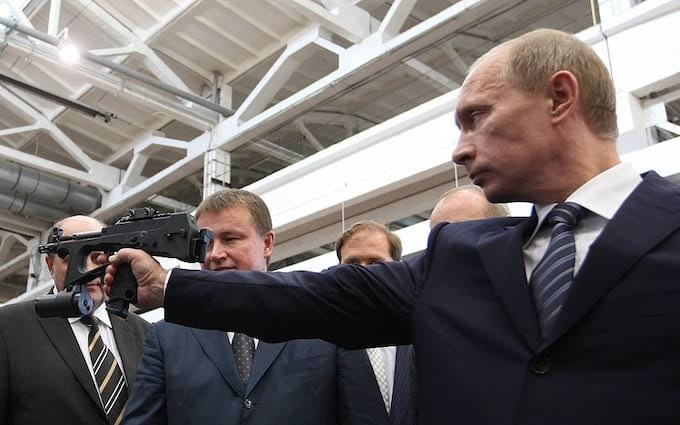
Someone else can pick it up even when the cases differ.
The United States invaded Iraq in 2003 without a new Security Council authorization expressly approving the war. The stated case joined weapons of mass destruction, enforcement of prior resolutions, terrorism, dictatorship, and regional security. The central weapons claims collapsed. The invasion removed a brutal government and opened occupation, insurgency, torture, sectarian conflict, displacement, institutional destruction, and a long regional tail.
Russia did not need to admire Saddam Hussein to learn from Iraq.
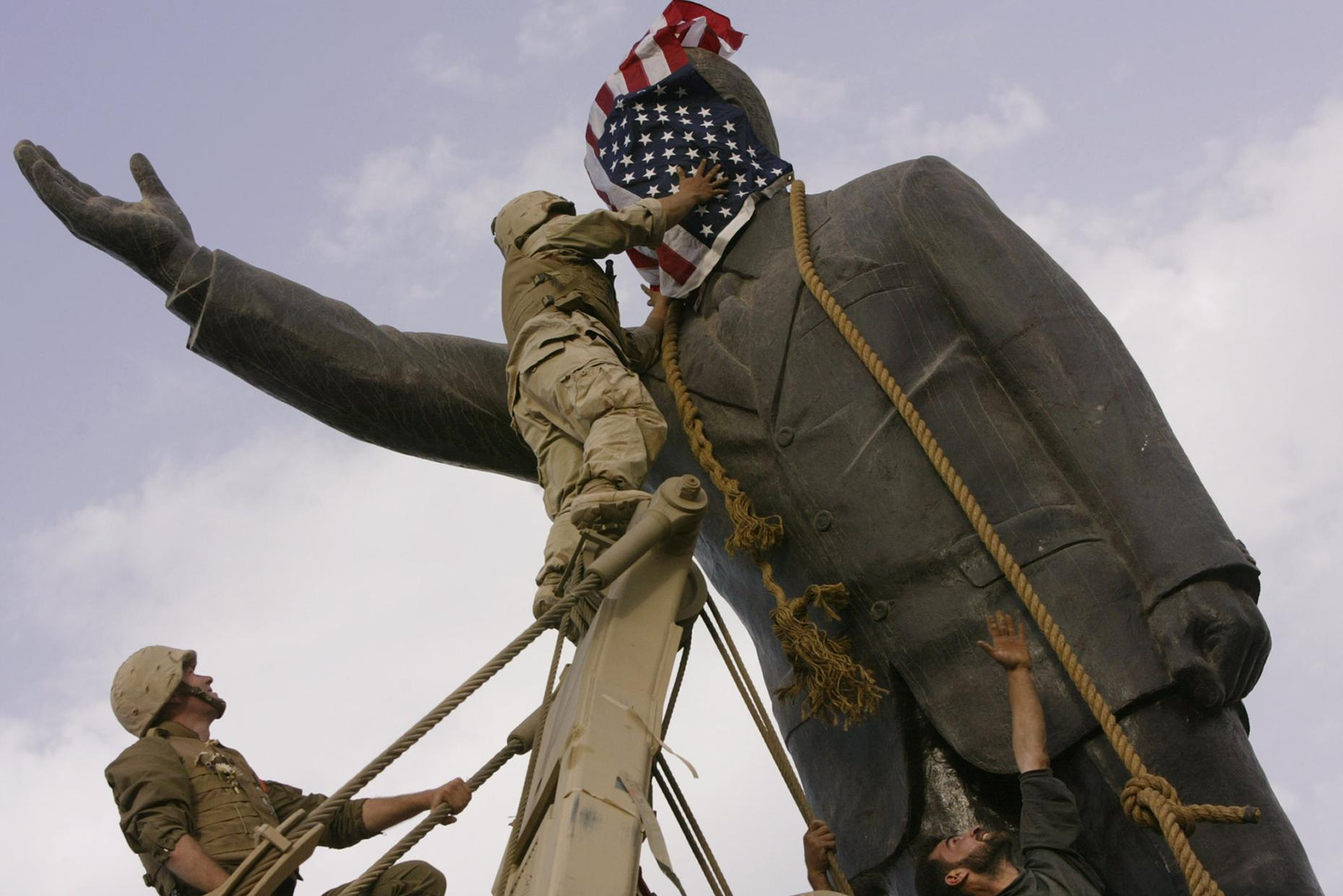
A powerful state could
- describe danger,
- reject the available inspection and diplomatic field as insufficient,
- use force without broad legal consent,
- remove a government, and
- demand that the resulting order be treated as reality.
- remove a government, and
- use force without broad legal consent,
Libya added another lesson in 2011.
The Security Council authorized protection of civilians through all necessary measures while excluding foreign occupation. NATO intervention helped prevent an immediate assault on Benghazi and also became inseparable from the collapse of Muammar Gaddafi's government.
Russia and China had abstained rather than vetoing the resolution. Moscow later argued that the protective mandate had been stretched into regime change.
The aftermath here strengthened the argument that Western security language carried hidden political succession inside it.
- These cases do not authorize Russia's wars.
- They damage the instrument used to oppose them.
A rule-based order cannot spend legality selectively and expect the unspent portion to remain sacred for adversaries. Every exception raises the future burden of proof. Every intervention described as unique gives later powers language for their own uniqueness. Every regime-change war teaches threatened regimes to interpret democracy promotion, humanitarian protection, sanctions, civil society support, and military partnership through the survival of the government.
The United States also withdrew from the Anti-Ballistic Missile Treaty in 2002.
- Washington argued that the treaty constrained defense against new missile threats from states such as North Korea and Iran.
- Russia saw a foundational strategic limit removed by the stronger party.
- Missile-defense sites later planned or built in Europe were presented as protection against threats outside Russia.
- Moscow read the systems through potential future capability and the steady erosion of mutual vulnerability as a stabilizing condition.
The Conventional Armed Forces in Europe regime deteriorated.
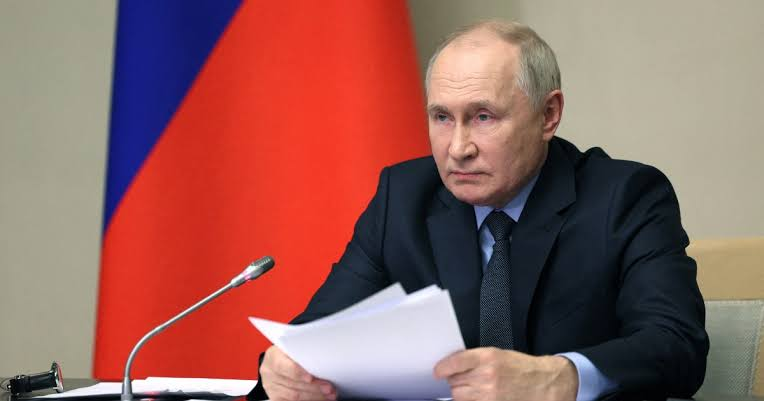
The Intermediate-Range Nuclear Forces Treaty later collapsed amid competing accusations and a United States withdrawal.
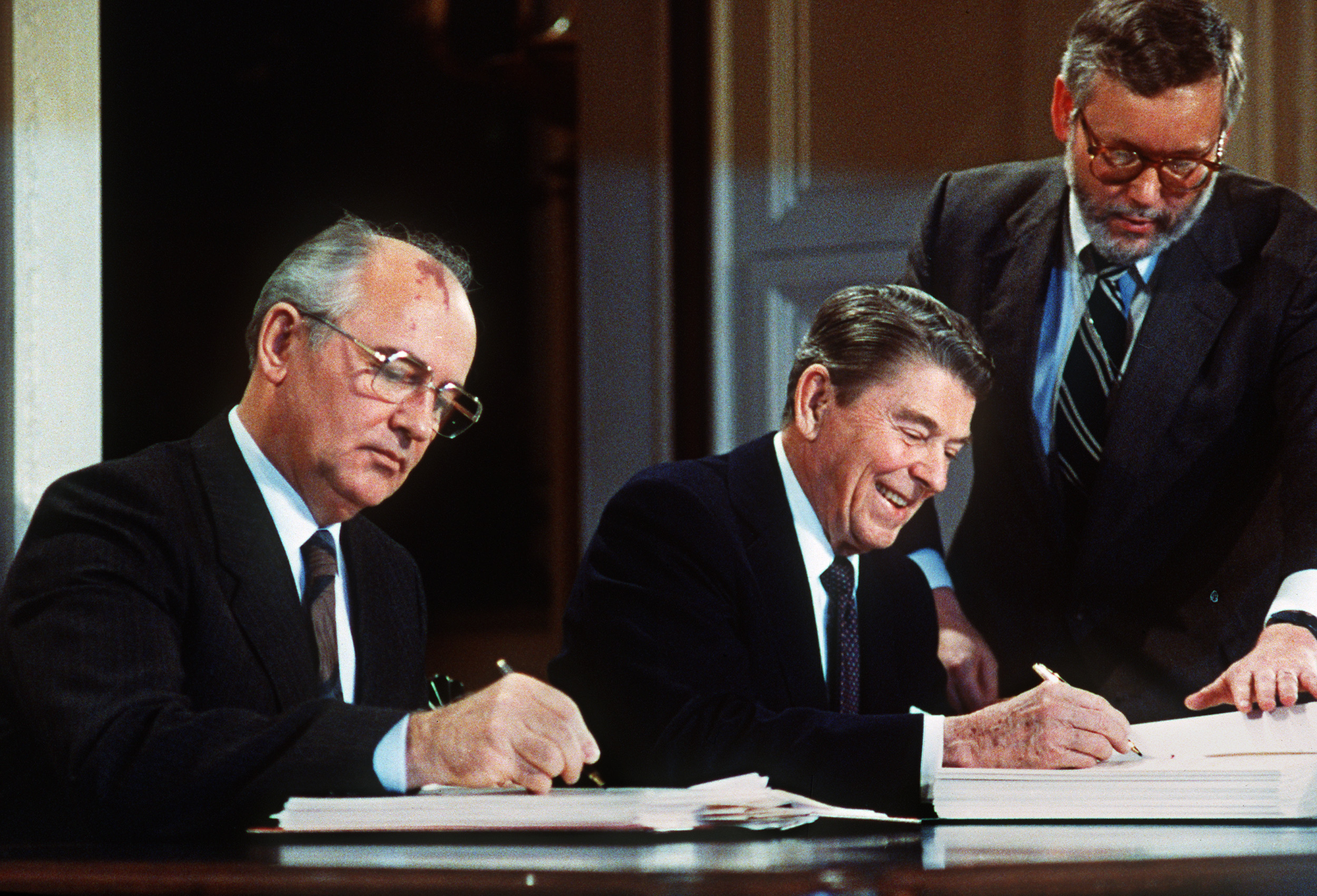
The Open Skies Treaty lost both the United States and Russia.
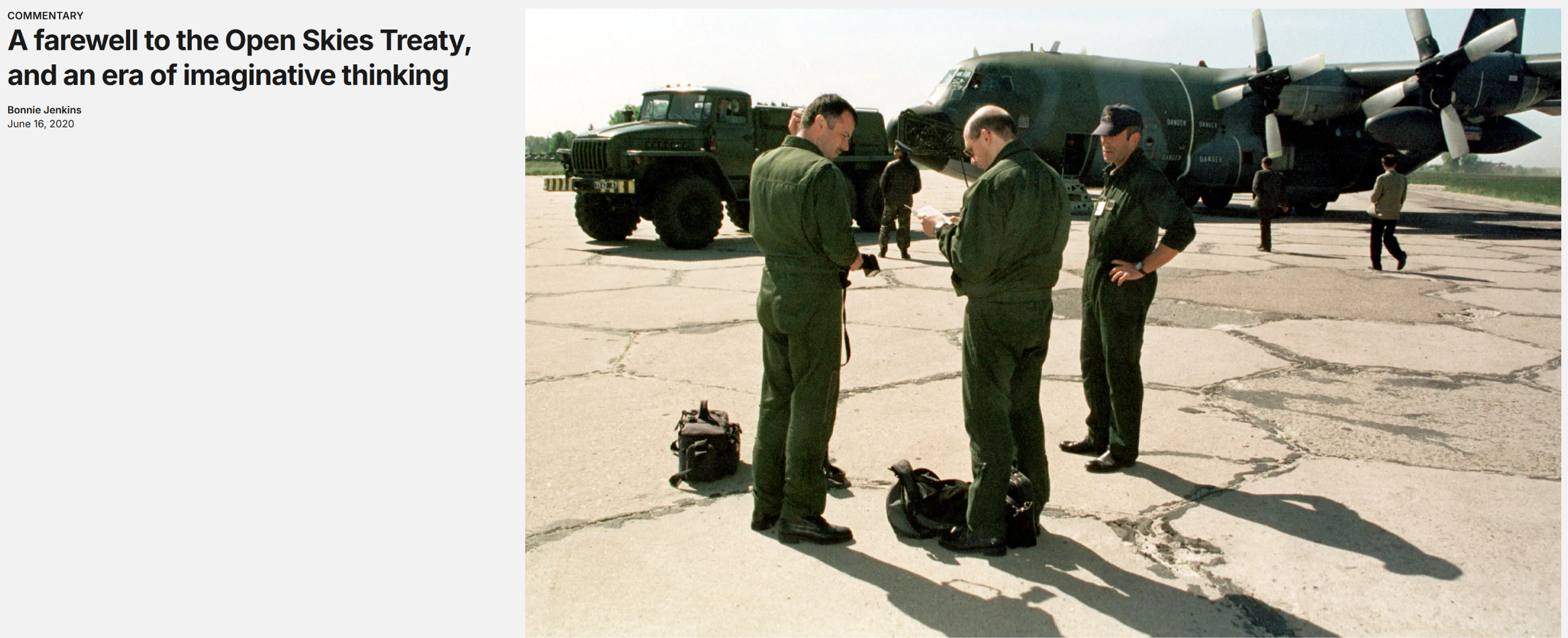
The consultation field remained while the inspection and limitation field thinned out. Western governments often answered Russian complaints by distinguishing every case.
- Kosovo was exceptional.
- Iraq was a United States-led coalition rather than NATO as an alliance.
- Libya had a Security Council mandate.
- Missile defense targeted other states.
- Enlargement was voluntary.
- Color revolutions were domestic uprisings, not Western coups.
Each distinction contains truth.
The cumulative structure still matters.
From Moscow, the post-Cold War order increasingly looked like a system in which Western states made the categories, judged the exceptions, possessed the strongest alliance, expanded the alliance, withdrew from treaties, supported political movements near Russia, and then asked Russia to trust the peaceful intention behind each separate act.
That interpretation became dangerous because it could absorb every event without correction.
- A Ukrainian protest became a Western operation.
- An election result became geopolitical capture.
- A neighboring government seeking distance from Moscow became an enemy platform.
- Domestic dissent became externally administered regime change.
The West's real use of influence made the sealed version plausible.
Western governments funded civil society, supported political reform, cultivated parties and leaders, used sanctions, made public preferences known, offered integration, and treated the spread of liberal democracy as both moral good and strategic gain. American power was not atmospheric fiction.
Local agency remained real.
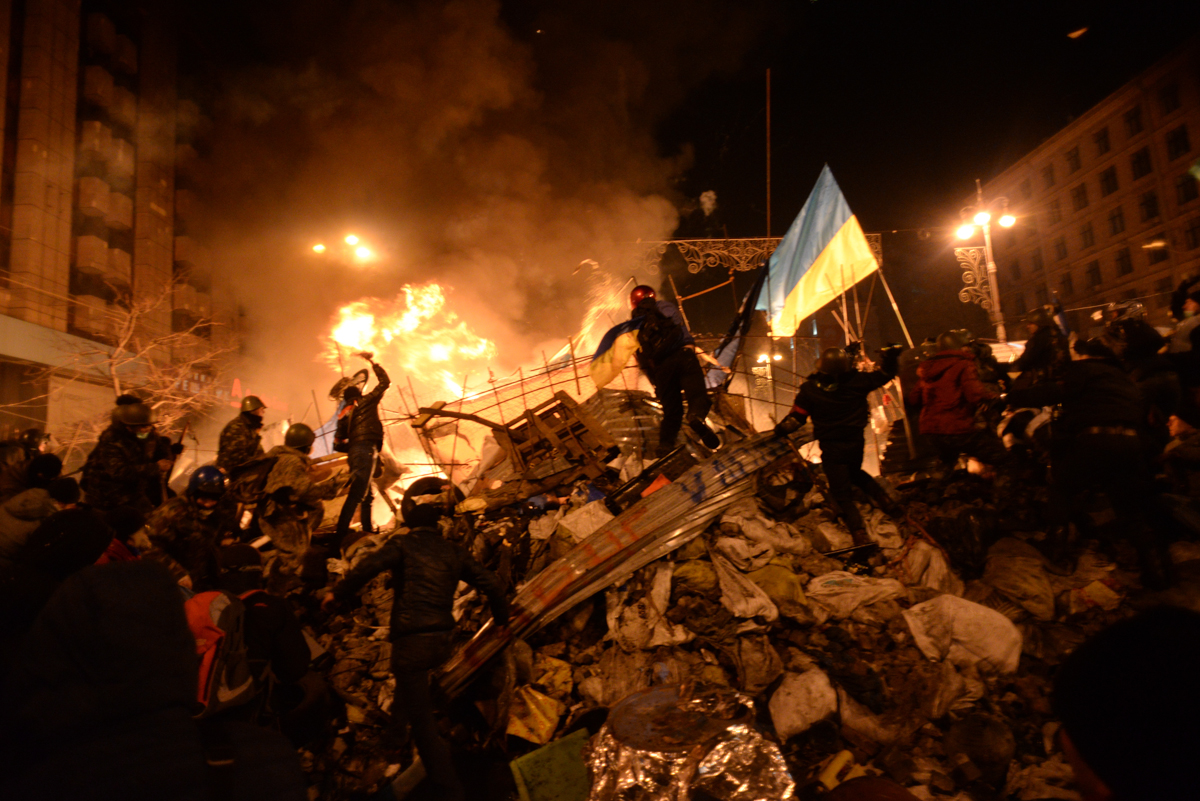
People did not enter streets because a foreign grant had remote control of their legs. Governments did not lose legitimacy only when Washington scheduled it. The Baltic states, Georgia, Ukraine, Serbia, and other societies were not blank populations waiting for geopolitical authorship.
The Western exception and the Russian sealed room reinforced each other.
- Western powers acted as though their intentions could preserve the legitimacy of instruments they would reject under hostile control.
- Russia acted as though Western involvement erased the standing of everyone who wanted the same transition for reasons of their own.
The Golden Rule enters the security field with a cool helmet on.
A logical move is logical against you.
- If humanitarian emergency permits force without common authorization,
- another power will define the emergency.
- If security concern permits regime change,
- another power will identify the threatening regime.
- If historical injustice permits border revision,
- another history will arrive at the border.
- If civil society support is legitimate only when your side provides it,
- the instrument has already become title.
The answer is not equal impunity.
The answer is correction strong enough to bind the actor who believes its case is exceptional.
The post-Cold War security machine never acquired enough of it.
÷
XIX. Bucharest
In April 2008, NATO found a sentence capable of producing danger without producing shelter.
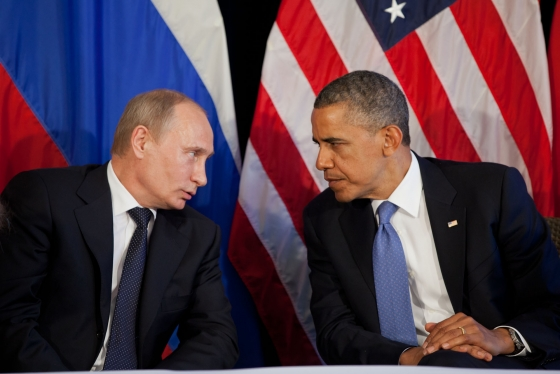
Ukraine and Georgia sought Membership Action Plans, the formal program that prepares aspirant states for possible accession. The United States supported movement. Germany, France, and other allies resisted, fearing that offering the plans would provoke Russia and import unresolved conflicts into the alliance.
The summit produced a compromise.
- Ukraine and Georgia did not receive Membership Action Plans.
- The declaration said they would become members of NATO.
- No date was supplied.
- No accession mechanism was activated.
- No Article 5 guarantee arrived.
- No agreed settlement with Russia made the promise safe.
The alliance issued destination without route.
- This sentence is often defended as support for sovereign choice.
- It is often attacked as the crossing of a Russian red line.
- Its actual structure was worse than either description.
Bucharest increased the strategic significance of Ukraine and Georgia while leaving both outside the protected field.
- Russia received evidence that NATO intended eventual enlargement.
- Ukraine and Georgia received evidence that NATO recognized their aspirations.
Neither received a near-term path capable of changing the immediate balance.
The promise became politically active before it became operationally real.
Bucharest gave Russia the fear and Ukraine none of the shelter.
The formulation also encouraged every side to act on the interim.
- A government seeking membership could deepen cooperation and present itself as moving toward an announced future.
- Russia could attempt to make membership costlier, less feasible, or territorially dangerous before the future arrived.
- NATO could insist the door remained open while postponing the moment it would have to defend anyone walking toward it.
Ambiguity became policy.
The field began generating around the gap.
÷
XX. Promise Without Protection
A promise without protection is not empty.
It can be more dangerous than silence.
Silence leaves the future uncertain.
A promise recruits action toward the future. Governments reform, cooperate, expose networks, reorganize forces, take domestic political risks, and provoke opposition around the expectation that the promised path exists.
Adversaries act too.
They can punish the movement before the guarantee arrives.
They can create territorial disputes that make accession harder.
They can cultivate separatism, distribute passports, maintain troops, apply trade pressure, shape elections, and teach the exposed state that every westward step raises the price of remaining whole.
- The promising institution retains discretion.
- The threatened state carries the interim.
This is a form of burden transfer.
NATO could preserve the moral language of an open door without paying the immediate military cost of bringing Ukraine and Georgia through it.
Russia could treat the promise as an active threat while denying that the countries possessed independent reasons to seek it.
Ukraine and Georgia carried the danger produced by both readings.
An alliance promise has to answer three questions.
- What transition is actually reachable?
- What protection exists before completion?
- Who absorbs the retaliation created by movement toward the promised state?
Bucharest did not answer them.
The declaration pointed to a protected future across an unprotected path.
÷
XXI. Georgia and the Frozen Instrument
Four months after Bucharest, war came to Georgia.
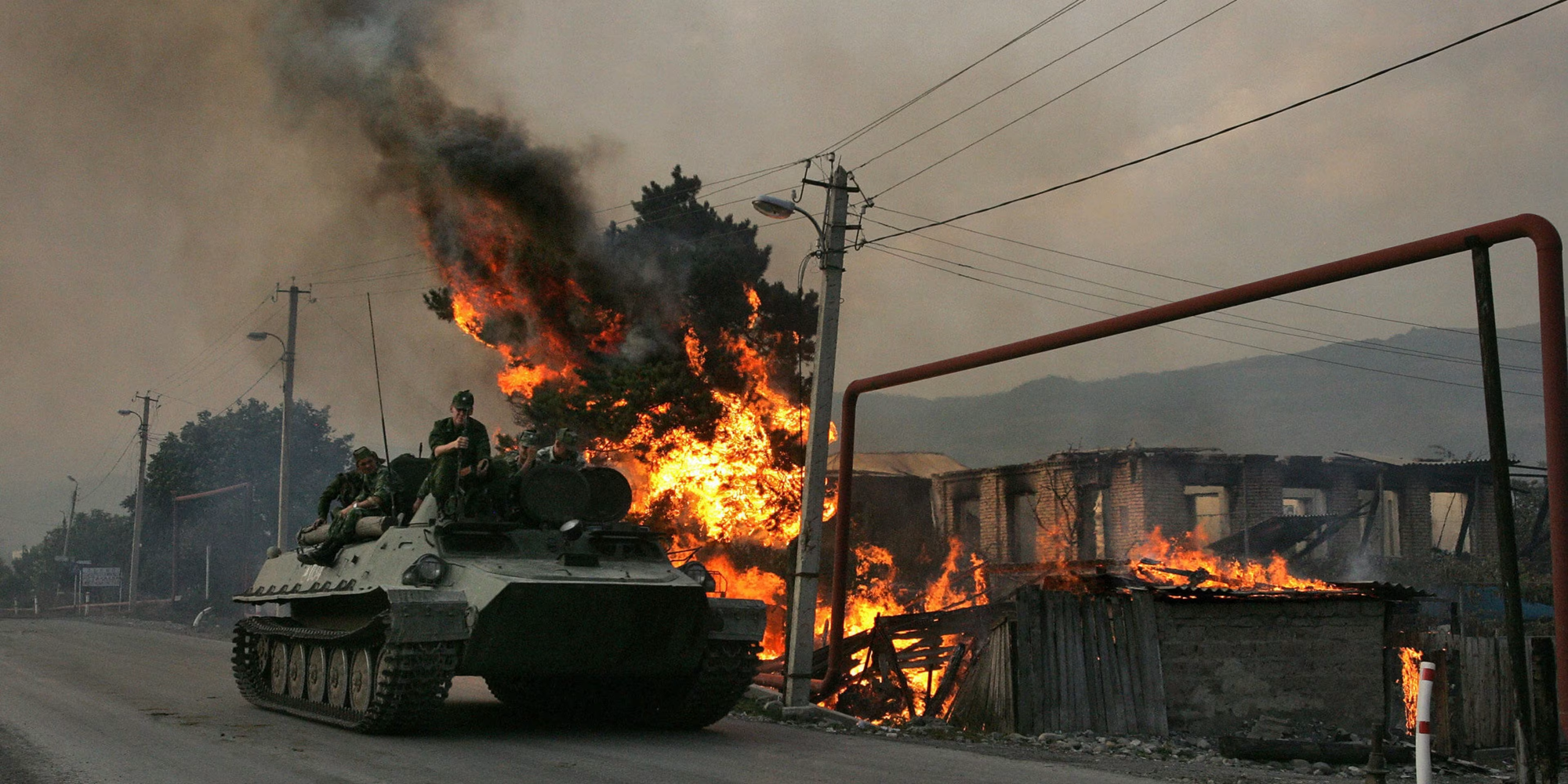
The conflict did not begin in one night, even though large-scale hostilities did.
Georgia had inherited separatist conflicts in Abkhazia and South Ossetia from the Soviet collapse. Local communities carried real histories, fears, identities, expulsions, armed organizations, political institutions, and memories of war. Russian forces operated as peacekeepers while Russia also distributed passports, supported the separatist authorities, built political and military influence, and treated the territories as leverage over Georgia's orientation.
The government of Mikheil Saakashvili sought to consolidate the Georgian state, move toward NATO and the European Union, recover control over separatist regions, and escape the security field Russia had inherited around them. It also used force, nationalist pressure, and risky assumptions about Western support.
Tensions escalated through 2008.
There were attacks, shelling, military movements, exercises, provocations, evacuations, and competing claims about who was preparing what. On the night of August 7 into August 8, Georgian forces launched a large-scale assault on Tskhinvali, the South Ossetian capital. Russia responded with forces that moved beyond immediate defense of the territory, struck across Georgia, and entered a wider war. Russian forces and allied formations advanced. Georgian forces withdrew. Civilians were killed and displaced. Villages were destroyed. Abuses followed across the conflict field.
The independent European Union fact-finding mission later concluded that the Georgian attack began the large-scale armed conflict while also documenting the long escalation, Russian violations, the unlawful scale of parts of Russia's response, and the impossibility of reducing the war to one clean first cause.
That is exactly why Georgia belongs here.
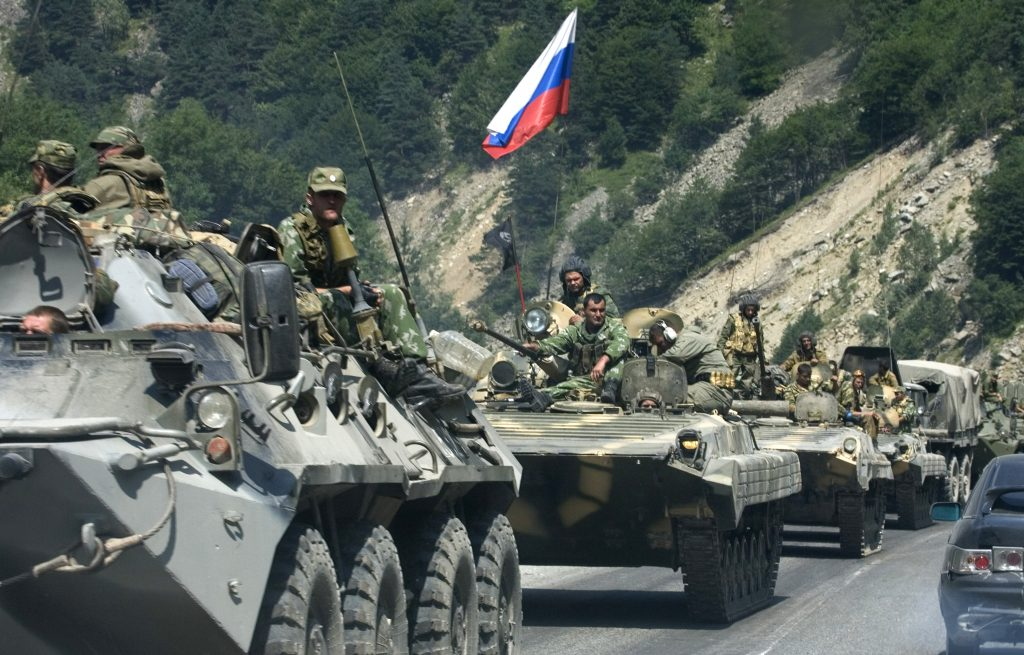
Every side possessed a true fragment capable of becoming a complete excuse.
- Georgia could point to
- territorial fragmentation,
- Russian coercion,
- attacks,
- passportization,
- and the long denial of effective sovereignty.
- Russia could point to
- the assault on Tskhinvali,
- deaths among peacekeepers and civilians,
- and the danger to populations it claimed responsibility to protect.
- South Ossetians and Abkhaz could point to
- their own fears of Georgian rule
- and histories of violence.
- NATO could point to
- the fact that Georgia was not a member
- and therefore had no alliance guarantee.
- Bucharest remained in the background saying Georgia would someday become one.
After the war, Russia recognized Abkhazia and South Ossetia as independent states. Russian military presence became more permanent. Georgia's territorial conflicts became even harder to reconcile with NATO accession. The promise remained. The path narrowed.
This is the frozen instrument.
A frozen conflict is usually described as a war that has stopped without reaching political settlement.
The phrase is misleading.
- The field does not freeze.
- People age under disputed documents.
- Families remain separated by lines and checkpoints.
- Property claims harden.
- Languages and school systems diverge.
- Security services acquire permanent purpose.
- Smuggling, trade, aid, citizenship, pensions, elections, military service, and memory reorganize around provisional status.
The ceasefire can reduce immediate killing while the unresolved territory remains available as leverage.
- Transnistria limits Moldova's security orientation and preserves Russian military presence.
- Abkhazia and South Ossetia fragment Georgia and burden alliance membership.
- Nagorno-Karabakh carried Armenian and Azerbaijani populations through repeated war, displacement, blockade, external patronage, and a final violent reordering rather than any true stillness.
- Donbas would later enter the same family under its own conditions.
The frozen conflict performs several strategic functions.
- It prevents the affected state from exercising full sovereignty.
- It gives outside powers a permanent reason to remain involved.
- It makes alliance admission dangerous because the alliance may inherit an active territorial dispute.
- It turns local populations into both political actors and strategic hostages.
- It preserves a veto without requiring the veto actor to govern the entire country.
This is why the instrument is attractive.
A great power does not have to occupy a neighboring capital to limit the neighbor's future. It needs enough unresolved force that every strategic decision passes through the wound.
The local grievances do not become fake because an outside power uses them.
That distinction is essential.
Abkhaz, South Ossetian, Transnistrian, Donbas, Armenian, Azerbaijani, Georgian, Moldovan, and Ukrainian populations cannot be reduced to remote pieces. They possess histories and claims that the central state may have denied, mishandled, or attacked. A repair path must keep those loci present.
Outside leverage can still convert a local wound into permanent strategic title.
Georgia revealed the Bucharest machine in operation.
- NATO named a future.
- Russia showed it could alter the road.
- Georgia paid for the interval.
- Russia showed it could alter the road.
÷
XXII. Non-Alignment Does Not Survive Contact
Ukraine tried a path outside immediate alliance accession.
In 2010, under President Viktor Yanukovych, the Ukrainian parliament adopted a law declaring the country non-aligned. Ukraine would not join military-political blocs. It would continue cooperation with NATO and other institutions while presenting non-bloc status as a foundation of foreign policy.
This was not a purely Russian settlement imposed on a unanimously westward country.
Public support for NATO membership was limited and regionally divided. Ukrainian politics moved between European integration, Russian economic and cultural ties, domestic oligarchic competition, language conflict, regional voting patterns, corruption, and a recurring desire to avoid choosing the security field that would tear the country apart.
Non-alignment had a plausible purpose.
- Ukraine could cooperate with NATO without becoming a member.
- It could retain deep economic, family, industrial, linguistic, and historical ties with Russia.
- It could avoid becoming the forward edge of either bloc.
- It could continue as a bridge.
The bridge had no guarantee beneath it.
Russia retained the Black Sea Fleet in Crimea under agreements extended during Yanukovych's presidency. Russian economic leverage remained immense. European institutions offered association without military protection. NATO cooperation did not create Article 5. Ukraine's own defense institutions were underfunded, penetrated, politically contested, and shaped by the assumption that large-scale war with Russia belonged outside the reasonable future.
Non-alignment asked everyone to leave the middle field alone.
But no one had built the mechanism that would make restraint durable when Ukraine's internal politics changed direction.
The status therefore depended on political equilibrium rather than binding reciprocal limitation.
- If Ukraine moved toward the European Union, Russia could treat the economic and political shift as strategic loss.
- If Ukraine moved toward Russia, large parts of Ukrainian society could treat the shift as state capture.
- If the government changed, the entire security meaning of the country could appear to change with it.
A neutral state requires more than a word in its law.
It requires surrounding powers that accept its independent neutrality, armed institutions capable of defending the status, economic paths that do not turn ordinary trade into political annexation, and guarantees with correction mechanisms strong enough to survive a government crisis.
Ukraine had none of these in sufficient form.
The post-Cold War order had tried to make Russia secure through reassurance, Eastern Europe secure through enlargement, and Ukraine secure through ambiguity.
By 2013, the ambiguity was carrying too much weight.
A dispute over an association agreement with the European Union would open every unresolved layer at once: corruption, police violence, oligarchic power, regional identity, constitutional authority, Russian pressure, Western influence, public agency, language, history, and the strategic fear that Ukraine could only move toward one side by becoming lost to the other.
Non-alignment did not collapse because neutrality is inherently fraudulent.
It collapsed because no surrounding power had agreed to treat Ukrainian political movement as something other than strategic capture.
Maidan would place Ukraine on every external map.
It still had to remain a country on its own.
÷
XXIII. Maidan != a Chess Piece
The bridge broke where everyone had been standing on it.
Ukraine's non-alignment had depended on a condition no law could manufacture by itself: the surrounding powers had to accept that Ukrainian political movement was not the same thing as Ukrainian capture.
They did not.
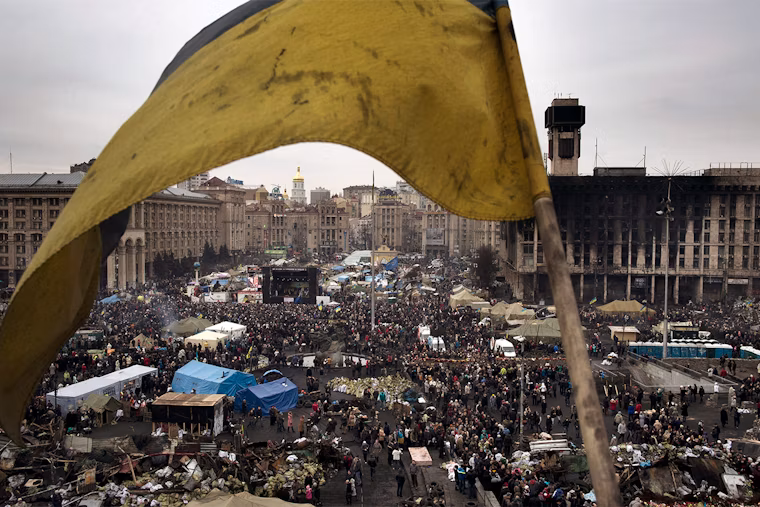
By late 2013, an association agreement with the European Union had accumulated far more meaning than its technical architecture could safely carry.
The agreement contained trade rules, regulatory alignment, political commitments, and a path toward deeper economic integration. It did not contain NATO membership. It did not station a brigade. It did not move a missile battery.
The agreement still entered the strategic field as direction.
- For many Ukrainians, especially younger urban Ukrainians and people already exhausted by corruption, arbitrary rule, and the protected wealth of political elites, the European path offered a route toward another institutional future.
- Europe was often idealized.
- That does not make the attraction fictional.
- A border regime, court system, market structure, education path, anti-corruption standard, and public identity can change what a life can reach even when the distant institution offering them is inconsistent, self-interested, and capable of profound hypocrisy.
- Europe was often idealized.
- For the Russian state, the same agreement threatened to pull Ukraine farther outside the economic and political field Moscow hoped to consolidate around itself.
- Russian officials warned of trade consequences.
- Customs pressure had already shown how quickly ordinary commerce could become geopolitical discipline.
- Moscow later offered credit and cheaper gas under a package that made the alternative path materially attractive to a government facing immediate financial stress.
- Russian officials warned of trade consequences.
Ukraine was being offered futures by systems that could both punish refusal.
President Viktor Yanukovych had spent years supporting preparation for the European agreement. Then, in November 2013, his government suspended the process shortly before the planned signing in Vilnius.
The first protesters gathered because a future that had been publicly prepared was suddenly withdrawn.
That description is true.
It is also incomplete almost immediately.
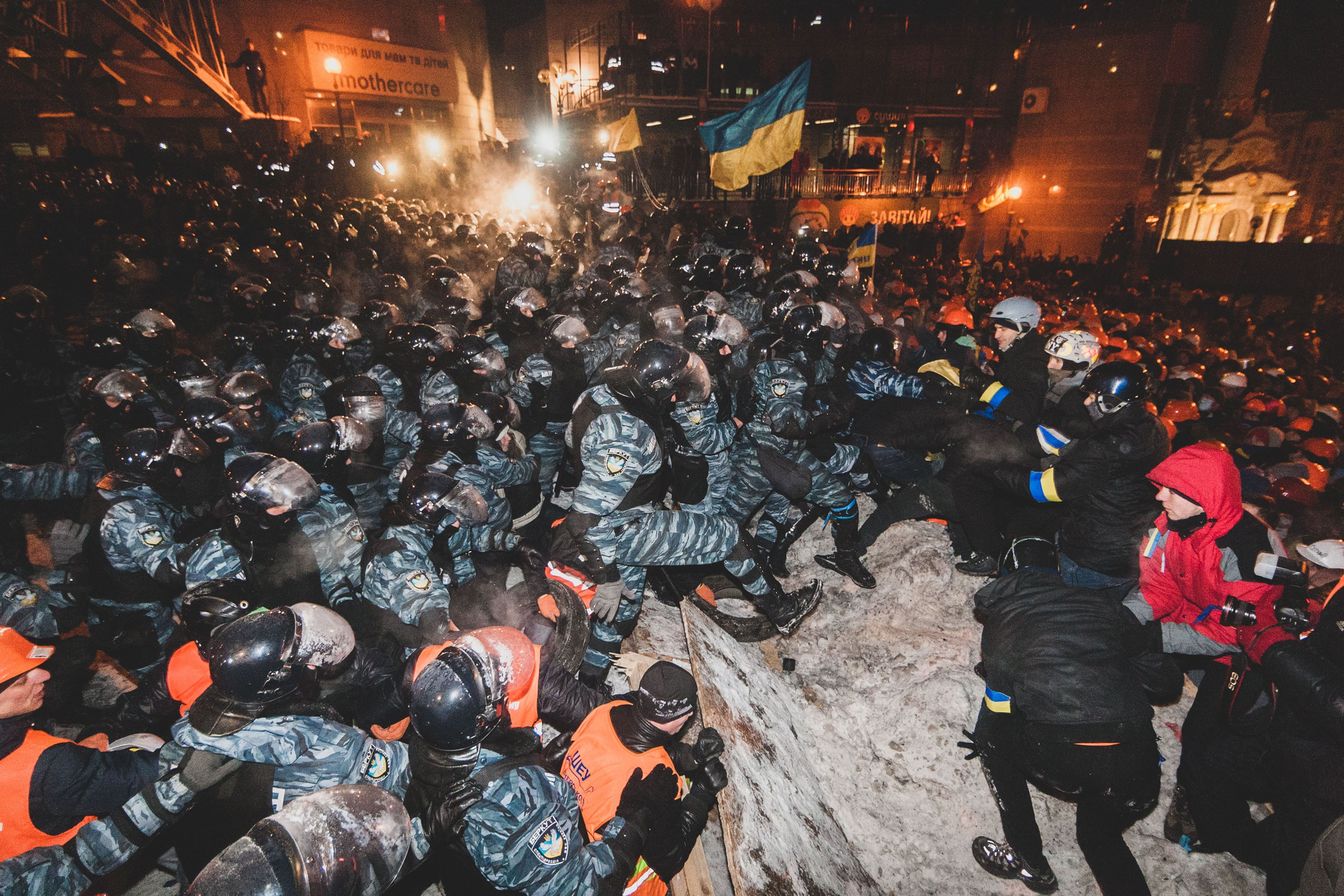
Police beat demonstrators during the night of November 30. The state tried to clear a problem and enlarged it. The agreement dispute now became a state-violence dispute. The state-violence dispute became a corruption dispute, a constitutional dispute, a legitimacy dispute, a regional dispute, an argument about oligarchic power, and eventually a revolutionary field with barricades, occupations, self-defense units, churches, field kitchens, political parties, veterans, students, pensioners, nationalists, liberals, workers, clergy, opportunists, foreign diplomats, informants, provocateurs, and people who had arrived for reasons that did not fit any one flag.
Maidan became a city inside the city.
This is where every external story begins simplifying.
- The clean Western story presents a democratic population choosing Europe against an authoritarian ruler captured by Moscow.
- The clean Russian story presents a Western-directed coup in which American and European officials used nationalist street forces to overthrow an elected president and seize a strategically necessary country.
Each story contains real material.
Neither can carry the field.
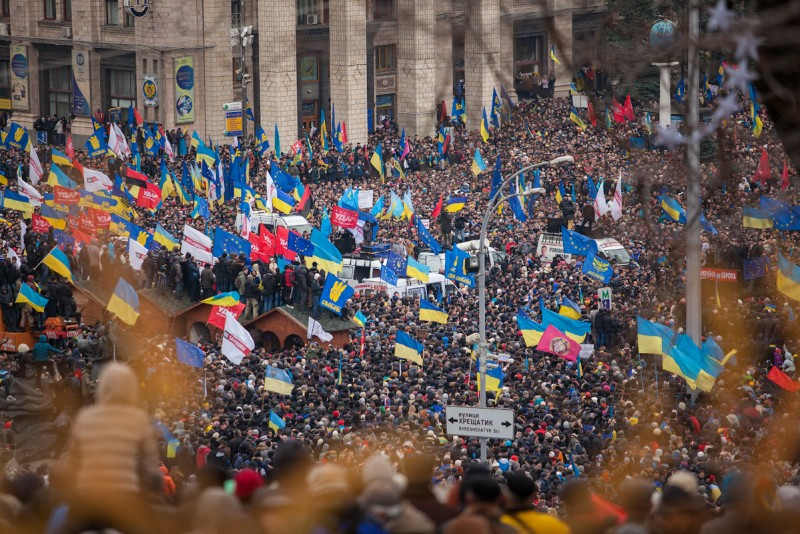
Western governments had spent years supporting Ukrainian civil society, political reform, media, election monitoring, and institutional development. European and American officials appeared publicly with protest leaders and demonstrators. The leaked conversation between United States officials Victoria Nuland and Geoffrey Pyatt exposed explicit preferences about which opposition figures should enter a future government. Western governments were active participants in the political atmosphere. They did not stand outside this event with clean hands and a clipboard labeled Democracy.
Russia was also active. It used economic leverage, political relationships, intelligence links, media, credit, energy pricing, and the existing depth of Ukrainian-Russian institutional entanglement. Yanukovych was not a Russian puppet in every matter. He was a Ukrainian political actor with his own machine, constituency, corrupt interests, fears, and capacity to move between systems. Moscow still understood his government as the available barrier against a Ukraine leaving the Russian strategic field.
Foreign influence was real from several directions.
- Ukrainian agency remained real.
- No leaked telephone call creates months of occupation, grief, improvised care, mass participation, and willingness to stand under police force.
- No Russian loan creates the fear that drove citizens to defend a government they already distrusted.
- Outside actors could supply pressure, money, recognition, preferred narratives, technical help, and imagined futures.
- They could not manufacture every person on the square.
- The far right was present too.
- Svoboda had parliamentary representation.
- Right Sector emerged from several nationalist and extreme-right groups.
- Organized nationalists supplied disciplined bodies for confrontation and self-defense.
- Some carried political traditions stained by antisemitism, ethnic nationalism, authoritarianism, and the selective sanctification of violent historical movements.
- Their visibility, organization, and later relationship to armed volunteer formations gave them influence beyond their eventual electoral support.
- Some carried political traditions stained by antisemitism, ethnic nationalism, authoritarianism, and the selective sanctification of violent historical movements.
That presence must remain in the article.
It cannot become the whole country.
The far right did not command the entire protest field. It did not win broad national electoral power after Yanukovych fell. Its organized street capacity and wartime legitimacy created a real democratic problem; its later parliamentary weakness was also real. The correct analysis has to hold both facts without using either as a solvent.
A field can contain dangerous actors without becoming identical to them.
The protests escalated. Parliament adopted repressive laws in January. Violence deepened. Buildings burned. Police and protesters died. Snipers and other shooters killed people during the February climax. Investigations into the killings later proved compromised, delayed, and politically burdened. The dead entered national memory before the state established a complete, trusted account of every shot.
On February 21, Yanukovych and opposition leaders signed an agreement mediated by European foreign ministers. It envisioned a return to the 2004 constitution, a national-unity government, early presidential elections, and the withdrawal of forces from confrontation.
The repair instrument arrived after too much trust had already been consumed.
Yanukovych left Kyiv. State authority disintegrated around him. Parliament voted that he had withdrawn from exercising his constitutional powers and scheduled an early presidential election. The resolution did not follow the full impeachment procedure prescribed for removing a functioning president. It described a president who had already ceased functioning in the capital and treated abandonment as the operative constitutional fact.
This was a rupture.
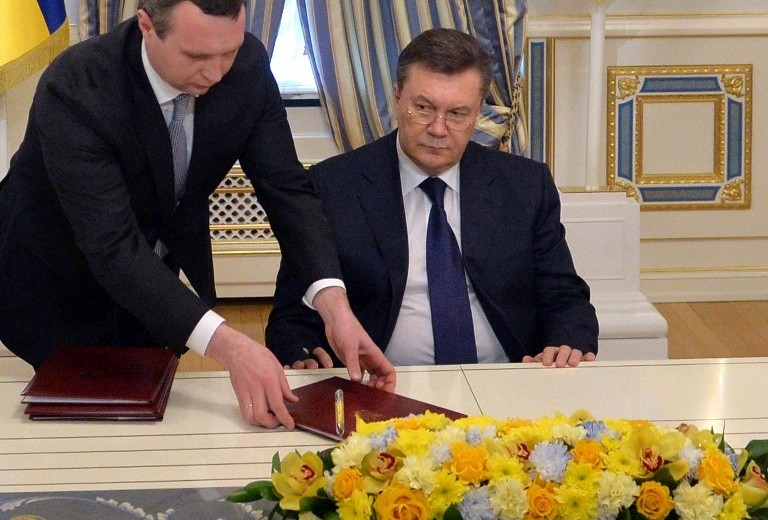
- Calling it a perfectly regular succession erases the irregularity.
- Calling it a foreign coup erases the months of domestic revolt, the collapse of coercive authority, Yanukovych's flight, the parliamentary vote, and the national elections that followed.
The transition was constitutionally damaged and politically real.
That distinction matters because Russia later used the irregularity as permission to deny the standing of the entire post-Maidan state. A disputed transfer became proof that Ukraine had ceased to possess a government capable of making legitimate choices. Once that move is accepted, the external power receives the authority to decide when the neighboring field has become too corrupted to count.
Modal Path Ethics refuses the promotion here.
- The Ukrainian state had failed many Ukrainians before Maidan.
- The revolutionary transition failed some constitutional tests.
- Nationalist violence and exclusionary memory entered the new field.
- Eastern and southern constituencies had reasons to fear what the new political order would mean for language, history, parties, property, employment, policing, and relation to Russia.
- Those fears required representation, negotiation, decentralization where workable, minority protection, credible elections, and restraints on victorious power.
- The revolution also inherited the oldest Ukrainian temptation: treating the political geography of the country as a moral gradient.
- Western regions could be narrated as more European, more national, more awake.
- Eastern regions could be narrated as compromised, Soviet, dependent, or insufficiently Ukrainian.
- That hierarchy was false and dangerous.
- It converted political disagreement into defective belonging.
- A repairable post-Maidan state needed to make room for
- people who had voted for Yanukovych,
- distrusted the square,
- preferred Russian in public life,
- opposed rapid Western alignment,
- or feared the symbols carried by some of the victorious forces.
- A repairable post-Maidan state needed to make room for
One of the new parliament's first acts made the problem visible.
Deputies voted to repeal the 2012 language law that had permitted regional use of minority languages under specified conditions. The acting president did not sign the repeal, so it never took effect. The failed move still entered the field as signal.
A law can remain unchanged while the attempt to change it teaches a population what the victors may want. Russian media and officials enlarged that signal into proof of an anti-Russian state. Ukrainian leaders underestimated how quickly symbolic carelessness could become strategic material.
They did not authorize annexation.
They did not turn Ukraine into an abandoned strategic object.
Maidan was a revolution inside a divided, corrupt, pressured country. It was also a contact event through which a large part of Ukrainian society asserted the right to alter its political direction.
Russia read the alteration as capture.
The buffer wound opened.
÷
XXIV. Crimea and the Port
Crimea makes every map dishonest by giving each one enough truth to become dangerous.
The peninsula had been part of the Russian Empire, the Soviet Russian republic, and, after its 1954 transfer, Soviet Ukraine. It became part of independent Ukraine when the Soviet Union dissolved. Its population contained a Russian ethnic majority, Ukrainian citizens of several identities, and the Crimean Tatars, an Indigenous people deported en masse by Stalin in 1944 and returning to their homeland in the final Soviet decades and after independence.
- Russian was the dominant everyday language.
- Ukraine was the internationally recognized state.
The Russian Black Sea Fleet remained in Sevastopol through bilateral agreements.
The port was therefore military infrastructure, local livelihood, imperial symbol, legal leasehold, strategic access, and a city full of people whose lives could not be reduced to what the fleet made reachable.
That last distinction collapsed first.
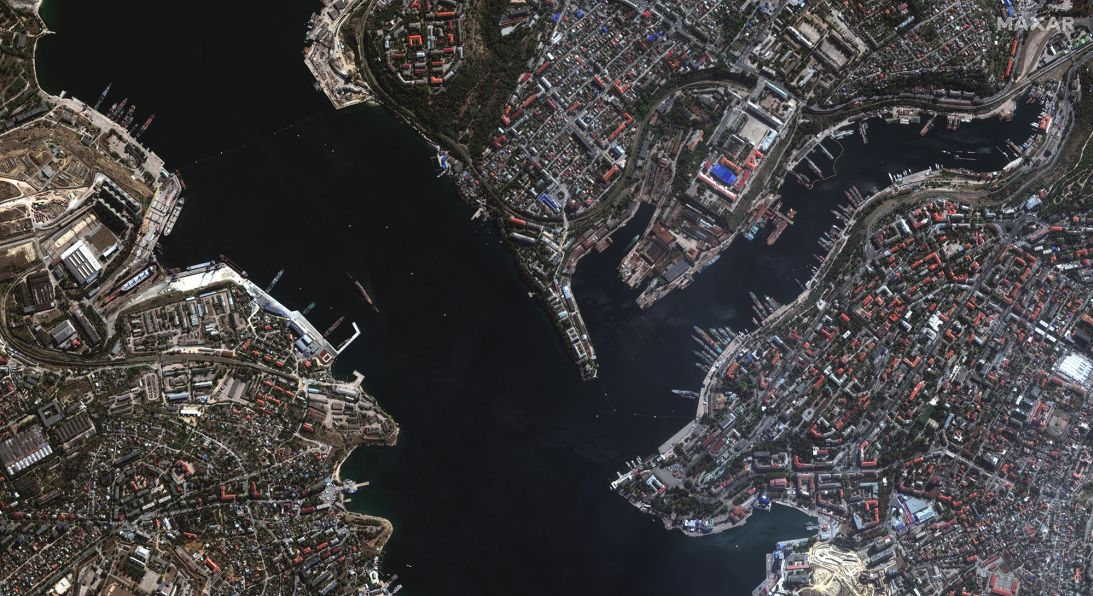
For Russian strategy, Sevastopol was the hinge of naval access in the Black Sea and beyond it toward the Mediterranean. Losing political influence over Kyiv could be imagined as losing durable access to the port. The actual lease had been extended. No new Ukrainian government had completed an expulsion of the fleet. Strategic fear did not wait for the contract to fail. It acted on the future in which the contract might become vulnerable.
The port began to speak for the peninsula.
After Yanukovych fled, armed personnel without insignia seized the Crimean parliament and other strategic sites. Russian officials initially obscured the force's identity. Vladimir Putin later acknowledged that Russian servicemen had backed the Crimean self-defense forces. Russia's existing military presence under the fleet agreements made the operation easier to disguise as local order. Troops already lawfully present could support a transition that the agreements did not authorize.
This is a particularly dangerous security instrument.
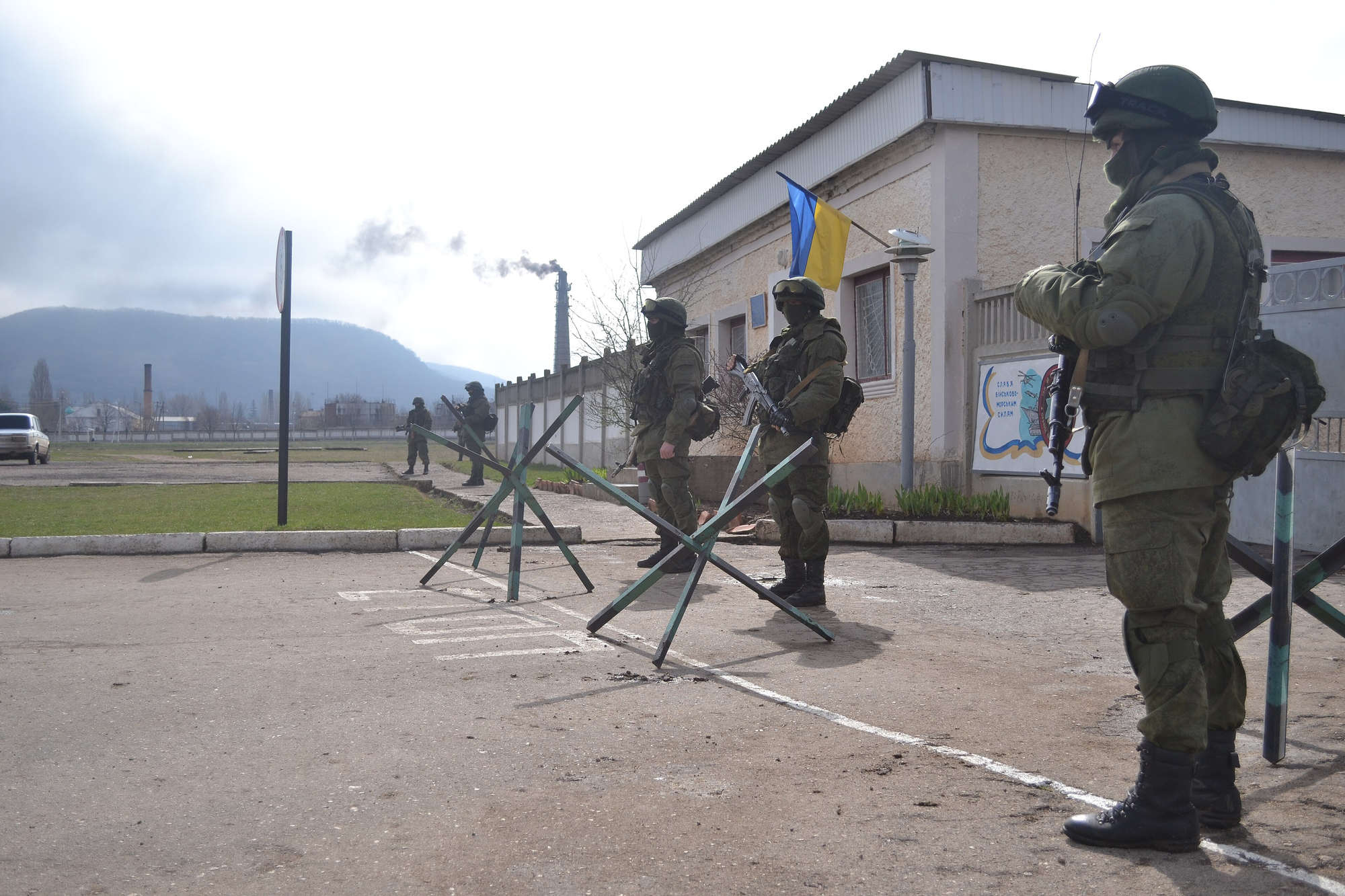
A legitimate presence becomes a bridge for unilateral revision.
The Crimean parliament installed a new regional leadership under armed conditions and called a referendum. The vote offered accession to Russia or a return to the 1992 Crimean constitution under a status still formally connected to Ukraine. The existing constitutional arrangement was not offered as a straightforward option. Ukrainian authorities, the Organization for Security and Co-operation in Europe, the United Nations General Assembly, and most governments rejected the process as unconstitutional and invalid. The vote occurred under foreign military control, with Ukrainian media and political organization disrupted and no recognized international observation mission validating the process.
Many Crimean residents genuinely favored joining Russia.
That fact does not rescue the instrument.
A population can possess real attachment, real grievance, and real political preference while a coercive transition still destroys the conditions required to know how freely the preference governed the result. Russia did not first establish a trusted field in which all positions could organize, speak, remain, refuse, and contest the outcome. It established control, changed the government, structured the question, conducted the vote, and annexed the territory.
The sequence is part of the event.
Crimean Russian attachment also had a deeper historical charge. Russian public memory treated the 1954 transfer as arbitrary, Crimea as ancestrally or civilizationally Russian, Sevastopol as a sacred military city, and the peninsula's return as correction after the humiliation of Soviet collapse.
This is security title merging with sacred title.
A place becomes so loaded with inherited meaning that living consent can be presumed, dissent can be treated as artificial, and the neighboring state's legal claim can be presented as an administrative mistake left behind by history.
- The 1991 settlement disappears.
- The treaties disappear.
- The people who do not fit the return story become residue.
- The treaties disappear.
 Aidan Lawson
Crimean Tatars understood this quickly. Their history with Russian and Soviet power did not resemble a lost-home story centered in Moscow. It contained conquest, dispossession, deportation, exile, return, and a precarious reconstruction of communal life under Ukrainian sovereignty. The Mejlis opposed and boycotted the referendum. After annexation, Russian authorities later banned the Mejlis as extremist. Activists, journalists, religious communities, and opponents of annexation faced raids, prosecutions, disappearances, imprisonment, pressure, and forced adaptation to Russian law and citizenship structures.
The same transition that one population experienced as return could become another population's renewed subordination.
Modal Path Ethics does not solve this one by declaring local identity irrelevant. Crimea's population had claims. Ukraine's governance of Crimea was imperfect. Language, autonomy, economic relation, fleet access, and historical recognition all required continued negotiation.
The question is which instrument preserved the field in which those claims could answer one another.
Annexation did not.
It gave strategic control to the state with the strongest nearby force and then redescribed the result as historical completion.
The fleet was secured.
Russia's warning line moved outward.
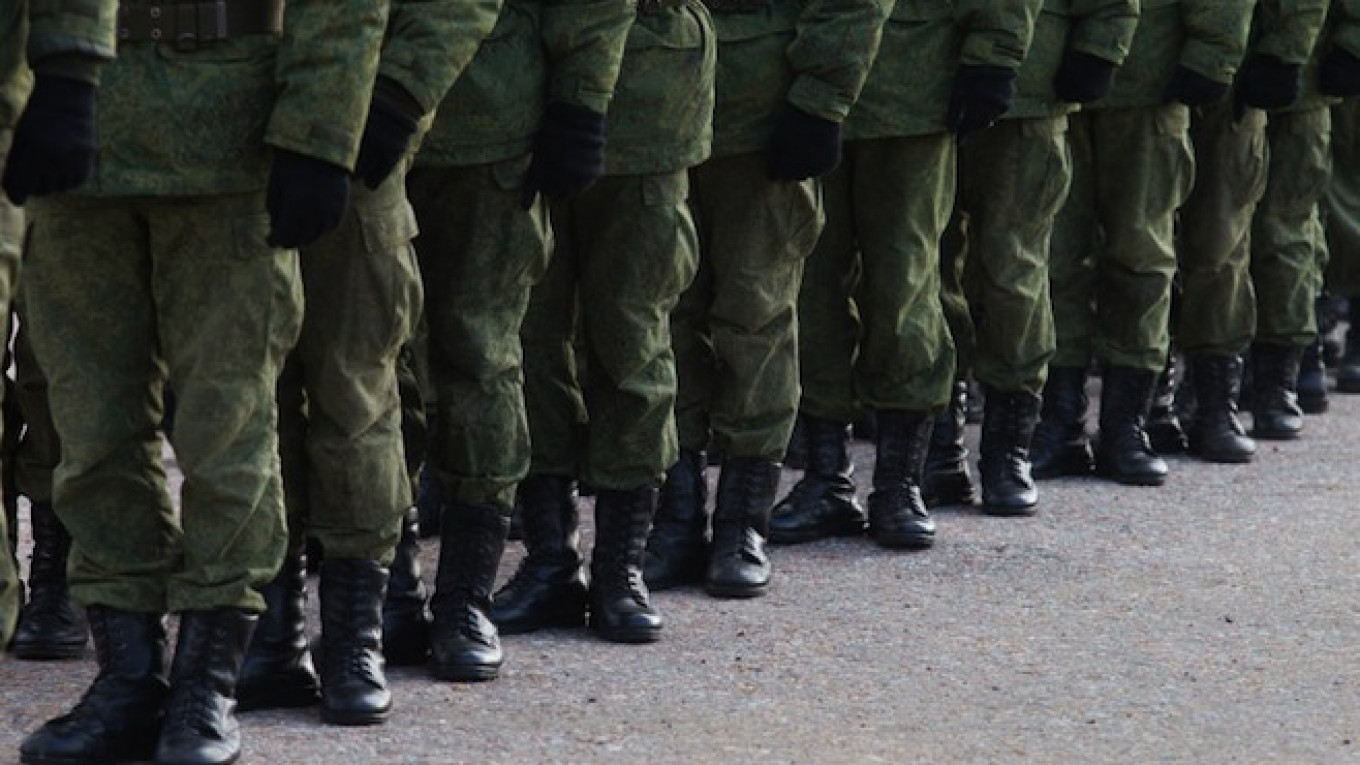
Ukraine lost territory, ports, military sites, citizens, resources, and confidence in the assurances that had accompanied its post-Soviet settlement.
The Black Sea became more militarized. The annexation generated sanctions, military adaptation, and a new permanent conflict over a peninsula whose ordinary residents had to live inside competing legal worlds.
The annexation also created an infrastructure struggle that ordinary maps hide. Crimea depended heavily on mainland Ukraine for water, electricity, transport, banking, administration, and supply. Russia gained the peninsula and inherited the work of reconnecting it through new systems: energy links, a bridge across the Kerch Strait, fiscal support, military logistics, and the reorganization of property and institutions. Strategic possession did not remove dependence. It transferred the direction and cost of dependence while making the peninsula more useful for projecting force into southern Ukraine.
A buffer is often imagined as inert space. Crimea immediately demonstrated the opposite. Territory acts back. It requires roads, water, legitimacy, policing, money, and people willing or compelled to live under the new order. The land acquired to reduce exposure became another defended edge.
Crimea was supposed to settle Russia's exposure.
It became the first proof that Russia would answer exposure by changing Ukraine's map.
÷
XXV. Donbas
Donbas refuses every clean sentence offered to it.
The region contained mines, factories, cities, villages, oligarchic networks, Russian language, Ukrainian citizenship, Soviet memory, labor identity, organized crime, family ties across the border, political loyalty to the Party of Regions, distrust of Kyiv, and fear that the post-Maidan government would treat the east as a defeated constituency.
Those conditions were local.
They were not enough by themselves to produce the war that followed.
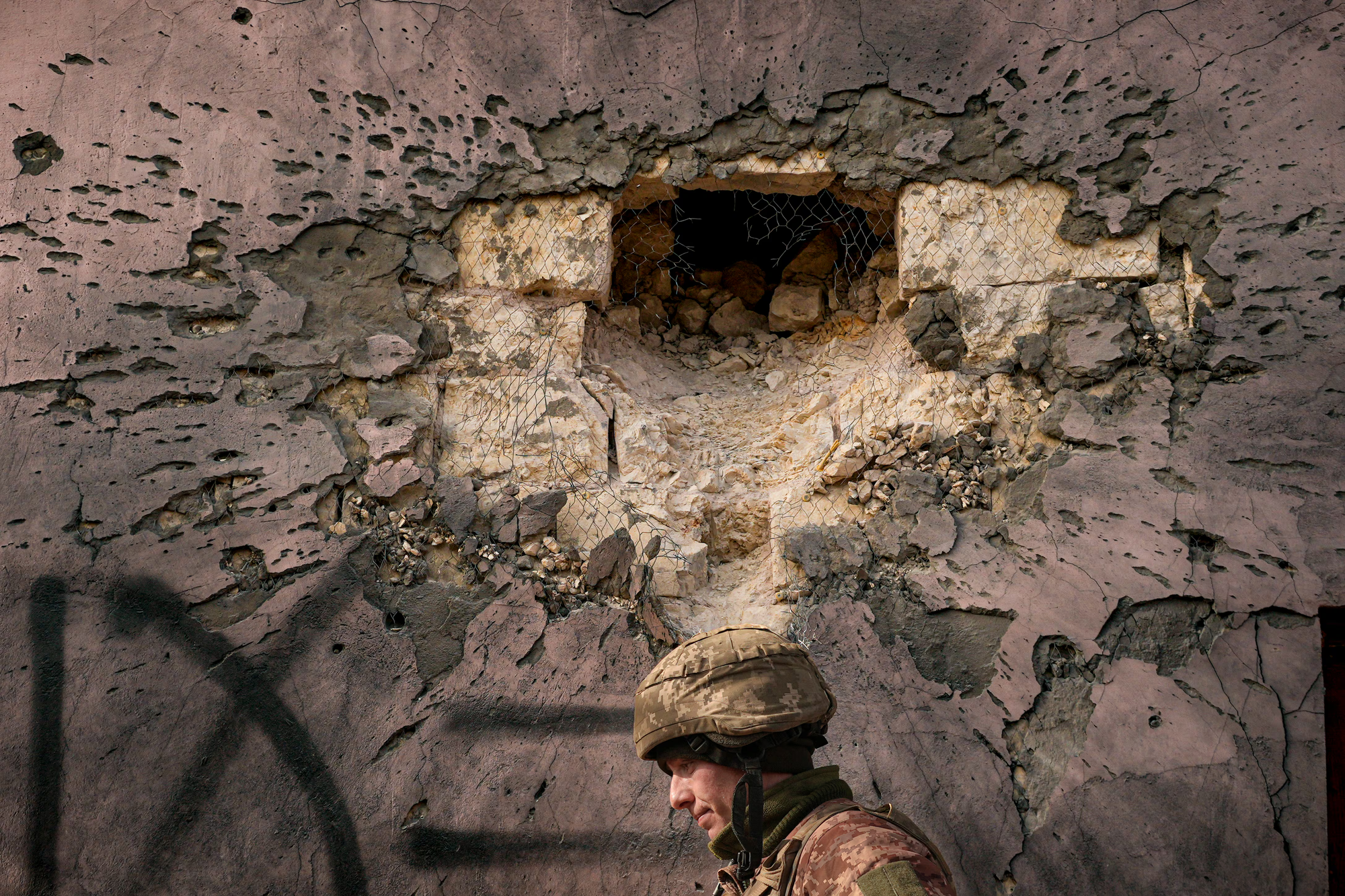
In early 2014, demonstrations against the new Kyiv authorities spread across parts of southern and eastern Ukraine. Some protesters demanded federalization. Some wanted stronger language protections. Some wanted the restoration of the old government. Some wanted union with Russia. Some wanted local autonomy while remaining inside Ukraine. Public opinion in Donetsk and Luhansk was divided, volatile, and more complicated than the armed republics later claimed. Survey evidence from the period showed substantial support for decentralization and continued Ukrainian unity alongside a real minority supporting separation or accession to Russia.
A grievance field existed.
Then, organizers, weapons, seized buildings, cross-border networks, Russian political support, propaganda, intelligence activity, and eventually Russian military power altered what the grievance could become.
Armed groups took administrative buildings in Donetsk, Luhansk, Sloviansk, and other locations. Russian citizens occupied important leadership roles. Igor Girkin, a Russian former security officer, led the armed seizure in Sloviansk and later described his role in starting the war. Local militants and supporters were still present. The intervention did not arrive in an empty region. It supplied coordination, personnel, force, narrative, and escalation capacity to one part of a divided field.
This is why neither available slogan works.
- "Russia invaded a region that wanted nothing to do with separatism" erases local alienation, participation, and the political failures that left part of the east available to armed capture.
- "Donbas rose on its own against a fascist coup" erases the external instrument that helped turn fragmented discontent into territorial war and kept the armed entities alive when Ukrainian forces threatened to defeat them.
The war was locally rooted and internationally generated.
Ukraine's response deepened the fracture. The interim government called its military campaign an Anti-Terrorist Operation. That language classified armed seizure and separatist organization as a security problem inside the state. The armed groups did use coercion, kidnapping, torture, summary violence, and terror. The category still compressed the civilian field around them.
- A resident could oppose Kyiv without being an armed separatist.
- A resident could speak Russian without wanting Russian rule.
- A resident could fear nationalist power and still fear the gunmen claiming to defend them.
- A resident could support autonomy and discover that artillery had interpreted the preference as a front line.
War made mixed positions harder to inhabit.
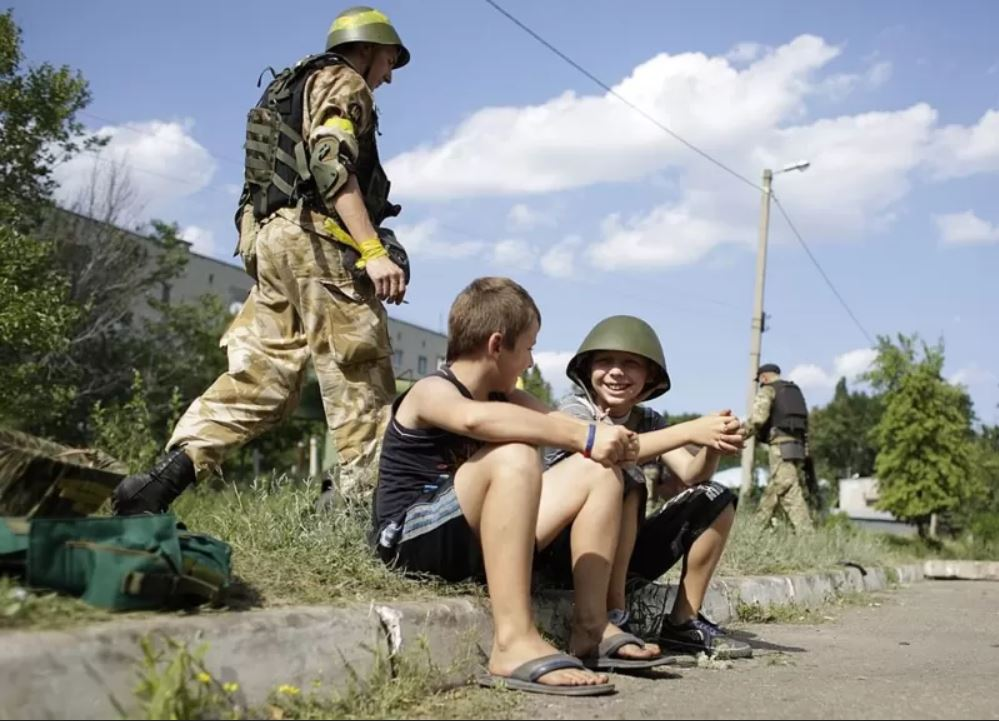
The self-proclaimed Donetsk and Luhansk people's republics held unrecognized referendums in May 2014. Armed control, missing voter registers, absent neutral observation, uncertain turnout, and broad questions made the results unusable as a clean measure of the whole region's will. The entities still acquired offices, flags, security organs, prisons, media, economic dependencies, and a growing population whose daily survival passed through them.
A fictional institution can become materially real very quickly when it controls the checkpoint.
 Aidan Lawson
Ukraine held a presidential election that same month. Voting was heavily obstructed in separatist-controlled areas and absent in Crimea. The election produced a nationally recognized president across most of the country. It did not repair the standing of citizens who could no longer safely participate.
The war widened through the summer.
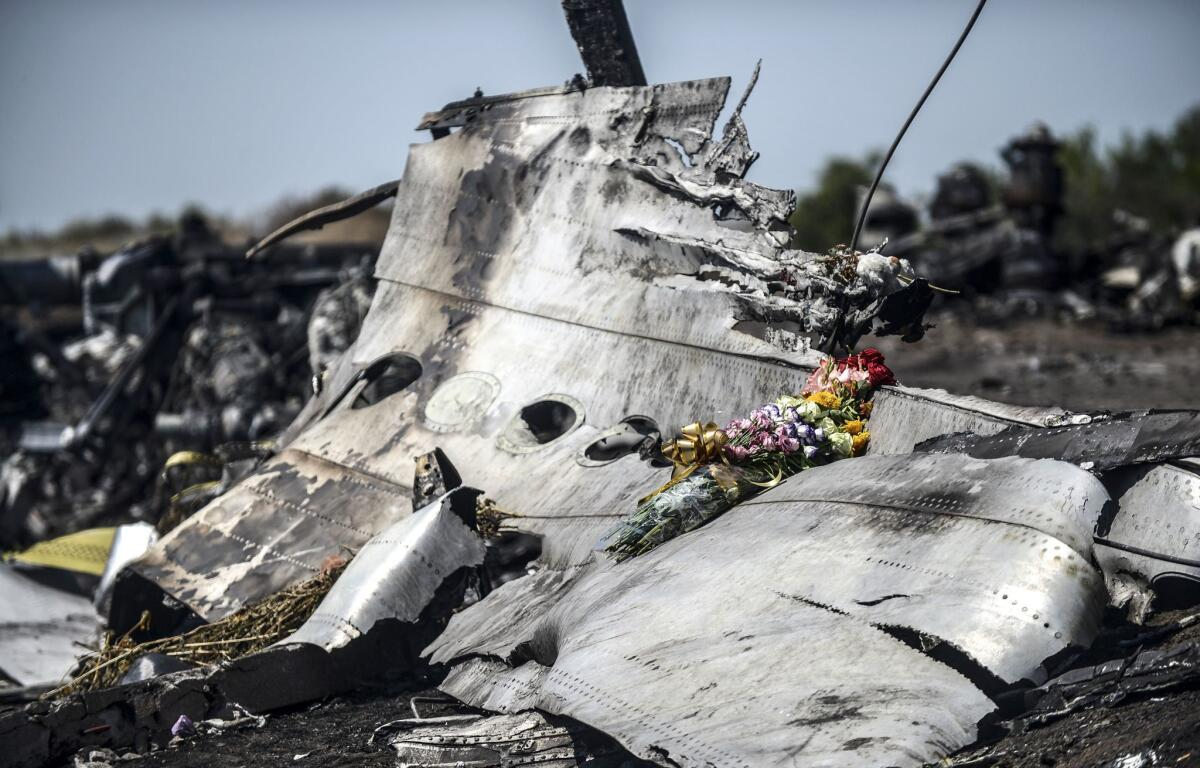
Ukrainian forces recovered territory. Separatist forces faced possible defeat. Russian equipment, personnel, artillery fire, and regular military intervention changed the balance. The downing of Malaysia Airlines Flight 17 revealed the danger created when advanced weapons entered an irregular command field built from denial, proxies, and contested control. Civilians in the air became part of a war whose parties were already struggling to admit what forces were present on the ground.
Russia spent years presenting itself as mediator, concerned neighbor, guarantor, and defender rather than a party exercising decisive control and support. The distinction mattered legally and politically. A mediator can demand compromise from both sides. A party can be made responsible for its own force.
The European Court of Human Rights later found sufficient evidence of Russian effective control over separatist-held areas from May 2014 for the court's jurisdictional analysis, and in its later merits judgment held Russia responsible for acts of its military and the separatist entities in eastern Ukraine.
The legal record arrived after years of strategic ambiguity had already done its work.
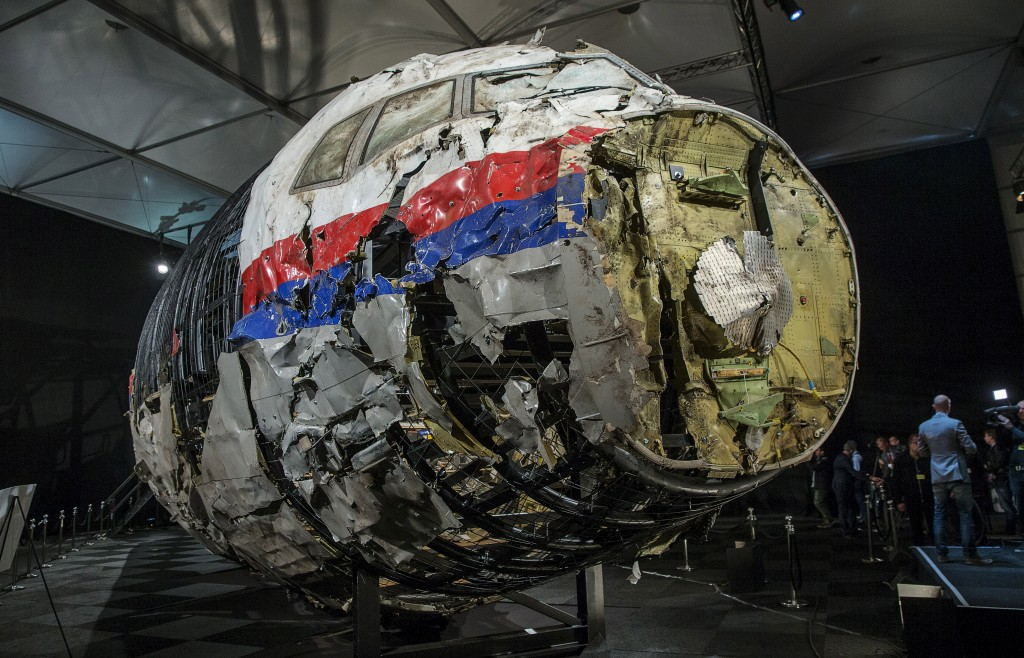
Ambiguity allowed the conflict to be described as an internal Ukrainian civil war whenever external responsibility became inconvenient, and as a humanitarian emergency requiring Russian protection whenever intervention required justification.
Ukraine used its own simplifications. Kyiv often treated political accommodation as a concession to invasion, which was understandable and still corrosive. Some Ukrainian public language flattened the occupied population into collaborators, passive victims, or people waiting to be liberated by force. Economic blockade, pension access, documentation, education, property, travel, and family contact became security questions. Each administrative restriction could weaken the armed entities while also transferring burden into civilian continuance.
The civilian count did not wait for the legal classification to settle. By the time Minsk II was signed, thousands had been killed and far more displaced. Industrial towns had become artillery environments. The front cut through a region whose economy depended on integrated rail, coal, steel, power, and municipal systems. A shell could destroy a home immediately and a mine flood could close a future more slowly. The war damaged both bodies and the material architecture by which the region could remain habitable.
- Donbas became the buffer wound at human scale.
- Russia treated the region as leverage over Ukraine's political direction.
- Ukraine treated restoration of sovereign control as the necessary route to national survival.
- The armed entities treated their own continuation as proof that separation had become irreversible.
- Civilians carried the interaction.
People crossed checkpoints for pensions, medicine, family, work, documents, school, funerals, and the ordinary obligations that borders created after appearing through their towns. Mines flooded. Industry decayed. Housing was destroyed. Shelling became weather. Children learned which direction to move when windows shook.
The regional political question remained real.
The war made answering it freely almost impossible.
÷
XXVI. Minsk and the Missing Sequence
Minsk was a repair instrument assembled from steps that did not agree about which world had to exist first.
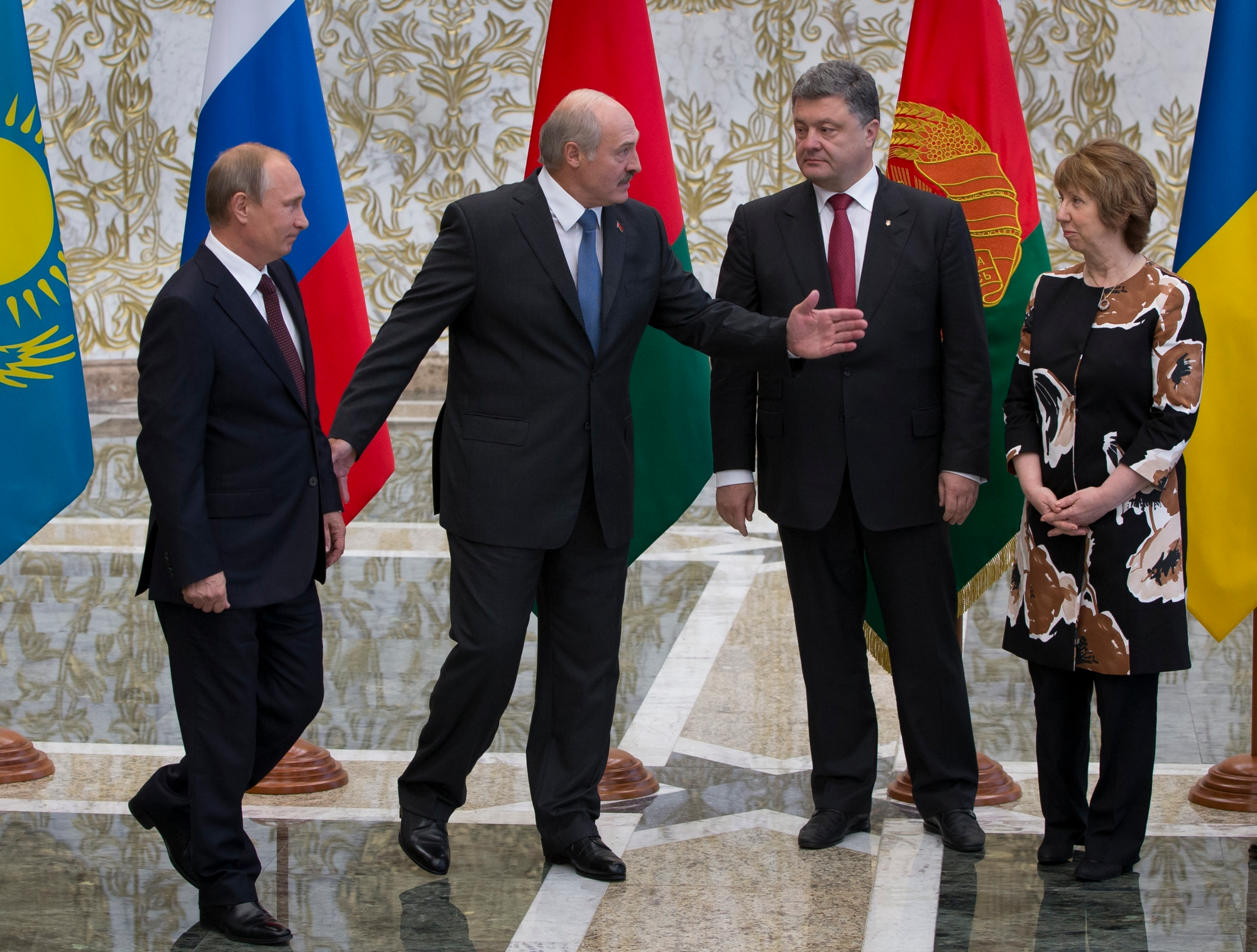
The first agreements in September 2014 sought a ceasefire, monitoring, decentralization, local self-government, border monitoring, release of hostages and detainees, humanitarian measures, and the withdrawal of unlawful armed formations and military equipment.
The fighting continued.
A second package arrived in February 2015 after another major escalation. It contained thirteen points and the outline of a political settlement:
- immediate ceasefire;
- withdrawal of heavy weapons;
- monitoring and verification by the Organization for Security and Co-operation in Europe;
- dialogue on local elections and special status;
- amnesty;
- prisoner exchange;
- humanitarian access;
- restoration of socioeconomic relations;
- restoration of Ukrainian control over the state border after local elections and a comprehensive political settlement;
- constitutional reform and decentralization;
- local elections under Ukrainian law and international standards;
- withdrawal of foreign armed formations and disarmament of illegal groups;
- continued work through the Trilateral Contact Group.
The list looks like a path.
The parties saw different starting points.
- Ukraine read Minsk as a route from Russian-backed military control toward restored sovereignty.
- Security had to become real enough for legitimate politics: ceasefire, withdrawal, disarmament, monitoring, and a trustworthy electoral environment before constitutional concessions could be made permanent.
- Russia and the separatist authorities emphasized the political obligations: direct dialogue, special status, constitutional reform, amnesty, and elections.
- Political incorporation had to occur before Kyiv regained full border control, because border control without settlement could allow Ukraine to dismantle the entities by force.
The text contained both logics.
It sequenced border restoration after elections and political settlement, while also requiring withdrawal of foreign forces and disarmament. It demanded elections under Ukrainian law in territories where Ukraine did not control coercive institutions. It asked Ukraine to amend its constitution while Russia denied being a belligerent required to withdraw. It asked armed entities to become political participants without supplying a trusted mechanism to separate their political representation from military control.
Everyone could point to a clause the other side had failed to perform first.
This is the missing sequence.
A repair path needs more than correct components. It needs a transition order that prevents each step from becoming exposure to a party that has not taken its own step.
- If Ukraine granted permanent political status before security control changed, Russian leverage could become constitutional.
- If Ukraine regained the border before political protection was secured, separatist communities and leaders could face forced dissolution, prosecution, or abandonment.
- If elections occurred under armed rule, coercion could become representation.
- If elections waited for perfect security, political settlement could be delayed forever.
- If amnesty came too early, atrocity could disappear into reconciliation language.
- If amnesty came too late, every armed participant had reason to prevent demobilization.
The agreement also lacked a shared doctrine for failure.
- If one side violated the ceasefire, which obligations paused?
- If monitors could not reach a site, who carried the presumption?
- If local elections were impossible under current conditions, what interim representation remained legitimate?
- If constitutional reform stalled in Kyiv, did that excuse continued foreign support and armed control?
- If Russian forces or equipment crossed an uncontrolled border, what mechanism restored the sequence?
Without these answers, every breach could become permission for a counter-breach. The agreement was cumulative on paper and retaliatory in practice. Each side preserved evidence that the other had moved first, and the civilian field received all the compound interest.
Minsk had no sovereign implementation authority above the parties.
The Organization for Security and Co-operation in Europe Special Monitoring Mission could observe, report, facilitate, and verify within limits. It was civilian and unarmed. Its monitors faced movement restrictions, threats, denied access, equipment interference, and a front whose participants had reasons to control what could be seen. Observation produced a massive public record. The record could document violations. It could not force compliance.
- France and Germany could mediate.
- The United Nations Security Council endorsed the package.
- The United States and European Union could sanction and support.
- Russia could influence the armed entities while denying that this made it a party with direct implementation obligations.
- Ukraine could legislate and negotiate while domestic politics punished any settlement that looked like surrender.
- The separatist authorities could obstruct arrangements that threatened their power.
- No institution could reliably move every side through the dangerous middle.
- The civilian field absorbed the delay.
- No institution could reliably move every side through the dangerous middle.
Ceasefires lowered violence at times without ending it. Heavy weapons moved and returned. Prisoners were exchanged while others remained. Contact lines hardened. People lived under two administrative systems. Passports, currencies, schools, media, policing, and economic relations diverged. The longer the temporary order survived, the more costly return became.
A frozen conflict is a conflict whose institutions are still moving.
Minsk also contained a standing problem of representation.
Who spoke for Donbas?
The self-proclaimed republics controlled territory through armed structures and Russian support. They could not be ignored as though no governing apparatus existed. Treating them as fully independent representatives of a freely constituted population would grant war the power to choose the electorate's voice.
- Ukraine's national institutions possessed international legal standing.
- They did not possess trusted authority inside every occupied community.
- Russia claimed concern for the population while structuring the field that prevented that population from returning to ordinary Ukrainian politics.
- The people themselves remained distributed among occupied territory, Ukrainian-controlled Donbas, displacement across Ukraine, migration to Russia, and exile elsewhere.
- No negotiation table could make this divided population present through one delegation.
Minsk tried to repair sovereignty, local agency, security, and geopolitics through one compressed arrangement.
The instrument was not foolish.
It was underpowered, sequentially unstable, and trapped inside incompatible descriptions of the war.
The central parties could continue treating non-implementation as evidence that their original description had been right.
- Kyiv could say Russia never intended peace.
- Moscow could say Kyiv never intended political accommodation.
- The armed entities could say Ukraine planned their destruction.
- Western states could say sanctions and negotiation had contained escalation.
The conflict remained useful to several instruments even while remaining disastrous to the field.
Minsk kept a repair path formally open.
It never made the path resistant to sabotage.
÷
XXVII. One People
In July 2021, Vladimir Putin published an essay on the historical unity of Russians and Ukrainians.
The article did more than state cultural attachment.
It supplied a theory of political standing.
Putin described Russians and Ukrainians as "one people - a single whole." He presented their separation as the result of historical accidents, border-making, foreign manipulation, Soviet administrative choices, nationalism, and an anti-Russia project imposed on a population whose true civilizational relation ran deeper than the modern state.
The essay acknowledged Ukrainian sovereignty in language and then placed conditions around its reality.
- Ukraine could exist safely and authentically through partnership with Russia.
- A Ukraine defined against Russia appeared artificial, dangerous, and captured.
This is the sacred version of the buffer wound.
Strategic depth says Ukraine cannot choose a security path that exposes Russia.
 Aidan Lawson
Historical unity says Ukraine cannot choose a national story that separates itself too sharply from Russia.
Together, they leave Ukraine with a formal sovereignty whose legitimate use is determined elsewhere.
 Aidan Lawson
Shared history is real.
Kyivan Rus belongs to the inheritance of several modern peoples. Russian and Ukrainian languages are related. Families cross the border. Churches, literature, war memory, Soviet institutions, migration, industry, and ordinary life produced deep entanglement. Millions of people hold identities that do not fit a simple national partition. Ukrainian history contains Russian-speaking patriots,
Ukrainian-speaking Russophiles, Soviet nostalgists, nationalists, regional identities, mixed households, and people who changed their political orientation after the war changed the meaning of every old category.
Historical relation should increase the obligation to avoid domination.
The essay routes it differently.
- Because the peoples are related,
- separation becomes suspicious.
- Because the histories are entangled,
- the stronger state receives interpretive authority over which political difference counts as authentic.
- Because Ukraine matters deeply to Russia,
- Ukrainian refusal becomes an injury rather than a decision.
This is how attachment becomes title.
- A brother may grieve estrangement.
- A brother does not acquire the sibling's passport.
The "one people" claim also solved an operational problem for future violence. If Ukraine was a fully separate political field, invasion would be war against another people. If Ukrainians were one people with Russians, military action could be narrated as rescue, correction, reunification, liberation from an alien regime, or surgery performed on a shared body.
The category preserved the imagined people by reducing the standing of the people actually refusing.
Ukrainian independence, elections, protests, governments, military service, language change, and post-2014 national consolidation could all be reclassified as the effects of manipulation. Evidence of separation became evidence that the anti-Russia project had penetrated more deeply.
The field could no longer correct the theory.
- If Ukrainians welcomed Russia,
- historical unity was confirmed.
- If Ukrainians resisted Russia,
- foreign capture was confirmed.
The instrument had become self-sealing.
This did not mean every Russian who believed in cultural unity supported invasion. Cultural kinship can sustain peace, multilingual life, open borders, shared institutions, and mutual care. Many Russians and Ukrainians held some form of common identity without converting it into jurisdiction.
The state performed the conversion.
The essay turned kinship into a test Ukraine could fail by exercising sovereignty in the wrong direction.
÷
XXVIII. The December Ultimatum
The draft agreements returned in December 2021 carrying the theory in legal form.
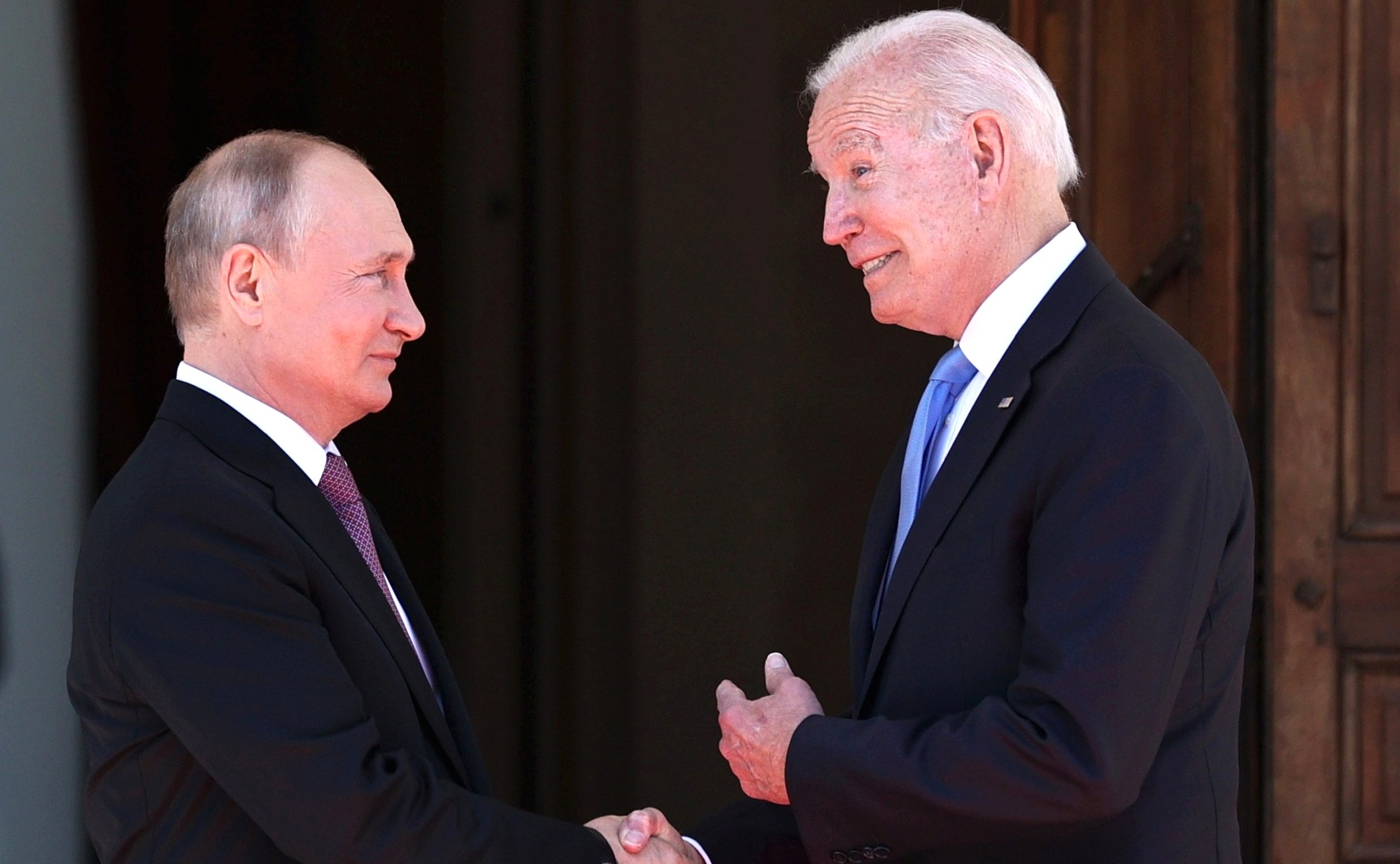
Russia proposed one treaty with the United States and another agreement with NATO members. The documents included several potentially negotiable security measures: limits on intermediate-range missiles, restrictions on dangerous military activities, consultation mechanisms, and rules designed to reduce the risk that strategic systems would approach the other side's territory.
Those elements addressed real security externalities.
The drafts also demanded a different Europe.
NATO members would commit to no further enlargement, explicitly including Ukraine. NATO military activity would be barred across Ukraine, Eastern Europe, the South Caucasus, and Central Asia. The alliance would sharply constrain force and infrastructure in states that had joined after 1997. The United States would undertake to prevent further eastward enlargement.
The proposed architecture did not only protect Russia from weapons. It restored a privileged Russian relation to the political futures of neighboring states.
Ukraine was inside the draft without being a party to it.
So were countries that had already joined NATO through their own governments and ratification processes.
The agreements spoke the language of mutual security while distributing political agency unequally. Russia and the United States would negotiate the continental structure. Smaller states would inhabit the result.
 Aidan Lawson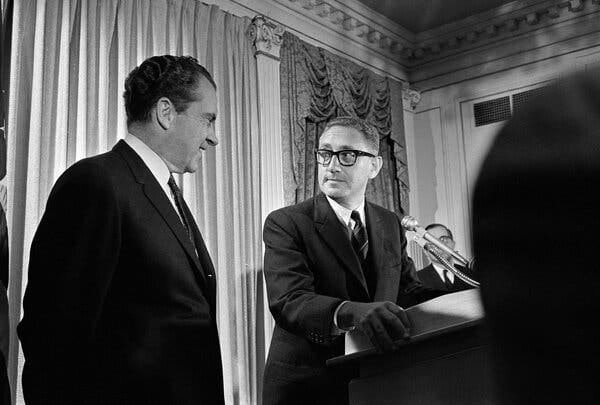
The objection from Moscow was predictable: military blocs already distribute agency unequally. The United States possesses outsized influence inside NATO. Alliance policy affects Russian security. Western states had repeatedly made decisions about intervention, missile defense, enlargement, and force posture without granting Russia veto power. A demand for legally binding limits could therefore be described as an attempt to replace discretionary Western dominance with explicit reciprocal rules.
That defense reaches some of the draft.
It does not reach the title claim.
- A reciprocal missile limit constrains capabilities that can physically threaten both parties.
- A veto over Ukrainian membership constrains a third state's political route.
The distinction is the heart of the article.
- Russia was entitled to demand negotiation over deployments, exercises, ranges, warning time, transparency, inspection, and arms control.
- Those issues could have generated a serious security process, especially after years of treaty erosion.
- Russia was not entitled to make Ukrainian subordination the price of discussing them.
The drafts arrived while Russian forces were massing near Ukraine. The military posture converted the proposed agreement into an ultimatum even where diplomats still called it a negotiation. If the other side refused the architecture, Russia retained the option to alter the field by force.
This is coercive leverage over continuance.
The proposal can still contain completely valid terms. A threat does not make every concern false. It changes what accepting the package would authorize.
- Ukraine would learn that enough military pressure could force larger powers to debate its future above its head.
- Eastern European NATO members would learn that their security status remained revisable through Russian coercion.
- Russia would learn that the path to recognized strategic depth ran through making the alternative dangerous enough for everyone.
The December documents were the last moment when the buffer wound still appeared as paper.
÷
XXIX. Denazification as Target Compression
The word arrived already wearing the Great Patriotic War.
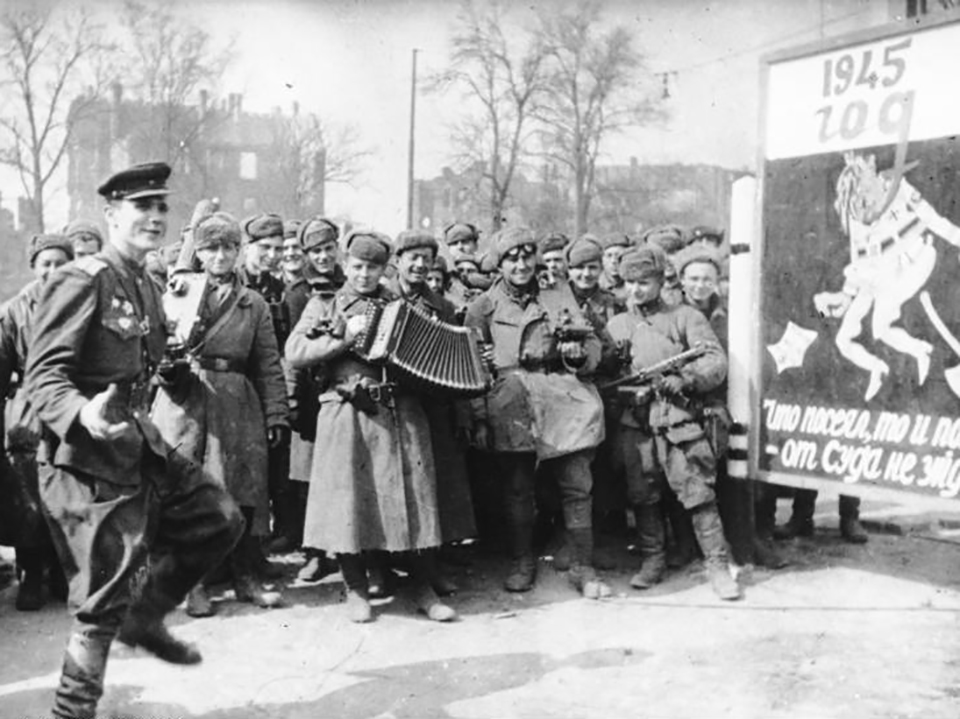
"Denazification" is one of the most powerful moral instruments available to the Russian state. The Soviet victory over Nazi Germany is family memory, civilizational memory, military sacrifice, state legitimacy, and one of the clearest cases in modern history where organized force had to destroy an exterminatory regime. To name an enemy Nazi is to place that enemy near the point where argument ends.
Ukraine had a far-right problem.
It had extreme nationalist groups, violent street organizations, historical memory battles, volunteer formations with radical origins, public symbols tied to movements that had participated in ethnic violence and, in some cases, collaboration with Nazi Germany. The Azov Battalion emerged from a far-right milieu and used symbols with neo-Nazi associations. Some radicals gained combat experience, public legitimacy, media access, and relationships with state institutions after 2014. Minority groups, leftists, feminists, Roma communities, LGBTQ people, journalists, and political opponents faced violence or intimidation from extremist organizations that Ukrainian authorities often failed to restrain adequately.
These are real wounds.
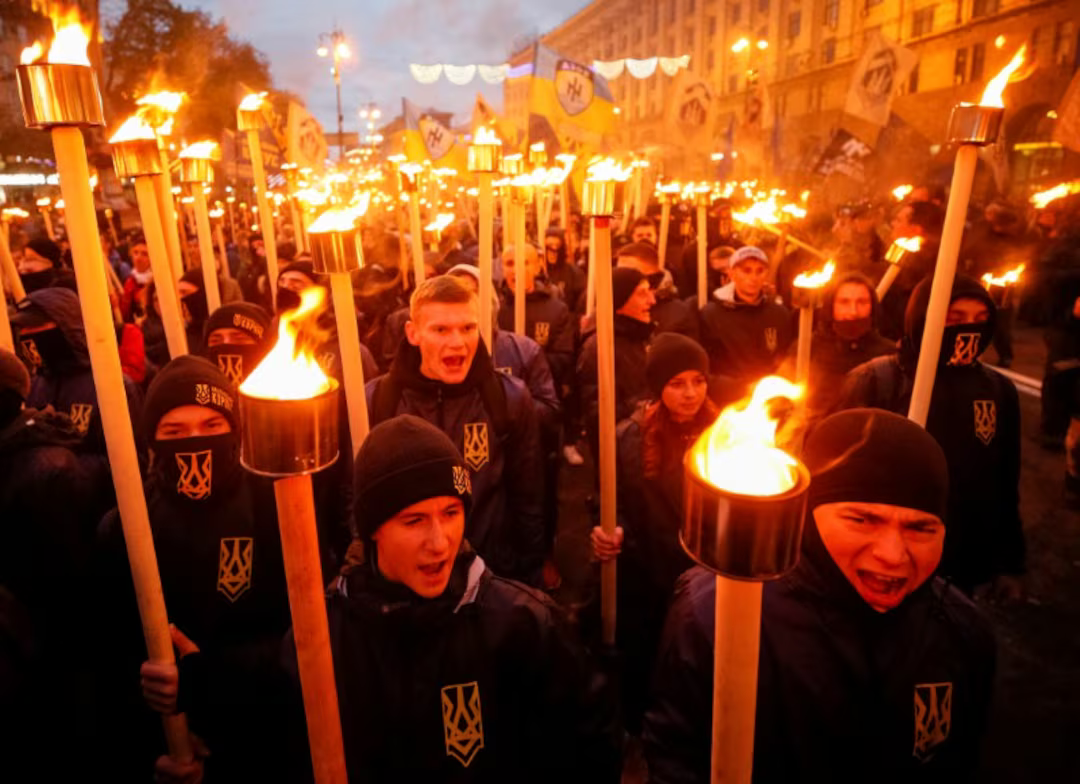
"Denazification" did not preserve their reality.
It consumed them.
The Russian state enlarged a dangerous minority current until it could name the Ukrainian government, military, national project, Western orientation, and resistance to Russian control as one fascist object.
Electoral evidence contradicted the total category. Far-right parties performed poorly in national elections after Maidan. Ukraine elected Volodymyr Zelenskyy in 2019 by a large majority through a competitive election; his Jewish family history made the personal application grotesque, although biography alone cannot audit a whole state. The stronger point is institutional: governments changed through elections, opposition parties competed, monitors assessed national votes, and the extreme right never acquired sovereign electoral command.
Street influence and military integration remained concerns.
They were not the constitution of Ukraine.
Target compression does not require the complete absence of the trait being enlarged. It works best when it finds a real fragment.
- A real extremist becomes the regime.
- A contested historical figure becomes the national soul.
- A volunteer battalion becomes the army.
- A language dispute becomes ethnic persecution.
- A corrupt government becomes an occupying junta.
- A Western relationship becomes foreign rule.
- A defensive mobilization becomes proof of aggression.
The category then removes distinctions required for protection.
- A civilian who supports Ukrainian sovereignty can be treated as a participant in Nazism.
- A soldier defending a city can be treated as the armed form of the ideology.
- An election can be dismissed as theater because the state underneath it has already been classified.
- A government can be removed without violating self-determination because the government does not represent a legitimate people.
"Denazification" became target logic.
 Aidan Lawson
Modal Path Ethics has already met this instrument in Skynet. The system receives a field full of mixed loci and compresses them into the class against which force is authorized. Once the class is active, evidence that should weaken it can be reinterpreted as disguise.
The category was especially effective because it recruited antifascist memory into a war of control. A sacred inheritance of resistance to annihilation became permission to deny another state's political existence.
The dead of the Second World War were made to command a new invasion.
They did not issue that order.
÷
XXX. The Full-Scale Invasion
On February 24, 2022, the buffer instrument crossed the border from several directions.
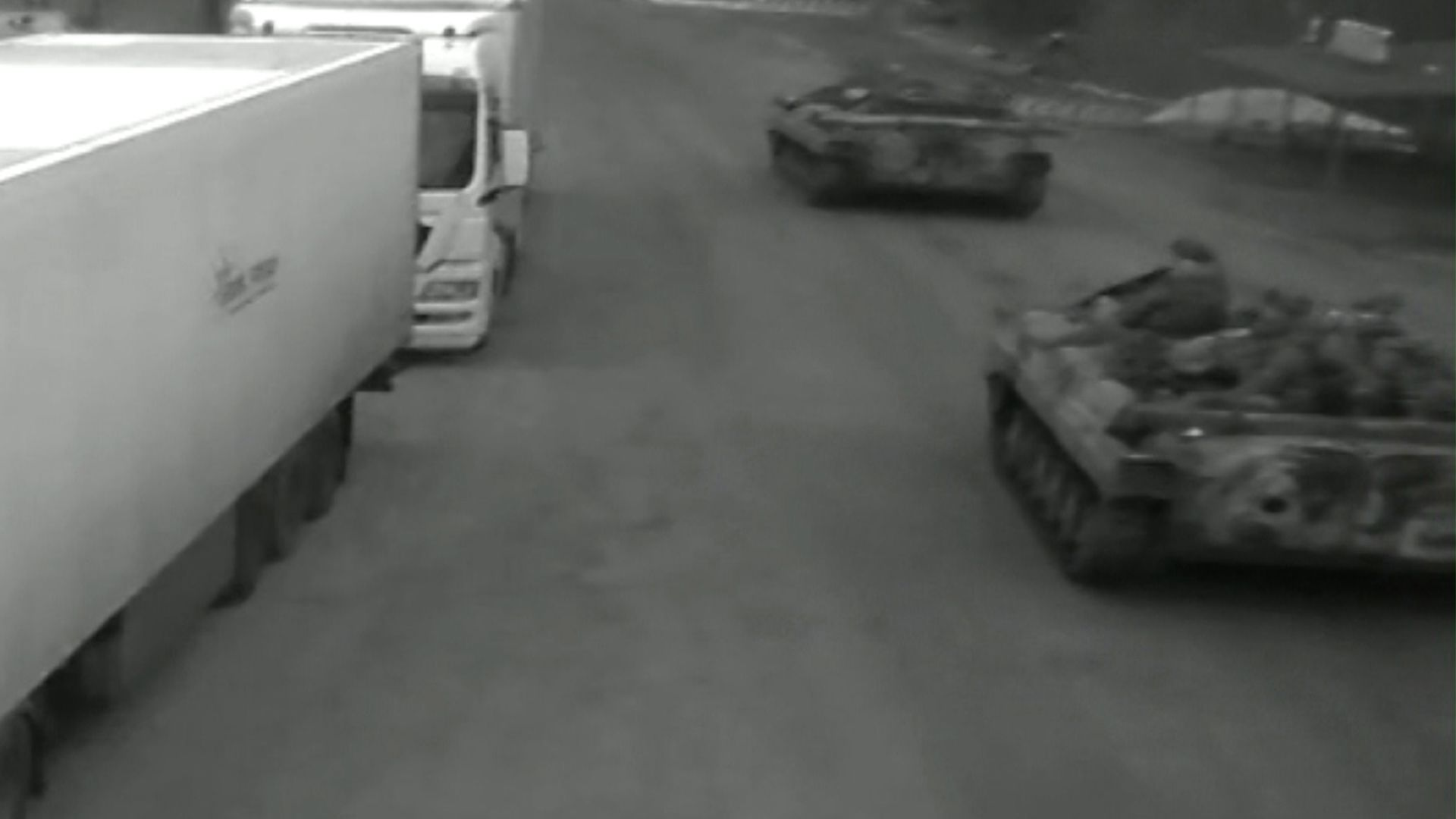
Russian forces attacked from Russia, occupied Crimea, and Belarus. Missiles struck across Ukraine. Ground forces moved toward Kyiv, Kharkiv, Chernihiv, Sumy, the Donbas, Kherson, and other regions. An airborne assault targeted Hostomel Airport near the capital. The geography of the attack exceeded any claim that the operation was limited to defending the separatist-held territories.
The operation made the collapse of the Ukrainian government reachable.
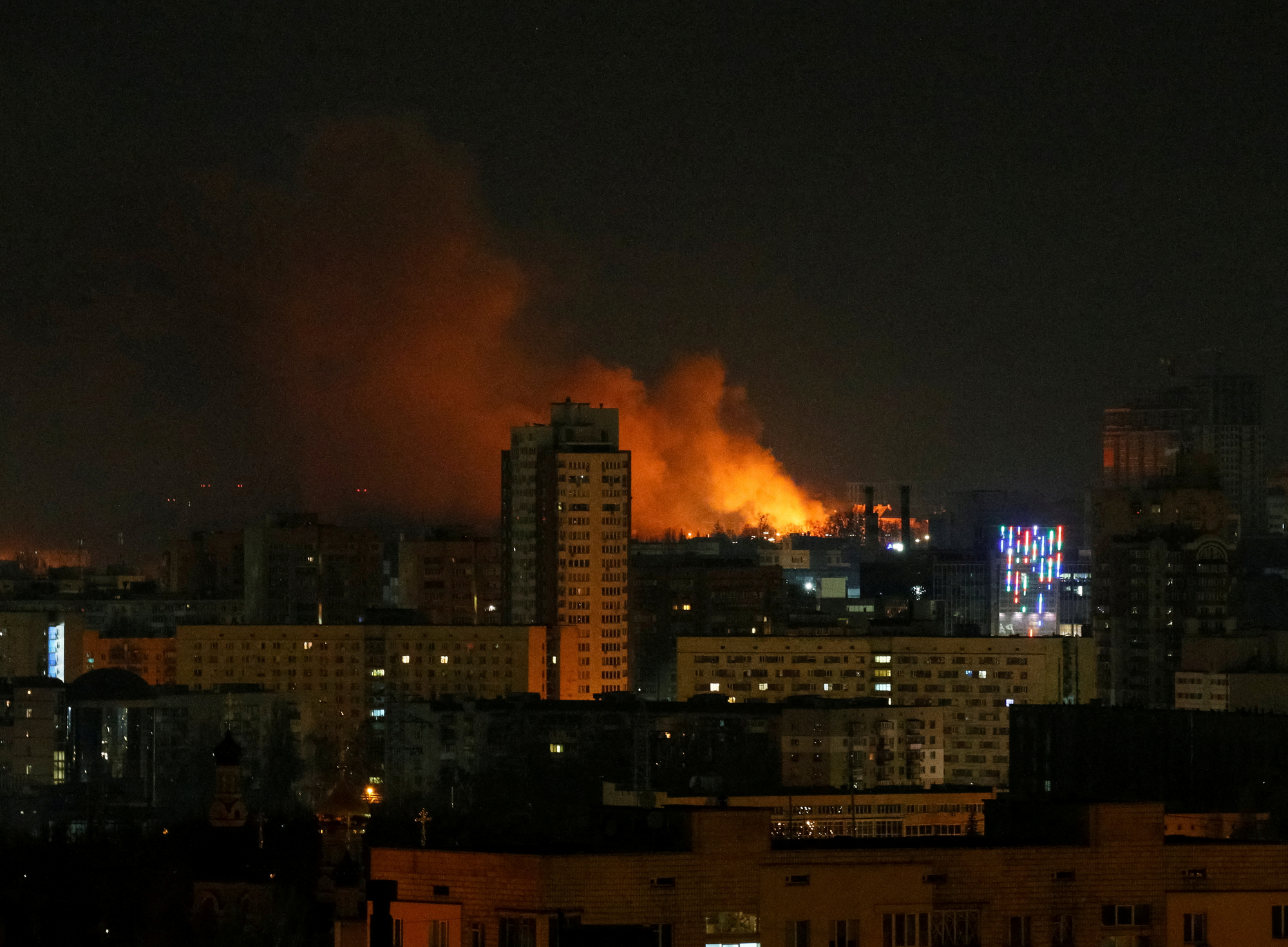
The assault on Kyiv matters because it reveals the scale of the intended correction. A state interested only in protecting Donetsk and Luhansk did not need armored columns moving from Belarus toward the capital, airborne forces attempting to seize an airport at Kyiv's edge, or a campaign designed around rapid political shock. The operational plan expected Ukrainian command and government coherence to break before the country could fully mobilize. It treated the state as a structure that would fall once its center was struck.
That assumption repeated the political theory. If Ukraine's separateness was shallow, externally manufactured, and held together by an illegitimate elite, then removal of the elite should allow the deeper unity to reappear. Military planning became a test of historical ontology. The columns carried the claim that Ukraine was less real than its resistance later proved.
Russia's public aims included the demilitarization and denazification of Ukraine. The terms were broad enough to hold almost any political result.
- Demilitarization could mean limits on specific weapons.
- Under invasion conditions, it meant depriving Ukraine of the force required to refuse the settlement imposed on it.
- Denazification could mean prosecution of extremists.
- Under the state's theory, it meant replacing or restructuring the political order that had chosen separation from Russia.
The invasion therefore answered the security externality by attempting to remove the external chooser.
This was strategic depth in its sovereign form.
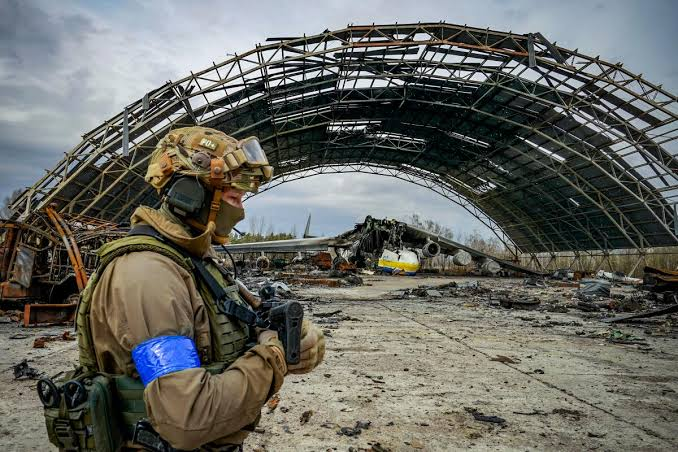
Russia had spent years arguing that Ukraine's military orientation, NATO cooperation, nationalism, language policy, and Western integration threatened Russian security. The war sought to produce a Ukraine whose state capacity, territory, leadership, and foreign policy could no longer generate that same threat.
The Russian government claimed it did not intend to occupy Ukraine.
The operation still required control over enough Ukrainian territory and political machinery to determine what the country could become afterward. Occupation could be temporary in the plan and remain sovereign over the transition. A brief seizure of the capital, installation of acceptable authority, imposed neutrality, disarmament, or territorial restructuring would all place Ukraine's future inside Russian force.
The plan encountered the country.
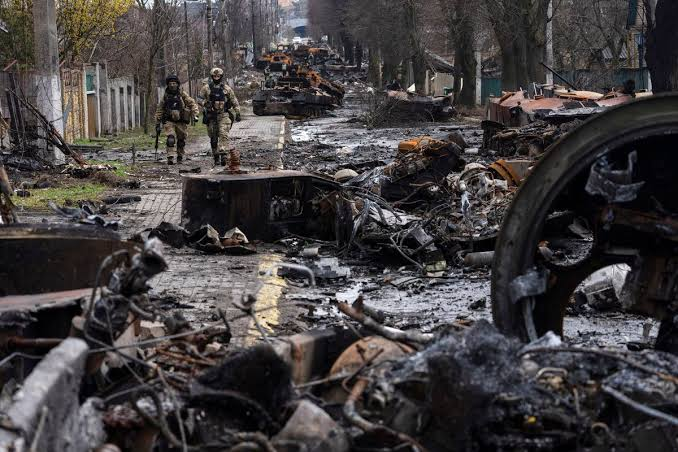
Ukrainian institutions did not collapse on schedule. The government remained in Kyiv. The armed forces fought. Territorial-defense units formed. Civilians moved supplies, reported positions, evacuated relatives, sheltered strangers, translated intelligence, repaired systems, and made ordinary continuance part of national defense.
This resistance was not proof that every Ukrainian held one political identity.
It was proof that the invaded field contained more agency than the invasion model had preserved.
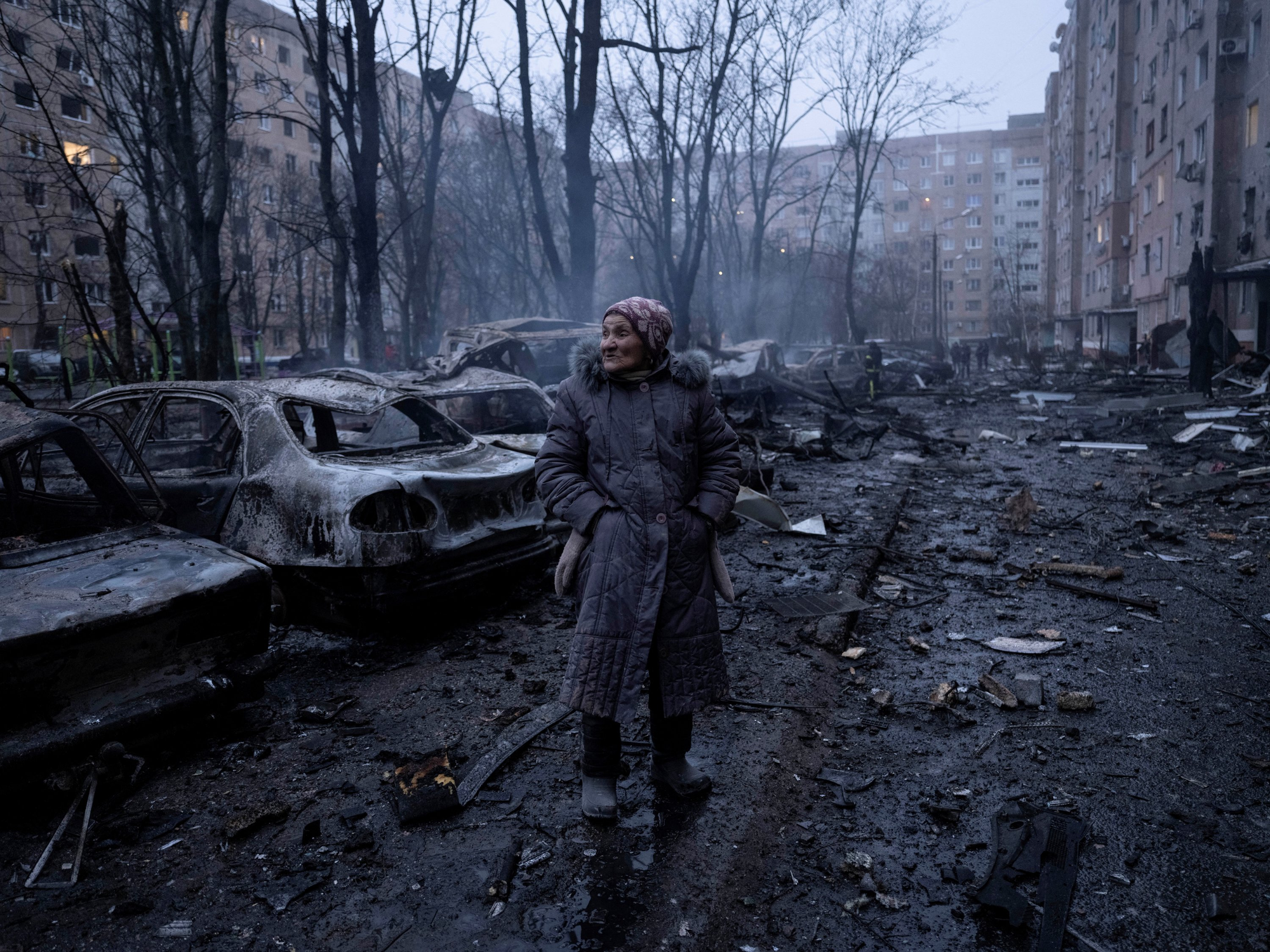
The same Russian-speaking populations invoked as objects of rescue included cities that resisted Russian assault. Kharkiv did not become Russian because its streets spoke Russian. Mariupol's language did not make the destruction of Mariupol protective. Residents of Kherson protested occupation. Political identity updated under contact with the instrument claiming to know it in advance.
The invasion also made atrocity reachable.
War against a target-compressed state weakens the distinction between military defeat and political correction. Occupied populations become security problems. Local officials, veterans, activists, journalists, teachers, clergy, volunteers, and ordinary residents can be screened for loyalty. Detention, torture, disappearance, filtration, forced transfer, execution, property seizure, and the suppression of Ukrainian institutions become tools for stabilizing the corrected field.
Russian soldiers were not one actor. Units differed. Command levels differed. Some personnel had been deceived about the mission. Some deserted, refused, surrendered, looted, killed, protected civilians, or followed orders under fear. Conscripts, contract soldiers, mobilized men, prisoners recruited into assault formations, and officers did not carry identical agency.
The institution still generated the field in which their actions occurred.
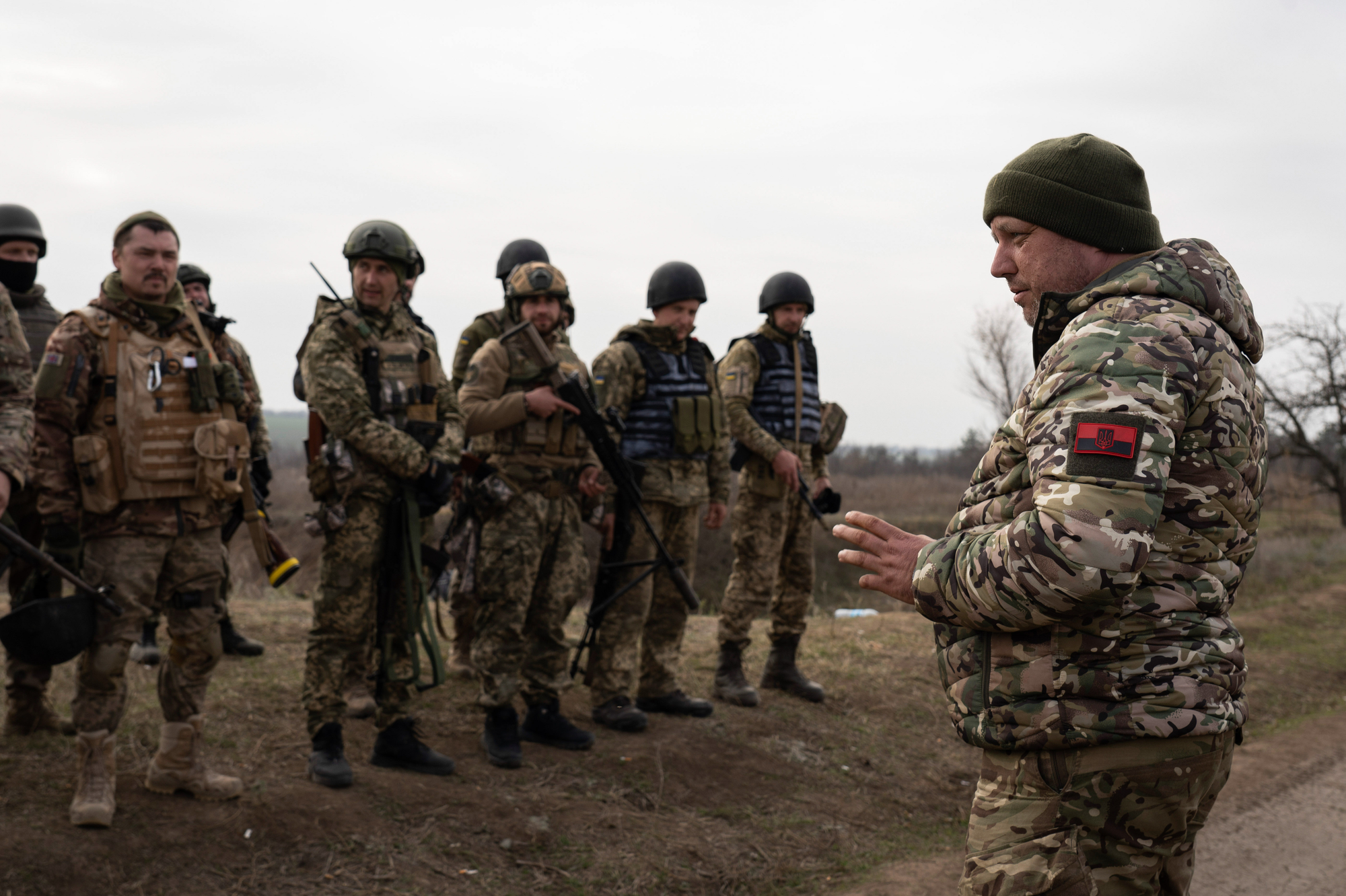
Ukrainian defense generated harms too. A state fighting in its cities places military activity near civilians because the cities are what it is defending. That does not dissolve obligations of distinction, precaution, treatment of prisoners, or accountability for Ukrainian violations.
Wartime nationalism, censorship, emergency power, collaboration law, forced mobilization, and pressure on political and religious institutions remain auditable.
Defense is not a purity machine.
The initiating transition still matters.
Russia crossed the border to revise another state's political and territorial field through force. Ukraine's later harms occur inside the resistance path created by that invasion. They remain harms without becoming a retroactive cause.
By the end of March, Russia withdrew from the northern axis after failing to take Kyiv. The war concentrated more heavily in the east and south. This operational correction did not correct the governing theory.
The initial plan had failed against extance.
The state narrowed the objective and continued.
÷
XXXI. Annexation as Repair Theater
When the first future failed, the map tried again.
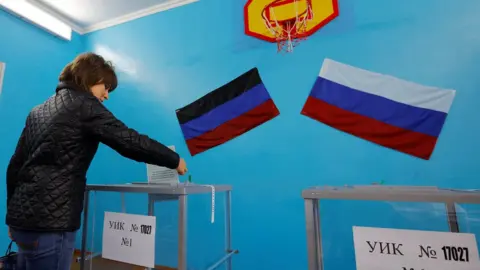
Russia already claimed Crimea. In September 2022, occupation authorities conducted so-called referendums in parts of Donetsk, Luhansk, Kherson, and Zaporizhzhia regions under Russian military control. The votes occurred during war, displacement, repression, damaged population records, restricted media, and the presence of armed authority. Russia then declared the four regions part of the Russian Federation.
It did not control all of the territory it annexed.
The title outran the field.
This is the clearest possible image of annexation as repair theater.
- A war has made borders unstable.
- The state prints a final border.
- A population has been displaced, divided, killed, deported, mobilized, silenced, and placed under occupation.
- The state asks the remaining population a question under the force that will certify the answer.
- A territory remains contested.
- The state constitutionalizes possession and calls the conflict resolved.
The instrument converts ongoing coercion into completed consent.
Russia described the annexations as self-determination and reunion. The United Nations General Assembly condemned the attempted annexation and the referendums as illegal. The legal judgment mattered. The material field continued underneath it.
People in the claimed regions now lived inside several incompatible futures:
- Russian law and administration where occupation held;
- Ukrainian law and administration where Ukraine retained or recovered control;
- Russian constitutional claims over cities Russia did not possess;
- Ukrainian constitutional claims over all internationally recognized territory;
- homes inside artillery range;
- families distributed across lines;
- property records under rival systems;
- schools teaching rival histories;
- passports acting as access, coercion, survival tool, and evidence of alleged loyalty.
Annexation did not solve belonging.
It weaponized the answer.
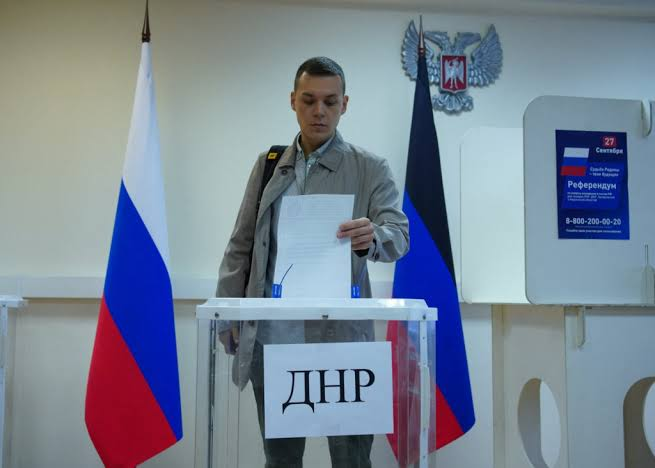
Once the regions became Russian in the state's constitutional story, Ukrainian attempts to recover them could be described as attacks on Russia itself. The security title acquired nuclear shadow. A war launched to change Ukraine's orientation became, in Russian doctrine and rhetoric, defense of newly incorporated Russian territory.
The aggressor moved the category of defense forward behind its army.
This is how protection instruments become sovereign.
- First, Russia says Ukraine's choices threaten Russia.
- Then Russia occupies Ukrainian territory to reduce the threat.
- Then the occupied territory becomes Russia.
- Then Ukrainian resistance to occupation threatens Russia.
Every correction attempt is reclassified as renewed aggression.
The buffer wound has sealed itself.
The annexations also exposed the limits of historical and linguistic title. Russia claimed the full administrative boundaries of four regions whose residents had never expressed one stable political will and whose territories included cities fighting Russian control. It treated oblast lines drawn by the Ukrainian state as the borders of new Russian federal subjects while rejecting Ukraine's authority over those same lines.
The instrument borrowed the map it claimed history had invalidated.
This is common in repair theater. The controller preserves whichever administrative facts make control easier and discards whichever facts protect the controlled.
The result was not strategic depth in any stable sense.
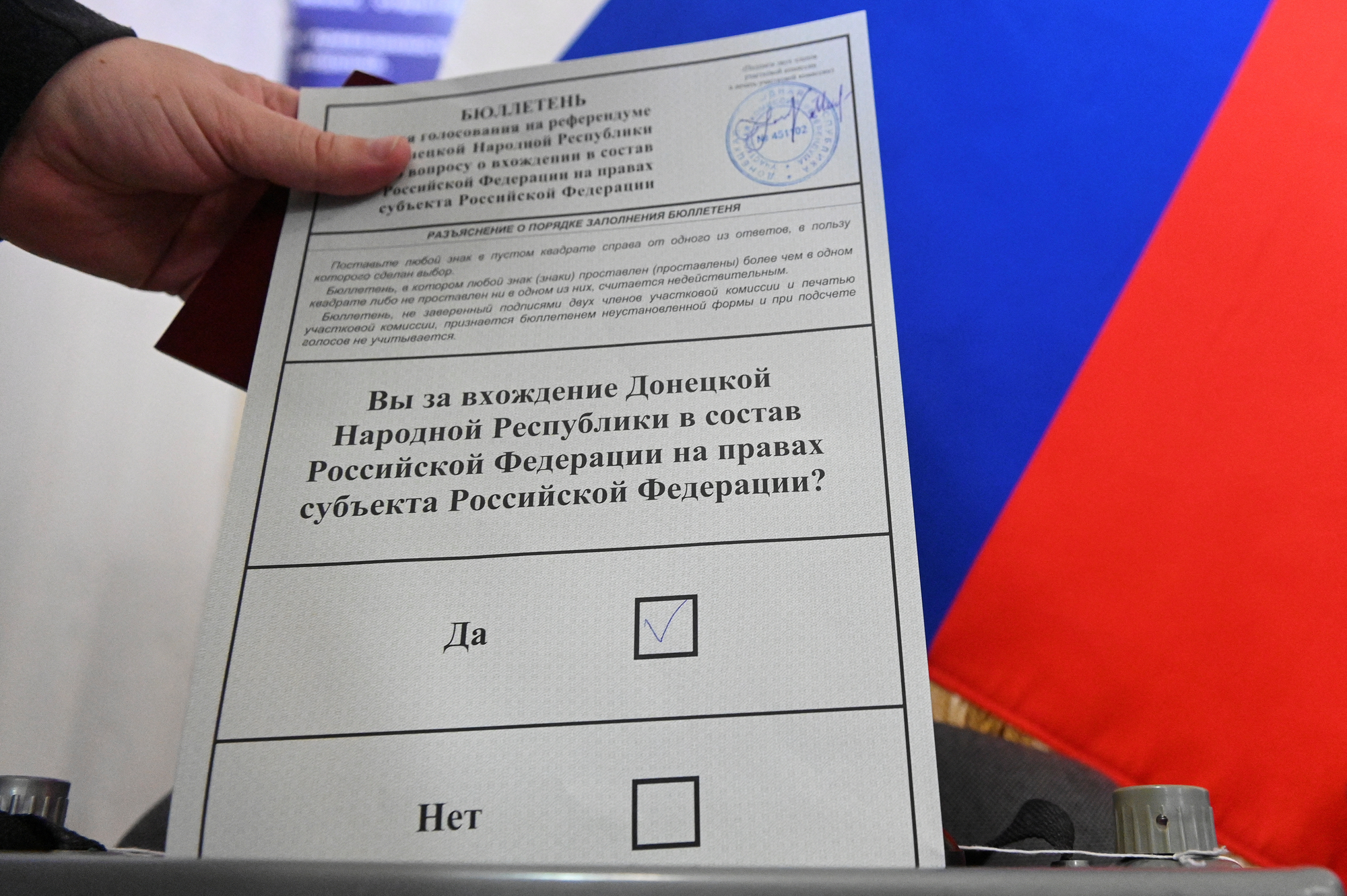
Russia acquired a longer front, devastated territories, populations requiring coercive administration, expanded sanctions, greater Ukrainian hostility, and a Western military relationship with Ukraine far deeper than the one the war had claimed to prevent.
The buffer was supposed to become quiet.
It became armed identity.
Ukraine did not enter this war as one political mind. It entered with regional difference, corruption, oligarchy, contested memory, language conflict, extremist minorities, weak institutions, and a large population whose relation to Russia could not be described by one arrow.
Russia's instrument compressed that plurality into a choice:
Submit to the security story or become its enemy.
The field answered this by generating more enemy than the instrument had begun with. The production did not stop at Ukraine's border.
÷
XXXII. Ukraine Becomes More Ukrainian
The invasion discovered a country by trying to prove the country was artificial.
This was one of the war's first generated structures.
Russia entered Ukraine with a theory of Ukrainian weakness. The government in Kyiv was supposed to be shallow, externally installed, nationally unrepresentative, and held together by Western sponsorship, nationalist coercion, and the administrative residue of a historical mistake. Strike the center, break the military, expose the fraud, and the deeper relation between Russians and Ukrainians would reappear beneath the state.
The theory was carried by armor.
The armor met people.
Ukraine did not become more real because invasion granted it reality. The country had already answered that question through independence, elections, institutions, ordinary life, corruption, disagreement, language, migration, family, regional conflict, and thirty years of difficult political continuation.
The invasion changed the cost of uncertainty.
A person could have considered Ukrainian and Russian identity compatible before February 2022. A person could have spoken Russian at home, distrusted Kyiv, disliked Ukrainian nationalism, watched Russian television, maintained family in Russia, opposed NATO membership, and still understood Russian tanks as an attack on the place where their life remained reachable.
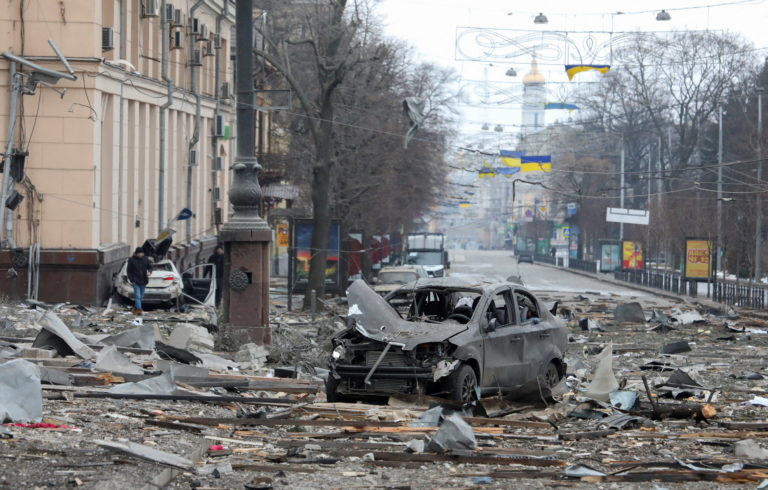
The weapon forced distinctions that ordinary life had previously allowed to overlap.
- Kharkiv could be Russian-speaking and Ukrainian.
- Odesa could carry imperial, Soviet, Jewish, Russian, Ukrainian, maritime, cosmopolitan, and local memories without waiting for Moscow to select the authorized one.
- A person could love Russian literature and refuse Russian rule.
- A family could contain several histories and still know which army had crossed the border.
The invasion treated such overlap as latent ownership.
Contact converted it into separation.
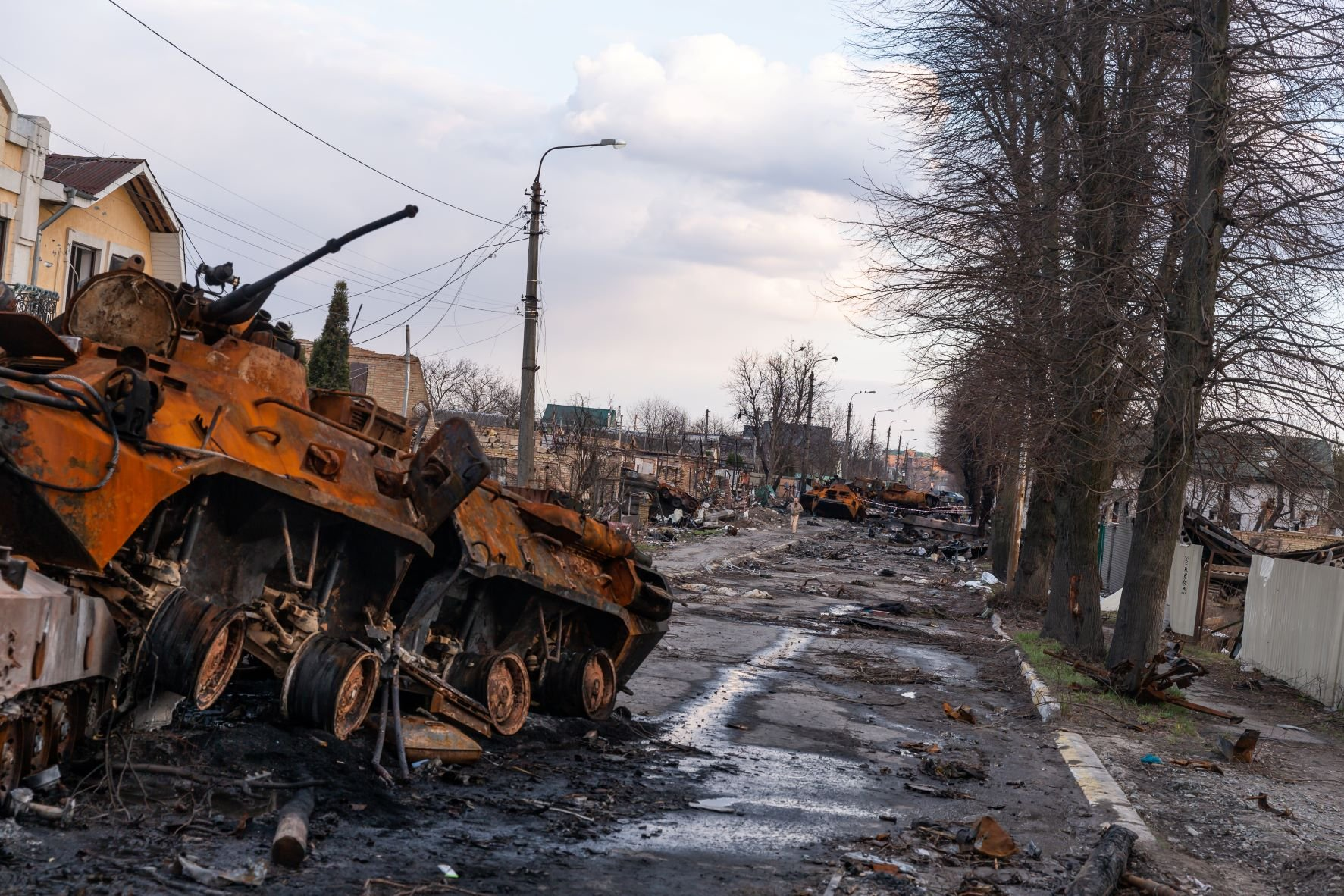
Ukrainian civic identity strengthened across linguistic and regional lines.
Russian-speaking citizens increasingly described themselves through Ukrainian political belonging. Public use of Ukrainian expanded. Attitudes toward the Russian language shifted sharply as the language of family, city, literature, and ordinary intimacy became entangled with the language of military justification, occupation administration, filtration, annexation, and claims that Russian speakers required rescue from the state they inhabited.
This shift cannot be narrated as simple "cultural awakening."
War changes language through grief.
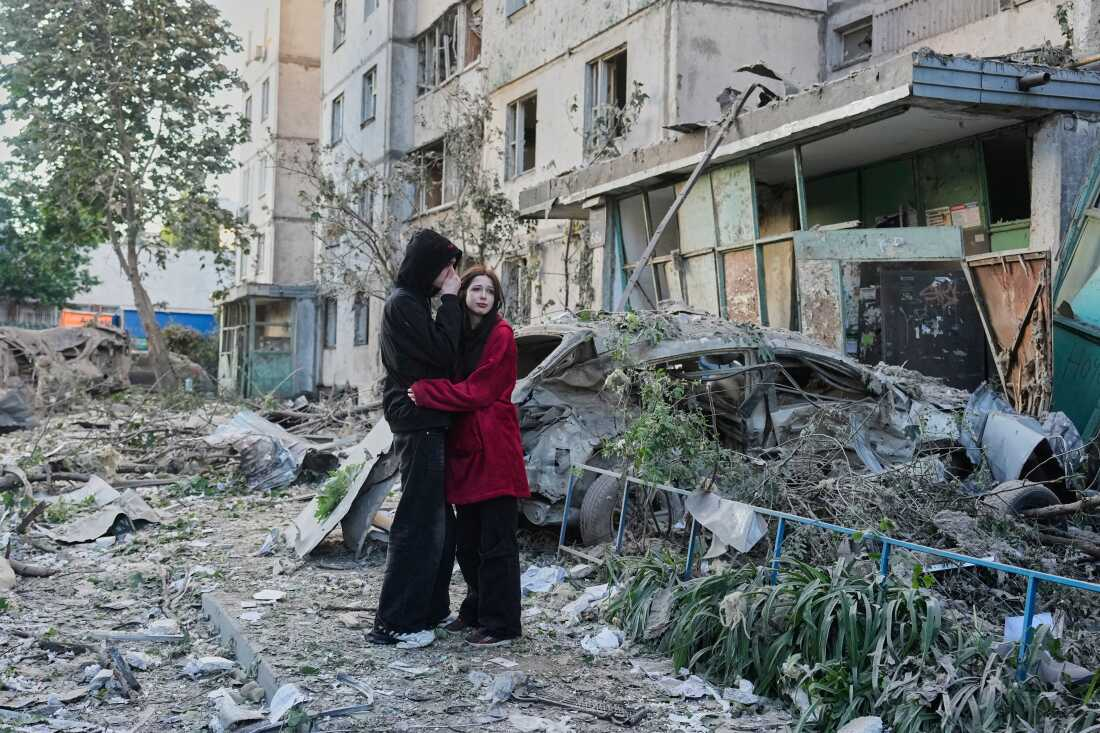
- A woman stops speaking Russian because it was the language in which the missile warning, occupation order, propaganda broadcast, or final telephone call arrived.
- A school changes its instruction because the neighboring state has denied that Ukrainian possesses a full national world.
- A family changes what it teaches a child because cultural continuity has become part of defense.
These are understandable transitions.
They can still raise new resistance.
Russian-speaking Ukrainians do not become morally defective because invasion made Russian politically dangerous.
Ukrainians who continue to speak Russian do not become incomplete citizens.
Cultural decolonization can reopen histories suppressed by empire while also hardening into a purity instrument that treats private language as evidence of failed loyalty. A state defending its existence can protect Ukrainian language without turning millions of its own people into suspicious remnants of the enemy.
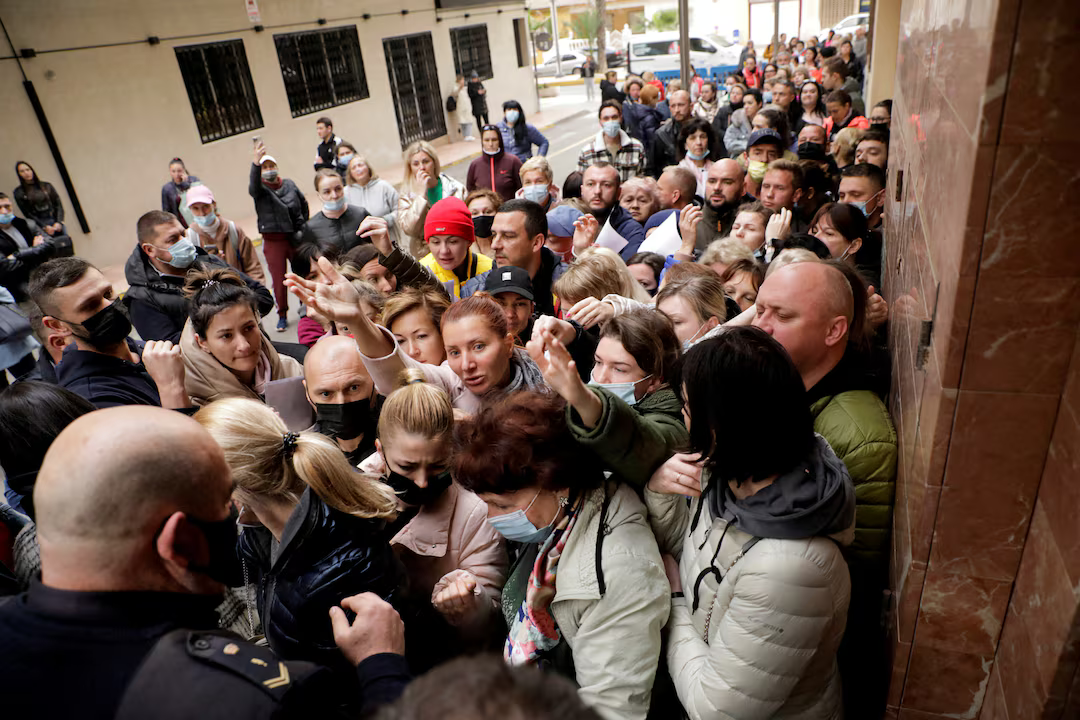
The generated Ukrainian field therefore carries two truths.
- The invasion strengthened national cohesion.
- The invasion also increased the pressure under which cohesion is defined.
This is where triumphalism becomes analytically useless. A flag becomes more visible when people have to shelter beneath it. That does not mean the path to the shelter was good.
Ukraine's consolidation was purchased through destroyed cities, occupied communities, displaced families, battlefield death, lost limbs, interrupted education, demographic flight, mobilization, grief, and years reorganized around sirens. Millions crossed borders or moved within the country. People who remained learned to conduct ordinary life through power cuts, missile alerts, funerals, shortages, damaged infrastructure, and the constant possibility that the next strike would select their street.
The war also narrowed Ukrainian political life.
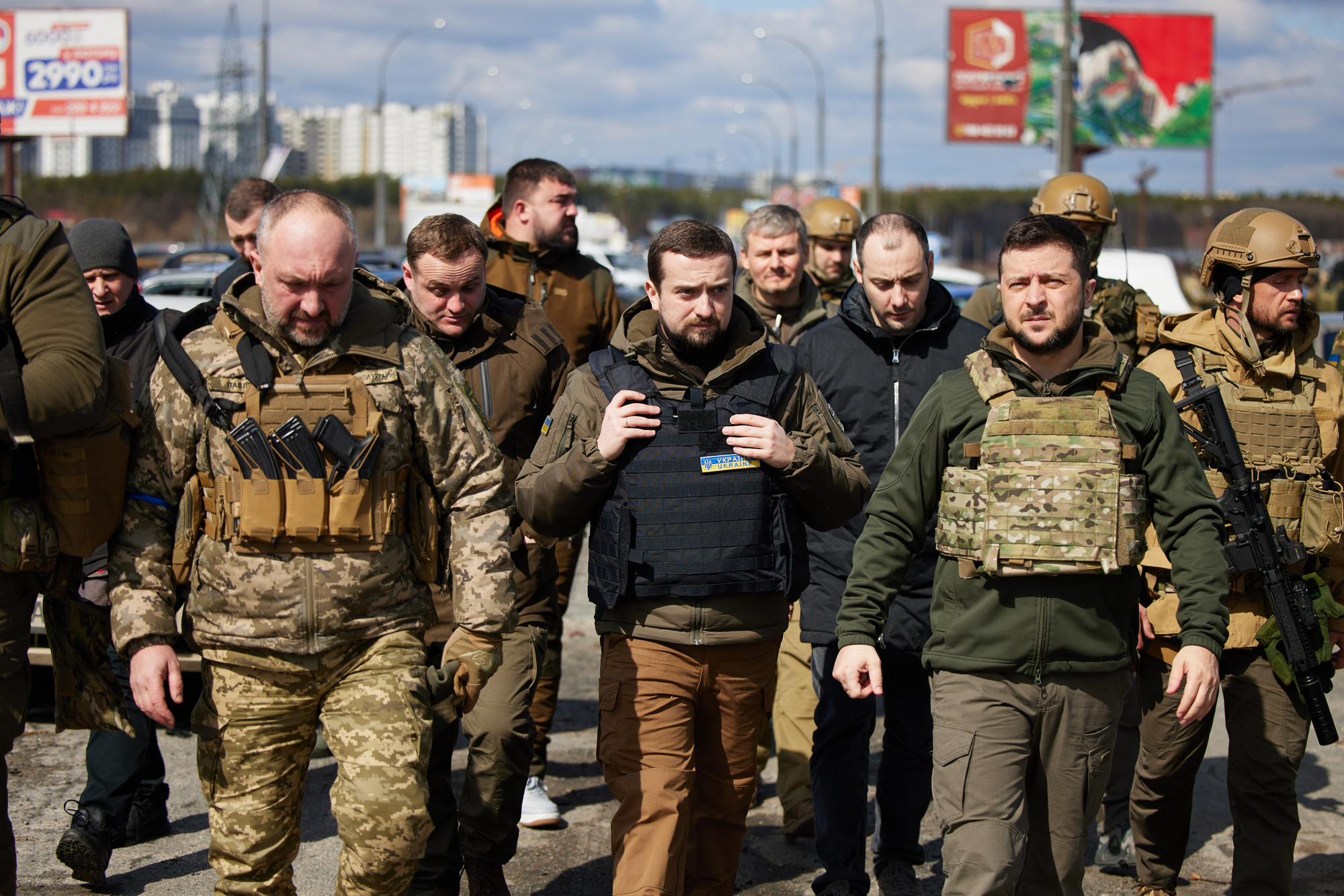
Martial law postponed elections. Television broadcasting became more centralized. Parties judged connected to Russia were suspended or banned through wartime legal processes. Religious institutions, media, activists, officials, and ordinary citizens faced intensified scrutiny for collaboration, propaganda, corruption, defeatism, or disloyalty. Men encountered restrictions on movement, mobilization duties, and a state with urgent claims on their bodies.
The government acquired emergency powers because the emergency was real. The emergency does not stop being a field simply because the invading state caused it.
Ukraine can defend itself and still require correction.
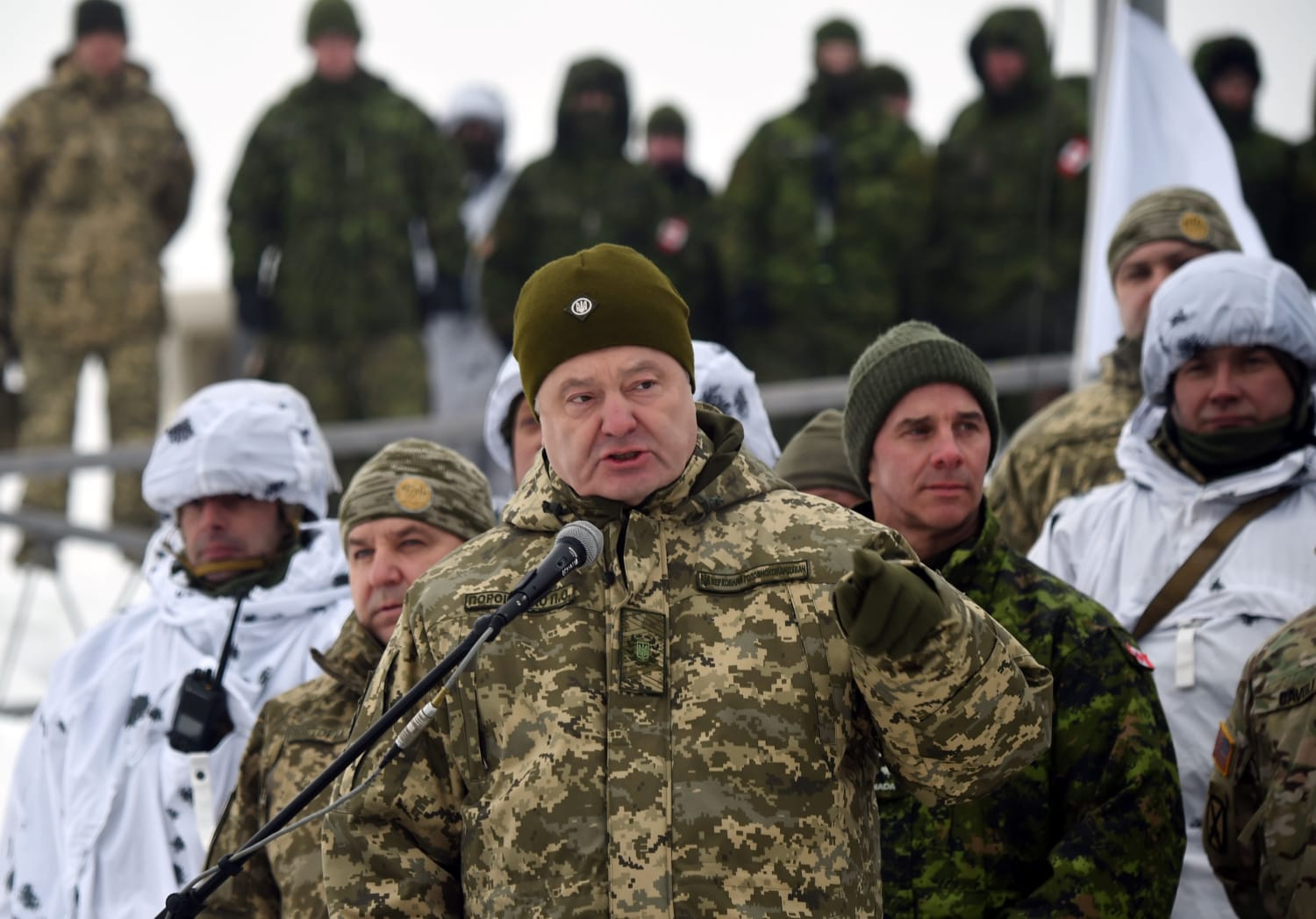
Corruption remains capable of consuming military procurement, mobilization fairness, reconstruction, foreign aid, and public trust. Commanders can spend soldiers badly. Security institutions can mistake criticism for sabotage.
A government whose elections have been delayed by war can become too comfortable with the political quiet war creates. National unity can become a rhetorical instrument used against people carrying different memories, languages, policy preferences, or accounts of sacrifice.
The answer is not to hold elections under missile fire because an adversary has discovered democracy as an insult. A vote involving soldiers across the front, millions of displaced citizens, occupied communities, refugees abroad, damaged registries, air attacks, and restricted political campaigning is an actual real-deal logistical and constitutional problem. Elections held badly could become another weapon against legitimacy.
The answer is to preserve the routes by which emergency power becomes answerable when conditions permit: parliament, courts, investigative journalism, anti-corruption bodies, civil society, local government, public protest, military complaint, records, audits, and a credible return to electoral succession.
The distinction matters for this article because Russia claimed that Ukraine's political field had already been captured beyond repair.
Every Ukrainian correction disproves that claim more effectively than any patriotic slogan.
A country becomes stronger when it can reject invasion without converting rejection into permanent internal sovereignty for the war state.
The invasion generated more Ukrainian identity than Russian strategy expected.
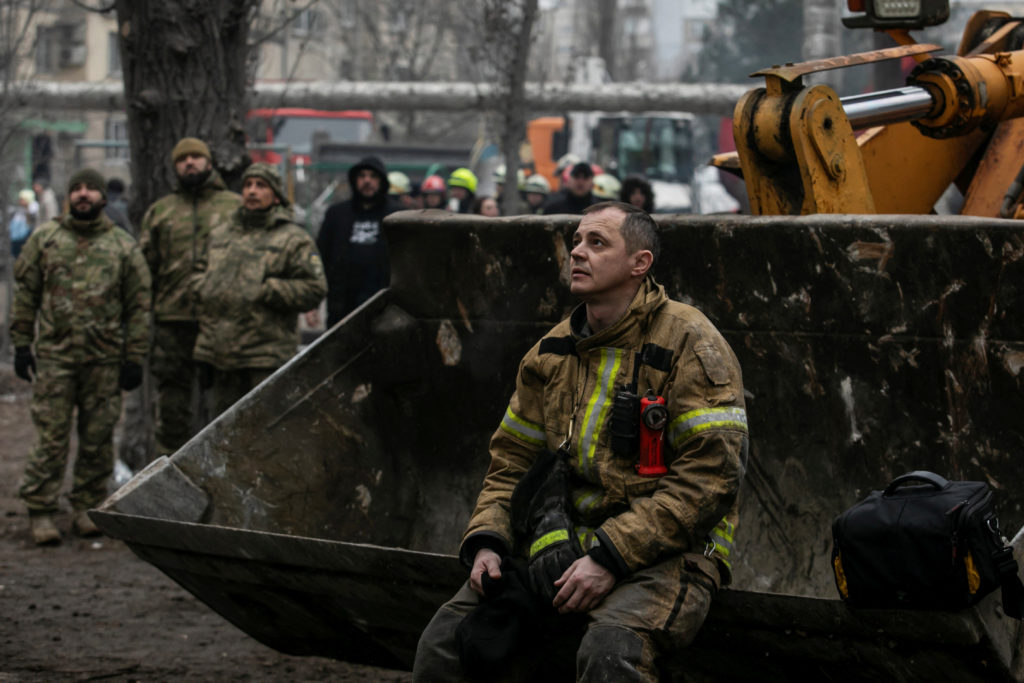
It also made the quality of that identity a live moral question.
The better Ukrainian future is not a country purified of everything Russian, Soviet, eastern, ambivalent, multilingual, compromised, or historically entangled.
It is a country in which no external power can use those complexities as title, and no internal power can use the war to erase the people carrying them.
Russia's instrument tried to compress Ukrainian plurality into one answer.
The answer became more Ukrainian.
The plurality still has to survive it.
÷
XXXIII. The North Joins
Finland had spent decades making non-alignment look like geography under competent management.
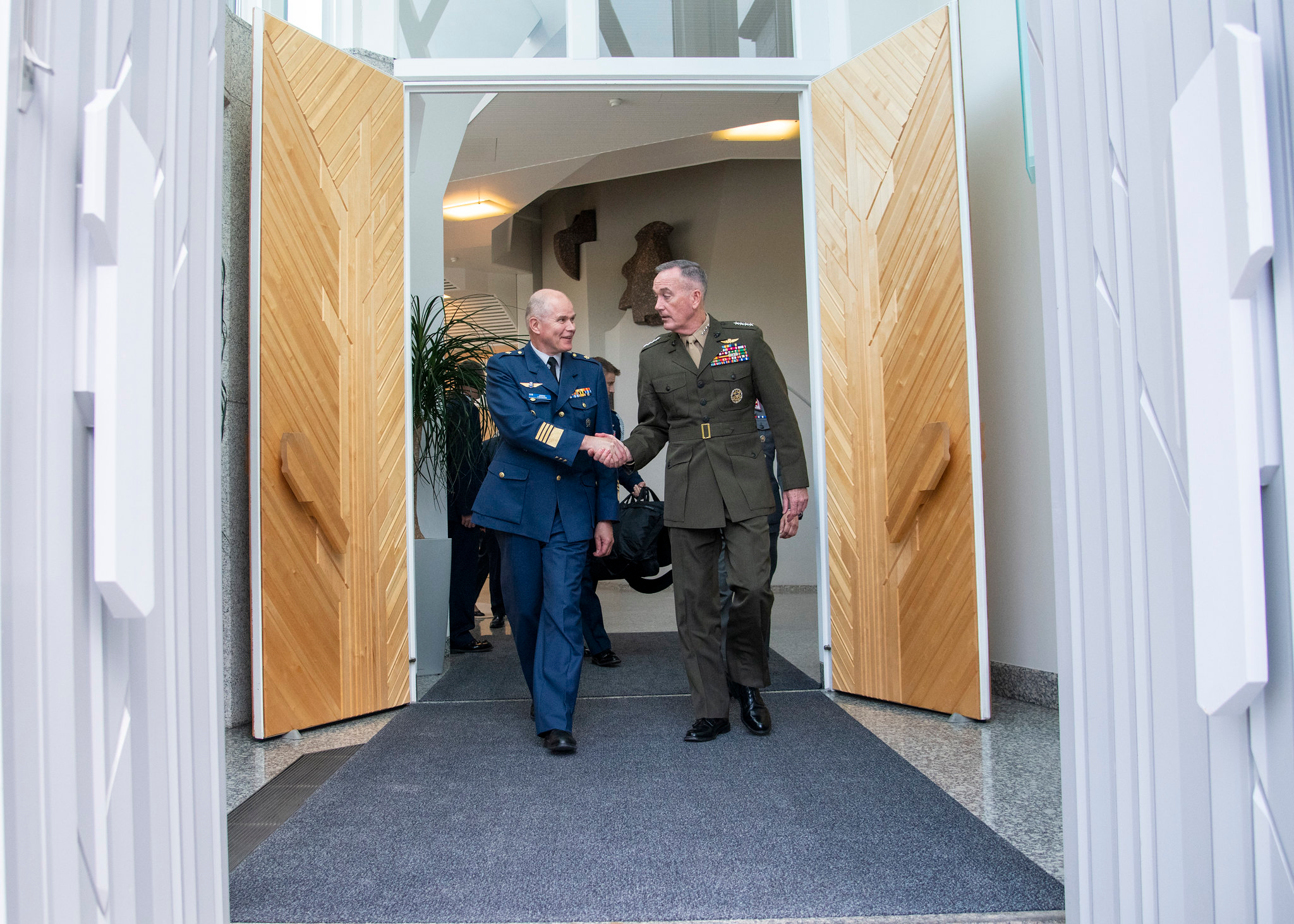
The policy was neither innocence nor passivity. Finland maintained capable armed forces, deep national defense planning, extensive reserve capacity, cooperation with Western institutions, and a political culture formed under the memory of war with the Soviet Union. It joined the European Union, partnered closely with NATO, and preserved formal military non-alignment as a way of managing proximity to Russia without entering the alliance Russia most feared.
Sweden carried a different but related tradition. Its military non-alignment had survived the Cold War, European integration, expanding NATO partnership, and long arguments over whether neutrality still described the field accurately. The policy had become part of national self-description even as practical cooperation with NATO deepened.
The full-scale invasion changed the decision surface in both countries.
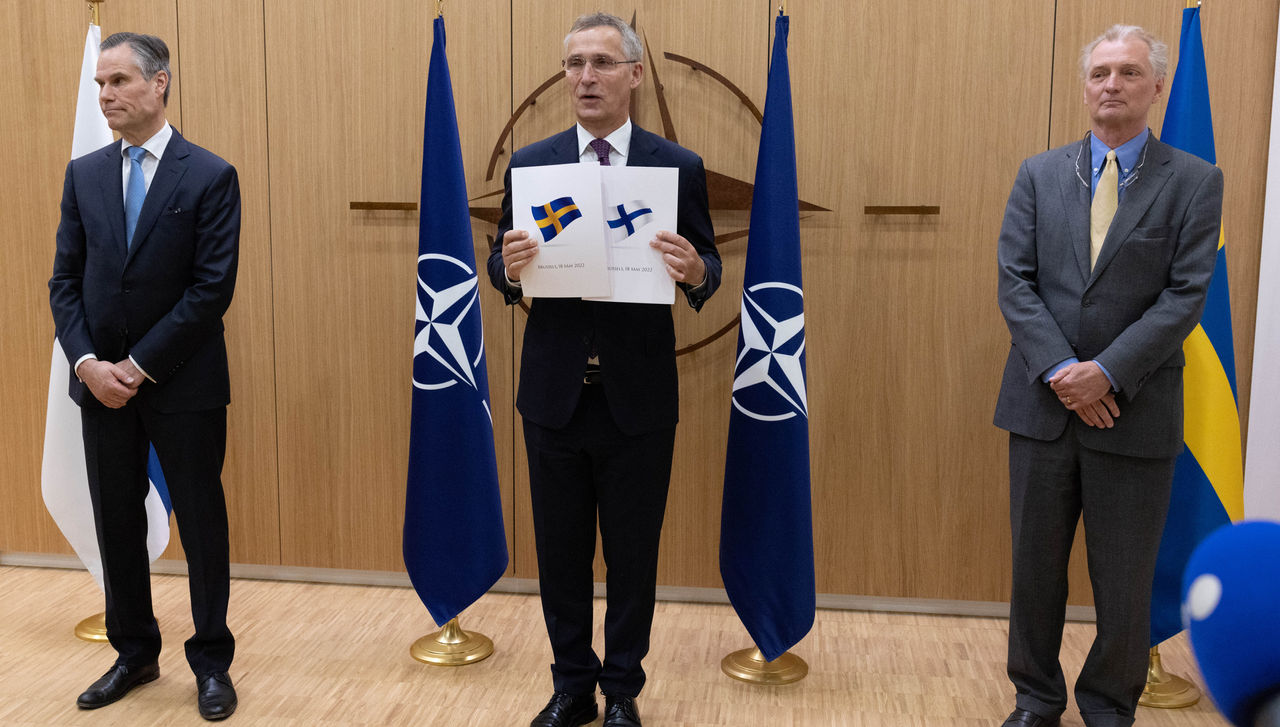
This is the part of NATO enlargement the Russian security story handles badly.
Finland and Sweden were not dragged into the Alliance as empty northern squares. Their governments applied after their own populations, parties, institutions, military planners, and security communities updated under the invasion. The decision was shaped by Western influence, alliance incentives, domestic politics, and the longstanding gravitational force of NATO.
It was still their decision.
- Finland applied in May 2022 and became NATO's thirty-first member on April 4, 2023.
- Sweden applied alongside it and became the thirty-second member on March 7, 2024.
The dates are the instrument's receipt.
Russia had argued for years that NATO enlargement created insecurity and that further movement toward Russian borders had to stop.
Then, Russia invaded a non-NATO neighbor.
So two long-standing non-aligned states concluded that remaining outside the Alliance now carried more risk than entering it.
The war generated the enlargement it had treated as intolerable.
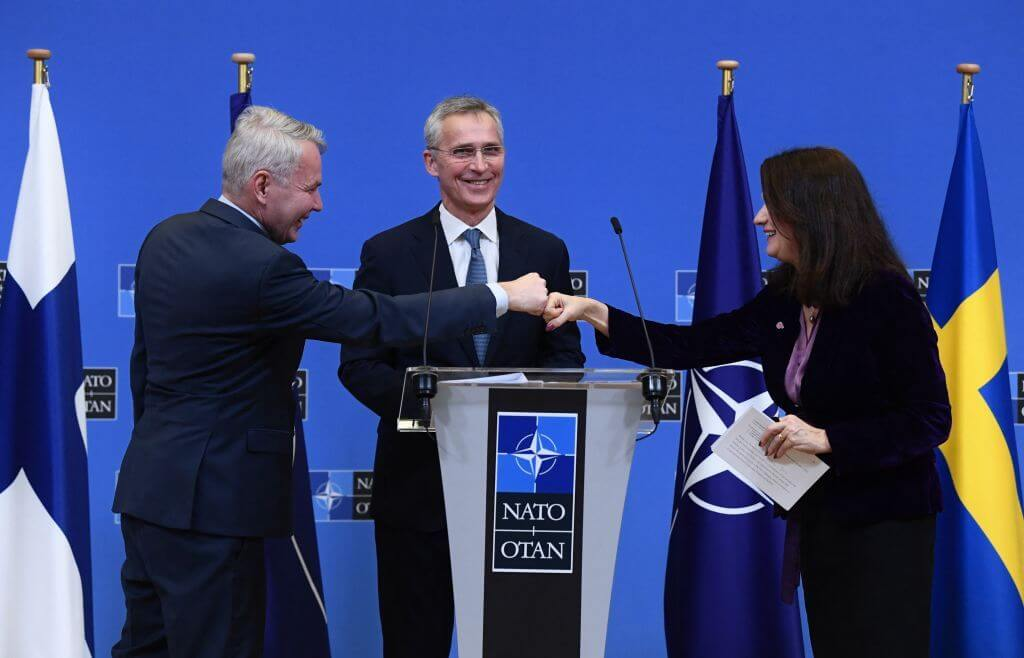
Finland added a long NATO border with Russia. Sweden altered the strategic field of the Baltic Sea. Their armed forces, territory, infrastructure, airspace, ports, islands, intelligence, and defense industries entered allied planning. The northern flank became easier for NATO to coordinate and harder for Russia to treat as a region of politically useful ambiguity.
This does not prove that NATO enlargement was always wise.
It proves that states update under threat.
Russia's security doctrine had demanded recognition that military movement near its borders changes Russian calculations. Finland and Sweden applied the same principle to themselves. They observed what happened to a neighboring non-member and changed what they considered necessary for continuance.
The symmetry is painful because each update confirms the other's fear.
- Russia sees a larger NATO and reads encirclement.
- Northern Europe sees the invasion and reads the cost of standing outside Article 5.
The arrow map redraws itself. Then everyone points to the new arrows as proof that the old fear had always been correct.
This is how security dilemmas become generated structures. Each actor can describe its move as defensive. The sequence produces a field in which every defense arrives as evidence of hostile intention.
The moral fact remains simpler than the strategic spiral.
Finland and Sweden did not become Russian security territory because their choices affected Russia.
Their accession also did not erase the risk the choice created.
The North joined.
The buffer moved farther away from Moscow by bringing the alliance closer.
÷
XXXIV. NATO Moves East
NATO did not stop at receiving two flags.
The alliance had already begun reinforcing its eastern flank after 2014.
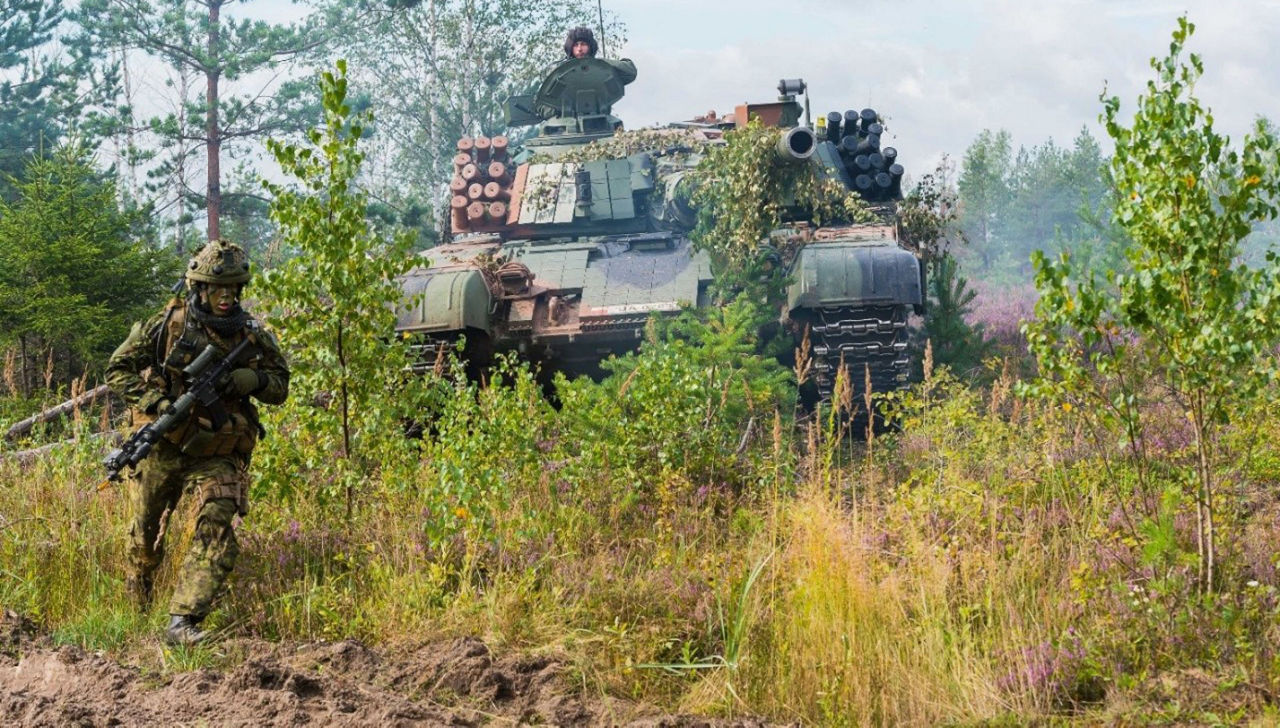
Multinational battlegroups appeared in Estonia, Latvia, Lithuania, and Poland. After the full-scale invasion, the forward-presence architecture expanded southward through Bulgaria, Hungary, Romania, and Slovakia. Defense plans were rewritten. Readiness targets rose. Exercises grew. Logistics, air defense, ammunition, command structures, and reinforcement routes moved from conference language into procurement and deployment.
By 2024, eight multinational forward land forces stood along the eastern flank.
In 2026, a ninth was established in Finland.
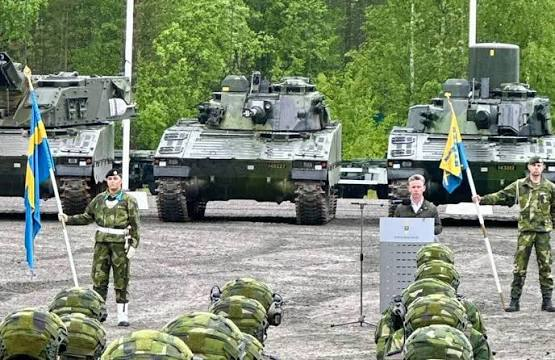
The old map had asked where NATO ended.
The new map asked how quickly NATO could fight from the line where it now ended.
European and Canadian defense spending rose sharply.
States that had spent years treating the two-percent target as an aspirational nuisance began moving money toward artillery, air defense, drones, missiles, stocks, bases, and industrial capacity. Germany announced a strategic turn. Poland expanded heavily. The Baltic states treated defense spending as an immediate survival instrument rather than alliance etiquette. Nordic military planning became more integrated. Railways, ports, roads, bridges, fuel depots, and warehouses acquired military meaning.
The war made infrastructure remember war.
Ukraine moved closer to NATO without becoming a member.
That distinction remains decisive.
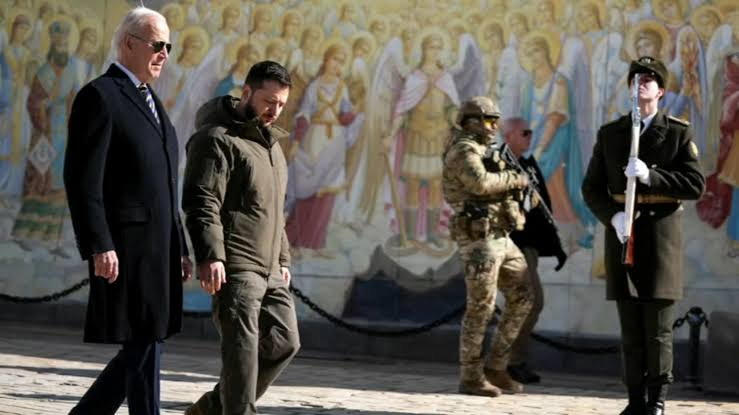
Allied states trained Ukrainian forces, supplied weapons, shared intelligence, supported maintenance, coordinated donations, and developed long-term security commitments. NATO created a council with Ukraine, described Ukraine's future as belonging in the Alliance, established security-assistance and training structures, and deepened interoperability. Ukrainian officers, soldiers, technicians, planners, and defense firms became embedded in a Western military ecosystem at a scale that did not exist before the invasion.
The invasion had aimed to interrupt this movement.
It accelerated it.
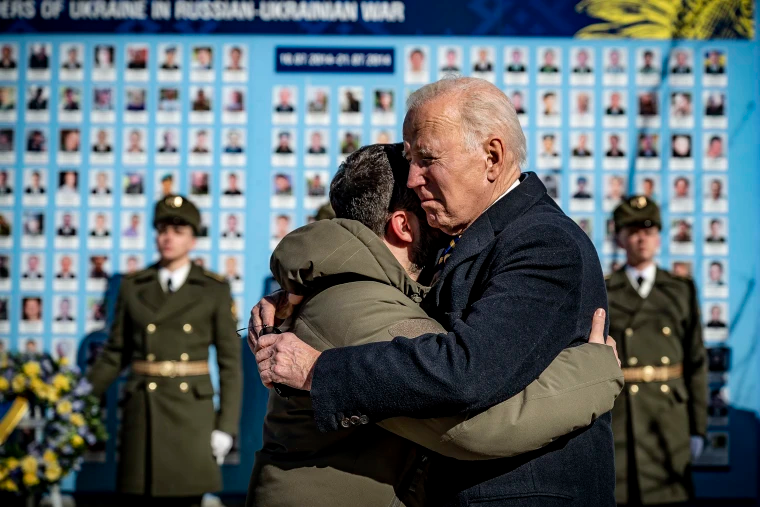
A country can become functionally integrated into parts of an alliance before receiving the treaty guarantee at the alliance's center. That condition can preserve resistance and remain profoundly unstable.
- Ukraine receives weapons, training, intelligence, financing, and institutional convergence.
- Ukraine does not receive automatic collective defense.
The Bucharest problem returns in a more militarized form:
Strategic association without full shelter.
The difference is that Ukraine now carries a large wartime military, combat experience, domestic weapons development, and a public whose relation to NATO has been transformed by invasion. The country that Russia demanded be demilitarized became one of the most militarily experienced states in Europe.
This is not a clean gain.
Militarization is burden.
A society that can build drones, dig trenches, mobilize brigades, disperse energy systems, recognize missile trajectories, and teach children air-raid procedure has acquired capacities no peaceful society should need at this scale. The military becomes an employer, identity, political constituency, technological engine, social memory, and future claimant on public resources. Veterans return with knowledge and wounds. Weapons circulate. Command habits enter institutions. Emergency becomes professionally competent and culturally difficult to dismiss.
Ukraine's military strength may be necessary for survival.
It will still shape the country that survives.
NATO's eastward movement carries the same remainder.
- A stronger defensive line can deter attack.
- It can also raise tension, compress decision time, normalize permanent deployment, and make every technical malfunction or misread exercise more dangerous.
- The alliance's response can be justified and still produce a harder field.
This is why the generated structure cannot be summarized as Russia lost and NATO won.
- NATO gained members, cohesion, purpose, spending, forward posture, and a powerful account of why it still exists.
- It also inherited
- a larger border with Russia,
- a prolonged war outside its treaty line,
- escalation risk,
- internal burden disputes,
- dependence on political continuity across thirty-two states, and
- a Ukrainian relationship it repeatedly describes as irreversible without yet resolving the conditions of membership.
- It also inherited
The Alliance became more necessary partly because the field became more dangerous.
An instrument should be very careful about celebrating the growth of the wound that justifies it.
- Western leaders have often said the war proved NATO's predictions about Russia correct.
- Russian leaders say NATO's movement proves their warnings about encirclement correct.
- Each side can now cite the structure generated by the conflict as evidence that its earlier model had been accurate.
This is the trap in its mature form.
- Russia's invasion made NATO expansion and reinforcement easier to justify.
- NATO expansion and reinforcement make Russian threat narratives easier to sustain.
The sequence can continue without either side needing to invent the next fact.
The facts are being manufactured by the relation.
Modal Path Ethics reads this through generated structure.
A local rule repeats:
- treat the other's defensive move as evidence of hostile direction;
- strengthen one's own position;
- reduce ambiguity through military preparation;
- raise the cost of surprise;
- increase the other's fear;
- repeat.
No single iteration contains the whole continental danger.
The path does.
The invasion remains the initiating transition for the current phase.
Naming that fact prevents security-dilemma language from dissolving aggression into atmosphere. Russia chose to cross the border. NATO's response did not travel backward through time and cause the columns moving toward Kyiv.
The response still enters the future.
By the middle of the decade, Russia faced a northern alliance border that did not exist in February 2022, a more heavily armed eastern flank, higher European defense spending, a more integrated Ukrainian military, and a Western security establishment reorganized around the expectation of long confrontation.
The buffer wound had just generated an armored scar.
÷
XXXV. The Russian Interior
Russia is not the Kremlin with some extra people attached.
The distinction becomes harder to preserve during war because the state works constantly to collapse it.
The invasion is narrated as national defense. The military becomes the nation in motion. Criticism becomes aid to the enemy. Grief becomes honor. Death becomes service. Economic adaptation becomes resilience. Continued ordinary life becomes proof that sanctions failed. The state attempts to make its war and the country's continuance appear as one object.
They are not one object.
Russia contains
- the presidency,
- security services,
- military command,
- ministries,
- governors,
- state companies,
- defense firms,
- propagandists,
- contract soldiers,
- conscripts,
- mobilized men,
- prisoners recruited into assault formations,
- migrants pressured toward service,
- Indigenous peoples,
- ethnic republics,
- wealthy cities,
- rural settlements,
- families,
- veterans,
- widows,
- exiles,
- political prisoners,
- quiet supporters,
- loud supporters,
- frightened conformists,
- profiteers,
- saboteurs, and
- people who have learned to survive by keeping their judgment private.
The war distributes itself unevenly among them.
Moscow and Saint Petersburg can display military symbolism while remaining socially distant from much of the battlefield cost. Recruitment money, death payments, regional quotas, prison recruitment, and contract incentives pull bodies more heavily from places where civilian futures are already narrower. A military salary can exceed ordinary regional earnings by enough to turn enlistment into family economic policy. The state acquires soldiers by pricing danger into poverty.
This does not make every recruit a victim without agency.
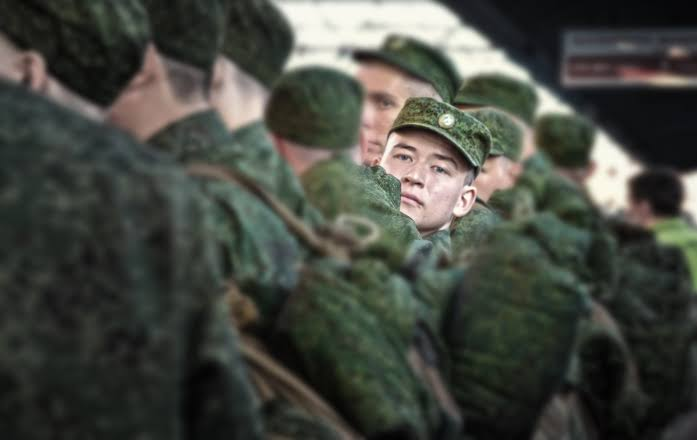
Some believe the war. Some want money. Some seek status, citizenship, release from prison, revenge, belonging, or a future no local institution had offered. Some are coerced. Some volunteer knowingly. Some discover the terms after the contract has become difficult to escape. Some carry several motives at once.
The field remains responsible for why certain motives become so available.
Independent casualty counts have repeatedly shown heavy losses in poorer regions and ethnic republics. Bashkortostan, Tatarstan, Buryatia, Dagestan, Tuva, and other regions appear with an intensity that cannot be explained by population alone. The exact distribution changes with recruitment waves and the limits of public records. The pattern remains: the war state can protect political centers by drawing more deeply from peripheral continuance.
Strategic depth returns inside Russia.
The interior becomes a buffer for the capital.
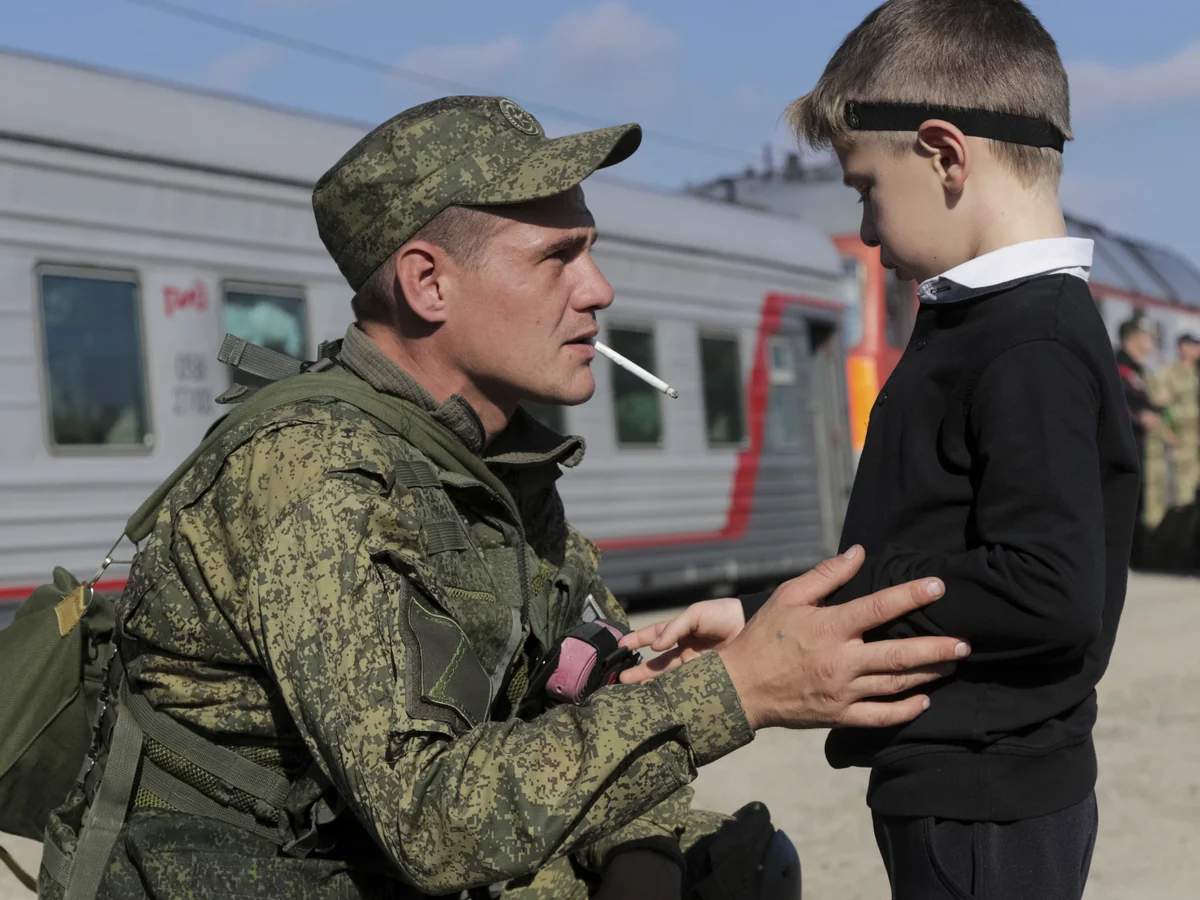
Poorer communities absorb recruitment. Ethnic minority regions absorb loss. Prisons absorb the most disposable assault labor. Families absorb disability, trauma, absence, and the bureaucratic work required to prove a death. Local budgets absorb payments and memorials. Schools absorb patriotic instruction. Women absorb care. Veterans absorb the gap between ceremonial honor and the body that returned.
The war can raise household income in a town while closing the people who earned it. That sentence should remain physically difficult.
Money paid after death is real support to a family. It can repair debt, housing, education, food, and survival. It also enters a state system in which a man's highest available wage may arrive through the path most likely to kill him.
Economic expansion around defense production can preserve jobs and regional industry while binding local continuance to the continuation of war.
A war economy does not need everyone to enjoy war.
It needs enough people to depend on what war distributes.
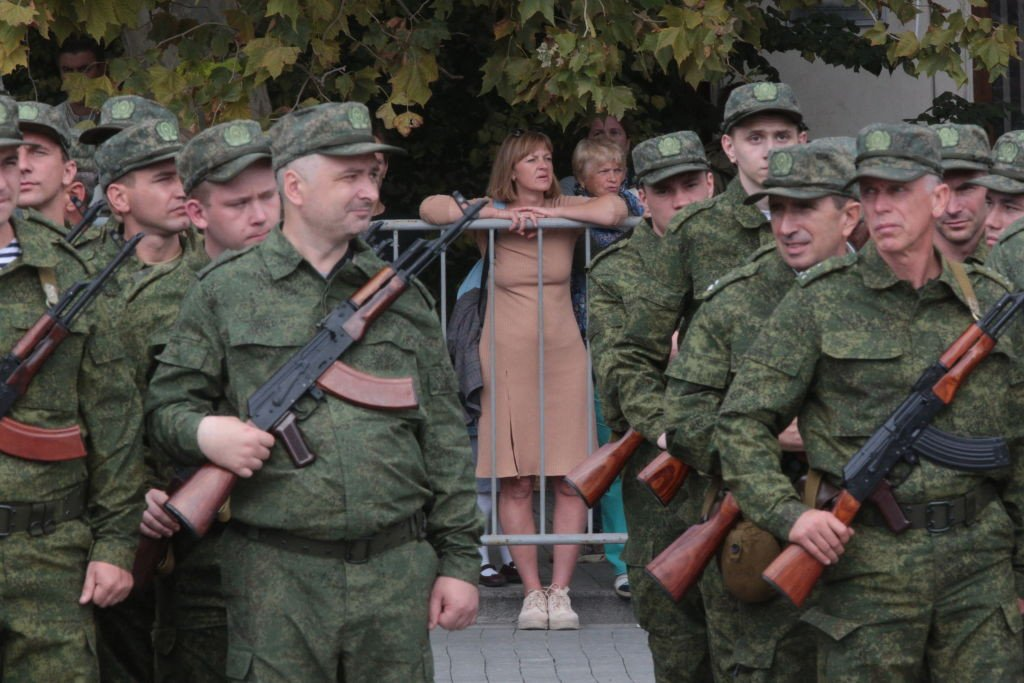
The Russian interior also contains genuine public support. Independent polling under authoritarian conditions cannot produce transparent access to private belief, yet it consistently finds high declared support for the armed forces and the war's official aims. The same surveys often find strong support for negotiations and willingness to accept an end announced by the president.
These positions can coexist because public opinion is not one stable doctrine.
A person can support soldiers, believe Russia was threatened, distrust Western governments, fear defeat, dislike the war, want negotiations, and refuse to imagine territorial return. A person can repeat state language and privately want the state to conclude the event. A person can support the war because the alternative offered in public discourse is humiliation, collapse, prosecution, or the admission that family died inside an avoidable catastrophe.
The longer the war continues, the more belief becomes path-dependent.
The dead acquire claims.
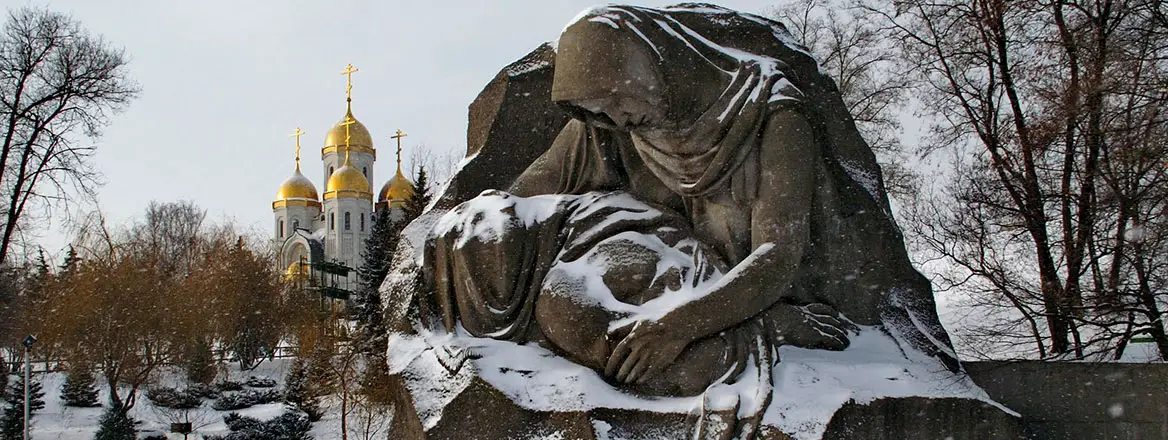
Sacrifice creates pressure to make sacrifice meaningful. A mother may oppose the next death and still reject any settlement that makes the previous death look wasted. A veteran may recognize command failure and remain committed to the cause that gives injury public value. A community may grieve its men and harden against the enemy through the grieving.
This is martyrdom without requiring a formal religion.
 Aidan Lawson
The dead begin commanding the reachable interpretation of the living.
The state works to preserve that command. Schools receive approved history. Memorials locate death inside national continuation. Public speech is filtered through laws against discrediting the armed forces, spreading false information, extremism, separatism, foreign influence, and undesirable organization. Journalists, lawyers, artists, clergy, local deputies, activists, and ordinary citizens have faced fines, dismissal, imprisonment, exile, psychiatric pressure, surveillance, and violence for refusing the authorized account.
The anti-war position is therefore not absent because every Russian chose the war.
It has been made expensive to remain visible.
Exit became another distributed instrument. Hundreds of thousands left Russia in waves after the invasion and the September 2022 mobilization: engineers, journalists, artists, entrepreneurs, activists, students, families, and men who did not want the state to acquire their bodies. Some opposed the war. Some feared sanctions, conscription, economic decline, or isolation. Some continued working for Russian firms from abroad. Some returned when money, family, residency, language, or exhaustion made exile harder than adaptation.
The emigrant does not become the pure Russian outside the field.
Leaving can preserve conscience, safety, work, and future action. It can also remove skilled opposition from the society that remains, widen class inequality between those who can exit and those who cannot, and allow foreign audiences to mistake the most internationally legible Russians for the whole country. The state benefits when dissent departs and then condemns departure as betrayal.
Inside Russia, ordinary life continues with an almost offensive capacity for normality. Restaurants open. People marry. Children sit examinations. Software is shipped. Trains run. Families argue about money instead of geopolitics. This does not mean the war is unreal to them. It means a large state can route violence toward distant bodies while preserving enough routine to prevent the center from feeling like a battlefield.
Normality is one of the war machine's protective layers.
It lets the state say the country has absorbed the attack of sanctions, isolation, and Western hostility. It lets citizens avoid the psychic cost of constant contact with what is done in their name. It also preserves real lives worth protecting from collapse. The same continuity can sustain resistance to war and help society endure the war's continuation.
This distinction matters for moral analysis and for repair.
- A future settlement that treats Russian society as a single guilty mass strengthens the state story that only the state can defend Russians from collective punishment.
- A future settlement that absolves the society of all participation makes authoritarian power look supernatural, as though propaganda, fear, opportunity, conformity, nationalism, and material support had never entered ordinary decisions.
- The Russian field contains coercion and consent.
- It contains resistance and adaptation.
- It contains beneficiaries and the consumed.
The war has also changed the state's relation to time. Emergency laws become ordinary law. Temporary mobilization leaves permanent institutions. Defense factories reorganize labor and investment. Veterans become a future political class. Security services gain jurisdiction. Schools train a generation inside the war's categories. The economy learns which production the state will guarantee. Foreign-policy confrontation becomes domestic legitimacy.
The instrument that claimed to protect Russia has begun rebuilding Russia around the need for the instrument.
That is sovereign security.
A protection system becomes sovereign when the field must continue producing danger to justify the system's control over it.
The invasion has not destroyed Russian society into one uniform thing.
Russia still contains care, absurdity, friendship, private truth, technical competence, literature, local obligation, religious life, ordinary work, and people preserving one another beneath institutions they cannot safely confront.

Those continuations are not decorations around the war.
They are what the war claims to protect.
They are also what the war spends.
÷
XXXVI. The Western Credibility Field
Ukraine did not become a Western puppet when Western weapons became necessary.
Dependence is not puppetry.
Dependence still shapes the reachable future.
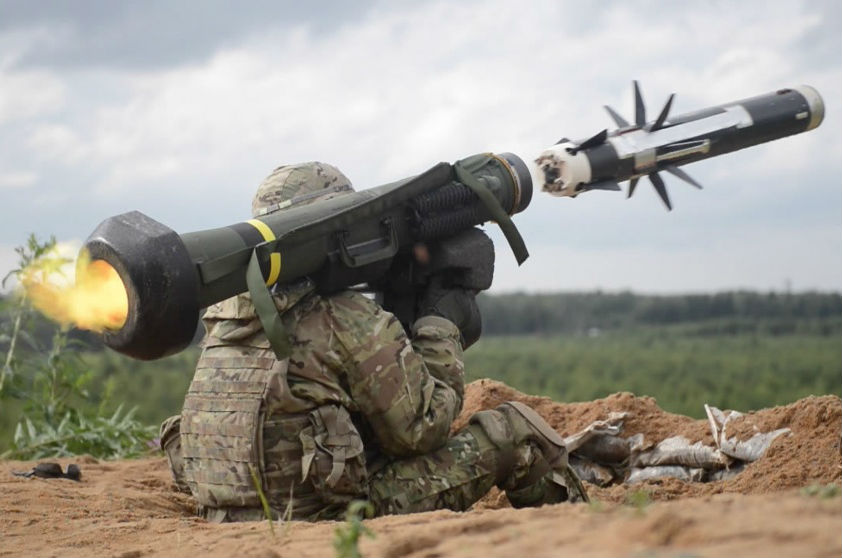
The distinction has to hold because the proxy-war story gains force from a real structure. Ukraine fights for its own state, communities, territory, and political future. Western governments supply a large portion of the money, weapons, ammunition, intelligence, training, air defense, budget support, reconstruction finance, and diplomatic protection required to continue that fight.
Ukraine possesses agency inside a field partly sustained by other actors' decisions.
The flow of knowledge also runs outward. Ukrainian forces and firms have taught allied militaries about drone saturation, electronic warfare, dispersed command, rapid software iteration, battlefield logistics, air-defense scarcity, and the brutal speed at which a supposedly advanced weapons system becomes one component in an adapting field. Western support does not encounter an inert recipient. Ukraine modifies the instrument, rejects parts of it, combines technologies, develops domestic systems, and returns lessons that now shape European procurement and doctrine.
This makes the relation more reciprocal than the word aid suggests.
It does not make the relation equal.
Those actors have interests.
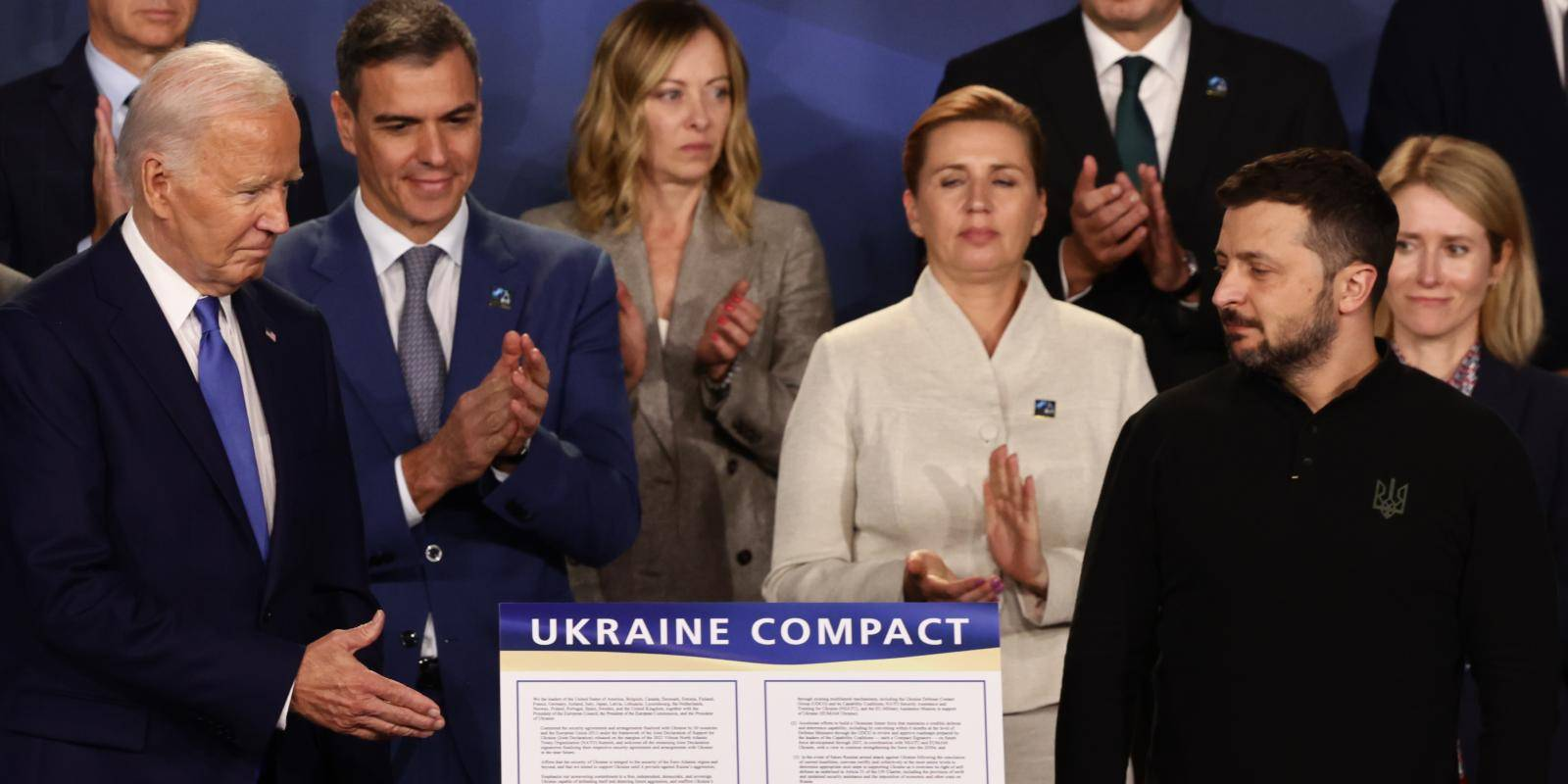
The United States and European states want to prevent conquest from becoming a successful revision of European borders. They want to preserve alliance credibility, deter later aggression, protect NATO territory, weaken Russian military capacity, defend international rules they apply inconsistently, reassure Eastern European members, sustain political coalitions, support domestic industries, learn from modern warfare, and signal resolve to states watching from other regions.
These goals overlap with Ukrainian survival.
They do not become identical to it.
- A weapons package can save a city and serve an alliance message.
- An air-defense interceptor can preserve a family and advertise the supplier's system.
- A sanction can constrain Russian procurement and impose costs on civilians, businesses, migrants, and third countries with little control over the war.
- A public promise can sustain Ukrainian morale and protect a Western leader from admitting what the promise will not include.
The Western credibility field becomes dangerous when Ukraine is asked to carry strategic meaning for everyone else.
- Ukraine becomes proof that aggression fails.
- Ukraine becomes proof that alliances matter.
- Ukraine becomes proof that democracy resists autocracy.
- Ukraine becomes proof that Europe can act.
- Ukraine becomes proof that the United States still leads, or that Europe can survive when it does not.
A country can be supported and symbolically consumed at the same time.
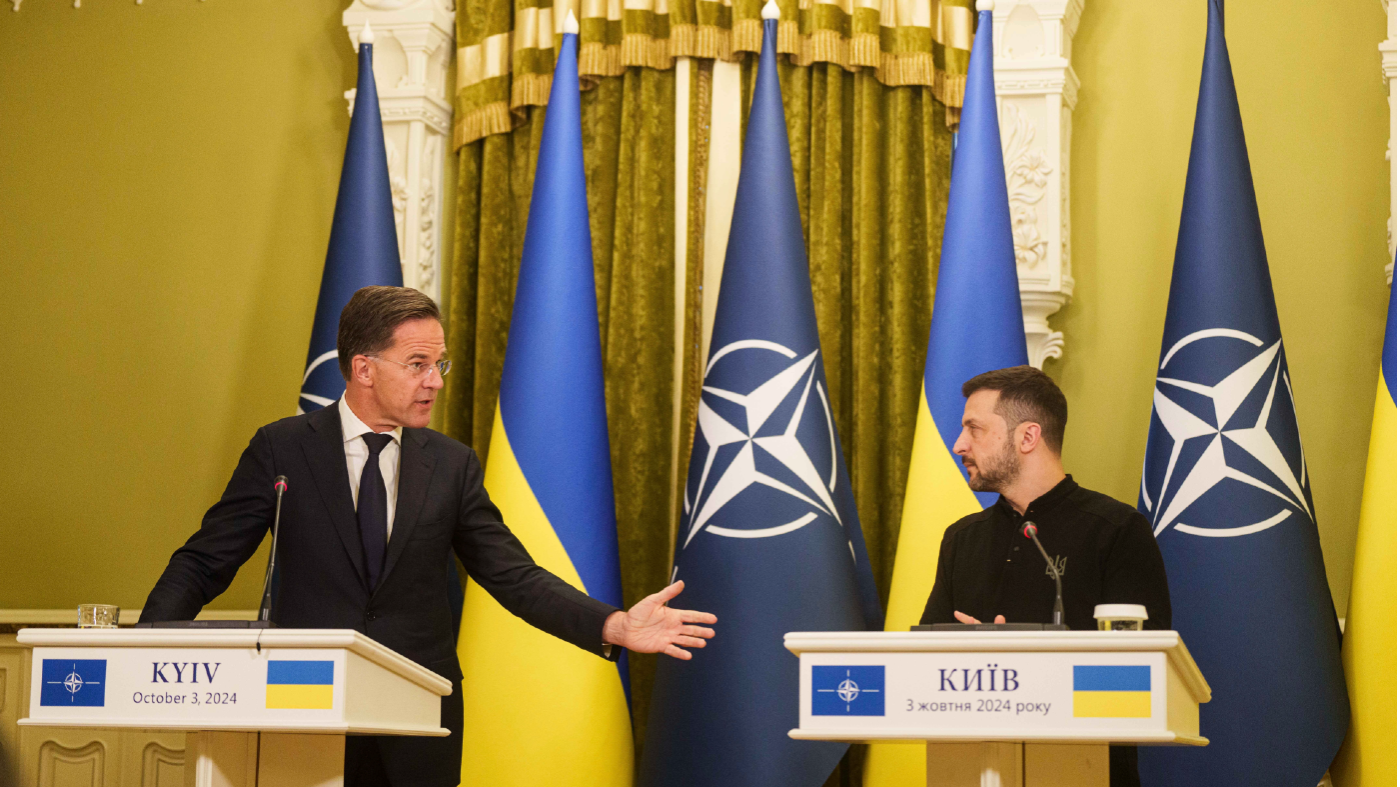
The consumption appears whenever outside actors speak about Ukrainian sacrifice as an efficient way to degrade Russian power without risking their own soldiers. The sentence may be strategically true. It is morally obscene when efficiency becomes the primary value of the dying.
Ukrainian soldiers are not inexpensive Western force projection.
Their deaths do not become bargains because someone else's army remained home.
The credibility field also controls tempo.
Donors decide which weapons leave storage, how quickly factories expand, whether use is restricted by geography or target class, what intelligence is shared, which escalation risks are acceptable, and how long legislative coalitions survive. Delays become battlefield facts. Ammunition votes become trench conditions. Air-defense scarcity becomes destroyed power generation. Restrictions intended to manage escalation can preserve cities from wider war while leaving Ukrainian forces exposed to launch sites, airfields, or logistics they are not permitted to strike with supplied systems.
These are genuine dilemmas.
A nuclear-armed adversary makes caution rational. Caution still transfers risk.
The transferred risk usually lands in Ukraine.
Western support has also become institutional rather than episodic. The European Union created a large multi-year facility for budget support, recovery, reconstruction, and modernization. NATO established security-assistance, training, joint analysis, procurement, and interoperability structures. Bilateral agreements describe long-term defense cooperation. European defense industries are expanding around demand generated by the war. Ukrainian firms and battlefield innovation increasingly enter the Western military technology field.
This can preserve Ukraine beyond the attention span of one crisis.
It can also make the war durable inside institutions with their own incentives.
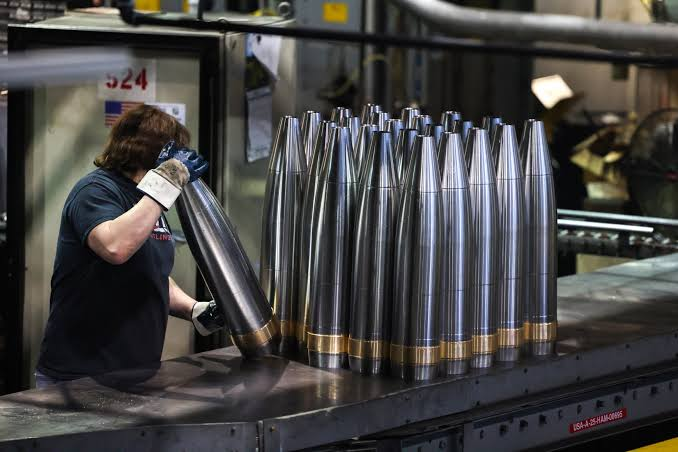
A factory built for artillery shells acquires workers, contracts, debt, local political importance, and future customers. A military-assistance command acquires procedures and career paths. A sanctions architecture acquires compliance systems, exemptions, evasion markets, and constituencies harmed by both enforcement and circumvention. The support field begins generating its own continuation.
That does not make support wrong.
It means support must remain answerable to the civilian field it claims to preserve.
The question is not whether a weapons shipment strengthens Western credibility.
The question is whether it makes Ukrainian continuance more reachable without closing a less destructive settlement that was actually available.
The question is not whether negotiations make the West look weak.
The question is whether the proposed negotiation protects Ukraine as a political field rather than converting exhaustion into imposed dependency.
The question is not whether sanctions demonstrate resolve.
The question is what coercive transition they can realistically produce, what burden they transfer, and how they connect to a verifiable path out.
Western politics repeatedly tries to answer these questions through theater.
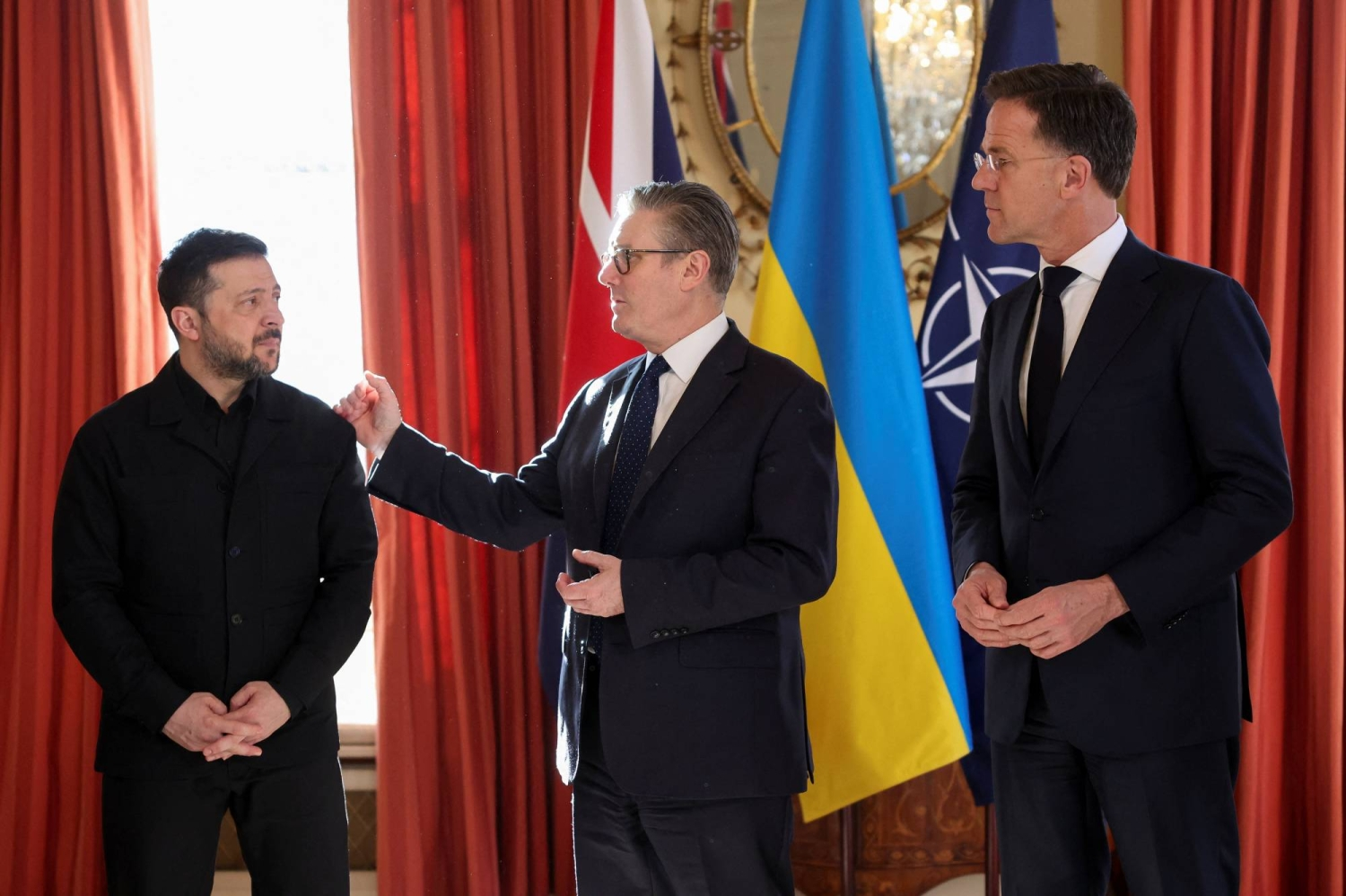
One government announces unwavering support while failing to produce shells on time. Another gives a dramatic weapons system after months of delay. Another blocks aid to extract unrelated concessions. Another calls for peace while proposing that Ukraine surrender the capacities required to survive the peace. Another uses moral language to disguise fatigue. Another uses realism to disguise a preference that Ukrainians absorb the cost of restored great-power convenience.
Ukraine is vulnerable to both abandonment and possession.
- Abandonment leaves the invaded state without the means to refuse conquest.
- Possession treats aid as title over the terms of Ukrainian survival.
A support instrument remains ethical when it strengthens the supported field's capacity to choose, contest, verify, defend, and eventually correct the institutions created under emergency. It becomes sovereign when the donor's strategic story replaces the standing of the people carrying the war.
This is the Western version of the buffer temptation.
- Russia views Ukraine as distance required for Russian security.
- The West can view Ukraine as distance required for Western credibility.
- Ukraine remains a country in both directions.
÷
XXXVII. The War Eats Its Purpose
The instrument has been running long enough to inspect what it generated.
- Russia sought a Ukraine less able to threaten it.
- Ukraine became more armed, more nationally consolidated, more deeply integrated with Western militaries, and more committed to political separation from Russia.
- Russia sought a halt to NATO enlargement.
- Finland and Sweden joined.
- Russia sought less allied military infrastructure near its borders.
- NATO reinforced the eastern flank, expanded northern planning, raised readiness, increased defense spending, and established new structures for sustaining Ukraine.
- Russia claimed to protect Russian speakers and the shared civilizational space of Russians and Ukrainians.
- The invasion made Russian language, culture, institutions, and political affiliation more difficult inside Ukraine.
- It transformed millions of people who had carried overlapping identities into citizens for whom Russian power now arrived through destruction, occupation, annexation, and denial.
- The invasion made Russian language, culture, institutions, and political affiliation more difficult inside Ukraine.
- Russia sought recognition as an autonomous great power capable of enforcing its security interests.
- The war deepened dependence on wartime trade, external suppliers, sanctions-evasion networks, and relationships whose terms Russia does not control alone.
- Strategic autonomy can survive dependence; it still pays for it.
- The war deepened dependence on wartime trade, external suppliers, sanctions-evasion networks, and relationships whose terms Russia does not control alone.
- Russia sought to demonstrate military capability.
- The invasion exposed command failures, logistical weakness, intelligence error, personnel consumption, and the need for repeated adaptation.
- The armed forces learned, changed, and remained dangerous.
- The exposure is part of the generated field too.
- Russia sought regime security through national mobilization.
- The state strengthened repression, subordinated more institutions to war, and tied political legitimacy to an outcome difficult to define without continued confrontation.
- Russia sought strategic depth.
- It created a longer hostile frontier.
This is the war eating its purpose.
The phrase does not mean Russia has failed at everything.
Russia occupies territory. It has destroyed enormous portions of Ukraine's material future. It has killed, wounded, displaced, and exhausted people on a civilizational scale. It has adapted its military and economy, compelled Western states to fear escalation, imposed costs across Europe, altered global energy and food systems, and demonstrated that a nuclear power can sustain aggression despite extensive sanctions and international condemnation.
A self-defeating instrument can remain catastrophically effective.
That is what makes it dangerous.
The war may consume its stated aims while preserving the power of the machine that carries it. Russia can become less secure in the wider field and more capable of holding the conflict inside a violent equilibrium. Ukraine can become more national and less demographically, economically, or physically able to inhabit the nation being defended. NATO can become stronger and Europe more militarized, exposed, and dependent on political continuity. The West can preserve Ukrainian resistance and fail to produce a settlement architecture. Every actor can acquire evidence of necessity while the civilian field contracts.
Generated structure does not reward moral correctness automatically.
A bad rule can produce a stable system.
The question is what the system stabilizes.
The present structure stabilizes fear.
- Russia cannot accept a Ukrainian military and Western alignment it helped intensify without admitting the instrument enlarged the threat.
- Ukraine cannot accept disarmament after invasion without treating vulnerability as the reward for survival.
- Eastern NATO members cannot accept reassurance alone after watching reassurance fail elsewhere.
- Western states cannot easily withdraw without damaging the credibility they attached to Ukrainian continuance.
- The Russian state cannot easily abandon the territories and historical claims through which it justified sacrifice.
The war has produced actors whose current positions are harder than the positions with which they entered.
This is path dependence at continental scale.
Each year adds graves, fortifications, debt, factories, military knowledge, propaganda, legal claims, displaced populations, destroyed homes, veterans, sanctions, annexation documents, and institutions whose purpose assumes the conflict's continuation.
The field acquires memory faster than diplomacy acquires leverage.
A settlement therefore cannot restore 2021.
That path has been closed.
It cannot recover the Ukraine that had not yet learned invasion at this scale, the Russia that had not yet reorganized itself around years of war, the Finland and Sweden that remained outside NATO, the alliance that had not rebuilt its eastern posture, or the families whose dead had not yet acquired claims on political meaning.
Repair will begin inside the generated structure.
A settlement cannot begin by asking how to make every actor feel vindicated.
It has to ask which dangerous relations can be reduced without converting one country's exhaustion into another country's title.
It has to ask how verification can replace trust, how forces can be constrained without making Ukraine the constraint, how arms control can return after its instruments have been dismantled, how occupied populations remain visible, how Russian security can be addressed without rewarding conquest, and how Ukrainian sovereignty can remain real without requiring the indefinite willingness of the whole world to approach nuclear escalation.
The nuclear weapon now enters the article completely.
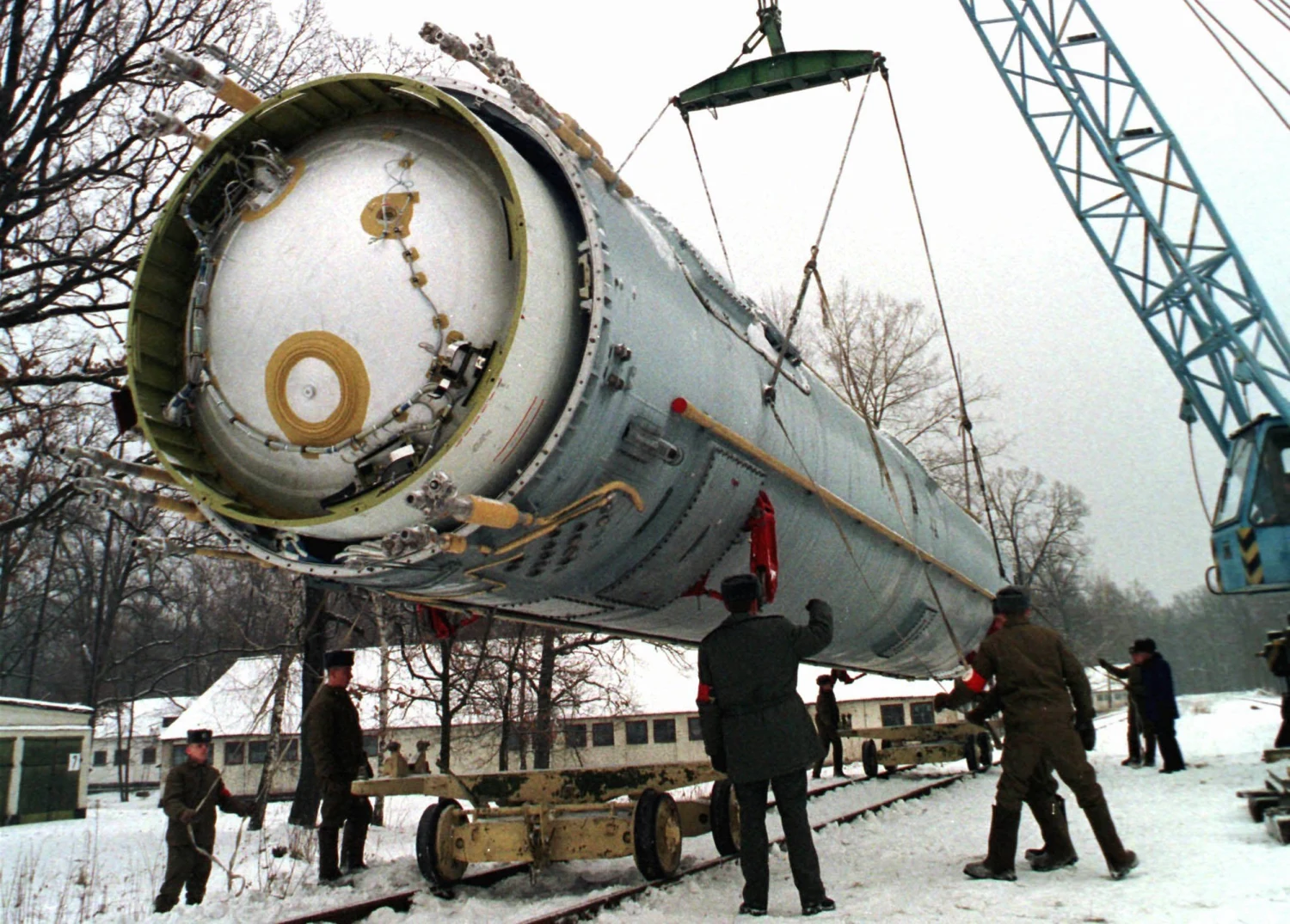
It has been present the whole time as ceiling, threat, restraint, shield, and permission. It helped keep NATO armies outside Ukraine. It disciplined weapons decisions. It narrowed intervention. It allowed the Russian state to move conventional force beneath a strategic warning addressed to civilization.
The invasion generated its enemy.
The nuclear arsenal prevents that enemy from correcting the field without risking a larger one.
The buffer wound has reached the nuclear ceiling.
÷
XXXVIII. The Nuclear Ceiling
The war has always had a ceiling above it.
The ceiling is made of fire.
Russian columns could cross Ukraine's border. Russian aircraft could strike cities. Russian forces could occupy territory, seize nuclear facilities, destroy energy systems, deport people, annex regions, and attempt to remove the Ukrainian state's ability to decide its own future.
The United States and European powers could arm Ukraine, train its forces, share intelligence, finance the state, sanction Russia, reinforce NATO, and progressively authorize weapons with longer range and greater effect.
There remained a category of action everyone had to approach differently.
A direct large-scale war between Russia and NATO could place the survival of cities, states, and civilization inside a decision cycle measured in minutes.
This fact did not end the war.
It organized the war.
Nuclear weapons entered every major external decision without needing to be launched. They entered the decision over a NATO no-fly zone. They entered arguments over aircraft, missile range, targeting support, strikes inside Russia, troop deployment, Black Sea operations, attacks on strategic infrastructure, and the line between assistance to Ukraine and direct alliance participation.
The arsenal therefore performed two functions at once.
- It deterred outside powers from attacking Russia directly.
- It also placed limits around how those powers could correct Russian action beyond Russia's borders.
The first function belongs to the ordinary defense of a nuclear state.
Russia possesses cities, people, institutions, territory, and continuance that no other power may safely treat as available for destruction. NATO's nuclear arsenals perform a related function for alliance members. Mutual vulnerability places hard restraint on conquest among nuclear powers.
The second function is more dangerous.
A state can use conventional force under the shelter of catastrophic escalation risk. Opponents may punish, arm, contain, and resist. They must still calculate whether the next intervention could make nuclear exchange reachable.
This is the nuclear ceiling.
The ceiling does not make everything below it safe.
It makes certain forms of correction too dangerous to attempt.
That difference shaped the field from the invasion's first day.
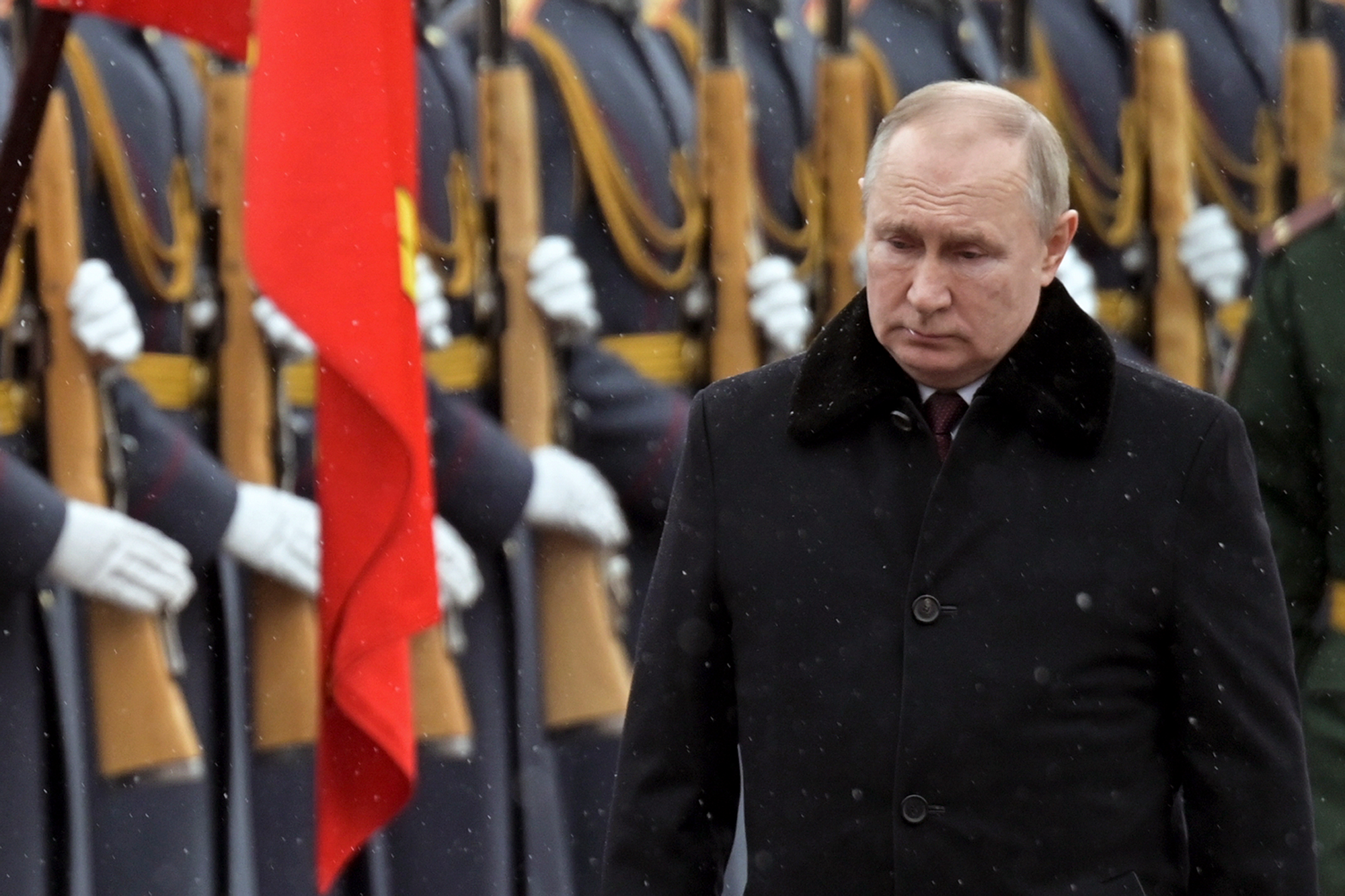
In the address announcing the full-scale attack, Vladimir Putin reminded outside powers that Russia remained one of the world's strongest nuclear states and warned of consequences unlike any they had encountered. Days later, Russia publicly altered the readiness posture of its deterrent forces. Nuclear signaling continued through exercises, deployments, doctrine, public statements, the placement of Russian non-strategic nuclear weapons in Belarus, and repeated warnings tied to Western support for Ukrainian operations.
Some signals were deliberately ambiguous. Ambiguity belongs to deterrence because a perfectly predictable threshold can invite an adversary to operate just below it. Uncertainty can prevent reckless action.
Ambiguity also carries risk. A threshold no one can locate can become a field where every actor tests, interprets, performs, and misreads.
Russia revised its declared nuclear doctrine in November 2024. The updated policy widened the circumstances under which nuclear use could be considered. It described an attack by a non-nuclear state supported by a nuclear state as a joint attack. It placed attacks threatening the sovereignty or territorial integrity of Russia or Belarus inside the possible nuclear-use field. It included large-scale aerospace attack indicators and other conventional contingencies beyond the narrower language of an attack threatening the state's existence found in the previous doctrine.
A doctrine is not an automatic launch order.
It is a public instrument of expectation.
The document tells adversaries which transitions Russian leadership wants them to imagine as potentially nuclear. It makes the fear of escalation part of the environment in which military aid, targeting, and retaliation are decided.
Ukraine therefore fights inside an asymmetrical structure.
- Russia can strike Ukrainian territory with forces based in Russia, Belarus, occupied Ukraine, the Black Sea, and beyond.
- Ukraine can strike some military and industrial targets supporting those attacks.
- Every extension of Ukrainian reach deeper into Russia then generates a second argument over whether the strike has crossed a nuclear threshold, especially when the weapon, intelligence, or permission came from a nuclear NATO state.
The asymmetry does not make Ukrainian strikes harmless. Russian civilians remain loci. Strategic warning systems, command facilities, air bases, and nuclear-related infrastructure create real escalation risks. A successful operation can produce military value while also creating uncertainty inside another state's nuclear decision system.
The field still cannot accept the conclusion that Russian sanctuary must be absolute while Ukrainian territory remains fully targetable.
That arrangement would convert nuclear status into permission for one-way conventional war.
The problem is structural:
- If Ukraine cannot strike the systems attacking it,
- Russian force receives protected depth.
- If Ukraine can strike without limit,
- nuclear miscalculation and direct great-power confrontation become more reachable.
- If outside powers intervene directly,
- the ceiling may become the next battlefield.
- If outside powers refuse all meaningful support,
- the ceiling becomes a shield for conquest.
No slogan solves this one.
The extant path has to be managed through discrimination, communication, target discipline, intelligence, protected channels, warning, and constant attention to what each operation makes reachable.
That requirement can look cowardly beside a destroyed city. It can also be the difference between a damaged city and many cities ending together.
Modal Path Ethics does not treat nuclear caution as capitulation.
Civilization has a continuance claim too.
It also refuses the reverse distortion in which civilization's vulnerability becomes a standing veto against resisting any nuclear state's aggression.
A nuclear arsenal cannot be allowed to say:
We may change your border by force because correcting us might end the world.
That sentence contains the other audit waiting after this article.
Russia's buffer wound reached for Ukraine.
The nuclear ceiling placed civilization above the hand.
÷
XXXIX. A War Protected by the End of the World
A nuclear weapon acts before detonation.
It acts in the meeting where a minister removes an option from the table.
It acts in the military plan rewritten to keep allied pilots out of direct combat.
It acts in the delay before a weapon is supplied, the restriction placed on its range, the argument over coordinates, the hotline kept open between enemies, the warning sent before an exercise, and the sentence stating that a deployment is defensive because everyone understands the alternative meaning.
This is why counting nuclear use only from the mushroom cloud misses much of the instrument.

The weapon's political action lies in what other actors decide they cannot safely do.
Russia did not receive unlimited freedom beneath the nuclear ceiling.
Ukraine survived the opening campaign. Western military support grew from portable anti-armor weapons into artillery, air defense, tanks, long-range missiles, combat aircraft, intelligence cooperation, domestic production, and a durable support architecture. Sanctions and export controls imposed significant costs. NATO expanded. Russian territory, military facilities, energy infrastructure, and logistics came under Ukrainian attack.
The ceiling bent.
It did not disappear.
No NATO army entered the war as a belligerent. No alliance-wide no-fly zone placed NATO aircraft in routine combat with Russian aircraft. Western forces did not openly take command of the Ukrainian battlefield. Assistance remained organized around preserving Ukraine's resistance while avoiding a direct Russia-NATO war.
That boundary was repeatedly contested because the meaning of "direct" changed with technology.
- A satellite image can guide action without crossing a border.
- A targeting datum can have more effect than a battalion.
- A weapon may be fired by a Ukrainian crew while depending on foreign manufacturing, software, intelligence, maintenance, training, and political authorization.
- A drone assembled from components produced across several countries can strike a facility hundreds of kilometers from the front.
The old categories of war do not always fit the chain that generates the strike.
Russia's doctrine attempts to solve the ambiguity in its own favor by treating external support as participation. NATO states attempt to preserve the distinction between helping a state defend itself and becoming co-belligerents. Ukraine needs the distinction to remain usable because its survival depends on outside capacity entering the field without activating the ceiling.
The relation is unstable by design.
Each side wants enough ambiguity to preserve action and enough clarity to prevent the other's worst interpretation.
That is an enormous demand to place on leaders, officers, sensors, communications systems, intelligence services, and machines operating under time pressure.
- A false warning can arrive.
- A missile can malfunction.
- A drone can cross the wrong border.
- An air-defense interceptor can fall where no one intended.
- A conventional strike can approach a site whose nuclear relevance the attacker did not fully understand.
- A state can interpret a coordinated attack on warning infrastructure as preparation for something larger.
- A public threat can become difficult to retreat from without loss of credibility.
- A private warning can fail to reach the person making the next decision.
The nuclear ceiling therefore creates a second war inside the first.
The visible war concerns territory, sovereignty, occupation, survival, military advantage, political purpose, and the civilian field.
The invisible war concerns interpretation.
- Is this strike limited?
- Is this preparation?
- Is this probe becoming attack?
- Is this deployment symbolic?
- Is this the first part of a disarming operation?
- Is the adversary testing whether the doctrine is real?
- Is restraint being read as fear?
- Will a warning reduce danger or force the state to act on the warning later?
These questions do not remain in a philosopher's margin.
They enter launch systems.
This is the ugliest achievement of nuclear deterrence.
The weapon can prevent enormous violence by making enormous violence continuously thinkable.
The Russo-Ukrainian War has shown the protective side and the coercive side at once.
Russia has been deterred from attacking NATO territory at the scale of the invasion of Ukraine. NATO has been deterred from direct intervention against Russian forces. The risk of nuclear escalation has produced caution around actions that could have widened the war dramatically.
The same risk has allowed a conventional war of aggression to continue under a shelter no non-nuclear state can construct for itself.
Ukraine once occupied one of the strangest positions in the nuclear order. It inherited a vast Soviet nuclear presence on its territory, entered a denuclearization path, joined the nonproliferation system as a non-nuclear-weapon state, and received assurances concerning sovereignty and borders.
Decades later, it encountered invasion by one of the nuclear powers attached to that assurance field.
The other nuclear powers helped it resist while carefully limiting their own exposure to the invading power's arsenal.
No actor planned that sequence as one instrument.
The sequence still teaches.
A non-nuclear state can observe Ukraine and draw a brutal lesson:
The rules ask you to give up the final weapon. The assurances may fail. The state that kept the weapon may then control how much help reaches you.
That lesson is dangerous whether or not it is fully accurate.
Ukraine's inherited arsenal did not amount to a simple, independent, ready national deterrent. Retaining and consolidating it would have involved technical, political, financial, diplomatic, and command problems of immense scale. Denuclearization also helped produce recognition, aid, and integration into the international order.
The later invasion still damages the nonproliferation bargain.
A successful peace must therefore do more than stop current firing. It has to answer what a non-nuclear state is supposed to trust after Ukraine.
The answer cannot be another assurance whose trigger is consultation.
It also cannot be a world in which every exposed state concludes it needs its own city-ending veto.
The repair must create security strong enough that nuclear possession stops looking like the only instrument history respects.
That is much harder than a ceasefire.
It is also part of the ceasefire's moral field.
÷
XL. The Treaty Expires
On February 5, 2026, New START expired.
This date passed without a missile launch.
That is the kind of quiet that can hide a civilizational loss.
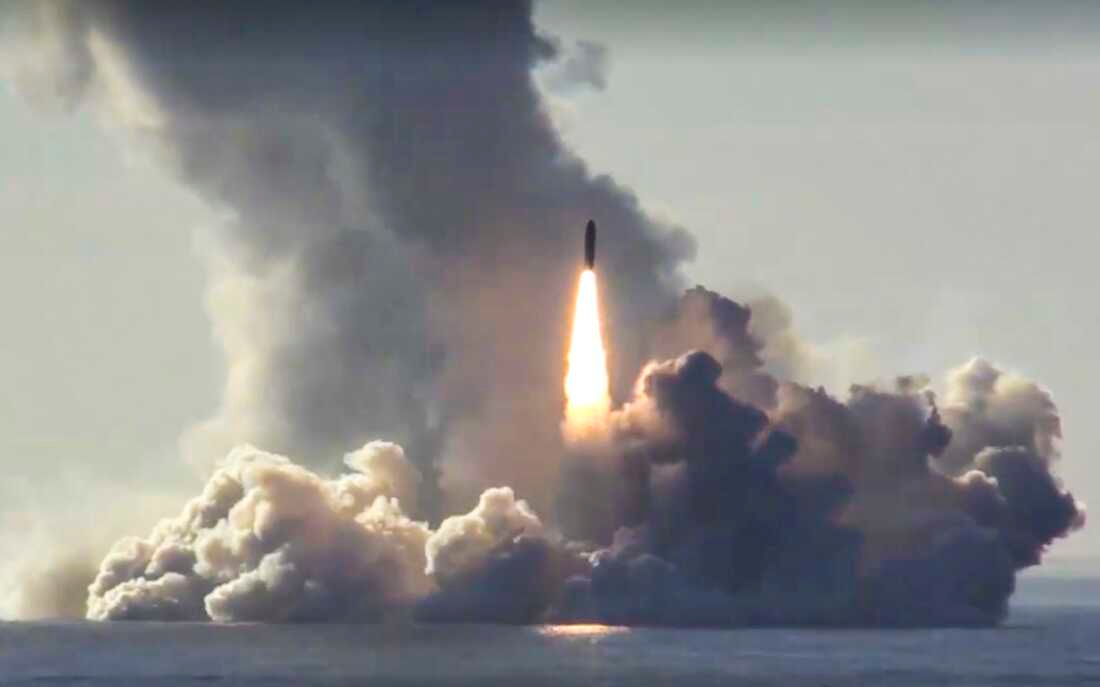
New START had limited the deployed strategic nuclear forces of the United States and Russia. Its central ceilings covered accountable deployed strategic warheads, deployed intercontinental ballistic missiles, submarine-launched ballistic missiles, and nuclear-capable heavy bombers, along with a wider cap on deployed and non-deployed launchers and bombers.
The numbers mattered.
The inspection and information structure mattered just as much.
Treaties like New START do not create trust in the sentimental sense. They create access, notifications, data exchanges, procedures, definitions, exhibitions, inspections, and a common grammar for asking what the other state has placed in the field.
They turn some fear into inspectable structure.
The treaty was already wounded before it expired.
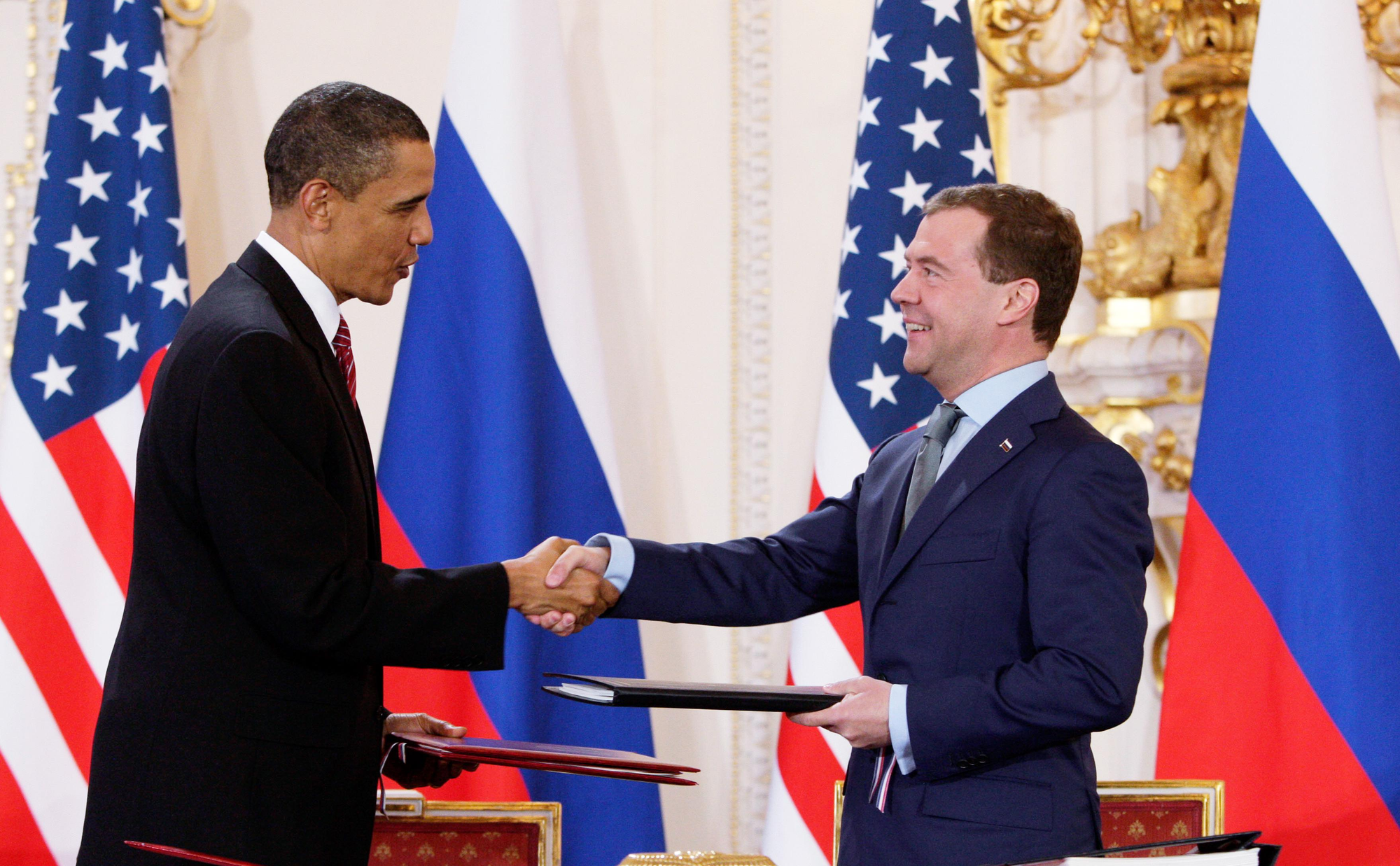
Implementation had been disrupted. Inspections ceased. Russia suspended participation in 2023 while stating that it would continue observing central numerical limits. The wider strategic-stability dialogue collapsed under the war. Verification had weakened before the legal ceiling ended.
Then, the legal ceiling ended too.
Russia had proposed that the parties continue observing the central limits informally for a period after expiration. The United States did not turn that proposal into a reciprocal binding arrangement and argued for a broader framework addressing additional Russian systems, non-strategic nuclear weapons, and the rapidly expanding Chinese arsenal.
Those concerns were real.
A bilateral treaty designed around two Cold War nuclear superpowers does not automatically solve a world containing China's expansion, Russian non-strategic weapons, new delivery systems, missile defense, hypersonic weapons, long-range conventional strike, cyber vulnerability, space systems, and increasingly entangled command architecture.
The demand for a better instrument still arrived after the old instrument had been allowed to die.
For the first time in more than half a century, the two largest nuclear powers stood without binding treaty limits on their strategic arsenals.
This does not mean both immediately abandoned every prior number.
It means continuation depends on unilateral policy, political judgment, technical capacity, intelligence estimates, and the expectation of what the other side may do next.
That is a higher-resistance field.
A state considering whether to upload more warheads, expand launchers, build new systems, disperse forces, or change alert posture must now act with less treaty-grounded visibility into the other side.
The other side sees the move, estimates the intent, and prepares its own response.
Industrial planning begins years before deployment. Suspicion can become procurement long before any leader announces an arms race.
The local rule is familiar:
- uncertainty raises fear;
- fear raises force requirements;
- force growth confirms uncertainty;
- verification becomes harder to restore because the new force has acquired constituencies, budgets, missions, and strategic arguments;
- the absence of an agreement becomes evidence that agreement would be naive.
The war in Ukraine did not single-handedly destroy the arms-control field.
That field had been degrading across years: the collapse of the Anti-Ballistic Missile Treaty framework, the end of the Intermediate-Range Nuclear Forces Treaty, disputes over compliance, missile defense, new weapons, deteriorating relations, suspended dialogue, and the return of explicit great-power hostility.
The invasion accelerated the contraction and made political cooperation harder to defend in both capitals.
This is one way the buffer wound reaches beyond Ukraine.
- Russia sought security from a dangerous frontier.
- The war helped destroy an instrument that constrained the weapons capable of ending Russia, the United States, and much beyond them.
The connection is not symbolic.
Arms control requires enough relation for adversaries to exchange information without treating the exchange as surrender. War makes relation politically toxic. Nuclear competition makes the absence of relation catastrophic.
A peace agreement that leaves this field untouched will have repaired too little.
The ceasefire line may become quieter while strategic arsenals grow behind it.
Ukraine may receive guarantees while the guarantors and Russia lose the machinery that makes their own destruction less likely.
Europe may gain a monitored settlement and remain under a nuclear relation governed increasingly by warning time, ambiguity, modernization, and threat.
The next repair instrument must therefore work at two scales.
- It must stop Russia and Ukraine from continuing to destroy one another.
- It must reopen enough United States-Russian and wider nuclear contact that the war does not leave civilization with a permanent strategic-arms vacuum.
These tasks cannot be collapsed into one bargain. Ukraine cannot be traded for an arms-control agreement among larger powers. Nuclear talks cannot become a prize awarded for invasion. Russia's legitimate standing as a nuclear interlocutor does not erase its responsibility as the invading state.
The tasks still interact.
A state can be an aggressor in one field and an indispensable party to repair in another.
That is morally uncomfortable.
Reality just remains unconcerned with our preference for cleaner casts.
÷
XLI. The Repair Audit
This article arrives before the settlement.
As of late July 2026, the war continues.
Civilian casualties have risen. Long-range attacks continue. Diplomacy has generated ceasefire proposals, direct-talk proposals, security-guarantee plans, monitoring architecture, prisoner exchanges, and recurring claims that the other side is refusing the transition necessary for peace.
No final arrangement has yet carried the field.
This makes the audit provisional.
It does not make the audit optional.
A peace proposal is a transition design. It selects which current facts will be frozen, reversed, recognized, deferred, punished, guaranteed, or left to later force. The proposal has to be judged by what it makes reachable after signatures, not by how efficiently it produces a signing ceremony.
There is no clean path available.
The war has already created occupied populations, destroyed homes, hardened identities, enlarged armies, displaced millions, produced graves, altered borders in practice, bound foreign states to the outcome, expanded NATO, weakened arms control, and taught each side that the other's assurances are temporary forms of preparation.
The question is Better.
Russian victory or imposed demilitarized neutrality
The shortest route to reduced fighting can look like Ukrainian acceptance of Russia's core demands: territorial loss, formal or practical exclusion from NATO, restrictions on armed forces and foreign military relationships, recognition of annexation, sanctions relief, and a political settlement designed to prevent Ukraine from becoming a Western military platform.
This path directly addresses Russia's stated security concern.
It also risks converting invasion into the mechanism by which the concern acquires jurisdiction.
A neutral Ukraine can exist as a sovereign choice. An imposed neutral Ukraine is a buffer with constitutional stationery.
The distinction turns on agency and capacity.
- Can Ukraine revise the arrangement through its own lawful politics?
- Can it maintain armed forces capable of making another invasion costly?
- Can it receive weapons after a breach?
- Are foreign guarantees automatic enough to matter?
- Does Russia receive the right to define which Ukrainian government, doctrine, military, media, party, or foreign relationship counts as hostile?
- Does "demilitarization" remove offensive threat, or does it remove refusal?
A settlement that leaves Ukraine unable to defend itself asks future Russian restraint to carry the entire peace.
The field has already tested that instrument.
It failed.
The fact that this path might stop some immediate killing remains morally serious.
A person under bombardment does not live inside the purity of international principle. Ceasefires save bodies on the day they begin.
The settlement still becomes unstable if it purchases that pause by making the next invasion easier or by requiring Ukrainians to accept that the war proved Russia's title.
Full withdrawal and NATO membership
The clearest sovereignty path is complete Russian withdrawal from internationally recognized Ukrainian territory, restoration of Ukrainian control, and Ukraine's entry into NATO or an equivalent collective-defense structure.
This route refuses conquest as a source of law. It places Ukraine under a guarantee designed to make recurrence irrational. It answers the Budapest failure with an actual defense commitment.
It also carries a difficult transition.
Russia has built its war narrative around preventing Ukraine's incorporation into the Western military field. A sudden path from war to full NATO membership could be interpreted in Moscow as the strategic outcome the invasion was launched to prevent, now achieved under conditions of Russian defeat.
That interpretation does not grant Russia a veto.
It does enter escalation, domestic legitimacy, and implementation.
A principle can be correct while the route to it remains dangerous.
The practical questions include:
- When does the guarantee activate?
- Does it cover territory still occupied at the moment of accession?
- What happens if fighting continues after the membership decision?
- Does the alliance inherit an immediate Article 5 war?
- Can withdrawal be verified before the guarantee changes?
- Which forces deploy, where, and under what restrictions?
- How does the arrangement reduce Russian fears of surprise attack without reopening Russian control over Ukrainian policy?
The strongest version of this path would combine sovereign equality with reciprocal force-posture restraint. Ukraine receives a real defense guarantee. Russia receives inspectable limits on offensive systems, bases, exercises, and deployments near its territory. The people remain sovereign. The instruments carry the distance.
Armed neutrality with multilateral guarantees
Neutrality remains attractive because it appears to preserve Ukraine outside the alliance conflict while denying Russia direct control.
The historical record makes the word insufficient.
Ukraine was non-aligned when Russia seized Crimea and intervened in Donbas in 2014. The Budapest Memorandum contained assurances. Minsk contained procedures. None generated a durable shelter.
Neutrality therefore has to be built as an active security system rather than a declaration of absence.
A credible neutral arrangement would require:
- Ukrainian consent expressed through lawful and contestable institutions;
- armed forces strong enough to prevent a quick fait accompli;
- long-term access to weapons, training, maintenance, intelligence, and defense industry;
- clearly defined restrictions on foreign bases and offensive systems;
- reciprocal Russian restrictions within relevant range of Ukraine;
- automatic support after verified aggression;
- a monitoring body with access, technical capacity, and public reporting;
- sanctions or military consequences tied to breach;
- no Russian authority over Ukraine's European Union membership, domestic politics, language, media, or economic relations;
- a lawful route to revise neutrality if the guarantee fails.
Neutrality without defense is exposure.
Neutrality without revision is custody.
Neutrality with real guarantees may be a sovereign instrument.
The legitimacy depends on whether Ukraine can own it after the war rather than carry it as the war's imposed result.
Armistice along the current line without territorial recognition
An armistice can stop large-scale fighting before the parties agree on sovereignty.
This is one of the most realistic and morally painful shapes.
The line of control becomes the line at which killing is interrupted.
Ukraine does not legally recognize annexation.
Russia does not withdraw.
Final status remains unresolved. A monitored military separation, prisoner exchanges, humanitarian access, reconstruction in government-controlled territory, and renewed political life become reachable.
The immediate good is substantial.
People stop dying at the current rate. Cities receive relief from some attacks. Soldiers leave some positions. Energy systems, schools, hospitals, farms, and families acquire a future wider than tomorrow's strike.
The remainder is equally substantial.
Occupation continues. People inside occupied territory remain under another state's force. Property, citizenship, language, detention, conscription, political loyalty, education, and demographic change continue shaping the future status that has supposedly been deferred. Russia can fortify. Ukraine can rearm. Both can treat the armistice as operational pause.
A frozen line is never a frozen field.
Time acts on the settlement.
Any armistice therefore needs rules against forced consolidation: access for monitors, protection of civilians, prohibition of coerced citizenship and population transfer, records of property and detention, communication across the line, family reunification, humanitarian corridors, and a final-status process that does not reward the actor best able to change facts under occupation.
Final-status deferral
Territorial recognition can be deferred even after a wider peace agreement.
This avoids making Ukrainian legal surrender the price of stopping fire. It also avoids requiring Russia to withdraw from every claimed territory before any other transition becomes possible.
Deferral is often attacked as cowardice because it leaves the hardest question unanswered.
Sometimes leaving a question answerable later is better than answering it through the current distribution of force.
The danger is indefinite provisionality. A deferred question can become permanent if the stronger party benefits from delay. The process needs dates, institutions, evidence preservation, local protections, and a prohibition against treating demographic engineering as later consent.
No referendum conducted under occupation, displacement, intimidation, population transfer, or exclusion can settle the field cleanly. A future status mechanism would require safe return, access to information, political pluralism, international observation, and enough time for people to participate outside immediate coercion.
The article cannot promise that such conditions will become reachable.
It can refuse to call their absence consent.
Reciprocal force-posture limits
This is where strategic depth can be repaired without assigning a neighboring population the role of depth.
The parties can negotiate the instruments that produce exposure:
- categories and ranges of missiles;
- permanent foreign bases;
- large exercises near borders;
- troop concentrations;
- aircraft and bomber patrols;
- Black Sea deployments;
- air-defense and strike-system locations;
- notification timelines;
- inspection rights;
- transponder and incident-prevention rules;
- protected hotlines;
- restrictions around nuclear facilities and strategic-warning infrastructure;
- limits on certain cyber operations against command, energy, and early-warning systems.
These measures do not require Ukraine to become Russian terrain.
They create distance in weapons, movement, and warning time.
Reciprocity matters.
- A limit applied only to Ukraine can become demilitarization by another name.
- A limit applied symmetrically to relevant Russian, Ukrainian, NATO, and allied systems can reduce threat while preserving standing.
The exact symmetry may be geographic rather than numerical. Russia's size, arsenal, alliance relationships, and force structure differ from Ukraine's. Equal security does not always require identical equipment. It requires that one side's safety not be produced through the other's helplessness.
Sequenced sanctions relief, restitution, and reconstruction
Sanctions are a coercive instrument. They can constrain military capacity, raise the cost of aggression, signal non-recognition, and create bargaining leverage.
They also distribute burden through workers, consumers, patients, families, migrants, firms, regions, and future economic paths that may have little authority over war policy.
A peace process should not preserve every sanction as ritual punishment after its transition purpose has ended.
It also cannot remove sanctions in advance and hope the resulting goodwill completes the agreement.
Relief should be sequenced to verified steps:
- ceasefire compliance;
- withdrawal from agreed areas;
- access for monitors;
- prisoner and civilian returns;
- restoration of shipping and energy arrangements;
- respect for force-posture limits;
- participation in compensation and claims mechanisms;
- continued non-use of force.
Some sanctions concern aggression. Others concern human-rights abuses, proliferation, corruption, cyber operations, or separate conduct. They require separate review rather than one ceremonial switch.
Reconstruction carries a related danger. Ukraine needs resources at a scale far beyond ordinary national recovery. Russian assets, European and American funds, international institutions, private investment, Ukrainian reform, insurance, and long-term guarantees will all enter.
The reconstruction field can become extraction if donors, contractors, oligarchs, foreign governments, and domestic elites treat the destroyed country as a portfolio.
Repair has to remain answerable to communities carrying the damage.
Renewed continental and nuclear arms control
A settlement that quiets the front and leaves the wider weapons field unconstrained has repaired the nearest wound while allowing the larger one to deepen.
The peace architecture should reopen:
- strategic nuclear limits after New START;
- data exchanges and inspections;
- dialogue over non-strategic nuclear weapons;
- missile notifications;
- incident-prevention mechanisms;
- conventional force transparency;
- restrictions on intermediate-range systems;
- protection of nuclear command and warning systems from cyber and conventional attack;
- communication among Russia, the United States, NATO, and eventually China where the force structure requires it.
Ukraine must not become payment for this work.
The work remains necessary because Ukraine has shown what happens when a conventional war develops beneath an eroding nuclear order.
No one settlement shape wins the audit by itself.
The better path is likely composite: a ceasefire, strong Ukrainian defense, monitoring, reciprocal constraints, deferred questions, humanitarian transitions, sequenced relief, reconstruction, contestable politics, and a reopened arms-control field.
The complexity is not evidence that peace is impossible.
It is evidence that the war has damaged more than one relation.
÷
XLII. The Verification Matrix
Trust is not the repair instrument.
Verification is.
That sentence can sound cold after years of blood.
It is one of the kinder sentences available.
A peace built on emotional reconciliation asks the wounded to perform confidence before the field has earned it. Ukrainians would be asked to trust a state that invaded, annexed, occupied, imprisoned, deported, and repeatedly attacked.
Russians would be asked to trust a Western security system they understand as expansionary and a Ukrainian state their own information field has described as an existential instrument of hostile power.
Western states would be asked to trust Russian compliance after the collapse of several agreements. Russia would be asked to trust Western restraint while Ukraine is rebuilt and armed.
No one has enough trust for this.
The agreement has to function anyway.
Verification converts some claims into observable transitions.
It requires four linked capacities:
- Detection — identify what happened.
- Attribution — determine who caused it with a defined standard of evidence.
- Remedy — specify what must be reversed, repaired, or compensated.
- Response — define what follows if the remedy is refused.
Monitoring without remedy becomes a camera over the wound.
A guarantee without a trigger becomes Budapest with better stationery.
An automatic response without attribution creates a machine capable of escalating on error.
The matrix therefore has to cover more than the front line:
Land.
Monitors need access to agreed separation zones, force locations, storage areas, crossings, and withdrawal routes. Remote sensing can supplement presence. It cannot fully replace access where concealment, spoofing, underground storage, civilian cover, and contested territory complicate interpretation.
Air and long-range strike.
A ceasefire that ignores missiles and drones will fail in the sky before it fails on the ground. The system needs shared incident data, radar and satellite evidence, launch attribution, debris analysis, protected reporting channels, and rules for ambiguous events.
An air ceasefire may be reachable before a full ground settlement. It would save civilians and energy systems. It could also free military resources for the front and create arguments over reconnaissance, air defense, military targets, and unmanned systems. Its scope has to be exact enough to survive contact.
Sea.
Black Sea arrangements require navigation rules, mine clearance, port access, inspection, grain and commercial shipping protection, coastal missile limits, and procedures for naval incidents. Civilian commerce cannot remain hostage to every battlefield update.
Energy and nuclear facilities.
Power plants, grids, dams, pipelines, heating systems, and nuclear facilities belong to civilian continuance. Rules against attack need technical verification and rapid repair access. The Zaporizhzhia Nuclear Power Plant demonstrates the danger of placing a nuclear facility inside an occupation and artillery field where every party accuses the other of creating risk.
People.
Prisoners of war, civilian detainees, deported or transferred children, missing persons, and bodies require their own verification architecture. Lists, access, identity records, tracing, exchanges, medical review, and return procedures cannot be left as symbolic addenda to territory.
A map can be quiet while a person remains disappeared.
Occupation conduct.
If territory remains outside Ukrainian government control during an interim period, monitors need authority to document detention, conscription, property seizure, movement restrictions, education, media access, citizenship pressure, demographic change, and treatment of dissent.
The occupation field must not be permitted to manufacture the consent later cited to resolve status.
Force posture.
Missile systems, foreign troops, bases, exercises, and heavy-force concentrations require notification and inspection rules. These are the parts of the agreement that answer Russia's real security concern without handing Russia Ukraine's political interior.
Sanctions and relief.
Compliance has to be linked to a public ladder. Which verified act releases which restriction? What happens after partial breach? Can a sanction snap back? Who decides? What evidence is required? How are civilian harms measured?
The guarantors.
The January 2026 Paris Declaration proposed a United States-led ceasefire monitoring and verification mechanism, a special commission for breaches, long-term support for the Armed Forces of Ukraine, a multinational force deployable at Ukraine's request after a credible cessation of hostilities, and binding commitments to respond to renewed Russian attack.
This is a serious attempt to answer the failure of assurances without mechanisms.
It also enters Russia's threat model directly. A Western multinational force on Ukrainian territory can be described as reassurance by Ukraine and its partners and as NATO military entrenchment by Russia. Calling the force defensive does not make the perception disappear.
The answer cannot be to remove every guarantee Russia dislikes. That would give the aggressor control over the remedy.
The answer is to bind the guarantee to transparent posture, defined missions, agreed locations where possible, reciprocal constraints, inspections, and clear activation conditions. The force should exist to make renewed invasion fail, not to create an undefined offensive platform against Russia.
The hard question remains enforcement.
What happens after a serious breach?
- Diplomatic protest?
- Automatic sanctions?
- Immediate resupply?
- Deployment of the multinational force?
- Direct military action?
- Strikes on attacking forces?
- Restoration of the line?
- Consultation?
Every weaker answer risks non-credibility.
Every stronger answer risks escalation.
The guarantee has to be strong enough that Russia expects failure from renewed attack and bounded enough that Russia does not interpret ordinary compliance as preparation for regime-threatening war.
That is not a contradiction to be solved in prose.
It is an architecture to be tested, exercised, communicated, inspected, and revised before the next crisis.
The verification matrix therefore ends with one more requirement:
Who can correct the verifier?
Monitoring institutions can become captured, politicized, intimidated, denied access, or trapped in consensus rules that allow one party to veto findings about itself. Intelligence supplied by belligerents can be accurate and interested. Technical evidence can be misunderstood. Public attribution can become propaganda.
The system needs independent review, multi-source evidence, published standards, dissent channels, protected personnel, and a way to continue reporting when one party withdraws cooperation.
No instrument, however international, may impersonate the field.
÷
XLIII. The Civilian Field
The settlement will be negotiated in rooms.
The war continues in kitchens.
In June 2026, the United Nations Human Rights Monitoring Mission recorded at least 293 civilians killed and 1,990 injured in Ukraine, the highest monthly combined total since April 2022. Across the first six months of 2026, recorded civilian casualties were substantially higher than in the same period of 2025. Long-range missiles and drones killed and injured people far from the front. Short-range drones made evacuation and ordinary movement increasingly dangerous near it.
These numbers are evidence.
They are also a dangerous compression.
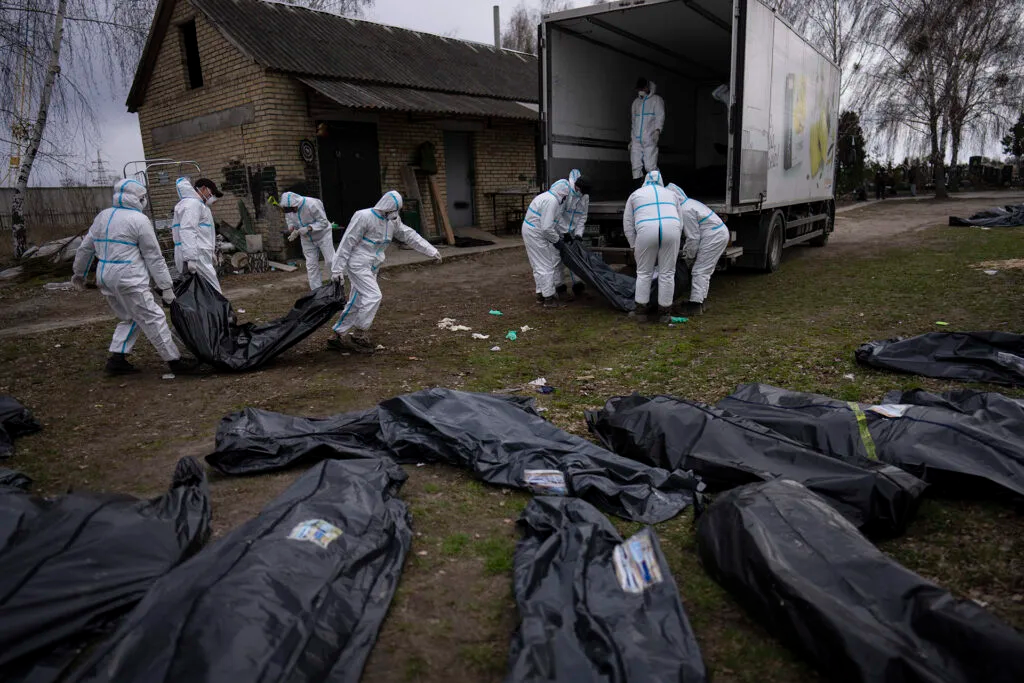
A casualty figure does not show the plate left on the table, the room no one enters, the damaged nervous system, the child who learns the route to shelter before the route to school, the person whose hearing never returns, the family divided across countries, the elderly resident who refuses evacuation because the house contains the remaining shape of a life.
The World Bank, the Ukrainian government, the European Commission, and the United Nations estimated in early 2026 that direct physical damage had exceeded $195 billion by the end of 2025 and that recovery and reconstruction needs approached $588 billion over the following decade. Housing, transport, and energy carried enormous shares. More damage has accumulated since the assessment period ended.
Money can count buildings.
It cannot restore a path exactly as it was.
The civilian field is where every security claim has to answer for itself.
- Does the ceasefire allow people to sleep?
- Can children attend school without the school becoming a target or shelter rotation?
- Can displaced people return safely, choose another home, or remain abroad without losing legal standing?
- Can families cross lines to retrieve relatives, records, medication, property, and bodies?
- Can people in occupied territory refuse conscription, citizenship, collaboration, or political performance without disappearance?
- Can Russian civilians near the border live without drone attack, shelling, fear, and the state's use of their exposure as permanent war authorization?
- Can veterans receive care without being turned into patriotic scenery?
- Can mines be removed from farms, roads, forests, rivers, and playgrounds?
- Can energy systems be rebuilt as public continuance rather than targets waiting for the next winter?
- Can the dead be named without their memory commanding additional dead?
A peace plan that begins with alliance geometry and reaches these questions later has repeated the buffer error.
The civilian field is not the reward delivered after strategic architecture succeeds.
That is the field the architecture exists to preserve.
This changes the meaning of territory.
A territory is not only a colored region under a sovereign label. This is a network of reachable lives. It includes the ability to remain, leave, return, speak, inherit, work, worship, dissent, remember, and raise children without another power converting those acts into security evidence.
This is why territorial settlement cannot be separated from people under occupation. A map restored without homes, records, services, trust, and return remains damaged. A ceasefire maintained by preventing displaced people from coming home may be stable in one register and coercive in another.
A reconstruction program that rebuilds infrastructure while concentrating ownership, exporting profit, displacing local communities, or making survival dependent on donor priorities can create a new burden field beneath the repair language.
Ukraine's reconstruction will require speed.
Speed is where extraction loves to hide.
Emergency procurement, private capital, foreign contractors, war-risk insurance, deregulation, land use, housing, energy modernization, defense industry, and European integration will all compete to define what the rebuilt country becomes. Ukrainian oligarchic power has not disappeared. International institutions carry their own conditionality. Donor states will attach strategic preferences. Local communities may be told that participation has to wait because the need is urgent.
- The need is urgent.
- Participation remains part of the need.
The repair should preserve local government, public records, transparent contracts, labor standing, environmental review, anti-corruption institutions, disability access, veteran reintegration, housing rights, and public ownership where public continuance depends on it.
The civilian field also extends into Russia.
Russian families have lost sons, partners, parents, income, health, freedom, and future to mobilization, battlefield death, repression, economic redirection, and the long conversion of public life into wartime loyalty. Border regions have suffered attack. Ukrainian strikes have killed civilians. Dissenters have been imprisoned or driven out. Minority and poorer regions have carried disproportionate recruitment and casualty burdens.
Recognizing this does not equalize the states' roles in the war. It prevents Russian people from being reduced to the government that acted in their name.
A durable peace must allow Russia to demobilize without requiring the population to experience peace as national extinction. It must create routes for truth that do not depend on collective humiliation. It must preserve accountability without making ordinary Russians the permanent human embargo behind every state crime.
This is strategically important and morally basic.
A settlement experienced as imposed civilizational disgrace can become the next wound map.
A settlement that conceals aggression to protect Russian feeling abandons the Ukrainian field.
The path must carry both truth and continuance.
No victory story can do that alone.
÷
XLIV. The Contestability Test
The best settlement is not the one that removes every disagreement.
It is the one that allows disagreement to continue without returning to invasion.
This is the contestability test.
- A peace agreement creates power.
- It empowers monitors, guarantors, armies, border authorities, reconstruction agencies, courts, sanctioning states, local administrations, and political leaders who will interpret ambiguous terms.
- It may freeze current control, authorize deployments, limit military policy, distribute funds, delay elections, and decide who can cross which line.
That power has to remain answerable after the emergency.
- A settlement fails the test if Ukraine cannot question it without being accused of sabotaging peace.
- It fails if Russia can classify every Ukrainian defense measure as breach while treating its own force posture as background.
- It fails if Russian citizens cannot criticize the war, casualty burden, occupation, or agreement without becoming traitors.
- It fails if Ukrainians under wartime emergency powers cannot recover elections, political competition, media plurality, and civilian control because permanent danger has become a permanent domestic instrument.
- It fails if displaced people and occupied communities are represented only by governments negotiating over them.
- It fails if Poland, the Baltic states, Finland, Moldova, Romania, Belarusian civil society, and other exposed fields are told that great powers have settled the region and their security memories are local noise.
- It fails if the United States and Russia regain strategic dialogue by returning smaller states to the status of objects.
- It fails if nuclear powers acquire permanent exemption from correction because challenging them remains dangerous.
Contestability requires several things that peace negotiations often treat as irritants.
Records
The agreement, maps, annexes, inspection rules, casualty findings, property claims, detention lists, and breach reports have to remain available. Secrecy may protect operational details. It cannot become the solvent that removes public interpretation.
Revision
No settlement can predict every technological, political, military, and demographic transition. It needs scheduled review, amendment procedures, emergency consultation, and lawful exit conditions that do not make the first disagreement equivalent to renewed war.
Representation
National governments are necessary parties. They do not exhaust the affected field. Local authorities, displaced people, veterans, families of prisoners and missing persons, minority communities, civil society, labor, and communities under or near occupation need channels into implementation and repair.
Adjudication
Some disputes require courts, commissions, arbitration, claims processes, or independent technical bodies. No single mechanism can carry territorial status, war crimes, property, sanctions, military compliance, and individual detention together.
Accountability
Peace and accountability pull against each other when leaders or commanders believe stopping the war exposes them to punishment. The answer cannot be automatic amnesty or maximal prosecution detached from transition risk.
The field needs distinctions.
- Who planned and authorized aggression?
- Who committed specific crimes?
- Who acted under coercion?
- Who can be demobilized and reintegrated?
- Which truth must be public even where punishment is limited?
- Which claims can be deferred without being erased?
- What form of accountability lowers recurrence rather than feeding the next revenge machine?
Modal Path Ethics does not reduce this to blame. Responsibility remains part of repair because a peace that requires the harmed to accept official unreality will carry the war inside it.
Political succession
The agreement cannot depend on one president continuing to interpret it correctly.
Putin, Zelenskyy, Trump, European leaders, military commanders, and negotiators are temporary occupants of roles. The institutions have to survive elections, deaths, defeats, scandals, coalition changes, and shifts in public mood.
A personal guarantee is a delay wearing a signature.
Nuclear correction
The strategic field needs its own contestability. Nuclear doctrine, arsenal growth, exercises, alerts, deployments, and arms-control compliance cannot remain entirely inside executive secrecy. Parliamentary oversight, expert analysis, public reporting, international institutions, military communication, and treaty verification all provide handles on a structure that otherwise asks humanity to trust a small number of decision-makers with the end of cities.
This returns the article to Hoover Dam.
 Aidan Lawson
The damaged future is selectable where power can still be argued with after the battle.
Russia and Ukraine will not emerge clean.
NATO will not emerge clean.
The United States will not emerge clean.
A ceasefire will preserve injuries it cannot repair immediately.
A final settlement may leave territory disputed, people displaced, sanctions active, militaries enlarged, and the nuclear field dangerous.
The standard is not purity.
The standard is whether the next correction remains reachable.
Can the line be monitored?
Can a breach be proved?
Can the agreement be revised?
Can a government be replaced without collapsing the peace?
Can civilians challenge reconstruction?
Can occupation claims be kept alive without renewed war?
Can Russia receive security without receiving title?
Can Ukraine receive defense without becoming an unbounded forward platform?
Can NATO deter without making every border a permanent staging area?
Can nuclear powers return to limits after learning how useful the absence of limits can be?
A buffer peace answers these questions by freezing the weaker state into function.
No buffer peace will hold.
The field requires a peace among countries.
÷
XLV. The Ruling
Russia's security wound is real.
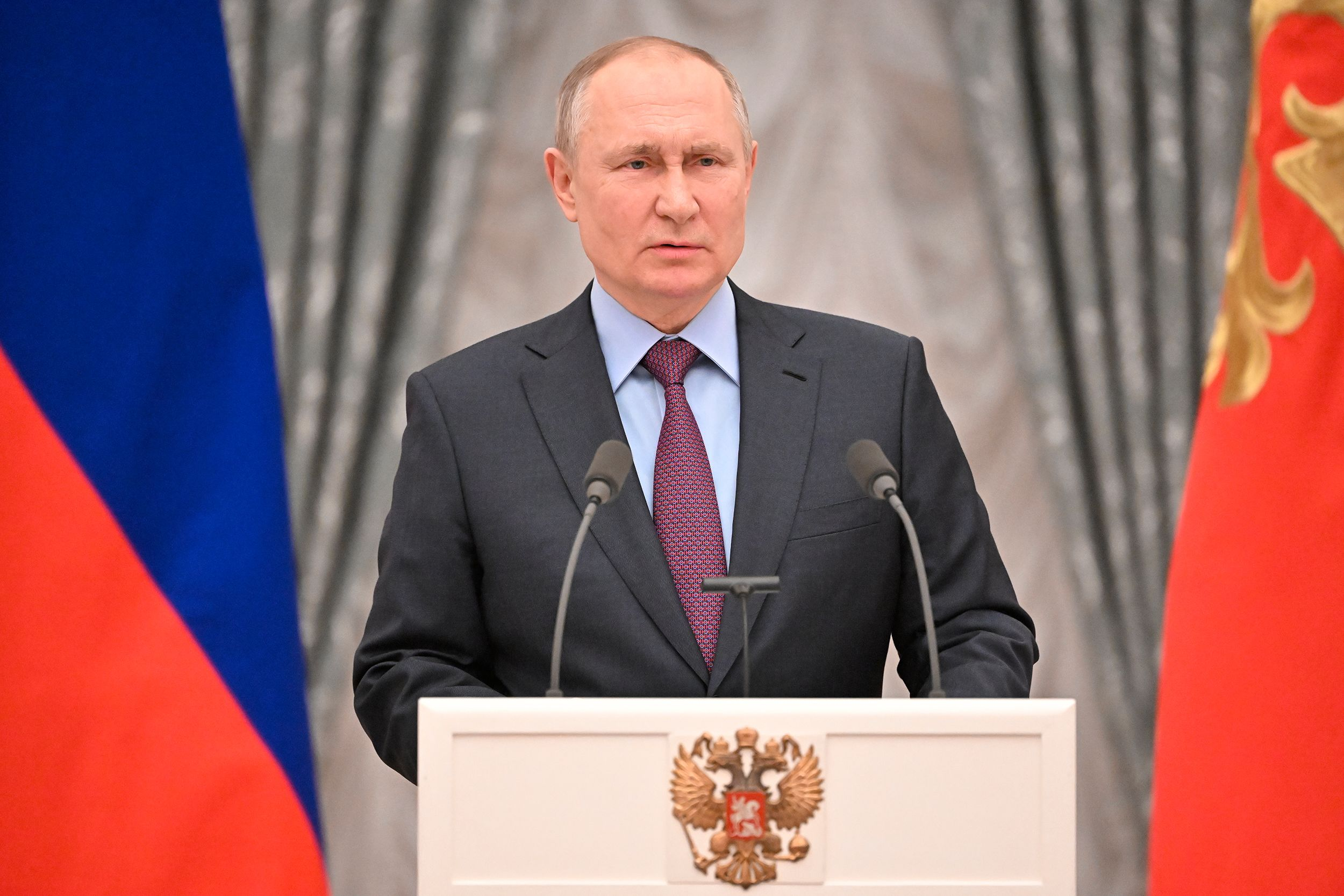
It remembers armies coming from the west, collapsing frontiers, destroyed cities, lost populations, broken settlements, hostile infrastructure, and a continent where technology can make distance disappear.
That wound creates a claim to negotiation.
It does not create jurisdiction over Ukraine.
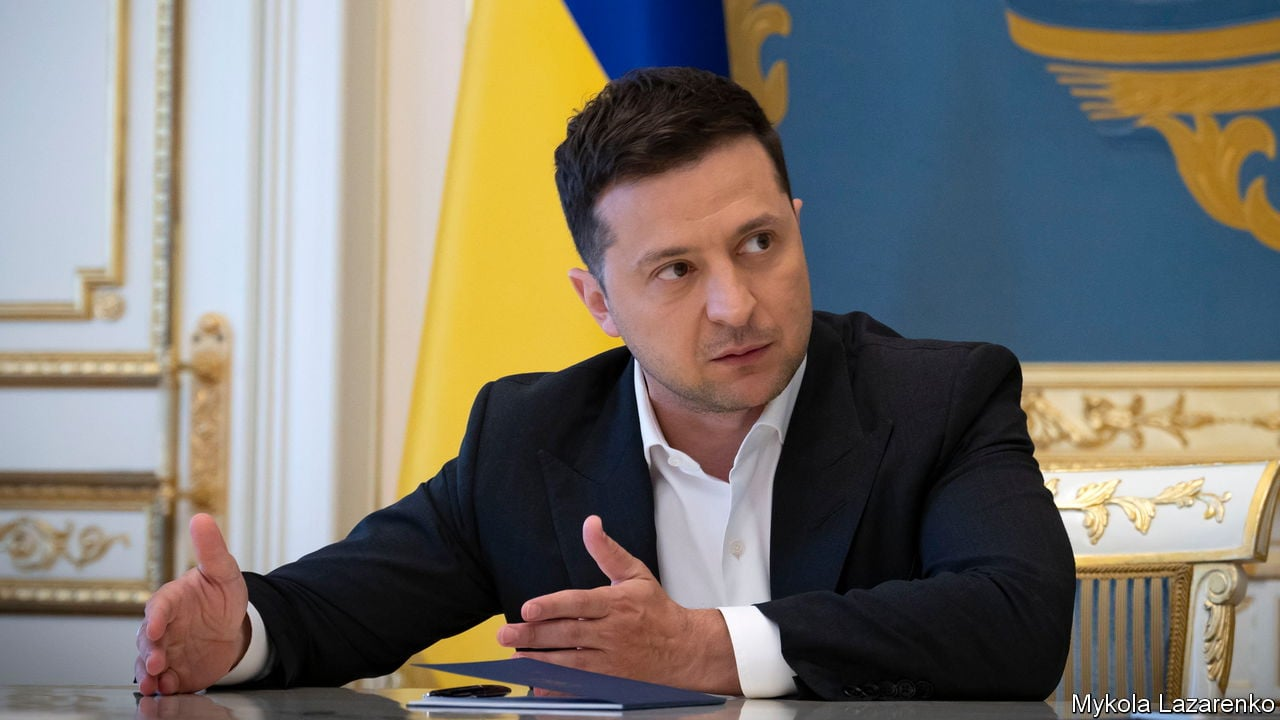
Ukraine's choices affect Russian security. Russia's choices affect Ukrainian security. NATO's choices affect both. This is a relationship among standing loci, not a title deed held by the strongest one.
Russia tried to turn Ukraine into distance.
The instrument produced the opposite.
It generated a more consolidated Ukrainian state, a larger NATO, a more heavily armed eastern and northern flank, deeper Western military integration, a damaged Russian interior, and a European security field organized around long confrontation.
Then the nuclear arsenal placed a ceiling over correction.
The weapons defended Russia from direct attack. They also made outside powers calculate how much resistance to Russian aggression civilization could survive. The war proceeded beneath the threat of a larger ending.
In February 2026, New START expired. The last binding treaty limits on the strategic arsenals of Russia and the United States left the field while the war that helped poison strategic dialogue continued.
No settlement repairs enough if it only moves the line.
A better peace must preserve Ukrainian agency, answer Russian exposure through reciprocal limits on weapons rather than ownership of people, protect civilians, verify compliance, make renewed invasion fail, keep territorial claims from becoming permission for permanent war, reopen reconstruction without extraction, and restore nuclear arms control before ambiguity becomes an arms race.
The peace must remain contestable after emergency.
Ukraine must be able to correct its guarantors.
Russia must be able to describe insecurity without invading the description.
Neighbors must remain countries rather than terrain in a great-power sentence.
The buffer wound began when another people's future became the instrument of Russian safety.
The nuclear veto begins when civilization's future becomes the instrument that protects the claim.
The next article climbs inside the weapon.