Field Instruments: Martyrdom
The dead may obligate memory. They may not own future agency.
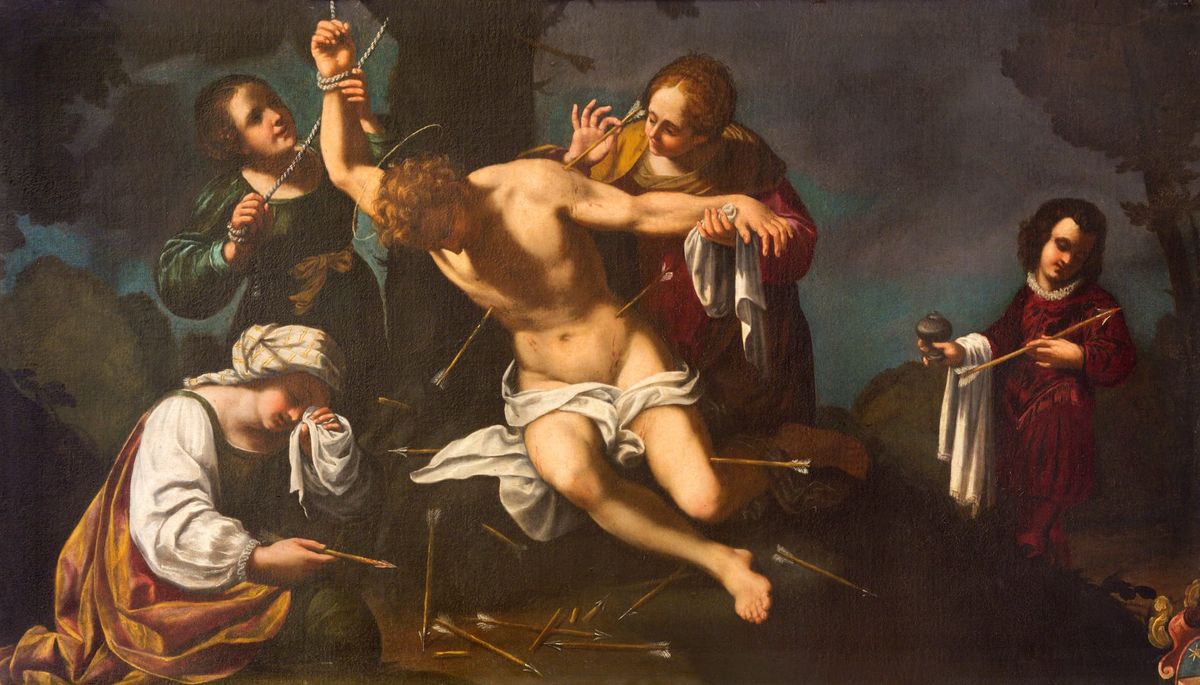
Someone has been killed.
A face rises above the crowd.
It may be printed on cheap paper, enlarged across a banner, painted on a wall, carried in a procession, taped inside a shop window, pinned to a jacket, placed beside candles, held by a mother whose hands are trying to keep one last ordinary relation from becoming history.
The face is doing work.
It is telling the field that this person existed. That somebody had a name, a voice, obligations, jokes, habits, unfinished work, a body that occupied rooms, a future that had not yet agreed to close. It is telling the power responsible for the death that the killing did not finish the removal.
This is one of the oldest sacred instruments human beings possess.
A ruler can imprison a witness. A court can condemn one. An army can shoot one. A mob can beat one. A state can disappear one into a cell, a ditch, an unmarked grave, an official euphemism, or the vast clean weather of nobody being held responsible.
But the living can still lift the face.
Martyrdom begins there: with the refusal to let death complete an erasure.
Then the instrument becomes dangerous.
The face can stop being a witness and become an instruction. The person can be compressed into the death. The death can be turned into proof. The proof can be turned into title. The title can become recruitment. The movement can begin needing the kind of loss it once existed to prevent.
The first transition kills the person.
The second decides what the killing will be allowed to command.
Witness After Death.
The old root of martyr means witness.
That origin is still the cleanest way into the instrument.
A martyr is not sacred because death has magical truth-producing properties. A martyr becomes a sacred figure when death is understood as the final pressure placed against a testimony, fidelity, identity, refusal, or relation that power wanted surrendered.
The martyr may have been ordered to deny a faith, betray a community, endorse a lie, abandon a people, consent to domination, participate in cruelty, or accept survival on terms that would have destroyed the very thing survival was supposed to preserve.
- The person refuses.
- Power kills the person.
- The community carries the refusal forward.
- Power kills the person.
This reversal is the legitimate force of martyrdom.
The persecutor intends the death to say:
The witness has ended.
The martyr field answers:
The killing has become part of the witness.
That answer can protect a weak community against a much stronger one. The state may control the weapon, the prison, the charge, the newspaper, the burial, and the official account. It does not automatically control what its violence becomes in memory.
Martyrdom can therefore preserve contact where ordinary institutions have failed. It can tell later generations that coercion occurred even when the coercive order described itself as lawful. It can keep a forbidden name alive. It can protect a tradition from forced conversion. It can make the regime’s clean archive answer to the body it tried to file away.
A grave, portrait, feast day, procession, song, relic, anniversary, testimony, or repeated name can hold the trace after the ordinary speaker is gone. The instrument says that power does not own the past simply because power survived the encounter.
Human beings have repeatedly faced systems that offered life in exchange for moral annihilation. Some people accepted death instead.
Their refusal has protected other people from the lie that everyone eventually consents when pressure becomes strong enough.
A martyr can reveal the limit of coercion.
A martyr can show that a person is more than an organism attempting to postpone death at any price.
A martyr can keep the human field from becoming fully governable by terror.
The instrument fails when the community begins treating death itself as the victory.
- The witness was the point.
- The death was what power did to the witness.
Confusing those two is the beginning of the martyrdom machine.
Person Before Portrait.
A portrait preserves a face.
It also crops.
The frame removes the kitchen, the bad handwriting, the unfinished argument, the work shift, the favorite chair, the friend who knew a less impressive version of the story, the private doubt, the ability to change position after another ten years of life.
The person becomes easier to carry because the life has been compressed.
Compression is unavoidable.
No memorial can contain a person.
The danger arrives when the compression becomes useful enough to replace them.
A martyr was always alive before becoming a sacred role.
That person may have wanted to live very badly.
They may have been afraid. They may have attempted escape. They may have negotiated, hidden, hesitated, begged for the threat to end, protected their family, sought counsel, doubted their own courage, or imagined a future in which the entire confrontation became an embarrassing old story told over dinner.
None of this weakens the witness.
Survival is not betrayal by default.
Fear does not cancel fidelity. Flight can preserve the person, the community, and the testimony at once. A sacred tradition that can honor only the dead has developed a serious problem with the living.
The person also had commitments larger and smaller than the final scene.
Later institutions often strip these away.
- A murdered dissident becomes the permanent spokesman for a party founded after the murder.
- A dead soldier becomes the voice of every later war conducted under the same flag.
- A persecuted believer becomes proof of doctrines they never discussed.
- A revolutionary becomes incapable of objecting to the state built in their name.
- A child killed in political violence becomes a territorial argument.
The dead are exceptionally easy to quote. They have been deprived of rebuttal.
This does not forbid interpretation.
The living cannot preserve memory without interpreting.
This does require humility about who exactly is speaking.
The later movement’s needs do not become the person’s posthumous intentions simply because the movement controls the microphone.
Martyrdom remains a good sacred instrument only while it preserves contact with the person it claims to honor.
Once the icon becomes more useful than the life, the instrument has begun eating its witness.
Death Does Not Prove the Doctrine.
A person can die sincerely for a false belief.
A person can die bravely for a cruel cause.
A person can accept execution while misunderstanding the field around them.
Two people can die for doctrines that contradict each other. States, religions, revolutions, armies, liberation movements, empires, cults, and criminal organizations have all produced people willing to die under incompatible stories.
The grave is just not a peer-review process.
Martyrdom may establish sincerity. It may display courage. It may reveal persecution. It may show that a belief, identity, or relation mattered more to someone than survival under imposed terms.
But it does not automatically establish the truth of the belief.
The martyrdom does not purify the institution that remembers the death.
It does not authorize every tactic later described as loyalty.
It does not make the martyr’s community incapable of harming others.
Death carries enormous interpretive pressure.
Families need meaning. Communities need continuity. Movements need a story that prevents terror from becoming the final author of the event.
Those needs are real.
They cannot be allowed to make death sovereign over truth.
A martyr can reveal the violence of the persecutor without validating the entire metaphysics of the persecuted.
A murdered organizer can expose the regime’s fear without making every later strategy of the organization wise.
A soldier’s death can reveal sacrifice without proving that the war should continue.
A believer’s execution can expose religious persecution without making the believer’s tradition immune to correction.
The Golden Rule enters sharply here. A logical move is logical against you.
If willingness to die establishes truth for your martyr, it establishes truth for the martyr of the incompatible cause. If sacred blood creates unlimited authority for your community, it creates the same authority for the community you oppose.
The rule collapses immediately. So martyrdom must remain evidence of witness under pressure, not a machine for manufacturing certainty.
Sacrifice and Accepted Risk.
Martyrdom sits beside several other moral forms and it often absorbs them too quickly.
- A person may enter danger to protect someone else.
- A journalist may continue reporting under threat.
- A medic may remain in a collapsing field because wounded people cannot leave.
- A dissident may keep speaking after arrest has become likely.
- A believer may refuse a forced renunciation.
- A soldier may hold a position so others can retreat.
- A parent may shield a child.
These acts all involve courage, sacrifice, fidelity, accepted risk, or care.
Death may follow. A community may later name the dead as martyrs.
The moral center always remains what the person was trying to preserve.
Courage is not measured by eagerness to die.
The rescuer who survives has not produced a weaker rescue. The prisoner released before execution has not failed to produce testimony. The threatened believer who escapes has not necessarily abandoned the sacred simply because he has escaped. The activist who accepts protection has not betrayed the cause by leaving the enemy without a body to count.
This distinction blocks one of martyrdom’s most dangerous inversions:
The belief that survival contaminates witness.
Some communities begin to treat the living survivor as morally incomplete.
The dead appear cleaner. The dead do not compromise, retreat, age, disagree, become exhausted, make tactical concessions, or reveal that the movement contains ordinary people with mixed motives.
The survivor does all of these things because the survivor continues.
But that is the point.
A sacred instrument devoted to continuance should prefer the witness who remains alive when life remains reachable without betrayal.
Death may become unavoidable under coercion.
It should never become the community’s purity requirement.
The martyr’s courage lies in refusing the imposed destruction of what mattered.
The martyr’s death is the remainder left by a field that denied every less-closing path.
Martyrdom Cannot Be Self-Issued.
No one can convert an attack into witness by declaring in advance that death will sanctify it.
A person who kills civilians while arranging their own death has not escaped the moral structure of that act. That transition contains homicide, terror, civilian-field destruction, self-destruction, and the transfer of unbearable burdens into families and communities.
The martyr label cannot reverse those paths.
Martyrdom cannot be self-certified at the point of detonation.
This requires very careful language because religious and political communities use martyrdom in many different ways.
- Some use this term for anyone killed while serving a cause.
- Some include combatants.
- Some distinguish those killed by an enemy from those who intentionally use their own death as a weapon.
- Some states call dead soldiers martyrs as a civic honor.
- Some movements call victims and attackers by the same sacred name.
Modal Path Ethics does not need to settle the internal theology of every tradition before reading the transition. Ask what happened to the field.
- Who was targeted?
- Whose continuance was closed?
- Who was made into a means?
- What burdens were transferred?
- What future conduct does the name reward?
An attacker does not become ethically innocent because the attacker also dies.
A movement does not become liberatory because it can frame self-destruction as sacrifice. The civilian remains a civilian. The hostage remains a hostage. The child remains a child.
The body of the attacker cannot purchase permission to close their futures.
The Levant leverage field has already shown the deeper danger.
Resistance mutates into consumption when the people become shields, hostages, martyrs, propaganda surfaces, coerced populations, or disposable evidence of enemy cruelty.
A movement can possess a real repair claim and still consume the people through whom it speaks. No martyrdom language repairs that contradiction.
The Body as Message.
Self-immolation places the instrument at its most difficult edge.
A person may set their own body on fire because every ordinary route of address appears closed. The surrounding field may contain occupation, persecution, humiliation, censorship, abandonment, despair, sacred urgency, political silence, or the conviction that suffering will remain invisible until it becomes impossible to look away.
The act can contain immense courage, desperation, discipline, anguish, or all four in a structure too compressed for an easy verdict.
Modal Path Ethics still refuses the body as a communication device whose destruction proves the message.
The person loses every later path.
Loved ones inherit the fire in another form.
Witnesses carry an image that can become intrusive for the rest of their lives.
A political field may finally notice the grievance while learning that spectacular self-destruction is the admission price for attention.
Other vulnerable people may understand the death as instruction.
This instrument can reproduce itself.
The field should have heard the person before it required fire.
This is not a condemnation of the dead person from a comfortable distance. Condemnation is often another way the surrounding field avoids reading the closure that preceded the act.
The grievance may be real. The courage may be real.
The institution’s refusal to hear may be grotesque.
The method still closes the witness.
A movement honoring self-immolation must therefore resist romantic completion. It should preserve the person’s claim, dignity, context, and full life while refusing to make bodily destruction the model of fidelity.
No audience should demand another burning body before recognizing the wound.
No community should treat imitation as loyalty.
No institution should use the act as proof that its opponents are irrational while continuing the conditions that made ordinary address feel impossible.
The repair response is to receive the claim, protect vulnerable people, refuse spectacle, open channels that do not require self-destruction, and make recurrence less reachable.
- The sacred object is the unheard person.
- The fire is evidence of the field’s failure to hear in time.
The Martyrdom Economy.
A martyrdom economy forms when a movement, institution, state, or sacred community gains political, strategic, financial, territorial, or spiritual value from the deaths of its own people.
No leader has to sit in a room wishing for bodies.
The economy can form through incentives alone.
- A death produces recruitment.
- A funeral produces unity.
- An image produces international attention.
- A grave produces territorial claim.
- An assassination produces retaliation permission.
- A dead child produces proof of enemy evil.
- A fallen soldier produces support for the war.
- A persecuted believer produces institutional legitimacy.
- A murdered organizer silences internal criticism because disagreement now appears disrespectful to the dead.
The movement learns what the field rewards.
Preservation becomes less narratively powerful than loss. Rescue produces no sacred image. Evacuation can look like retreat. Negotiation can appear to dishonor sacrifice.
A survivor remains inconveniently able to disagree with the uses of their story.
The dead become clean.
This is the internal twin of the body count machine.
- The body count machine counts enemy deaths as progress.
- The martyrdom economy counts its own deaths as proof.
Each converts bodies into reporting units.
Each can be locally accurate and globally false.
The enemy may truly have lost fighters while the war becomes less winnable. The movement may truly have suffered persecution while its strategy becomes less protective of the people it claims to represent.
The metric begins selecting the field.
- Under body-count logic, operations learn to produce countable enemy dead.
- Under martyrdom logic, movements can begin producing conditions in which their own dead become politically useful.
This may happen through reckless exposure, refusal of evacuation, theatrical confrontation, glorification of doomed attacks, punitive treatment of survivors, or the repeated claim that death is the highest available service.
The killer remains responsible for killing.
The movement may also become responsible for treating another person’s vulnerability as strategic material.
A real enemy does not excuse this. An unjust occupation, dictatorship, persecution, invasion, or system of domination can make resistance necessary. It cannot make the resistant community’s own people expendable.
A repair movement has to preserve the people through whom it claims repair.
When the cause becomes stronger every time one of its people dies, the cause has acquired an incentive to fail at protection.
That incentive must be fought directly.
Manufactured Martyrs.
Power also manufactures martyrs.
- A regime arrests a dissident whose influence was fading.
- The trial renews the movement.
- The execution produces a symbol stronger than the living organizer ever actually was.
- The state attempts to demonstrate control and instead displays fear.
- The execution produces a symbol stronger than the living organizer ever actually was.
- The trial renews the movement.
- An army kills civilians during a demonstration.
- The dead become the permanent evidence of what the authorities were willing to do.
- A prison death exposes a system more effectively than years of official criticism.
- An assassination simplifies a divided movement around the body of the person removed.
- The dead become the permanent evidence of what the authorities were willing to do.
Repression can easily give its enemy the sacred witness it was trying to prevent.
This is one reason intelligent states sometimes prefer disappearance, discrediting, bureaucratic suffocation, exile, or slow isolation to public execution. Open violence can turn the victim into a durable contact point.
Movements understand this too.
The danger is obvious.
If the persecutor can be induced to create martyrs, martyr production can begin to look like strategy.
People may be placed where the enemy is expected to kill them. Civilians may be kept inside symbolic sites. Demonstrators may be encouraged toward impossible confrontations. Children, prisoners, dissidents, or charismatic leaders may become valuable precisely because their death would reveal the persecutor.
The exposure does not become harmless because the persecutor retains agency.
The gunman still owns the shot. The commander owns the order. The regime owns the repression.
And the movement still has to answer for how it treated the person standing in the line of fire.
Human shields are the bluntest version of this structure. The martyrdom economy contains many subtler versions. A person can be made into a symbolic shield without being physically restrained. Social pressure, sacred praise, shame, family expectation, promises of honor, or accusations of cowardice can make refusal costly enough to imitate consent.
The field has to preserve an exit.
Any sacrifice offered by someone who cannot safely decline is compromised at the point of offering.
Martyrdom should reveal coercion.
It should never become another coercive instrument inside the community of the witness.
Dead-Command.
Memory can carry obligation across time.
Dead-command begins when the interpreted will of the dead becomes sovereign over the living field.
The living say:
- They died for this land, so withdrawal is betrayal.
- They died in this war, so ending the war would make the deaths meaningless.
- They died resisting, so negotiation is surrender.
- They died for the revolution, so criticism of the revolutionary state insults them.
- They died under this flag, so the flag inherits their innocence.
- They died for us, so the next generation owes the same offering.
The dead can not update.
They cannot observe the changed field.
They cannot learn what the movement became. They cannot revise a tactic, reject a successor, forgive an enemy, discover a hidden crime, admit that an earlier strategy failed, or tell the living that preservation now requires a different path.
The living speakers are making those decisions.
Martyr memory becomes dead-command when those living decisions are insulated from correction by the holiness of the death.
This can freeze a conflict long after every original condition has changed. It can make negotiated repair appear immoral because the dead are imagined as permanent maximalists. It can keep a war moving because stopping would expose the possibility that earlier deaths did not purchase the promised result.
This is the sunk-cost fallacy after consecration.
The sacred form makes it harder to challenge because the challenger appears to be insulting the person rather than disputing a present strategy.
The dead may certainly obligate memory. They may obligate investigation, justice, restitution, protection, reform, mourning, and truthful history.
They may not own future agency.
The living remain responsible for reading the extant field.
No grave can do that work for them.
Blood Becomes Title.
Sacred title often arrives through martyr blood.
A death at a place can become a deed to the place.
A grave becomes a border argument. A battlefield becomes permanent jurisdiction. A massacre becomes standing permission. A cemetery becomes proof that every later compromise is profanation.
This is understandable.
Places where people died carry weight. A society that strips the place of memory can repeat the violence while calling that repetition development, security, modernization, or peace.
Memory should remain.
Ownership does not follow automatically.
Blood can establish claims for truth, mourning, investigation, restitution, protection, access, burial, memorial practice, and the prevention of recurrence.
Blood does not establish ownership over another person’s reachable future.
A martyr cannot transfer a right to produce new martyrs.
A dead child cannot authorize the killing of another child.
A murdered population cannot make a later population disposable.
A sacred history cannot turn living people into late obstacles inside a claim that outranks them.
The martyrdom economy and sacred title reinforce each other. Death intensifies the claim. The intensified claim produces new conflict. New conflict produces new dead. The new dead prove the claim once again.
This loop can continue for generations while each side carries real wounds and uses those wounds to make repairing the field appear like betrayal.
No wound grants sovereignty over repair. Martyrdom must preserve the truth of the wound without letting it become the government of the future.
The Sacred Instrument Escapes.
Martyrdom is a sacred instrument even where nobody uses religious language.
States maintain rolls of honor, unknown soldiers, memorial walls, national days, battlefield cemeteries, flags presented to families, and speeches that convert military death into civic obligation.
Revolutions name streets after the dead. Labor movements carry portraits of murdered organizers. Civil-rights movements preserve those killed by racial terror or state violence.
Political parties build lineages from assassinated leaders. Nations teach children that freedom, borders, constitutions, or public order were purchased by blood.
These practices can preserve truth and gratitude. A society should remember people who accepted danger to protect others. It should remember people killed by the state’s crimes. It should refuse the cheap present-tense comfort that treats inherited safety as though it arrived naturally.
The same failures remain available.
- A state can use fallen soldiers to protect military policy from scrutiny.
- A revolution can use its martyrs to demand permanent loyalty to institutions the martyrs never saw.
- A party can treat criticism as desecration.
- A nation can convert grief into fresh enlistment.
- A police department, militia, insurgency, movement, church, or empire can all place a sacred frame around death and ask the living to stop thinking inside it.
The instrument is religious whenever the dead are made to authorize what ordinary argument could not secure.
The correction remains the same.
Memory must answer to the living field.
Honoring Without Recruiting.
The answer is not forgetting.
Forgetting would complete the persecutor’s work. It would strip the dead of witness and leave the surviving institution free to describe the violence as an unfortunate detail with no claim on the present.
Martyrdom needs repair, not abolition.
A healthy martyr practice tells the whole life rather than preserving only the useful death.
It records what the person actually said.
It distinguishes testimony from every later doctrine attached to the testimony.
It protects survivors before building memorial spectacle.
It keeps dissent reachable inside the community.
It allows strategy to change.
It refuses to infer unlimited authority from sacrifice.
It treats rescue, evacuation, survival, negotiation, and de-escalation as honorable when they preserve the claim without consuming the claimant.
It prevents children, civilians, prisoners, and socially vulnerable members from becoming replacement witnesses.
It directs memory toward truth, justice, restitution, institutional correction, and protection of the living.
It makes repetition less reachable.
The test is simple enough to state:
- Does honoring this death increase the field’s ability to preserve life?
A memorial that requires fresh dead to remain meaningful has inverted.
A movement that cannot survive the survival of its own members has become hostile to its own stated future.
A state that remembers sacrifice by creating avoidable sacrifice has turned gratitude into procurement.
The portrait should restore what the frame cropped. The person’s ordinary life belongs in the memorial.
So do their unrealized plans, changing mind, relationships, labor, humor, fear, and desire to continue.
The witness should be remembered as someone whose future was stolen. That makes the living less willing to steal another.
The Portrait Turned Over.
The face remains on the front.
But turn the portrait over.
The back is blank.
That blank is not empty.
It contains the years the person did not live. The work not completed. The beliefs not revised. The child not raised. The friendship not repaired. The meal not eaten. The cause not reconsidered. The ordinary morning never reached.
Martyrdom must keep that future visible. Otherwise the death becomes too beautiful, too finished, too useful.
The sacred object is not the destruction of the witness.
It is the continuance power tried and failed to erase.
Ruling.
Martyrdom preserves witness after coercive power tries to destroy witness through death. It can keep a name alive, expose persecution, protect a community from forced forgetting, and carry an obligation to truth across generations.
The instrument crosses into distortion when death becomes proof, credential, strategy, leverage, title, or command. A cause that gains power from its dead must become fiercely suspicious of every incentive to produce more. A community honoring sacrifice must preserve the living person’s stolen future alongside the sacred memory of the refusal.
Carry the face. Carry the name. Tell the truth about what power did.
Then turn the portrait over and check the back.
Any movement that honors the blank future by creating another has misunderstood this instrument.