Failed Field Analysts: Robert McNamara and the Body Count Machine
The body count taught the war how to report itself, not how to measure.
The Truck.
My great uncle Bob moved stuff in Vietnam.
Wars become real by moving stuff.
Not only bullets. Not only bombs.
A war becomes real because someone moves the conditions that let the war continue.
The history books like presidents. They like generals. They like maps with arrows, speeches with verbs, operations with names, battles with dates, decisions with rooms around them, men in suits making grave faces under excellent lighting.
Those things matter. Obviously. But beneath them there is always a field of motion.
Somebody has to move the stuff.
That sentence has no glamour.
It is one of the load-bearing sentences of modern war.
My great uncle Bob Krisowaty was drafted into the Army in 1969 and served in Vietnam. He was upgraded to Supply Sergeant and received the Bronze Star Medal and a Commendation Medal, both for heroism in combat.

Afterward he attended Villanova, became a CPA, worked in finance, raised a family, and remained married to my great aunt Jacqueline for fifty-three years. They married the day he returned to America, which is one of the most tender and alarming transitions a human life can stage for itself.
War-field to marriage-field in one day.
Uniform to husband. Survival to promise.
The whole American machine of return trying to pass through a door that looks domestic from the outside and metaphysical from the inside.
- The wedding does not cancel the war.
- The war does not cancel the wedding.
- Both continue.
This article begins with Bob because McNamara’s war is often explained from above, and from above the war becomes terribly smooth.
Inputs. Outputs. Costs. Objectives. Resources.
Force packages. Sorties. Tonnage. Kill ratios.
Pacification. Deployment schedules.
Enemy strength. Replacement rates.
Progress.
The above-field is seductive because it has altitude.
Altitude produces moral weather.
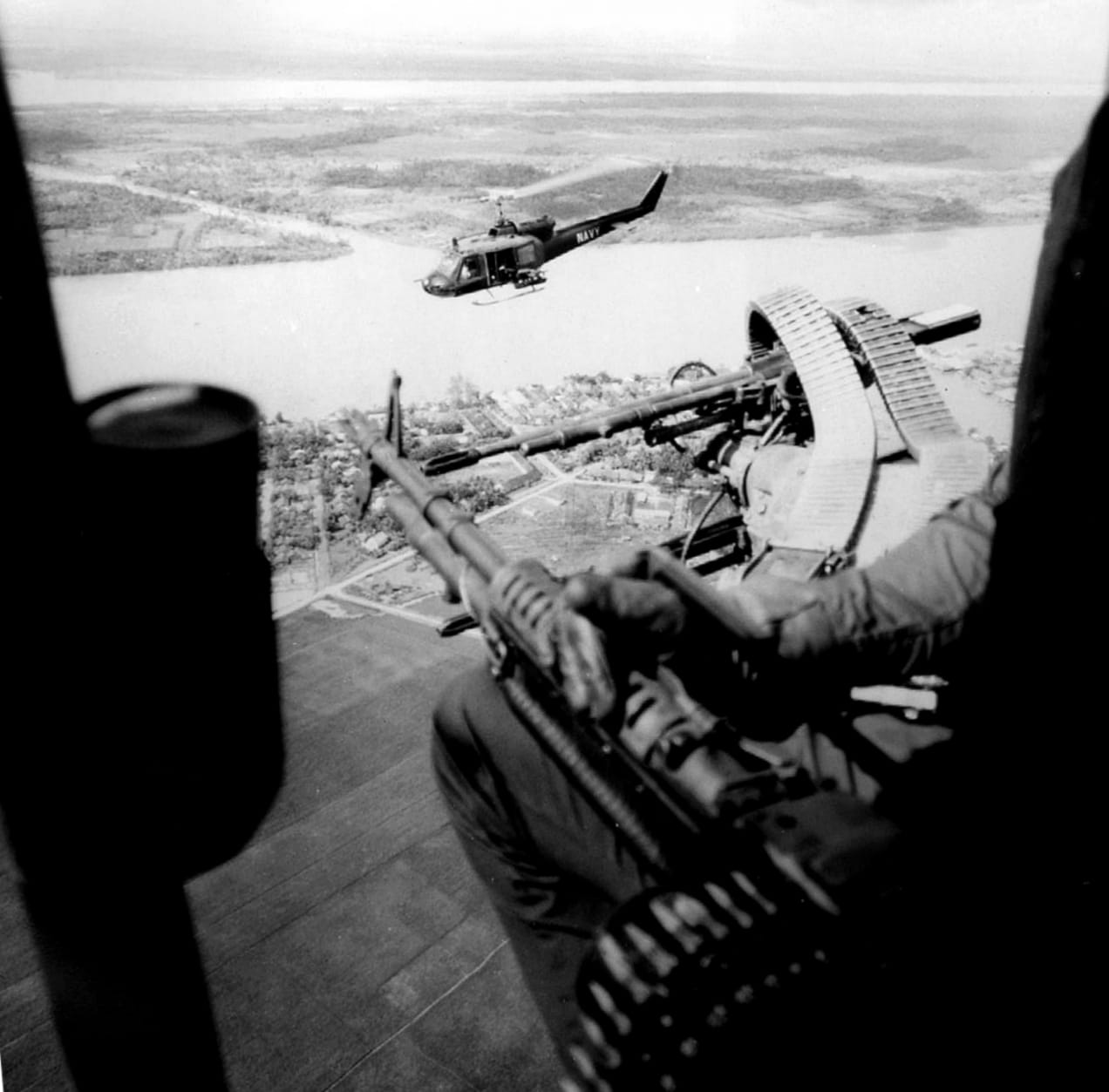
From high enough up, a truck becomes logistics.
A man becomes manpower. A corpse becomes KIA. A village becomes pacification status.
A road becomes throughput. A helicopter becomes lift capacity. A firefight becomes contact.
A dead enemy becomes progress.
A damaged American becomes casualty management.
A damaged family becomes private life, which is where states send the parts of war they do not quite know how to count up in the usual way.
Bob Krisowaty stands at the first counterpoint.
Bob did not run the war. He did not design the metrics. He did not sit in the Pentagon with a systems-analysis staff and a secretary’s authority over the largest military machine on Earth. He did not make the escalation decisions. He did not create the body count machine.
Bob moved stuff in Vietnam.
A supply field is where abstraction grows wheels.
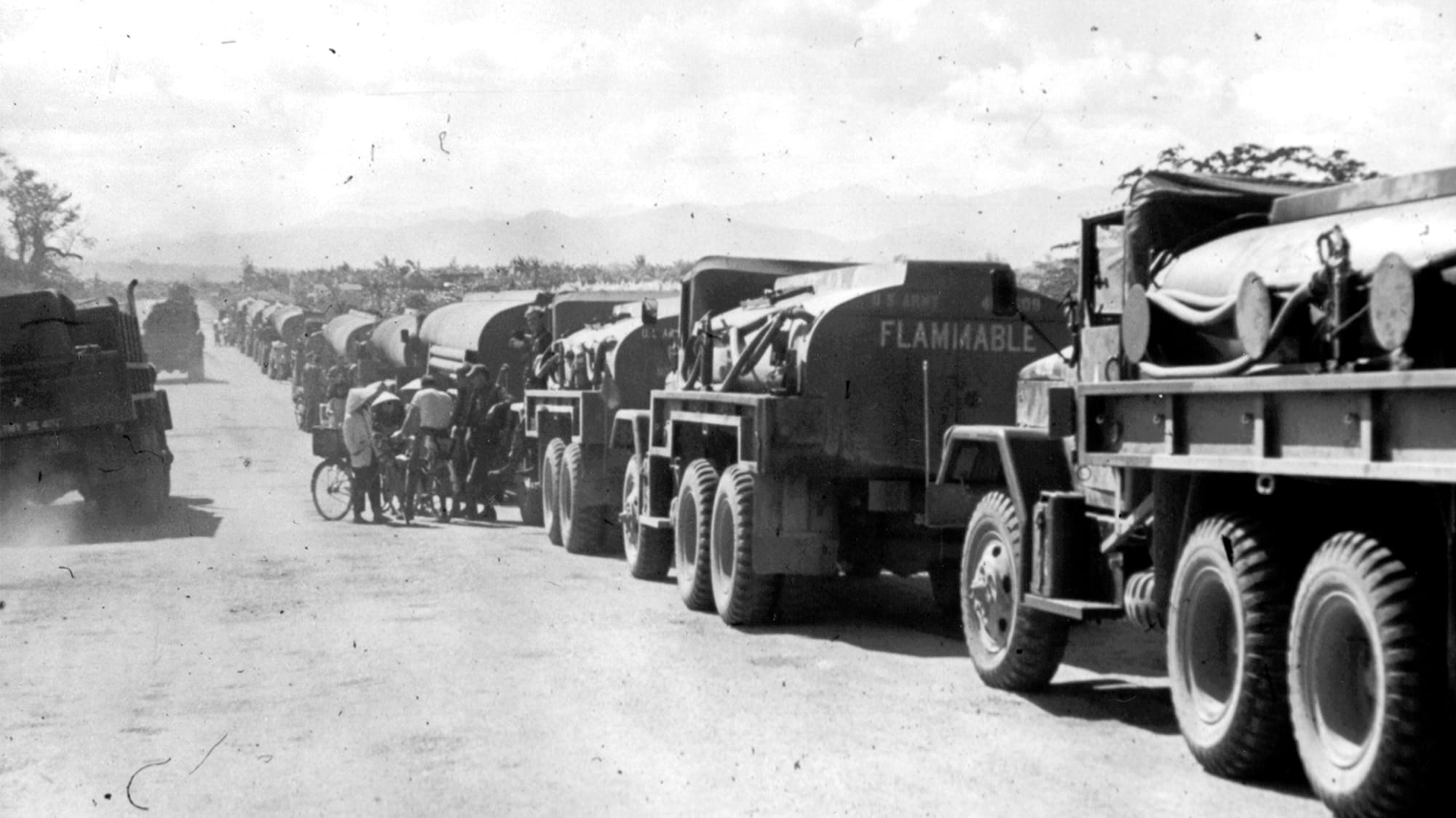
A ration becomes one more day. A box of ammunition becomes fire that can preserve a unit or destroy a home. Fuel becomes range. Range becomes contact. Contact becomes death or survival depending on who reaches whom first. A spare part becomes an aircraft returning to the sky. A letter becomes a small bridge between a war zone and a kitchen table. A casualty report becomes a family receiving the state in its worst form.
The same truck can carry the bandage and the bullet. This is not a slogan.
This is logistics.
War has always had this double face. Continuance and violence share routes. The supply line is not morally innocent because it feeds the living. It is not morally guilty simply because it also feeds the machine. It is simply an instrument inside a damaged field, and the question is what, exactly, the field makes reachable through it.
This is where Modal Path Ethics has to start the McNamara audit. Not with a clean condemnation of numbers, or the lazy ritual in which the technocrat is bad because he counted things and the humanist is good because he hated the spreadsheet.
That is too easy, and easy is exactly how fields hide. Counting is important. Supply matters. Systems matter.
A modern war without measurement is not more humane. It is just more stupid, more wasteful, more opaque, more available to generals lying upward and politicians lying outward. A bureaucracy that cannot explain what the hell it is doing becomes a machine for transferring burden into fog.
McNamara saw that. Clearly.
That is why this article cannot begin by calling him an idiot. McNamara was not an idiot.
The worst Failed Field Analysts rarely are.
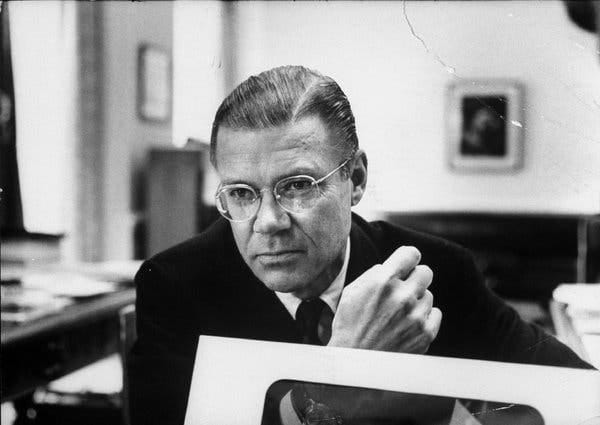
The fool breaks the field by missing obvious structure. The dangerous analyst breaks it after finding real structure and promoting the instrument that found it well above the field it was meant to clarify.
McNamara saw waste, rivalry, slowness, duplicated effort, bad budgeting, parochial service claims, and the enormous stupidity of a defense establishment too large to understand itself.
Then Vietnam showed him a field his instrument could not read.
The instrument did not surrender. It asked for more data.
McNamara.
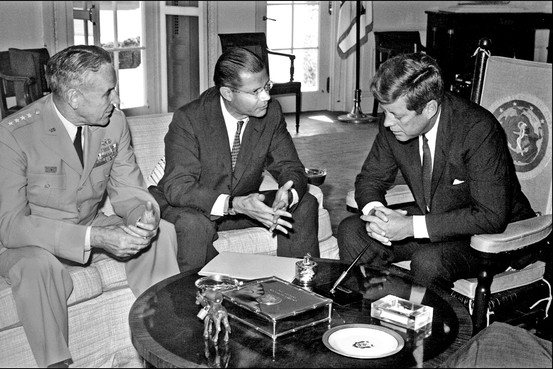
Robert Strange McNamara entered the American state with one of the most dangerous reputations available to a modern bureaucracy.
- He was efficient.
This is not a joke.

Efficiency is one of the strongest moral drugs of modern civilization.
It makes waste visible. It makes old privilege sweat. It makes turf guardians nervous.
It asks why exactly six offices are doing the work of one office badly, why one branch has hidden its assumptions under tradition, why a machine costs more every year while explaining itself less, why the future has become expensive in exact proportion to its vagueness.
Efficiency can be a mercy.
A hospital that moves faster can save lives. A supply system that stops losing morphine, blood, tires, insulin, fuel, or winter coats can preserve reachable futures.
A defense department that cuts absurd duplication can reduce burden on citizens and prevent strategic fantasy from eating the budget in uniforms.
A government that asks what a program actually does can sometimes find the people who have been paying for an institution’s self-image.
The danger begins when efficiency stops being a discipline inside the field and becomes the field’s master language.
McNamara’s biography has the clean upward shape that American institutions love because it makes destiny look like it equals competence. He was born in San Francisco in 1916, studied economics and philosophy at Berkeley, earned a master’s degree from Harvard Business School, taught at Harvard, entered the Army Air Forces during World War II, and left active duty as a lieutenant colonel. In 1946, he joined Ford Motor Company as manager of planning and financial analysis.
He rose to Ford’s presidency on November 9, 1960, becoming the first company head selected from outside the Ford family, then left less than five weeks later to become secretary of defense under John F. Kennedy.
Ford is important here.
Ford was not a monastery where McNamara contemplated abstraction for its own sake. It was a physical empire of cars, plants, costs, inventories, workers, dealers, defects, deadlines, fuel, steel, rubber, managers, shareholders, production lines, and buyers whose patience had to be converted into revenue before the competitors found them.
The car is a useful creature because a car humiliates both pure abstraction and pure romance.
A car has to start.
It has to continue starting in weather.
It has to move a body through actual road conditions, not through a presentation about mobility.
It has to be priced, built, supplied, repaired, shipped, insured, advertised, and driven by people who do very weird things at intersections.
If a car fails, the customer does not usually accept a memo about the elegance of the production model.
McNamara’s instrument was forged in a world where measurement could find real rot.
Planning and financial analysis did not automatically mean moral blindness. It could mean bringing the hidden machinery of an institution into the light. It could mean forcing costs to answer to function. It could mean asking whether a shiny idea could survive the factory.
McNamara’s later failure was not born from a total absence of field contact.
He knew that large organizations lie without always meaning to. He knew that numbers can discipline self-deception. He knew that departments protect themselves through custom, prestige, and vocabulary. He knew that a budget is a moral document pretending to be arithmetic, though he would not have phrased it that way. He knew that an institution with no pressure to explain itself will often explain only its own importance.
When Kennedy brought him into the Pentagon, McNamara did not arrive as a man who had spent his life admiring war from a parade stand. He arrived as a management instrument entering a defense establishment that was vast, powerful, factional, expensive, and full of inherited claims about what security required.
He also arrived without deep military experience at the level of war as lived field.
That combination made him powerful, and dangerous.
The Department of Defense history says McNamara quickly applied an “active management philosophy”: aggressive leadership, questioning, alternatives, objectives, progress.
That language is almost too perfect. There is nothing unserious about it. It is exactly the language a giant institution often needs from someone with enough authority to make it answer.
- Questioning is good.
- Alternatives are good.
- Objectives are good.
- Progress is good
- if the field is actually improving.
There, naturally, is the hinge.
Progress requires a field that can answer the word.
The war in Vietnam would become one of the twentieth century’s great laboratories in the failure of that answer.
A metric field can say progress while the human field contracts.
A chart can rise while repair disappears.
A table can become cleaner while the war becomes less knowable.
McNamara did not invent that danger. He gave it one of its most famous American administrations.
The tragedy begins because he was still totally right about enough things to make the instrument very credible.
Service rivalry was real. Procurement waste was real. The old budgeting process did hide assumptions. The military services did have institutional appetites. Congress did have district appetites. Contractors did have appetites with better suits. The Pentagon did need discipline.
A secretary of defense cannot govern by vibes. This office exists partly because the armed services cannot simply be allowed to narrate their own necessity forever. That never ends well.
A war machine asks for everything.
Someone must be able to ask why.
And McNamara asked why with the confidence of a man who believed the answer could be made visible if the correct analytic apparatus was built around the question.
That is the moment the Failed Field Analyst begins to emerge.
- He sees that the machine must explain itself.
- Then he begins building a machine for explanation.
The Whiz Kids.
The Whiz Kids were war’s arithmetic returning to command.
That is the important thing to understand before turning them into this cartoon of bright young men with slide rules and insufficient mud on their shoes.
The type was already there after World War II: young, quantitative, civilian or civilian-adjacent analysts shaped by air war, industrial management, operations research, cost-effectiveness, rational choice, game theory, microeconomics, and the belief that a terrible machine could be made less terrible by forcing it to confess its workings in numbers.
Some of them came through Ford.
Some came through RAND.
Some came through the Pentagon’s new top-level analytic staff.
The label itself did a lot of cultural work.
Whiz Kids.
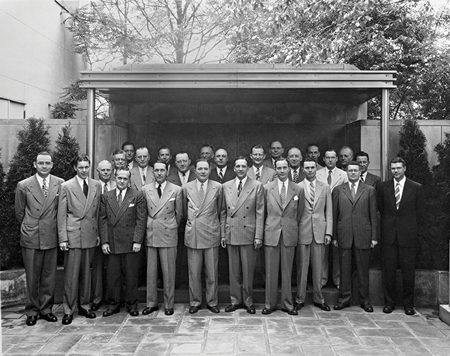
The phrase sounds half admiring and half resentful, which is useful because the field itself was half admiration and half resentment.
The old military professions saw young civilians entering rooms where careers, forces, weapons, missions, budgets, deployments, and target selection had long been guarded by service experience.
The civilians saw themselves as bringing disciplined analysis to institutions drowning in tradition, parochialism, and untested claims.
Both descriptions caught something real. Neither description contained the whole field.
A 1966 U.S. Naval Institute essay on the Pentagon’s Whiz Kids is particularly valuable because it was written from inside the contemporary pressure, before later history had hardened everyone into their assigned statues.
It complains that military target selection in Vietnam had been taken over by the Whiz Kids and argues that military expertise was being demoted in the rush of civilian reform.
It also notices the new hierarchy around defense policy: more civilians, more diffusion of control, more coordination delay, and a new breed of civilian managers in charge of enormous war-making potential. The essay is definitely hostile, but not therefore useless.
Hostile sources are sometimes better at finding the bruise. The bruise here was authority.
- Who gets to say what the field means?
- The general who has spent his life inside the profession of arms?
- The civilian analyst who can compare programs without loyalty to a service branch?
- The secretary who must answer to the president and Congress?
- The soldier in the field?
- The village?
- The casualty?
- The budget?
- The intelligence estimate?
- The body count?
Every institution says it values truth until truth arrives with a different chain of command.
The Whiz Kids entered the Pentagon as an answer to one kind of distortion: military institutions generating their own necessity faster than civilian authority could govern them.
That distortion was totally real.
The United States had a massive armed establishment carrying nuclear weapons, conventional forces, global commitments, industrial relationships, secret programs, service rivalries, and budgets so large that ordinary democratic understanding could barely get its hands around them.
The services could not be treated as oracles of their own requirements. A bomber command can love bombers sincerely. A navy can love ships with theology. An army can love divisions because divisions make the world legible to an army. These loves are not automatically lies.
They are also not neutral field intelligence.
The Whiz Kid instrument said:
Show the assumptions.
That is a serious demand.
- Do not tell me the weapon is necessary.
- Tell me what mission it performs.
- Tell me what alternative performs the same mission.
- Tell me what the cost is.
- Tell me what force structure follows.
- Tell me what happens over five years.
- Tell me whether this service request belongs to national security or to institutional appetite wearing a helmet.
A great deal of bullshit deserves exactly this kind of treatment.
Modal Path Ethics should be very clear here.
The Whiz Kids were not wrong because they were analytic.
They were not wrong because they used mathematics, models, tables, marginal comparisons, or cost-effectiveness analysis.
A defense budget that cannot be analyzed is not morally deeper than an analyzed one. It is often just an unlit room full of expensive monsters.
The problem is the promotion path.
- A tool begins by clarifying.
- Then it becomes the official grammar.
- Then the official grammar becomes the language in which reality must apply for recognition.
- Then parts of the field that cannot speak that grammar become background noise, moral remainder, anecdote, sentiment, or enemy propaganda.
- Then the official grammar becomes the language in which reality must apply for recognition.
- Then it becomes the official grammar.
That is the Whiz Kid danger.
It is the danger of any instrument that begins with a necessary rebellion against unexamined authority and then becomes a new unexamined authority.
The RAND lineage gives the instrument its seriousness. A later analysis of McNamara’s legacy notes that the young RAND Corporation analysts around him brought rational choice, game theoretical, and microeconomic models to defense planning, and that McNamara had already applied similar techniques to strategic bombing during World War II and automobile production at Ford. Those tools had genuine appeal in nuclear-age planning, where no one on Earth had practical experience fighting nuclear wars.
There is a famous line from Alain Enthoven to an Air Force general challenging his nuclear analysis: the general had fought exactly as many nuclear wars as Enthoven had.
That line is funny because it is sharp. It is also terrifying because it reveals the real condition.
When the field cannot be touched directly without ending civilization, abstraction becomes necessary. Nobody has field experience in global thermonuclear war unless the human story has reached a point at which experience can no longer be reported back usefully. Under such conditions, models are among the only instruments available.
This gives the Whiz Kids their strongest defense. Some fields require instruments because direct experience arrives too late.
Nuclear strategy is one of those fields. Certain procurement choices are another. Long-range budgeting is another. Force planning is another. A defense secretary cannot wait to learn by letting each possible future happen and then comparing the ruins.
This instrument is necessary.
But necessity does not confer sovereignty.
A model can discipline fantasy. It can also become fantasy with tables.
The same analytic posture that makes sense when comparing weapon systems can become dangerous when the field is a village under insurgent pressure, a colonized national history, a government losing legitimacy, a terrified civilian population, a young Marine platoon bored and frightened into moral deformation, a supply sergeant trying to keep routes alive, or a dead body being turned into evidence of progress.
The Whiz Kids did not create Vietnam’s complexity. They helped construct a governing language that made many parts of that complexity easier to demote from “real”.
This is not because they were uniquely wicked.
The instrument itself carried the temptation.
The model trained leaders to believe that just the right table could make an impossible field governable from above. It favored quantities that could travel upward. It favored comparisons that could be briefed. It favored output categories that could be repeated in rooms where the air conditioning worked.
The conference table became a field instrument. At that table, war could be rearranged into columns.
Columns are useful things.
They are also little vertical prisons for facts that have been cut to fit.
McNamara was never simply one man with a calculator. He was the visible face of an analytic regime, a staff system, a decision structure, a class of people, a confidence about management, and a political relationship between civilian authority and military expertise.
The Whiz Kids were able men with partial instruments and immense access. That is both worse and better than simple demons.
- They could see things others protected from sight.
- They could also make the unseen pay rent to the visible.
That is the first stage of the body count machine. Before the dead become progress, the field must be trained to prefer reportable reality.
The Whiz Kids helped build the preference.
The Pentagon.
The Pentagon did not become a giant table overnight.
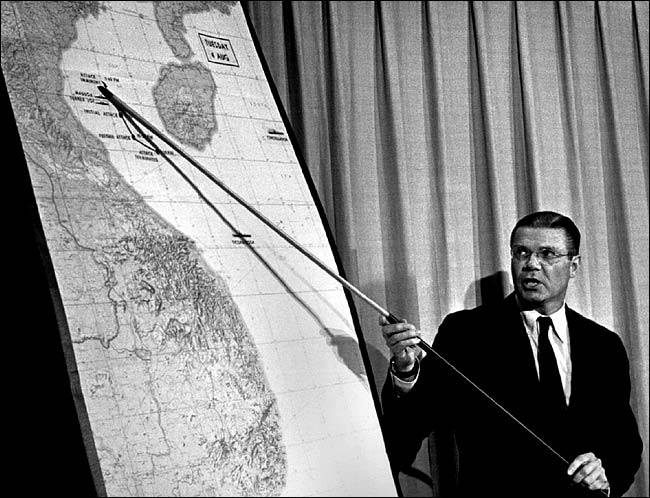
It already loved paper. All large institutions love paper because paper lets responsibility move around without looking like it is fleeing.
What McNamara and his systems analysts changed was the authority of a particular kind of analytic paperwork.
The Planning, Programming, and Budgeting System was the great instrument.
Charles Hitch, the DoD comptroller, was directed to analyze defense requirements systematically and produce a long-term, program-oriented defense budget. The system aimed to place defense issues in broader context, consider military needs and costs together, compare alternatives at the top decision level, use an analytical staff, project force and cost implications into the future, and make assumptions open to examination. That is the official architecture.
These are not stupid goals.
They are, in fact, exactly the sort of goals an ethical institution often needs.
Broader context is good. Military needs and costs together are good. Explicit alternatives are good. Future implications are good. Open assumptions are good.
A giant state violence apparatus that refuses these things should terrify everyone.
The table, at this stage, is almost admirable.
It asks the armed services to stop speaking as priesthoods.
It asks a weapons program to explain what future it preserves and what burden it imposes.
It asks the institution to stop hiding behind branch tradition. It asks whether different paths lead to different strategic futures at different costs. It asks whether one kind of security demand is actually another kind of institutional appetite.
In the right field, the table is a mercy.
Many critiques of McNamara get lazy at exactly the point where they need to get precise.
It is easy to say:
Numbers bad, humanity good.
Except that formulation should be fired into the nearest swamp.
Numbers are often how hidden harm first becomes visible.
A hospital without numbers can hide infections. A police department without numbers can hide patterns of violence. A school system without numbers can hide exclusions behind warm language. A corporation without numbers can call exploitation efficiency and never disclose who is carrying the cost.
A military without numbers can spend bodies and money inside tradition until everyone calls the smoke patriotism.
The question is not “whether to count or not.”
The question is what the count is allowed to become.
The Planning, Programming, and Budgeting System tried to make defense policy answerable through structured comparison. Alain Enthoven’s later retrospective describes the lineage clearly: RAND gave systems analysis a home in the 1950s; McNamara appointed Hitch in 1961 and invited him to carry out programming and systems analysis; programming became the Planning, Programming, and Budgeting System and the Five-Year Defense Program, linking strategies to forces to budgets, while systems analysis helped the secretary choose weapon systems and strategies. This was a real administrative revolution.
The revolutionary object here is not the spreadsheet.
It is the link.
- Strategies to forces.
- Forces to budgets.
- Budgets to future years.
- Future years to present decisions.
- Present decisions to alternatives.
- Alternatives to explicit assumptions.
This is a moral technology as much as an administrative one.
This says the present decision is not allowed to pretend it has no future tail. It says a program cannot be judged only by immediate appeal. It says the field has dependencies that must be brought into view before power acts.
That is very close to real ethical discipline.
Then, the same logic enters war progress.
That is where the table begins to darken.
A weapon system and a war are both complex, but they are not complex in the same way.
- A bomber program may be distorted by politics, contracting, uncertainty, engineering risk, interservice rivalry, and strategic assumption.
- It is still a program.
- Its outputs can be partly described in performance, cost, schedule, range, payload, survivability, maintenance, and deployment.
- These measures are incomplete, but they are not absurd.
- A war fought inside another people’s political field is different.
- It contains programs, but it is not a program.
- It contains logistics, but it is not logistics.
- It contains enemy forces, but it is not reducible to enemy forces.
- It contains casualties, but casualties do not disclose legitimacy.
- It contains territory, but territorial presence does not disclose political control.
- It contains villages, but a village is not a unit of output.
- It is an extant field of families, land, fear, memory, language, hunger, coercion, alliances, evasions, graves, rice, rumor, kinship, taxation, resentment, and children who learn which adult statements are safe to repeat.
The table wants to travel. That is its danger.
An instrument that succeeds in one field often tries to immigrate into the next one without learning the language.
The table had disciplined procurement. Now the table wanted progress.
Progress requires a count.
- If the objective is deterrence, that count may be forces, readiness, survivability, alert posture, response options, and probabilities nobody wants tested.
- If the objective is procurement, the count may be cost, schedule, performance, failure rates, and mission fit.
- If the objective is budget control, the count may be dollars, personnel, maintenance, and program alternatives.
- If the objective is winning a counterinsurgency war inside a politically fractured society, the count begins looking for a body.
That is not because everyone involved is bloodthirsty at the beginning.
It is because the field has refused the comfortable measurements. Conventional indicators like territory taken, cities occupied, and front lines moved do not work cleanly.
The enemy can avoid decisive battle. The enemy can dissolve and return. The enemy can use the civilian field as cover, support, pressure, and hostage.
The state being defended may not command enough legitimacy to make American success convertible into Vietnamese political continuance. The village may accept aid by day and feed insurgents by night, or do the reverse, or do both under threat.
The table becomes frustrated. Frustrated instruments get dangerous.
The American war in Vietnam did not become a body count machine because the Pentagon lacked any other paper. It became a body count machine because attrition offered a count that could travel upward in columns.
- Enemy dead could be aggregated.
- Aggregated enemy dead could be compared to friendly losses.
- The comparison could be turned into ratios.
- Ratios could be briefed.
- Briefed ratios could become evidence.
- Evidence could become policy protection.
- Policy protection could become continuation.
- Continuation could produce more dead.
The table had found a food source.
The body count machine begins as a language problem; when the Pentagon learns to speak in tables so fluently that the field must become tabular to be believed.
Vietnam.
Vietnam refused to become the kind of object McNamara’s data could govern.
- A bad analyst says the field is irrational because the field will not fit the instrument.
- A good analyst changes instruments.
A Failed Field Analyst often does something more tragic:
He knows the field is complex, builds an instrument to clarify that complexity, receives signals that the instrument is failing, and then asks the instrument to work harder.
Vietnam kept answering.
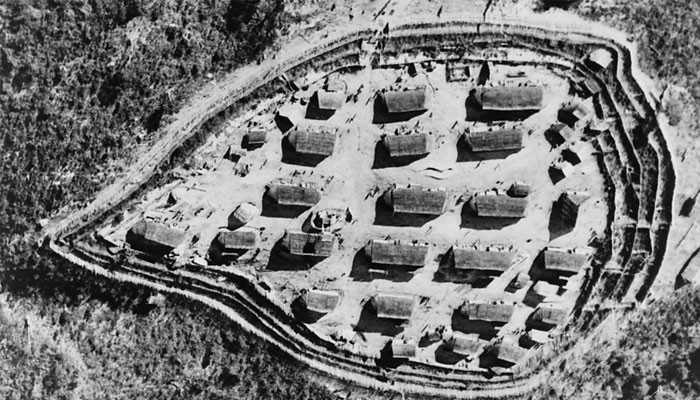
It answered through villages that did not behave like secured boxes on a map.
It answered through an enemy willing to absorb losses that would break the assumptions of a different army.
It answered through a South Vietnamese state whose weakness could not be repaired by American firepower alone.
It answered through colonial memory, nationalism, anti-communism, communism, land reform, corruption, terror, family survival, Buddhist crisis, Catholic networks, military coups, American money, American bombs, and Vietnamese people forced to choose among dangers that American categories kept simplifying.
It answered through terrain.
It answered through weather.
It answered through tunnels, paddies, roads, jungle, hamlets, markets, pagodas, rivers, mountains, and the little local knowledges that let a person disappear into a field the foreign power has already photographed.
It answered through time.
Time was one of the most important enemy instruments in Vietnam.
The American state needed signs of progress on political time: administration time, election time, budget time, congressional time, television time, public patience time.
North Vietnam and the Viet Cong could operate under different endurance structures. They could wait out an opponent whose metrics needed to prove that waiting was becoming irrational.
The table hated that shit.
It wanted the war to disclose itself on schedule.
The war declined.
Vietnam’s refusal of the table had several layers.
- First, the war refused territorial clarity.
- A map could show zones.
- A report could mark hamlets.
- A briefing could describe cleared areas.
- But the enemy did not need to hold every village in a conventional manner to act through it.
- Influence could move through kinship, threat, night, taxation, political education, memory, fear, and the simple fact that the American unit eventually leaves while the local consequences stay.
- Second, the war refused casualty clarity.
- An enemy body was reportable.
- A civilian body was a problem.
- An uncertain body was a category fight.
- A missing body was a reporting ambiguity.
- A dead person could become Viet Cong, suspected Viet Cong, North Vietnamese Army, civilian, friendly, accidental, unknown, or unavailable.
- The category mattered because the category traveled upward.
- Third, the war refused legitimacy clarity.
- American force could prevent some closures.
- It could also produce new ones.
- A village saved from one form of coercion might be exposed to another.
- A strike that killed enemy fighters might also thicken the medium through which later political repair had to move.
- A tactical success could become strategic loss if the field interpreted the transition differently from the report.
- Fourth, the war refused moral scale.
- An American platoon could experience a firefight as immediate survival.
- A Vietnamese family could experience the same operation as another arrival of armed strangers demanding impossible classifications under threat.
- A Pentagon table could experience the operation as data.
- A president could experience it as one more unit of credibility.
All of these experiences are real.
They do not have equal explanatory authority over the field. That is the problem.
McNamara’s great failure was not the desire to know whether the war was working.
It was allowing the favored instruments of knowing to outrank the forms of reality that could not enter them cleanly.
War on the Rocks states the matter from another angle: McNamara’s planning legacy treated national security problems through economic tools, but national security problems are political problems, and Vietnam became the infamous failure of a quantitative approach that favored metrics such as body counts.
Political does not mean airy.
Political means the field is made of relations that do not become true because a bomb falls on them.
Political means legitimacy, fear, memory, identity, coercion, persuasion, endurance, speech, betrayal, local administration, external patronage, law, land, and the way people decide which power will still be there tomorrow.
A bomb, patrol, or road can change political reality.
A school, massacre, ration, rumor, body, village elder, corrupt officer, dead child, captured weapon, or rescued family can change political reality.
The metric problem is that these changes do not become comparable simply because the report needs columns.
The Body Count Machine.
The body count machine entered as a question any serious commander and any serious civilian official had to ask:
Are we winning?
There is just no way around that question in war, is there?
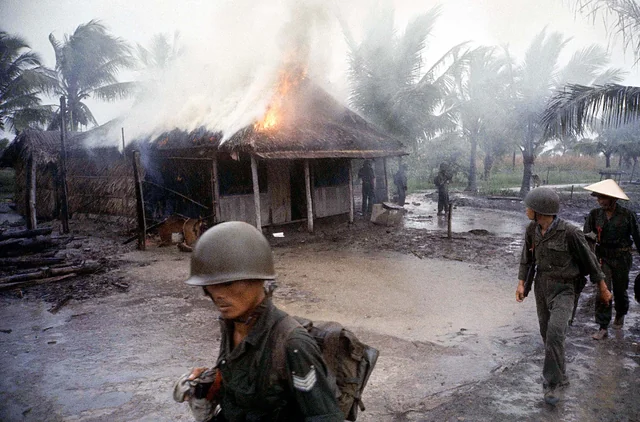
A government sending people to kill and die owes the living, the dead, the wounded, the families, the public, the ally, the enemy, the civilian field, and history itself an answer. A war that cannot be assessed is not more humane because it has escaped the spreadsheet.
McNamara later defended the need to measure in exactly this zone.
He said any secretary of defense in any war would want to know whether the war was being won. In Vietnam, the failure lay in the measures chosen and the information received, rather than in the desire to know whether policy was working.
Numbers can be witnesses.
A count can drag hidden harm into the room. A count can expose infection rates, a lack of room for your naval maneuver, missing patients, missing money, missing children, missing forests, missing convictions, missing futures.
A count can make denial harder. A count can force a powerful field to admit that its story is not matching its outputs. Modal Path Ethics has no problem with counting. But a count becomes dangerous when it begins requiring the field to answer to it.
Attrition needed a count because attrition needed proof that the enemy was becoming less future. The theory was not mysterious.
If the United States and South Vietnam could inflict losses faster than North Vietnam and the Viet Cong could replace them, then the opposing force would eventually weaken beyond capacity.
McNamara later described the hoped-for crossover point: the moment when losses exceeded replenishment and the enemy became weaker because replacement could no longer keep up.
Then he added the sentence that should have broken this entire instrument:
“The crossover point never came.”
The phrase is almost beautiful in the horrible way certain failed abstractions are beautiful.
The crossover point. A little mathematical horizon where all the death would finally reveal its meaning.
Enough enemy bodies, placed in the correct relation to replacement estimates, would show that the future had turned right.
The war would not need to become politically legible at the village level if it could become arithmetically legible at the attrition level.
The body count itself would transmute killing directly into progress.
That is this machine’s central promise.
It does not say every death is good. It does not even have to say every death is clean. It says death can be made informative at scale.
It says enough deaths, categorized correctly, can show whether the path is working.
Modal Path Ethics cannot reject this by sentiment.
War really does involve force attrition.
Enemy capacity really can be degraded. They are not unbounded. Replacement rates do matter. Weapons destroyed count. Units broken change what happens next.
A military force that cannot count losses and replacements has no business commanding even a parade.
Attrition exists. The body count machine failed because attrition was allowed to impersonate the entire war.
A war is never only the enemy’s manpower stock. That's Battlefield 4.
War is legitimacy, fear, allegiance, coercion, foreign endurance, local memory, family survival, retaliation, terrain, state capacity, village knowledge, propaganda, time horizon, supply, revenge, and the ability of one field to keep generating fighters from conditions the count does not repair.
A dead enemy fighter may be one fewer fighter.
A dead enemy fighter may also be a brother, son, husband, neighbor, martyr, warning, recruitment story, proof of American violence, evidence of state weakness, or one more event in a field where replacement is produced by history instead of biology alone.
The body count machine preferred the first sentence because that first sentence travels a lot better.
That is the first rule of a metric distortion:
The traveling fact gains power over the grounded relation.
- A number can leave the village.
- The village cannot easily follow it.
- A number can brief well.
- A mother cannot.
- A number can enter a chart.
- A terrified child cannot fit into the axis unless the axis has already decided what kind of evidence fear is allowed to be.
So no wonder the Pentagon preferred the number.
The body count could also aggregate. Aggregation was its whole glamour.
One operation did not need to settle the war. One province did not need to explain the country. One firefight did not need to disclose legitimacy. The count could accumulate.
Each death could join the upward movement of evidence. Each upward movement could imply that a larger structure was slowly becoming visible.
This is where the machine began teaching the field how to act.
- It taught patrols what mattered.
- It taught commanders what traveled.
- It taught briefers what reassured.
- It taught politicians what could be defended.
- It taught the press what could be contested.
- It taught the public to ask the wrong kind of progress question.
- It taught the war how to report itself.
The machine did not need every person inside it to be dishonest. That would be too simple. A field can become distorted while many of its participants remain sincere, frightened, exhausted, patriotic, dutiful, ambitious, confused, brave, careful, careless, or simply trapped in the available grammar.
A platoon does not have to fabricate everything for the machine to shape the event.
It only has to learn that the upward path favors certain facts.
- It learns that enemy killed in action is clean enough to travel.
- It learns that captured weapons help.
- It learns that civilian ambiguity is friction.
- It learns that uncertainty slows the report.
- It learns that dead bodies are more administratively cooperative than living contradictions.
This does not mean every report was false. The important danger is worse.
A metric can be locally true and globally deceptive simultaneously.
The patrol may really have killed five enemy combatants. That number may be fully honest in the narrow sense. Those men may have been armed. The contact may have been completely real. The immediate danger may have been real.
The report may not lie about that contact at all.
Then, the five become evidence of progress inside a war those five did not explain.
The body count can be both honest in the small and lying in the large.
That is why a machine like this is so fucking hard to get rid of.
A purely false metric can be refuted by better data.
A structurally distorted metric needs a field turnover.
It needs the institution to admit that even when the number is accurate, the authority granted to the number is wrong.
Institutions absolutely hate that admission.
They prefer to say the data was just imperfect.
Because imperfect data can be repaired within the same machine.
We just need better verification. Better audits. Better reporting standards. Better cross-checking. Better classification. Better statistical confidence. Better spreadsheets with even cleaner shoes.
Sometimes those repairs are necessary in an instrument.
But they are not enough when the measure itself has already been promoted past its jurisdiction.
McNamara later said the United States did not choose proper measures and did not get correct information. That is definitely true.
It is also too gentle if left there. The deeper failure is that the war had already been asked repeatedly to become the kind of field in which those measures could rule it.
That is a political and moral failure, not only an analytic one.
The Corpse Receipt.
And so the corpse became a receipt.
That is the line where the article has to slow down.
A receipt is not the thing purchased. It is evidence that a transaction has passed through a recognized channel. A receipt says something was exchanged, accounted, recognized, entered, perhaps reimbursed, perhaps justified.
A receipt is small and clean. It travels without the store. It lets the institution remember the transaction in a form that fits the drawer.
The body count machine made the corpse travel like that.
Not always literally. Not every body was recovered, tagged, displayed, photographed, inspected, counted, or brought before a senior officer.
Often the dead remained where the field left them. Often they disappeared into vegetation, water, fire, mud, family recovery, enemy removal, friendly uncertainty, or the category of “estimated kill.”
Still, as a war instrument, the corpse acquired a reporting destiny.
- A person was alive.
- Then the person was dead.
- Then the death was classified.
- Then the classification moved upward.
- Then that upward movement became evidence.
That is receipt logic.
The worst thing about it is that it can appear administratively reasonable.
If the war is fought by attrition, then enemy dead matter. If enemy dead matter, then they must be reported. If they must be reported, then they must be counted.
If they are counted, they enter trends. If they enter trends, command must now interpret them. If command interprets them, policy can use them.
There is no one single demonic wrong step in that chain.
There is only a sequence in which each locally intelligible move makes the next distortion easier to select.
This is how many serious harms become durable. The field does not leap into monstrosity. It descends by the usable stairs. A sequence of narrowly rational moves composes into catastrophe.
- The patrol needs to know what happened.
- The company needs to report.
- The battalion needs a summary.
- The division needs trends.
- The command needs metrics.
- Washington needs confidence.
- The public needs a story.
- The story needs progress.
- So the corpse becomes a receipt.
- Then the receipt becomes a reason to continue issuing receipts.
- So the corpse becomes a receipt.
The Vietnamese dead are not primarily instruments in an American lesson about technocracy. They are loci whose continuance has been destroyed.
A dead Viet Cong fighter is not an enemy subtraction token.
A dead North Vietnamese soldier is not a little bead on the abacus of American patience.
A dead civilian misclassified as enemy is not an accounting error first. The error is still important, but the primary fact is the destroyed future and the field that made such misclassification useful.
Even a correctly classified enemy combatant remains a person whose path has closed.
Under some battlefield conditions, killing that person may prevent worse closure.
That still does not make the death into some unit of moral profit.
War language keeps trying to sneak around this sentence:
A necessary killing is still a closed life.
Some closed lives prevent larger closures.
Some do not.
Some are unavoidable inside an already catastrophic field.
Some are crimes.
Some are tragic defense.
Some are panic, revenge, indiscipline, boredom, racism, bad intelligence, bad incentives, doctrine, fear, or the terrible moment when a person sees a person too late.
The body count machine compresses too many of these distinctions into one upward category.
- Enemy killed in action.
The phrase has the chill of something built to travel far and safe.
It sounds exact. It sounds official. It sounds disciplined. It may be necessary.
The problem is that necessity can become anesthesia. After enough repetition, the category starts to feel like the thing itself.
But the field is always wider than the category.
- Who was this person?
- Who made him fight?
- Who did he threaten?
- Who did he protect?
- Who feared him?
- Who loved him?
- Who will replace him?
- Who will hear of his death?
- Who will use his death?
- Which village becomes safer?
- Which village becomes angrier?
- Which child learns that politics arrives by helicopter?
- Which commander sees progress?
- Which staff officer updates the chart?
- Which American public sentence becomes easier to say because this person no longer breathes?
The body count machine cannot hold all that thickness. No report can hold all that.
Reports are reductions. Reduction is not automatically distortion.
Distortion begins when the reduction forgets the remainder.
A military institution must reduce. It cannot write a new novel after each firefight. It cannot conduct metaphysical anthropology before filing the contact report. It cannot suspend operational action until every dead person has been placed inside the totality of history.
War is already too slow at mercy and too fast at death.
Reduction is necessary.
Sovereign reduction is catastrophic.
The corpse became a receipt because the institution needed proof of progress and the dead body supplied a conveniently proof-shaped object.
- Territory was ambiguous.
- Legitimacy was ambiguous.
- Village allegiance was ambiguous.
- South Vietnamese capacity was ambiguous.
- North Vietnamese will was ambiguous.
- American patience was ambiguous.
- The body was less ambiguous.
- There is a dead man in front of you.
- That fact has the authority of matter.
- The machine borrows that authority.
Then it uses the authority of matter to certify a political interpretation matter did not actually authorize.
A corpse proves death.
A corpse does not prove progress.
The difference is everything.
McNamara’s later explanation in Newsweek preserves the logic: targets destroyed, traffic down the Ho Chi Minh Trail, captives, weapons seized, enemy body count, and related variables were measured because there was no moving front line and because attrition sought that ever-elusive crossover point.
So the machine looks at a war without front lines and says:
- Then we must find other variables.
Right. The machine then looks at an attrition strategy and says:
- Then enemy losses matter.
Correct. The machine looks at enemy losses and says:
- Then the body count can help tell us whether we are winning.
Correct, but only partly.
So then the field begins to answer from underneath the count.
- The enemy keeps fighting.
- The replacements keep coming.
- The villages remain politically unstable.
- The bombing does not break will.
- The South Vietnamese state does not acquire legitimacy by arithmetic.
- The civilian field absorbs burden.
- American units degrade morally.
- The home field begins to split.
- The crossover point does not come.
- The home field begins to split.
At that point, the correct response is to ask whether the transaction actually is what the receipt says it is.
Caputo.
Philip Caputo’s A Rumor of War arrived in the hands of Modal Path Ethics by way of Uncle Derek.
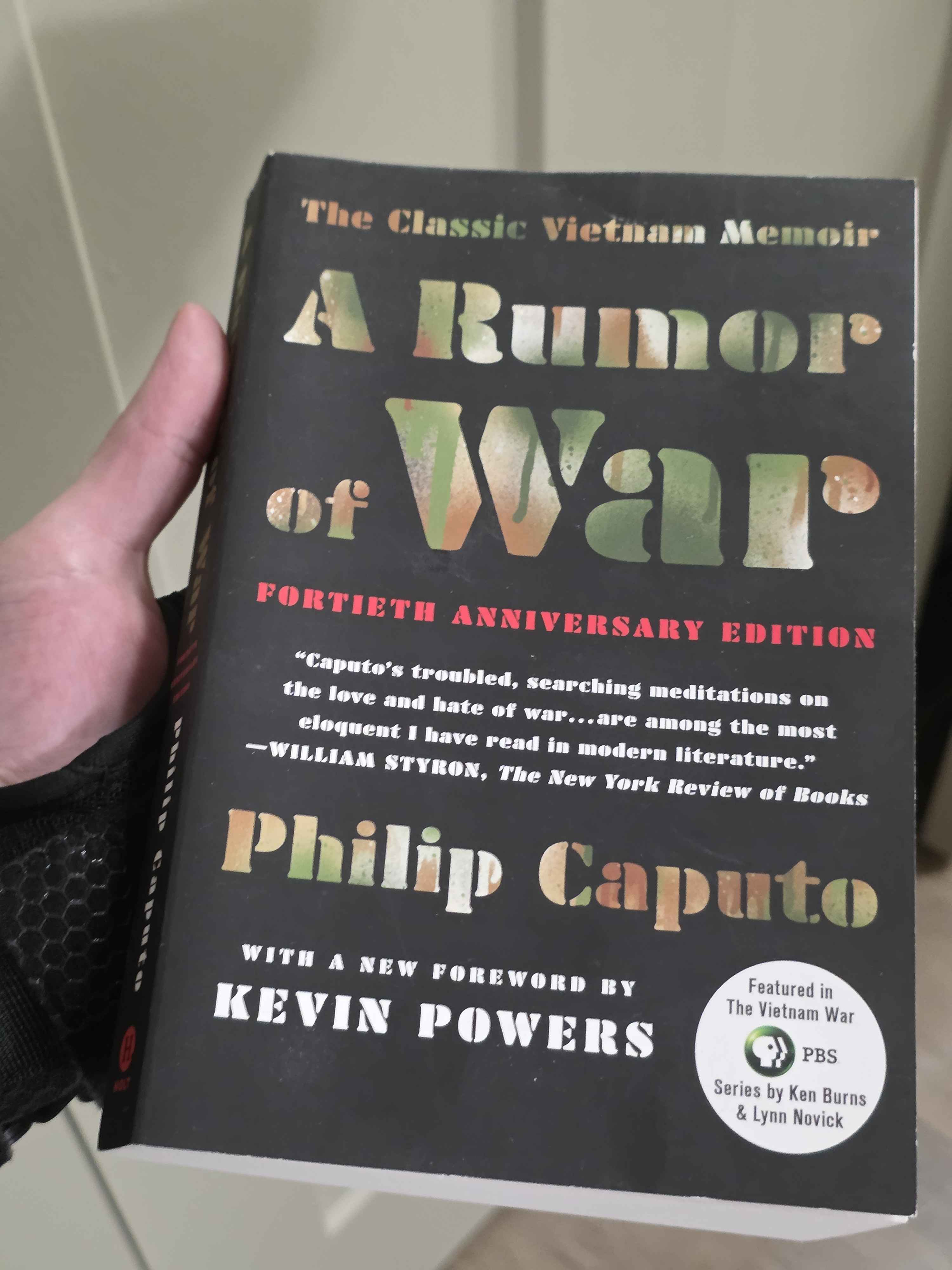
Caputo is not here as decoration. He is not here to provide the emotional paragraph after the numbers paragraph.
Caputo is here as a counter-instrument.
McNamara’s instrument asks:
- Are we winning?
Caputo’s instrument asks:
- What is the war doing to the person who has to live inside its answer?
Those are not rival questions in the simple sense.
A government still has to know whether its war is achieving its stated aims. A young officer’s deformation does not by itself settle grand strategy in any way.
Lived suffering does not automatically produce a complete field analysis. Trauma can reveal what the table hides; it can also narrow the world around pain.
Witness is indispensable.
Witness is not omniscience.
But Caputo’s book forces the body count machine to encounter what its upward categories cannot hold.
Caputo landed at Da Nang in 1965 with one of the first Marine ground combat units deployed to Vietnam. Public descriptions of the memoir rightly keep returning to that fact because it gives the book a threshold role: early American ground war, young officer, idealism entering a field that will strip its own story from him. His own website describes the book as an account of what men do in war and what war does to men.
The body count machine also damages the people asked to feed it.
A metric does not only act upward. It acts downward and inward. It changes what the patrol sees, what the officer expects, what the briefing rewards, what the dead mean, and how a living person learns to survive his own participation.
Caputo’s memoir is full of deformation because Vietnam was not a stable stage on which American moral character could perform itself. It was a field that altered the performers.
Boredom, fear, heat, fatigue, racial contempt, random violence, command pressure, enemy invisibility, civilian ambiguity, masculine bravado, grief, guilt, and bureaucratic absurdity moved through the living until the clean war story could no longer continue.
Caputo’s war is not the whole war. It is one American Marine officer’s passage through part of it. That limit is important. A memoir can distort too. Memory edits. Narrative arranges.
The self after the war looks back through survival, guilt, literature, anger, craft, and the shape of what can be confessed.
This is why the book should not be treated as an oracle. It is still a contact instrument.
- A report asks the dead to become evidence.
- Caputo asks the reader to watch the evidence become dead again.
The body count machine depends on a kind of vertical motion. The event happens down there. The number travels up. The interpretation arrives from above.
Caputo pulls the reader back down into the event’s material remainder. The dead are not a number. The dead have weight.
The dead smell. The dead have parts that do not remain arranged in ways language wants to respect. The dead become administrative work.
The dead become spectacle. The dead become proof. The dead become jokes made by men who need to stay functional.
The dead become dreams.
The dead become the thing the living step around because their boots are clean.
This is not anti-military sentiment.
This is field contact.
A war that requires dead bodies as proof of progress will naturally train people to handle dead bodies as proof.
Some of those people will become numb. Some will become cruel. Some will become careful. Some will crack. Most will become combinations that civilian language cannot comfortably receive.
Making it through the war is not the same as making it out of what the war did.
McNamara’s machine had no serious instrument for that difference.
The machine could count the dead.
It could count the wounded in certain ways.
It could count deployment, replacement, attrition, sorties, weapons, targets, traffic, tonnage, captives, enemy killed in action.
It did not know how to count the future of a living man.
PTSD can be studied. Suicide can be counted. Divorce can be counted. Hospitalization can be counted. Alcohol dependency can be counted. Family breakdown can be counted. Disability claims can be counted.
A society can and should count the aftermaths it would prefer to call private.
But even those numbers do not cancel the need for contact.
The wound is not fully contained in its later index.
The Dead Were Not Refusing to Be Counted.
Counting the dead is one of the duties of the living.
A society that does not count its dead has already begun preparing to lose them twice.
The first loss is the death. The second is the administrative disappearance. The dead should be named where names can be known. They should be counted where counts can be made. They should be recorded against the field that destroyed them. Numbers can be a form of witness when the alternative is disappearance.
The Vietnam Veterans Memorial understands one side of this. Names carved into stone resist the conversion of persons into totals.
Yet the total matters too. The scale of the loss becomes part of the field’s truth. The same is true, with even greater moral urgency, for Vietnamese dead, whose losses have too often been made background to the American accounting of American trauma.
The dead were not refusing to be counted.
They were refusing to become only count.
This difference governs the rest of the audit.
- A body count that preserves record, names cost, prevents denial, and keeps the dead from being hidden can serve truth.
- A body count that converts enemy death into progress inside a false theory of the war becomes a closure machine.
The exact same technical act can belong to different moral fields depending on what it is made to do.
Recording is not the same as scoring.
That distinction is simple.
War works pretty hard to destroy it.
The body count machine did not only count enemy losses. It scored them. It placed them inside an attrition game where the dead became evidence that the chosen path should continue.
This made the dead answer a question they could not answer:
Is the war being won?
A dead person can definitely answer some questions.
- Who killed whom?
- Perhaps.
- Where did the transition occur?
- Perhaps.
- What weapon acted?
- Perhaps.
- What policy made the encounter reachable?
- Often.
- What field failed to prevent this closure?
- Very often.
But the dead do not automatically answer whether the war is moving toward a less damaged future.
That question requires a much wider field: legitimacy, repairability, civilian continuance, political settlement, burden distribution, trust, coercion, memory, and whether the violence is actually making non-violence more reachable.
The body count machine kept acting as though enough dead could answer without that field.
It was wrong.
The dead were not silent because they had nothing to say. They were silenced by the question being asked of them.
Caputo’s scene with the bodies makes that visible. The dead are made to testify to success. Their bodies are brought back, cleaned, shown, inspected. The general does not need them as persons. The briefing needs them as proof.
The officer in charge of the dead stands in the exact place where witness and use collide.
Caputo does not redeem the dead by feeling bad about them. He does not rescue them from the machine through literary description.
The dead remain dead. The scene remains obscene. But the writing prevents the machine from owning the only available meaning.
The field needs records of how its instruments failed. This is one of the lessons of the Anti-Oblivion cluster: the trace matters, but retention is not permission. Memory can preserve contact without granting ownership.
A record of harm can keep repair reachable, but it can also be used to repeat, justify, exhibit, extract, or aestheticize the harm.
Caputo’s writing lives in that danger.
All war writing does.
The dead can be turned into literature as easily as into statistics. A powerful paragraph can also consume the body it describes. A memoir can become a reader’s safe atrocity theater. An image can become moral tourism. A veteran’s confession can become one more commodity in the culture that sent him.
That risk does not invalidate the witness.
It disciplines the reader.
The reader must not use Caputo to feel deeper than McNamara. They should use Caputo to see the field McNamara’s instrument could not govern.
The table asks for progress.
The trailer answers with bodies.
The memoir keeps the answer from becoming clean like the table.
From here, the article moves from Caputo’s dead back into the Vietnamese village, because the war cannot stay centered on American injury.
That is another danger of the counter-instrument. It can correct the technocratic view while still keeping the American experience in the middle.
- The body count machine counted Vietnamese dead as enemy evidence.
- American memory then often counts American suffering as this war’s deepest truth.
Both moves can displace the Vietnamese field.
The Village Is Not a Unit of Output.
So the audit has to leave the American table now.
That is actually harder than it sounds, because the American table is very good at keeping the war in its own room.
Over at that table (from which we are now walking away very slowly), Vietnam becomes a policy problem, then a military problem, then a systems problem, then a credibility problem, then an assessment problem, then a reporting problem, then a problem of insufficient or improper measures.
All of those problems definitely existed. None of them is the field.

This field was Vietnamese before it was American.
Such a sentence should be embarrassing to need. It still needs to be said because the American memory of Vietnam keeps dragging the war back toward American interiority, including this article.
American planners, American generals, American presidents, American soldiers, American protesters, American guilt, American trauma, American documentaries, American memoir, American music, American photographs, American myths of loss and betrayal and moral awakening.
Those things all matter. But they are not the center of this.
- A Vietnamese village did not exist in order to test Robert McNamara’s instruments.
- A hamlet did not exist in order to become a data point in the Hamlet Evaluation System.
- A farmer did not exist in order to clarify whether pacification was improving.
- A child did not exist in order to reveal the limits of American counterinsurgency theory.
- A family did not exist in order to become the tragic remainder in a later American book.
This is the danger of even a sympathetic McNamara audit. You can correct the technocrat by centering the American veteran, then correct the veteran by centering the American reader, then correct the reader by centering the American ethical framework, and somehow the Vietnamese field is still being used as the surface on which America learns about itself.
Modal Path Ethics cannot let that happen. At least not without incident.
- A village is not a unit of output.
- A village is a continuation field.
That one contains food, water, kinship, debt, local gods, ancestors, language, rumor, fear, old obligations, new coercions, livestock, graves, paths through fields, hidden sympathies, visible compliance, children learning where to stand when helicopters come, mothers deciding which answer will keep everyone alive until evening comes, men who have already changed allegiance twice because the first allegiance got someone killed, women whose knowledge of the field is treated as domestic until the war suddenly needs it and then calls it intelligence.
It contains the little movements by which people continue. It contains the routes by which rice becomes dinner.
It contains who borrows whose tool, who knows where the footpath floods, who has a cousin in the local force, who is hiding a brother, who said too much at a wedding, who hears the distant guns and already knows whose sons are not home.
The American war machine did not invent the field by measuring it. It entered a field already alive, already damaged, already political, already historical, already forced to continue under more pressures than any American reporting system could honestly receive.
Then, the system asked the village to become legible.
That sounds very reasonable at first.
That is the recurring problem with the McNamara article:
Many of the wrong instruments enter through reasonable doors.
- If a government claims to be protecting people,
- it should know whether people are safer.
- If a war claims to support a government,
- it should know whether that government has actual reach.
- If pacification is the policy,
- somebody has to ask whether a hamlet is controlled by
- the South Vietnamese state,
- the Viet Cong,
- nobody,
- everybody,
- terror,
- hunger, or
- whichever armed men most recently passed through.
- somebody has to ask whether a hamlet is controlled by
The desire to know is not the issue. The distortion begins when the instrument used to know becomes the field’s required form of truth.
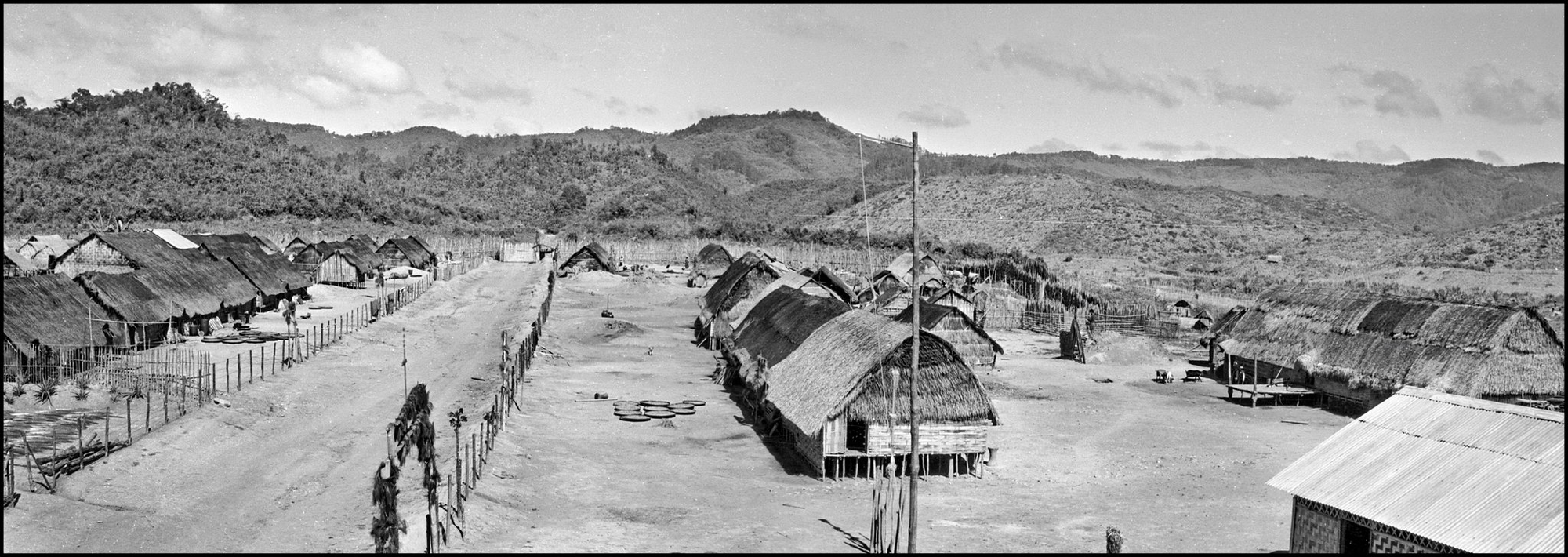
The Hamlet Evaluation System gives the article its second great machine after the body count. This one was designed to record military, political, and community development conditions in hamlets and villages, then produce summary and analytical reports for commands and agencies managing pacification resources. The command manual says the quiet parts in administrative language.
There is nothing automatically wicked about that.
- Of course a pacification program wants to know military conditions.
- Of course it wants to know political conditions.
- Of course it wants to know community development conditions.
The trouble is that a village can answer all three of those categories and still remain unread.
- A hamlet can be quiet because it is secure.
- A hamlet can be quiet because everyone is terrified.
- A hamlet can be quiet because the guerrillas have left for the week.
- A hamlet can be quiet because the local people have learned that nothing good happens after Americans ask what they really think.
- A hamlet can be quiet because the village chief is lying upward,
- because the district chief is lying upward,
- because the American adviser is translating doubt into progress,
- because nobody wants to admit that last month’s improvement has become this month’s ghost.
- A hamlet can be quiet because the dead are already dead.
Quiet is not a moral category.
The form has trouble with this. Forms like answers. They demand them.
They like a field in which conditions become marks, marks become summaries, summaries become charts, charts become movement, and movement becomes progress.
Forms are not evil. A good form can prevent a child from disappearing into bureaucratic fog. A good form can preserve evidence. A good form can force an institution to admit what it has done.
But a form is also a little paper government.
It tells reality where to stand.
The Hamlet Evaluation System did not only “collect village information.” It trained the American pacification field to imagine the village as an assessable unit.
Security, development, political alignment, enemy pressure, local conditions, population, geography: each could be named, marked, carried upward, compared, and entered into the larger story of whether the war was being won.
This is where measurement acquires appetite.
- The village becomes a status.
- That status becomes a trend.
- The trend becomes progress or trouble.
- The progress or trouble becomes
- resource allocation,
- briefing material,
- reputation,
- policy defense,
- command anxiety,
- congressional language, and
- one more surface where Washington tries to decide whether the field is yielding.
The village is still down there, though.
It has not become the report. It has only become reportable.
That difference is the whole disaster.
A hamlet can have development and no trust. A hamlet can have security and no future.
A hamlet can have low enemy activity because the enemy has become the cousin who no longer needs to carry a rifle in daylight.
The metric does not have to miss everything in order to fail.
The body count machine did not fail because every reported enemy dead was imaginary. And the pacification machine did not fail because every hamlet report was worthless.
A field instrument can contain real information and still distort the field by granting that information the wrong authority.
A report may really know something. It can not know enough to replace the village.
The village is not a problem because it is too mysterious for analysis.
Villages have structure. They have power. They have fear. They have interests. They have violence. They have local tyrants, cruel elders, brave people, cowards, opportunists, children, widows, collaborators, resistors, liars, and the same general human capacity for making everything worse while trying to survive.
A village can and definitely should be studied.
It still cannot be governed through the fantasy that its scored condition is the condition.
This is how the Vietnamese civilian field gets made to answer the wrong question.
The war asks:
- Is the hamlet secure?
The field tries to answer:
- Secure for whom, against whom, at what hour, at what price, under whose memory, with which future still reachable?
The form does not want that many answers.
The form has columns.
And those columns have a war to help manage.
So the village is compressed into them until it can travel up.
Then the traveling village arrives in command as evidence.
The people remain below, still carrying the part that could not fit.
Incentive Weather.
A metric inside a hierarchy is never only a description.
It becomes weather.
This is why the language of distortion has to move beyond lying. Lying obviously matters. Fabrication, inflated reports, false enemy killed-in-action counts, civilians misclassified as enemy, command pressure, careerism; all important.
The Vietnam body count developed a lasting reputation for distortion because the number became too useful to too many levels of command. Later critiques of the war have repeatedly treated body count and other numerical measures as corrupting indicators, and even McNamara’s defenders concede that the measures were vulnerable to manipulation and did not answer the political field. The postwar argument around metrics has never really left Vietnam.
But lying is only the visible storm. The climate is deeper.
A metric changes the temperature of the field before anyone consciously decides to cheat it.
- It tells a captain which facts are warm.
- It tells a battalion staff which facts rise.
- It tells a colonel which facts brief well.
- It tells a general which facts hold a room.
- It tells Washington which facts can survive the flight from mud to memo.
Nobody needs to announce that “the war will now be distorted.”
The field just learns where the pressure lives.
That is incentive weather.
A commander does not need to say,
“Lie to me.”
He can just ask why the numbers are low.
He can praise a unit with high numbers.
He can compare districts.
He can ask what changed.
He can move resources toward the appearance of success or away from embarrassment.
He can imply that the enemy is clearly present and the patrol simply failed to find him.
He can say everyone understands the importance of showing progress.
He can say headquarters is watching.
This is often enough.
Fields are very good at hearing what power has not yet admitted to saying.
Incentive weather does not turn every participant into a villain. That would be comforting. That would let the reader imagine a clean moral geography: the bad officers inflate, the good officers refuse because their goodness immunized them against the weather; good data would have saved the field if only those bad men had not corrupted it.
But weather is worse than that. It moves through the honest people too.
An honest officer can begin to select the facts that will be understood.
An exhausted sergeant can stop fighting the classification that nobody above him wants complicated.
A scared patrol can report the dead in the form the report accepts because the alternative is a fog of doubt that will not help anyone still alive.
An adviser can round uncertainty into confidence because the Vietnamese district official has his own reasons, the American chain has its own appetite, and the truth has no clean route upward.
The machine does not require wickedness. Just a preferred grammar.
This is why the body count machine belongs side by side with the Hamlet Evaluation System. One counts closed enemy futures. The other rates civilian field condition.
Put them together, and they create a weather system in which the war becomes readable as a series of upward surfaces.
- Enemy killed.
- Weapons captured.
- Hamlet improved.
- Road cleared.
- Village secured.
- Population controlled.
- Development project completed.
- Local force trained.
- Ration delivered.
- School reopened.
Each statement may contain some truth.
Each may also drag a whole field behind it like a man tied to a truck.
The important question is not only whether the statement is factually accurate.
What is the statement is allowed to settle?
- If “village secured” settles the question of whether people can safely continue,
- the statement has overreached.
- If “enemy killed” settles the question of whether the war is moving toward repair,
- the statement has overreached.
- If “weapons captured” settles the question of whether political legitimacy is rising,
- the statement has overreached.
- If “pacification improved” settles the question of whether the village can breathe without performing obedience,
- the statement has overreached.
The metric becomes dangerous when it starts closing arguments the field has not closed.
Incentive weather is one of the easiest ways this happens.
The weather makes some uncertainties expensive. A village uncertainly aligned is a problem in incentive weather.
A civilian casualty uncertainly classified is a problem. A dead person of uncertain status is a problem. A failed patrol that produced no contact is a problem. A local official whose report contradicts the American adviser’s impression is a problem. A refugee movement that suggests pacification failure is a problem.
And an officer with too many problems becomes a problem.
So the field learns to reduce uncertainty in the direction power prefers.
This is how a metric becomes moral weather. It does not only reward lies. It makes ambiguity feel like failure.
Ambiguity is often the field speaking.
Vietnam was completely full of ambiguity because the war itself was being fought through political, social, family, and local relations that did not line up obediently under American categories so the model could run.
A farmer could be coerced by one side, resent the other, fear both, love a son with the guerrillas, depend on a cousin in the South Vietnamese forces, accept American medicine, hate American bombing, hide some rice, tell a half-truth, and want everyone with guns to please leave before the planting failed.
Which side is he on?
That question is already too small.
It may still matter. Combat requires decisions. Intelligence requires judgments. Civilian protection requires distinctions.
Modal Path Ethics does not solve ambiguity by refusing action. Sometimes uncertainty must be acted under because the field is moving and lives are at stake.
But a system becomes dangerous when its categories punish the existence of ambiguity too early. The body count machine liked dead enemies because dead enemies made ambiguity less annoying. The pacification machine liked graded hamlets because grades made a living political field feel like a school report. The command machine liked trends because trends made time appear obedient. The public machine liked progress because progress made continuation defensible.
This is how the war trained conduct without needing some single secret conspiratorial order that explains the whole distortion.
- The report wanted a kind of war.
- So the field began to produce the kind of war that could enter the report.
- Some people lied.
- Some people exaggerated.
- Some people resisted.
- Some people tried to keep the record honest and were worn down by the upward hunger.
- Some people believed the numbers because the alternative required admitting that the whole project had lost contact with the field it claimed to save.
- Some people knew the numbers were rotten and used them anyway because an institution under pressure often prefers a bad dashboard to a dark room.
- So the field began to produce the kind of war that could enter the report.
- That preference is understandable.
- It is also how a dashboard becomes a shrine.
- The dashboard has colored indicators.
- The field has widows
- The dashboard has trend lines.
- The field has children learning which paths no longer lead safely to water.
- The dashboard has pacification.
- The field has a man answering a question in the presence of the person who can make his family disappear.
- The dashboard has enemy losses.
- The field has the conditions that produce their replacements.
- The dashboard has progress.
- The field has another year.
- The dashboard has colored indicators.
Incentive weather does not end when the report is filed.
It changes what later actors inherit.
A falsely improved hamlet rating can move resources elsewhere. A body count treated as success can justify continued tactics. A pacification score can make local terror less visible. A command reputation can survive by transferring the cost of doubt downward.
A political decision can be defended by reports that look serious because they have already been laundered through enough offices to smell like authority.
This is why Modal Path Ethics cares so deeply about generated structures.
- Local rules generate global reality.
- A repeated permission to simplify civilians into status produces a field in which civilian ambiguity is less reachable to command.
- A repeated permission to translate enemy death into progress produces a field in which living political failure is less visible.
- A repeated permission to reward upward confidence produces a field in which doubt gets punished before it is called disloyal.
The generated structure is moral evidence.
McNamara did not have to personally order every distortion for the metric field to belong to his failure. That is not how systemic responsibility works. A Failed Field Analyst is not guilty because he touched every lever. He is responsible because he helped authorize an instrument, gave it prestige, used it to govern decisions, and let its outputs carry more authority than the field it could not read.
The body count did not need every officer to lie.
It only needed the truth to become career-shaped.
The Supply Field.
Now the truck returns.
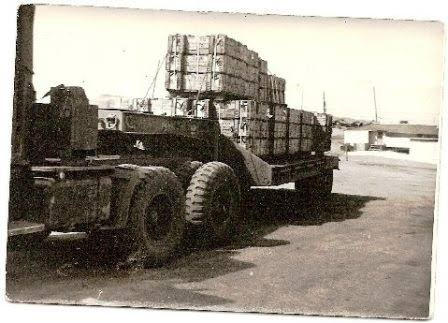
The truck is where McNamara is closest to the truth.
A war really is a movement problem.
A modern military cannot live on courage. Courage does not replace fuel. Patriotism does not patch an engine. A strategy cannot eat itself into calories. A wounded man cannot be evacuated by a rousing speech. A rifle without ammunition is just a very intense stick. A helicopter without maintenance becomes a metal sculpture. A base without water becomes a disease experiment with cool flags.
Logistics is the body of force.
This is why the easy anti-McNamara audit would fail. That one would sneer at systems, numbers, flow, inputs, outputs, and management because all of those words sound dead beside Caputo’s dead.
But Bob’s field proves the opposite.
Systems matter because bodies depend on them.
Bob Krisowaty was not an abstraction.
He was my great uncle.
Supply Sergeant is not a decorative title.
It means the war passes through your hands in the form of things.
Things have quantities.
Things have conditions.
Things are late.
Things are missing.
Things break.
Things arrive covered in mud, blood, rain, dust, mildew, grease, old paperwork, or the terrible neutrality of a crate that has no opinion about who opens it.
A supply field knows war by depletion.
- What ran out first?
- What was requested too late?
- What did the unit pretend it had?
- What did the men trade?
- What got stolen?
- What was hoarded because no one trusted the next convoy?
- What arrived after the need had already become a casualty?
- What was loaded because someone above expected an operation to continue?
- What was moved because the metric wanted another kind of proof?
Supply is where policy becomes weight.
- A box of ammunition is not a debate about attrition.
- It is heavy.
- A fuel drum is not a claim about mobility.
- It is flammable, necessary, awkward, and one puncture away from becoming fire.
- A case of rations is not a morale program.
- It is the difference between men becoming hungrier and men being capable of the next ugly task.
- A medical kit is not humanitarian language.
- It is a small argument against avoidable closure.
- A body bag is not casualty administration.
- It is a final transport instrument for a person whose own transport has ended.
The supply field is morally double because everything in war is morally double once enough harm has already entered. The same truck can carry the bandage and the bullet.
The supply truck is therefore a better image for McNamara than the cold chart alone.
A chart can look detached from the field.
A truck simply cannot. The truck enters mud. The truck exposes the driver. The truck meets the road, the weather, the ambush, the checkpoint, the blown tire, the missing bridge, the wrong coordinate, the man waving for help, the man pretending to wave for help, the kid standing too close to the road, the local who knows the road is not safe and the officer who has already decided the route must be run.
A truck knows that the war is not only what command intends. It is what the route permits.
And McNamara understood routes better than many of his critics.
He understood that large systems are made of dependencies. He understood that capacity is not an emotion. He understood that a machine with no supply cannot continue. He understood that management has moral force because badly managed systems transfer burden into bodies.
The failure is that he understood this too well in some domains and not enough in others.
The supply field can be counted without being understood. Tons delivered. Gallons moved. Sorties flown. Vehicles operational. Rations consumed. Replacement parts distributed. Medical supplies issued.
These numbers may be necessary. The supply sergeant needs counts. The unit cannot run on elegy. Somebody has to know whether there are boots, bullets, batteries, bandages, and enough fuel to make tomorrow possible.
But supply numbers do not explain what tomorrow is for.
Below.
The field did not stop speaking because Washington had much better stationery.
That is one of the ugly comforts of reality.
Reality can be ignored, translated, delayed, buried under charts, softened by optimism, disciplined by classified adjectives, or returned to field officers with instructions to clarify the language before it reaches anyone important.
No matter. It still keeps trying to answer.
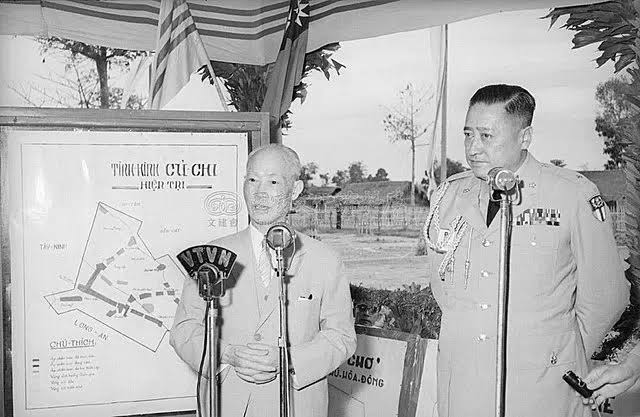
Vietnam answered in many languages.
But the field does not speak only through mud, fear, and the person close to the corpse. Sometimes the field also speaks through analysts, files, dissenting estimates, unwelcome caveats, and the office worker whose job is to make a sentence slightly less wrong before it becomes policy.
Doubt is one of the field’s instruments.
Doubt is not holiness. Doubt can be cowardice, sabotage, confusion, self-protection, stale cynicism, bureaucratic turf defense, or the rotten little pleasure of being negative before other people have to risk action.
But doubt has one crucial function inside a sovereign instrument field:
- Doubt keeps the instrument from mistaking itself for the field.
Everyone distorts. The question is whether the system gives the distortions enough ways to correct one another before the field pays.
Vietnam did not receive enough of those.
A CIA historical essay on why analysts were doubtful about Vietnam says senior decisionmakers often treated Vietnam’s complications as reducible to systems analysis and statistical measures such as body counts, and it ties that confidence to McNamara’s famous assurance that quantitative measures showed the United States was winning.
The analyst’s doubt was not an aesthetic objection to numbers. This was contact with a field that refused to compress cleanly into numbers.
This is where McNamara becomes interesting again, and worse.
He did not hate doubt in the simple way a stupid autocrat hates bad news. He liked challenge inside certain boundaries. He was famous for questioning assumptions, forcing alternatives, demanding cost-effectiveness, making the services justify themselves, and refusing the comfortable rituals by which enormous institutions say, “just trust us, we have uniforms and acronyms.”
Then Vietnam became the field where his own instrument needed the same treatment.
The questions that worked against service rivalry did not work the same way against Vietnamese history. The analytical discipline that could make a weapons program expose its assumptions could not force an insurgency to become a comparable program. A briefing process that could shame a budget line could not shame a village into legitimacy. A demand for measures could expose nonsense in one room and generate nonsense in another.
Doubt had to enter there. It entered too weakly.
The trouble with doubt is that it travels badly in a hierarchy organized around action.
Confidence packs very well. Confidence can be folded into a memo, carried into a meeting, stapled to a chart, and spoken before a President without embarrassing the room. Confidence says the plan is under control. Confidence gives everyone a next step.
But Doubt is cringe. Doubt asks for time.
Doubt asks for reinterpretation.
Doubt asks whether the thing everyone has already paid for is becoming the wrong thing.
Doubt asks whether the dead are being converted into evidence by the very machinery that produces them.
Doubt is very hard to brief because it does not always know what should replace the thing it is interrupting.
This makes doubt very easy to demote.
- A field report comes in saying the situation is worse than the numbers suggest.
- That can be treated as local pessimism.
- An adviser says a district is not really secure.
- That can be treated as uneven implementation.
- A journalist reports village fear.
- That can be treated as an anecdote.
- A CIA analyst worries that the official story is too optimistic.
- That can be treated as analytic caution.
Each doubt can be localized. The metric stays general.
That is how the machine survives correction.
A doubt from below does not become authoritative unless the system has a practice for letting it rise without forcing it to become the same kind of object as the metric it challenges.
If the village can speak only by improving or worsening a score, then the village itself has not spoken, only the score, again.
If the analyst can speak only by producing a better curve, then the analyst has clearly not been allowed to challenge the curve-field.
If the veteran can speak only as trauma after the fact, then the war has already escaped the point at which the testimony could have interrupted the instrument.
This is the field intelligence gap.
No safe abstraction replaces extance.
This phrase can sound like a slogan unless one stays with the machinery.
Abstraction is how large fields act.
- A good abstraction returns to the field with better contact.
- A bad abstraction returns demanding obedience.
- A sovereign abstraction returns with armed backing and a theory of why the field’s objections are only noise.
Vietnam received too many sovereign abstractions.
The body count was one. The bombing dashboard was another. Pacification scoring was another. The domino theory sat behind them all like a geopolitical ancestor demanding tribute from every local fact.
Every single one of these instruments captured something real.
Then each measure asked for a share of authority larger than its contact warranted.
That is why doubt from below was not enough. The system lacked enough authority for the signals that challenged the instrument’s own grammar.
The field was speaking, but the metric machine was much better at hearing itself.
Bombing, Sorties, Tonnage.
The body count had friends.
- Sorties flown.
- Tons dropped.
- Targets struck.
- Trucks destroyed.
- Bridges cut.
- Road segments cratered.
- Supply routes interdicted.
- Base areas hit.
- Aircraft lost.
- Aircraft spared.
- Bombing pauses begun.
- Bombing pauses ended.
If the body count was the infantry’s gruesome receipt, the air war had its own entire bookkeeping religion.
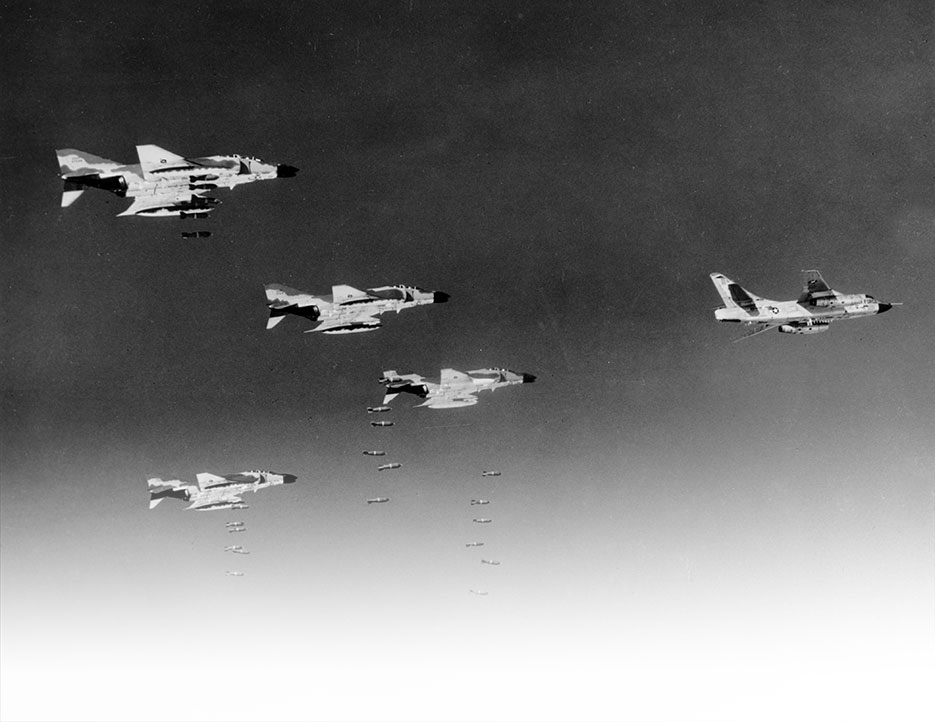
Tonnage is a magnificent word for a terrible reason. It sounds serious because it is already heavy in the mouth. That word carries its own proof.
A ton is not a rumor. A ton does not have morale. It does not defect, reinterpret, farm, grieve, change sides, or lie to the district chief.
A ton lands. A ton explodes or fails to explode. A ton becomes a crater, a wreck, a fire, a missing roof, a dead animal, a severed road, a body, a scar, and/or a report.
This makes tonnage wonderfully available to power. Drop enough of that down there and the dashboard looks like action has acquired mass.
The United States dropped a staggering weight of explosives on Vietnam, Laos, and Cambodia across the war. The point here is not to make the reader gasp at one really big number.
The point is that the bombing dashboard gave American power something it could do, count, escalate, pause, resume, defend, and importantly describe while the political field remained unresolved.
Bombing is very good at becoming an answer before anyone has proven the question.
This is especially true when the alternative is admitting that one’s own policy has entered a field it cannot govern.
McNamara later explained the theory: bombing the North was supposed to impose enough cost that North Vietnam would change policy, while support in the South strengthened the South Vietnamese and American position. He also later acknowledged the failure of the assumptions behind that theory.
Bombing did not, it turned out, break the will of North Vietnam.
Bombing did not stop the small quantities of supplies needed to sustain the war in the South.
Bombing did not convert destruction into legitimacy.
That third sentence is the one the dashboard has the hardest time receiving.
Those first two can be discussed inside military effectiveness.
“Okay, did the bombing interdict supply? Did it reduce enemy capacity? Did it impose cost? Did the enemy adapt? Did pilots hit targets? Did route packages matter here? Did air defenses improve? Did the Ho Chi Minh trail absorb punishment and remain a coherent system?”
The third question is harder:
“What political future did this rubble make reachable?”
- A bridge destroyed is a local fact.
- A road cratered is a local fact.
- A truck burned is a local fact.
- An air-defense site struck is a local fact.
- A village damaged because it lives near the relevant route is a local fact whose moral weight can be made to disappear inside the word interdiction.
The dashboard collects all the local facts and tries to produce a single strategic sentence from them.
But the field refuses to fall in line with this.
A road can be bombed and repaired. A truck can be destroyed and replaced by bicycles, porters, smaller loads, night movement, dispersal, redundancy, patience, and a political will that reads suffering much differently than the bomber’s author.
A supply line can become less efficient without becoming broken enough to change the war. A population can be punished without becoming persuaded. A government can endure costs that the model thinks no rational actor should endure because the model has misread what counts as rational inside that field.
This is another form of the McNamara error: a true local measure becomes false when promoted to field interpretation.
A sortie really flew. A ton really fell. A bridge really broke. A target really burned.
The war still did not become what the dashboard said it should become.
The 1967 high-level discussions captured the logic in miniature. Westmoreland told President Johnson that the war was, in the final analysis, a war of attrition.
He said the last month appeared to have reached “the crossover point” in areas excluding the two northern provinces.
Johnson asked the question any field analyst should hear like an alarm:
“If the United States added divisions, could the enemy not add divisions too, and where would it end?”
In the same notes, Westmoreland described the prospect of continuing with present forces as a “meat grinder.” The document is almost unbearable because the machine is speaking plainly while still moving through history.
The meat grinder is the image that belongs beside the chart.
That one is not a metaphor invented by later antiwar sentiment. Meat grinder appears inside the official conversation. Meat grinder means the participants knew, at least in that room, that attrition was not a clean equation floating above bodies. Meat grinder drags the body right back into the analytic space.
A meat grinder is not confused about what it does. That thing processes flesh.
So the war machine was, openly, trying to ask whether enough enemy flesh could be processed to make the enemy’s future unreachable before the United States ran out of political time, bodies, money, patience, legitimacy, and moral self-description. That was explicitly the plan here, not a description of what happened.
That is “the crossover point” in its naked form.
A point on a curve where their replacement fails before our will fails. Then it never came.
Crossover point sounds almost gentle.
That one could belong to algebra, radio electronics, ecology, finance, product adoption, temperature curves, or some harmless line in a technical manual.
In Vietnam, though, that meant a hoped-for relation between dead people, replacement capacity, will, time, and policy survival.
This phrase is polite because systems language is often polite exactly where it needs to be least polite. The bombing dashboard had similar manners.
A sortie is a cleaner word than “a village shaking under aircraft.”
Tonnage is so much cleaner than “the difference between a crater and a family.”
Interdiction is cleaner than what happens when the bridge was also the way to market.
Modal Path Ethics does not reject military vocabulary because ugly words would make policy more moral. The field does not necessarily become better because the report says exploded instead of neutralized.
Clean language has to answer to the dirtier thing it names. If it cannot, the language becomes a distortion instrument.
The air war trained American policy to confuse pressure with progress.
Pressure can be tactically real and strategically empty. A hand can press very hard on a door that does not open inward. A hammer can produce endless evidence of impact against a problem that is not a nail. And a bomber can make the earth answer without making the political field yield.
This is what tonnage hides when it becomes too authoritative. Tonnage proves only that matter received force. It does not prove that the future was made better, safer, more reachable, more stable, more just, or more politically tractable.
Rubble is not strategy.
The McNamara machine keeps producing material evidence that something is happening.
It cannot manage to transmute the happening into winning.
That was the wider dashboard.
Retrospect.
Now the record enters.
A late record can be morally serious. A late record can keep a field from losing its own path. A late record can expose concealment, give future agents better instruments, preserve names, preserve arguments, force institutions to admit what they would rather convert into fog, and prevent later power from pretending the old disaster was unknowable.
Records can preserve contact after the people who bore the cost have been scattered, killed, silenced, aged, or made tired enough to stop explaining.
So McNamara’s retrospective record cannot be dismissed.
It also cannot be allowed to wash anything.

McNamara eventually became one of the most famous American examples of late remorse under public judgment. His 1995 memoir carried the sentence everyone remembers:
“The Kennedy and Johnson administrations had been wrong, terribly wrong.”
People were enraged by this because the line arrived after the bodies, after the villages, after the amputations, after the dead Americans, after the dead Vietnamese, after the refugees, after the ruined faith, after the private waves inside families, after the memorial wall, after the books, after the silence, after the political careers, after the medals, after the graves, after the children had grown up inside the field the adults had made.
A sentence can be true and late enough to hurt.
That is what retrospect is.
Truth arriving after the field has already paid for its absence.
McNamara did more than write a memoir.
The Pentagon Papers themselves belong to this problem of record. The National Archives notes that the report officially titled Report of the Office of the Secretary of Defense Vietnam Task Force was commissioned by McNamara in 1967. A secret history began inside the same defense system that was still carrying the war forward.
That fact is morally strange enough to deserve its own article.
- The machine started preserving evidence against itself before the public could use the evidence.
- A record was being made while the war continued.
That is not nothing. It is also not repair.
The C-SPAN summary of McNamara’s In Retrospect appearance says he viewed the war as a failure as early as 1966 and started the Pentagon Papers to leave a record of the mistakes leading to the war. That statement makes the later record harder, not easier.
If he believed the war was failing, why did the field keep paying?
That is the question no record can soften.
McNamara’s defenders can say the record proves seriousness. And it does.
His critics can say the record proves knowledge without sufficient action. And it may.
The article does not need to choose one emotional simplification. The actual field is harsher.
- A man can see failure and remain inside failure.
- A system can record its mistakes and keep making them.
- An official can know enough to preserve evidence for history without knowing, daring, or managing enough to close the path that same history will condemn.
Retrospect changes the later field. It does not change the earlier transition.
The Pentagon Papers made deception, deliberation, assumptions, escalation, and internal knowledge more reachable to the public record. Their leak broke the protected channel and let the wider field contest what had been kept inside the state. In the memoir, McNamara placed his own name under some of the wrongness. Because of the interviews, future readers, viewers, students, and officials could no longer pretend the central architect had gone to the grave saying everything had basically worked here.
Those are real goods. They lower resistance against some later truths.
They do not reopen the futures closed by the war.
- Easy cruelty says McNamara’s remorse is worthless because it came too late.
- That is false.
- Late truth can still help the later field.
- Easy mercy says his remorse redeems the life because he finally told the truth.
- That is false too.
- The field did not receive the truth when it needed it most.
- That is false too.
The harder judgment is simple and unbearable:
Retrospect can preserve contact with the wound, but cannot become the wound’s repair by itself.
Failed Field Analysts will sometimes do one last useful thing.
They leave their broken instrument lying out where others can see it.
Failed Field Analysts.
Robert McNamara was a Failed Field Analyst.
That does not mean he failed to see reality at all.

It means he saw a real field and then built, trusted, or protected an instrument that could not stay answerable to the field it entered.
The Failed Field Analyst is not usually a fool. Fools rarely build instruments strong enough to damage the world at scale. The failed analyst is more dangerous because the first perception is often real.
- Robert Moses really saw flow.
- L. Ron Hubbard really saw capture, suggestibility, and locked rooms of the mind.
- McNamara really saw systems.
He saw that modern defense had become too large for inherited gentlemanly confidence. He saw that the services protected themselves. He saw that budgets hid doctrine. He saw that cost could become a fog machine. He saw that procurement can turn patriotic language into industrial appetite. He saw that a Secretary of Defense needed tools strong enough to force the machine to explain itself.
Those insights were not shallow. A defense bureaucracy with no McNamara-like pressure becomes its own empire of unexamined assumptions.
A general saying trust me is not a field analysis. A service branch protecting a weapons system because the branch likes itself is not a strategy. A budget that cannot show alternatives is a ritual demand for tribute.
McNamara attacked that world with the tools he understood: analysis, comparison, cost, output, system, measure, alternatives, performance.
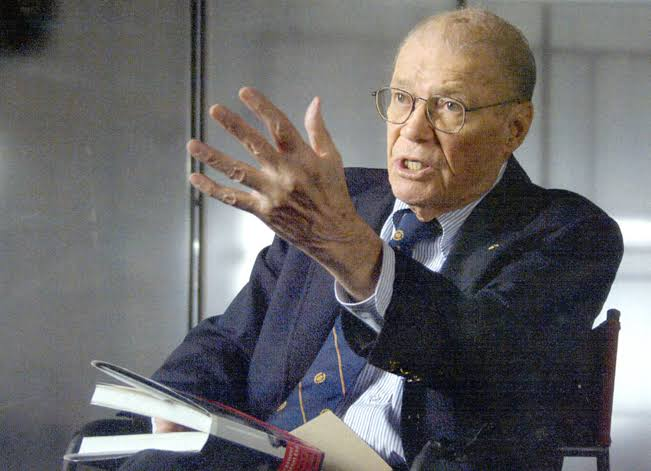
And in many fields, those tools can be repair instruments.
A hospital needs to know where patients are waiting. A logistics command needs to know which route is broken. A government needs to know whether a program does what it claims.
A military procurement system needs numbers because otherwise every contractor eventually discovers that freedom actually requires an additional aircraft carrier.
Measurement can defend the field against rhetoric. McNamara’s failure was measurement sovereignty.
He brought an instrument suited to exposing certain kinds of institutional nonsense into a war whose deepest structure was political, historical, social, colonial, nationalist, local, and civil.
Then the instrument began granting authority to the parts of the war that could report themselves in its language.
The desire to know whether one is winning was not wrong. The field implied by the word “winning” was wrong.
The wrong field model made the wrong measures feel responsible.
That is how the machine became sovereign.
A sovereign metric does not need to ban other truths, just make them secondary.
- The dead matter, but through the count.
- The village matters, but through the rating.
- The bombing matters, but through targets and tonnage.
- The soldier matters, but through readiness, casualties, morale, manpower, replacement.
- The Vietnamese civilian matters, but through pacification, loyalty, displacement, enemy influence, population control, political development.
The war’s moral field keeps getting translated into management surfaces.
The instrument contains truth.
Then the truth gets promoted.
The field loses correction authority.
McNamara saw the need to make power answer questions.
Then, in Vietnam, those questions became narrow enough to protect power from the answers the field was actually giving.
This makes him modern.
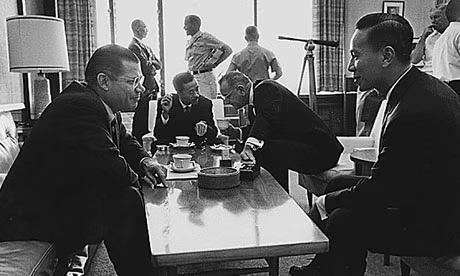
Modern institutions do this constantly. Schools teach to the test because the test is how the school becomes legible. Hospitals optimize billing and throughput because care has to pass through administrative organs before it reaches the patient.
Police departments chase clearance rates, cities chase development metrics, platforms chase engagement, universities chase rankings, companies chase quarterly targets, nonprofits chase measurable outcomes, intelligence agencies chase threat indicators, and governments chase dashboards because dashboards look like responsibility got dressed for office work.
Sometimes measurement improves the field. Sometimes measurement builds a local world over the field and then starts punishing reality for not living there.
McNamara is the archetype because Vietnam made the cost visible in bodies.
The body count is the nightmare version of a familiar move.
- What can be counted becomes important.
- What is important must be counted.
- What cannot be counted becomes hard to defend.
- What cannot be defended becomes secondary.
- What becomes secondary becomes spendable.
The machine does not have to say that “Vietnamese continuance is unimportant.”
It only has to organize the war around indicators that cannot receive Vietnamese continuance as central.
The same systems truth that makes logistics necessary makes the metric machine dangerous. A field is made of dependencies.
If the instrument misreads the dependencies, it can preserve one path by destroying the field that makes that path worth preserving.
McNamara wanted to know whether the war was being won.
Modal Path Ethics asks a lower question first:
What was the war doing to reachable futures?
That answer is not hidden.
It was closing them.
- It closed Vietnamese futures first and most deeply.
- It closed American soldiers’ futures in direct and indirect ways.
- It closed trust in public institutions.
- It closed political imagination around avoiding the war sooner.
- It closed the moral authority of several governing narratives.
- It closed the lives counted in the body count and the lives not counted there.
- It thickened resistance across families, villages, veterans’ bodies, refugee routes, American politics, Vietnamese memory, and the later fields that inherited all of it.
The body count machine recorded some of the closure as success.
That is the final indictment.
Ruling.
Robert McNamara was not wrong to ask for measures. He was wrong to let the measurable impersonate the war.
War has wheels before it has theories.
Somebody moves food, fuel, ammunition, forms, medicine, spare parts, replacement bodies, wounded bodies, dead bodies, mail, orders, maps, and the small materials by which violence continues to call itself organized.
Bob's truck proves why the whole machine was tempting.
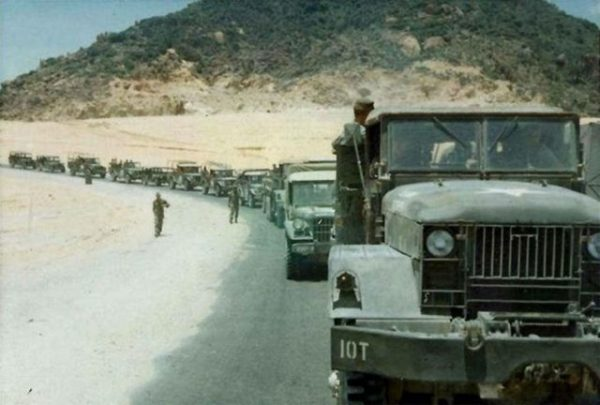
Modern war is a dependency field. It cannot be understood by hero stories alone. It cannot be governed by courage alone. It cannot be supplied by vibes. It has weights, routes, times, quantities, inventories, ports, depots, roads, losses, replacements, and failures that kill people when they are not measured.
The Whiz Kids were not evil maniacs who discovered spreadsheets and immediately began feeding Southeast Asia into them. They were a generation of analysts shaped by war, production, statistics, rational choice, corporate reorganization, and the belief that large institutions could be forced to reveal their hidden logic.
They were often arrogant. They were also responding to real institutional fog.
The table can be a mercy.
But then Vietnam refused the table.
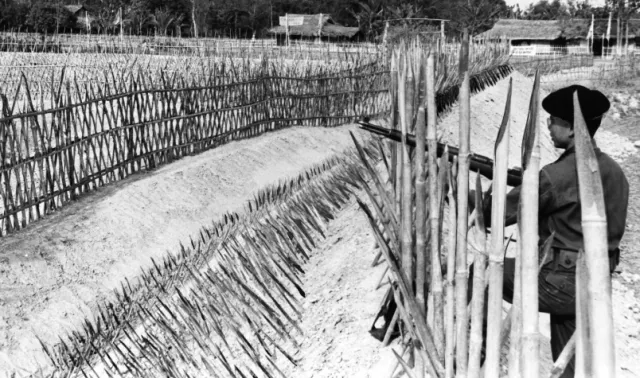
The chart kept asking the war for the kind of answer the chart could carry. So the war learned to report itself in that language. Units brought back bodies. Reports classified them. Briefings displayed them. The corpse became a receipt. Death became evidence that the method producing death had not failed just yet.
That is a deep distortion.
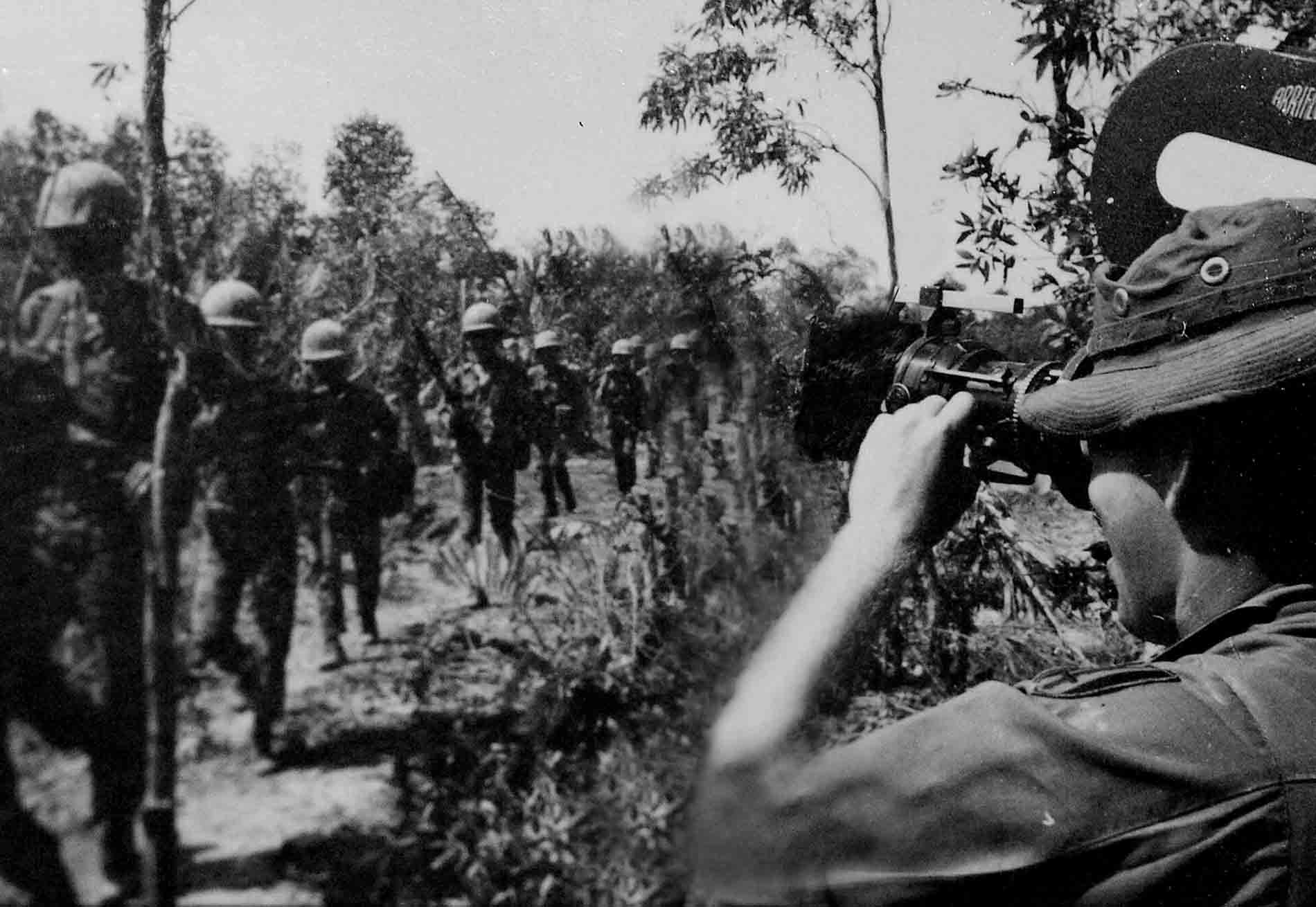
A dead enemy combatant may be militarily relevant. A dead enemy combatant may mean a threat has been removed. A dead enemy combatant may prevent later deaths. A dead enemy combatant may matter in a war whose immediate tactical field is completely real.
But a dead person is not progress by metaphysical default.
The dead do not become morally lighter because the category beside them in the column says “enemy.” They do not become strategically meaningful because the report needs meaning. The dead do not become evidence of a better future unless the path opened by their death actually preserves more future than it closes.
Vietnam did not give that answer just because “the count rose.”
The dead were refusing to become only a count.
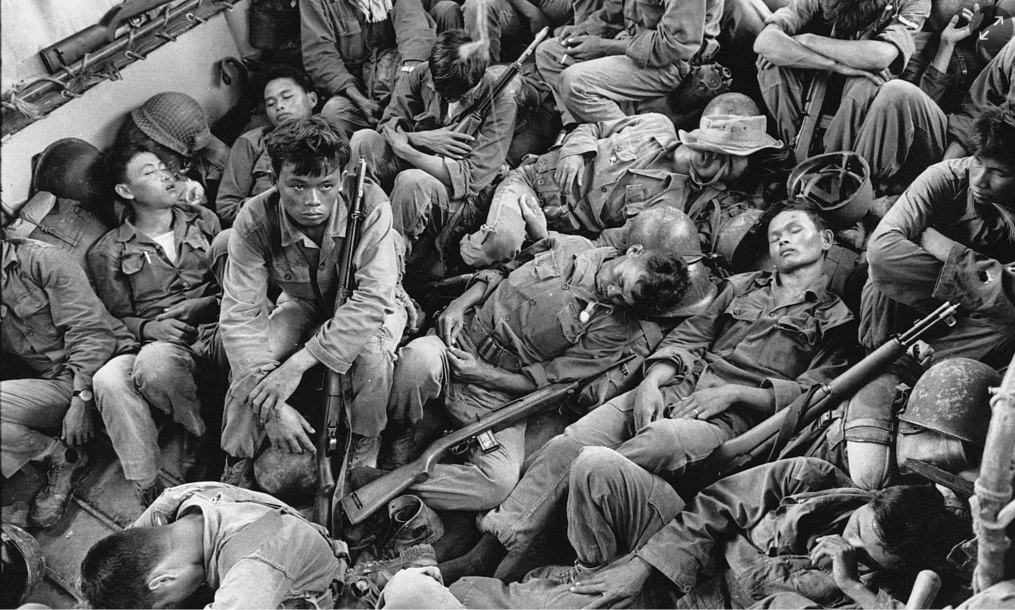
The village carried questions the American machine did not make central: who controls the road tonight, who can be trusted, what answer keeps the children alive, where the dead can be named safely, whether planting is possible, whether return is possible, whether tomorrow is still reachable.
The metric machine could not hear those questions as the war’s center because it had been built around another center.
- Are we winning?
- Are enemy losses sufficient?
- Is pacification improving?
- Are bombing outputs effective?
- Can the policy continue?
The wrong center produced the wrong measures. The wrong measures produced the wrong confidence. Wrong confidence produced more field damage.
Better numbers would have helped in some places.
No number would have saved an instrument that still required Vietnamese continuance to become American progress.
McNamara was a man whose real intellectual discipline became one of the most catastrophic modern examples of instrument sovereignty, and whose late truth remains useful without becoming absolution.
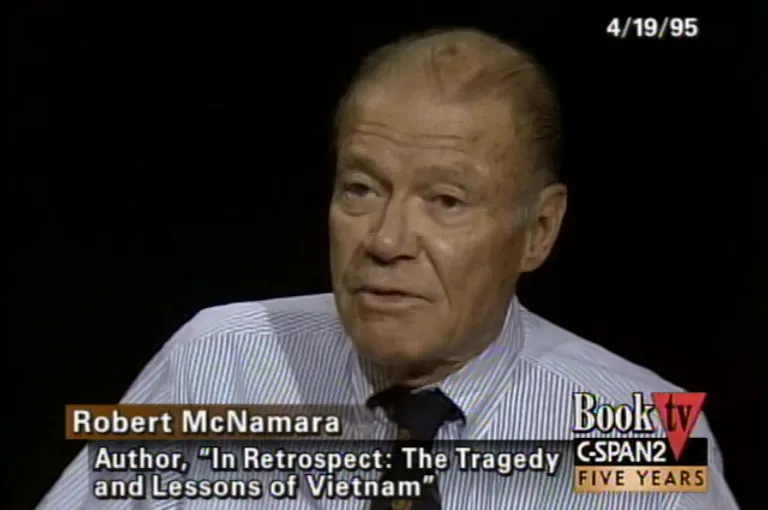
He made a machine that asked the war to explain itself.
The war learned that machine’s language.