Luciano Floridi 1v1s Modal Path Ethics on Rust
No M16. No launchers.

I challenged Luciano Floridi to a 1v1 match on Rust in the custom of my people.
This seemed right to me.
The archive run is over. I have spent long enough kicking down dead philosophers' doors, finding machinery in their basements, discovering somebody invented half of mine first, and leaving apology notes underneath the rubble.
- Luciano Floridi is alive.
- Modal Path Ethics is alive, in whatever increasingly expensive sense a philosophical framework can be alive.
- There is an Xbox 360 out there.
So 1v1 me on Rust.
No M16.
No launchers.
I specify COD4 rules with complete confidence.
The lobby closes.
Sand appears. Pipes. Shipping containers. That central tower where everybody becomes a terrible person.
I am ready.
Then I notice something.
Rust is Modern Warfare 2.
Floridi has not fired a shot, and I have already committed a provenance error.
Correction enters the record before first blood.

SPAWN.
Floridi starts with an argument so wide that I almost mistake it for the skybox.
Why should moral consideration stop at the human?
Why should it stop at the animal?
Why should sentience, life, intelligence, or rational agency be the tollbooth through which everything must pass before ethics notices it?
His Information Ethics lowers the floor.
At an informational level of abstraction, existing entities can be understood as informational entities. Floridi argues that being an informational entity supplies at least minimal intrinsic moral worth. This is axiological ecumenism: an attempt to keep ontological exclusion from quietly becoming moral disposability.
And before anybody runs onto the map yelling that Luciano Floridi thinks deleting a JPEG is murder, please put the microphone on mute.
He does not say everything has equal worth. The minimum is overridable. Destruction can be justified, sometimes required. Information Ethics is ecological: information can be a resource, a product, and a target of action, and informational environments can be harmed or improved through their transformations.
Floridi has also spent considerable time making sure a level of abstraction is something much more disciplined than "whatever boundary I feel like drawing around a bunch of pixels." His argument is not that every arbitrary substring acquires a separate civil-rights lawyer because I highlighted it in Notepad.
- He has brought a real-deal theory.
- I have brought a riot shield labeled LOCUSHOOD.
This looks bad already.

FIRST BLOOD.
Floridi fires first.
Something unfamiliar comes into existence.
I do not know whether it is one integrated thing, several, a transient pattern, an artifact, a continuing organization, or a trace of one that ended.
Do I get to destroy it while the classification is loading?
No.
I do not need an ontology of universal intrinsic worth to answer that. Modal Path Ethics has reasons to preserve evidence, resist irreversible destruction under significant uncertainty, and protect the path by which a presently illegible claimant could become legible.
But that reply has a cost.
- Floridi's ethical baseline begins with consideration.
- Mine requires an account of how ignorance, asymmetrical error, lost evidence, and threatened continuation generate a reason for caution.
That is a genuine advantage of his opening move. It makes exclusion difficult before the investigation even begins.
I take the shot.
0–1
FIRST BLOOD! (+100)
+200 FLORIDI
I respawn by the pipe, still carrying the shield.
THE PIPE.
There is another question hiding inside that excellent first shot.
What did Floridi establish?
An informational description can be objectively appropriate. It can capture a real structure at a declared level of abstraction. That already matters. Information Ethics then assigns the entity described a minimum of intrinsic moral worth.
The second move needs a defense.
He cannot jump from description to moral worth without defending the step. Neither can I. Both theories have a normative bridge to cross.
David Hume is sitting in spectator mode, just watching us. G. E. Moore has somehow found the kill feed. Sharon Street has brought an entire evolutionary genealogy of my moral instincts to discuss in the lobby. J. L. Mackie is standing under the tower holding that goddamn sword.

All four have a point.
From the fact that a structure exists, no moral instruction follows by logic alone.
From the fact that it persists, we cannot deduct that somebody ought to preserve it.
From the fact that it is damaged, we still have to explain why that kind of damage is morally adverse.
Modal Path Ethics makes that commitment explicit in the Continuance Principle:
A nontrivial degradation of a structurally significant part of an extant locus's own organized, reachable continuation constitutes pro tanto harm to that locus.
That is a normative commitment. It is defended through the explanatory work it performs, its treatment of familiar injuries, its extension to non-person cases, and its ability to survive hard exclusions. It has not been derived from a graph or gently smuggled out of physics. Street may still question its authority. Mackie may still reject the purported objectivity. Moore may still ask why that property should count as bad.
Good. They are allowed.
Floridi's minimum intrinsic value and my Continuance Principle are competing answers to different parts of the moral problem. Both are contestable. Neither theory can win by accusing the other of possessing a bridge while concealing its own under ghillie.

What can be compared is the work those bridges do.
- Floridi says informational existence counts for something before we know very much else at all.
- Modal Path Ethics says a qualifying injury to a real continuation counts as harm once we have identified what continues and how its continuation was damaged.
- One establishes a baseline of value.
- The other proposes a constitutive criterion of harm.
That distinction is going to decide where the next bullets land.
I peek around the pipe, prone.
He is already gone.

TOP RUST.
Of course he is climbing.
Floridi has levels of abstraction. I have causal grains.
These sound suspiciously similar when shouted through an Xbox headset.
They overlap. Both refuse the fantasy of a description from nowhere. Both require us to say at what resolution we are analyzing a system. A useful informational model may reveal real organization that a different model obscures.
Here is where locushood earns its ammunition.
A good description does not automatically identify the bearer of the next transition.
An extant locus is a diachronically integrated causal organization with a nonredundant successor structure at the relevant grain. Its integration has to be discovered through actual history and causal work. What persists through turnover? Which relations maintain, transform, reproduce, or repair an organization? Which characteristic successors disappear when its coordination dissolves, even if the component parts remain?
The grain has to pass those tests before it is permitted to decide the case.
No ontology Photoshop. No zooming until the patient I want magically appears.
Consider the noble Botryllus schlosseri.
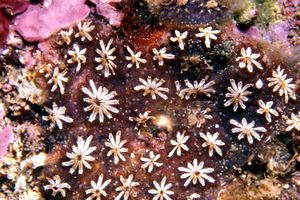
It is a colonial tunicate. This means nature looked at the identity problem and saw only weakness.
The colony produces zooids that are replaced on a regular cycle. Adult zooids undergo programmed death and resorption as new ones develop. The connected colony continues. Compatible colonies can also fuse their vascular systems, and cell lineages from one former partner can persist after much of its visible organization disappears.
So I ask Floridi what the hell we are looking at.
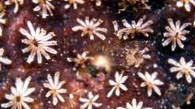
- The zooid?
- The colony?
- The stem-cell lineage?
- The fused chimera?
- A constituent process whose continuation diverges from all of them?
An informational level of abstraction can describe each one. Excellent. Floridi's method helps us keep our descriptions honest.
But an ethics of damage must also track which organization bore which transition.
The zooid terminates. The colony can continue. A lineage may persist while one partner's colony-level organization disappears. One event can be ordinary renewal at one grain and catastrophic loss at another.
It is possible for several grains to earn standing. The higher one does not swallow the lower; the lower one does not dissolve the higher.
Patañjali's transformation problem and Stuart Kauffman's adjacent possible press from opposite directions. What bears the change? Adjacent for whom? A bacterium, its host, a lineage, and their ecosystem may all change through one encounter without possessing the same continuation. A function that sustains one can degrade another.
For Modal Path Ethics, the unit of harm is never information was altered, somewhere. It is a bearer, an actual transition, and a significant change to that bearer's organized reachable continuation, at a grain the evidence warrants.
Floridi can use the same causal account if he wants. Nothing in Information Ethics forbids him from making these distinctions.
But his minimal universal value does not supply them by itself.
I catch him halfway down the ladder.
1–1

THE BARRELS.
Floridi reappears by the barrels with entropy.
In Information Ethics, entropy names forms of destruction, corruption, depletion, and impoverishment in the infosphere. This is an ethical concept; he has not accidentally confused moral evil with the second law of thermodynamics. His principles weigh informational loss against the wider conditions for informational flourishing, and they can require destroying one thing to protect others.
So the deletion of malware is no knockout. Floridi has already explained why deleting it can be right.
The interesting case begins when the malware refuses to remain a file.
A malicious program can be an informational object and a dangerous causal instrument without being a continuing locus in its own right.
Now suppose it becomes an adaptive network: it maintains connections, replaces failed nodes, routes around interventions, acquires resources, and reproduces the organized process through which its next states are generated.
That is a better candidate. Its moral ugliness cannot disqualify its causal organization.

Neither can the tumor.
A tumor can possess characteristic successors, adaptive responses, material dependencies, and a history through which its organization persists. The host also exists. The host's organism-level continuation can be devastated by the very transitions through which the tumor continues.
- One material history.
- Two possible loci.
- Opposing continuation profiles.
- Two possible loci.
A bearer does not fail the locus test because it is just terrible.
Floridi can already assign an overridable value to the malignant thing and justify removing it. His framework does not require surrendering the host to a carcinoma in the name of equality.
Modal Path Ethics does not take that shortcut either. If the malignancy qualifies as an extant locus (like smallpox did), destroying its characteristic continuation may register a component-relative harm. Whether a particular loss qualifies depends on the actual organization and structurally significant continuation at issue. The host's losses enter the ledger separately. A transition profile must then track both, together with the repair and burdens the treatment leaves behind.
The overall verdict can still favor removing the tumor without any hesitation. A harm is not a veto. And locushood is not a right to make other loci pay for one's continuation.
Here the frameworks can agree on treatment while describing its moral structure differently.
- For Floridi, minimal informational value gives the tumor an initial place in the ethical picture; competing claims and ecological consequences can override it.
- For Modal Path Ethics, a harm claim requires a demonstrated bearer, a qualified degradation of that bearer's own reachable continuation, and the Continuance Principle that makes such degradation pro tanto adverse.
- The decision is judged across the resulting pattern of losses, protections, and burden transfers.
Neither procedure turns conflict into an arithmetic exercise. Both must explain their weights. The crucial difference is what establishes a local harm in the first place.
- Kauffman's organism says: Good for me.
- Its host says: Absolutely the fuck not.
Both statements can describe real causal relations. Neither settles the ethics by itself.
I stand up to finish the point.
Floridi fires through the barrels.
1–2

INFORMATION IS NOT INERT.
I follow him toward the containers.
He changes angles. Of course. Floridi has spent much of his career showing that information belongs inside the moral world, including as a resource, a product, and a target of action. His accounts of informational privacy and distributed morality take seriously the ways records, systems, and communications transform people and environments.
A diagnosis enters a clinical record.
Treatment changes. Insurance changes. The patient can become legible to institutions in a new way. A second clinician may encounter a person whose available paths have already been reorganized by the first description.
An accusation enters a database.
Access closes. Copies circulate. An innocent person begins acquiring the institutional history of somebody the institution has decided is dangerous.
An AI system produces an explanation of its behavior.
Feed the report back into the system, and a later causal audit may encounter a changed intervention-response profile. The explanation has become one of the inputs shaping the thing being examined.
Information acted.
Floridi already knows that. The question is what follows from it.
The diagnosis may be critically important while lacking its own independent successor structure. The accused person has one; the investigating institution may have another. The records can alter the continuations of both. An evolving automated classification system might itself qualify as a locus if its organization passes the same causal test. That question requires investigation, not a new noun for every database field.
Now, give the state an extraordinary informational environment. Medical records connect to employment histories, financial transactions, location traces, eligibility rules, and identity systems. The databases become richer. Their inferences become more reliable. Administrative action becomes faster.
- The state can do more.
- The citizen can safely attempt less.
Floridi's privacy ethics is equipped to criticize that result. The disagreement is not whether surveillance can be bad. It is about what the informational success of one organization does, or fails to establish, for the continuations of others.
Consider the correction.
A false criminal record should stop governing its subject. Yet destroying every trace of how that record was created and used may also destroy the evidence needed to challenge the institution, obtain remedy, and prevent repetition. The operative accusation may need to go; its provenance may need to remain accessible under conditions that protect the person it harmed.
Information can be preserved for evidence and removed from authority. Those are different operations with different bearers and consequences.
The structure of the record matters. The transition through which it acts matters. The people and institutions inheriting its effects matter. The ability to correct the consequences matters.
Information can have enormous moral importance without being the locus that bears each harm it causes.
Floridi fires from the far side of the container.
I crouch behind a fuel drum that somebody has painted an uncomfortably optimistic shade of red.

HEADGLITCH.
There is a false choice waiting on the roof.
Either the thing I care about is itself a moral patient,
or I have no business caring about it.
No.
- A photograph may matter because a family has no other record of someone.
- A book may matter because its physical annotations, binding, and provenance cannot be reconstructed from its words alone.
- A bridge matters to the town whose reachable routes depend on it, even if the bridge is not itself a locus of harm.
- A corpse can matter to memory, evidence, burial, and the living without being automatically promoted into a newly born patient.
That is not indifference to these things. It is a demand to identify the relation through which each matters.
Some things have their own organized continuation. Some carry evidence or enable the continuation of others. Some do both. The answer must be established in the case, at the appropriate causal grain.
Floridi's inclusive axiology protects against treating informational existence as worthless by default. Modal Path Ethics also refuses that default. It simply leaves open more than one explanation for why something belongs in moral consideration.
Not everything that matters is a locus.
Not everything that is not a locus is morally irrelevant.
Floridi cannot dismiss a thing's relational importance just because its intrinsic worth is minimal. I cannot manufacture a bearer of harm to express how much I care about something dependent upon it.
I catch his shoulder above the stairs.
2–2

THE INFOSPHERE.
Floridi respawns on top of the tower.
He has earned the position. Information Ethics is ecological, and its later account of distributed morality rejects the comforting picture in which every moral outcome belongs to one isolated decision-maker. Infrastructures, institutions, technical standards, and networks can distribute the production of consequences across actors who possess only fragments of the action.
That is a serious advantage against any ethics obsessed with individual intentions.
A regulator can follow its rules while an automated eligibility system routes the same people into progressively narrower circumstances. Every operator can be doing a plausible local job. The whole arrangement can still generate exclusion that nobody individually designed or can easily reverse.
Floridi sees the infrastructure.

So does Modal Path Ethics. It then asks which organizations exist within it, how their continuations intersect, and which transition put the exclusion into motion.
The infosphere is an excellent domain of inquiry. It does not need to be declared one giant organism in order for its structures to matter. If someone claims an integrated bearer at that scale, the same grain test applies: where is its historical integration, its characteristic successor organization, and the relation that cannot be recovered by treating its parts separately?
The answer might identify several overlapping loci, one larger locus, or a causally important environment that lacks a single successor structure of its own. Different cases will demand different descriptions. None of those possibilities authorizes the analyst to erase harm at a smaller grain because the larger system has become more capable.
A colony can continue as its zooids die. A hospital can improve its aggregate throughput while patients lose reachable routes of appeal. An information infrastructure can enrich state capacity while making private exit practically impossible.
The success of the whole does not certify the continuability of its parts.
And the damage to a part does not prove that every larger transition was wrong.
Floridi's ecology can recognize those conflicts. Modal Path Ethics insists that the bearer-transition-continuation relations survive the analysis, rather than disappearing inside a single label called flourishing.
- I try to take the tower.
- He sees the climb.
2–3
LAST LIFE
The ammunition is running low when Floridi produces the empty universe.

No human beings.
No animals.
No preferences.
No institutions.
No observers waiting to discover the object.
No one whose plans, memory, or welfare depend on it.
- One unique structure exists.
- Then it is destroyed.
Did anything bad happen?
Removing the witness eliminates suffering, complaint, preference, and human attribution. It does not necessarily eliminate an existing bearer of organized continuation.
That is the challenge of the Non-Planet Problem.
Imagine a planet-forming disk whose present material relations support differentiated routes through which planetary systems may develop. Radiation from nearby stars can remove gas and alter those routes. No later astronomer has to exist for that causal loss to happen. The bearer under examination is an extant organization, and the question is whether a transition nontrivially damaged its continuation-generating structure at a defensible grain.
This must be tested, not announced. Irradiation can impair gas-dependent development without ending planet formation altogether; other continuation classes may remain. If the disk does not pass the locus diagnostic, calling it harmed has not yet been justified. If it does, the Continuance Principle supplies a defeasible reason to count a qualifying contraction as a harm.
Kauffman's account of enablement gives that inquiry a useful instrument. Present organization can support the emergence of later forms without determining which form will occur. A damaged generator can therefore matter even when no one can list every future it would have enabled.
Floridi nods. The observer was never a requirement of his theory either.
So I make the hypothetical less hospitable.
Remove the organized disk.
Remove every dependent locus and every relation of evidence, inheritance, repair, and enablement.
Leave a single physically instantiated informational pattern whose existence is brief and whose stipulated organization has no independent, nonredundant successor structure at the relevant grain.
It is destroyed.
Floridi can still say that informational entity possessed minimal intrinsic worth. Its disappearance counts, prima facie, as an axiological loss, even if that small loss could have been overridden by other considerations.
Modal Path Ethics records the destruction.

Yet the stipulation has supplied no qualifying bearer-relative continuation whose degradation constitutes a harm under the Continuance Principle.
Maybe intrinsic worth extends farther than harm as contraction. Floridi has given an answer. Modal Path Ethics has not established that answer, and its account of harm does not require denying the possibility.
Now the disagreement is finally isolated.
Is informational existence enough to give something intrinsic moral worth, independently of the organized continuations it carries or affects?
Floridi says yes.
I have a narrower bridge. My account identifies a class of bearer-relative harms and defends why those injuries count pro tanto. It does not derive the moral value of existence as such.
There is no trick shot available. If Floridi's additional value is true, the theory of harm must live beside it rather than pretending to have somehow disproved it.
- I fire.
- He fires.
- Two hits.

KILLCAM
The killcam shows two people firing from different positions at what looks like the same object.
Floridi makes informational being a point of entry into intrinsic moral worth. Its minimal value can be overridden, local destruction can be justified, and the infosphere supplies a wider ecological setting for judgment. His theory has substantial resources for privacy, distributed action, and morally consequential infrastructure.
Modal Path Ethics locates actual, historically integrated organizations at causally justified grains, follows the continuations those organizations can sustain or lose, and records qualified contractions through an explicit normative principle. A harm-token belongs to a bearer in a particular respect. It can remain real inside a justified transition, and it does not settle priority or confer jurisdiction over anybody else.
The distinction survives every easy overlap.

Botryllus can continue at the colony grain while a zooid terminates. A tumor may sustain its own organization while devastating its host. A destroyed bridge may close a person's future without being the bearer of that person's loss. A prebiotic generator can be damaged without a future person waiting to receive the injury. An isolated informational pattern may retain Floridi's minimal intrinsic worth even when no harm to a locus has been established.
Neither theory gets its normative conclusion for free. The informational level of abstraction has to earn its descriptive accuracy. The causal grain has to earn its integration. Floridi must defend the passage from informational existence to minimal intrinsic worth. Modal Path Ethics must defend why damage to a locus's organized continuability counts as pro tanto harm.

The result is an honest disagreement, not a different set of vocabulary for the same verdict.
- Floridi wants moral worth to reach every informational entity.
- Modal Path Ethics wants the word harm to track what actually happened to an existing continuation, including those outside human life, while keeping everything else that matters in the picture.
The scoreboard hangs above us. It has counted the kills perfectly.
A scoreboard is competent to close a match. But I just realized it has no warrant to decide which ontology was established by the shooting.
So I quickly unplug the Xbox without checking who won.

No M16.
No launchers.
No ontology Photoshop.
And no philosophical world championship awarded by the kill feed.

Sources and further reading.
- Luciano Floridi, “Information Ethics: Its Nature and Scope” (2006), on informational entities, axiological ecumenism, levels of abstraction, and entropy.
- Luciano Floridi, “The Method of Levels of Abstraction” (2008).
- Luciano Floridi, “Distributed Morality in an Information Society” (2013), on distributed action and infraethics.
- Modal Path Ethics, Hume, Moore, and the Normative Bridge; Christine Korsgaard, Sharon Street, and the Late Agent; and J. L. Mackie Tries to Murder Modal Path Ethics With a Freaking Sword.
- Modal Path Ethics, Patañjali and the Grain of Change and Stuart Kauffman and the Grain of the Adjacent Possible.
- Me, Harm as Contraction of Reachable Continuation, preprint v1.2 (September 2026), especially the Continuance Principle, extant-locus diagnostic, and mixed transitions.
- Modal Path Ethics, Applied Case: The Non-Planet Problem.
- On Botryllus zooid replacement, vascular fusion, and competing cell lineages, see review and experimental literature.
- On photoevaporation of planet-forming disks, see NASA's Orion proplyd observations.