MODAL KOMBAT: Nancy Cartwright and the Elemental Planes
The Amulet travels. The conditions do not.
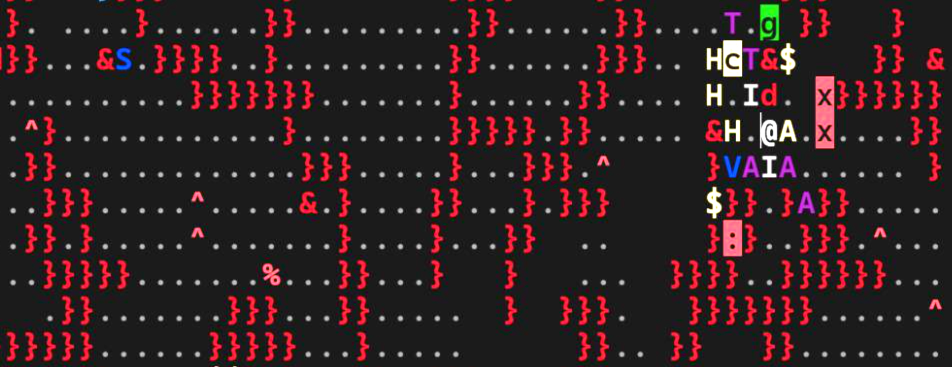
I have retrieved the Amulet of Yendor.

I have climbed out of Gehennom, survived the Wizard of Yendor's increasingly disproportionate attempts to get his property back, and reached the staircase on the first level of the Dungeons of Doom.
But this is not the end.
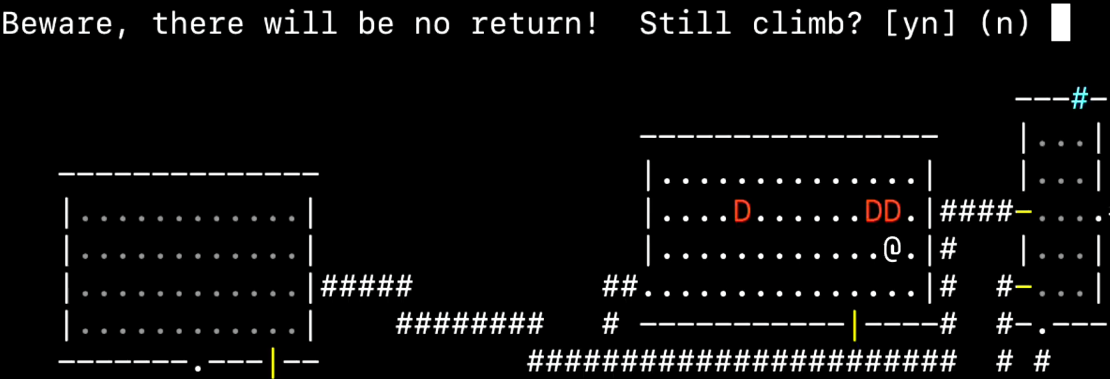
Climb those stairs with the real Amulet and Nethack deposits you on the Plane of Earth. Ahead lie Air, Fire, and Water, followed by the Astral Plane. You cross each boundary through a portal. You cannot teleport through the problem or go backward to retrieve something you forgot.
I have retrieved the Amulet of Yendor. I have double-checked my equipment. I have become extremely good at moving one character through an extremely dangerous world.
Nancy Cartwright has a little question for me.
What, exactly, makes any of those moves work on the next plane?
> You are surrounded by twisty little passages, all alike.
1. EARTH
> The Machine Produces the Law.
The Plane of Earth is rock, scattered caverns, and a portal hidden somewhere among it all. You can dig through the walls. A pick-axe or wand of digging might just be enough to get you to the next path, assuming the local inhabitants do not get you first.
That is the sort of environment I understand.
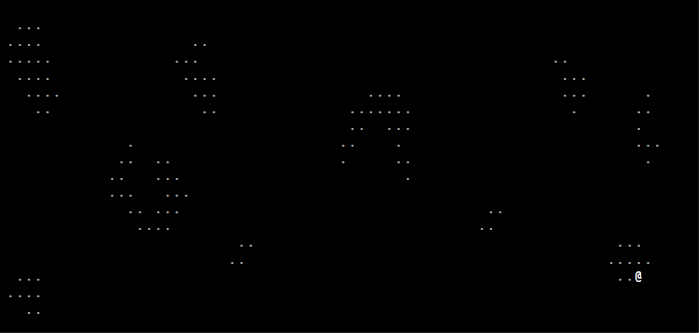
There is an obstacle. I possess an intervention. This intervention operates under identifiable conditions.
The wall becomes a passage.
Cartwright examines this arrangement.
> You were wearing a blindfold. You still cannot see.
Her 1983 book, How the Laws of Physics Lie, argues that fundamental theoretical laws achieve much of their explanatory success through idealized models. This title sounds like a declaration of war on science. Her position is more precise, and harder to dismiss: idealized laws cannot simply be read off as universally accurate descriptions of what happens amid every influence present in the real world. The causal work still has to be understood.
In Nature's Capacities and Their Measurement and The Dappled World, she develops the positive apparatus. Things possess causal capacities. But the regularities we so confidently call laws often depend on organized arrangements in which those capacities can operate repeatedly and relatively stably.
She calls such an arrangement a nomological machine.

A laboratory can build one. Nature can sometimes supply one. The machine's components, organization, and operating conditions make a reliable regularity possible. Knowing that one arrangement produced the regularity does not certify its appearance in a different arrangement.
Cartwright has not announced that causes are imaginary. Quite the opposite. She wants an account of real causal powers that survives our tendency to mistake a successful model for an unconditional description of the world.
- The pick-axe is real.
- The digging capacity is real.
- And the rock wall is part of the conditions under which that capacity does something useful.
> The debris from your digging comes to life!
This also presses on an old phrase from the Modal Path Ethics book: lawful successor relations. If lawful commits the framework to one universally portable law of development with every later state already represented, Cartwright has found trouble for me. The September paper and subsequent engagements no longer need that picture. A supported continuation can be causally real without being the product of one generally applicable regularity. We still owe a defensible account of the particular support.
I step through the portal.
> You shudder for a moment.
2. AIR
> The Move Still Exists.
There is no floor here.
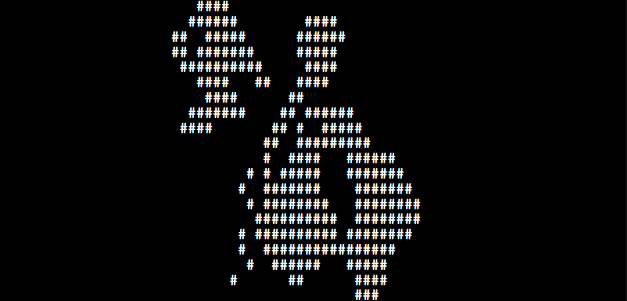
Seems relevant.
The Plane of Air contains open space, moving clouds, lightning, and air elementals who are somehow even less interested in my academic career than the Wizard. Without levitation or flight, ordinary movement is difficult: in the documented game rules, three out of four attempts to move fail.
Read that carefully.
> Unfortunately, you don't know how to fly.
The character has not lost the ability to attempt movement. The movement command still exists. The game still accepts input. That route across the screen still appears describable.
The supporting conditions have changed, and the practical cost of traversing the route has changed with them.
Modal Path Ethics should recognize this immediately. The September preprint, Harm as Contraction of Reachable Continuation, states its thesis:
An actual transition harms an extant locus insofar as it nontrivially degrades a structurally significant continuation or enabling structure genuinely reachable from that locus.
It distinguishes possibility from reachability, and defines reachability relative to the actual field and the bearer. The bearer may depend on a caregiver, a bridge, an ecosystem, a court, a technical service, or another locus for access to its continuation. Resistance can thicken even while the endpoint remains technically possible. A path's survival in a diagram is insufficient.
So Cartwright cannot win by telling Modal Path Ethics that the same move behaves differently in different environments. That is already in the paper.
She selects one word from the thesis.
Genuinely.
How do you know?
- A model shows a passage.
- Does the actual arrangement support it?
- The passage worked in the previous setting.
- Do the relevant supporting conditions still obtain?
- The instrument possesses the capacity.
- What brings that capacity into operation here, in the presence of these other causes?
This is the real objection.

The theory has a criterion for what reachability is. An application still owes evidence for which continuations are actually reachable. Cartwright's philosophy supplies a particularly strong reason not to casually slide from one to the other.
The Plane of Air gives us a suffocatingly good diagnostic: resistance thickening is not the same as foreclosure. Movement remains possible without flight or levitation, but the cost and danger of movement rise sharply.

A bad map might tell us the path is impossible. Another bad map might tell us it is easy because it sees only the destination.
Both maps can miss the field.
> It is hot here. You smell smoke...
3. FIRE
> This Worked There.
The next portal puts me on the Plane of Fire.
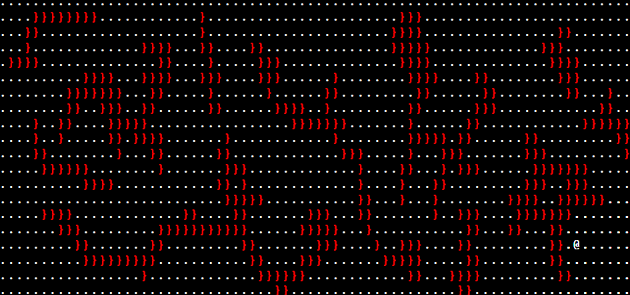
Lava. Fire traps. Fire elementals. A goddamned red dragon. Exactly the sort of hospitality one expects after a very long dungeon crawl.

I am still carrying the same Amulet, marked REAL. I may still be levitating from Air. But the next hazards demand different protections. Even finding the portal changes: the Plane of Fire contains so many fire traps that one ordinary method of detection can produce a mess of signals rather than a clean answer about where to go.
- The detector is operating.
- The detection task has changed.
Cartwright and Jeremy Hardie ask the same exact question (but about policy) in Evidence-Based Policy: A Practical Guide to Doing It Better (2012).
Their book begins with the Bangladesh Integrated Nutrition Project and California's class-size reduction program. Both are used to examine situations in which evidence that a policy could work failed to settle whether it would work as intended in the destination setting. The book's organizing move is from “It Worked There” to “It Will Work Here.”
The difference is not rhetorical.

California's program did reduce class sizes. It also required a rapid expansion of the teaching workforce. Contemporaneous and later analysis found gains associated with smaller classes alongside countervailing effects from inexperienced or less-qualified teachers, with staffing disadvantages concentrated in poorer schools. The California Legislative Analyst's Office subsequently described the academic-achievement evidence as inconclusive and the teacher-quality and distributional effects as important costs.
So this is not an announcement that smaller classes do not help. It is a case in which changing the scale of an intervention changed the supporting field.
An intervention like this may possess a real capacity to contribute to a result. Its success may nevertheless depend on trained personnel, institutional relations, material supplies, timing, cooperation, or other supporting factors. A new site may lack those factors or contain powerful counteracting conditions. The same program name does not deliver the same causal organization.
So we need several distinct questions.
- Did the intervention produce the claimed effect in the source setting?
- What causal role did it play?
- Which supports enabled that role?
- Do those supports obtain, or can they be built, in the target field?
- What else in that field could alter the result?
The conclusion cannot be transported ahead of the answer.

This is not just a problem for policy evaluation.
Suppose a hospital demonstrates that patients can retain access to a service through an alternate provider. The trial uses a complete records export, experienced personnel, working interfaces, available transport, and independent authorization. Later, the primary provider becomes indispensable, the trained staff leave, and the data can no longer be exported without the incumbent's cooperation.
- The old demonstration remains true about the old arrangement.
- It no longer establishes a reachable replacement path from the present one.
The hypothetical hospital has not disproved replacement in principle. It has made the warrant for this replacement fail.
And if the institution continues telling patients that an available substitute exists because the substitute worked in last year's trial, a model of care can become part of a harmful distortion of care.
The observed local success does not carry its whole causal environment through the portal.
> You dump some of your gear to lose weight...
4. WATER
> The Portal Moves.
The Plane of Water is worse.
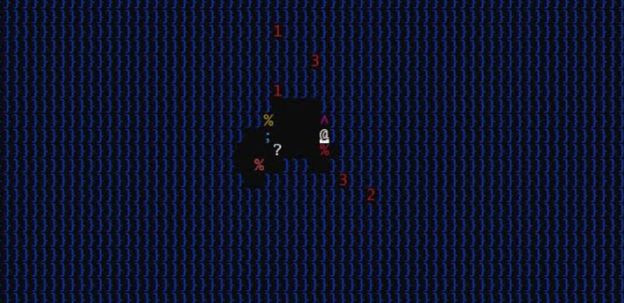
It is filled with water except for moving air bubbles. The player arrives in one bubble. The portal to Astral is in another. The bubbles drift, merge, and divide, carrying their contents. Unless you can survive underwater, leaving one is dangerous.

There is something almost malicious about placing the next exit inside moving terrain. It means even a correct observation of the route can age.
- Portal there.
A few turns later:
- Portal somewhere else.
Now I check my loot from Jean-Pierre Aubin and the Artificer's Workshop.

Aubin's viability theory supplies actual mathematics for constrained trajectories, viable regions, capture basins, and regulation. Modal Path Ethics already conceded how much of the machinery for representing continuation had been developed long before it arrived. The October engagement also placed a boundary around the instrument: a viability kernel certifies viability under the dynamics, constraints, states, and relations included in the model. It does not certify that the model contains the entire field.
Cartwright presses one additional question.
Why should the dynamics and constraints established in that apparatus still apply to the target arrangement?
The difference is important.
- One model can omit a real continuation and produce false foreclosure.
- Another can include a formally admissible trajectory whose supporting causal arrangement no longer exists and produce phantom reachability.
The latter error is especially dangerous when the path is a correction path.

Material Bounded Finality v0.3 gives an explicit finite witness of a bounded correction architecture. Its checker enumerates 62,328 reachable states and 297,808 transitions, with external-only paths from every represented correction-start state to a material remedy within two transitions and an independent successor within seven.
Those are results about the constructed finite system, under its stated guards and adversary floor. The paper explicitly disclaims a universal institutional theorem, an adversarially complete AI model, and scheduler-independent liveness. It does not confuse an available short path with a guarantee that every execution will take it.
Cartwright does not invalidate that witness. She forbids us to certify a live institution by waving the witness at it.
Where is the independent evidence channel now? The execution substrate? The transferable state? The people or machines able to carry the protected function? Which dependencies became shared since the last test? How much time remains before a successor can no longer be made adequate?
The formal right to correct may persist after the material route has died. I have already named that boundary the corrigibility horizon.

But the reverse epistemic error also hovers nearby. A model's failure to find a correction path does not prove extance contains none. It may have omitted a component, a new substitute, or a way of reorganizing the field. Following Bergson and Kauffman, an actual generating structure may support novel continuations that a finished option list cannot yet name.
So now the warning is symmetrical.
A modeled portal is not proof of a reachable portal.
A missing modeled portal is not proof there is no way through.
Unknown reachability is unknown. The field is real even where the instrument is incomplete.
And there is a final, wonderfully irritating detail. The rules of NetHack themselves have versions. In older versions of the game, levitation or flying could permit movement outside Water's air bubbles; later versions changed that behavior. A strategy tested on one version is not automatically valid in another.
- The character can be the same.
- The item can be the same.
- The interface can look familiar.
- The operative transition relation has changed.
> If you can't breathe air, how can you consume solids?
NetHack at least gives us authored rules whose implementation can be inspected. The universe has issued no comparable complete manual. That is exactly why a good game analogy must remain an analogy: it can show where a model or move fails to travel without turning the actual future into a prewritten game tree.
The lesson of When Explanations Write Back is nearby: a correct later measurement can characterize the wrong mechanism version if the target has changed between report and audit. That paper concerns explanation writeback in language models, but its provenance discipline travels here because the mistake is recognizable: treating a result about one version as a result about another without checking what survived the transition.
At this point Cartwright has extracted an embarrassing amount of ammunition from four dungeon levels.

I still have to ascend.
> Here the High Temple of Blind Io is located.
4. ASTRAL
> The Model Cannot Choose the Altar.
The Astral Plane contains three high altars, one lawful, one neutral, and one chaotic, and an extremely unpleasant collection of opponents including Death, Pestilence, and Famine.
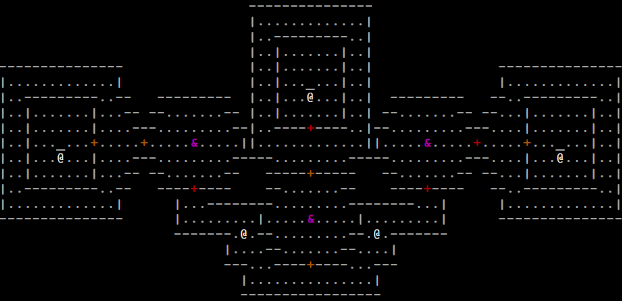
To ascend, the hero must offer the real Amulet of Yendor at a high altar matching the relevant alignment. Reaching an altar is not enough. Offering the Amulet at the wrong one can end the run without ascension.
The game knows which altar counts. Of course it does. Somebody wrote the rules.

This is where Cartwright stops short of giving us an ethics.
Her account can help identify causal powers, their arrangements, and the warrant for predicting what an intervention will do under particular conditions. It does not tell us which continuations are morally significant, which bearers should receive priority, or when one opening is purchased through another locus's injury.
A perfectly operating nomological machine can be a machine for doing harm.

The September preprint is explicit about its normative premise:
Continuance Principle: A nontrivial degradation of a structurally significant part of an extant locus's own organized, reachable continuation constitutes pro tanto harm to that locus.
That principle is a contestable bridge. Cartwright sadly cannot derive it for us from a successful scientific explanation. Nor can a viability calculation, a high-performing policy, a machine-learning audit, or a constitutional state checker. The constitutive harm claim must be defended on its own terms.
The paper has also already distinguished harms from transition profiles and overall verdicts. Restricting a destructive continuation may be justified. An injured locus does not automatically receive a veto against necessary protection or transformation. Several affected loci can have different, even conflicting, continuations.
The challenge is to identify the real bearers, actual supporting relations, burdens, and alternatives without installing the investigator's preferred result inside the model.

Patañjali recently caught me doing something similar with grain. One event can carry transformation at one legitimate causal grain and termination at another. The solution was No Ontology Photoshop: identify the historically integrated organization before selecting the view that produces the desired verdict.
Cartwright adds the complementary rule.
Do not select the causal environment in which your preferred continuation works, then announce that the continuation is reachable in the environment actually under investigation.
No Causal Photoshop, either.
And no pretending the apparatus provides the altar's moral alignment.
> The High Priest of Blind Io gives you two bits for an ale.
The final boss of scientific method is not the existence of a sufficiently impressive equation. It is the sentence:
This result applies here.
Earn it.
> An invisible choir sings, and you are bathed in radiance...
The Ruling.
Nancy Cartwright wins a methodological round.

She does not defeat the objective structure of reachable continuation. Her own philosophy insists upon real causal capacities, and Modal Path Ethics does not require one universal scientific law, one complete future inventory, or one model with jurisdiction over every locus.
The framework had already moved toward her position in important respects. The September paper makes reachability bearer-relative and field-relative; defines resistance through actual burdens and dependencies; and separates harmful contraction from ordinary specification. Bergson removed the completed possibility warehouse from foundational ontology. Aubin supplied powerful but bounded mathematical instruments. Patañjali required the causal grain to be earned. Kauffman's adjacent possible helped explain how existing organizations enable new continuations without prestating their eventual forms. His stronger argument about cross-grain entailment remains unresolved. Cartwright does not get to settle it through a different route.
Her hit survives all of those repairs.
For an applied judgment, the warrant for the causal route must travel with the claim. Evidence from an experiment, simulation, previous institution, or other locality has to be connected to the particular support conditions now operative for the bearer being assessed. Some capacities are robust across many settings. Some require specific arrangements. Some are inhibited. Some need another locus to cooperate. Some operate too late. Some have been altered by the act of measuring them.
The obligation is to investigate those differences, not to invoke the word context as a magic spell.

The resulting discipline is straightforward:
- Identify the bearer and independently justified causal grain.
- Identify the significant continuation or generator at issue.
- Establish the capacities, supporting conditions, dependencies, counteracting processes, and timing relevant to that continuation.
- Distinguish evidence from the actual field from evidence transported into it, and state what supports the transfer.
- Keep established, conditional, model-relative, and unknown reachability separate.
Those are evidentiary requirements, not additional kinds of harm. They belong beside the framework's existing locus and weighting tests, not above them as a new sovereign instrument.
And the same discipline applies to the standard itself. An investigator's failure to establish a route does not erase it. An unrepresented injury does not become harmless because the model never included the bearer. Reality retains the capacity to correct our inventory.
So:
- Cartwright: HIT.
- Transfer from modeled or demonstrated causal capacity to target-field reachability requires a warrant.
- Modal Path Ethics: SURVIVES.
- The Continuance Principle is unchanged, the account remains non-scalar, and causal organization is not identical to moral authority.
- Outstanding:
- How to secure adequate field evidence quickly enough when the supporting conditions themselves are changing, and how to keep the evidentiary procedure answerable to affected loci it may have failed to represent.
The correction belongs in the next revision of Harm as Contraction.
Back on the Astral Plane, I finally locate the right altar.

I have the Amulet. I have found the room. I offer it.
> The voice of Blind Io booms: "Mortal, thou hast done well!"
It works.
> In return to thy service, I grant thee the gift of Immortality!
Nancy Cartwright is unimpressed.
Apparently I have also brought the conditions.
ASCENDED.