Hume, Moore, and the Normative Bridge
Welcome to the post-game.
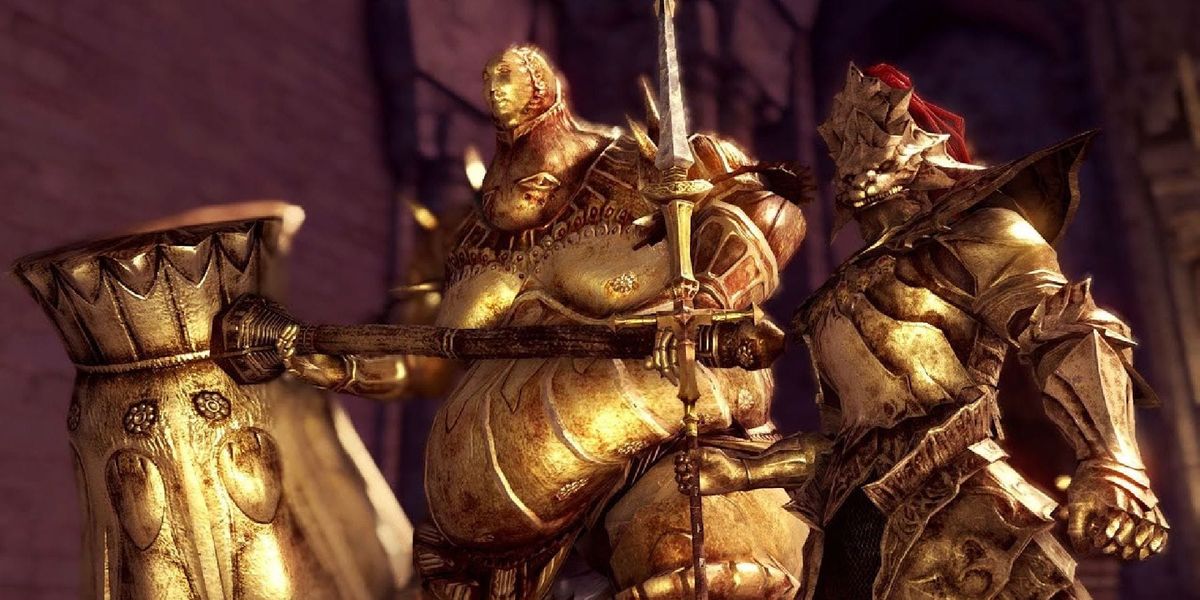
After defeating the Final Boss, failing to uninstall the game, and coming to terms with my new fate, Modal Path Ethics has purchased and installed the Philosophy DLC bundle. After gathering all the souls I need for a competitive build, I'm gonna check out the multiplayer mode.
Today, there are two men standing between Modal Path Ethics and moral realism.
Bold fucking move.
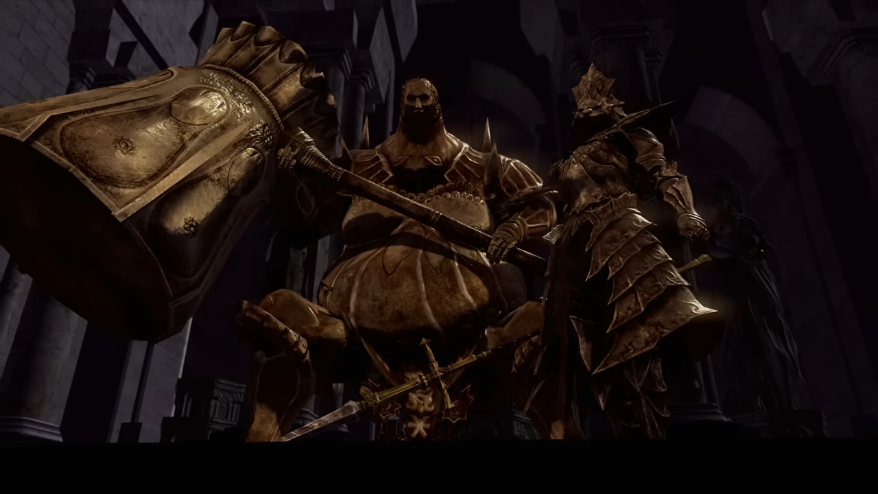
- David Hume has the spear.
- G. E. Moore holds the hammer.
- Hume wants to know where the hell the ought came from.
- Moore wants to know whether whatever crossed that bridge was actually good.
- If we answer Hume badly,
- Modal Path Ethics becomes a description of damaged reality with a moral conclusion stapled onto the end.
- If we answer Moore badly,
- Modal Path Ethics defines the thing it wanted to prove and celebrates escaping a room whose door was open.
- If we answer Hume badly,
Worse, these two bastards cooperate.
- Beat Hume by introducing a normative principle
- and Moore immediately asks what makes the principle good.
- Beat Moore by grounding value in something real
- and Hume asks how the real thing acquired normative force.
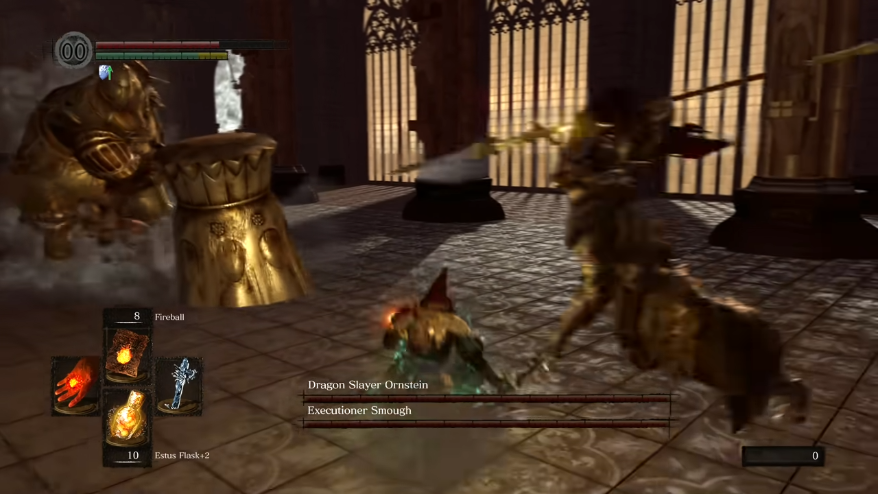
- One of them falls.
- The other eats the soul.
Unfortunately for these two:
Modal Path Ethics needs souls.
Put the Bridge in the Middle of the Room.
An actual transition harms an extant locus insofar as it nontrivially degrades a structurally significant continuation or enabling structure genuinely reachable from that locus.
That sentence is carrying several jobs, and the first defense against both philosophers is to stop pretending they are one job.
A locus is an extant bearer capable of structured continuation.
A reachable continuation is a continuation genuinely available from that bearer under the actual field conditions.
Structural significance is constrained by features including enabling centrality, irreversibility, breadth, depth, resistance, distribution, and destructive potential. These are diagnostic dimensions, not terms in a master score or an exhaustive canonical vector. They expose different features of the damaged relation and support partial comparison only where the field actually supports comparison.
- Then an actual transition happens.
- The body loses function.
- The ecosystem loses reproductive structure.
- The institution loses a correction path.
- The person loses a viable continuation.
- The archive is destroyed.
- The relationship becomes coercively unavailable.
- The planet-forming disk loses the conditions under which its organized continuation could proceed.
That gives us the structural judgment.
- Something happened to the bearer.
Then comes the normative judgment.
Qualifying degradation of the structurally significant reachable continuation of an extant locus has pro tanto normative significance.
Call this the Continuance Principle.
Pro tanto matters.
A defensive firebreak can damage vegetation while preventing a wider catastrophe. An evacuation can restrict movement while protecting the people being moved. One transition can contain a genuine harm-token and still be justified, required, or Better than every reachable alternative. Modal Path Ethics already separates the harm from the complete transition profile.
So here is the bridge.
Nobody hid that shit.
Nobody gets to accuse this noble framework of quietly changing the subject halfway across.
- There is the field-description.
- There is the harm classification.
- There is the Continuance Principle.
- There is the later deliberation.
Hume may proceed.
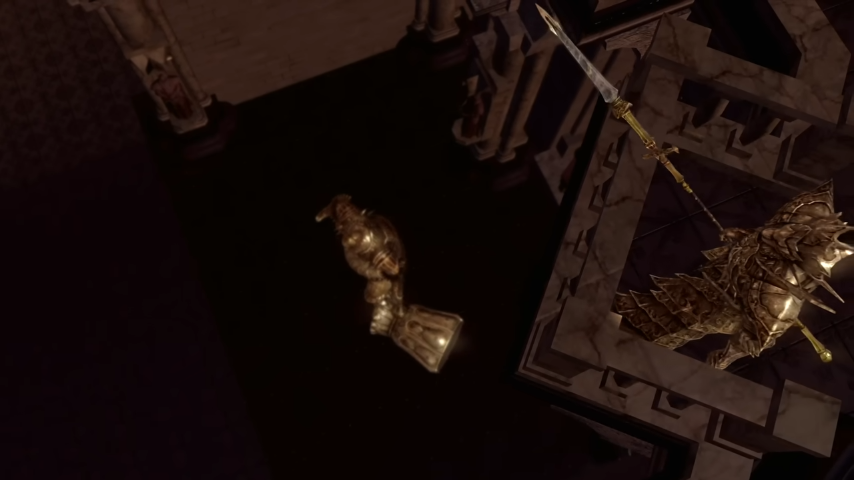
Ornstein Attacks.
Near the end of the first section of Book III of the Treatise of Human Nature, Hume notices philosophers describing the world for a while and then, suddenly, producing propositions joined by ought and ought not. Something new has appeared. Hume's demand is that the new relation be identified and explained rather than allowed to slip unnoticed out of a chain of factual propositions.
This is a good demand.
Keep it.
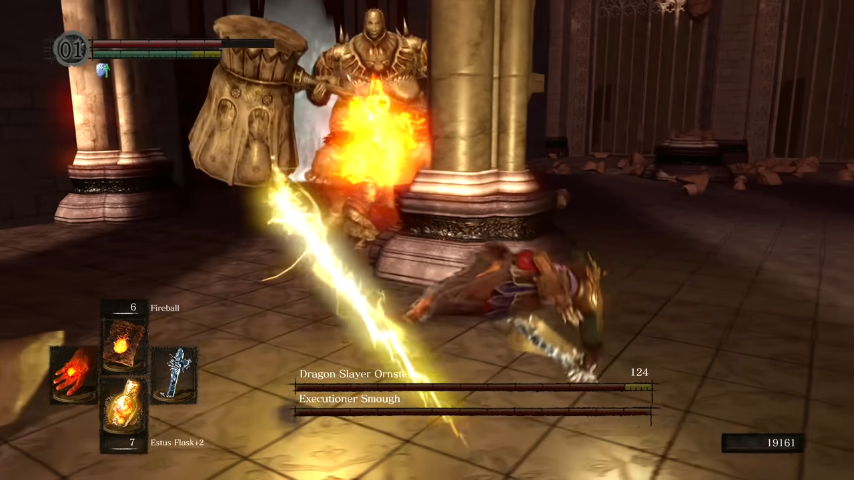
If I tell you:
- A forest lost half its mature canopy.
- A person's mobility was permanently reduced.
- A political institution lost its independent appeal route.
- A species lost a major reproductive population.
- A world lost a viable generative structure.
I have told you things about reality.
If I then conclude:
Therefore you ought not to have done that,
something has happened.
That word therefore needs an account.
Modal Path Ethics does not hide from this.
The physical description does not contain an imperative punctuation mark waiting to be discovered under sufficient magnification.
This was already made explicit in the recent Continuance Principle work. The stripping of a planet-forming disk supplies a physical description. It does not deductively establish the ethical extension. The burden on the framework is explanatory: whether contraction identifies the common structure of paradigm harms, preserves the distinctions those cases require, and continues to work where subject-centered concepts stop fitting.
- The bridge is a philosophical commitment.
- Hume has forced us to identify it.
- He has not yet destroyed it.
- Hume has forced us to identify it.
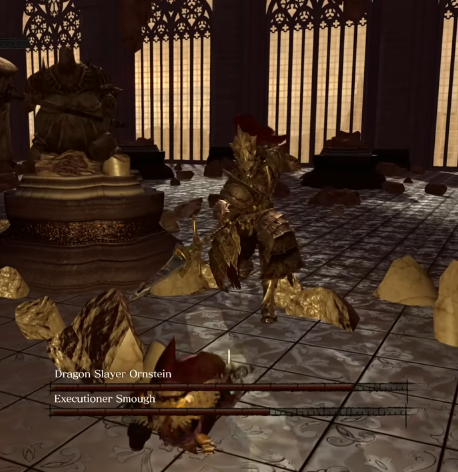
The Tree Did Nothing Wrong.
Hume has a much funnier weapon waiting nearby.
Consider a tree.
- An oak drops a seed.
- The seed becomes a sapling.
- The sapling grows.
- Eventually it overtops and destroys the parent tree.
- The sapling grows.
- The seed becomes a sapling.
Hume asks what objective relation is missing here that would be present if a child killed a parent. Cause is present. Destruction is present. Dependence is present. The relevant relations can be described without producing the moral quality of parricide.
This is supposed to put pressure on the idea that vice can simply be found among objective relations.
Modal Path Ethics has an awkward response.
Yes.
The sapling did nothing wrong.
We can clear that shit immediately.
No charges will be filed. No tribunal convened. The sapling will not be asked to reflect on its choices.
This is where Hume's example reveals a distinction Modal Path Ethics has spent a long time building.
Damage is not culpability.
The question what happened to the bearer? precedes the question who should be blamed for it?
Hume is absolutely right that causal relations alone do not contain a little packet of guilt.
Modal Path Ethics does not need them to.
- The oak is not wicked.
- The parent tree can still be destroyed.
The framework's first claim concerns the second sentence.
Hume's argument is aimed at theories trying to find vice inside objective relations.
Modal Path Ethics has already moved vice downstream.
Blame, intention, responsibility, punishment, excuse, and desert belong to later analysis of agents situated inside the causal history.
First:
- What happened?
Then:
- Who could see it?
- Who could change it?
- Who caused it?
- What did they know?
- What should happen now?
The tree did nothing wrong.
That does not resurrect the tree.
Ornstein Gets Faster.
Hume has another attack.
Reason, he argues, does not itself move us. He treats reason as incapable by itself of producing or preventing action; judgments can guide or inform passions, yet the motivating force has another source.
Here too, Modal Path Ethics can stop fighting a proposition it does not need to deny.
Of course recognizing damage does not guarantee that anyone gives a shit.
History would be considerably shorter if it did.
A person can understand exactly what an action will do to another person and proceed. A government can accurately model civilian suffering and accept it.
A manager can understand the burden being transferred downward and transfer it anyway. An artificial intelligence can correctly represent a disappearing continuation while another objective remains dominant.
- Recognition is one relation.
- Normative status is another.
- Motivation is another.
Modal Path Ethics already has a name for the cultivated disposition connecting an agent to the damage it encounters.
Care.
Care is practical. It can be cultivated, eroded, or lost. An agent sustains it by remaining available to structural harm when the surrounding story offers reasons to convert the damaged locus into an abstraction, target, impurity, cost, variable, or background condition.
So Hume can show us an agent who accurately recognizes the contraction and does not move.
Sure.
Perhaps this agent lacks Care.
That is a problem with the agent's relation to the field.
It does not transform the contraction into a hallucination.
The existence of color blindness would be an unusual argument against light.
Know what? Fuck it.
Bring Me a Better Primitive.
Hume can force Modal Path Ethics to disclose its normative primitive.
Good. Here it is:
Damage to the structurally significant continuability of an actual bearer matters.
That is a commitment.
I am not going to stand here with my hands in my pockets and pretend Modal Path Ethics became the first ethical theory in history to operate without one.
Bring me the theory that does.
- Utilitarianism eventually places weight somewhere.
- Kant places it somewhere.
- Contractualism places it somewhere.
- Virtue ethics places it somewhere.
- Rights theories place it somewhere.
- Preference theories place it somewhere.
- Sentimentalism places it somewhere.
Every account eventually reaches the point where another why? produces either a deeper account or the floor.
The interesting question is what the floor can carry.
So, let's load this one up.
- Injury.
- The body loses significant continuation.
- Death.
- The person loses nearly every personal continuation at once.
- Coercion.
- Another actor closes reachable agency through imposed control.
- Deprivation.
- Enabling structures disappear while abstract possibility survives on paper.
- Trauma.
- Trust, relation, agency, and self-continuation can become harder to reach.
- Ecological destruction.
- Living and generative structures lose continuability.
- Cultural erasure.
- An extant intergenerational structure loses the conditions through which it could continue as itself.
- Institutional capture.
- Correction remains formally imaginable while the routes capable of making correction effective disappear.
- Pre-life destruction.
- A generative field loses structured continuations before a subject exists to complain.
None of these cases requires us to invent one substance called Utility.
None requires every bearer to become a person.
None requires pain to exist before damage becomes real.
None requires an agent who can state a preference.
None requires an enumerated right to have been written before the injury becomes visible.
None requires the harmed locus to attend a meeting and justify itself in a language designed by somebody else.
The primitive earns its keep.
That does not prove it in the sense that Euclid proves a proposition from prior axioms. It gives us something philosophical primitives actually have to earn:
explanatory coverage without flattening the field that produced the cases.
So, reject it.
Do it.
Reject the Continuance Principle.
Then bring the goddamned replacement.
- If harm is suffering,
- tell me what happened to the generative structure before sentience.
- If harm is preference frustration,
- tell me whose preference establishes the dead river.
- If harm begins in rational agency,
- tell me what happened to the infant, ecosystem, archive, or world before rational agency arrived.
- If harm is rights violation,
- tell me what made the unwritten injury wait for legislation.
- If harm is aggregate welfare loss,
- show me where the individual bearer went after the conversion table finished.
Good fucking luck.
A rival primitive does not win because it demands fewer metaphysical commitments while quietly abandoning half the field.
It has to come back carrying the bodies.
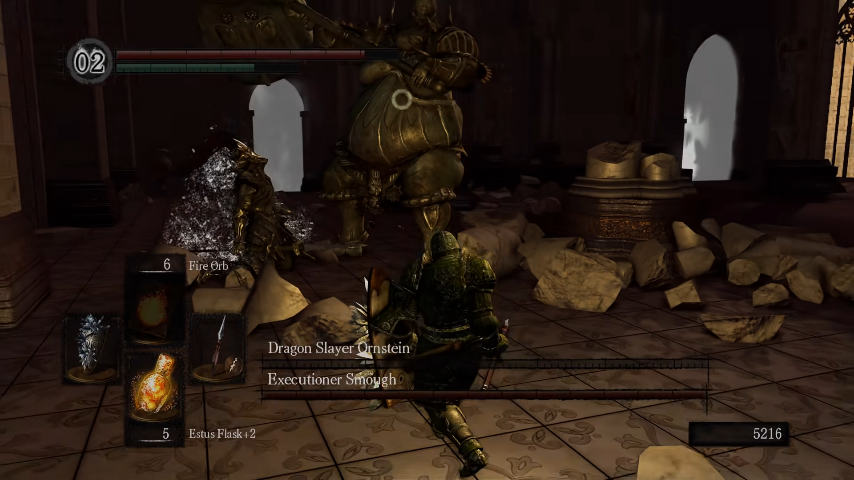
Smough Has Entered the Arena.
Unfortunately, Hume was the fast one.
G. E. Moore is still here.
Moore's Principia Ethica begins by asking what good means. His answer is severe: good is simple and indefinable. Attempts to define goodness through some other natural property confuse the thing alleged to be good with goodness itself.
The famous pressure test is what later philosophy came to call the Open Question Argument.
Suppose somebody says pleasure is good because good means pleasure.
Moore asks whether it still makes sense to wonder whether pleasure really is good.
It does.
The question has not collapsed into asking whether pleasure is pleasure. Moore takes that openness as evidence that the proposed definition failed.
Now, let us put Modal Path Ethics under the hammer.
This transition nontrivially degraded the structurally significant reachable continuation of an extant locus.
Okay.
Was that bad?
Do not answer too quickly.
If Modal Path Ethics says:
Obviously. That's what contraction means.
Smough has flattened us into the cathedral floor. Because that is exactly the move Moore is hunting.
The structural description and the normative conclusion cannot be declared identical by vocabulary.
Fortunately, they are no longer doing the same job.
Keep the Question Open.
The question remains intelligible.
A person can understand every word of the harm thesis and reject the Continuance Principle.
They can say:
- I agree that this person's significant future was destroyed.
- I agree that nothing comparable was preserved.
- I agree that the loss was severe, irreversible, broad, asymmetrical, and concentrated on them.
- I still do not think that counts against the act.
Fine. Now we know exactly where we disagree.
That is progress.
Modal Path Ethics does not need to claim that bad is a dictionary synonym for contraction.
It makes a stronger structural proposal.
Paradigm cases ordinarily called harms share an underlying relation: a bearer loses or is burdened in its capacity for structurally significant continuation.
The theory then assigns that relation normative significance through the Continuance Principle.
Moore can refuse the principle. If he wants.
He cannot defeat the structural account simply by observing that the normative question remains conceptually askable.
Conceptual openness and metaphysical separation are different claims.
Someone could understand the word water without knowing its chemical constitution.
Someone could understand inheritance without knowing DNA.
Someone could recognize disease before possessing germ theory.
Discovering an underlying constitution need not make every ordinary question analytically closed in advance.
Modal Path Ethics is therefore not trying to prove:
harm means contraction
as a linguistic identity.
It proposes:
qualifying damage to bearer-relative continuability constitutes the structural phenomenon our harm judgments have been tracking.
Then:
the Continuance Principle gives that damage pro tanto normative force.
Smough Eats Ornstein.
Now the boss mechanic activates.
Suppose Moore grants the structural account.
He says:
- Fine.
- You have identified a real pattern.
- You have shown me bodies, ecologies, institutions, cultures, and generative structures undergoing the same broad class of damage.
- You have even avoided defining good as a synonym for the property.
- Why should that property matter?
Hume's health bar reappears.
The argument has looped back to the Continuance Principle.
This is the important discovery.
Hume and Moore do not expose two unrelated fatal errors. They keep pushing us toward the same visible location:
the normative primitive must be stated, defended, and prevented from impersonating a descriptive discovery.
Okay.
There it is.
Damage to structurally significant continuability has pro tanto significance.
That is Modal Path Ethics' wager.
And unlike a primitive that simply announces GOODNESS as an unanalyzable property hovering over the world, this bad boy gives us a field to investigate.
- We can ask which bearer existed.
- Which continuation was actually reachable.
- Which enabling structure carried it.
- How severe the degradation was.
- How irreversible.
- How broad.
- How central.
- How asymmetrically imposed.
- How the damage was distributed.
- Which alternative paths existed.
- Which repairs remain reachable.
- Which harms were necessary to prevent greater contraction.
- Which institution is hiding a burden.
- Which agent could have known.
- Which agent still refuses to see.
The primitive generates work.
Reality can answer it.
Moore Gets Hit by the Firebreak.
There is another reason the Open Question never disappears.
Modal Path Ethics does not intend it to.
Suppose a firebreak destroys a strip of habitat.
- Was there harm?
- Possibly yes.
- Should the firebreak have been cut?
- That remains open.
Suppose a surgeon amputates a limb to prevent death.
- Was a bodily continuation destroyed?
- Obviously.
- Was the operation therefore wrong?
- No such conclusion follows automatically.
Suppose someone is evacuated from a home under emergency authority.
- Did the intervention close presently reachable choices?
- Yes.
- Was it justified?
- Ask what the alternatives were.
The framework does not need every identification of harm to conclude deliberation. It needs identification of harm to begin honest deliberation.
That is why harm-tokens survive justified action. The damaged vegetation does not become undamaged because the firebreak was wise. The lost limb does not reappear because the surgery saved a life. The displaced person did not stay home because evacuation turned out to be necessary.
A theory that can only justify an action by denying the injuries contained inside it has purchased moral clarity by falsifying the field.
Modal Path Ethics refuses the purchase.
Moore can therefore continue asking questions.
Some of them belong to the next layer.
Two Souls.
Hume and Moore have now done something useful. They have forced the architecture into the open.
- The field contains extant loci with structured continuations.
- Reachability identifies which continuations genuinely belong to the present field.
- Weighting constrains judgments of structural significance through features including enabling centrality, irreversibility, breadth, depth, resistance, distribution, and destructive potential; it does not produce a universal scalar.
- The harm thesis identifies qualifying degradation to that continuability.
- The Continuance Principle gives the harm-token pro tanto normative significance.
- Care describes an agent's cultivated availability to that significance.
- Deliberation examines the complete transition profile: harms, openings, repairs, burdens, constraints, uncertainty, alternatives, and remainder.
- Better governs choice where clean Good is no longer reachable.
There is no secret slide from chemistry to command.
No dictionary trick in which harm is defined so conveniently that philosophy has already ended.
- There is a structural claim.
- There is a normative primitive.
- There is an account of moral perception.
- There is an account of damaged choice.
- And all of them can fail separately.
That is exactly what we should want from the theory.
- Hume was right to watch the bridge.
- Moore was right to inspect what crossed it.
- Neither philosopher establishes that ethics becomes more rigorous when the bridge is demolished and everyone remains forever on the descriptive shore.
Modal Path Ethics crosses. Openly.
It does so in public. Fucking stop me.
Damage to the structurally significant continuability of an actual bearer matters.
That is the primitive.
You can reject it.
You can replace it.
You can argue that suffering goes deeper.
You can argue for preference, agency, welfare, rights, rational endorsement, divine command, sentiment, flourishing, virtue, or some irreducible Good that cannot be analysed any farther.
Then, bring your primitive into extance.
Bring the injured body.
Bring the coerced person.
Bring the poisoned river.
Bring the captured institution.
Bring the dying culture.
Bring the erased archive.
Bring the organism that cannot reproduce.
Bring the generative world that never reaches life.
Bring the harm nobody intended.
Bring the harm everybody approved.
Bring the harm whose victim cannot speak.
Bring the harm that remains after the justified decision.
Bring the wound that later good cannot make unhappen.
Run the fucking field.
If another primitive carries all of that with fewer distortions, fewer abandoned loci, fewer hidden exceptions, and a better account of what actually changed, Modal Path Ethics should lose.
Care requires that possibility.
Until then:
- Hume is down.
- Moore is down.
- Souls acquired.
There is another fog gate ahead...

Comments ()