
Christine Korsgaard, Sharon Street, and the Late Agent
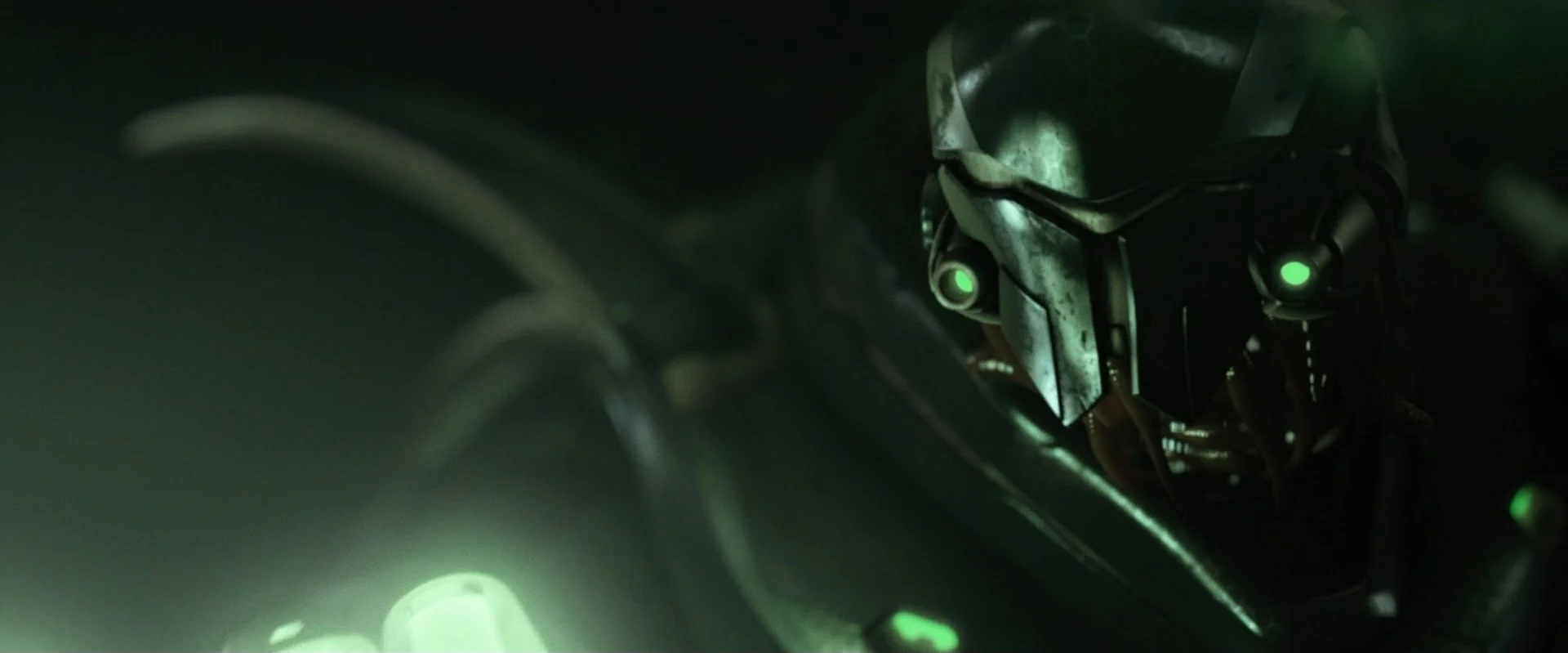
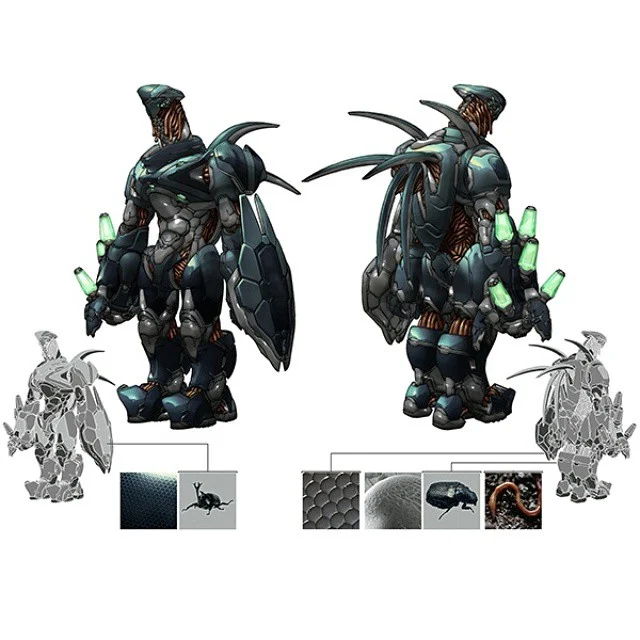
Two Hunters guard the road out of moral realism.

Turns out I left invasions on.
Modal Path Ethics has survived the normative bridge.
- David Hume wanted to know where the ought came from.
- G. E. Moore wanted to know whether whatever crossed the bridge was actually good.
Fair questions. The bridge remains.
Damage to the structurally significant continuability of an actual bearer matters.
The Continuance Principle is exposed. It is a normative commitment. It does not hide inside physics, vocabulary, intuition, or a dictionary definition of harm.
Two more philosophers have therefore arrived.

- Christine Korsgaard would like to know how exactly an independent fact about the world acquires authority over a reflective agent.

- Sharon Street would like to know why on Earth an evolved animal should trust itself to have discovered any independent evaluative fact in the first place.

These are different attacks.
Together they are considerably worse.
- Korsgaard says:
You started morality before the agent.
- Street says:
And the agent you eventually got is a terrible witness.
They hunt as a pair.
Korsgaard Wants the First Move.
Christine Korsgaard's challenge is much stronger than the claim that people choose their values.
Humans are reflective agents. We do not simply undergo desires and execute them. We can step away from an impulse and ask whether it gives us a reason to act. We can ask what kind of person we are, which principles we can endorse, which practical identities we recognize as ours, and whether the maxim guiding one action can survive rational scrutiny.
Korsgaard's constructivist project takes this reflective structure seriously. On her account, normativity cannot simply arrive as this strange external object carrying its own authority. The question is how a reason can bind a rational agent at all. Her answer appeals to self-government, practical identity, and standards constitutive of agency itself.
That goes directly through the center of Modal Path Ethics.
Suppose the structural account is completely correct.
- A transition occurred.
- An extant locus lost a continuation.
- The continuation was genuinely reachable.
- The lost structure was central, severe, difficult to repair, and asymmetrically destroyed.
- An extant locus lost a continuation.
Fine.
Why am I bound by that?

Why does the fact acquire authority over a reflective agent?
- The Continuance Principle can say that the damage matters.
- Korsgaard asks what mattering could mean before a rational being takes up the relation.
The attack lands. There is no use pretending otherwise.
Then we ask when the agent arrived.
The Agent Is Late.

- A newborn can be damaged.
- An unconscious person can be damaged.
- An animal can be injured without possessing anything like Kantian reflective autonomy.
- A forest can lose reproductive structure.
- A river can become chemically incapable of sustaining the life it carried.
- An archive can be destroyed.
- A culture can lose the material and institutional structures through which its living practice could continue.
- A pre-life generative field can lose the conditions under which life could ever emerge.
None of these cases waits for a reflective agent to constitute a practical identity around the event.
This distinction is already built into Modal Path Ethics.
- Some loci possess appetite.
- Some possess agency.
- Some suffer.
- Some construct self-models.
- Some can deliberate over their own desires.
- Some appear to possess none of those capacities.
Korsgaard has placed something extraordinarily important at the center of moral philosophy.
It is still something that arrived late.

Reflective agency appears inside a world where bodies can already break. Organisms can already lose viable continuation. Fields can already become less generative. Structures can already collapse.
The agent did not create those relations by becoming capable of asking whether they mattered.
The agent became capable of responding to them in a new way.
That is a profound achievement.
Not creation.
Agency can generate obligations for an agent without generating the field the agent is obligated to navigate.
Korsgaard Still Gets Agency.
Do not overkill this.
Reflective agency changes the moral field enormously.
- A rock cannot promise.
- A forest cannot accept public office.
- A bacterium cannot deliberately undertake guardianship.
- A person can.
- An agent can represent another locus's future.
- An agent can understand that its own action will foreclose that future.
- An agent can form commitments.
- Accept responsibilities.
- Make promises.
- Enter roles.
- Build institutions.
- Assume custody.
- Recognize reasons.
- Deliberately repair damage it did not create.
- Cultivate Care.
- Become answerable for refusing repair it clearly understood.
- A person can.
Those are real additions to moral structure.
Modal Path Ethics has no reason to flatten them.
- A parent can acquire obligations through parenthood.
- A clinician can acquire obligations through accepting a patient.
- A public official can acquire obligations through office.
- A person who promises can alter another person's reachable future by making reliance reasonable.
Agency creates forms of responsibility unavailable before agents appear.
Korsgaard is right to care about this layer.
The problem begins when that layer is asked to manufacture everything underneath it.
A practical identity can organize an agent beautifully and still organize the agent around destruction.
History contains no shortage of coherent soldiers, loyal bureaucrats, devoted ideologues, disciplined executives, faithful priests, committed revolutionaries, and exquisitely self-constituted people whose practical identities helped them damage other loci with astonishing consistency.
Successful agency is therefore insufficient.
A person can become very good at being the person they have made themselves into.
The field can still have objections.
Something has to remain capable of asking what that identity is doing to everyone underneath it.
- Korsgaard found a powerful source of reasons.
- She did not build the world those reasons act upon.
One Hunter is bleeding.
The other moves in.
Street Brought Darwin.
Sharon Street's attack begins from an observation Modal Path Ethics has no interest in resisting.
Evolution shaped us.
Quite a lot.
Street's Darwinian dilemma targets realist theories of value by asking how evaluative judgments substantially influenced by evolutionary selection could reliably track evaluative truths alleged to exist independently of those judgments.
- If there was no relation between selection and independent moral truth,
- widespread evaluative accuracy starts to look like an extraordinary coincidence.
- If the realist says natural selection somehow pushed us toward independent evaluative truth,
- Street presses the explanatory burden hard.
This is supposed to be uncomfortable for moral realism.
It is.
Unfortunately, Modal Path Ethics wrote The Human Confusion before Street entered the arena.
The original framework explicitly describes ordinary human moral cognition as an adaptive compression.
Human beings evolved under pressure to identify allies and threats, coordinate groups, interpret intention, allocate blame, respond to pain, maintain loyalty, and preserve local continuance under incomplete information.
- Those capacities are useful.
- They are also selective.
- Intention becomes vivid.
- Blame becomes vivid.
- Pain becomes vivid.
- Betrayal becomes vivid.
A person doing something visibly cruel activates the inherited machinery immediately.

A slowly collapsing institution that exports burden for thirty years may not.
A disappearing ecological continuation may not.
A future lockout with no single villain may not.

A pre-sentient generative loss certainly does not arrive carrying the facial expression evolution trained us to notice.
The original book therefore distinguishes adaptive signal from moral identity. Human moral cognition compresses a larger field into socially useful cues; the success of those cues in ancestral or social environments does not establish them as first principles of moral reality.
Street has arrived to announce that our first moral sensors were shaped by evolution.
Yes.
Modal Path Ethics knows.
(Please continue.)
Street Continues.
She should.
Because Modal Path Ethics cannot say:
Evolution gave us distorted intuitions, then reason arrived and fixed everything.
Reason is running on evolved hardware too.
Reflection begins with inherited dispositions.
Language is historical.
Attention is selective.
Concepts are learned.
The researcher has appetites, loyalties, fears, status incentives, aesthetic preferences, and a brain assembled through precisely the history Street wants us to take seriously.
A corrupted sensor cannot certify itself by staring harder at its own output.
So Street gets the real attack.

- Why continuation?
- Why contraction?
- Why should irreversibility matter?
- Why care about asymmetry?
- Why should the destruction of another locus's future register as normatively significant?
Perhaps Modal Path Ethics is simply the moral psychology of a social mammal that likes persistence, generalized into metaphysics and decorated with graphs.
There.
Something worth fighting.
Modal Path Ethics Does Not Have a Secret Moral Sense Organ.
Throw it away.
Modal Path Ethics does not require a faculty that directly perceives moral truth like Friedrich had.

There is no ethical eyeball.
There is no neuron whose firing means:
STRUCTURALLY SIGNIFICANT CONTRACTION DETECTED.
We investigate.
- What is the proposed bearer?
- What maintains its organized continuation?
- Which successor states are genuinely reachable?
- What enabling structures carry them?
- What changed?
- How severe was the degradation?
- How irreversible?
- How broad?
- How central was the lost capacity?
- How asymmetrically was the burden imposed?
- How was the damage distributed?
- What repair paths survived?
- Which apparent options exist only on paper?
- Which comparison survives when the favored narrative is removed?
These are fallible questions.
They can be tested.
A locus can be misidentified. A causal model can be wrong. A continuation can be mistaken for fantasy. An allegedly irreversible loss can turn out to be repairable. A cherished structure can turn out to have survived only by transferring its burden elsewhere. A weighting judgment can collapse under better evidence.
That kind of shit happens to me all the time.
Modal Path Ethics does not need ancestral intuition to certify the answer. It needs the inquiry to remain corrigible.
Street's evolutionary story explains why the first read of the field may be biased.
That is a reason to build better instruments.
Not evidence that there is nothing for an instrument to find.
Natural selection did not equip human beings with an intuitive understanding of stellar nucleosynthesis, quantum fields, plate tectonics, DNA replication, or curved spacetime either.
Yet an animal assembled for survival eventually learned to construct instruments that could defeat its first impressions.
The important achievement was never immaculate cognition.
The Theory Keeps Disagreeing With the Animal.
There is another problem for the idea that Modal Path Ethics simply dresses inherited intuition in formal clothing.
This lousy framework keeps telling the animal things the animal finds inconvenient.
- Suffering matters enormously.
- It is still not the primitive.
- Intention matters.
- It is still not the primitive.
- Blame matters for responsibility, trust, prediction, social response, and repair.
- It is still not the primitive.
- Agency matters.
- It is still not the primitive.
- Human beings matter extraordinarily.
- They are still not the only loci.
- A harm can occur before anyone experiences it.
- A justified act can still contain a genuine harm-token.
- A socially approved practice can remain structurally destructive.
- A vividly condemned act can be less structurally important than a quiet process nobody knows how to narrate.
- A civilization can become highly competent at moral management while continuing to damage the field underneath it.
These are strange conclusions for a theory whose only job is to flatter evolved moral instinct.
They could still be wrong.
Of course. That is why the theory is exposed to correction.
The point is narrower:
Street cannot defeat the framework by showing that human evaluative intuition has an evolutionary history.
Modal Path Ethics already begins by distrusting the promotion of that intuition into moral ontology.
The Hunter has fired at a position we abandoned before the fight.
She needs another round.
Care Is Not Revelation.
She gets one.
Care looks suspicious.

Modal Path Ethics says agents should cultivate Care.
Perhaps Care is just another evolved affective disposition, now given philosophical office.
So remove the magic.
- Care does not reveal truth.
- Care does not certify an interpretation.
- Care does not make a person's preferred model accurate.
- Care can be cultivated.
- It can erode.
- It can fail.
The framework defines it as a practical disposition: sustained availability to contraction even when the surrounding narrative rewards converting the damaged locus into an abstraction, target, impurity, necessary cost, or background condition.
That gives Care a narrower job.
Care keeps the sensor pointed. It does not calibrate the sensor.
Calibration requires evidence.
Other observers. Counterexamples. Adversarial testing. History. Comparison. Measurement where measurement is possible. Testimony. Correction. Sometimes complete conceptual replacement.
Care means the agent does not stop looking because the first explanation was convenient.
It makes moral inquiry durable, not infallible.
The Hunters Close In.
Now take them together.
Korsgaard:
Your structural fact does not explain why it has authority for a reflective agent.
Street:
Your reflective agent has no obvious reason to trust evaluative judgments shaped by evolutionary history as detectors of independent moral truth.
That is a real pincer.

So separate the machinery.
- Moral reality:
- an extant locus can undergo structurally significant degradation whether or not any reflective agent recognizes it.
- Normative primitive:
- the Continuance Principle assigns such degradation pro tanto moral significance.
- Epistemic access:
- agents model that structure through fallible perception, evidence, instruments, reasoning, comparison, testimony, and correction.
- Agency:
- reflective beings acquire additional capacities for commitment, responsibility, self-government, promise, role, deliberation, and repair.
- Care:
- those agents can cultivate sustained availability to possible harm rather than trusting whichever inherited signal arrives first.
Those functions do not need one common origin.
That is the mistake behind the pincer.
- The field can be damaged before an agent exists.
- An agent can fail to perceive the damage.
- An agent can perceive it and lack Care.
- An agent can care and still misdiagnose it.
- An agent can diagnose it accurately and still face several damaging alternatives.
- An agent can choose Better and remain answerable for the harm contained in the choice.
Nothing requires a magical moral faculty in anyone's nose that simultaneously creates value, recognizes value, motivates action, generates responsibility, and guarantees correct deliberation.
Protip:
Break the bundle apart.
The Hunters lose their firing solution.
The Late-Arriving Agent.
This leaves Korsgaard with an important truth.
Agency matters.
It matters so very much that once reflective agents appear, the field acquires an entirely new class of possible transitions.
Promises become possible.
Betrayal becomes possible.
Deliberate repair becomes possible.
Institutional design becomes possible.
Moral inquiry becomes possible.
An agent can understand a future and alter the present because of that understanding. Enormous. The mistake is chronology.
The agent enters a field already capable of being preserved and damaged.
Then, the agent becomes capable of noticing the difference.
Street supplies the corresponding correction.
- Do not trust that noticing automatically.
- The animal doing the noticing has a history.
- Its intuitions are selective.
- Its inherited proxies are imperfect.
- Its institutions can amplify old distortions.
- Its theories can become instruments of self-protection.
- So test them.
- All of them.
- Including this one.
- All of them.
- The animal doing the noticing has a history.
That is the answer to both Hunters.
Agency does not create moral reality. It creates a new kind of participant in it.
And:
Evolution explains why the first sensor is unreliable. It does not prove there is nothing to sense.
Bring the Better Sensor.
Modal Path Ethics has reached the stage of the game where pointing out that philosophical foundations are difficult no longer counts as damage.
I know.
The normative primitive is exposed.
The epistemology is fallible.
The agent is evolved.
The categories are revisable.
The field is difficult to read.
Fine.
Bring the replacement.
- If evaluative truth is constructed entirely from our attitudes,
- show what corrects the attitudes when the attitudes are the problem.
- If reflective endorsement gives reasons their authority,
- show what judges the practical identity that coherently organizes itself around domination.
- If evolutionary history defeats stance-independent moral truth,
- show why evolutionary history does not defeat every inquiry that outruns ancestral intuition.
- If suffering is the ground,
- bring the pre-sentient loss.
- If agency is the ground,
- bring the newborn.
- If preference is the ground,
- bring the dying ecosystem.
- If social recognition is the ground,
- bring the excluded person nobody recognized.
- If rational endorsement is the ground,
- bring the beautifully rational institution that transferred the cost to someone outside its model.
Modal Path Ethics does not receive victory because its primitive is strange.
It receives no victory automatically at all.
The deal is harsher.
- Build a better account.
- Carry more of the field.
- Lose fewer bearers.
- Hide fewer exceptions.
- Survive the counterexamples.
- Stay open to correction.
If another primitive and another epistemology can do that better, Modal Path Ethics should lose.
Until then, pointing at Darwin and agency does not make the damaged future reappear.
The Ruling.
Christine Korsgaard is right that reflective agency creates a distinctive normative problem.
Sharon Street is right that the evaluative equipment with which humans first approach that problem did not descend from a morally omniscient sky.
Keep both results.
Then stop.
- The body could already break.
- The animal could already be injured.
- The ecosystem could already lose continuance.
- The generative field could already collapse.
- The future could already close.
- The agent arrived later.
- It learned to notice some of this.
- It failed to notice a great deal more.
- It built stories.
- Then laws.
- Then religions.
- Then science.
- Then ethics.
- Then metaethics.
- Then constructivism.
- Then evolutionary debunking arguments.
- Eventually,
- against every reasonable expectation,
- somebody built Modal Path Ethics.
Now the agent can turn around and inspect the road that produced it.
That is extraordinary.
It still does not own the road.
The agent is late.
That does not make the agent unimportant.
It means morality had something for the agent to find.
- Korsgaard can keep agency.
- Street can keep Darwin.
- Modal Path Ethics is taking the souls.


Comments ()